

A. Lange & Söhne Watches
A. Lange & Söhne, renowned for its German precision and timeless craftsmanship, creates some of the world’s most exquisite luxury watches. Founded in 1845, the brand is celebrated for its meticulous attention to detail and innovative designs, including iconic models like the Lange 1 and Zeitwerk. At Grand Caliber, Dallas's trusted luxury watch store, we proudly offer a curated selection of new & pre owned A. Lange & Söhne watches, perfect for discerning collectors and enthusiasts.
A. Lange and Söhne Watches at Grand Caliber
A. Lange and Söhne watches occupy a position in modern horology that no other manufacturer can credibly claim. Founded in 1845 in the Saxon mining town of Glashütte, dissolved by Soviet expropriation in 1948, and resurrected from nothing in December 1990, A. Lange and Söhne watches return to the wrist what serious collectors lost when Patek Philippe began chasing volume. Grand Caliber stocks A. Lange and Söhne watches across the full breadth of the current catalogue and the most coveted discontinued references, from the asymmetric Lange 1 that defined the brand on its 1994 relaunch to the Datograph chronograph that recalibrated what an in house movement could be, the Zeitwerk with its mechanical digital display, the Odysseus that brought Glashütte into the luxury sports watch category in 2019, and the Richard Lange Perpetual Calendar Terraluna with its orbital moon phase. Every A. Lange and Söhne watch in our inventory is authenticated in house, priced openly, and ready to ship the day you decide.
The History of A. Lange and Söhne
The 1845 Founding and Ferdinand Adolph Lange
The story of A. Lange and Söhne watches begins with one man and one signed contract. Ferdinand Adolph Lange, born in Dresden in 1815 and apprenticed under the Saxon court watchmaker Johann Christian Friedrich Gutkaes, spent his journeyman years in Paris before returning to Saxony with a fully formed plan. The Erzgebirge region was suffering from the collapse of its silver mining economy, and Lange proposed to the Saxon government that watchmaking could replace the lost industry. He waited a year for a reply. On 31 May 1845, the contract between Lange and the state of Saxony was officially signed, and on 7 December 1845, A. Lange and Cie opened its doors with a 7,800 Thaler government loan and fifteen apprentices.
What Lange built was not just a watch factory. It was an entire approach to manufacturing that remains visible in every A. Lange and Söhne watch sold today. He introduced the division of labor to German watchmaking, with each apprentice responsible for a specific element of the production chain. He replaced the French ligne measurement system with the metric system. He insisted that every watch leaving the workshop be regulated and timed before shipping, a practice the rest of the industry would not adopt for decades. He hand engraved his apprentices through the basics, then encouraged them to leave and start their own supplier firms, which is how Glashütte became a watchmaking town rather than a single watchmaking company.
The Glashütte Lever Escapement and the Three Quarter Plate
Lange served as mayor of Glashütte from 1849 to 1867 and was elected to the Saxon parliament in 1869. He invented the Glashütte lever escapement. He developed the three quarter plate that would become the brand's mechanical signature, with the first version emerging by 1864 and his US patent following in March 1875. When Ferdinand Adolph Lange died that same year, his sons Richard and Emil took over, and the company name changed to A. Lange and Söhne. Richard Lange would later patent the use of beryllium in balance springs in 1932, a technological foundation that fed directly into the Nivarox alloys still used industry wide. The depth of the brand's nineteenth century horological contribution is why A. Lange and Söhne watches occupy the historical position they do today.
The Soviet Expropriation and Disappearance
A. Lange and Söhne watches disappeared from the world for forty two years. On the last night of the Second World War, 8 May 1945, the main production building was almost completely destroyed in a Soviet air raid. Walter Lange, great grandson of the founder and the fourth generation watchmaker in the family, had been wounded on the Eastern Front, returned to Glashütte to complete his interrupted apprenticeship, and watched as the Soviet occupation moved toward nationalization. In November 1948, refusing to join the Communist Party, Walter Lange fled west with his brother. The family attempted to rebuild in Pforzheim under the name Lange vormals Glashütte, but the effort failed. In 1948 the Soviet authorities expropriated the company, and in 1951 it was merged into VEB Glashütter Uhrenbetriebe. The A. Lange and Söhne name vanished from watch dials.
The 1990 Revival in Glashütte
The Berlin Wall fell on 9 November 1989. Walter Lange, then sixty five years old, contacted Günter Blümlein, the IWC and Jaeger LeCoultre executive who had already become legendary for rescuing Swiss brands from the quartz crisis. Blümlein had been quietly searching for a fourth pillar to add to his LMH portfolio, and only one name fit the vision he had for the peak of mechanical watchmaking. On 7 December 1990, exactly 145 years to the day after Ferdinand Adolph Lange opened his original workshop, Walter Lange registered Lange Uhren GmbH in Glashütte at the address of a former classmate. He had no premises, no machinery, no employees, and no watches to sell. He had a vision and Blümlein's industrial capability behind him. IWC seconded engineers and training to Glashütte while the new manufacture was being built from scratch. The first patent the reborn company filed, in 1992, was for the outsize date complication.
The 1994 Relaunch at the Dresden Royal Palace
For four years the world saw nothing. Then on 24 October 1994, at the Dresden Royal Palace, A. Lange and Söhne presented the first collection of the new era. Four watches: the Lange 1, the Saxonia, the Arkade, and the Tourbillon Pour le Mérite. The Lange 1 introduced the off centered dial layout that would define the brand. The Saxonia offered the classical Glashütte dress watch with the outsize date at twelve o'clock. The Arkade was the women's rectangular interpretation. The Tourbillon Pour le Mérite was the first wristwatch ever produced with a fusée and chain transmission, a complication that had not appeared in serial wristwatch production at any maker. Two hundred examples were made across all metals, with one steel piece commissioned for the Milanese retailer Orologeria Pisa. A platinum example sold at Phillips for over 150,000 dollars in 2017, and the platinum versions today trade at multiples of their original retail. That single launch returned Germany to the top tier of fine watchmaking and reset what collectors expected from a manufacture that was, on paper, only four years old.
A. Lange and Söhne Watch Models in Current Production
The Lange 1 Collection
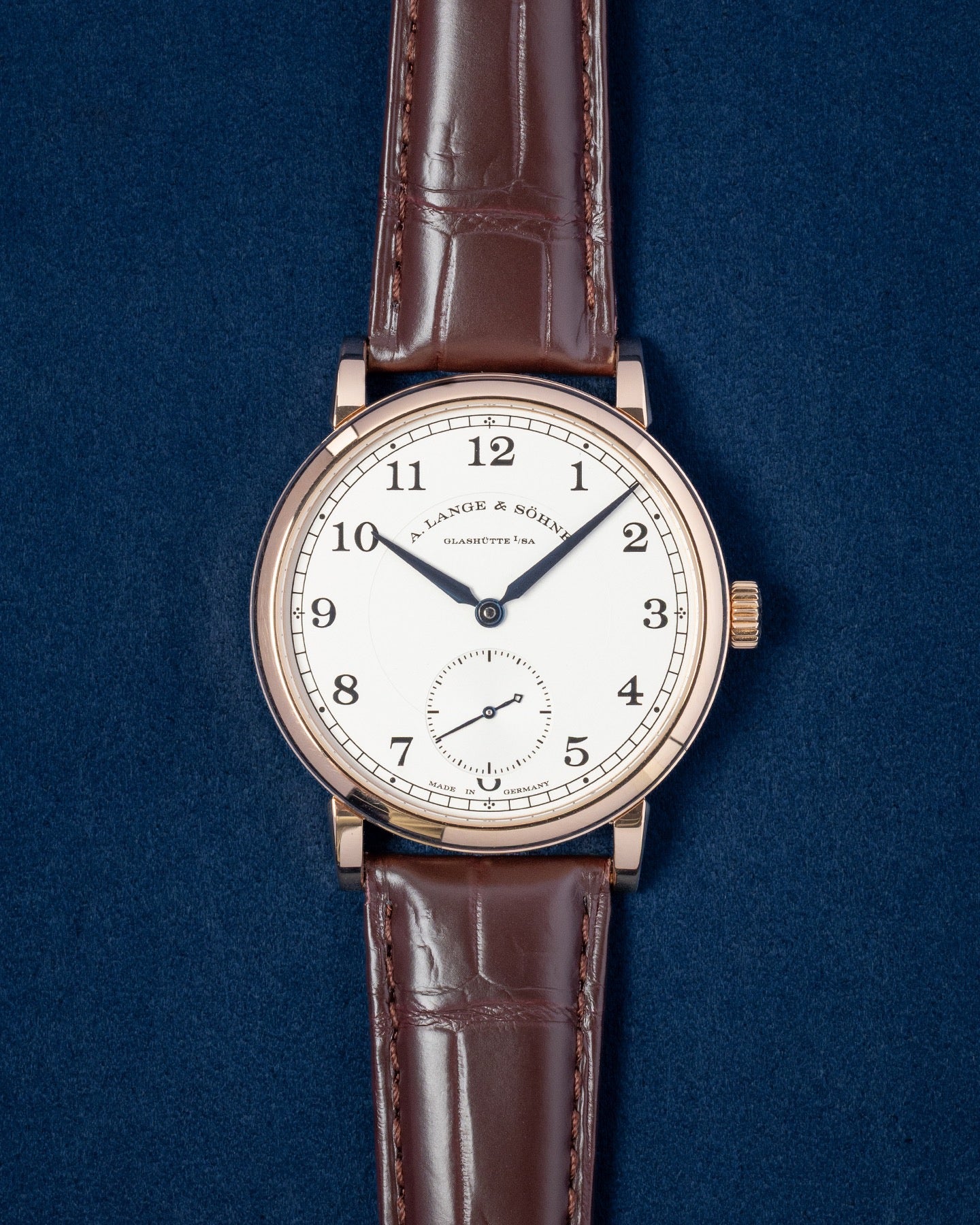
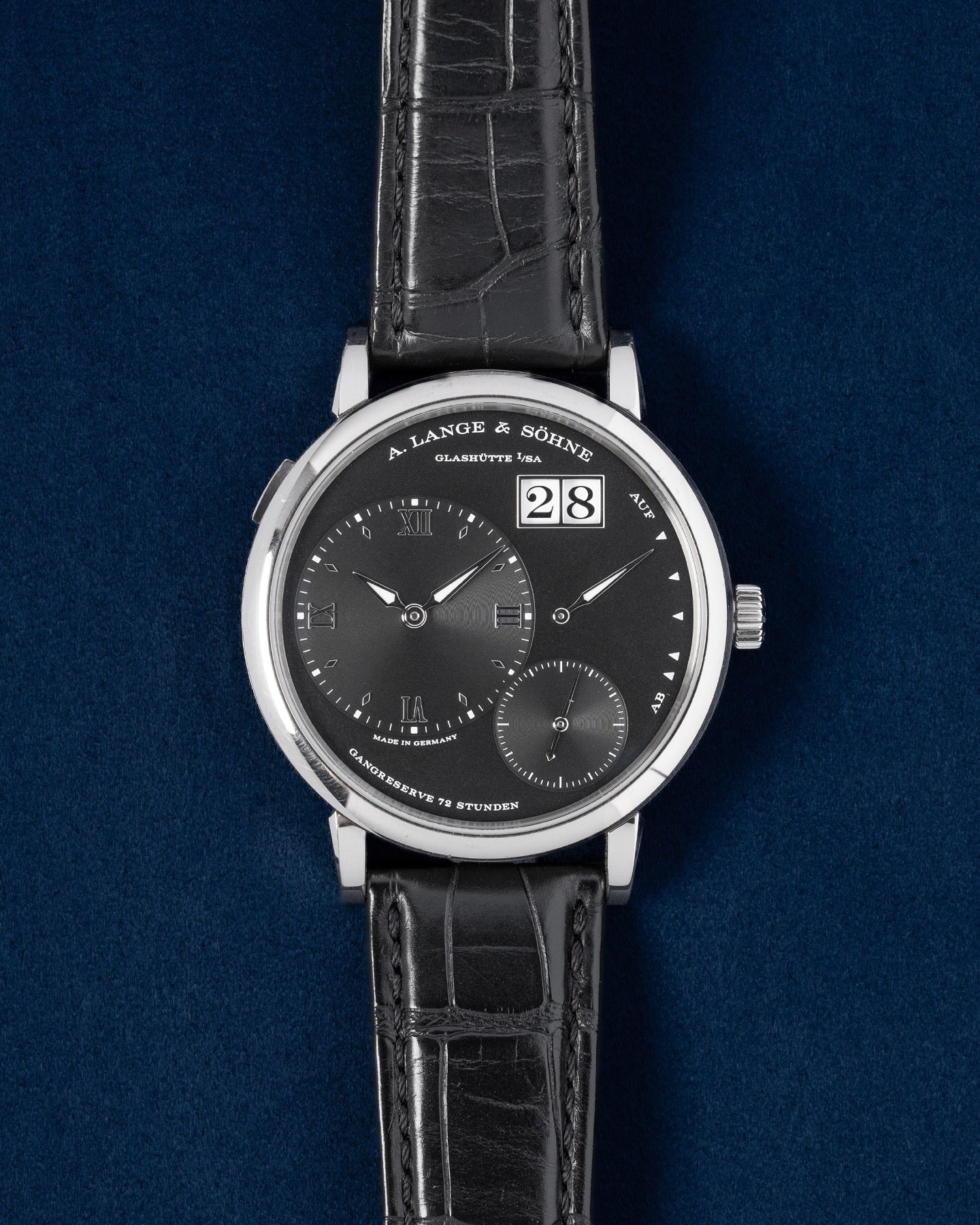
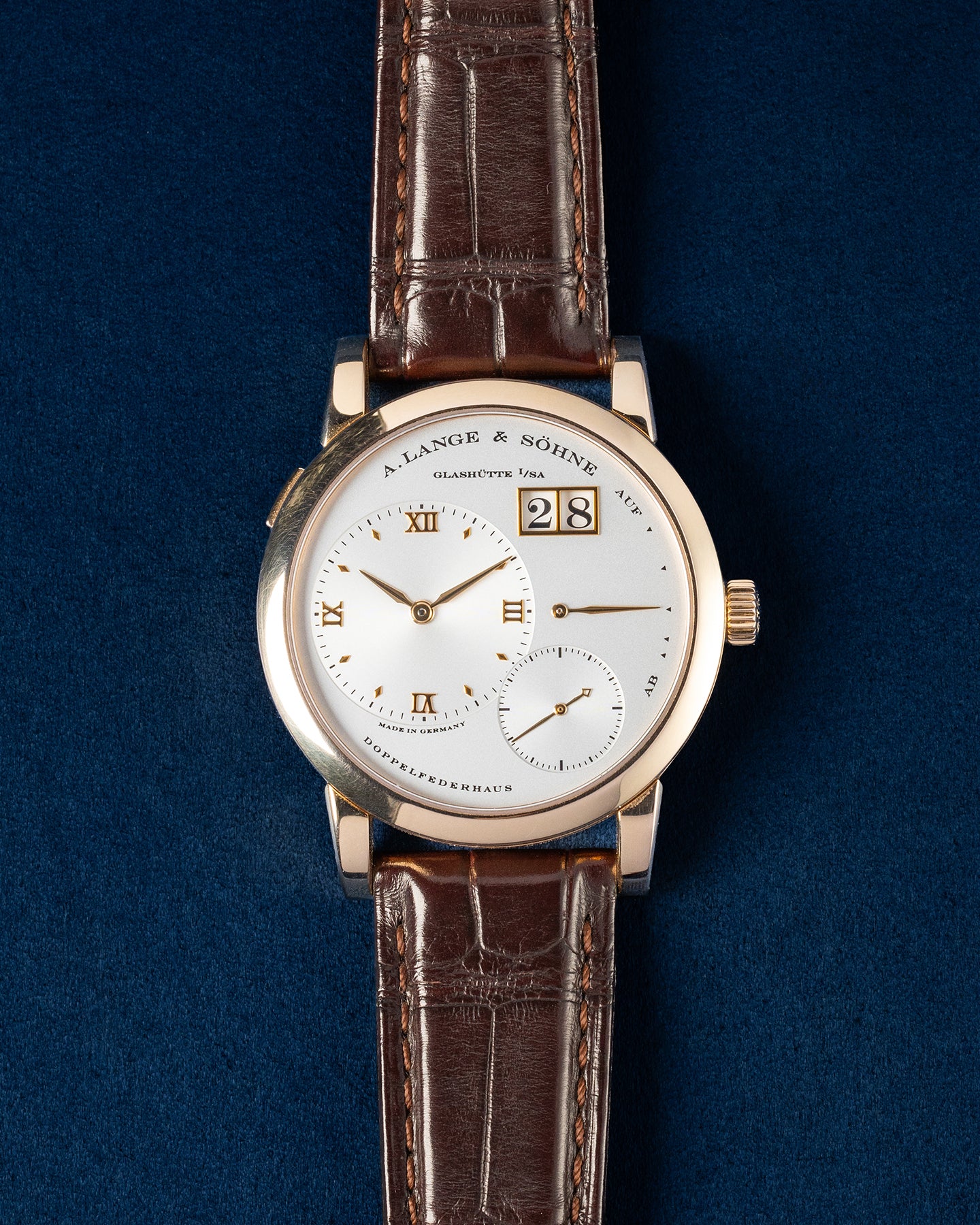
The Lange 1 is the watch that defines A. Lange and Söhne. Designed by Reinhard Meis, Günter Blümlein, and Walter Lange himself, the original 1994 reference 101.022 placed the hour and minute display off centered to the left of the dial, the running seconds at eight, the power reserve at three, and the outsize date at one o'clock, all arranged along proportions derived from the golden ratio. Nothing overlaps. The dial reads as both perfectly balanced and structurally asymmetric, which is the design problem most copycats have failed to solve in the thirty plus years since. The outsize date complication, the first patent the reborn manufacture filed, was inspired by the five minute clock that sits above the stage of the Semper Opera House in Dresden, a clock built by the brothers in law of Ferdinand Adolph Lange in the 1840s. The clock uses two large discs to display time digitally above an audience of thousands. A. Lange and Söhne watches translated that mechanism into a wristwatch aperture three times the size of any conventional date window.
The current Lange 1 references include 191.032 in pink gold, 191.039 in white gold, and a yellow gold variant, all powered by the manually wound calibre L121.1, introduced in 2015 with a 72 hour power reserve and a free sprung balance with eccentric poising weights and in house hairspring. The case measures 38.5 millimeters by 9.8 millimeters, sized for the classical wrist rather than the contemporary statement. The collection extends through the Lange 1 Daymatic, the self winding mirror image of the standard Lange 1 introduced in 2010 with retrograde day of week display, which received a 250 piece limited Honeygold edition reference 320.050 launched in December 2025 at approximately 75,000 euros. The Lange 1 Time Zone, the Lange 1 Moon Phase, the Grand Lange 1, the Lange 1 Perpetual Calendar with calibre L021.3 introduced in 2021, the Little Lange 1 for smaller wrists, and the Lange 1 Tourbillon Perpetual Calendar continue to expand what a Lange 1 can do without ever compromising the dial layout that made it an icon. In April 2026 the manufacture launched the Lange 1 Tourbillon Perpetual Calendar Lumen, a 50 piece platinum limited edition with semi transparent sapphire dial, powered by calibre L207.1 at 3 hertz with a 60 hour reserve and 685 movement parts. A fully functional five meter tall replica anchored the brand's stand at Watches and Wonders Geneva 2026, which is how seriously A. Lange and Söhne watches treat the Lange 1 as their flagship.
The Saxonia Family
If the Lange 1 is the architectural statement, the Saxonia is the dress watch backbone of A. Lange and Söhne watches. Named after the federal state where Glashütte sits, the Saxonia was one of the original 1994 First Four, presented alongside the Lange 1 with caliber L941.3 and a 33.9 millimeter case in yellow gold. It carried the outsize date at twelve and the subsidiary seconds at six, and it cost 16,900 Deutsche Marks at launch, which is roughly the entry point of the modern Saxonia line today. Where the Lange 1 commands attention, the Saxonia simply works. The line has become the entry tier into A. Lange and Söhne watches for collectors who care about movement architecture and have no need for the louder Lange 1 dial.
The current Saxonia catalogue includes the Saxonia Thin, the manufacture's flattest watch at 38 millimeters by 6.3 millimeters powered by calibre L093.1 with 72 hours of reserve, available with applied indices or a clean two hand variant. The Saxonia Outsize Date pairs the family's signature complication with the cleaner Saxonia dial geometry. The Saxonia Automatic and Saxonia Dual Time, the latter powered by calibre L086.2 with 72 hours of reserve, broaden the wearing case for daily use. In October 2025 the manufacture released a 200 piece Saxonia Thin Onyx Honeygold and a parallel 200 piece platinum onyx version, both with jet black onyx dials. At Watches and Wonders Geneva 2026, A. Lange and Söhne launched the new Saxonia Annual Calendar in a compact 36 millimeter by 9.8 millimeter case, with a self winding movement, an outsize date at twelve, day at nine, month at three, moon phase sharing the subsidiary seconds at six, available in white gold with argenté dial or pink gold with grey dial at approximately 50,000 euros, marketed as the wearable counterpoint to the Lange 1 Tourbillon Perpetual Calendar Lumen. The Saxonia is where new Lange collectors typically enter the brand and where seasoned collectors keep returning when they want the finishing without the noise.
The 1815 Family
The 1815 line takes its name from the birth year of Ferdinand Adolph Lange, and the watches translate his pocket watch aesthetic onto the modern wrist with more deliberate fidelity than any other A. Lange and Söhne watches. Arabic numerals, railway track minute scales with the three dot quarter marks borrowed directly from nineteenth century Glashütte pocket pieces, blued steel hands, soldered lugs with the brushed and polished case band that marks every traditional Lange. At Watches and Wonders Geneva 2025, A. Lange and Söhne refreshed the time only 1815 in a new 34 millimeter by 6.4 millimeter case with blue dial, in references 220.028 white gold and 220.037 pink gold, powered by the newly developed calibre L152.1, which is the 75th in house caliber the manufacture has produced since the 1994 reestablishment.
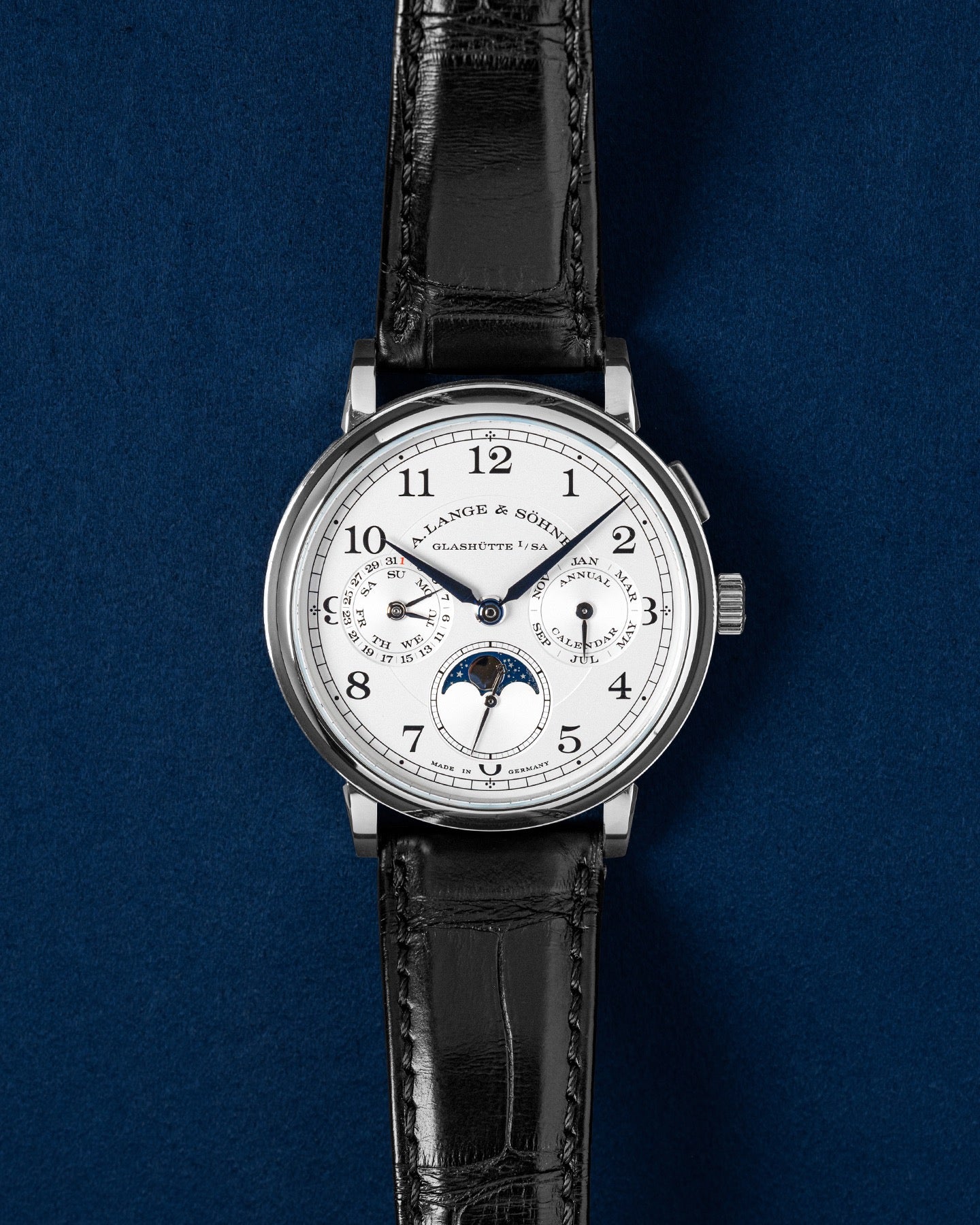
The 1815 Chronograph reference 401.031 carries the calibre L951.0, the same architecture as the Datograph minus the big date, with a 36 hour power reserve, jumping minute counter, and flyback function that allow instantaneous reset and restart with a single pusher activation. The 1815 Annual Calendar in references 238.026 white gold and 238.032 pink gold combines analogue date, day, month, and a moon phase display calculated to remain accurate for 122.6 years. At the top of the 1815 collection sits the 1815 Rattrapante Perpetual Calendar with calibre L101.1, a 41.9 by 14.7 millimeter case combining split seconds chronograph and perpetual calendar, current pricing in the 160,000 to 200,000 euro range and limited editions running considerably higher. The 1815 line is where Lange's classical pocket watch DNA meets modern complication engineering, and it is also where the brand has placed some of its most coveted Honeygold limited editions, including the 1815 Thin Honeygold Homage to F.A. Lange limited to 175 pieces in 2020.
The Datograph and Lange Chronographs
If one watch crystallizes why serious collectors choose A. Lange and Söhne watches over Patek Philippe, it is the Datograph. Introduced at Baselworld 1999, the Datograph reference 403.035 in platinum debuted calibre L951.1, the first new in house chronograph movement from a major manufacture in many years, presented at a moment when Patek Philippe was still building the 5070 around the Lemania 2310 ebauche. The L951.1 was developed from the ground up. It combined a column wheel chronograph with a flyback function and a precisely jumping minute counter, all driven by a horizontal clutch with a lateral coupling and held under the brand's signature German silver three quarter plate. The case measured 39 millimeters and the dial layout, with subsidiary registers shifted slightly downward to accommodate the outsize date at twelve, was unlike anything the chronograph world had seen. The watchmaker Tim Mosso has called it the Dufourgraph because the finishing rivals Philippe Dufour's Simplicity. Other watchmakers regard it as the finest manually wound chronograph caliber in serial production.
The Datograph family has expanded through five generations of related calibers. The L951.5 powers the 1815 Chronograph. The L951.6, introduced in 2012 with the Datograph Up Down reference 405.035, extended the power reserve to 60 hours, integrated a power reserve indicator at six o'clock, and added a balance with in house hairspring across 451 parts in a 41 millimeter case. The L951.7 powers the Datograph Lumen platinum reference with semi transparent dial. The L951.8 in the Datograph Handwerkskunst marked the 25th anniversary in 2024 with black polished chronograph levers, tremblage engraving on the dial, and granular three quarter plate decoration. The Datograph Perpetual reference 410.038 combines the chronograph with a perpetual calendar via calibre L952.1. The Datograph Perpetual Tourbillon, powered by calibre L952.2 across 729 parts with a 50 hour power reserve, was reissued as the Datograph Perpetual Tourbillon Honeygold Lumen at Watches and Wonders 2024. The first generation Datograph 403.035 in platinum, originally retailing for around 40,000 dollars, has been a sustained collector trophy with current pre owned pricing well into six figures, and the pink gold reference 403.032 commands similar respect. A. Lange and Söhne watches in the Datograph family are why movement first collectors keep returning to the brand.
The Zeitwerk Collection
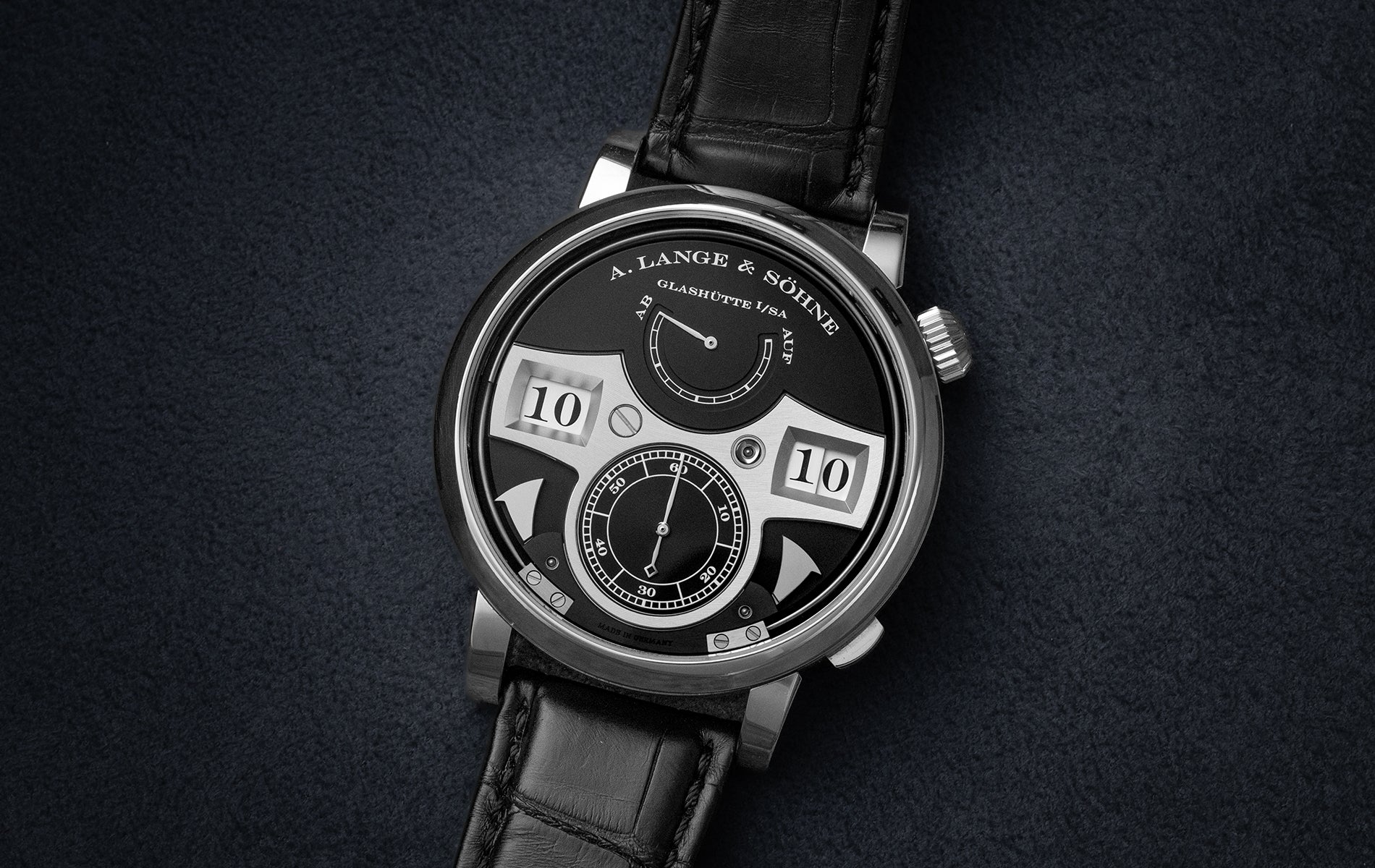
The Zeitwerk is what happens when a manufacture takes the question of mechanical digital display seriously. Launched in 2009 after years of development driven by Günter Blümlein's late challenge to create a digital readout with a fully mechanical heart, the Zeitwerk reads time left to right across three numeral discs framed by a single bridge across the dial, with jumping minutes and hours that advance instantaneously rather than sweeping. Inspiration came from the same five minute clock at the Semper Opera House in Dresden that informed the outsize date. Inside, the original calibre L043.1 used 388 parts and a patented dial side constant force escapement that releases stored torque in precise one minute bursts to drive the heavy disc mechanism, ensuring chronometer grade accuracy across the 36 hour power reserve. To prevent overwinding past the constant force threshold, the L043.1 incorporates a Maltese cross stop work mechanism similar to the one used in the first generation Datograph.
The current production Zeitwerk references run on calibre L043.6, which introduced twin mainspring barrels to double the power reserve to 72 hours and added a pusher at four o'clock for quick hour adjustment, all in a 41.9 by 12.6 millimeter case. The Zeitwerk Date with calibre L043.8 enlarges the case to 44.2 by 12.3 millimeters and adds a peripheral date ring with red highlight, across 516 parts. The Zeitwerk Striking Time pairs the digital display with an audible chime at the quarters. The Zeitwerk Minute Repeater with calibre L043.5 incorporates a decimal repeater striking hours, ten minute intervals, and minutes through gongs positioned along the dial bridge. The Zeitwerk Handwerkskunst limited editions extend the family with rarefied finishing techniques on the dial and movement. The Zeitwerk Honeygold Lumen with calibre L043.9 was limited to 200 pieces and was the first Lumen treatment applied to a Honeygold case. The Zeitwerk shows what A. Lange and Söhne watches can do when the manufacture decides to push past convention and ask whether an entirely new approach to mechanical timekeeping is possible.
The Odysseus Sports Watch
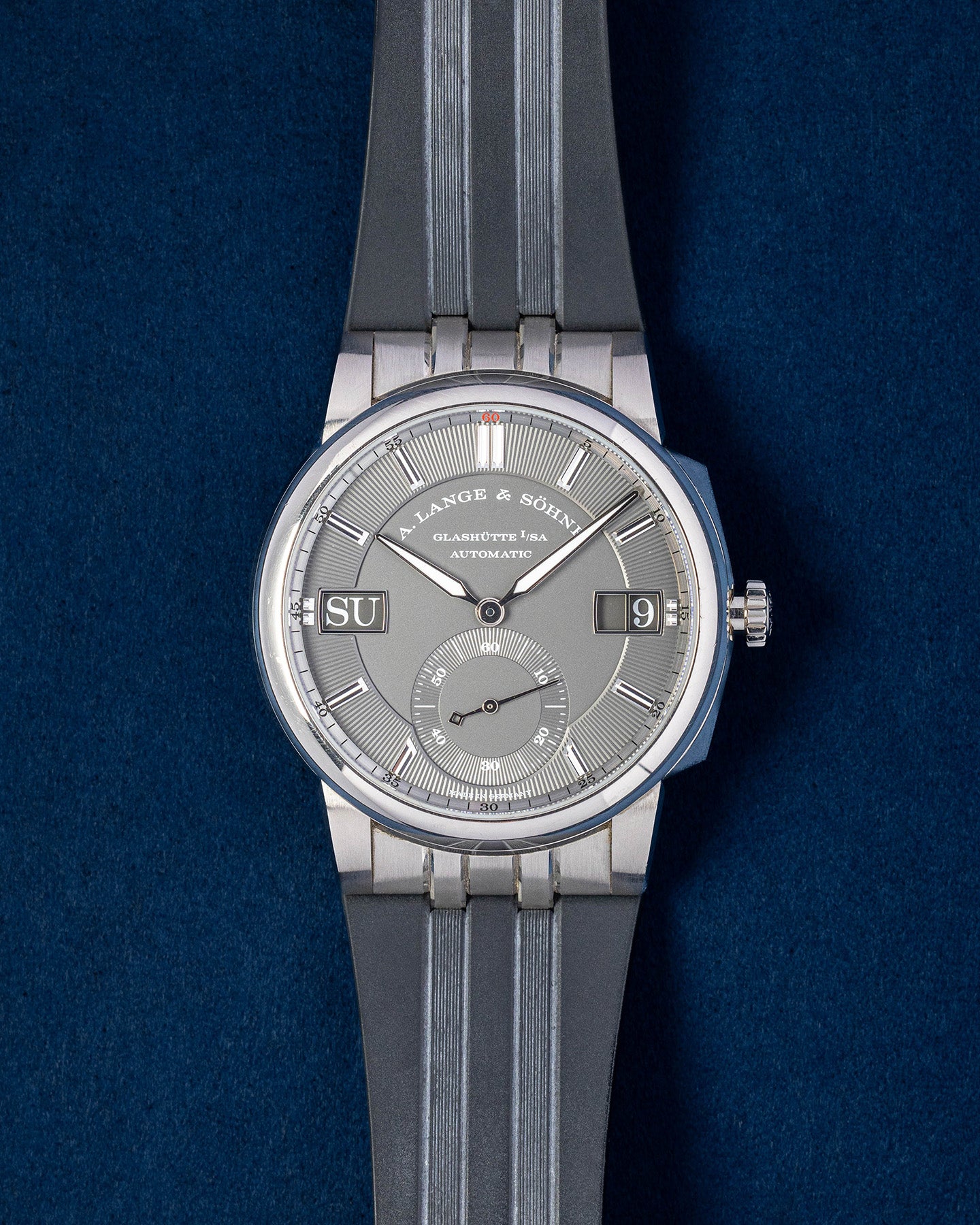
In October 2019, on the brand's 25th anniversary, A. Lange and Söhne released the Odysseus reference 363.179 in stainless steel, the first series production stainless steel watch in the manufacture's modern history and the first luxury sports watch the brand had ever made. Thirteen years of development sat behind that launch. The 40.5 by 11.1 millimeter case carries a screw down crown rated to 120 meters of water resistance, signature Lange lugs that are screwed rather than welded to allow easier service refinishing, and an integrated five row bracelet with a ratcheting clasp that allows seven millimeters of length adjustment without opening the buckle. The dial carries an outsize date at three, a day of week display in the same size at nine, and a small seconds at six, with applied baton indices and lancet hands in white gold filled with green lume.
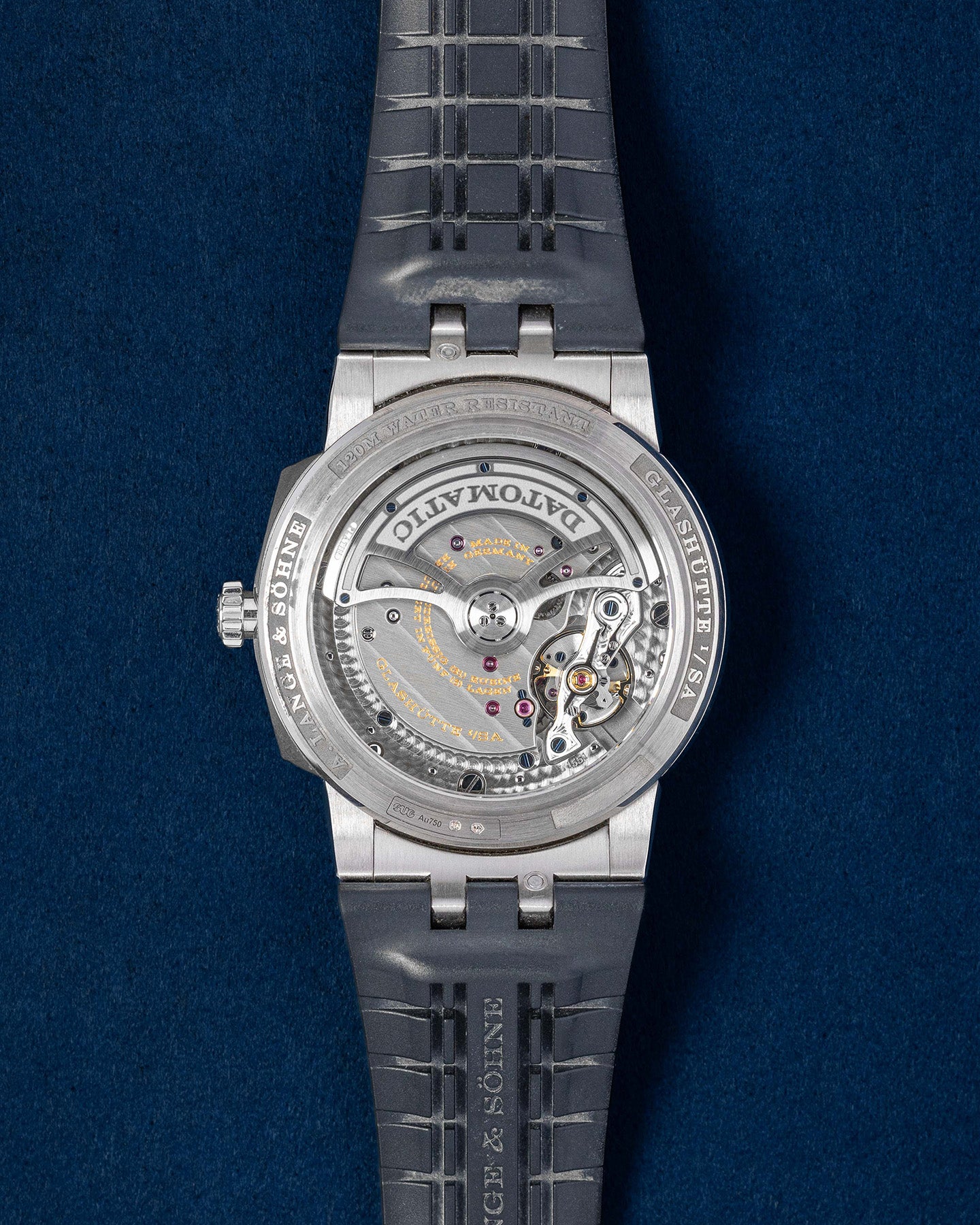
Inside runs the calibre L155.1 Datomatic, the brand's first self winding caliber developed specifically for the Odysseus, with a 50 hour power reserve, 4 hertz frequency, and a central rotor with a platinum centrifugal mass on an ARCAP base. Movement architecture remains classical A. Lange and Söhne with German silver plates, blued screws, gold chatons, and the hand engraved balance cock visible through the sapphire case back. The Odysseus launched at 28,800 dollars in 2019 and quickly became one of the most difficult Lange references to obtain at retail, trading at premiums of thirty to fifty percent above list during the 2020 to 2022 market peak before settling closer to current secondary pricing around 39,000 dollars. The collection expanded with the white gold reference 363.068 on integrated leather or rubber strap in 2020, a titanium variant in ice blue, and at Watches and Wonders Geneva 2025 the manufacture introduced the Odysseus Honeygold reference 363.150 limited to 100 pieces at approximately 130,000 euros, marking the first time A. Lange and Söhne watches appeared with both case and integrated bracelet in the proprietary alloy. The Odysseus sits in its own category. It is not chasing the Royal Oak or the Nautilus. It is a sports watch with the finishing and architecture of a Lange dress piece, which is its own argument.
The Richard Lange Family
Where the 1815 honors Ferdinand Adolph Lange, the Richard Lange line honors his son, who patented the use of beryllium in balance springs in 1932 and remained Glashütte's most technically minded craftsman through the early twentieth century. The Richard Lange collection within A. Lange and Söhne watches focuses on legibility and precision instrument heritage. The original Richard Lange of 2006 carried a central seconds layout and an in house balance system that paid tribute to Richard Lange's hairspring patent. The Richard Lange Jumping Seconds brought a regulator dial and deadbeat seconds complication. The Richard Lange Pour le Mérite and Richard Lange Tourbillon Pour le Mérite, the latter introduced in 2011 with calibre L072.1, combine the fusée and chain transmission with a tourbillon across 987 parts in a 41.9 by 12.2 millimeter case at 3 hertz with 36 hours of reserve, with a 15 piece Honeygold Handwerkskunst variant reference 761.050.
The Richard Lange Perpetual Calendar Terraluna
The pinnacle of the Richard Lange family is the Richard Lange Perpetual Calendar Terraluna, introduced in 2014 in white gold reference 180.026 and pink gold reference 180.032. The 45.5 by 16.5 millimeter case is large by any standard, but it earns the space. Inside, calibre L096.1 provides 336 hours of power reserve, a full fourteen days, through twin stacked mainspring barrels and a remontoir on the fourth wheel that rewinds every ten seconds for constant torque delivery. The dial side reproduces the regulator layout of an 1807 Johann Heinrich Seyffert pocket chronometer built for the explorer Alexander von Humboldt, with hours at three, minutes at twelve, seconds at nine, and an instantaneous perpetual calendar. The movement side carries an orbital moon phase display formed by three overlapping solid gold discs, with a laser etched celestial disc carrying 2,160 stars rotating around an Earth viewed from the North Pole over a 29 day 12 hour 44 minute 9.6 second synodic cycle, accurate to one day in 1,058 years. The Terraluna is one of the most ambitious calendar wristwatches ever built, and it is one of the watches that, more than any other, demonstrates why serious collectors regard A. Lange and Söhne watches as horological art rather than fashion.
Pour le Mérite and the Tourbograph
The Pour le Mérite series within A. Lange and Söhne watches represents the absolute peak of what the manufacture builds. The name comes from a Prussian order of merit established in 1740, and the predicate has been used by the brand only for watches that combine the fusée and chain transmission with a higher complication. The 1994 Tourbillon Pour le Mérite launched the series. The Tourbograph Pour le Mérite of 2005 added a rattrapante chronograph to the existing tourbillon and fusée chain combination across calibre L903.0. The Richard Lange Tourbillon Pour le Mérite of 2011 brought the family into the Richard Lange line.
The Tourbograph Perpetual and the Grand Complication
The Tourbograph Perpetual Pour le Mérite, introduced in 2017 and produced as a limited edition of fifty platinum pieces with calibre L133.1, combined five complications in a single 43 millimeter wristwatch case: fusée and chain transmission, tourbillon, chronograph, rattrapante, and perpetual calendar. The L133.1 movement comprises 684 parts, with the fusée chain alone containing 636 individual links visible through the sapphire case back. A parallel 50 piece Honeygold edition, the Tourbograph Perpetual Honeygold Homage to F.A. Lange, followed soon after with a black rhodiumed dial featuring raised Honeygold numerals. At the very top of the Lange canon sits the 2013 Grand Complication, a six piece run that combined a grande sonnerie, petite sonnerie, minute repeater, perpetual calendar, moon phase, monopusher split seconds chronograph, and jumping seconds in a single 50 millimeter pink gold case at a retail price of 1.92 million euros. It remains the most complicated watch the manufacture has ever produced. These pieces are not for the casual buyer. They define the upper boundary of what A. Lange and Söhne watches are capable of, and they justify the brand's position alongside Patek Philippe and Vacheron Constantin in any honest accounting of haute horlogerie.
Movement Architecture and Manufacturing
The German Silver Three Quarter Plate
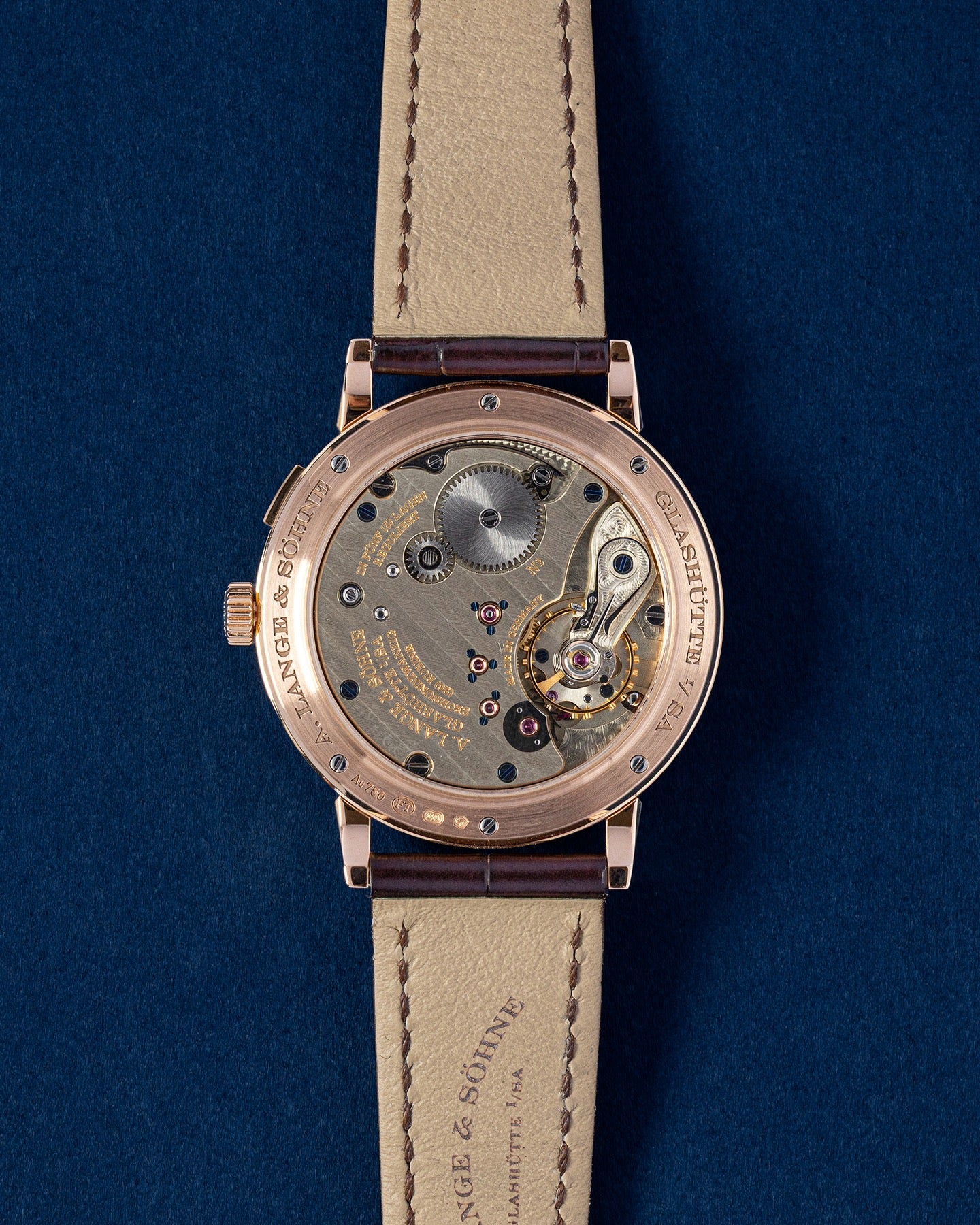
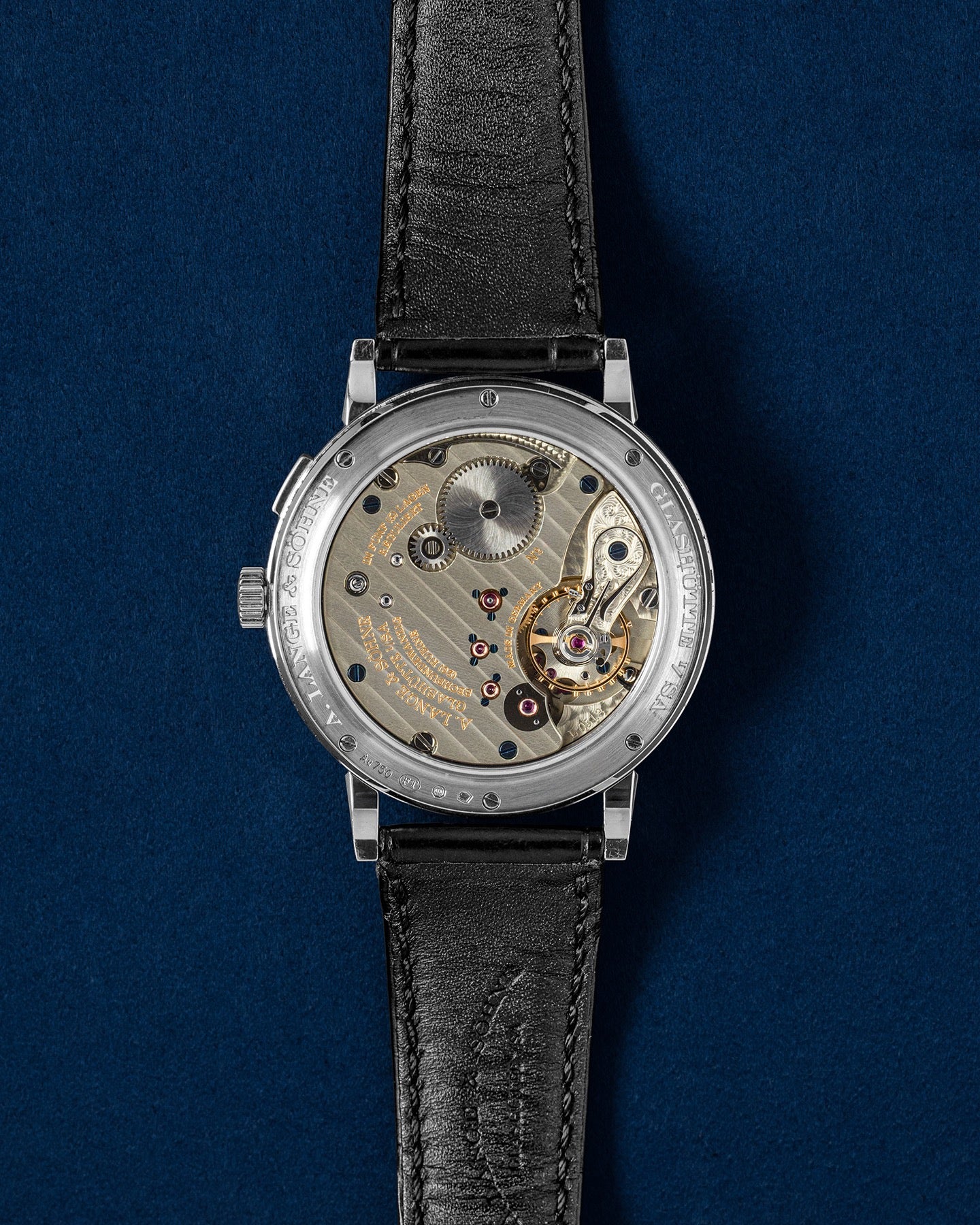
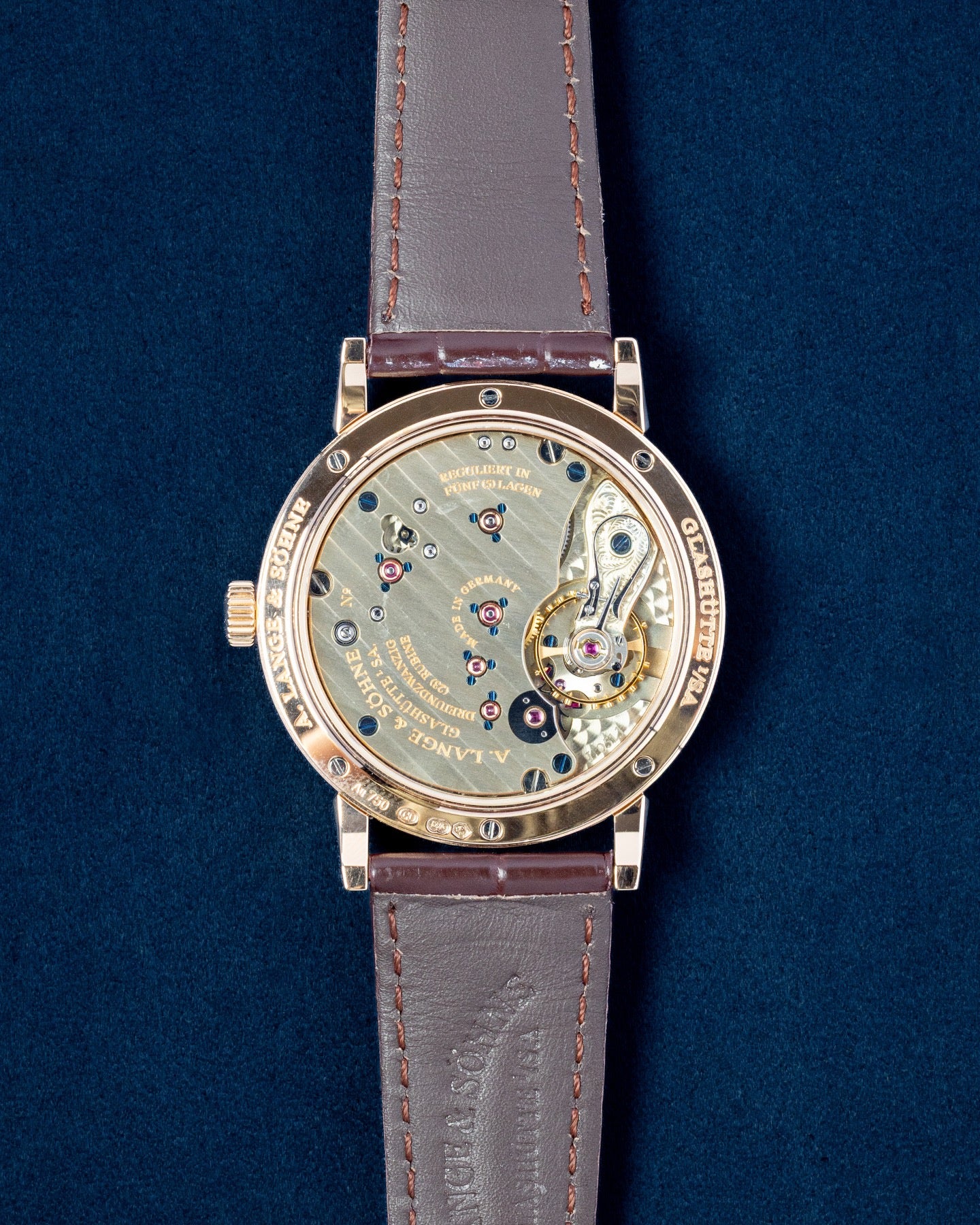
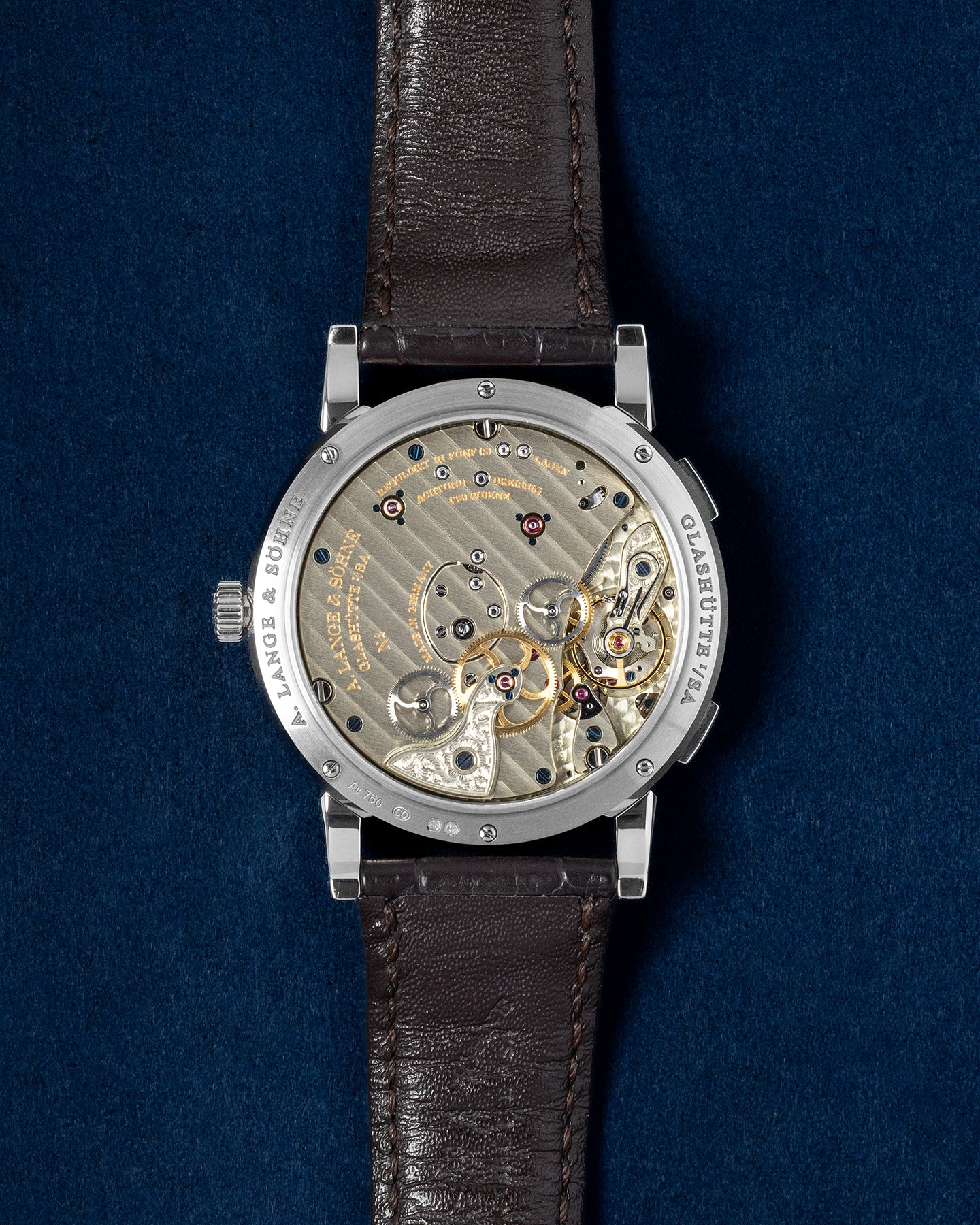
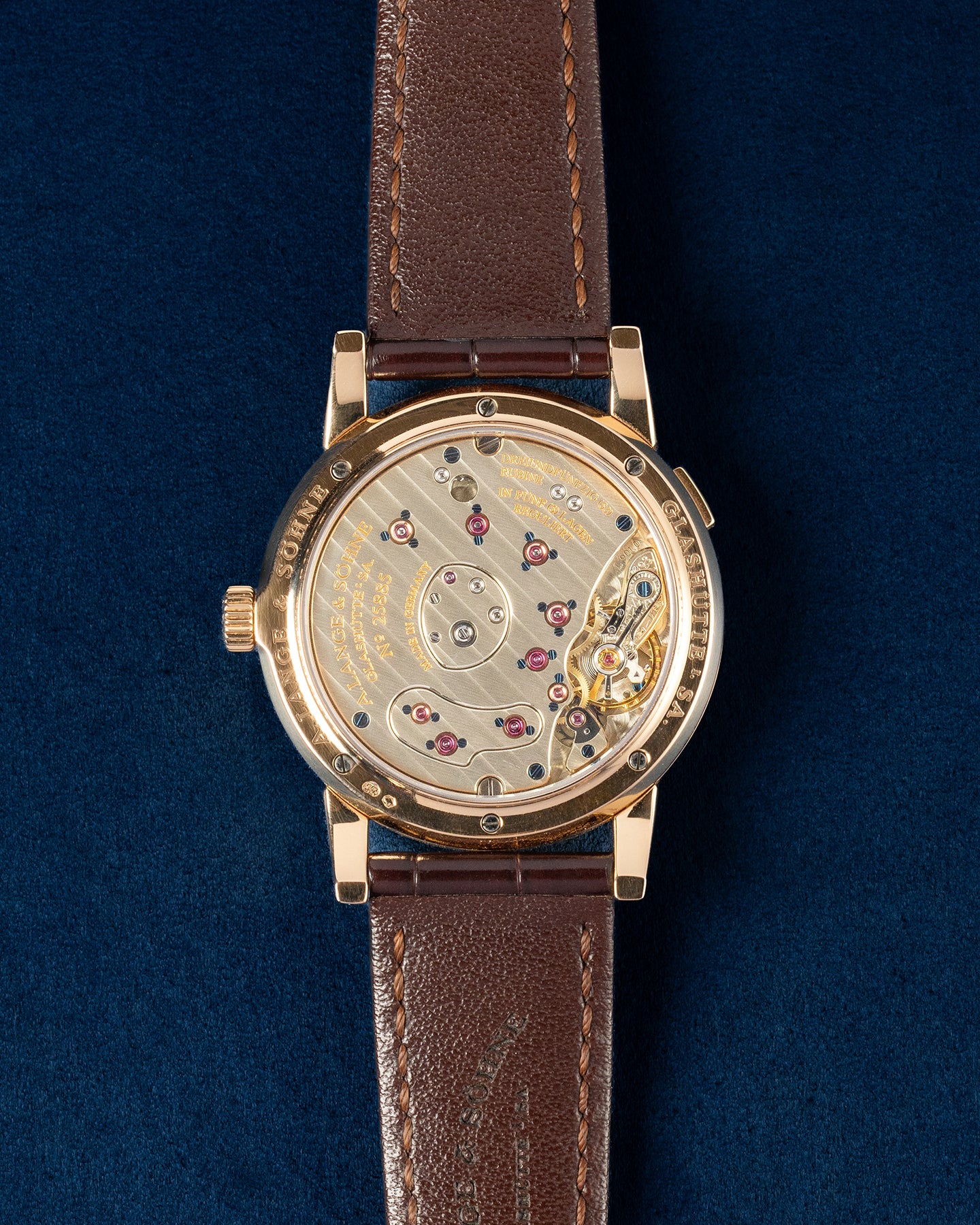
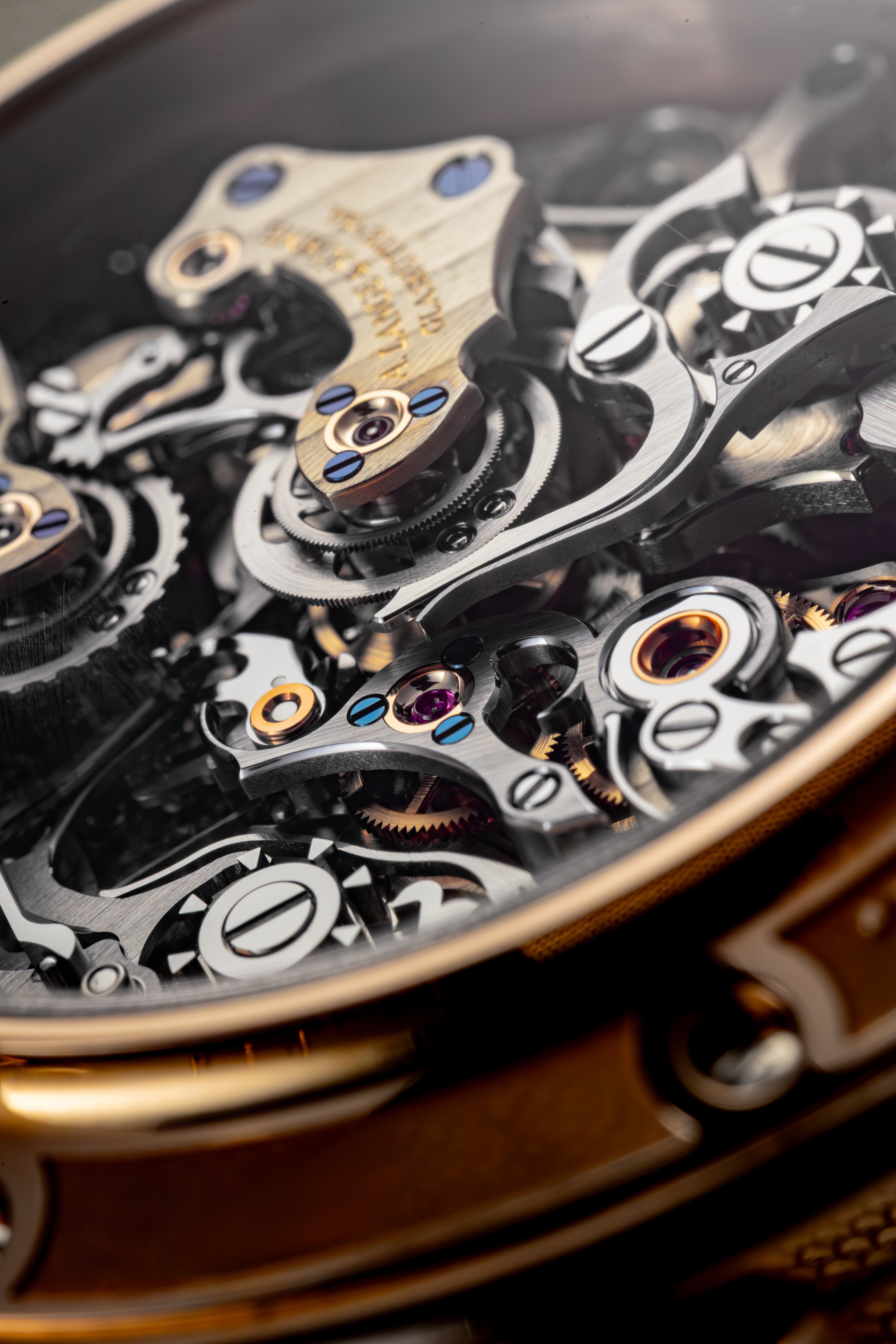
The single most identifiable mechanical feature of A. Lange and Söhne watches is the three quarter plate made of untreated German silver, an alloy of copper, nickel, and zinc that takes a warm gold yellow patina over time rather than receiving a rhodium plating. Ferdinand Adolph Lange refined the three quarter plate over nearly twenty years of development, with the definitive shape emerging by 1864 and his US patent following in March 1875. The principle was straightforward. Rather than mounting the wheel train under individual bridges, which permit individual pivots to shift over time and degrade precision, Lange covered the entire visible movement structure with a single plate that fixes every wheel arbor in stable position. Only the balance cock with the oscillation system remains exposed.
Glashütte Ribbing, Gold Chatons, and Twofold Assembly
In modern production, the three quarter plate is milled and wire EDM cut to tolerances measured in thousandths of a millimeter. Then it is finished by hand. Glashütte ribbing runs across the surface in fine parallel stripes that differ from Geneva striping in spacing and angle. Thermally blued screws secure four solid gold chatons, small gold rings that hold the ruby bearing jewels rather than the more common pressed in jewel construction used by virtually every other manufacture. The combination of the German silver substrate with its warm patina, the Glashütte ribbing, the blued screw color, and the gold chatons creates a visual signature that no other movement architecture replicates. CEO Wilhelm Schmid has explained that the German silver substrate is also why the manufacture committed to its assembly process. The metal oxidizes under fingerprints and breath, so every movement that passes through Lange's workshops is assembled, regulated, completely disassembled, cleaned, and then reassembled a second time before final casing. Every A. Lange and Söhne watch in current production goes through this twofold assembly, and the time required is one of the structural reasons annual production sits at approximately 5,000 watches.
Hand Engraved Balance Cocks
The most personal element of any A. Lange and Söhne watch is the hand engraved balance cock. Every single watch the manufacture builds, from the entry tier Saxonia Thin to the Grand Complication, carries a balance cock cut by hand by one of six master engravers working from the Glashütte workshop. The floral pattern is loosely consistent across the line, but no two are identical. Each engraver brings personal style and interpretation to the work, with individual pieces requiring between fifty and ninety hours of engraving time for the most elaborate Handwerkskunst variants. The result is that every owner of an A. Lange and Söhne watch carries on the wrist a movement element that was finished by a specific human being and that no other watch will ever exactly match.
Black Polish, Internal Angles, and In House Balance Springs
The rest of the movement carries the same depth of finishing. The chronograph levers in the Datograph caliber are finished with black polish, a technique that orients the surface to reflect incident light in only one direction, appearing jet black from one angle and mirror reflective from any other. Internal angles on the clutch lever and other steel components are hand polished to acute internal corners, a finish that cannot be produced by machine and that requires significant dexterity to execute consistently. The free sprung balance carries eccentric poising weights and an in house balance spring, manufactured at the Glashütte facility since 2003. Gold plated wheel train components, perlage on hidden surfaces, and finely chamfered edges across every part visible through the case back all combine into a movement aesthetic that operates on a different level from the Swiss approach. Patek Philippe, Vacheron Constantin, and Audemars Piguet finish their movements very well. Within A. Lange and Söhne watches, finishing is treated as integral to manufacturing rather than as a final decorative step, which is the philosophical difference that movement focused collectors recognize when they hold a Lange caseback under loupe.
Honeygold and the Limited Editions
The Honeygold Alloy
In 2010, on the brand's 165th anniversary, A. Lange and Söhne introduced the Honeygold alloy with a trilogy of homage pieces. The material is 75 percent pure gold combined with copper and zinc in a proprietary ratio that produces a warm hue sitting between rose and yellow gold with a slight greenish undertone, and it is harder than standard 18 karat gold or platinum. The alloy is registered as a trademark, reserved exclusively for limited and special editions, and used sparingly across the catalogue. In the fifteen years since its launch, only seventeen Honeygold editions have been produced. Each one is a defined limited run, and most sell out at the boutique allocation level.
Recent Honeygold Releases and Lumen Editions
Recent Honeygold milestones across A. Lange and Söhne watches include the 1815 Thin Honeygold Homage to F.A. Lange limited to 175 pieces in 2020, the Datograph Perpetual Tourbillon Honeygold Lumen of 2024, the Odysseus Honeygold reference 363.150 limited to 100 pieces at Watches and Wonders 2025, the Saxonia Thin Onyx Honeygold released in October 2025 in a 200 piece run, the parallel platinum Saxonia Thin Onyx in 200 pieces, and the Lange 1 Daymatic Honeygold reference 320.050 launched on 7 December 2025, limited to 250 pieces at approximately 75,000 euros and timed to honor both Ferdinand Adolph Lange's 1845 founding and Walter Lange's 1990 reregistration on the same calendar date. Honeygold pieces almost universally trade at or above retail in the secondary market and represent the most collectible tier of contemporary Lange production. The Lumen treatment, used on watches with semi transparent sapphire dials that allow luminous indications to read through, has appeared on seven A. Lange and Söhne watches since the first Zeitwerk Lumen in 2010 and continues to define the most ambitious technical pieces in the catalogue.
Production Scale and Manufacturing Philosophy
Annual Production and the Glashütte Facility
A. Lange and Söhne watches are made in extraordinarily small quantities by haute horlogerie standards. Annual production sits at approximately 5,000 watches, employing around 650 people at the Glashütte facility, which is housed in a two winged complex extending across 5,400 square meters at the southern entrance to the town. The complex is connected by a 13.5 meter glass bridge, powered by Saxony's largest geothermal energy plant using 55 downhole heat exchangers to depths of 125 meters, and operates as a carbon dioxide free facility. For context, Patek Philippe targeted approximately 72,000 watches in 2025, which means Patek produces in five weeks what A. Lange and Söhne watches do in a year. Estimates suggest total modern production from 1994 through 2018 sits below 80,000 watches across the entire brand history of the modern era, which is roughly the equivalent of fourteen months of Patek output.
In House Caliber Development and Watchmaker Training
Since 1994 the manufacture has developed over 72 in house calibers, an average of 2.3 brand new movements per year. No other manufacture, including Patek Philippe, Rolex, or Jaeger LeCoultre, has matched that pace of caliber development in any comparable period. The manufacture has trained its own watchmakers since 1997 through an in house apprenticeship program, with approximately twenty young apprentices entering each year for a three year program in which they learn movement assembly and repair, build their own tools, and eventually construct a complete mechanical wristwatch as their final project. Every component of an A. Lange and Söhne watch, including balance springs since 2003, is manufactured in Glashütte. The brand has been part of the Richemont Group since 2000, but operates as an independent entity that has never been pushed to consolidate or share production with Richemont's other watchmaking houses.
A. Lange and Söhne Watches Compared to the Swiss Holy Trinity
A. Lange and Söhne vs Patek Philippe
The honest comparison between A. Lange and Söhne watches and Patek Philippe comes down to philosophy. Patek Philippe carries the deepest historical liquidity, the strongest auction infrastructure, and the cultural recognition that allows resale in nearly any major city. A Patek Calatrava 6119 retails at around 29,570 dollars and holds 85 to 95 percent of retail in the secondary market. The Swiss approach treats movement finishing as an addition to mechanical performance. A. Lange and Söhne watches take the opposite philosophical approach. Finishing is integral to manufacturing. The double assembly process is non negotiable. The German silver three quarter plate, the hand engraved balance cock on every single watch, the screwed gold chatons, the black polished levers, and the in house balance spring all combine to produce movements that movement first collectors consistently rank above the Swiss equivalents. For collectors who want the Patek name, the answer is Patek. For collectors who want the movement, the answer is A. Lange and Söhne watches.
A. Lange and Söhne vs Vacheron Constantin and Audemars Piguet
Vacheron Constantin offers comparable finishing to Patek at slightly softer secondary pricing, with deep historical credentials going back to 1755. Audemars Piguet dominates the integrated bracelet sports watch category through the Royal Oak and Royal Oak Offshore lines. Philippe Dufour, the Swiss independent watchmaker whose Simplicity is considered the benchmark of hand finishing, has called Lange's finishing the finest serial production work in the industry. In secondary market terms, A. Lange and Söhne watches at the accessible end of the catalogue, including the Saxonia Thin and base Lange 1, trade 10 to 25 percent below retail, which creates value opportunities for buyers who prioritize movement architecture over brand status. Limited editions, Honeygold pieces, the Odysseus Steel, and the most complicated references like the Datograph Perpetual or Triple Split routinely trade at or above retail. The Datograph Up Down platinum sold for around 55,000 dollars on the secondary market before 2020 and has appreciated substantially since. The Double Split, discontinued in 2017, has tracked similarly.
The Lange Aesthetic and Why Owners Stay
How a Lange Wears on the Wrist
Wearing an A. Lange and Söhne watch is a particular experience that any owner can describe but that does not photograph well. The case sits heavier on the wrist than a comparable Patek because the case walls are thicker and the lugs are constructed as separate elements soldered or screwed onto the case middle rather than flowing organically from it, a deliberate design choice from Günter Blümlein in the 1990s to differentiate the visual language from Swiss practice. The dial reads as more architectural, with longer indices, more precise typography, and a level of three dimensional depth that Saxon dial production has refined over decades. The outsize date, on the references that carry it, anchors the dial in a way no smaller date display can replicate. Even the simplest Saxonia Thin carries a presence that announces serious watchmaking without announcing the brand name.
The Movement Visible Through the Caseback
The reason owners stay with A. Lange and Söhne watches has less to do with the front of the watch and everything to do with the back. The sapphire case back on every modern Lange reveals a movement that operates on a level of visual richness that simply does not exist anywhere else. The warm gold yellow patina of the untreated German silver plate, the cobalt blue of the thermally fired screws, the gold of the chatons, the red of the ruby bearings, and the floral unique engraving on the balance cock combine into a small piece of visual art that the wearer alone gets to enjoy. Wilhelm Schmid, the brand's CEO since 2010, has said in interviews that Lange exists for the customer who knows what they are looking at, not for the customer who needs to be told. That positioning is why A. Lange and Söhne watches occupy the niche they do, and it is why owners typically buy more than one once they understand the catalogue.
A. Lange and Söhne Watches at Grand Caliber in Uptown Dallas
Showroom Inventory and Sourcing
Grand Caliber stocks A. Lange and Söhne watches across the full current catalogue and the most coveted discontinued references in our Uptown Dallas showroom at 2811 McKinney Avenue. Current production Lange 1, Saxonia, 1815, Datograph, Zeitwerk, Odysseus, and Richard Lange pieces ship from our authenticated inventory with all original boxes, papers, and warranty documentation where available. Discontinued references including the first generation Datograph 403.035 in platinum, the Double Split, the Triple Split, the Tourbograph Perpetual Pour le Mérite, and the most collectible Honeygold limited editions appear in our inventory through our trade and consignment network. We post every price openly online. There is no waitlist, no buy in requirement, no boutique allocation game, and no quiet markup applied after you walk in.
Authentication, Service Records, and Contact
Every A. Lange and Söhne watch sold by Grand Caliber is authenticated in house by our team, which includes specialists with direct experience in Glashütte movement architecture, German silver patination evaluation, and the finishing patterns specific to each engraver who has worked on the manufacture's balance cocks. Service history, completeness of set, and movement originality are documented on every piece before it goes on the floor. We are an independent dealer and we compete nationally with Bob's Watches and the major secondary market houses on price, transparency, and inventory depth, with the added advantage that buyers in Dallas and the surrounding region can handle the watches in person before purchase. Call 214-225-7198 or email info@grandcaliber.com to ask about a specific reference, schedule a private showroom appointment, or arrange shipping to anywhere in the United States. The A. Lange and Söhne watches we stock are the result of careful sourcing, honest pricing, and a depth of horological knowledge that the brand's buyers tend to appreciate.


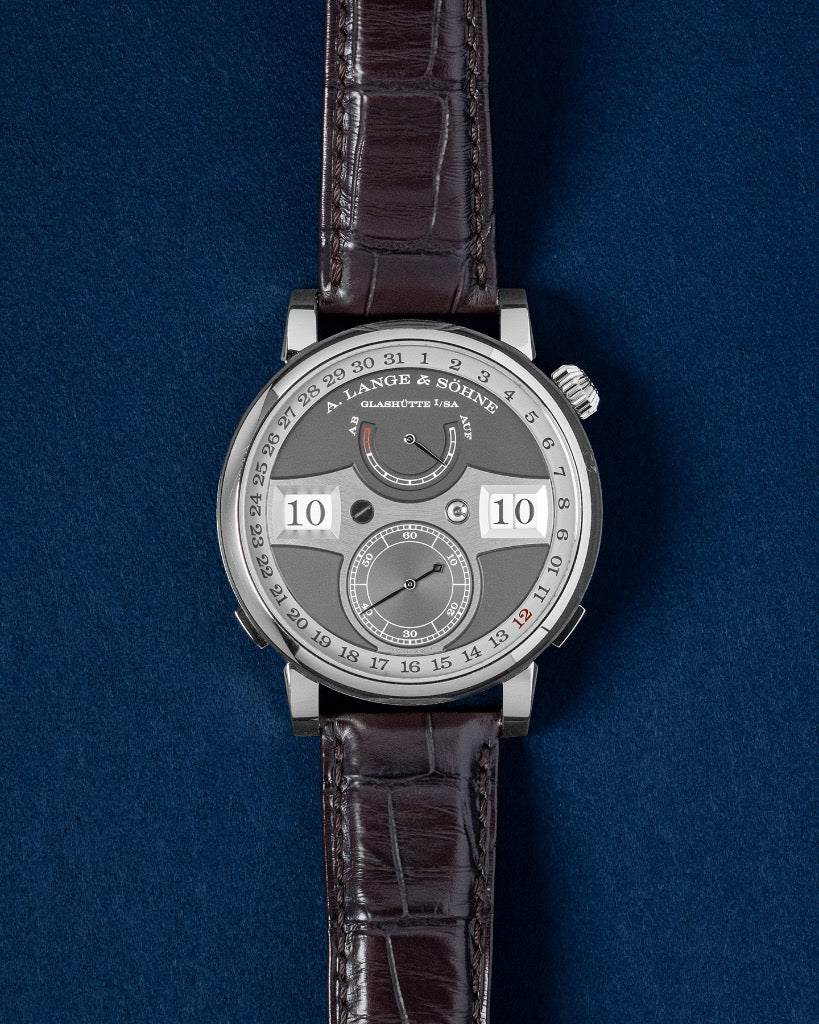
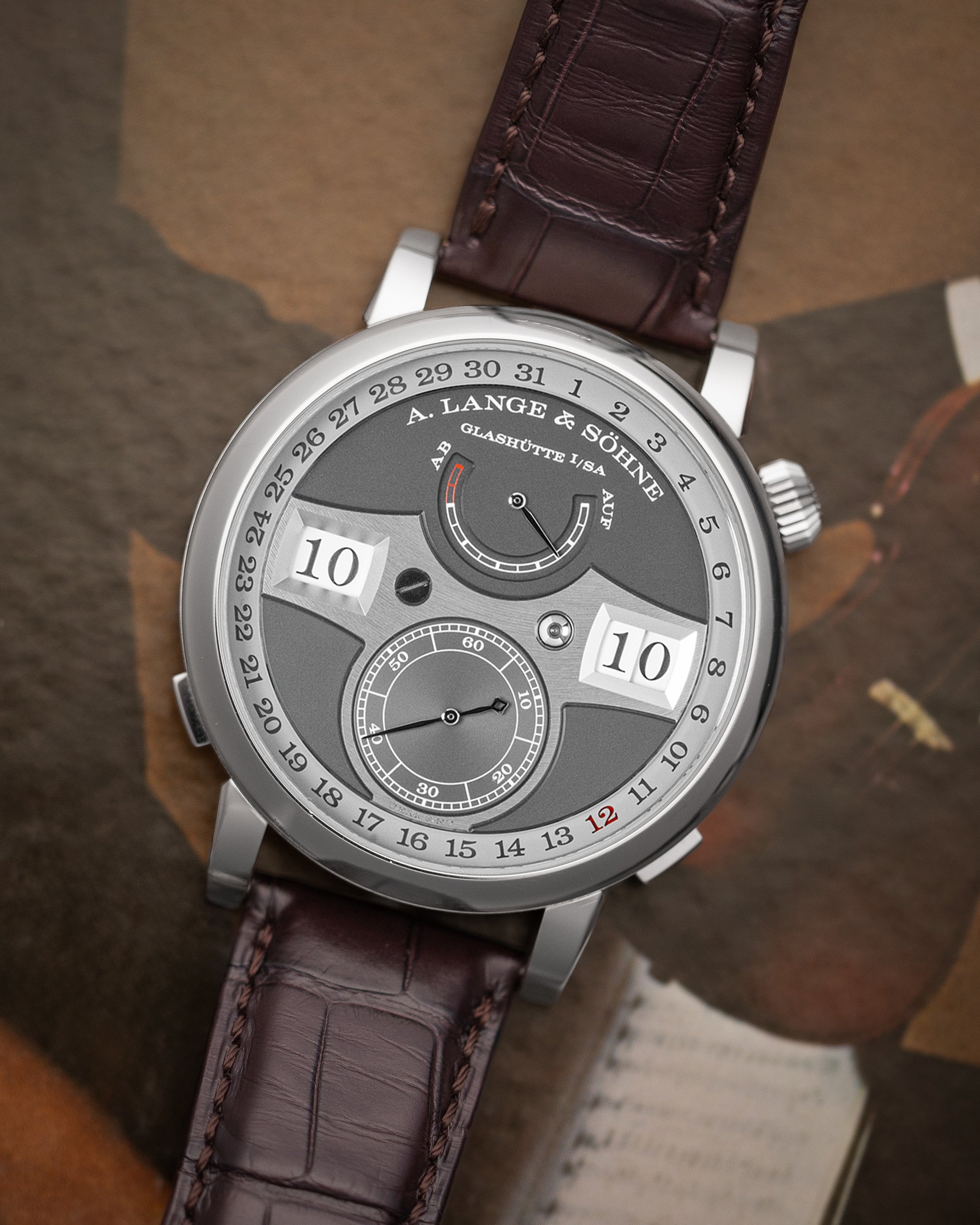
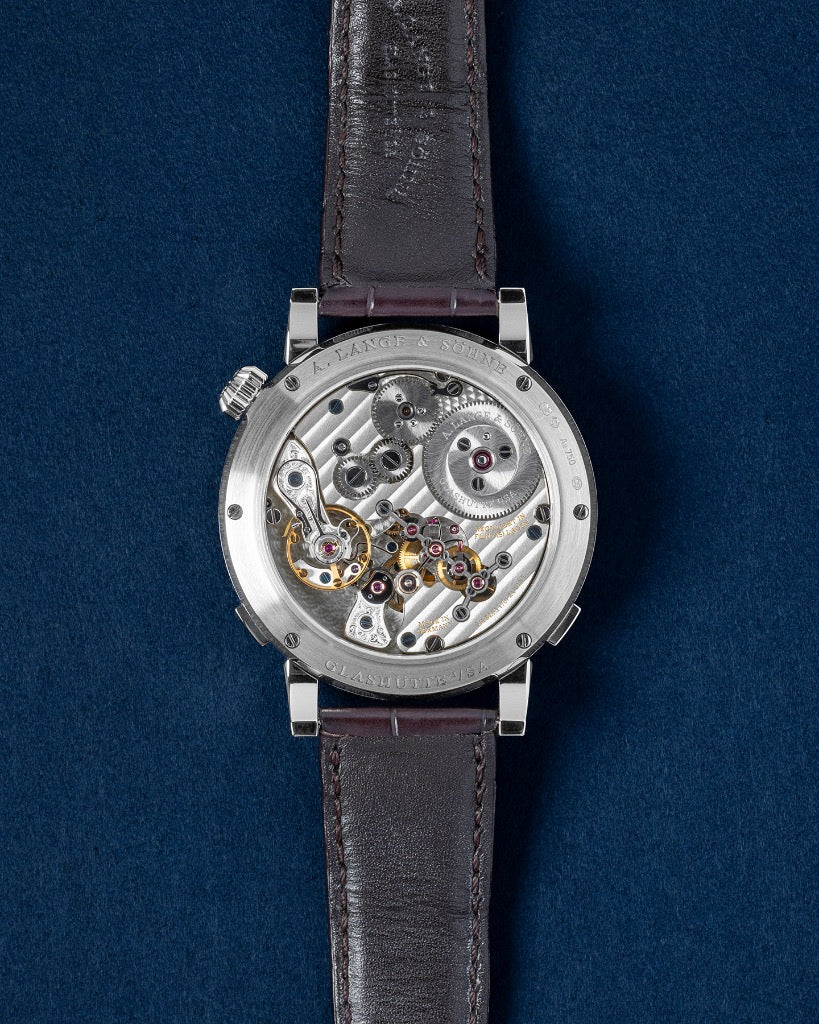
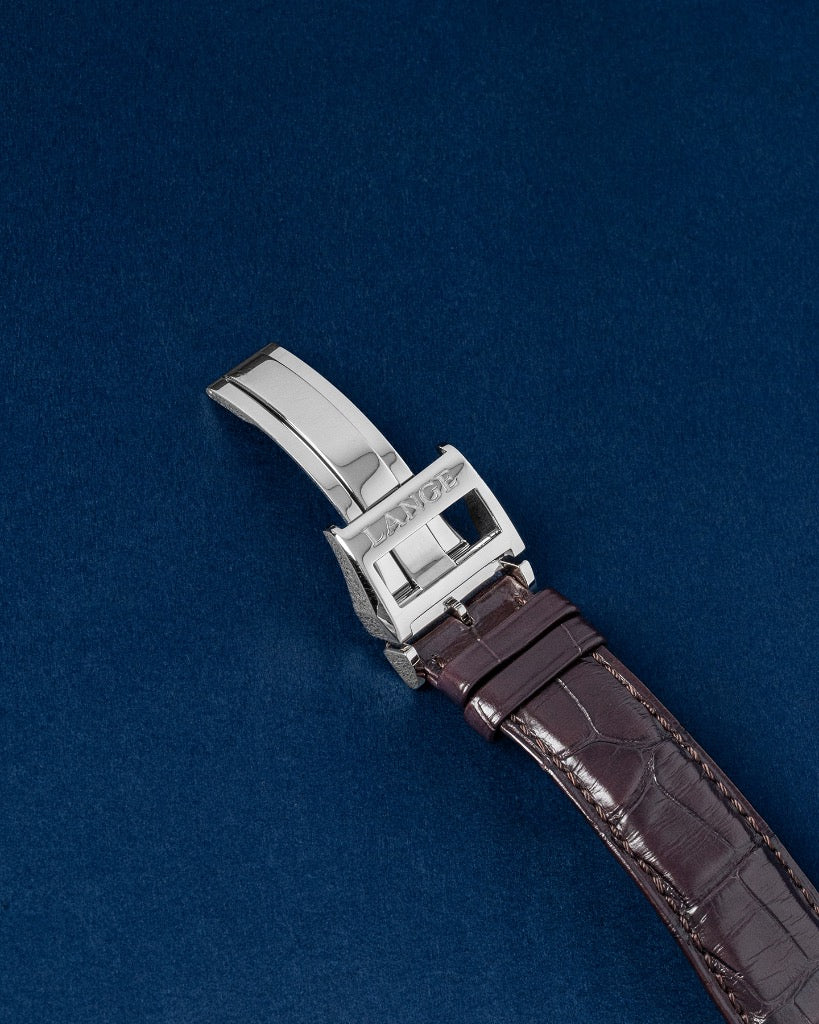
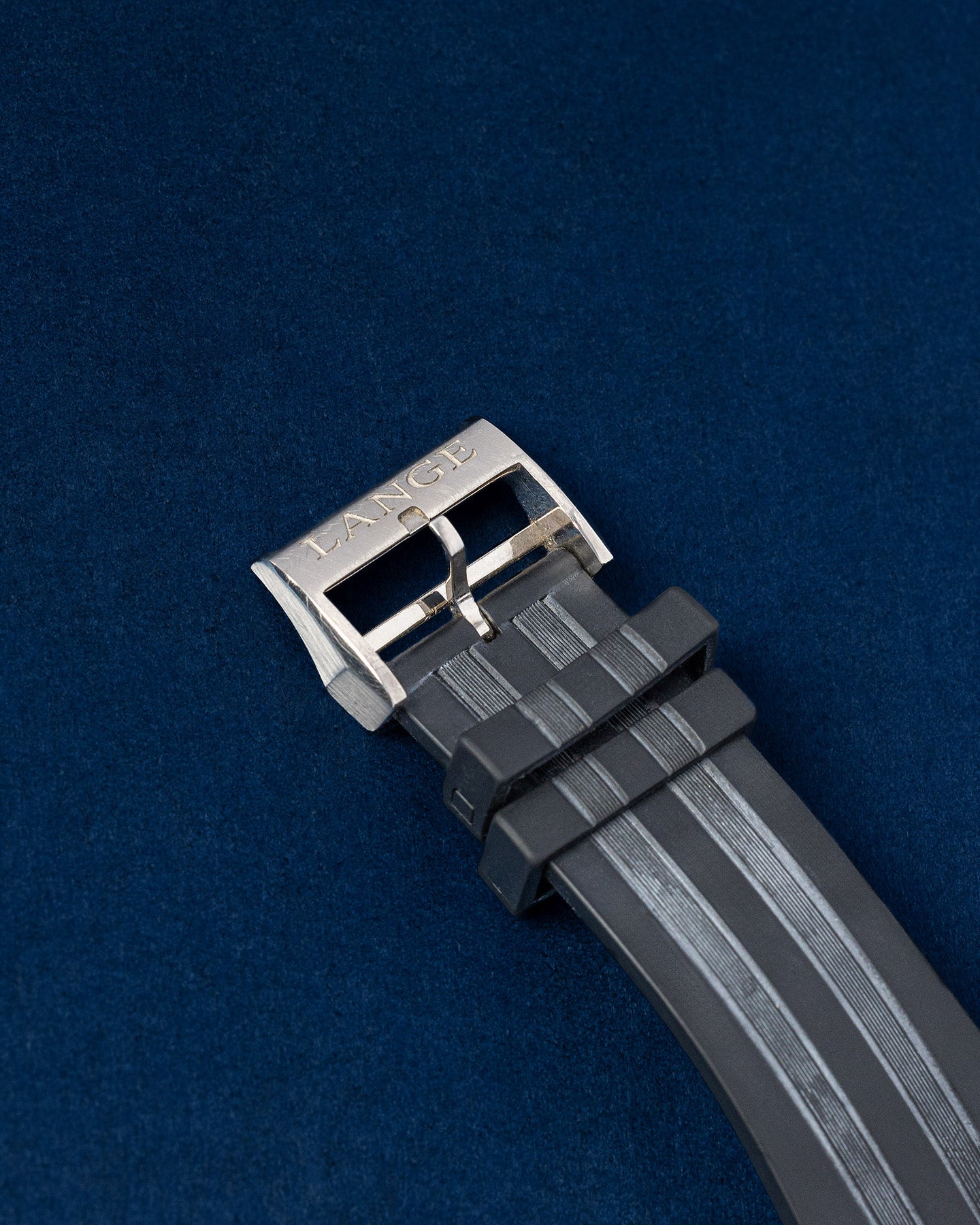
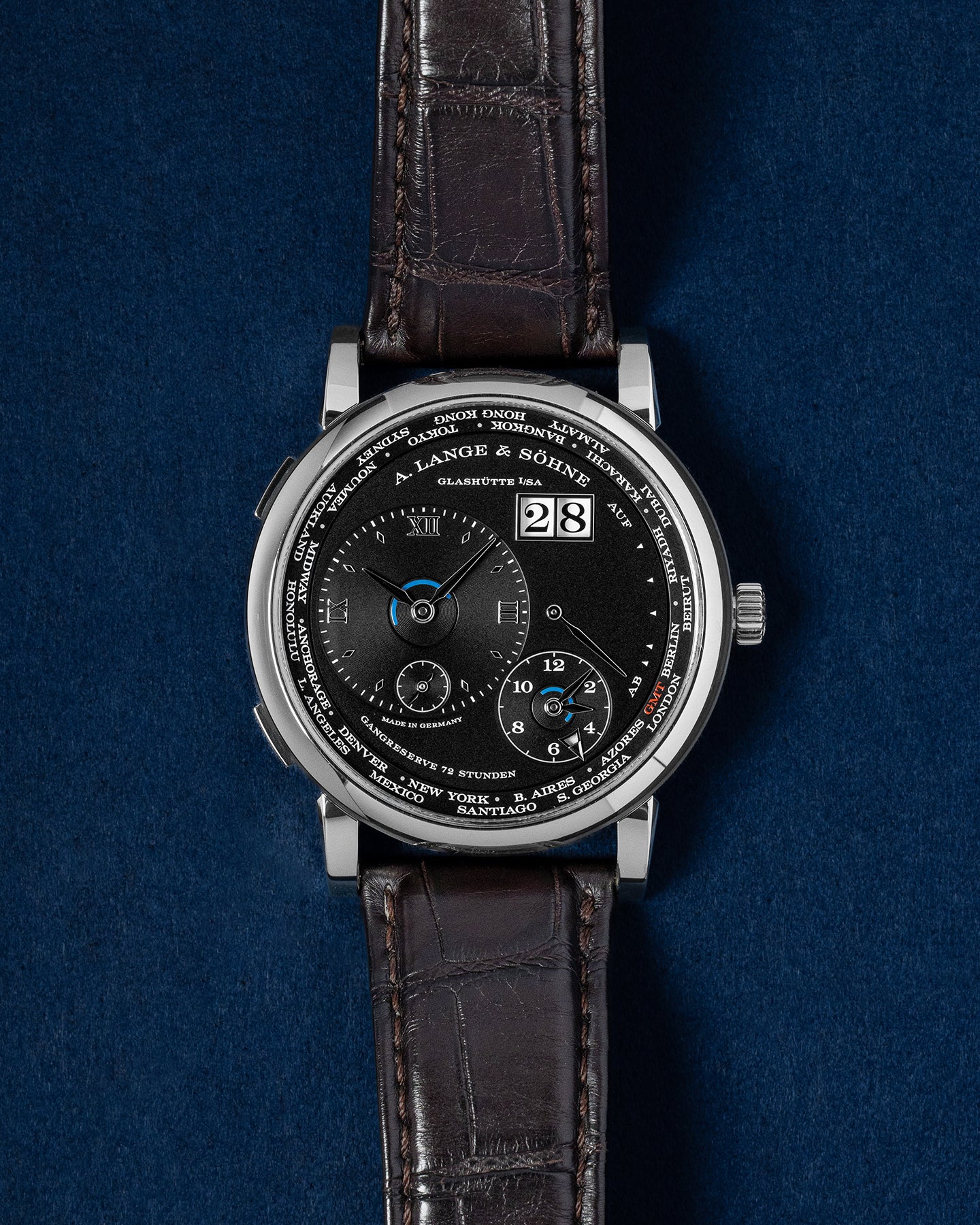
A. Lange & Söhne Zeitwerk Striking Time 145.029
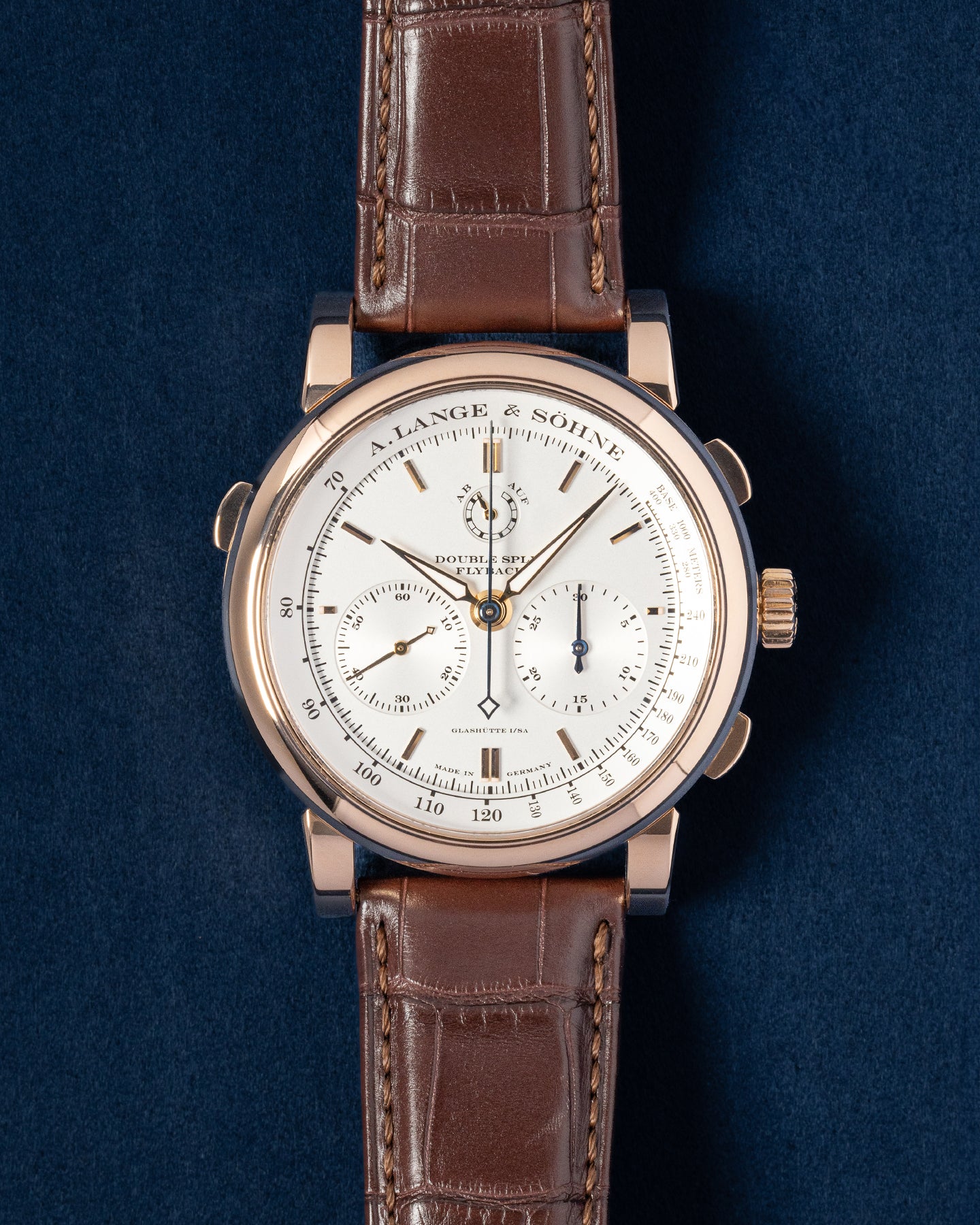
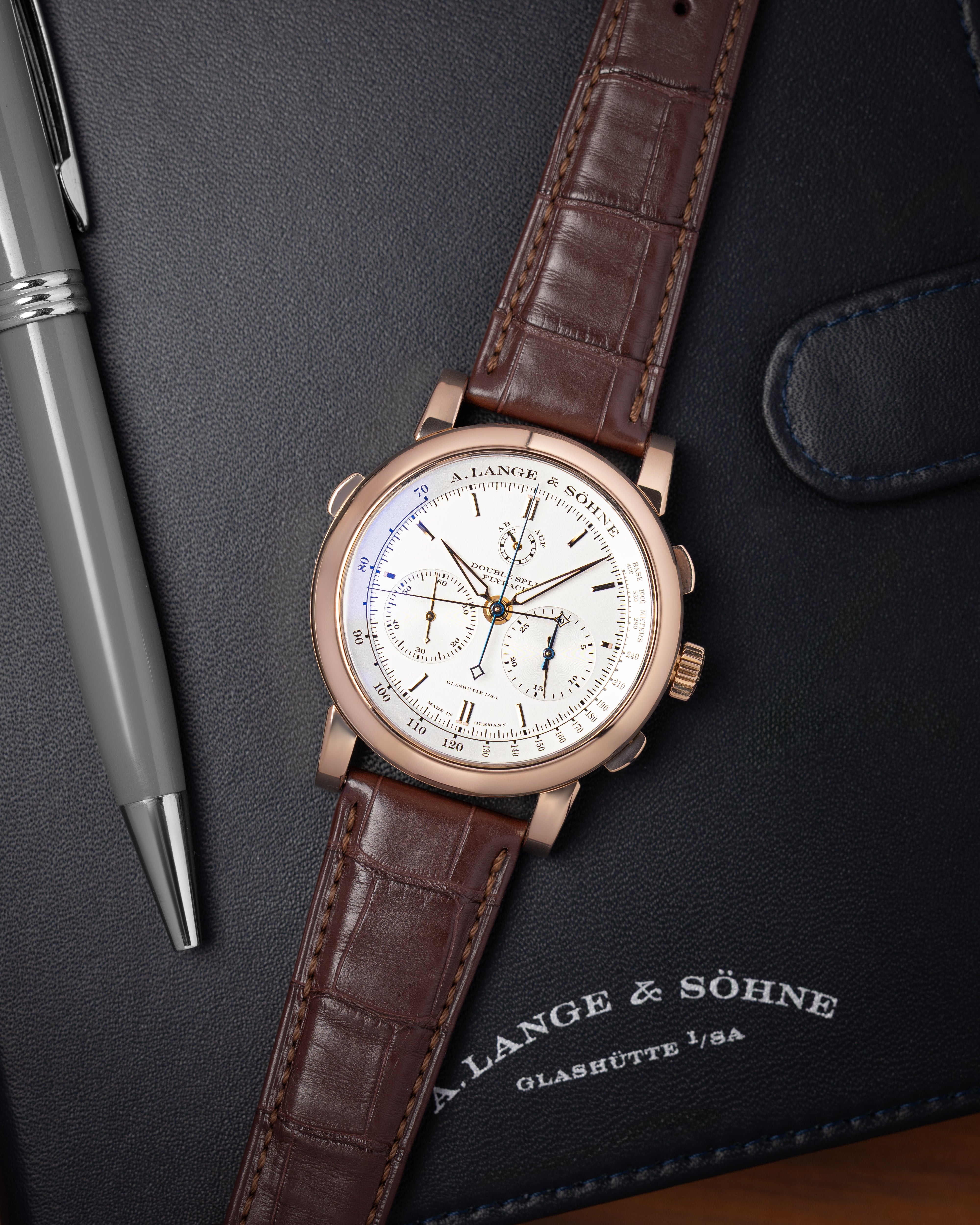
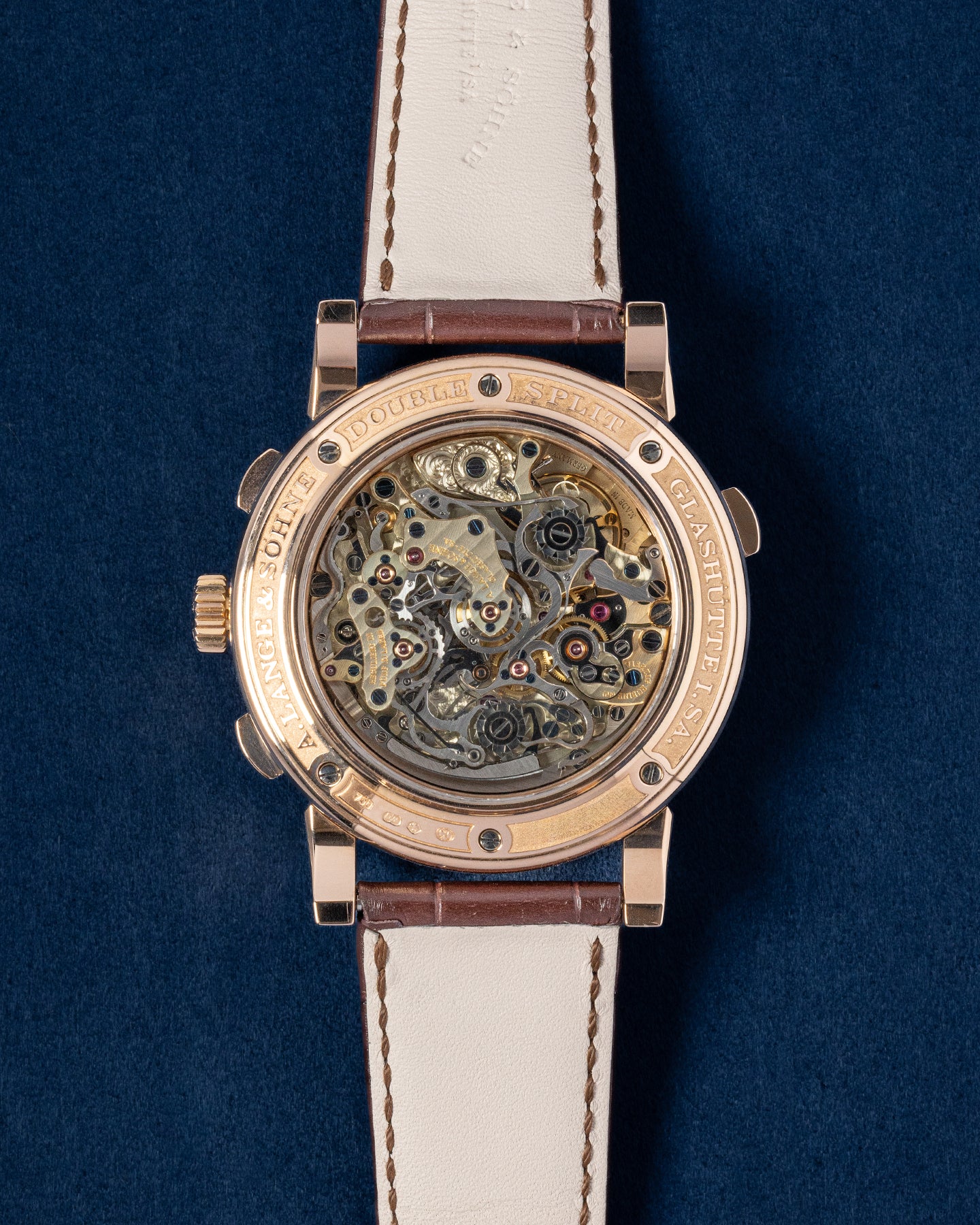
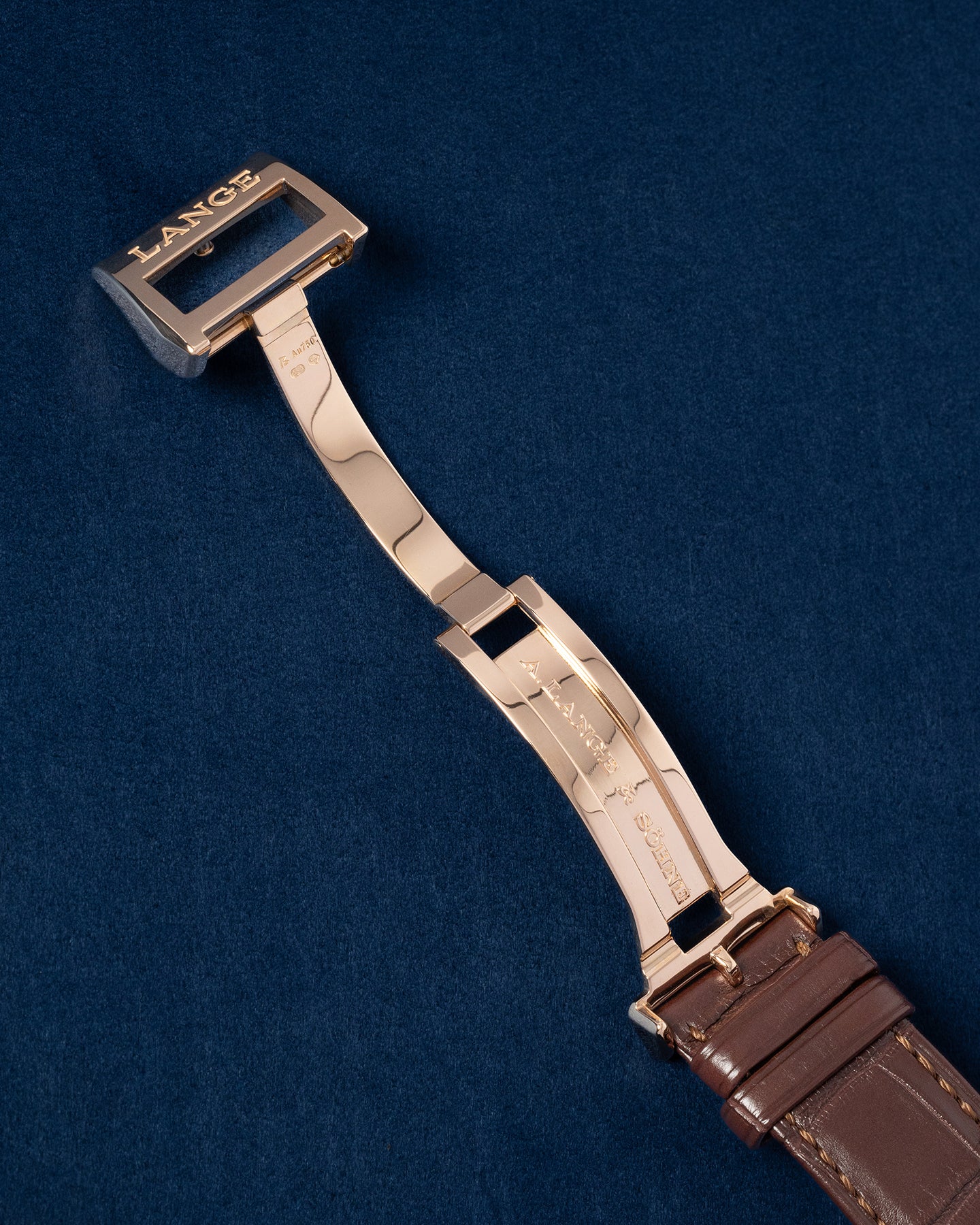
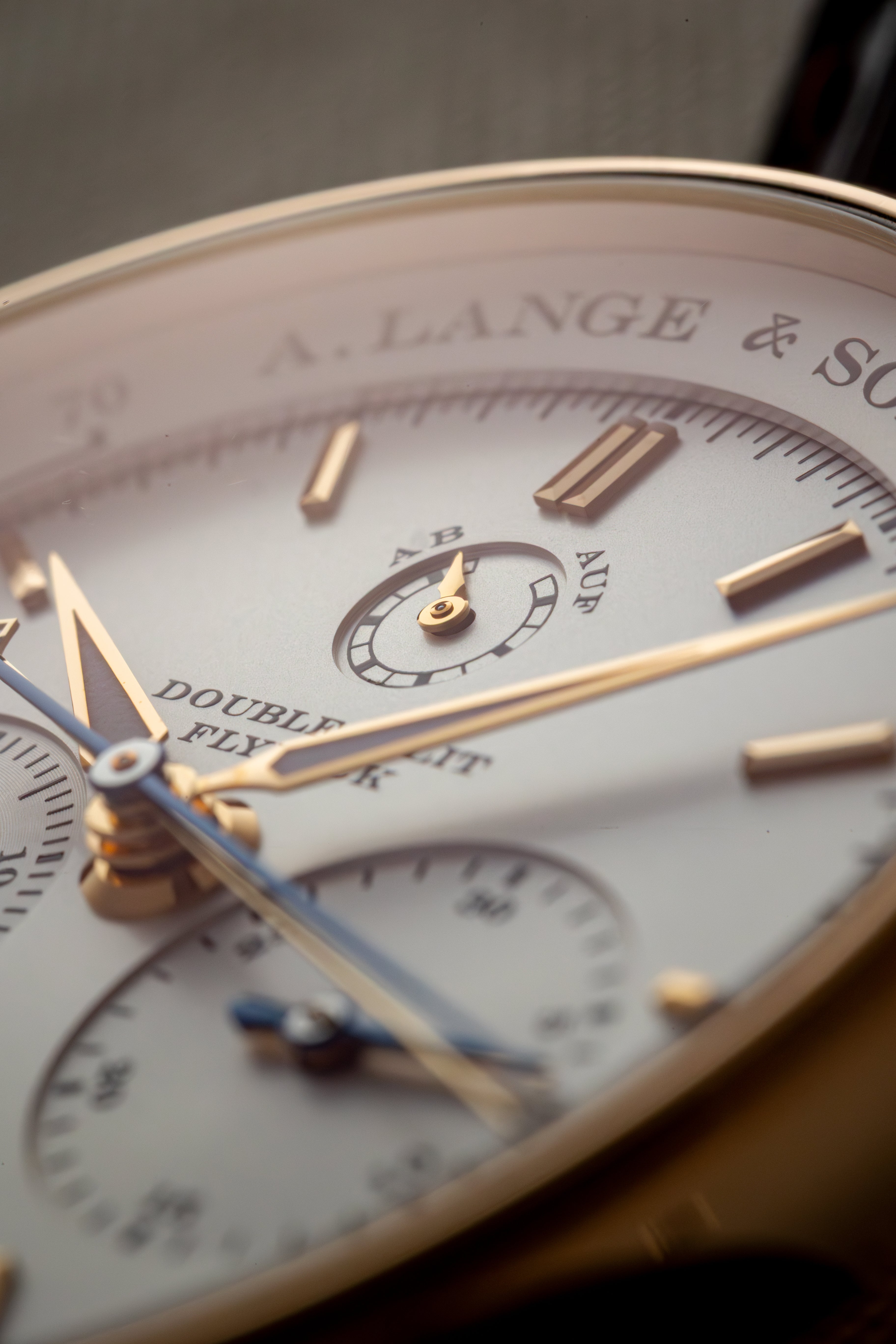
A. Lange & Sohne Double Split 404.032
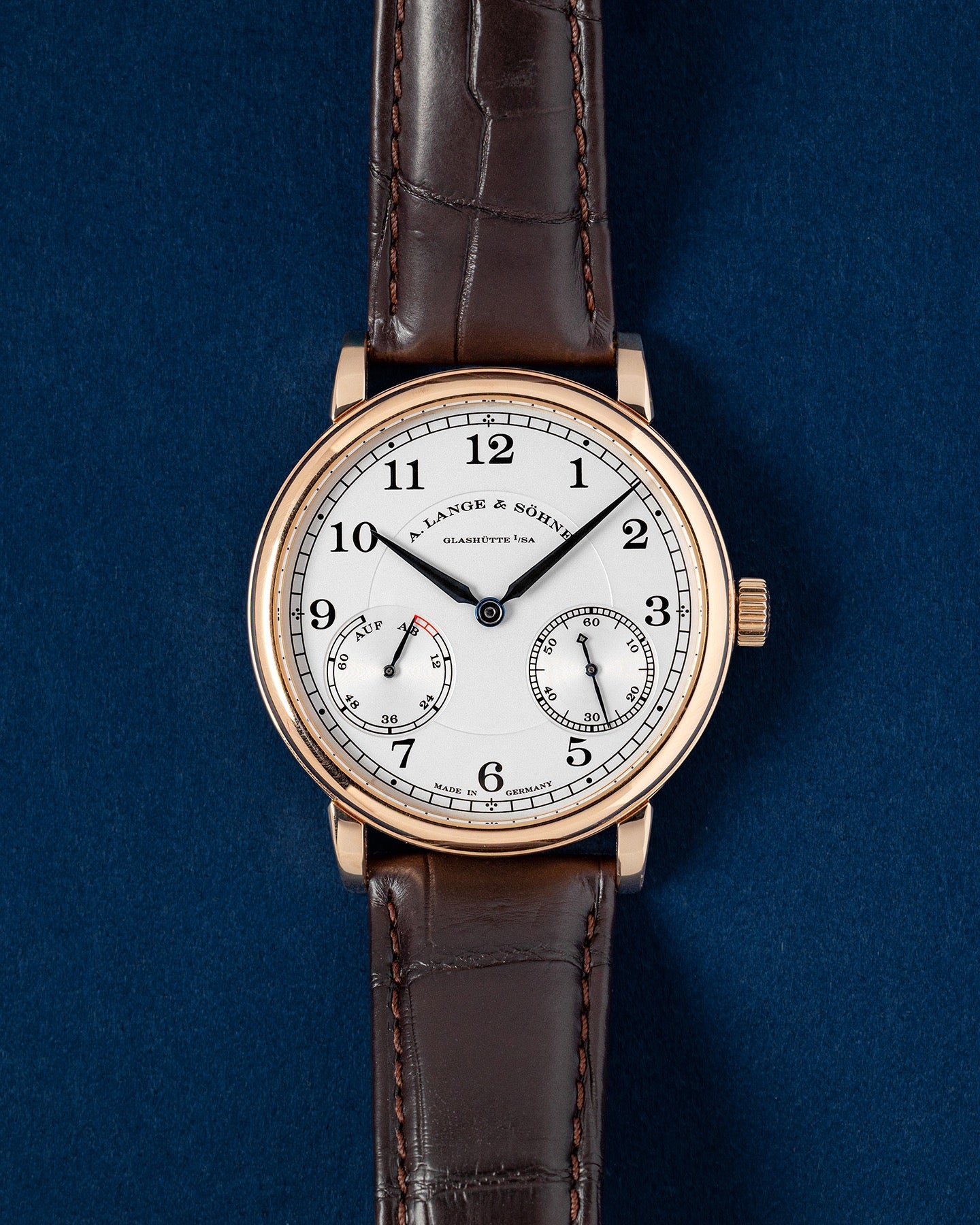
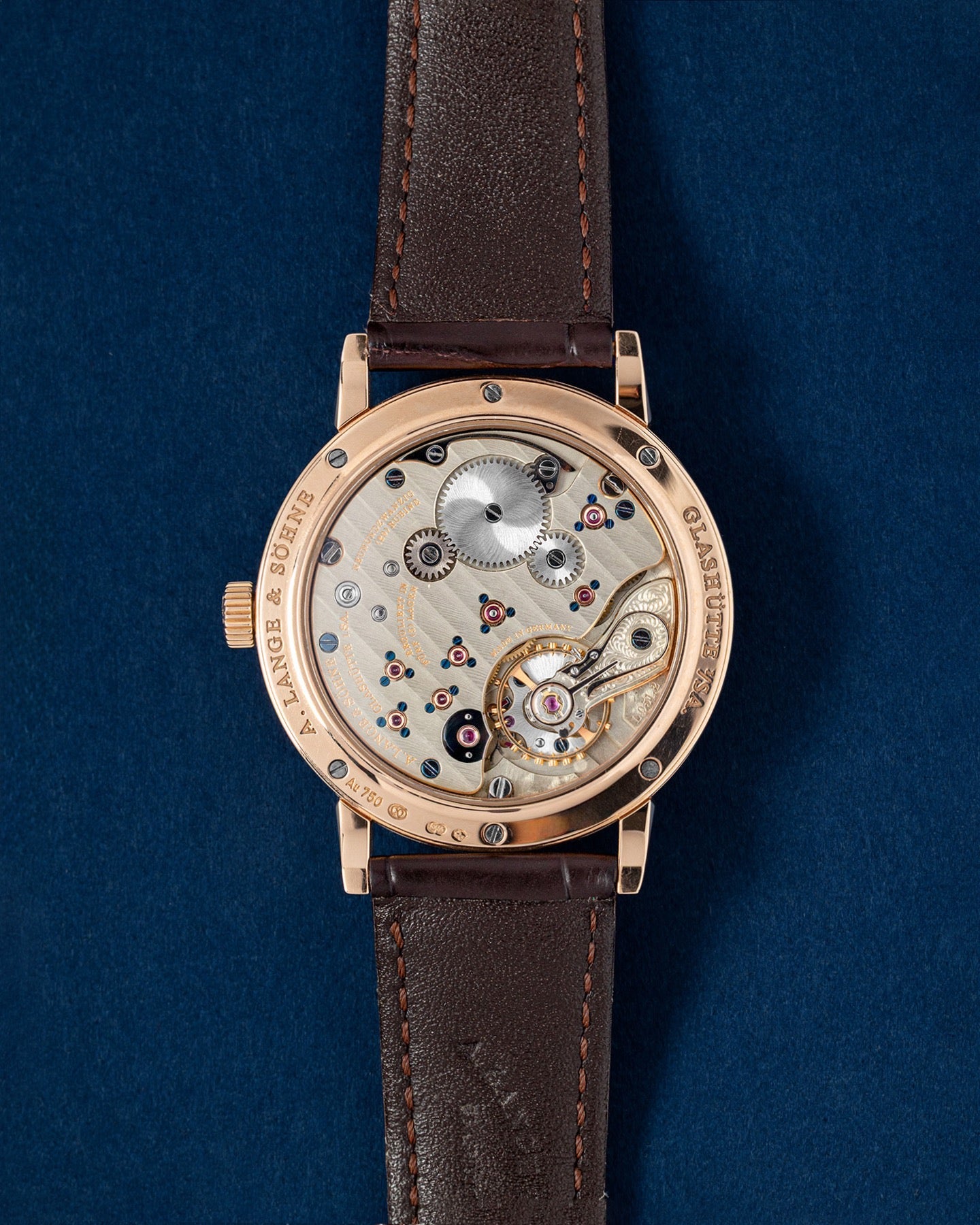
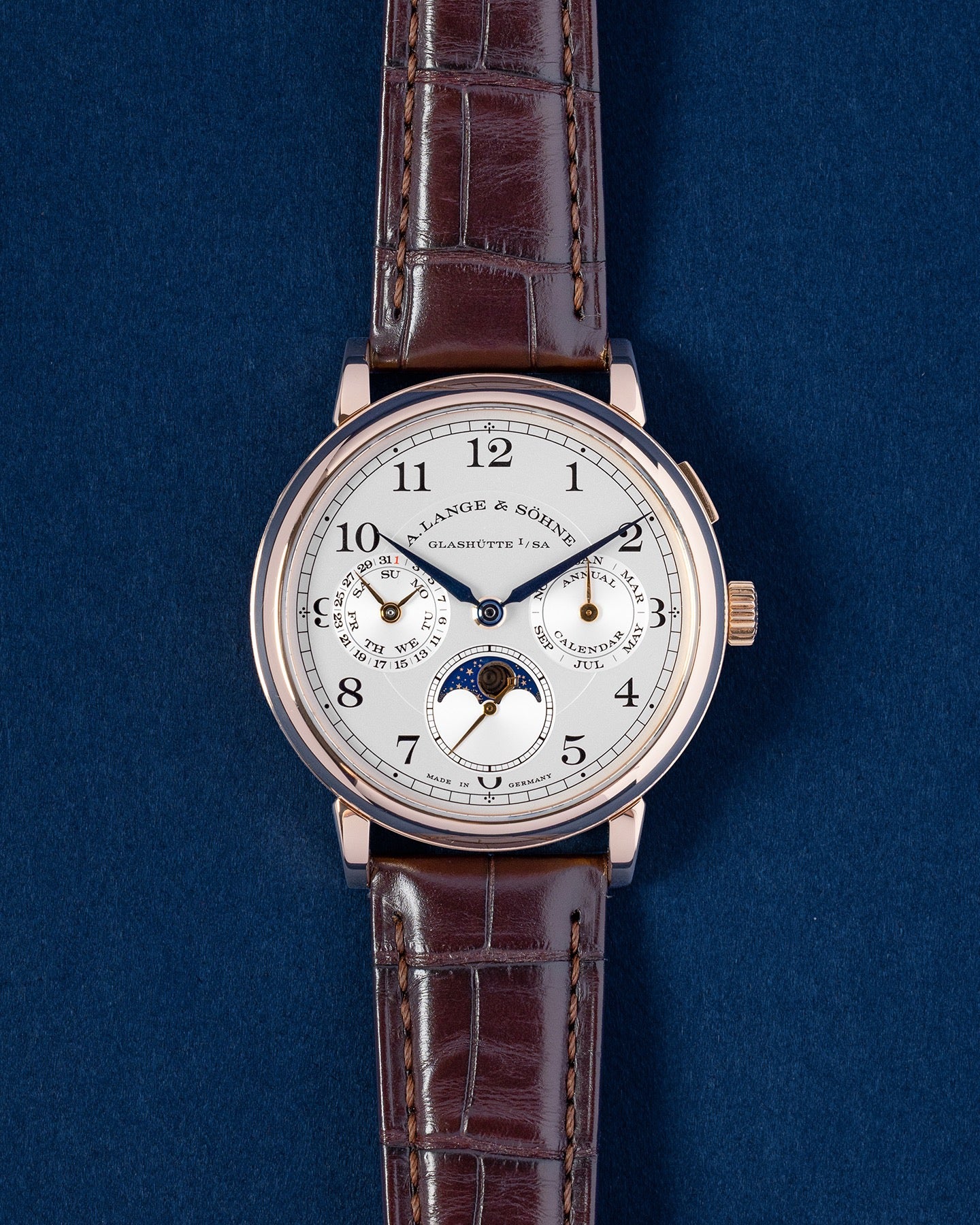
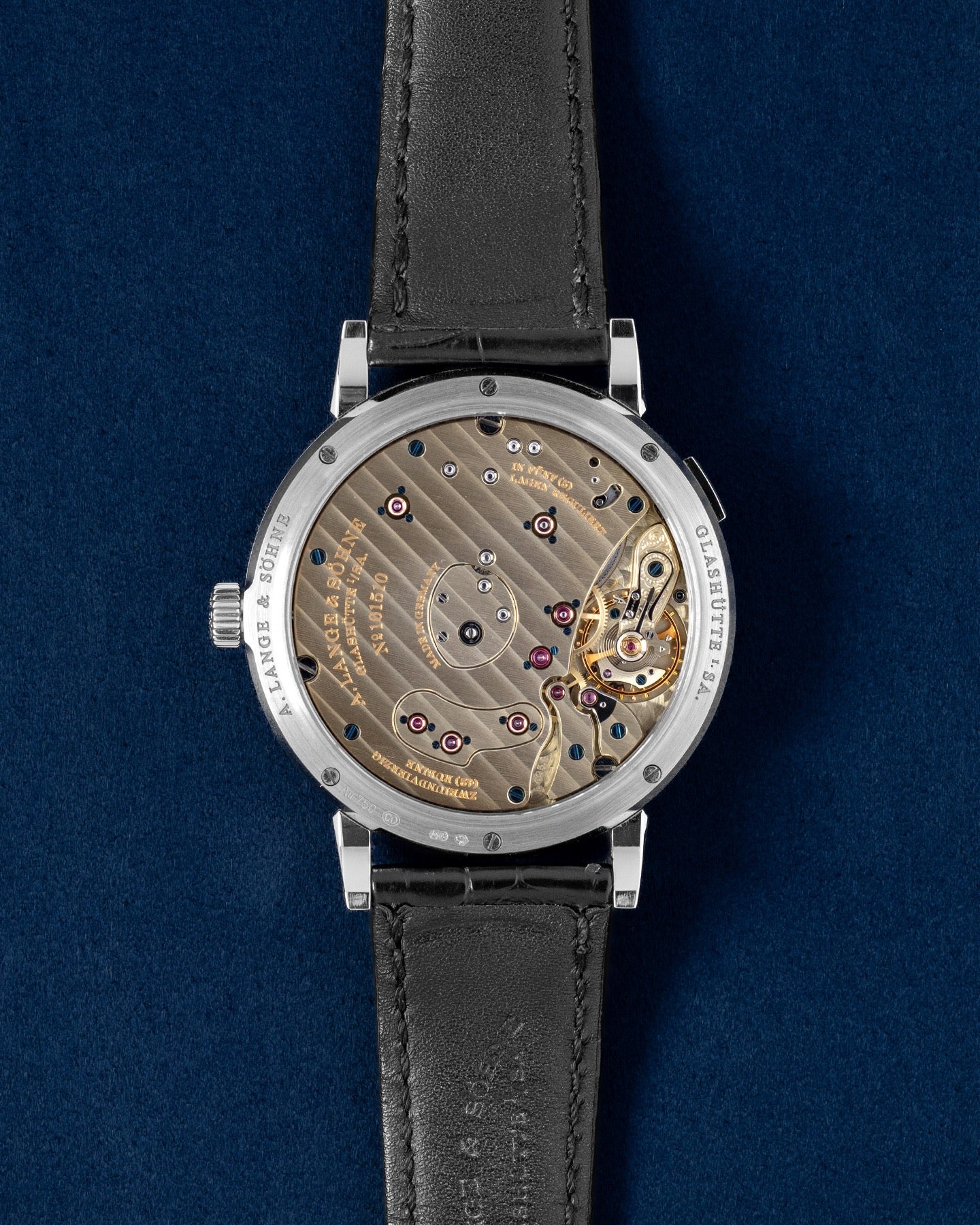

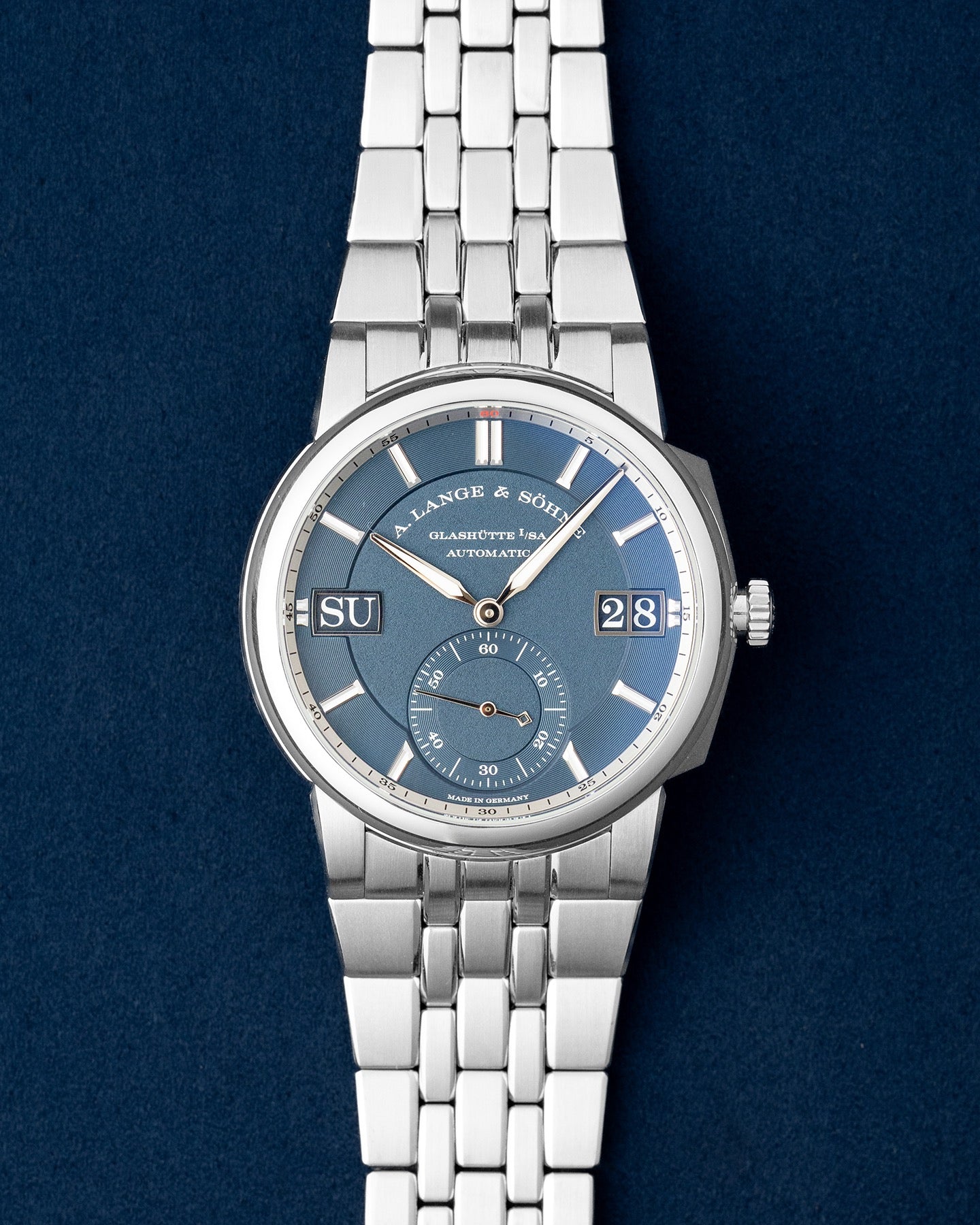
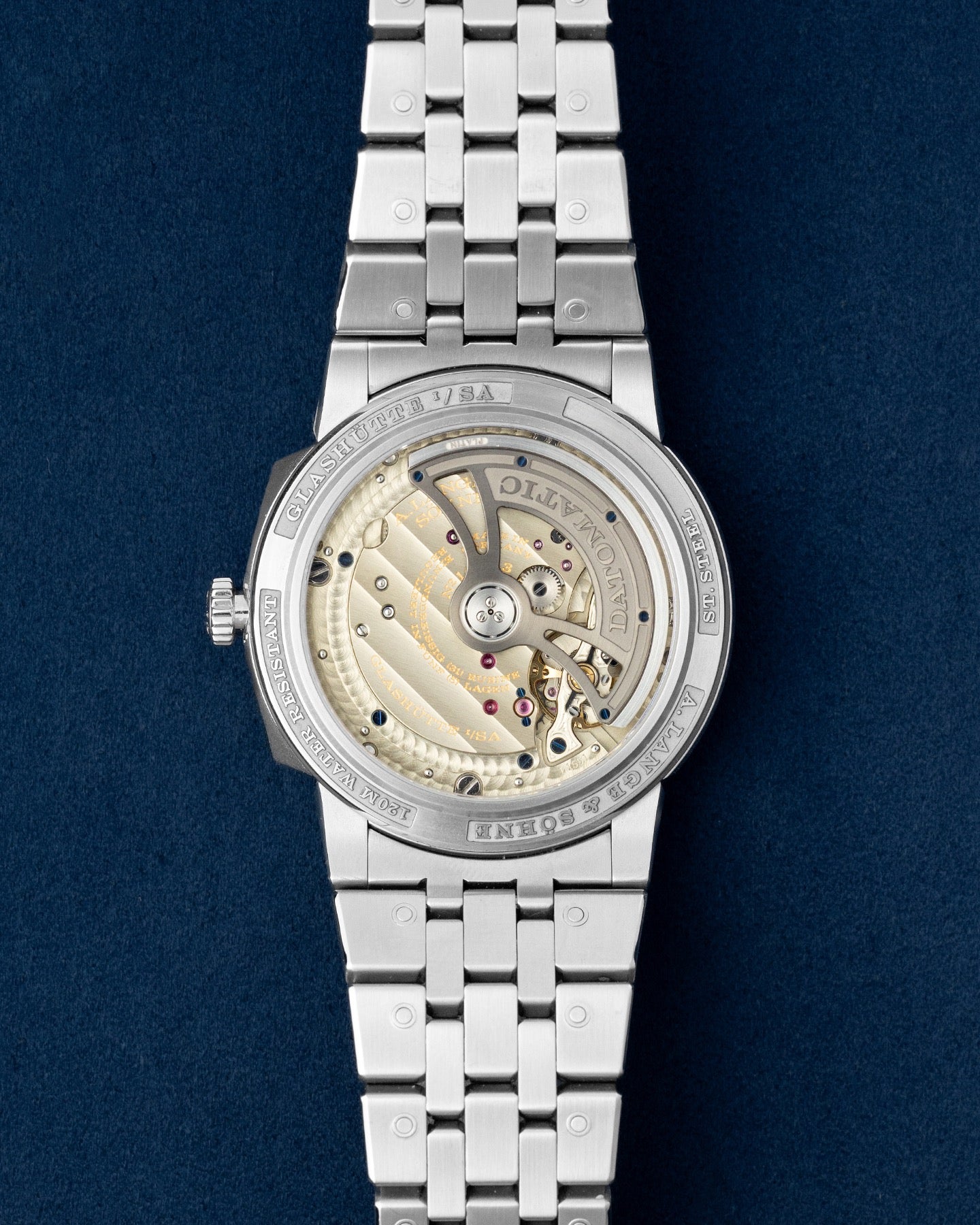
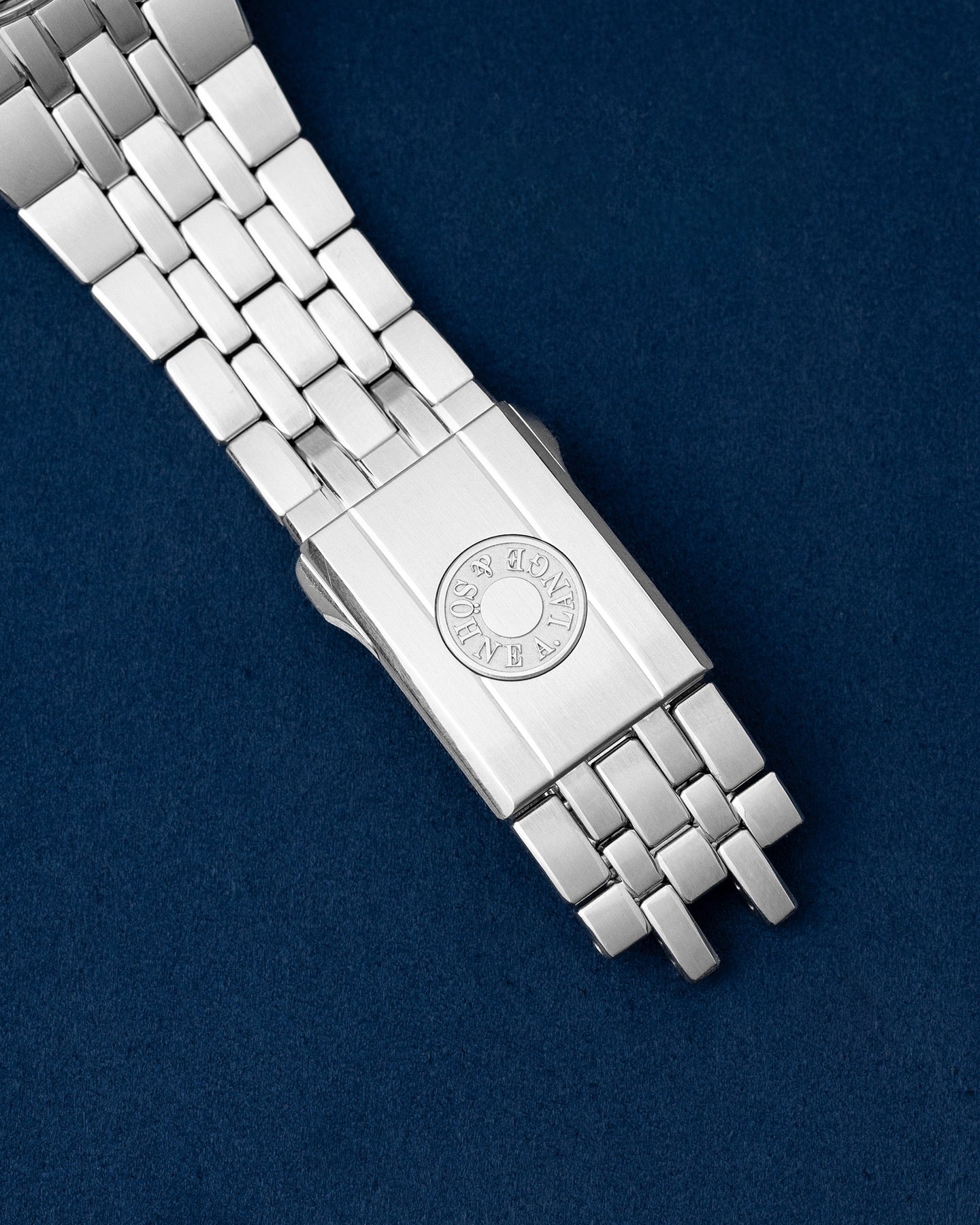
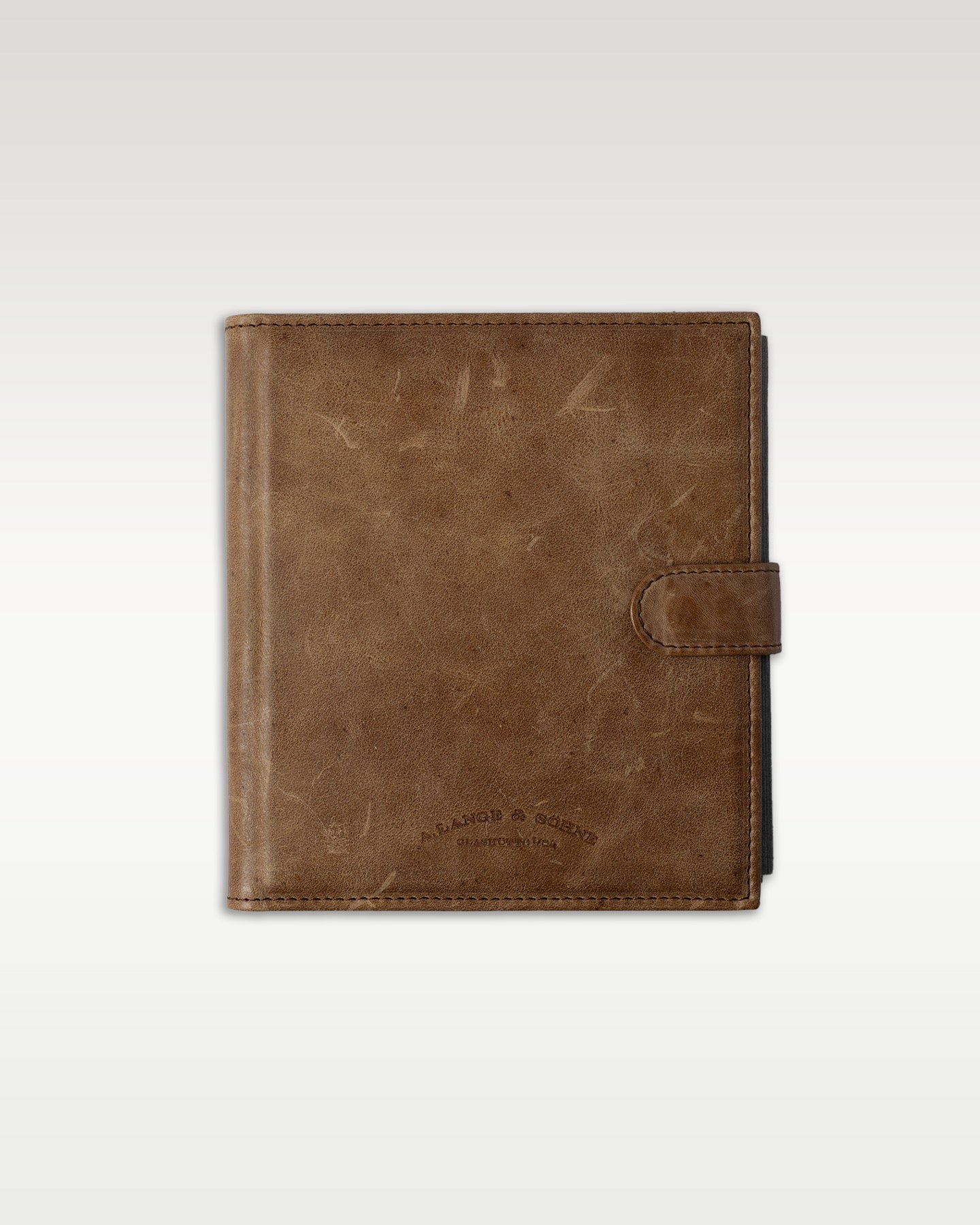
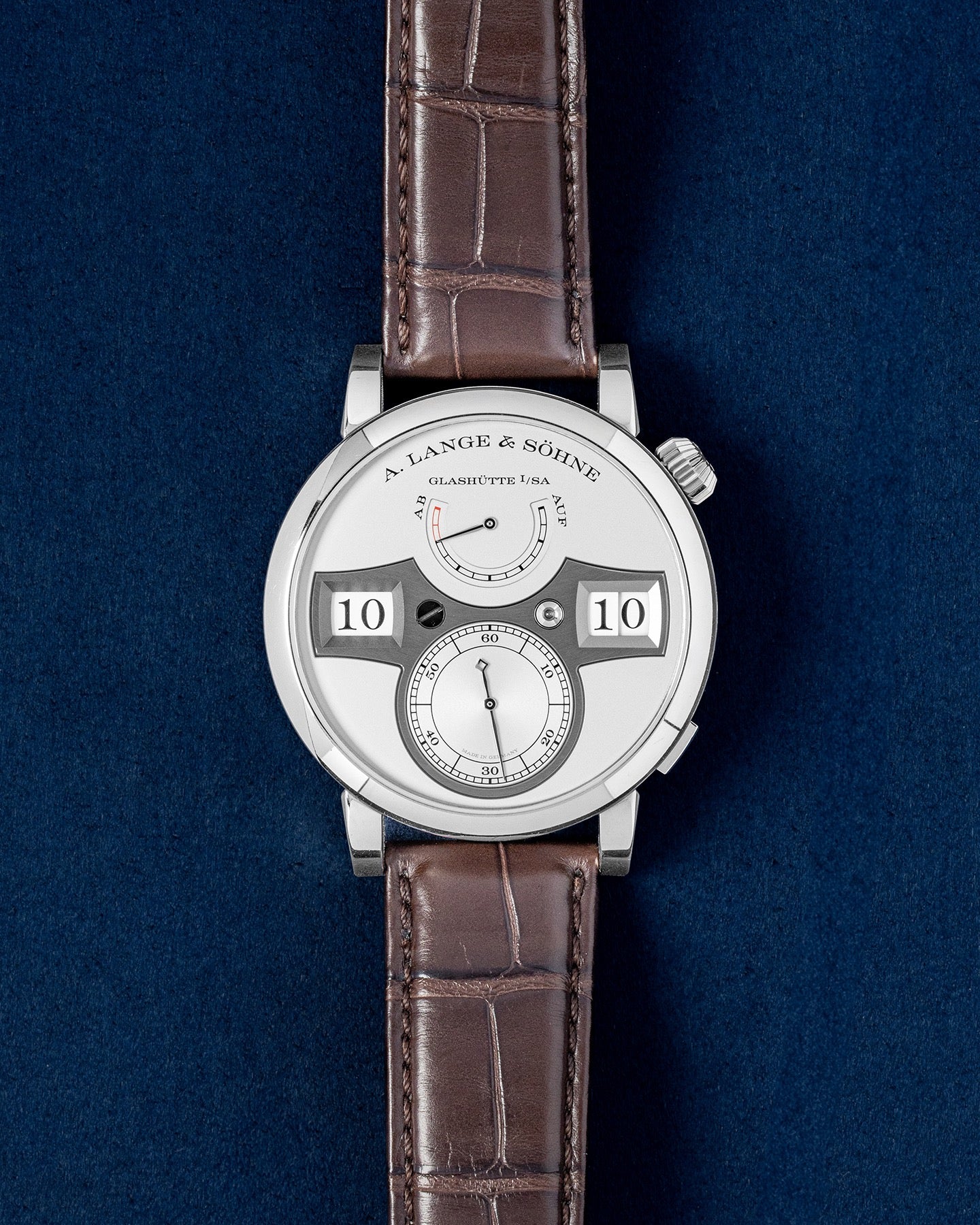
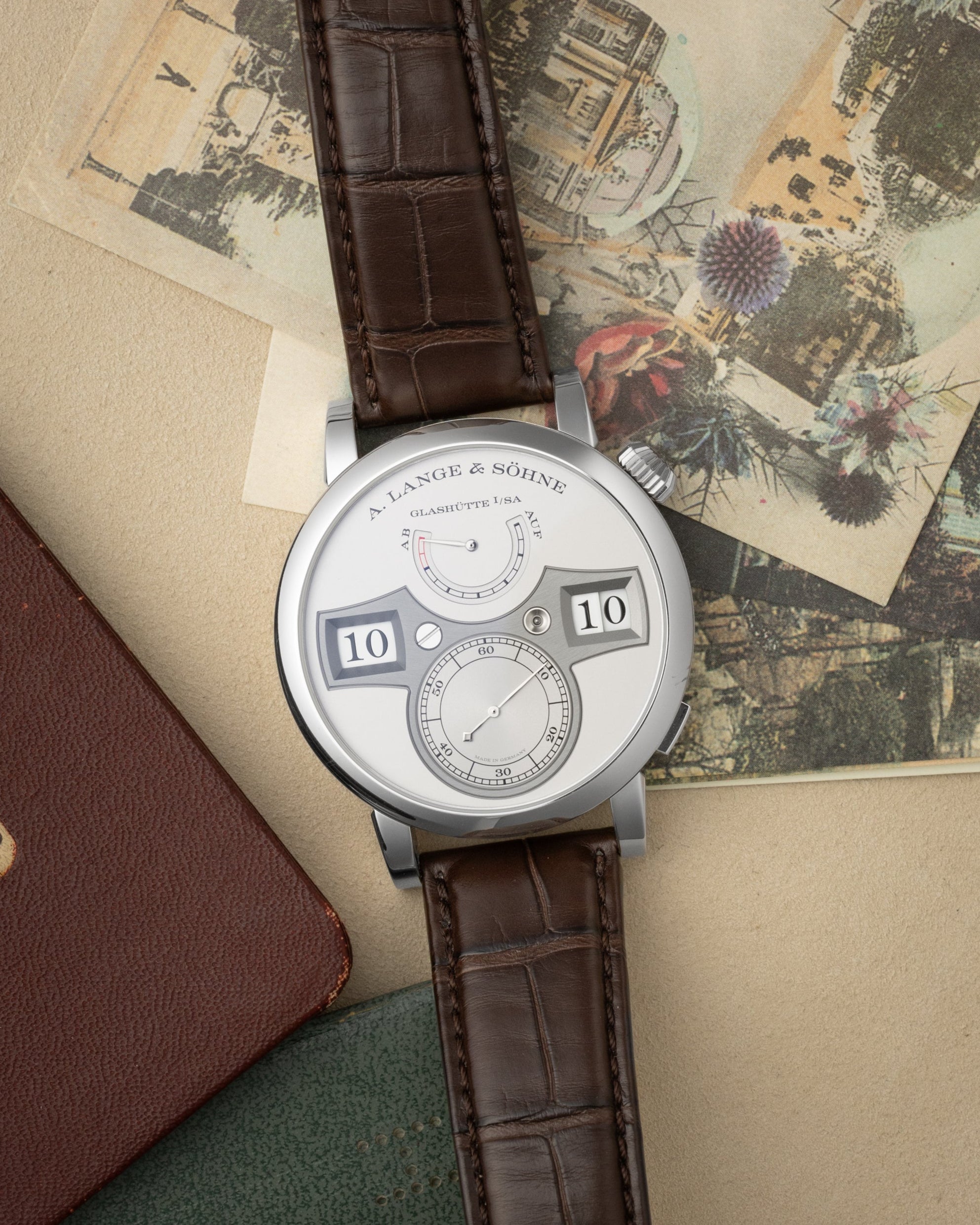
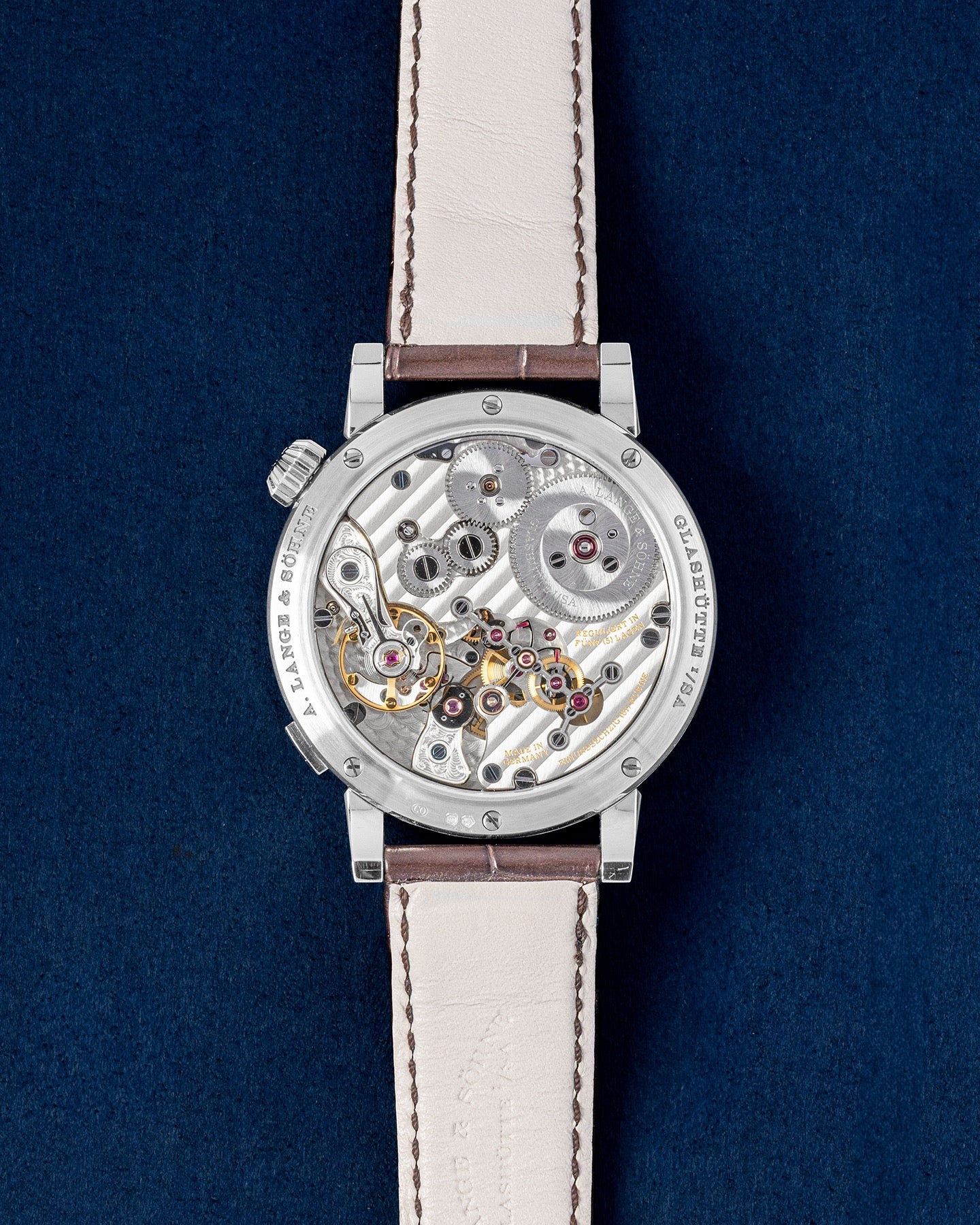
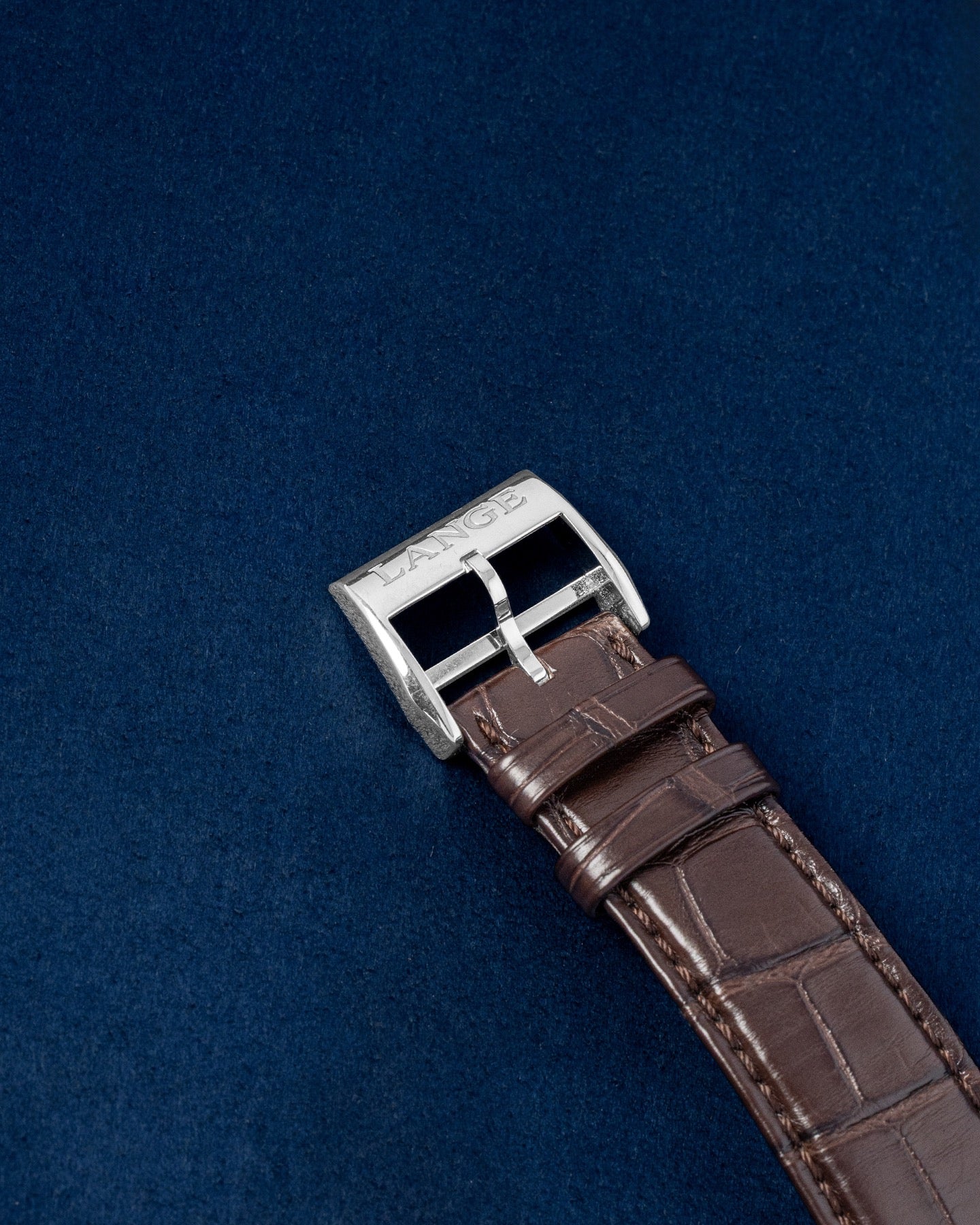
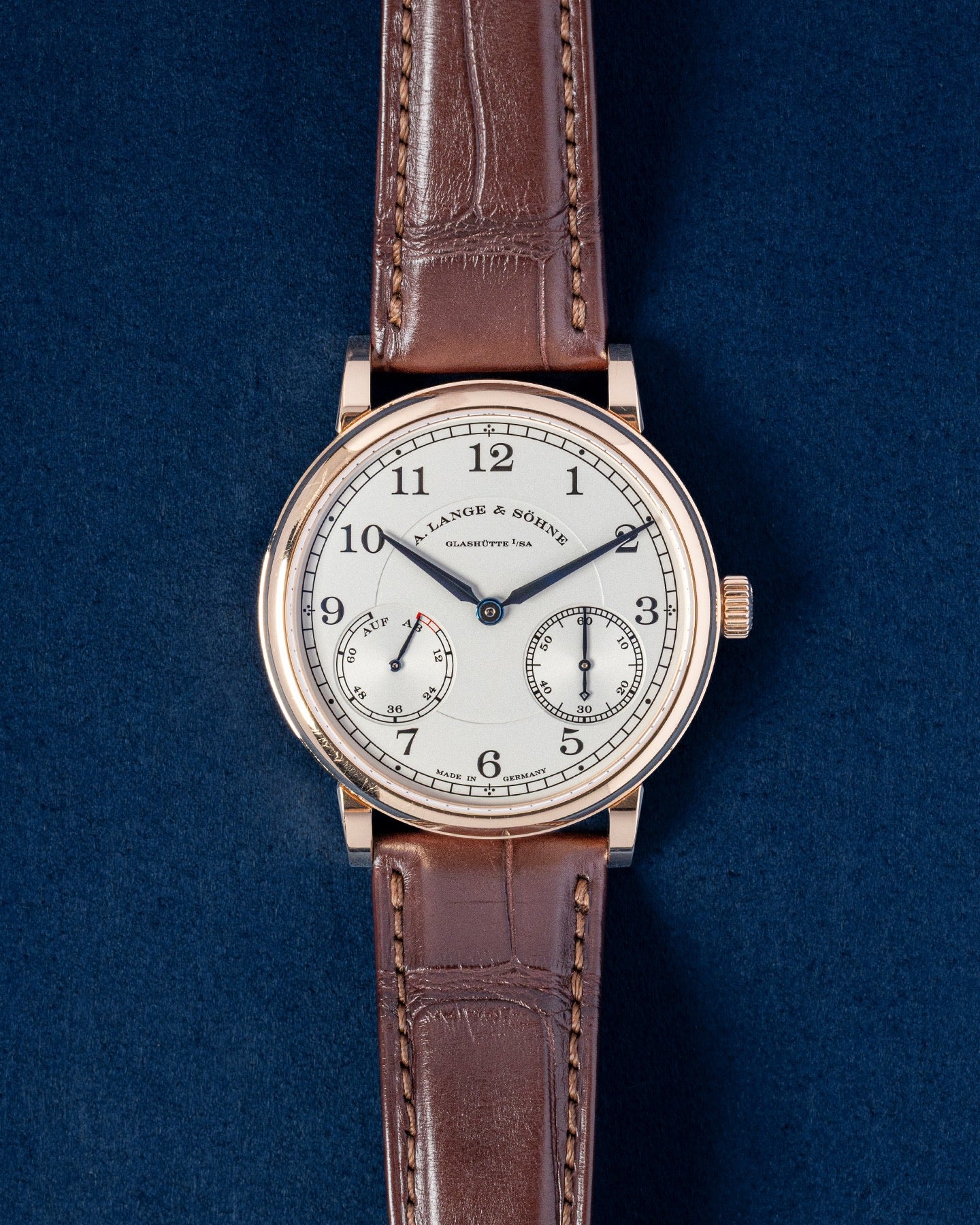
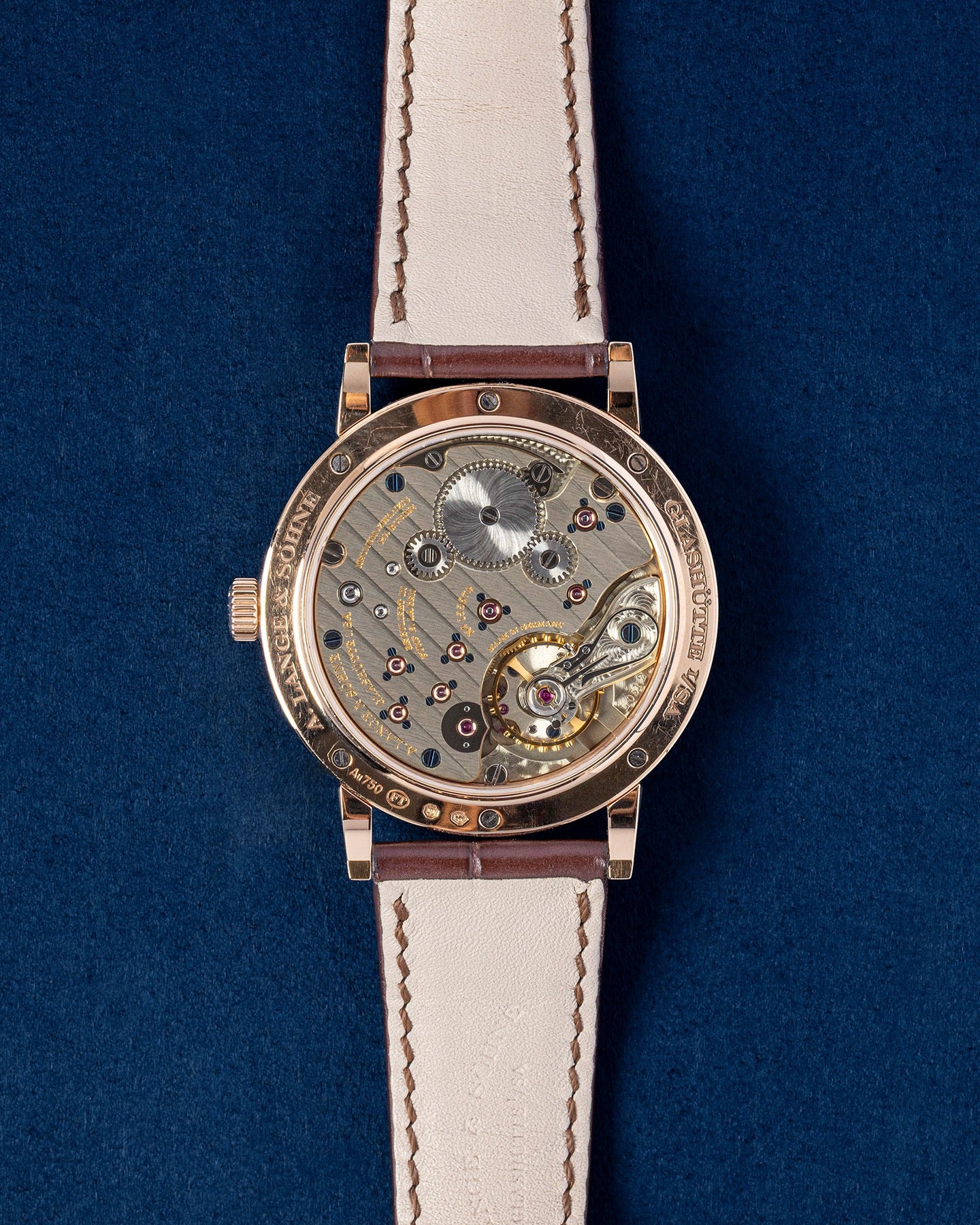
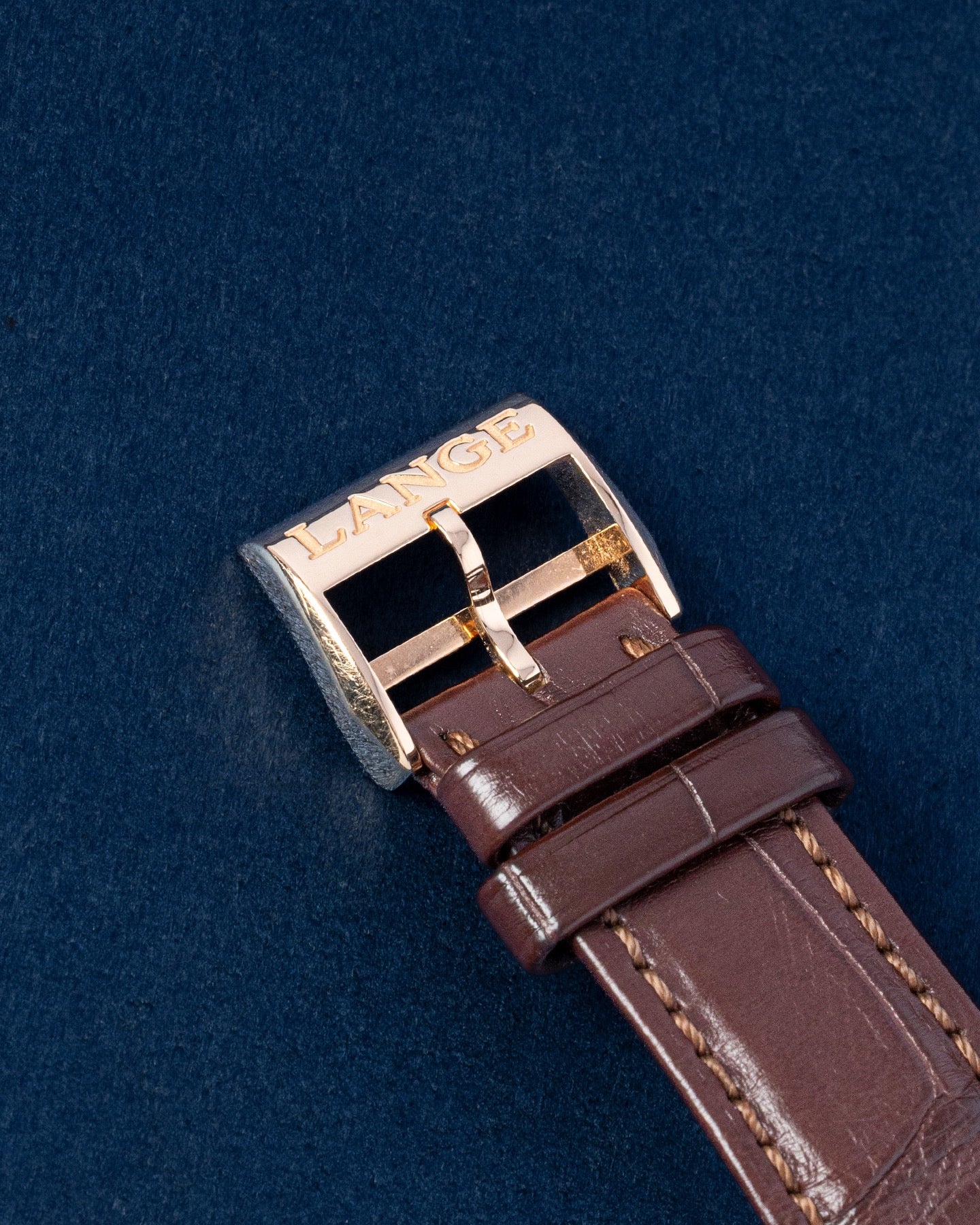
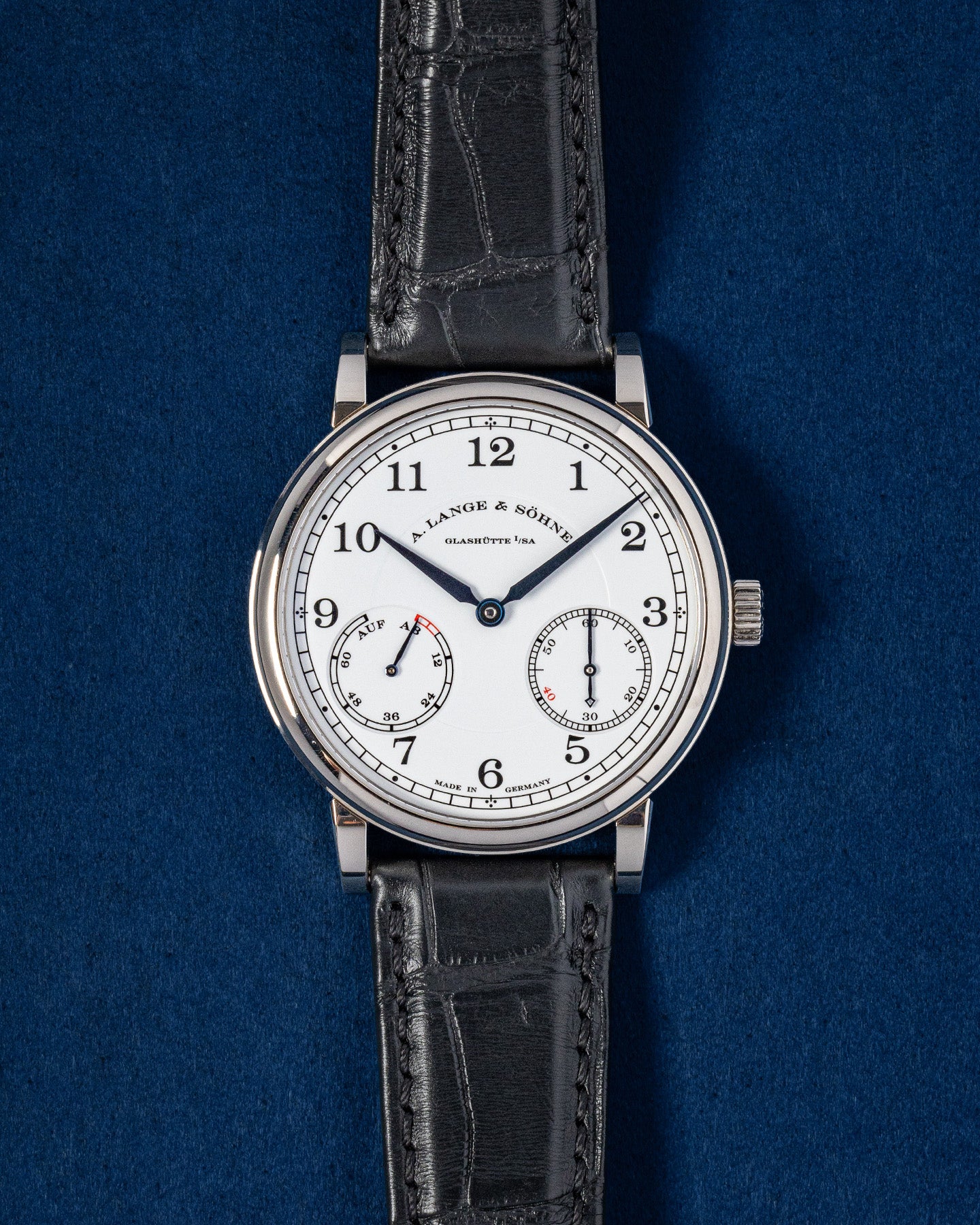
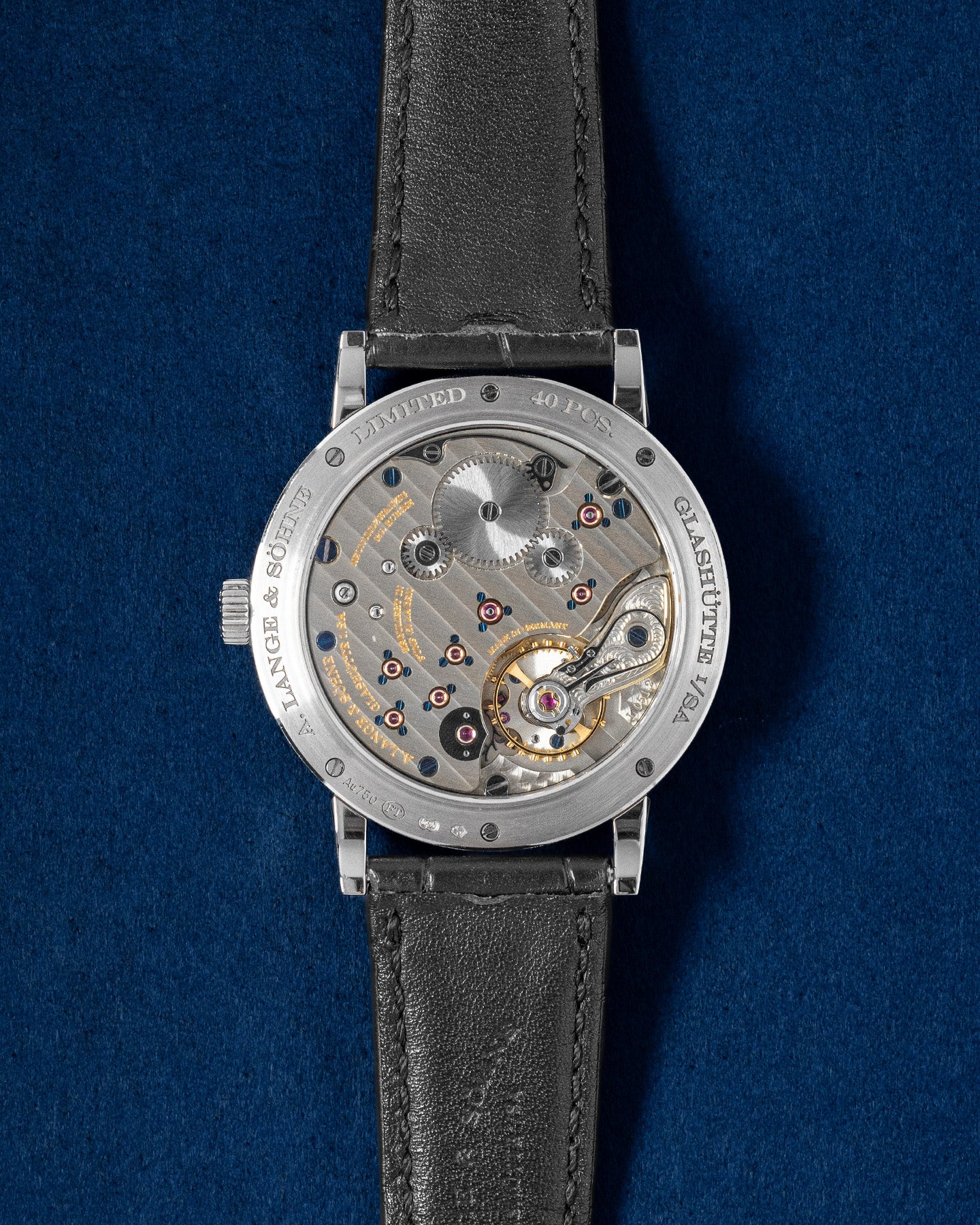
History of A. Lange & Söhne
Ferdinand Adolph Lange founded the company in Glashütte, Saxony on December 7, 1845, training fifteen apprentices in a former silver-mining town and turning it into a German watchmaking center. By the late 1800s, Lange pocket watches were being commissioned by emperors and tsars. Then came the twentieth century. An Allied bombing raid destroyed the manufactory on the last day of World War II in 1945. Soviet expropriation followed in 1948. The Lange name disappeared for forty-two years. On December 7, 1990, exactly 145 years to the day after the original founding, Walter Lange re-incorporated the company. Watchmaking had a second home outside Switzerland.
Why Choose Grand Caliber
We are a luxury watch dealer based in Uptown Dallas, with a showroom on McKinney Avenue and clients across the country. Grand Caliber buys, sells, sources, and consigns A. Lange & Söhne across the catalog: Lange 1, Saxonia, 1815, Datograph, Zeitwerk, Odysseus, Richard Lange, and the limited and discontinued references that move the collector market. Every watch we list is authenticated in-house before it goes online. Pricing is posted on every product page, "Make an Offer" is open on every listing, and inventory is one-of-one. We do not run waitlists. If you are in Dallas, come handle the watch in person. If not, we ship fully insured. Most of our clients prefer to text, and our specialists answer.
FAQs
What is the most affordable A. Lange & Söhne?
The accessible end of the current Lange catalog starts with the Saxonia Thin and the entry-level Saxonia, with retail prices beginning around $18,000 to $20,000, depending on the case material and configuration. The 1815 collection, named for Ferdinand Adolph Lange's birth year, sits in a similar range and is the closest the brand makes to a traditional dress watch. On the pre-owned market, the entry point opens further. Earlier-generation Saxonia and Langematik references in white or rose gold land in the $13,000 to $18,000 range, depending on condition and box-and-papers status, and certain discontinued 1815 models in white gold occasionally surface below $20,000. Lange does not make a steel daily-wearer in the conventional sense, so even the entry pieces are precious-metal cases with hand-finished movements. There is no version of this brand that is inexpensive. There are versions that are substantially more accessible than the Datograph, the Zeitwerk, or the grand complications. If you are looking at your first Lange, tell us what you want to spend and what you want it to do. We will tell you what is in the case and what is worth waiting for.
Can I walk into A. Lange & Söhne and buy a watch?
Lange operates a small network of brand boutiques in major cities along with a tightly controlled list of authorized retailers. Walking into a boutique and buying off the shelf is more possible than at certain other brands at this tier, but availability is uneven. Standard Saxonia and 1815 references in current production can sometimes be acquired directly. The Lange 1, particularly in popular configurations like rose gold with the silver dial, often requires waiting. Limited editions, anniversary pieces, and the Datograph are typically allocated to existing clients, and the Zeitwerk in current production tends to be made in small enough numbers that retail inventory is rarely the path. The secondary market is where most serious Lange buyers eventually transact. We carry current and recent references with no waitlist, no allocation history requirement, and no boutique relationship to maintain. The watch on our website is the watch in our case. Our showroom on McKinney Avenue in Uptown Dallas is open Monday through Friday from ten to five, with Saturdays by appointment. Walk in any weekday or call ahead for the weekend, and we will have a Lange ready for you to handle.
What is the best first A. Lange & Söhne to buy?
The honest answer is that it depends on what you want the watch to do for you. If you want the piece that represents the brand's design DNA in a single object, it is the Lange 1. The asymmetric dial, the outsize date inspired by the Five-Minute Clock at Dresden's Semperoper, the off-center subseconds, and the German silver three-quarter plate visible through the caseback are all here, and the design has barely changed since 1994. If you want a more traditional dress watch, the Saxonia Thin in white or rose gold is one of the cleanest contemporary dress watches anyone makes, and the 1815 is the brand's most direct tribute to its pocket-watch heritage. If you want presence and complication, the 1815 Up/Down adds a power reserve indicator without disrupting the design language. None of these is a wrong first Lange. The collectors we see do best with the brand are the ones who buy what they actually want to wear daily, then discover over time which complications and case materials matter to them. Tell us what you wear, what wrist size you have, and what draws you to Lange. We will help you find the right one.
Which A. Lange & Söhne model has the highest demand?
The Datograph sits at the top of any serious Lange collector's list. Introduced in 1999 with the in-house caliber L951.1, it was the first ground-up high-end manual chronograph movement built in two decades, and the architecture and finishing are what convinced Philippe Dufour, the Vallée de Joux master watchmaker, to call it the best chronograph movement ever made. He owns one. The rose-gold black-dial reference 403.031 carries the unofficial nickname "Dufourgraph" because of him, and short-run first-series Datographs trade well into the high $40,000s and up depending on configuration and condition. The Lange 1 in its various forms holds steady demand across cycles, with the perpetual calendar and tourbillon configurations commanding serious collector interest. The Zeitwerk, with its mechanical jumping digital display and constant-force escapement, has its own dedicated following and limited annual production. Discontinued Handwerkskunst editions, the Datograph Lumen, and the Triple Split are the references that move auction houses. When Lange announces a new collection at Watches and Wonders, the secondary market reprices the discontinued models within days. If a particular reference is on your list, our specialists track availability across the market and can tell you what fair money looks like.
How often should an A. Lange & Söhne be serviced?
Lange's published guidance is to have a watch serviced approximately every five to seven years, somewhat shorter than the intervals other manufacturers recommend, which reflects the brand's emphasis on maintaining the precision and finish of the movements they produce. In practice, most experienced watchmakers consider every five to ten years a reasonable interval for daily-worn pieces, and longer for watches in light rotation. A full Lange service includes complete movement disassembly, cleaning, lubrication, gasket replacement, regulation on a timing machine, and pressure testing. Because Lange movements are hand-finished to such a high standard, service work is typically returned to the manufactory in Glashütte or to a small number of certified independent watchmakers with the parts access and training to work on them properly. The signs that a watch is ready are the same as with any high-end mechanical piece: power reserve drops below where it should hold, timing drifts beyond a few seconds per day, or moisture appears under the crystal. We offer service in-house as well, and our team is happy to walk you through the options when your watch is ready for it.
How much does a full A. Lange & Söhne service cost?
Service pricing on Lange runs higher than on most luxury watches, which reflects the complexity of the movements and the level of finishing involved. A standard time-only service through Lange Glashütte for a Saxonia or 1815 generally falls in the range of $1,200 to $1,800 depending on the reference and what the movement requires. The Lange 1, with its more intricate movement architecture, typically runs $1,500 to $2,200. Chronograph and complicated references, including the Datograph, the Datograph Up/Down, and the Zeitwerk, run substantially higher because of the additional work involved, often $2,500 to $4,000 or more for a full service with case and bracelet refinishing. Vintage pre-1990 Lange pocket watches and the rare wartime wristwatch movements require specialist work and individual quotes. Independent watchmakers with Lange experience sometimes quote lower than the manufactory for routine service, though parts availability and the quality of the work vary. For a specific quote on a watch in our care, our team can advise based on what the movement actually needs and what condition the case and bracelet are in.
Can I wear my A. Lange & Söhne every day?
Yes, with one note. Most of the Lange catalog is designed as dress watches with hand-finished precious-metal cases, and they will perform reliably as daily-worn pieces if that is how you want to live with them. The Odysseus, introduced in 2019, is the brand's answer to a sport watch and is built for actual daily abuse, with a stainless steel case, an integrated bracelet, and 120 meters of water resistance. For the rest of the catalog, the watches are mechanically robust and serviceable indefinitely, but the cases are softer than steel sport models and will show wear from a wedding ring, a desk edge, or a car door over time. Many of our clients wear Lange dress watches daily without concern and consider the patina part of the relationship. Others rotate them with a sport watch for weekend wear. There is no wrong answer. What you should not do is store a Lange in a safe untouched for years and then expect it to perform; mechanical movements are healthier with regular winding. Wear it. If a service is needed down the road, we can take care of it.
How long does an A. Lange & Söhne last?
Indefinitely, with proper service. Lange builds its watches with the explicit intent that they outlast their first owner, and the company maintains the parts, the institutional knowledge, and the dedicated watchmaking talent to service the entire catalog from 1994 forward, plus pre-war pocket watches when they come in. The hand-engraved balance cocks, the gold chatons, the German silver three-quarter plates, and the mirror-polished steelwork on the chronograph movements are not there for marketing photos. They are there because Lange watchmakers expect those movements to be opened, serviced, and returned to running condition for the next century. A Lange 1 purchased in 1994 can be brought back to factory condition today by the same manufactory that built it, often by some of the same watchmakers. A Datograph purchased now will reasonably be serviceable, accurate, and valuable a generation from today and well beyond. The watches reward consistent wear and periodic service. They do not reward neglect. If you treat a Lange as the long-term object it was designed to be, it will return the favor.
Is it safe to buy an A. Lange & Söhne on the secondary market?
It is, when the dealer authenticates and stands behind what they sell. The pre-owned Lange market is smaller and more specialist than the Rolex or Patek market, which means dealer reputation matters even more. Counterfeit Lange watches exist but are relatively rare compared to the volume of Rolex fakes, in part because the level of finishing required to fake a Lange movement convincingly is beyond most counterfeit operations. The bigger risks on the secondary market are watches with replacement service-era components that affect collector value, watches with non-original dials or hands, and watches sold without the original certificate. At Grand Caliber, every Lange is authenticated by our specialists before listing. Every watch is photographed individually, and box-and-papers status appears in the spec list of every product page. If a watch has any non-original component or a service-replacement part, we say so in writing, and the price reflects it. The Lange collector market in particular rewards transparency, and we transact accordingly. If you have a question about a specific Lange in our inventory, we are happy to walk through it with you on the phone, in the showroom, or over text.
Is an A. Lange & Söhne a good investment?
Lange occupies a particular spot in the collector market: a brand whose values reward patience and connoisseurship more than headline appreciation. Certain references have appreciated meaningfully over the last decade, particularly the first-series Datographs, the Zeitwerk Lumen, the Triple Split, and most of the Handwerkskunst limited editions. Discontinued configurations of the Lange 1 in less common dial colors have also moved up. That said, much of the Lange catalog holds its value steadily rather than appreciating sharply, which is closer to how Patek Philippe trades than how Rolex sport models trade. We will be honest with you: a watch is not a stock. The Lange collectors we see do best are the ones who buy the watches because they love the finishing, the history, and the German watchmaking tradition the brand represents. They tend to end up with collections that have appreciated, but the appreciation is a byproduct of taste and patience, not a strategy. Among luxury purchases, a Lange is one of the more durable stores of value in the world, and the brand's reputation continues to strengthen.