

Blancpain Watches
Blancpain is the oldest registered watch brand in the world, mechanical only since 1735 and the maker of the Fifty Fathoms, the first modern dive watch. From the Villeret dress collection to the Bathyscaphe diver, explore a curated selection of new and pre-owned Blancpain watches at Grand Caliber.
Blancpain Watches at Grand Caliber
Blancpain Watches occupy a singular place in the history of fine watchmaking, and Grand Caliber is a trusted national source for them on the secondary market. This is the oldest registered watch brand in the world, a manufacture whose roots reach back to 1735 in the village of Villeret, and a house that has never once produced a quartz movement across nearly three centuries of continuous mechanical work. For collectors across the United States and internationally, Blancpain Watches represent something the volume brands cannot offer, a combination of profound heritage, genuinely in-house complication work, and the invention of the modern dive watch itself in the form of the Fifty Fathoms. Grand Caliber serves buyers who understand that the value here is not hype but substance, and every piece that passes through our hands is authenticated in-house and priced in the open against real secondary market reality.
Grand Caliber sees Blancpain watches cross the desk in the forms that matter most to serious buyers, from the modern Fifty Fathoms and Bathyscaphe divers to the deeply traditional Villeret dress pieces and the occasional vintage rarity. Our approach is straightforward. We describe the full Blancpain universe as it actually exists, we authenticate every reference in-house, and we let buyers make informed decisions with accurate specifications in front of them. What follows is a complete account of Blancpain Watches, the collections, the movements, the history, and the market realities that a national buyer needs before making a purchase at this level. Grand Caliber approaches every one of these pieces as a specialist rather than a generalist, because Blancpain rewards that depth of knowledge. Buyers seeking pre-owned Blancpain watches will find that our accounting of each collection is complete and honest, written to inform a decision rather than to sell a specific piece.
The History of Blancpain Watches
The story of Blancpain Watches begins earlier than the story of nearly any other name in horology. In 1735, a farmer, schoolteacher, and watchmaker named Jehan-Jacques Blancpain officially registered his trade in the municipal records of Villeret, a small village in the Bernese Jura. That single registration is the reason Blancpain is recognized as the oldest registered watch brand in the world, and it is the anchor of everything the modern brand stands for. Watchmaking in that era was executed entirely by hand, and the earliest Blancpain Watches were the product of a single craftsman working with self-forged tools under natural light.
The endurance of Blancpain Watches as a name is itself remarkable. Most brands that claim eighteenth-century origins cannot document them, but the Villeret registration gives Blancpain a paper trail that predates the American Revolution. For collectors evaluating pre-owned Blancpain watches today, that documented continuity is not a marketing slogan but a genuine differentiator, and it is the reason the brand can position itself, accurately, as the oldest registered watchmaker in the world.
The Villeret Origins and the Blancpain Family
For generations the Blancpain family carried the workshop forward from its Villeret base. Frédéric-Louis Blancpain moved the operation toward ultra-thin watch design in the early nineteenth century, and Frédéric-Emile Blancpain later expanded it into one of the largest watch producers in the region under the name Fabrique d'horlogerie Emile Blancpain. This long family stewardship is why the modern brand named its flagship classical collection Villeret, a direct tribute to the village where the first Blancpain Watches were made. The name carries real weight because the connection is genuine rather than invented for marketing.
Frédéric-Louis Blancpain's early move toward ultra-thin watchmaking established a technical direction the brand still pursues in the modern Villeret Ultraplate, and this unbroken thematic thread is part of what makes Blancpain Watches coherent across three centuries. A buyer acquiring a slim Villeret today is, in a real sense, holding the descendant of design decisions made in Villeret two hundred years ago.
Betty Fiechter and a Historic Transition
When Frédéric-Emile Blancpain died in 1932, the business passed to his close collaborator Betty Fiechter, who became the first female chief executive in the Swiss watch industry. Because Swiss law at the time prevented her from using the Blancpain family name on the company without a family member in ownership, the firm operated for decades under the name Rayville, an anagram of Villeret. Blancpain Watches produced across the middle of the twentieth century, including the earliest Fifty Fathoms dive watches, therefore carried the Rayville association on their movements and paperwork, a detail that matters enormously to vintage collectors today.
Because the earliest Fifty Fathoms divers were produced under the Rayville name, vintage Blancpain Watches from this period require specialist knowledge to authenticate correctly. The Rayville association is not a flaw but a mark of authenticity, and dealers who do not understand the Rayville era frequently misidentify or undervalue these historically significant pieces.
The Quartz Crisis and the Dormant Years
The quartz revolution of the 1970s nearly ended the story. As inexpensive battery-powered watches flooded the market, the traditional Swiss mechanical industry collapsed, shedding tens of thousands of jobs across a single decade. The Blancpain name was absorbed into the larger SSIH group, and by 1980 production under the name had effectively ceased. For a brief period one of the most historically important names in watchmaking sat dormant, a documented history with no active workshop behind it. That pause makes the revival that followed one of the most consequential moments in modern horological history.
The dormant period is also the reason so few genuinely vintage Blancpain Watches exist relative to competitors. Production was never large to begin with, and the near-total halt around 1980 created a scarcity that shapes the vintage market to this day. Buyers seeking pre-owned Blancpain watches from before the revival are working within a genuinely limited pool.
The 1983 Revival Under Biver and Piguet
In the early 1980s, two men saw opportunity where others saw a dying industry. Jean-Claude Biver, then working within SSIH, and Jacques Piguet, head of the respected Frédéric Piguet movement manufacture, acquired the rights to the Blancpain name for a reported sum of roughly 22,000 Swiss francs. They relaunched the brand from an old farmhouse at Le Brassus in the Vallée de Joux, dedicating it entirely to mechanical watchmaking at the exact moment the rest of the industry had given up on it. Biver studied the brand's history and found that Blancpain had never made a quartz watch, which became the foundation of the most famous positioning statement in the industry. Since 1735 there has never been a quartz Blancpain watch, and there never will be. That declaration turned the brand's greatest apparent weakness in the quartz era into its defining strength.
The Biver and Piguet revival also reestablished the technical foundation of modern Blancpain Watches. Access to the Frédéric Piguet movement manufacture meant the reborn brand could build genuine in-house complications from the outset, and the six masterpieces the pair introduced in the early 1980s, covering the ultra-thin watch, the moon phase, the split-seconds chronograph, the perpetual calendar, the tourbillon, and the minute repeater, announced that Blancpain Watches would compete at the highest level of traditional horology rather than merely trade on nostalgia.
The Swatch Group Era and Marc Hayek
The revival succeeded so completely that in 1992 SSIH bought the Blancpain name back for roughly 60 million Swiss francs, a figure that dwarfed the amount paid for it less than a decade earlier and stands as one of the clearest illustrations of how heritage translates into value in this industry. Blancpain became part of what is now the Swatch Group, and under the long leadership of Marc Hayek the brand has held to its founding principle. Blancpain Watches remain exclusively mechanical, produced in small numbers, with each watch assembled by a single watchmaker rather than on an assembly line. The manufacture builds fewer than thirty watches per day, a deliberate constraint that keeps Blancpain Watches scarce and hand-finished.
This philosophy of restraint separates Blancpain Watches from nearly every other Swiss brand of comparable prestige. Where the largest manufactures measure output in the hundreds of thousands, Blancpain's deliberate scarcity means that even current-production references can be difficult to source, and it is a primary reason the secondary market is where many serious buyers ultimately acquire their Blancpain watches.
Key Terms Every Blancpain Buyer Should Know
Reading a Blancpain listing correctly requires understanding the vocabulary the brand uses, because the terminology on a Blancpain watch differs in meaningful ways from the mass-market brands most buyers encounter first.
Understanding the Blancpain Case and Double-Stepped Bezel
The Villeret line is defined visually by its double-stepped case, a design in which the caseband steps twice as it rises toward the bezel, creating the soft, refined silhouette that has become the collection's signature. On the Fifty Fathoms and Bathyscaphe divers, the case architecture is entirely different, built around a unidirectional rotating bezel with a scratch-resistant sapphire or ceramic insert. Learning to distinguish these case families at a glance is the first step in reading Blancpain Watches accurately, because the case shape signals the entire character of the piece.
For buyers comparing pre-owned Blancpain Watches across collections, the case is also the most reliable indicator of a reference's intended use. A double-stepped Villeret case signals a dress watch built for elegance, while a Fifty Fathoms case with its dive bezel signals a genuine tool watch rated for real underwater use. Reading the case correctly prevents the common mistake of comparing pieces that were never meant to occupy the same role.
Understanding Blancpain Dials and Complications
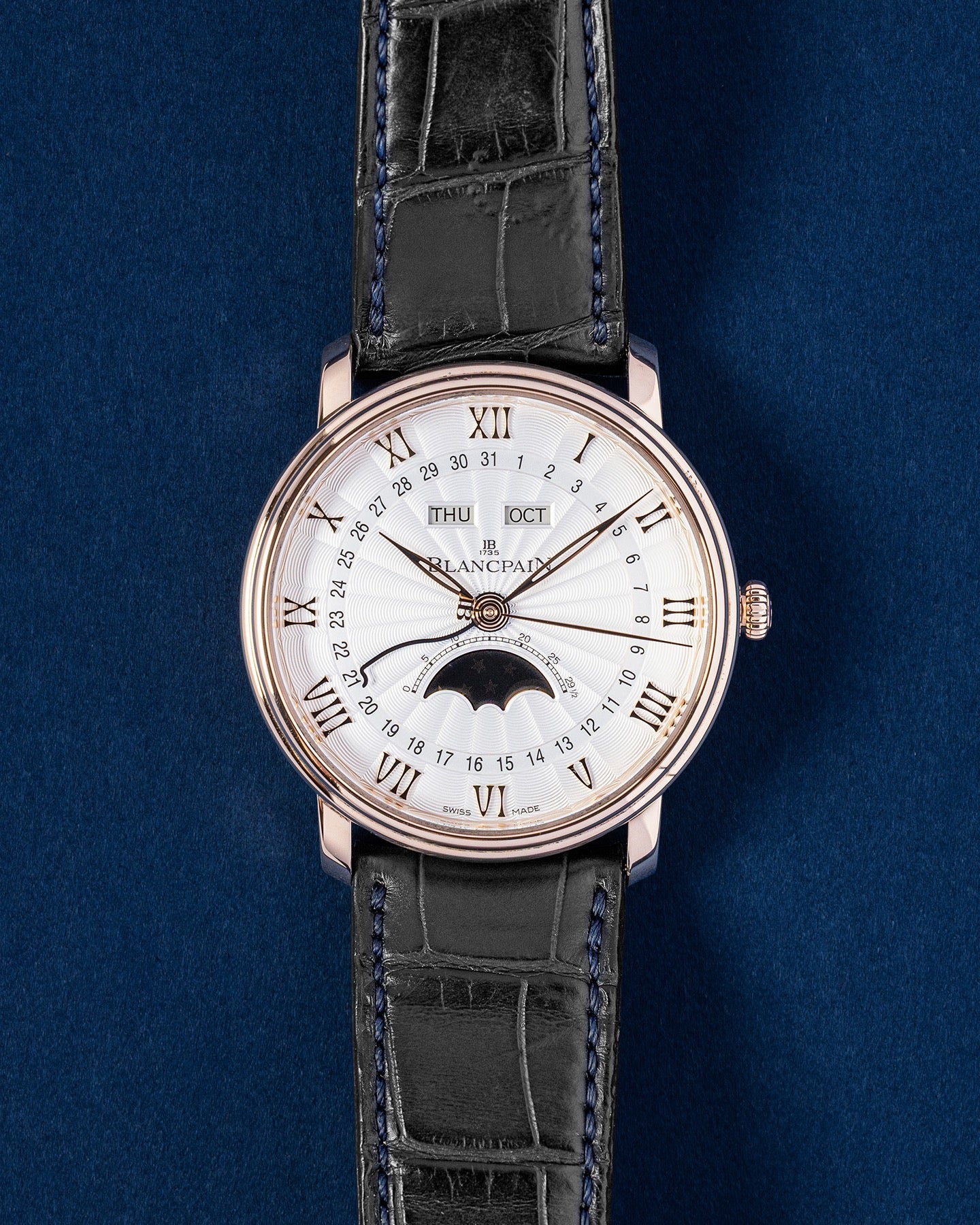
Blancpain dials frequently carry more information than they first appear to. A complete calendar, which the brand calls a Quantième Complet, displays day, date, month, and moon phase together. The moon phase itself is a Blancpain signature, rendered with a domed gold moon on a satin-finished disc, and the brand has produced moon phase complications continuously since the early years of the revival. When a listing references a Quantième Complet or a Phases de Lune, it is describing this calendar and moon phase layout, one of the most recognizable faces in traditional Blancpain Watches.
The moon phase deserves particular attention because it is central to the identity of classical Blancpain Watches. The brand claims the world's smallest moon phase display among its revival-era achievements, and the complication appears across the Villeret range in forms from simple to grand. A buyer who understands the Quantième Complet layout can read a Villeret dial at a glance and immediately grasp what the watch does.
Understanding Blancpain Bracelets, Straps, and Clasps
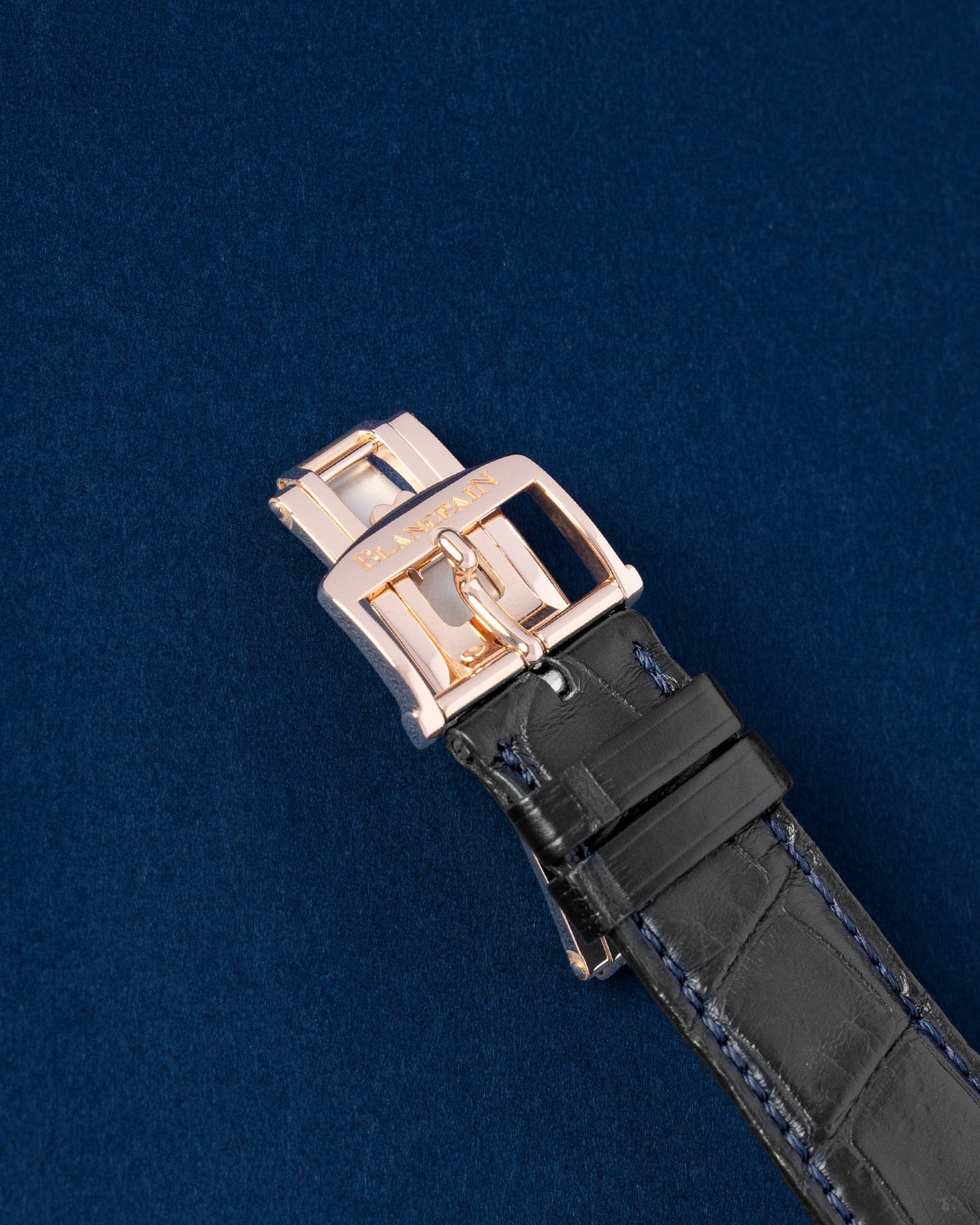
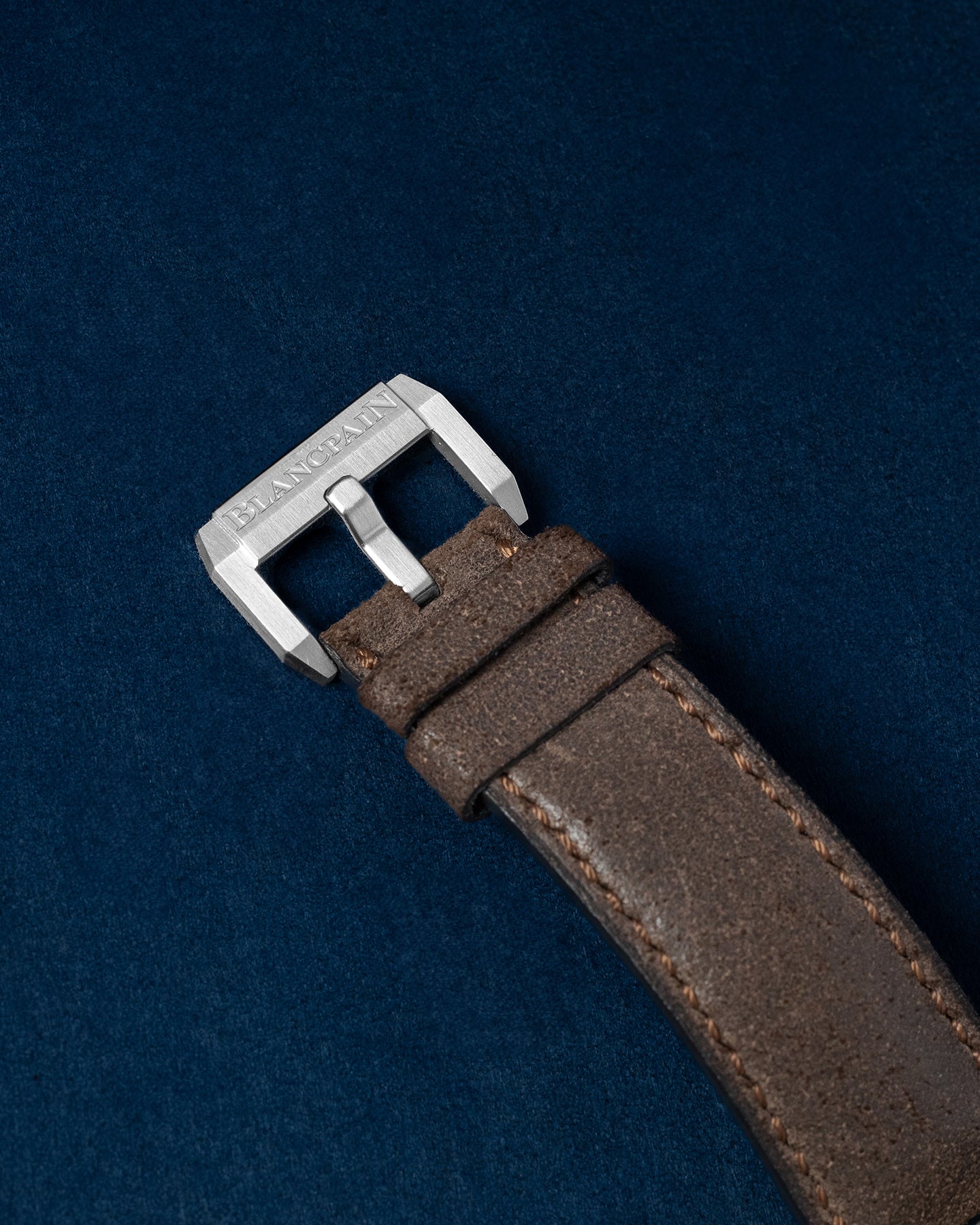
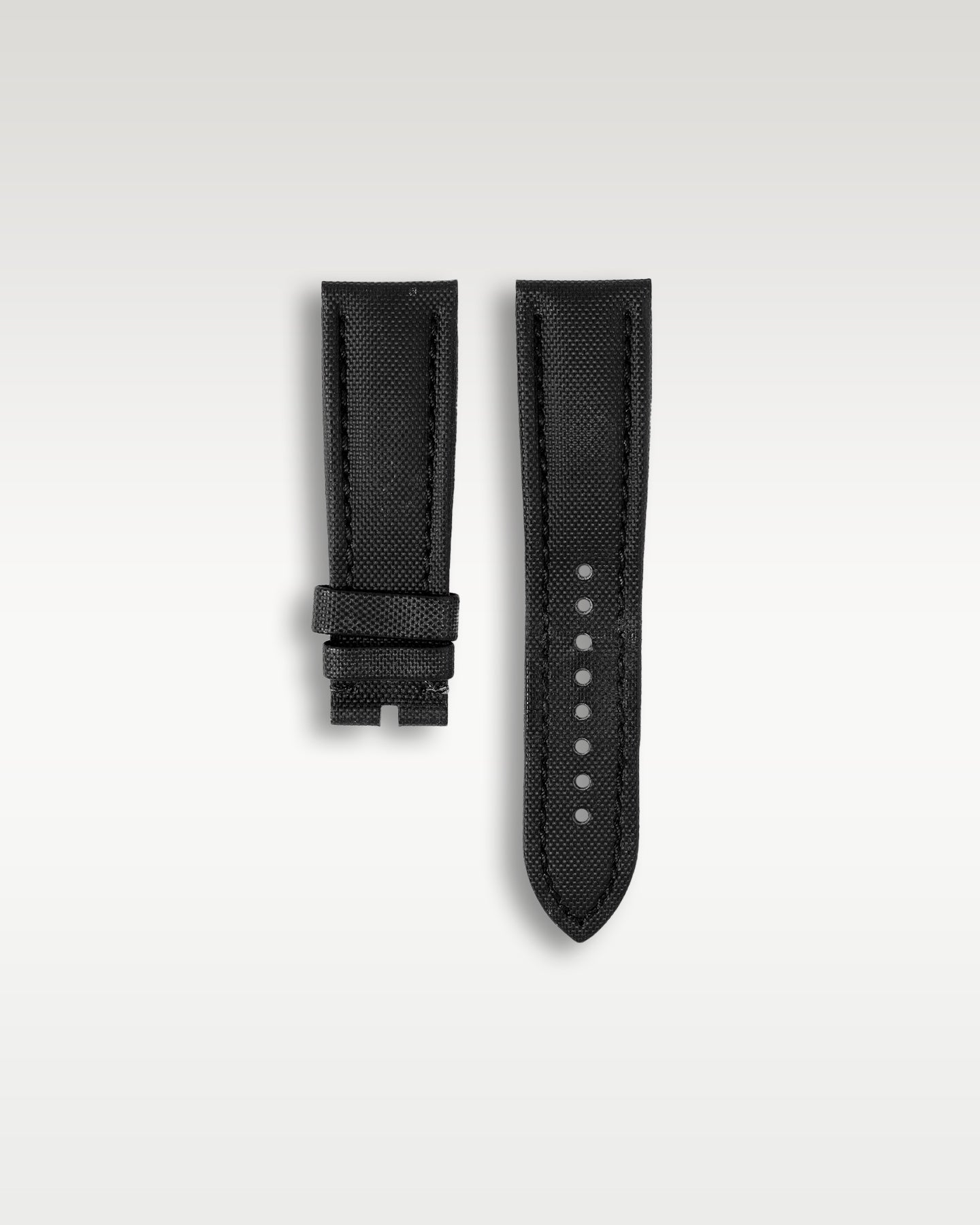
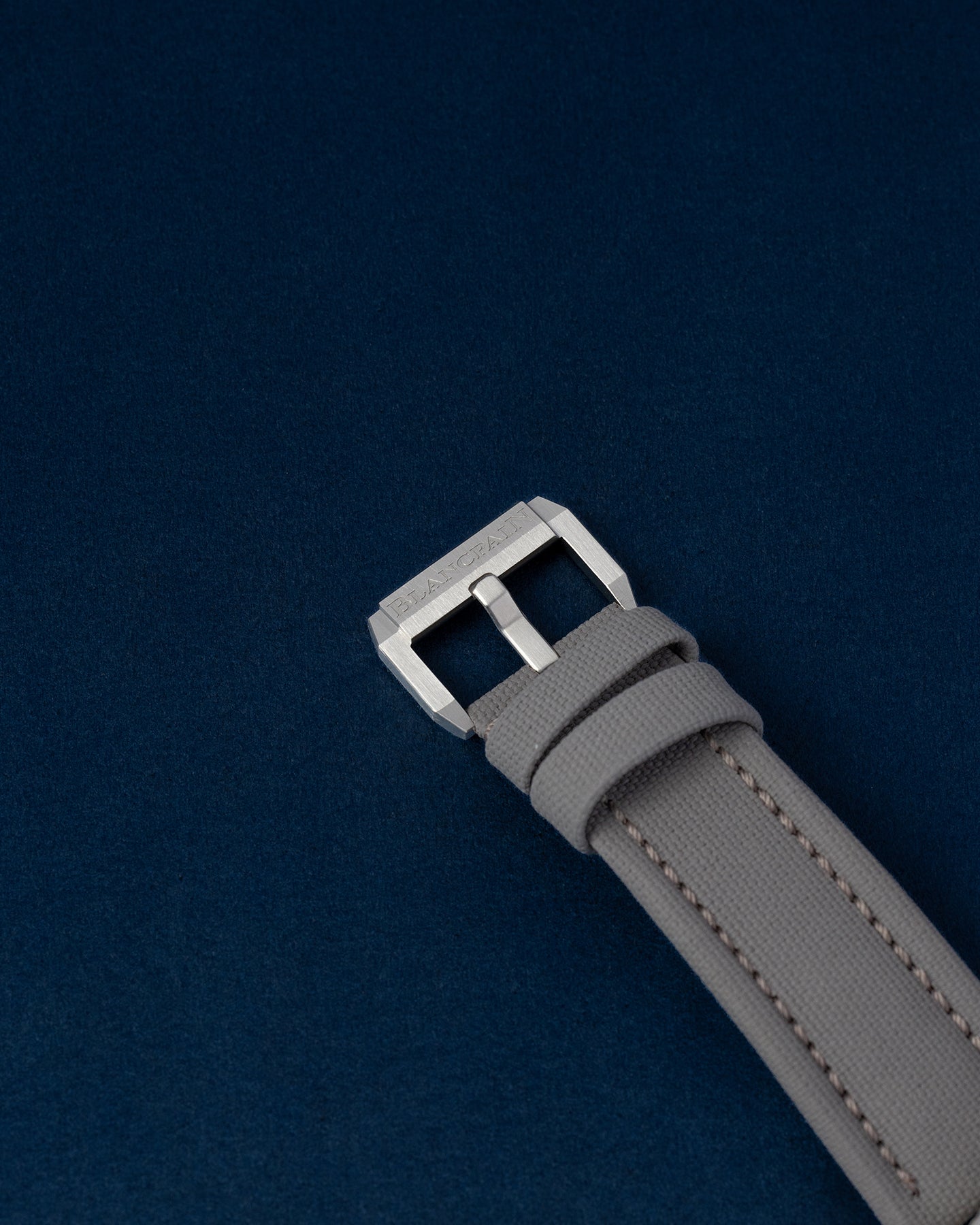
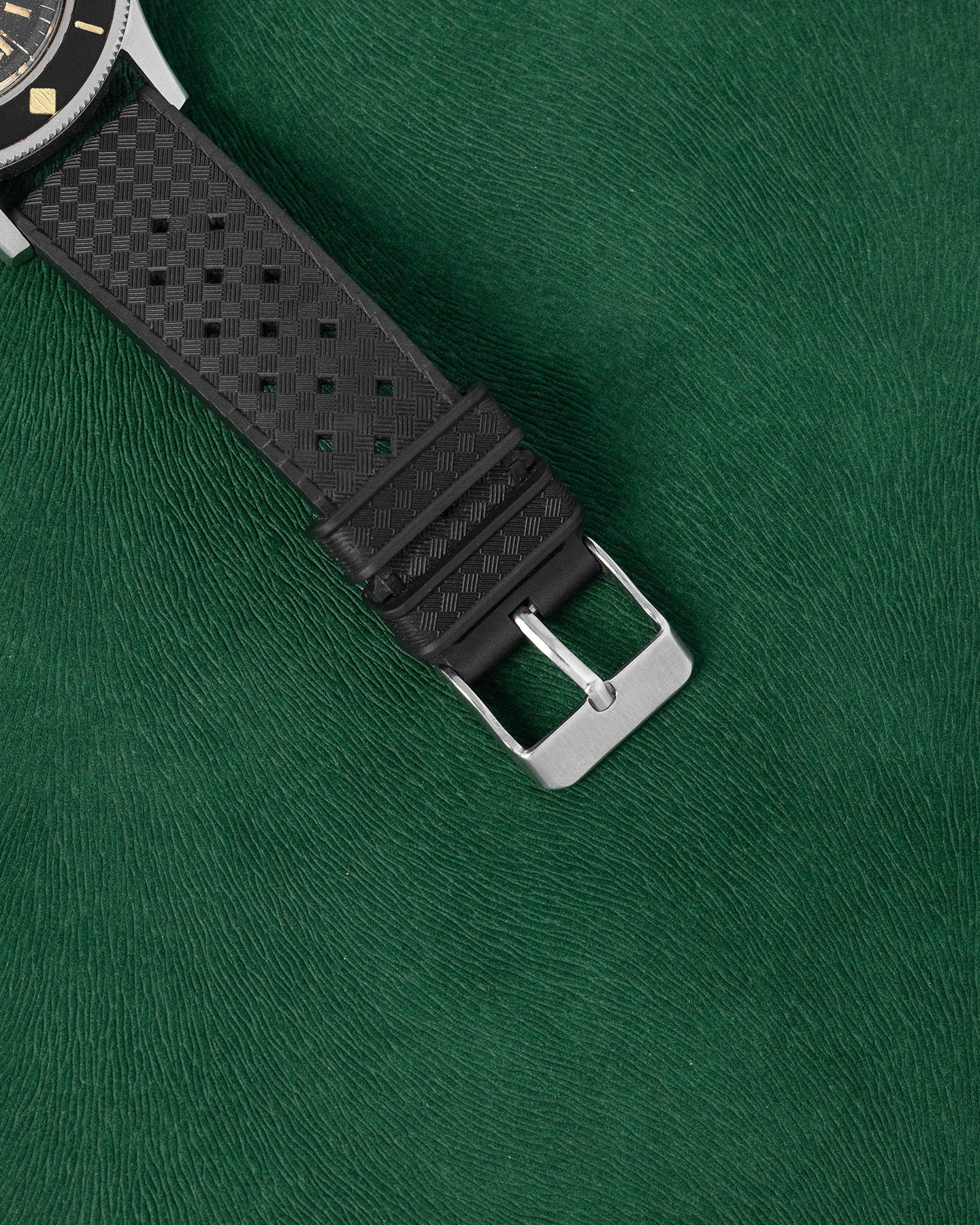
Most Blancpain Watches ship on leather, alligator, sail-canvas, or rubber straps rather than metal bracelets, reflecting the brand's dress-watch heritage and its diver's tool-watch practicality. Recent Villeret and Fifty Fathoms models use a quick-change strap system that allows the owner to swap straps by hand without tools, a genuinely useful feature that adds versatility to a single watch. When evaluating Blancpain watches on the secondary market, the strap and clasp are among the easier components to replace, so buyers should weight the case, dial, and movement condition far more heavily than the strap.
The quick-change strap system on recent Blancpain Watches genuinely increases their versatility, letting a single Fifty Fathoms move from a sail-canvas strap for active wear to an alligator strap for formal occasions. When assessing pre-owned Blancpain Watches, buyers should treat the presence of original straps and the folding clasp as a modest value factor, worth noting but far less important than the integrity of the watch itself.
Selling Your Blancpain to Grand Caliber
Grand Caliber buys Blancpain Watches outright and takes them on consignment, and the process is built around transparency rather than lowball offers. Because Blancpain Watches are produced in genuinely small numbers, each reference carries its own market dynamics, and a fair offer depends on the specific model, the movement, the condition, and whether the original box and papers are present. A Fifty Fathoms or Bathyscaphe in current production trades very differently from a discontinued Léman or a vintage Rayville-era diver, and our offers reflect those real distinctions rather than a flat percentage applied to every Blancpain. Sellers receive an honest assessment grounded in current secondary market data, and consignment remains an option for those who prefer to wait for the right buyer rather than sell outright. Grand Caliber handles the authentication, the photography, and the national marketing, and the seller keeps control of the reserve.
Blancpain Models in Current Production
Blancpain organizes its current catalog around a small number of collections, each with a clear identity. Weighting coverage toward the lines that carry real collector demand, the Fifty Fathoms and its Bathyscaphe sub-family sit at the center of modern interest, while the Villeret collection carries the brand's classical dress-watch tradition. Understanding each current line is essential for any buyer evaluating Blancpain Watches today.
The catalog structure also tells a buyer something about where their money goes. The Fifty Fathoms and Bathyscaphe carry the brand's tool-watch prestige and the strongest secondary demand, while the Villeret carries its haute horlogerie tradition. Knowing which pole of the range fits their taste is the single most useful thing a buyer of Blancpain watches can determine before shopping.
The Blancpain Fifty Fathoms
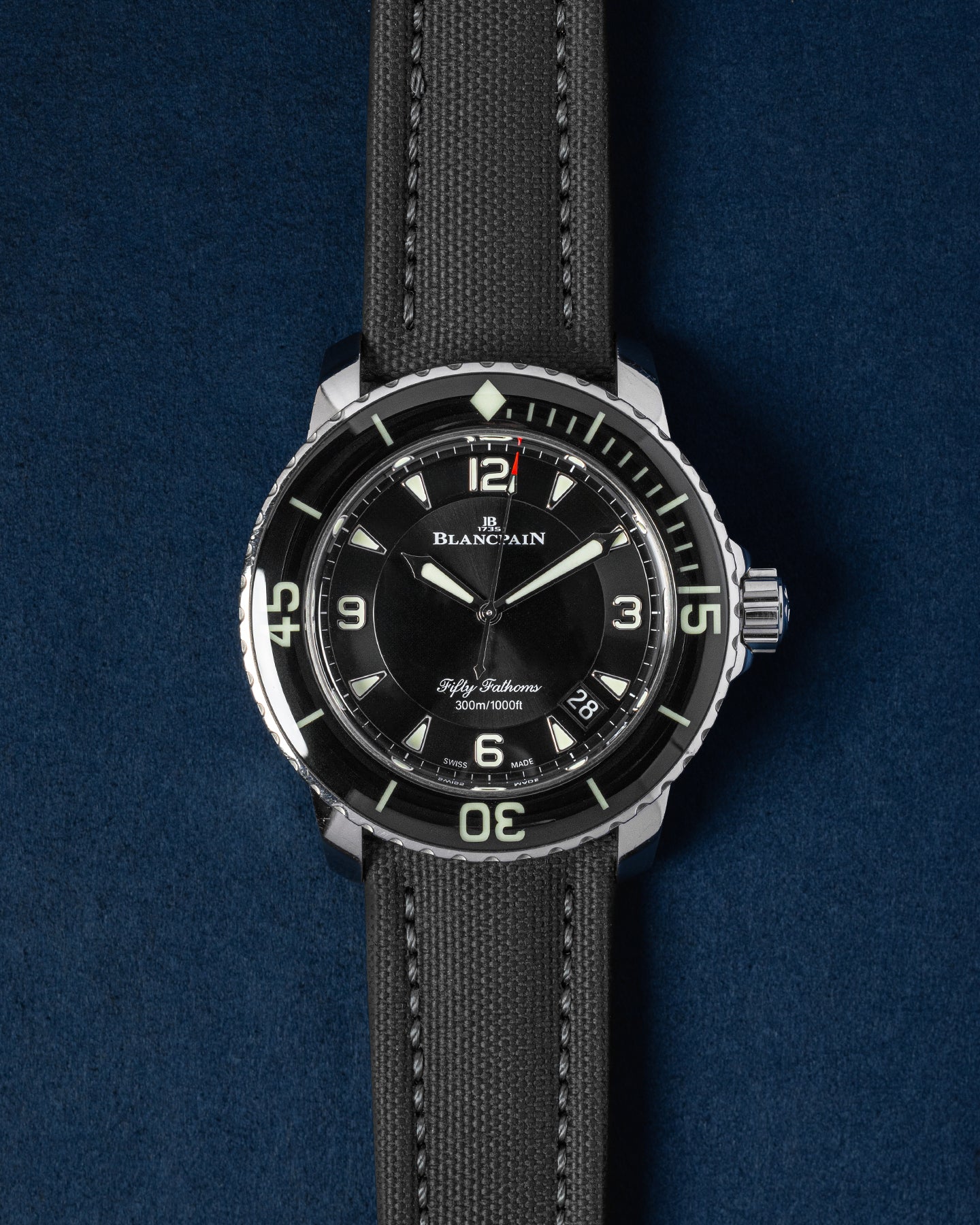
The Fifty Fathoms is the most important watch Blancpain makes and one of the most historically significant dive watches ever produced. The modern Fifty Fathoms Automatique is offered across a range of case sizes, anchored by the robust 45mm original proportion, the versatile 42.3mm midsize, and a 38.2mm option introduced in 2025 that brought the archetype to a broader range of wrists. The core models run the automatic Caliber 1315, a movement with three mainspring barrels delivering a 120-hour power reserve, roughly five days, and water resistance of 300 meters. The unidirectional bezel carries a scratch-resistant sapphire insert, and the sword-shaped hands and clean indexes trace directly back to the 1953 original. These are the Blancpain Watches that codified the modern dive watch template, and they remain the emotional and commercial heart of the brand.
For buyers of pre-owned Blancpain Watches, the Fifty Fathoms is also the reference most likely to hold and grow value, precisely because of its historical primacy and steady demand. The 2025 addition of the 38.2mm case broadened the collection's appeal considerably, and the full range of sizes means a buyer can find a Fifty Fathoms suited to almost any wrist without leaving the model that defines the brand.
The Blancpain Fifty Fathoms Bathyscaphe
The Bathyscaphe began in 1956 as a smaller, more wearable companion to the full-size Fifty Fathoms, and the modern Bathyscaphe reintroduced in 2013 has become one of the brand's most versatile ranges. The current Bathyscaphe is offered around a 43.6mm diameter as well as a more compact 38mm case, in steel, satin-brushed titanium, and hand-finished ceramic. The larger models run the Caliber 1315 with its 120-hour reserve, while the 38mm versions use the Caliber 1150 with a 100-hour power reserve. A defining technical feature is the unidirectional bezel's Liquidmetal insert bonding, which fuses an amorphous metal alloy to the ceramic for exceptional scratch resistance. Bathyscaphe references extend into complications as well, including day-date and annual calendar variants, making this the broadest current family in modern Blancpain Watches.
The Bathyscaphe's breadth is precisely what makes it the most practical entry point into the brand. A steel Bathyscaphe delivers the Caliber 1315 or 1150, genuine 300-meter water resistance, and a case that wears comfortably in daily rotation, all at the accessible end of the Blancpain Watches range. Buyers who want one versatile mechanical watch that can dive, dress down, and hold value consistently gravitate to the Bathyscaphe for good reason.
The Blancpain Villeret Collection
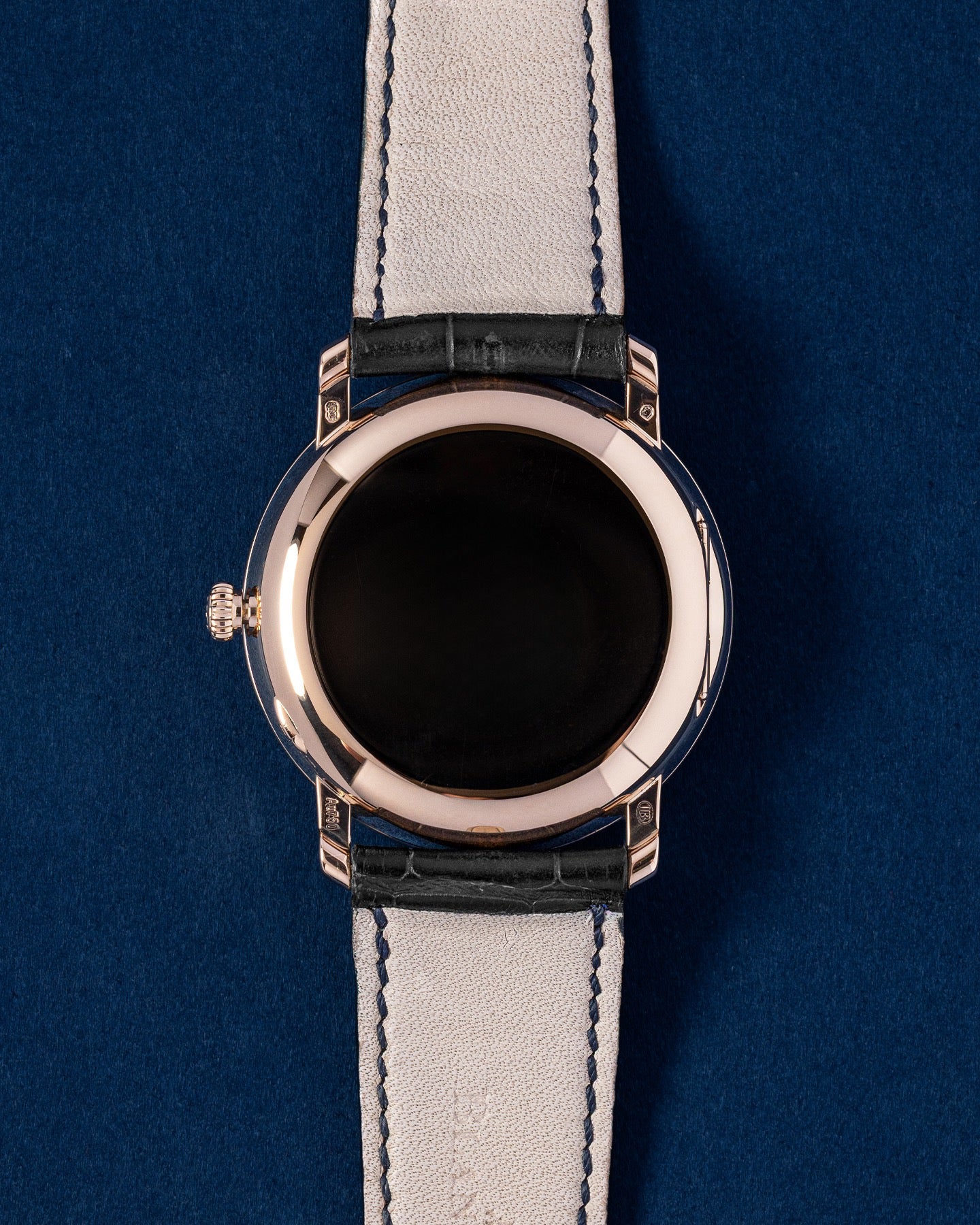
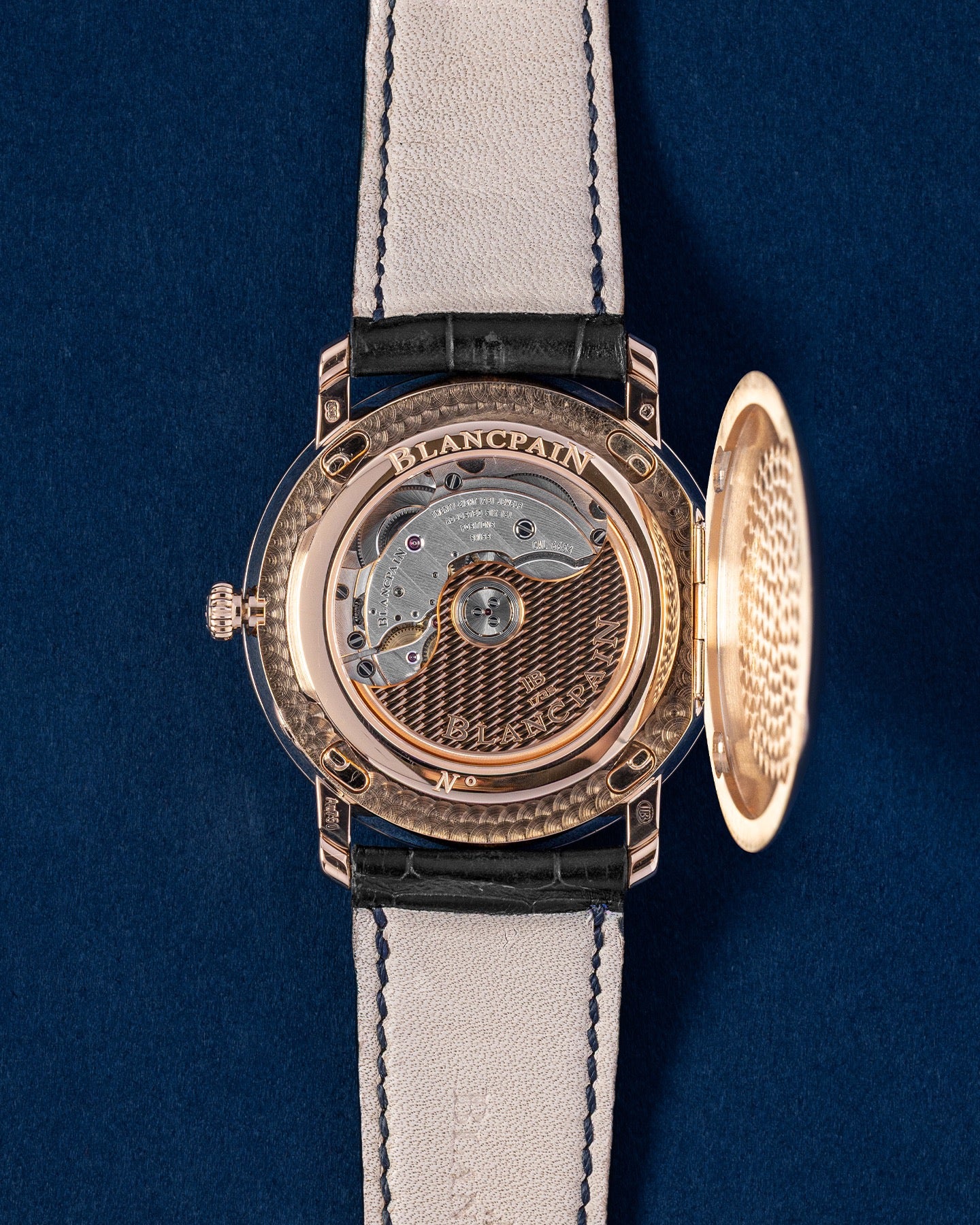
The Villeret collection is the classical soul of the brand and the direct descendant of the six masterpieces that reestablished Blancpain in the 1980s. Named for the founding village, the Villeret line is defined by its double-stepped case, its refined Roman-numeral dials, and its focus on traditional complications rendered with restraint. The Villeret Ultraplate, or Extraplate, achieves a slim profile of roughly 8.7mm thanks to the ultra-thin automatic Caliber 1151, which delivers a 100-hour power reserve from twin barrels. The Villeret Quantième Complet Phases de Lune runs the Caliber 6654.4 with a 72-hour reserve and displays a complete calendar with the brand's signature domed moon phase, adjusted through patented under-lug correctors that eliminate the need for pushers on the caseband. These are the Blancpain Watches for the buyer who values quiet classical elegance over sporting presence.
The Villeret also rewards the buyer willing to explore complications. Beyond the time-and-date and complete-calendar models sit tourbillons, carrousels, split-seconds chronographs, and the Chinese traditional calendar, each executed with the finishing that defines high-end Blancpain watches. A Villeret is the reference through which a collector experiences the brand's deepest horological tradition, and its understated cases hide genuinely serious mechanics.
The Blancpain Air Command
The Air Command is Blancpain's flyback chronograph collection, revived from a rare 1950s military pilot's chronograph. The modern Air Command pairs a countdown rotating bezel with a flyback chronograph movement, connecting the brand's tool-watch heritage to the skies rather than the sea. While smaller in volume than the Fifty Fathoms and Villeret lines, the Air Command represents an important chapter of the catalog and appeals to buyers seeking a Blancpain chronograph with genuine historical grounding.
Because the Air Command is produced in smaller numbers than the core divers, pre-owned Blancpain Watches from this collection can be harder to locate, which makes them appealing to collectors who value scarcity. The flyback function and countdown bezel give the Air Command real utility alongside its heritage, and it stands as one of the more distinctive chronographs in the modern Blancpain Watches catalog.
The Blancpain Ladybird and Women's Blancpain Watches
The Ladybird collection dates to 1956, when Blancpain produced one of the smallest round automatic movements in the world for a women's watch. The modern Ladybird continues that tradition with refined, elegant pieces built around small automatic calibers. Alongside the Ladybird, many Villeret and Bathyscaphe references are offered in sizes and finishes that suit a wide range of wrists, meaning women's Blancpain Watches are not a separate afterthought but an integrated part of nearly every collection.
This integration reflects the brand's history, since Blancpain produced the world's first self-winding wristwatch designed for women in 1930 and refined it into the Ladybird in 1956. For buyers seeking smaller or more elegant pieces, the range of women's Blancpain Watches spans from the diminutive Ladybird to gem-set Villeret references and compact Bathyscaphe divers, offering genuine mechanical watchmaking rather than fashion pieces.
Discontinued and Vintage Blancpain Highlights
The discontinued and vintage side of Blancpain watches rewards careful study, because the brand's small production numbers make earlier references genuinely scarce and its historical importance makes them significant.
The vintage market for Blancpain Watches is also less crowded and less manipulated than that of the highest-volume brands, which can work in a knowledgeable buyer's favor. Prices are driven by genuine scarcity and condition rather than speculative hype, and a well-sourced vintage Blancpain can represent real horological history at a rational price relative to its significance.
Vintage Fifty Fathoms and Rayville-Era Divers
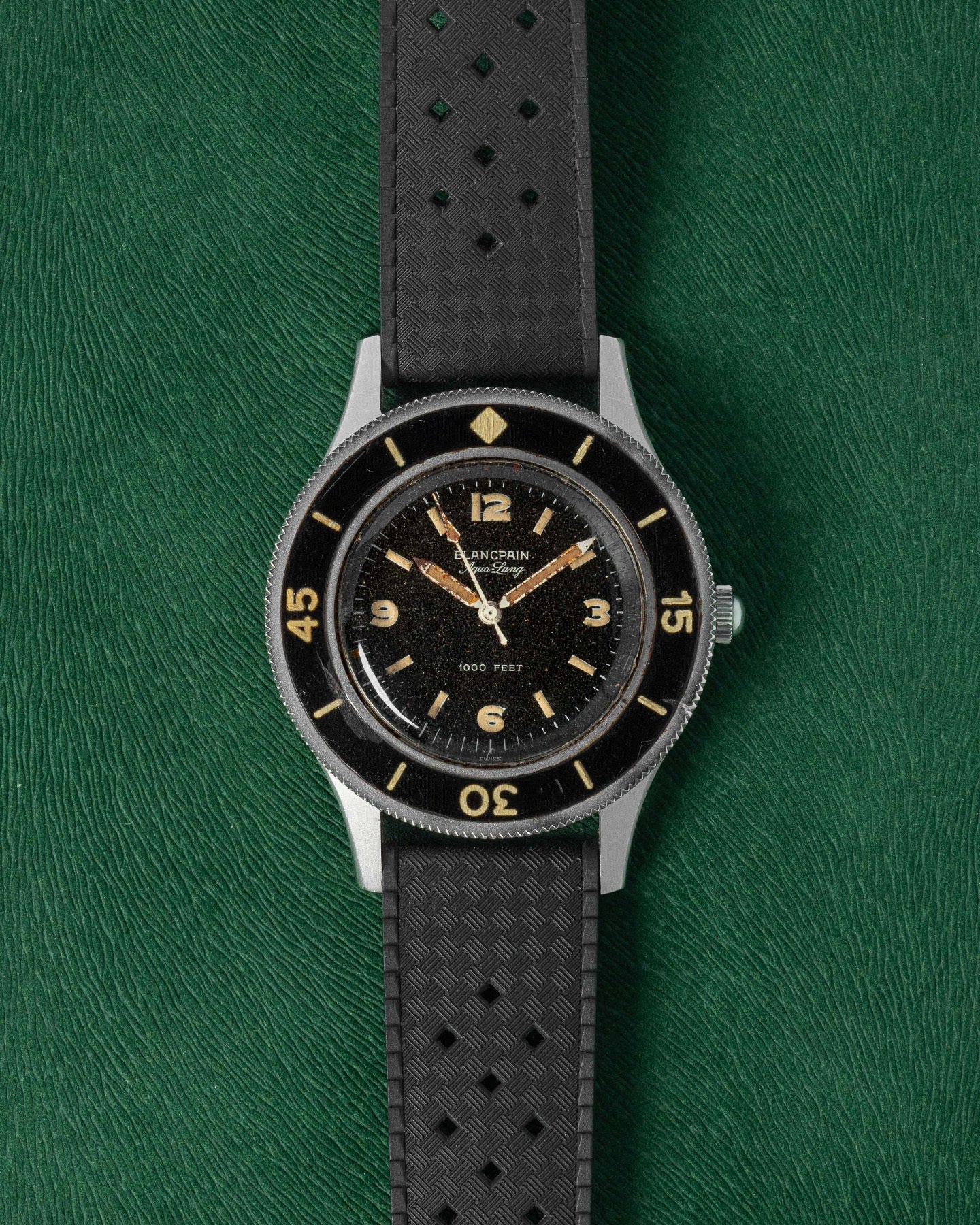
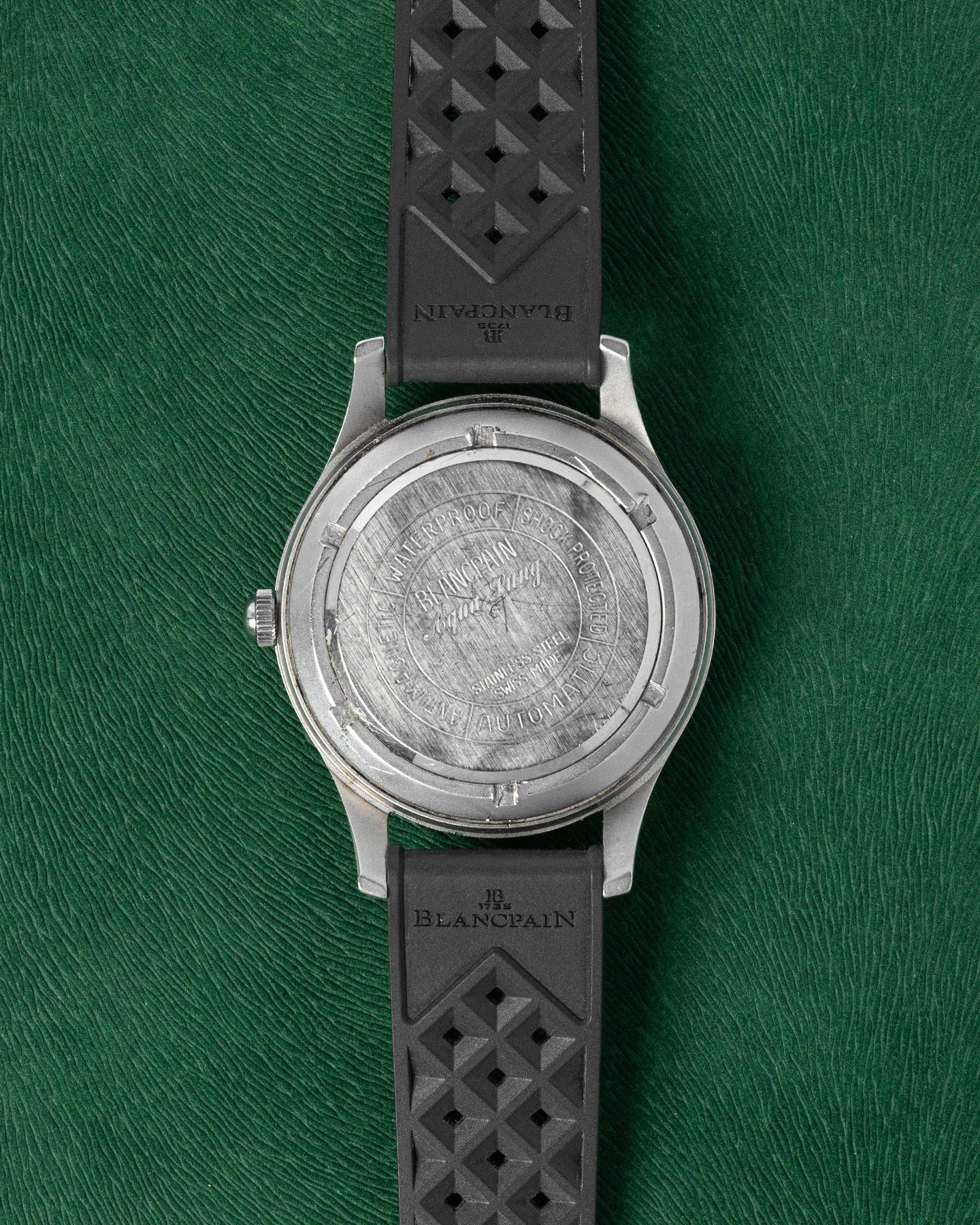
The earliest and most collectible Blancpain Watches are the vintage Fifty Fathoms divers of the 1950s and 1960s, produced during the Rayville era. These include the original military-issue pieces developed for the French Nageurs de Combat, the MILSPEC models identified by their moisture indicators, and the Tornek-Rayville TR-900 supplied to the United States Navy. Vintage Fifty Fathoms and related Rayville-era divers such as the Aqua Lung sit among the most historically important dive watches in existence, and verified examples with honest patina command strong premiums at auction and among specialist dealers.
Among vintage Blancpain Watches, the military-issue Fifty Fathoms pieces are the most historically important and the most difficult to authenticate, which is exactly why specialist verification matters so much. The Tornek-Rayville TR-900 in particular, supplied to the United States Navy to satisfy domestic-sourcing requirements, is among the rarest and most valuable dive watches in existence, and the market is unforgiving of anything less than complete originality.
The Léman and 2100 Collections
Following the 1983 revival, Blancpain introduced a sportier automatic line originally designated the 2100 series, later renamed Léman. These Blancpain Watches offered water resistance and modern automatic movements with long power reserves, including GMT, alarm, and complete-calendar variants, and they represented the brand's late-1990s and 2000s bridge between pure dress watches and full dive watches. The Léman is now discontinued, which makes clean examples an interesting entry point into the brand for buyers who appreciate the era.
The Léman and 2100 collections also carried genuine mechanical innovation, including automatic movements with long power reserves and useful complications, which makes discontinued Léman Blancpain Watches a quietly compelling value today. Buyers who appreciate late-1990s and 2000s design can acquire real Blancpain complication work at prices well below current-production equivalents.
The L-evolution Collection
The L-evolution collection was Blancpain's contemporary, technically driven line, housing tourbillons, carrousels, and other complications in bold modern cases. Now discontinued, L-evolution pieces represent a distinct chapter in modern Blancpain watches and appeal to collectors seeking the brand's high-complication work in a more avant-garde design language than the classical Villeret.
For collectors of modern complications, discontinued L-evolution Blancpain Watches offer tourbillons and carrousels in distinctive contemporary cases that the brand no longer produces. Their discontinued status and low production make them scarce, and they appeal to buyers who want the brand's technical ambition expressed in a bolder aesthetic than the Villeret allows.
Expert Opinions on Blancpain Watches
Among serious collectors and watch professionals, Blancpain Watches occupy a respected and somewhat under-the-radar position. The consensus view is that Blancpain delivers genuine manufacture complication work and profound historical importance at prices that, while high, sit below the equivalent output of the most famous names. The Fifty Fathoms is widely credited as the first modern dive watch, a claim supported by its 1953 debut with the full set of features that define the category, and specialists consistently rank it alongside the Rolex Submariner in historical importance. On the classical side, the Villeret complications and the ultra-thin movements draw praise for finishing and mechanical honesty. The frequent expert observation is that Blancpain Watches are underappreciated relative to their substance, a quality that appeals to knowledgeable buyers precisely because it keeps the brand out of the hype cycle.
This under-the-radar reputation has a practical consequence for buyers of Blancpain Watches. Because the brand avoids the speculative frenzy that surrounds certain steel sport models from other makers, prices tend to reflect genuine horological merit rather than manufactured scarcity, and a buyer is far more likely to pay a rational price for real substance. For the collector who values watchmaking over logos, Blancpain watches are among the most rewarding acquisitions in the market.
Blancpain Price Trends and Market Value
Understanding the market for Blancpain Watches requires separating the collection tiers, because the range spans from accessible entry points to genuine six-figure complications. The current Fifty Fathoms and Bathyscaphe divers occupy the core of secondary market activity, with steel Bathyscaphe models generally representing the most accessible way into modern Blancpain Watches and full-size Fifty Fathoms divers commanding a step up. Villeret dress watches vary widely, with time-and-date and moon phase models occupying a broad middle band and grand complications such as tourbillons, carrousels, and the historic 1735 reaching well into six figures. Vintage Fifty Fathoms and Rayville-era divers occupy their own market entirely, driven by condition, originality, and military provenance rather than current retail logic. Because Blancpain produces such small numbers, secondary market supply is thin, which supports values on the most desirable references but also means patient sourcing is often required. Buyers should weight condition, originality, movement, and completeness of box and papers heavily, since these factors move Blancpain Watches values more than almost anything else.
It is also worth understanding that the thin supply of Blancpain Watches cuts both ways. Desirable references can be difficult to find at any price, but this same scarcity means that a well-chosen piece faces little of the oversupply risk that pressures values in higher-volume brands. A buyer who sources patiently and prioritizes condition and originality is positioned well in the Blancpain market, where the fundamentals reward discipline.
Popular Blancpain Comparisons
Buyers evaluating Blancpain Watches almost always weigh them against a small set of comparable brands, and understanding those comparisons clarifies where Blancpain fits.
Blancpain versus Rolex
The most common comparison places the Fifty Fathoms against the Rolex Submariner, and the two are genuinely the co-founders of the modern dive watch, both arriving in the early 1950s. Rolex offers unmatched liquidity, brand recognition, and a robust tool-watch reputation, while Blancpain offers a longer manufacturing pedigree, in-house complications, and far greater scarcity. A buyer choosing Blancpain watches over Rolex is typically choosing heritage and exclusivity over liquidity and universal recognition.
In practice, the Fifty Fathoms and the Submariner appeal to overlapping but distinct buyers. The Rolex buyer often prioritizes resale certainty and instant recognition, while the buyer of Blancpain Watches prioritizes the pleasure of owning the original modern dive watch from the oldest registered watchmaker. Neither choice is wrong, but they reflect genuinely different priorities.
Blancpain versus Omega
Omega, a Swatch Group sister brand, competes on dive-watch heritage with the Seamaster and on value through wider production. Blancpain sits distinctly above Omega in price and hand-finishing, offering genuine haute horlogerie complications and the historical claim to the first modern dive watch. Buyers comparing the two are weighing Omega's accessibility and technology against the rarer, more traditional character of Blancpain Watches.
The Swatch Group relationship makes the comparison especially clear. Both brands share ownership, yet Blancpain occupies the group's traditional haute horlogerie position while Omega pursues technical innovation at scale. Buyers cross-shopping the two are effectively choosing between Omega's engineering and volume and the hand-finished, small-production character that defines Blancpain Watches.
Blancpain versus Jaeger-LeCoultre and Vacheron Constantin
On the classical side, Blancpain Watches compete with Jaeger-LeCoultre and, at the top, Vacheron Constantin. Jaeger-LeCoultre matches Blancpain on manufacture credibility and often undercuts it on price, while Vacheron Constantin sits above both in prestige and finishing. Blancpain occupies a compelling middle position, offering serious complication work and unmatched historical depth without the top-tier pricing of the Holy Trinity.
For buyers assembling a collection, this middle position is precisely what makes Blancpain Watches attractive. A collector can own genuine manufacture complications and the historical claim to the first modern dive watch without reaching Vacheron Constantin pricing, and the brand's relative obscurity means that substance, rather than logo recognition, drives the value proposition.
Key Features of Blancpain watches
The features that define Blancpain Watches are consistent across the catalog and worth understanding in detail before buying.
Blancpain Dials and Finishing
Blancpain dials range from the clean, legible tool faces of the Fifty Fathoms to the elaborate Roman-numeral and moon phase compositions of the Villeret. The brand's métiers d'art work extends into grand feu enamel, hand-engraving, and other decorative crafts on its most exclusive pieces. Across the range, the finishing quality is a defining characteristic of Blancpain Watches, executed to standards that reward close inspection.
Dial finishing is one of the clearest ways to appreciate the value in Blancpain Watches. The métiers d'art pieces in particular, with grand feu enamel and hand-engraving, represent decorative crafts that few manufactures still practice at this level, and even the standard Villeret and Fifty Fathoms dials show a consistency of finishing that separates serious watchmaking from mass production.
Blancpain Movements and Calibers
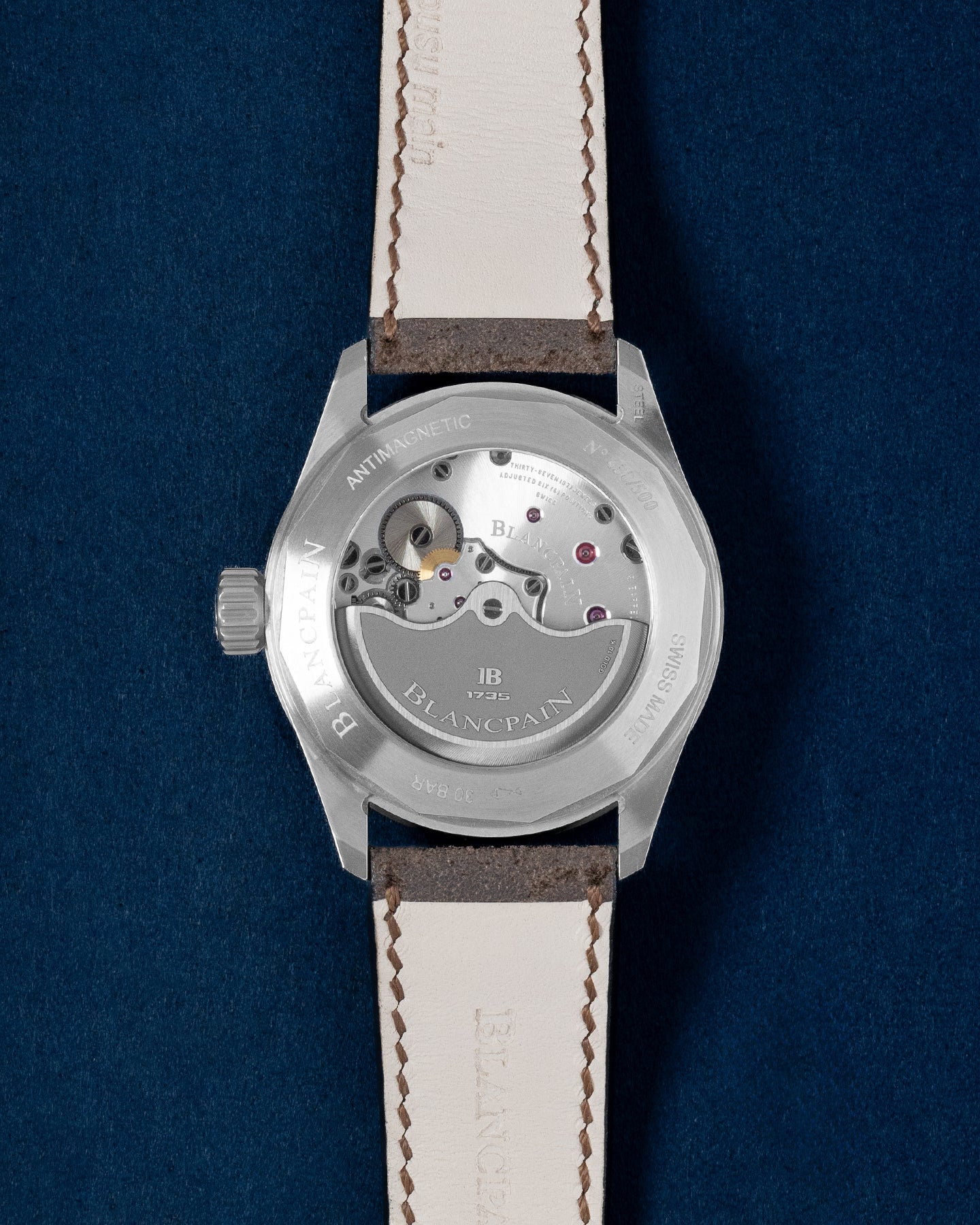
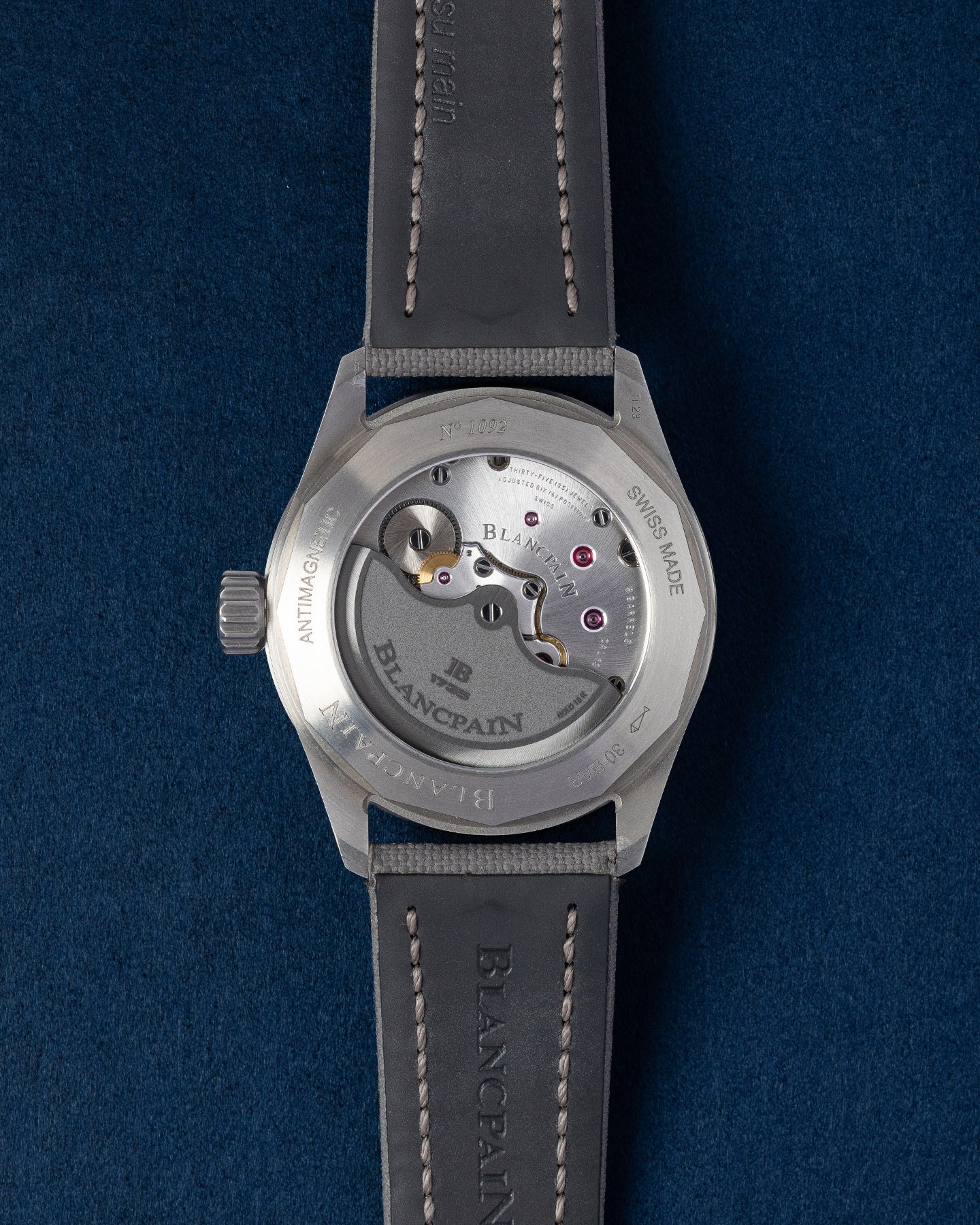
Every Blancpain movement is mechanical, a direct consequence of the brand's founding no-quartz principle. The core automatic calibers include the Caliber 1315 with its 120-hour, five-day power reserve from three barrels, the Caliber 1150 with a 100-hour reserve, the ultra-thin Caliber 1151, and the calendar Caliber 6654.4. These movements are decorated with Côtes de Genève, anglage, and other traditional finishing, and are visible through sapphire casebacks on most references. The movement is the heart of any Blancpain watch, and the brand's in-house mechanical work is a primary reason collectors value the marque.
The long power reserves across Blancpain Watches deserve emphasis, since the 120-hour Caliber 1315 and the 100-hour Calibers 1150 and 1151 mean a watch set down on a Friday is still running accurately the following week. This practical convenience, combined with traditional hand finishing visible through the sapphire caseback, is exactly the kind of substance that defines the appeal of Blancpain Watches to knowledgeable buyers.
Blancpain Case Sizes and Materials
Blancpain watches are offered in a wide range of case sizes, from compact 33mm and 38mm dress and diver pieces to robust 45mm Fifty Fathoms models. Materials span stainless steel, grade-23 titanium, ceramic, and precious metals including red gold, yellow gold, and platinum. This breadth means there is a Blancpain for nearly every wrist and every use, from a slim gold Villeret to a serious ceramic dive watch.
The material breadth of Blancpain Watches also affects value and wearability. Grade-23 titanium keeps the larger divers comfortable on the wrist, ceramic resists scratching almost indefinitely, and the precious-metal Villeret pieces carry intrinsic value in their cases. Buyers should match material to intended use, choosing titanium or steel for active wear and gold or platinum for dress occasions.
Blancpain Water Resistance and the Dive Heritage
The dive collections carry serious water resistance, with the Fifty Fathoms and Bathyscaphe rated to 300 meters, and the brand's Fifty Fathoms Tech pieces engineered for professional saturation diving. This genuine dive capability, grounded in the 1953 original developed for military combat divers, distinguishes Blancpain Watches from dress-watch brands that produce divers as an afterthought.
The Fifty Fathoms Tech line extends this dive credibility to genuine professional depths, and the Ocean Commitment editions tie the brand's diving heritage to marine conservation. This authentic connection between Blancpain Watches and the underwater world, unbroken since 1953, is a meaningful part of the brand's identity and a genuine point of pride for owners.
How to Authenticate Blancpain Watches
Authenticating Blancpain Watches requires knowledge of the brand's references, movements, and production history, which is precisely why buying from a specialist matters. Because Blancpain produces small numbers and uses distinctive in-house calibers, counterfeits and franken-watches are less common than with the highest-volume brands, but the risk is real, particularly among vintage Fifty Fathoms divers where military provenance drives enormous premiums. Grand Caliber authenticates every Blancpain in-house, verifying the movement caliber against the reference, confirming case and dial correctness, checking serial and reference numbers, and assessing whether any components have been serviced or replaced with non-original parts. On vintage Rayville-era pieces, we scrutinize dial printing, hand style, case stamps, and the specific details that separate an original from a redial or a married watch. This depth of verification is essential at the price points Blancpain watches command, and it is the core of what a serious dealer provides.
Authenticating Blancpain Watches also protects the buyer from paying vintage-military premiums for pieces that do not deserve them. Because a genuine Tornek-Rayville or French military Fifty Fathoms can be worth many multiples of a standard example, the incentive to fake provenance is real, and only careful examination of dials, hands, case stamps, and movements reliably separates the authentic from the assembled. This is precisely the expertise that Grand Caliber brings to every Blancpain it handles.
Blancpain Service and Maintenance
Because Blancpain Watches are entirely mechanical, they benefit from periodic service to maintain accuracy and water resistance. The general guidance for a mechanical watch of this caliber is a full service every four to five years, though a watch worn gently and running well can often go longer, and a diver used in the water benefits from more frequent gasket and water-resistance checks. A full Blancpain service involves complete disassembly, cleaning, lubrication, replacement of worn parts, regulation, and resealing, and given the complexity of the brand's calendars, moon phases, and high complications, this work should be performed by a watchmaker familiar with Blancpain calibers. Service cost scales with complication, from a straightforward time-and-date automatic to a full calendar or tourbillon, and buyers should factor eventual service into the ownership cost of any Blancpain. A watch with recent service history and documentation is worth more on the secondary market, which is why Grand Caliber notes service status clearly on the Blancpain Watches it offers. Ultimately, service is part of the honest cost of owning fine mechanical watches, and Blancpain's are no exception. A buyer who budgets for periodic service and works with a competent watchmaker will enjoy decades of reliable performance from a well-made Blancpain, and the watch will reward that care with the kind of longevity that only traditional mechanical construction provides.
Buyers should also understand that Blancpain's complication work makes qualified service especially important. A moon phase, complete calendar, or tourbillon requires a watchmaker who knows the specific caliber, and improper service can damage value on collectible Blancpain Watches. When acquiring a piece, documented recent service from a competent watchmaker is a genuine asset, and its absence should be factored into the price.
A Buying Guide for First-Time Blancpain Buyers
For the buyer approaching Blancpain Watches for the first time, a few principles make the decision clearer. Start by deciding between the two poles of the catalog, the sporting Fifty Fathoms and Bathyscaphe divers on one side and the classical Villeret dress watches on the other, because that choice narrows the field immediately. The steel Bathyscaphe is often the most sensible entry point into modern Blancpain watches, offering the Caliber 1315 or 1150, genuine 300-meter dive capability, and everyday versatility at the accessible end of the range. Buyers drawn to tradition should look to the Villeret Ultraplate or Quantième Complet, which deliver the brand's classical character and complication work. Across every choice, prioritize condition, originality, and completeness of box and papers over a marginally lower price, because those factors protect value. And because Blancpain production is small, be prepared to source patiently for a specific reference rather than expecting immediate availability. Working with a dealer who authenticates in-house and prices transparently removes most of the risk from a first Blancpain purchase.
One final principle helps first-time buyers of Blancpain Watches. Because the brand is under-recognized relative to its substance, the temptation to over-index on famous names should be resisted in favor of buying the best example of the right reference. A well-chosen, honest Blancpain from a dealer who stands behind its authenticity will deliver more genuine watchmaking satisfaction than a compromised example of a more famous brand at the same price. This is the philosophy that guides every Blancpain acquisition at Grand Caliber, and it is why buyers who value substance over status find the brand so rewarding. The right first Blancpain often becomes the beginning of a longer relationship with the marque, as owners come to appreciate the depth of history and hand finishing that each piece carries.
Need Help Choosing a Blancpain? Visit Grand Caliber
Grand Caliber helps buyers across the United States and internationally find the right Blancpain, whether that is a first Fifty Fathoms, a classical Villeret, or a specific vintage reference sourced to order. Every Blancpain we offer is authenticated in-house and priced in the open, with no allocation games and no waitlists, because we are a dealer rather than a boutique. From our Uptown Dallas showroom on McKinney Avenue we serve clients nationwide with fully insured shipping, and our sourcing network covers the major secondary markets for buyers seeking a particular Blancpain that is not currently in stock. To discuss a purchase, a sale, or a consignment, call us at (214) 225-7198 or email info@grandcaliber.com, and browse the current selection of Blancpain Watches at grandcaliber.com. Whatever the piece, our goal is the same, to help serious buyers acquire the right Blancpain with complete confidence in its authenticity and its price. For buyers anywhere in the country, Grand Caliber makes acquiring pre-owned Blancpain watches straightforward, transparent, and secure, from first inquiry to insured delivery. No other name in watchmaking combines this depth of documented history with the ongoing production of genuine in-house mechanical complications, and that combination is exactly what makes the brand worth the patience and the study that acquiring the right piece requires.


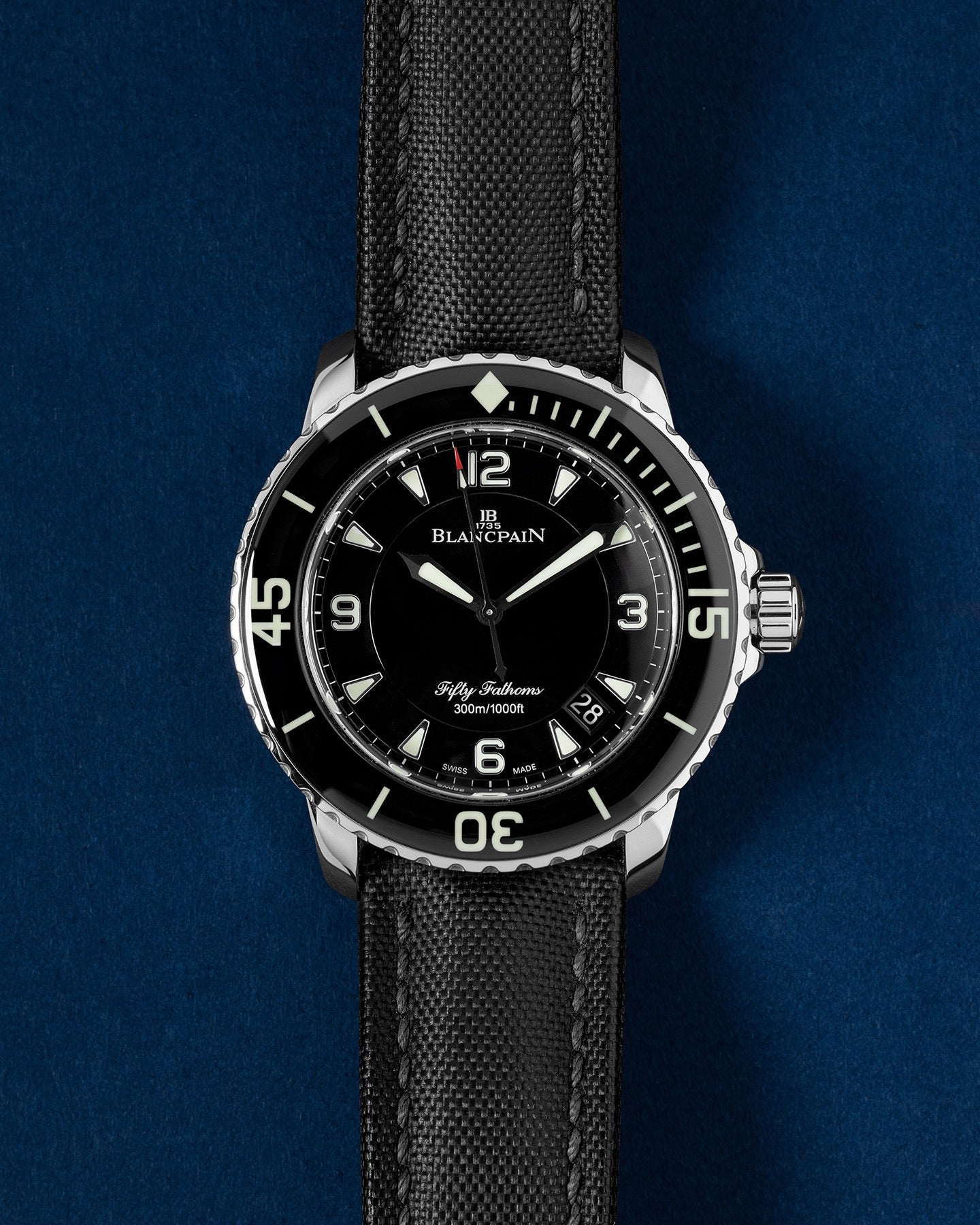
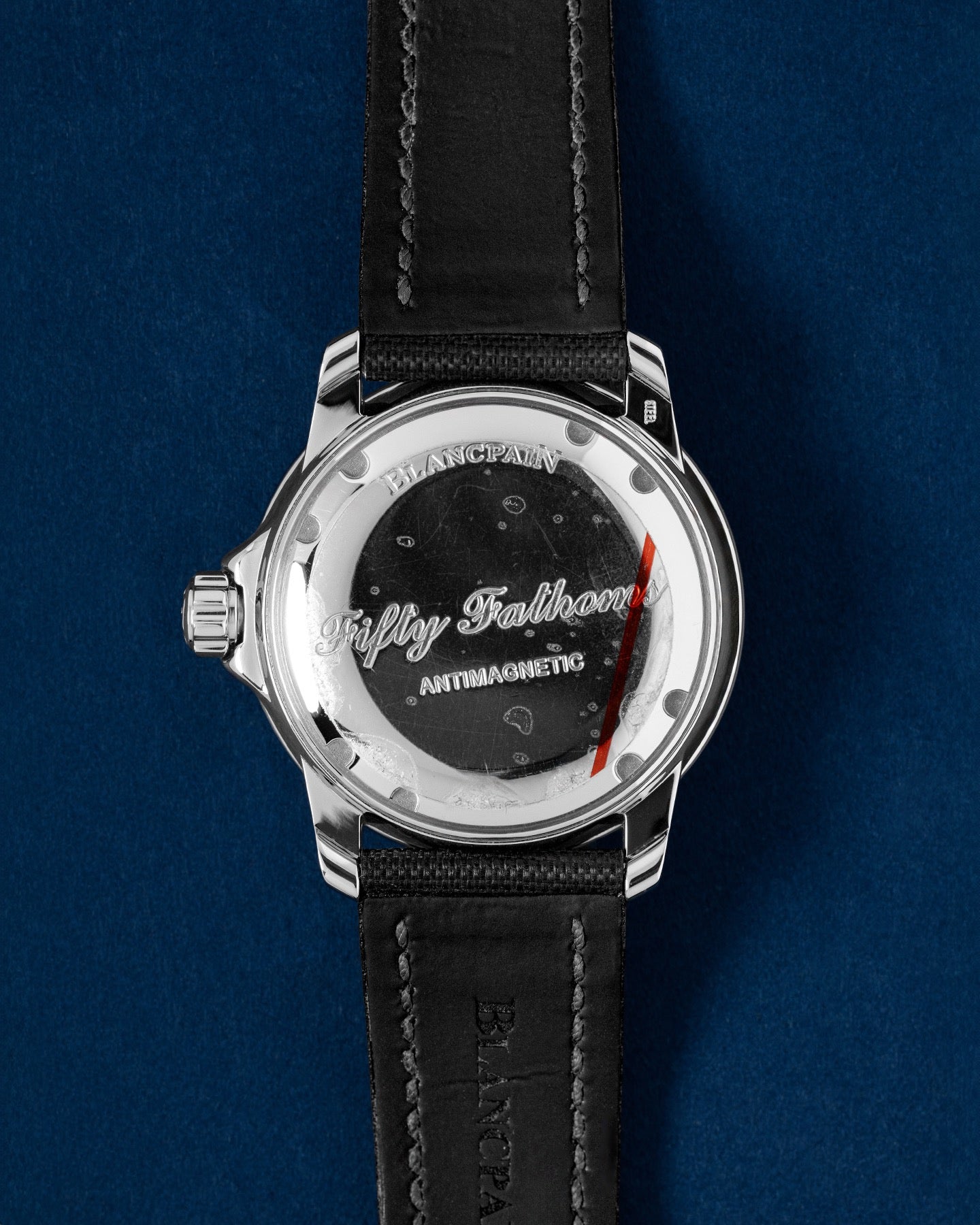
Blancpain Fifty Fathoms 5015-1130-52
Blancpain Villeret 6664-3642-55b
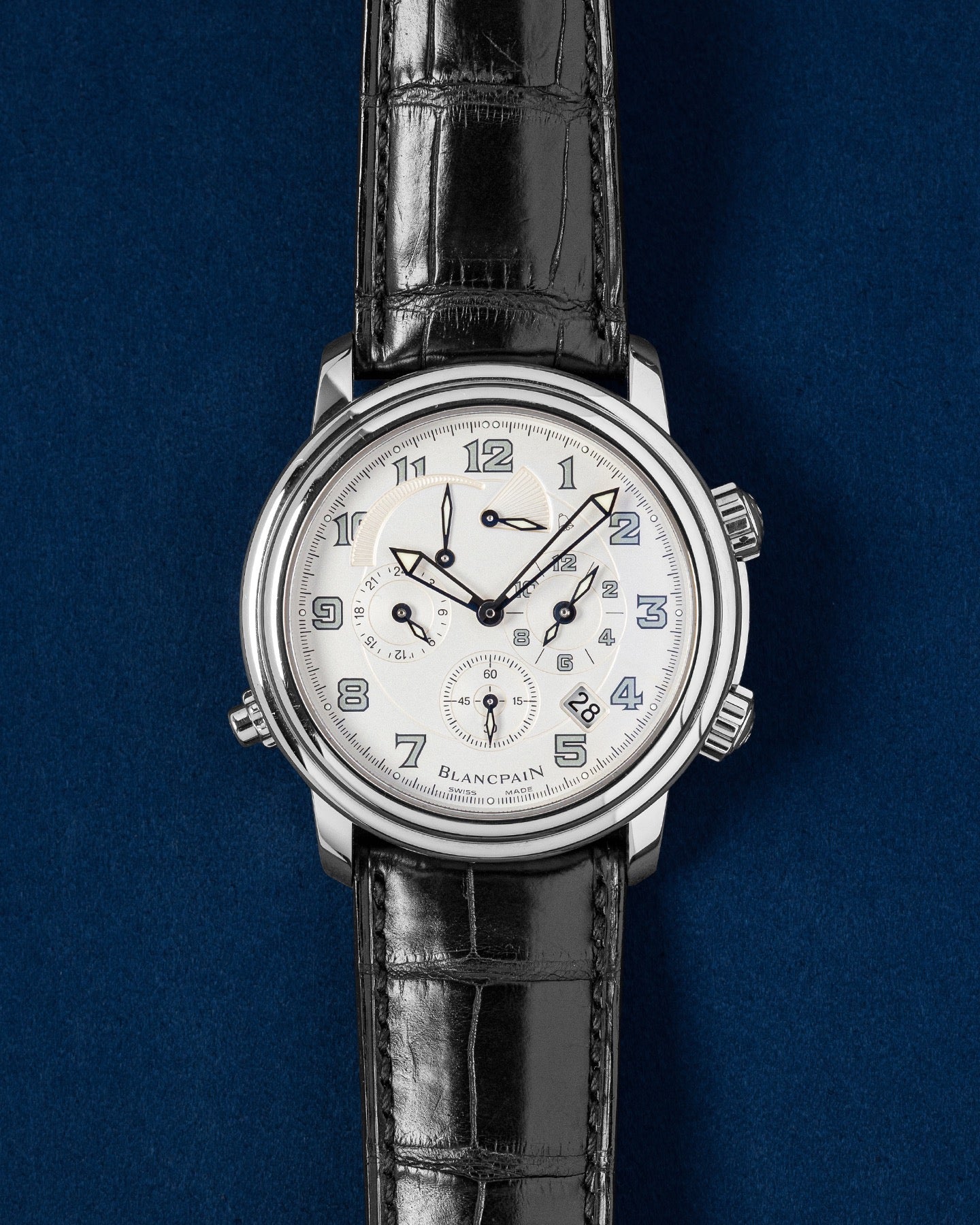
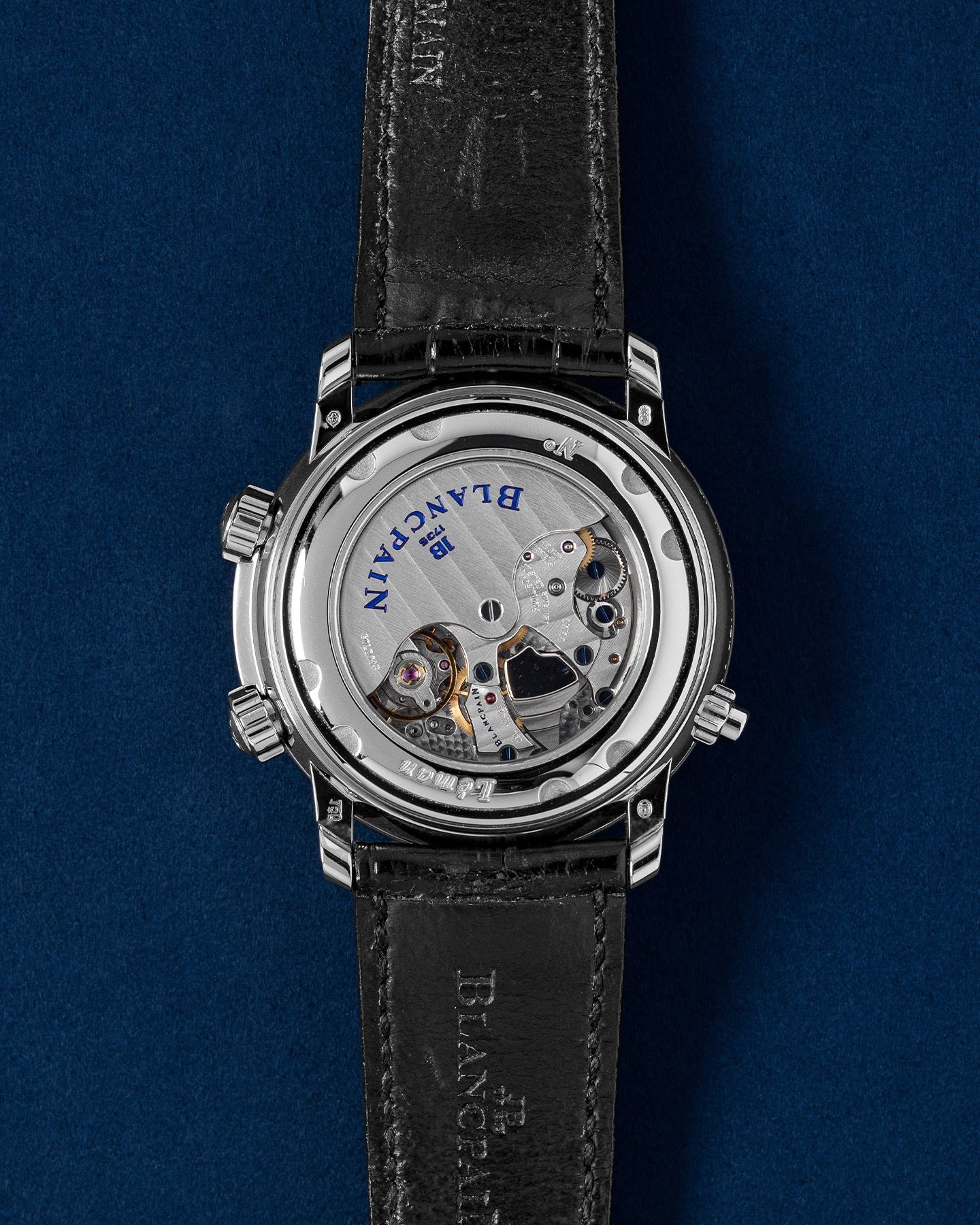
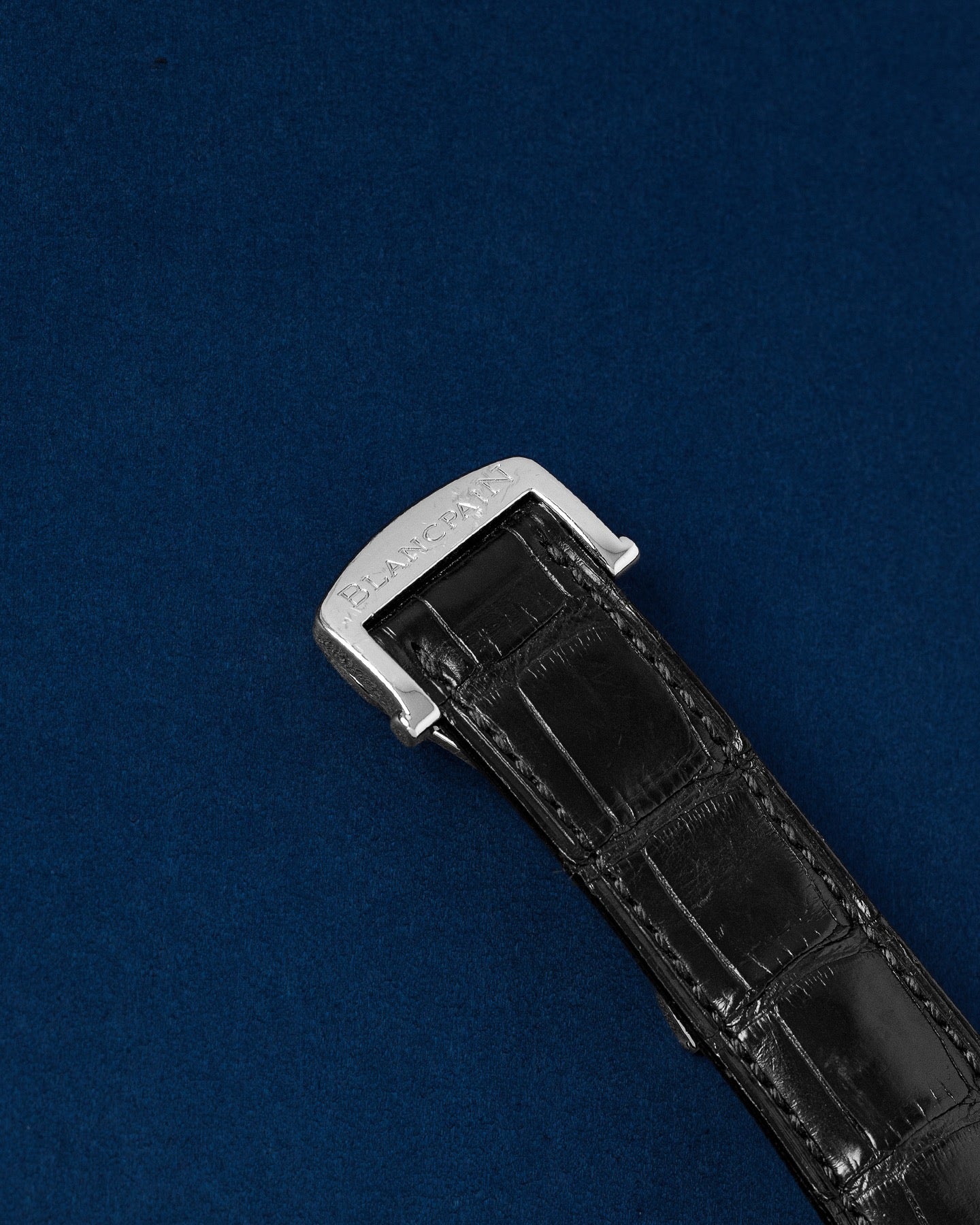
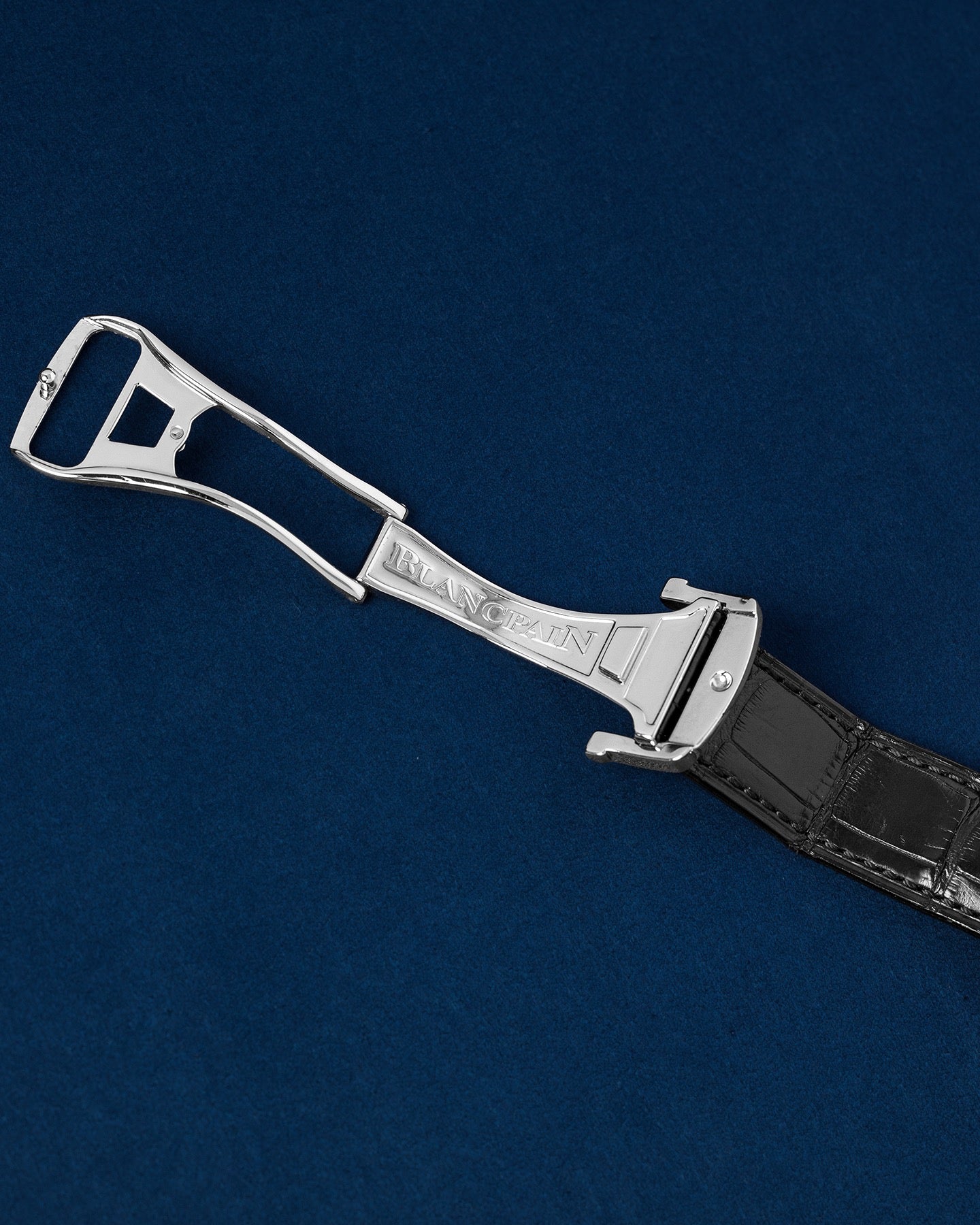
Blancpain Leman Reveil Gmt 2041-1127M-53B
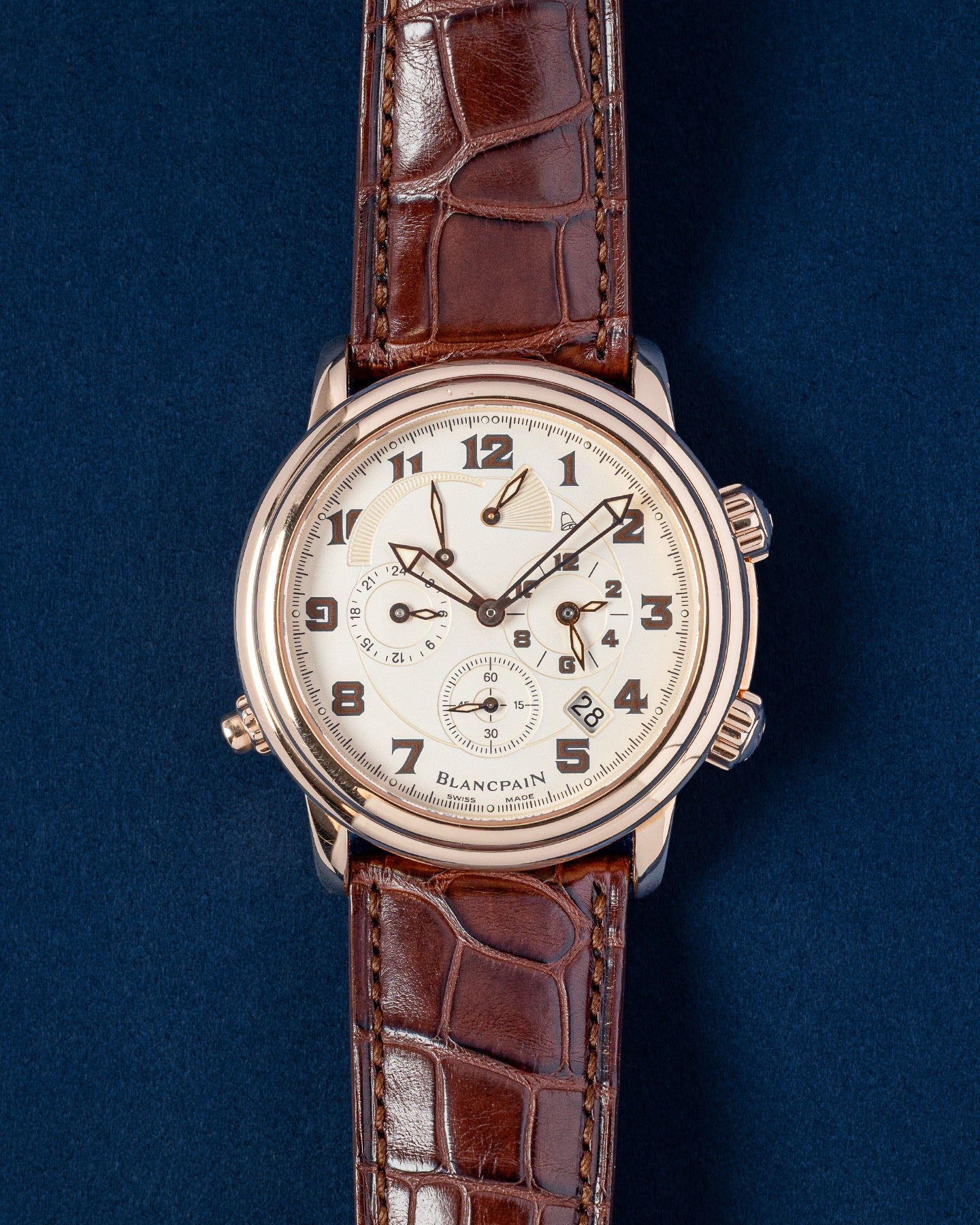
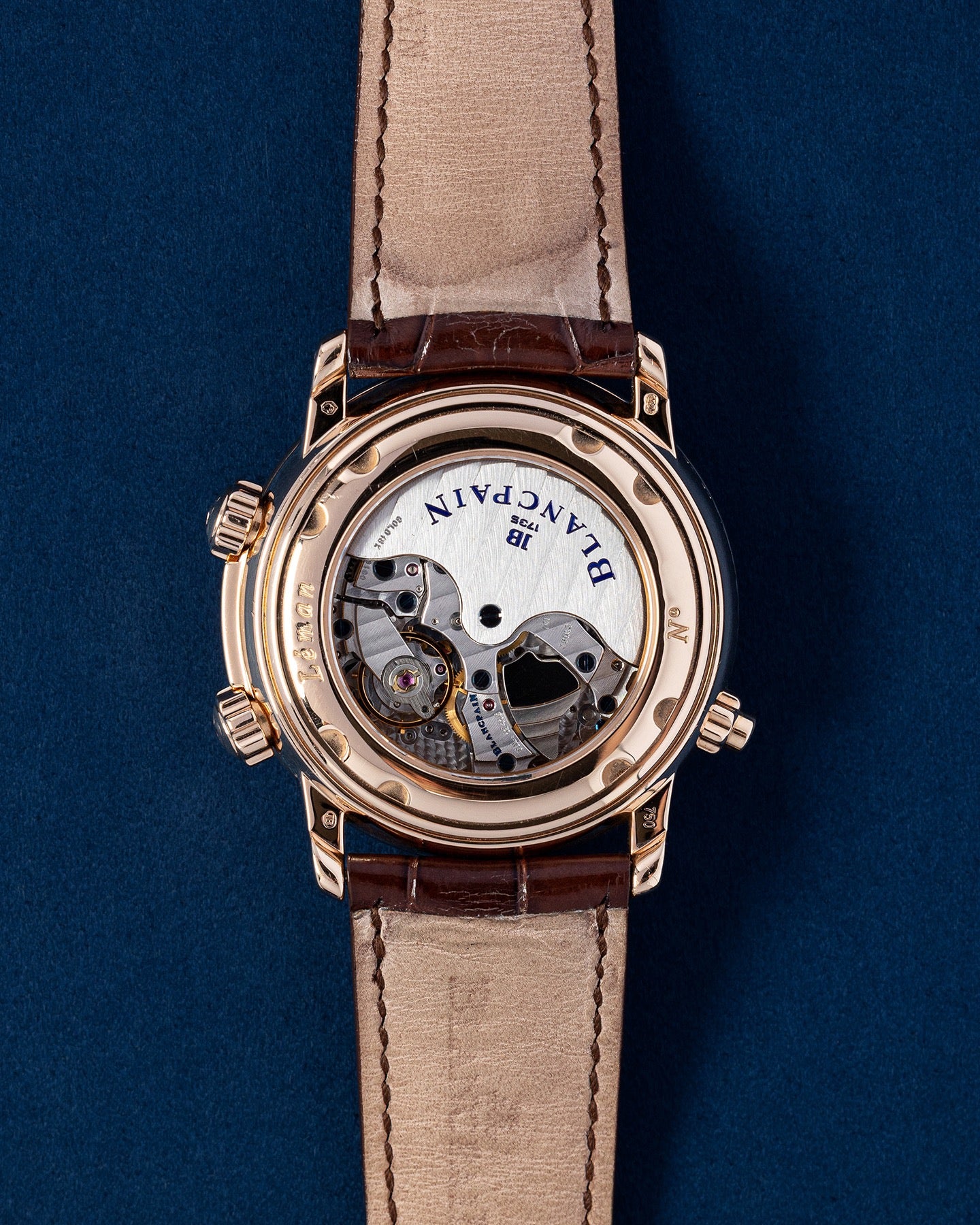
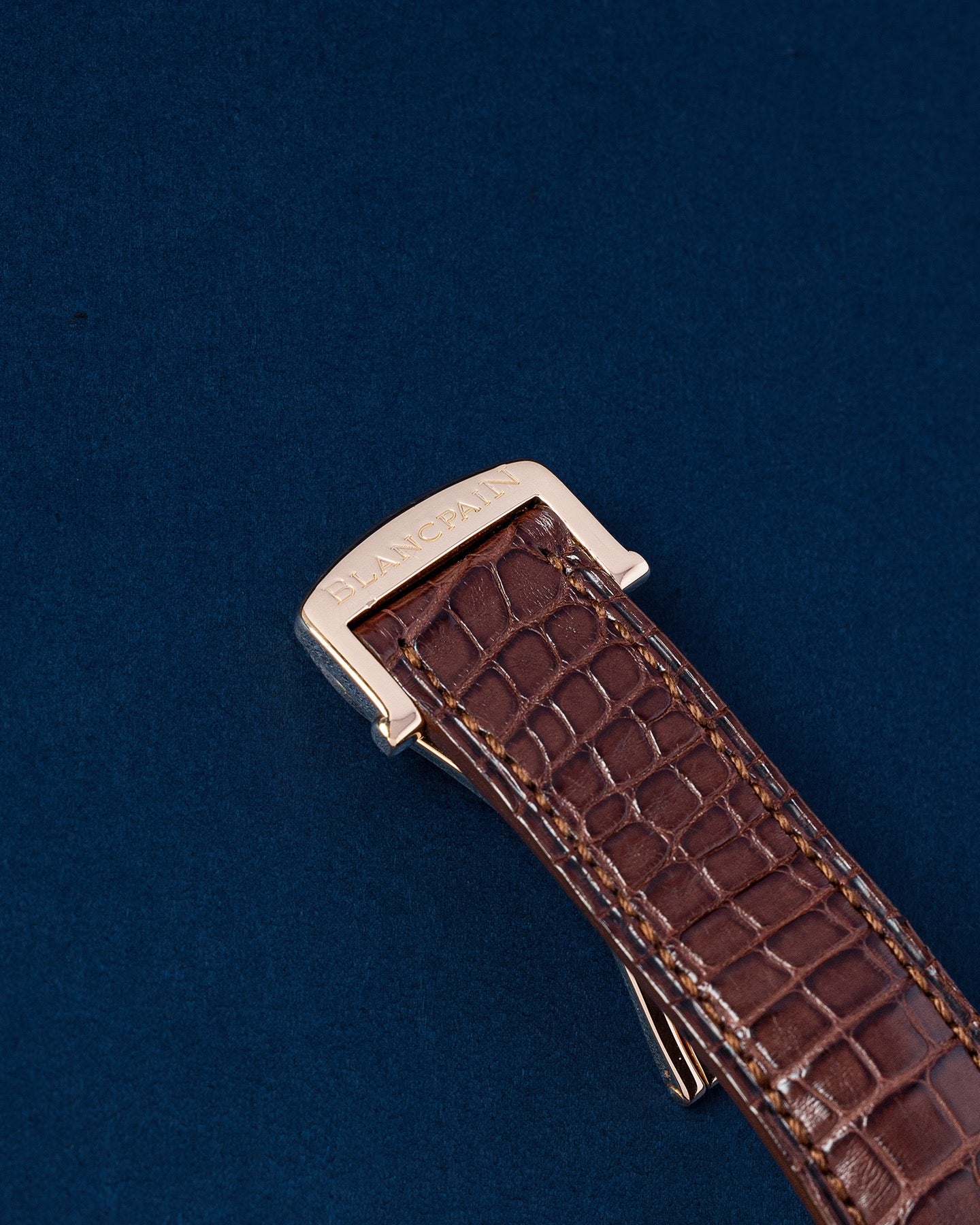
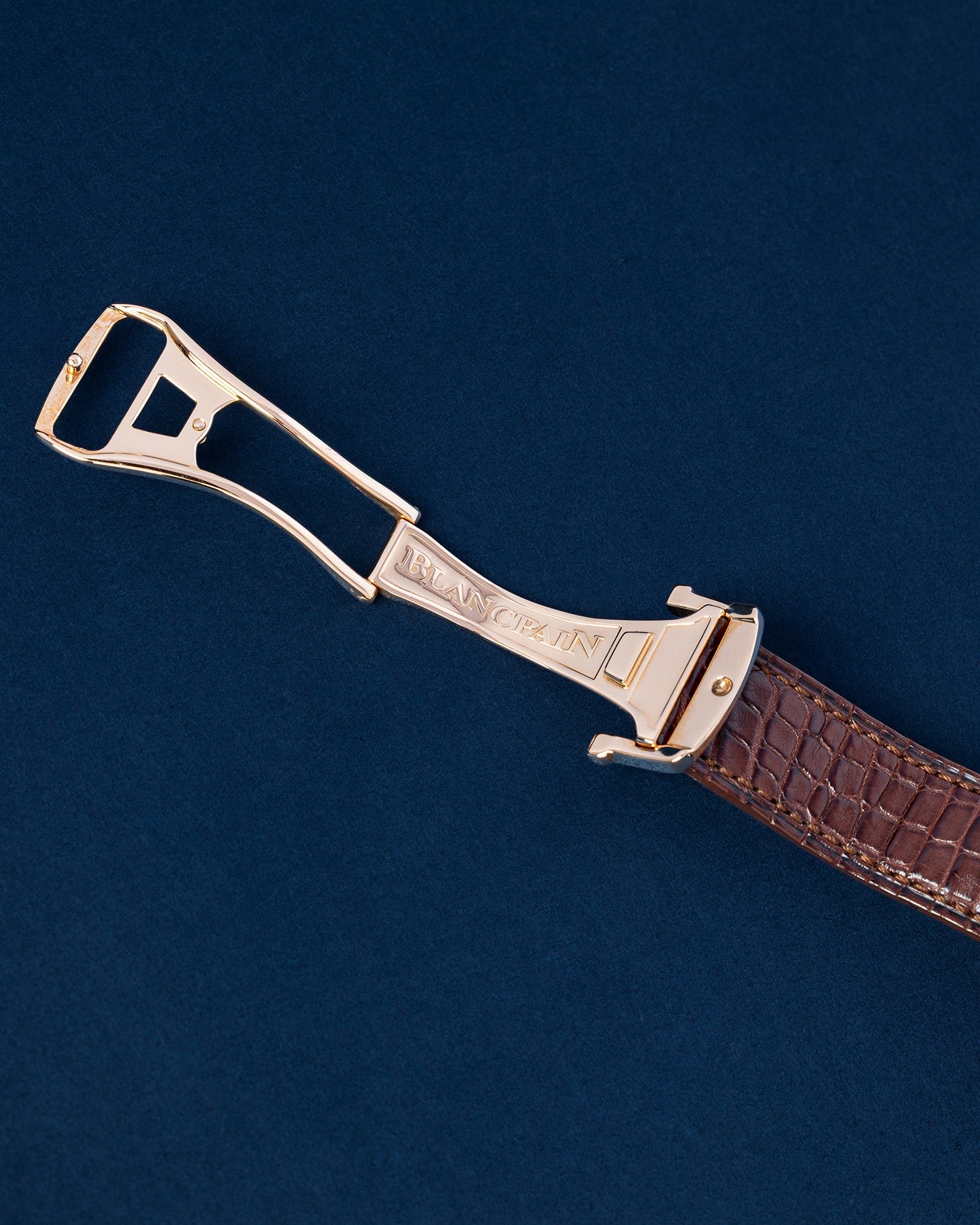
Blancpain Leman Reveil GMT 2041-3642M-53B
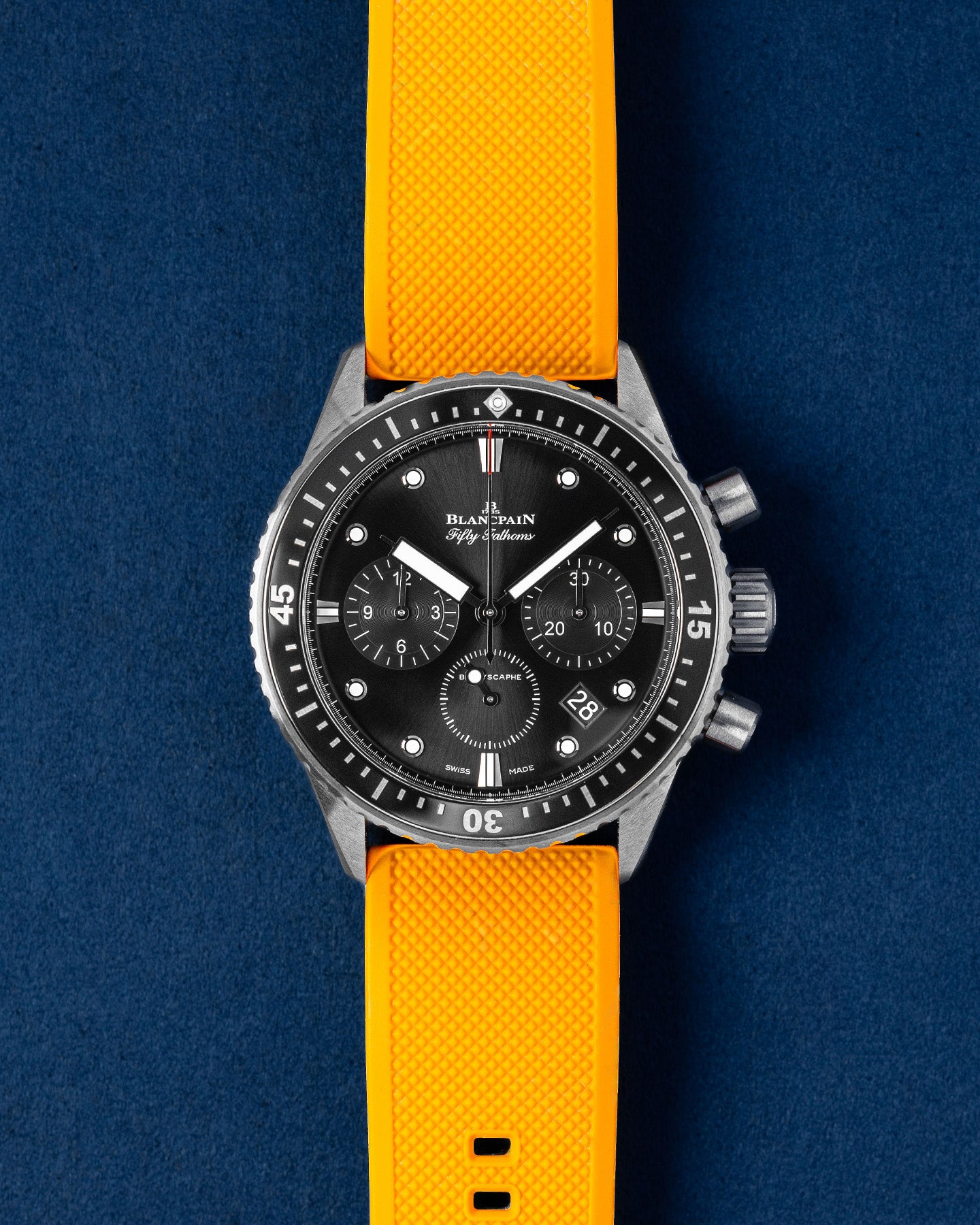
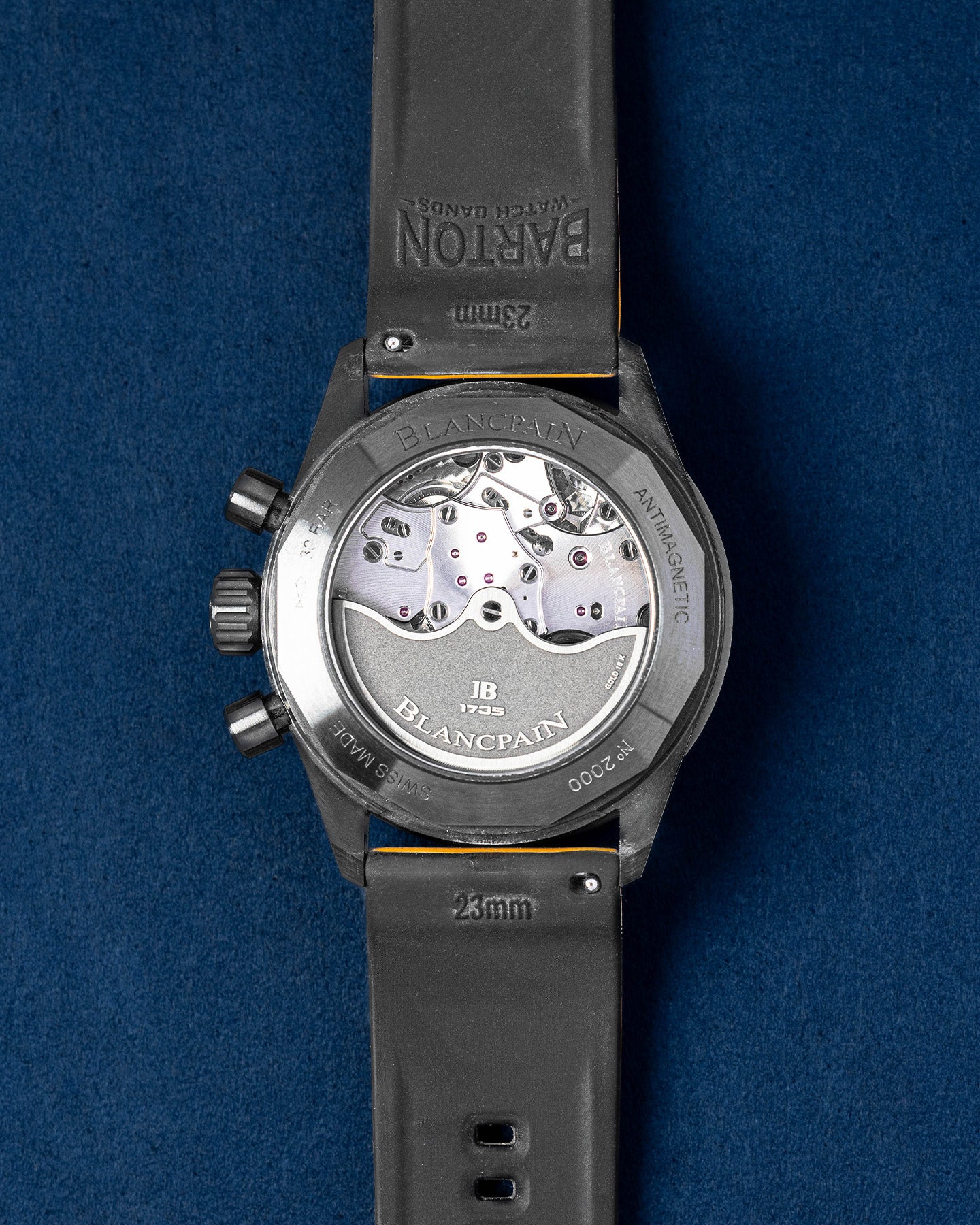

Blancpain Fifty Fathoms Bathyscaphe 5200 0130 B52A
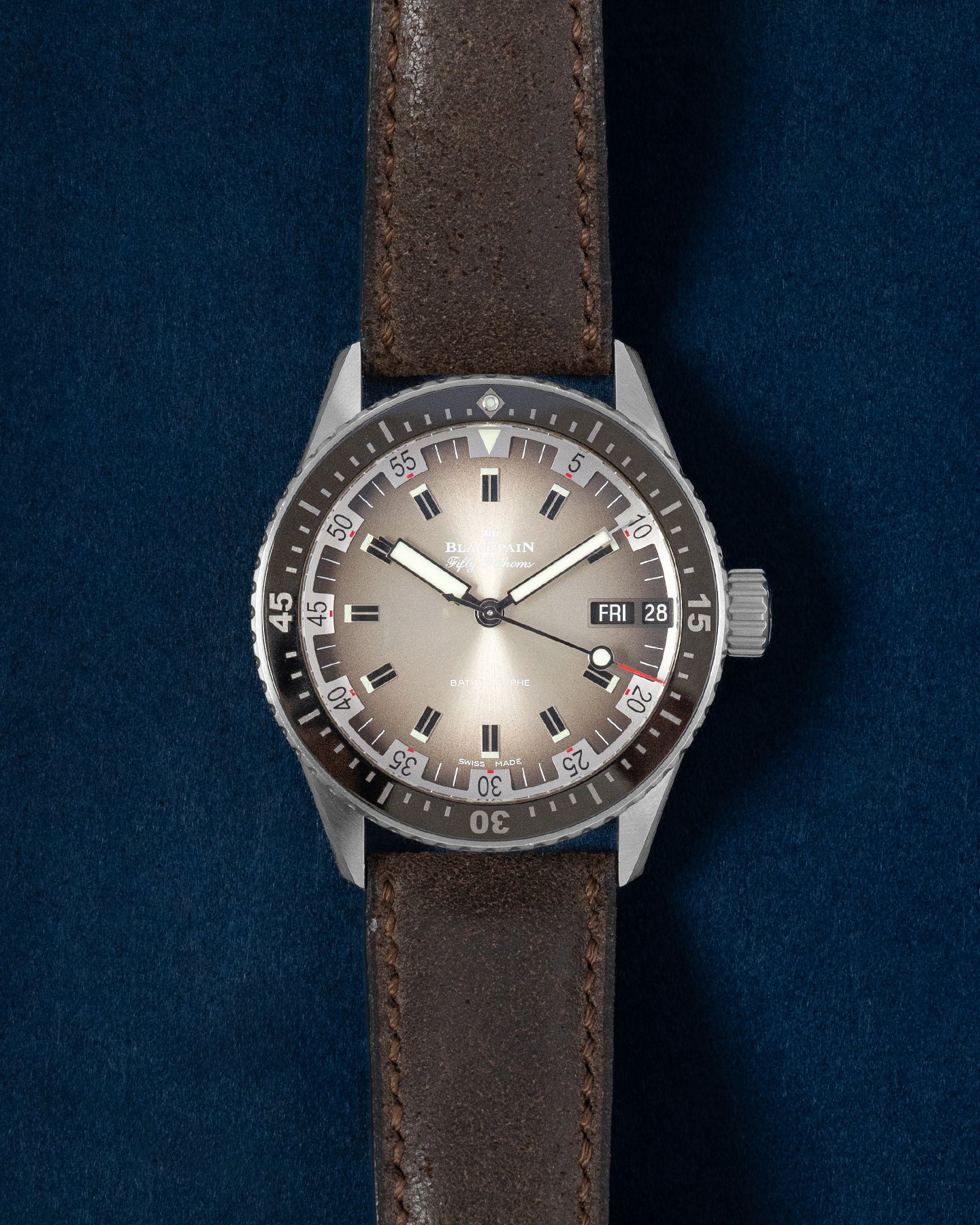
Blancpain Fifty Fathoms 5052111063A
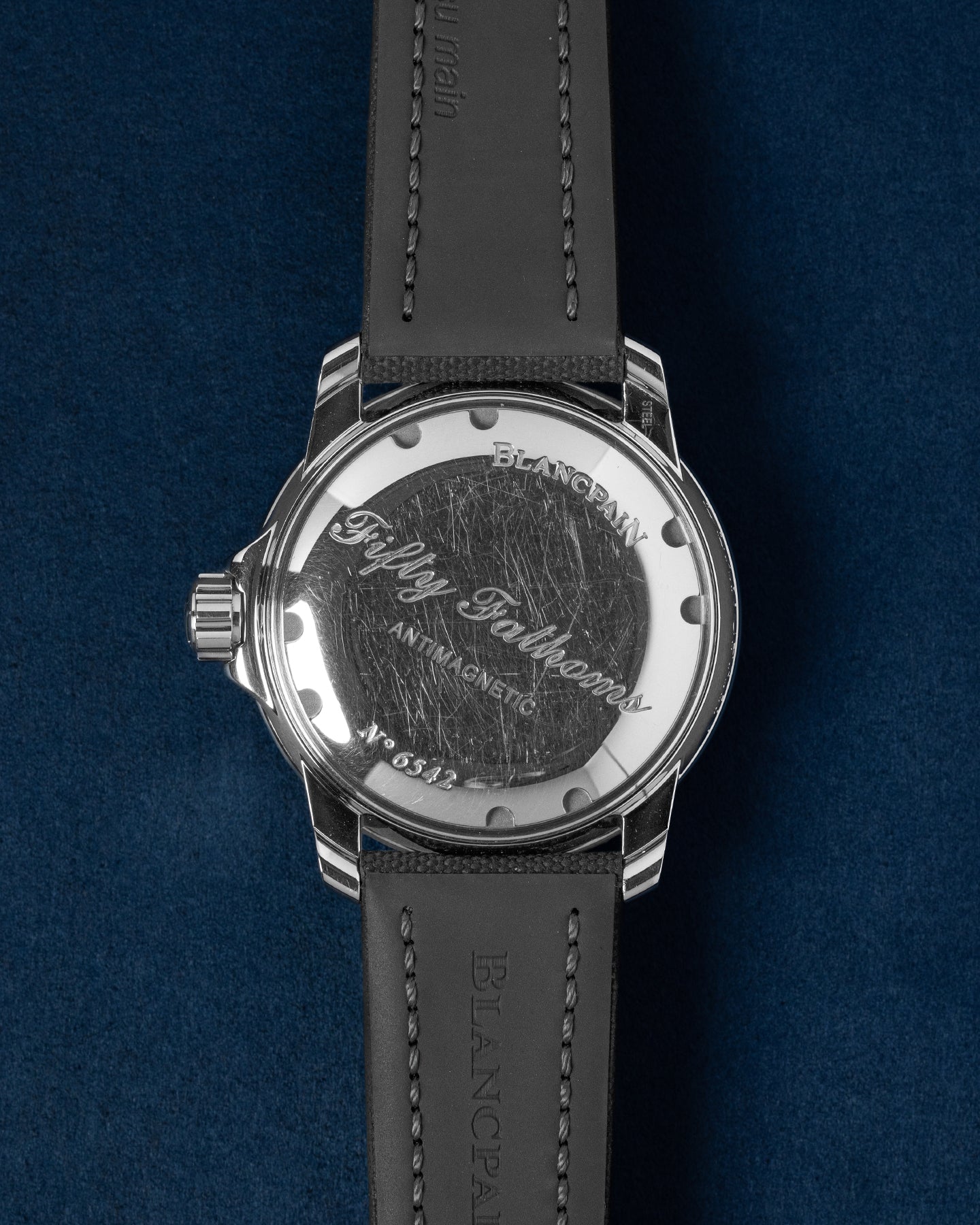

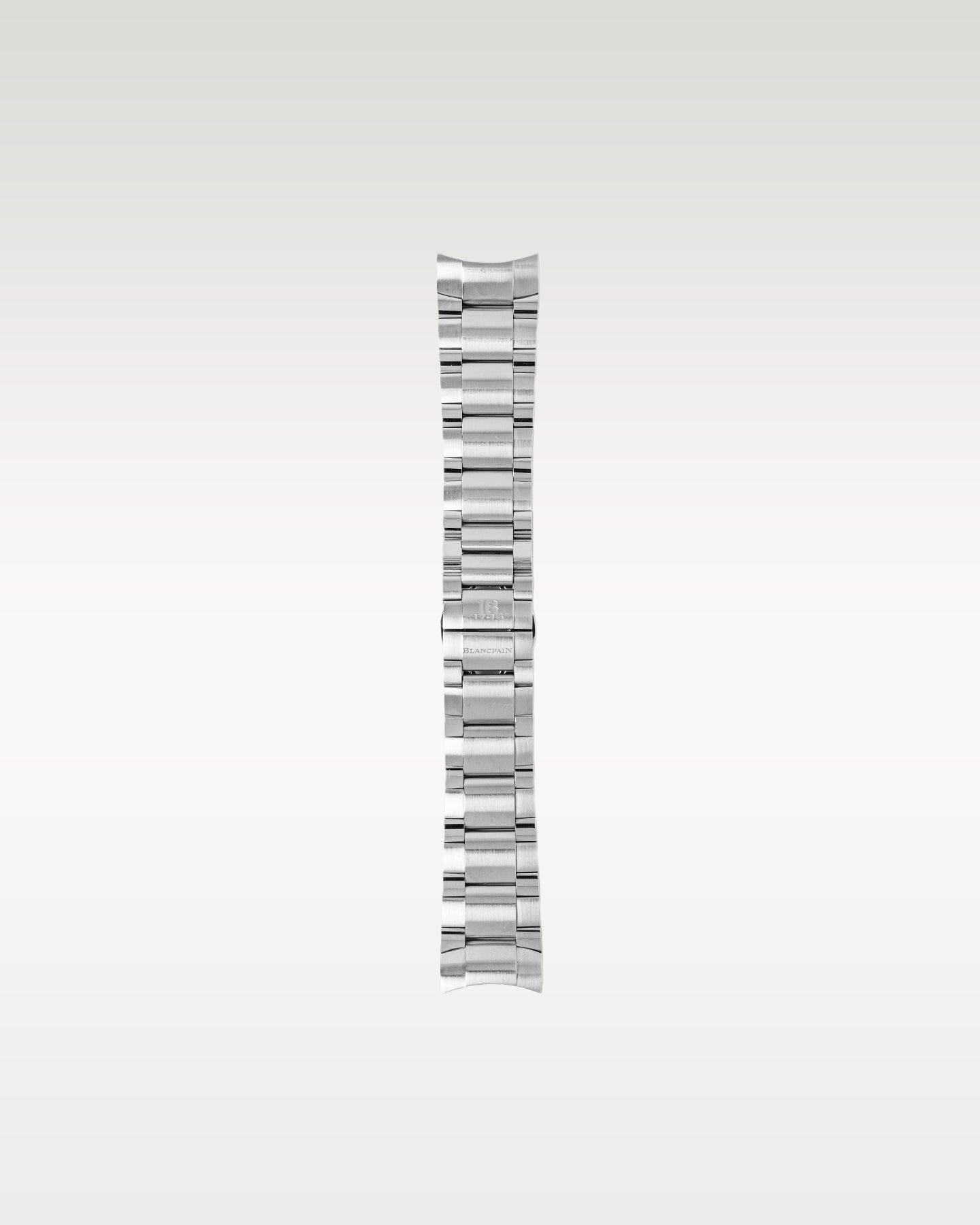
Blancpain Fifty Fathoms 5015-1130-52A


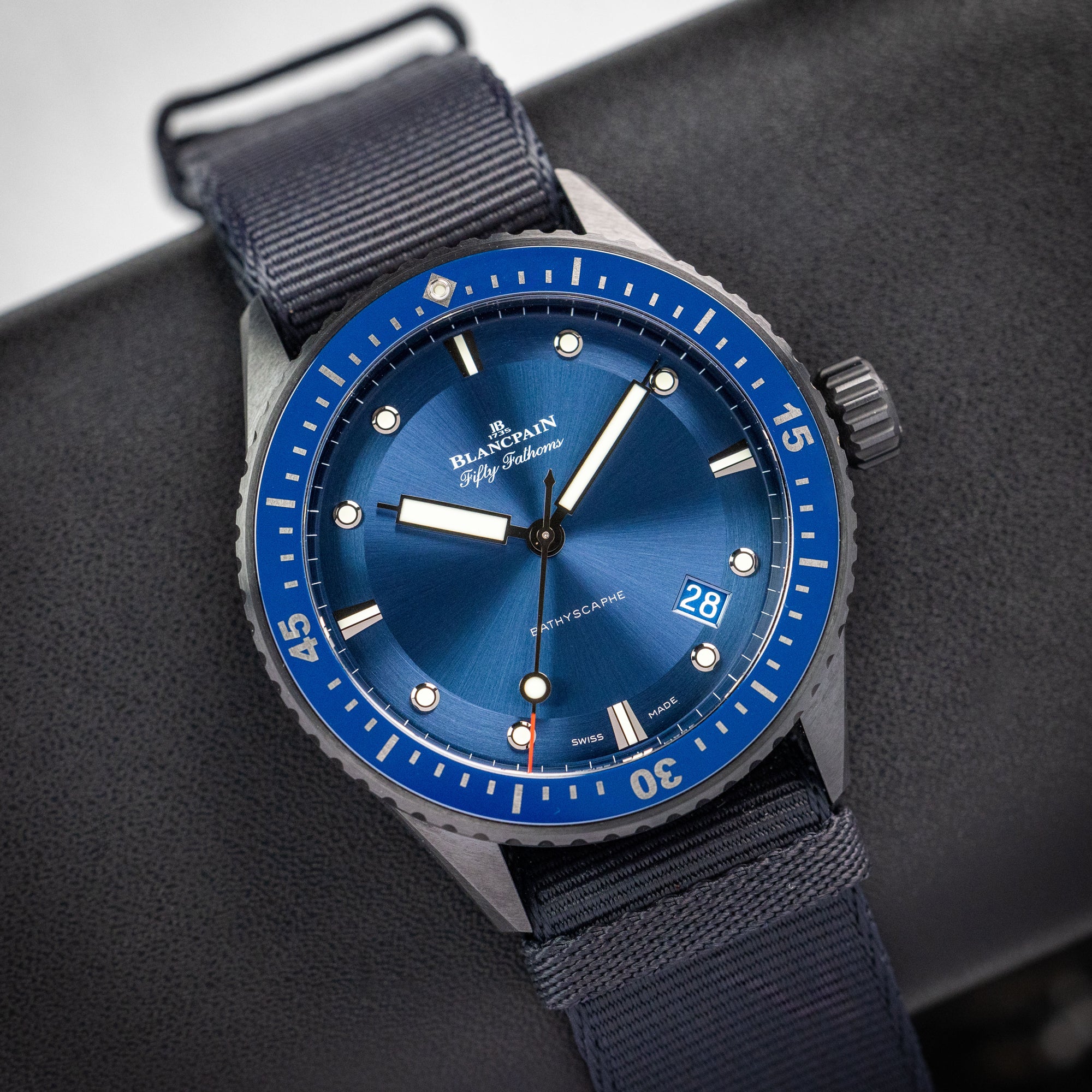
Blancpain Fifty Fathoms 5000-0140-Naoa
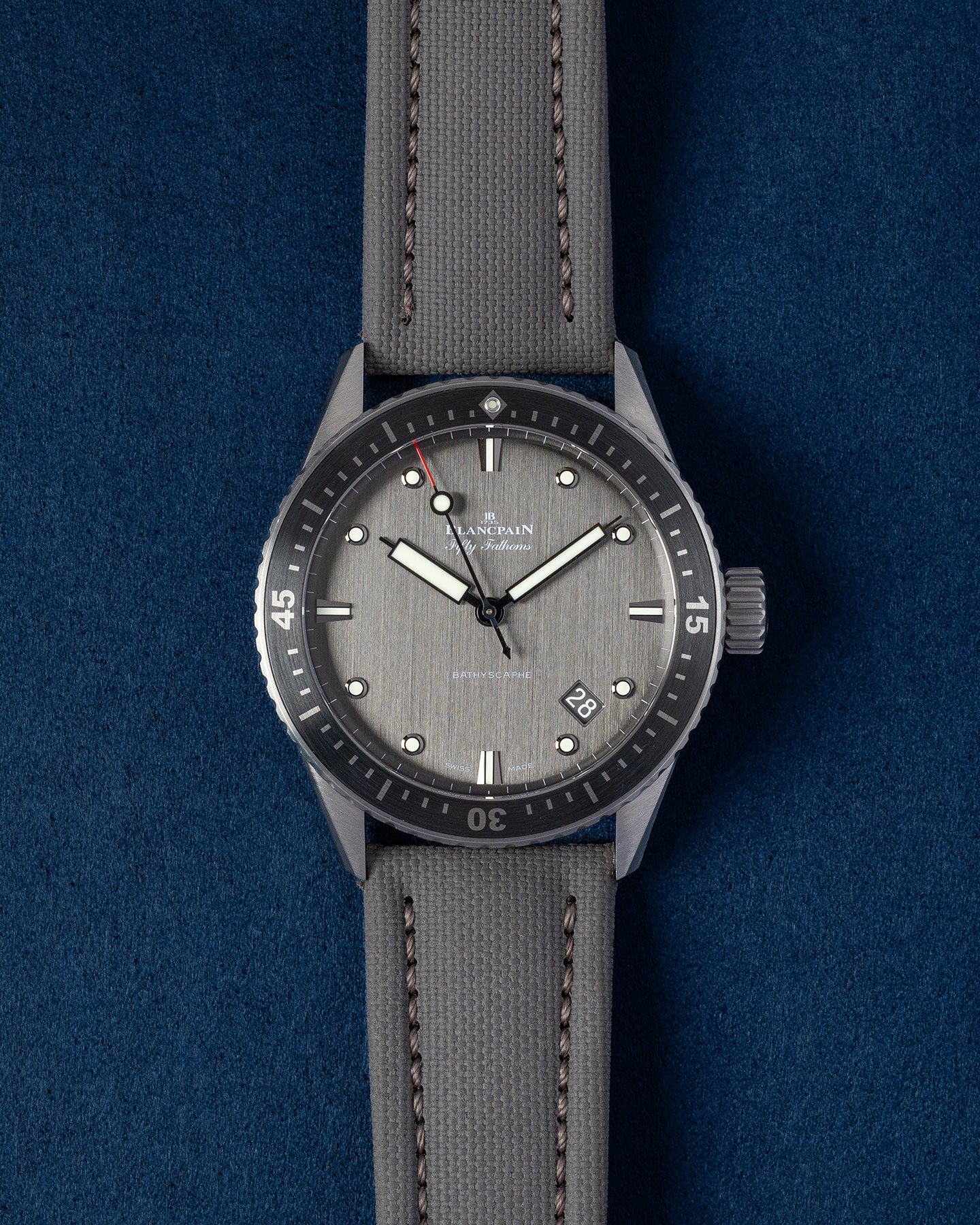

Blancpain Fifty Fathoms Bathyscaphe 50001210G52A
Vintage
FAQs
What is the most affordable Blancpain?
The most accessible entry into Blancpain is typically a steel Fifty Fathoms Bathyscaphe, which on the pre-owned market generally represents the lowest cost of entry into the brand's current mechanical production. A steel Bathyscaphe delivers a genuine 300-meter dive watch with the automatic Caliber 1315 or 1150, long power reserves of 100 to 120 hours, and everyday versatility, all at the accessible end of the range. Discontinued Léman and 2100 references from the late 1990s and 2000s can occasionally come in lower still, offering real Blancpain mechanical work at modest prices for buyers who appreciate that era. On the classical side, a time-and-date or simple moonphase Villeret in steel is often the most affordable route into the dress collection. It is worth remembering that affordable is relative at this level, since Blancpain builds fewer than thirty watches per day and every piece is hand-assembled. Grand Caliber prices each Blancpain against real secondary-market data, so buyers can see exactly where a given reference sits and choose the most sensible entry point for their budget.
Can I walk into Blancpain and buy a watch?
You can visit a Blancpain boutique or an authorized dealer, but availability of specific references is far from guaranteed, because the brand produces genuinely small numbers, fewer than thirty watches per day, with each one assembled by a single watchmaker. Popular Fifty Fathoms and limited editions frequently sell out or carry waiting periods, and many discontinued and vintage references are simply not available through retail at all. This is precisely where the secondary market becomes essential. Grand Caliber operates as a dealer rather than a boutique, which means no allocation requirements, no purchase history demands, and no waitlists. If the Blancpain you want is in our inventory, it is available to buy today, and if it is not, our sourcing network covers the major secondary markets to locate a specific reference. Every piece is authenticated in-house and priced transparently. For buyers who want a particular Fifty Fathoms, a classical Villeret, or a vintage Rayville-era diver without navigating boutique allocation, working with a specialist dealer is usually the faster and more certain path to ownership.
What is the best first Blancpain to buy?
For most first-time buyers, the best first Blancpain is a steel Fifty Fathoms Bathyscaphe. It captures the essence of the brand, genuine dive heritage descended from the 1953 original, an in-house automatic movement with a long power reserve, and 300-meter water resistance, in a versatile case that works in daily rotation. The Bathyscaphe is offered around 43.6mm and a more compact 38mm, so buyers can match it to their wrist. Those drawn to tradition rather than tool watches should instead consider a Villeret Ultraplate or Quantième Complet, which deliver the brand's classical double-stepped case, refined dial, and signature moonphase. The full-size Fifty Fathoms is the more iconic choice for a buyer who wants the definitive statement piece and does not mind the larger presence. Whichever direction you choose, prioritize condition, originality, and completeness of box and papers over a marginally lower price. Grand Caliber helps first-time buyers weigh these options honestly, authenticating each piece in-house and pricing it in the open, so the first Blancpain purchase is made with complete confidence in both the watch and the price.
Which Blancpain model has the highest demand?
The Fifty Fathoms is consistently the most in-demand Blancpain, and within that collection the Bathyscaphe drives the broadest interest because of its versatility and relatively accessible entry point. The full-size Fifty Fathoms Automatique commands strong demand as the direct descendant of the 1953 original and the watch most associated with the brand's identity as the inventor of the modern dive watch. Recent additions, including the 38.2mm case introduced in 2025 and the various ceramic and titanium Bathyscaphe references, have widened the audience considerably. On the vintage side, demand concentrates sharply on the military-issue Fifty Fathoms pieces, particularly the Tornek-Rayville TR-900 supplied to the United States Navy, which is among the rarest and most valuable dive watches in existence. Classical demand centers on the Villeret complete-calendar moonphase models. Because Blancpain production is small across the board, demand frequently outpaces available supply, which is why the secondary market is where many buyers ultimately acquire the reference they want. Grand Caliber tracks this demand closely and sources specific references to order for buyers seeking a particular model.
How often should a Blancpain be serviced?
As a fully mechanical watch, a Blancpain benefits from periodic service, and the general guidance is a full service roughly every four to five years. That interval is not rigid. A watch worn gently and keeping good time can often go longer, while a Fifty Fathoms or Bathyscaphe used in the water benefits from more frequent gasket and water-resistance checks to protect its 300-meter rating. A full service involves complete disassembly, cleaning, lubrication, replacement of any worn parts, regulation, and resealing. Because Blancpain builds genuine in-house complications, from complete calendars and moonphases to tourbillons and carrousels, service on a complicated piece should be handled by a watchmaker familiar with the specific caliber, since these mechanisms are more intricate than a simple time-and-date automatic. Signs that service is due include a shortened power reserve, timekeeping that drifts, moisture under the crystal, or a moonphase or calendar that no longer advances cleanly. Grand Caliber notes service history on the Blancpain watches it offers, because a recently serviced, well-documented piece carries more value and more peace of mind.
How much does a full Blancpain service cost?
The cost of a full Blancpain service depends heavily on the complication involved. A straightforward time-and-date automatic such as a base Bathyscaphe or Villeret sits at the lower end, while a complete calendar with moonphase costs more, and a high complication such as a tourbillon, carrousel, minute repeater, or the historic 1735 grand complication rises substantially from there. A basic service on a three-hand or simple automatic Blancpain generally runs several hundred dollars, a calendar or chronograph moves into four figures, and grand complications are quoted individually and can be considerably higher. The price reflects the labor of complete disassembly, cleaning, lubrication, parts replacement, regulation, and resealing, all performed by a watchmaker qualified on Blancpain calibers. Using a competent, brand-familiar watchmaker matters, because improper service can damage value on a collectible piece. Buyers should factor eventual service into the total cost of ownership rather than treating it as a surprise. Grand Caliber can advise on realistic service expectations for a given reference and flags recent service history clearly, since documented maintenance protects both performance and resale value.
Can I wear my Blancpain every day?
Yes, and many Blancpain references are built for exactly that. The Fifty Fathoms and Bathyscaphe divers are genuine tool watches rated to 300 meters, with robust automatic movements, scratch-resistant sapphire or ceramic bezels, and cases in steel, titanium, or ceramic that stand up to daily wear. The Bathyscaphe in particular, with its comfortable proportions and long power reserve, is one of the most practical everyday mechanical watches at its level. That said, match the watch to the wear. A slim gold Villeret dress piece is better suited to office and formal use than to rough activity, and any watch with a complete calendar or moonphase benefits from being kept running so the displays stay set. For water use, respect the rating and keep the gaskets checked. The long power reserves across the range, up to 120 hours on the Caliber 1315, mean a watch set down over a weekend is still running accurately days later. Grand Caliber helps buyers choose a Blancpain suited to how they actually intend to wear it, whether that is a daily diver or an occasional dress piece.
How long does a Blancpain last?
A Blancpain is built to last for generations. These are entirely mechanical watches, hand-assembled by a single watchmaker, with movements designed for longevity and full serviceability. With periodic maintenance every four to five years, a Blancpain will run reliably for decades and can readily be passed down, which is one of the fundamental appeals of traditional mechanical watchmaking over disposable technology. Because the brand has never made a quartz watch, there is no battery or electronic module to fail, only a mechanical movement that can be cleaned, lubricated, and regulated indefinitely as long as parts remain available, and Blancpain supports its calibers. Vintage examples from the 1950s and 1960s still running today demonstrate this longevity directly. The factors that most affect a watch's practical lifespan are service history and how it has been treated, which is why originality and documented maintenance matter so much on the secondary market. A well-maintained Blancpain is genuinely a multi-generational object. Grand Caliber authenticates and assesses each piece thoroughly, so buyers acquire a watch positioned to last, with an honest account of its condition and service needs.
Is it safe to buy a Blancpain on the secondary market?
It is safe when you buy from a specialist who authenticates properly, and it is often the smartest way to acquire a Blancpain given the brand's small production and limited retail availability. The secondary market is where most discontinued, vintage, and hard-to-source references live, frequently at rational prices relative to their substance because Blancpain sits outside the speculative hype cycle. The risk lies in authentication, particularly among vintage military Fifty Fathoms pieces where provenance drives enormous premiums and the incentive to fake it is real. This is exactly why the dealer matters. Grand Caliber authenticates every Blancpain in-house, verifying the movement against the reference, confirming case and dial correctness, checking serial and reference numbers, and assessing whether any components have been serviced or replaced with non-original parts. On vintage Rayville-era pieces we scrutinize dial printing, hand style, and case stamps. Prices are posted in the open against real market data, with no allocation games. Buying a Blancpain on the secondary market through a dealer who stands behind authenticity removes the guesswork and gives buyers genuine confidence in both the watch and the price they pay.
Is a Blancpain a good investment?
A Blancpain should be bought first for the watchmaking and the pleasure of ownership, but the brand does hold value well for reasons rooted in genuine substance rather than hype. Because Blancpain produces fewer than thirty watches per day and avoids the speculative frenzy around certain steel sport models from other makers, its prices tend to reflect real horological merit, which means less exposure to the sharp corrections that follow hype-driven spikes. The strongest performers are the Fifty Fathoms, especially historically significant and vintage military references such as the Tornek-Rayville, where genuine scarcity and provenance drive lasting value. Classical Villeret complications and discontinued limited editions can also appreciate, though condition, originality, and completeness of box and papers heavily influence outcomes. The thin supply cuts both ways, making desirable references hard to find but insulating them from the oversupply that pressures values elsewhere. No watch is a guaranteed investment, and buyers should prioritize buying the right example over chasing returns. Grand Caliber prices each Blancpain against real market data, helping buyers acquire pieces that combine ownership satisfaction with sound long-term value.