

Chopard Watches
Founded in 1860 by Louis-Ulysse Chopard and family-owned by the Scheufele family since 1963, Chopard is one of the few Swiss houses that still designs and builds its own movements in-house. From the Poinçon de Genève finishing of the L.U.C collection to the Lucent Steel Alpine Eagle and the motorsport Mille Miglia, the brand pairs serious watchmaking with genuine independence.
The Most Trusted Source for Pre-Owned Chopard Watches
Grand Caliber is a specialist source for pre-owned Chopard Watches, serving collectors across the United States and internationally from a showroom in Uptown Dallas. Chopard occupies an unusual place in Swiss watchmaking. Chopard is one of the last major houses that remains entirely family owned and independent, and it is one of an even smaller number that designs, produces, and finishes its own movements in house. That combination is what makes Chopard Watches worth understanding in depth, and it is why our inventory of Chopard Watches is built around the collections that best express what Chopard Watches represent as a collection. We carry the in-house Chopard L.U.C dress watches, the Chopard Alpine Eagle integrated sport line, and the motorsport chronographs of the Mille Miglia and Grand Prix de Monaco Historique families. Every reference is authenticated in house before it is listed.
Our pricing model is straightforward. Prices are posted on every listing, with condition and included accessories reflected in the number you see rather than hidden behind an inquiry-only wall. There are no allocation conversations and no waitlists to navigate before you can own the watch you want. Each purchase ships fully insured anywhere in the country, and international inquiries are welcome. When you buy pre-owned Chopard Watches from Grand Caliber, you are buying from a dealer that treats the transaction as a matter of record rather than a negotiation over access.
The buyers we work with are varied. Some are first-time luxury buyers drawn to Chopard because it offers more finishing and in-house watchmaking per dollar than almost anything at its price. Some are seasoned collectors who already own an Alpine Eagle or an L.U.C and want to add a specific reference. Others are estate executors, trade professionals, or investors evaluating where Chopard Watches sit in the wider luxury market. Whatever the reason, the goal is the same, which is to match the right watch to the right owner with complete transparency about what it is and what it is worth.
What separates Grand Caliber from an ordinary Chopard marketplace listing is that every piece in our inventory of Chopard Watches is handled by people who know the brand deeply. We can tell you why one L.U.C reference is more sought after than another, how a particular Chopard Alpine Eagle dial color affects desirability, and what a fair market price looks like on any given week. That knowledge is built into the way we buy, price, and describe the Chopard Watches we sell, and it is available to you before you commit a dollar. Buying a luxury watch should be an informed decision rather than a leap of faith, and our role is to give you the information that makes it one.
Chopard Watches: A Brief History
Chopard was founded in 1860 by Louis-Ulysse Chopard in the village of Sonvilier, in the Swiss Jura. He was 24 years old, the son of a farmer, and he built his early reputation on high-precision pocket watches and chronometers. His work was accurate and reliable enough to earn commissions from the Swiss Railways and the Tir Federal, and his ultra-thin Chopard pocket watches found buyers across Scandinavia, Eastern Europe, and Russia. From the beginning, the name stood for precision rather than ornament, a foundation that still shapes how serious collectors read Chopard Watches today.
After the founder died in 1915, the company passed to his son Paul-Louis and then to his grandson Paul-Andre, who moved the business to Geneva in 1937 to sit at the center of the Swiss watch industry. By the early 1960s the family had run out of successors. Paul-Andre had no heir willing to take over, and in 1963 he sold the company to Karl Scheufele III, a German watchmaker and jeweler from Pforzheim whose own family had made watches and jewelry since 1904. That sale is the hinge on which the modern brand turns.
Under Scheufele direction the company was rebuilt. The 1976 Chopard Happy Diamonds line, with its free-floating diamonds set between sapphire crystals, became a signature and funded the brand's growth as a maker of Chopard Watches. But the most important decision for anyone who cares about Chopard Watches as watches came in 1996, when Karl-Friedrich Scheufele established the Chopard Manufacture in Fleurier to produce in-house movements. This was the fulfillment of a long-held family ambition to make Chopard a genuine watchmaking house rather than a jeweler that also sold watches, and it gave rise to the L.U.C collection named for the founder.
Today Chopard is led by Co-Presidents Karl-Friedrich and Caroline Scheufele, who divide responsibility between watches and jewelry. The house remains family owned and independent, a rarity at its scale, and since July 2018 it has used only ethical gold certified to responsible-sourcing standards across all its 18-karat gold pieces. For collectors, that independence matters. It means the movements inside the best Chopard Watches are made by the same company whose name is on the dial, which is not something every luxury brand can claim.
The Fleurier manufacture deserves emphasis because it is the reason serious collectors take Chopard Watches seriously. Located in the Val-de-Travers, a valley with deep watchmaking roots, the facility was established with the support of respected watchmakers who believed in reviving fine movement production in the region. From that base Chopard has developed a comprehensive family of in-house calibers covering almost every horological complication, backed by more than twenty registered patents. This is not a brand that assembles bought-in movements and applies a dial. It is a genuine manufacture, and the depth of that capability is what gives the finest Chopard Watches their standing among connoisseurs who look past the marketing to the metal.
It is also worth understanding how the brand's jewelry heritage shaped its watchmaking. For decades before the L.U.C, many buyers thought of Chopard primarily through the Happy Diamonds line, and the house was seen as a jeweler that also made watches. The 1996 launch of the micro-rotor caliber changed that perception permanently, establishing Chopard as a legitimate watchmaking house. That dual heritage, jewelry craft on one side and serious mechanical watchmaking on the other, is part of what makes Chopard Watches distinctive. The precision of the case finishing and the quality of the Chopard dial work reflect a company that understands both disciplines.
Guide to Chopard Key Terms
Chopard Watches carry a specific vocabulary, and understanding it makes the difference between reading a listing at face value and understanding what you are actually buying. The terms below are the ones that come up most often across the collections Grand Caliber stocks, and they map directly onto how the watches are built and finished. A buyer fluent in this language reads a Chopard listing with a sharper eye, spots the details that matter, and negotiates from a position of knowledge rather than guesswork.
Chopard Bracelet and Case Terms
The Chopard Alpine Eagle uses an integrated bracelet, meaning the bracelet flows directly out of the case rather than attaching through conventional lugs. Its links are described as ingot-shaped, with satin-brushed outer surfaces and a polished central cap, secured by a triple-folding clasp with safety pushers. The case is tonneau-shaped, topped by a round bezel held with eight functional screws, a design inherited from the 1980 St. Moritz that preceded it. The crown is engraved with a compass-rose motif. The L.U.C and motorsport lines instead use conventional lugs with leather or textile straps, which is why so many L.U.C references arrive on hand-sewn alligator.
The material terms matter as much as the shapes. The Chopard Alpine Eagle case is made from Lucent Steel A223, a proprietary Chopard alloy developed with a specialist steelmaker. It is roughly 50 percent more resistant to abrasion than conventional stainless steel, measures 223 on the Vickers hardness scale, and is produced from a high proportion of recycled steel. When you see Lucent Steel in a listing for Chopard Watches, it signals a harder, more reflective case than ordinary steel, and it is one of the reasons the Alpine Eagle wears the way it does.
Chopard Clasp Terms
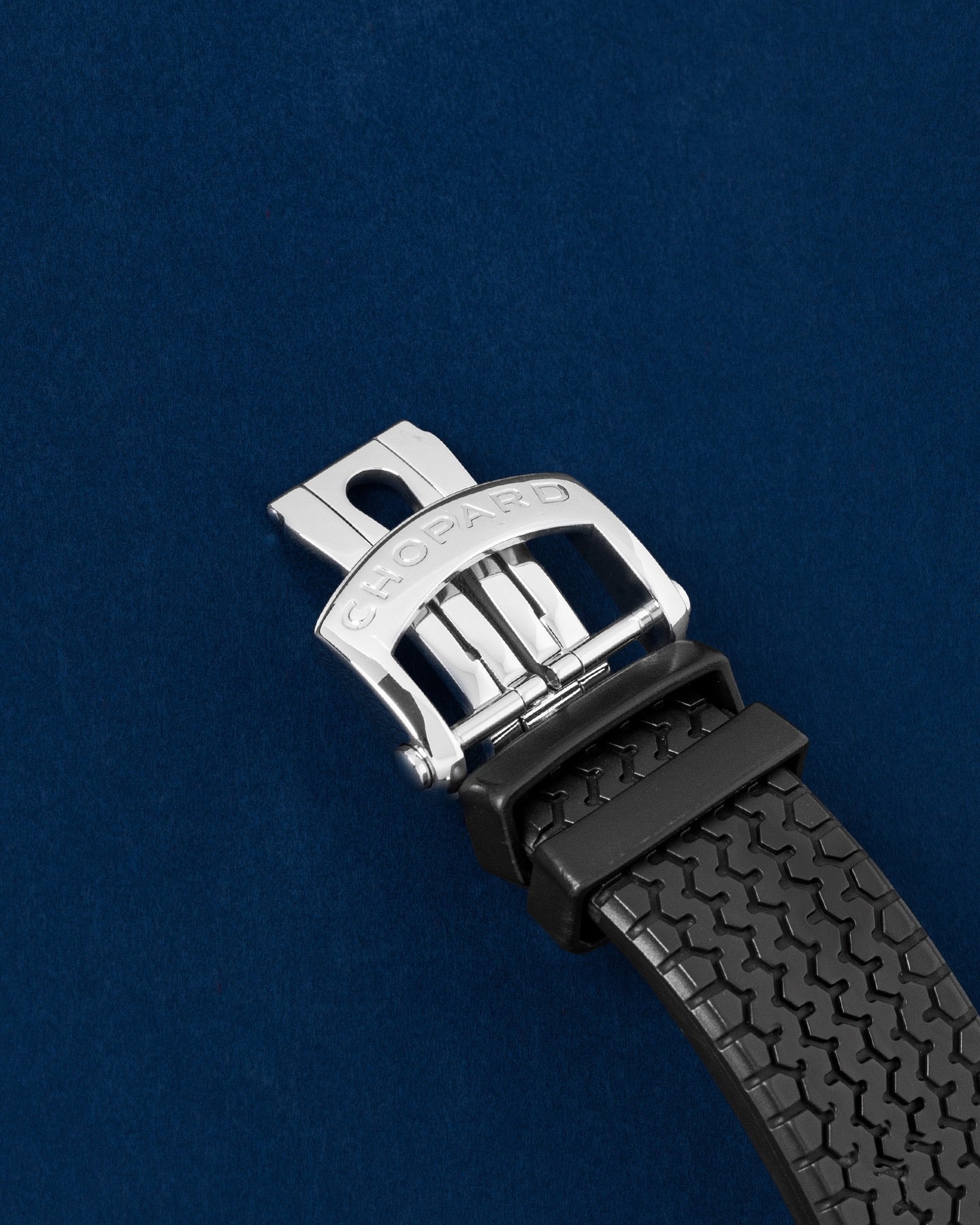
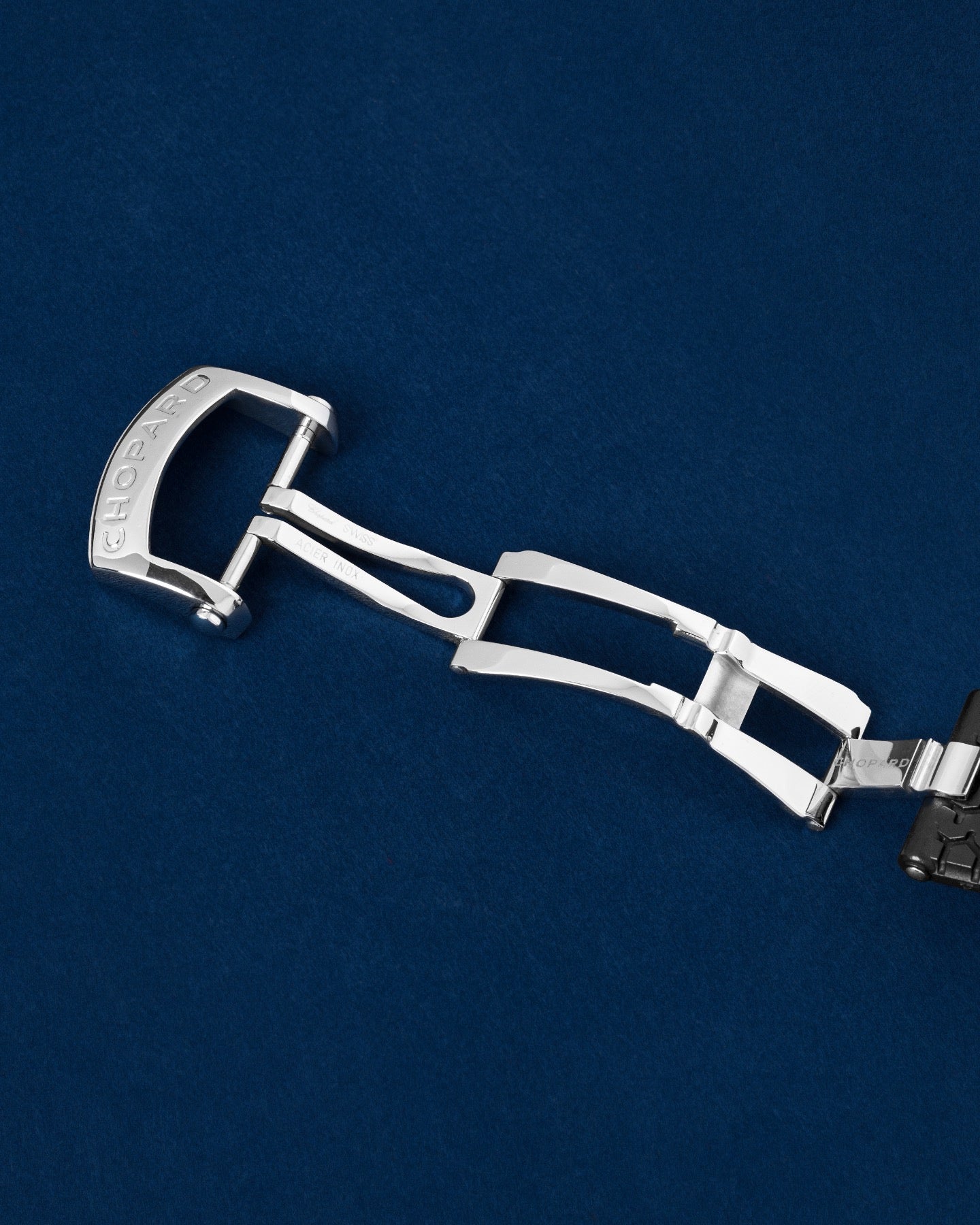
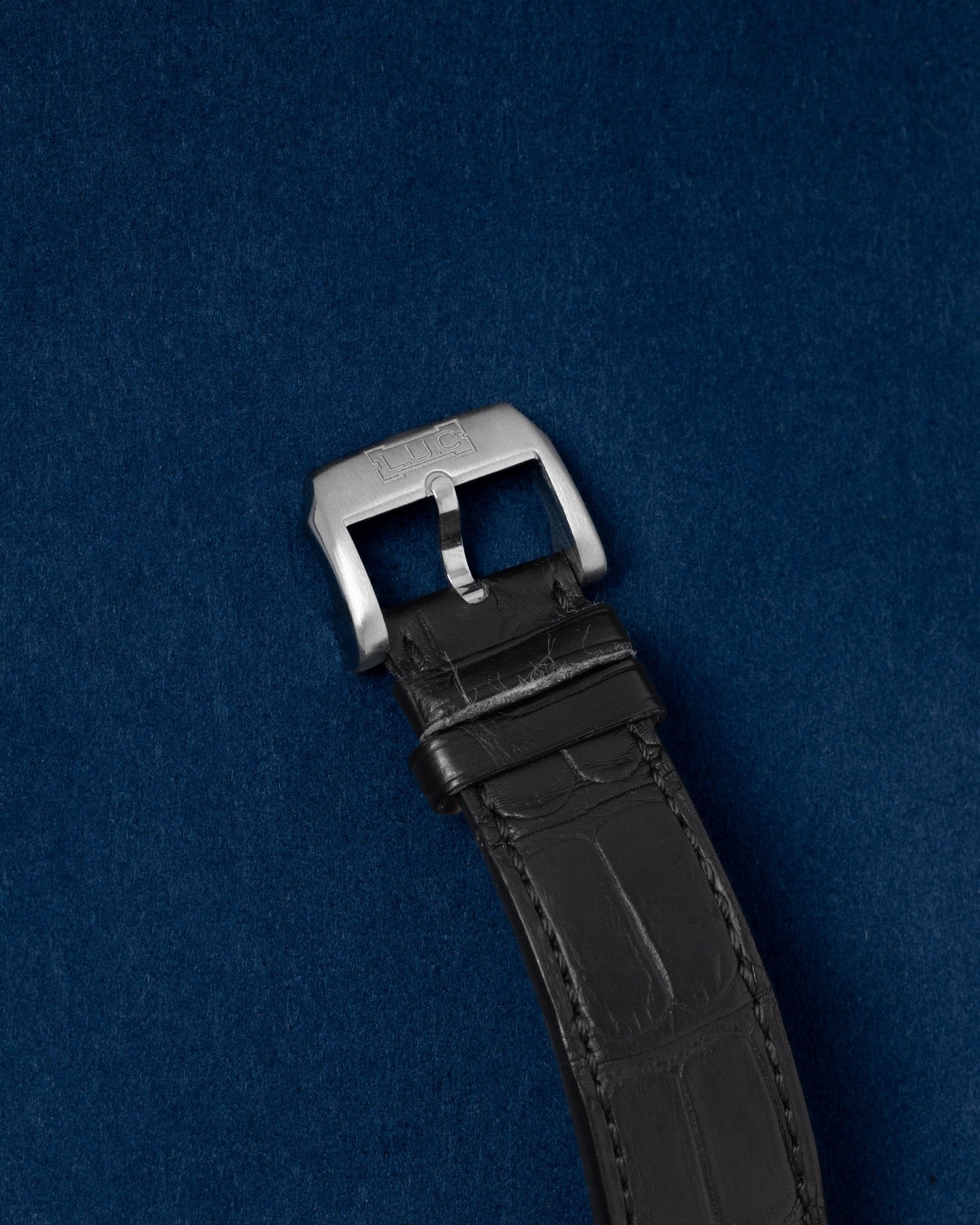
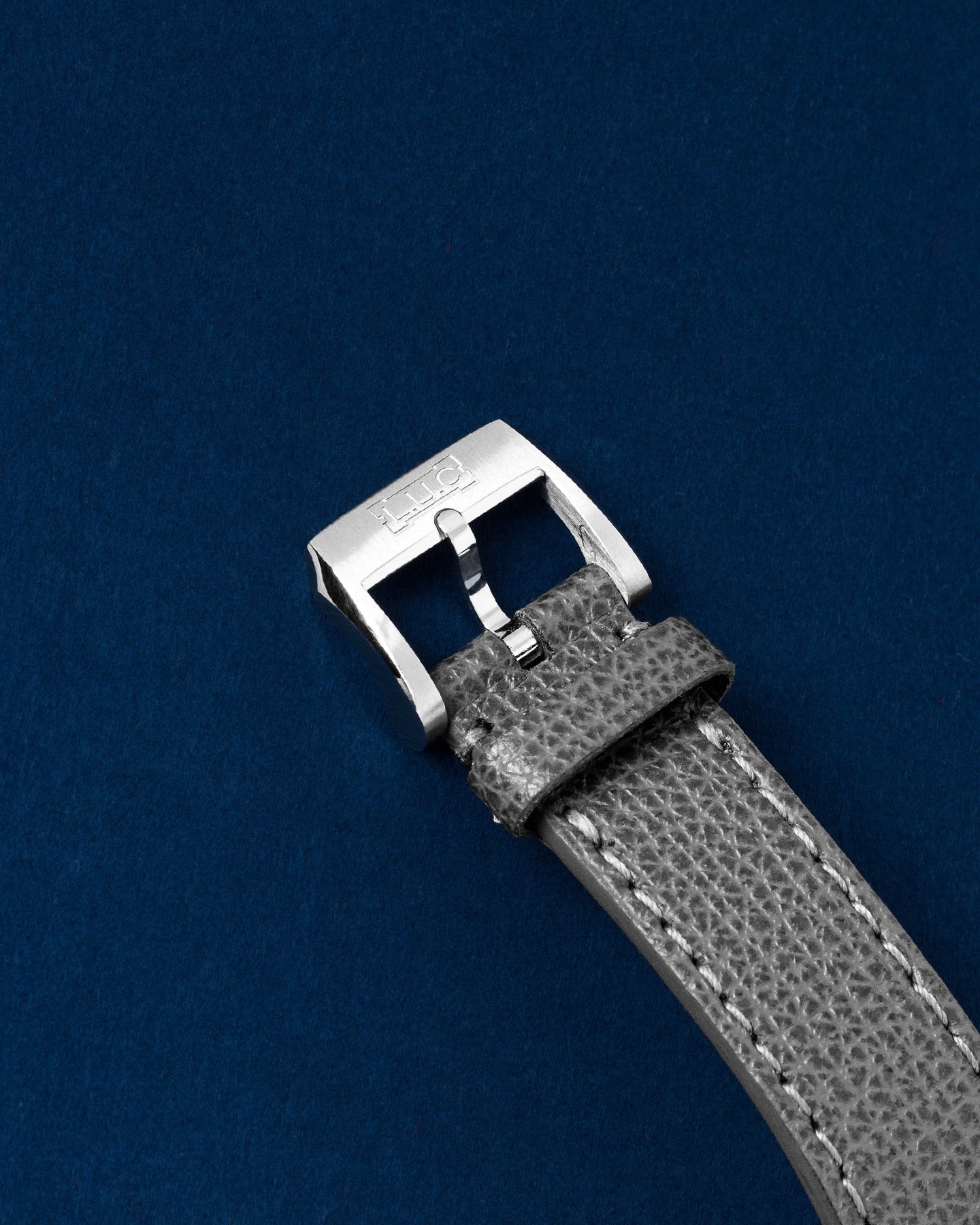
Clasp engineering is a quiet indicator of quality across Chopard Watches. Chopard Alpine Eagle bracelets use a triple-folding clasp with safety pushers, and later references added an on-the-fly micro-adjustment system that lets the wearer fine-tune fit without tools. The platinum L.U.C Quattro Mark IV introduced a patented triple-blade fold-over clasp on its strap. On the more classical L.U.C references such as the 1937 Classic and the 1860, the strap is secured by a simple pin buckle, a deliberately traditional choice that suits their dress-watch character.
Chopard Dial Terms
Dial language is where the collections separate most clearly. The Chopard Alpine Eagle dial carries a radiating texture inspired by the iris of an eagle's eye, stamped into a brass blank and then galvanically treated in colors such as pine green, grey, and the Aletsch blue found in some references. The L.U.C 1937 Classic uses a glazed porcelain-type dial with painted black Roman numerals, while the 1860 features hand-guilloche work at its center. The Mille Miglia and Grand Prix de Monaco Historique dials borrow directly from vintage automobile instrumentation, with tachymeter scales, snailed subdials, and high-contrast racing colorways built for legibility at a glance.
Looking to Sell Your Chopard
Grand Caliber buys Chopard Watches directly, and the process is built to be fast and free of friction. Call, text, or email with the reference number, the year, the condition, and a note on which accessories you have, and you will get a real number from a real person, often the same day. There is no obligation attached to a quote and no pressure to accept. We would rather give you an honest figure and let you decide than talk you into a decision.
We buy across the range. That includes current-production Alpine Eagle and L.U.C references, discontinued favorites such as earlier L.U.C 1860 and XPS models and neo-vintage Mille Miglia chronographs, and older pieces that trace back to the St. Moritz era. Because we price transparently in both directions, the offer you receive reflects the same market data we use to price the Chopard Watches we sell. If a reference is strong, we say so. If a configuration is soft in the current market, we tell you that too.
For collectors who are not ready to sell outright, we offer consignment, and we handle estate liquidations and full collection sales as well. A single L.U.C complication and a ten-piece collection are handled with the same care and the same documentation. Whatever the size of the sale, the aim is a clean transaction with a paper trail you can stand behind.
Chopard Watch Models in Current Production
The Chopard Watches Grand Caliber stocks are concentrated in four collections, each with a distinct purpose within the Chopard catalog. The in-house L.U.C line is the watchmaking heart of the Chopard Watches range. The Alpine Eagle is its modern sport-luxury statement. The Mille Miglia and Grand Prix de Monaco Historique are its motorsport chronographs, born from decades of association with historic motor racing. What follows is a working overview of each of these Chopard Watches, with the reference and caliber detail that matters when you are choosing between them.
Chopard L.U.C
The Chopard L.U.C collection launched in 1996 with the caliber 1.96, later renamed the 96.01-L, an ultra-thin automatic movement built around a 22-karat gold micro-rotor and Chopard's Twin technology of two stacked mainspring barrels delivering roughly 65 hours of power reserve at just 3.3mm thick. That movement, chronometer-certified by the COSC and bearing the Poinceon de Geneve hallmark, first appeared in the L.U.C 16/1860 and remains a benchmark for micro-rotor watchmaking, frequently compared to the finest ultra-thin calibers in the industry. The line has since grown to cover almost every complication. Grand Caliber's L.U.C inventory centers on references such as the 1937 Classic, powered by the automatic 01.01-L with a 60-hour reserve in a 42mm steel case with a porcelain-type dial, the 16/1860 with the original micro-rotor caliber, and the platinum Quattro Mark IV. These are the Chopard Watches for buyers who want the most watchmaking per dollar, and it is the collection that earns Chopard Watches their place among serious houses.
Chopard L.U.C Quattro
The Chopard L.U.C Quattro deserves its own heading because it represents one of Chopard's signature technical achievements. Introduced in 2000, it uses the patented Quattro technology of four mainspring barrels arranged in two stacked pairs, holding a combined 1.885 meters of springs. That configuration delivers an exceptional 216-hour power reserve, equal to nine days, with constant force to the escapement for more stable timekeeping. The movement, the caliber 98.01-L and its evolution the 98.09-L, is chronometer-certified by the COSC and carries the Poinceon de Geneve. The Chopard L.U.C Quattro Mark IV that Grand Caliber stocks in platinum reflects the 25th-anniversary redesign of this movement family, and it is among the most technically serious Chopard Watches a collector can own at its price. For anyone who values the in-house engineering of Chopard Watches over brand hype, the Quattro is a compelling argument.
Chopard Alpine Eagle
The Chopard Alpine Eagle launched in 2019 as Chopard's entry into the integrated-bracelet sport-luxury category, designed by Chopard Co-President Karl-Friedrich Scheufele as a modern reinterpretation of the 1980 St. Moritz, Chopard's first steel sport watch. It is offered principally in 41mm and 36mm cases. The 41mm runs the in-house automatic caliber 01.01-C, a COSC chronometer with 60 hours of power reserve running at 28,800 vibrations per hour, and the 36mm uses the caliber 09.01-C with a 42-hour reserve. Both are water resistant to 100 meters and cased in Lucent Steel A223, with the signature eagle-iris dial texture, the eight-screw round bezel, and the compass-rose crown. Grand Caliber's Alpine Eagle inventory includes references such as the 298600-3001, the 298601-3001, and the Aletsch blue 298609-3003. Among all the Chopard Watches in the current catalog, the steel Alpine Eagle holds its value best, which makes it one of the smartest pre-owned buys in the range.
Chopard Mille Miglia
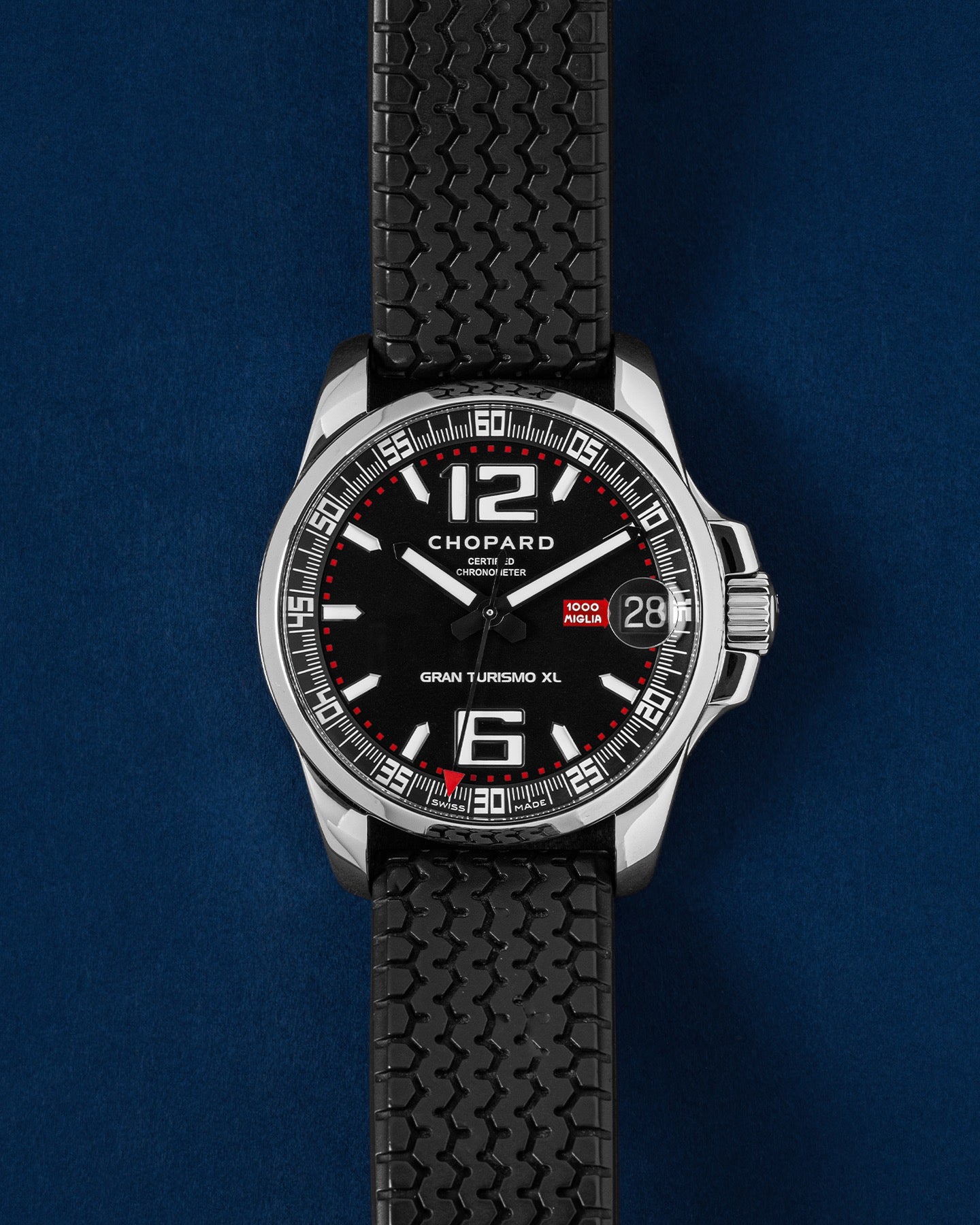
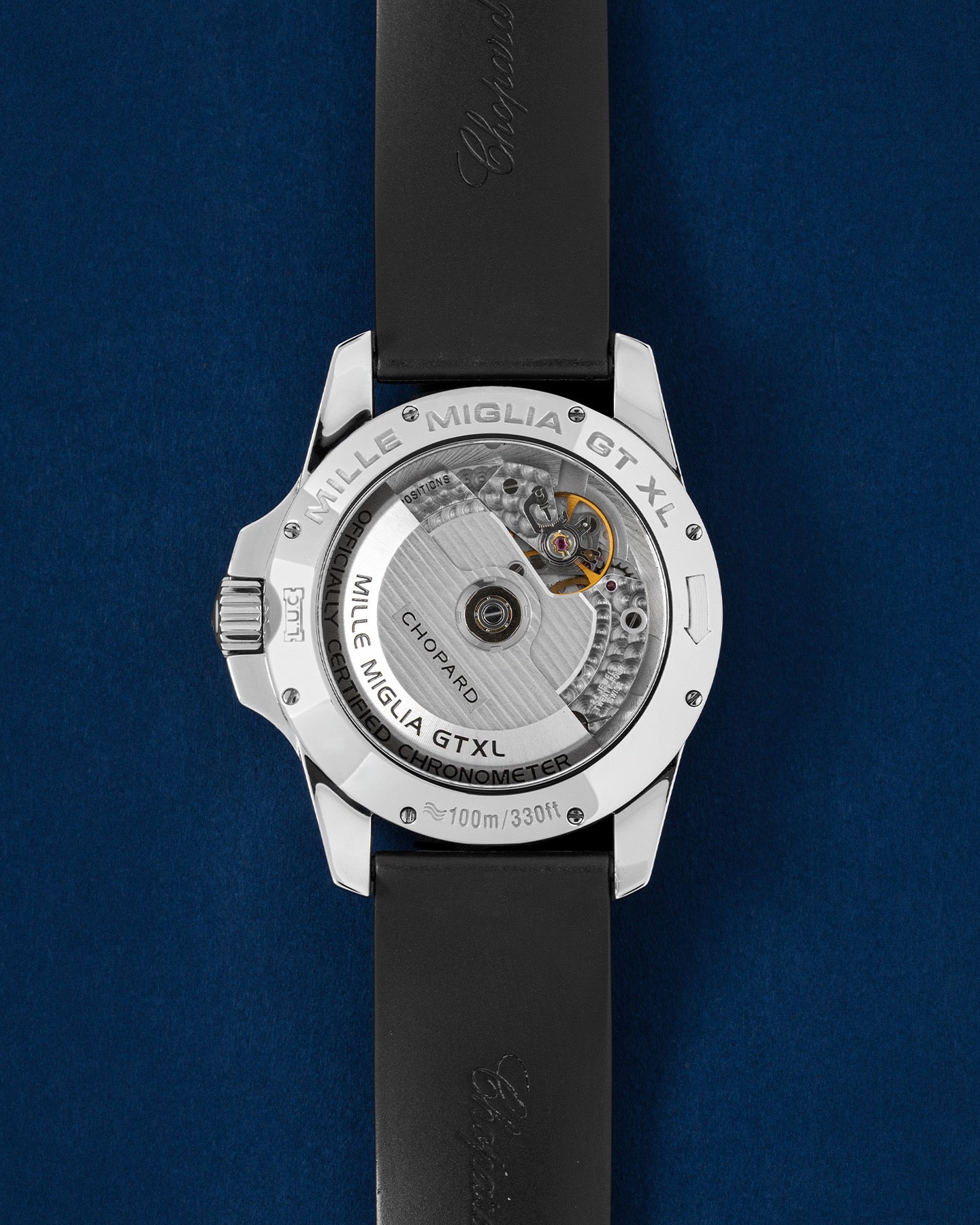
Chopard has been the World Sponsor and Official Timekeeper of the Mille Miglia, the historic Italian road race, since 1988, and Karl-Friedrich Scheufele has personally driven every Chopard Mille Miglia edition since 1989. The Chopard Mille Miglia collection grew directly out of that partnership, and it is Chopard's most accessible motorsport line. The design language is drawn from vintage automobile dashboards, with tachymeter scales, high-contrast racing dials, fuel-cap-style crowns, and knurled pushers that echo brake pedals. Movements across the line range from robust Valjoux-based automatic chronographs to the in-house caliber 01.08-C, all chronometer-certified. Grand Caliber stocks Mille Miglia references including the Gran Turismo XL. For a buyer who wants a wearable, motorsport-driven Chopard with genuine racing heritage, this Chopard is the entry point.
Chopard Grand Prix de Monaco Historique
The Chopard Grand Prix de Monaco Historique line reflects the company's role as sponsor and official timekeeper of the historic Monaco motor race. These are the boldest of the motorsport Chopard Watches, typically built in 44.5mm titanium cases with stainless steel bezels stamped with the Automobile Club de Monaco logo, silver snailed dials, and yellow-and-black racing flanges. The reference Grand Caliber stocks, the 158570-3003, is a Race Edition limited to 500 pieces, powered by a COSC-certified automatic chronograph movement with a 46-hour power reserve, water resistant to 100 meters. Its titanium construction keeps a large case light on the wrist, and its racing colorway makes this Chopard one of the most distinctive Chopard Watches for a motorsport enthusiast who wants presence.
Discontinued and Vintage Chopard Highlights
The discontinued and vintage Chopard market rewards buyers who know where to look, because Chopard has quietly built serious watchmaking for decades without the speculative attention paid to some of its rivals. That relative obscurity is an opportunity. Well-kept examples of important references can be found at prices that do not reflect their quality, and this is one of the areas where working with a knowledgeable dealer pays off most directly.
Several discontinued Chopard Watches stand out. The original L.U.C 16/1860, the Chopard watch that introduced the micro-rotor caliber 1.96 in 1996, is regarded as one of the best-kept secrets in neo-vintage collecting, prized for Chopard finishing that rivals far more expensive names. The L.U.C XPS 1860 brought that same micro-rotor movement into a slimmer, more contemporary case. Earlier Quattro references trace the evolution of the nine-day movement from its 2000 debut. On the motorsport side, neo-vintage Mille Miglia chronographs and earlier Grand Prix de Monaco Historique editions carry genuine racing associations and steel-chronograph appeal. And the St. Moritz, the 1980 sport watch that preceded the Alpine Eagle, is the historical root of Chopard's integrated-bracelet identity.
Collecting discontinued Chopard Watches rewards patience and knowledge. Because Chopard has never chased speculative hype in the way some of its rivals have, the secondary market for its older references is driven by genuine appreciation rather than flipping. That means prices tend to reflect quality and condition rather than momentary demand spikes, which is exactly the environment a thoughtful collector wants. A full-set example with box and papers, an original dial, and clean case lines can represent extraordinary value relative to what comparable finishing costs from a more famous name. Grand Caliber actively seeks out these pieces, and our inventory of pre-owned Chopard Watches frequently includes discontinued references that reward the buyer who knows what they are looking at.
Vintage and neo-vintage Chopard Watches also tell the story of Chopard's technical evolution. Following the movement generations from the original 1.96 micro-rotor through the various Quattro iterations shows a manufacture steadily expanding its capabilities. For the collector who cares about that narrative, assembling a small group of Chopard pieces that trace this development is a satisfying pursuit, and it is one Grand Caliber is well positioned to support with sourcing and honest guidance on what each reference represents.
The L.U.C 16/1860
The reference that started it all deserves its own attention. Launched in 1996, the L.U.C 16/1860 introduced the micro-rotor caliber 1.96 and established Chopard as a genuine watchmaking manufacture rather than a jeweler that also made watches. Presented in a compact 36.5mm case with a solid gold dial and hand-guilloche center, it paired chronometer certification with the Poinceon de Geneve hallmark at a time when in-house movements were far from standard. Among discontinued Chopard Watches, the 16/1860 is frequently described as one of the best-kept secrets in neo-vintage collecting, offering finishing that competes directly with names commanding several times the price. For a collector who wants the historical cornerstone of the L.U.C collection, this is the reference to hunt, and clean examples reward the patience it takes to find them.
The L.U.C XPS 1860 and Early Quattro
Two further discontinued families anchor the neo-vintage L.U.C market. The XPS 1860 carried the original micro-rotor movement into a slimmer, more contemporary case, delivering the same ultra-thin Chopard caliber and Twin technology in a form that wears easily under a cuff. The early Quattro references, beginning with the 2000 debut of the four-barrel nine-day movement, trace the evolution of one of Chopard's signature technical achievements across successive generations. Both represent the kind of discontinued Chopard Watches that reward knowledge, because their quality is not always reflected in their price. Grand Caliber sources these Chopard references when clean examples surface, and we are glad to explain how each generation differs, so a collector understands exactly what a given XPS or Quattro represents before committing to it.
Expert Opinions on Chopard Watches
Grand Caliber's working position on Chopard is that it is one of the most underrated houses in luxury watchmaking. The reason is structural. Because Chopard is family owned and produces its own movements in Fleurier, the finishing and engineering in a top L.U.C reference genuinely competes with names that command far higher prices and far more attention. The Poinceon de Geneve hallmark on a Chopard L.U.C caliber is the same independent Geneva standard that a handful of the most respected houses in the world pursue. For buyers who care about what is inside the watch rather than what the logo signals to strangers, Chopard Watches deliver a great deal.
The buying advice that follows from this is simple. Choose the Chopard you actually want to wear rather than the one you think the market wants. The Alpine Eagle holds value best and suits a buyer who wants one versatile steel sport watch. The L.U.C rewards the collector who values finishing, in-house calibers, and long-term watchmaking credibility. The Mille Miglia and Grand Prix de Monaco Historique suit motorsport enthusiasts who want Chopard Watches with character on the wrist. Trends cycle, and the watch you buy for the right reason outlasts them. That is the frame we bring to every conversation about Chopard Watches.
There is a broader point here about how the market values watchmaking. A great deal of what drives luxury watch prices is recognition rather than quality, and the two do not always align. Chopard sits on the quality side of that gap. The house builds Chopard Watches whose finishing and engineering exceed what their prices and market recognition would suggest, and for the buyer who understands this, that gap is an opportunity rather than a drawback. You are buying more watch than the market is charging you for, and you are buying it from a manufacture with the independence to keep building to that standard. Over time, as more collectors come to appreciate what Chopard Watches actually contain, that recognition gap tends to narrow, which is a quietly favorable dynamic for today's buyer.
Chopard Price Trends
The Chopard market has behaved rationally rather than speculatively, which is part of what makes it attractive to buyers who want value rather than volatility. Across the broad catalog, a new Chopard typically settles at a pre-owned price meaningfully below retail once it changes hands, with the exact spread depending heavily on collection, metal, and condition. That pattern is consistent and predictable, and it is the reason a well-chosen pre-owned Chopard represents strong value.
Within that picture, the collections separate clearly. Steel Alpine Eagle references hold their value best, supported by sustained demand for integrated-bracelet sport watches and by limited editions that can trade at a premium. In-house L.U.C pieces are valued by collectors who understand their finishing and chronometer certification, with complicated and precious-metal references commanding the strongest prices. Mille Miglia chronographs maintain steady rather than speculative interest, performing best when the design is attractive and the example is well kept. The Grand Prix de Monaco Historique, produced in limited editions, appeals to a motorsport-focused audience. Grand Caliber prices its Chopard Watches to the current Chopard market, so the number you see reflects real transaction data rather than wishful thinking.
The investment case for Chopard Watches should be framed honestly. A watch is not a stock, and no responsible dealer promises appreciation. That said, several factors work in favor of well-chosen Chopard Watches over the long term. The brand's independence and in-house movement production give it a durability of reputation that supports value. The relative lack of speculation means prices are less likely to collapse from an inflated peak, because they were never inflated to begin with. And configurations that matter to collectors, full sets with box and papers, original dials, and desirable references, tend to hold better than incomplete or altered examples. For a buyer who wants a luxury watch that is unlikely to punish them financially, the pre-owned Chopard Watches at Grand Caliber represent a sensible position among luxury Chopard Watches.
Timing a purchase matters less with Chopard Watches than with more speculative brands, which is part of their appeal. Because the market is driven by genuine appreciation rather than hype cycles, a buyer is not exposed to the sharp corrections that follow speculative peaks elsewhere in the luxury segment. That stability means the pre-owned Chopard Watches at Grand Caliber can be bought when the right example appears rather than when the market says to move, and the value proposition holds steady across the cycle. For a buyer who wants a considered purchase rather than a trade, that predictability is exactly what makes Chopard Watches worth close attention.
Popular Chopard Watch Comparisons
Buyers cross-shopping Chopard Watches almost always weigh them against a short list of competitors, and honest comparison is more useful than brand loyalty. The sections below lay out where Chopard wins, where the alternative does, and who each is right for.
Chopard vs Rolex Watches
Rolex is the benchmark for brand recognition, resale liquidity, and everyday robustness, and nothing Chopard makes competes with a Rolex for pure name recognition. But that comparison misses what Chopard offers. An in-house L.U.C with a micro-rotor caliber and the Poinceon de Geneve hallmark delivers a level of hand finishing that Rolex, for all its engineering excellence, does not pursue in the same way. The buyer who wants maximum liquidity and a watch everyone recognizes chooses Rolex. The buyer who wants finishing and exclusivity, and does not need the crowd to recognize it, finds more in Chopard Watches. Grand Caliber stocks both, so the choice can be made side by side. You can explore our Rolex collection alongside our Chopard inventory.
Chopard vs Audemars Piguet Watches
The Alpine Eagle inevitably draws comparison to the Audemars Piguet Royal Oak, since both are luxury integrated-bracelet steel sport watches with screwed bezels. The Audemars Piguet Royal Oak is the older icon and commands both higher prices and stronger name recognition. The Alpine Eagle offers a very similar wearing experience, in-house movement, and finishing at a materially lower price, with the added distinction of the Lucent Steel case. For a buyer priced out of a Royal Oak or simply unwilling to pay the premium it now carries, the Alpine Eagle is one of the strongest values in the category. Compare it against our Audemars Piguet collection to see the difference in person.
Chopard vs Vacheron Constantin Watches
At the high end, the L.U.C collection competes with the finishing and heritage of houses like Vacheron Constantin. Vacheron carries deeper historical prestige and a more established collector following, which supports its resale. Chopard counters with comparable movement finishing, the same Geneva hallmark tradition on its top calibers, and prices that are often lower for a similar level of hand work. The collector who wants the established name and the auction history chooses Vacheron. The collector who wants the watchmaking without paying for the name finds real value in the best Chopard Watches. Our Vacheron Constantin collection sits alongside our L.U.C inventory for exactly this comparison.
Chopard vs Panerai Watches
For the buyer drawn to a bold, distinctive sport watch, the Chopard Alpine Eagle and the motorsport chronographs sometimes compete with Panerai for attention. Panerai wins on immediate visual identity and cushion-case presence, and it has a devoted following built on that instantly recognizable design. Chopard counters with something quieter and, for many, more substantial. The in-house finishing across the Chopard range, the Lucent Steel case of the Alpine Eagle, and the chronometer certification throughout the line reward the buyer who values engineering over silhouette. Where Panerai sells a look, Chopard Watches sell a manufacture. The right choice depends on whether you are buying for the statement or for the substance, and Grand Caliber can walk you through both. Our Panerai collection is available for direct comparison.
Chopard Features
The features that define Chopard Watches are best understood by category, because the four Chopard Watches collections make very different choices about dials, movements, sizes, and materials.
Chopard Dials
Chopard produces an unusually wide range of dial treatments. The Chopard Alpine Eagle's stamped eagle-iris texture is its most recognizable, offered in galvanic colors across the line. The L.U.C leans classical, from the glazed porcelain-type dial of the 1937 Classic to the hand-guilloche centers of the 1860. The motorsport lines borrow from automobile instrumentation, with snailed subdials, tachymeter scales, and racing colorways. Across all of them, the printing and applied work is crisp and precisely aligned, which is one of the first things to check when authenticating Chopard Watches.
Chopard Movements
Movements are where Chopard makes its strongest case. The in-house L.U.C calibers, produced at Fleurier since 1996, include the micro-rotor 96-series with Twin technology and the four-barrel Quattro family with its 216-hour reserve, both COSC-certified and Poinceon de Geneve hallmarked. The Alpine Eagle runs the in-house 01.01-C and 09.01-C automatics. The motorsport chronographs use a mix of robust Valjoux-based and in-house calibers, all chronometer-certified. This depth of in-house movement production behind Chopard Watches is rare and is central to why Chopard Watches reward close inspection.
Chopard Sizes
Case sizes span a practical range. The Chopard Alpine Eagle is offered principally in 36mm and 41mm, sizes that suit most wrists and account for its broad appeal. The L.U.C dress references such as the 1937 Classic sit at 42mm, while the 1860 is more compact. The motorsport chronographs are the largest, with the Grand Prix de Monaco Historique at 44.5mm, a case whose titanium construction keeps the weight manageable. This range means there is a wearable Chopard for nearly any wrist and any occasion.
Chopard Materials
Material choice is a defining feature. The Chopard Alpine Eagle's Lucent Steel A223 is a proprietary alloy, harder and more reflective than standard steel and made largely from recycled material. The L.U.C collection appears in stainless steel, ethical 18-karat gold, and platinum, with Chopard using only certified ethical gold across its 18-karat pieces since 2018. The motorsport lines make extensive use of titanium for lightness and strength. When you evaluate Chopard Watches, the material is not just cosmetic, it changes the weight, durability, and value of the piece.
How to Authenticate Pre-Owned Chopard Watches
The counterfeit landscape has grown more sophisticated, and the best fakes now mimic surface details well enough that visual inspection alone is no longer sufficient. This is true across luxury watchmaking, and Chopard is not exempt. For any buyer purchasing pre-owned Chopard Watches, authentication matters more than ever, and understanding what genuine markers look like is the first line of defense.
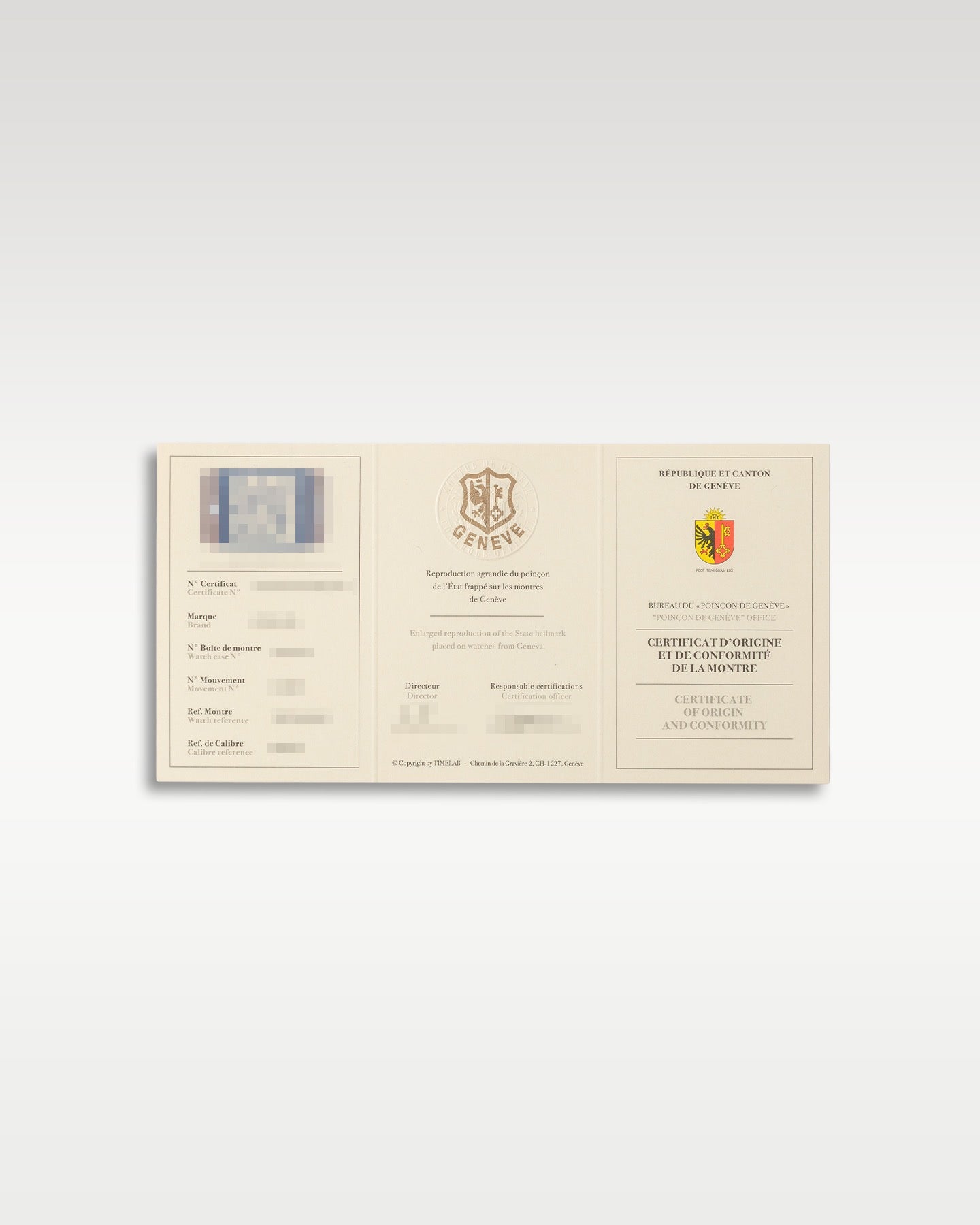
Grand Caliber's authentication process examines the whole watch. We verify the serial number, which is engraved cleanly on the case and can be cross-referenced against factory records. We check the hallmarks and metal stamps, such as 750 for 18-karat gold and 950 for platinum, which should be crisp and precise. We inspect the dial printing and logo for the sharp, evenly spaced execution that defines genuine Chopard Watches, and on pieces with exhibition casebacks we examine the movement finishing, since counterfeit movements are typically undecorated or visibly mismatched. The decisive step is professional movement inspection, which no visual check can replace.
What buyers should demand from any dealer is straightforward. Insist on in-house authentication, a written guarantee, and transparent service history. Be wary of listings that nobody has verified, that lack clear photographs of the movement and serial number, or that come without a return policy. Box and papers add value and make authentication easier, so a complete set is always preferable. These are the standards Grand Caliber applies to every pre-owned Chopard watch it sells, and they are the standards you should hold any seller to.
Documentation strengthens any purchase. A full Chopard set with the original box, papers, and any service records makes authentication faster and supports resale value, so the most complete Chopard examples command a premium for good reason. When Grand Caliber lists pre-owned Chopard Watches, we document completeness of set, condition, and any known service history openly, so a buyer knows exactly what they are getting before they commit. That transparency is the difference between buying with confidence and buying on faith, and it is the standard we hold on every Chopard we sell.
Chopard Service and Maintenance
Mechanical Chopard Watches benefit from regular service, and the general guidance mirrors the wider industry. A full service every four to six years keeps a movement running within specification, and a complete service involves disassembly, cleaning, replacement of worn parts, fresh lubrication, reassembly, regulation, and testing. For pieces with meaningful water resistance, pressure testing after service confirms the case seals correctly, which matters for the sport-oriented references in the range.
Because the in-house L.U.C calibers are produced and finished to a high standard, servicing them is best entrusted to a watchmaker familiar with Chopard's movement architecture. Grand Caliber can advise on Chopard service questions for Chopard Watches purchased from us, and we are happy to point buyers toward appropriate service options whether the watch came from our showroom or elsewhere. A well-serviced Chopard watch holds its value better and performs the way it was engineered to, so maintenance is not an afterthought but part of responsible ownership.
Different collections carry different service considerations. A Chopard Alpine Eagle with 100 meters of water resistance should be pressure tested whenever the case is opened, because its sport-watch credentials depend on the seals performing correctly. A Chopard L.U.C dress watch is less demanding on water resistance but benefits from a watchmaker who respects the delicacy of its ultra-thin micro-rotor movement. The motorsport chronographs, whether Chopard Mille Miglia or Chopard Grand Prix de Monaco Historique, carry the additional mechanical complexity of a chronograph, which makes competent service more important still. When you own any Chopard, understanding the specific service needs of your Chopard protects both its performance and its value, and Grand Caliber is glad to help owners think this through.
Buying Your First Chopard Watch
For a first-time buyer, Chopard is one of the most rewarding places to start in luxury watchmaking, precisely because it offers so much finishing and in-house engineering relative to its price. The default recommendation depends on intent. If you want one versatile watch that works with almost anything and holds its value, the steel Alpine Eagle in 41mm or 36mm is the natural choice. If you are drawn to traditional watchmaking and want the most movement for the money, a Chopard L.U.C such as the 1937 Classic delivers in-house, chronometer-certified content at an accessible entry point among Chopard Watches.
The common first-buyer mistakes are worth avoiding. Chasing a hyped model rather than the one you will actually wear leads to regret. Ignoring case size and fit leads to a watch that lives in a drawer. Skipping authentication to save money on a private sale is the most expensive mistake of all. Grand Caliber's process is designed to remove each of these risks. Every watch is authenticated in house, priced transparently, and sold with guidance rather than pressure, so a first Chopard purchase is a confident one rather than a gamble.
It is also worth saying that a first Chopard tends to lead to a second. Buyers who start with an Alpine Eagle often find themselves drawn into the depth of the L.U.C collection once they understand what the in-house movements represent, and buyers who start with an L.U.C often want a sportier Chopard to sit alongside it. Because Grand Caliber carries pre-owned Chopard Watches across all the major collections, we can grow with a collection rather than selling a single piece and moving on. That continuity, and the honest guidance behind it, is what turns a first-time buyer into a long-term client and makes the experience of owning Chopard Watches as rewarding as the watches themselves.
Need Help Choosing a Chopard Watch
Choosing among Chopard Watches is easier with a conversation, and Grand Caliber makes that straightforward. You can book an in-person appointment at the Uptown Dallas showroom to handle the Chopard watches side by side, arrange a phone consultation to talk through references and pricing, or send an email inquiry about a specific piece. We would rather help you find the right watch than move the nearest one, and that means talking honestly about what each collection does well.
To reach the Dallas showroom, call (214) 225-7198 or email info@grandcaliber.com. We serve collectors across the United States with fully insured nationwide shipping, and international inquiries are welcome. Whether you are buying your first Chopard, adding a specific Chopard L.U.C or Alpine Eagle reference to a collection, or selling a piece you already own, Grand Caliber is a trusted source for pre-owned Chopard Watches backed by in-house Chopard authentication and transparent pricing.
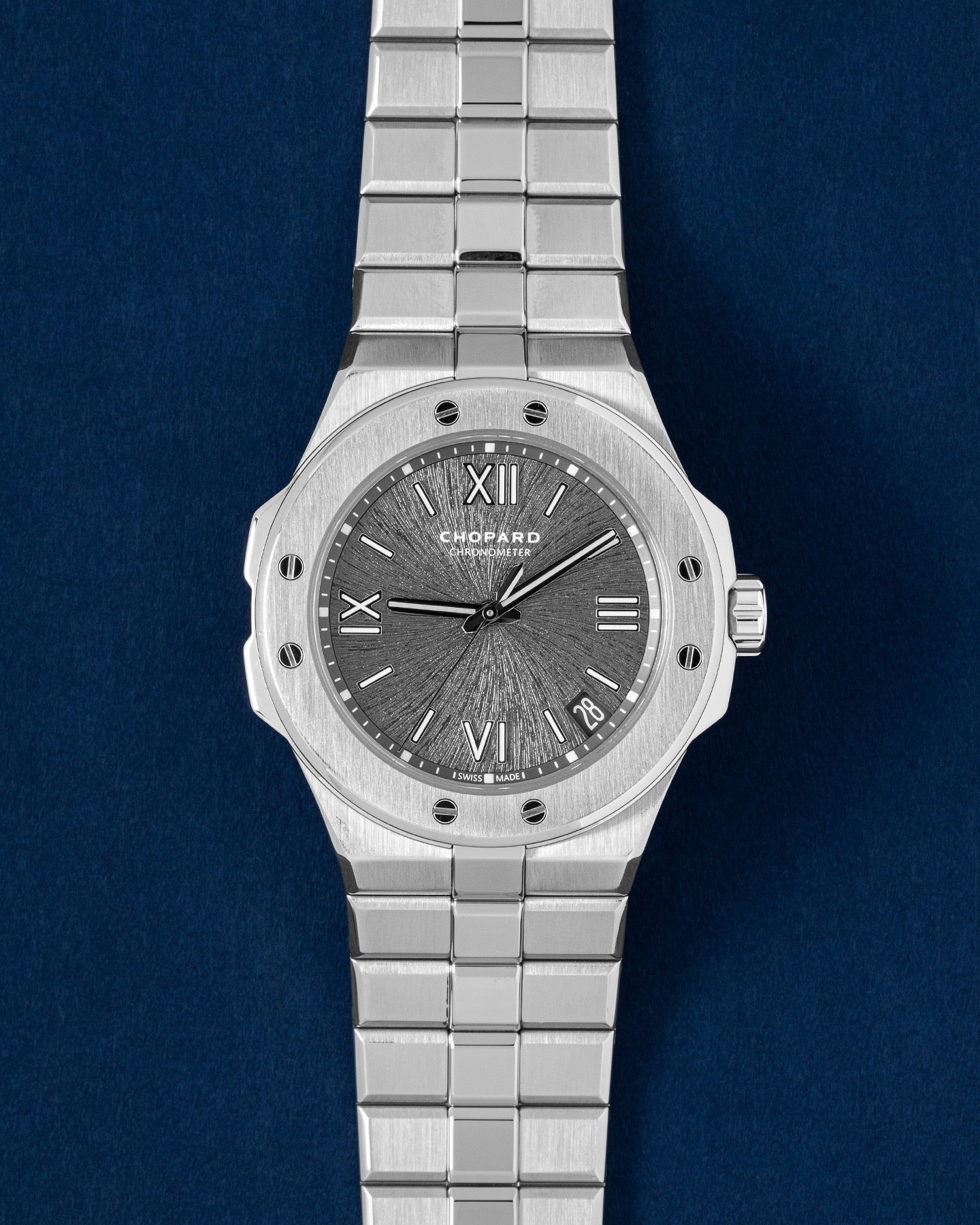
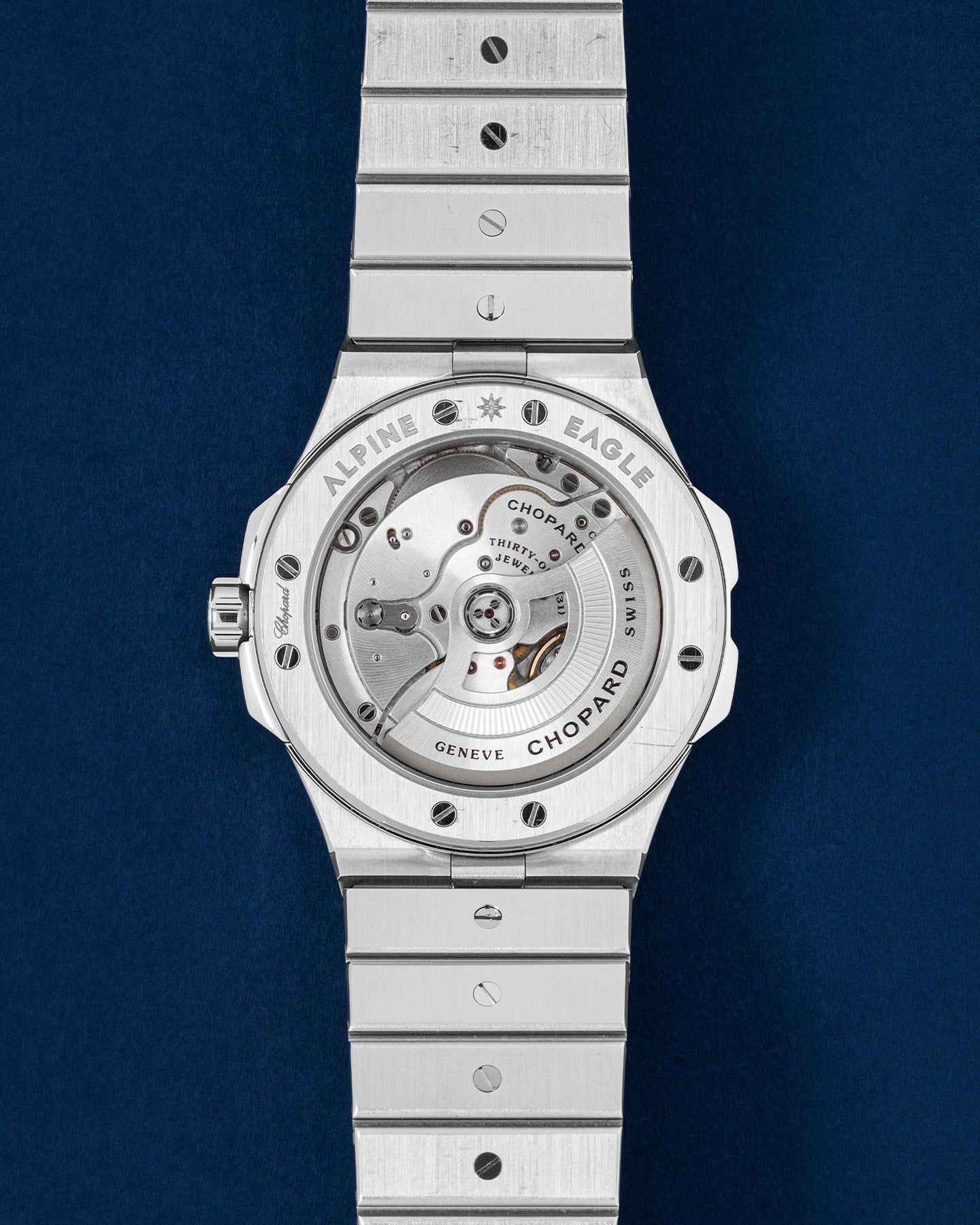
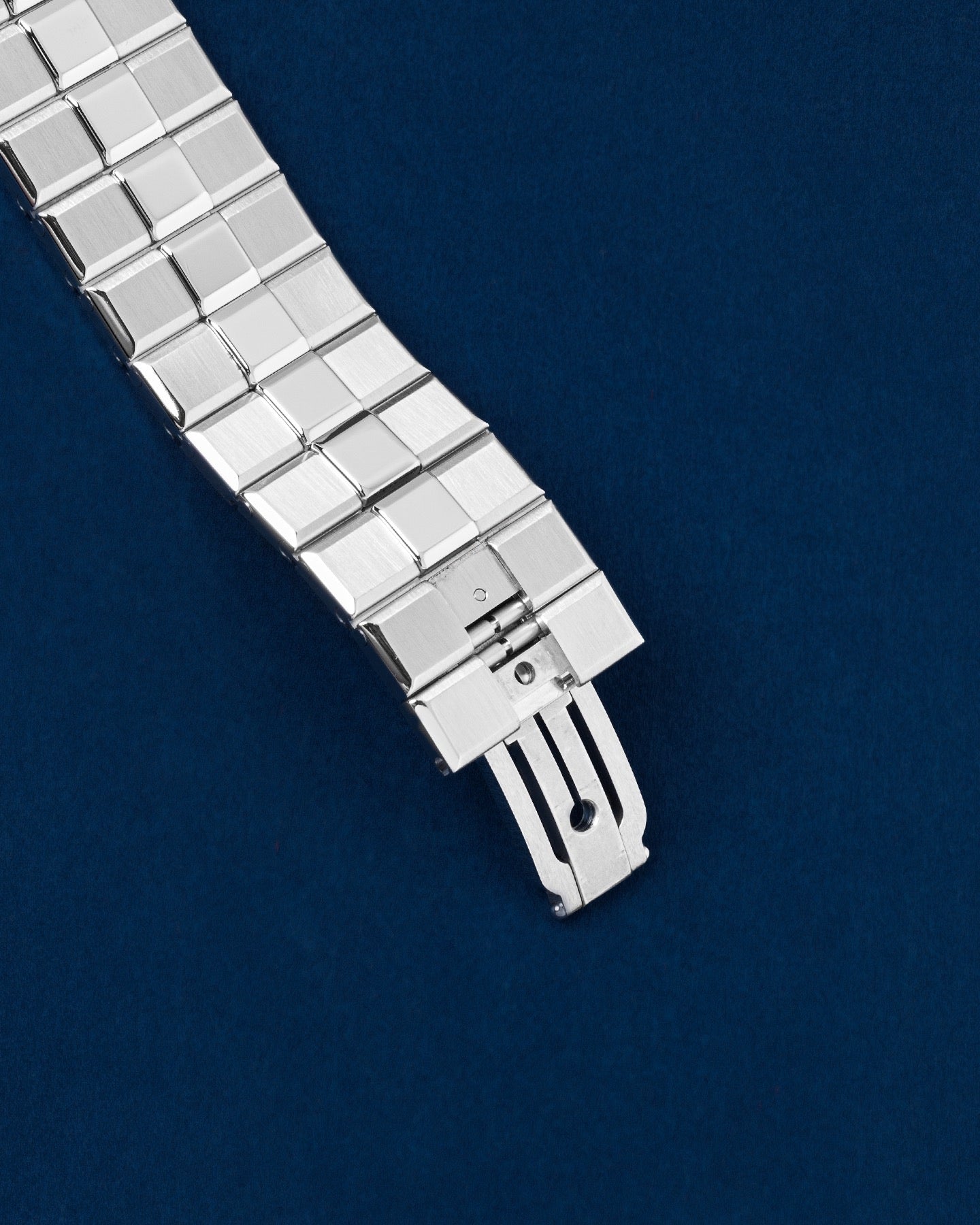
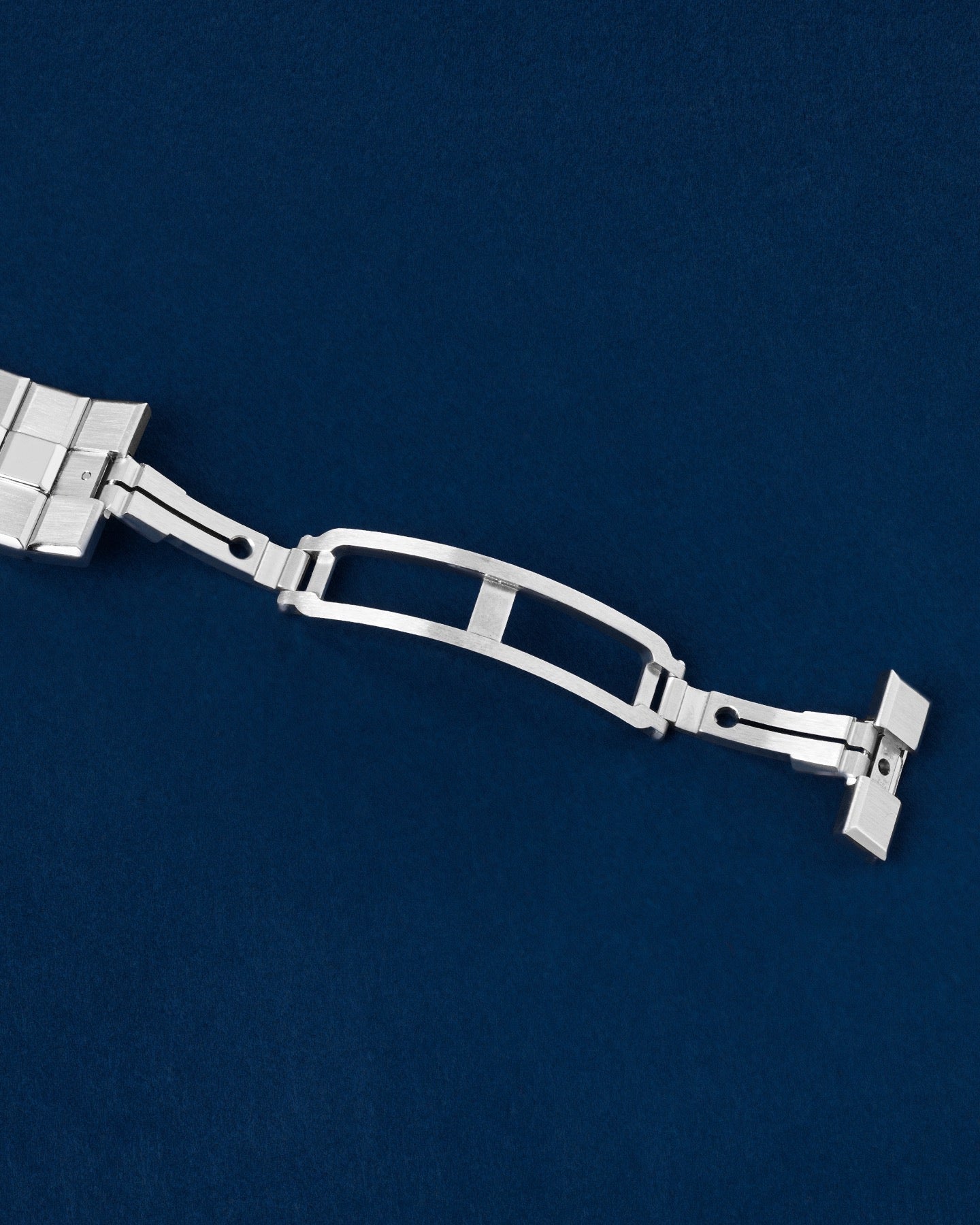
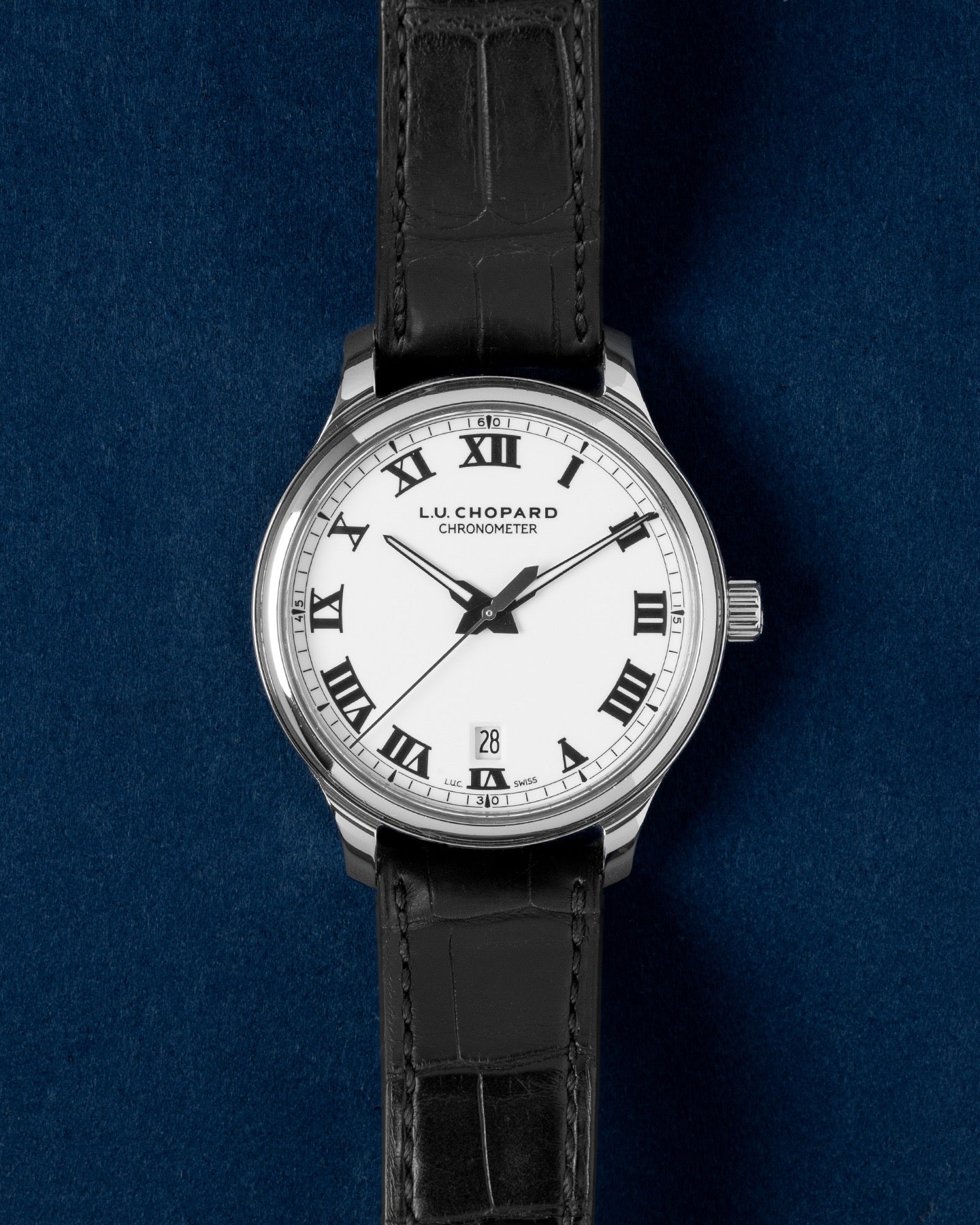
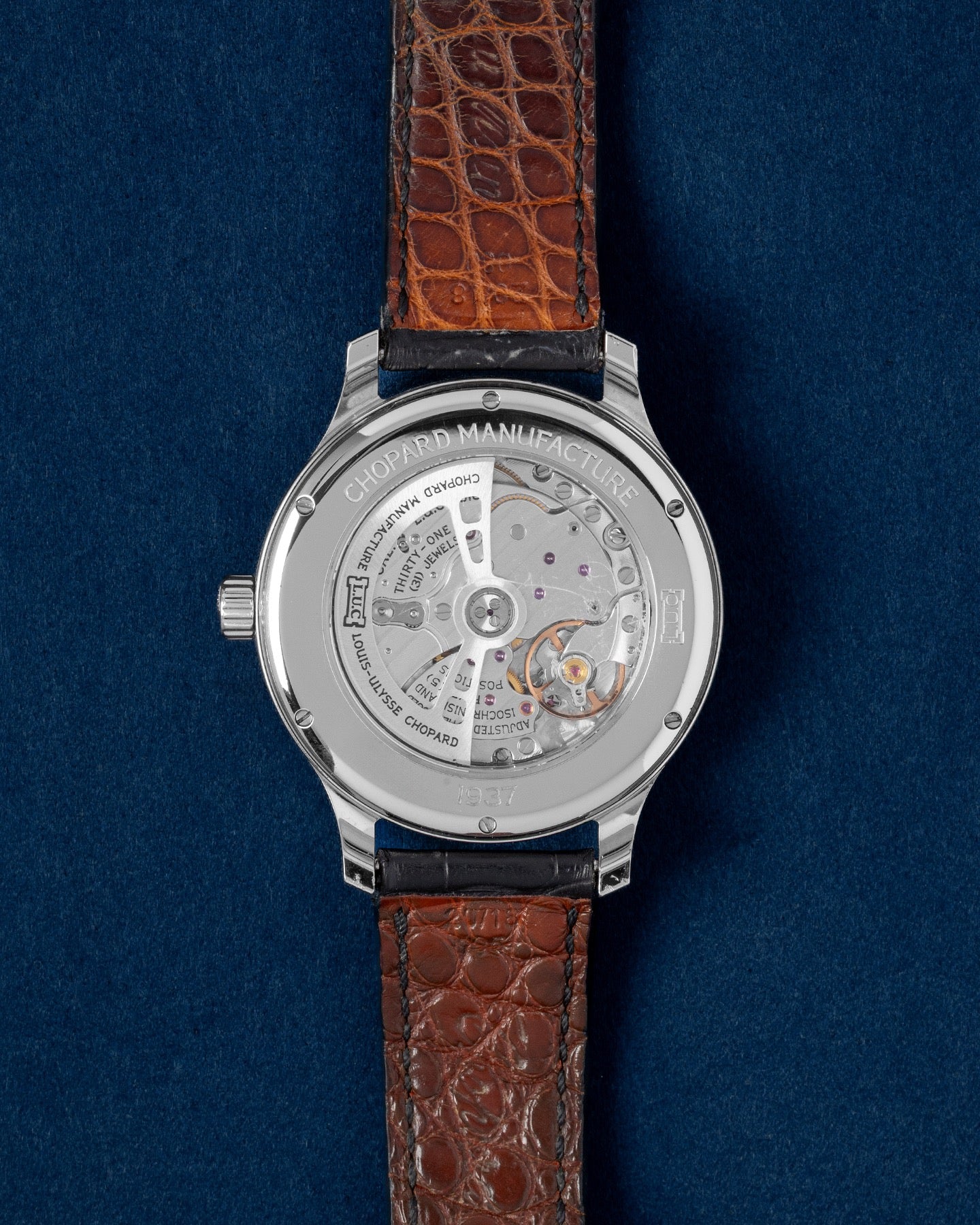
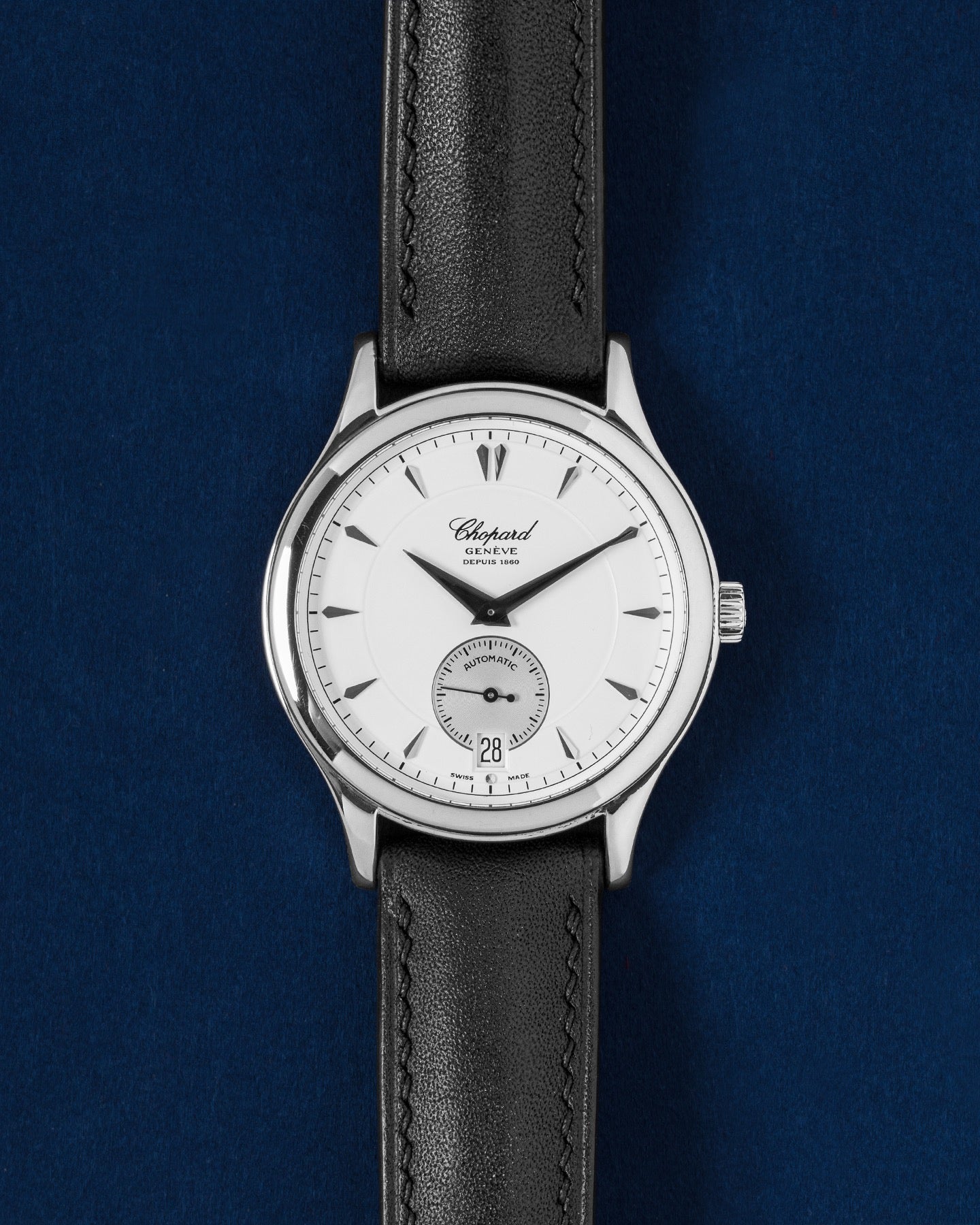
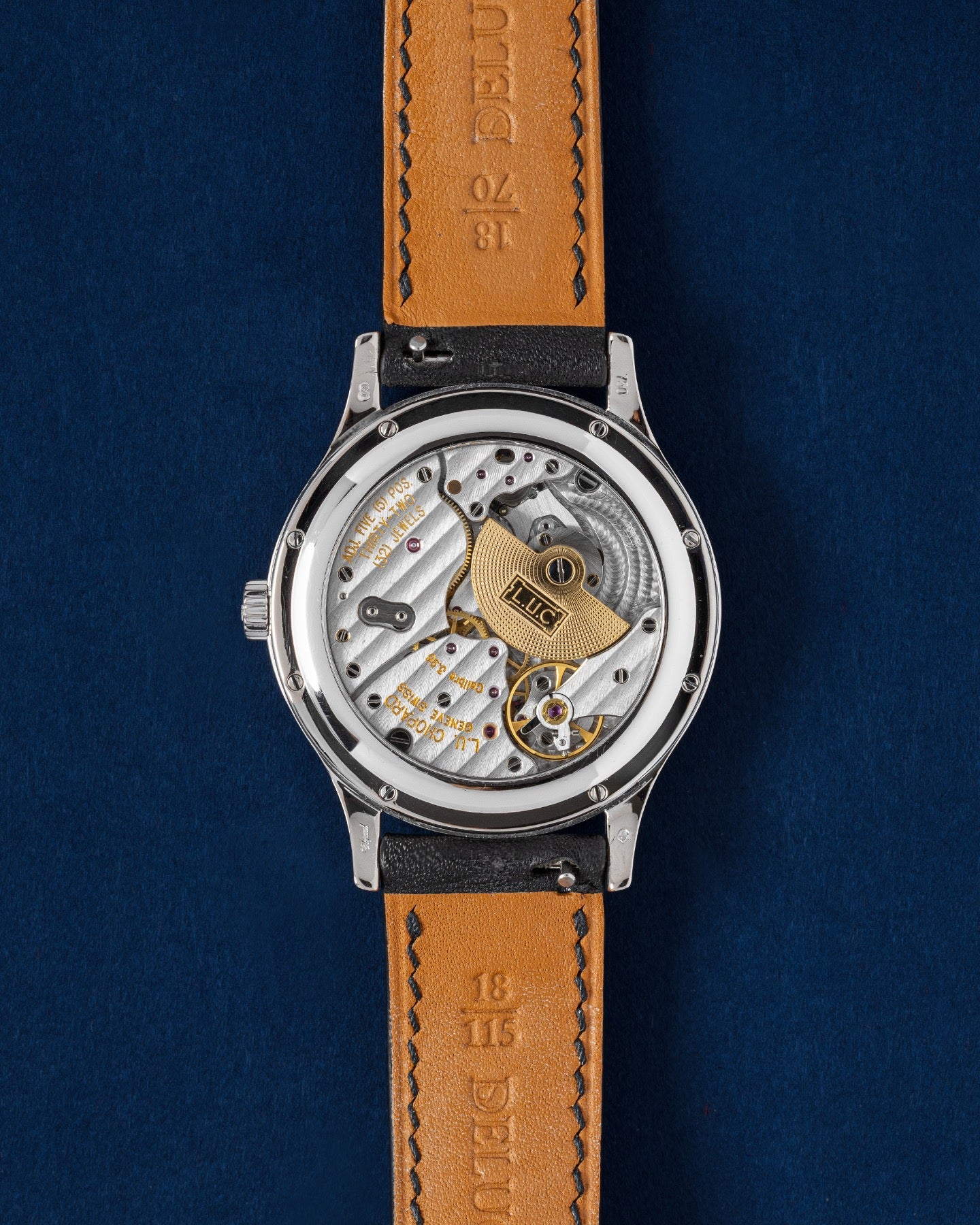
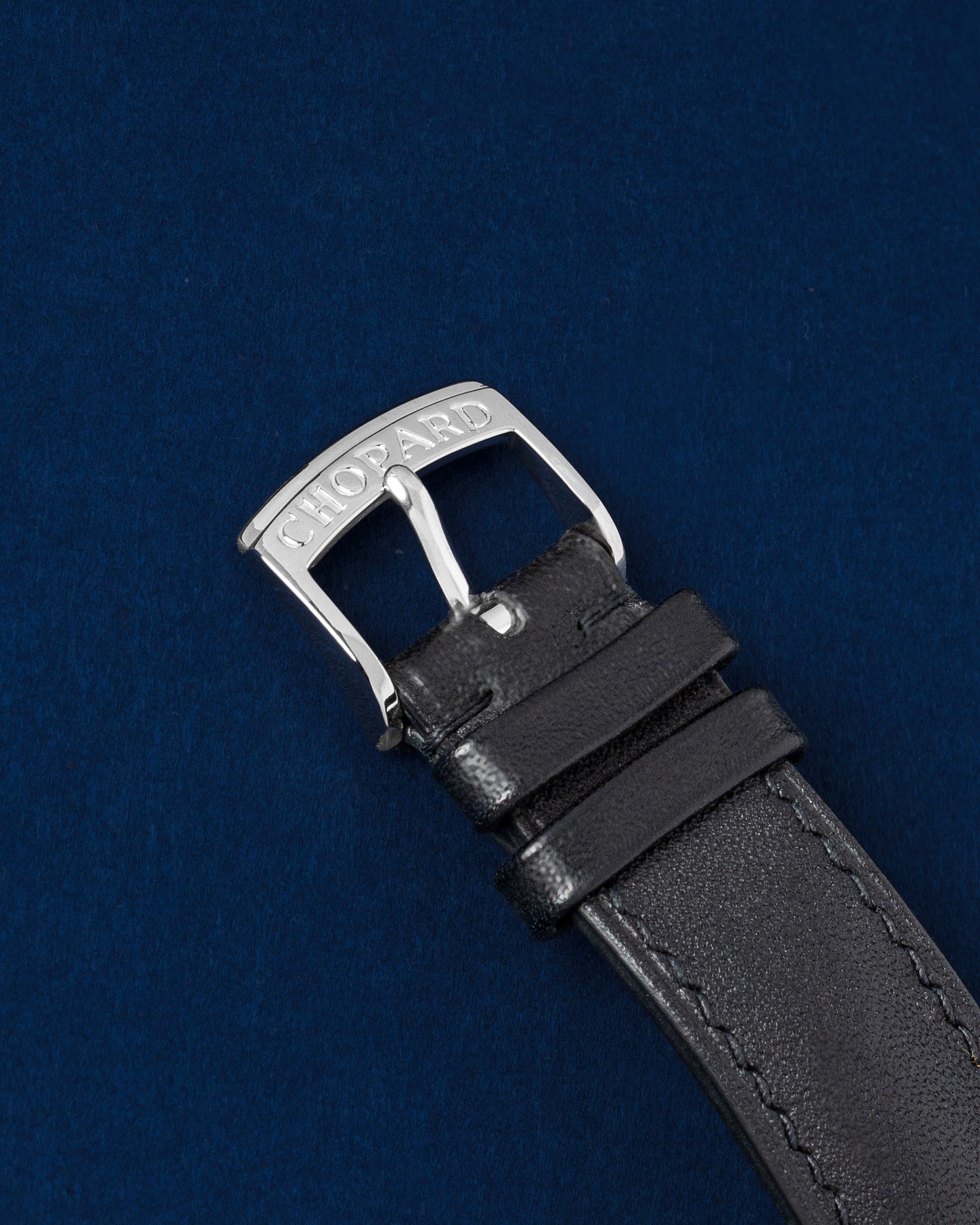
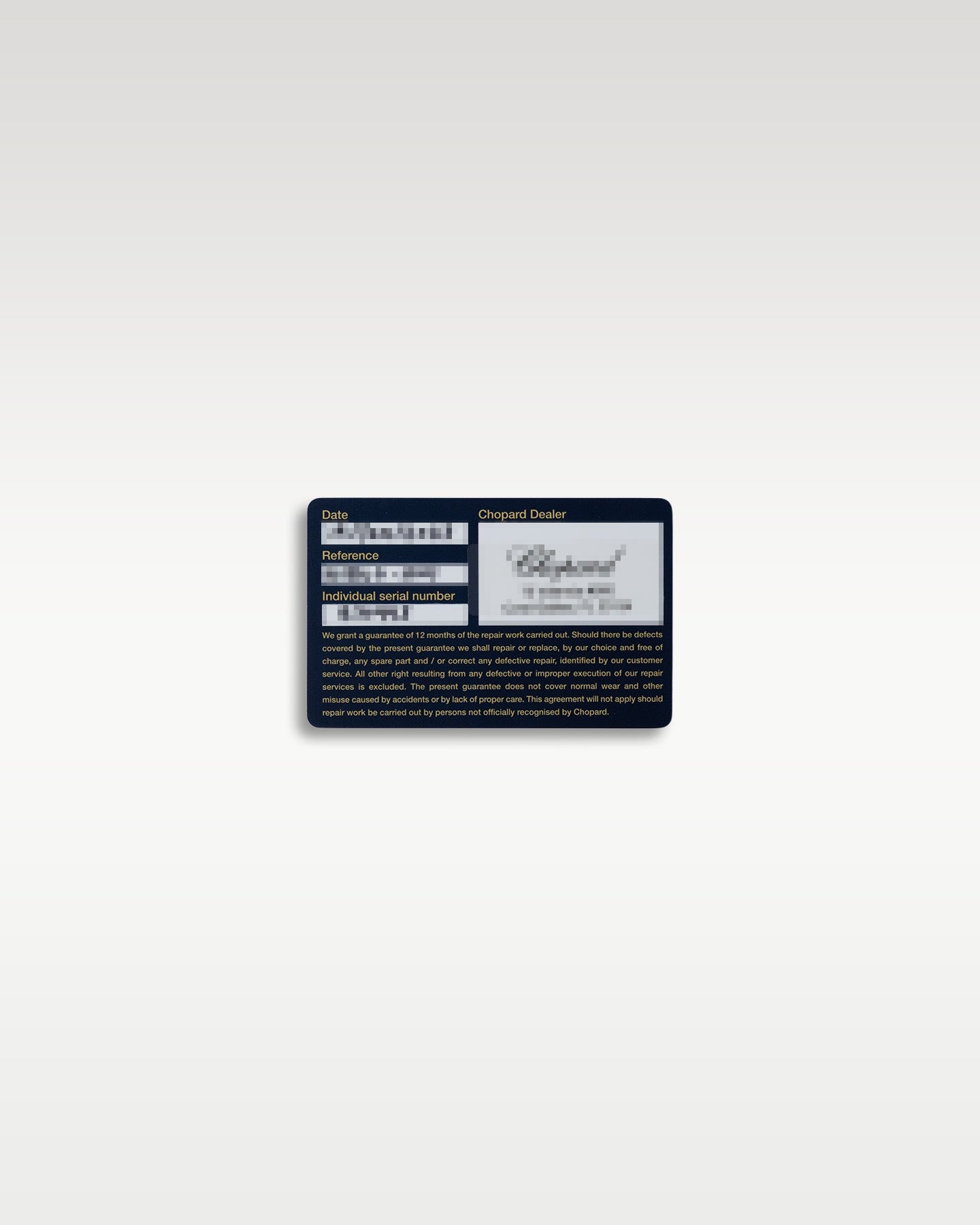
Chopard L.U.C 1937 Classic 168558-3002
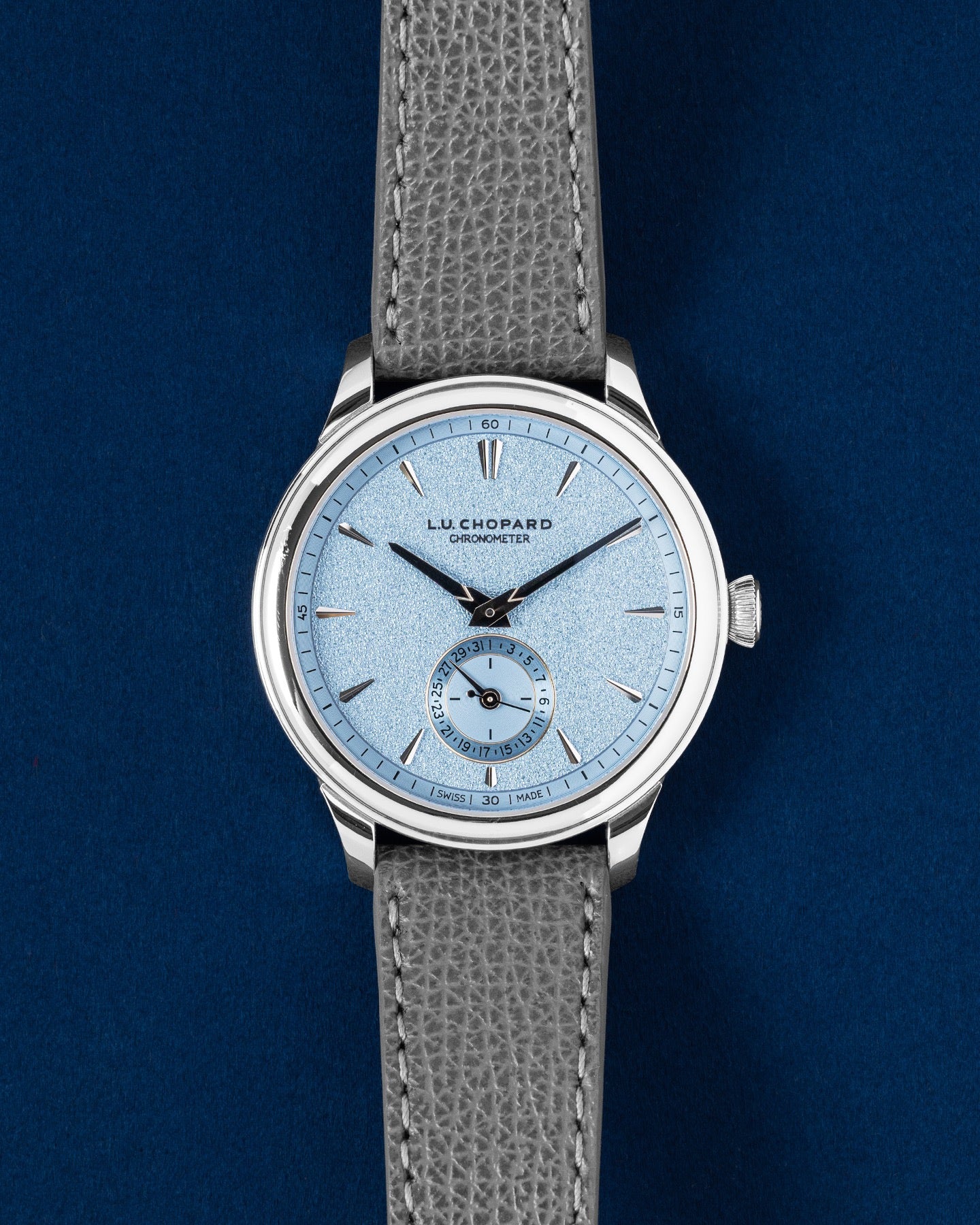
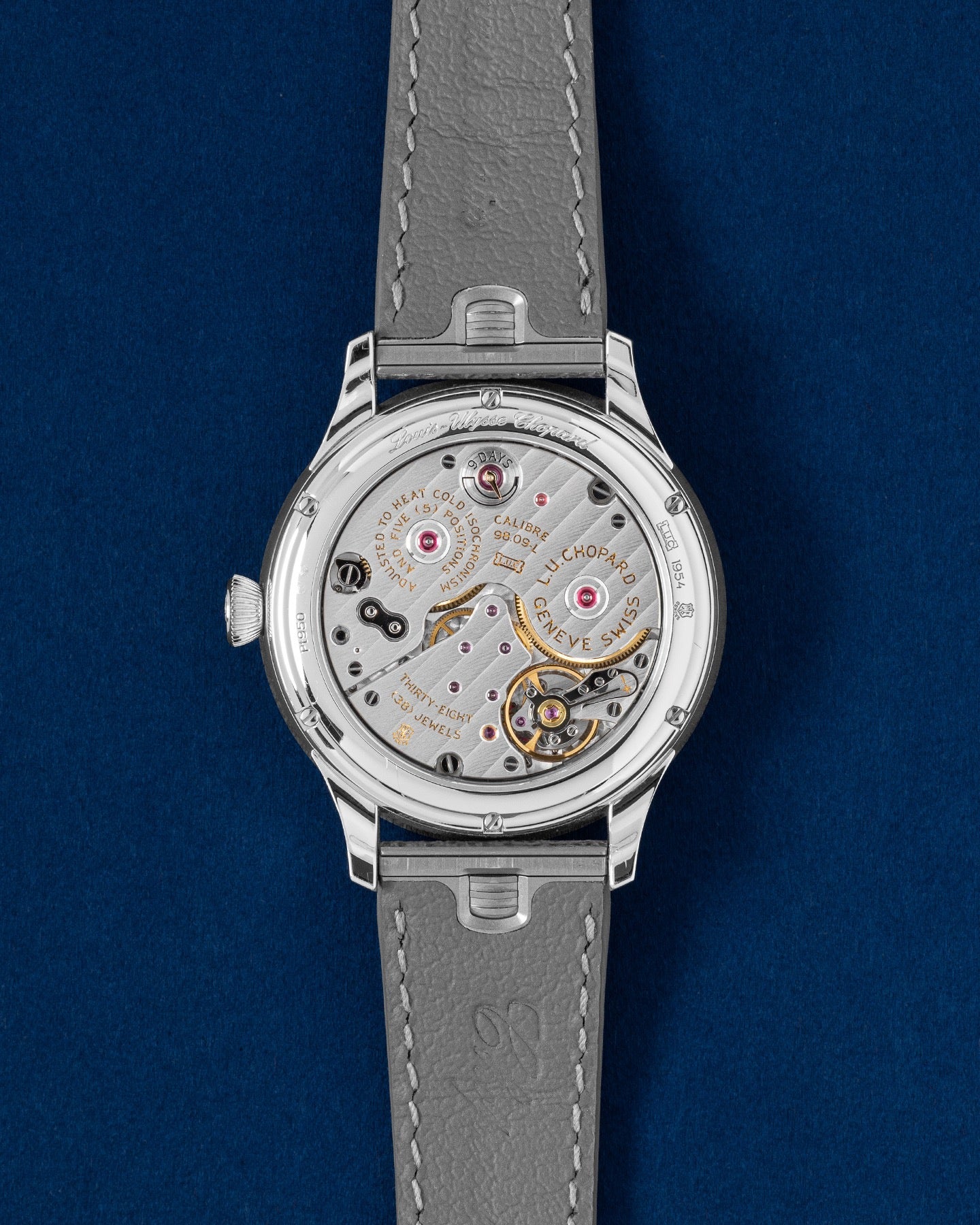
Chopard L.U.C. Quattro Mark IV 161954-9001
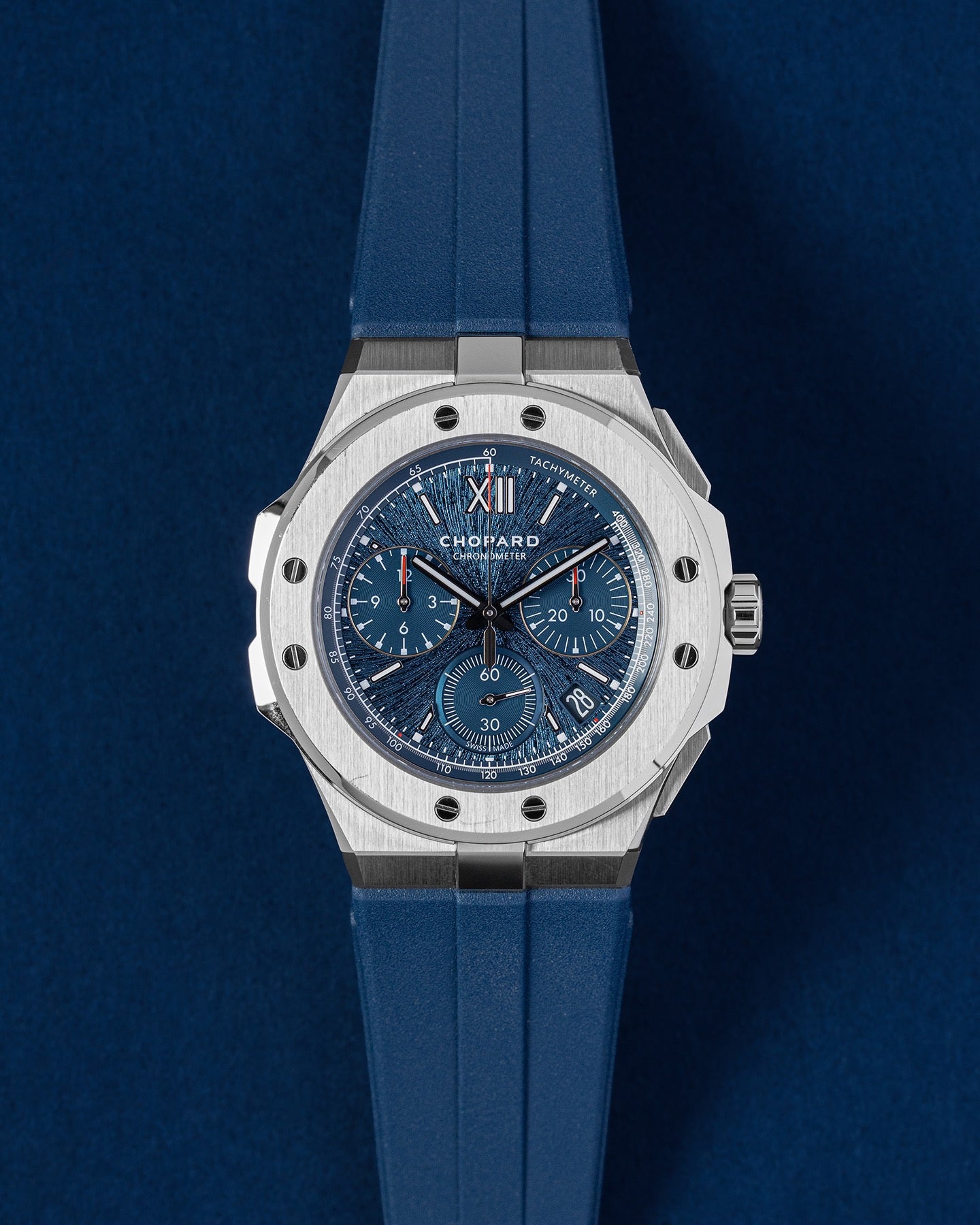
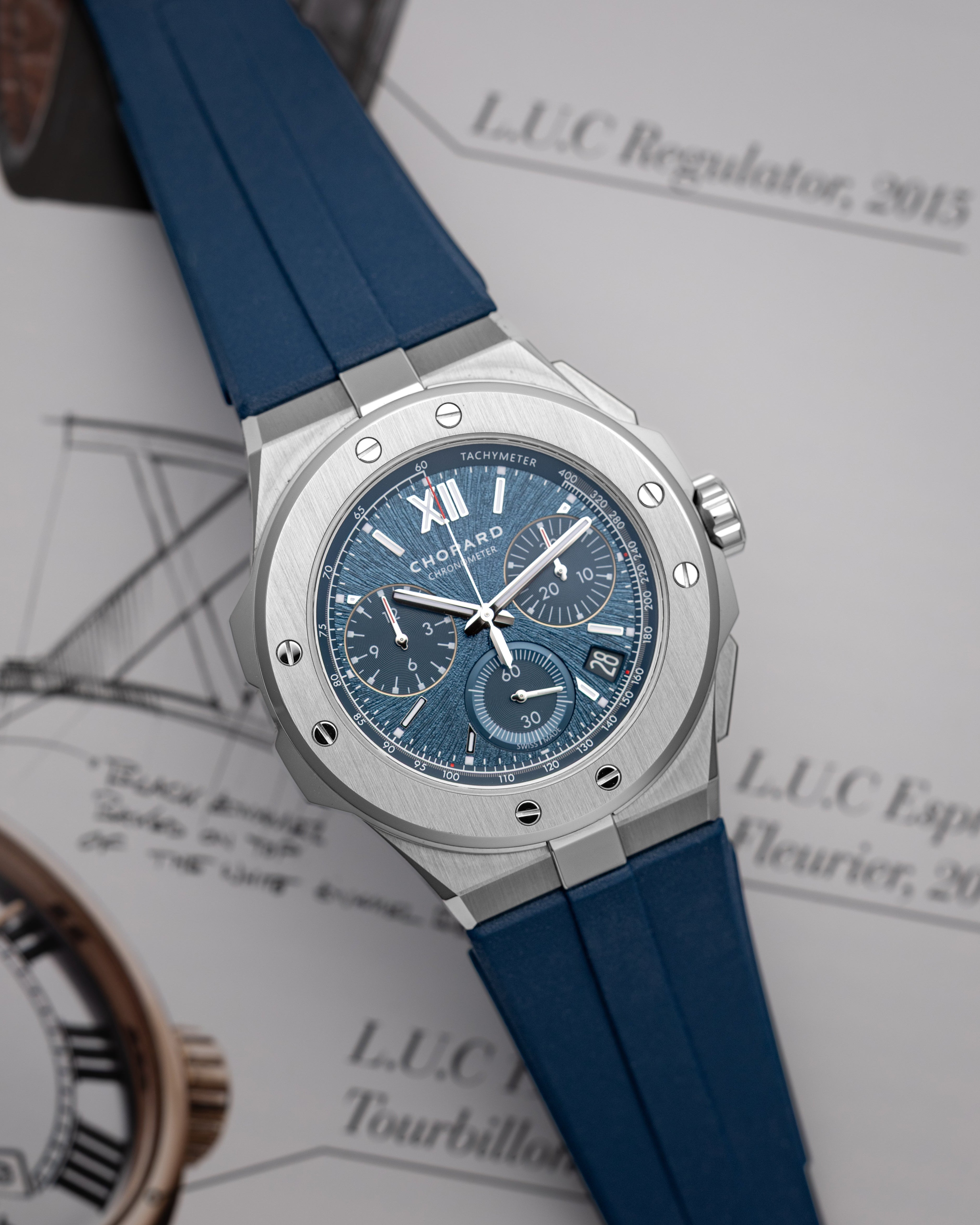
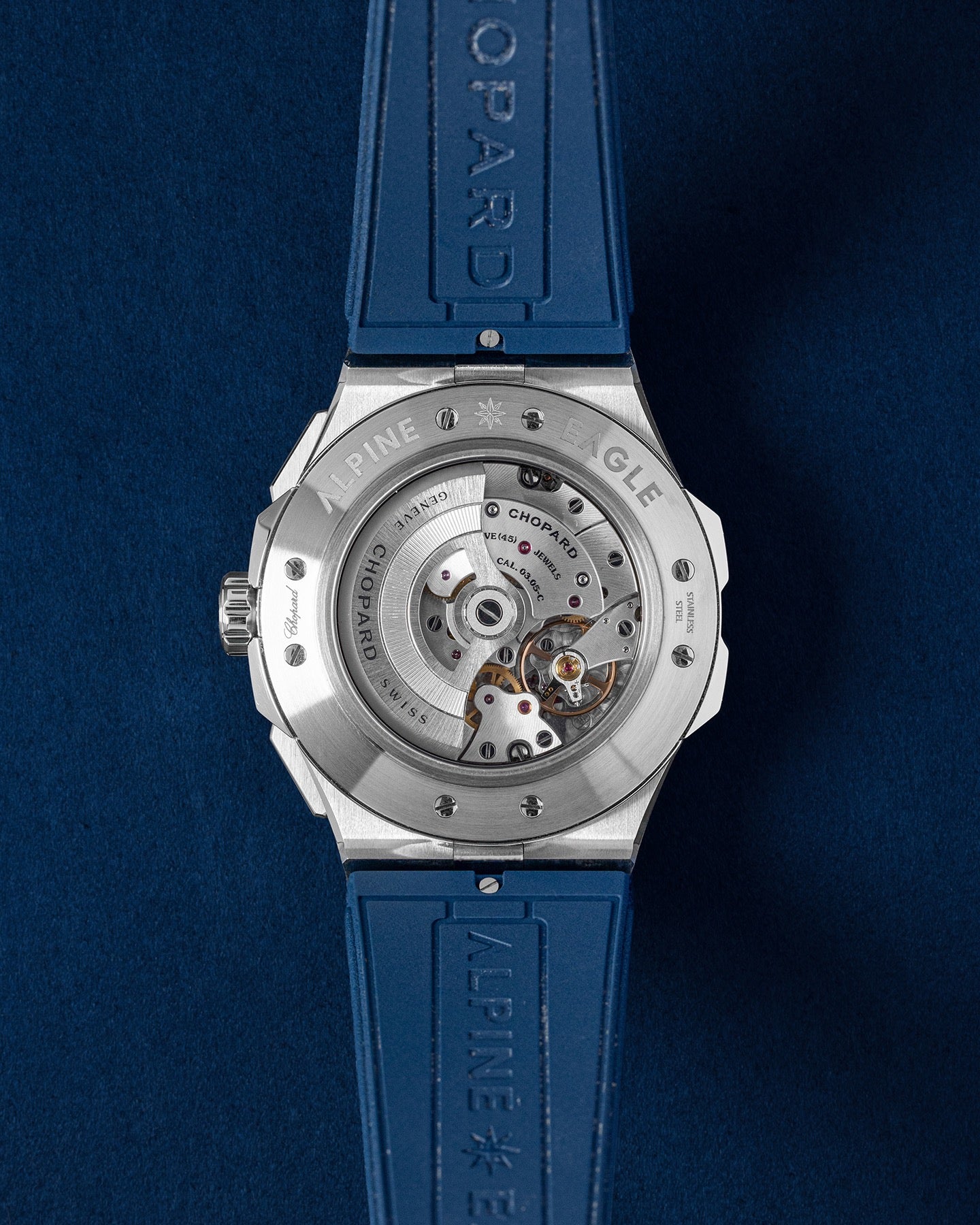
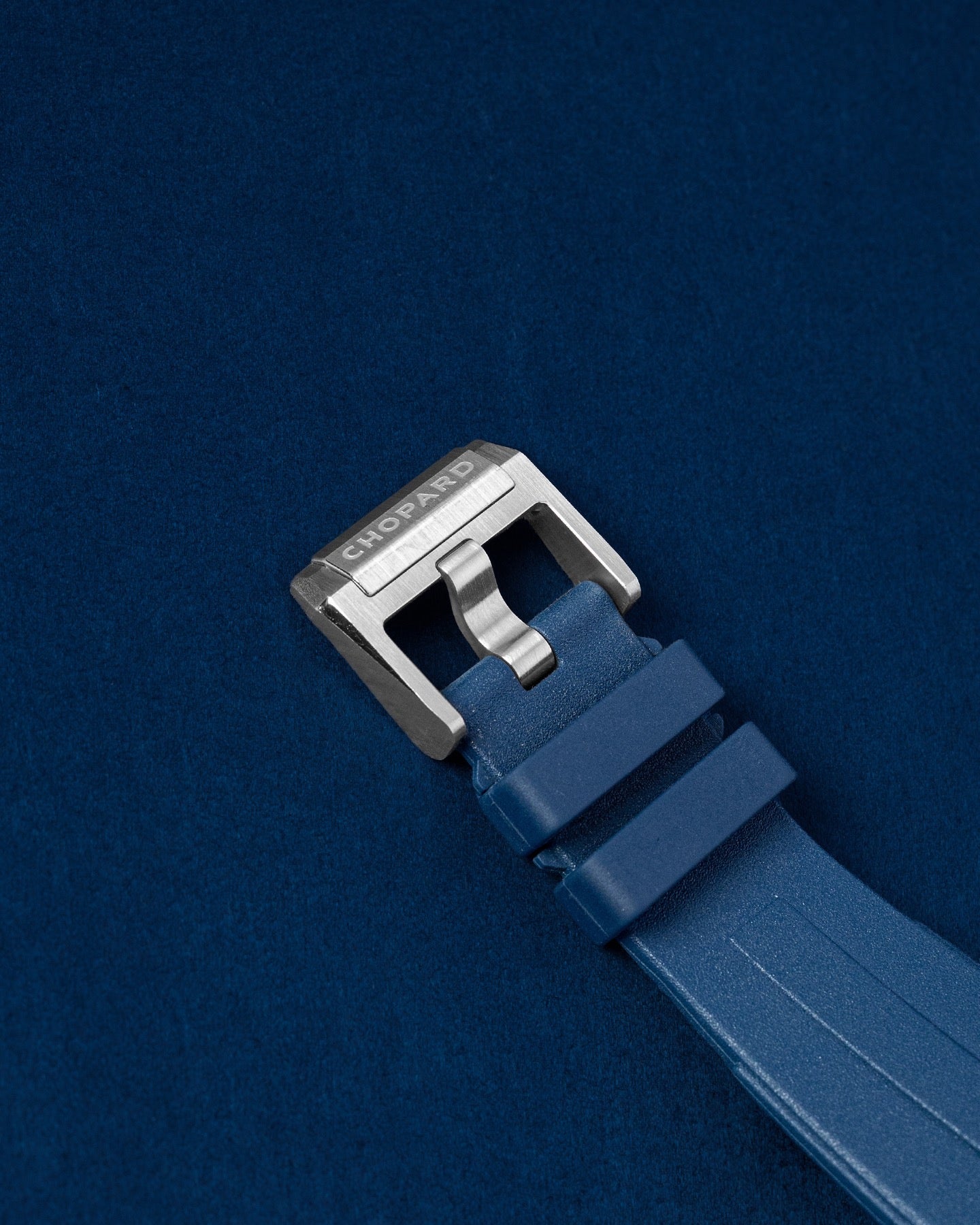


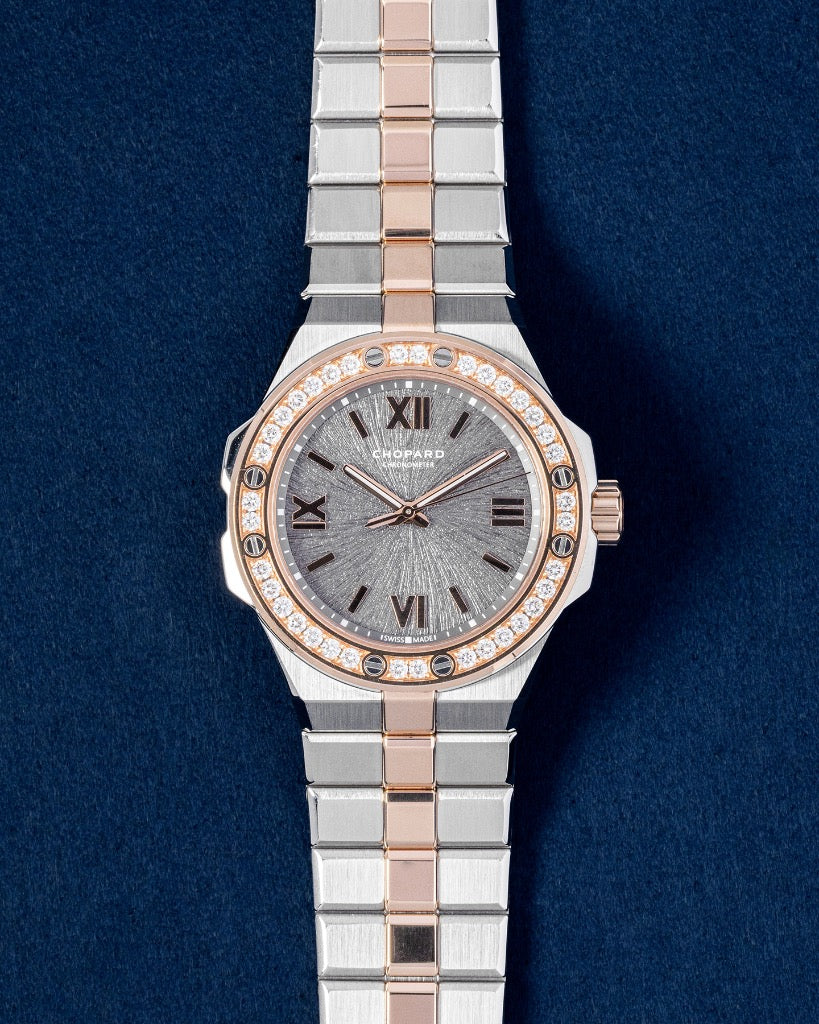
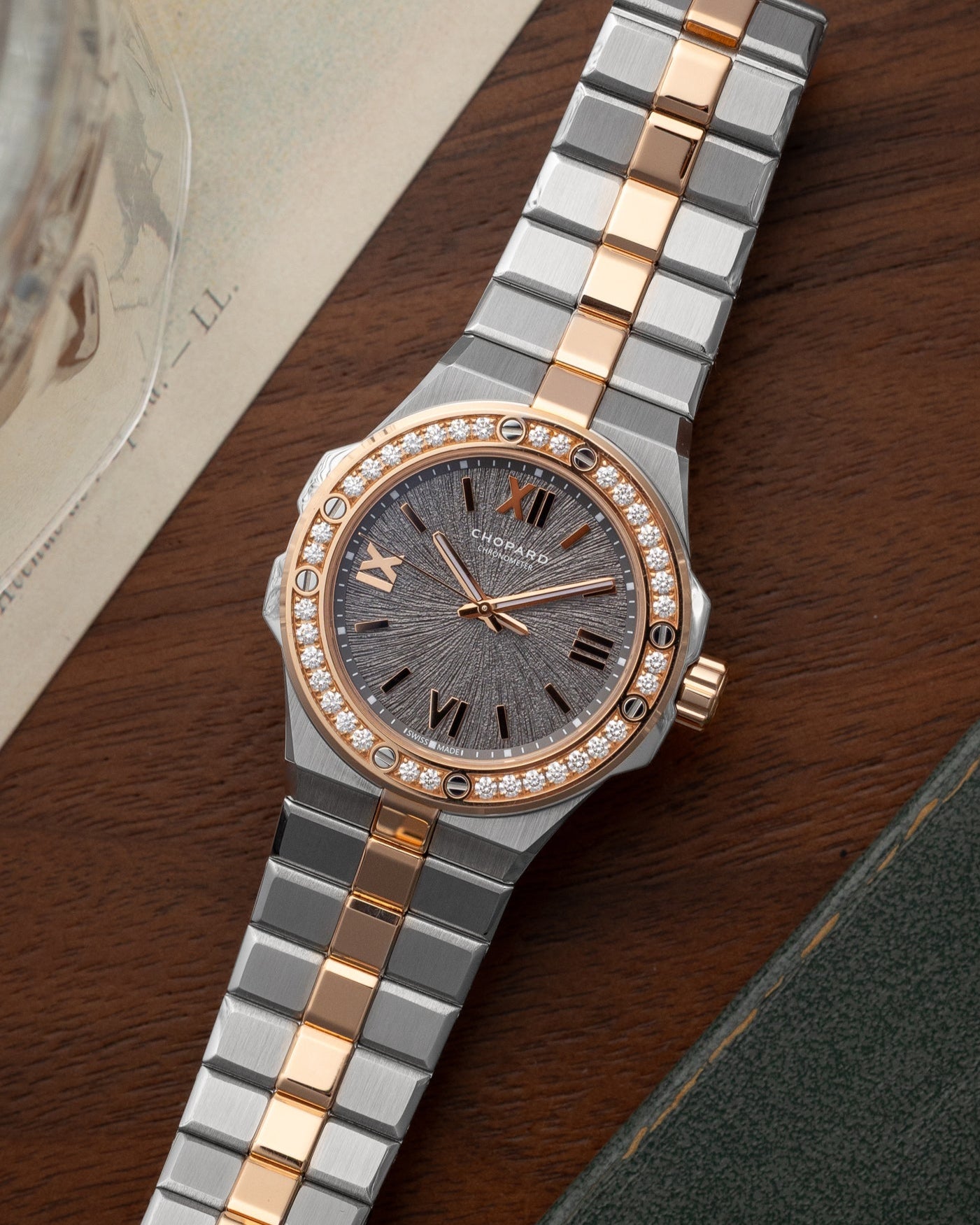
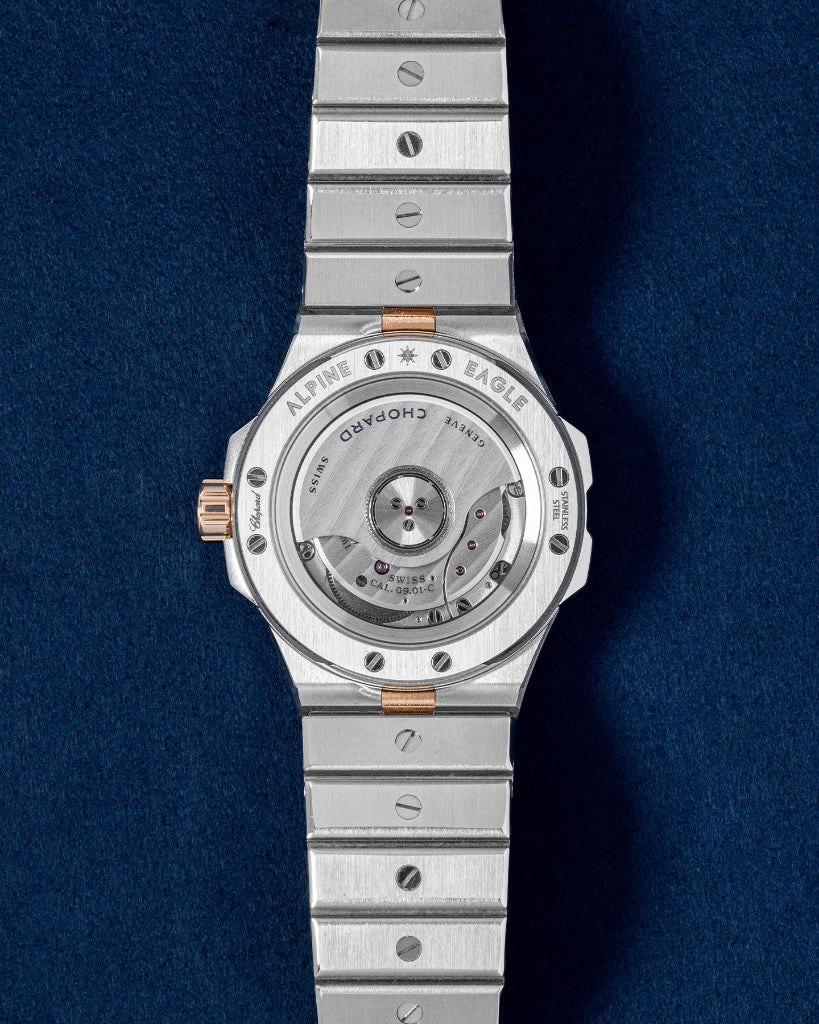
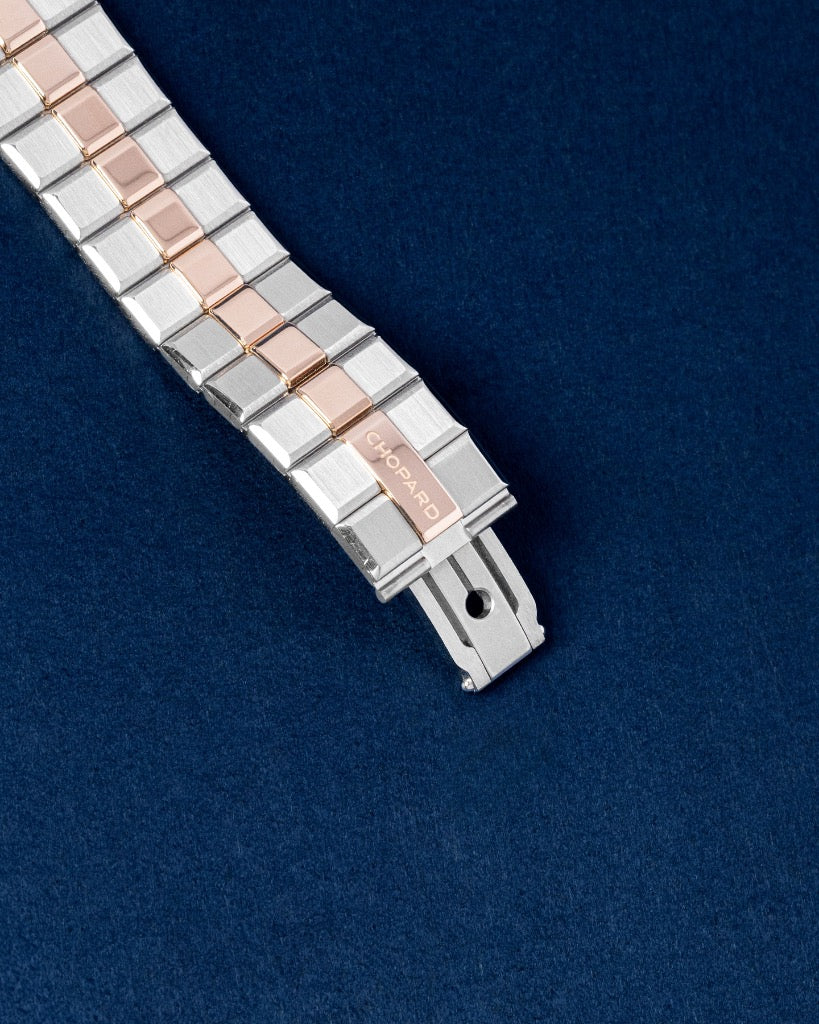
Chopard Alpine Eagle 298617-6002
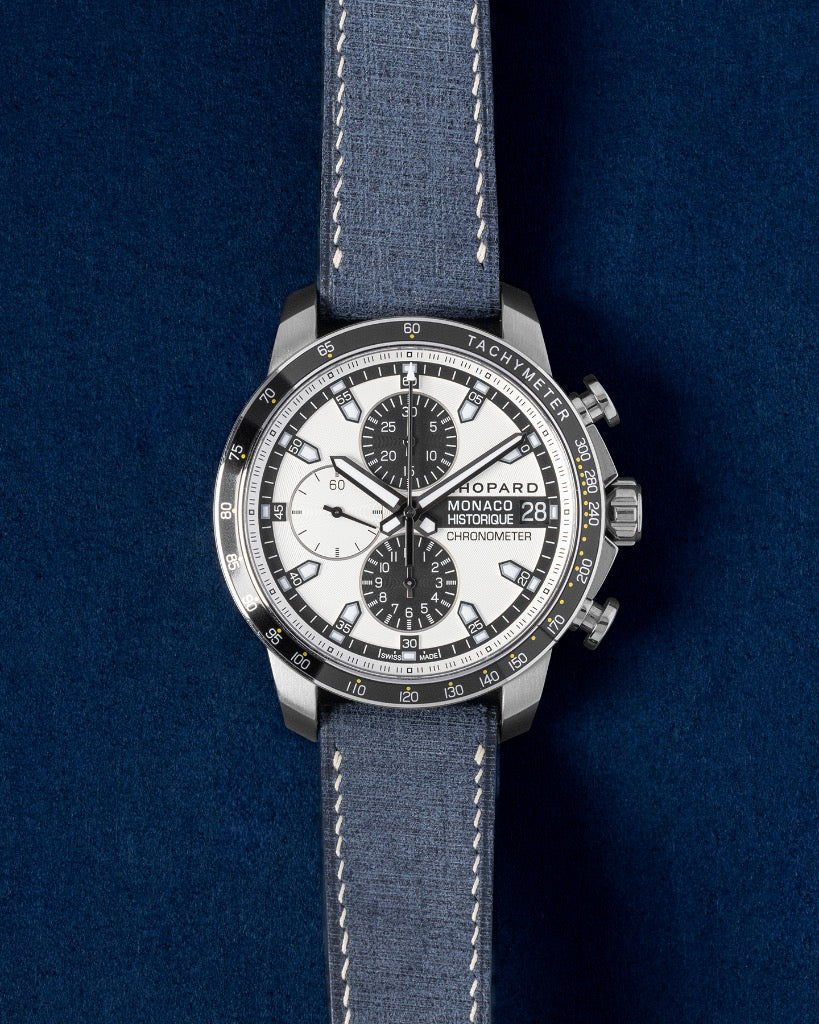
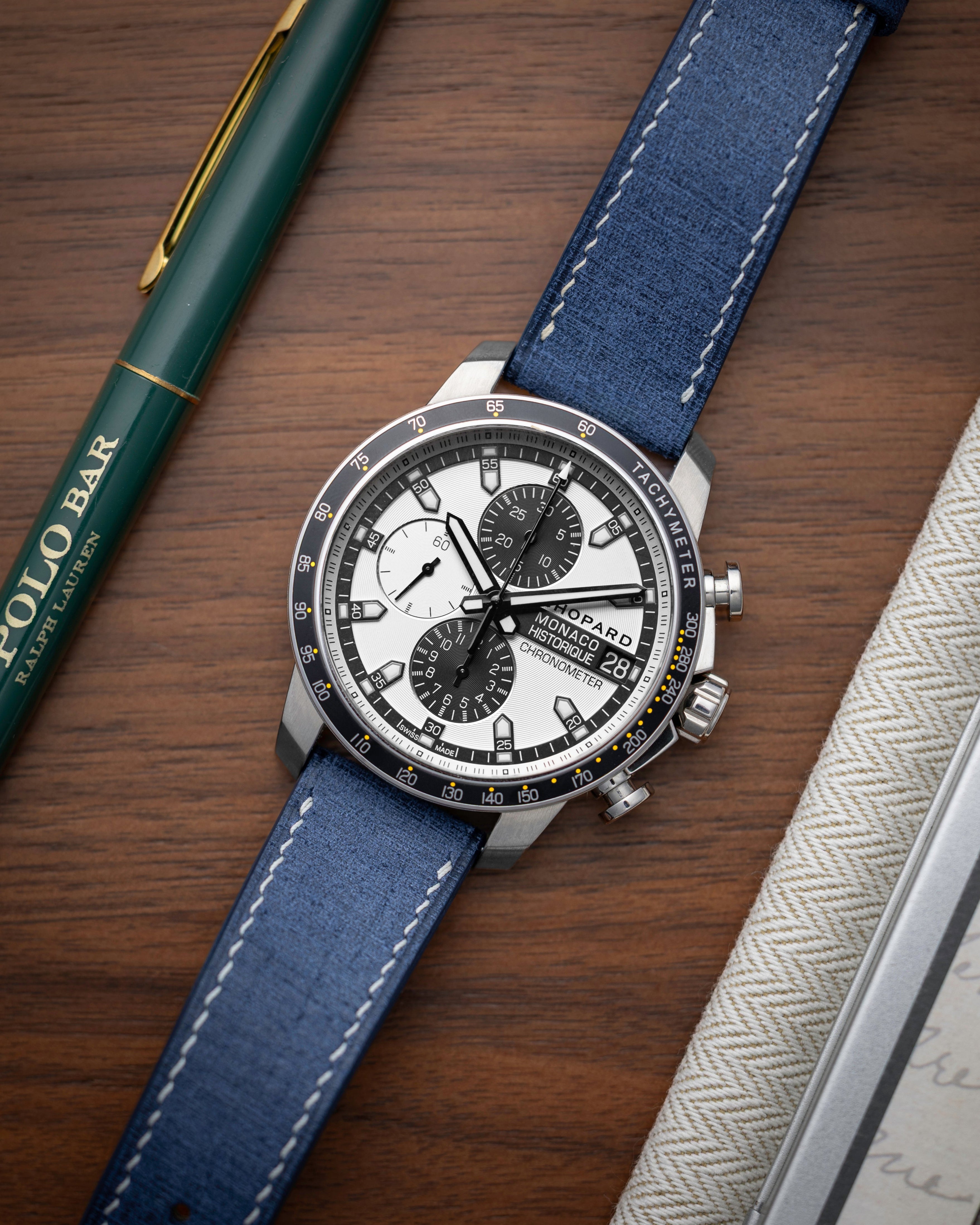
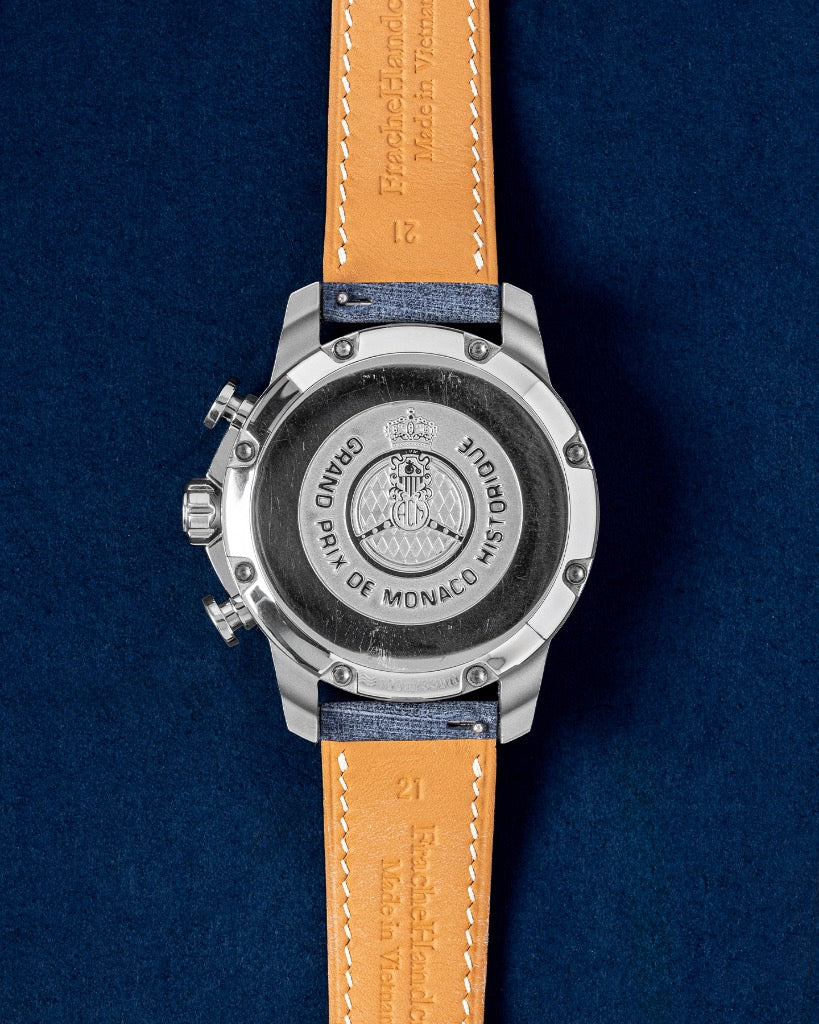
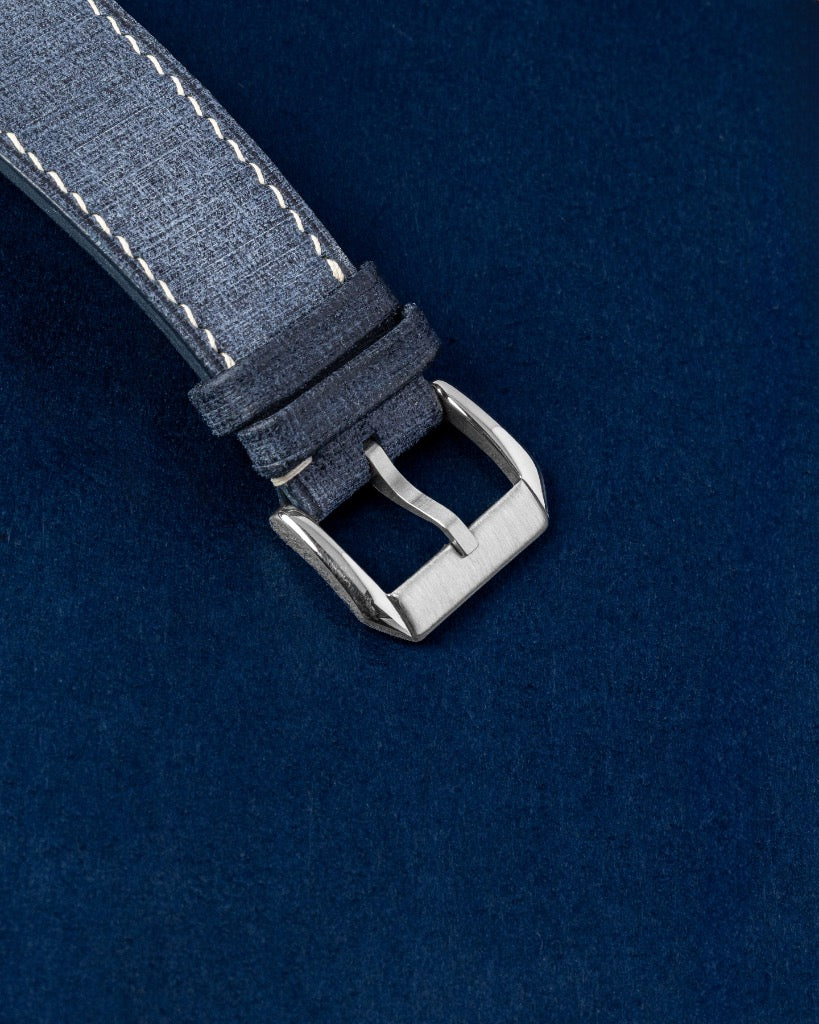
Chopard Grand Prix de Monaco Chronograph 158570-3003
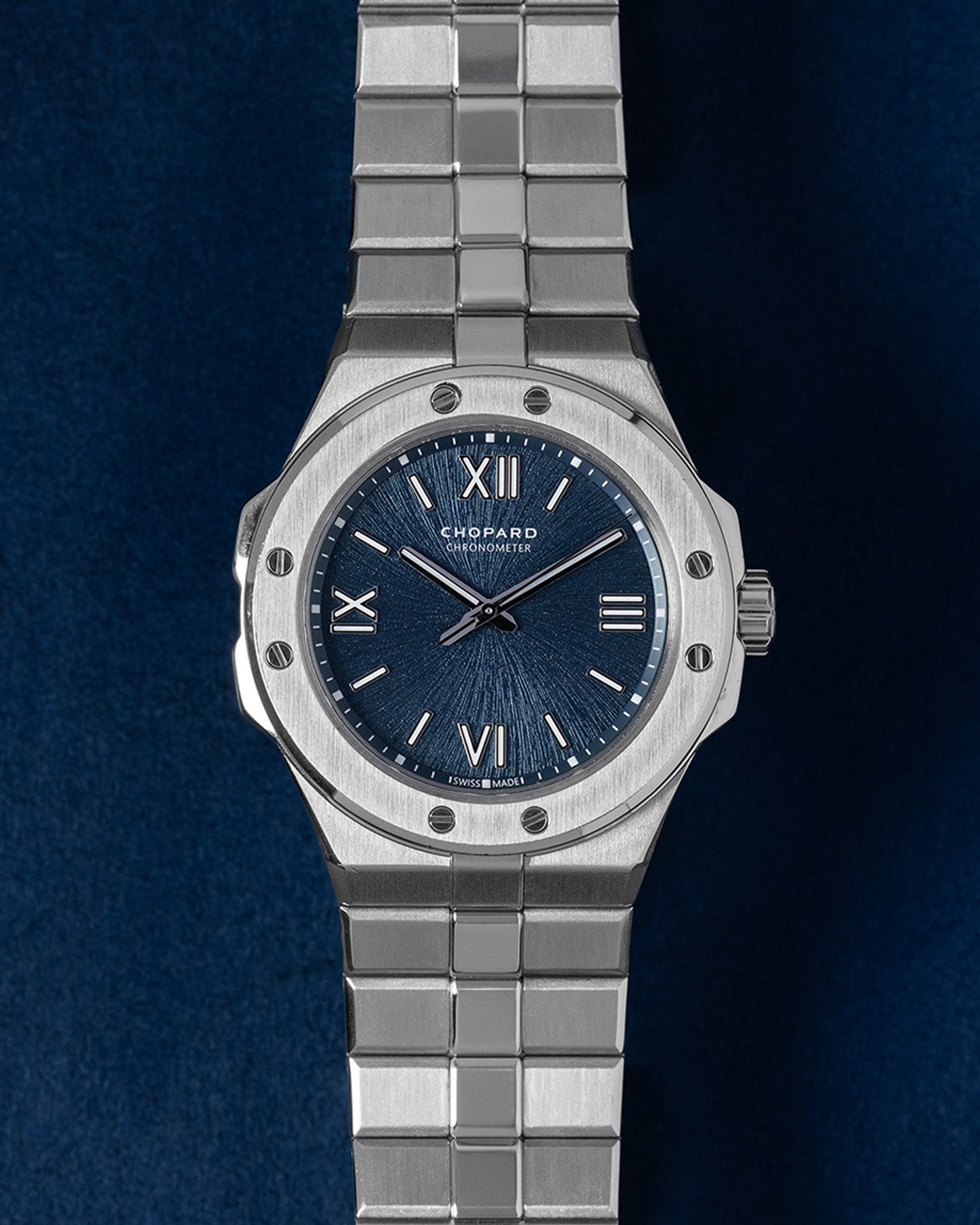
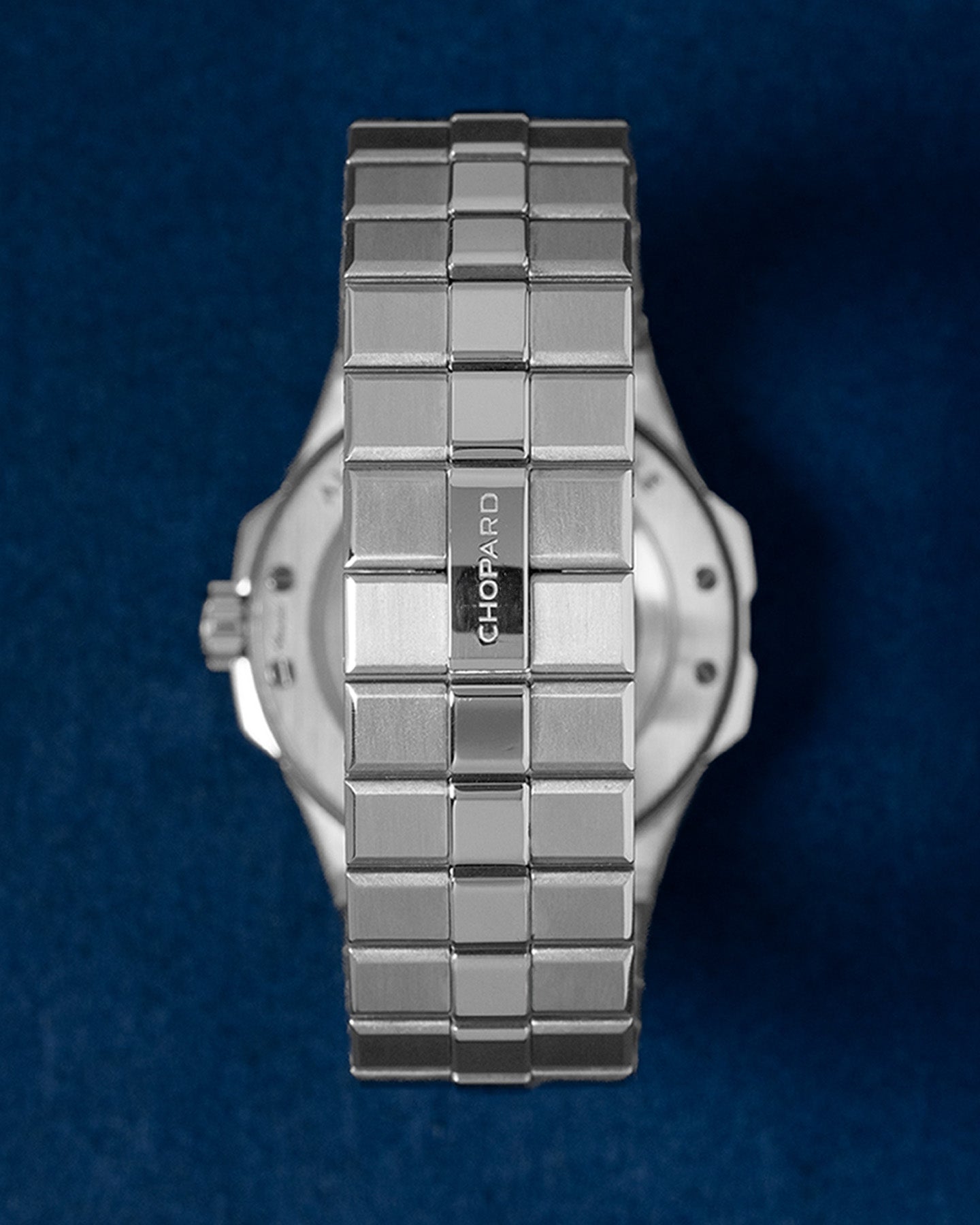
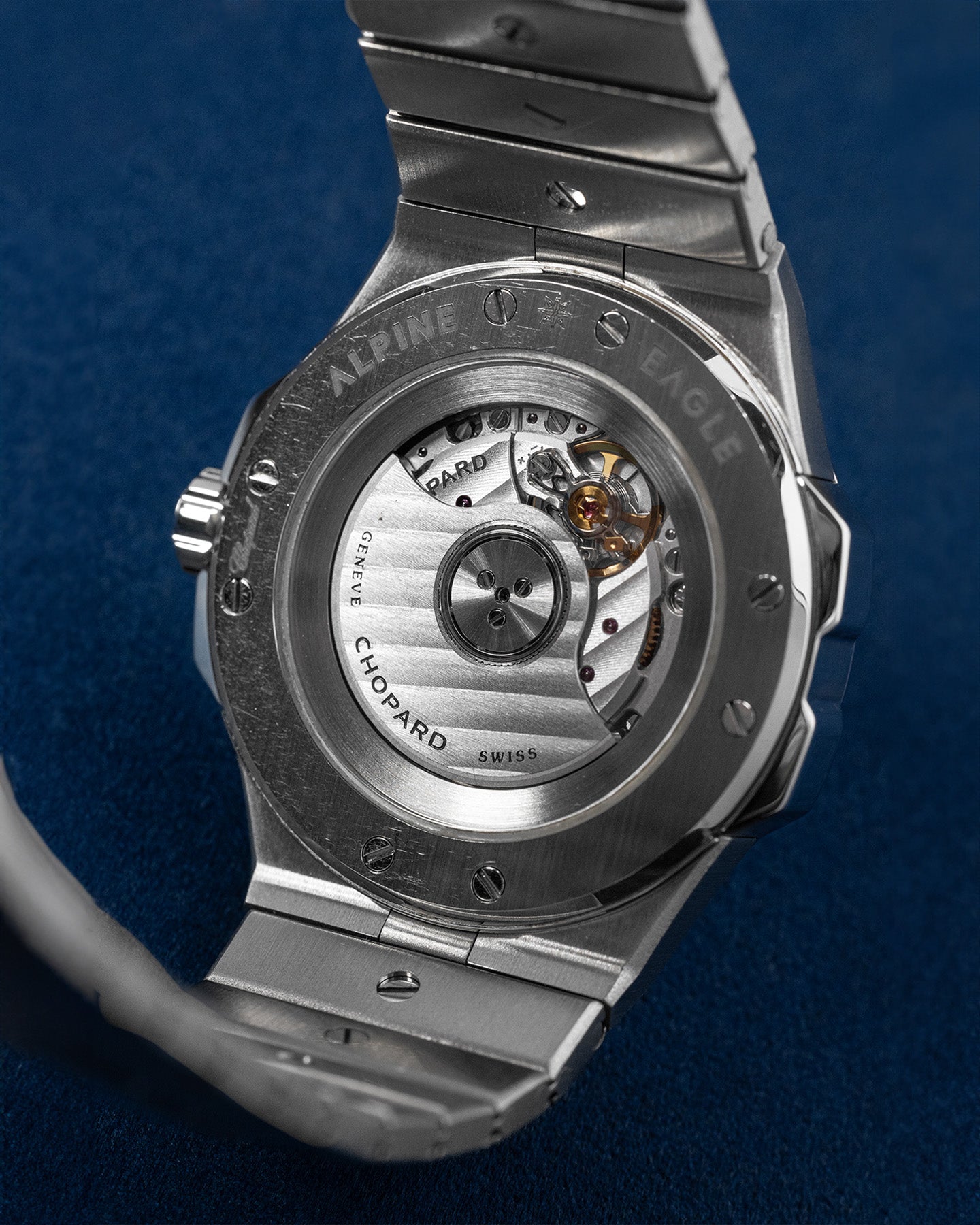
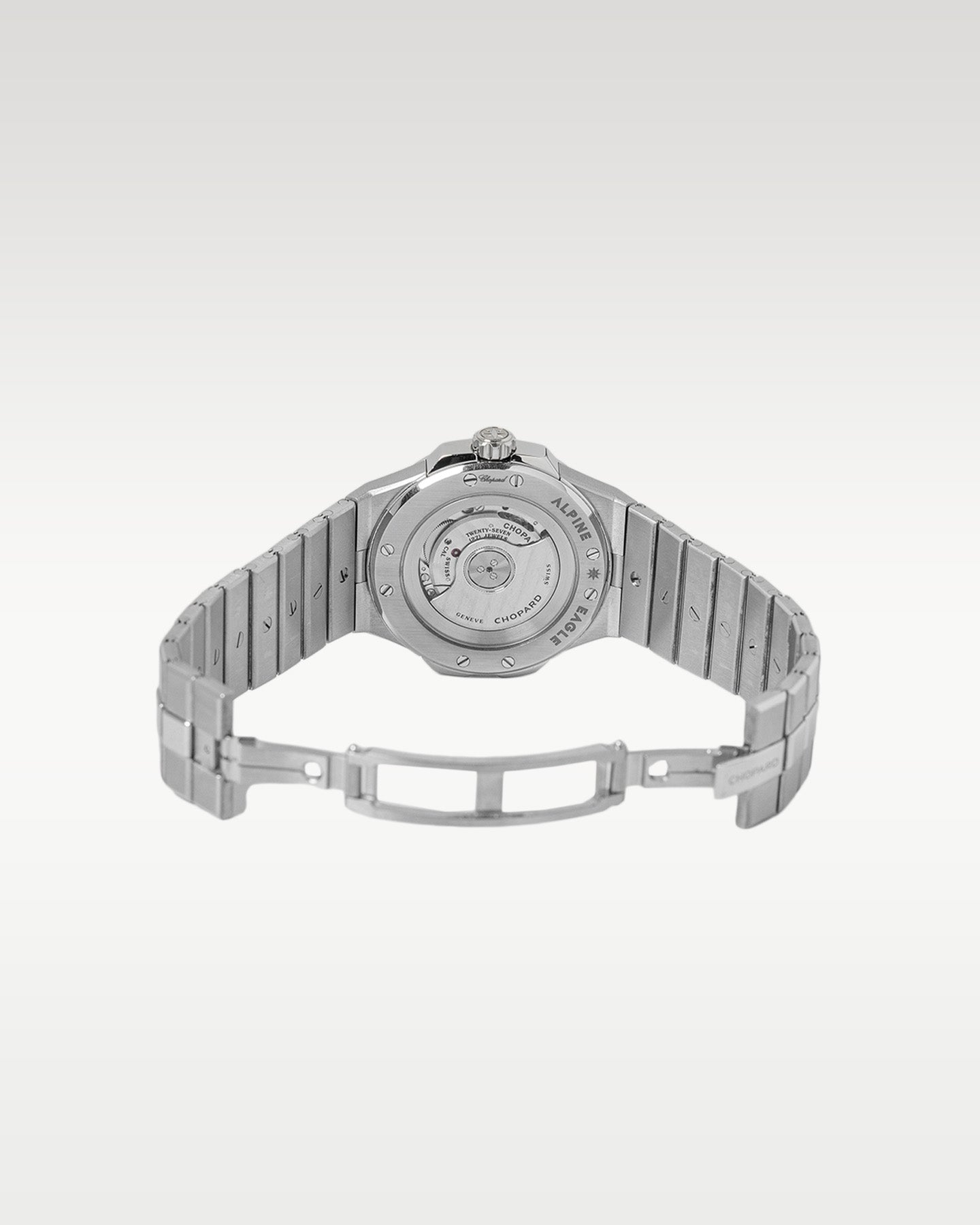
Chopard Alpine Eagle 298601-3001
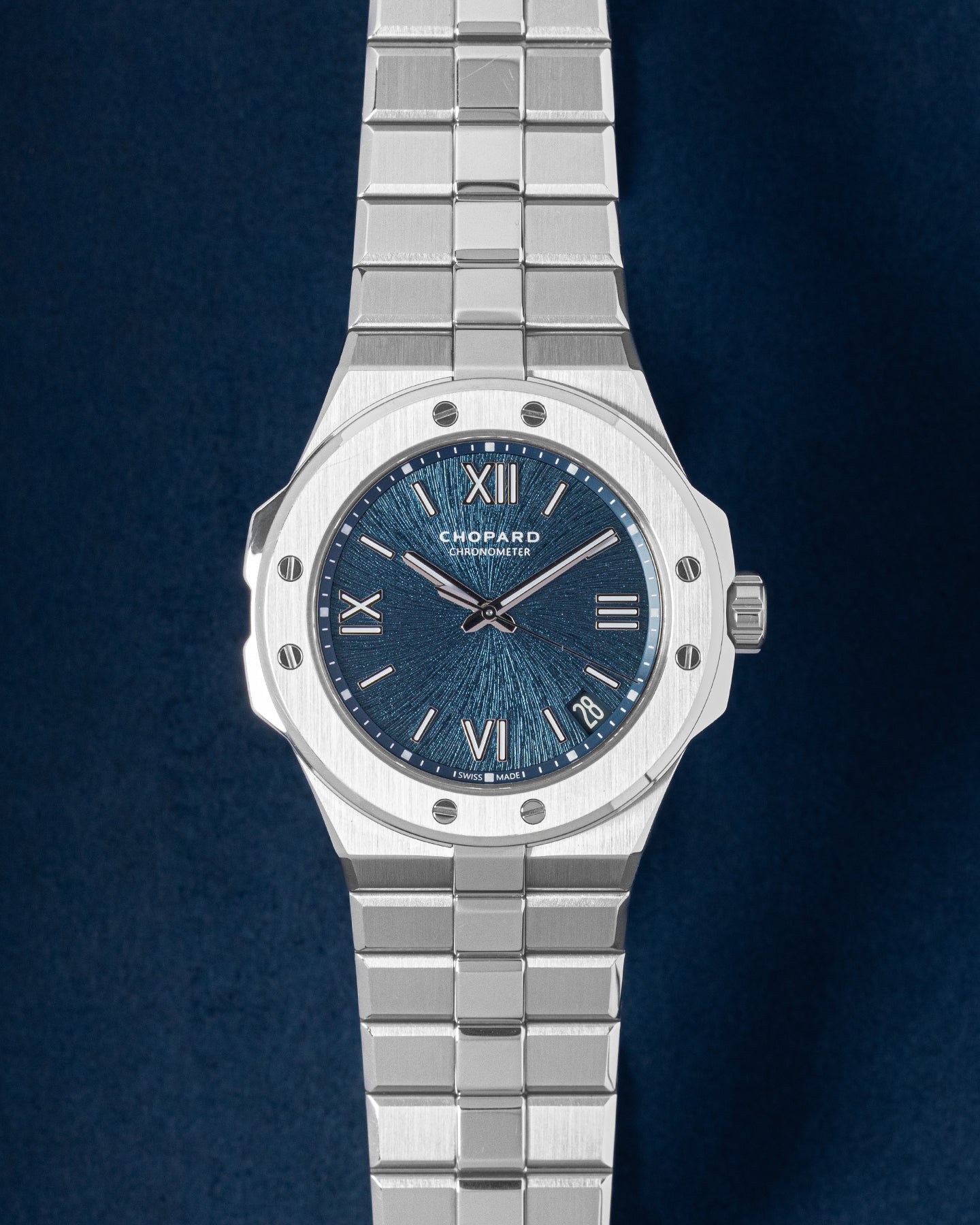
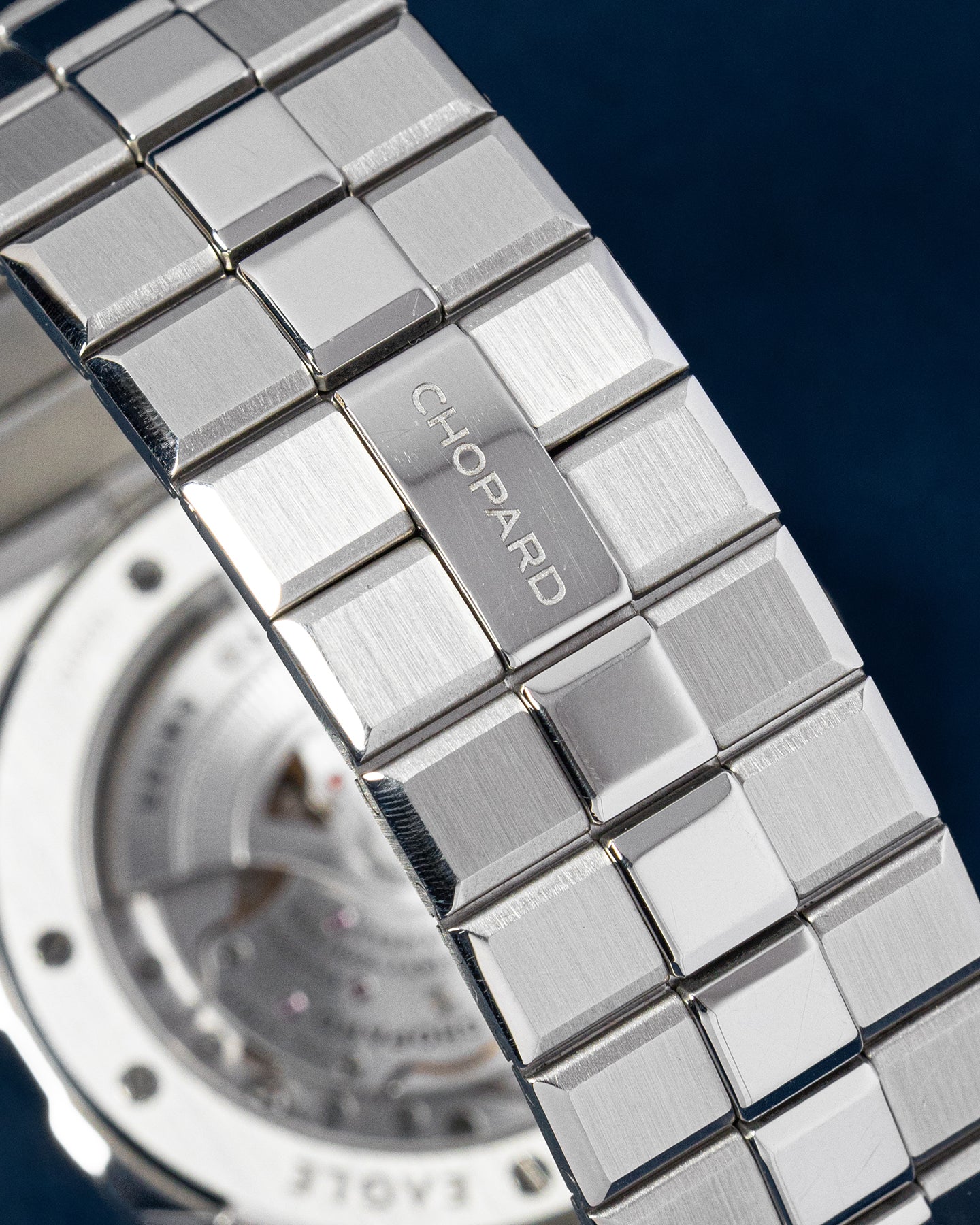
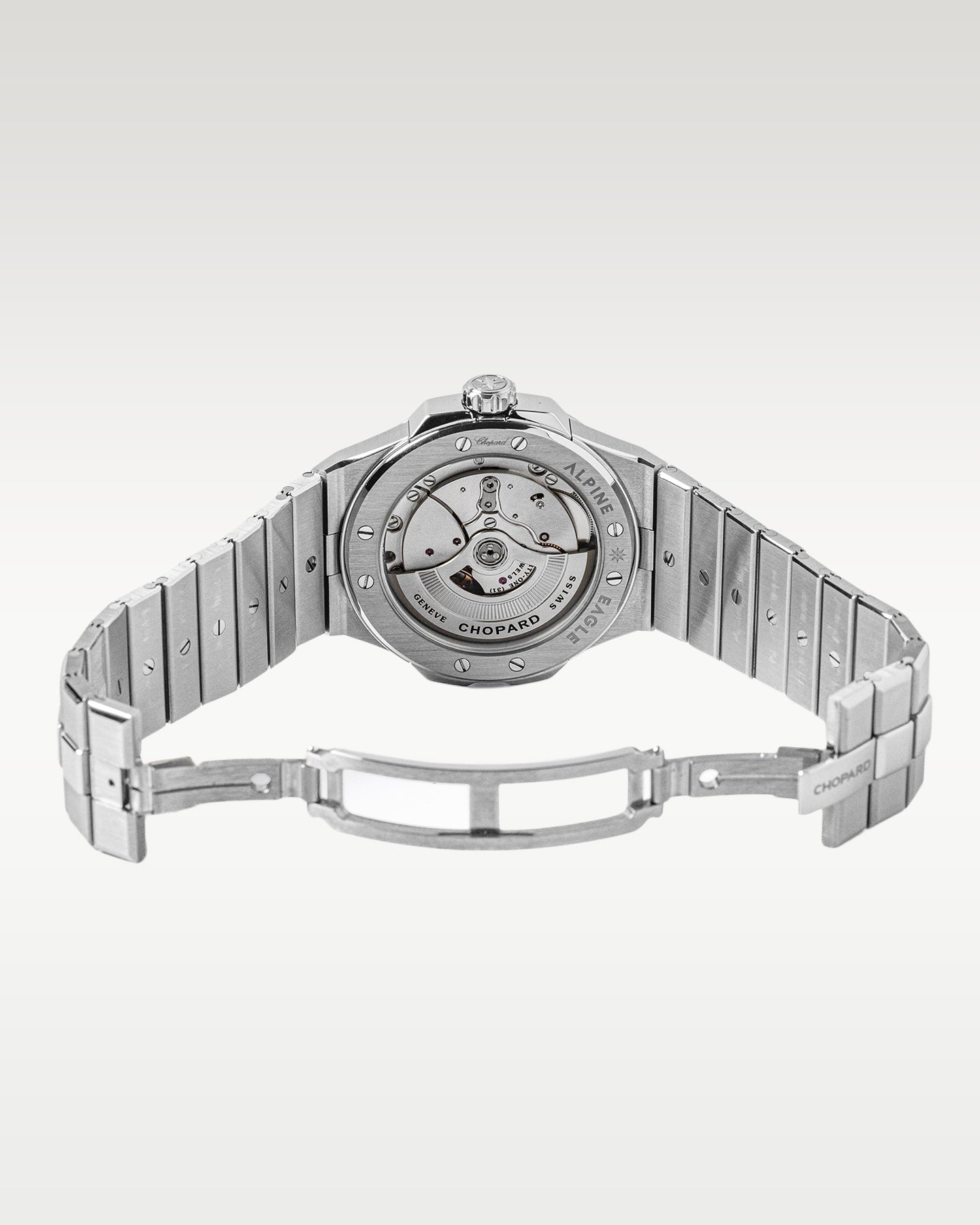
Chopard Alpine Eagle 298600-3001
FAQs
What is the most affordable Chopard?
Chopard is one of the more accessible ways into serious Swiss watchmaking, though nothing in the catalog is inexpensive by conventional standards. On the current retail side, the steel Alpine Eagle 36mm and 41mm start in the range of roughly $12,000 to $17,000 depending on configuration, and steel Mille Miglia chronographs sit in a similar band. The in-house L.U.C dress watches begin higher, reflecting their movement finishing and chronometer certification. On the secondary market the picture improves for a buyer, because a new Chopard typically settles 20 to 30 percent below retail once it changes hands. That means a pre-owned steel Alpine Eagle can often be found in the high single digits to low teens, and an entry L.U.C such as the 1937 Classic can land at a genuinely accessible number for an in-house, chronometer-certified watch. Quartz and jewelry-led pieces are cheaper still but hold value worst. Grand Caliber prices every pre-owned Chopard openly on the product page, so you can see exactly where each reference sits rather than guessing at market value.
Can I walk into Chopard and buy a watch?
For most of the catalog, yes, which is one of the quieter advantages of the brand. Unlike the steel sports watches from certain rivals that require an established purchase history or a place on a waitlist, most Chopard references can be bought at a boutique without an allocation conversation. The exceptions are the limited editions and the most complicated L.U.C grand complications, which are produced in small numbers and can sell out, but the core Alpine Eagle, L.U.C, and Mille Miglia lines are generally available to a straightforward buyer. That said, buying new at retail is not always the smart move. Because Chopard settles below retail on the secondary market, a pre-owned example in excellent condition frequently represents better value than paying full boutique price. Grand Caliber sources pre-owned Chopard across the collections, authenticates every piece in-house, and posts pricing openly, so you can skip the boutique entirely and buy the exact reference you want at a fair market number, whether you are in Dallas or anywhere in the country.
What is the best first Chopard to buy?
For most buyers, the answer comes down to two watches. If you want one versatile luxury watch that wears with anything and holds its value better than the rest of the catalog, the steel Alpine Eagle in 41mm or 36mm is the natural first Chopard. It gives you an in-house automatic caliber, COSC chronometer certification, the proprietary Lucent Steel case, and the integrated-bracelet look that competes with watches costing far more, all in a package that is genuinely wearable every day. If you care more about traditional watchmaking than sport-luxury styling, an in-house L.U.C such as the 1937 Classic in 42mm steel is the choice, delivering a chronometer-certified movement with Poinceon de Geneve-level finishing at a pre-owned price that often undercuts a steel sports watch from a bigger name. The Mille Miglia is the third route, for the buyer drawn to motorsport heritage and a wearable chronograph. There is no wrong answer, only the one that matches what you want from the watch. Grand Caliber stocks all three, so the smartest move is to handle them back to back before deciding.
Which Chopard model has the highest demand?
The steel Alpine Eagle is the most in-demand Chopard by a clear margin, and it is the reference that drives the brand's strongest secondary-market interest. Introduced in 2019 as a modern reinterpretation of the 1980 St. Moritz, it landed squarely in the integrated-bracelet sport-luxury category alongside the Royal Oak and Nautilus, and demand has grown steadily since. Its combination of in-house movement, proprietary Lucent Steel case, and the distinctive eagle-iris dial gives it real identity, and the fact that it costs a fraction of its more famous rivals has made it one of the smartest value plays in the segment. Within the line, the 41mm draws the broadest demand, with green and blue dials particularly sought after, and limited editions can trade at a premium. The in-house L.U.C collection has strong demand among collectors who understand its finishing, though it appeals to a more specialized audience. Grand Caliber stocks the Alpine Eagle across several references, and because demand is steady rather than speculative, it is a watch you can buy at a fair number rather than chasing a bubble.
How often should a Chopard be serviced?
A mechanical Chopard generally benefits from a full service every four to six years, in line with the wider luxury watch industry. A complete service involves disassembly, cleaning, replacement of any worn parts, fresh lubrication, reassembly, regulation, and testing to confirm the movement is running within specification. For the sport references, particularly the Alpine Eagle with its 100 meters of water resistance, the service should include pressure testing whenever the case is opened, since the seals are what protect the watch and they degrade over time. The in-house L.U.C calibers are finished to a high standard and are best entrusted to a watchmaker genuinely familiar with Chopard's movement architecture rather than a general repair shop, especially the ultra-thin micro-rotor and the four-barrel Quattro. Everyday wear, exposure to water, and the age of the watch all affect the ideal interval, so a piece worn daily may need attention sooner than one that spends time in a box. Grand Caliber can advise on realistic service intervals for any Chopard, whether it came from us or elsewhere, because a well-maintained watch performs as engineered and holds its value.
How much does a full Chopard service cost?
Service pricing on Chopard is more reasonable than on some grander names, though it still reflects the quality of the movements. A standard service on a time-and-date Alpine Eagle or a straightforward L.U.C generally falls in the range of several hundred to around a thousand dollars, depending on the reference, the age of the watch, and what the movement requires. Chronograph references such as the Mille Miglia and Grand Prix de Monaco Historique run higher because of the added complexity of the chronograph mechanism, often landing meaningfully above a simple time-and-date service. Complicated L.U.C references, including the Quattro and any pieces with additional complications, sit higher still because of the finishing and the intricacy of the movement. Vintage pieces, watches needing replacement parts, or those requiring case and bracelet refinishing add to the total. Servicing through Chopard ensures factory-correct work, while independent watchmakers with genuine Chopard experience sometimes quote lower for routine service. Grand Caliber can point you toward appropriate options and give you a realistic expectation of cost for any specific reference before you commit.
Can I wear my Chopard every day?
Yes, though the right daily-wear Chopard depends on the collection. The Alpine Eagle is purpose-built for it: a proprietary Lucent Steel case that is roughly 50 percent more scratch-resistant than standard steel, 100 meters of water resistance, an integrated bracelet, and an in-house automatic movement make it one of the most wearable luxury sports watches at its price, comfortable in almost any setting. The motorsport chronographs, in titanium or steel, are similarly robust and suit an active daily routine. The in-house L.U.C dress watches are a different proposition. They are elegant, often ultra-thin, and typically rated to 30 meters, so they are better suited to office and formal wear than to the pool or the gym, and their finer finishing rewards a little more care. None of this makes an L.U.C fragile, it simply means matching the watch to the day. Grand Caliber can help you choose a Chopard that fits how you actually live, whether you want one watch for everything or a dress piece to sit alongside a sportier daily wear.
How long does a Chopard last?
A well-made mechanical Chopard is built to last generations, not years, and that is a large part of what you are paying for. The in-house L.U.C calibers, produced at the Fleurier Manufacture and finished to Poinceon de Geneve standard, are the kind of movements that can be serviced and maintained indefinitely, passing from one owner to the next with the right care. The Alpine Eagle's in-house automatic and the chronograph calibers in the Mille Miglia are similarly durable, engineered for decades of reliable service. What determines longevity is maintenance rather than any inherent limit: a watch serviced every four to six years, kept away from unnecessary shocks and magnetism, and looked after between services will outlast its owner. Water resistance is the one spec that needs periodic attention, since gaskets age, which is why pressure testing matters on the sport references. A Chopard is not a disposable object, it is a mechanical instrument designed to be repaired and preserved. Grand Caliber sells pieces that have already proven their durability, and we document condition and service history openly so you know exactly what you are getting.
Is it safe to buy a Chopard on the secondary market?
It is, provided you buy from a seller who authenticates properly and prices in the open. The real risk is a listing nobody verified. Authentic Chopard carries a unique serial number engraved cleanly on the case, precise hallmarks, and metal stamps such as 750 for 18-karat gold or 950 for platinum, and on L.U.C pieces the in-house movement shows fine finishing visible through the exhibition caseback. The decisive check is professional movement inspection against factory records, which no photograph can replace, since the best counterfeits now mimic surface details well. Before you buy, look for in-house authentication, clear photographs of the movement and serial number, a stated condition, and a return policy, and favor a full set with box and papers, which is easier to authenticate and worth more at resale. Grand Caliber authenticates every pre-owned Chopard in-house before it is listed, documents completeness and condition openly, and posts pricing on every product page. That process removes the guesswork, so buying pre-owned becomes a confident decision rather than a gamble.
Is a Chopard a good investment?
A watch should be bought to wear rather than as a financial instrument, and no responsible dealer promises appreciation. That said, Chopard occupies a genuinely favorable position for a buyer who wants a luxury watch that is unlikely to punish them. Because the brand is family-owned, independent, and produces its own movements, it has a durability of reputation that supports long-term value, and because its market is driven by real appreciation rather than hype, pre-owned Chopard is not exposed to the sharp corrections that hit more speculative brands. Within the range, the steel Alpine Eagle holds its value best, in-house L.U.C references hold well among collectors who understand them, and complicated or precious-metal pieces command the strongest prices. Configurations that matter to collectors, full sets with box and papers, original dials, and desirable references, hold better than incomplete examples. So while nobody should buy a Chopard expecting it to appreciate, a well-chosen pre-owned piece from Grand Caliber represents a sensible position: you buy at a fair market number and you are not chasing a bubble.