

Jaeger-LeCoultre Watches
Founded in 1833, Jaeger-LeCoultre has produced some of the most elegant and mechanically advanced Swiss watches in history. With icons like the Reverso and the Atmos clock, the brand has consistently blended precision, innovation and artistry. At Grand Caliber, we proudly carry a wide selection of new & preowned Jaeger-LeCoultre watches for those who appreciate enduring craftsmanship.
Jaeger-LeCoultre Watches at Grand Caliber
Jaeger-LeCoultre watches command a level of absolute technical respect that few other manufactures in Swiss history can claim. Known universally as the watchmaker of watchmakers, this brand did not build its reputation solely through marketing or recognizable exterior designs. It built its empire by engineering the most complex, ultra thin, and heavily complicated mechanical movements in the world, historically supplying those exact movements to Patek Philippe, Audemars Piguet, and Vacheron Constantin. When a serious collector graduates from buying luxury watches for status and begins buying them for horological substance, they inevitably turn to Jaeger-LeCoultre. Grand Caliber stocks Jaeger-LeCoultre watches across the entire spectrum of their incredibly deep catalog. Our inventory serves serious collectors nationally, covering the Art Deco perfection of the Reverso, the rigorous daily capability of the Master Control, the acoustic mastery of the Memovox alarm, and the extreme dual wing architecture of the Duometre. Every piece is authenticated in house, priced with absolute transparency to reflect secondary market reality, and prepared for immediate delivery.
The 1833 Founding in the Vallee de Joux
The origin of Jaeger-LeCoultre watches begins in the remote and harsh environment of the Vallee de Joux, a region that serves as the undisputed cradle of complex Swiss watchmaking. In 1833, a self taught watchmaker and brilliant inventor named Antoine LeCoultre established a small workshop in Le Sentier. Unlike many of his contemporaries who relied on external suppliers for rough components, LeCoultre was obsessed with vertical integration and absolute precision. He believed that the only way to improve the timekeeping accuracy of mechanical watches was to manufacture the individual components to tolerances that the rest of the industry had not yet imagined.
Antoine LeCoultre and the Millionometre
To achieve this unprecedented level of precision, Antoine LeCoultre invented the Millionometre in 1844. This device was the first measuring instrument in the world capable of measuring components to the nearest thousandth of a millimeter, or one micron. At the time, no other watchmaker possessed the capability to measure, let alone manufacture, parts with such microscopic exactness. This single invention established the foundational engineering philosophy for all future Jaeger-LeCoultre watches. It allowed the manufacture to produce pinions, wheels, and escapements that functioned with far less friction and variation than anything else on the market, paving the way for the brand's eventual dominance in the production of high complications and ultra thin calibers.
The Watchmaker of Watchmakers
By the late nineteenth century, the LeCoultre manufacture had grown into one of the most powerful mechanical engines in Switzerland. The facility in Le Sentier became the ultimate resource for the highest tier of the Swiss watch industry. If a prestigious brand needed a highly complex ebauche, which is an unassembled basic movement, they went to LeCoultre. This industrial supremacy earned the brand its famous moniker as the watchmaker of watchmakers, a title that defines the mechanical credibility of Jaeger-LeCoultre watches to this day.
Supplying the Holy Trinity
The historical significance of this title cannot be overstated. For decades, LeCoultre served as the premier movement supplier to the Holy Trinity of watchmaking. Patek Philippe, Audemars Piguet, and Vacheron Constantin all heavily relied on LeCoultre calibers to power their most important timepieces. The legendary Audemars Piguet Royal Oak from 1972 and the Patek Philippe Nautilus from 1976 were both originally powered by the caliber 2120 base movement, an ultra thin automatic caliber developed by LeCoultre. When you understand that the most celebrated brands in the world depended on LeCoultre for their mechanical heartbeat, the sheer horological weight of modern Jaeger-LeCoultre watches becomes undeniable.
Edmond Jaeger and the Ultra Thin Challenge
The brand acquired its full hyphenated name through a trans European challenge. In 1903, the Parisian watchmaker Edmond Jaeger, who specialized in highly refined instruments for the French Navy, challenged the Swiss watch industry to produce the ultra thin calibers he had designed. Jacques David LeCoultre, the grandson of Antoine LeCoultre, accepted the challenge. He successfully manufactured a series of incredibly thin pocket watch movements, initiating a significant collaboration between the two men. Their partnership officially merged into a single corporate entity in 1937, cementing the brand name that appears on the dials of all modern Jaeger-LeCoultre watches.
The 1000 Hours Control
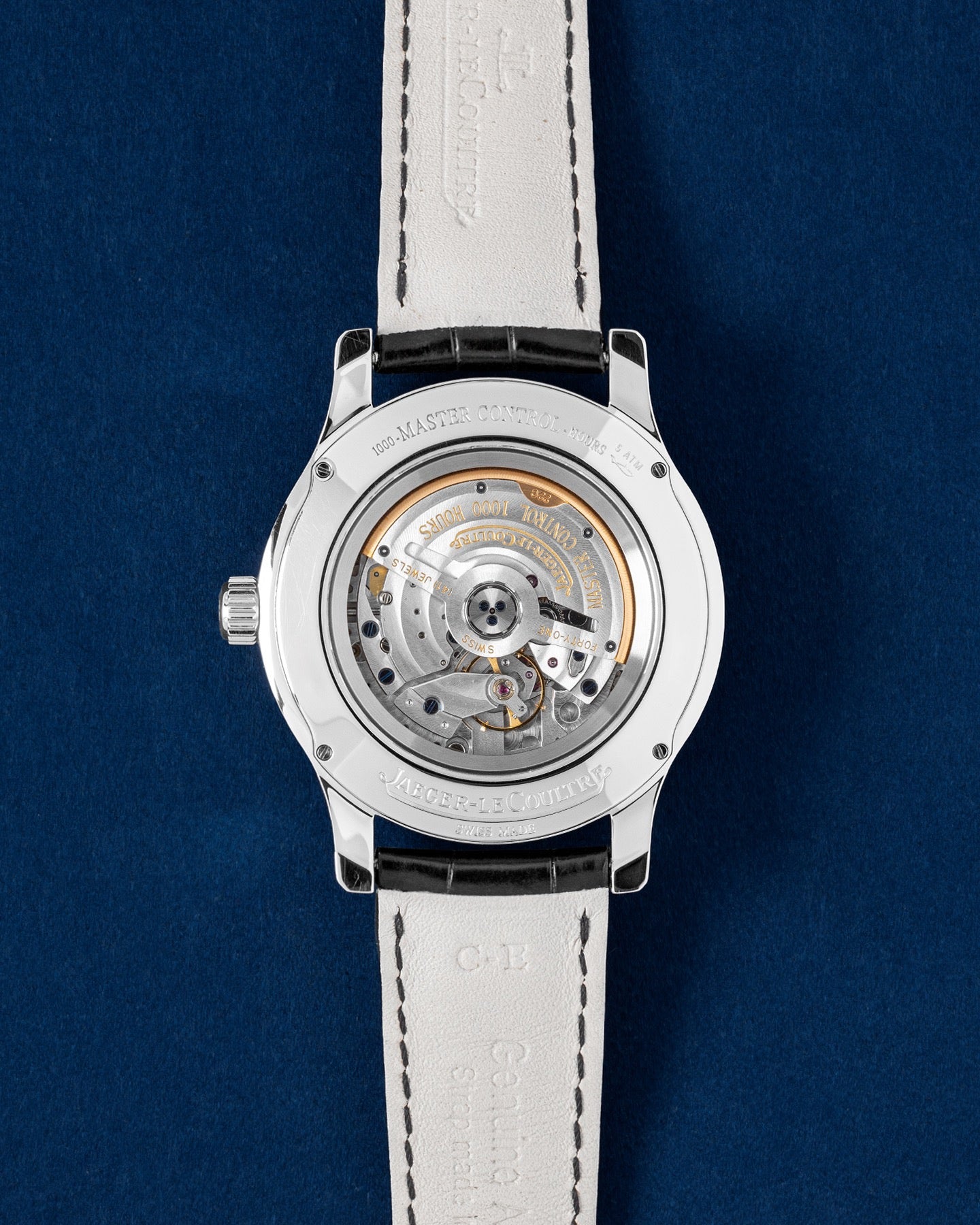
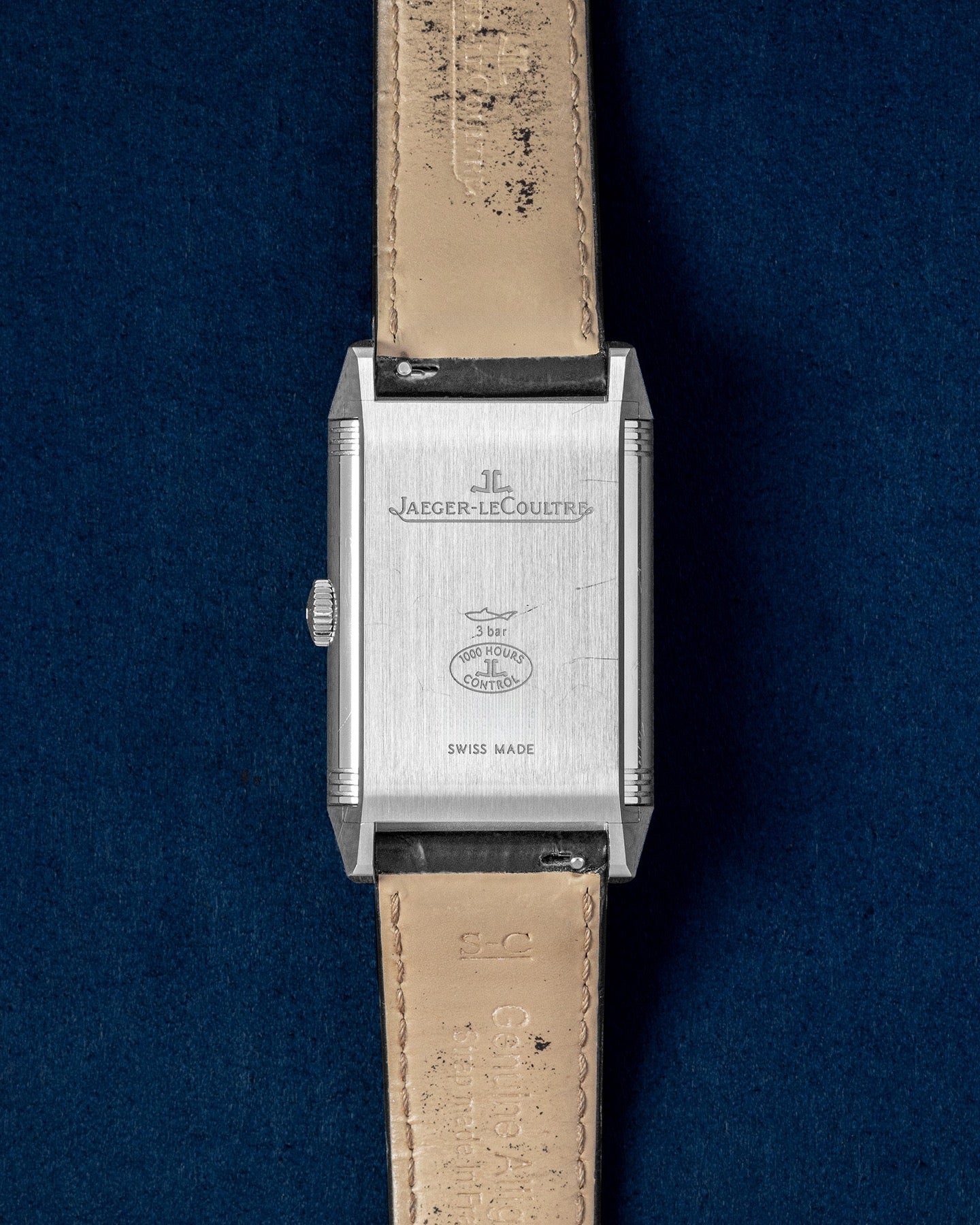
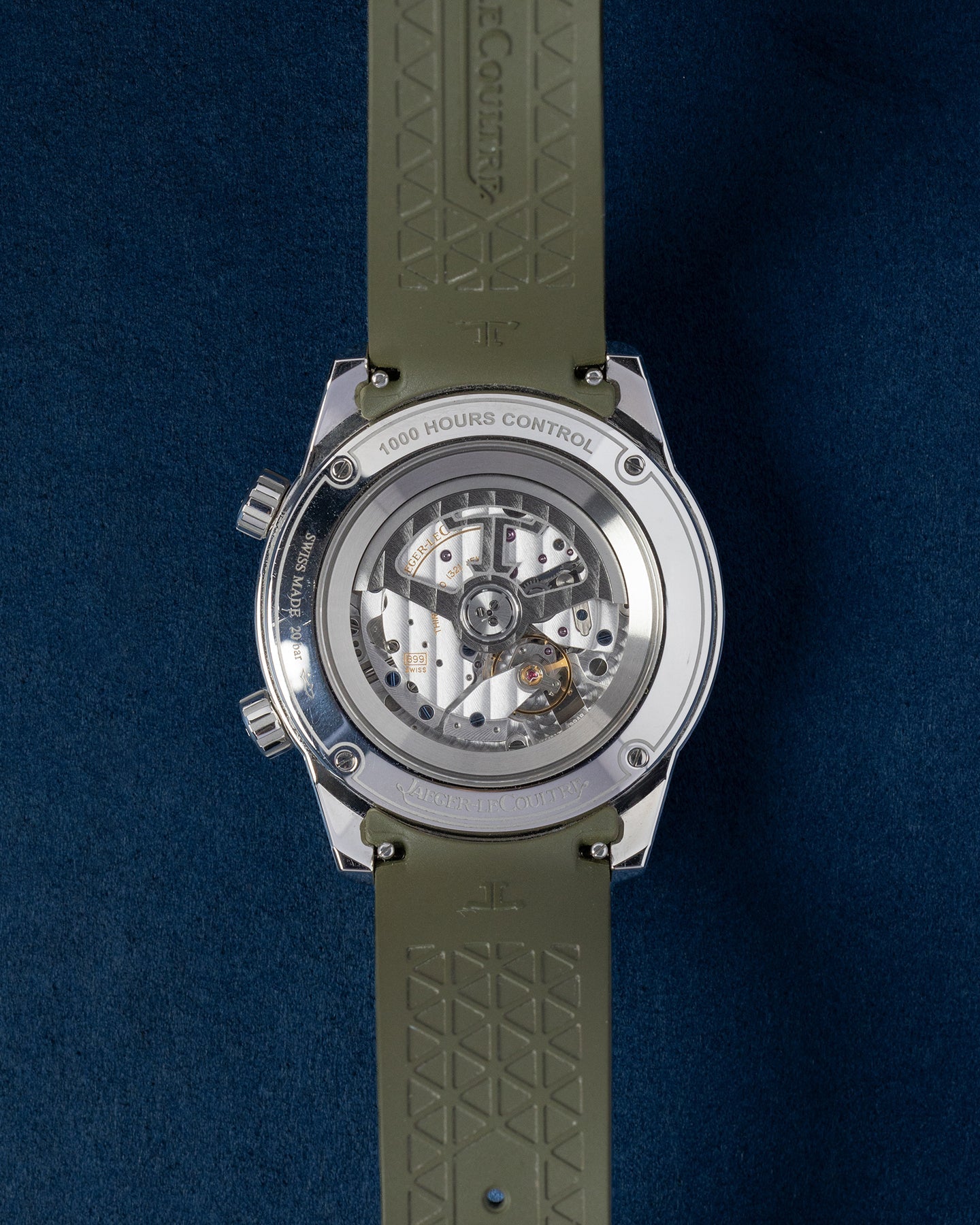
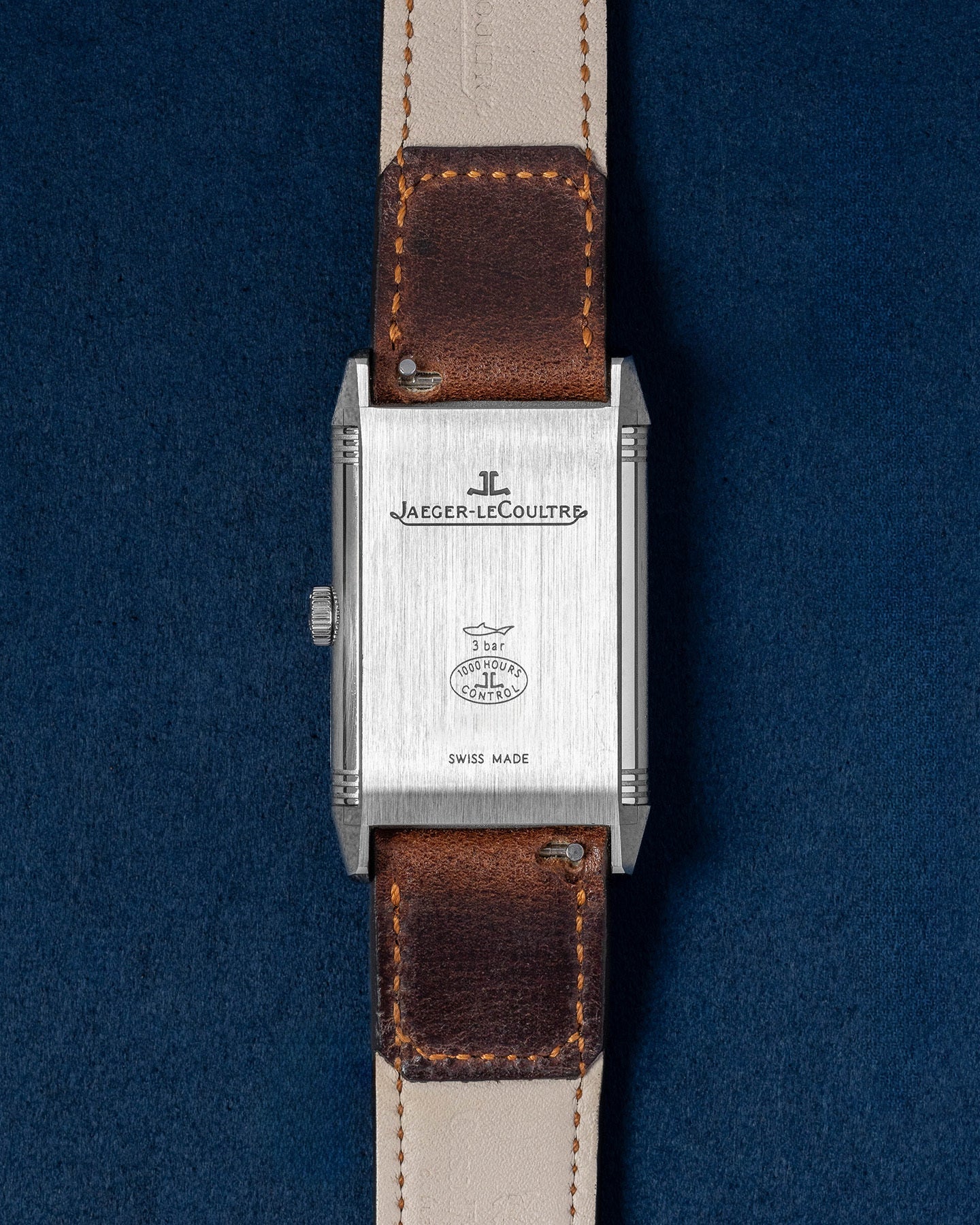
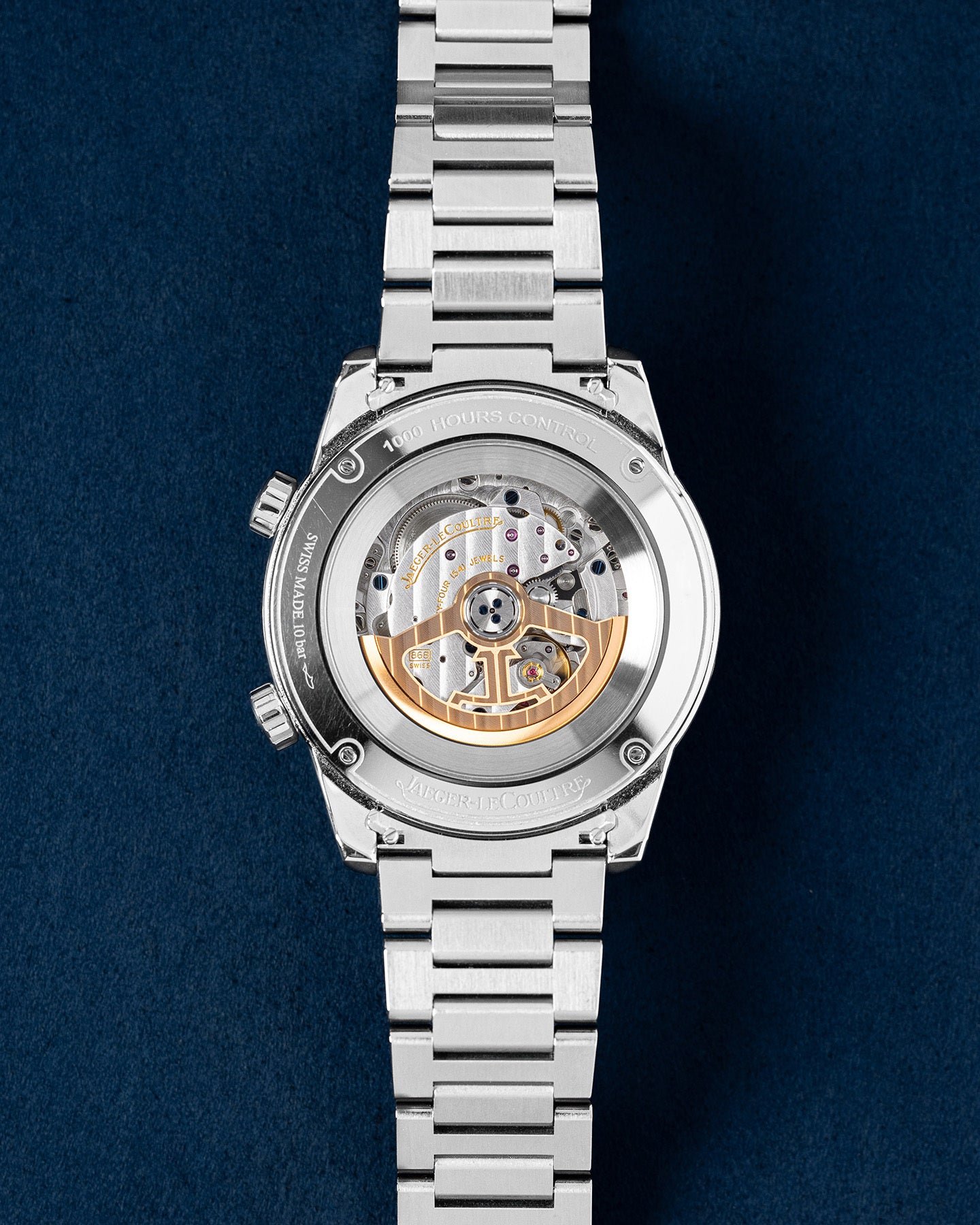
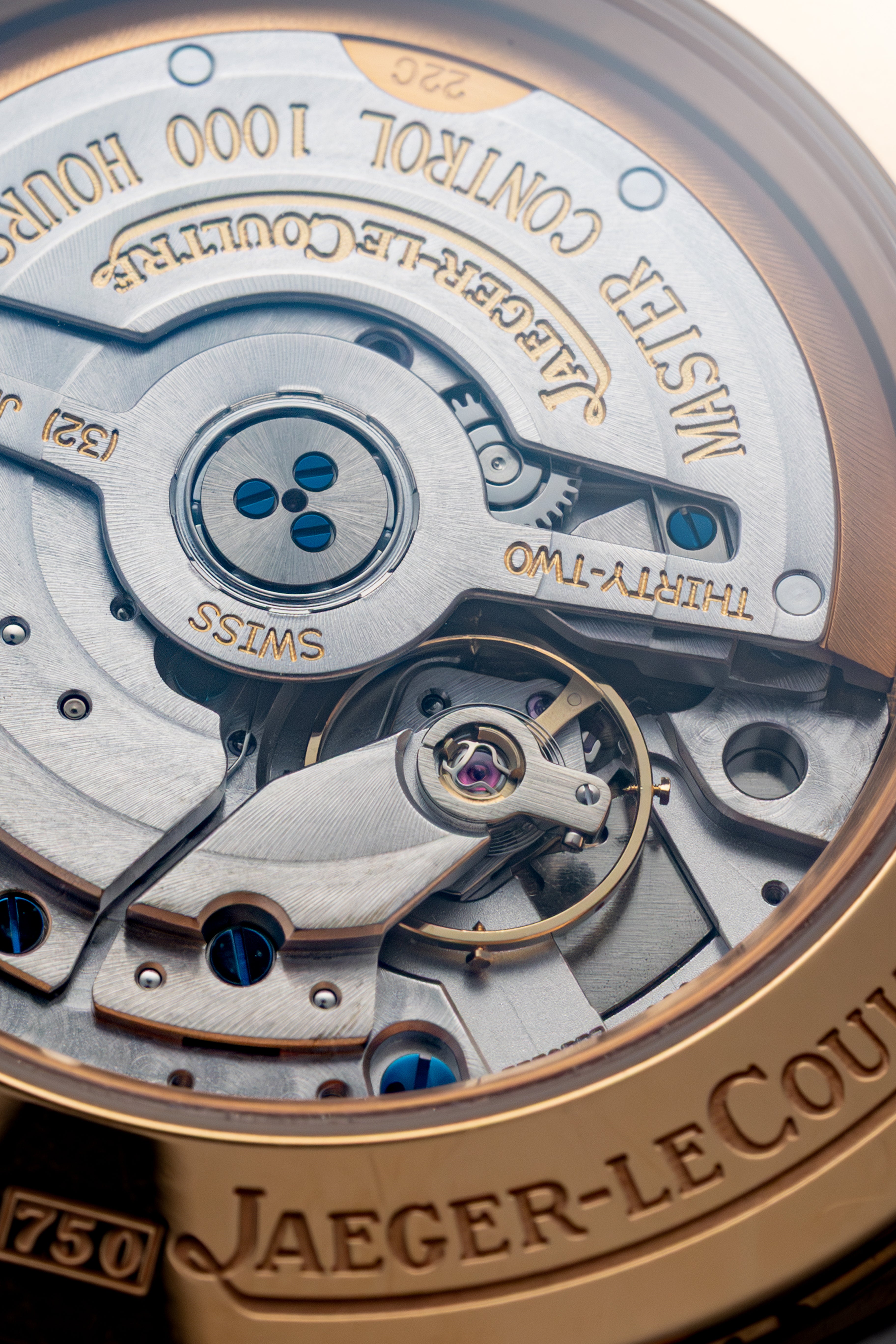
In the modern era, Jaeger-LeCoultre differentiates its mechanical superiority through an absolutely grueling testing protocol known as the 1000 Hours Control. While most Swiss manufactures rely on the external COSC certification process, which tests uncased movements over fifteen days, Jaeger-LeCoultre believed that standard was insufficient. COSC testing does not account for the variables introduced when the movement is actually installed into a watch case, nor does it test the winding efficiency of the automatic rotor.
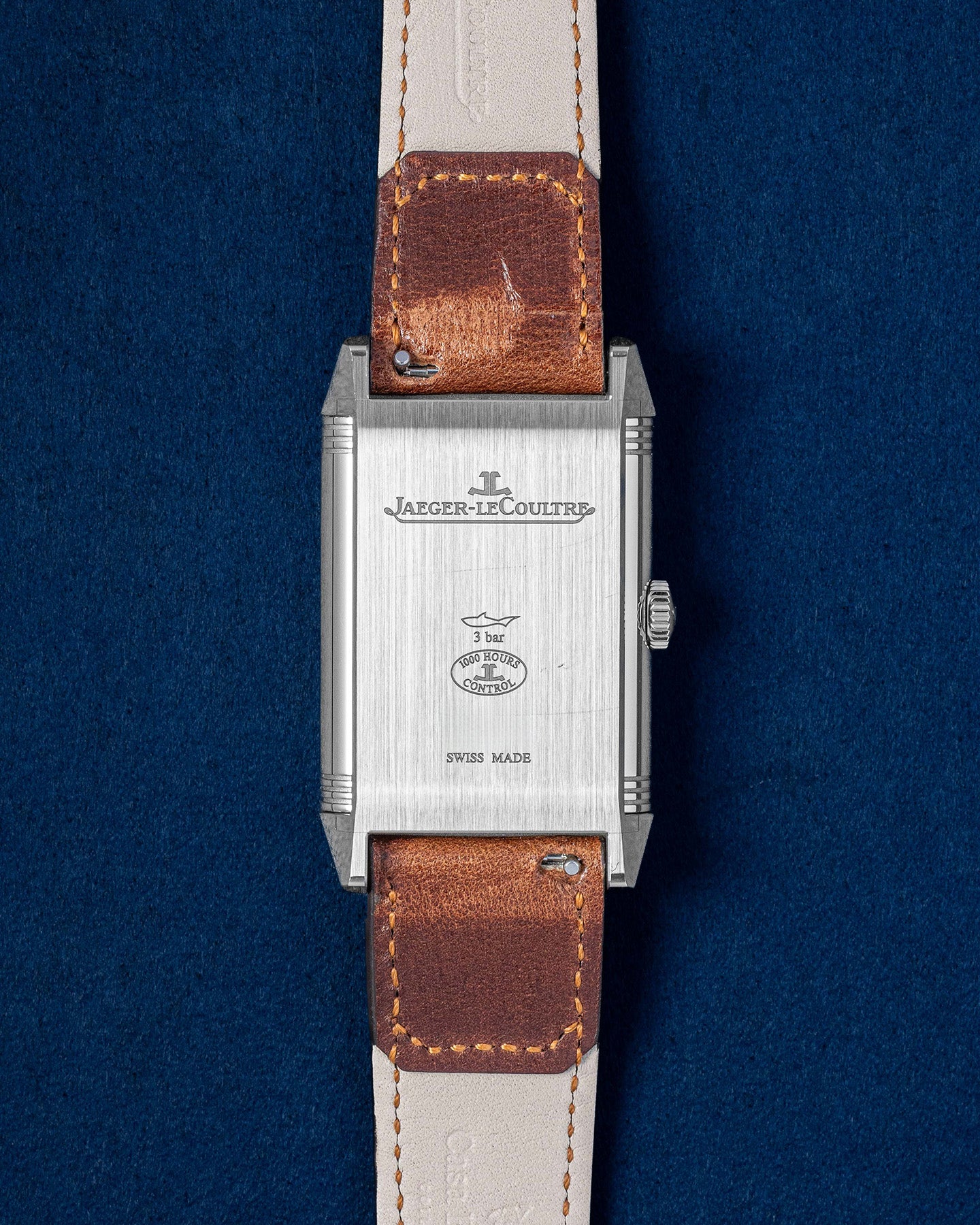
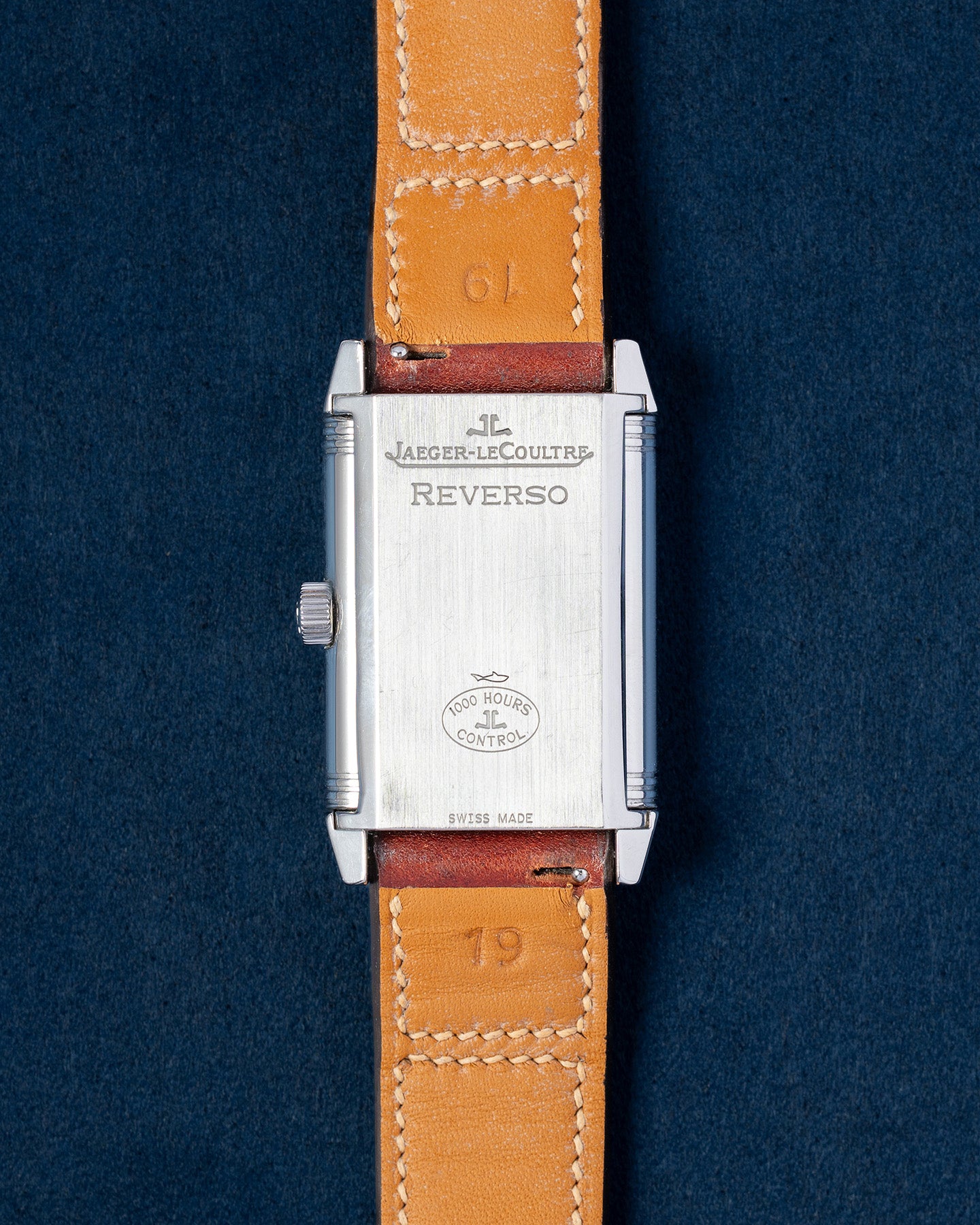
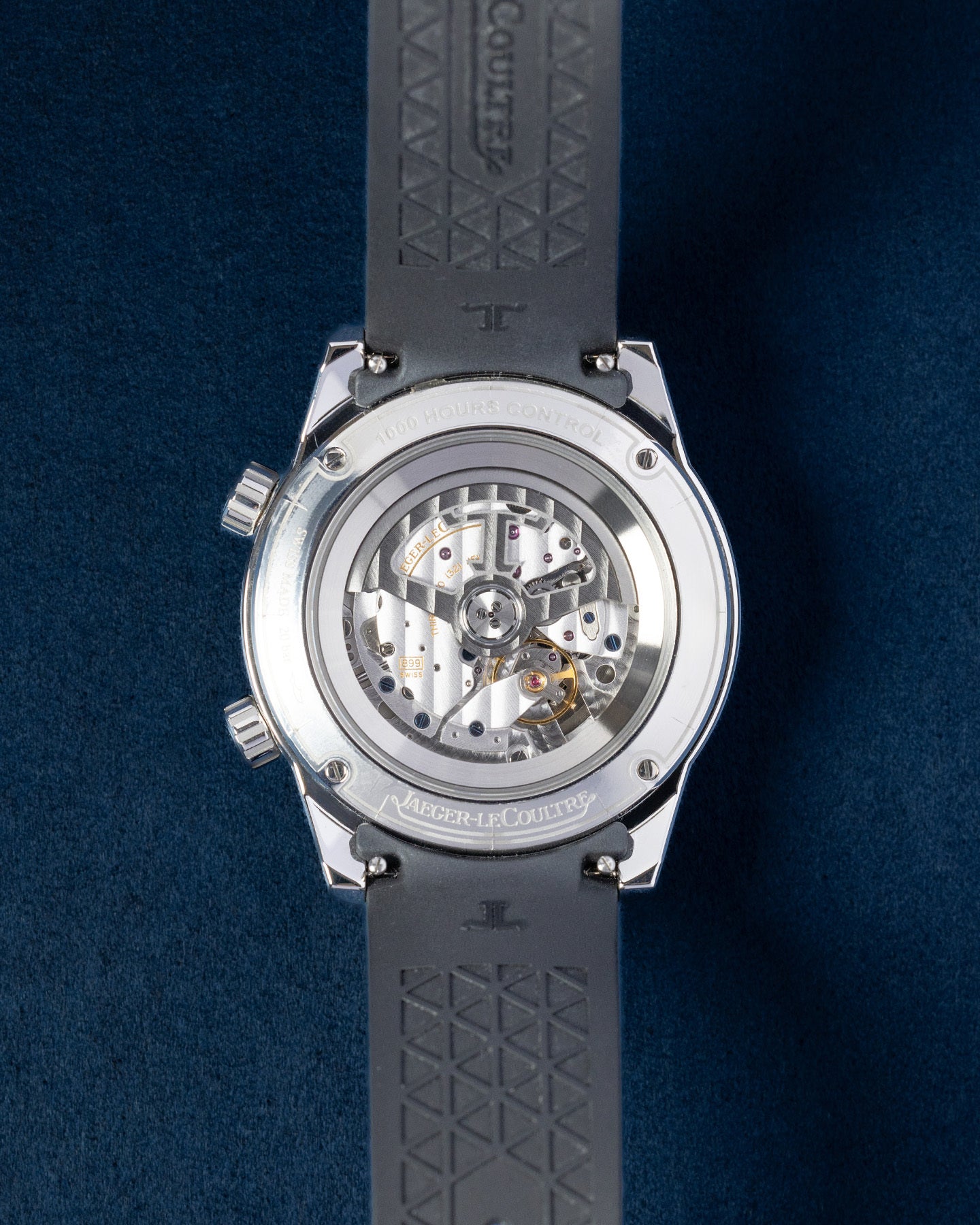
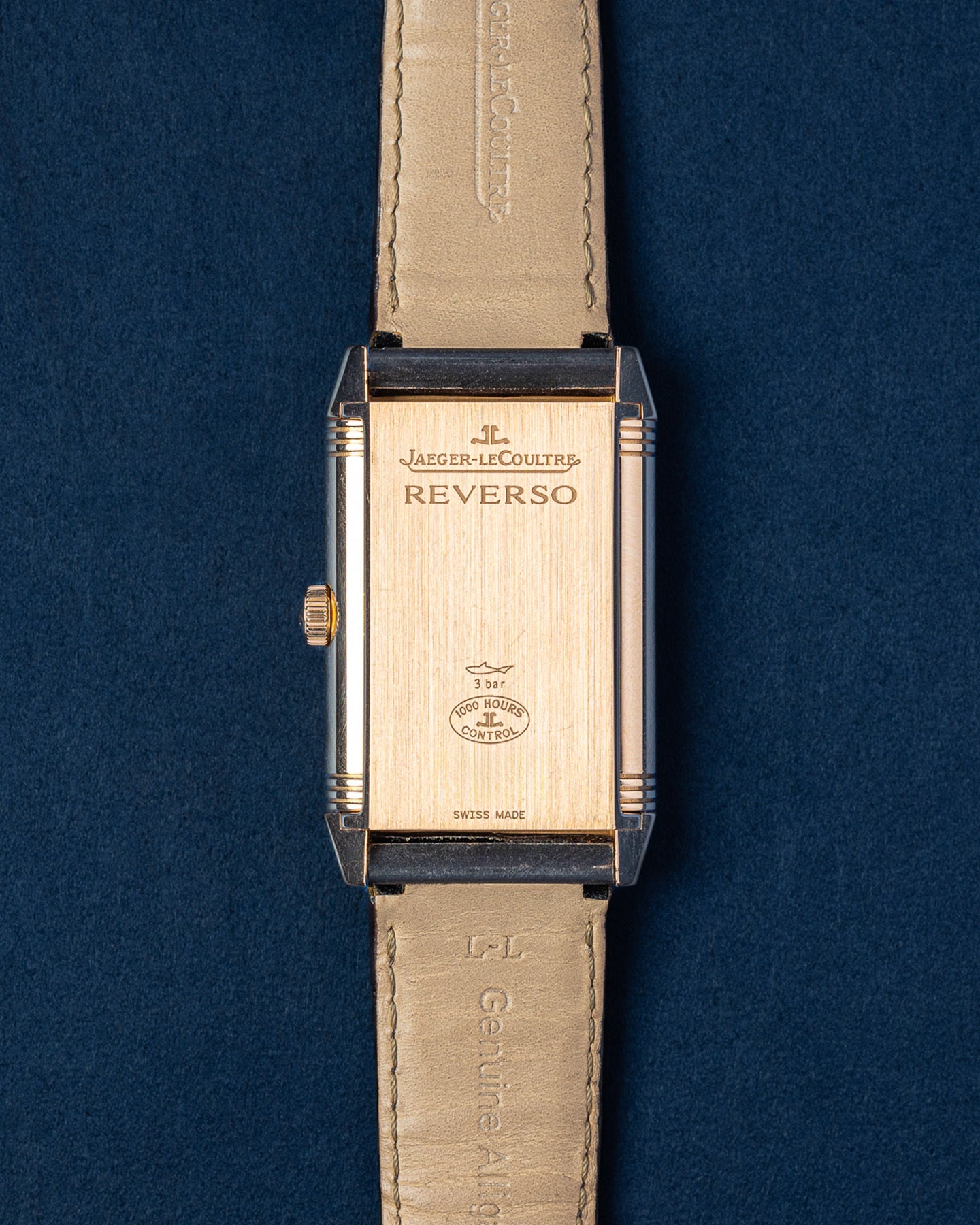
To guarantee absolute reliability, every single one of the mechanical Jaeger-LeCoultre watches undergoes one thousand hours, or roughly six weeks, of continuous testing. This proprietary protocol tests the fully cased watch in six different positions, subjects it to extreme temperature variations, checks the power reserve endurance, verifies the water resistance, and simulates the daily shocks of normal wear. Only after surviving this brutal six week trial is the watch allowed to leave the manufacture. The 1000 Hours Control proves that Jaeger-LeCoultre treats mechanical reliability with the same uncompromising seriousness as their movement finishing.
The Jaeger-LeCoultre Reverso Collection
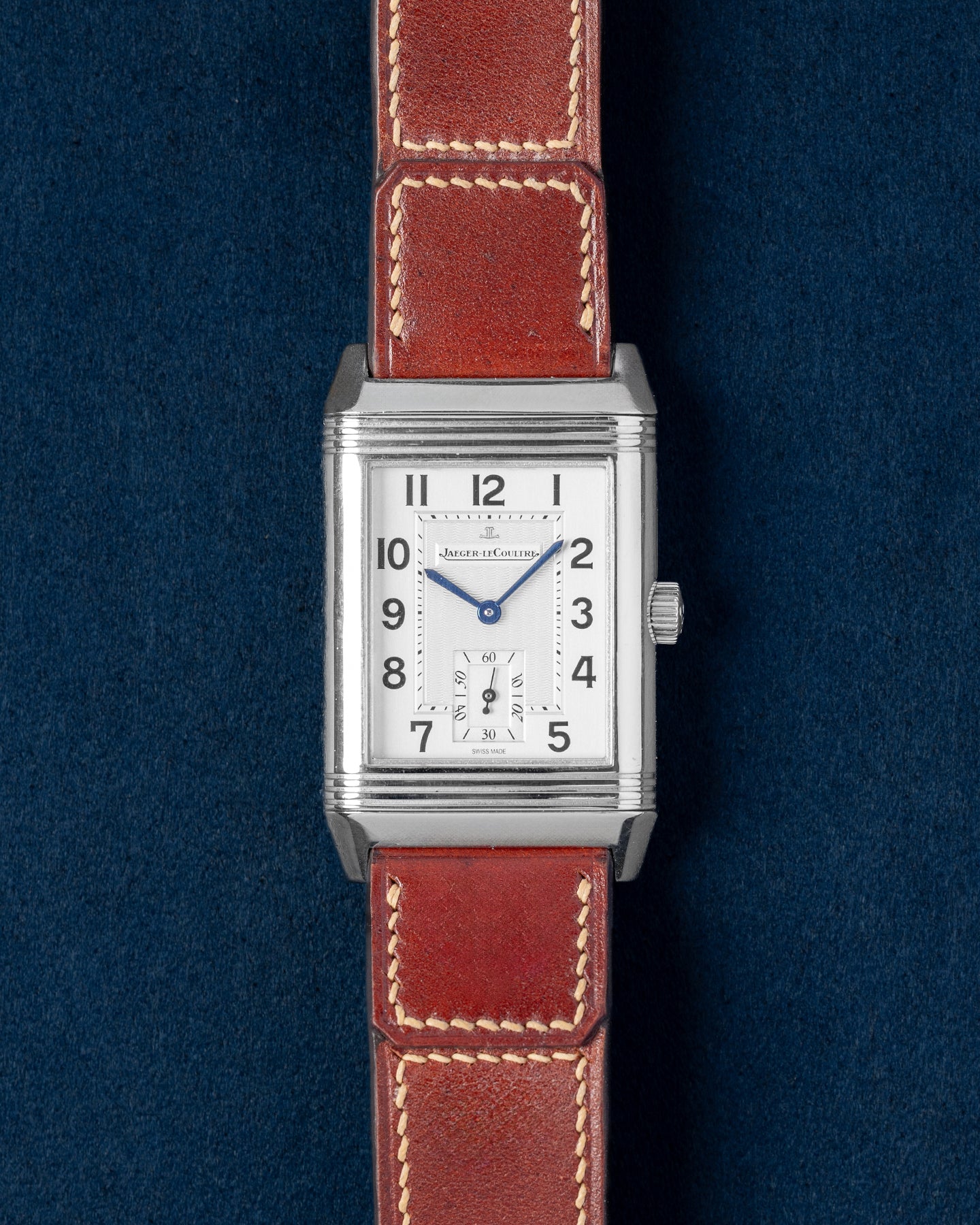
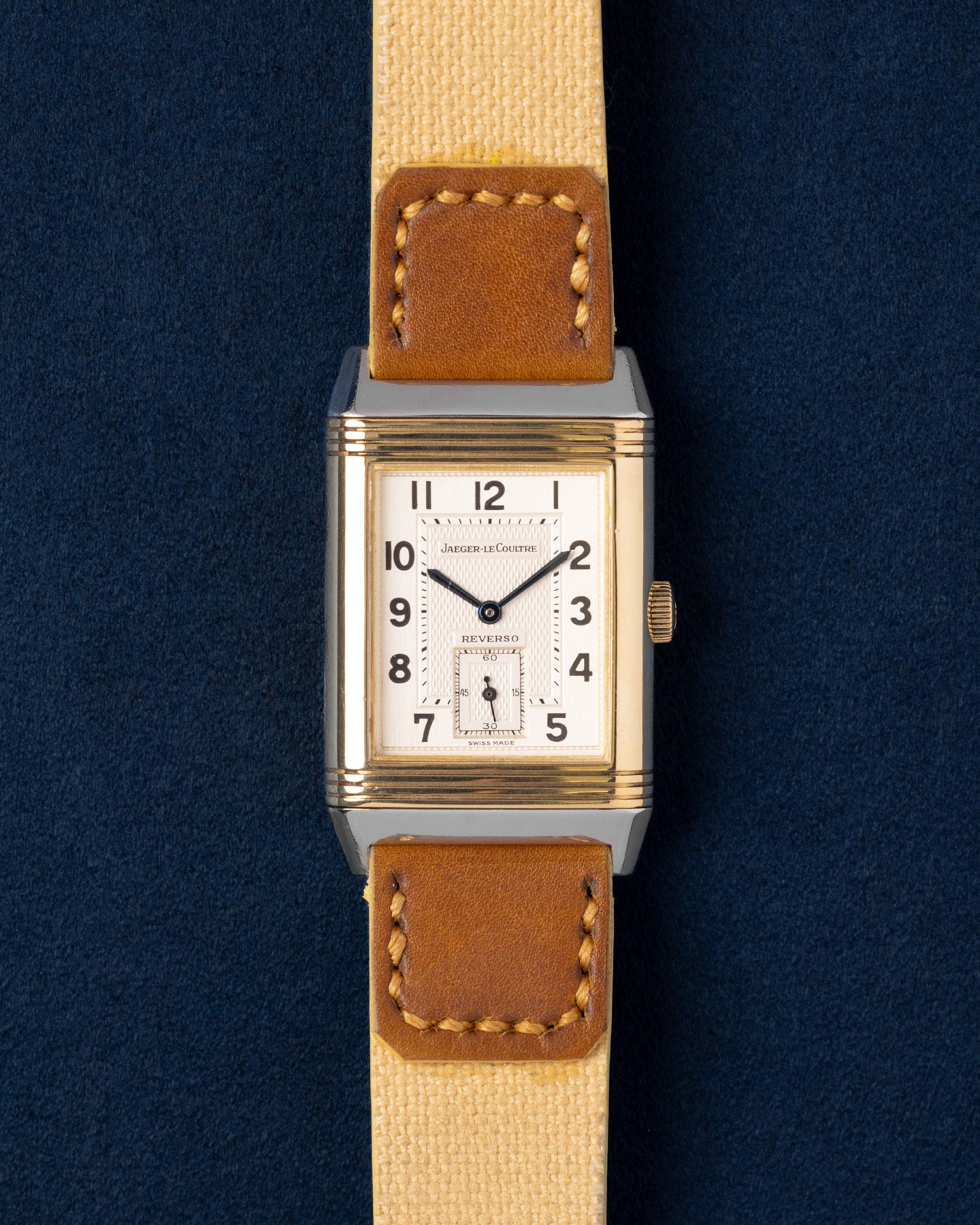
If one single silhouette defines the global identity of Jaeger-LeCoultre watches, it is the rectangular, Art Deco perfection of the Reverso. The origin of the Reverso is one of the most famous and historically verified legends in watchmaking, born purely out of athletic necessity rather than stylistic ambition.
The 1931 Polo Origins
In 1930, a Swiss businessman named Cesar de Trey was traveling in India, where he attended a polo match played by British Army officers. The officers complained that the fragile glass crystals of their wristwatches were constantly being shattered by swinging wooden polo mallets. De Trey returned to Switzerland and presented the problem to Jacques David LeCoultre. LeCoultre contracted a French designer named Rene Alfred Chauvot to solve the issue. Chauvot filed a patent on March 4, 1931, for a watch case that could slide along a specialized base and flip over completely, hiding the delicate glass crystal against the wrist and exposing a solid metal caseback to absorb the impacts of the polo match. The definitive sports watch was born, and it became the most iconic model among all Jaeger-LeCoultre watches.
The Staybrite Steel Era
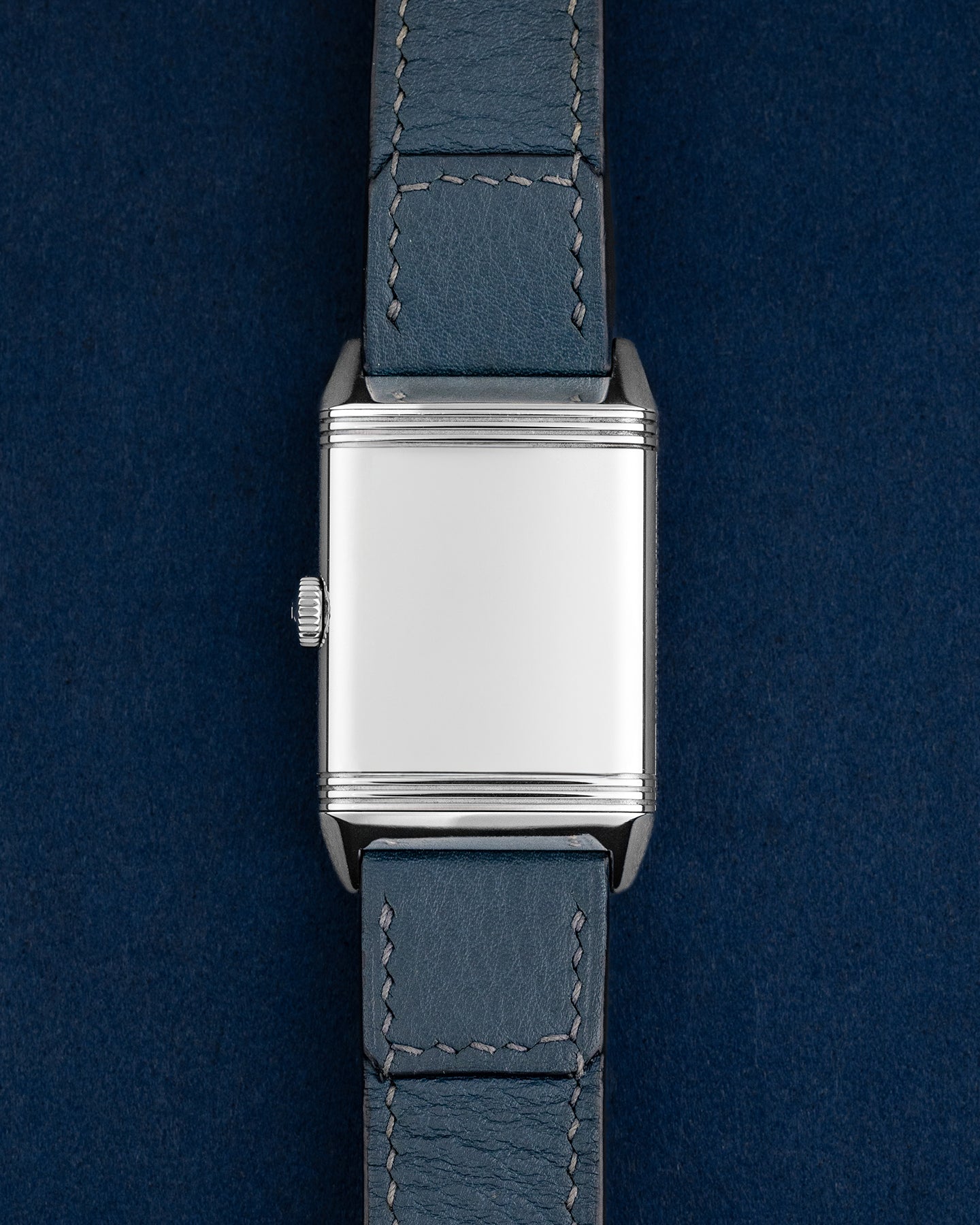
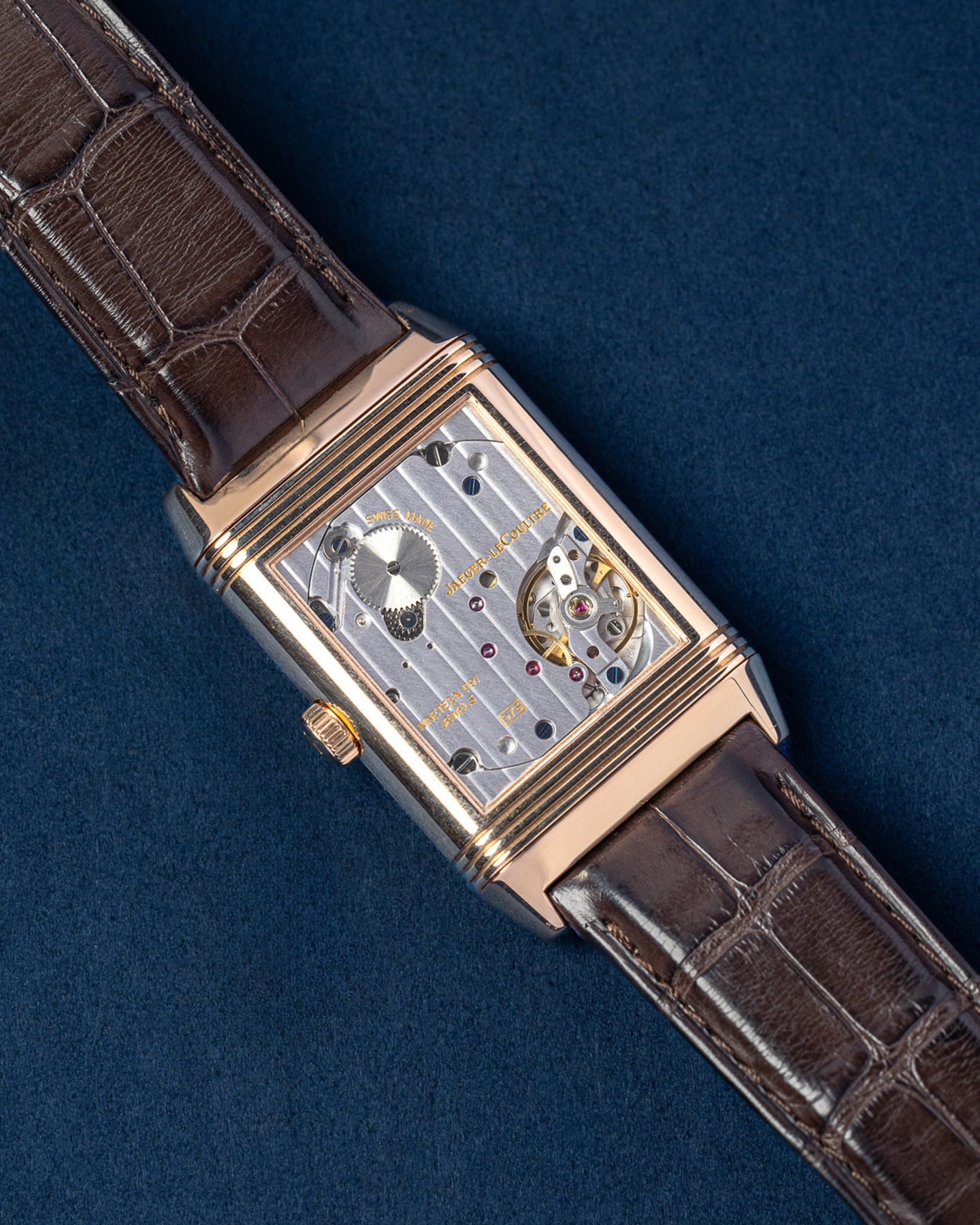
The original 1931 models were primarily manufactured using Staybrite steel, an early stainless steel alloy that offered excellent durability and polish retention. The flipping mechanism perfectly captured the global obsession with Art Deco design, utilizing three distinct horizontal gadroons across the top and bottom of the case to frame the rectangular dial. The blank metal reverse side of the case quickly became a canvas for personalization, allowing owners of Jaeger-LeCoultre watches to engrave family crests, military insignias, and personal messages. The Reverso was worn by royalty, including a famous piece created for King Edward VIII just before his abdication in 1936, proving the design transcended its athletic origins.
The Corvo Revival of the 1970s
Despite its profound early success, the Reverso fell out of favor after the Second World War as global tastes shifted toward round watches. Production completely ceased in 1948. The model remained dead until 1972, when Giorgio Corvo, the Italian distributor for Jaeger-LeCoultre watches, discovered a forgotten stash of two hundred original Staybrite steel cases in a drawer at the manufacture in Le Sentier. Corvo convinced the brand to fit modern movements into these vintage cases and sell them exclusively in Italy. The significant success of this limited run convinced the manufacture to officially resurrect the Reverso, saving the icon from permanent extinction and sparking a widespread global revival in the 1980s.
The 1990s Complication Boom
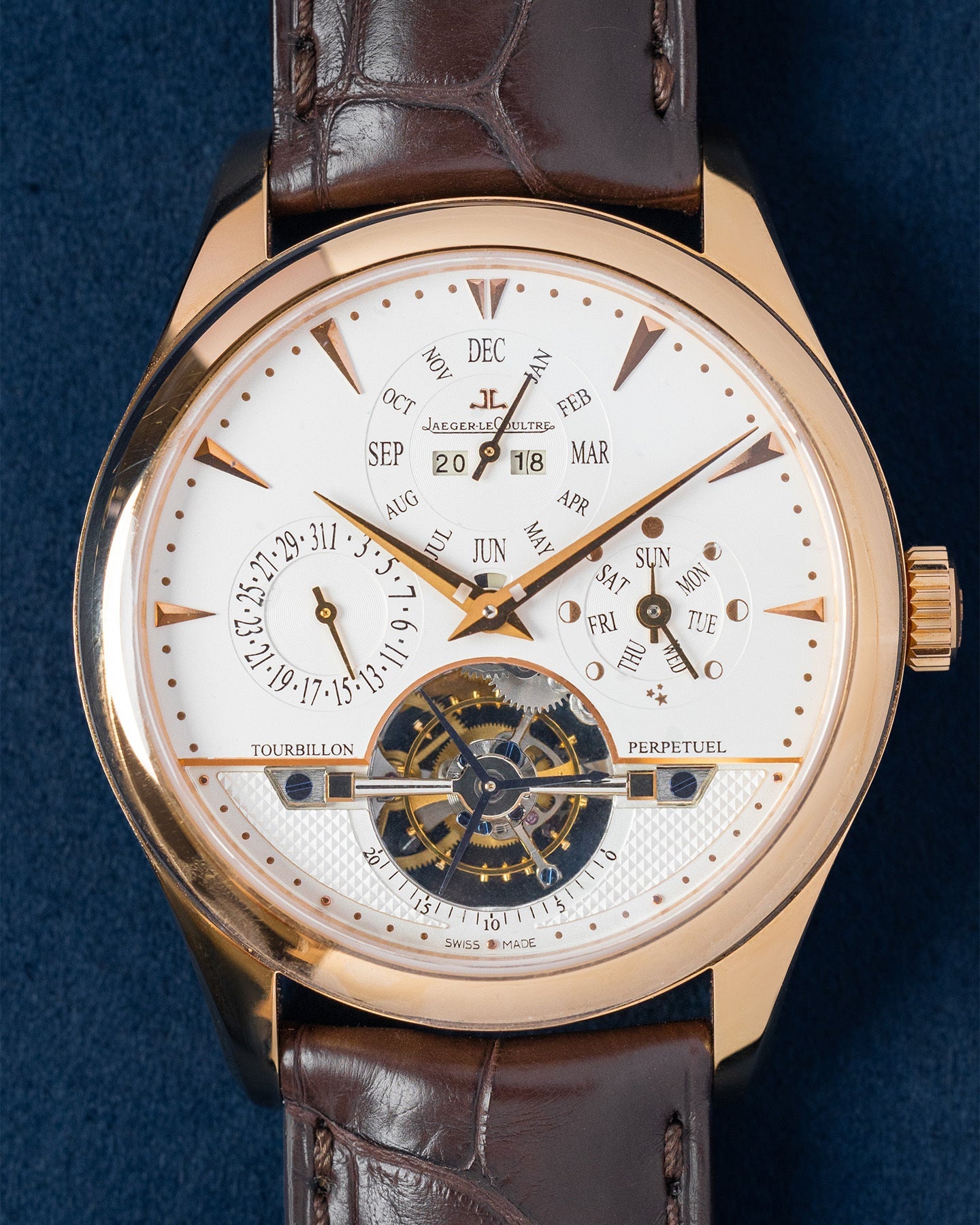
Having successfully reintroduced the Reverso to the market, Jaeger-LeCoultre decided to use the rectangular case as a platform to showcase their extensive high complication capabilities. In the 1990s, the brand released a stunning series of highly complex Jaeger-LeCoultre watches within the Reverso family. They successfully engineered the world's first rectangular tourbillon in 1993, followed by a rectangular minute repeater in 1994, a retrograde chronograph in 1996, and a perpetual calendar in 2000. Forcing these traditional round complications into the strict confines of a rectangular movement architecture proved that Jaeger-LeCoultre retained its title as the ultimate mechanical manufacture.
The Modern Reverso Tribute and Duoface
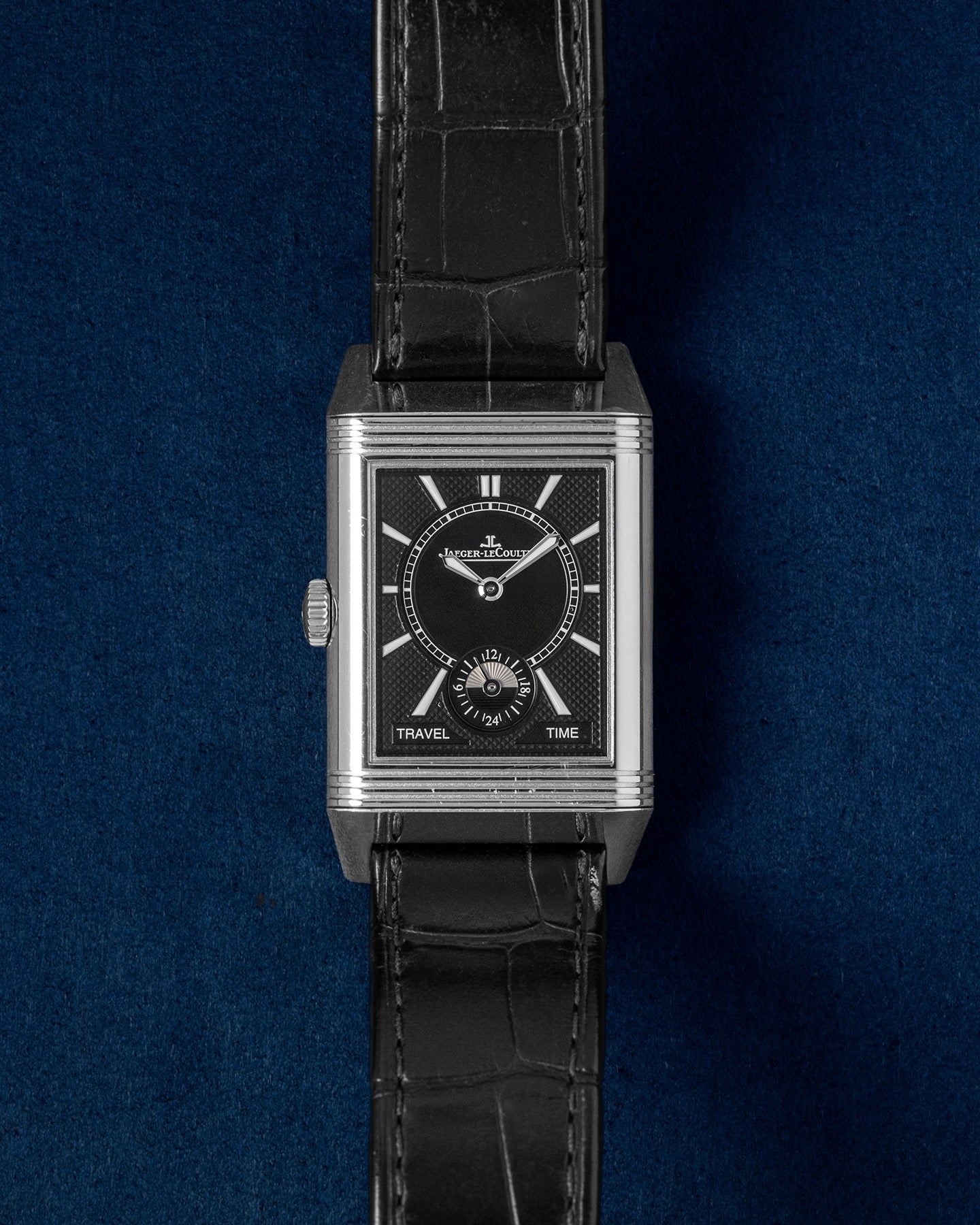
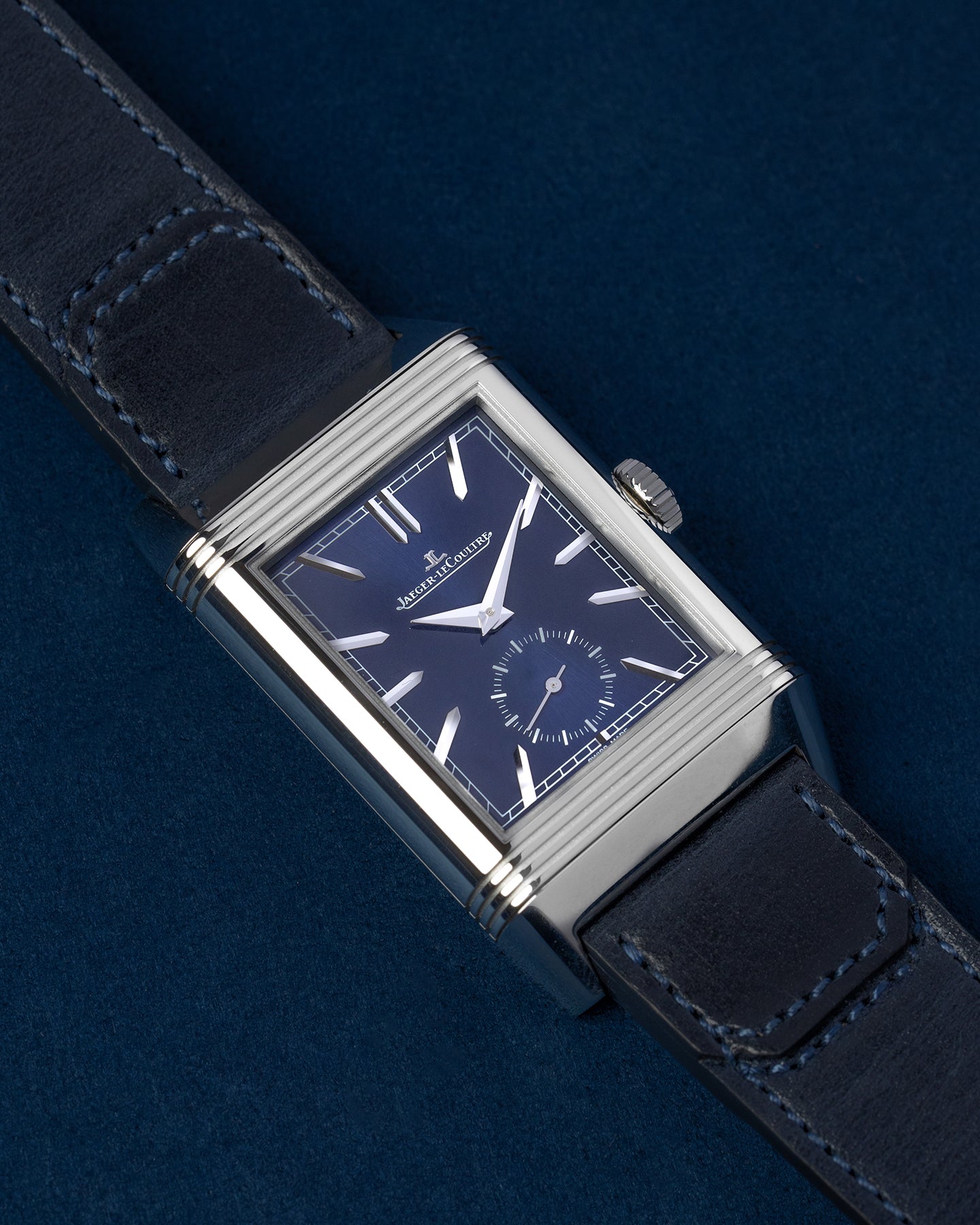
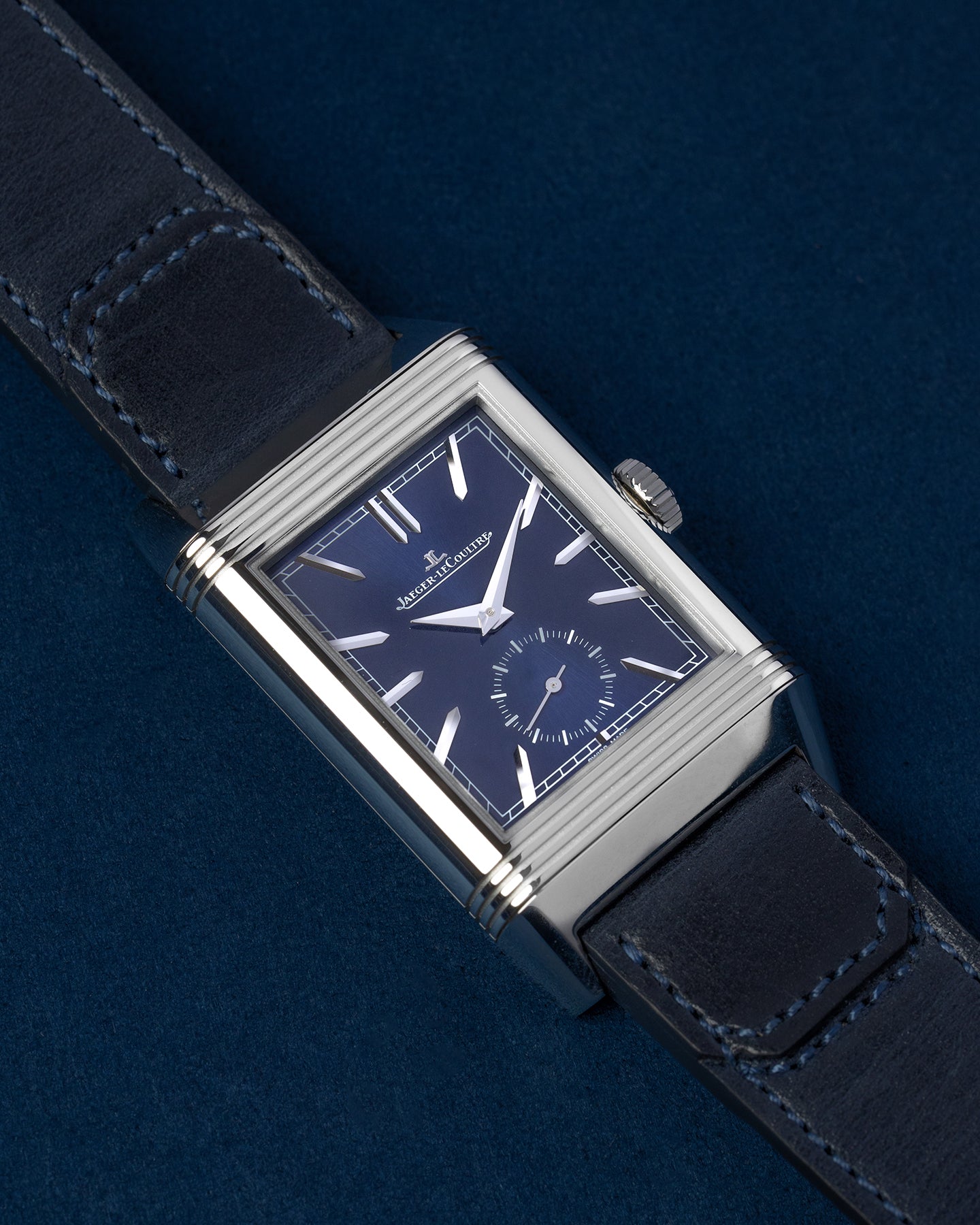
The modern catalog of Jaeger-LeCoultre watches splits the Reverso into two primary aesthetic categories. The Classic line features the traditional silvered guilloche dials and Arabic numerals. The Tribute line, however, leans heavily into the 1931 aesthetic, utilizing applied faceted indices, dauphine hands, and incredibly vibrant sunray brushed dials in deep burgundy, forest green, and dark blue.
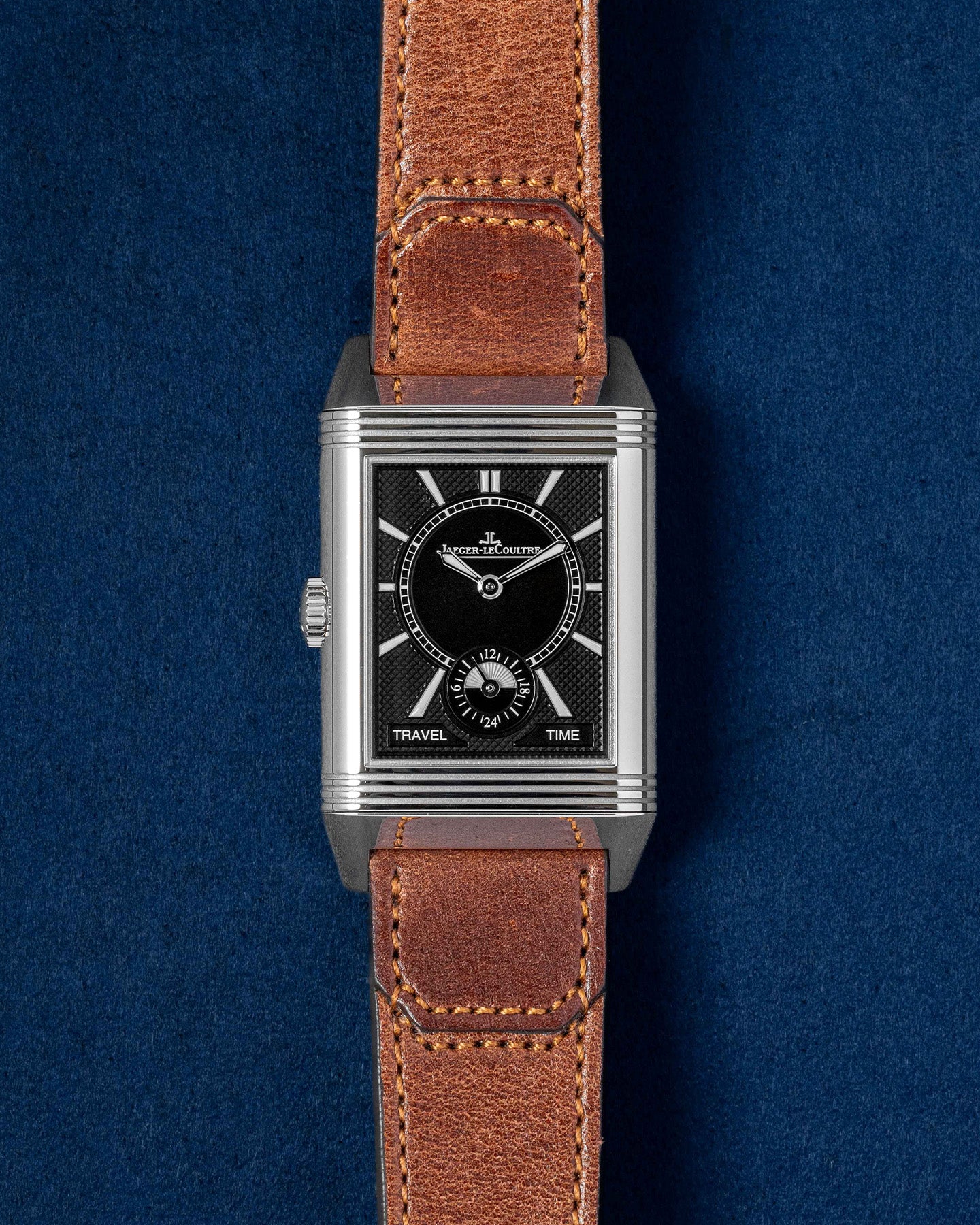
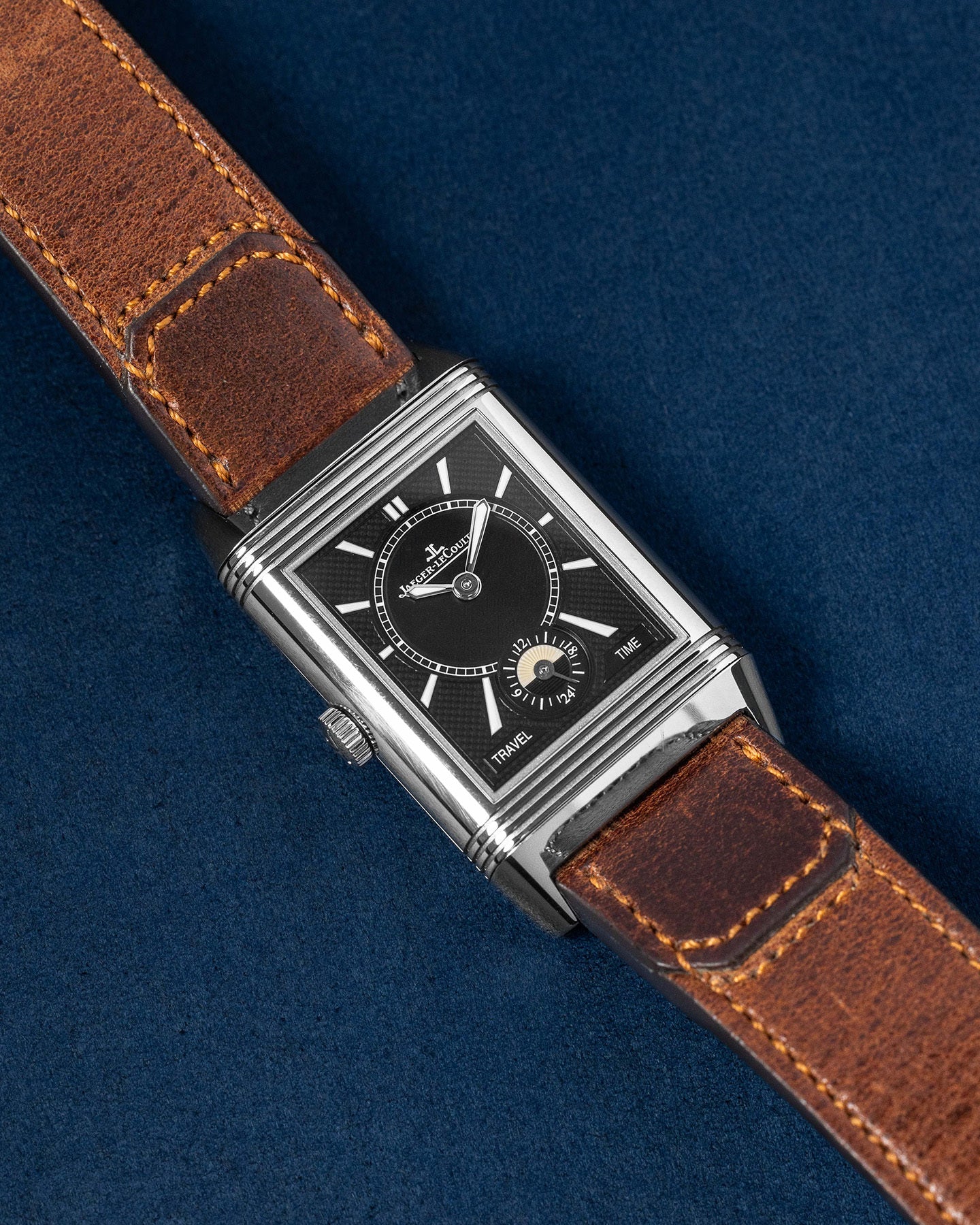
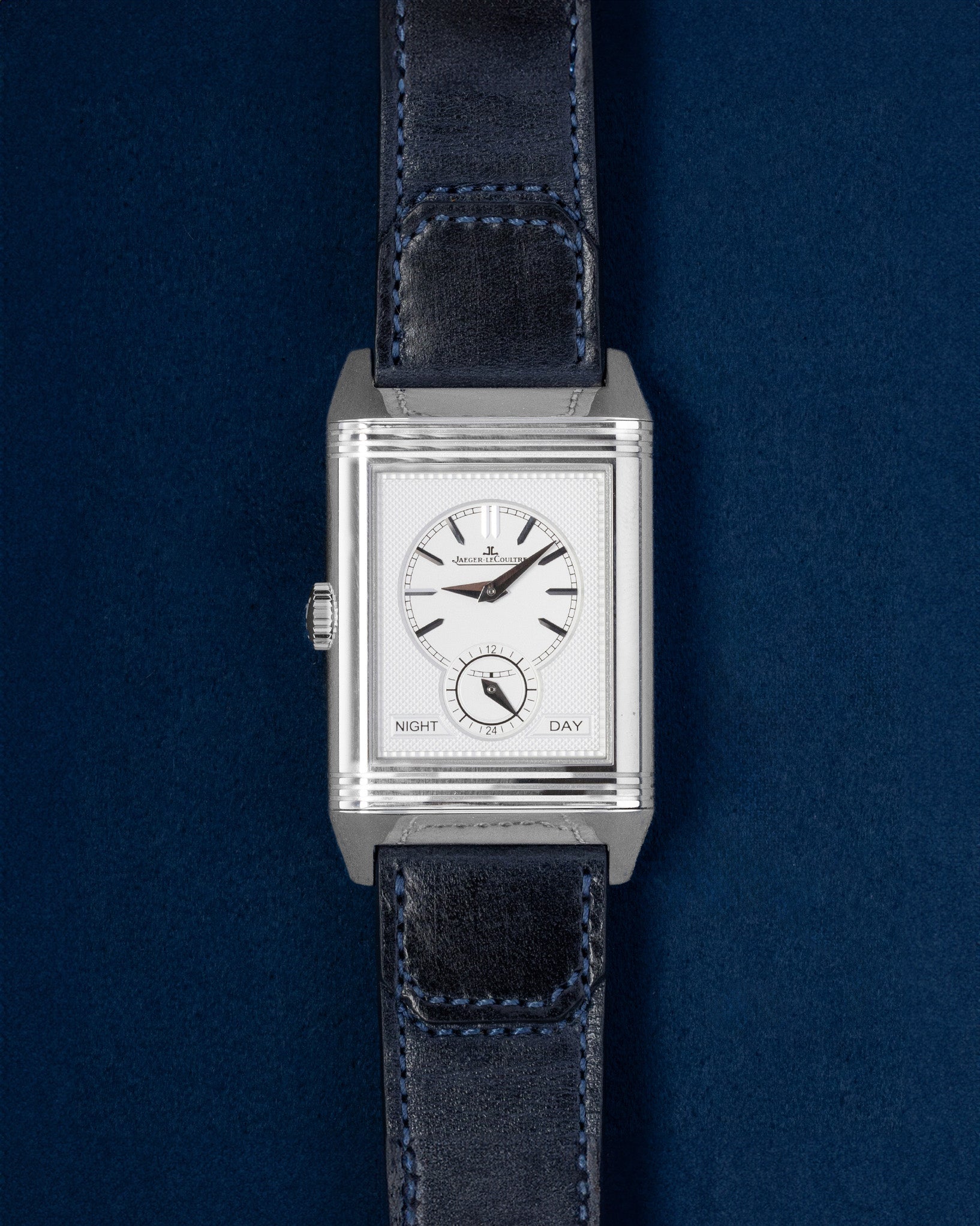
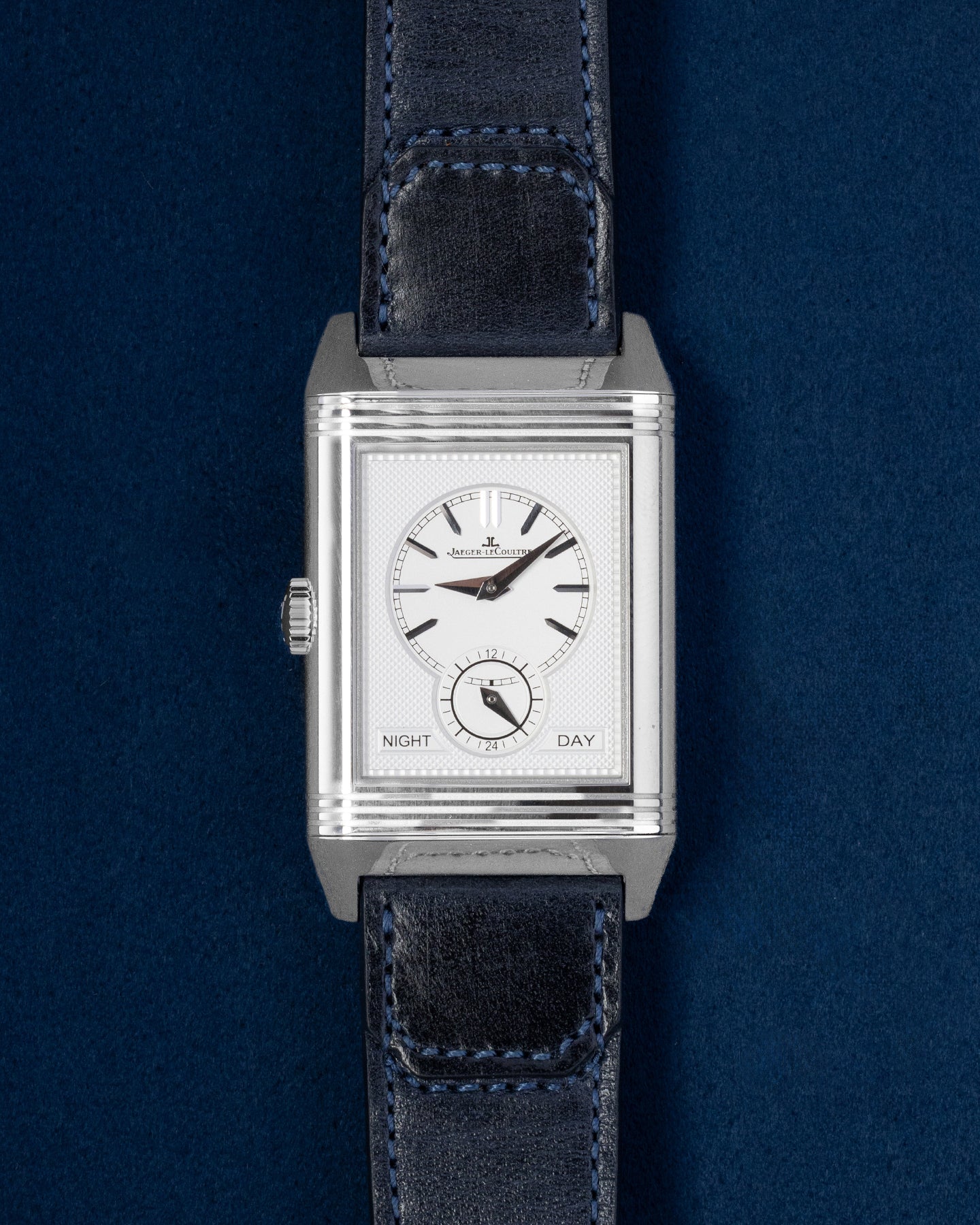
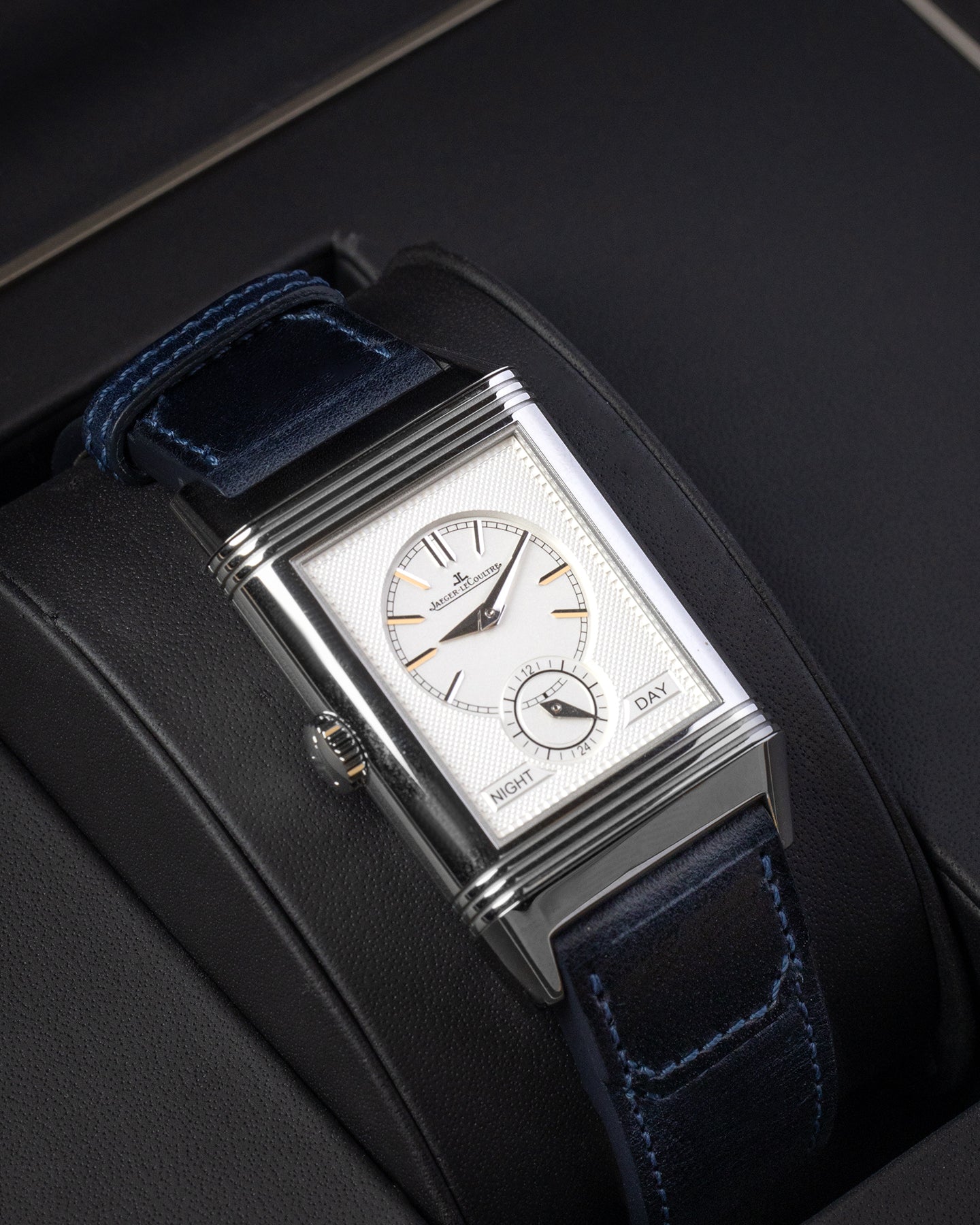
The most significant modern mechanical innovation is the Duoface. Rather than having a blank metal caseback, the Duoface utilizes a single movement to drive two completely separate dials on opposite sides of the flipping case. The primary dial displays the local time, while the reverse dial displays a second time zone complete with a day and night indicator. The Duoface perfectly modernizes the original polo concept, transforming a protective sports watch into the ultimate mechanical travel instrument.
The Jaeger-LeCoultre Master Control Family
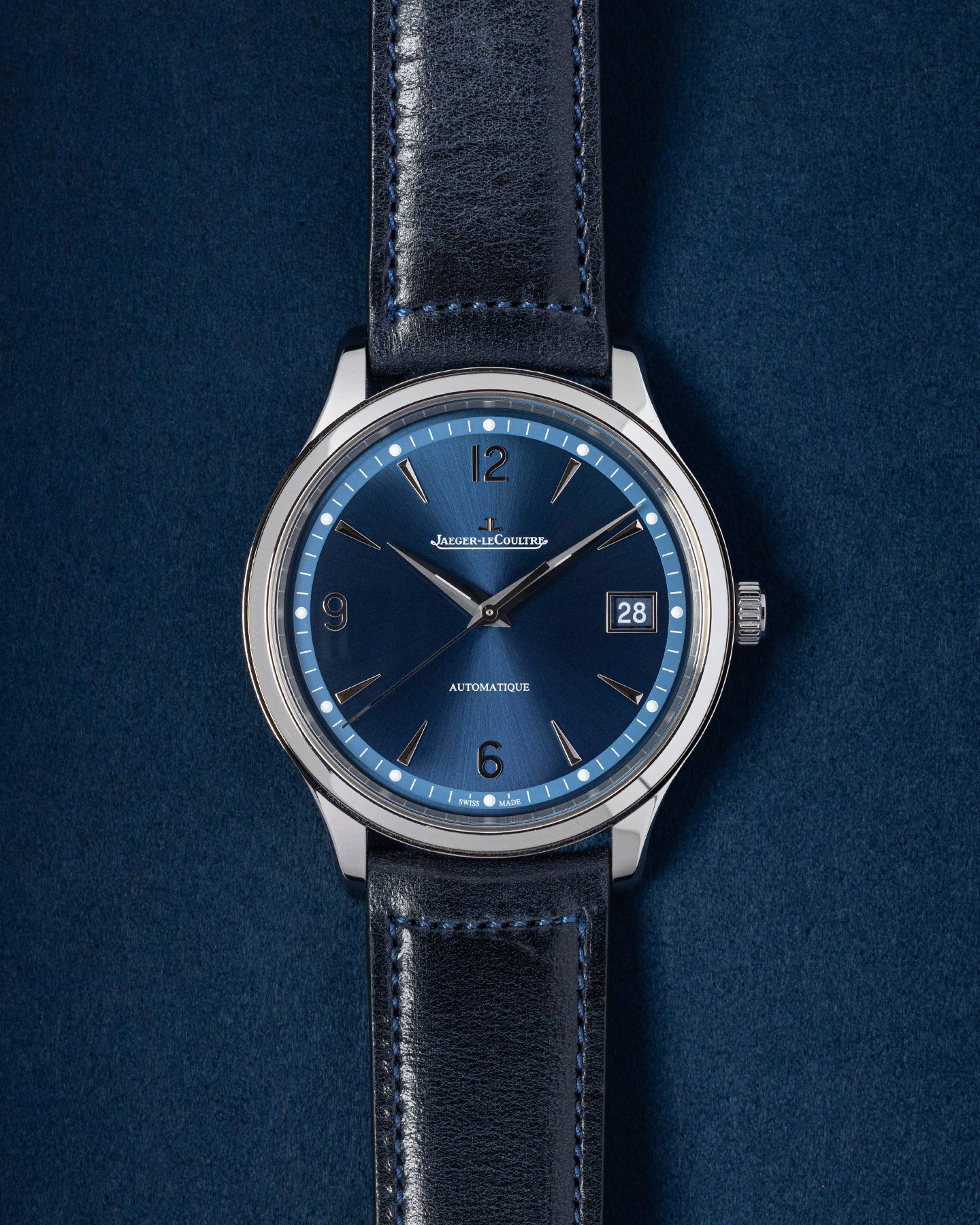
While the Reverso handles the rectangular aesthetic, the Master Control collection represents the brand's mastery of the classical round dress watch. Launched in 1992, the Master Control line was the specific collection created to introduce the rigorous 1000 Hours Control testing protocol. The design language is strictly traditional, focusing on perfect symmetry, extreme legibility, and refined case proportions that slide effortlessly underneath a tailored cuff.
The 1992 Master Control Date
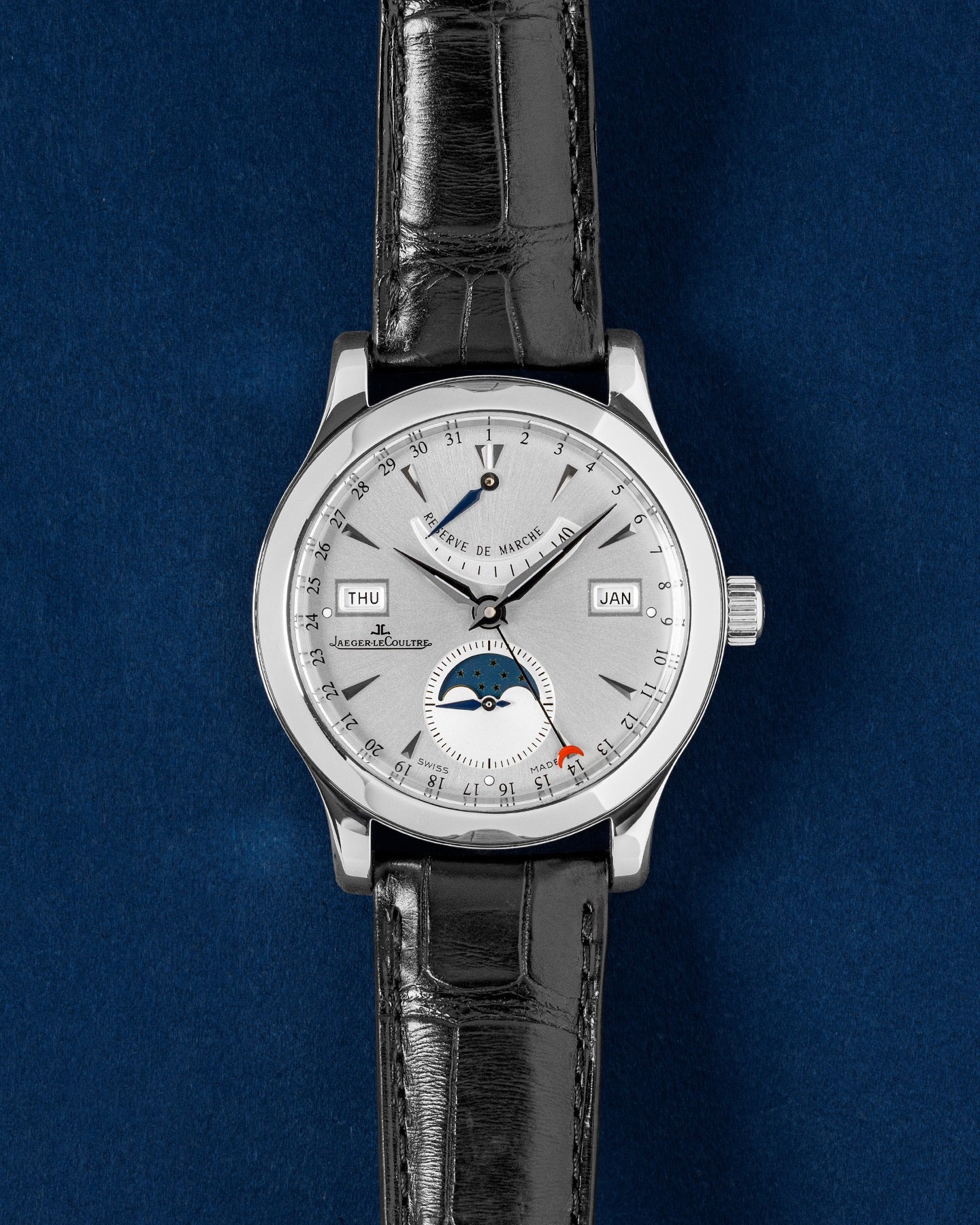
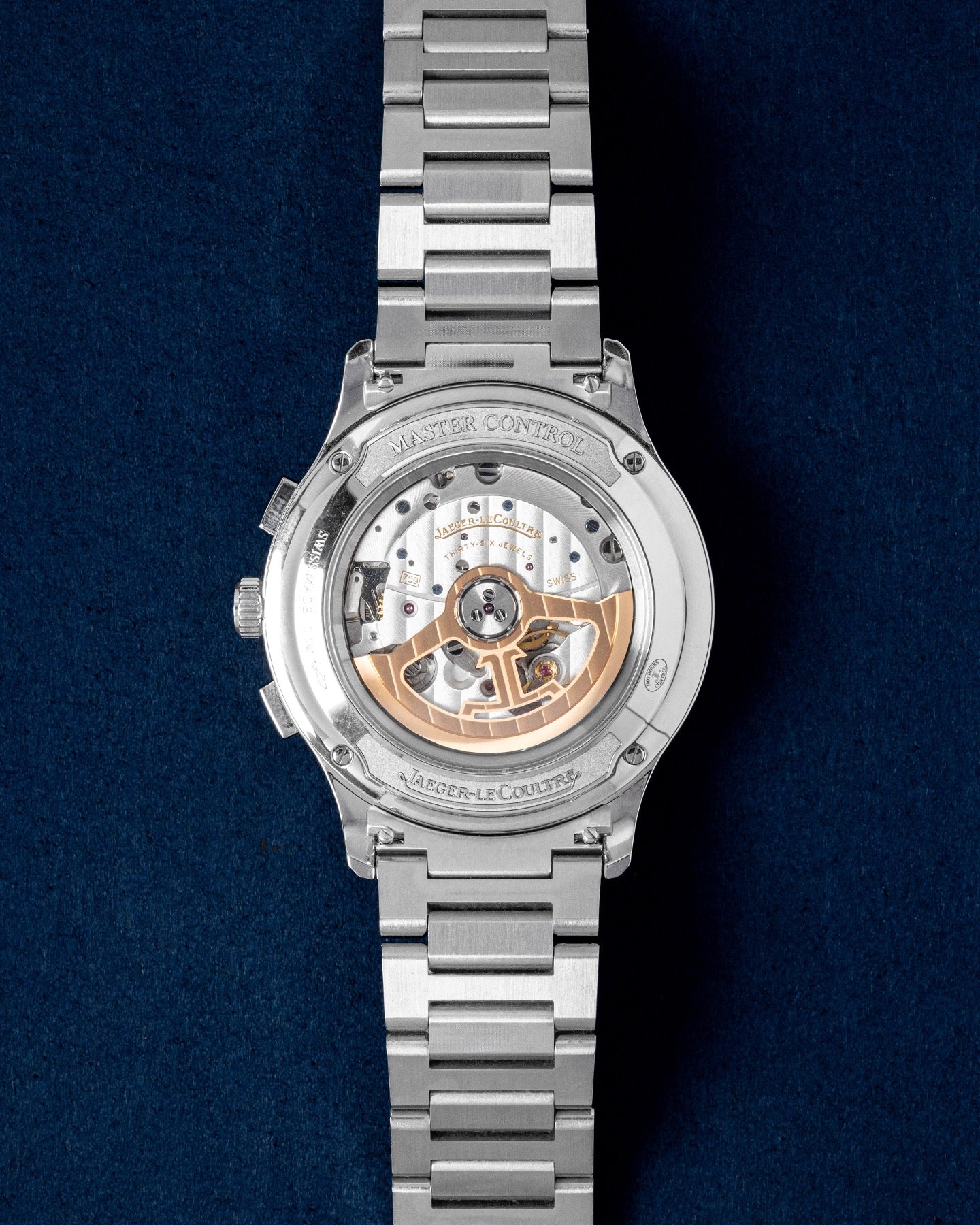
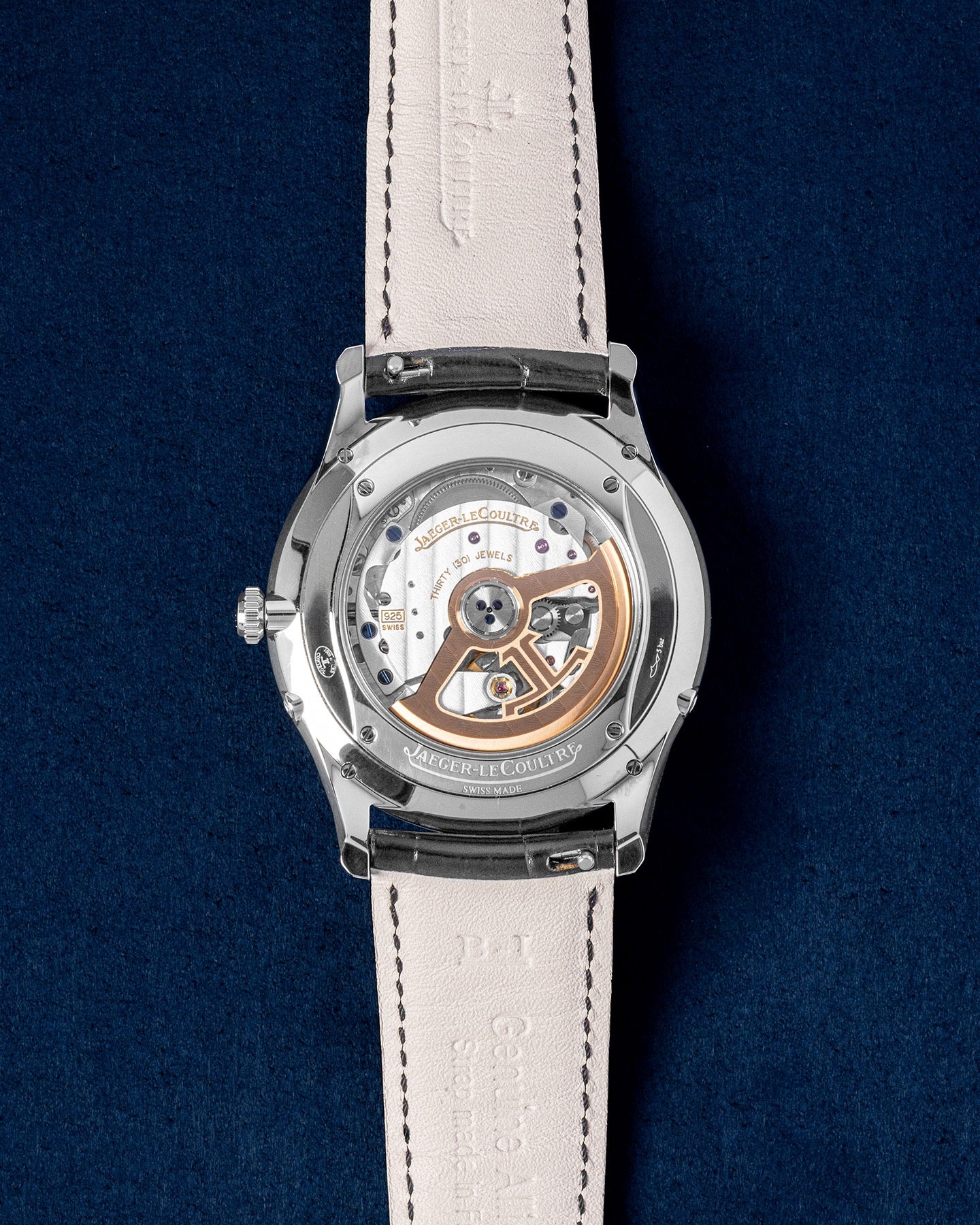
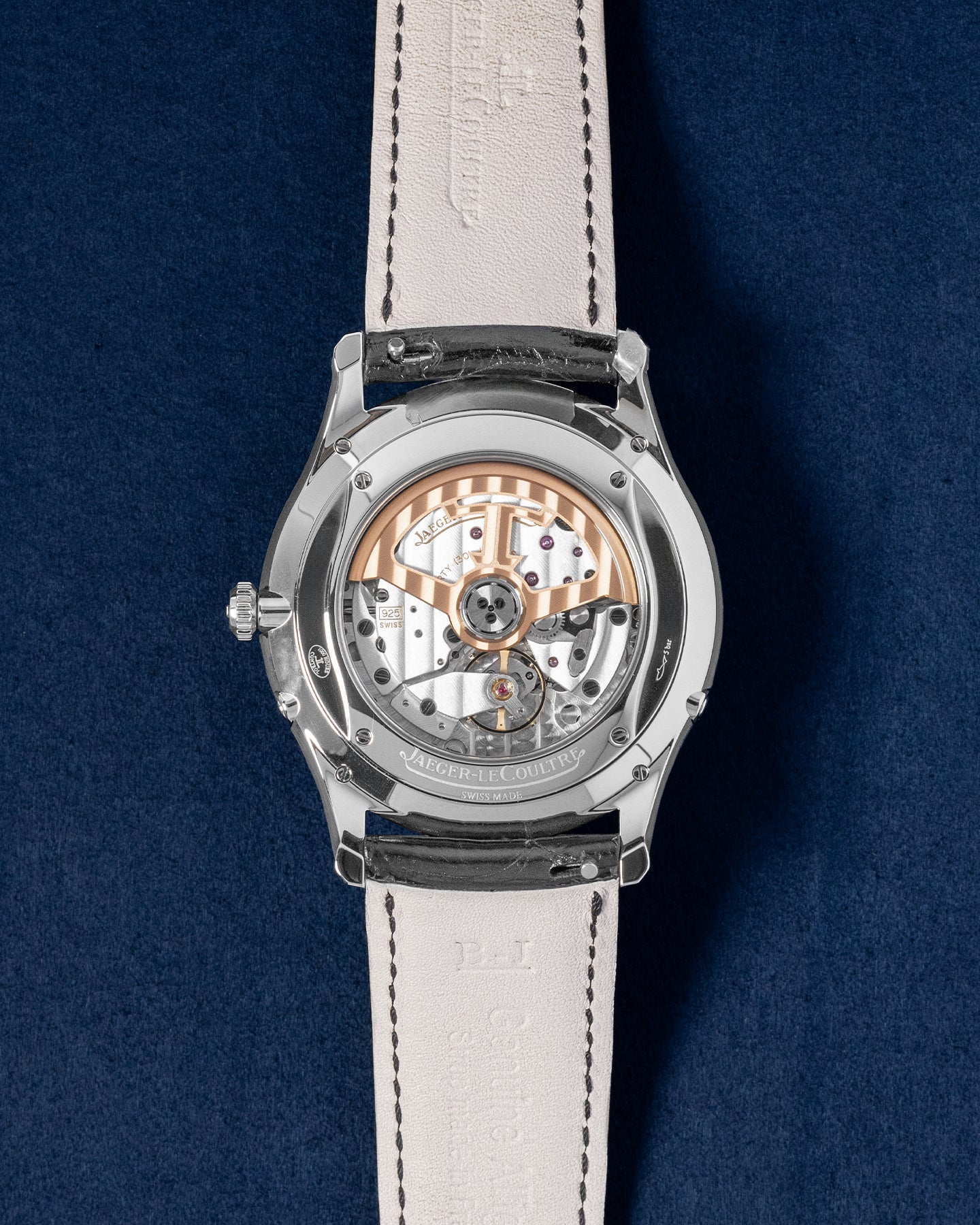
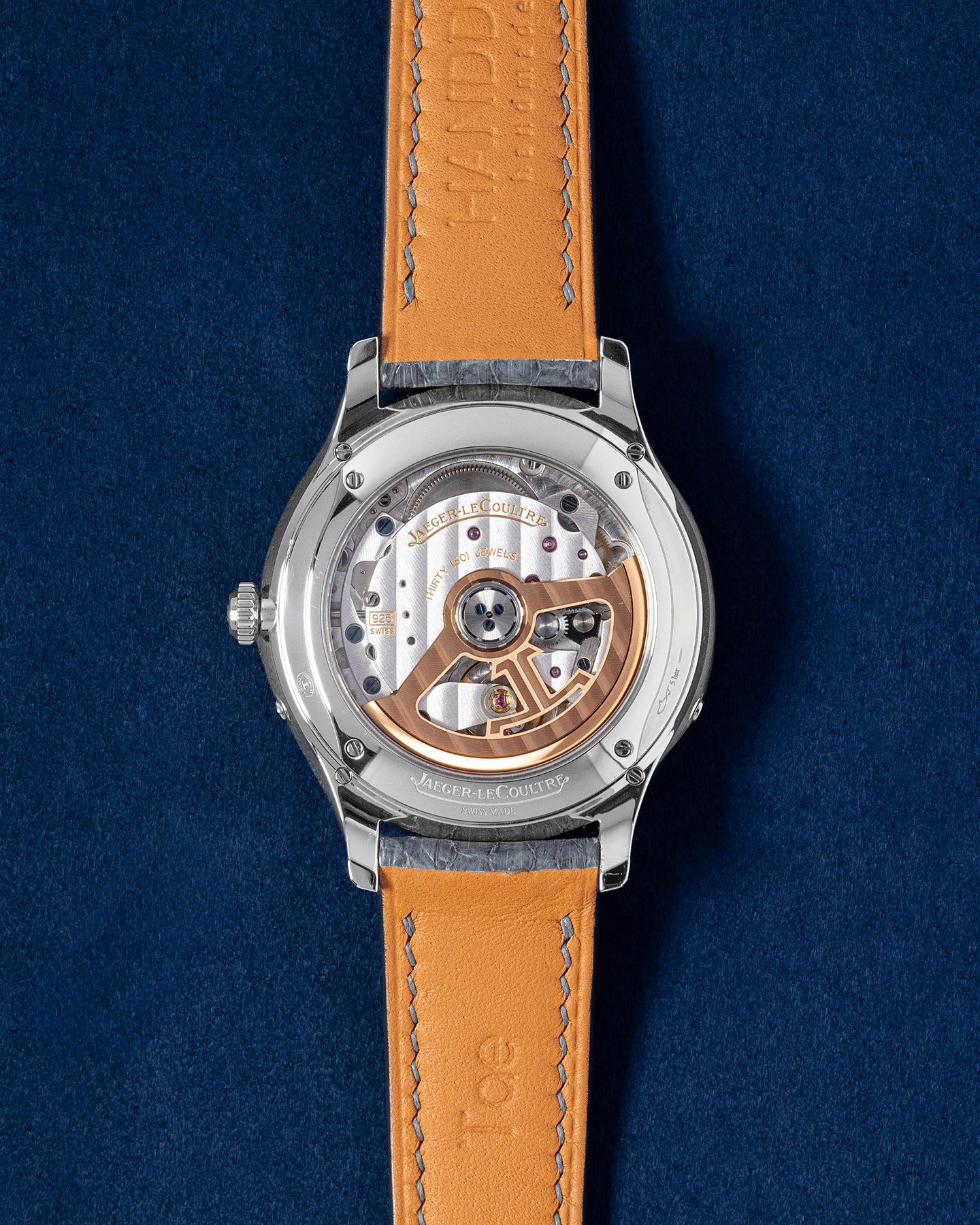
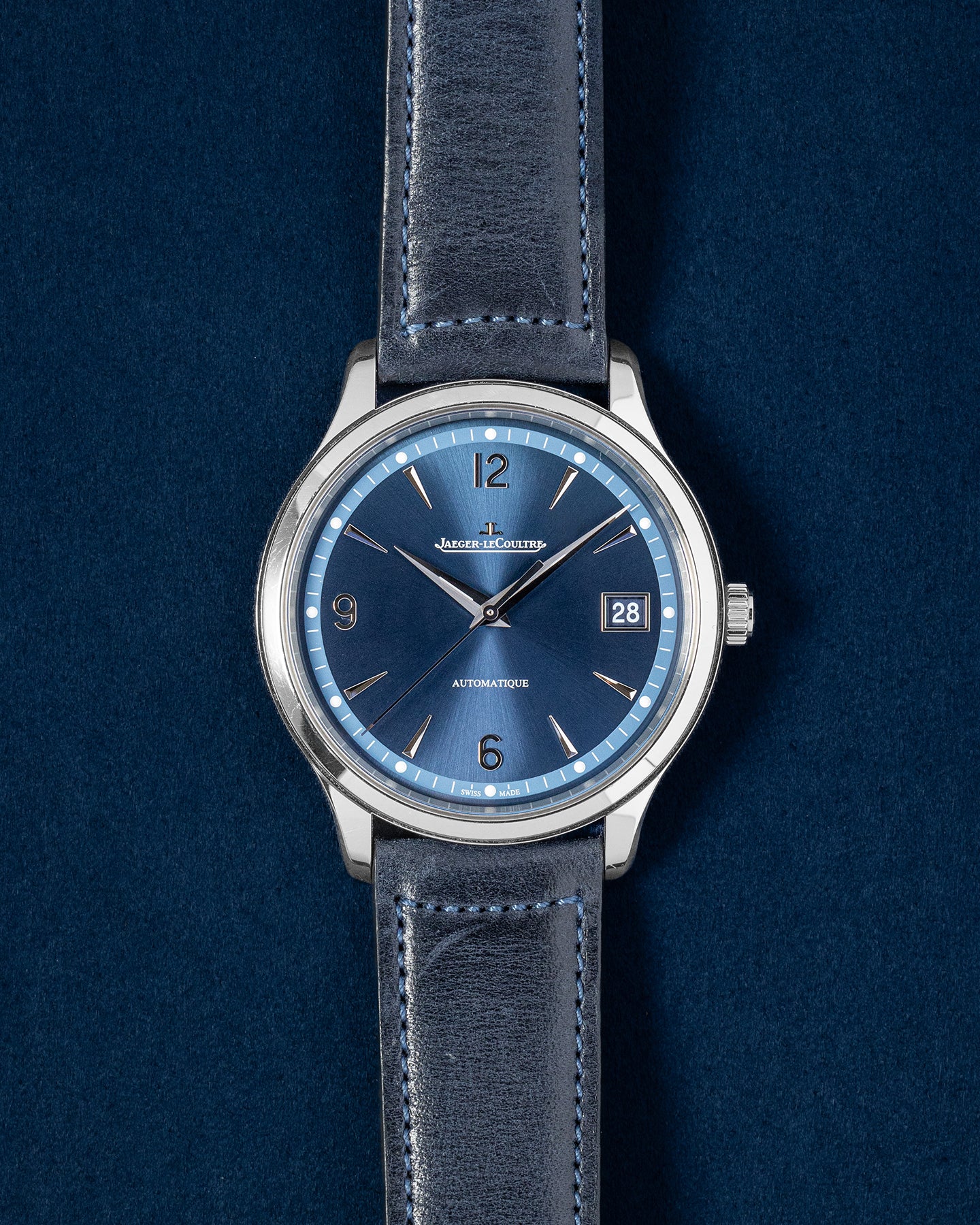
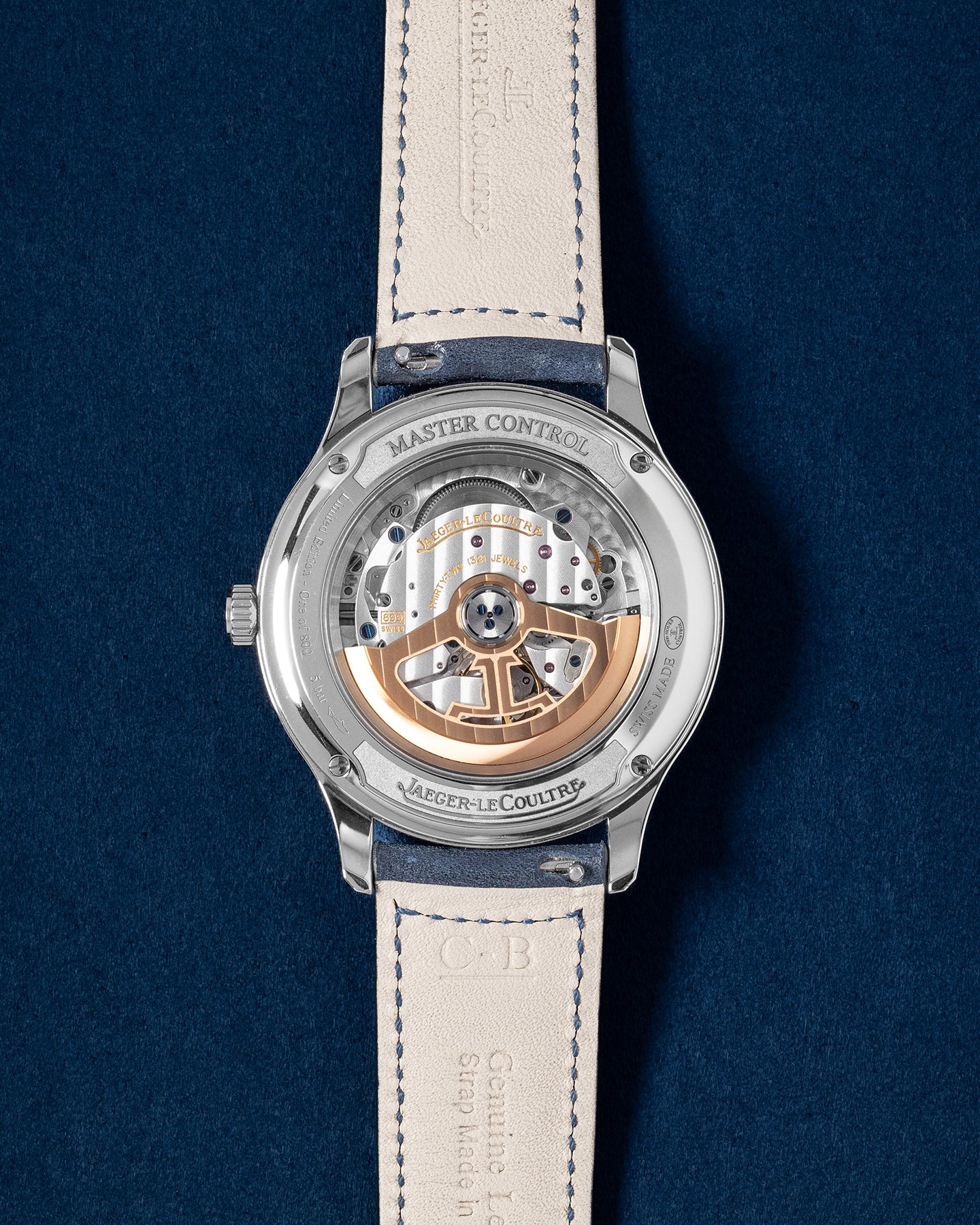
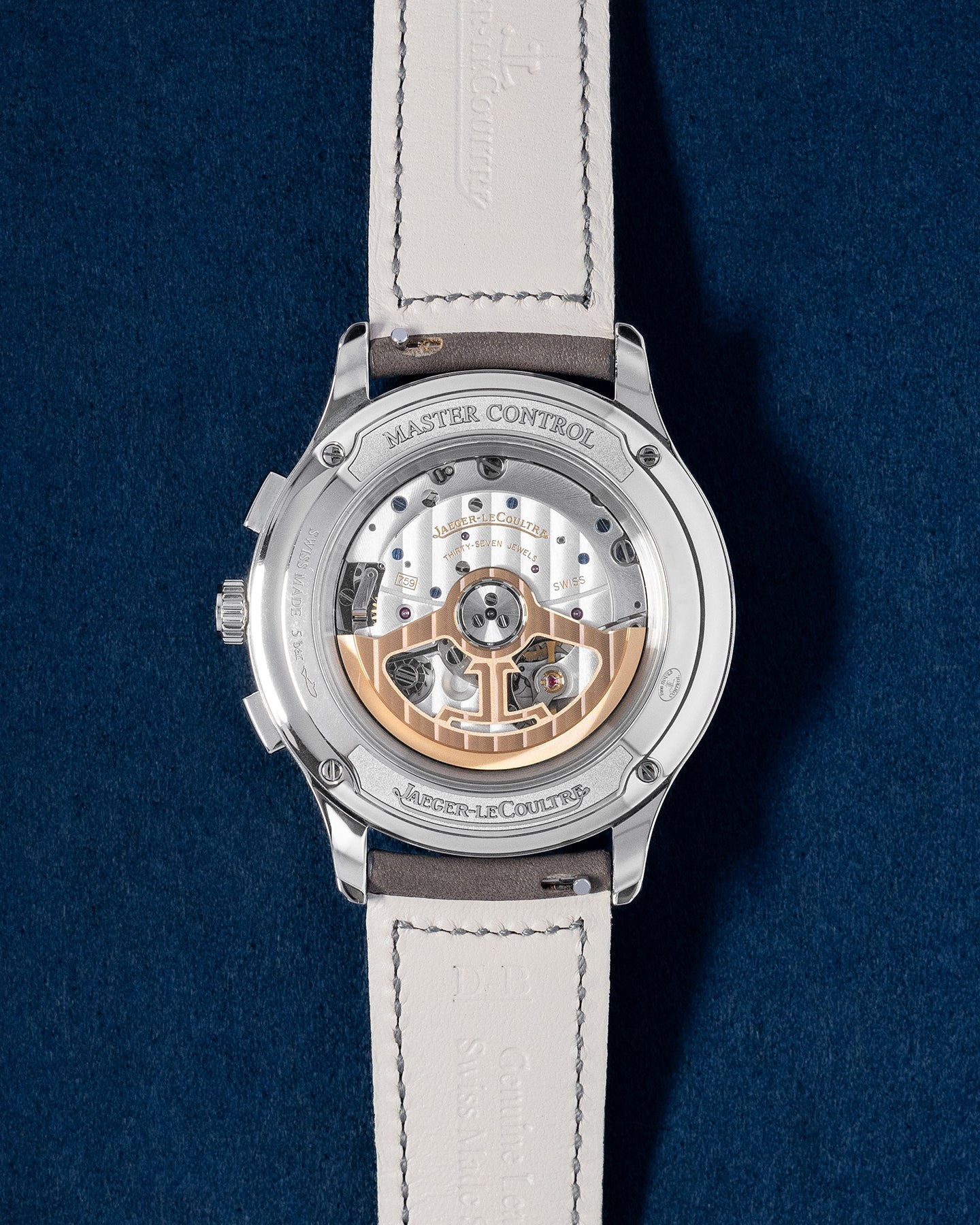
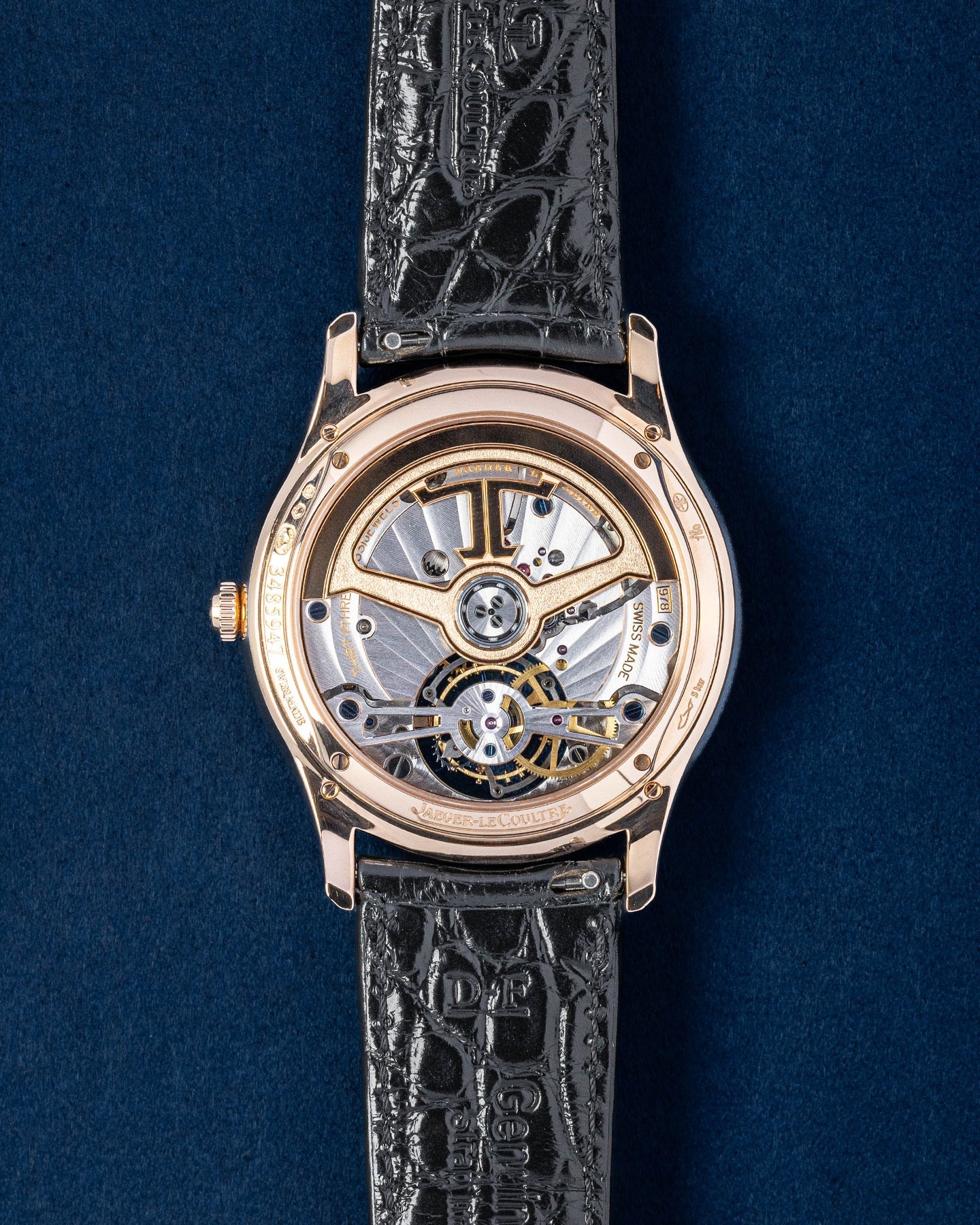
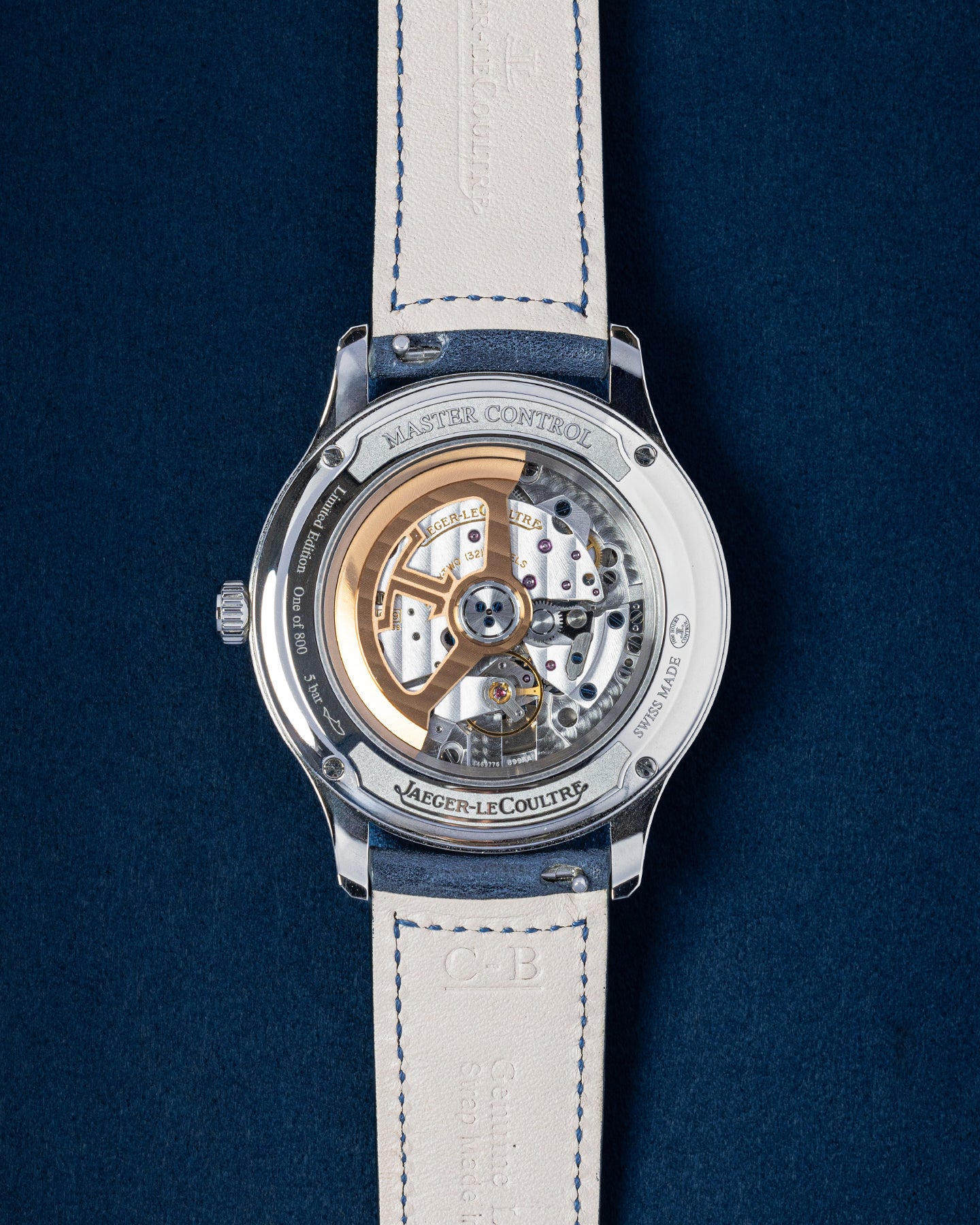
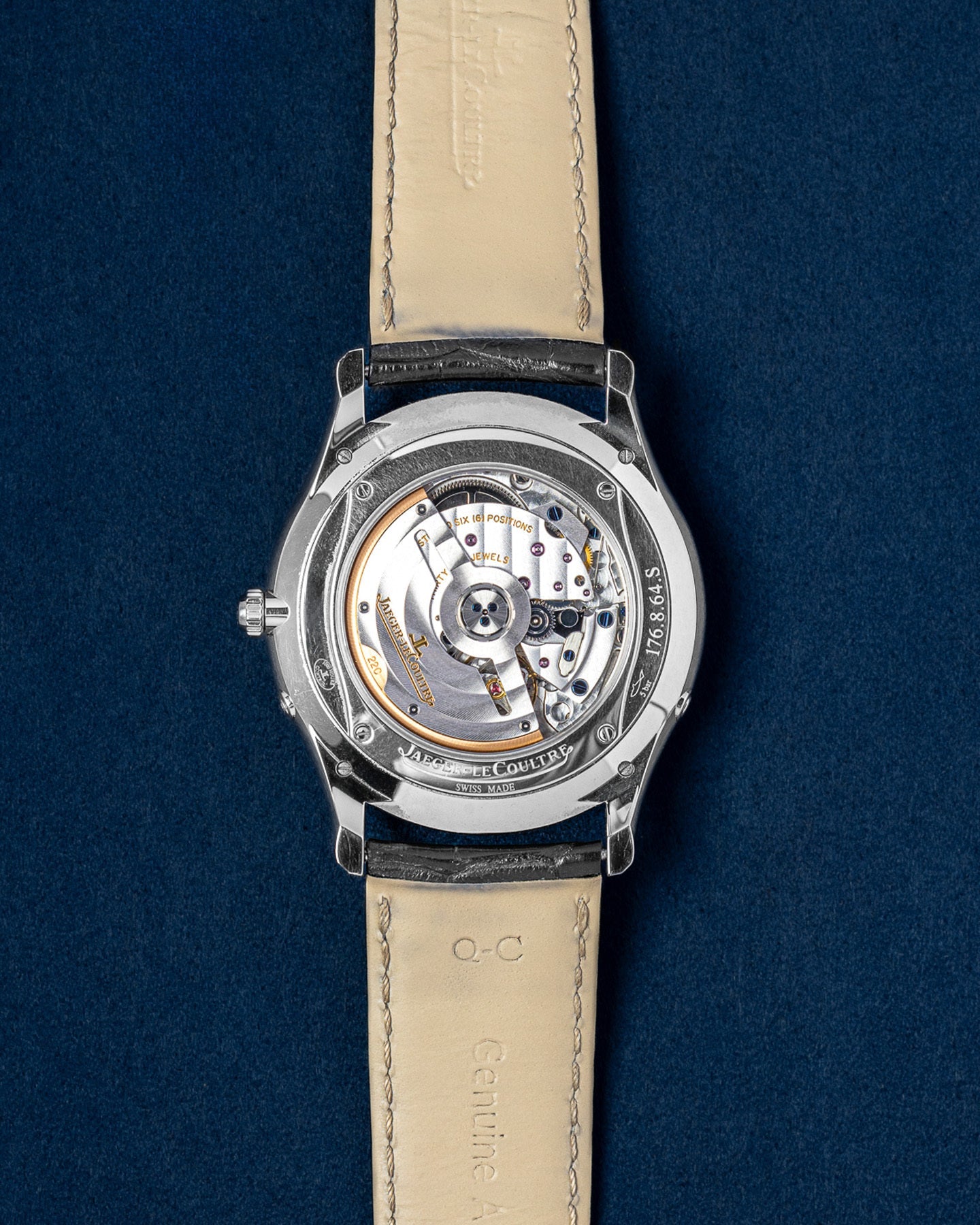
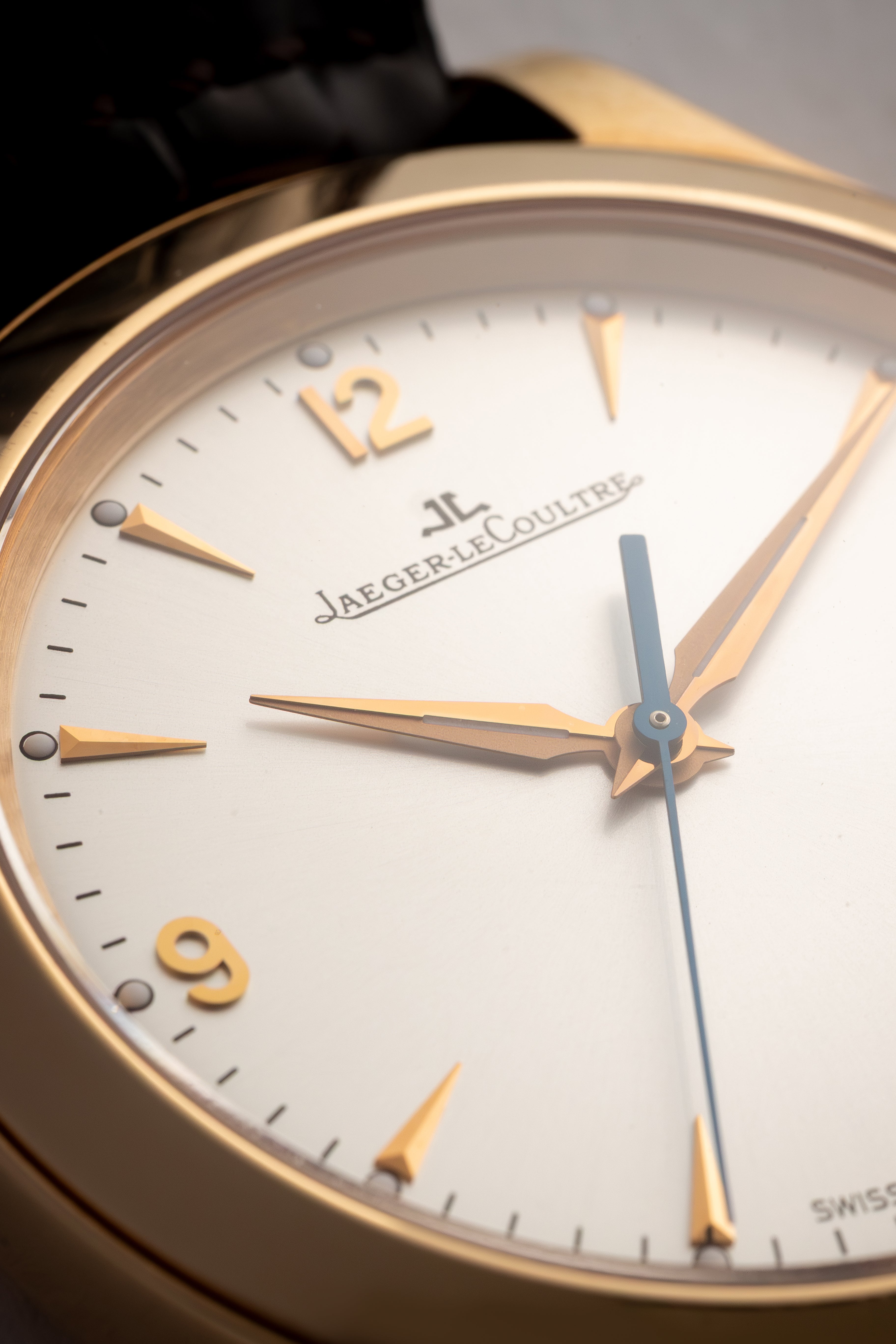
The foundation of the collection is the Master Control Date. Originally measuring thirty seven millimeters and later increased to thirty nine and forty millimeters, these Jaeger-LeCoultre watches represent the purest expression of timekeeping. The dials are typically rendered in sunray brushed silver, featuring applied dart indices and a subtle date window at three o clock. The modern iterations are powered by the in house caliber 899, which offers a highly reliable seventy hours of power reserve. The sapphire exhibition caseback reveals a solid pink gold winding rotor and exquisite Geneva striping across the movement bridges.
The Master Control Calendar
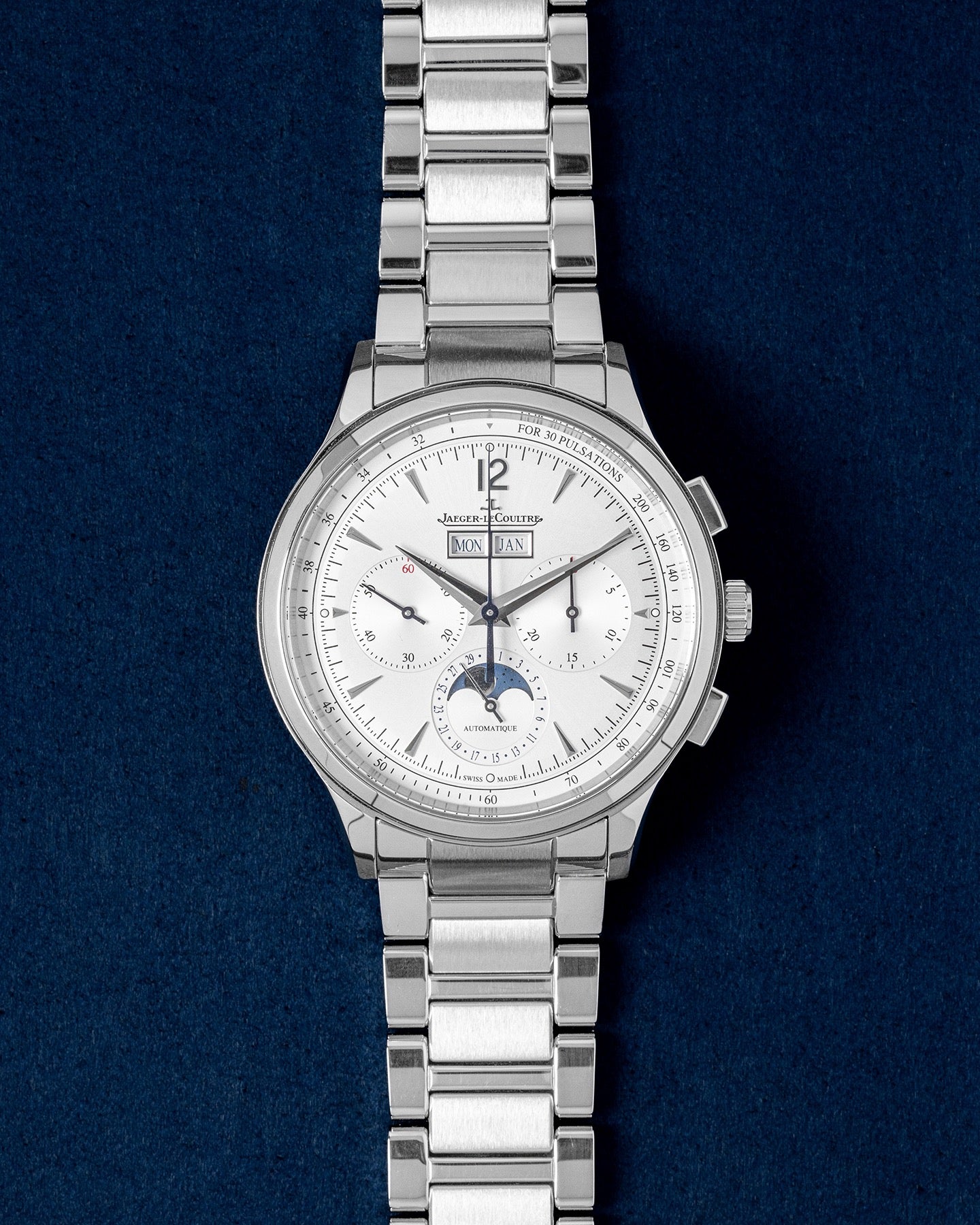
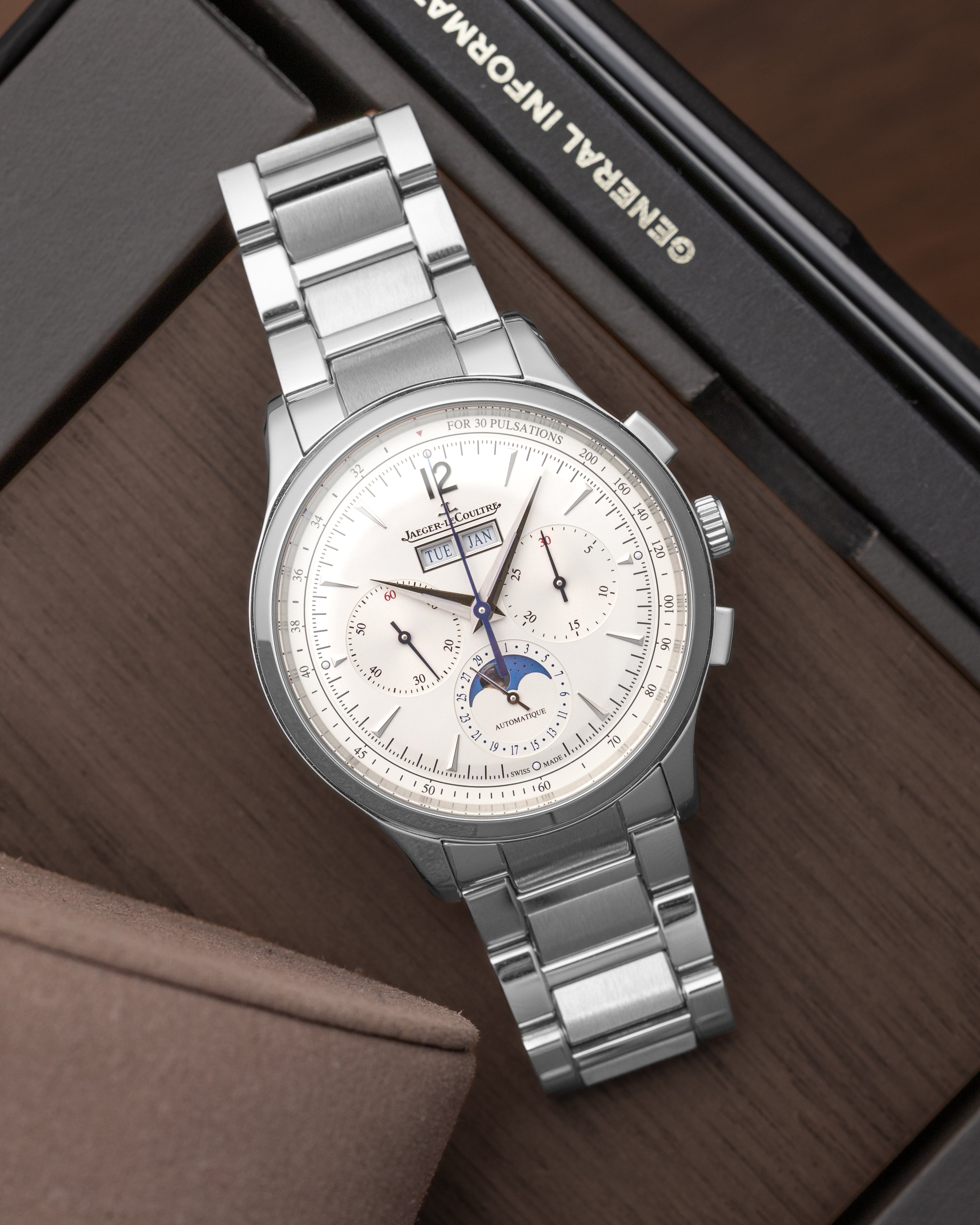
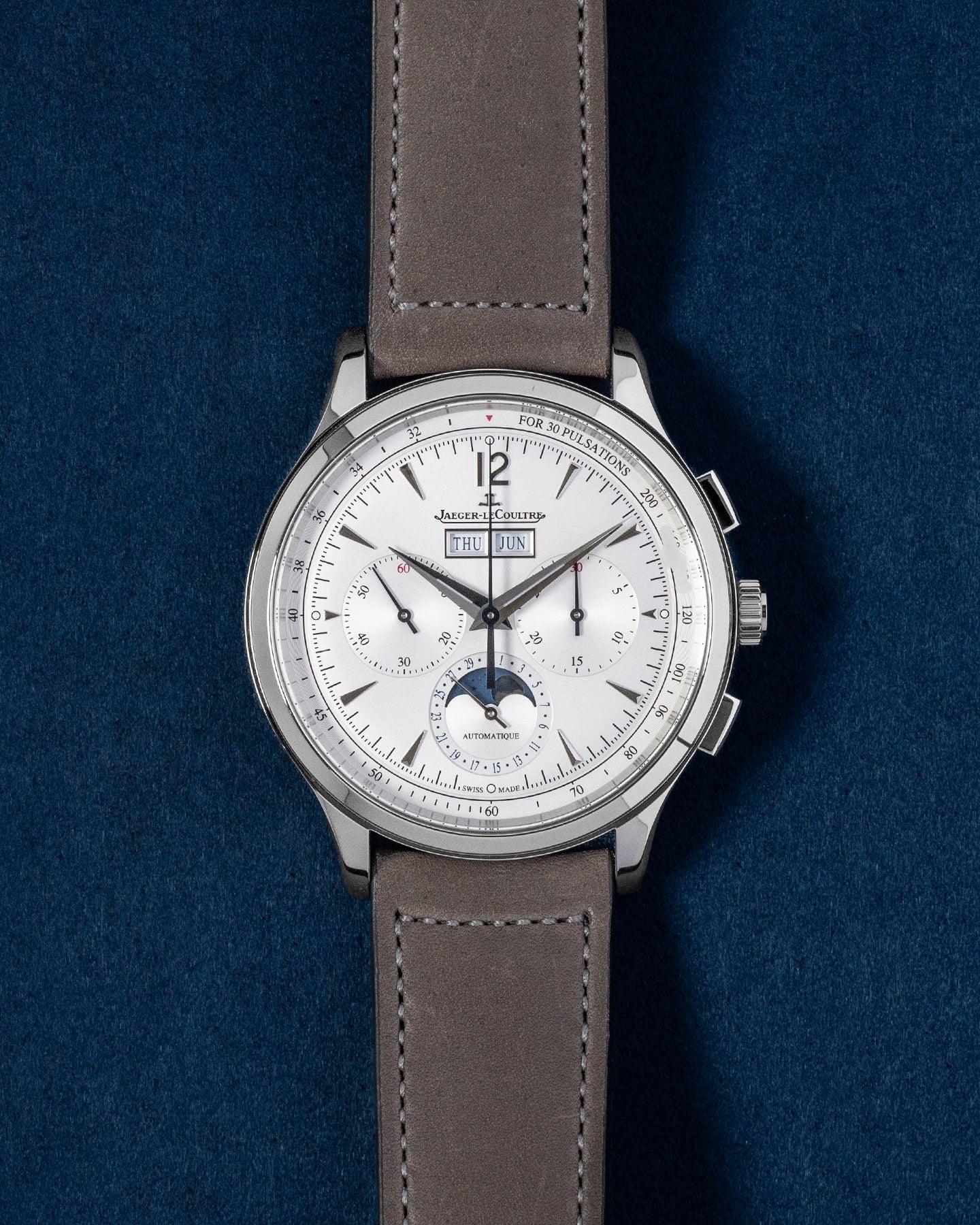
For collectors who demand more mechanical complexity, the Master Control Calendar provides a beautifully balanced triple calendar display. The day of the week and the month are displayed in twin rectangular apertures below twelve o clock, while the date is indicated by a central pointer hand featuring a red crescent tip. The moon phase is integrated into the running seconds sub dial at six o clock. In a brilliant display of horological engineering, modern versions of this watch feature a jumping date hand that physically leaps over the moon phase display between the fifteenth and sixteenth of the month, ensuring the phase of the moon is never obscured from the wearer.
The Master Ultra Thin Line
Jaeger-LeCoultre watches have historically dominated the production of ultra thin calibers, and the Master Ultra Thin collection exists specifically to showcase this capability. These cases typically measure less than eight millimeters in thickness, requiring the movements inside to be engineered with microscopic tolerances. Building an ultra thin movement is incredibly difficult, as the reduction in material mass makes the mainplate and bridges far more susceptible to warping or bending. Jaeger-LeCoultre solves this through expert metallurgy and brilliant component routing, ensuring their ultra thin pieces remain robust enough for daily wear.
The Master Ultra Thin Moon
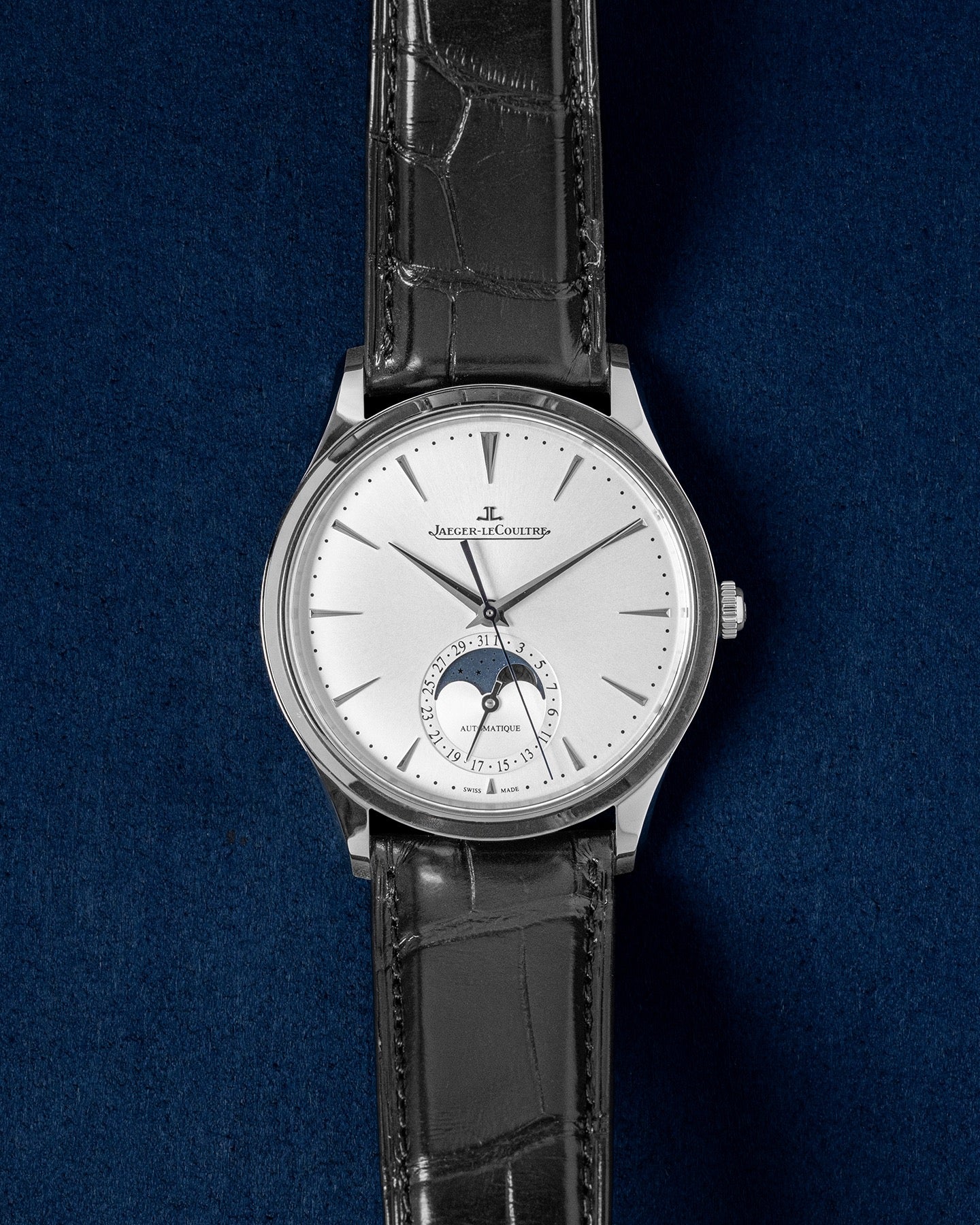
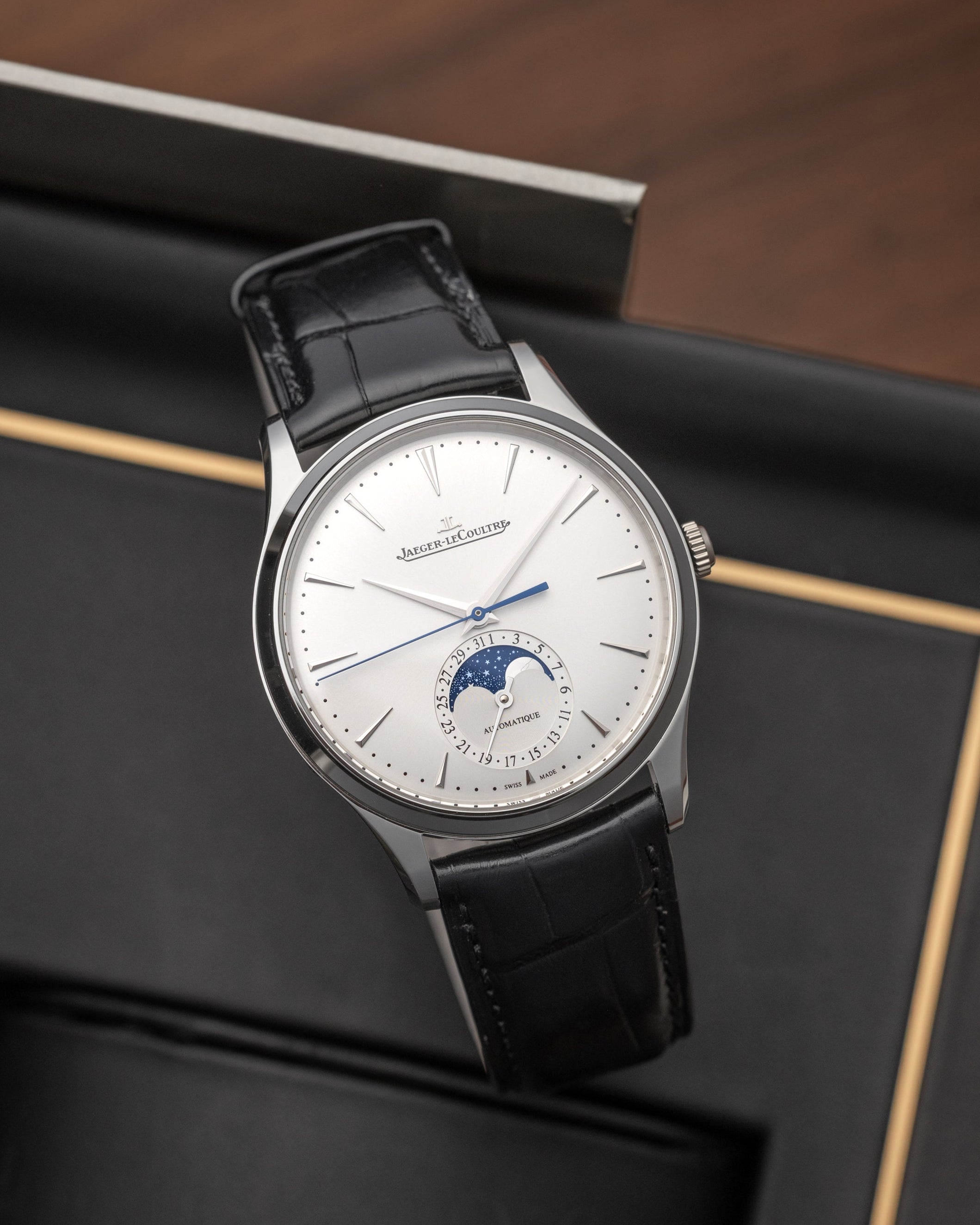
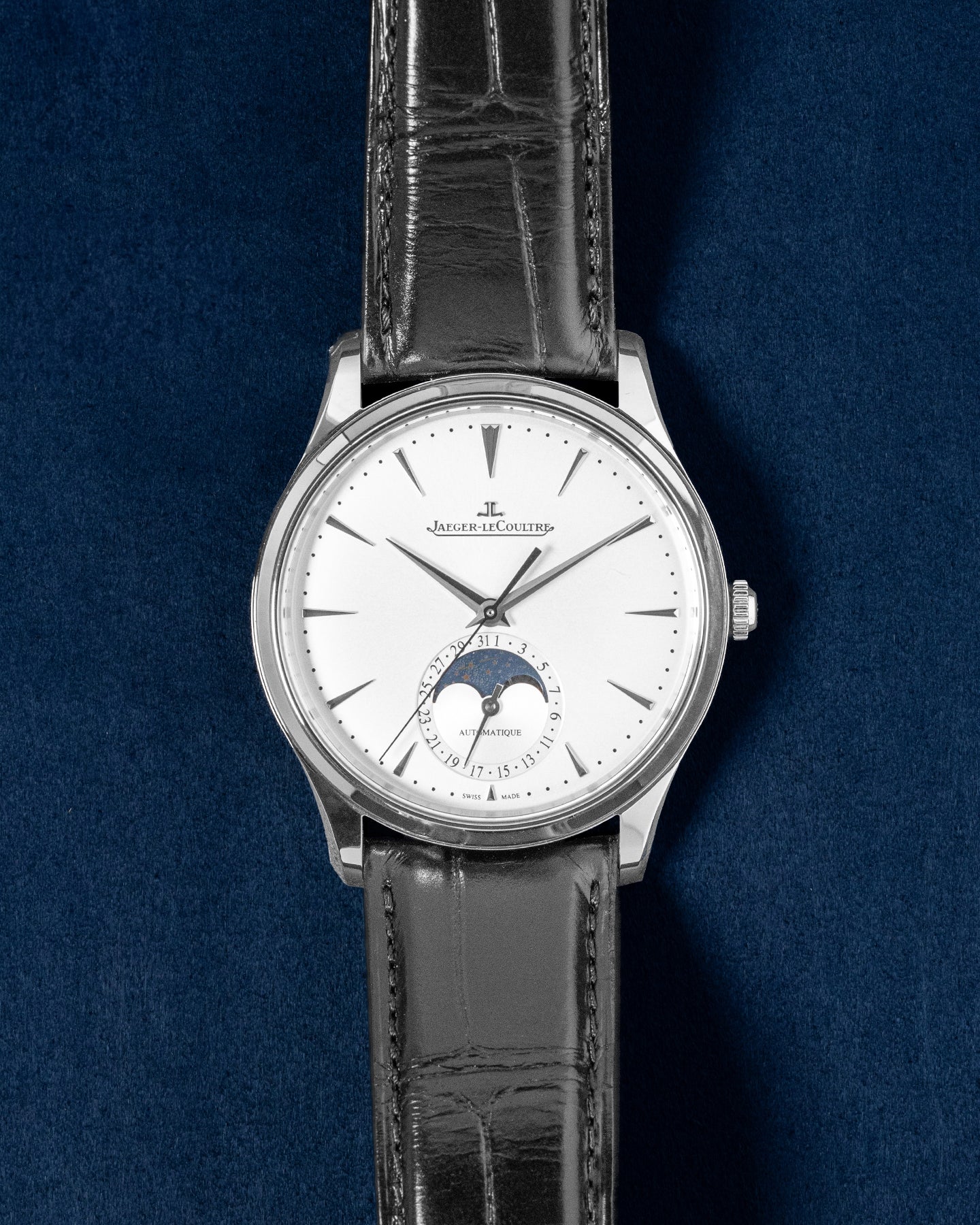
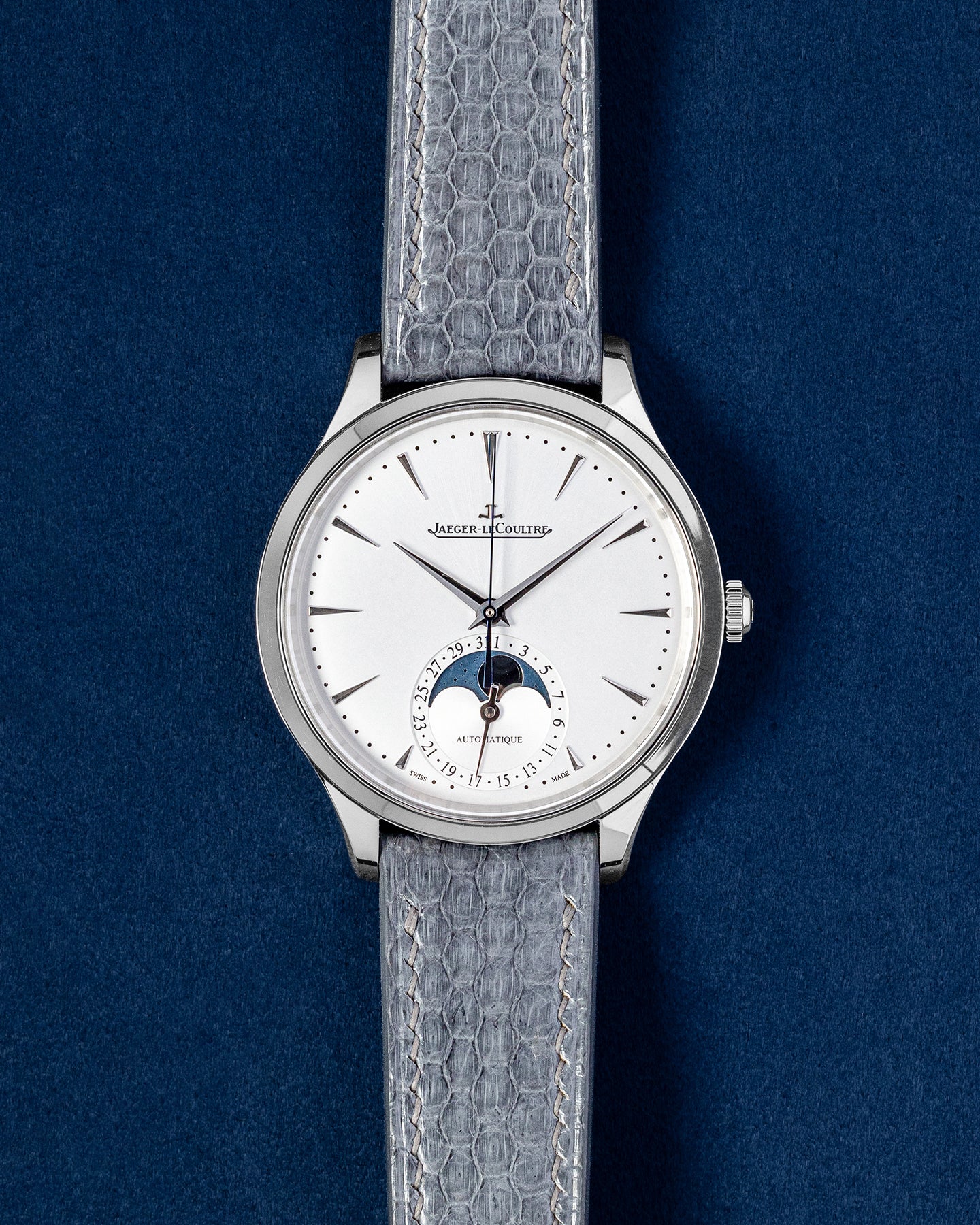
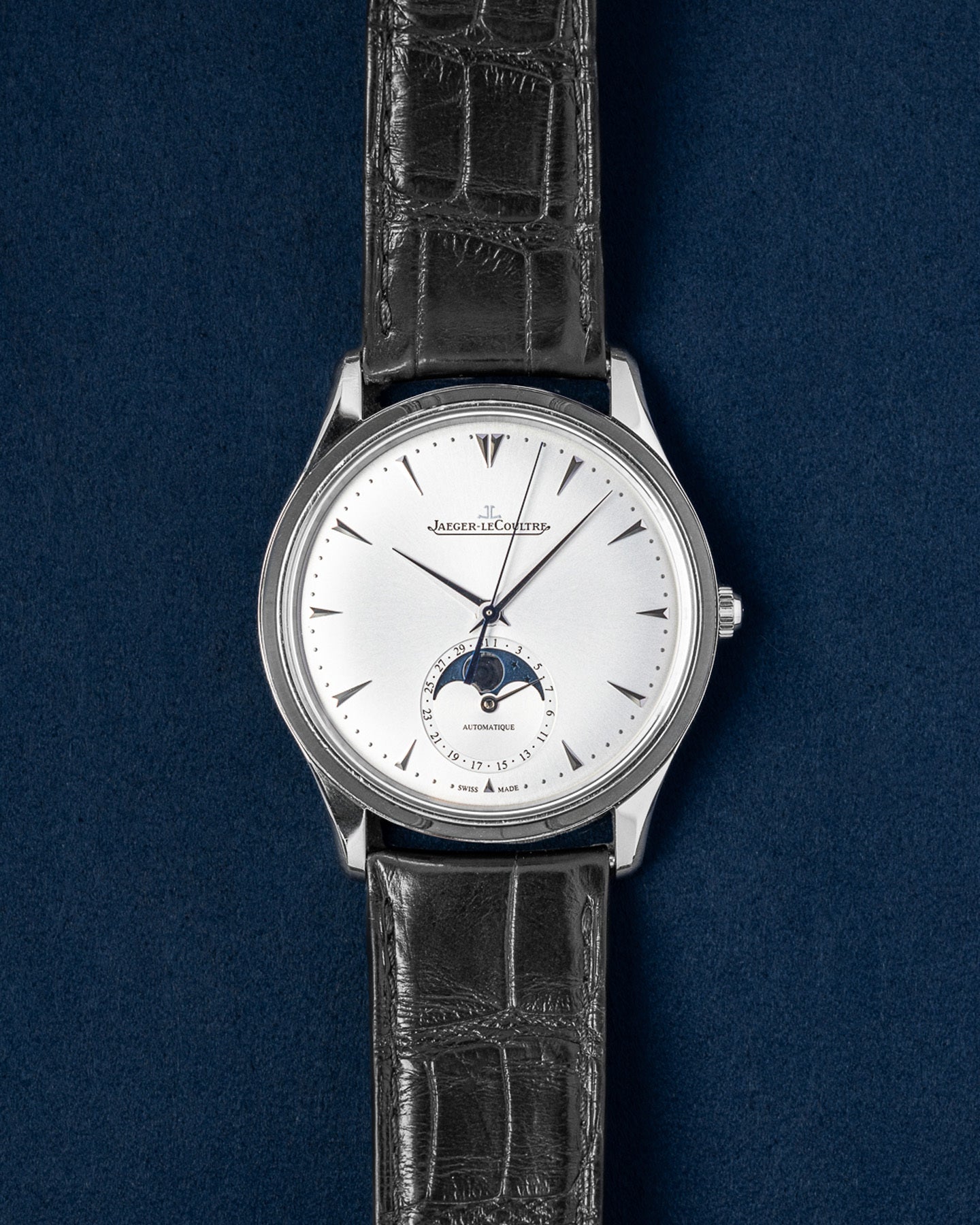
The undisputed flagship of the dress watch catalog is the Master Ultra Thin Moon. Measuring thirty nine millimeters in diameter and just 9.3 millimeters thick, this model perfectly balances minimalist design with high complication. The dial is perfectly symmetrical, featuring elongated dart indices and a stunning moon phase indicator surrounded by an analog date ring at six o clock. Available in stainless steel and eighteen carat pink gold, the Master Ultra Thin Moon is widely considered by serious collectors to be one of the finest, most perfectly proportioned dress watches available from any Swiss manufacture.
The Duometre and Dual Wing Architecture
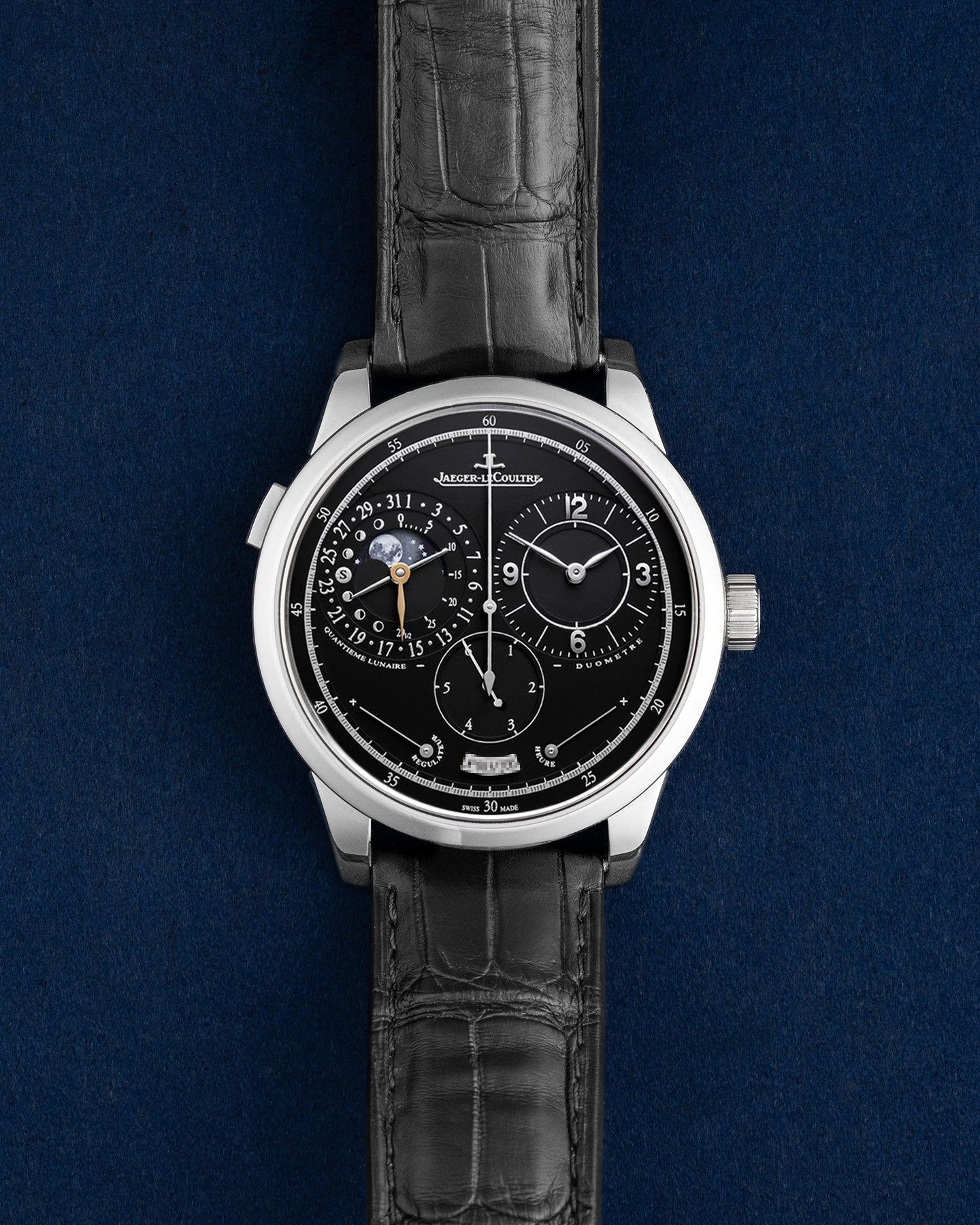
To fully understand the mechanical supremacy of Jaeger-LeCoultre watches, one must examine the Duometre collection. The Duometre represents a completely radical approach to movement architecture, designed to solve a fundamental problem in chronometry that has plagued watchmakers for centuries.
The Problem of Complication Power Drain
In a standard mechanical watch, every time the wearer activates a complication, such as starting a chronograph or triggering a striking mechanism, it draws energy away from the mainspring barrel. This sudden drain of power causes a drop in amplitude at the balance wheel, fundamentally altering the timing precision of the watch. When the chronograph is running, the watch keeps time differently than when the chronograph is stopped. For a brand utterly obsessed with precision, this fluctuation was unacceptable.
The Dual Wing Solution
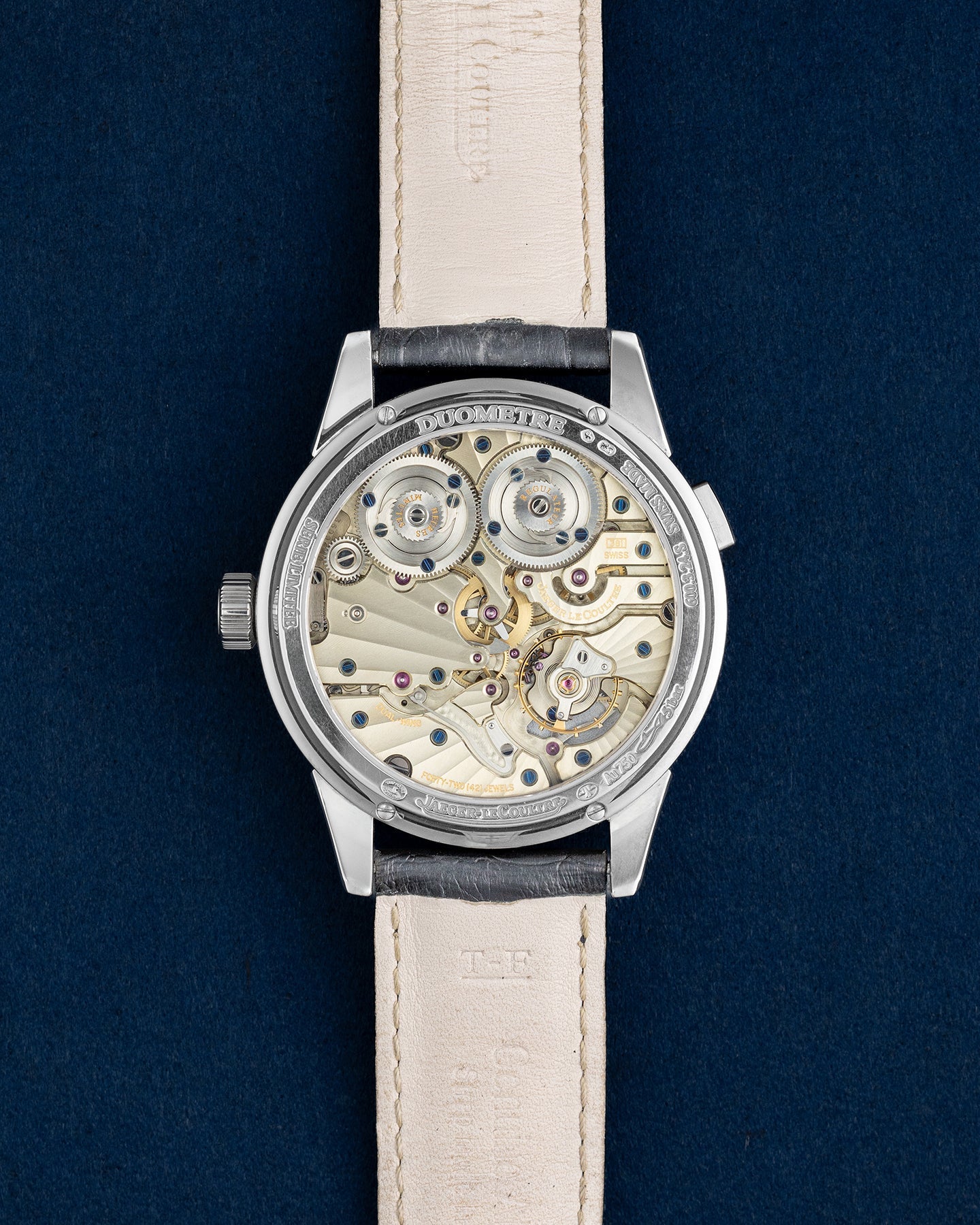
In 2007, Jaeger-LeCoultre watches introduced the Dual Wing concept to solve this exact problem. The Duometre movements feature two completely separate power sources and two distinct gear trains housed within the same caliber. One mainspring barrel and gear train is entirely dedicated to the timekeeping function, ensuring the balance wheel receives a perfectly constant supply of torque. The second mainspring barrel and gear train is exclusively dedicated to powering the complications. Both independent systems are linked to a single, shared regulating organ. This means the wearer can activate the chronograph or adjust the calendar without ever interrupting or drawing power away from the primary timekeeping mechanism.
The Duometre Spherotourbillon
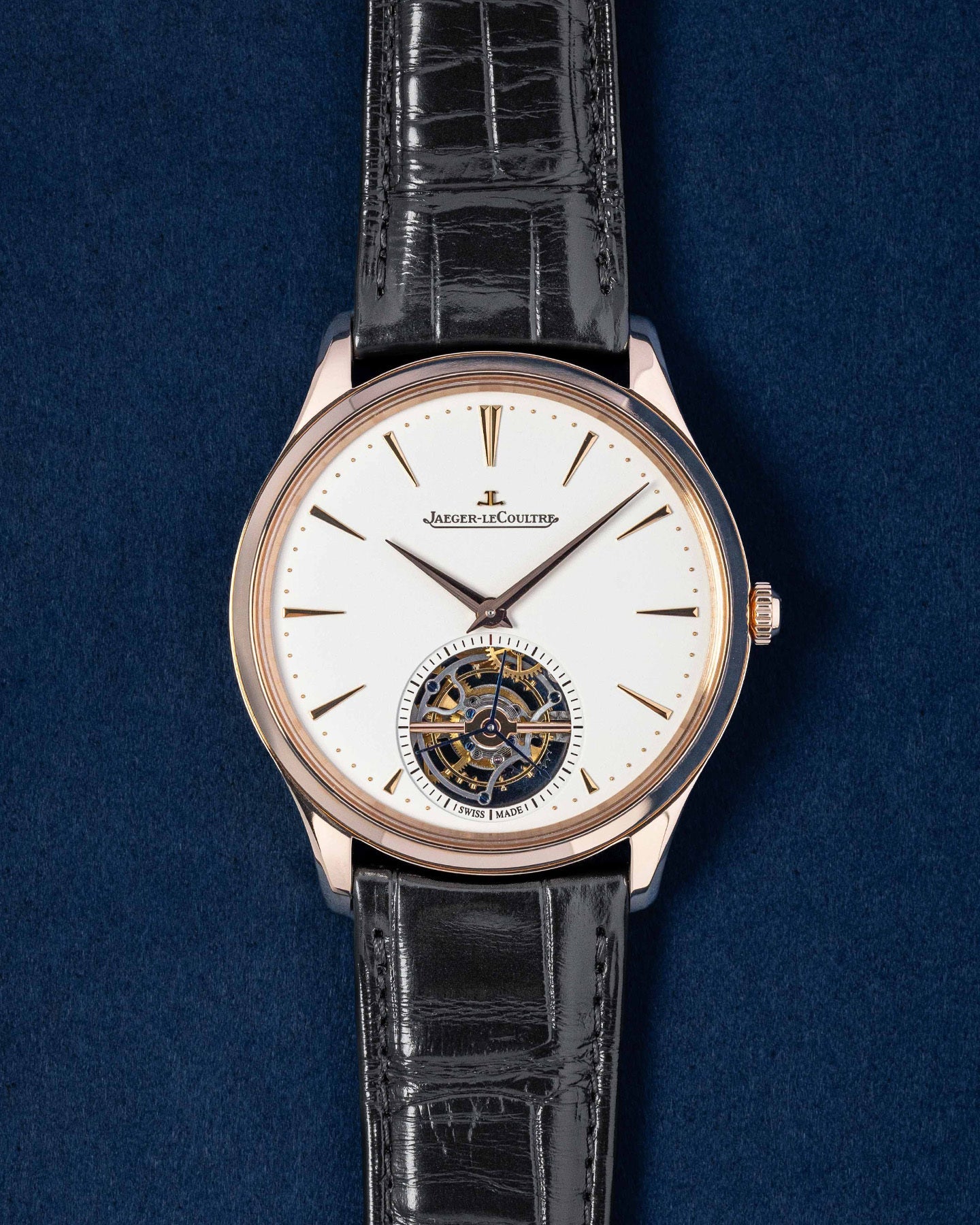
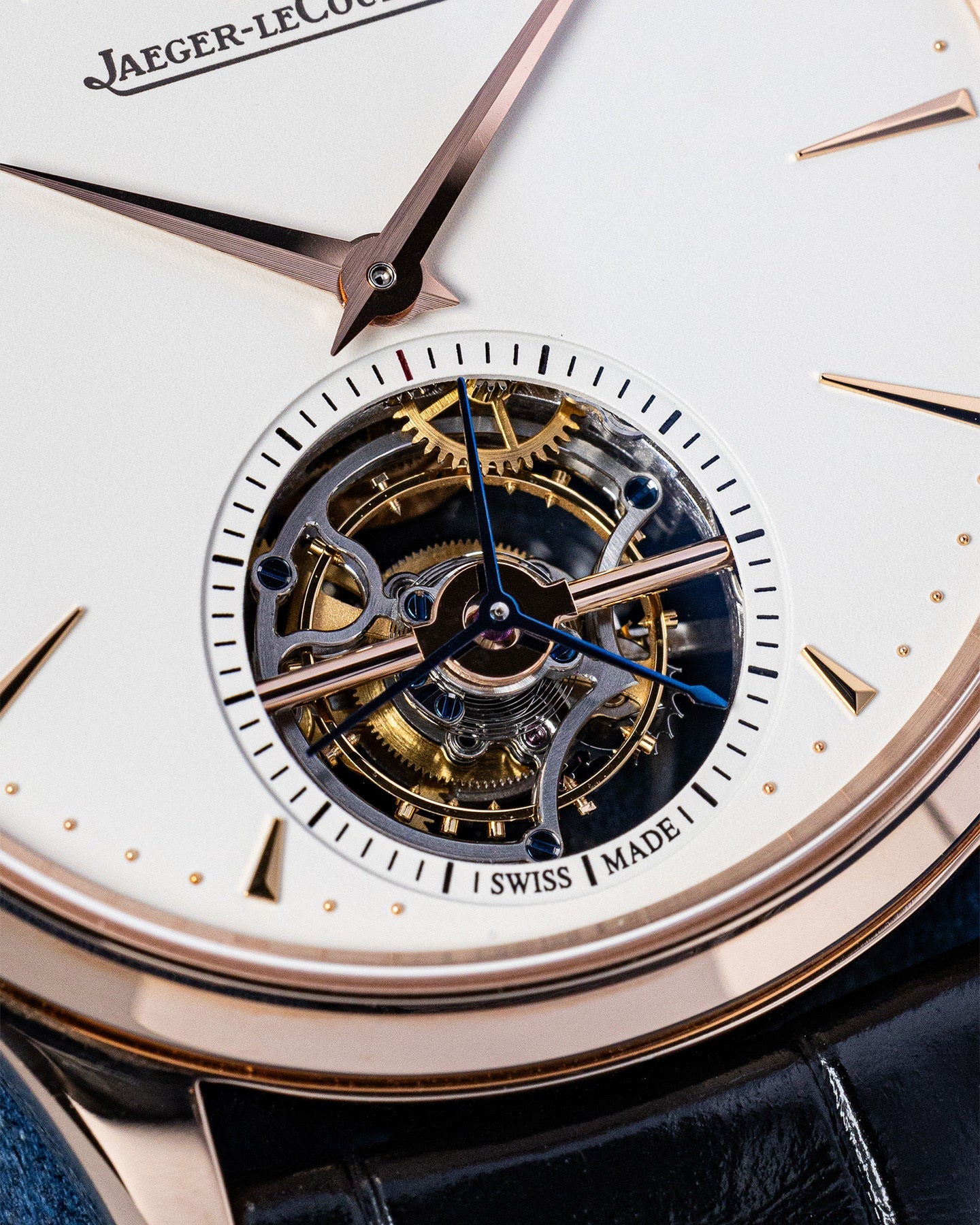
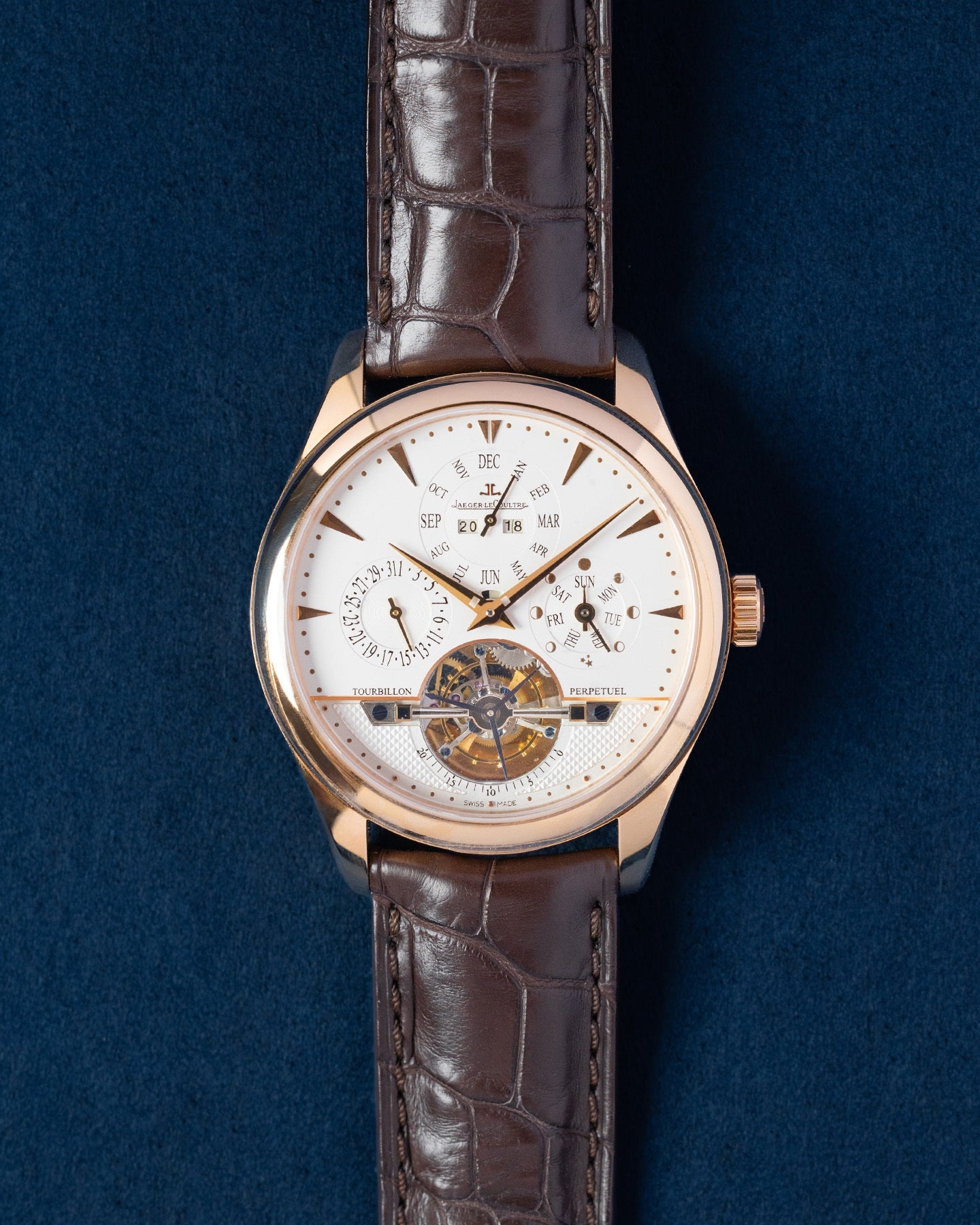
The Dual Wing concept allows Jaeger-LeCoultre watches to house exceptional complications without sacrificing chronometric accuracy. The Duometre Spherotourbillon is a masterpiece of kinetic engineering. Standard tourbillons only compensate for the effects of gravity in vertical positions. The Spherotourbillon features a dual axis, multi cage tourbillon that rotates on a twenty degree incline, constantly adjusting the position of the balance wheel across three dimensions to ensure perfect timing regardless of how the watch rests on the wrist. The substantial tourbillon mechanism is fully exposed on the left side of the dial, while the independent power reserve indicators for the Dual Wing system are displayed clearly on the right.
The Duometre Quantieme Lunaire
The Duometre Quantieme Lunaire utilizes the Dual Wing architecture to power a highly complex perpetual calendar and moon phase display. Because the complications operate on their own power source, Jaeger-LeCoultre was able to integrate a foudroyante, or flying seconds indicator, at the six o clock position. This incredibly fast hand completes one full rotation every second, displaying the time to the nearest sixth of a second. This level of extreme chronometric precision is only possible because the foudroyante does not drain power from the main timekeeping gear train, proving the absolute superiority of the Duometre engineering.
The Duometre Unique Travel Time
For the ultimate global traveler, Jaeger-LeCoultre watches offer the Duometre Unique Travel Time. This specific model uses the Dual Wing system to manage two distinct time zones perfectly. The home time is displayed on the right sub dial, while the travel time is displayed on the left sub dial utilizing a digital jumping hour format. The wearer can adjust the travel time completely independently, setting it to the exact minute to accommodate specific geographic regions that operate on irregular half hour time zones, all without ever stopping or interfering with the primary home time mechanism.
The Jaeger-LeCoultre Polaris and Memovox
While Jaeger-LeCoultre is primarily revered for elegant dress watches and high complications, the brand also possesses a deep, highly respected history in the realm of underwater professional instruments. This heritage is anchored by the Memovox complication, a mechanical alarm system that strikes a small hammer against a gong inside the case to produce a loud, buzzing sound.
The 1968 Memovox Polaris
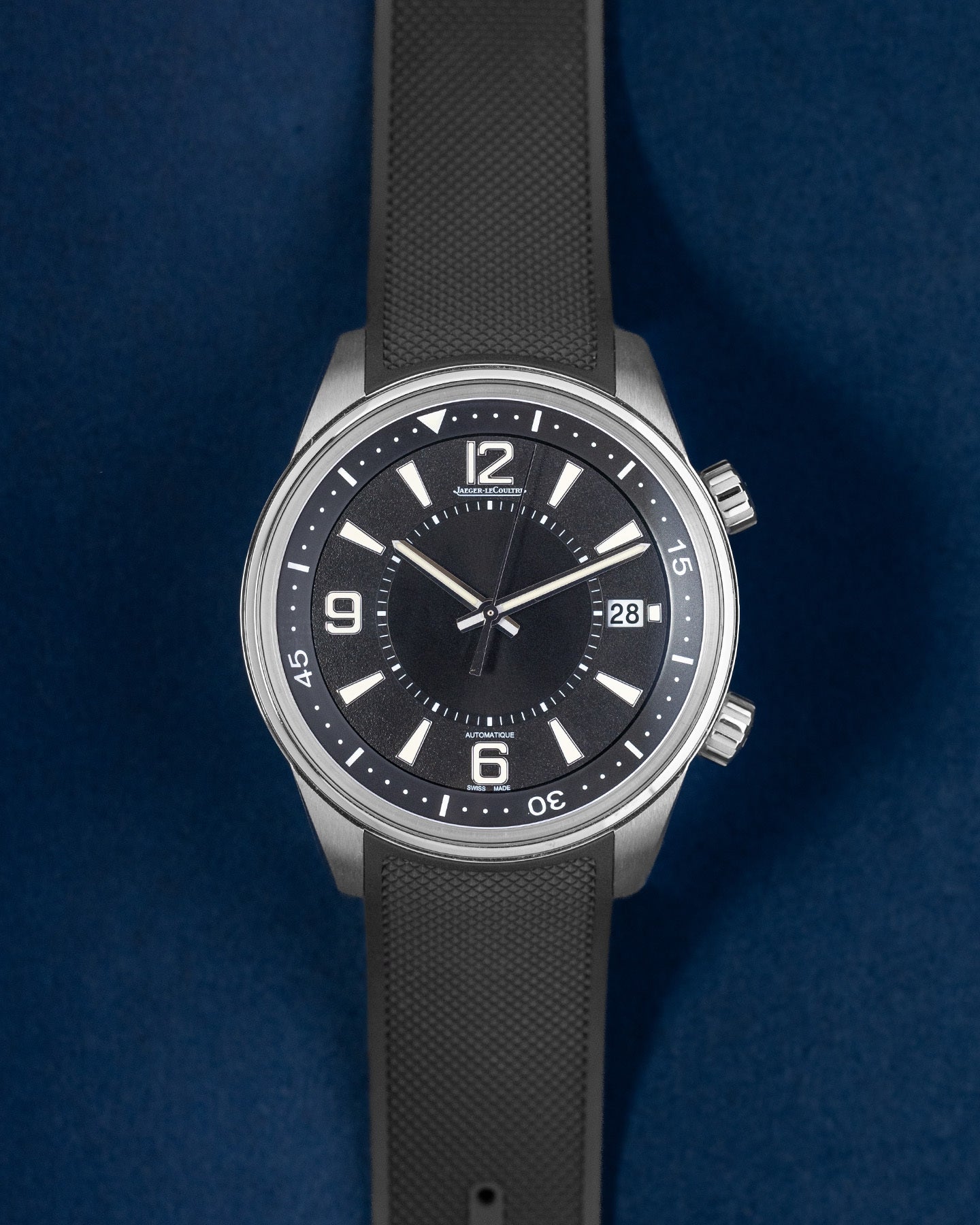
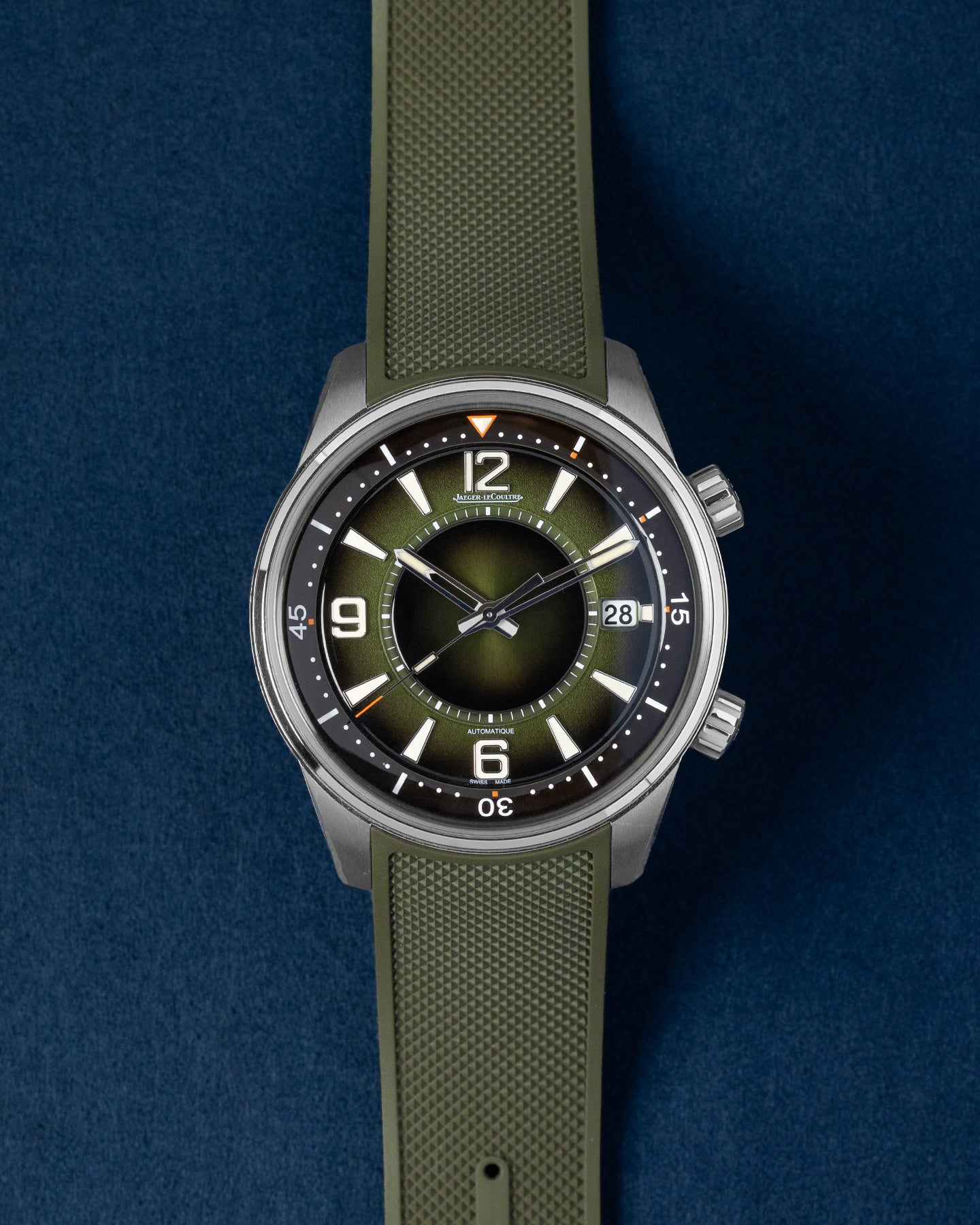
In 1968, Jaeger-LeCoultre watches released the legendary Memovox Polaris, specifically designed for scuba divers. The watch featured the mechanical alarm complication to remind divers when it was time to begin their ascent to the surface. Because sound travels differently underwater, the original Polaris utilized a substantial forty two millimeter SuperCompressor case with a triple caseback construction. The outer caseback featured multiple holes to allow the sound of the internal alarm gong to resonate clearly through the water, ensuring the diver would hear and feel the vibration over the noise of their breathing apparatus.
The Internal Rotating Bezel
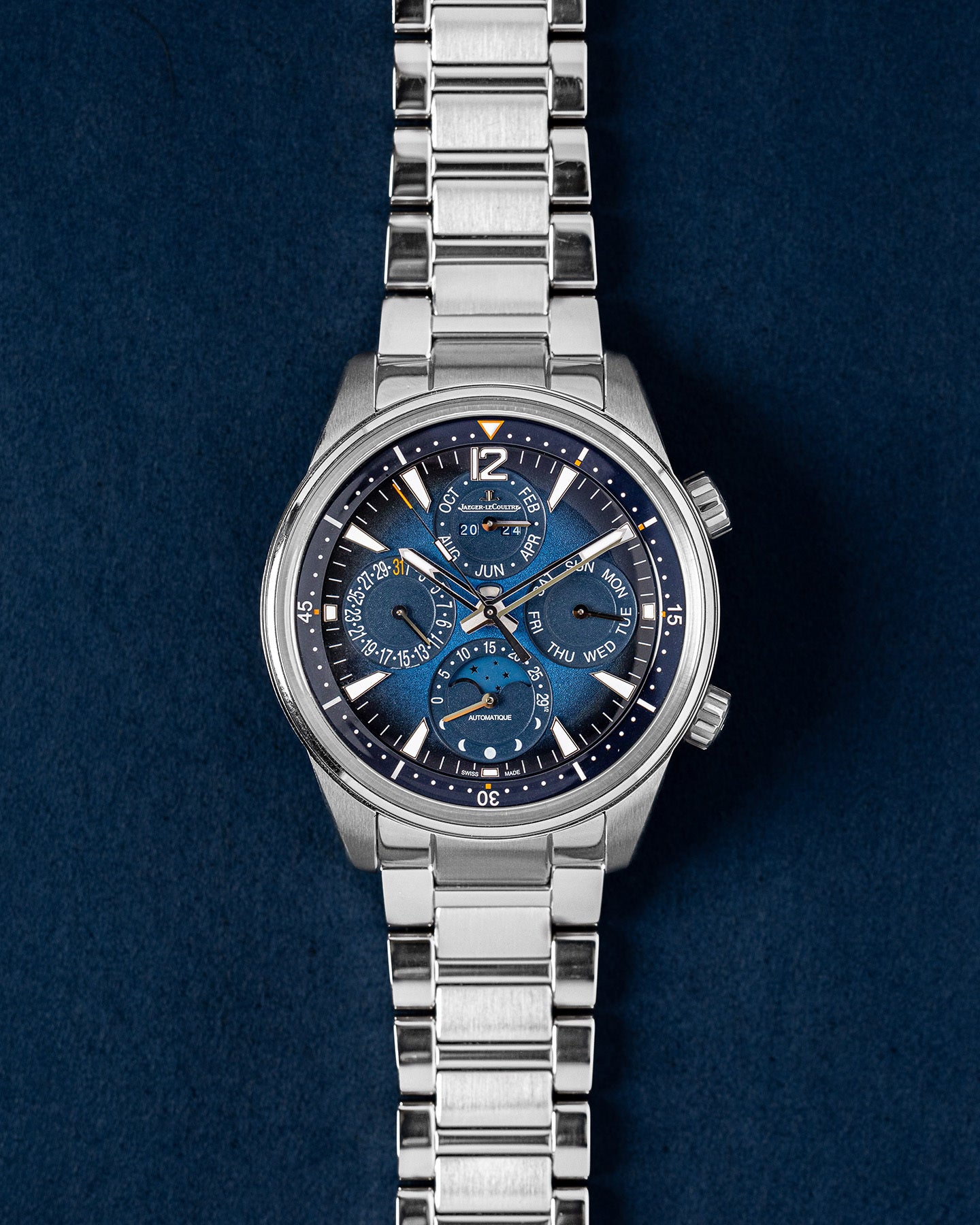
To maintain the sleek, elegant profile that Jaeger-LeCoultre watches are known for, the Polaris utilized an internal rotating diving bezel rather than the bulky external bezels used by Rolex and Omega. The internal bezel was operated by a dedicated secondary crown on the side of the case. This design protected the timing scale from accidental bumps against coral or boat ladders, making it a highly secure timing instrument. The three crown layout, controlling the time, the internal bezel, and the mechanical alarm, became the defining aesthetic signature of the vintage Polaris.
The Modern Polaris Chronograph
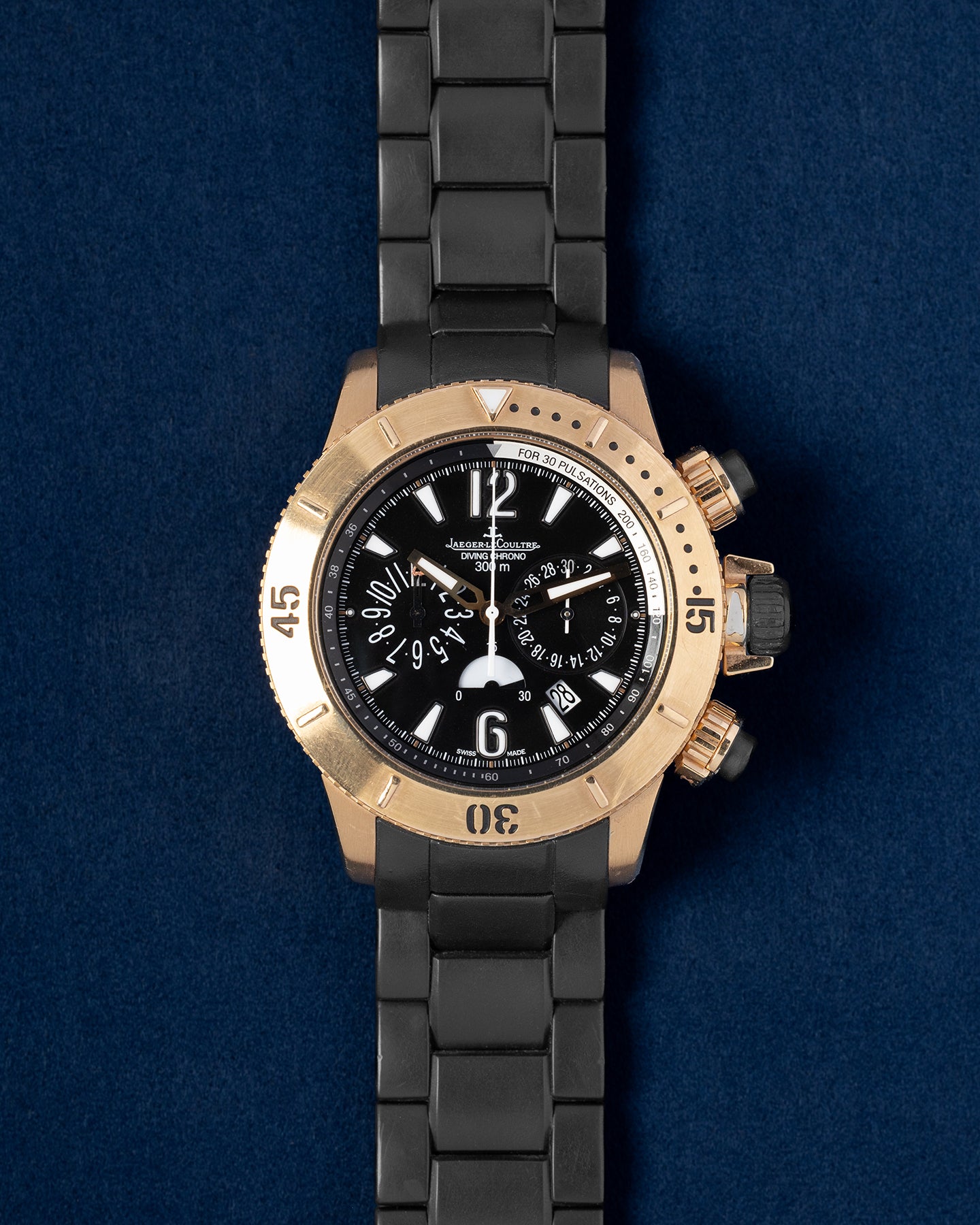
In 2018, Jaeger-LeCoultre officially relaunched the Polaris collection, transforming the vintage diving aesthetic into a highly refined modern luxury sports watch line. The modern Polaris models abandon the bulk of traditional dive watches in favor of elegant, brushed titanium and stainless steel cases that transition effortlessly from active wear to formal environments. The Polaris Chronograph serves as the anchor of the modern collection, featuring heavily textured dials with a mix of sunray brushing, graining, and opaline finishes. The dual crown layout honors the historical internal bezel design, cementing the Polaris as the ultimate gentleman's sports watch within the catalog of Jaeger-LeCoultre watches.
The Rendez Vous Collection
Jaeger-LeCoultre watches do not reserve their high horology exclusively for men. The Rendez Vous collection was created to offer women timepieces that are mechanically serious and aesthetically breathtaking. Unlike many Swiss brands that simply shrink men's watches and install cheap quartz movements for their ladies collections, Jaeger-LeCoultre equips the Rendez Vous line with exceptional in house mechanical automatic calibers. The cases frequently feature diamond set bezels and stunning guilloche dials, incorporating complex day and night indicators and moon phase complications. The Rendez Vous proves that the watchmaker of watchmakers respects the mechanical demands of their female clientele just as highly as their male collectors.
High Complications and the Gyrotourbillon
At the absolute peak of the Swiss horological pyramid, Jaeger-LeCoultre watches routinely produce grand complications that boggle the mind. The brand operates a specialized high complication workshop within the Le Sentier manufacture where master watchmakers spend months assembling single timepieces.
The Gyrotourbillon Evolution
In 2004, Jaeger-LeCoultre stunned the world with the Master Gyrotourbillon 1. This incredible mechanism featured a multi axis tourbillon that rotated in three dimensions, creating a mesmerizing spherical dance on the dial. The brand has continually evolved this concept, eventually placing the complex Gyrotourbillon inside the restrictive rectangular confines of the Reverso case. These premium pieces represent the absolute extreme boundary of what human hands and advanced micro engineering can achieve, reinforcing the brand's position at the top of the mechanical hierarchy.
The Supersonnerie Minute Repeaters
Jaeger-LeCoultre watches also lead the industry in acoustic engineering. A traditional minute repeater strikes small metal gongs to audibly chime the time. Historically, water resistant cases muffled this sound. Jaeger-LeCoultre solved this by inventing specialized trebuchet hammers and welding the acoustic gongs directly to the sapphire crystal rather than the movement mainplate. The sapphire crystal acts as an amplifier, projecting the sound outward and creating the loudest, most crystal clear minute repeater chimes available in modern horology.
Comparing Jaeger-LeCoultre Watches Against the Holy Trinity
When discussing where Jaeger-LeCoultre watches sit within the broader market, the comparison is almost always directed upward toward the Holy Trinity of Patek Philippe, Audemars Piguet, and Vacheron Constantin.
The simple reality is that Jaeger-LeCoultre matches the Holy Trinity in pure horological substance. They finish their movements to the same exceptional standards, they invent equally complex grand complications, and they historically supplied the base calibers that built the reputations of those three brands. A Jaeger-LeCoultre Master Ultra Thin Perpetual Calendar is mechanically equivalent to a Patek Philippe perpetual calendar. However, Jaeger-LeCoultre watches do not carry the steep price premiums associated with the Patek Philippe or Audemars Piguet names. They operate just slightly below that absolute peak in terms of brand hype, which means they offer objectively superior horological value for the dollar. For the collector who cares more about the architecture of the movement than the status of the logo, Jaeger-LeCoultre is the smartest purchase in high horology.
Secondary Market Value and Investment Dynamics
Understanding the secondary market behavior of Jaeger-LeCoultre watches is critical for intelligent buying. Because they lack the mainstream, hype driven demand of a steel Rolex Daytona or a Patek Philippe Nautilus, standard production Jaeger-LeCoultre models experience significant depreciation the moment they leave the retail boutique. A modern Reverso Tribute or a Master Control Calendar can often lose thirty to forty percent of its original retail value on the secondary market.
However, this exact depreciation curve makes buying pre owned Jaeger-LeCoultre watches from Grand Caliber an incredibly powerful investment strategy. By purchasing on the secondary market, you completely bypass the initial retail hit. You acquire true haute horlogerie, complete with rigorous 1000 Hours Control testing and exceptional in house calibers, at prices that compete with mass produced tool watches from lower tier brands. Pre owned Jaeger-LeCoultre watches represent an outstanding value proposition in the luxury watch industry, allowing you to build a highly sophisticated collection of high complications and iconic designs without burning capital on retail premiums.
Jaeger-LeCoultre Watches at Grand Caliber in Uptown Dallas
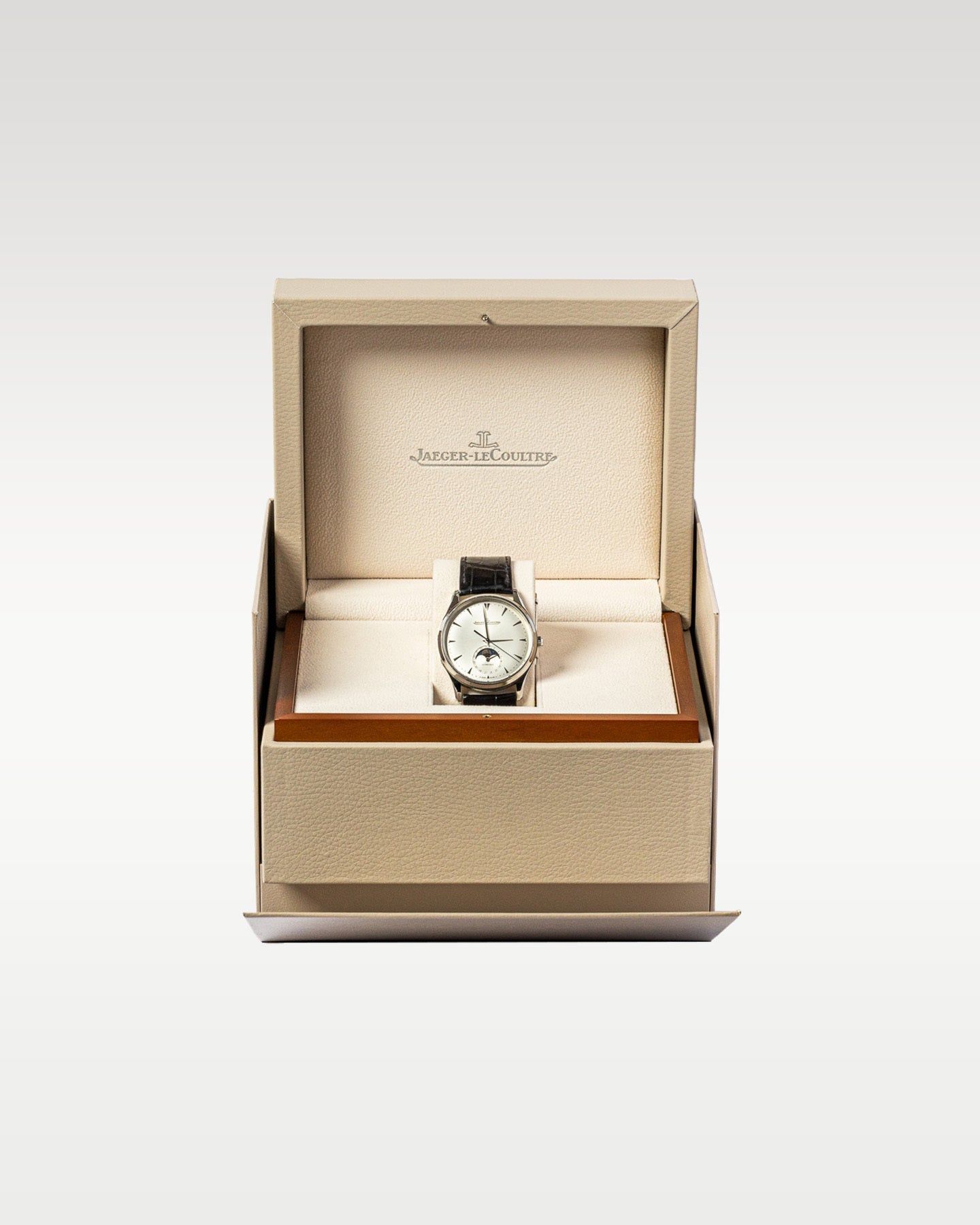
Grand Caliber presents an expertly authenticated selection of Jaeger-LeCoultre watches. We have built our reputation on total dealer transparency, deep horological knowledge, and a direct commitment to helping collectors find the smartest value in the market. Our inventory spans the entire catalog, from the classic elegance of the Reverso Duoface to the mechanical sophistication of the Master Ultra Thin Moon and the Polaris Chronograph. Every single watch is physically present and available for immediate inspection in our Uptown Dallas showroom located at 2811 McKinney Avenue.
Because Jaeger-LeCoultre relies on complex movement architectures and ultra thin tolerances, the authentication process requires elite expertise. Our named specialist staff authenticates the exact engagement of the flipping Reverso carriage, verifies the precise synchronization of the Master Control calendar mechanisms, and utilizes timegraphers to ensure every caliber is performing to factory standards before it reaches our showroom floor. We never hide pricing or require bundle purchases. Every price is posted openly online, reflecting true secondary market value. We serve clients across the entire United States with fully insured overnight shipping. Call us directly at 214-225-7198 or email info@grandcaliber.com to discuss the Jaeger-LeCoultre watches currently in our inventory or to have our experts source the exact complication you are looking for.


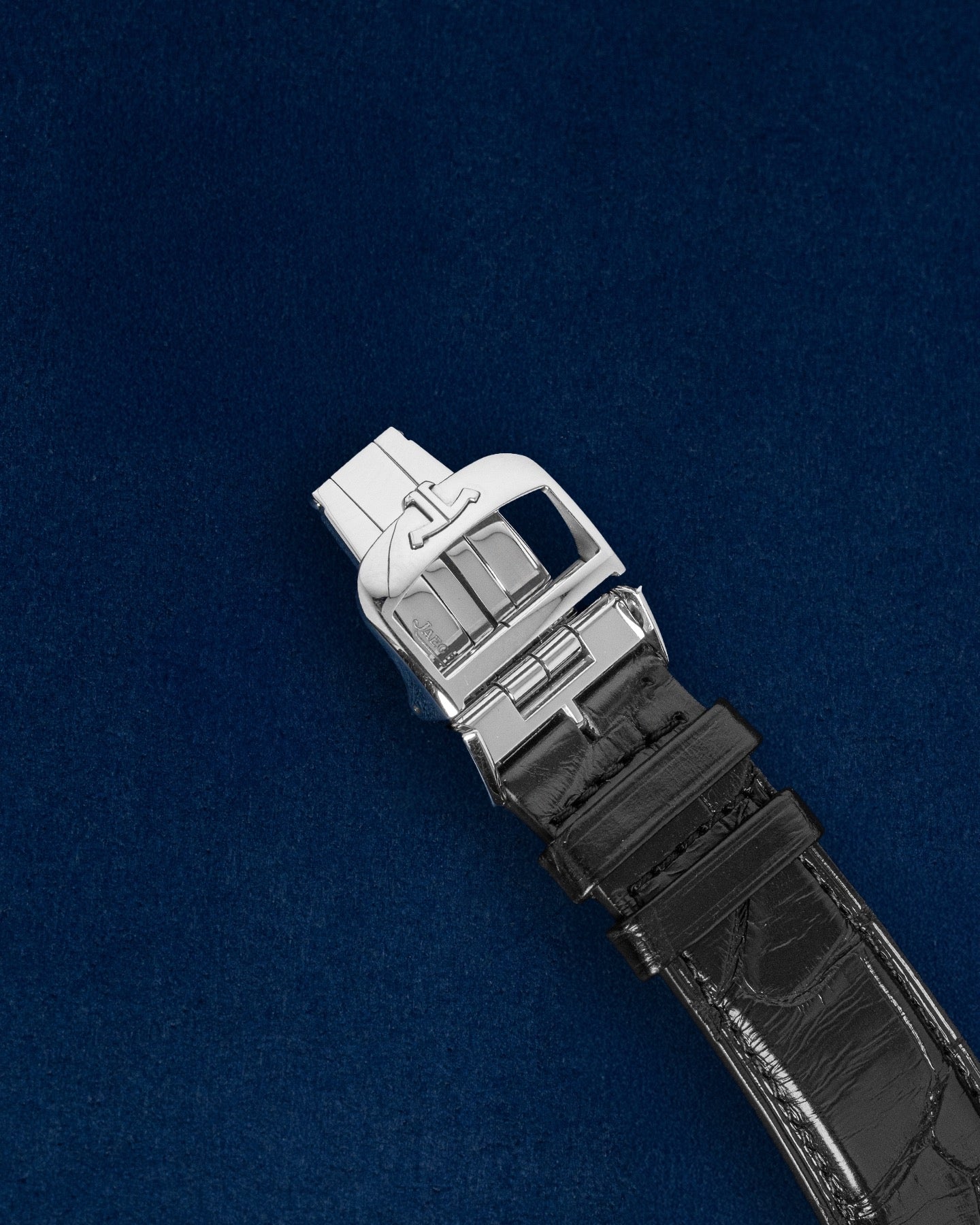
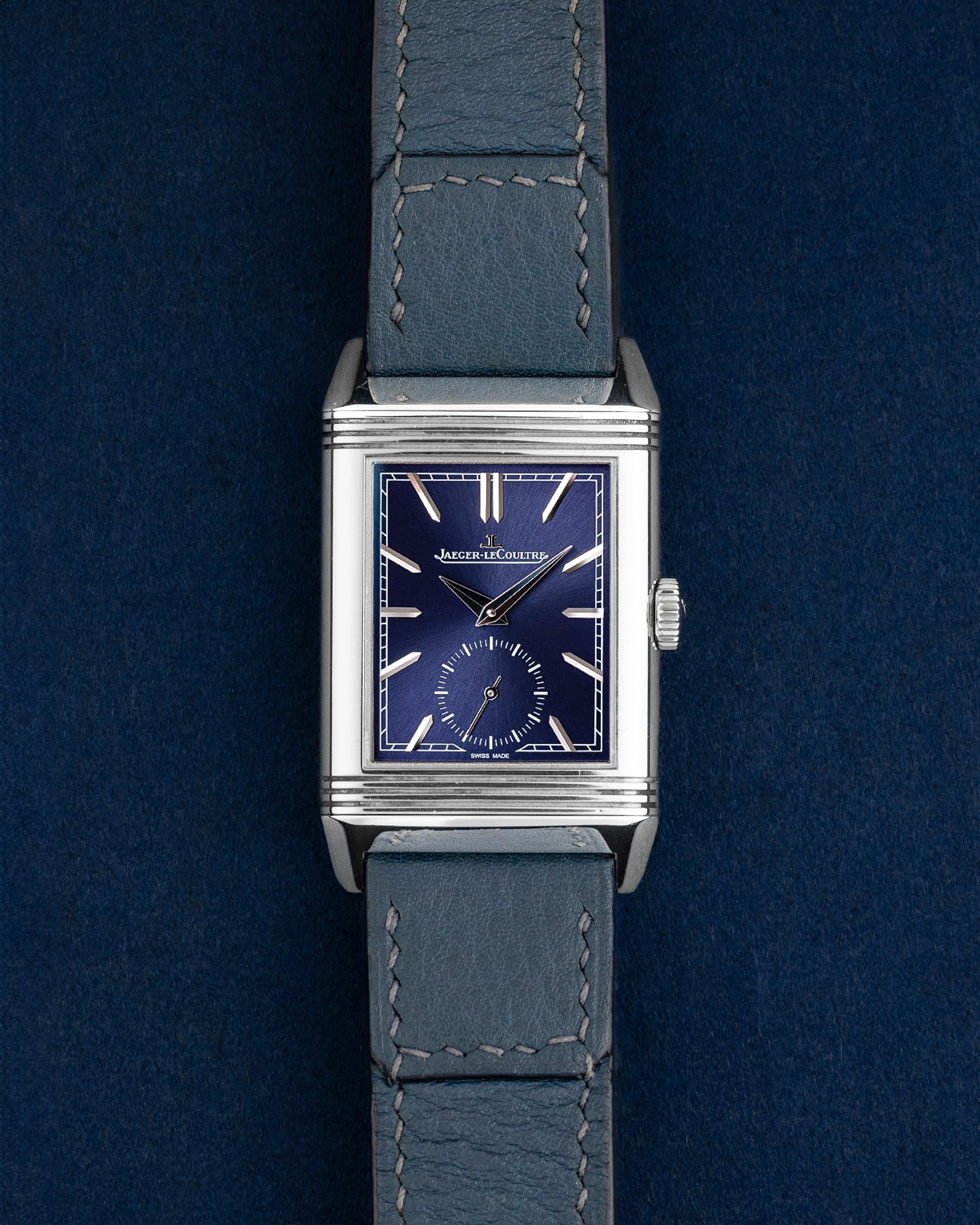
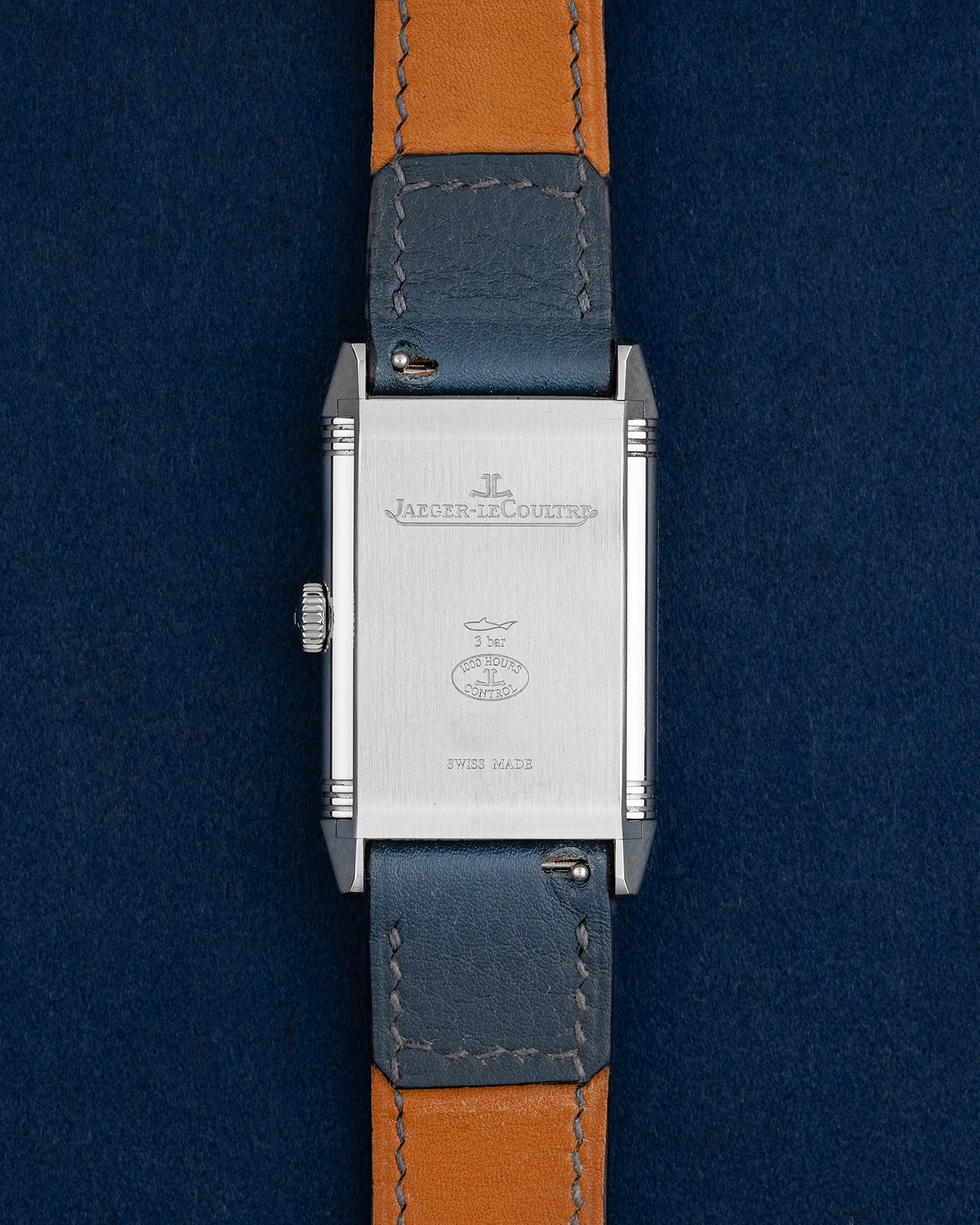
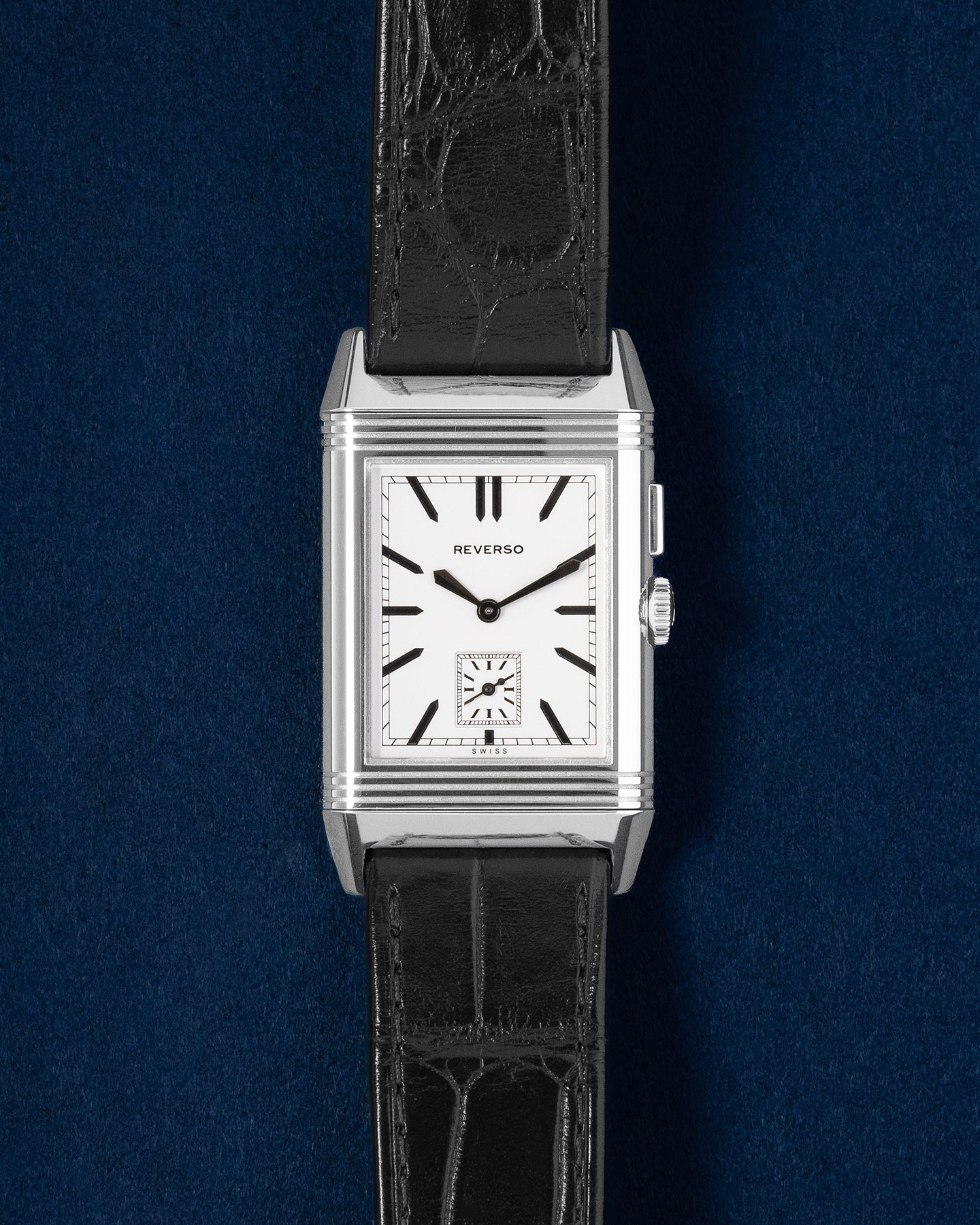
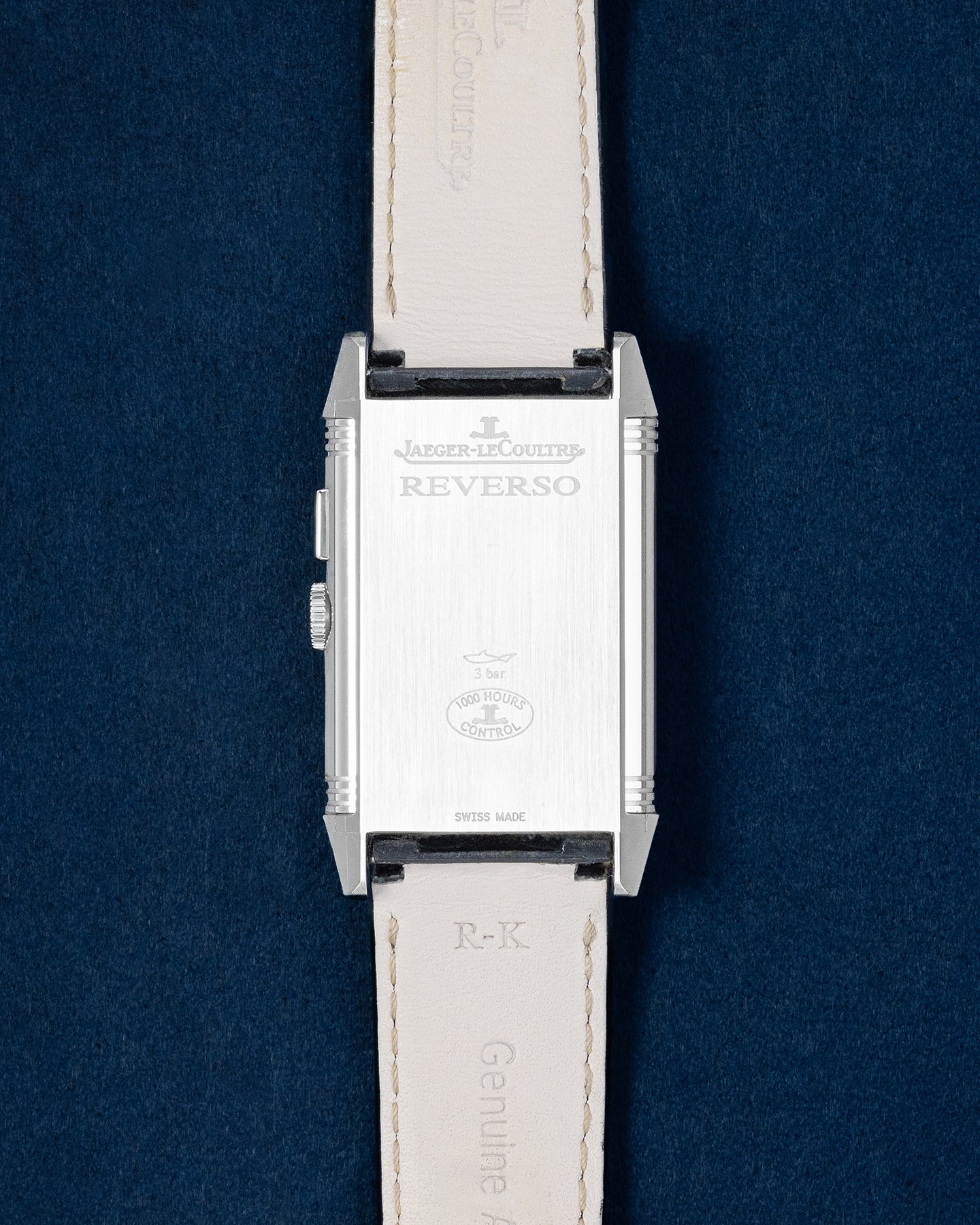
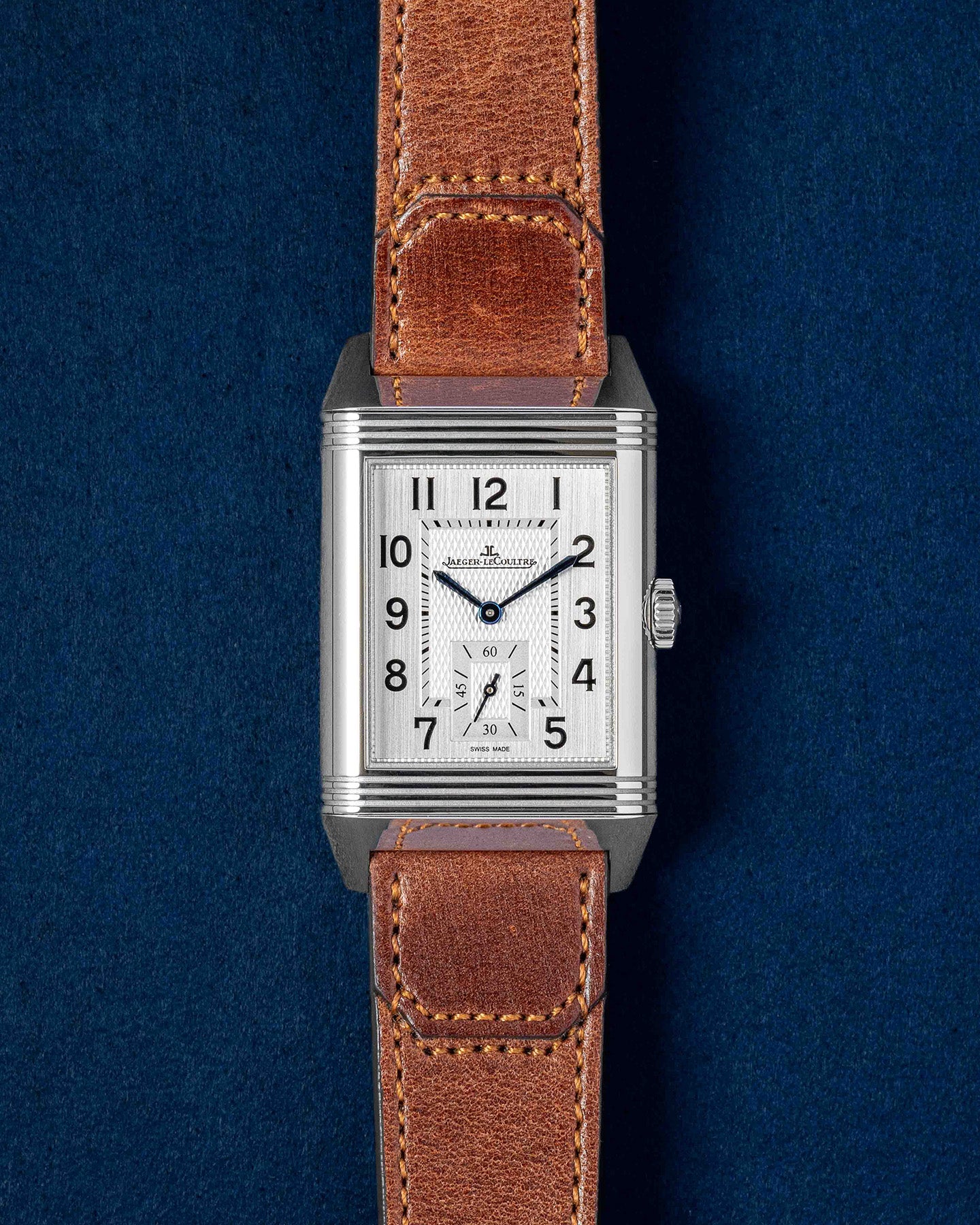
Jaeger-LeCoultre Reverso Tribute Q713216J
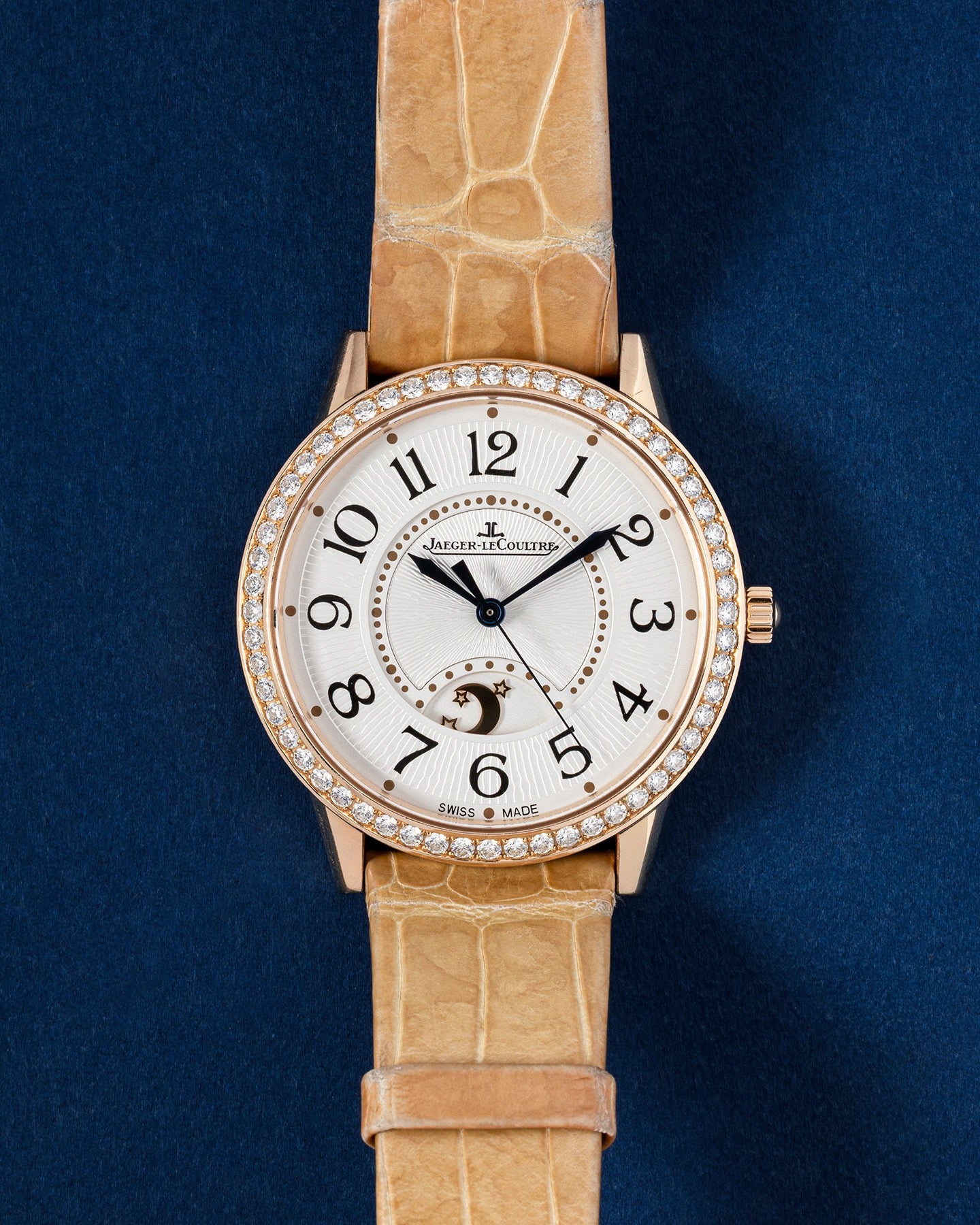
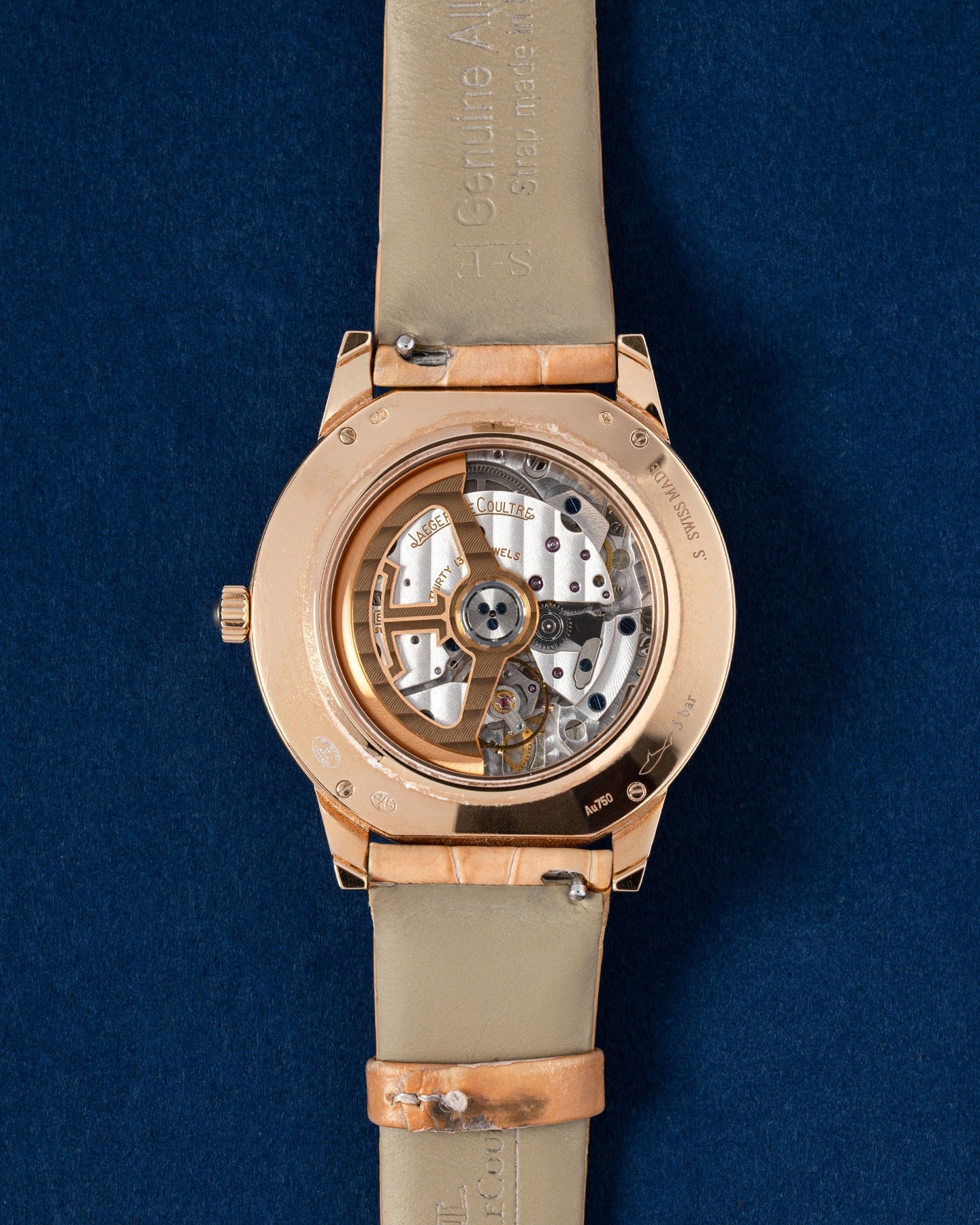
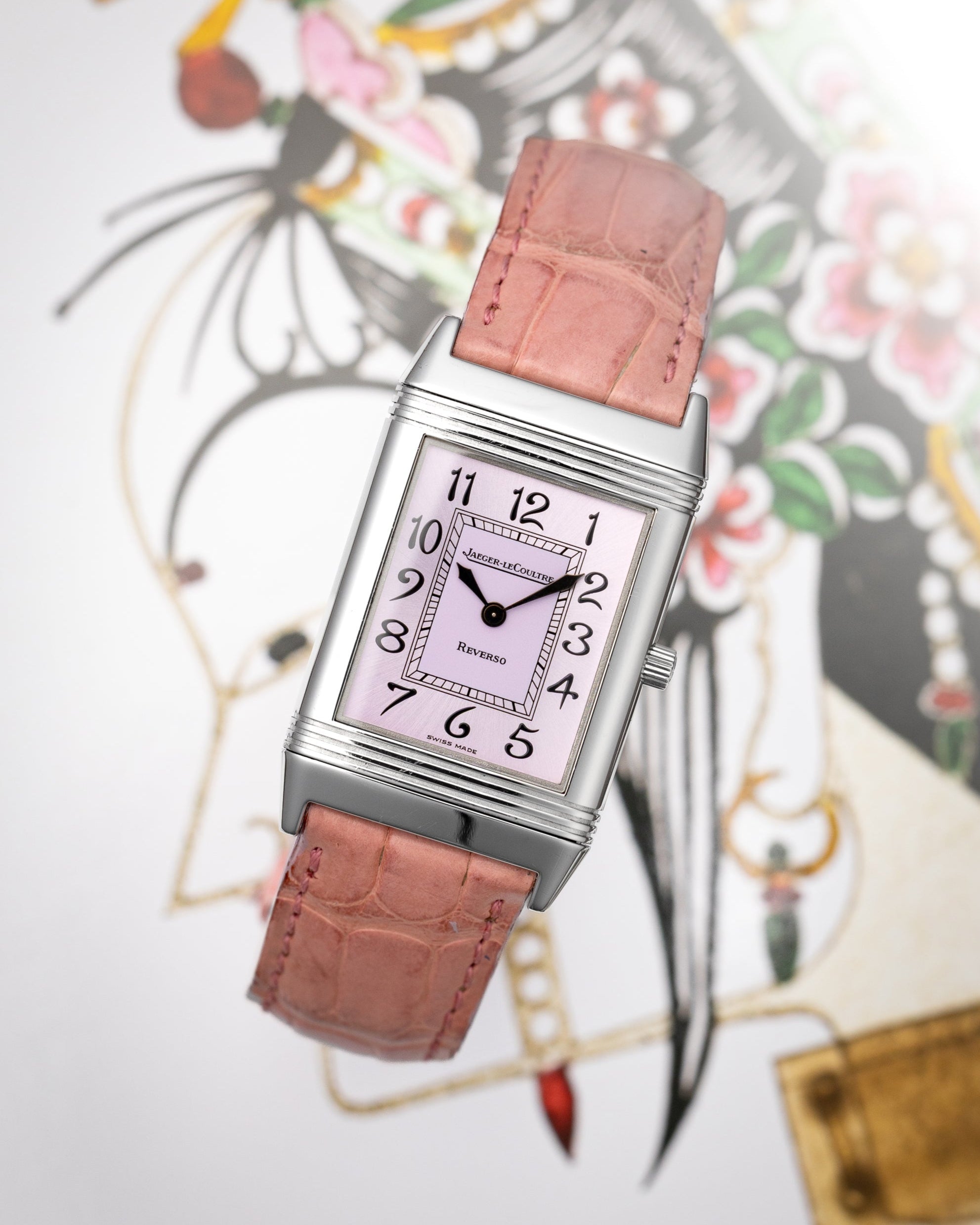
Jaeger-LeCoultre Rendez-Vous Q3612420
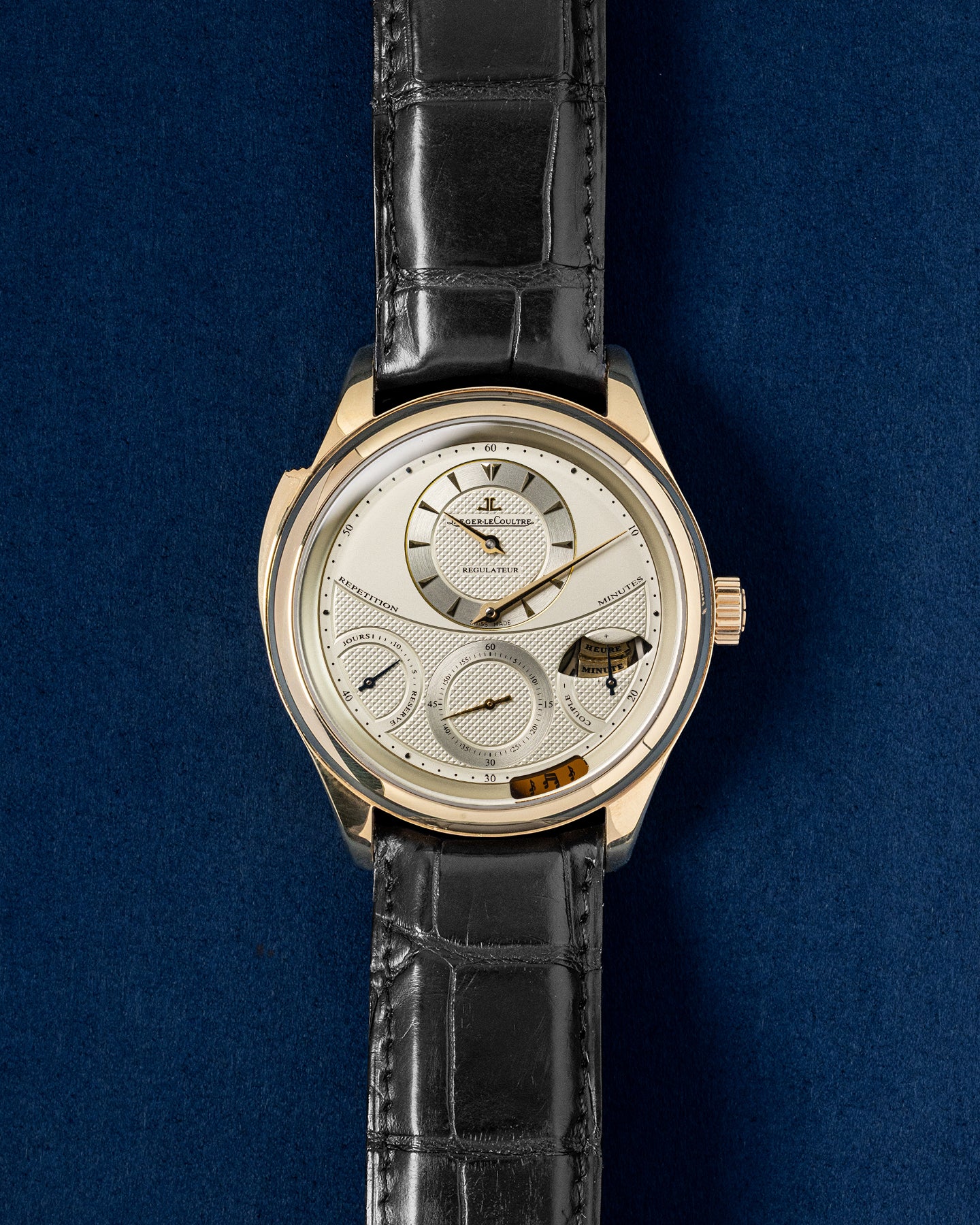
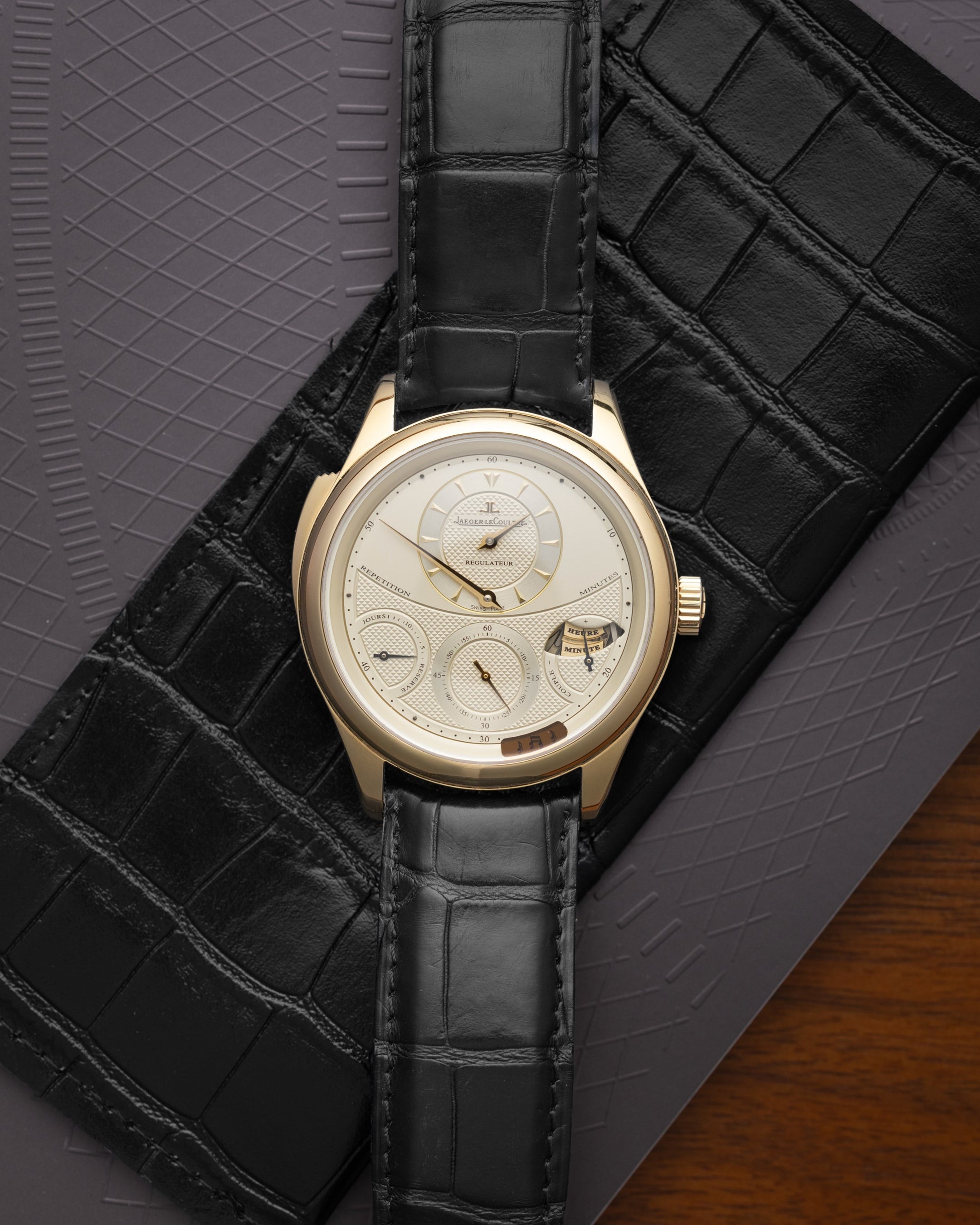
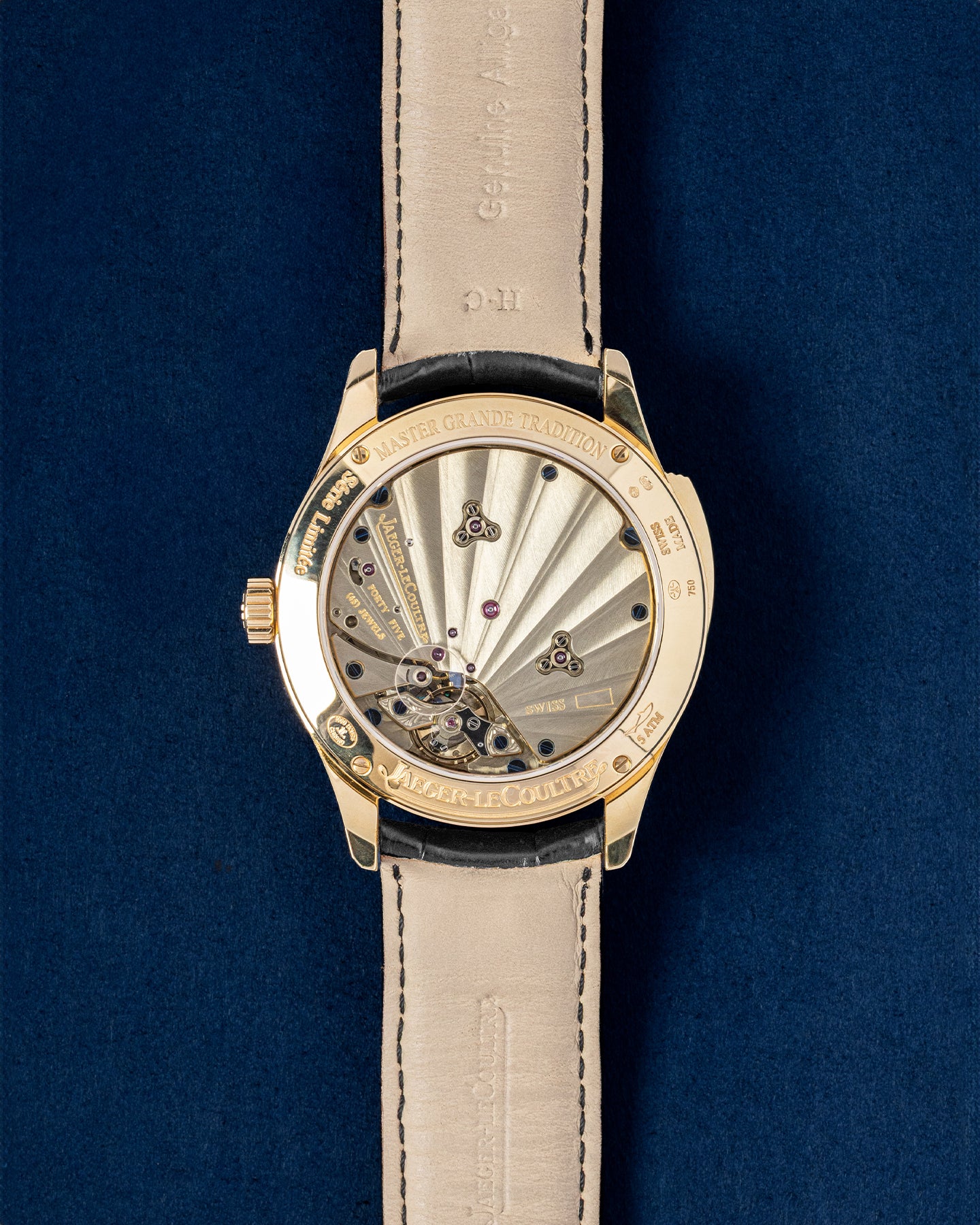
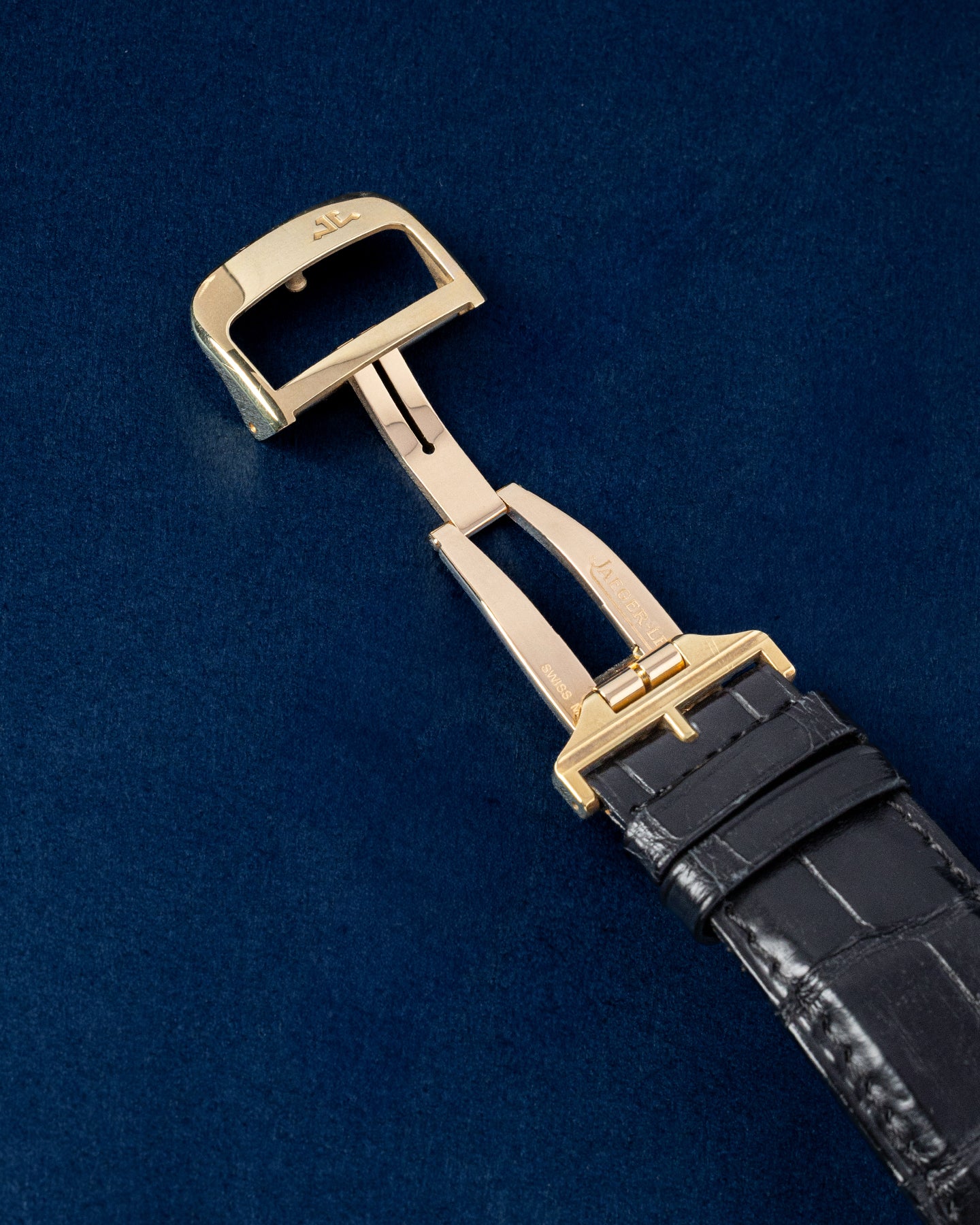
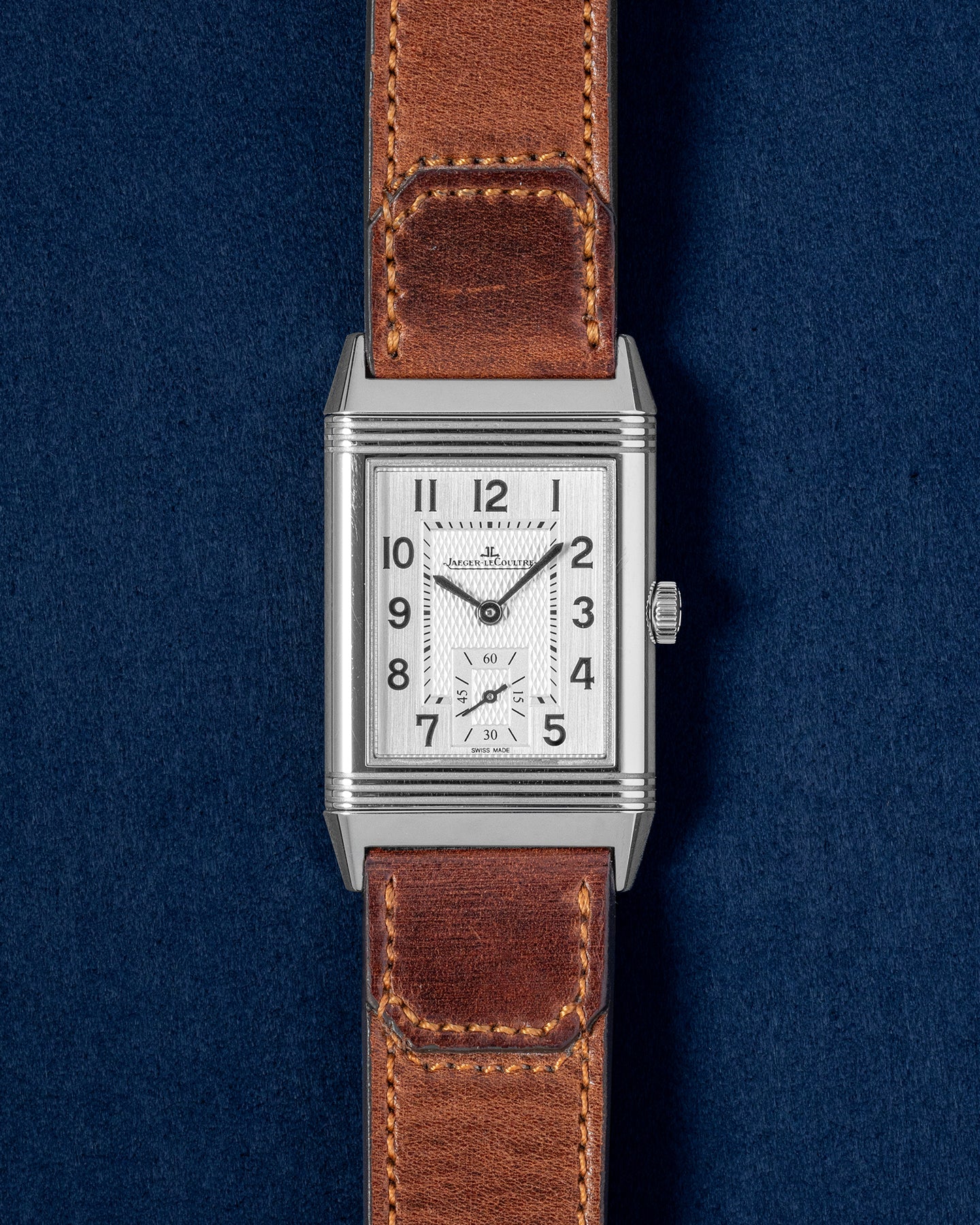
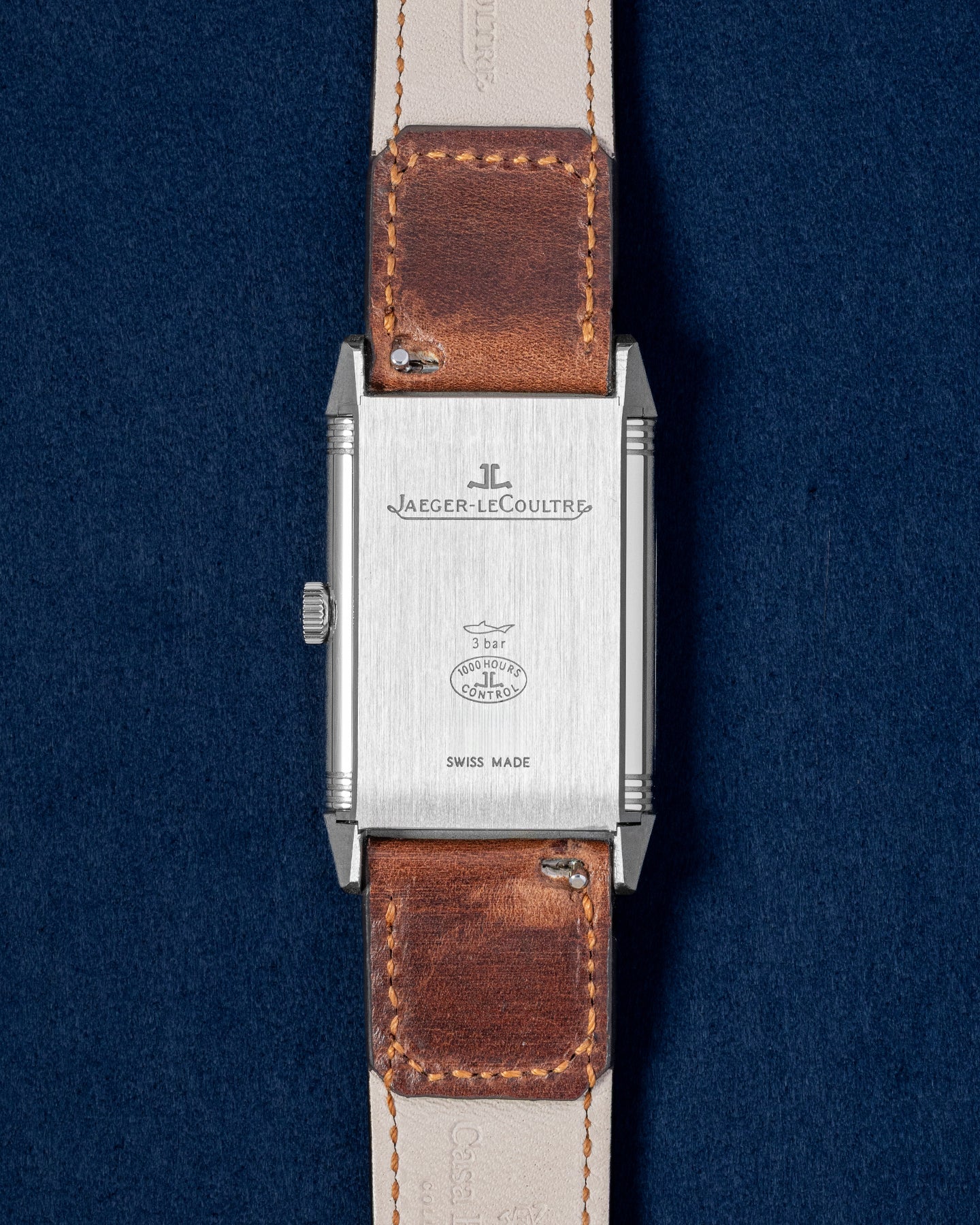
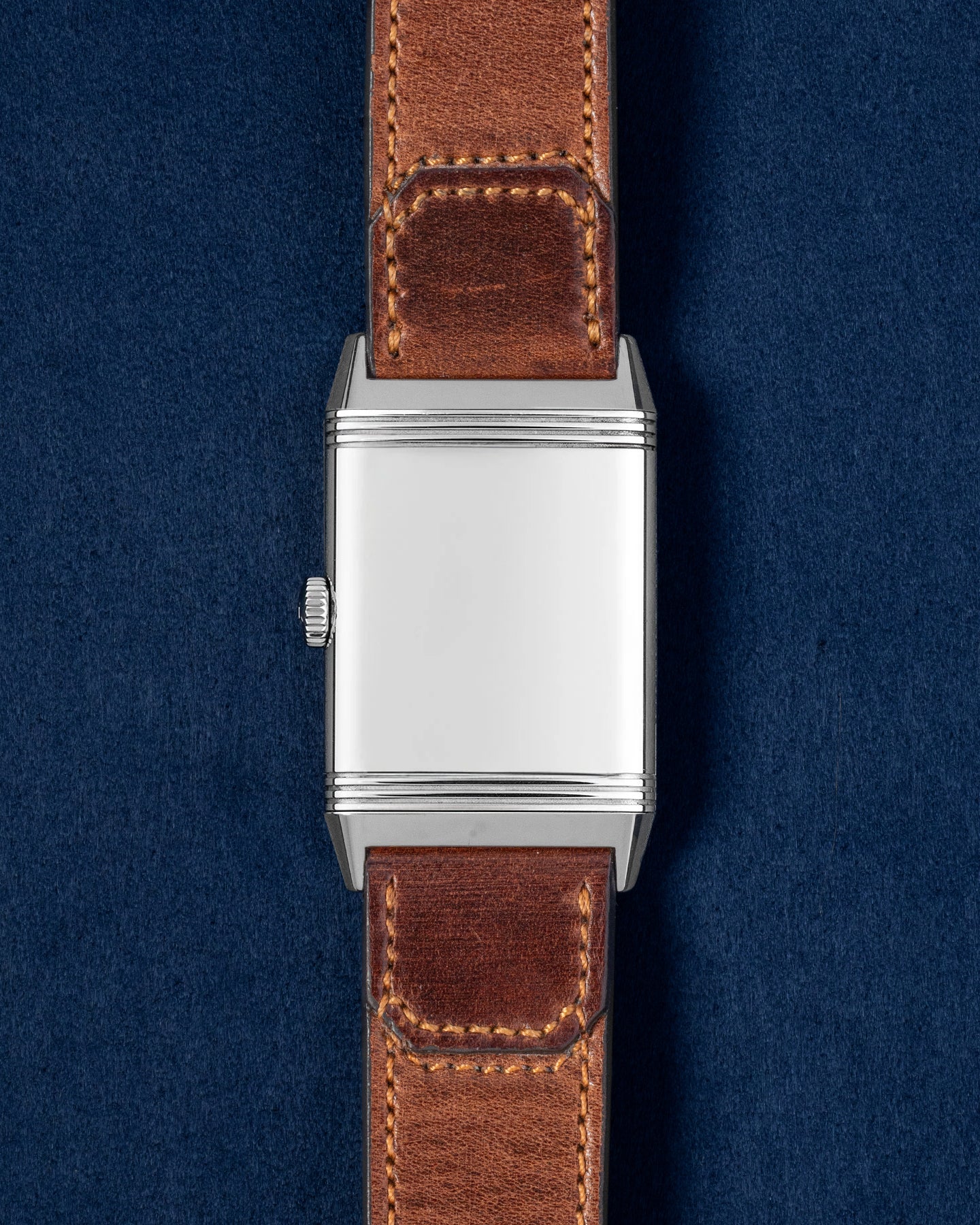
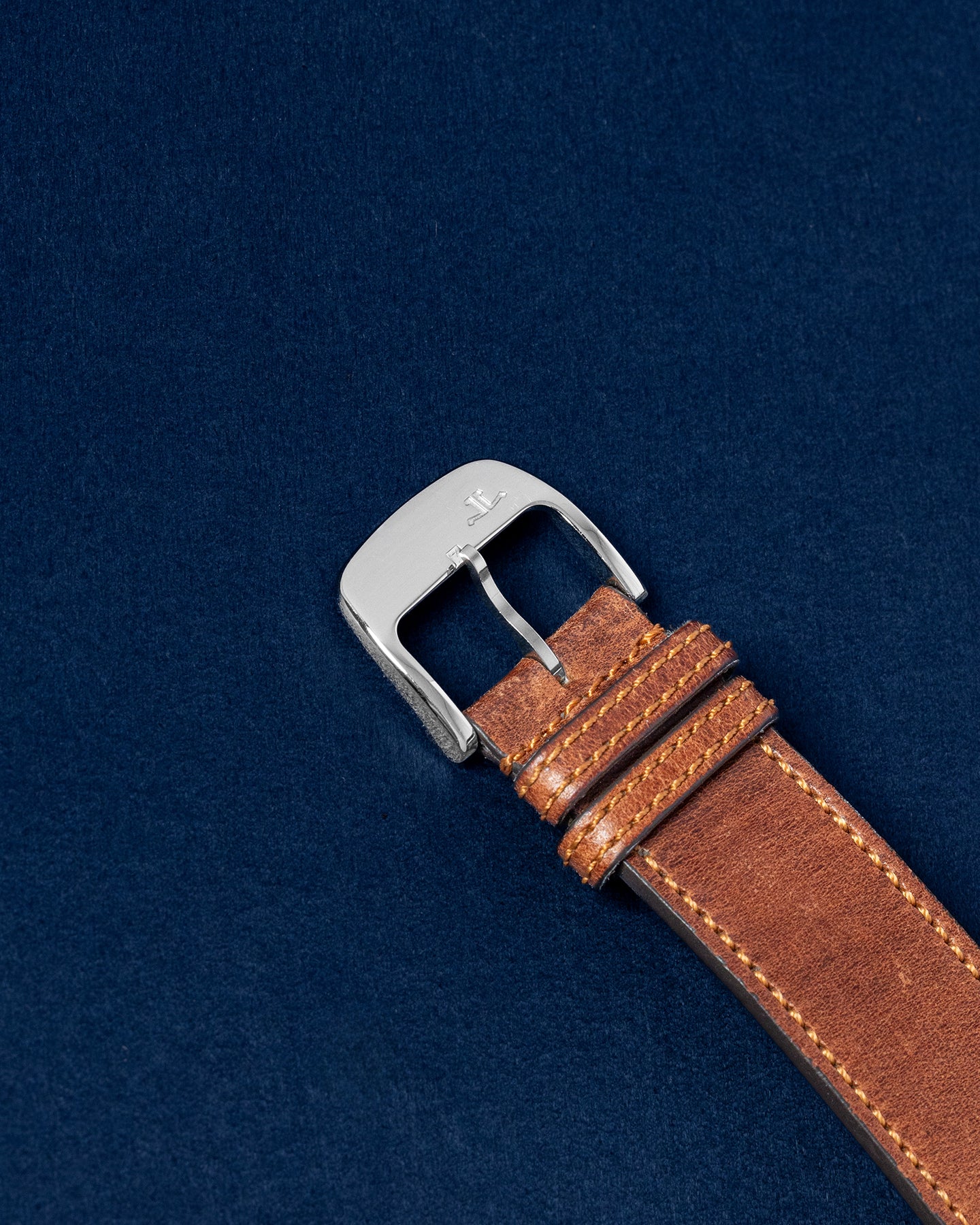
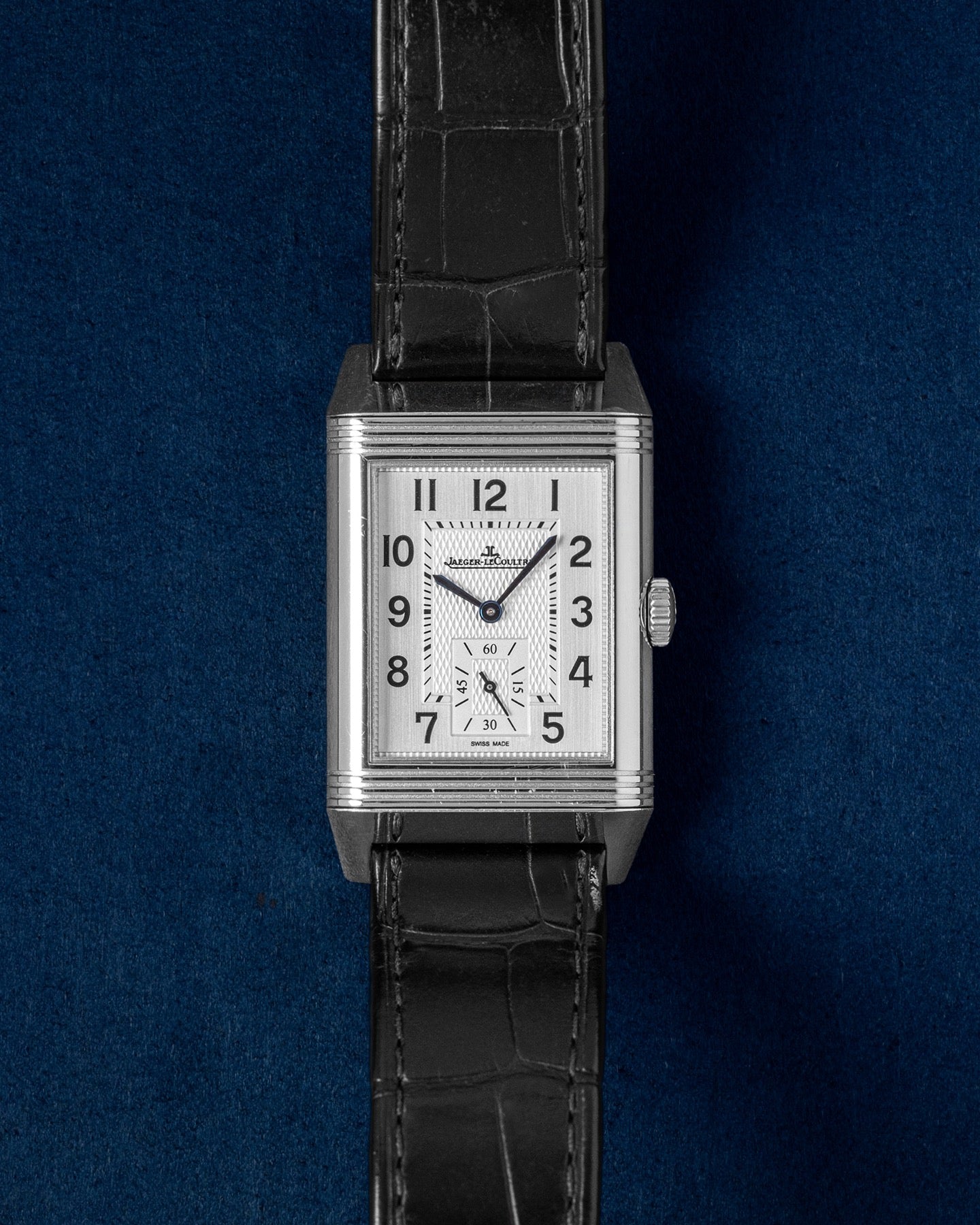
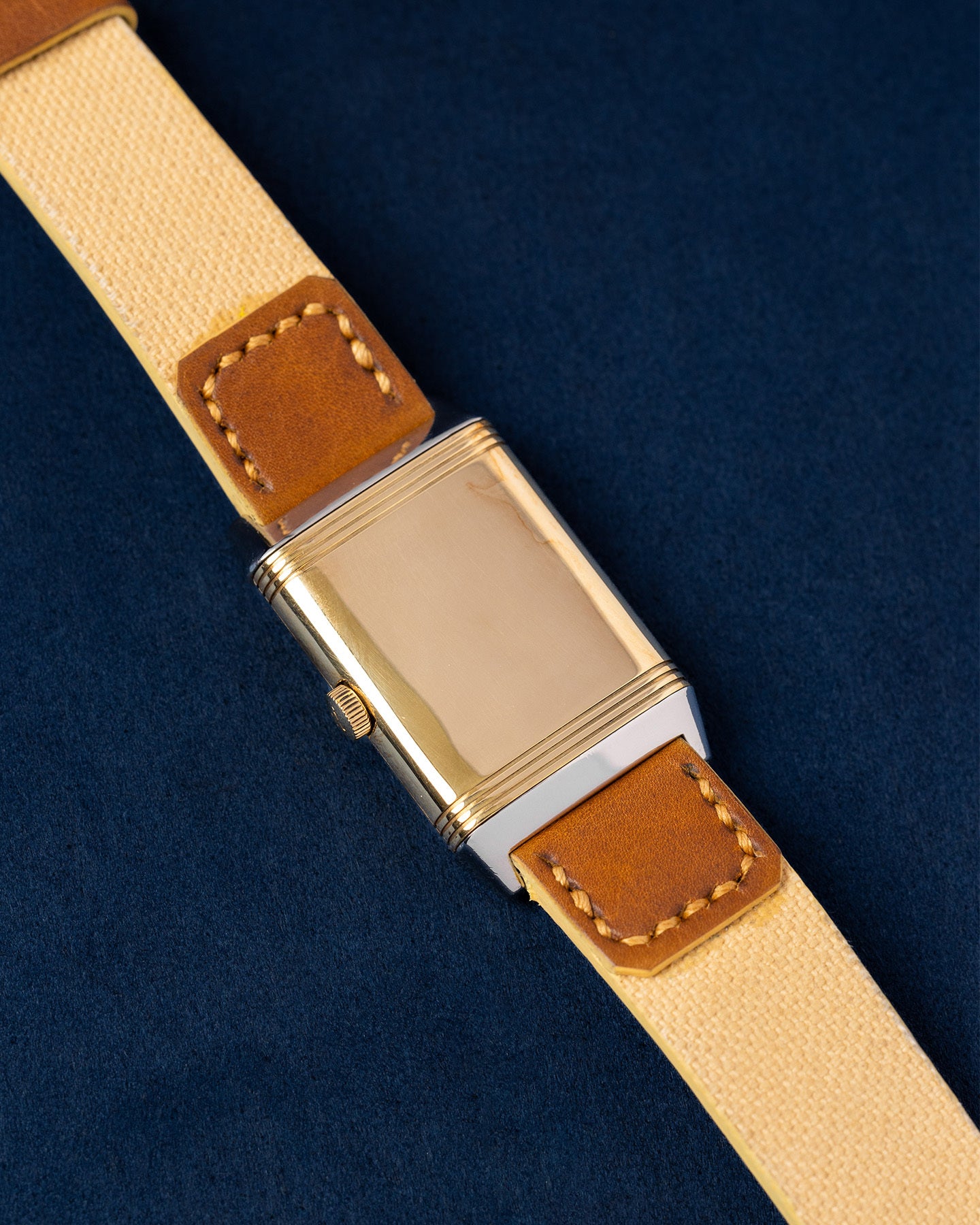
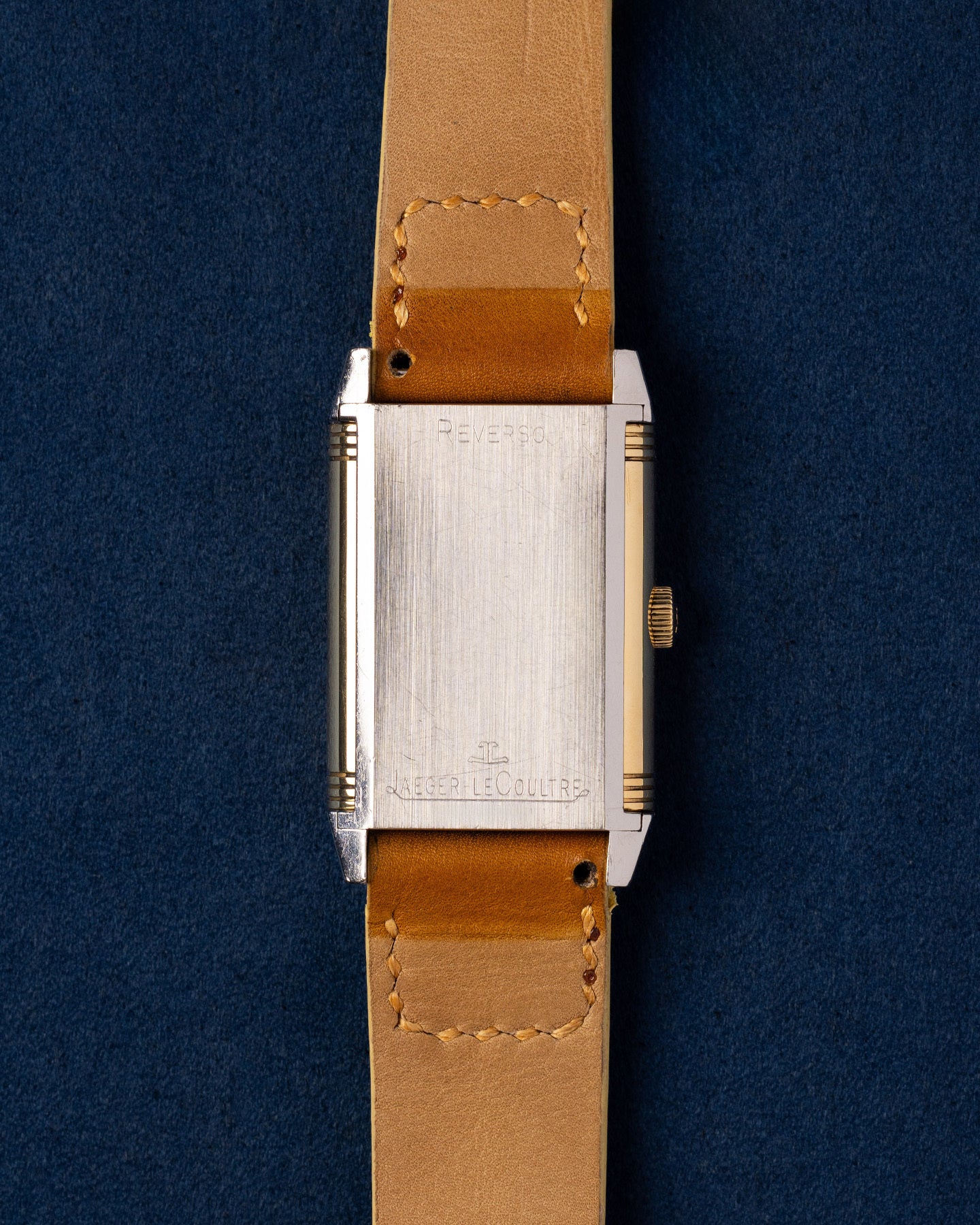
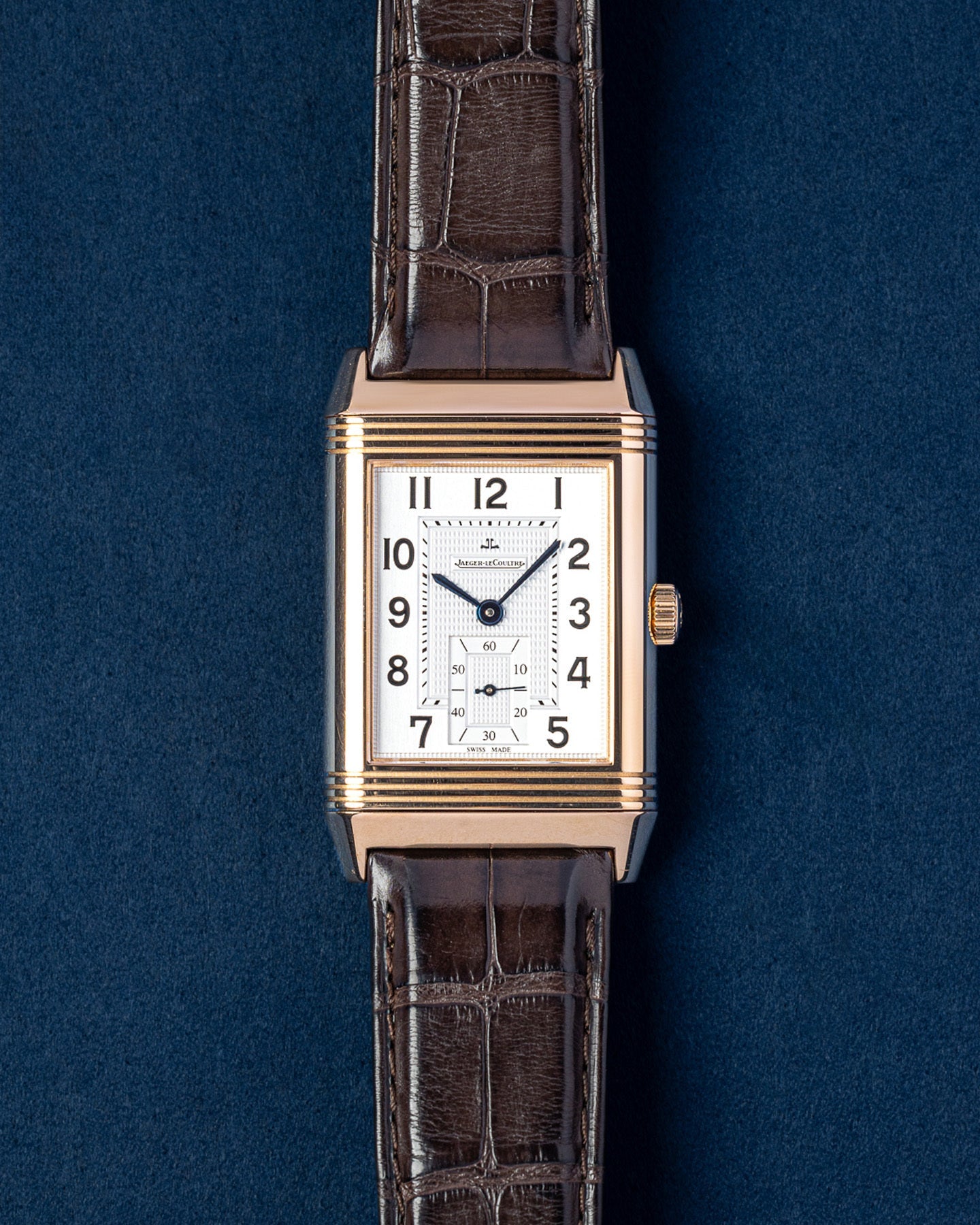
Jaeger-LeCoultre Reverso Q2438522




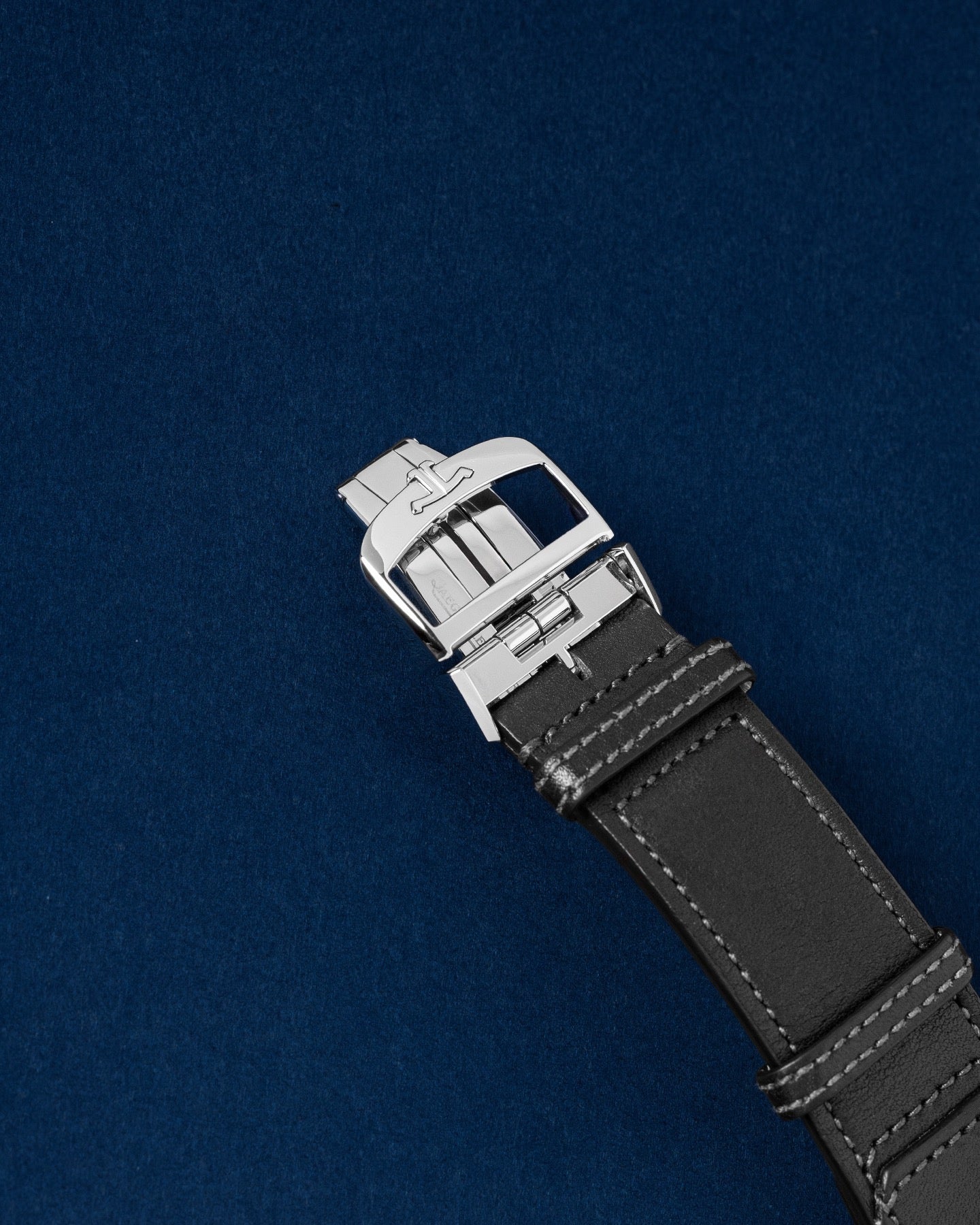
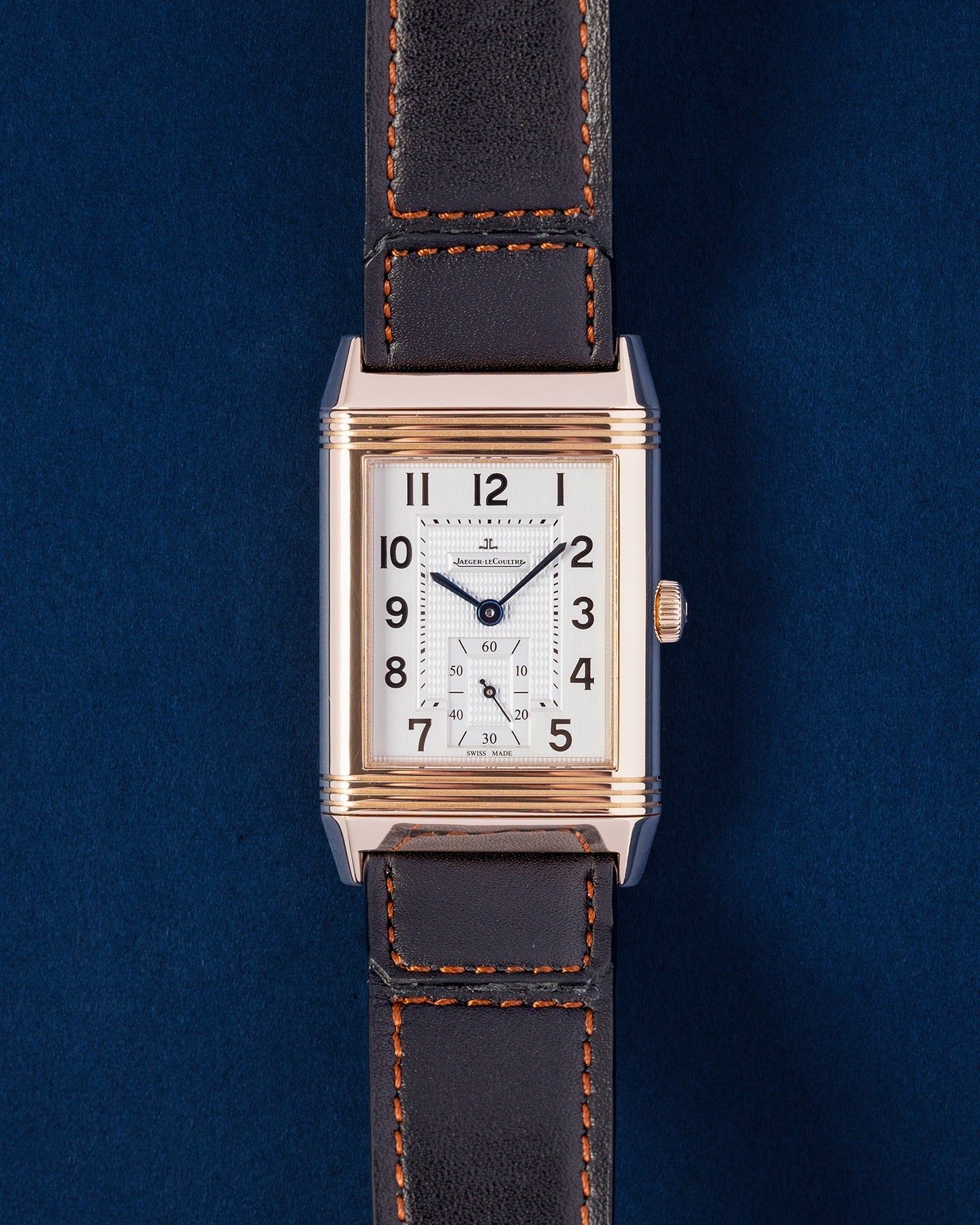
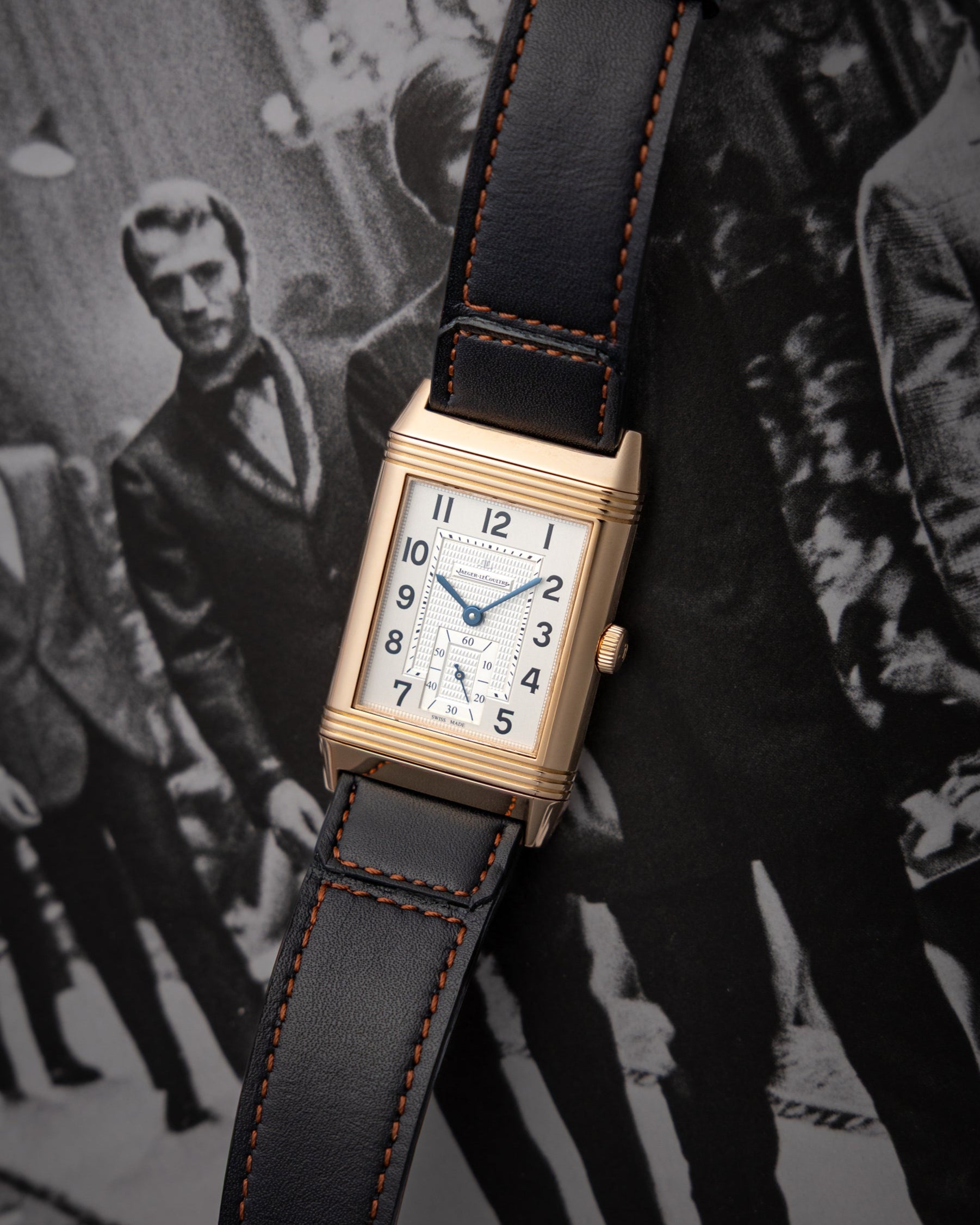
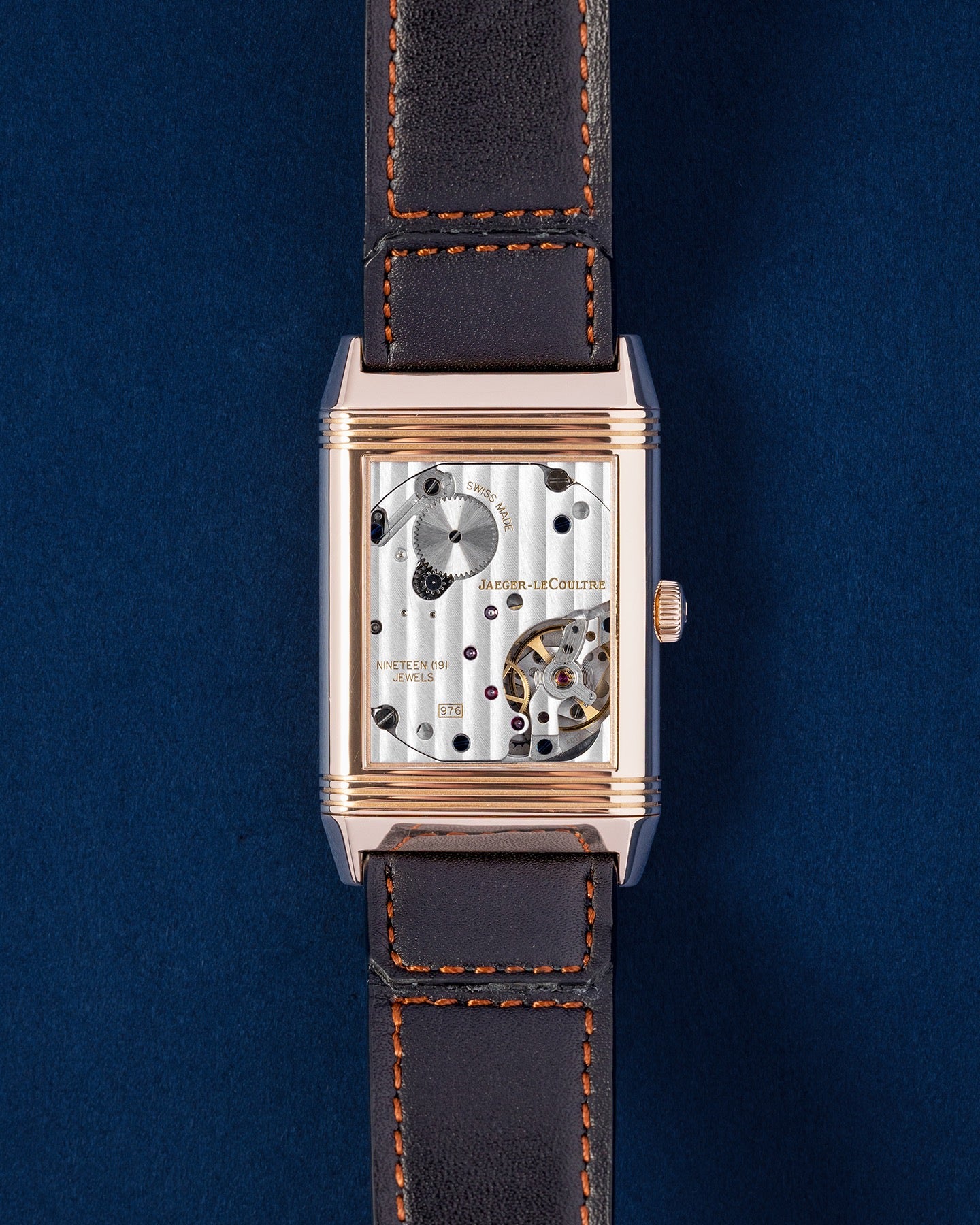
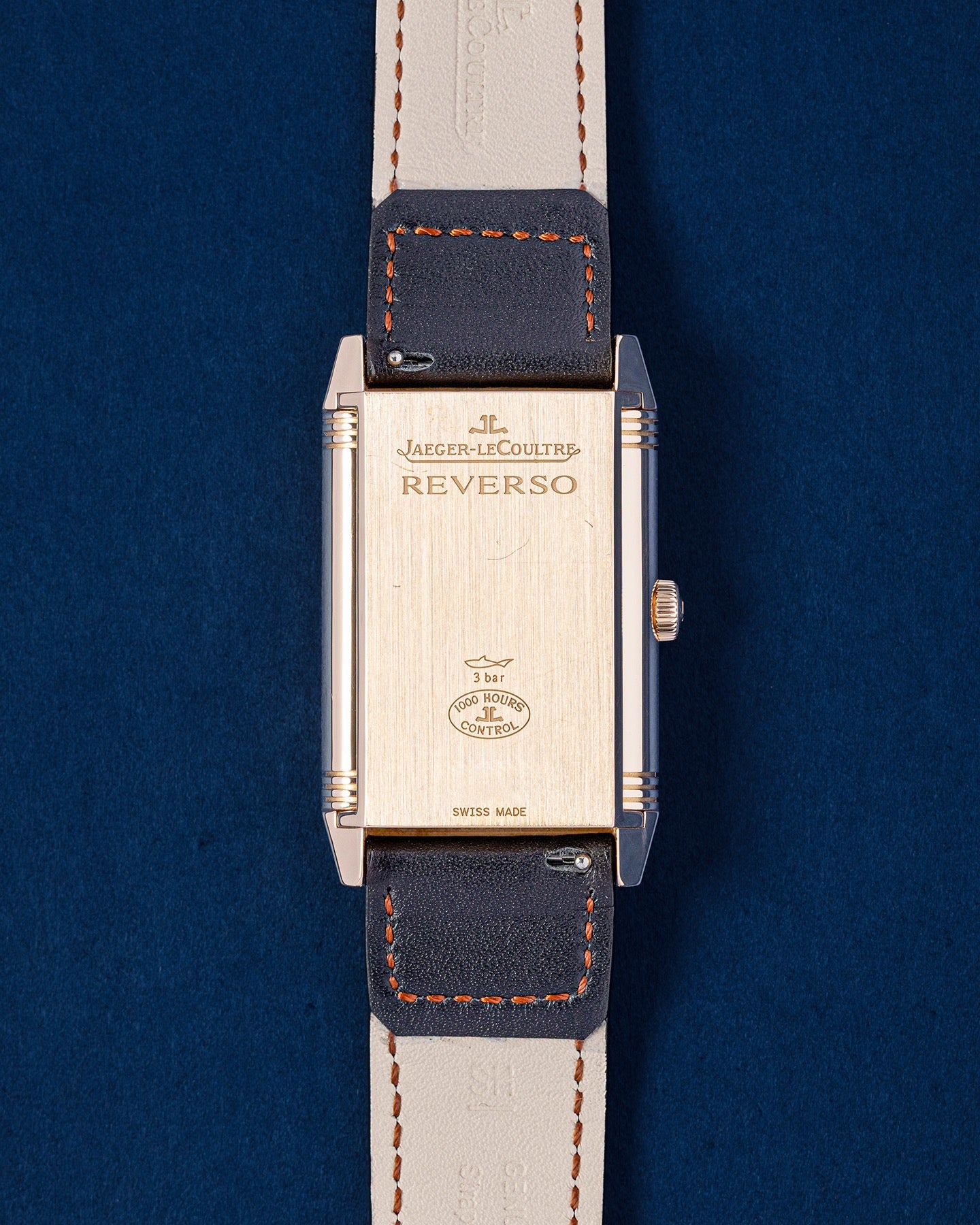
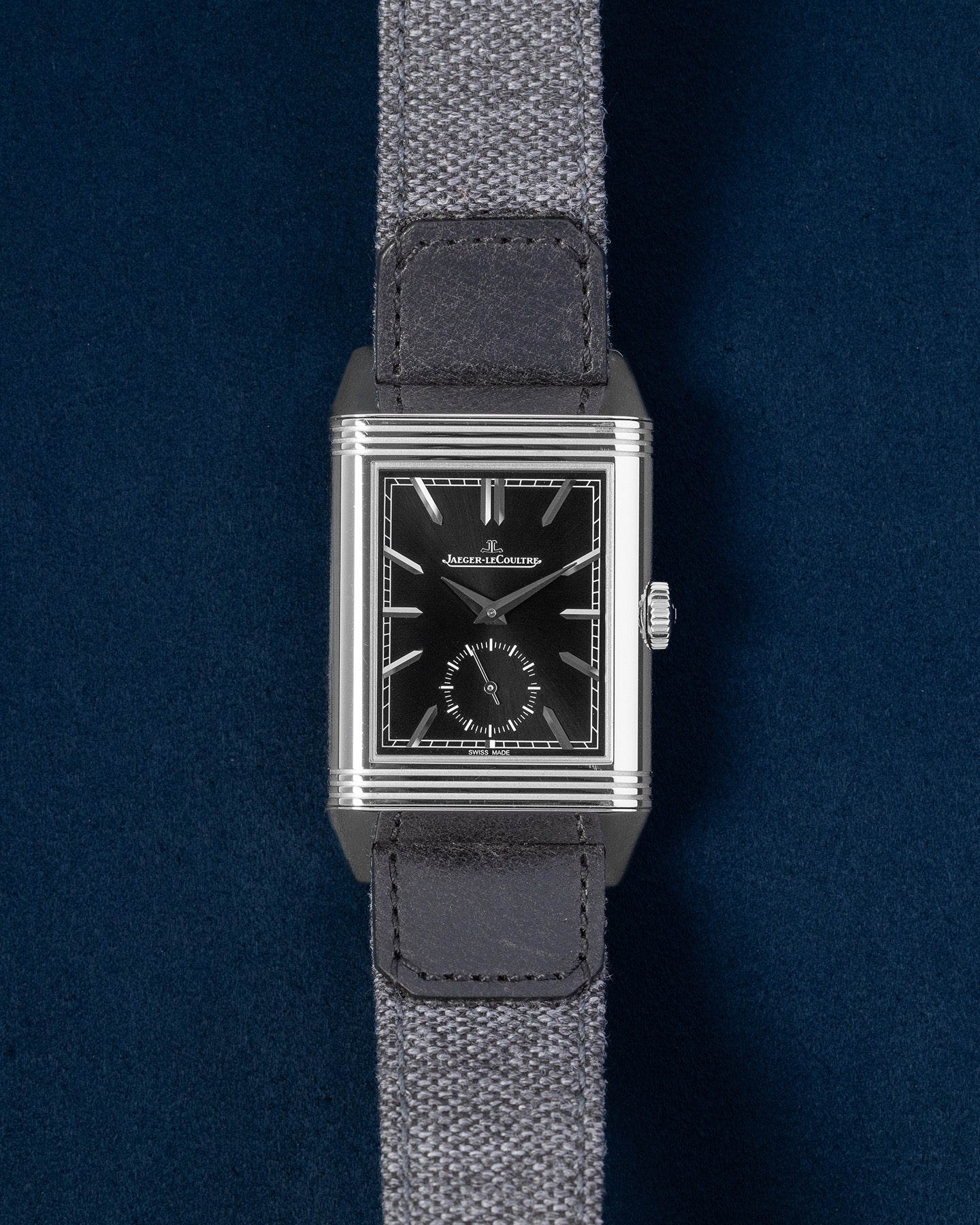
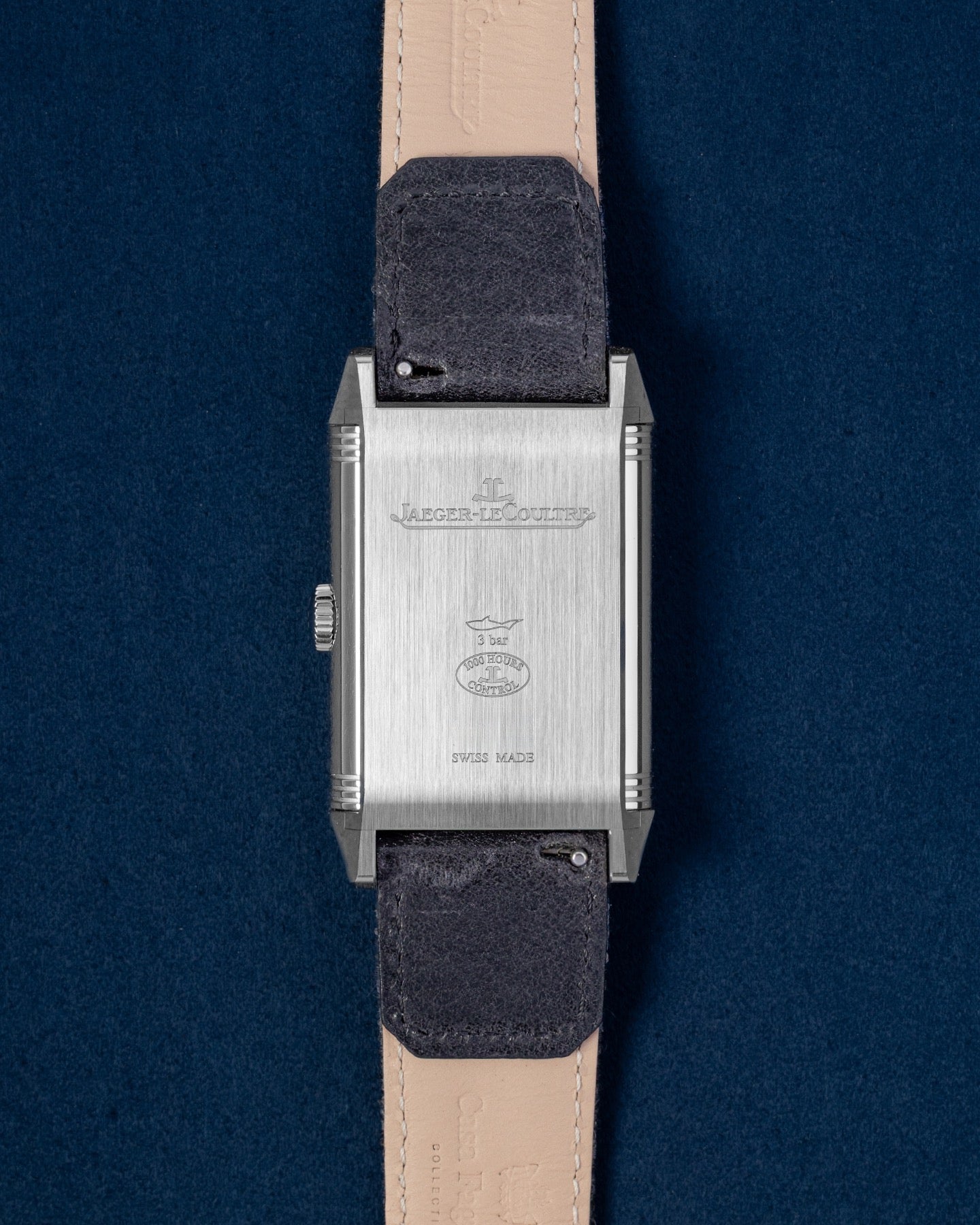
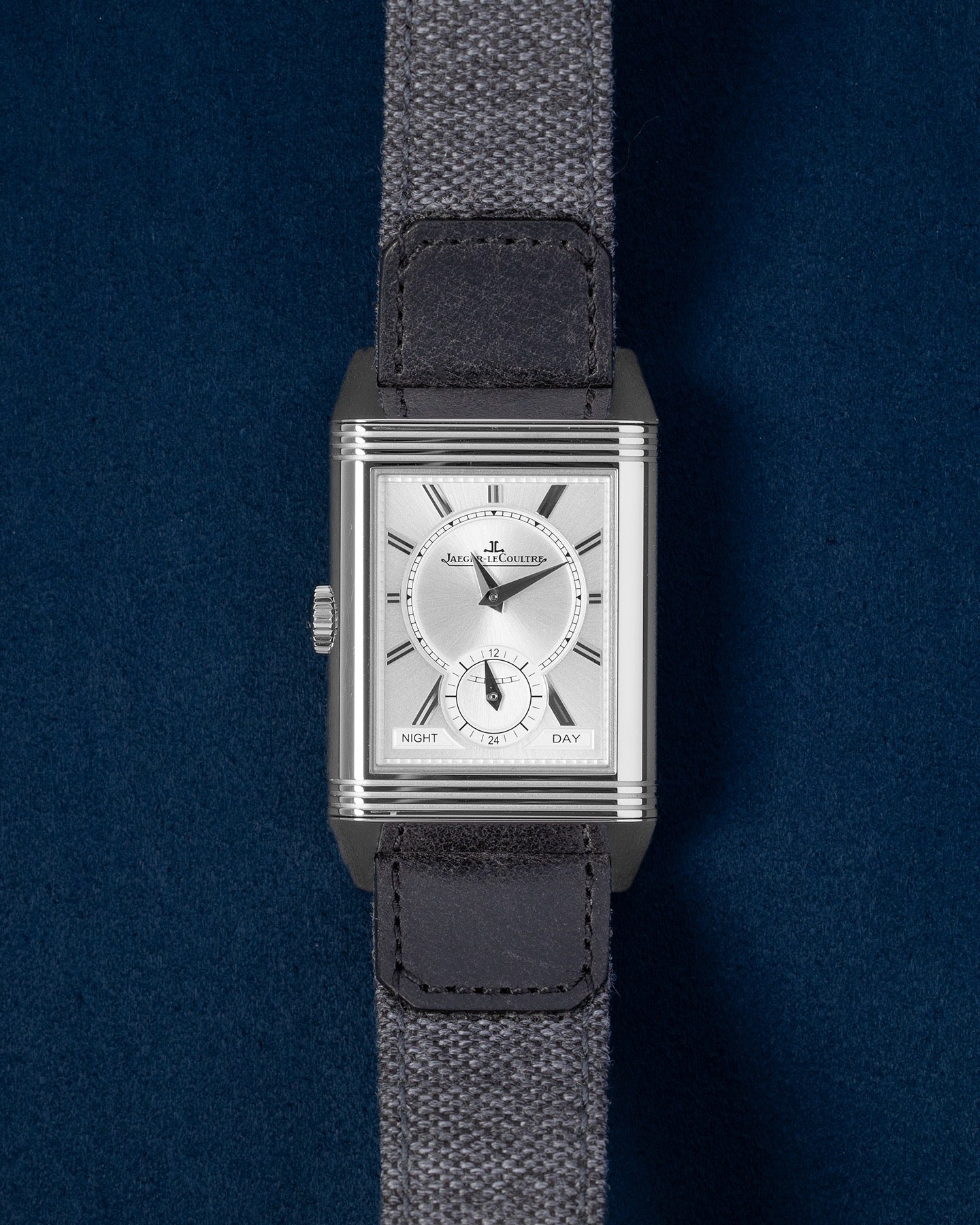
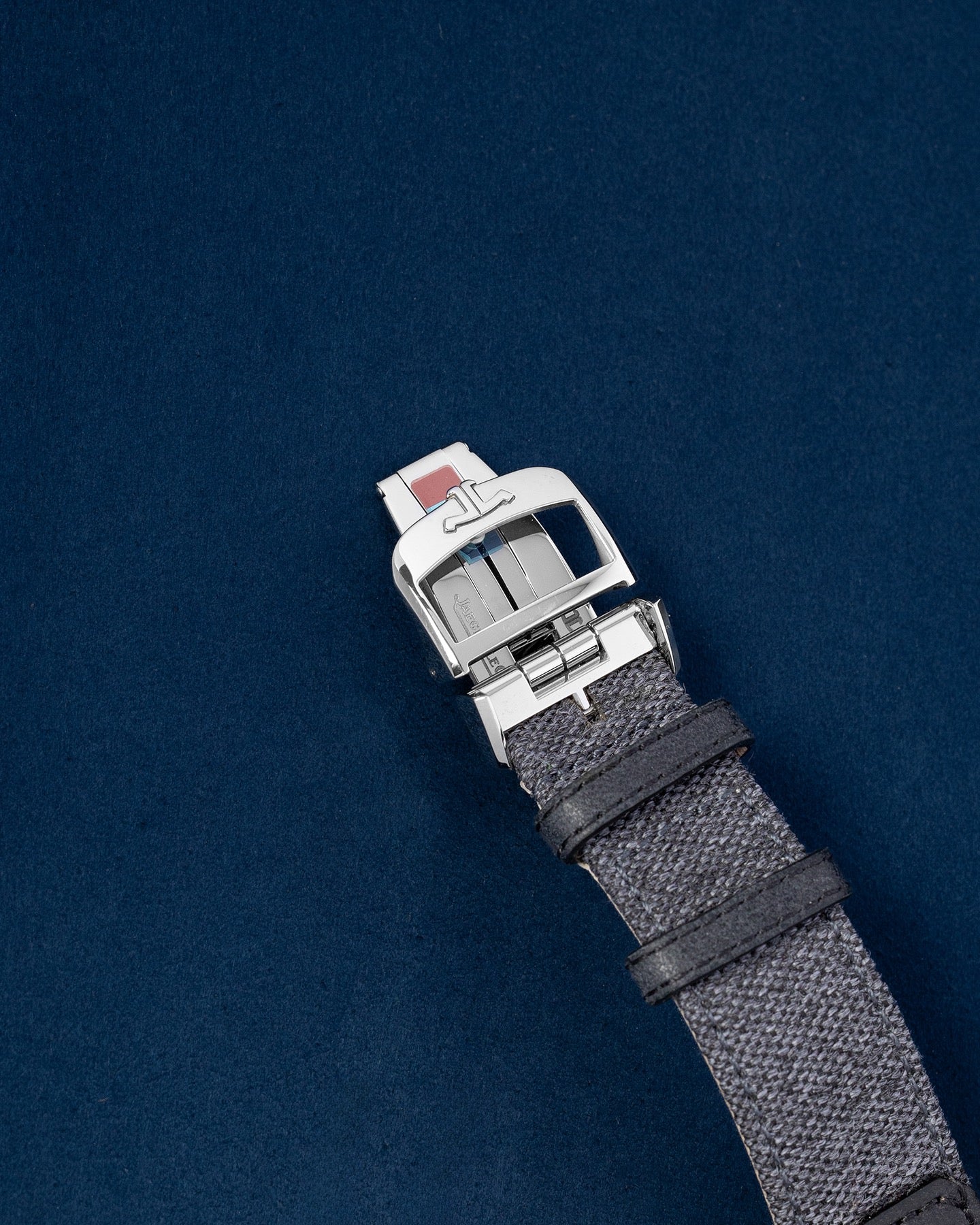
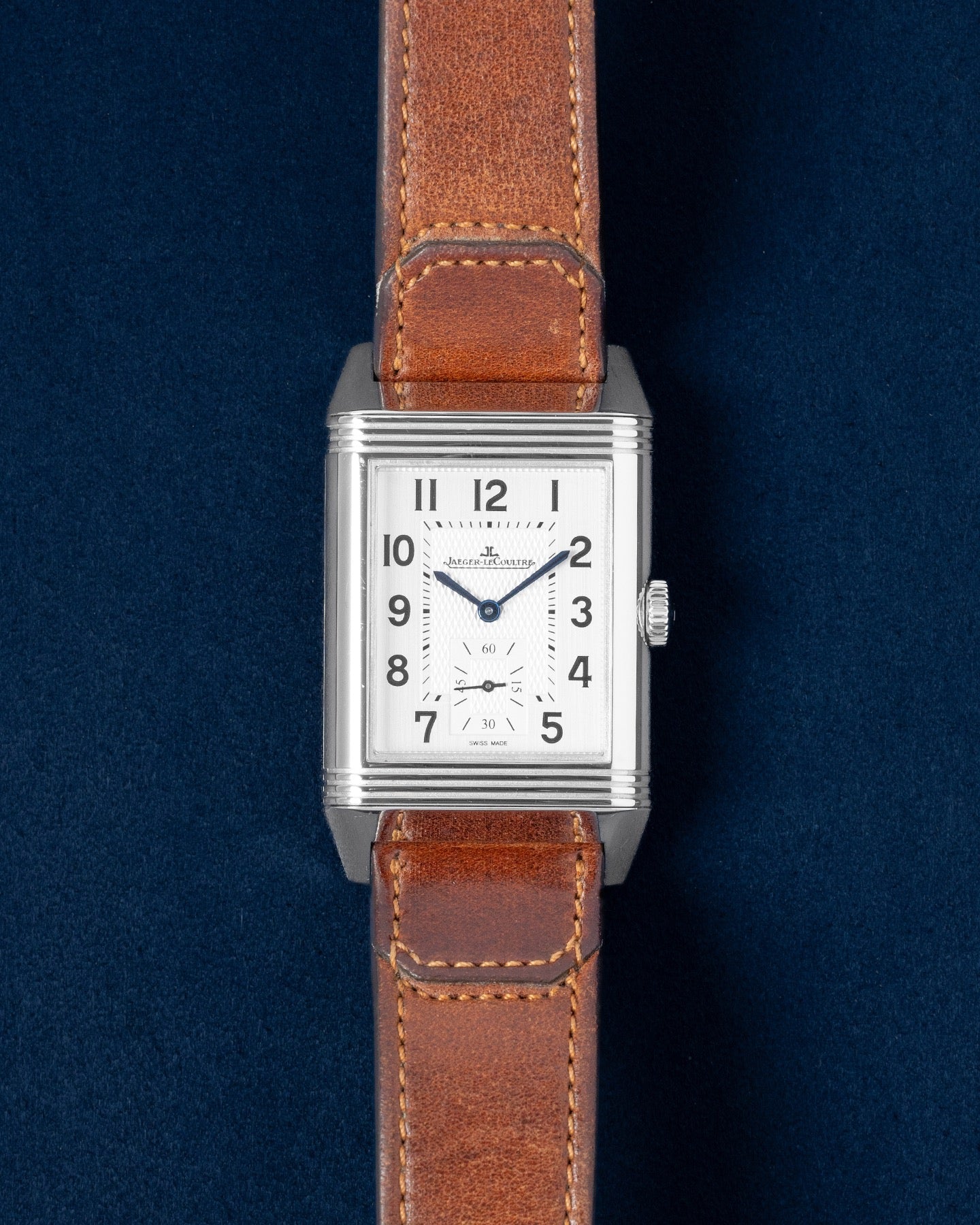
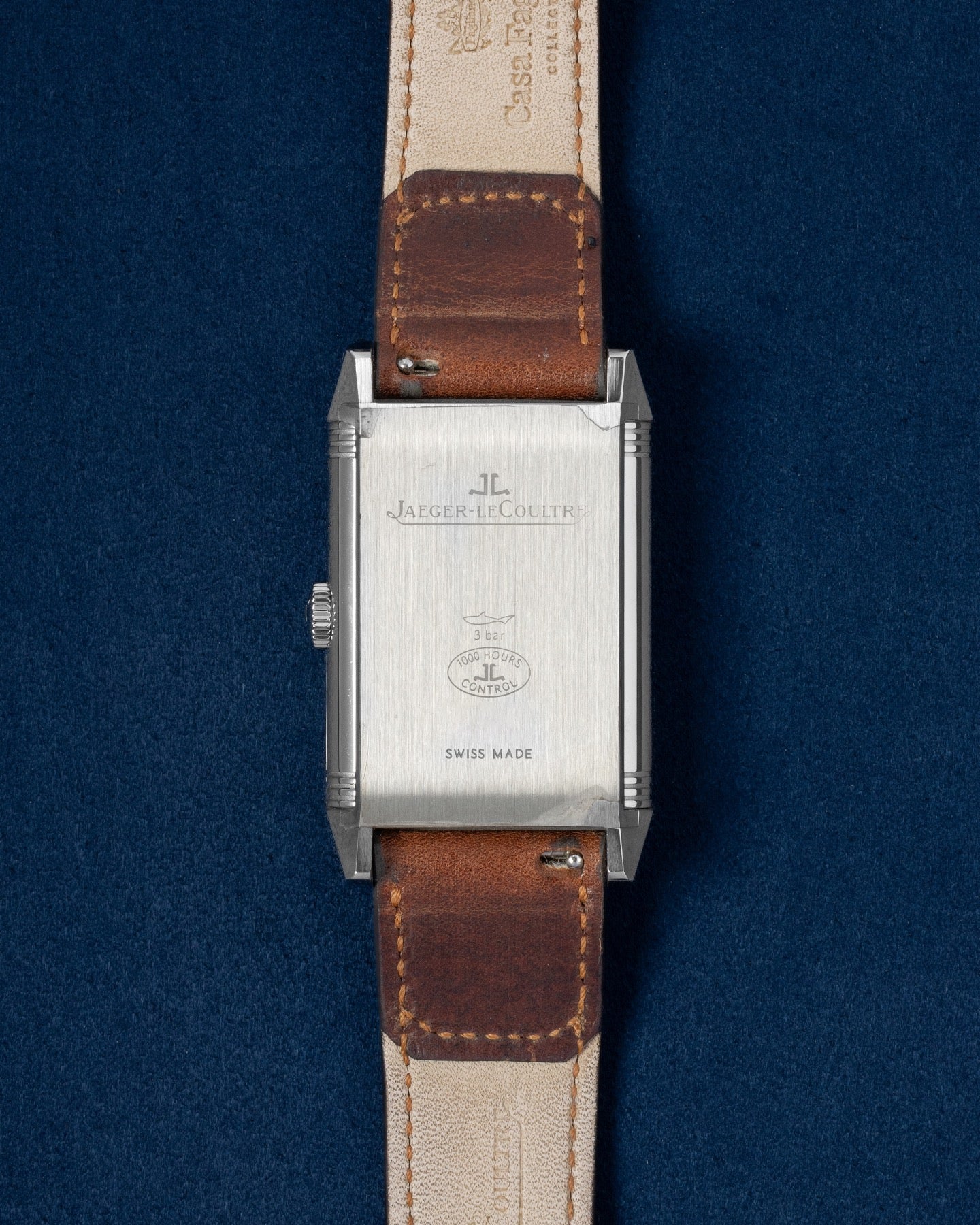
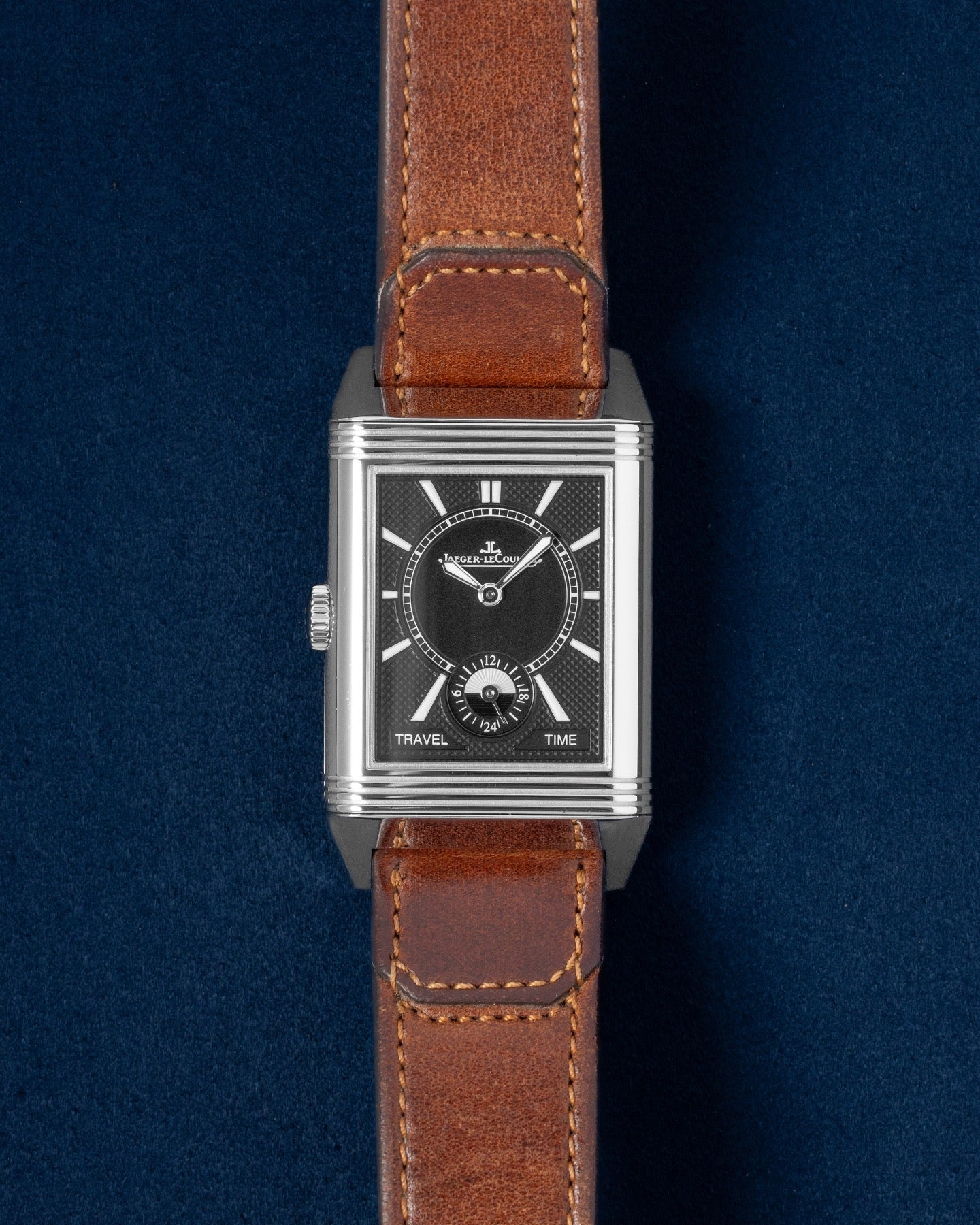
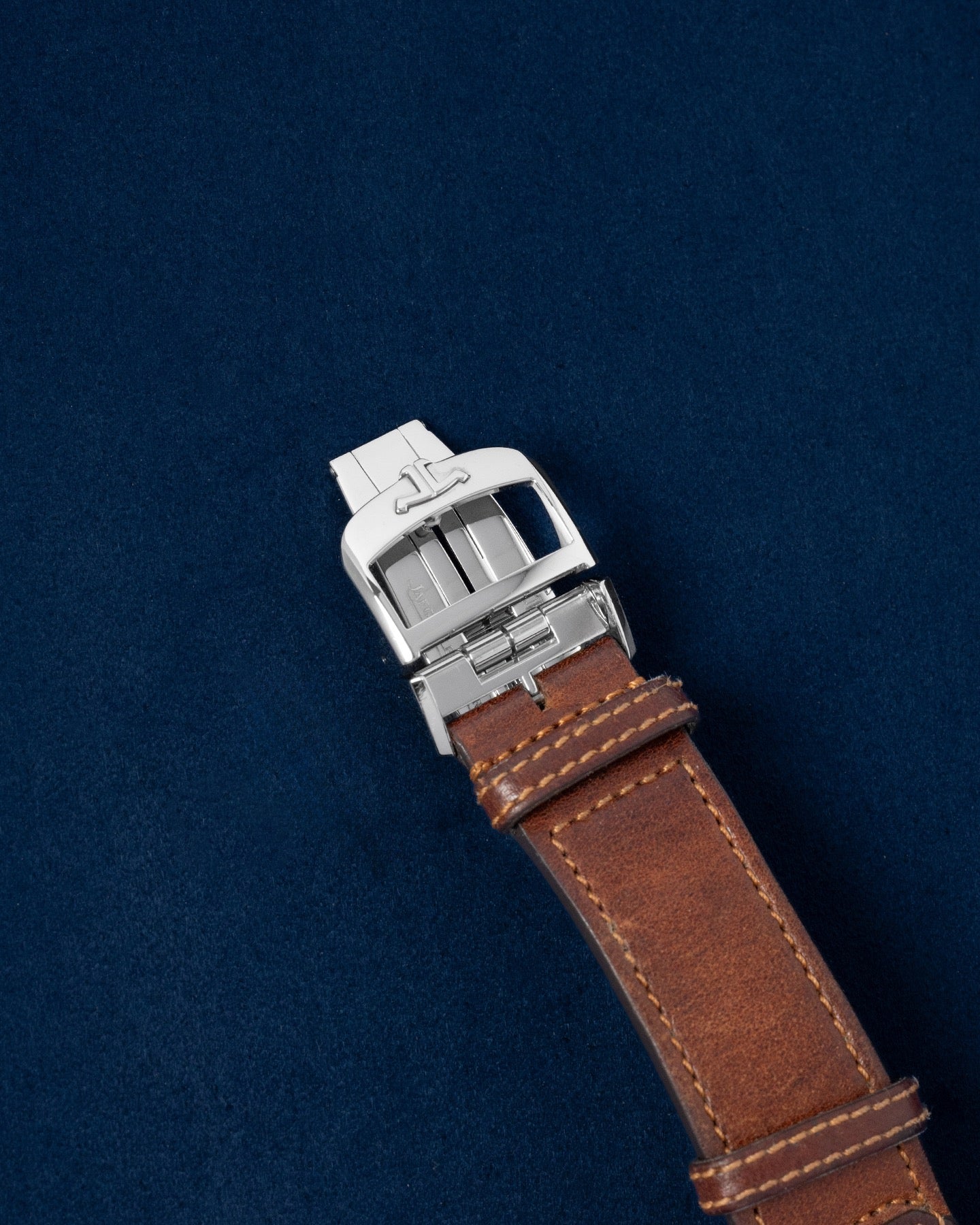
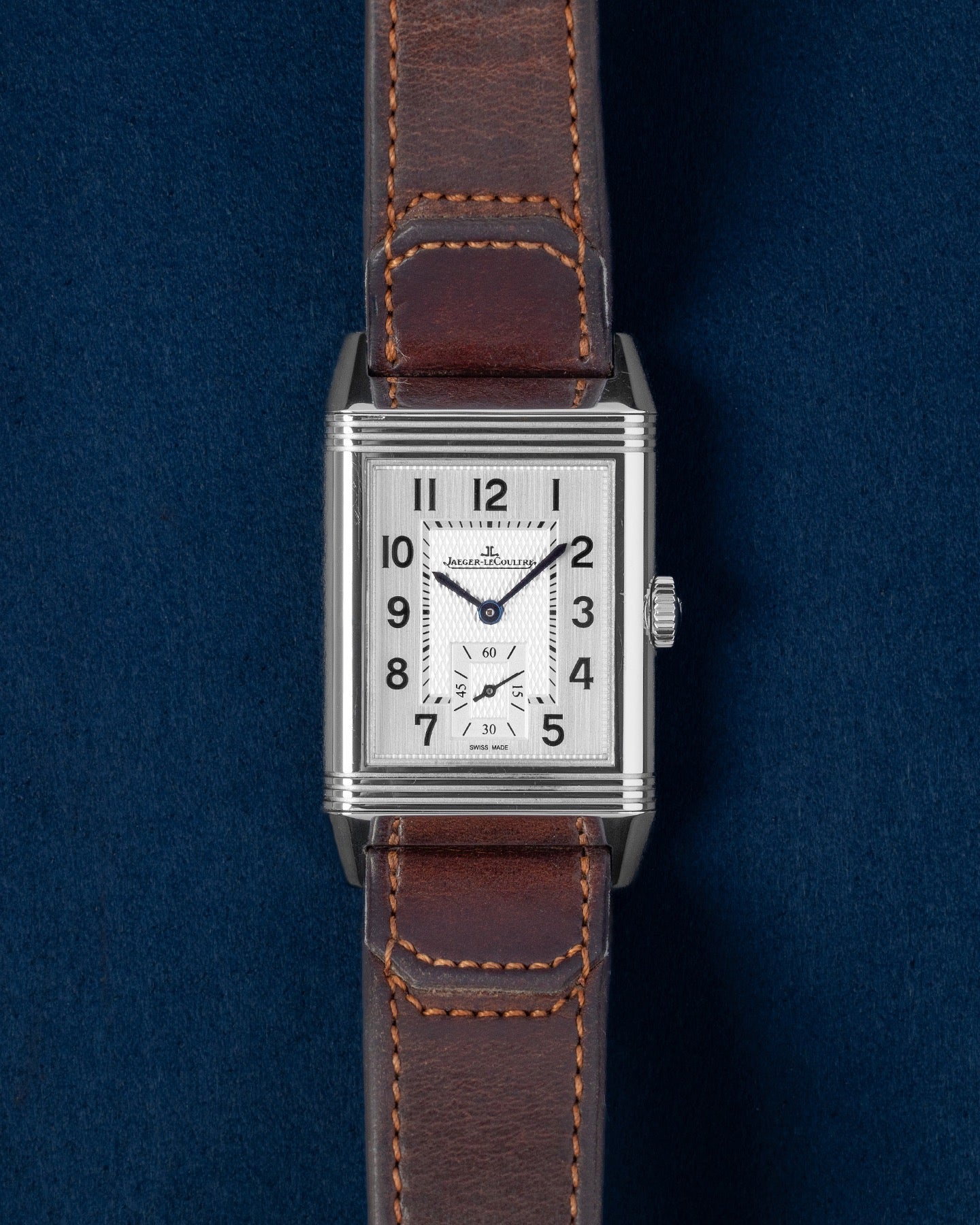
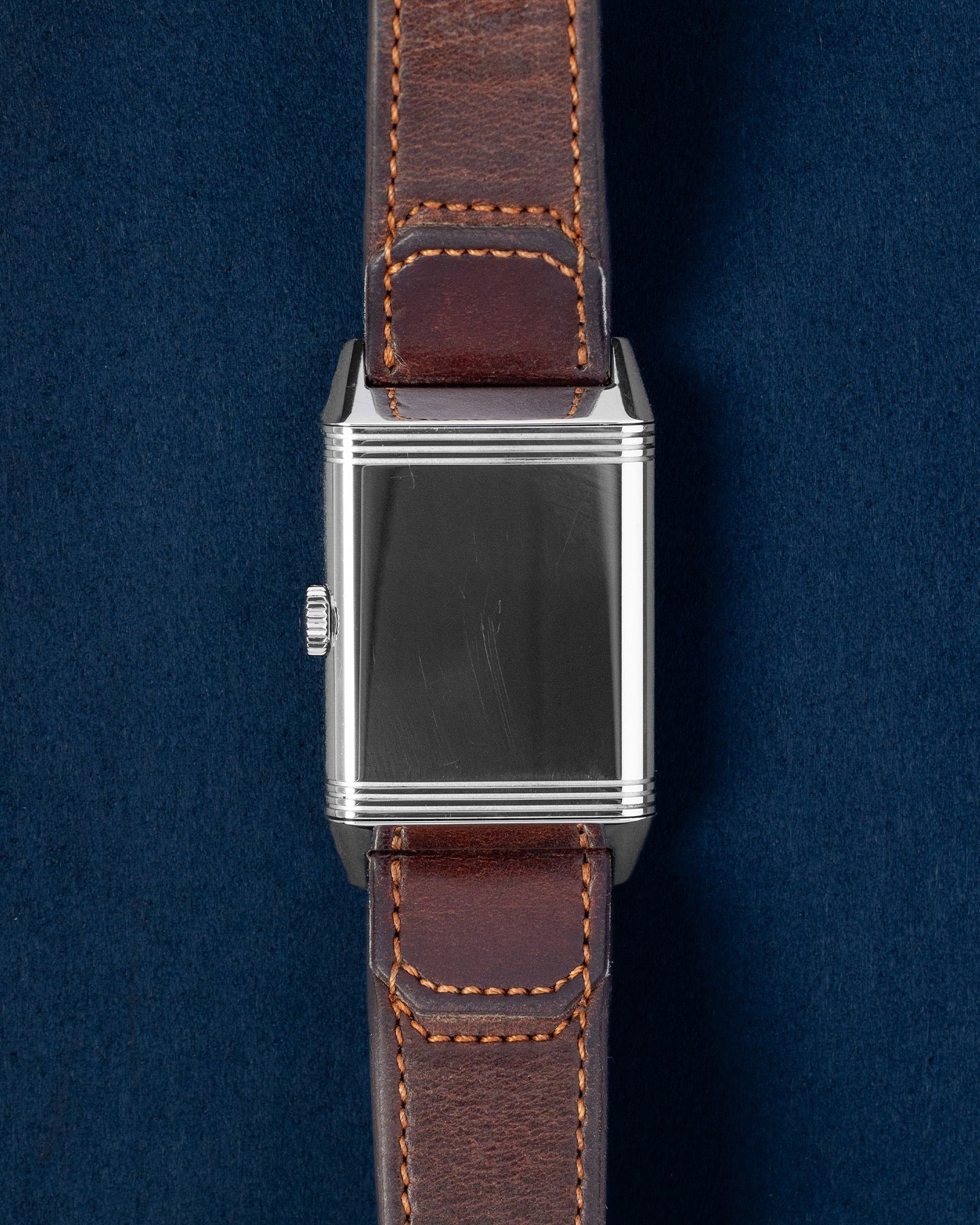
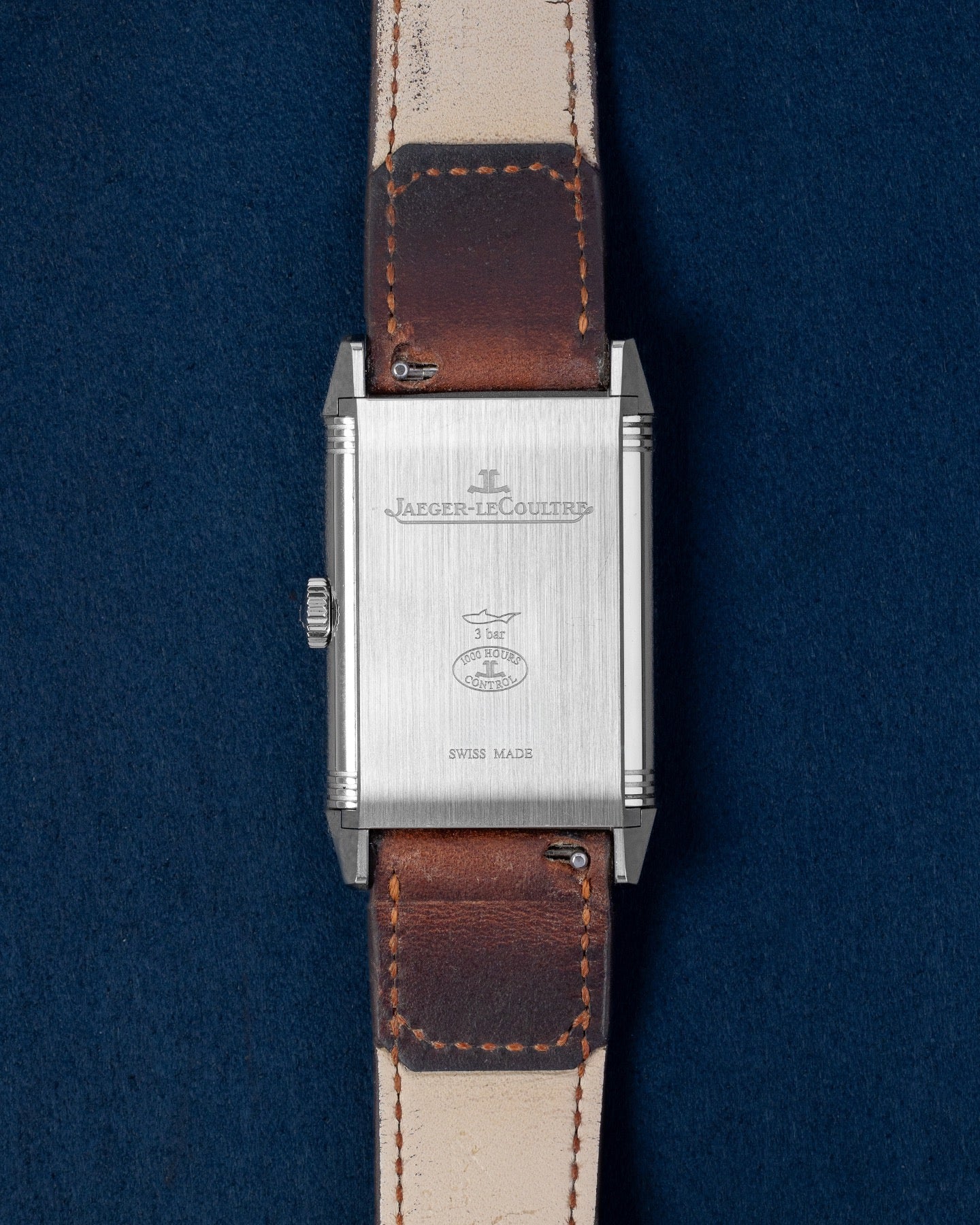



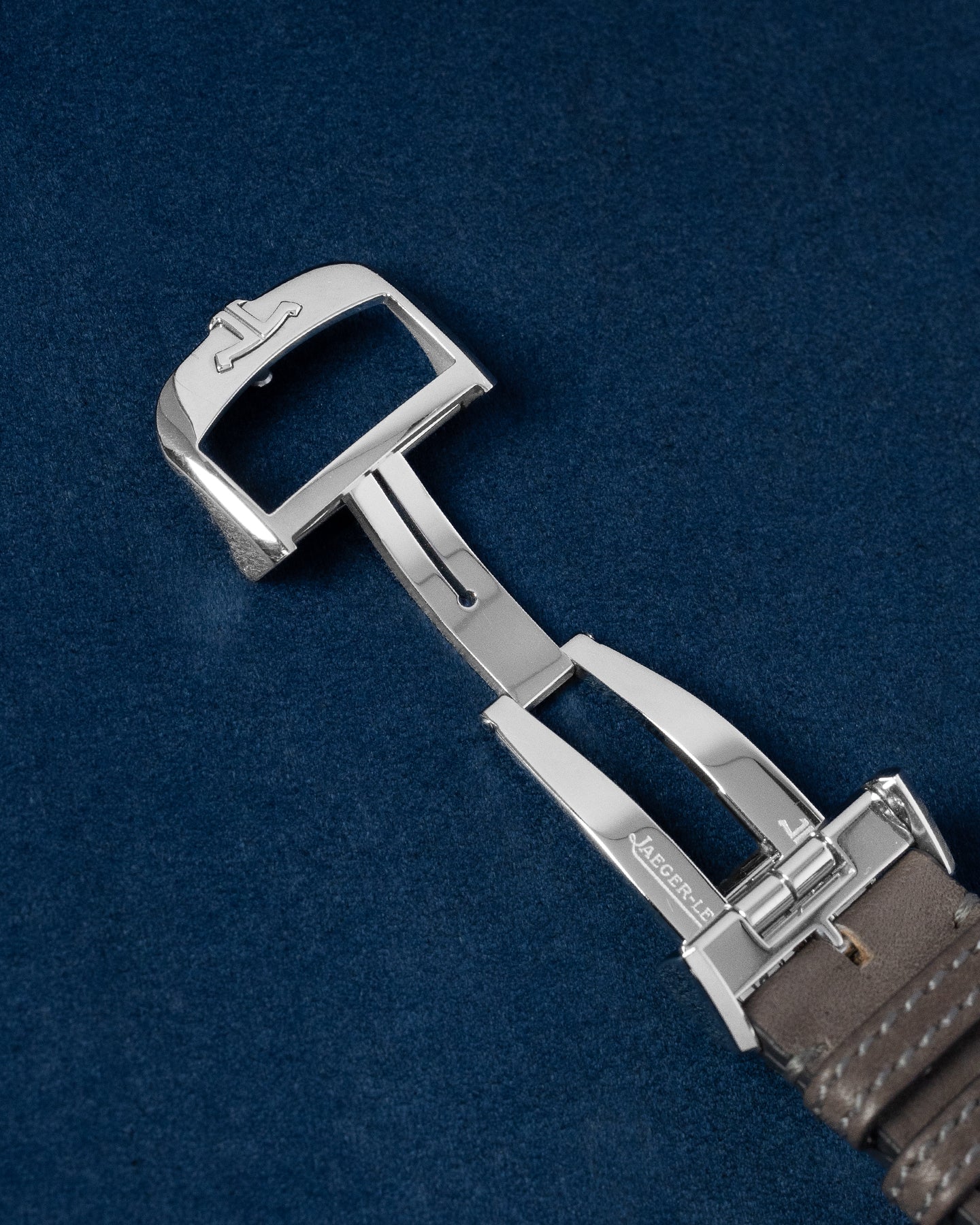

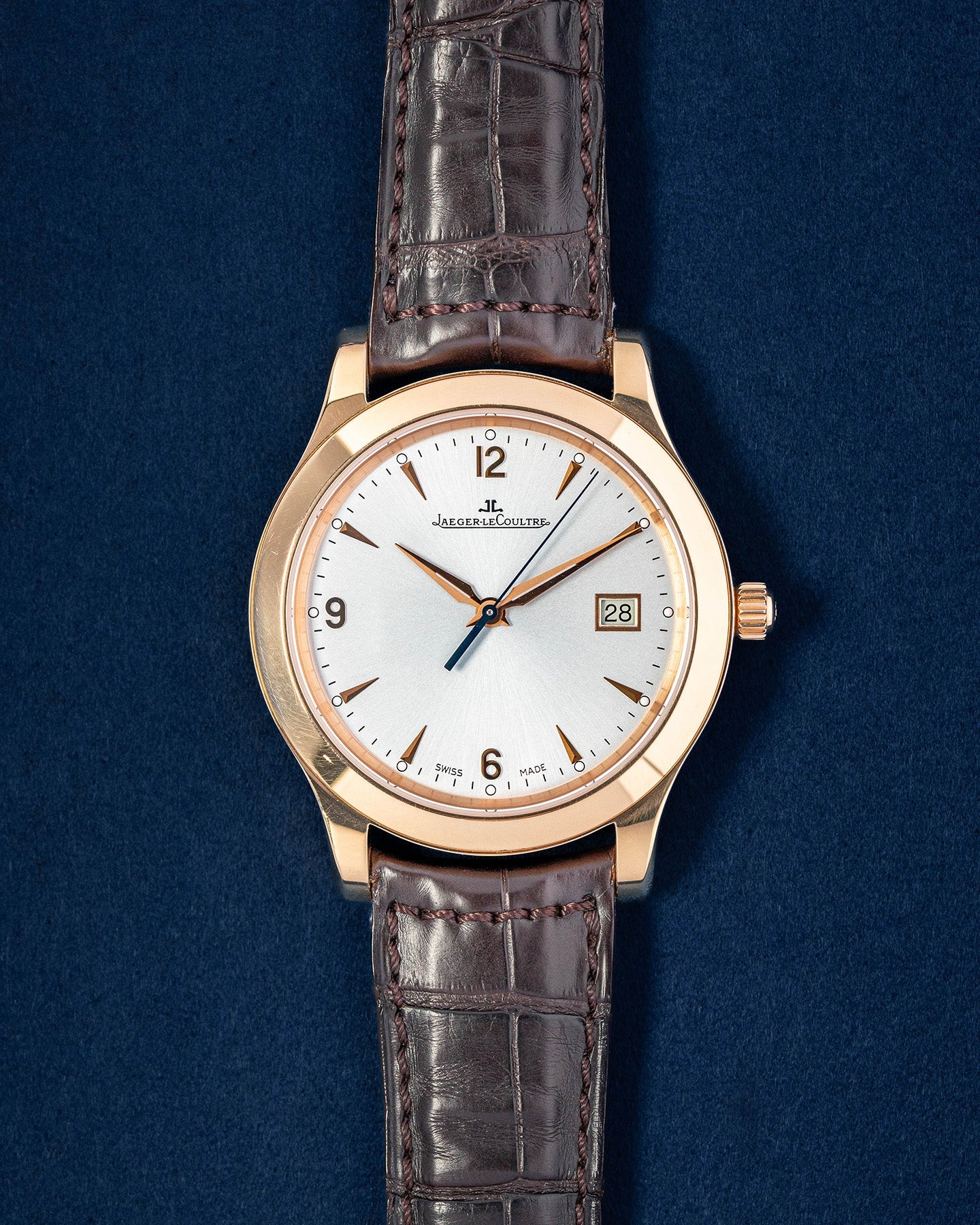
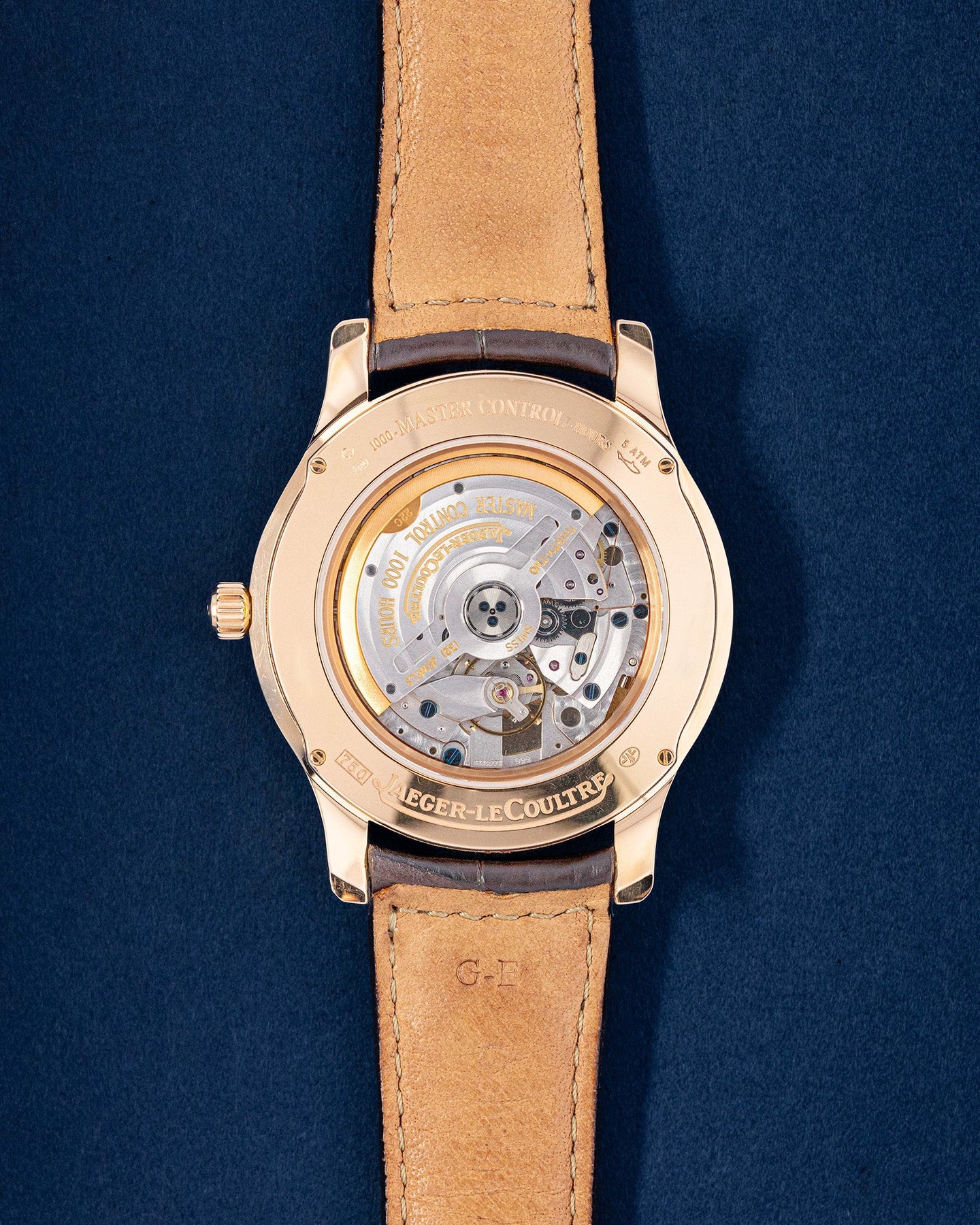
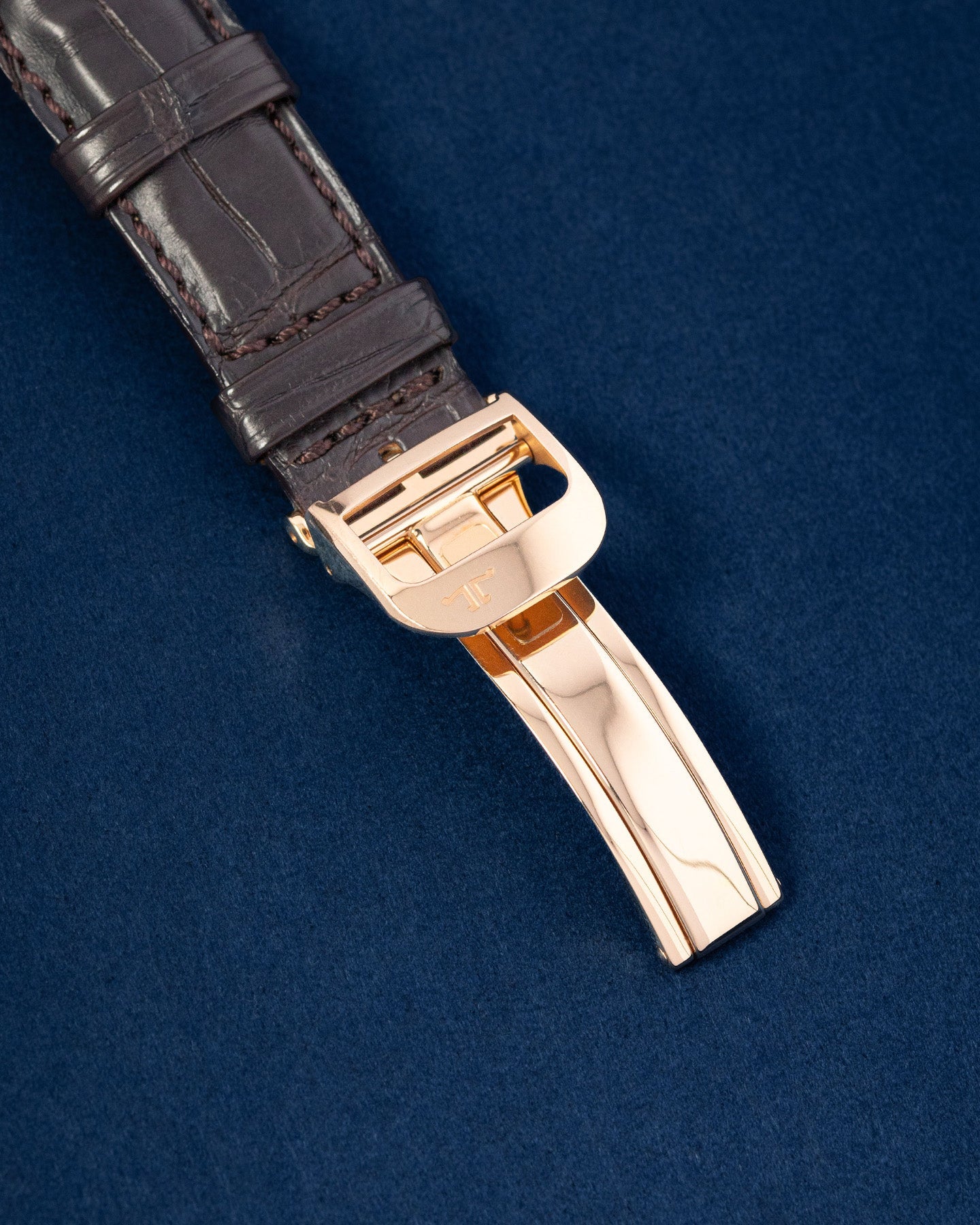


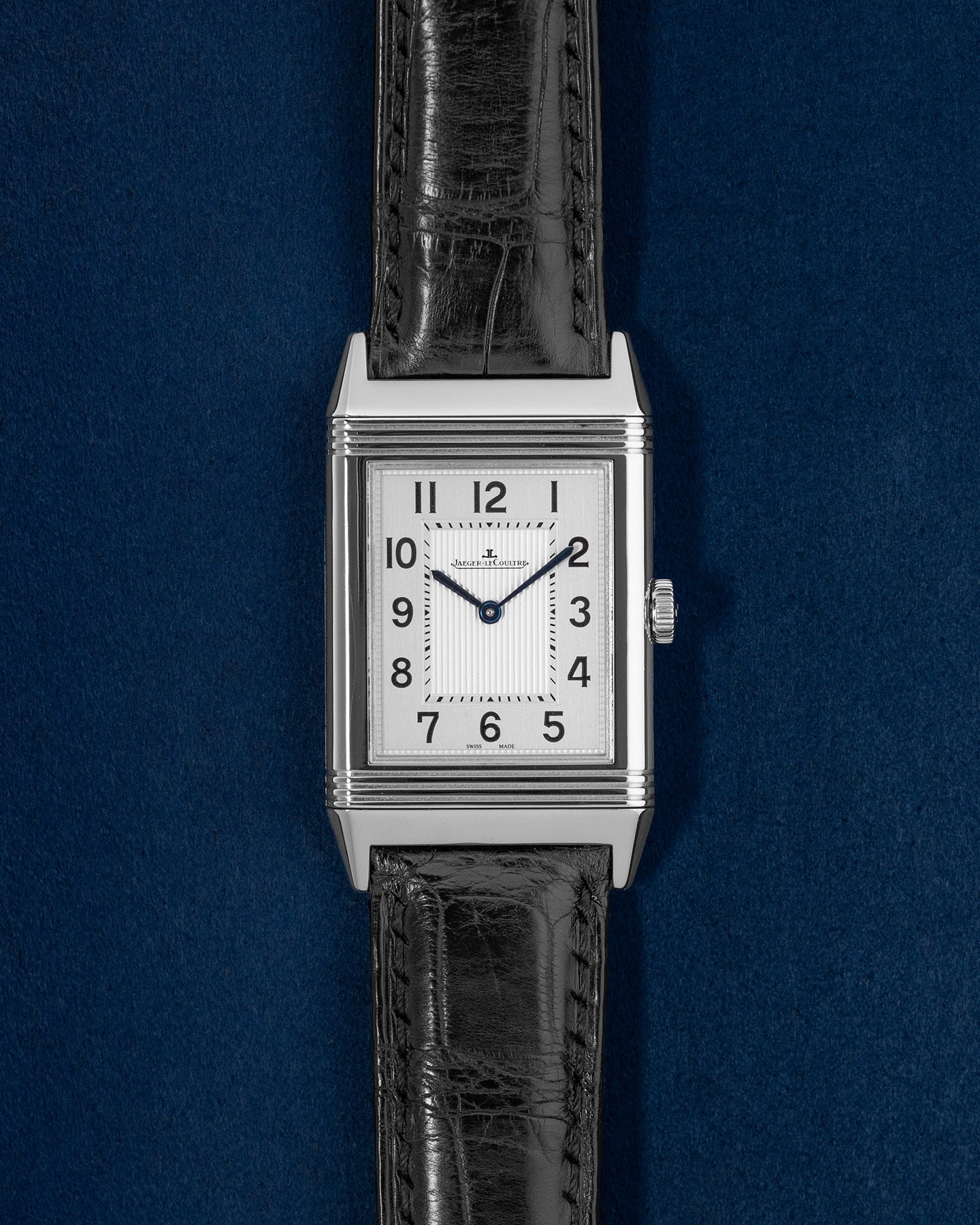
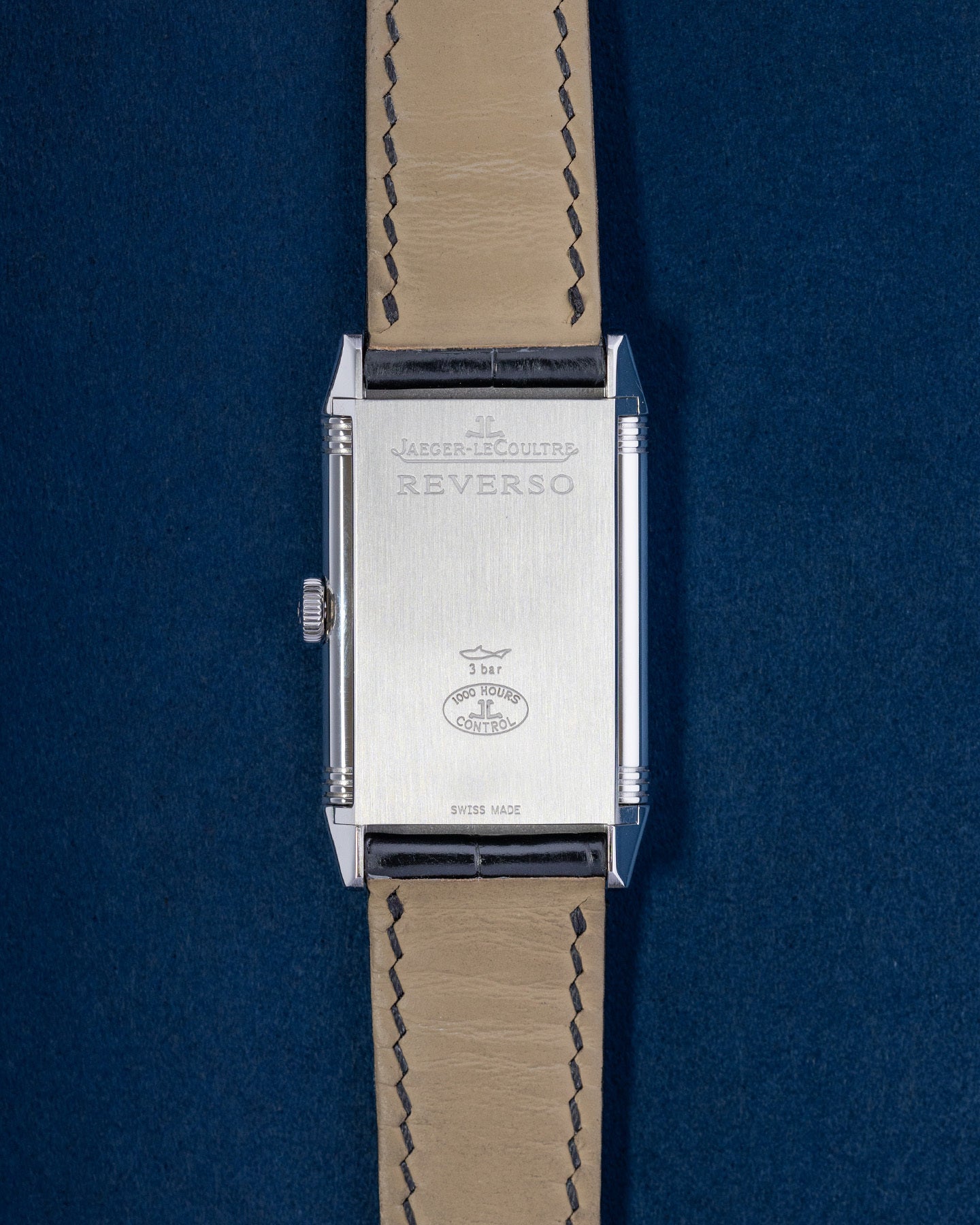
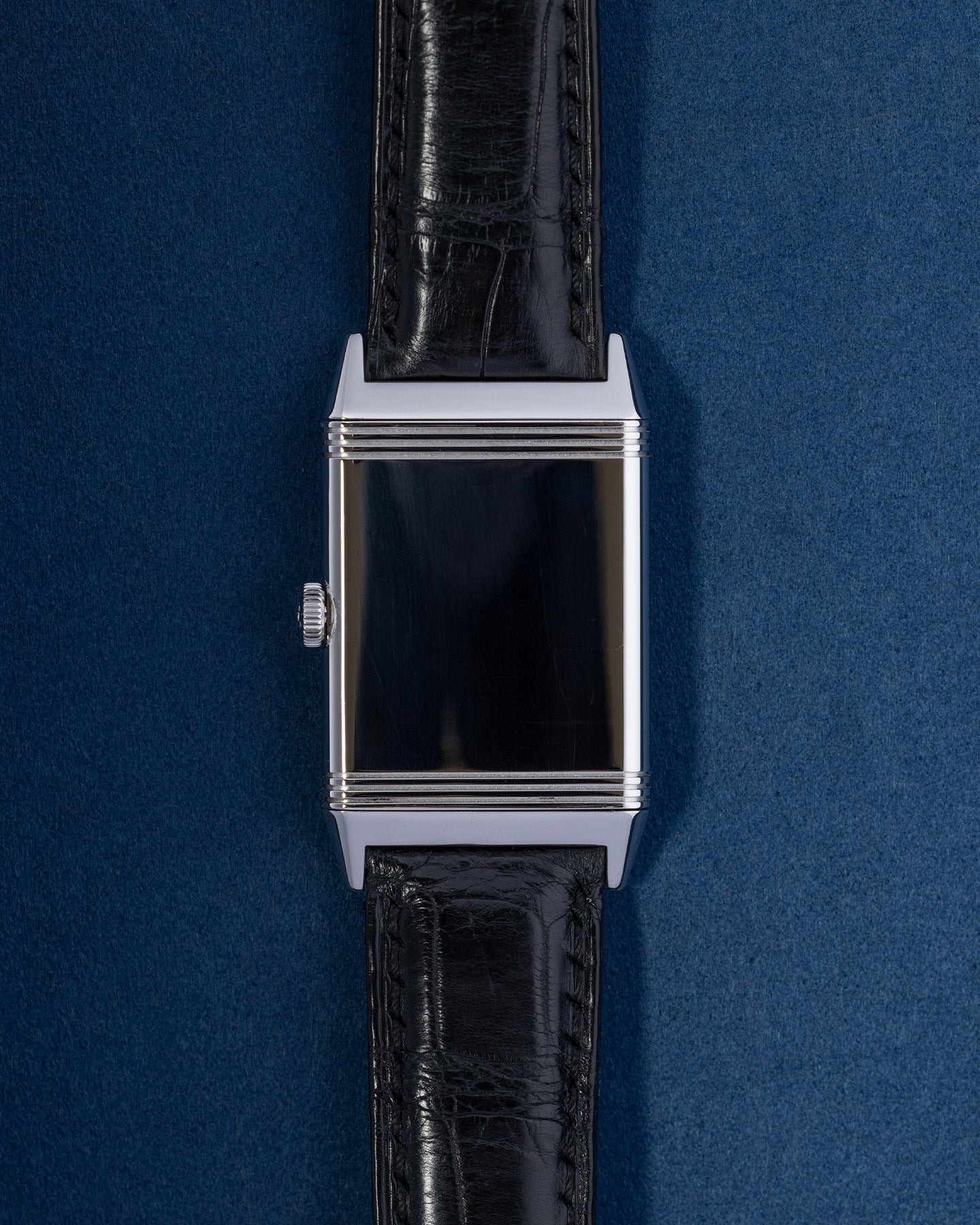
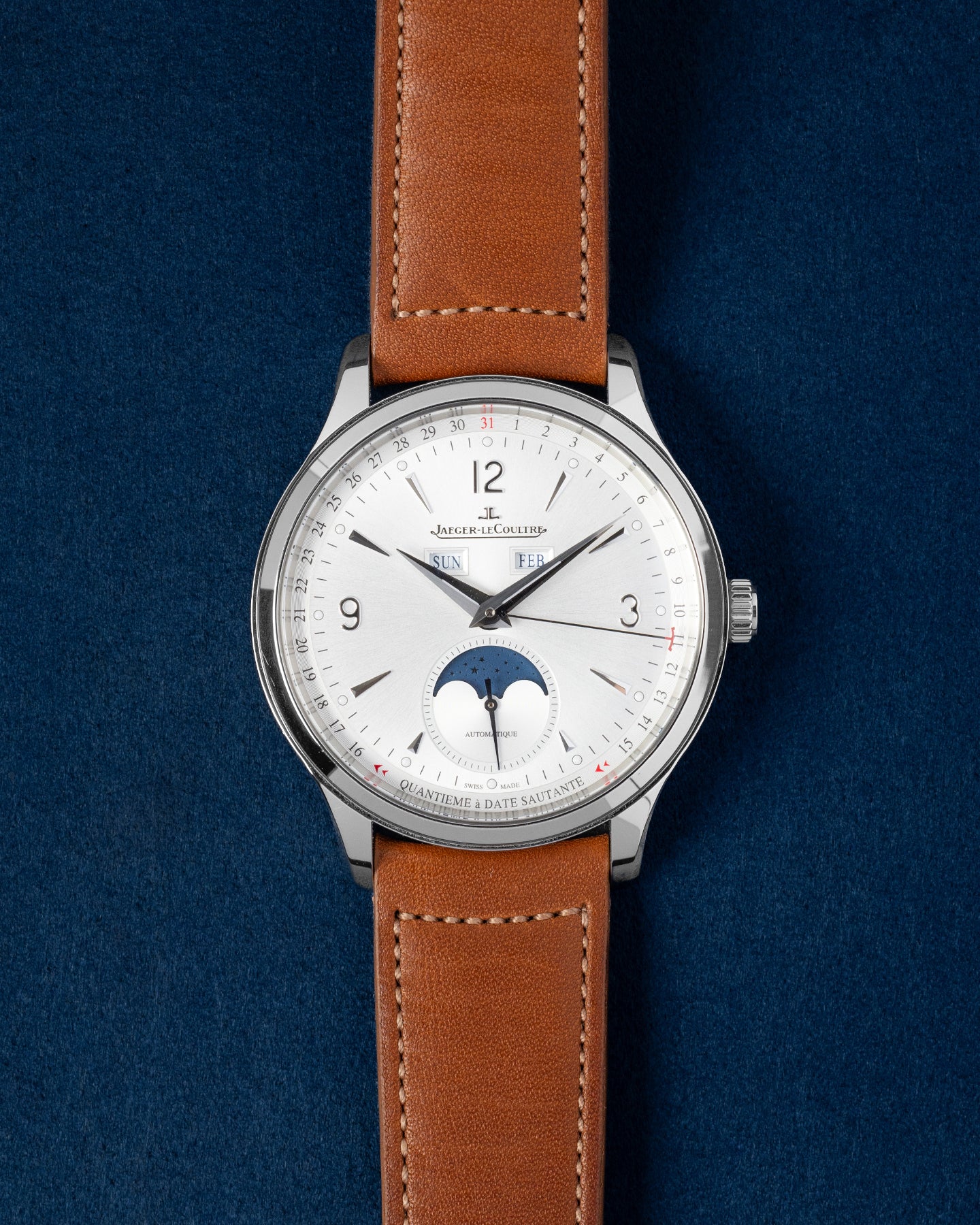
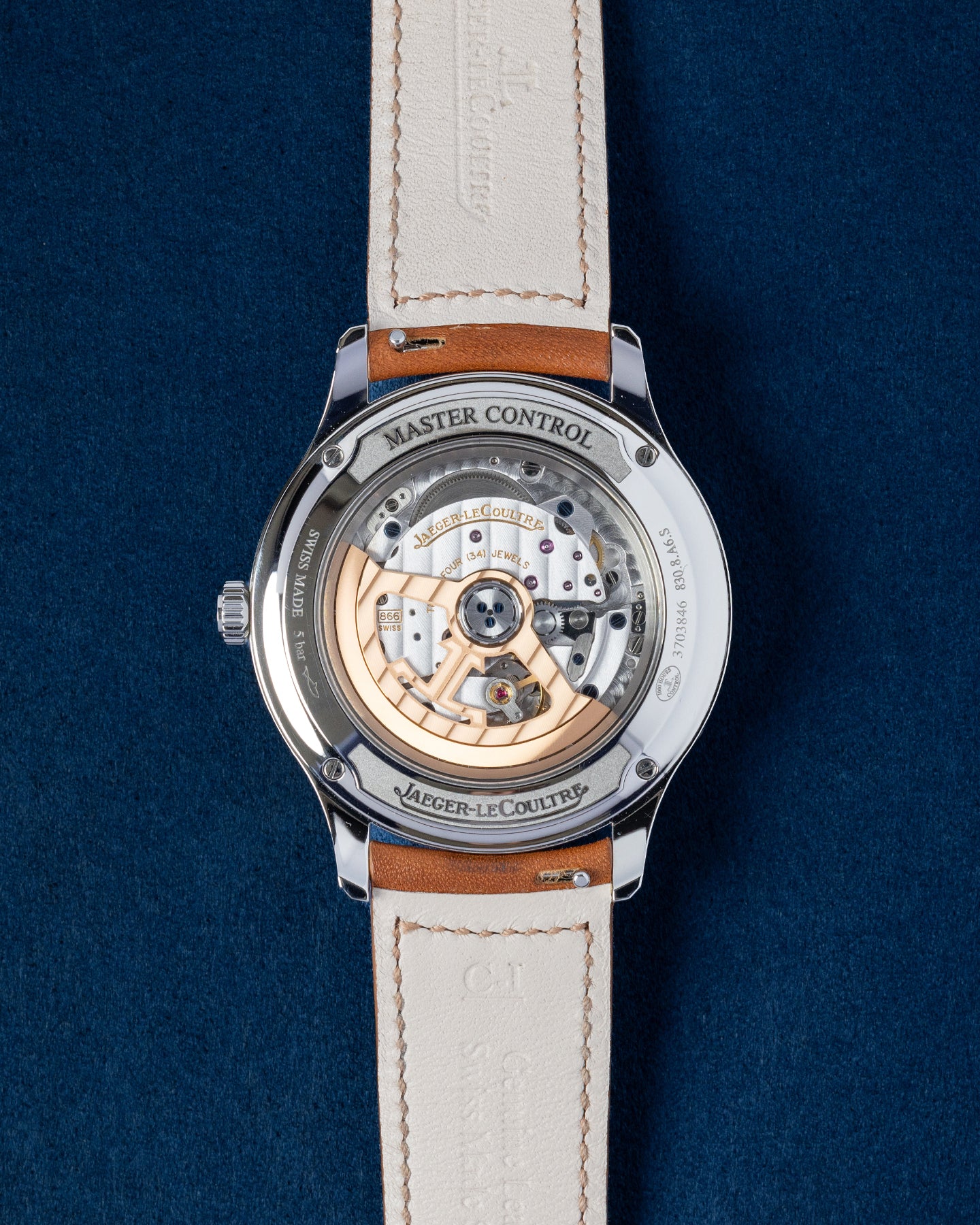
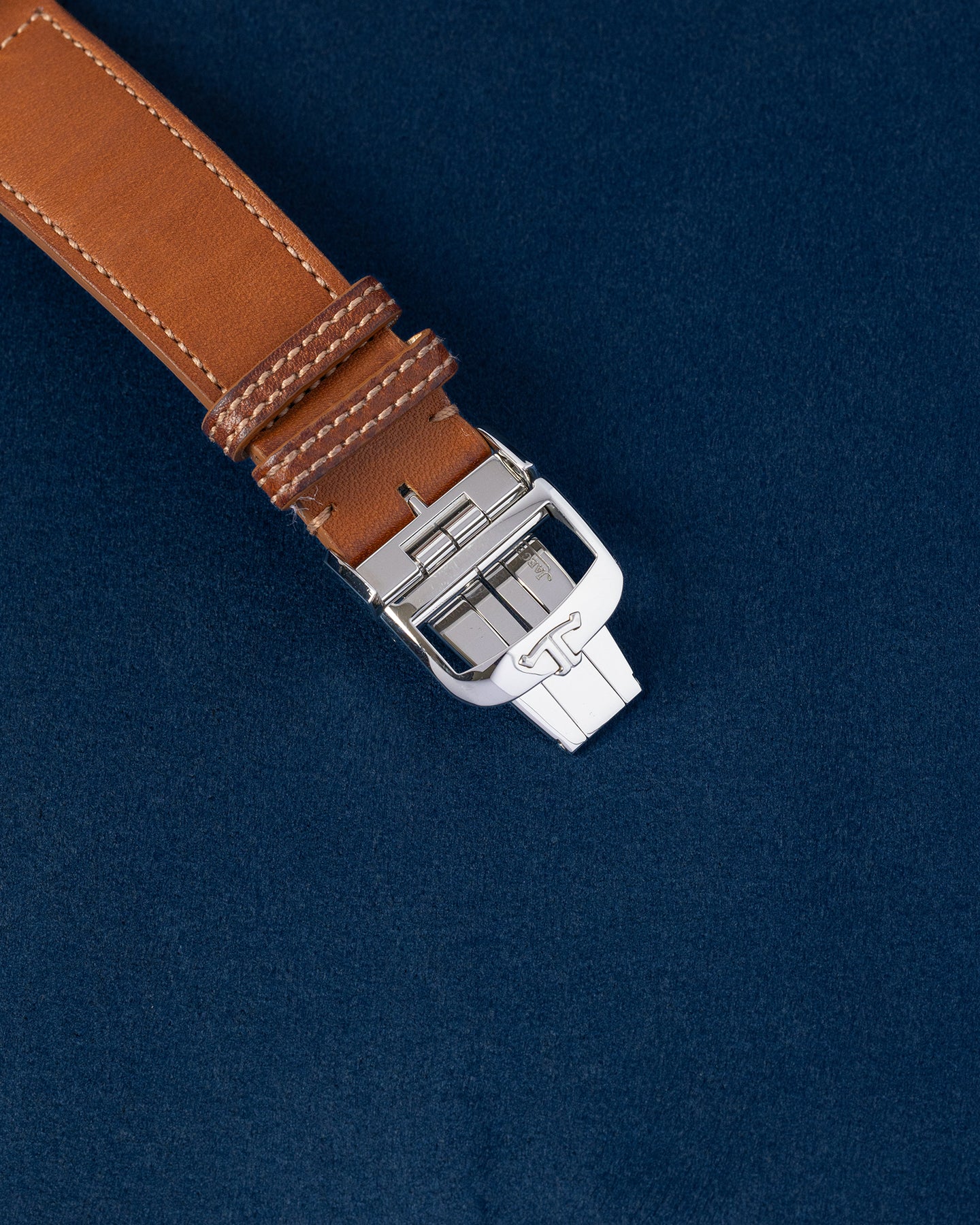
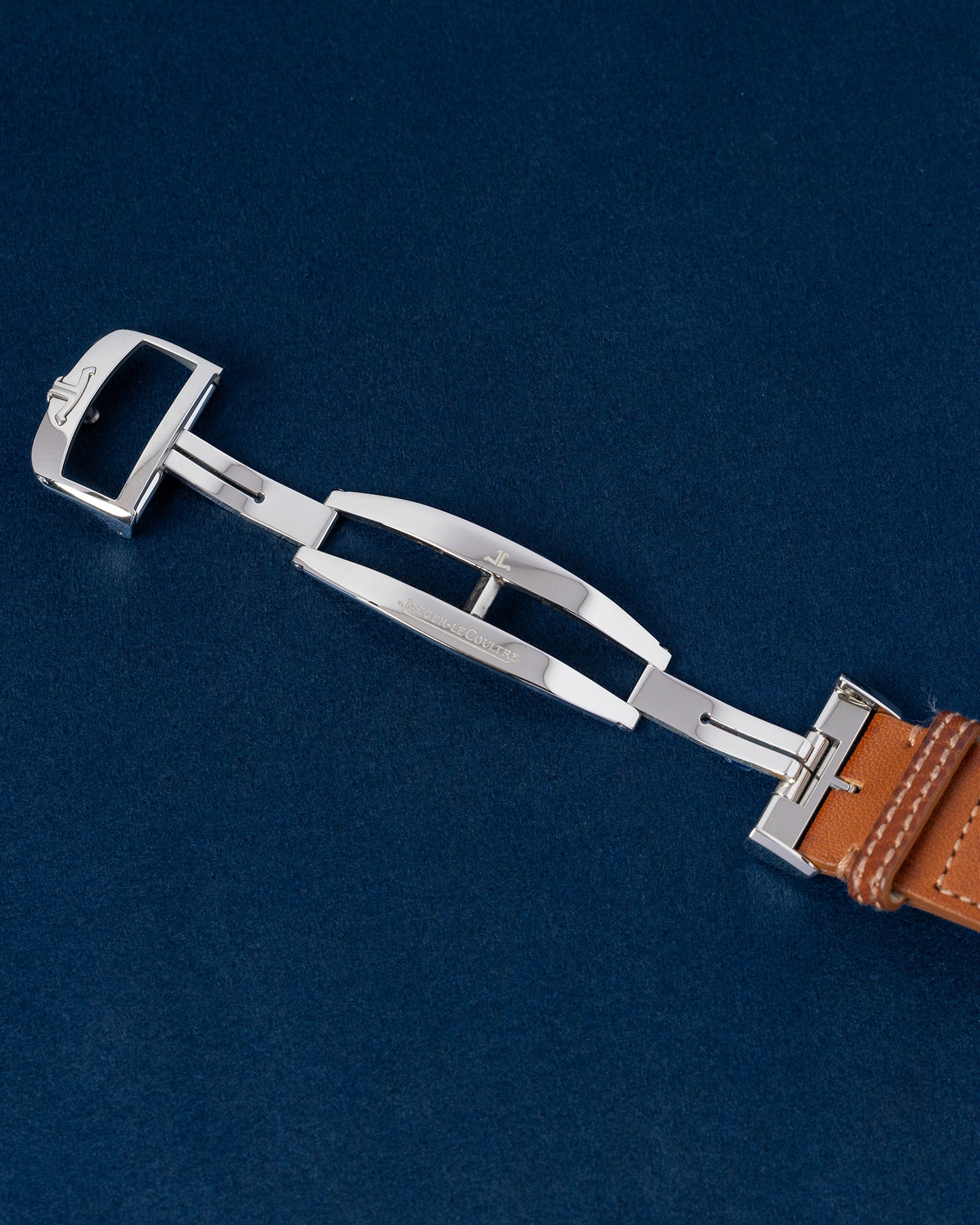
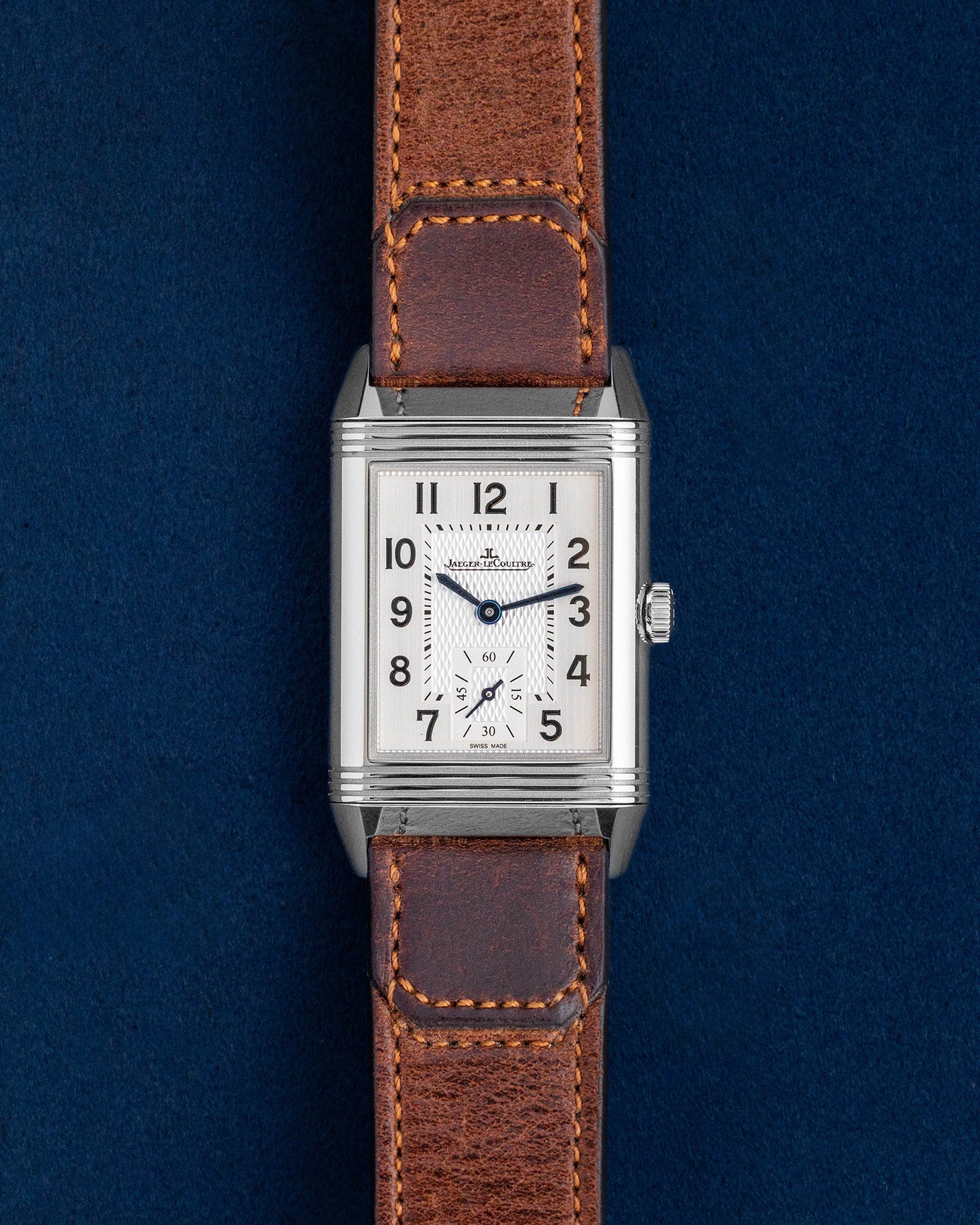


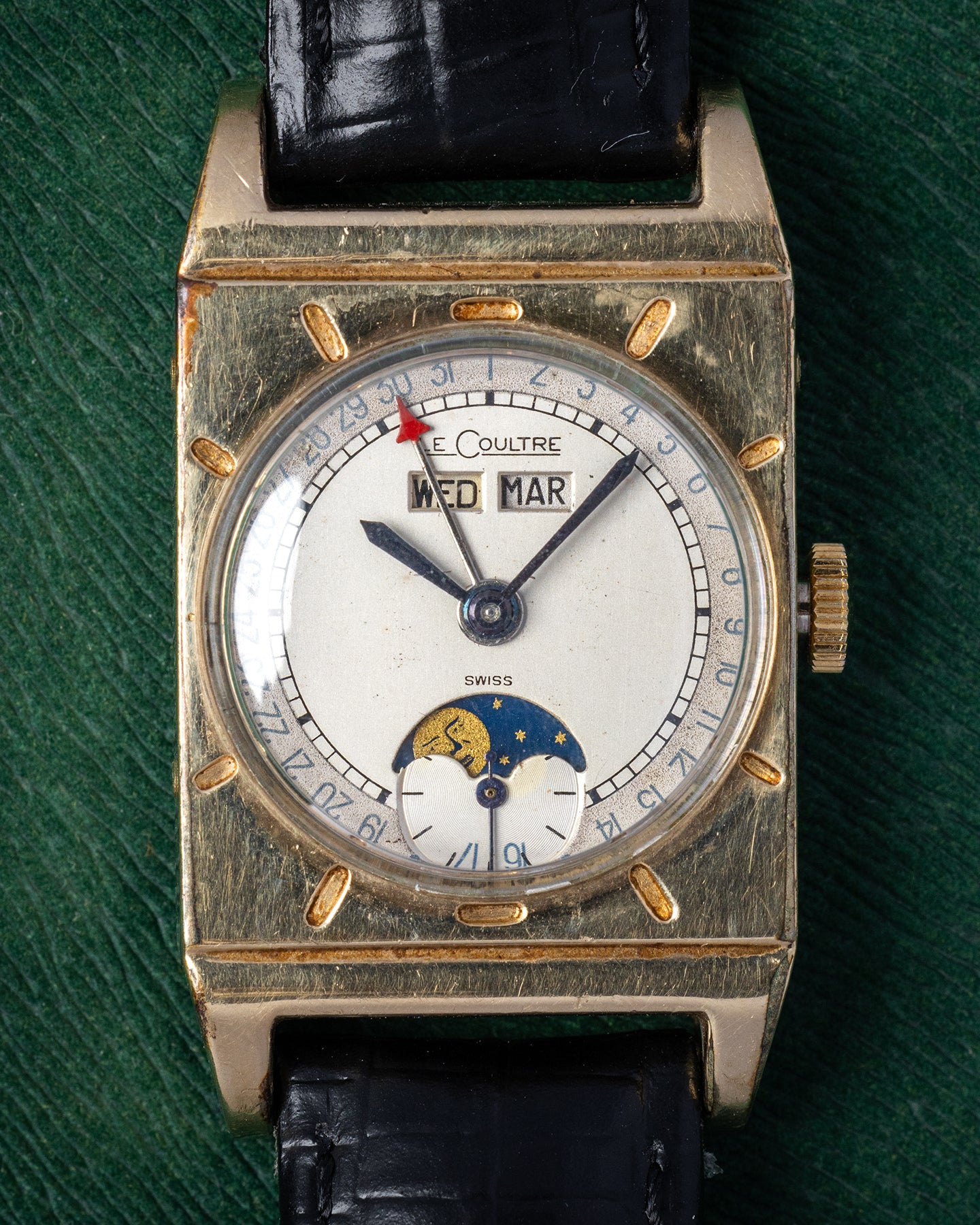
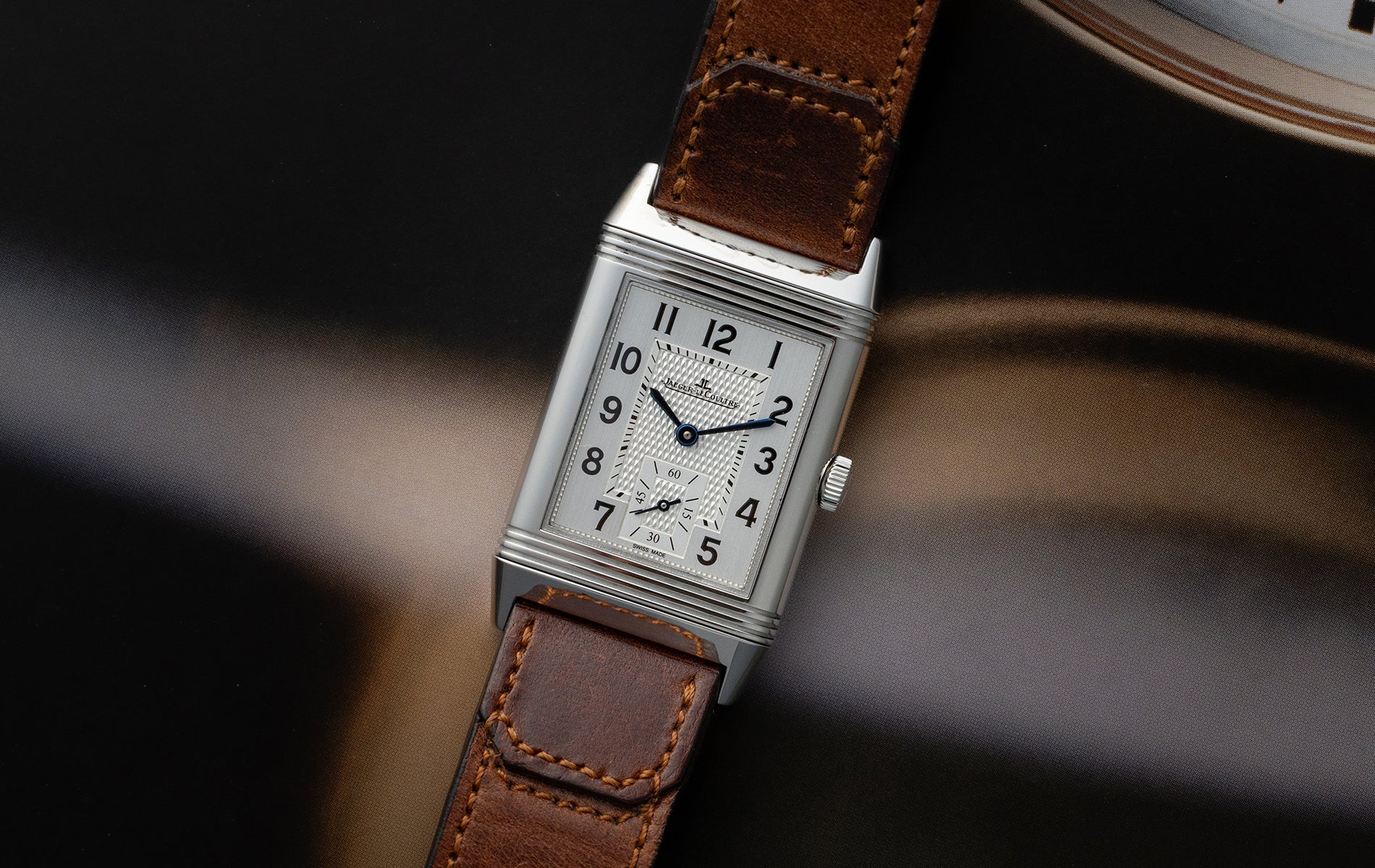
History of Jaeger-LeCoultre
Antoine LeCoultre founded the company in 1833 in Le Sentier, in the Vallée de Joux, converting his family's barn into a watchmaking atelier and becoming the first true manufacture in the valley. His 1844 Millionomètre measured to the micron and changed how watches were made. In 1903 his grandson Jacques-David LeCoultre partnered with the Parisian watchmaker Edmond Jaeger to produce ultra-thin movements; the two firms officially merged into Jaeger-LeCoultre in 1937. Across nearly two centuries the Grande Maison has developed over 1,300 calibers and 430 patents, supplying movements to Patek Philippe, Audemars Piguet, Vacheron Constantin, and Cartier.
Why Choose Grand Caliber
Grand Caliber is a luxury watch dealer in Uptown Dallas, sitting on McKinney Avenue with clients spread across the country. We buy, sell, source, and consign Jaeger-LeCoultre across the full catalog, from the Reverso and Master Control to the Polaris, Memovox, Rendez-Vous, and the Hybris Mechanica grand complications, plus vintage Reverso and early movements that built the brand's reputation. Every watch is authenticated in-house by our specialists, prices are posted on every listing, and inventory is one-of-one. Whether you are buying your first Reverso or hunting a vintage piece, come find your next watch.
FAQs
What is the most affordable Jaeger-LeCoultre?
Good news for first-time JLC buyers: this is one of the most rewarding entry points in haute horlogerie. The Reverso Classic Small in stainless steel opens the current catalog with retail starting around $7,500 to $9,000, and the Reverso Classic Medium in steel sits in a similar range. The Master Control Date 40mm in stainless steel falls between $7,500 and $9,500 and is one of the better value propositions in the modern catalog, offering a clean three-hand dress watch with the in-house Caliber 899. Step up to the $10,000 to $14,000 window and you are looking at the Reverso Tribute Small Seconds, the Reverso Classic Large Duoface, and the Polaris references. The pre-owned market opens things up further. Earlier Reverso references from the 1990s and 2000s, Master Control pieces with the older 899 movement, and Master Ultra Thin references frequently land in the $4,500 to $8,000 range depending on condition and box-and-papers status. JLC delivers more genuine watchmaking per dollar than almost any brand at this tier, particularly given the in-house movements throughout the catalog. Tell us what you want to spend and what draws you to the brand. Our specialists at Grand Caliber will help you find the right one.
Can I walk into Jaeger-LeCoultre and buy a watch?
JLC operates a network of boutiques and authorized retailers globally, including a flagship boutique on Madison Avenue in New York, and the brand has built its strategy around availability rather than scarcity. Walking into a JLC boutique and purchasing a current-production Reverso Classic, Master Control, Master Ultra Thin, or Polaris is usually straightforward, though specific limited editions, anniversary references, and certain grand complications can require waiting or sourcing. The Reverso Tribute Enamel pieces and the various boutique-exclusive references tend to sell through quickly. Grand complications, including the Hybris Mechanica and Master Grande Tradition references, are allocated carefully and generally only available through dedicated client relationships. The secondary market is where most pre-owned and vintage JLC transactions happen, and the brand has a particularly rich vintage market given its long production history. Vintage Reverso references from the 1930s through the 1990s, Memovox alarm watches from the 1950s and 1960s, and the various Atmos clocks all trade actively. We carry current and recent JLC alongside vintage examples in our Uptown Dallas showroom. If you want to compare a modern Reverso Tribute to a vintage Reverso from the 1990s in person, come spend an afternoon with us at Grand Caliber.
What is the best first Jaeger-LeCoultre to buy?
The honest answer depends on what draws you to the brand, but the Reverso is where most JLC journeys begin and there is good reason for that. The Reverso Classic Medium in stainless steel is the most versatile starting point, with the rectangular Art Deco case, the swiveling back inherited from the 1931 polo-field original, and dimensions that wear comfortably on most wrists. The Reverso Tribute Small Seconds steps up the design with the sector dial layout and is one of the most elegant dress watches in production at any price. The Reverso Classic Large Duoface adds a second time zone displayed on the reverse face and is the choice if you want functional use of the flip case. If you want something rounder and more traditional, the Master Control Date 40mm is the answer. Clean dial, blued hands, in-house movement, no compromises. The Master Ultra Thin Moon 39mm is the choice for buyers who want a moonphase complication at a meaningful entry point. None of these is a wrong answer. Tell us what you wear, what wrist size you have, and what speaks to you about the brand. The team at Grand Caliber will help you find the right one.
Which Jaeger-LeCoultre model has the highest demand?
The Reverso sits at the top, and has for decades. The Reverso Classic Medium and Reverso Tribute Small Seconds in stainless steel hold steady demand at retail and on the secondary market, and the various Reverso Tribute Enamel pieces, particularly those celebrating the 1931 Polo Club origin and the various Art Deco anniversary references, command serious collector interest. The Reverso Duoface and Duoface Calendar add functional complications to the design and have built their own collector following. Beyond the Reverso, the Master Control Date and Master Ultra Thin Moon in stainless steel are consistent performers, and the Master Compressor and Polaris Chronograph references appeal to buyers looking for sport-leaning JLC. Grand complications, including the Reverso Tourbillon Duoface, the Master Grande Tradition Gyrotourbillon, and the various Hybris Mechanica pieces, trade at substantial collector premiums when they surface. On the vintage side, original 1930s Reverso pieces with their period-correct movements, vintage Memovox alarm watches, and the Calibre 101-powered ladies' references (the smallest mechanical movement in the world at under a gram, introduced in 1929) trade actively at auction. If a particular JLC is on your list, our specialists at Grand Caliber track availability across the market.
How often should a Jaeger-LeCoultre be serviced?
JLC's published guidance is approximately every five to seven years for a full service, which aligns with the industry standard across Swiss manufactures. In practice, most experienced watchmakers consider every five to ten years a perfectly reasonable interval for daily-worn pieces, longer for watches in lighter rotation. A full service includes complete movement disassembly, cleaning, lubrication, gasket replacement, regulation on a timing machine, and pressure testing for water resistance. The signs that a watch is ready are usually subtle. Power reserve drops on the automatic references, timing drifts a few seconds per day, or moisture appears under the crystal in cold weather. Modern JLC calibers, particularly the in-house Caliber 898/899 family that powers most of the Master Control and Reverso lines, are designed for long service intervals and consistent performance. The 1,000 Hours Control testing protocol, which JLC subjects every watch to before it leaves the manufacture, sets a standard that few brands match. Vintage JLC, including older Reverso references and the various Memovox alarm watches, is well-supported by both the manufacture in Le Sentier and the broader independent watchmaking community given JLC's long history of supplying movements to other brands. We offer service in-house at Grand Caliber, and our team is happy to walk you through the options.
How much does a full Jaeger-LeCoultre service cost?
JLC service pricing sits in the moderate range for Swiss luxury watches, reflecting the complexity of the in-house movements and the manufacture's commitment to long-term serviceability. A standard service through JLC or an authorized service center for a Master Control Date, Reverso Classic, or other time-only reference generally runs $700 to $1,000. Reverso Duoface, Master Ultra Thin Moon, and similar references with moderate complications typically fall in the $900 to $1,400 range. Chronograph references, including the Polaris Chronograph and Master Compressor Chronograph, run higher because of the additional complexity, often $1,200 to $1,800 for a full service. Reverso Tourbillon, Master Grande Tradition Gyrotourbillon, Hybris Mechanica grand complications, and similar high-complication references run substantially higher and are quoted individually. Vintage Reverso references and Memovox alarm watches require specialist work, particularly on the alarm mechanism in the Memovox line, and are often best handled through JLC directly or through an experienced independent watchmaker with vintage JLC expertise. For a specific quote on a watch in our care, our team at Grand Caliber can advise based on the reference and what the work involves.
Can I wear my Jaeger-LeCoultre every day?
Absolutely, and certain JLC references are particularly well-suited to daily wear. The Polaris collection, modeled on the 1968 original deep-sea diver, is built for actual use with water resistance up to 300 meters on the Polaris Mariner references, and the modern Polaris Date and Polaris Chronograph wear comfortably day to day. The Master Control collection is more dress-oriented but still durable enough for daily wear in office and dinner contexts, particularly the Master Control Date 40mm in stainless steel. The Reverso is the interesting case. Conceived in 1931 to protect the dial from polo mallets and ball impacts, the swiveling case was genuinely designed for active use, and modern Reversos can absolutely be worn daily even though their Art Deco styling reads more formal. The brand's 1,000 Hours Control testing protocol means every watch has been through six different tests over more than 41 days of evaluation before it leaves Le Sentier, which is one of the more demanding pre-delivery standards in the industry. Avoid hot tubs and saunas since heat ages gaskets faster than anything else. Otherwise, wear it. JLC watches are engineered for actual use, not for display behind glass.
How long does a Jaeger-LeCoultre last?
A lifetime, with proper service. JLC builds its watches to be serviced, and the manufacture maintains the parts, the institutional knowledge, and the trained watchmakers at Le Sentier to service the modern catalog plus most vintage references going back decades. The in-house Caliber 898/899 family, the Caliber 854 in the Reverso Duoface, and the various other modern calibers are designed for long-term serviceability with parts availability that should extend well beyond any current owner's lifetime. Vintage JLC pieces have a particular advantage: because JLC supplied movements to so many other brands over the decades, including Patek Philippe, Audemars Piguet, Vacheron Constantin, and Cartier (whose earliest Tank and Santos watches were powered by LeCoultre movements), the independent watchmaking community has deep expertise in JLC mechanisms. A Reverso from the 1990s, a Memovox from the 1960s, or even an earlier piece can typically be brought back to running condition. The Atmos clock, introduced in 1928 and powered by changes in temperature and atmospheric pressure, runs effectively forever without winding and represents JLC's commitment to mechanical longevity in its purest form. A JLC purchased today will be wearable and meaningful a generation from today, and Grand Caliber is here to help with service whenever you need us.
Is it safe to buy a Jaeger-LeCoultre on the secondary market?
Absolutely, when the dealer authenticates and stands behind what they sell. The pre-owned JLC market is one of the more rewarding categories in luxury watches, with significant volume across dealers, auction houses, and platforms, and the brand's long production history makes it one of the most interesting categories to buy into thoughtfully. Counterfeit JLCs exist, particularly fakes of the Reverso and the Master Control, but the level of finishing and movement quality required to fake a serious JLC convincingly is beyond most counterfeit operations. The more common collector-market risks are watches with service-replacement components, refinished cases, and watches sold without the original certificate. At Grand Caliber, every JLC is authenticated by our specialists before listing. Every watch is photographed individually, and box-and-papers status appears in the spec list of every product page. If a watch has any non-original component or service-replacement part, we say so in writing, and the price reflects it. Vintage JLC collecting in particular rewards transparency, especially for early Reverso references where original dial, hands, and case engraving on the reverse face all affect value. If you have a question about a specific JLC in our inventory, our team is happy to walk through it with you on the phone, in the showroom, or over text.
Is a Jaeger-LeCoultre a good investment?
JLC holds value reasonably well, and the brand has gained meaningful collector attention over the past decade as serious buyers have come to appreciate the manufacture's depth and the historical movement supply to the holy trinity. Vintage Reverso pieces from the 1930s through the 1950s, particularly those with engraved or enameled reverse cases, have appreciated substantially at auction. Vintage Memovox alarm watches in original condition, Calibre 101-powered ladies' pieces, and the various Atmos clocks across decades trade actively and have moved up steadily. The modern catalog generally holds its value well, with the Reverso Tribute pieces, Master Ultra Thin Moon, and Polaris references being among the stronger performers. Grand complications and limited editions, including the Reverso Tribute Enamel pieces and the Master Grande Tradition Gyrotourbillon references, trade at substantial collector premiums when they surface. Here is the honest truth, though: a watch is not a stock, and the JLC collectors who do best are the ones who buy because they appreciate the brand's status as the watchmaker's watchmaker and the genuine depth of the manufacture's heritage. They tend to end up with collections that have appreciated nicely while actually enjoying the watches along the way. Find the JLC that speaks to you, and we are ready when you are. Come find your next watch at Grand Caliber.