

Omega Watches
Omega’s legacy stretches from the Moon landing to the Olympic Games, fusing cultural milestones with cutting-edge innovation. Known for the groundbreaking Co-Axial escapement and iconic collections like the Speedmaster, Seamaster and Constellation, Omega continues to set the pace in precision watchmaking. With a design philosophy rooted in performance and elegance, each timepiece is built to endure and impress. Find your next iconic timepiece with Grand Caliber’s exclusive selection of new & pre owned Omega watches, trusted by Dallas collectors and enthusiasts.
Omega Watches at Grand Caliber
Omega watches operate at the absolute peak of industrialized mechanical watchmaking, offering a combination of historical depth, proprietary materials, and movement innovation that direct competitors struggle to match. While other historic Swiss manufactures spent the last two decades relying on established movement architectures and marketing heritage, Omega rebuilt its entire production philosophy around George Daniels and the Co-Axial escapement. The brand established the METAS Master Chronometer certification, forcing the rest of the industry to acknowledge that traditional COSC standards were no longer sufficient for buyers of modern Omega watches. Grand Caliber stocks Omega watches across the full breadth of the current catalog and the most coveted discontinued references. Our inventory serves serious collectors and first time buyers nationally, covering everything from the manually wound Speedmaster Professional Moonwatch and the ceramic Dark Side of the Moon to the ultra deep diving Planet Ocean and the dress oriented De Ville Tresor. Every piece is authenticated in house, priced transparently, and ready to ship without the frustration of allocation waitlists or artificial scarcity.
The 1848 Founding of Omega and the Nineteen Ligne Caliber
The history of Omega watches begins in 1848 when a twenty three year old watchmaker named Louis Brandt opened a small workshop in the Swiss village of La Chaux de Fonds. Brandt operated as a comptoir, assembling key wound silver pocket watches from parts supplied by local craftsmen and traveling across Europe to sell them directly to clients. The company operated under the Brandt name for decades, gradually shifting toward in house manufacturing after his sons Louis Paul and Cesar took over and moved the operation to Bienne in 1880 to take advantage of better logistics and a stronger labor pool.
The trajectory of Omega watches changed permanently in 1894 with the invention of the nineteen ligne caliber. Developed under the guidance of Francois Chevillat, this pocket watch movement was revolutionary for its era because every single component was machined to exact tolerances, allowing parts to be perfectly interchangeable without the need for individual hand modification by a watchmaker. The movement also introduced a winding and time setting system managed entirely through the crown. The Brandt brothers named this definitive movement Omega, the last letter of the Greek alphabet, symbolizing the ultimate accomplishment in watchmaking. The caliber was so successful on a global scale that the company officially changed its name to Omega in 1903, marking one of the rare instances in horology where a brand of Omega watches is named after a specific movement rather than its founder.
Omega Olympic Timekeeping and Precision Records
Long before Omega watches were associated with space exploration or deep sea diving, the brand built its reputation on absolute chronometric precision in observatory trials. During the late nineteenth and early twentieth centuries, the astronomical observatories at Kew Teddington in England and Geneva in Switzerland held rigorous testing competitions that served as the proving grounds for the finest watchmakers in the world. Omega consistently dominated these trials, securing first place in all six categories at the 1931 Geneva Observatory trials.
This documented obsession with precision led directly to the most enduring partnership in the history of sports timekeeping. In 1932, the International Olympic Committee selected Omega to serve as the official timekeeper for the Los Angeles games, marking the first time a single private company was entrusted with timing every event across the entire competition. The brand sent one watchmaker from Bienne to California with thirty high precision chronographs certified by the Neuchatel Observatory. Omega watches have held this official timekeeping role for nearly every Olympic event since, driving the brand to invent the modern photo finish camera, the touch pads used in swimming, and the starting blocks that detect false starts in track and field.
The Omega Speedmaster Professional Family
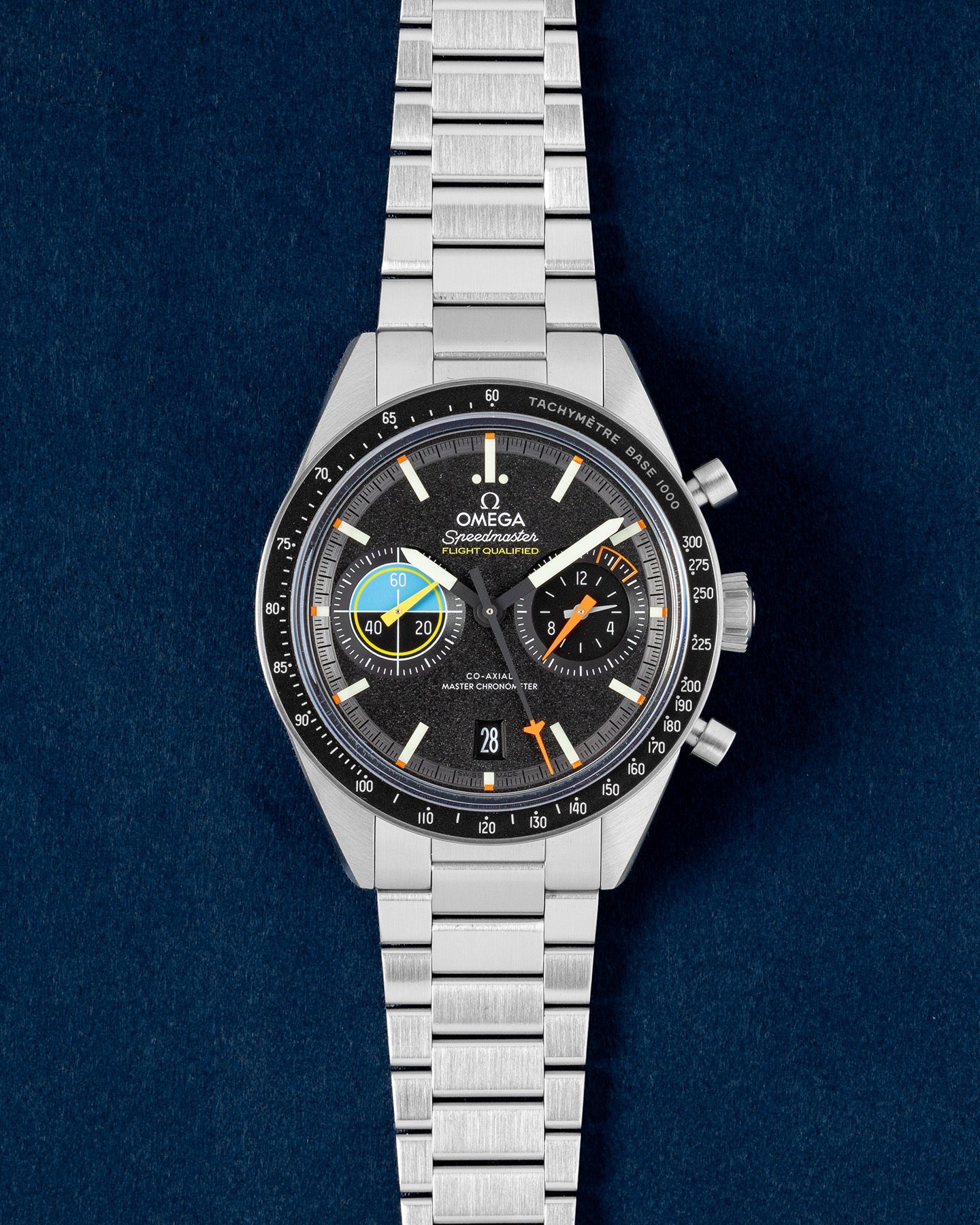
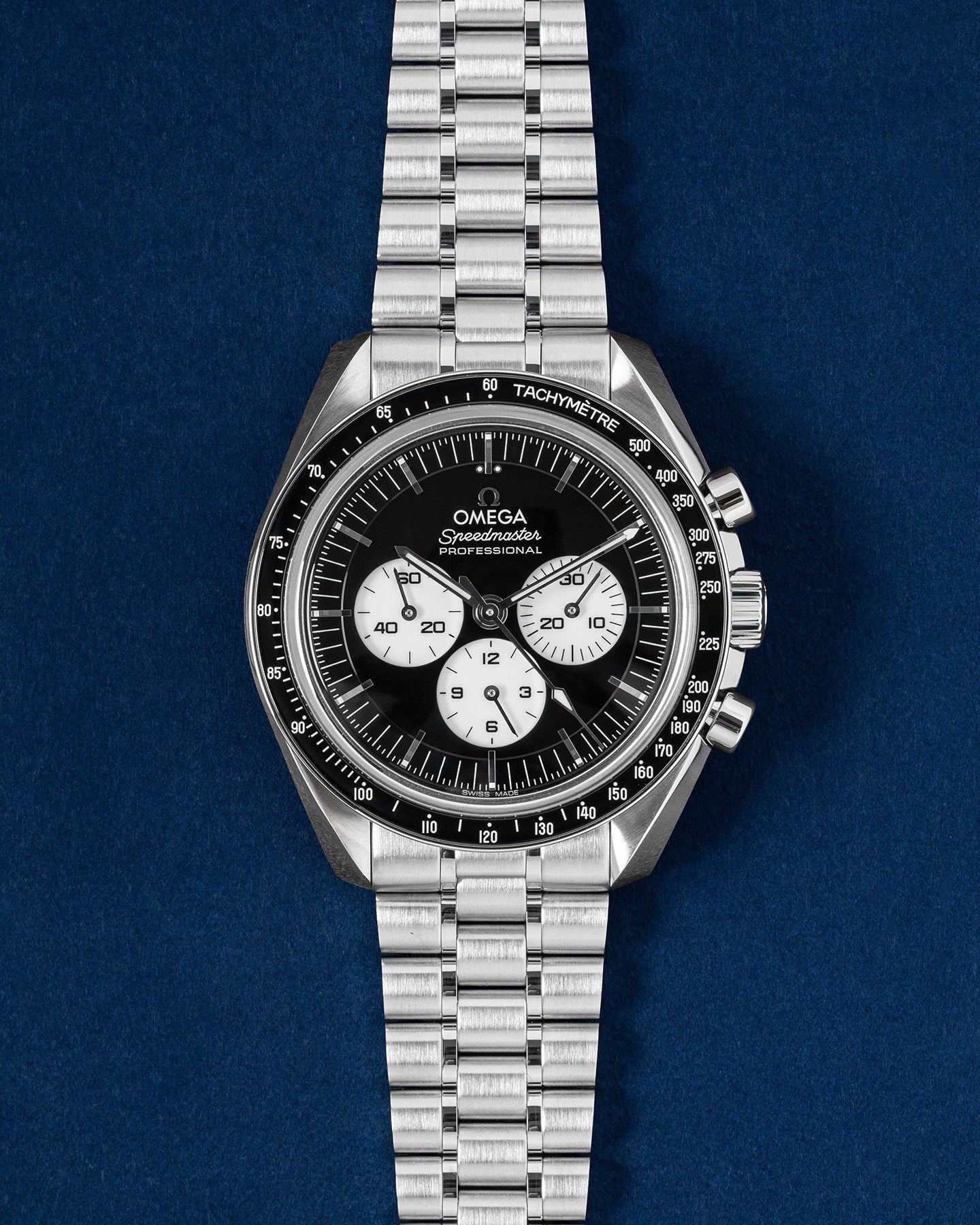
No collection defines Omega watches quite like the Speedmaster. Originally introduced in 1957 as part of the Professional Trilogy alongside the Seamaster 300 and the Railmaster, the Speedmaster was not designed for astronauts. It was built for racing drivers and engineers. It was the first chronograph in the world to move the tachymeter scale from the dial to the external bezel, allowing drivers to calculate speed over distance with immediate legibility. The architecture of the case, the matte black dial, and the white baton hands created a visual language that remains largely unchanged nearly seven decades later, making these Omega watches instantly recognizable.
Omega Caliber 321 and Pre Moon Origins
The earliest Omega watches in the Speedmaster family are defined by the legendary caliber 321, a manually wound column wheel chronograph movement developed by Albert Piguet at Lemania. The inaugural reference 2915 featured a symmetrical case without crown guards, broad arrow hands, and a steel bezel. The subsequent reference 2998 introduced the black aluminum bezel insert and alpha hands, famously worn by astronaut Wally Schirra during the Mercury Sigma 7 mission in 1962, making it the first of the Omega watches in space. The reference 105.003, known among collectors as the Ed White, was the specific model tested and qualified by NASA in 1965 after surviving extreme temperature, vacuum, and shock protocols that destroyed competing chronographs from Rolex and Longines.
The Omega Moonwatch and Caliber 1861
The reference 105.012 introduced the asymmetrical case with twisted lyre lugs and integral crown guards that defines the modern Moonwatch silhouette. This was the specific reference worn by Buzz Aldrin when he stepped onto the lunar surface in July 1969. Following the Apollo missions, Omega transitioned away from the complex column wheel caliber 321 to the more robust, cam actuated caliber 861, and eventually the rhodium plated caliber 1861. For decades, the caliber 1861 powered the standard production Speedmaster Professional, serving as the mechanical backbone for a watch that remained flight qualified by NASA for all manned space missions.
The Modern Omega Speedmaster Professional Caliber 3861
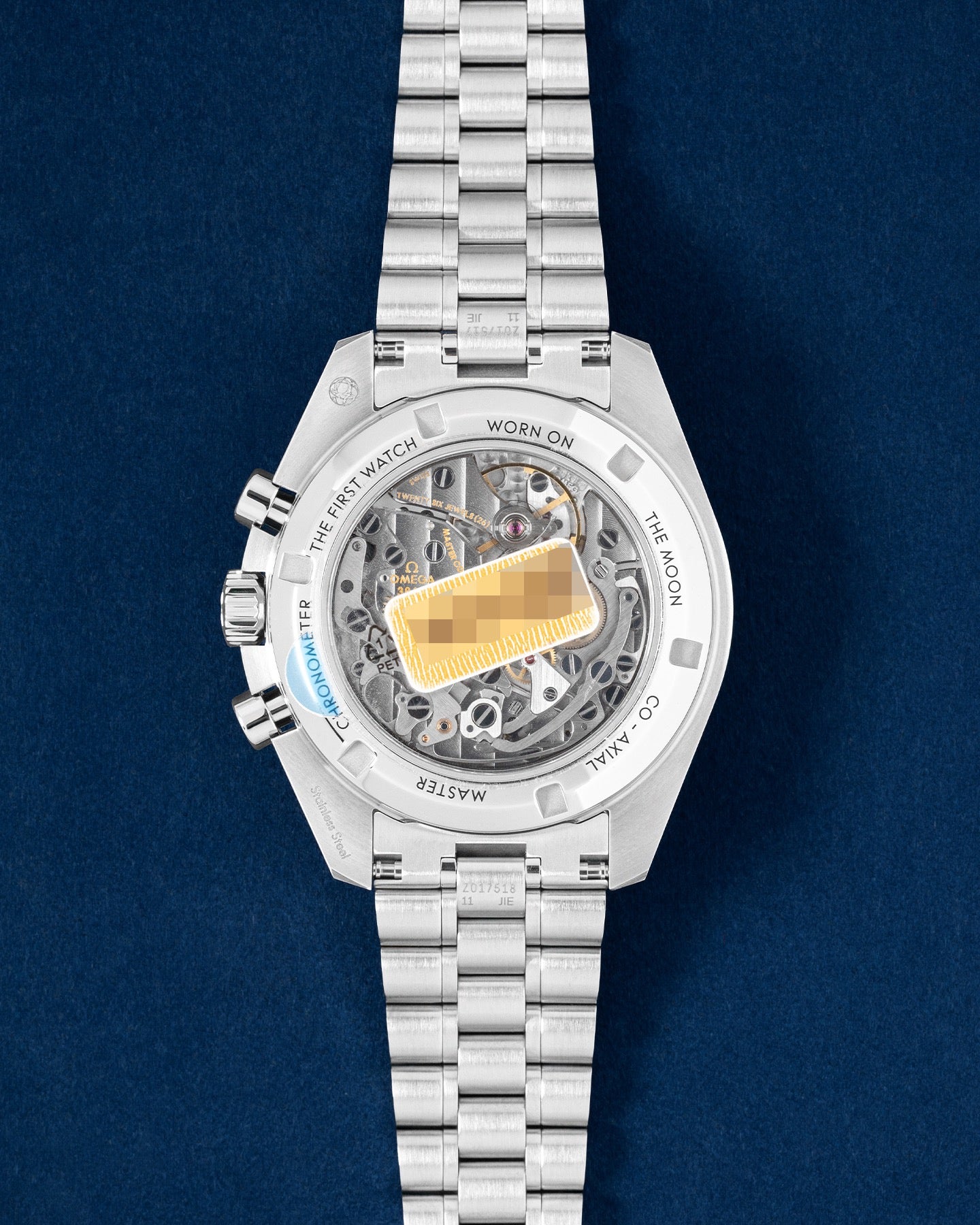
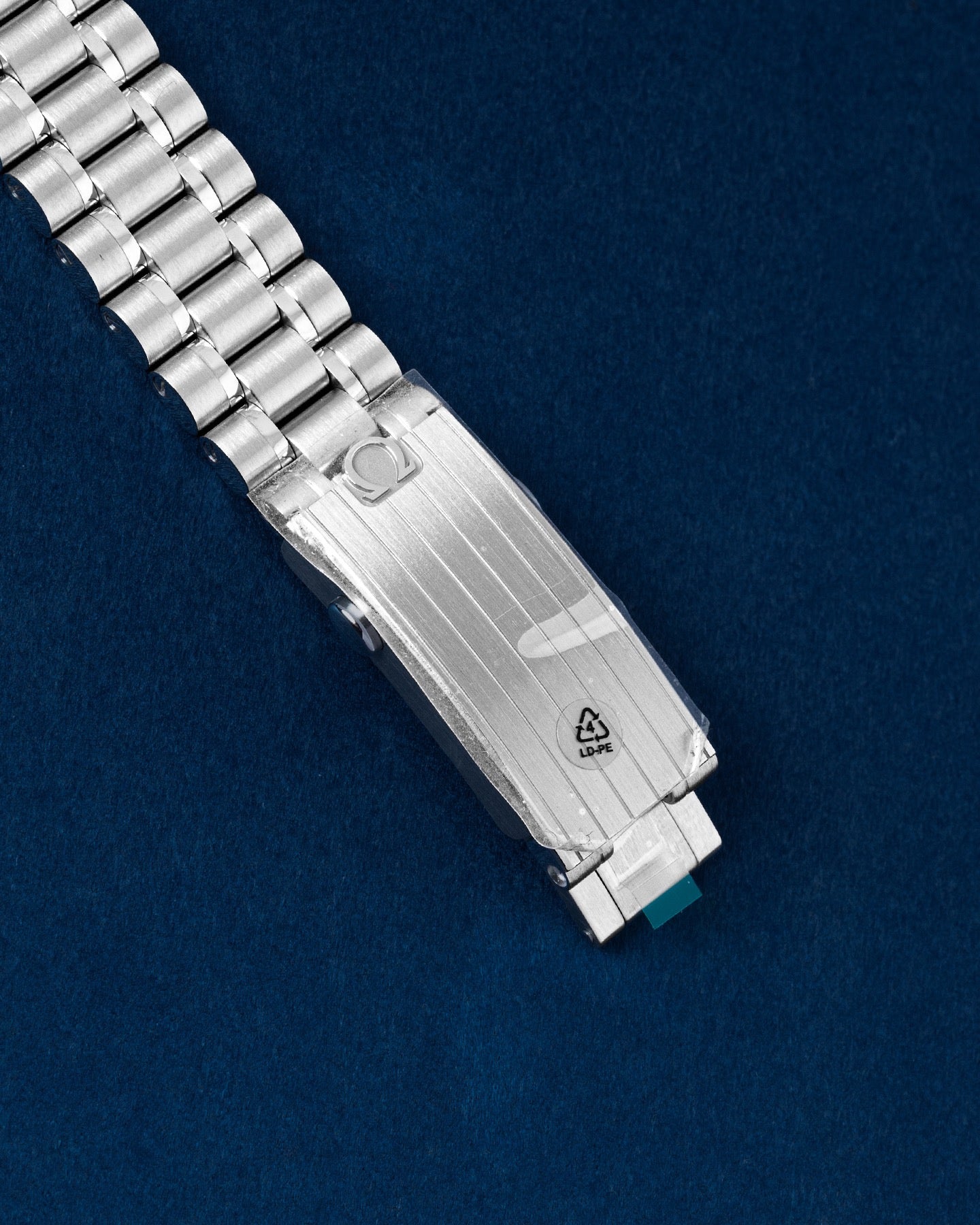
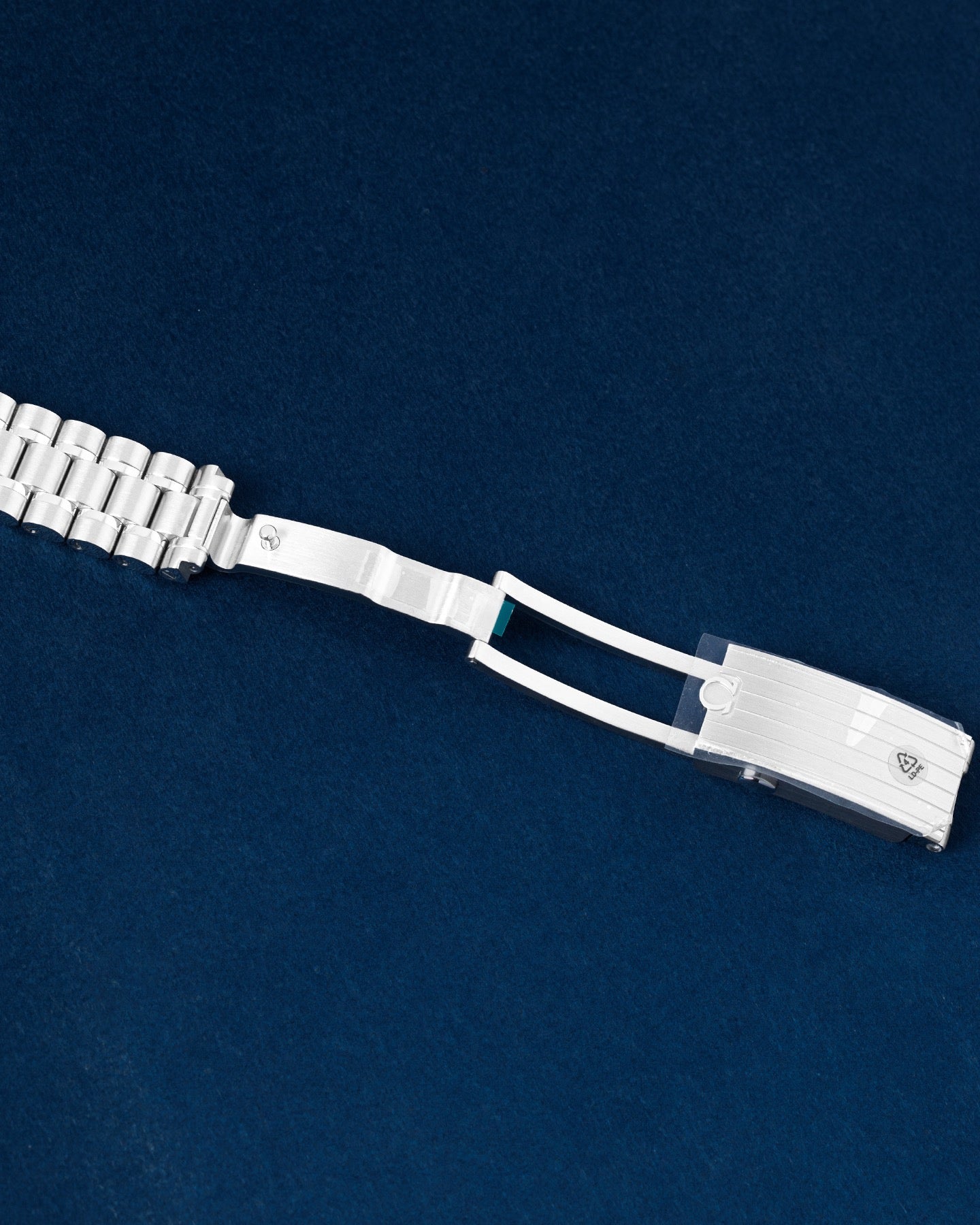
In 2021, Omega executed the most significant update to the Speedmaster Professional in fifty years by retiring the caliber 1861 and introducing the caliber 3861. This new movement brought the manually wound Moonwatch into the modern era of Omega watches by integrating the Co Axial escapement and achieving METAS Master Chronometer certification. The caliber 3861 utilizes a silicon balance spring, making the traditional Moonwatch resistant to magnetic fields up to fifteen thousand gauss while retaining the exact dimensions required to fit the historical asymmetrical case. The brand also redesigned the bracelet, offering a dramatic taper from twenty millimeters at the lugs to fifteen millimeters at the clasp, capturing the aesthetic of the vintage flat link bracelets from the Apollo era.
Omega Dark Side of the Moon and Ceramic Engineering
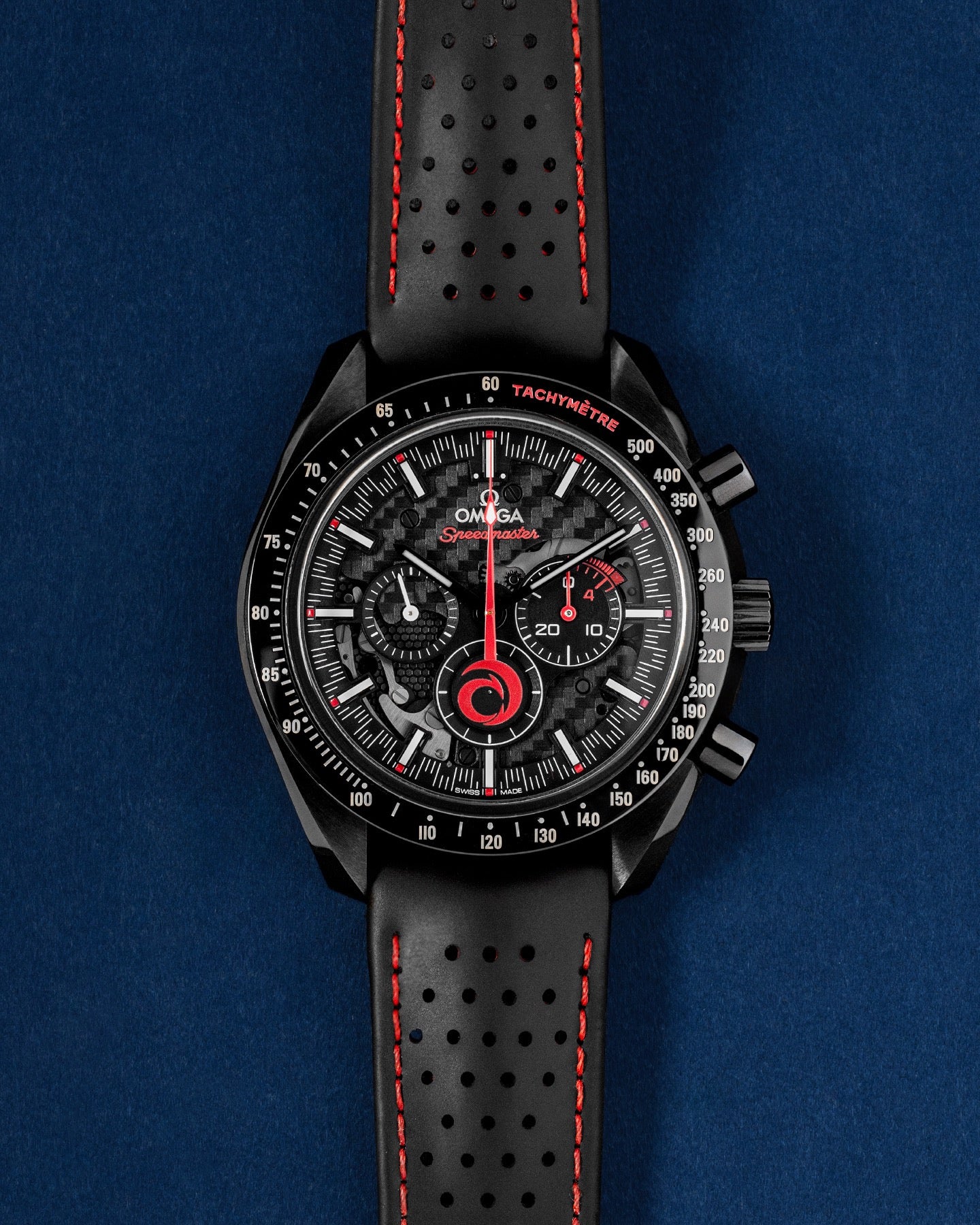
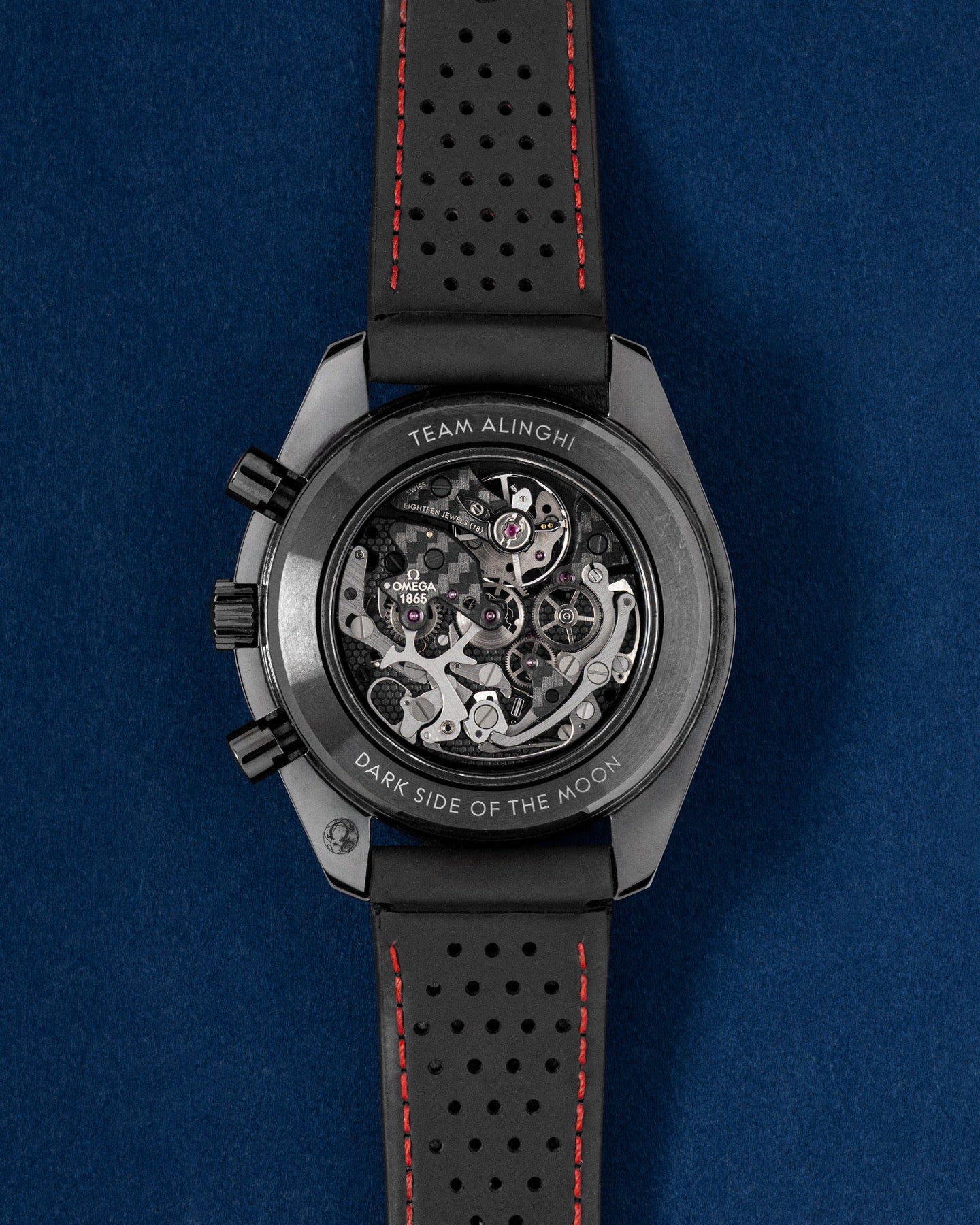
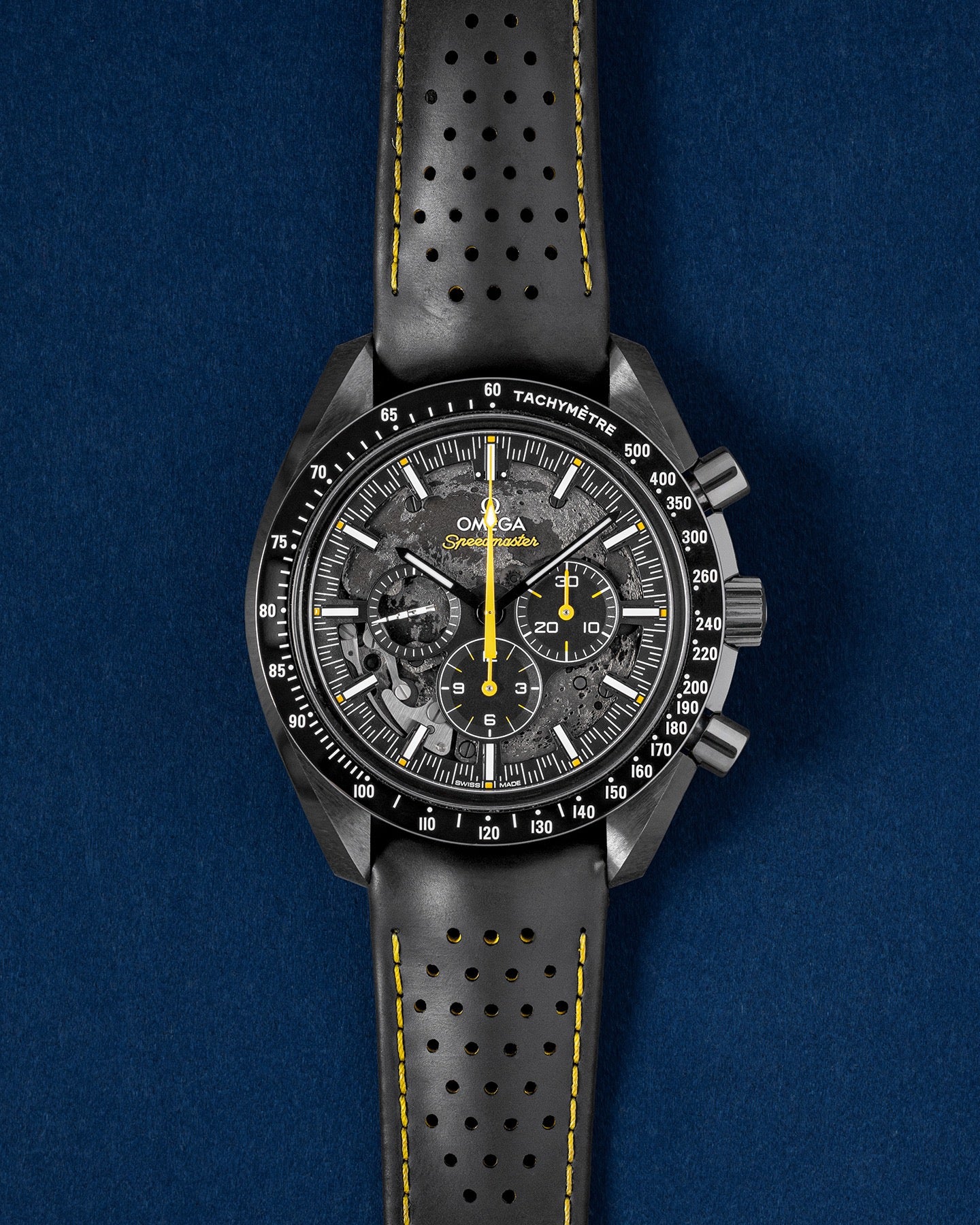
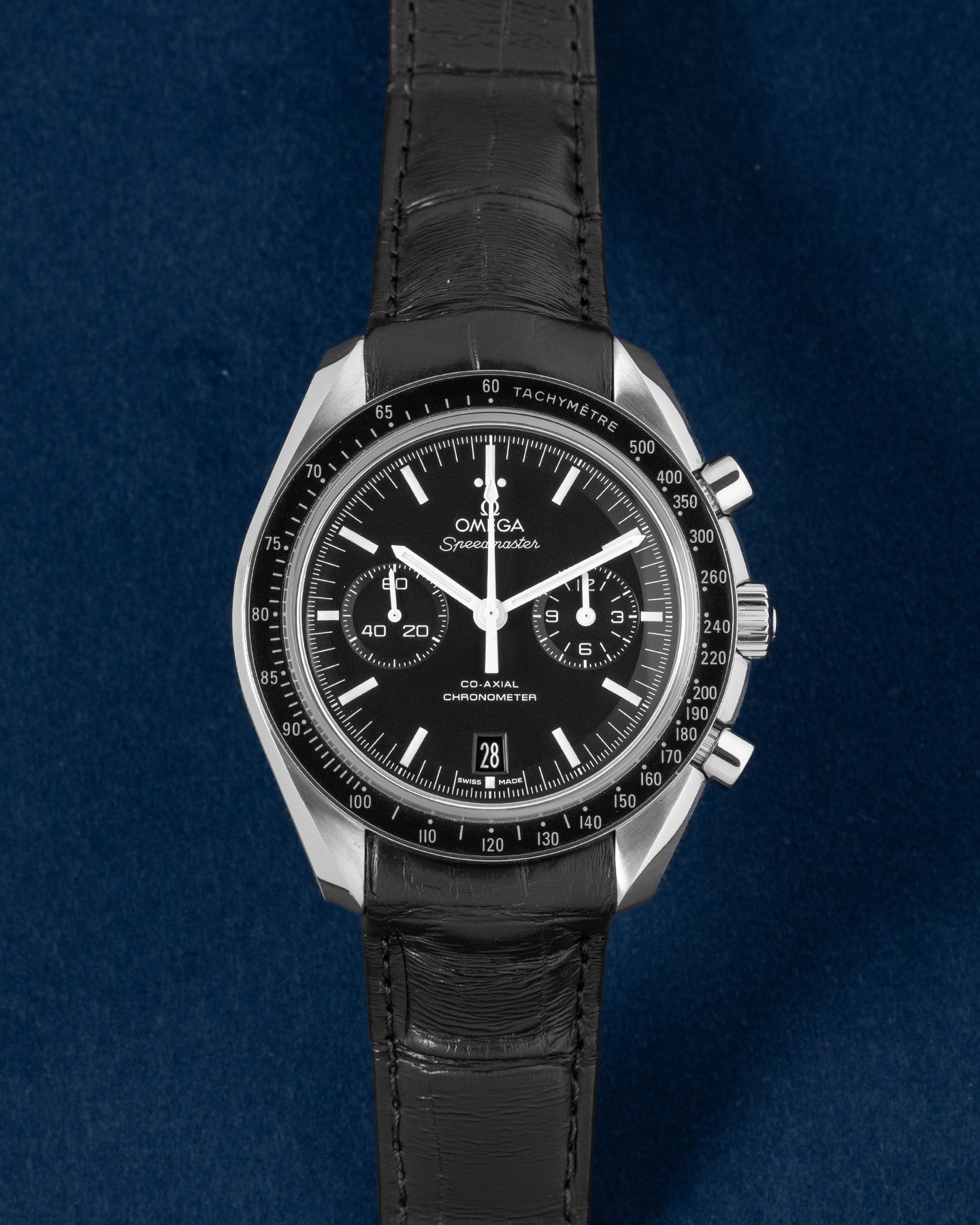
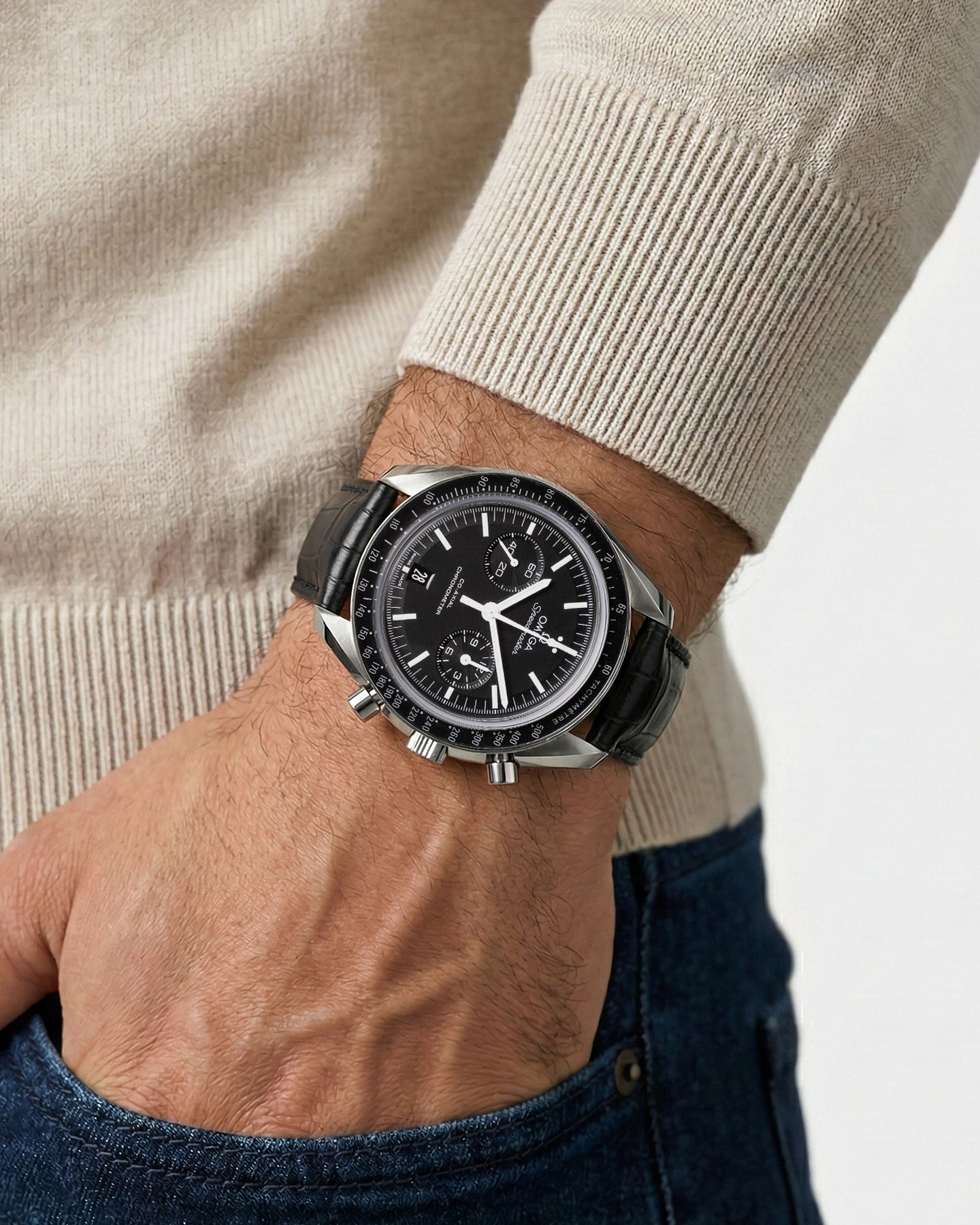
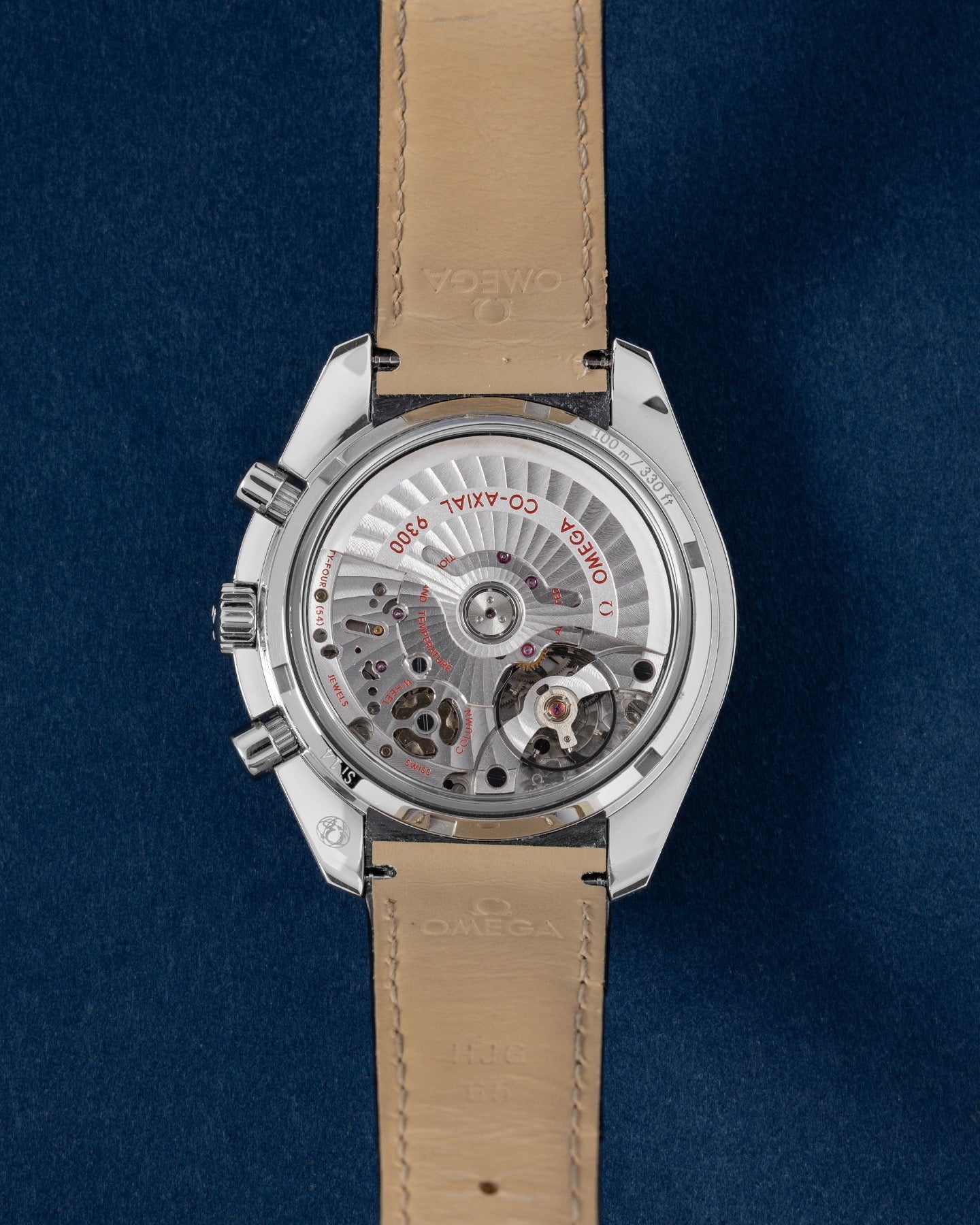
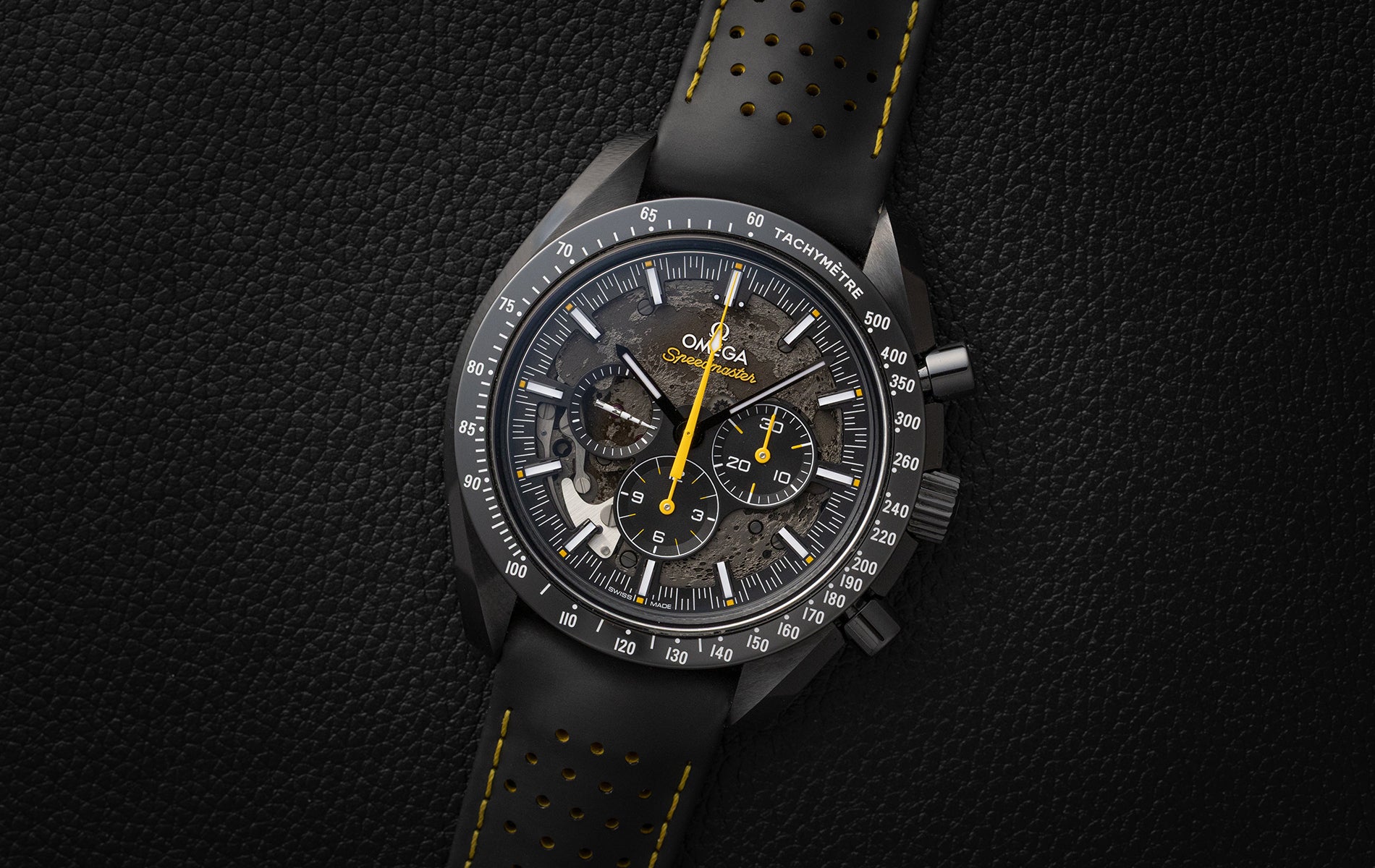
The Speedmaster line is not strictly bound to its mid century heritage. The Dark Side of the Moon collection, introduced in 2013, represents the cutting edge of materials engineering within Omega watches. The entire case, crown, pushers, and dial are machined from a single block of black zirconium oxide ceramic. Powered by the self winding Co Axial caliber 9300, the Dark Side of the Moon features a two register dial layout that displays both elapsed chronograph hours and minutes in the three o clock subdial, creating an intuitive reading experience that mimics a standard time display. The collection expanded to include Grey Side and White Side variants, proving that the Speedmaster architecture could successfully transition into high tech contemporary materials.
Omega Speedmaster Heritage and Limited Editions
The secondary market for Omega watches is heavily driven by Speedmaster limited editions. The Snoopy Award pieces, issued to commemorate the silver pin awarded to Omega by NASA astronauts for the Speedmaster role in saving the Apollo 13 crew, remain the most coveted. The 2003 Silver Snoopy, the 2015 white dial variant with luminous Snoopy on the caseback, and the 2020 fiftieth anniversary edition with an animated command module on the rear sapphire all trade at massive premiums above their original retail prices. In 2020, Omega also resurrected the caliber 321, producing it in a dedicated workshop where a single watchmaker assembles each movement from start to finish. The modern Ed White caliber 321 reference 311.30.40.30.01.001 in stainless steel serves as the absolute pinnacle of current Speedmaster production for vintage purists who collect Omega watches.
The Omega Seamaster Diver 300M Collection
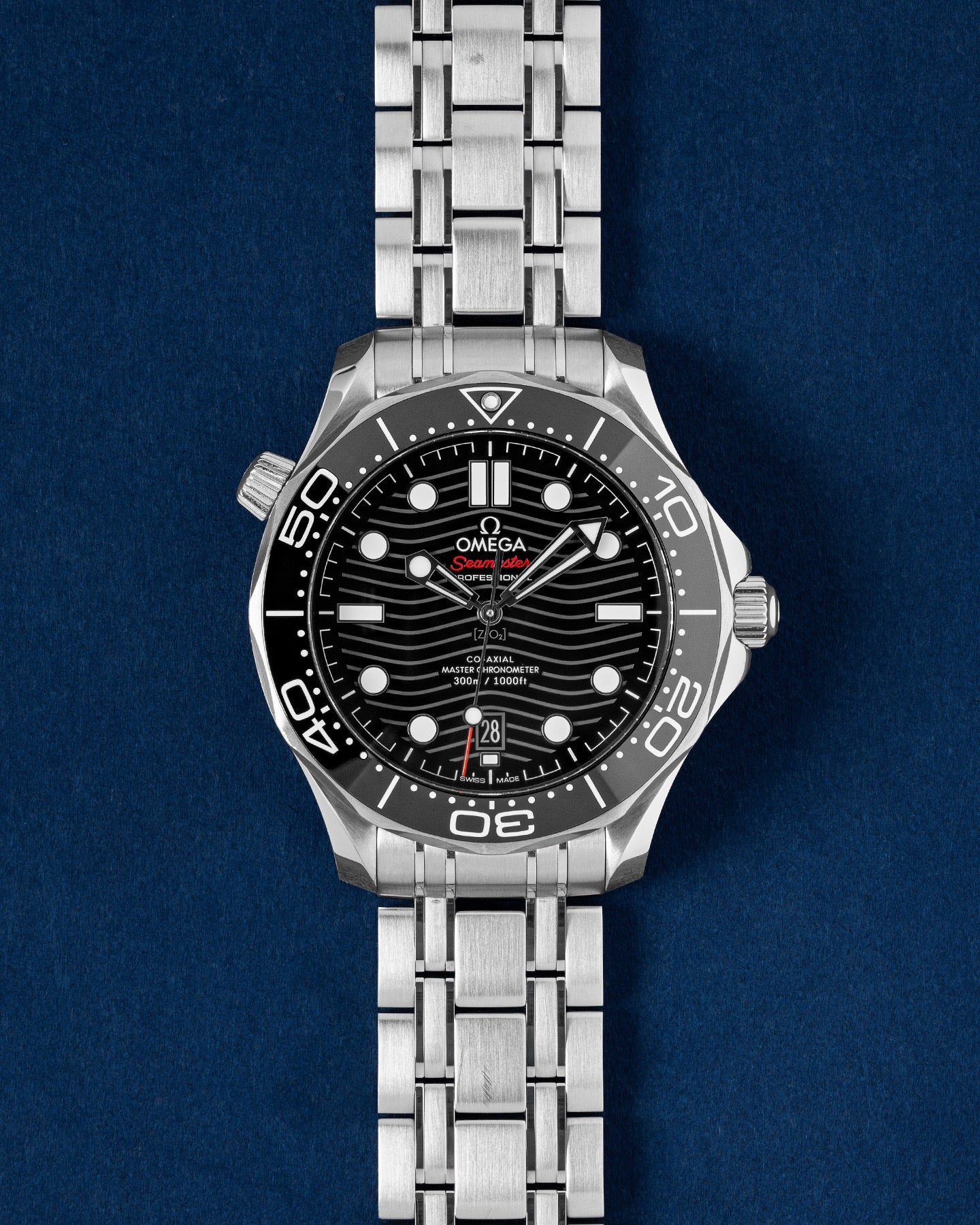
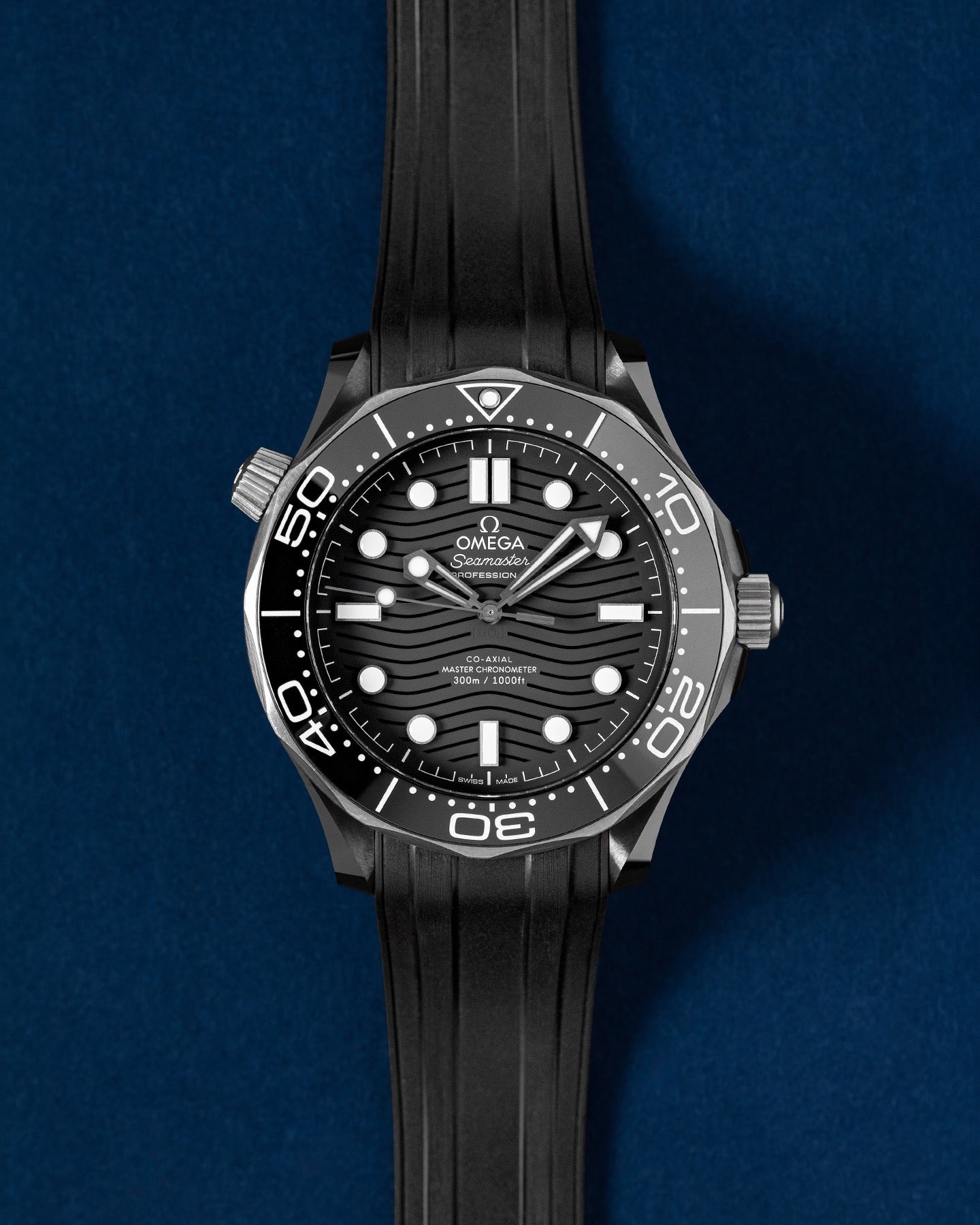
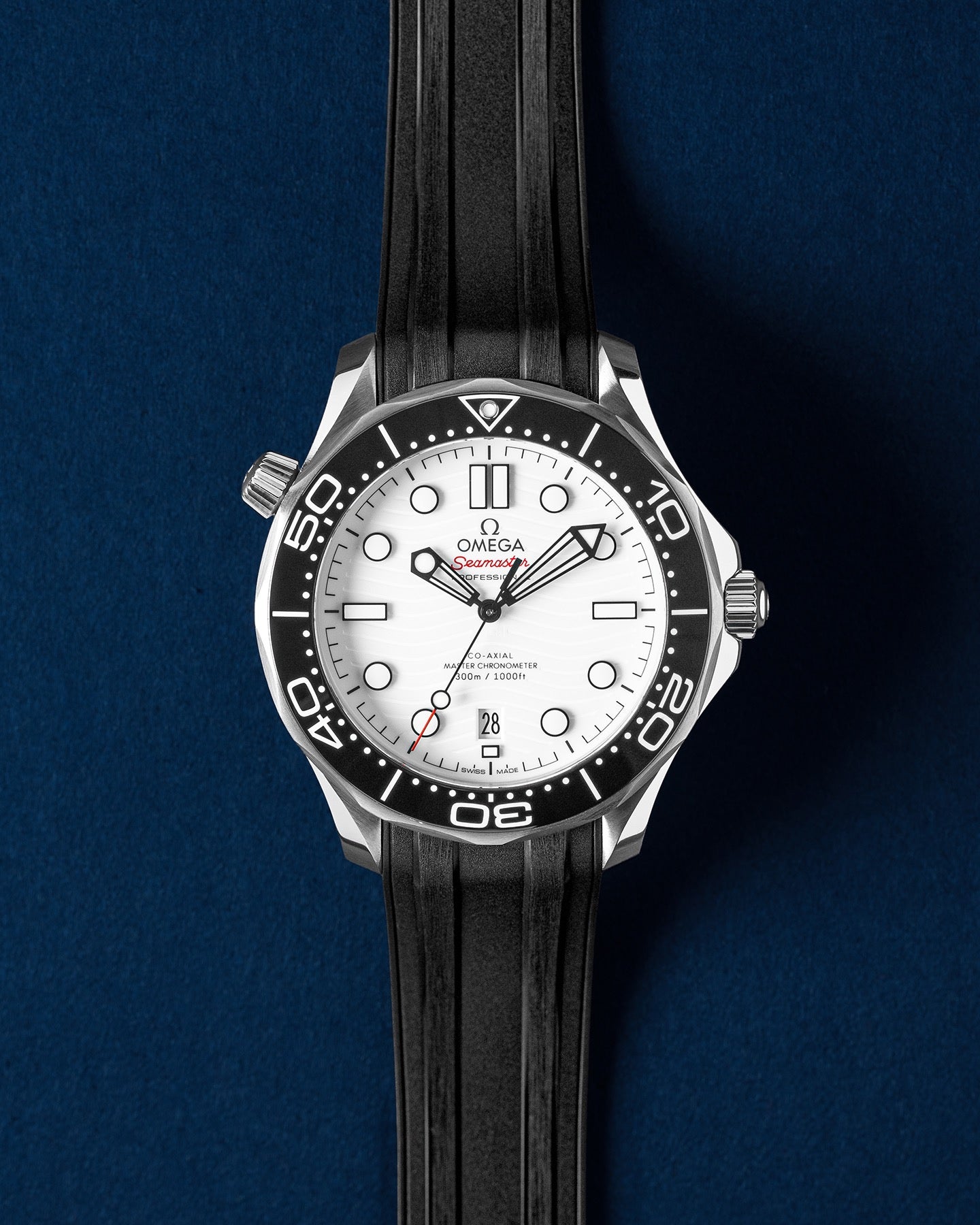
While the Speedmaster commands the historical high ground, the Seamaster Diver 300M is the commercial engine that drives modern Omega watches. First introduced in 1993, the Diver 300M established a new aesthetic for luxury dive watches characterized by the scalloped bezel, the skeletonized sword hands, the laser engraved wave dial, and the manually operated helium escape valve positioned at ten o clock. It offered a distinct alternative to the Rolex Submariner, prioritizing complex case geometry and aggressive modern styling over mid century restraint.
The 1993 Omega Revival and Modern Specifications
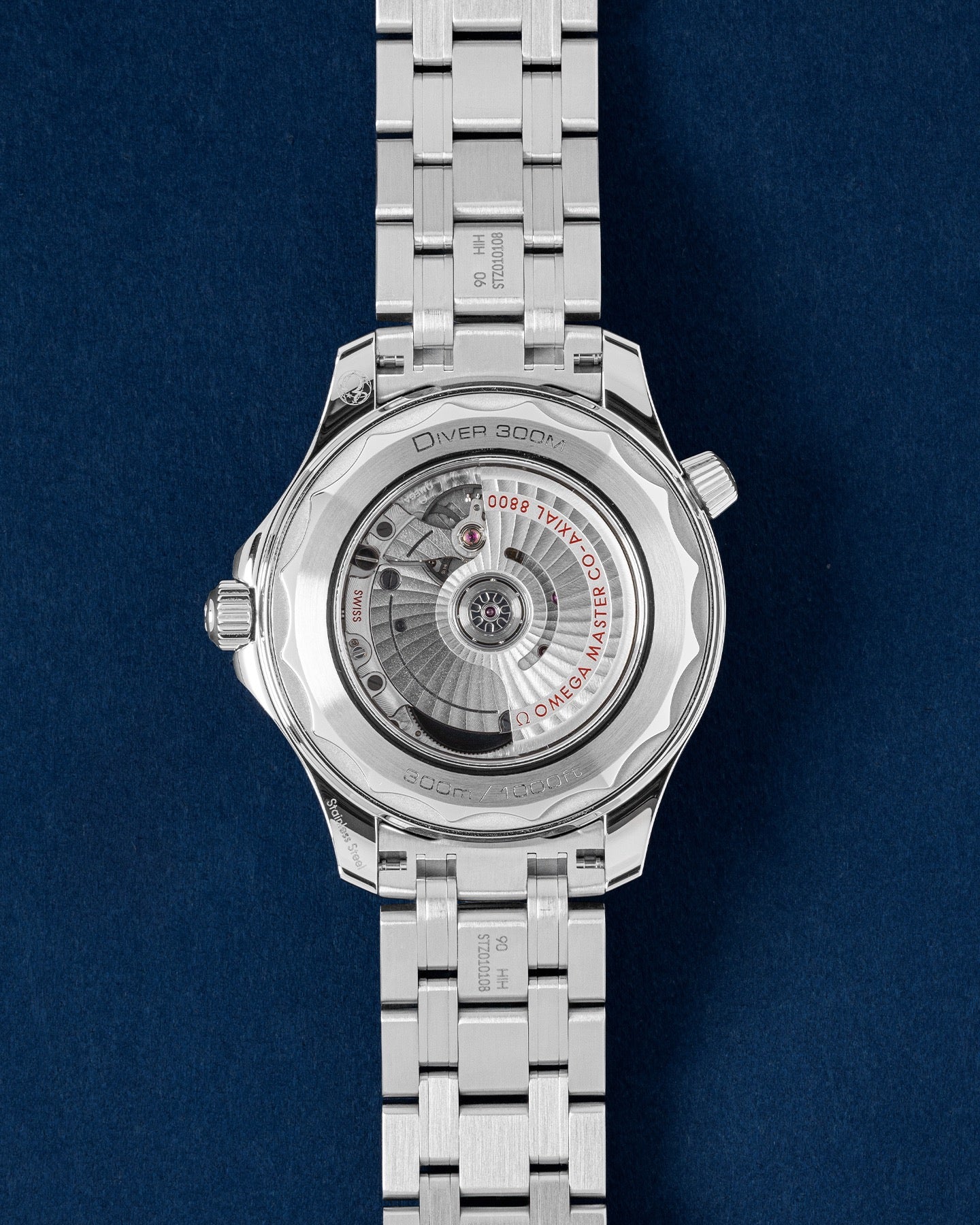
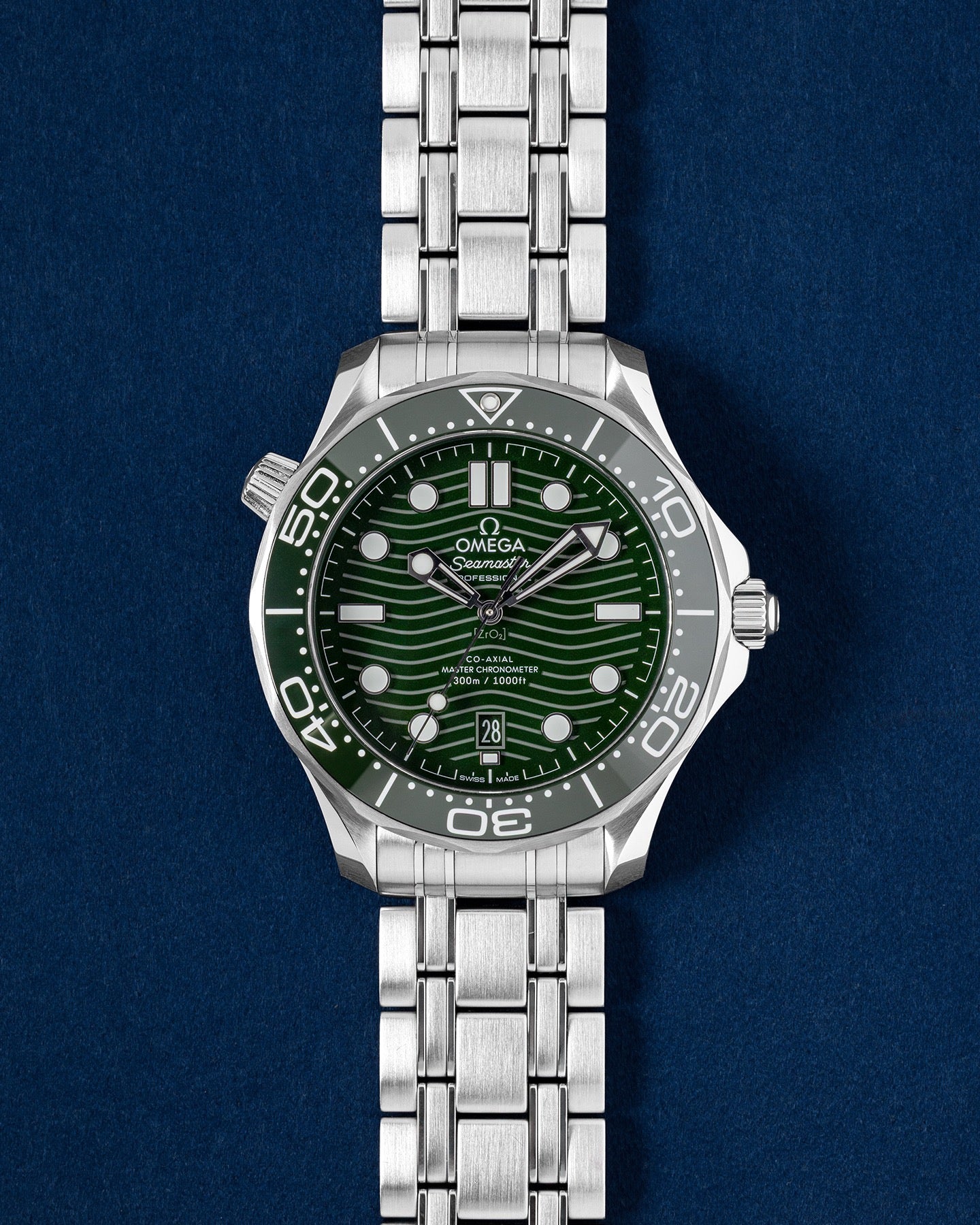
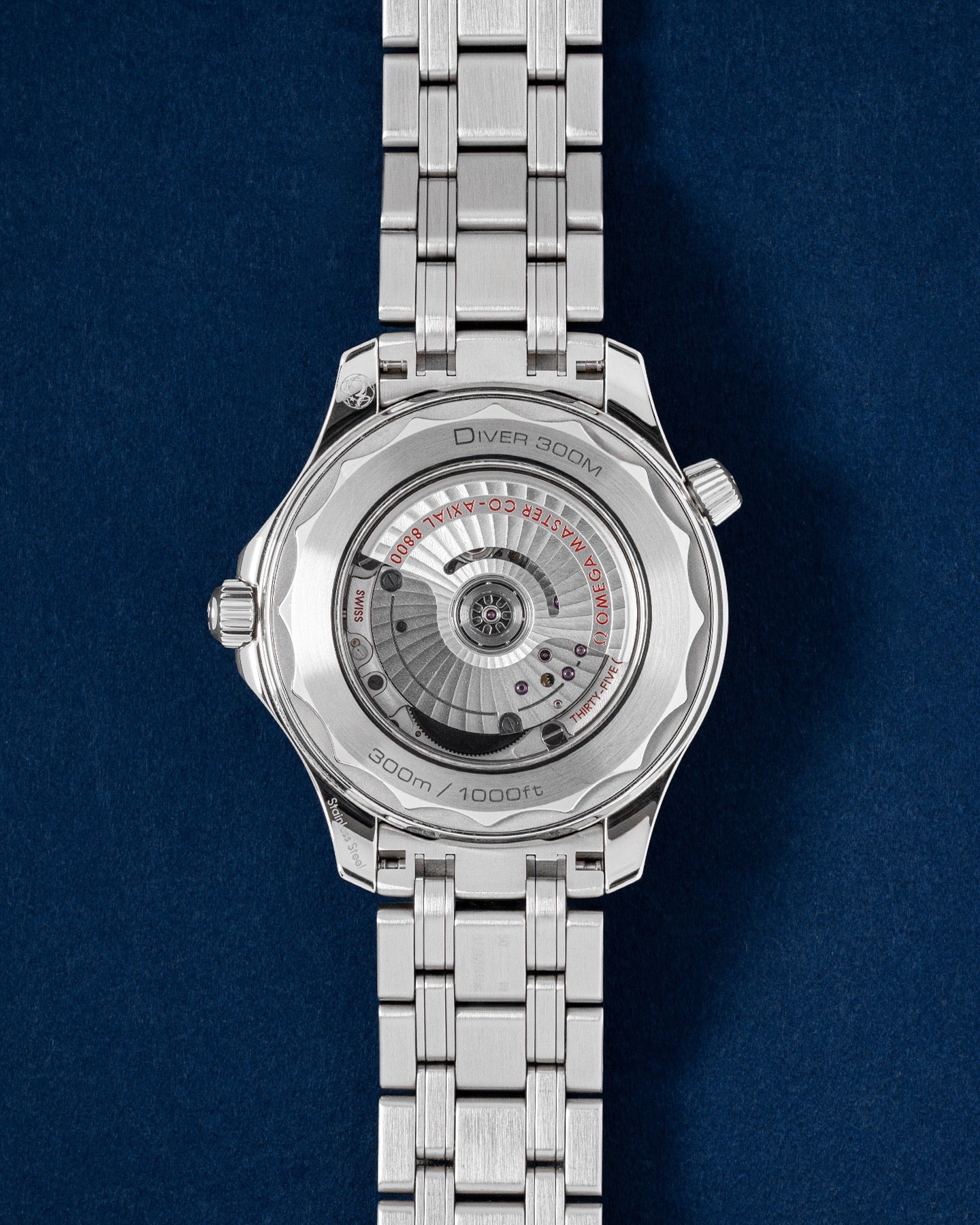
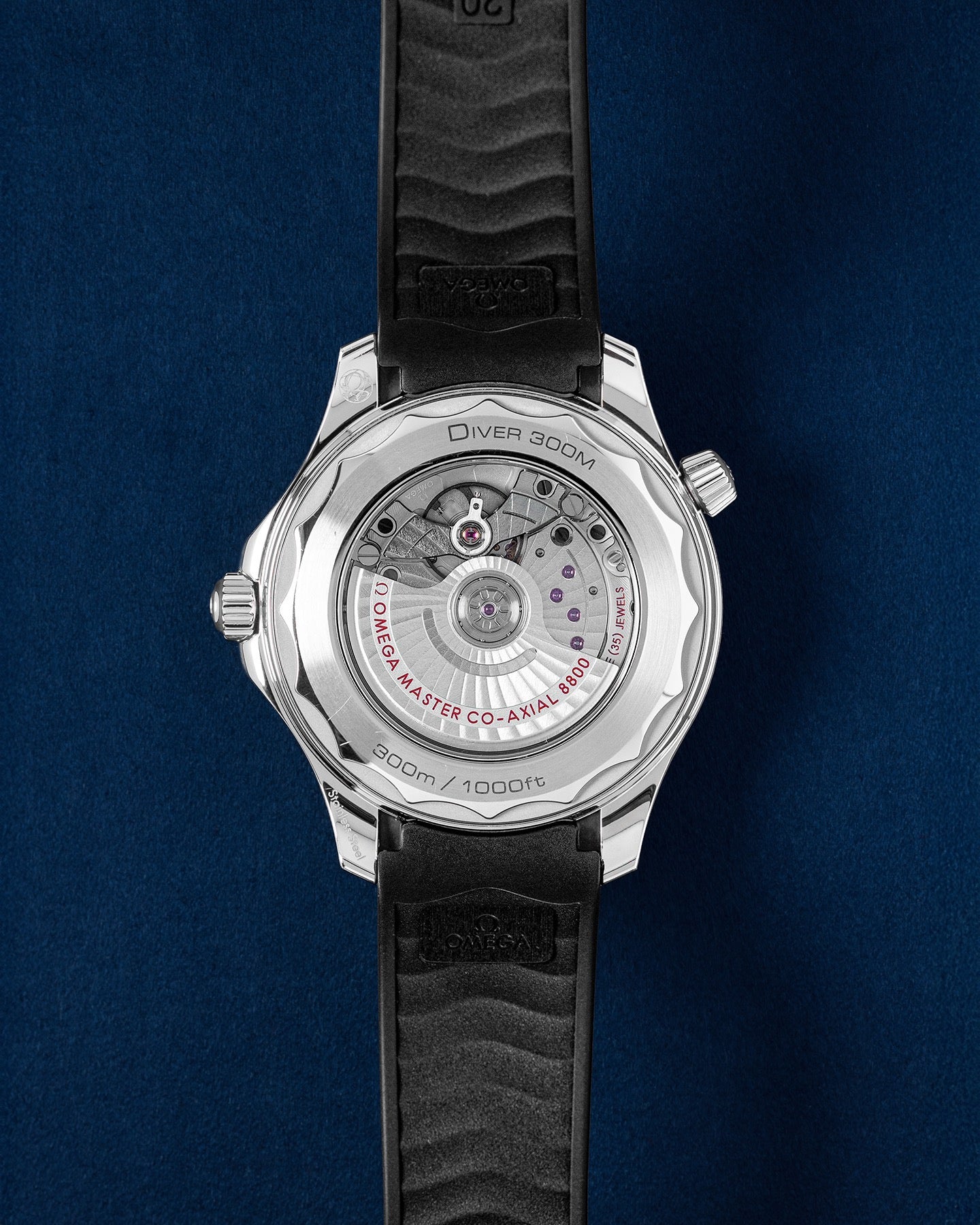
The current generation of the Diver 300M, launched for the twenty fifth anniversary of the model in 2018, completely overhauled the collection while retaining its visual signatures. The case size increased slightly to forty two millimeters, and the wave pattern on the dial returned, this time laser ablated into a solid ceramic disc. The scalloped bezel insert is also formed from polished ceramic, with the diving scale filled with white enamel to prevent fading or discoloration over time. The watch utilizes the caliber 8800 Master Chronometer movement, visible through a sapphire exhibition caseback, which remains a rarity in professional grade diving watches rated to three hundred meters.
The Omega James Bond Connection
The global recognition of the Seamaster Diver 300M is inextricably linked to the James Bond franchise. When costume designer Lindy Hemming outfitted Pierce Brosnan for the 1995 film GoldenEye, she selected the blue dial Diver 300M quartz reference 2541.80, arguing that a naval commander and international spy would naturally wear Omega watches. The automatic reference 2531.80 followed in subsequent films, cementing the blue wave dial as the definitive Bond watch. Daniel Craig continued the legacy, culminating in the No Time To Die titanium edition reference 210.90.42.20.01.001, which features a tropical brown aluminum bezel and dial, a titanium mesh bracelet, and broad arrow military markings that pay direct homage to the British Ministry of Defense specifications from the 1950s.
Omega Diver 300M Chronograph and Titanium Variants
The Diver 300M collection extends far beyond the standard three hand models. For those seeking complex Omega watches, the brand offers robust chronograph versions utilizing the caliber 9900, housing the mechanical architecture in larger forty four millimeter cases fitted with ceramic pushers. The brand has also heavily utilized grade two and grade five titanium across the line, offering lighter alternatives for buyers who find the standard steel cases too heavy for active wear. The integration of Sedna gold and titanium in the two tone models presents a uniquely modern take on luxury sports watches, avoiding the traditional steel and yellow gold aesthetic in favor of warmer, more industrial combinations.
The Omega Seamaster Planet Ocean Line
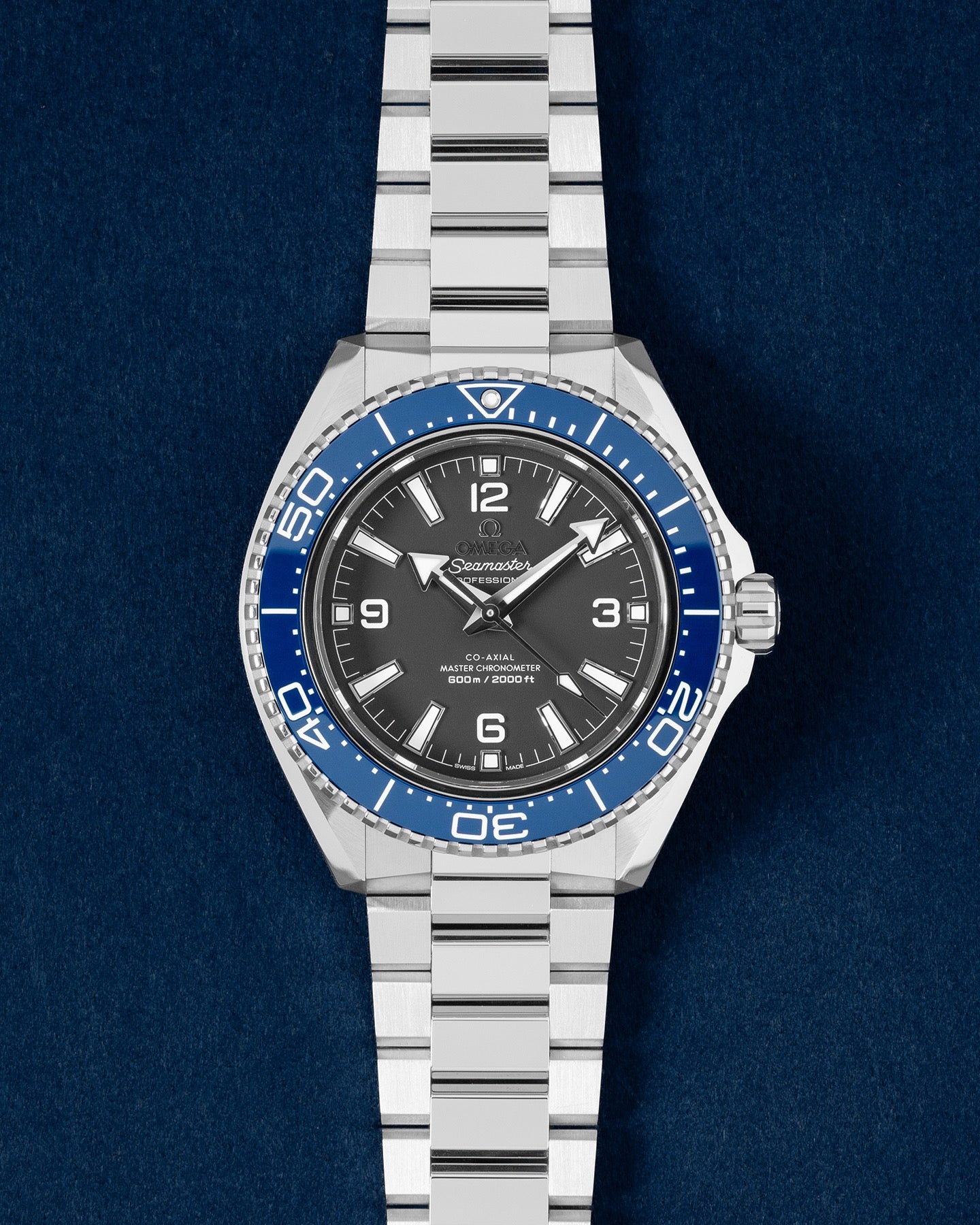
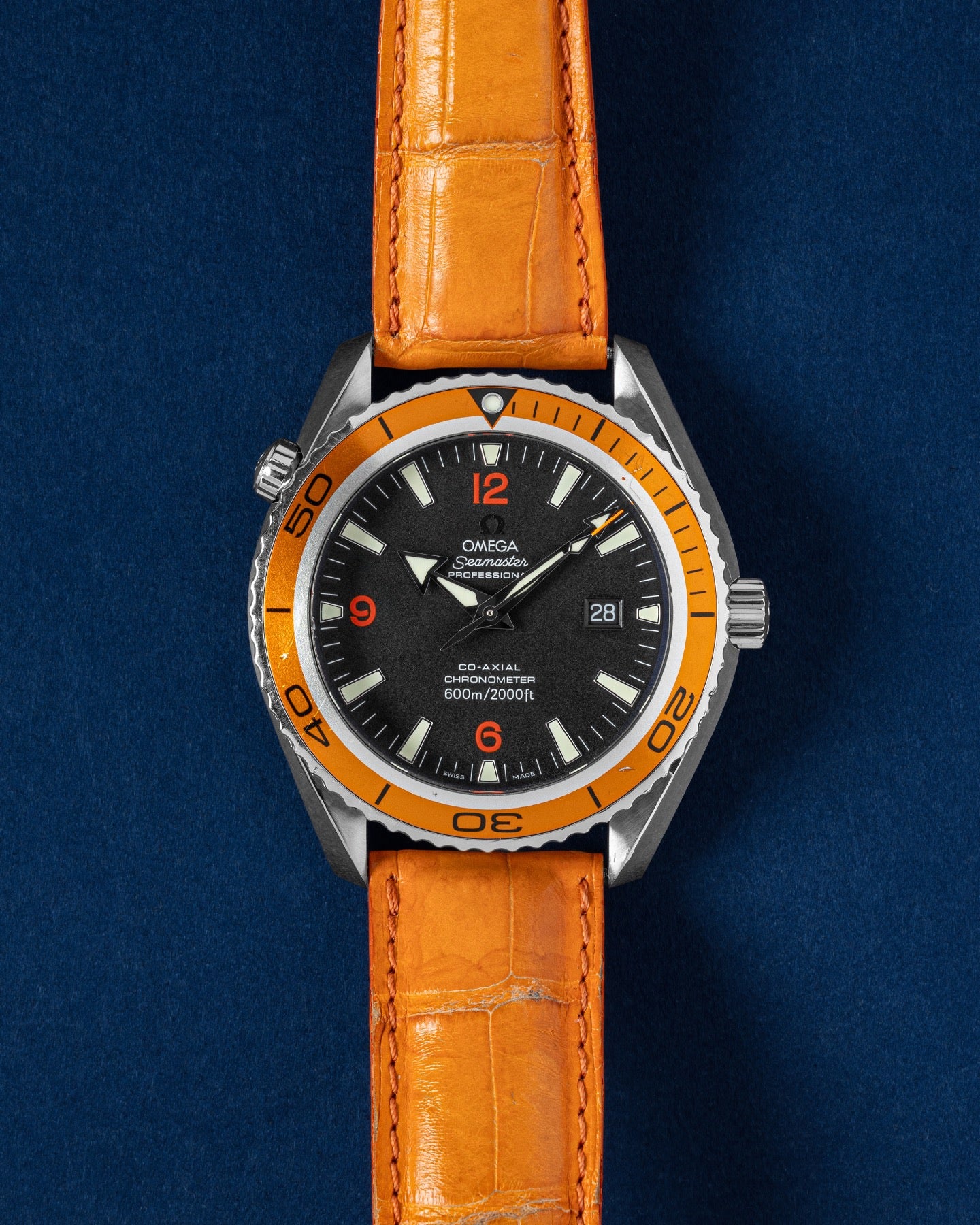
Introduced in 2005, the Planet Ocean line was created to serve as the uncompromising professional diving tier among Omega watches. While the Diver 300M balances luxury finishing with underwater capability, the Planet Ocean is engineered strictly for extreme depth. The collection draws aesthetic inspiration from the vintage Seamaster 300 reference CK2913 from 1957, utilizing broad arrow hands and distinct Arabic numerals at six, nine, and twelve, but packages those vintage cues in massive, highly capable cases.
Omega Professional Diving Architecture
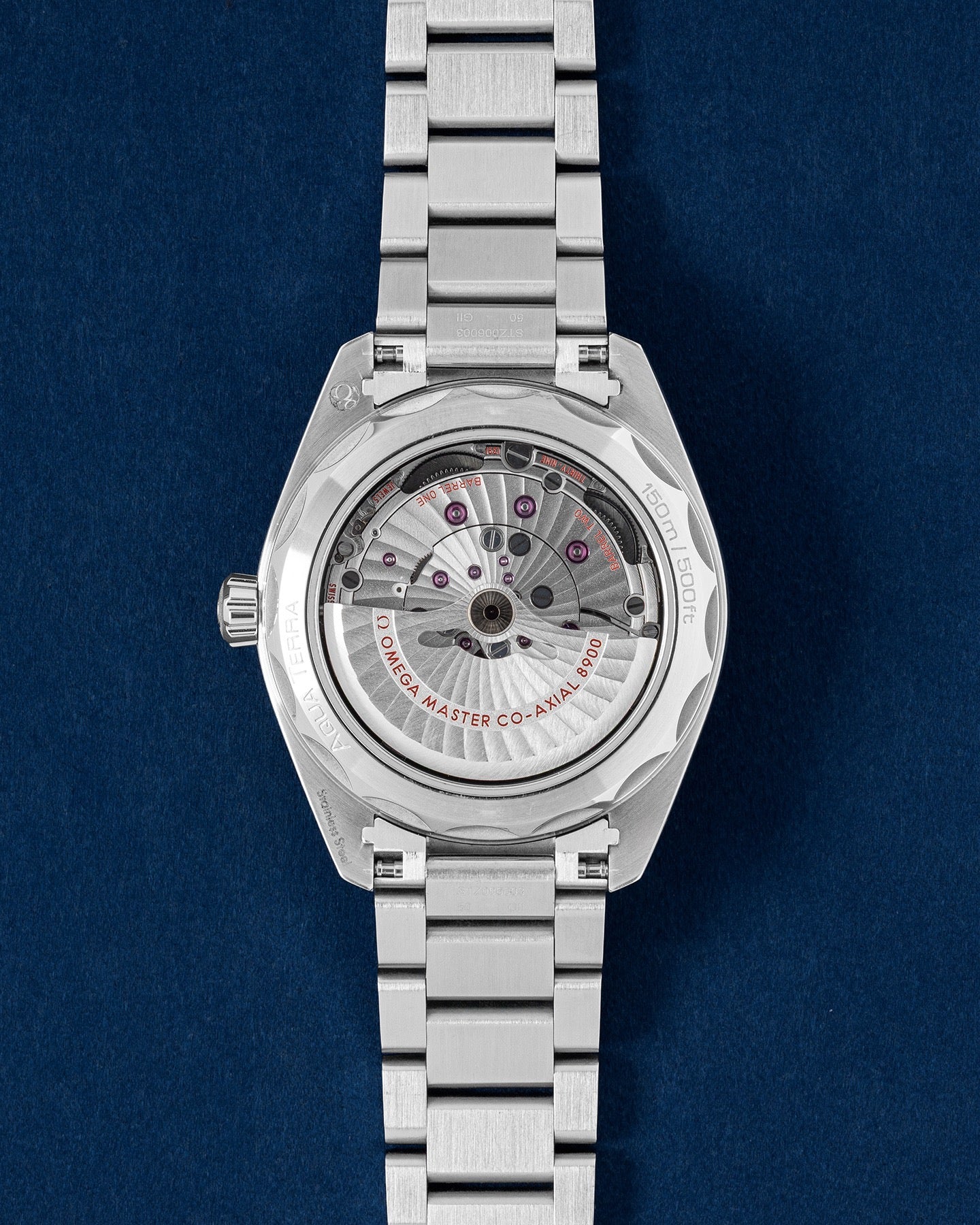
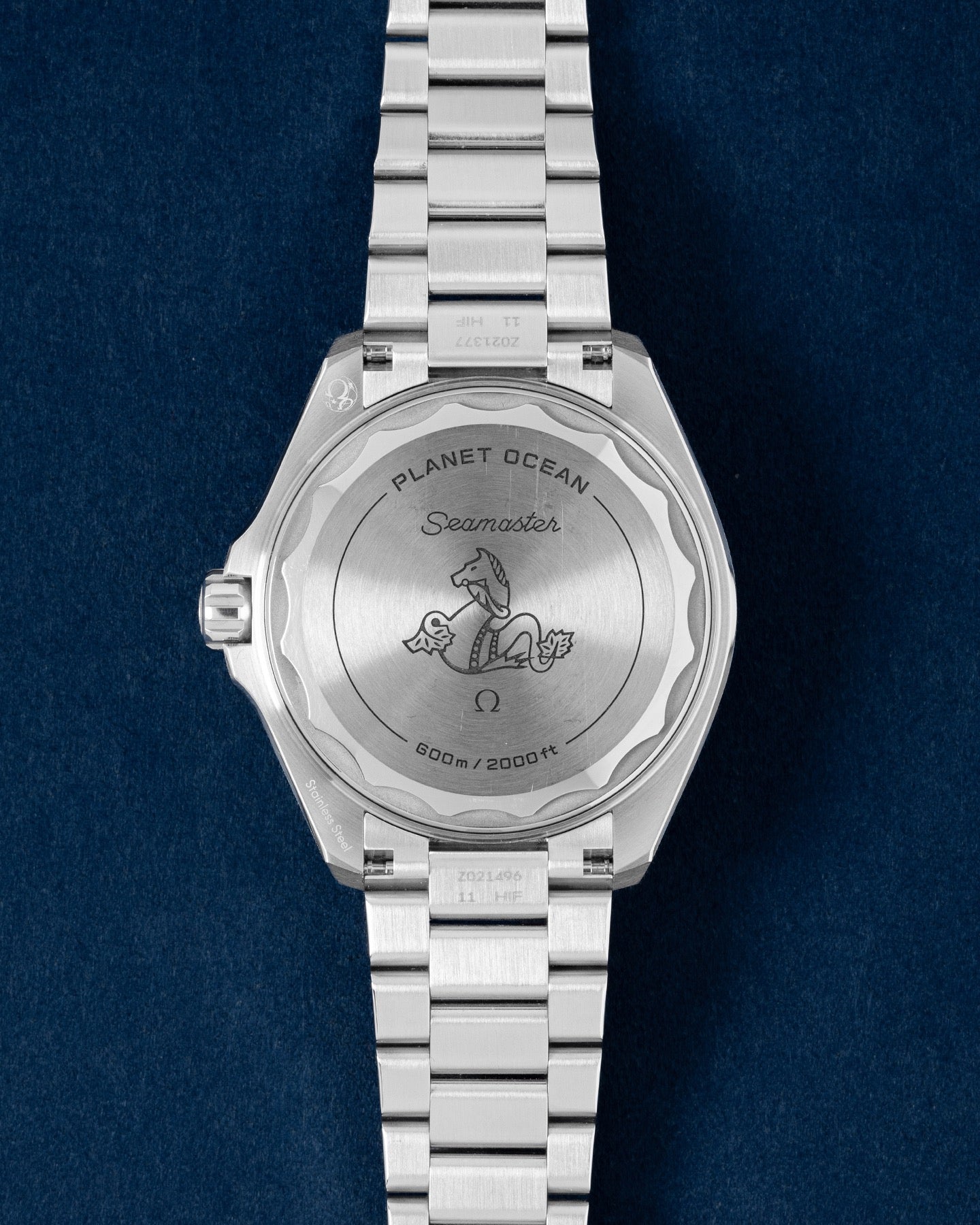
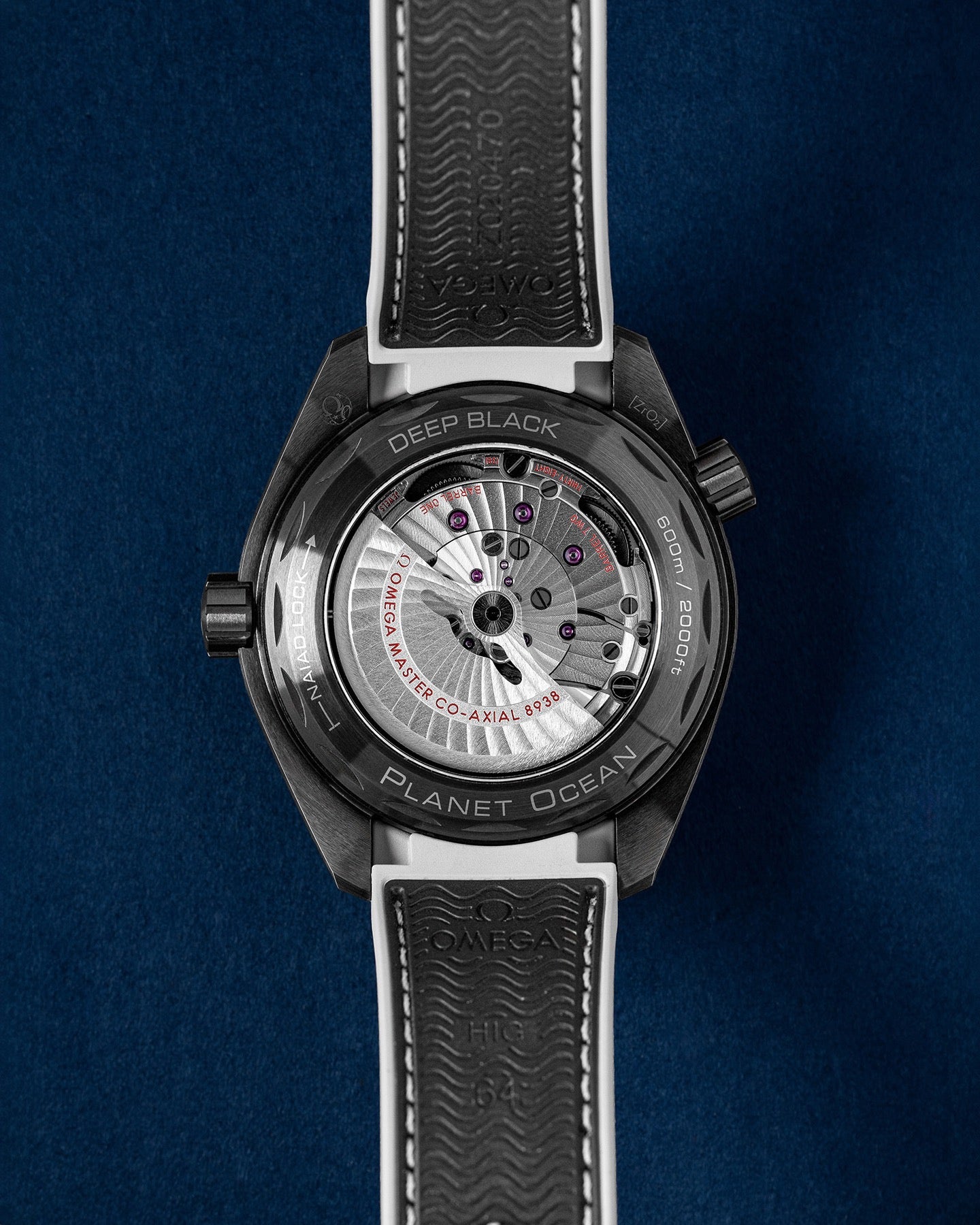
The standard Planet Ocean models carry a depth rating of six hundred meters, or two thousand feet. The cases, typically offered in thirty nine point five millimeter and forty three point five millimeter diameters, are noticeably thicker than the Diver 300M to accommodate the reinforced sapphire crystals and heavy duty casebacks required for saturation diving. The manual helium escape valve remains at ten o clock, and the unidirectional bezels utilize liquidmetal technology, where amorphous metal alloys are pressed into the engraved ceramic channels to create seamless, scratch resistant numerals that will never fade. The caliber 8900 drives the larger models, offering twin mainspring barrels for a sixty hour power reserve and a jumping hour function that allows travelers to cross time zones without stopping the seconds hand on their Omega watches.
Omega Ultra Deep and Oceanic Records
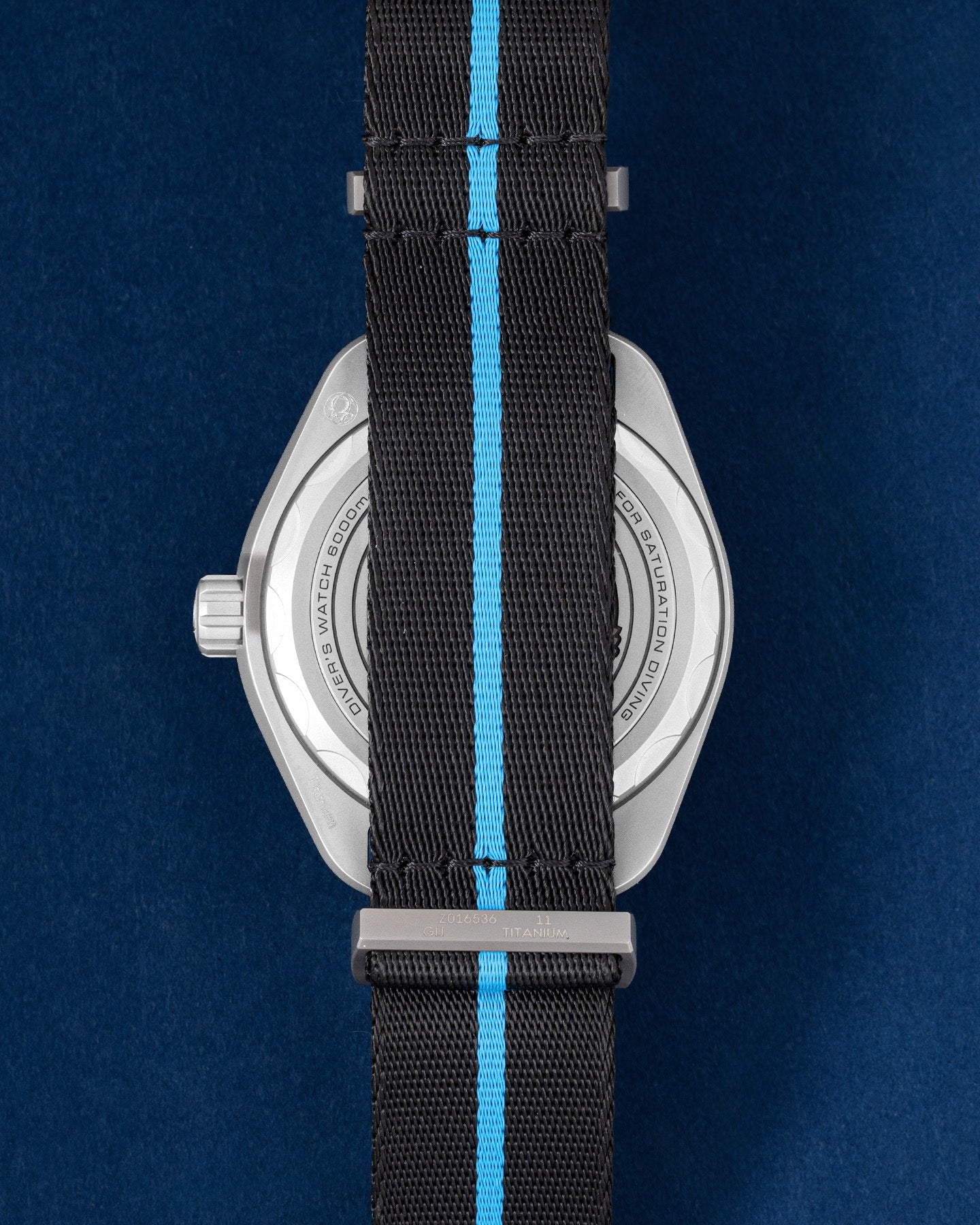
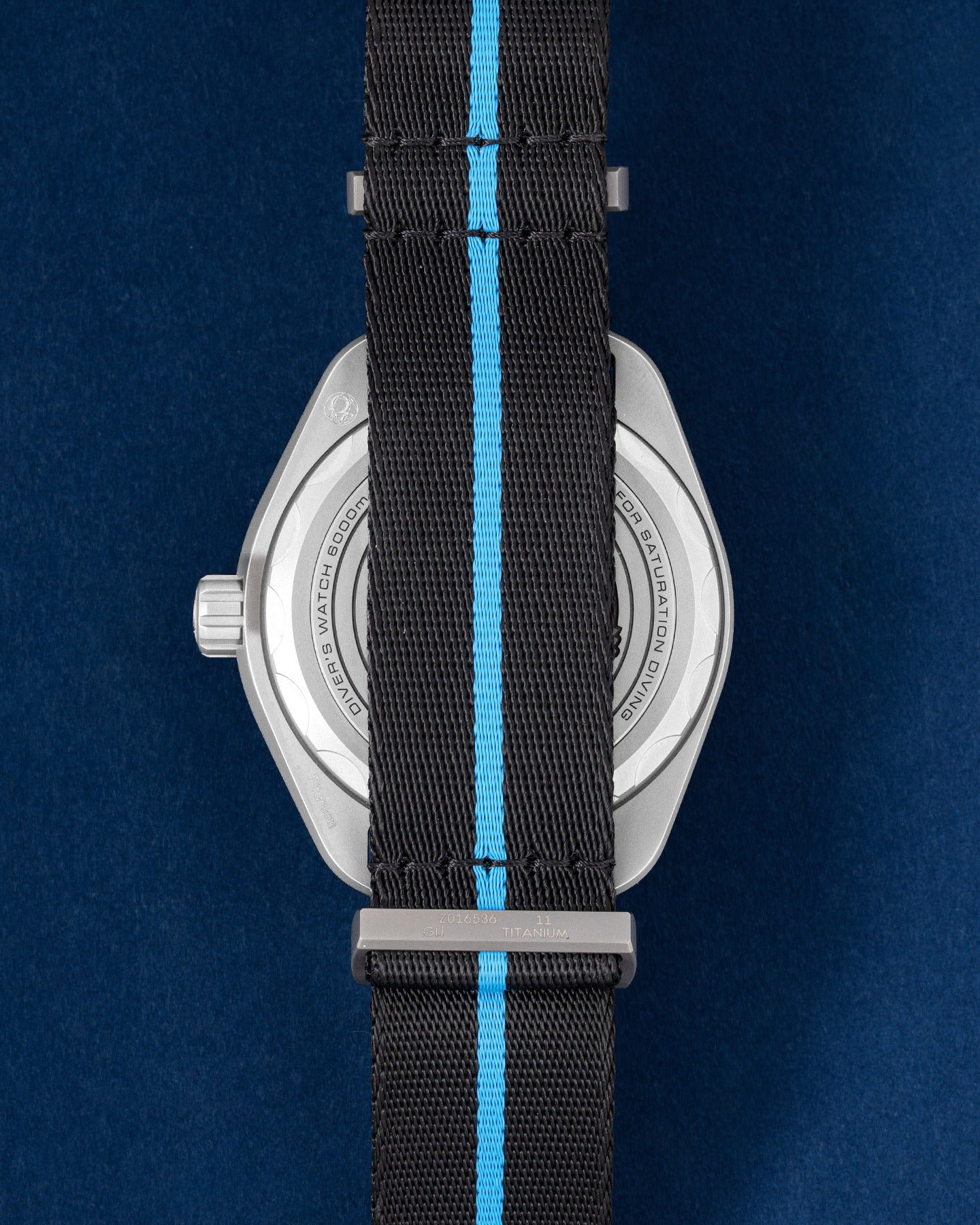
In 2019, Omega watches reclaimed the absolute deep diving record from Rolex by strapping the Seamaster Planet Ocean Ultra Deep to the exterior of the Limiting Factor submersible, piloted by Victor Vescovo to the bottom of the Mariana Trench. The concept watch survived a record depth of ten thousand nine hundred and thirty five meters. In 2022, Omega commercialized this technology with the Planet Ocean Ultra Deep production models, measuring forty five point five millimeters across and nearly eighteen millimeters thick, with an official depth rating of six thousand meters. Engineered without a helium escape valve, the Ultra Deep utilizes a proprietary four point OMEGA ALMANTIS crystal gasket system to withstand crushing oceanic pressure, proving that the brand still actively invests in extreme horological engineering rather than just heritage reissues.
The Omega Seamaster Aqua Terra and Heritage Models
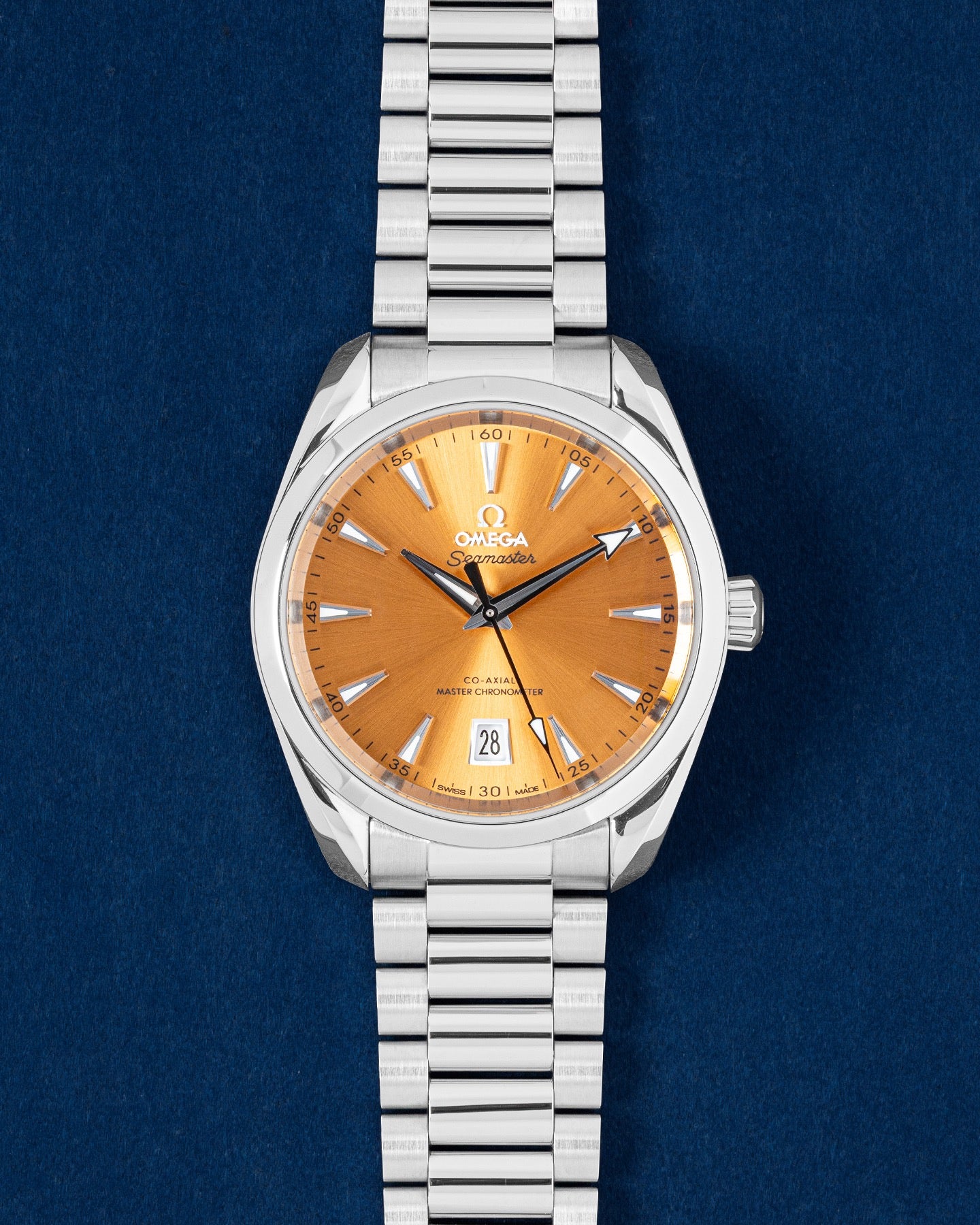
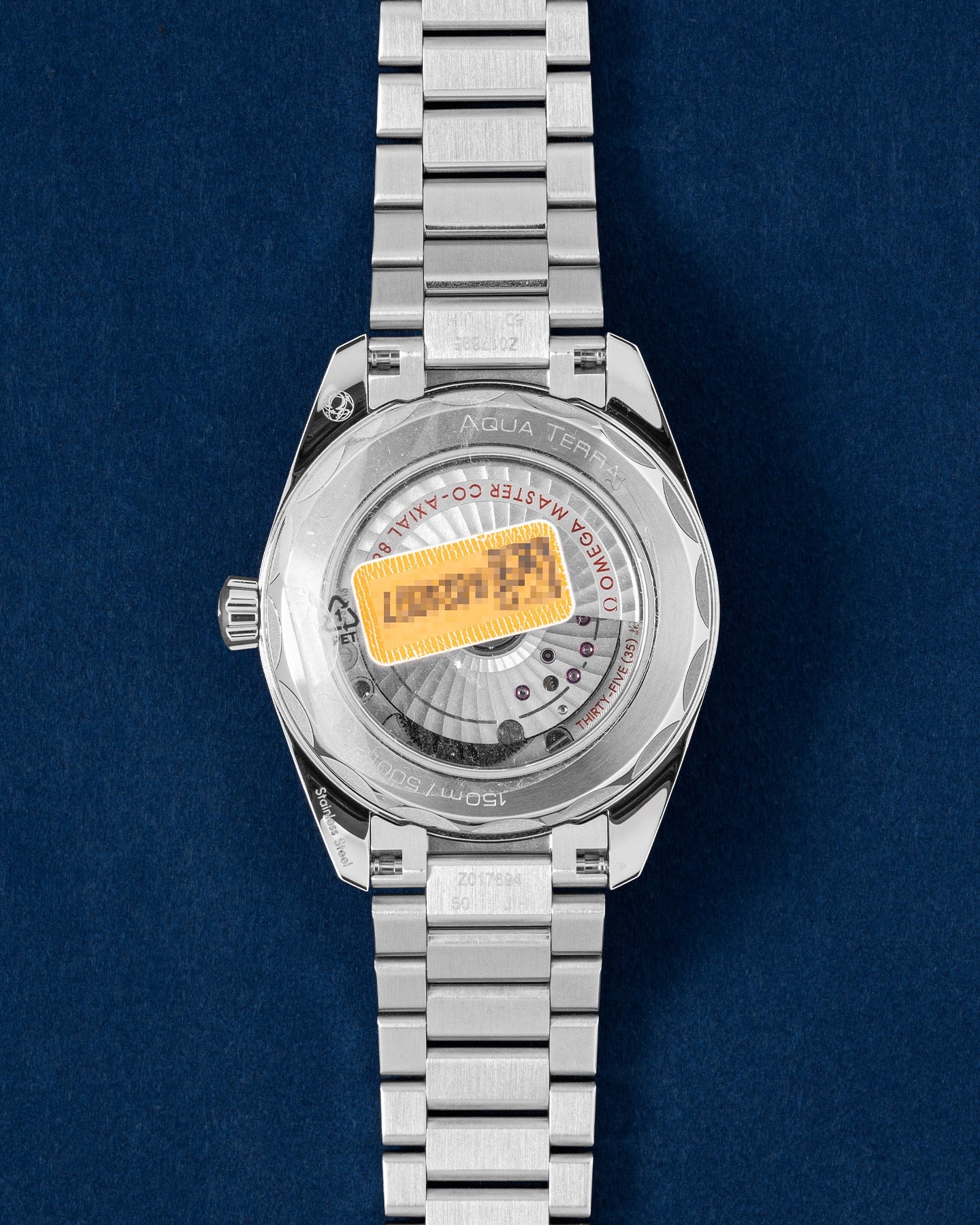
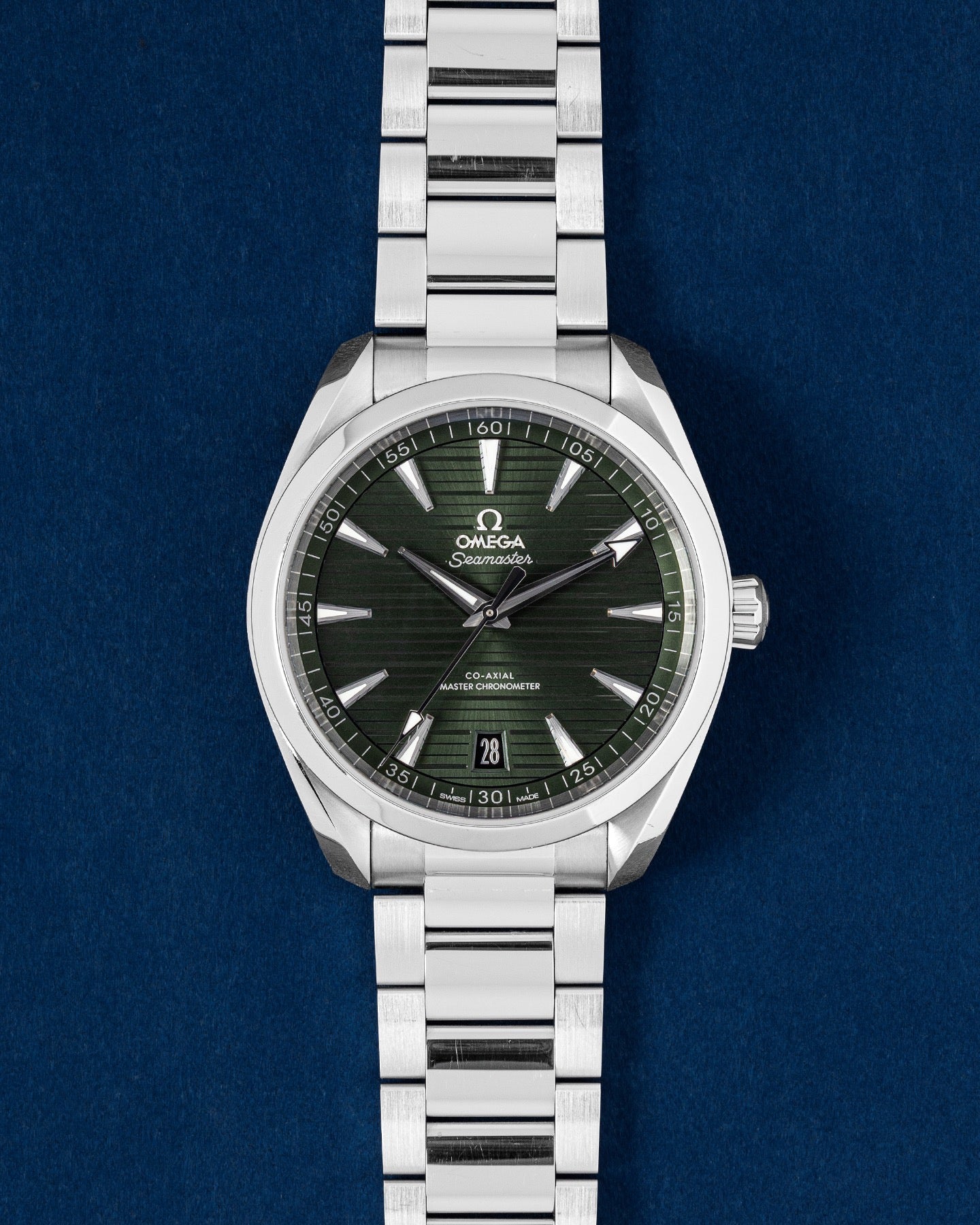
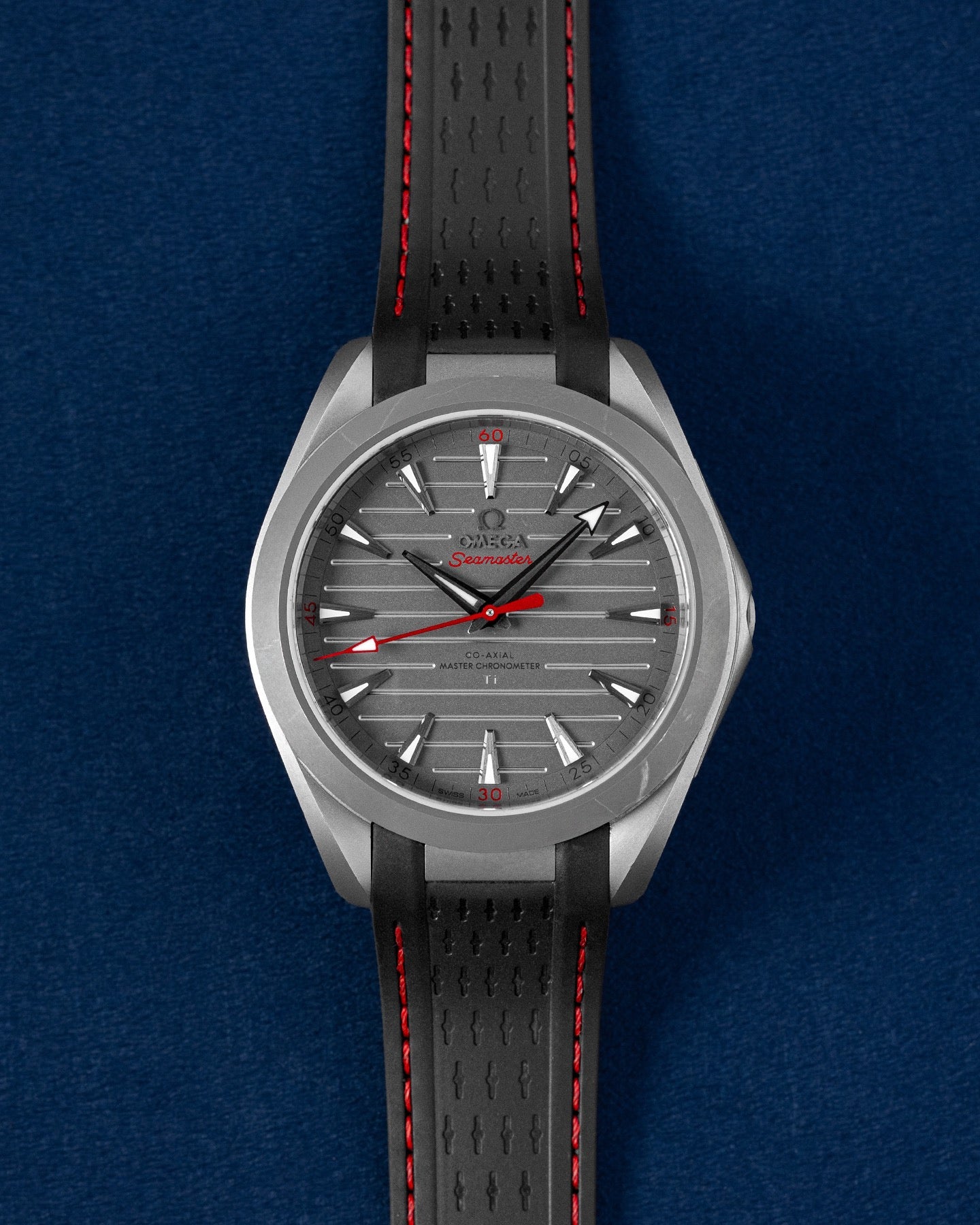
Not every collector needs a timing bezel or a helium escape valve. The Seamaster Aqua Terra collection, introduced in 2002, strips away the external diving apparatus to create a highly versatile, everyday luxury watch that still maintains one hundred and fifty meters of water resistance. The defining visual characteristic of the Aqua Terra is the teak concept dial, featuring horizontal or vertical engraved lines designed to evoke the wooden decking of luxury yachts. These are Omega watches designed for seamless daily transitions.
The Omega Aqua Terra Fifteen Thousand Gauss
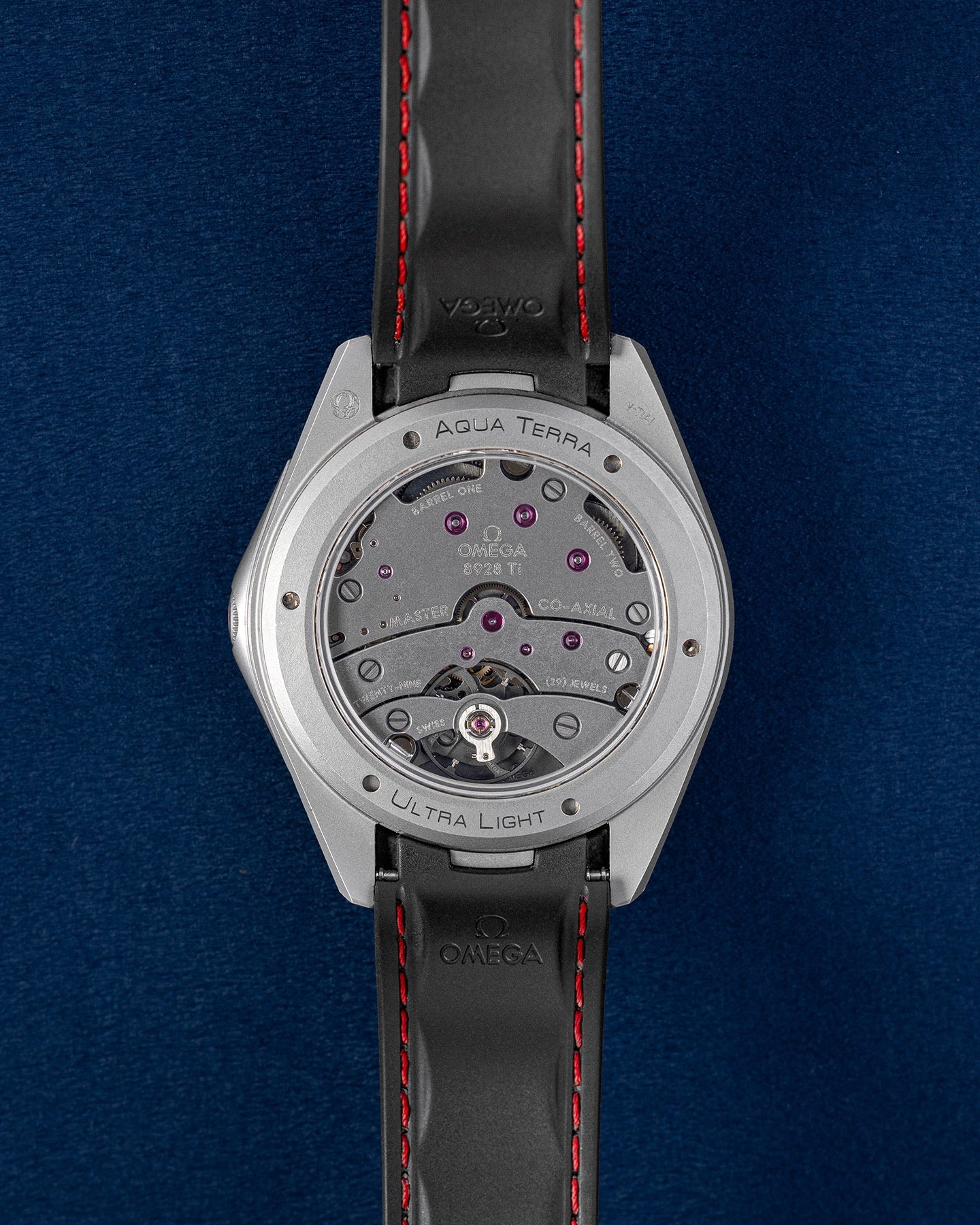
The Aqua Terra line holds a critical place in the technical history of modern Omega watches. In 2013, the brand utilized the Aqua Terra platform to introduce the caliber 8508, the world first truly anti magnetic mechanical watch movement capable of resisting fields greater than fifteen thousand gauss. Rather than using a soft iron inner case to shield the movement like the Rolex Milgauss or the IWC Ingenieur, Omega engineered the movement components themselves from non ferrous materials, including a silicon balance spring and nickel phosphorus escapement wheels. This innovation allowed Omega to offer massive magnetic resistance while still displaying the movement through a sapphire caseback, a breakthrough that laid the foundation for the entire METAS certification program across all Omega watches.
Omega Seamaster 300 Master Chronometer
For buyers who prefer the pure aesthetics of the 1950s, the Seamaster 300 line offers direct visual homage to the original 1957 reference CK2913. These models feature symmetrical cases without crown guards, vintage colored luminous material set into recessed dial cutouts, and slim coin edge bezels. Despite the mid century appearance, the modern Seamaster 300 references are powered by the latest Master Chronometer calibers, offering the same magnetic resistance and chronometric precision as the contemporary Aqua Terra and Planet Ocean models. This blending of vintage design with bleeding edge movement technology represents one of the strongest value propositions within the catalog of Omega watches.
Omega Ploprof and Extreme Dive Heritage
At the furthest end of the Seamaster spectrum sits the Ploprof, short for plongeur professionnel or professional diver. Originally developed in 1970 in collaboration with COMEX and Jacques Cousteau, the Ploprof is characterized by its massive, asymmetrical monobloc case, a bright red bezel lock button positioned at two o clock, and a crown located at nine o clock to prevent interference with wrist mobility. Modern iterations maintain the bizarre but highly functional 1970s geometry, upgrading the case material to grade five titanium and the movement to the caliber 8912 Master Chronometer. The Ploprof remains a niche offering, but it serves as a testament to the willingness of Omega watches to produce wildly unconventional tool watches for serious collectors.
The Omega Constellation Collection
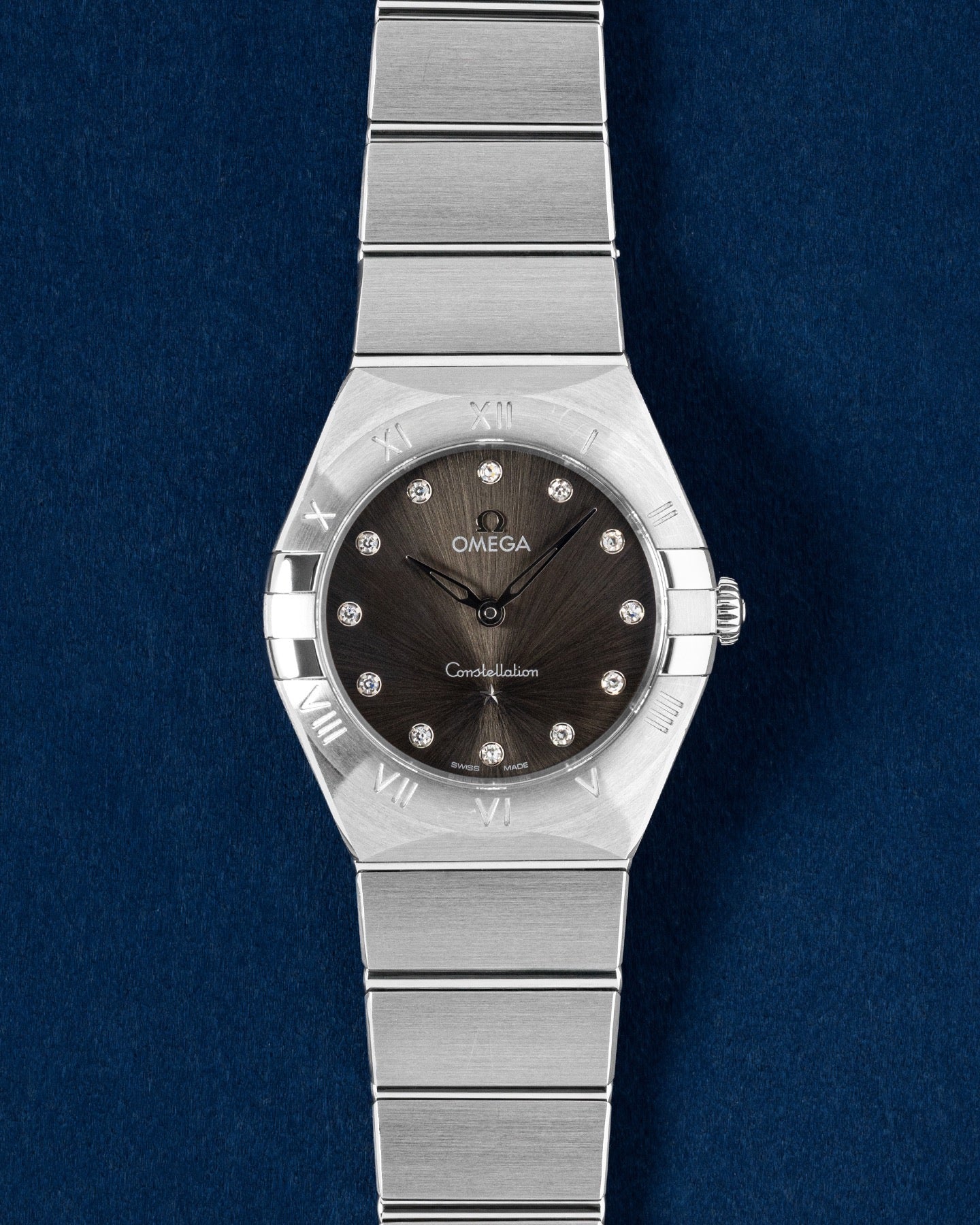
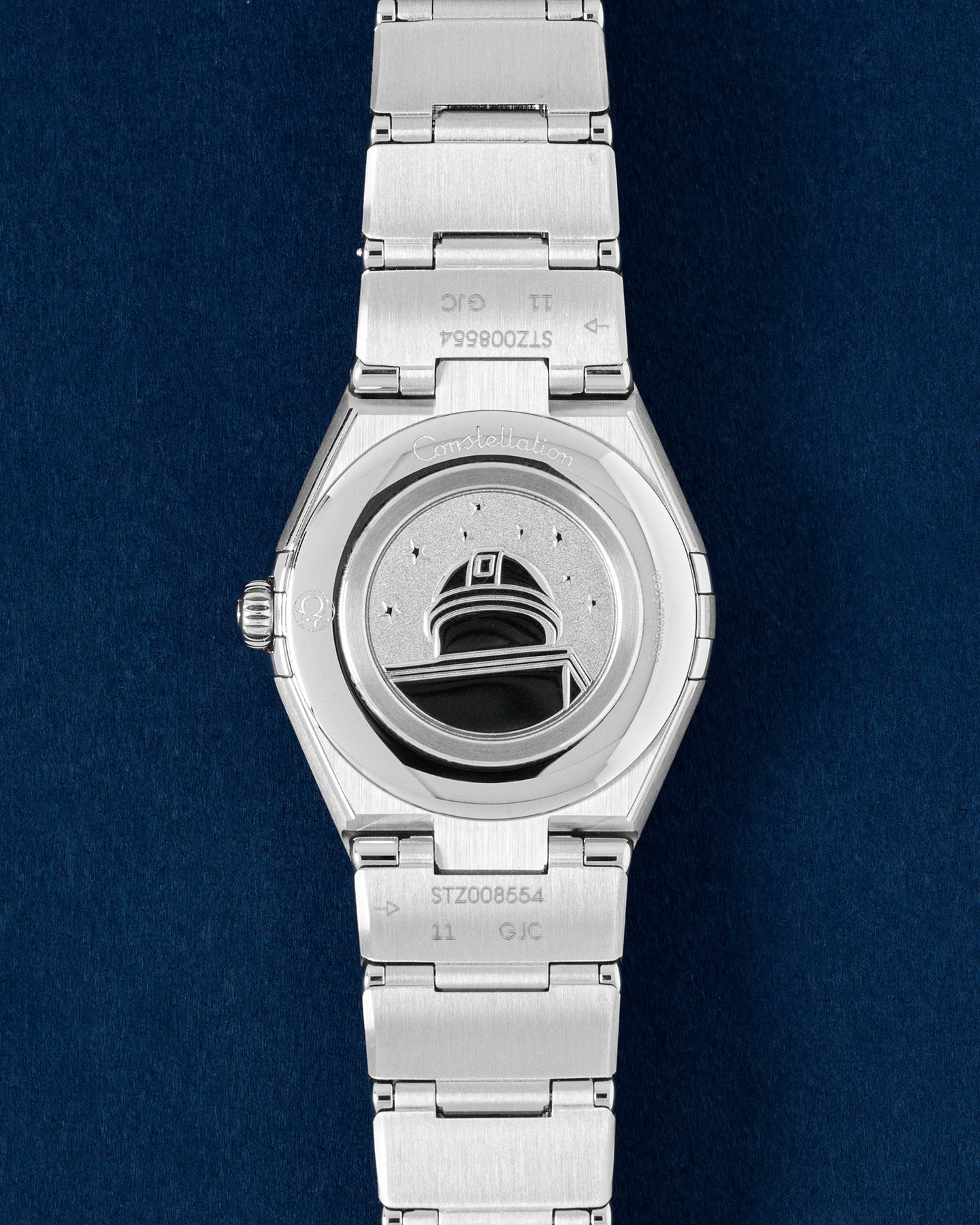
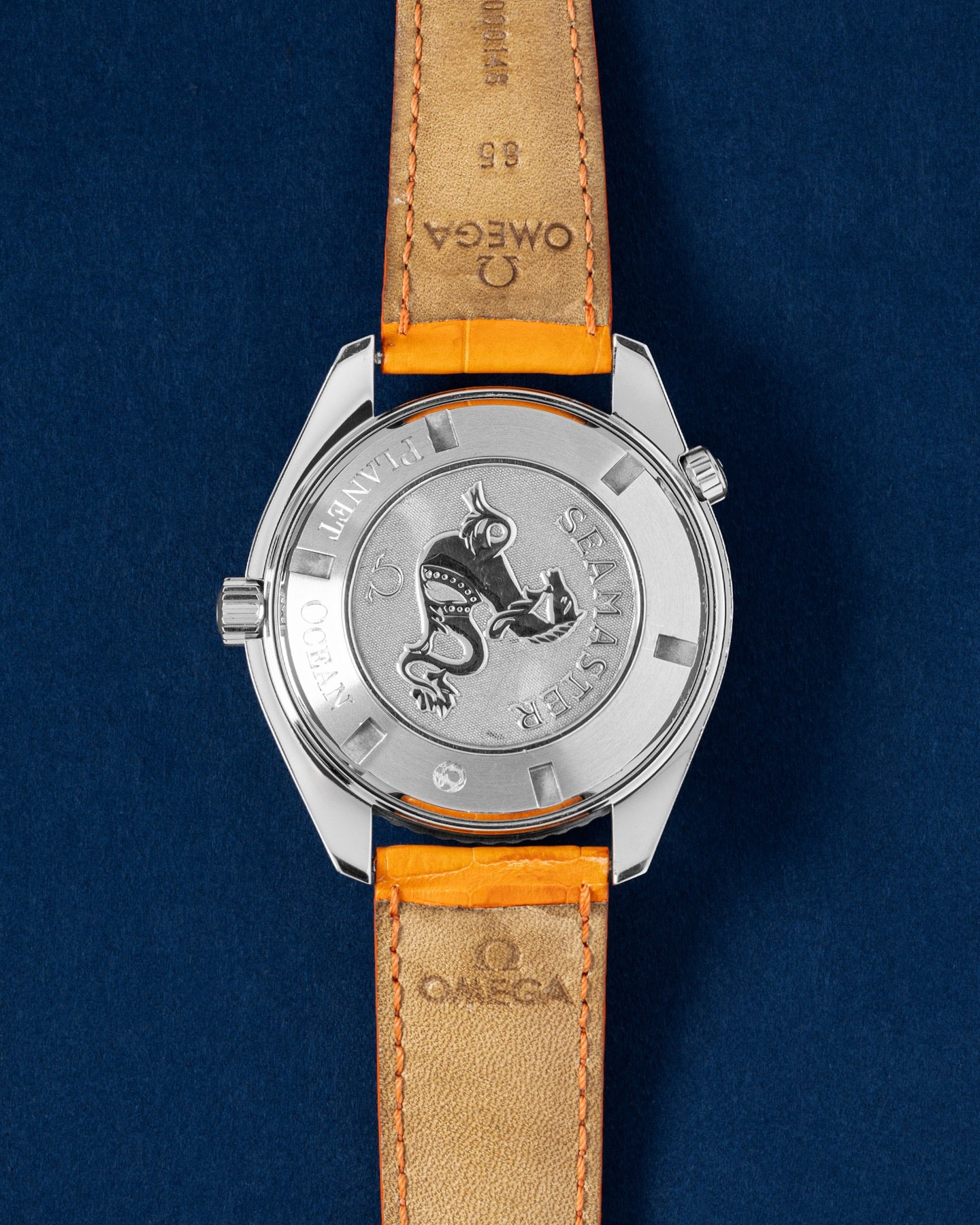
While the Speedmaster and Seamaster dominate the sports watch conversation, the Constellation line represents the historical high end of dress oriented Omega watches. Launched in 1952, the Constellation was explicitly designed to showcase the brand's chronometric superiority, with every single watch leaving the factory certified as a chronometer. The caseback of every Constellation features a medallion depicting the Geneva Observatory surrounded by eight stars, representing the brand's historic precision records.
The Omega Pie Pan Era and Chronometry
The most desirable vintage Constellations are the pie pan models from the 1950s and 1960s, featuring dials with distinct twelve faceted edges that resemble an inverted baking pan. These models, often designed with input from a young Gerald Genta, paired elegant dog leg lugs with exceptional finishing and heavily adjusted automatic movements like the caliber 561. The vintage pie pan Constellation remains a foundational pillar for collectors of mid century dress watches, representing an era when Omega watches competed directly with Patek Philippe in observatory accuracy trials.
The Omega Manhattan Design and Articulated Claws
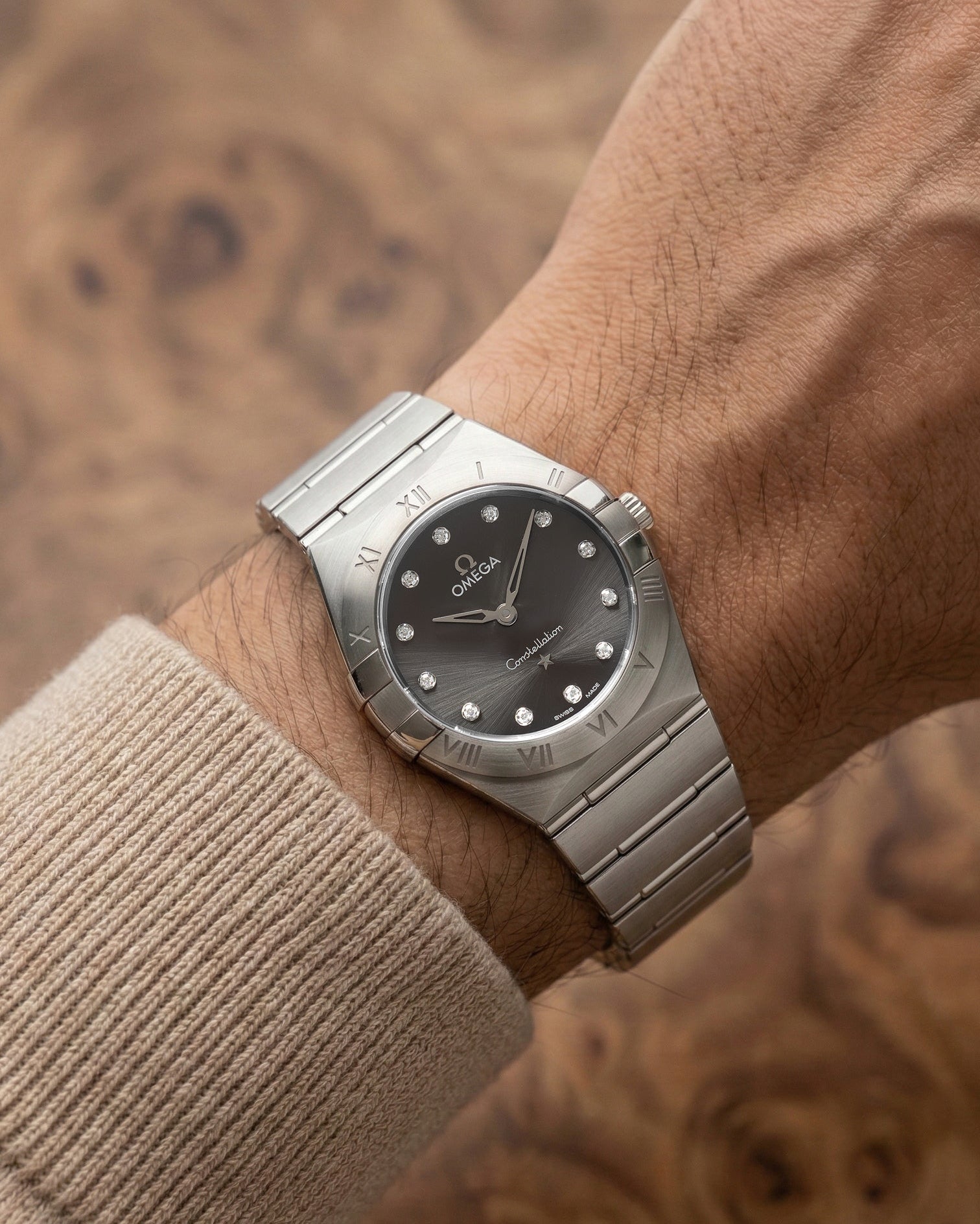
In 1982, Omega radically redesigned the Constellation with the Manhattan line, introducing the visual signatures that define the collection today. The Manhattan design features an integrated bracelet, a perfectly flat sapphire crystal, and four distinctive griffes or claws that reach over the bezel at the three and nine o clock positions. Originally, these claws were functional, pressing the crystal against the case gasket to ensure water resistance. Today, the claws are purely aesthetic, but they remain the defining characteristic of the modern Constellation. Available in sizes ranging from twenty five millimeter quartz models for women to thirty nine millimeter Master Chronometer models for men, the Constellation serves the demographic looking for highly recognizable, jewelry adjacent Omega watches.
The Omega Globemaster Family
In 2015, Omega introduced the Globemaster as a distinct sub collection within the Constellation family. The Globemaster reaches back to the 1950s for its design language, resurrecting the pie pan dial and pairing it with a fluted tungsten carbide bezel that is nearly impossible to scratch. The case architecture leans heavily on brushed surfaces and sharp transitions, offering a more robust, vintage inspired alternative to the modern Manhattan style Constellation.
The First Omega Master Chronometer
The historical significance of the Globemaster lies entirely in its movement. When Omega announced the new METAS certification protocol in 2014, the Globemaster was the very first watch chosen to receive the Master Chronometer caliber 8900. It served as the launch vehicle for the most stringent testing standard in the Swiss watch industry. Every Globemaster carries the observatory medallion on its caseback, honoring the heritage of the original Constellation line while proving that Omega watches lead the industry in modern movement industrialization.
Omega Annual Calendar Mechanics
The Globemaster line expanded to include an Annual Calendar complication, utilizing the caliber 8922. The pie pan dial provides the perfect canvas for the calendar display, with the names of the twelve months written in script between the hour markers. A central pointer hand jumps to the correct month, while the date is displayed at six o clock. The annual calendar mechanism only requires manual adjustment once per year at the end of February, offering exceptional mechanical utility packaged in the brand's most historically literate dress watch case.
The Omega De Ville Collection
The De Ville name first appeared on the dials of Seamaster models in 1960, used to denote slimmer, more elegant watches within the diving line. In 1967, Omega recognized that dress watches required their own distinct identity and separated the De Ville into an independent collection. Since then, the De Ville line has served as the canvas for the brand's most refined, traditional watchmaking, completely divorced from the tool watch requirements of the Speedmaster and Seamaster lines of Omega watches.
Omega Dress Watch Independence
The modern De Ville collection is anchored by the Prestige line, offering classical round cases, Roman numeral indices, and highly polished surfaces. These models prioritize thinness and elegant proportions, making them the default choice for formal wear within the catalog of Omega watches. The line accommodates everything from basic time only quartz movements to complex power reserve and chronometer certified automatic calibers, serving as the accessible entry point into luxury dress watches.
Omega Tresor and Central Tourbillon
The De Ville Tresor represents the modern peak of the collection, offering ultra thin cases housing manually wound Master Chronometer calibers. The Tresor line often utilizes the proprietary Sedna gold alloy and features domed dials with elongated indices, capturing the aesthetic of 1940s dress watches while delivering cutting edge magnetic resistance. At the absolute pinnacle of high horology, Omega uses the De Ville platform to house the Central Tourbillon, a wildly complex caliber where the tourbillon cage rotates in the exact center of the dial, and the hands are mounted on sapphire discs that revolve around the central axis. These pieces are produced in extremely limited quantities by a dedicated atelier in Bienne, proving that Omega watches can compete directly in the realm of grand complications when they choose to do so.
Omega, George Daniels, and the Co Axial Escapement
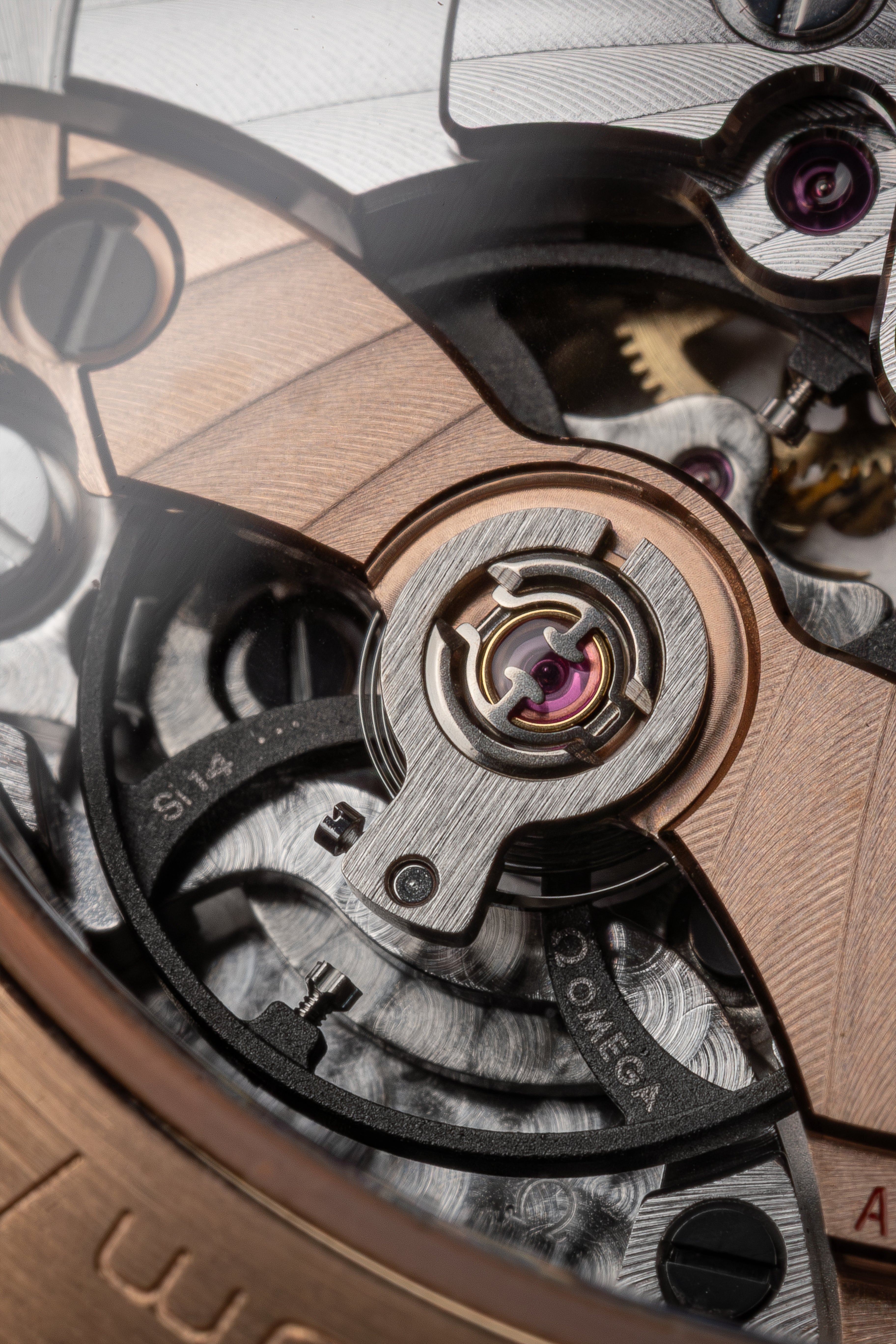
To understand why collectors respect modern Omega watches, one must understand the Co Axial escapement. The escapement is the heart of a mechanical watch, responsible for releasing the energy of the mainspring in precise, regulated impulses. For over two hundred and fifty years, the entire Swiss watch industry relied almost exclusively on the Swiss lever escapement. While reliable, the Swiss lever suffers from sliding friction as the escape wheel teeth slide across the pallet jewels, a design flaw that requires constant lubrication to prevent wear and maintain accuracy.
The Omega Solution to Sliding Friction
In the 1970s, the legendary independent watchmaker George Daniels invented the Co Axial escapement to solve the problem of sliding friction. Daniels designed a complex system utilizing three pallets that separated the locking function from the impulse function. By redesigning the geometry of the escape wheel and pallets, Daniels replaced sliding friction with radial friction, a pushing motion that drastically reduced the need for lubrication. The theoretical result was a movement that could maintain chronometric stability over much longer service intervals than a traditional Swiss lever.
The Commercialization of Omega Caliber 2500
Daniels spent two decades trying to sell his invention to the major Swiss houses, including Patek Philippe and Rolex. They all rejected it, viewing the complex, difficult to manufacture escapement as an unnecessary risk. Only Nicolas Hayek and Omega recognized the potential. It took Omega years of industrial engineering to figure out how to mass produce the Co Axial mechanism. In 1999, Omega watches finally introduced the caliber 2500, a heavily modified ETA movement fitted with the Daniels escapement. It was the first practical new watch escapement to be industrialized in two centuries.
The In House Omega Caliber 8500 and 8900
While the caliber 2500 was a massive achievement, it was essentially a new engine bolted onto an old chassis. In 2007, Omega released the caliber 8500, an entirely new in house movement built from the ground up around the Co Axial escapement. The 8500 optimized the beat rate to three point five hertz and introduced twin mainspring barrels. This movement proved that Omega could design and manufacture proprietary calibers that were objectively superior in longevity and stability to the mass produced movements dominating the industry. The subsequent evolution into the caliber 8900 and 8800 families integrated the antimagnetic materials, setting the stage for the modern era of Omega watches.
Omega METAS Certification and Antimagnetic Engineering
The Swiss Official Chronometer Testing Institute, known as COSC, has been the standard for accuracy since 1973, certifying movements that run between negative four and plus six seconds per day. By 2014, Omega realized that their Co Axial movements were performing far beyond COSC standards and that magnetic fields from modern electronics like laptops and smartphones were the primary cause of service issues. In response, Omega partnered with the Swiss Federal Institute of Metrology, or METAS, to create a new, brutally strict certification process called Master Chronometer. This ensures all modern Omega watches perform flawlessly.
The Omega Fifteen Thousand Gauss Standard
To even qualify for METAS testing, a movement must first pass the traditional COSC certification. The watch is then subjected to the METAS protocols, which focus heavily on magnetic resistance. The watch must continue to function perfectly while exposed to a magnetic field of fifteen thousand gauss, roughly the equivalent of being placed directly inside an MRI machine. Because Omega engineers the escapement and balance spring from silicon and non ferrous alloys, the movements simply ignore magnetic fields that would permanently magnetize and stop a standard Rolex or Breitling caliber.
The Eight Step Omega Testing Protocol
The METAS certification is not just about magnetism. The fully cased watch undergoes eight distinct tests over ten days. It is tested for chronometric precision in six different positions at varying temperatures, ensuring stability regardless of how the watch is worn. The power reserve is verified, and the water resistance is tested in a pressurized tank, with dive watches subjected to an additional twenty five percent pressure over their stated rating. Finally, the daily precision requirement is tightened to between zero and plus five seconds per day. A Master Chronometer Omega watch is simply not allowed to run slow. This level of transparency and objective performance testing is why buyers looking for pure mechanical superiority consistently choose Omega watches.
Omega Proprietary Materials and Metallurgy
The technical dominance of Omega watches extends beyond the movement into case and dial materials. Recognizing that standard eighteen karat gold can fade or discolor over decades of exposure to chlorine and environmental factors, Omega developed proprietary metallurgical alloys in house to ensure permanent aesthetic stability.
Omega Sedna, Moonshine, and Canopus Gold
In 2012, Omega introduced Sedna gold, an eighteen karat rose gold alloy that blends pure gold with copper and palladium. The palladium ensures that the reddish hue will never fade over time, a common issue with traditional rose gold. Moonshine gold, introduced for the fiftieth anniversary of the Apollo 11 moon landing, is a paler yellow gold alloy that mimics the color of moonlight in a dark sky, created by adjusting the ratio of silver, copper, and palladium. Canopus gold represents the brand's proprietary white gold, mixed with platinum, rhodium, and palladium to guarantee a brilliant white color that never requires rhodium plating to maintain its luster. These specific alloys are exclusive to Omega watches.
Omega Liquidmetal and Ceragold Technology
For ceramic bezels, Omega watches utilize Liquidmetal, an amorphous metal alloy that can be bonded seamlessly into engraved ceramic channels. The alloy cools to be three times harder than stainless steel, creating a completely smooth, highly durable bezel surface. For precious metal variants, Omega developed Ceragold, a complex process that allows eighteen karat gold to be grown directly into the engraved cavities of a ceramic bezel. These material innovations prove that the Swatch Group provides Omega with research and development resources that independent manufactures simply cannot match.
Omega Production Scale and Swatch Group Positioning
Omega serves as the prestige flagship of the Swatch Group, operating from a massive, state of the art manufacturing facility in Bienne, Switzerland. The campus, expanded with a massive timber and glass building designed by Shigeru Ban in 2017, houses the assembly, testing, and quality control departments. The sheer scale of production, estimated at roughly half a million watches per year, is supported by the vast network of Swatch Group specialized suppliers, allowing Omega watches to utilize Nivarox balance springs, ETA base architectures, and advanced dial manufacturing from within the corporate family. Despite this massive volume, the reliance on automated logistics for parts delivery combined with highly skilled human assembly ensures that every Master Chronometer meets the exact same uncompromising standards.
Comparing Omega Watches Against Rolex and Breitling
The luxury watch market is largely defined by the rivalry between Rolex and Omega watches. Both brands mass produce incredibly durable, highly accurate sports watches with massive cultural cachet, but they appeal to slightly different buying mentalities.
Omega Movement Innovation Versus Value Retention
Rolex dominates the market regarding brand equity and value retention. A steel Rolex Daytona or GMT Master II will trade at a massive premium over retail on the secondary market. Rolex movements are exceptional, but they represent a philosophy of slow, incremental evolution over decades. Omega watches prioritize bleeding edge movement innovation. The Co Axial escapement and the METAS certification offer objectively superior magnetic resistance and service longevity compared to standard Rolex calibers. When comparing the Diver 300M to the Submariner, the Omega offers a ceramic dial, an exhibition caseback, higher anti magnetic properties, and a more complex escapement for nearly half the price. Breitling competes in the same price bracket, particularly with the Navitimer and Chronomat, but Breitling relies heavily on outsourced movements for their entry level pieces and lacks the comprehensive in house technical ecosystem that METAS provides for Omega watches.
Omega Availability and Retail Dynamics
The most significant differentiator for modern buyers is availability. Rolex operates on a strict allocation model, requiring buyers to wait months or years, often spending thousands on jewelry they do not want just to be offered a basic steel sports watch. Omega watches operate on a philosophy of accessibility. Aside from specific limited editions like the Silver Snoopy Speedmaster or the caliber 321, you can walk into a dealer and purchase exactly the watch you want without playing games. For serious collectors who value horological substance over artificial scarcity, Omega watches represent a far more honest approach to retail watchmaking.
Omega Watches at Grand Caliber in Uptown Dallas
Our authentication team brings decades of combined experience evaluating the specific nuances of Omega watches. We verify the originality of dot over ninety bezels on vintage Speedmasters, pressure test modern Planet Ocean cases, and utilize timegraphers to ensure every Co Axial movement is operating within factory specifications before it reaches our showroom floor. We compete directly with Bob's Watches and other massive national platforms by offering the same competitive pricing and insured nationwide shipping, backed by real horological expertise and named staff members you can actually reach on the phone. Call us directly at 214-225-7198 or email info@grandcaliber.com to discuss the Omega watches currently in our inventory, ask for specific caliber verification, or request a sourcing consultation for a particular limited edition.
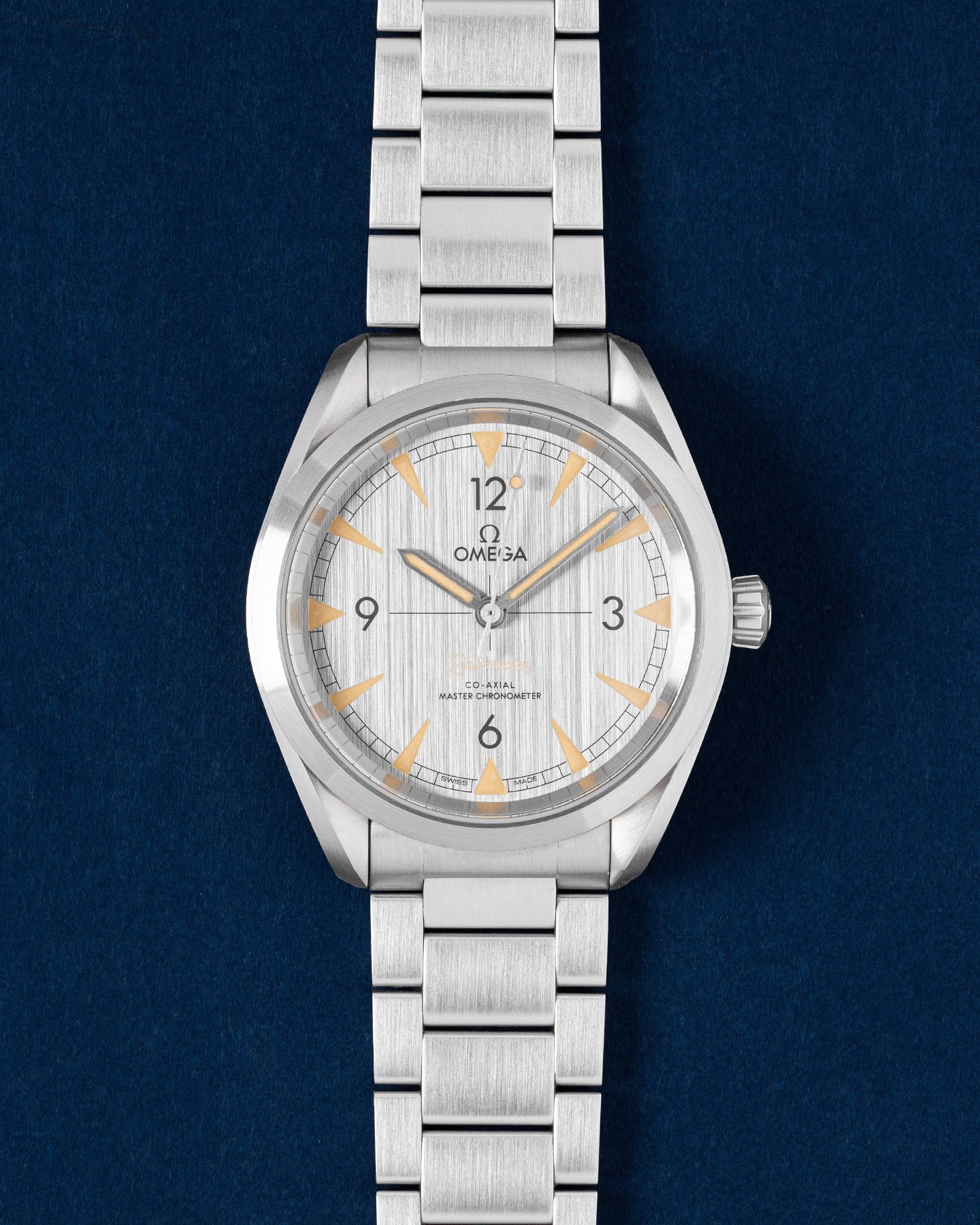
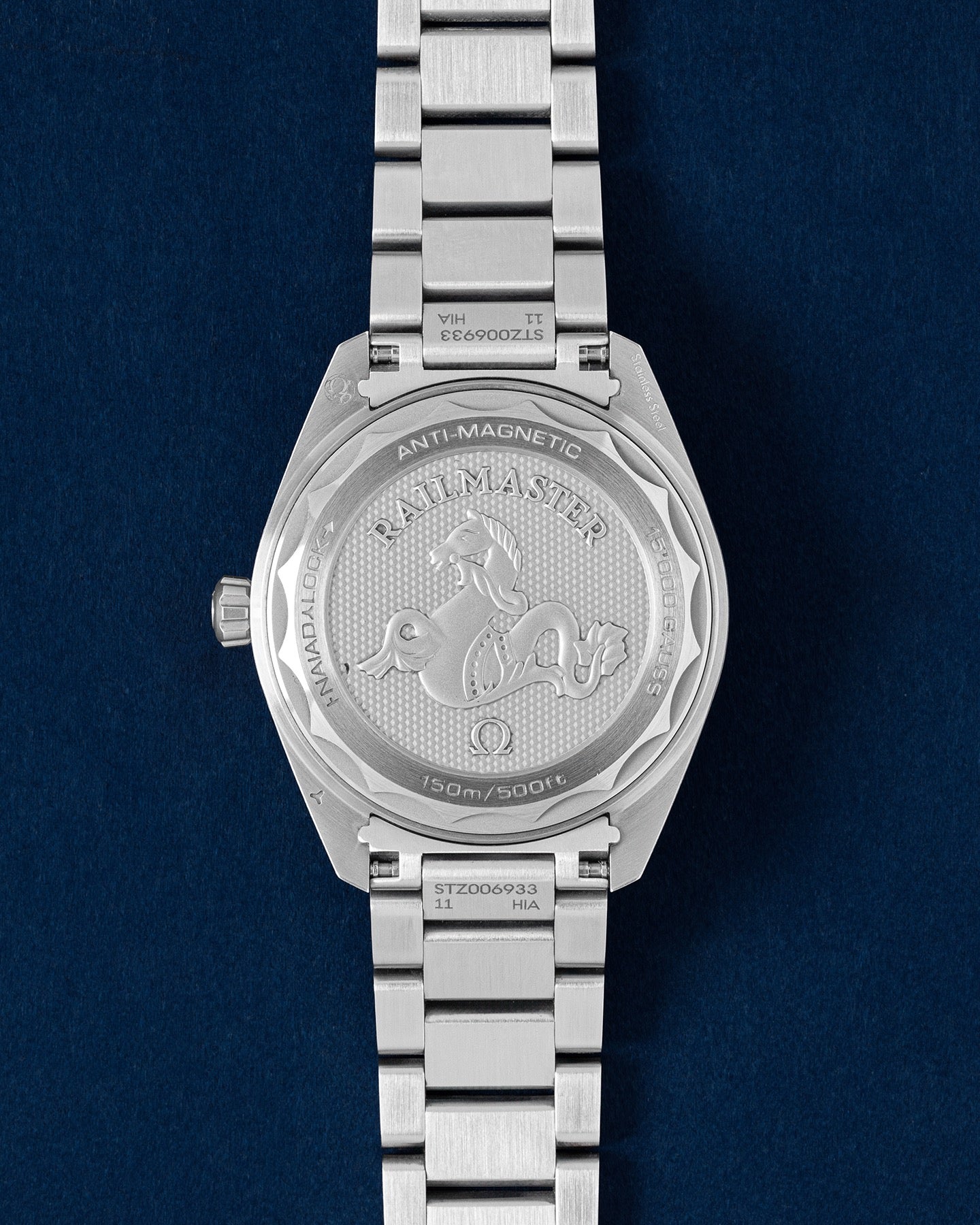


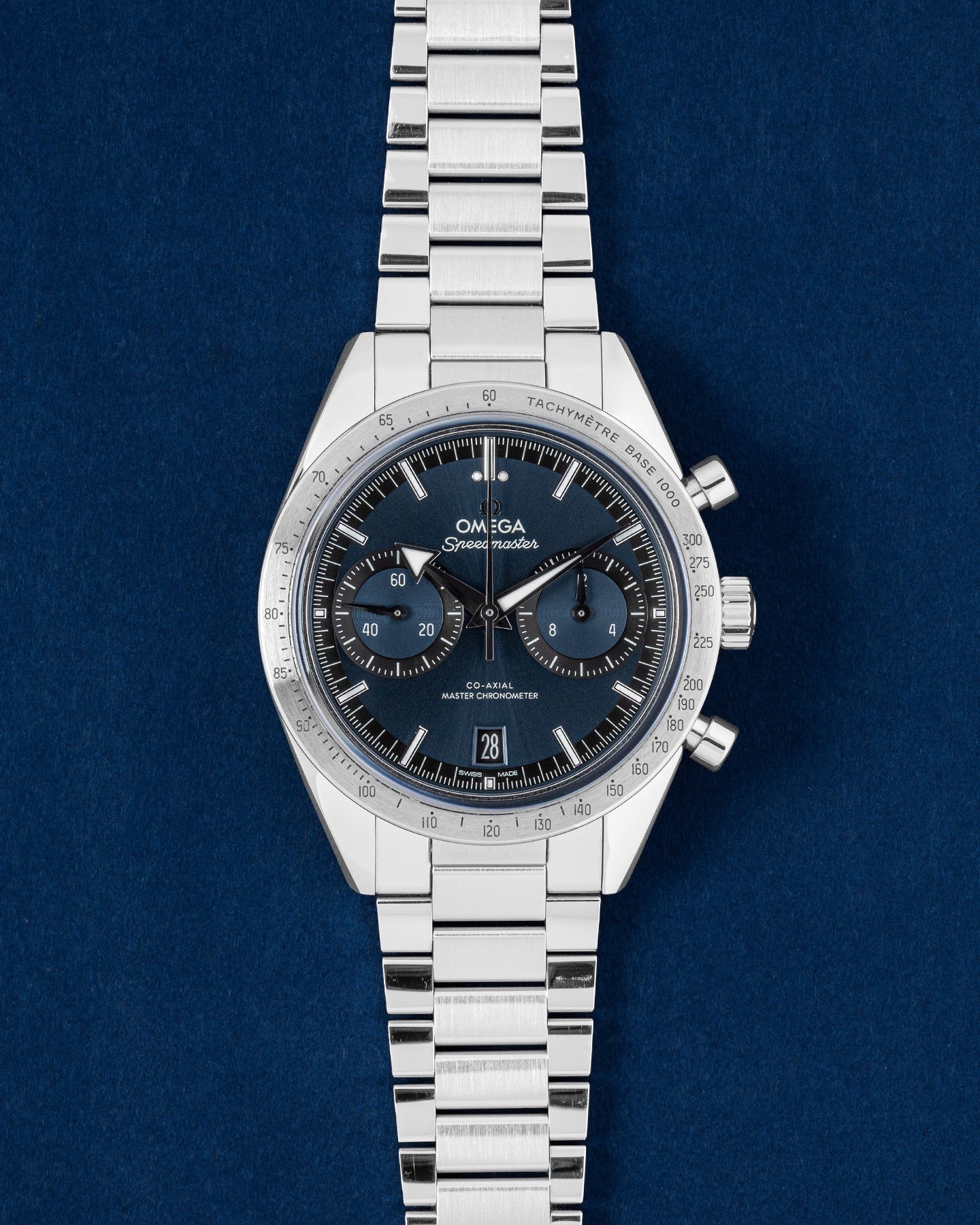
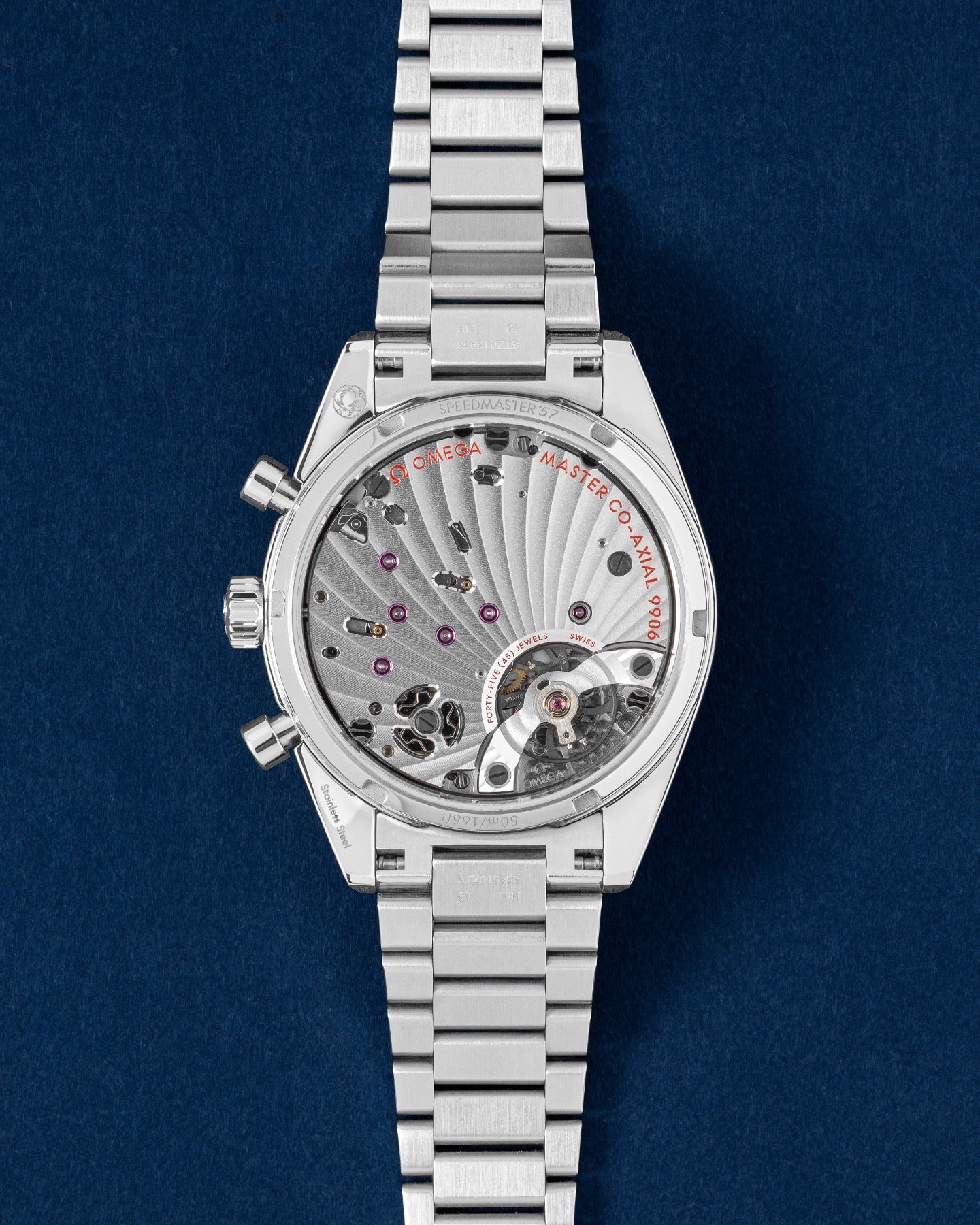
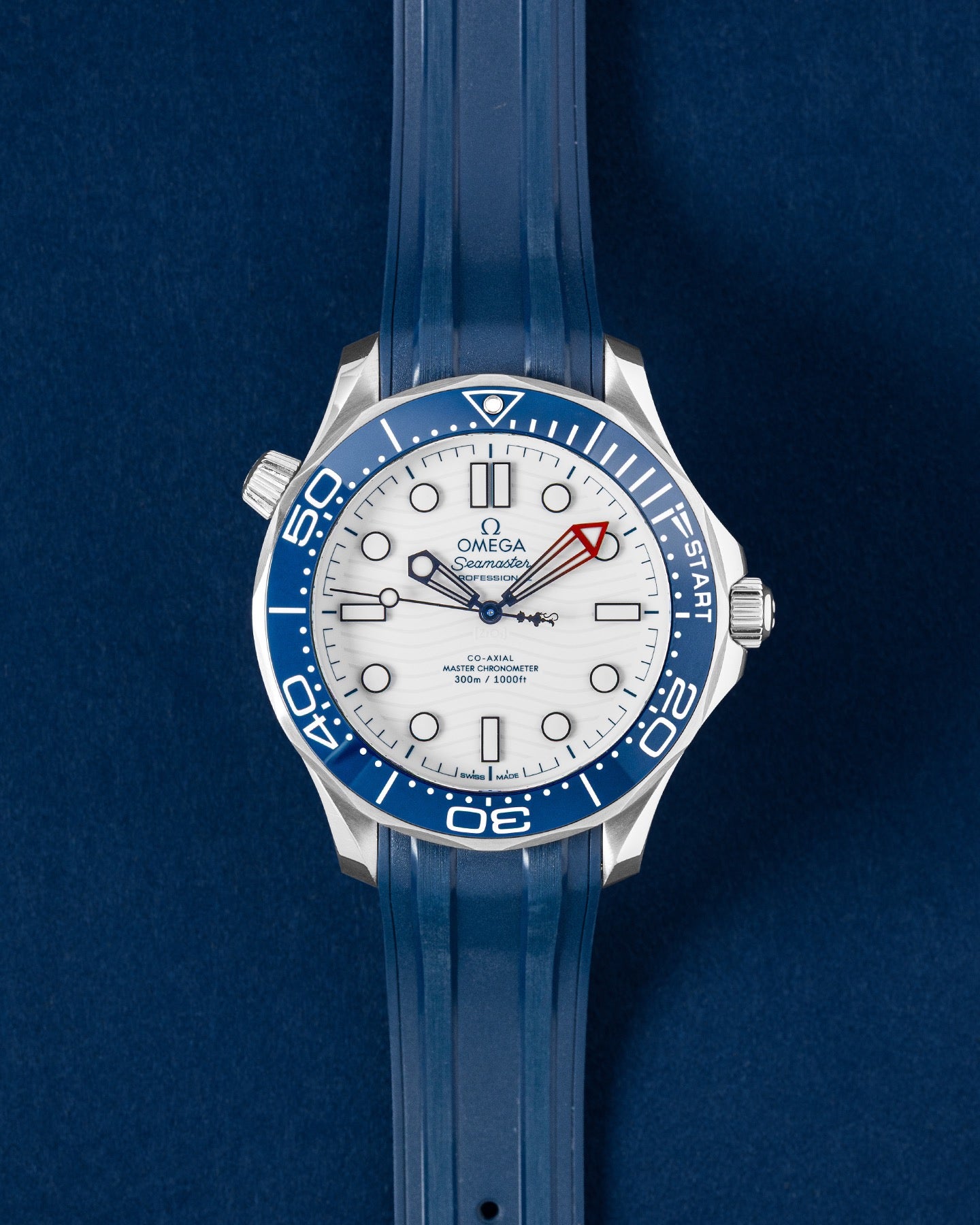
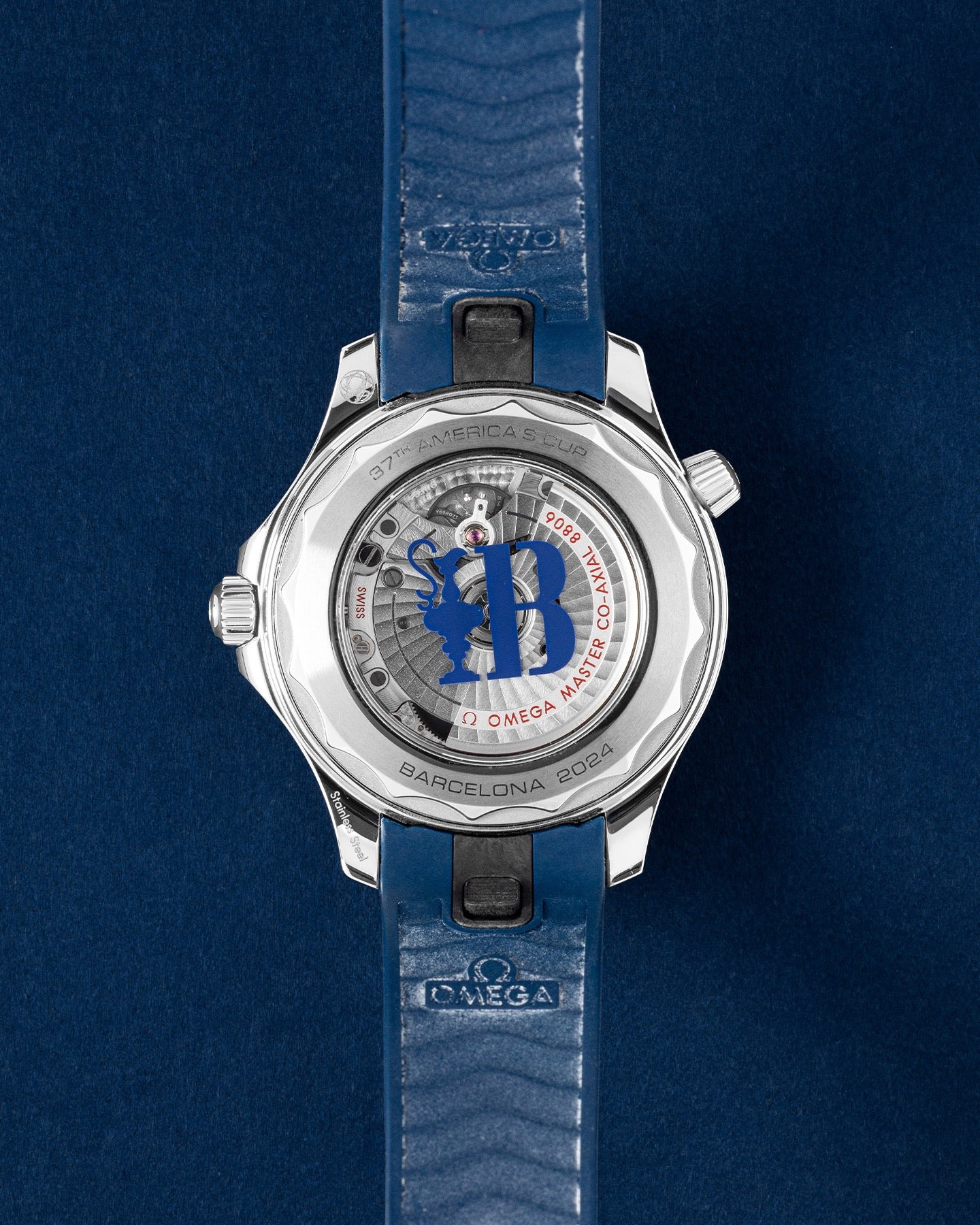
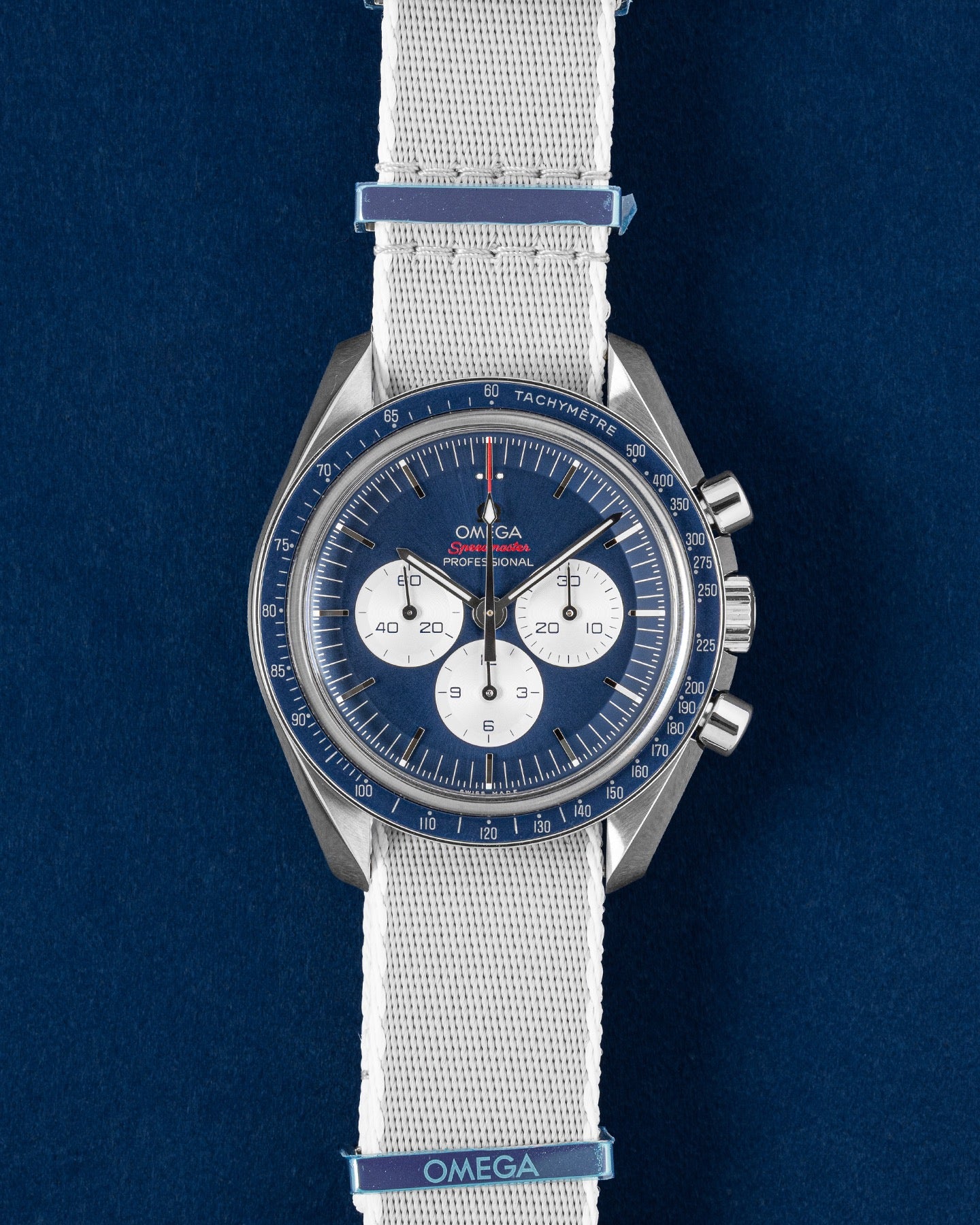


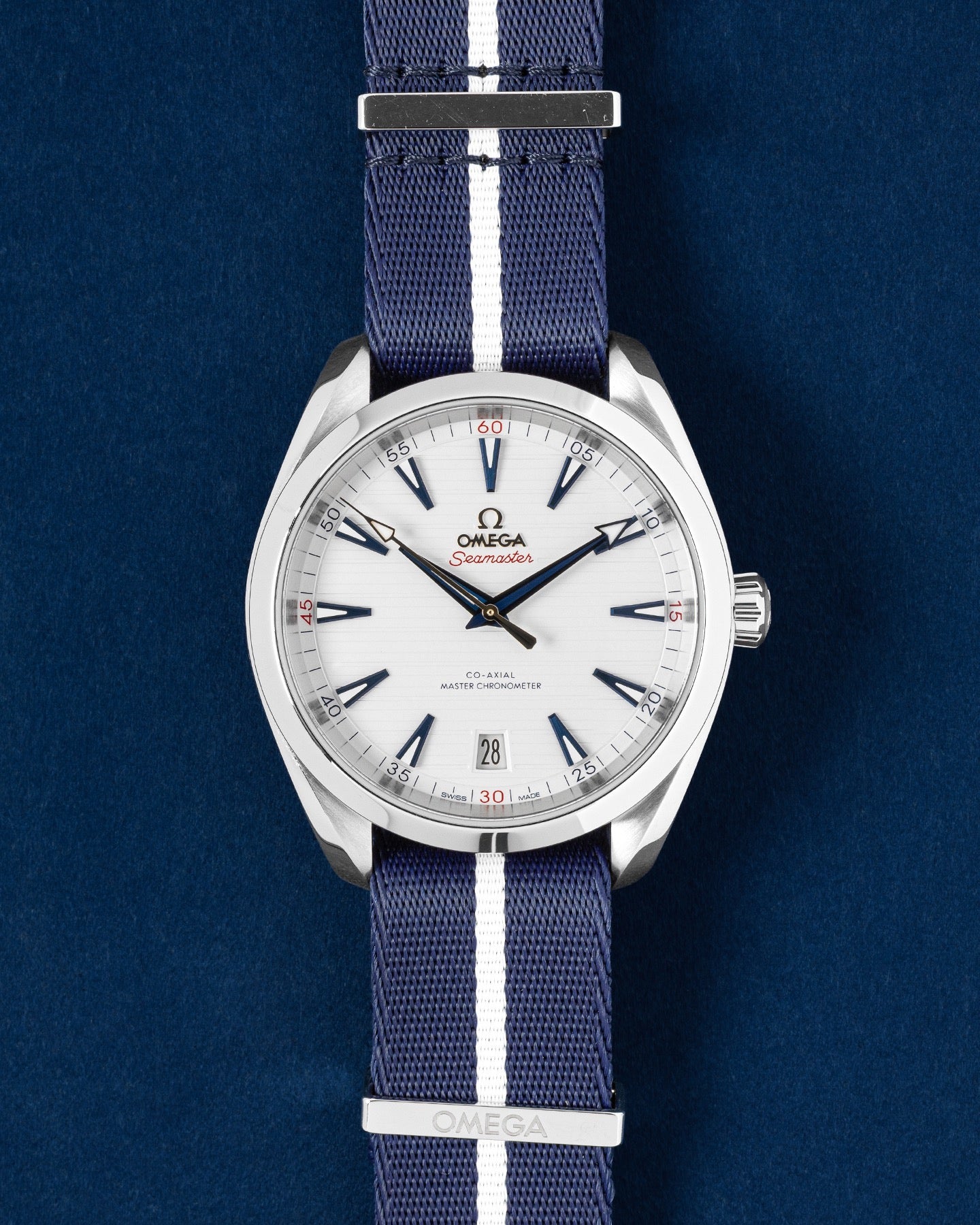


Vintage


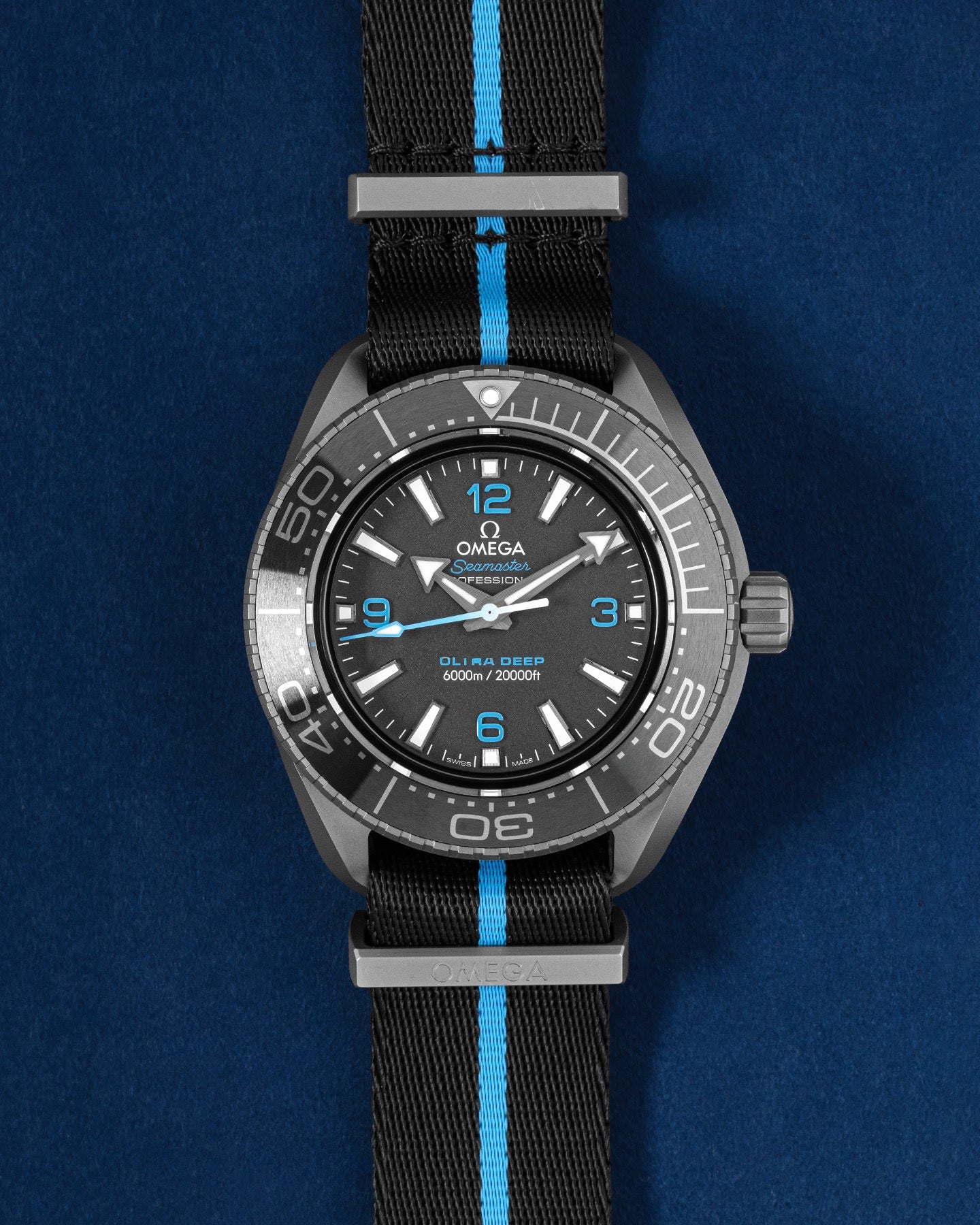
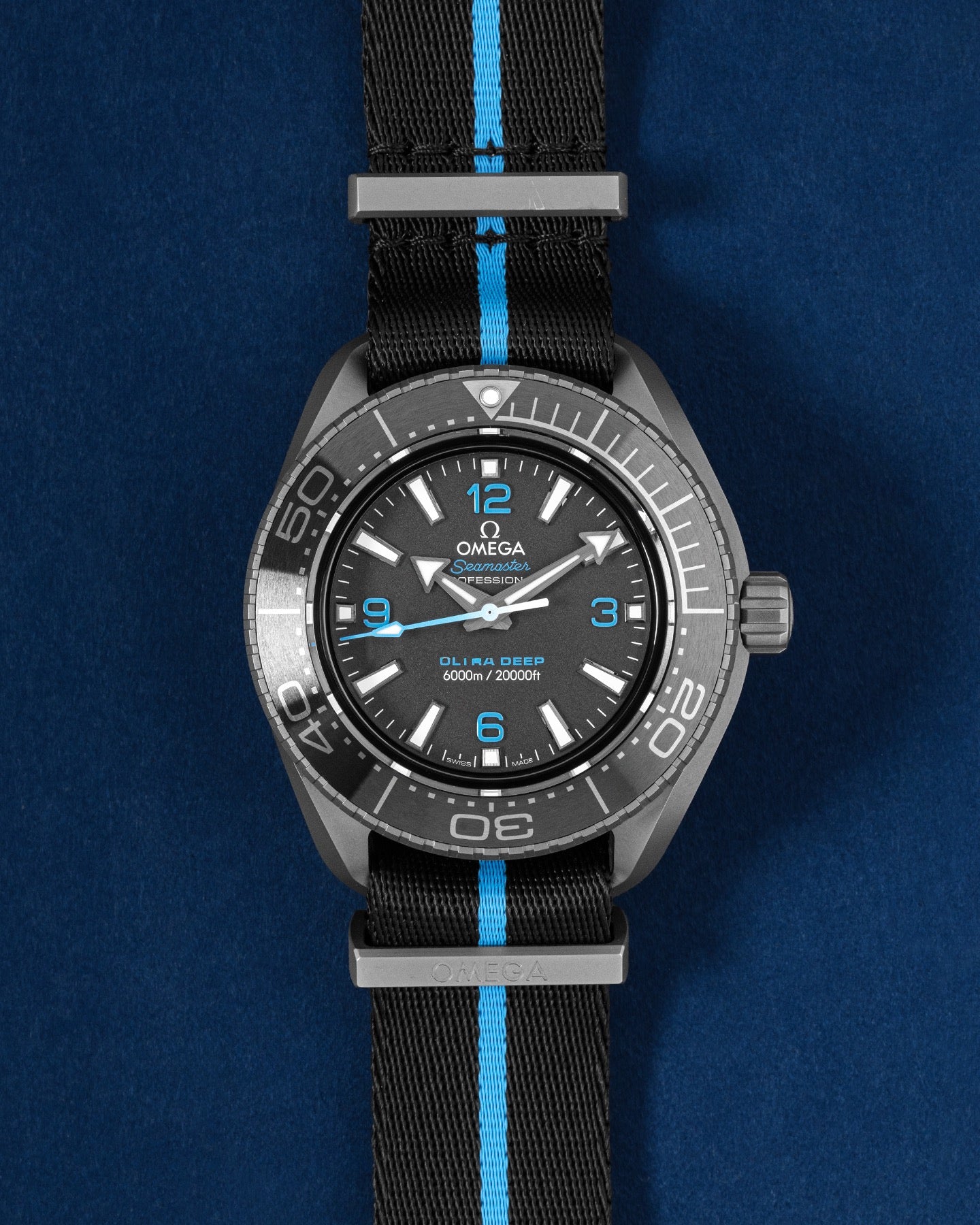
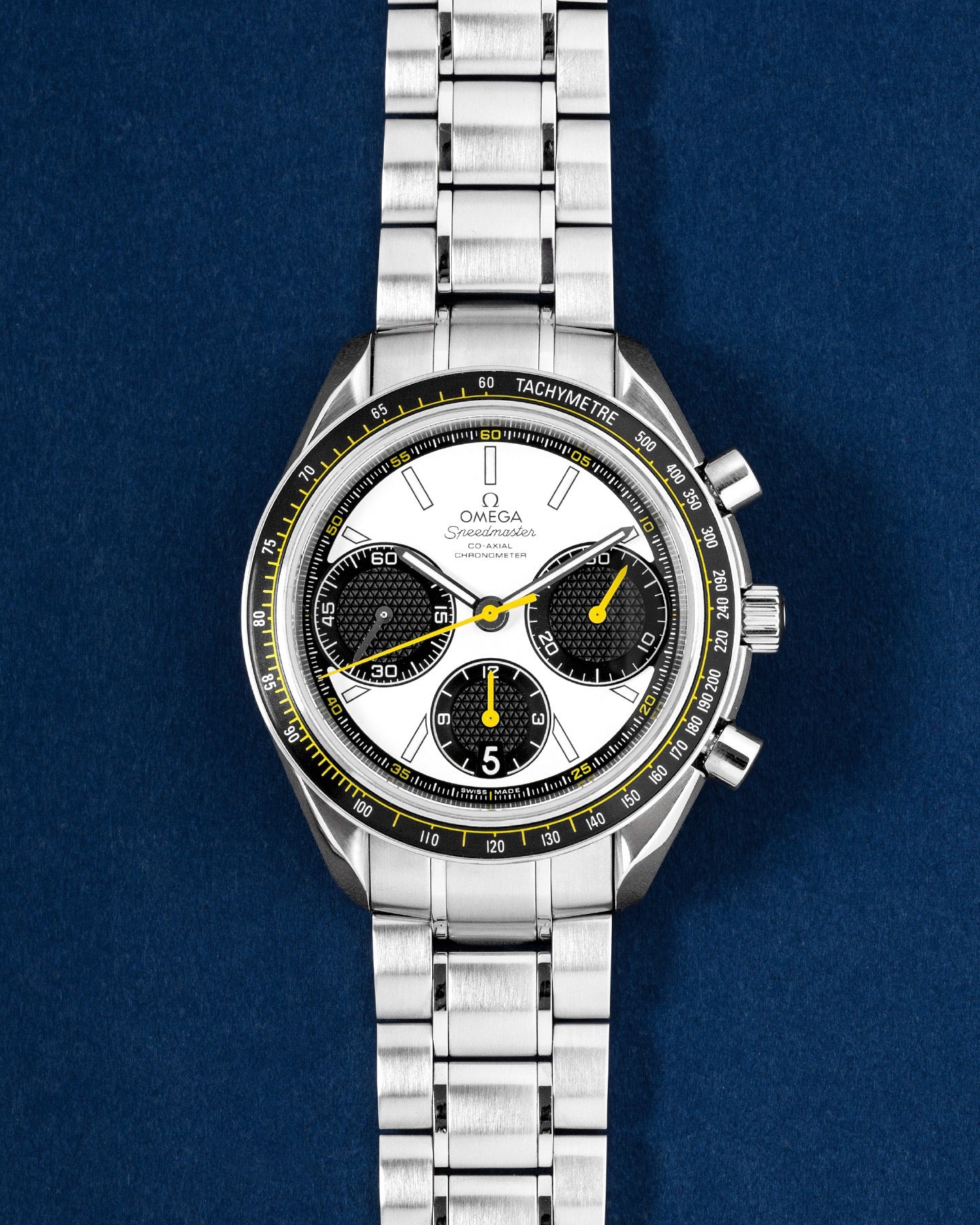
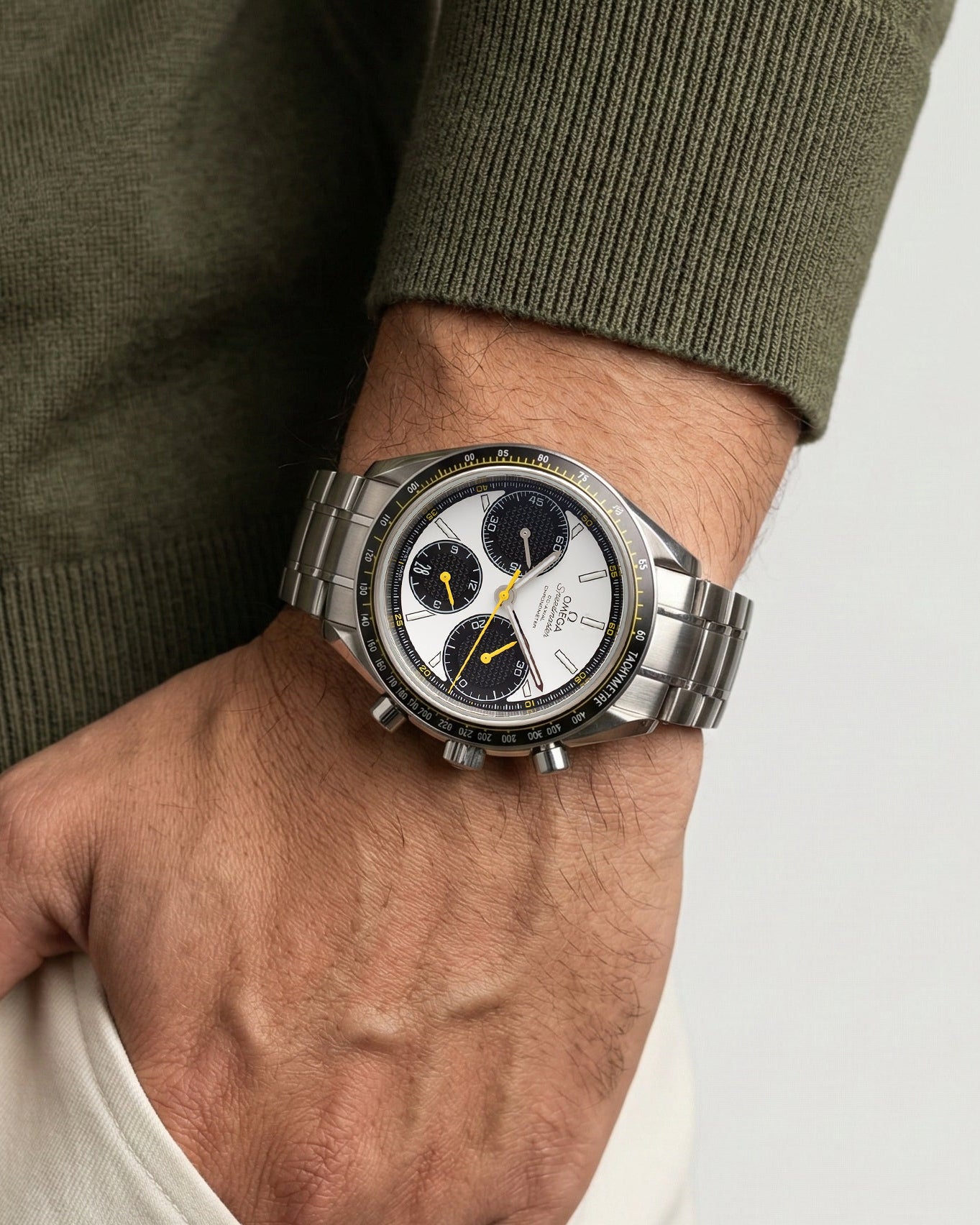
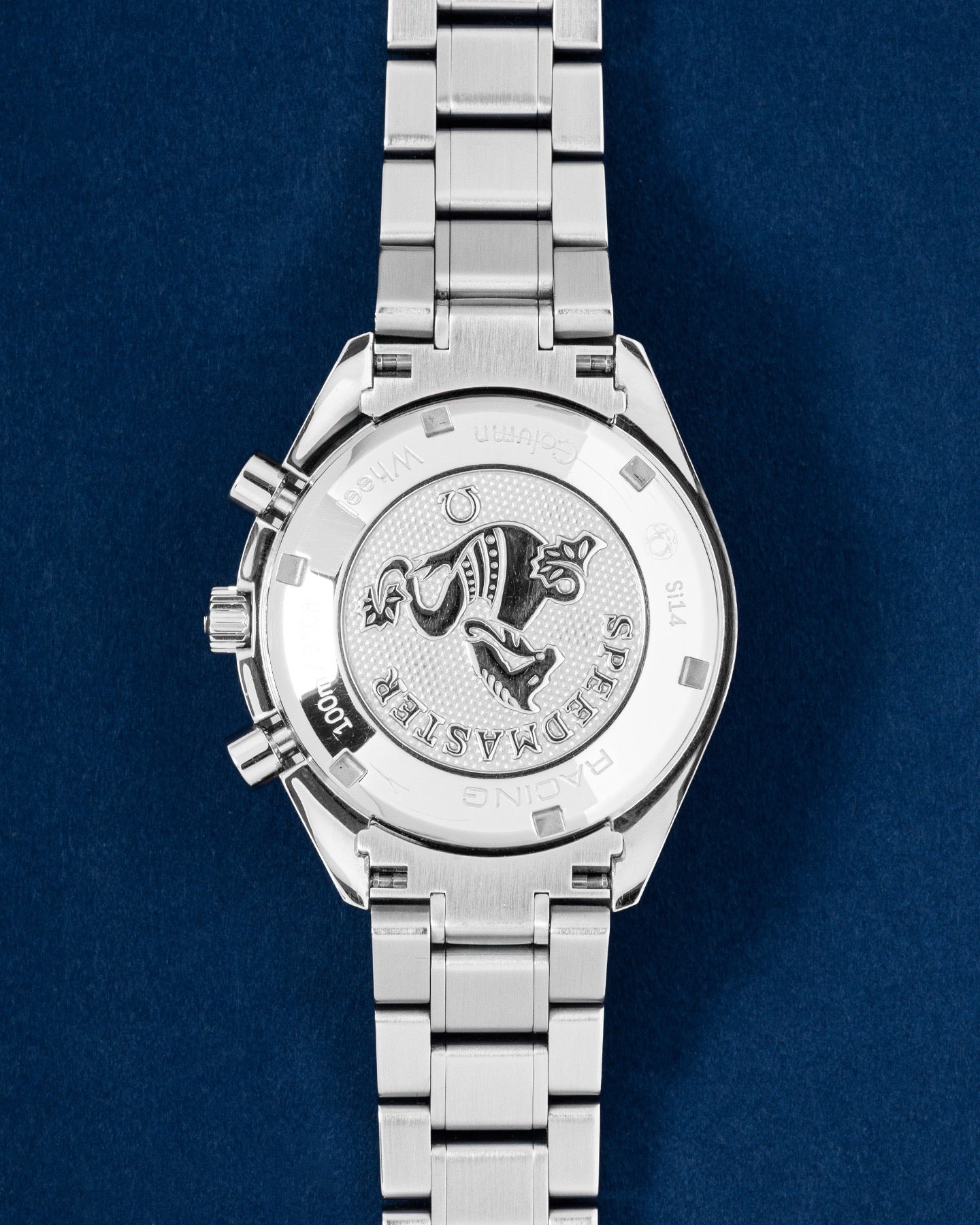
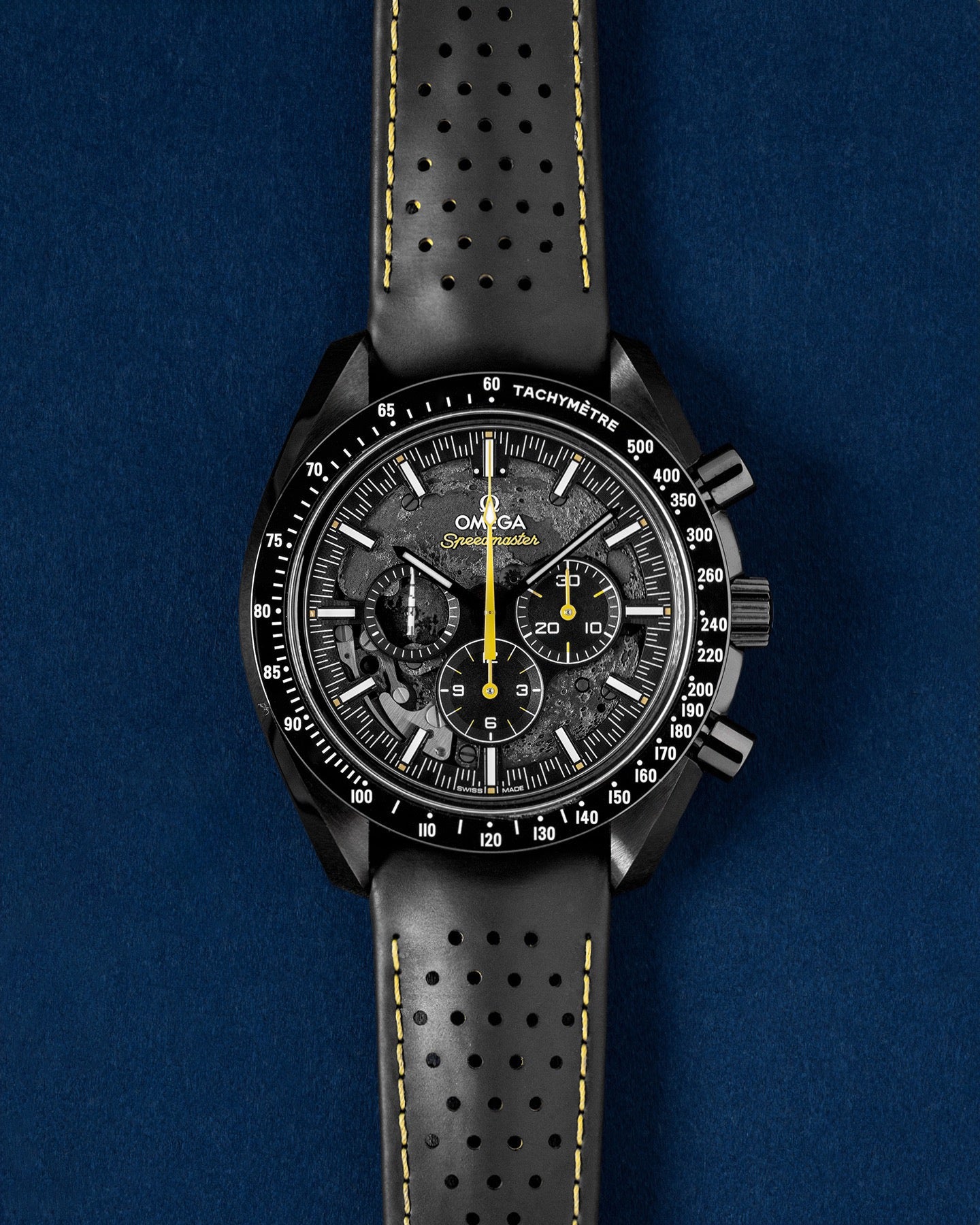
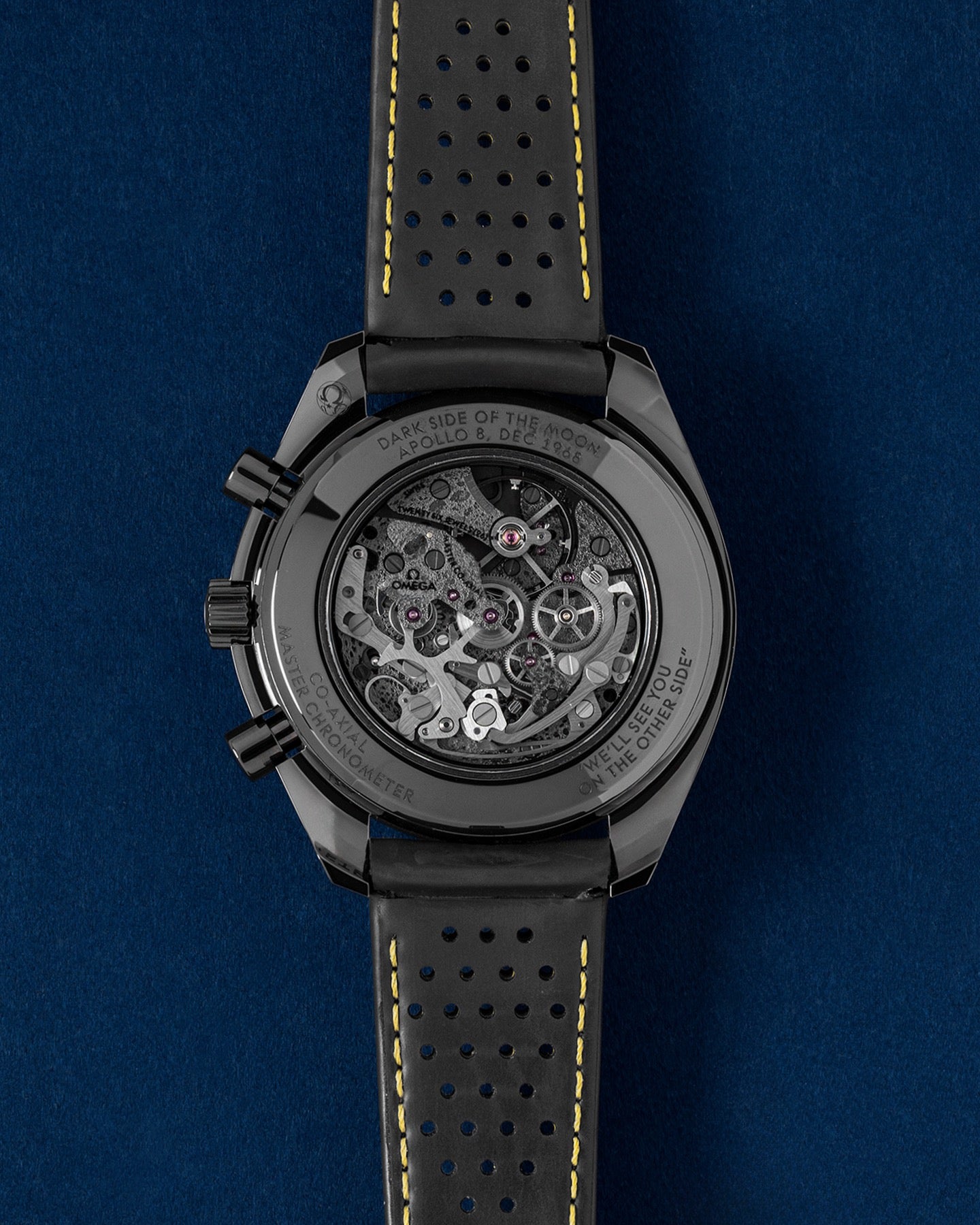
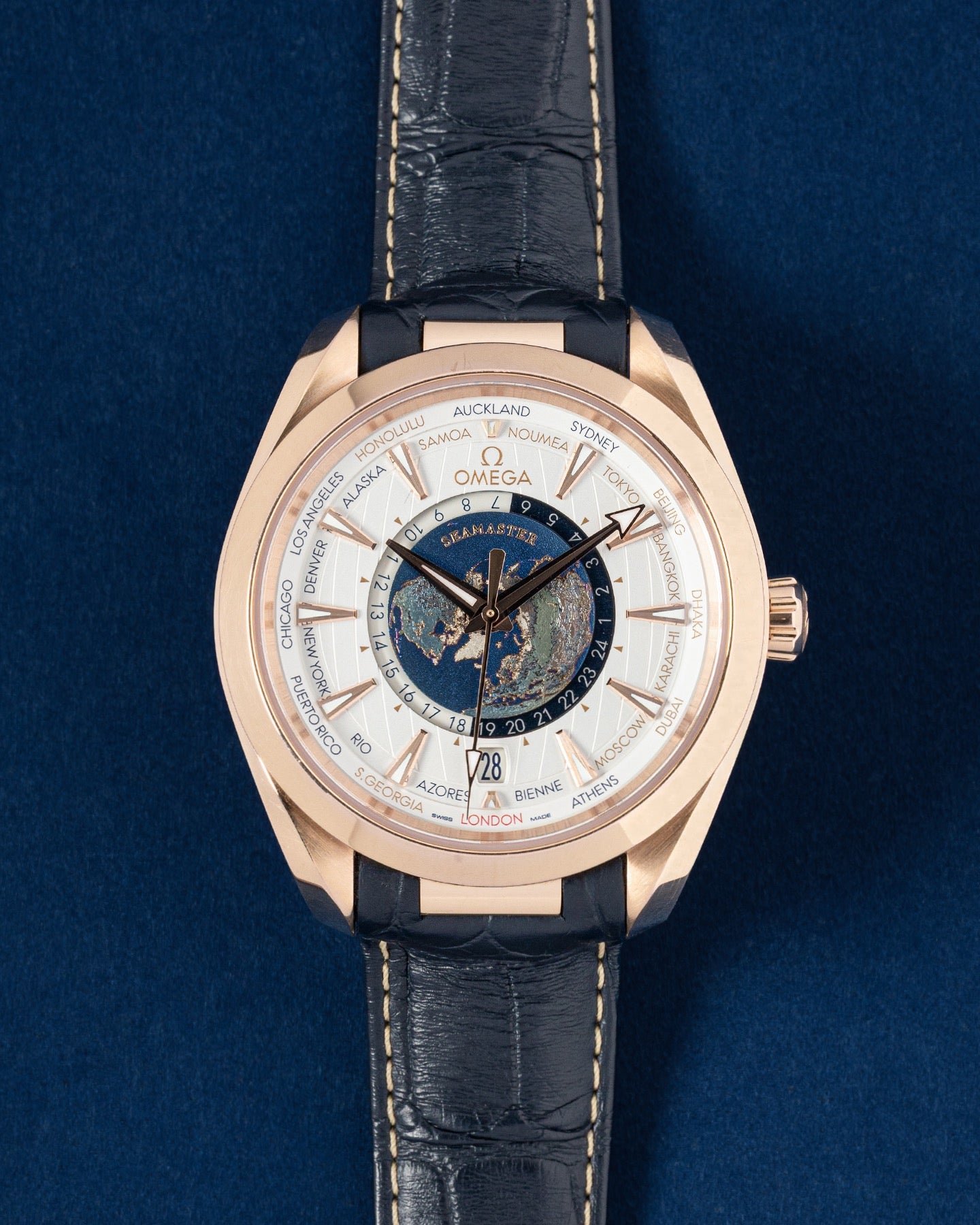
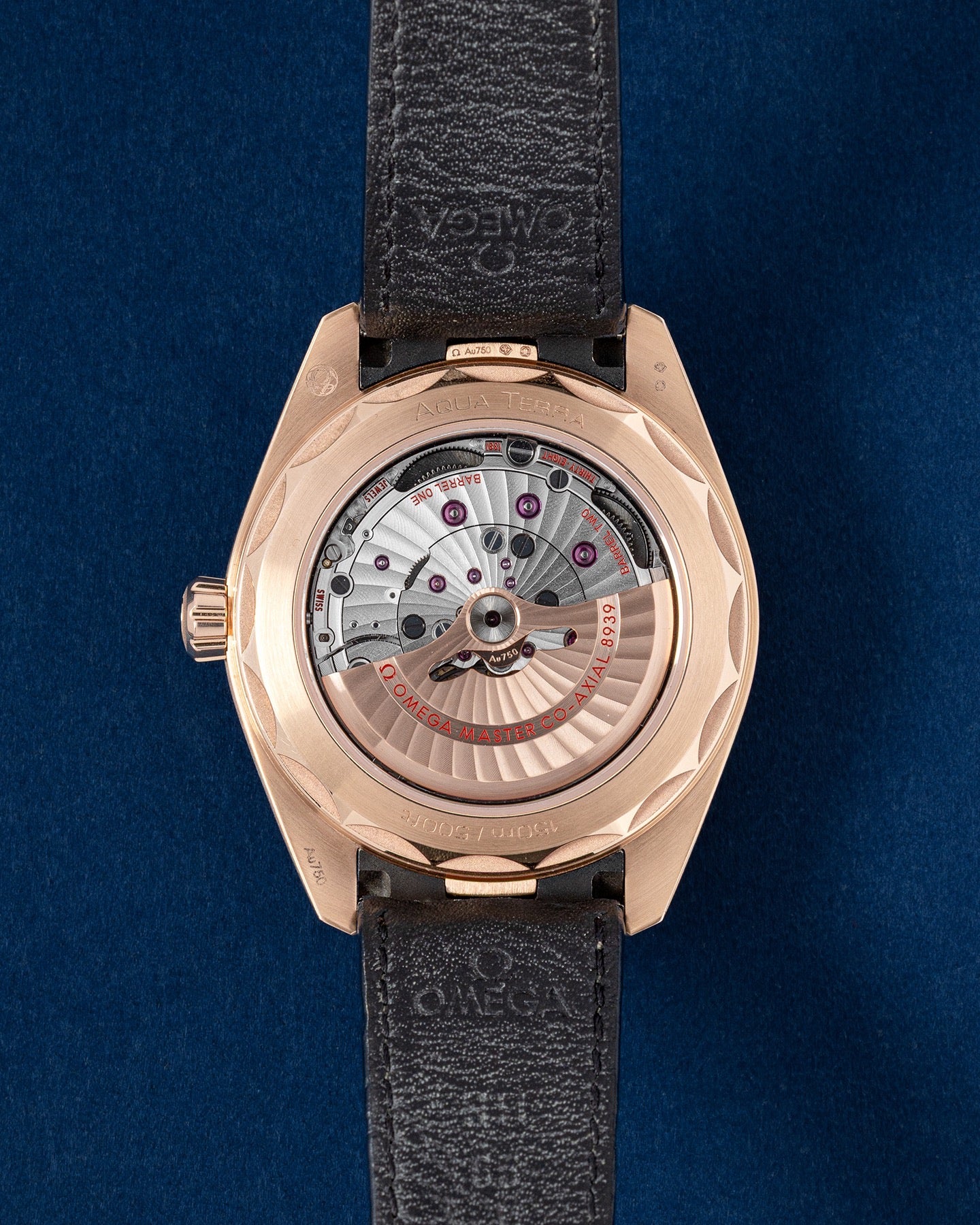
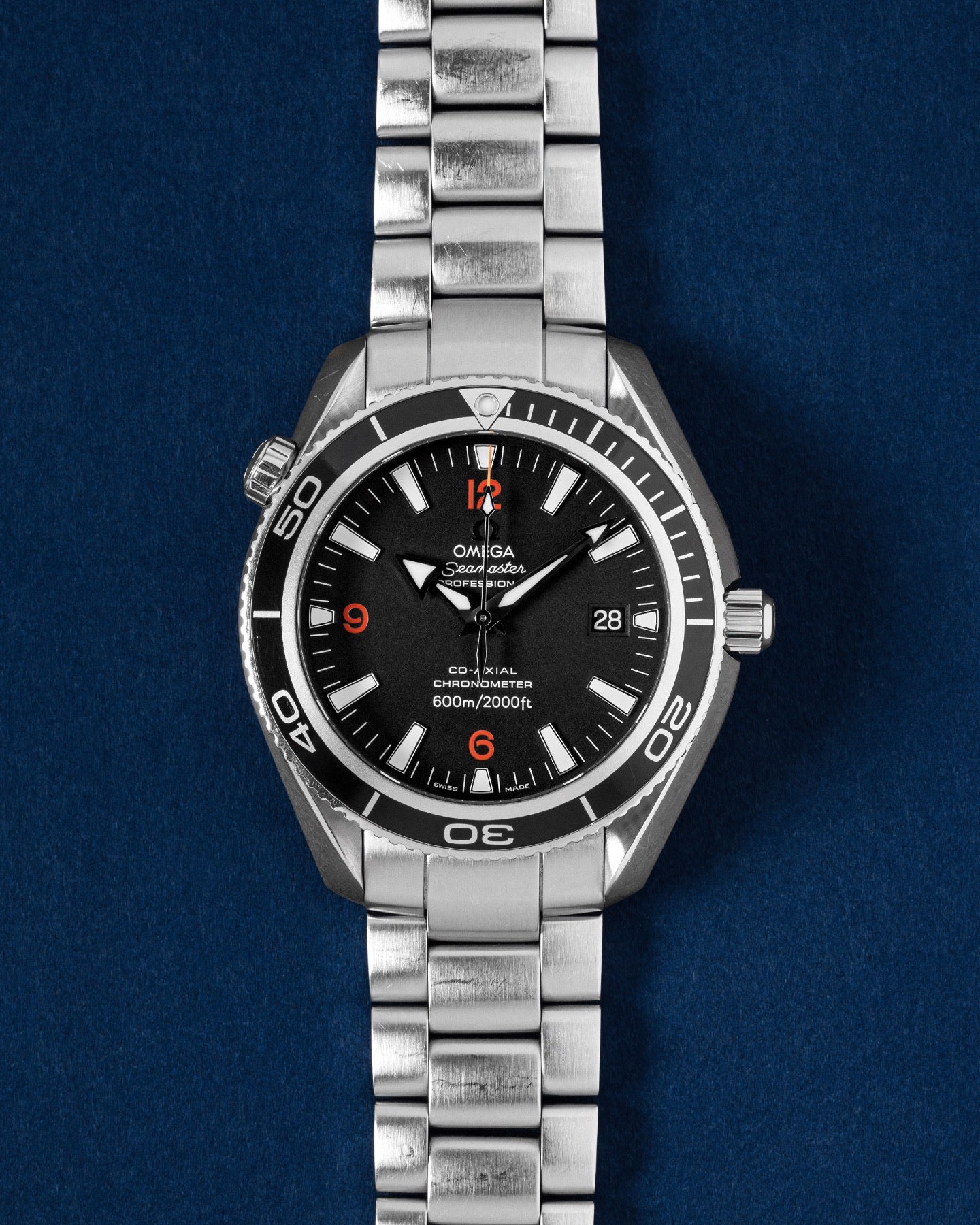
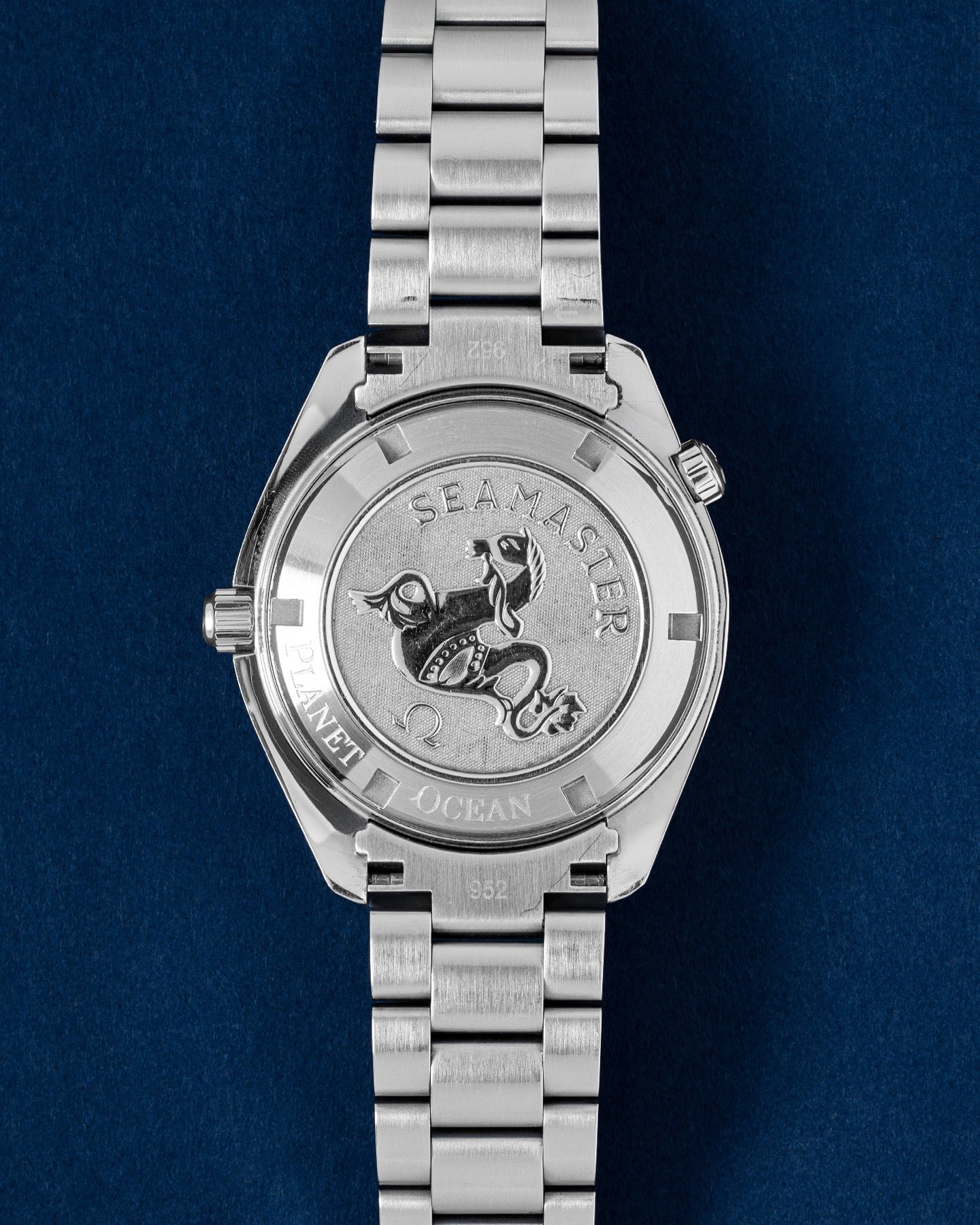
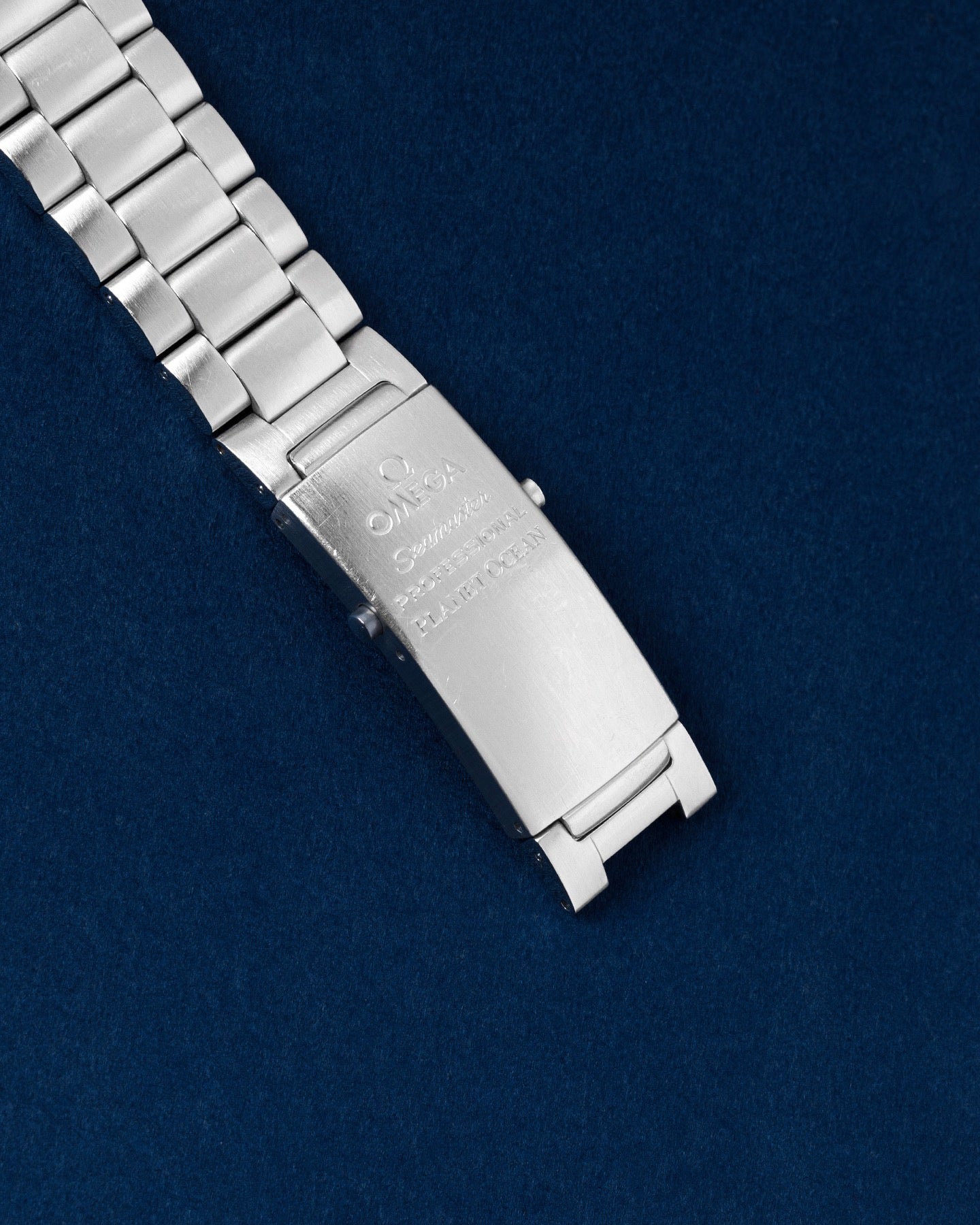
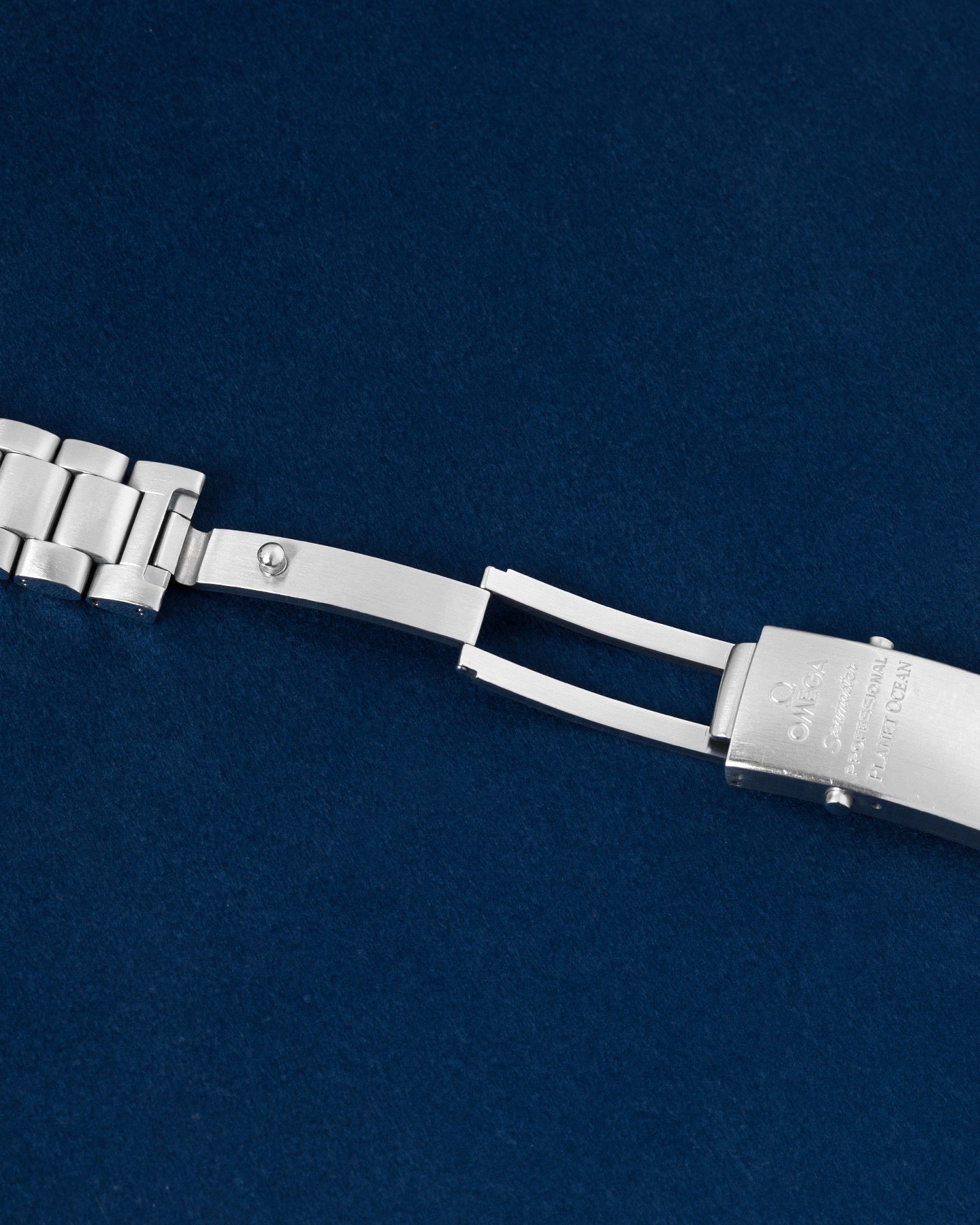
Omega Seamaster Planet Ocean 2201.51.00



Omega Speedmaster Rattrapante 3540.50.00


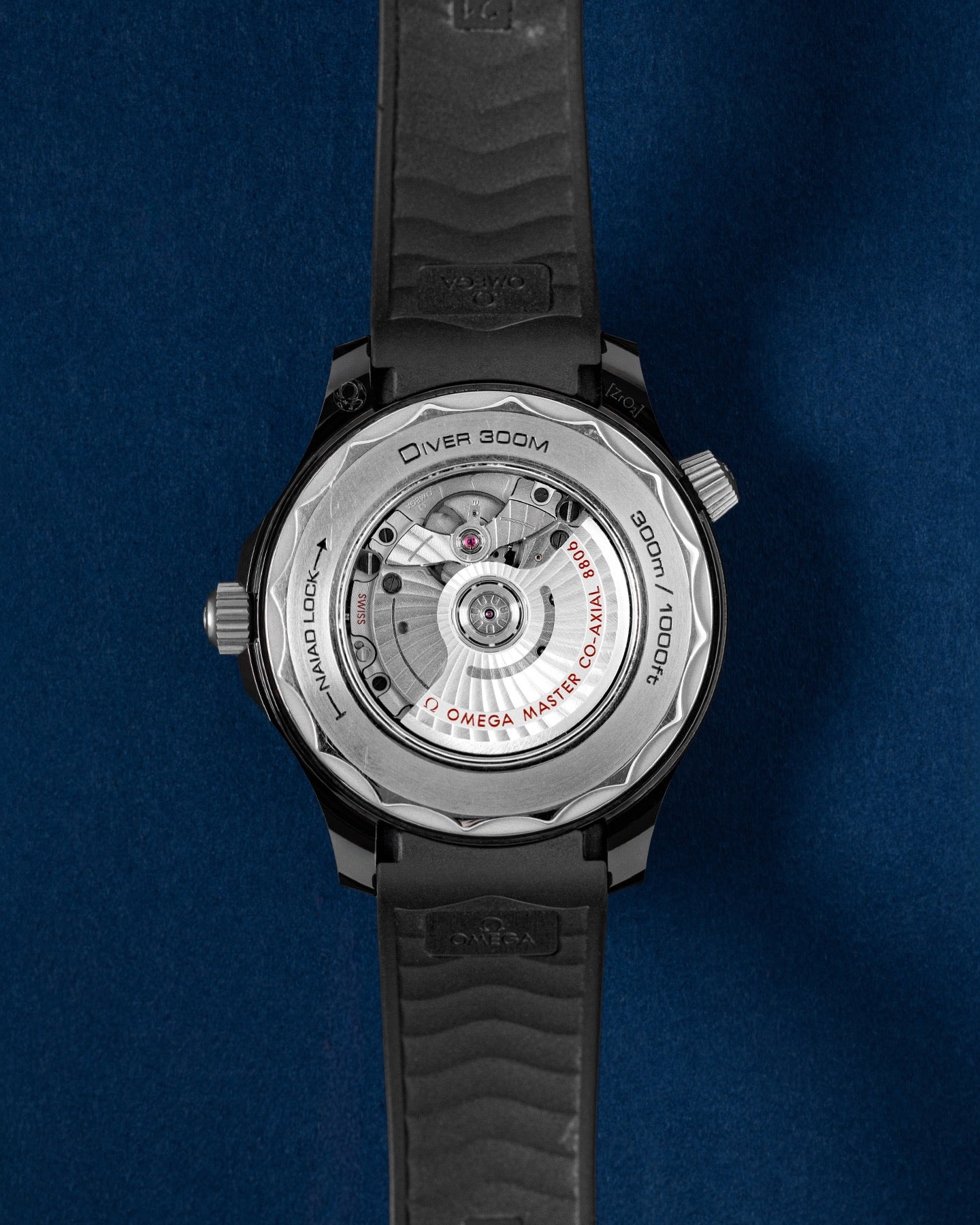
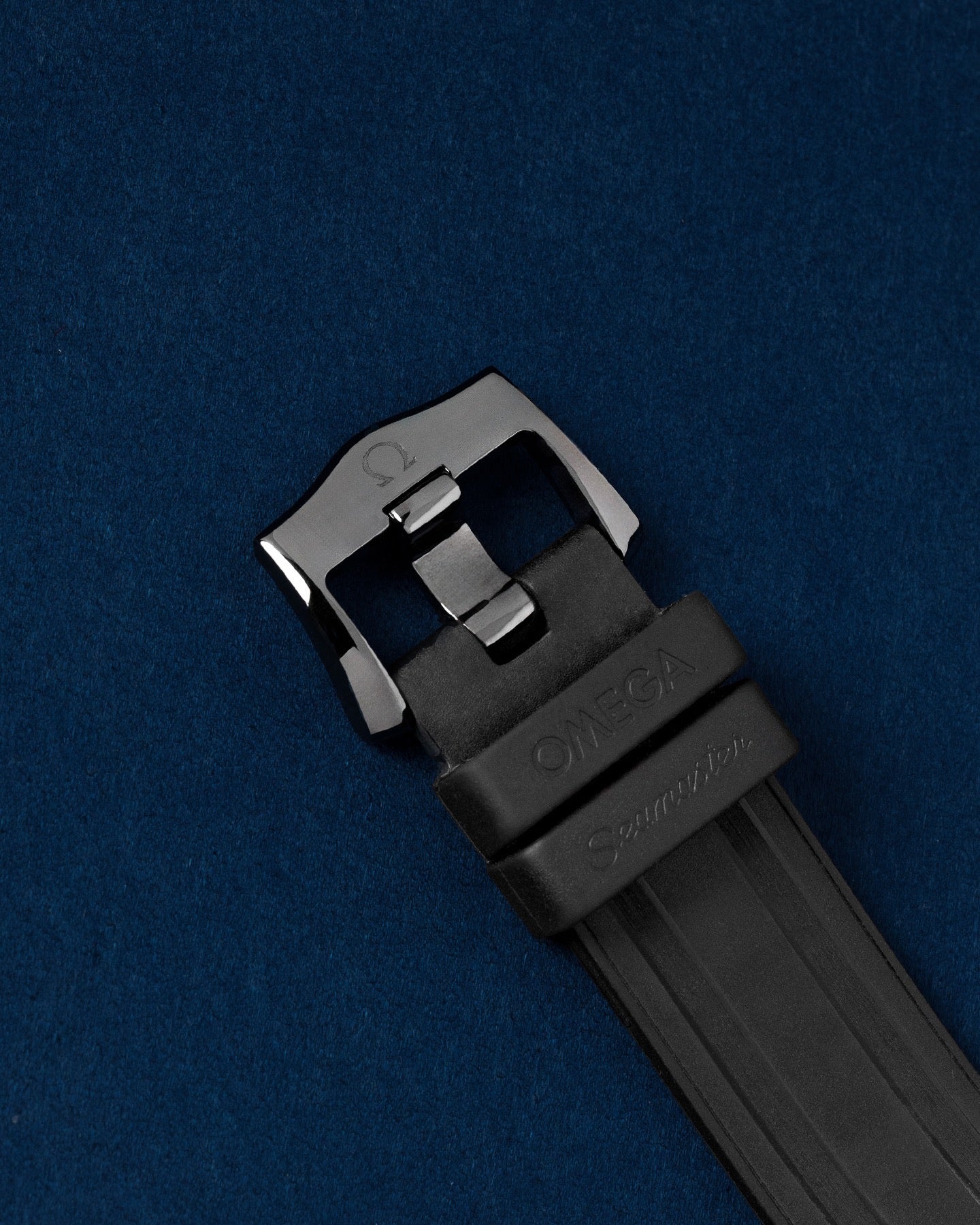
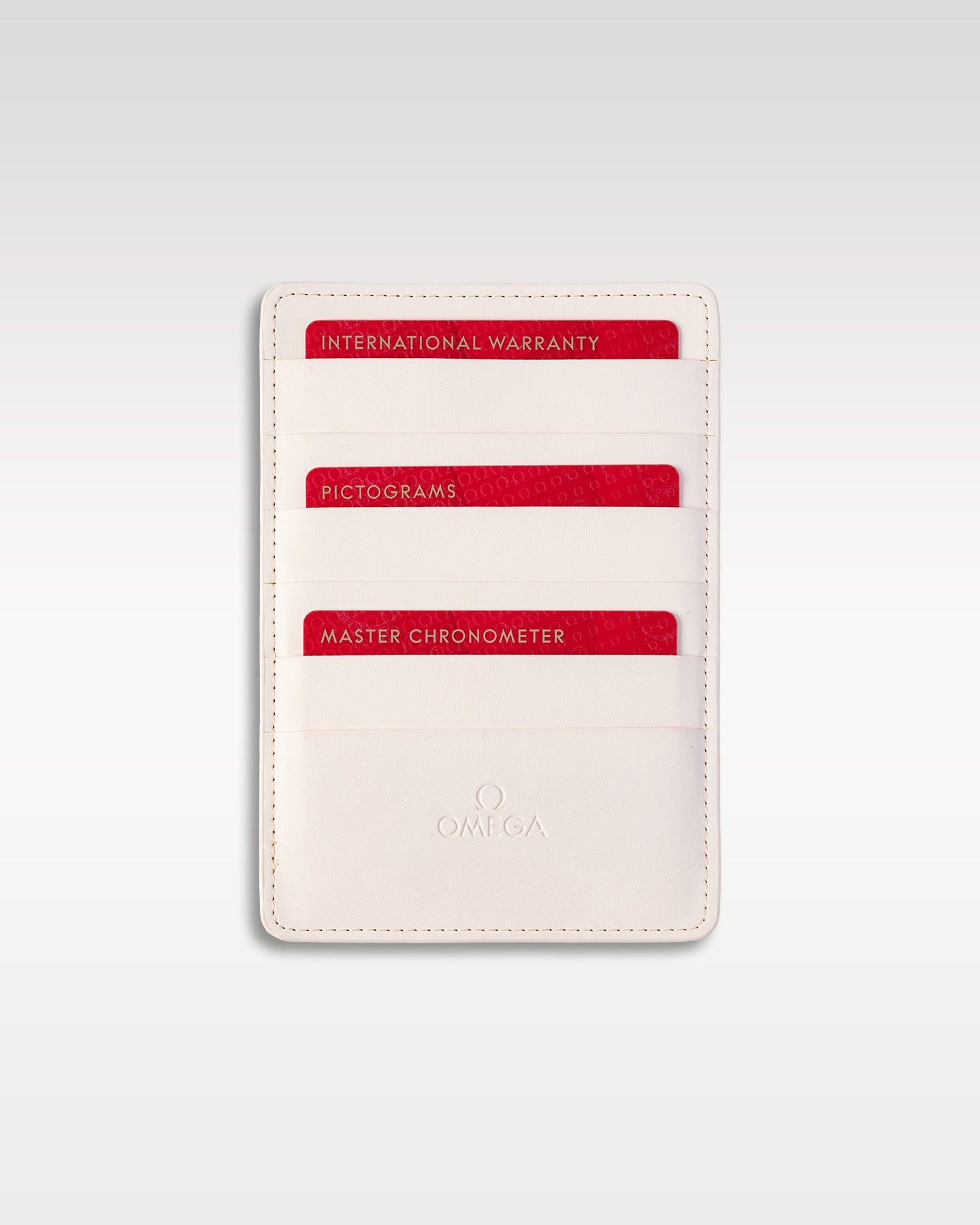
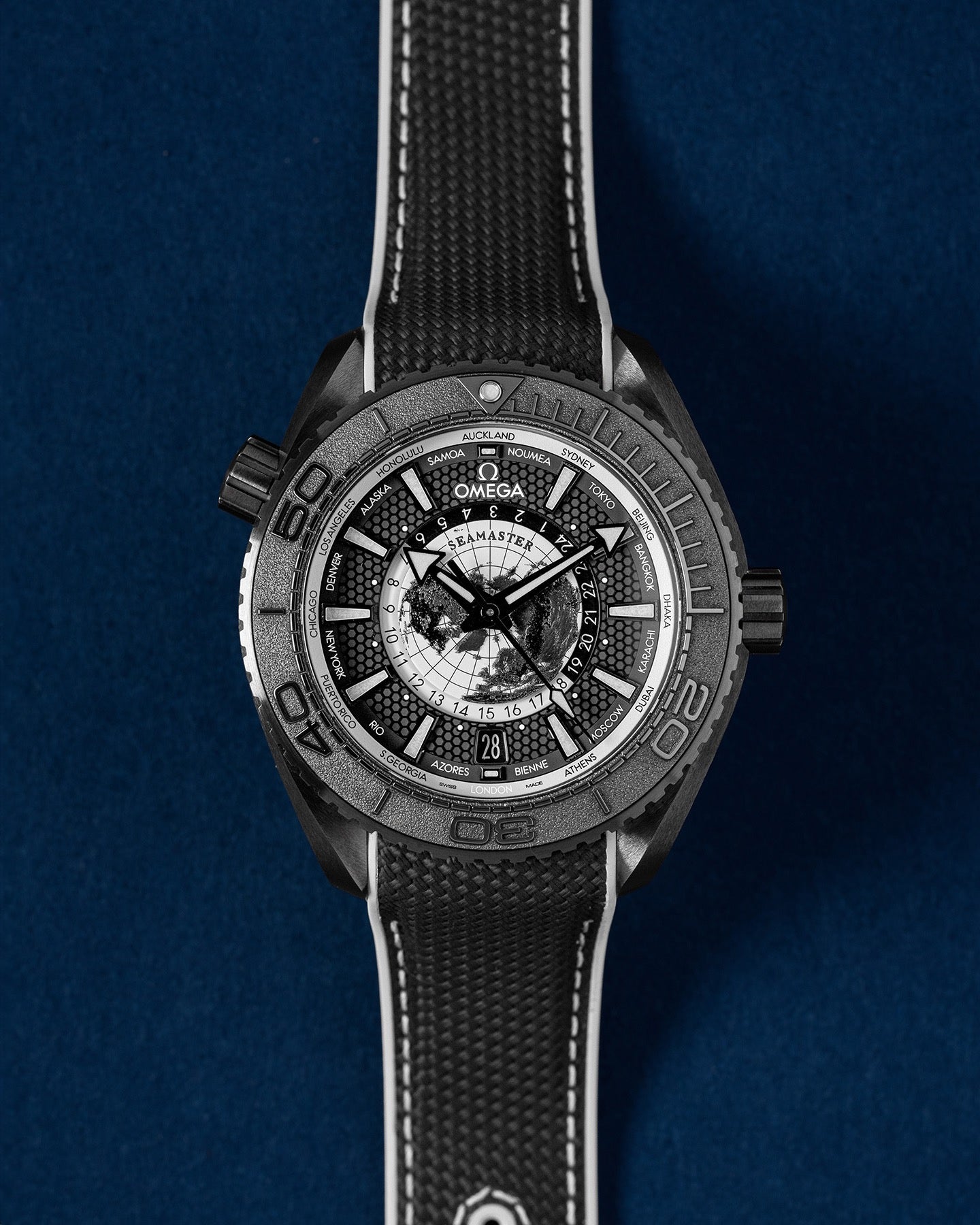

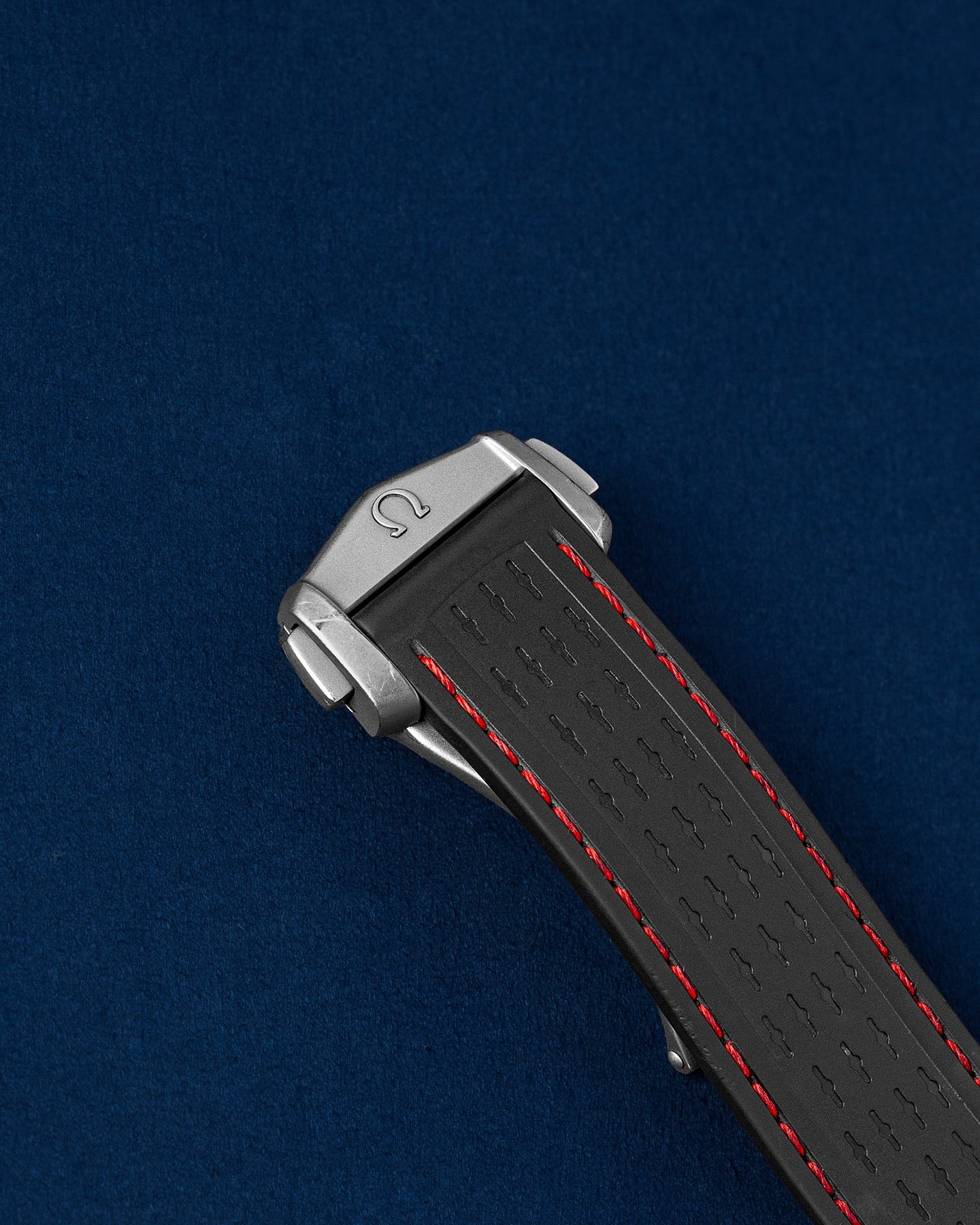
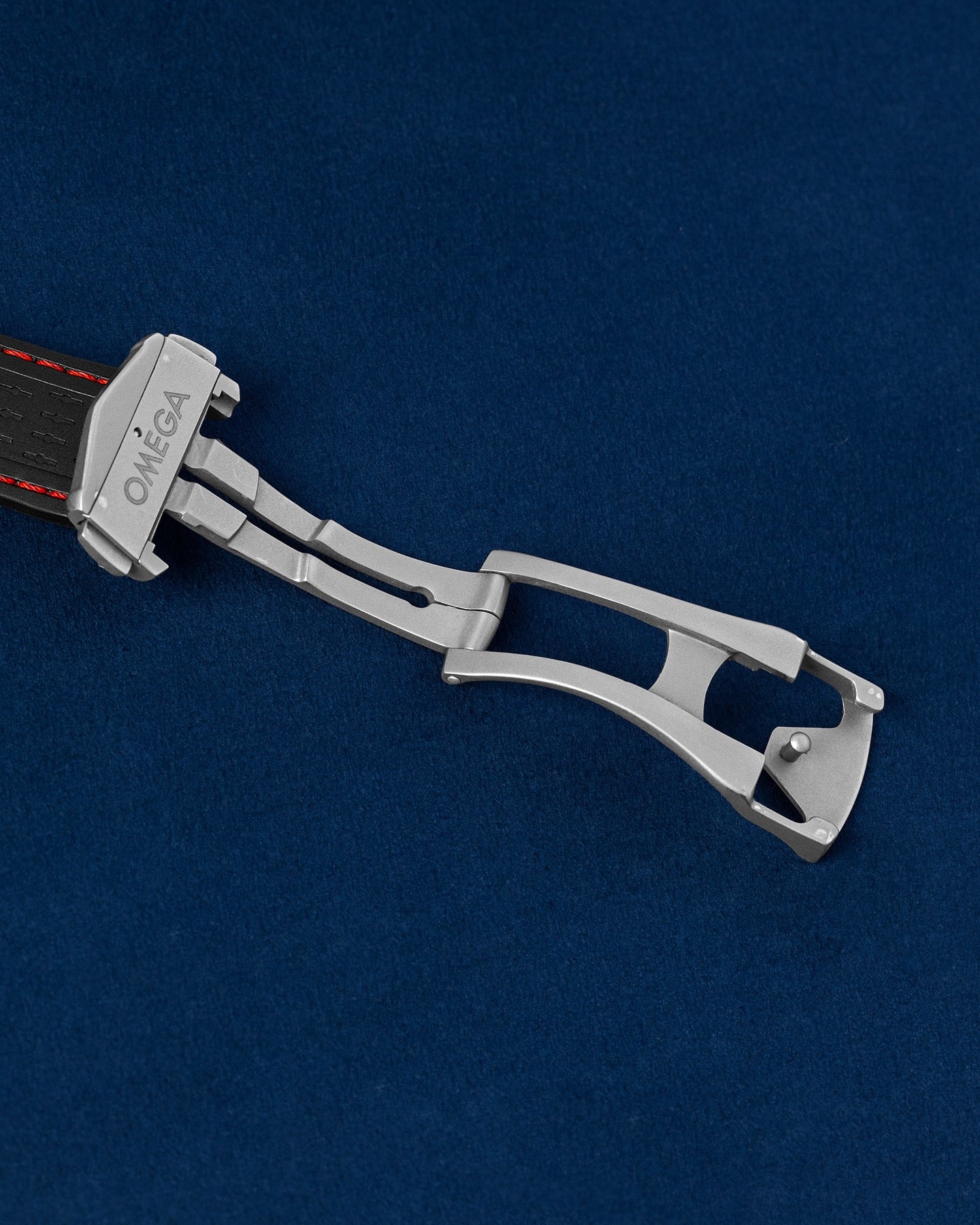
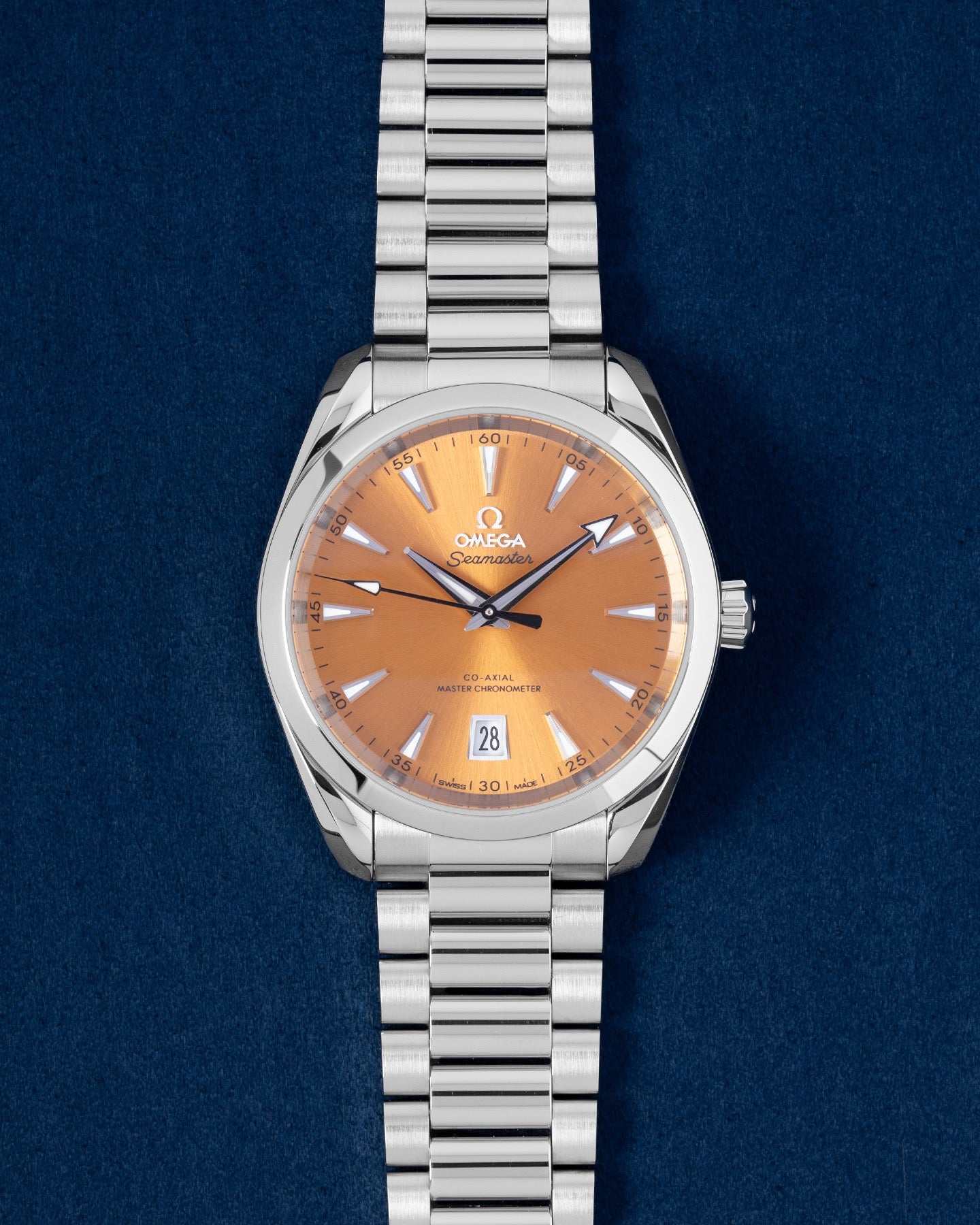
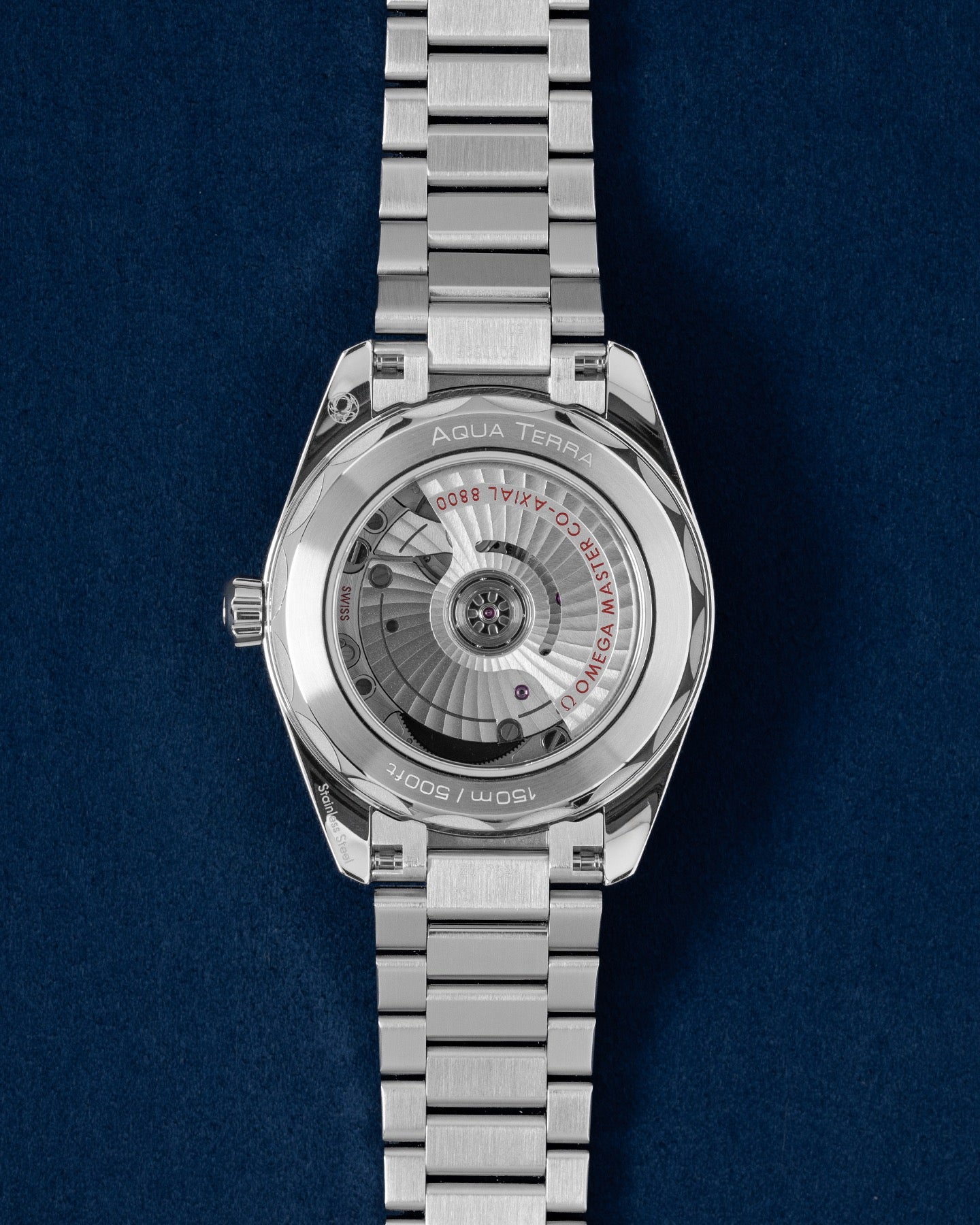
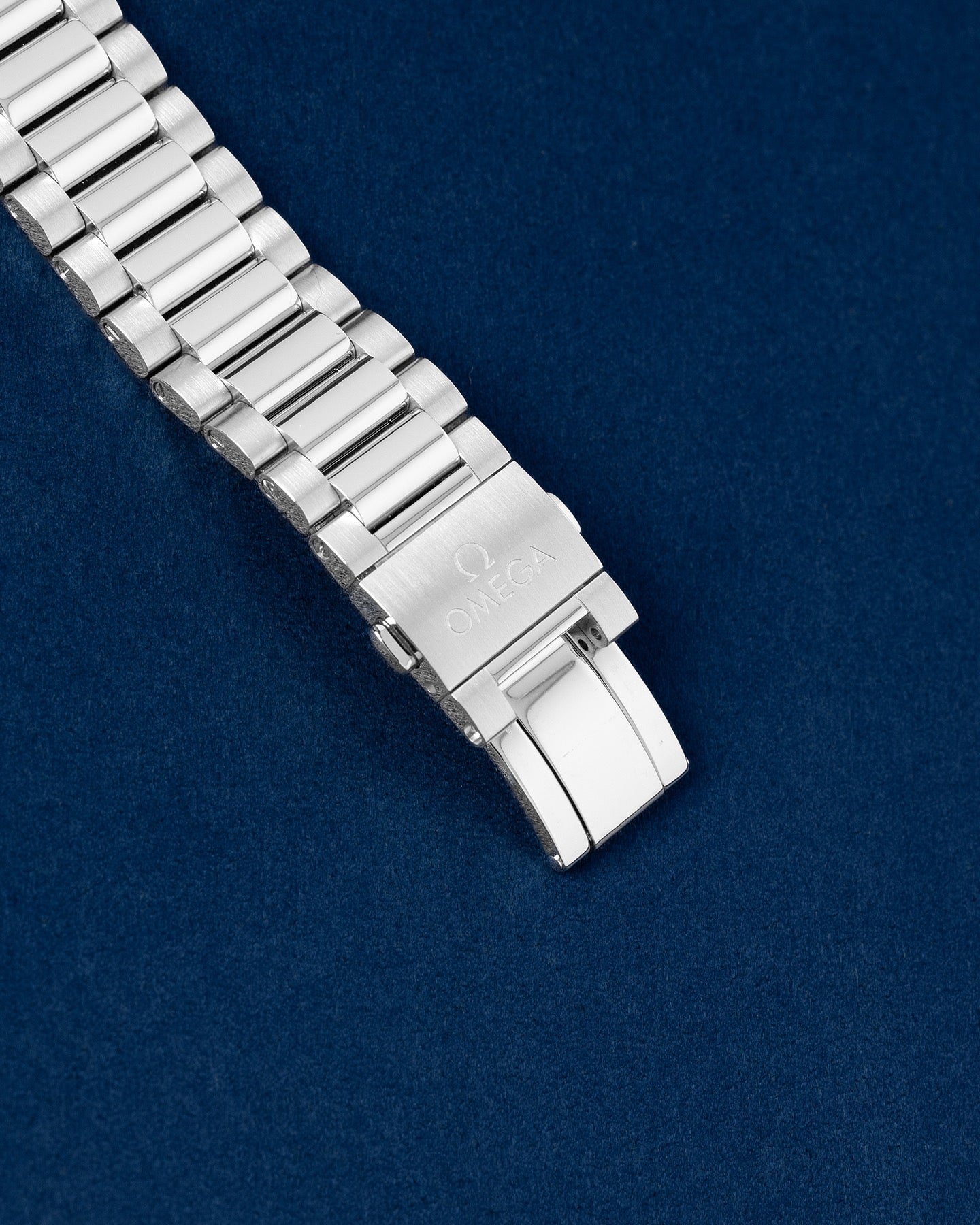
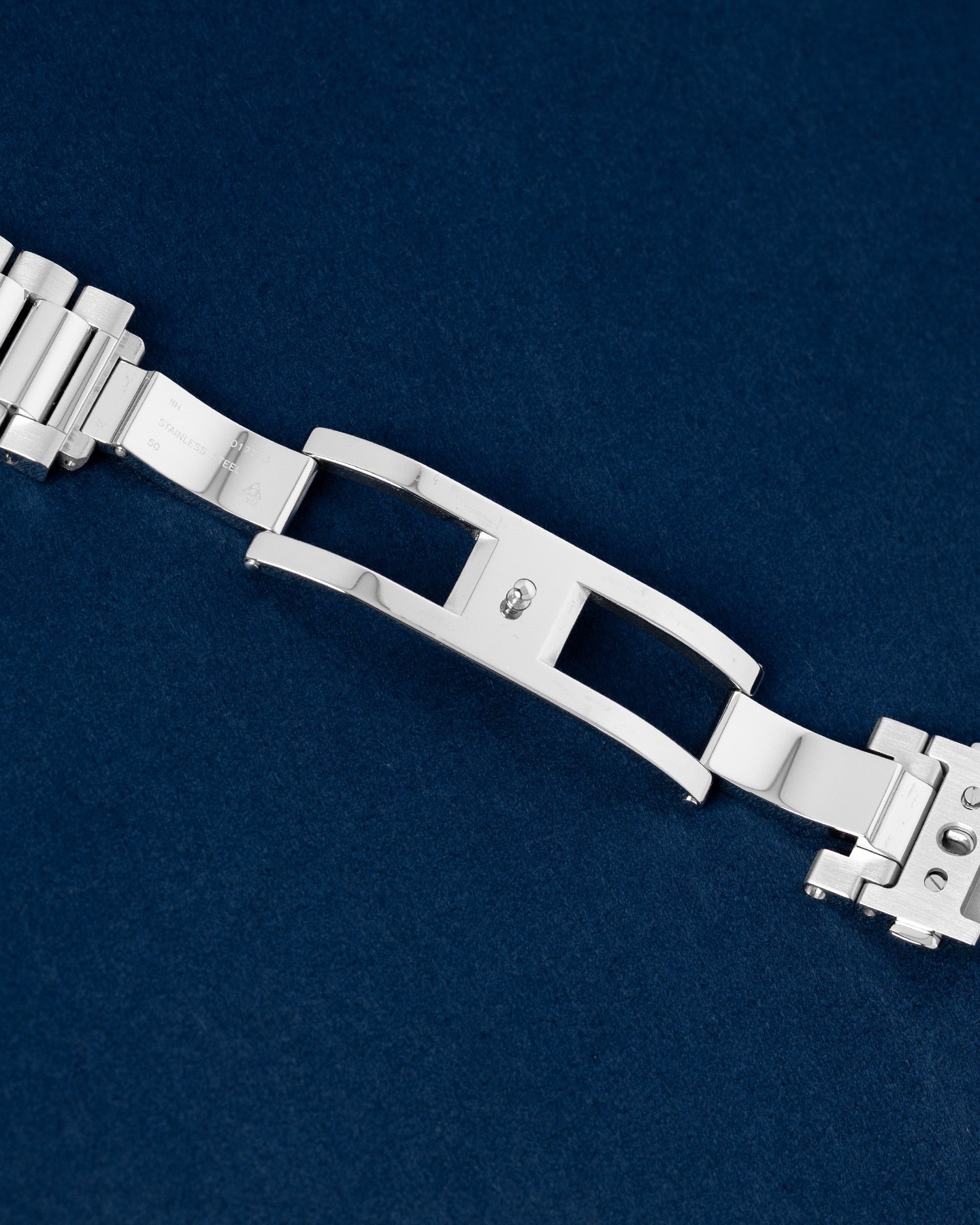
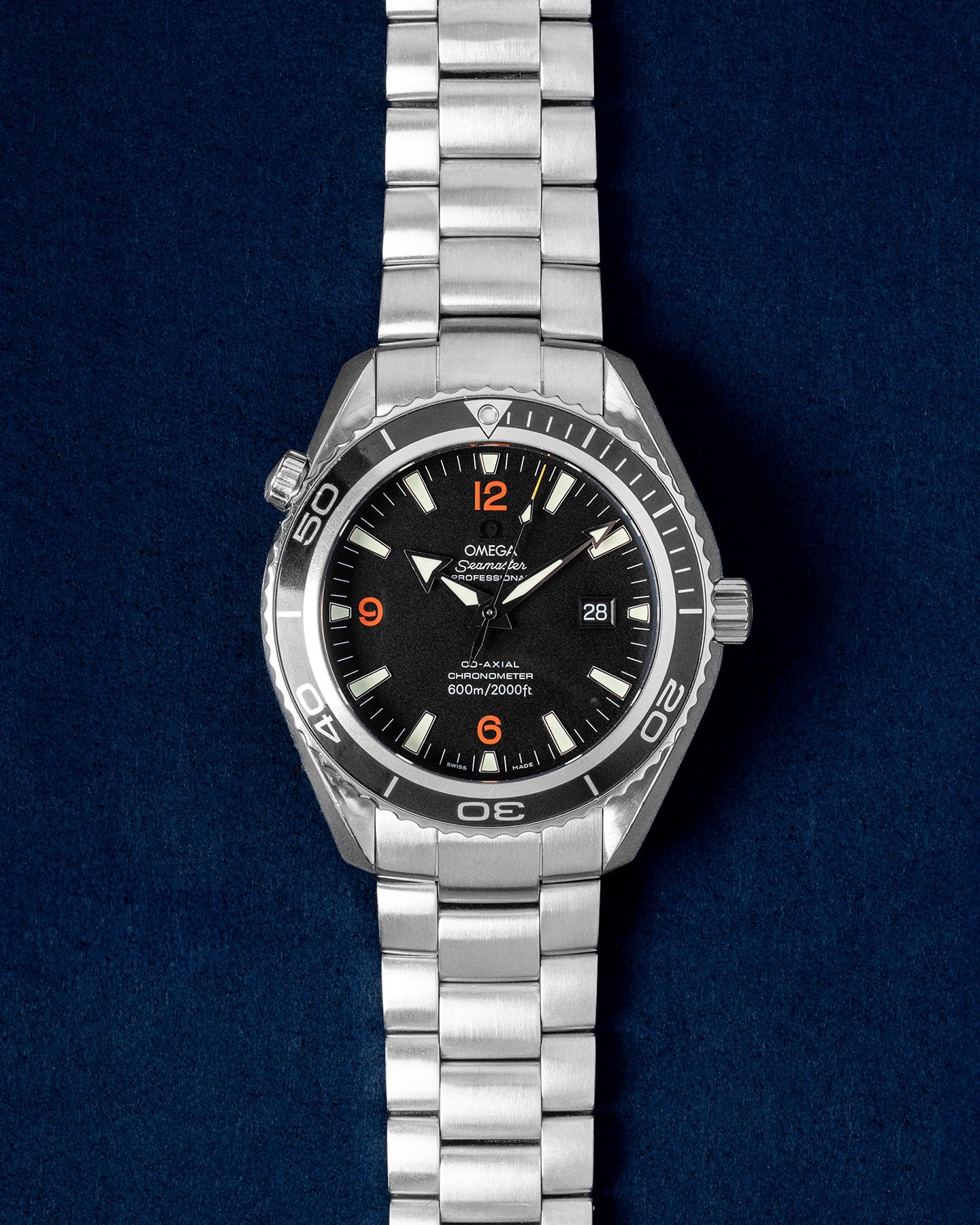
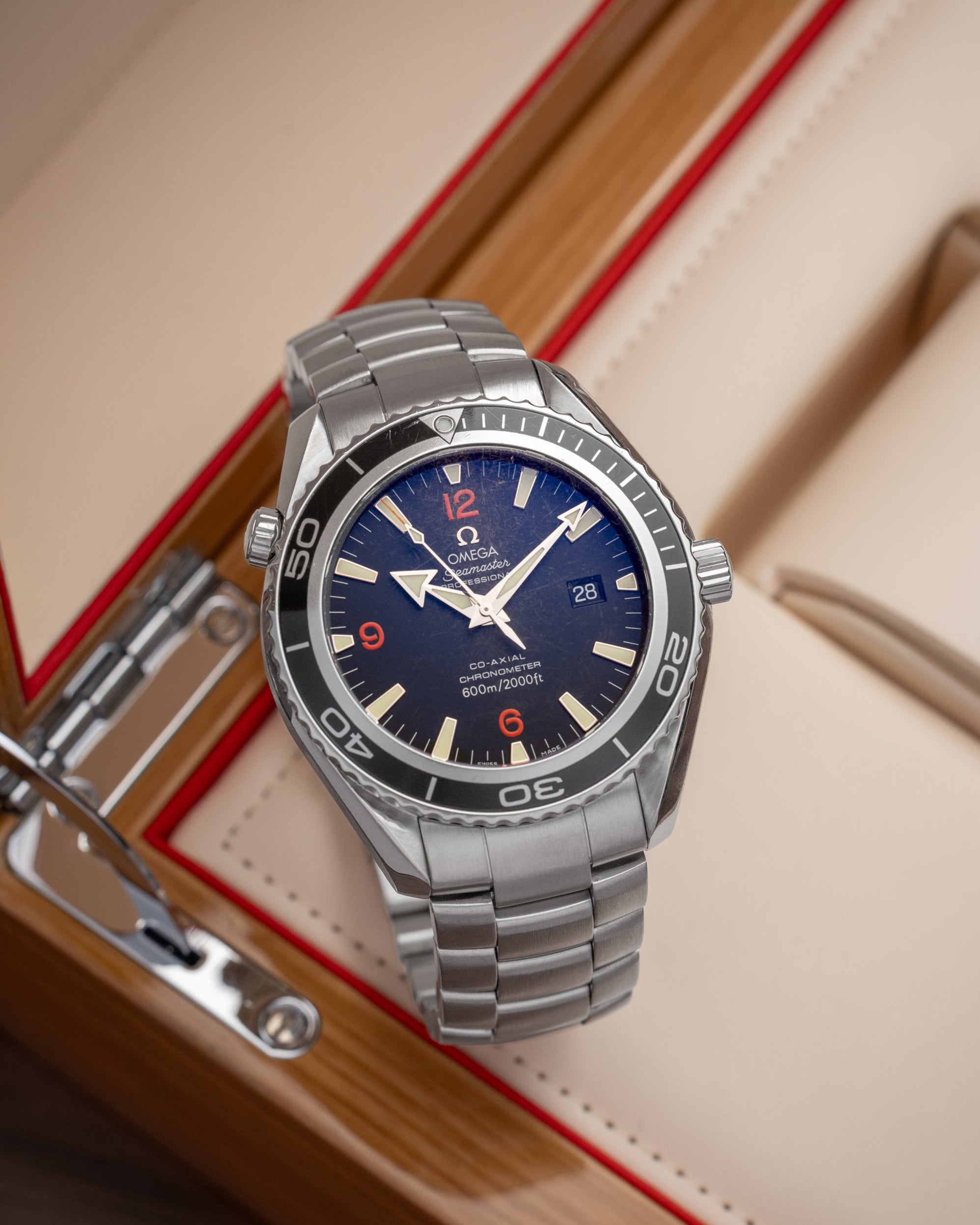
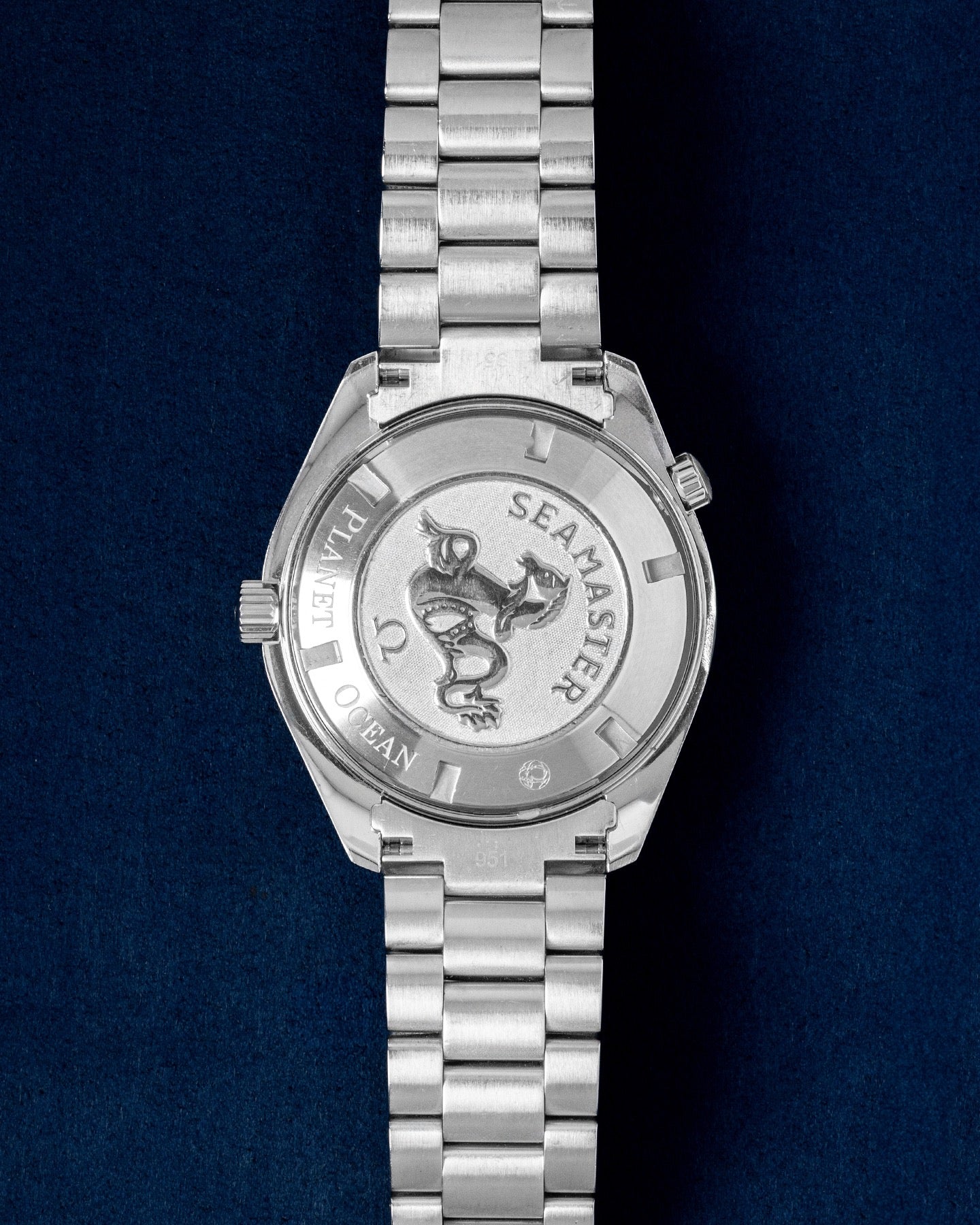
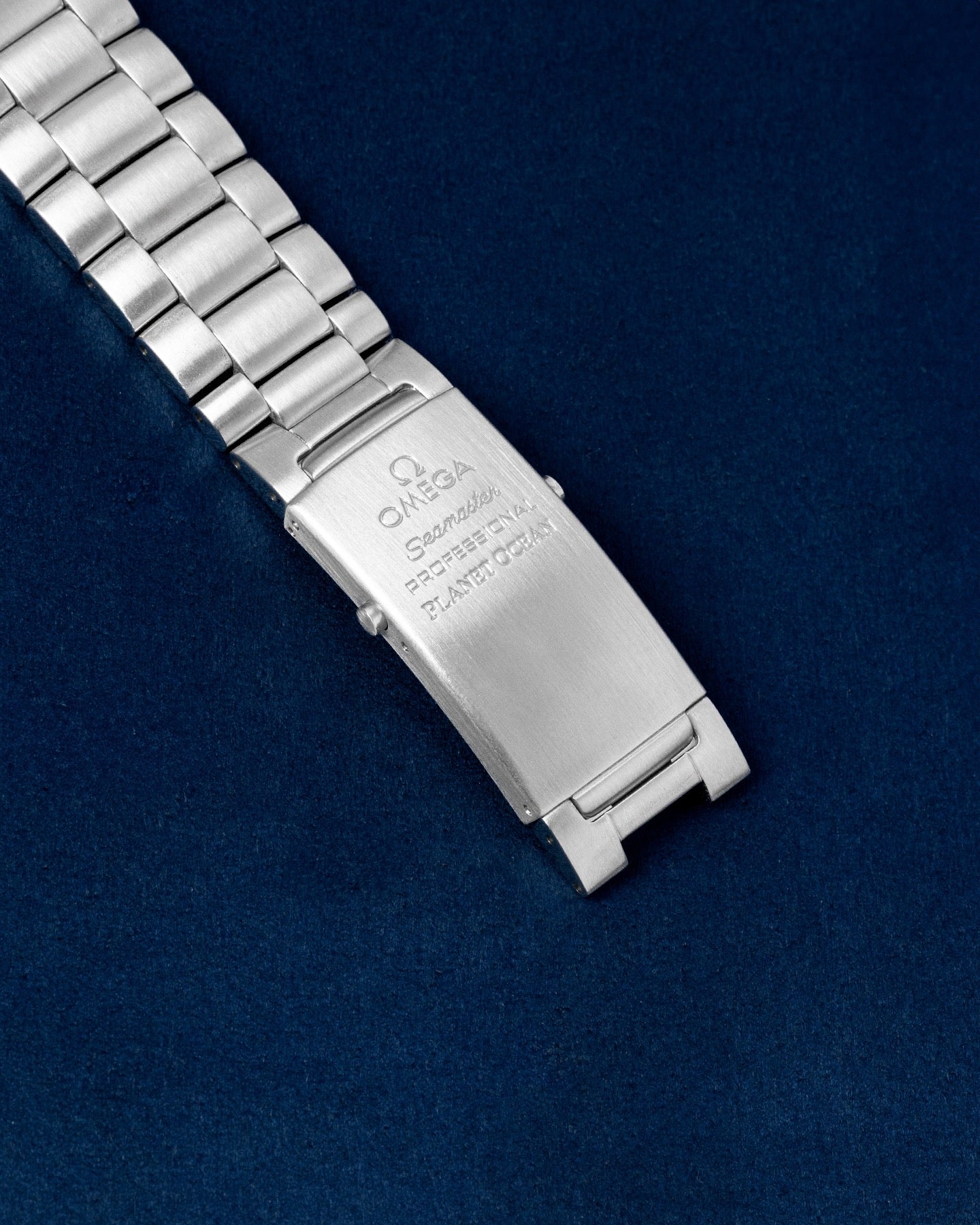
Omega Seamaster Planet Ocean 2201.51.00
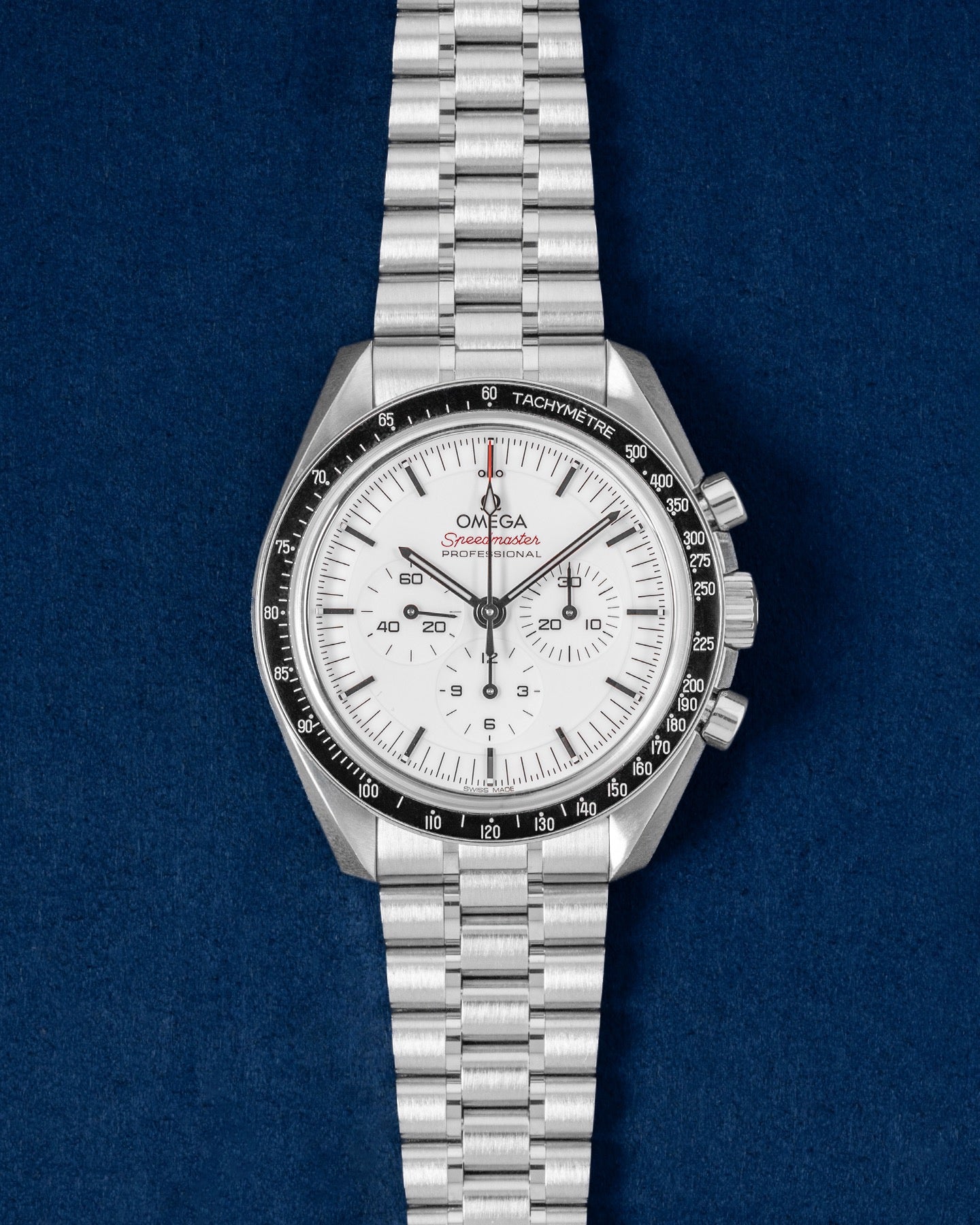
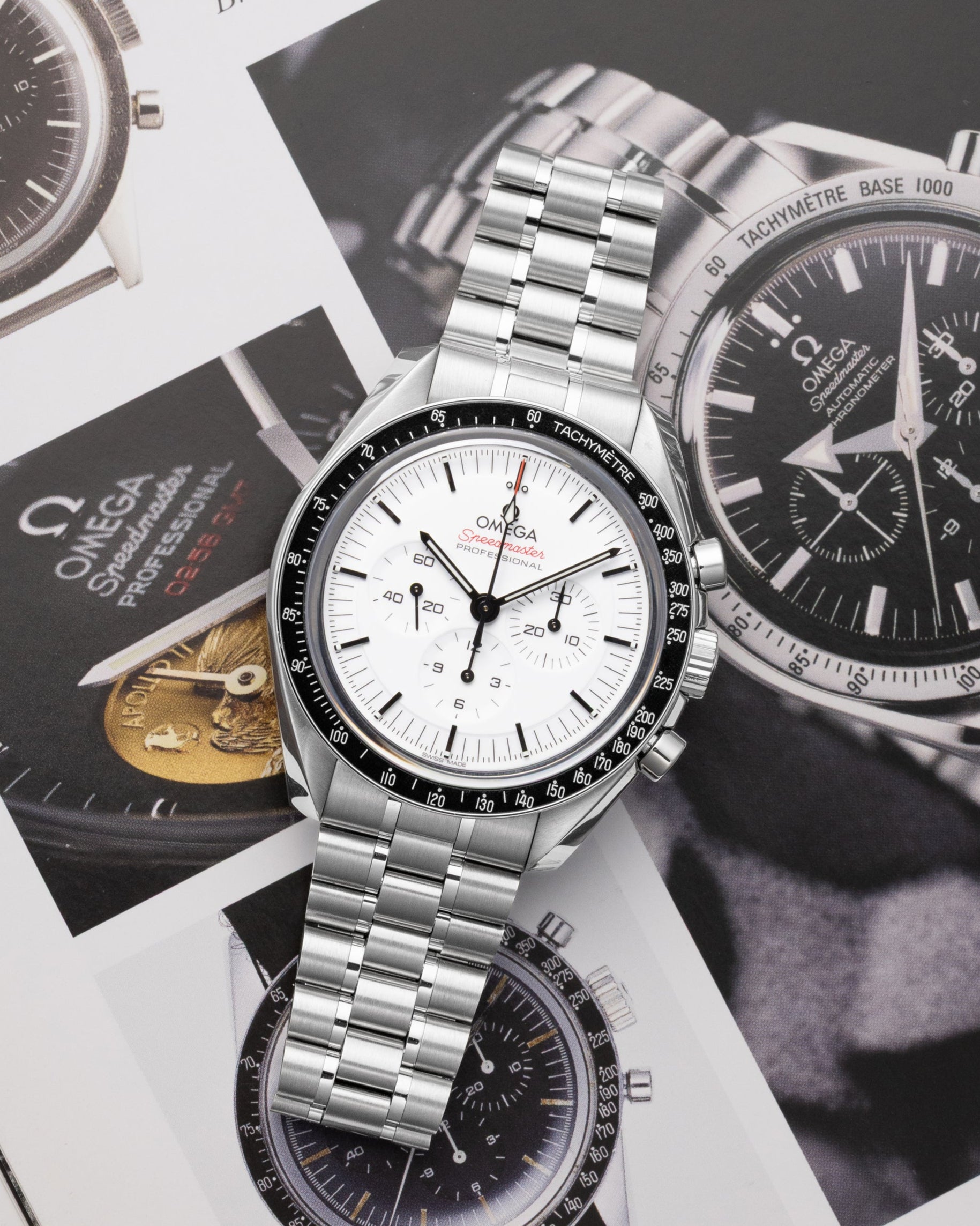
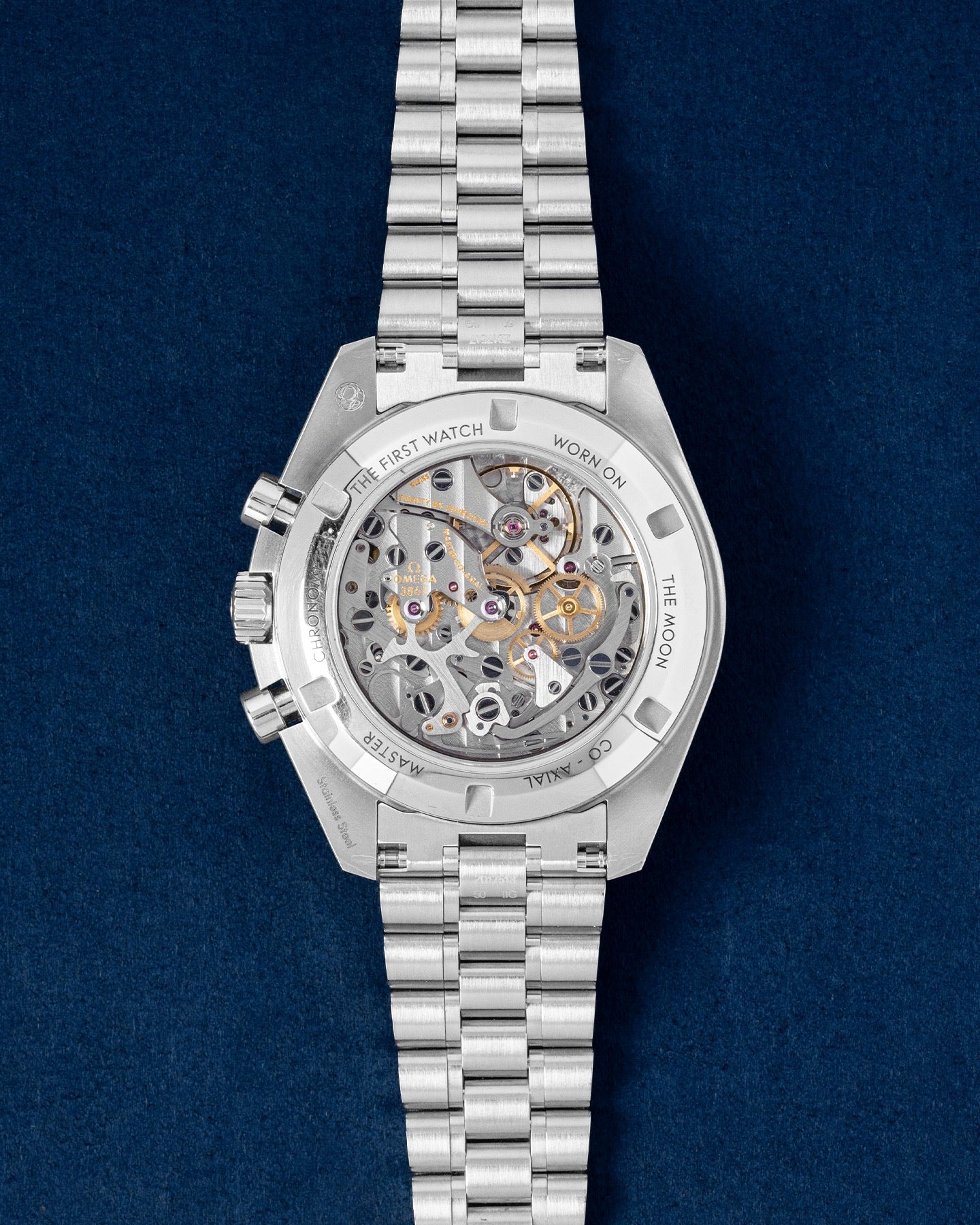
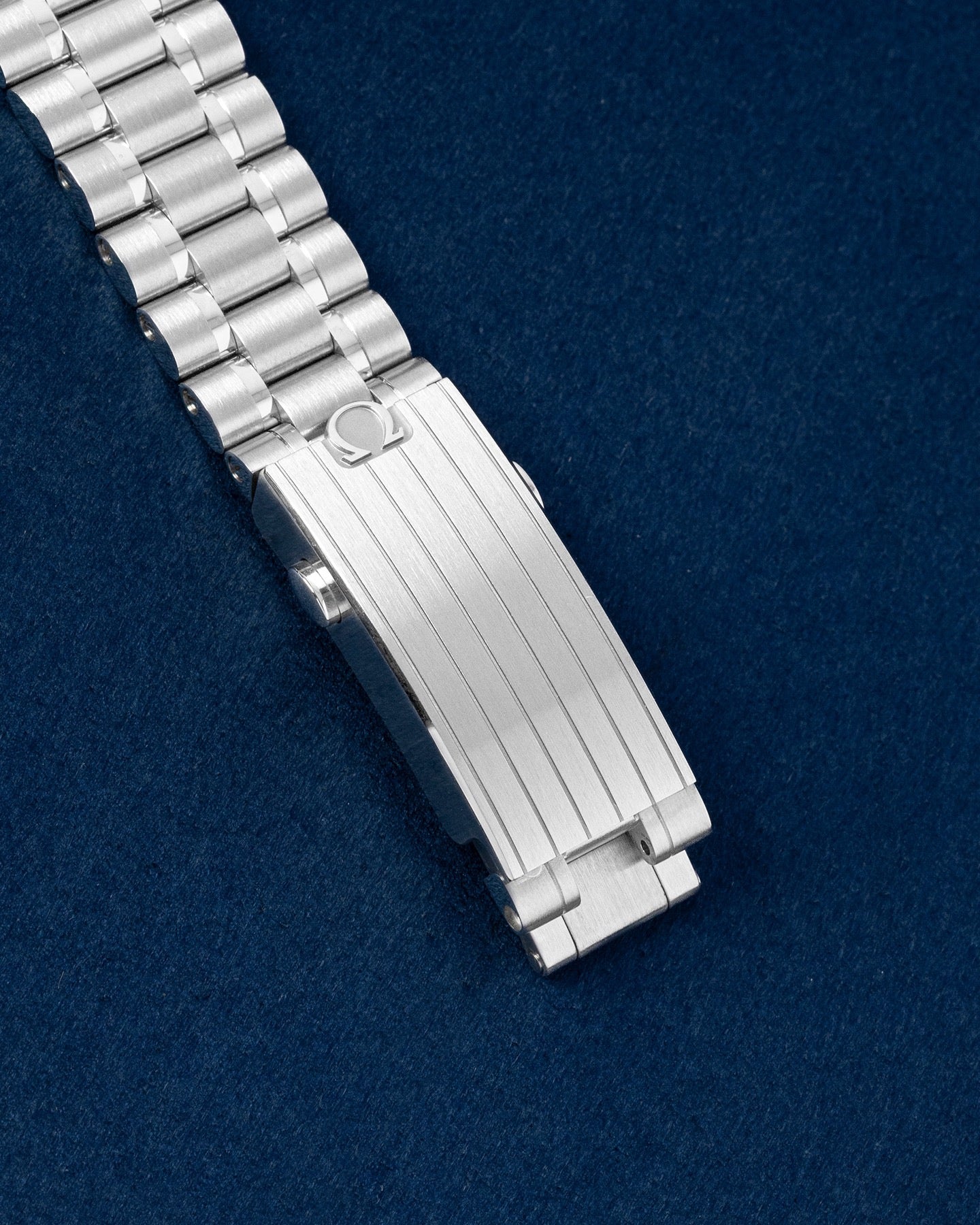
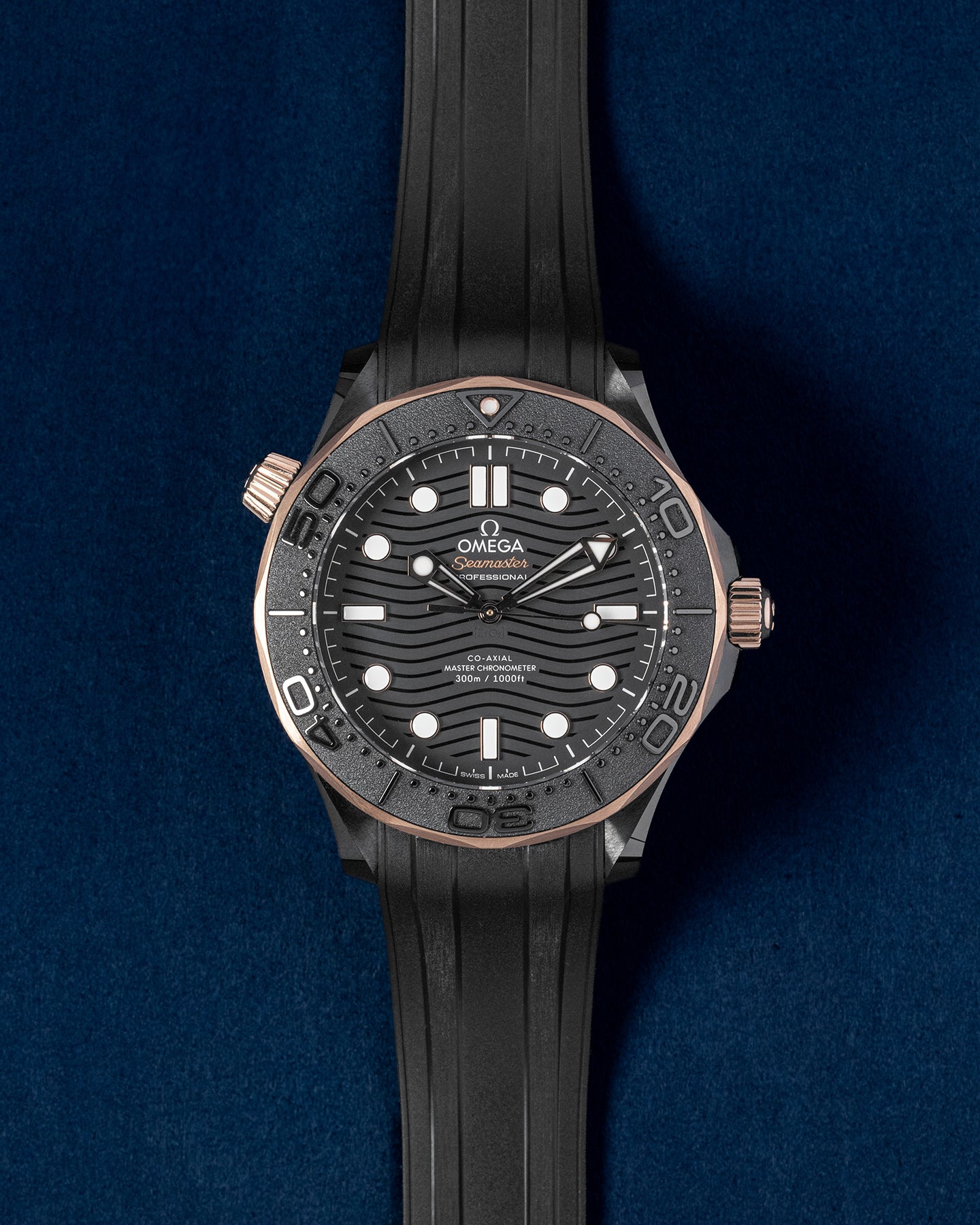
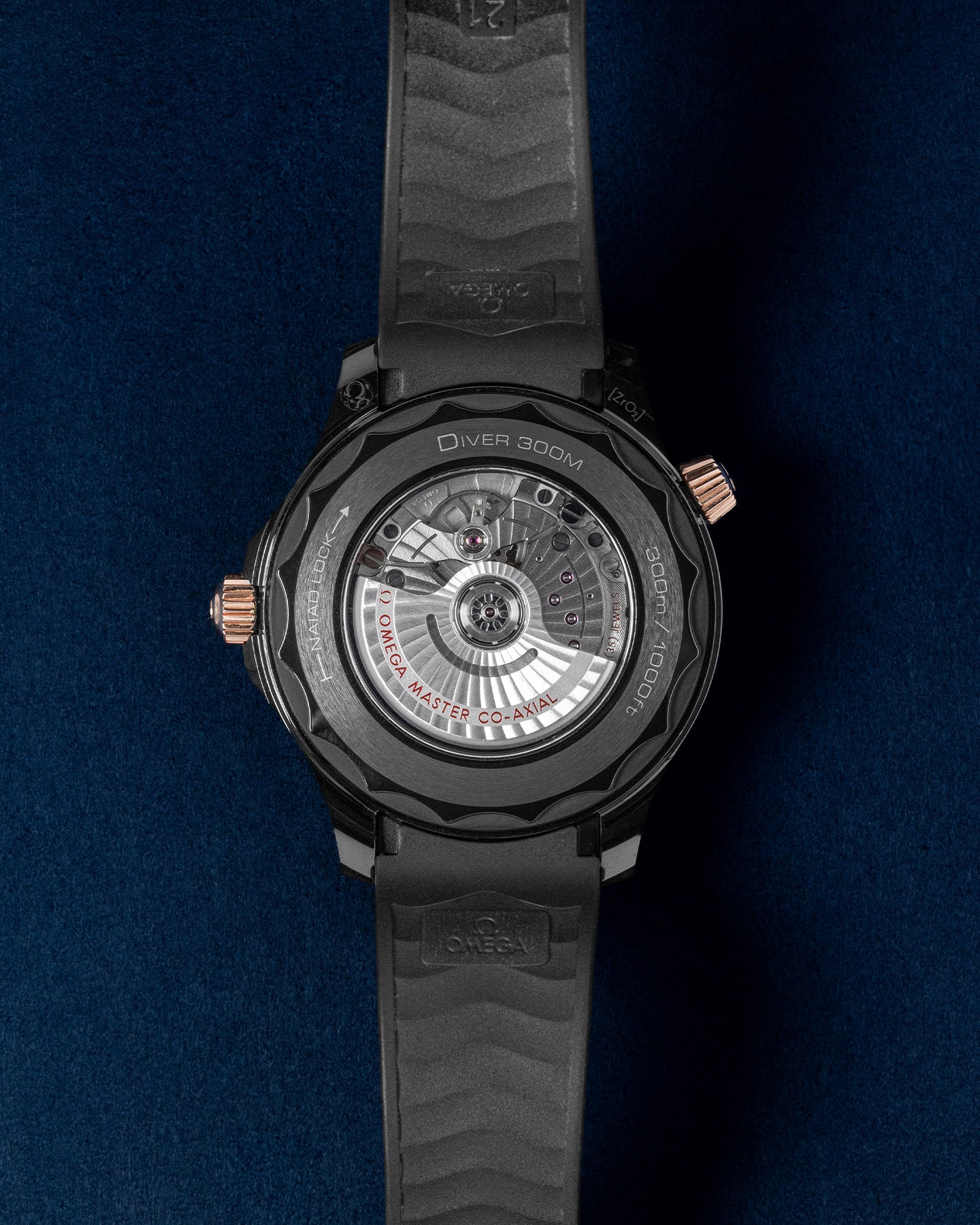
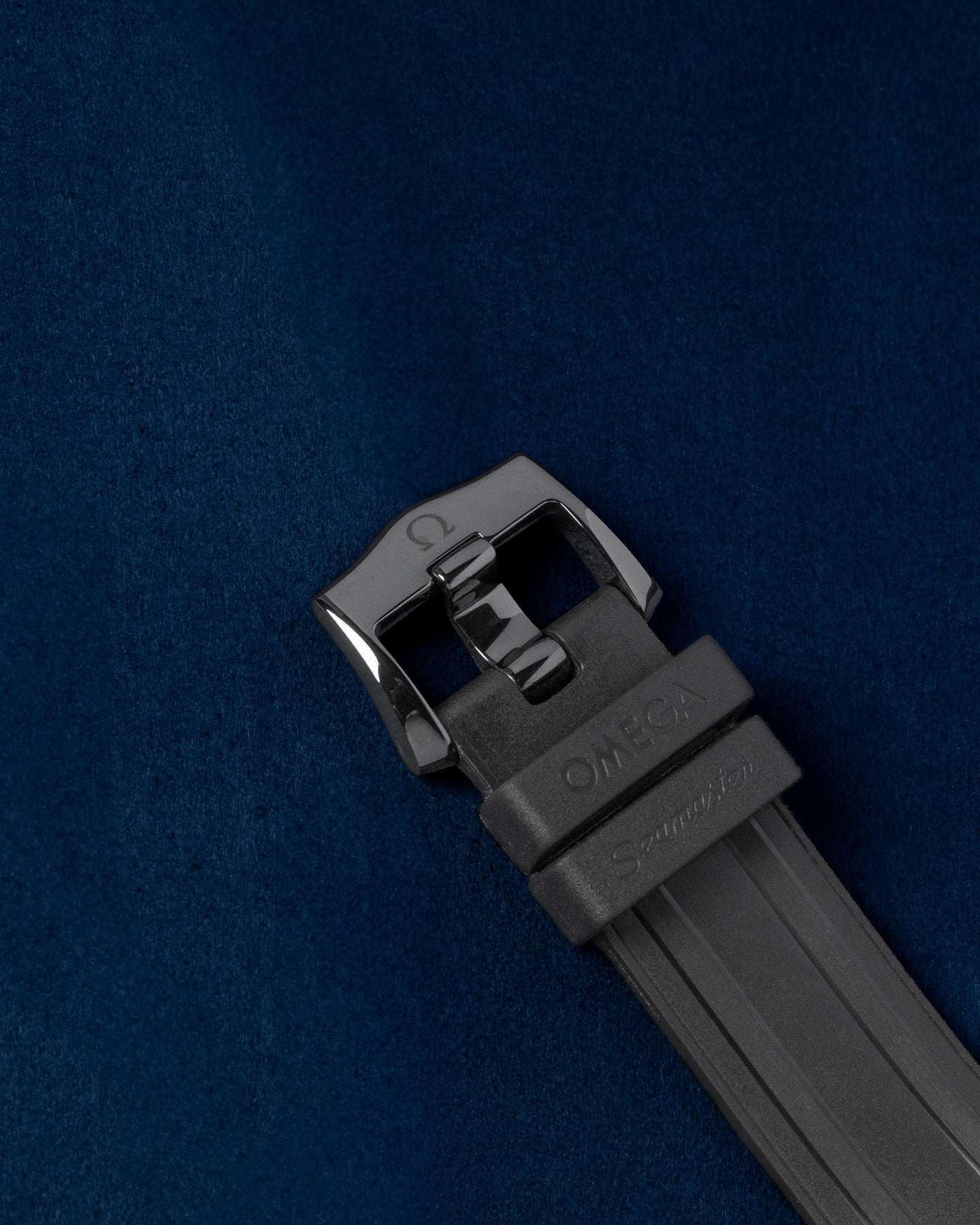
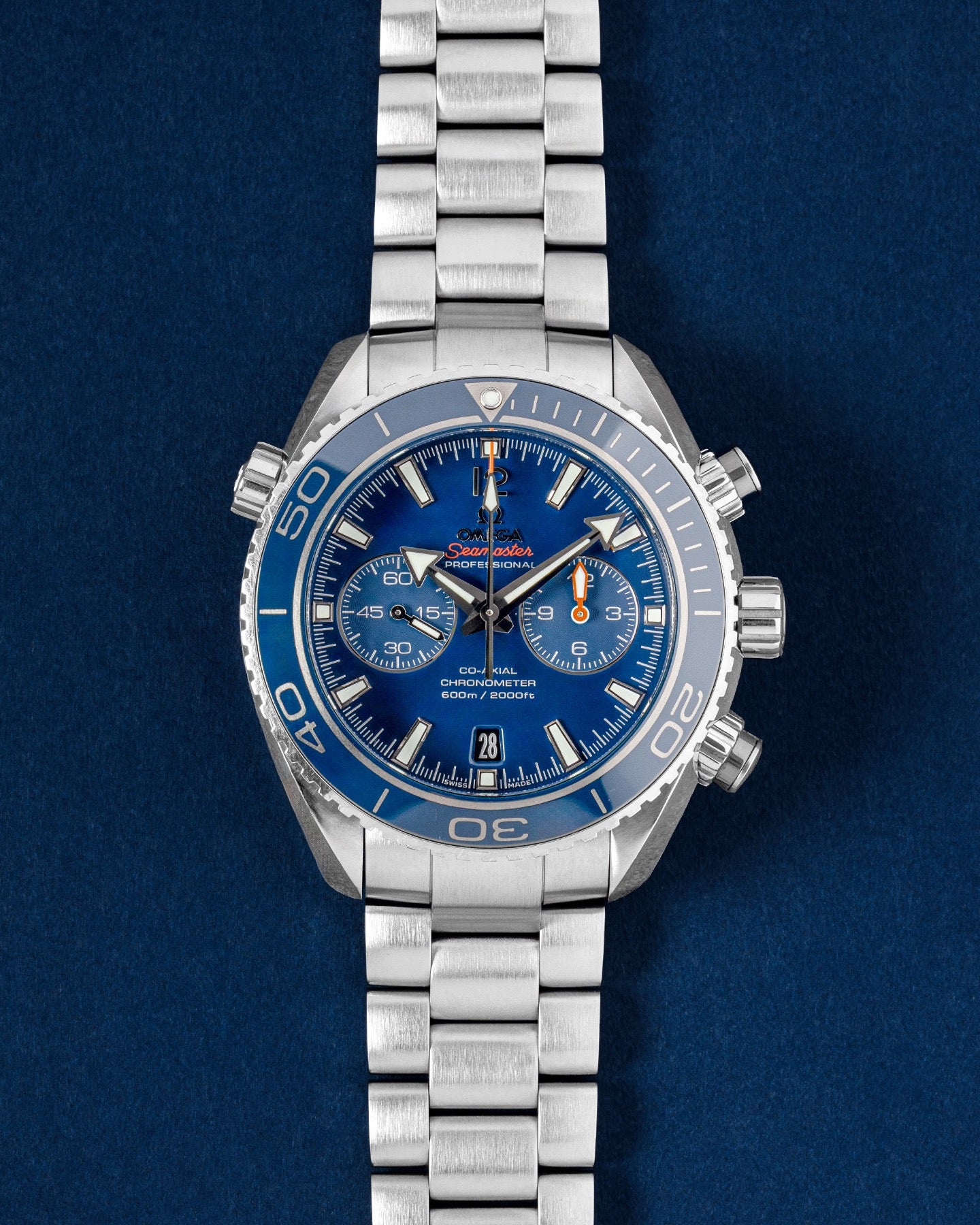
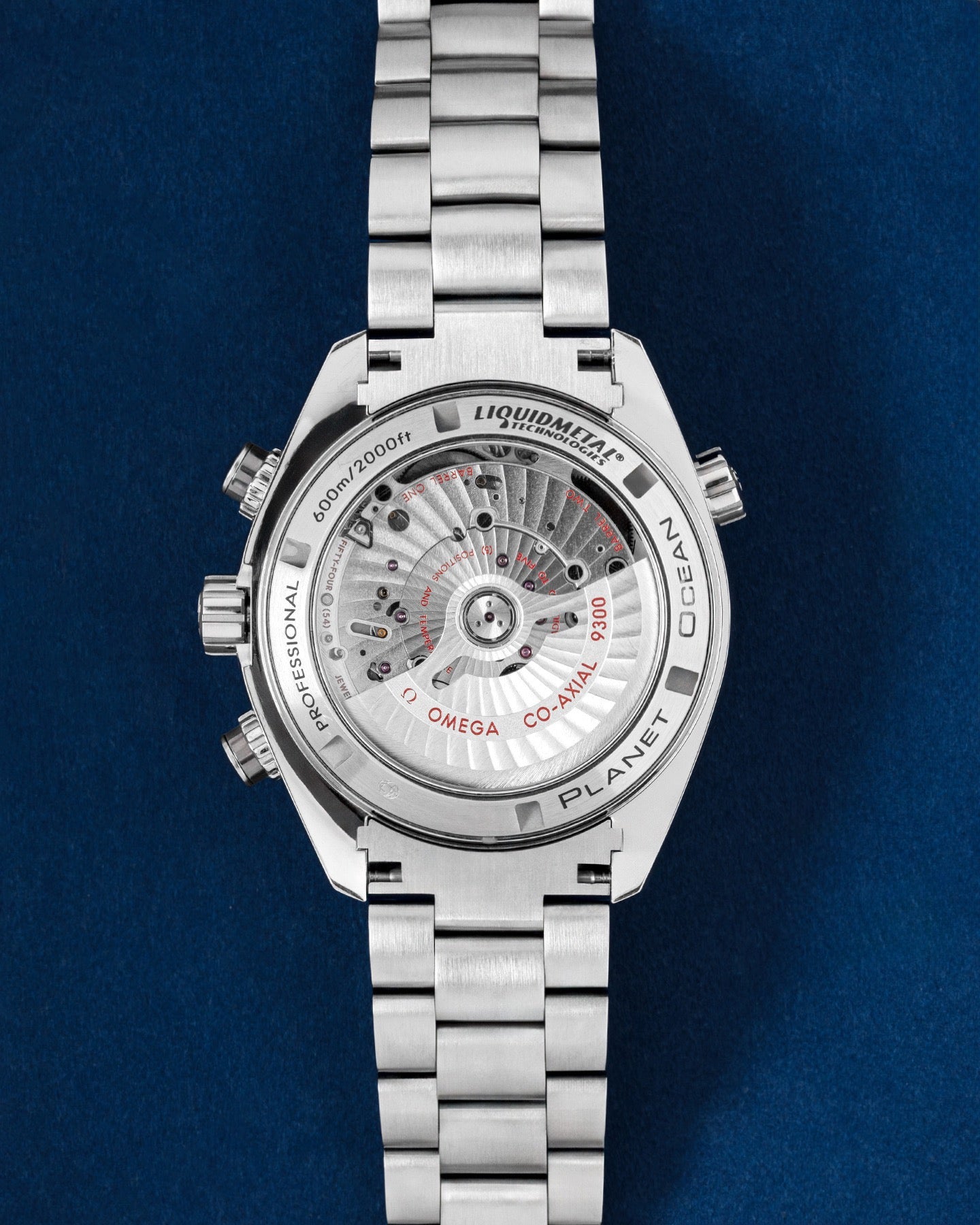
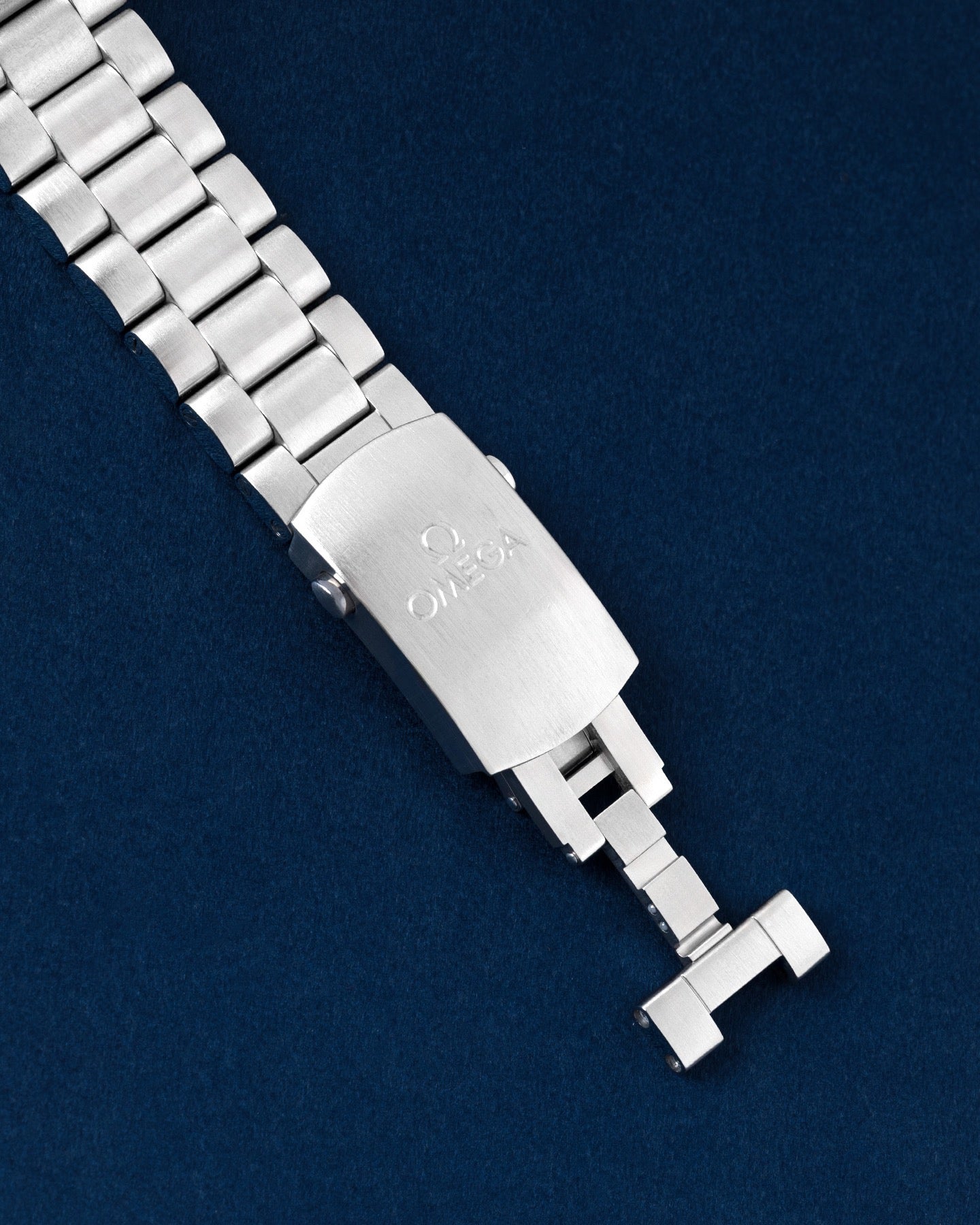
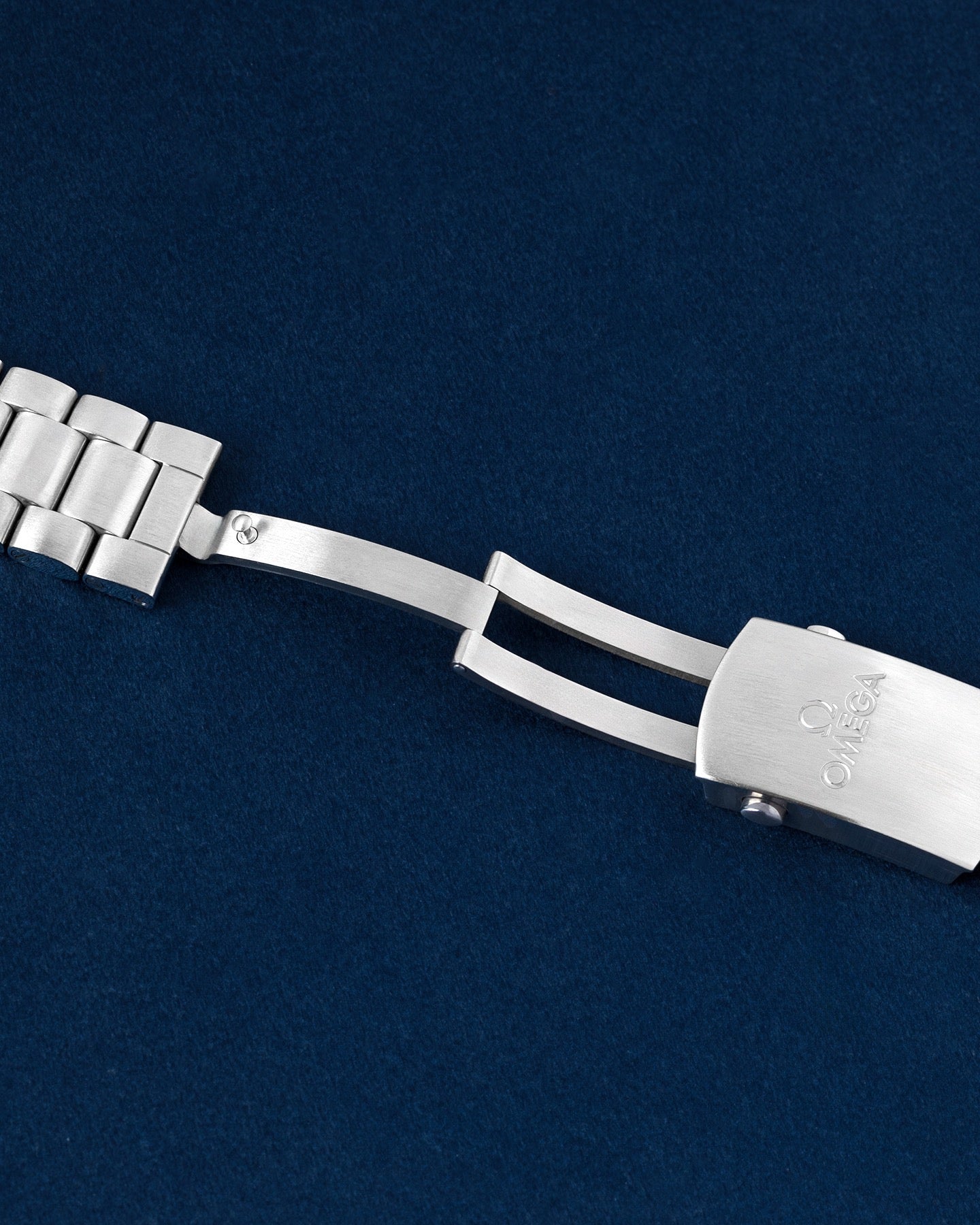
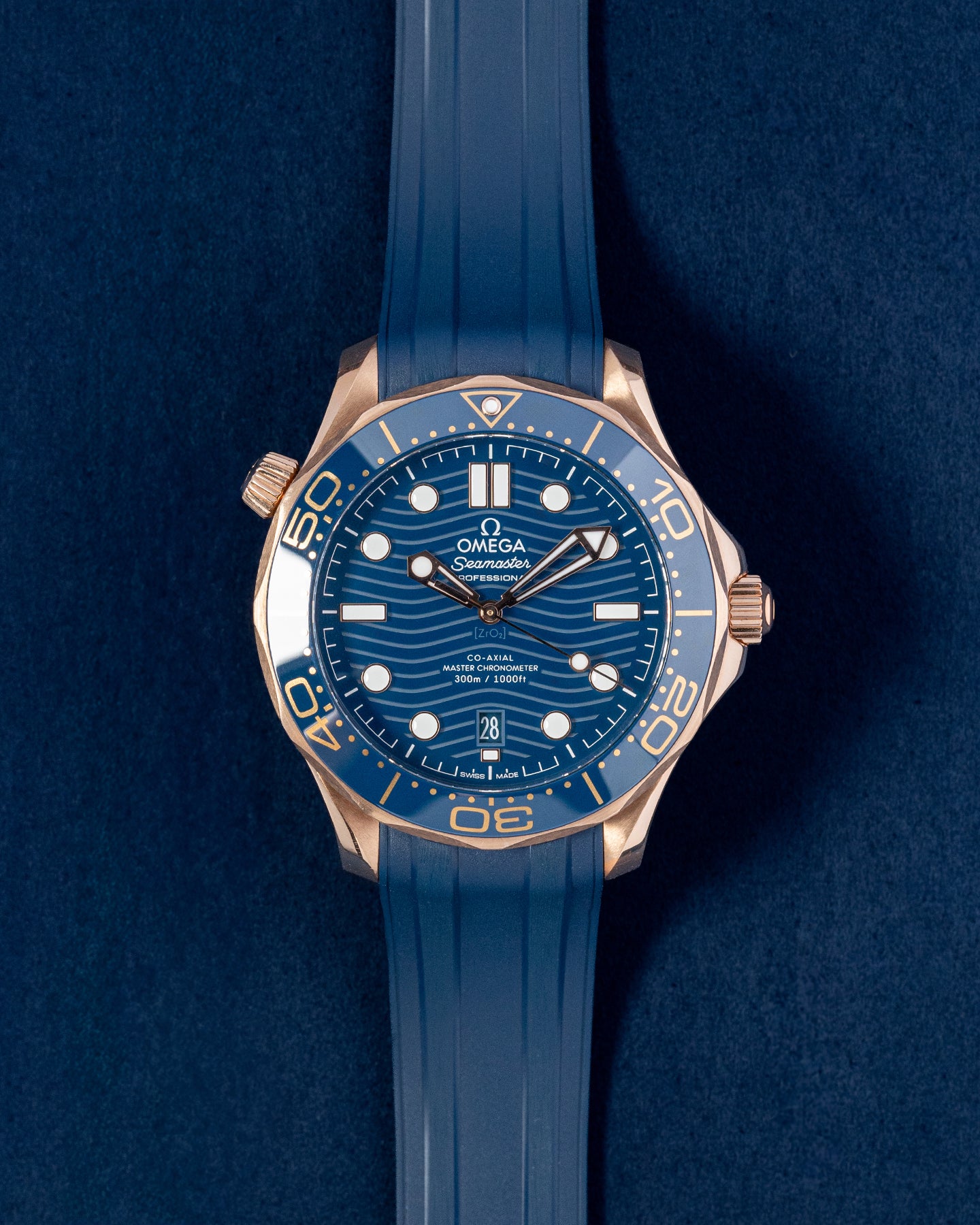
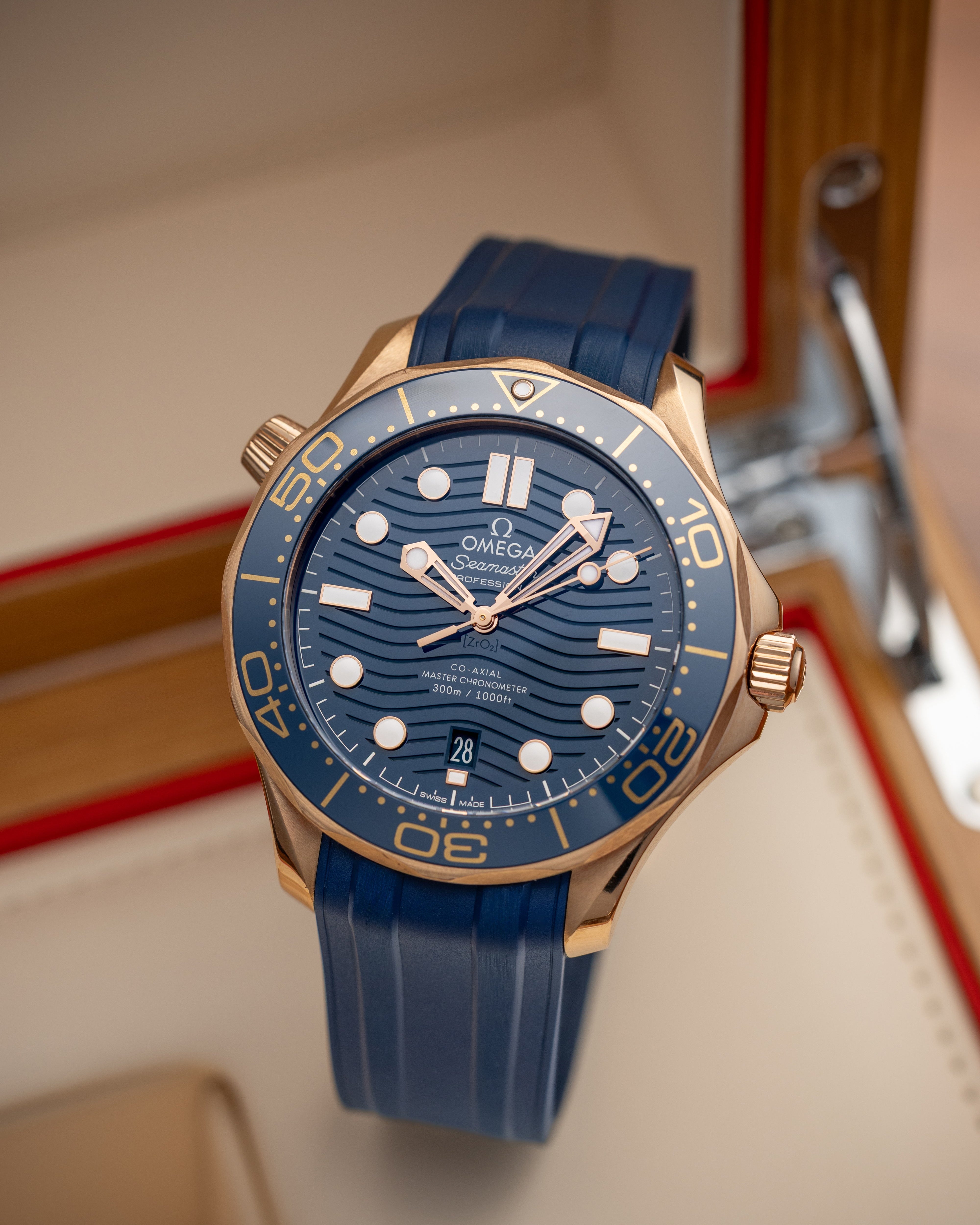
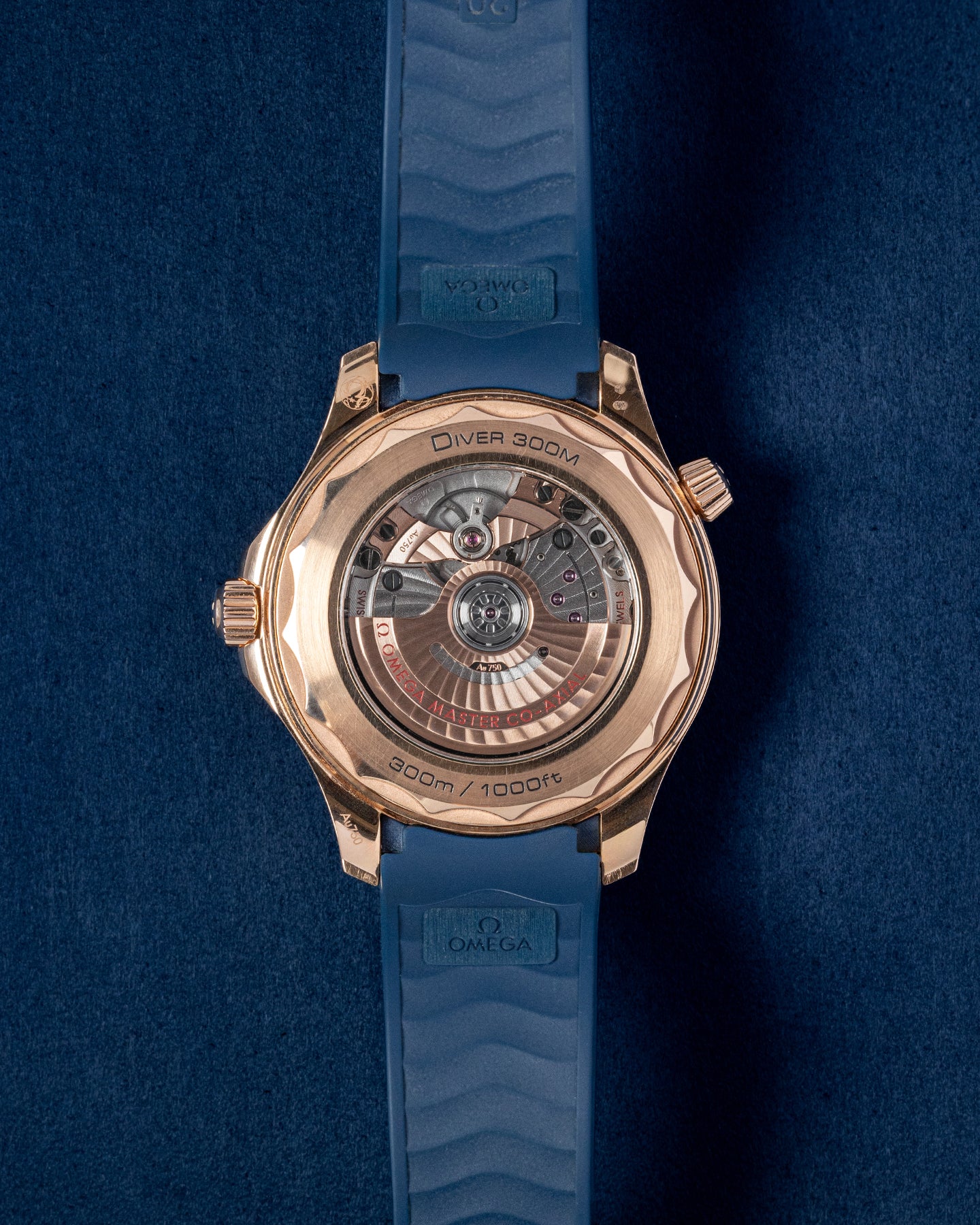
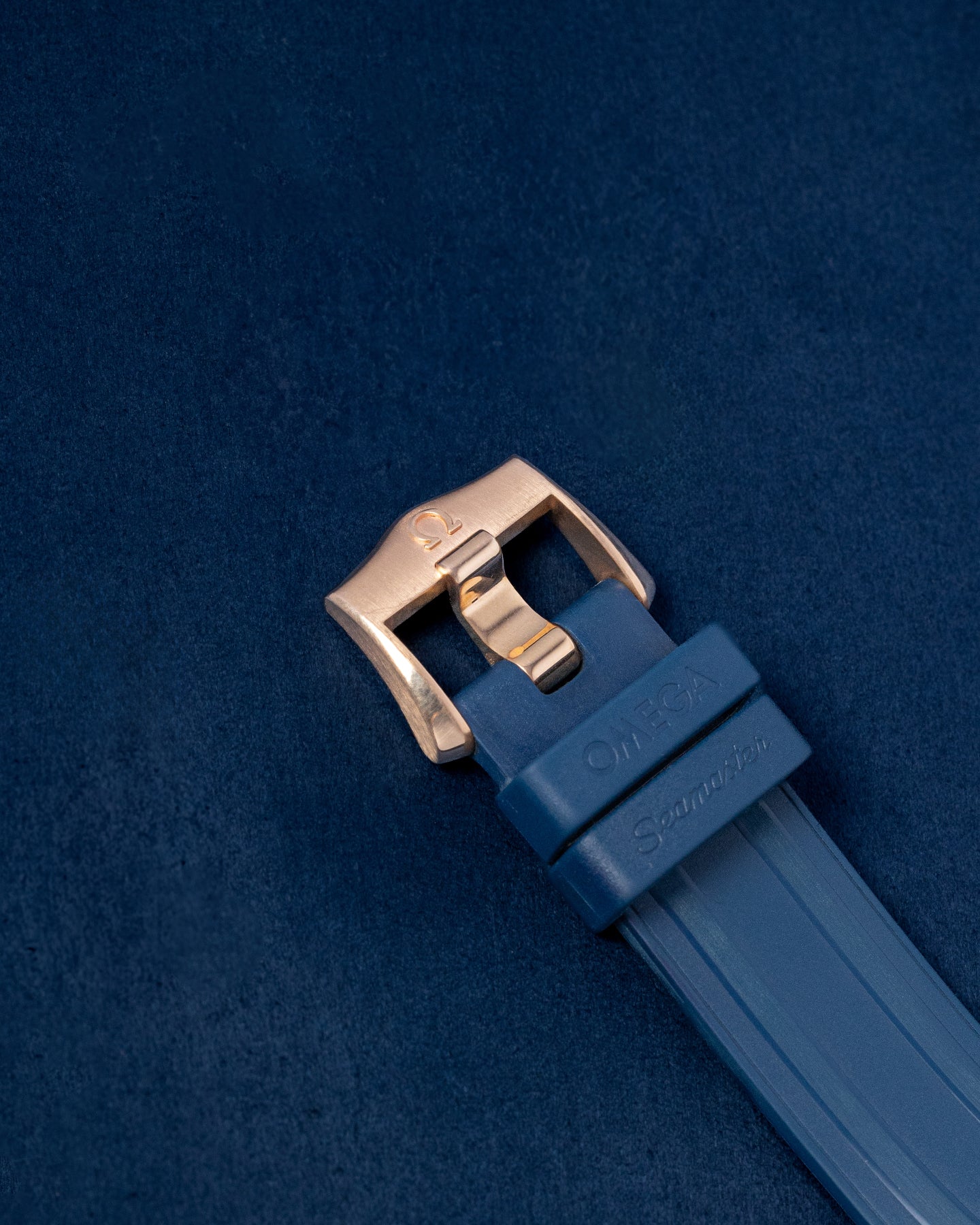
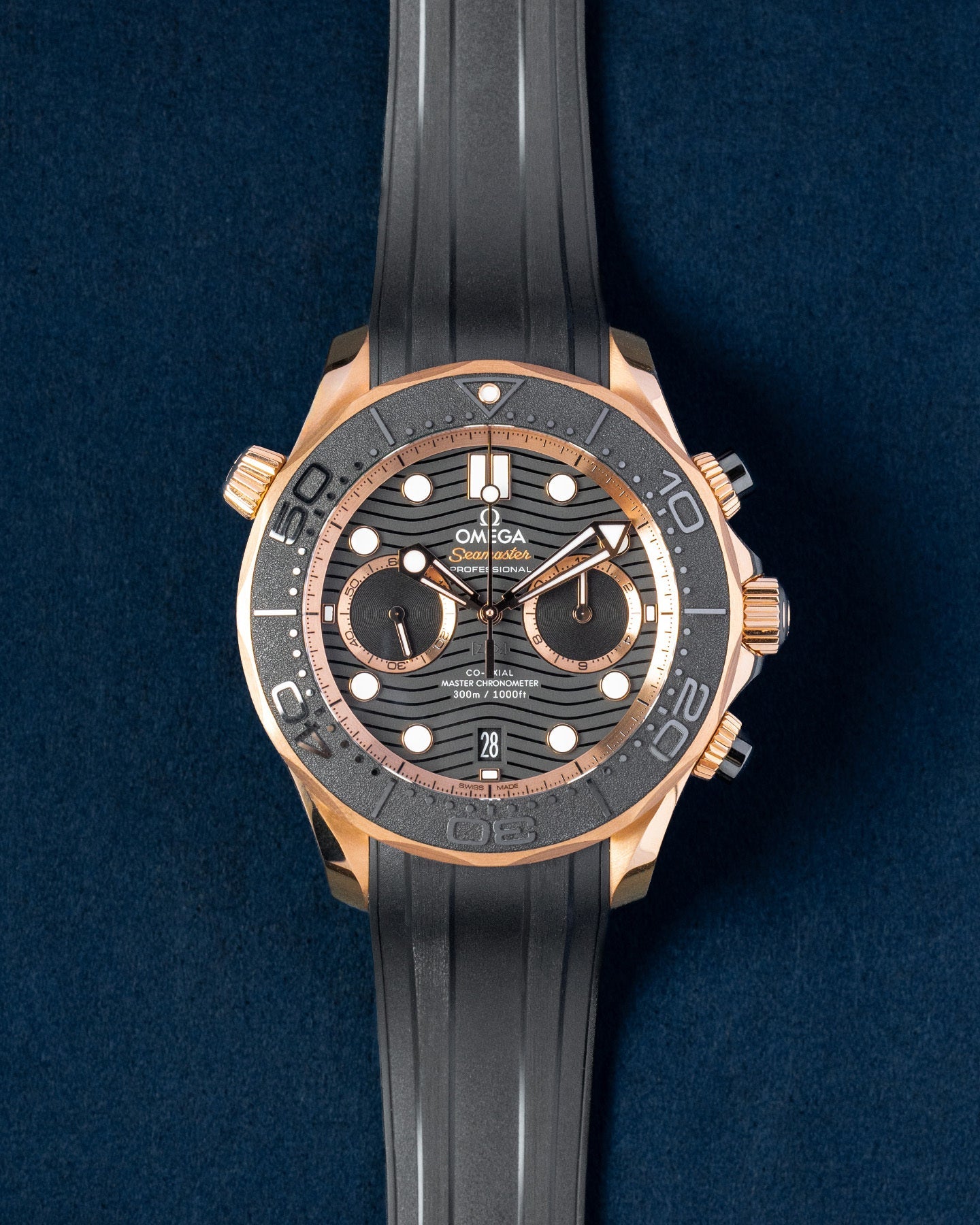
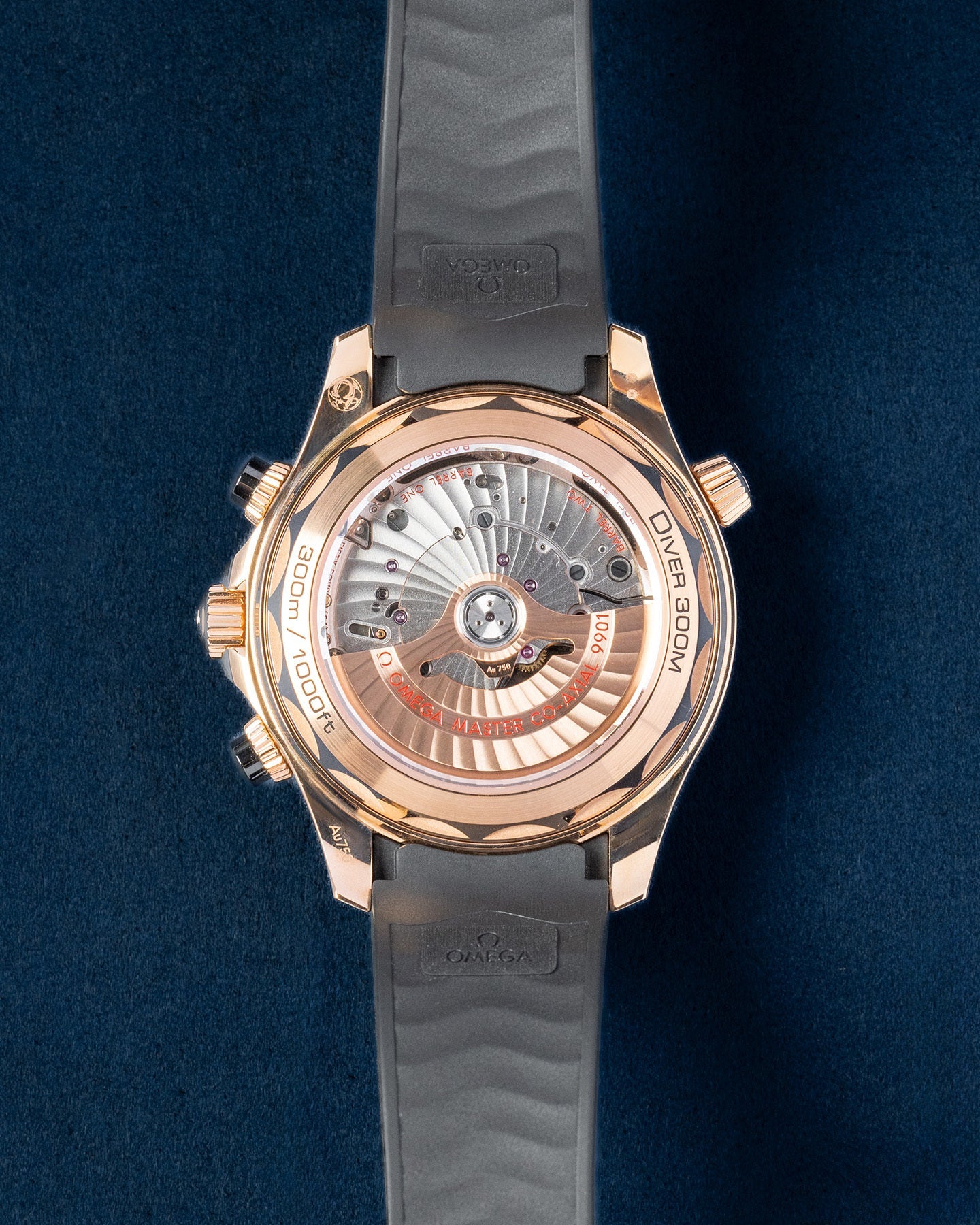
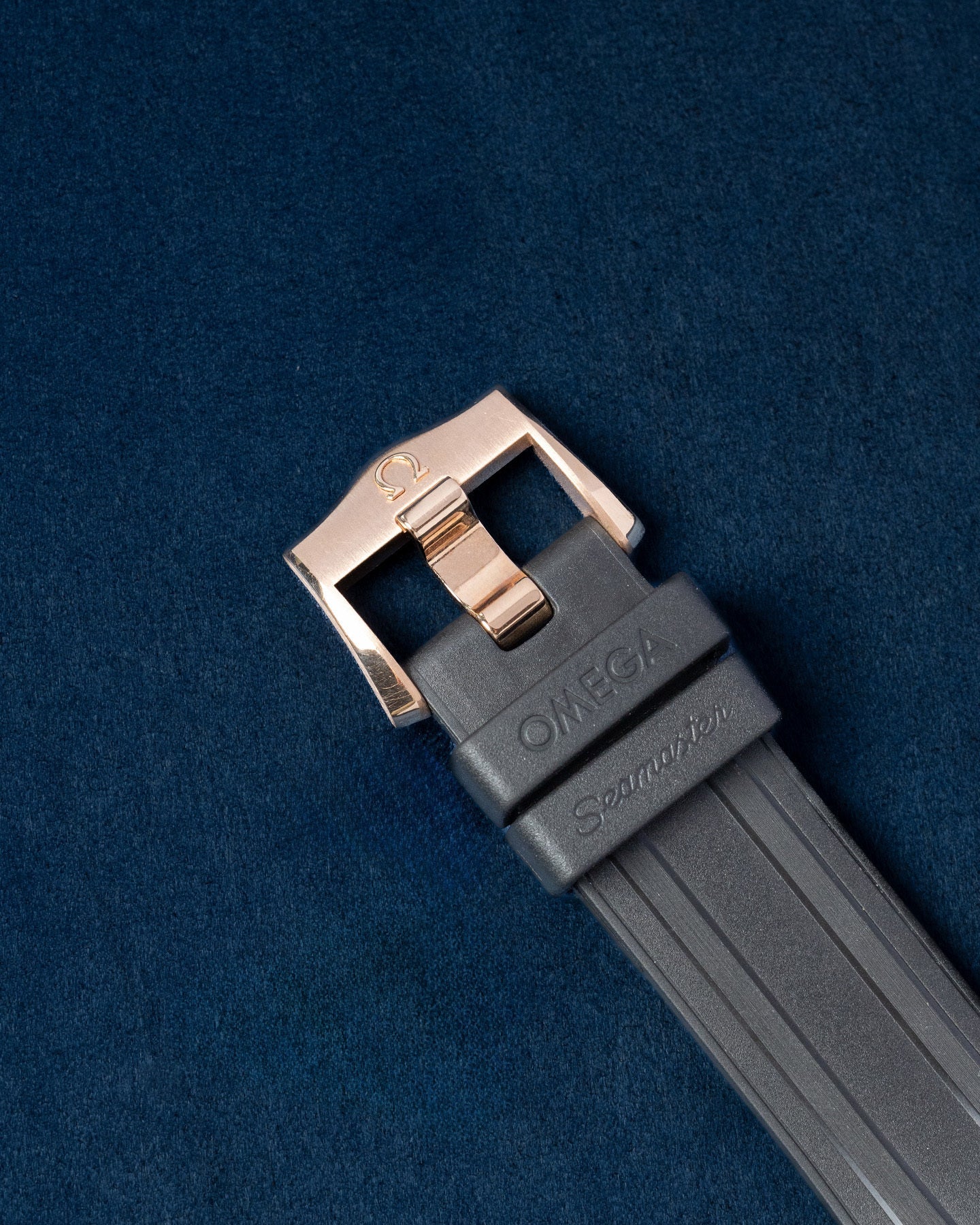
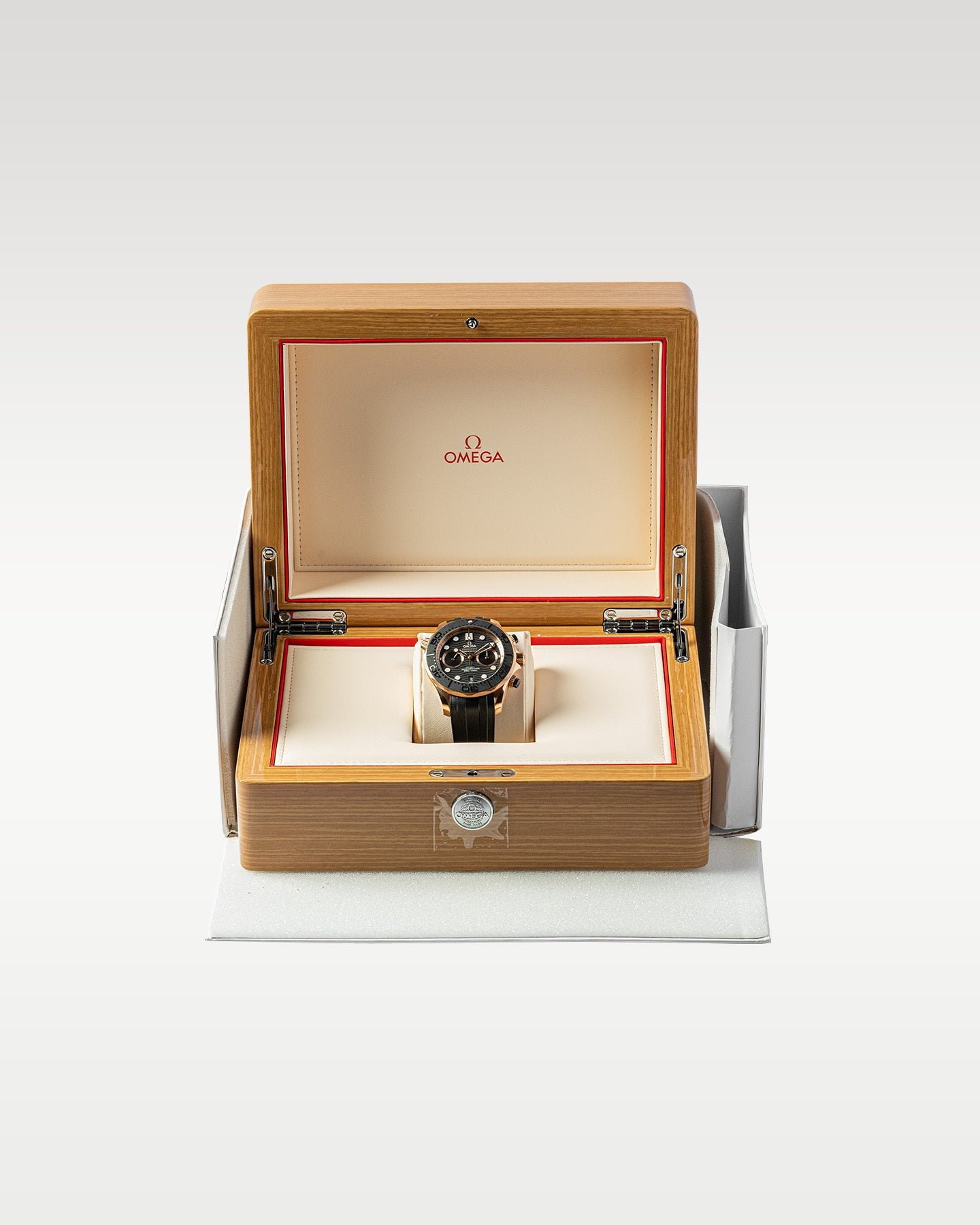
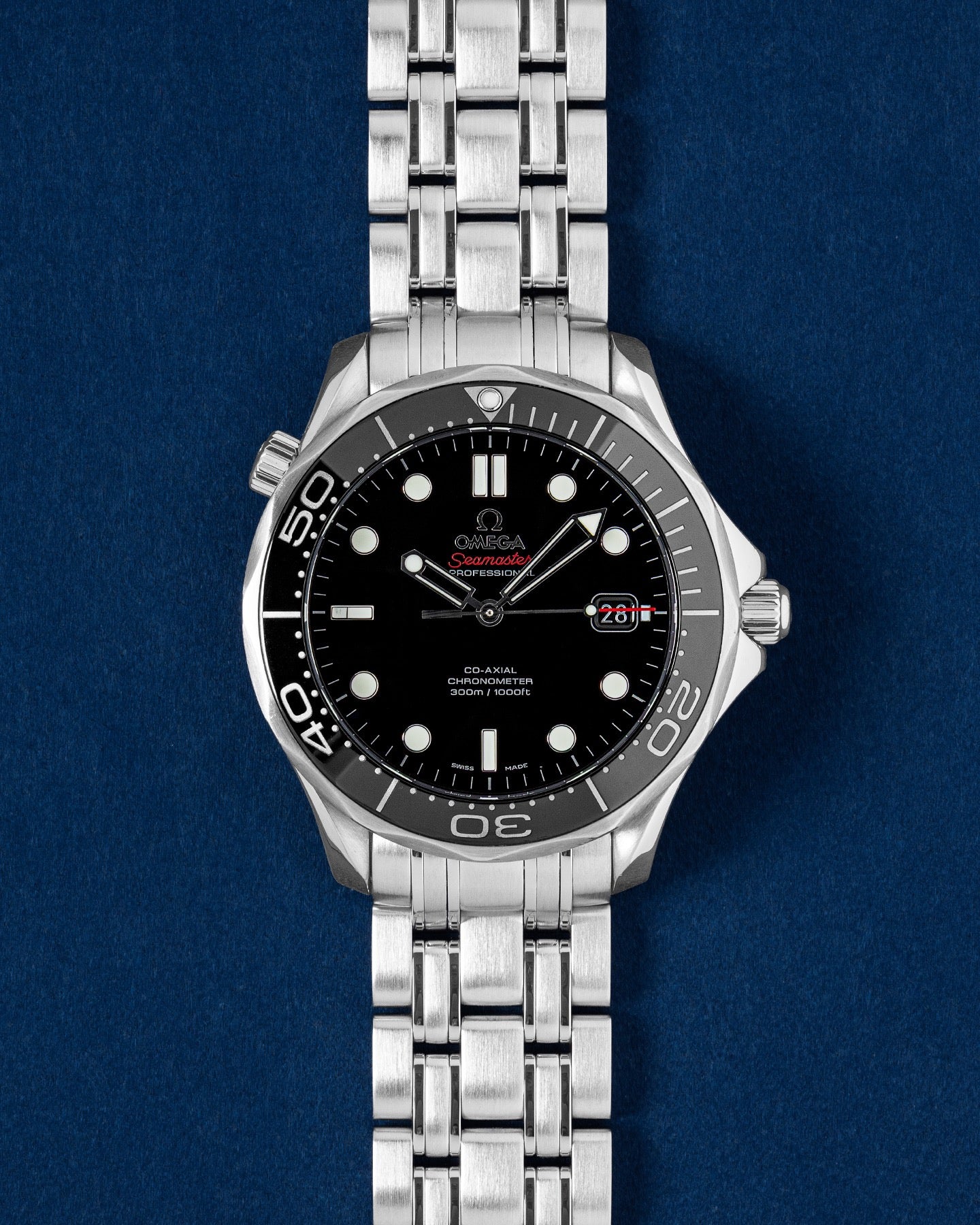
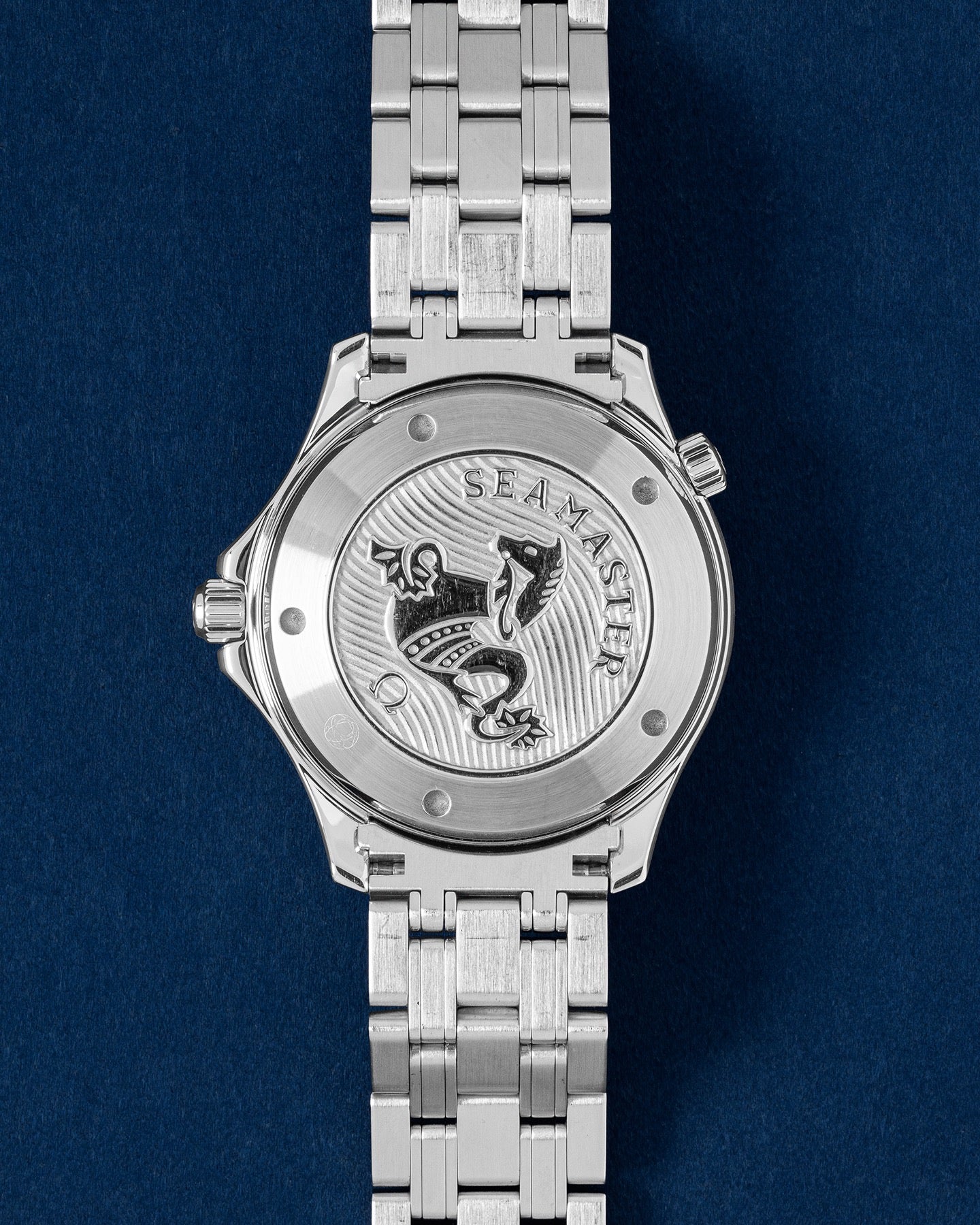
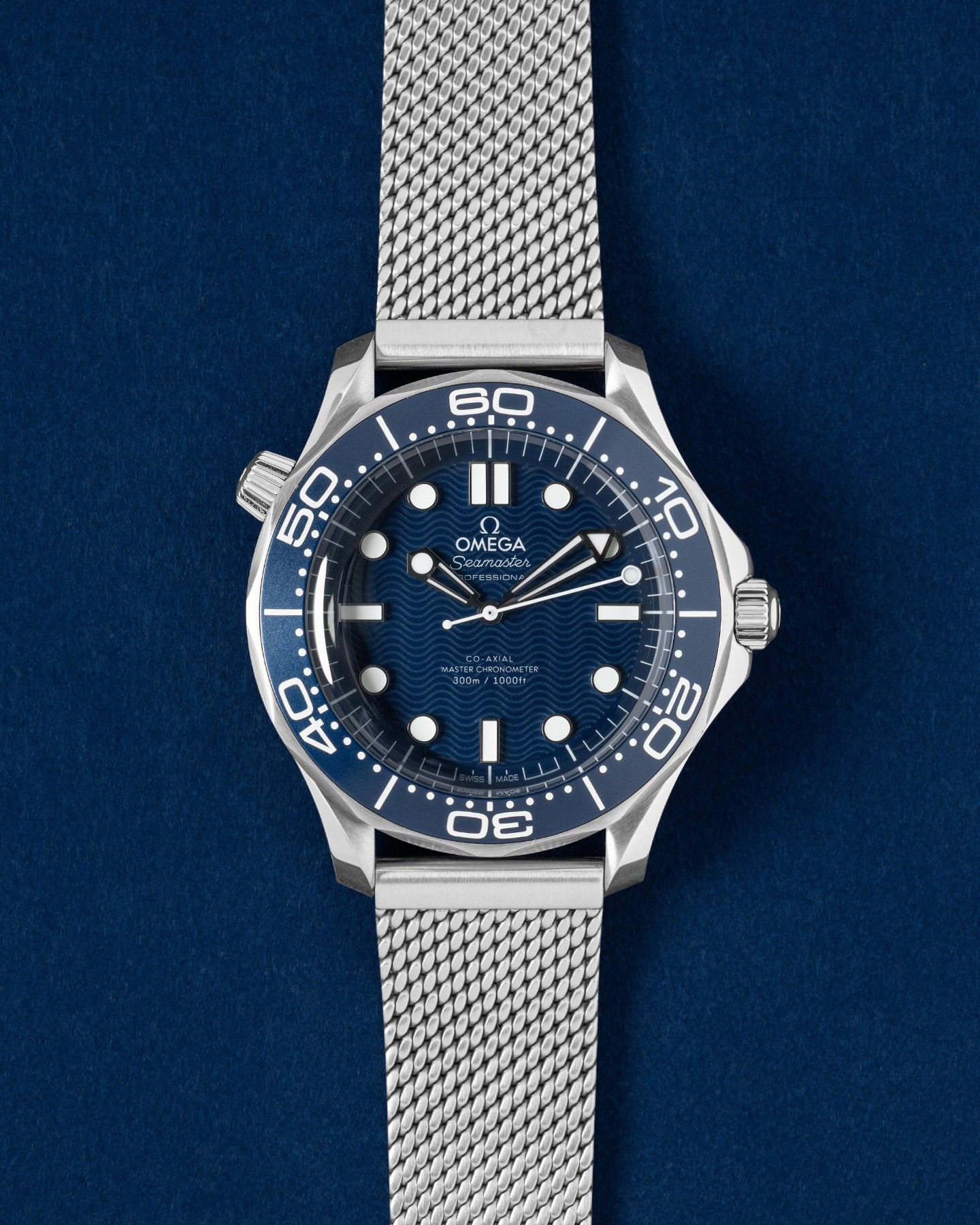
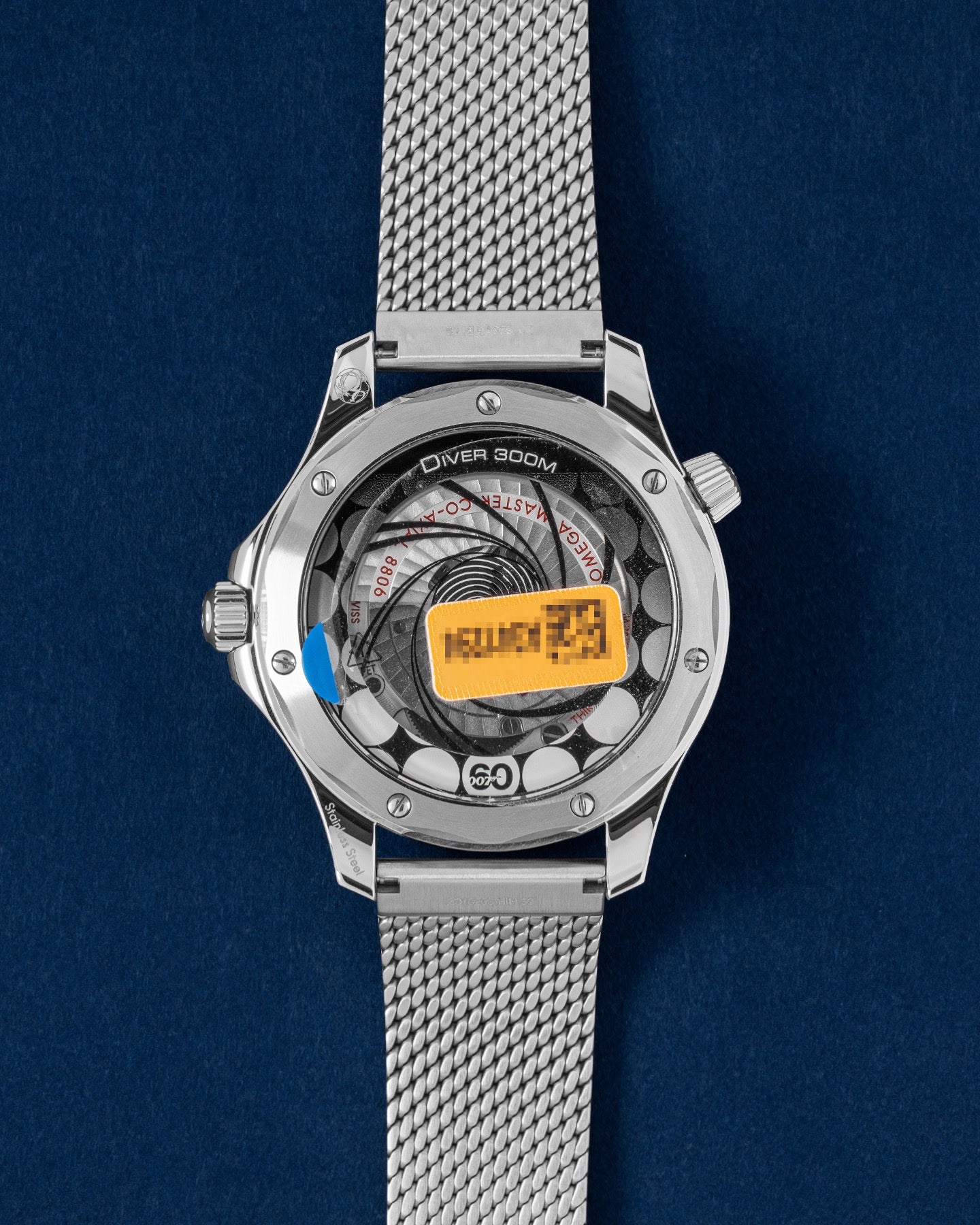
Omega Seamaster 210.62.44.51.01.001
History of Omega
Louis Brandt was twenty-three when he founded the company in La Chaux-de-Fonds in 1848, assembling key-wound pocket watches for the European market. His sons Louis-Paul and César took over in 1879, moving to Bienne and industrializing production. In 1894 they launched the 19-line Omega caliber, a movement so revolutionary in precision and interchangeability that the company eventually took its name. The Speedmaster became the first watch on the Moon in 1969. Olympic timekeeping began in 1932. The Co-Axial escapement, invented by George Daniels, debuted in production in 1999 and redefined modern Swiss watchmaking.
Why Choose Grand Caliber
Grand Caliber is a luxury watch dealer in Uptown Dallas, sitting on McKinney Avenue with clients spread across the country. We buy, sell, source, and consign Omega across the full catalog, from the Speedmaster Moonwatch and Seamaster Diver 300M to the Aqua Terra, Constellation, Planet Ocean, De Ville, and the limited Snoopy, Bond, and Apollo editions that drive serious collector interest. Every watch is authenticated in-house by our specialists, prices are posted on every listing, and inventory is one-of-one. Whether you are buying your first Speedmaster or hunting a vintage caliber 321 reference, come find your next watch.
FAQs
What is the most affordable Omega?
Good news for first-time Omega buyers: this is one of the most accessible entry points in genuine Swiss manufacture watchmaking, particularly given the in-house Co-Axial Master Chronometer movements that power most of the modern catalog. The Seamaster Aqua Terra 38mm in stainless steel opens the current catalog with retail starting around $5,500 to $6,500, and the Seamaster Diver 300M in steel sits between $5,800 and $7,000 depending on configuration. The Speedmaster Moonwatch with Hesalite crystal, the closest descendant of the watch worn on the Moon, retails around $7,000 to $7,500. Step up to the $8,000 to $11,000 window and you are looking at the Seamaster Planet Ocean references, the Constellation 39mm, and the Speedmaster Moonwatch in sapphire crystal configurations. The pre-owned market opens things up further. Earlier Aqua Terra references with the Caliber 8500, pre-2018 Seamaster Diver 300M pieces, and Speedmaster Reduced and Date references frequently land in the $2,500 to $5,000 range depending on condition and box-and-papers status. Omega delivers more genuine watchmaking per dollar at the entry tier than almost any other Swiss manufacture, particularly given the antimagnetic 15,000 Gauss resistance built into modern Master Chronometer calibers. Tell us what you want to spend, and our specialists at Grand Caliber will help you find the right one.
Can I walk into Omega and buy a watch?
Omega operates one of the largest boutique networks in luxury watchmaking, plus a wide list of authorized retailers globally, and the brand has built its strategy around availability rather than scarcity. Walking into an Omega boutique and purchasing a current-production Speedmaster Moonwatch, Seamaster Diver 300M, Aqua Terra, or Planet Ocean is generally straightforward, though specific limited editions and certain anniversary references can require waiting or sourcing. The Speedmaster Silver Snoopy Award 50th Anniversary, the various James Bond 007 limited editions, the Apollo anniversary references, and the recent Olympic Games tribute pieces tend to sell through quickly and end up on the secondary market shortly after. Grand complications including the Speedmaster Caliber 321 references and the Central Tourbillon pieces are allocated more carefully. The secondary market is where most pre-owned and vintage Omega transactions happen, and the vintage Omega market is particularly rich given the brand's long production history. Vintage Speedmasters with the caliber 321 movement from the 1960s, original Seamaster 300 references from 1957, and Constellation pie-pan dial pieces all trade actively. We carry current and recent Omega alongside vintage examples in our Uptown Dallas showroom. If you want to compare a modern Moonwatch to a vintage Speedmaster Professional from the 1970s in person, come spend an afternoon with us at Grand Caliber.
What is the best first Omega to buy?
The honest answer depends on what draws you to the brand, and Omega gives you real choices in a way that makes the first-watch decision genuinely interesting. If you want the watch that defines Omega in the broader cultural imagination, it is the Speedmaster Moonwatch. The current 42mm Professional with Hesalite crystal, powered by the Co-Axial Master Chronometer Caliber 3861, is the closest descendant of the watch Buzz Aldrin wore on the Moon in 1969, and the connection to the Apollo program is genuinely historic rather than marketing. If you want a sport watch you can dive with, the Seamaster Diver 300M is the answer. The blue wave dial, the helium escape valve, the in-house Caliber 8800, and the James Bond association since 1995 make this one of the most distinctive sport watches in production at any price. The Aqua Terra 38mm or 41mm is the choice for daily wear in a dressier register, with the antimagnetic Master Chronometer movement that resists fields up to 15,000 Gauss. The Constellation 39mm in steel is the choice for buyers who want elegant proportions with the integrated bracelet. None of these is a wrong answer. Tell us what you wear and what speaks to you about the brand. The team at Grand Caliber will help you find the right one.
Which Omega model has the highest demand?
The Speedmaster Moonwatch sits at the top, and has for decades. The current 42mm Professional with Hesalite crystal holds steady demand at retail and on the secondary market, and the various limited editions, particularly the Silver Snoopy Award references and the Apollo anniversary pieces, command serious collector interest. The Seamaster Diver 300M in stainless steel with the blue wave dial holds equally strong demand, particularly the 42mm references with the upgraded Caliber 8800 introduced in 2018. The Seamaster Aqua Terra in 38mm and 41mm has built genuine collector following, particularly the references with colored dials and the 15,000 Gauss antimagnetic version. On the vintage side, the original Speedmaster references from the caliber 321 era, particularly the 105.012 worn by Buzz Aldrin on Apollo 11 and the 145.012 from the late 1960s, are some of the most desired Omegas in any collection and trade actively at Phillips, Christie's, and Sotheby's. Vintage Seamaster 300 references from 1957 onward, Constellation pie-pan dial pieces, and original James Bond GoldenEye Seamaster references from 1995 have all moved up meaningfully on the secondary market. If a particular Omega is on your list, our specialists at Grand Caliber track availability across the market.
How often should an Omega be serviced?
Omega's published guidance is approximately every five to seven years for a full service on Master Chronometer references, longer for the Co-Axial Master Chronometer movements which run with significantly reduced friction compared to traditional lever escapements. In practice, most experienced watchmakers consider every five to ten years a perfectly reasonable interval for daily-worn pieces, longer for watches in lighter rotation. A full service includes complete movement disassembly, cleaning, lubrication, gasket replacement, regulation on a timing machine, and pressure testing for water resistance. The signs that a watch is ready are usually subtle. Power reserve drops on automatic references, timing drifts a few seconds per day, or moisture appears under the crystal in cold weather. The Co-Axial escapement, invented by George Daniels and introduced in production by Omega in 1999, functions with virtually no lubrication at the escapement, which is one of the genuine technical advantages of the modern Omega catalog and extends practical service intervals meaningfully. Modern Omega Master Chronometer calibers are also engineered with antimagnetic properties tested by METAS up to 15,000 Gauss, which addresses one of the most common causes of accuracy drift in mechanical watches. We offer service in-house at Grand Caliber, and our team is happy to walk you through the options when your watch is ready for attention.
How much does a full Omega service cost?
Omega service pricing is moderate by luxury watch standards, which is part of what makes the brand such a pleasant long-term ownership proposition. A standard service through Omega or an authorized service center for a Seamaster Aqua Terra, Constellation, or other time-only Master Chronometer reference generally runs $600 to $900. The Seamaster Diver 300M, Planet Ocean, and Aqua Terra GMT references typically fall in the $700 to $1,100 range for a full service, depending on the movement and what the watchmaker finds when the caseback comes off. The Speedmaster Moonwatch with the modern Caliber 3861 and the Speedmaster Professional Hesalite references generally run $700 to $1,000. Vintage Speedmasters with the caliber 321 movement and other classic Omega chronograph movements require specialist work and often run higher, typically $1,000 to $1,800 depending on what the movement needs. Grand complications including the Central Tourbillon and the modern Caliber 321 references run substantially higher and are quoted individually. Vintage Omega from the 1950s through the 1970s is well-supported by both Omega's service network and the broader independent watchmaking community given the brand's long production history. For a specific quote on a watch in our care, our team at Grand Caliber can advise based on the reference and what the work involves.
Can I wear my Omega every day?
Absolutely, and certain Omega references are among the most genuinely durable luxury sport watches in production. The Seamaster Diver 300M and Seamaster Aqua Terra are designed for daily wear in active conditions, with water resistance ranging from 150 meters on the Aqua Terra to 300 meters on the Diver and 600 meters on the Planet Ocean. The Master Chronometer certification, jointly administered by METAS and Omega, includes antimagnetic testing to 15,000 Gauss, which addresses one of the most common causes of accuracy issues in everyday wear, exposure to magnetic fields from phones, laptops, and household electronics. The Speedmaster Moonwatch is built for actual use, including extravehicular activity in the vacuum of space, and modern Speedmasters handle daily wear without issue despite the relatively delicate Hesalite crystal on the heritage references. Many of our clients wear their Omegas as their daily watch and put real miles on them. The 1,000 Hours Master Chronometer testing protocol (six different tests over more than 10 days of evaluation) is one of the more demanding pre-delivery standards in the industry. Avoid hot tubs and saunas since heat ages gaskets faster than anything else, and have a vintage piece pressure-tested before serious water use. Otherwise, wear it. Omega watches are engineered for actual use.
How long does an Omega last?
Indefinitely, with proper service. Omega builds its watches to be serviced, and the brand maintains an extensive service network that handles everything from the current Master Chronometer catalog to vintage references going back decades. The Co-Axial Master Chronometer calibers introduced from 1999 onward, particularly the Caliber 8500 family and the Caliber 8800/8900 family that powers the modern Seamaster and Aqua Terra lines, are designed for long-term serviceability with parts availability that should extend well beyond any current owner's lifetime. The reduced friction of the Co-Axial escapement, which functions with virtually no lubrication at the escapement contact surfaces, is one of the genuine longevity advantages of modern Omega. Vintage Speedmasters with the caliber 321 movement from the 1960s, Seamaster 300 references from 1957, Constellation pie-pan dial pieces, and original Seamaster Professional James Bond references from 1995 onward can all be brought back to running condition through Omega's service network or through experienced independent watchmakers. The 1894 19-line Omega caliber pocket watches, which gave the brand its name, can still be serviced today through specialists with vintage Omega expertise. An Omega purchased today will be wearable and meaningful a generation from today, and Grand Caliber is here to help with service whenever you need us.
Is it safe to buy an Omega on the secondary market?
Absolutely, when the dealer authenticates and stands behind what they sell. The pre-owned Omega market is one of the largest and most active in luxury watches, with substantial volume across dealers, auction houses, and platforms, which gives buyers genuinely rewarding options. Counterfeit Omegas exist, particularly fakes of the Speedmaster Moonwatch and the Seamaster Diver 300M, and the quality of fakes has improved meaningfully over the past decade. Beyond outright counterfeits, the more common collector-market risks are watches with service-replacement dials, refinished cases that have lost their original geometry, replacement bezels on vintage references, and watches sold without the original certificate. Vintage Speedmasters in particular reward careful attention to originality, since service-replacement dials, hands, and movements can all significantly affect collector value, and the difference between a caliber 321 and a later caliber 861 Speedmaster matters for both originality and price. At Grand Caliber, every Omega is authenticated by our specialists before listing. Every watch is photographed individually, and box-and-papers status appears in the spec list of every product page. If a watch has any non-original component or service-replacement part, we say so in writing, and the price reflects it. If you have a question about a specific Omega in our inventory, our team is happy to walk through it on the phone, in the showroom, or over text.
Is an Omega a good investment?
Omega holds value reasonably well, and certain references have performed meaningfully better than the brand average. Vintage Speedmasters with the caliber 321 movement, particularly the 105.012 and 145.012 references from the Apollo era, have appreciated substantially at auction over the past two decades. The modern Speedmaster Silver Snoopy Award 50th Anniversary, the Speedmaster Caliber 321 reissues in steel and platinum, and various Apollo anniversary limited editions have generally held retail or appreciated meaningfully. Original 1995 GoldenEye James Bond Seamaster Professional 300M references in good condition have moved up steadily as the cultural cachet of that specific watch has grown. The various Bond limited editions, particularly the No Time To Die Diver 300M 007 Edition designed in collaboration with Daniel Craig, trade at retail or above on the secondary market. Vintage Seamaster 300 references, original Constellation pie-pan dial pieces, and rare Speedmaster references trade actively at Phillips, Christie's, and Sotheby's, with some auction results reaching well into six figures for exceptional examples. Here is the honest truth, though: a watch is not a stock, and the Omega collectors who do best are the ones who buy because they love the genuine heritage of the Speedmaster, the Seamaster, and the brand's role in the Apollo program. They tend to end up with collections that have appreciated nicely while actually enjoying the watches along the way. Find the Omega that speaks to you, and we are ready when you are. Come find your next watch at Grand Caliber.