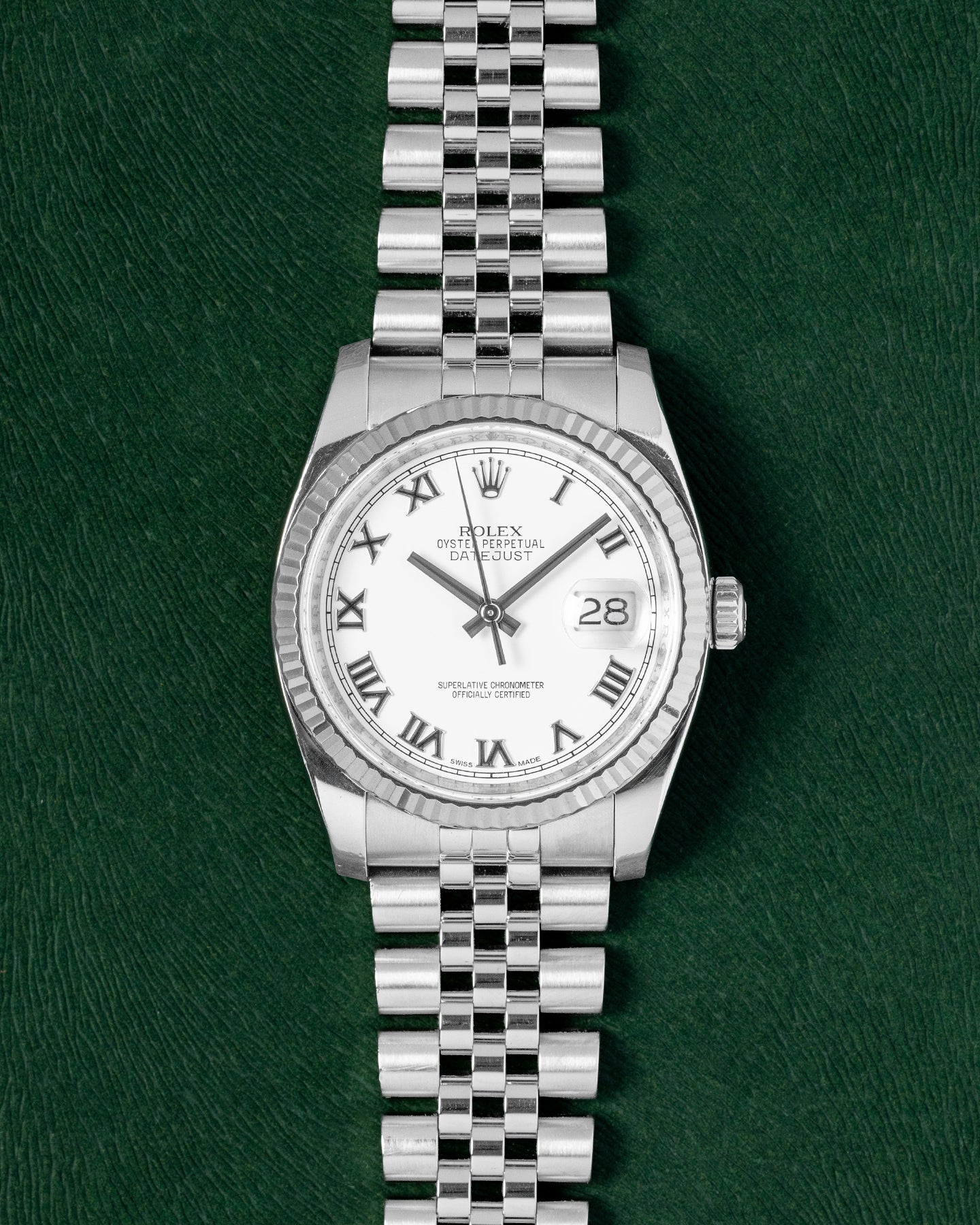
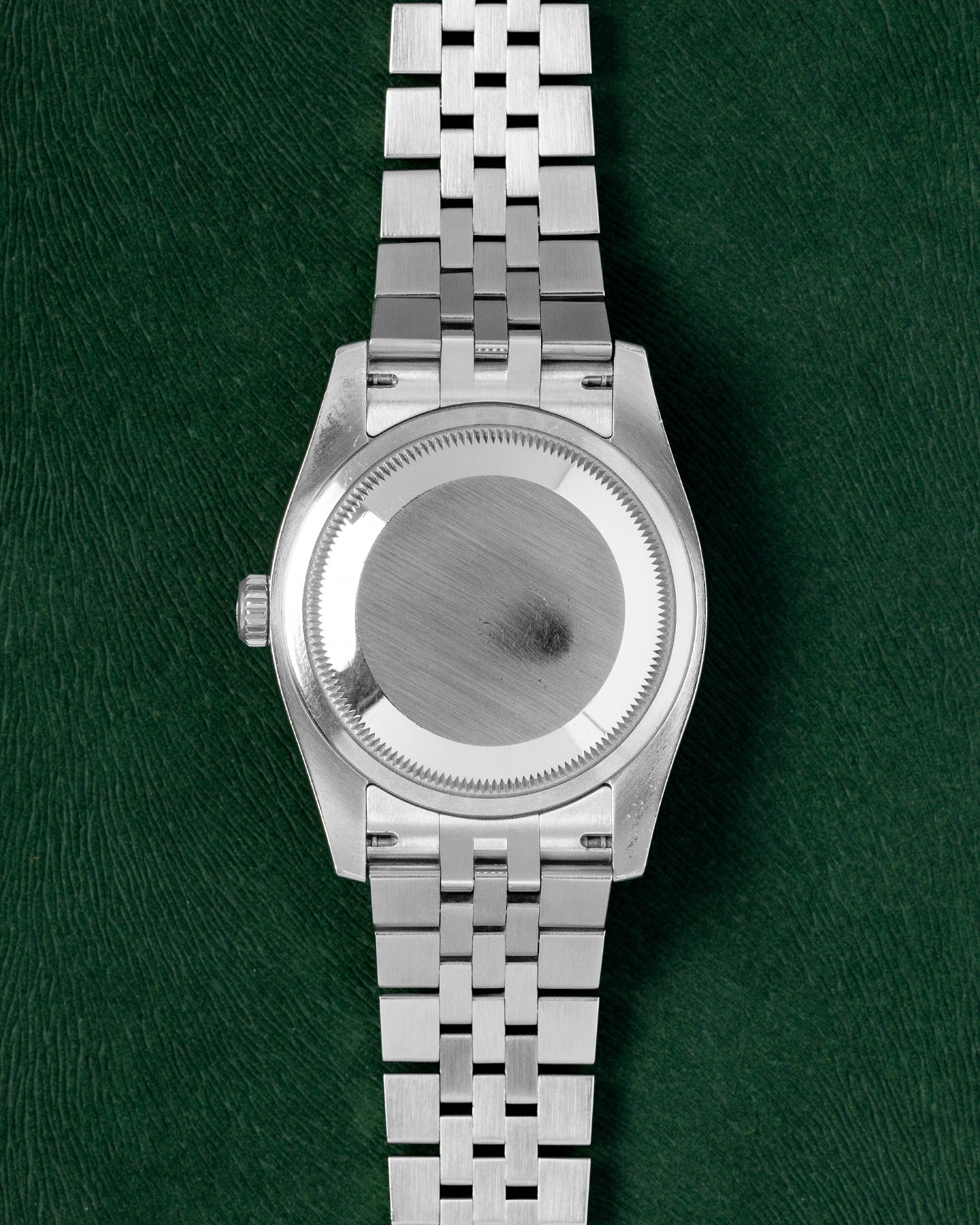
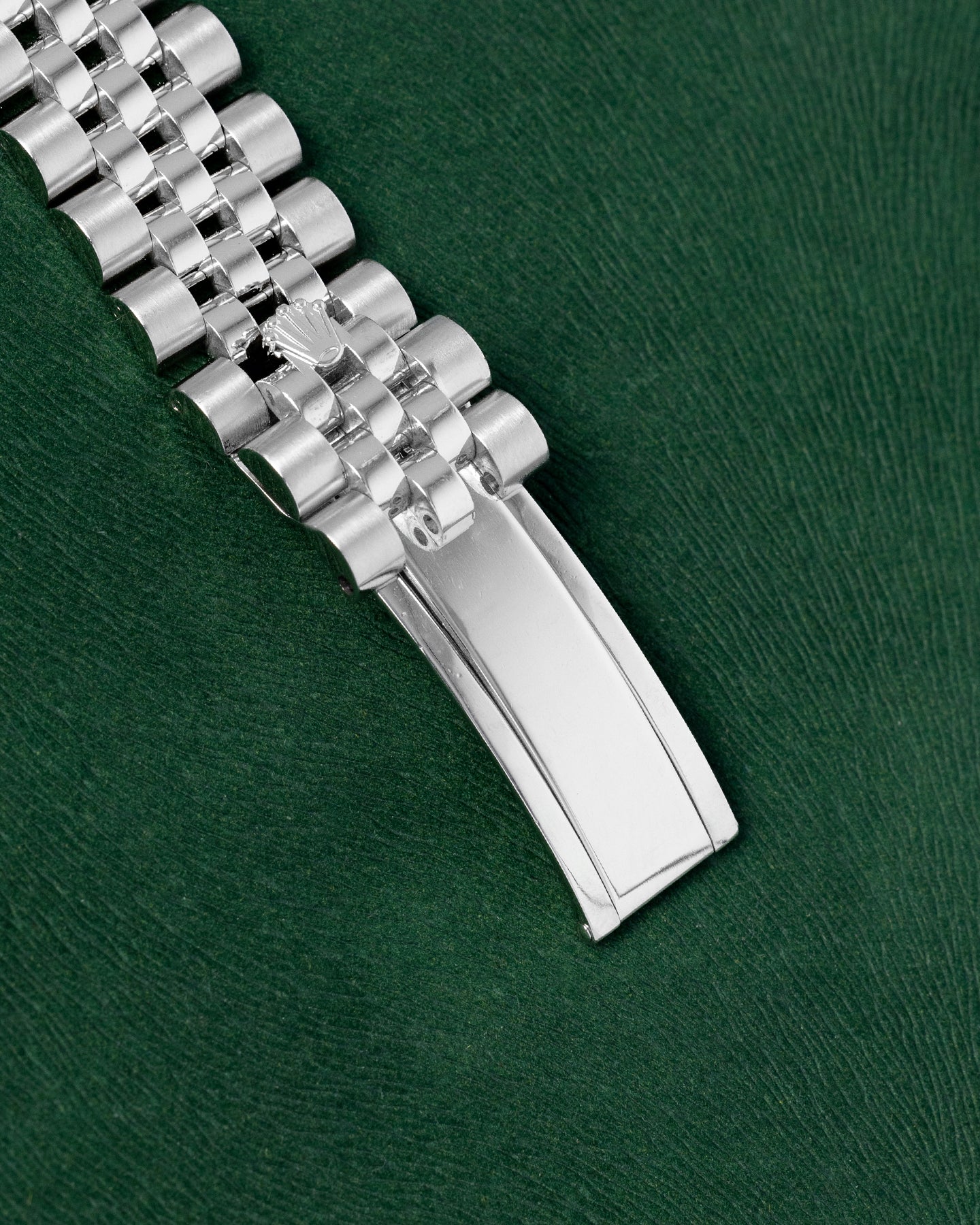
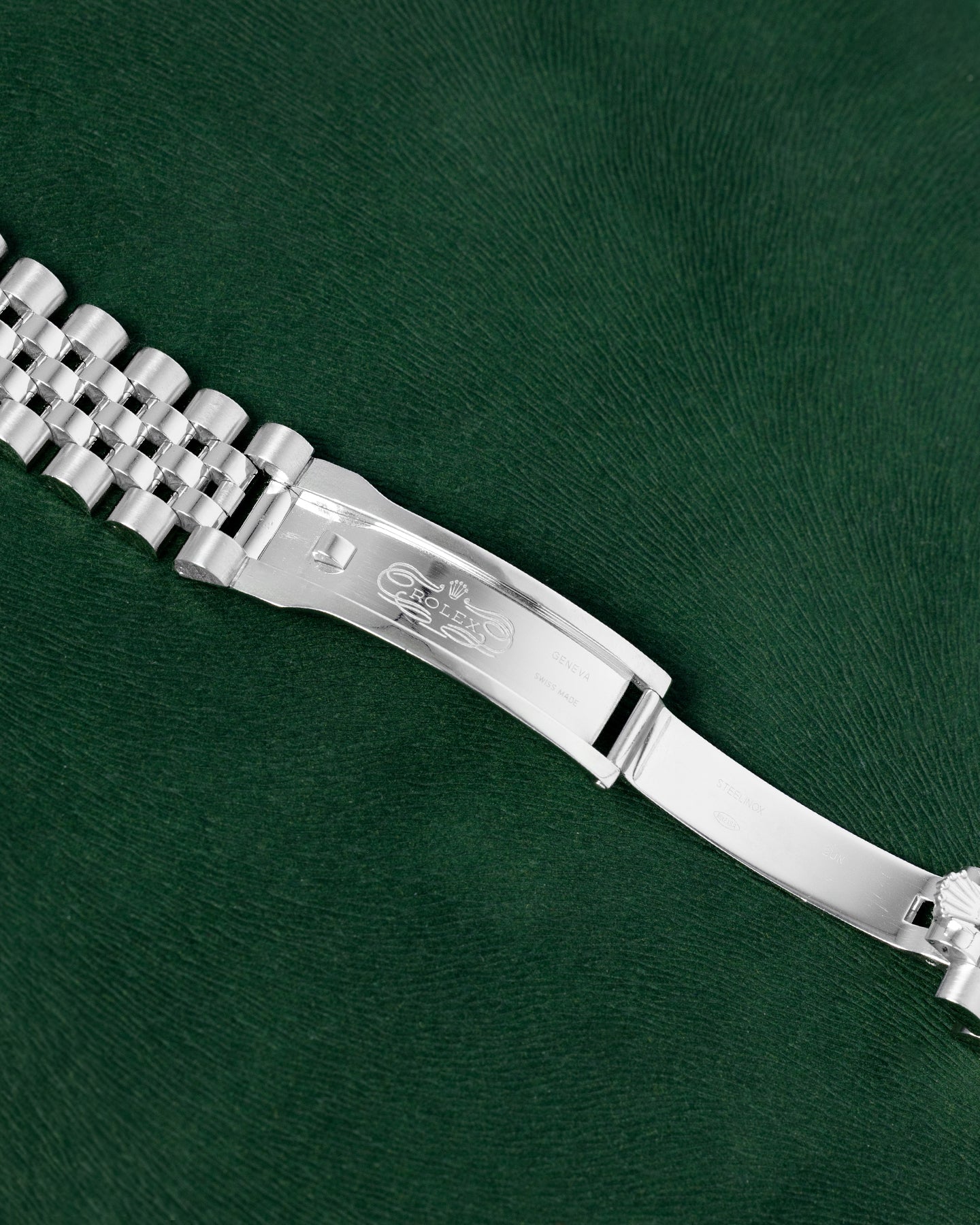
Rolex Datejust
Shop new and pre-owned Rolex Datejust watches at Grand Caliber. The brand's most-sold line and the original date-on-dial chronometer, offered in steel, Rolesor, and solid gold. Configured across more dial, bezel, and bracelet combinations than any other Rolex in current production.
The Rolex Datejust at Grand Caliber
The Rolex Datejust is the watch the modern wristwatch is built on. When Rolex introduced the Rolex Datejust in 1945, no other automatic wristwatch in the world displayed the date in a window on the dial. The complication was new, the engineering was new, and the format was so quietly successful that within twenty years every major Swiss brand had copied it. The Rolex Datejust has remained in continuous production since the day it launched, which makes it the longest-running uninterrupted model line in the entire Rolex catalogue. No other Rolex reference family has been worn by more US Presidents, copied by more competitors, or sold across more decades. The Rolex Submariner gets the cultural attention. The Rolex Daytona gets the auction headlines. The Rolex Datejust does something different: it built the daily-wear luxury wristwatch category and never gave the position up.
Grand Caliber sees the Rolex Datejust cross the desk in every form the catalogue has ever produced. Current production Datejust 36 references 126200, 126233, 126234, and 126231, the Datejust 41 family in 126300, 126331, 126333, and 126334, the Lady-Datejust 28 in the 279 series, and the discontinued and vintage market that runs from the modern 116200 generation back through the five-digit 16234 and 16013, the four-digit 1601 and 1603, and on rare occasions the four-digit 6305 and the earlier transitional references for the buyer who wants the watch as Eisenhower wore it. What follows is the case for the Rolex Datejust as the most consequential watch Rolex has ever produced, told the way a dealer who has handled the catalogue tells it.
The 1945 Launch and the First Automatic Date Wristwatch
The Rolex Datejust was unveiled in 1945 at the Rolex Jubilee celebration marking the brand's 40th anniversary. The model name originally under consideration was Jubilee. The watch ended up named Rolex Datejust, and the bracelet inherited the Jubilee name instead. That five-link bracelet, designed specifically for the new reference, has remained one of the two signature Datejust bracelets ever since.
Rolex Datejust Reference 4467
The first Rolex Datejust was the reference 4467, produced from 1945 to approximately 1949. The 4467 was the world's first self-winding chronometer wristwatch with an automatically changing date displayed in a window on the dial. Rolex had patented the Oyster waterproof case in 1926 and the Perpetual self-winding rotor in 1931. The Datejust 4467 brought those two innovations together with a brand-new date complication, and the resulting watch defined the format the rest of the industry would spend the next two decades catching up to.
The 4467 was produced only in 18-karat yellow gold, with a 36mm Oyster case, a domed acrylic crystal, alpha hands, and a Bubbleback case profile that Italian collectors named the Ovettone. The bezel was a coin-edge texture, finer than the deeply fluted bezel the Rolex Datejust would adopt later. The dial did not carry the word Datejust. The earliest dials read Chronometre above six o'clock and Rolex Oyster Perpetual below twelve, with the date window at three. The 4467 ran the calibre 710. Total production sat at approximately 1,000 examples, which makes the 4467 small but not strictly limited.
The Roulette Date Wheel and the Slow Date Change
Early Rolex Datejust dials used what collectors call a roulette date wheel, with even-numbered dates in red and odd-numbered dates in black, or red dates against a white window depending on the dial colour. The roulette wheel survived intermittently into later references and has been brought back occasionally on modern Datejust 36 production. The original 4467 had one quirk modern buyers find charming: the date did not snap over at midnight. The wheel rotated gradually across several hours either side of midnight before settling into the next day. The instantaneous midnight switch every modern Datejust performs would not arrive until 1955 with the calibre 1065 in the 6605 reference series.
The Churchill, Eisenhower, and Presidential Rolex Datejust Story
The Rolex Datejust became Rolex's preferred gift to heads of state almost immediately. In 1948, Rolex produced its 100,000th officially certified chronometer and presented it to British Prime Minister Sir Winston Churchill. That watch was a rose gold Rolex Datejust on a Jubilee bracelet, with a personalised engraving on the case back. In 1951, Rolex produced its 150,000th certified chronometer and presented it to General Dwight D. Eisenhower, then Supreme Commander of NATO. That Rolex Datejust was a reference 6305 in 18-karat yellow gold on a Jubilee bracelet, with a silver sunburst dial featuring red roulette date numerals. The Rolex Datejust case back was engraved with five stars representing Eisenhower's military rank, his DDE initials, and the date 12-19-1950 marking his NATO appointment.
Eisenhower wore his Rolex Datejust throughout his presidency and eventually gifted it to his close friend and personal valet, Sergeant John Moaney. A clarifying note for buyers researching presidential Rolex history: the Rolex Datejust given to Eisenhower in 1951 is sometimes incorrectly described as a Day-Date or as the origin of the President nickname. The Day-Date was not introduced until 1956, five years after Eisenhower received his Rolex Datejust. The President nickname for the Day-Date originated with Lyndon B. Johnson's yellow gold Day-Date in the mid-1960s. Eisenhower's Rolex was always a Rolex Datejust.
The Transitional References and the Rolex Datejust's Defining Decade
The decade between 1945 and 1955 was the period in which the Rolex Datejust evolved from a single yellow gold reference into the configurable platform the modern catalogue still operates from. Stainless steel, two-tone Rolesor, the Cyclops magnification lens, the fluted bezel as a signature, and finally the Datejust name printed on the dial all arrived during this window.
Rolex Datejust Reference 5030 and 5031
In 1950, Rolex introduced references 5030 and 5031. These were transitional pieces still on the Bubbleback case but with new material options. The 5030 carried a smooth bezel; the 5031 carried an engine-turned bezel. Both became available in stainless steel and two-tone Rolesor for the first time, ending the yellow-gold-only era of the original 4467. A small number of 5030 and 5031 dials were the first ever to carry the Rolex Datejust name printed on the dial, though the inscription was not yet standard.
Rolex Datejust Reference 6305 and the Cyclops Debut
In 1953 and 1954, Rolex introduced the reference 6305 family. The 6305 brought two changes that have defined every Rolex Datejust produced since. First, the Cyclops magnification lens debuted directly above the date window at three o'clock, magnifying the date approximately 2.5 times and becoming the single most recognised visual feature of the Rolex catalogue across every dated model. Second, full stainless steel construction became a standard offering, opening the Rolex Datejust to a broader audience without giving up the design language. The reference 6305 is also the specific Rolex Datejust reference President Eisenhower received in 1951, though his particular example was the yellow gold configuration.
Rolex Datejust Reference 6605 and the Instantaneous Date
In 1955, Rolex introduced the reference 6605 with the new calibre 1065. The 1065 was the first Rolex Datejust movement with an instantaneous midnight date change, snapping the date over within a fraction of a second rather than rolling it across several hours. By the late 1950s, the Datejust name had become a permanent fixture on the Rolex Datejust dial across most production, and the Cyclops lens, the fluted bezel, the Mercedes hands, and the date window at three had all settled into the configuration that the modern Rolex Datejust still carries today.
The Turn-O-Graph Rolex Datejust and the Thunderbirds Connection
The reference 6202 launched in 1953 as a standalone Rolex sport watch with a rotating timing bezel, predating the Submariner by a year. After the Submariner debuted in 1954, the 6202 was absorbed into the Rolex Datejust family as the reference 6309, taking on the name Turn-O-Graph. The Turn-O-Graph Rolex Datejust was the first production Rolex with a rotating bezel of any kind and effectively the architectural ancestor of every Submariner, GMT-Master, and Sea-Dweller bezel design that followed.
The Turn-O-Graph picked up its alternate nickname Thunderbird after Rolex began supplying the watch to USAF Thunderbirds aerobatic squadron pilots in the mid-1950s, with squadron insignia printed on the dial of the gifted examples. The Turn-O-Graph remained in the Rolex Datejust catalogue intermittently until 2011, with the final references running the modern calibre 3135. Original Thunderbird-marked examples are now among the more collected oddities in the broader Rolex Datejust archive.
The Four-Digit Rolex Datejust Era and the Reference 1601 Generation
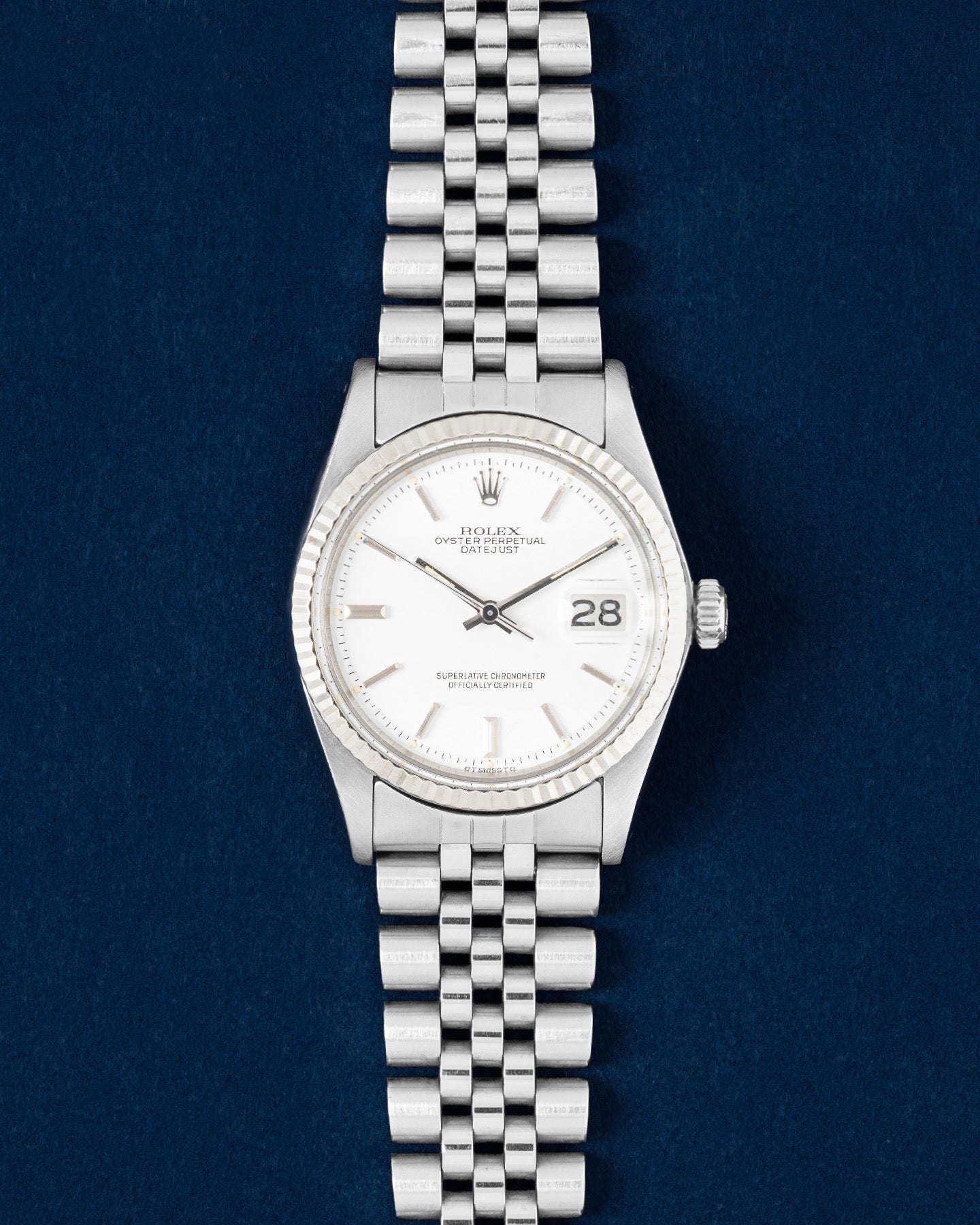
The Rolex Datejust reference family that ran from 1959 through 1977 is the period most vintage collectors associate with the model. The four-digit 160x references brought thinner cases, the calibre 1565 and later the calibre 1575, and a dial profile collectors call the pie pan because it sloped downward toward the outer edge where it met the case. The pie pan dial is one of the cleaner visual markers for dating a four-digit Rolex Datejust at a glance.
Rolex Datejust Reference 1600 and 1603
The reference 1600 carried a smooth bezel and stainless steel case, the cleanest and most understated of the four-digit family. The reference 1603 carried the engine-turned bezel in steel, with finely cut vertical fluting around the bezel ring that gives the watch a more textured visual than the polished alternatives. Both ran the calibre 1565 in early production and the calibre 1575 from approximately 1965 onward, the latter with a higher 19,800 vph beat rate and the addition of hacking seconds in 1972.
Rolex Datejust Reference 1601
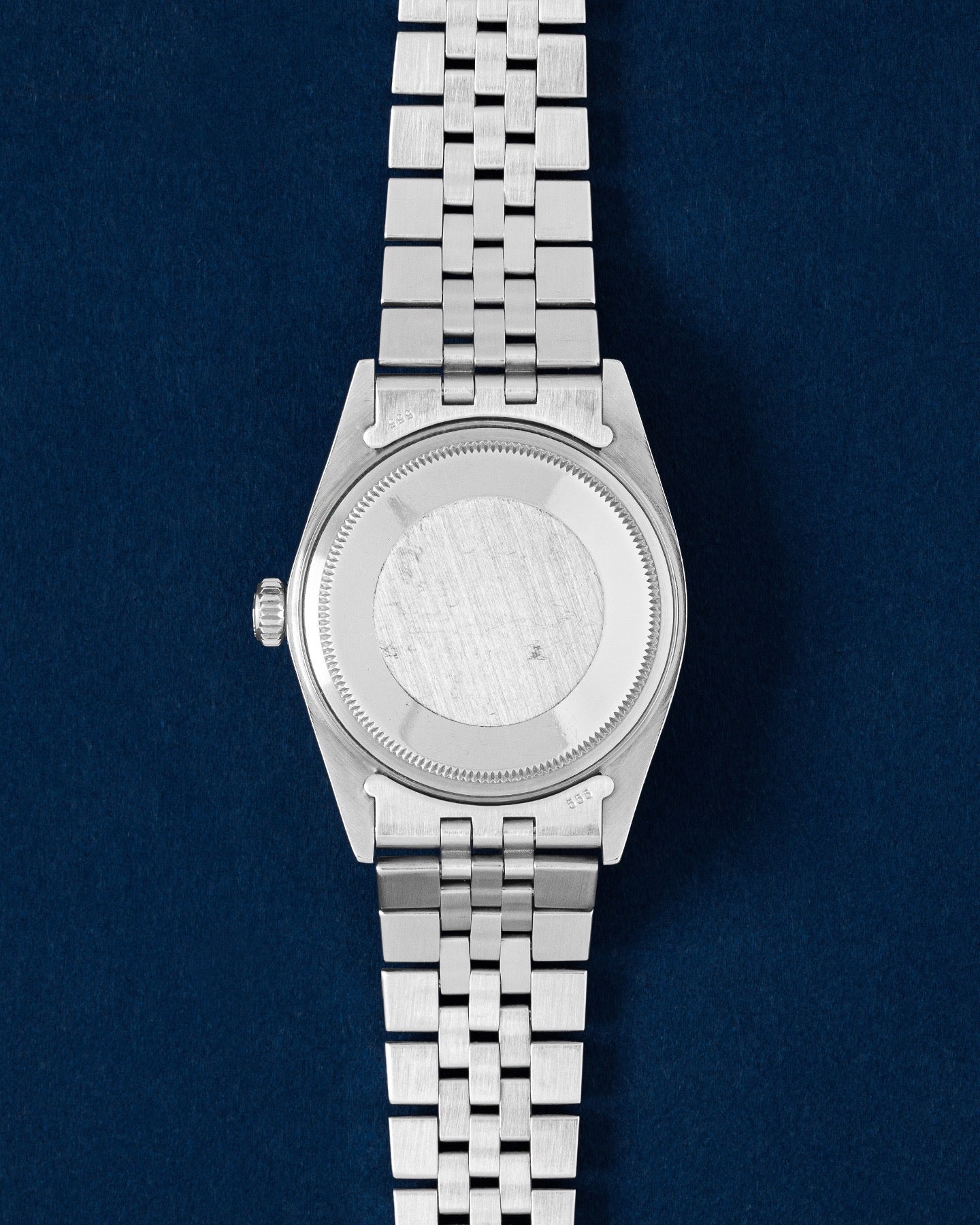
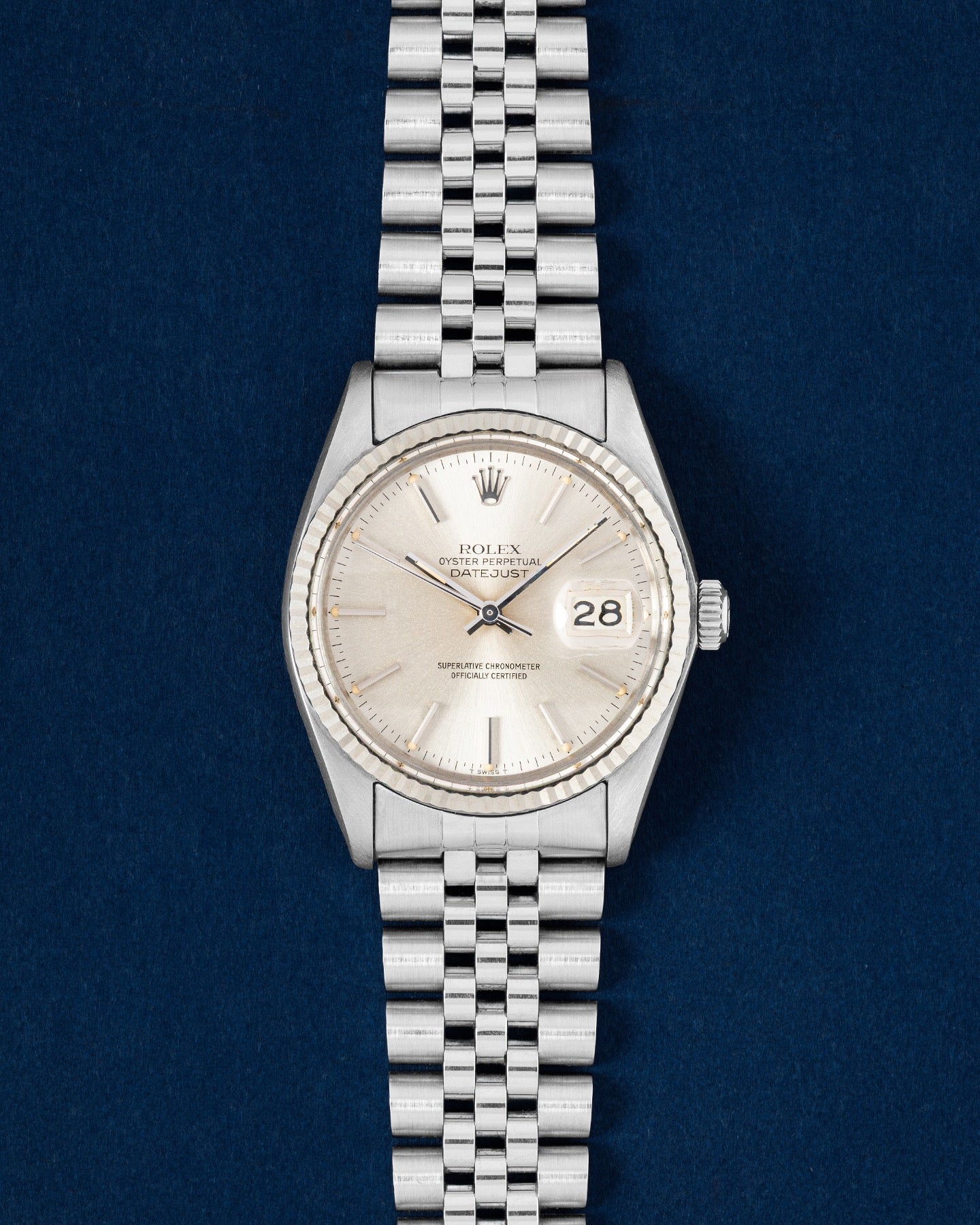
The reference 1601 is the signature four-digit Rolex Datejust. It paired a stainless steel case and bracelet with a white gold fluted bezel, the configuration that defined the visual identity of the Rolex Datejust for decades and still defines the current production 126234. The 1601 ran the same calibre 1565 and later 1575 as its siblings. Its pie pan dial, acrylic crystal with Cyclops, drilled-through lugs, and folded-link Jubilee or Oyster bracelet are all hallmarks of the four-digit era that collectors specifically seek out.
The 1601 is also the four-digit Rolex Datejust most associated with dial variation. Production runs from 1959 through 1977 produced the Wide Boy dial (1964 through 1967 only, with broad rectangular hour markers and matching hands), the Sigma dial (with a small sigma symbol next to the Swiss marking at six o'clock, indicating solid gold indices and hands), and the standard champagne, silver, and black dial variants with stick markers.
Rolex Datejust Reference 1607 and the Florentine Finish
The reference 1607 was the yellow gold companion to the 1601 in the four-digit family. The 1607 is less common than its steel and Rolesor siblings, and a small subset of production carried what Rolex called a Florentine finish, a textured cross-hatch pattern applied across the bezel and sometimes extending across the case and the brick bracelet links. The Florentine finish 1607 sits among the rarer Rolex Datejust configurations of the era and rewards careful authentication.
The Five-Digit Rolex Datejust Era and the Quickset Revolution
In 1977, Rolex introduced the five-digit Rolex Datejust reference family with the new calibre 3035. The 3035 brought two upgrades. First, the beat rate jumped from 19,800 vph to 28,800 vph, the high-beat standard the rest of the modern Rolex catalogue would eventually adopt. Second, and more consequentially for the daily wearer, the 3035 introduced the quickset date function. For the first time, a Rolex Datejust owner could adjust the date independently of the hour and minute hands, eliminating the tedious process of rotating the crown past midnight multiple times to advance the date forward.
Rolex Datejust Reference 16014 and the First Quickset Generation
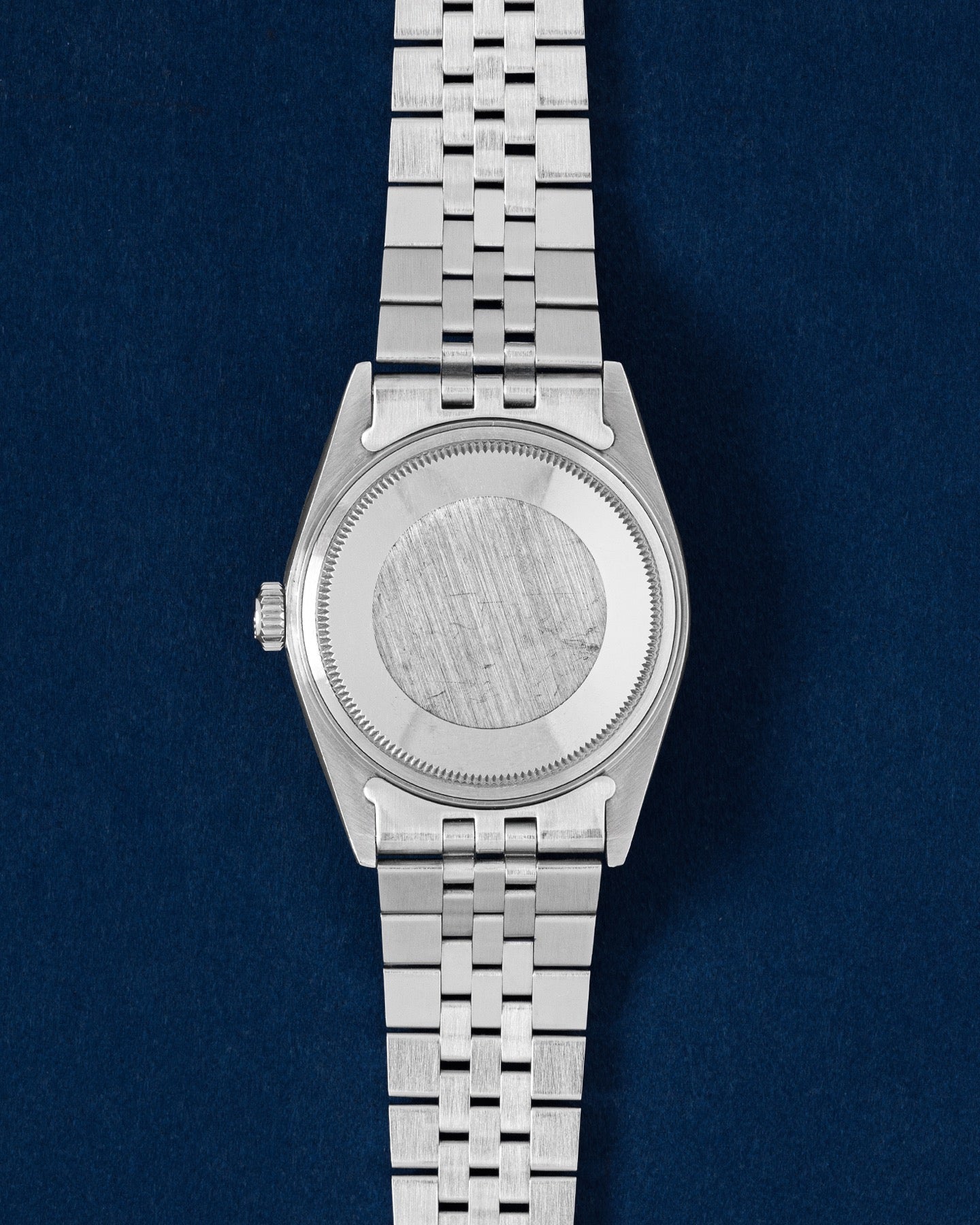
The reference 16014 was the steel-case Rolex Datejust with the white gold fluted bezel from this generation, the direct successor to the 1601 and the most circulated five-digit Rolex Datejust reference. The 16014 retained the 36mm case, the acrylic crystal with Cyclops, and the choice of Jubilee or Oyster bracelet, but stepped up to the quickset calibre 3035 inside. The 16013 was the two-tone Rolesor version with the yellow gold fluted bezel. The 16030 carried the steel engine-turned bezel. The 16000 carried the smooth bezel. The 16018 was the solid yellow gold version, and the 16078 was the same in solid yellow gold but on the bark-finish bracelet. Production of the five-digit first generation ran from 1977 to 1988.
Rolex Datejust Reference 16234 and the Sapphire Crystal Generation
In 1988, Rolex introduced the second five-digit Rolex Datejust generation with the new Rolex calibre 3135. The 3135 became one of the most refined and reliable mechanical movements ever produced at scale, eventually appearing across the Submariner Date, GMT-Master II, Yacht-Master, and Sea-Dweller lines, with a service-friendly architecture that watchmakers still praise. More visible to the buyer, the new generation introduced the synthetic sapphire crystal, replacing the acrylic crystal that had been on every Rolex Datejust since 1945.
The reference 16234 was the steel-case Rolex Datejust with white gold fluted bezel from this generation. The 16233 was the Yellow Rolesor two-tone with yellow gold fluted bezel. The 16200 was the smooth bezel steel, the 16220 was the steel engine-turned bezel, and the 16264 was the white Rolesor Rolex Datejust with rotating bezel (the modern Turn-O-Graph). Across the second five-digit Rolex Datejust generation's production run from 1988 through approximately 2005, the lume material transitioned from tritium to Luminova and then to Super-LumiNova. Lug holes were phased out from the case in the mid-1990s, removing the small drilled bores in the lugs that earlier vintage examples had used to ease bracelet swaps. These changes are all gradual rather than reference-flagged, meaning a 16234 produced in 1991 looks meaningfully different from a 16234 produced in 2001, even though the reference number is identical.
The Six-Digit Rolex Datejust Era and the Modern Generation
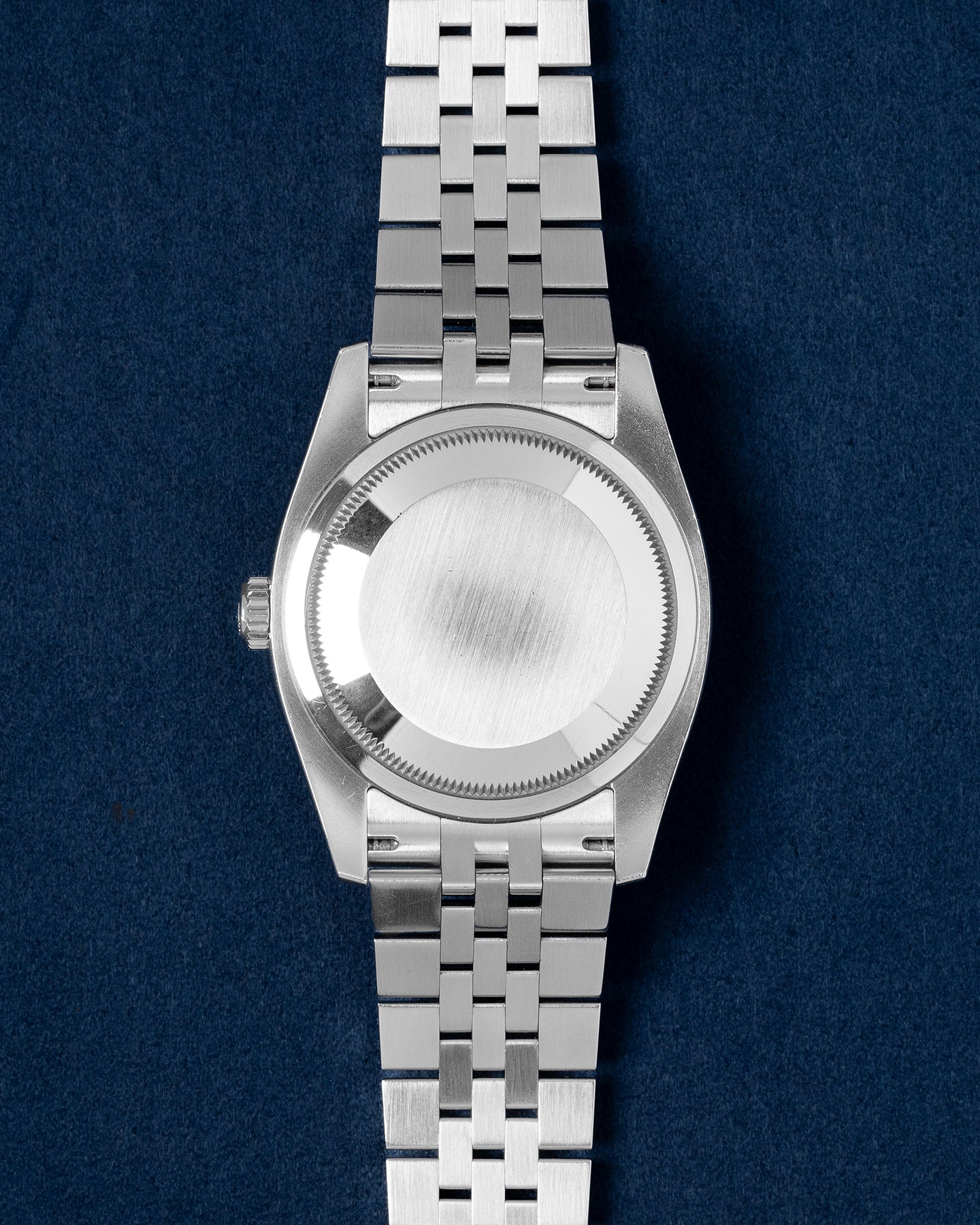
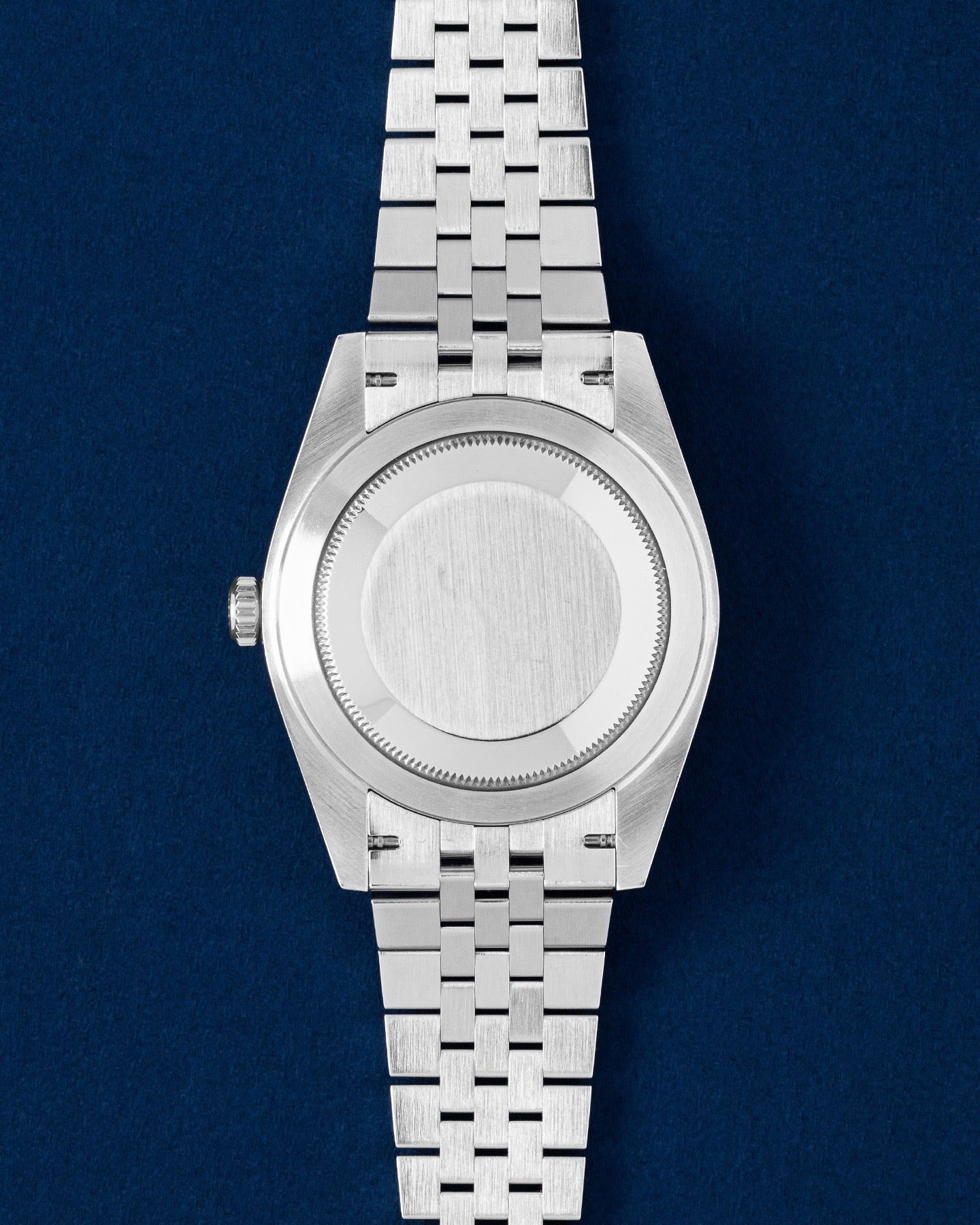
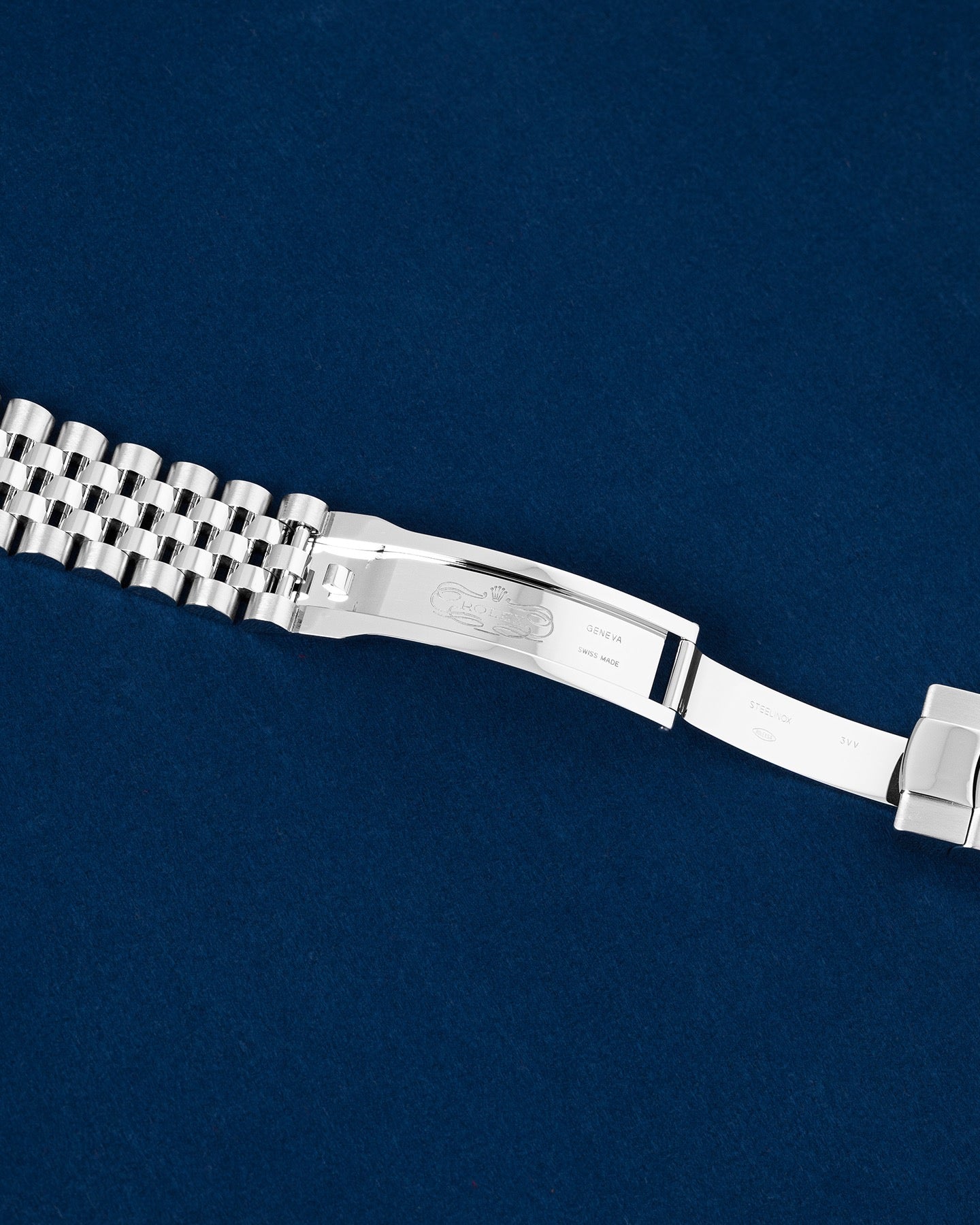
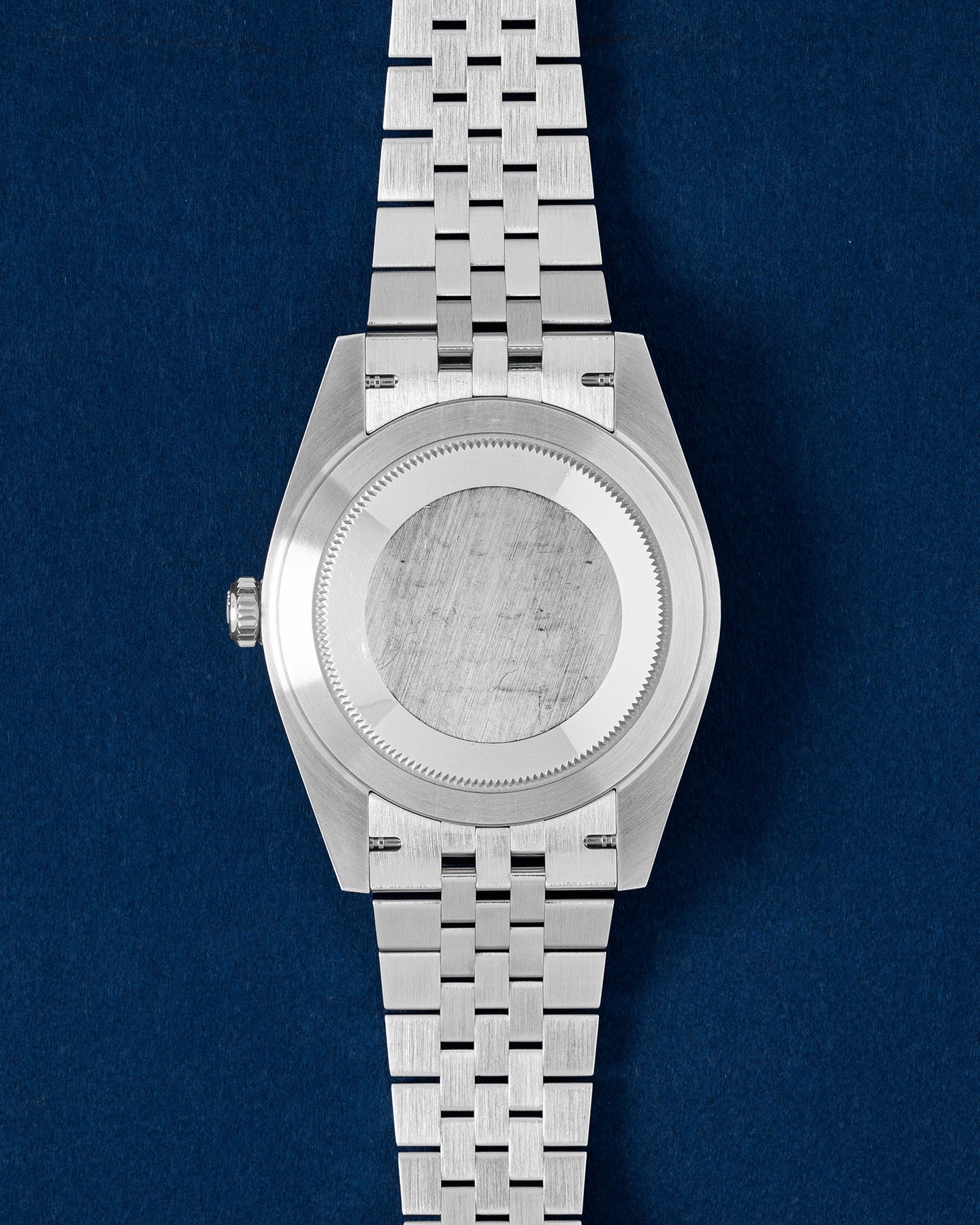
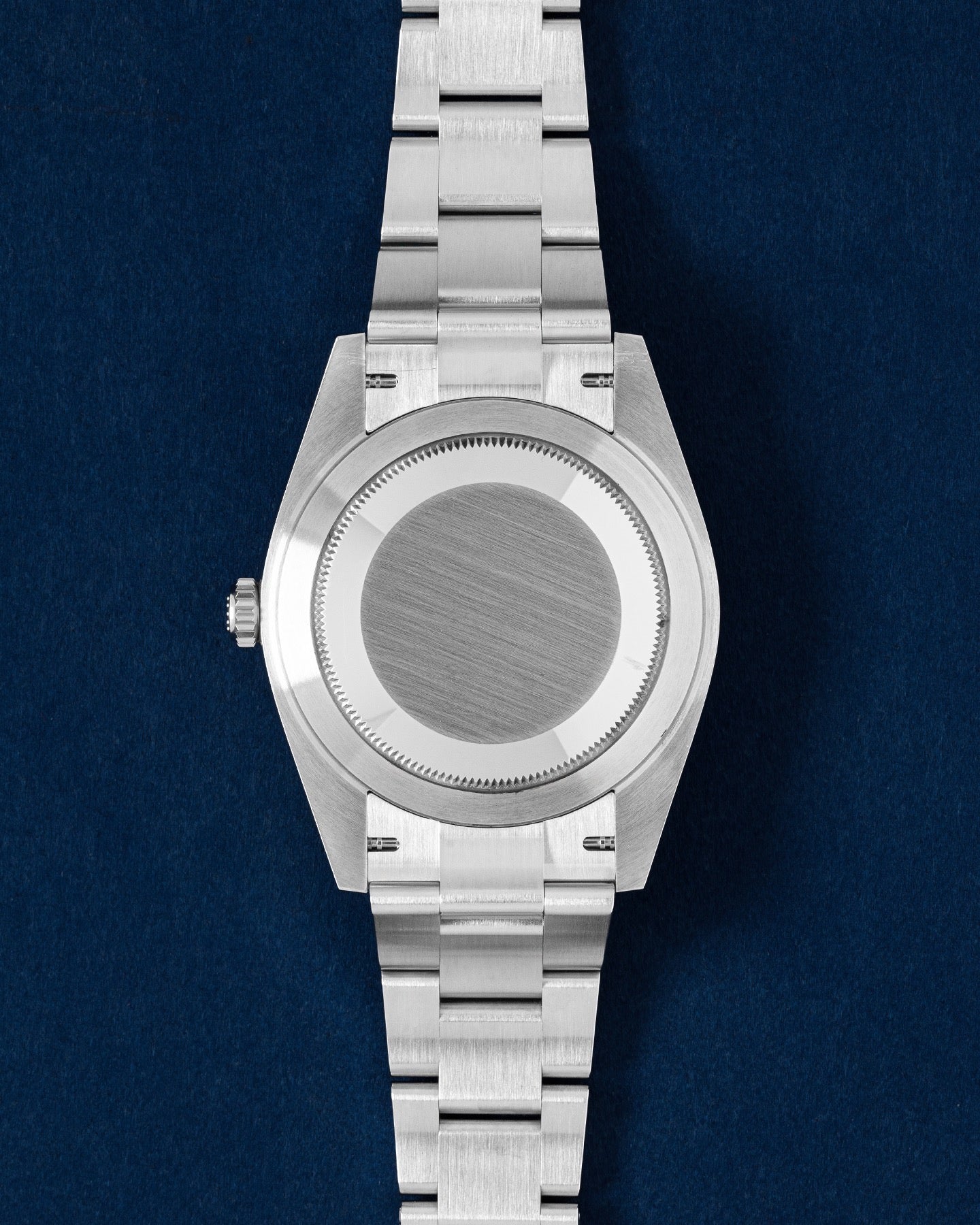
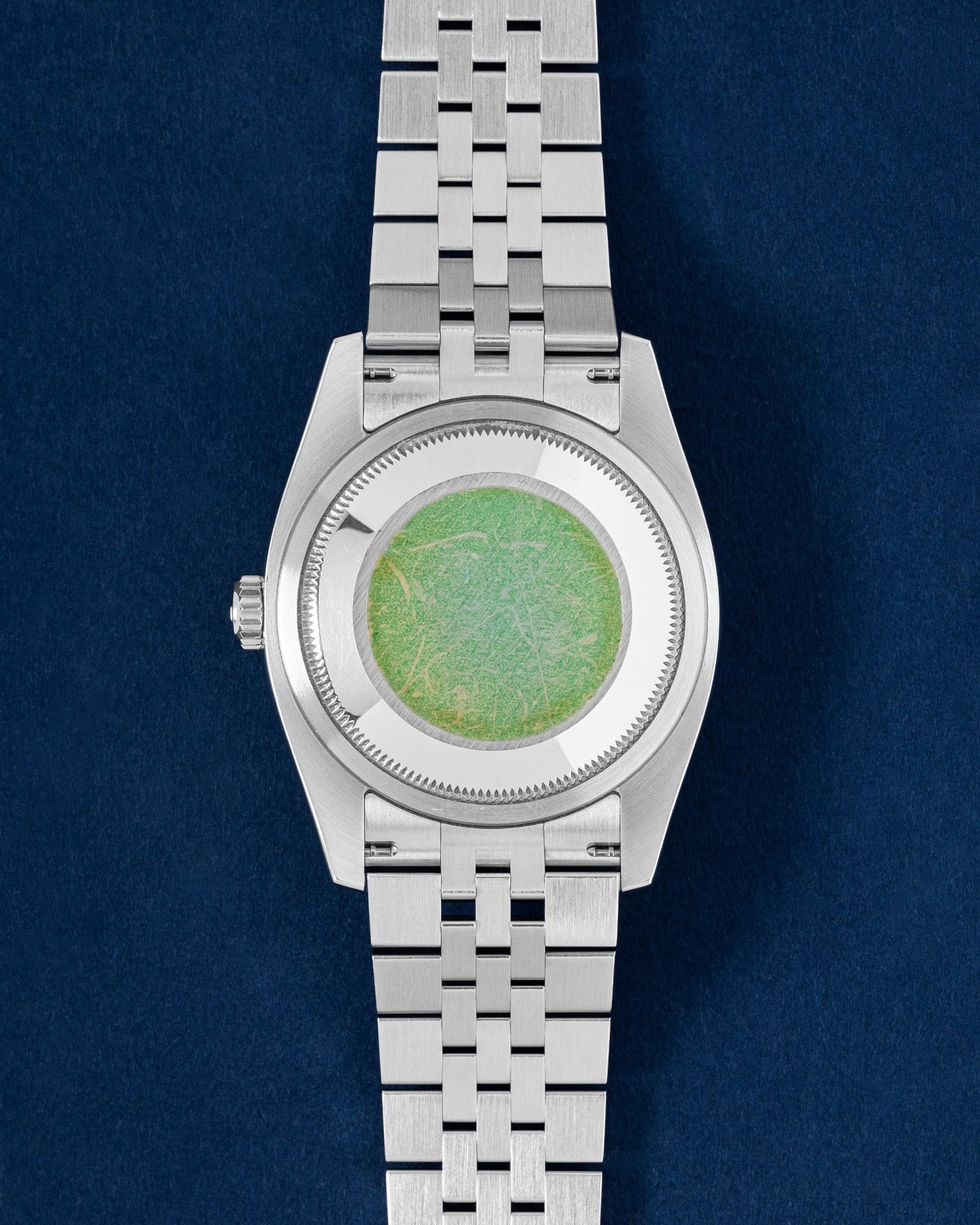
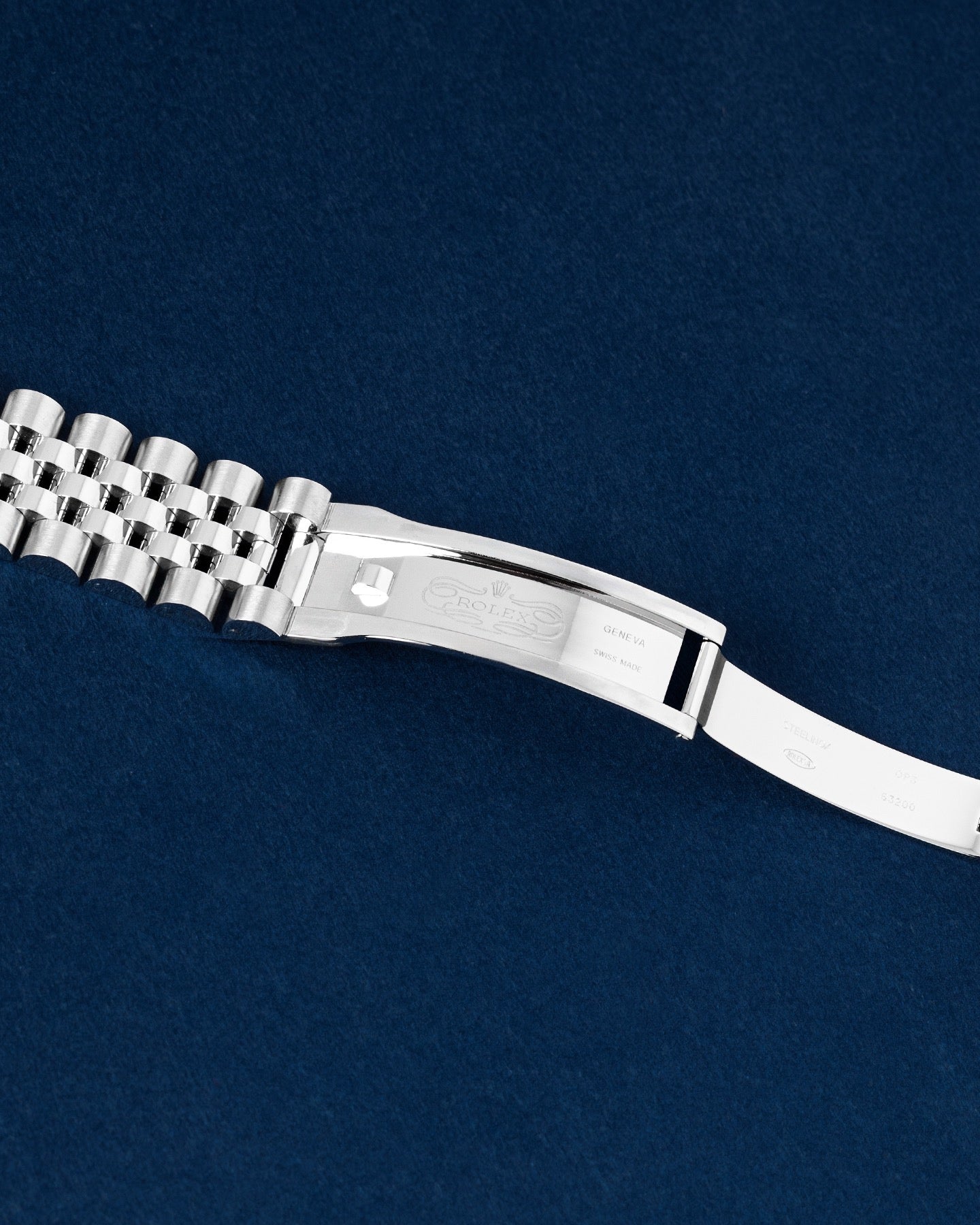
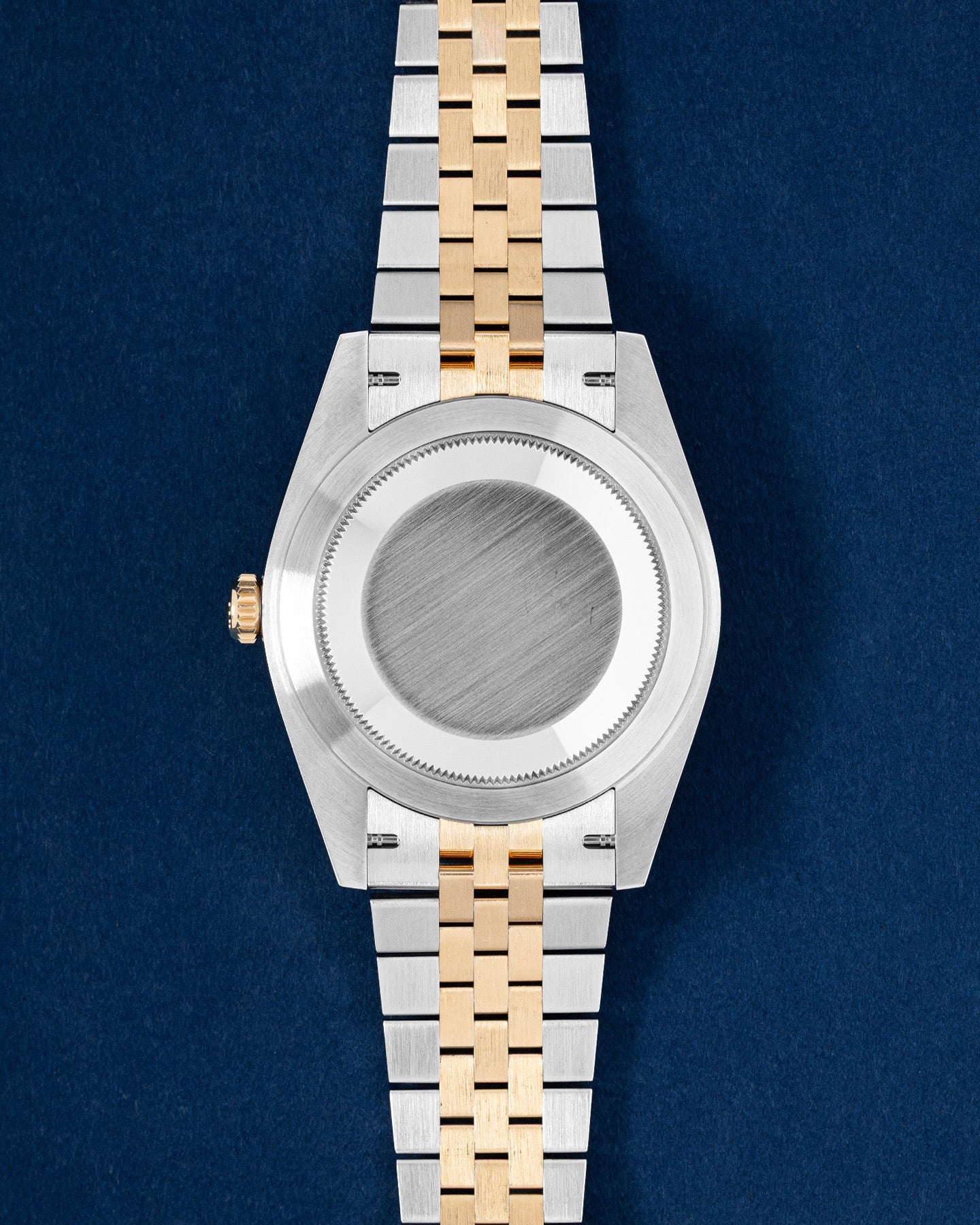
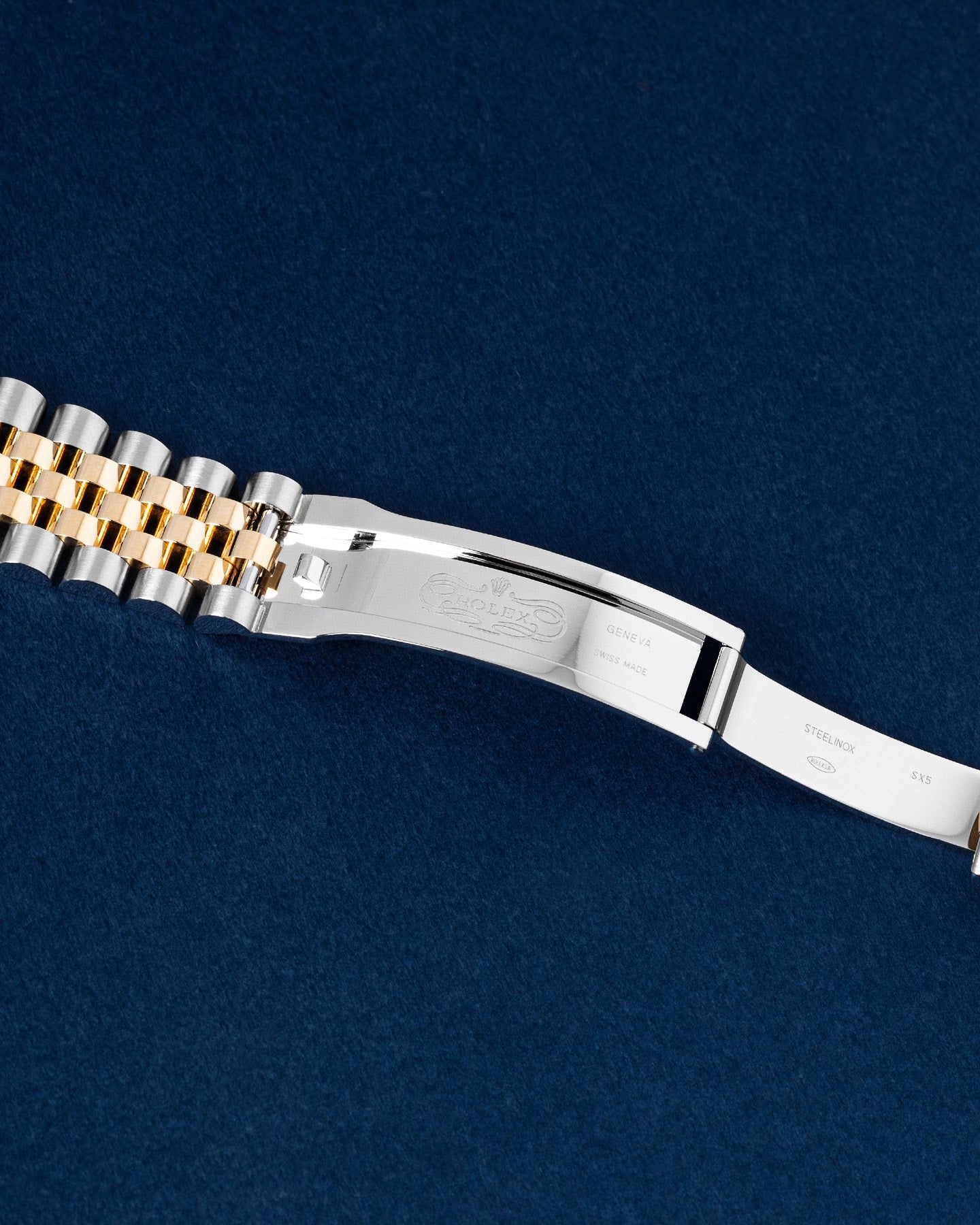
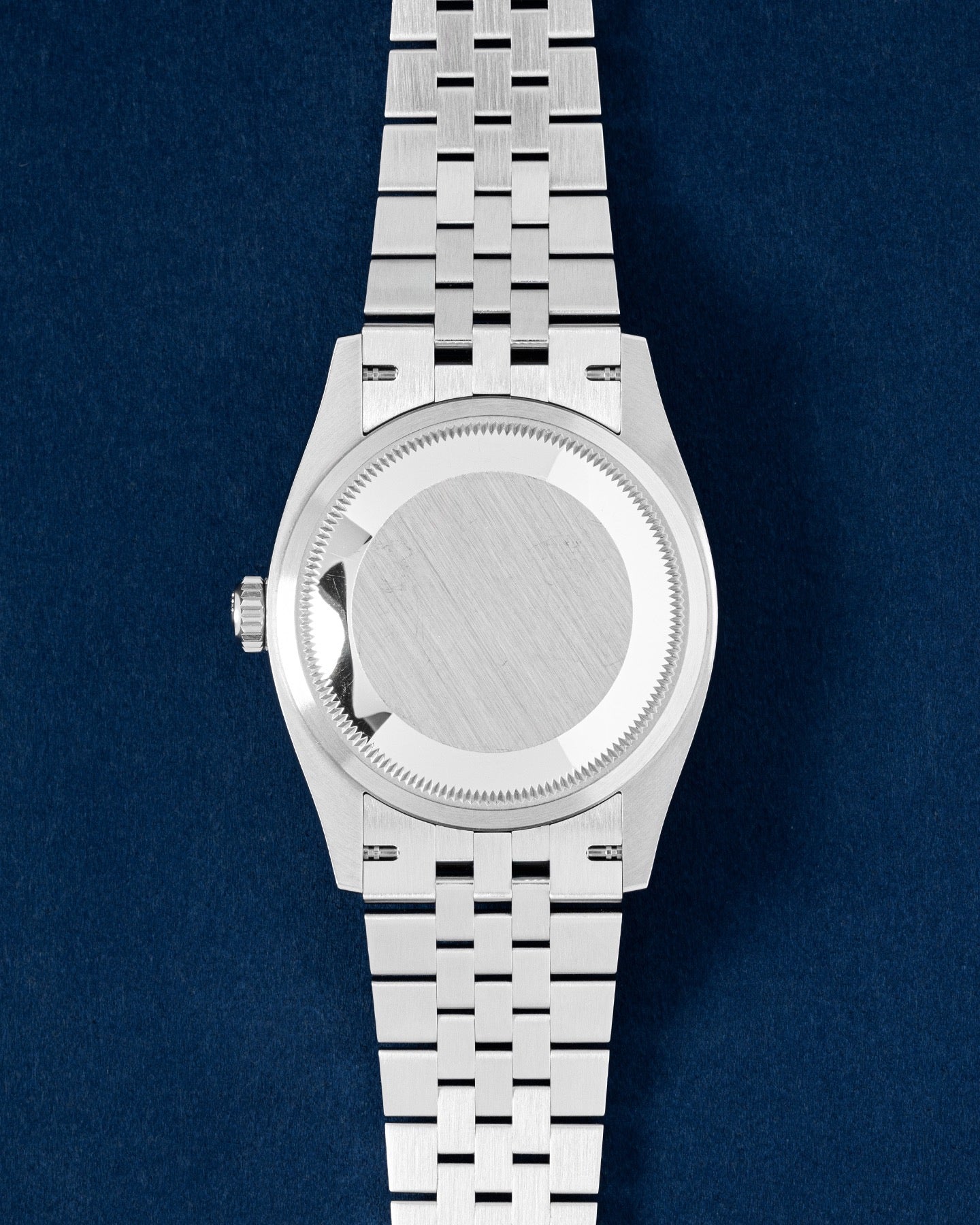
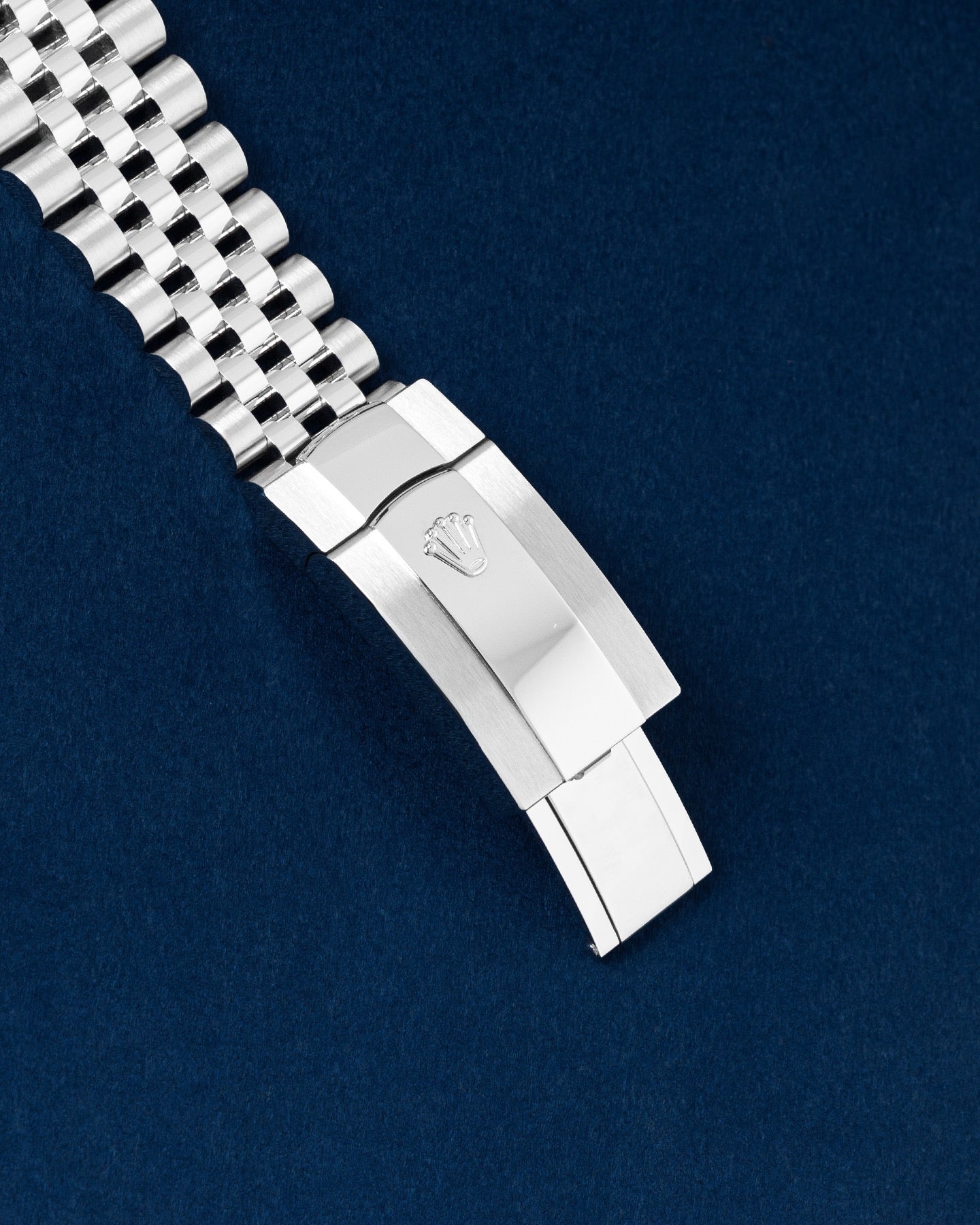
In approximately 2005 and 2006, Rolex introduced the first six-digit Rolex Datejust reference family. The 116200 generation kept the Rolex calibre 3135 from the previous era but rebuilt nearly everything around it. The bracelet moved from hollow links to solid links with solid end-links, a structural change that gave the Rolex Datejust significantly more substantial weight on the wrist. The clasp was redesigned with a stronger fold mechanism. The Rolex Datejust case was subtly refined with broader lug shoulders, giving the same 36mm diameter more presence. The rehaut, the inner bezel ring between the dial and the crystal, was laser-engraved with ROLEX repeated around the circumference as an anti-counterfeiting feature.
Rolex Datejust Reference 116234 and 116233
The reference 116234 was the steel Rolex Datejust 36 with the white gold fluted bezel from this generation, the natural successor to the 16234. The reference 116233 was the Yellow Rolesor two-tone with the yellow gold fluted bezel, the natural successor to the 16233. The 116200 was the smooth-bezel steel version, the 116220 was the Turn-O-Graph carryover, and the 116243 was the diamond-bezel Rolesor. Production of the six-digit first generation Rolex Datejust ran from approximately 2005 through 2018, with the final examples representing the last appearance of the long-running calibre 3135 in the Rolex Datejust line.
The Rolex Datejust II and the 41mm Format Arrival
In 2009, Rolex launched the Datejust II at Baselworld, the first Rolex Datejust ever produced in a 41mm case size. The Datejust II was a response to the broader watch industry's drift toward larger case sizes in the late 2000s. The Datejust II carried the calibre 3136, a slightly larger date-calibre variant of the 3135 sized to fill the new case. The launch references were the 116333 in Yellow Rolesor with yellow gold fluted bezel, the 116334 in steel with white gold fluted bezel, and the 116300 in steel with smooth bezel.
The Wimbledon Dial Debut
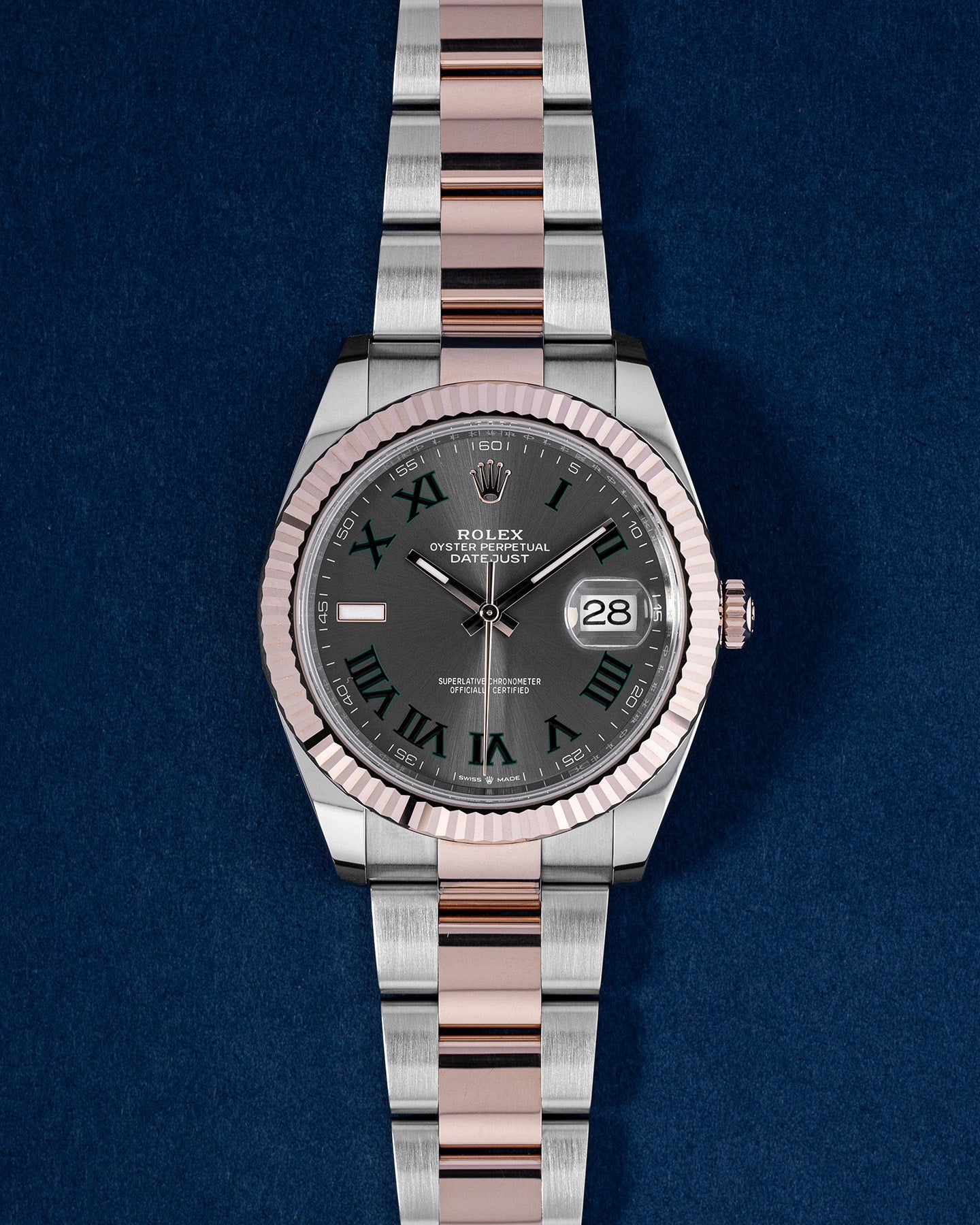
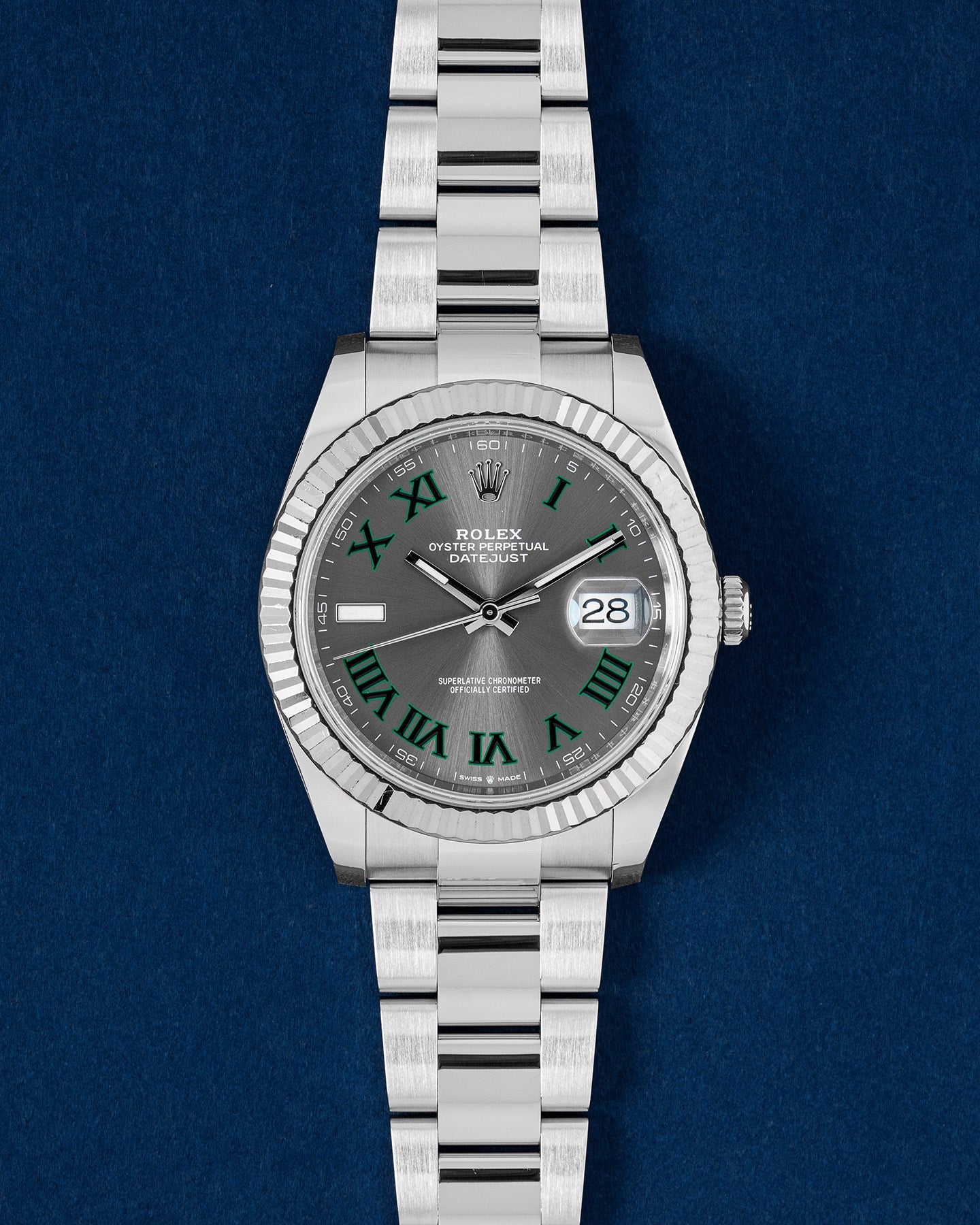
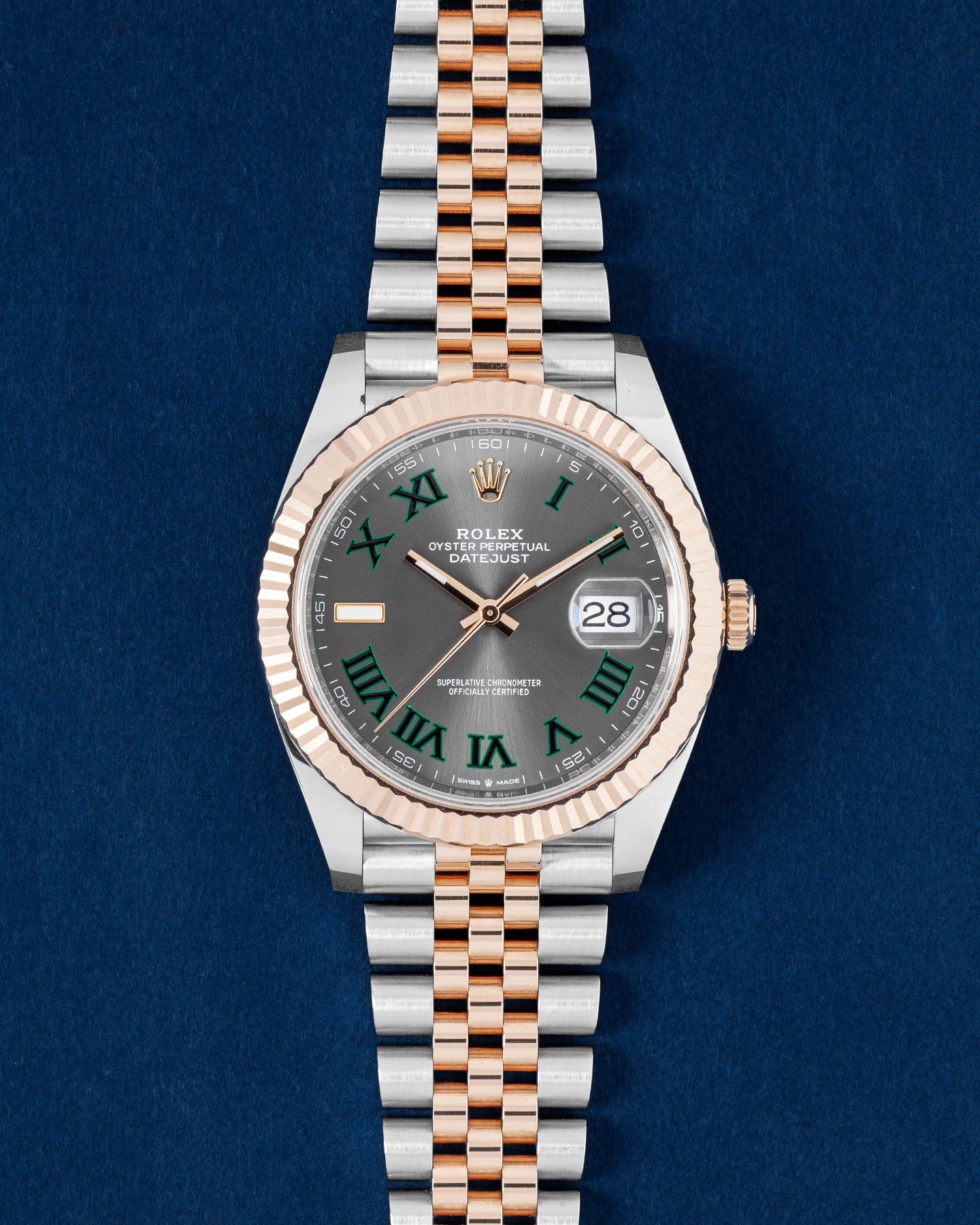
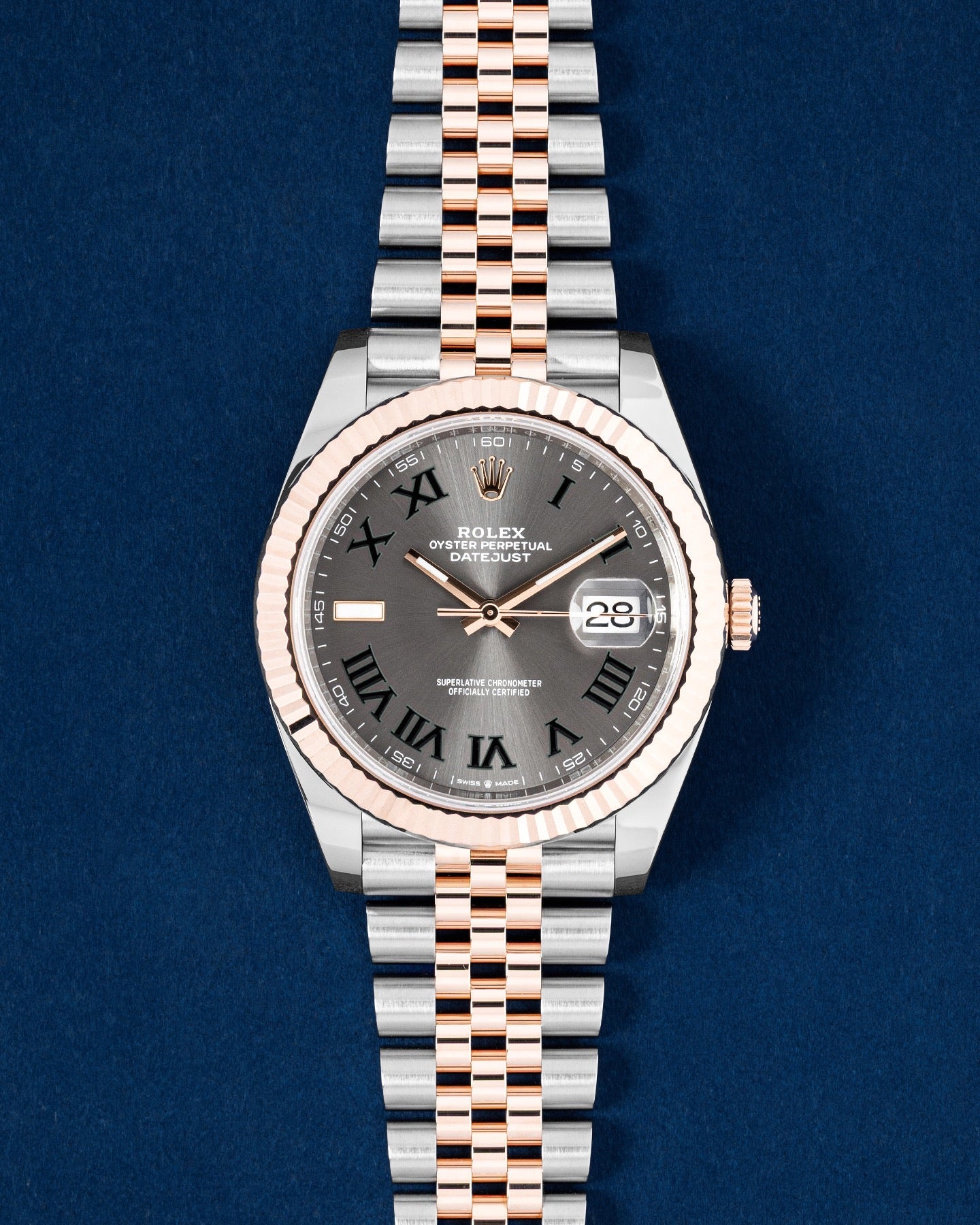
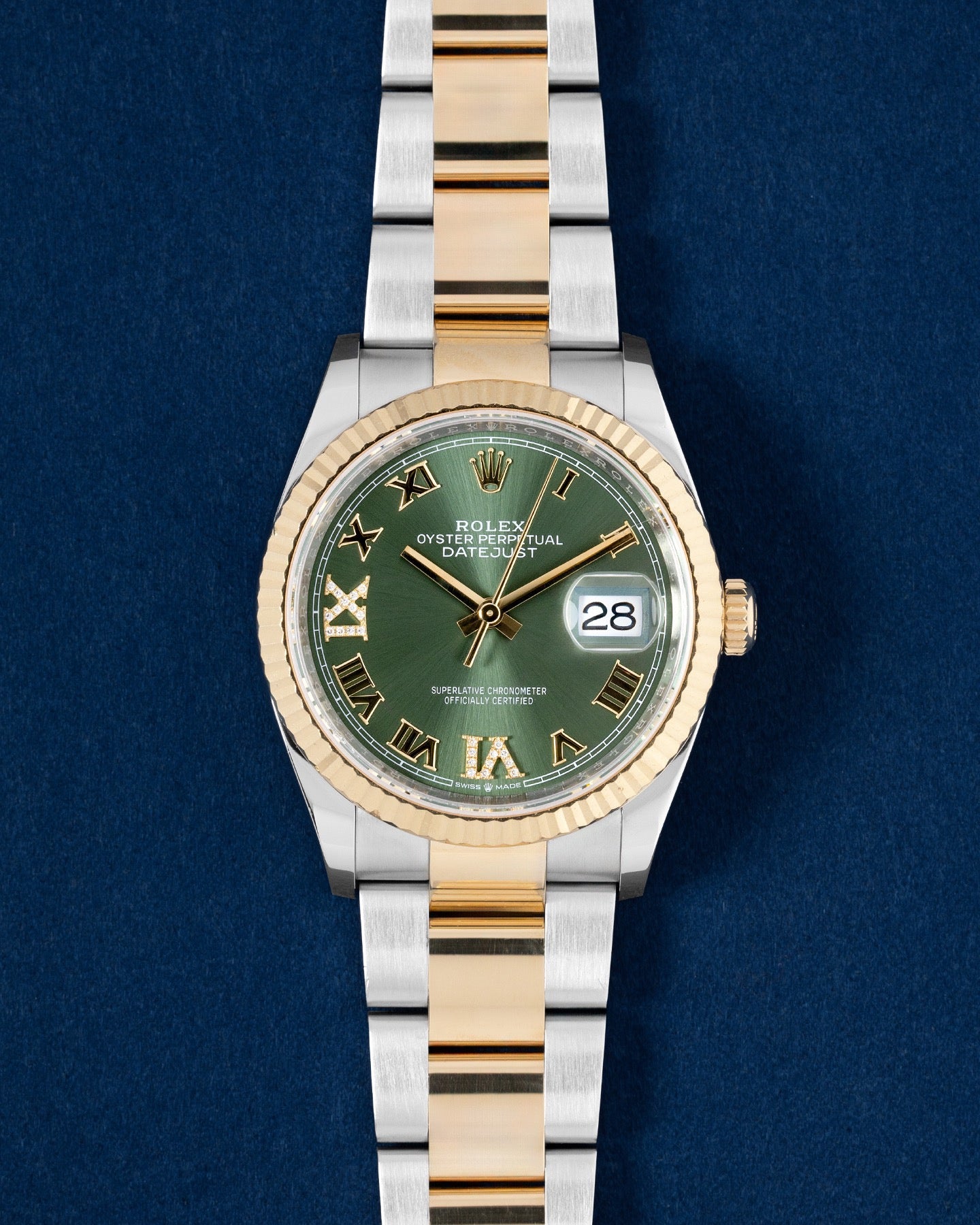
The Datejust II ref 116333 launched in 2009 with what collectors immediately named the Wimbledon dial: a slate-grey sunburst surface with black-enamel Roman numerals outlined in a green tone matched to the Centre Court grass at the All England Lawn Tennis Club. Rolex had been the Official Timekeeper of The Championships, Wimbledon, since 1978, and the Wimbledon dial gave the partnership a visual signature that the modern Rolex Datejust catalogue still leans on. The Wimbledon name has never been used officially by Rolex, but the collector vocabulary settled on it within months of the dial's debut and has not let go.
Rolex Datejust 41 Reference 126300 and 126333
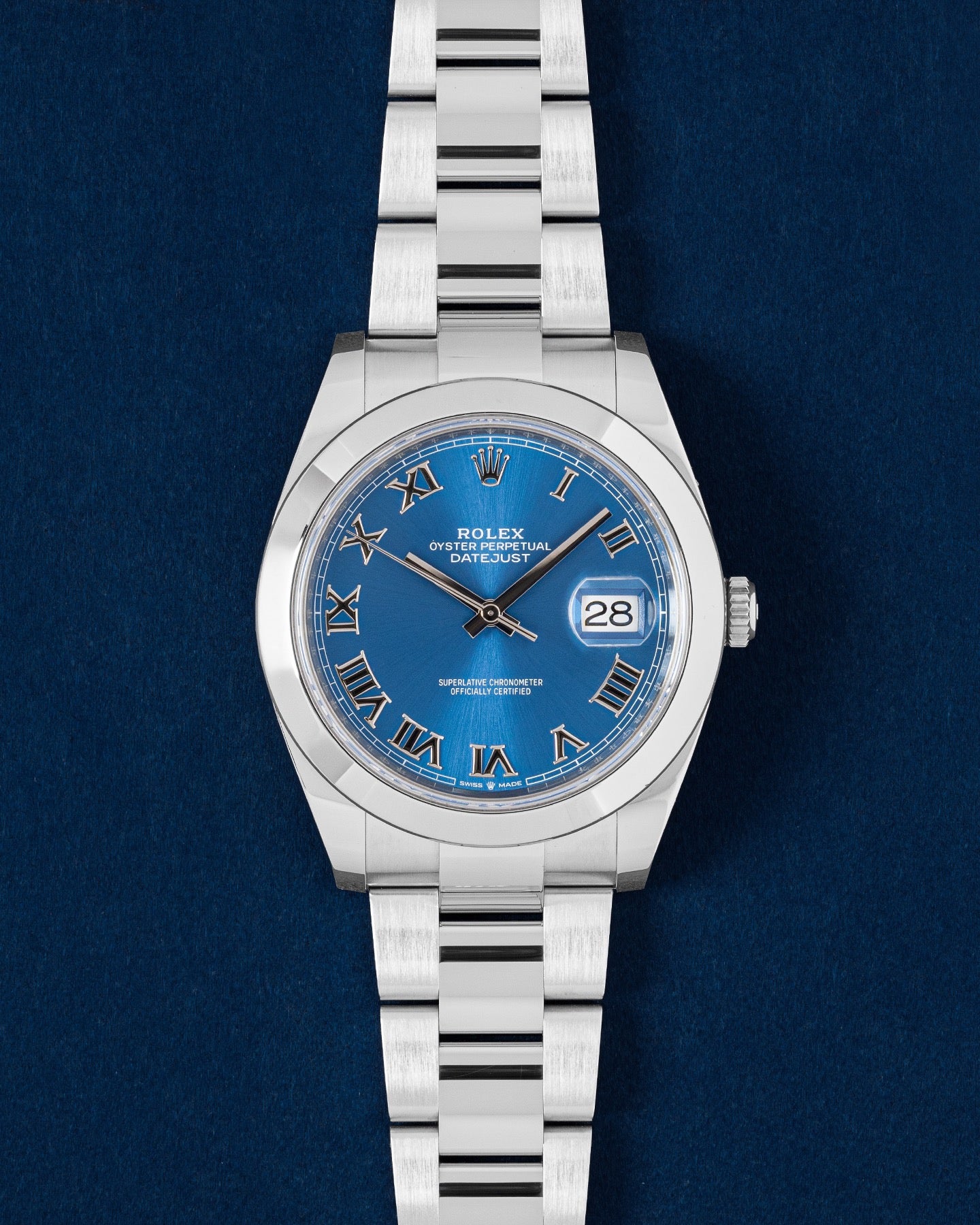
In 2016, Rolex discontinued the Datejust II and replaced it with the Datejust 41 collection. The case size stayed at 41mm but the proportions changed meaningfully. The Datejust II had been criticised for thick, broad lugs that gave the watch a chunkier wrist presence than the 41mm diameter alone would have suggested. The Datejust 41 reverted to slimmer, more tapered lugs, returning to the visual silhouette of the classic Rolex Datejust 36 scaled up. Inside, the Datejust 41 launched with the new calibre 3235, which would become the architectural successor to the 3135 across the rest of the Rolex catalogue over the following years. The Datejust 41 also expanded the bracelet choice: the Datejust II had been Oyster-only, while the Datejust 41 added the Jubilee as an option and offered the Wimbledon dial across the full configuration matrix in steel, Yellow Rolesor, White Rolesor, and Everose Rolesor.
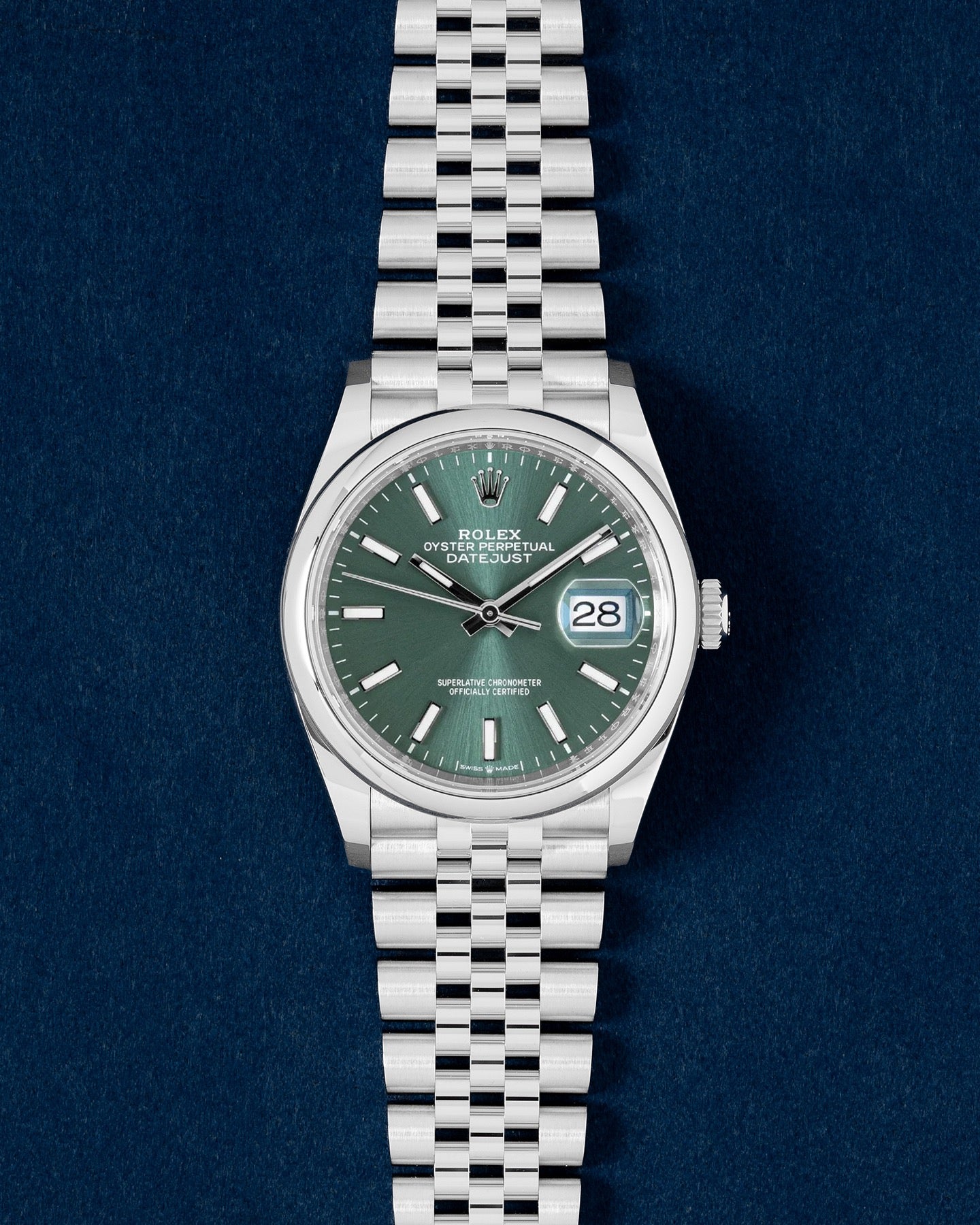
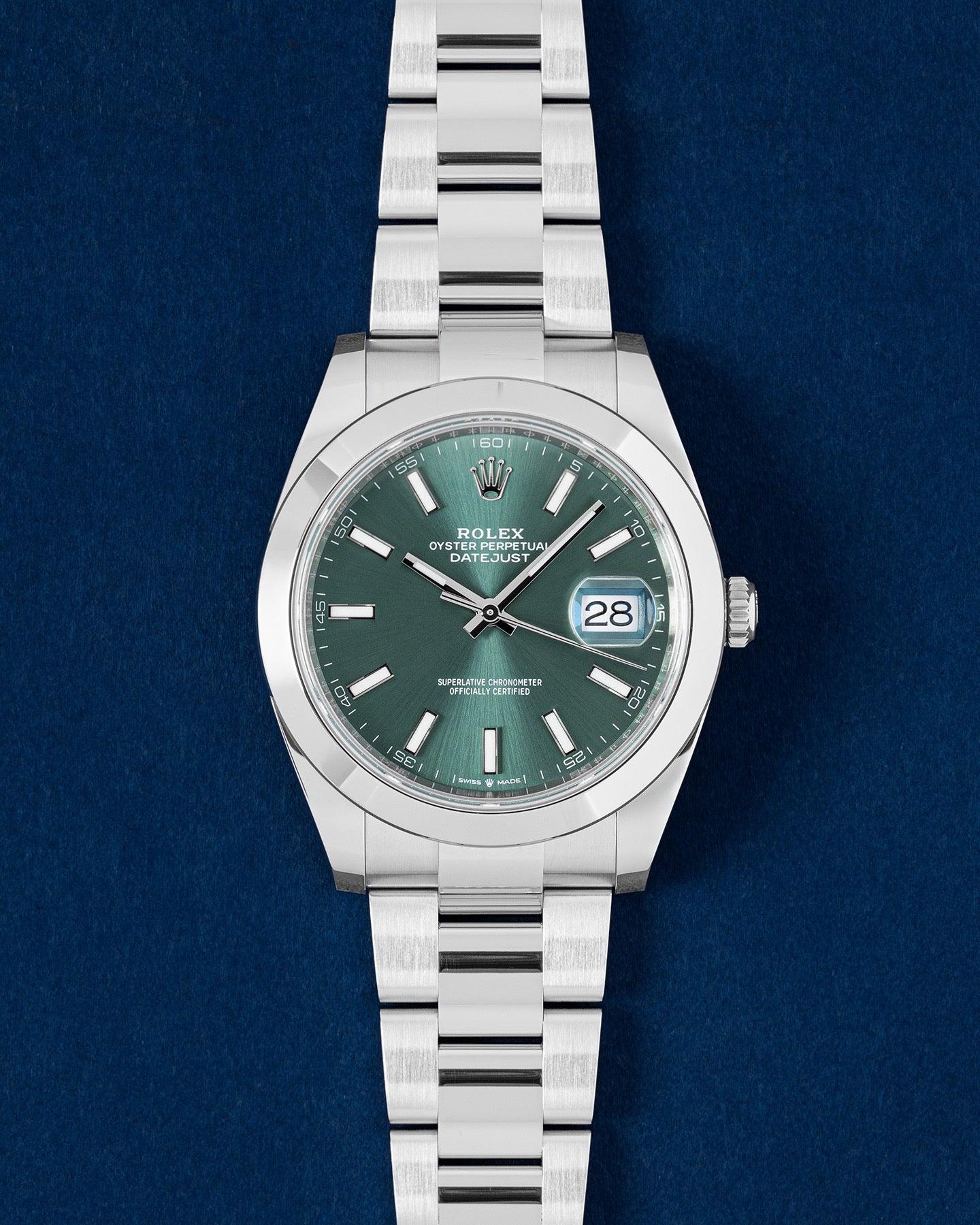
The Rolex Datejust 41 launch references were the 126300 in Oystersteel with smooth bezel, the 126334 in Oystersteel with white gold fluted bezel, the 126333 in Yellow Rolesor with yellow gold fluted bezel, and the 126331 in Everose Rolesor with Everose fluted bezel. The Rolex Datejust 41 has become the dominant size for new Rolex Datejust buyers in the modern era, particularly among first-time Rolex owners who are comparing the watch against the 40mm and 41mm sport references in the rest of the Rolex catalogue.
The Reference 126200 Generation and the Current Rolex Datejust 36
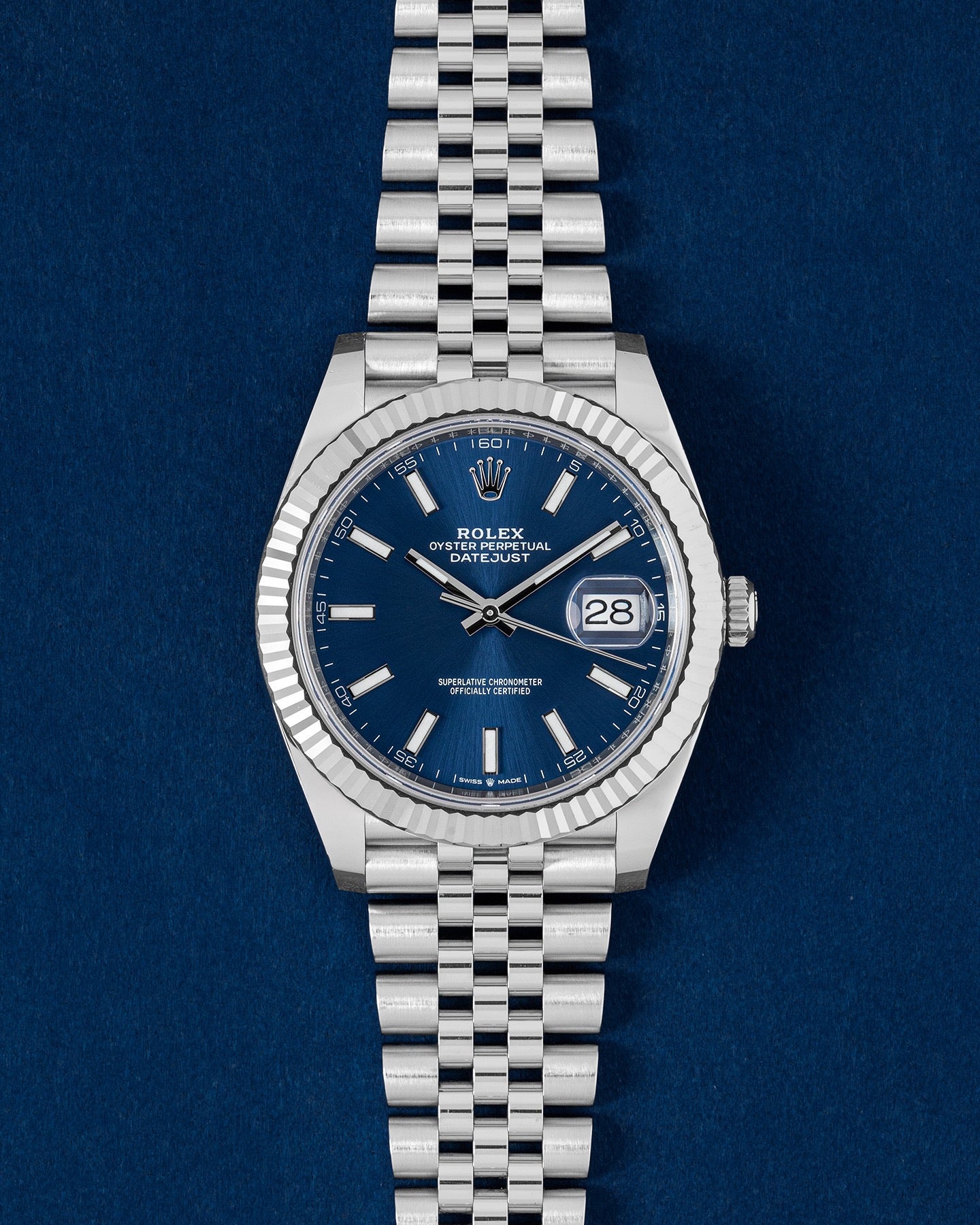
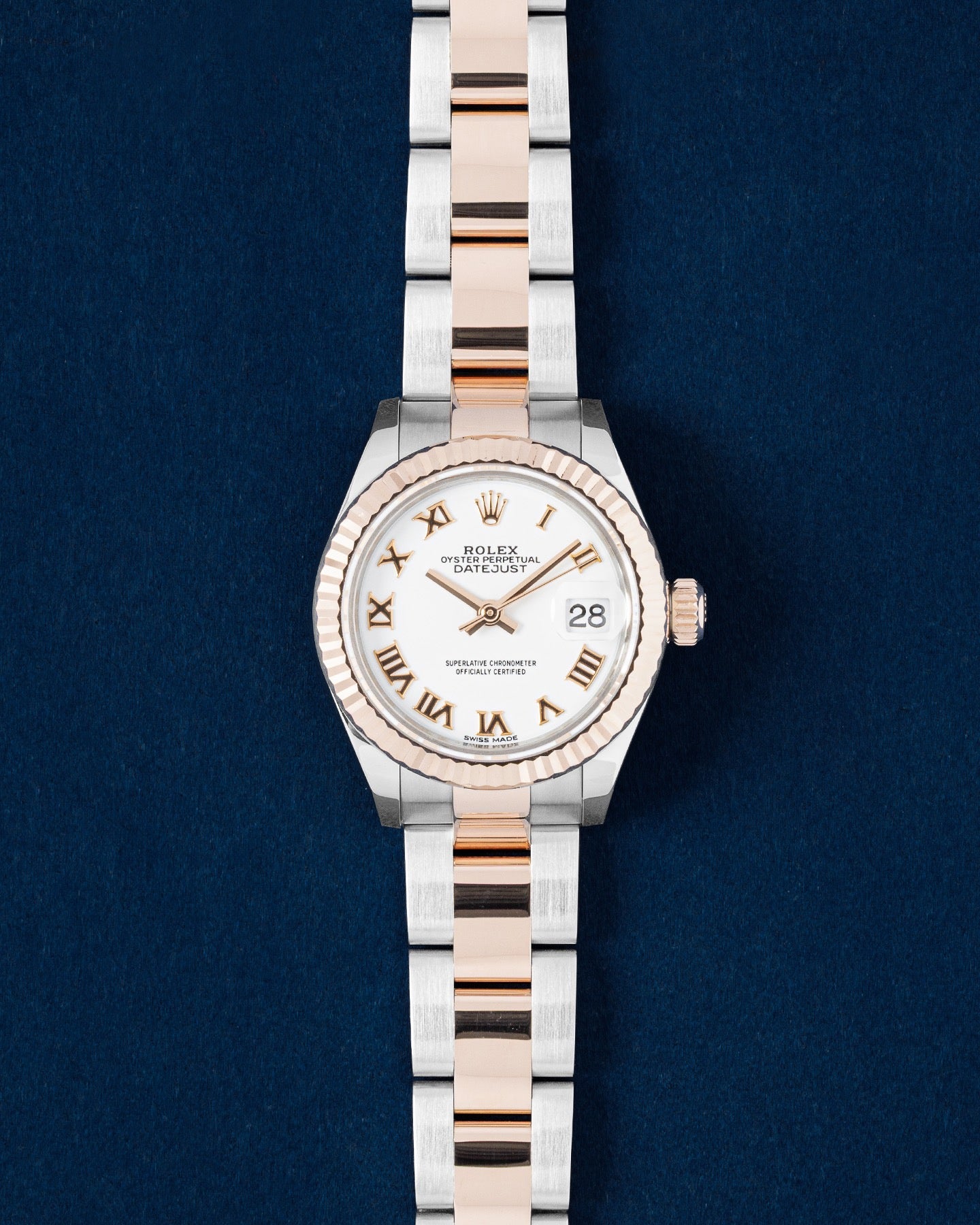
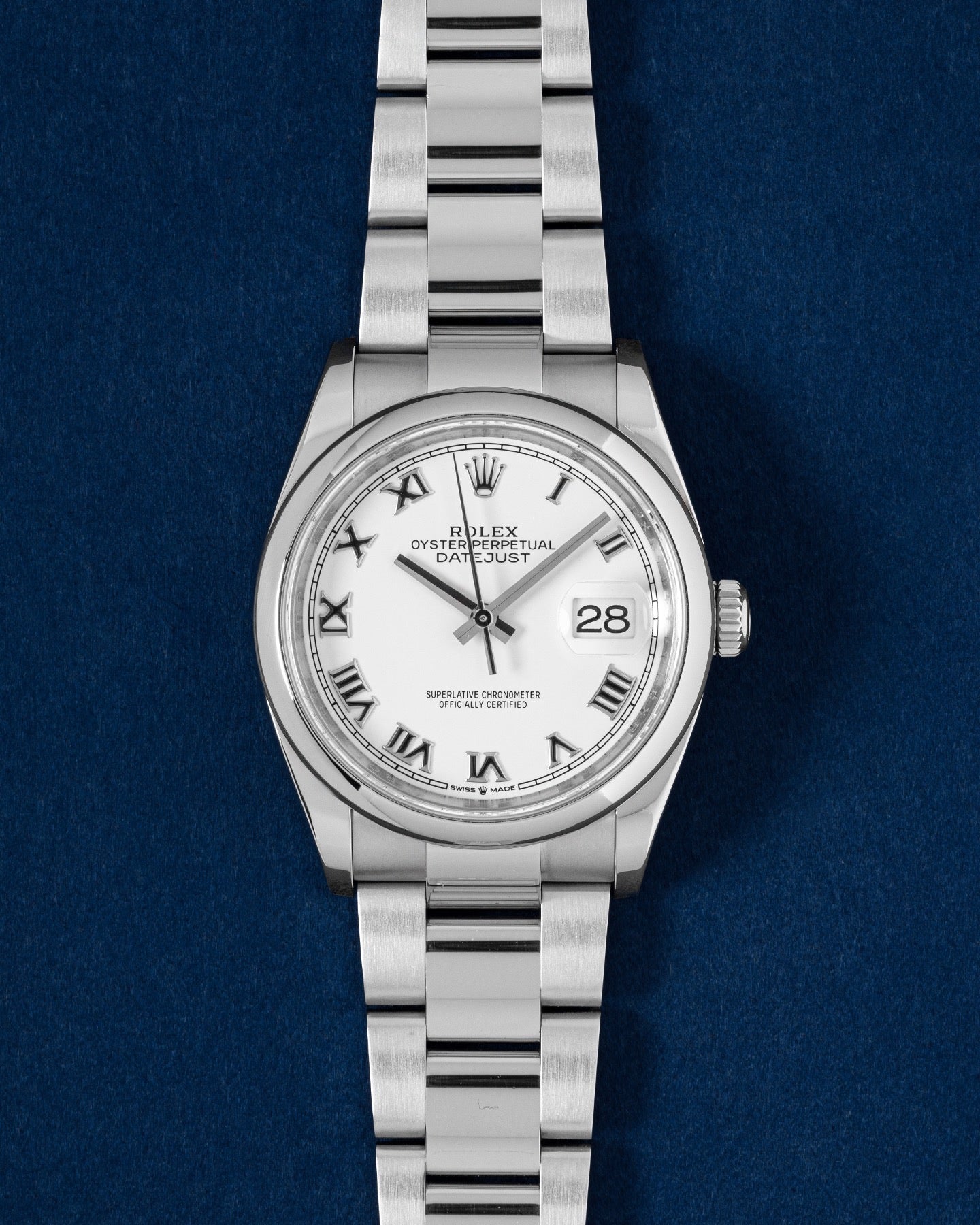
Alongside the Rolex Datejust 41 launch in 2018, Rolex updated the Rolex Datejust 36 to the six-digit second generation reference family, the 126200 series. The reference 126234 became the steel Rolex Datejust 36 with white gold fluted bezel, the reference 126233 became the Yellow Rolesor with yellow gold fluted bezel, and the reference 126200 became the smooth-bezel steel version. The reference 126231 introduced the Everose Rolesor configuration to the Rolex Datejust 36 for the first time.
Inside, the 126200 generation carried the same calibre 3235 the Datejust 41 received in 2016. The 3235 introduced the Chronergy escapement, a Rolex-patented optimised version of the Swiss lever escapement made of nickel-phosphorus for magnetism resistance and approximately 15 percent better energy efficiency than the 3135 it replaced. The power reserve jumped from 48 hours to approximately 70 hours, allowing a Rolex Datejust set down on a Friday evening to still be running and accurate on Monday morning. The Superlative Chronometer certification, originally a Rolex internal standard exceeding COSC, was tightened to guarantee accuracy of negative two to positive two seconds per day after casing, twice as strict as the COSC chronometer standard the rest of the Swiss watch industry uses.
The Lady-Datejust and the Smaller Rolex Datejust Case Sizes
The Rolex Datejust line has always been available in case sizes for both men and women, and the smaller-case Rolex Datejust references constitute a significant portion of total Datejust production across the model's history.
The Lady-Datejust 26 and 28
The first Lady-Datejust was the reference 6517, introduced in the early 1950s in a 26mm case. The 26mm size remained the standard women's Rolex Datejust dimension for over five decades, running through the reference families 6917, 69173, 69174, 179173, and 179174 across successive calibre generations. In 2015, Rolex updated the Lady-Datejust to a 28mm case with the 279xxx reference family, fitted with the calibre 2236 and the silicon Syloxi hairspring. The 28mm Lady-Datejust is the current production women's Rolex Datejust, available in stainless steel, Yellow Rolesor, White Rolesor, Everose Rolesor, solid yellow gold, solid white gold, and solid Everose gold.
The Rolex Datejust 31 and the Midsize Position
The Rolex Datejust 31 sits between the 28mm Lady-Datejust and the 36mm classic men's Rolex Datejust. The 31mm size has run intermittently across Rolex Datejust history and has become an increasingly common modern choice for buyers who want more wrist presence than the Lady-Datejust offers without going up to the men's 36mm. The current production Rolex Datejust 31 references 278240, 278243, 278274, and 278278 run the Rolex calibre 2236.
The Rolex Datejust Bezel Taxonomy
The Rolex Datejust offers more bezel configurations than any other Rolex reference family. Reading a Rolex Datejust bezel is the fastest way to identify the configuration at a glance.
The Fluted Bezel
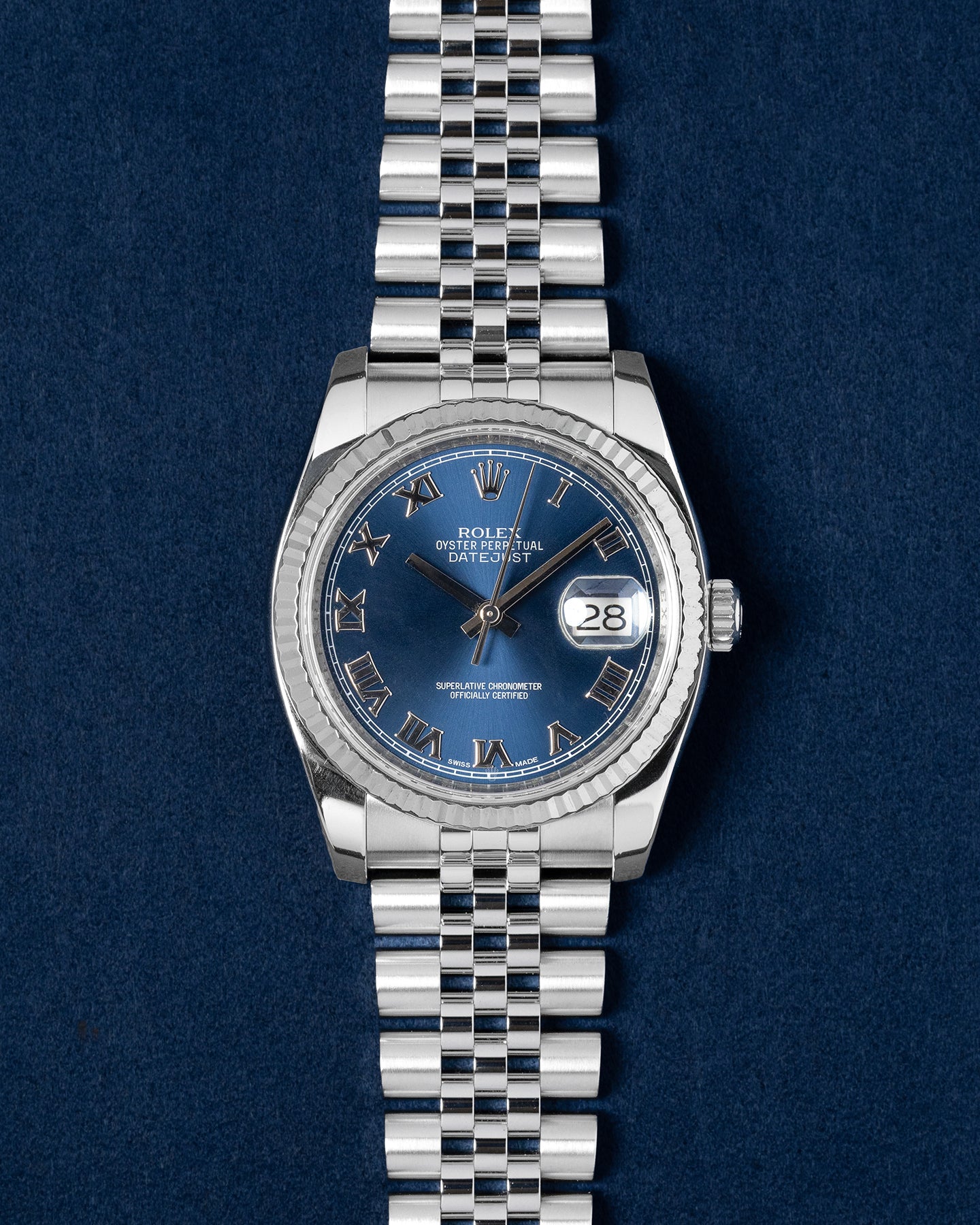
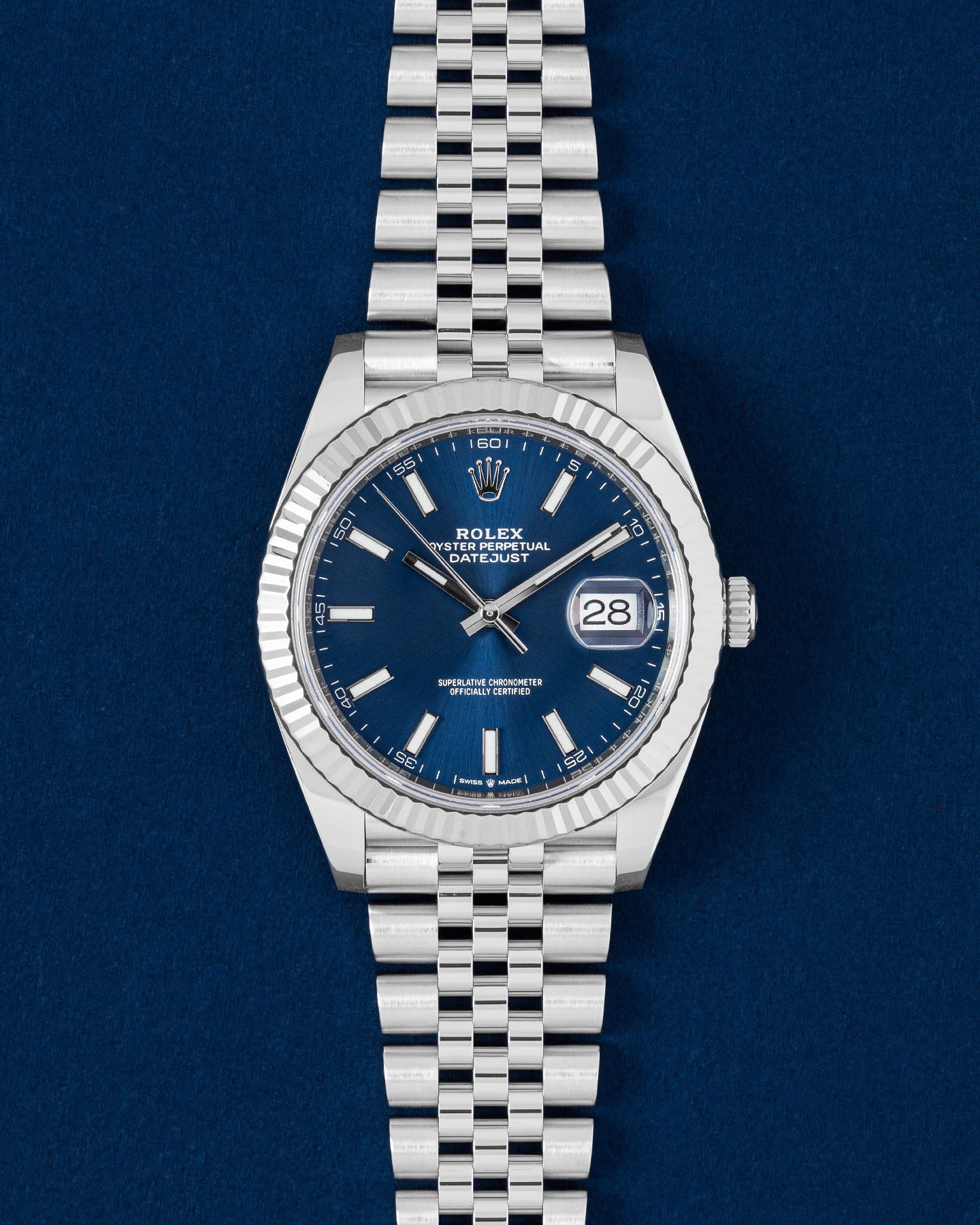
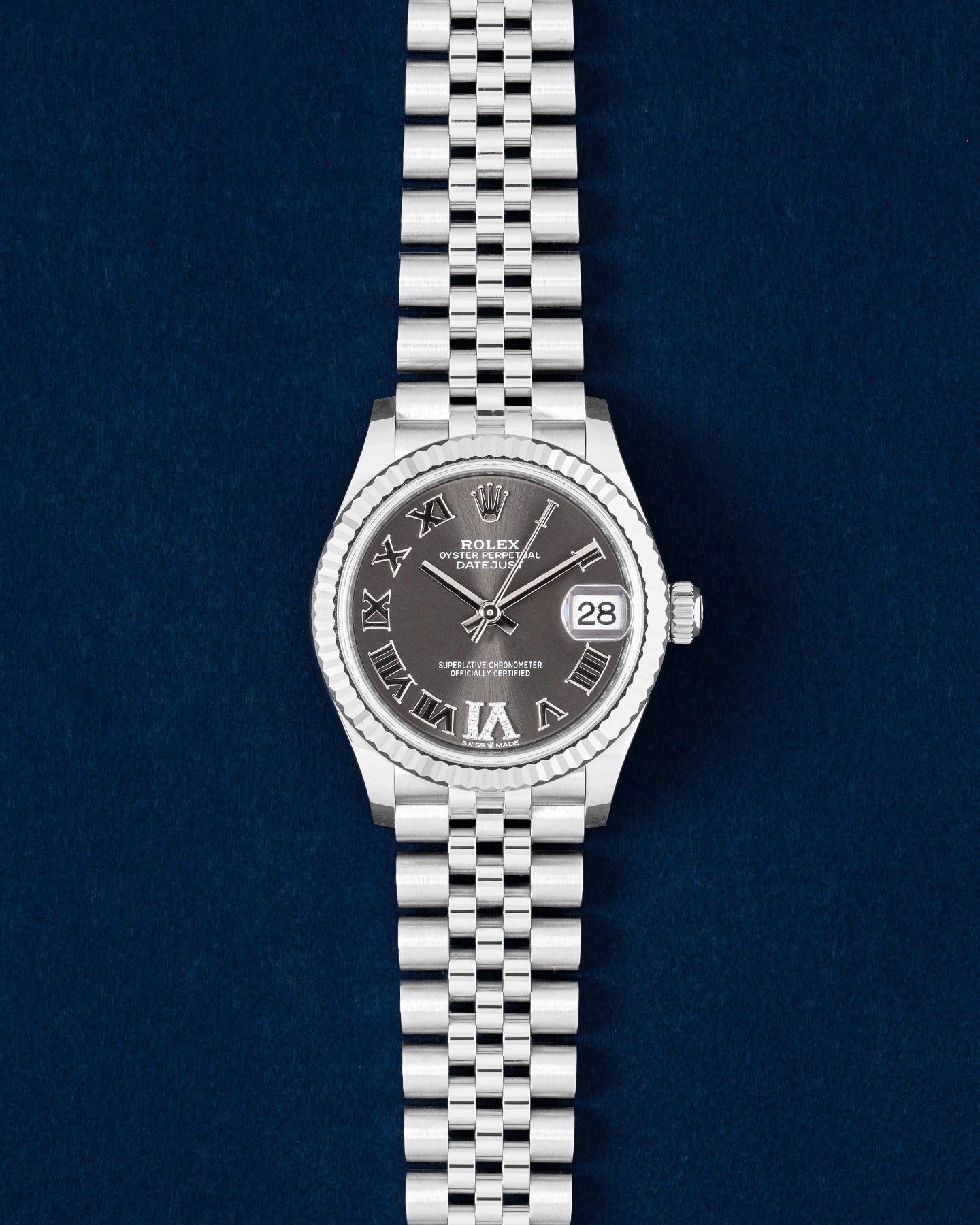
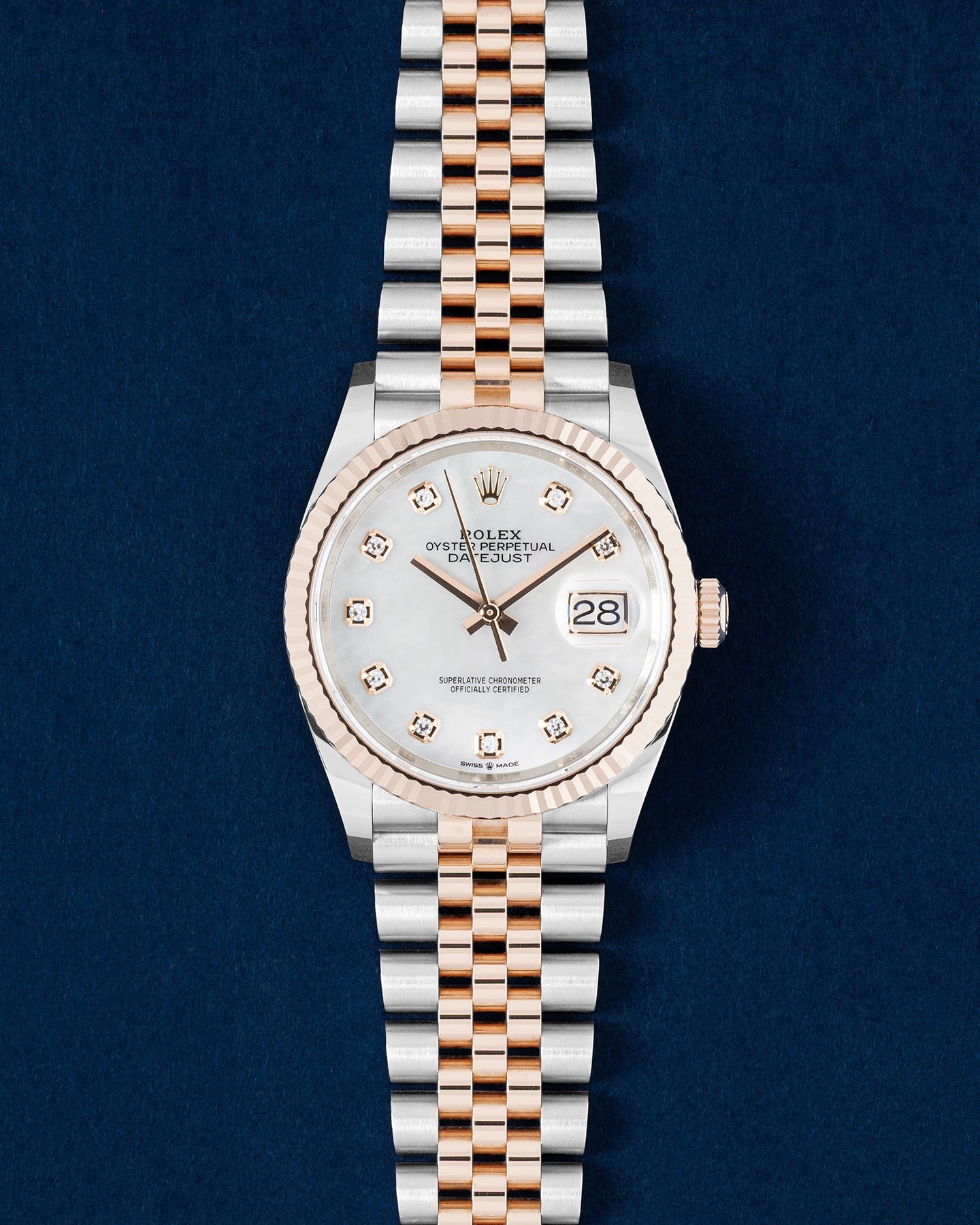
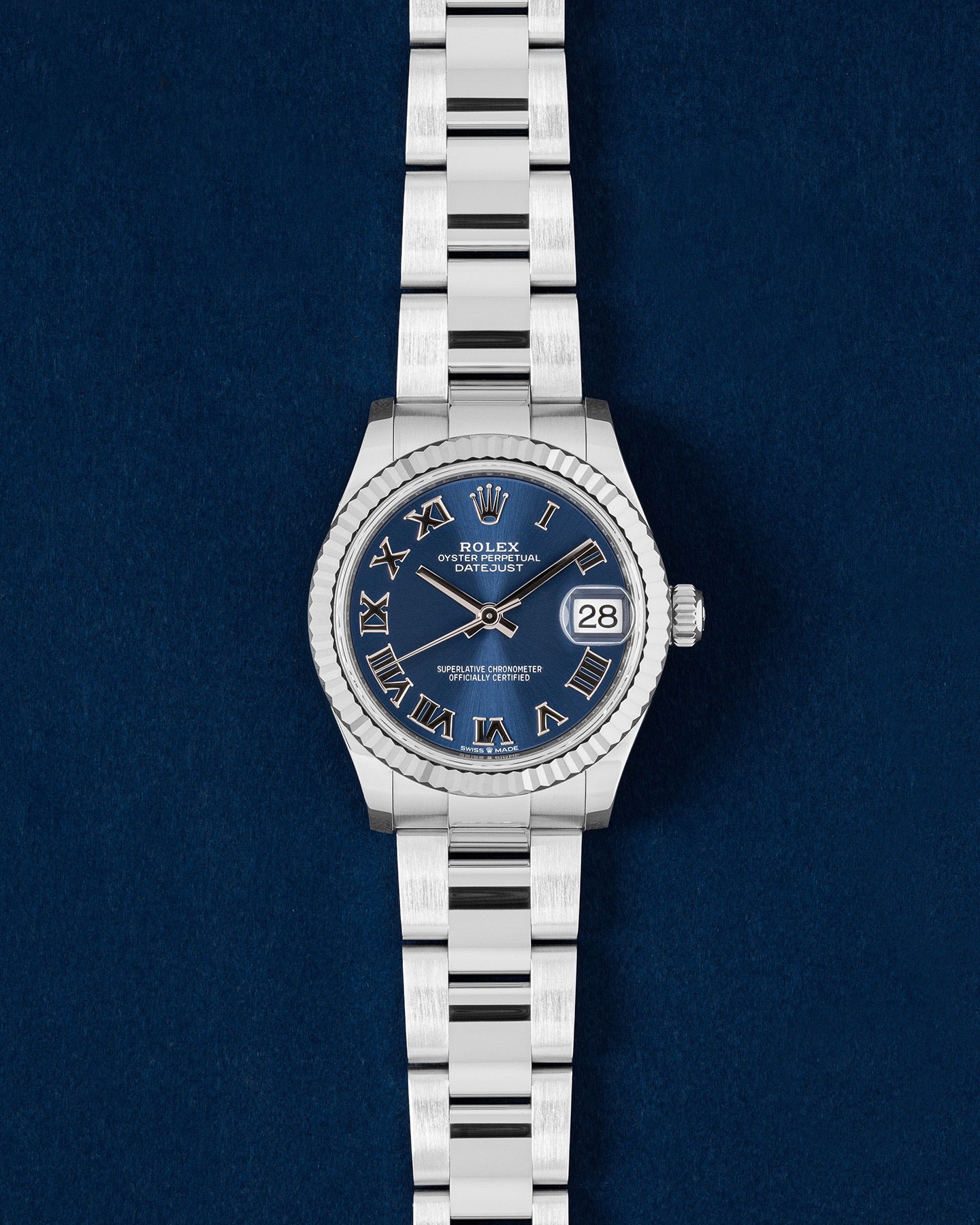
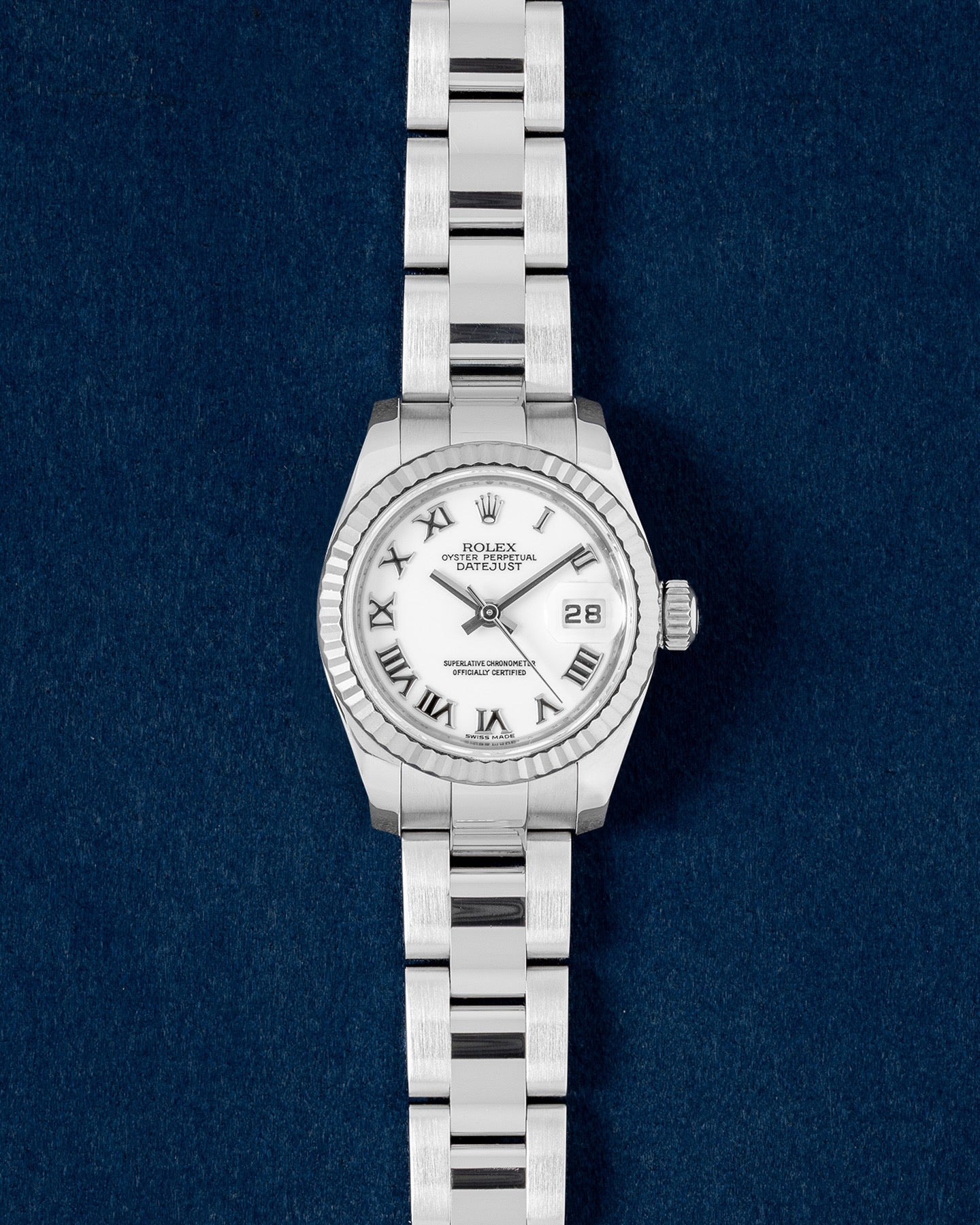
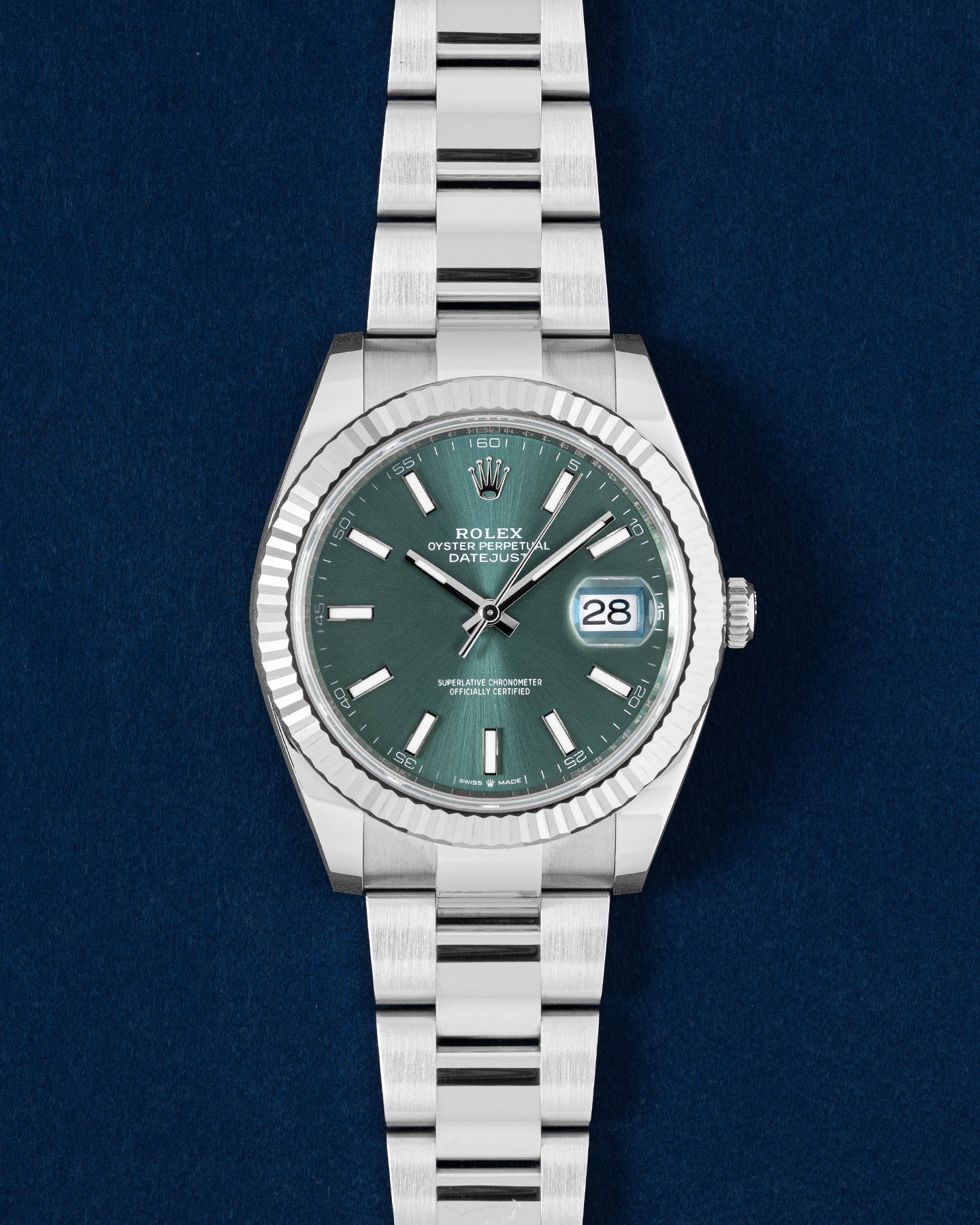
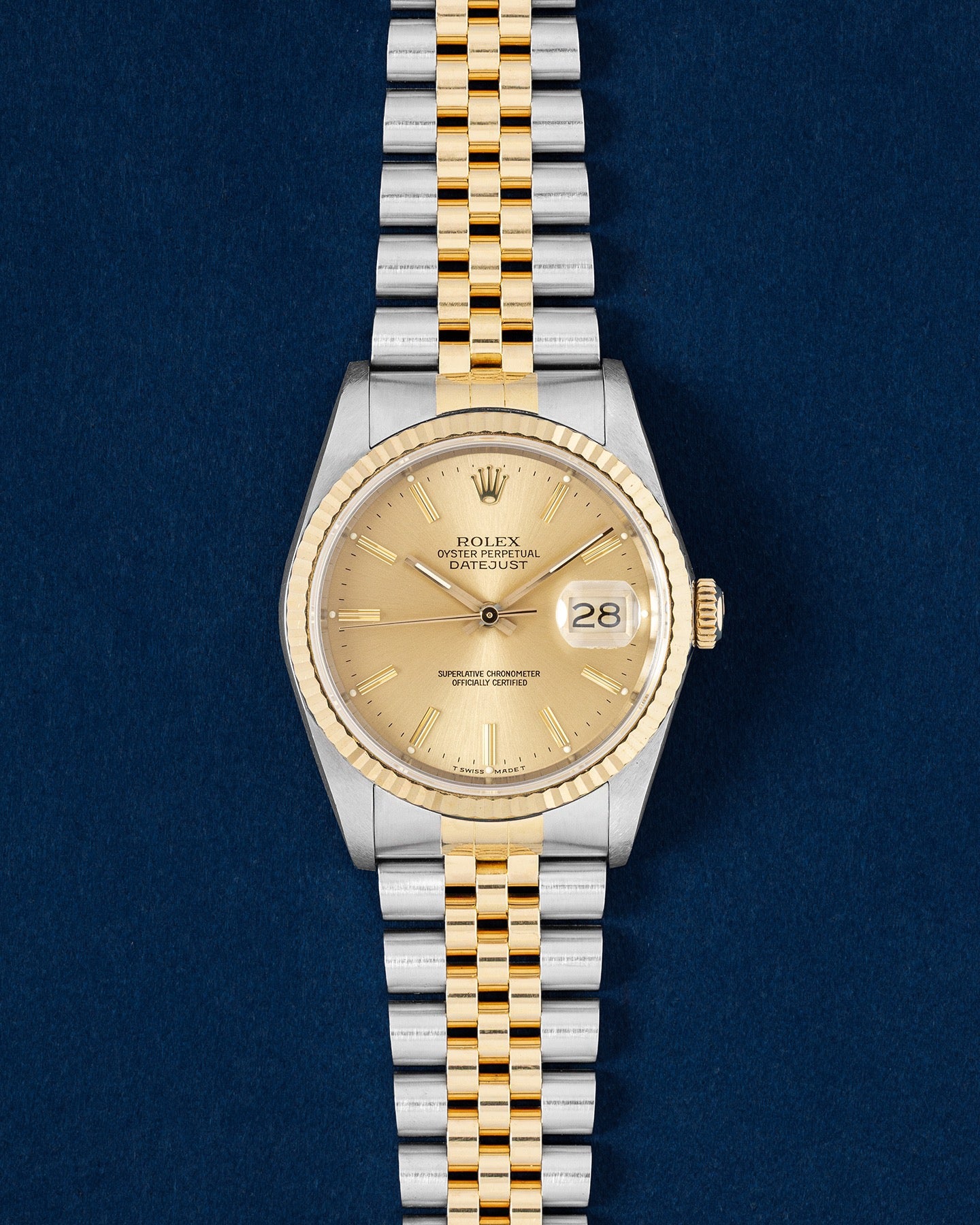
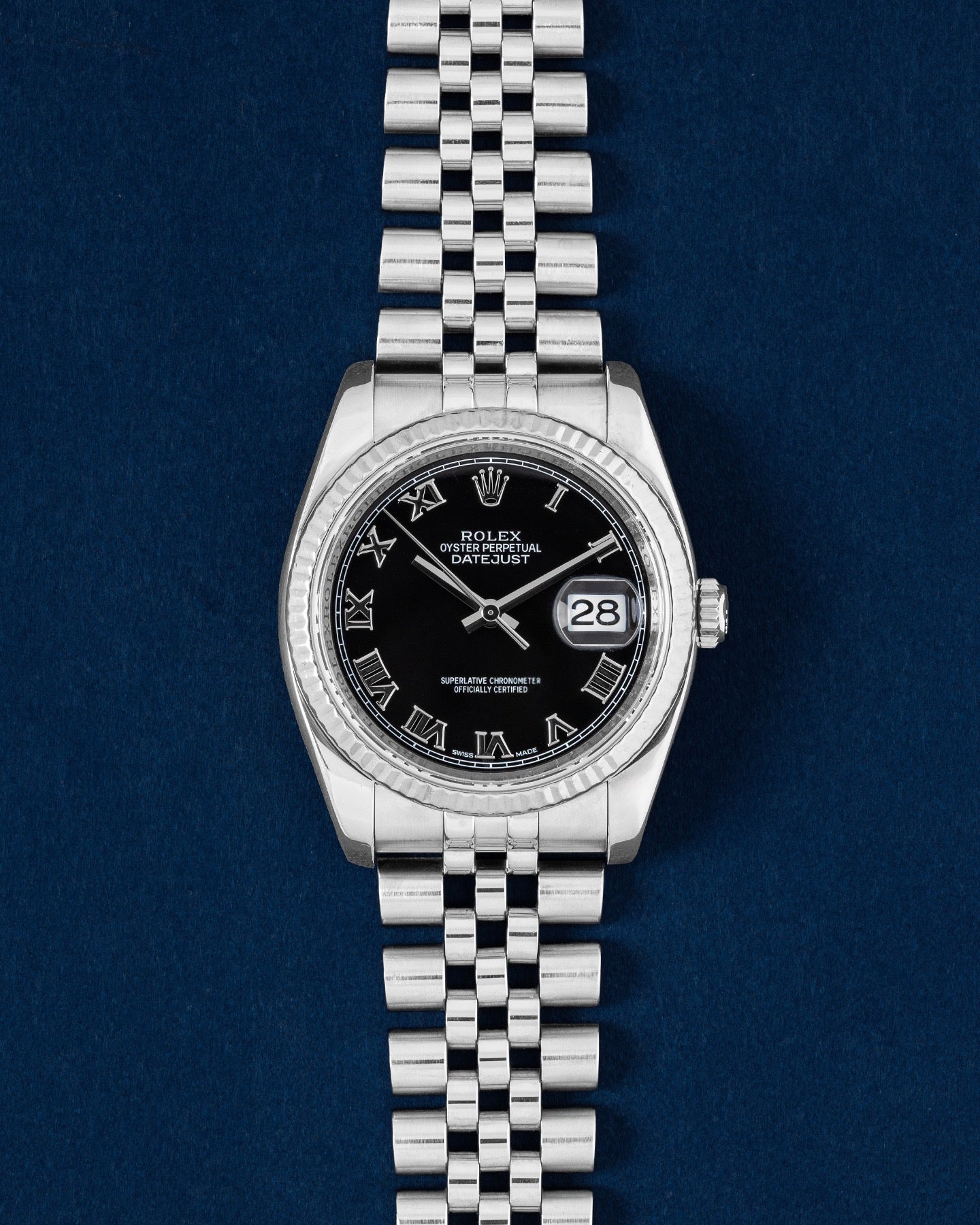
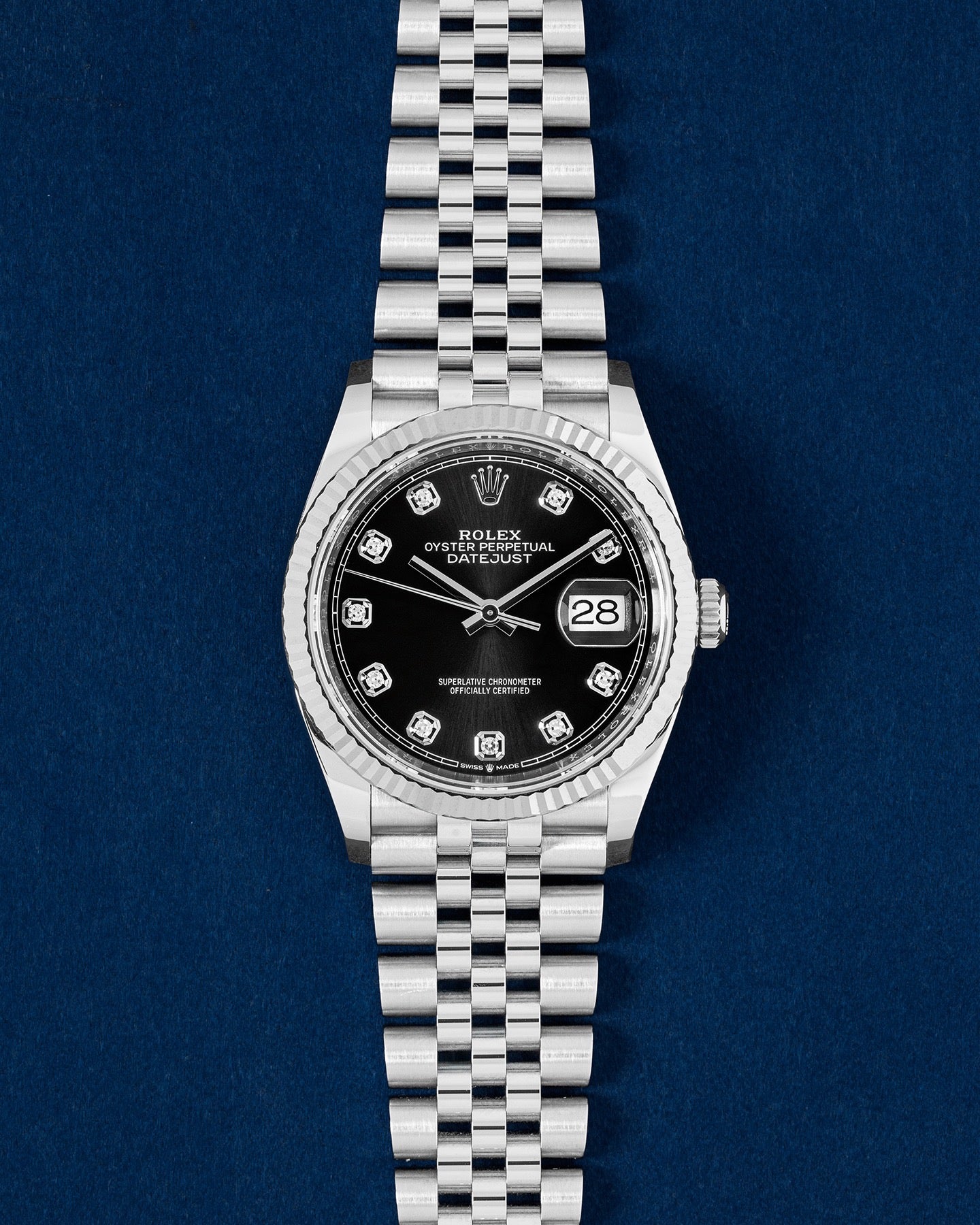
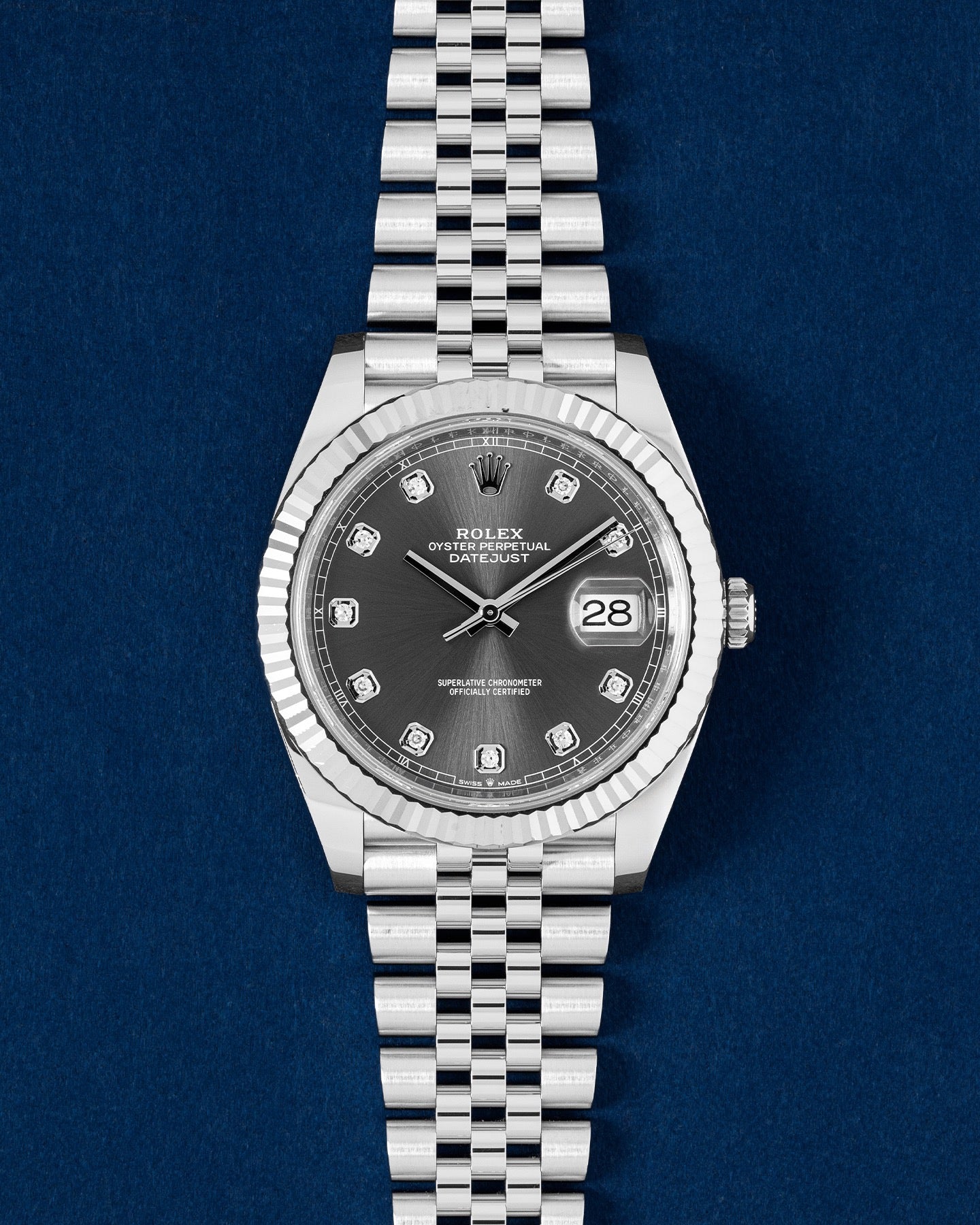
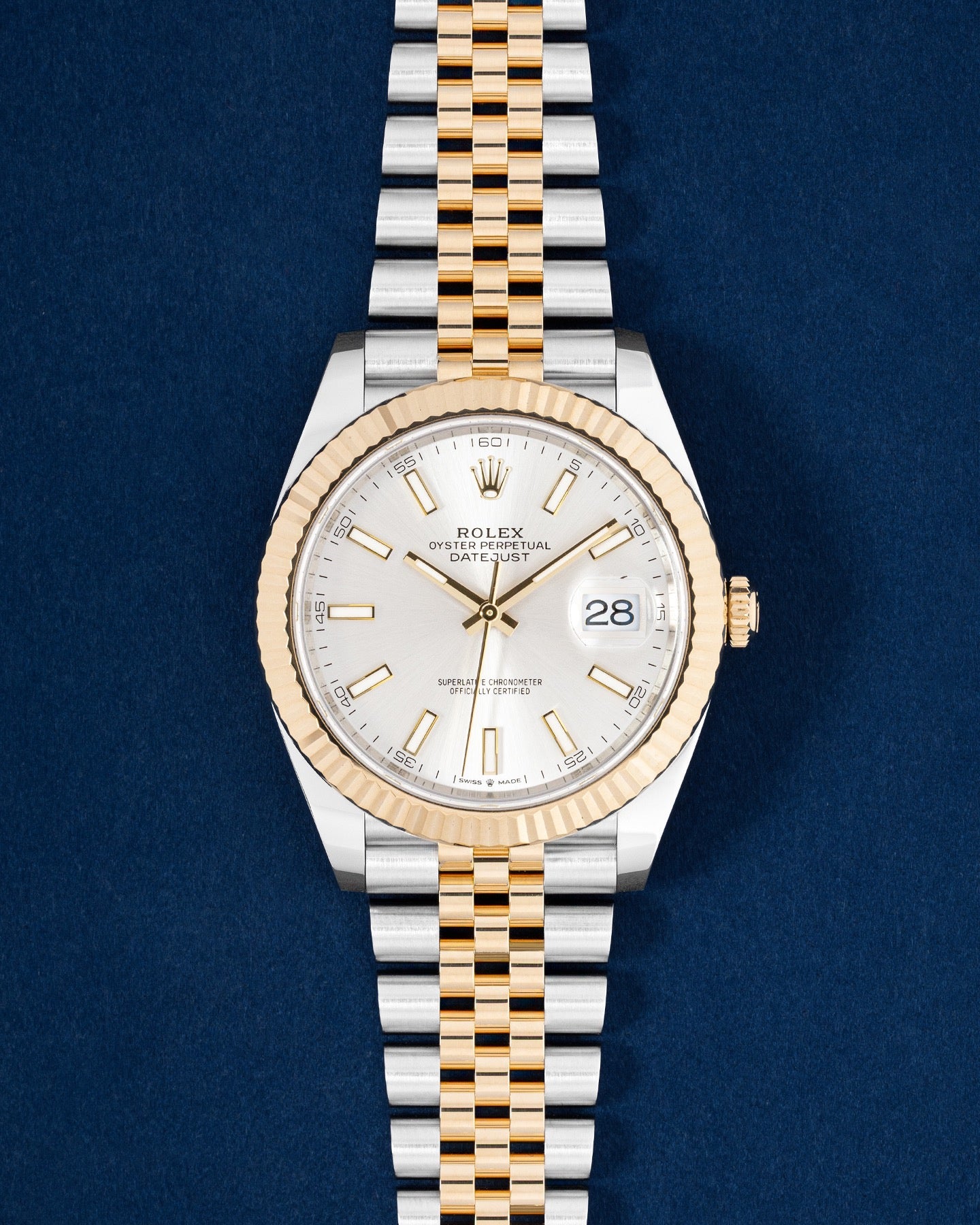
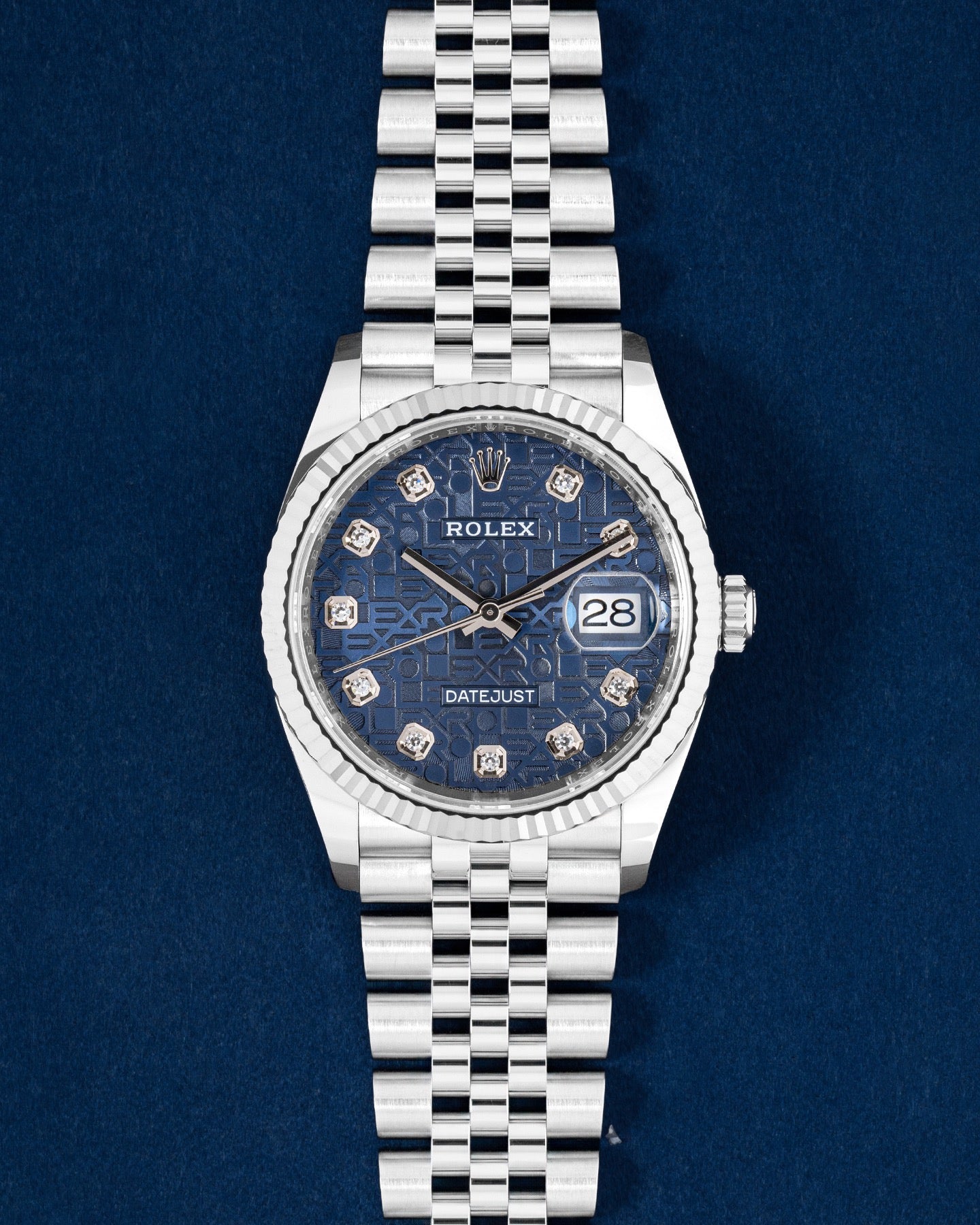
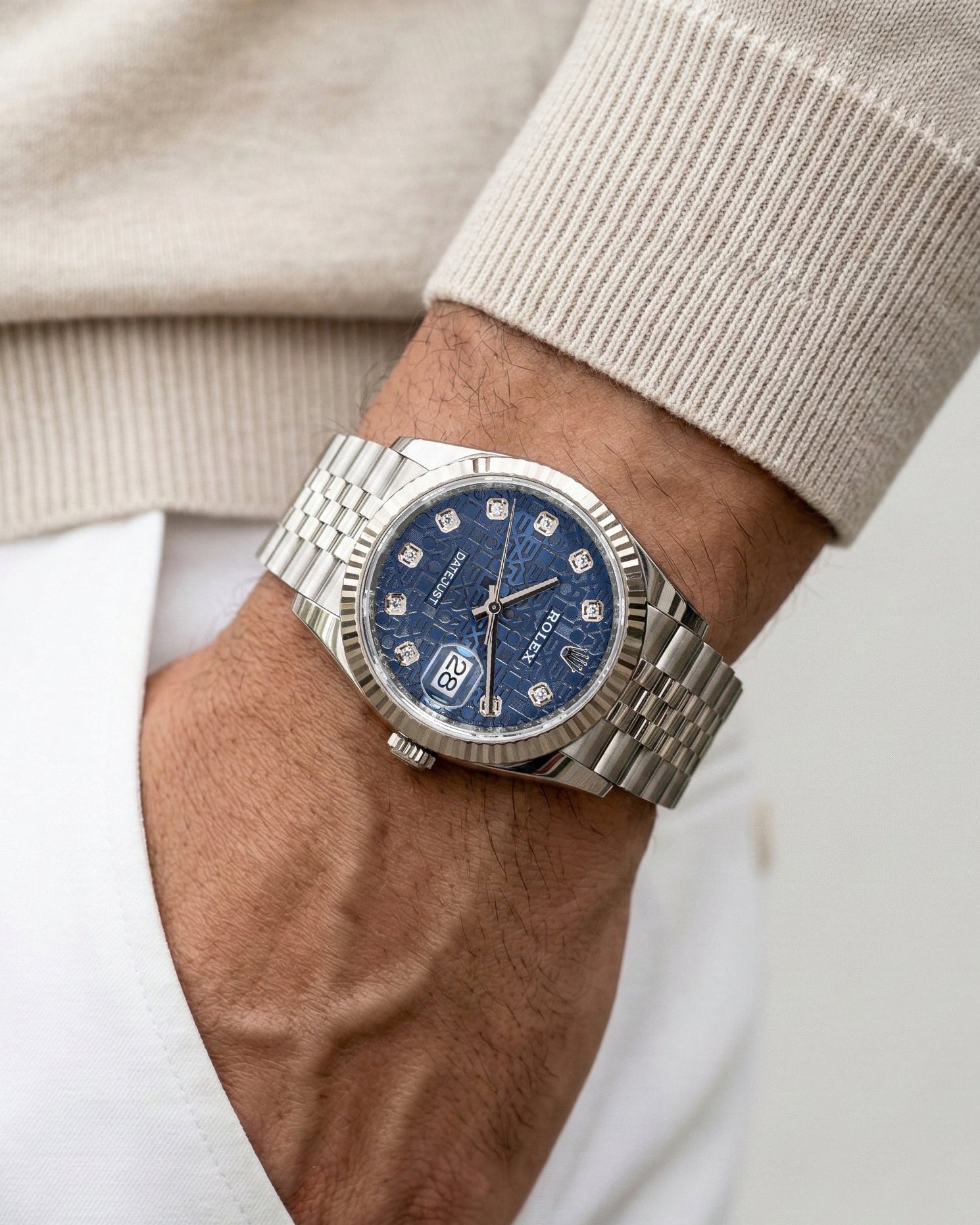
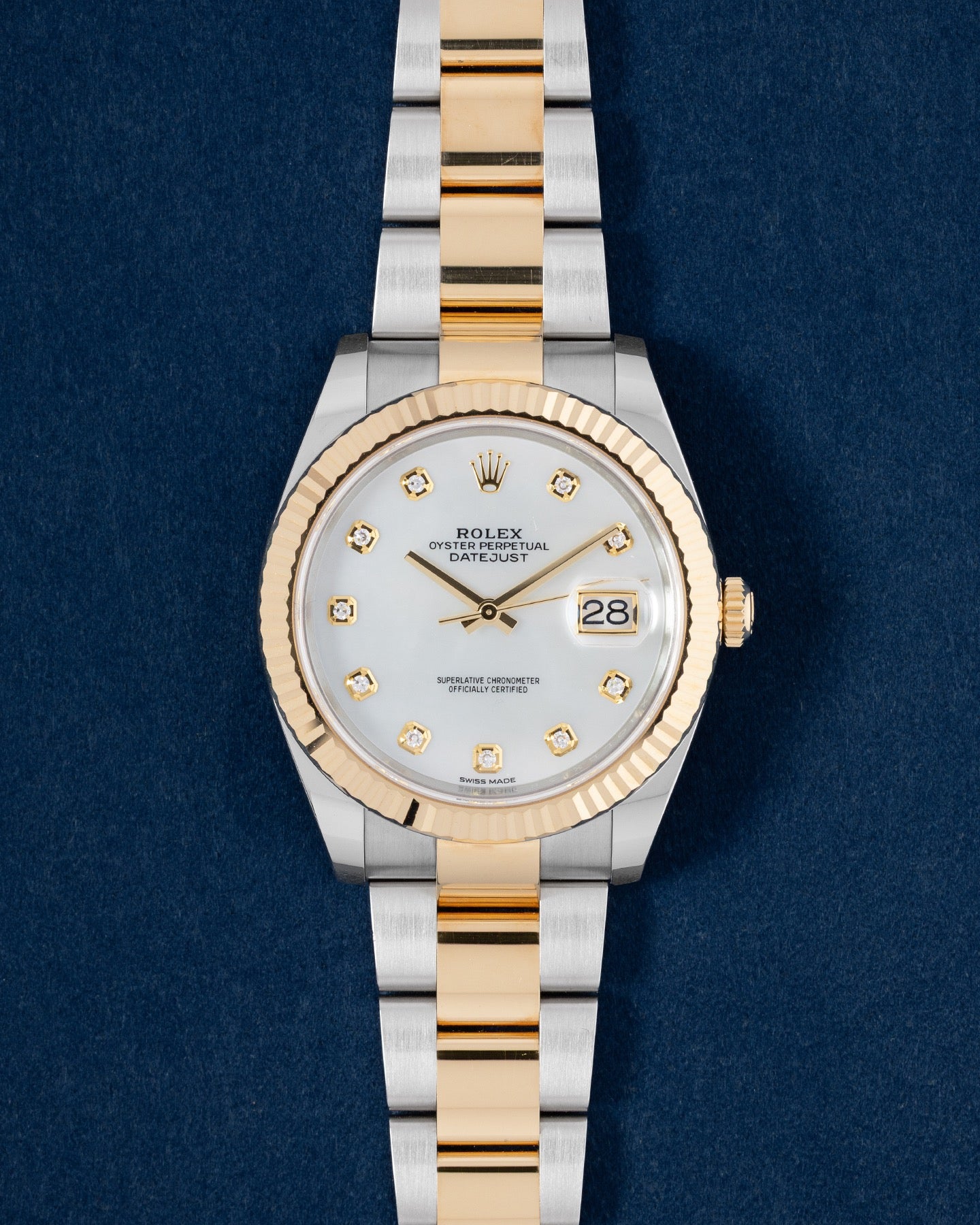
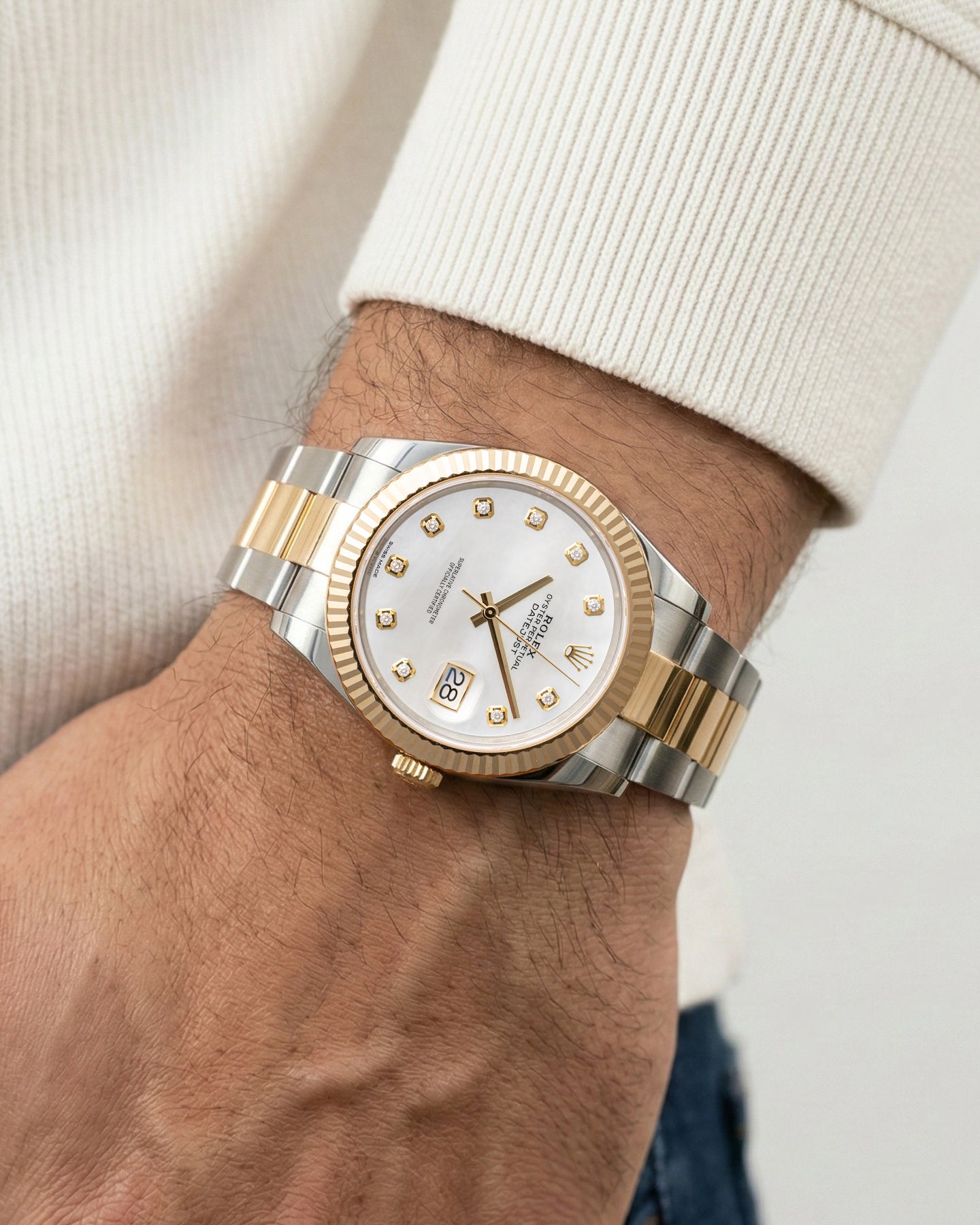
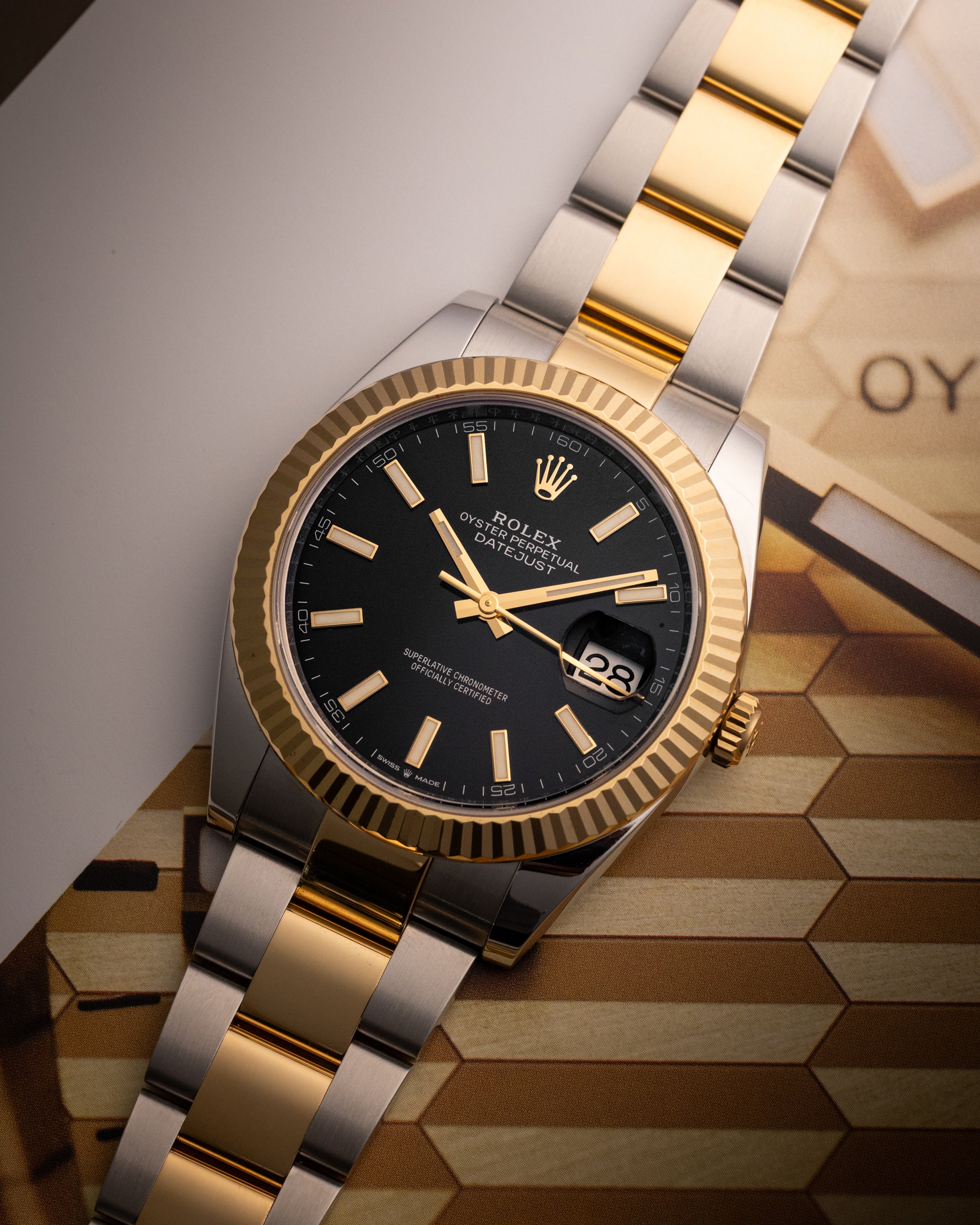
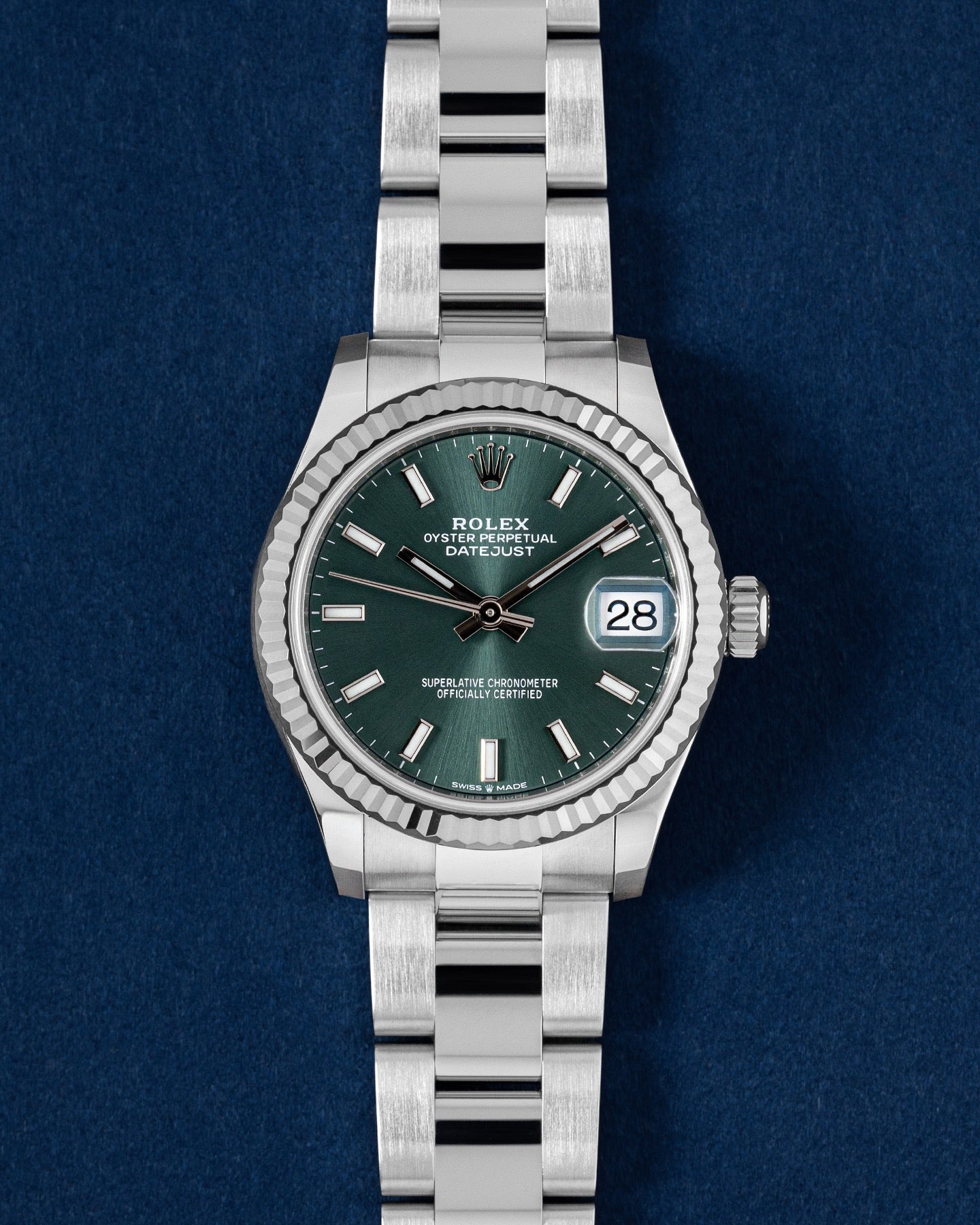
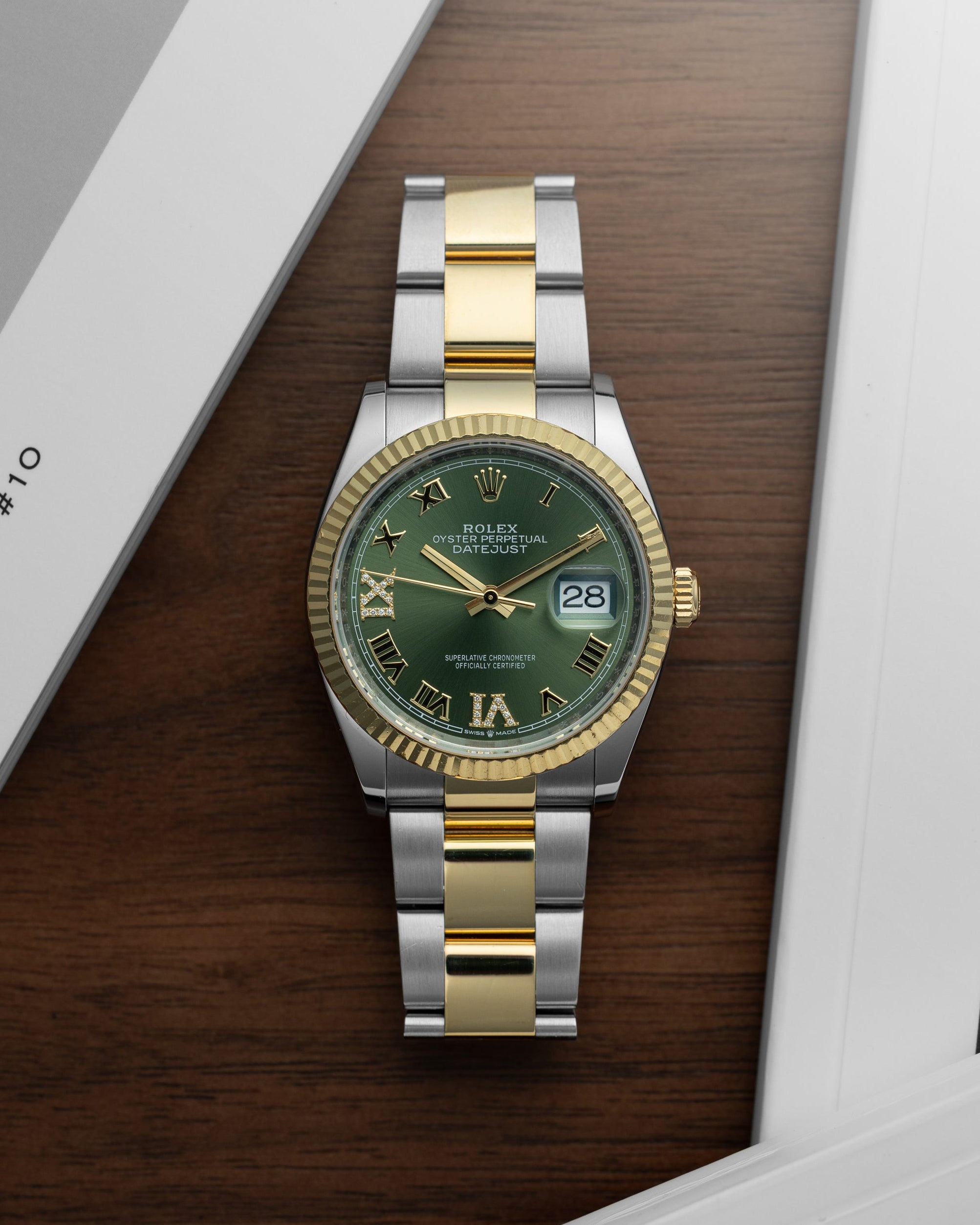
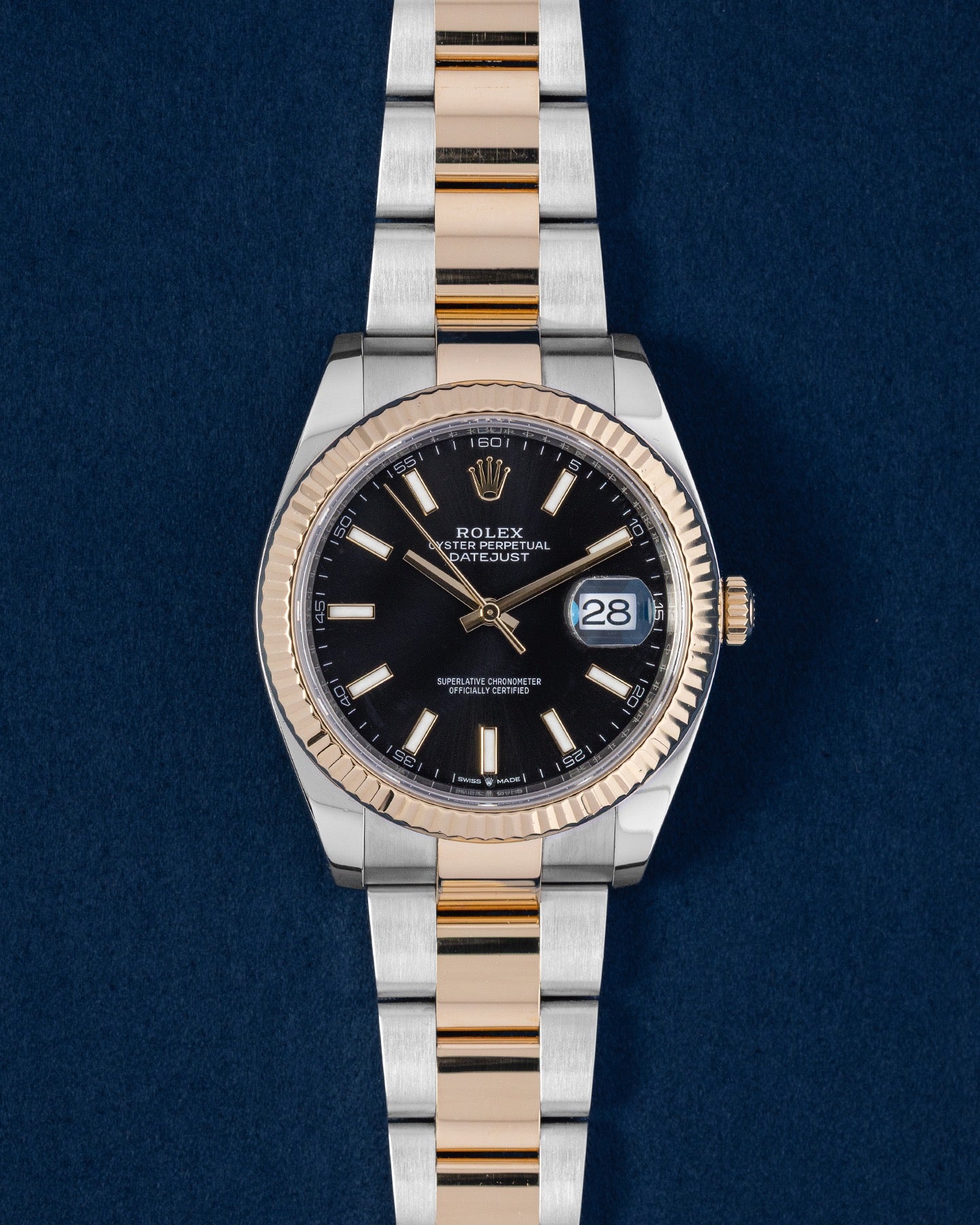
The fluted bezel is the signature Rolex Datejust bezel. The fluting consists of approximately 60 sharp triangular grooves machined around the bezel ring, originally designed in the 1940s to provide friction for the case-back tool Rolex used to screw the case shut. The fluted bezel has always been produced in 18-karat gold, even on steel-case Rolex Datejust references. On the steel models, the fluted bezel is 18-karat white gold; on the Yellow Rolesor models, 18-karat yellow gold; on the Everose Rolesor and solid Everose, 18-karat Everose gold. The fluted bezel is the dressier and more formal configuration and accounts for the majority of total Rolex Datejust production across the model's history.
The Smooth Bezel
The smooth bezel is the simplest and cleanest Rolex Datejust bezel, polished steel or gold without any fluting or texture. The smooth bezel reads as more modern and more understated than the fluted, and it has become a meaningful share of current Rolex Datejust 36 and Rolex Datejust 41 production. The reference 126200 in the modern Rolex Datejust 36 and the reference 126300 in the Rolex Datejust 41 are both smooth-bezel configurations.
The Engine-Turned Bezel
The engine-turned bezel, also called the guilloché bezel, is a steel bezel machined with fine vertical fluting that gives it a textured surface without using gold. The engine-turned bezel appeared on the Rolex Datejust references 1603, 16030, and 16220, and was phased out of current Rolex Datejust production in the 2010s.
The Diamond and Gem-Set Bezels
Diamond-set Rolex Datejust references have appeared across most generations, with factory diamond-set bezels available on Rolesor and solid precious-metal configurations. The current Rolex Datejust 36 and Rolex Datejust 41 catalogues both offer diamond bezel options, and the precious metal Rolex Datejust references are also offered with factory diamond hour markers and diamond dials.
The Rolex Datejust Bracelet Taxonomy
The Rolex Datejust is most commonly offered on one of two bracelets, both with histories tied directly to the model.
The Jubilee Bracelet
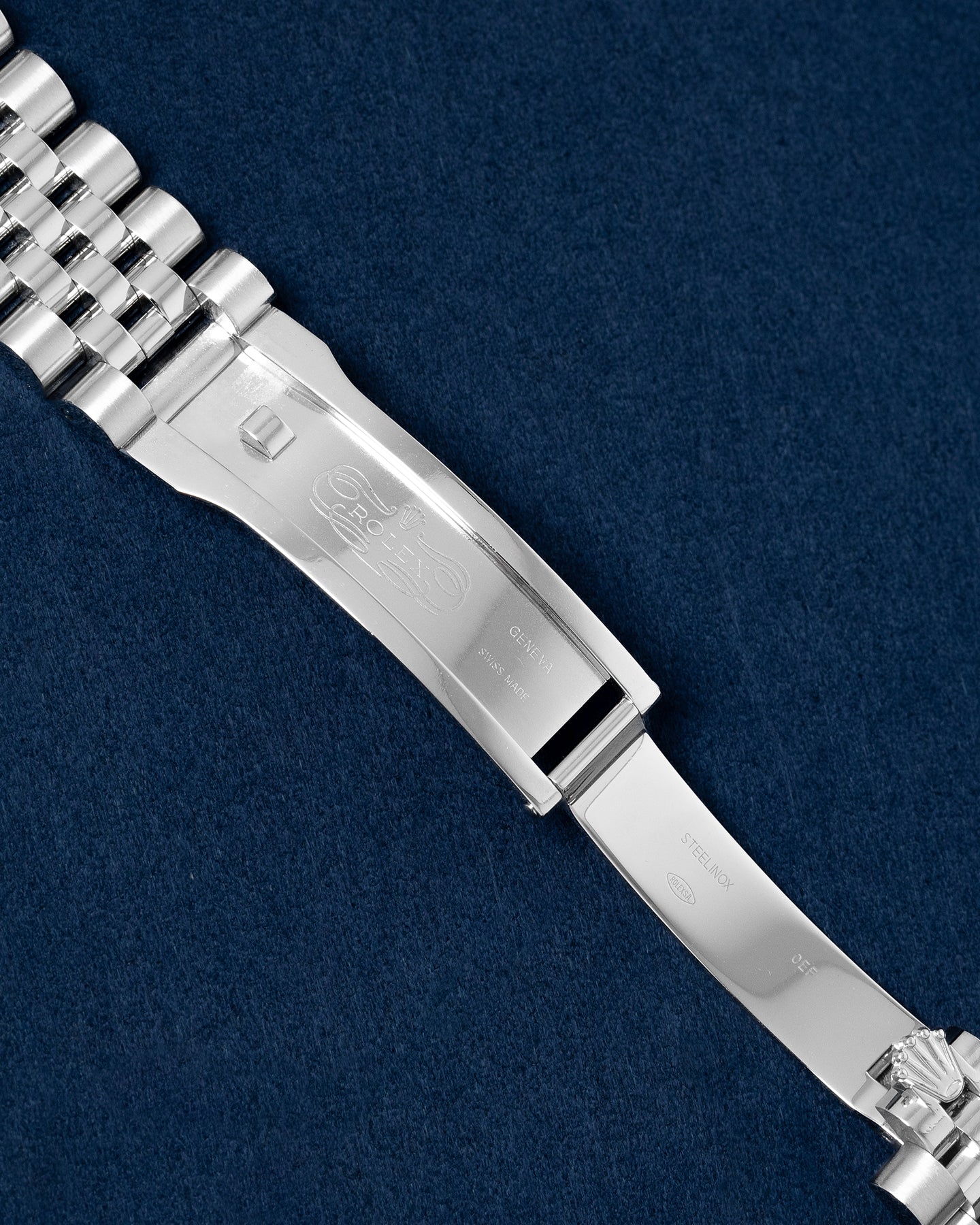
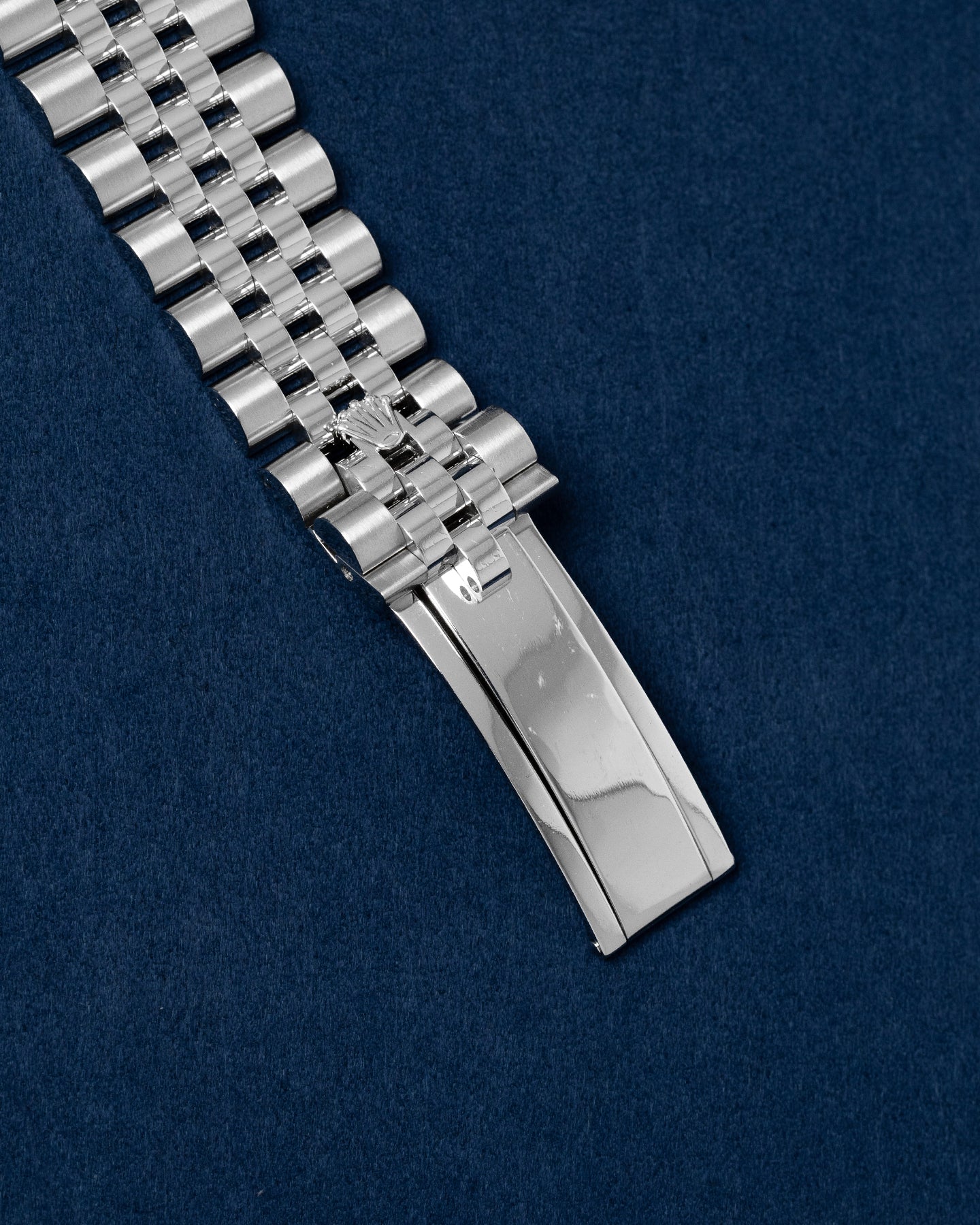
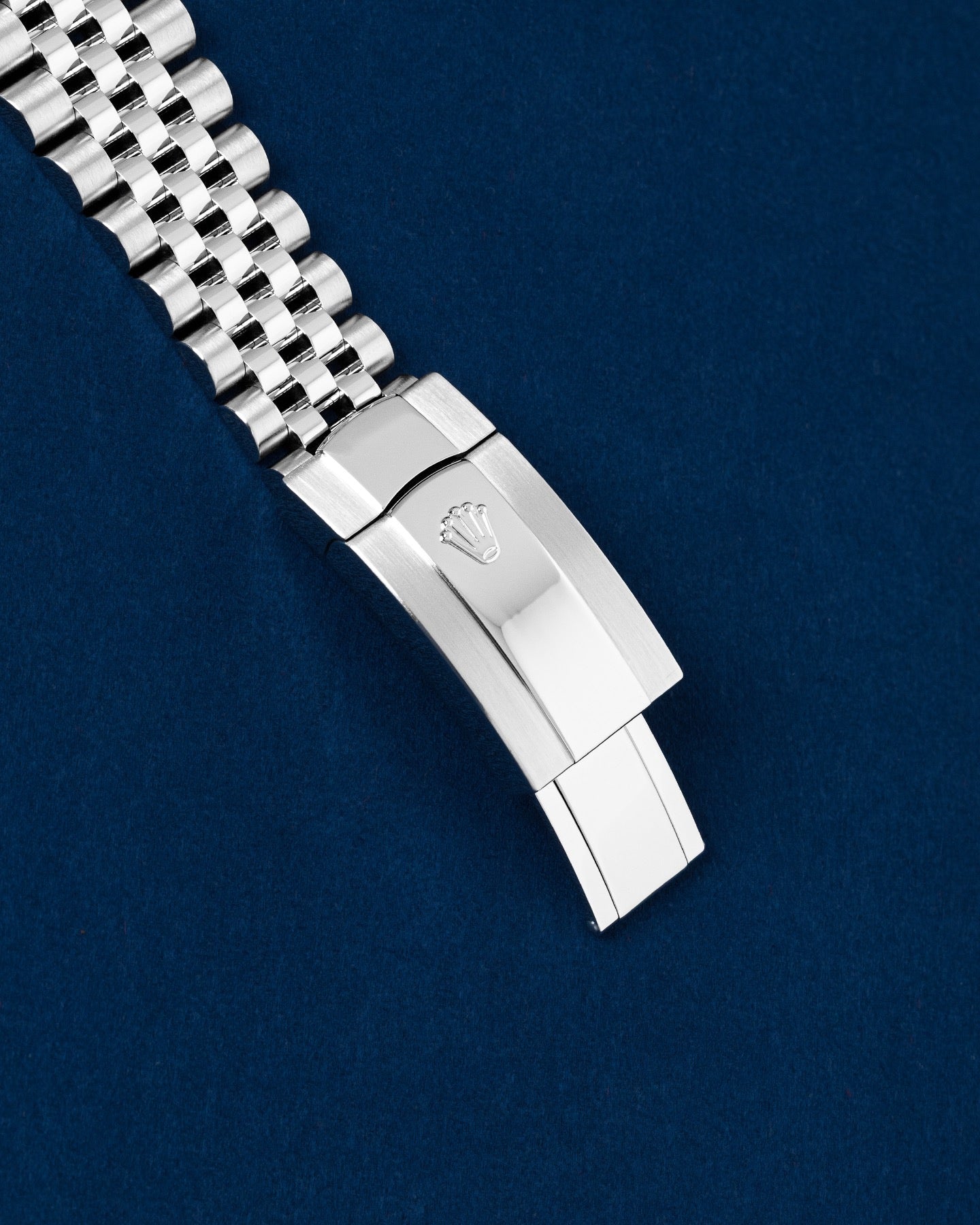
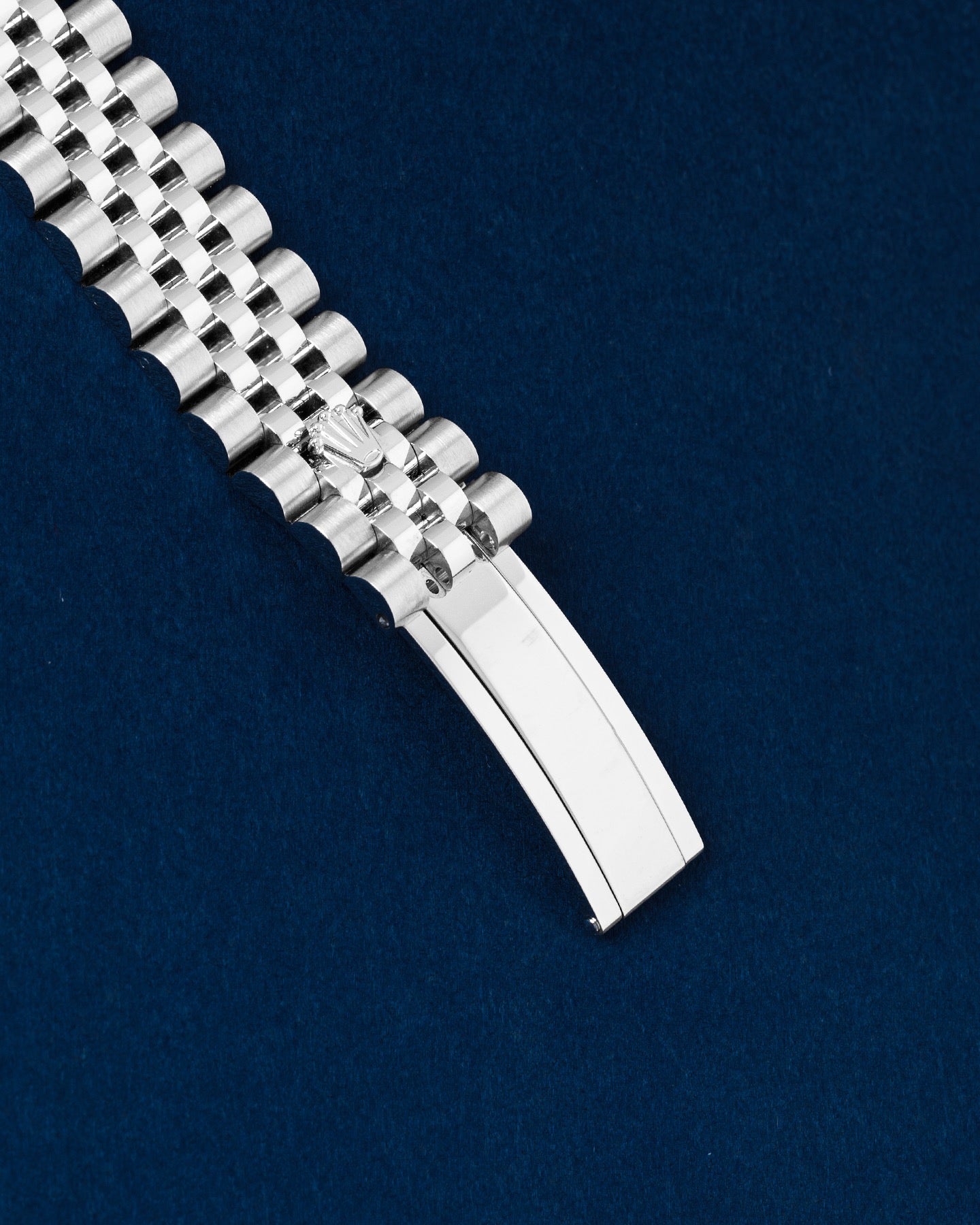
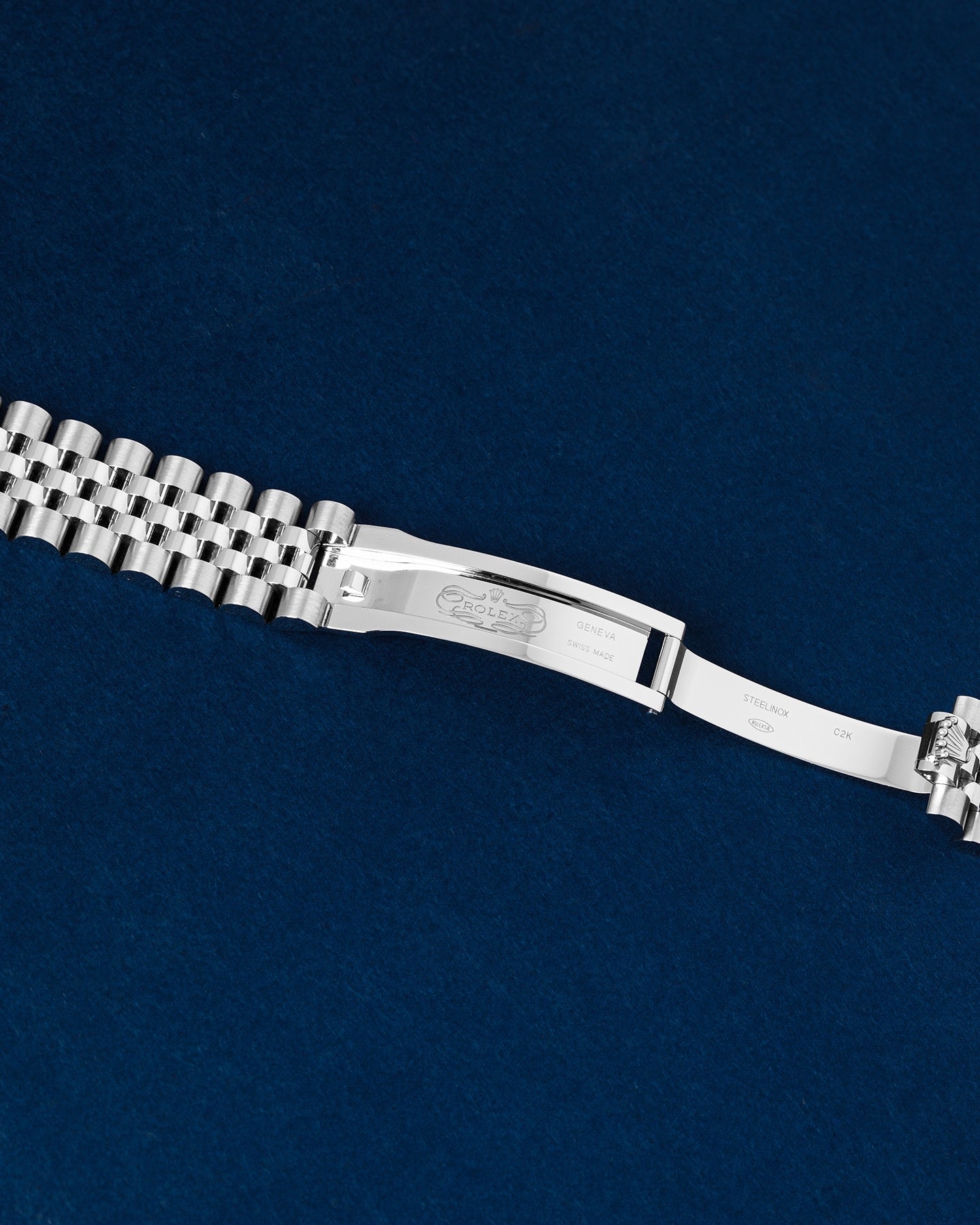
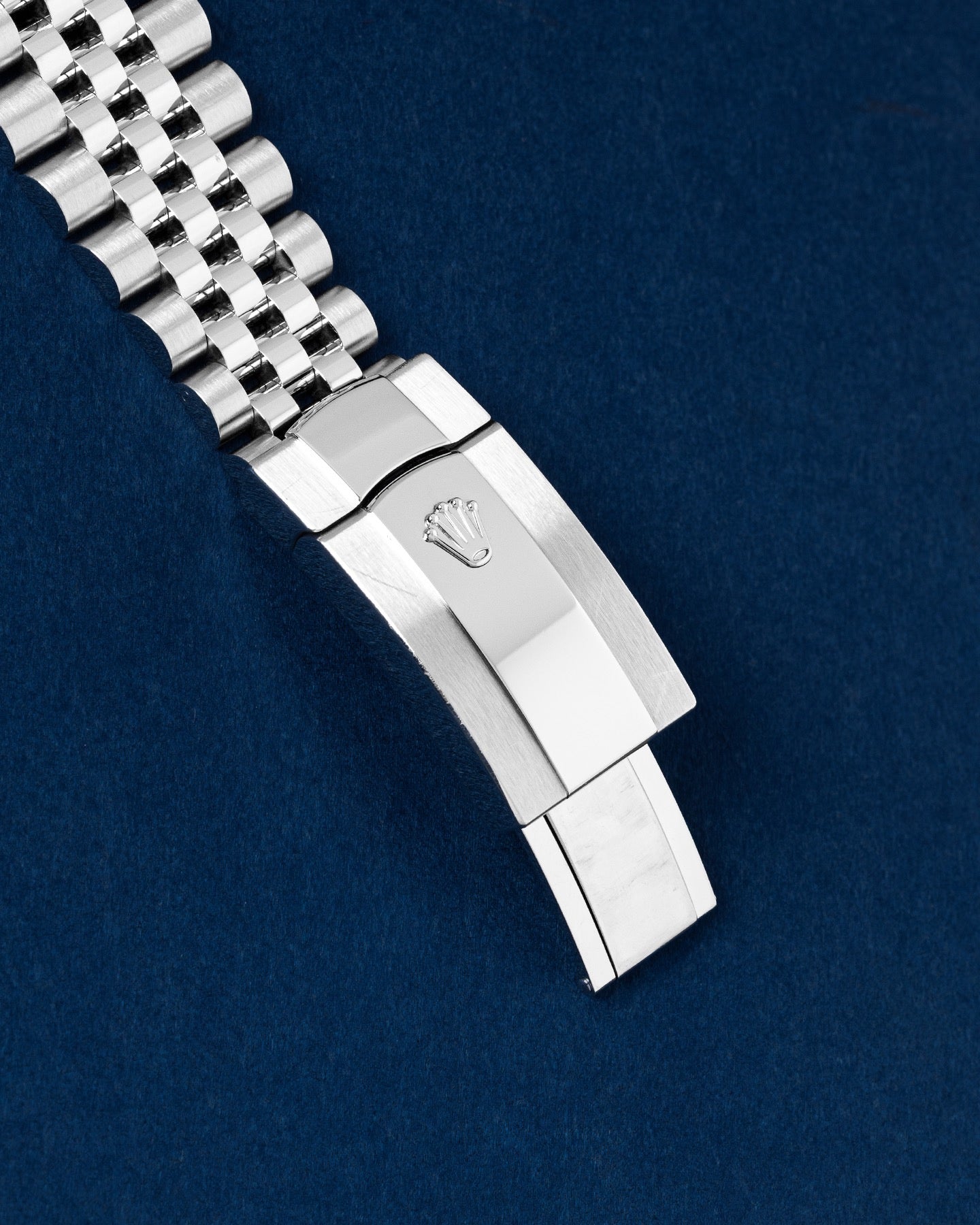
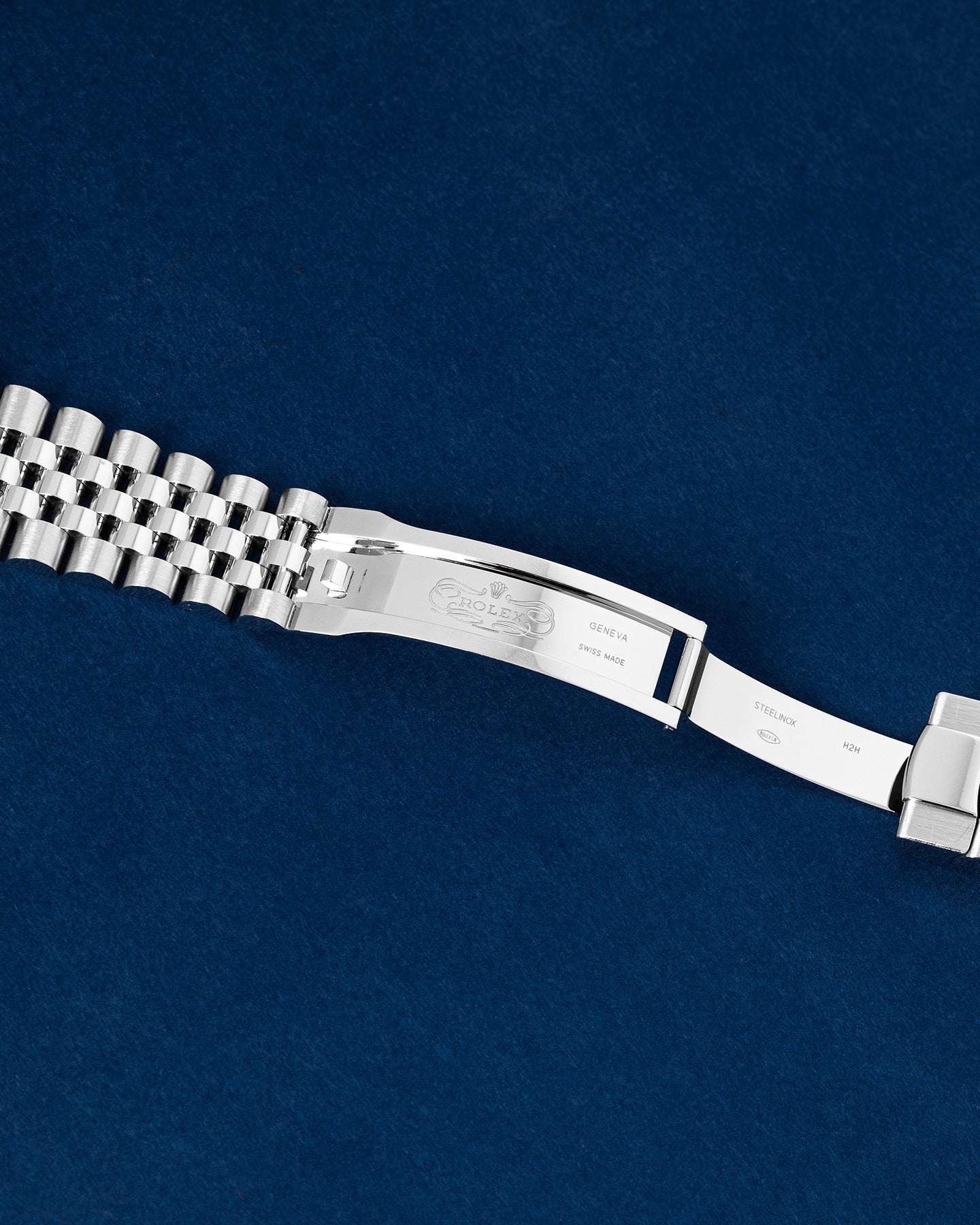
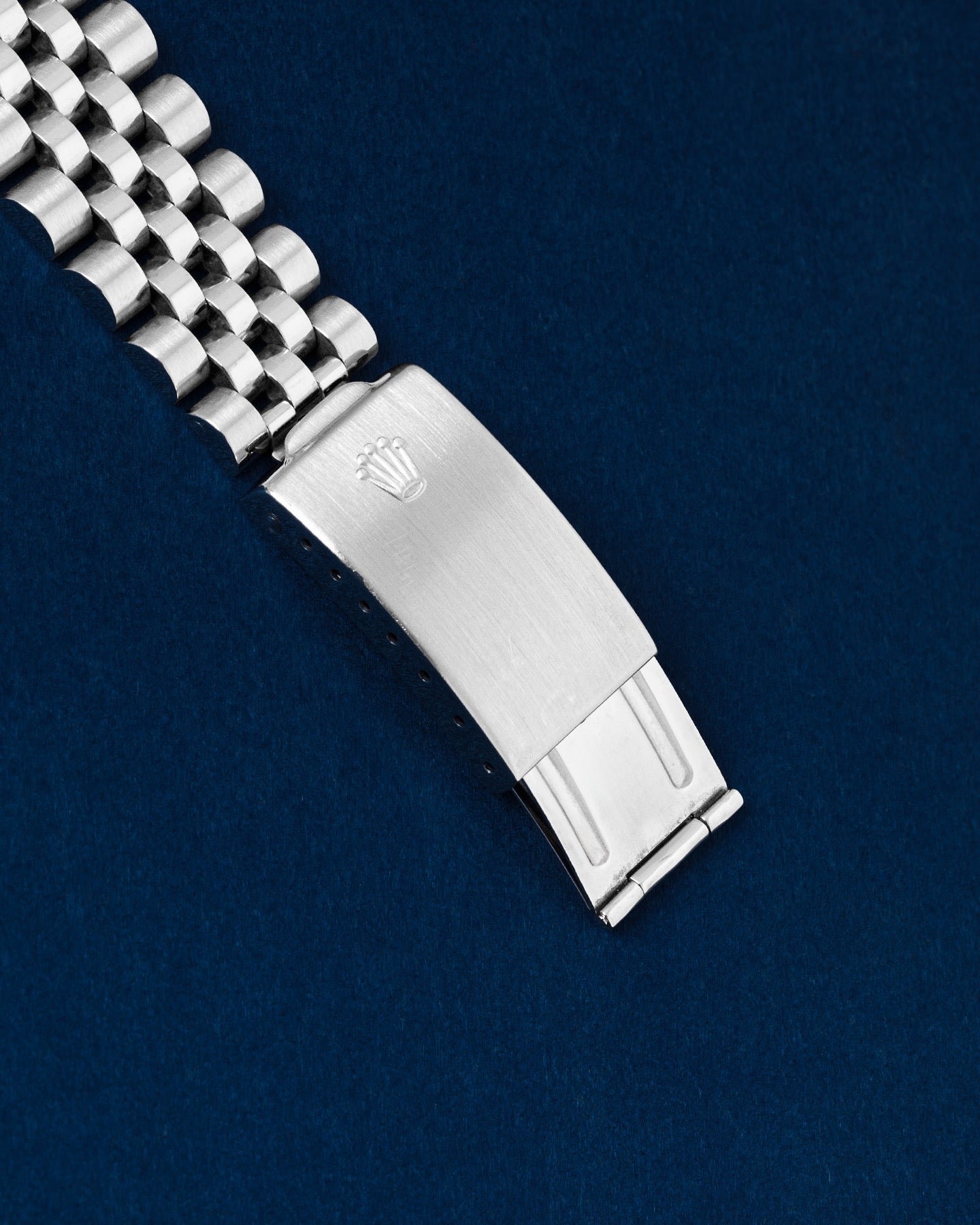
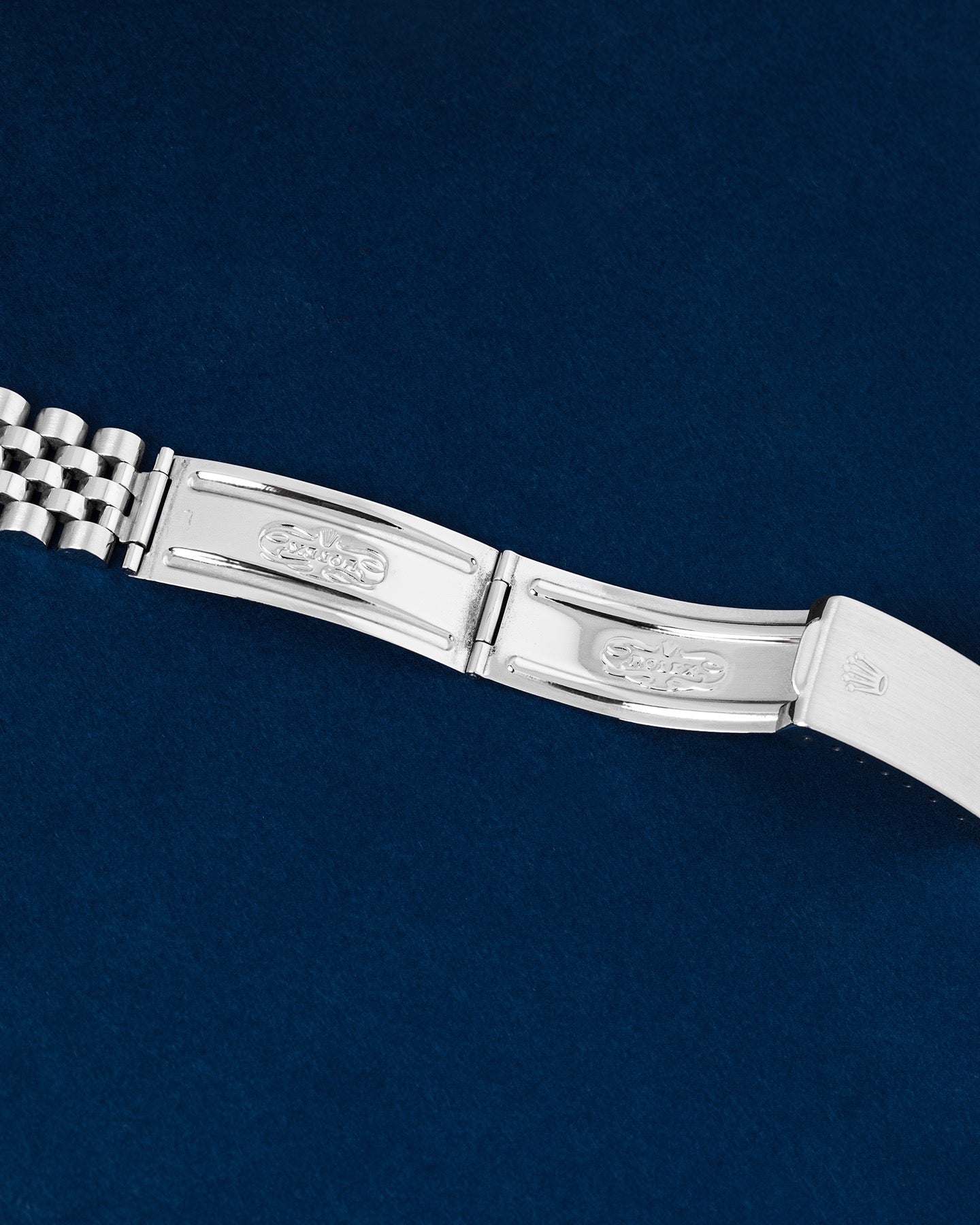
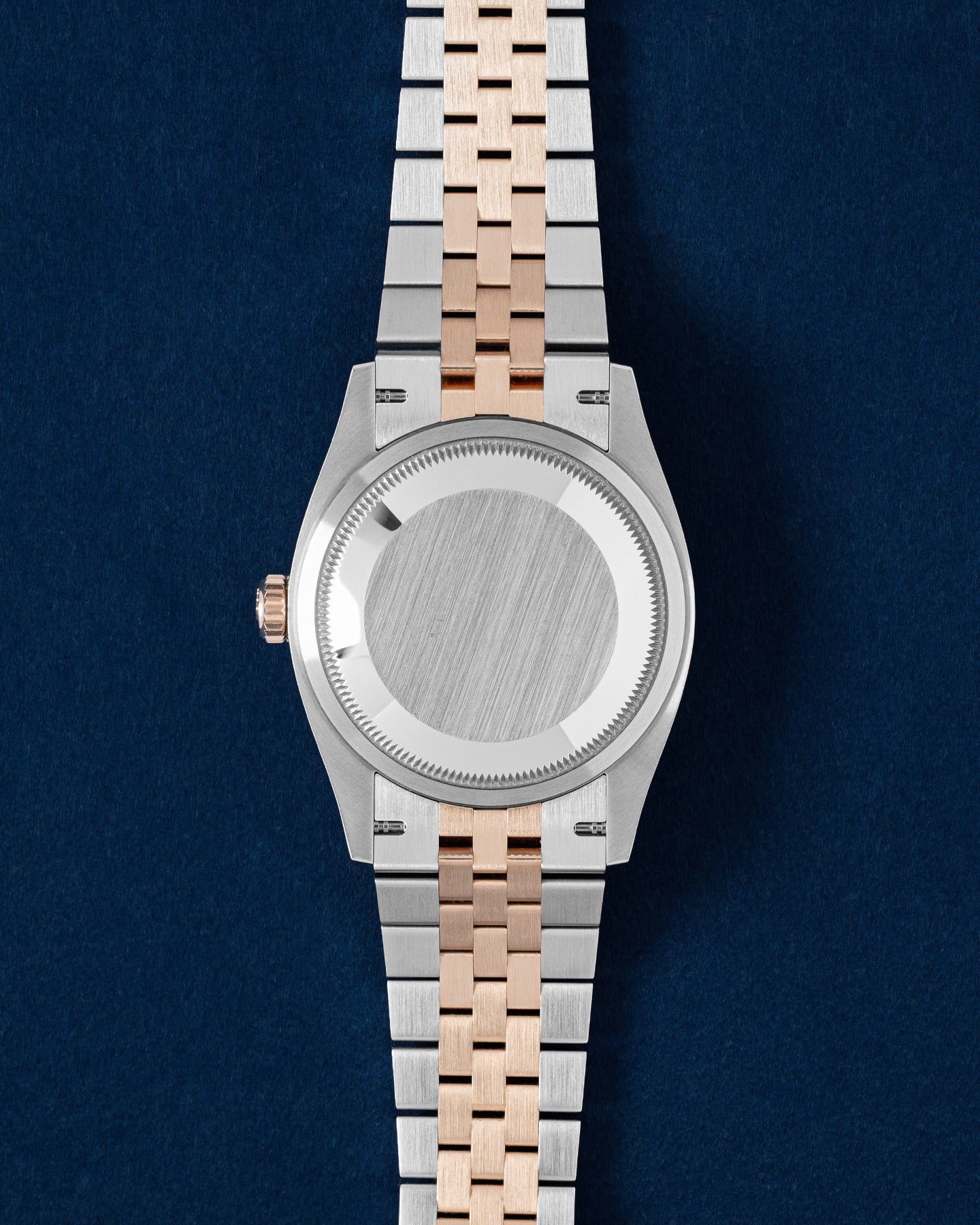
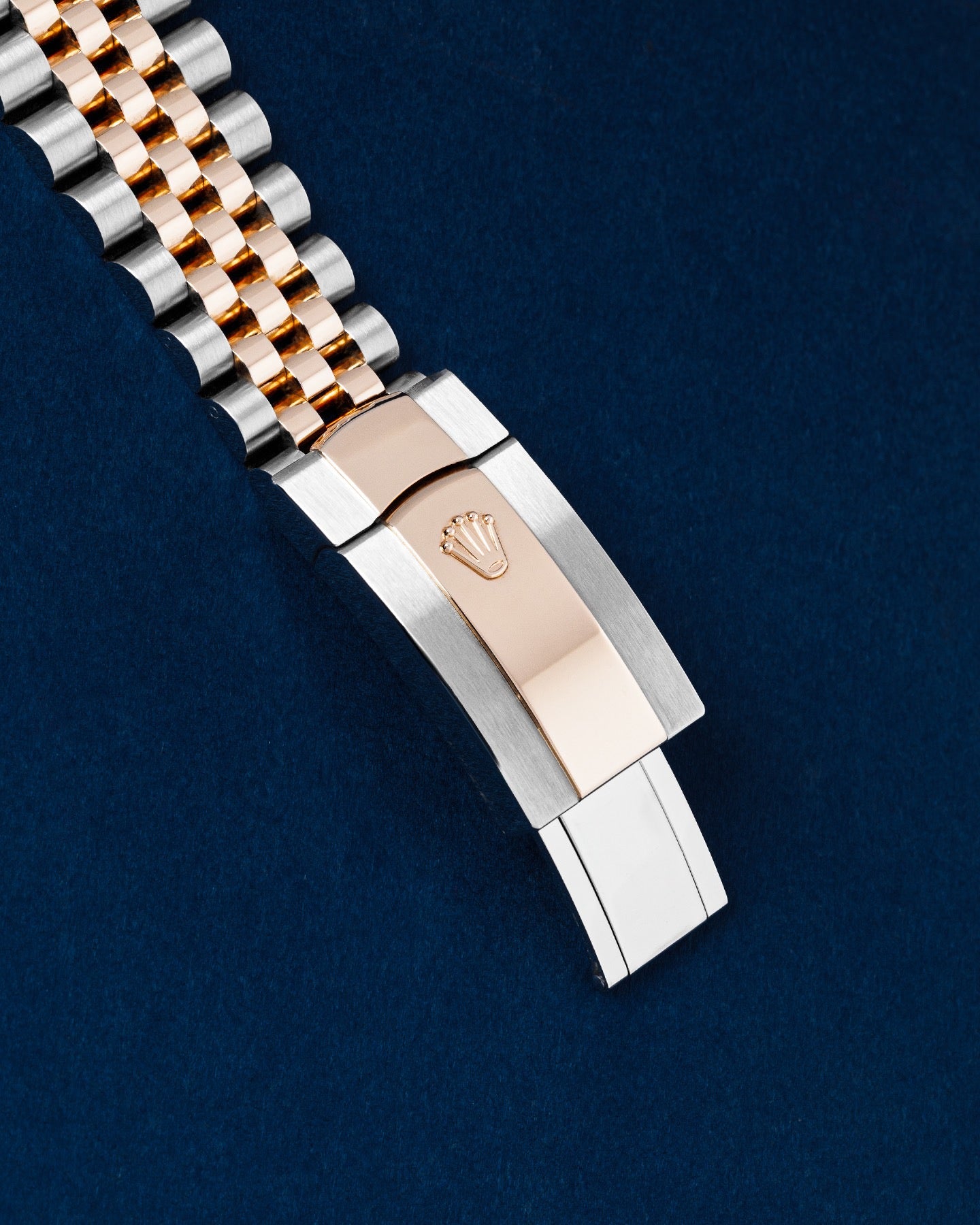
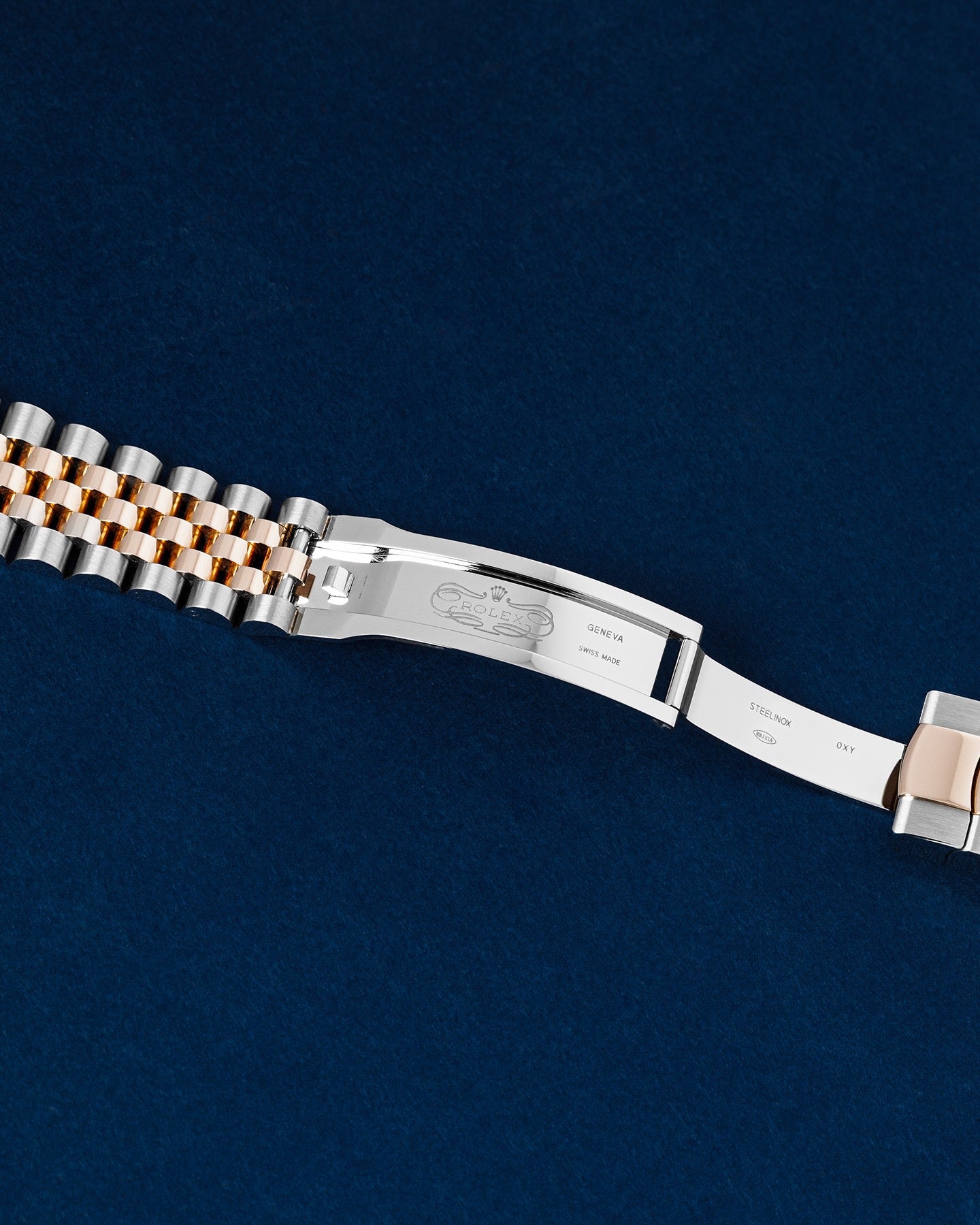
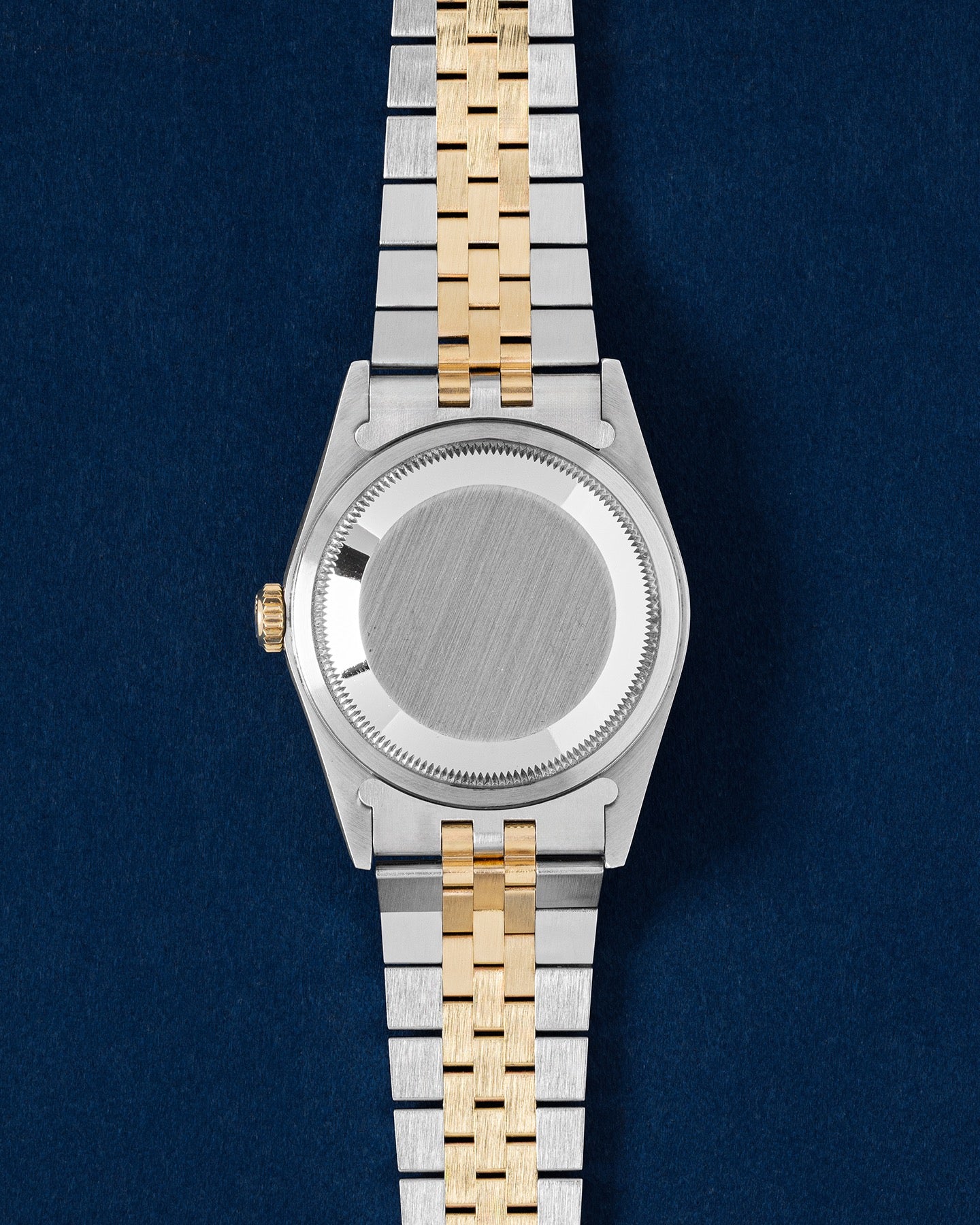
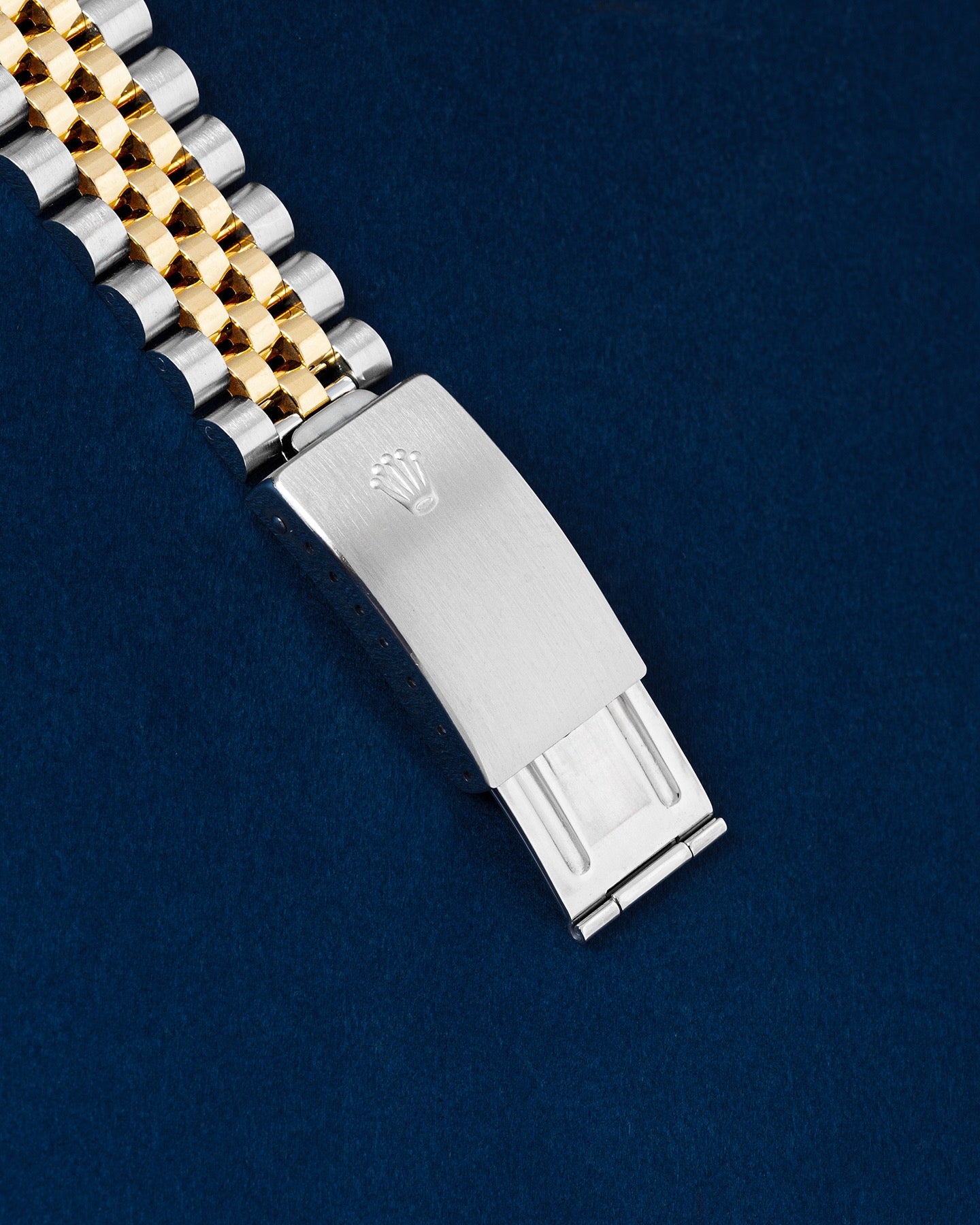
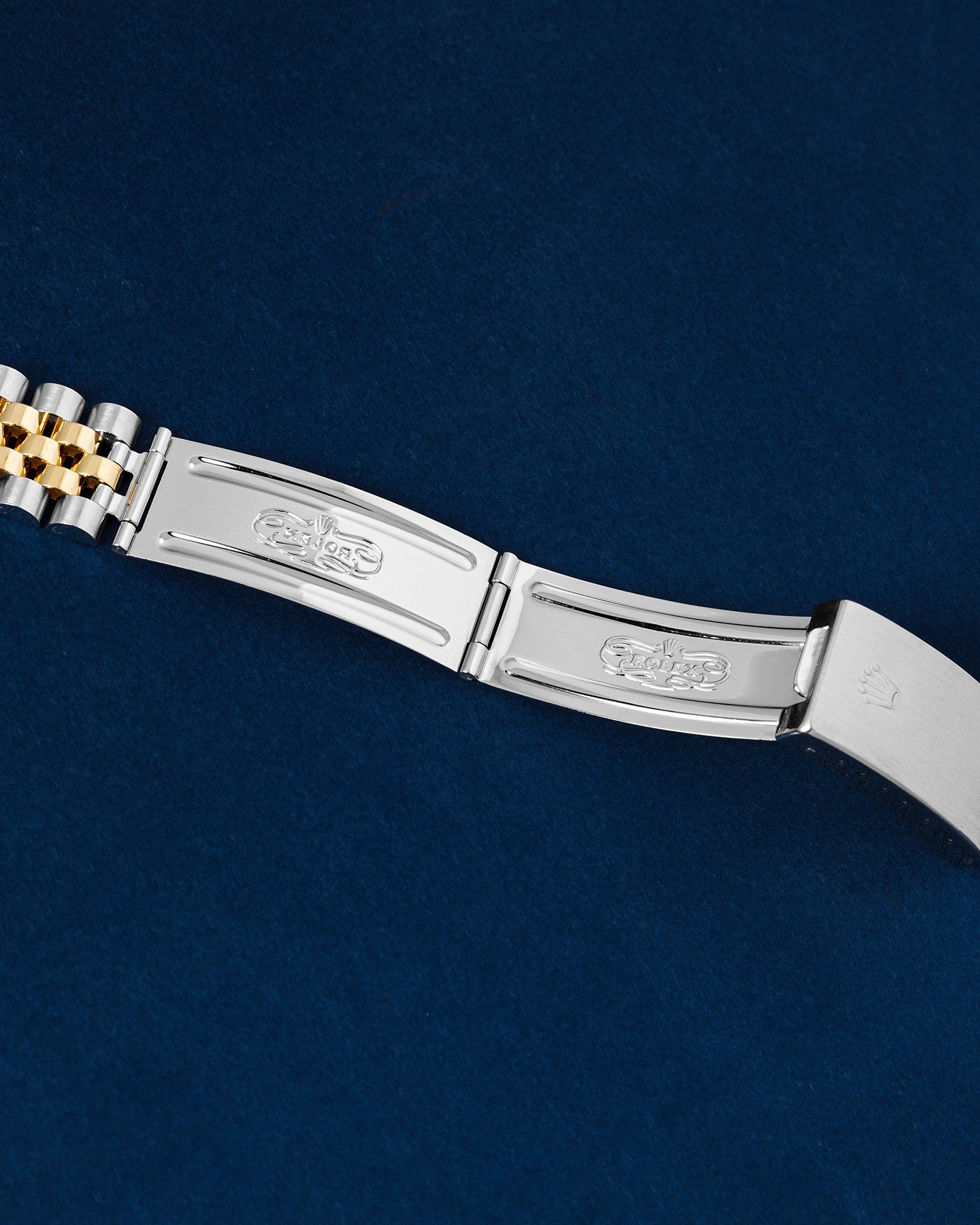
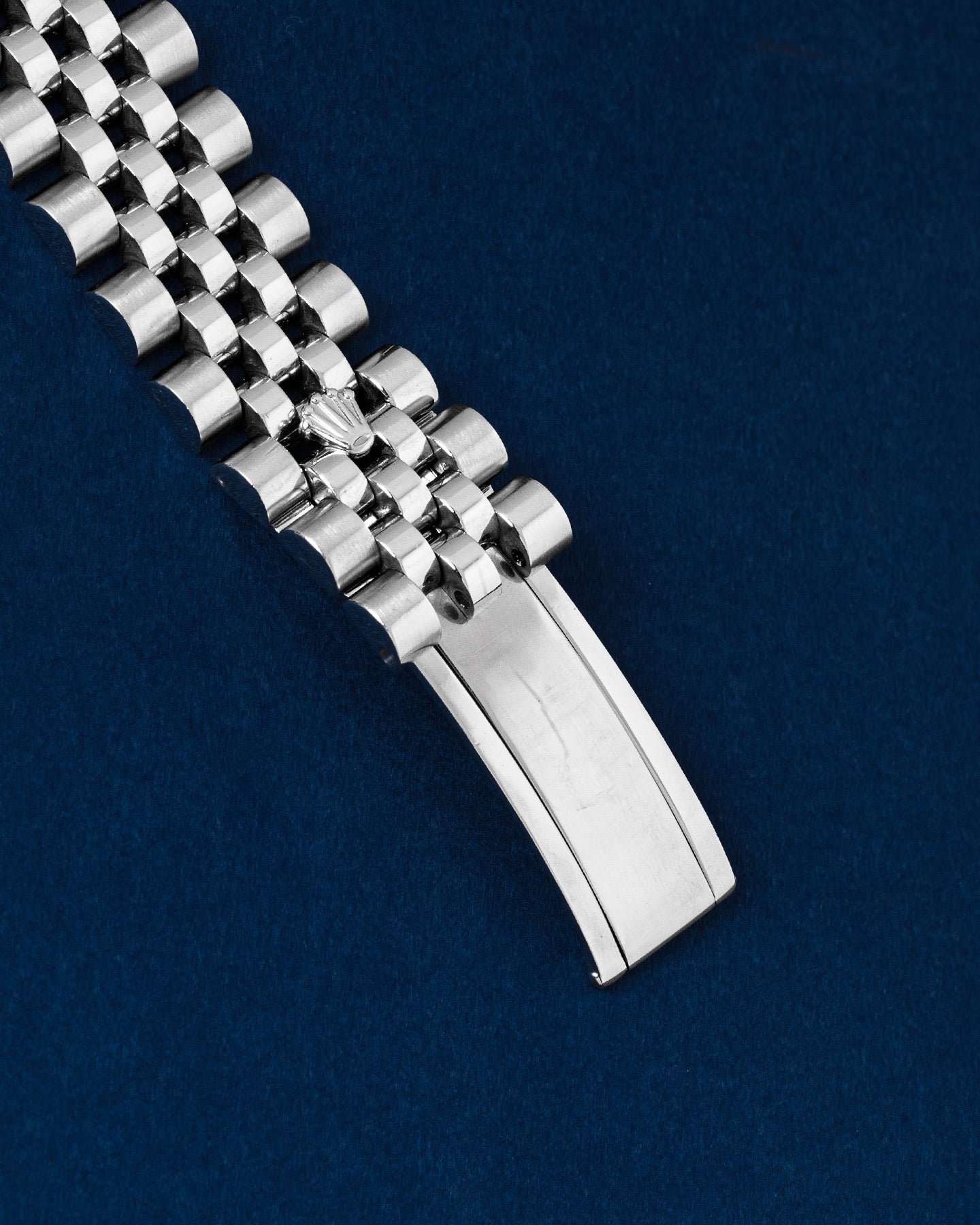
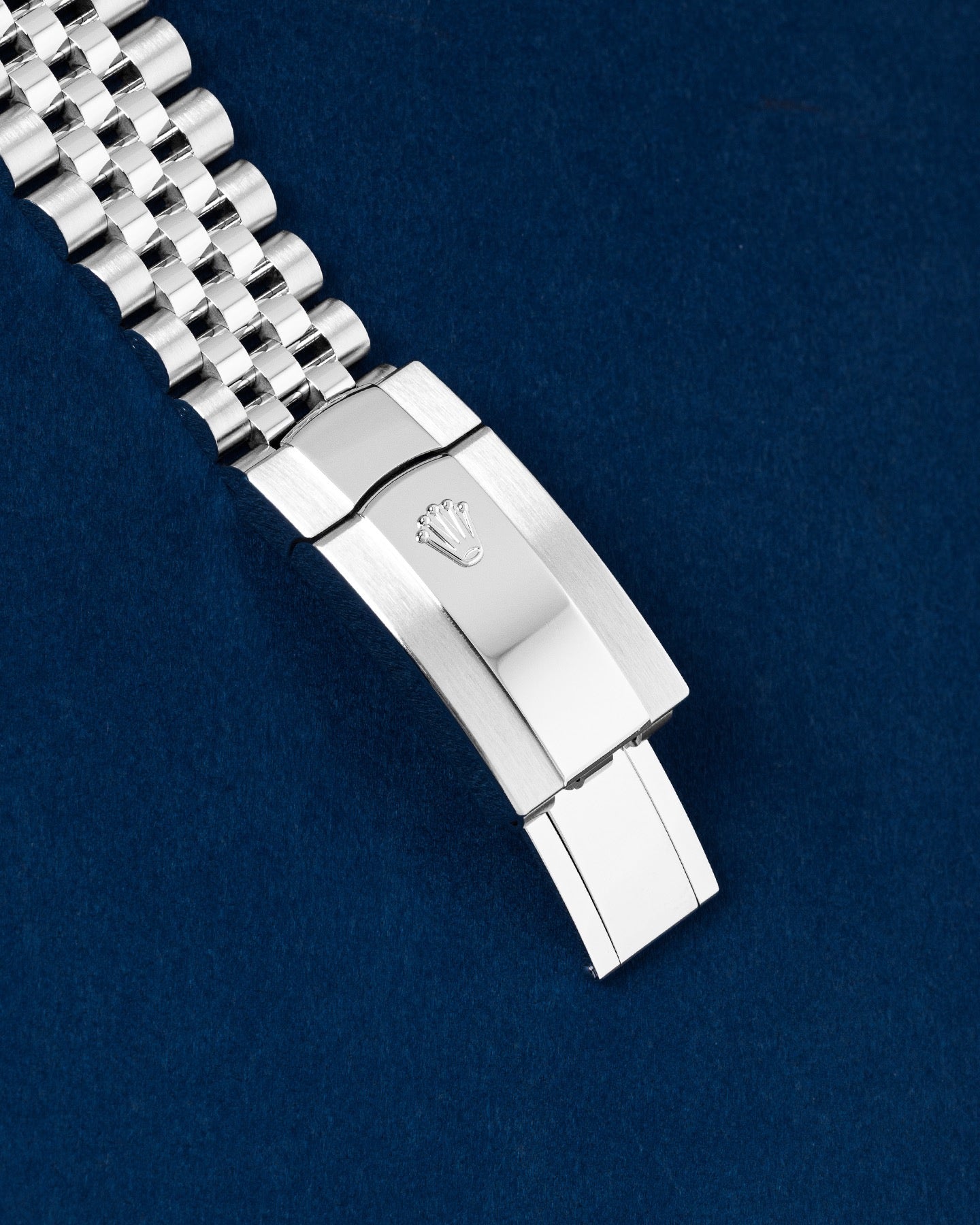
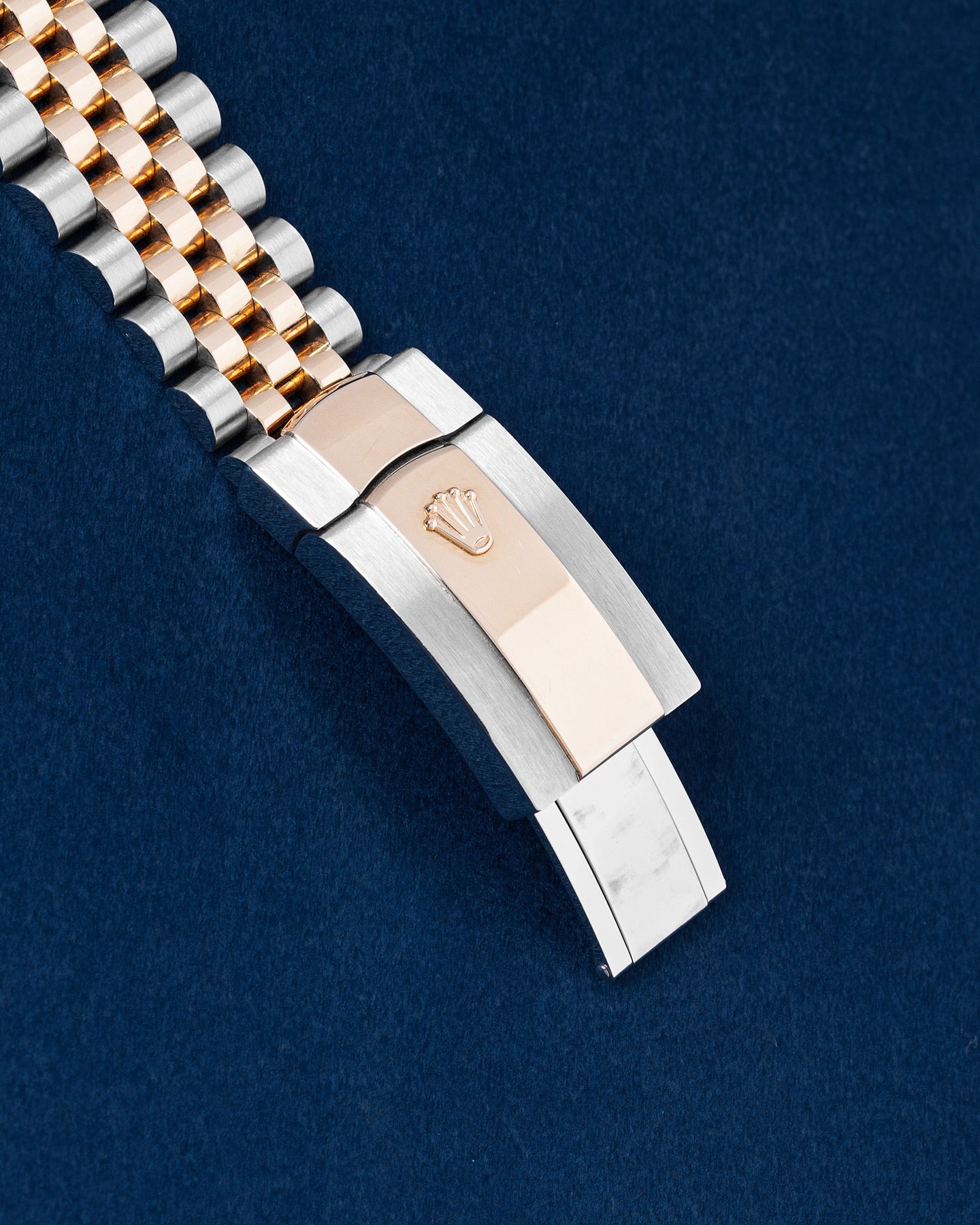
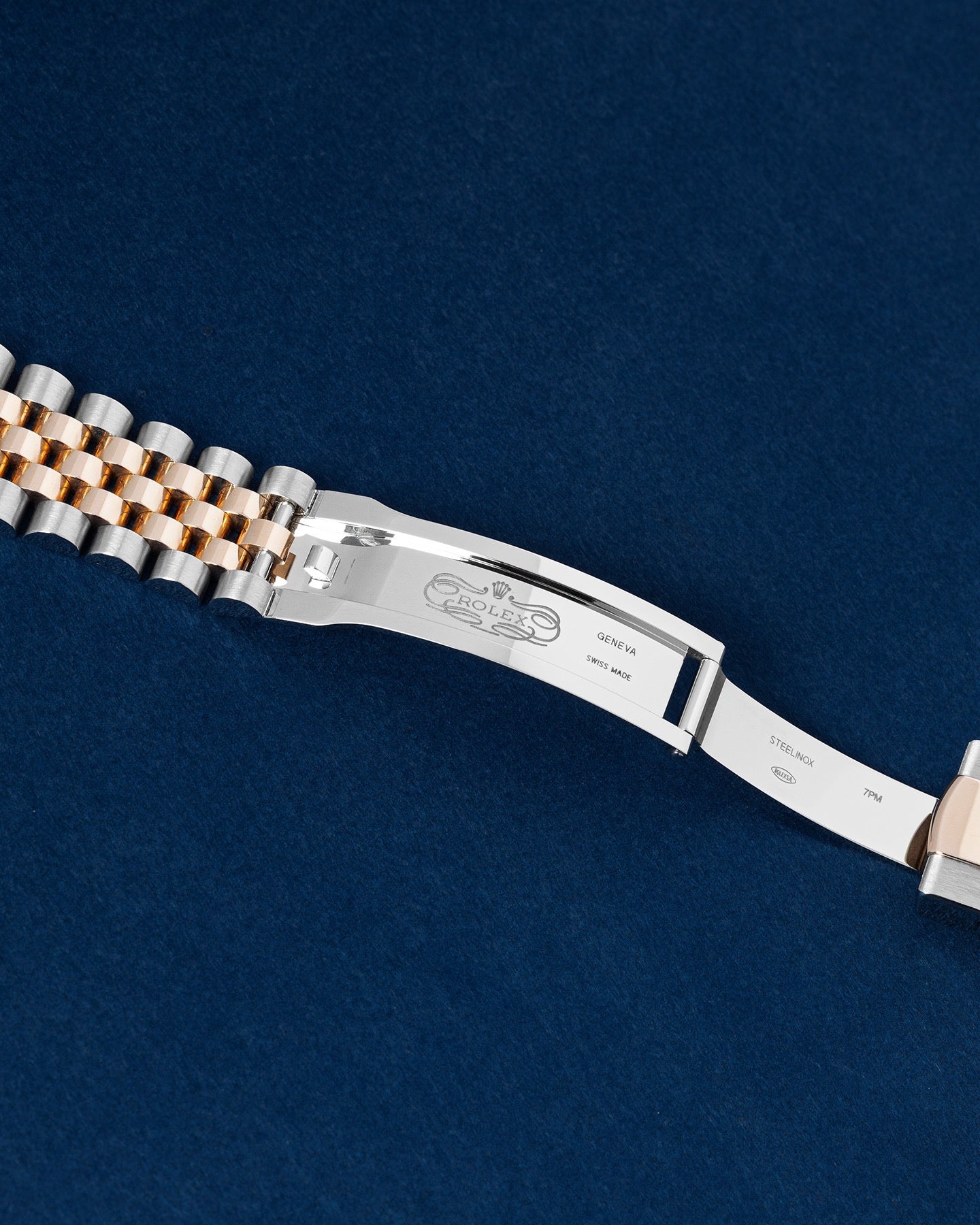
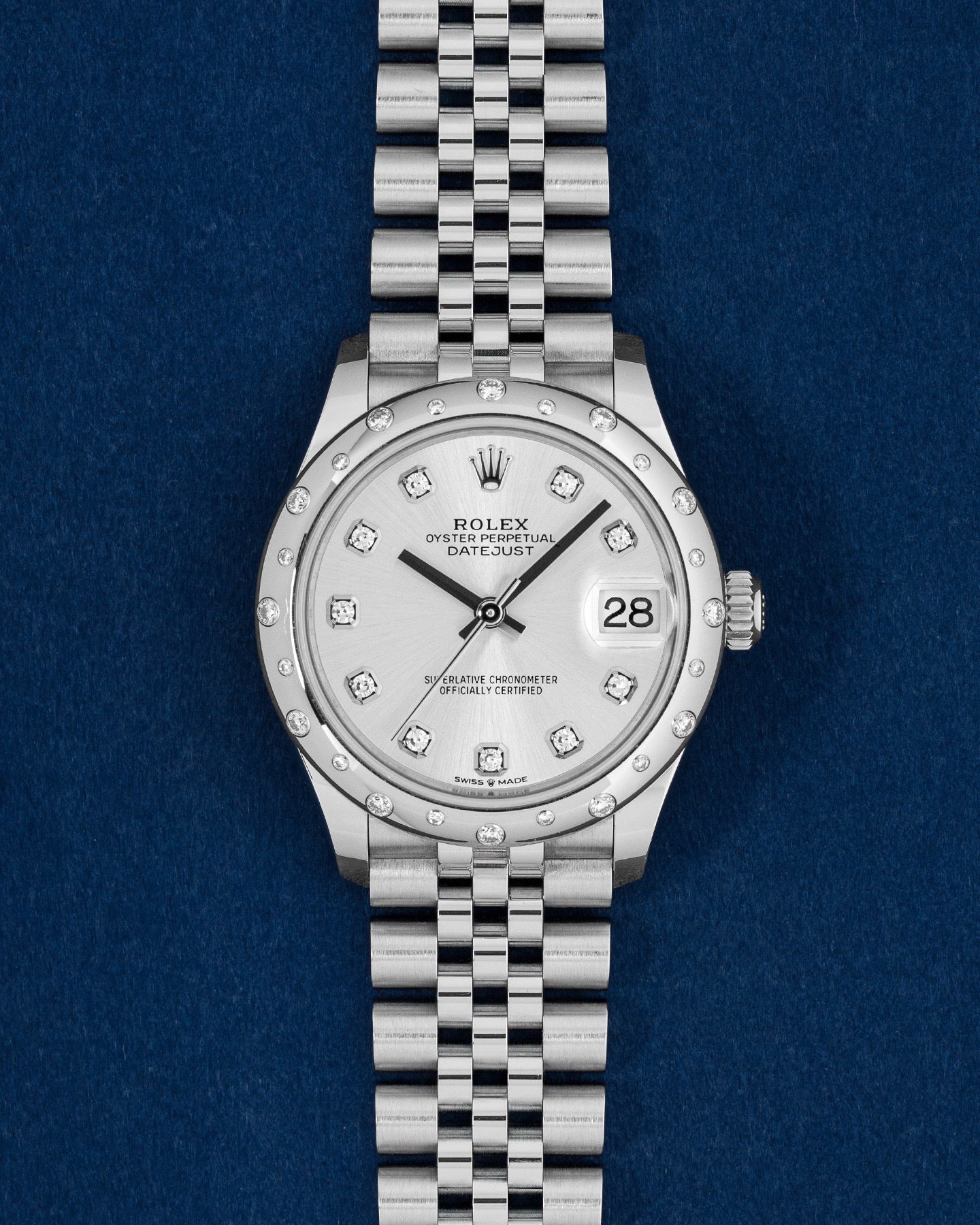
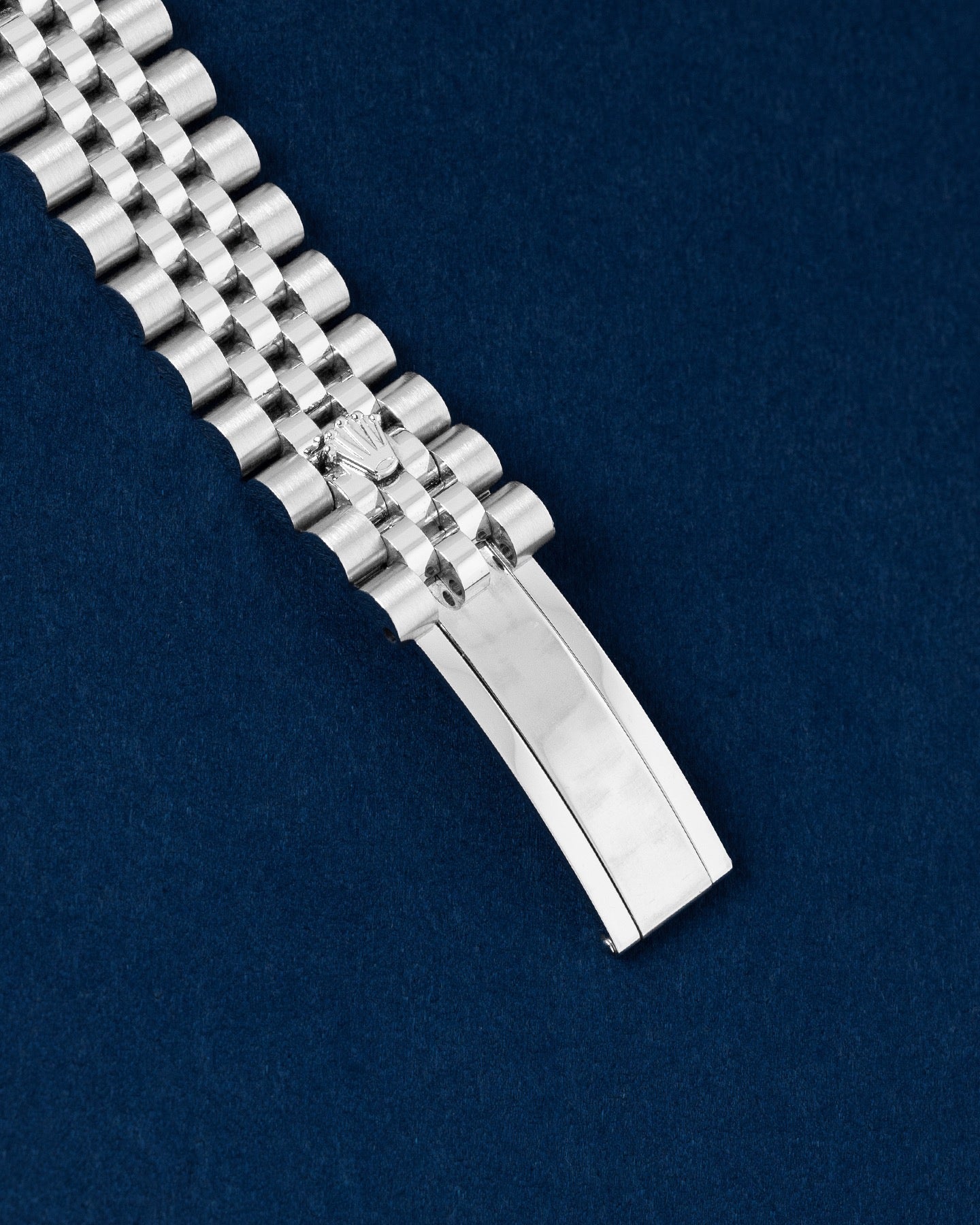
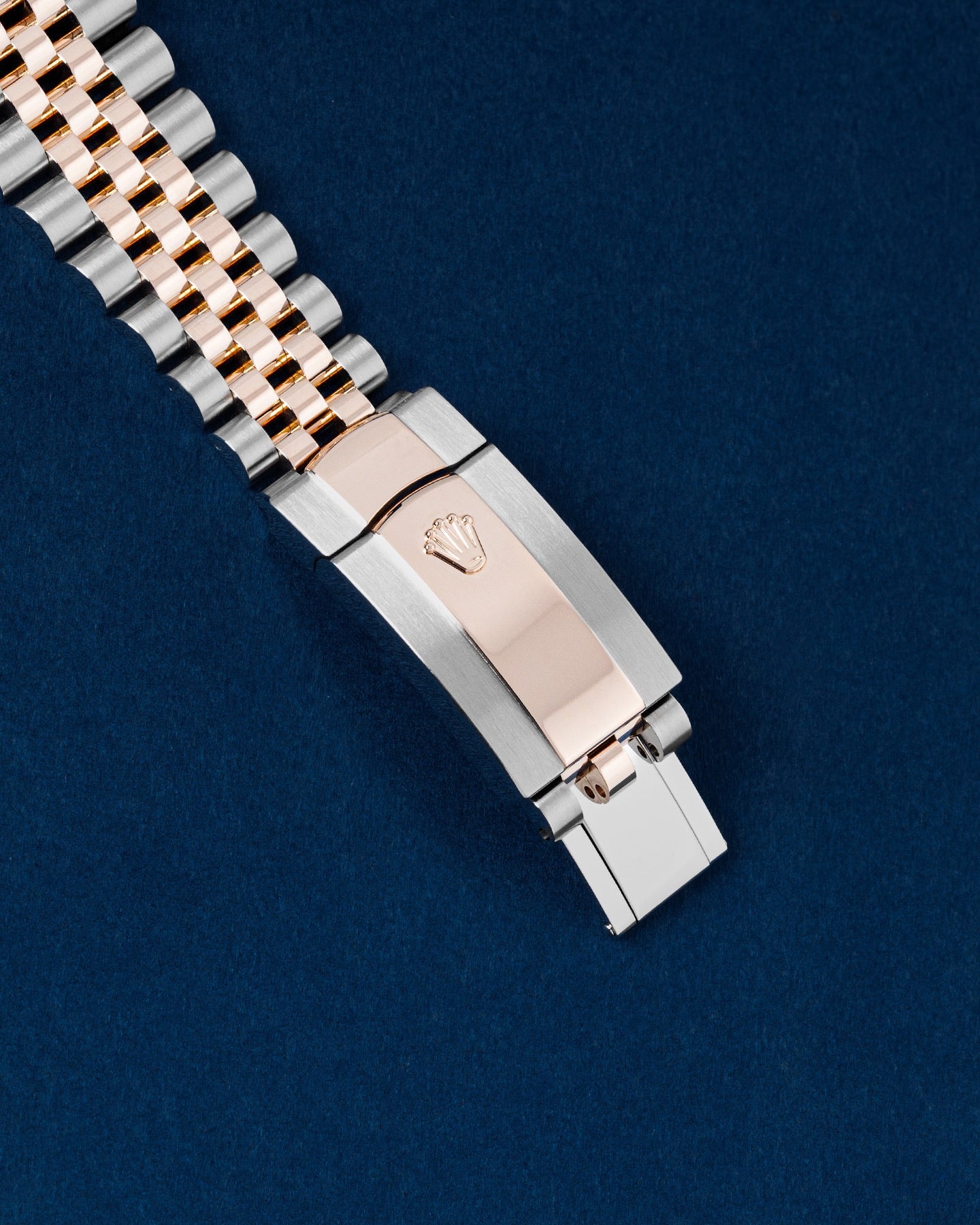
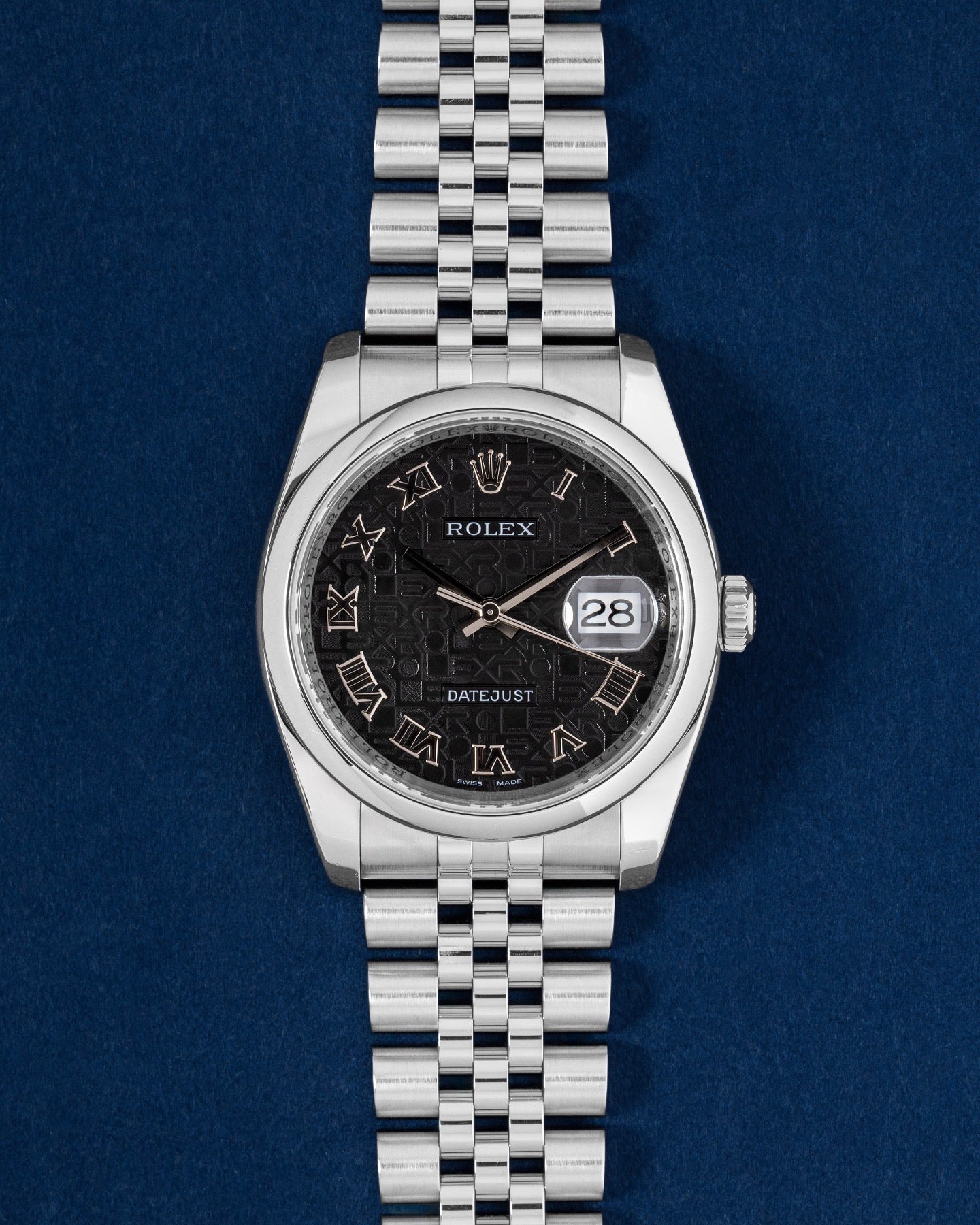
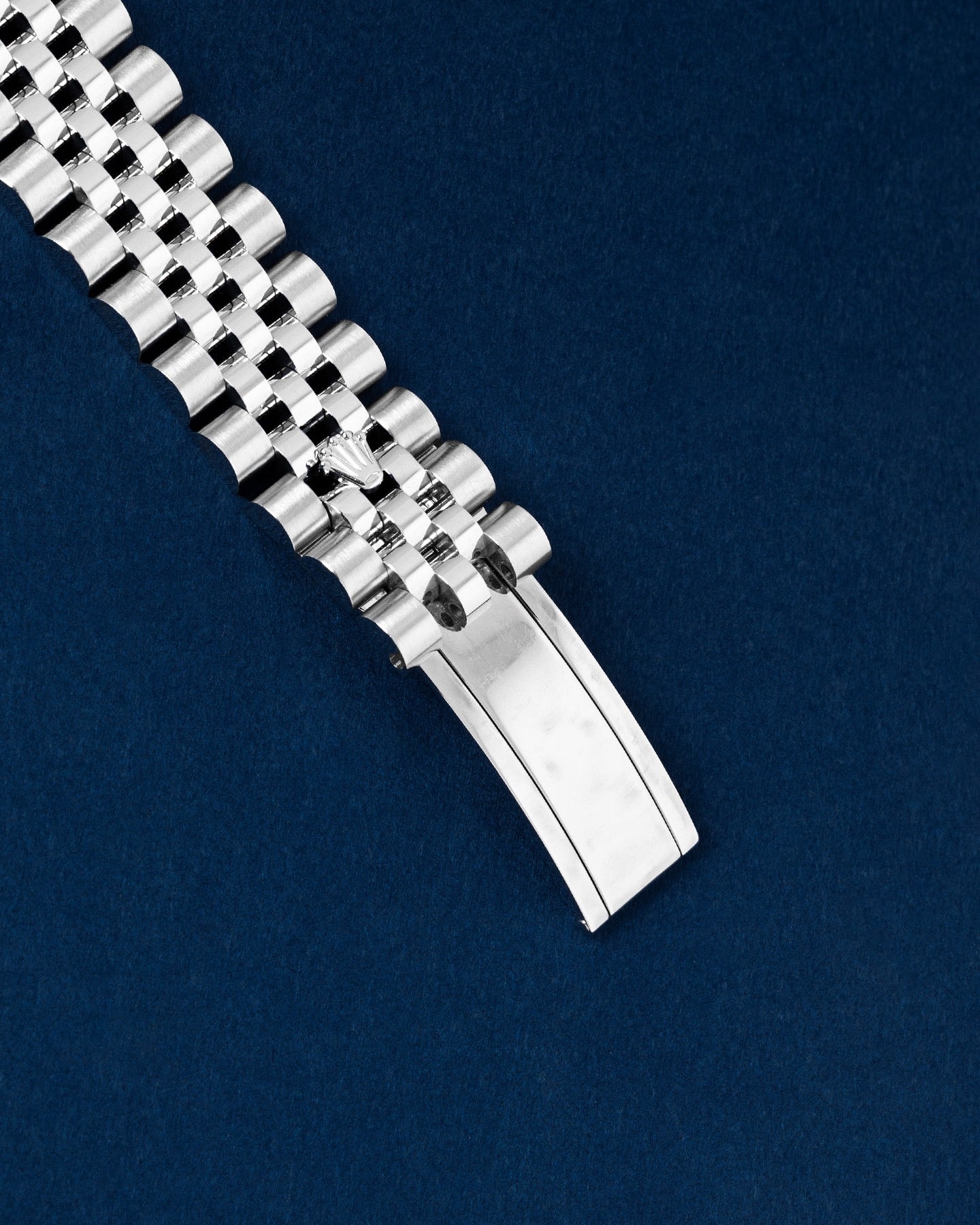
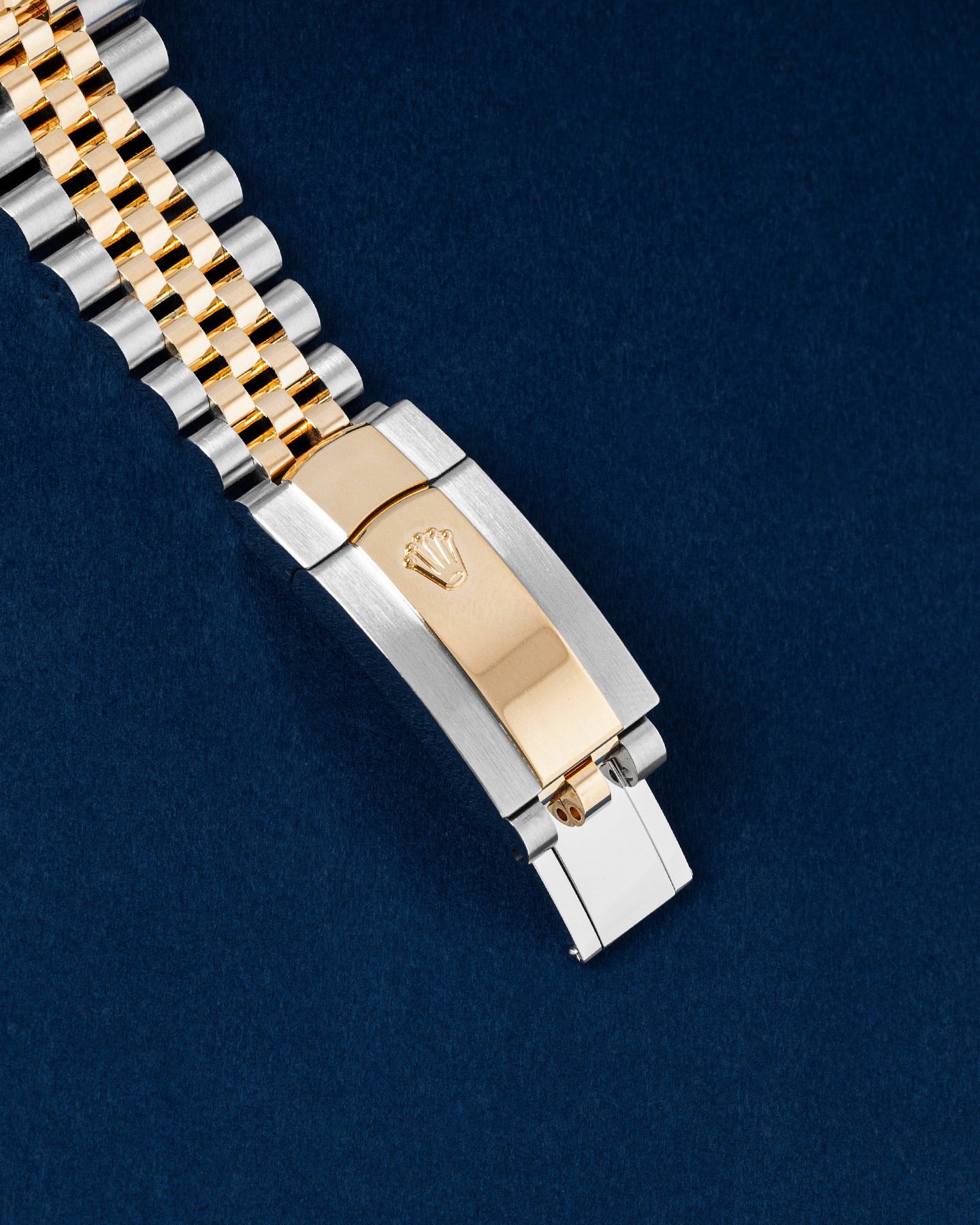
The Jubilee bracelet was designed specifically for the original 1945 Rolex Datejust 4467. The bracelet was named for the Rolex Jubilee celebration marking the brand's 40th anniversary, the same celebration at which the Datejust was unveiled. The Jubilee is a five-link bracelet with three polished inner links flanked by two brushed outer links per row, giving the bracelet a more textured and dressier visual than the alternative. The Jubilee remains the most iconic Rolex Datejust bracelet and is offered across every current production reference.
The Oyster Bracelet
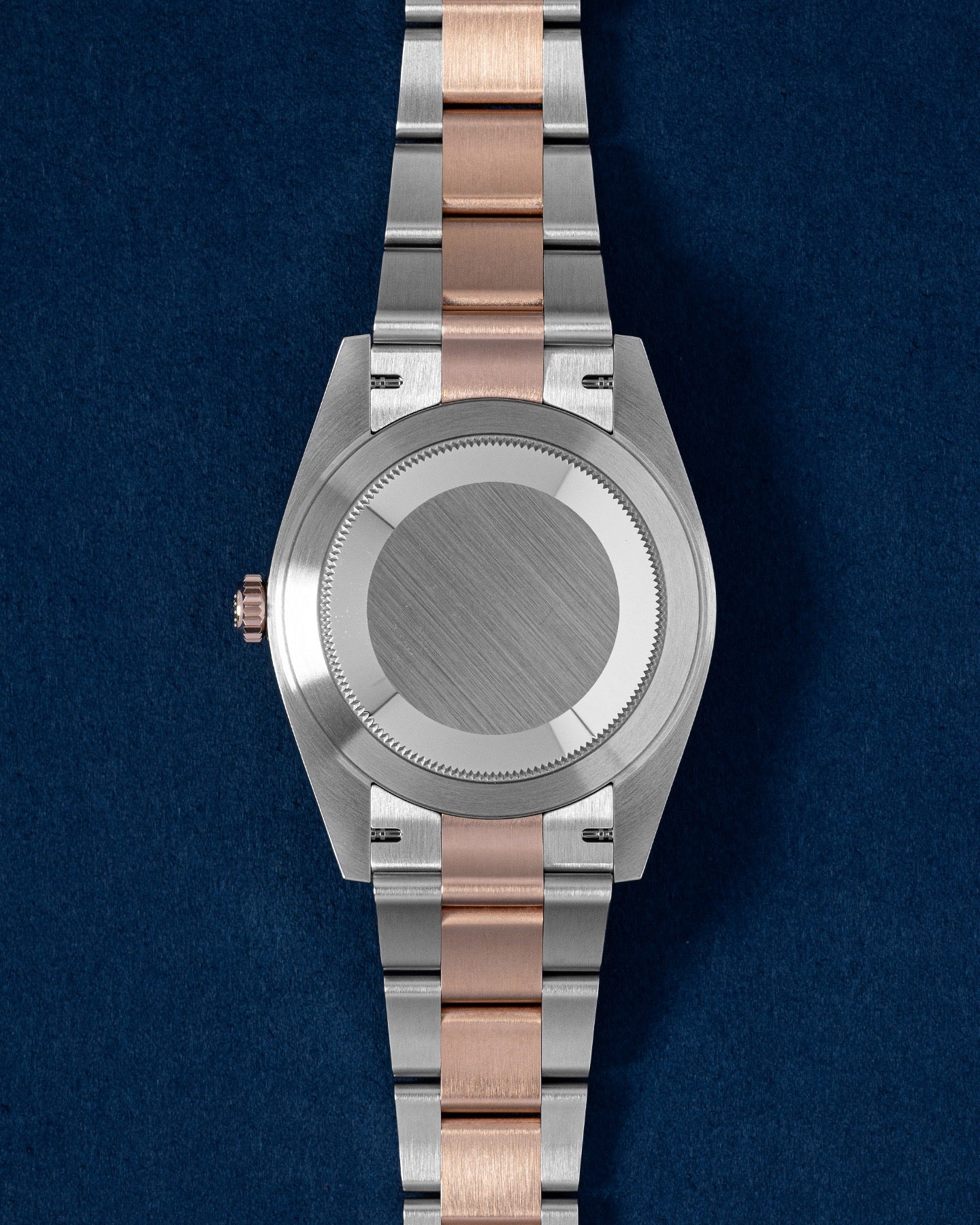
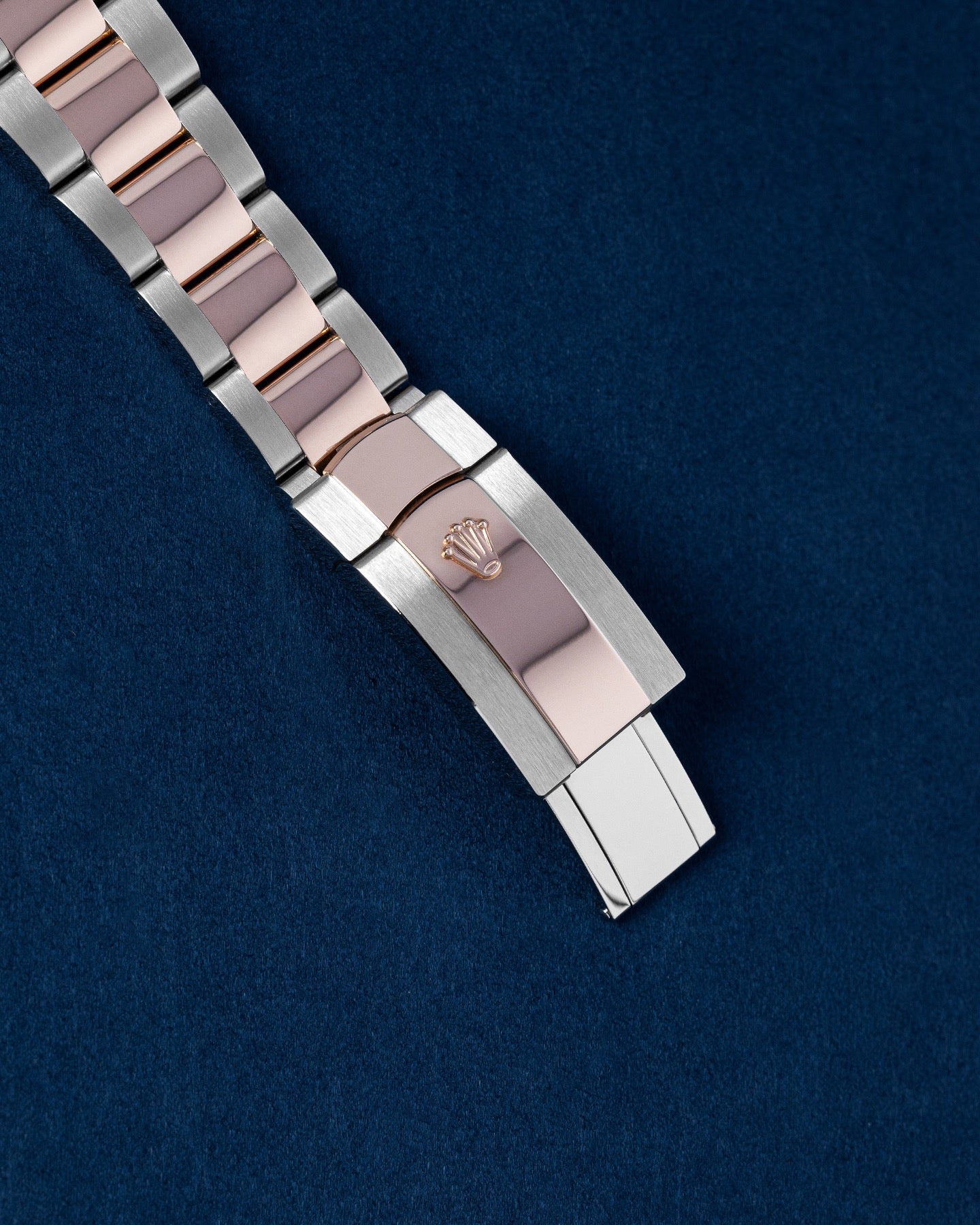
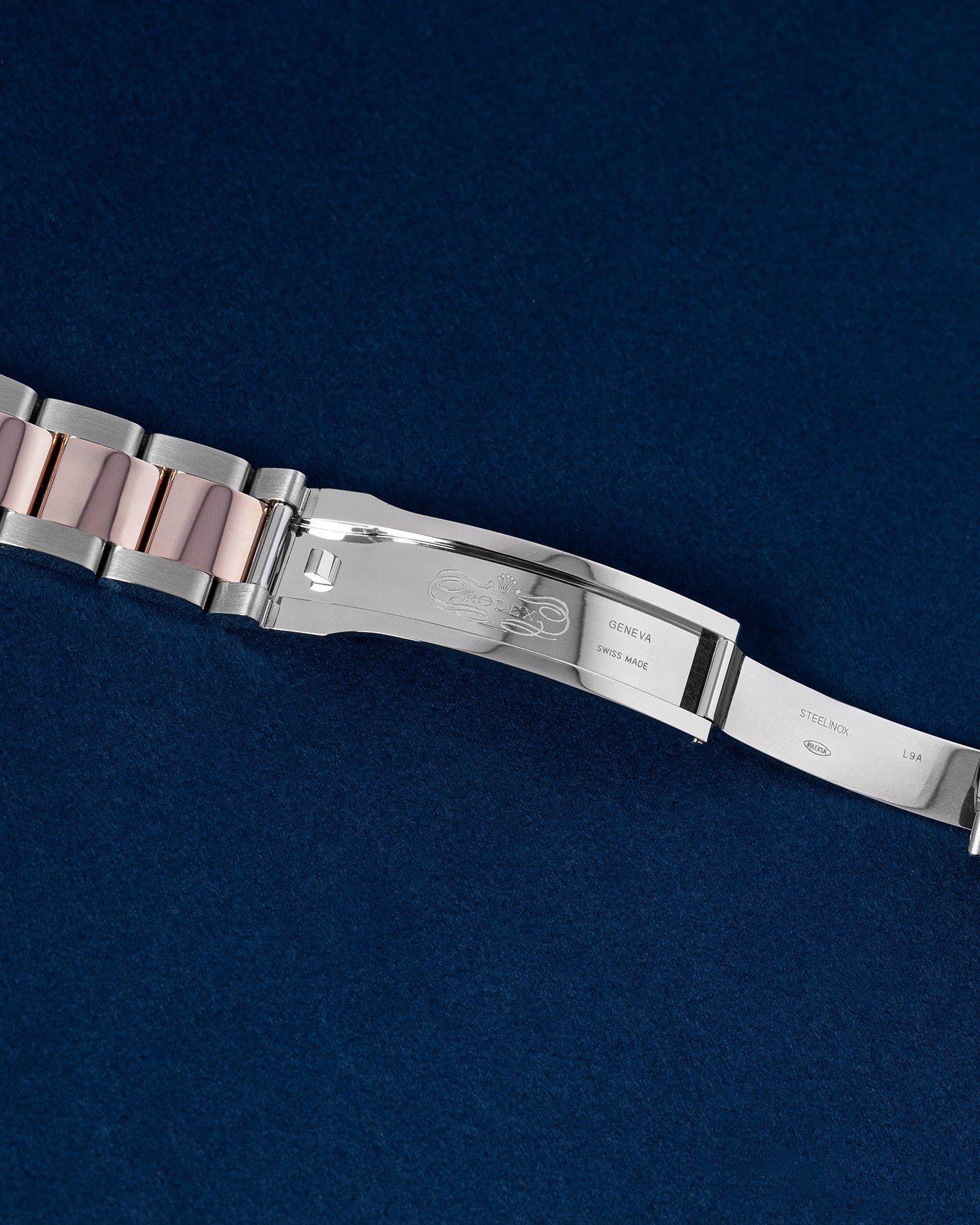
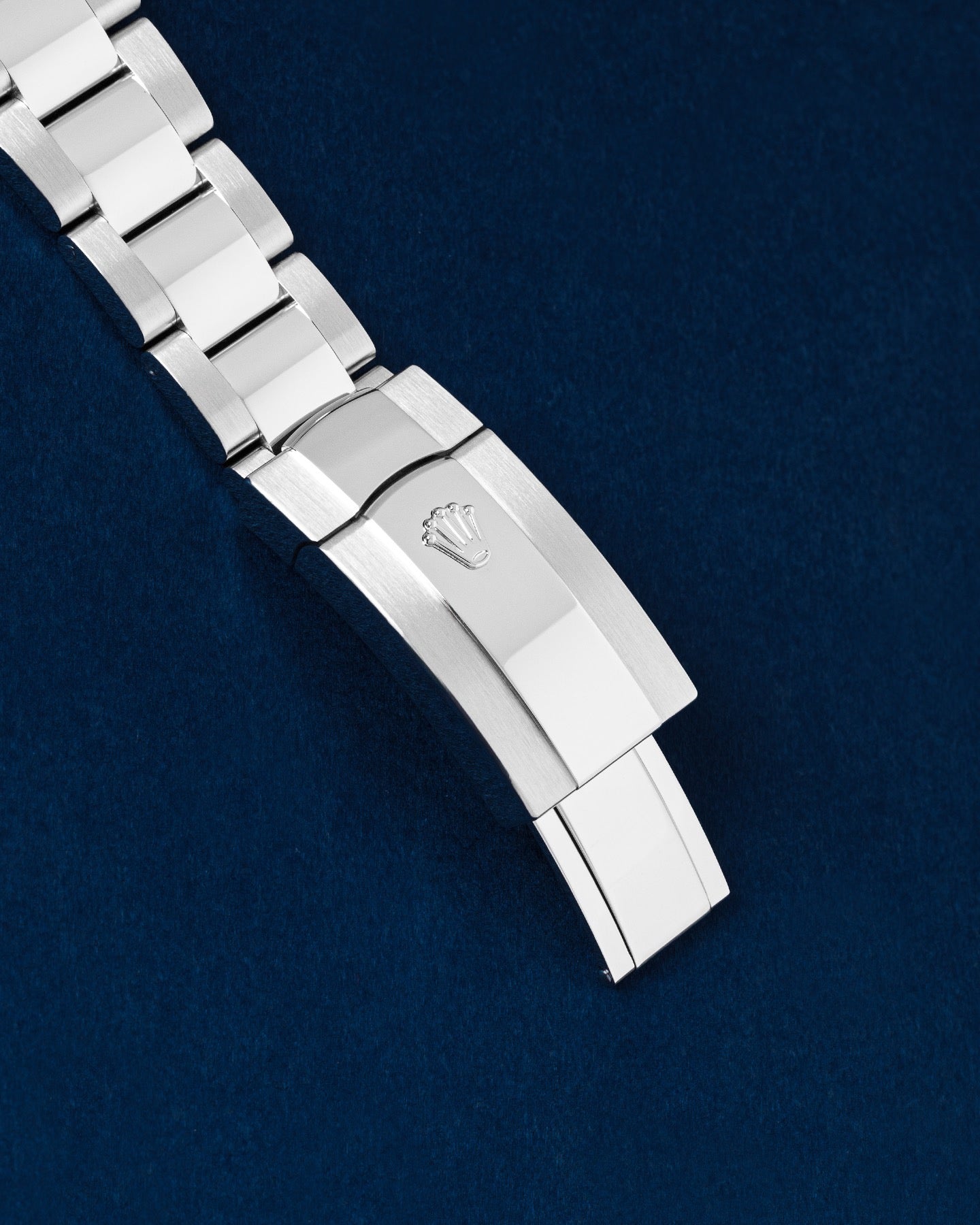
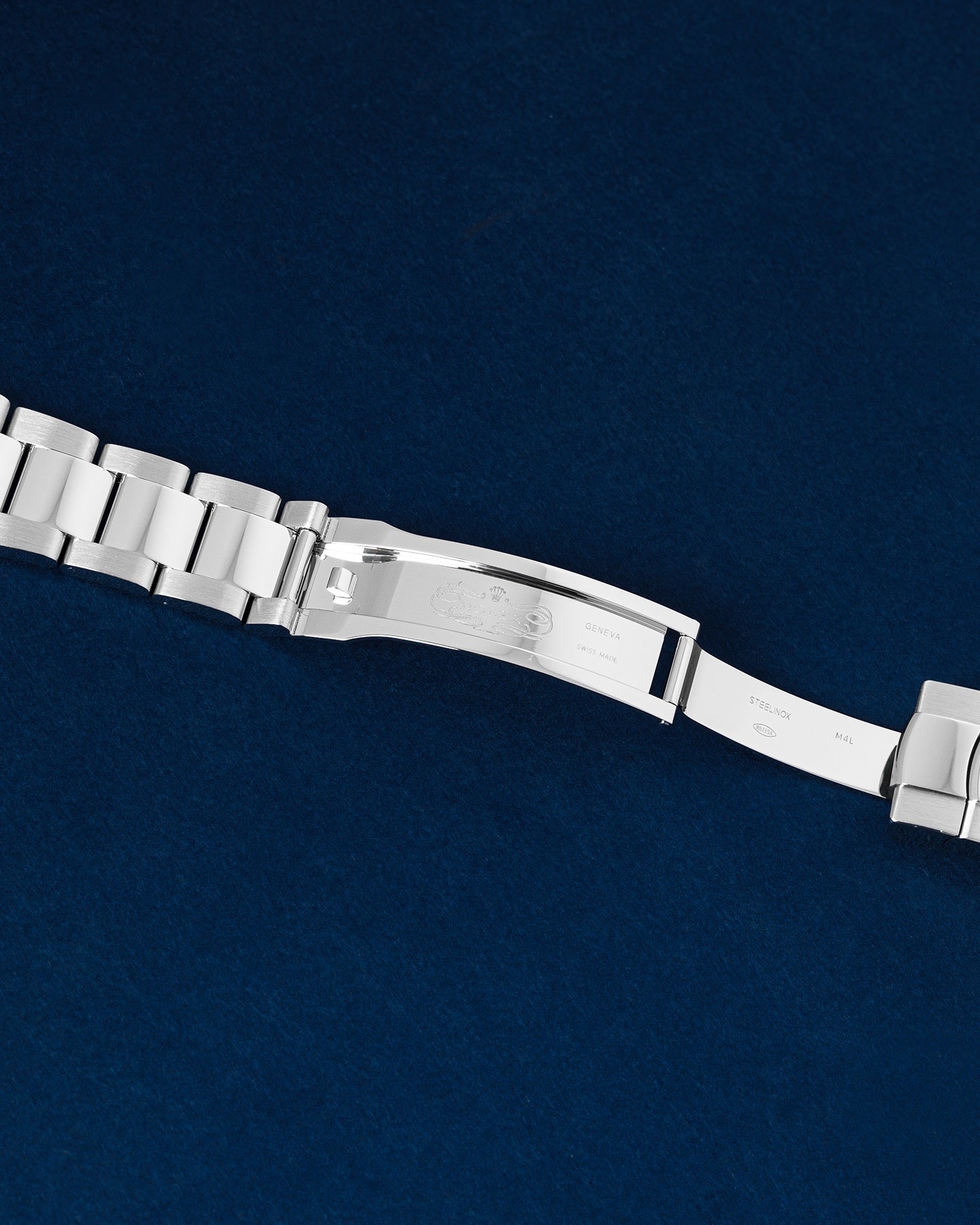
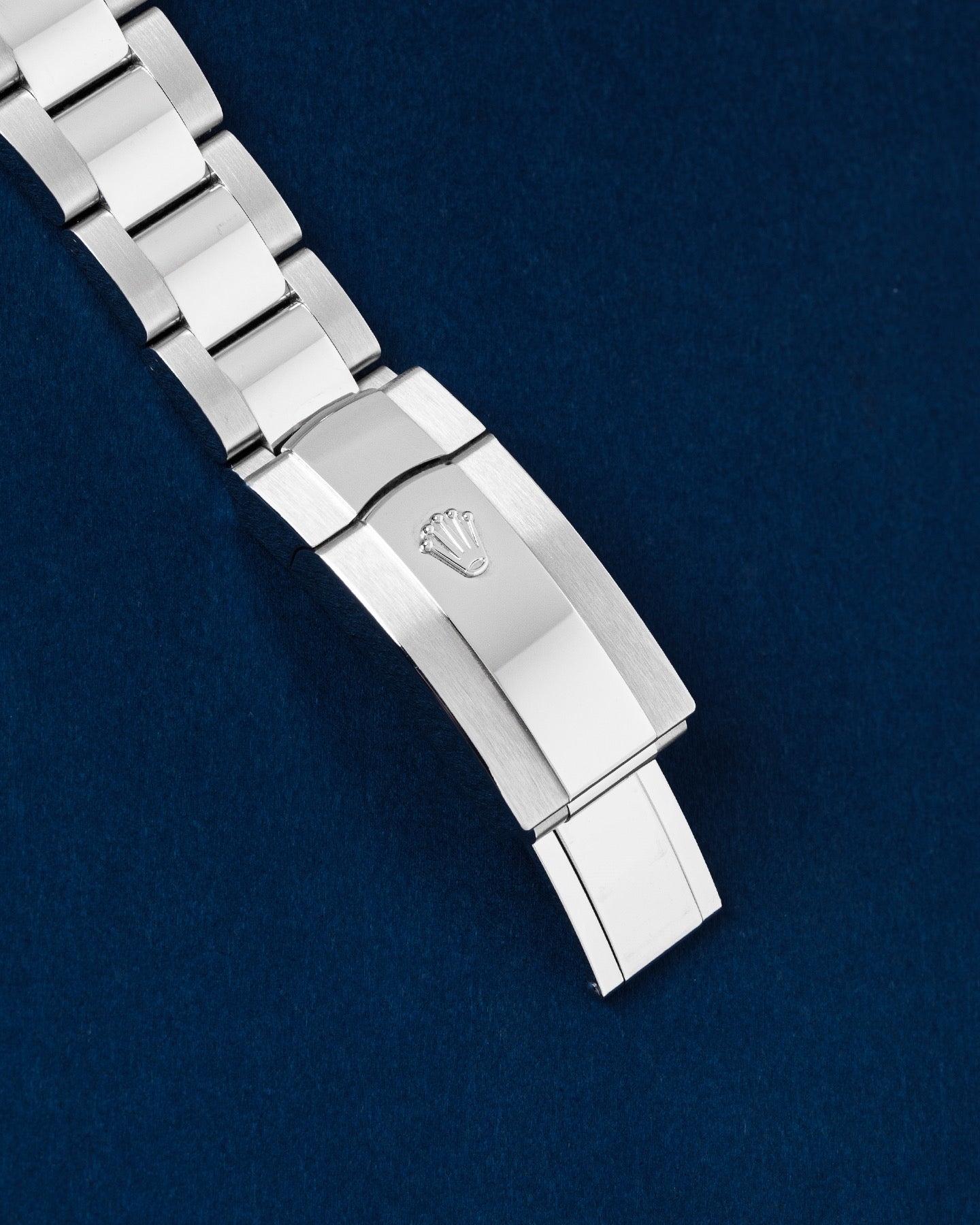
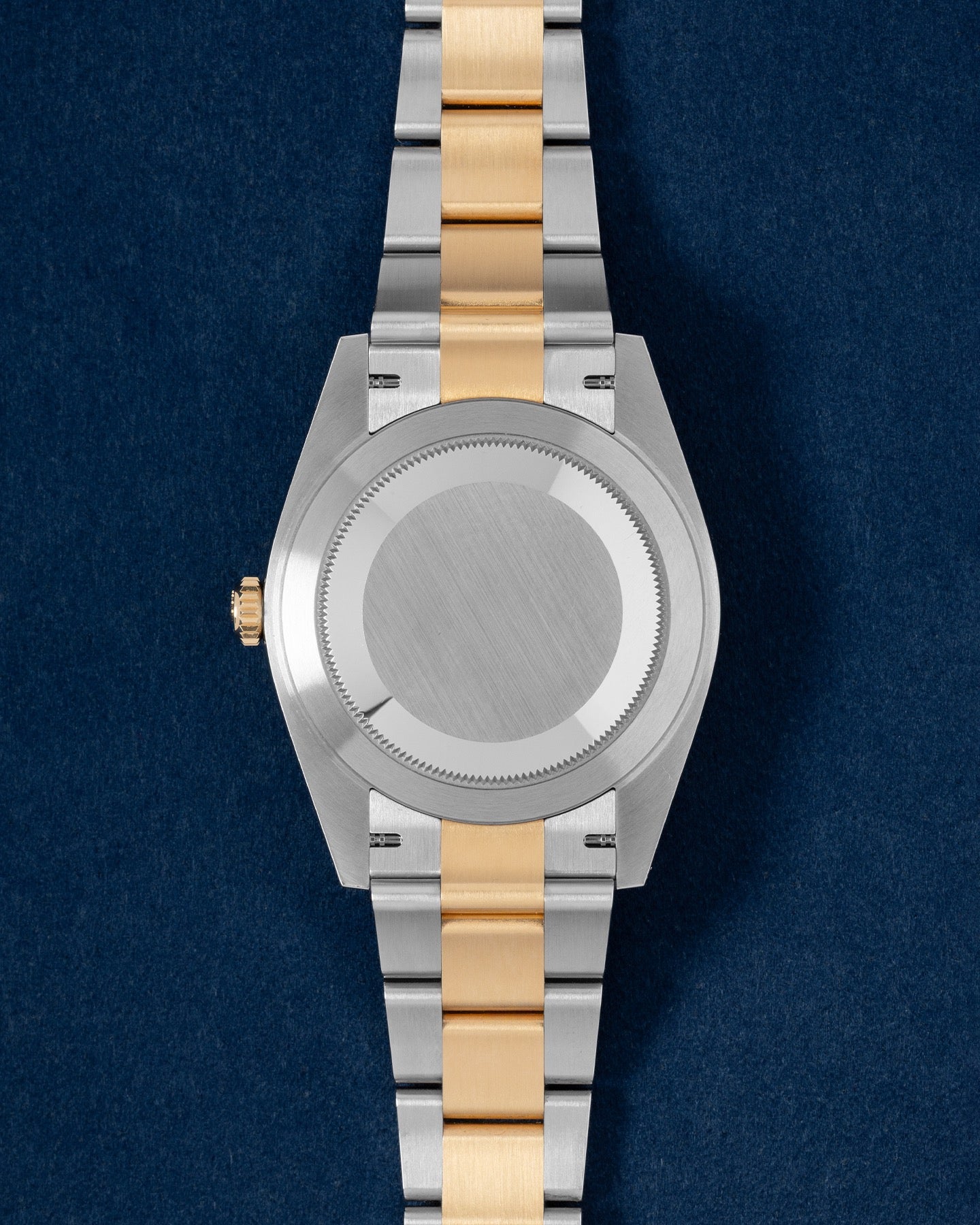
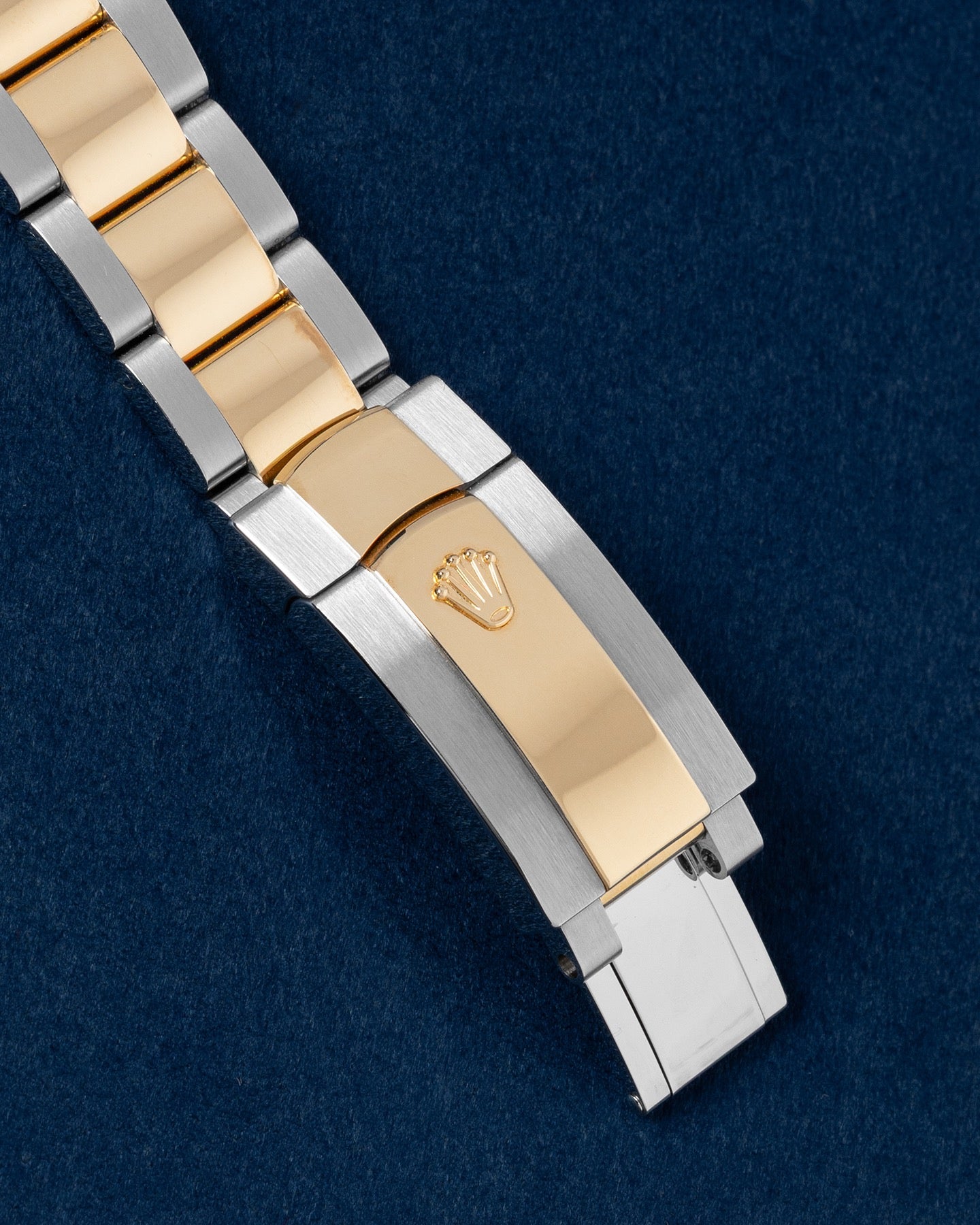
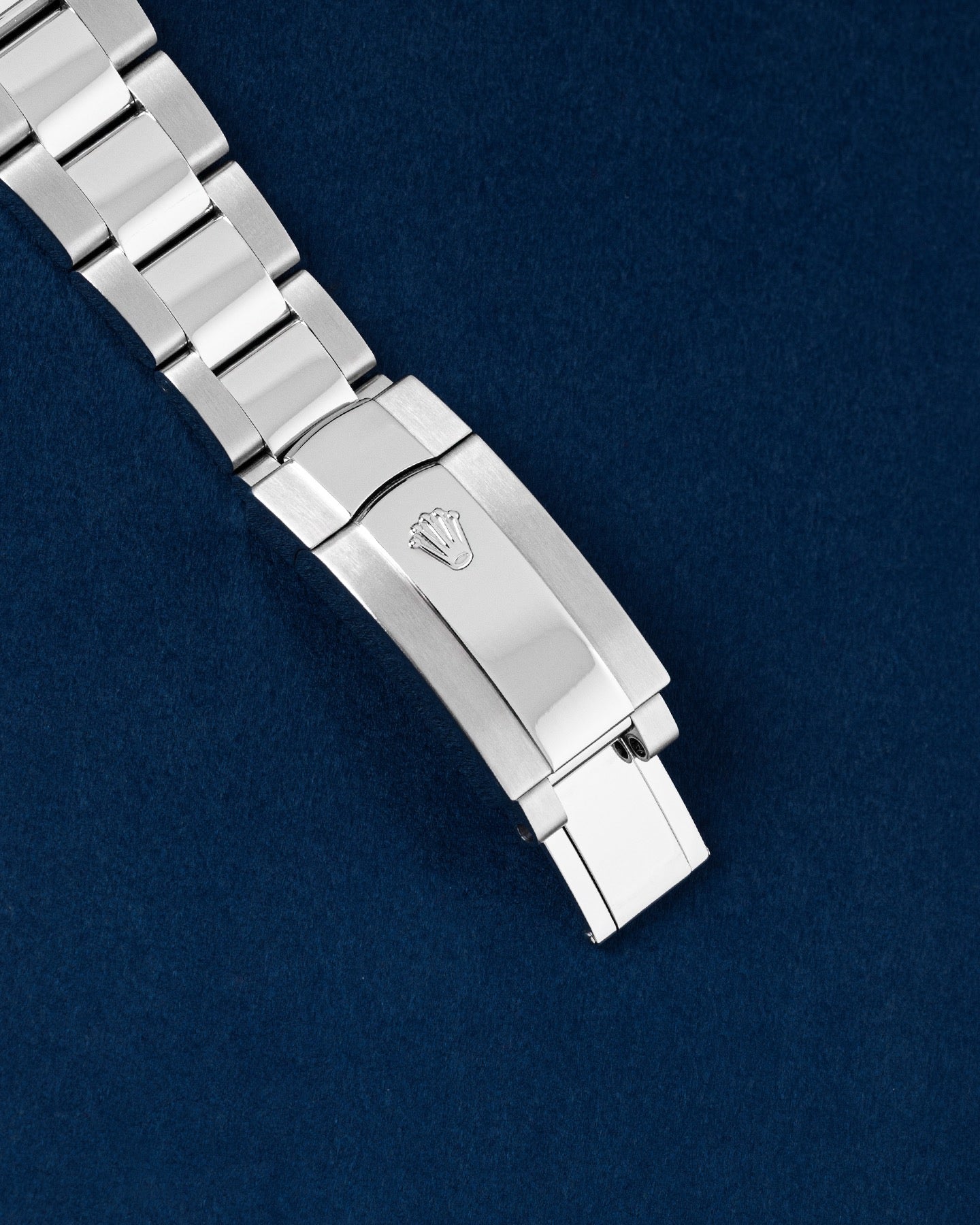
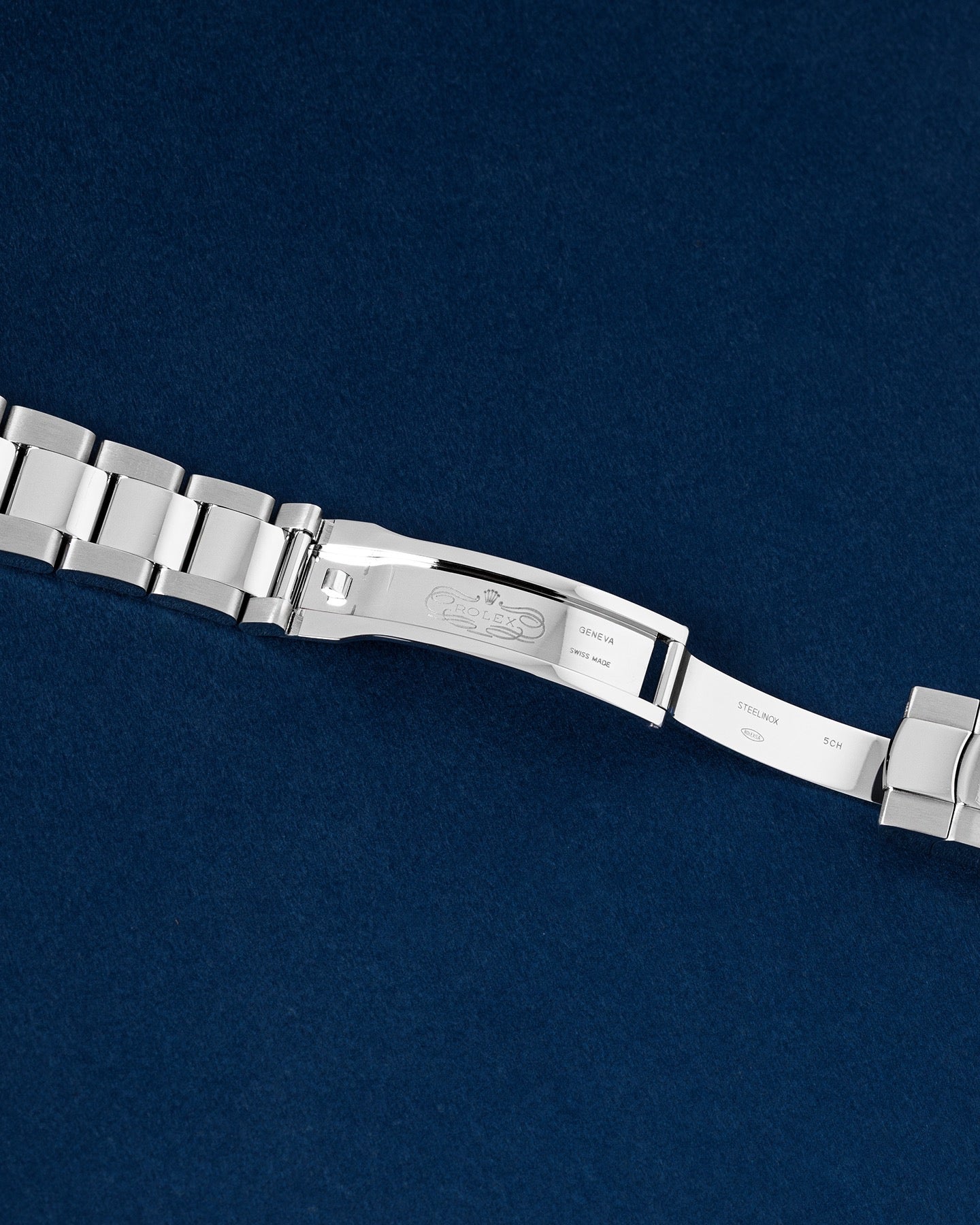
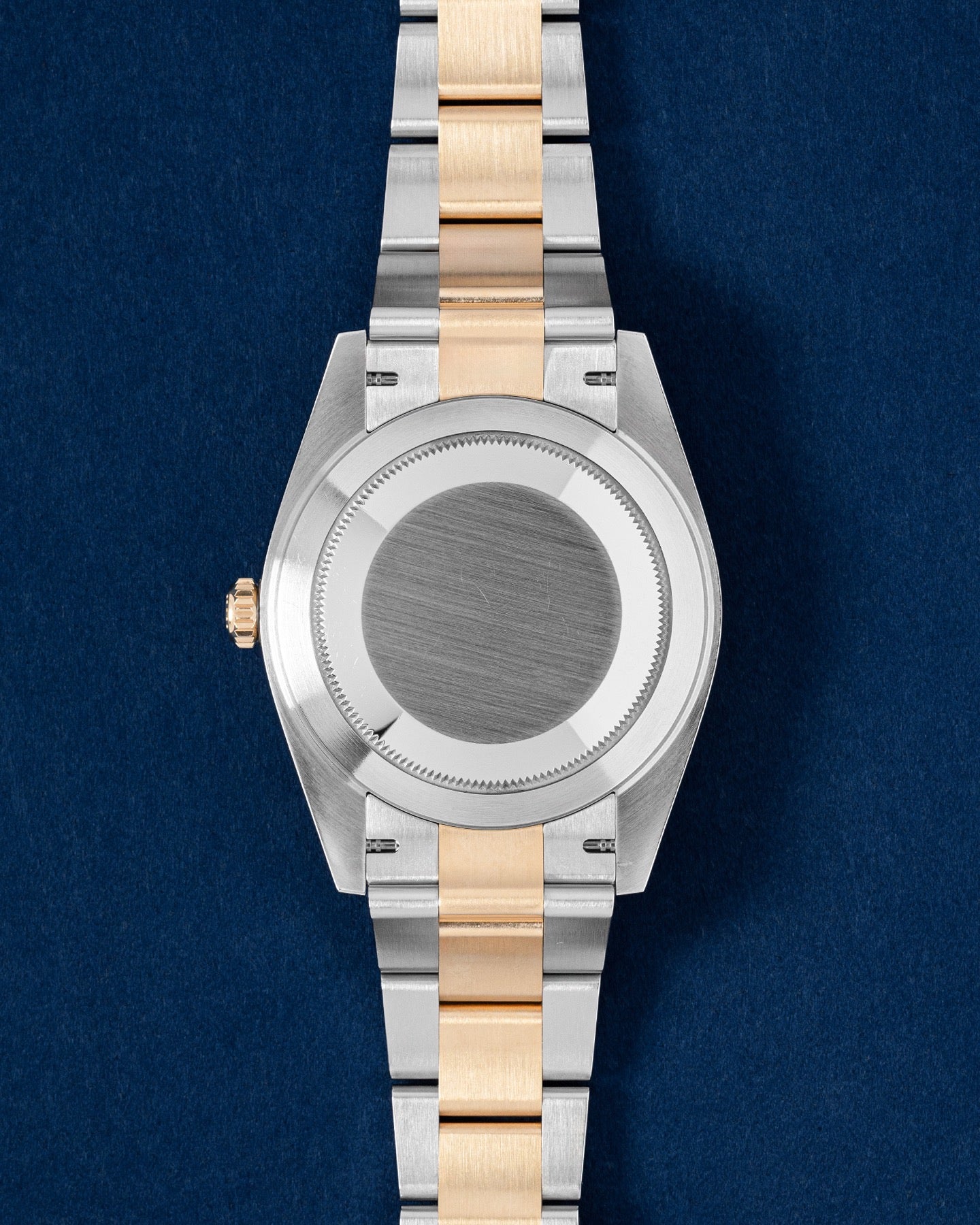
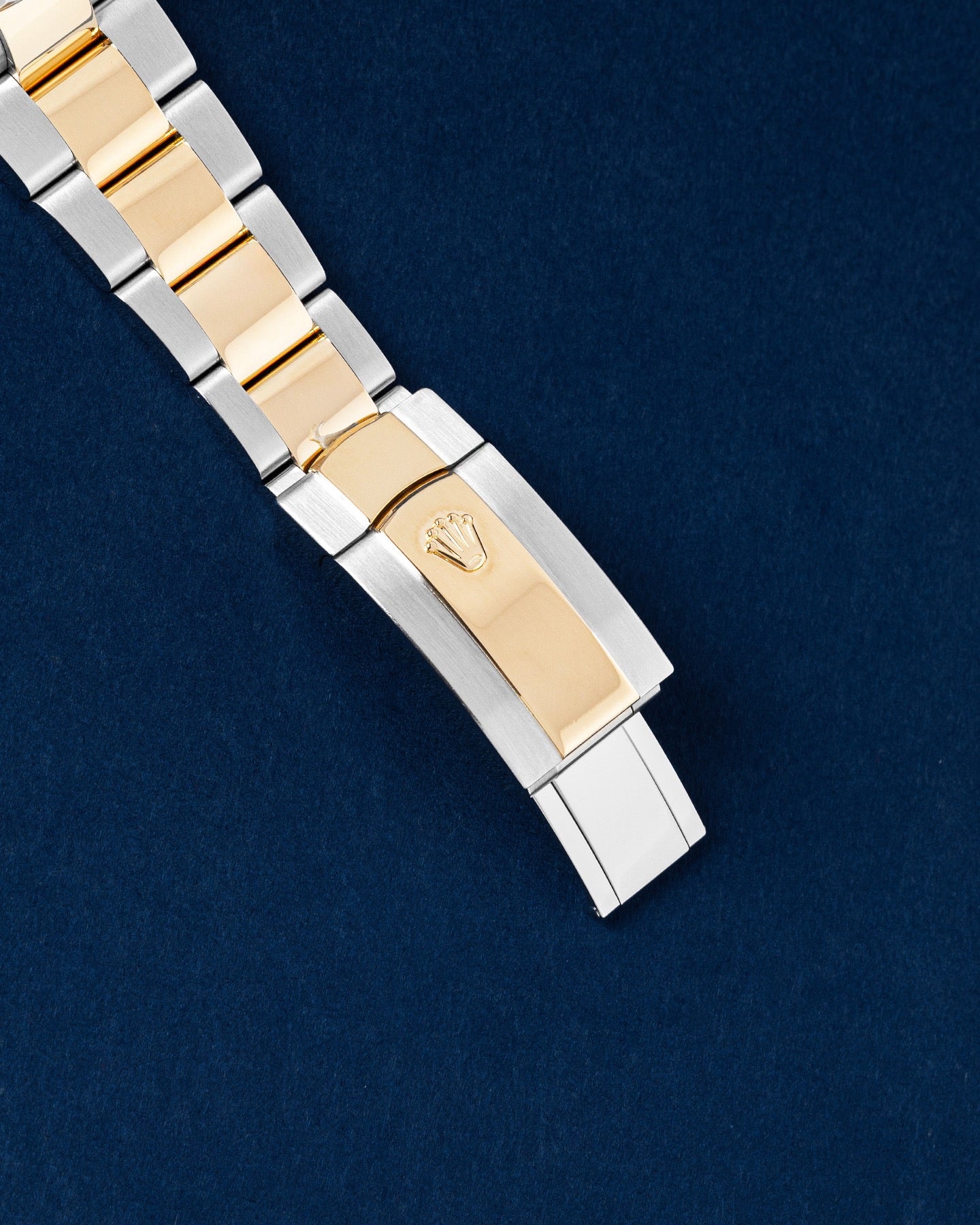
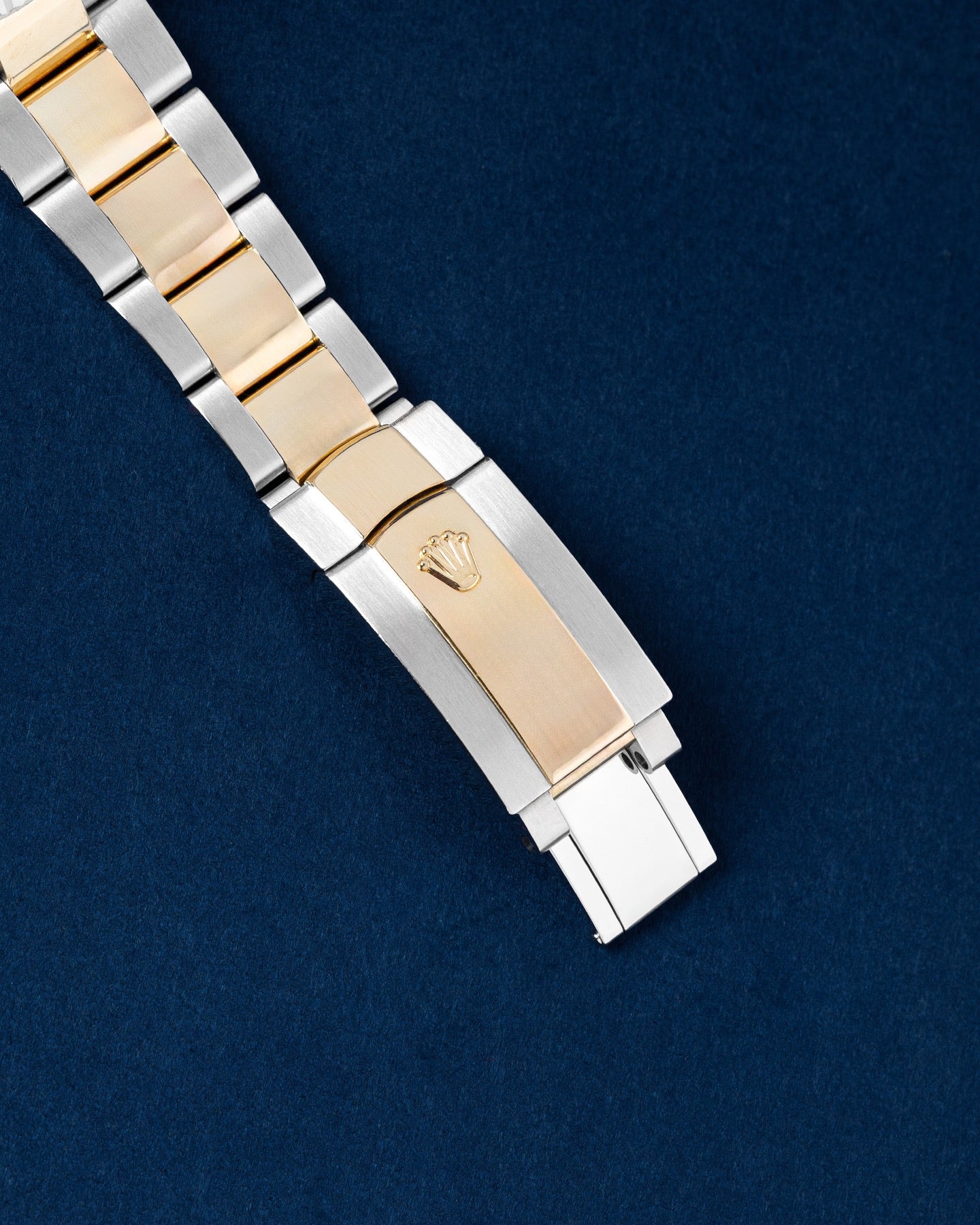
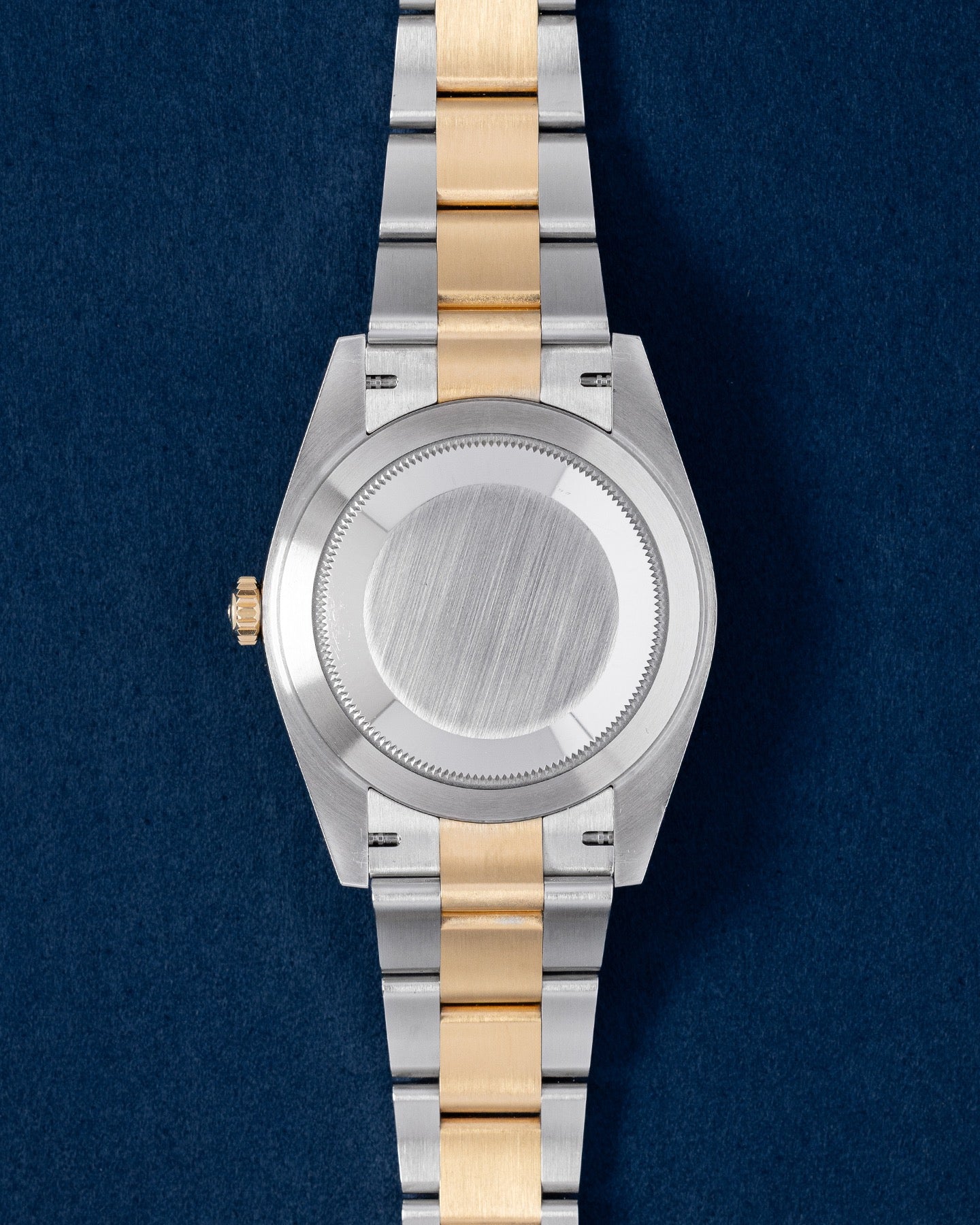
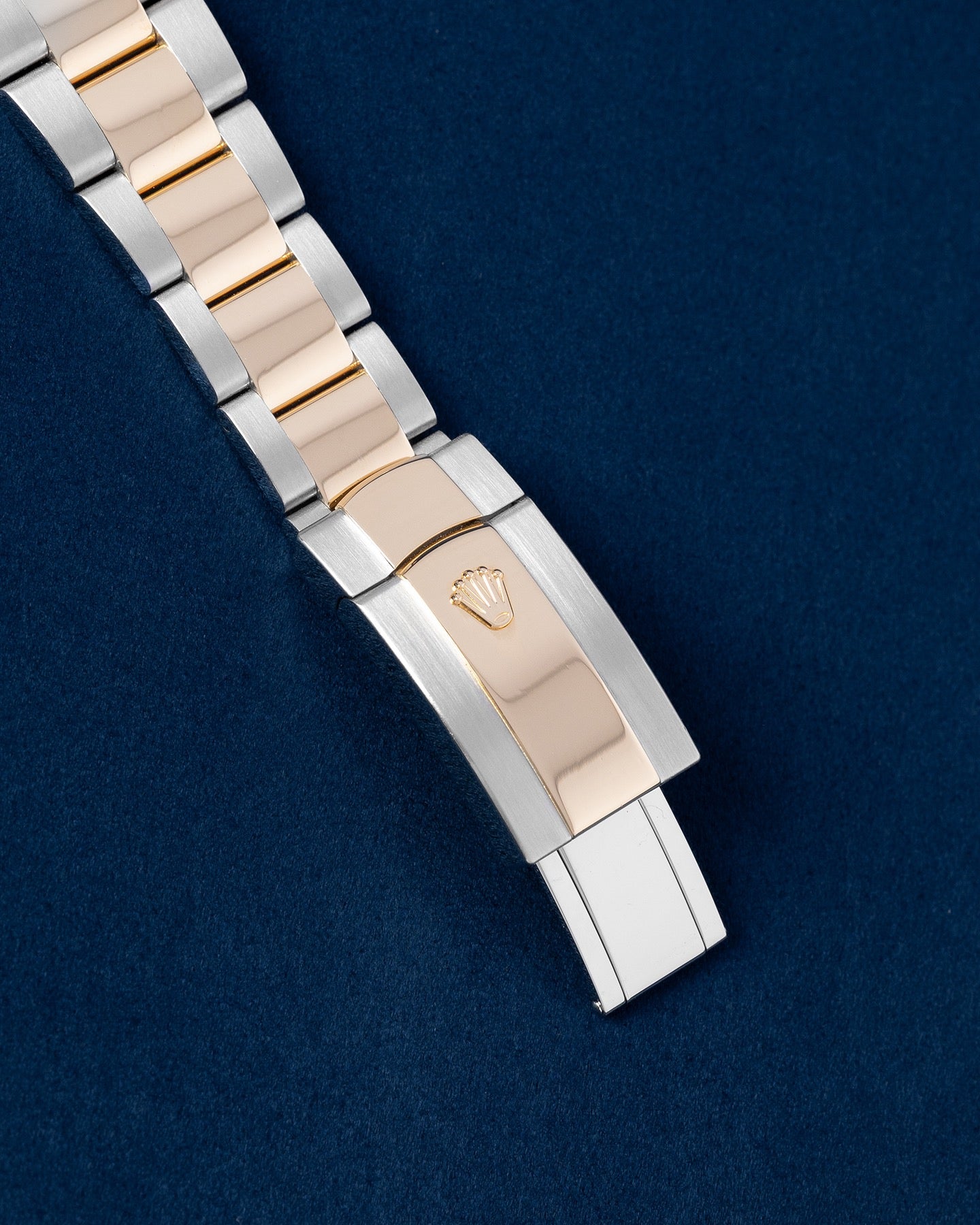
The Oyster bracelet is the alternative Rolex Datejust bracelet, a three-link design with broader, more substantial links that give the watch a sportier presence. The Oyster has been an option on the Rolex Datejust since the late 1950s and is now offered across nearly every current production Datejust reference alongside the Jubilee.
The Rolex Datejust Dial Taxonomy
The Rolex Datejust has been produced with more dial variations than any other model in the Rolex catalogue. A complete inventory would run longer than this page. The categories that follow cover the configurations most often encountered in the pre-owned and vintage Rolex Datejust market.
Standard Sunburst Dials
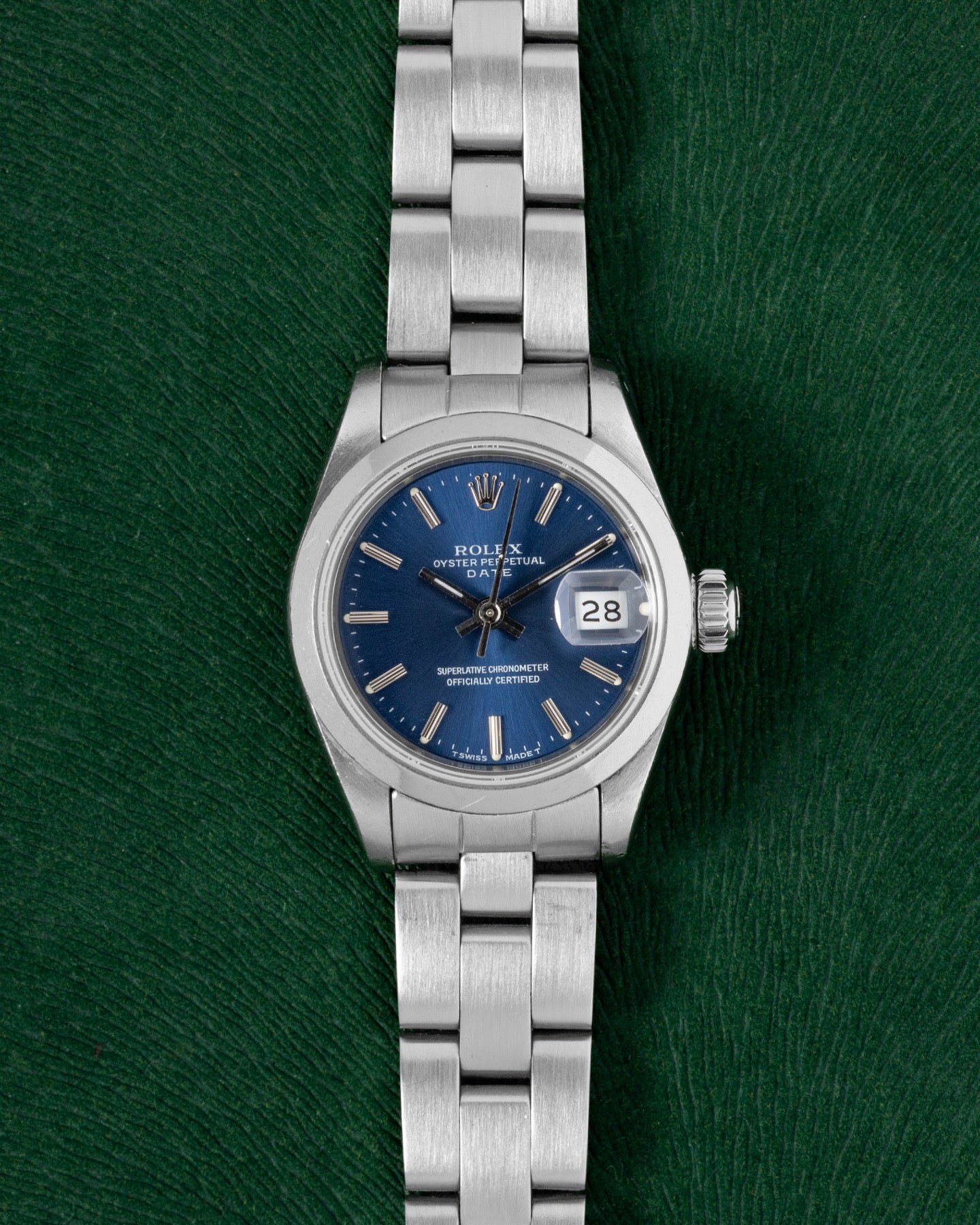
The most common Rolex Datejust dials are sunburst-finished surfaces in champagne, silver, black, blue, green, or rhodium grey, with applied stick or baton hour markers and matching baton hands. These dials account for the majority of total Rolex Datejust production and are available across current and vintage references.
The Wimbledon, Mother-of-Pearl, and Specialty Dials
The Wimbledon dial covered earlier in this guide is the most recognised modern Rolex Datejust specialty dial. Mother-of-pearl dials, with iridescent natural shell surface in white, pink, or black variations, appear primarily on Lady-Datejust and Datejust 31 references, occasionally on Datejust 36. Diamond hour markers, factory Roman numerals, factory Arabic numerals (less common), and the recent palm motif and fluted-metal dials introduced on the Datejust 36 in the late 2010s and 2020s round out the modern dial inventory.
The Vintage Dial Variants
Vintage Rolex Datejust dials are a category of their own. The Wide Boy dials from 1964 through 1967 (with broad rectangular hour markers and matching hands), Sigma dials (with the sigma symbol next to the Swiss marking indicating solid gold indices), Tapestry and linen textured dials, factory diamond Serti dials, and tropical dials where the original black has shifted to chocolate brown through decades of UV exposure all sit within vintage Rolex Datejust collecting and command meaningful premiums when authentic and well-preserved.
The Rolex Datejust Movement Architecture
The mechanical engineering inside the Rolex Datejust has progressed through approximately seven generations of automatic movements across the model's history. The calibre 710 powered the original 4467. The calibre A295 followed in the late 1940s. The Rolex calibre 1065 introduced the instantaneous midnight date change in 1955 with the reference 6605. The Rolex calibre 1560 ran the four-digit Rolex Datejusts from the late 1950s, replaced by the calibre 1575 in the mid-1960s with the higher 19,800 vph beat rate and the addition of hacking seconds in 1972. The Rolex calibre 3035 launched the five-digit era in 1977 with the quickset date and the 28,800 vph high-beat rate. The Rolex calibre 3135 launched the sapphire-crystal era in 1988 and remained in Rolex Datejust production for over thirty years.
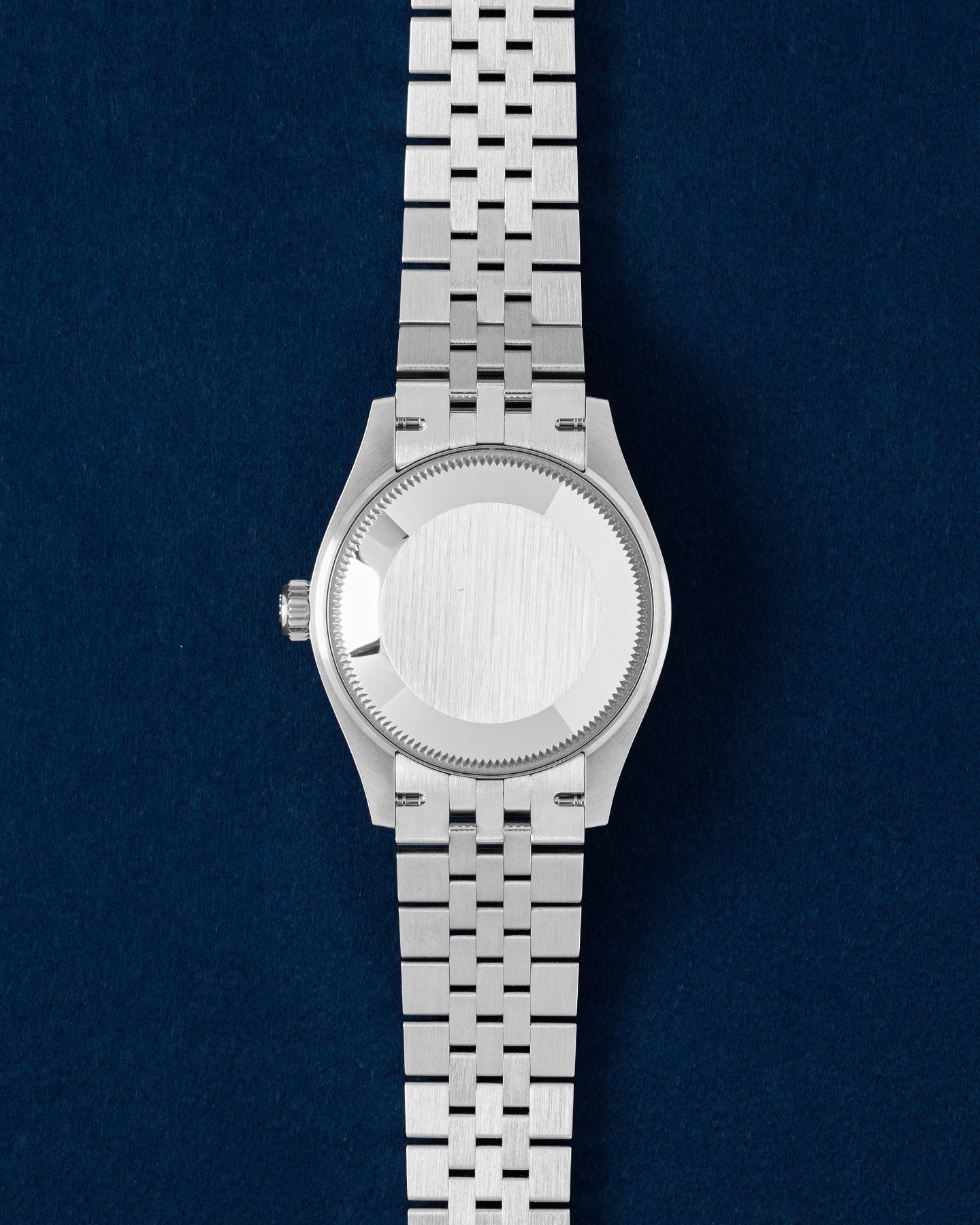
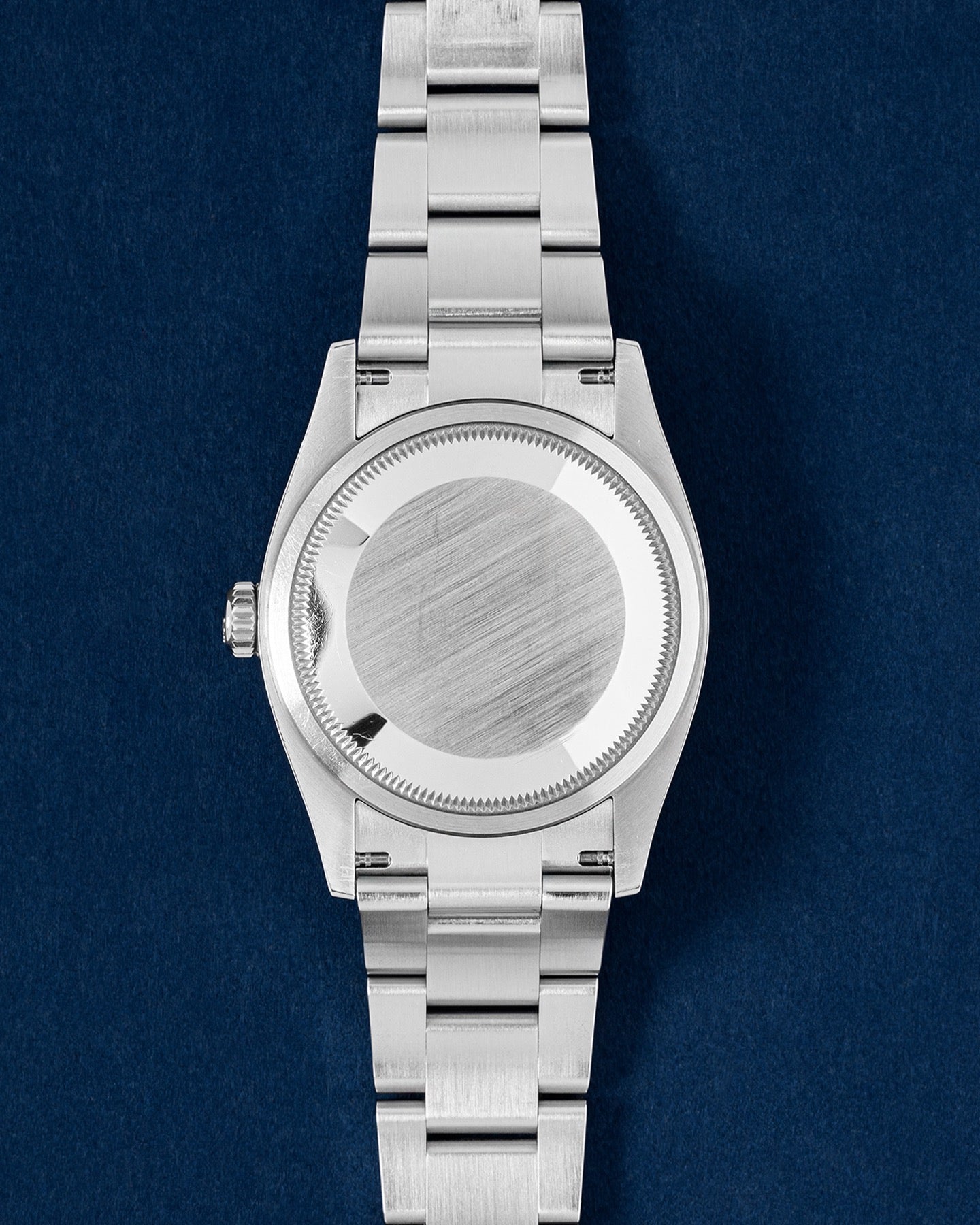
The current calibre 3235 represents the architectural successor to the 3135 and is the movement in every Rolex Datejust 36, Rolex Datejust 41, and Rolex Datejust 31 reference currently in production. The 3235 introduces the Chronergy escapement, the paramagnetic blue Parachrom hairspring, the four-position Microstella gold regulating nuts, the Paraflex shock absorbers, and the redesigned mainspring barrel architecture that delivers the 70-hour power reserve. The Lady-Datejust 28 runs the calibre 2236 with the silicon Syloxi hairspring, a smaller and proportionally sized movement designed specifically for the 28mm case.
The Rolex Datejust Pricing, Secondary Market, and the AD Reality
The Rolex Datejust is among the most liquid mechanical wristwatches in the world, second only to the Rolex Submariner in pre-owned transaction volume across the major dealer platforms. The secondary market depth is unmatched in the dress watch category. A serviced Rolex Datejust with box and papers can move in days. The Rolex Datejust holds value across both current production and discontinued references, with vintage examples carrying their own deeper collector dynamics.
The structural reality of the Rolex authorized dealer system shapes the Rolex Datejust secondary market the same way it shapes the rest of the Rolex catalogue. Rolex produces approximately one million watches per year across its entire production, and the most-requested Rolex Datejust configurations, including the Rolex Datejust 41 in Wimbledon dial across all four metal combinations and the Rolex Datejust 36 in Yellow Rolesor with the Jubilee bracelet, are consistently produced below open market demand. Authorized dealers operate on allocation, and a buyer asking to purchase a specific Rolex Datejust configuration at retail is typically placed on a waitlist of variable length. The Rolex Datejust references that are in stock on the secondary market today are the references the authorized dealer cannot supply this month or next.
Pricing across the Rolex Datejust catalogue spans a wider range than any other Rolex model line. Current production steel Rolex Datejust 36 and Rolex Datejust 41 references trade at premiums to MSRP on the secondary market, with the Wimbledon dial configurations commanding the strongest premiums within the current generation. Two-tone Yellow Rolesor and Everose Rolesor Rolex Datejust references trade higher still, reflecting the precious metal content and the strong modern demand for two-tone Rolex sport-dress watches. Solid gold Rolex Datejust 36 and Rolex Datejust 41 references occupy the top of the price range, with the diamond-bezel and gem-set configurations extending higher again.
Discontinued Rolex Datejust references such as the 116234 and 116233 from the six-digit first generation, the 16234 and 16233 from the five-digit second generation, and the 16014 and 16013 from the original quickset generation all hold their value well and offer meaningful price advantages over current production for the buyer who prefers the older case proportions, the acrylic crystal of the earlier generations, or the specific dial and bracelet configurations no longer offered.
Vintage Rolex Datejust references are their own collecting category. Four-digit 1601 examples with original gilt or matte dials, drilled lugs, and unpolished cases regularly bring multiples of what a polished and serviced example of the same Rolex Datejust reference brings. Wide Boy dials, Sigma dials, tropical dials, and original-condition Florentine 1607s all carry meaningful premiums over standard configurations. Earlier references including the 6605, 6305, 5031, and especially the original 4467 occupy the upper end of the vintage Rolex Datejust market, with verified provenance and original condition driving prices into five and occasionally six figures depending on configuration and history.
The Rolex Datejust at Grand Caliber in Uptown Dallas
Grand Caliber sits in Uptown Dallas at 2811 McKinney Avenue, in the corridor that has become the address for serious watch buying outside the authorized dealer network. The watches on our floor are authenticated in-house, the prices are posted openly, and the Rolex Datejust inventory rotates across the full catalogue. Current production Rolex Datejust 36 references 126200, 126233, 126234, and 126231. Current production Rolex Datejust 41 references 126300, 126333, 126334, and 126331, with Wimbledon dial configurations rotating through inventory regularly. Lady-Datejust 28 in the 279 series across steel, Yellow Rolesor, White Rolesor, and Everose Rolesor. Discontinued Rolex Datejust references including the 116200 series, the five-digit 16234 and 16013 family, and on rare occasions the four-digit 1601, 1603, and 6305 for the vintage buyer.
There is no allocation conversation at Grand Caliber. No purchase history requirement. No waitlist for the Wimbledon dial configurations or the two-tone Rolex Datejust references the authorized dealers cannot deliver this year or next. If the Rolex Datejust you are looking for is in our case, it is yours to buy today. If it is not, our sourcing network covers the major secondary markets in the United States and internationally, and we can typically locate a verified example within days for buyers who know exactly what they want.
We also buy Rolex Datejusts outright and take consignments, with free shipping and full insurance on outbound and inbound transit and national coverage for clients buying remotely. The Rolex Datejust is among the most liquid wristwatches on the secondary market, and the right dealer relationship makes selling or trading nearly frictionless when you decide to move a piece.
Visit the showroom Monday through Friday, 10am to 5pm Central, or by appointment on Saturday. Call (214) 225-7198, email info@grandcaliber.com, or browse current Rolex Datejust inventory at grandcaliber.com.


Vintage
Vintage
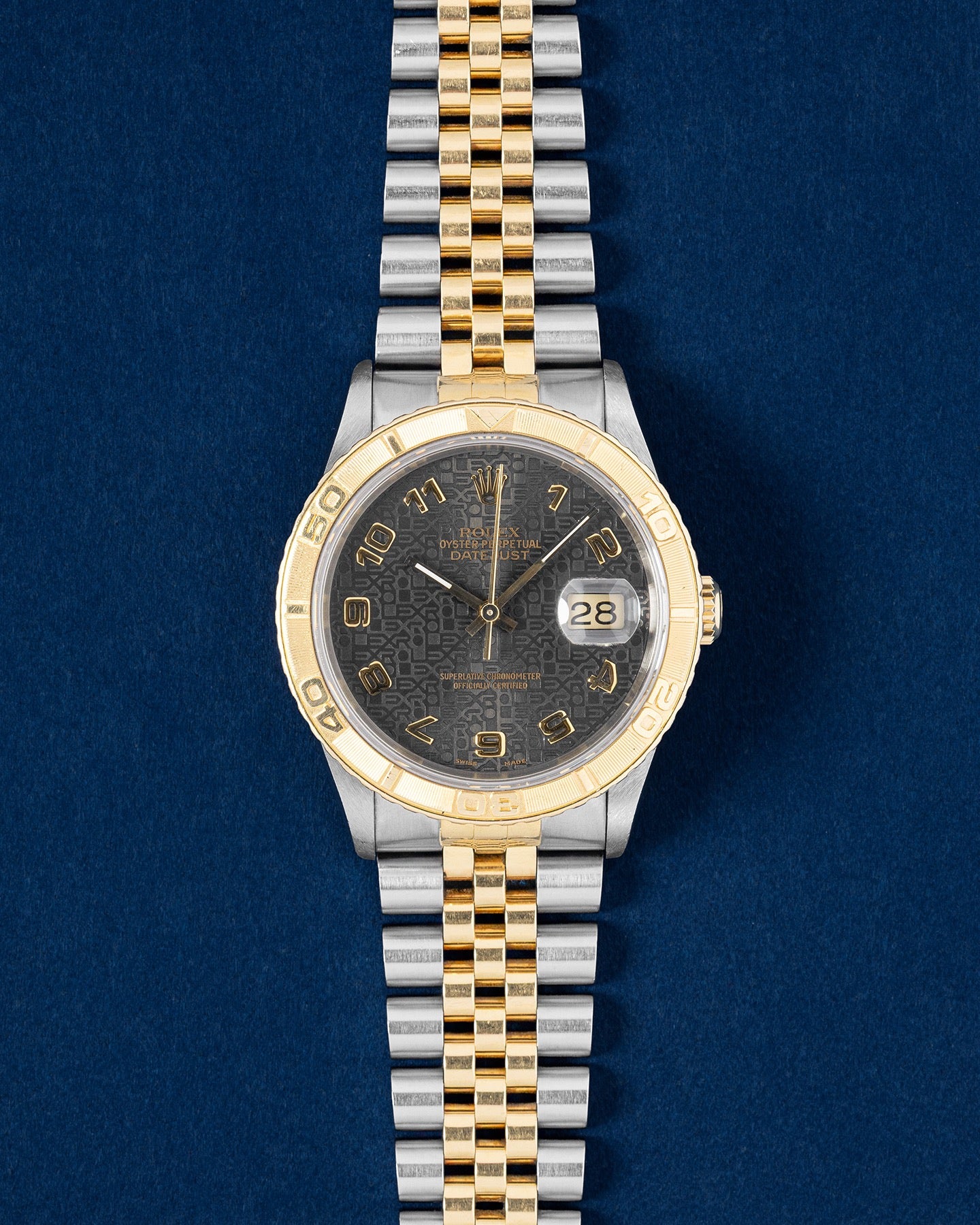
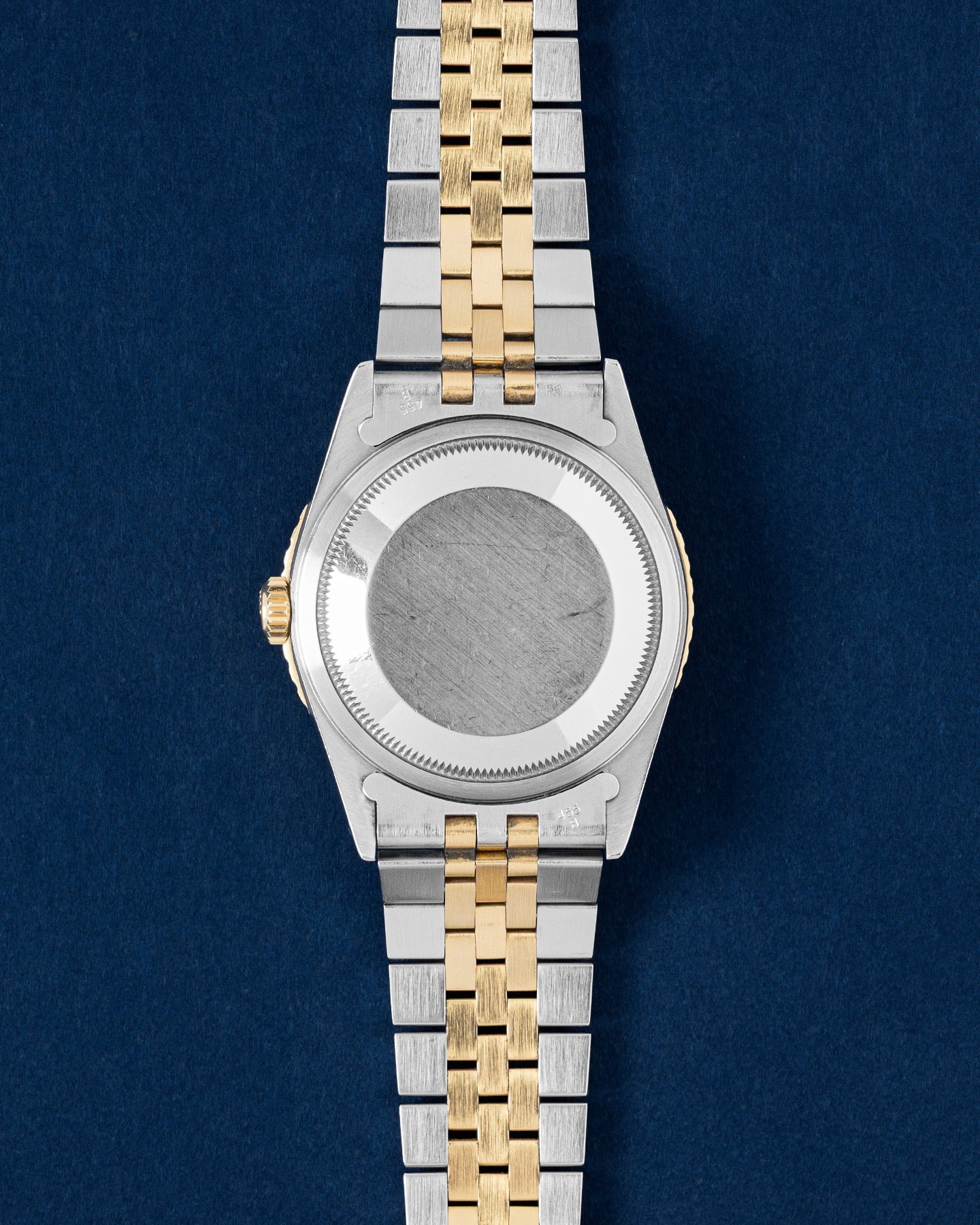
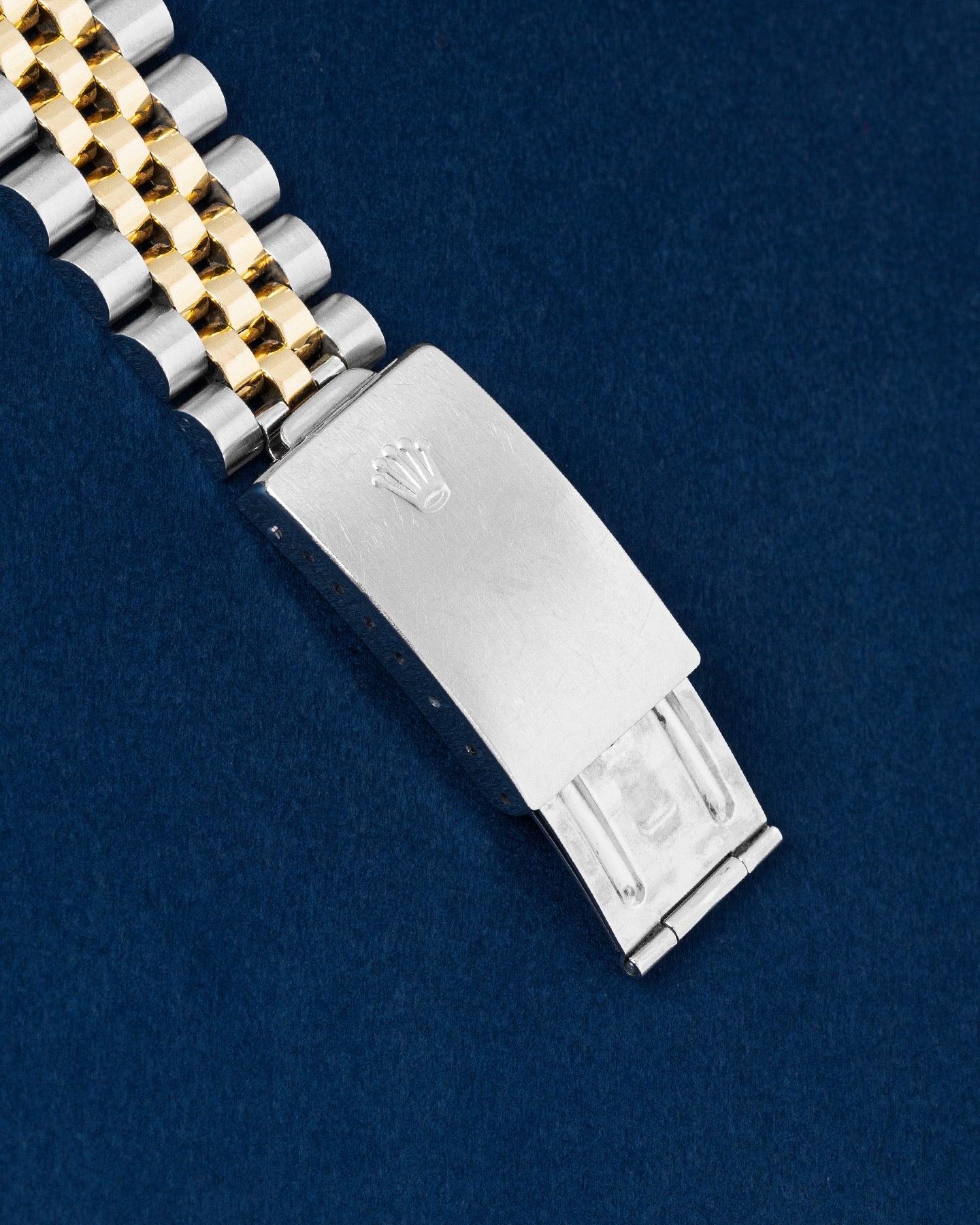
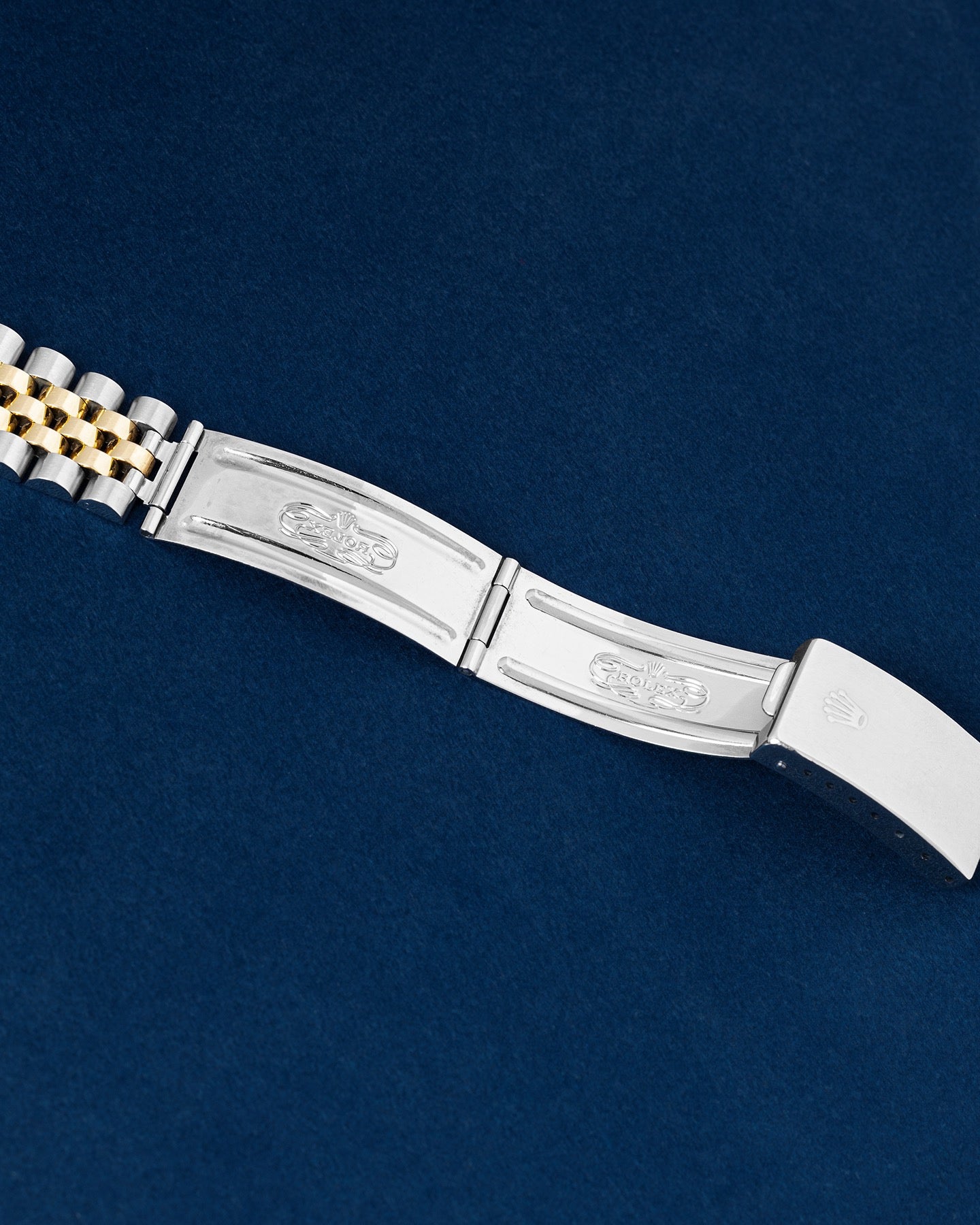
Rolex Datejust Turn-O-Graph 16263
Vintage
Vintage




Vintage


Vintage


Vintage


Vintage

Vintage


Vintage