Rolex Day-Date
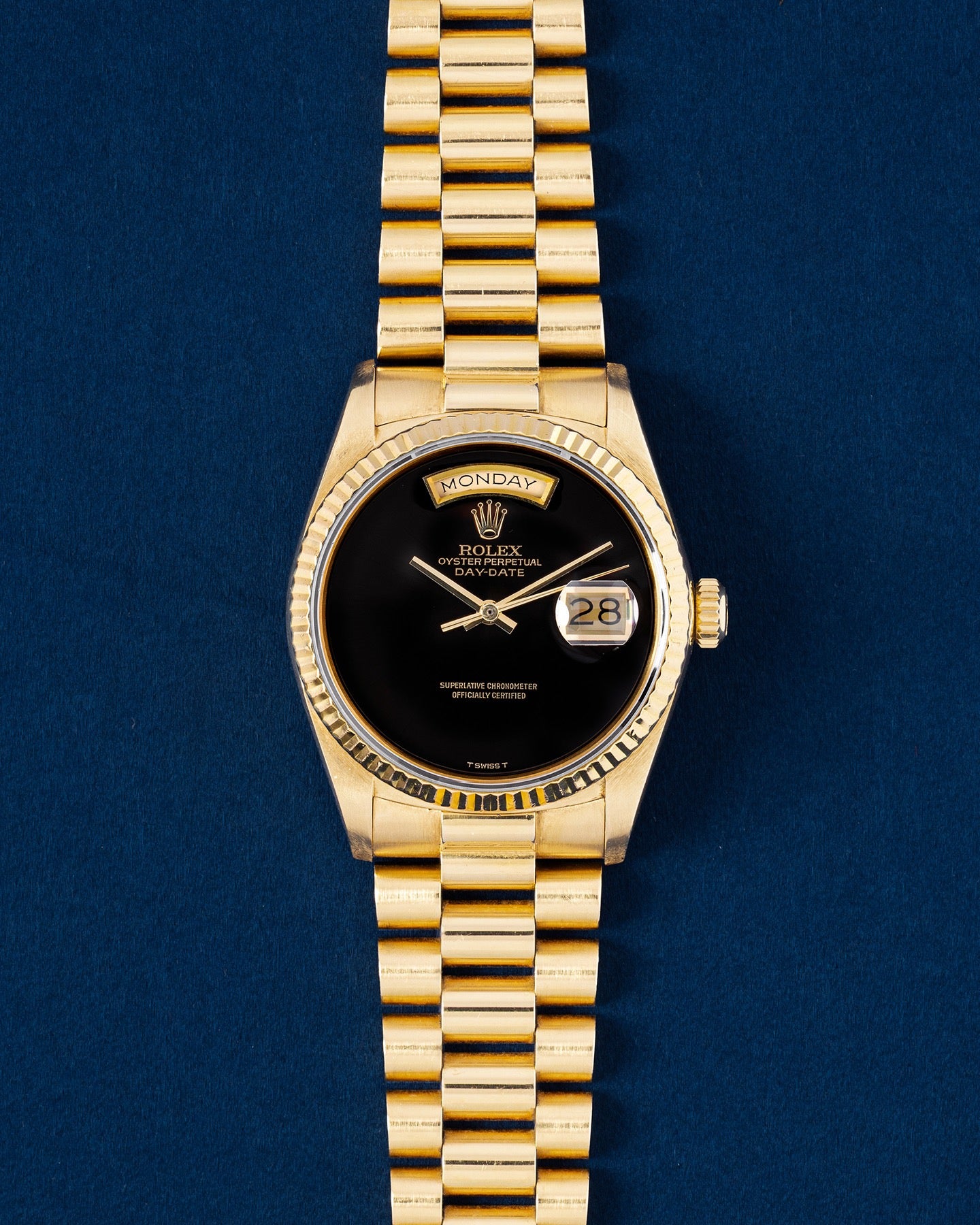
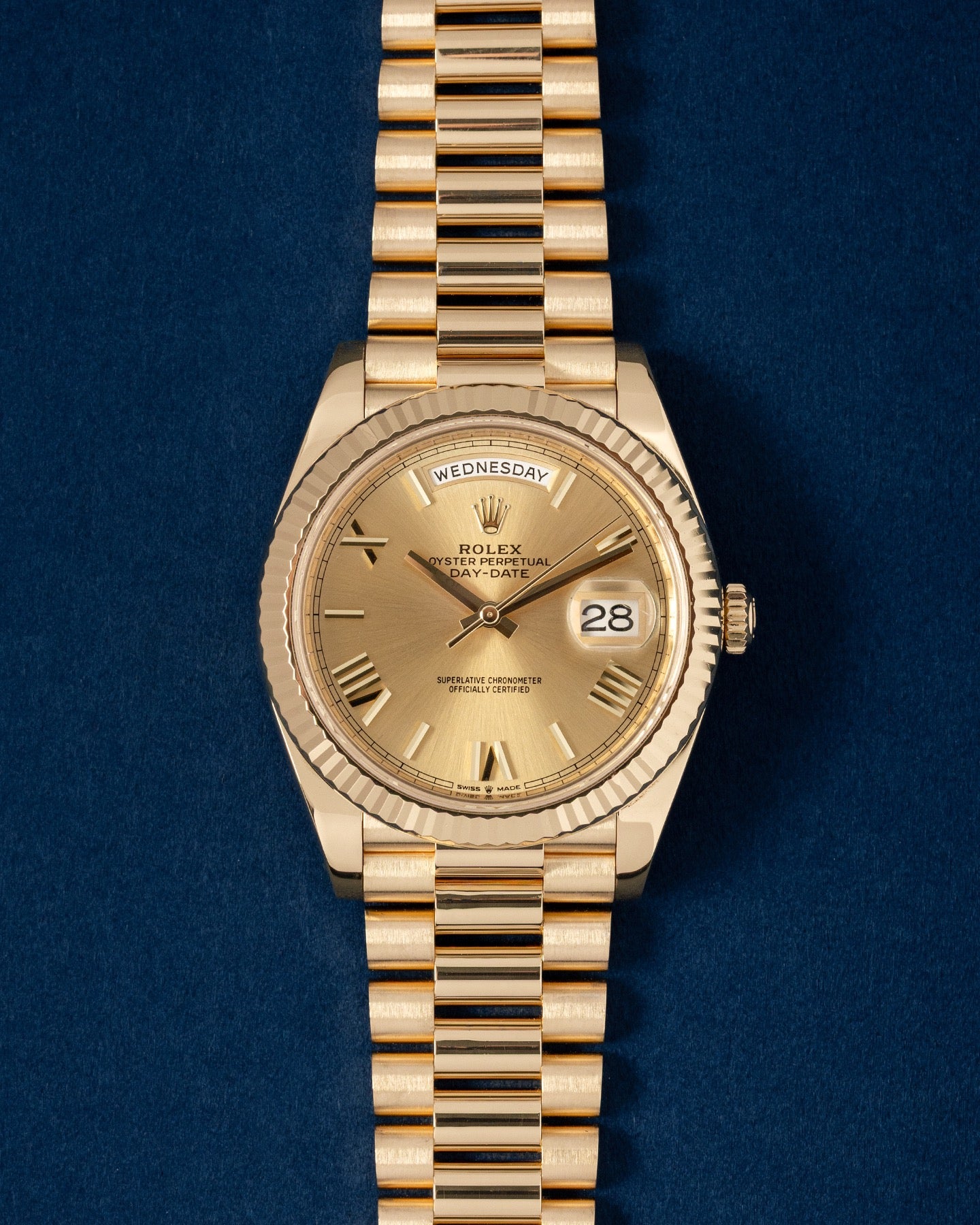
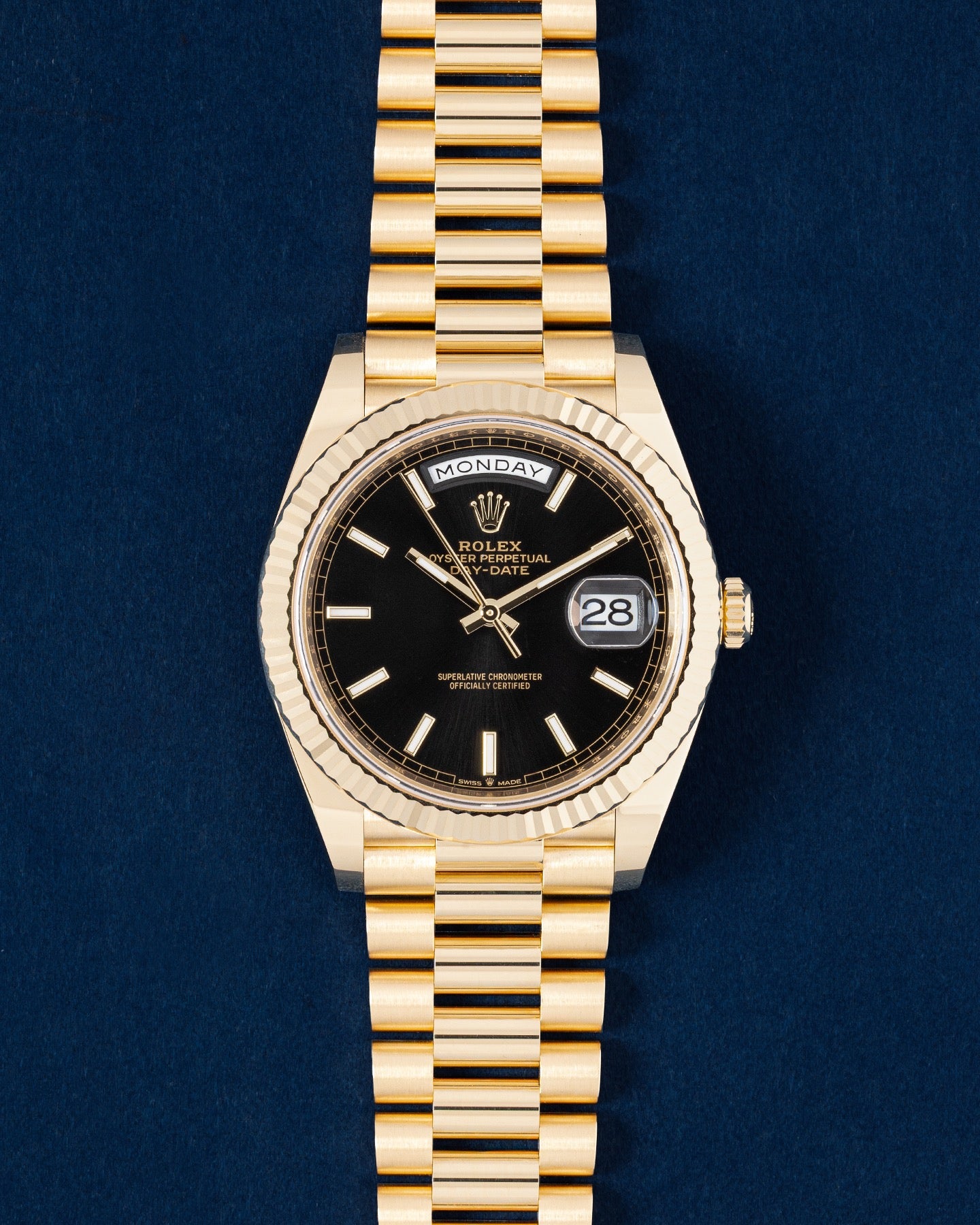
Shop new and pre-owned Rolex Day-Date watches at Grand Caliber. The first watch to spell the day in full on the dial, produced only in gold and platinum. The President bracelet, worn by presidents and world leaders, built for nothing less.
The Rolex Day-Date at Grand Caliber
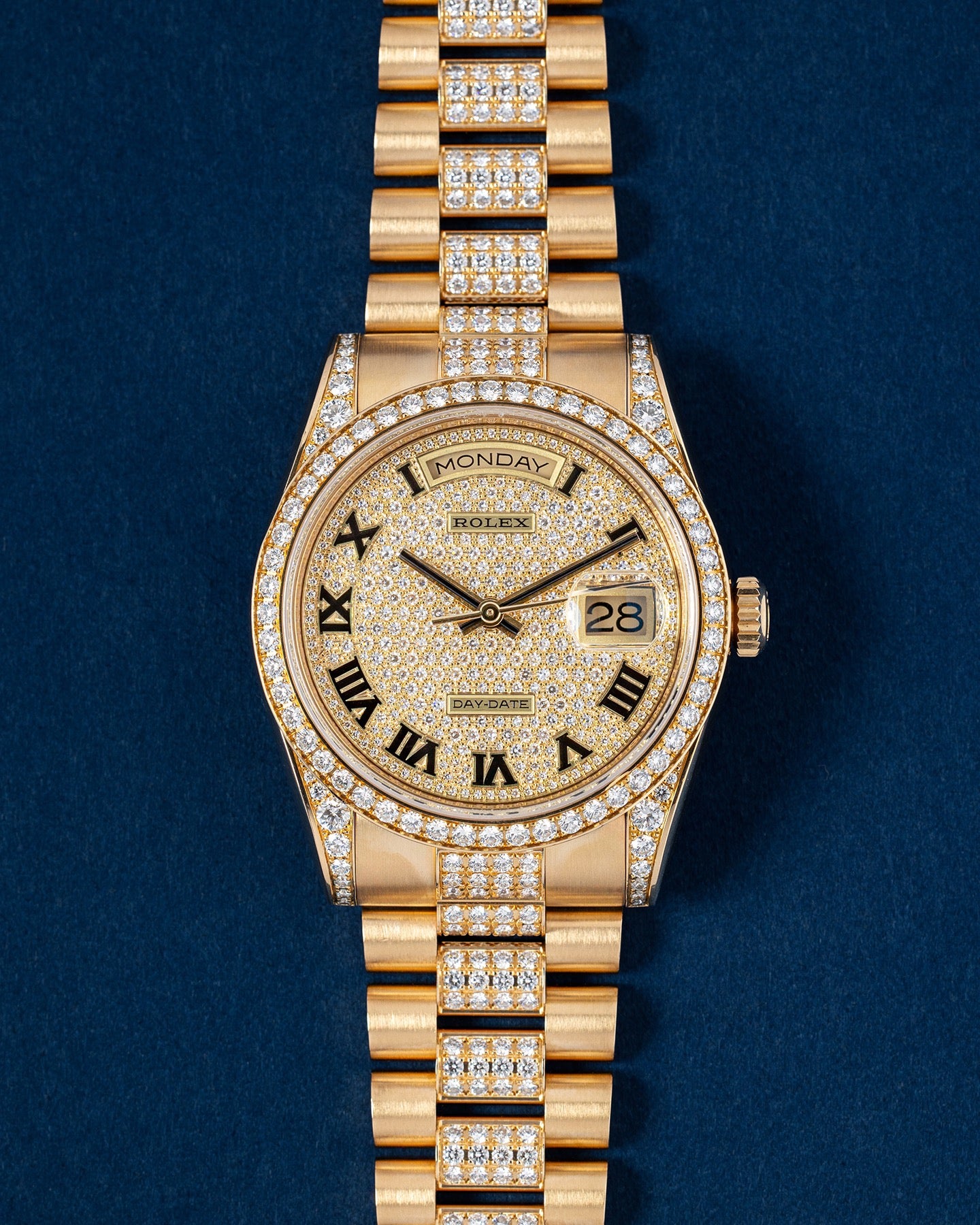
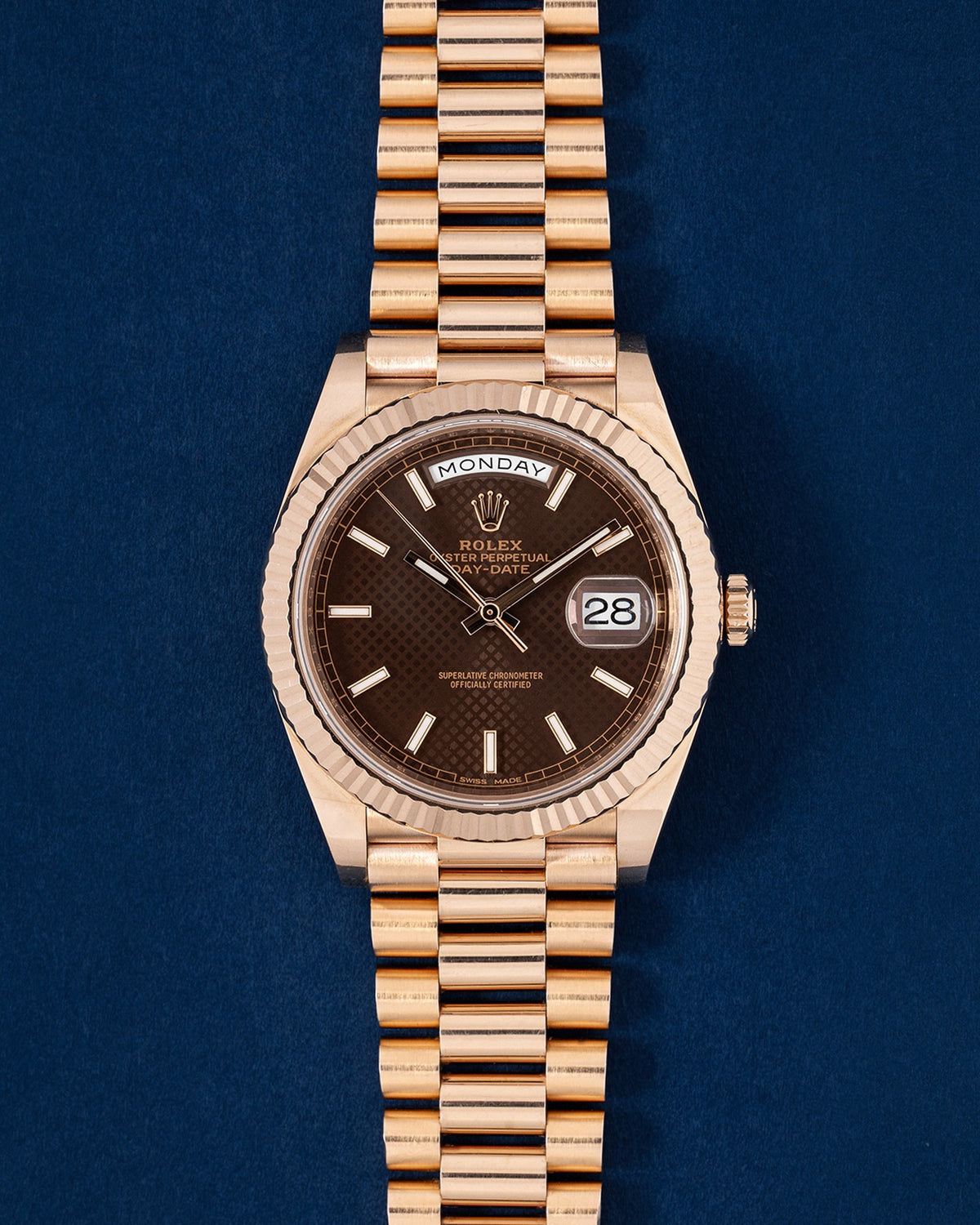
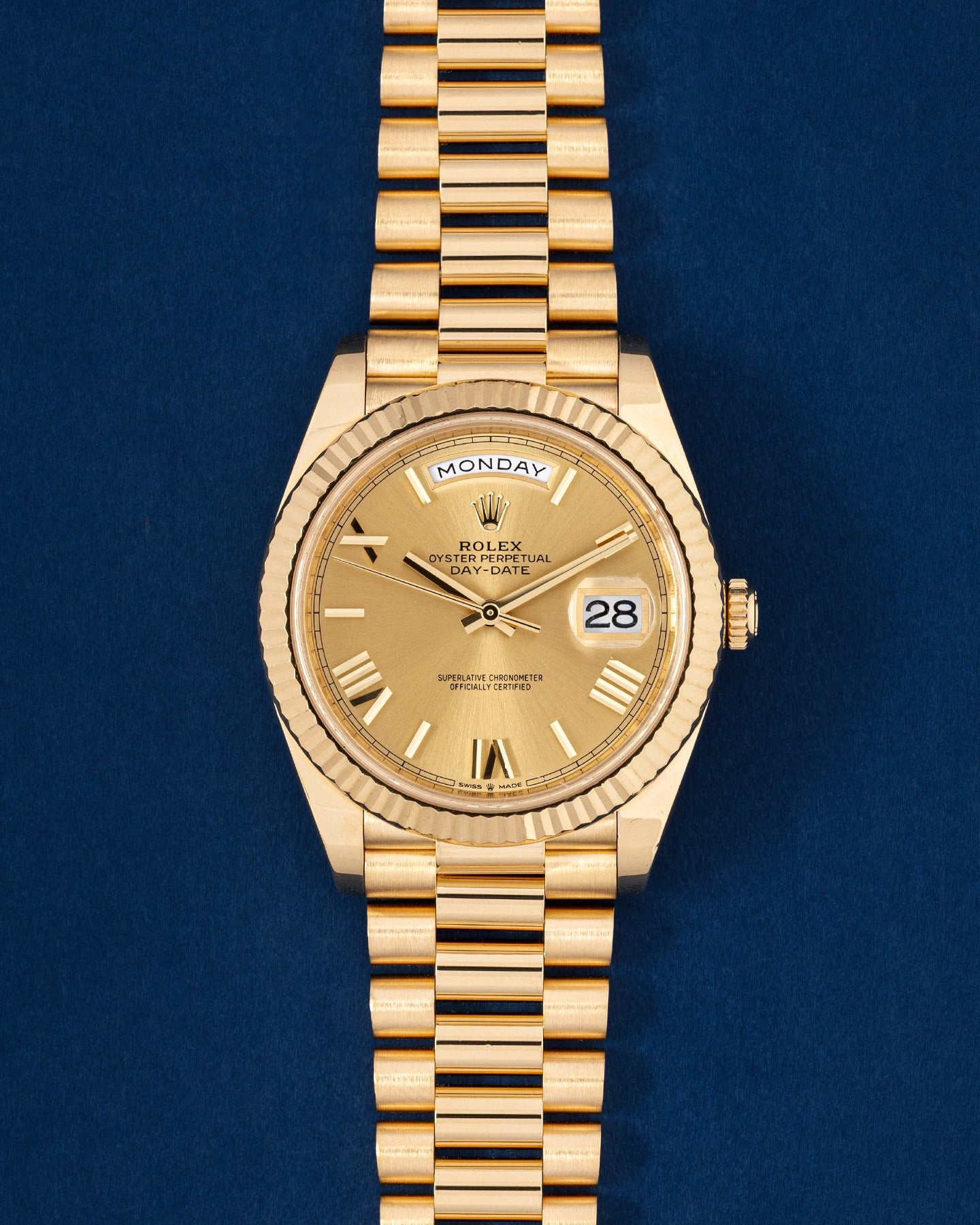
The Rolex Day-Date is universally recognized as the ultimate watch of prestige. The Rolex Day Date is the crown jewel of the entire catalog and stands as the most consequential symbol of global achievement ever produced by the Swiss watch industry. When Rolex introduced the Rolex Day Date in 1956, it represented a monumental leap forward in calendar complications. It was the very first wristwatch to display both the date and the day of the week spelt out entirely in full, utilizing two completely separate windows on the dial. This innovation joined the three other foundational pillars of the brand: chronometric precision, extreme waterproofness via the Oyster case, and reliable automatic winding. From its inception, the manufacture made a strict, uncompromising decision that permanently elevated the status of this specific model. The Rolex Day Date has only ever been produced in solid precious metals. The Rolex Day Date has never been offered in stainless steel, separating it from the popular professional dive watches and chronographs that dominate the modern market.
Because it represents the zenith of luxury, the Rolex Day Date has graced the wrists of visionary leaders, virtuosos, and world altering champions for over six decades. It speaks the language of the global elite, quite literally, as the Rolex Day Date day of the week display is available in 26 different languages, covering Latin, Arabic, Cyrillic, Hebrew, Japanese, Chinese ideograms, and the Ge ez alphasyllabary. Grand Caliber sees the Rolex Day Date cross our desk in every spectacular form the historical catalogue has ever produced. We handle the current production Day Date Forty references like the 228238 in solid 18-karat yellow gold, the 228235 in Everose gold, and the breathtaking 228236 in solid platinum. We navigate the discontinued 36mm classics, including the six-digit 118238 generation, the double quickset 18238, and the seminal single quickset 18038. For the serious vintage collector, we source pristine examples of the legendary four-digit 1803, complete with correct pie pan dials and original acrylic crystals. What follows is the definitive case for the Rolex Day Date as the ultimate statement of uncompromising success, told exactly the way a dealer who handles the deepest archives of the catalogue tells it.
The 1956 Origins and the First Generation
The history of the Rolex Day Date begins in the mid 1950s, a period of expansion and innovation for the Geneva based manufacture. Prior to 1956, the brand had established the Datejust as the premier automatic calendar watch, the direct predecessor to the Rolex Day Date. However, Rolex desired a flagship Day Date that offered even greater utility for international businessmen and diplomats.
Rolex Day-Date Reference 6510 and 6511
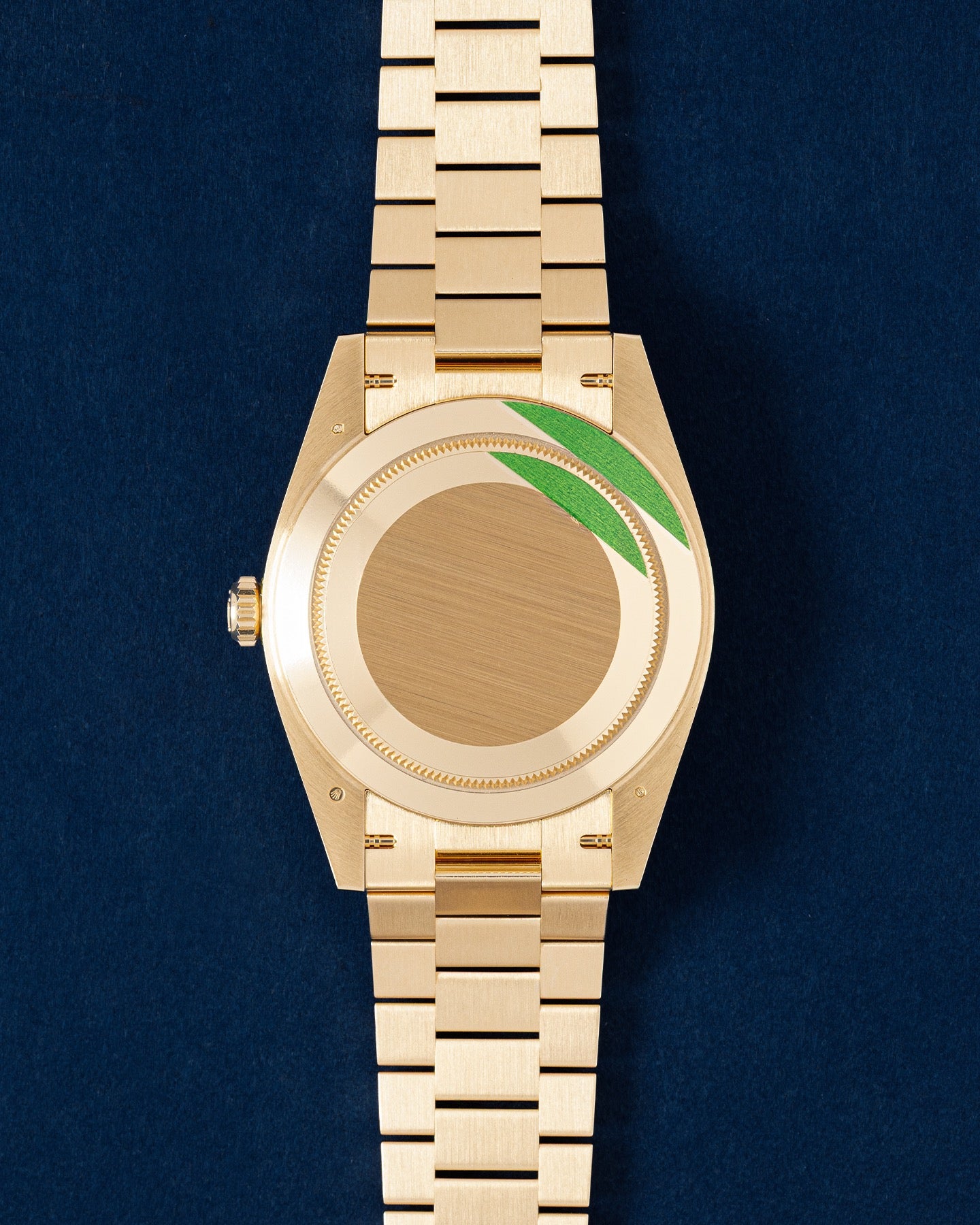
In 1956, Rolex officially unveiled the very first generation of the Rolex Day Date. The launch consisted of two primary references: the 6510 which featured a smooth polished bezel, and the 6511 which featured the signature fluted bezel. These early Rolex Day Date models established the iconic dial layout that remains entirely unchanged today, with the date window positioned at three o'clock beneath a magnification lens, and the wide arc shaped day window positioned proudly at twelve o'clock. Powering these foundational models was the caliber 1055, an automatic movement that required complex mechanical gearing to instantly advance both the day and date discs precisely at midnight. Because this mechanism was thick, the early reference 6510 and 6511 models featured a pronounced, deeply domed caseback. Collectors today affectionately refer to these rare first generation models as the Ovettone or big egg cases.
Rolex Day-Date Reference 6611
The initial 6510 and 6511 models were produced for a short period of time, lasting barely a single calendar year. The day and date mechanism caused significant friction within the caliber 1055, occasionally preventing the automatic rotor from efficiently winding the mainspring. Rolex rapidly corrected this engineering hurdle by releasing the reference 6611 in 1957. The 6611 utilized an upgraded version of the caliber, featuring a new free sprung balance wheel that drastically improved chronometric accuracy and overall reliability. This mechanical improvement allowed the reference 6611 to proudly carry the Superlative Chronometer Officially Certified text on the dial, a standard of precision that every Rolex Day Date has carried ever since.
The Origins of the President Moniker
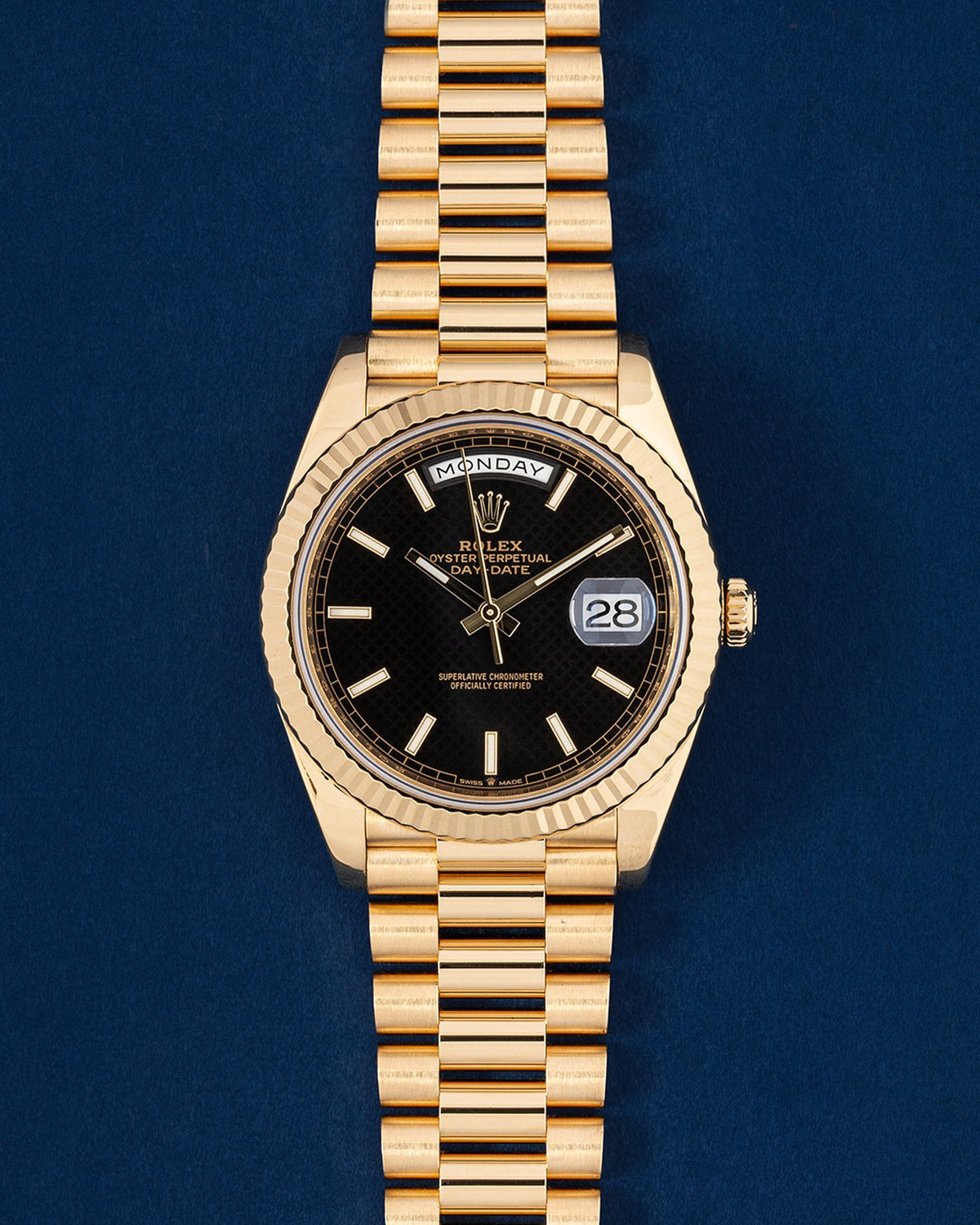
The Rolex Day Date is universally known throughout the global watch collecting community simply as the President. This powerful nickname is so deeply entrenched in the culture of horology that many casual buyers do not even know the actual model name is Rolex Day Date. Understanding exactly how this nickname originated requires analyzing both the specific physical components of the watch and the legendary historical figures who wore it.
The Creation of the President Bracelet
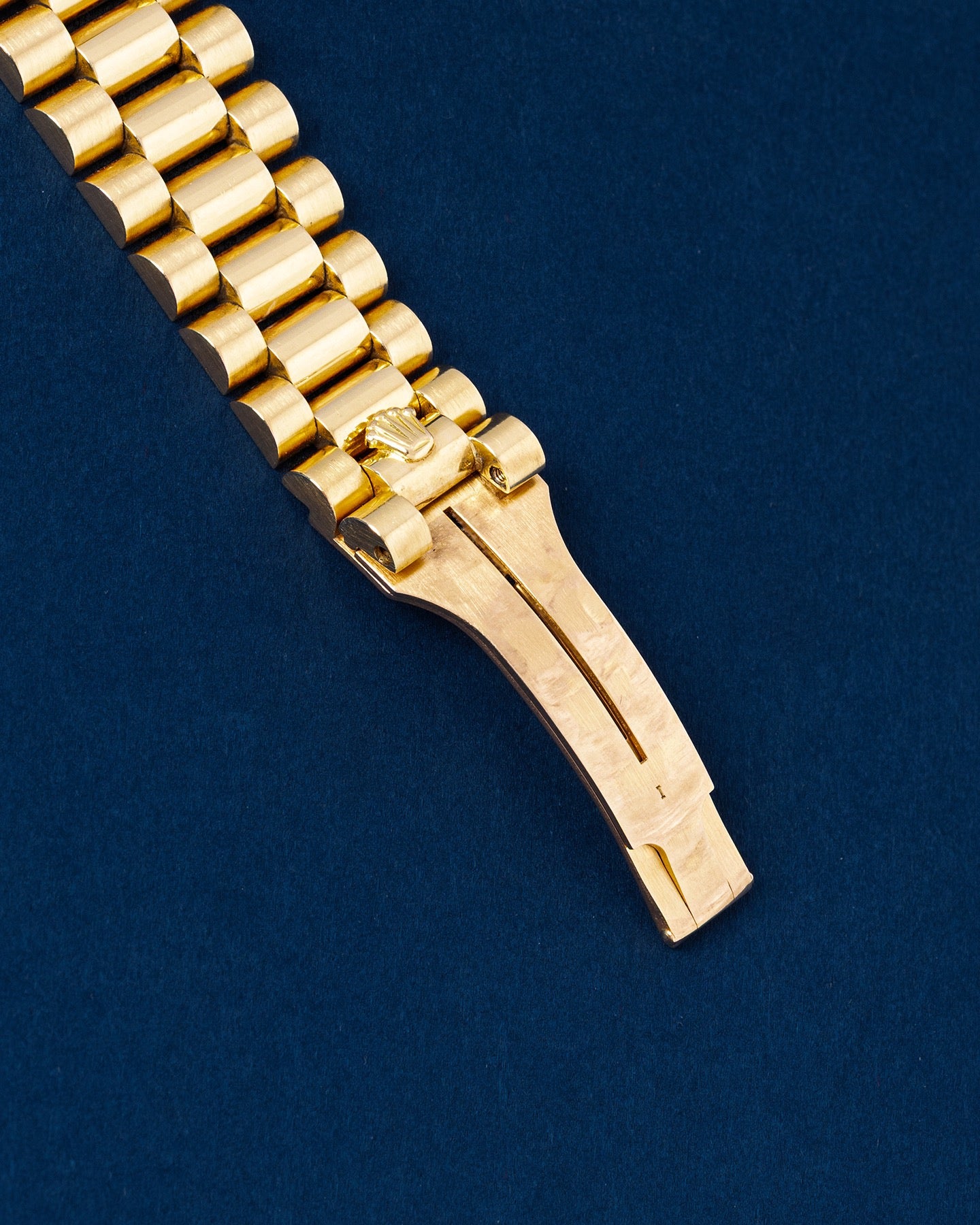
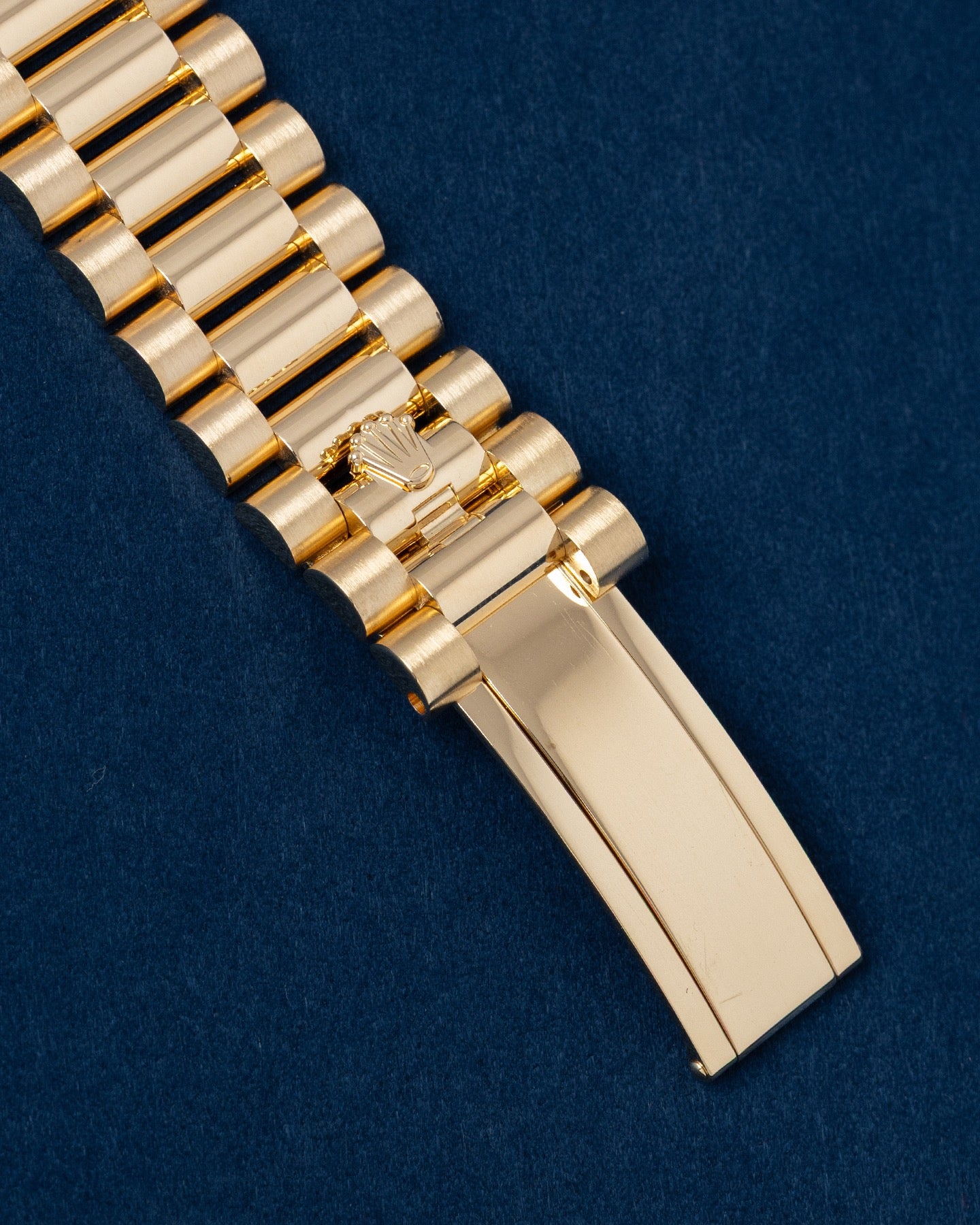
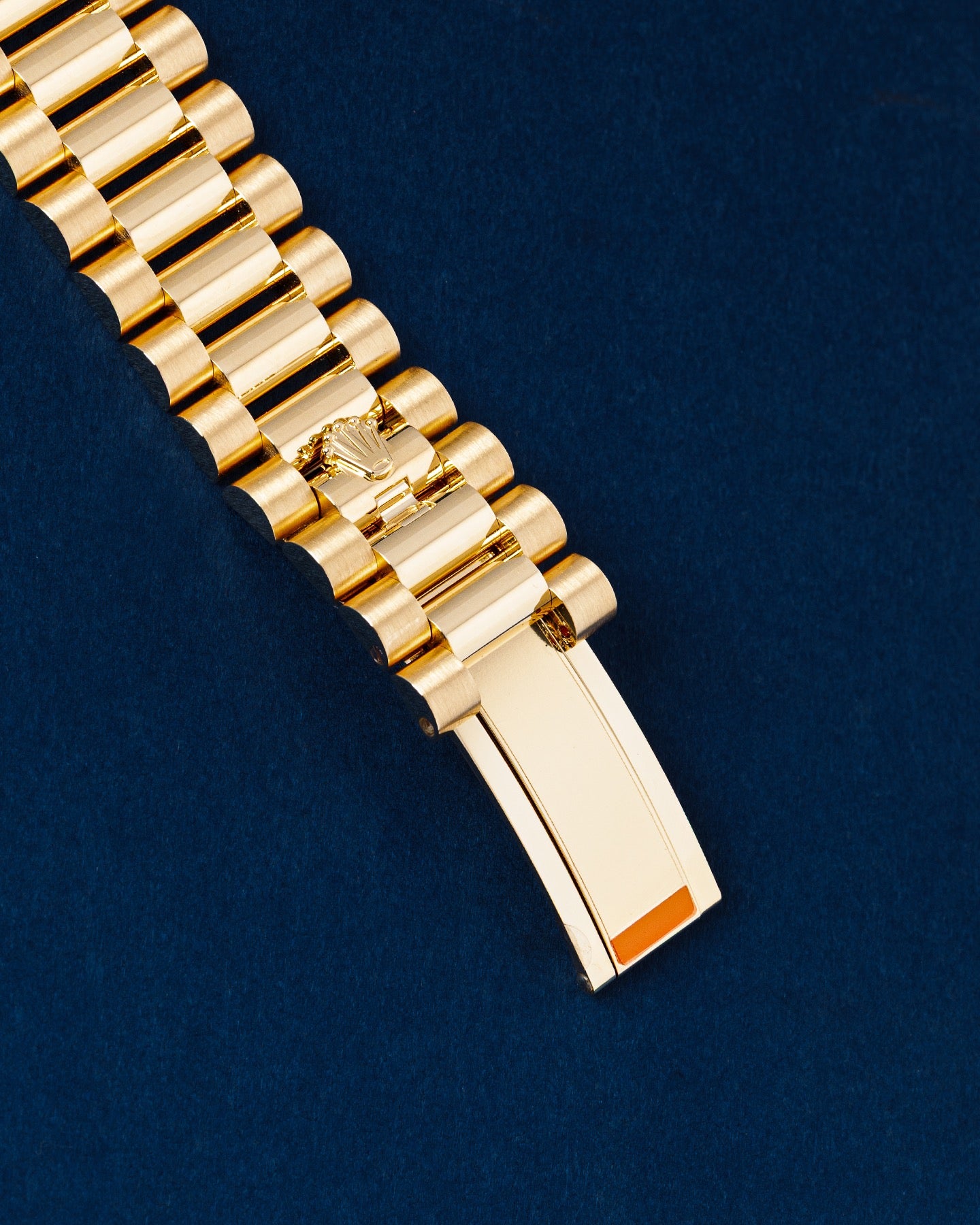
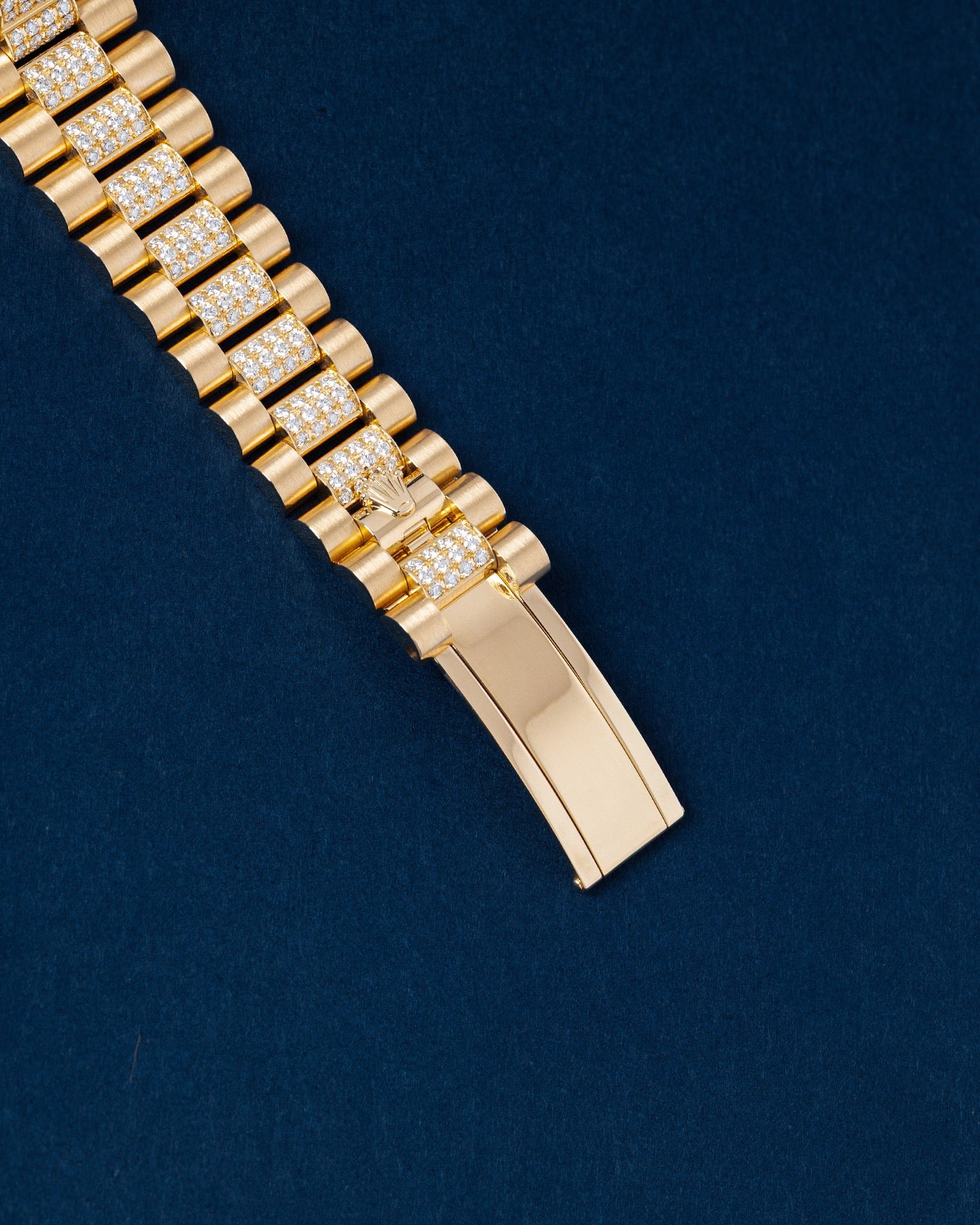
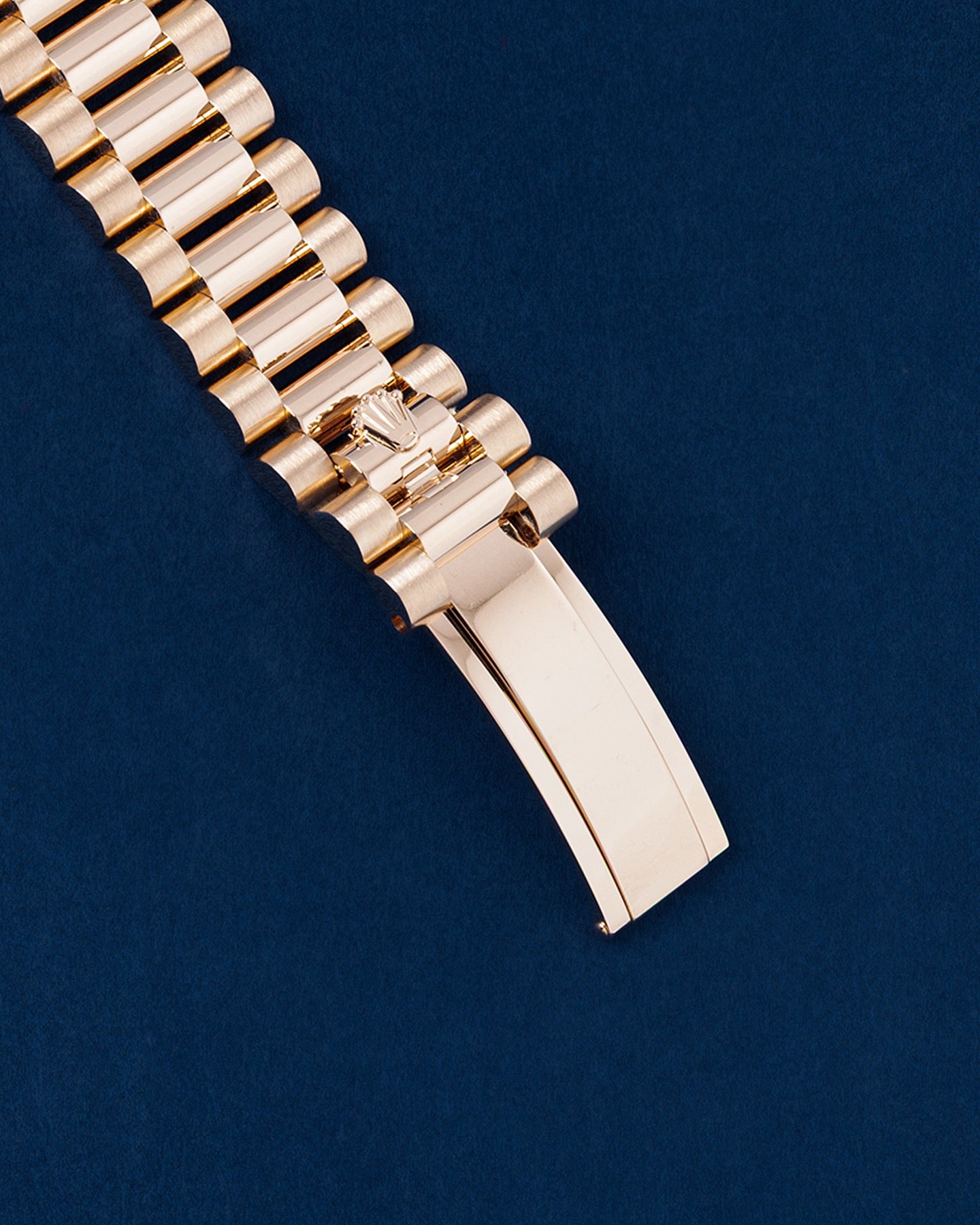
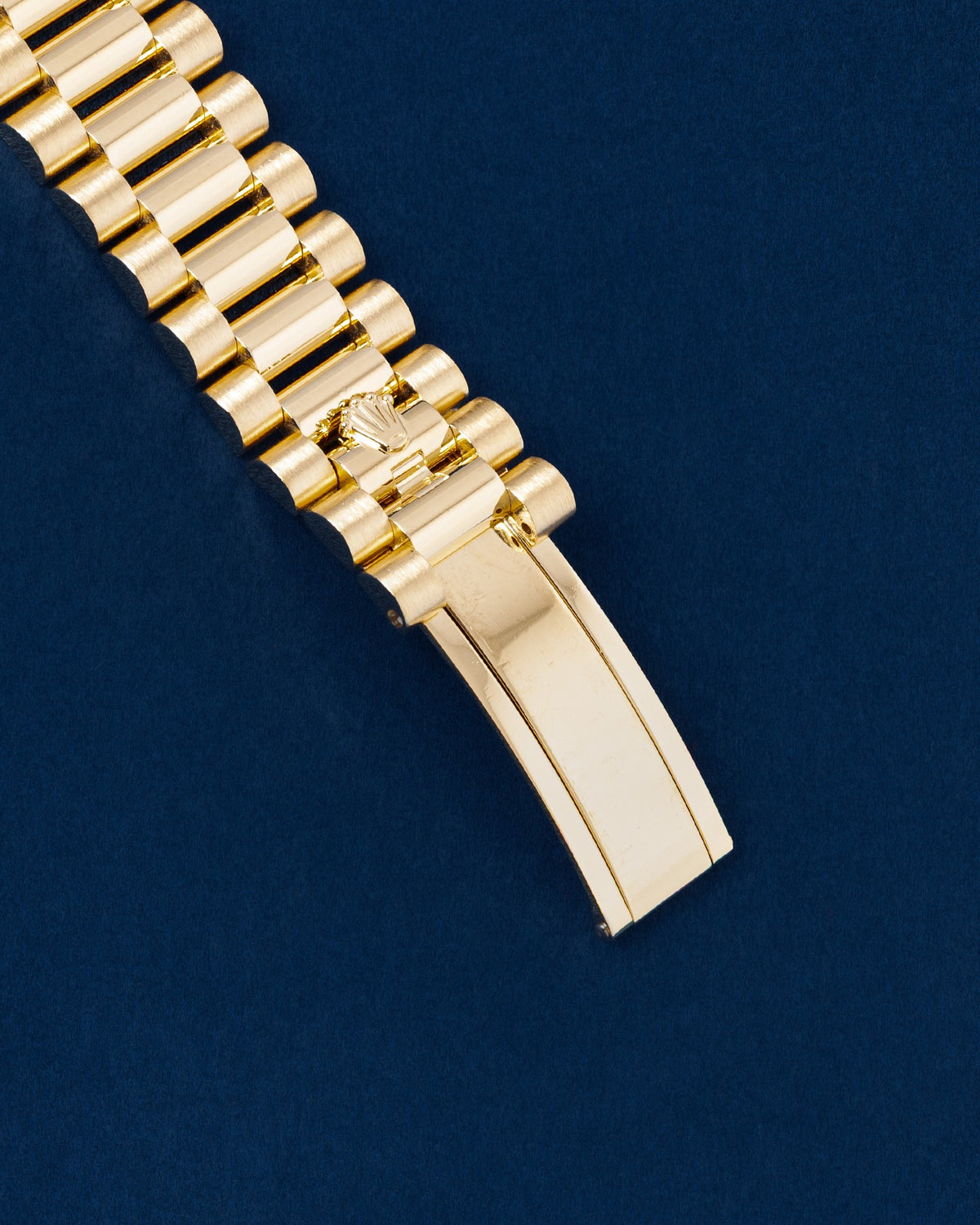
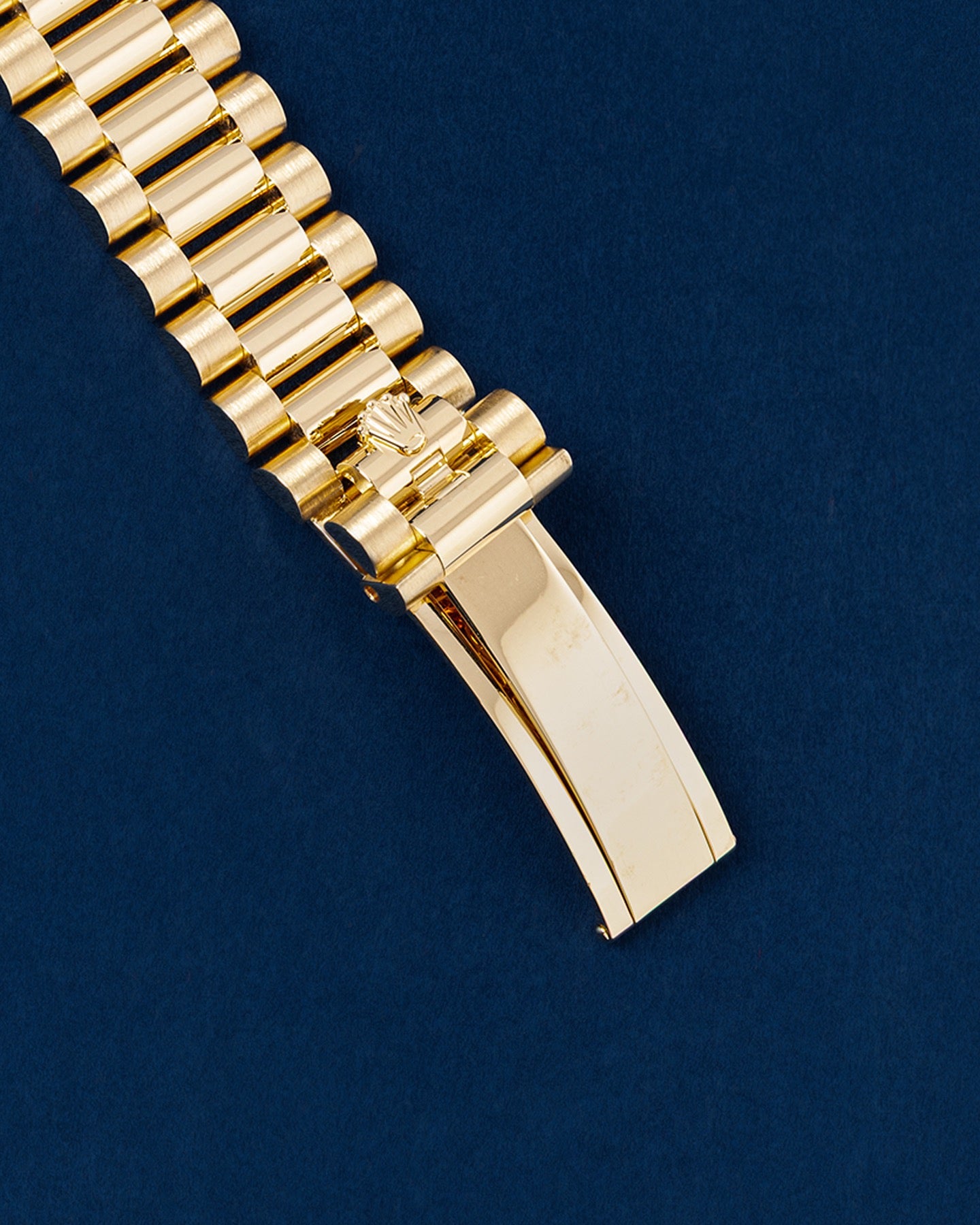
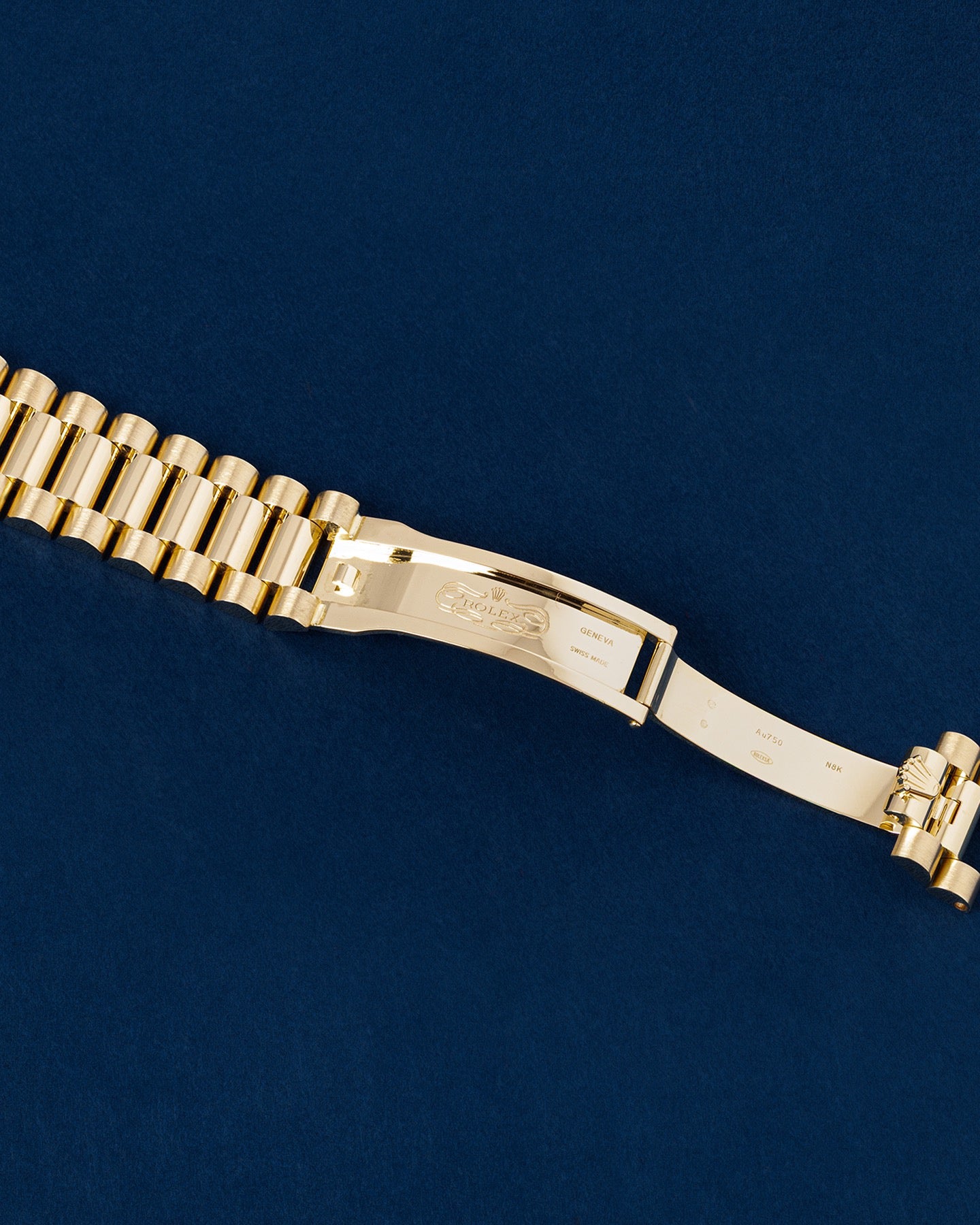
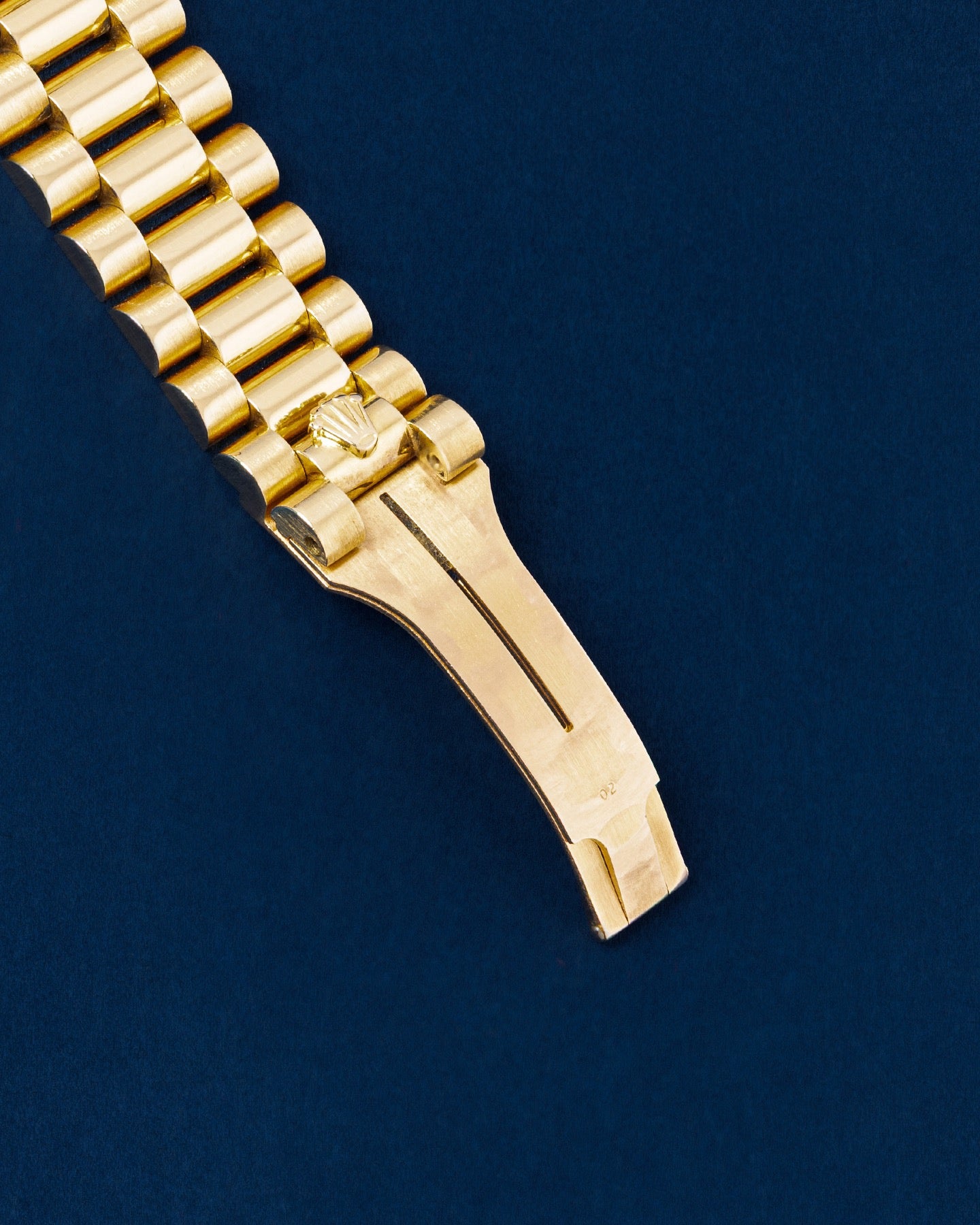
The most important physical characteristic of the Rolex Day Date is the bracelet that secures it to the wrist. When the Rolex Day Date was launched in 1956, Rolex did not simply pair it with an existing Oyster or Jubilee bracelet. Instead, they designed an entirely new, exclusive bracelet specifically for their new flagship timepiece. This new design featured semi circular three piece solid gold links that offered exceptional flexibility and comfort on the wrist. Rolex officially named this luxurious new creation the President bracelet. Over time, the name of the bracelet absorbed the identity of the entire watch, leading collectors and dealers to refer to the complete timepiece as the Rolex President.
Lyndon B Johnson and the Presidential Connection
While the bracelet provided the official name, the association with world leaders solidified the legendary status of the watch. The most famous and historically consequential wearer was the 36th President of the United States, Lyndon B Johnson. Johnson was frequently photographed wearing a solid yellow gold Rolex Day Date while operating inside the Oval Office and giving press conferences. His highly visible endorsement firmly established it as the ultimate power watch for executives and global politicians.
The Eisenhower Misconception Corrected
A common misconception in the vintage watch market should be corrected regarding presidential provenance. Many novice collectors and poorly researched articles claim that Dwight D Eisenhower wore a Rolex Day Date and that his ownership birthed the President nickname. This is historically inaccurate. Rolex presented Eisenhower with his legendary solid gold timepiece in 1951 to celebrate his role as Supreme Commander of NATO. The Rolex Day Date model did not even exist until 1956. Eisenhower actually wore a solid gold Rolex Datejust on a Jubilee bracelet. The true presidential association for the Rolex Day Date belongs entirely to Lyndon B Johnson and the subsequent global leaders who followed his stylistic example.
The 1800 Series and the Vintage Golden Era
As the 1950s transitioned into the 1960s, Rolex recognized the need to refine the architecture of their flagship model. They introduced a new reference family that would define the aesthetic of the Rolex Day Date for the next two decades, creating what many purists consider the golden era of vintage Rolex collecting.
Rolex Day-Date Reference 1803
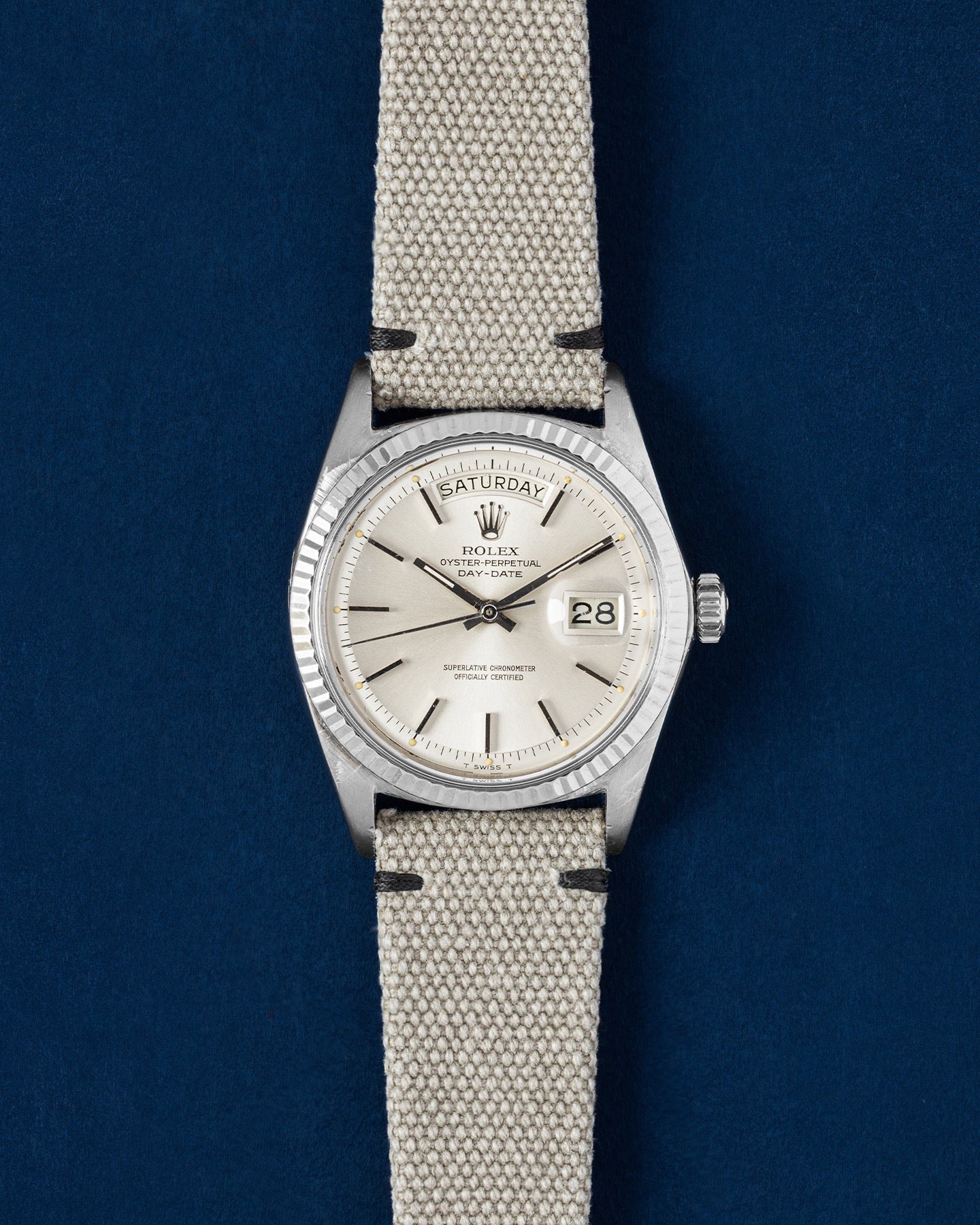
Introduced around 1959, the reference 1803 is the quintessential vintage Rolex Day Date. This model standardized the 36mm case proportions that would remain the universal dimension for the model for over half a century. The 1803 was offered primarily in yellow gold, white gold, and rose gold. It featured the classic fluted bezel and utilized a domed acrylic crystal that provided warmth and visual distortion when viewed from an angle.
The Charm of the Pie Pan Dial
The most defining visual characteristic of the reference 1803 is the pie pan dial. Unlike modern flat dials, the outer perimeter of a pie pan dial slopes downward toward the inner bezel ring, physically resembling an inverted baking pan. This sloped edge creates a real sense of three dimensional depth beneath the acrylic crystal and captures natural light in unpredictable ways. The pie pan dial is the hallmark of vintage Rolex Day Date authenticity.
Caliber 1555 and 1556 Evolution
The reference 1803 was originally powered by the caliber 1555 automatic movement. This movement was robust but lacked a modern convenience. Adjusting the date required the wearer to manually rotate the hands completely past midnight over and over again, a tedious process. In the mid 1960s, Rolex updated the 1803 with the caliber 1556. While this new movement still lacked a quickset date feature, it introduced a hacking seconds mechanism in 1972. This allowed the wearer to stop the sweeping seconds hand by pulling the winding crown out, enabling exact synchronization with an atomic clock or a secondary time source.
The Quartz Era and the Oysterquartz Day-Date
During the late 1970s, the traditional Swiss mechanical watch industry faced an existential threat. Accurate, inexpensive battery powered quartz watches produced in Japan flooded the global market. To survive this brutal period, known as the Quartz Crisis, Rolex recognized that they needed to produce their own accurate quartz movements housed within their most prestigious case architectures.
Rolex Day-Date Reference 19018
In 1977, Rolex shocked the traditional horological world by unveiling the Oysterquartz Rolex Day Date reference 19018. Visually, the Oysterquartz was an aggressive departure from the soft, elegant curves of the traditional 1803. The 19018 featured an angular, integrated case design with sharp faceted edges and a completely flat sapphire crystal. The President bracelet was also redesigned, featuring heavily beveled solid gold links that flowed seamlessly into the sharp geometry of the case lugs.
The In House Caliber 5055
Rolex did not simply purchase cheap outsourced quartz movements for their flagship watch. They dedicated five years to developing the caliber 5055 entirely in house. The caliber 5055 is widely considered one of the most over engineered, beautifully finished quartz movements ever produced. It featured 11 jewels and utilized a substantial analog gear train driven by a precise stepping motor. The movement was loud enough that the ticking could be heard from across a quiet room. The Oysterquartz Rolex Day Date remained in production for 25 years, representing a fascinating, collectible alternate reality for the classic solid gold status symbol.
The Quickset Revolution and the Sapphire Crystal
While the Oysterquartz represented a necessary technological detour, Rolex remained deeply committed to advancing their traditional mechanical calibers. By the late 1970s, the lack of a quickset date function on the classic 1803 had become a severe limitation for modern business executives who demanded immediate convenience.
Rolex Day-Date Reference 18038
In 1978, Rolex introduced the five-digit reference 18038, marking a technological leap forward for the entire Rolex Day Date collection. The 18038 eliminated the vintage pie pan dial and the heavily domed acrylic crystal. Instead, it featured a perfectly flat dial protected by a durable, scratch resistant synthetic sapphire crystal. This transition modernized the aesthetic of the watch, giving it the sleek, polished profile that continues to define the modern catalog.
The Single Quickset Caliber 3055
The most important advancement inside the reference 18038 was the introduction of the caliber 3055. This robust movement finally introduced the single quickset function. By pulling the winding crown out to the first position, the wearer could instantly advance the date numeral entirely independently from the central hour and minute hands. This simple mechanical innovation saved owners an immense amount of time when picking up a watch that had stopped running over the weekend. Furthermore, the caliber 3055 increased the beat rate of the balance wheel to 28,800 vibrations per hour, establishing the modern high beat standard for all future Rolex movements.
The Double Quickset and the Six Digit Modernization
While the single quickset caliber 3055 was a major improvement, it still possessed one glaring flaw. The wearer could easily adjust the numerical date, but setting the day of the week still required manually advancing the hands past midnight. For a Rolex Day Date entirely defined by its dual calendar complication, true convenience required total mechanical independence for both displays.
Rolex Day-Date Reference 18238
In 1988, exactly a decade after the introduction of the single quickset, Rolex perfected the mechanical formula by launching the reference 18238. This Rolex Day Date was powered by the caliber 3155, which introduced the important double quickset function. When the crown was pulled to the first position, turning it clockwise would instantly advance the date numeral, while turning it counterclockwise would instantly advance the day of the week. This allowed the wearer to set both complications in a matter of seconds. The reference 18238 remained in production throughout the entire 1990s and is widely considered the sweet spot for collectors who want vintage charm combined with ultimate modern convenience.
The Six Digit Reference 118238
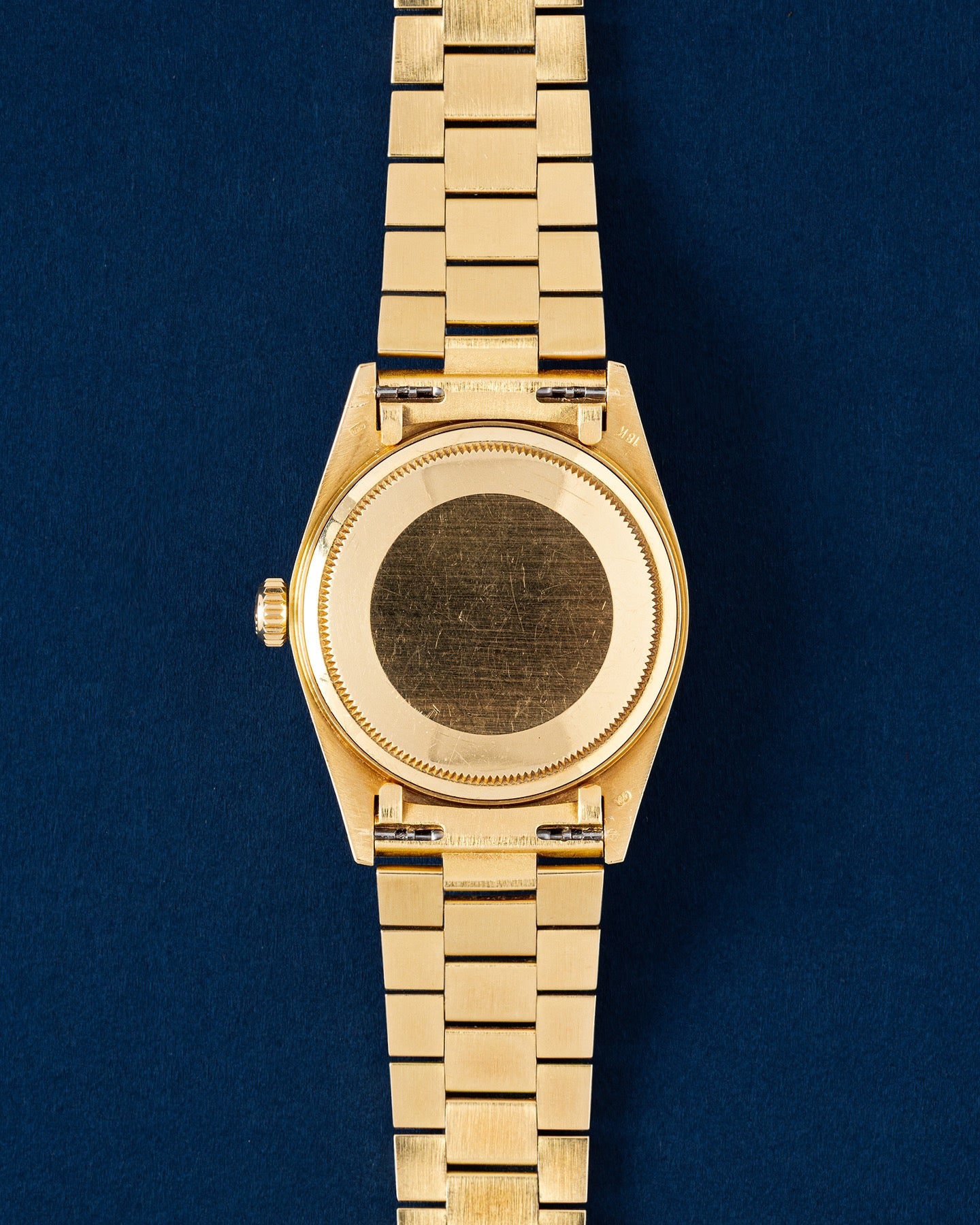
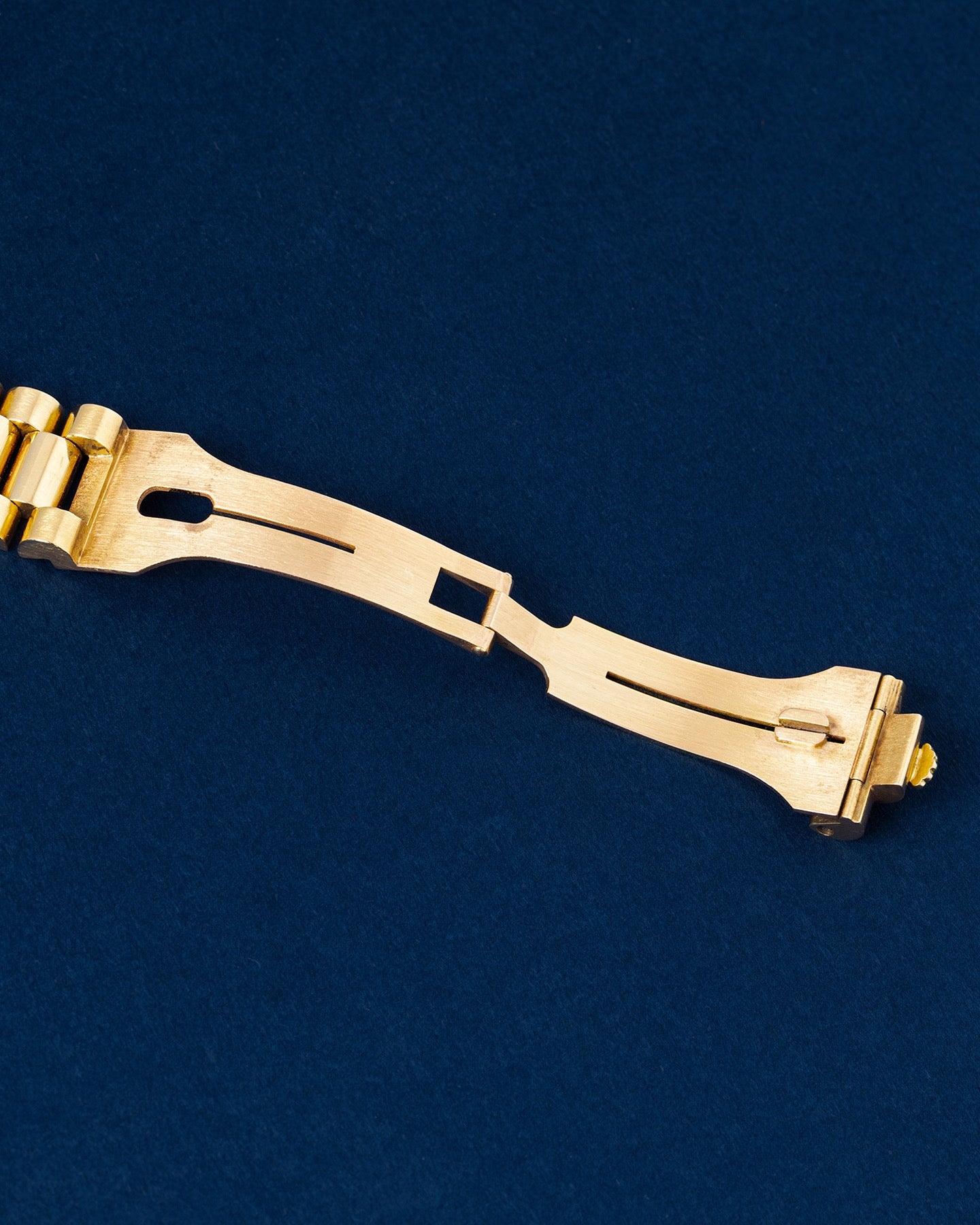
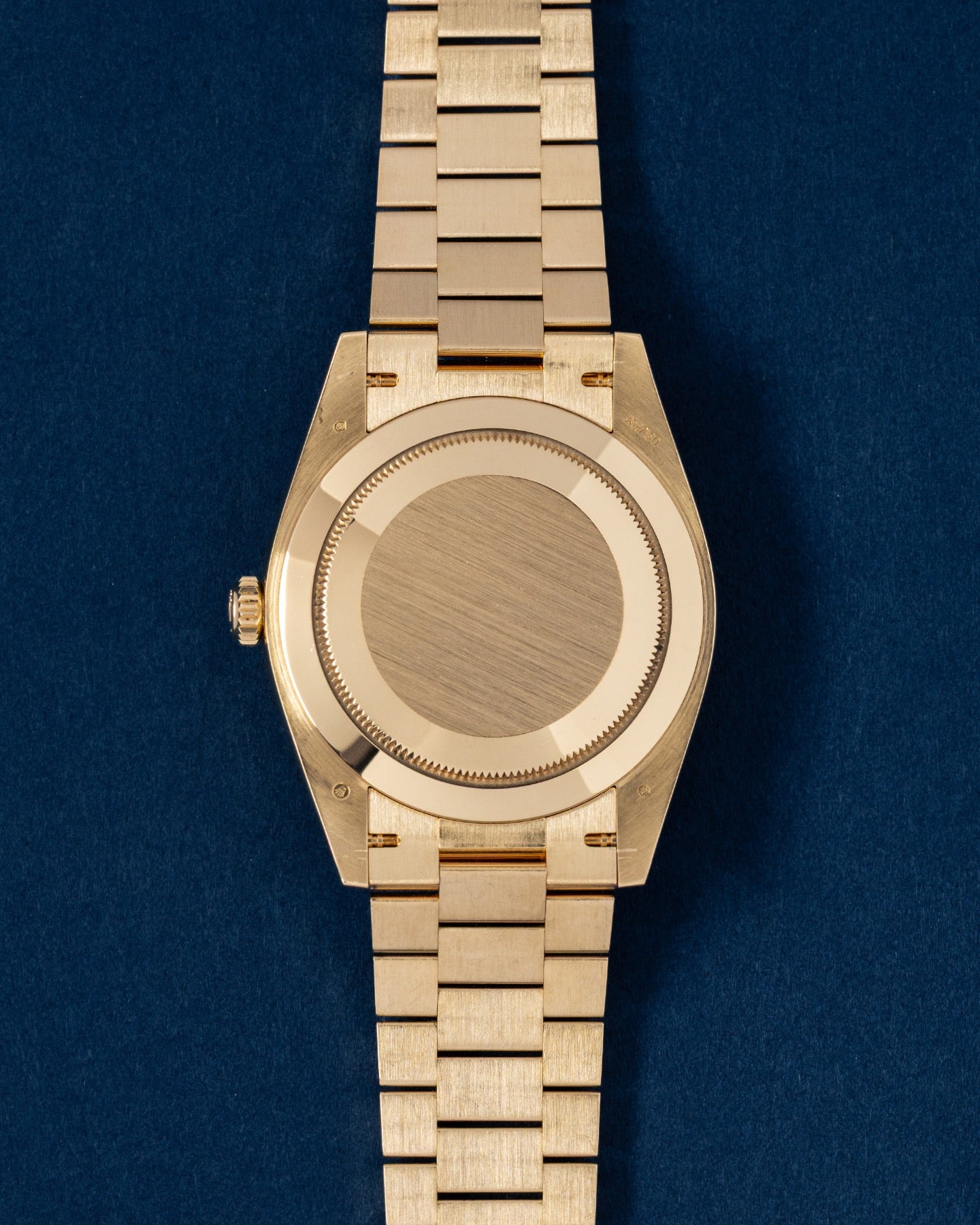
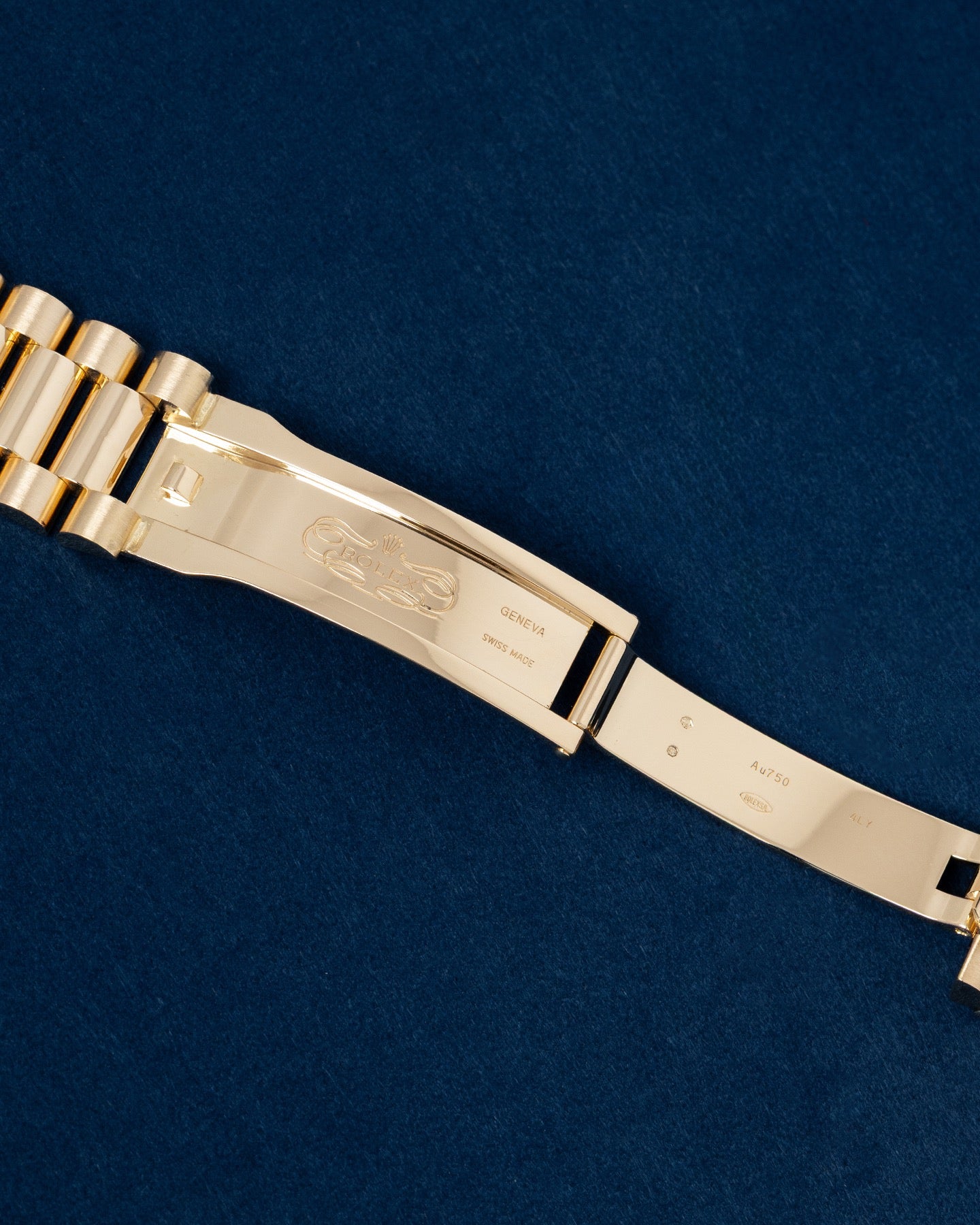
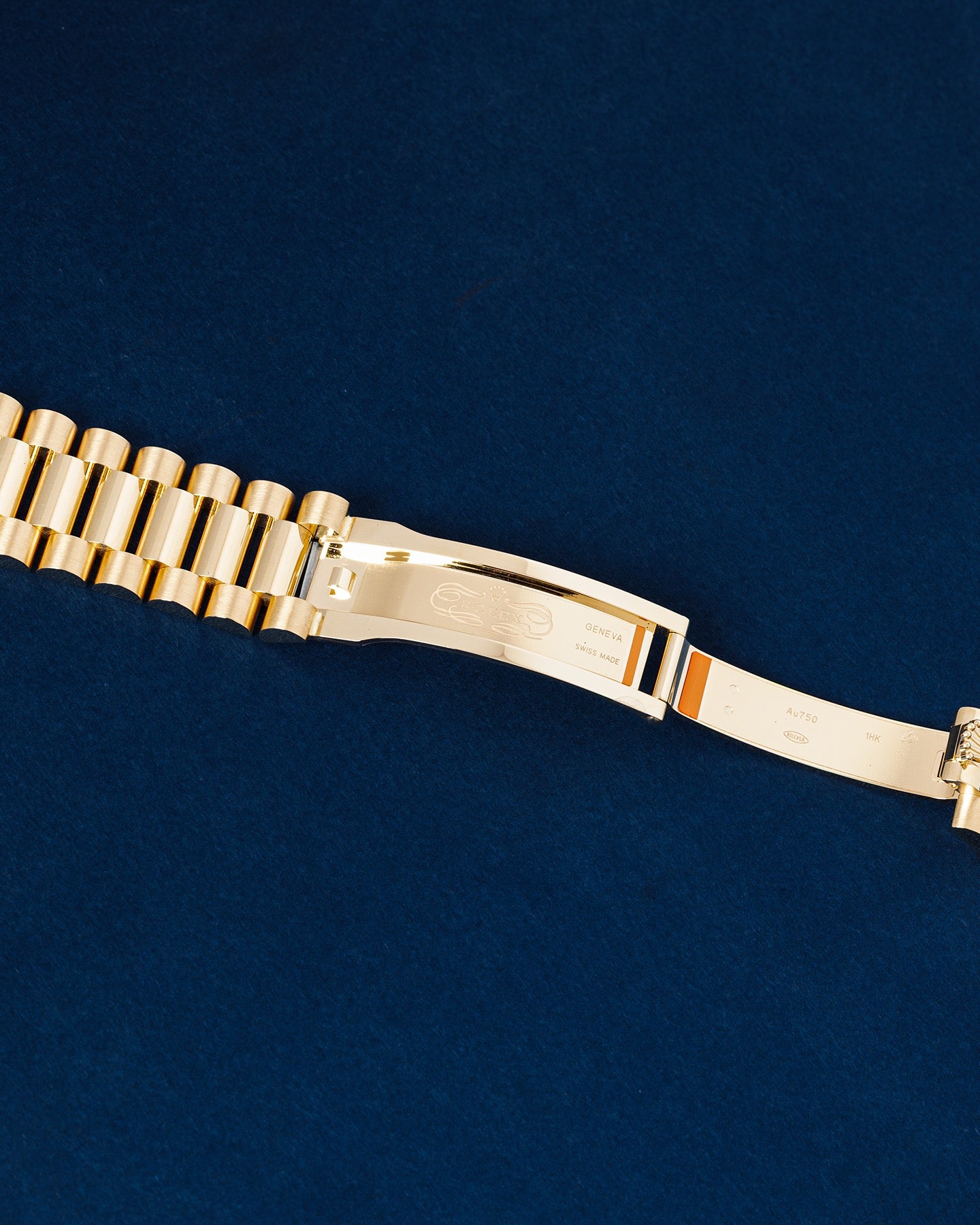
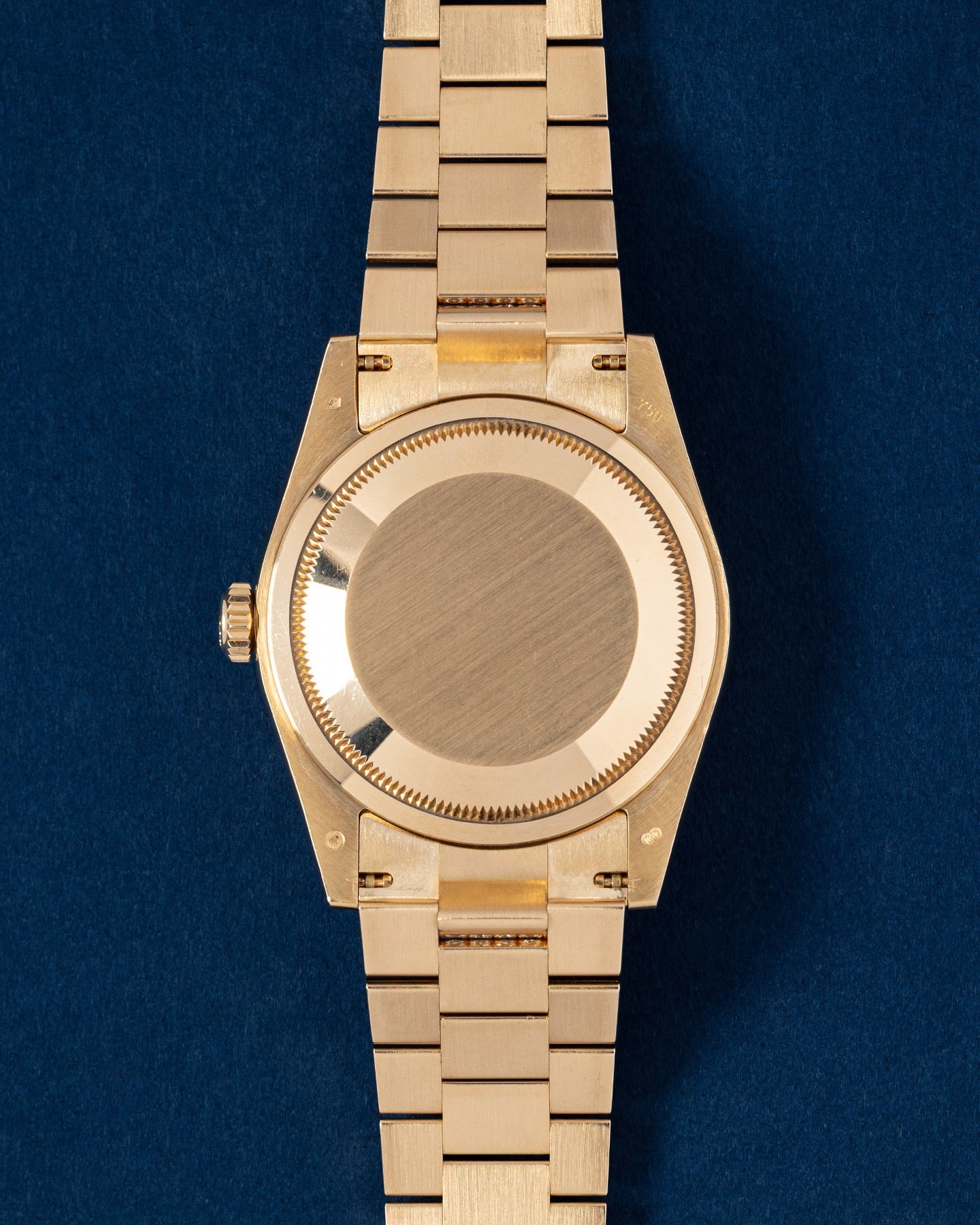
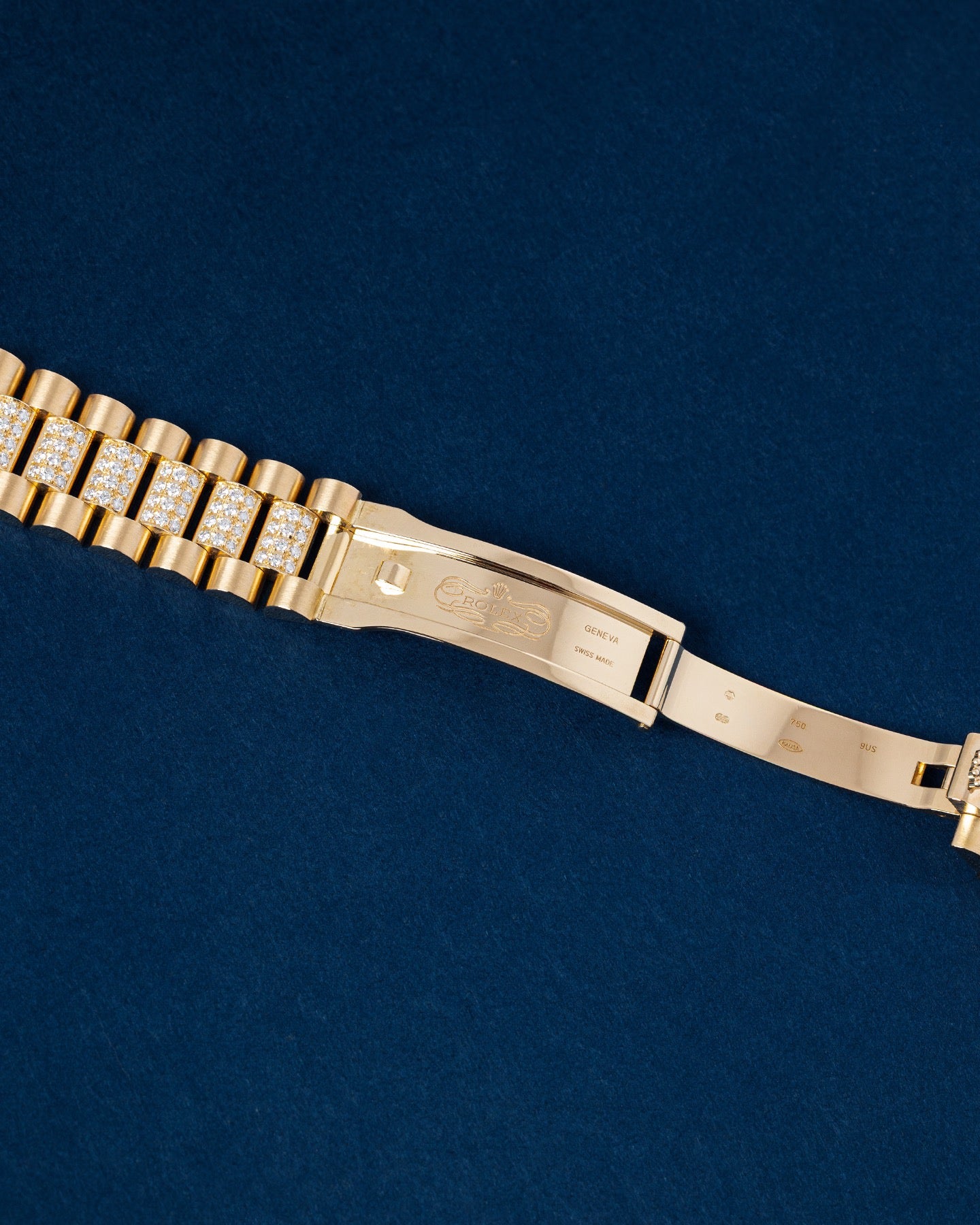
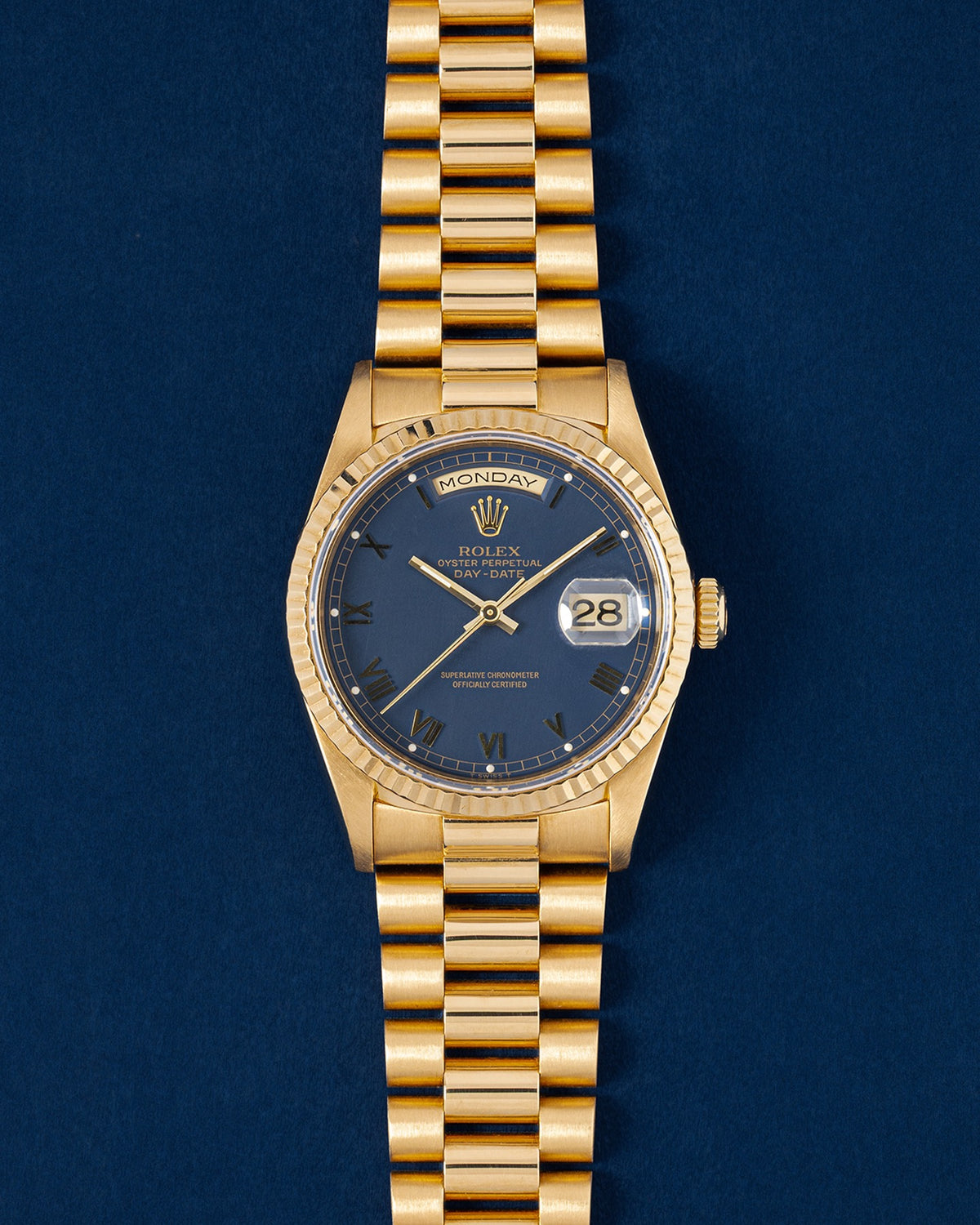
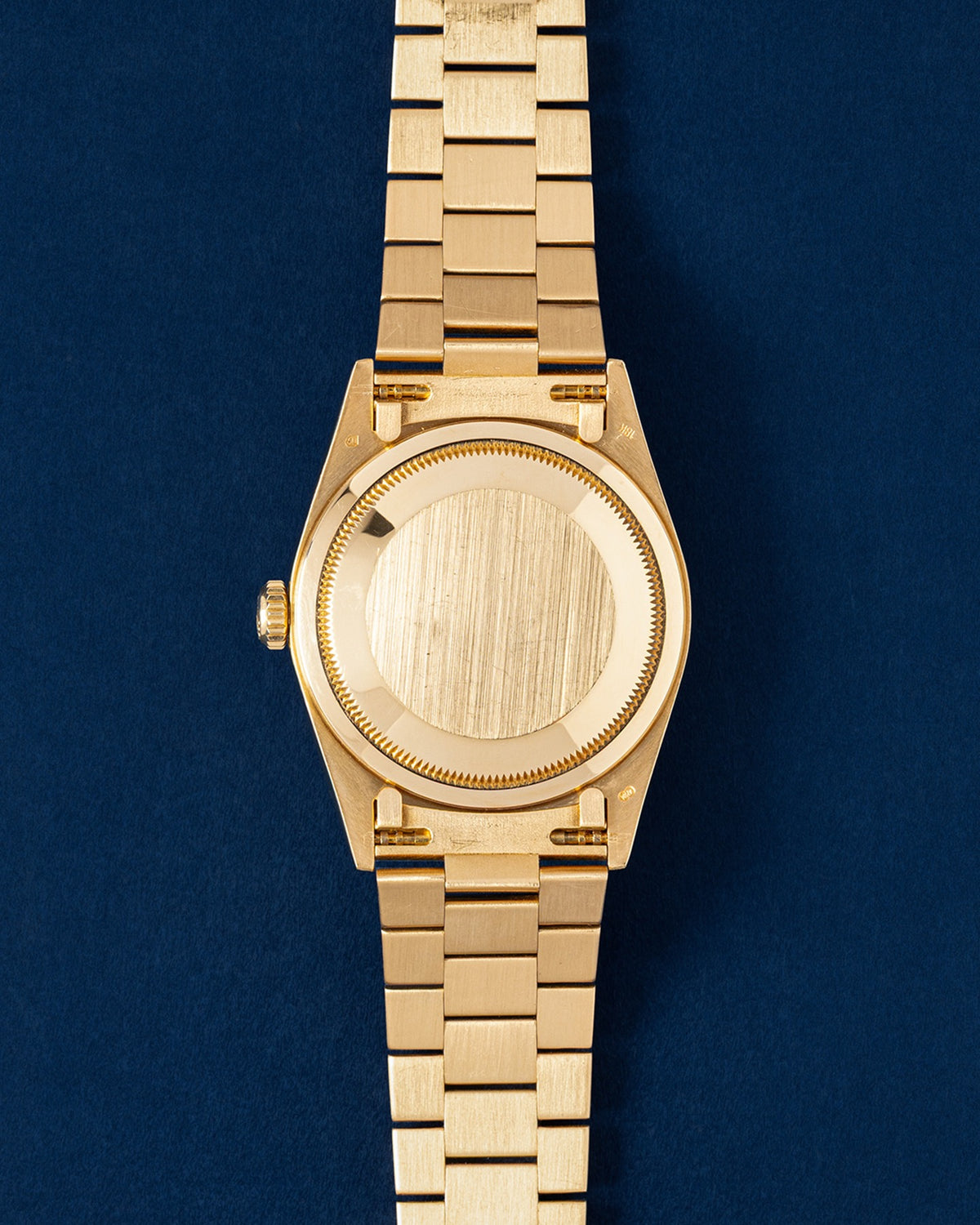
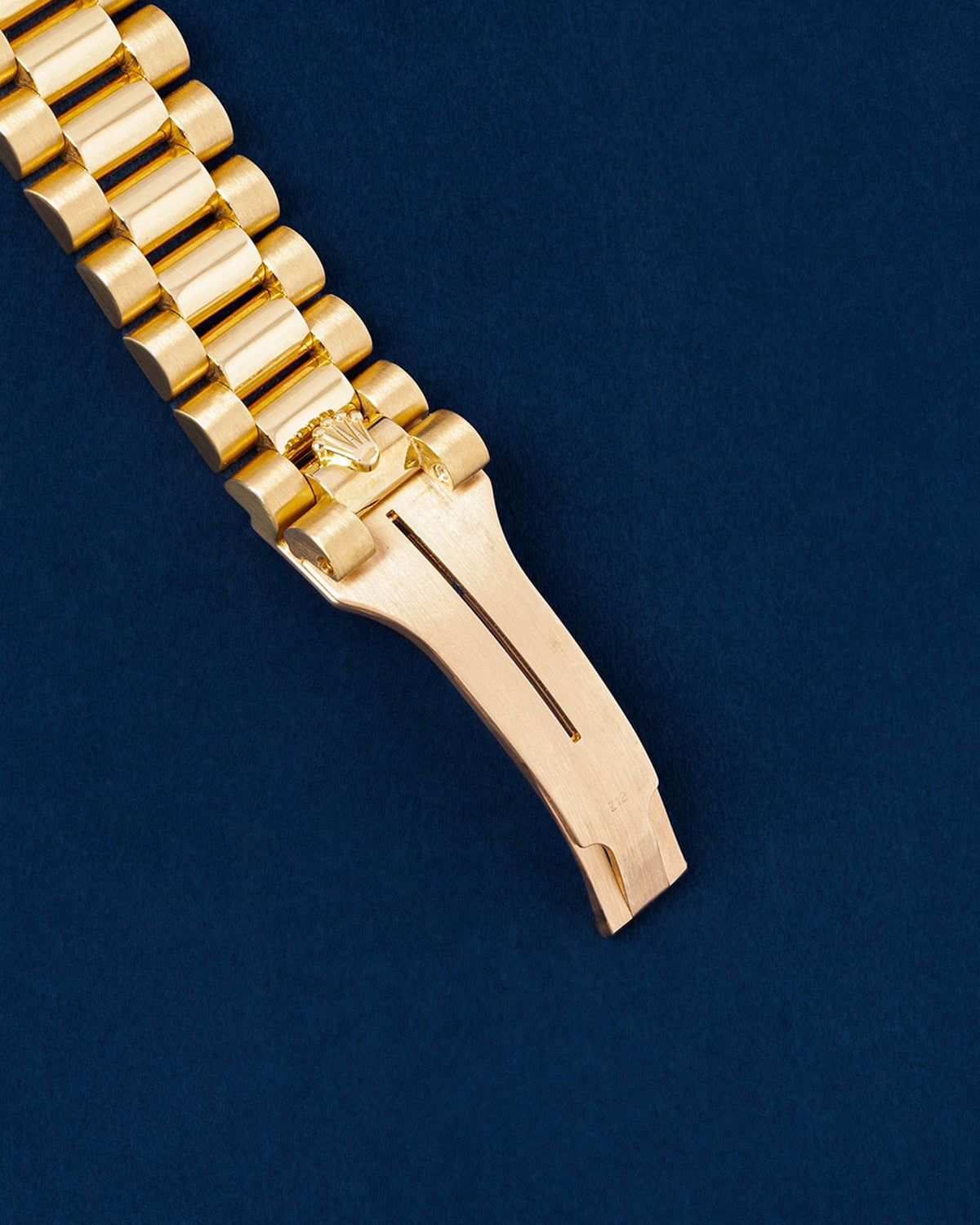
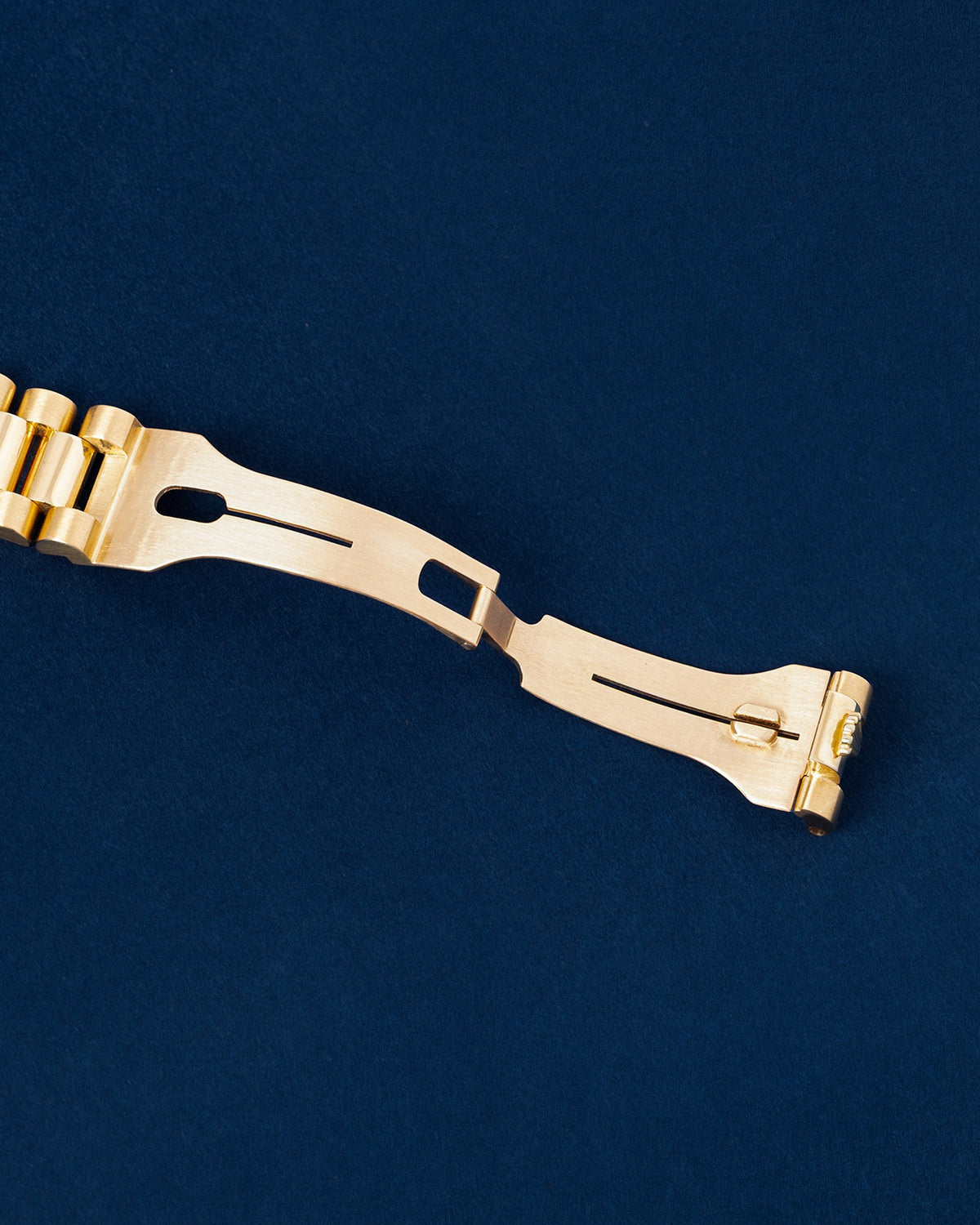
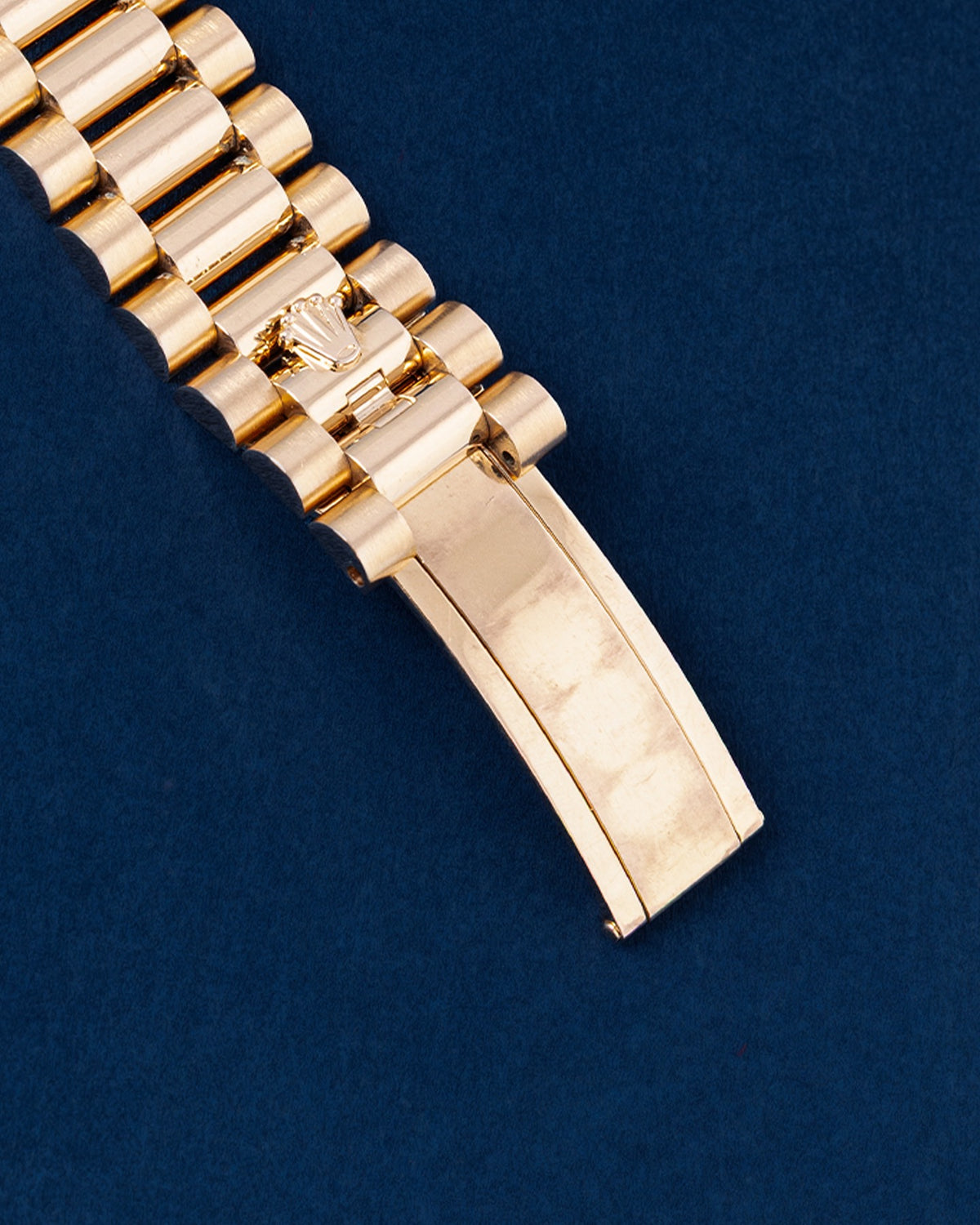
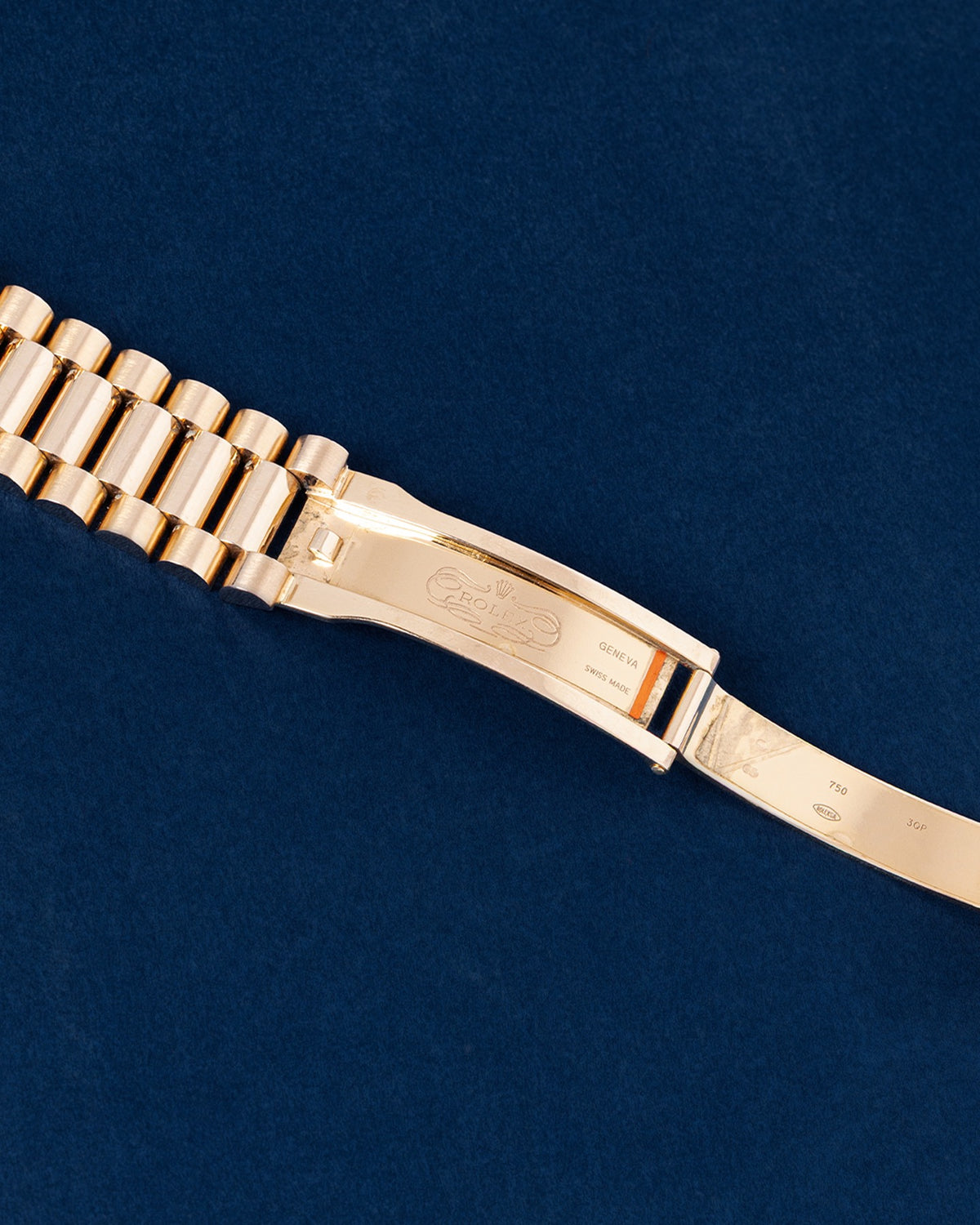
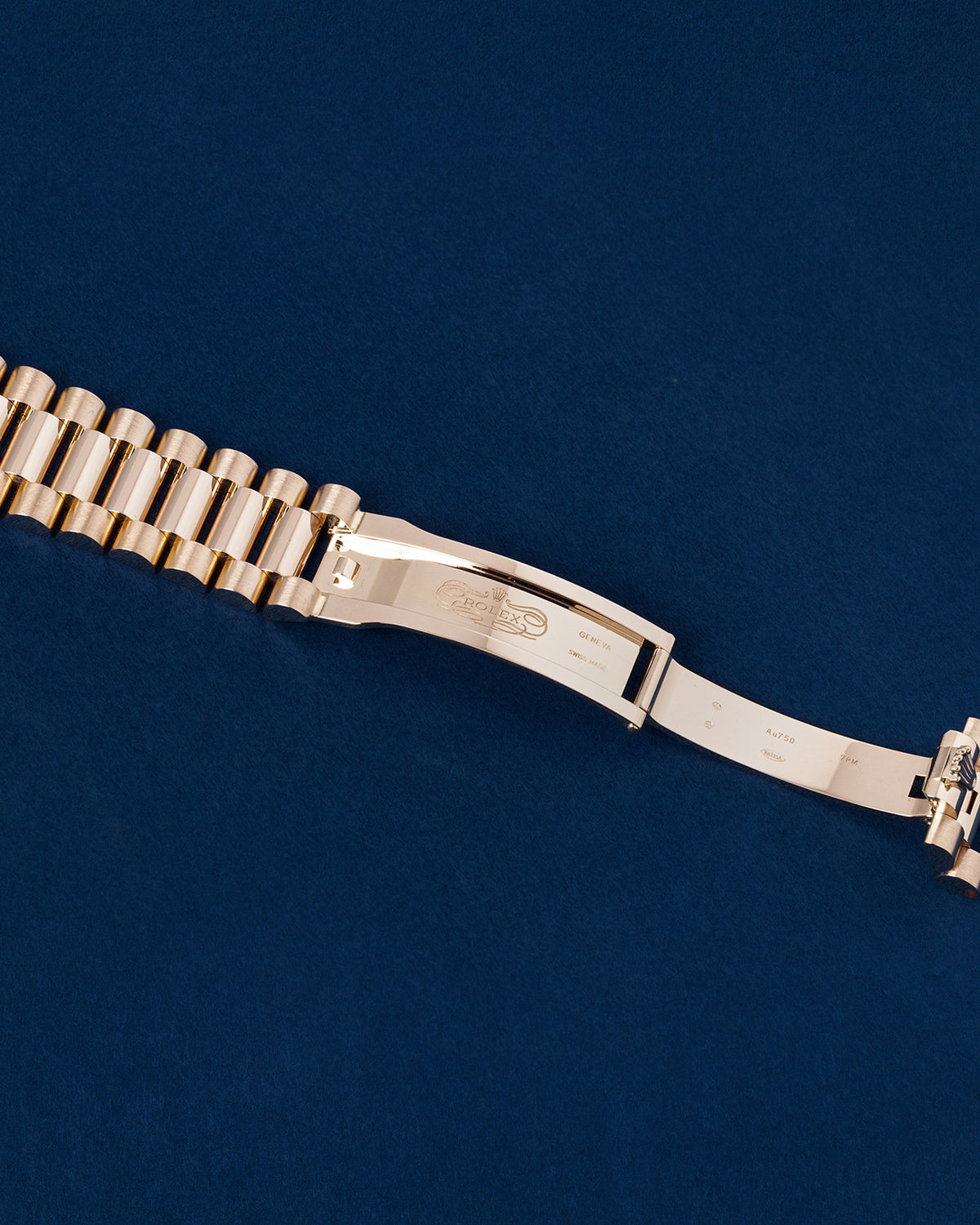
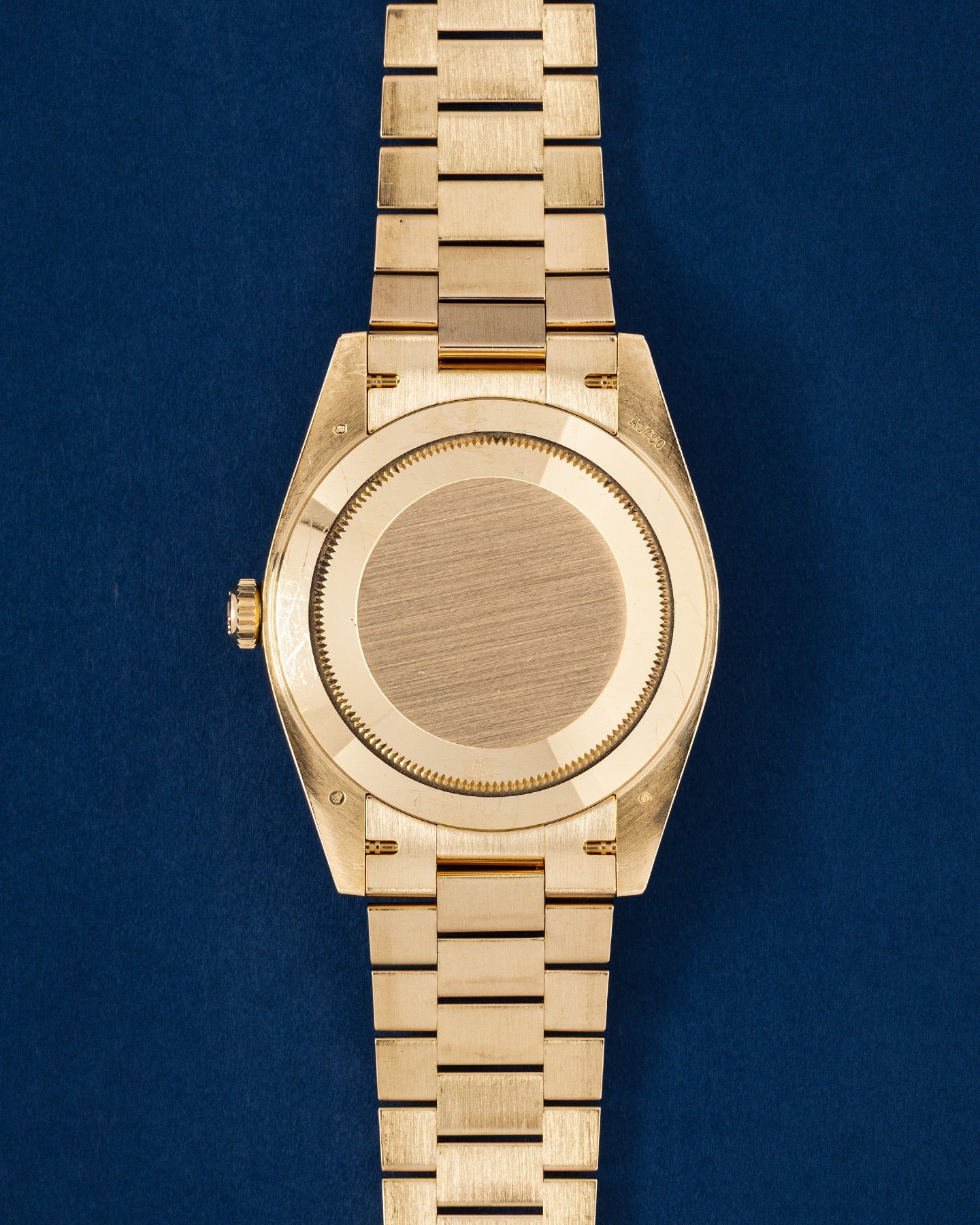
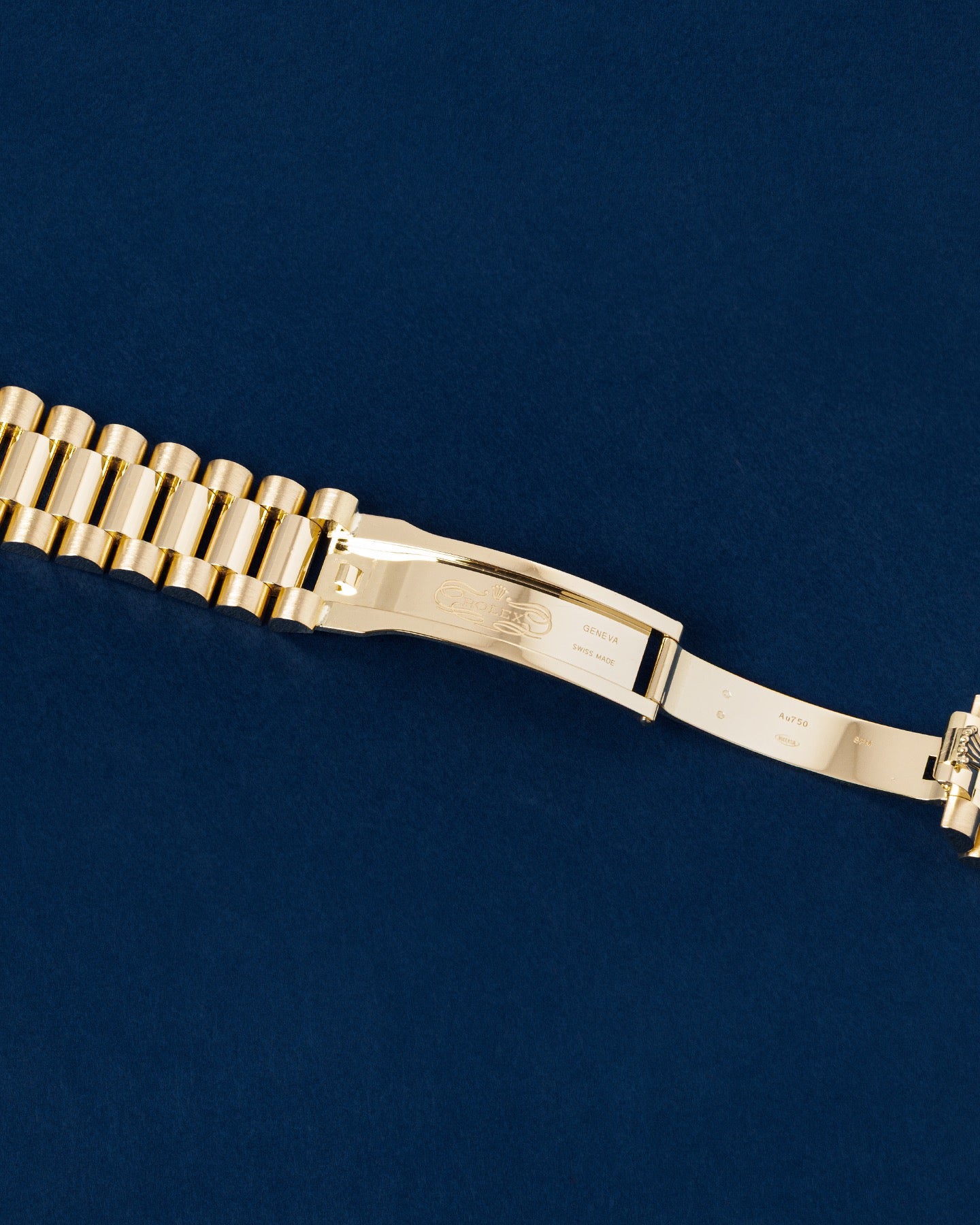
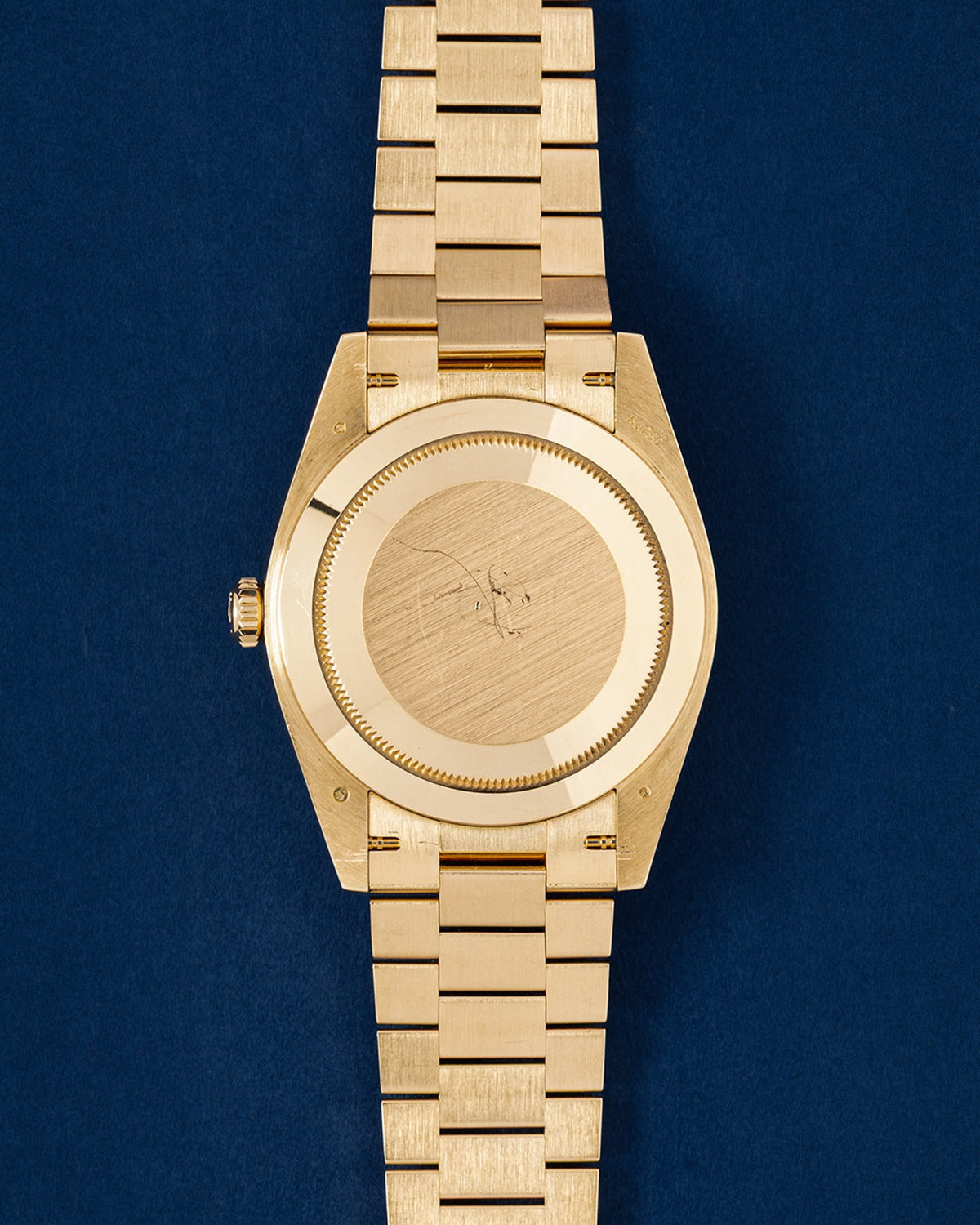
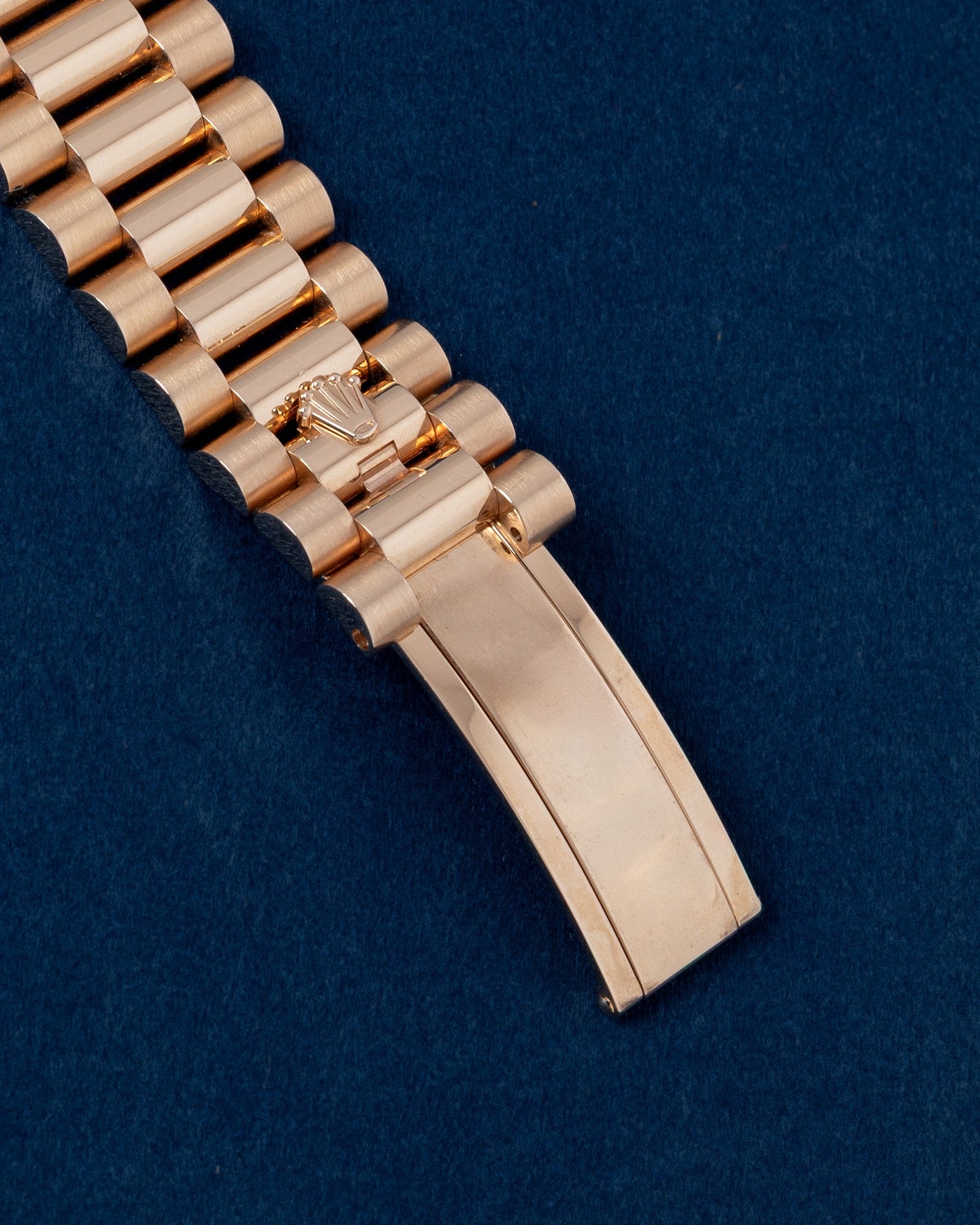
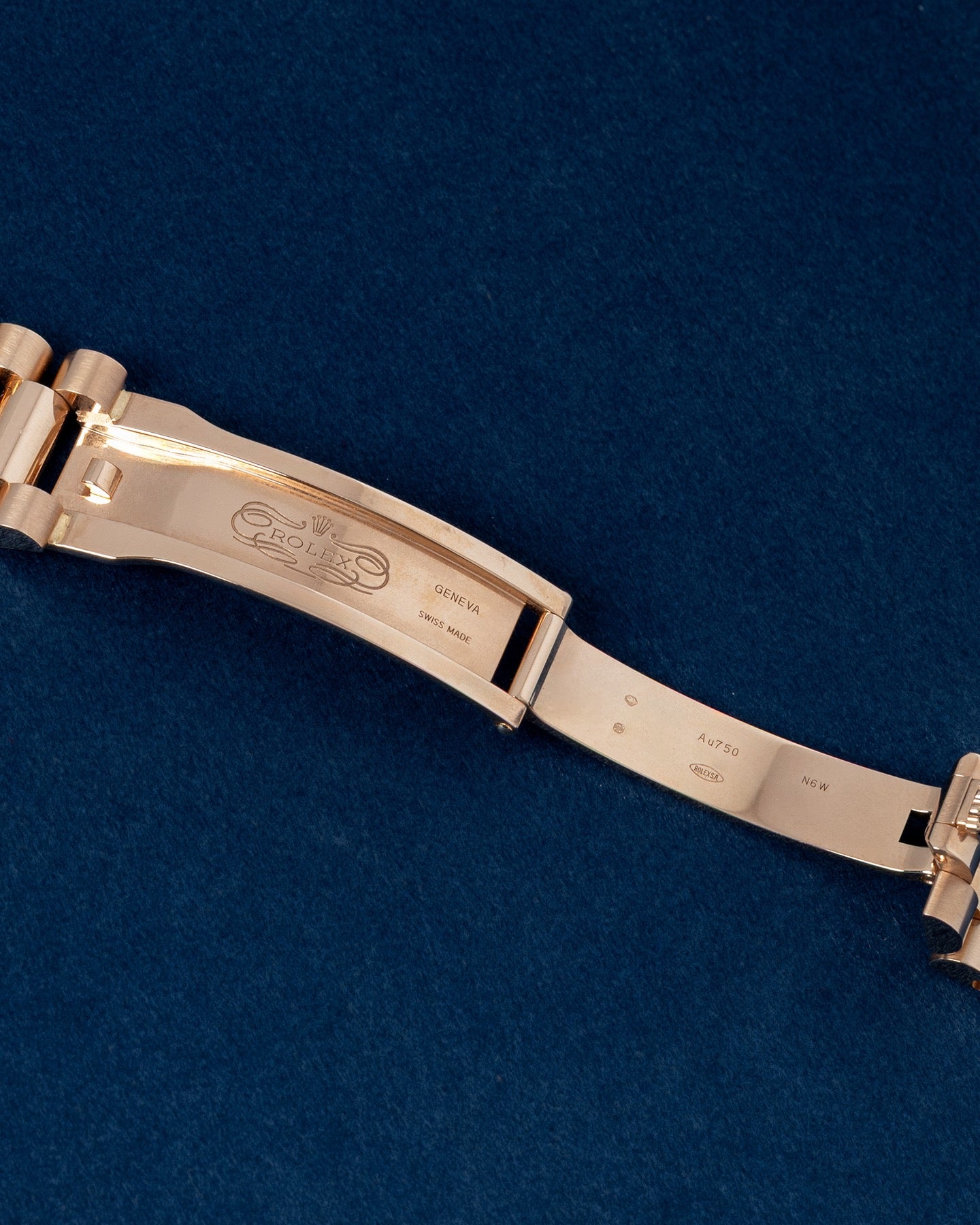
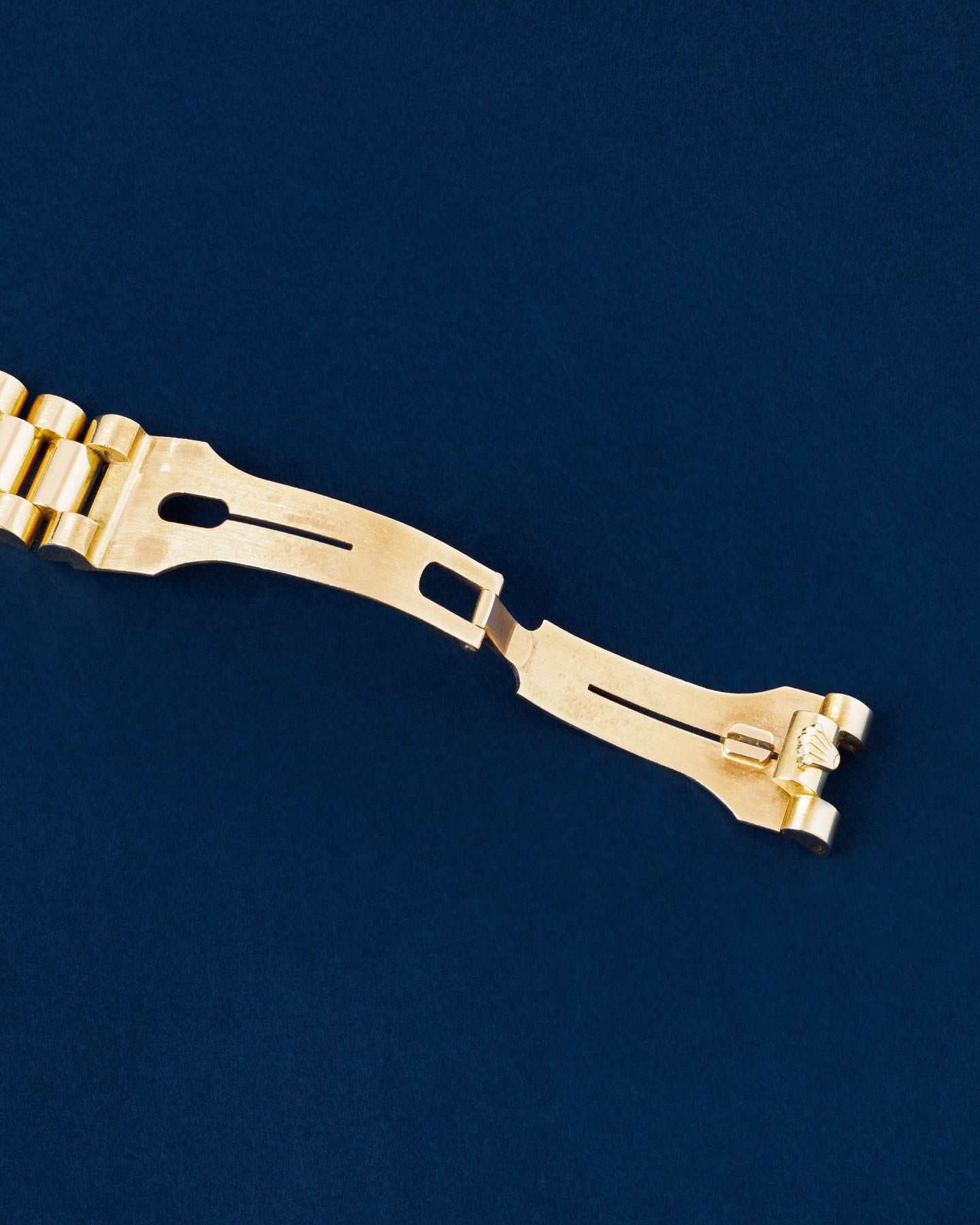
As the new millennium dawned in the year 2000, Rolex recognized the need to upgrade the physical construction of their bracelets and clasps. They introduced the six-digit reference 118238. While it utilized the exact same double quickset caliber 3155 as its predecessor, the 118238 featured heavier solid gold center links and solid end links. The stamped metal clasp of the vintage era was replaced by a heavy duty, milled solid gold concealed folding Crownclasp. This nearly invisible clasp blends directly into the bracelet links, preserving the continuous flowing visual pattern of the semi circular President links entirely around the wrist. The 118238 increased the total physical weight of the watch, delivering the luxurious presence that modern buyers expect from a solid gold masterpiece.
The Day-Date Two and the Day-Date Forty
For over fifty years, the Rolex Day Date was produced exclusively in the classic 36mm case size. While this proportion is universally considered perfect by traditional horological purists, the early 2000s saw a shift in global consumer trends toward larger, more aggressive oversized watches. To remain competitive in this shifting landscape, Rolex executed an expansion of the Day Date architecture.
The Day-Date Two Reference 218238
In 2008, Rolex surprised the industry by unveiling the Day Date Two, officially designated as the reference 218238. This watch broke with traditional proportions by expanding the case diameter to a towering 41mm. The bezel was significantly thickened, and the dial markers were enlarged to match the aggressive new geometry. The Day Date Two was a commercial success among athletes and celebrities who demanded extreme visual presence. However, serious horological purists criticized the watch for abandoning the elegant, refined proportions that originally defined the collection. The Day Date Two is frequently cited by collectors as a rare misstep in the otherwise perfect evolutionary history of the brand.
The Day-Date Forty Reference 228238
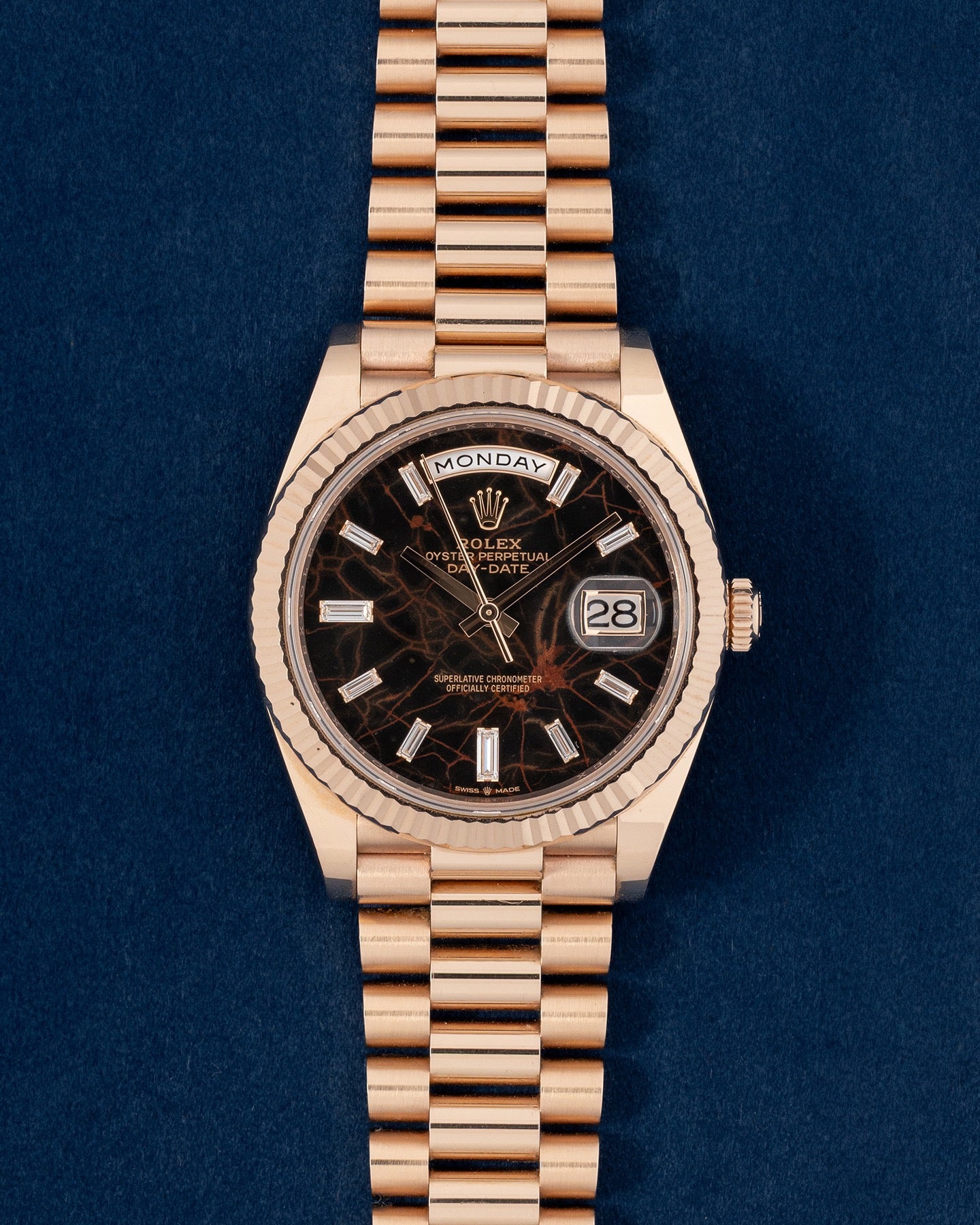
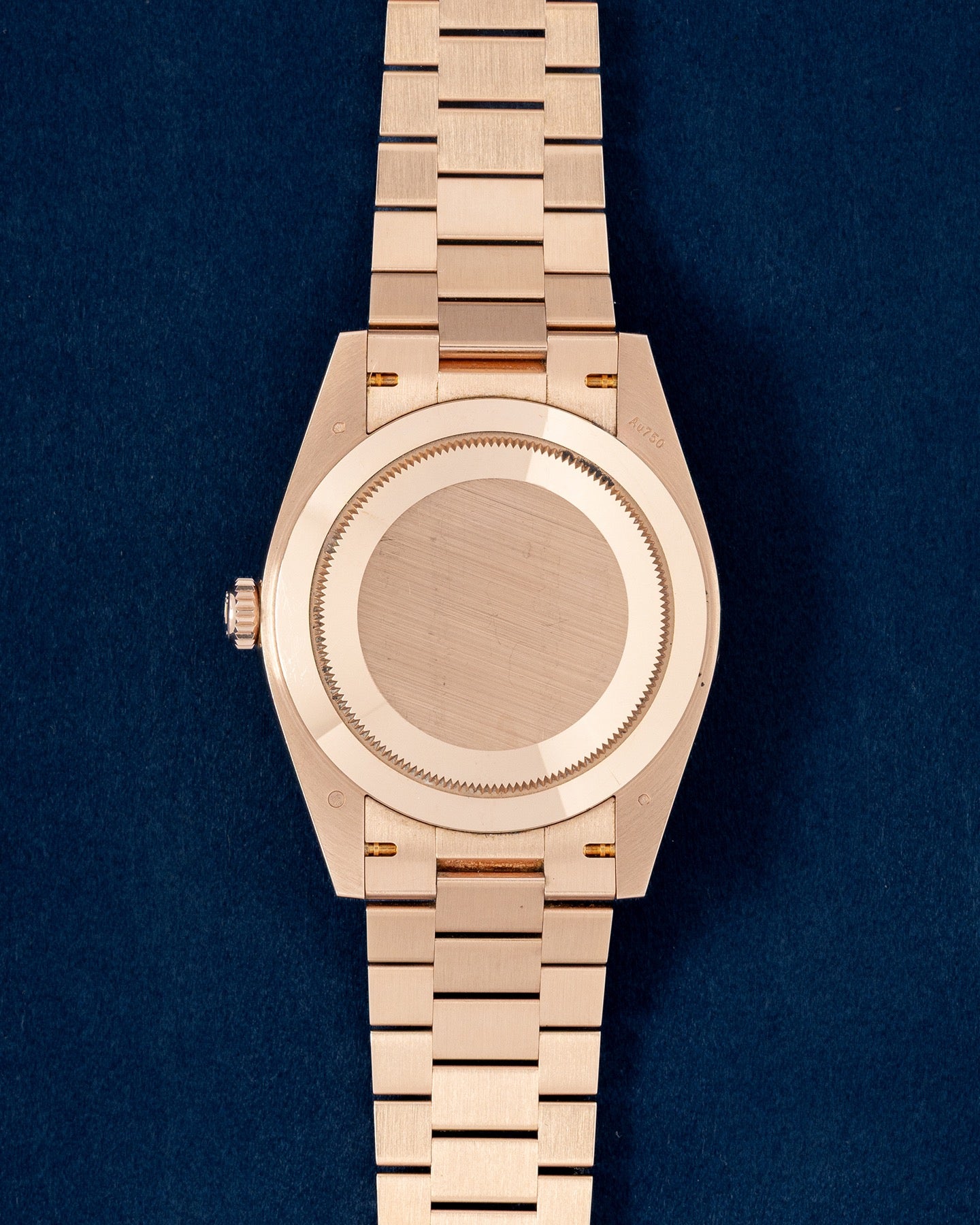
Rolex clearly listened to the critical feedback from their most dedicated collectors. In 2015, they abruptly discontinued the bulky Day Date Two and replaced it with the improved Day Date Forty. The Rolex Day Date reference 228238 reduced the case diameter to 40mm, but more importantly, it refined the physical silhouette. The lugs were thinned and elegantly tapered, restoring the graceful, flowing proportions of the classic 36mm models while satisfying the modern demand for a larger wrist presence. The Day Date Forty represents the peak of modern Rolex design execution, balancing solid gold weight with refined, understated elegance.
The Caliber 3255 and the Chronergy Escapement
The Day Date Forty was not just an aesthetic correction. It served as the Rolex Day Date launch vehicle for the new, highly advanced caliber 3255. This self winding mechanical movement is entirely developed and manufactured directly in house by Rolex and represents a consummate demonstration of modern technological capability. The caliber 3255 introduced the patented Chronergy escapement. Crafted entirely from a proprietary nickel phosphorus alloy, this new escapement is largely immune to magnetic interference and is fundamentally redesigned to be exactly 15 percent more efficient in its energy delivery than a traditional Swiss lever escapement.
Combined with a redesigned mainspring barrel, the energy efficiency of the Chronergy escapement allows the caliber 3255 to deliver an incredible 70-hour power reserve. This means a collector can take their Rolex Day Date off on Friday evening and put it back on Monday morning without ever needing to reset the time or the dual calendar displays. The movement also features the paramagnetic blue Parachrom hairspring and high performance Paraflex shock absorbers to guarantee extreme durability during intense physical activity.
Dial Variations and Extreme Precious Metals
Because the Rolex Day Date is the flagship of the entire brand, Rolex utilizes this specific model to experiment with the most artistic dial variations and the most exclusive precious metal alloys in the world. The sheer diversity of dial options available across the history of the Day Date is staggering.
The Vintage Wooden and Stella Dials
During the 1970s and 1980s, Rolex produced a limited number of Day Date models featuring dials crafted entirely from exotic natural materials. Collectors aggressively hunt for pristine examples featuring dials carved from Sequoia wood, rich Mahogany, and textured Birch Burl. Because these dials are crafted from organic wood, no two dials are exactly alike, featuring entirely unique grain patterns and knots.
Simultaneously, Rolex produced the legendary Stella dials. These rare dials feature intensely bright, saturated enamel colors such as oxblood red, vibrant turquoise, and bright yellow. Originally intended for the Middle Eastern market, Stella dials were unpopular during their original production run because traditional buyers preferred conservative champagne or silver dials. Today, verified vintage Stella dials command extraordinary premiums at auction due to their rarity and striking visual presence.
The Ice Blue Platinum Signature
While 18-karat yellow gold remains the traditional standard for the Day Date, the zenith of the catalog is reserved for models crafted entirely from solid 950 platinum. Platinum is among the densest and heaviest metals in the world, distinguished by physical properties such as exceptional corrosion resistance. To visually distinguish these ultra luxurious platinum models from standard white gold, Rolex uses an exclusive dial color known as Ice Blue. The Ice Blue dial is the discreet, exclusive signature of a Rolex platinum watch. This specific color is strictly reserved for the platinum Day Date and a very select few other platinum models within the Rolex catalog. When a highly educated collector spots an Ice Blue dial from across a room, they instantly understand they are looking at the pinnacle of luxury wealth.
The Green Aventurine Stone Dial
Rolex continues to produce exclusive stone dials for their modern Day Date Forty collection. A prime example is the exceptionally beautiful light green aventurine dial. Aventurine is a natural stone featuring a complex quartz structure that produces subtle flecks and shimmering textures directly across the surface of the dial. Because aventurine stone is fragile and prone to cracking during the manufacturing process, the rejection rate for these dials is exceptionally high. Rolex frequently frames these natural stone dials with brilliant baguette cut diamond hour markers, creating a visually rich, deeply textured aesthetic that avoids feeling overly decorative.
The Jubilee Gold Alloy
Rolex recently surprised the horological world by introducing a new precious metal alloy specifically for the Day Date Forty. Unveiled to celebrate the 100th anniversary of the Oyster case, this new proprietary material is officially named Jubilee Gold. Jubilee Gold is an 18-karat alloy developed in house by the research and development division at the Rolex headquarters in Geneva. It is created by combining pure 24-karat gold with a specific mixture of copper, palladium, silver, and indium. The resulting metal possesses a restrained, muted visual tone that shifts between warm golden hues and cool silvery champagne tones depending entirely on the ambient lighting conditions. It is intentionally designed to evoke quiet confidence rather than overt, flashy luxury, making it the perfect modern material for the ultimate discrete power watch.
The Rolex Day-Date Pricing, Secondary Market, and the Authorized Dealer Reality
The Rolex Day Date occupies a unique position within the global secondary watch market. While steel sports models like the Submariner and Daytona dominate the conversation around extreme hype and large price premiums, the Rolex Day Date represents the ultimate endpoint for serious collectors. The Rolex Day Date is the watch that collectors aspire to eventually own once they have successfully conquered their professional and financial goals. Because the Rolex Day Date is crafted entirely from solid precious metals, the fundamental physical value of the Rolex Day Date is high, providing a firm floor for its market presence.
The structural reality of the modern Rolex authorized dealer network influences the availability of the Rolex Day Date. While a standard yellow gold Rolex Day Date Thirty Six might occasionally be available in an authorized dealer display case, the most coveted modern configurations are nearly impossible to acquire without a significant purchase history. Models such as the Day Date Forty featuring the olive green dial, the incredibly rare Ice Blue platinum references, and the highly exclusive stone dials are allocated to the highest spending clients of the specific retail location. The watch the authorized dealer politely informs you is entirely unavailable is the exact watch the secondary market exists to provide immediately.
Purchasing pre owned Rolex Day Date watches lets collectors maximize their purchasing power while bypassing the frustrating allocation games. The secondary market reflects the horological merit and historical significance of these gold instruments. Current production Rolex Day Date Forty references in Everose gold and platinum are readily available to the highly educated buyer. Discontinued references such as the six-digit 118238 and the classic double quickset 18238 offer strong value for collectors who recognize the charm of the classic 36mm proportions. Vintage non quickset Rolex Day Date references operate in an entirely different stratosphere, with verified Stella dials, organic wooden dials, and flawless pie pan 1803 models representing the peak of serious, museum grade vintage Rolex collecting.
The Rolex Day-Date at Grand Caliber in Uptown Dallas
Grand Caliber sits in Uptown Dallas at 2811 McKinney Avenue, in the corridor that has become the definitive address for serious luxury watch buying outside the authorized dealer network. The watches on our floor are authenticated in house by our specialist staff, the prices are posted completely openly, and the Rolex Day Date inventory rotates across the full historical breadth of the catalog. We source the current production Day Date Forty references including the highly demanded 228238 in solid yellow gold, the 228235 in Everose gold featuring the olive green dial, and the spectacular 228236 in solid platinum featuring the exclusive Ice Blue dial. Our inventory frequently includes the massive heavyweights of the discontinued market, from the heavily updated six-digit 118238 generation to the historically vital double quickset 18238 and the foundational single quickset 18038. For the serious vintage purist, we meticulously source pristine examples of the classic four-digit 1803 featuring correct pie pan dials and perfectly preserved acrylic crystals.
There is no allocation conversation at Grand Caliber. We require no prior purchase history, and there are no waitlists for the highly coveted green dial or platinum Day Date models the authorized dealers cannot deliver this year or next. If the specific solid gold Rolex Day Date you are hunting for is sitting in our highly curated display case, it is entirely yours to purchase today. If it is not currently on hand, our global sourcing network covers the major secondary markets across the United States and internationally, allowing us to locate a verified, documented example within days.
We also buy Rolex Day Date models outright and take high tier consignments, providing free, fully insured shipping on all outbound and inbound transit, ensuring complete national coverage for clients buying remotely. The Rolex Day Date is one of the most liquid solid gold watches on the secondary market, and the right dealer relationship makes selling, trading, or upgrading your collection frictionless when you decide to move a piece.
Visit the showroom Monday through Friday, 10am to 5pm Central, or by appointment on Saturday. Call 214-225-7198, email info@grandcaliber.com, or browse the current verified Rolex Day Date inventory at grandcaliber.com.
Vintage
Vintage
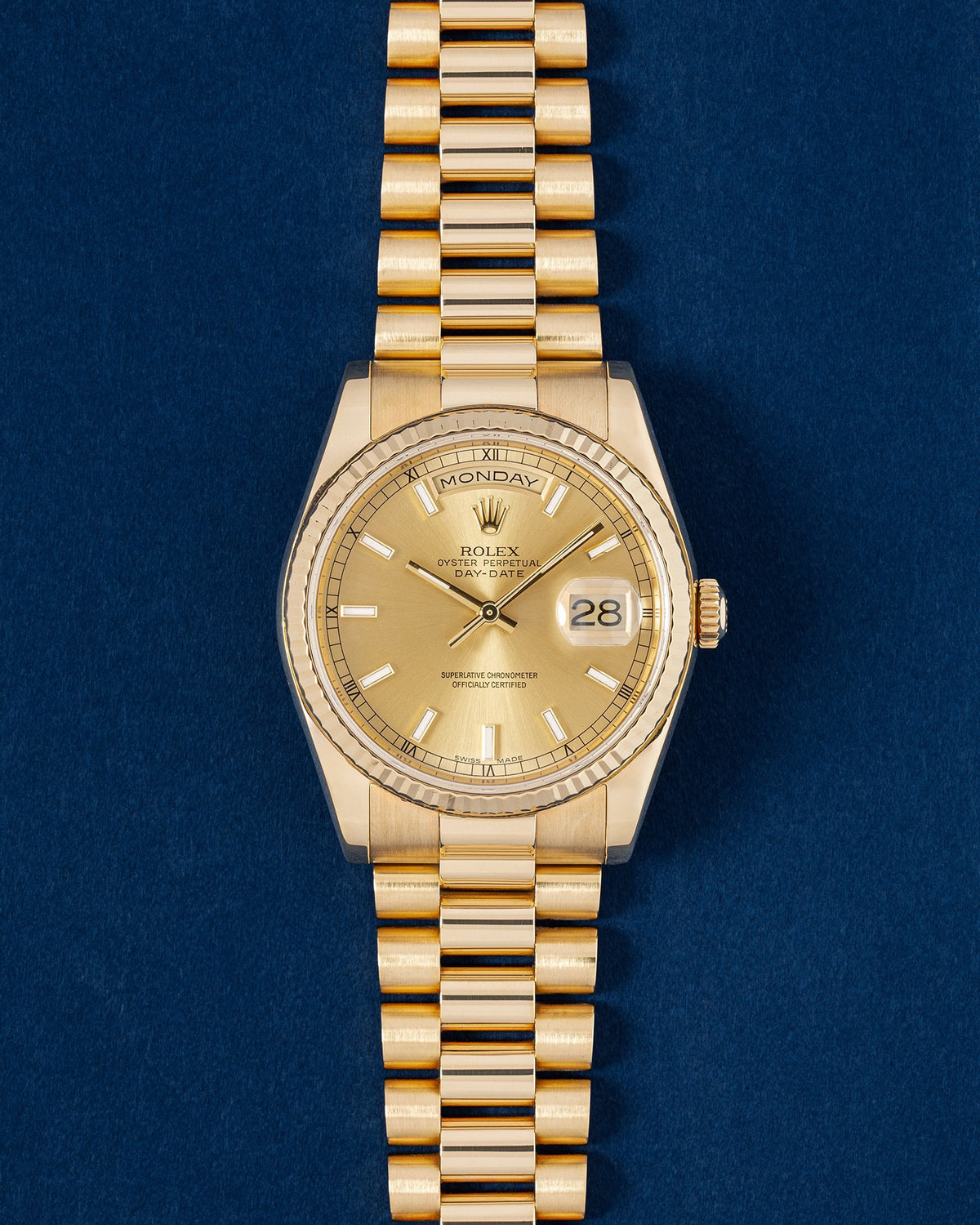
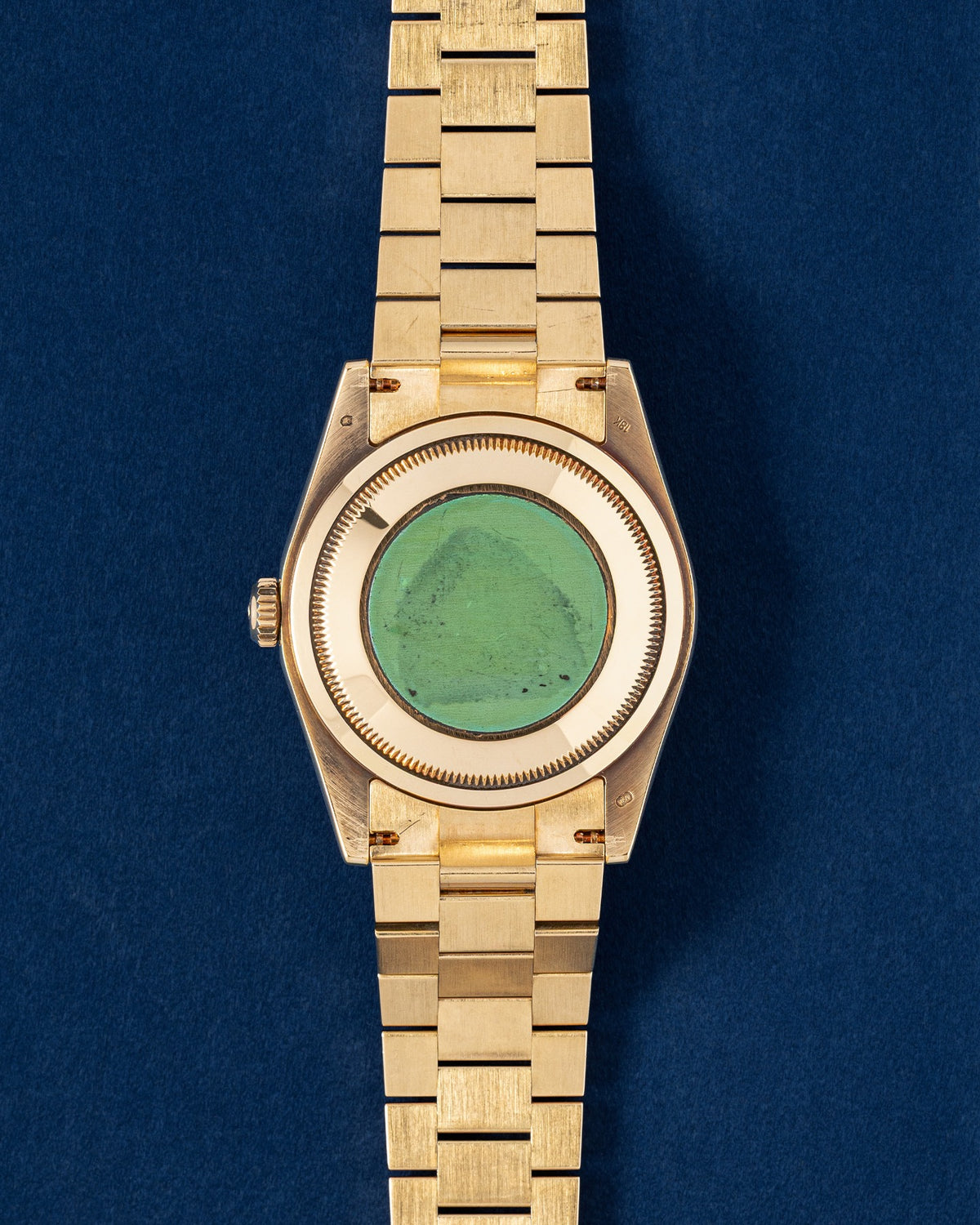
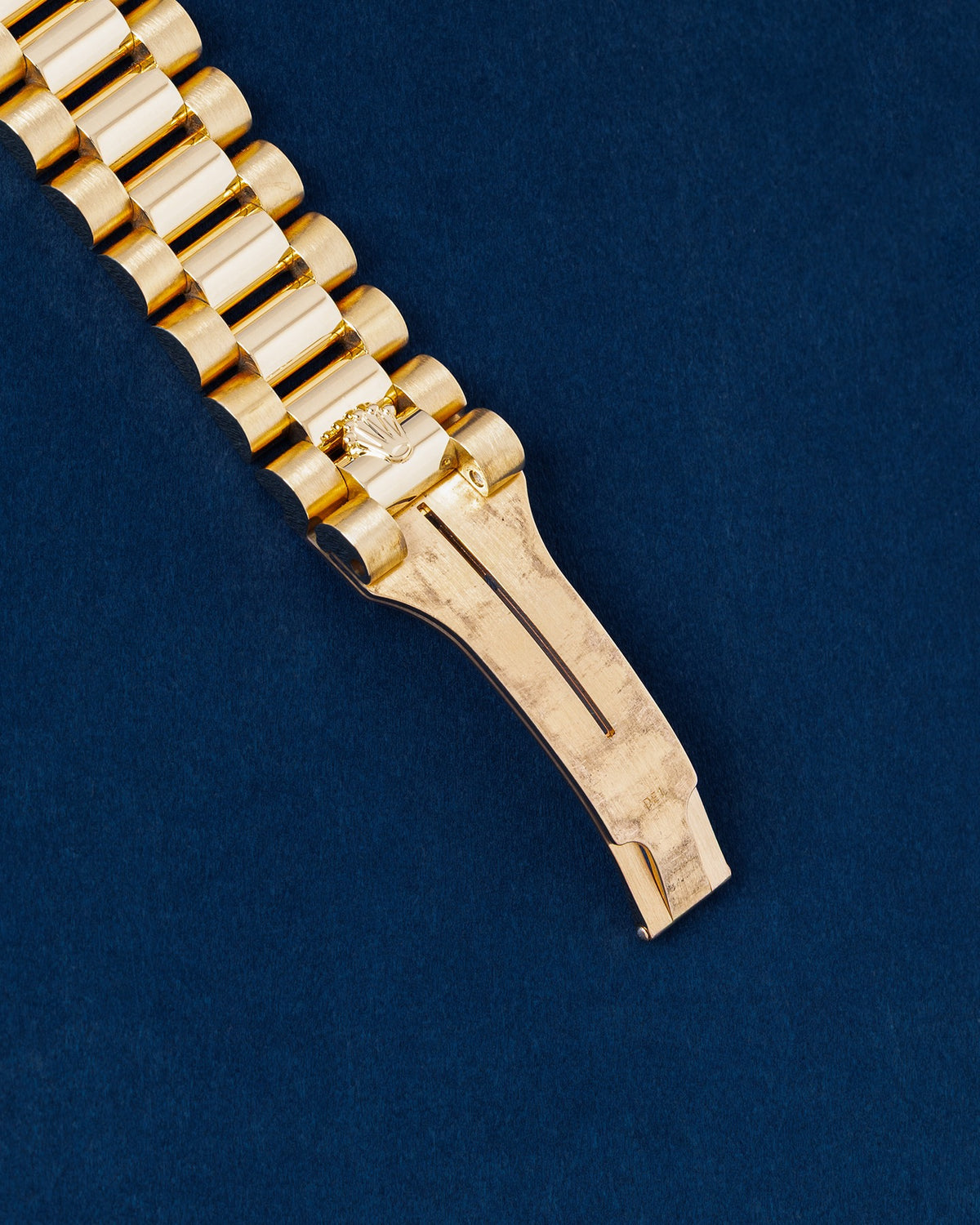
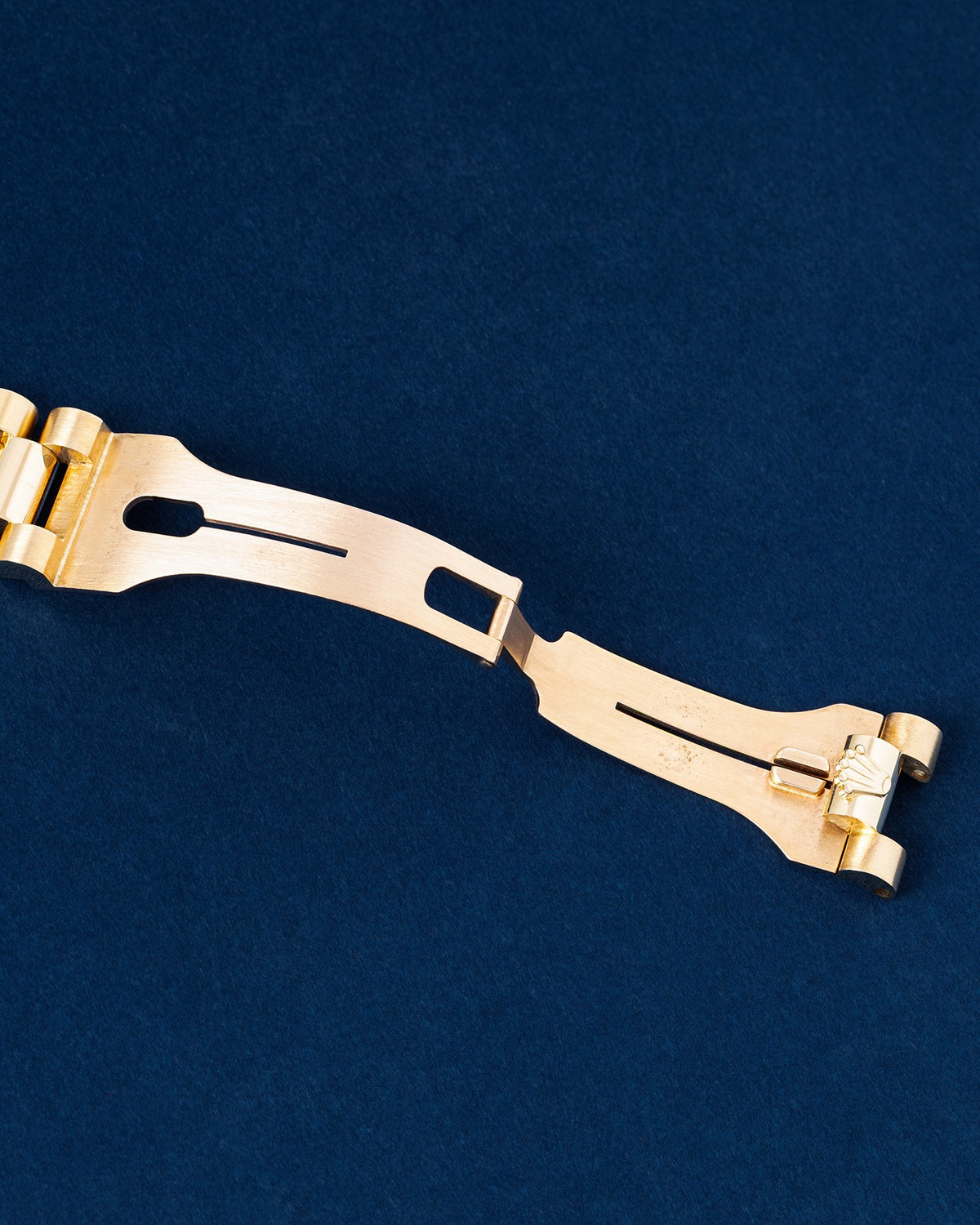
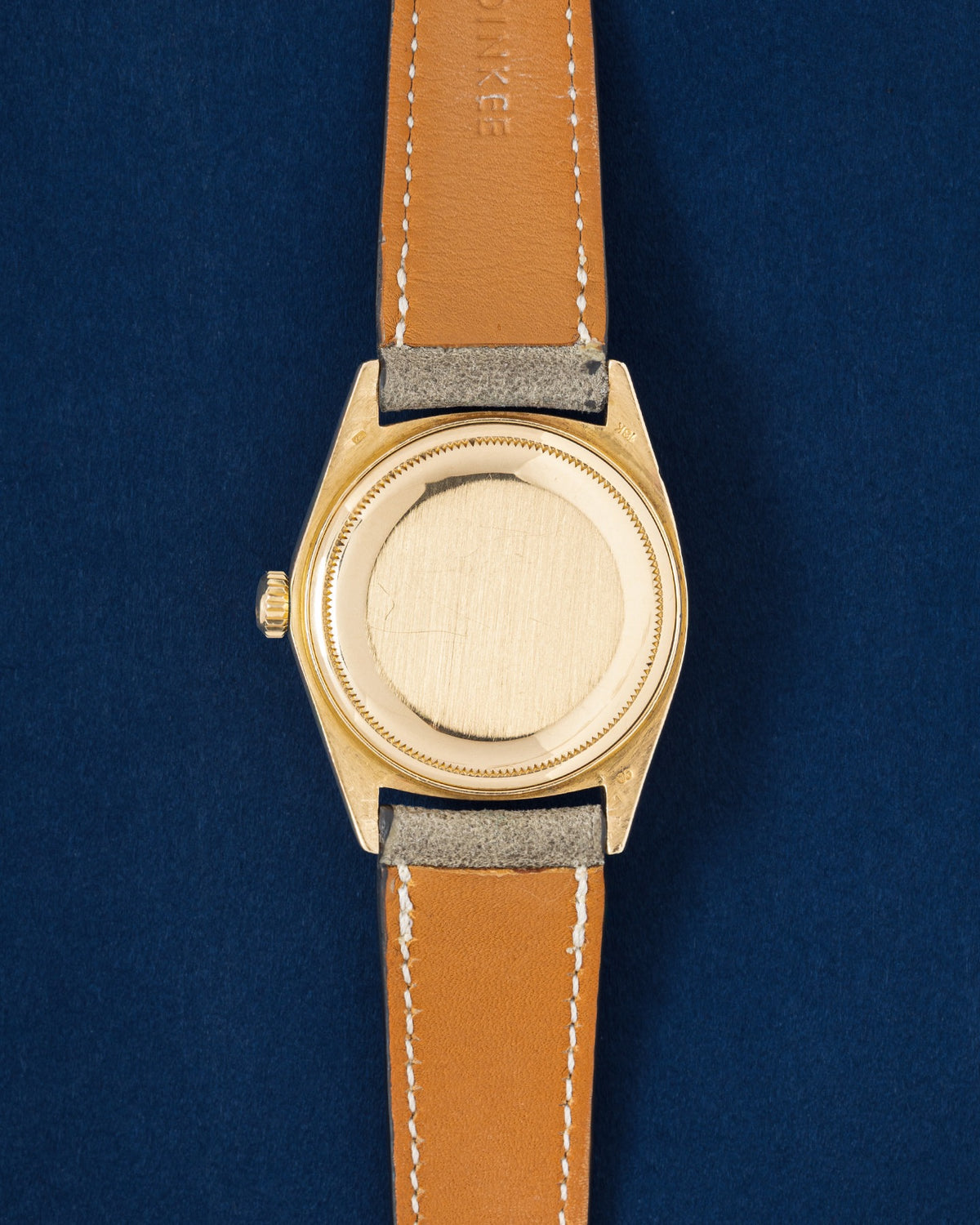
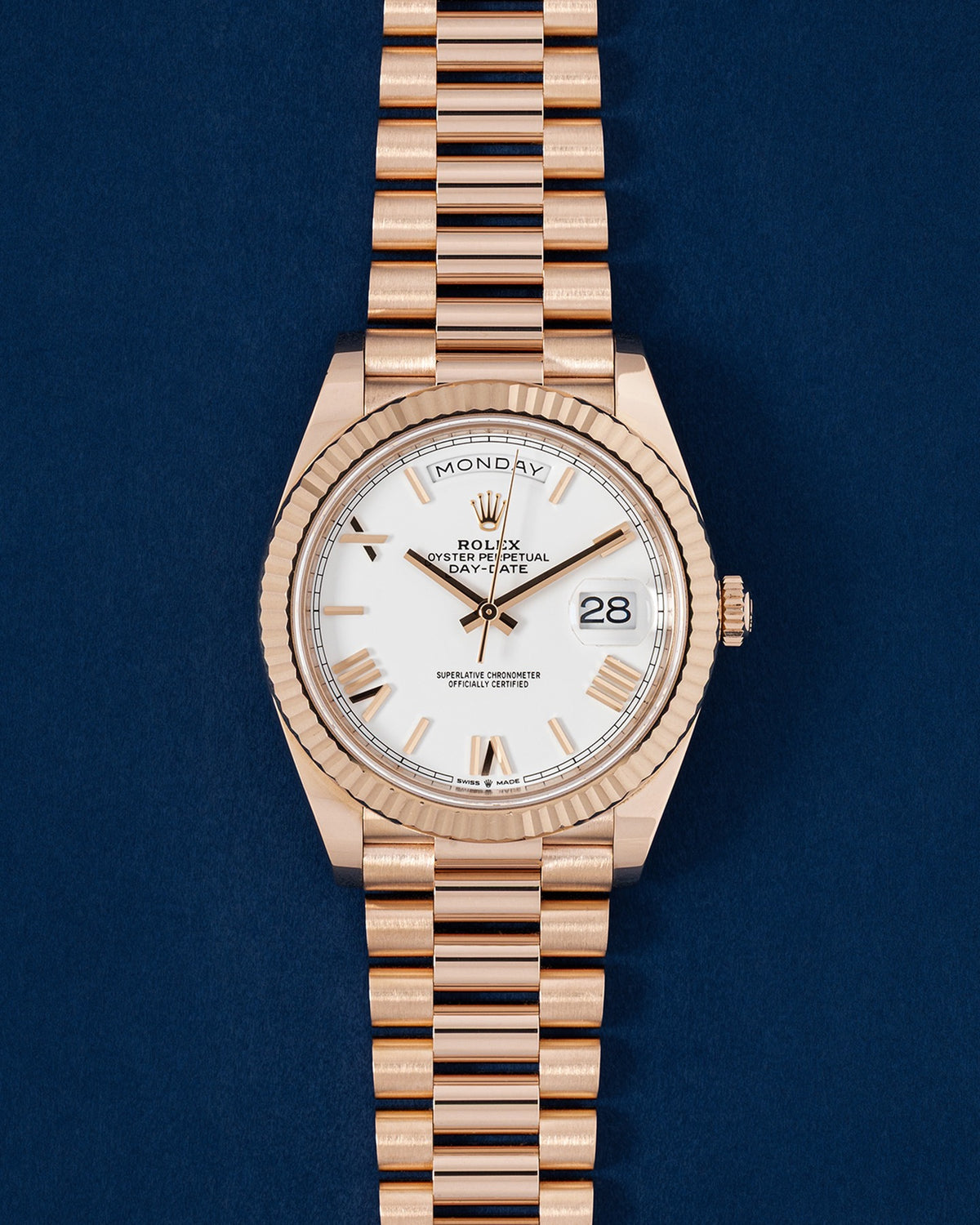
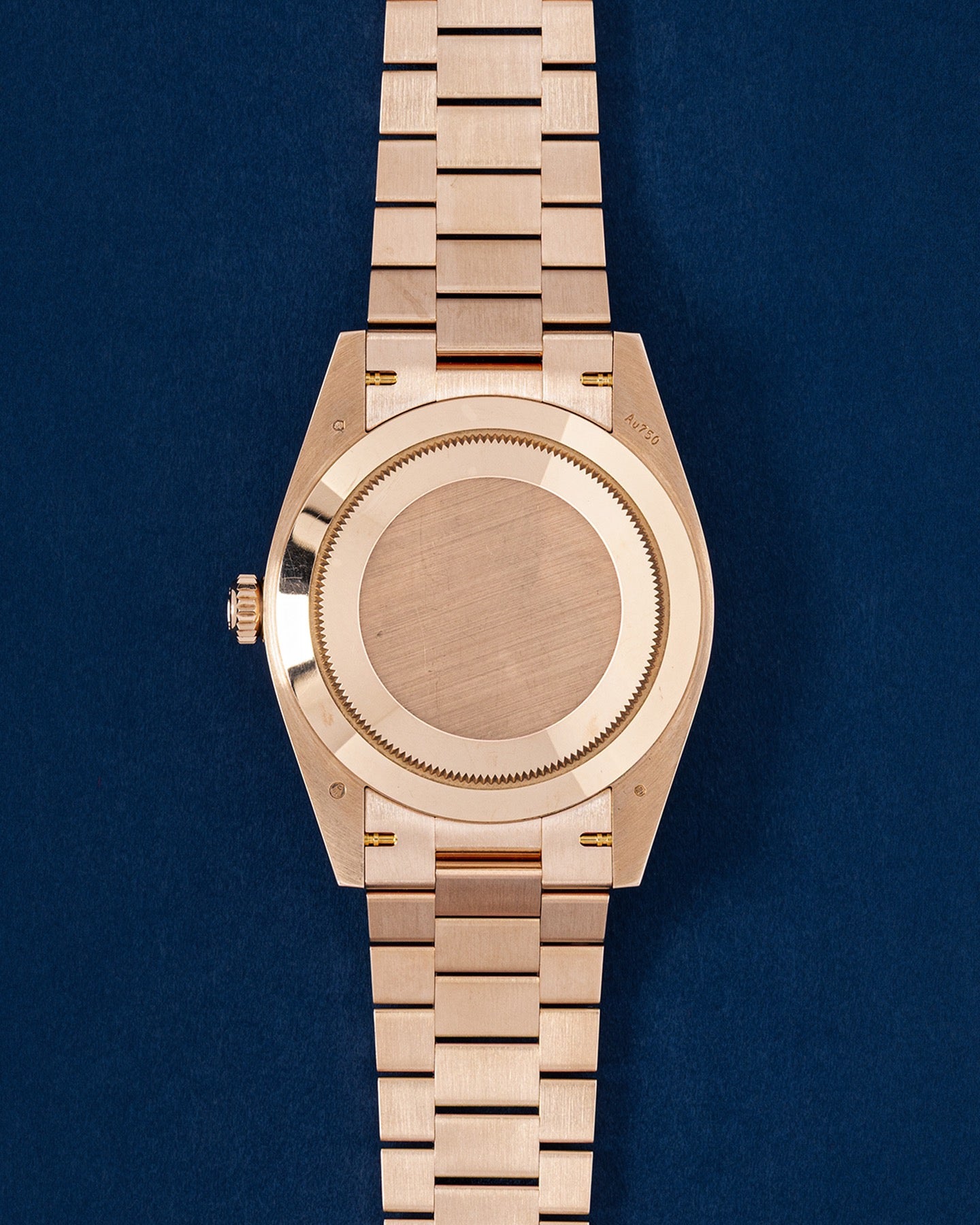
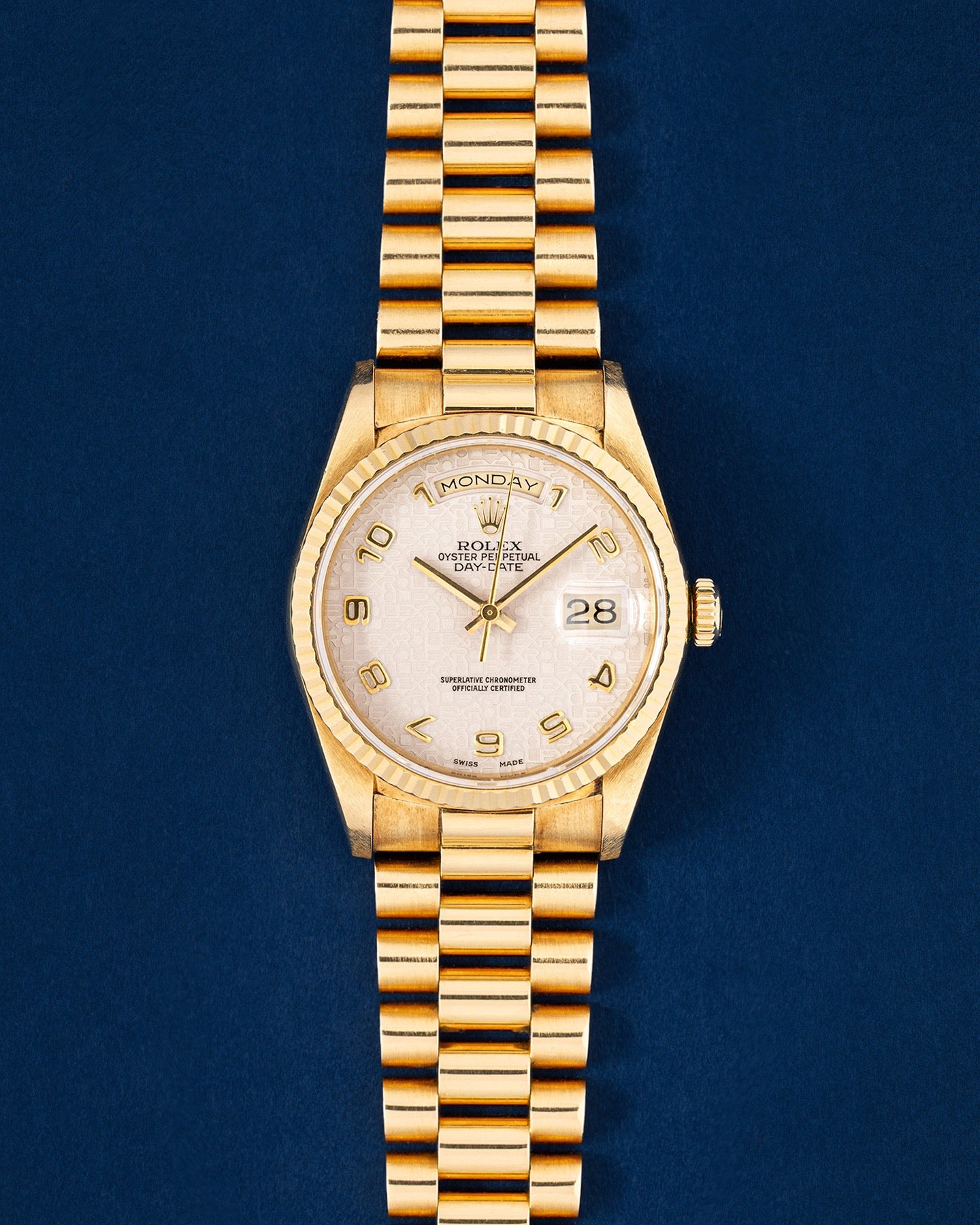
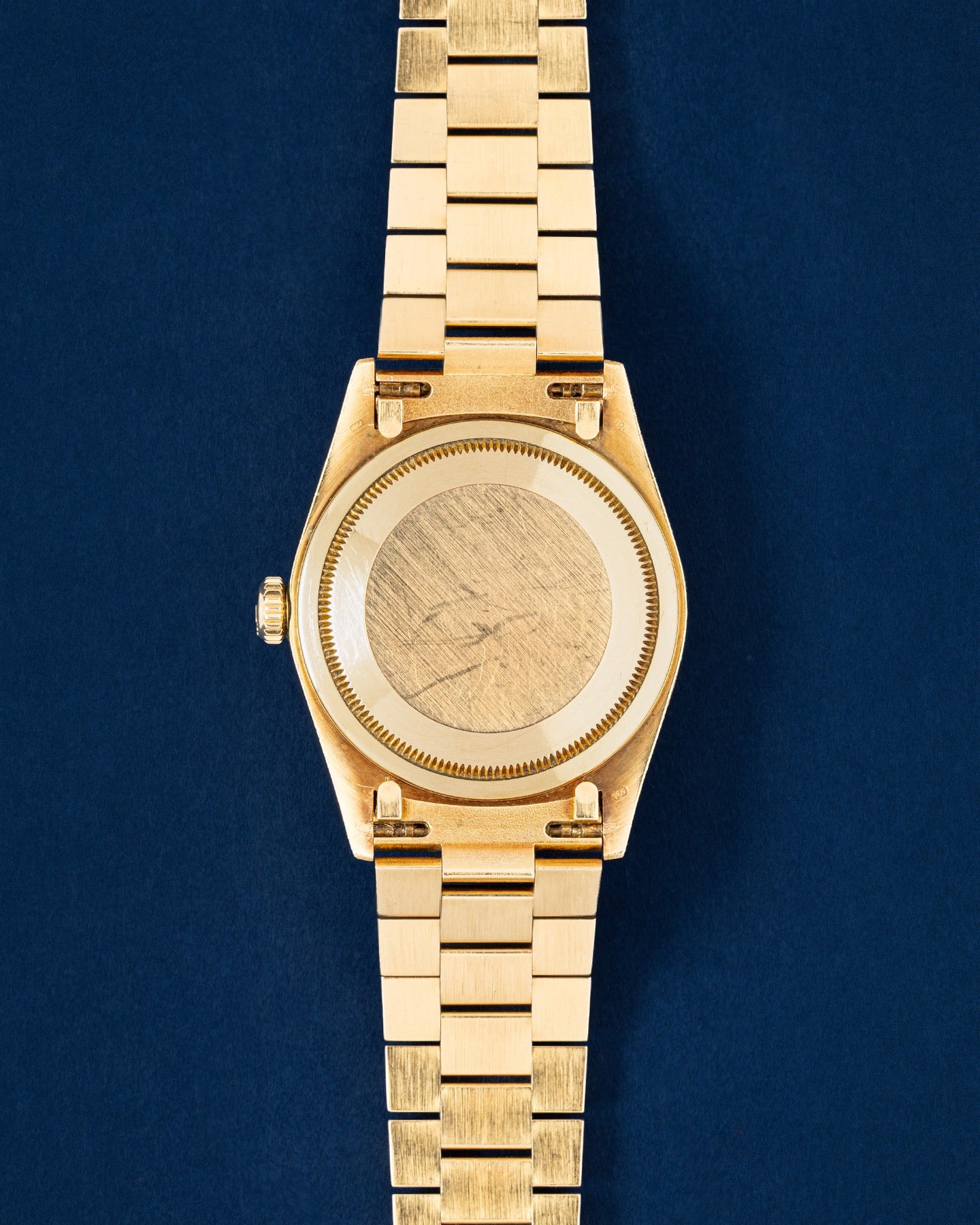
Rolex Day-Date "President" 118238
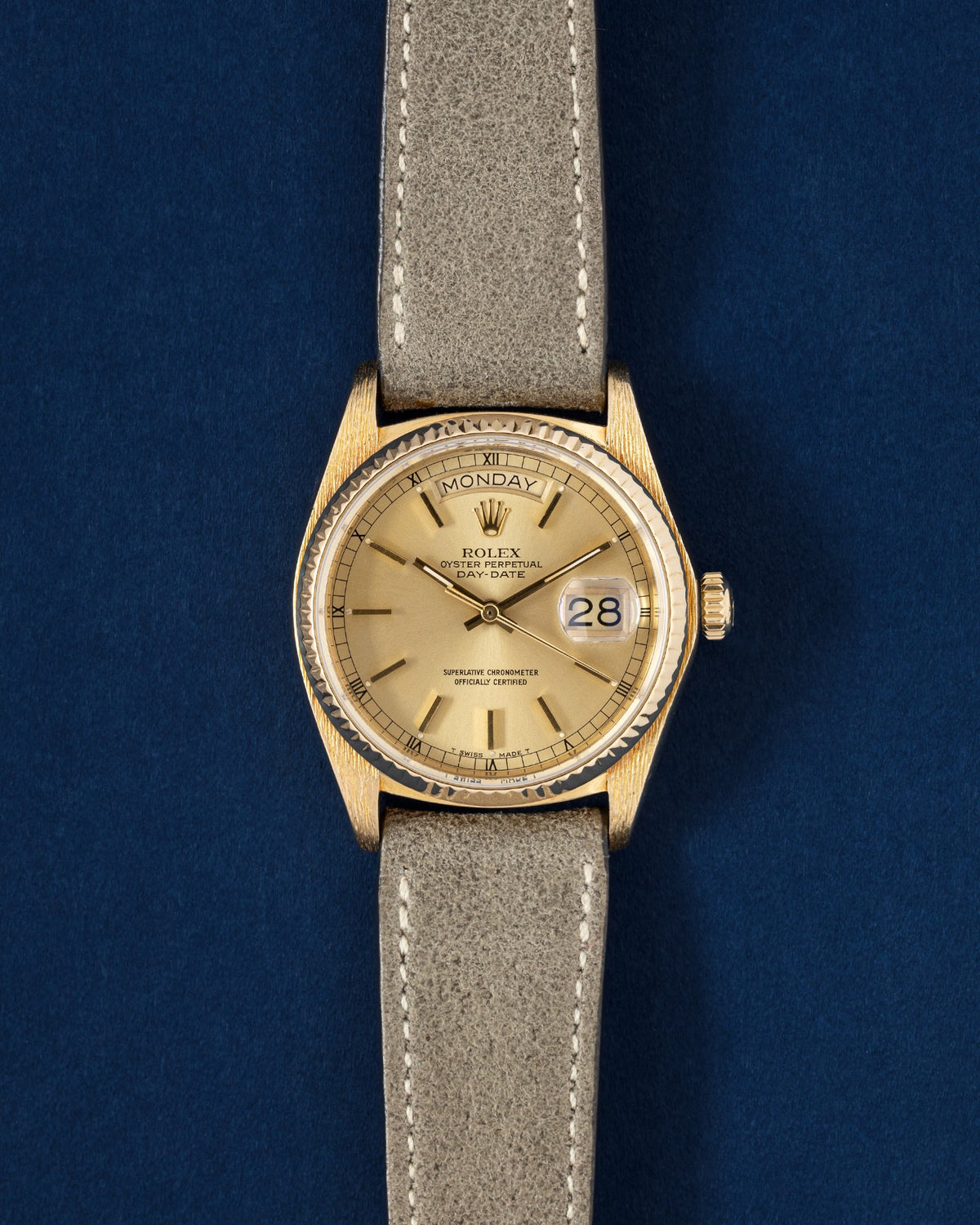
Vintage
Vintage