

Rolex Daytona
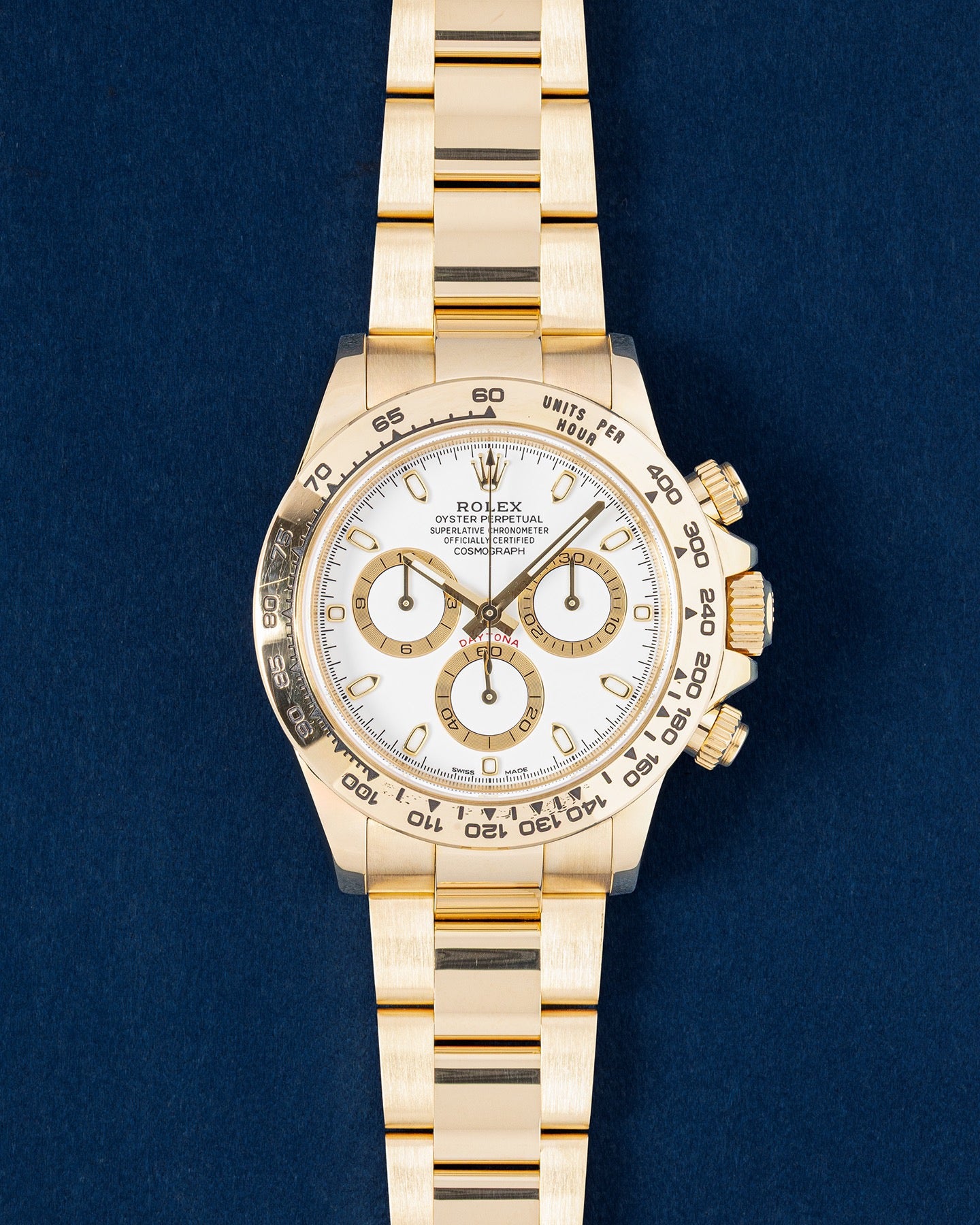
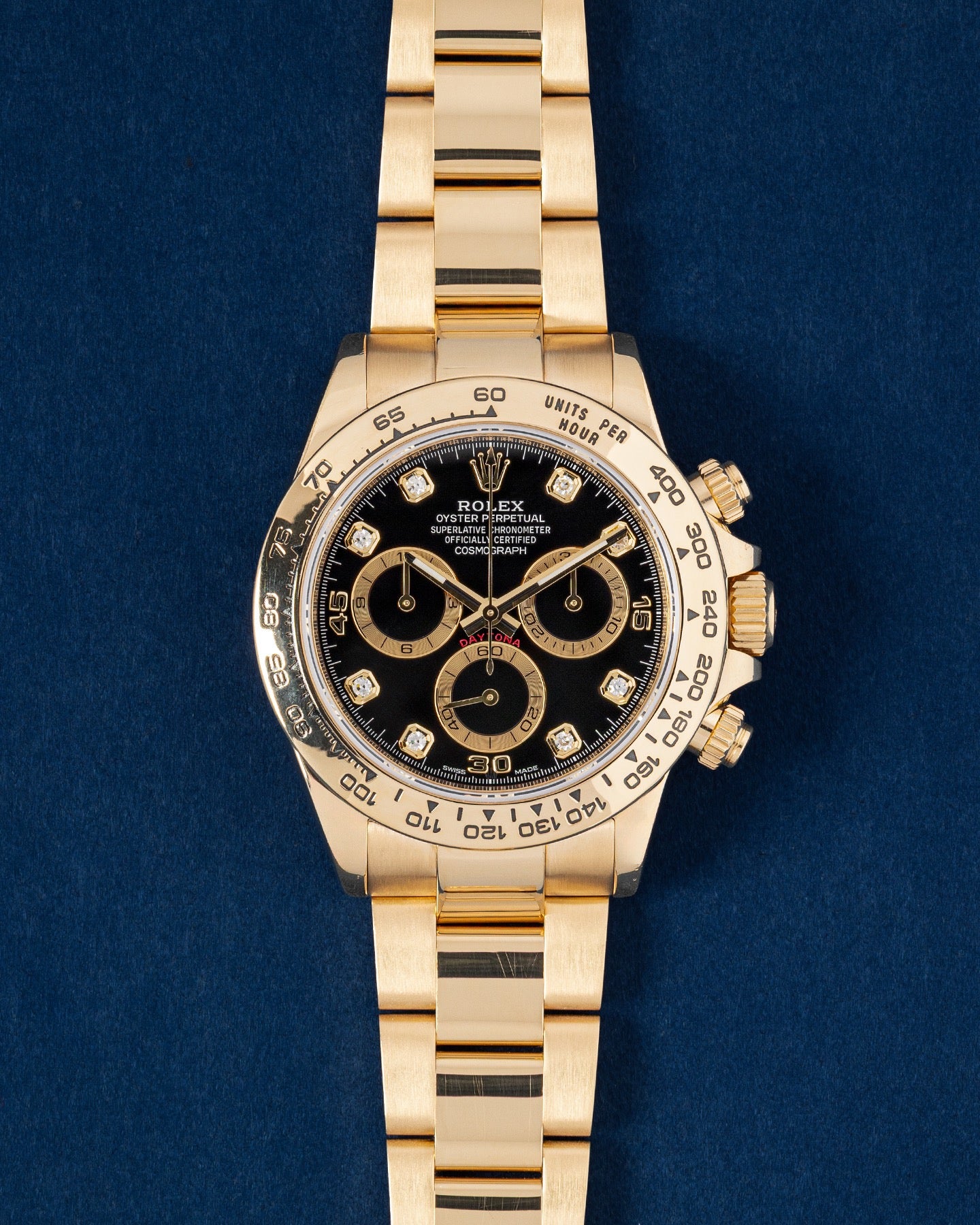
Shop new and pre-owned Rolex Daytona watches at Grand Caliber. The definitive racing chronograph, refined with a ceramic bezel and a redesigned movement in current production. From the Paul Newman exotic dials to today's steel and precious-metal references, no Rolex is more pursued.
The Rolex Daytona at Grand Caliber
The Rolex Daytona is the absolute pinnacle of the modern luxury sports watch. It is the most heavily demanded, widely studied, and deeply coveted mechanical chronograph in the world. When Rolex introduced the Cosmograph in 1963, the concept of a dedicated racing watch was still in its infancy. The brand had experimented with chronographs for decades, but the Cosmograph represented a profound shift in design philosophy. By moving the tachymeter scale from the outer edge of the dial to the steel bezel, Rolex created an instrument of uncompromising legibility designed specifically for professional racing drivers. Over the next sixty years, the Rolex Daytona evolved from a slow selling manual wind tool watch into a global cultural phenomenon. It is the watch that shattered auction records, defined the vintage collecting market, and established the blueprint for what a modern luxury chronograph must be. The Rolex Submariner explores the depths of the ocean. The Rolex GMT Master navigates the skies. The Rolex Daytona conquers the asphalt, measuring speed and time with an unrelenting dedication to mechanical perfection.
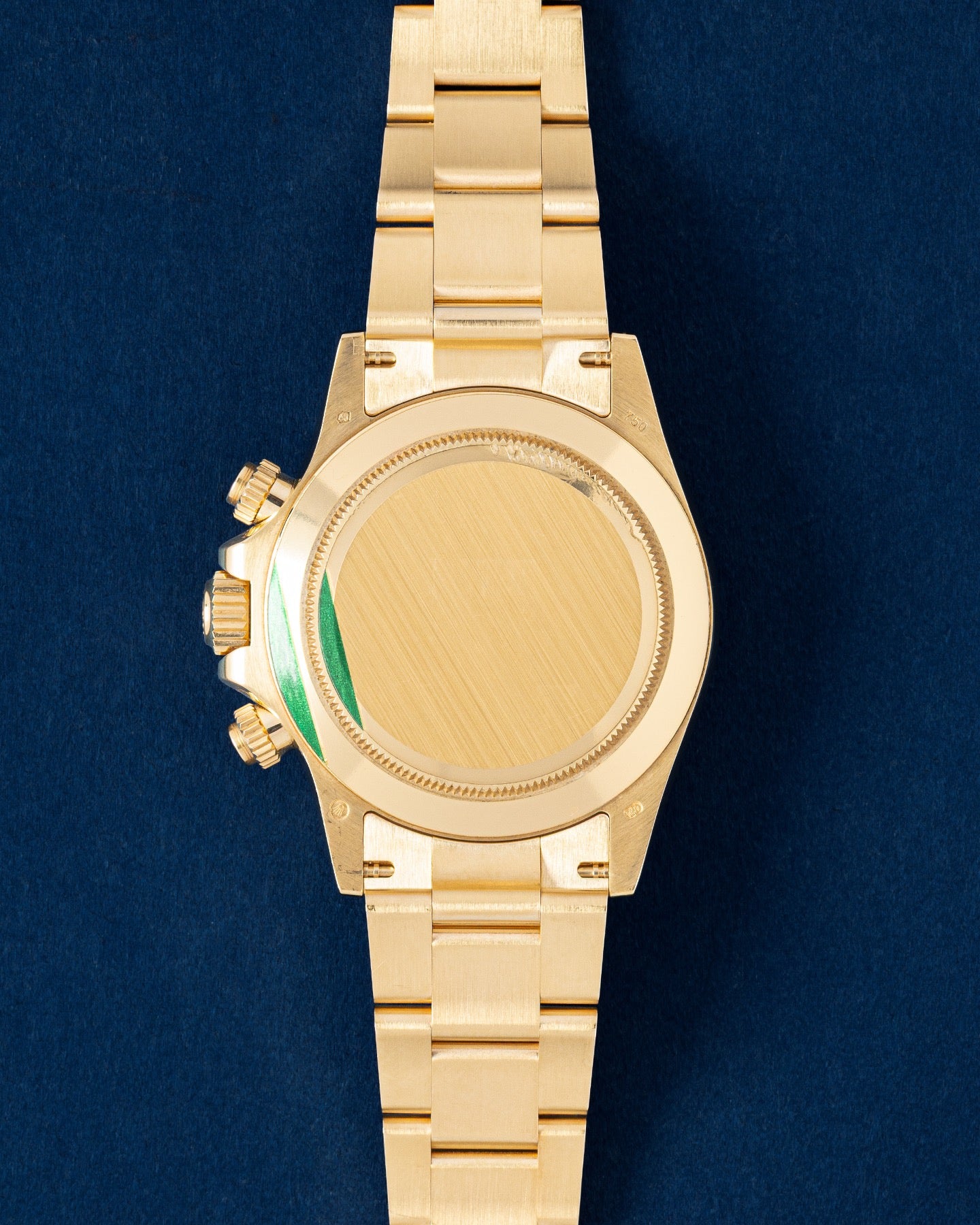
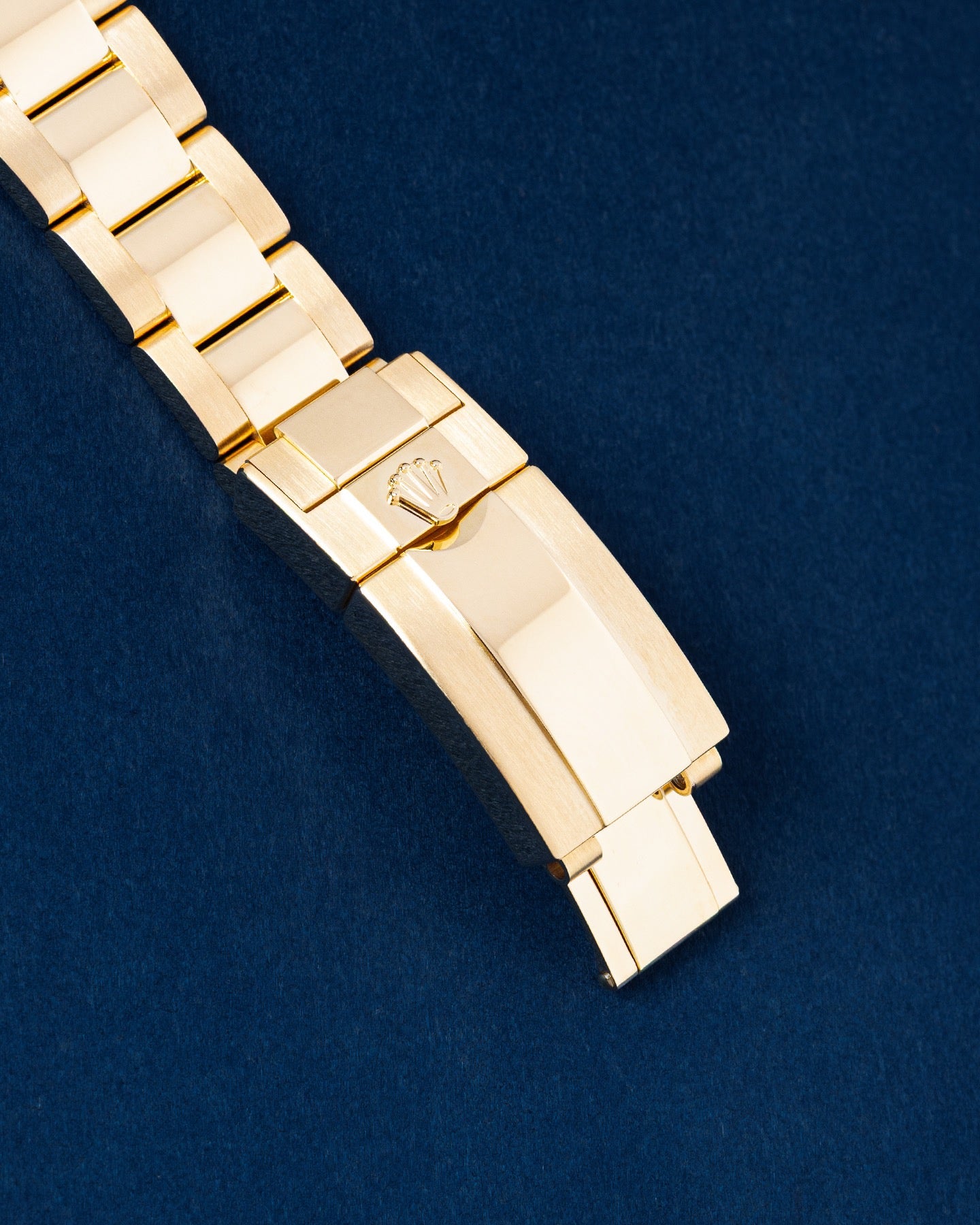
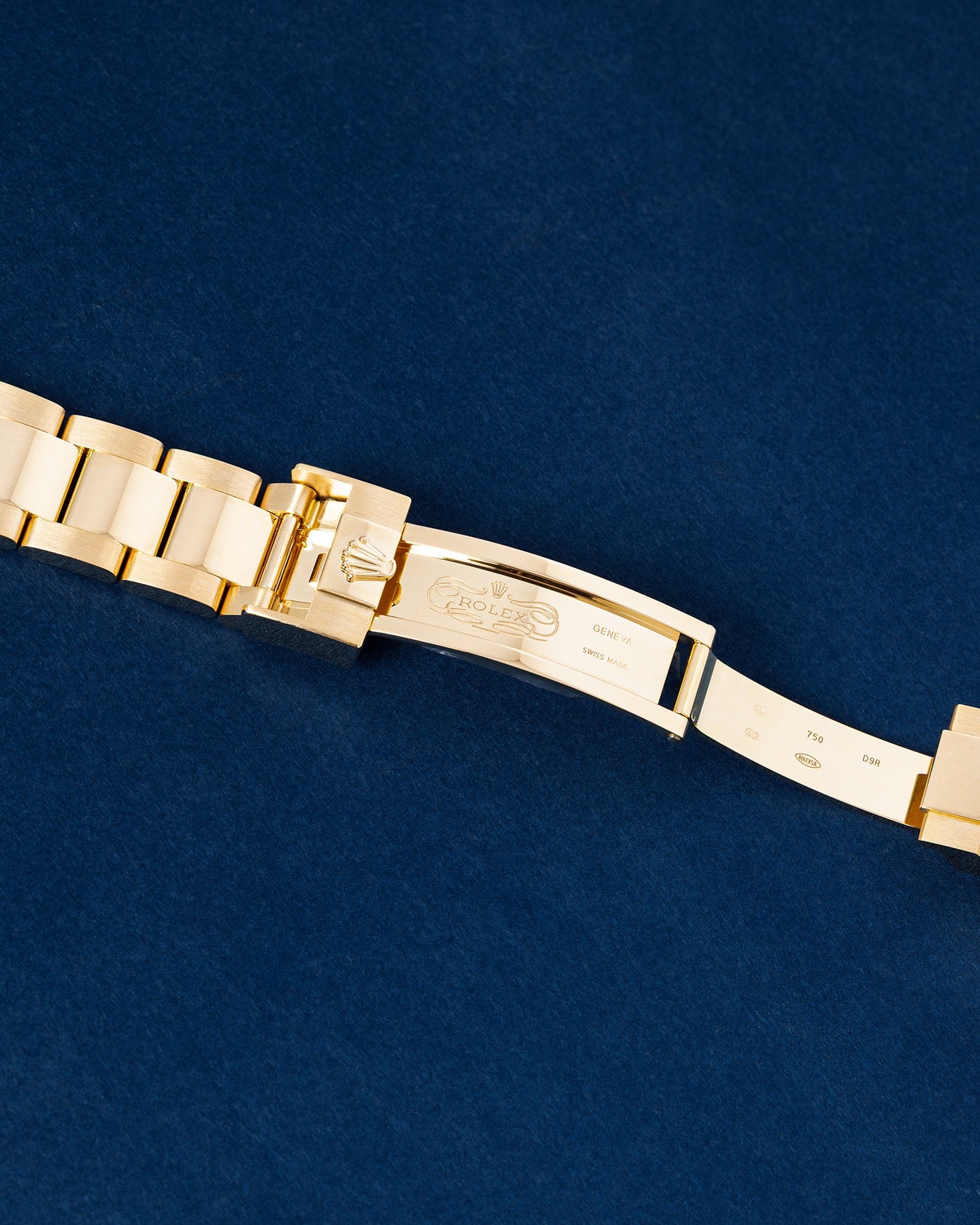
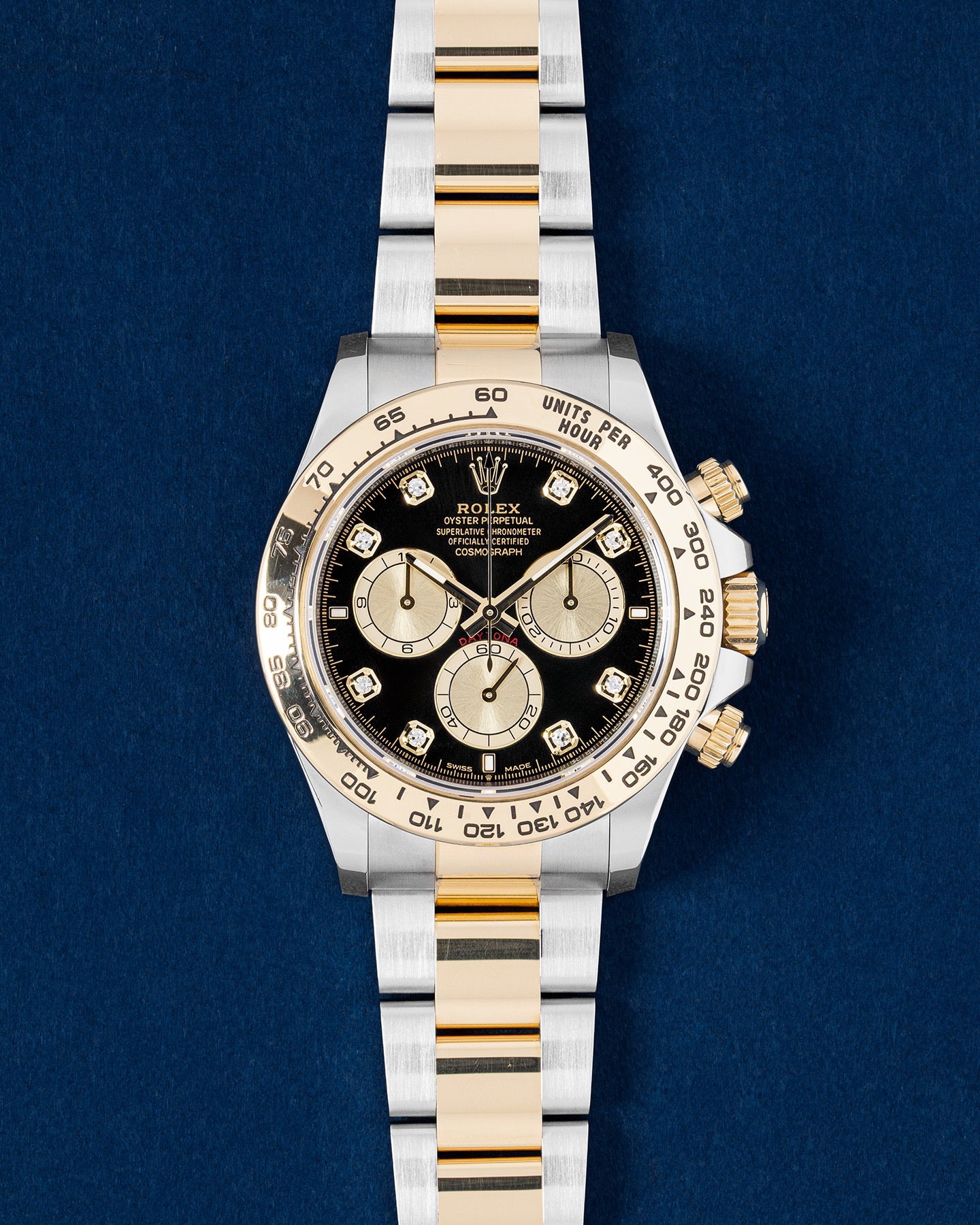
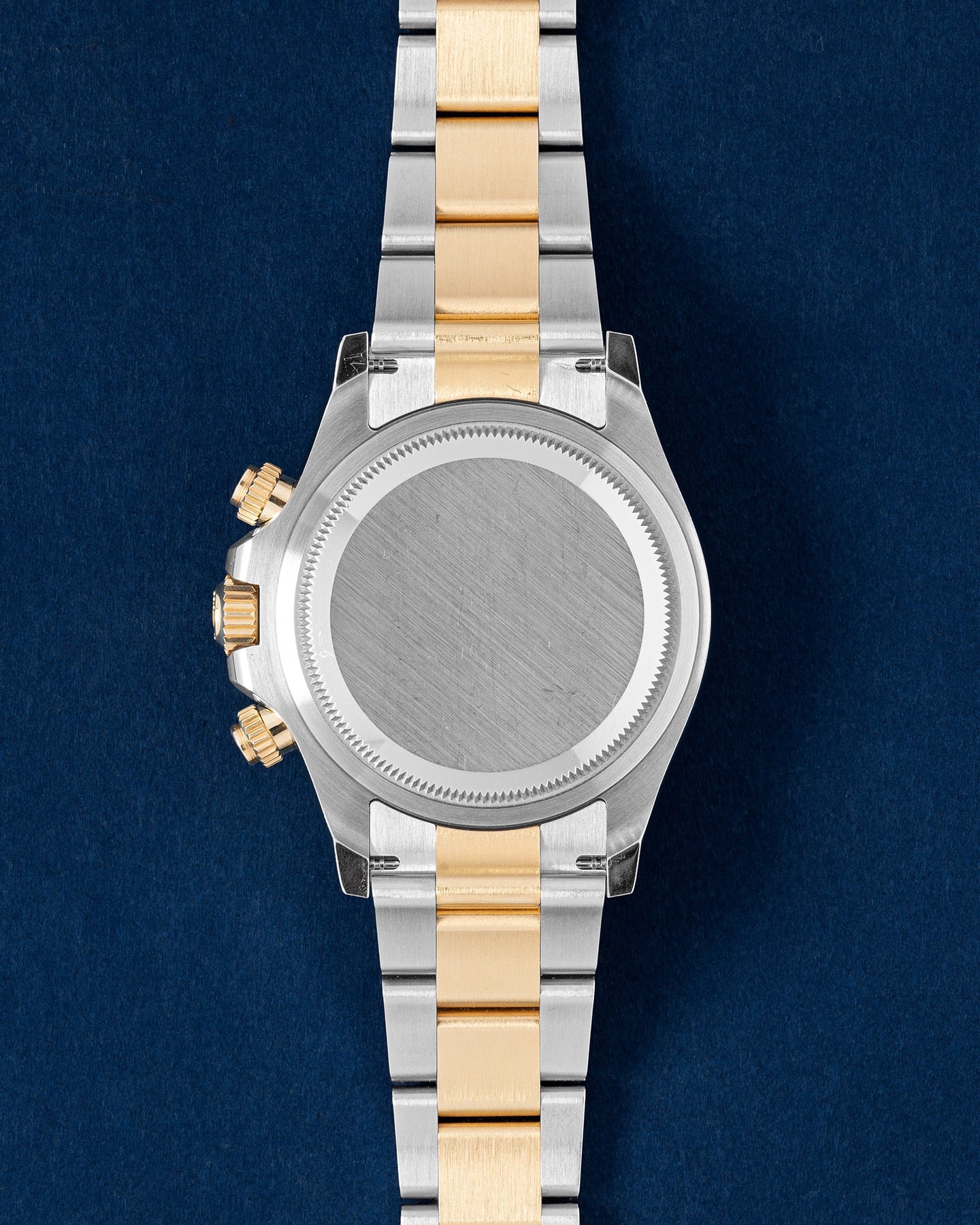
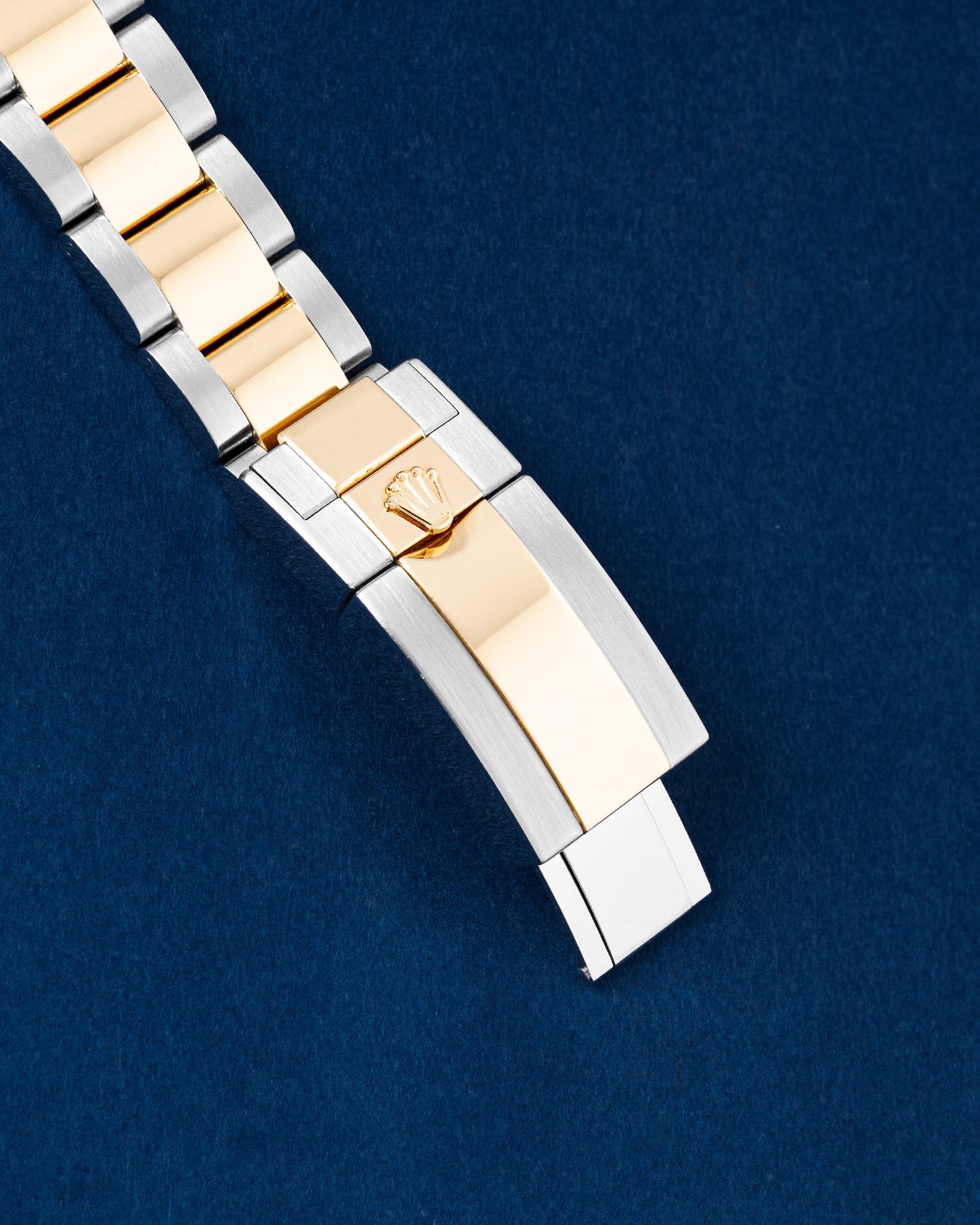
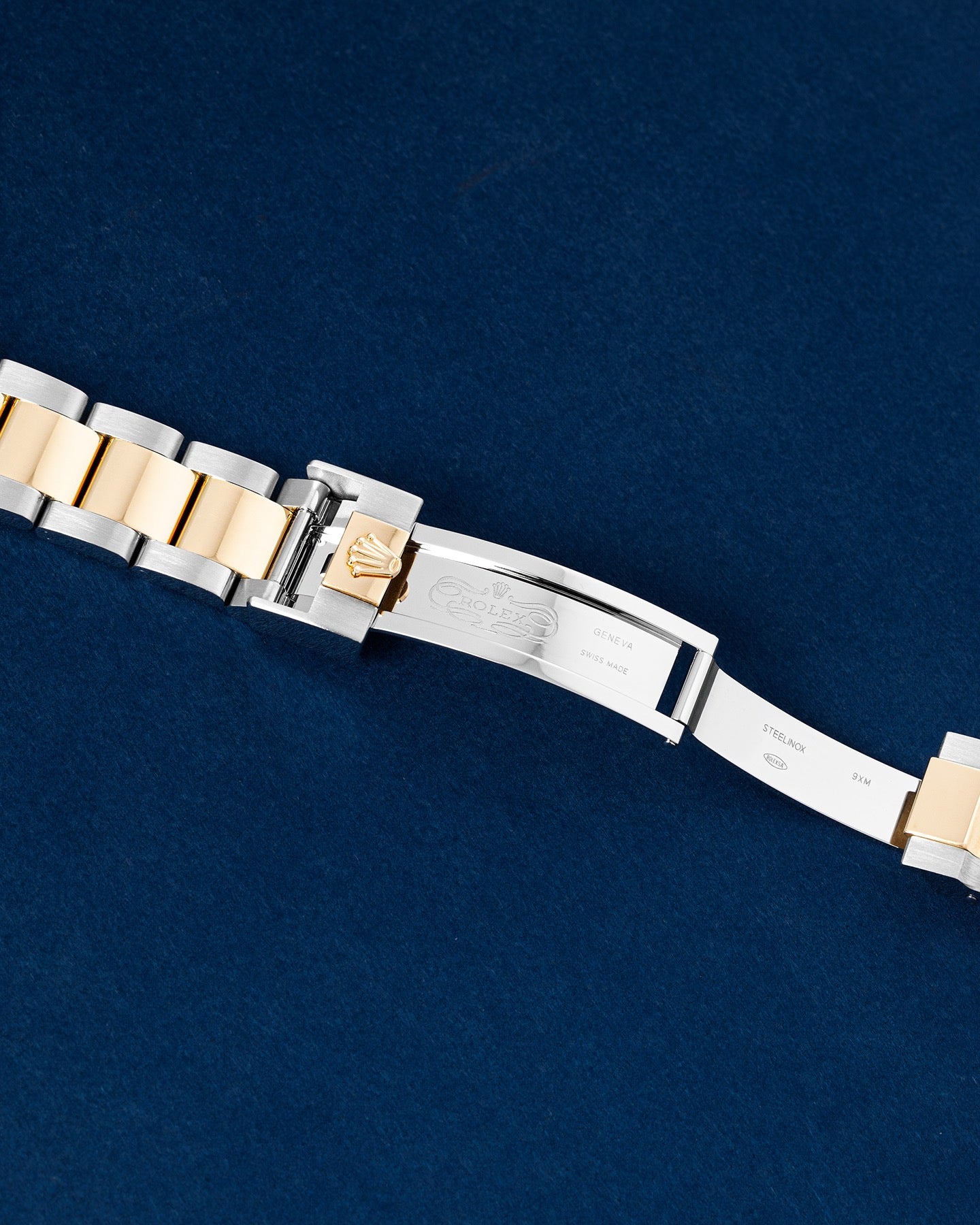
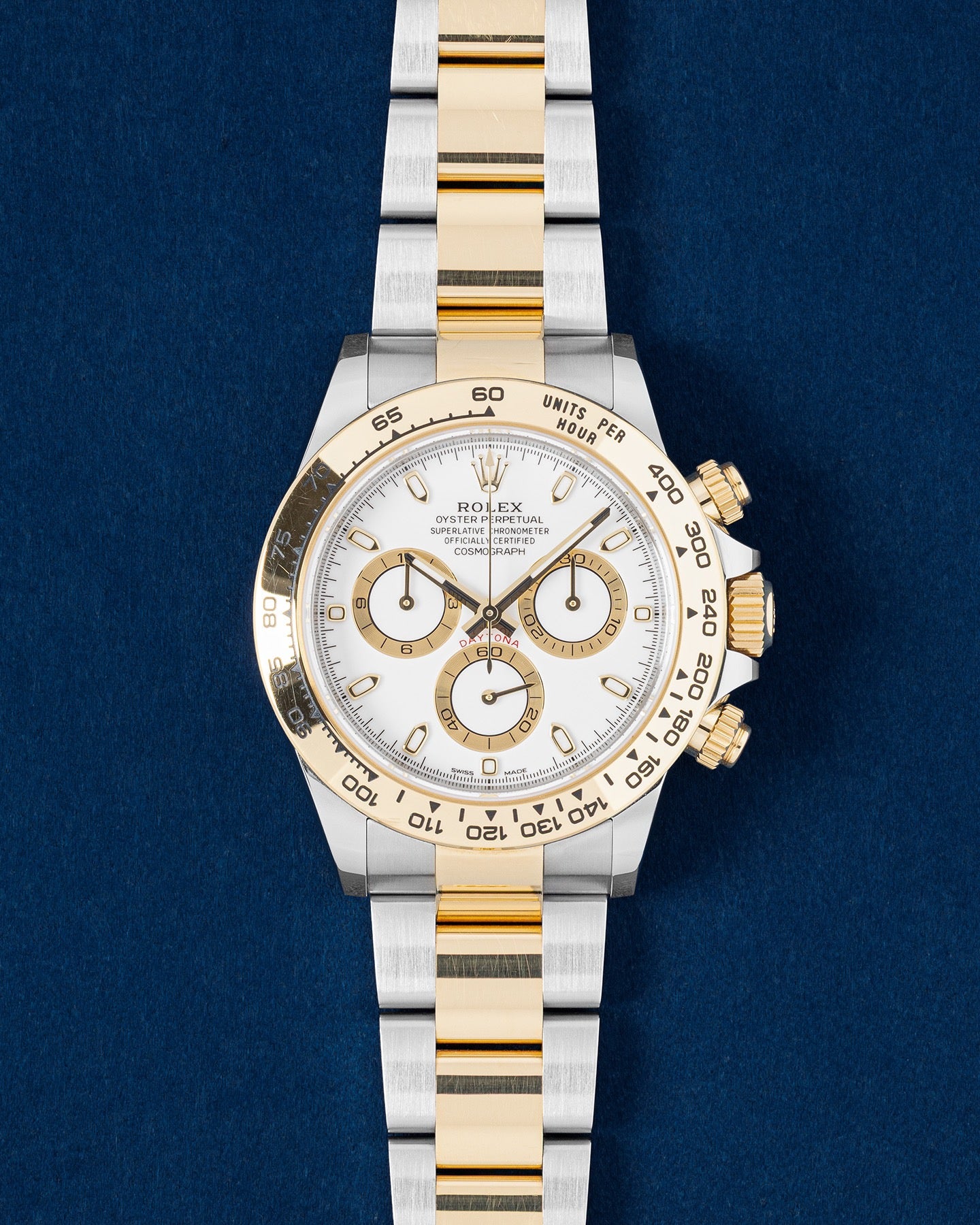
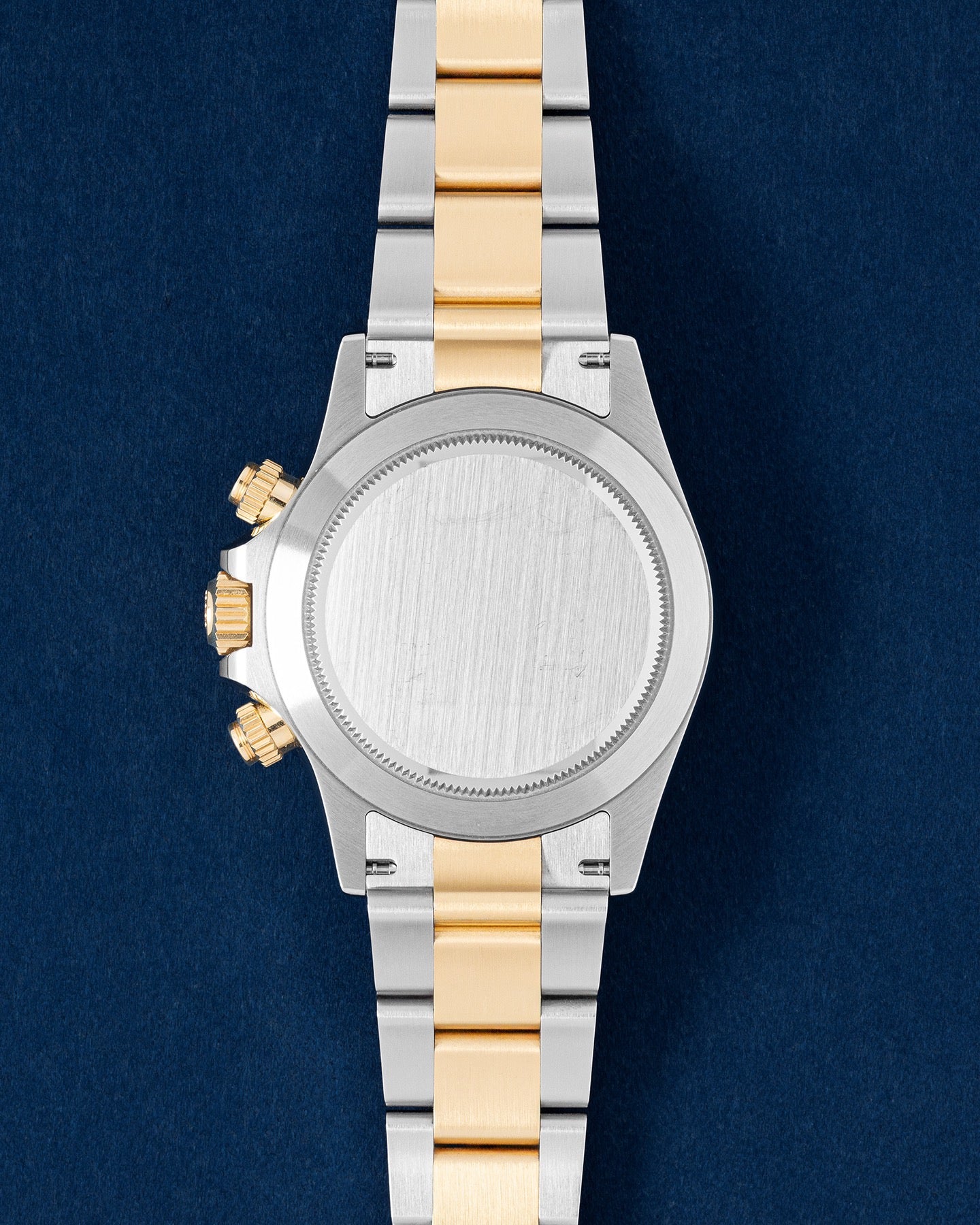
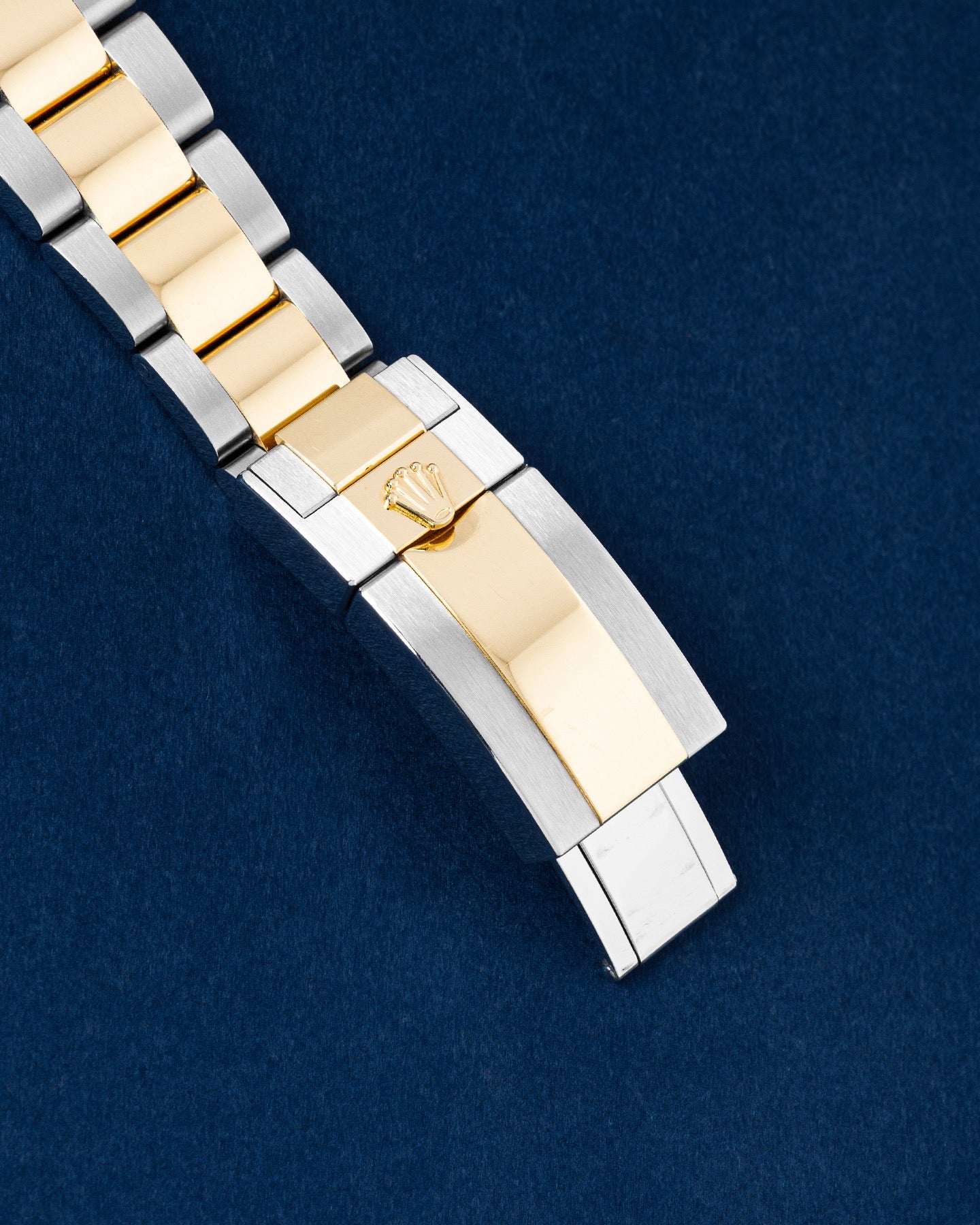
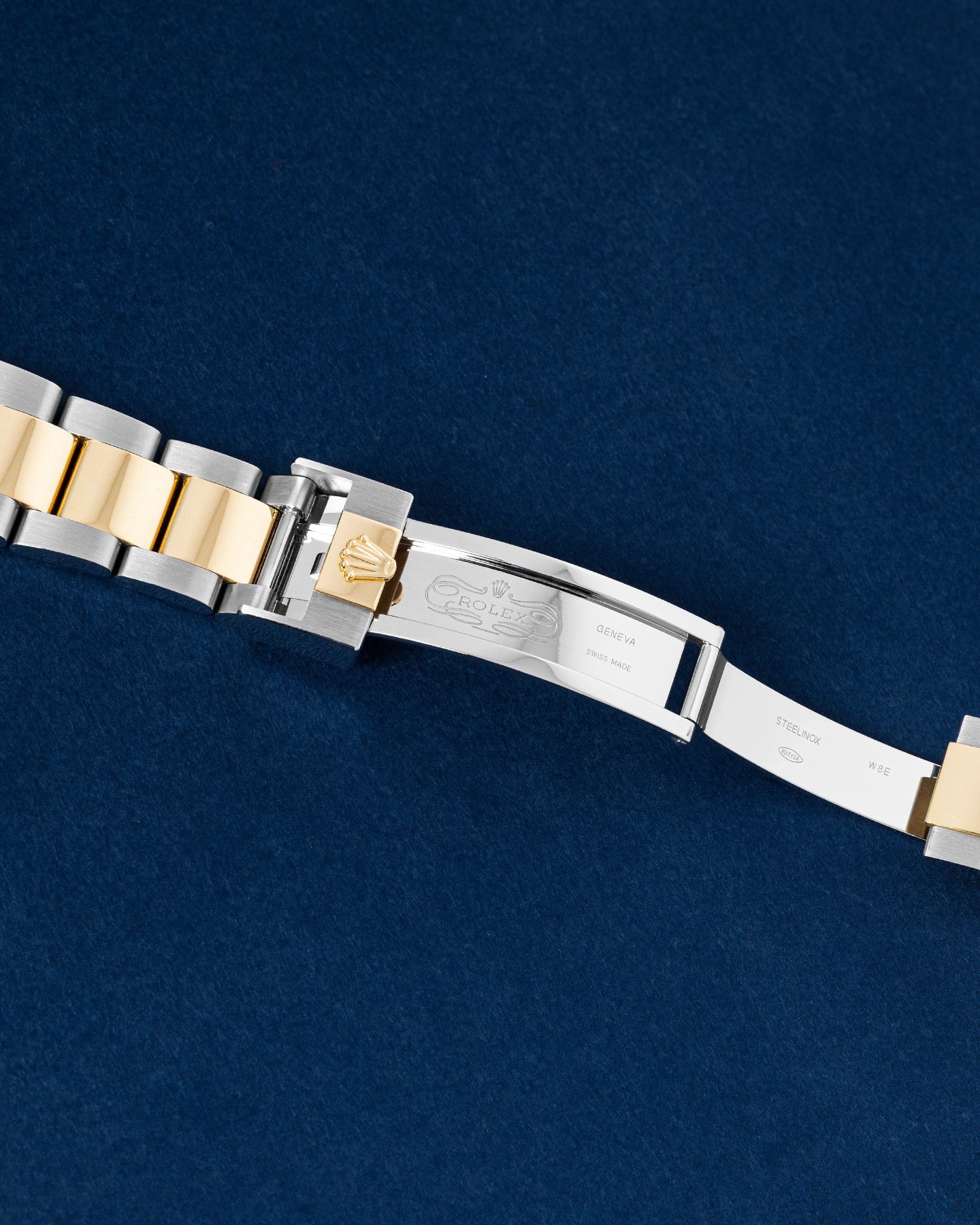
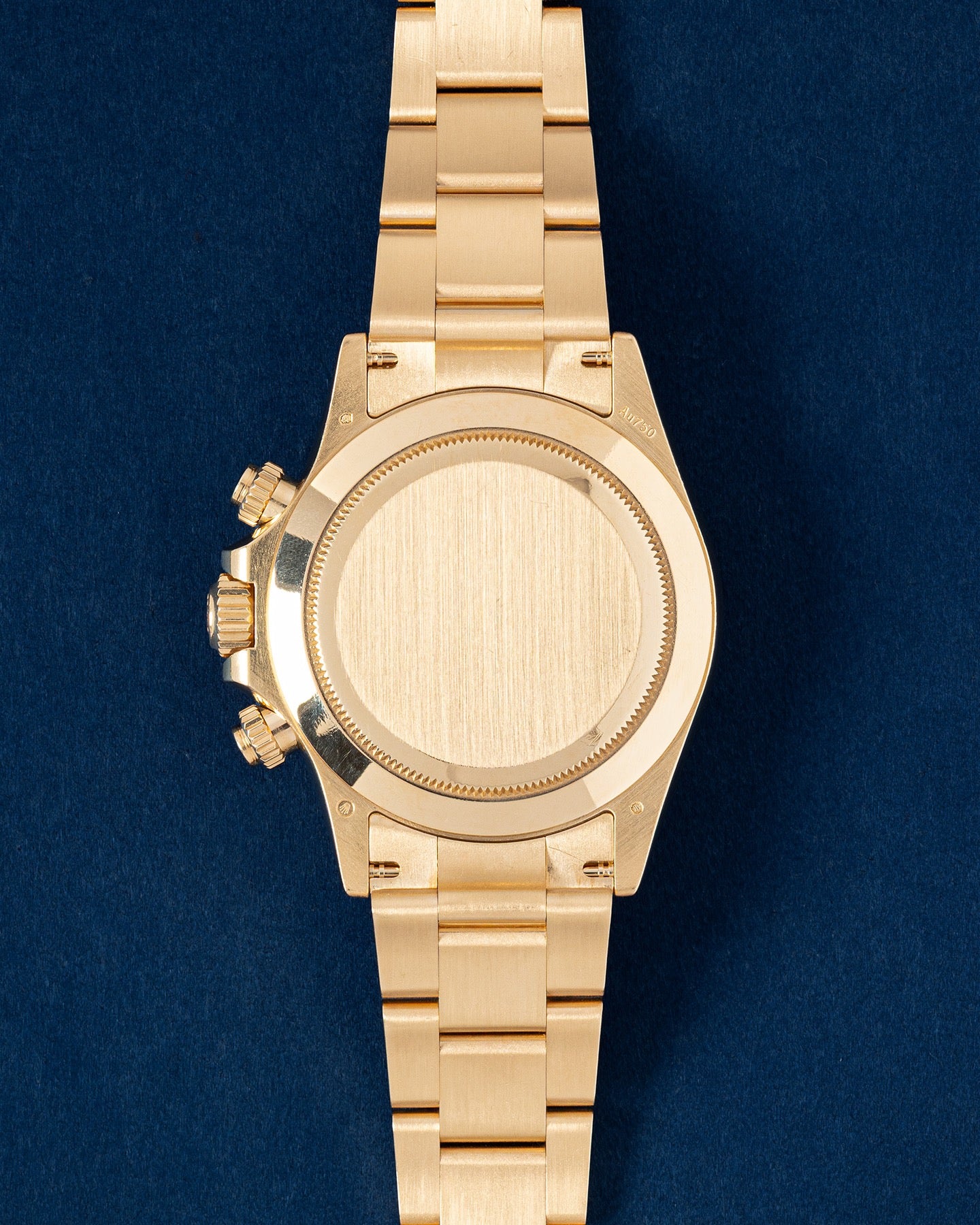
Grand Caliber sees the Rolex Daytona cross the desk in every form the catalogue has ever produced. We handle the current production reference 126500LN in Oystersteel, the two-tone Yellow Rolesor 126503, the solid Everose gold 126505, and the breathtaking platinum 126506 with the exhibition caseback. We extensively navigate the discontinued and vintage Rolex Daytona market, sourcing the legendary six-digit 116500LN ceramic models, the foundational in-house 116520 generation, the historically vital five-digit Zenith Daytona 16520, and the incredibly rare four-digit manual wind references like the 6263, 6265, and 6239. For the educated collector who understands the profound nuances of inverted six dials, floating Cosmograph texts, and Paul Newman exotic variants, Grand Caliber provides absolute dealer expertise. What follows is the definitive case for the Rolex Daytona as the most consequential chronograph ever produced, told the way a dealer who handles the deepest archives of the catalogue tells it.
The Foundational Origins and the Pre Daytona
The history of the Rolex Daytona does not begin in 1963. To understand the architectural evolution of the modern chronograph, a collector must examine the transitional models that immediately preceded the Cosmograph designation. Rolex had been producing chronographs since the 1930s, primarily utilizing outsourced calibers housed in traditional Oyster cases. These early models featured smooth bezels and multi-scale dials that combined tachymeter, telemeter, and pulsometer tracks into a highly dense visual display.
Rolex Reference 6238
The direct ancestor to the Rolex Daytona is the reference 6238, produced from the early 1960s until approximately 1967. This specific model is universally referred to by collectors as the Pre Daytona. The 6238 established the fundamental case silhouette that the Daytona would eventually inherit. It featured a clean, robust Oyster case measuring thirty-six millimeters in diameter, smooth pump-style chronograph pushers, and a clean, monochromatic dial. However, the reference 6238 retained a smooth, polished steel bezel and kept the tachymeter scale printed directly on the outer perimeter of the dial underneath the acrylic crystal. The watch was powered by the legendary Valjoux 72 manual wind movement, a caliber that would serve as the beating mechanical heart for the next two decades of Rolex chronograph production. While the 6238 lacked the high contrast bezels and dials of the later models, it was the essential evolutionary bridge that prepared the manufacture for a radical design departure.
The 1963 Launch and the Birth of the Cosmograph
The modern era of the Rolex racing chronograph officially began in 1963 with the introduction of the reference 6239. This model represented a complete visual and functional paradigm shift for the brand. Rolex completely removed the tachymeter scale from the dial and engraved it directly onto an oversized, highly polished stainless steel bezel. This brilliant design decision vastly improved the legibility of the dial and allowed a professional racing driver to instantly calculate average speeds over a given distance without squinting through a curved acrylic crystal.
Rolex Daytona Reference 6239
The reference 6239 was the very first model to bear the name Cosmograph. Interestingly, the name Daytona did not appear on the earliest dials. Rolex initially targeted the watch toward the emerging space race, hence the cosmic naming convention. However, as the brand deepened its official sponsorship of the grueling 24 Hours of Daytona endurance race in Florida, they began printing the word Daytona on the dials for the American market. By the late 1960s, the Daytona signature became a permanent, global fixture on the dial, typically printed in a striking red font arched precisely above the six o'clock sub-dial. The 6239 utilized the manual wind Valjoux 72B caliber, pump pushers, and introduced the high contrast dial layout. Collectors could choose a black dial with silver sub-dials or a silver dial with black sub-dials, creating the iconic reverse panda and panda aesthetics that remain in profound demand today.
Rolex Daytona Reference 6241
Introduced shortly after the 6239, the reference 6241 offered a crucial aesthetic alternative. While the 6239 featured a solid steel engraved bezel, the 6241 introduced a black acrylic bezel insert with white printed tachymeter numerals. This black acrylic bezel provided an incredibly sharp, aggressive visual contrast against the steel case and further enhanced the legibility of the speed calculations. Both the 6239 and the 6241 were produced concurrently throughout the 1960s, establishing the dual bezel options that would define the Rolex Daytona catalogue for generations.
The Exotic Dials and the Paul Newman Legacy
The most intensely collected and highly scrutinized sub-category within the entire vintage watch market revolves around a specific dial variation produced for the early four-digit Rolex Daytona references. Rolex sourced their dials from the renowned manufacturer Singer. Among the standard designs, Singer offered an alternative, highly stylized dial layout that Rolex officially catalogued as the exotic dial.
The Defining Characteristics of the Exotic Dial
The exotic dial is defined by several highly specific visual markers. The sub-dials feature distinct art deco style numerals and square block markers on the hash tracks, often referred to as square lollipops. The outer seconds track is stepped, meaning it sits on a slightly lower physical plane than the main dial surface, and is printed in a contrasting color, typically red. These dials were produced in very low numbers because they were highly unpopular with consumers at the time. Traditional buyers preferred the standard, conservative dial layouts, and many exotic dials sat unsold in jeweler display cases for years.
Joanne Woodward and the Ultimate Provenance
The trajectory of the exotic dial completely changed when legendary Hollywood actor and professional racing driver Paul Newman was photographed wearing a Rolex Daytona reference 6239 with an exotic white dial and black sub-dials. The watch was a gift from his wife, actress Joanne Woodward, and featured a profoundly personal engraving on the caseback that read DRIVE CAREFULLY ME. Newman wore the watch extensively throughout his racing career, completely cementing the association between the actor and this specific dial variation.
Italian collectors in the 1980s began referring to any Rolex Daytona featuring the exotic Singer dial as a Paul Newman Daytona. Today, a verified Paul Newman Daytona represents the absolute zenith of vintage collecting. In 2017, Paul Newman's actual personal reference 6239 crossed the auction block and sold for over seventeen million dollars, a result that completely redefined the global perception of vintage Rolex collecting and solidified the Paul Newman dial as the most famous aesthetic variation in horological history.
The Screw Down Pushers and the Oyster Designation
While the references 6239 and 6241 established the visual identity of the Rolex Daytona, they possessed a critical vulnerability. The pump-style chronograph pushers were highly susceptible to moisture intrusion. To protect the delicate Valjoux 72 movement, Rolex recognized that the Daytona needed the absolute security of the waterproof Oyster case architecture.
Rolex Daytona Reference 6240
In 1965, Rolex introduced the reference 6240, an incredibly important transitional model. The 6240 was the very first Rolex Daytona to feature screw-down chronograph pushers. These grooved collars could be physically threaded down against the case, completely sealing the entry points from water and dust. Because of this upgrade, the 6240 was the first Daytona dial to officially carry the word Oyster printed directly below the Rolex Cosmograph signature. The 6240 featured the black acrylic bezel and was produced in very limited numbers, making it a profoundly rare and highly sought after reference for serious vintage purists.
Rolex Daytona Reference 6263 and 6265
The concept pioneered by the 6240 was fully realized in 1971 with the launch of the legendary reference 6263 and reference 6265. These two models represent the absolute culmination of the manual wind Rolex Daytona era. Both references featured robust screw-down pushers, upgraded waterproof capabilities, and the highly reliable Valjoux 727 manual wind movement, which increased the beat rate to 21,600 vibrations per hour for improved chronometric accuracy.
The reference 6263 featured the black acrylic bezel insert, while the reference 6265 carried the solid engraved steel bezel. These watches remained in continuous production until 1988, a remarkably long seventeen year run. The 6263 and 6265 are universally considered the most refined, perfectly proportioned manual wind chronographs ever produced by the manufacture. They prominently feature the red arched Daytona text above the six o'clock sub-dial, a signature known as the Big Red dial variation. Acquiring a pristine 6263 Big Red is a profound milestone for any dedicated Rolex Daytona collector.
The Five-Digit Era and the Zenith Daytona Revolution
By the late 1980s, the luxury watch industry had completely transitioned toward automatic, self-winding movements. The manual wind Rolex Daytona, despite its robust reliability, had become an anachronism. Customers demanded the convenience of an automatic chronograph, and Rolex knew they needed to execute a profound mechanical update to save the Daytona from obsolescence. However, engineering a fully integrated automatic chronograph movement from scratch requires immense research and development time. To accelerate the launch, Rolex looked outside their own manufacture for a base caliber capable of meeting their uncompromising standards.
Rolex Daytona Reference 16520
In 1988, Rolex unveiled the reference 16520, completely revolutionizing the Daytona lineage. The case diameter was increased from thirty-seven millimeters to a highly modern forty millimeters. The acrylic crystal was permanently replaced by a highly durable, scratch-resistant synthetic sapphire crystal. The dials were completely redesigned, featuring applied luminous hour markers framed in white gold surrounds, and the sub-dials were ringed with contrasting metallic tracks. The 16520 was an immediate, staggering commercial success, creating the very first multi-year waitlists in the history of the brand and transforming the Rolex Daytona into an absolute global status symbol.
The Caliber 4030 Modification
The true genius of the reference 16520 resided beneath the dial. Rolex selected the legendary Zenith El Primero as their foundational base caliber. The El Primero was universally acknowledged as the finest, most advanced automatic chronograph movement in the world, beating at an incredibly rapid 36,000 vibrations per hour. However, Rolex did not simply drop the Zenith movement into the Daytona case. They executed a massive, highly intensive modification process, stripping away the date function and replacing over fifty percent of the internal components.
Rolex engineers deliberately slowed the beat rate from 36,000 vibrations per hour down to 28,800 vibrations per hour. This reduction in frequency drastically reduced the wear and tear on the escapement, significantly extending the required service intervals and guaranteeing profound long-term reliability. They replaced the flat hairspring with a free-sprung Breguet overcoil and installed the proprietary Microstella regulating system. The resulting movement was officially designated the Rolex Caliber 4030. The watches powered by this heavily modified movement are universally known among collectors as the Zenith Daytona, a highly revered sub-category that bridges the gap between vintage charm and modern mechanical capability.
The Inverted Six and Patrizzi Dials
The Zenith Daytona era, which ran from 1988 to the year 2000, is renowned for several highly specific dial variations that command significant premiums on the secondary market. Early production dials from the late 1980s and early 1990s feature what collectors call the Inverted Six. On the twelve-hour chronograph register located at six o'clock, the numeral six is printed upside down, appearing as a nine to the wearer. Rolex corrected this orientation in the mid-1990s, making the Inverted Six dials a distinct marker of early Zenith Daytona production.
Another profound variation is the Patrizzi dial, named after the prominent watch auctioneer Osvaldo Patrizzi, who first documented the anomaly. On specific black dial reference 16520 models produced in the mid-1990s, the silver metallic rings surrounding the sub-dials utilized an organic varnish that reacted chemically with ultraviolet light. Over decades of sun exposure, these silver rings oxidize and turn a striking, deeply saturated dark brown or caramel color. Because the oxidation process is entirely organic, no two Patrizzi dials are exactly alike. Verified Patrizzi dial Zenith Daytonas are incredibly sought after for their unique, naturally aging aesthetics.
The Six-Digit Era and Total Mechanical Autonomy
As the new millennium approached, Rolex achieved a monumental milestone. For the entire history of the Daytona, from the Valjoux 72 to the Zenith 4030, the brand had relied on outsourced movement blanks. To solidify their position as the absolute leader in Swiss watchmaking, Rolex knew the Daytona required a fully integrated, completely in-house mechanical engine.
Rolex Daytona Reference 116520
At the Baselworld fair in the year 2000, Rolex officially unveiled the reference 116520. Visually, the watch retained the highly successful forty millimeter proportions of its predecessor, but the dial layout received several crucial updates. To accommodate the architecture of the new in-house movement, the running seconds sub-dial was moved from the nine o'clock position to the six o'clock position. Furthermore, the sub-dials at three o'clock and nine o'clock were raised slightly above the direct center horizontal axis of the dial, creating a distinct, highly modern visual geometry.
The Revolutionary Caliber 4130
The reference 116520 housed the profound Rolex Caliber 4130, an absolute masterpiece of modern mechanical engineering. The Caliber 4130 was designed entirely from a blank screen to be the most robust, reliable, and easily serviceable automatic chronograph in the world. Rolex engineers brilliantly reduced the total number of components inside the chronograph mechanism by a massive sixty percent compared to the outgoing Caliber 4030. By consolidating complex systems into singular, highly robust assemblies, they drastically reduced the potential for mechanical failure.
The most significant innovation within the Caliber 4130 was the implementation of a vertical clutch mechanism for the chronograph engagement. Traditional horizontal clutch systems often suffer from a slight, visible stutter or jump of the seconds hand when the chronograph is started. The vertical clutch engages the gear train directly from above with absolute friction-based precision, resulting in a buttery smooth, completely instantaneous start to the sweeping seconds hand. Furthermore, the vertical clutch allows the chronograph to run continuously for days without causing any detrimental wear or power loss to the main timekeeping gear train. The Caliber 4130 also introduced the proprietary paramagnetic blue Parachrom hairspring, offering extreme resistance to magnetic fields and physical shocks, and increased the power reserve to a massive seventy-two hours.
The APH Dial Variation
During the production run of the reference 116520, which lasted from 2000 to 2016, a highly specific dial variation emerged that collectors aggressively hunt for. On certain dials produced toward the end of the production run, there is a distinct typographic gap in the word COSMOGRAPH. The final three letters are slightly separated from the rest of the word, appearing as COSMOGR APH. These APH dials represent a brief, highly documented printing anomaly and carry a noticeable premium on the secondary market for collectors who demand extreme minutiae.
The Cerachrom Revolution and the Ceramic Phenomenon
While the steel bezel 116520 was an exceptional instrument, the highly polished steel bezel was inherently susceptible to scratching and scuffing through daily wear. Rolex had been experimenting with advanced ceramics across other model lines, and collectors universally anticipated the integration of this highly durable material into the steel Daytona catalogue.
The Platinum 50th Anniversary Reference 116506
Rolex first introduced a ceramic bezel to the Daytona line in 2013 to celebrate the fiftieth anniversary of the Cosmograph. However, they completely shocked the industry by bypassing stainless steel and releasing the reference 116506 crafted entirely from massive, solid 950 platinum. This staggering watch featured a distinct, highly vibrant ice blue dial, a color strictly reserved by Rolex for their platinum models. Surrounding the dial was a Cerachrom bezel in a striking, rich chestnut brown. The platinum Daytona proved that the brand was capable of executing highly advanced ceramic components, setting the stage for the most anticipated release in modern horological history.
Rolex Daytona Reference 116500LN
In 2016, the global watch market experienced an absolute earthquake with the launch of the Rolex Daytona reference 116500LN. This model finally brought the proprietary black Cerachrom bezel to the stainless steel Daytona. Cerachrom is crafted from an exceptionally hard zirconium dioxide ceramic, rendering it virtually impervious to scratches and completely immune to ultraviolet color fading. To achieve absolute legibility, the tachymeter scale engraved into the ceramic is physically filled with a microscopic layer of vaporized platinum using a highly advanced PVD process.
The 116500LN was offered in two distinct dial variations: a black dial with silver sub-dial rings, and a stark white dial with black sub-dial rings. The white dial version, heavily reminiscent of the classic vintage panda dials, became an instant, global sensation. The contrasting black Cerachrom bezel visually contained the white dial, making the forty millimeter case wear with profound, aggressive presence on the wrist. The 116500LN generated waitlists that stretched for over a decade at authorized dealers, cementing the Rolex Daytona as the most completely unobtainable luxury watch at retail.
The Oysterflex Bracelet Integration
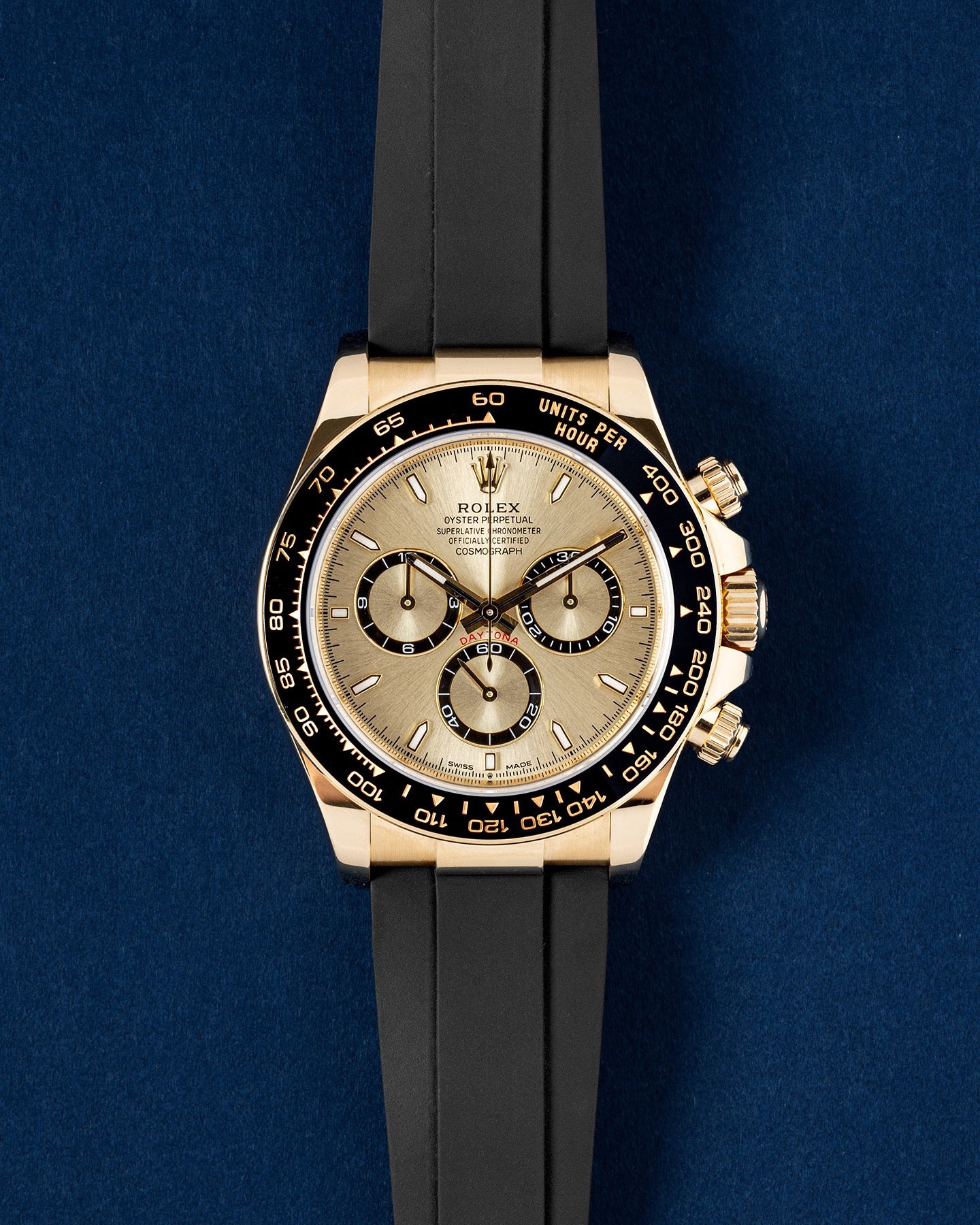
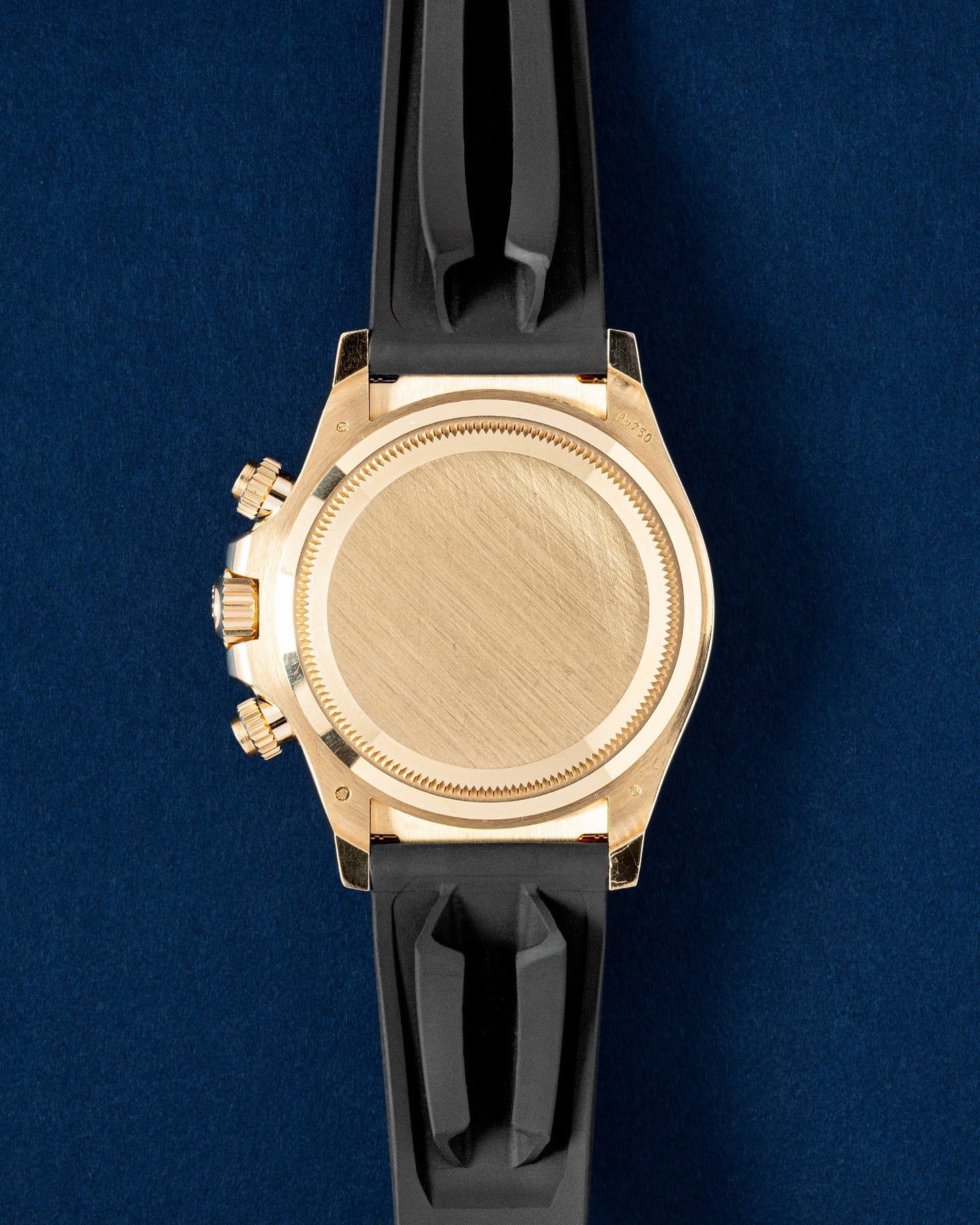
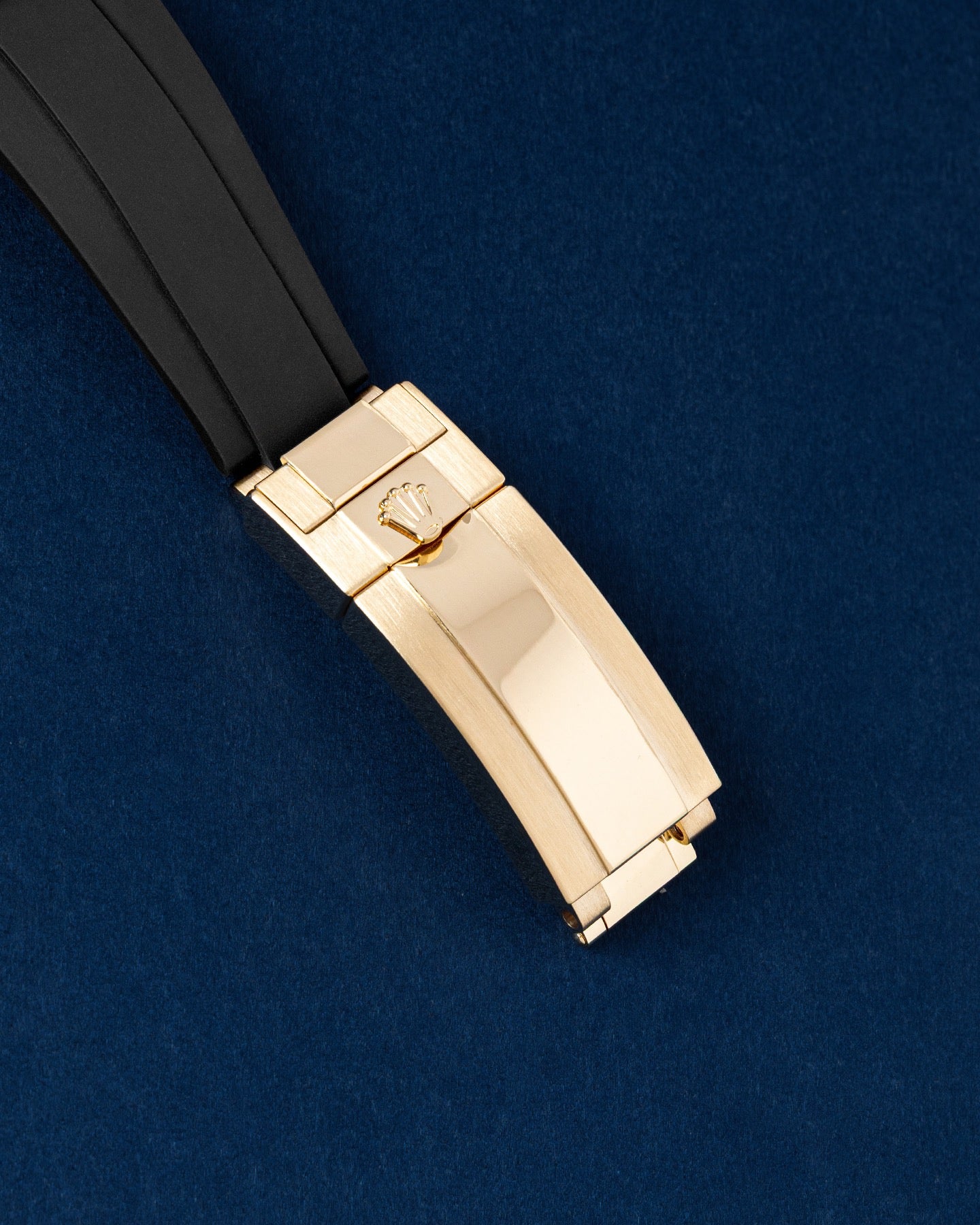
Understanding the massive demand for highly capable luxury sports watches on rubber straps, Rolex expanded the precious metal Daytona lineup in 2017 by introducing the Oysterflex bracelet. The Oysterflex is not a simple rubber strap. It is a highly engineered bracelet architecture featuring flexible titanium and nickel alloy blades completely over-molded with high-performance black elastomer. The underside features a patented longitudinal cushion system that stabilizes the heavy gold watch cases on the wrist while providing exceptional ventilation. Rolex paired the Oysterflex bracelet exclusively with the solid 18-karat yellow gold reference 116518LN, the white gold 116519LN, and the Everose gold 116515LN. These specific configurations, featuring the black Cerachrom bezels, offer a profoundly modern, highly stealthy approach to precious metal chronographs.
The Modern Generation and the 60th Anniversary Update
In 2023, exactly sixty years after the launch of the original 6239, Rolex executed a comprehensive, highly refined update across the entire Daytona catalogue. Rather than executing a radical redesign, the manufacture applied absolute microscopic refinement to the case, dial, and movement, proving their dedication to continuous, uninterrupted evolutionary improvement.
Rolex Daytona Reference 126500LN
The new steel reference 126500LN introduced several highly nuanced visual updates. The hour markers were significantly thinned down, providing a slightly more open, elegant dial aperture. The sub-dial rings were also narrowed, recalling the delicate proportions of the vintage manual wind references. The most noticeable exterior update occurred on the Cerachrom bezel. Rather than a solid block of ceramic overlapping the case, the new bezel is framed by a thin, highly polished band of stainless steel. This metal rim provides crucial impact protection for the edge of the ceramic insert while honoring the visual profile of the vintage acrylic bezels found on the reference 6263. The case lugs were also subtly reshaped, featuring slightly broader, more symmetrical shoulders that provide enhanced visual balance on the wrist.
The Caliber 4131 and the Chronergy Escapement
Beneath the updated dial, the 126500LN generation is powered by the completely new Caliber 4131. This movement takes the robust, highly proven architecture of the 4130 and integrates the latest advancements from the Rolex research laboratories. The most significant upgrade is the inclusion of the proprietary Chronergy escapement. Crafted from nickel-phosphorus, the Chronergy system is highly immune to magnetic interference and is fundamentally redesigned to be fifteen percent more efficient in its energy delivery than a traditional Swiss lever escapement. The Caliber 4131 also features refined aesthetic finishing, including a highly detailed Rolex Côtes de Genève decoration across the bridges, a finish previously unseen on Rolex professional sports models.
The Exhibition Caseback Platinum Reference 126506
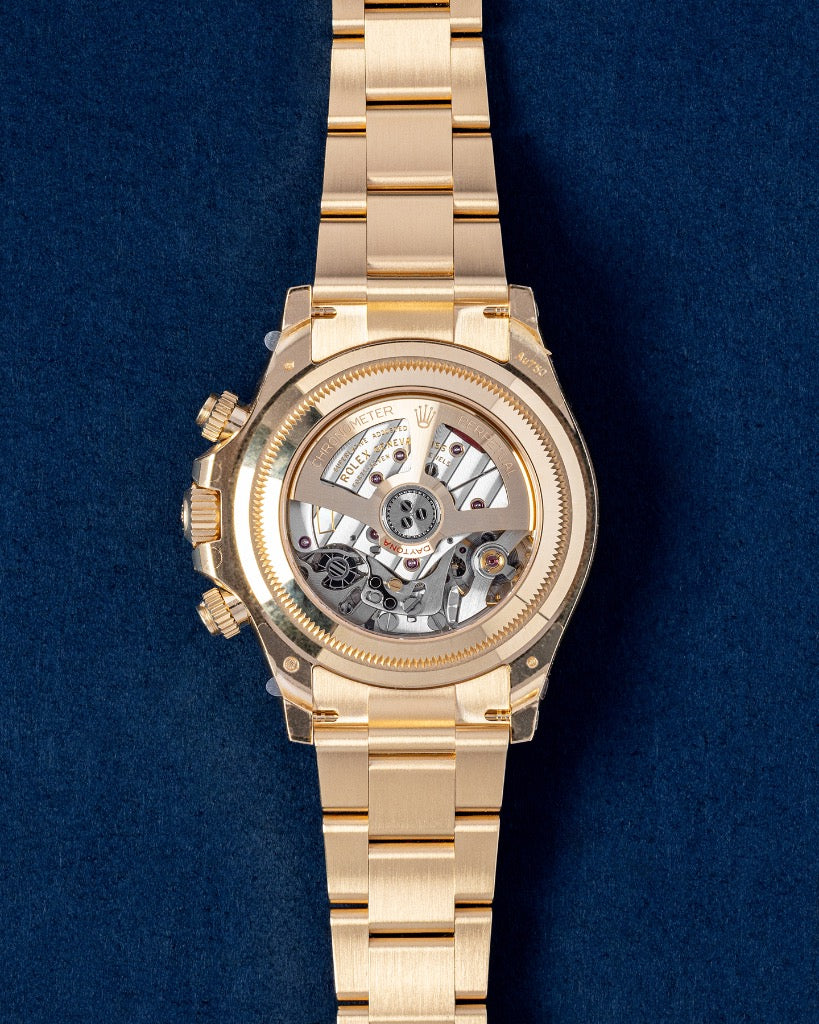
Historically, Rolex has strictly maintained the use of solid, impenetrable steel and gold casebacks across their entire professional Oyster collection. In 2023, they shattered this deeply entrenched tradition with the updated platinum Daytona reference 126506. For the very first time in the history of the sport collection, Rolex fitted the watch with a transparent sapphire exhibition caseback. This profound decision allows the owner to physically view the highly decorated Caliber 4131 beating inside. To elevate this specific model further, the winding rotor on the platinum 126506 is crafted entirely from solid 18-karat yellow gold. This singular model represents a massive shift in Rolex design philosophy and remains the absolute ultimate grail piece within the modern catalogue.
The Le Mans 100th Anniversary Reference 126529LN
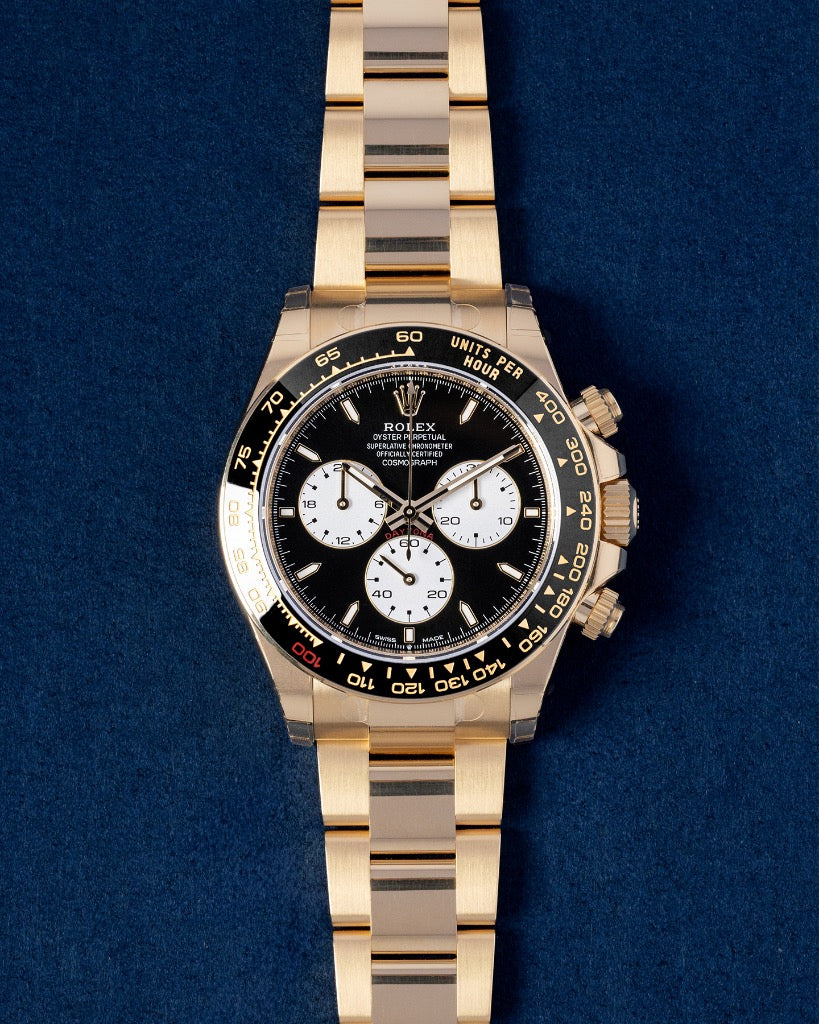
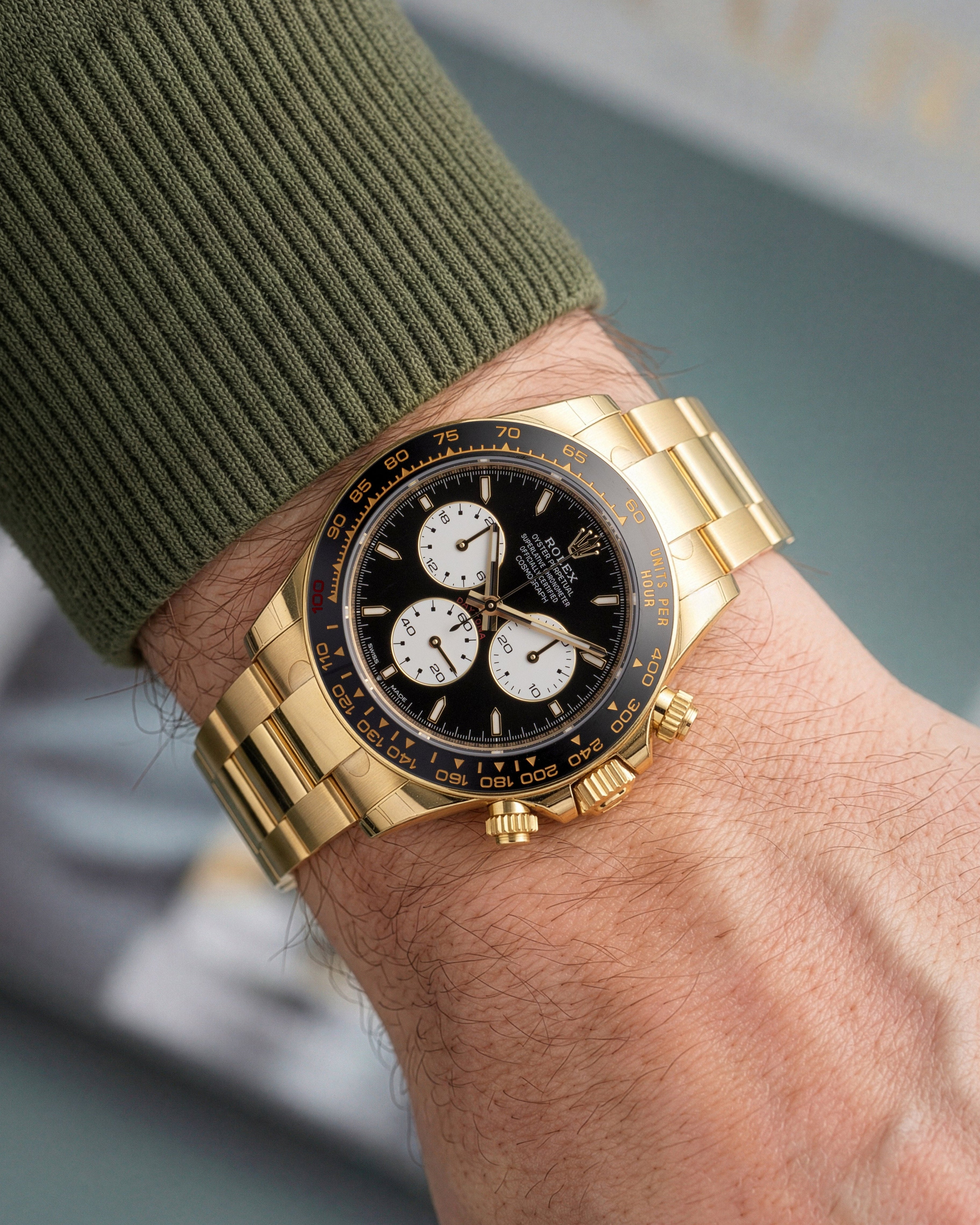
In an incredibly rare, highly unexpected release outside of the traditional Baselworld or Watches and Wonders schedules, Rolex introduced the reference 126529LN to commemorate the one hundredth anniversary of the legendary 24 Hours of Le Mans endurance race. Crafted entirely from solid 18-karat white gold, this specific Daytona features a distinct reverse panda dial specifically honoring the vintage Paul Newman aesthetic. The tachymeter scale on the black Cerachrom bezel features the number one hundred filled entirely in brilliant red ceramic.
The most profound alteration, however, occurred within the movement. Rolex modified the Caliber 4131 into the highly specific Caliber 4132. While a standard Daytona features a twelve-hour chronograph register, the Le Mans edition replaces it with a highly specialized twenty-four-hour register, perfectly mirroring the duration of the historic endurance race. The reference 126529LN was produced for less than a single calendar year before being abruptly discontinued, instantly transforming it into one of the most incredibly rare and massively collectible modern Rolex Daytona references ever produced by the manufacture.
The Rolex Daytona Pricing, Secondary Market, and the AD Reality
The Rolex Daytona is the absolute most liquid, highly transacted mechanical chronograph in the world. The depth of the secondary market for this specific model is entirely unmatched by any other watch produced by any other brand. A serviced, authenticated Rolex Daytona accompanied by its original box and papers can move across a dealer desk in a matter of hours. The sheer global recognition of the Daytona provides an absolute, unshakeable floor for its market presence.
The structural reality of the Rolex authorized dealer network completely dictates the dynamics of the Rolex Daytona secondary market. Rolex operates incredibly strict allocation policies for their professional steel sports models. The demand for the steel reference 126500LN outpaces global supply by staggering, exponential margins. An unestablished client walking into an authorized dealer asking to purchase a steel Daytona will simply not receive one. The allocation of these incredibly rare pieces is strictly reserved for clients with massive, multi-million dollar purchase histories at that specific retail location. The watch the authorized dealer refuses to sell you today is the exact watch the secondary market exists to provide immediately.
Purchasing pre-owned Rolex Daytona watches allows collectors to vastly maximize their purchasing power while completely bypassing the frustrating allocation games. The secondary market accurately reflects the true horological merit and intense historical significance of these instruments. Current production steel references, the highly demanded two-tone Yellow Rolesor models, and the spectacular Oysterflex precious metal configurations are all available to the educated buyer. Discontinued references such as the foundational 116520 and the incredibly important Zenith 16520 offer profound value propositions for collectors who recognize the importance of early automatic production. Vintage manual wind references operate in an entirely different stratosphere, with verified Paul Newman variants, Big Red 6263s, and pristine floating dial models representing the absolute peak of serious, museum-grade horological collecting.
The Rolex Daytona at Grand Caliber in Uptown Dallas
Grand Caliber sits in Uptown Dallas at 2811 McKinney Avenue, operating directly in the corridor that has become the definitive address for serious luxury watch buying outside the constrained authorized dealer network. The watches displayed on our floor are rigorously authenticated entirely in-house by our named specialist staff, the prices are posted completely openly, and the Rolex Daytona inventory rotates actively across the full historical breadth of the catalogue. We source the current production reference 126500LN in both white and black dial variants, the highly versatile two-tone 126503, the solid Everose gold 126505, and the highly tactical Oysterflex models in white and yellow gold. Our inventory frequently includes the massive heavyweights of the discontinued market, from the seminal Zenith Daytona 16520 and the transitional 116520 to the globally demanded ceramic 116500LN.
There is absolutely no allocation conversation at Grand Caliber. We require zero purchase history, and there are absolutely no waitlists for the steel ceramic Daytona models the authorized dealers cannot deliver this year or next. If the specific Rolex Daytona you are hunting for is sitting in our display case, it is entirely yours to purchase today. If it is not currently on hand, our profound global sourcing network covers the major secondary markets across the United States and internationally, allowing us to rapidly locate a highly verified, perfectly documented example within days for clients who demand absolute precision.
We also buy Rolex Daytona chronographs outright and aggressively take high-tier consignments, providing free, fully insured overnight shipping on all outbound and inbound transit, ensuring complete national coverage for clients buying remotely. The Rolex Daytona is the most highly liquid chronograph on the secondary market, and establishing the right dealer relationship makes selling, trading, or upgrading your collection entirely frictionless when you decide to transition your portfolio.
Visit the showroom Monday through Friday, 10am to 5pm Central, or by appointment on Saturday. Call 214-225-7198, email info@grandcaliber.com, or browse the current verified Rolex Daytona inventory at grandcaliber.com.
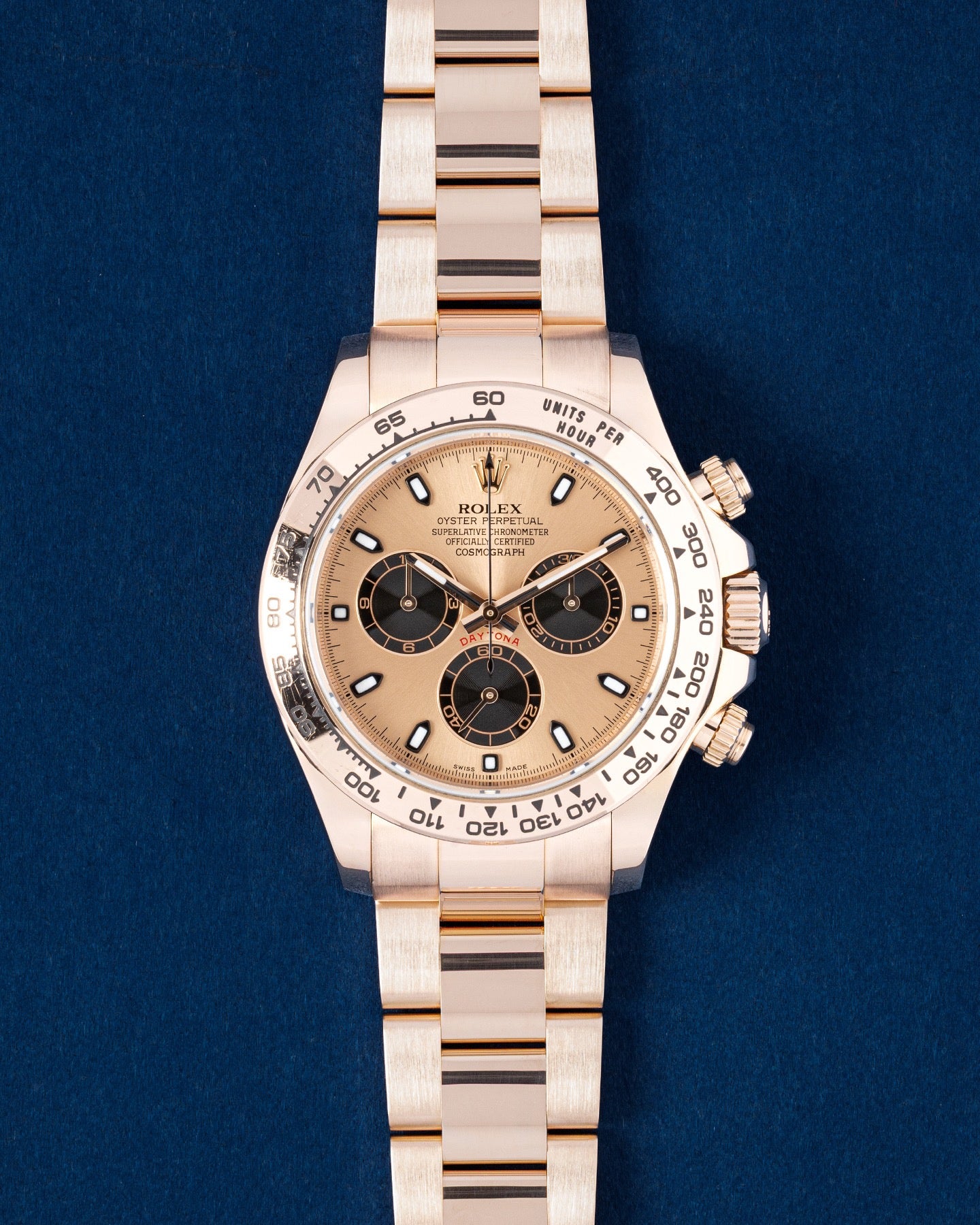
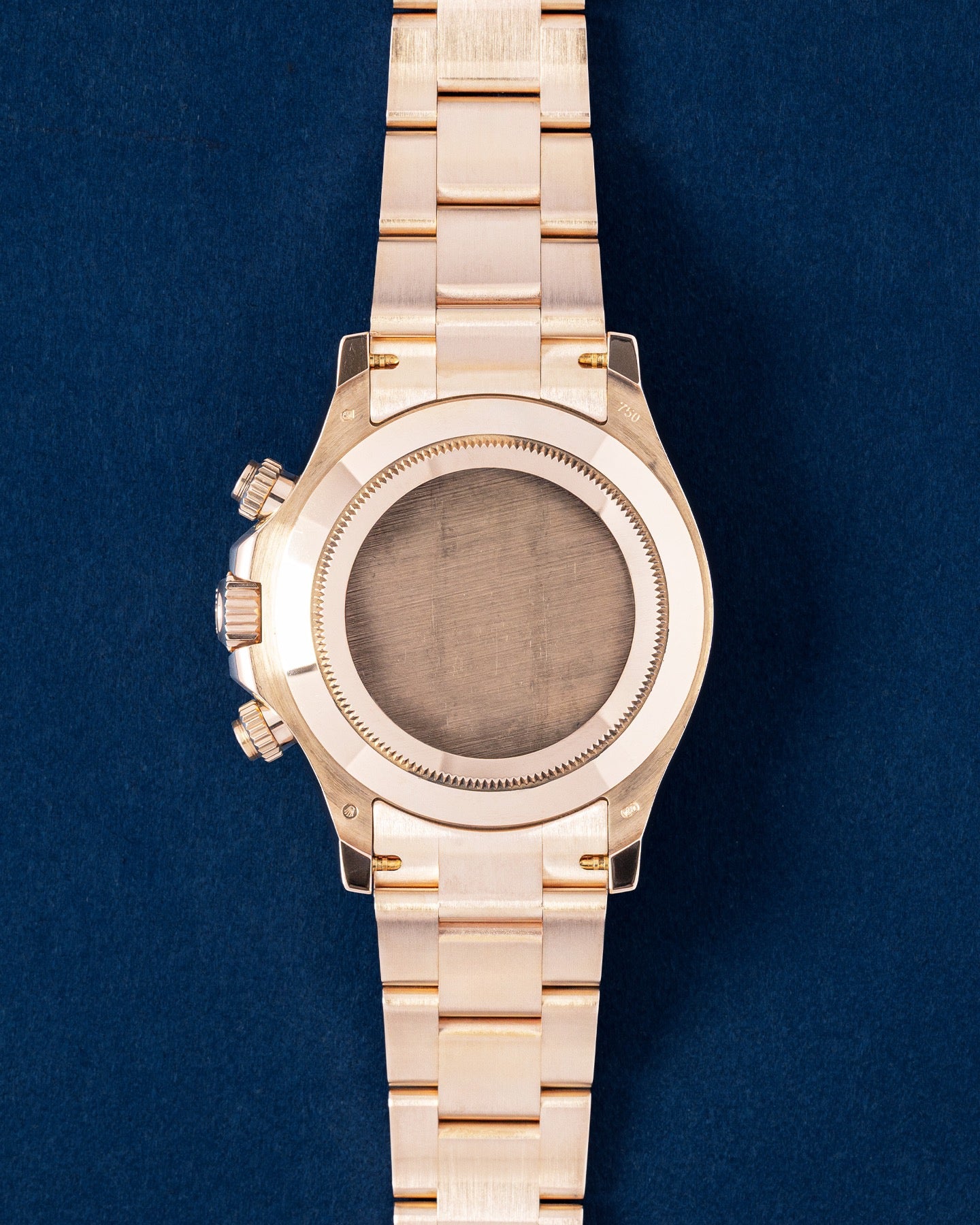
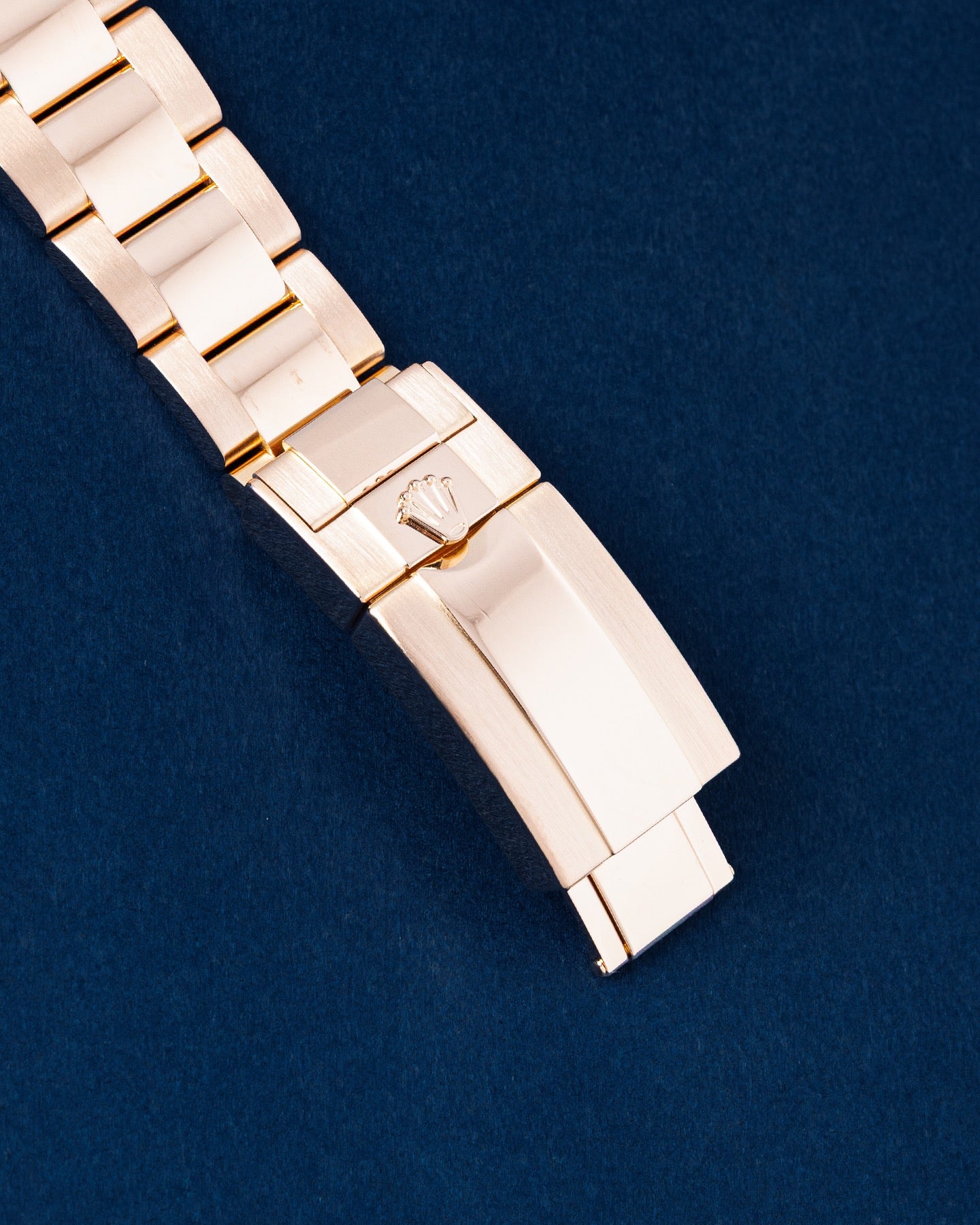
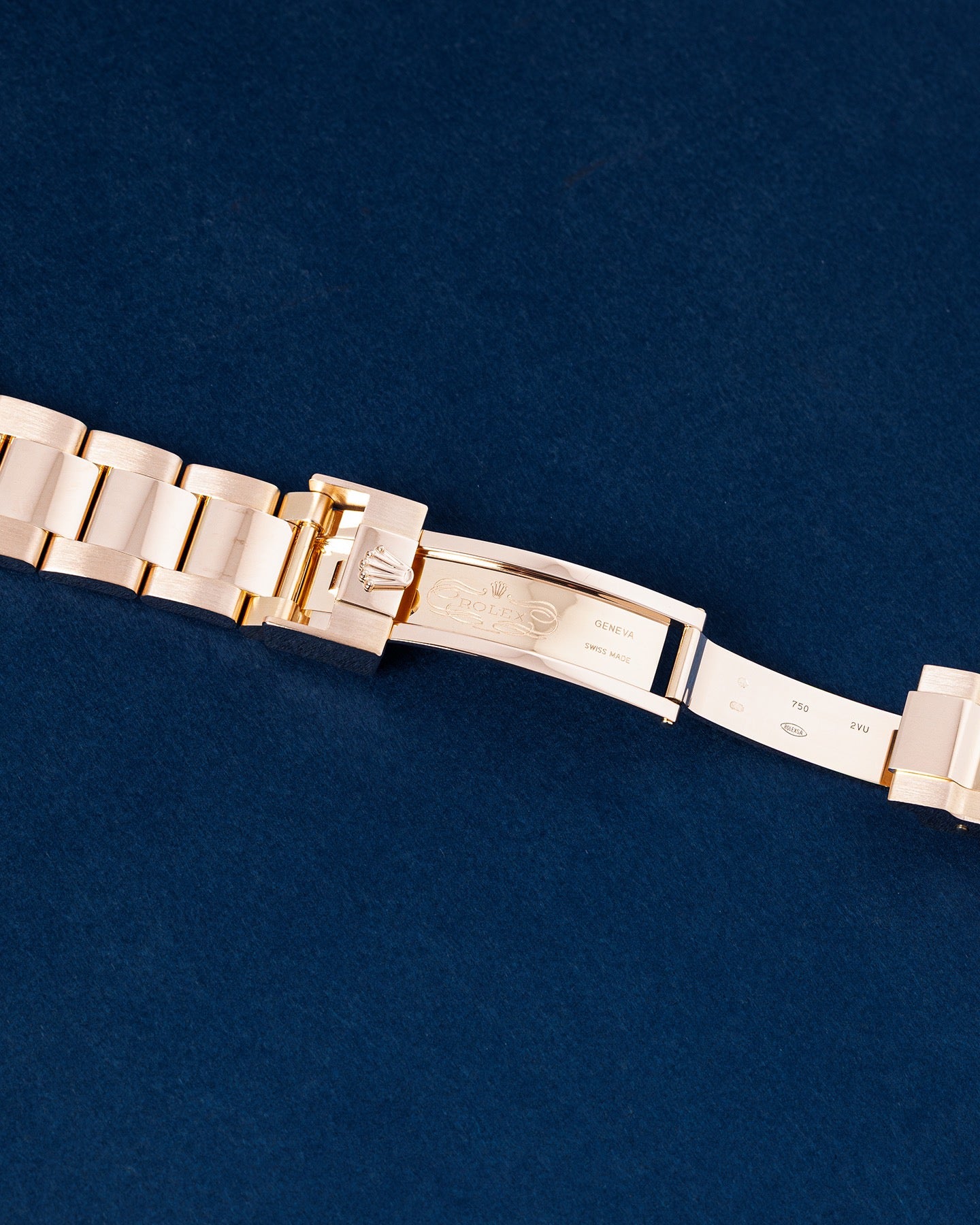
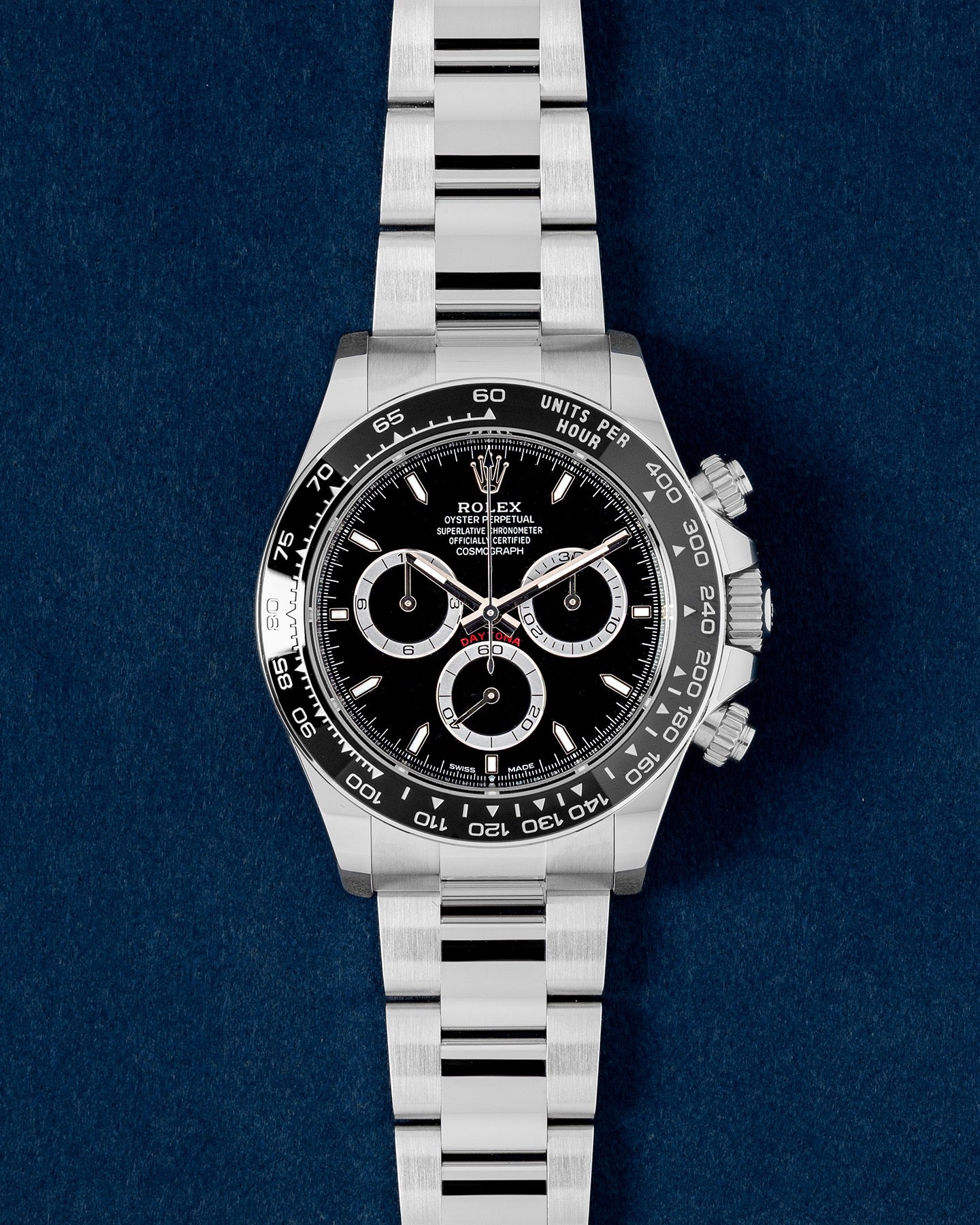
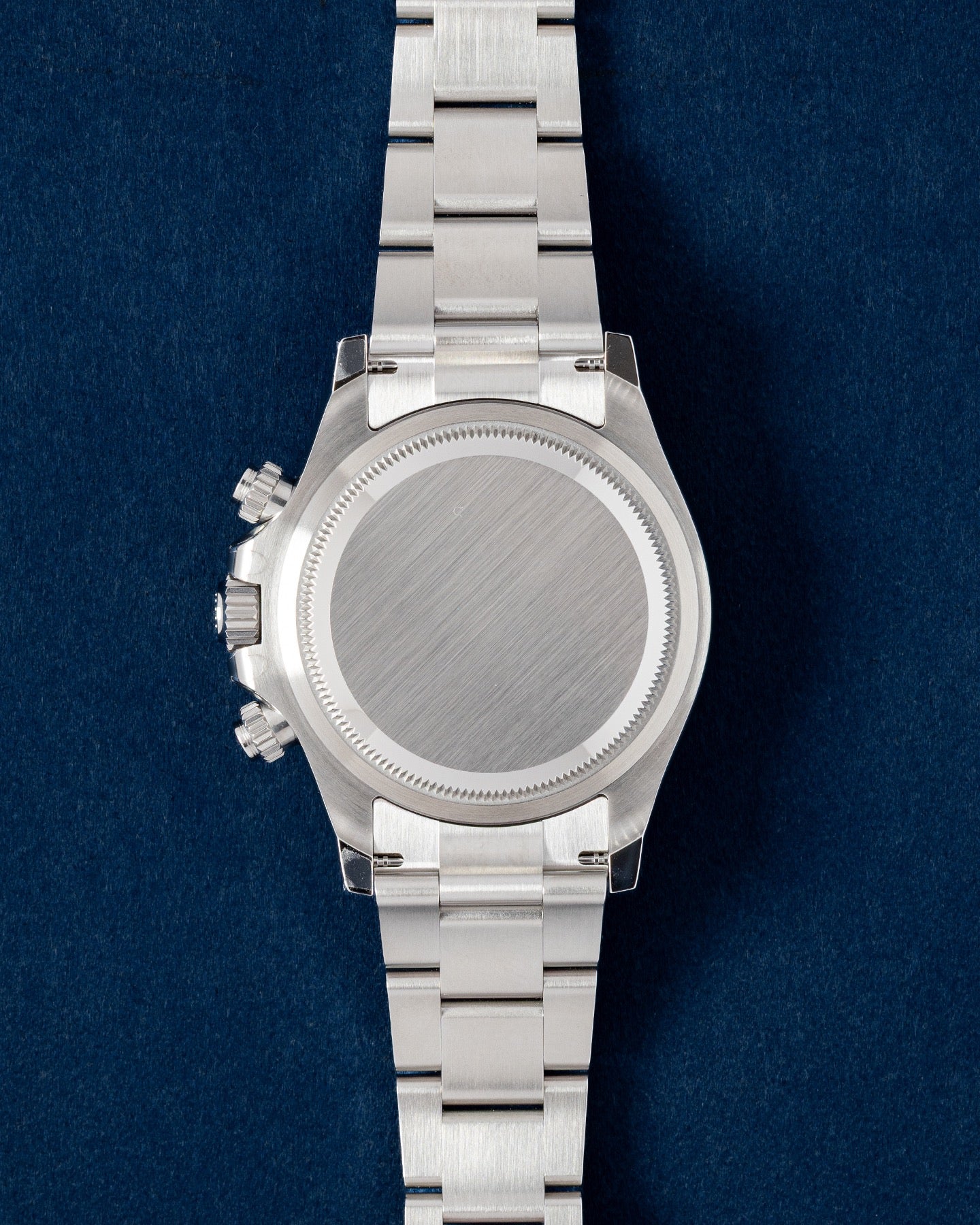
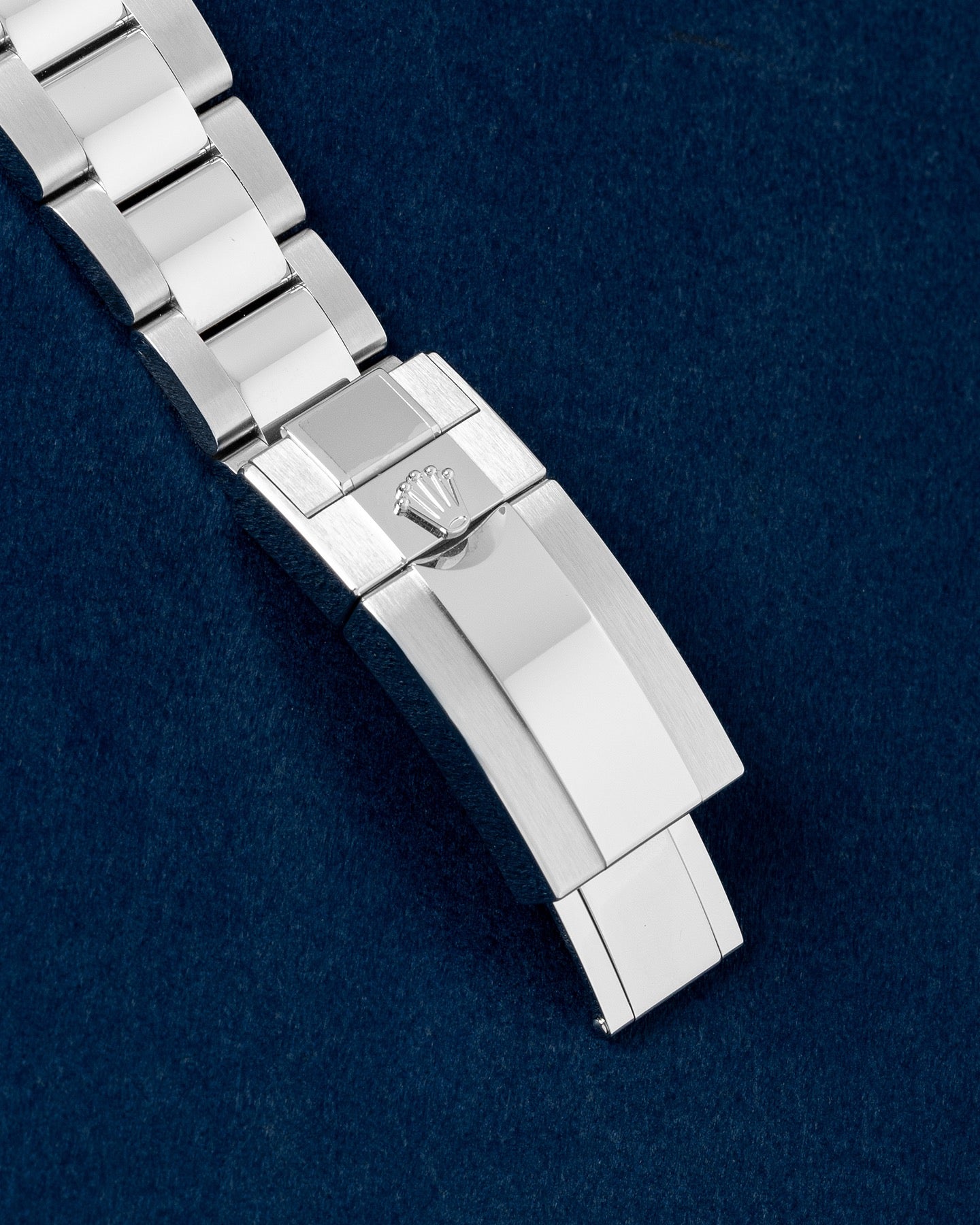
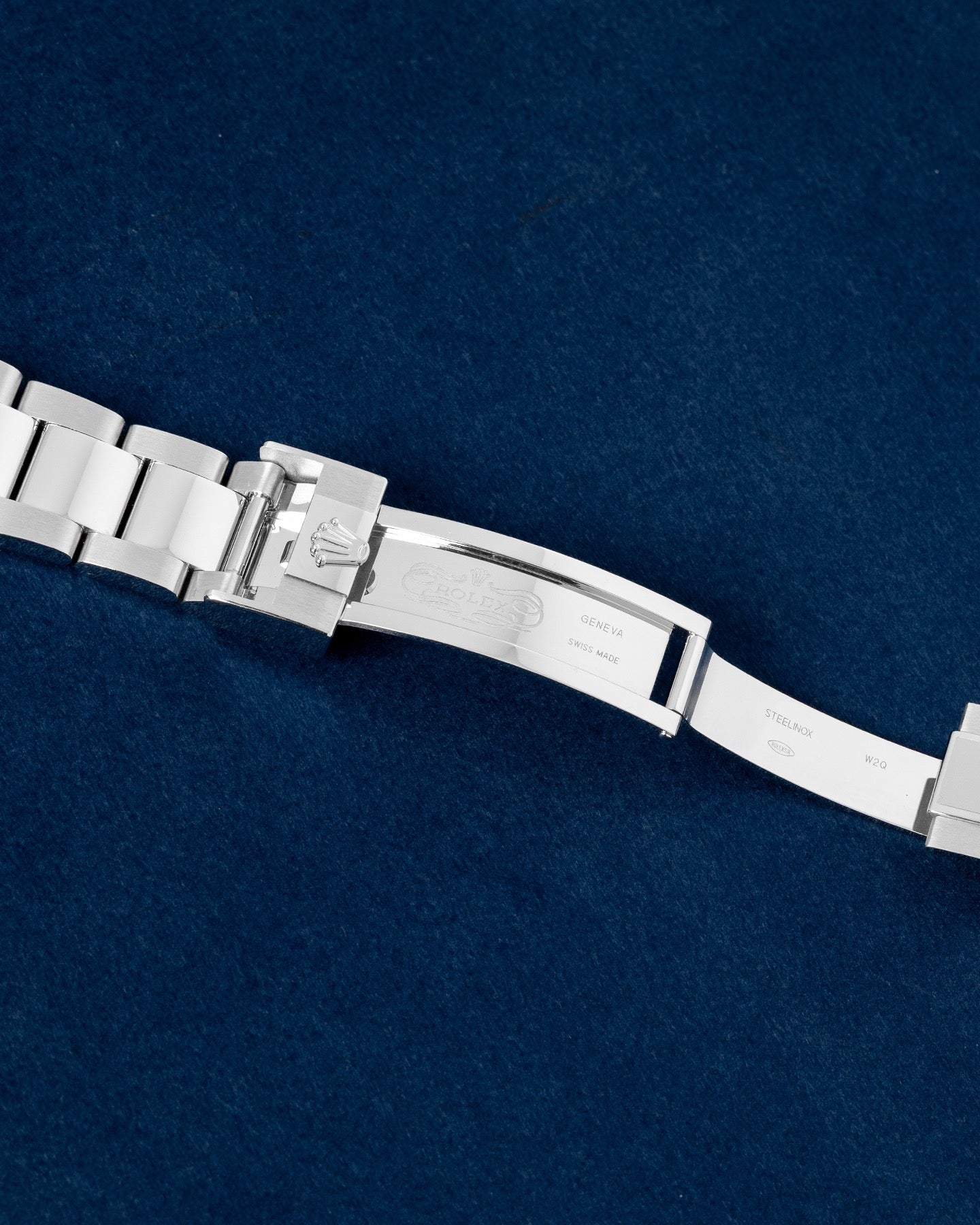
Rolex Cosmograph Daytona 126500LN
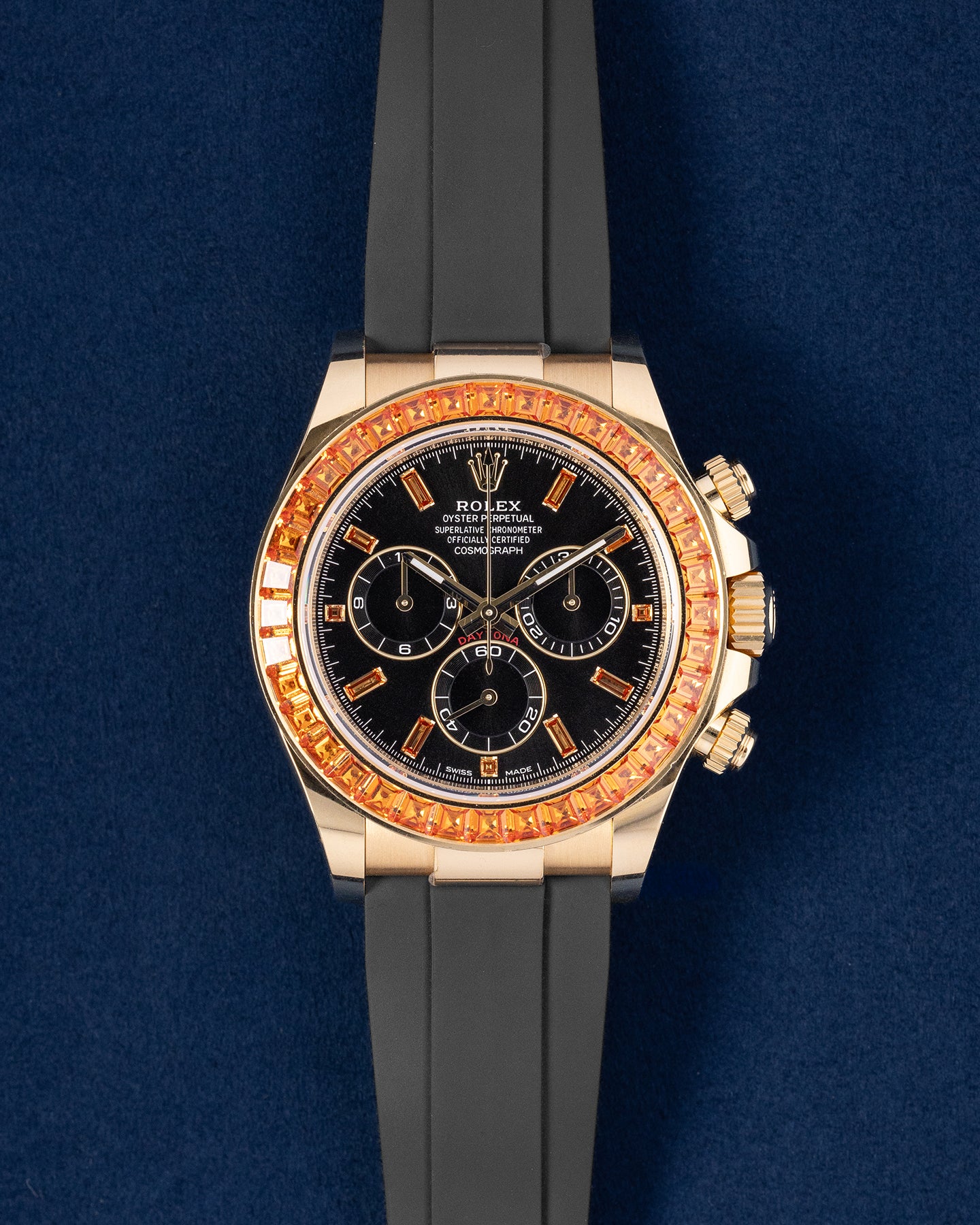
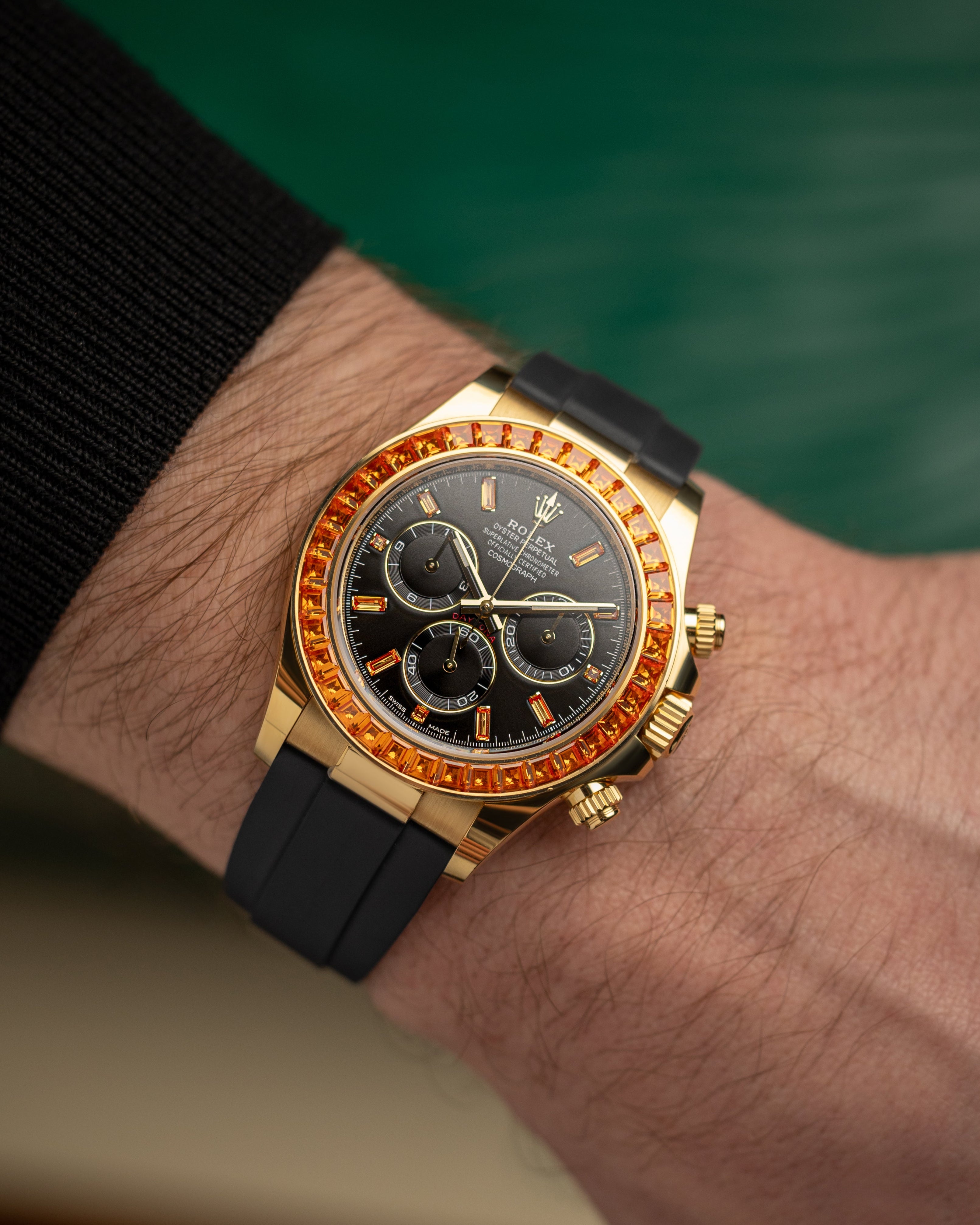
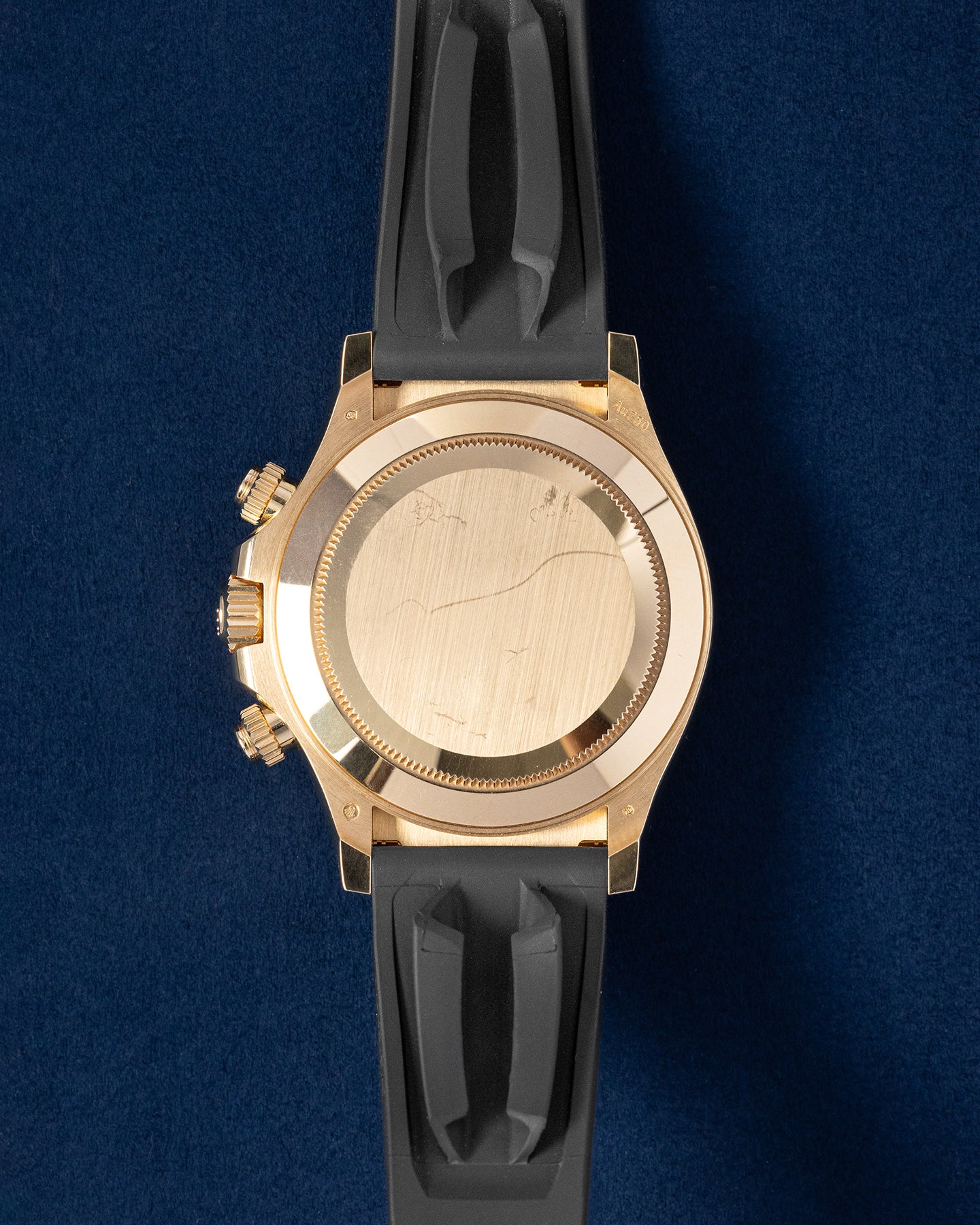
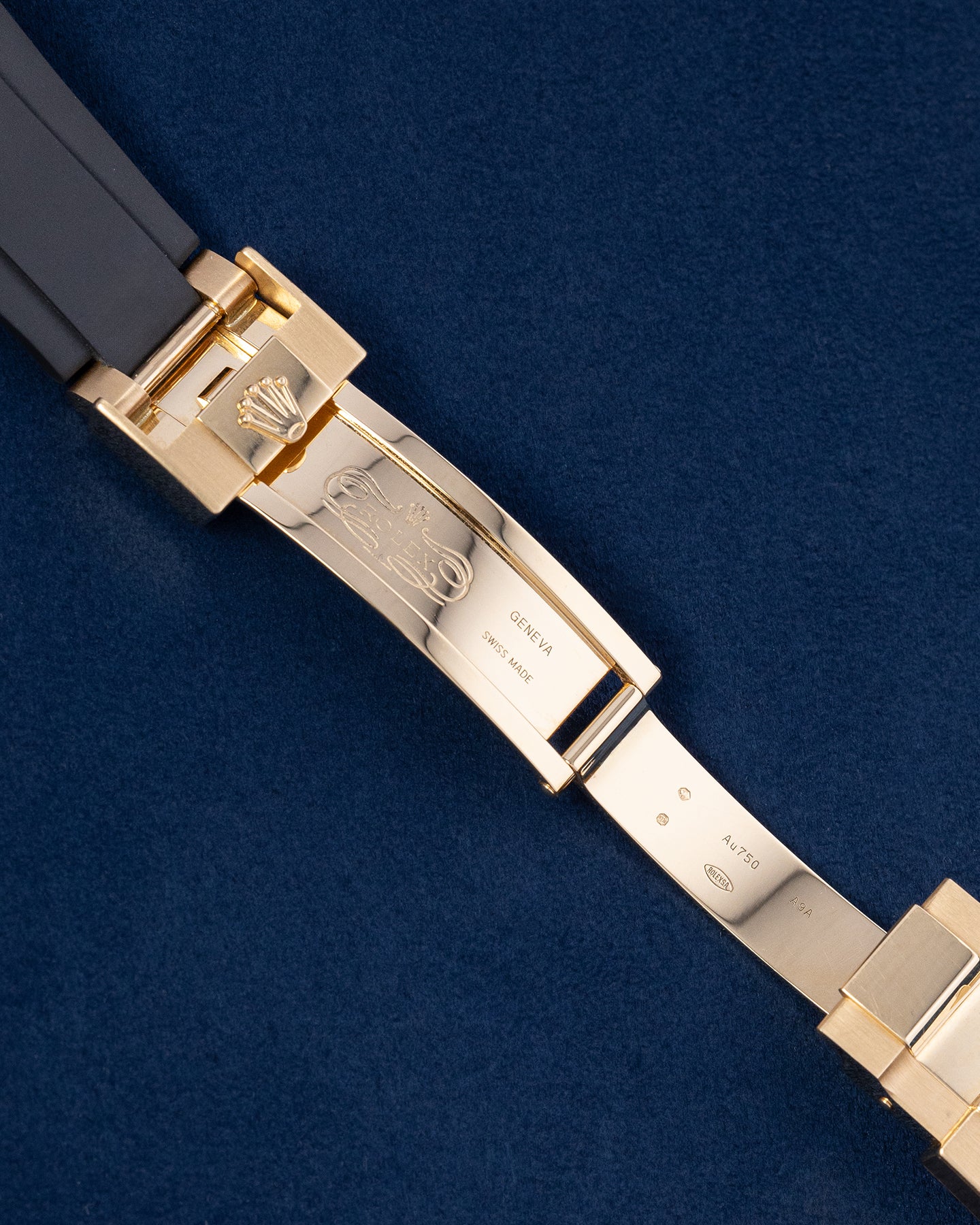
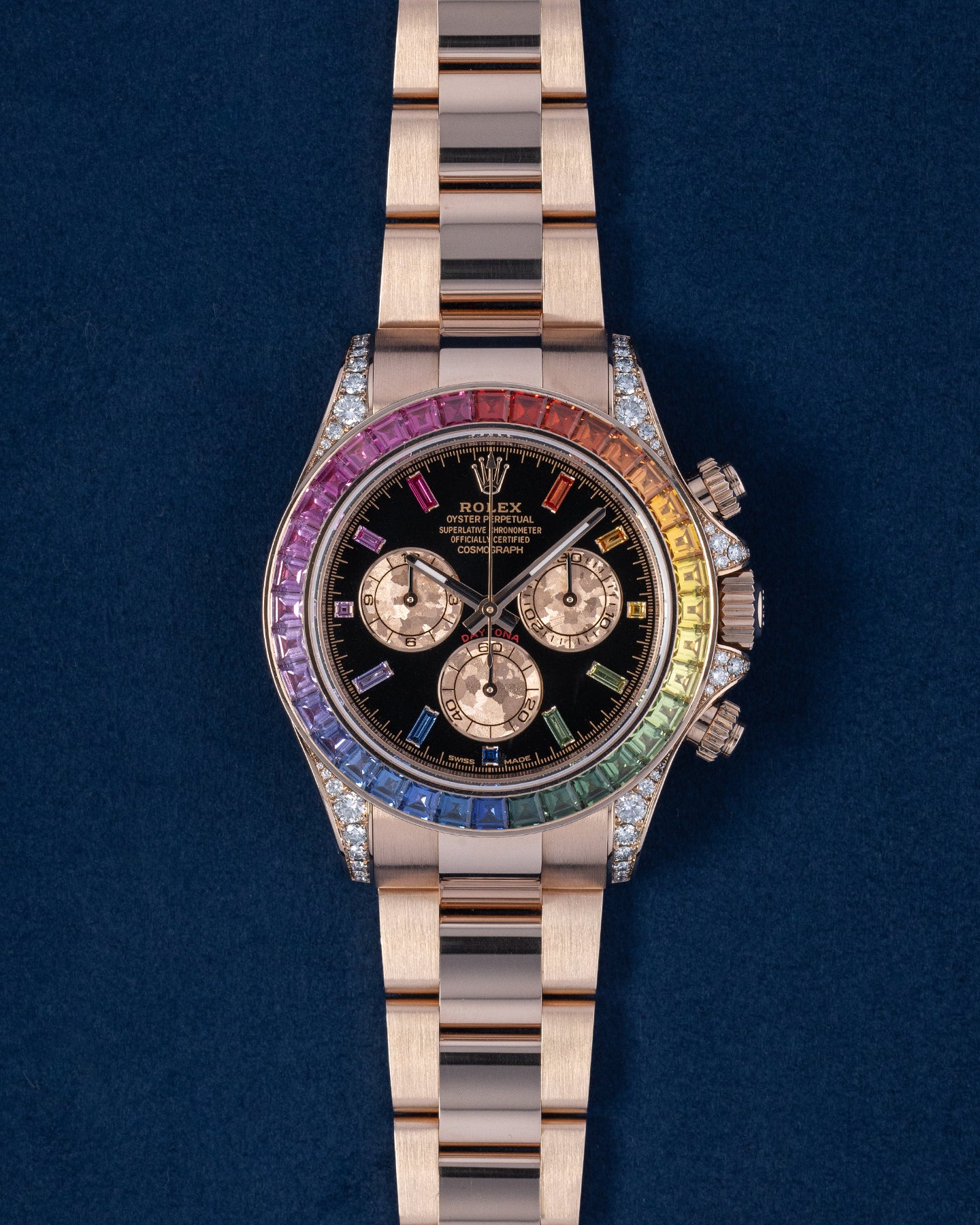
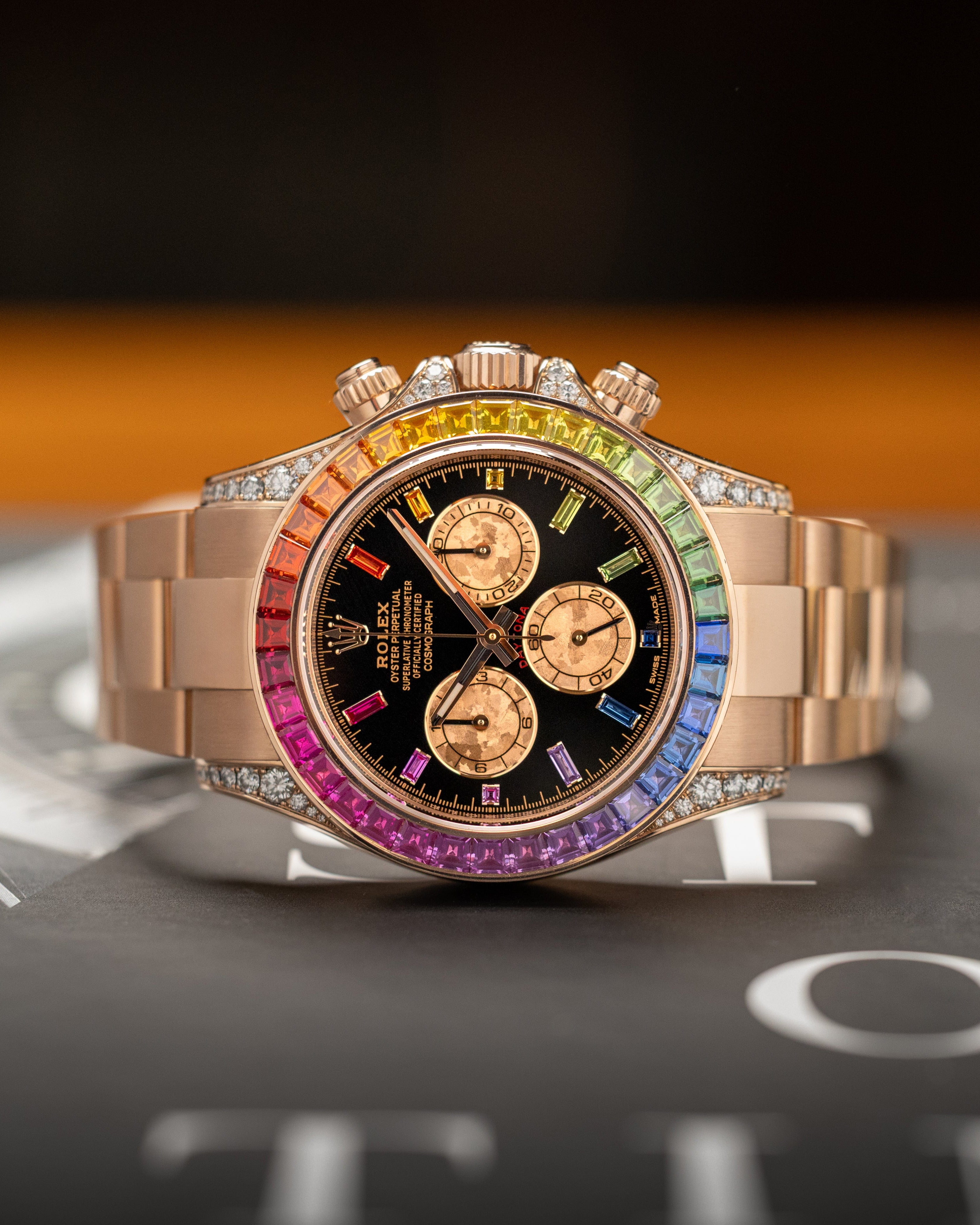
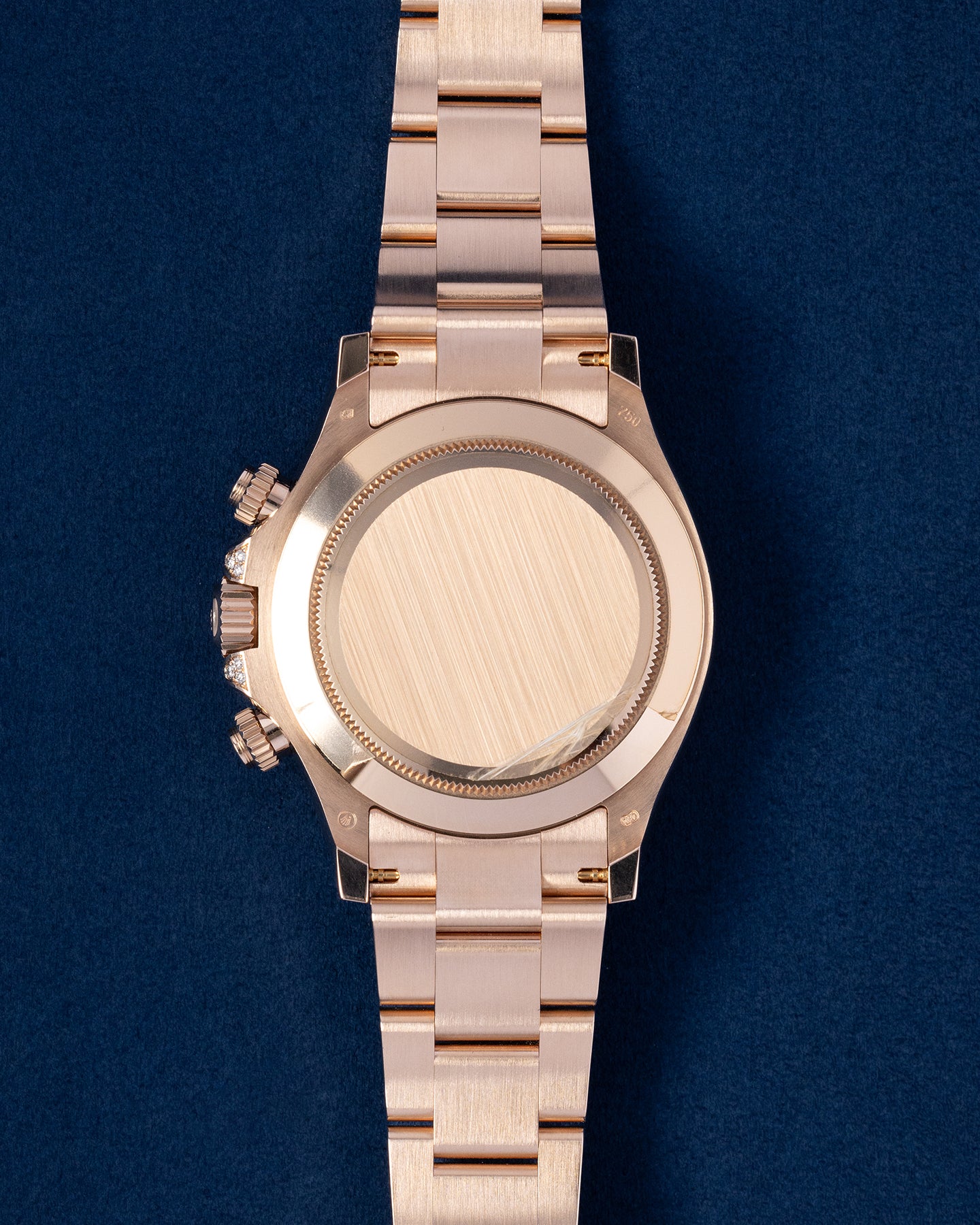
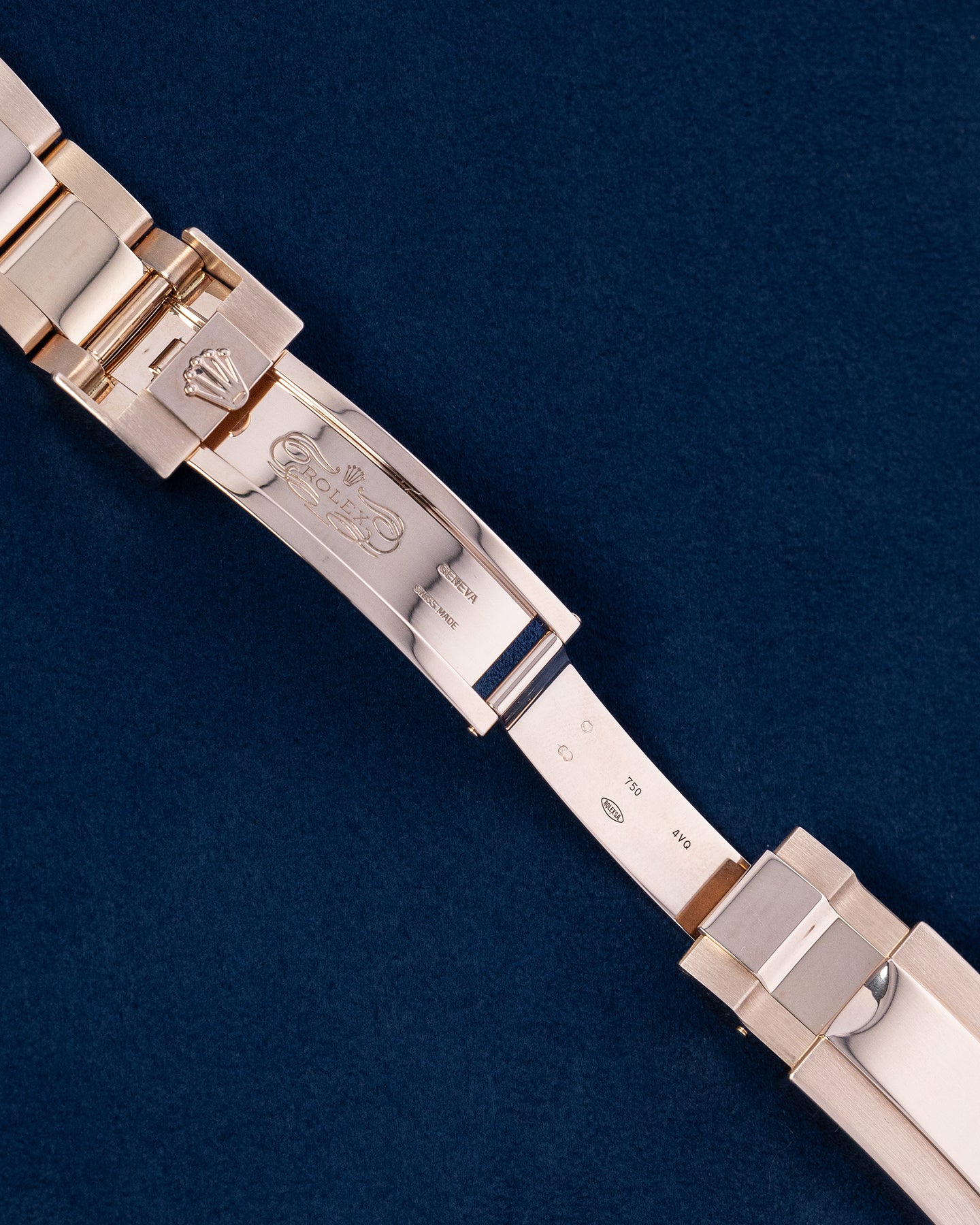
Rolex Daytona 116595RBOW "Rainbow"