

TAG Heuer Watches
From the pit lane to the wrist, TAG Heuer has defined performance-driven timekeeping for over 160 years. With designs rooted in motorsport culture, the brand’s chronographs and automatic watches are both rugged and refined. Grand Caliber proudly offers a wide range of new & preowned TAG Heuer models, built for the track but styled for every day.
TAG Heuer Watches at Grand Caliber
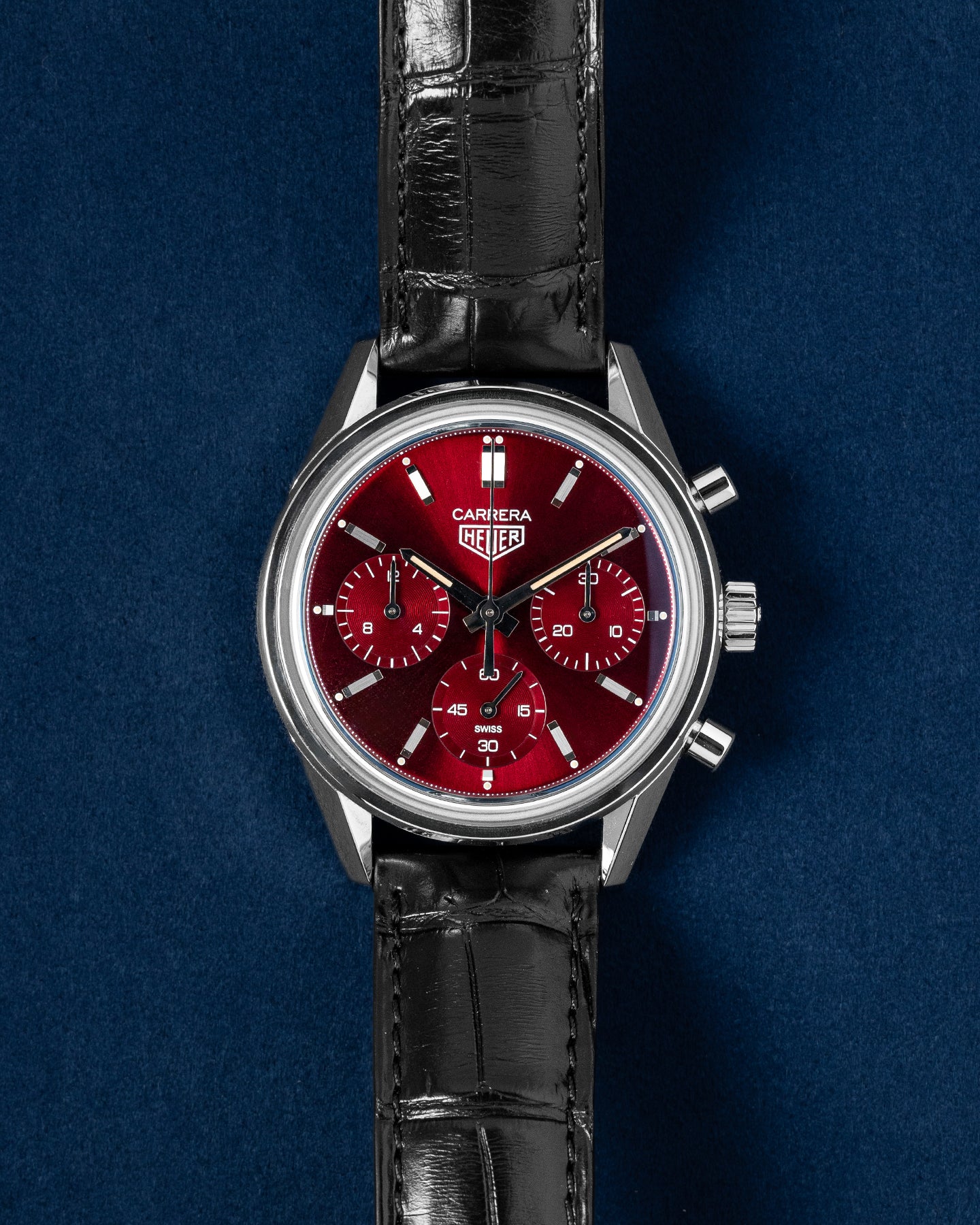
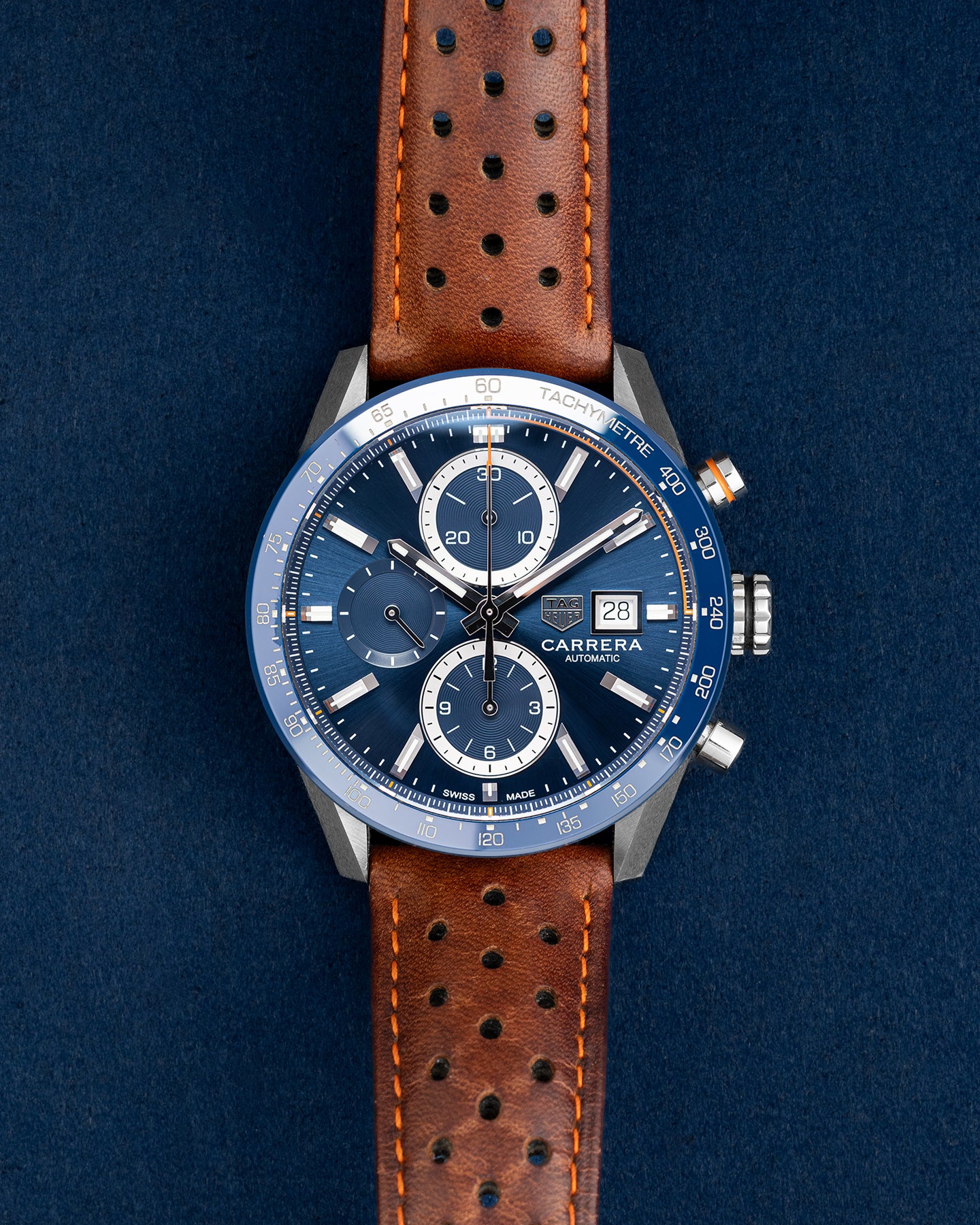
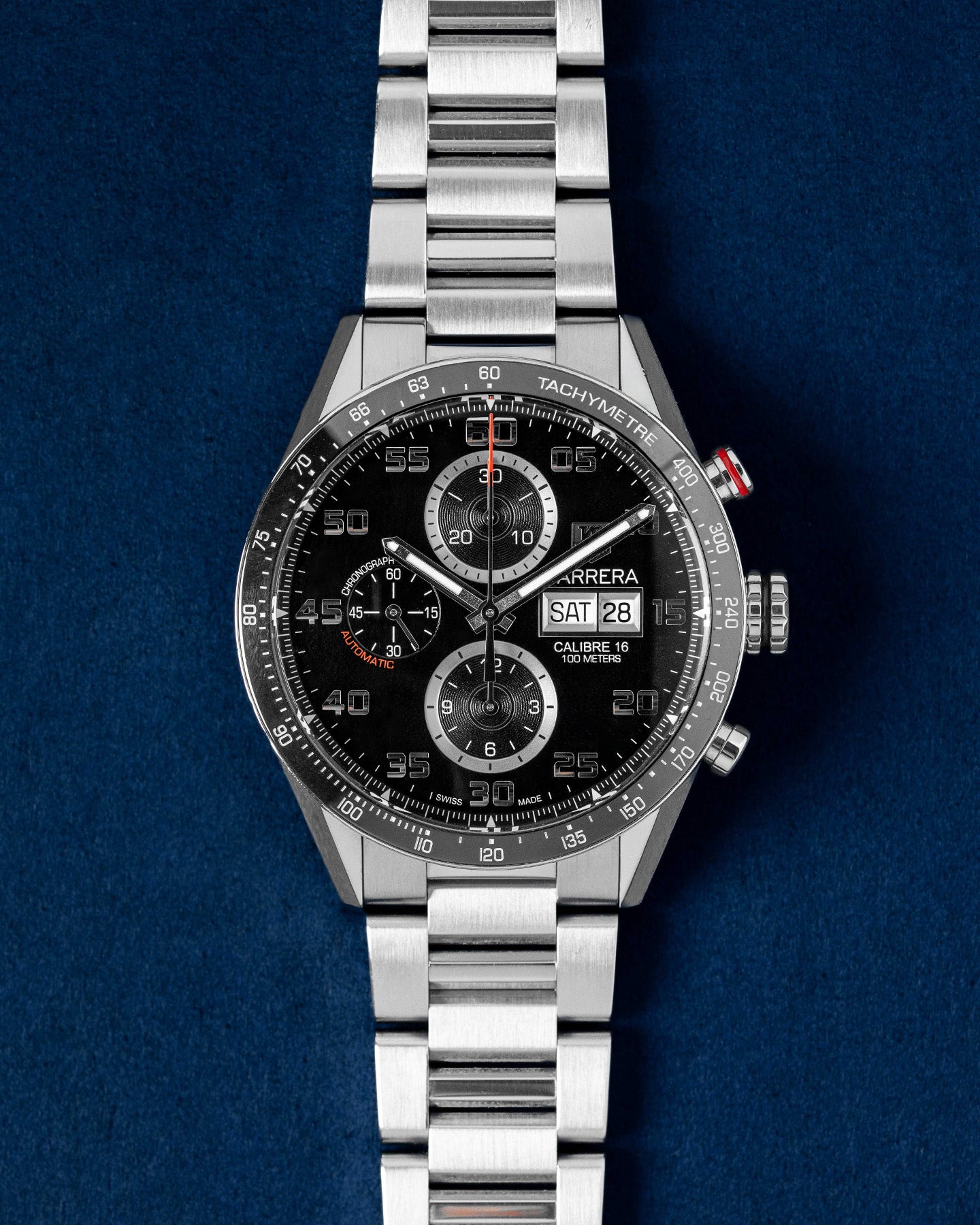
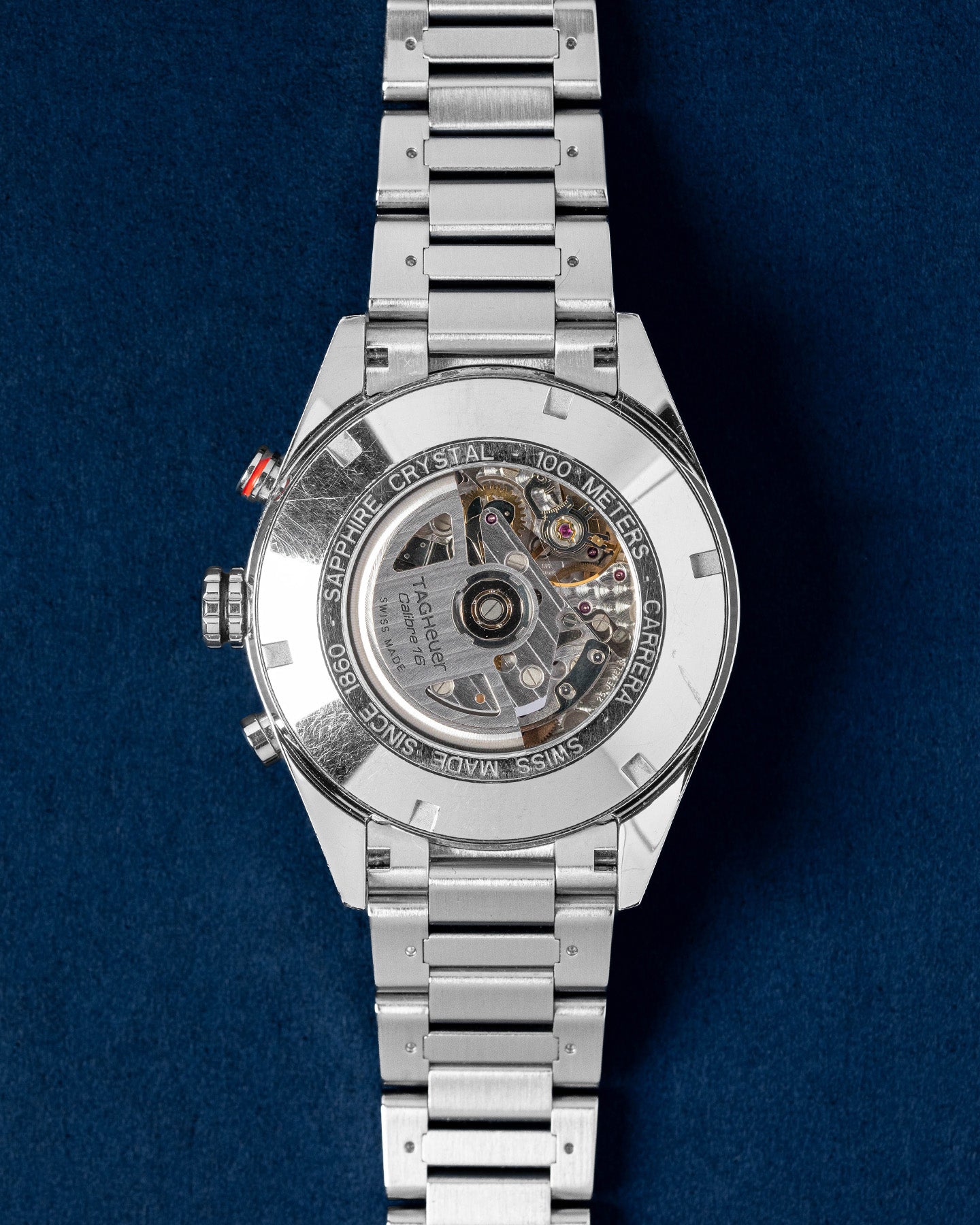
TAG Heuer watches represent a profound intersection where avant garde Swiss horology meets the adrenaline fueled world of professional motorsports. Since the middle of the nineteenth century, this historic manufacture has dedicated its engineering prowess to the pursuit of absolute precision, specifically focusing on the mastery of the chronograph complication. While many traditional watchmakers focus on static elegance, TAG Heuer watches are dynamic instruments designed to measure split second intervals on the racetrack, survive the intense pressures of deep sea diving, and provide profound aerodynamic performance for aviators. The brand pioneered technologies that completely redefined modern timekeeping, from the oscillating pinion to the first automatic chronographs. Today, TAG Heuer appeals to the serious collector who demands a timepiece with rich automotive heritage, recognizable architectural silhouettes, and deeply capable in house movements. Grand Caliber serves as a premier destination for acquiring highly vetted TAG Heuer watches on the secondary market. Because our dynamic inventory fluctuates daily, we curate a rotating selection that frequently includes the iconic Carrera chronographs, the square cased Monaco, the professional Aquaracer dive instruments, and the vintage inspired Autavia models. Every timepiece is authenticated in house, priced with absolute transparency to reflect true secondary market reality, and prepared for immediate delivery to collectors nationwide.
The Historical Foundations of TAG Heuer Watches
The profound legacy of TAG Heuer watches does not begin on a modern racetrack, but rather in the remote, snow covered mountains of the Swiss Jura. The brand was established long before the invention of the automobile, yet the founder possessed an intrinsic obsession with the measurement of brief intervals of time, laying groundwork for the ultimate sporting watch brand.
Edouard Heuer and the Origins of TAG Heuer Watches
In 1860, a highly ambitious twenty year old watchmaker named Edouard Heuer founded his own workshop in the small municipality of Saint Imier, Switzerland. Operating under the name Uhrenmanufaktur Heuer, the young visionary recognized early on that the future of horology lay in precision sports timing. During this era, sporting events were becoming increasingly formalized across Europe and the Americas, creating a substantial demand for pocket watches that could accurately record racing times. Edouard Heuer focused the entirety of his early manufacturing capabilities on producing highly reliable, accurate pocket chronographs, establishing a specialized identity for Heuer watches that would echo throughout the ensuing centuries.
The Invention of the Oscillating Pinion for TAG Heuer
The most significant early mechanical breakthrough for the brand occurred in 1887. Before this date, activating the stopwatch function on a mechanical chronograph required a highly complex, fragile system of gears that often resulted in a rough, jerky start to the sweeping seconds hand. Edouard Heuer revolutionized this mechanism by inventing and patenting the oscillating pinion. This brilliant component consists of a movable shaft with two distinct sets of gear teeth. It acts as a highly efficient clutch, instantly connecting and disconnecting the primary timekeeping gear train from the chronograph mechanism. The oscillating pinion provided a buttery smooth, instantaneous start to the timing function, drastically improving the accuracy of the chronograph. This invention was so profoundly brilliant that it remains a fundamental component in the vast majority of high end mechanical chronographs produced by the Swiss watch industry today, cementing the mechanical credibility of early TAG Heuer watches.
The Quest for Precision in Early TAG Heuer Watches
Following the success of the oscillating pinion, the descendants of Edouard Heuer continued to push the boundaries of mechanical precision. As the twentieth century commenced, the world demanded timing instruments capable of recording increasingly minuscule fractions of a second for scientific, industrial, and athletic applications.
Early TAG Heuer Time of Trip Dashboard Instruments
Recognizing the rapid advancement of the transportation industry, the company patented the Time of Trip in 1911. This was the first twelve hour dashboard chronograph explicitly designed for automobiles and aircraft. Mounted directly to the dashboard, it allowed pilots and drivers to easily read the time of day alongside the exact duration of their journey. This instrument officially established the deep, enduring connection between TAG Heuer watches and the global automotive industry.
TAG Heuer Watches and the Mikrograph
In 1916, Charles Auguste Heuer, the son of the founder, directed his watchmakers to create a stopwatch capable of measuring one hundredth of a second. At the time, standard stopwatches could only measure down to one fifth of a second. The resulting instrument, named the Mikrograph, was an absolute marvel of micro engineering. To achieve this unprecedented level of precision, the mechanical balance wheel had to oscillate at a staggering three hundred and sixty thousand vibrations per hour, which equates to fifty hertz. The sweeping seconds hand flew around the entire dial once every three seconds. The profound accuracy of the Mikrograph led directly to Heuer being selected as the official timekeeper for three consecutive Olympic Games in the 1920s, ensuring that TAG Heuer watches possess an authentic lineage of Olympic level sports timing.
TAG Heuer Autavia Dashboard Instruments
As the automobile and aviation industries rapidly expanded in the 1930s, Heuer recognized the need for specialized instruments that could be mounted directly onto a dashboard to withstand severe turbulence. In 1933, the brand introduced the Autavia. The name was a brilliant combination of the words Automobile and Aviation. The Autavia was a twelve hour stopwatch mounted securely to a metal baseplate, designed to withstand the intense vibrations of early racing cars and aircraft cockpits. It was frequently paired with the Hervue, a companion clock featuring a remarkable eight day power reserve. These dashboard timers were utilized by the most prominent rally drivers and pilots of the era, firmly embedding the Heuer name into the global culture of high speed endurance racing.
Jack Heuer and the Golden Era of TAG Heuer Watches
The golden era of TAG Heuer watches is universally attributed to the visionary leadership of Jack Heuer, the great grandson of the founder. Jack Heuer officially took control of the company in 1962. Unlike traditional Swiss watch executives who remained secluded in their Geneva or Jura workshops, Jack Heuer was deeply embedded in the glamorous, highly dangerous world of international motorsports. He understood that professional racing drivers needed specialized wrist instruments that offered absolute legibility at high speeds.
The TAG Heuer Carrera Heritage
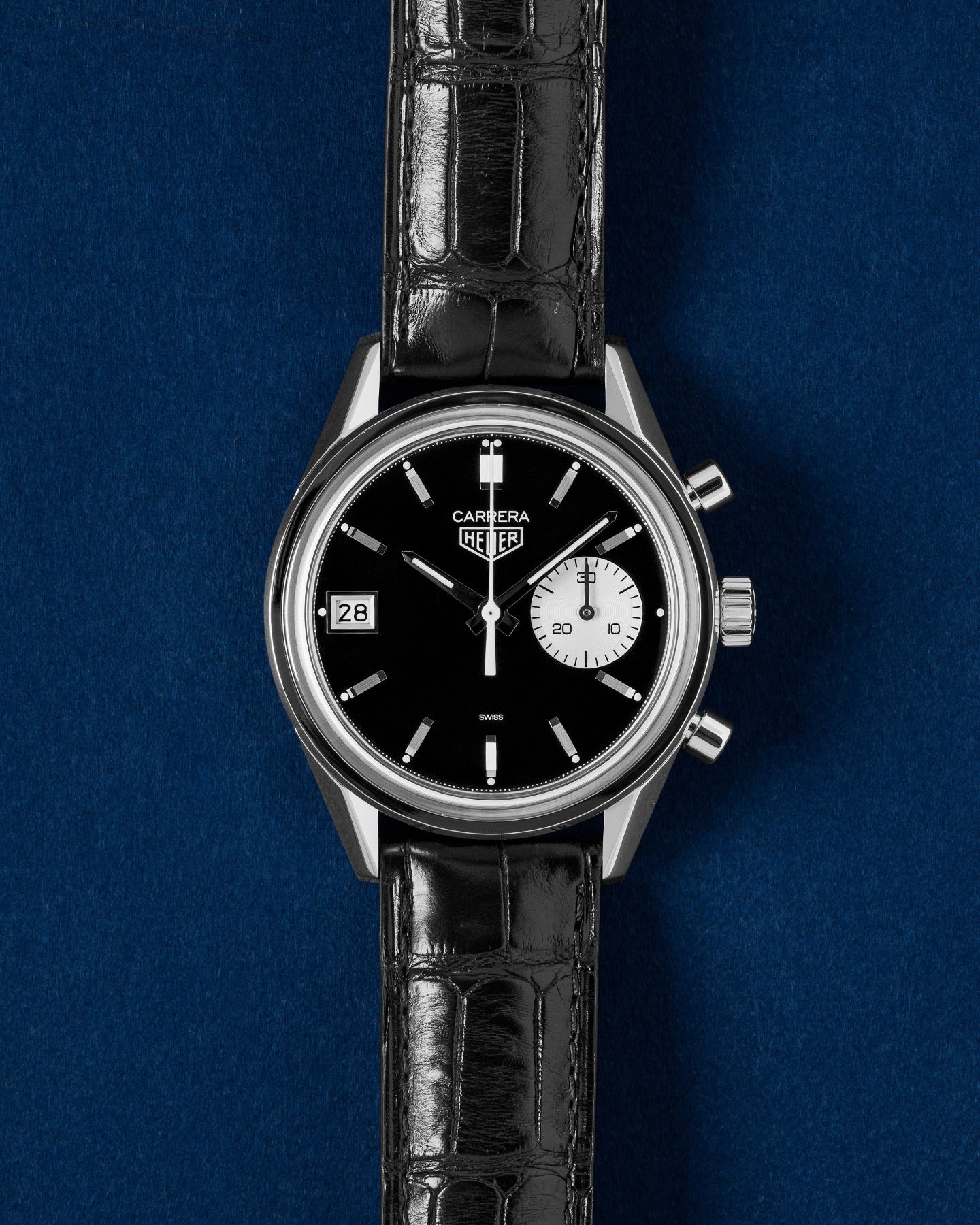
In 1962, while attending the Twelve Hours of Sebring endurance race in Florida, Jack Heuer conversed with the parents of the legendary racing drivers Pedro and Ricardo Rodriguez. They recounted the harrowing tales of the Carrera Panamericana, a brutal, border to border sports car racing event held on open roads in Mexico during the 1950s. The race was universally considered the most dangerous in the world. Jack Heuer was completely captivated by the name Carrera, recognizing its powerful linguistic resonance. He immediately registered the name for a new line of wrist chronographs specifically designed for professional racing drivers.
Architecture of the TAG Heuer Carrera Chronograph
When the Heuer Carrera debuted in 1963, it represented a profound leap forward in industrial design. Jack Heuer was heavily influenced by modern architecture and minimalist aesthetics, believing that a racing chronograph must prioritize absolute, instantaneous legibility above all else. He eliminated the complex, cluttered tachymeter scales that crowded the dials of competing chronographs. In a brilliant stroke of engineering, Jack Heuer utilized the steel tension ring, which secured the acrylic crystal to the case, to hold the fractional seconds track. By moving this scale to the inner bezel ring, he opened up the dial completely, creating a clean, pure, and highly readable instrument.
The Legendary TAG Heuer Carrera Reference 2447
The original Carrera, specifically the Reference 2447, featured sharply faceted lugs and clean silver or black dials. It housed the highly revered Valjoux 72 manual wind chronograph movement, a caliber renowned for its robust column wheel architecture. The Carrera 2447S featured a silver dial, while the 2447N featured a stark black dial. These early executions remain some of the most historically important TAG Heuer watches ever produced, serving as the foundational blueprint for the entire modern Carrera collection. Serious vintage collectors deeply covet these manual wind models for their perfect thirty six millimeter proportions and profoundly pure racing aesthetic.
The TAG Heuer Monaco and the Automatic Race
By the late 1960s, the entire Swiss watch industry was locked in a fierce, highly secretive race to develop the world's first self winding automatic chronograph. Jack Heuer understood that developing such a complex movement independently would be financially impossible for a single manufacture. He knew that the future of TAG Heuer watches depended on winning this mechanical arms race.
TAG Heuer Calibre 11 Development
To achieve this monumental goal, Heuer formed a secretive alliance known as Project 99. The consortium included Breitling, Hamilton Buren, and the chronograph specialists at Dubois Depraz. The team combined their specific areas of expertise to engineer a completely revolutionary movement. They utilized a slim micro rotor automatic base movement supplied by Buren and mounted a highly sophisticated Dubois Depraz chronograph module directly on top of it. On March 3, 1969, the consortium successfully unveiled the Calibre 11. The most distinct visual signature of watches equipped with the Calibre 11 was the placement of the winding crown on the left side of the case, while the chronograph pushers remained on the right. Heuer marketed this unusual layout brilliantly, stating that the watch was so efficient at winding itself that the wearer no longer needed easy access to the crown.
The TAG Heuer Monaco Square Case Innovation
Jack Heuer knew that housing the revolutionary Calibre 11 in a standard round case would not generate sufficient global attention. He needed a case design that was as radical and disruptive as the movement inside. He found the solution through a case manufacturer named Erwin Piquerez, who had recently patented a completely novel square watch case that was fully waterproof. Prior to this invention, square cases were notoriously difficult to seal against water intrusion. The new case utilized a complex tension system that locked the crystal, caseback, and gaskets together under pressure. Jack Heuer secured the exclusive rights to this square waterproof case and used it to launch the Heuer Monaco in 1969, creating the most visually arresting timepiece in the catalog of TAG Heuer watches.
Steve McQueen and the TAG Heuer Monaco Legacy
While the square architecture was groundbreaking, the true cultural supremacy of the Monaco was solidified by the King of Cool, Hollywood actor Steve McQueen. In 1970, McQueen was preparing to film the ultimate racing movie, Le Mans. Dedicated to absolute authenticity, McQueen sought advice from his friend and driving instructor, the legendary Swiss racing driver Jo Siffert. Siffert was famously sponsored by Heuer and wore their logo on his racing suit. McQueen decided to wear Siffert's exact racing suit in the film and chose the blue dial Heuer Monaco Reference 1133B to complete the authentic racing persona. The prominent screen time of the square blue chronograph on McQueen's wrist permanently etched the Monaco into the global cultural consciousness, making it one of the most heavily demanded TAG Heuer watches in the history of the brand.
The TAG Heuer Autavia Wristwatch Evolution
While the Carrera and the Monaco capture significant mainstream attention, serious horological purists often revere the Autavia as the ultimate professional racing instrument within the vintage catalog of TAG Heuer watches.
TAG Heuer Transition to Wrist Chronographs
In 1962, one year before the Carrera was introduced, Jack Heuer transitioned the Autavia name from the historic dashboard instruments to a dedicated wristwatch chronograph. The Autavia wristwatch was defined by its robust case and, most importantly, its prominent rotating external bezel. Unlike the clean, fixed bezel of the Carrera, the Autavia bezel allowed pilots and racing drivers to perform highly complex calculations, track secondary time zones, or record elapsed hours. The heavy duty architecture and rotating bezel made the Autavia the premier workhorse of the pit lane, favored by Formula One mechanics and drivers alike.
The Jo Siffert TAG Heuer Autavia Connection
The Autavia gained profound legendary status through its association with Jo Siffert. Siffert was the very first Formula One driver to sign a personal endorsement contract with a watch brand, effectively pioneering the modern concept of the athletic brand ambassador. He exclusively wore a specific version of the Autavia, the Reference 1163T, which featured a crisp white dial, contrasting black chronograph registers, and striking bright blue accents on the dial and hands. This specific colorway became known universally among collectors as the Siffert Autavia. Finding an original, beautifully preserved Siffert Autavia remains a profound milestone for any collector focusing on vintage TAG Heuer watches.
The TAG Heuer Viceroy Autavia Promotion
In the early 1970s, Heuer executed one of the most brilliant marketing campaigns in horological history to boost sales of their automatic chronographs. They partnered with the Viceroy cigarette brand to offer a highly discounted Autavia Reference 1163V to customers who mailed in a specific number of cigarette box tops. The Viceroy Autavia featured a distinctive black dial with white sub dials and striking red accents. This promotion was wildly successful, placing thousands of automatic Heuer chronographs onto the wrists of racing enthusiasts across America and solidifying the brand's profound dominance in the automotive sector.
The Quartz Crisis and Modern TAG Heuer Watches
Despite their absolute dominance in the golden era of motorsports, the Heuer company faced severe existential challenges during the late 1970s and early 1980s. The invention of cheap, highly accurate battery powered quartz watches in Japan devastated the traditional Swiss mechanical watch industry in an event known as the Quartz Crisis.
The Acquisition and Rebirth of TAG Heuer Watches
The severe financial strain forced Jack Heuer to relinquish control of his family company in 1982. The brand passed through a brief period of ownership under the Piaget group and Lemania before being acquired by a powerful holding company in 1985. This holding company was Techniques d Avant Garde, universally known by its acronym, TAG. Owned by the prominent businessman Mansour Ojjeh, the TAG group possessed deep, extensive ties to the aviation and motorsport industries, most notably through their partnership with the McLaren Formula One racing team. Upon acquiring the watchmaker, Ojjeh merged the two names, officially creating the modern entity known today as TAG Heuer watches.
The TAG Heuer Formula One Collection
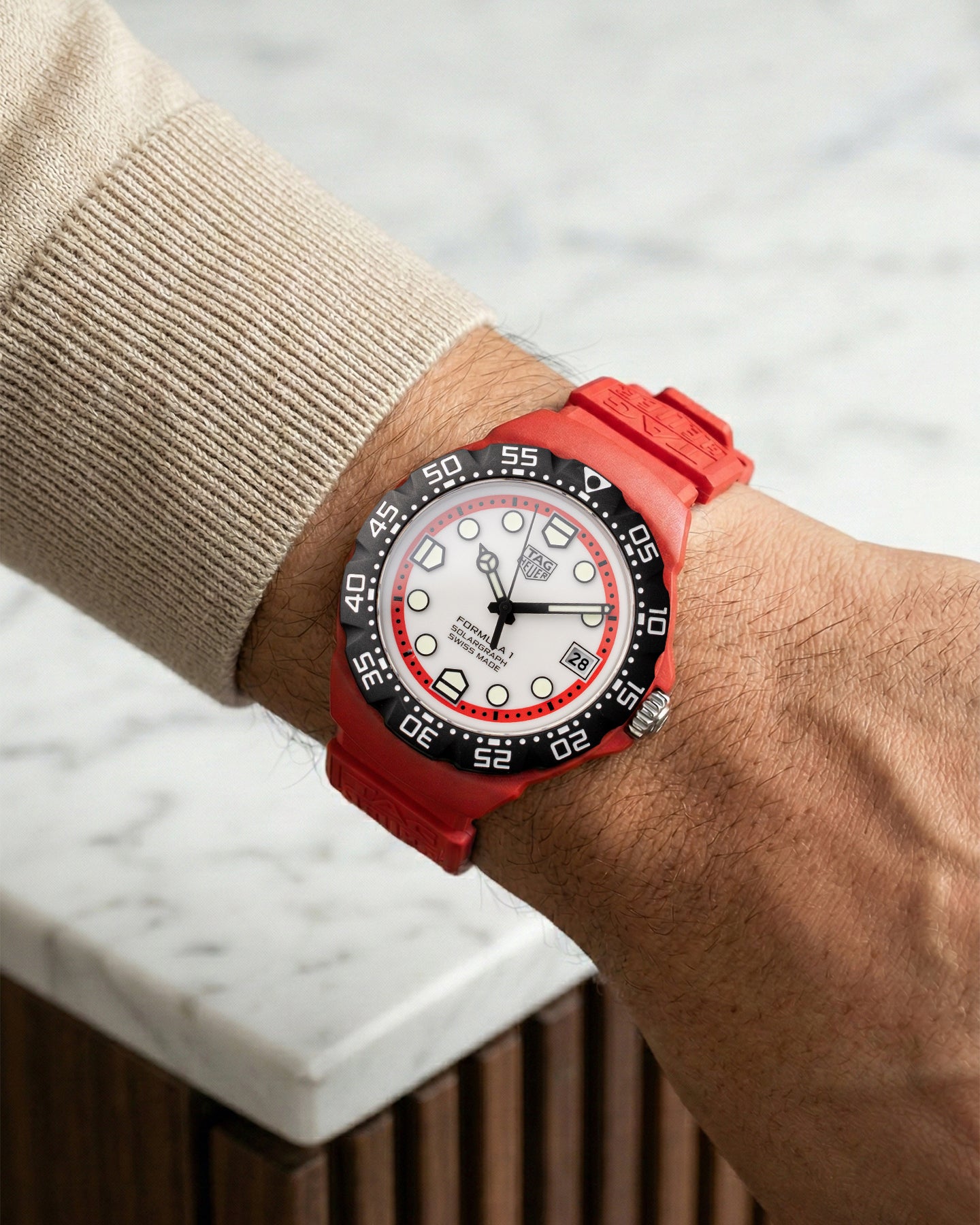
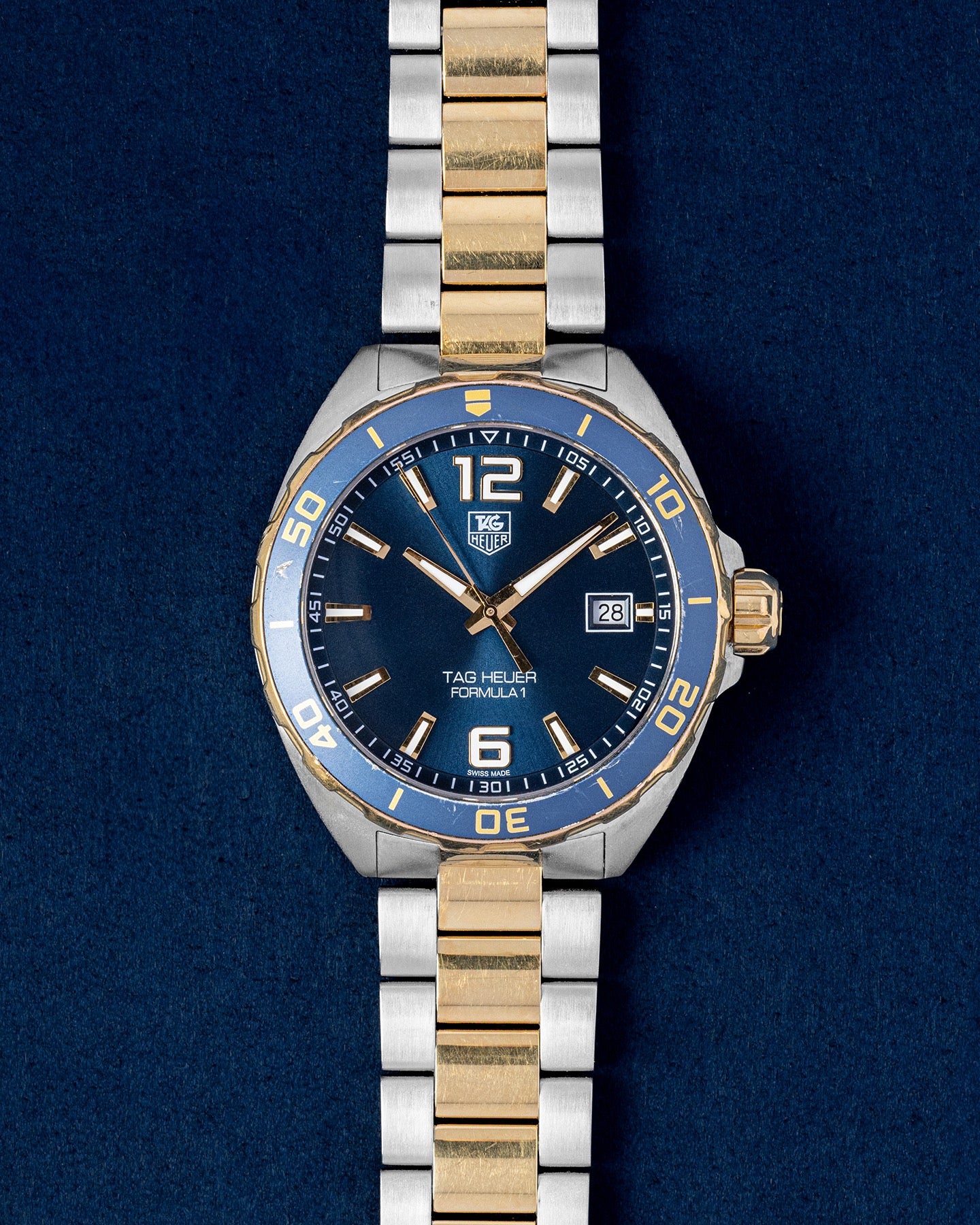
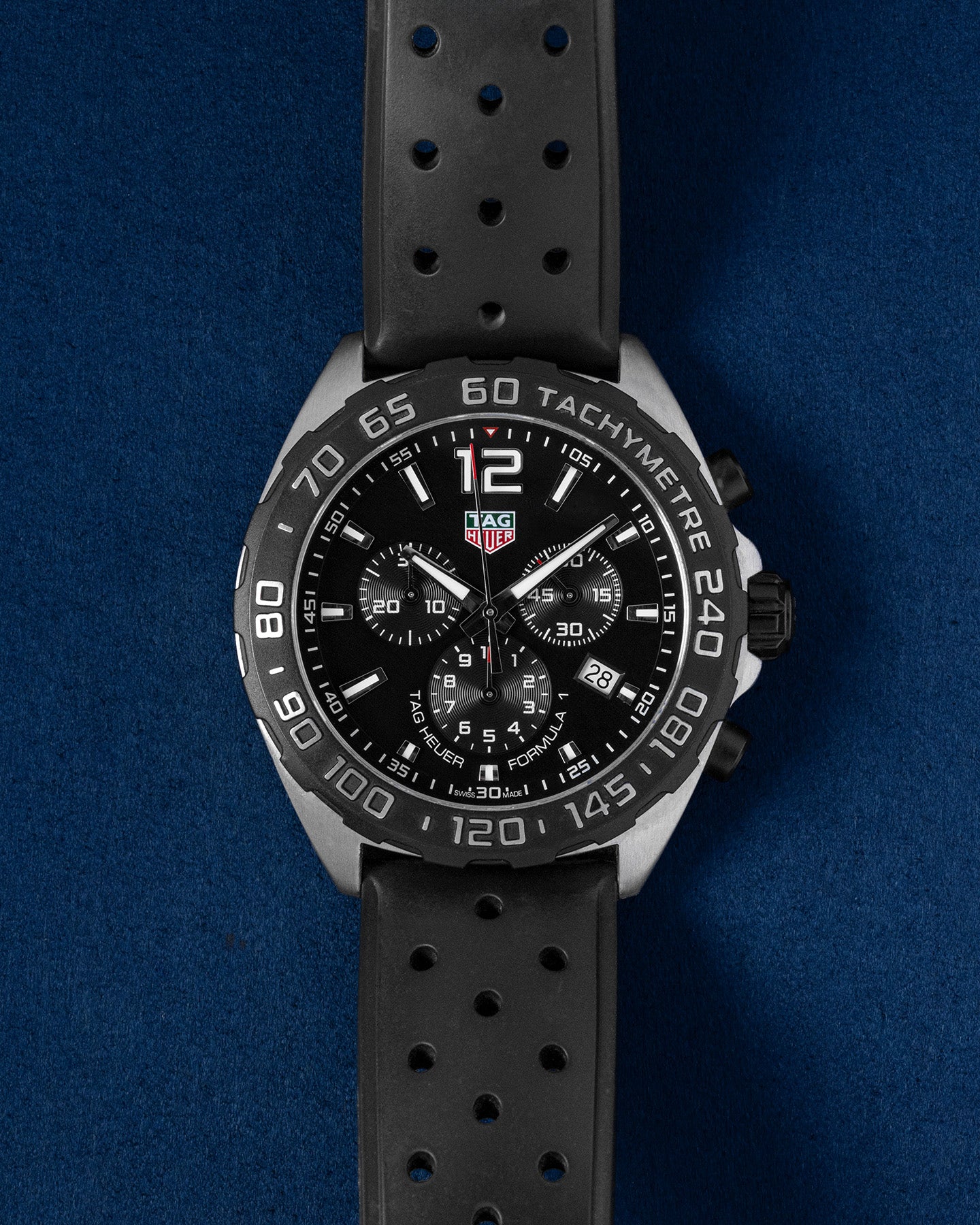
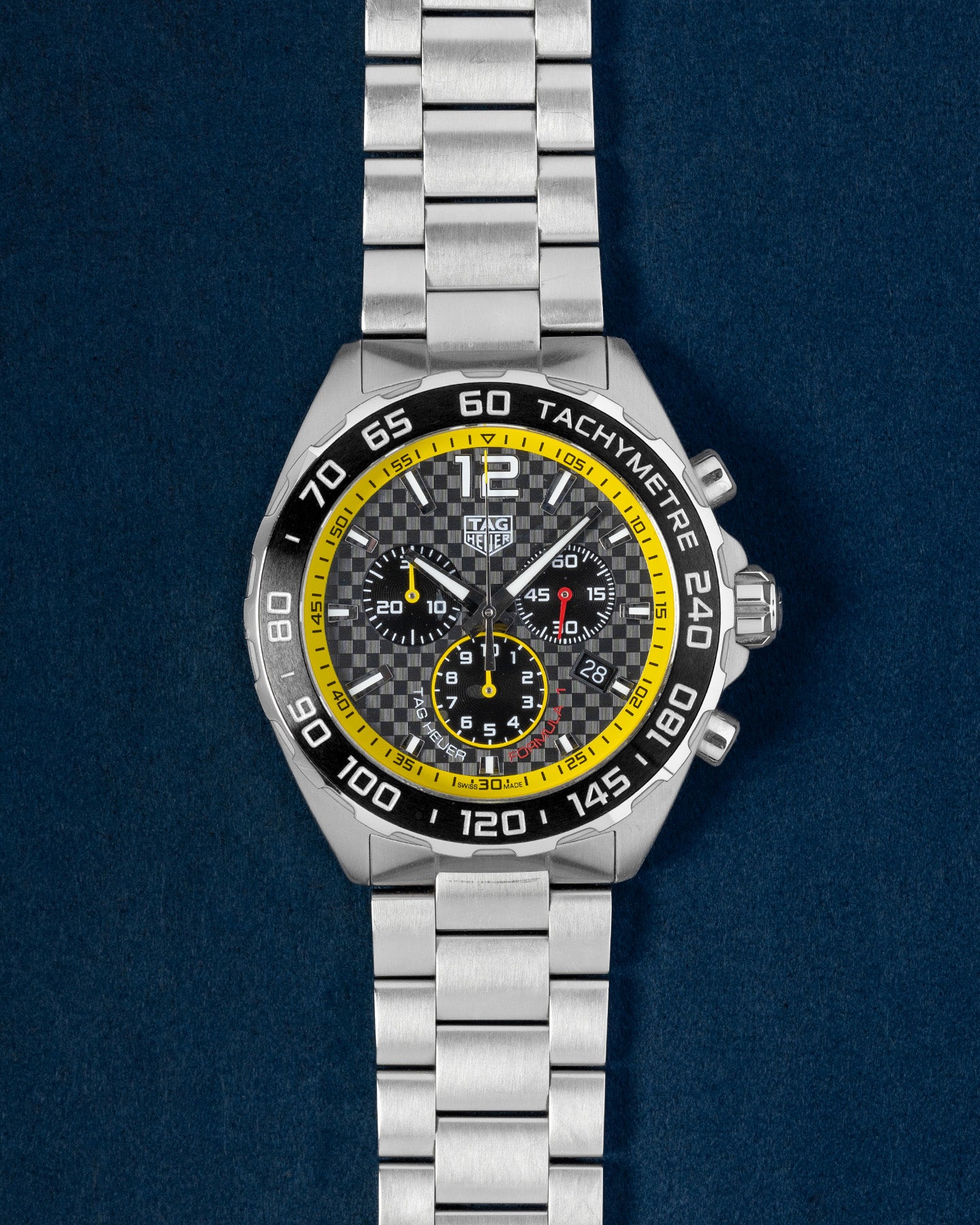
To survive the financial realities of the Quartz Crisis, the newly formed TAG Heuer watches needed to produce highly reliable, accessible timepieces that could appeal to a vast new generation of consumers. They launched the Formula 1 collection in 1986. These incredibly popular watches featured robust quartz movements, cases crafted from a unique combination of stainless steel and brightly colored fiberglass coatings, and heavy duty rubber straps. The bold, youthful aesthetics and extreme durability of the Formula 1 collection provided the essential financial stability the brand needed to survive the crisis, laying the groundwork for their eventual return to high end mechanical horology in the modern era.
The Modern TAG Heuer Carrera Collection
Following its acquisition by the LVMH luxury conglomerate in 1999, TAG Heuer watches underwent a profound renaissance. The brand dedicated substantial resources to reviving their historic mechanical legacy while simultaneously pioneering highly advanced modern manufacturing techniques. The modern Carrera collection perfectly embodies this dual philosophy.
TAG Heuer Watches and the Heuer 02 Calibre
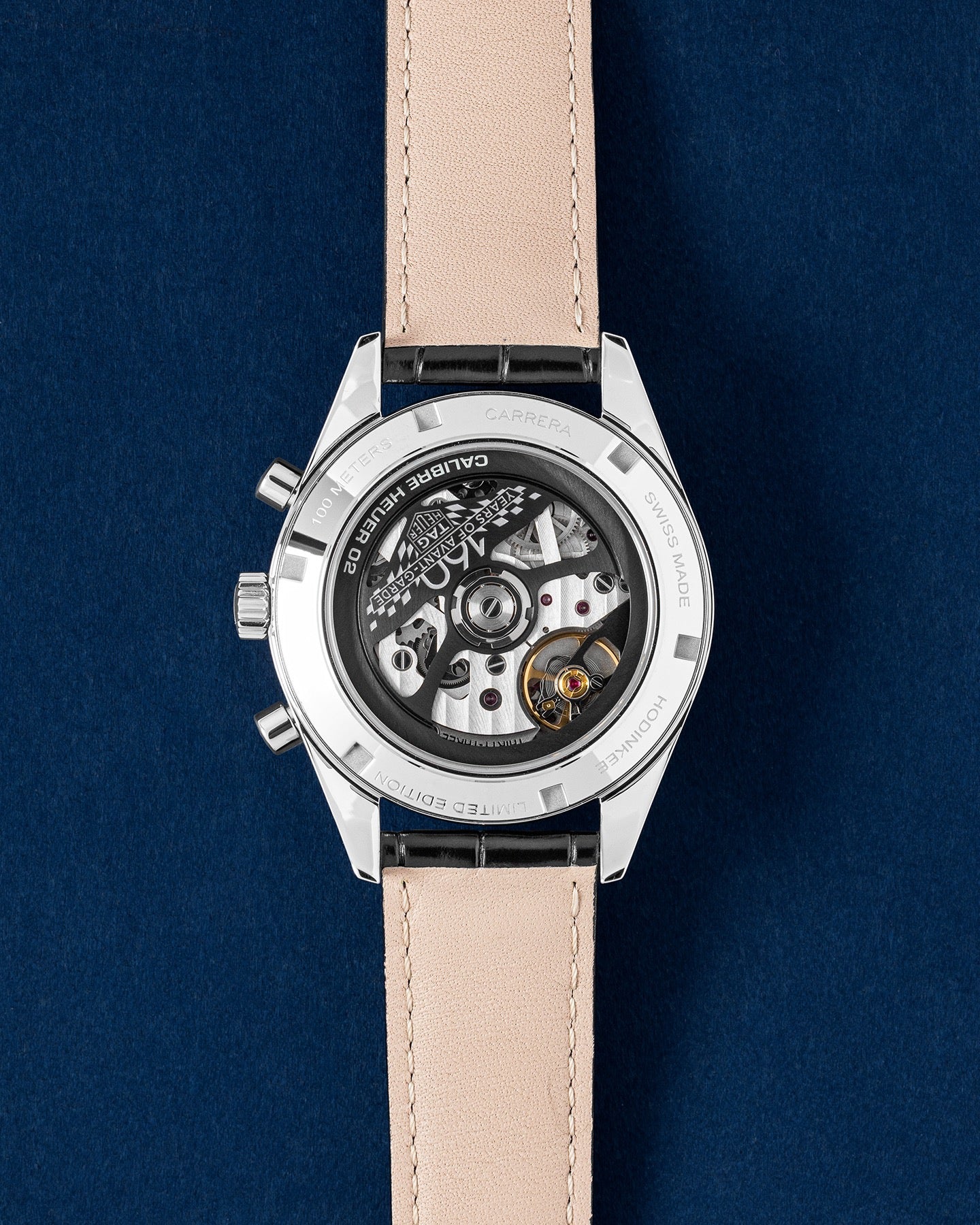
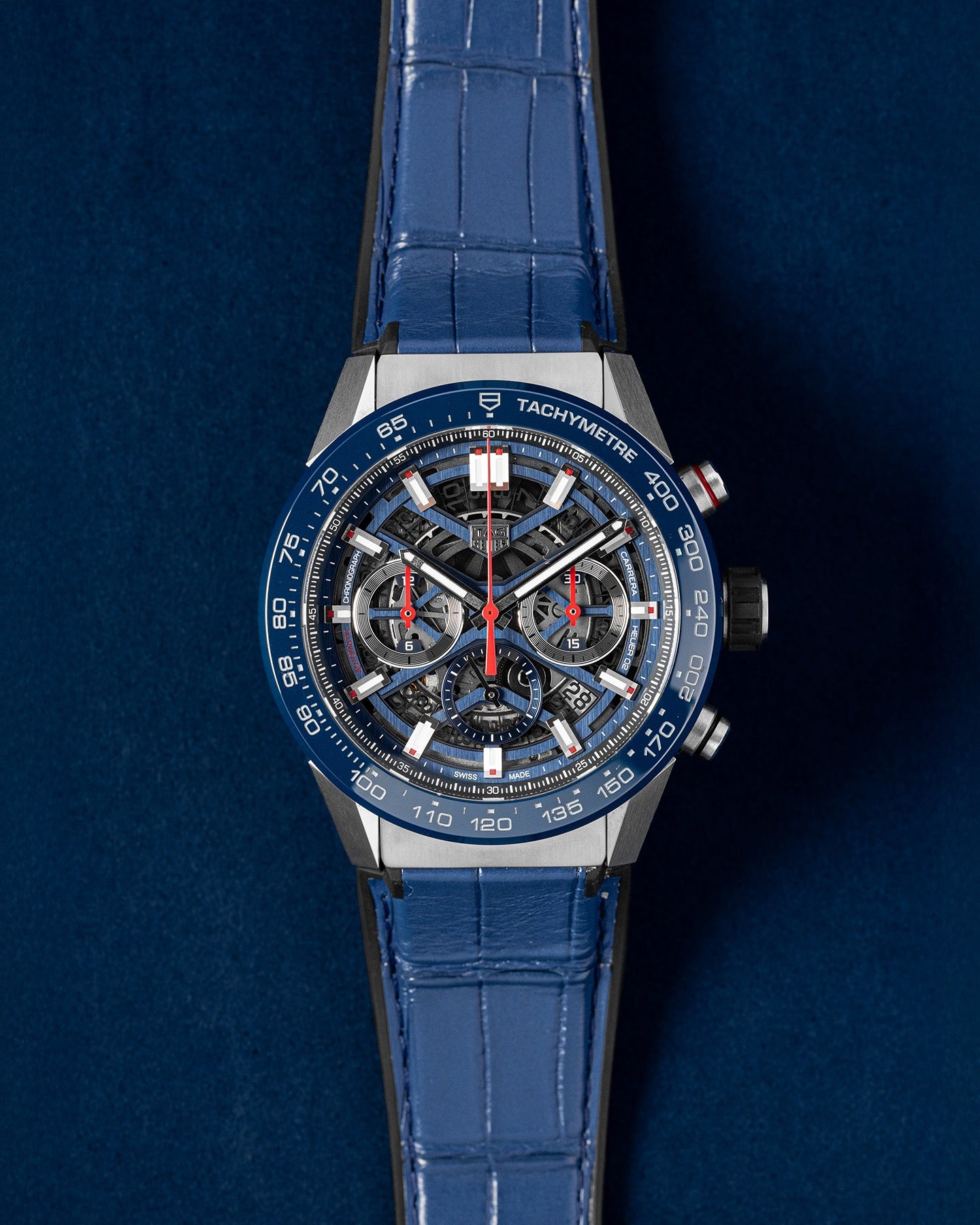
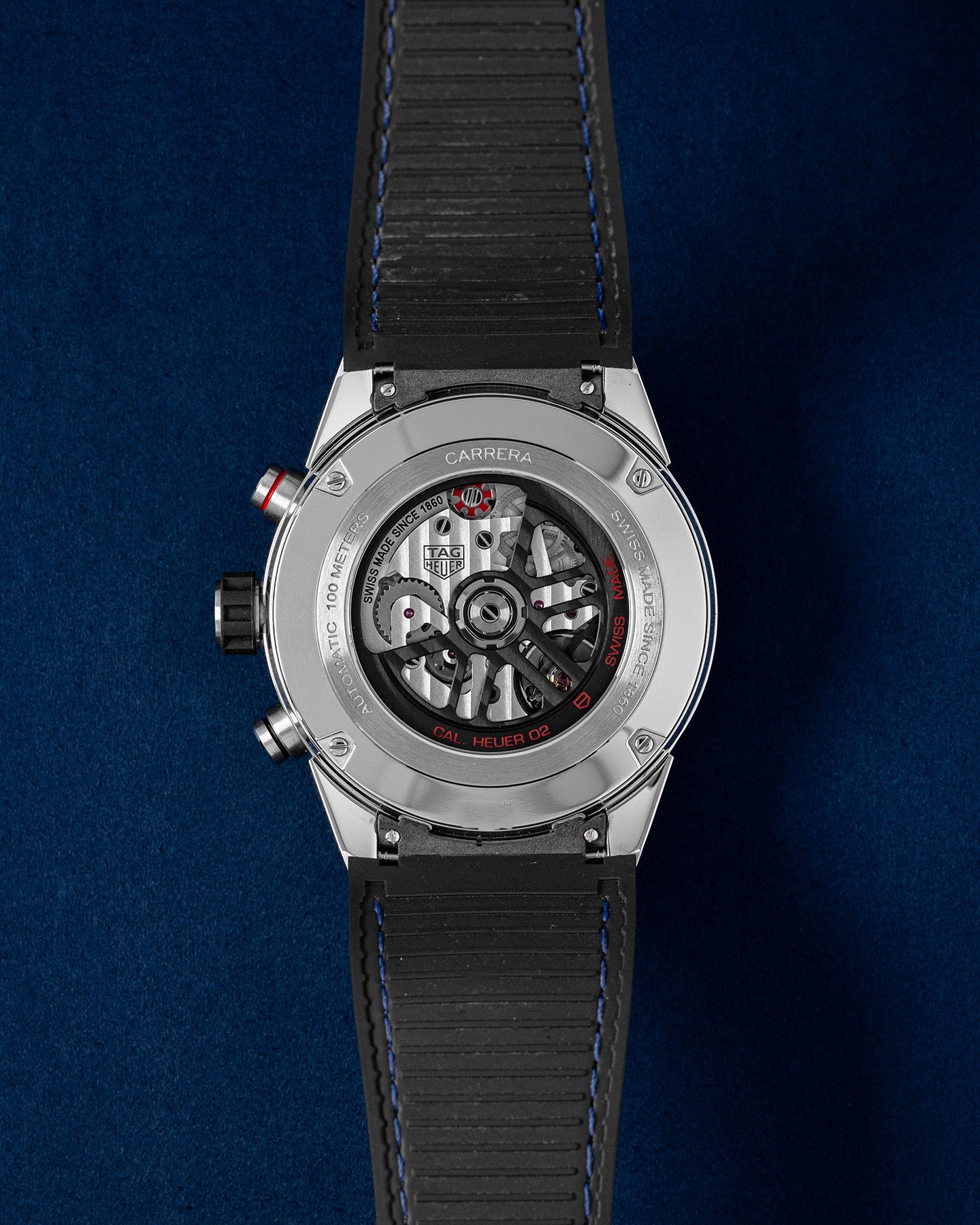
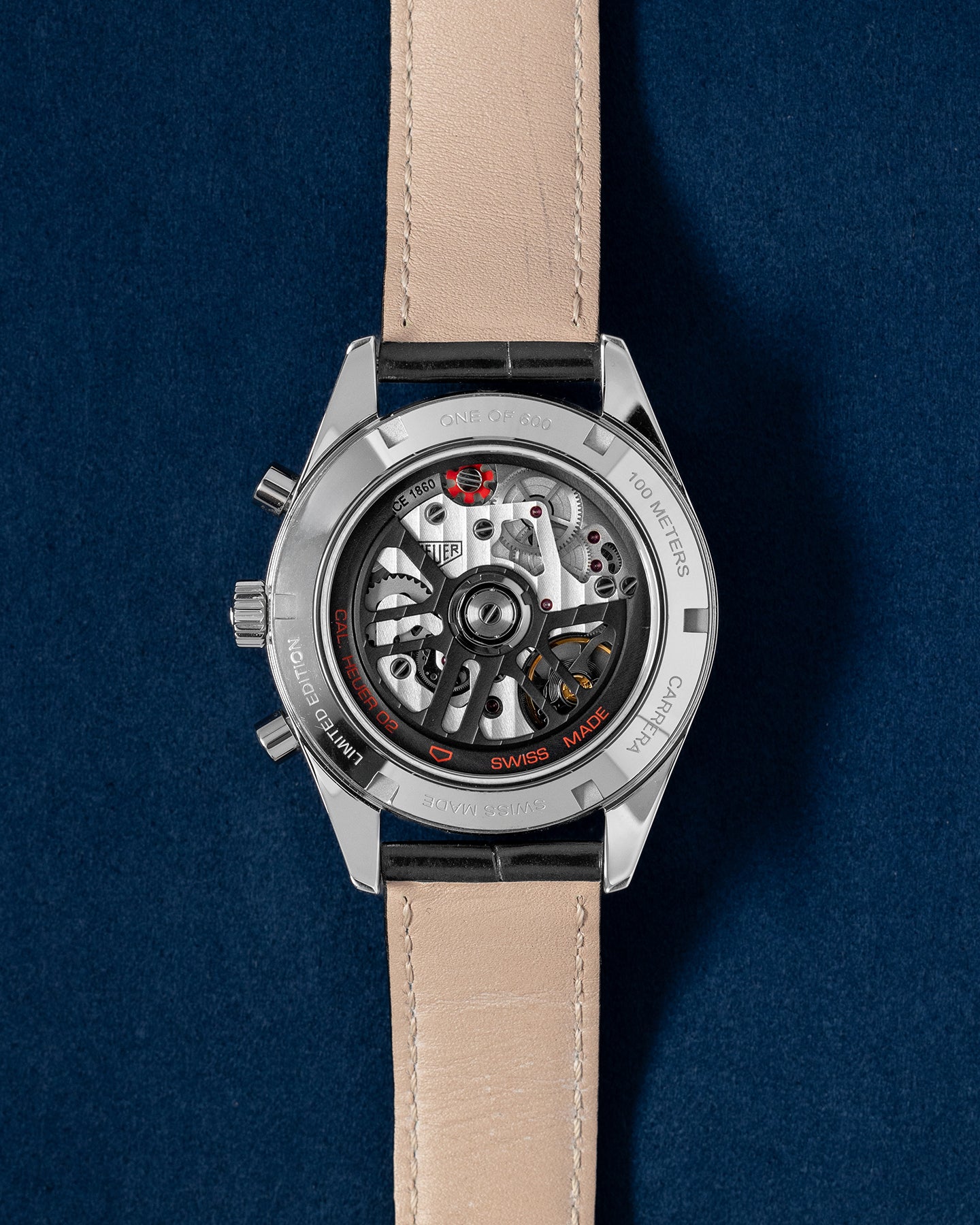
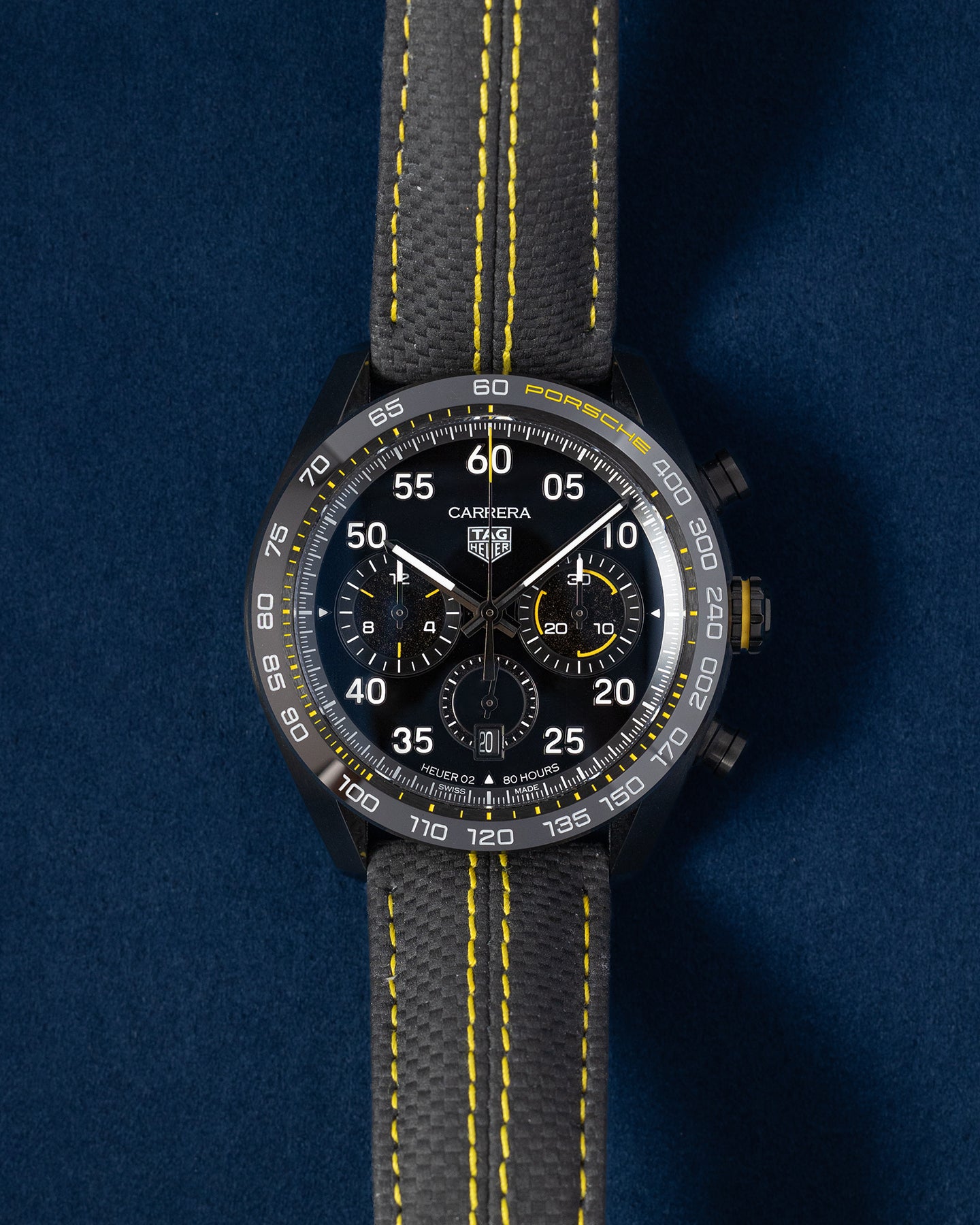
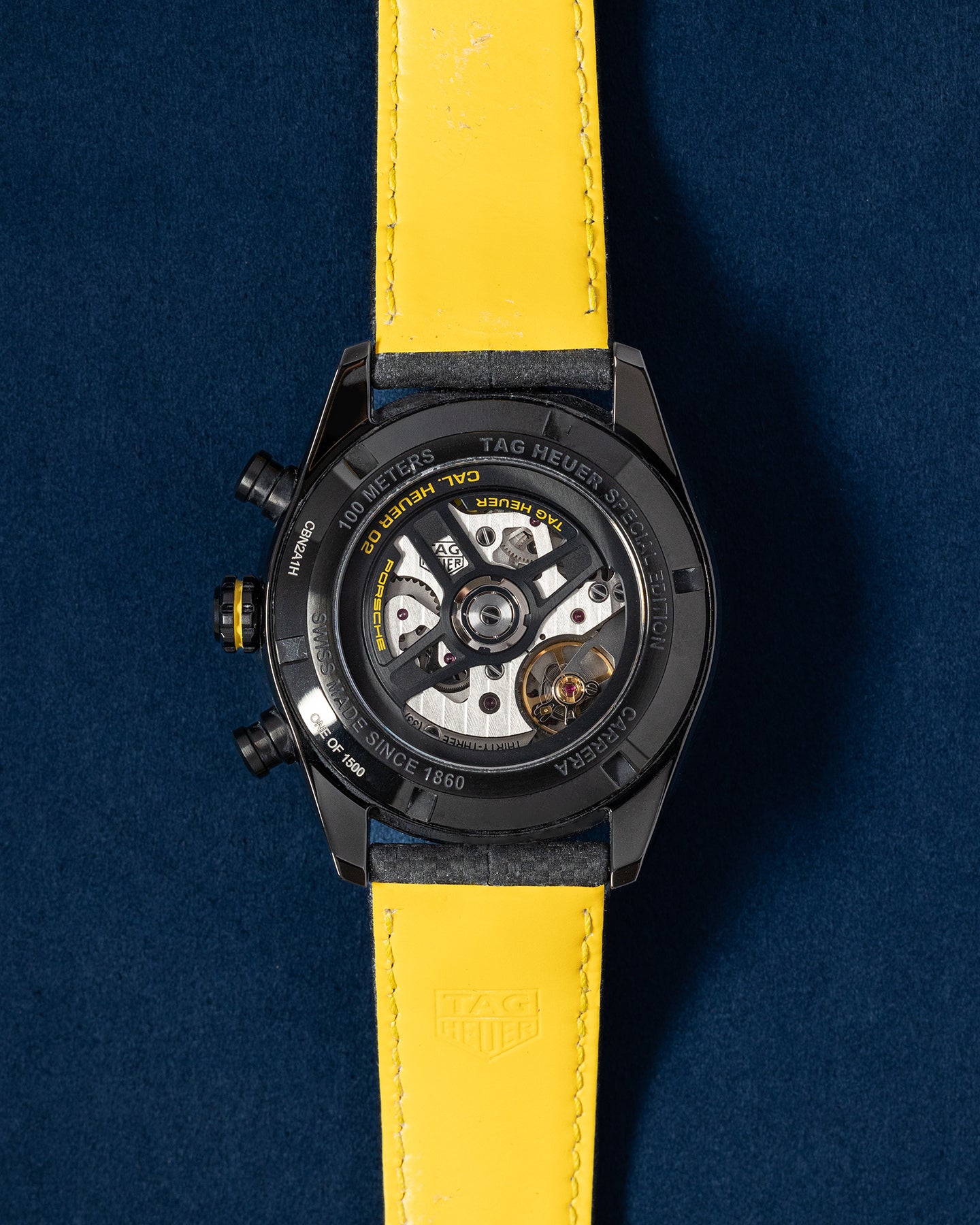
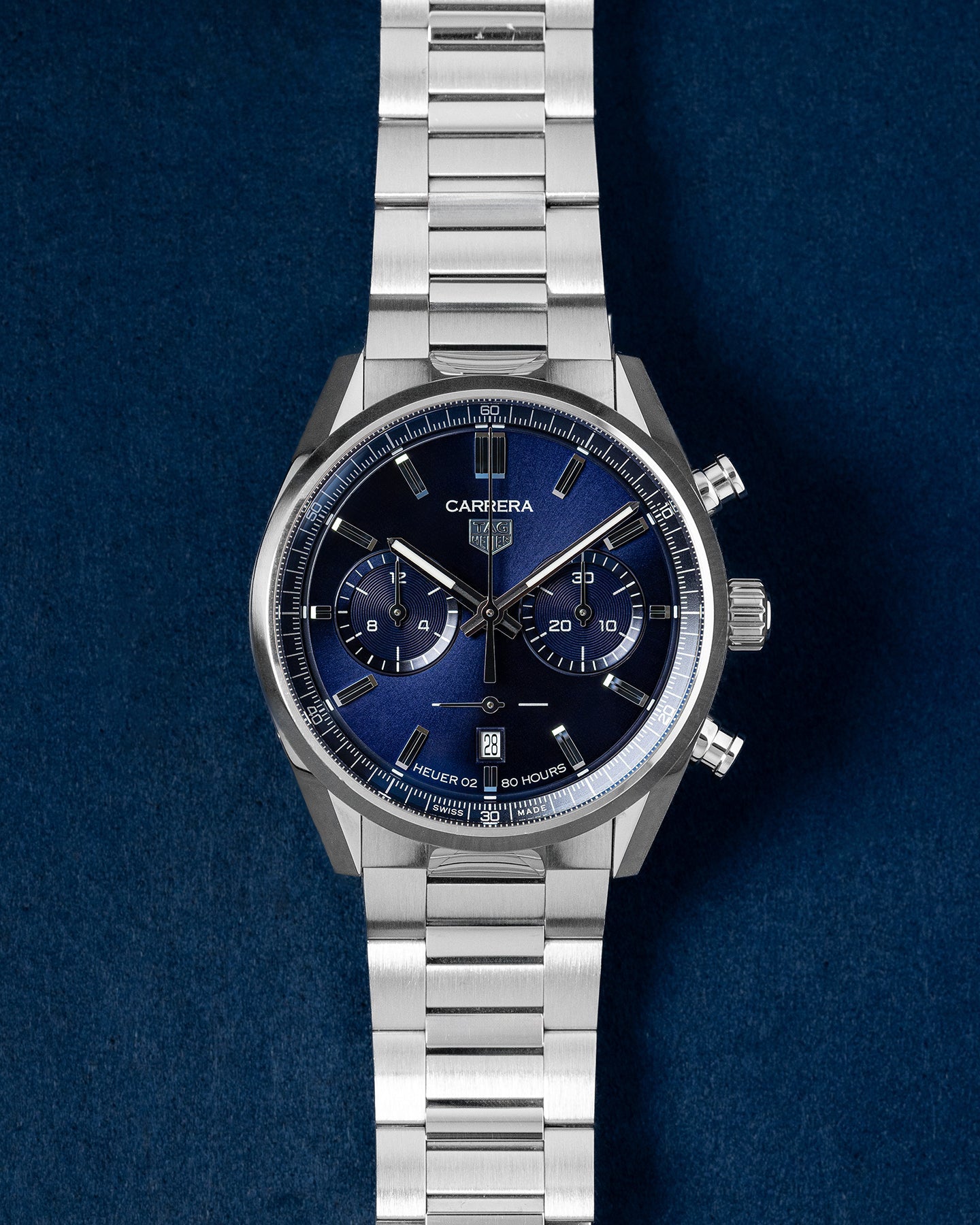
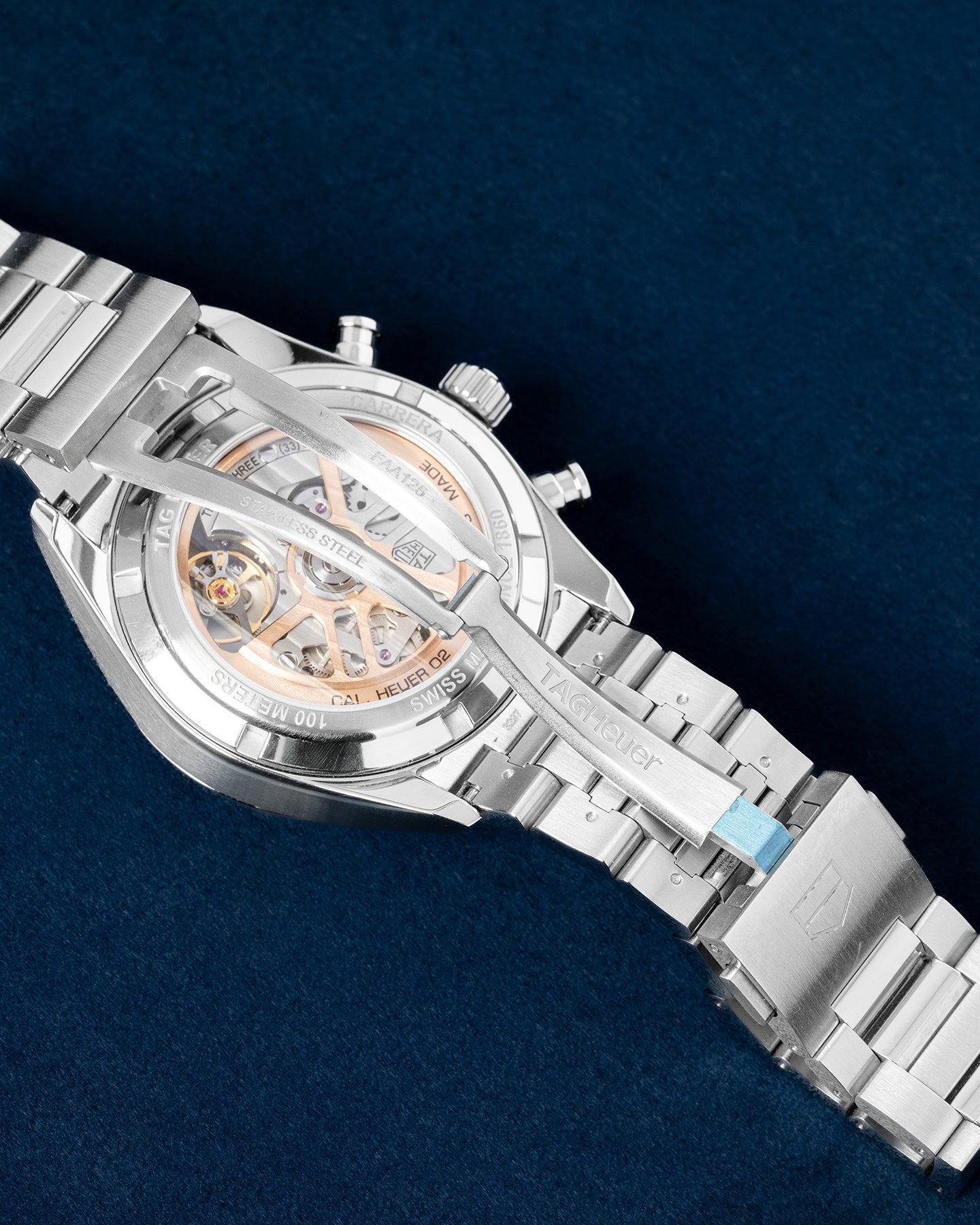
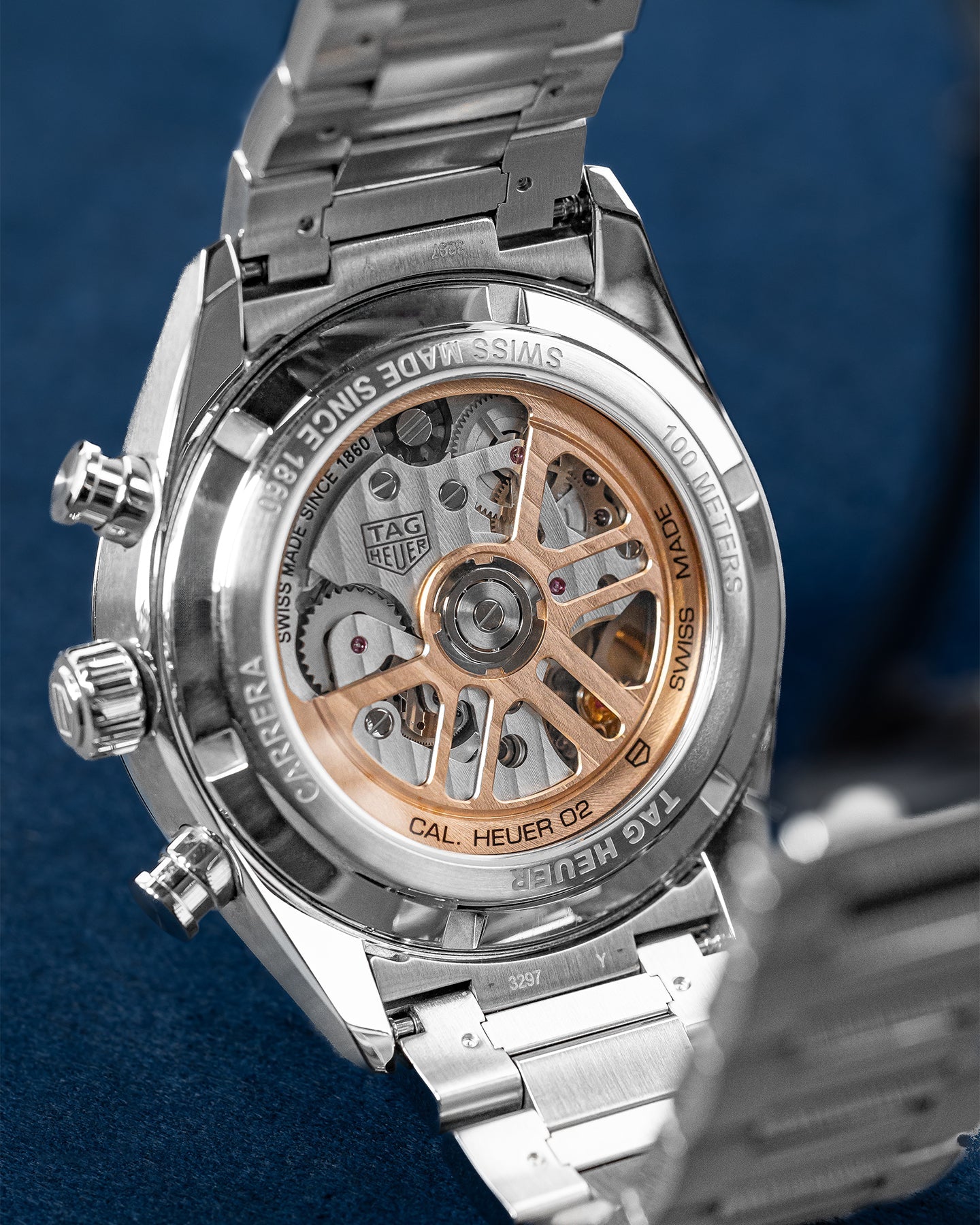
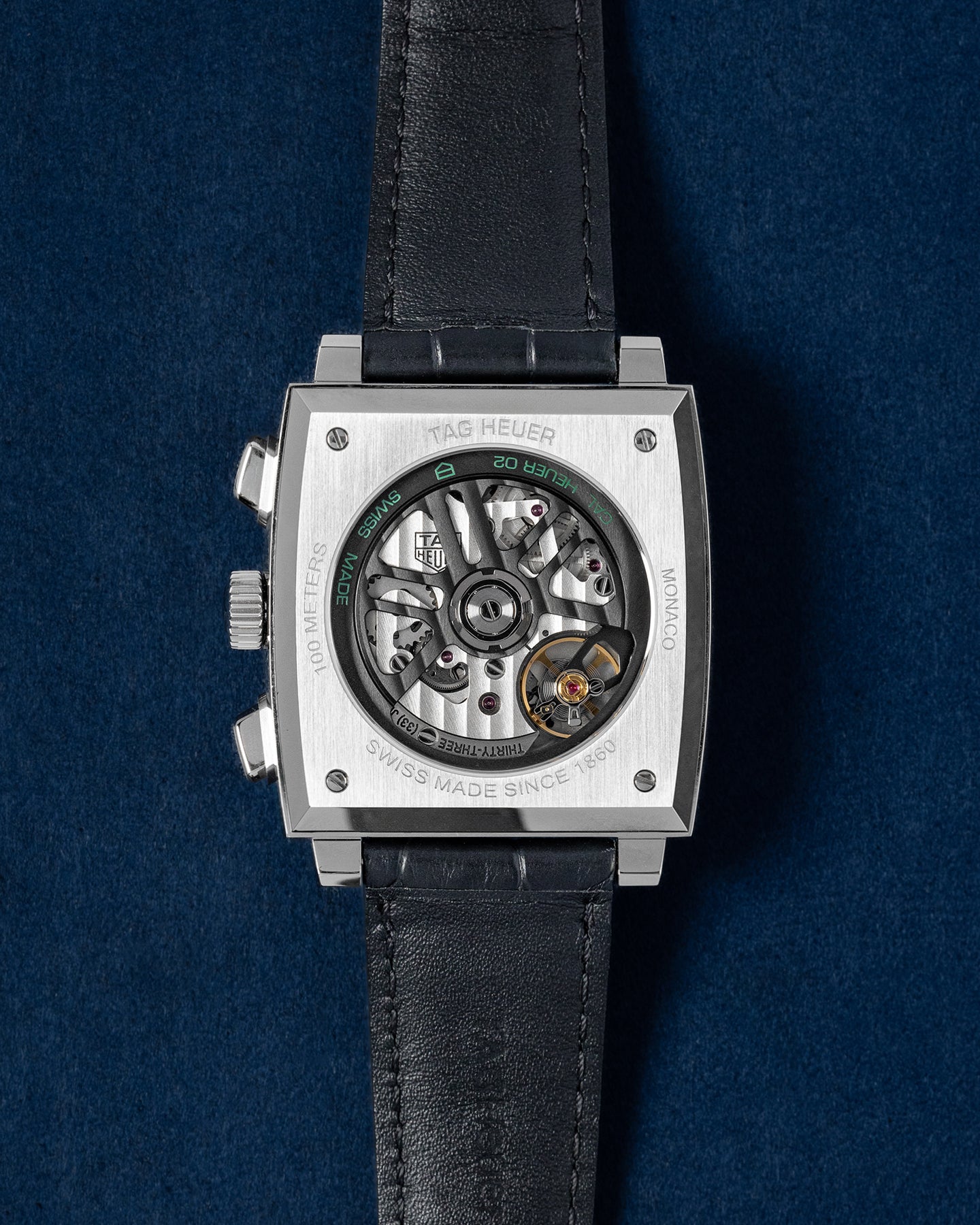
To secure their position as a premier mechanical manufacture, TAG Heuer watches invested heavily in the development of a completely integrated, in house chronograph movement. The result was the Calibre Heuer 02. This exceptional movement features a traditional column wheel to ensure crisp, buttery smooth pusher engagement, combined with a vertical clutch mechanism to completely eliminate the harsh jumping of the seconds hand upon activation. Furthermore, the Heuer 02 boasts a highly impressive eighty hour power reserve, allowing the owner to take the watch off on Friday evening and put it back on Monday morning without needing to reset the time. Integrating the Heuer 02 into the Carrera collection provided the historic silhouette with a profound, modern mechanical engine.
TAG Heuer Glassbox Design and Sapphire Crystals
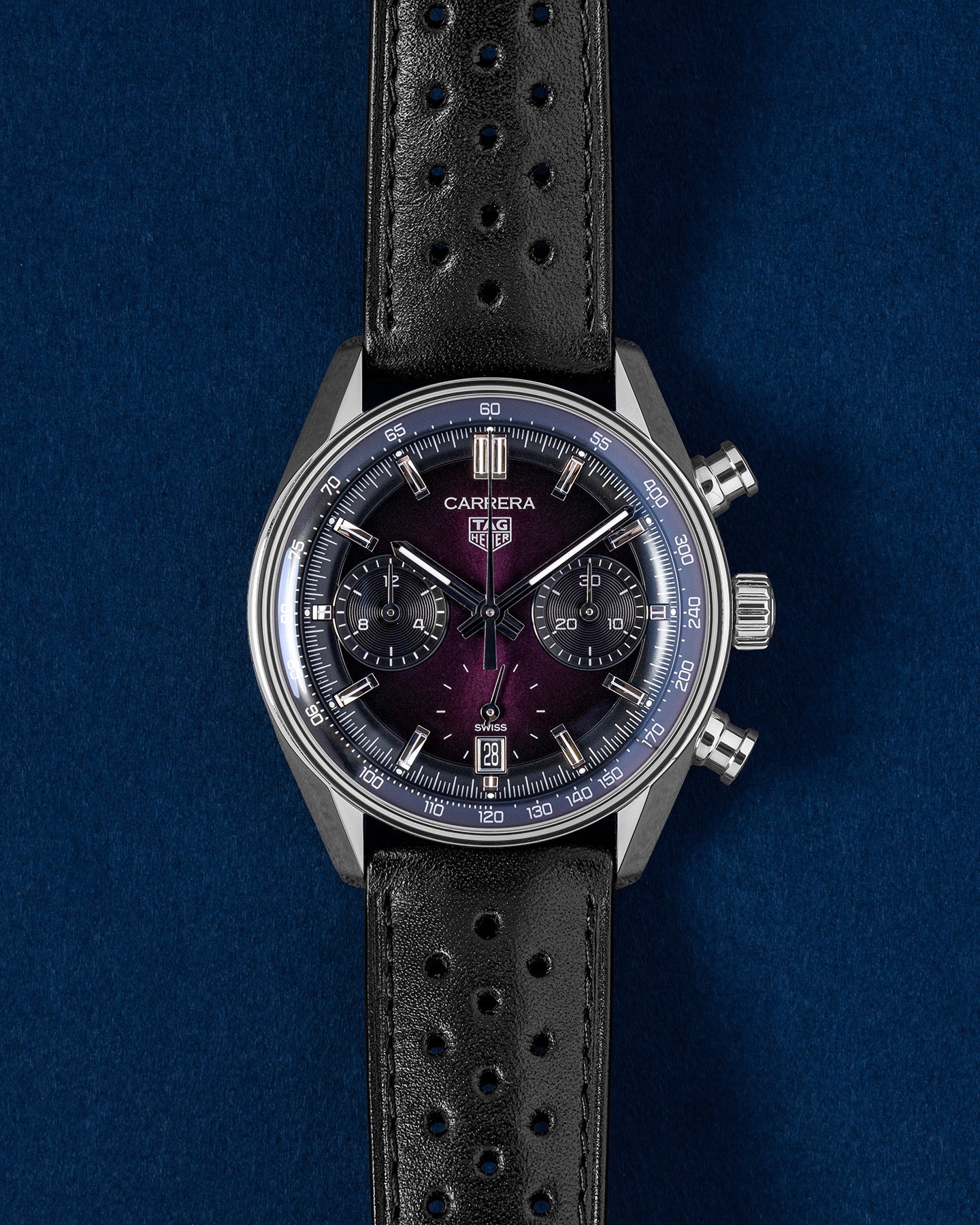
Continuing their dedication to exceptional legibility and avant garde design, the modern Carrera collection frequently utilizes the Glassbox aesthetic. In these specific TAG Heuer watches, the traditional metal bezel is entirely eliminated. Instead, the highly domed sapphire crystal extends all the way to the absolute edge of the case, wrapping completely over the tachymeter scale printed on the outer flange of the dial. This complex sapphire architecture allows the wearer to read the tachymeter scale from incredibly sharp angles while driving, creating a deeply immersive, three dimensional dial display that honors Jack Heuer's original obsession with uncompromising readability.
The TAG Heuer Aquaracer Dive Watch Lineage
While deeply intertwined with the asphalt of the racetrack, TAG Heuer watches also possess a profound, highly respected history in the realm of underwater professional instruments. This legacy is carried forward today by the robust Aquaracer collection.
Origins of the TAG Heuer Aquaracer
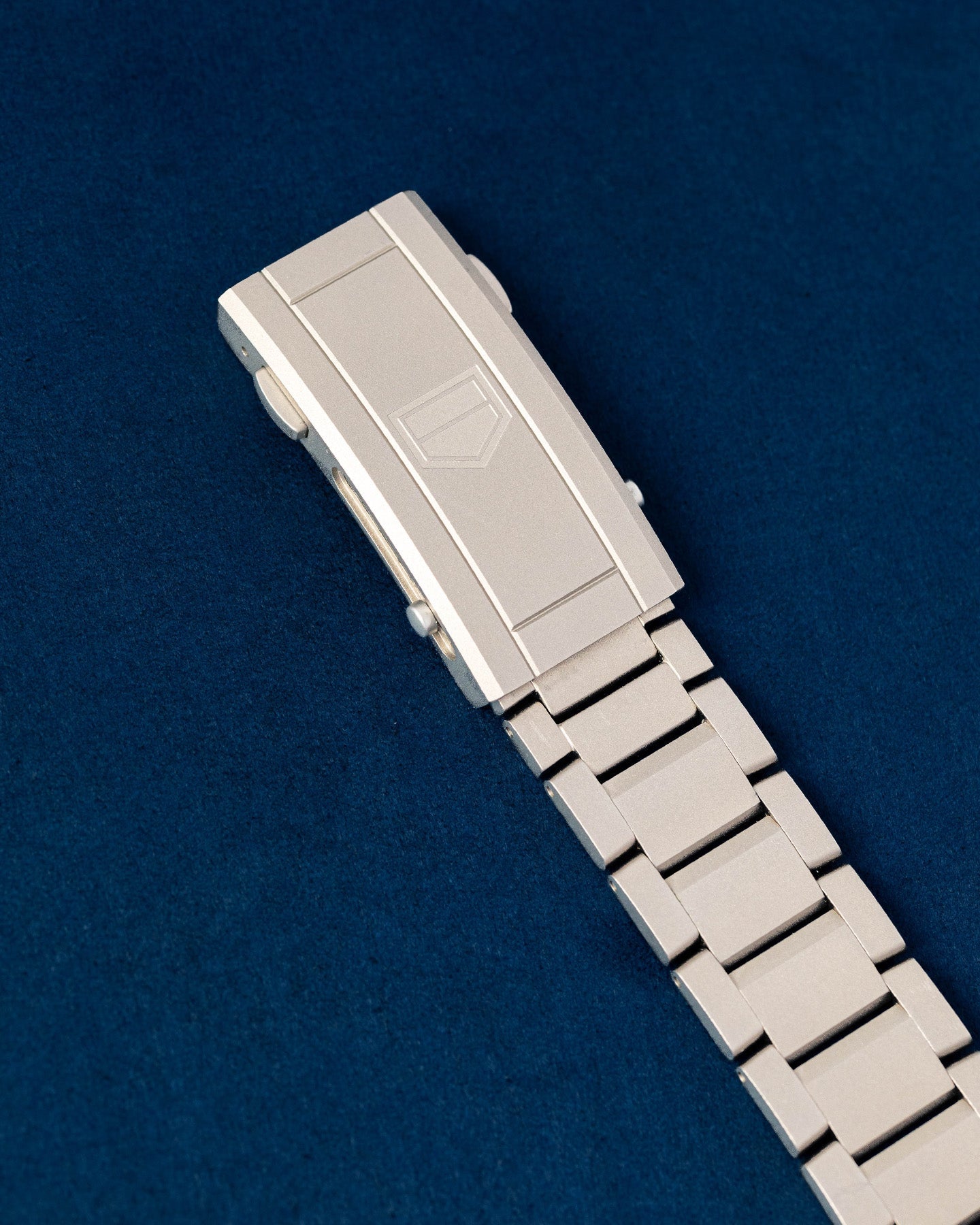
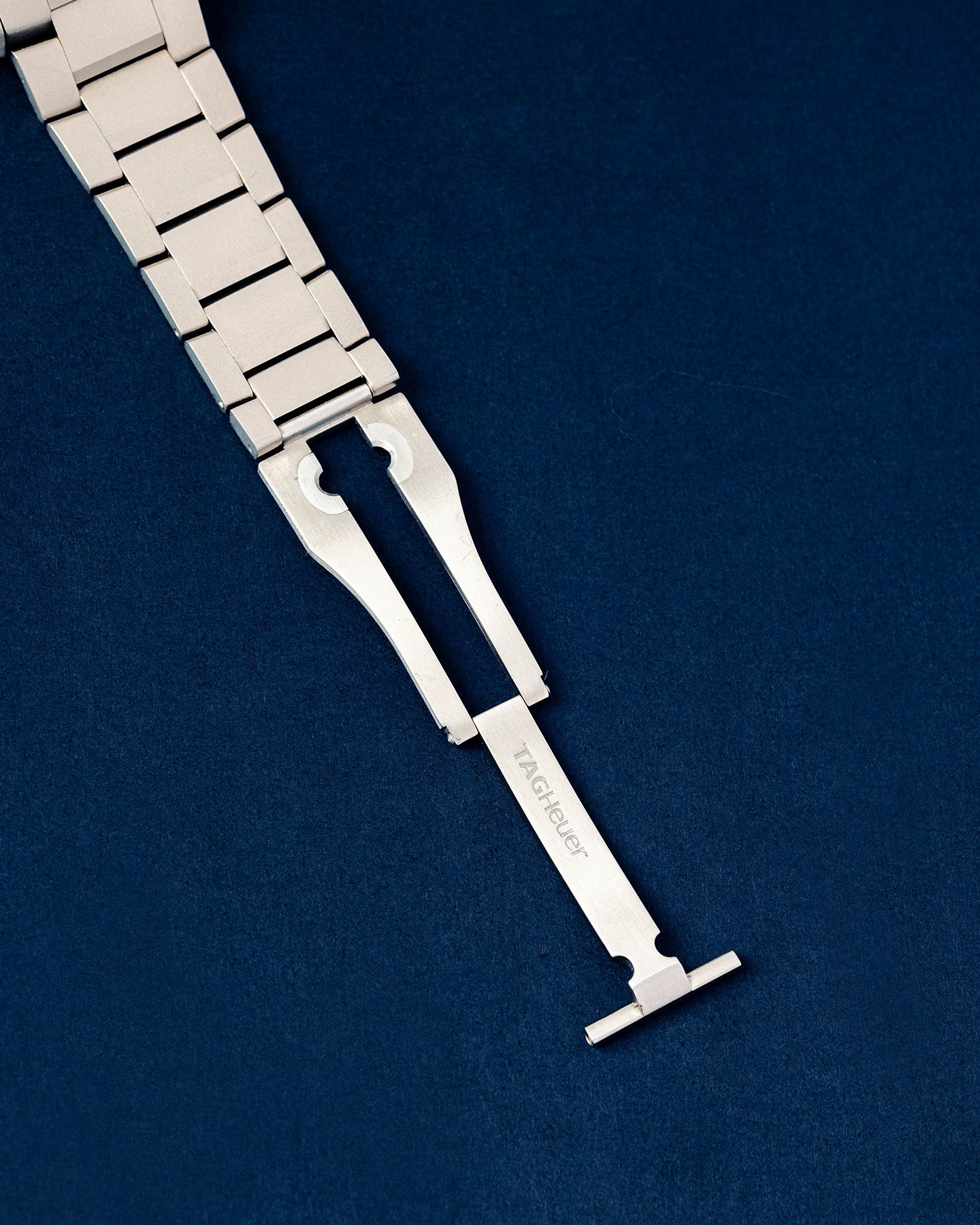
The architectural DNA of the modern Aquaracer can be traced directly back to the Series 2000 collection, which was introduced in 1982. This collection established the six fundamental features that define all professional diving TAG Heuer watches: a highly water resistant case, a unidirectional rotating bezel, a screw down winding crown, a scratch resistant sapphire crystal, highly luminous hands and markers, and a double safety clasp on the bracelet to prevent accidental deployment during deep dives. These strict criteria ensured that the timepieces were perfectly suited for the intense pressures of commercial and recreational scuba diving.
TAG Heuer Aquaracer Professional Ergonomics
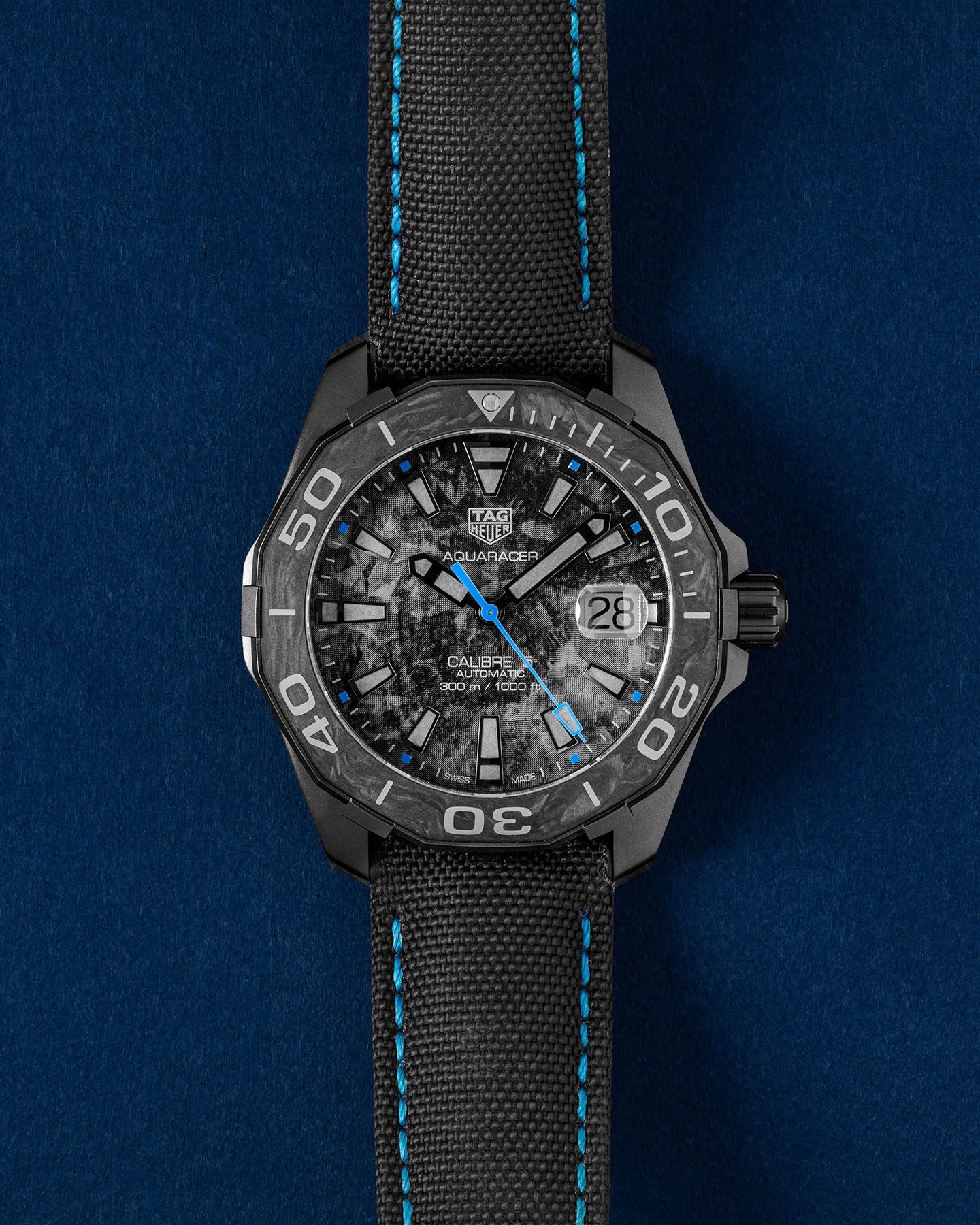
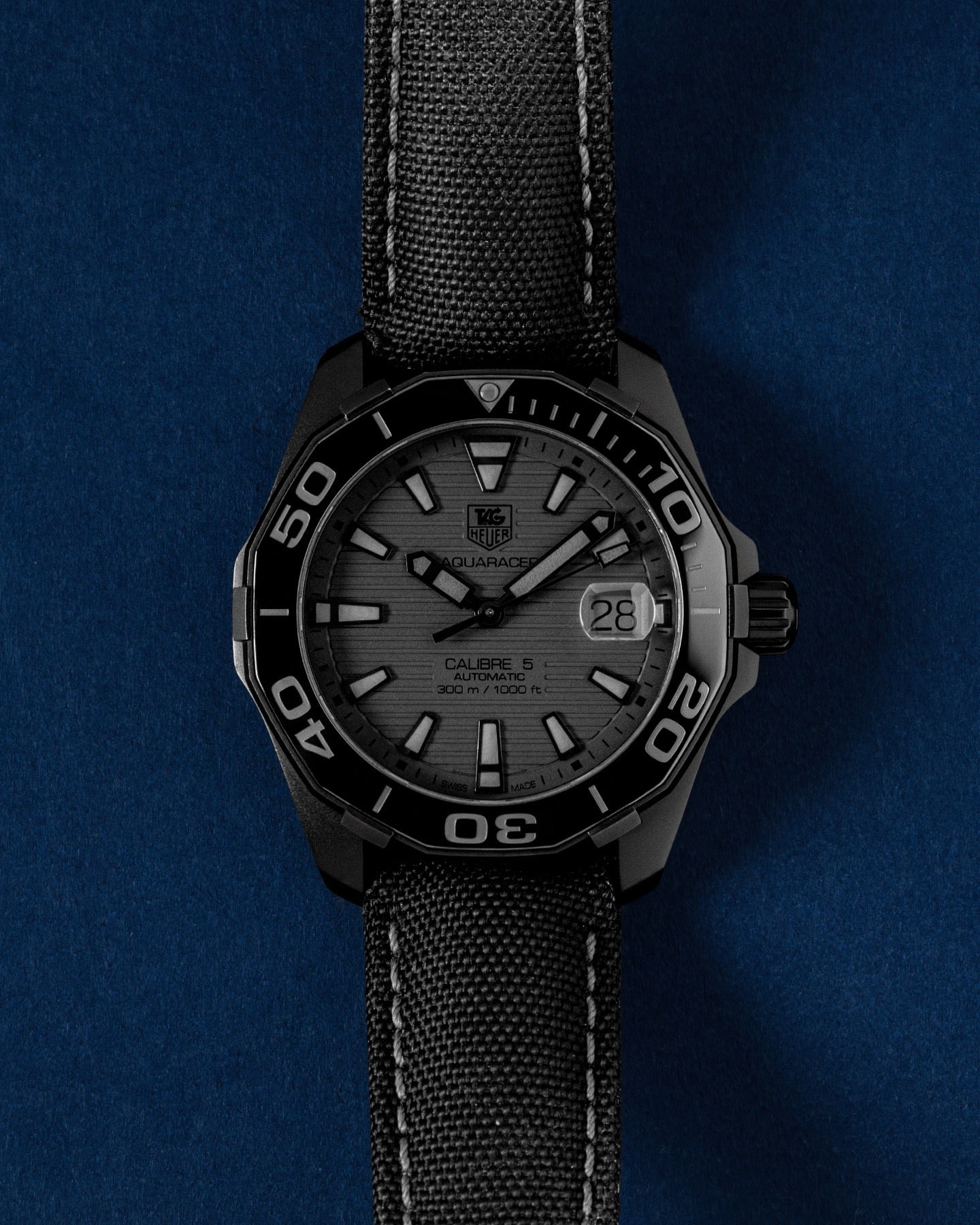
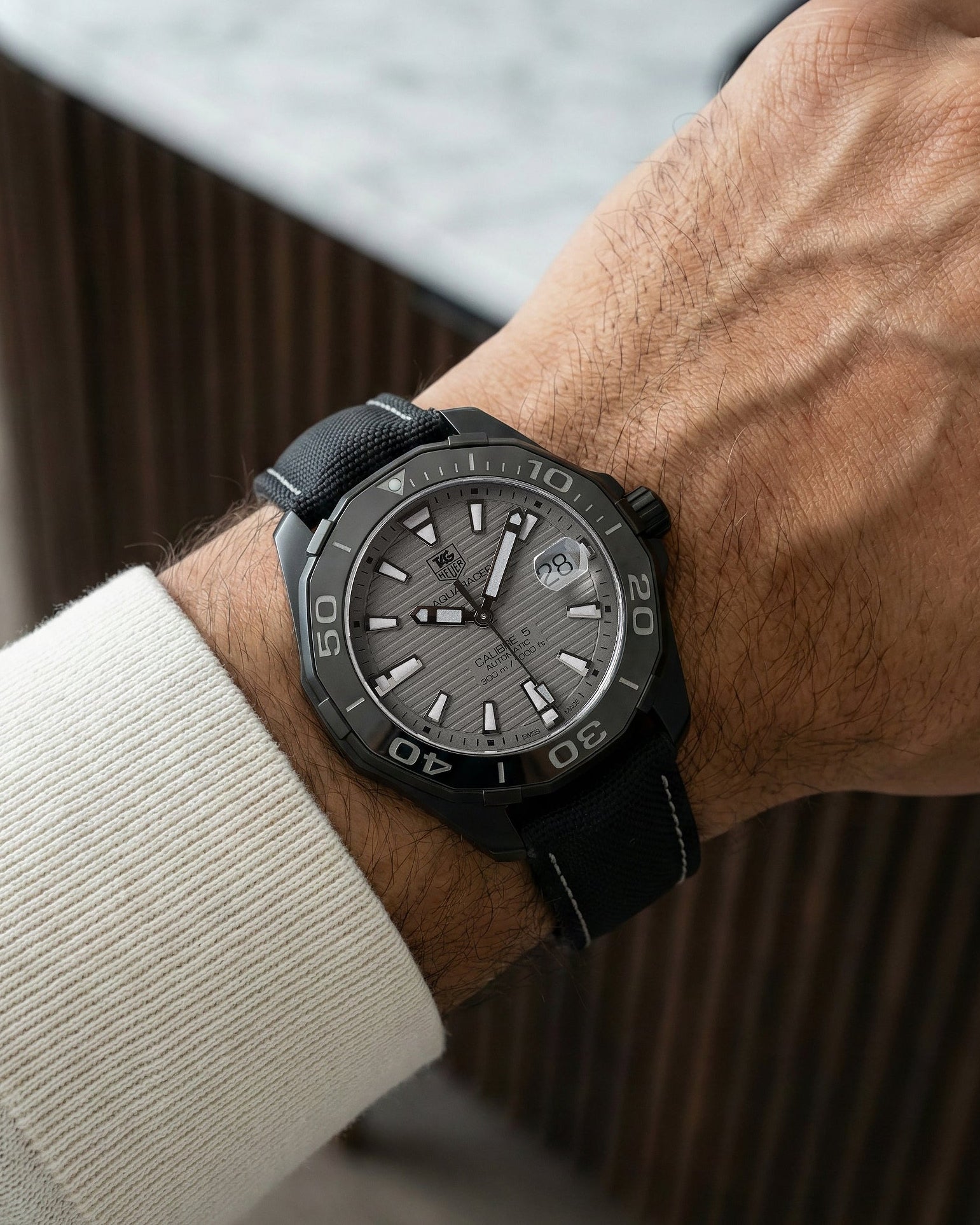
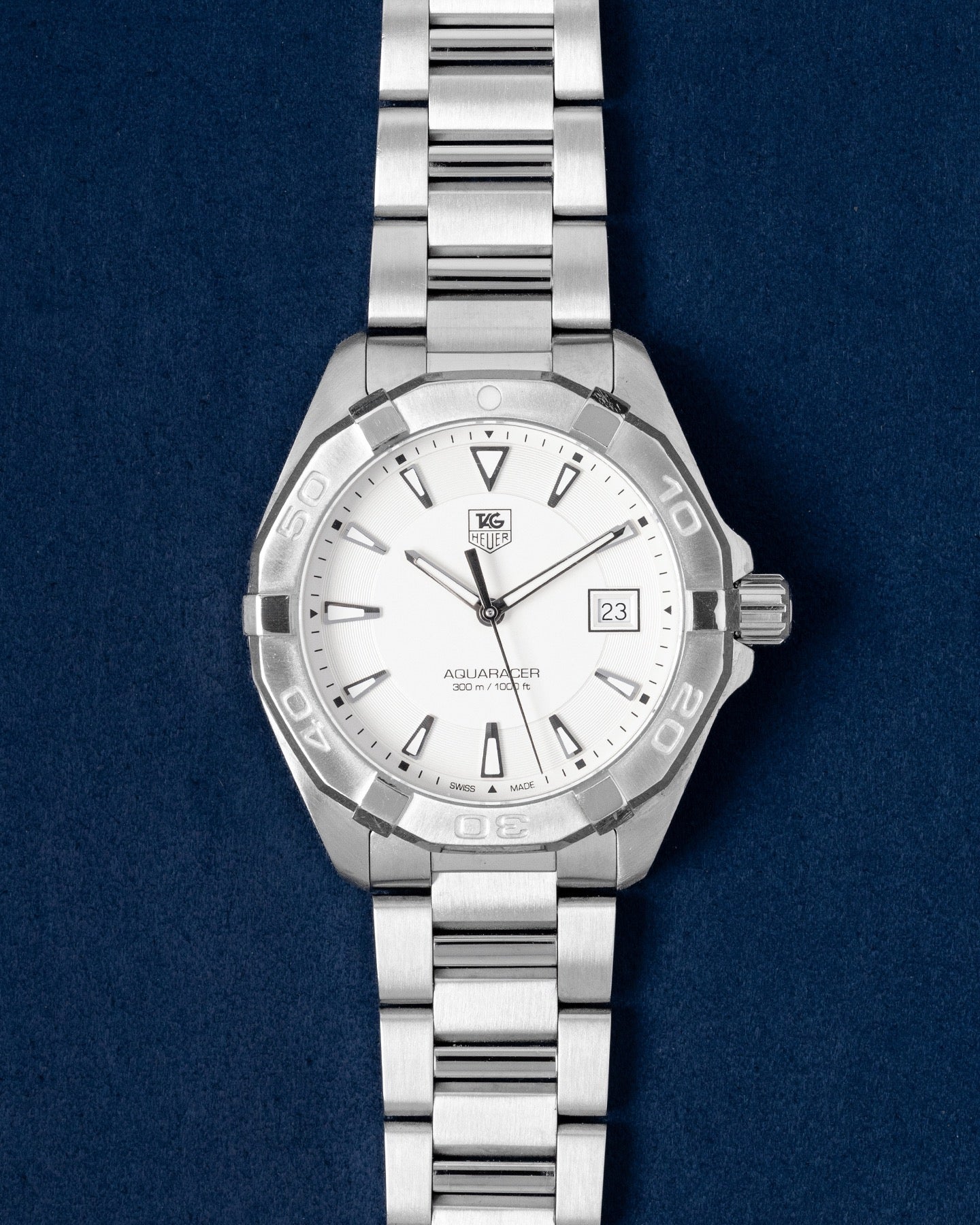
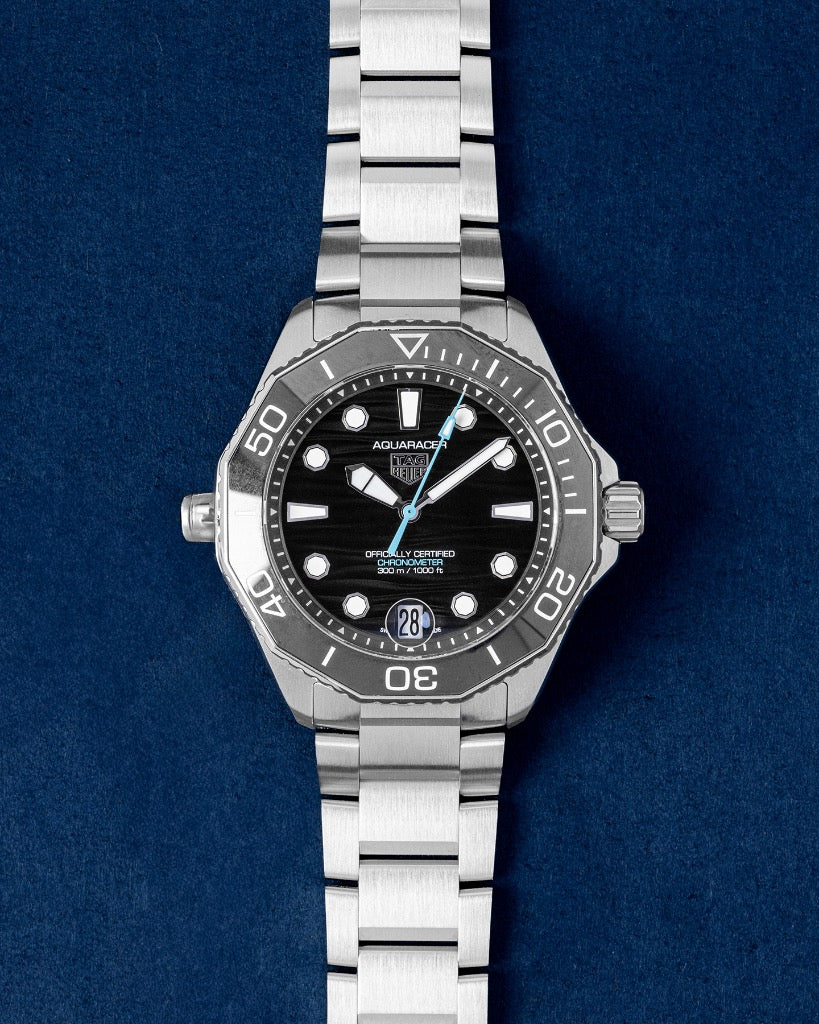
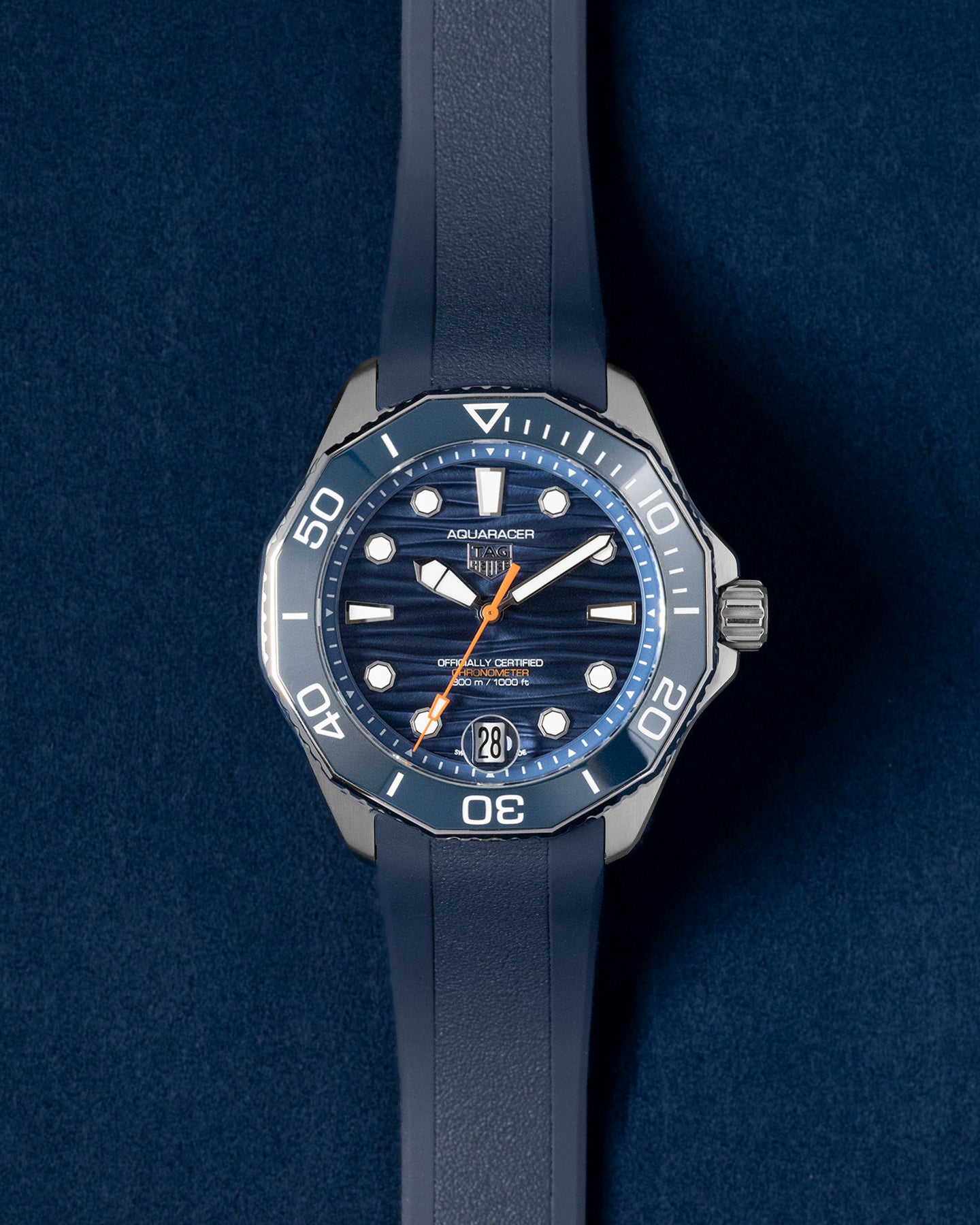
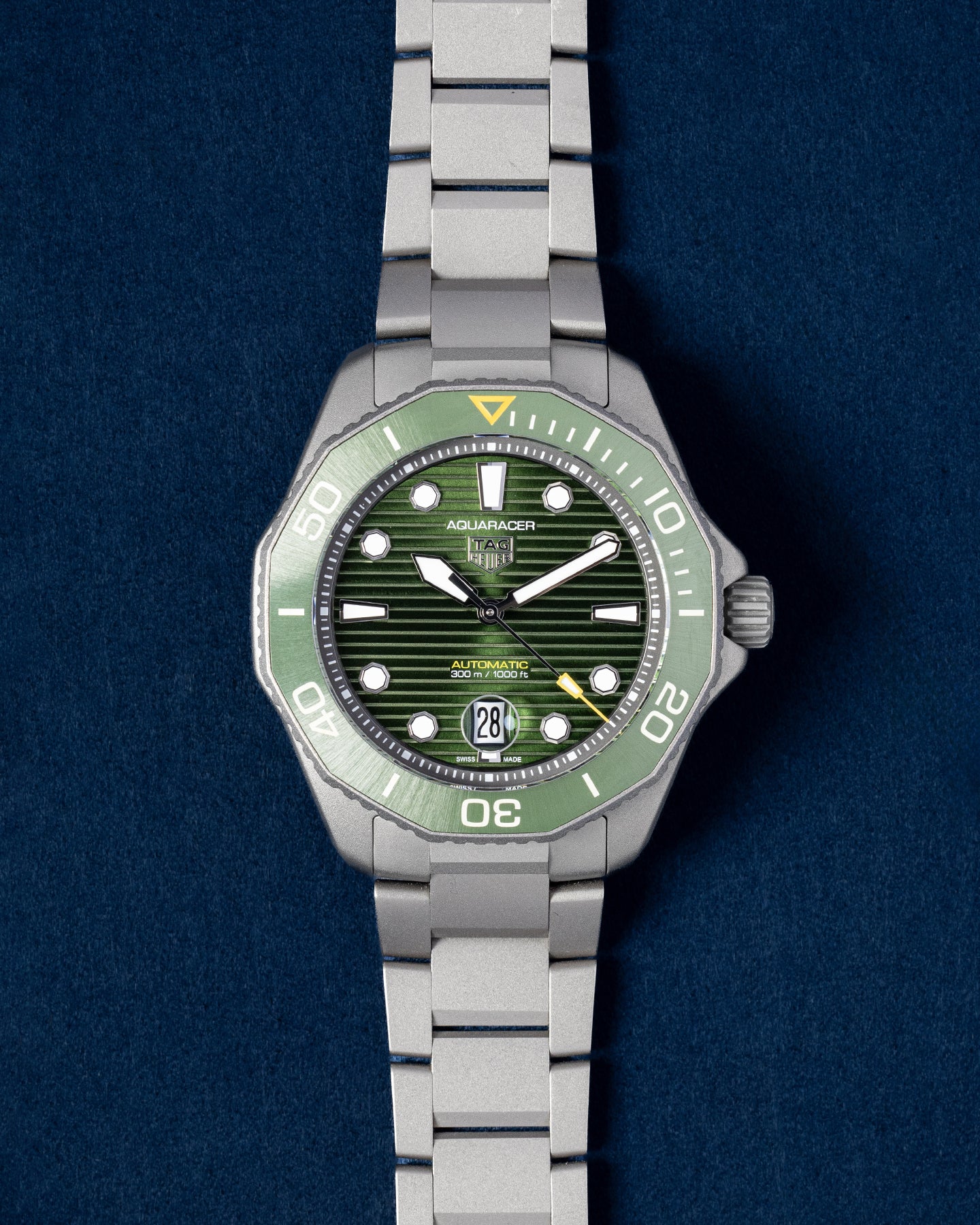
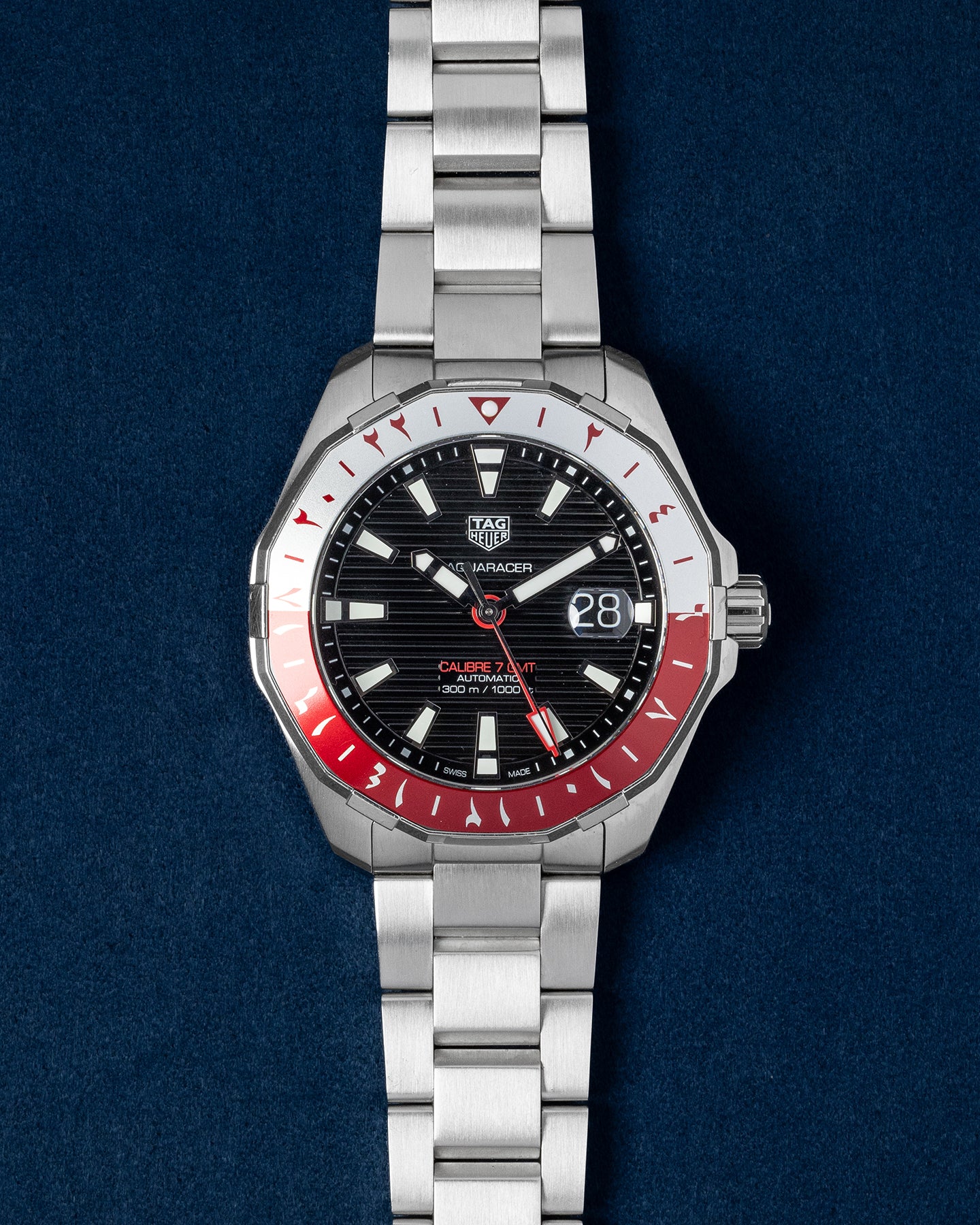
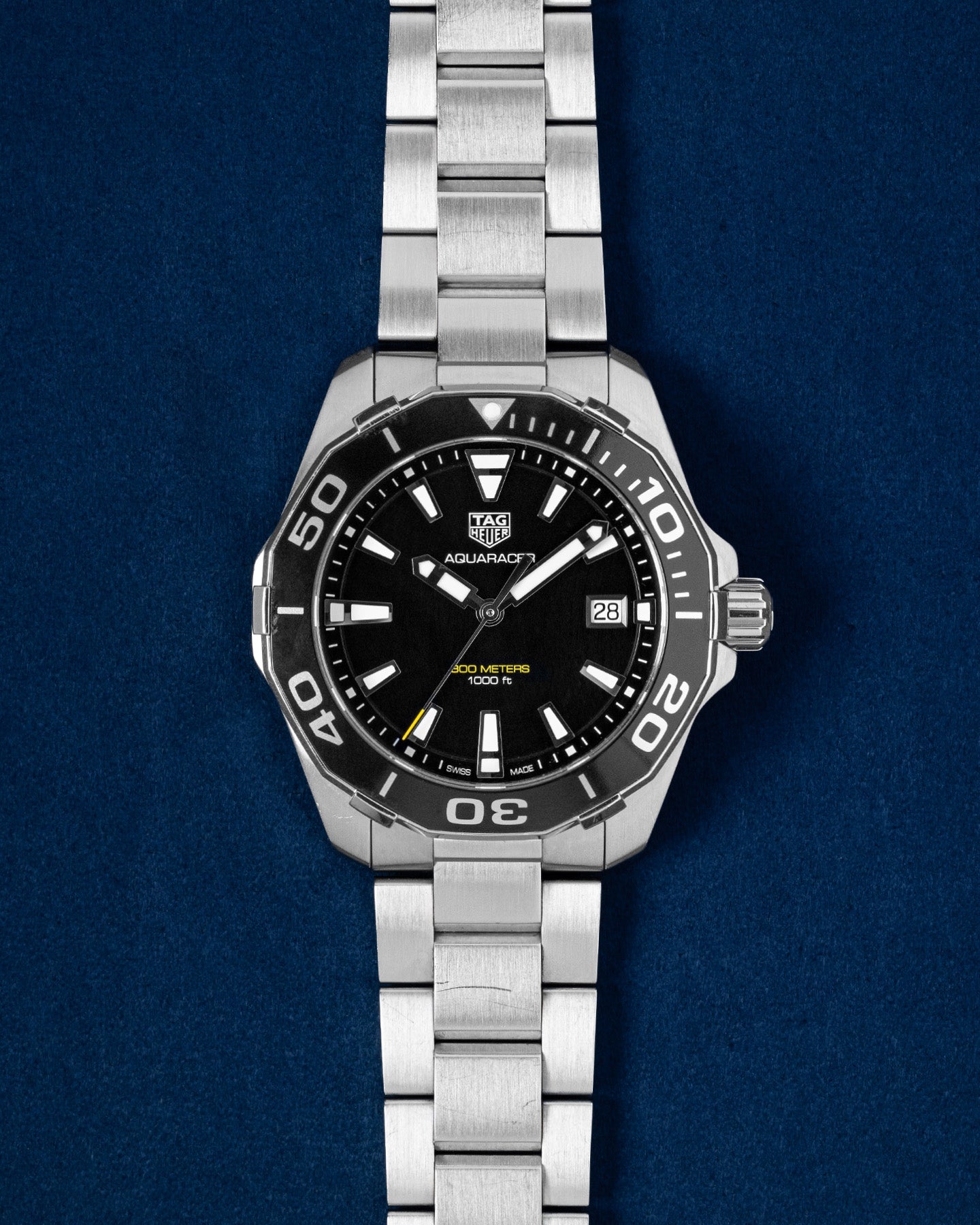
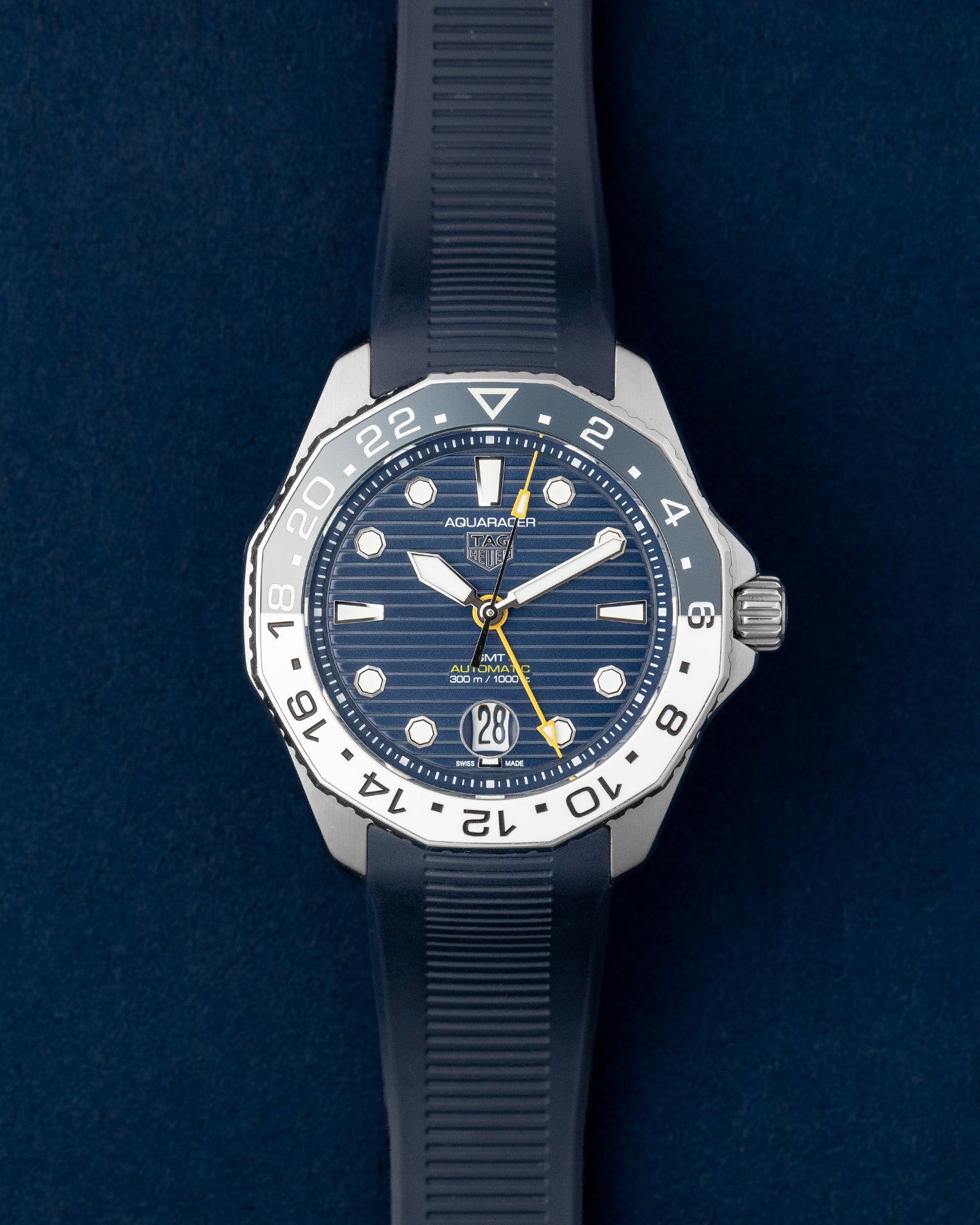
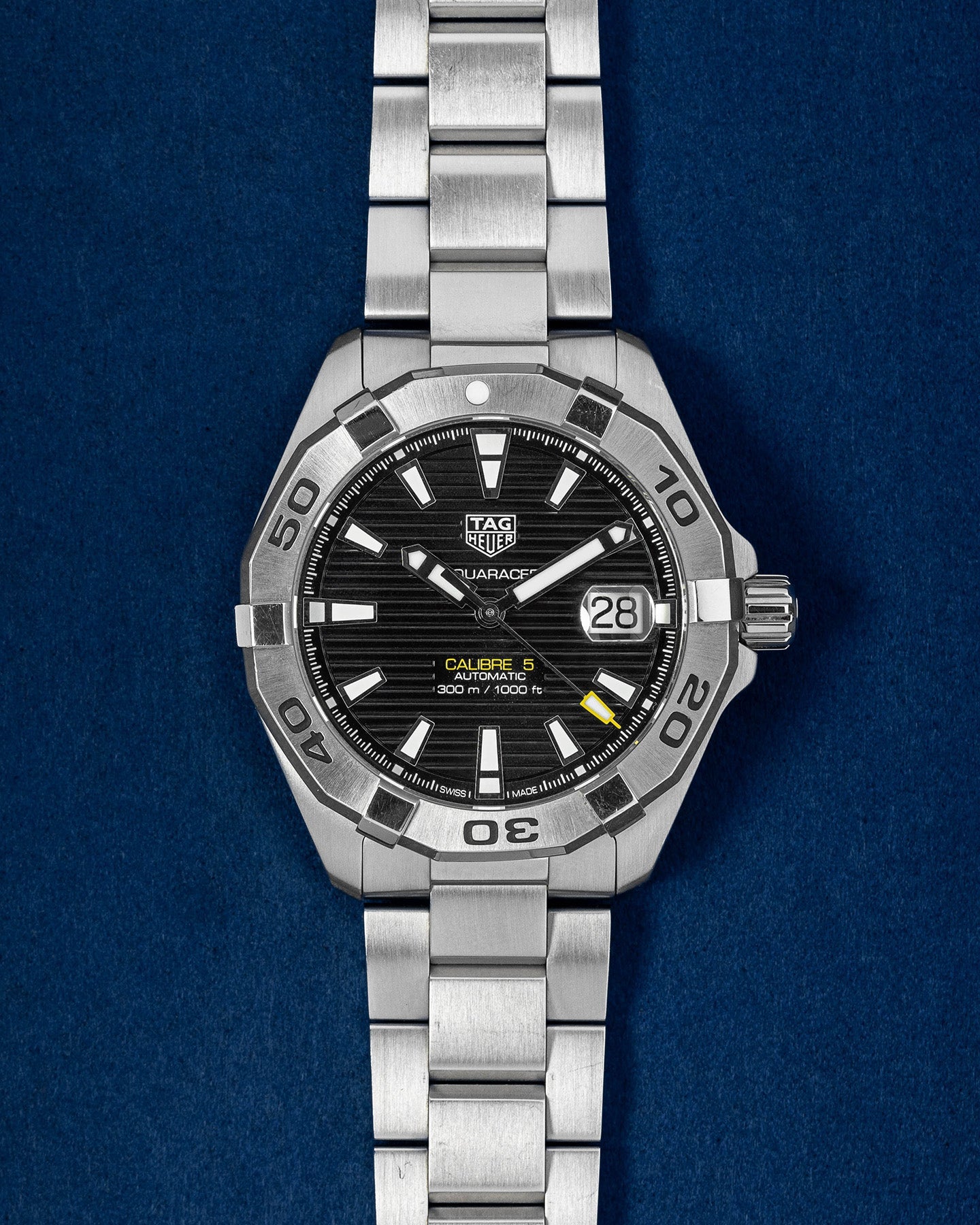
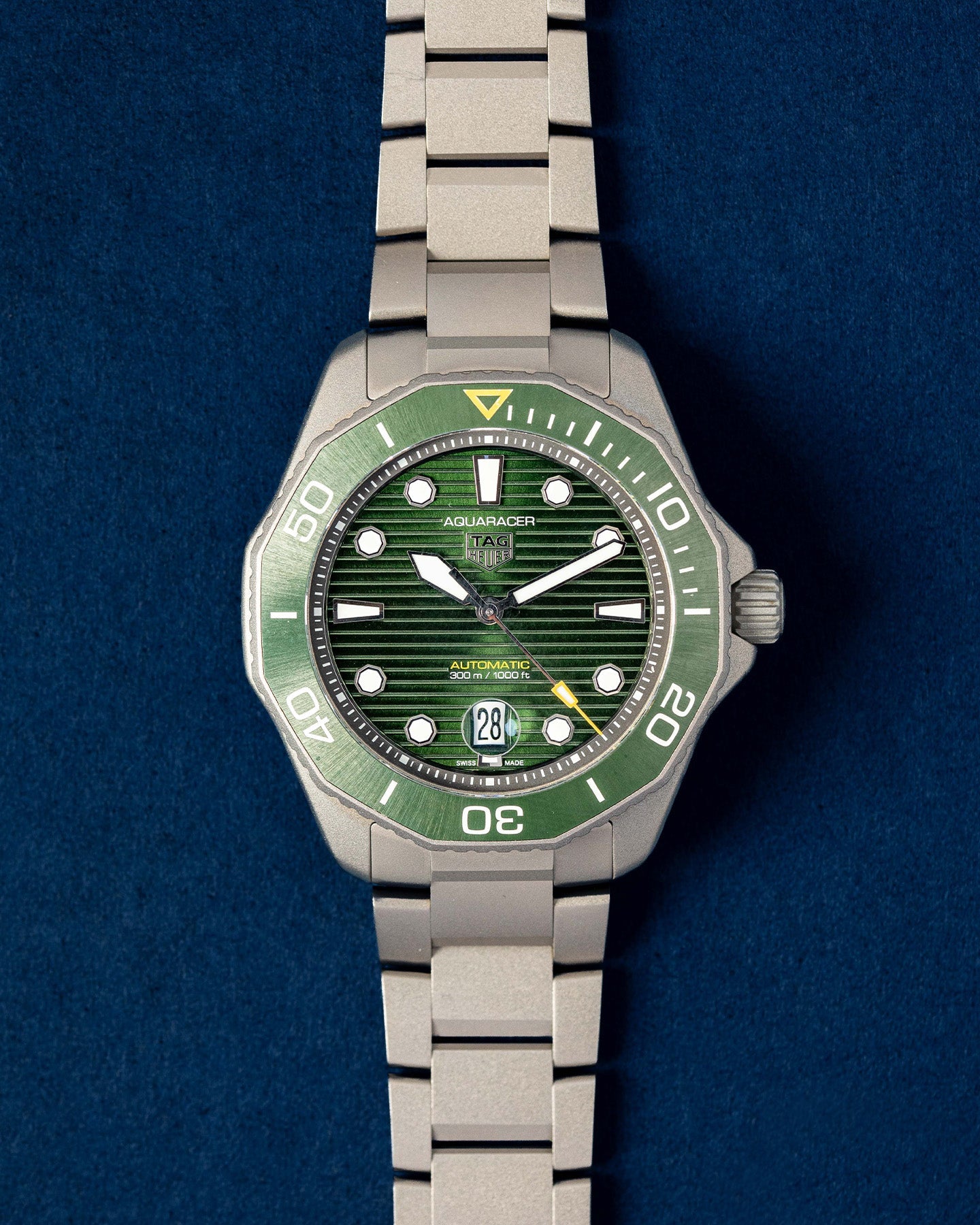
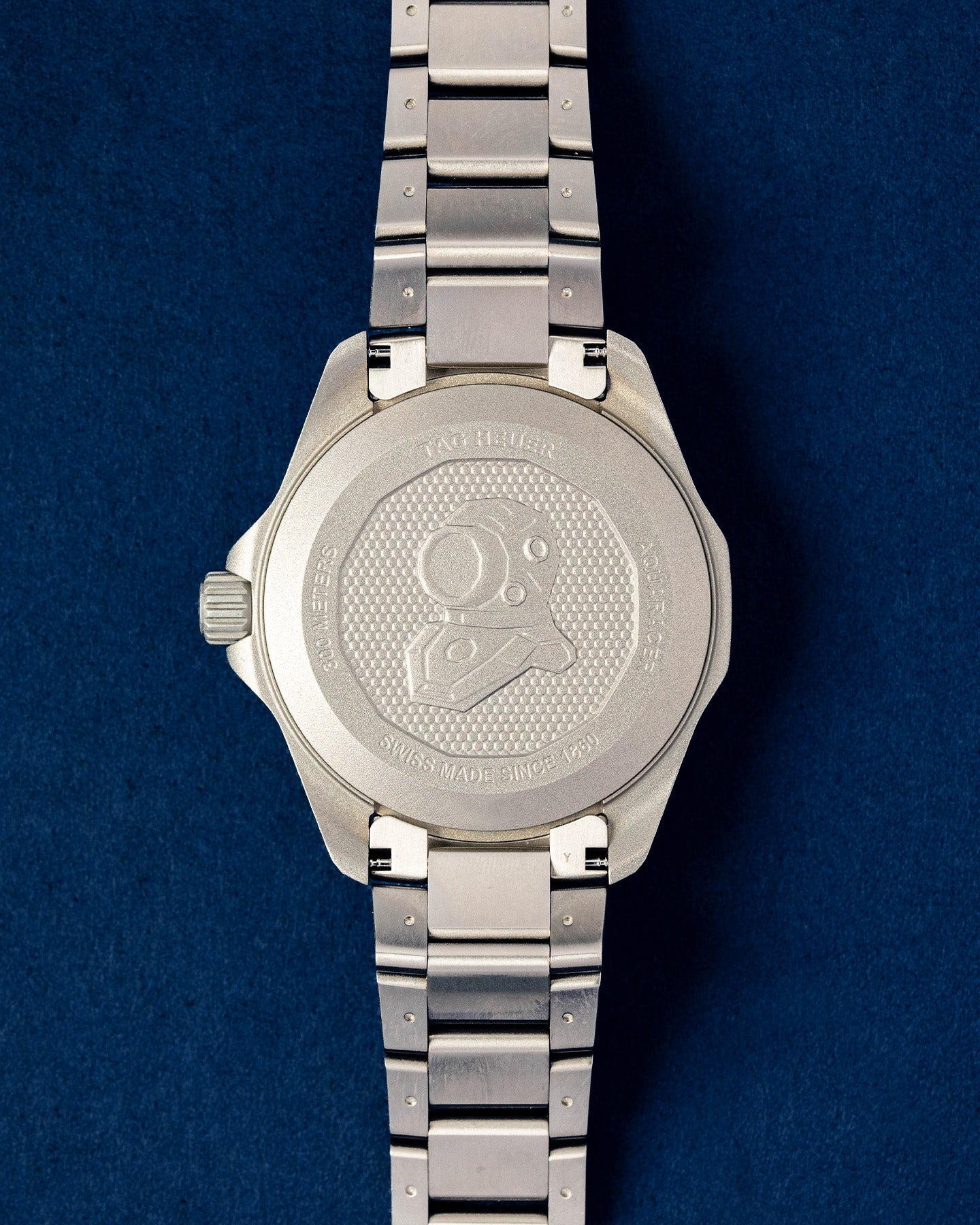
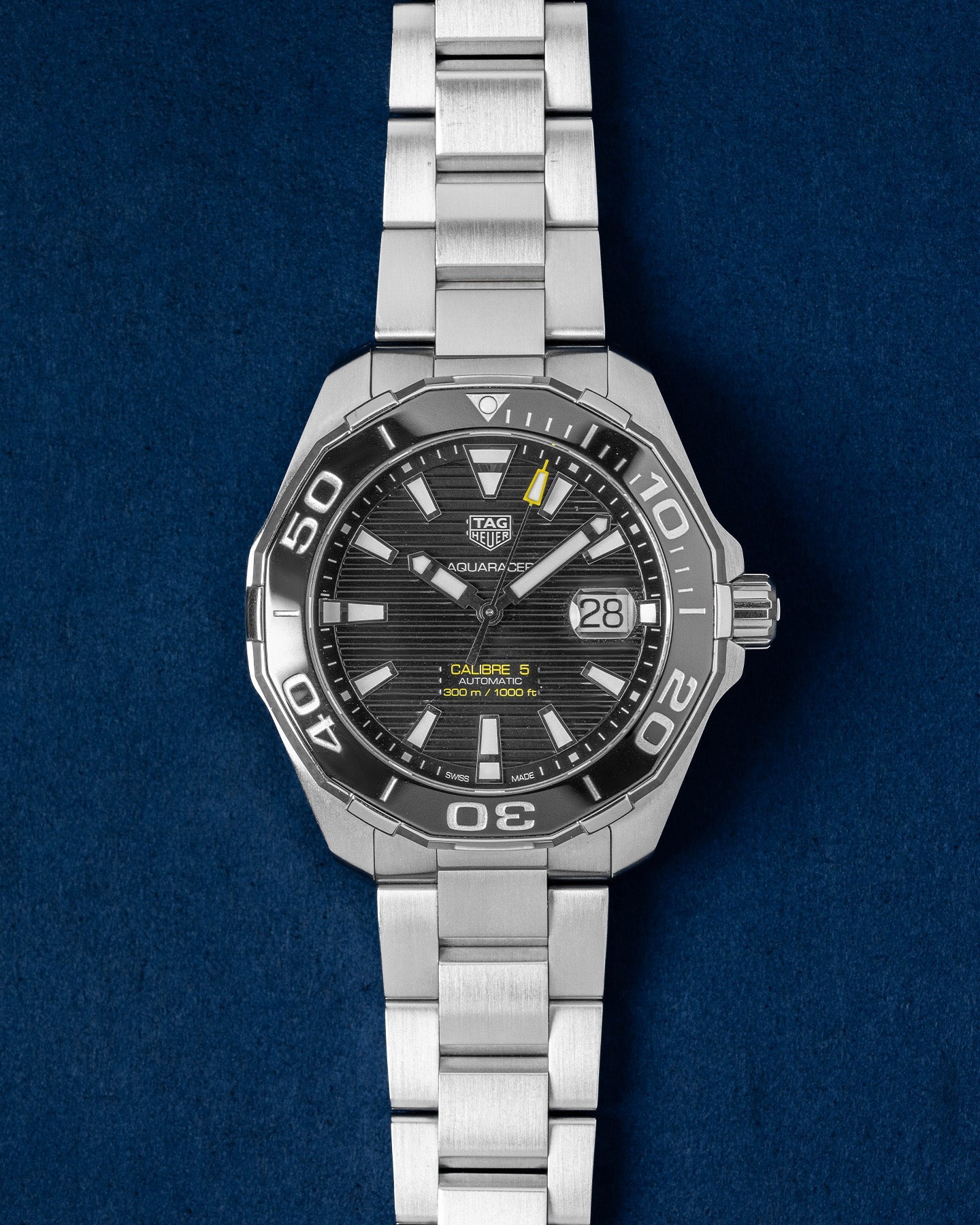
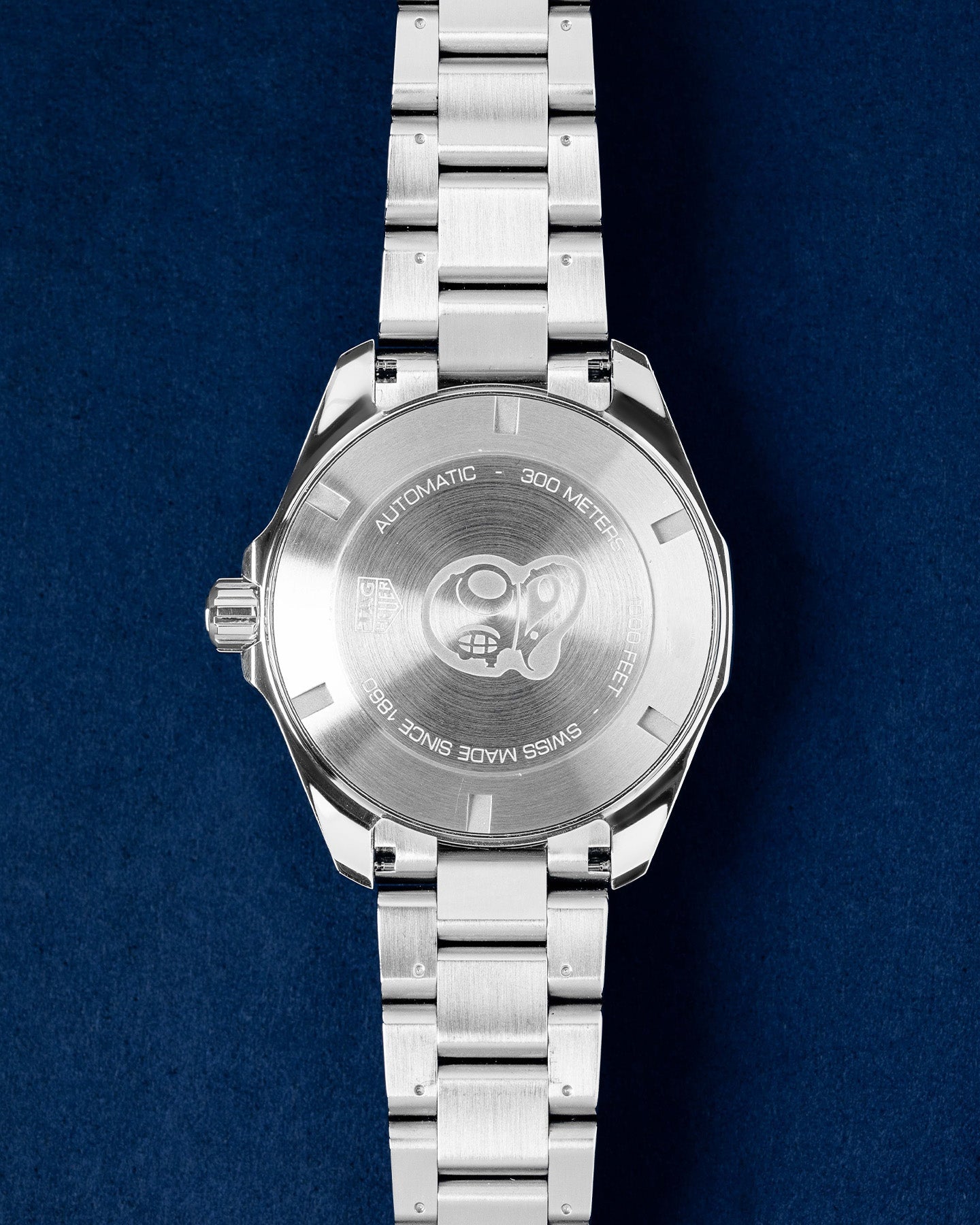
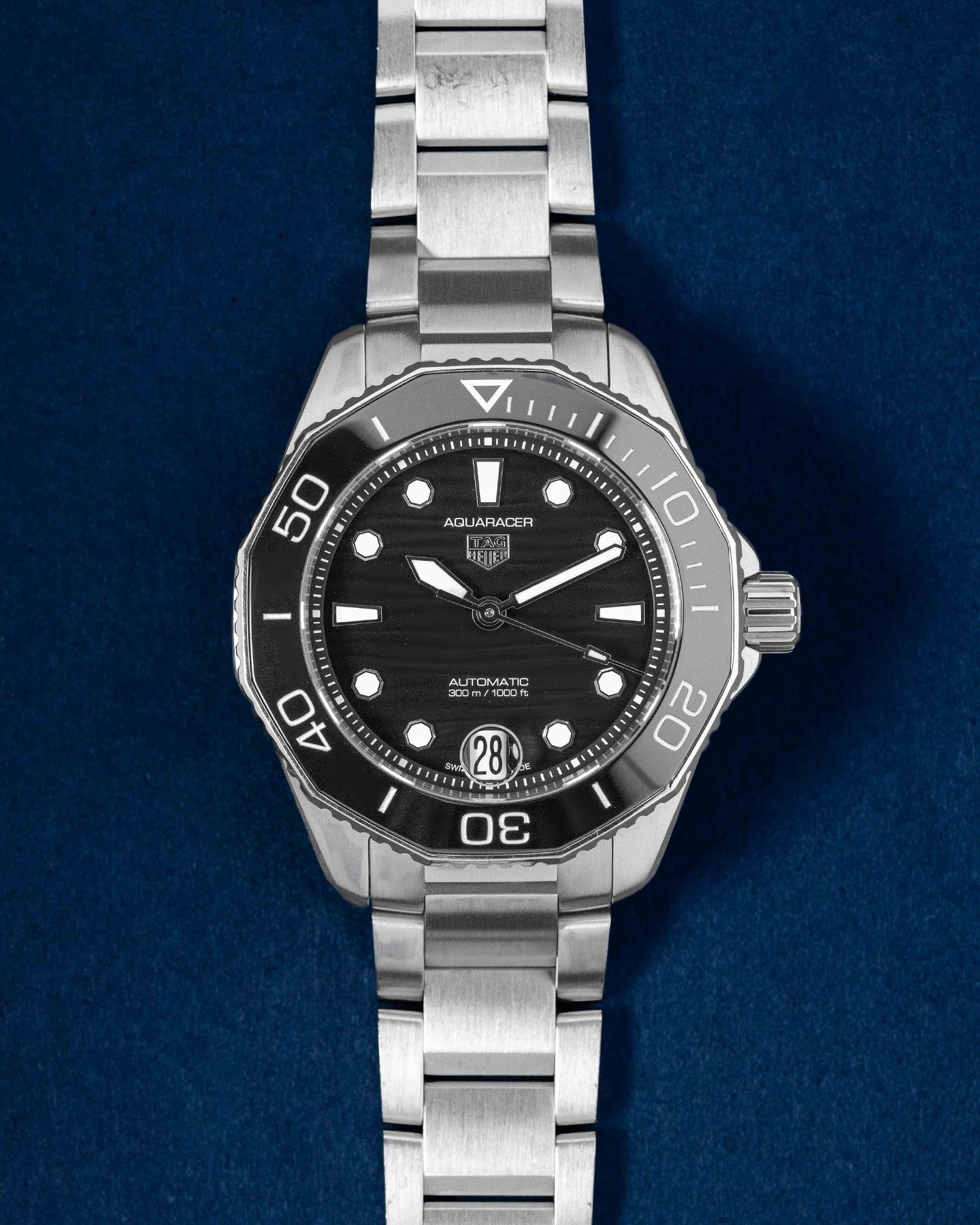
The modern Aquaracer, specifically the Professional 200 and Professional 300 series, elevates this functional blueprint with highly refined modern ergonomics. The most defining feature of these TAG Heuer watches is the twelve facet rotating bezel. Rather than a standard round coin edge, the bezel features twelve distinct, flat sides equipped with prominent rider tabs. This geometric design provides exceptional grip, allowing divers to easily rotate the bezel while wearing thick neoprene gloves in freezing water. The cases are finely brushed to eliminate bright reflections, and the dials frequently feature horizontal engraved lines that mimic the wooden decking of luxury yachts, perfectly balancing rugged professional capability with refined luxury aesthetics.
Advanced Ceramic and Titanium TAG Heuer Aquaracer Models
To further enhance the durability of their diving instruments, TAG Heuer watches frequently utilize advanced aerospace materials within the Aquaracer line. Many modern variations feature bezels crafted entirely from high tech zirconium oxide ceramic, ensuring they are profoundly resistant to scratches and color fading from ultraviolet sunlight. Additionally, the brand produces specialized Aquaracer models utilizing grade two and grade five titanium cases. These titanium divers offer the exact same structural rigidity and water resistance as their steel counterparts but at a fraction of the weight, providing exceptional comfort during extensive underwater expeditions.
The TAG Heuer Monaco Modern Iterations
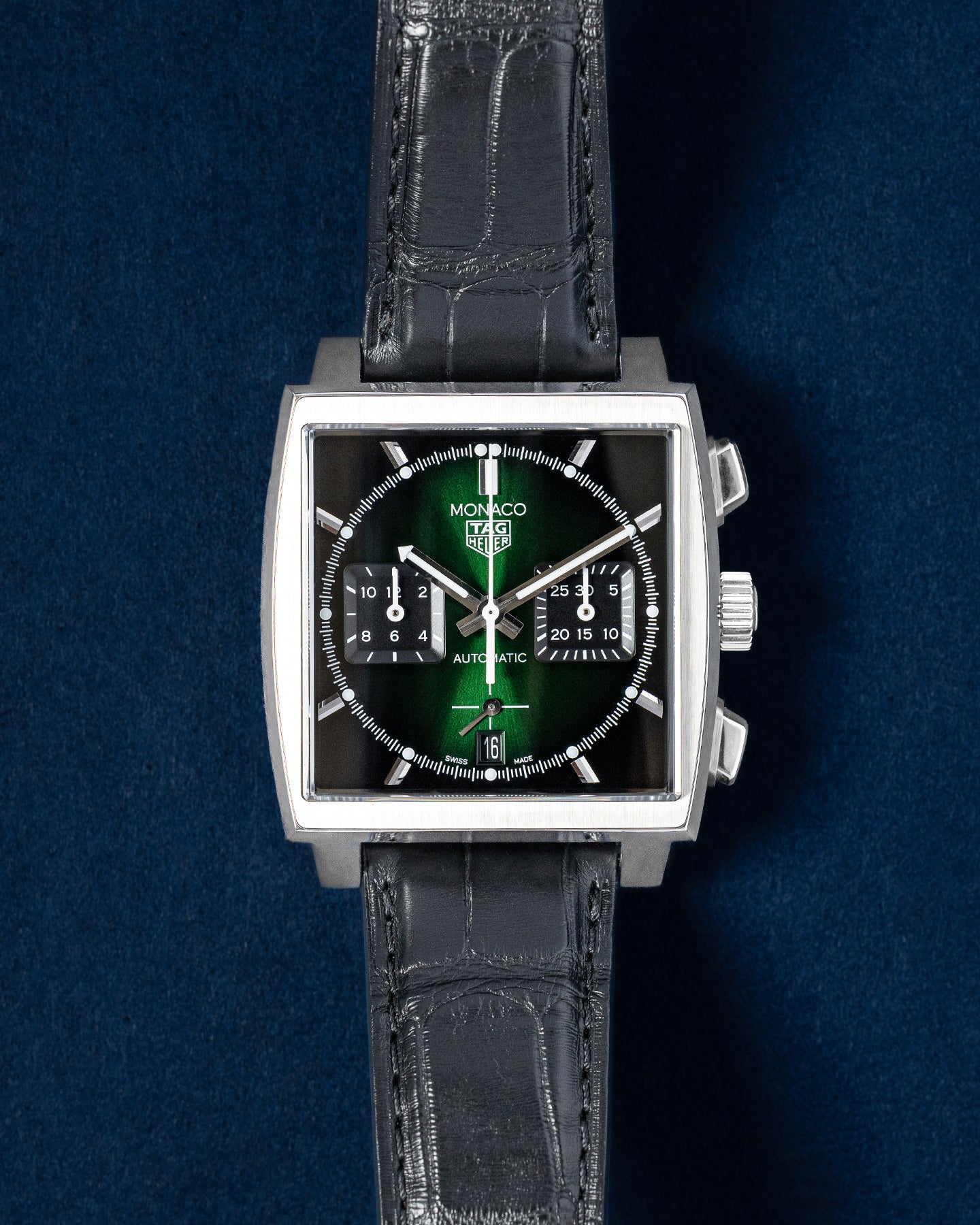
The Monaco remains the ultimate visual icon of TAG Heuer watches, instantly recognizable from across a room due to its bold, geometric proportions. The modern collection honors the vintage 1969 aesthetic while incorporating profoundly advanced mechanical upgrades.
The TAG Heuer Calibre Heuer 02 Monaco Evolution
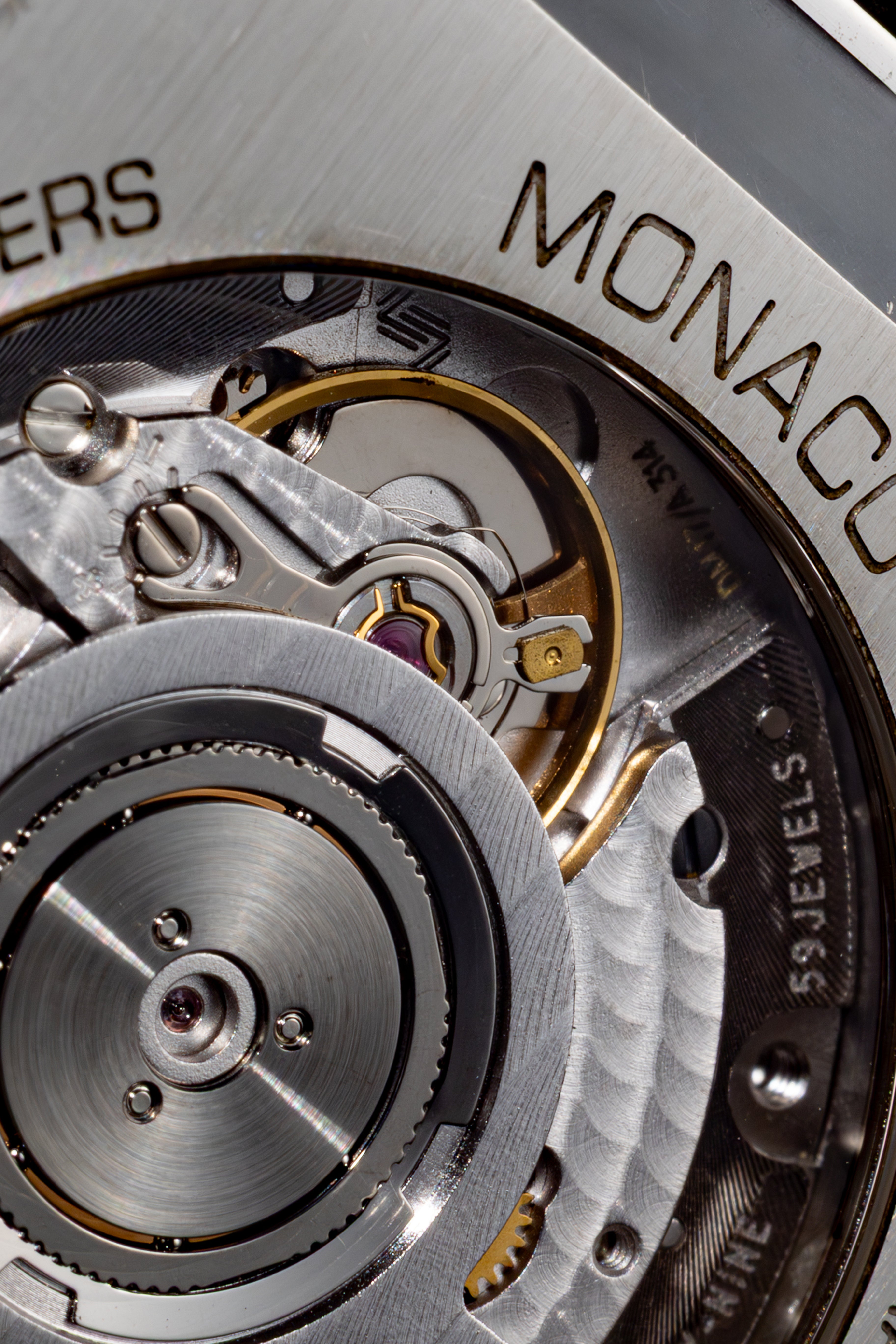
For decades, modern iterations of the Monaco relied on modular chronograph movements. However, TAG Heuer recently achieved a significant milestone by successfully integrating their flagship in house Calibre Heuer 02 into the square Monaco case. Because the Heuer 02 was originally designed as a round movement, adapting the internal architecture of the square case to properly support and secure the new caliber required extensive engineering. These modern Heuer 02 Monaco models provide collectors with the legendary Steve McQueen aesthetic, combined with the substantial eighty hour power reserve and column wheel precision of the brand's finest modern movement.
The TAG Heuer Monaco V4 and Belt Driven Mechanics
The absolute extreme boundary of Monaco engineering was achieved in 2004 with the introduction of the Monaco V4 concept. TAG Heuer engineers completely discarded the traditional principles of mechanical watchmaking. Instead of using traditional gears and pinions with microscopic teeth to transmit power, the Monaco V4 utilizes a profound system of microscopic drive belts on tiny ball bearings, directly mimicking the timing belts found in a high performance automobile engine. Furthermore, instead of a traditional swinging automatic rotor, the V4 utilizes a linear mass that slides back and forth on a central rail to wind the mainspring. The Monaco V4 remains one of the most astonishing, deeply innovative timepieces in the entire history of modern horology, proving that TAG Heuer watches possess exceptional high horology capabilities.
Advanced Horology in TAG Heuer Watches
Beyond the legendary heritage reissues, the modern research and development laboratories at TAG Heuer watches continuously strive to pioneer advanced materials and democratize high complications for serious collectors.
TAG Heuer Tourbillon Chronograph Democratization
In the highest echelons of Swiss watchmaking, the tourbillon chronograph is considered an elite, astronomically expensive grand complication. TAG Heuer completely disrupted this pricing structure with the introduction of the Carrera Calibre Heuer 02T. Through exceptional, highly optimized modern manufacturing techniques, the brand successfully produced a chronometer certified flying tourbillon combined with a mechanical chronograph at a price point that shattered the traditional barriers to entry for this specific complication. This specific model allowed a much broader audience of collectors to experience the profound kinetic beauty of a Swiss tourbillon, completely changing the luxury landscape.
The TAG Heuer Carbon Hairspring Innovation
The regulating organ, specifically the delicate hairspring inside the balance wheel, is the absolute heart of any mechanical watch. Traditional metal hairsprings are highly susceptible to magnetic fields and temperature variations, which can severely disrupt the accuracy of the watch. TAG Heuer watches completely reinvented this component with the introduction of the Nanograph, featuring a proprietary Isograph hairspring. This profound hairspring is crafted entirely from a specialized carbon composite material, making it completely immune to magnetism, incredibly resistant to gravitational shocks, and perfectly concentric in its expansion and contraction. The creation of the carbon composite hairspring demonstrates that the engineers at TAG Heuer are entirely capable of pushing the absolute boundaries of molecular material science.
Secondary Market Empowerment for TAG Heuer Watches
Understanding the strategic landscape of the secondary market is incredibly important for serious collectors looking to acquire TAG Heuer watches. The secondary market presents a highly empowering environment, offering collectors immediate access to a vast, profound lineage of motorsports history without the limitations of modern retail allocations.
Immediate Access to Discontinued TAG Heuer Icons
The heritage of TAG Heuer watches is vast, and many of the most highly coveted models are no longer available in traditional retail boutiques. The secondary market allows discerning buyers to completely bypass modern retail limitations. Collectors have immediate access to the exact references they desire, whether they are hunting for a highly limited Carrera Skipper reissue, an early Calibre 11 Monaco with the left hand crown, or a pristine vintage Siffert Autavia. The secondary market provides the profound ability to curate a specific, highly targeted horological portfolio focused entirely on the golden era of motorsports.
Maximizing Purchasing Power for TAG Heuer Collectors
Purchasing pre owned TAG Heuer watches allows collectors to vastly maximize their horological purchasing power. The secondary market accurately reflects the true horological merit and historical significance of these instruments, creating an environment rich with exceptional, highly advantageous value propositions. When collectors acquire pieces from trusted, expert dealers, they secure the legendary mechanical finishing, the advanced Heuer 02 column wheel chronographs, and the iconic square waterproof cases while executing a highly intelligent financial strategy. Buying pre owned is the definitive method for building a serious, sophisticated collection of racing chronographs, allowing buyers to expand their portfolios with absolute confidence, extensive choice, and immediate satisfaction.
Purchasing TAG Heuer Watches at Grand Caliber in Uptown Dallas
Grand Caliber presents an expertly authenticated, highly curated selection of TAG Heuer watches. We have built our reputation on total dealer transparency, profound horological knowledge, and a direct commitment to helping collectors execute the smartest value strategies in the market. Because our dynamic inventory fluctuates daily, we frequently source highly demanded models ranging from the elegant Glassbox Carrera and the professional Aquaracer dive instruments to the historic left hand crown Monaco chronographs that define the peak of the manufacture. Every single watch is physically present and available for immediate inspection in our Uptown Dallas showroom located at 2811 McKinney Avenue.
Because TAG Heuer relies on highly specific modular chronograph constructions, advanced in house column wheel mechanisms, and proprietary carbon composite components, the authentication process requires elite, uncompromising expertise. Our named specialist staff authenticates the exact engagement of the oscillating pinions, verifies the precise tension rings securing the acrylic crystals on vintage models, and meticulously inspects the complex tripartite case constructions to ensure you are receiving a verified piece of motorsports history before it reaches our showroom floor. We never hide pricing or require complicated bundle purchases. Every price is posted openly online, reflecting true, highly advantageous secondary market value. We serve clients across the entire United States with fully insured overnight shipping. Call us directly at 214-225-7198 or email info@grandcaliber.com to discuss the TAG Heuer watches currently in our inventory or to have our experts source the exact racing chronograph you are looking for.
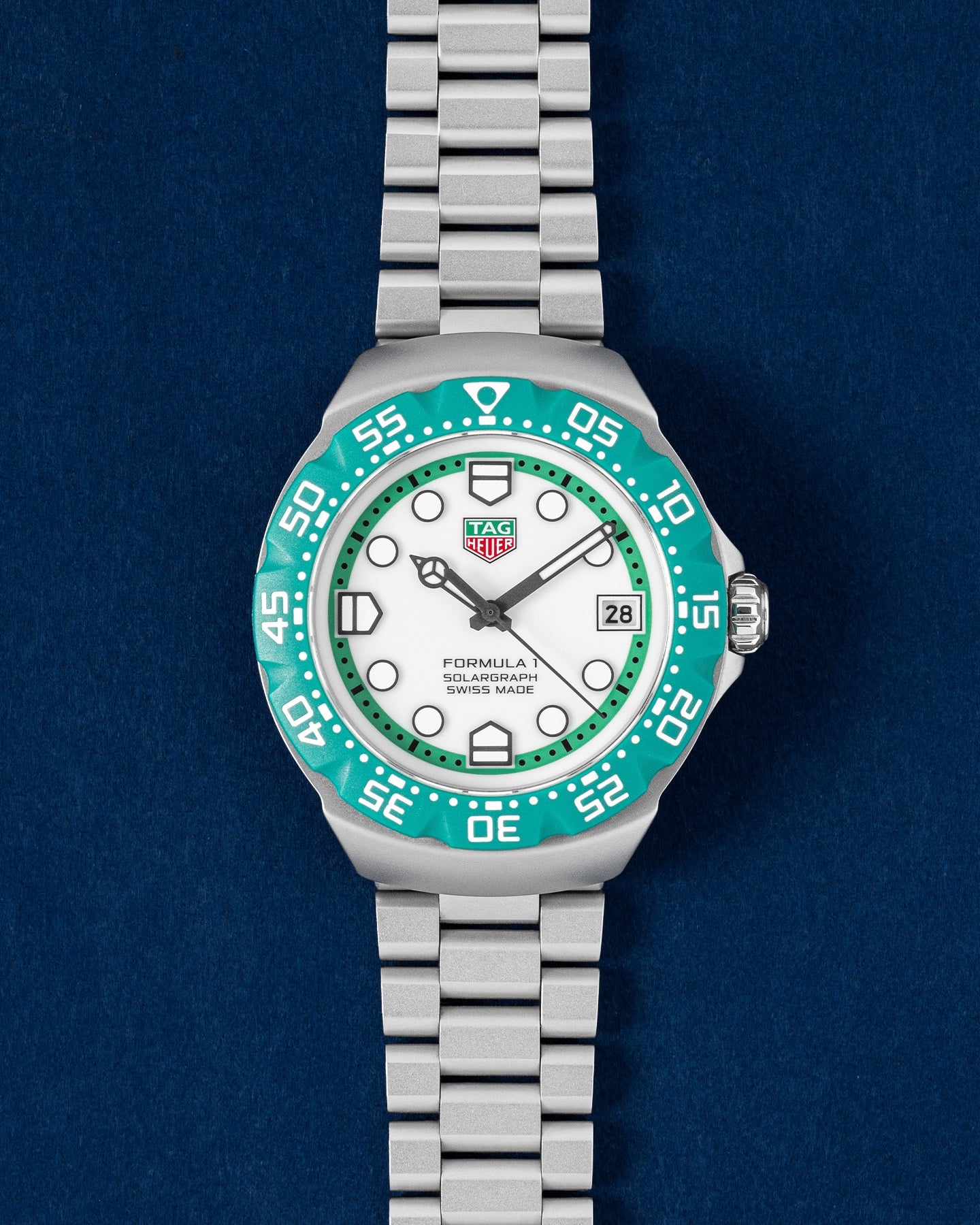
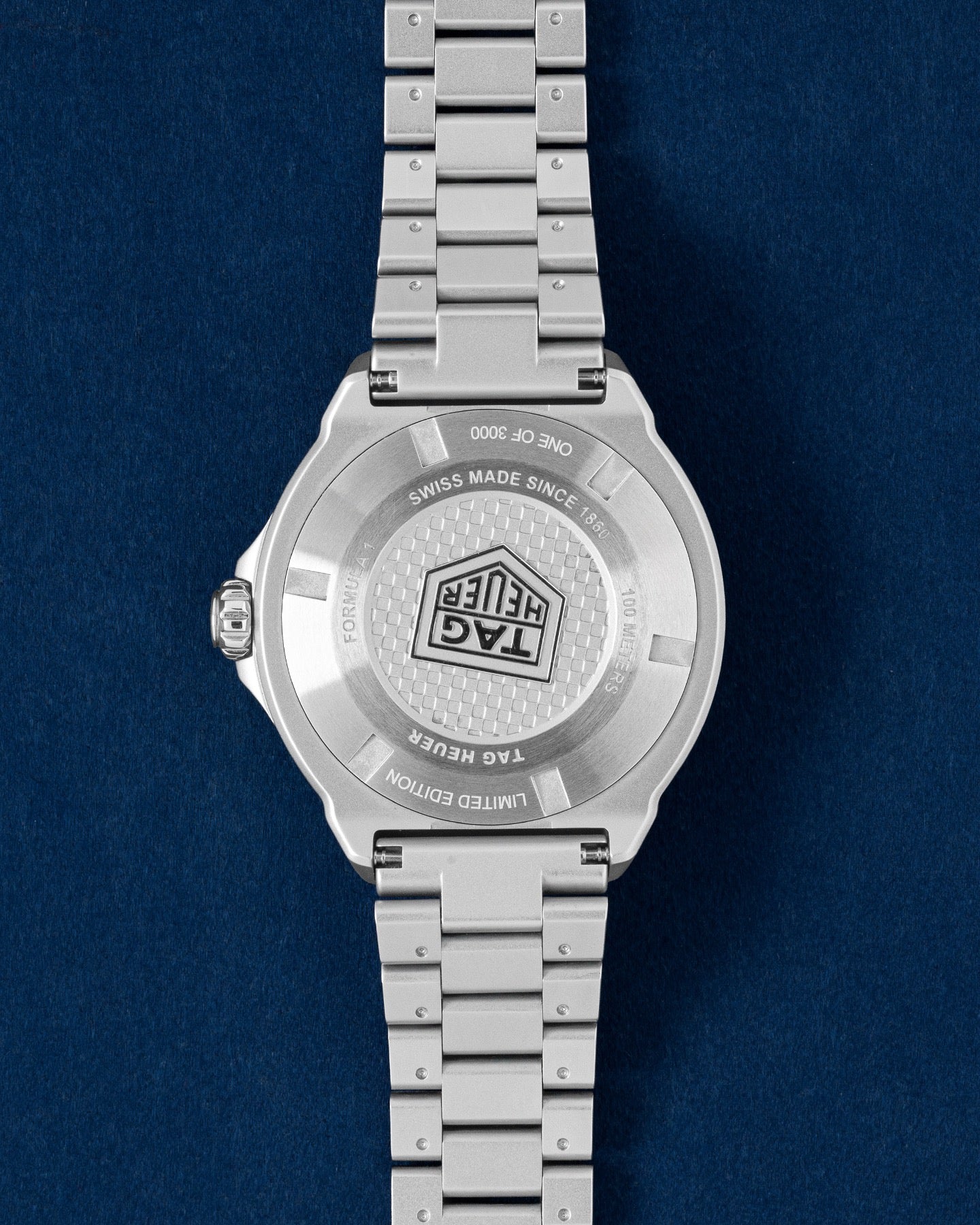
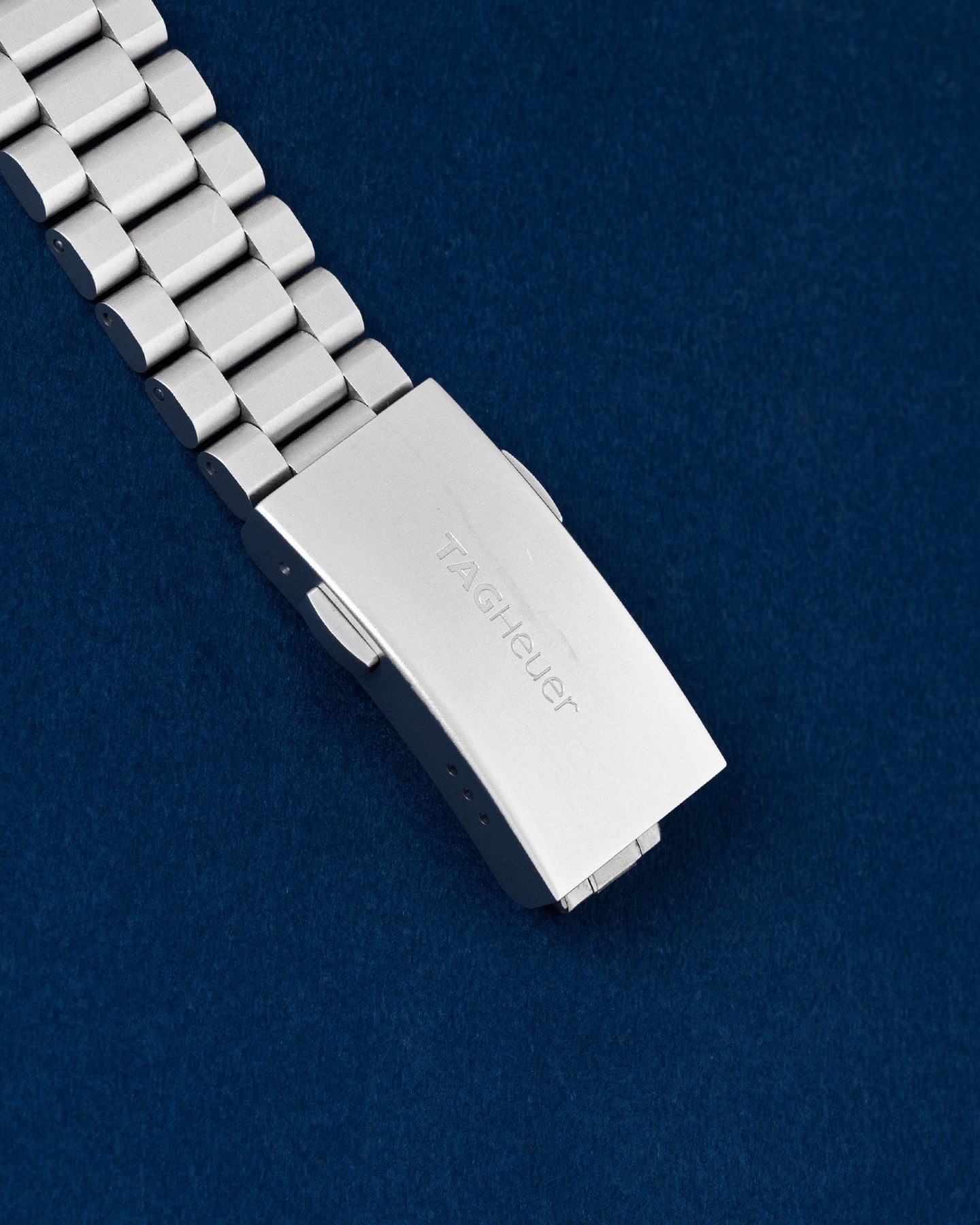
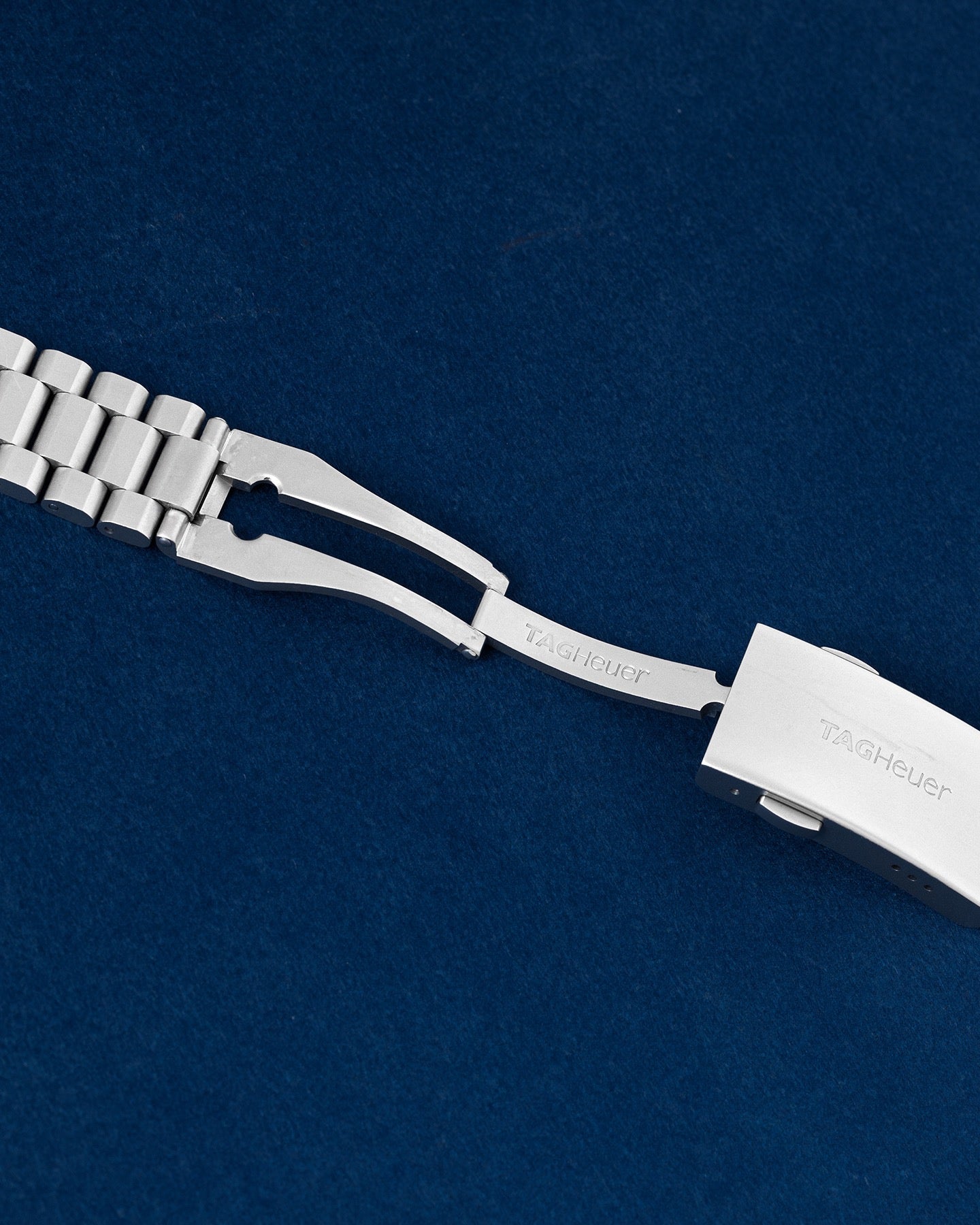
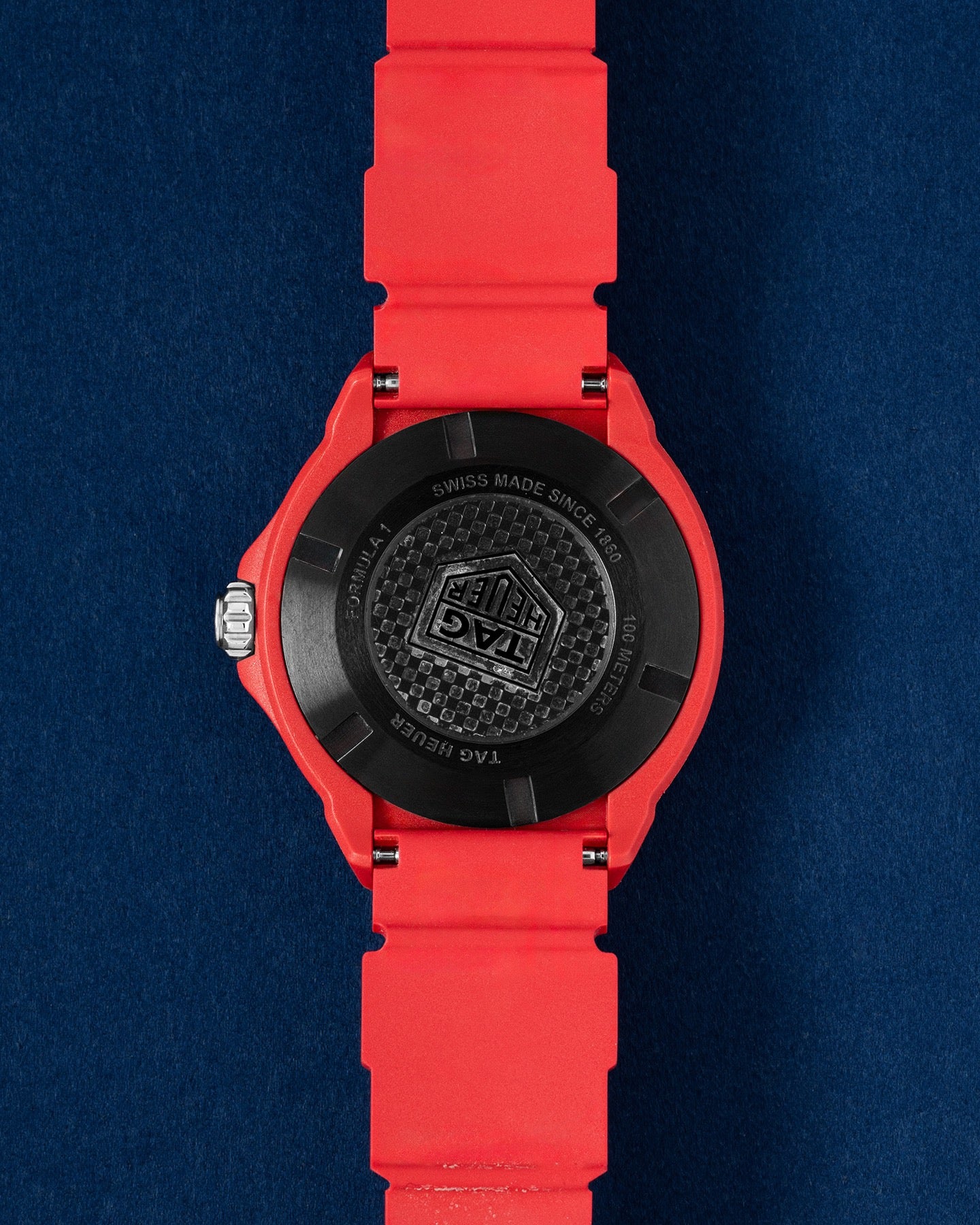
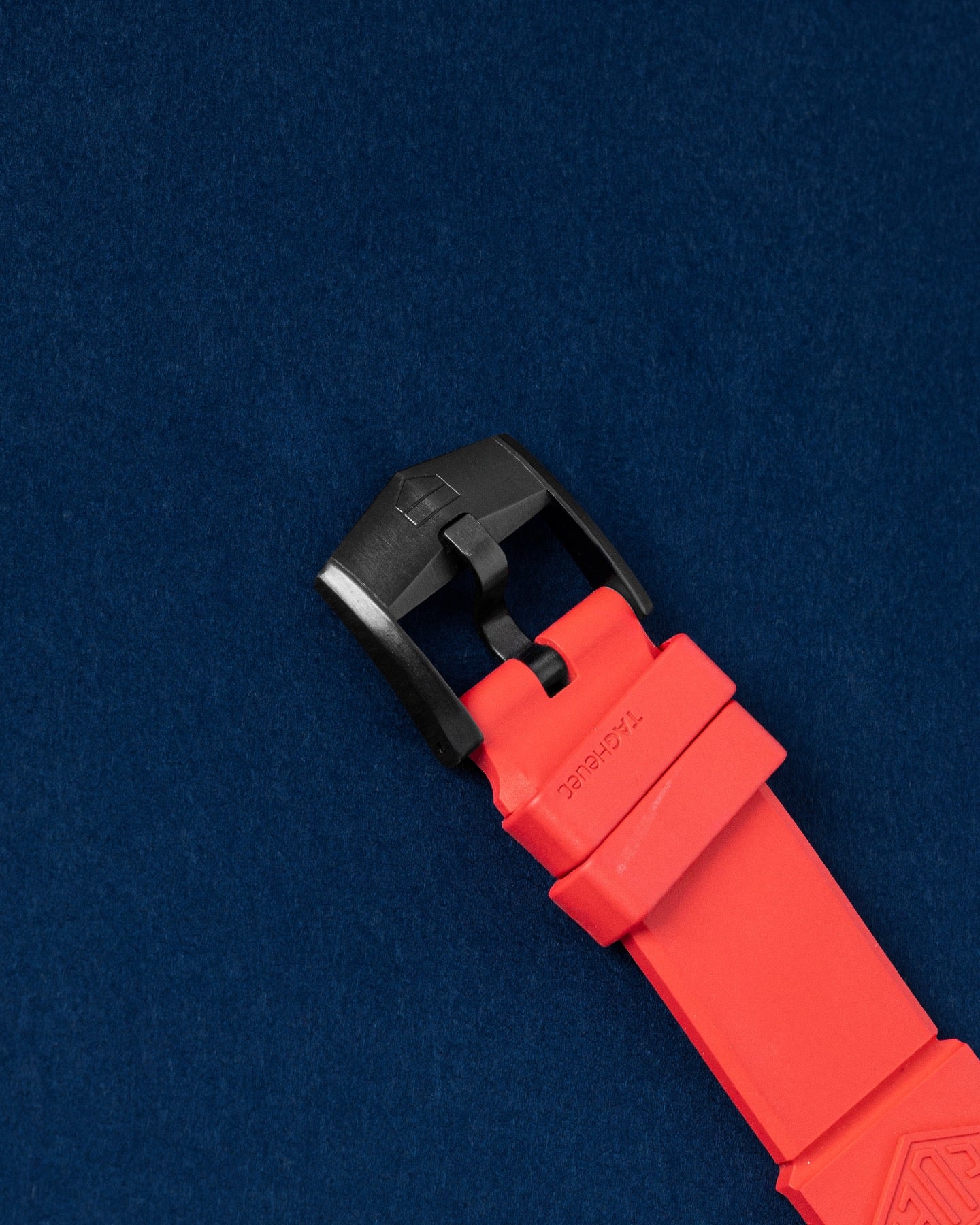
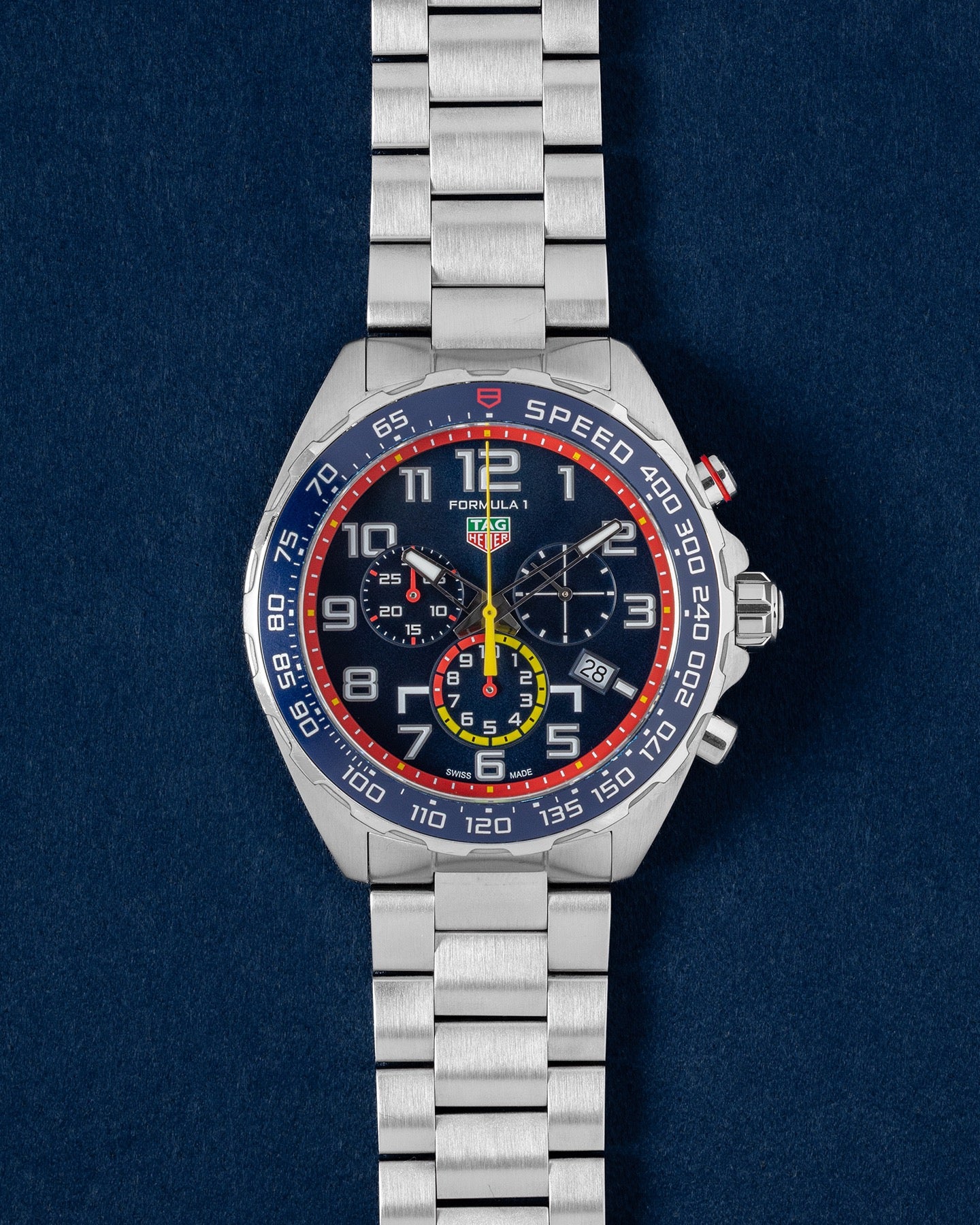
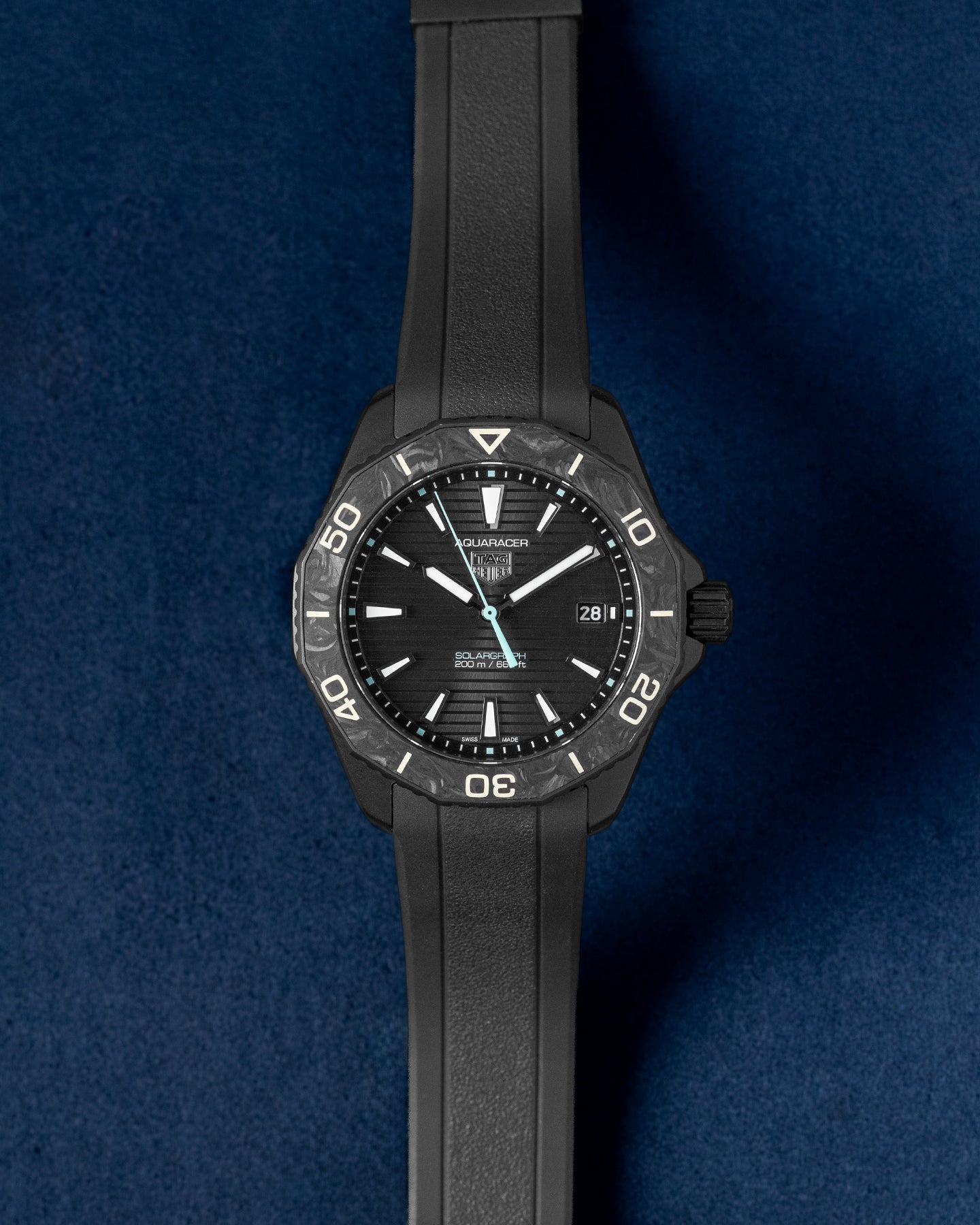
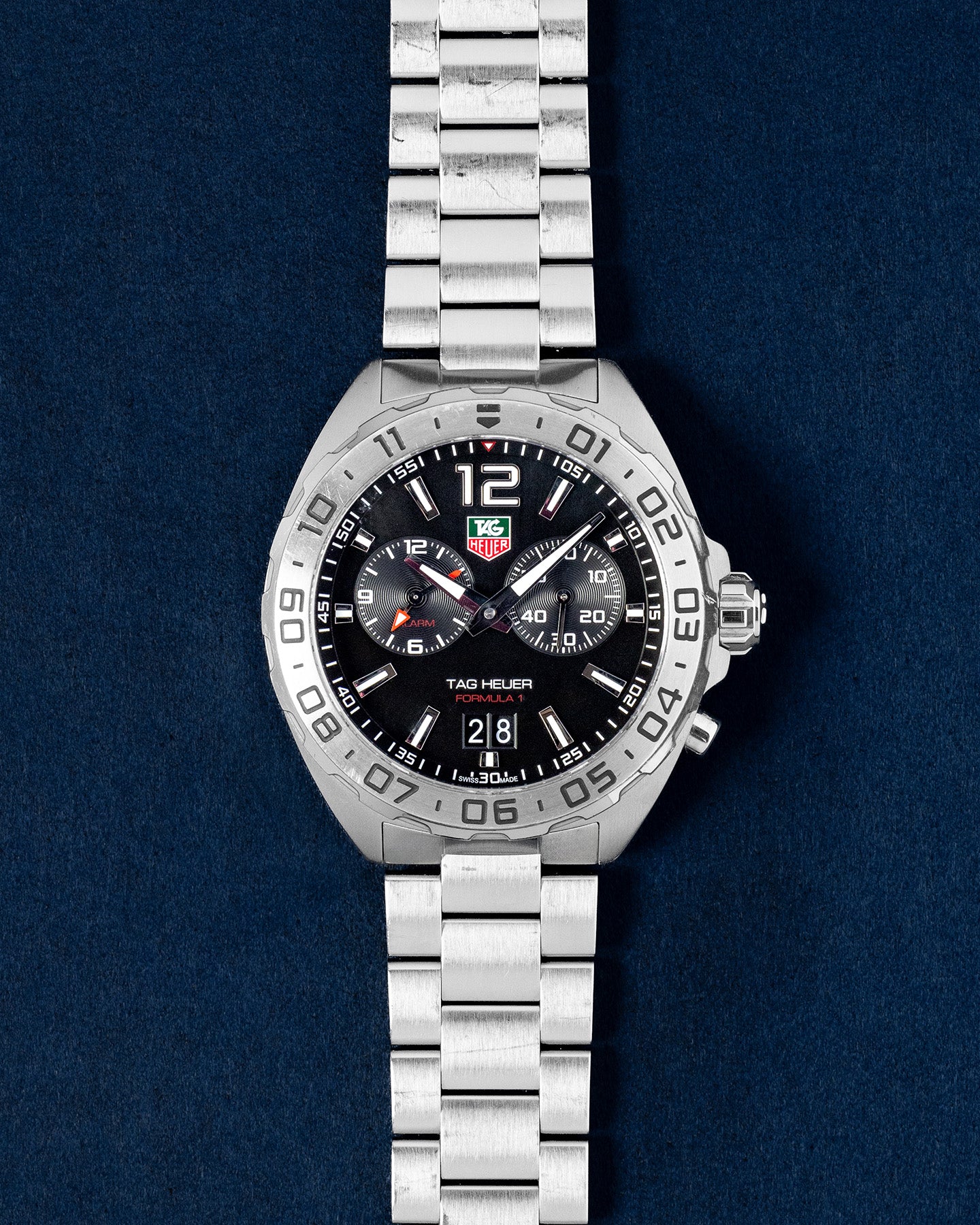
TAG Heuer Formula 1 Solargraph WBY1113


TAG Heuer Formula 1 Solargraph WBY1161


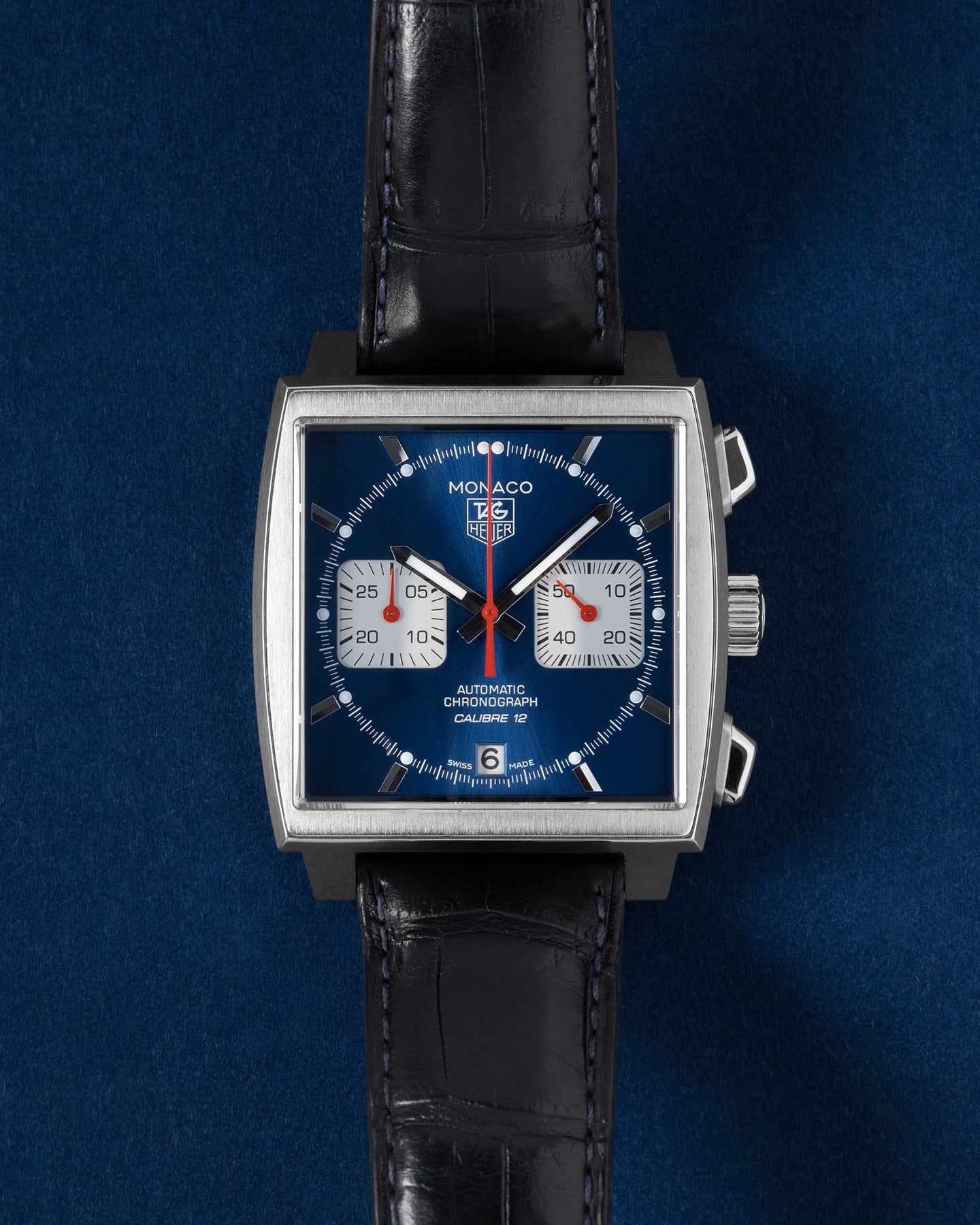
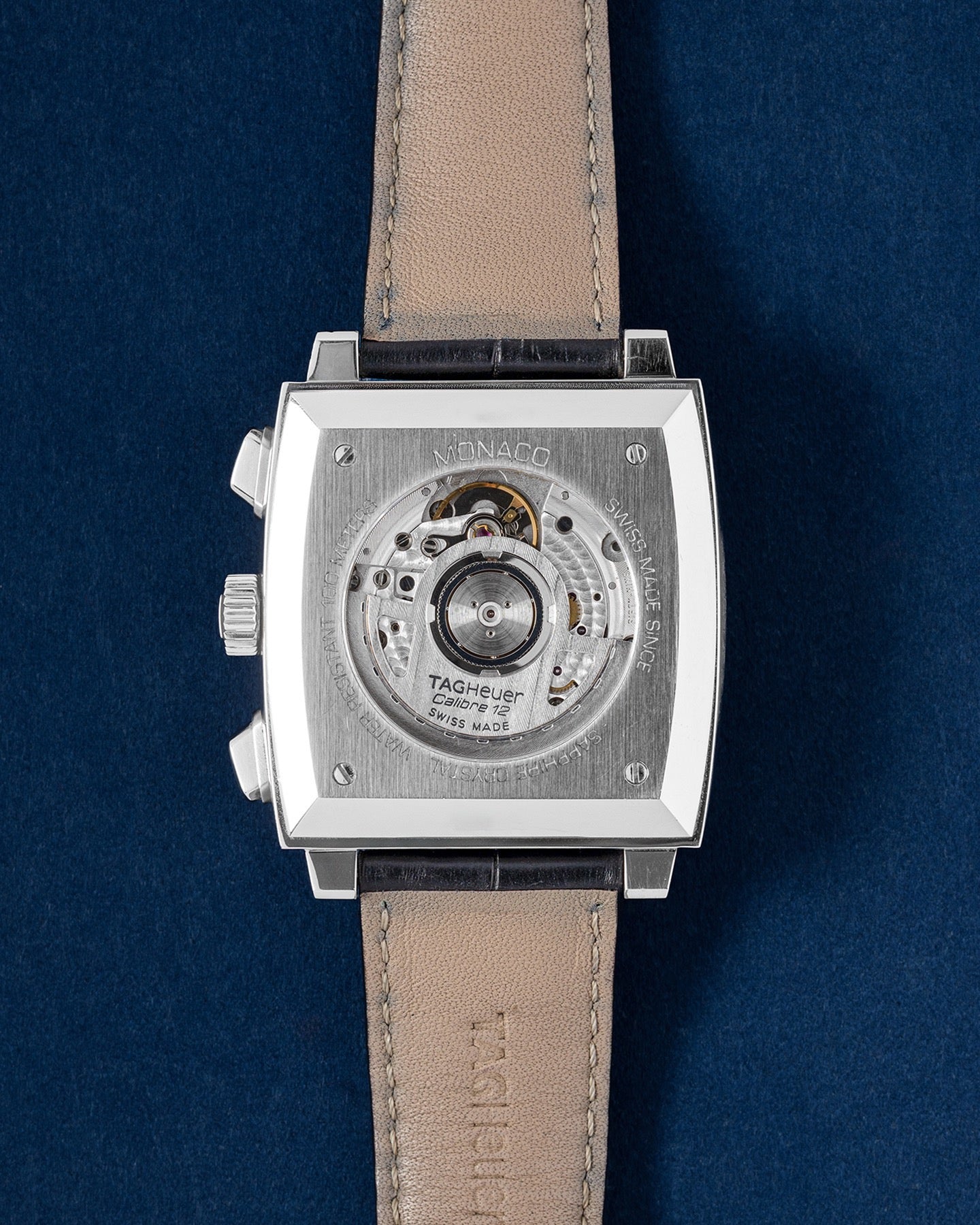
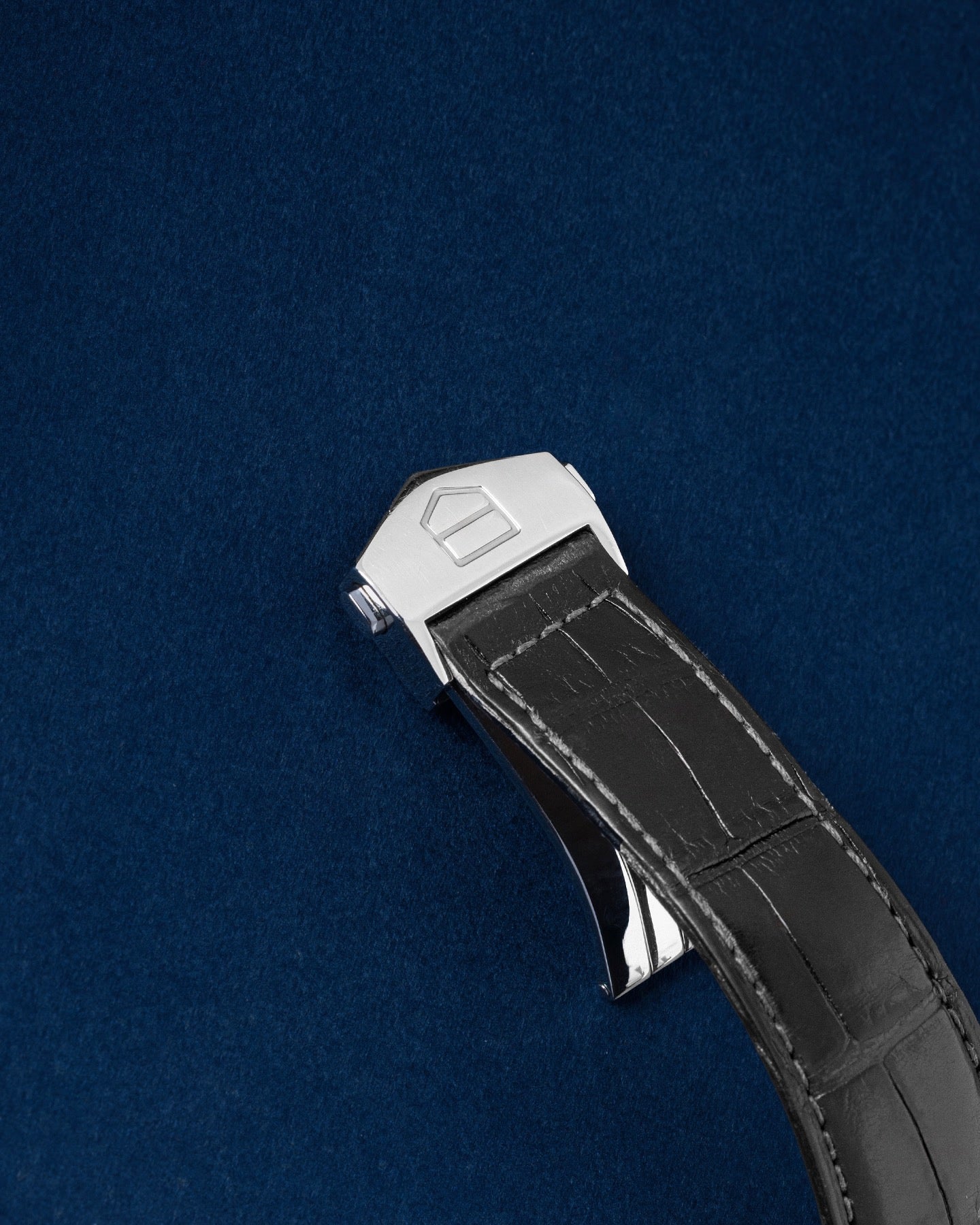
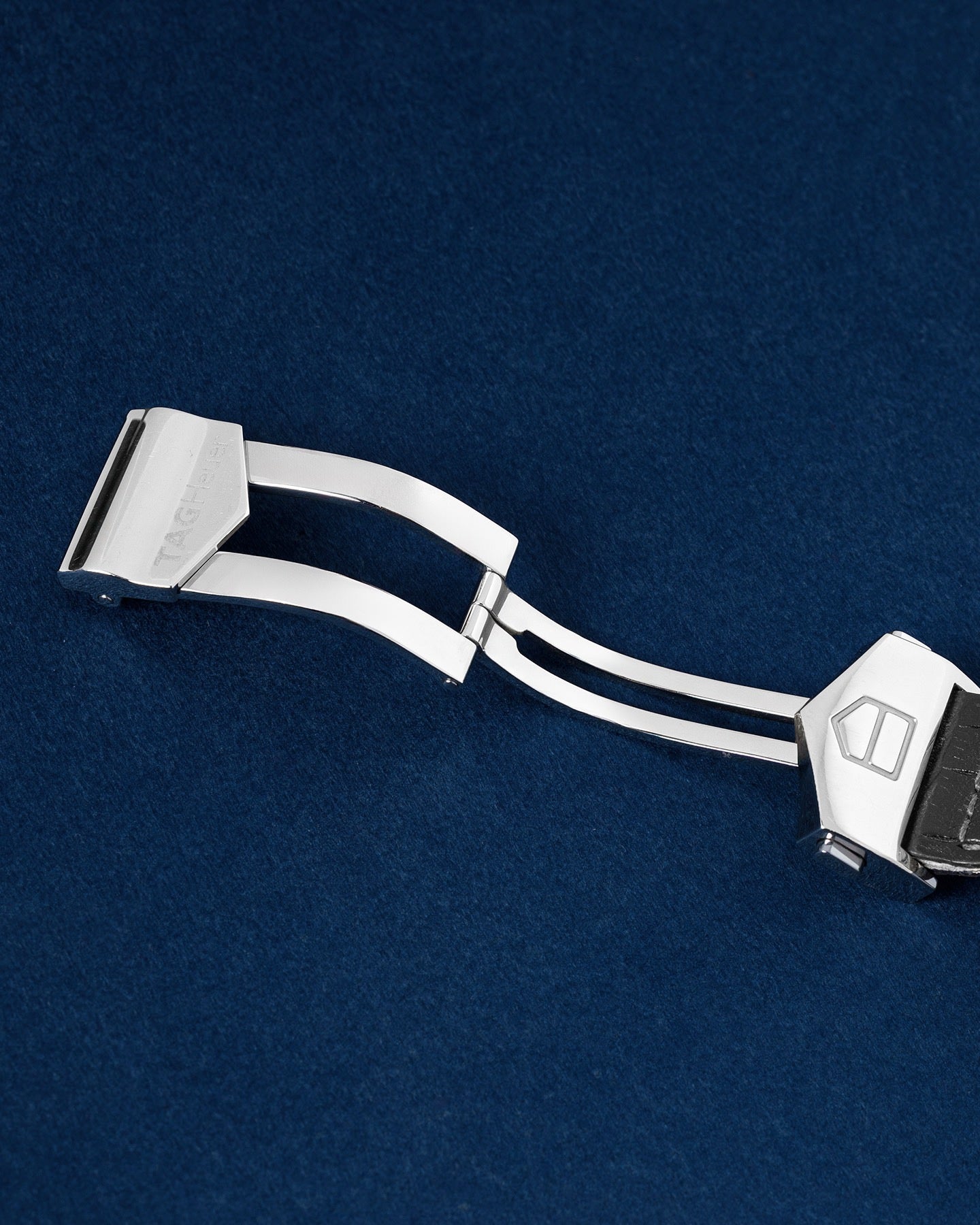
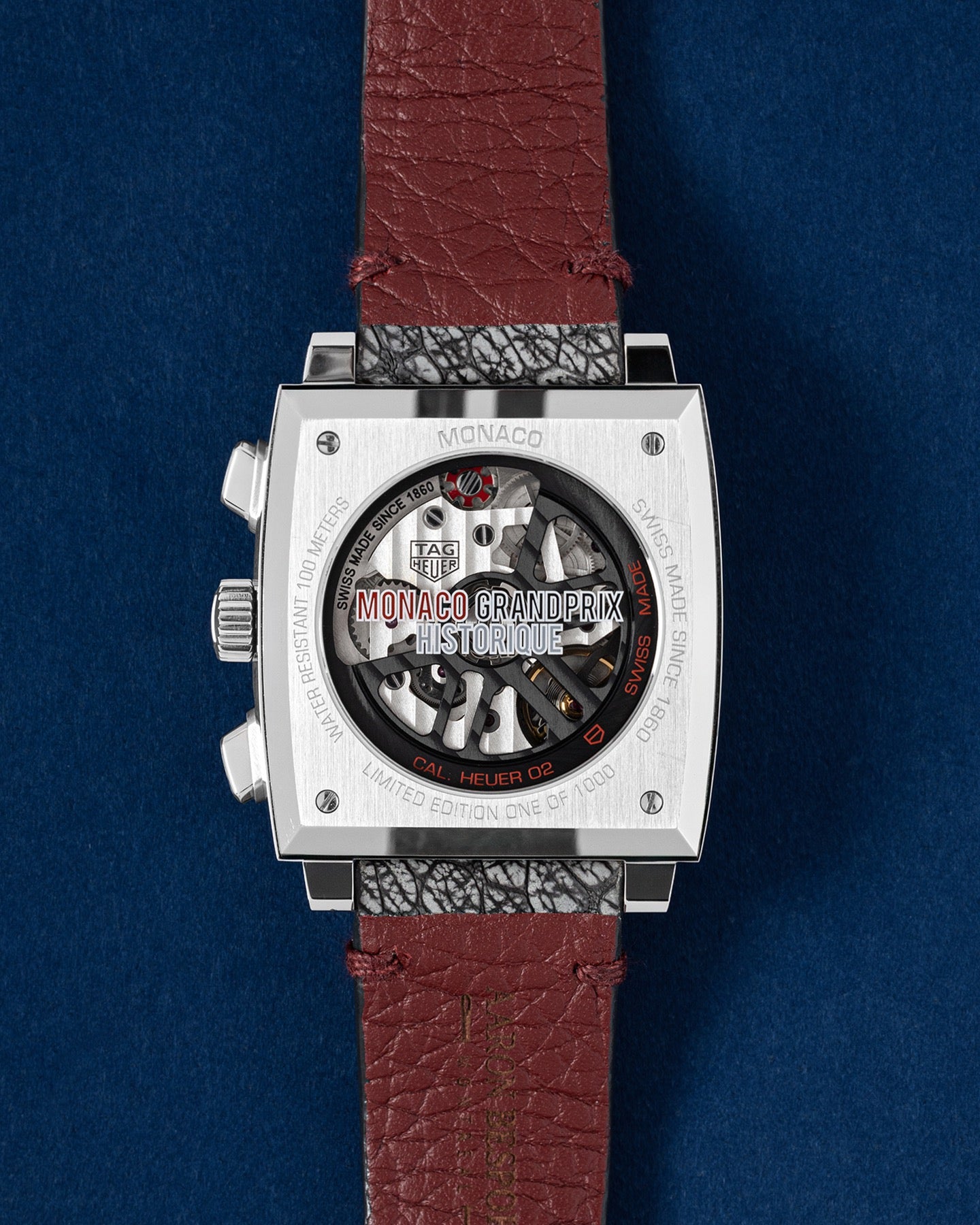
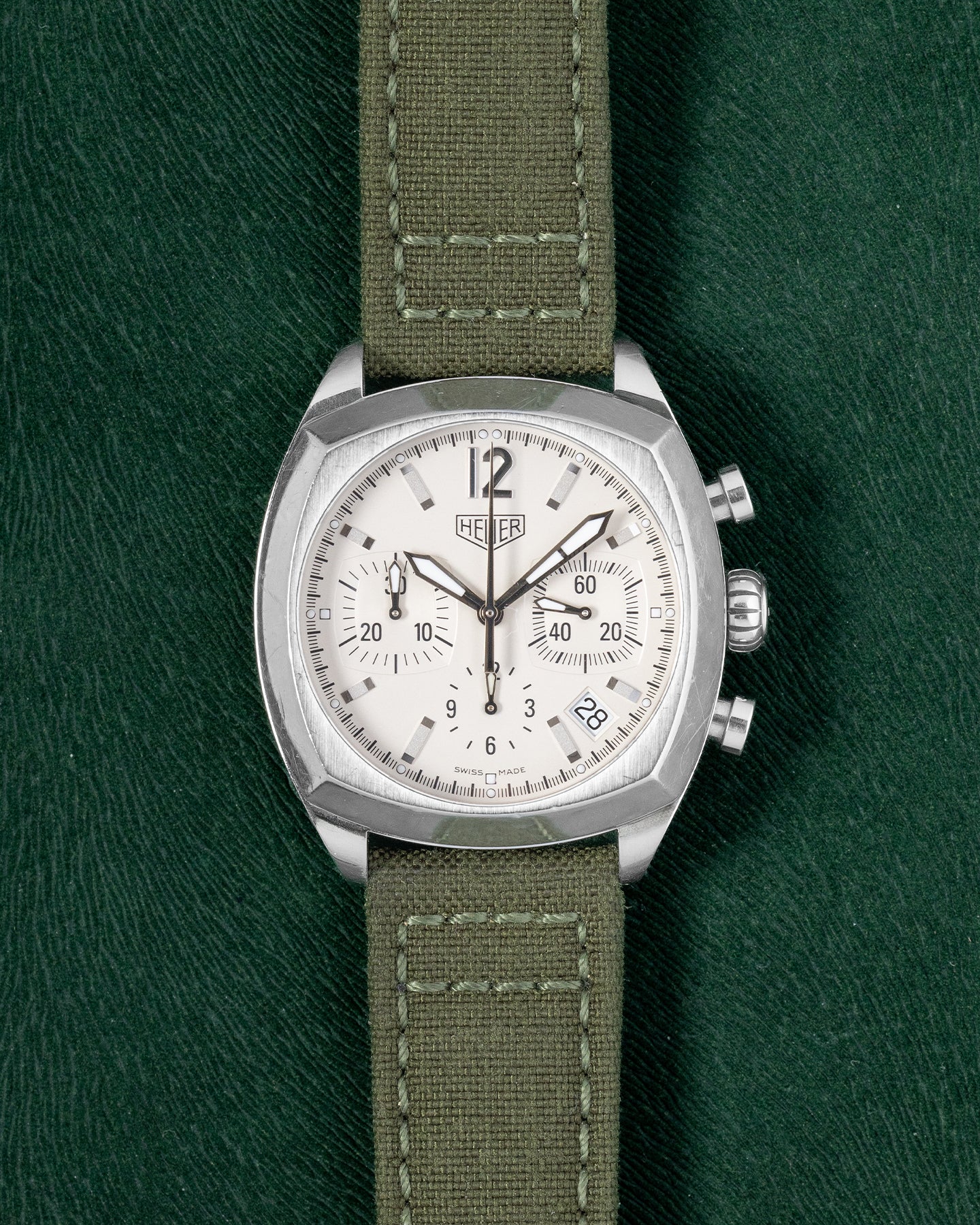
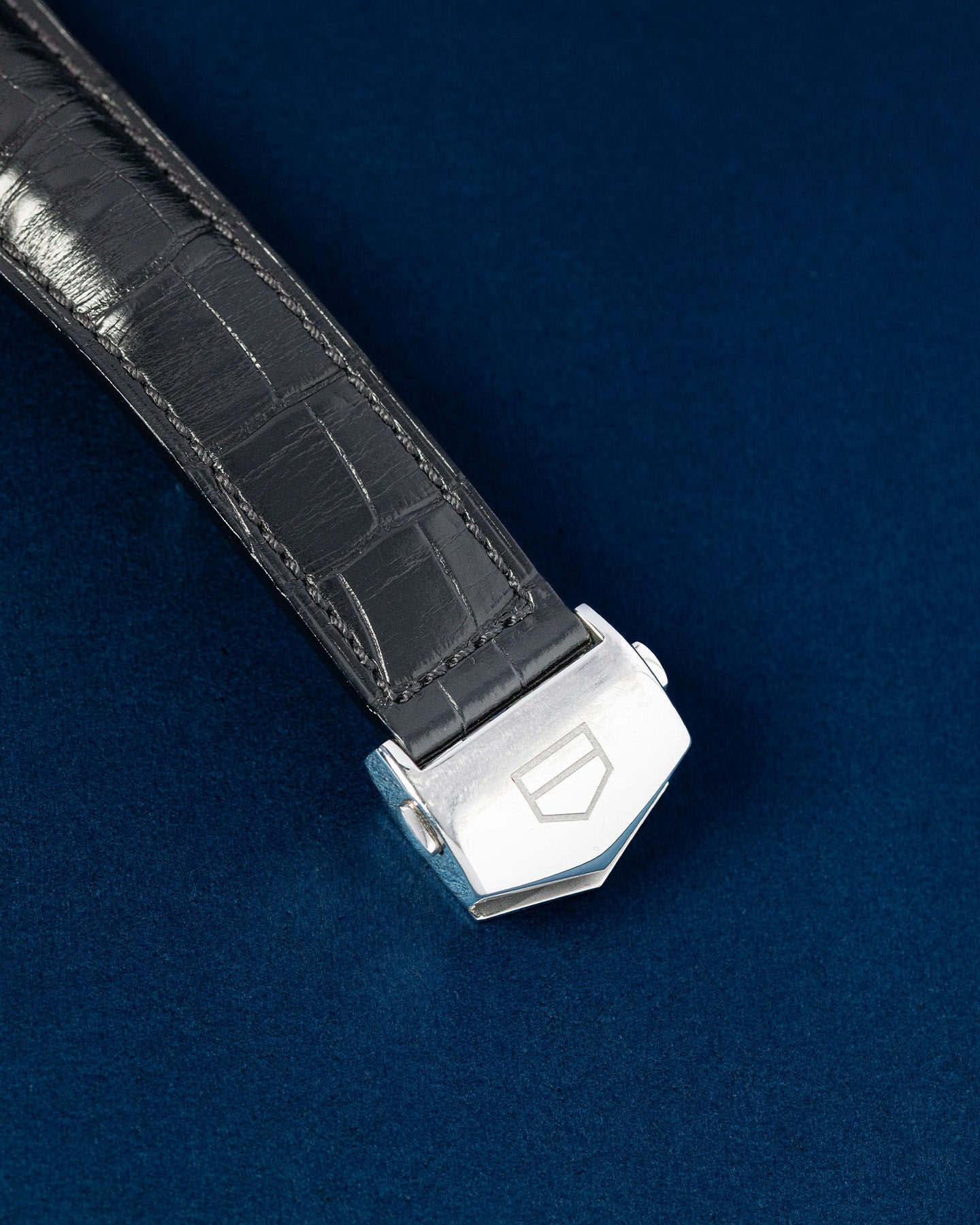
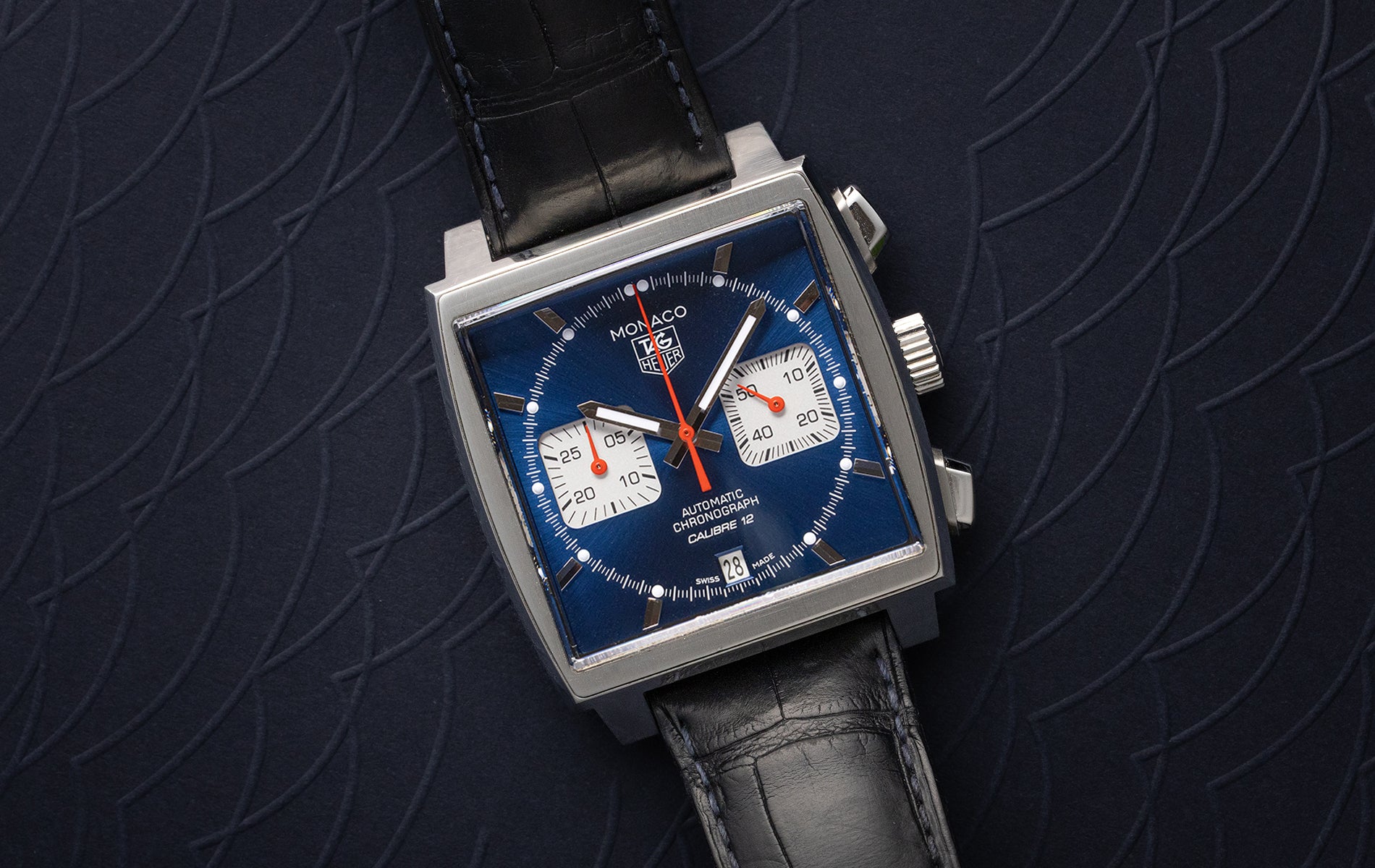
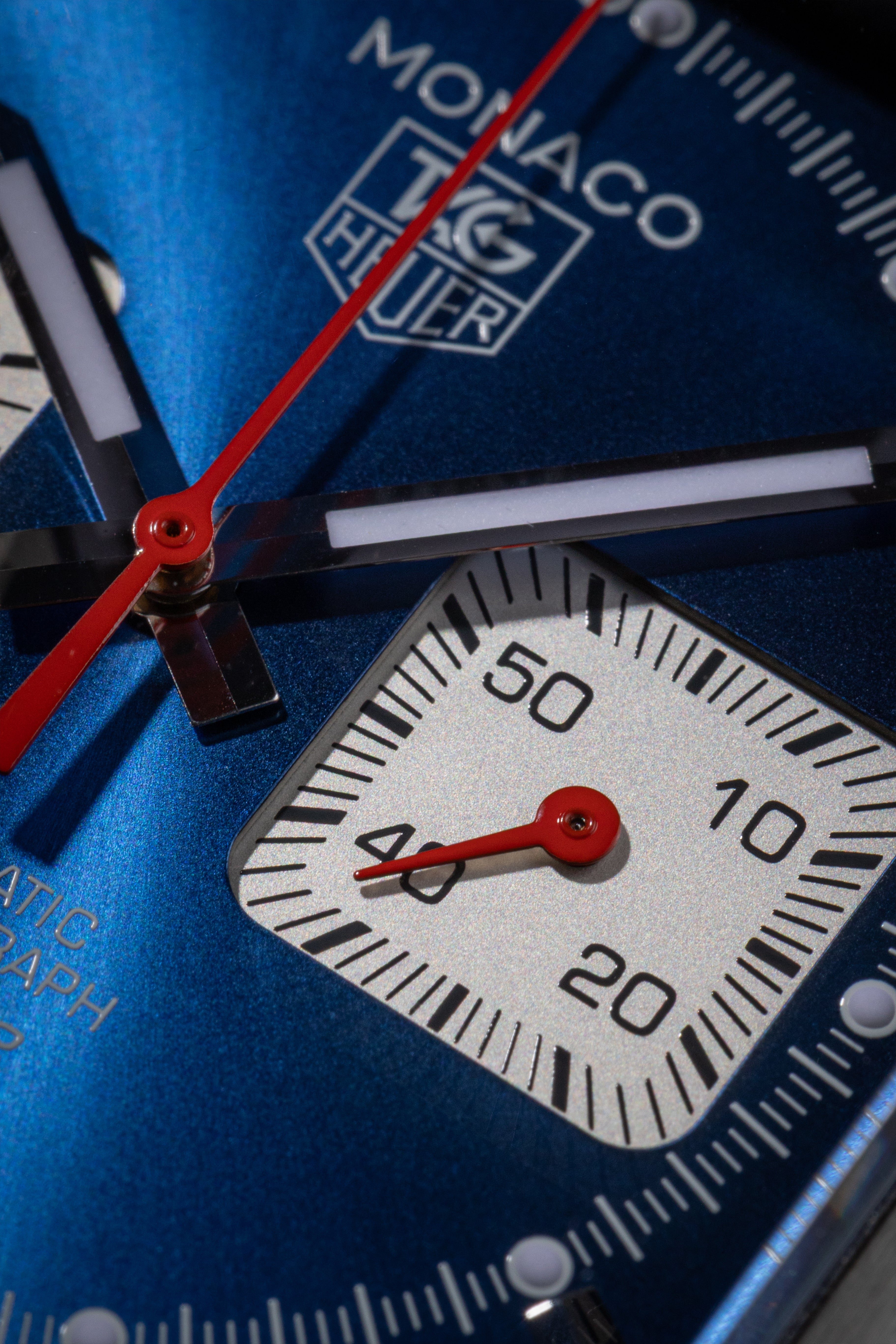
TAG Heuer Monaco Calibre 12 CAW.2111


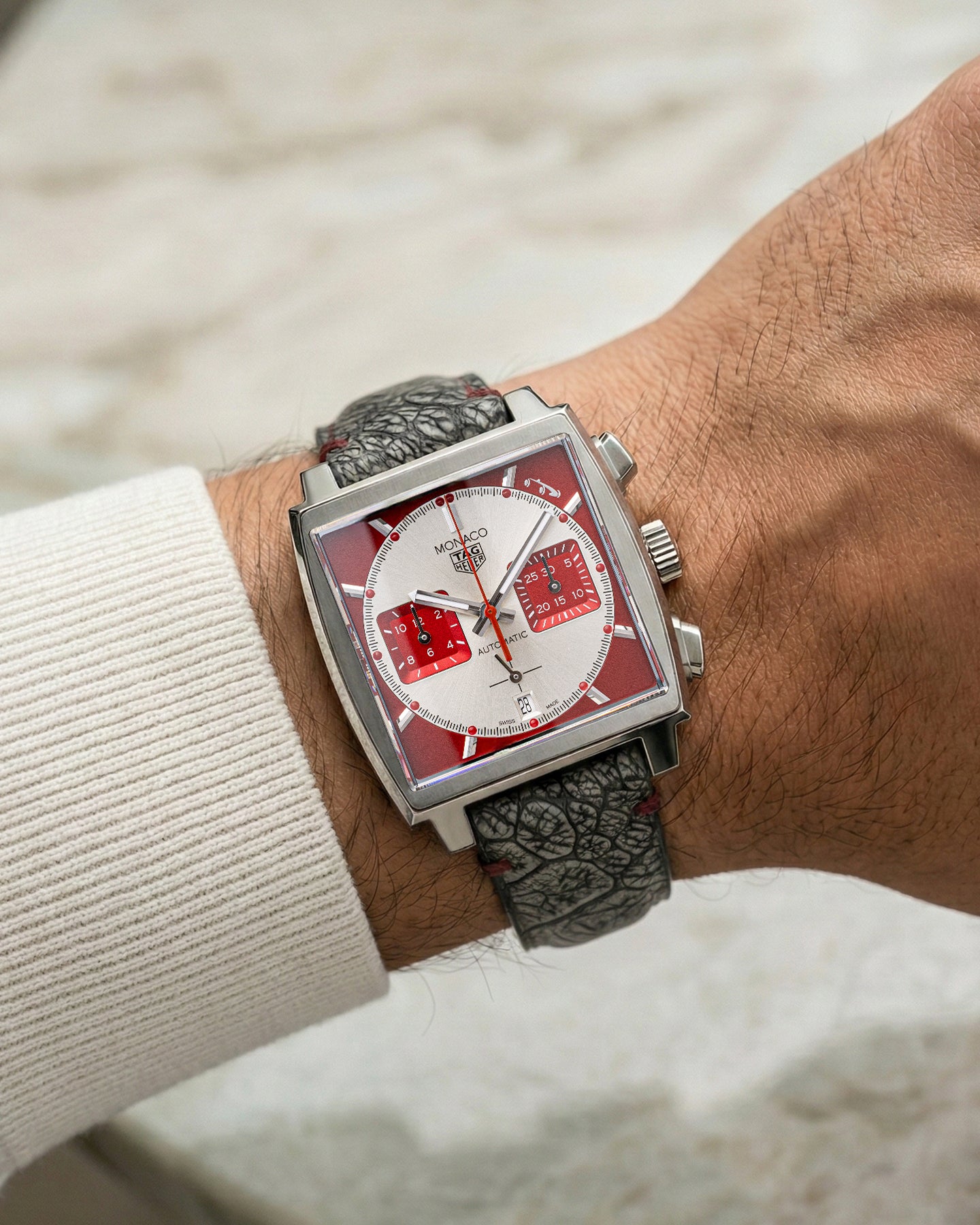








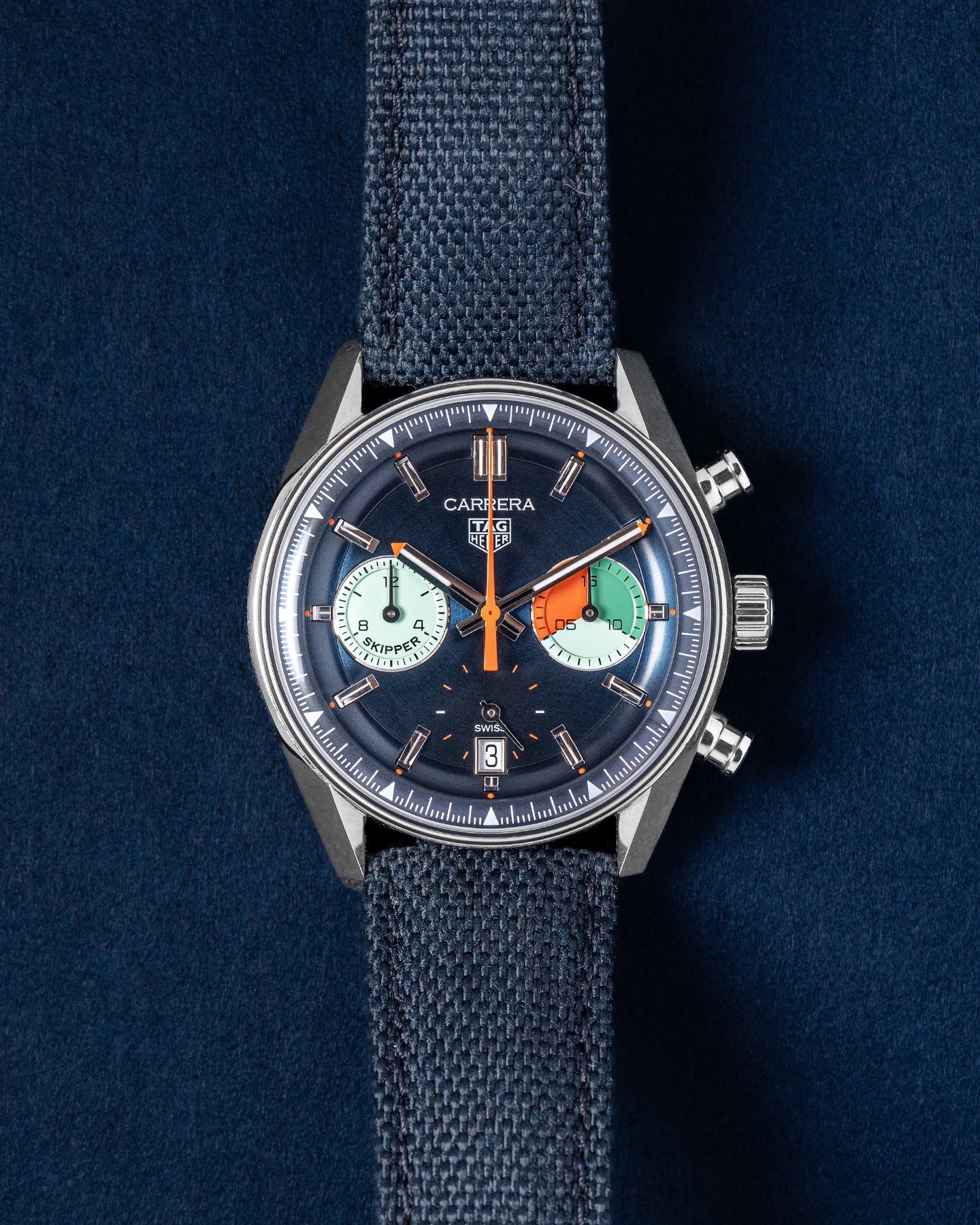
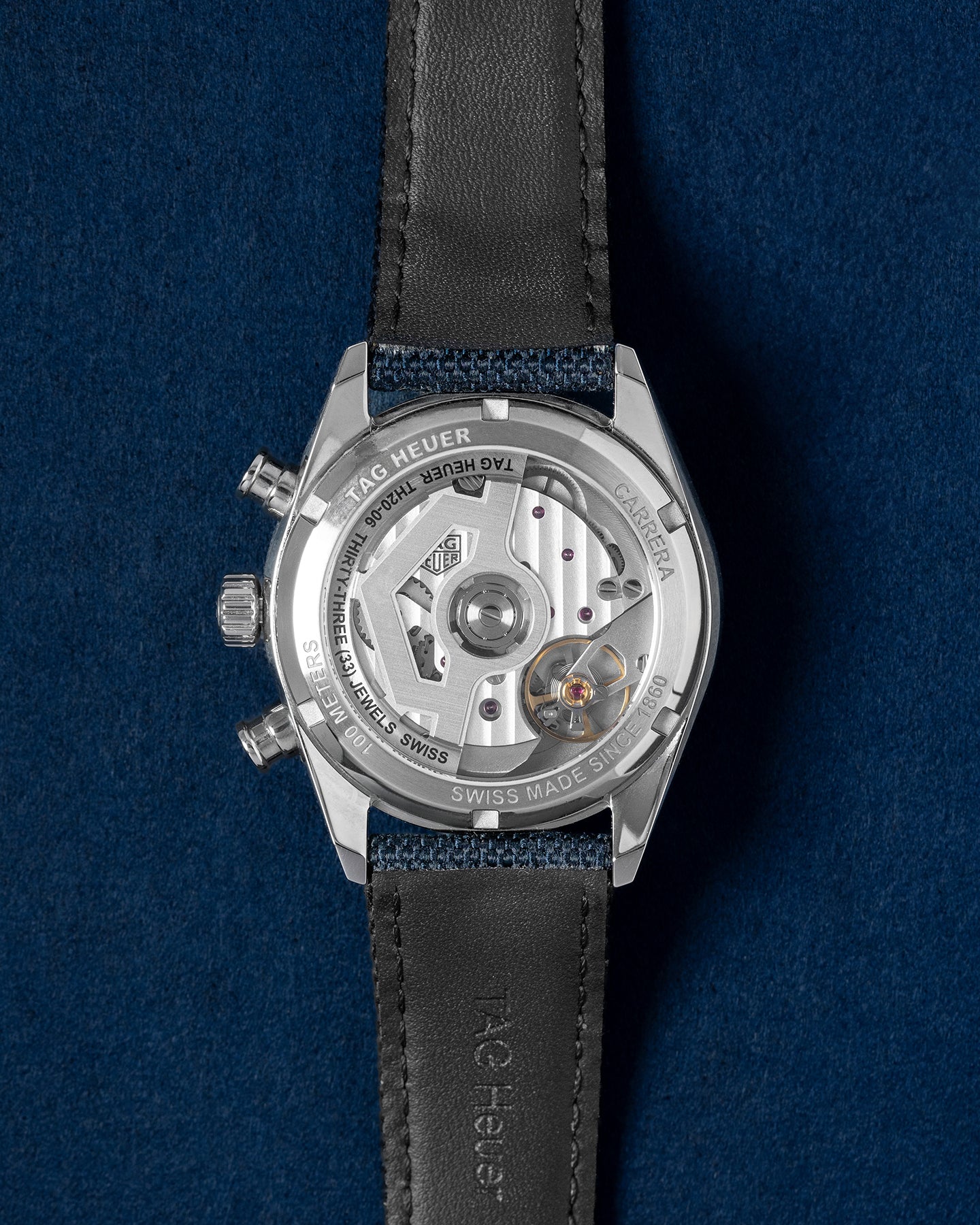
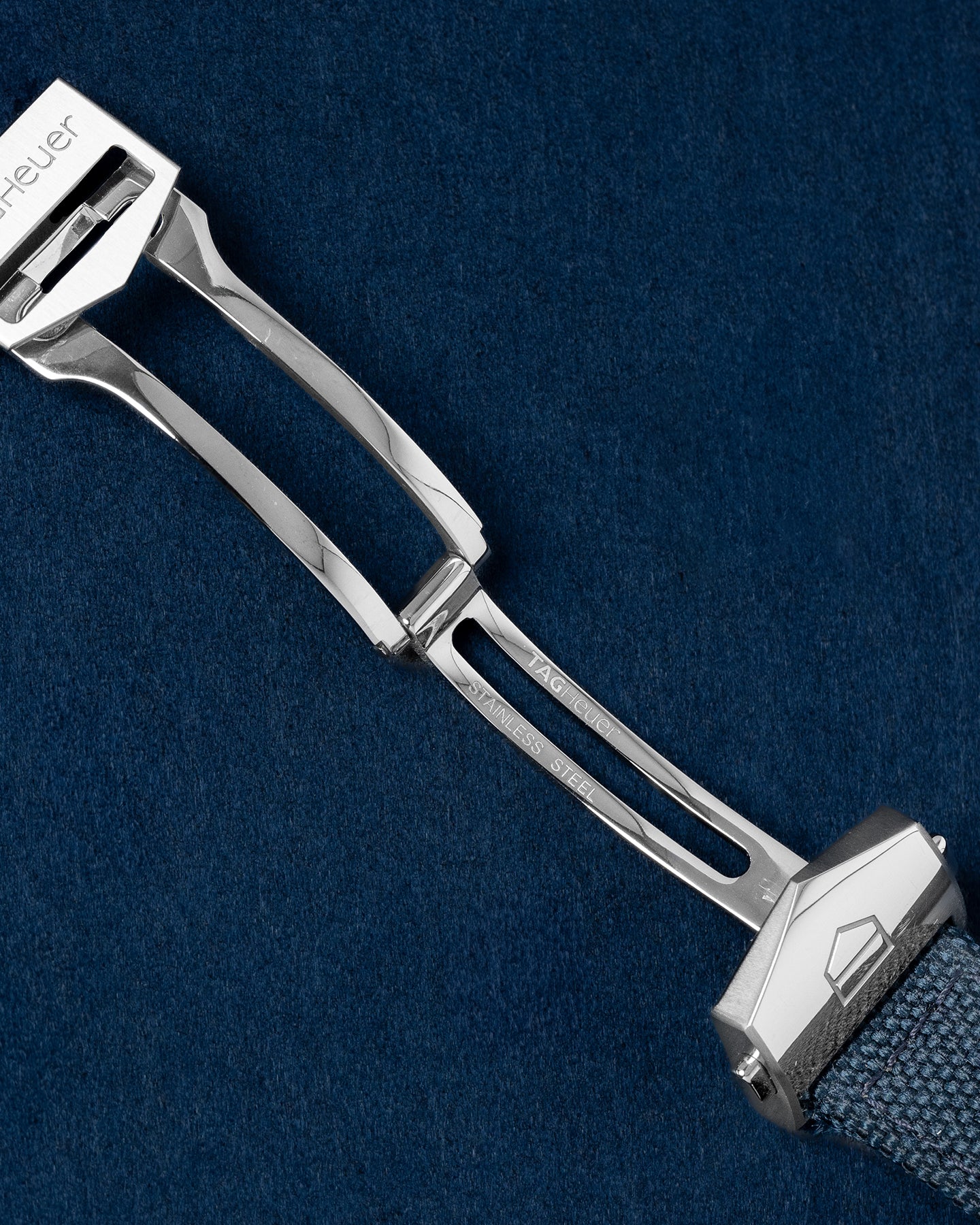
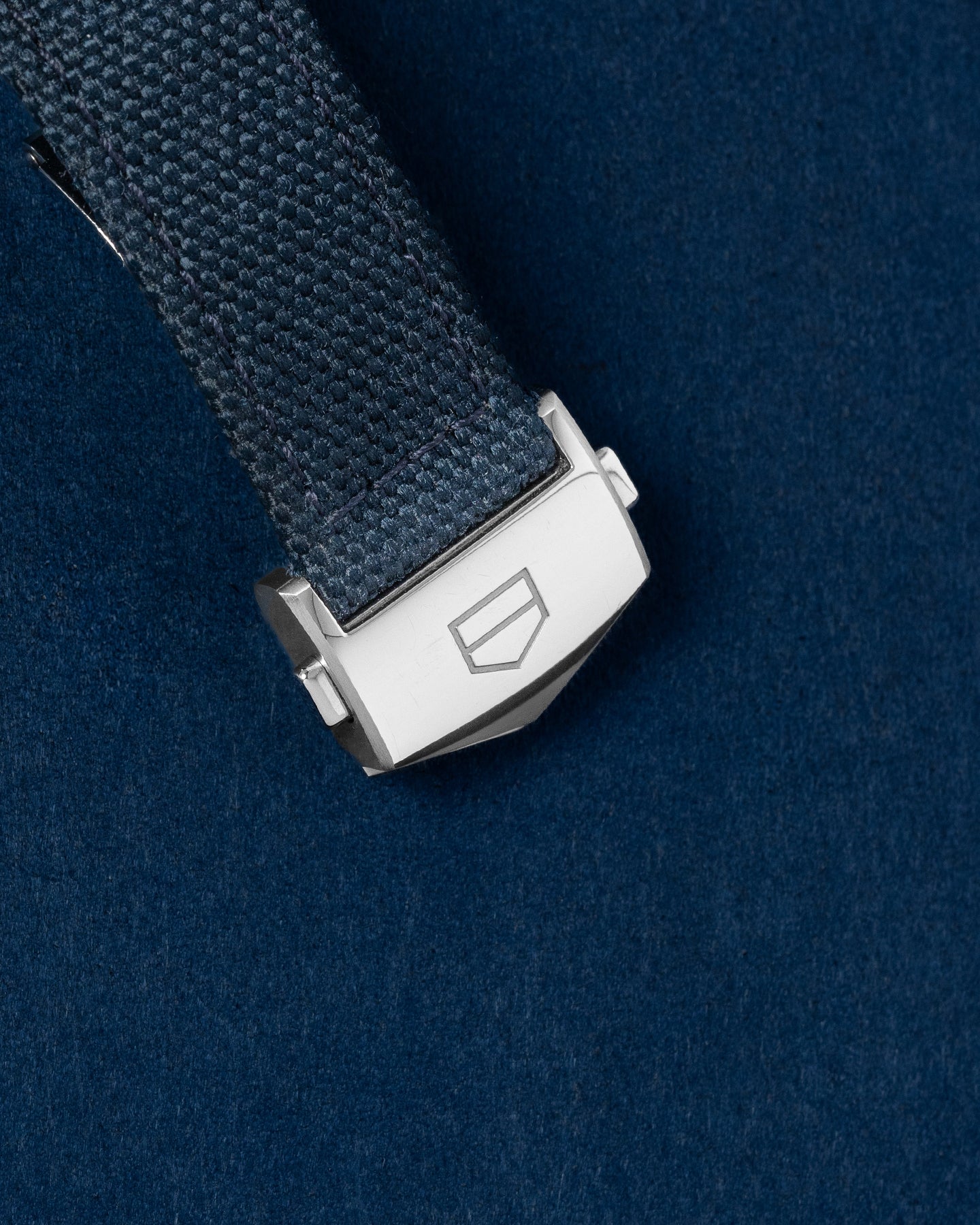
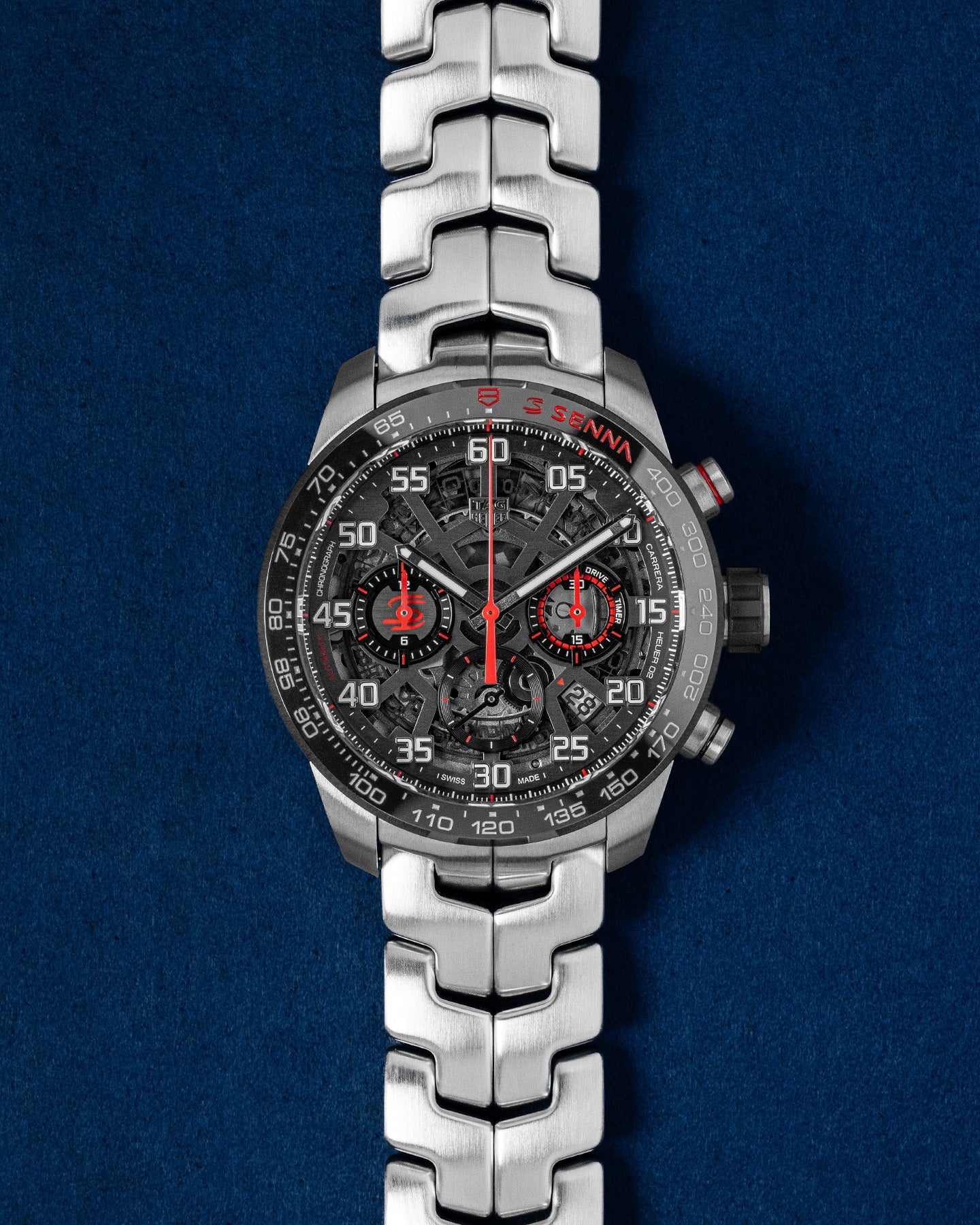
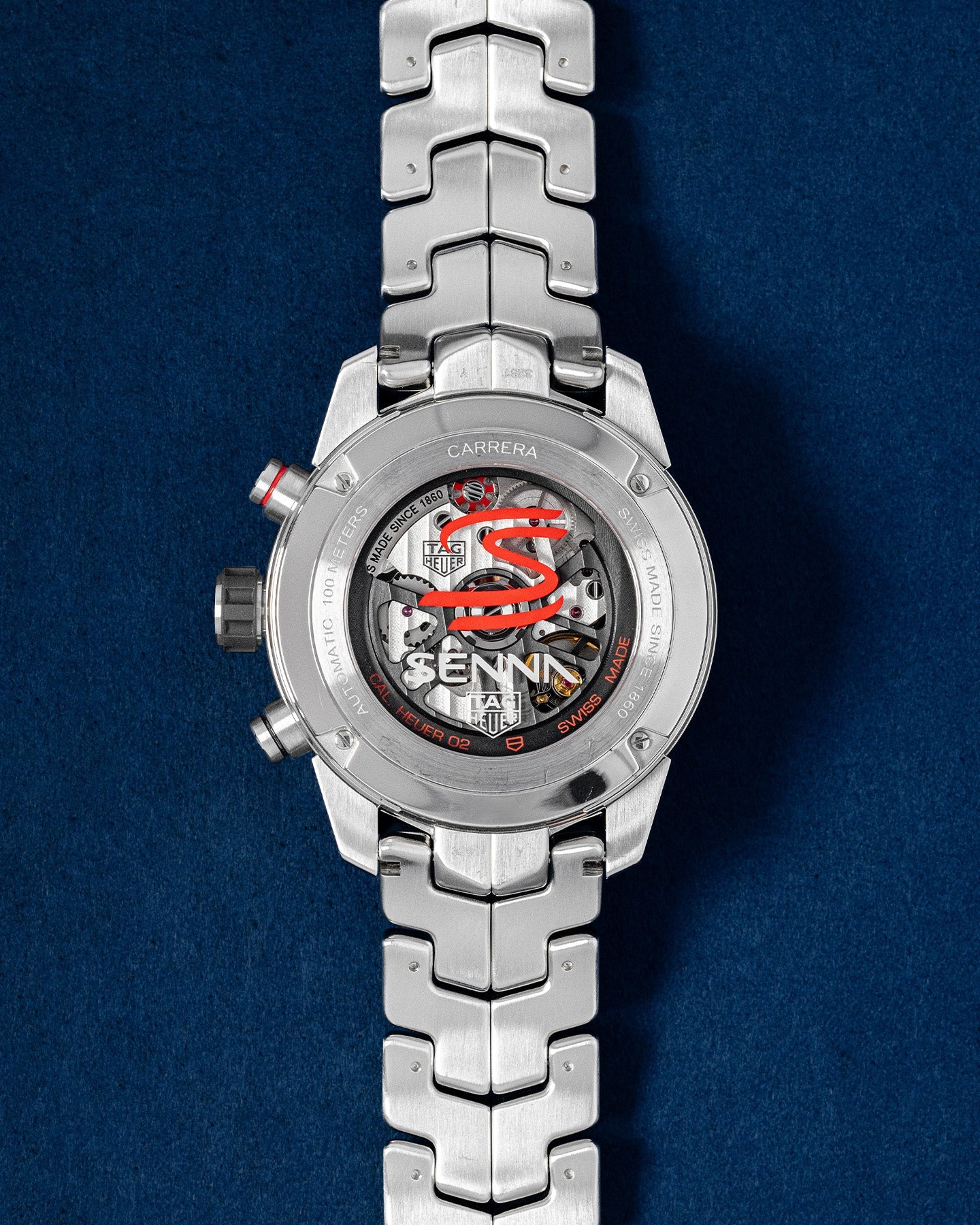
Vintage
History of TAG Heuer
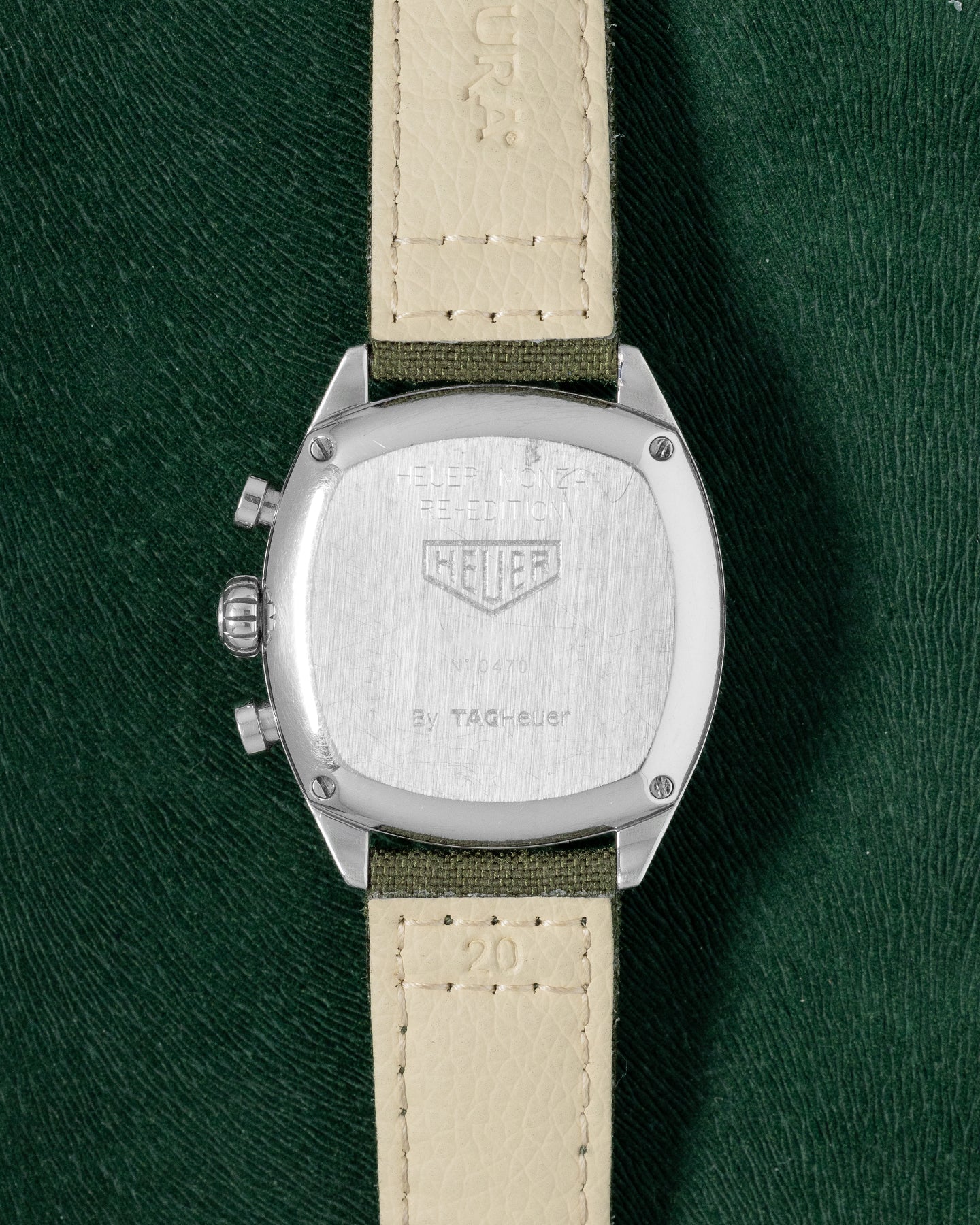
Edouard Heuer opened his watch workshop in Saint-Imier in 1860 at the age of twenty. He patented the keyless crown-winding system in 1869 and the oscillating pinion in 1887, a chronograph mechanism still used by major watchmakers today. His great-grandson Jack Heuer joined the family business in 1958 and launched the Carrera in 1963, named after the Mexican Carrera Panamericana road race. The Monaco followed in March 1969, the first square automatic chronograph in Swiss watchmaking, made famous by Steve McQueen in the 1971 film Le Mans. TAG Group acquired Heuer in 1985, and LVMH took over in 1999.
Why Choose Grand Caliber
Grand Caliber is a luxury watch dealer in Uptown Dallas, sitting on McKinney Avenue with clients spread across the country. We buy, sell, source, and consign TAG Heuer across the full catalog, from the Carrera and Monaco to the Aquaracer, Formula 1, Autavia, and Link, plus vintage Heuer pieces, Caliber 11 references, and the Steve McQueen tribute editions. Every watch is authenticated in-house by our specialists, prices are posted on every listing, and inventory is one-of-one. Whether you are buying your first Carrera or hunting a vintage 1133B Monaco, come find your next watch.
FAQs
What is the most affordable TAG Heuer?
Good news for first-time TAG Heuer buyers: this is one of the most accessible entry points in Swiss watchmaking, and the catalog opens at a meaningfully lower price than most luxury brands. The Formula 1 collection starts the lineup with retail pricing typically in the $1,500 to $2,500 range for current-production quartz references, with the new solar-powered Formula 1 Solargraph models sitting around $1,800 to $2,200. The Aquaracer Professional 200 in stainless steel with quartz movement starts around $2,000 to $2,500, while the mechanical Aquaracer Professional 300 references in 42mm typically retail between $3,500 and $4,500. Step into the Carrera collection and you are looking at $3,800 to $7,000 for time-only and chronograph references with the in-house TH20 movement family or the Caliber 16 with the Sellita base. The Monaco Caliber 11 in steel retails around $8,000 to $9,500, and limited editions like the 2025 Monaco x Gulf at $11,251 sit toward the higher end of the standard Monaco line. The pre-owned market opens things up further, with earlier Carrera Calibre 16 chronographs, vintage Aquaracer references, and pre-2020 Monaco editions frequently landing in the $1,500 to $4,000 range depending on condition and box-and-papers status. Tell us what you want to spend, and our specialists at Grand Caliber will help you find the right one.
Can I walk into TAG Heuer and buy a watch?
For most TAG Heuer references, yes, and that is part of what makes this brand a genuinely accessible entry into Swiss luxury watchmaking. TAG Heuer operates a wide network of authorized retailers globally plus its own boutique presence, and the brand has built its modern strategy around availability rather than scarcity. Walking into an authorized dealer and purchasing a current-production Carrera, Monaco, Aquaracer, Formula 1, or Link is usually straightforward across most configurations. Specific limited editions and the higher-complication pieces can require waiting or sourcing, particularly the various Gulf editions, the Steve McQueen tribute references, the Monaco Split-Seconds Chronograph in TH-Titanium retailing around CHF 145,000, and the Carrera Chronograph Tourbillon Extreme Sport TH-Carbonspring at around CHF 40,000. Vintage Heuer pieces are only available pre-owned, and the vintage market has become genuinely active given the renewed collector interest in pre-1985 Heuer references, particularly the original 1969 to 1975 Monaco 1133 series and the various early Carrera chronographs. We carry current and recent TAG Heuer alongside vintage Heuer references in our Uptown Dallas showroom. If you want to compare a modern Monaco Caliber 11 to a vintage 1133B in person, come spend an afternoon with us at Grand Caliber.
What is the best first TAG Heuer to buy?
The honest answer depends on what draws you to the brand, but most first-TAG buyers land on one of three references. The Carrera Chronograph 39mm is the platonic choice, with the classic Jack Heuer design language from 1963 in modern proportions, the in-house TH20 chronograph movement or the Heuer 02 caliber depending on the reference, and a wear that suits almost any wrist. The current Carrera Glassbox references with the domed sapphire crystal reference the 1960s originals beautifully and retail in the $5,000 to $7,000 range. The Aquaracer Professional 300 in 42mm is the choice if you want a TAG Heuer you can actually dive with, offering 300 meters of water resistance, the in-house Calibre 5 automatic movement, and one of the better value propositions in the sport-luxury category at $3,500 to $4,500 retail. The Monaco Calibre 11 is the third common starting point, with the square case, the left-side crown, the in-house TH20-11 chronograph movement (in homage to the original 1969 Caliber 11), and the direct lineage to Steve McQueen's 1133B in Le Mans. None of these is the wrong starting point. Tell us what you wear and what speaks to you about the brand. The team at Grand Caliber will help you find the right one.
Which TAG Heuer model has the highest demand?
The Monaco and the Carrera split the top of modern collector demand, with each pulling from different buyer profiles. The Monaco Calibre 11 in steel with the blue dial holds steady demand at retail and on the secondary market, and the various Steve McQueen tribute references, including the 40th anniversary 2009 reissue and the various Gulf collaborations, command meaningful collector interest. The 2025 Monaco x Gulf limited edition of 971 pieces references the 1971 release year of Le Mans and trades at or near retail. The Monaco Split-Seconds Chronograph in TH-Titanium, retailing around CHF 145,000, sits at the haute horlogerie end of the modern catalog. The Carrera Chronograph holds equally consistent demand, particularly the Glassbox references that reference the 1963 original, the Calibre Heuer 02 sport chronograph models, and the Carrera Day-Date with the new in-house TH31 movement introduced at Watches and Wonders 2025. On the vintage side, the original Heuer 1133B Monaco worn by Steve McQueen in Le Mans is one of the most collected vintage Swiss chronographs, with original blue-dial examples in good condition trading at $40,000 to $90,000 at auction. Original Carrera references from 1963 to 1969, particularly the 2447 series with the Valjoux 72 movement, trade actively at Phillips, Christie's, Sotheby's, and Bonhams. If a specific TAG Heuer is on your list, our specialists at Grand Caliber track availability across the market.
How often should a TAG Heuer be serviced?
TAG Heuer recommends a full service approximately every four to six years for the modern catalog, which lines up with the standard interval for Swiss luxury watches with in-house and Sellita-based movements. In practice, many experienced watchmakers consider every five to seven years a reasonable interval for daily-worn pieces, longer for watches in lighter rotation. A full service includes complete movement disassembly, cleaning, lubrication, gasket replacement, regulation on a timing machine, and pressure testing for water resistance. Your watch will usually let you know when it is ready. Power reserve drops on the automatic references, timing drifts a few seconds per day, the chronograph pushers begin to feel less crisp, or moisture appears under the crystal. Modern TAG Heuer calibers, particularly the in-house TH20 chronograph family that powers the current Monaco and various Carrera references, the Heuer 02 chronograph caliber, and the Calibre 5 automatic that powers most of the Aquaracer line, are built for long-term serviceability with parts availability through TAG Heuer's service network. Quartz references including the Formula 1 collection generally require battery replacement every two to three years and a full overhaul roughly every decade. TAG Heuer maintains an extensive service network, and the brand's modern calibers are well-supported by both the manufacture and the broader independent watchmaking community. We offer service in-house at Grand Caliber, and our team is happy to walk you through the options when your watch is ready for attention.
How much does a full TAG Heuer service cost?
TAG Heuer service pricing is genuinely reasonable by Swiss luxury watch standards, which is part of what makes the brand such a sensible long-term ownership proposition. A standard service through TAG Heuer or an authorized service center for a quartz Formula 1, Aquaracer, or Link reference typically runs $300 to $500, often including battery replacement, gasket renewal, pressure testing, and a light case refresh if appropriate. A mechanical Aquaracer Professional or Carrera time-only reference with the Calibre 5 automatic generally runs $400 to $700 for a full service. The Carrera Chronograph and Aquaracer Chronograph references with the Calibre 16 or Heuer 02 movement typically fall in the $700 to $1,100 range. The Monaco Calibre 11, Monaco Calibre 12, and the various in-house TH20 chronograph references run roughly $800 to $1,300 depending on the reference and what the movement requires. The Monaco Split-Seconds Chronograph, Carrera Chronograph Tourbillon Extreme Sport, and other high-complication references run substantially higher and are quoted individually. Vintage Heuer references from the 1960s and 1970s, particularly the original Monaco 1133 series and the early Carrera 2447 chronographs, are well-supported by independent watchmakers with vintage chronograph experience, often more economically than through TAG Heuer directly. For a specific quote on a watch in our care, our team at Grand Caliber can advise based on the reference and what the work involves.
Can I wear my TAG Heuer every day?
Yes, and this is one of the brands genuinely engineered for daily wear from the original design philosophy forward. TAG Heuer has spent more than 160 years building chronographs and sport watches for actual professional use, from racetrack timing instruments in the 1920s to the cockpit chronographs that Carroll Shelby, Mario Andretti, Jo Siffert, and the broader 1960s Formula 1 grid all wore. The modern catalog reflects that durability throughout. The Aquaracer Professional 300 offers 300 meters of water resistance and is built for genuine dive and active wear. The Aquaracer Professional 1000 Superdiver pushes that to 1,000 meters for serious commercial diving. The Carrera Chronograph in steel handles daily wear in office and active settings with no concern. The Monaco, despite its dressy square case, was built with 100 meters of water resistance from the original 1969 design and remains comfortable for daily use. The Formula 1 collection was explicitly designed for sport and outdoor wear, with quartz reliability and rugged construction across the line. Many of our clients wear their TAG Heuers as their daily watch and put real years on them. Avoid hot tubs and saunas since heat ages gaskets faster than anything else, and have a vintage piece pressure-tested before serious water use if it has not been serviced recently. Beyond that, wear it. The watches were built for it.
How long does a TAG Heuer last?
A lifetime, with proper service. TAG Heuer builds its watches to be serviced, and the brand maintains the parts, the institutional knowledge, and the trained watchmakers to service the modern catalog plus most vintage Heuer references going back decades. The in-house TH20 chronograph family introduced with the modern Monaco generation, the Heuer 02 caliber, the Calibre 5 automatic that powers the Aquaracer and various Carrera time-only references, and the TH31 day-date movement introduced in 2025 are all designed for long-term serviceability with parts availability that should extend well beyond any current owner's lifetime. Vintage Heuer pieces from the 1960s and 1970s, including the original Monaco 1133 series and the early Carrera 2447 chronographs powered by Valjoux 72 and other classic Swiss chronograph movements, can typically be brought back to running condition through experienced independent watchmakers with the right expertise, given how many of these movements were produced across the broader Swiss industry. Even earlier Heuer references, including the dashboard timers from 1911 onward, can be serviced by specialists with vintage Heuer credentials. A TAG Heuer purchased today will be wearable, accurate, and meaningful a generation from today and well beyond. The watches reward consistent wear and periodic service, and Grand Caliber is here to help with both whenever you need us.
Is it safe to buy a TAG Heuer on the secondary market?
Yes, when the dealer authenticates and stands behind what they sell. The pre-owned TAG Heuer market is one of the largest in luxury watches given the brand's volume and 165-year production history, with substantial activity across dealers, auction houses, and major platforms. The market is also one of the more accessible categories in serious watch collecting, with vintage Heuer pieces representing genuinely rewarding entry points for collectors learning to navigate the chronograph world. Counterfeit TAG Heuers exist, particularly fakes of the Carrera Chronograph, the Monaco Caliber 11, and the Aquaracer Professional 300, and the quality of fakes has improved meaningfully over the past decade. Beyond outright counterfeits, the more common collector-market risks are watches with service-replacement dials, refinished cases that have lost their original geometry, replacement bezels on Aquaracer references, and vintage Heuer pieces where original dial condition and hand-set originality significantly affect value. At Grand Caliber, every TAG Heuer is authenticated by our specialists before listing. Every watch is photographed individually, and box-and-papers status appears in the spec list of every product page. If a watch has any non-original component or service-replacement part, we say so in writing, and the price reflects it. Vintage Heuer collecting in particular rewards transparency, especially with original 1133 Monaco references where collector premiums depend heavily on originality. If you have a question about a specific TAG Heuer in our inventory, our team is happy to walk through it on the phone, in the showroom, or over text.
Is a TAG Heuer a good investment?
TAG Heuer holds value reasonably well for modern Swiss luxury watches, with certain references performing meaningfully better than the brand average. Vintage Heuer pieces are where the strongest secondary market performance lives, particularly the original Monaco 1133B with the blue dial worn by Steve McQueen in Le Mans (clean original examples have traded for $40,000 to $90,000 at recent auctions), the various 1960s Autavia chronographs with the Valjoux 72 movement, the original Carrera 2447 references from 1963 to 1969, and the early Caliber 11 and Caliber 12 chronographs from the 1969 to 1975 era. The Monaco Calibre 11 modern reference CAW211P.FC6356 has appreciated roughly 59% at retail over the past decade per WatchBase pricing data, climbing from approximately €4,995 in 2015 to €7,950 in 2025. Limited editions and Gulf collaborations have generally held retail or appreciated, and the 2025 Monaco x Gulf limited edition of 971 pieces trades at or near its $11,251 retail. The broader modern catalog tends to depreciate moderately from retail in the way most luxury watches do, with the in-house chronograph references holding value better than the older quartz pieces. Here is the honest truth, though: a watch is not a stock, and the TAG Heuer collectors who do best are the ones who buy because they appreciate the genuine racing heritage and the design language Jack Heuer established more than sixty years ago. They tend to end up with collections that have appreciated nicely while actually enjoying the watches along the way. Find the TAG Heuer that speaks to you, and we are ready when you are. Come find your next watch at Grand Caliber.