Cartier Panthere
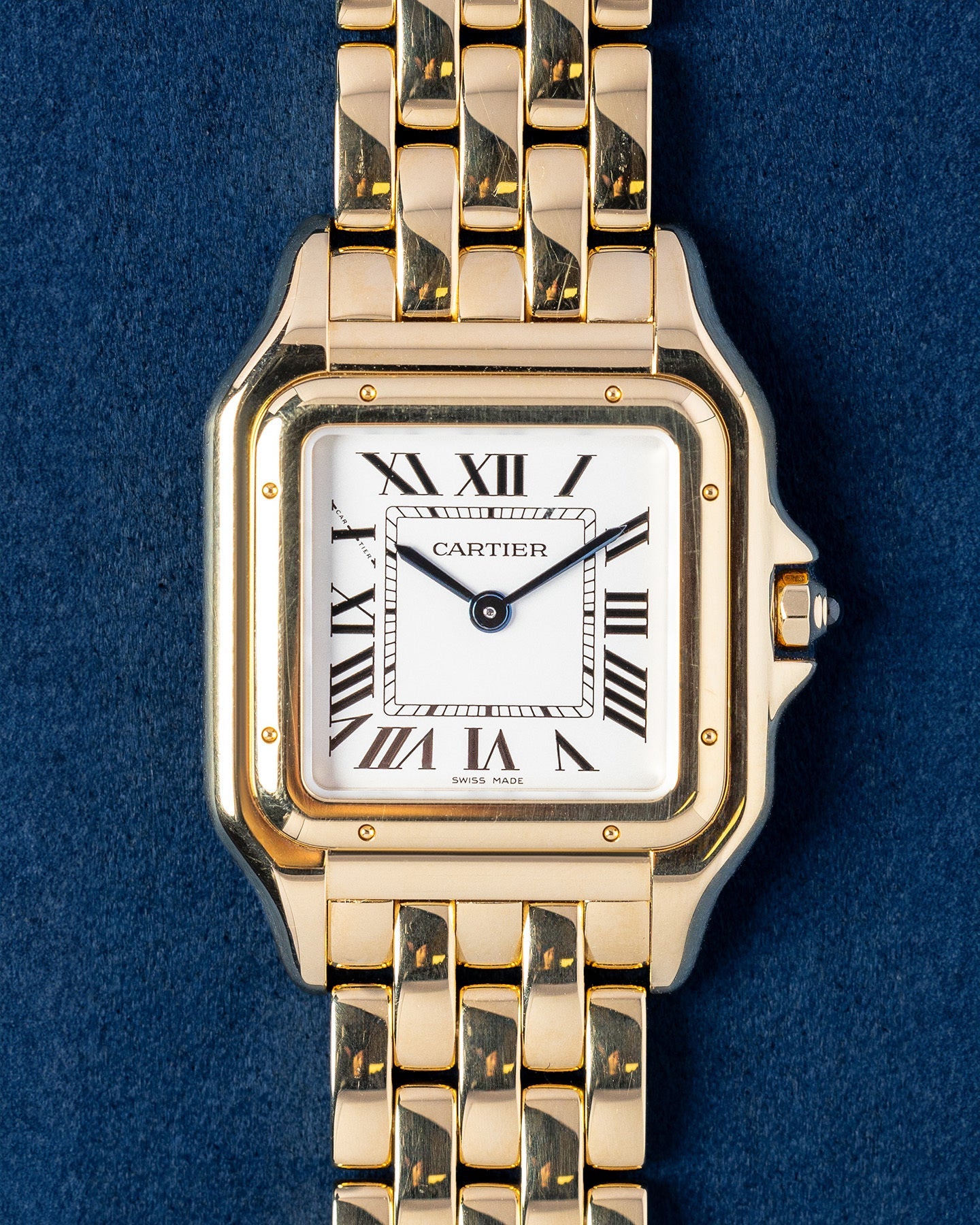
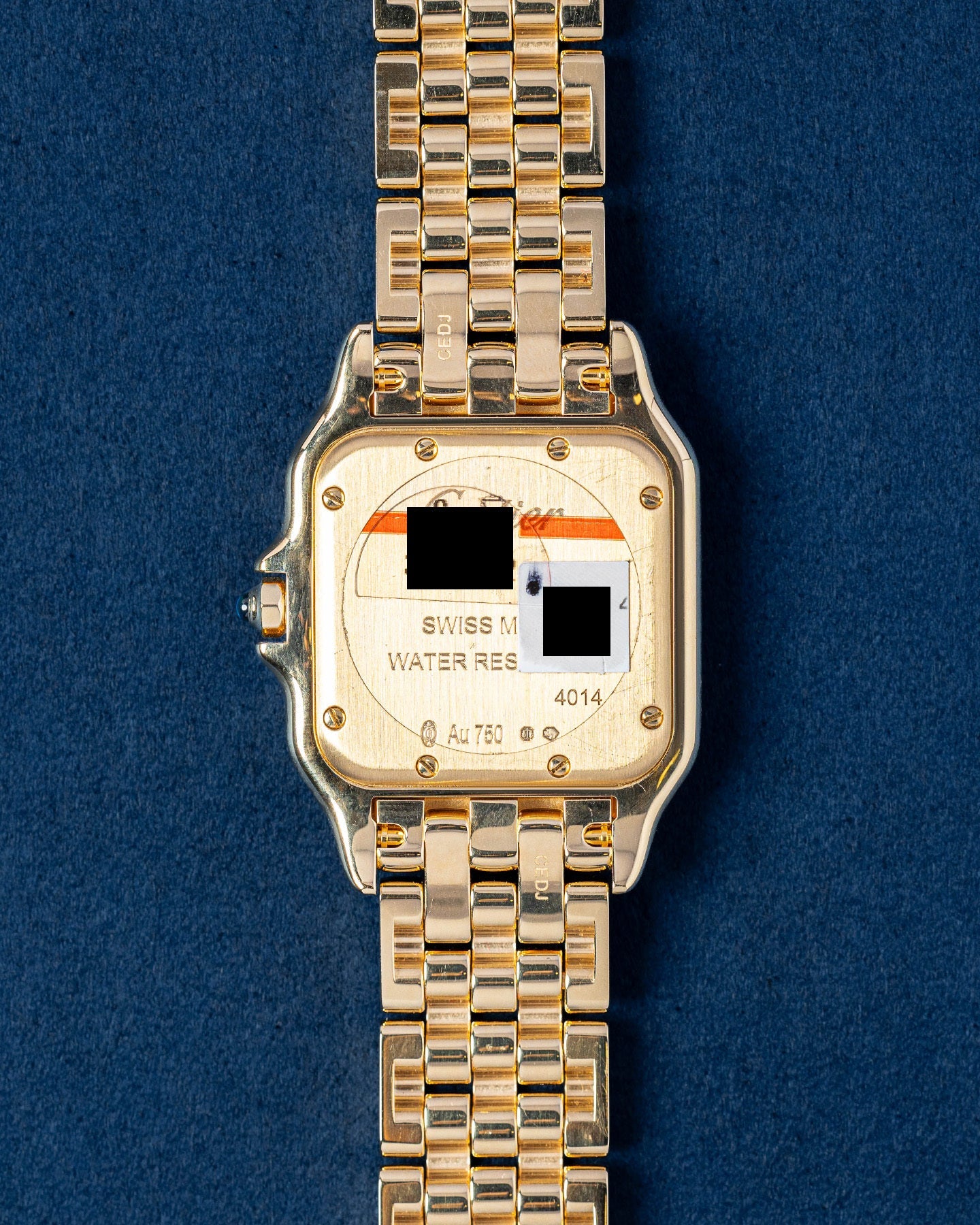
Shop new and pre-owned Cartier Panthère watches at Grand Caliber. The jewelry watch defined by a square case, supple five-link brick bracelet, white dial with Cartier Roman numerals, blued sword hands, and the blue cabochon crown. Quartz movement, available in steel, yellow gold, rose gold, and diamond-set across four sizes.
The Cartier Panthere at Grand Caliber
The Cartier Panthere is the watch that defined the Cartier relationship with the world of jewelry watches. Introduced in 1983, discontinued in 2004, and revived to enormous commercial and cultural impact at SIHH 2017, the Cartier Panthere occupies a position in the Cartier catalogue that no other reference can claim. It is simultaneously a timepiece and a bracelet, a Cartier classic and a fashion artifact, a watch with deep roots in the twentieth-century Cartier heritage and a contemporary object whose 2017 relaunch made it one of the most visible luxury watches of the post-pandemic era. The Cartier Panthere takes its name and its character from the panther motif that has been part of the maison design vocabulary since 1914, a motif elevated to brand-defining status by Jeanne Toussaint, the legendary Cartier creative director nicknamed La Panthere for her elegant fierceness and her personal advocacy of the feline image across the twentieth-century Cartier jewelry collections.
The current Cartier Panthere line includes Mini, Small, Medium, and Large case sizes, with material configurations across stainless steel, two-tone stainless steel and yellow gold, two-tone stainless steel and rose gold, solid 18k yellow gold, solid 18k rose gold, and solid 18k white gold. All standard production Cartier Panthere references run Swiss quartz movements, a deliberate design choice that allows Cartier to keep the case profile slim and the jewelry-first character of the watch intact. The Grand Caliber Dallas showroom regularly carries authenticated Cartier Panthere examples across the current 2017-and-later catalogue as well as vintage 1980s and 1990s references from the original production run. This page walks through the lineage, the sub-models, the cultural moments that defined the watch, and what to look for when buying a Cartier Panthere.
Jeanne Toussaint and the Panther Motif at Cartier
The Cartier Panthere cannot be understood without Jeanne Toussaint. The panther motif itself first appeared at Cartier in 1914, when Louis Cartier commissioned the illustrator Georges Barbier to create the Lady With a Panther artwork for a jewelry exhibition invitation. The same year, Cartier produced a wristwatch with a panther-spotted onyx-and-diamond pattern that referenced the fur of the panther, the first appearance of the motif on a Cartier object.
Jeanne Toussaint was the figure who transformed the panther from an occasional motif into a defining Cartier symbol. Belgian-born and personally close to Louis Cartier, Toussaint was nicknamed La Panthere within the maison for her sharp wit, her independence, and her love of the feline form. Louis Cartier appointed her director of haute joaillerie in 1933, and she presided over the all-male Cartier atelier on the Rue de la Paix as the most influential creative force in twentieth-century Cartier design.
Under the Toussaint direction, the panther became the Cartier mascot. By 1948, the panther had reached its most famous high-jewelry form: the legendary three-dimensional panther brooch commissioned by the Duke of Windsor for the Duchess of Windsor, a gold and onyx panther perched atop a 116.74-carat emerald cabochon. A sapphire and diamond version followed in 1949, and the frequent public wearing of these brooches by the Duchess of Windsor turned the Cartier panther into one of the defining luxury symbols of mid-century jet-set culture. By the time the Cartier Panthere watch arrived in 1983, the panther was as recognizable a Cartier symbol as the red box, the Trinity ring, and the Love bracelet.
The 1983 Launch and the First-Generation Cartier Panthere
The Cartier Panthere watch was introduced in 1983 as the Cartier translation of the panther motif into wristwatch form. The design brief was specific. The watch needed to read as jewelry as much as a timepiece. The bracelet needed to evoke the fluid, sinuous gait of a panther in motion. The case needed to feel unmistakably Cartier without copying any existing Cartier reference too closely.
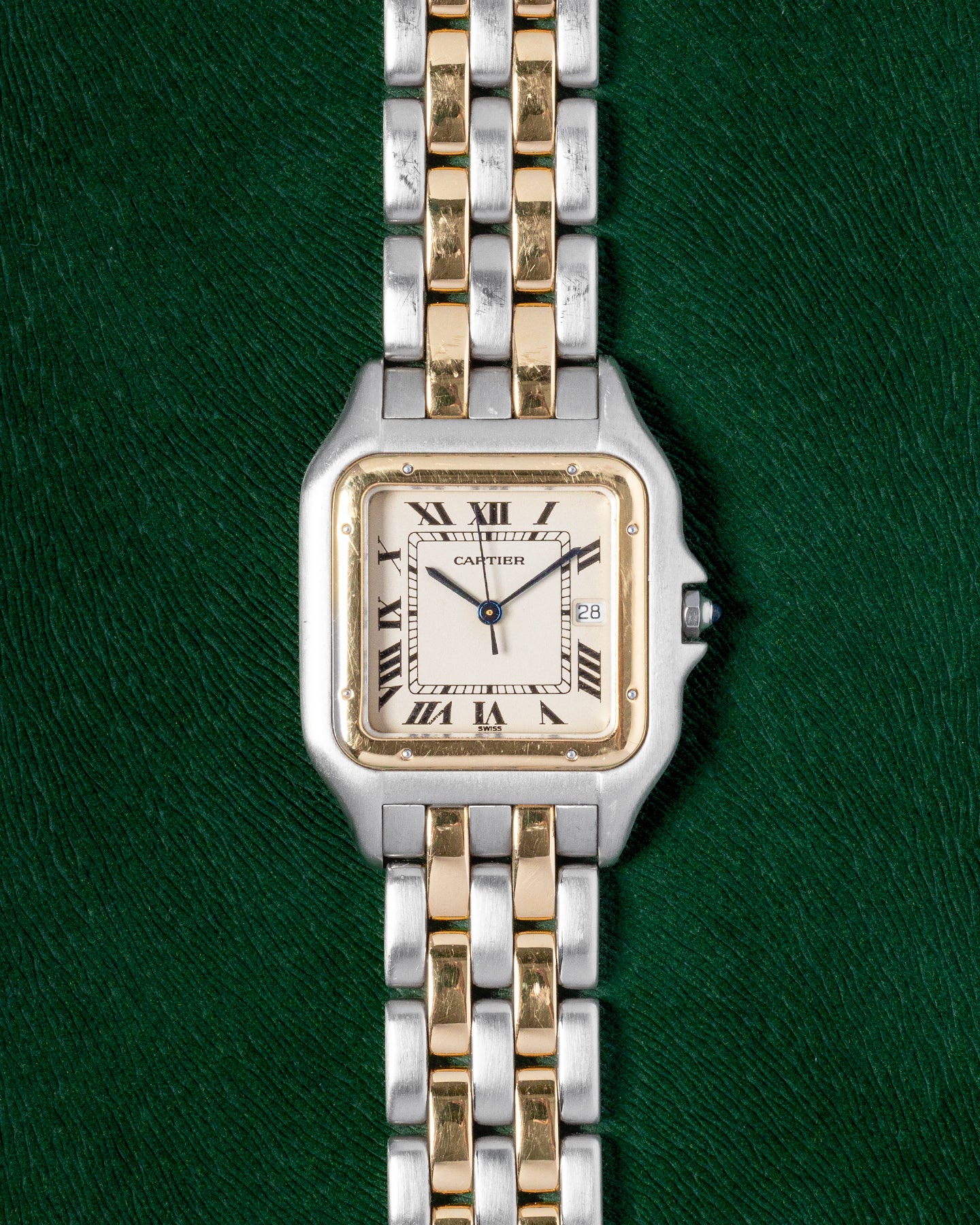
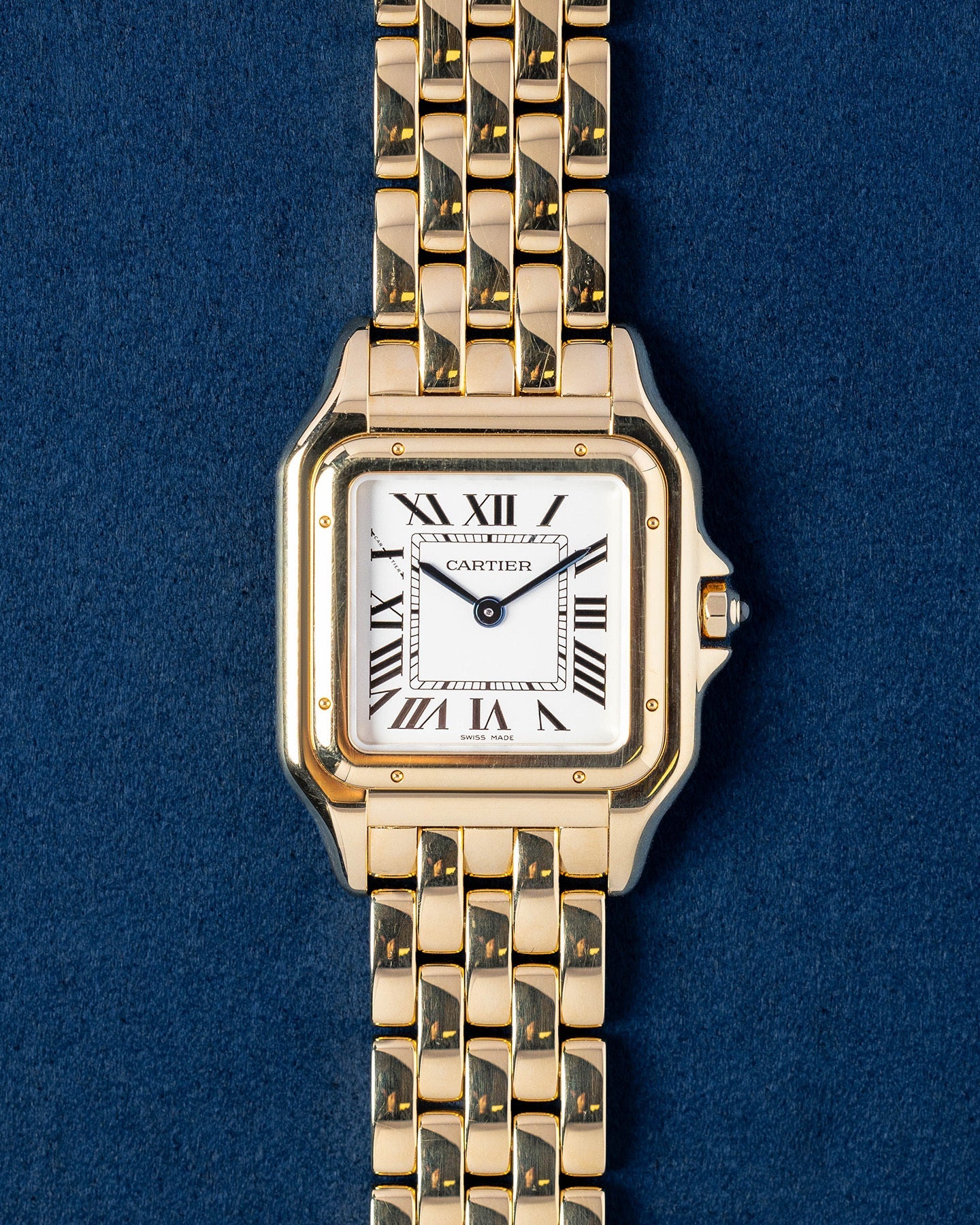
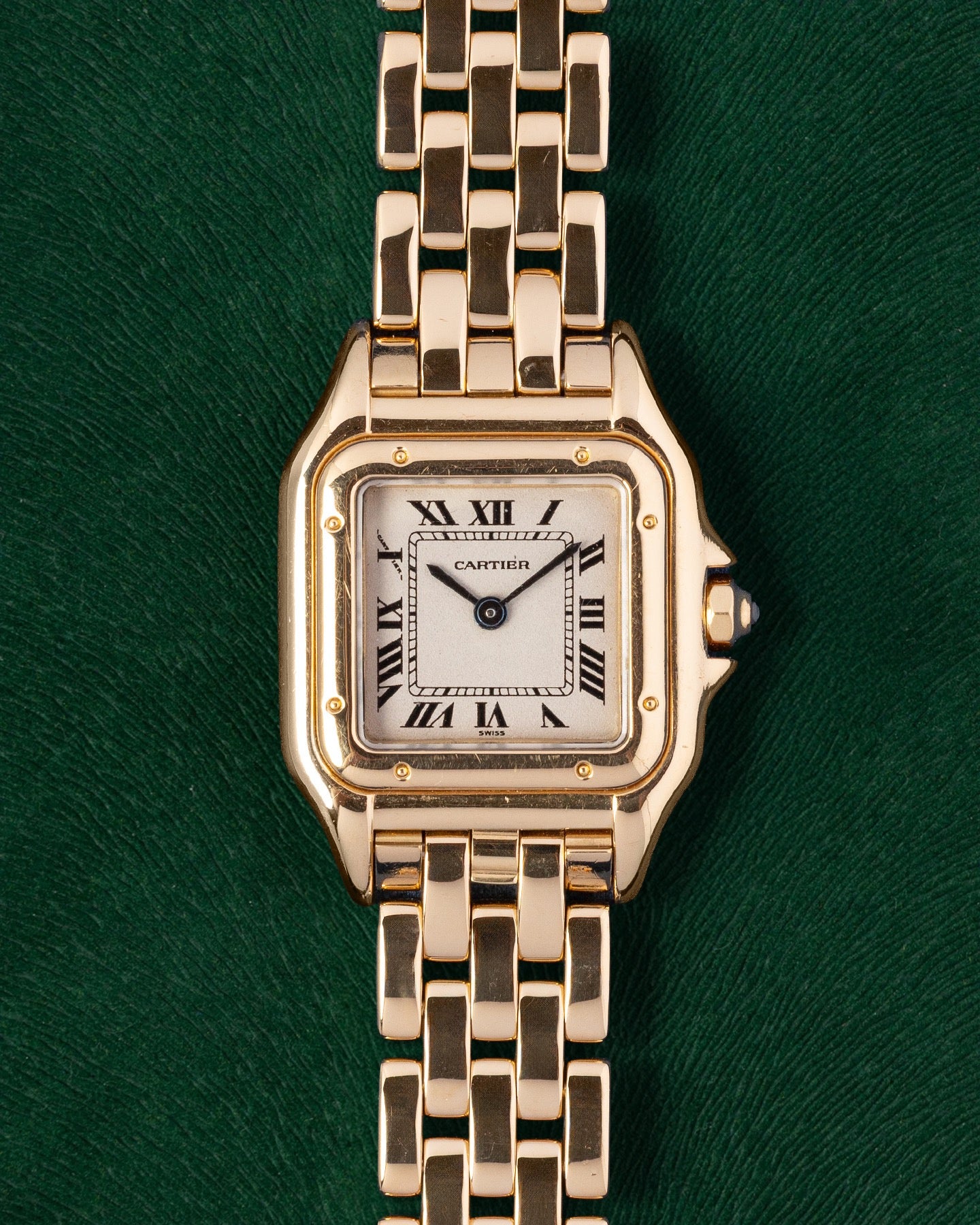
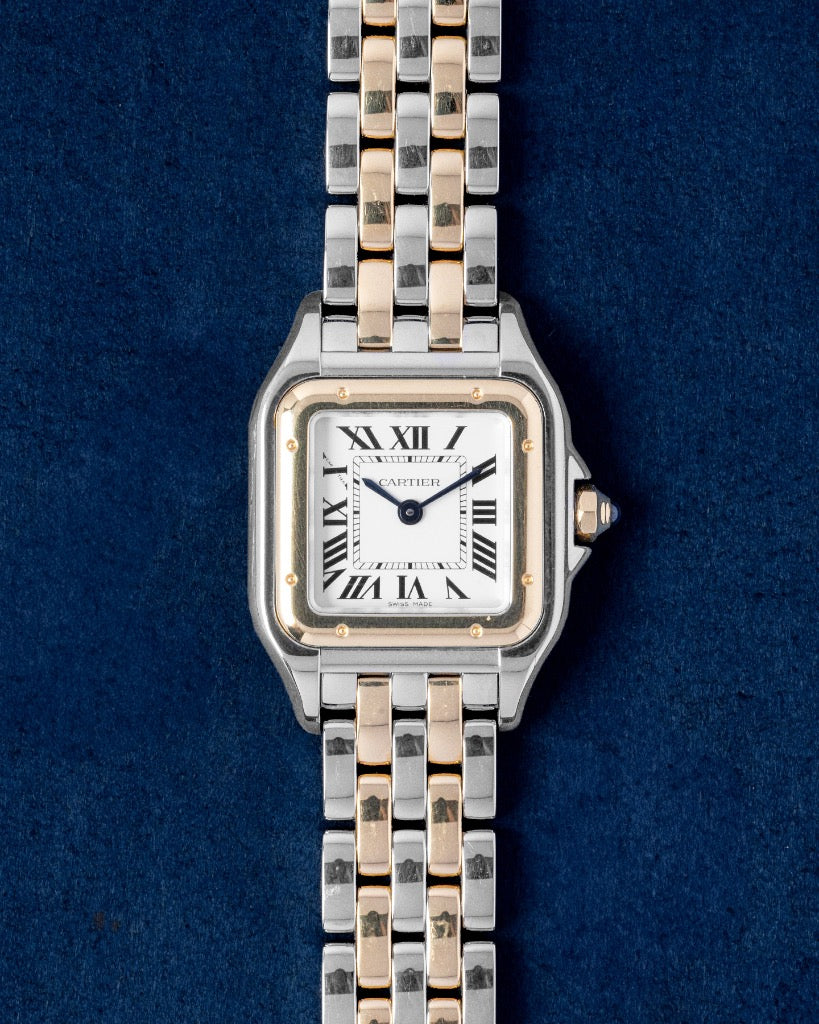
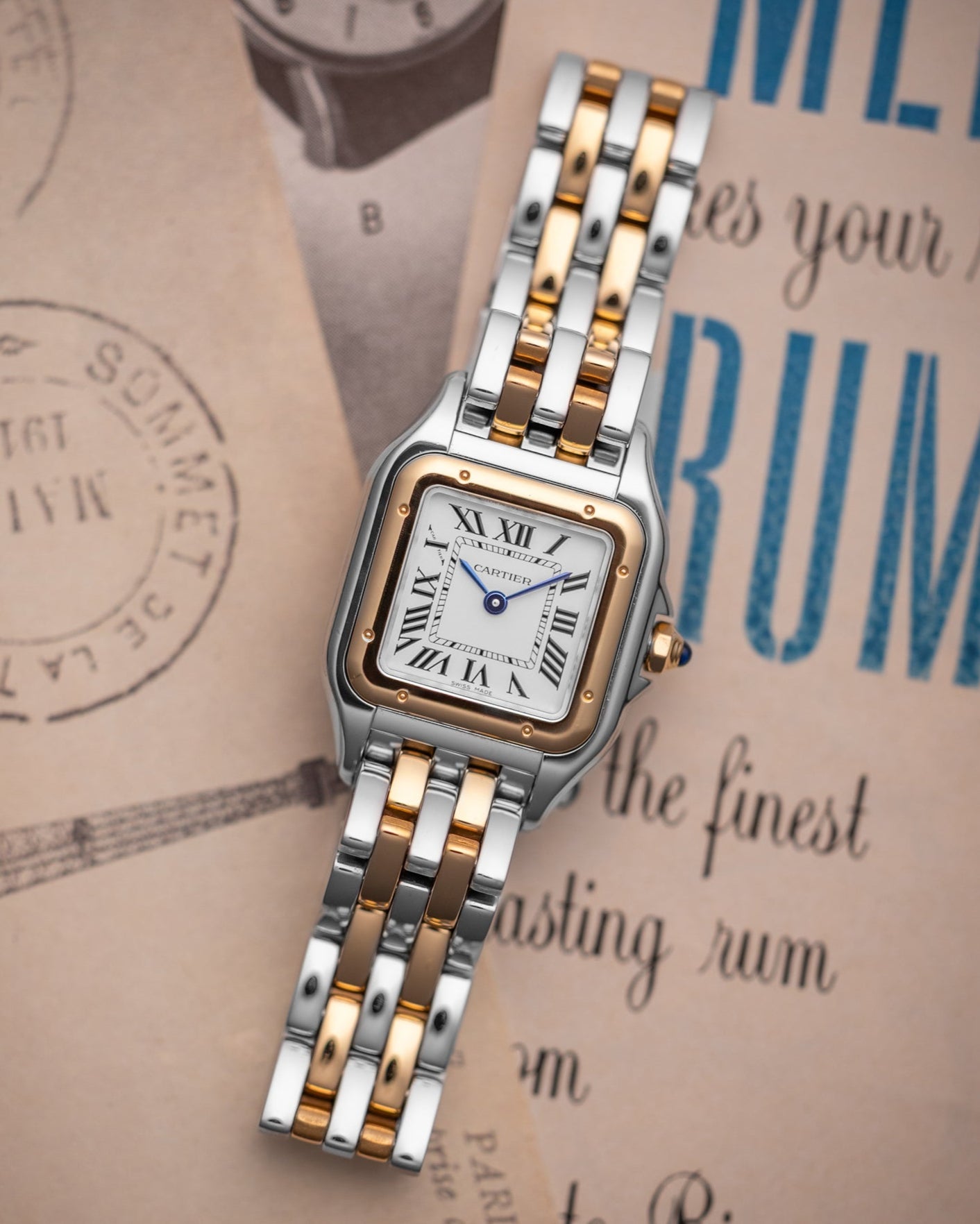
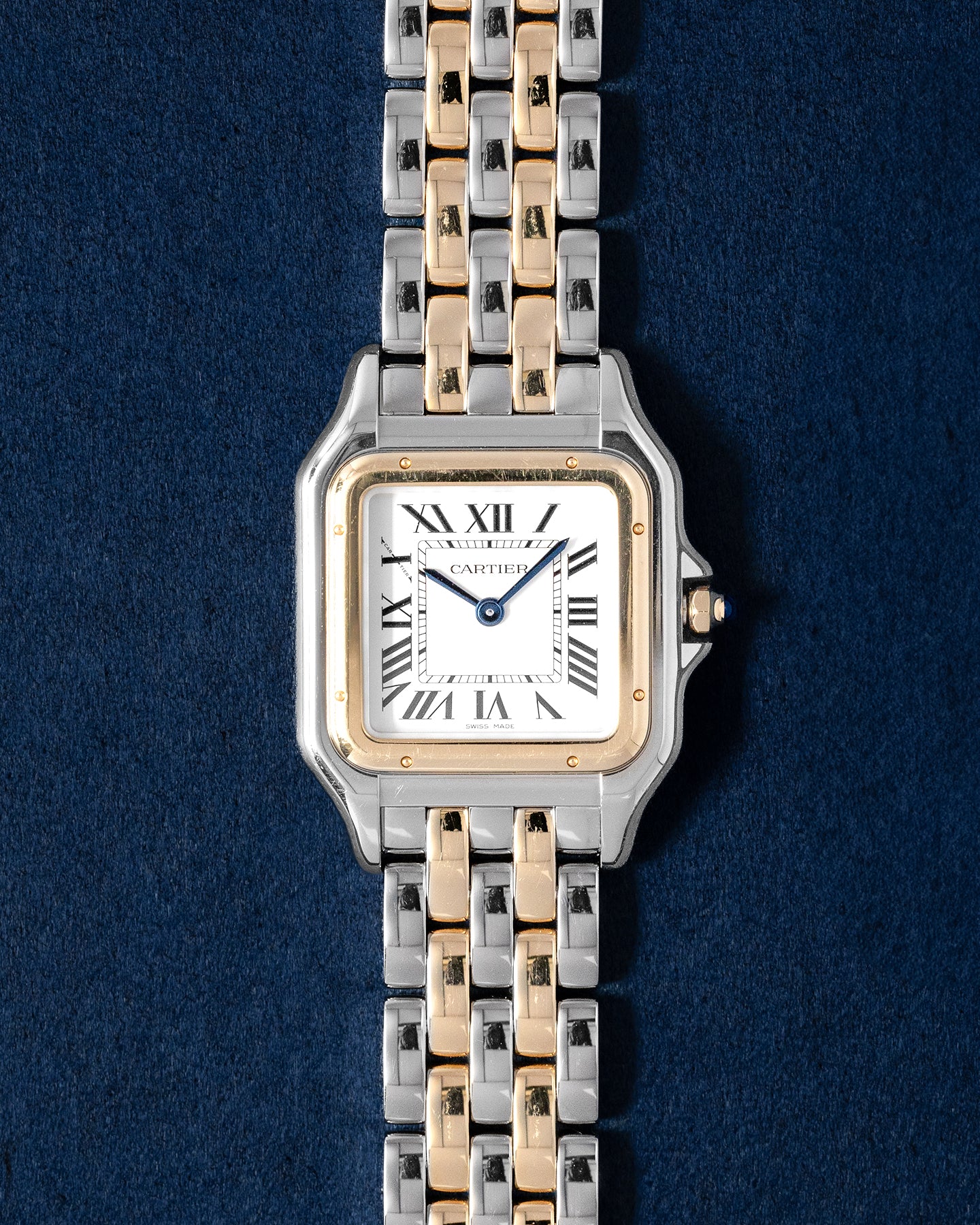
The result was a watch that took clear inspiration from the Santos de Cartier but softened every line. The Cartier Panthere case is square with rounded corners, integrated lugs that flow directly into the bracelet, exposed screws around the bezel (a Santos signature), and proportions slimmer and flatter than any contemporary Cartier reference. The dial carried the signature maison elements: silvered guilloche, blackened Roman numerals, blued sword-shaped hands, a blue sapphire or blue spinel cabochon set into the crown, and a Cartier secret signature integrated into the VII numeral.
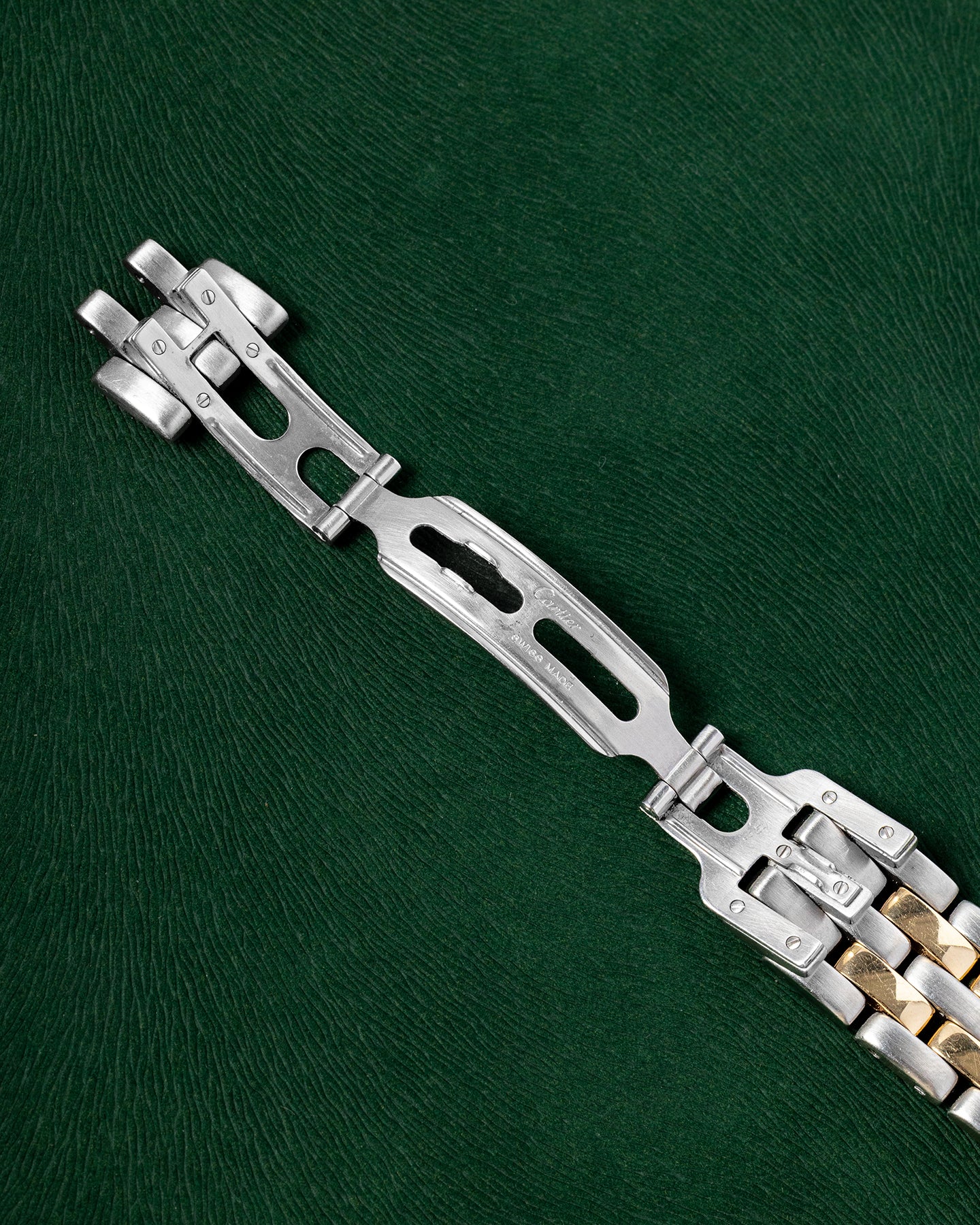
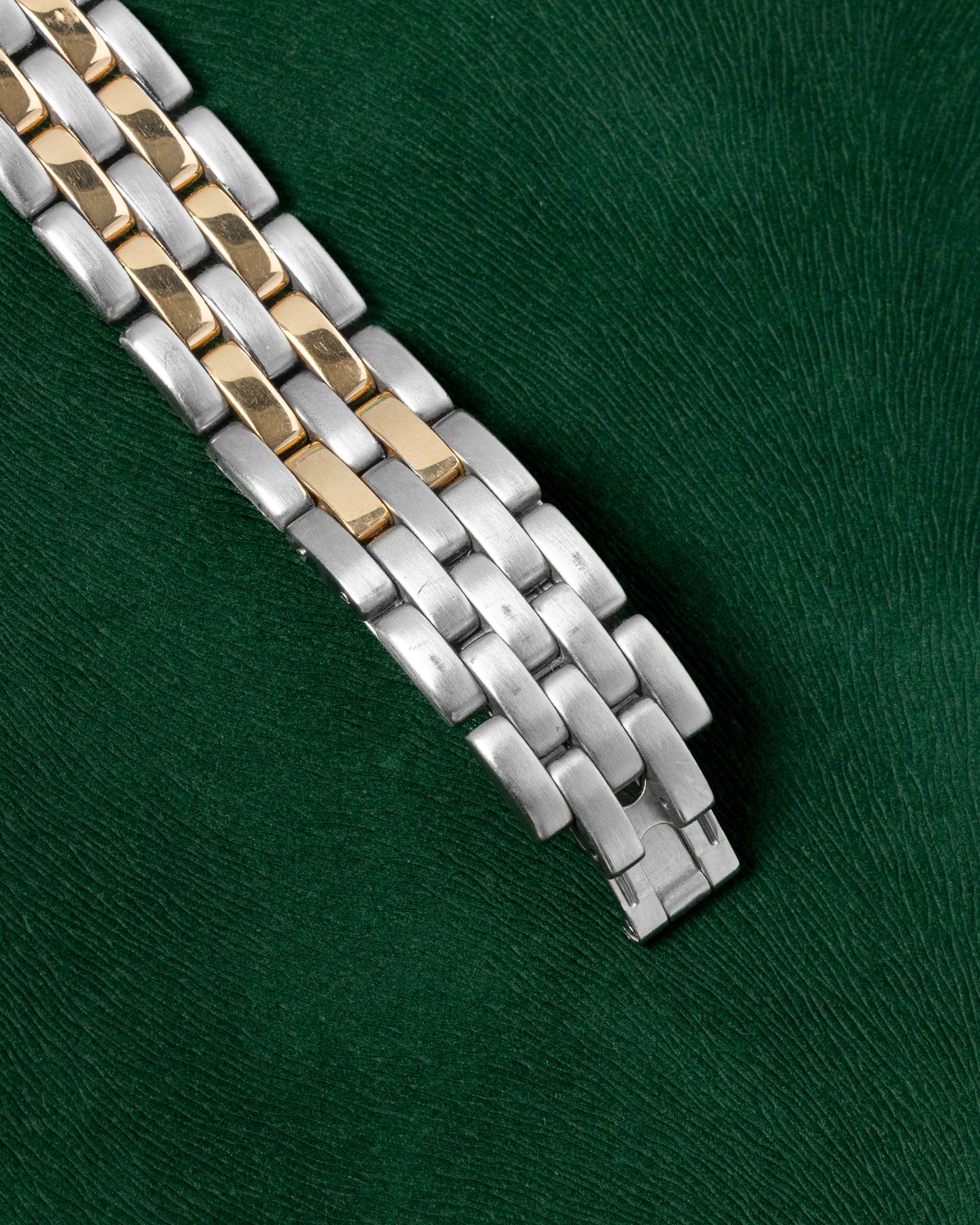
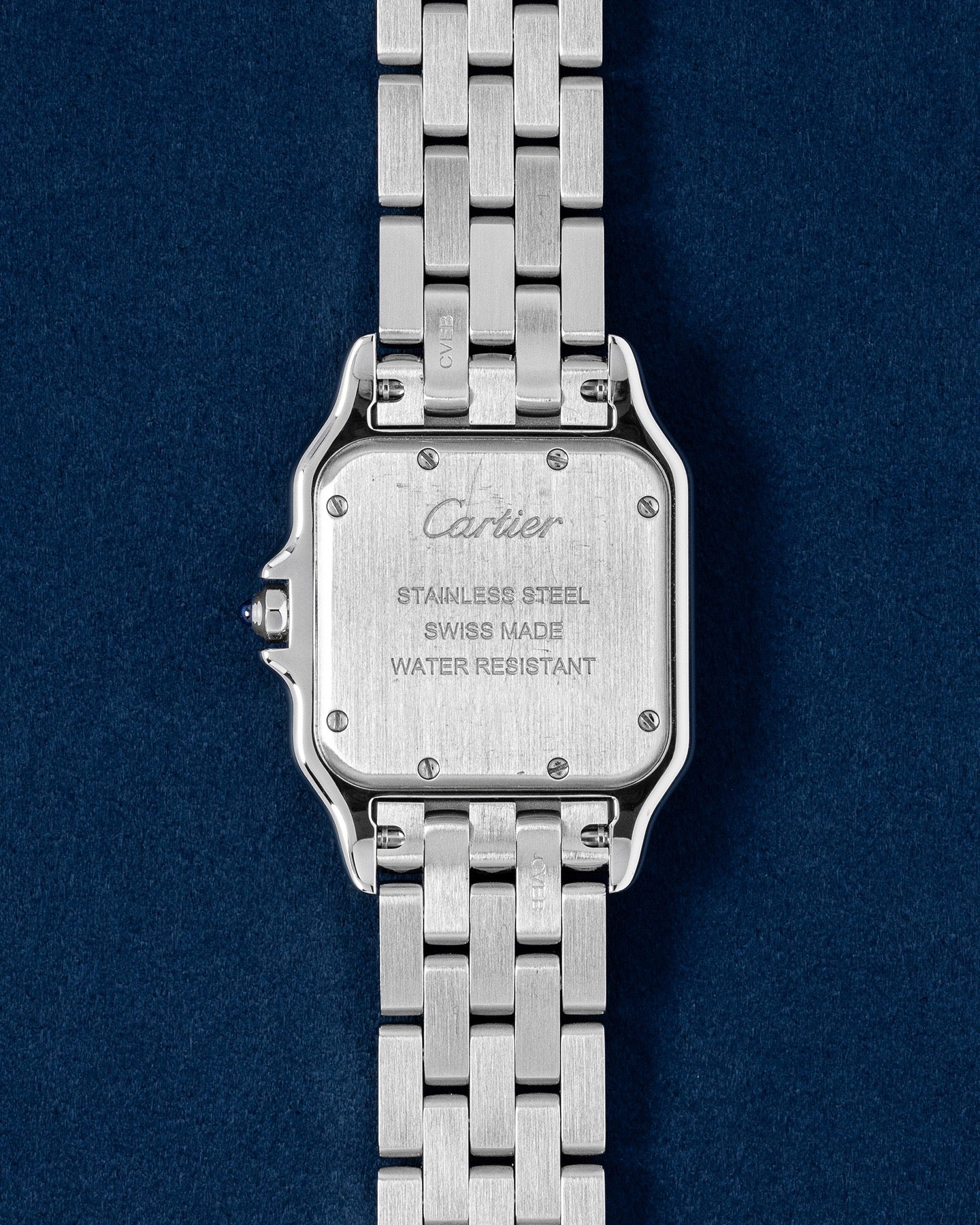
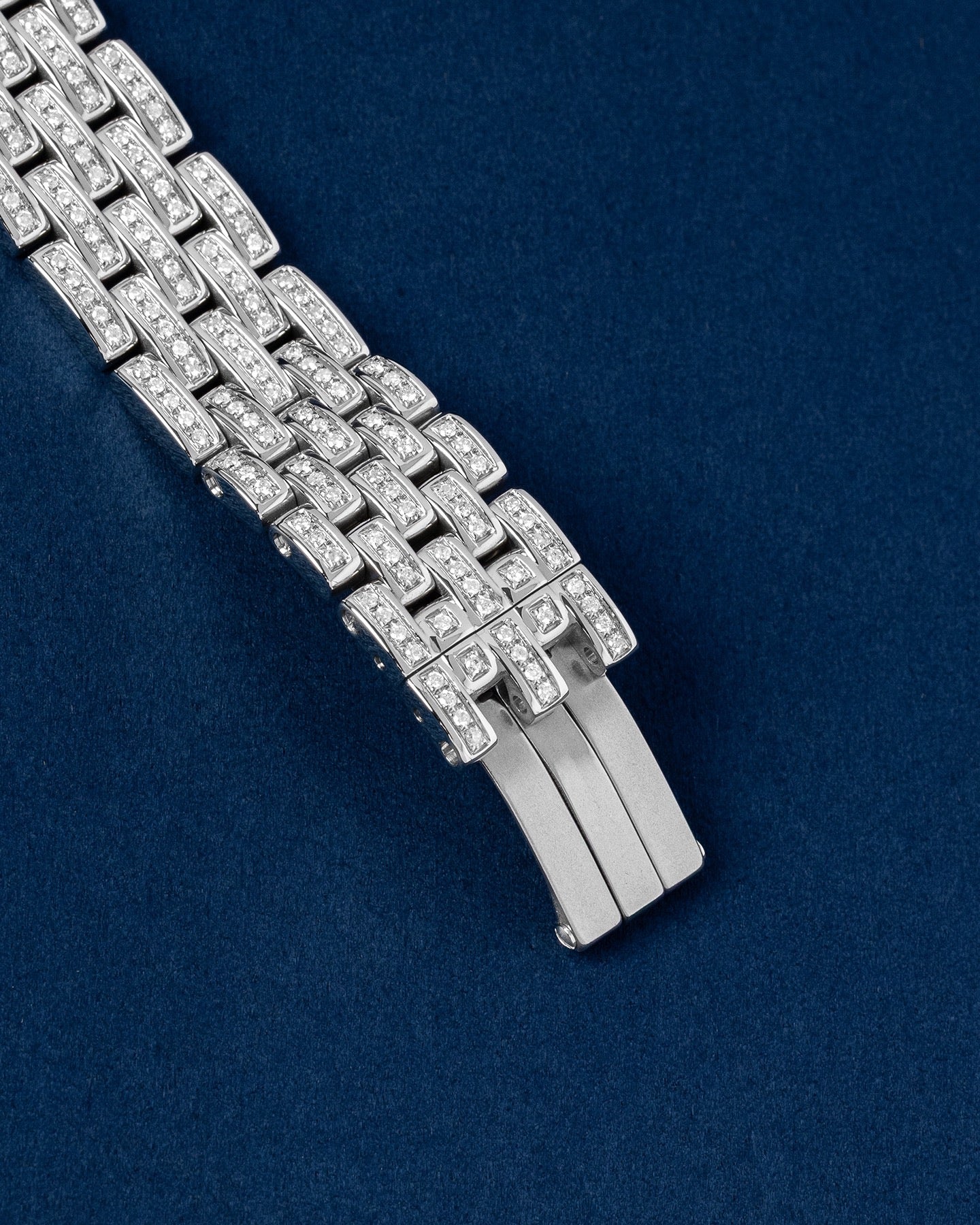
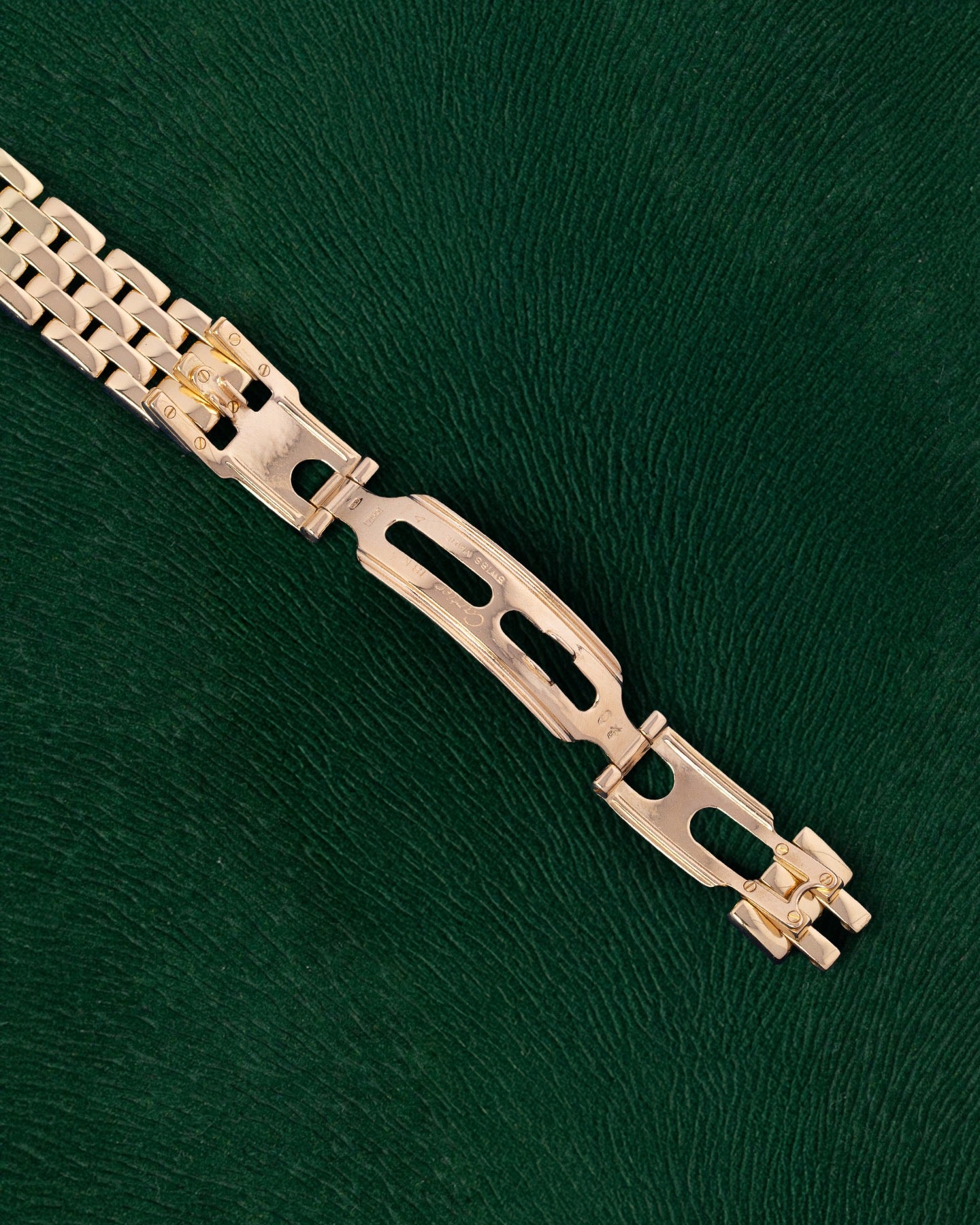
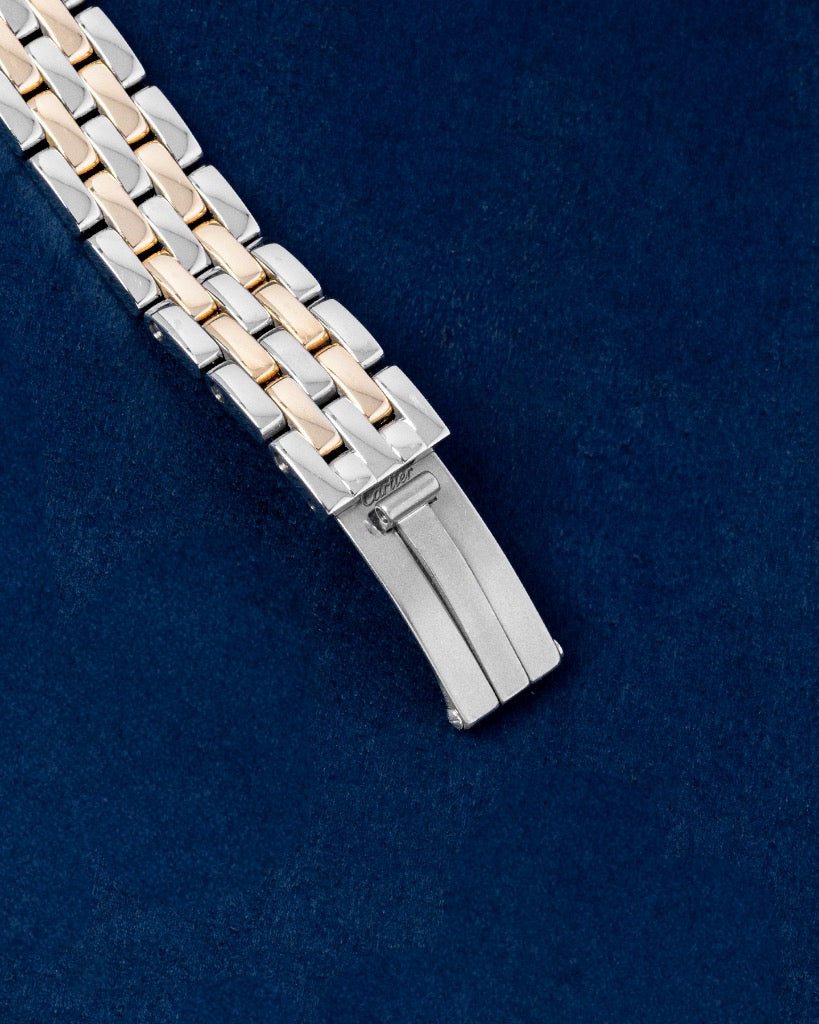
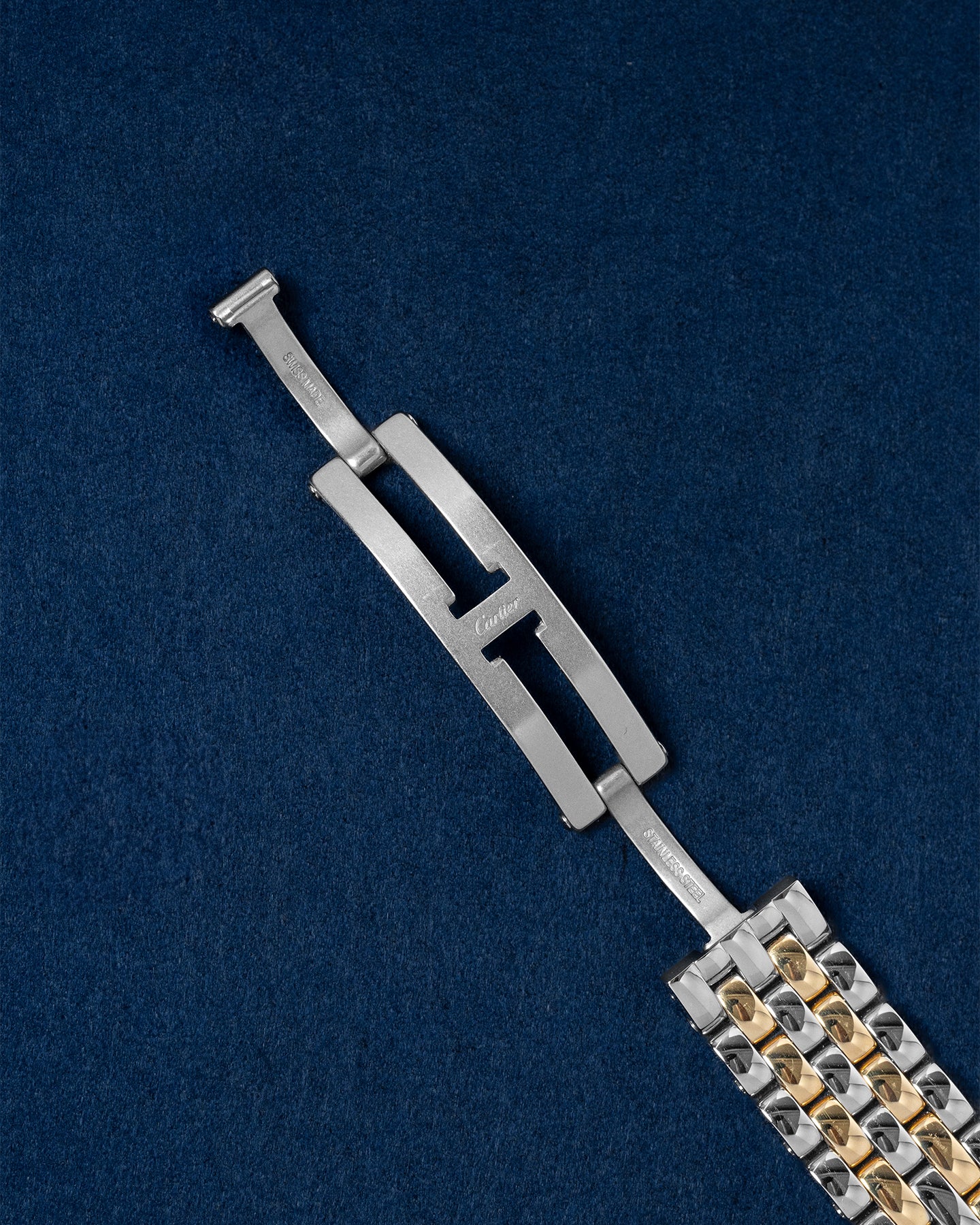
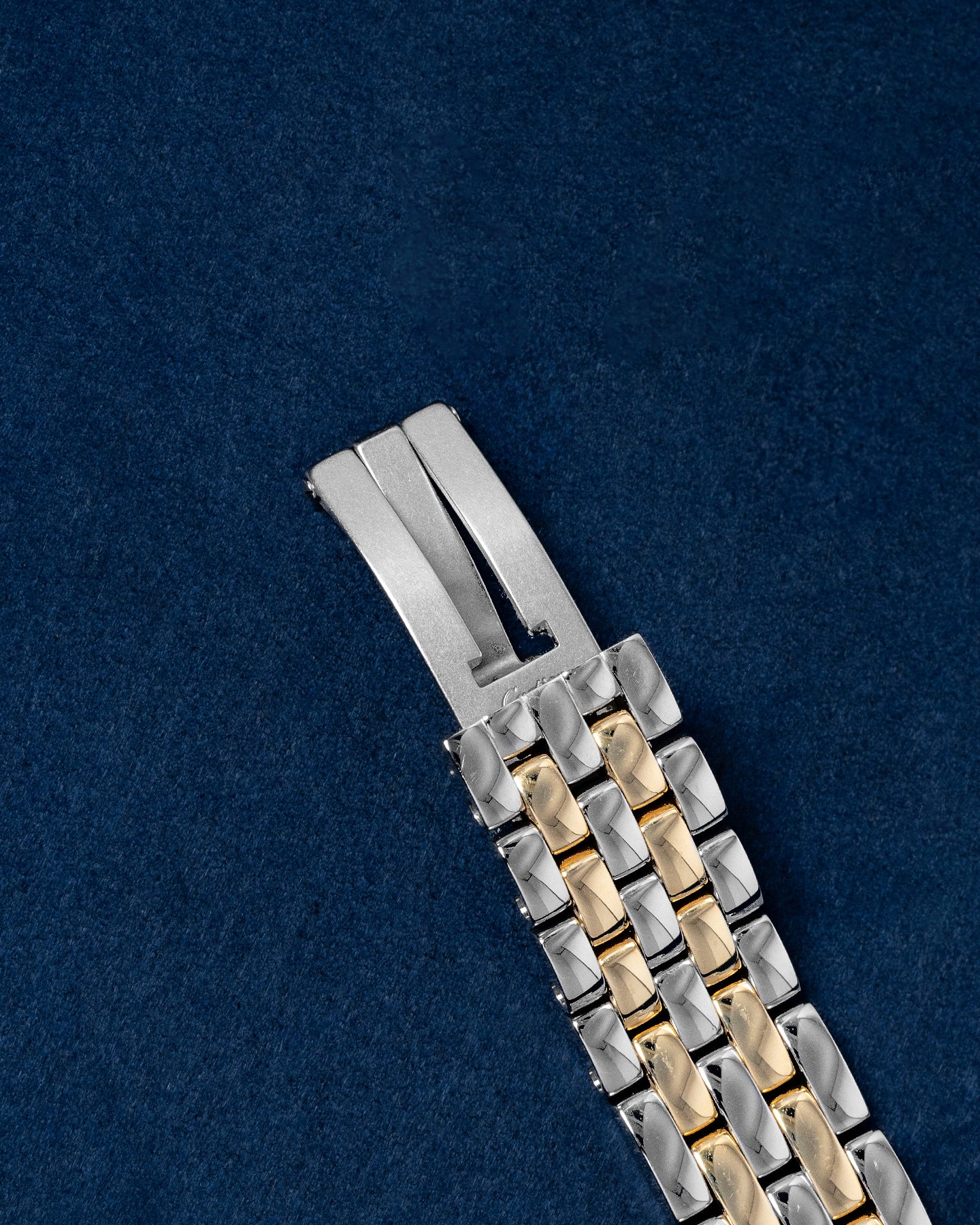
The bracelet was the design centerpiece. Cartier developed a five-link bracelet construction that allowed the metal to drape over the wrist with a fluid, almost liquid quality. The links are flexible in two axes and lie flat against the skin, an engineering achievement that gives the Cartier Panthere its defining tactile character. The bracelet is not a strap that the case is attached to. The bracelet is the watch, with the case effectively serving as a slightly enlarged central link in what reads at first glance as a Cartier bracelet that happens to tell time.
The first-generation Cartier Panthere, produced from 1983 through 2004, became one of the defining watches of the 1980s and 1990s. Cartier offered the original Panthere in five sizes: Mini, Small, Medium, Large, and Jumbo, with smaller versions marketed to women and the Medium and Jumbo references positioned as unisex or men references. Two-tone stainless steel and yellow gold was the most commercially successful configuration of the era, capturing the 1980s appetite for bold mixed-metal jewelry. Solid yellow gold and solid white gold versions sat at the top of the line, with diamond-set bezels and hardstone dials in malachite, lapis lazuli, and onyx available across the high-jewelry extensions of the collection.
The 2004 Discontinuation and the Cultural Afterlife
Cartier discontinued the Panthere in 2004. The decision reflected the broader shift in the luxury watch industry during the early 2000s, when the rise of mechanical watchmaking as a cultural force made quartz jewelry watches feel commercially out of step with the moment. Cartier was investing heavily in mechanical movement development through this period (the in-house calibres that would become the 1904 MC and 1847 MC were in development), and the Panthere, with its quartz movement and jewelry-first positioning, did not fit the mechanical-credibility trajectory of the brand.
The discontinuation did not diminish the Cartier Panthere cultural standing. The watch remained visible on the wrists of celebrities, models, and style figures through the 2000s and early 2010s, and vintage Cartier Panthere references became prized objects on the secondary market. The flat, slim case profile suited the 2010s shift toward smaller, more refined dress watches, and the connection of the watch to the 1980s and 1990s gave it a strong nostalgia premium as that era fashion came back into focus. By the mid-2010s, the vintage Cartier Panthere was one of the most-requested Cartier references on the secondary market, and the case for a Cartier reissue had become commercially undeniable.
The 2017 Relaunch at SIHH
Cartier relaunched the Panthere at SIHH 2017. The relaunch was treated as a major brand event. Cartier collaborated with the filmmaker Sofia Coppola on a short film celebrating the vintage glamour of the Panthere, a deliberate signal that the relaunched Cartier Panthere was positioned as a cultural object as much as a watch product. The Sofia Coppola film referenced the 1980s and 1990s heyday of the Panthere and tied the revival of the watch to the broader cultural reappraisal of those decades that was happening across fashion, music, and film.
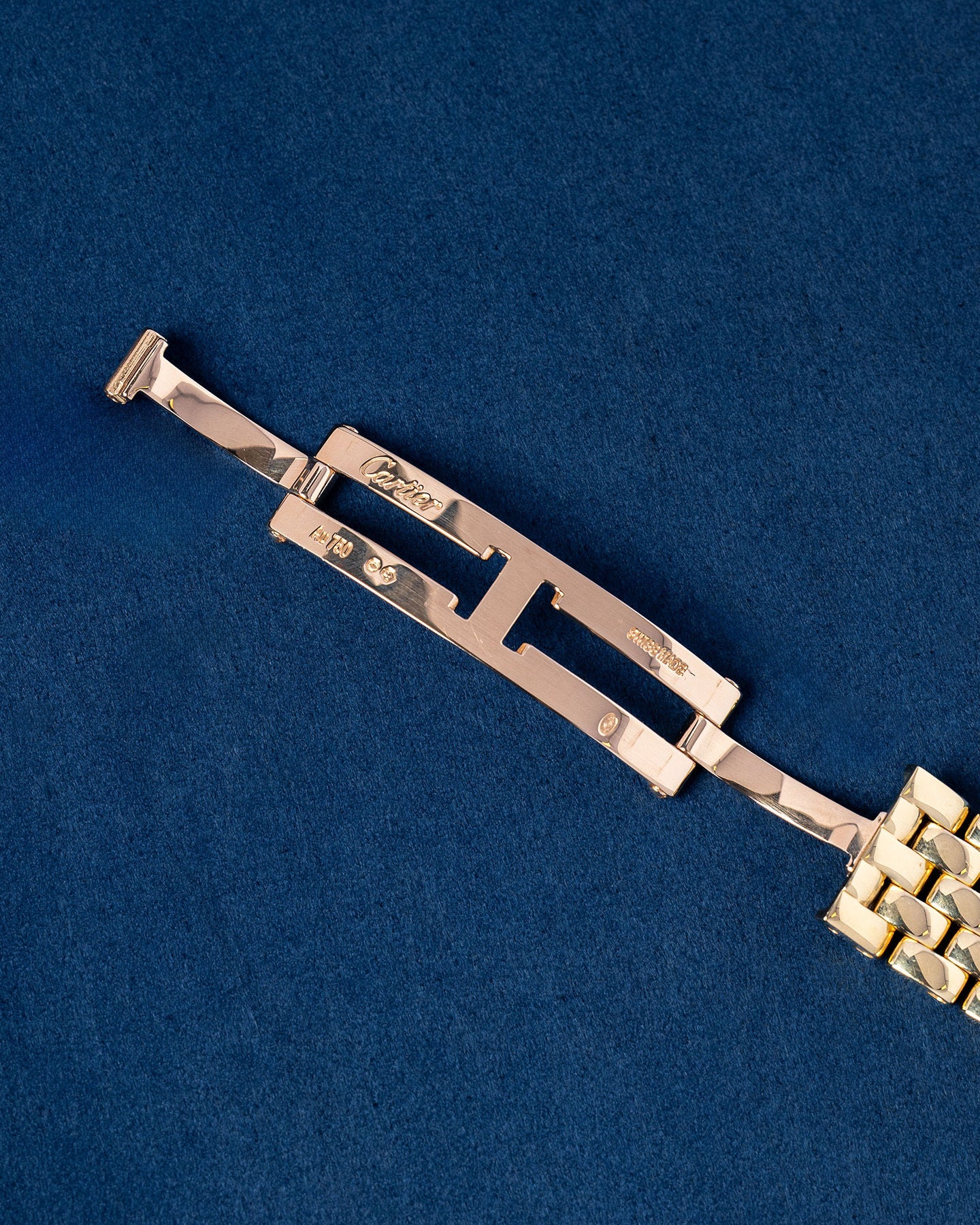
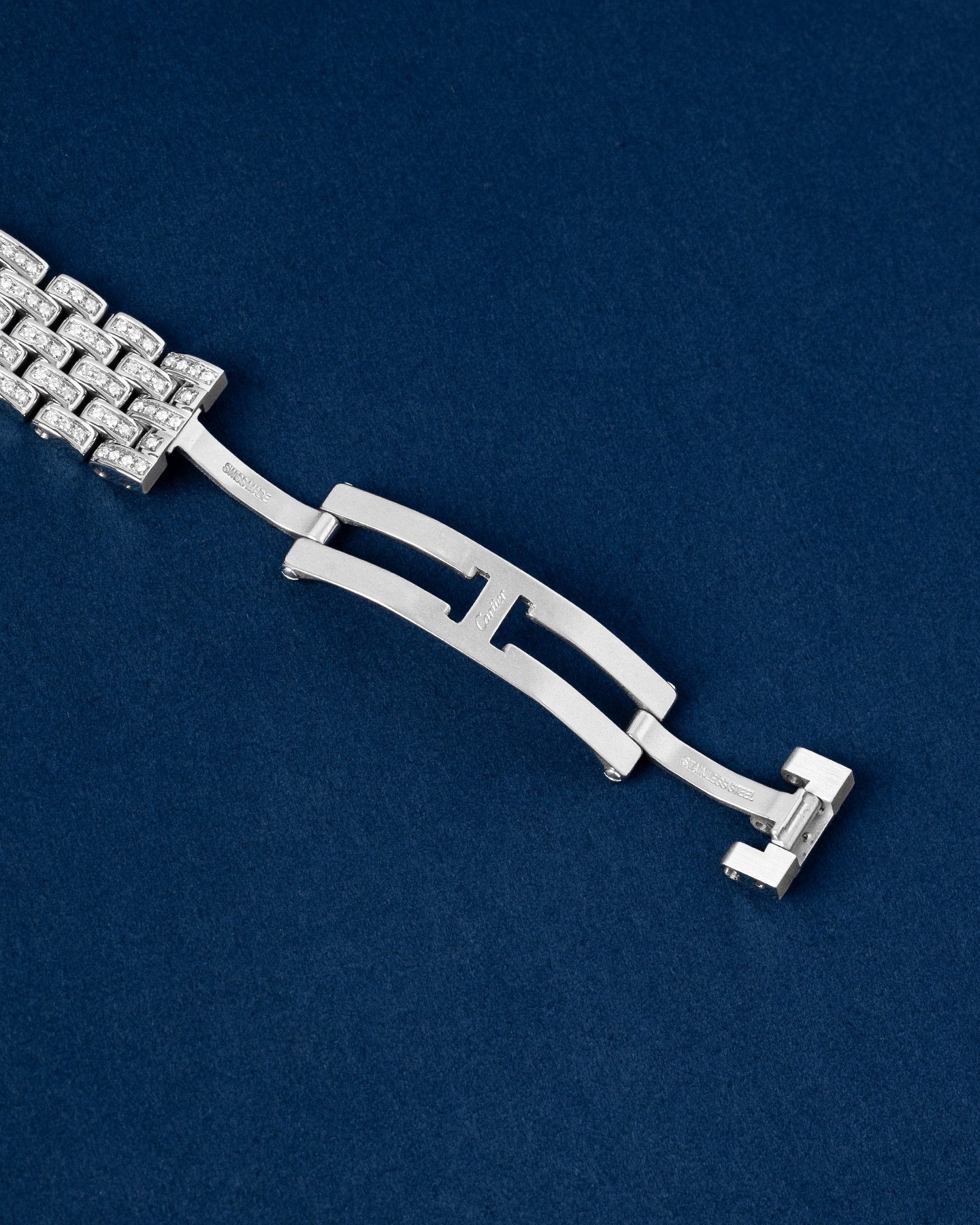
The 2017 Cartier Panthere stayed faithful to the original 1983 design. The case shape, the dial layout, the Roman numerals, the blued steel hands, the blue cabochon crown, and the five-link bracelet construction all returned essentially unchanged. Cartier made several functional updates. The bracelet links were strengthened and the clasp mechanism re-engineered for greater durability. The water resistance was improved to a more practical specification. The case received slightly crisper lines and more refined polishing. The bracelet drape was tuned to be slightly smoother than the vintage references while retaining the fluid character that defined the original.
The size strategy at the 2017 relaunch was deliberate. Cartier initially launched the modern Panthere in three sizes (Mini, Small, and Medium) without bringing back the Large or the Jumbo, a clear signal that the relaunched Cartier Panthere was being positioned primarily as a ladies watch. The strategy worked. The 2017 Cartier Panthere became one of the most commercially successful Cartier launches of the decade, and the watch immediately appeared on the wrists of a new generation of cultural figures including Bella Hadid, Dua Lipa, Zendaya, Madonna, and the actor Timothee Chalamet, whose courtside wear of the small Cartier Panthere became one of the most-discussed contemporary watch moments of the 2020s.
Cartier subsequently reintroduced the Large Cartier Panthere in 2023 and 2024, acknowledging that the appeal of the watch had become genuinely unisex and that buyers wanted a larger Cartier Panthere option. Reference WSPN0016 brought back the 31mm by 42mm Large case in stainless steel, keeping the 6.71mm slim profile and the quartz movement that defines the line.
Sizes Across the Cartier Panthere Catalogue
The current Cartier Panthere is produced in four standard sizes, with each size representing a different proposition in terms of wrist presence and use case.
The Mini Cartier Panthere
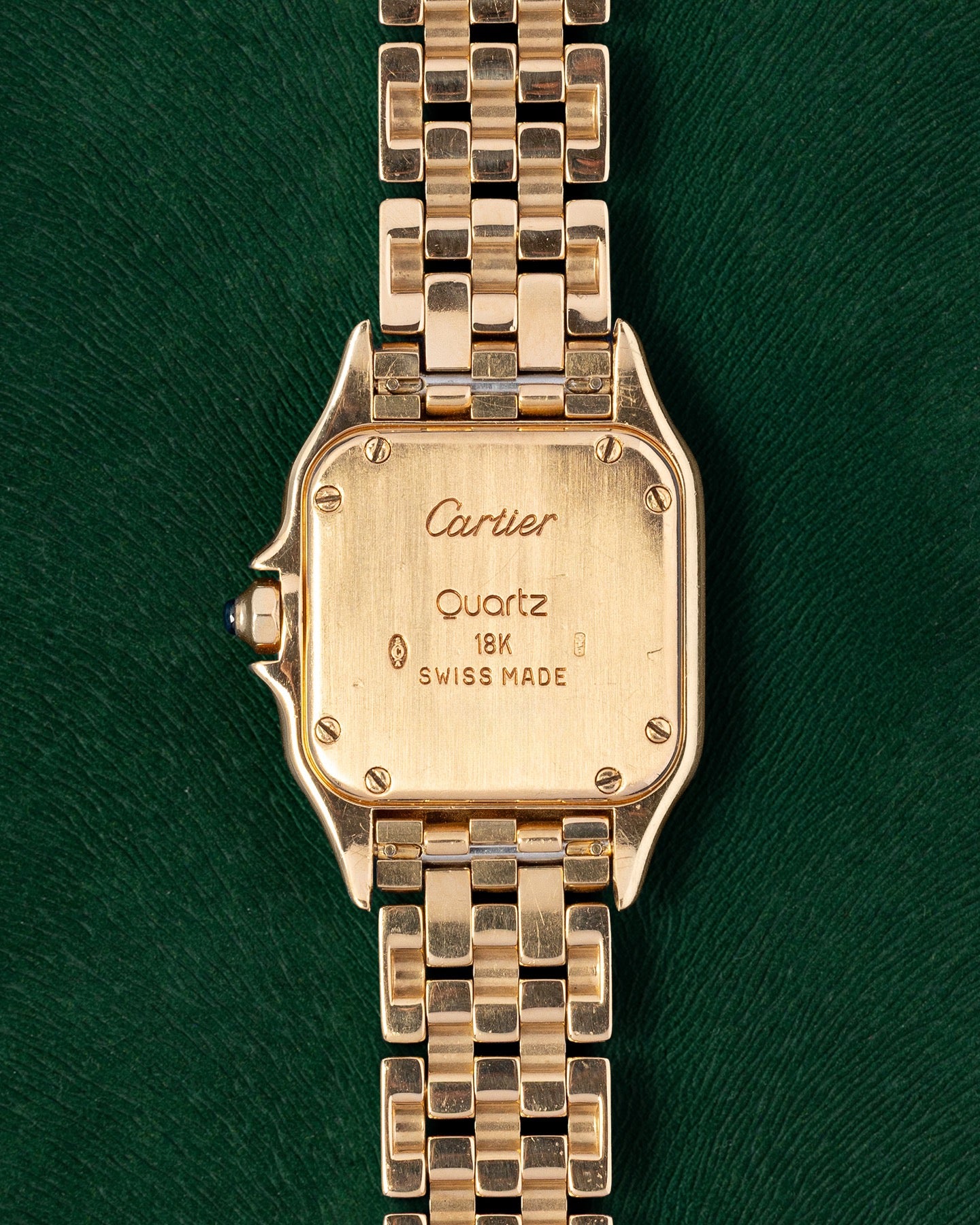
The Mini Cartier Panthere is the smallest current production reference, with a case measuring approximately 22mm in width. The Mini is the most jewelry-forward Cartier Panthere reference, positioned for buyers who want the watch to function primarily as a bracelet. Reference WF5030B9 in 23mm 18k yellow gold is a representative Mini Cartier Panthere configuration. The Mini ships with a quartz movement, the standard silvered dial with blackened Roman numerals, blued sword-shaped hands, and the blue spinel cabochon crown.
The Small Cartier Panthere
The Small Cartier Panthere sits between the Mini and the Medium and is the most popular size for buyers who want the watch to read as both a watch and a bracelet without committing fully to either end of the spectrum. The Small case dimensions are approximately 22mm by 30mm. Reference numbers in the Small size include configurations across stainless steel, two-tone, yellow gold, and rose gold.
The Medium Cartier Panthere
The Medium Cartier Panthere is the volume center of the contemporary line and the size most likely to be worn unisex. The Medium case measures approximately 27mm in width and is the size that most closely matches what buyers think of when they picture the classic 1980s and 1990s Cartier Panthere. Reference numbers in the Medium size include W25014B9 in 27mm 18k yellow gold, W2PN0007 in 27mm two-tone stainless steel and yellow gold, WGPN0007 in 27mm 18k rose gold, W4PN0018 in 27mm stainless steel, W4PN0008 in 27mm stainless steel, and WSPN0015 in the 27mm Medium configuration. The Medium Cartier Panthere in two-tone steel and yellow gold is, in the view of many collectors, the single most iconic Cartier Panthere configuration in the catalogue.
The Large Cartier Panthere
The Large Cartier Panthere, reintroduced with reference WSPN0016 in 2023 and 2024, brings the case dimensions up to 31mm by 42mm while keeping the 6.71mm slim profile and the quartz movement. The Large reference is positioned for buyers who want the strongest wrist presence the Cartier Panthere can offer, and it has become the reference most likely to be worn by male buyers looking for a Cartier dress-jewelry watch with a more substantial visual footprint.
The Double-Tour and Triple-Loop Cartier Panthere Variants
Cartier extended the relaunched Panthere in 2018 with two variants that pushed the watch further into pure jewelry territory. The Cartier Panthere Double-Tour, reference WGPN0013, wraps the bracelet around the wrist twice in a configuration borrowed from cuff-bracelet jewelry traditions. The Double-Tour is produced in 18k Cartier yellow gold, runs the same quartz movement and 22mm by 30mm case dimensions as the standard Small Cartier Panthere, and retains the silvered dial with Roman numerals, blued sword hands, and blue spinel cabochon crown.
The Cartier Panthere Triple-Loop, reference WJPN0011, pushes the concept further with a bracelet that wraps the wrist three times. The Triple-Loop is the most jewelry-extreme Cartier Panthere variant in the current catalogue and reads more as a Cartier bracelet with an integrated time function than as a wristwatch in any conventional sense.
The Cartier Panthere Manchette
Cartier added the Panthere Manchette in 2019, reference WGPN0018, as a cuff-style variant that integrates the watch into a wide gold bangle. The Manchette is crafted in 18k yellow gold, uses a compact 22mm by 19mm case set within a 31mm-wide cuff, and runs the same quartz movement, silvered dial, blued sword hands, and sapphire crystal as the standard Cartier Panthere references. The Manchette is the most explicit statement of the jewelry-first Cartier Panthere identity in the modern catalogue and represents the furthest movement of the line away from conventional watch form.
Materials and Configurations
The Cartier Panthere is produced across a wider range of metal configurations than most contemporary Cartier references. The current catalogue includes stainless steel, two-tone stainless steel and yellow gold, two-tone stainless steel and rose gold, solid 18k yellow gold, solid 18k rose gold, and solid 18k white gold. Diamond-set variants appear at multiple points across the size range, with diamond-paved bezels, diamond-set dials, and full-pave high-jewelry references all available.
Stainless Steel
The stainless steel Cartier Panthere is the entry point to the line. The polished steel shows the case shape and the five-link bracelet construction most clearly, and the steel reference is the most commonly traded Cartier Panthere configuration in the secondary market. The W4PN0018 and W4PN0008 references represent typical current production stainless steel Cartier Panthere configurations.
Two-Tone Steel and Gold
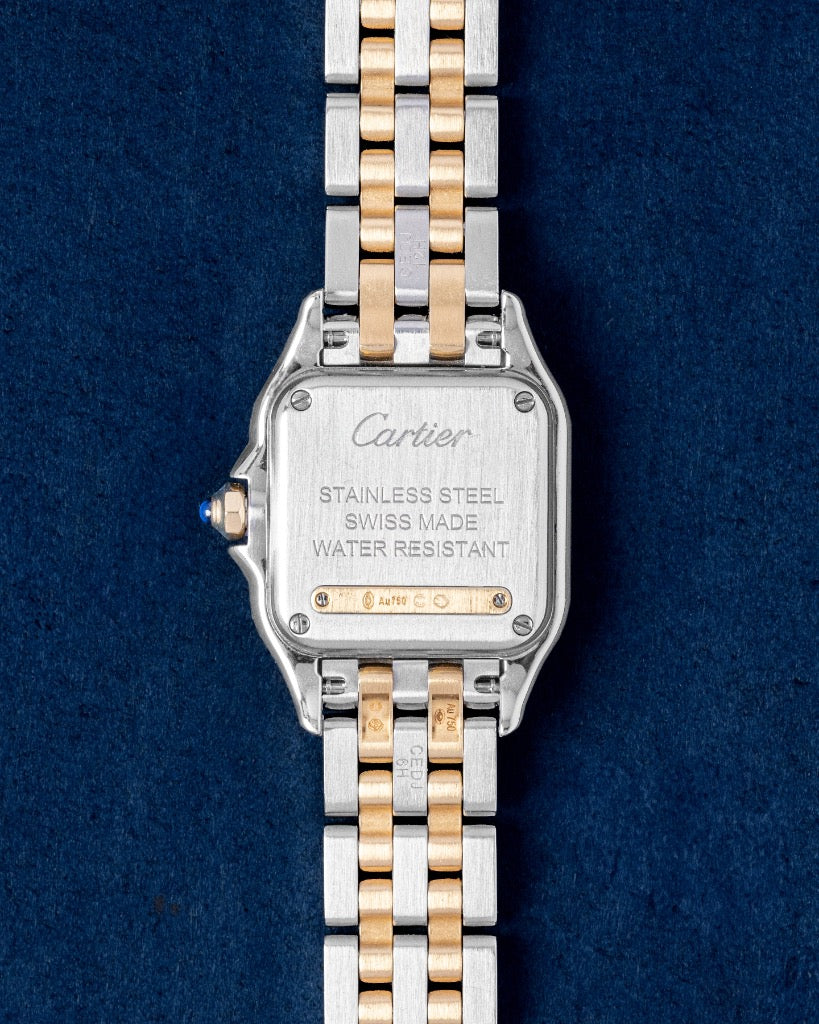
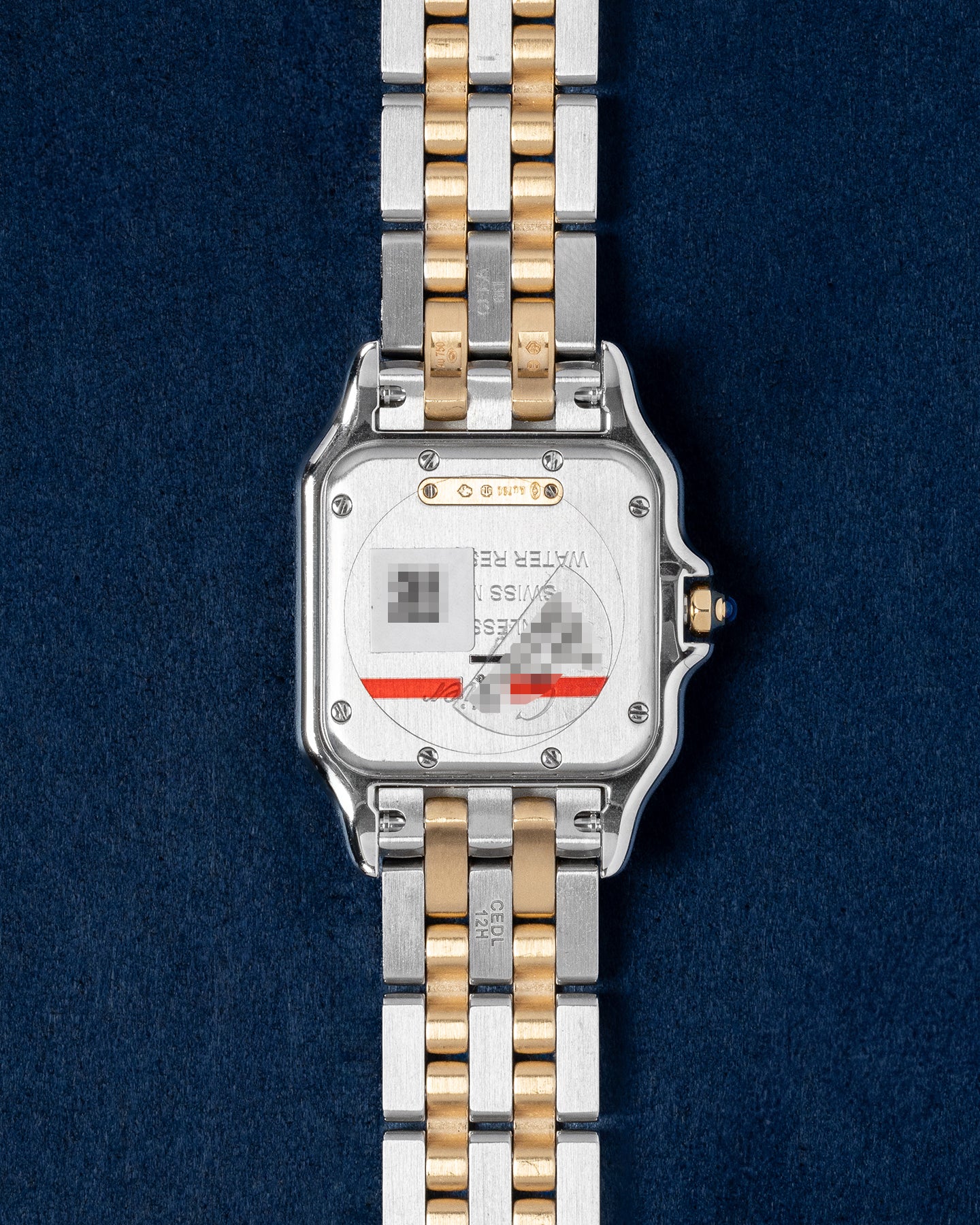
The two-tone Cartier Panthere, in both stainless steel and yellow gold and stainless steel and rose gold configurations, is the configuration most closely associated with the original 1980s Cartier Panthere. The two-tone visual identity, with polished steel outer links framing gold central links and a gold case bezel, is the look that defined the watch through its first commercial peak. Reference W2PN0007 in two-tone stainless steel and yellow gold is a representative current production example.
Solid Yellow Gold
Solid 18k yellow gold is the configuration that anchored the upper end of the original Cartier Panthere catalogue and remains a defining configuration in the modern line. The yellow gold Cartier Panthere, with its monochromatic warmth and full-gold five-link bracelet, is the reference that most directly evokes the cultural connection of the watch to the 1980s and 1990s. Reference WF5030B9 in 23mm yellow gold and W25014B9 in 27mm yellow gold are representative examples.
Solid Rose Gold
The solid rose gold Cartier Panthere, reference WGPN0007 among others, was added to the line at the 2017 relaunch as a configuration that did not exist in the original 1983-through-2004 production run. The rose gold variant has become one of the most commercially successful additions to the modern Cartier Panthere catalogue and represents the strongest connection of the line to contemporary jewelry preferences.
Movement and Specifications
The Cartier Panthere runs Swiss quartz movements across the entire standard catalogue. The choice of quartz is deliberate and central to the watch identity. Quartz allows Cartier to keep the case profile extremely slim (the Large Cartier Panthere measures 6.71mm in thickness, and the smaller references are slimmer still), which in turn allows the bracelet to drape with the fluid character that defines the line. A mechanical Cartier Panthere would necessarily be thicker and would lose the jewelry-watch positioning that makes the line what it is.
The quartz movement provides hours and minutes across most references, with seconds available on some configurations. The water resistance is rated at 30 meters (3 bar) across the modern catalogue, sufficient for everyday wear including rain, hand washing, and incidental splash exposure but not appropriate for swimming, showering, or sustained water immersion. The crystal is sapphire across the modern Cartier Panthere references, and the crown is set with either a blue sapphire or blue spinel cabochon depending on the reference.
Famous Wearers and Cultural Position
The Cartier Panthere has occupied a continuous position in luxury watch culture since its 1983 introduction, with two distinct waves of celebrity association corresponding to the original production run and the 2017 relaunch.
The 1980s and 1990s Cartier Panthere was worn by Madonna, Princess Diana, the actresses of the defining films and television shows of the era, and the broader cultural milieu of 1980s and 1990s glamour. The watch became one of the visual shorthands for 1980s luxury, alongside the Cartier Love bracelet and the Rolex Datejust as the defining female-coded luxury wrist objects of the period.
The 2017 relaunch generated an entirely new wave of cultural visibility. The Sofia Coppola launch film established the tone, and the watch quickly appeared on the wrists of Bella Hadid, Dua Lipa, Zendaya, Keira Knightley, and a wide range of post-2017 cultural figures. The adoption of the small Cartier Panthere by actor Timothee Chalamet became one of the most-discussed contemporary watch moments of the 2020s and signaled the broader cultural acceptance of slim, fluid jewelry watches on male wrists. The Cartier Panthere is now one of the most photographed Cartier references in contemporary celebrity-wrist imagery, and the resale liquidity of the watch reflects that ongoing visibility.
What to Look for When Buying a Cartier Panthere
The Cartier Panthere category covers two distinct production eras separated by a thirteen-year discontinuation, with the original 1983-through-2004 references and the 2017-and-later references representing meaningfully different propositions. The Grand Caliber specialists in Dallas evaluate each Cartier Panthere with several factors in mind.
Generation Identification
Generation identification is first. The original 1983-through-2004 Cartier Panthere and the 2017-and-later relaunch references share the same fundamental design language but differ in bracelet construction, clasp mechanism, water resistance, and finishing detail. Vintage Cartier Panthere references carry their own collector value premium tied to period authenticity, while modern Cartier Panthere references benefit from current authorized Cartier service support and the improved bracelet engineering of the 2017 relaunch. We confirm the production generation, the exact reference, the case dimensions, and the configuration before pricing or offering any Cartier Panthere.
Bracelet Condition
Bracelet condition is the most important single factor in Cartier Panthere valuation. The five-link bracelet is the design centerpiece of the watch, and bracelet wear, stretch, and link integrity directly determine the value and wearability of the watch. Vintage Cartier Panthere references in particular can suffer from bracelet stretch over decades of wear, with the links separating and the bracelet drape losing its characteristic fluidity. We evaluate every Cartier Panthere bracelet for stretch, link tightness, and clasp function before listing.
Case Condition
Case condition is second. The Cartier Panthere case is high-polish across most references, and the polished surfaces show scratches and edge wear more visibly than a brushed-finish case would. Original-condition cases without aggressive polishing carry meaningful premiums over refurbished examples. Original dials without printing wear, original hands with intact bluing, and original crown cabochons without chips or damage are all evaluated as part of every Cartier Panthere we offer.
Movement and Service History
Movement and service history matters. Quartz Cartier Panthere references require periodic battery service and occasional movement service across decades of ownership, and the service history attached to a given watch directly affects long-term reliability. For vintage references, we look for evidence of authorized Cartier service intervals and original or correct replacement movement components.
Box and Papers
Box and papers matter. A full-set Cartier Panthere with original Cartier presentation box, papers, manual, and any boutique-issued certificates trades at a meaningful premium over an example with just the watch. For vintage Cartier Panthere references from the 1980s and 1990s, period-correct boxes are part of the provenance evaluation, and a complete vintage set with original purchase documentation can command a substantial premium over an equivalent watch sold loose.
The Cartier Panthere Collection at the Grand Caliber Dallas Showroom
The Grand Caliber Dallas showroom regularly carries authenticated Cartier Panthere references across both the original 1983-through-2004 production run and the 2017-and-later modern catalogue. Our inventory rotates based on what arrives through our buying program, but we routinely stock examples of the modern Medium Cartier Panthere in stainless steel and two-tone, the Small Cartier Panthere across multiple metal configurations, the Mini Cartier Panthere in yellow gold and rose gold, and the recently reintroduced Large Cartier Panthere in stainless steel. Vintage 1980s and 1990s Cartier Panthere references in two-tone steel and yellow gold and in solid yellow gold appear in our inventory regularly and represent some of the most interesting Cartier value propositions in the current secondary market.
Visit the Dallas showroom in person to evaluate Cartier Panthere watches alongside the broader Cartier catalogue, including Tank, Santos, Ballon Bleu, and other Cartier references. Our specialists can walk you through generation, provenance, condition, bracelet integrity, and long-term collectibility for any Cartier Panthere in our inventory or available through our network. Call us at (214) 225-7198, email info@grandcaliber.com, or stop in at the Dallas showroom to see current Cartier Panthere inventory. We buy, sell, trade, and authenticate Cartier watches across the entire collection, and we are happy to source specific Cartier Panthere references on request when our current inventory does not include the exact size, metal, or generation you are looking for. The Cartier Panthere is one of the most important luxury watch designs of the past forty years and the defining Cartier expression of the jewelry-watch category, and Grand Caliber is proud to be the Dallas destination for authenticated Cartier Panthere examples across the full lineage.
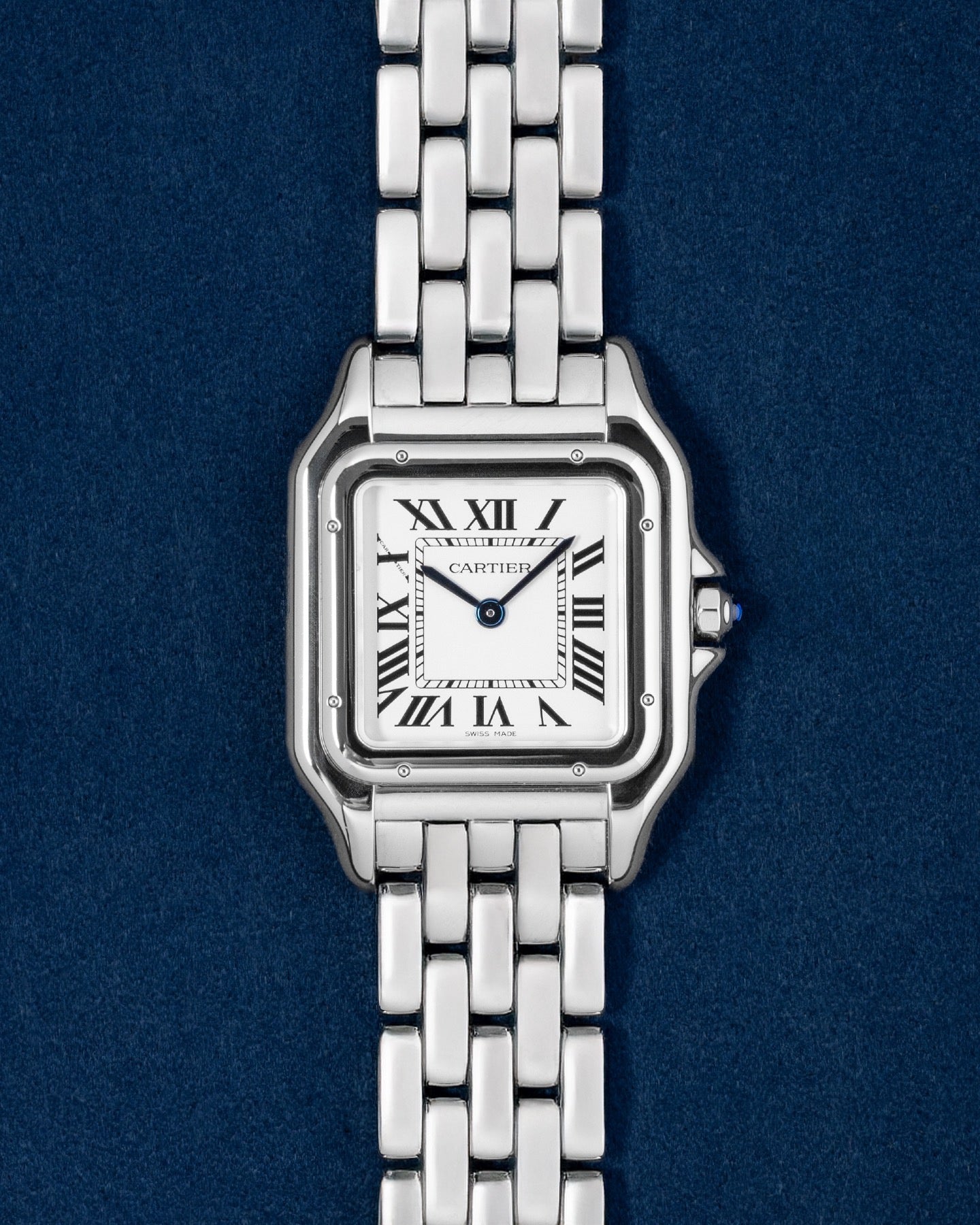
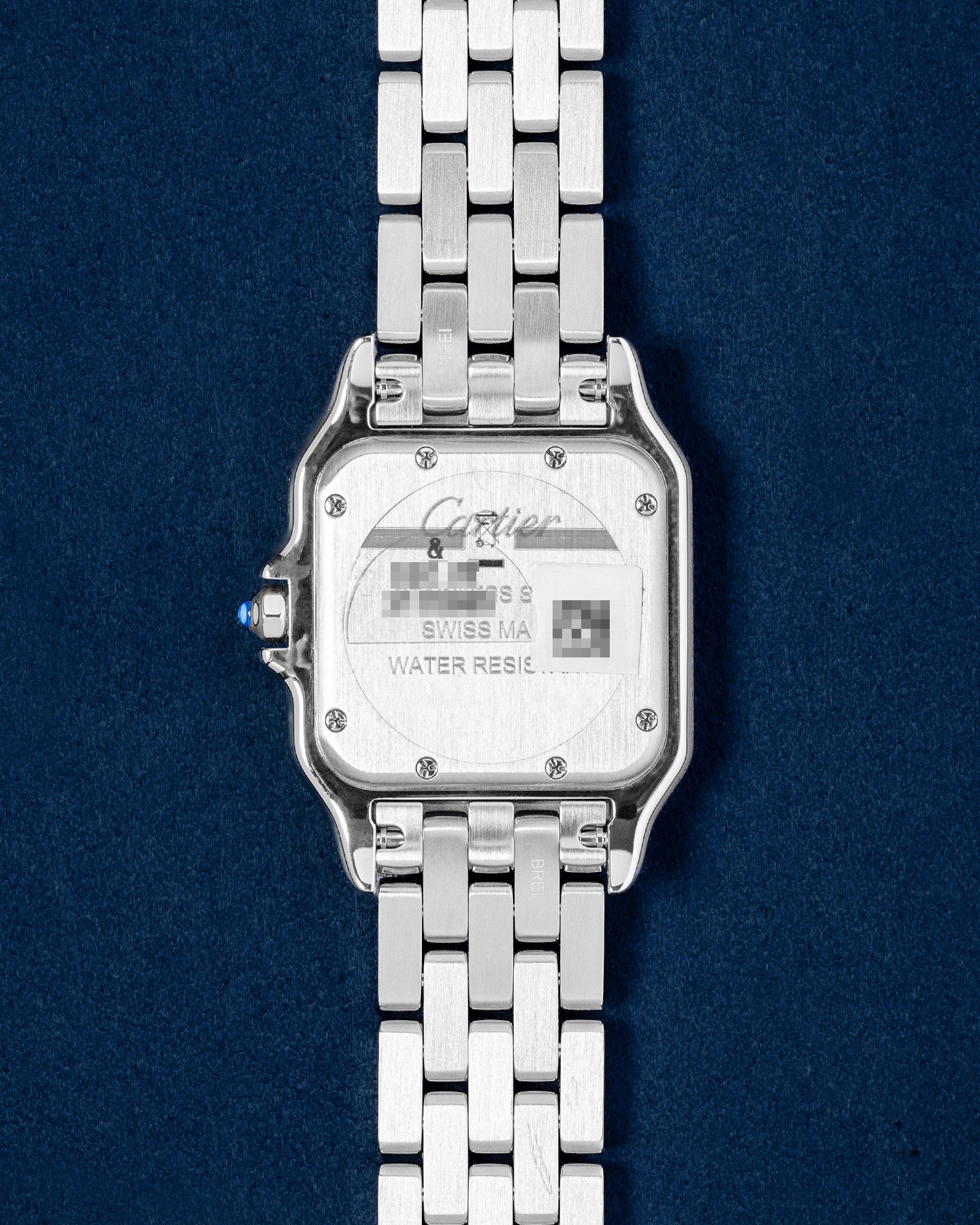
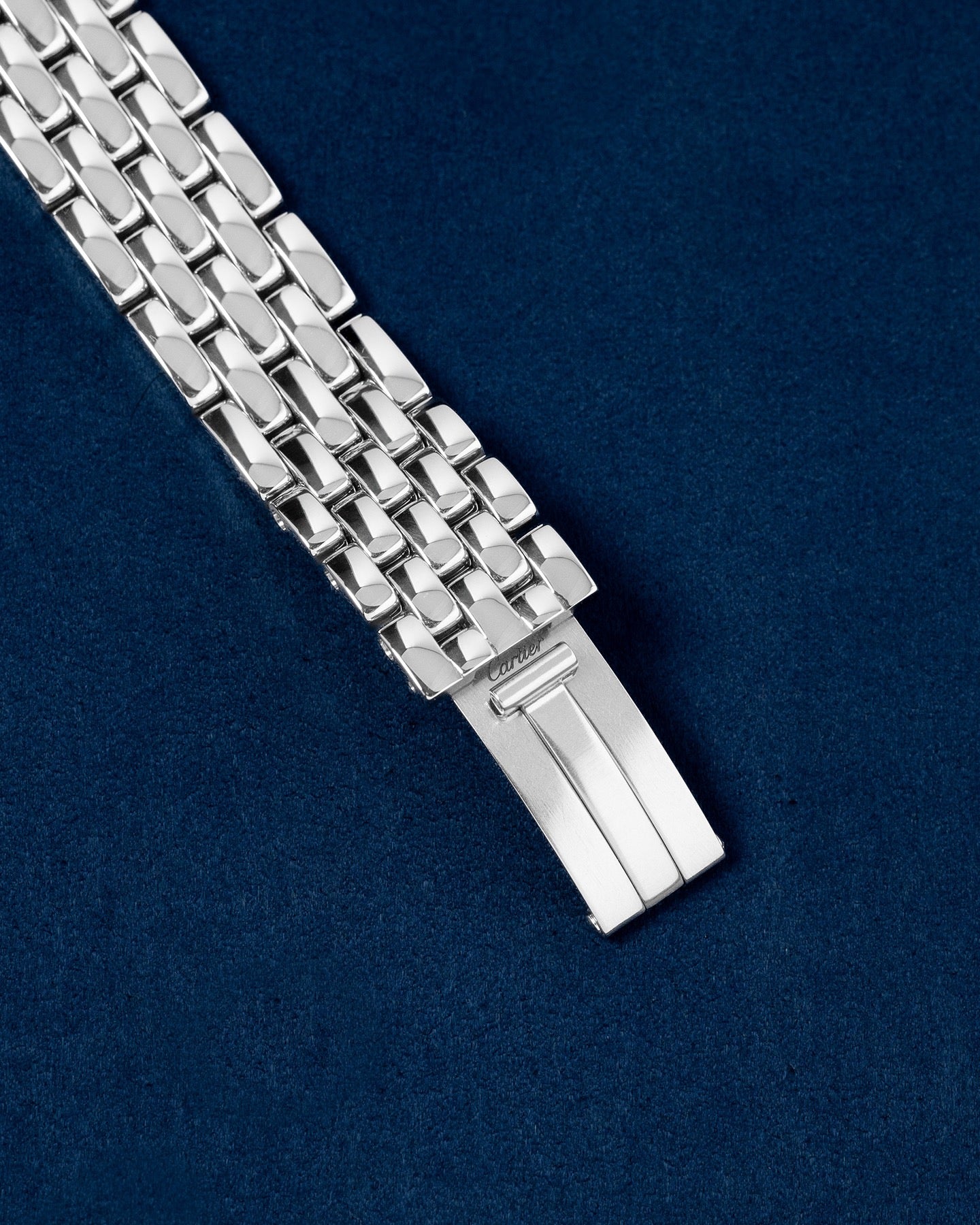
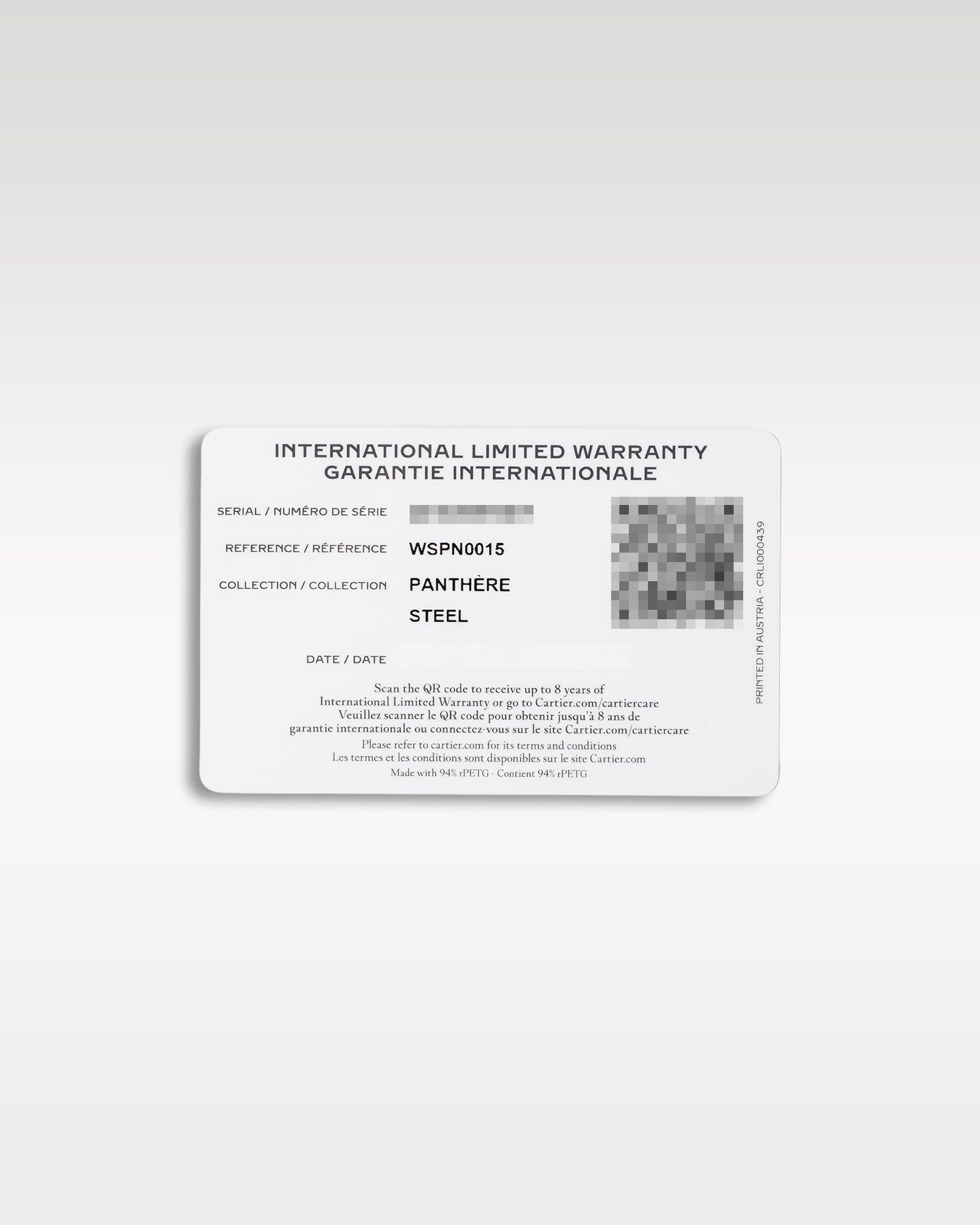
Cartier Panthère De Cartier WSPN0015
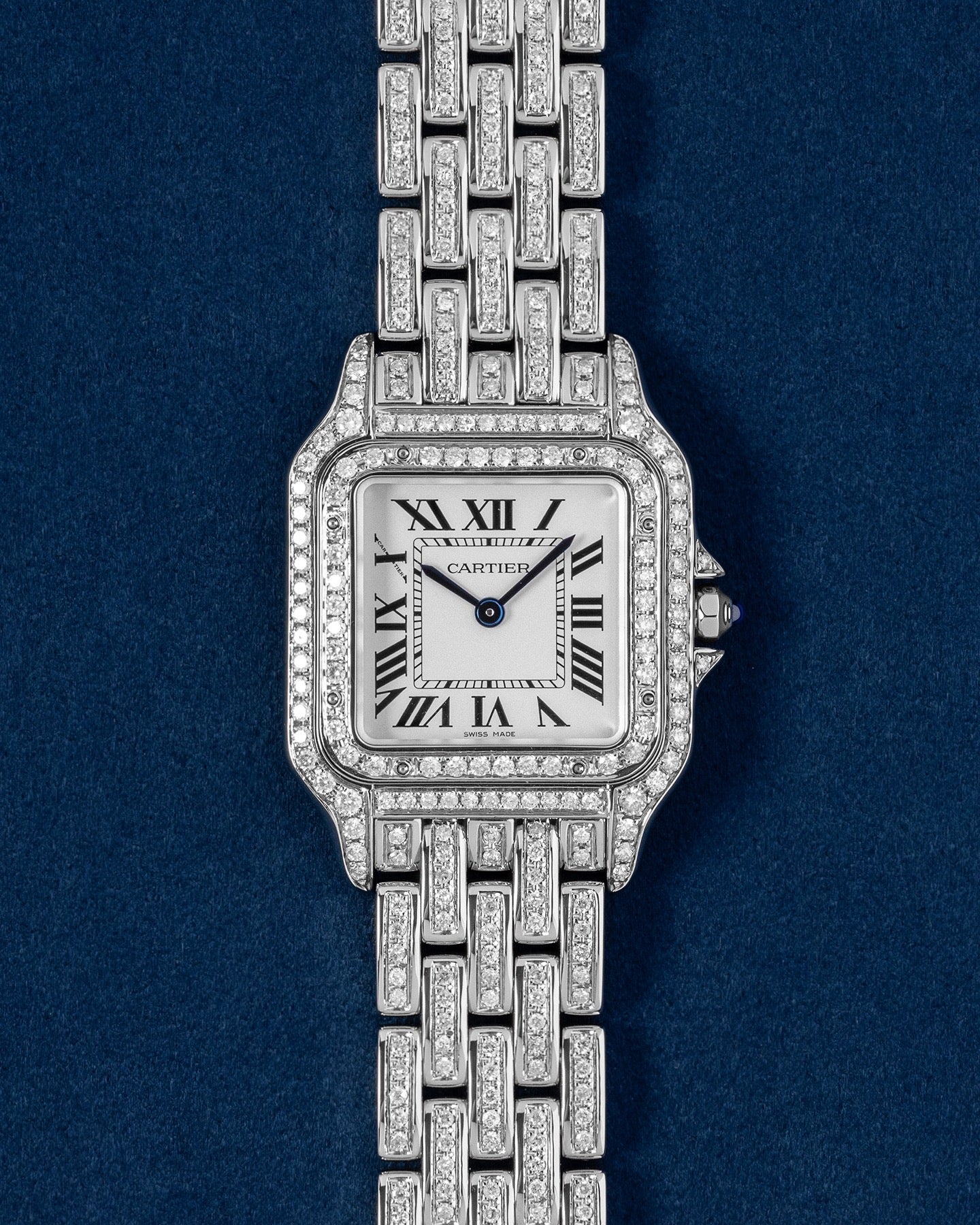
Cartier Panthère De Cartier WSPN0007
Vintage


Cartier Panthère de Cartier W2PN0013
Vintage