

Omega Speedmaster
Shop new and pre-owned Omega Speedmaster watches at Grand Caliber. The chronograph NASA flight-qualified for every Apollo mission, still hand-wound in current production on calibre 3861. Asymmetrical steel case, hesalite or sapphire crystal, the watch worn on six lunar landings.
The Omega Speedmaster Moonwatch at Grand Caliber
The Omega Speedmaster Moonwatch is the only wristwatch in production today that can claim to have been worn on the surface of the Moon. Six times. On every Apollo lunar landing from Apollo 11 in 1969 through Apollo 17 in 1972, astronauts strapped Omega Speedmaster Professional chronographs over the wrists of their pressurised spacesuits and went to a place no Rolex has ever been. That fact alone would make the Speedmaster a significant watch. What makes it the legitimate cornerstone of the entire Omega catalogue is the chain of events that put it there: a 1957 launch as a motorsport timer with no connection to space whatsoever, a private purchase by astronaut Wally Schirra carried aboard a Mercury capsule in 1962, the 1965 NASA qualification testing that subjected commercial chronographs to eleven of the most brutal trials ever devised for a wristwatch, and the 1970 Apollo 13 mission where a Speedmaster timed the engine burn that brought three men home alive.
Grand Caliber sees the Omega Speedmaster Moonwatch cross the desk in every generation the line has produced. The current 2021 Master Chronometer references with calibre 3861, available in both Hesalite crystal and sapphire crystal configurations on bracelet, fabric strap, and leather. The prior generation 2014 to 2021 Moonwatches with calibre 1861 in the 311 reference family. Vintage Speedmaster Professional references including the calibre 1861 from the 1990s, the calibre 861 from the 1970s and 1980s, and on occasion a calibre 321 example from the pre-1969 production window when condition and provenance meet our standards. What follows is the case for the Omega Speedmaster Moonwatch as the most historically significant tool watch in modern Swiss production, told the way a dealer who has handled the line tells it.
The 1957 Launch and the Original CK2915
The Omega Speedmaster launched in 1957 as one of three professional tool watches Omega introduced that year. The three references are now collectively known as the 1957 trilogy: the CK2913 Seamaster 300 for divers, the CK2914 Railmaster for engineers and scientists working near magnetic fields, and the CK2915 Speedmaster for racing drivers and motorsport timing. None of the three was conceived for space. Omega had no relationship with NASA in 1957. The Speedmaster was designed for a parking lot, not a launch pad.
The CK2915 introduced two design features that have remained Speedmaster signatures across every generation since. The first was the placement of the tachymeter scale on the bezel rather than on the dial. Every chronograph wristwatch produced before 1957 carried the tachymeter scale printed directly on the dial. Omega moved it outboard onto the bezel ring, which freed dial real estate, improved legibility, and gave the watch its distinctive sport-chronograph silhouette. Every chronograph with a tachymeter bezel produced since 1957, including the Rolex Daytona, owes its layout to the CK2915. The second signature was the calibre inside.
Calibre 321 and the Lemania Foundation
The calibre 321 was a column-wheel chronograph movement developed jointly by Omega and Lemania, based on the Lemania calibre 2310. Column-wheel chronograph architecture is considered the higher-craft execution of the chronograph mechanism, with a precision-cut wheel of vertical pillars rotating to engage and disengage the chronograph functions. The 321 ran at 18,000 vibrations per hour, carried 17 jewels, and delivered approximately 44 hours of power reserve. It powered every Speedmaster reference from 1957 through the late 1960s and would later be the movement strapped onto every Apollo astronaut wrist on the Moon.
The CK2915 used a 39mm stainless steel case, Broad Arrow hour and minute hands, a steel tachymeter bezel, and straight lugs without crown guards. It was produced for only two years before being replaced.
The First Omega in Space
In 1959 Omega replaced the CK2915 with the reference CK2998. The CK2998 carried over the calibre 321 but introduced a black aluminium bezel insert in place of the original steel bezel and replaced the Broad Arrow handset with Alpha hands. The 40mm case kept the straight lugs and the same general silhouette. It was a quiet design refinement, not a revolution. The CK2998 would become the most consequential Speedmaster reference in history for a reason that had nothing to do with anything Omega designed.
On October 3, 1962, astronaut Walter "Wally" Schirra strapped his personal Omega Speedmaster CK2998 to his wrist, climbed aboard the Mercury-Atlas 8 capsule named Sigma 7, and rode an Atlas rocket into orbit. He completed six full orbits of Earth over 9 hours, 13 minutes, and 11 seconds. The Speedmaster on his wrist became the first Omega watch in space, and the first Omega worn during a manned spaceflight. Schirra had purchased the CK2998 himself from a civilian jeweller. NASA had not asked him to wear it. The agency was, at that point in 1962, not yet evaluating chronograph wristwatches as official mission equipment. The Speedmaster spaceflight debut was a private purchase carried on personal initiative.
The Schirra flight created the conditions for everything that followed. American astronauts had now flown with a Speedmaster on the wrist. The watch had survived the launch, the orbital mission, and the splashdown. When NASA began formally evaluating wrist chronographs for the Gemini and Apollo programmes in 1964, the Speedmaster was already on the list.
The NASA Qualification of 1965
The NASA testing programme for crew wrist chronographs was led by engineer James Ragan. The brief was simple: identify a commercially available wristwatch that could survive the conditions of crewed spaceflight and the lunar surface. The agency purchased candidate watches anonymously from civilian retailers and subjected them to eleven environmental tests designed to push every component to failure. The tests included high temperature at 71 degrees Celsius for 48 hours then 93 degrees for 30 minutes, low temperature at minus 18 degrees Celsius for four hours, near-vacuum exposure, 95 percent humidity over multiple cycles, pure oxygen atmosphere at high temperature, shock testing at 40g across six axes, acceleration testing, decompression, high pressure at 1.6 atmospheres, vibration testing across three axes, and acoustic noise at 130 decibels.
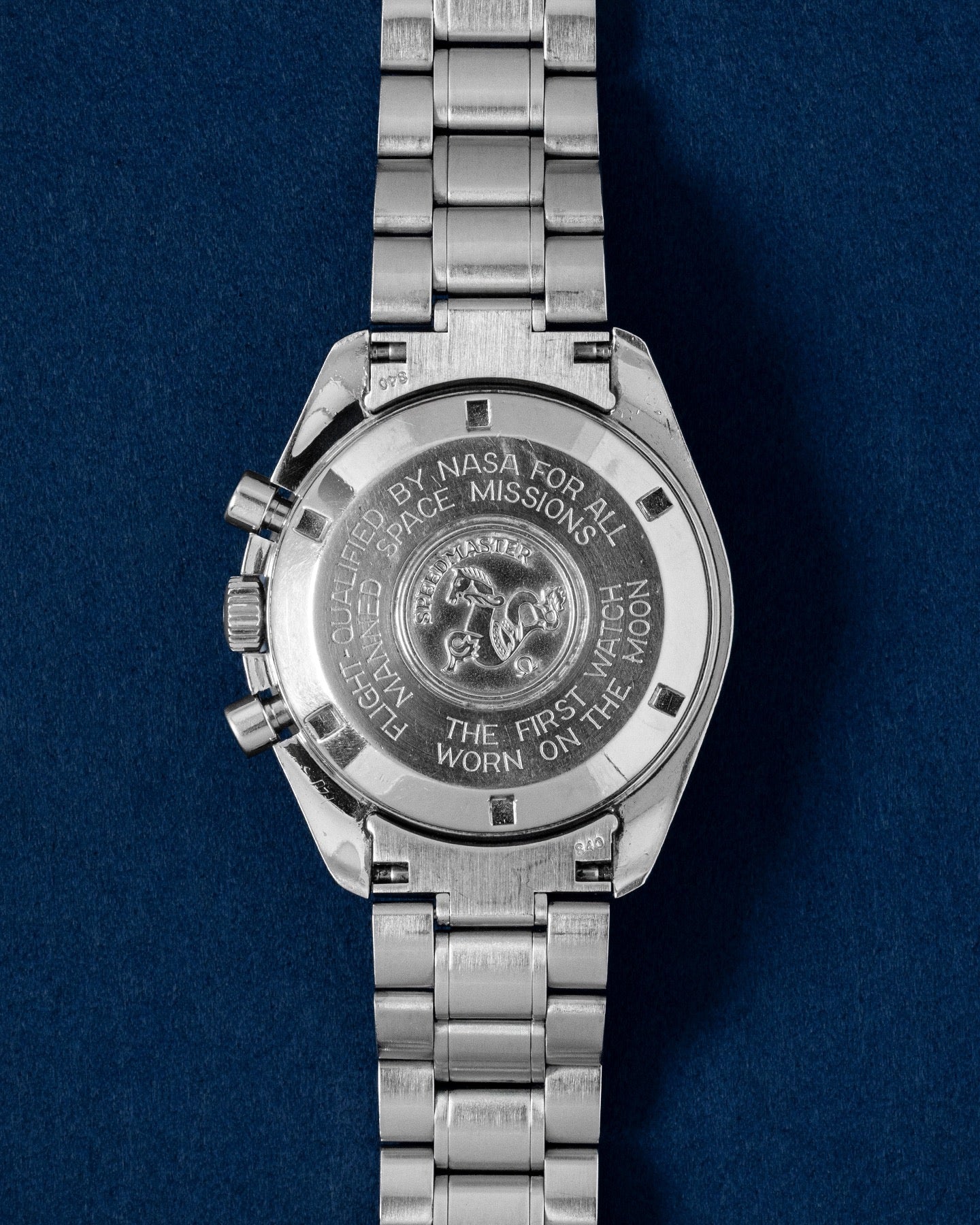
Only one watch passed all eleven tests. The Omega Speedmaster reference ST 105.003, the third-generation Speedmaster with the Alpha-replaced baton handset introduced in 1963, came through every test functional and within timekeeping tolerance. The competing submissions from Rolex, Longines, and other brands failed at various stages. On March 1, 1965, NASA officially designated the Omega Speedmaster as "Flight Qualified for All Manned Space Missions." Omega did not learn about the qualification through formal notification. According to the Omega archive accounts, the brand discovered the designation when astronaut Ed White appeared in NASA photographs from the Gemini 4 mission in June 1965 wearing a Speedmaster on his wrist during the first American spacewalk. The watch had become NASA mission equipment without Omega knowing it was being tested.
The reference that NASA actually wore on the Moon was the next generation, the ST 105.012, introduced in 1964. The 105.012 introduced the asymmetric case with crown guards and the twisted "lyre" lugs that have remained Moonwatch signatures across every generation since. It is the case shape the current 2021 Moonwatch still uses.
Apollo 11 and the Moon
On July 21, 1969, at 02:56 UTC, Neil Armstrong stepped from the lunar module Eagle onto the surface of the Moon. The Speedmaster reference 105.012 was on his wrist, technically, but the watch had already been transferred to Aldrin. The Eagle onboard electronic mission timer had failed during the descent and Armstrong left his Speedmaster inside the lunar module as the backup timekeeping reference for the ascent stage. Buzz Aldrin, second to step onto the lunar surface, wore his own Speedmaster Professional reference 105.012 during the EVA. The Aldrin Moonwatch is the watch most commonly described as the first watch on the Moon.
That watch is now lost. Per NASA protocol, Aldrin shipped the Speedmaster to the Smithsonian Institution in 1970 for permanent collection. The package never arrived. The Speedmaster Aldrin wore on the Moon has been missing for over five decades. It remains one of the most consequential missing artefacts in the history of spaceflight.
Every subsequent crewed lunar landing through Apollo 17 in December 1972 included Speedmaster Professional chronographs on the wrists of every astronaut. Six landings, twelve men who walked on the Moon, twelve Speedmasters on twelve wrists.
Apollo 13 and the Silver Snoopy Award
In April 1970 the Apollo 13 mission lost an oxygen tank in transit to the Moon and the crew, Jim Lovell, Jack Swigert, and Fred Haise, faced a return to Earth with the lunar module life support keeping them alive in a spacecraft designed to be a temporary landing vehicle. The course correction that brought the spacecraft home required a manual engine burn lasting exactly 14 seconds. The lunar module electronic timing systems had been shut down to conserve power. Jack Swigert used his Omega Speedmaster Professional to time the burn manually, watching the chronograph seconds hand sweep across the dial. The burn was executed within tolerance. The spacecraft made it back. All three men survived.
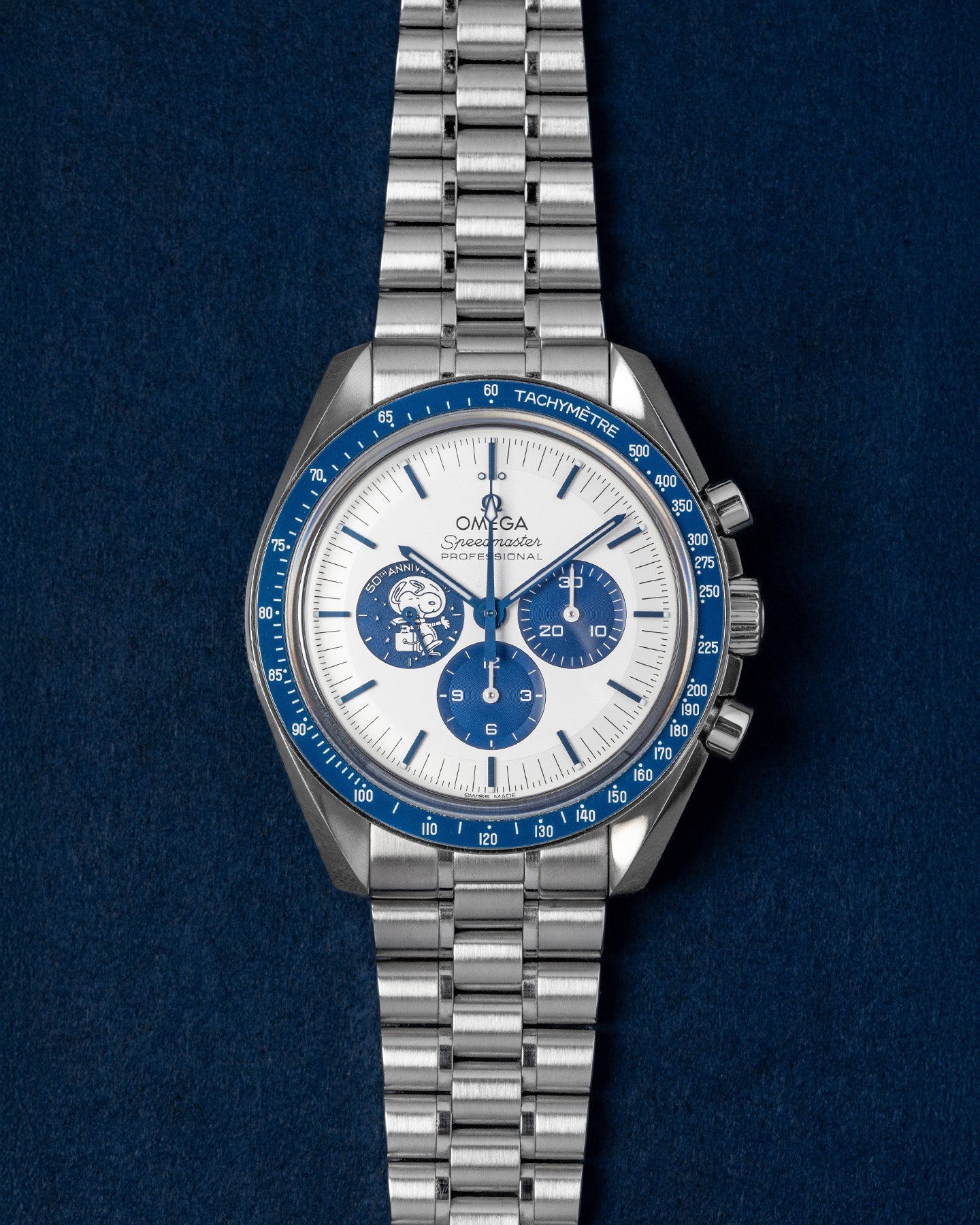
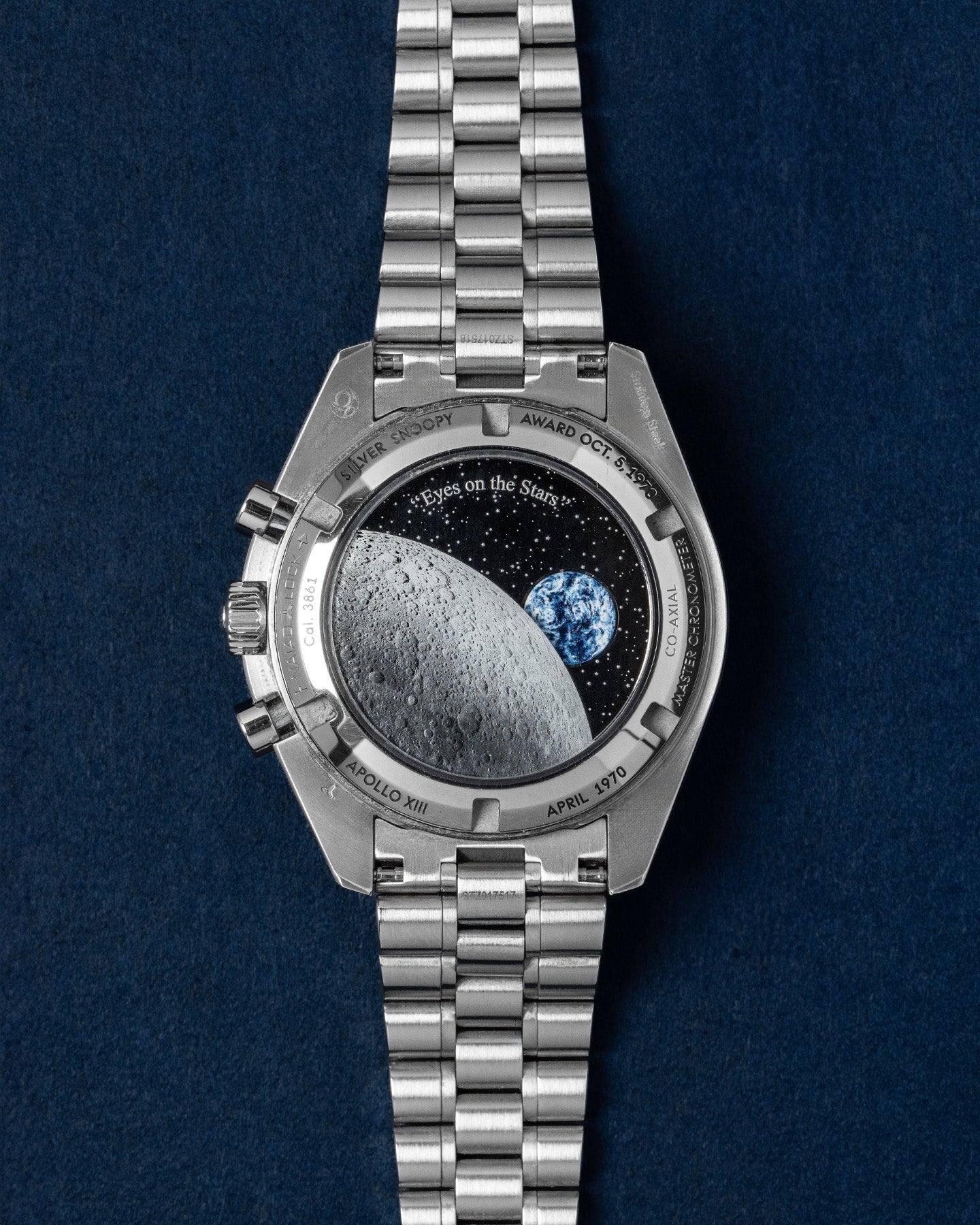
In October 1970 the astronaut corps formally presented Omega with the Silver Snoopy Award, the NASA highest civilian honour for contributions to mission safety and success. The award is named after the Peanuts character adopted by NASA as the agency safety mascot. The Speedmaster is the only wristwatch ever to receive it. Omega has since produced three commemorative Snoopy Award Speedmaster references, in 2003, 2015, and 2020, each of which has become a significant collector piece on the secondary market in its own right.
Calibre 861 and Calibre 1861
In 1968 Omega replaced the calibre 321 column-wheel chronograph with the calibre 861. The 861 was a cam-switching chronograph based on the Lemania calibre 1873, simpler to manufacture and service than the column-wheel 321, with a horizontal clutch and a synthetic Delrin chronograph brake. The 861 increased the frequency from 18,000 to 21,600 vibrations per hour, kept 17 jewels, and delivered approximately 45 hours of power reserve. The cost reduction relative to the 321 was meaningful and allowed Omega to keep the Speedmaster Professional in production at a sustainable price point through the quartz crisis years that decimated much of the broader Swiss watch industry.
In 1996 Omega replaced the 861 with the calibre 1861. The 1861 was essentially an 861 with rhodium-plated finishing in place of the original copper-plated finishing, plus the addition of an extra jewel bearing in the chronograph wheel for a total of 18 jewels. The architecture, frequency, and power reserve carried over unchanged. The 1861 powered every standard production Speedmaster Professional Moonwatch from 1996 through 2021, a production run of 25 years across two reference series, the older 3570.50 from 1996 to 2014 and the 311.30.42.30.01.005 and 311.30.42.30.01.006 from 2014 to 2021.
The 1861-powered references are still readily available on the secondary market in 2026 and remain the most accessible entry point into Speedmaster Moonwatch ownership for buyers who want the calibre lineage without the 2021 movement upgrade premium.
The 2021 Master Chronometer Moonwatch with Calibre 3861
In January 2021 Omega launched the most significant Speedmaster Moonwatch update in over five decades. The new Speedmaster Moonwatch Professional Co-Axial Master Chronometer Chronograph 42mm replaced the calibre 1861 with the calibre 3861 and brought the entire Speedmaster Moonwatch line into alignment with the modern Omega Master Chronometer programme.
Case and Dimensions
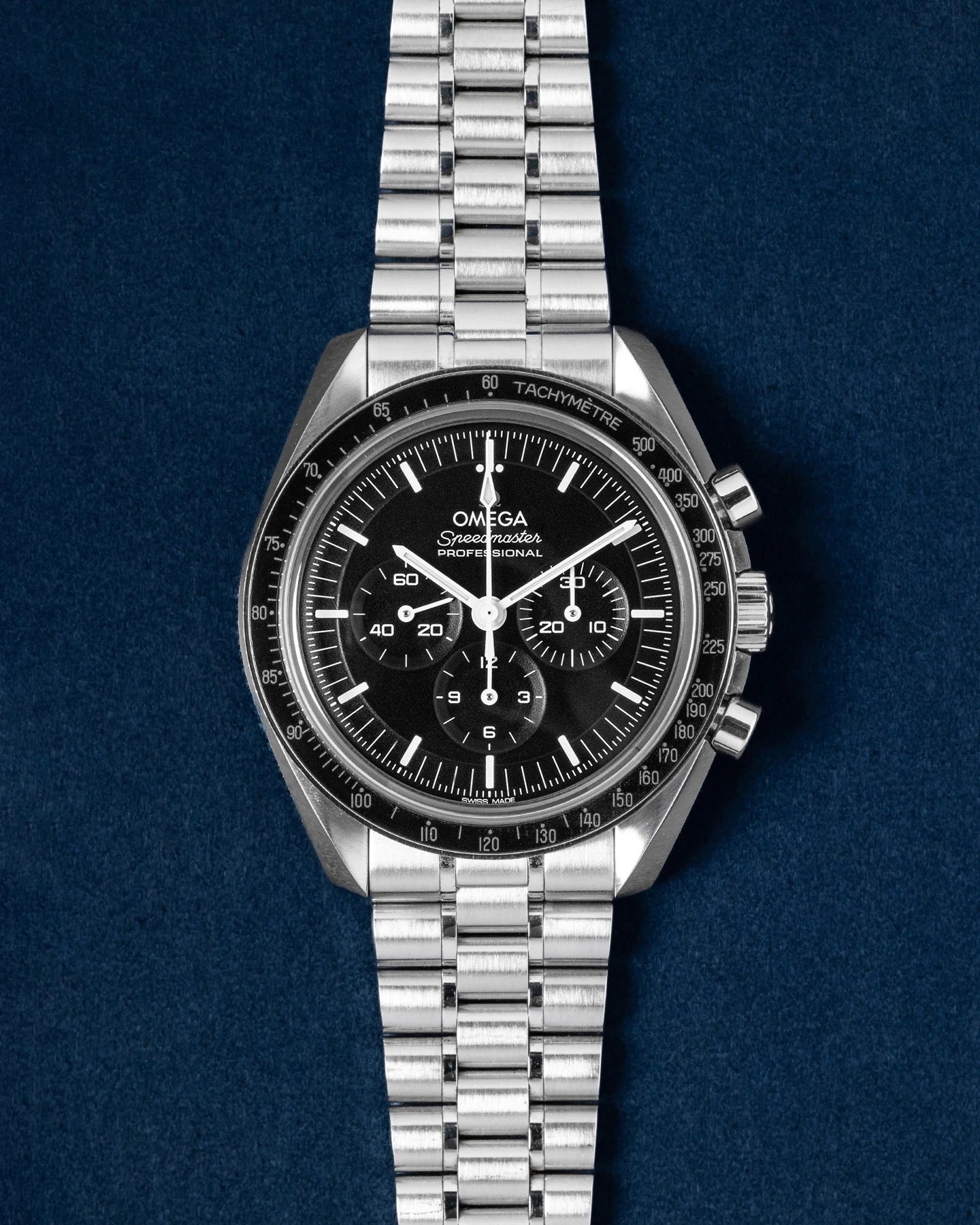
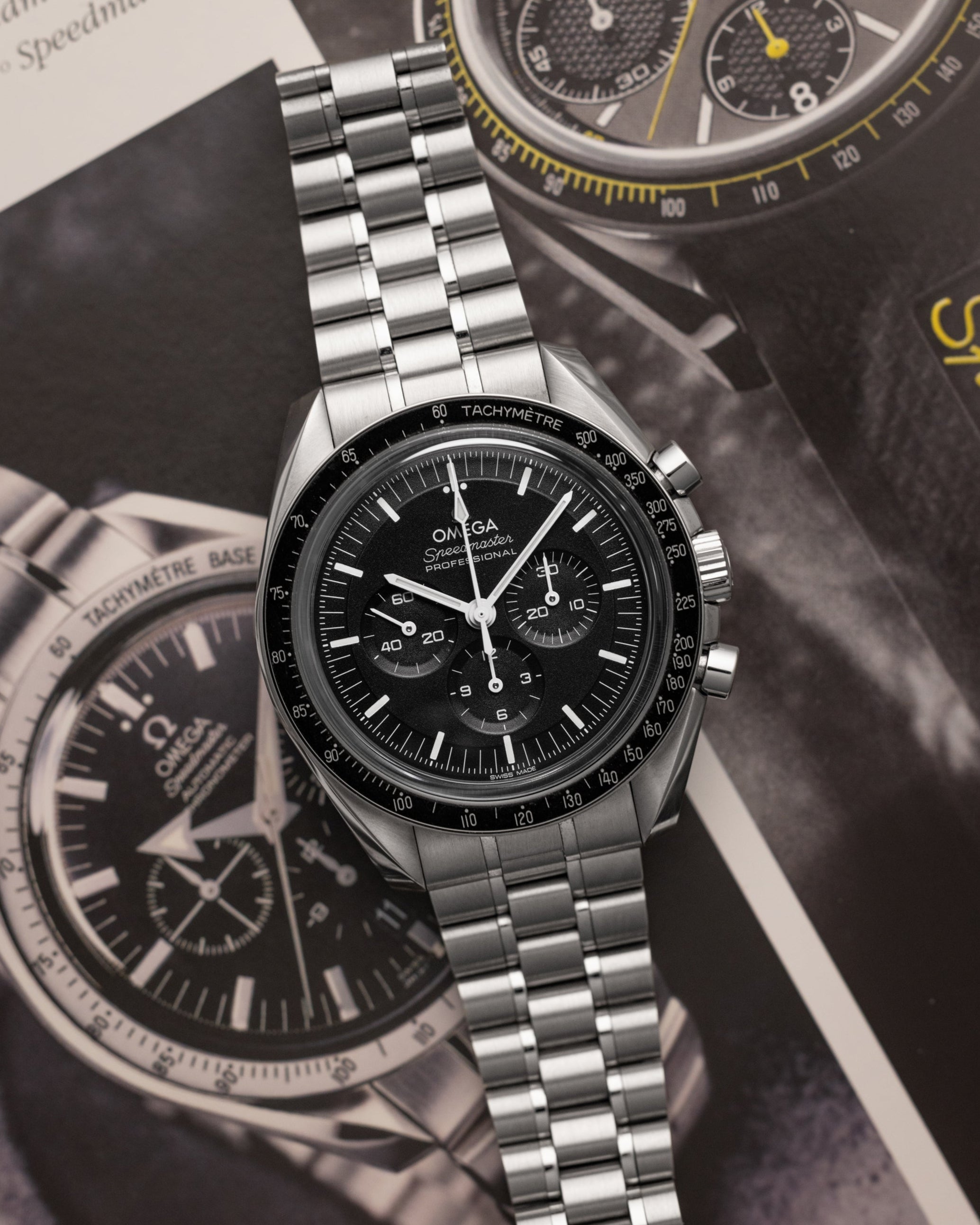
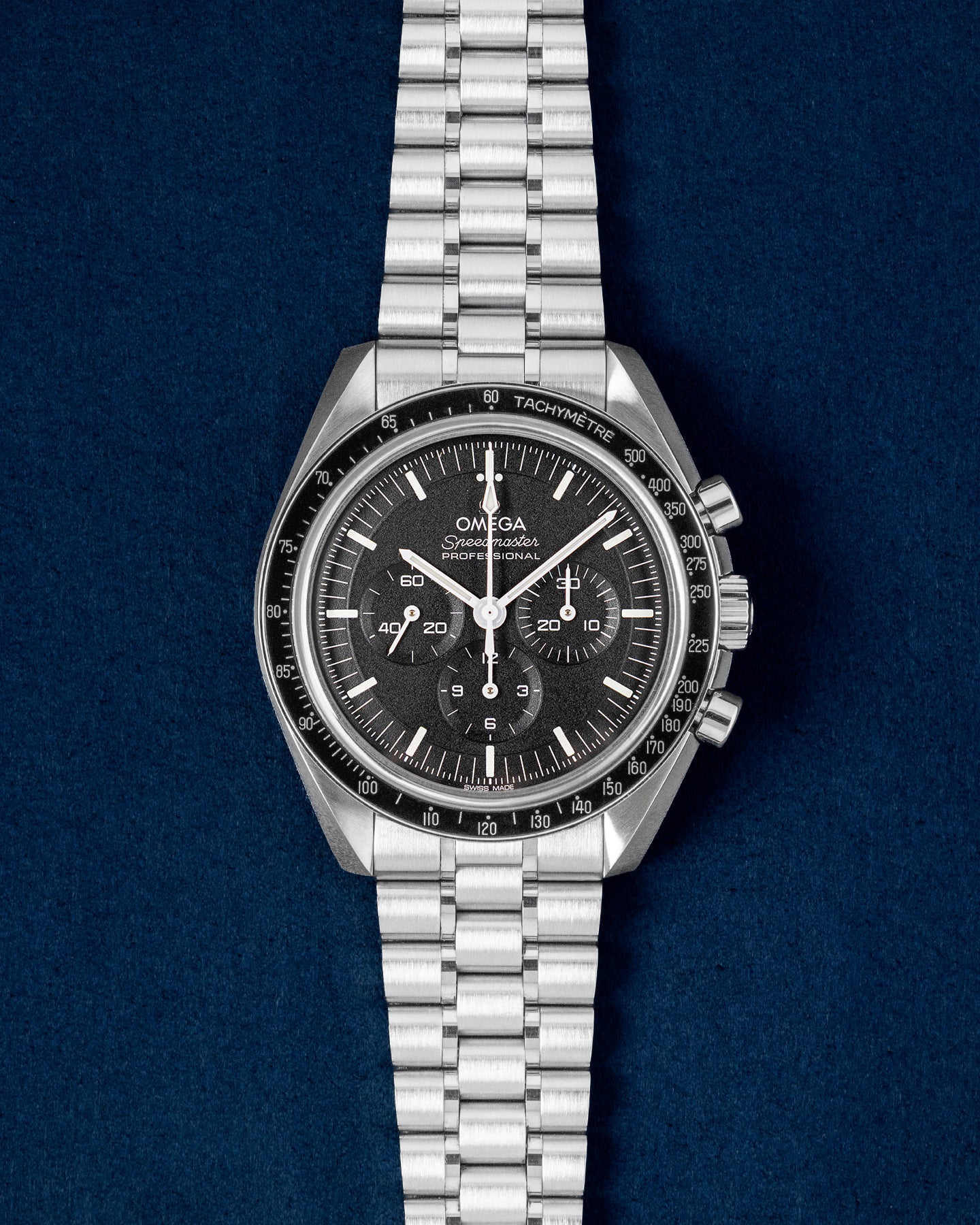
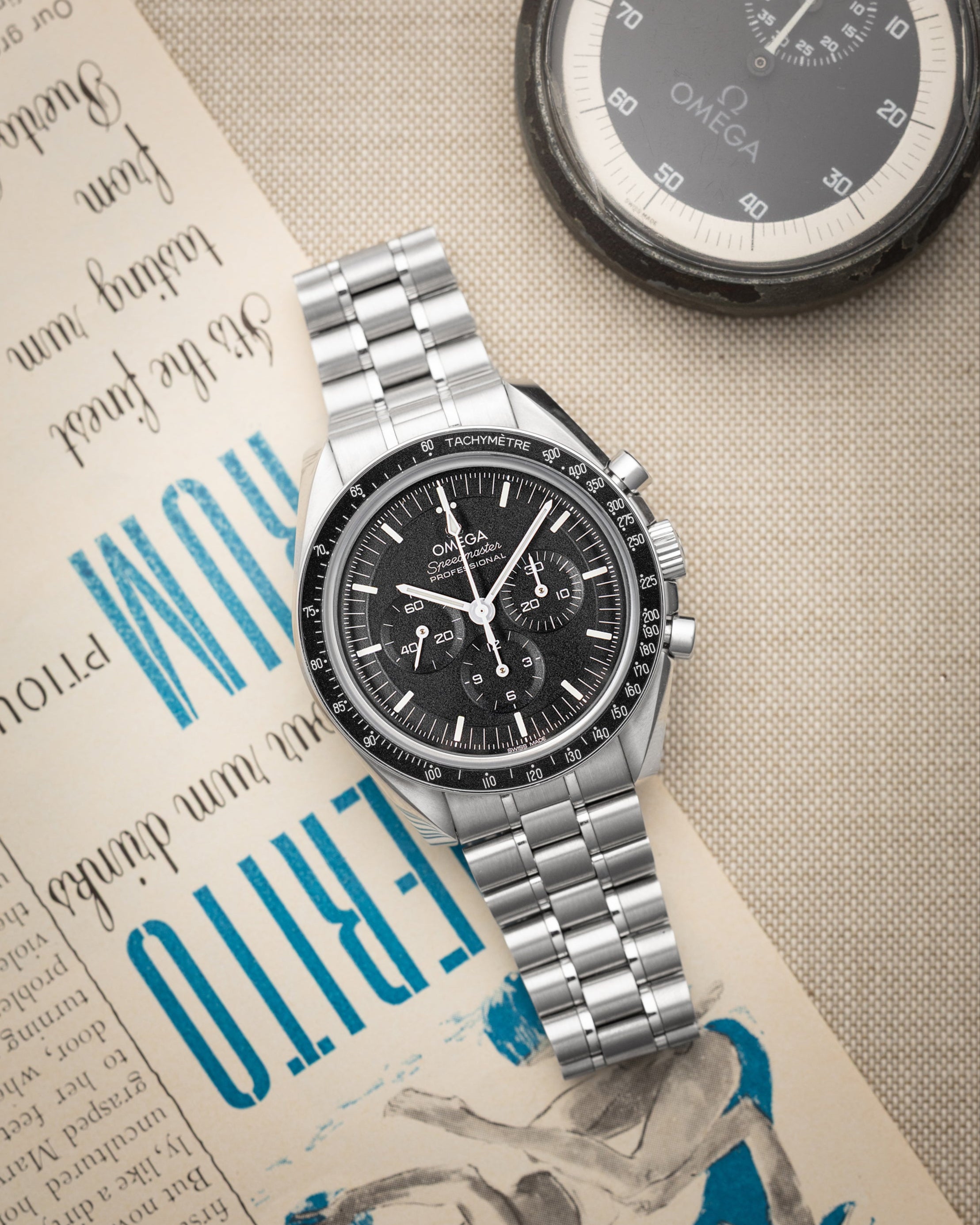
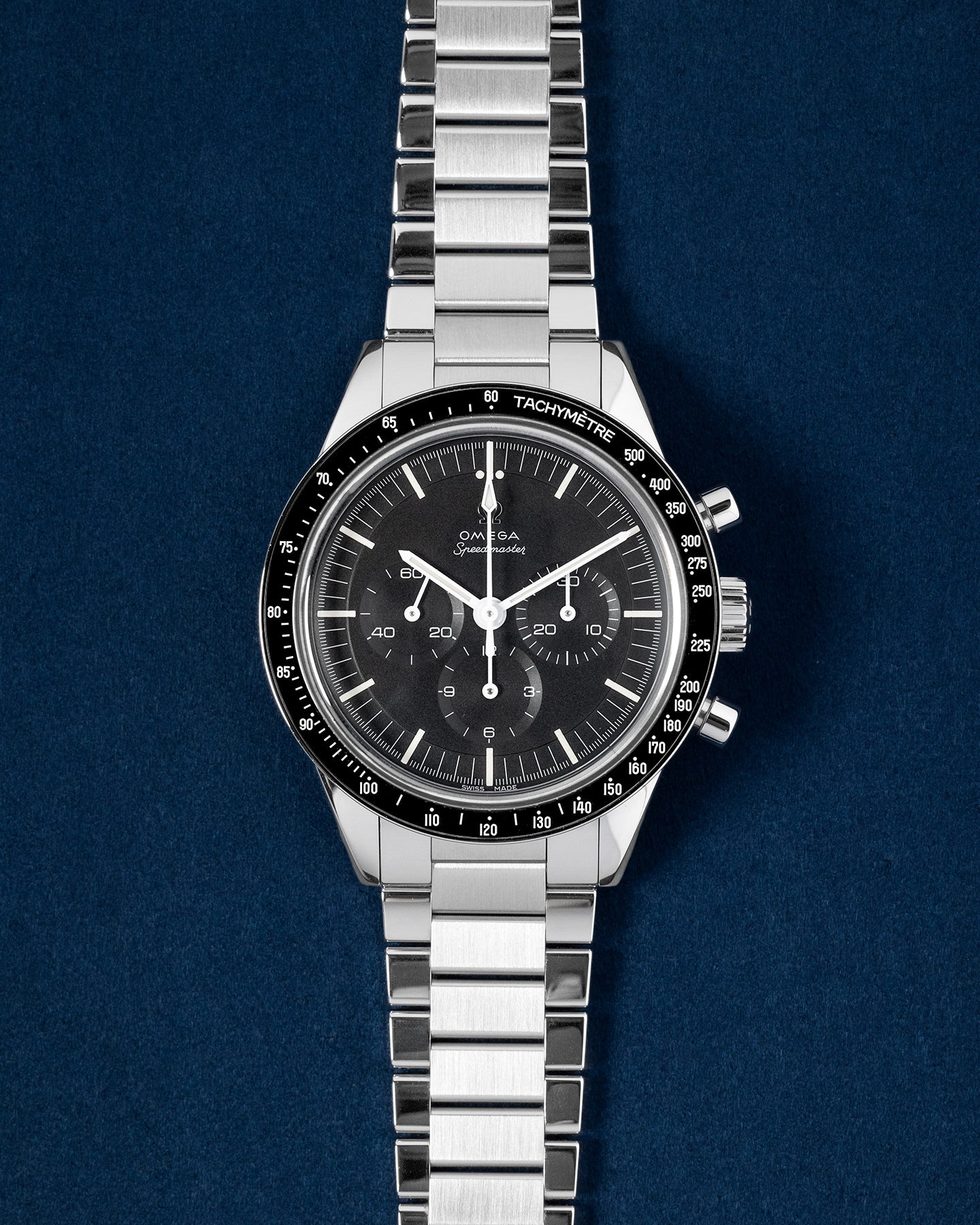
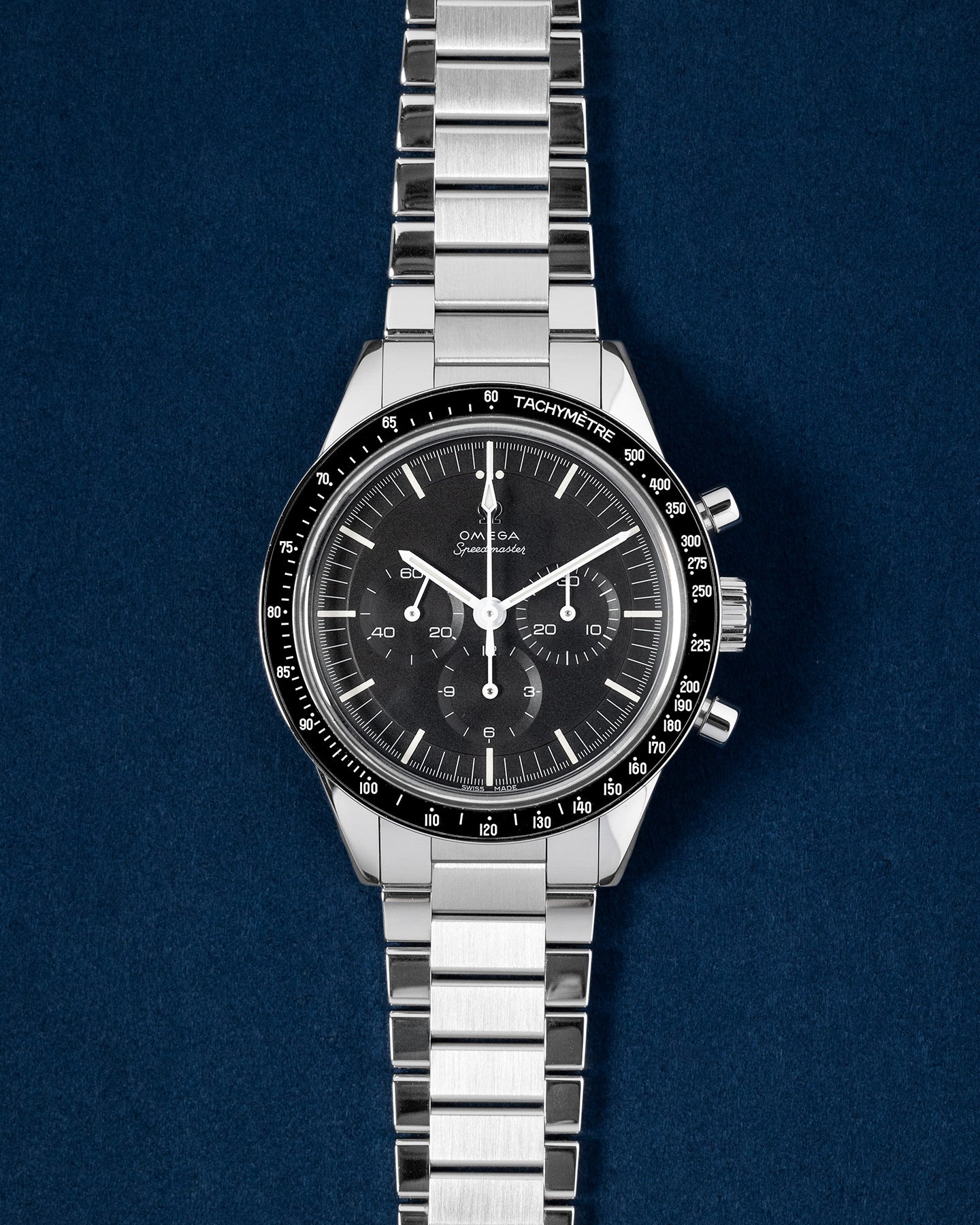
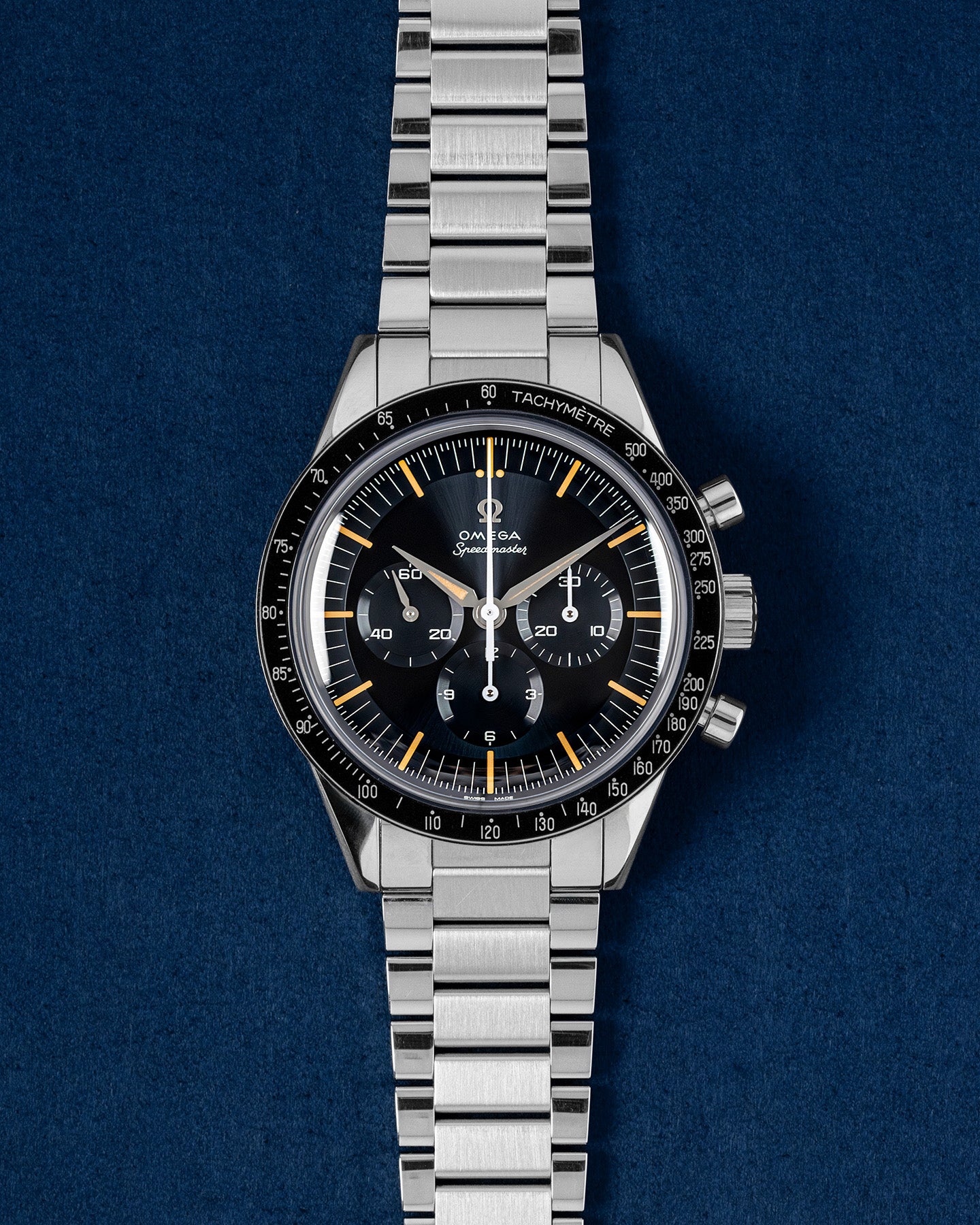
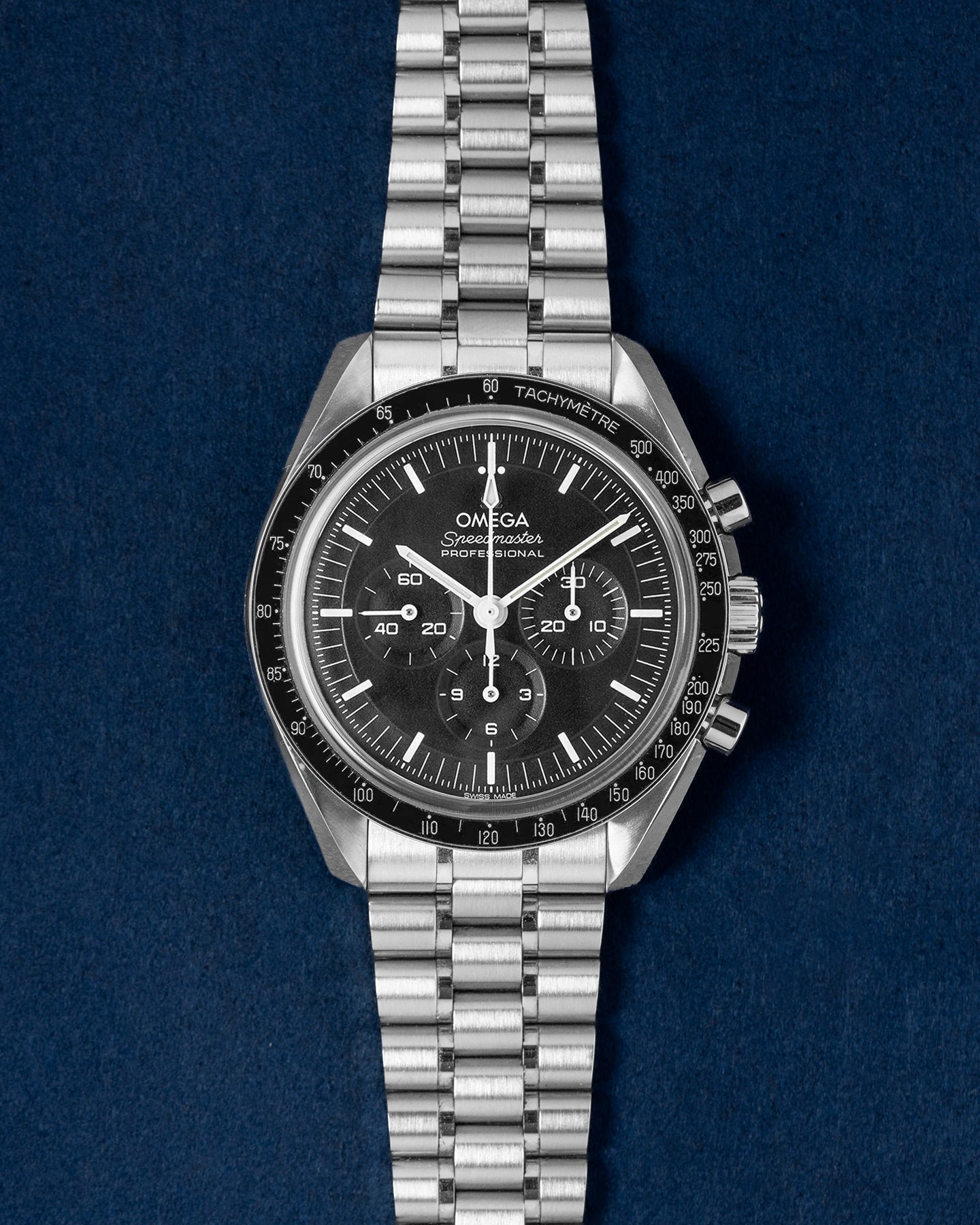
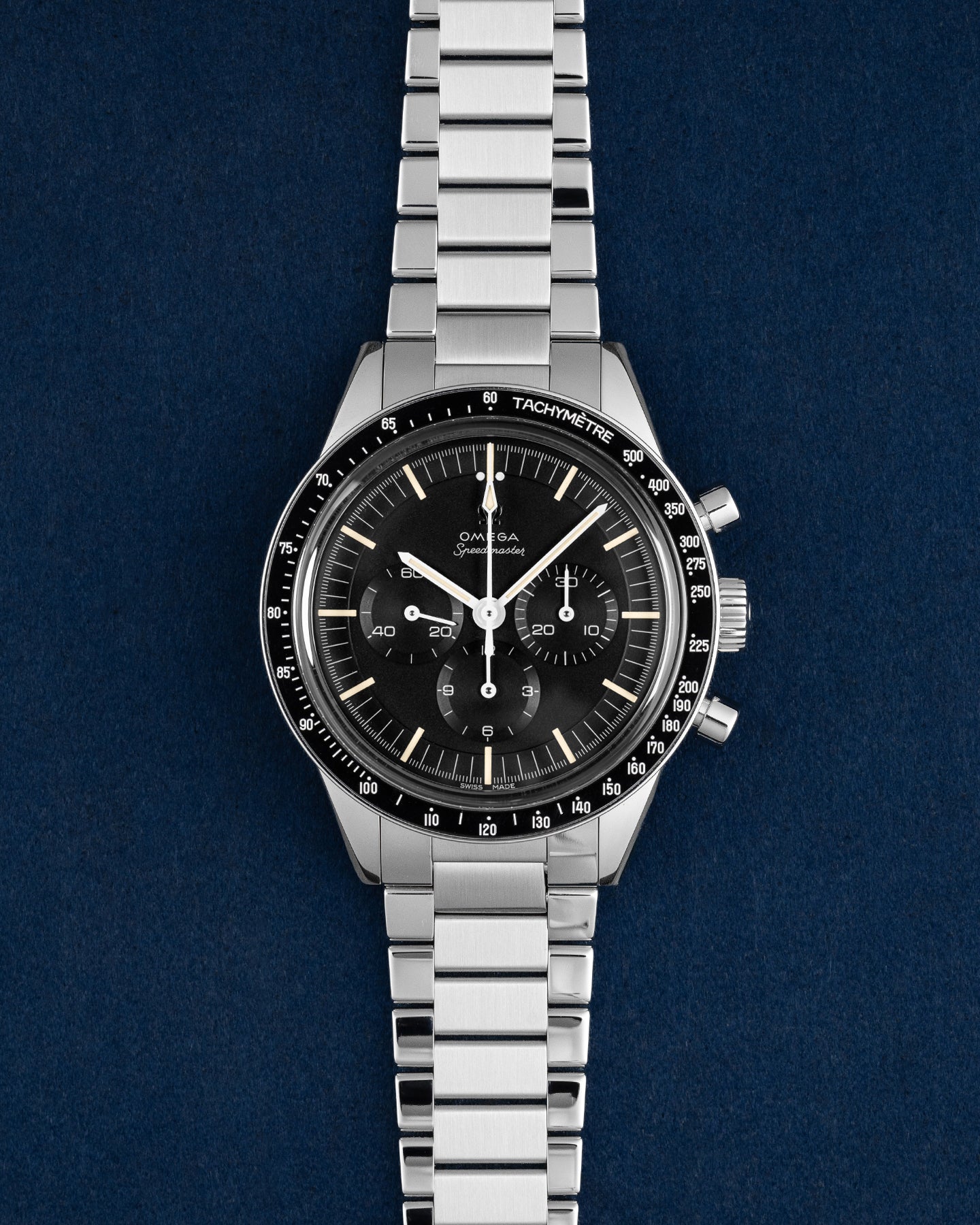
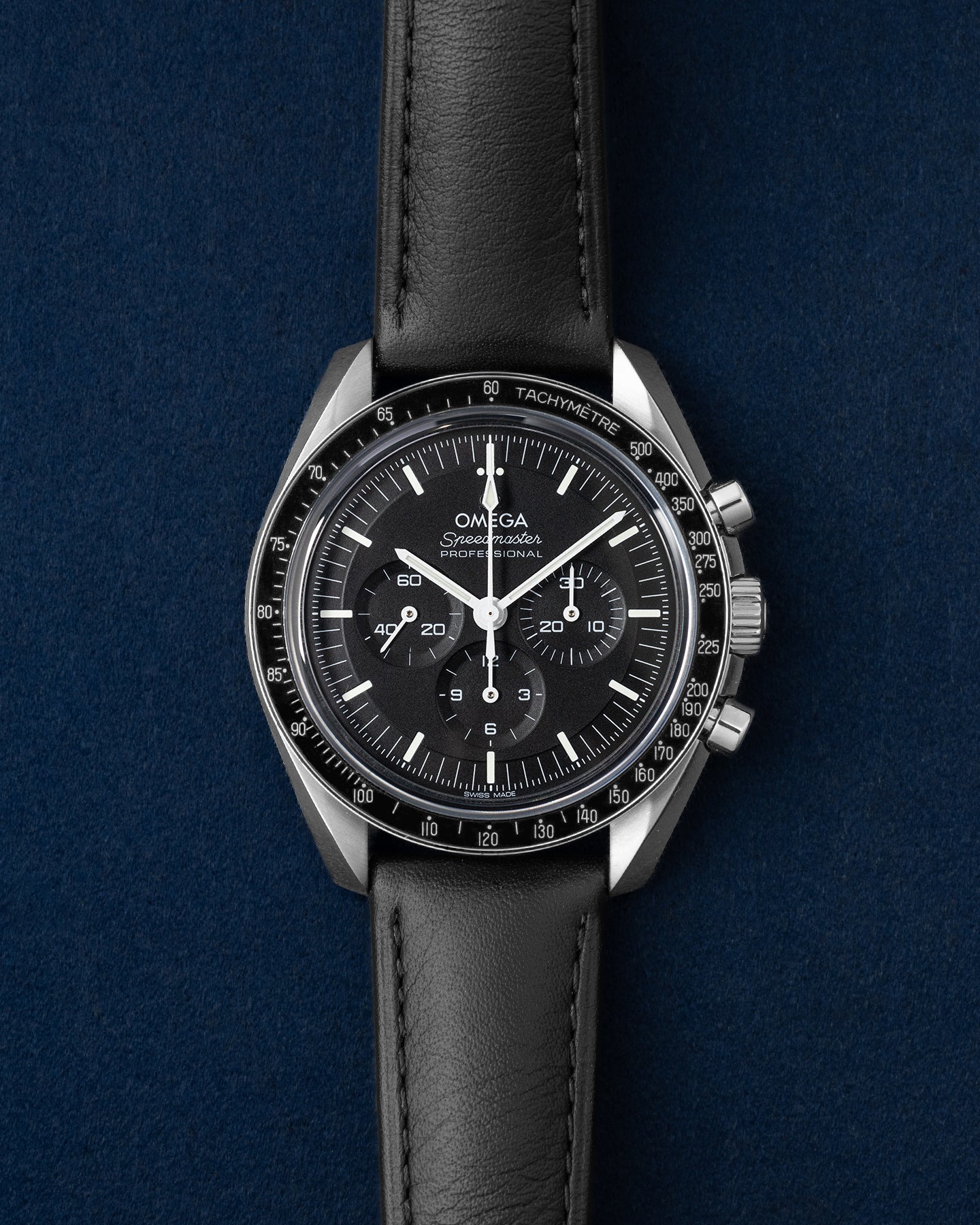
The 2021 Speedmaster Moonwatch reference 310 series carries a 42mm asymmetric stainless steel case measuring 13.18mm thick on the sapphire crystal variant or 13.58mm thick on the Hesalite crystal variant, with a 47.50mm lug-to-lug measurement and 20mm lug width. The case retains the twisted "lyre" lugs introduced on the 1964 reference ST 105.012, with brushed primary surfaces and polished accents along the bevels and crown guards. The bezel is anodised aluminium in black with a white tachymeter scale, and the launch returned the vintage "dot over 90" detail to the bezel layout, a small touch that aligns the modern Speedmaster Moonwatch with the pre-1970 references collectors prize. Water resistance is 50 metres. The case is approximately one half millimetre thinner than the prior generation 1861 references, a meaningful improvement on the wrist.
The Step Dial and Caseback Variants
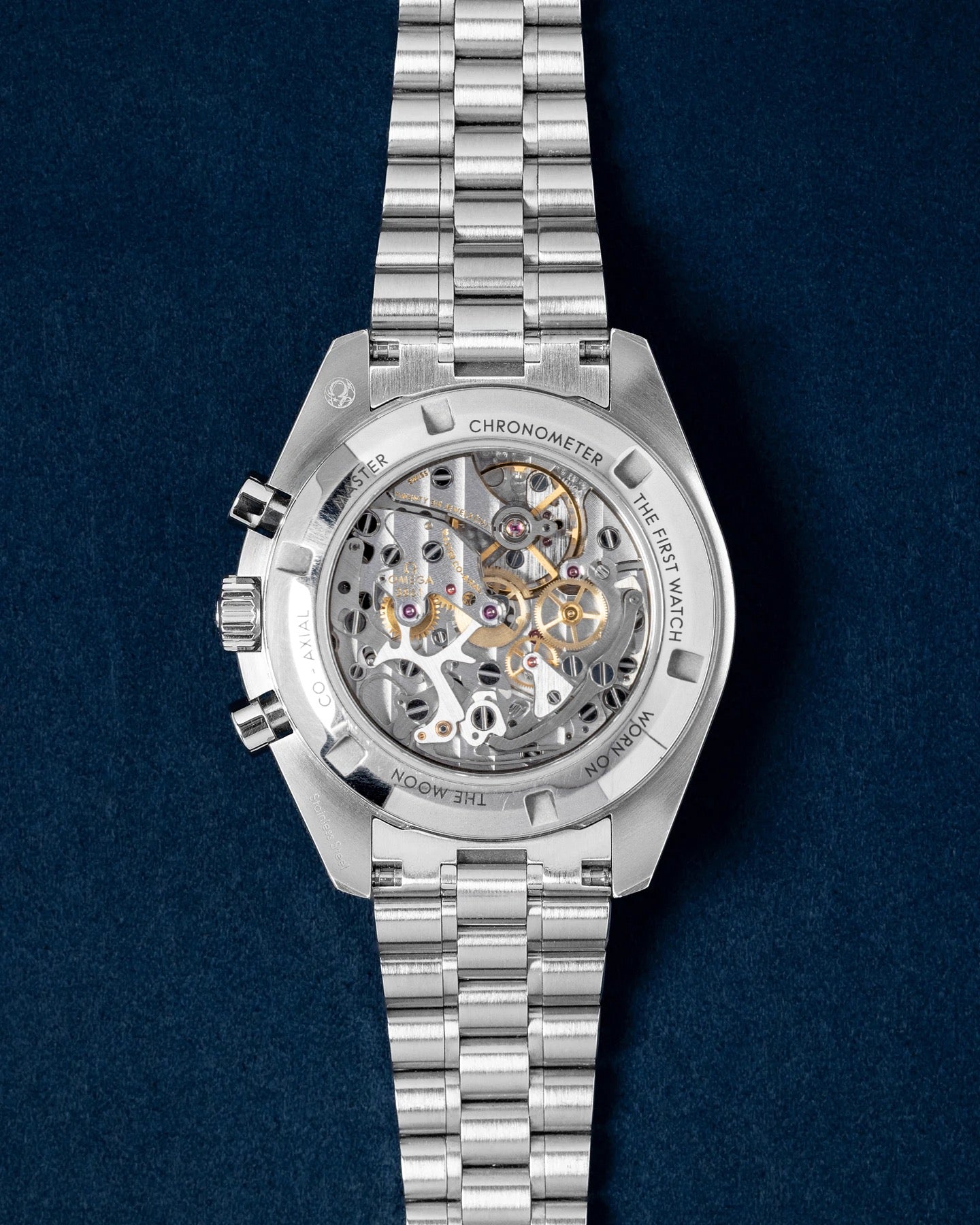
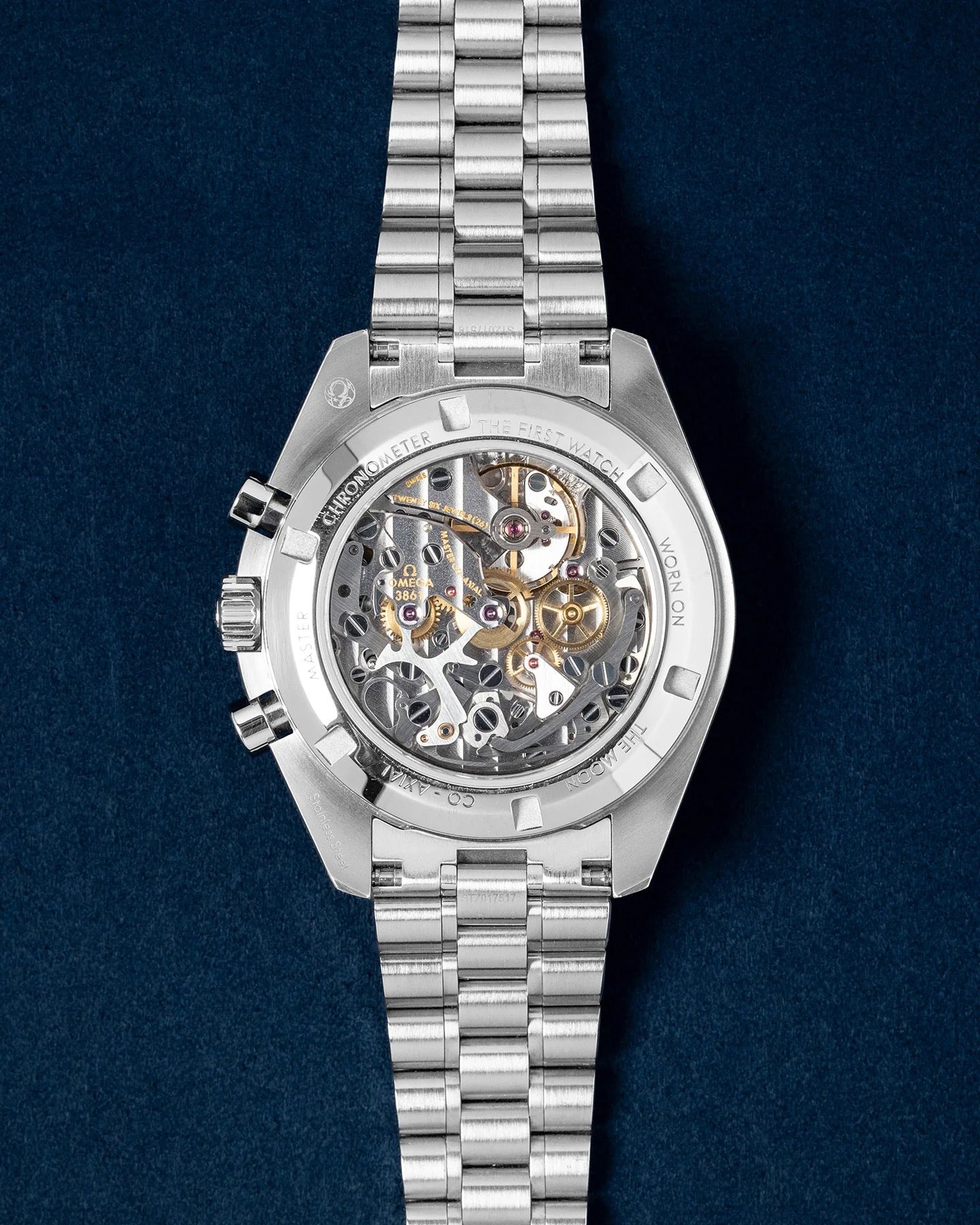
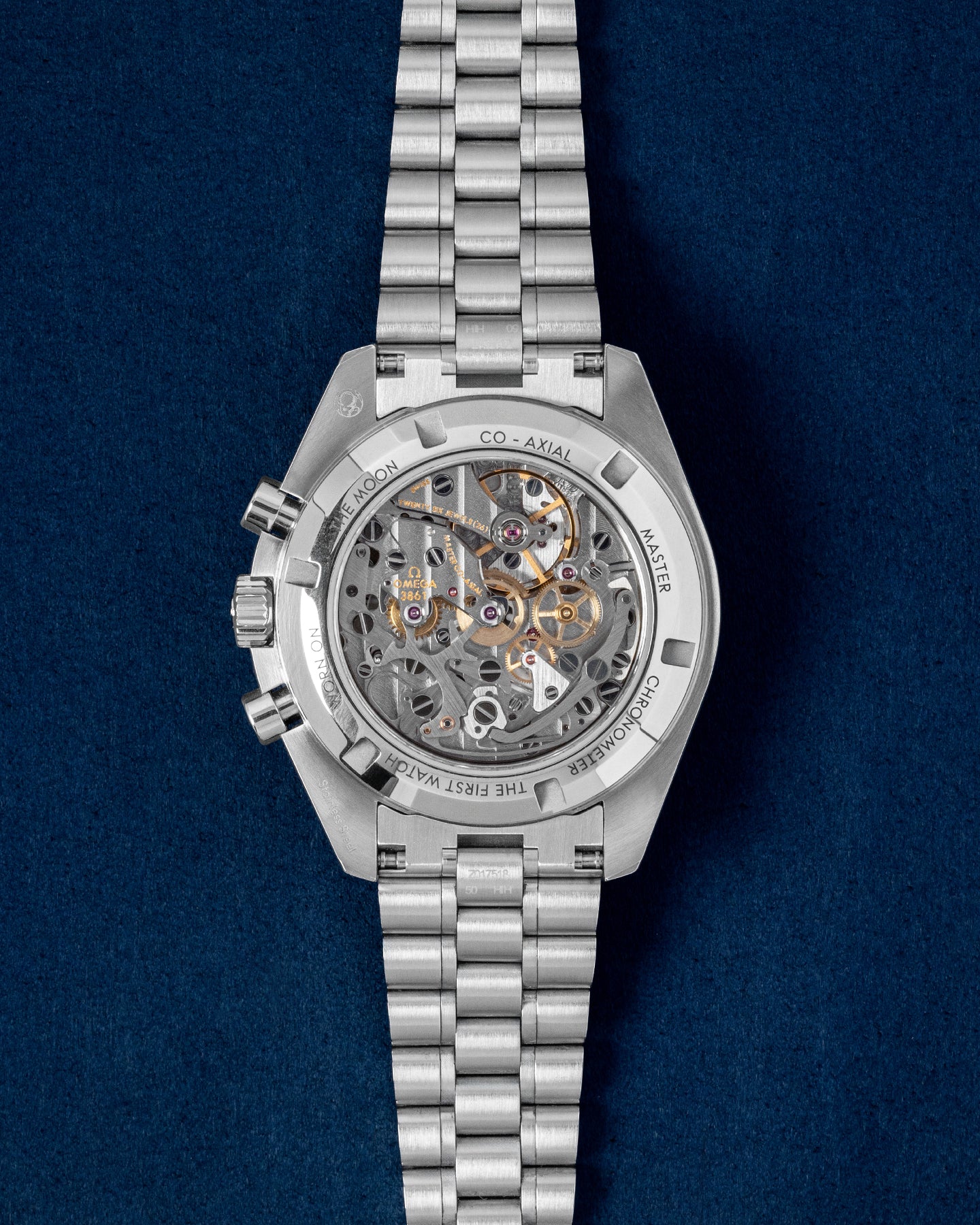
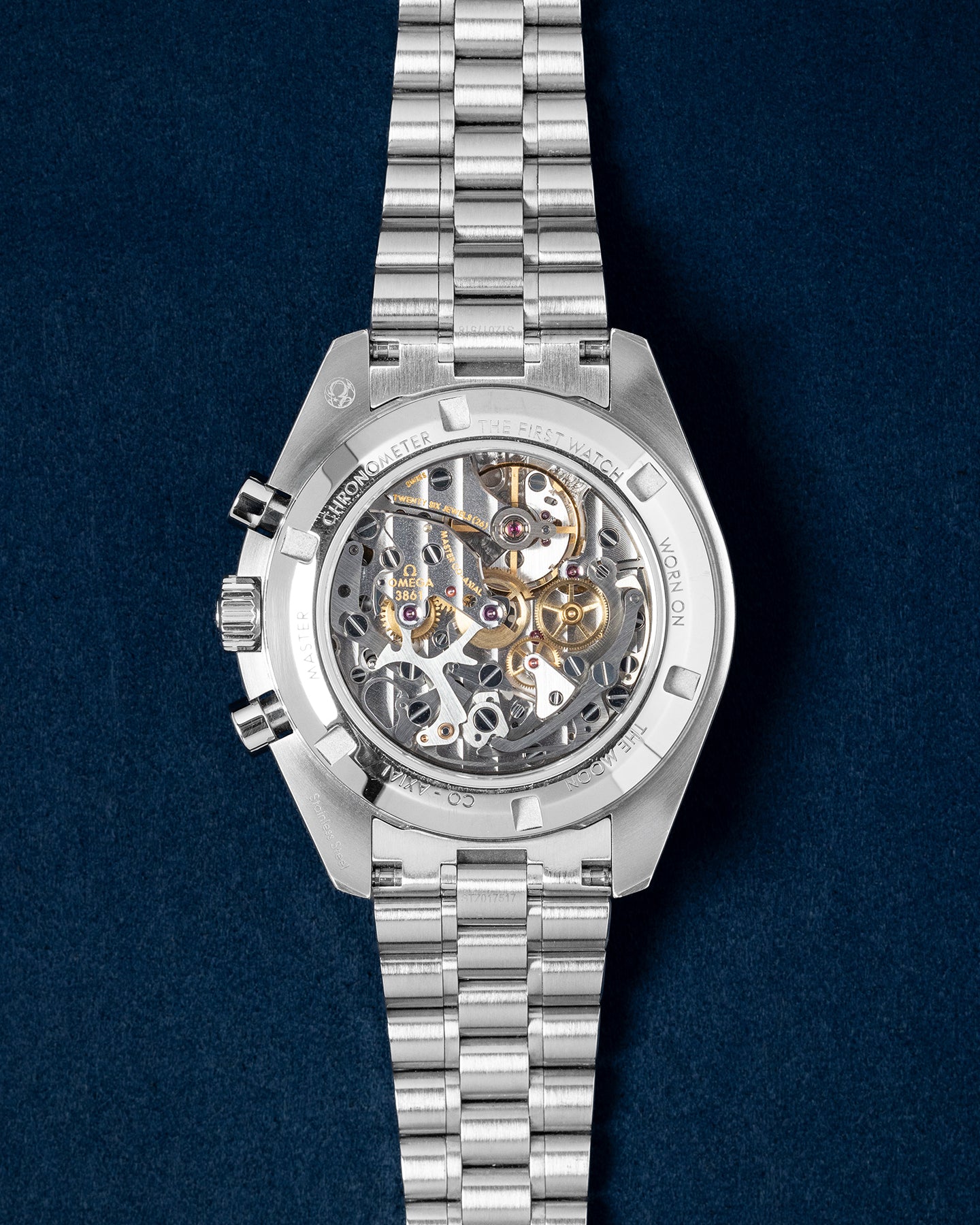
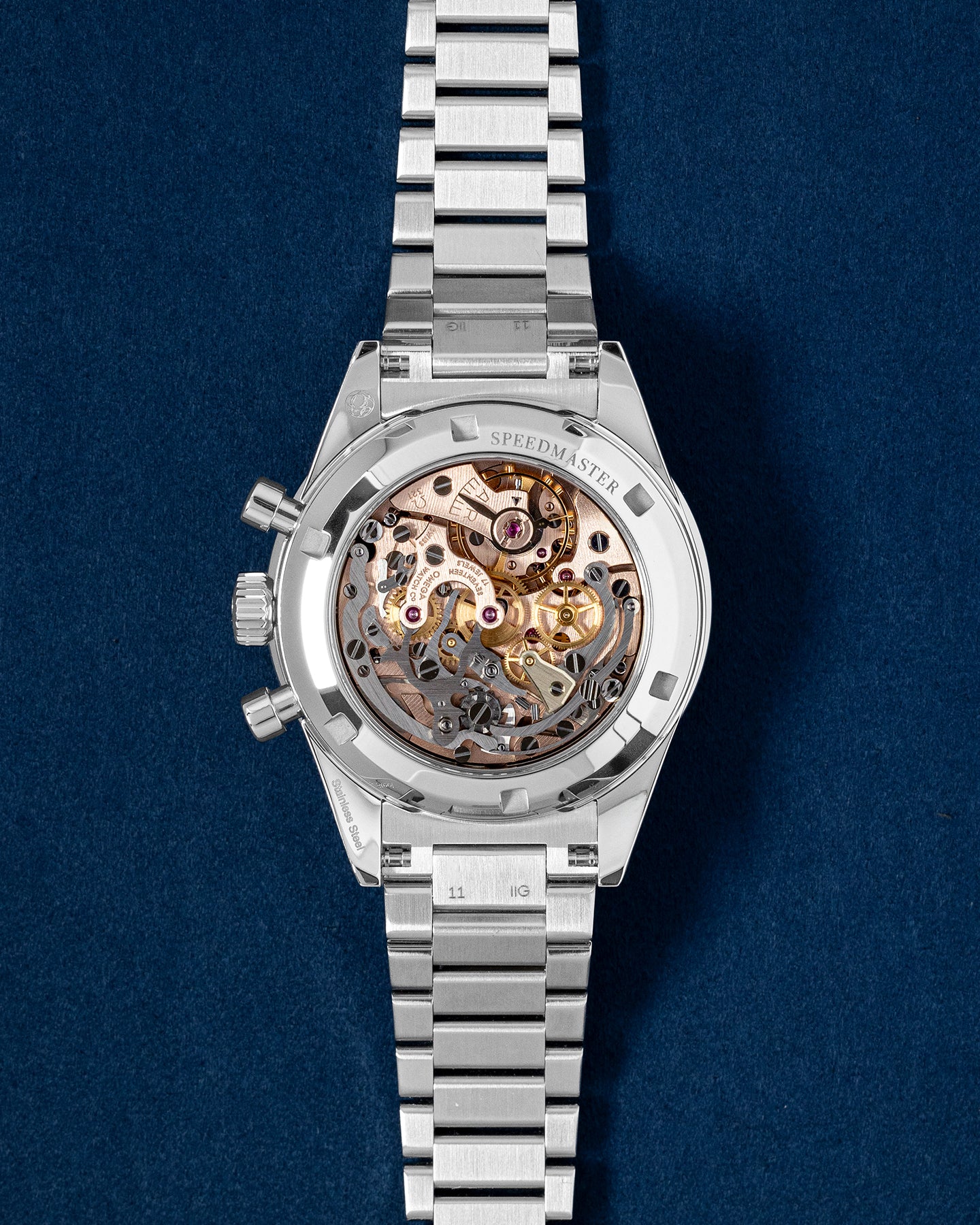
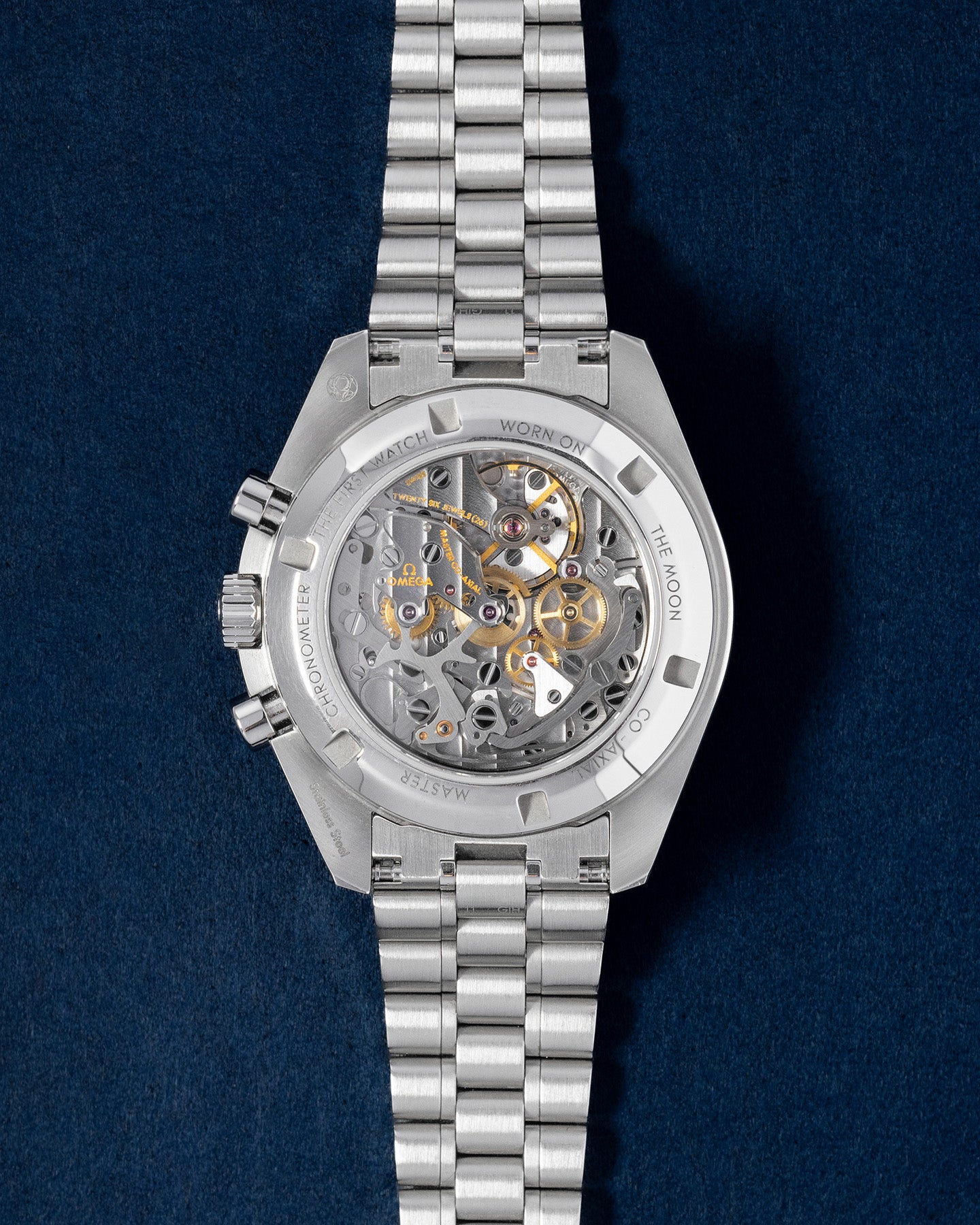
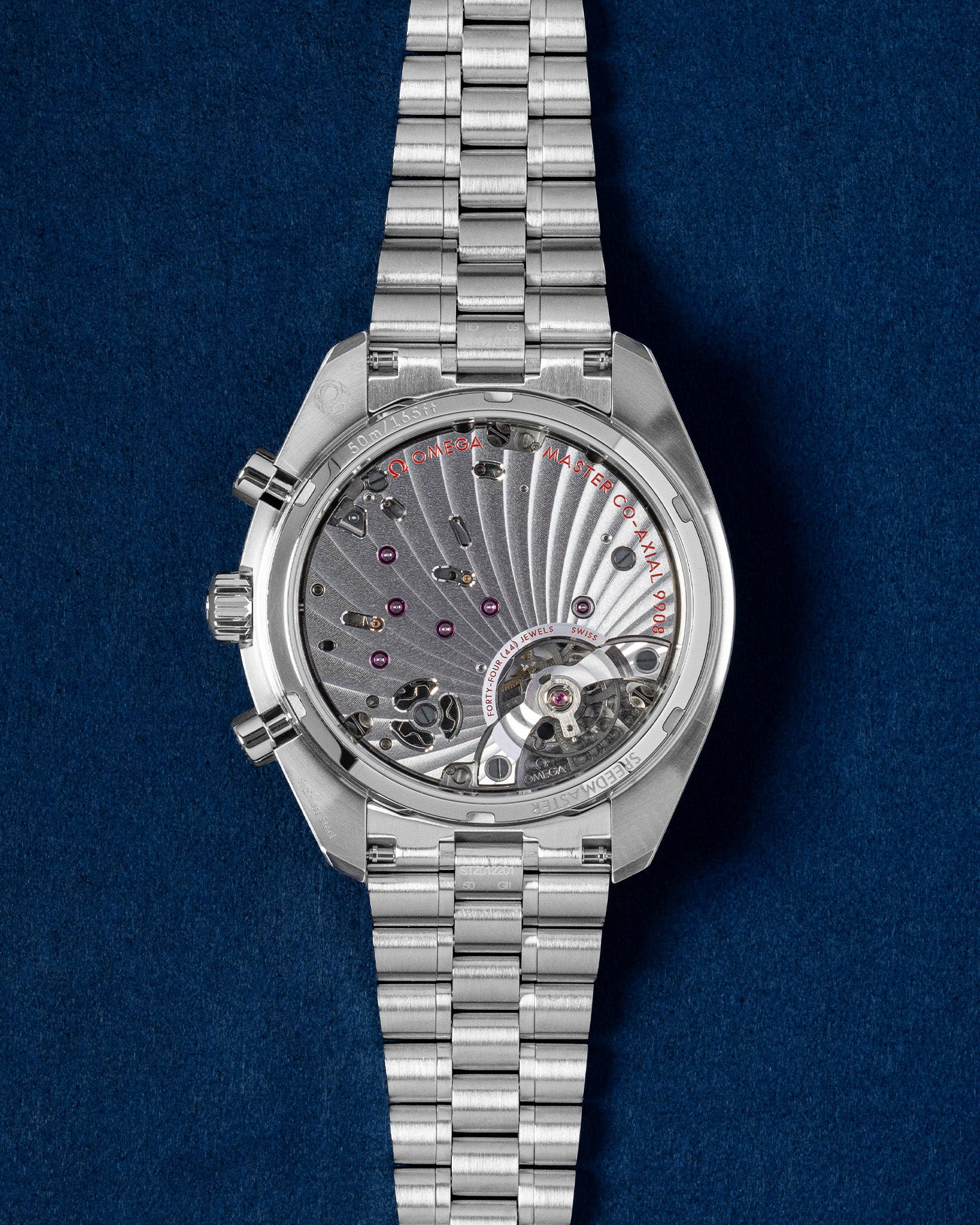
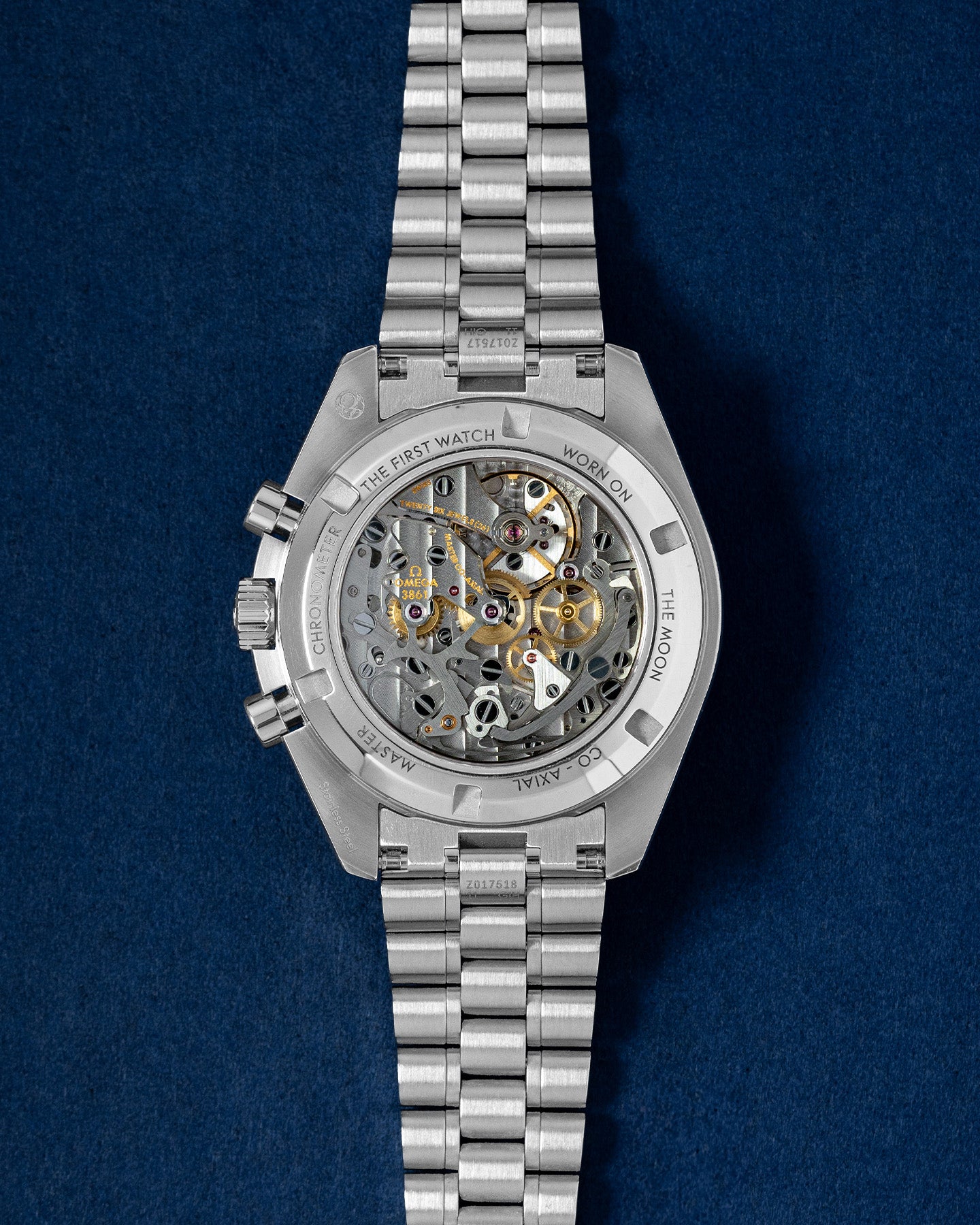
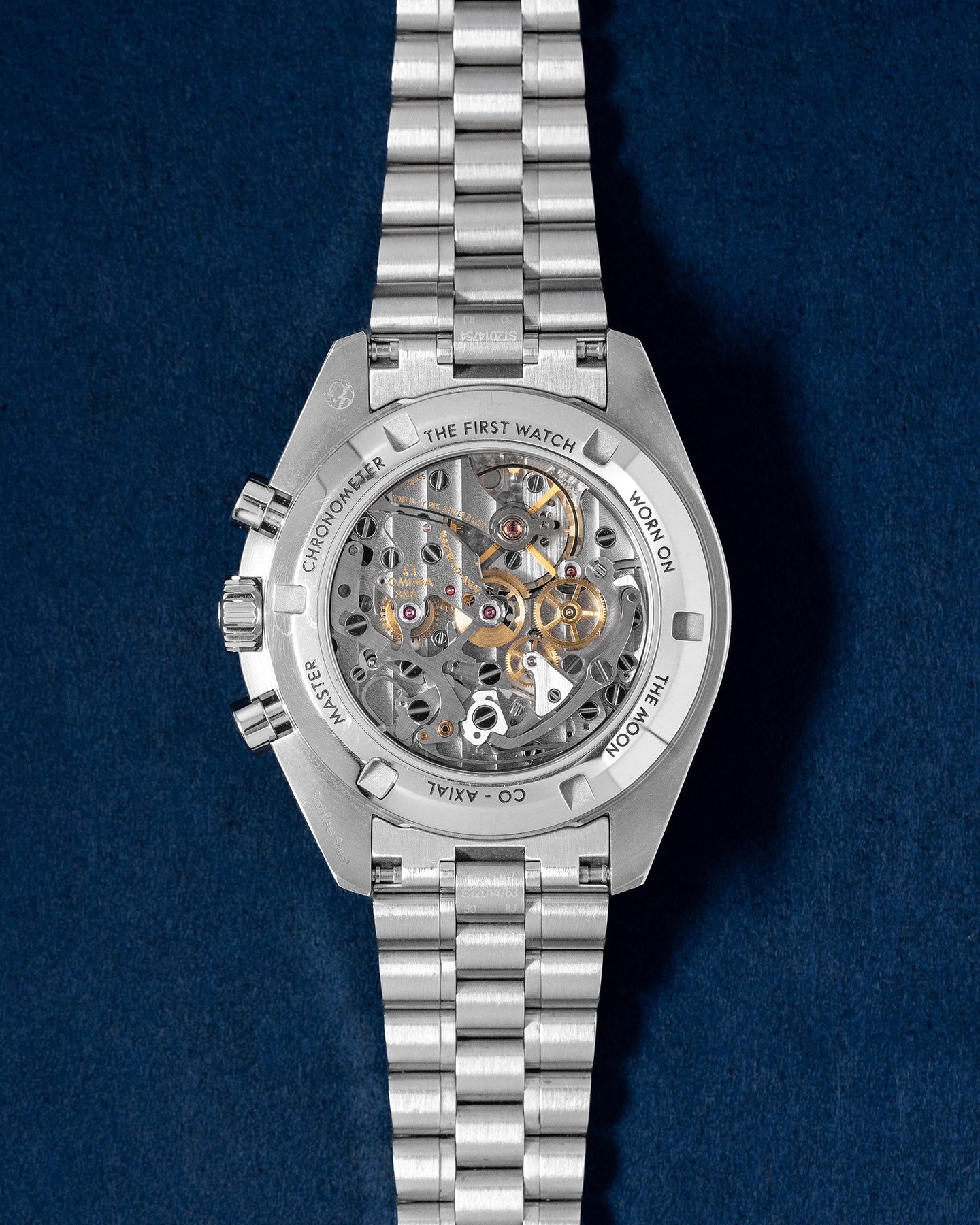
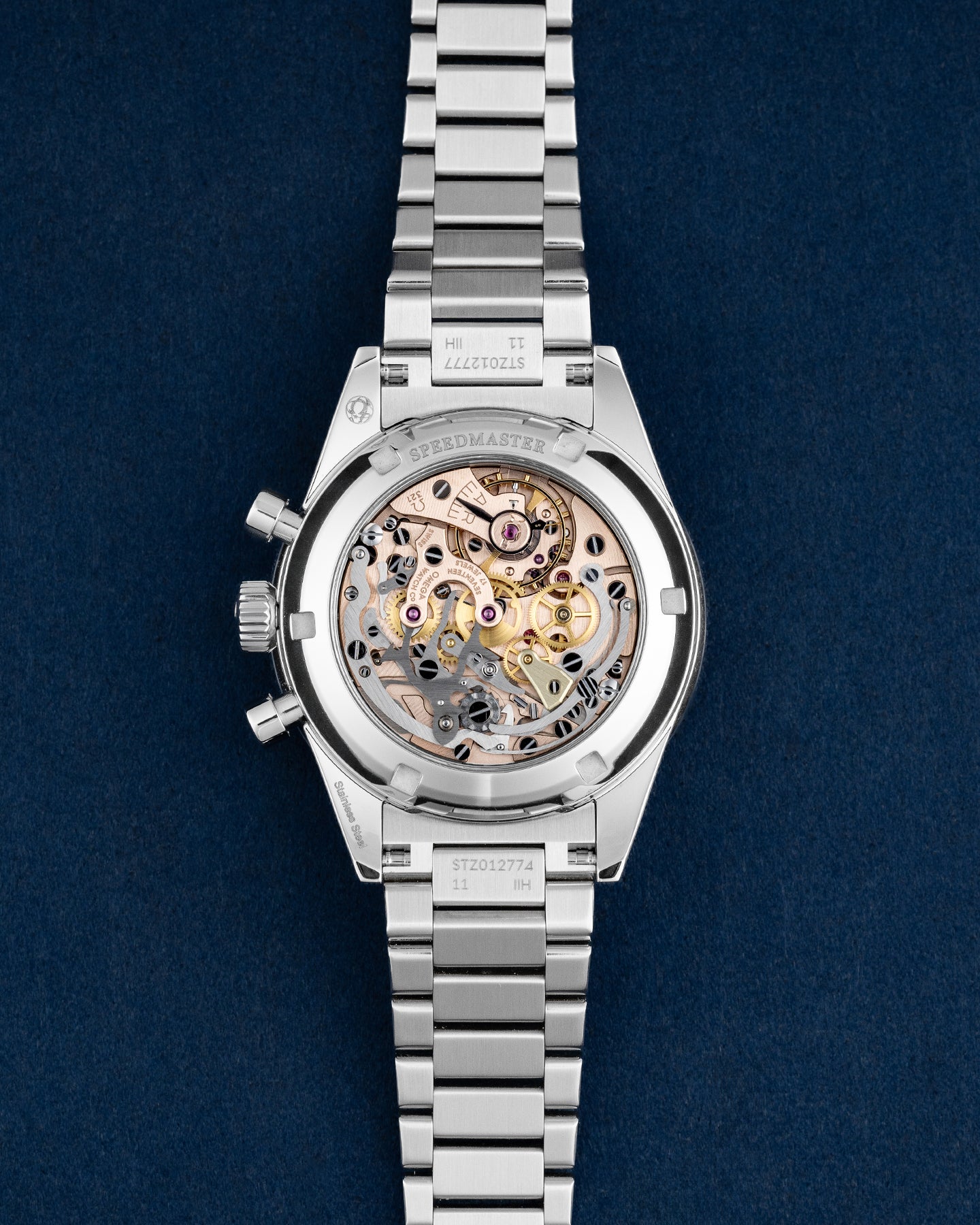
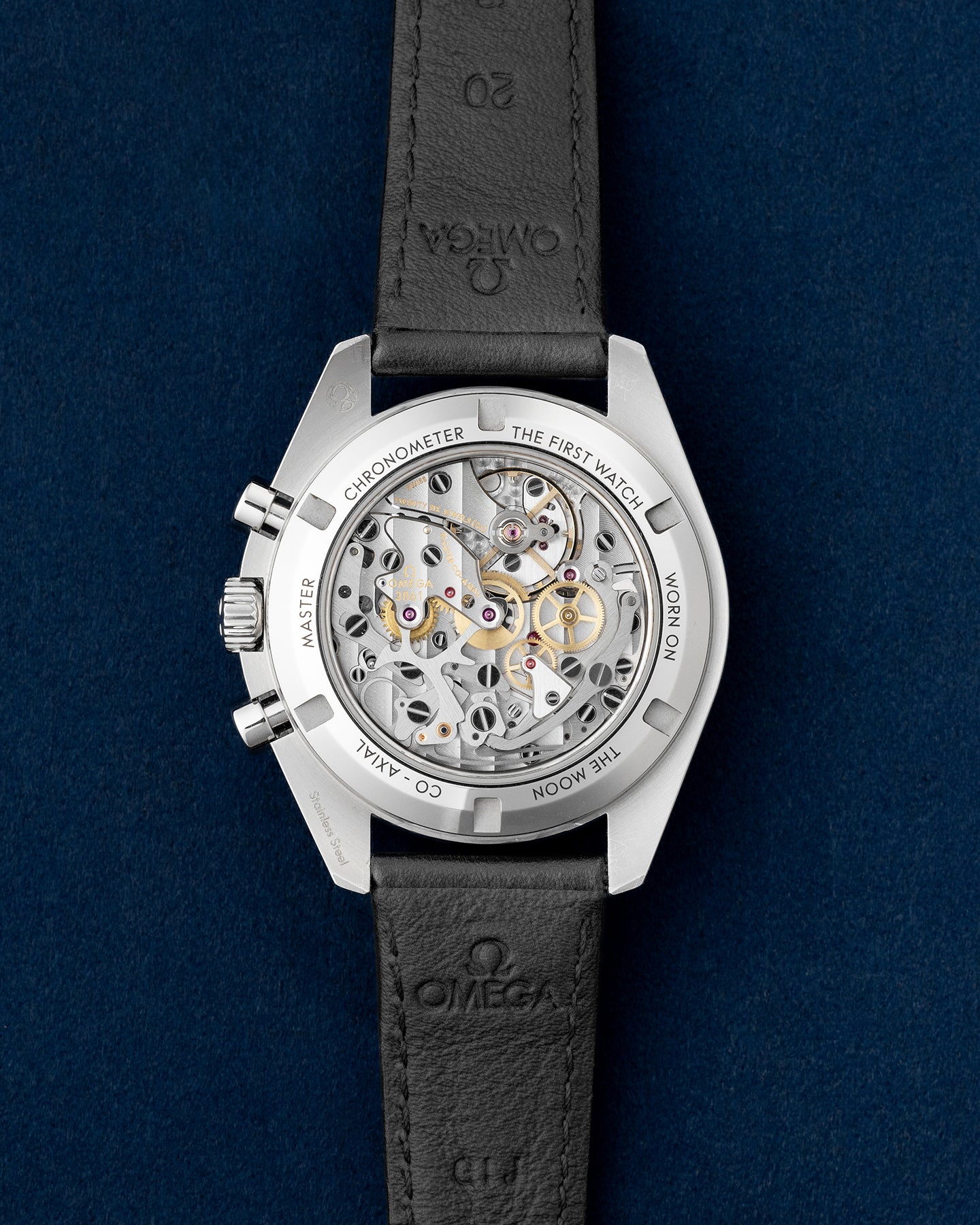
The dial is black with a stepped surface inspired by the late-1960s ST 105.012, with the chronograph subdials at 3, 6, and 9 o clock in tri-compax configuration. The sapphire crystal variants carry an applied metal Omega logo on the dial. The Hesalite crystal variants carry a printed Omega logo, faithful to the original NASA-qualified specification. The caseback differs by crystal choice as well. The Hesalite version carries a solid steel caseback engraved "FLIGHT QUALIFIED BY NASA IN 1965 FOR ALL MANNED SPACE MISSIONS" along with the Seahorse medallion. The sapphire version carries a sapphire display caseback revealing the calibre 3861 movement. Omega added the specific "1965" date to the caseback engraving for the 2021 launch, a small but deliberate clarification that the qualification text refers to the original NASA test programme.
Calibre 3861
The calibre 3861 is the technical heart of the 2021 update. The movement is hand-wound, Master Chronometer certified by METAS, and rated to negative zero to positive five seconds per day, a tighter tolerance than the COSC chronometer standard the broader Swiss industry uses. The 3861 introduces the Daniels-derived Co-Axial escapement to the Speedmaster Moonwatch for the first time, along with a free-sprung balance, a silicon balance spring, and non-ferrous escapement components that deliver magnetic resistance to 15,000 gauss. The jewel count rose from 18 in the 1861 to 28 in the 3861. The frequency stays at 21,600 vibrations per hour, the power reserve stays at 50 hours, and the chronograph brake returns to metal in place of the Delrin plastic brake used on the 861 and 1861. The 3861 also introduces hacking seconds to the Speedmaster Moonwatch for the first time, meaning the seconds hand stops when the crown is pulled out for precise time setting. Earlier Speedmaster Moonwatch generations did not hack.
Strap Configurations
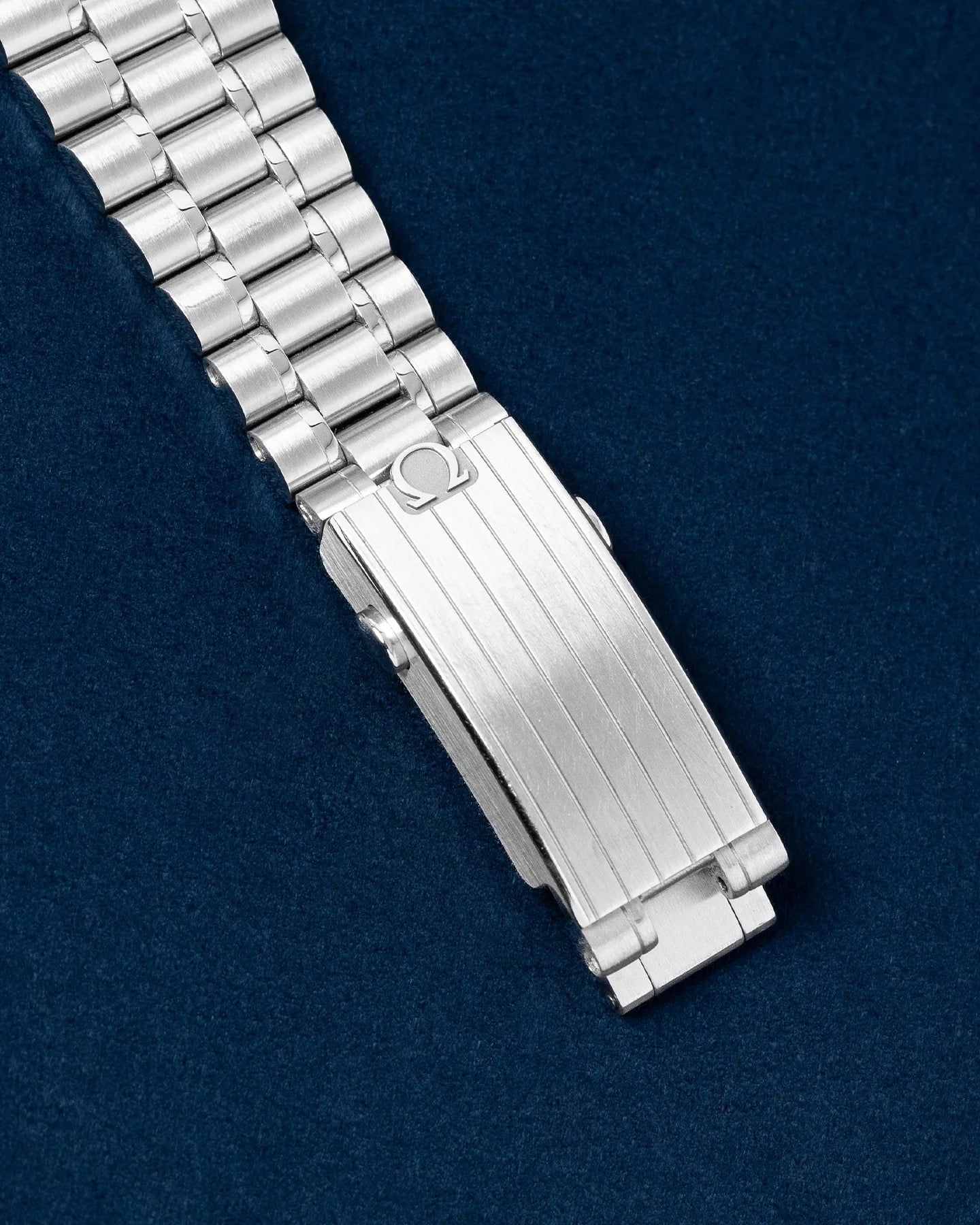
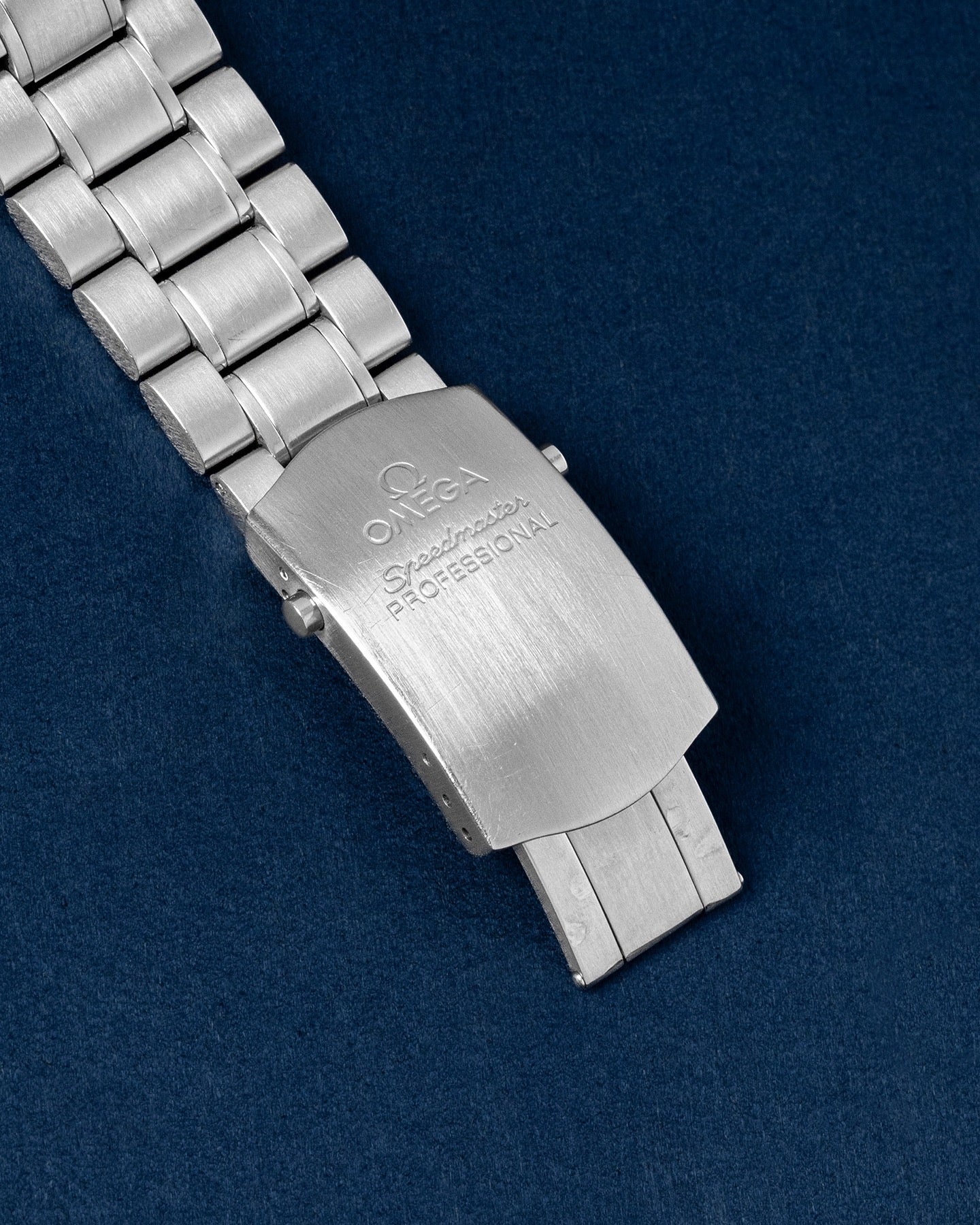
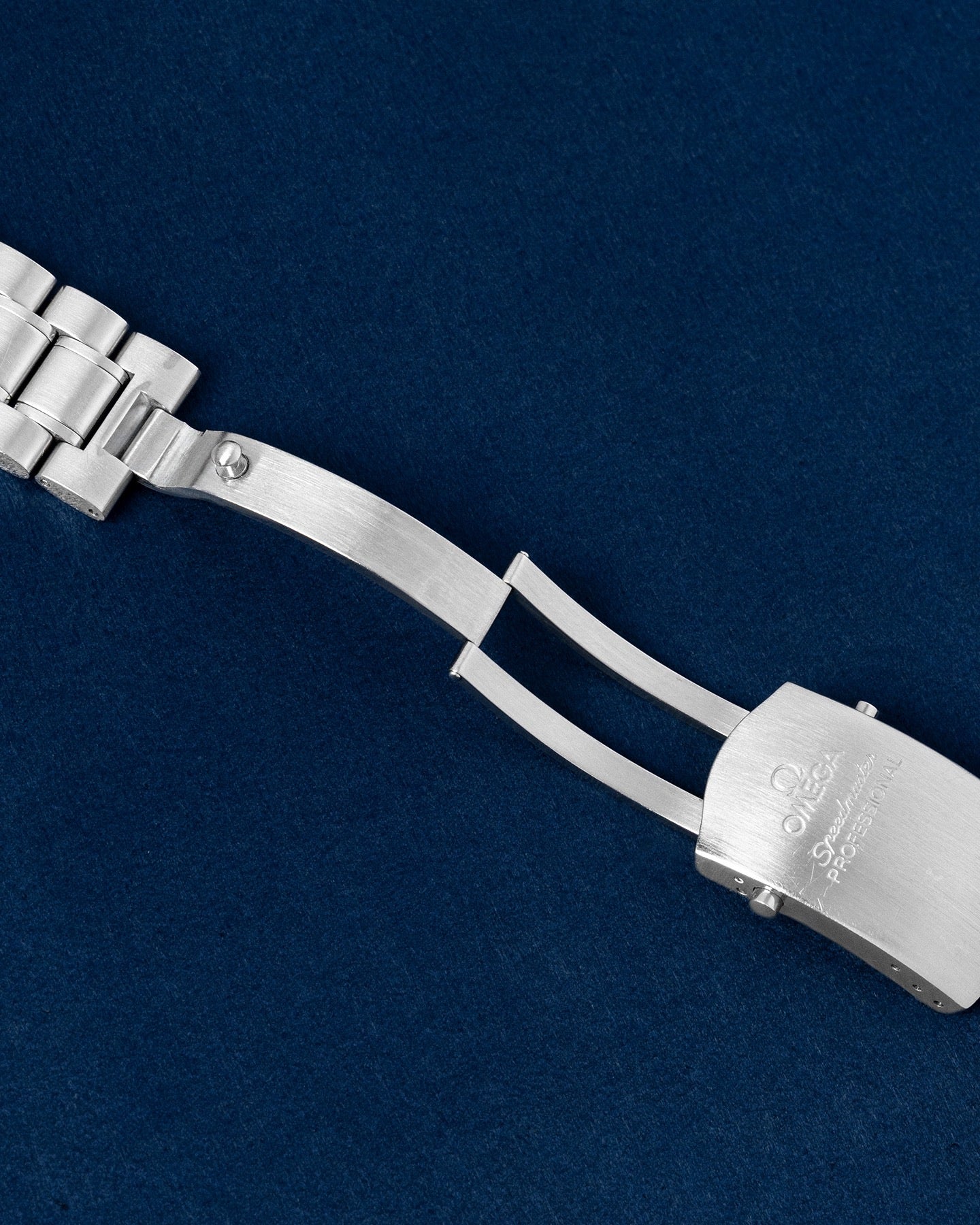
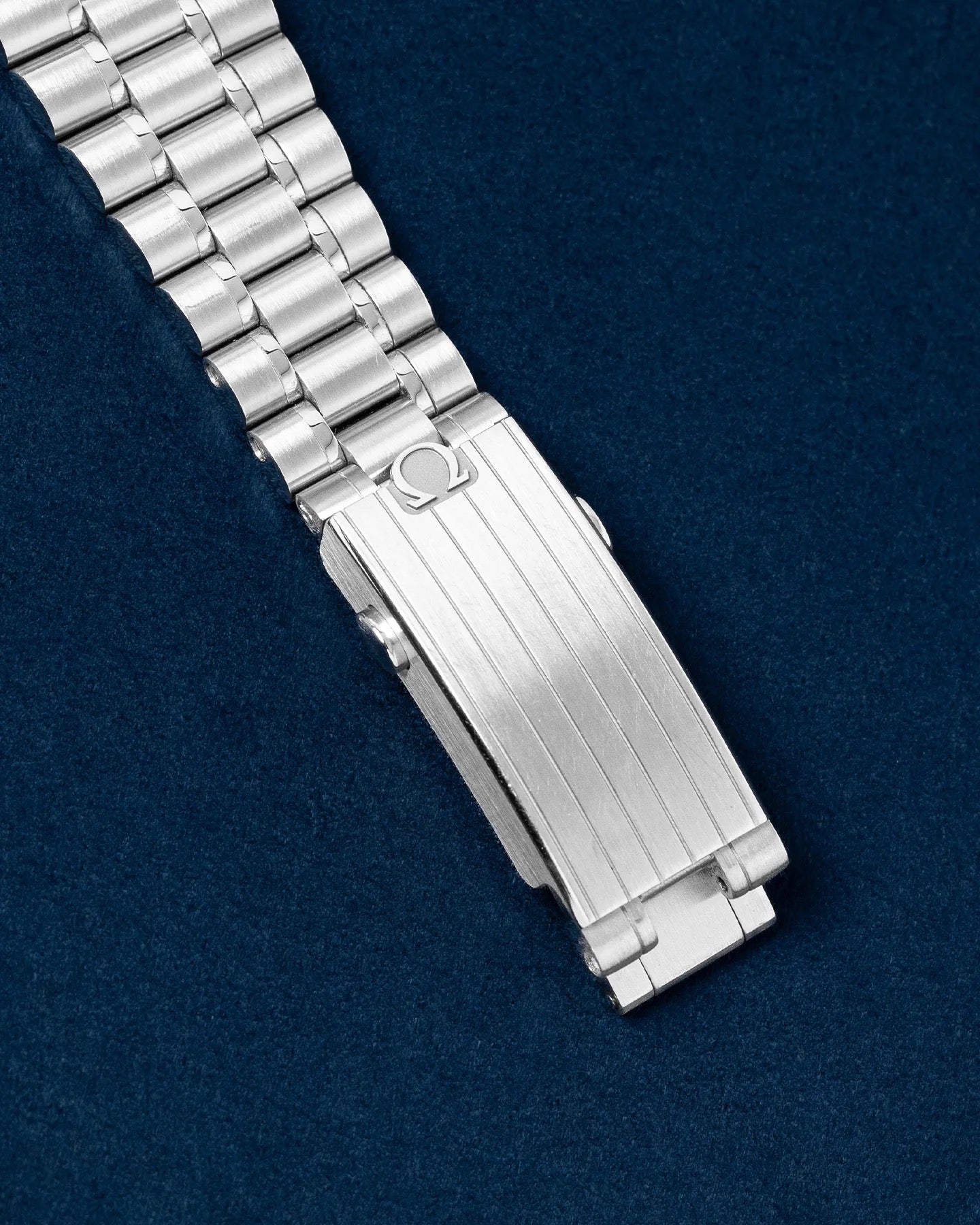
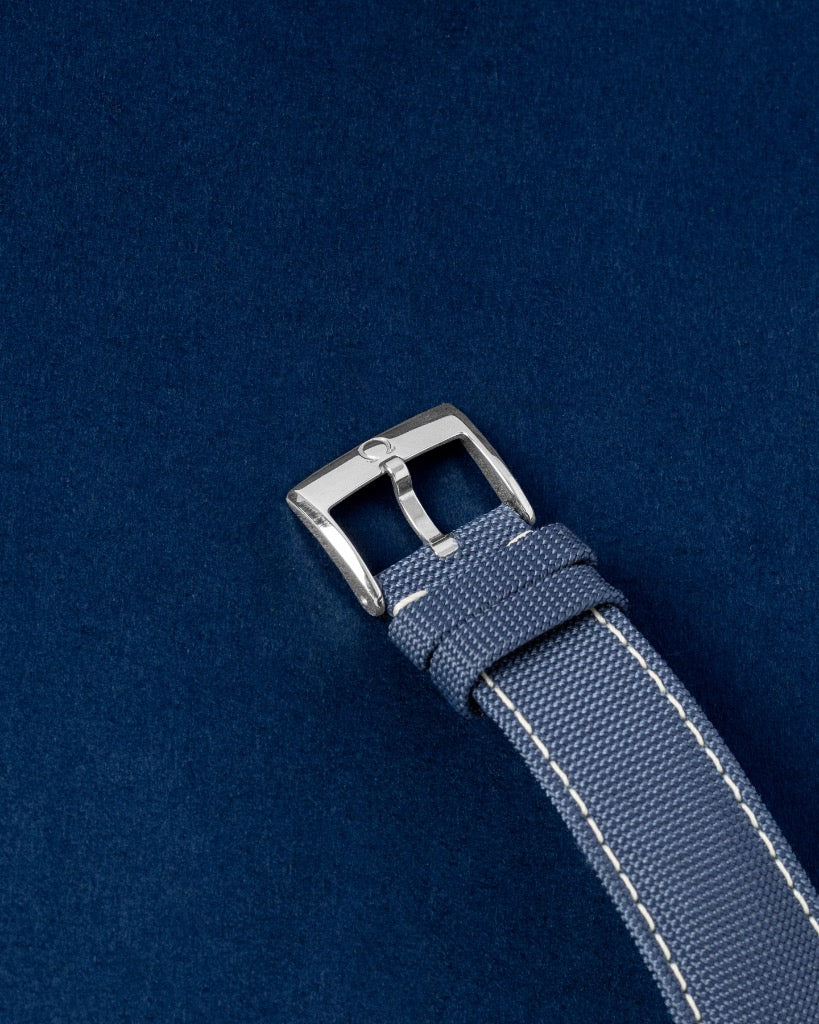
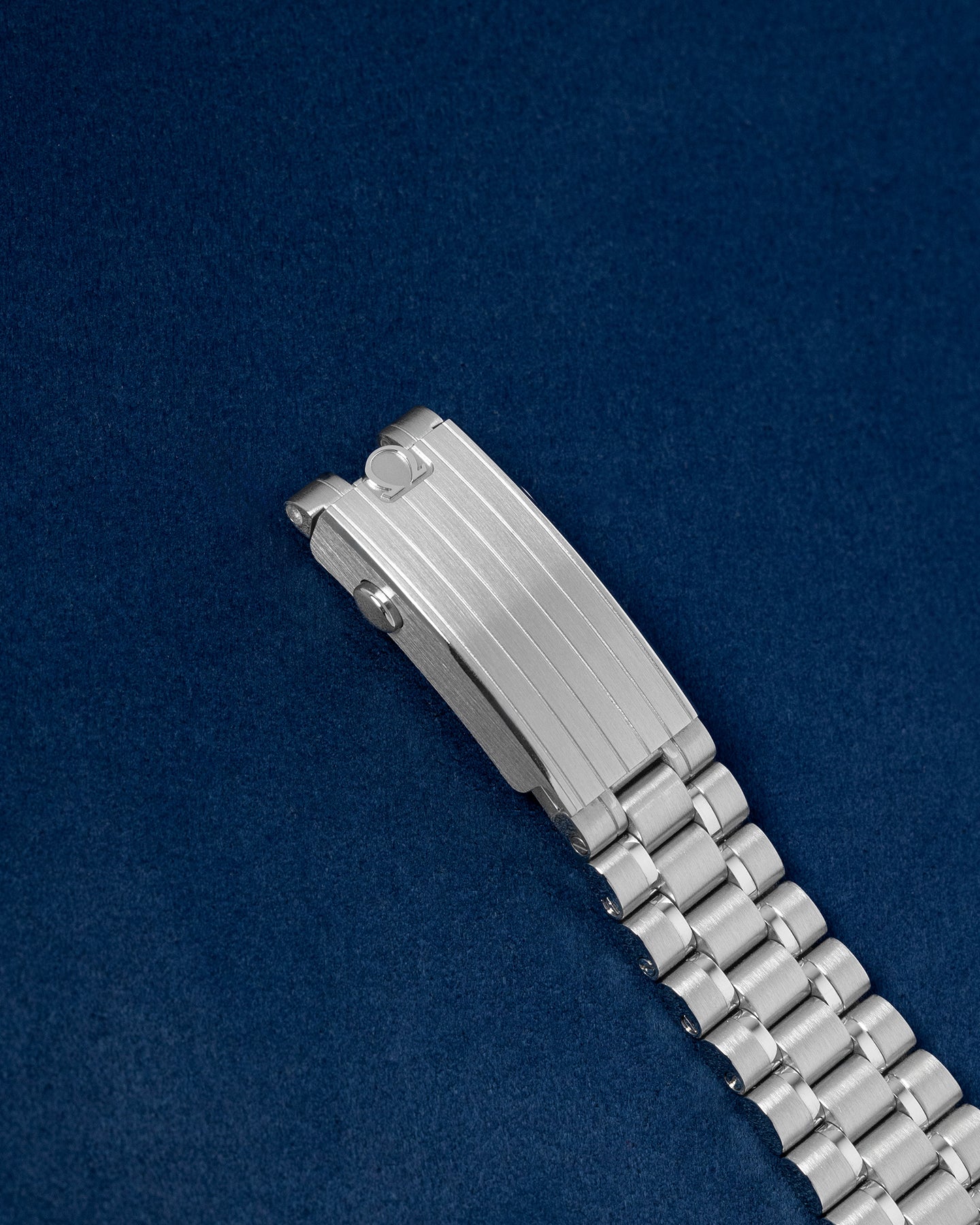
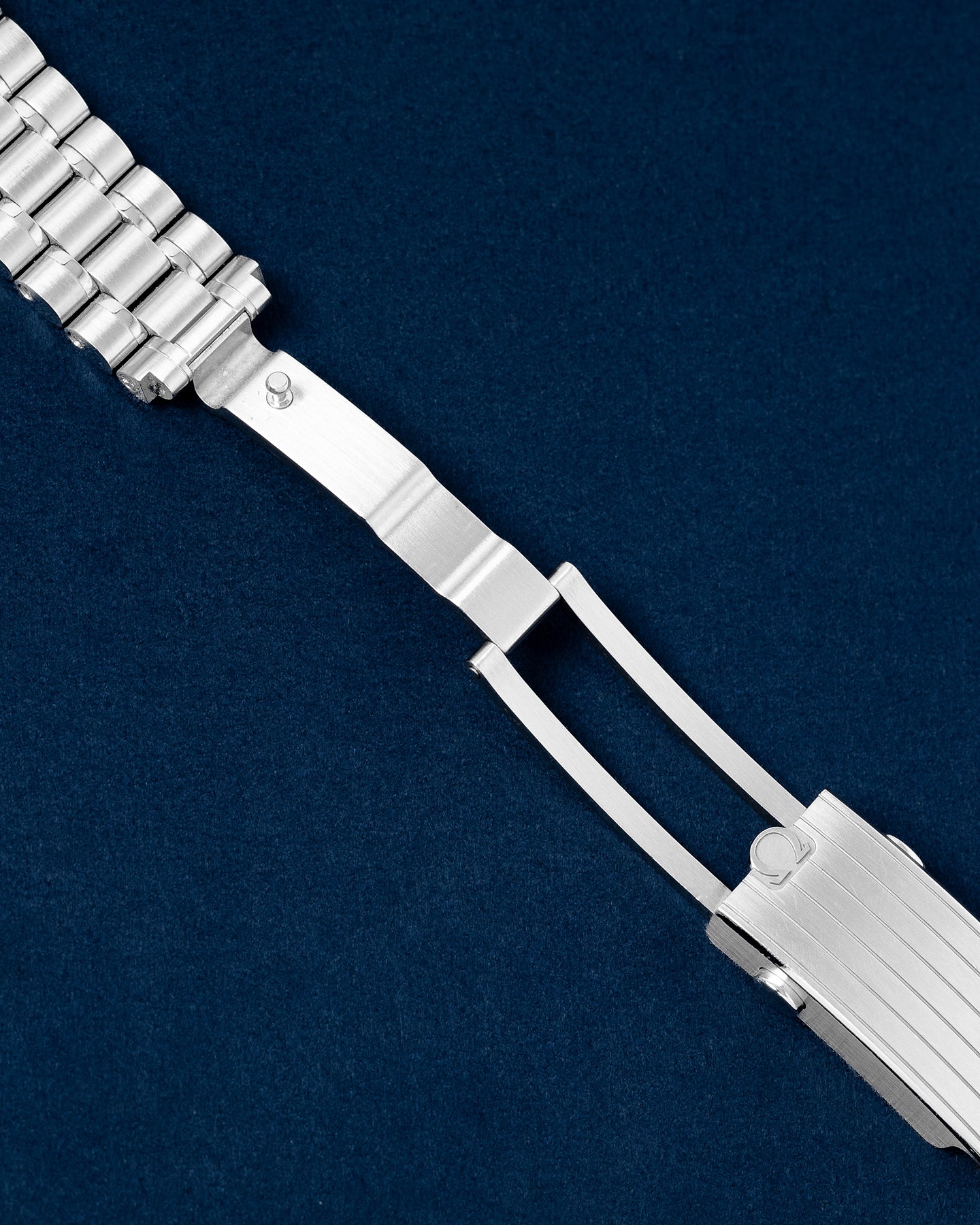
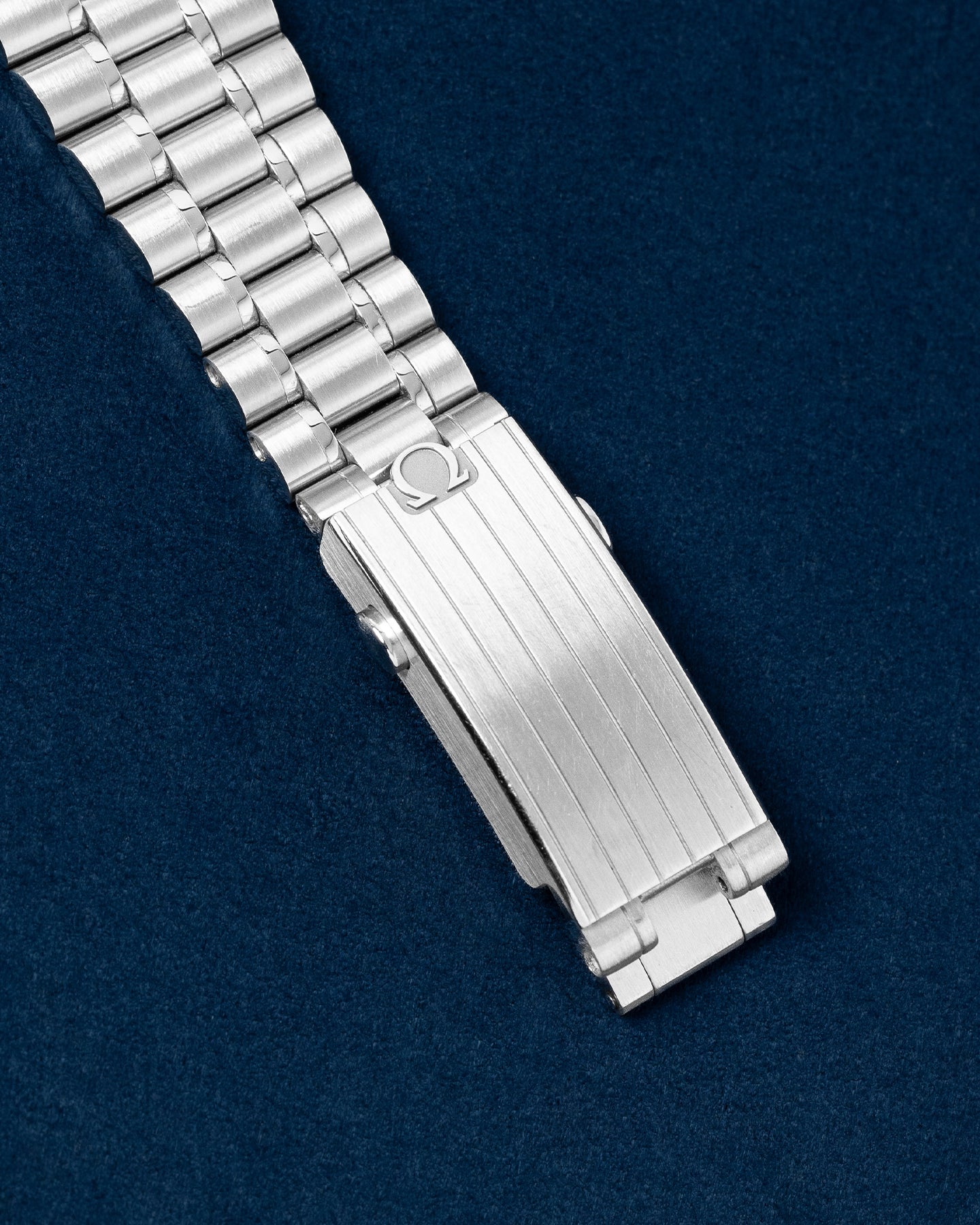
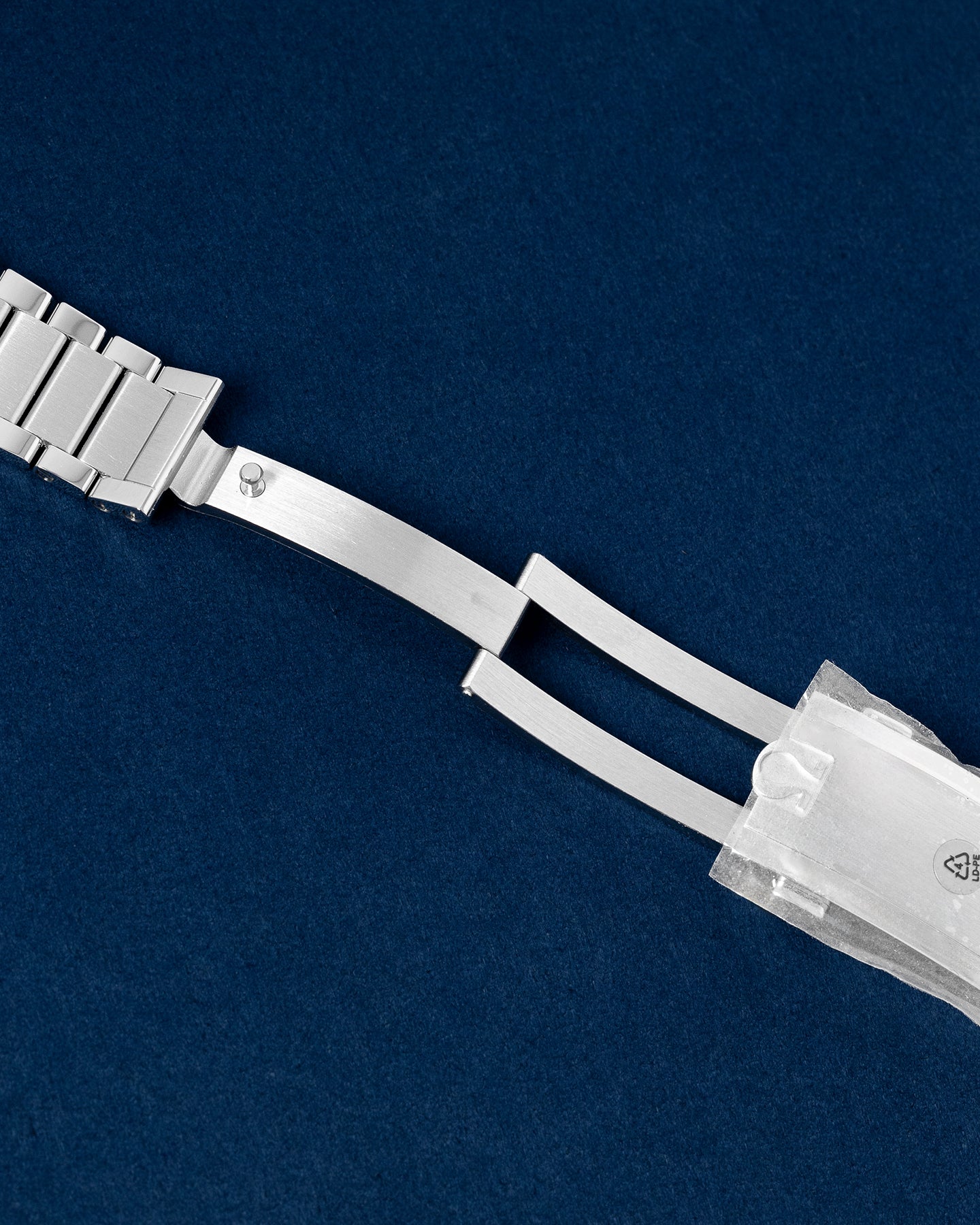
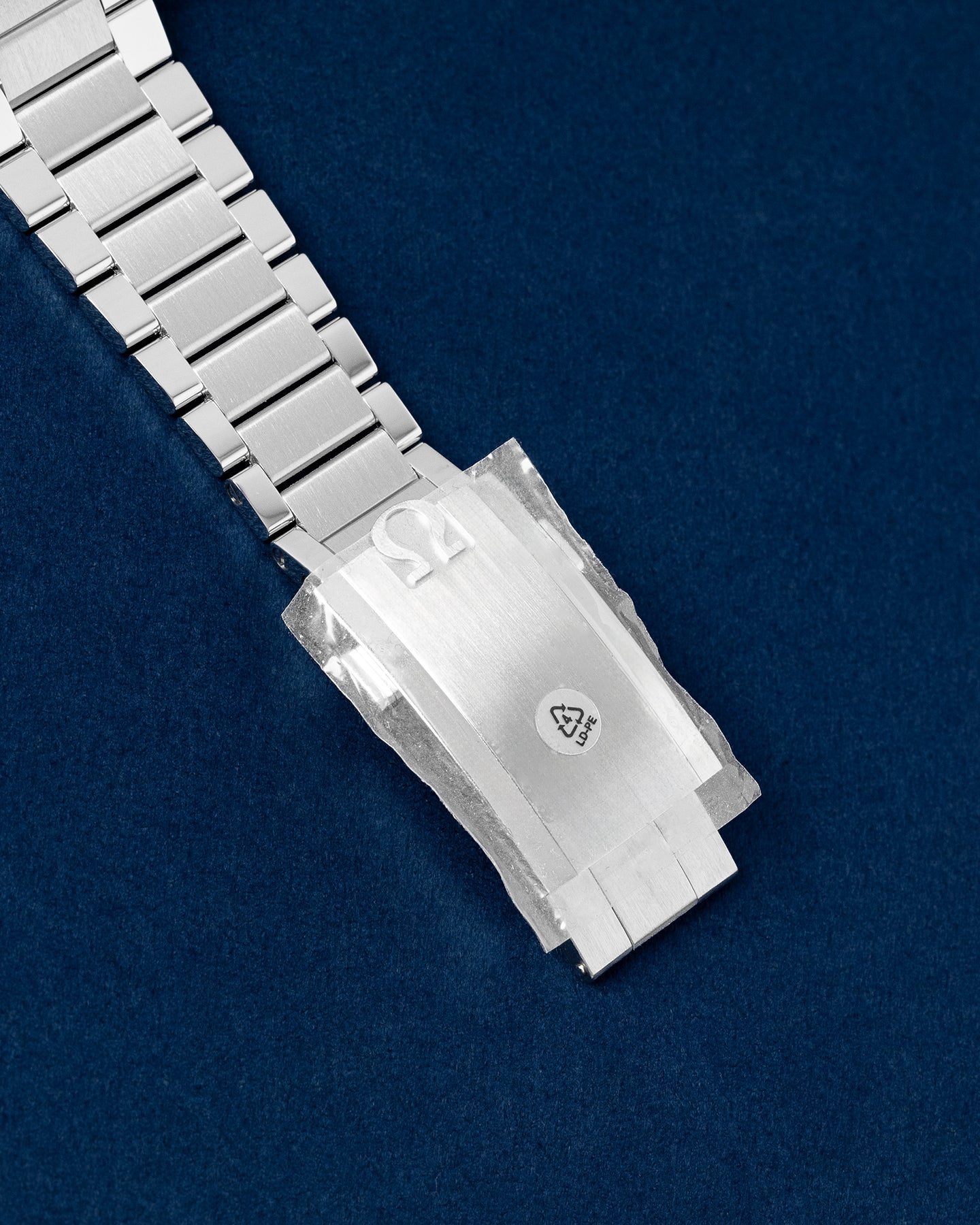
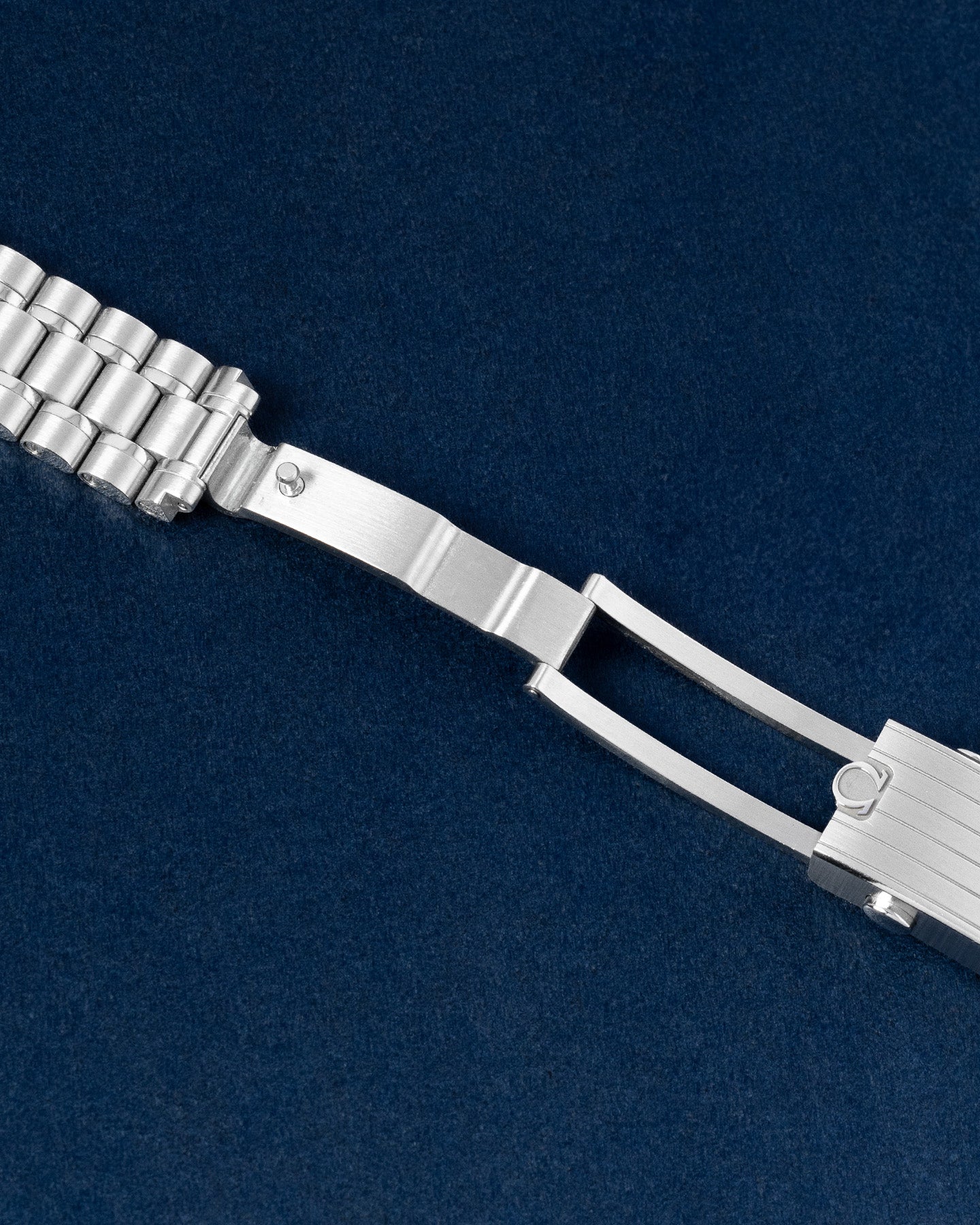
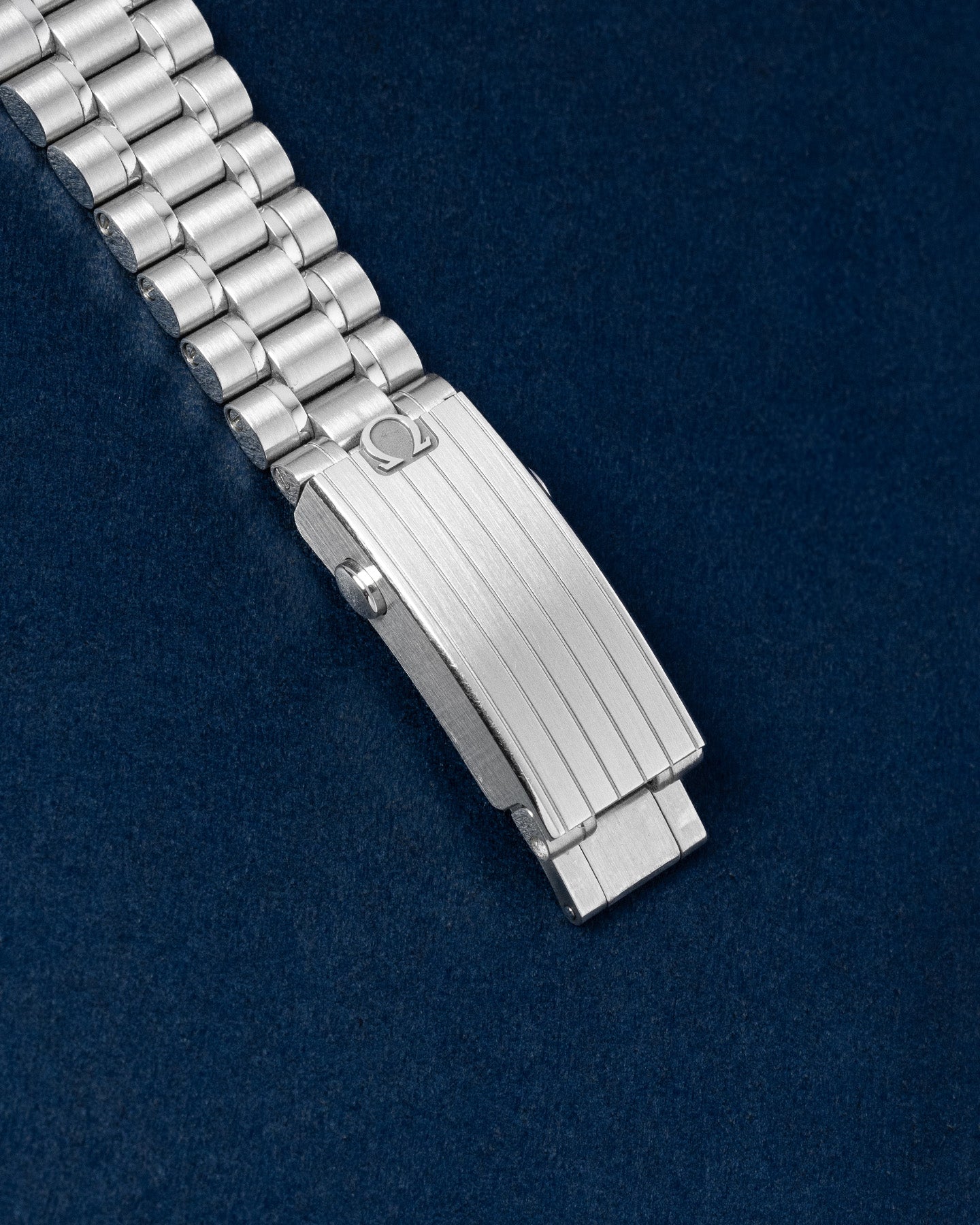
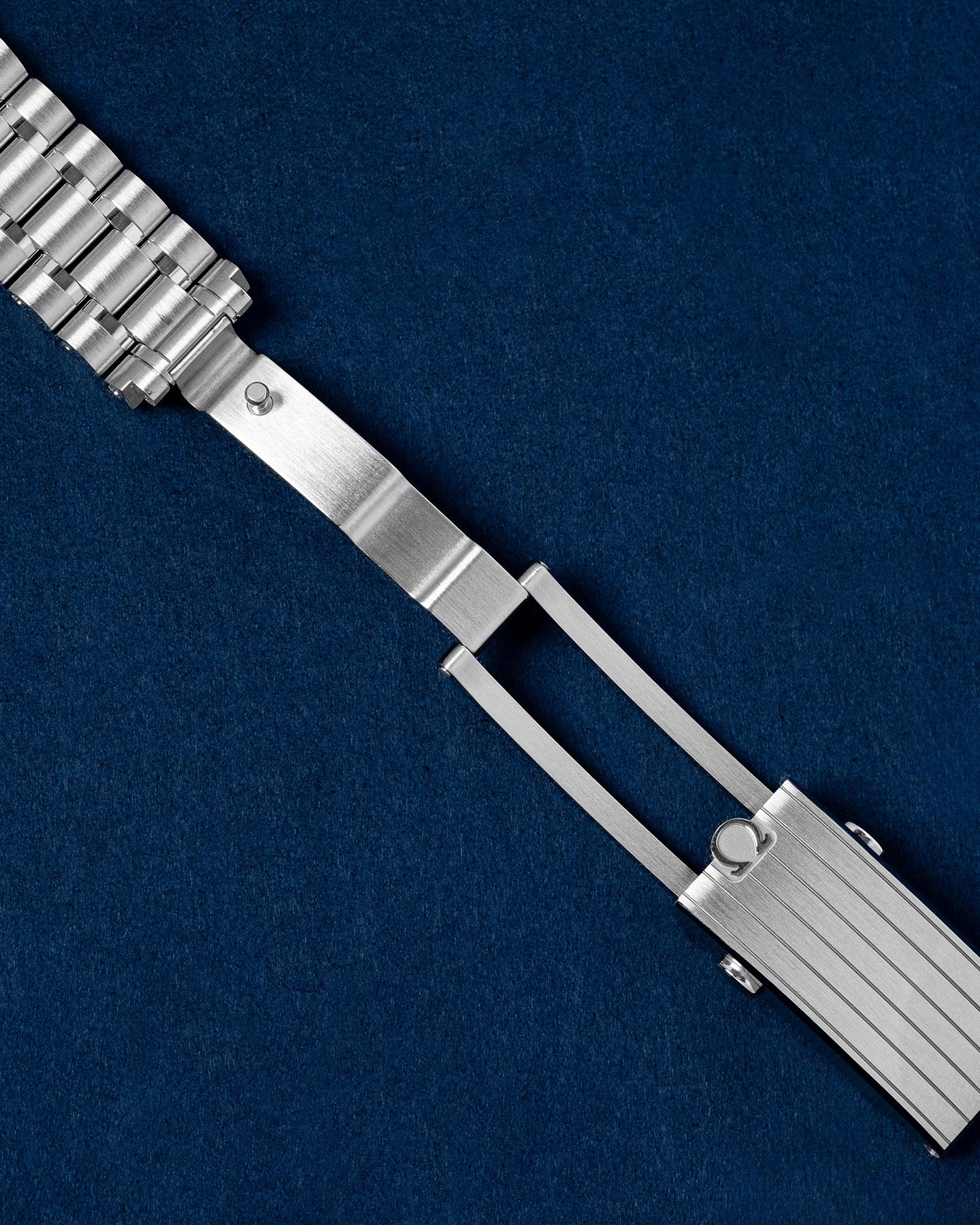
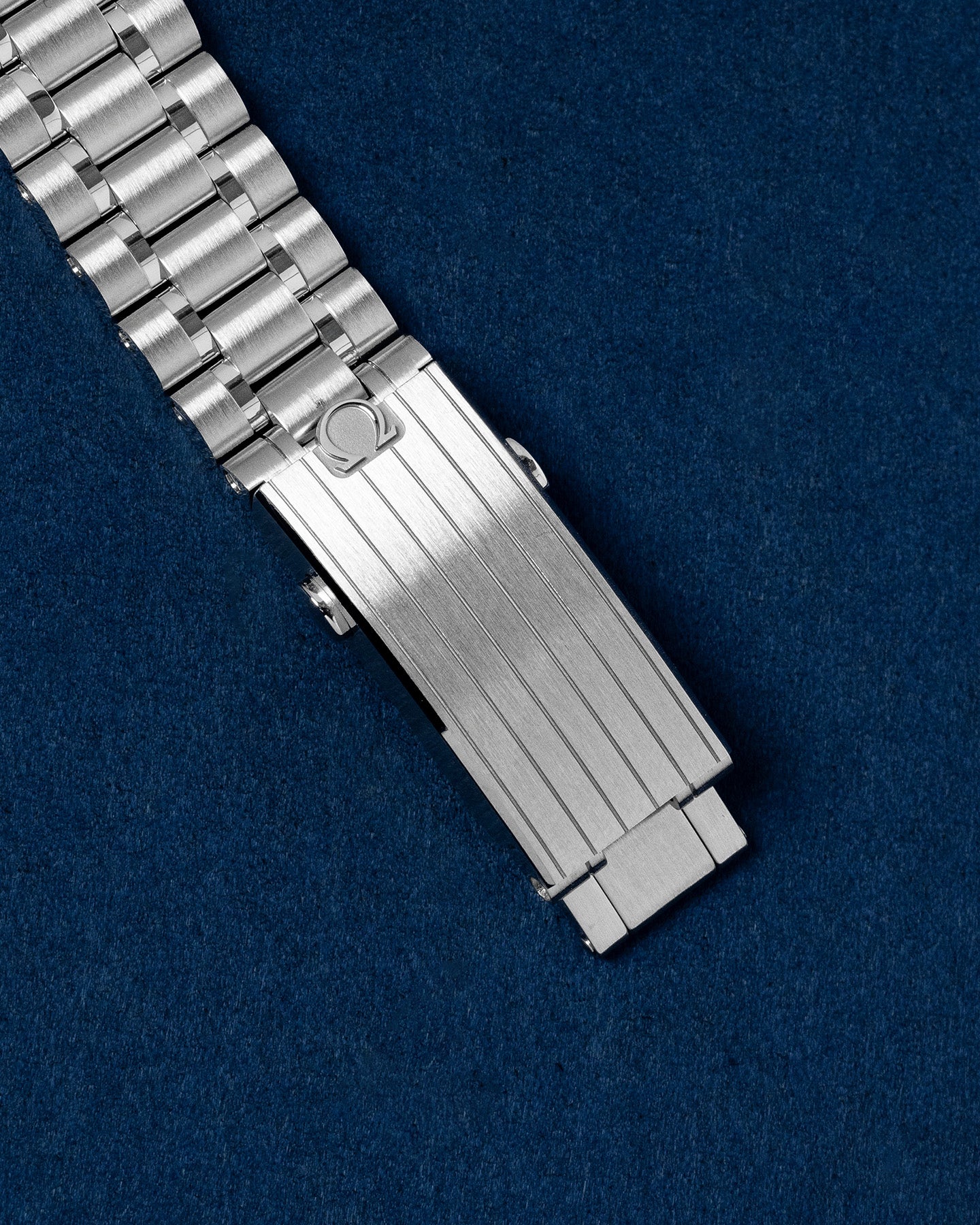
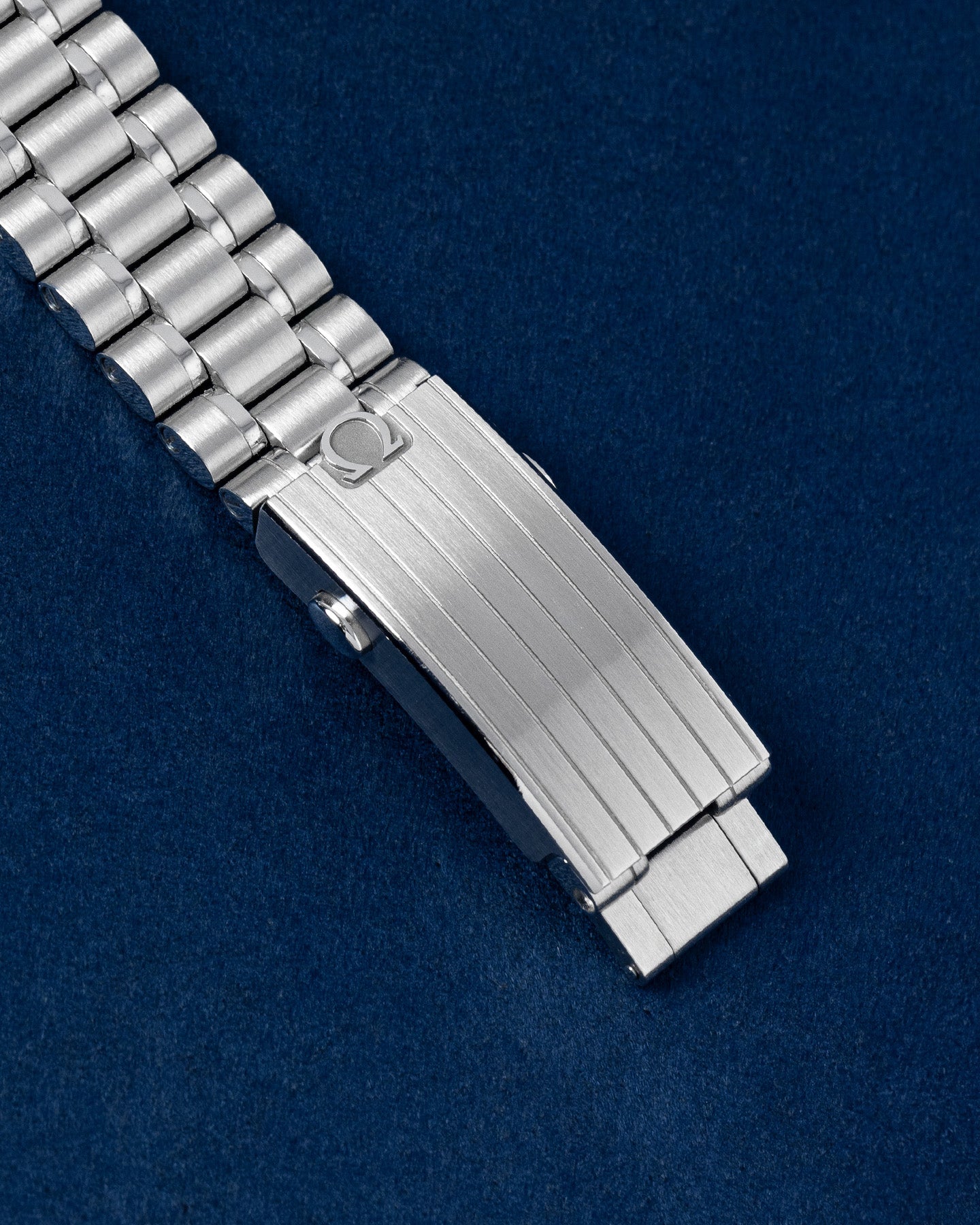
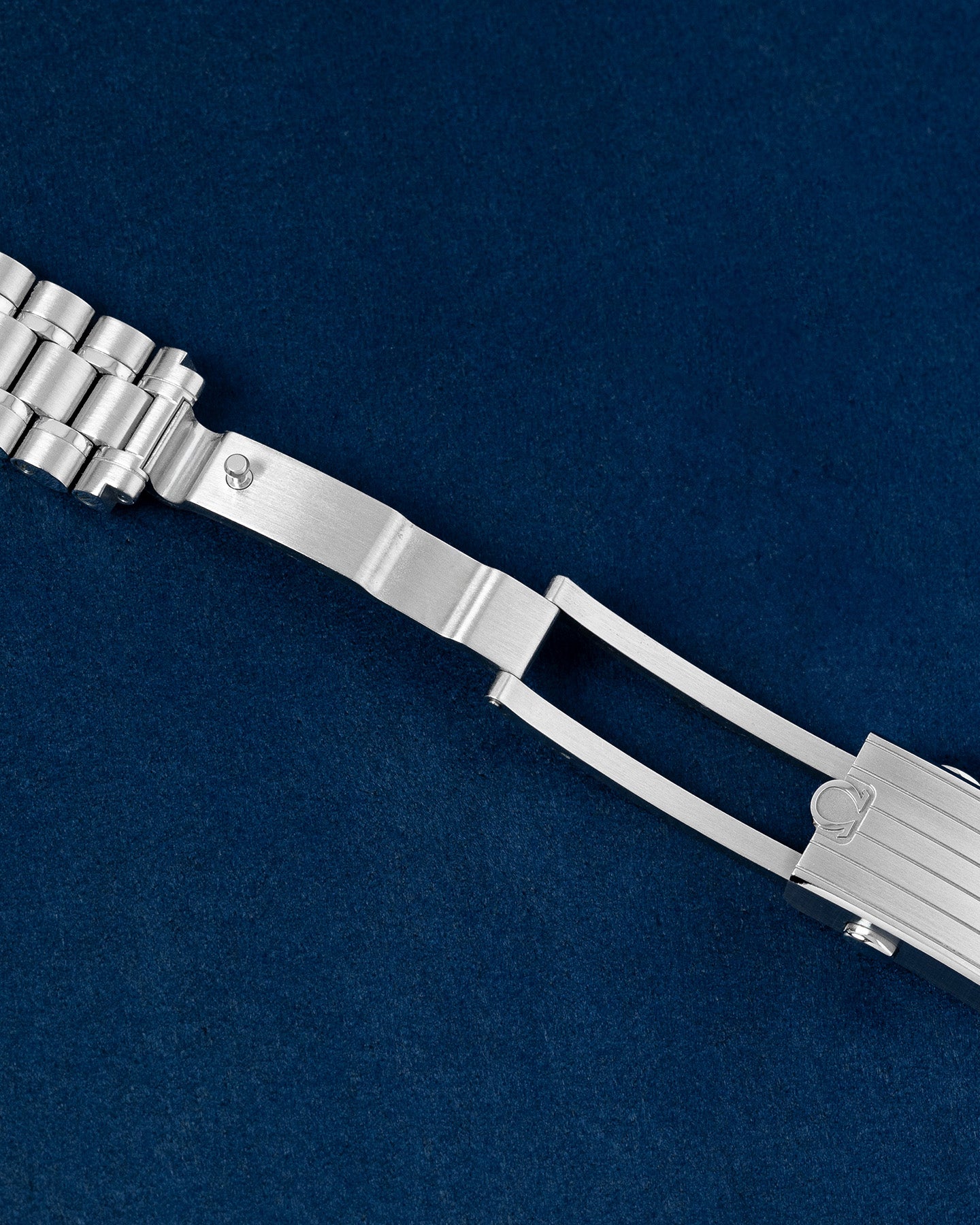
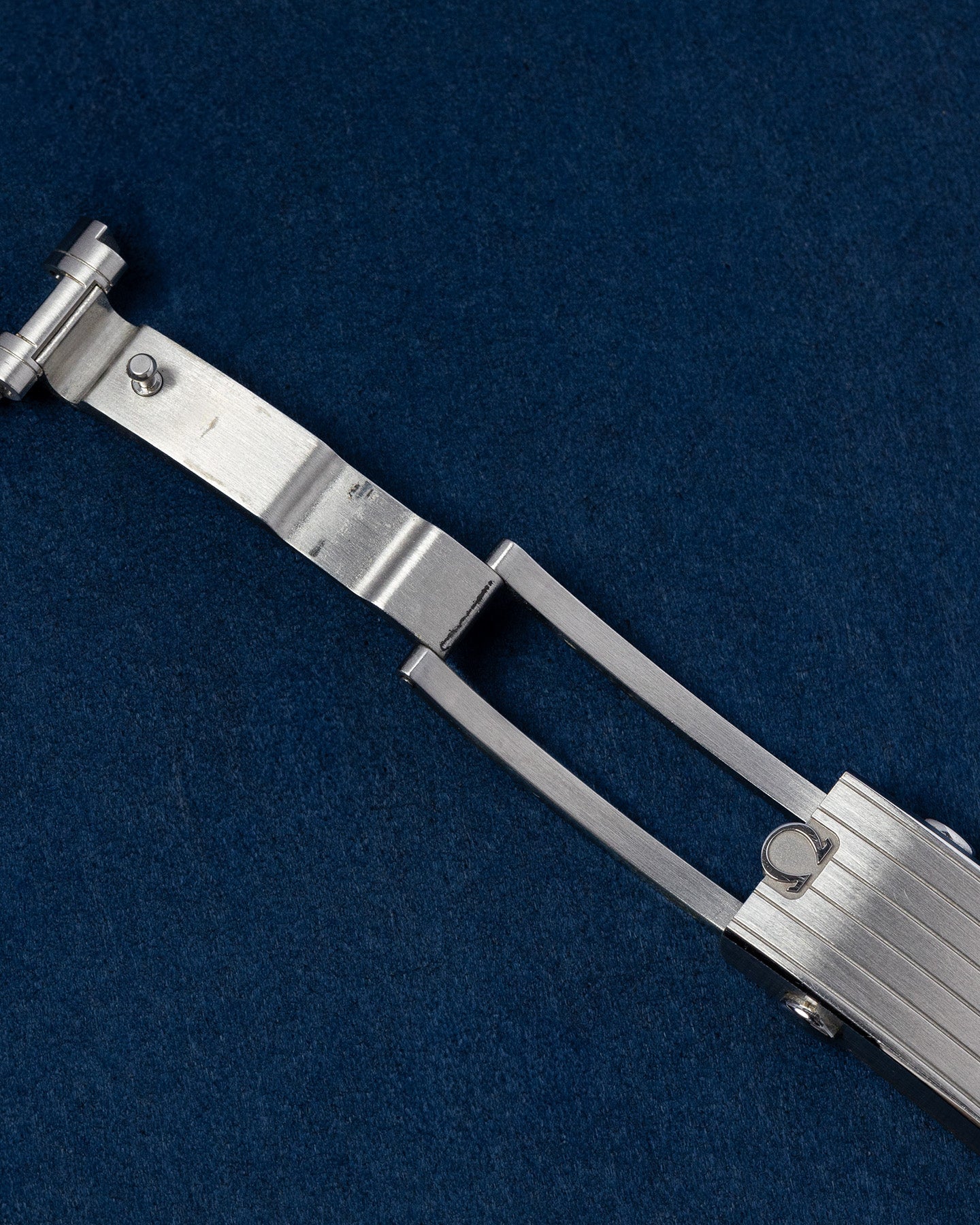
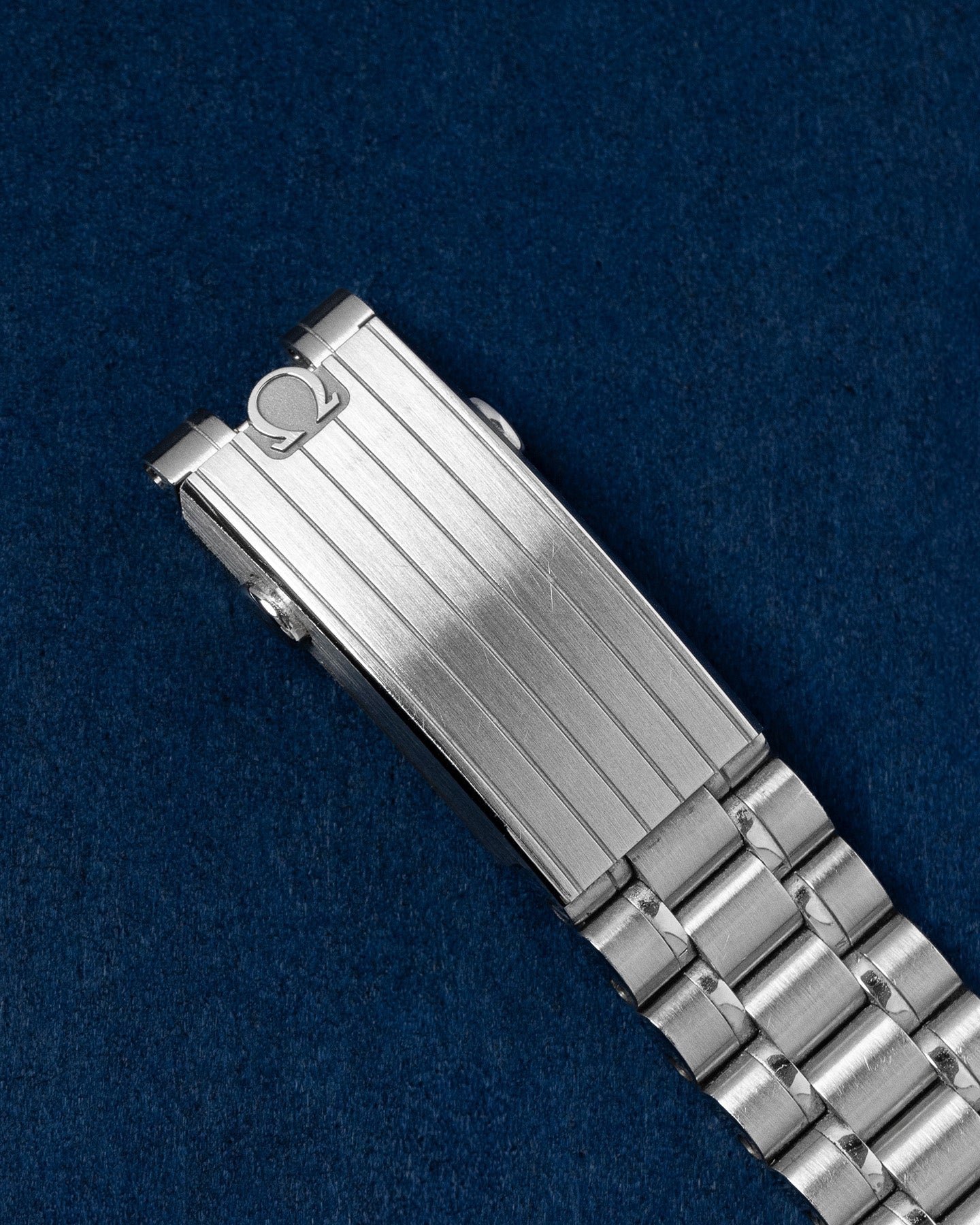
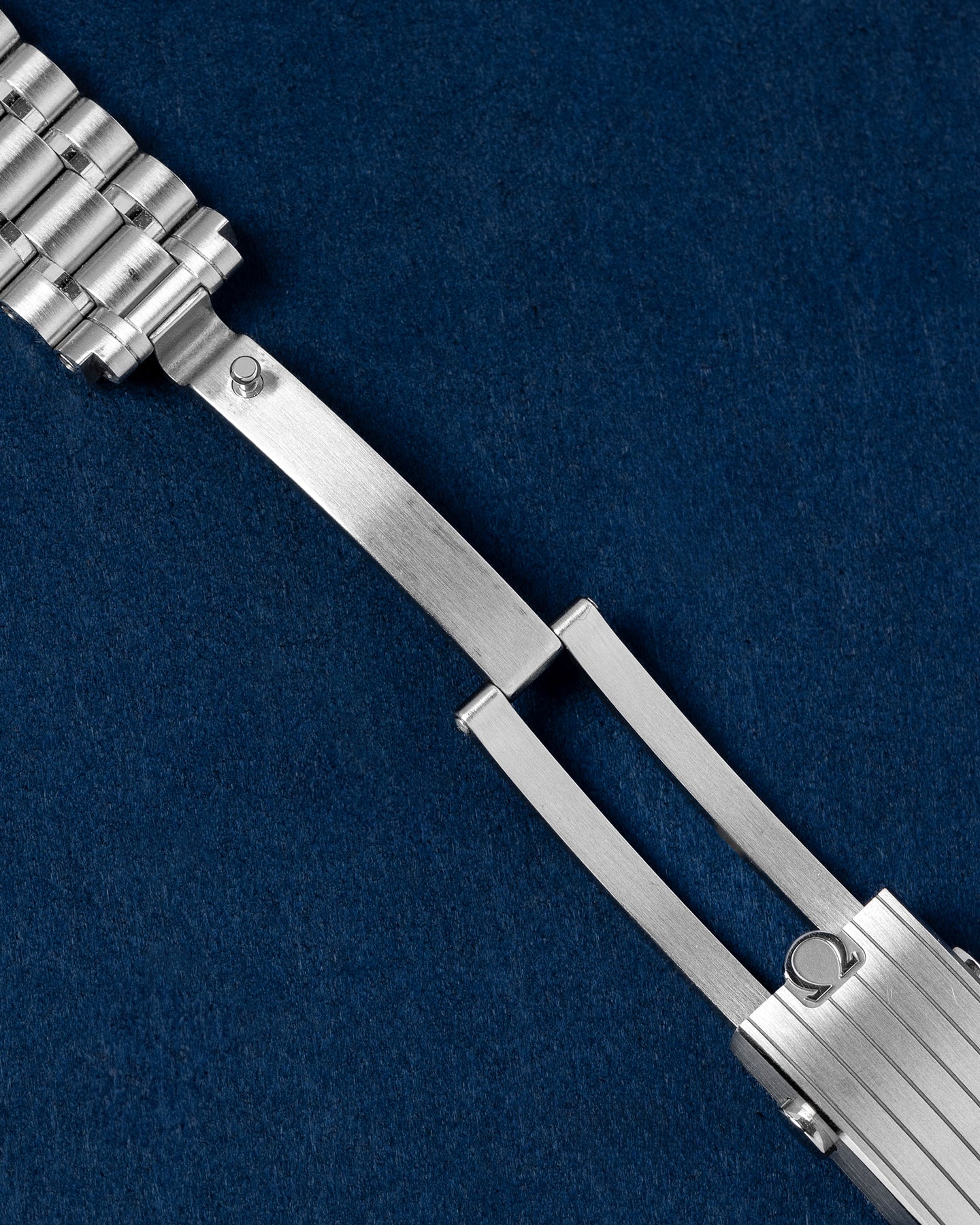
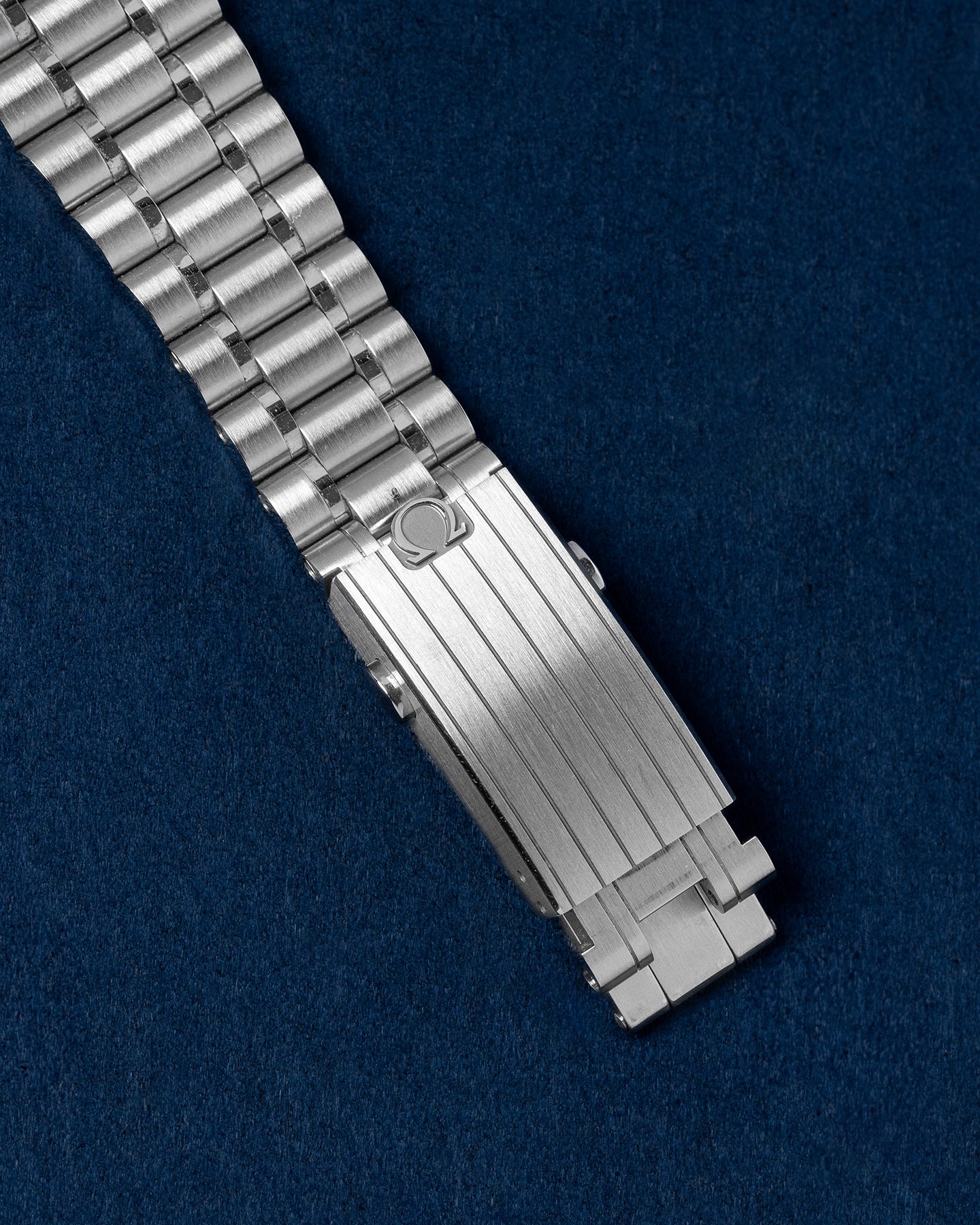
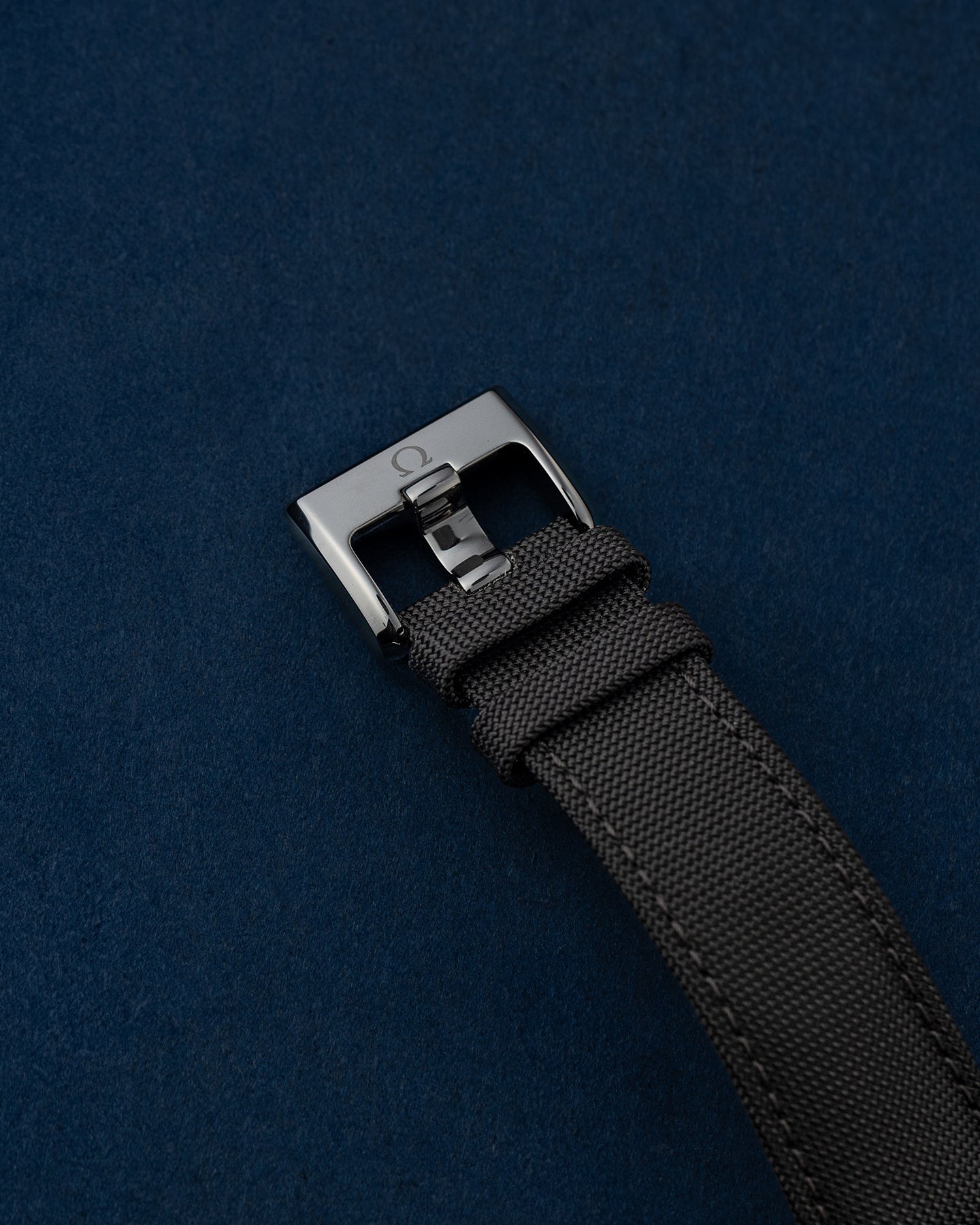
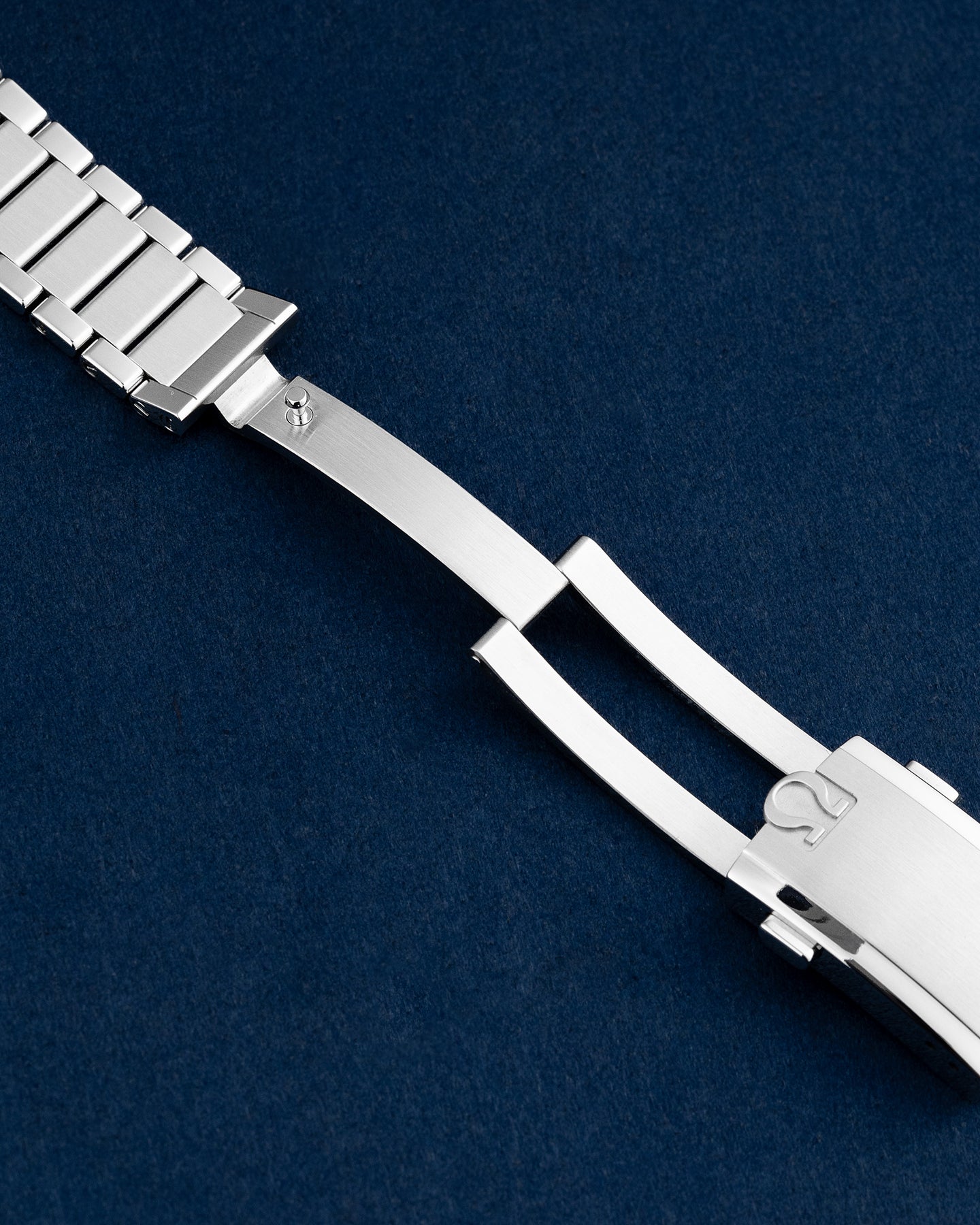
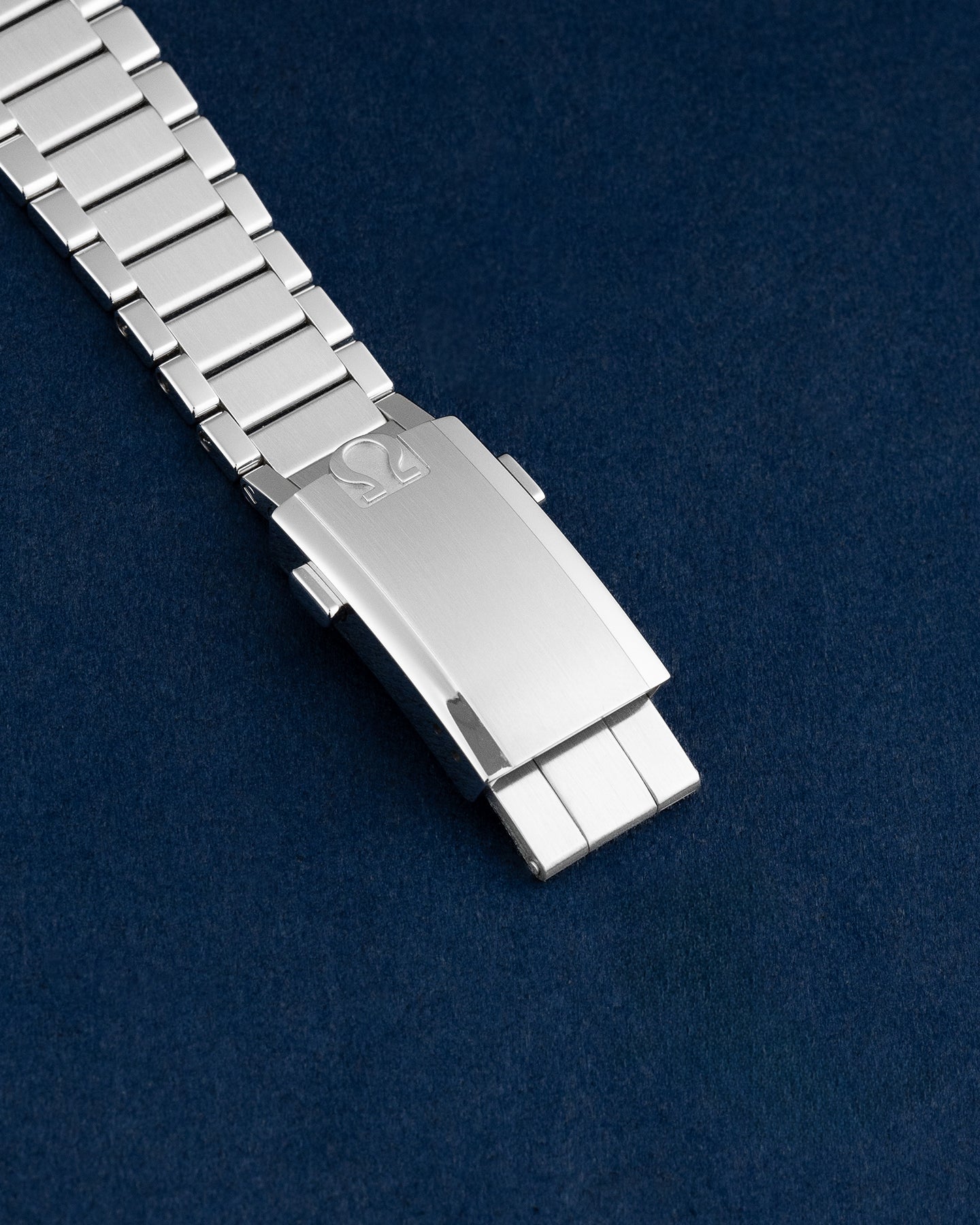
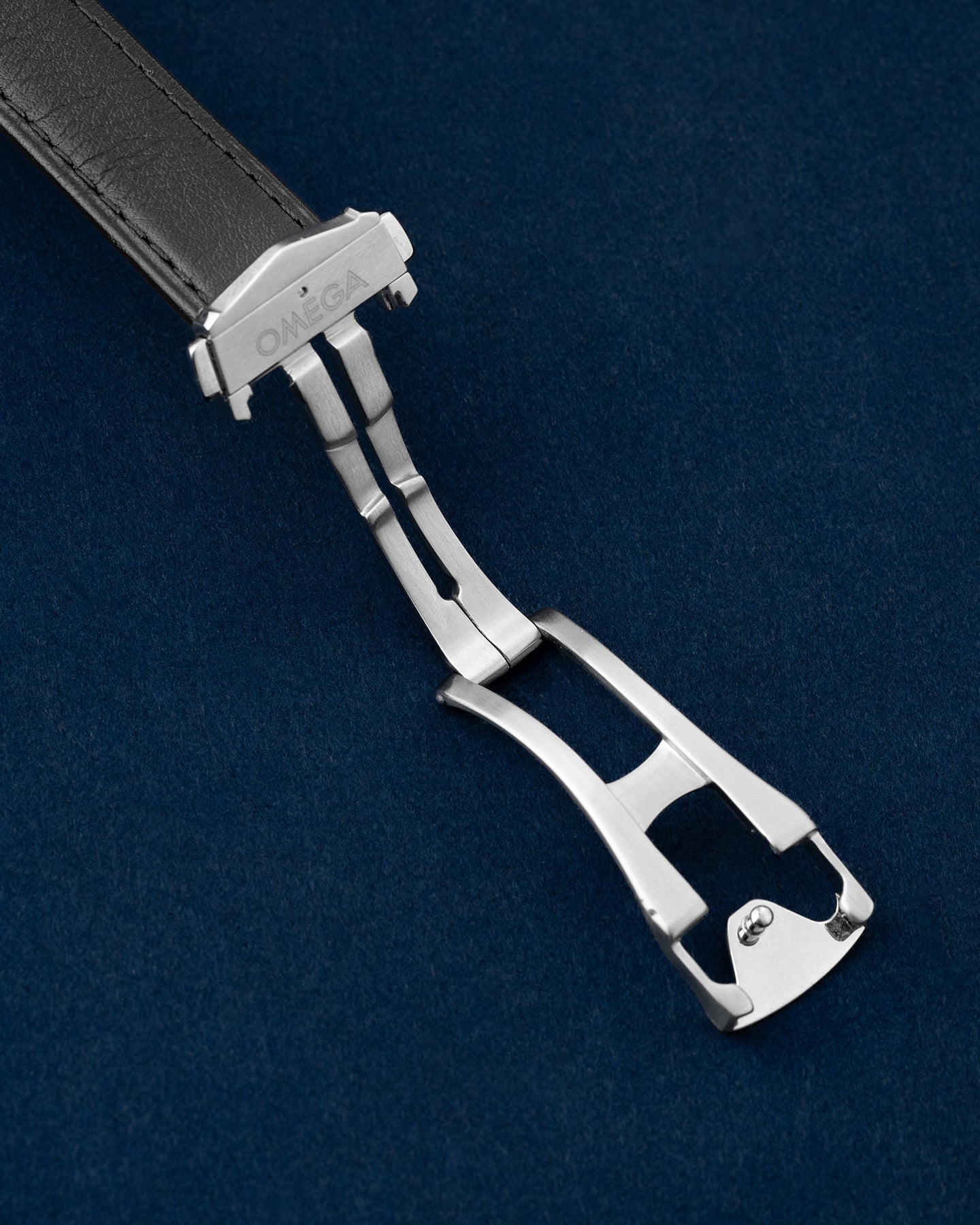
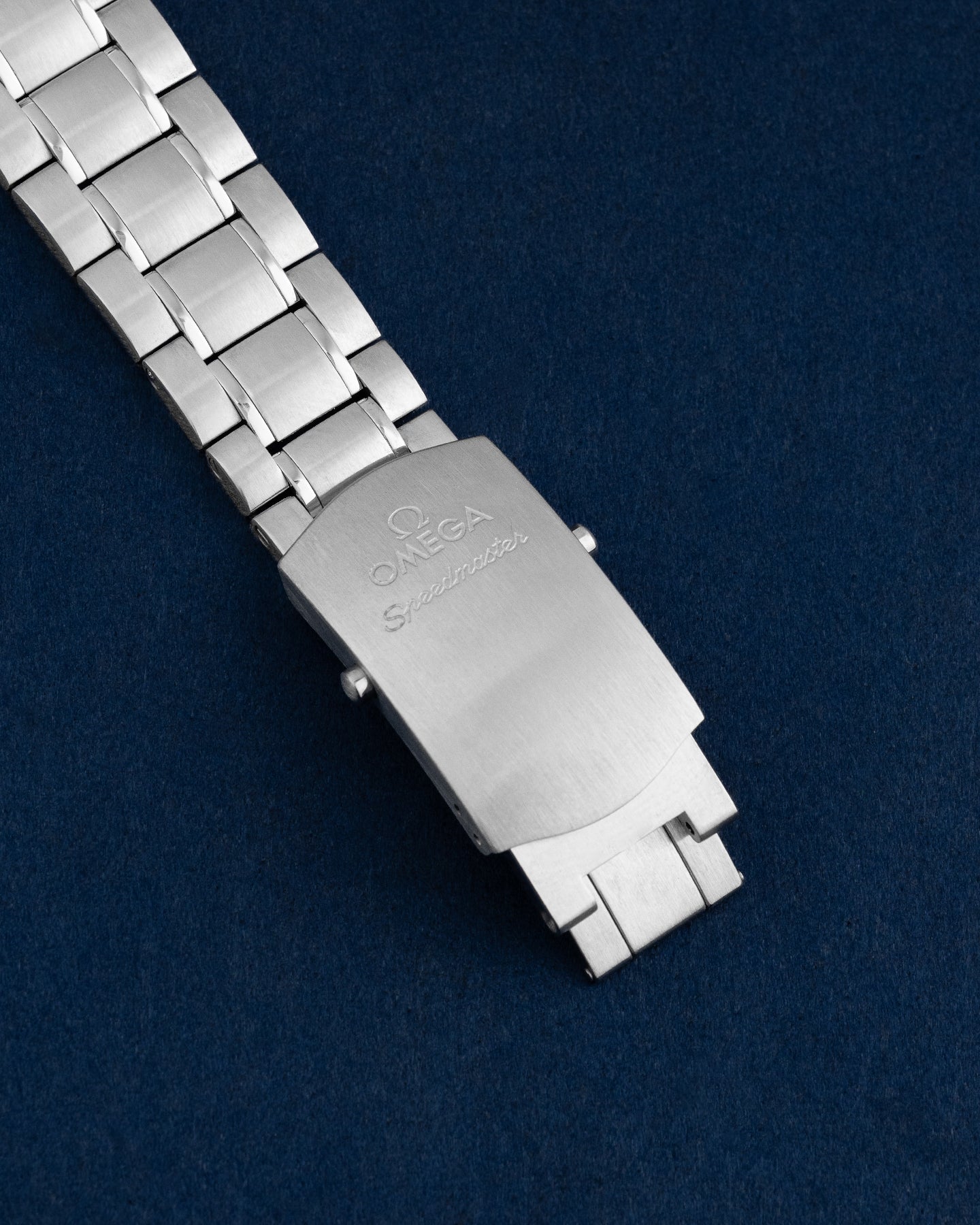
The 2021 Omega Moonwatch ships in three primary strap configurations on the steel references. The first is a five-arched-links-per-row stainless steel bracelet with a tapering vintage profile inspired by Speedmaster bracelets from the 1960s and 1970s, finished with a folding clasp and comfort adjustment system. The second is a black coated nylon fabric strap with a folding clasp, an Omega callback to the canvas straps astronauts wore over their spacesuit cuffs. The third is a black calfskin leather strap with a folding clasp, offered only on the sapphire crystal variant.
Hesalite Crystal Versus Sapphire Crystal
The crystal decision is the single most discussed choice in Speedmaster Moonwatch buying. Hesalite is acrylic plastic, the same crystal material used on every Speedmaster worn in space from 1965 through the last Apollo mission. NASA mandated Hesalite specifically because it does not shatter into floating fragments in a zero-gravity environment if struck. Hesalite scratches but the scratches buff out with light polishing using a small dab of toothpaste or a proprietary Polywatch compound. Hesalite also softens the dial reading, gives the watch its distinctive period-correct visual warmth, and allows Omega to engrave the historical NASA qualification text on the solid caseback.
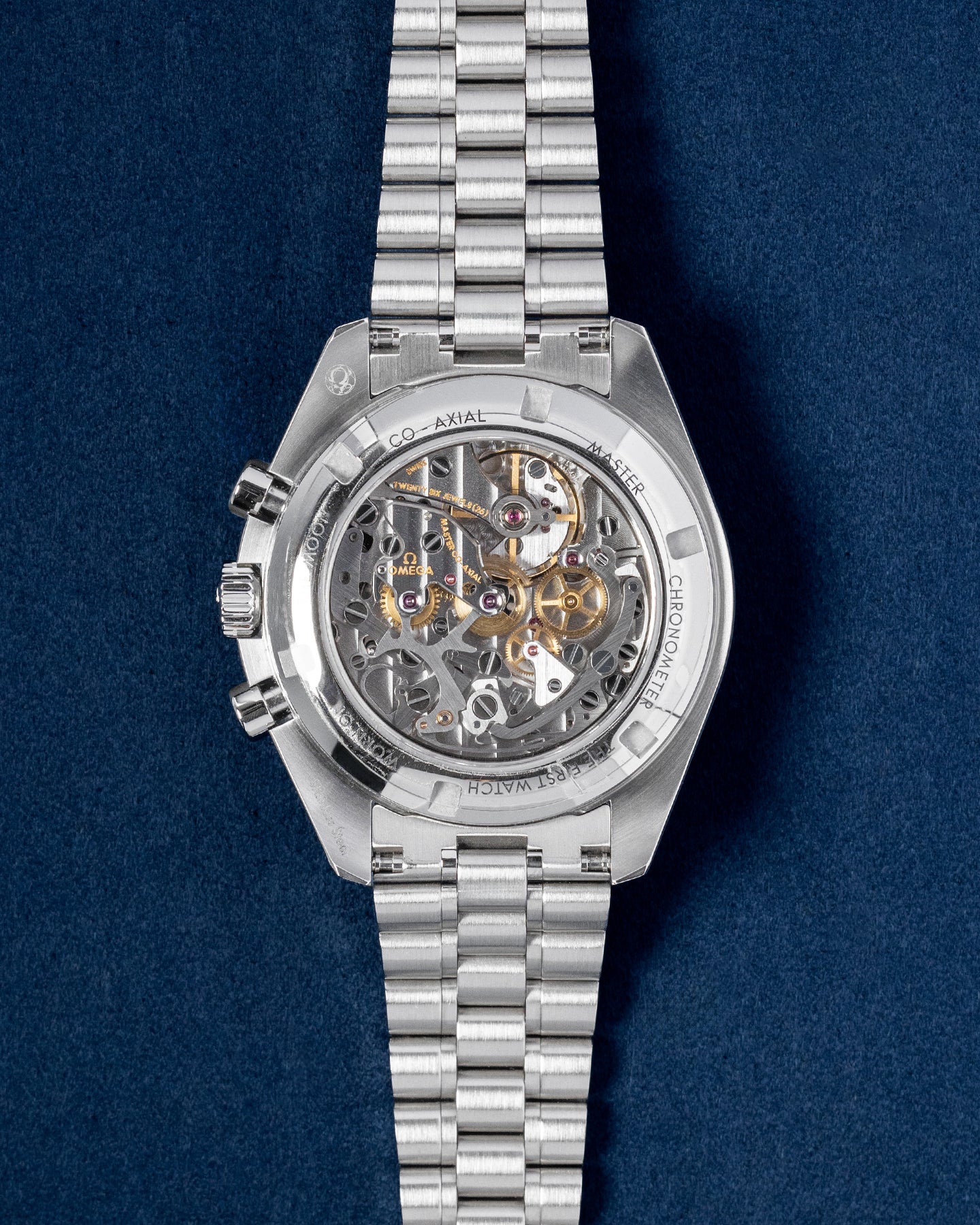
Sapphire is harder and scratch-resistant. The sapphire variant displays the calibre 3861 through a transparent caseback, which is meaningful given that the 2021 movement is the most heavily decorated calibre Omega has put in a standard production Speedmaster Moonwatch. The sapphire variant also reads slightly cooler and more modern on the wrist, with the applied metal logo replacing the printed logo found on the Hesalite version.
The honest dealer answer on which to choose: the Hesalite Omega Speedmaster Moonwatch is the historically accurate variant, the watch the astronauts wore, the watch with the closed caseback engraving that connects directly to the NASA 1965 designation. The sapphire Speedmaster Moonwatch is the technically optimised variant, the watch you wear if you want to see the movement and you do not want to think about polishing the crystal. Neither choice is wrong. Both Omega configurations are produced to identical case dimensions, identical movements, and identical specifications outside the crystal and caseback decisions.
The Omega Speedmaster Moonwatch Versus the Rolex Daytona
The Omega Speedmaster Moonwatch and the Rolex Cosmograph Daytona are the two most consequential chronograph wristwatches in modern Swiss production. Both descend from 1950s and 1960s motorsport tool watches. Both have become aspirational pieces in their own right. The comparison rewards specifics rather than generalities.
The current Rolex Daytona reference 126500LN in 40mm Oystersteel runs an in-house calibre 4131, an automatic column-wheel chronograph with vertical clutch, Superlative Chronometer certification at negative two to positive two seconds per day, 72 hours of power reserve, the Chromalight luminescent fill, and the Cerachrom ceramic tachymeter bezel. Retail at Rolex authorised dealers sits in the upper luxury sport chronograph band on the steel bracelet. Secondary market trading runs significantly above retail for clean examples with full box and papers, with Cerachrom 126500LN steel Daytonas frequently trading at multiples of authorised dealer retail depending on dial configuration and year.
The current Omega Speedmaster Moonwatch reference 310.30.42.50.01.001 in 42mm steel runs the hand-wound calibre 3861 with Co-Axial escapement, Master Chronometer certification at zero to plus five seconds per day, 50 hours of power reserve, Super-LumiNova luminescent fill, and the anodised aluminium tachymeter bezel. Retail at Omega authorised dealers sits in the mid-luxury sport chronograph band for the Hesalite variant on bracelet. Secondary market trading runs near or modestly below retail, with clean used examples typically trading at or just below current Omega authorised dealer retail.
The Omega Speedmaster Moonwatch delivers the chronograph brief at approximately 44 percent of Rolex Daytona authorised dealer retail and at roughly 15 percent of Daytona secondary market trading. The two watches are mechanically and historically very different propositions. The Daytona is automatic, larger in case-to-thickness ratio relative to its diameter, scarcer at retail, and carries the secondary market dynamics that come with Rolex sport watch scarcity. The Omega Speedmaster is manual-wound, more historically loaded as the watch worn on the Moon, available without an authorised dealer waiting list, and trades at retail or below on the secondary market. The Daytona is the trophy. The Speedmaster is the artefact.
Omega Speedmaster Moonwatch Pricing and Secondary Market
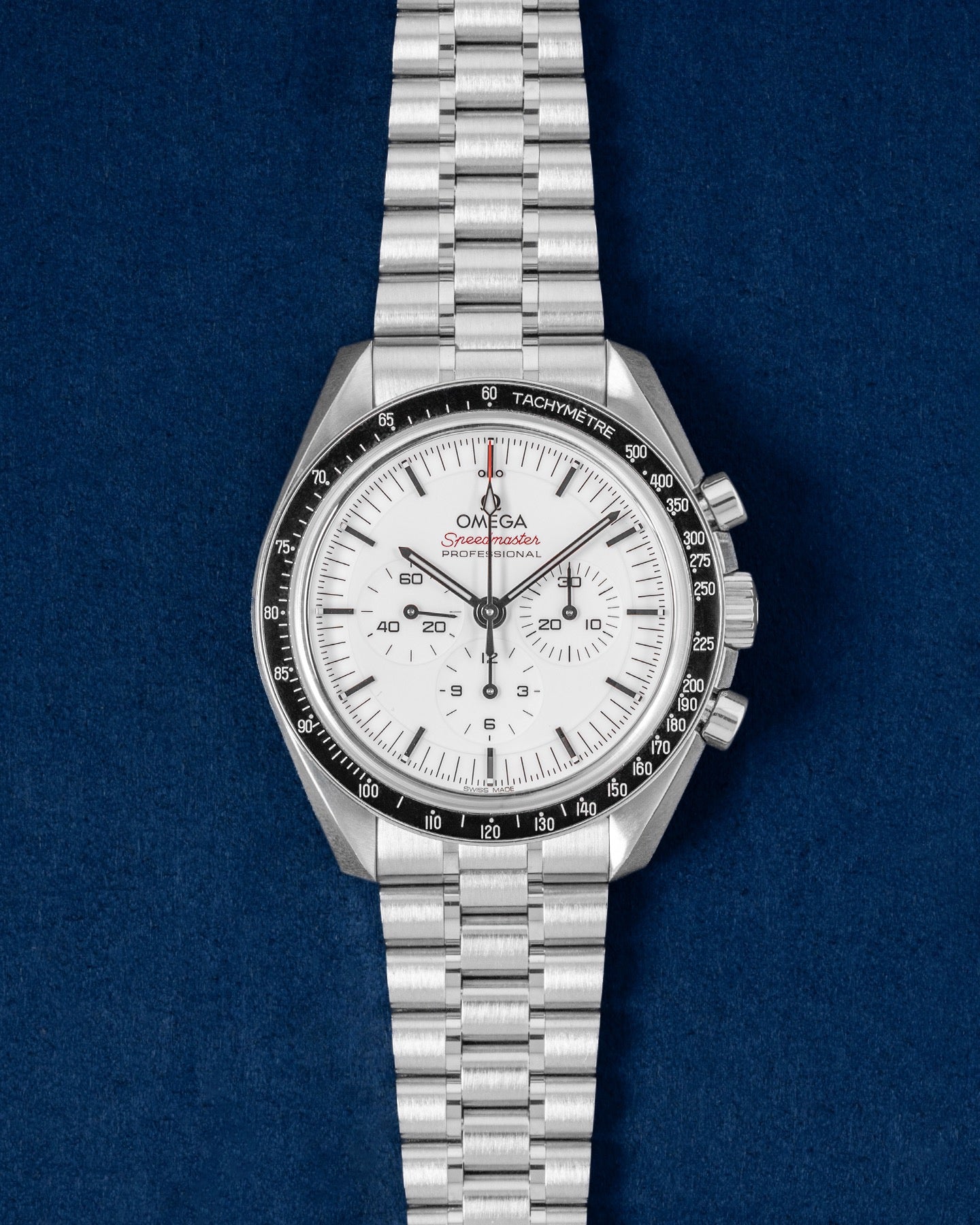
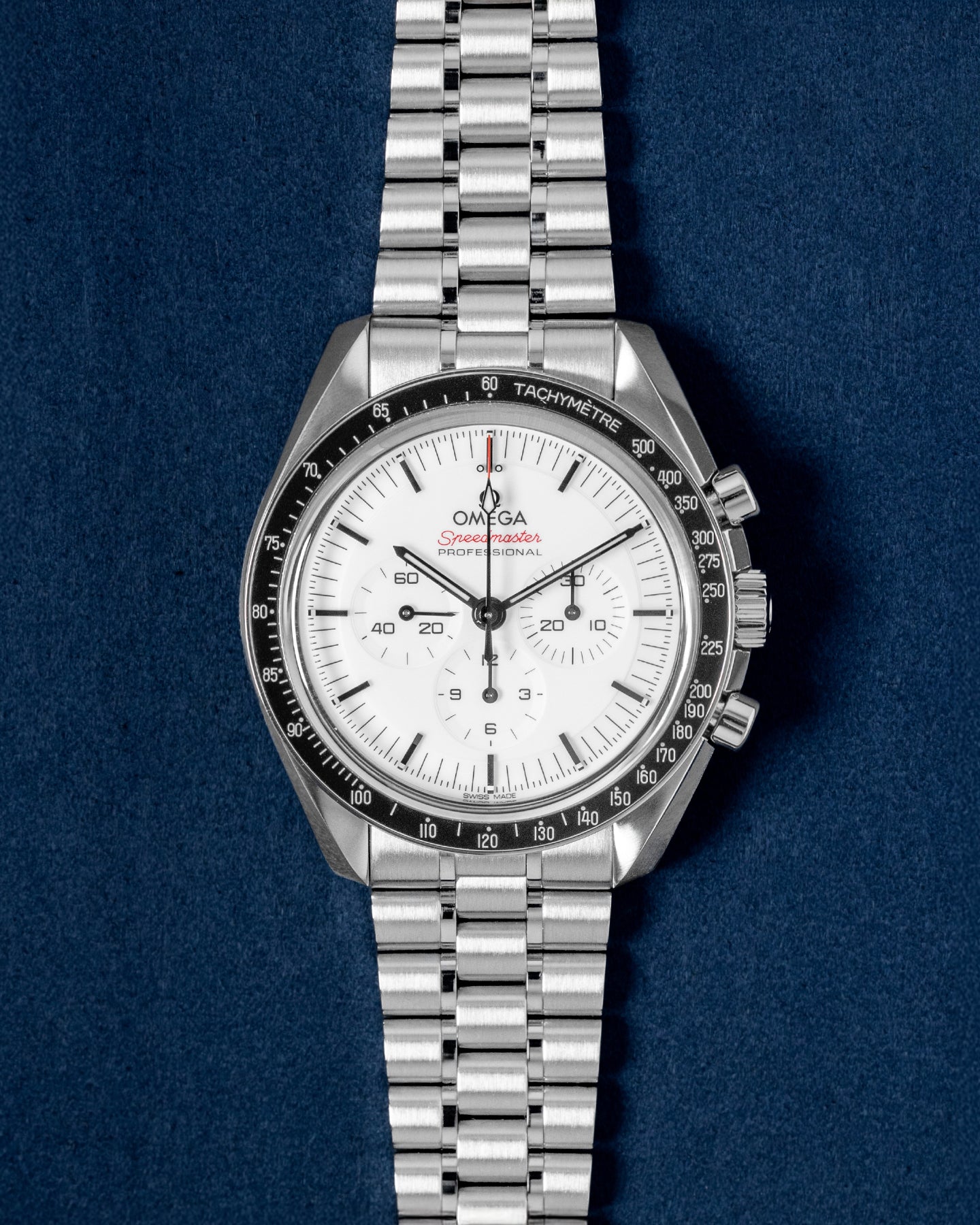
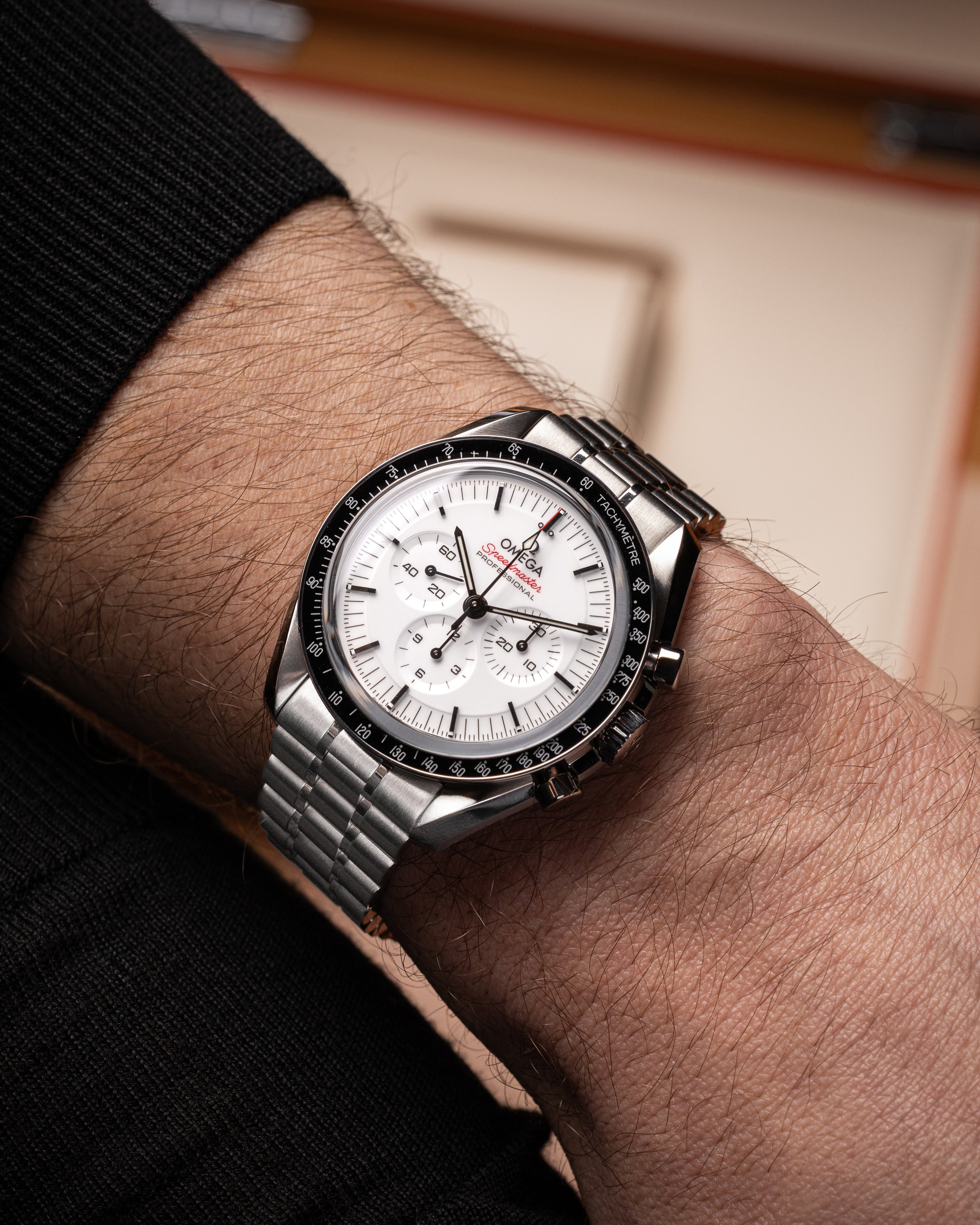
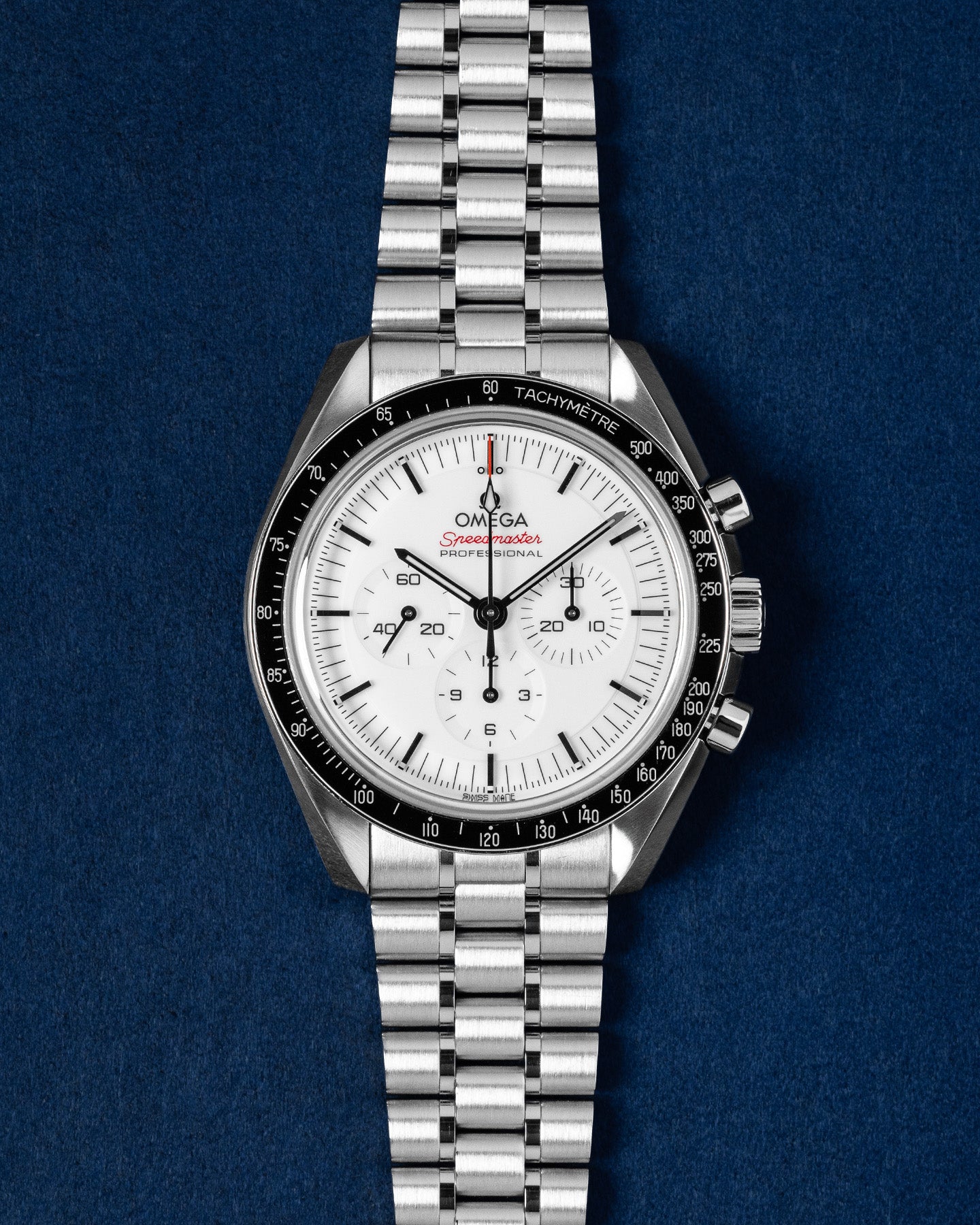
Current production Omega Speedmaster Moonwatch pricing in the United States in 2026 spans a meaningful range depending on crystal choice and strap configuration. The Hesalite crystal Speedmaster Moonwatch on fabric strap (reference 310.32.42.50.01.001) sits at the entry point of the line. The Hesalite on bracelet (310.30.42.50.01.001) sits at a modest step up. The sapphire crystal variant on leather (310.32.42.50.01.002) sits modestly above the Hesalite bracelet. The sapphire on bracelet (310.30.42.50.01.002) sits at the upper end of the standard production line. The 2024 white-dial sapphire variant (310.30.42.50.04.001), a current production Speedmaster Moonwatch often called the Panda Speedmaster, retails at a small premium to the standard black dial variants.
Pre-owned Omega pricing on the current generation 3861 references tracks near or modestly below retail. Used Hesalite 310.30.42.50.01.001 examples with full box and papers typically trade just below current authorised dealer retail. Sapphire 310.30.42.50.01.002 examples trade in a similar band relative to their retail position. WatchCharts data indicates the in-production Speedmaster Moonwatch line trades approximately 26 to 30 percent below retail on average, a meaningful discount that makes the secondary market a legitimate value entry point relative to the authorised dealer channel.
The prior generation Omega calibre 1861 references remain widely available on the secondary market. The 311.30.42.30.01.005 Hesalite 1861 typically trades at a meaningful discount to the current 3861 catalogue with box and papers. The 311.30.42.30.01.006 sapphire 1861 trades in a similar relative position. Buyers who do not need the 2021 movement upgrades can save 30 to 40 percent against current 3861 retail by buying a clean late-production 1861 example.
Vintage Omega Speedmaster Professional references trade across a wide range depending on condition, originality, dial variant, and provenance. Calibre 321 references from the 1960s including the ST 105.003 and ST 105.012 typically trade across a wide vintage band for clean examples with original dials and tritium lume, with documented Apollo-era pieces and celebrity-associated examples commanding meaningfully higher prices at auction. The 2017 Speedmaster CK2998 limited editions and the 2019 Speedmaster Apollo 11 50th Anniversary references trade at premiums to original retail. The 2020 Silver Snoopy Award 310.32.42.50.02.001 trades at approximately double its original retail, reflecting the strong demand for the Snoopy series.
The Omega Speedmaster Moonwatch at the Grand Caliber Dallas Showroom
The Grand Caliber Dallas showroom sits in the corridor that has become the address for serious watch buying outside the authorised dealer network. The Omega Speedmaster Moonwatch examples on our floor are authenticated in-house, the prices are posted openly on every product page, and inventory rotates across the line. Current production calibre 3861 Moonwatches in Hesalite and sapphire configurations on bracelet, fabric strap, and leather. Prior generation calibre 1861 Moonwatches in both crystal variants for buyers who want the lineage at a meaningful discount to current retail. The 2024 white-dial Panda 310.30.42.50.04.001 when availability rotates. Snoopy Award references and Apollo anniversary editions when condition meets our standards. Vintage Speedmaster Professional references with the calibre 321 and calibre 861 when provenance and originality justify the listing.
There is no waitlist conversation at Grand Caliber. No purchase history requirement. No allocation gating on Omega the way the Rolex authorised dealer network gates the Daytona. The Moonwatch you are looking for is generally either in our case or sourceable within days through our network. If you want to handle a Hesalite and a sapphire side by side before deciding, the showroom is the right place to do that.
We also buy Omega Speedmaster Moonwatch examples outright and take consignments, with free shipping and full insurance on outbound and inbound transit and national coverage for clients buying remotely. The Speedmaster Moonwatch is among the more liquid modern Omega watches and the right dealer relationship makes selling, trading, or upgrading nearly frictionless when you decide to move a piece.
Visit the Dallas showroom Monday through Friday, 10am to 5pm Central, or by appointment on Saturday. Call (214) 225-7198, email info@grandcaliber.com, or browse current Omega Speedmaster Moonwatch inventory at grandcaliber.com.
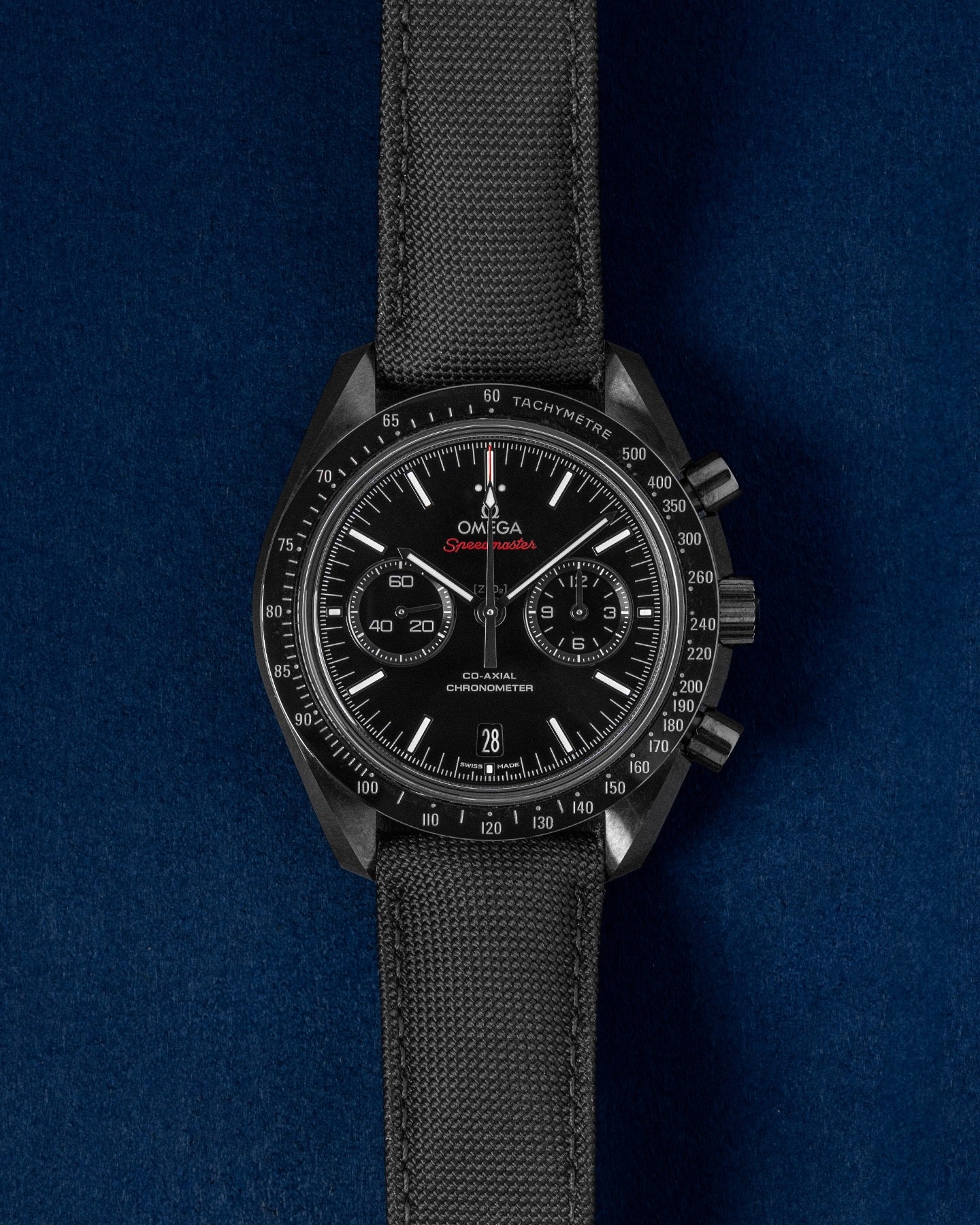
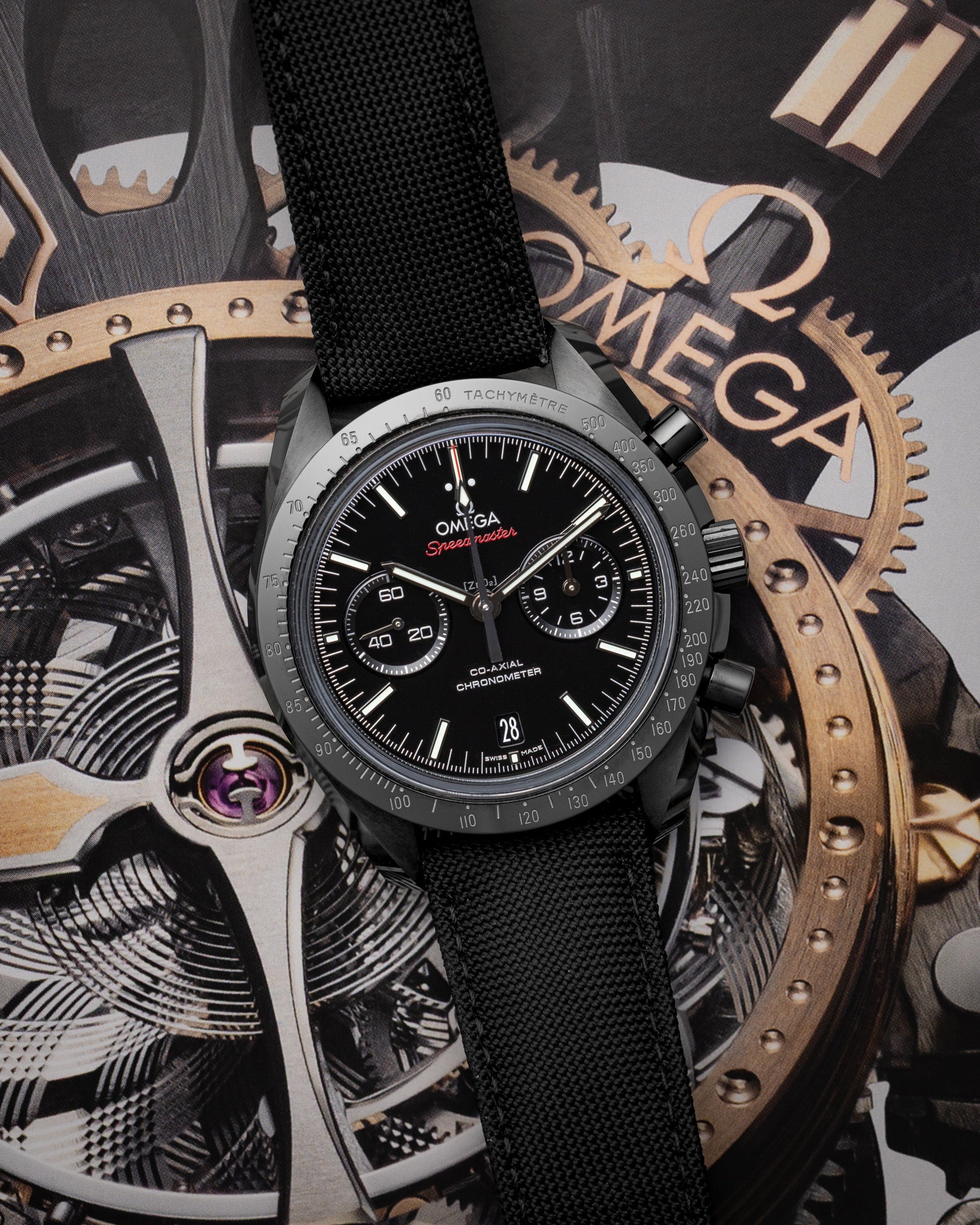
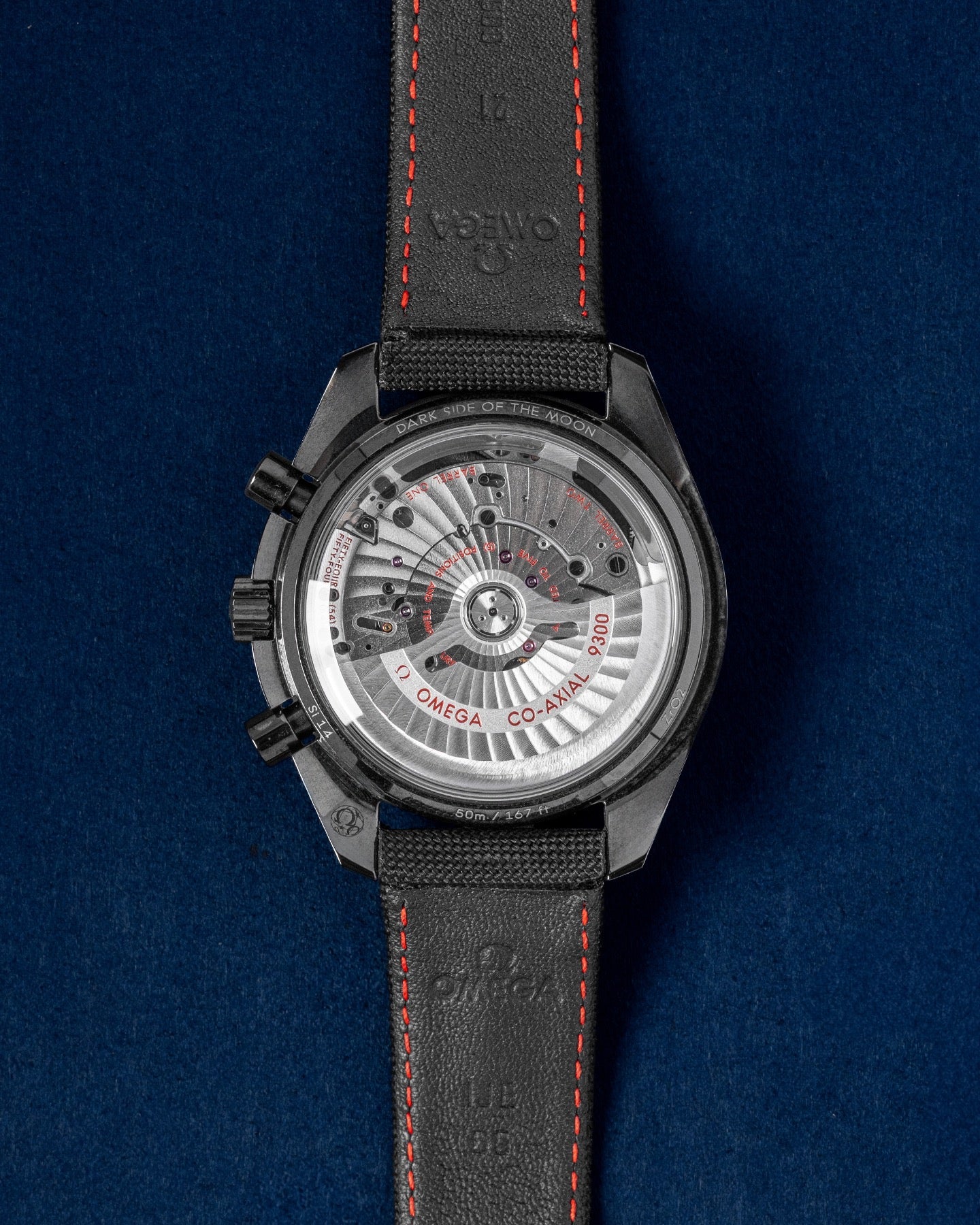
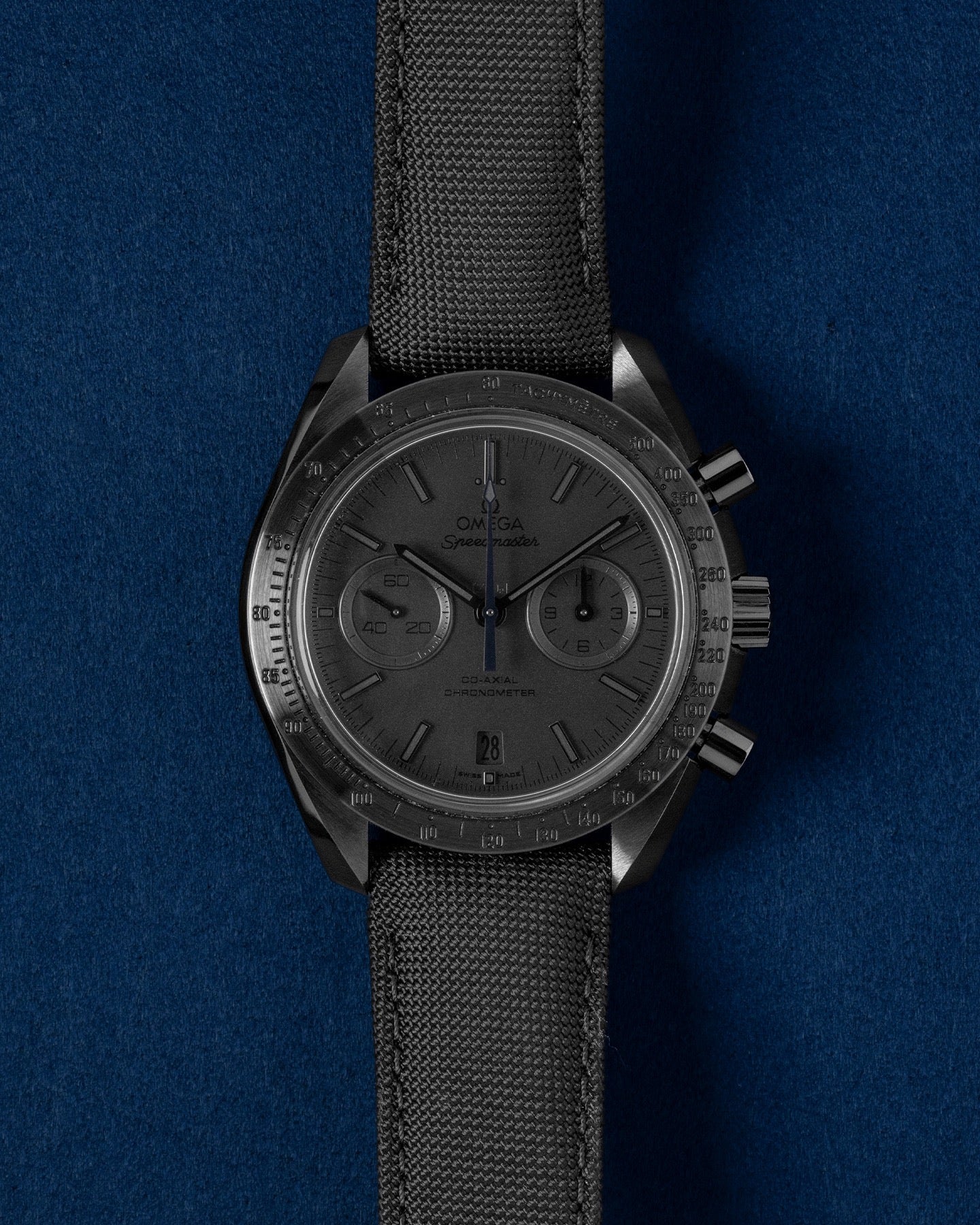
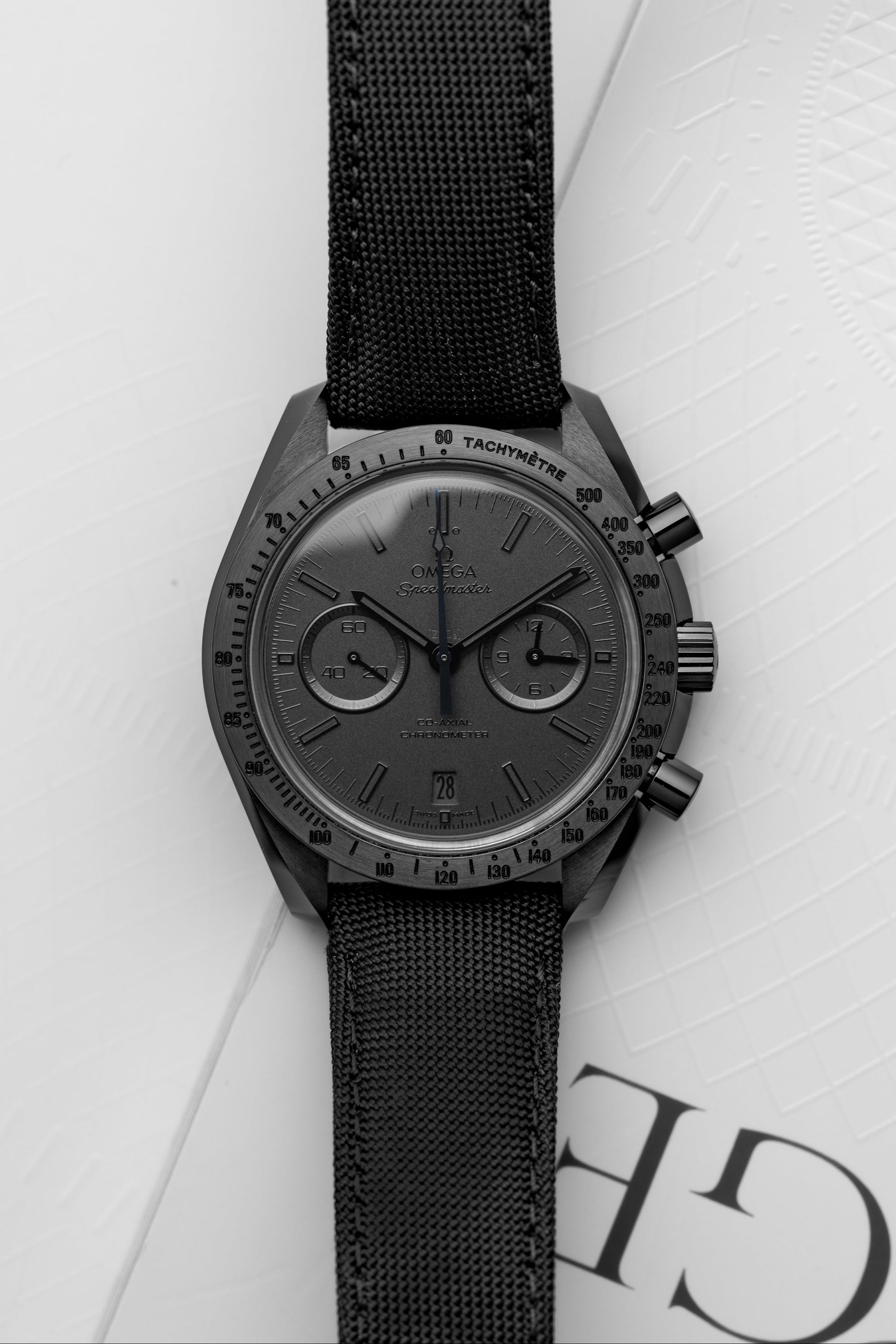
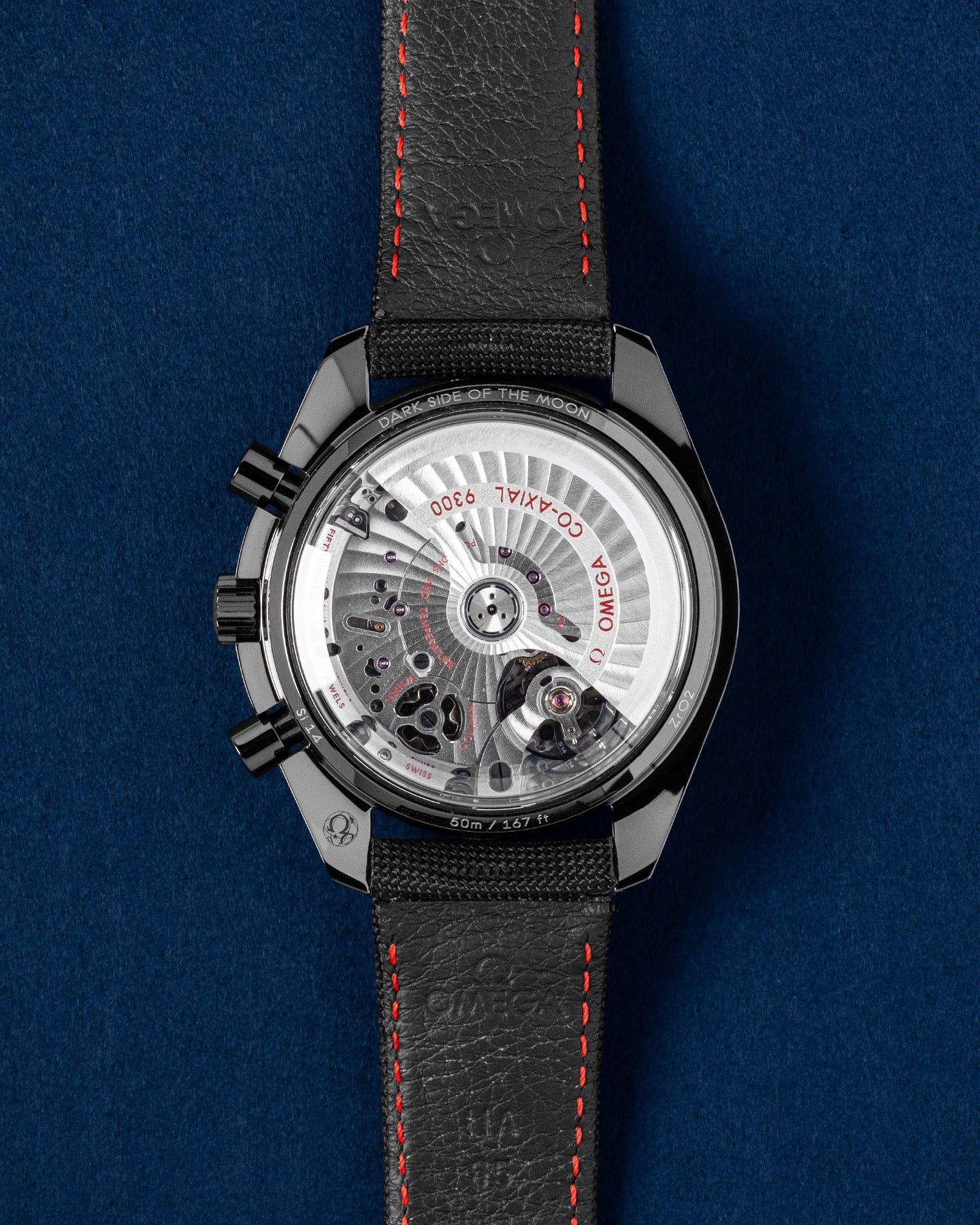
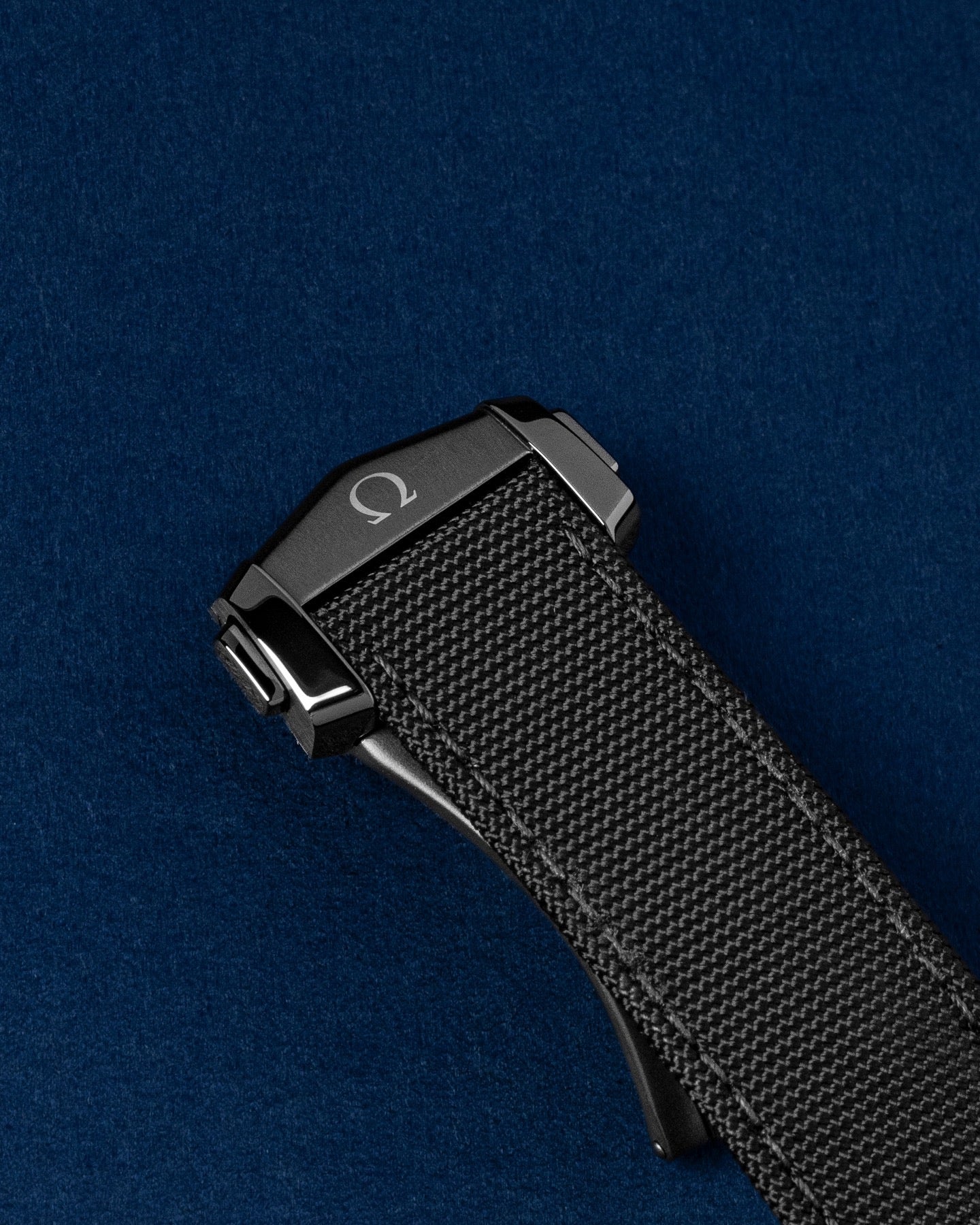
Omega Speedmaster Dark Side Of The Moon 311.92.44.51.01.003

Omega Speedmaster Professional Moonwatch 310.30.42.50.01.002
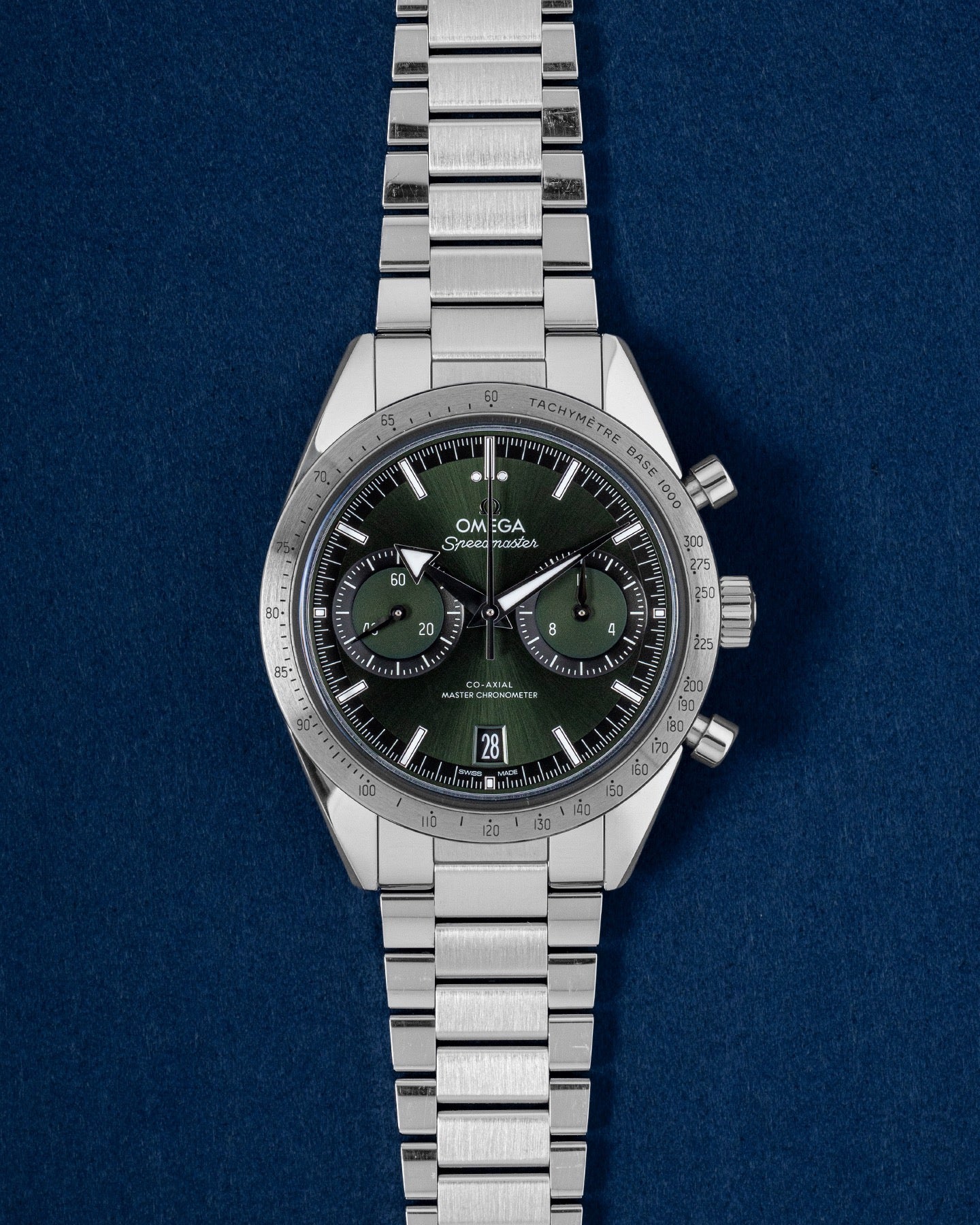
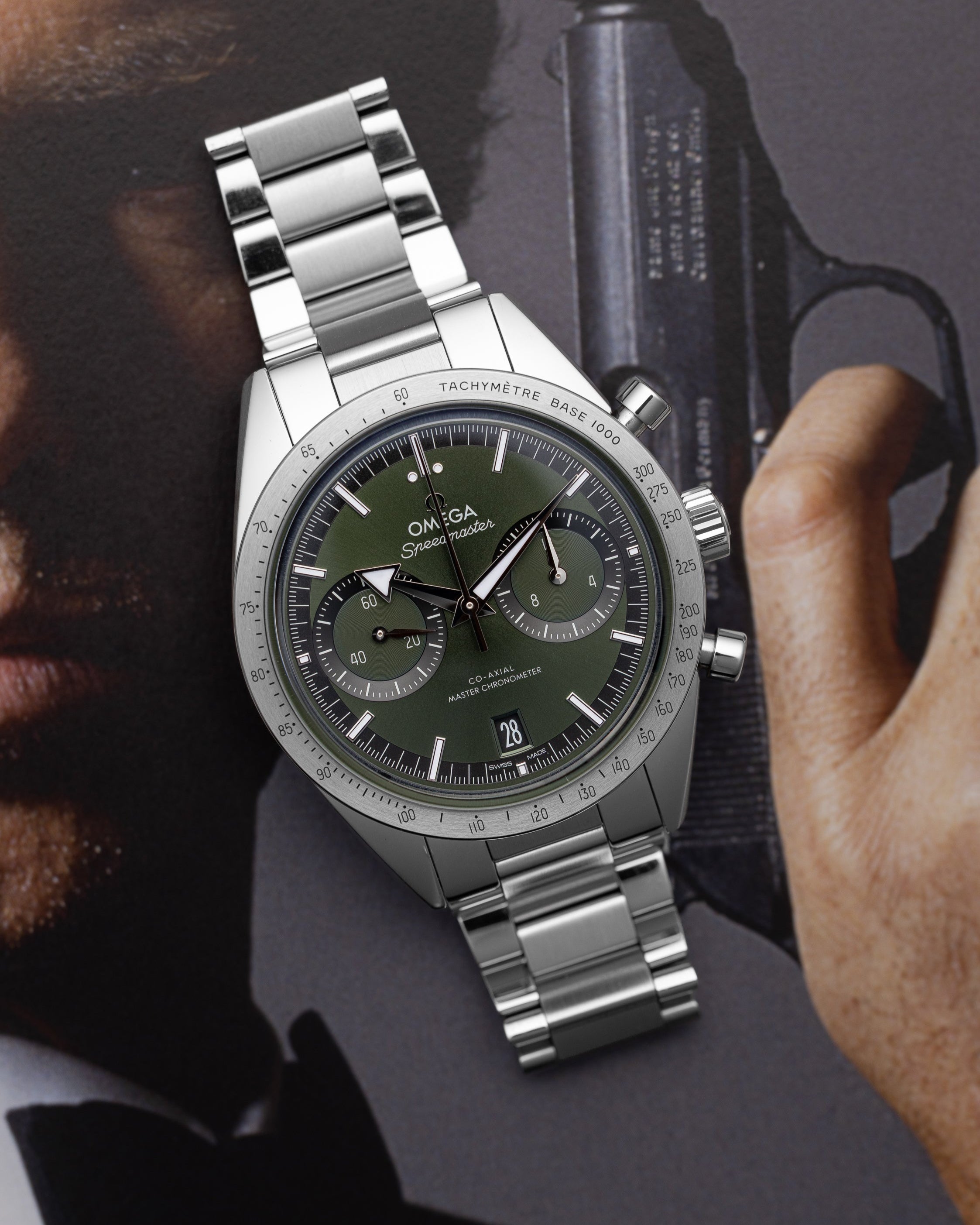
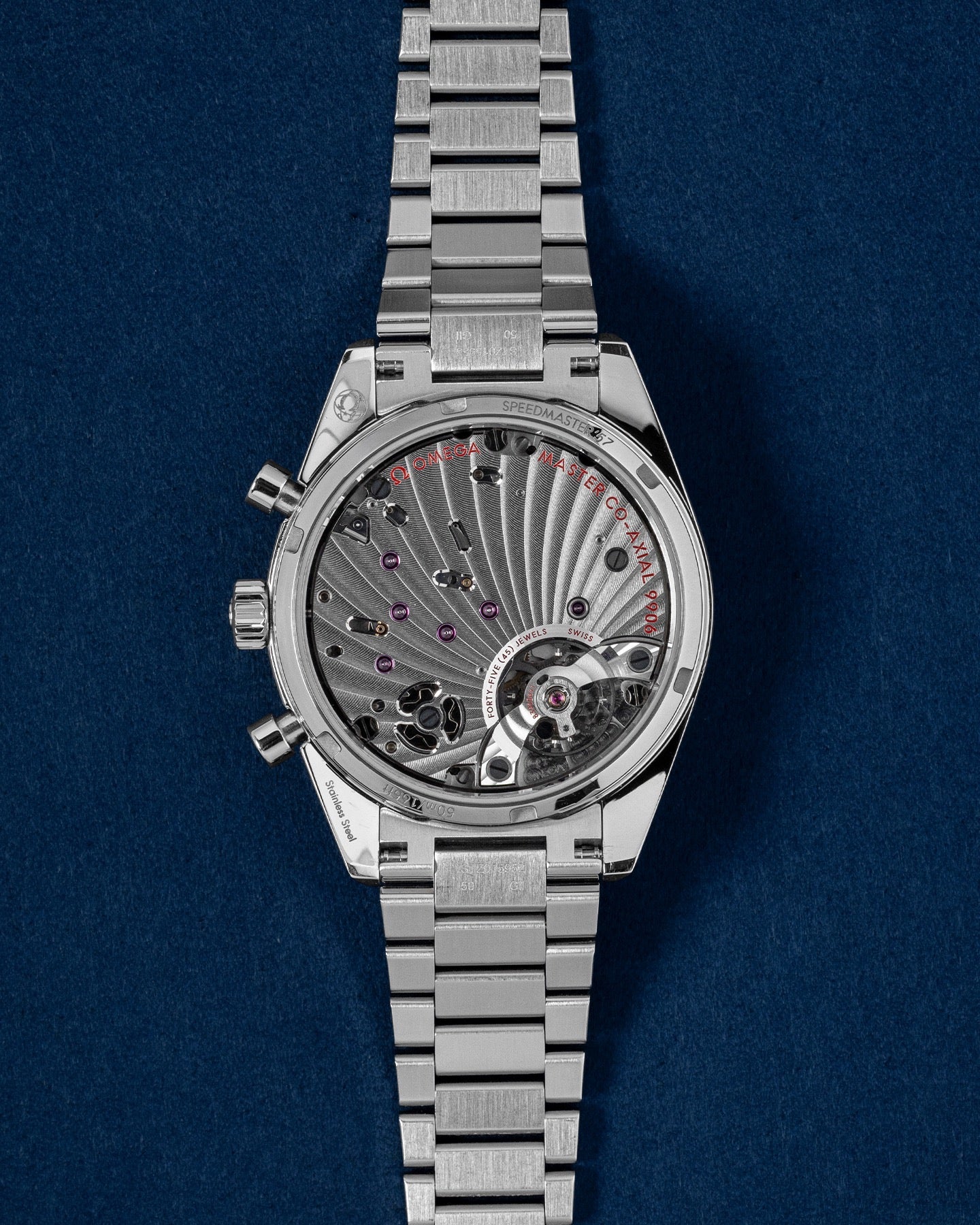
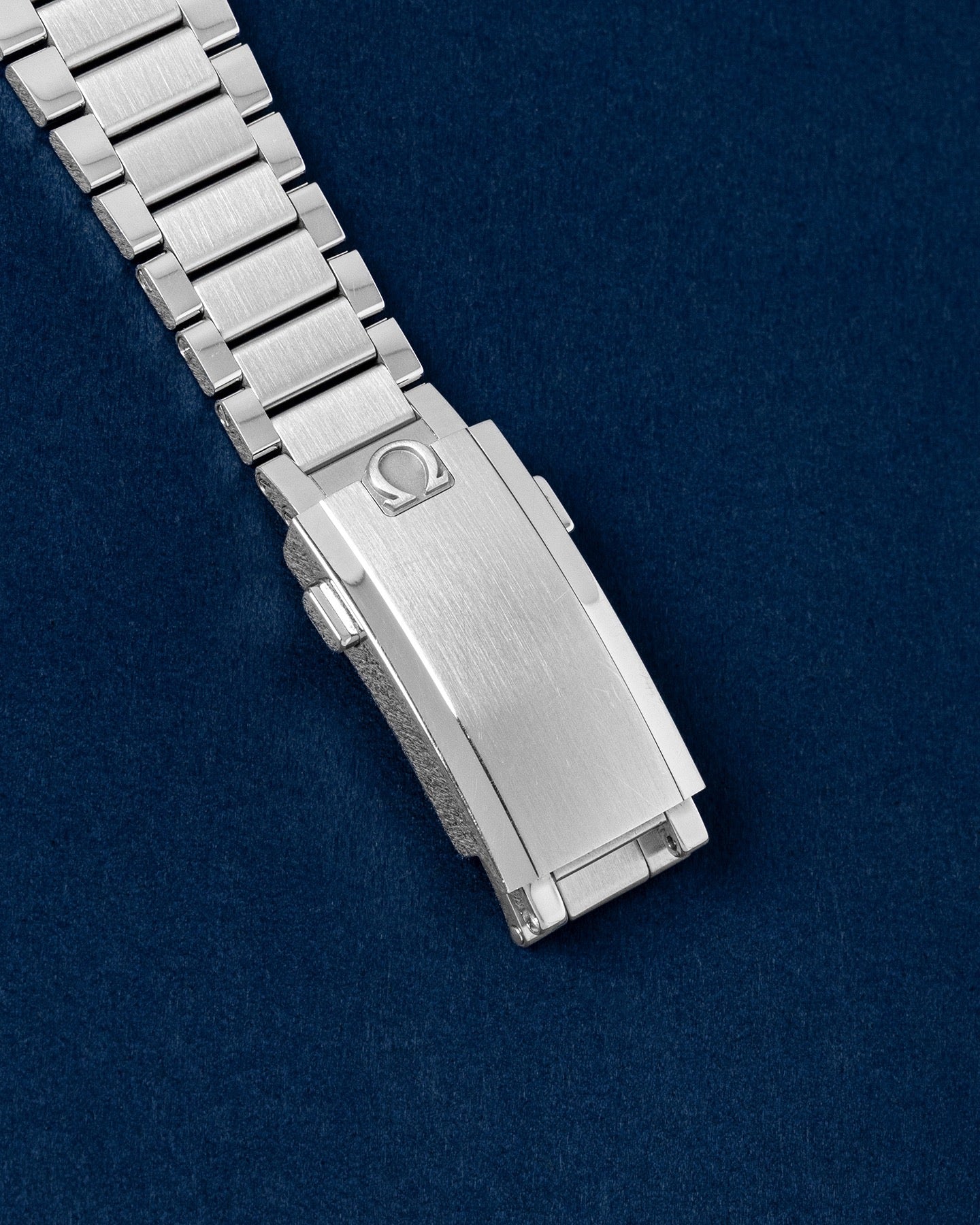
Omega Speedmaster '57 Chronograph 332.10.41.51.10.001
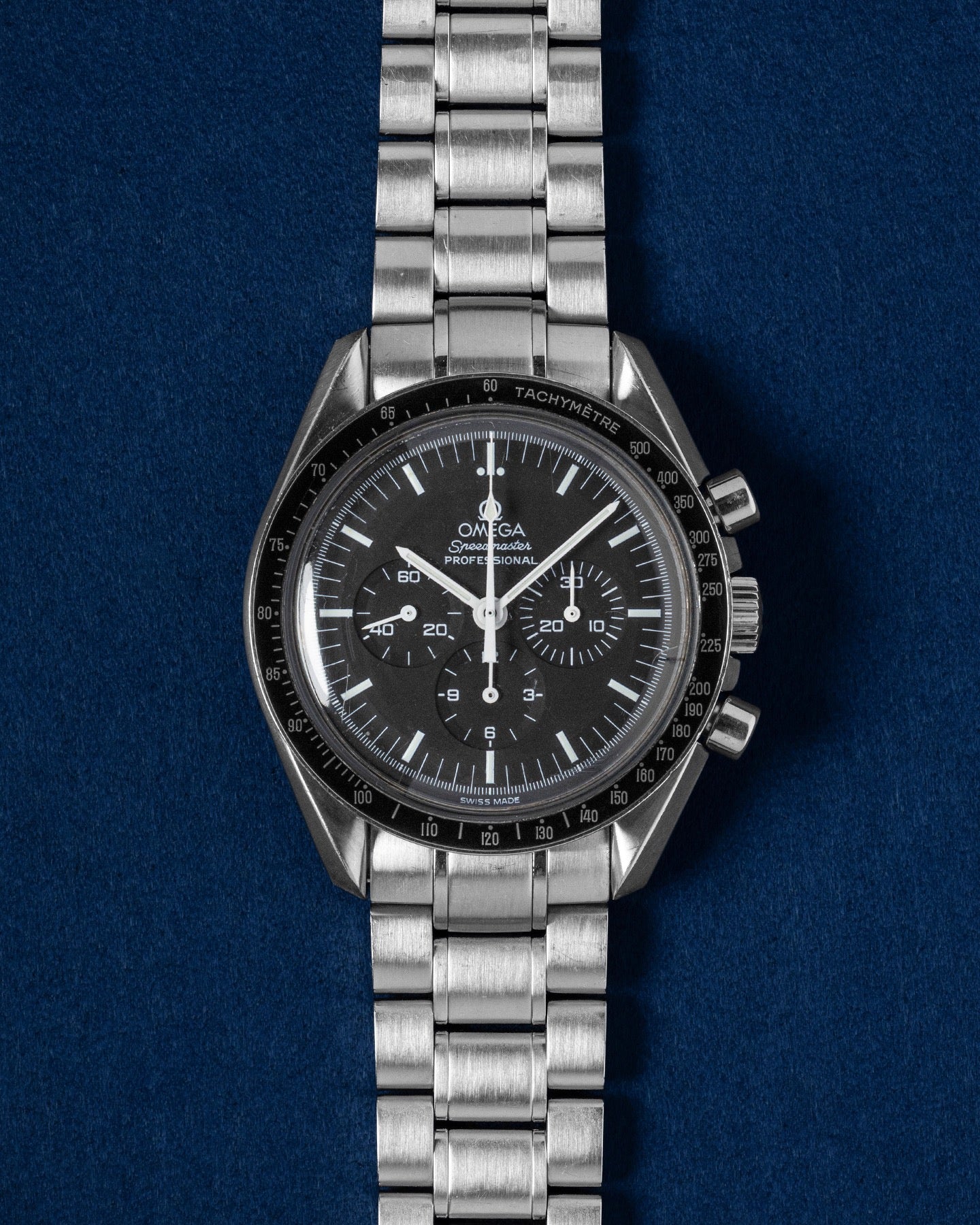
Omega Speedmaster Professional 145.022
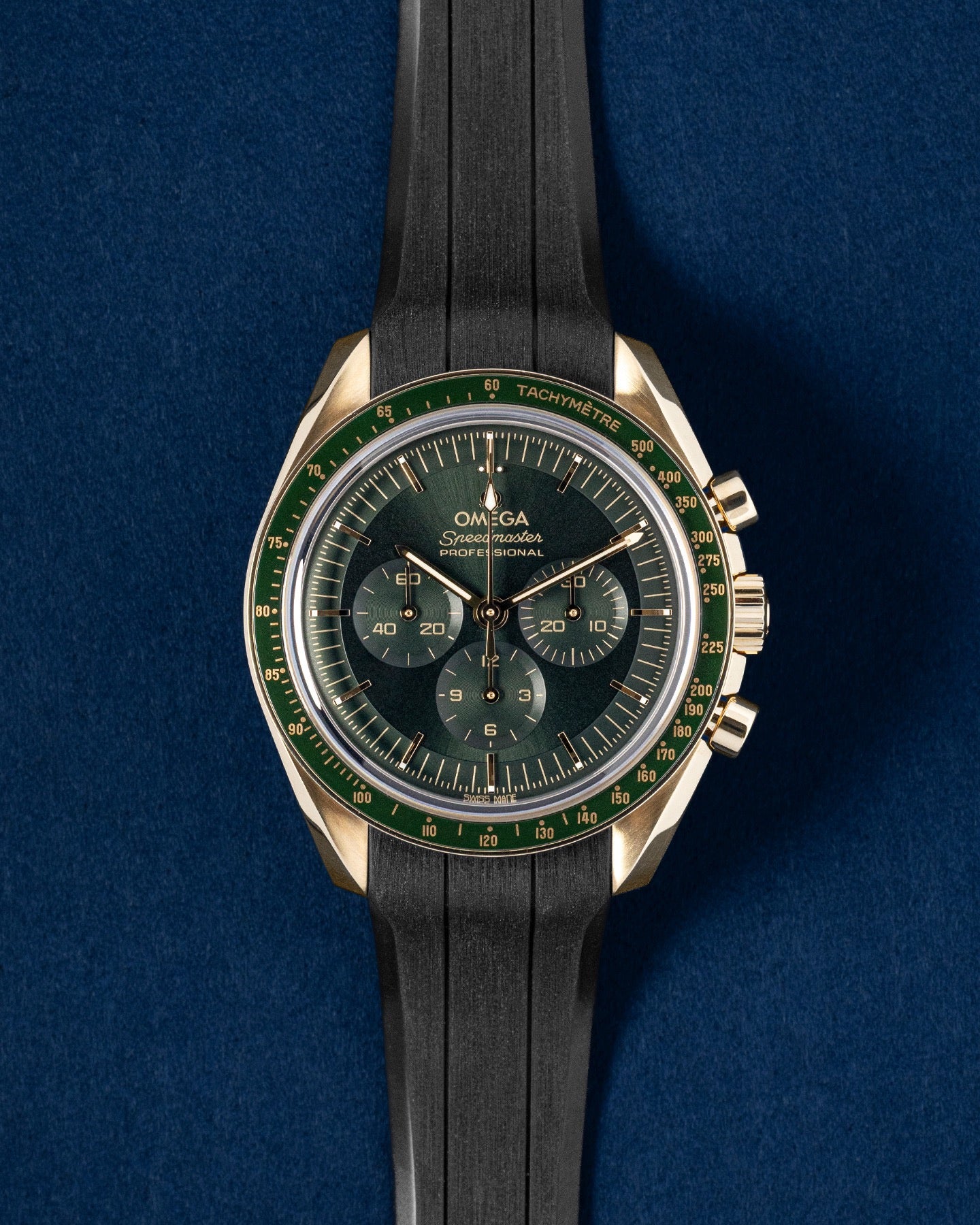
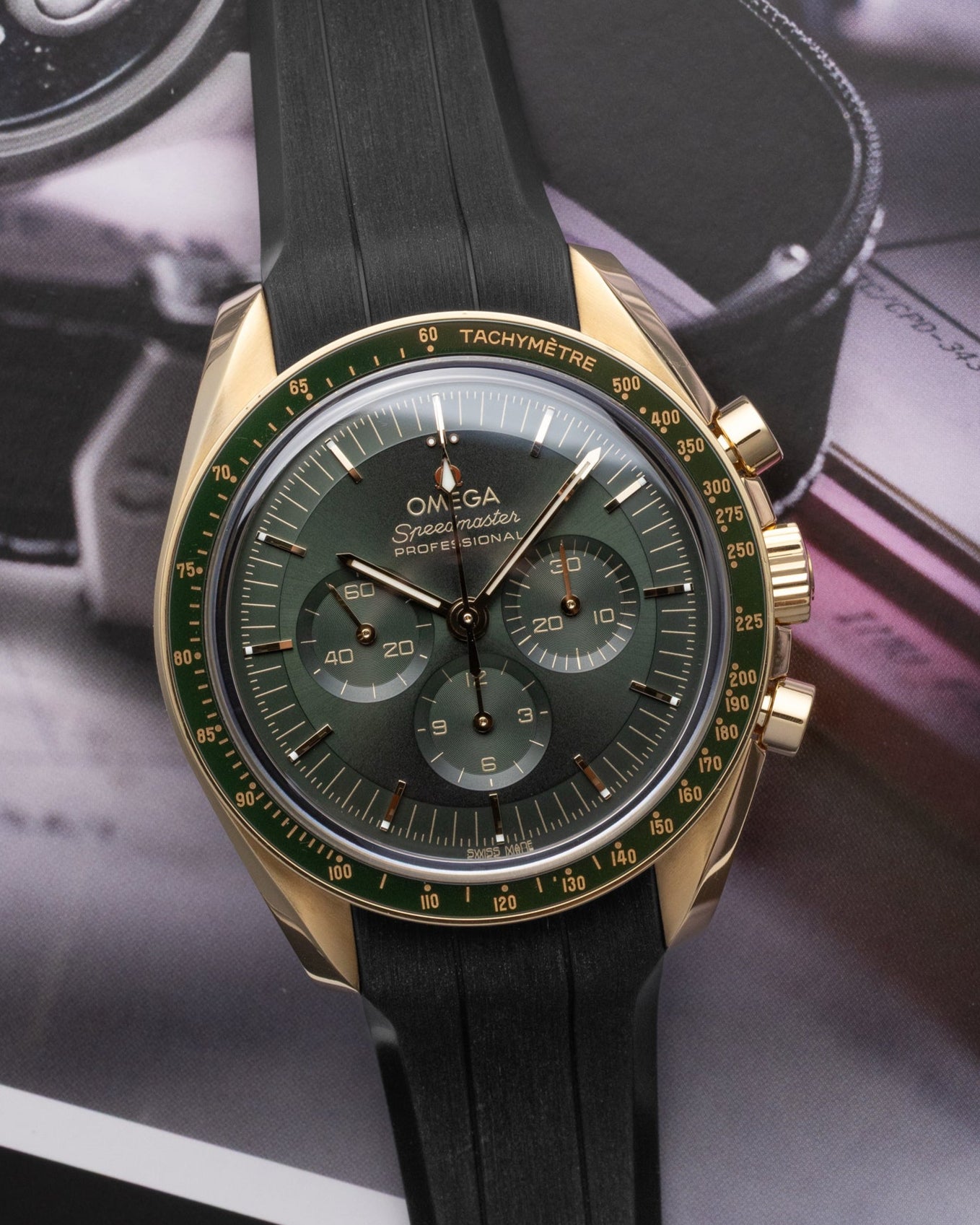
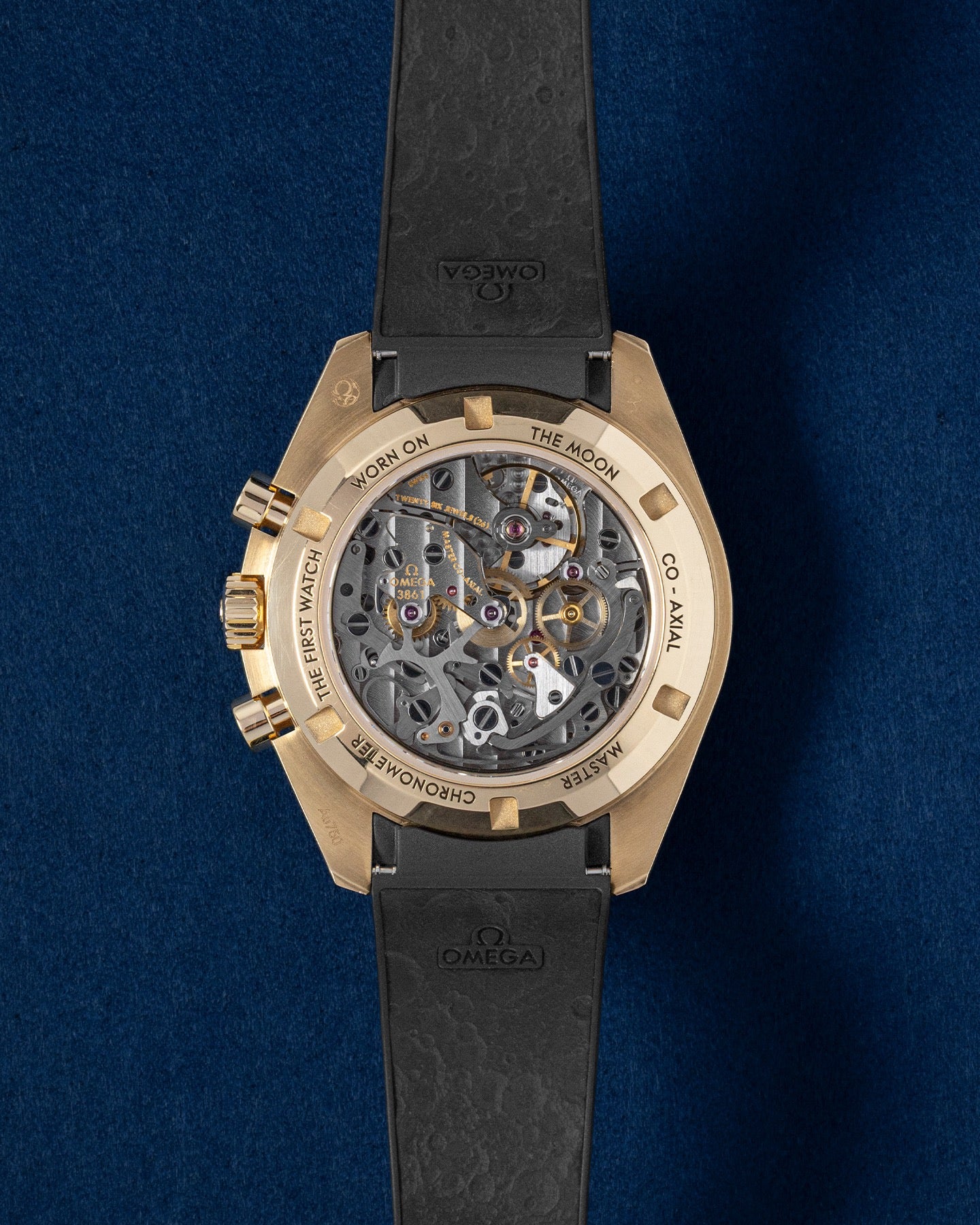
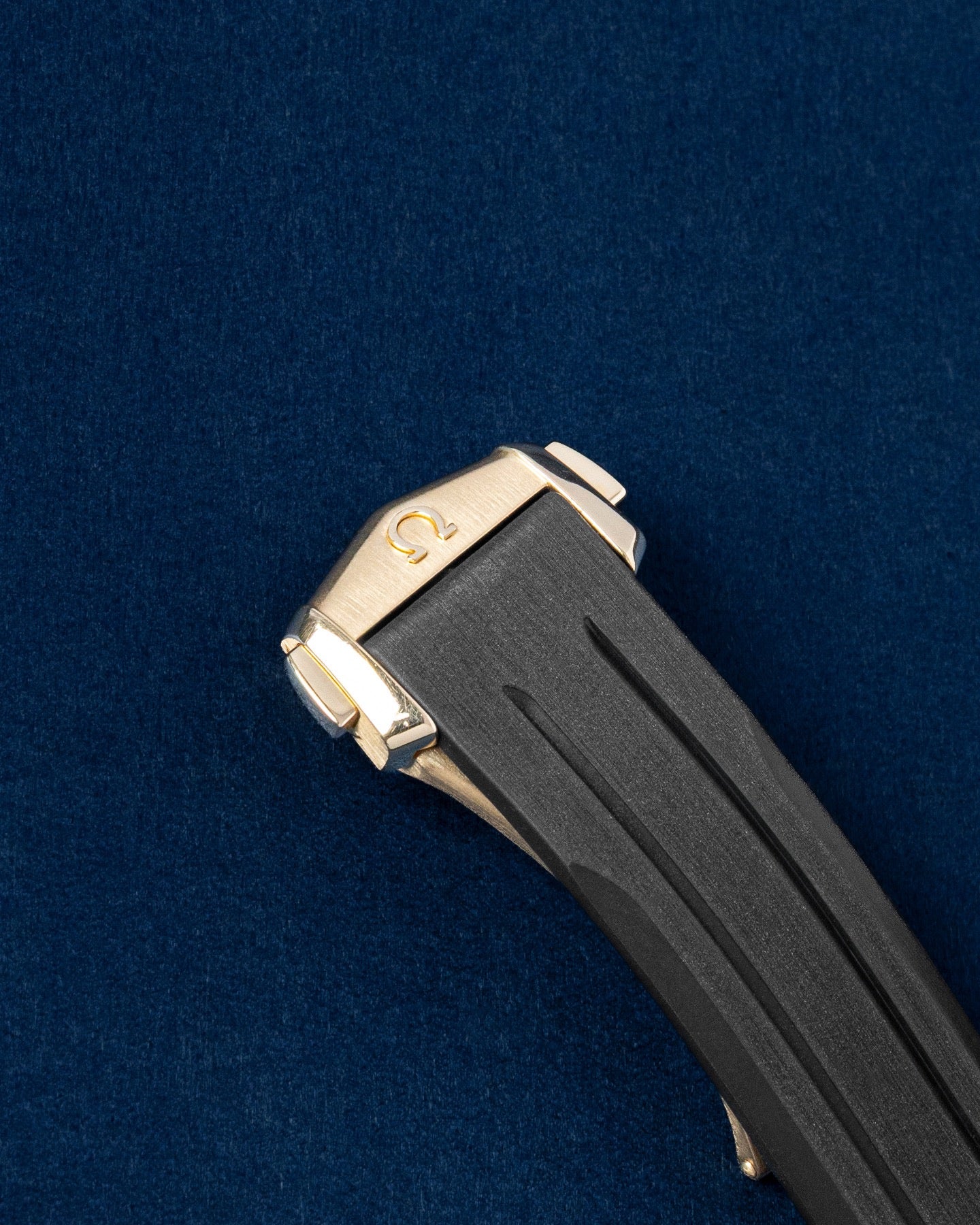
Omega Speedmaster Moonwatch Professional 310.63.42.50.10.001
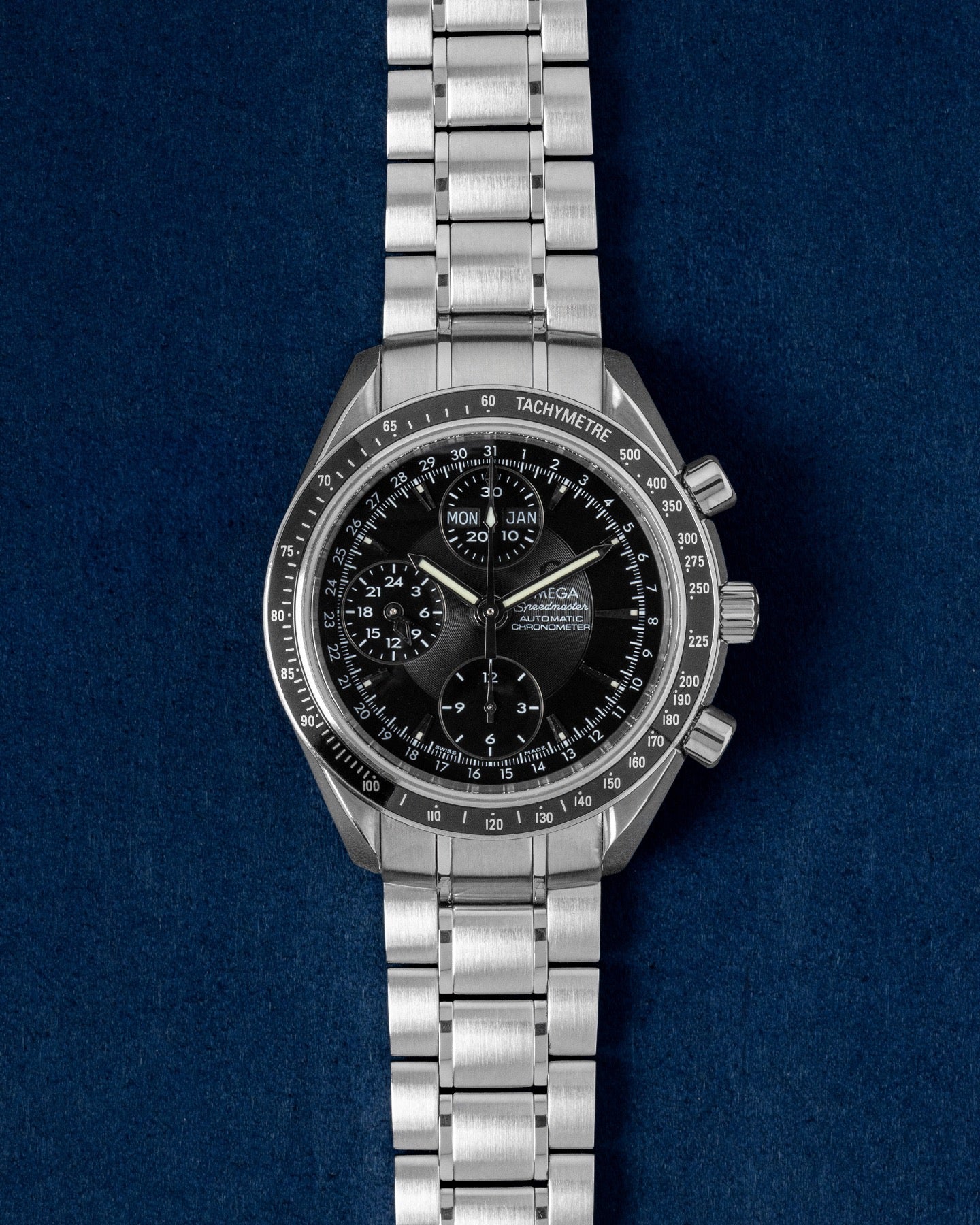
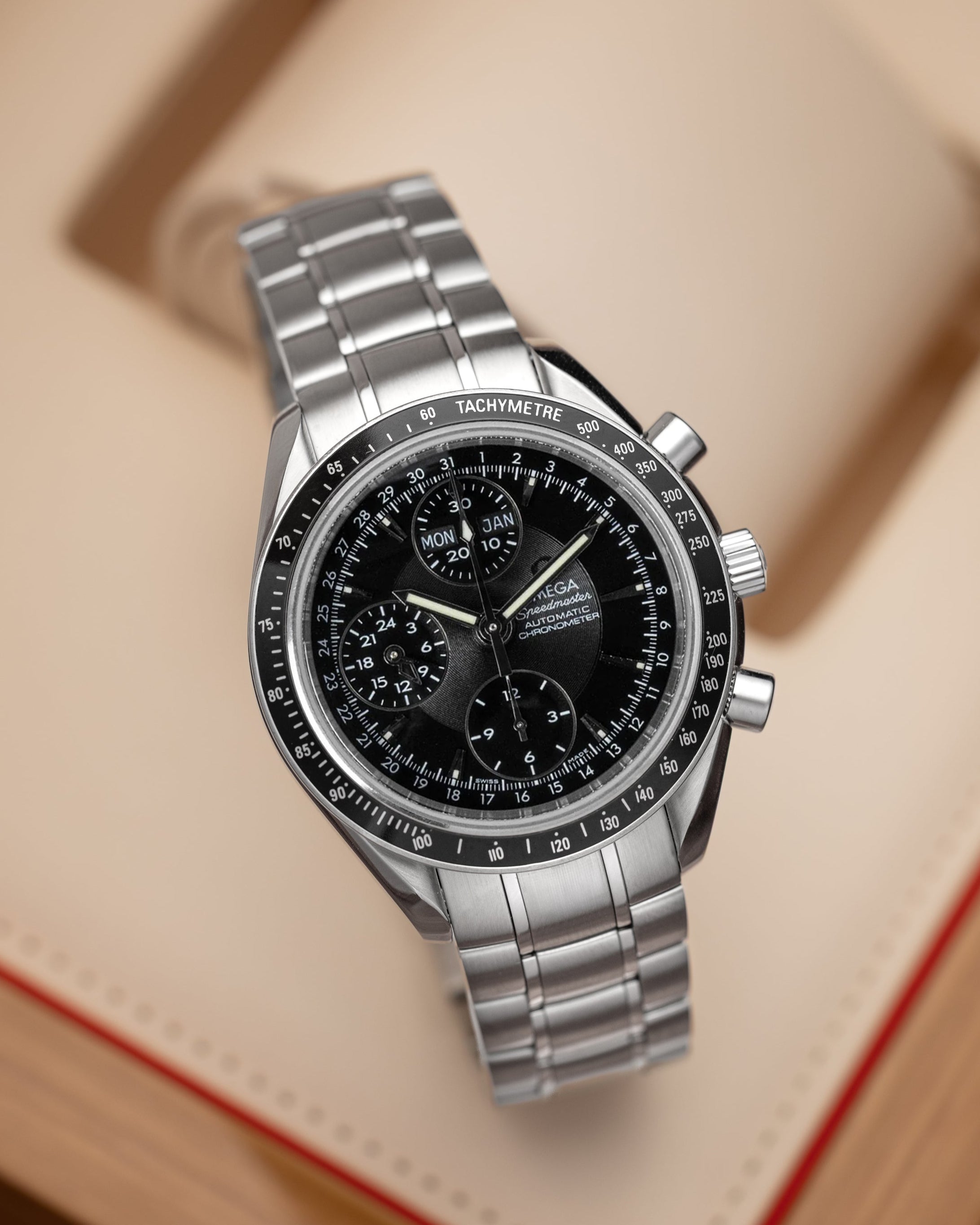
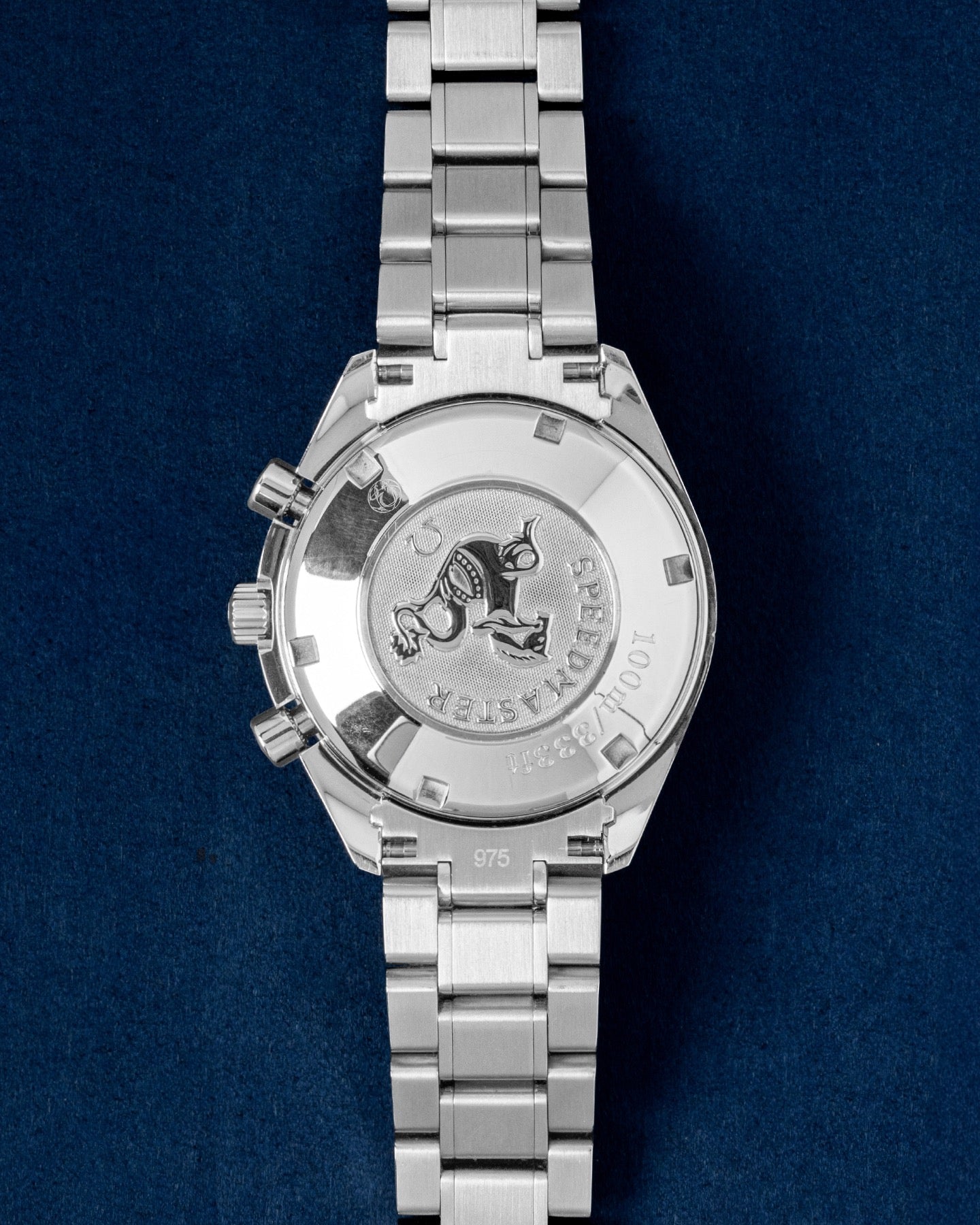
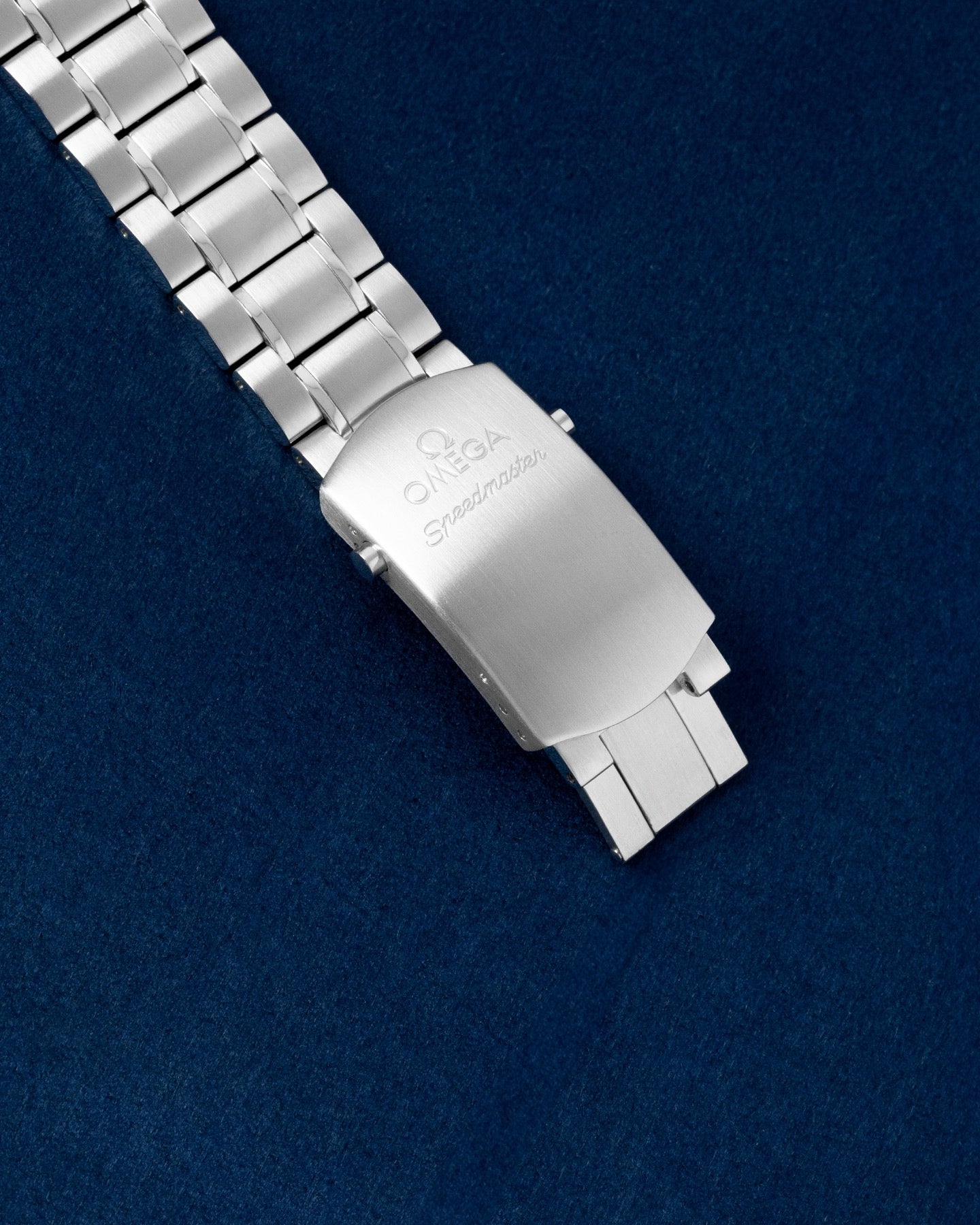


Omega Speedmaster Dark Side Of The Moon 311.92.44.30.01.001
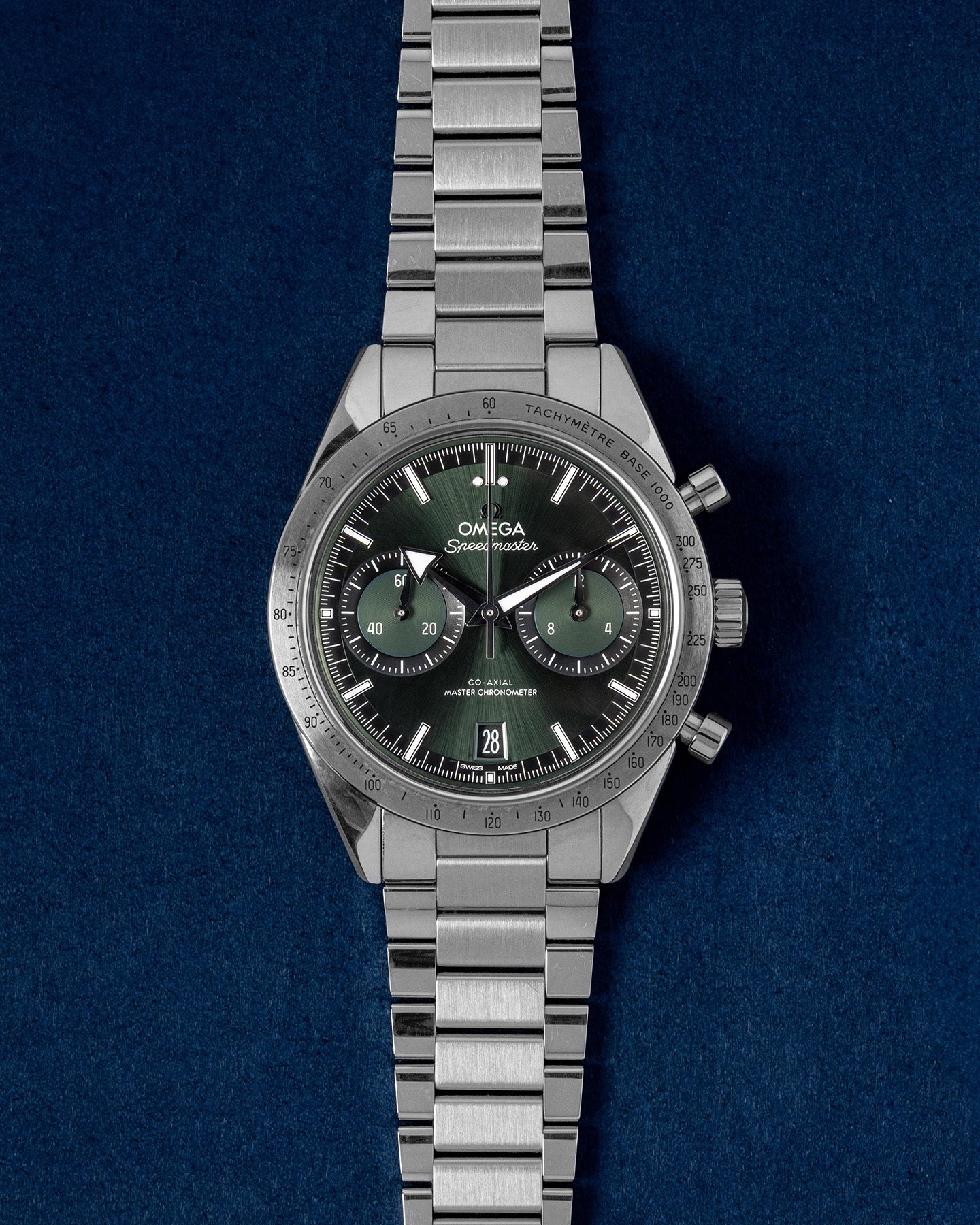
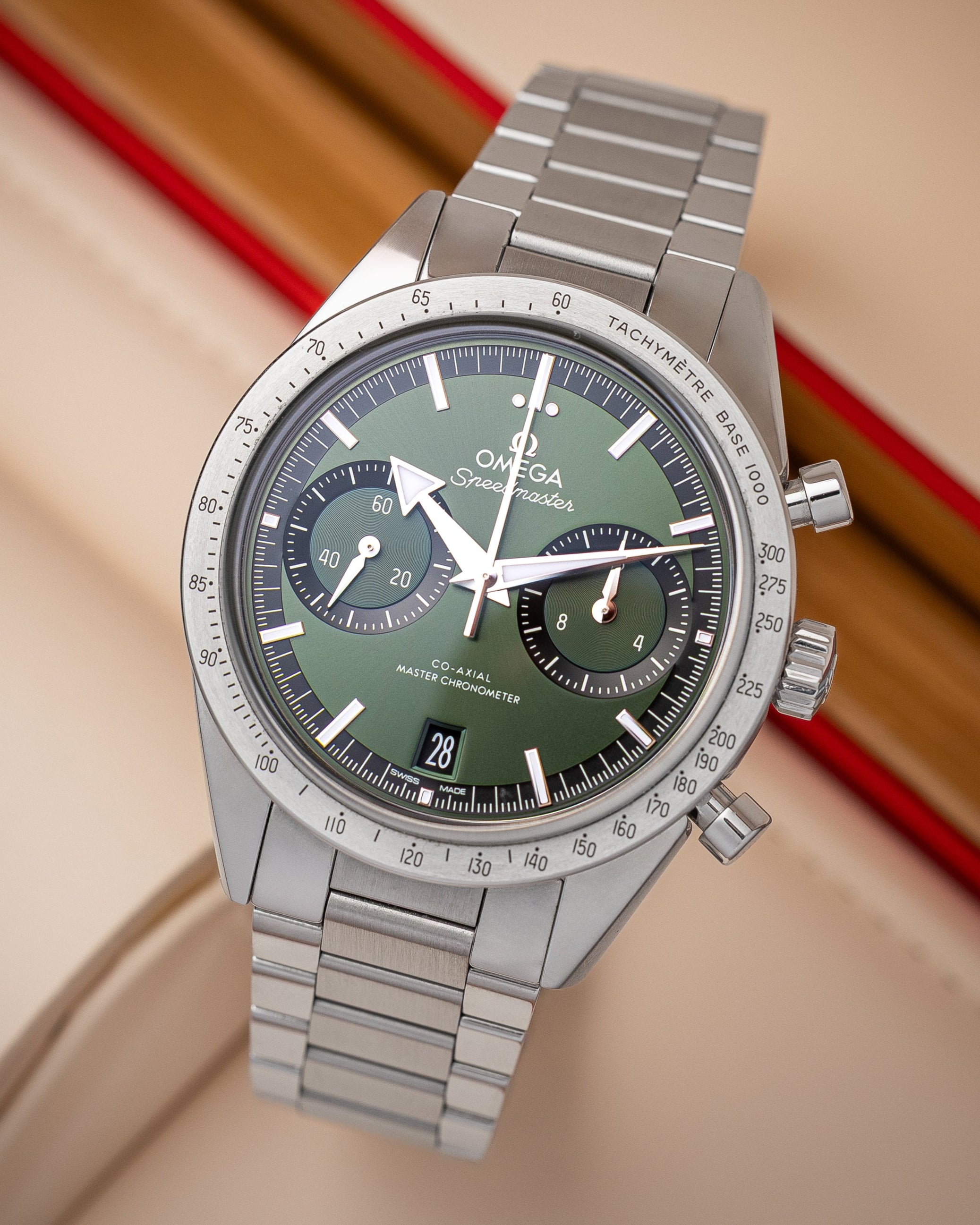
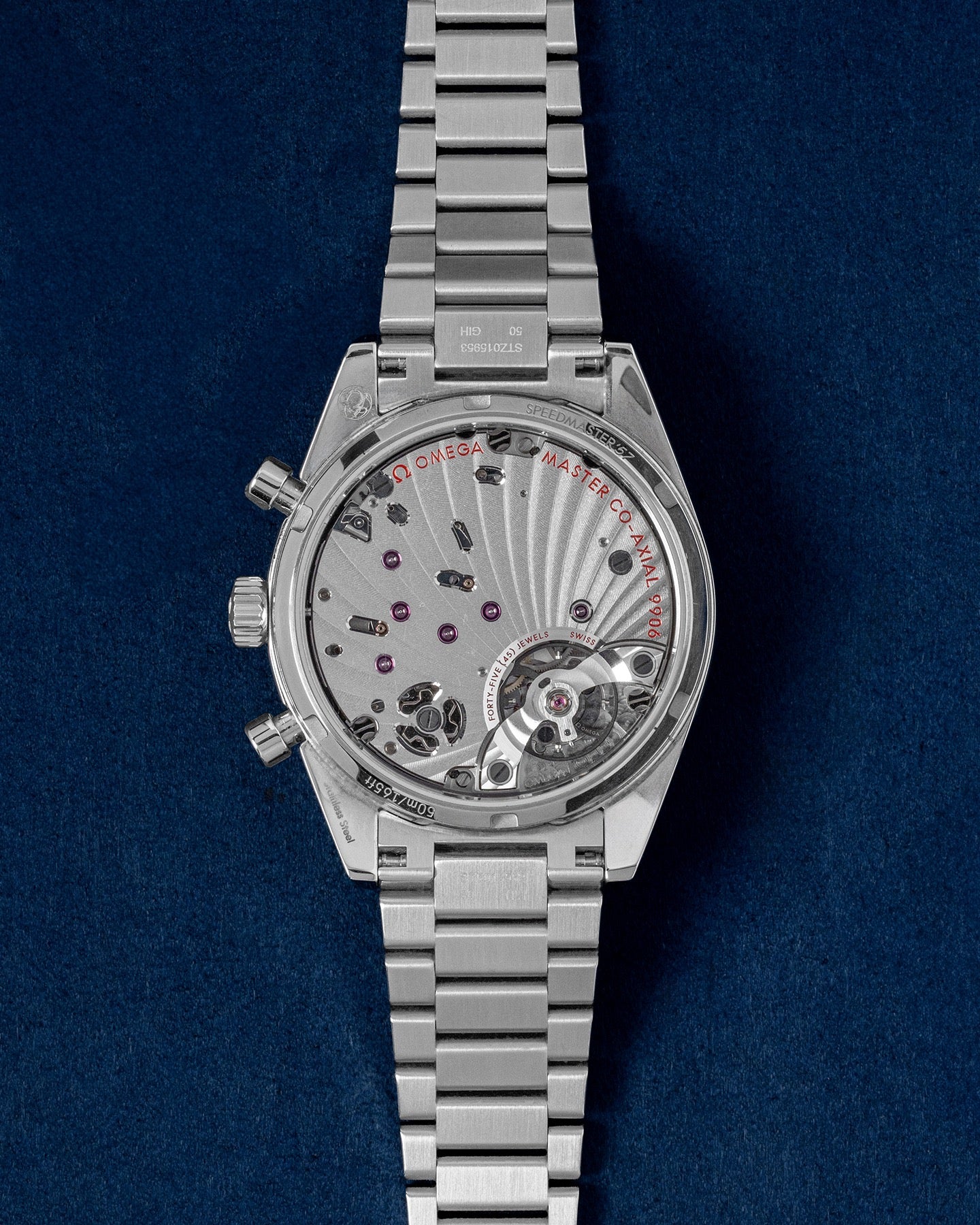
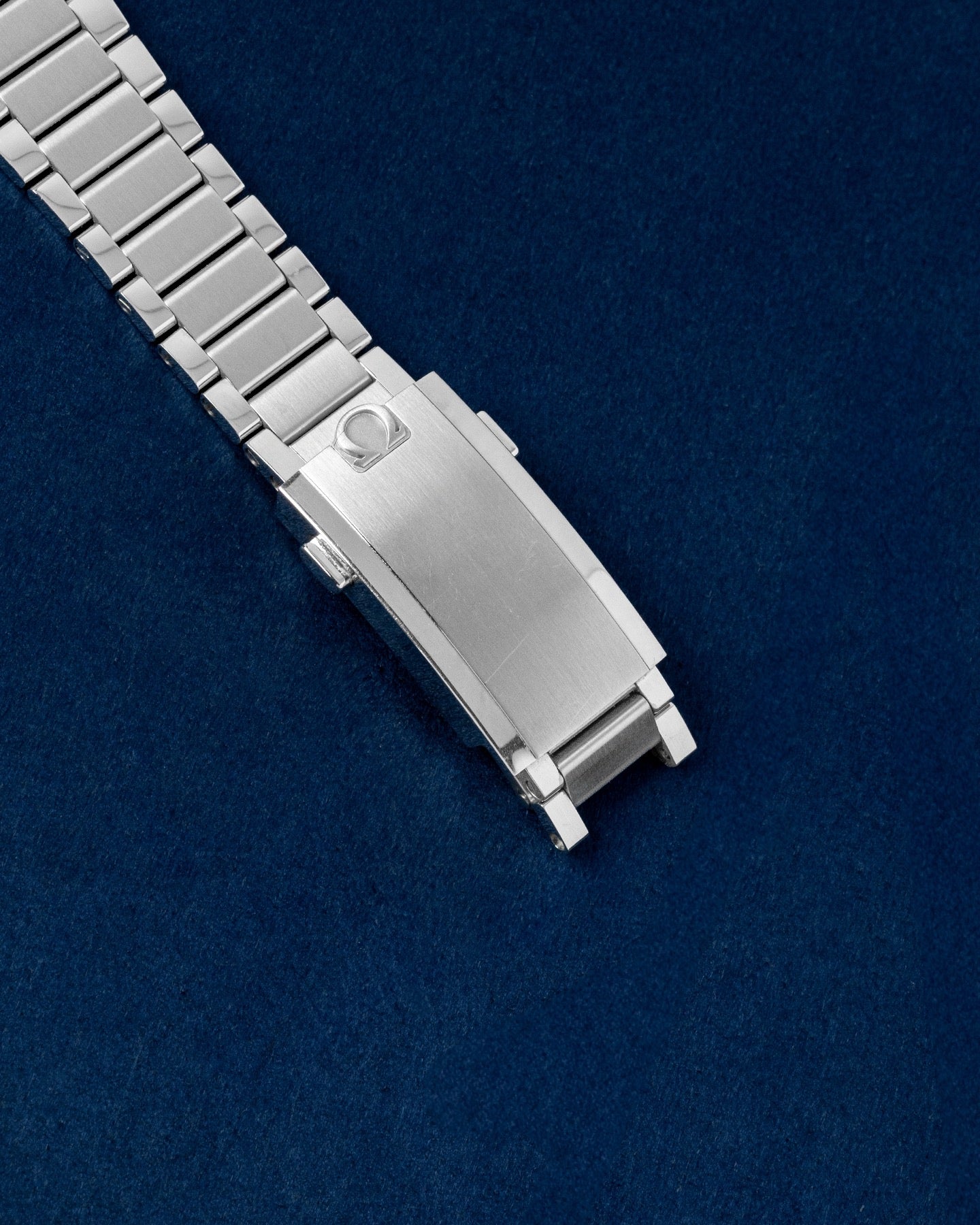
Omega Speedmaster 57 Chronograph 332.10.41.51.10.001
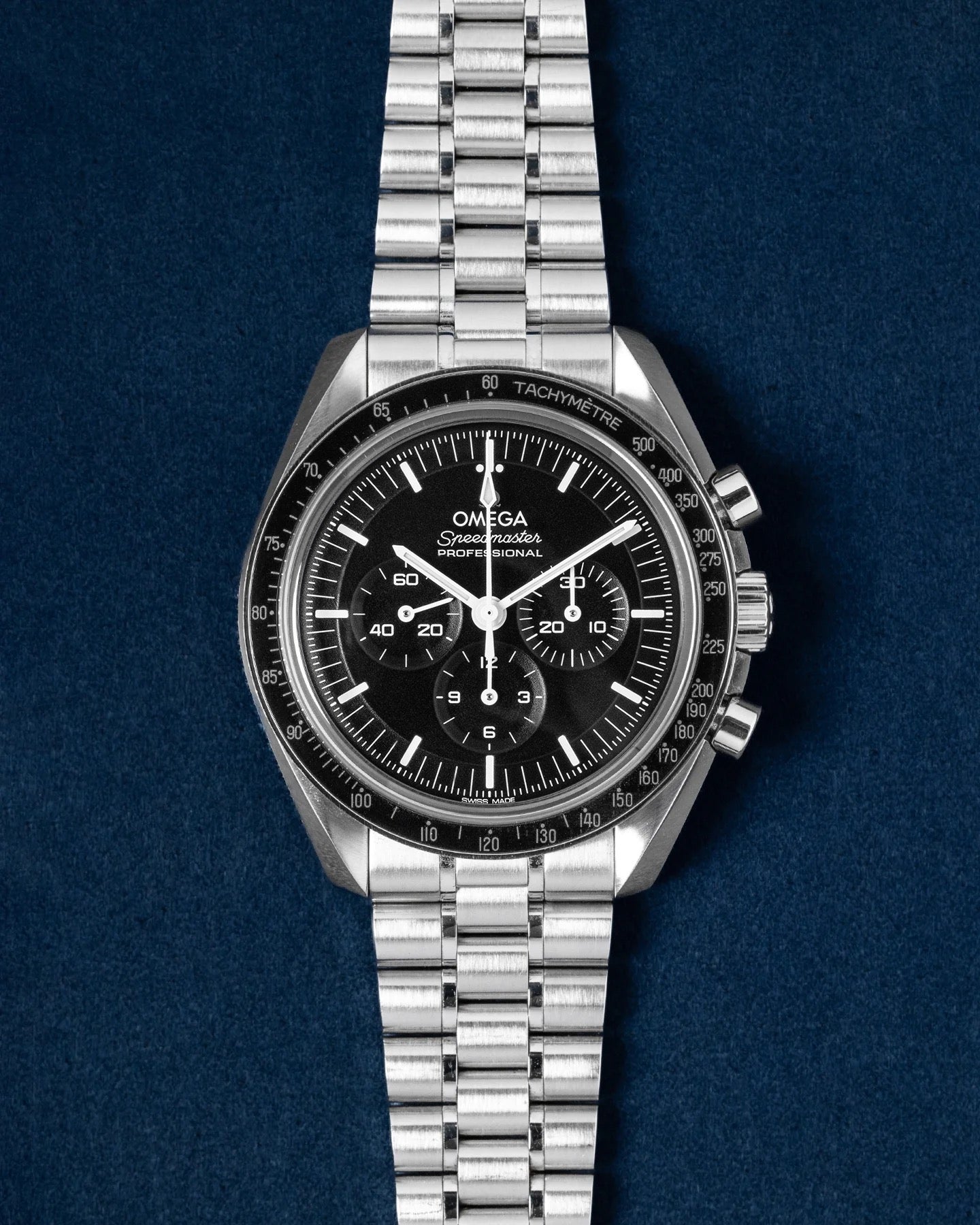
Omega Speedmaster Professional Moonwatch 310.30.42.50.01.002


Omega Speedmaster Professional Moonwatch 3570.50.00
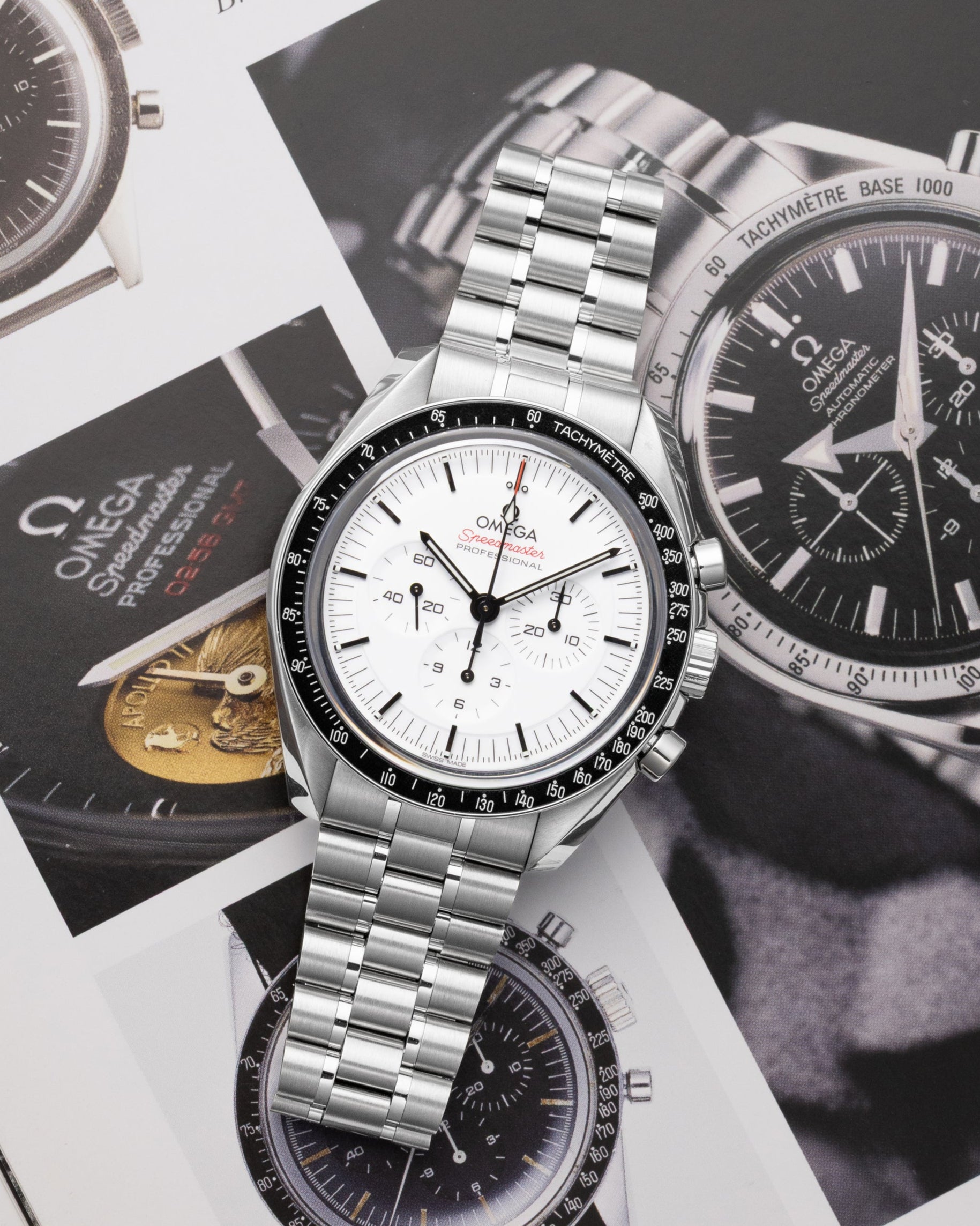
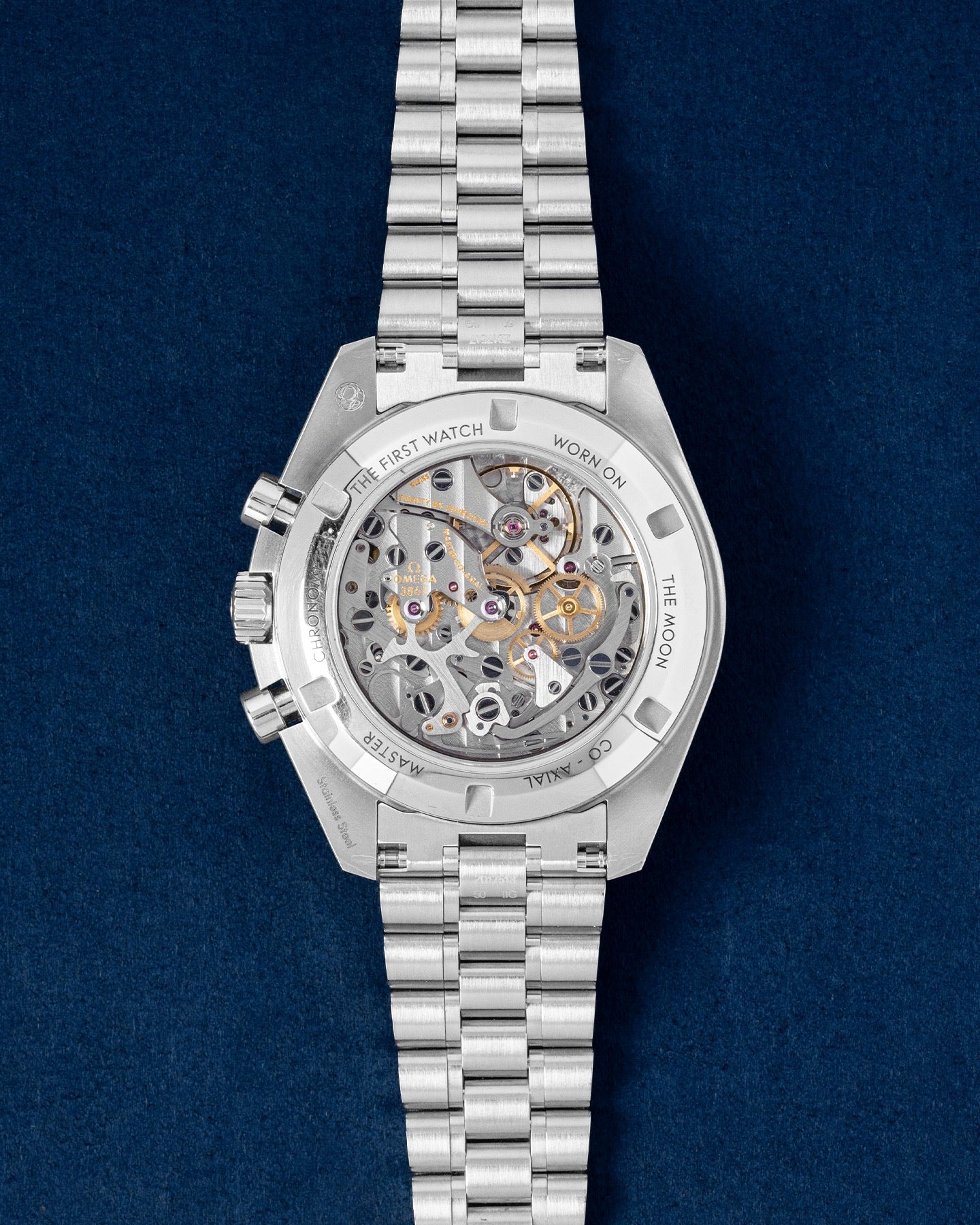
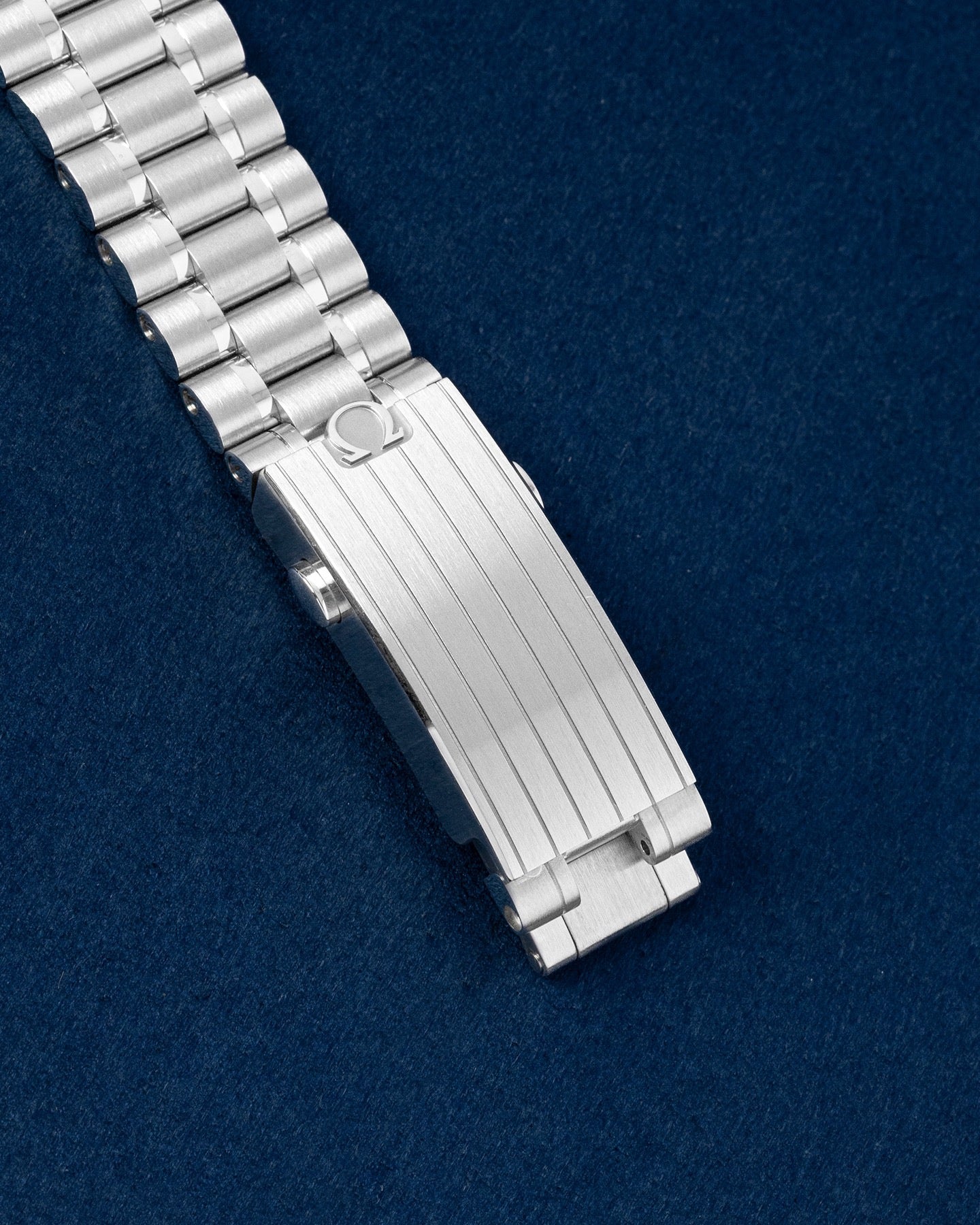
Omega Speedmaster Moonwatch Professional White 310.30.42.50.04.001
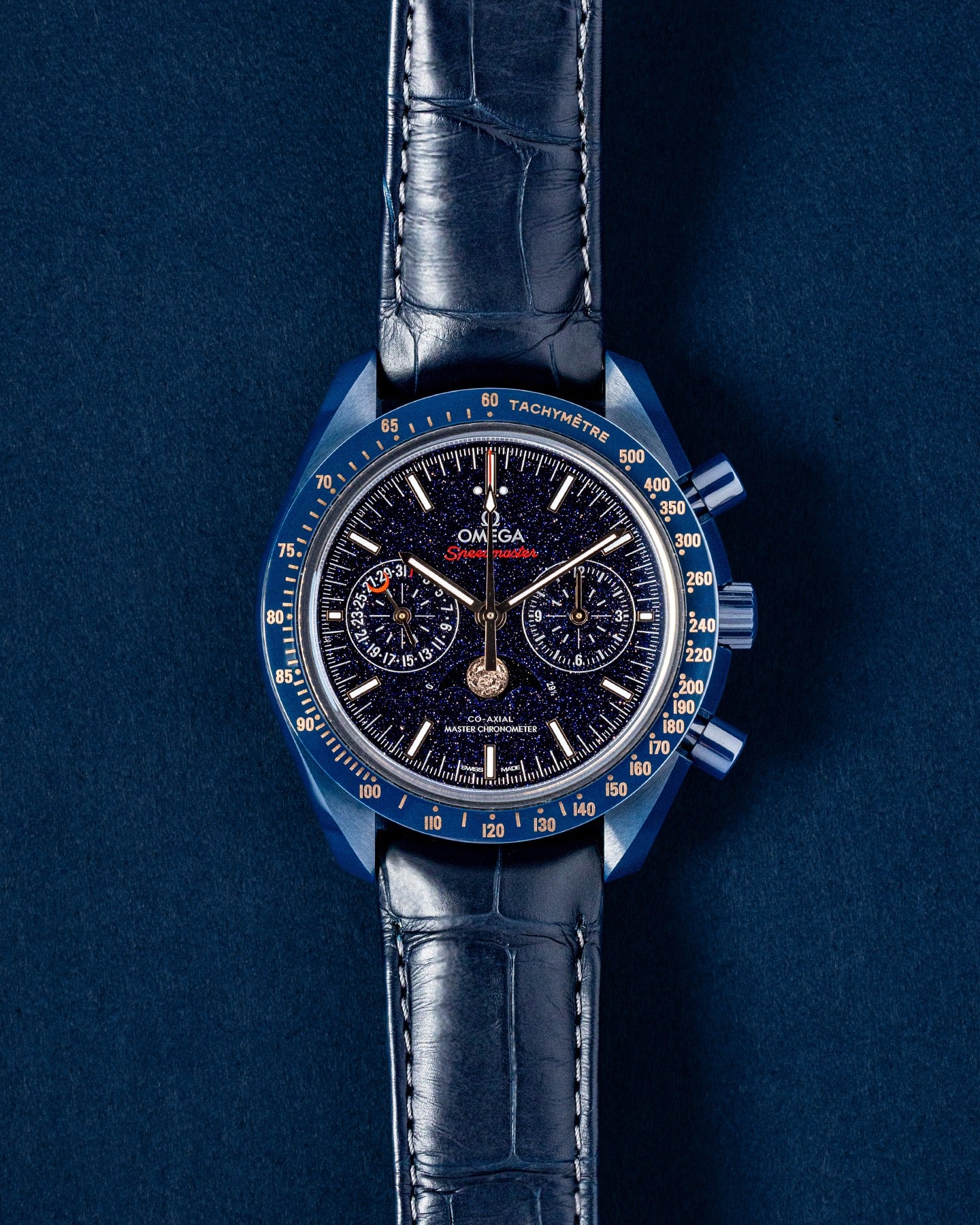
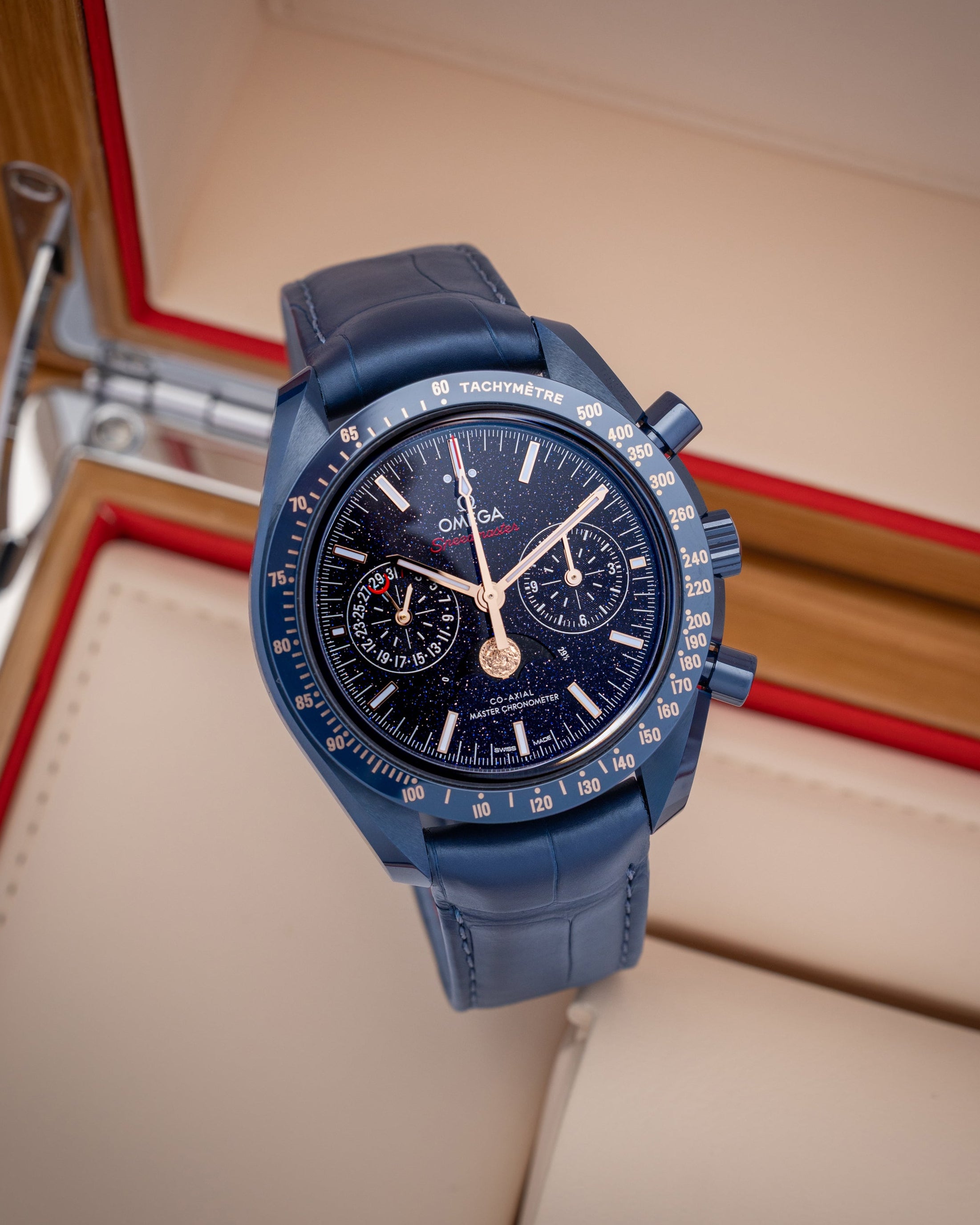
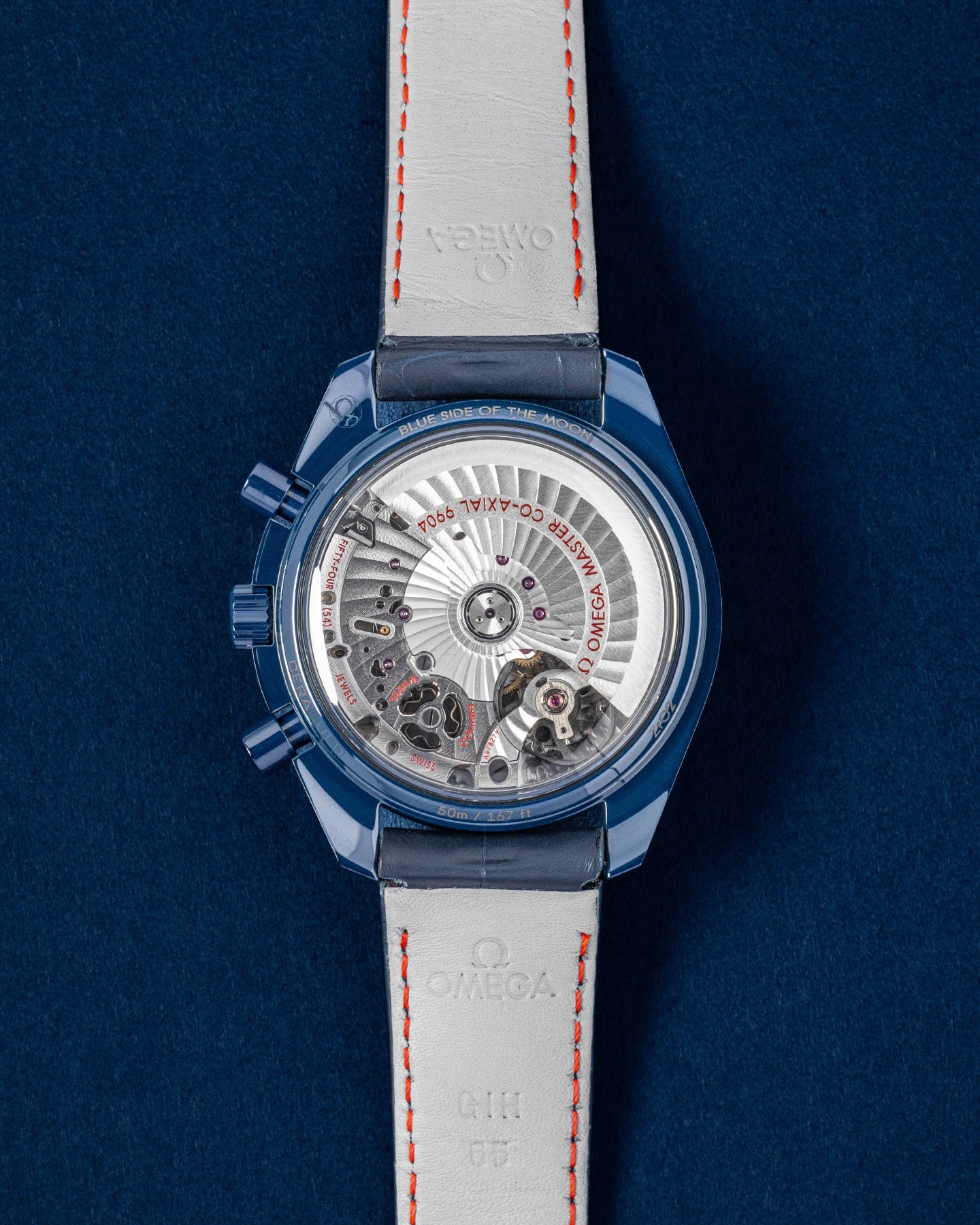
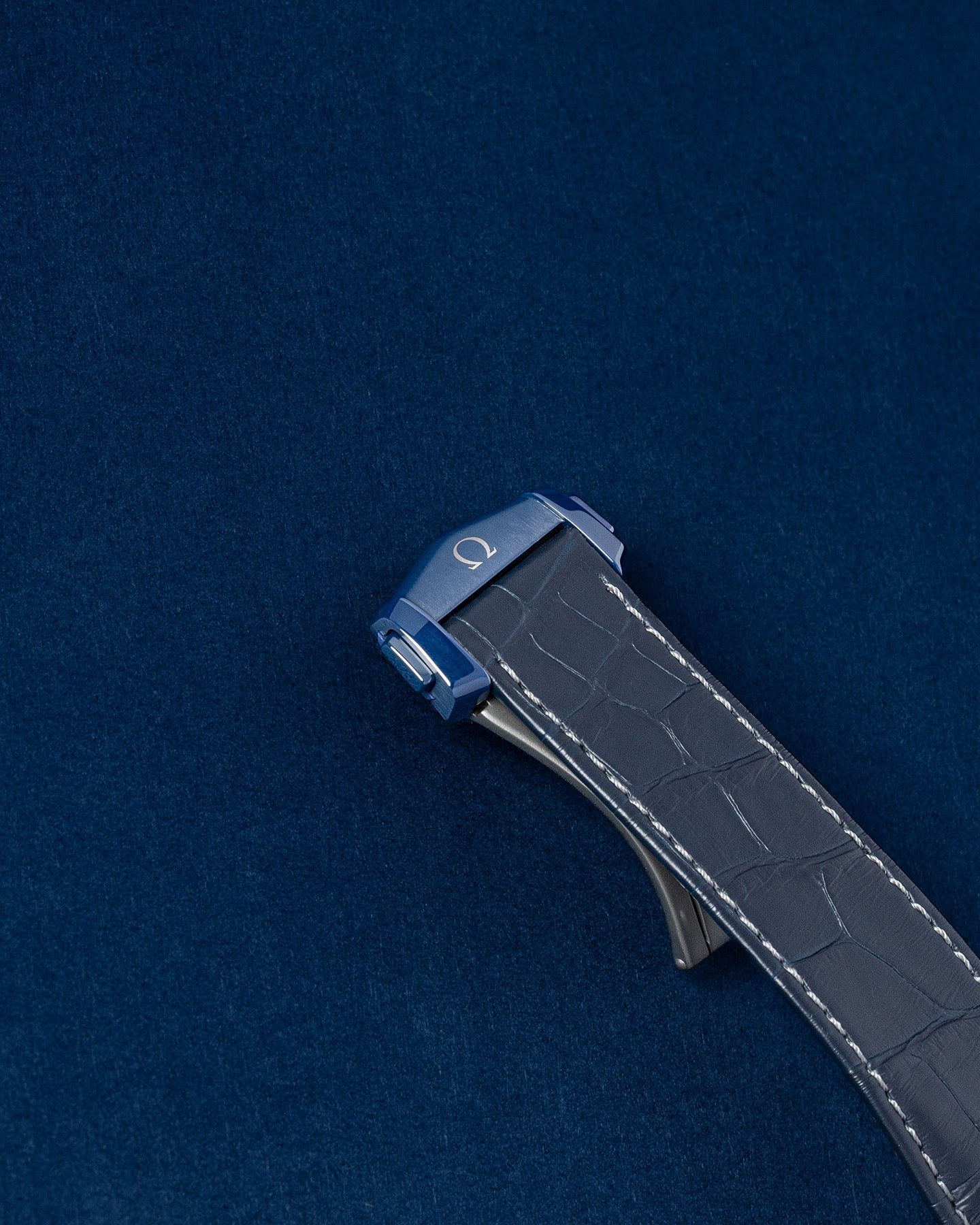
Omega Speedmaster Moonwatch Moonphase 304.93.44.52.03.002
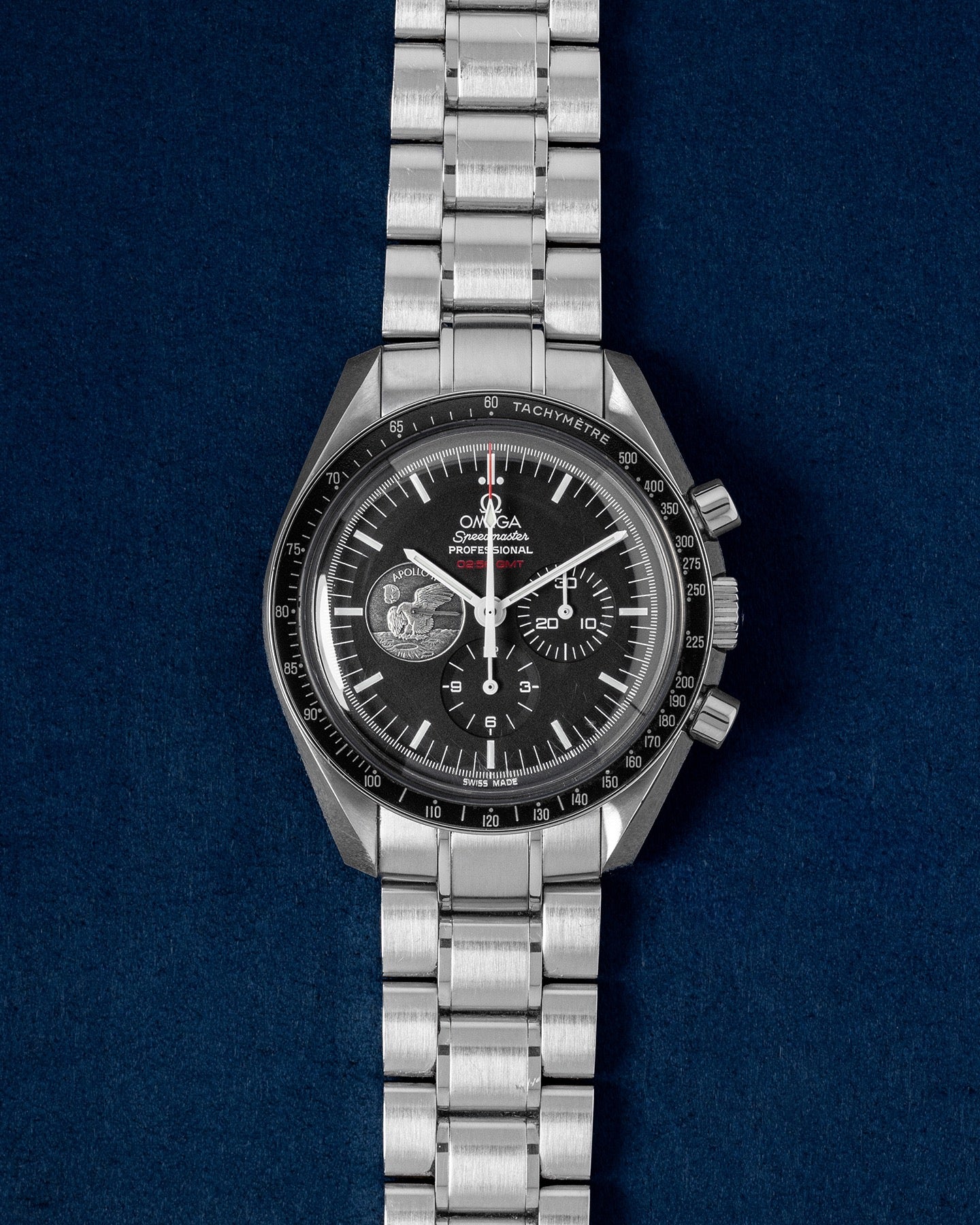
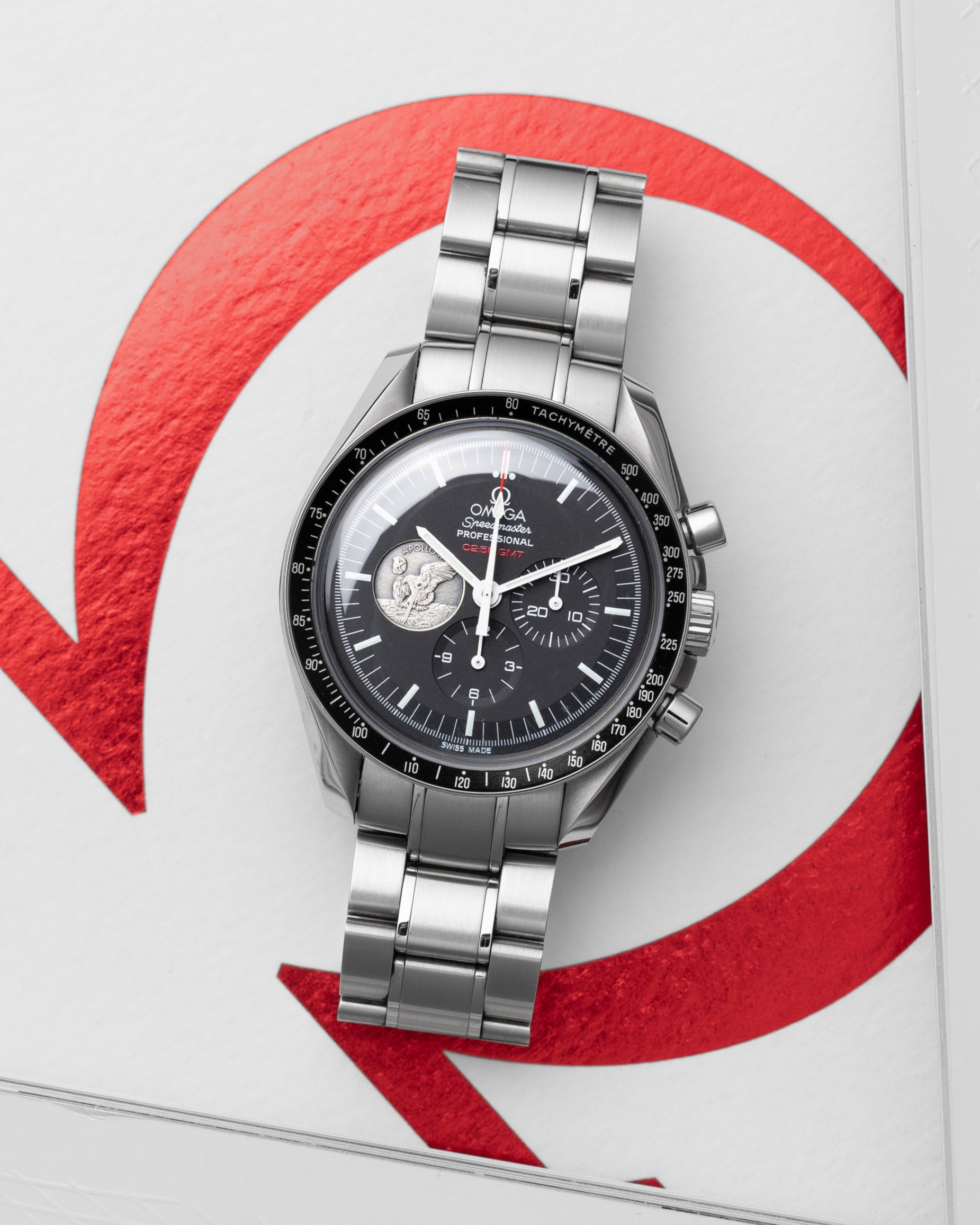
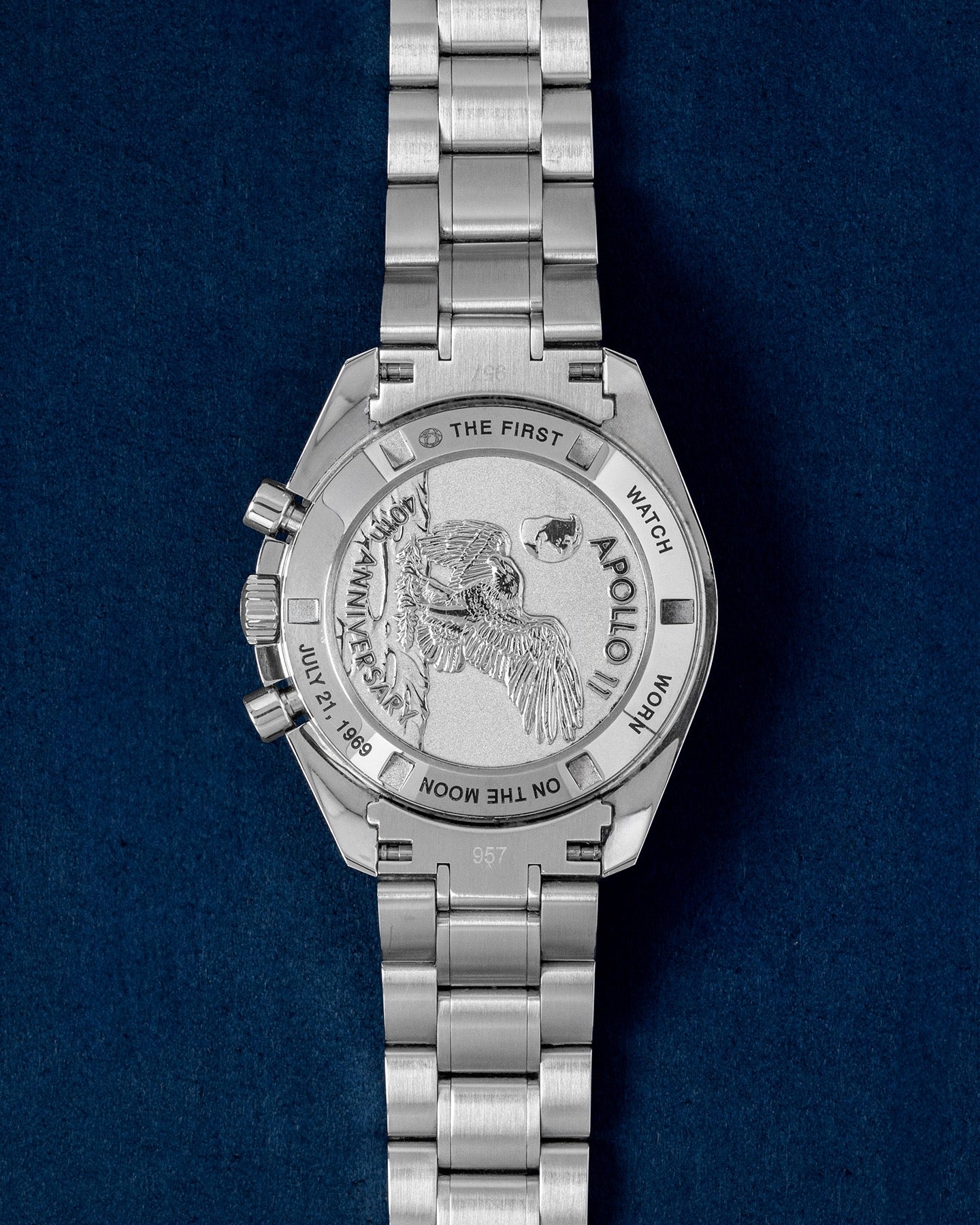
Omega Speedmaster Moonwatch Apollo 11 311.30.42.30.01.002
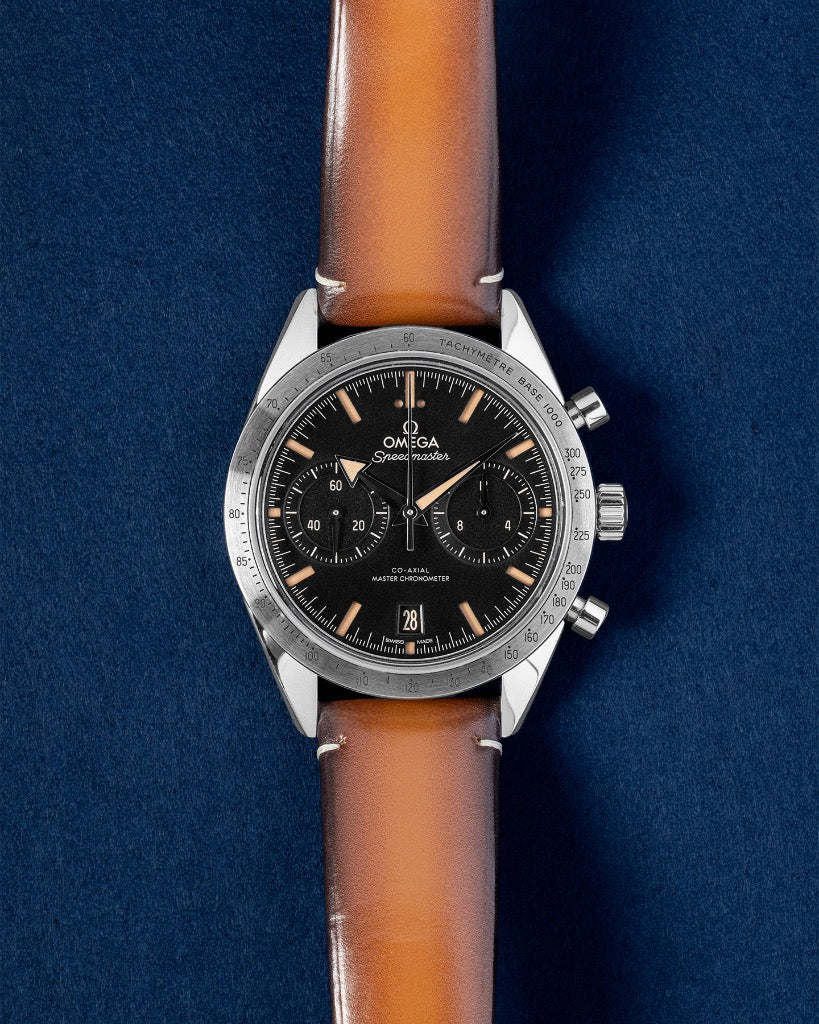
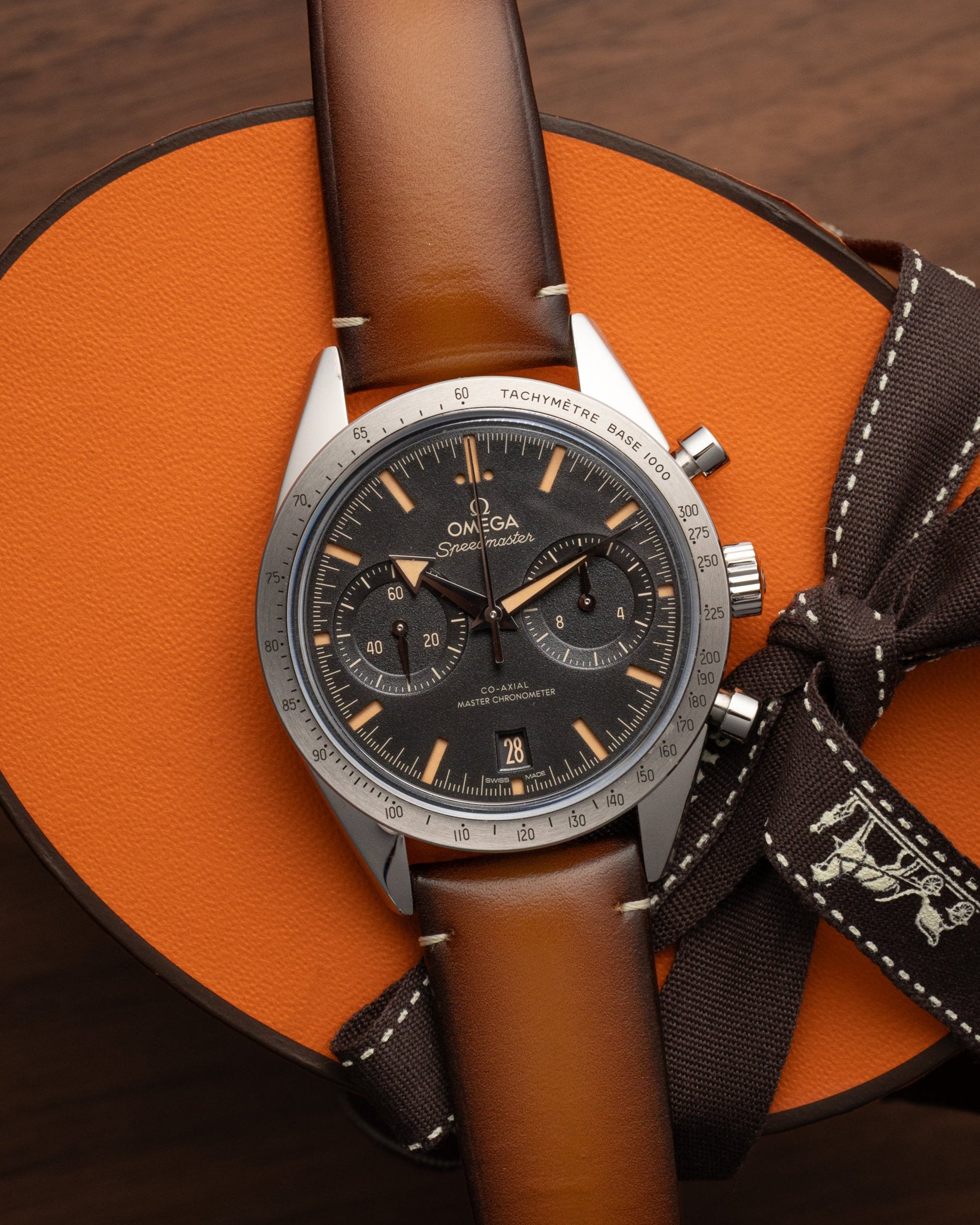
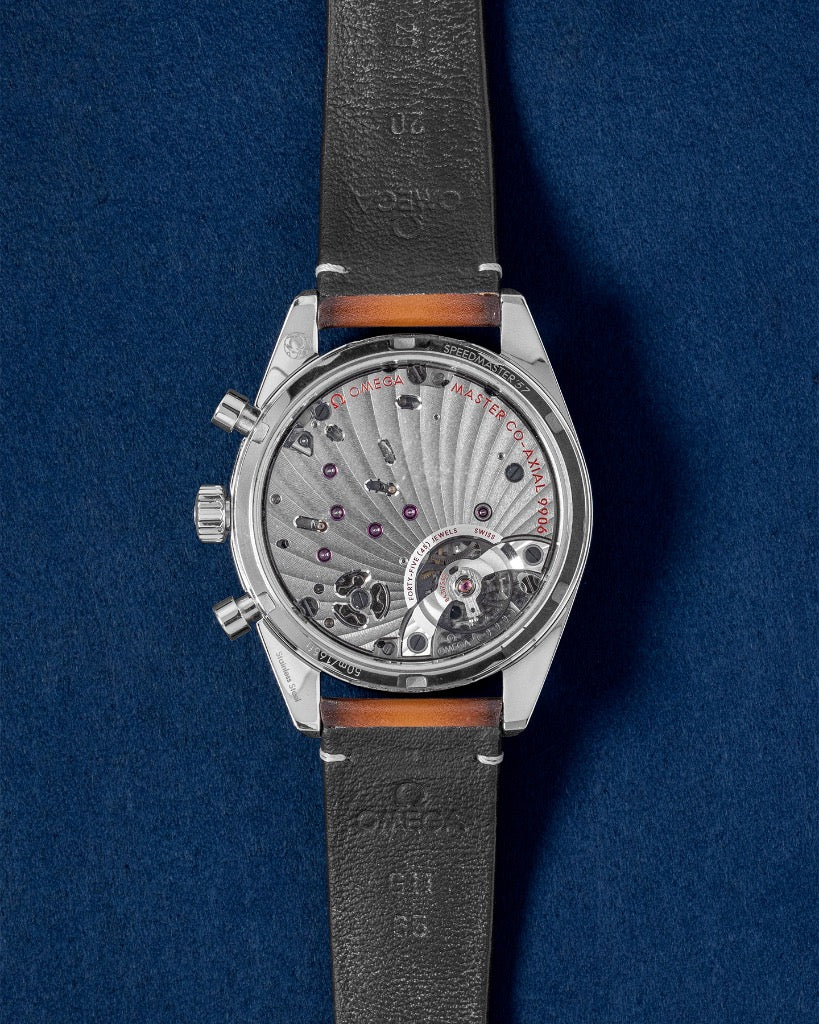
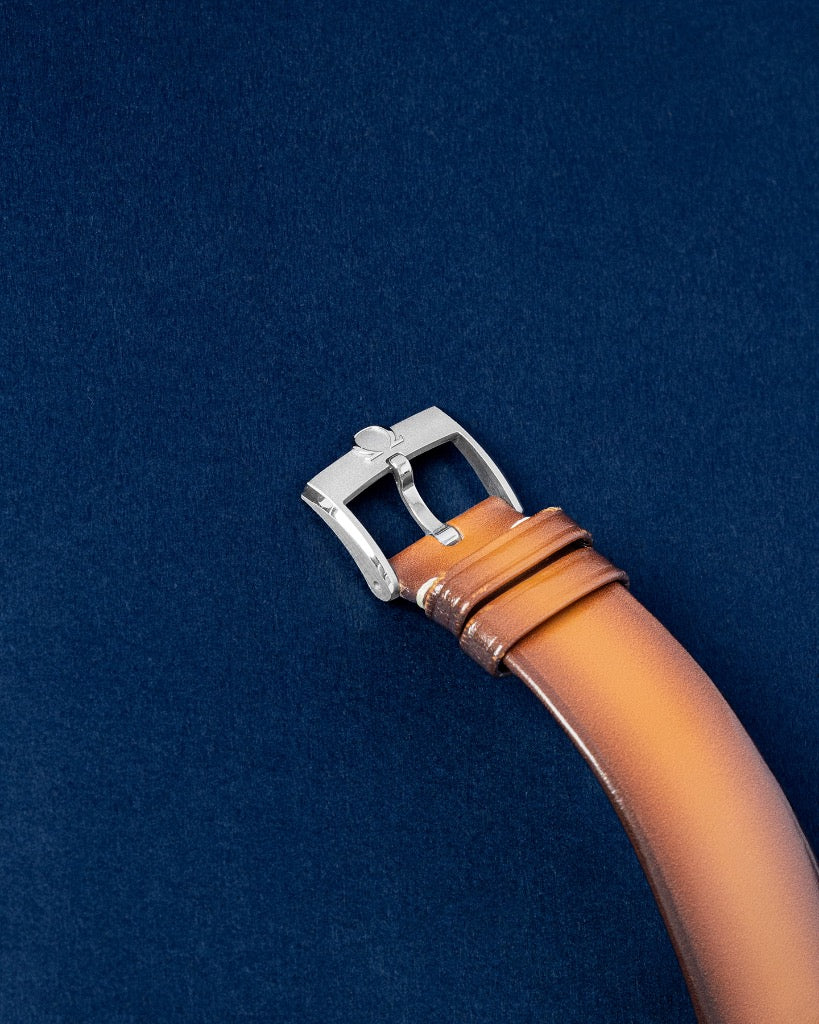
Omega Speedmaster '57 332.12.41.51.01.001
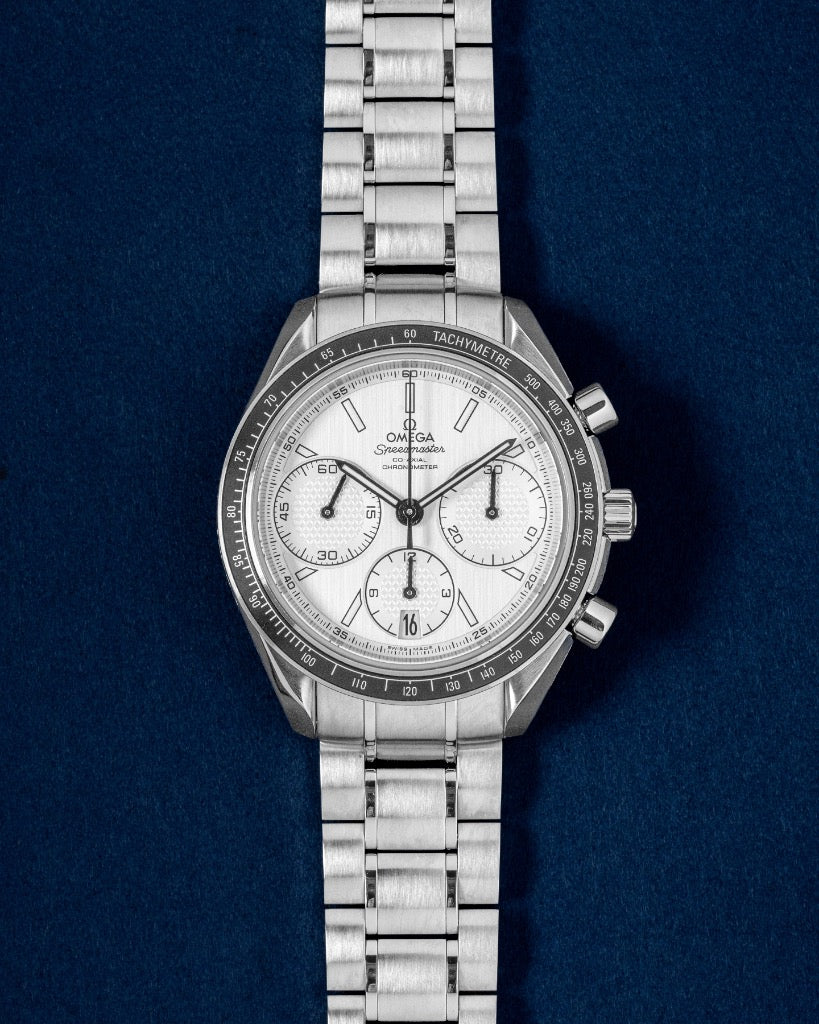

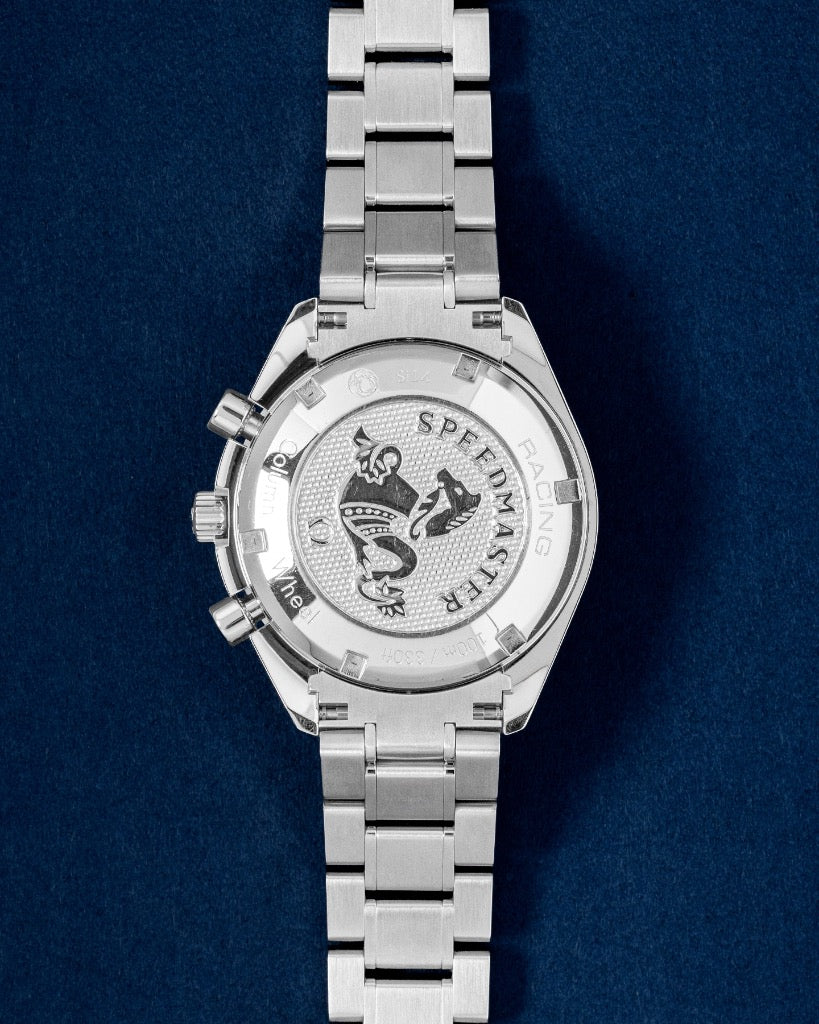
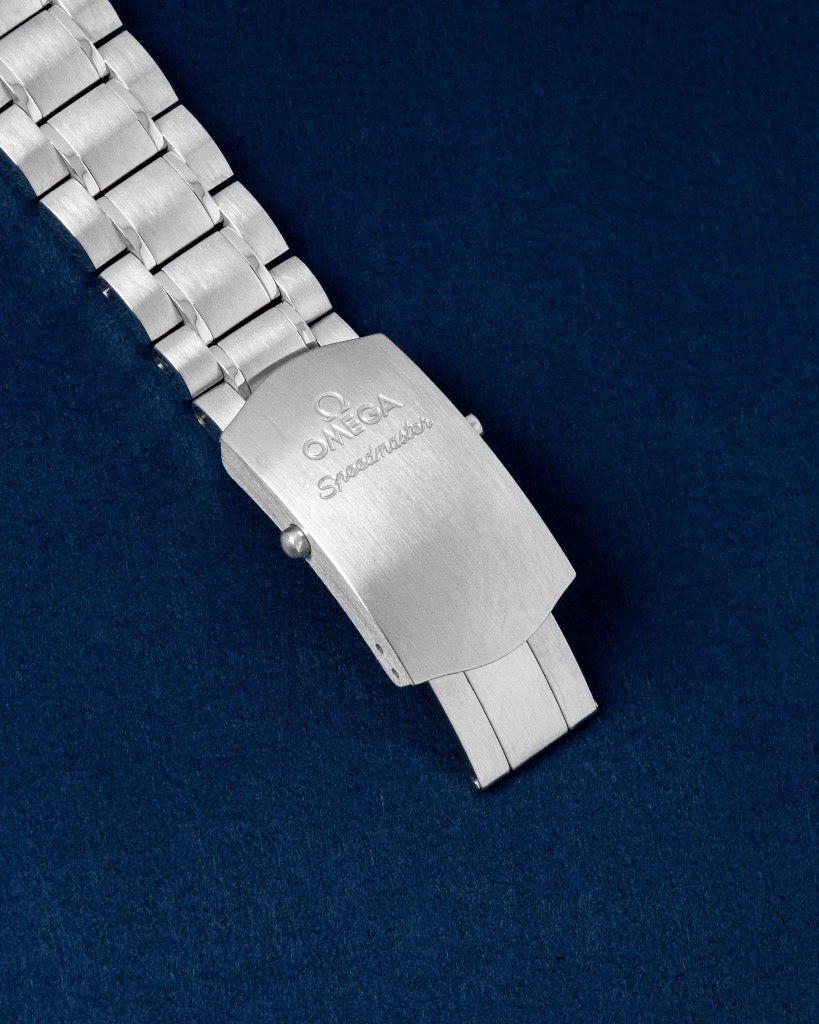
Omega Speedmaster Racing 326.30.40.50.02.001
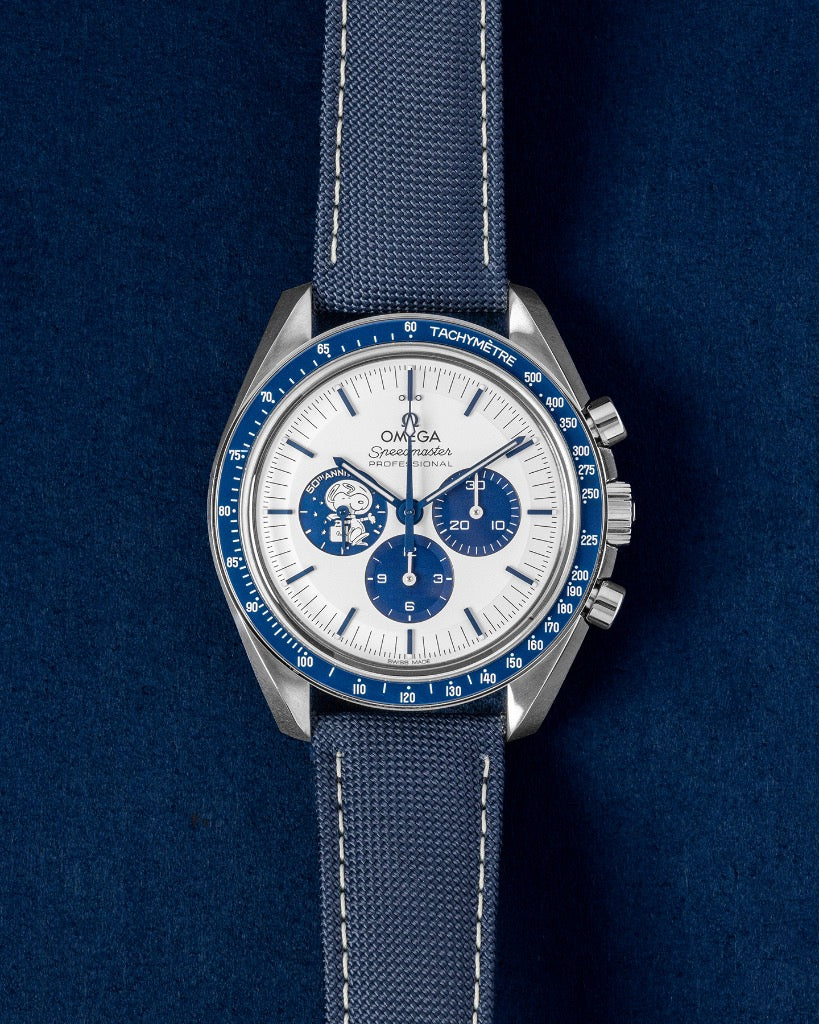
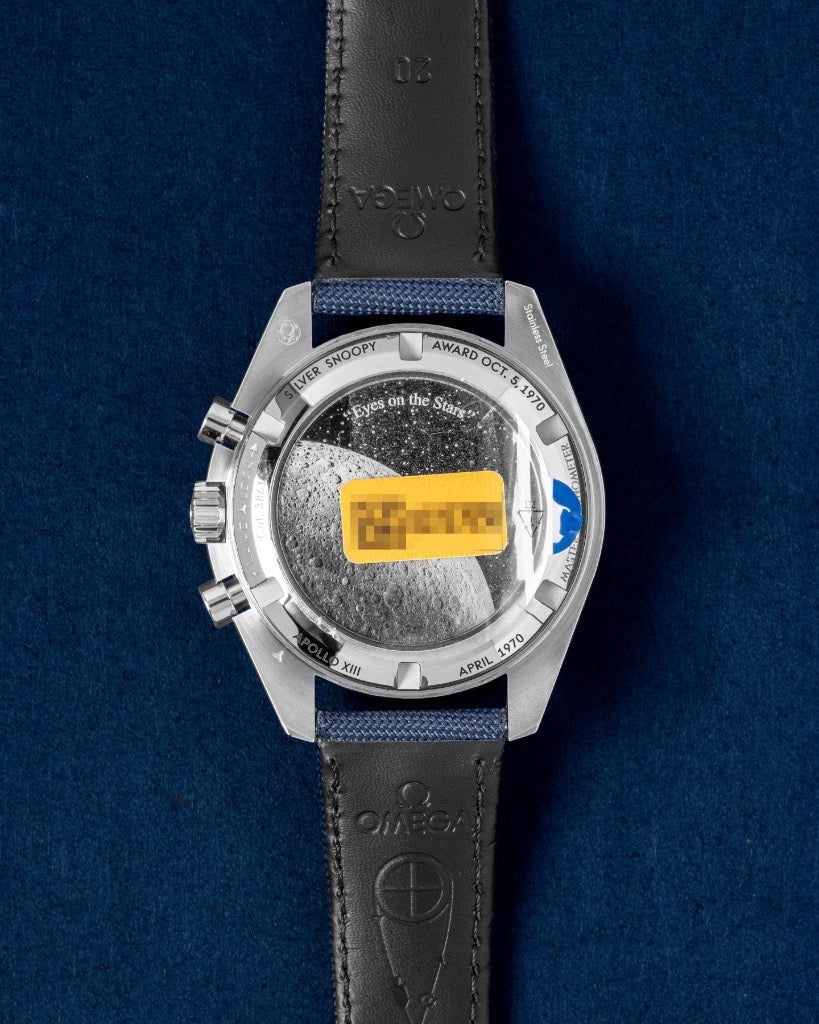

Omega Speedmaster "Snoopy" 310.32.42.50.02.001
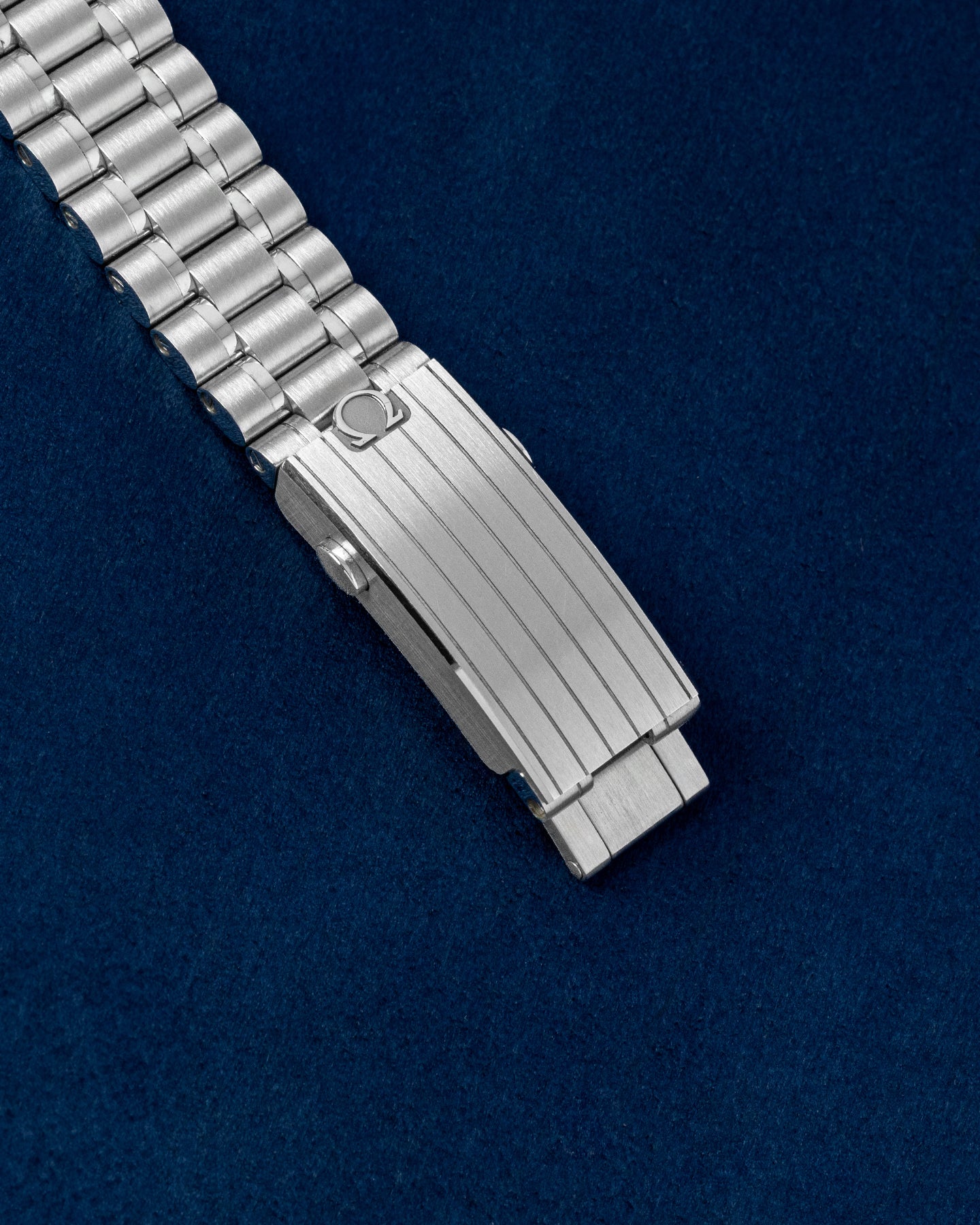
Omega Speedmaster Professional Moonwatch 310.30.42.50.01.002
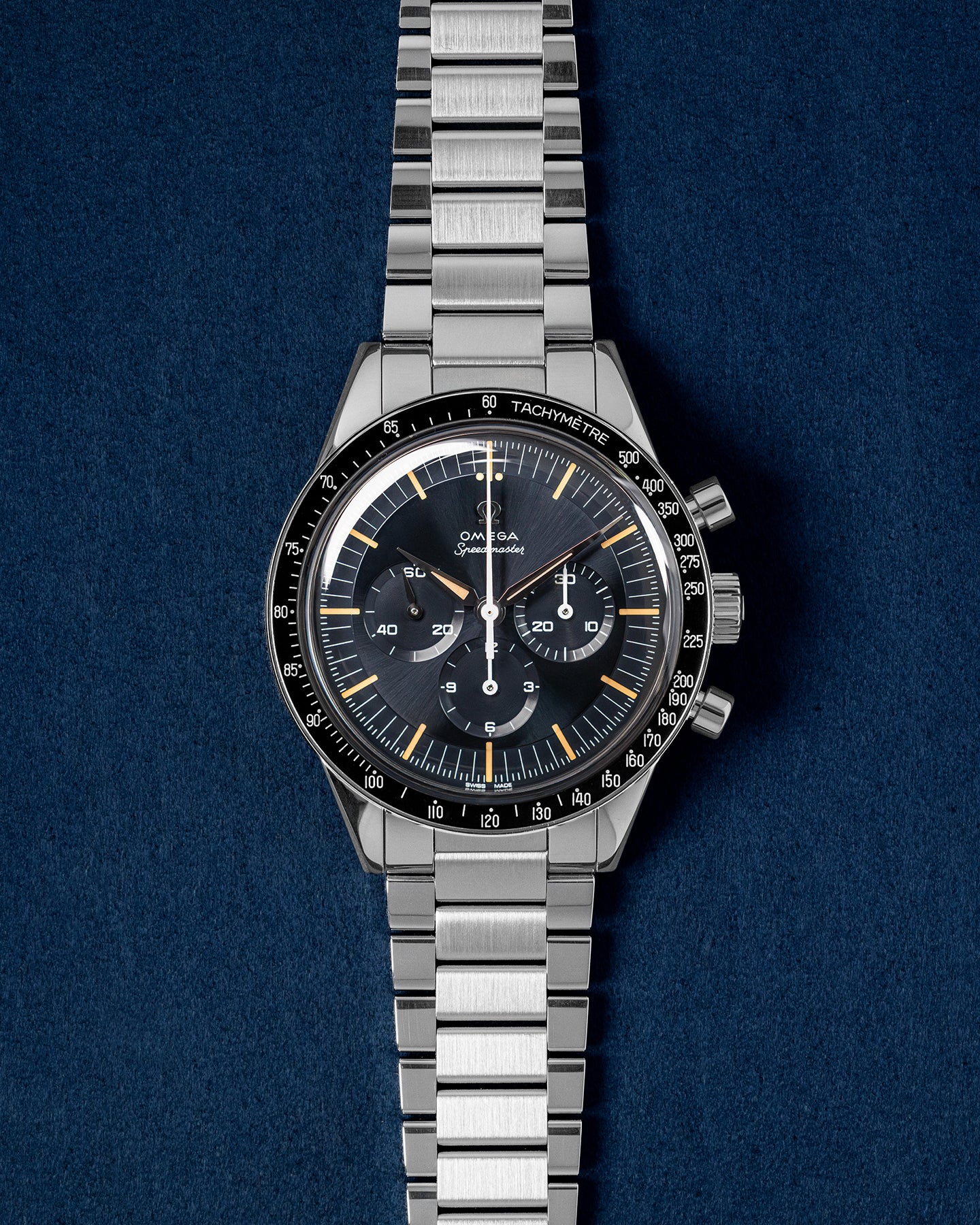
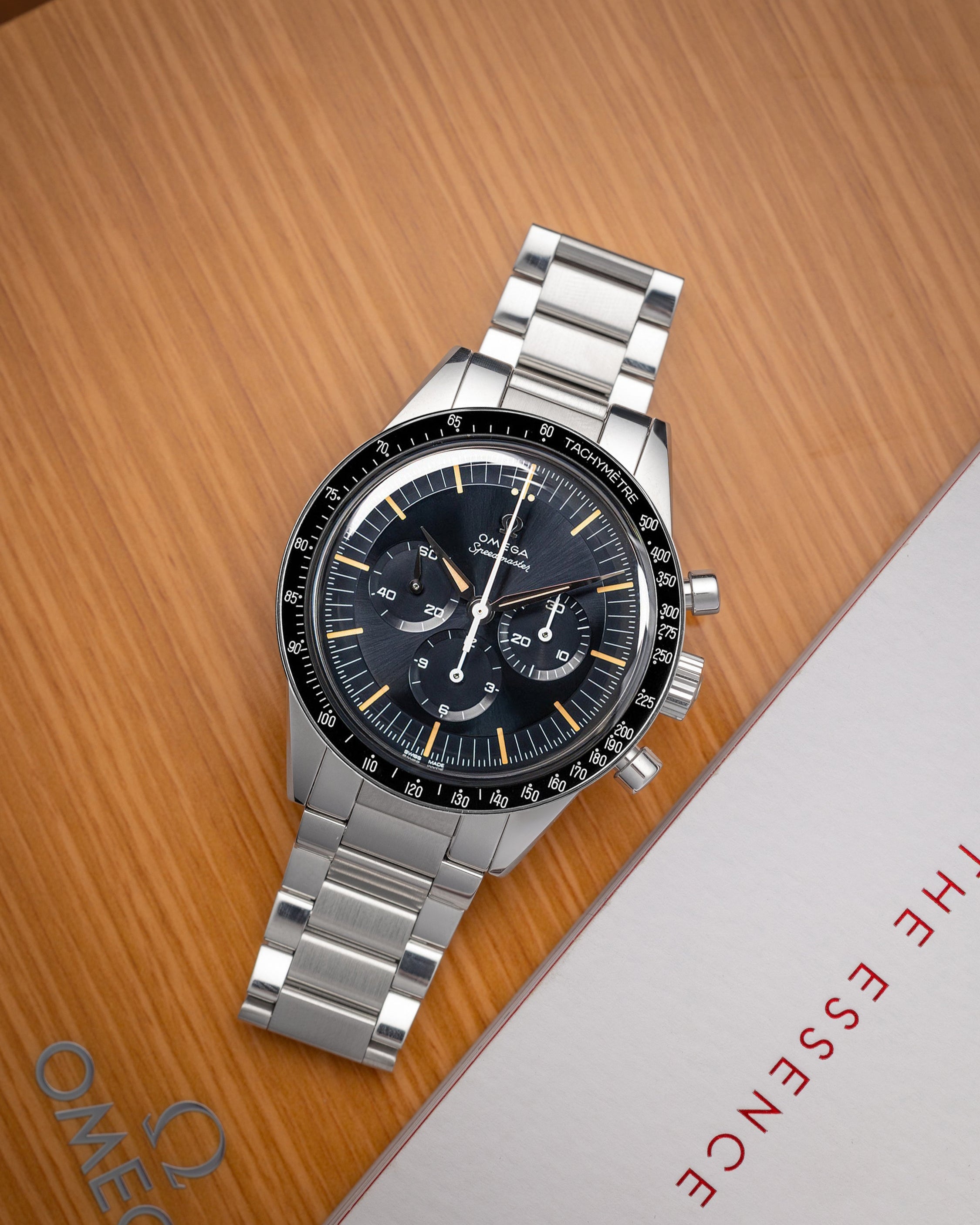
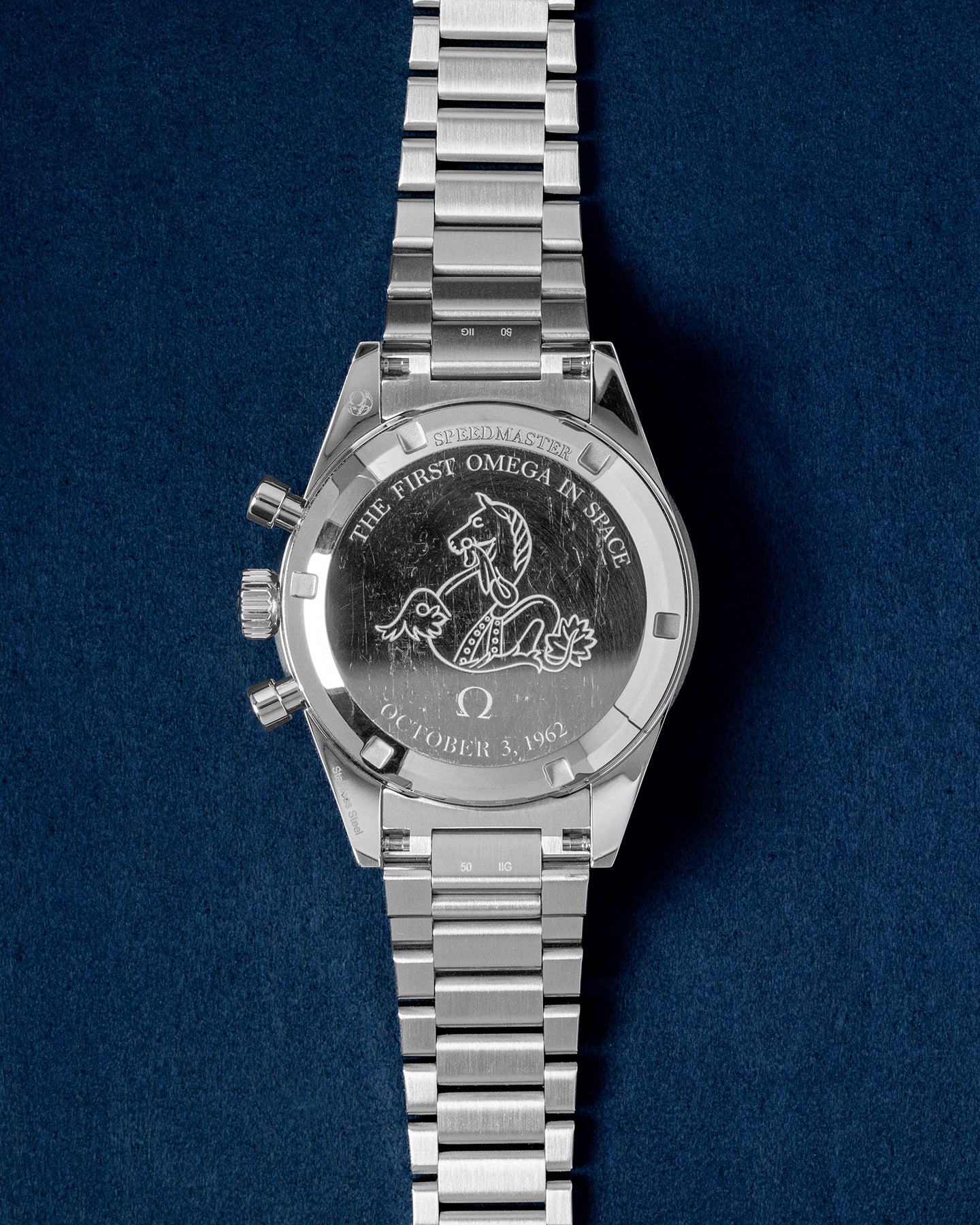
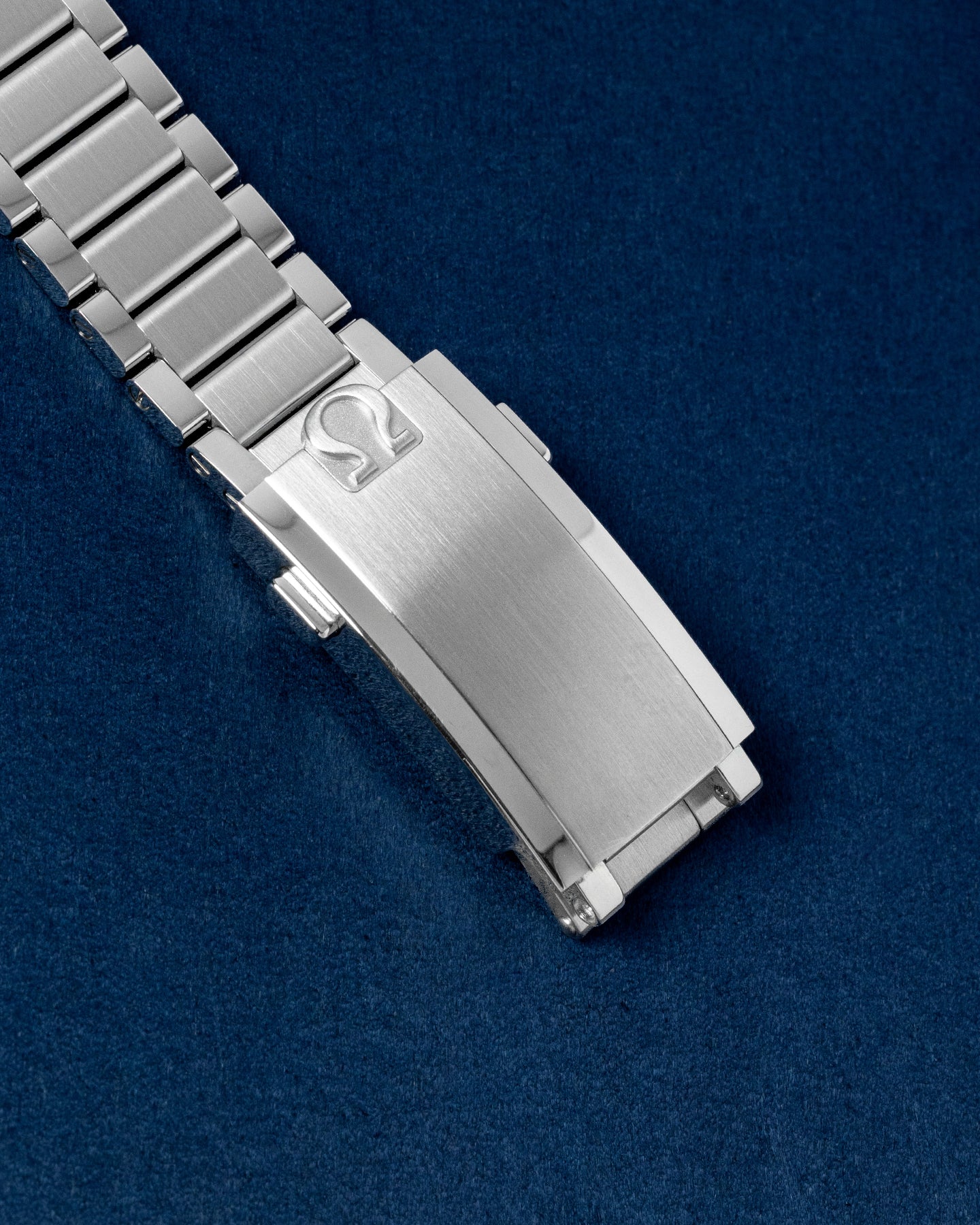
Omega Speedmaster First Omega In Space 31030405006001
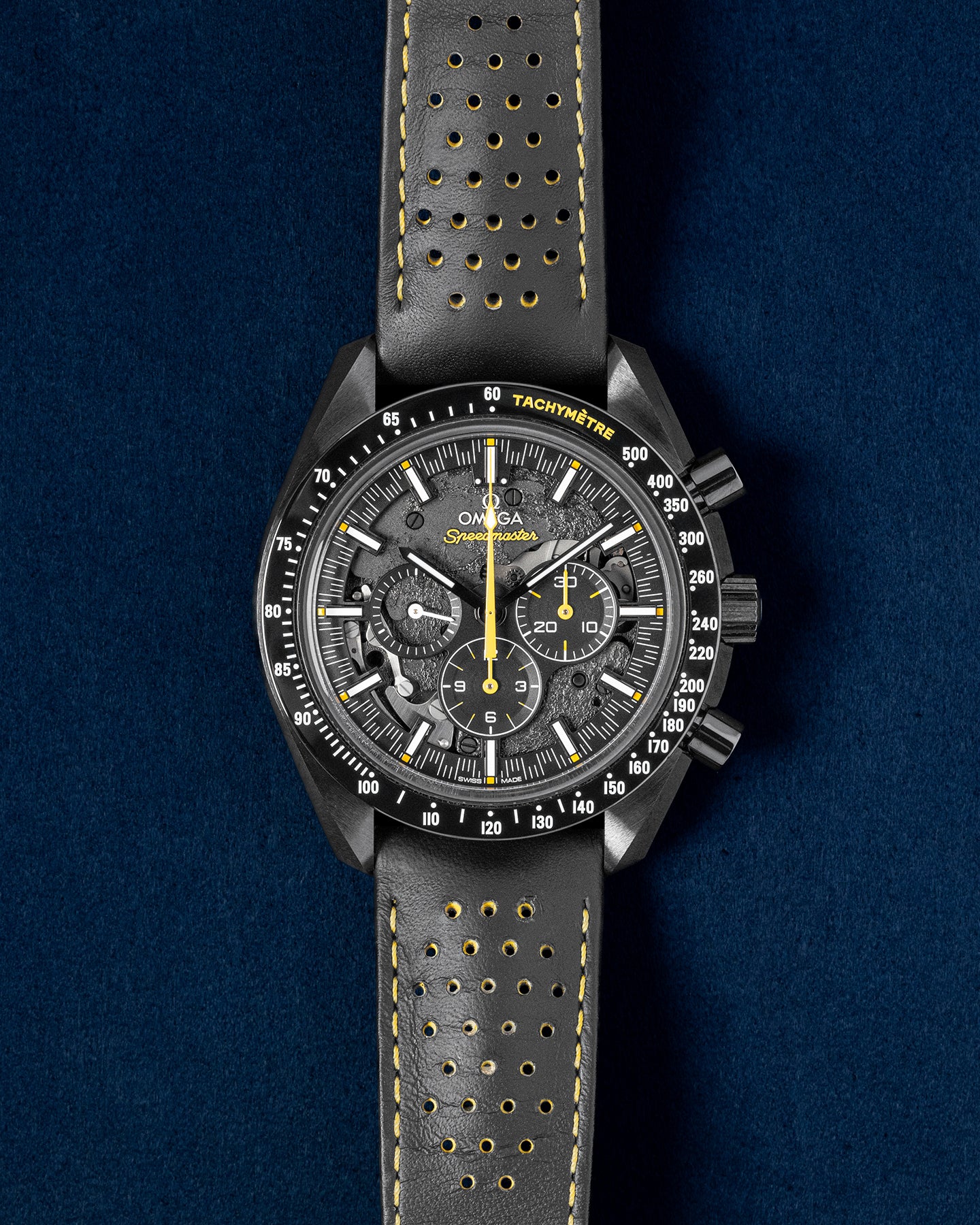
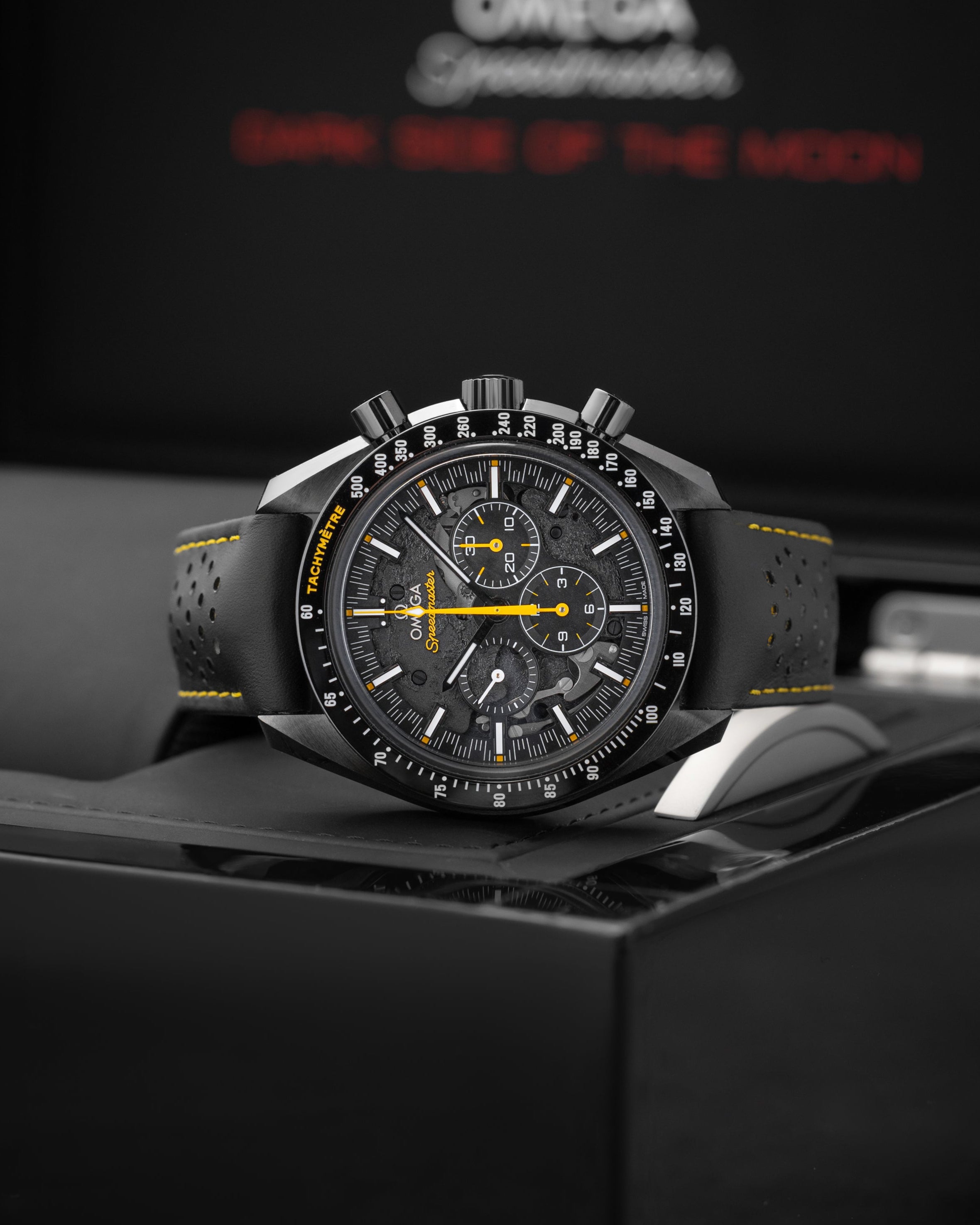
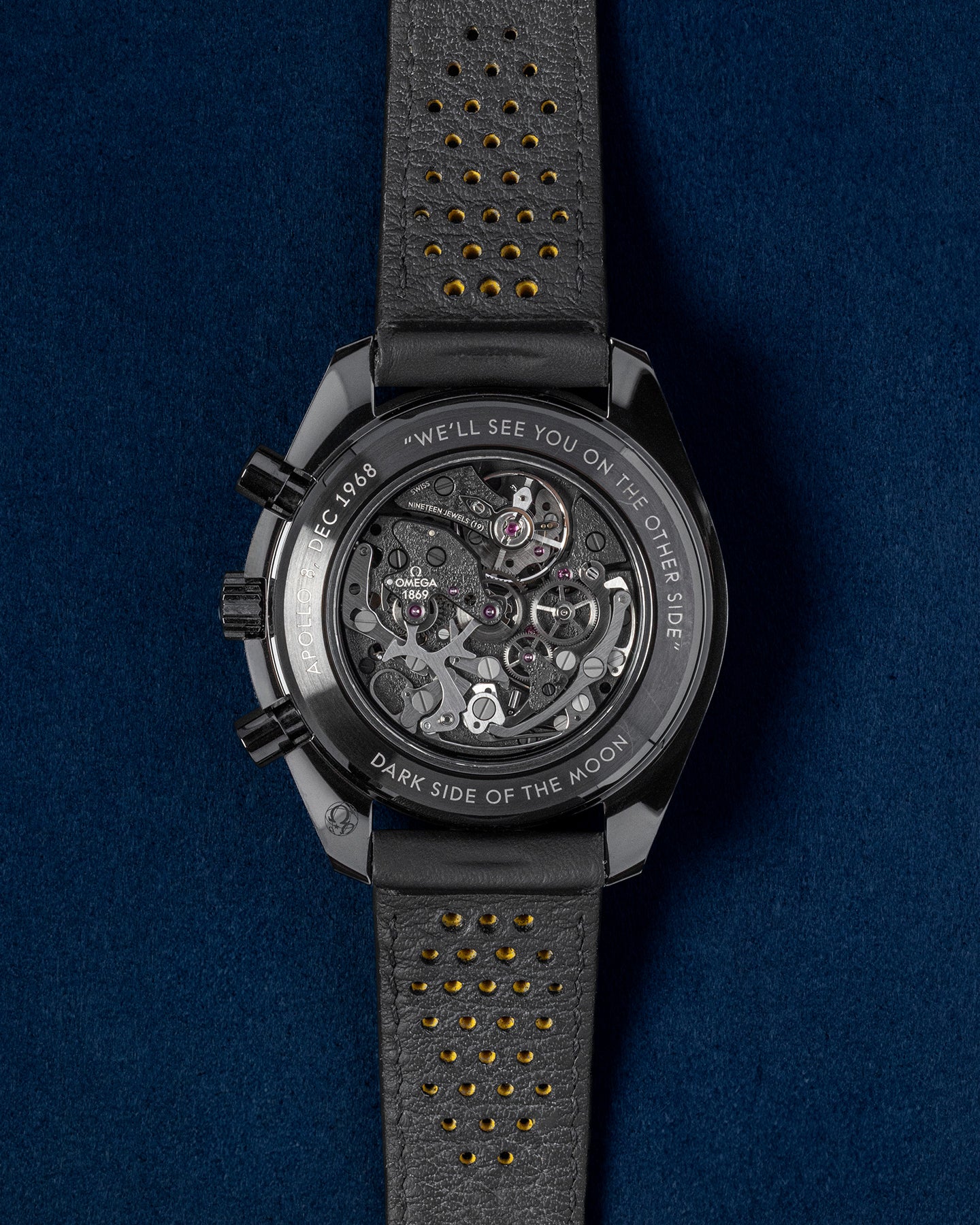
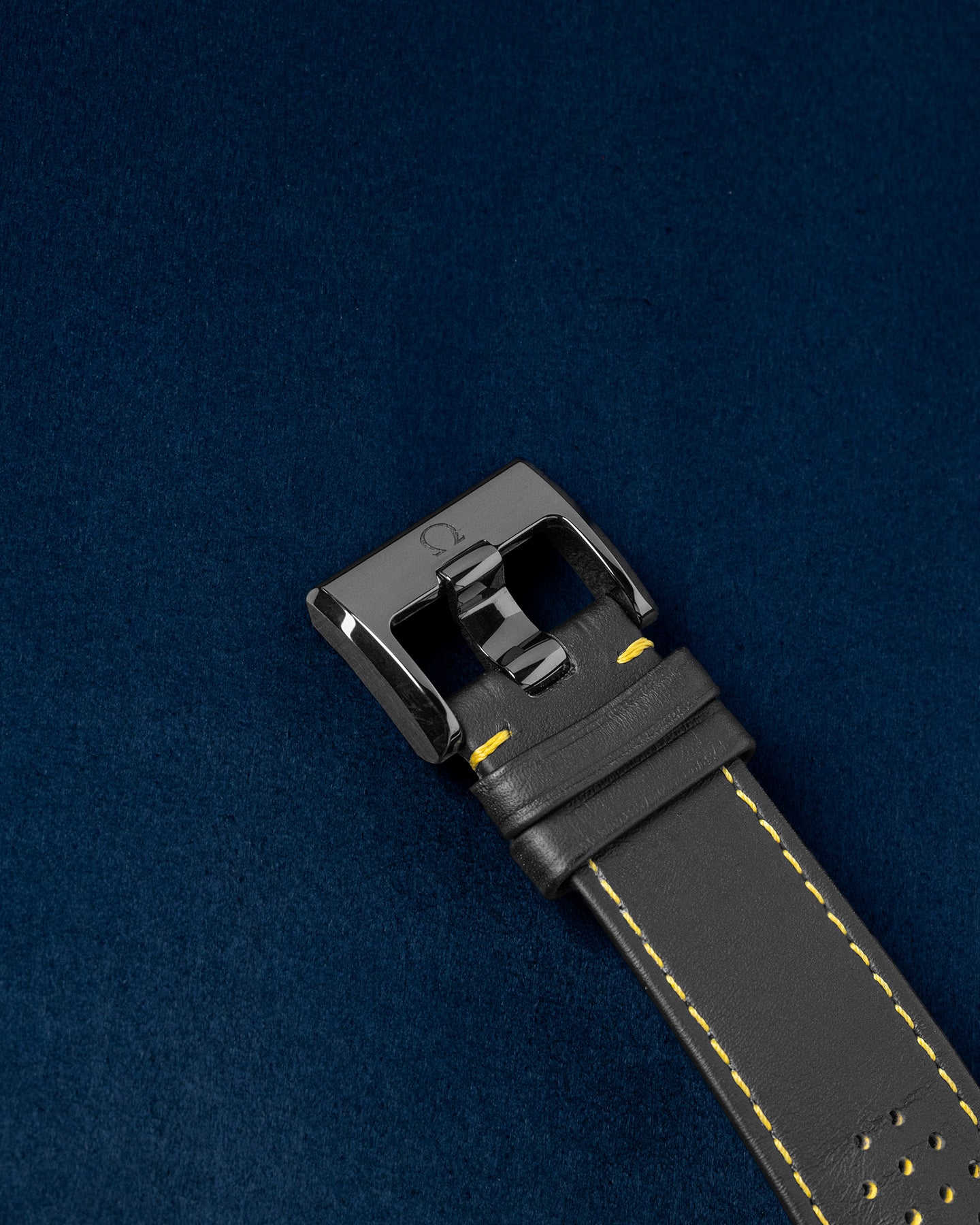
Omega Speedmaster Dark Side Of The Moon 311.92.44.30.01.001
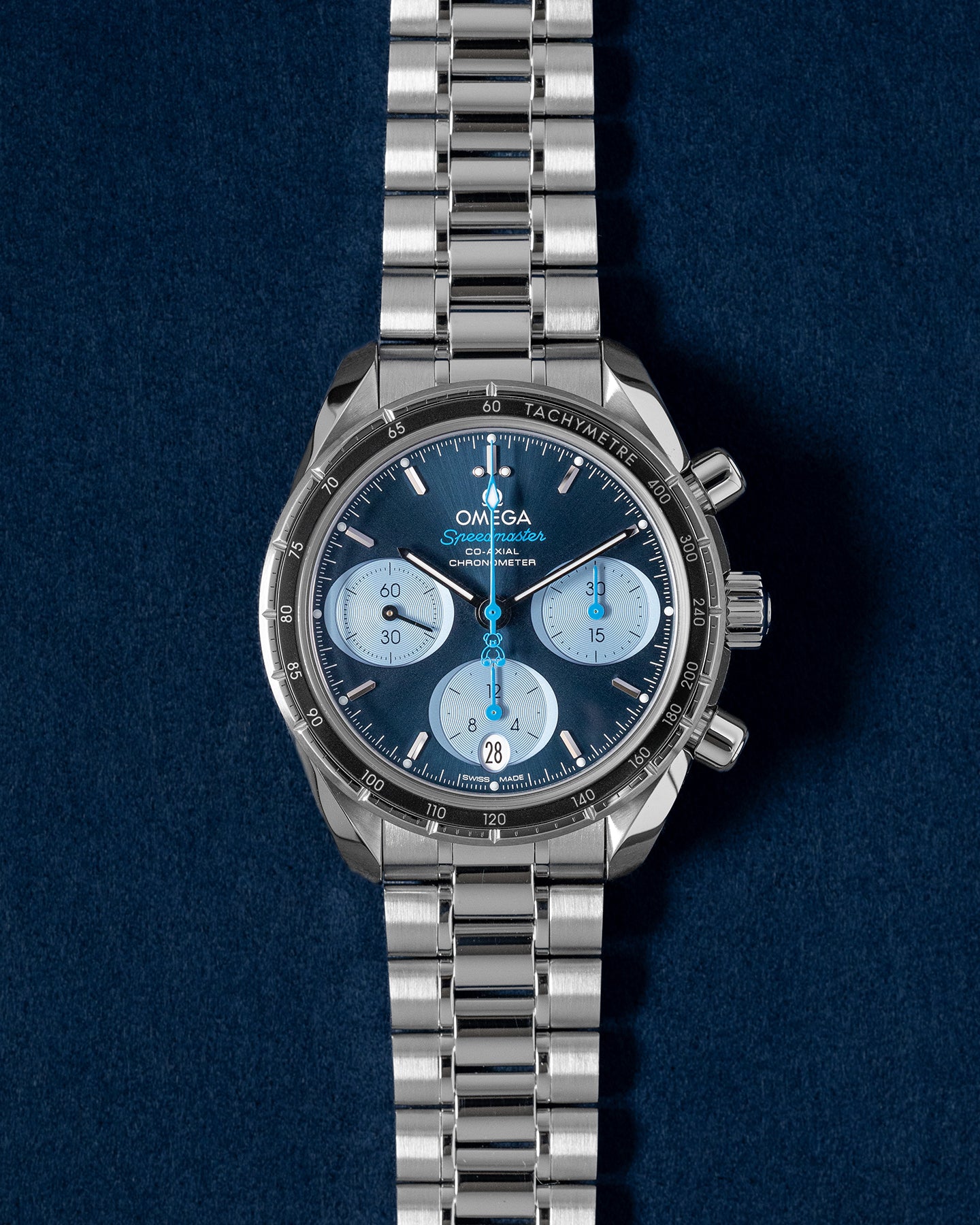
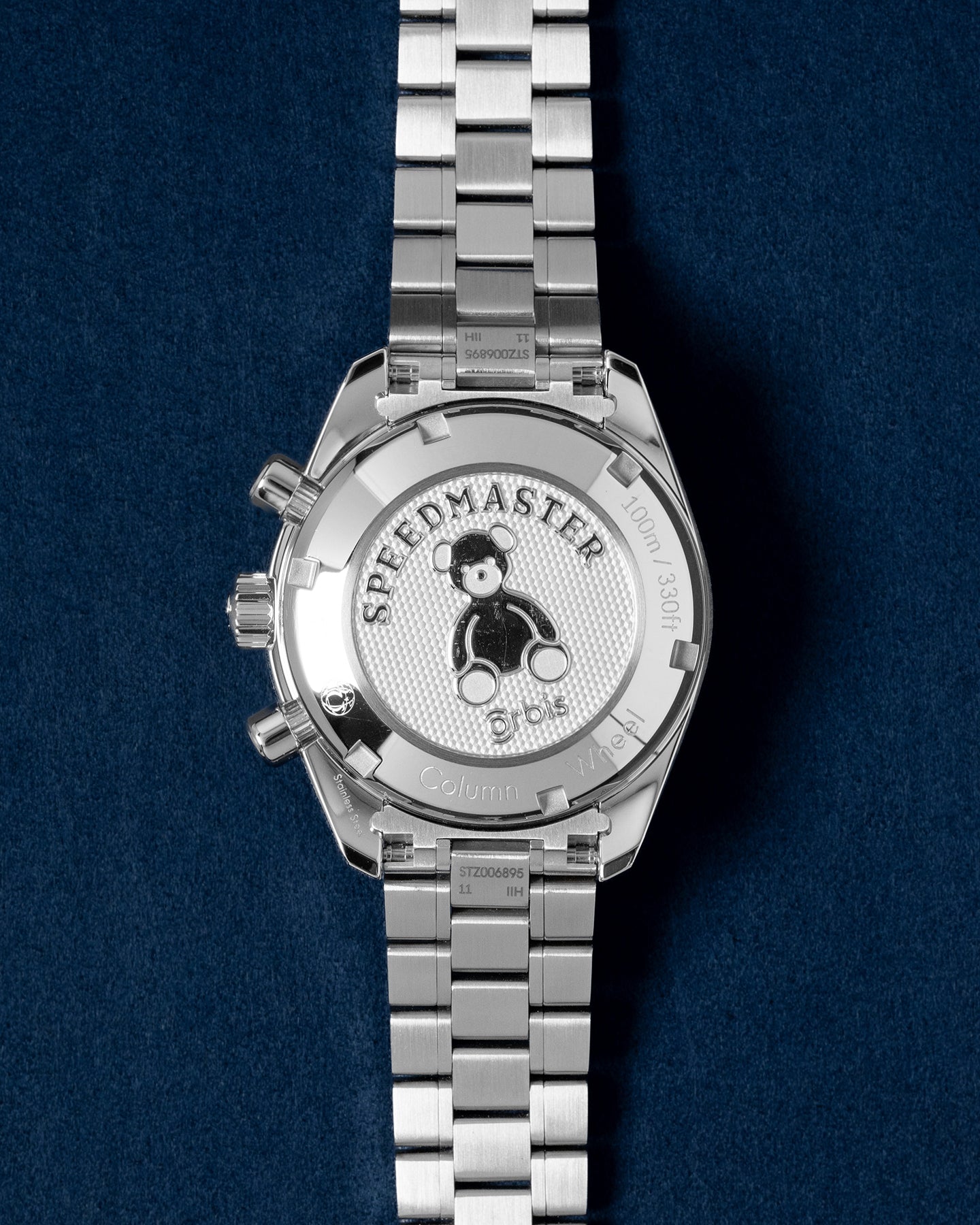
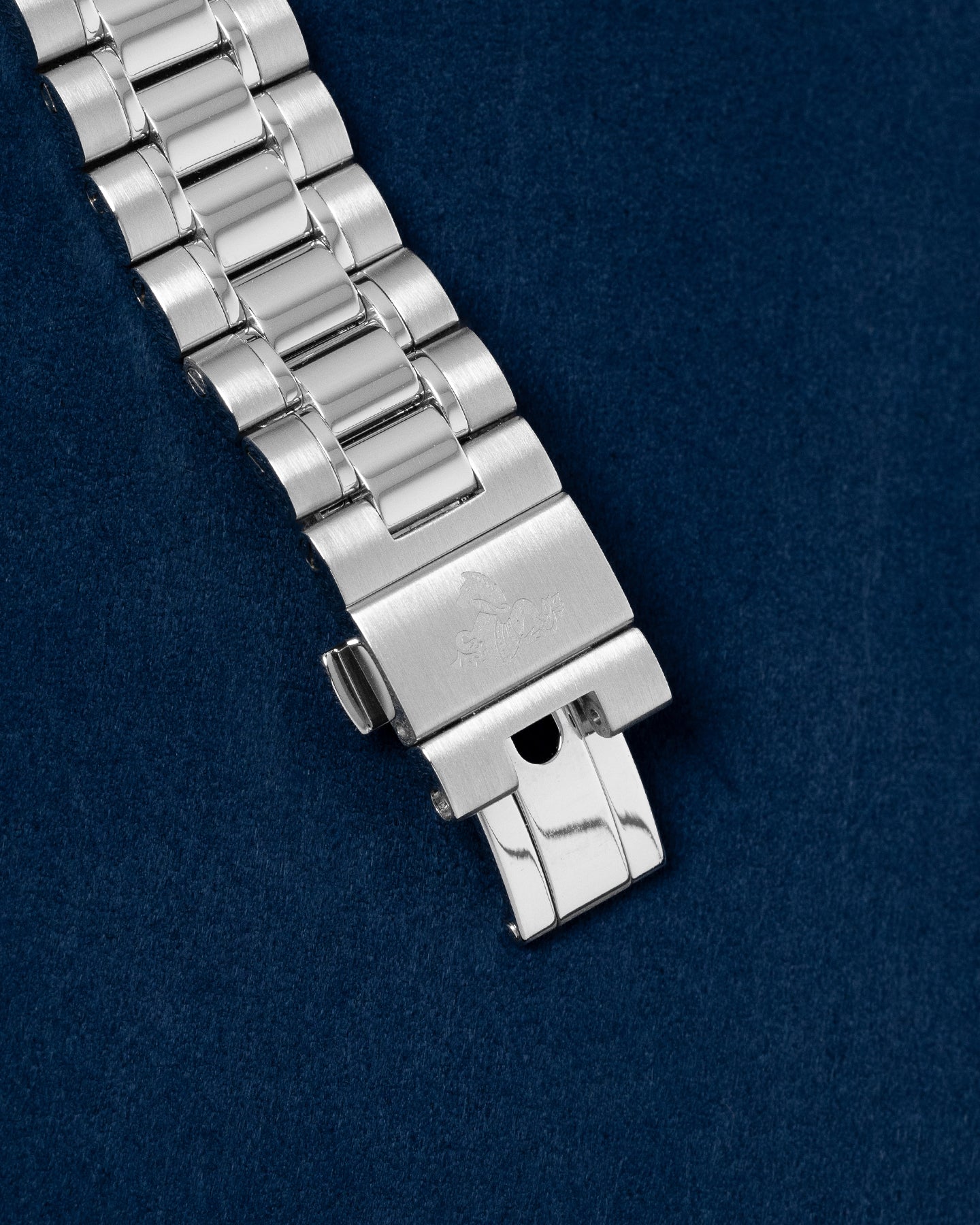
Omega Speedmaster Chronograph Co-axial 324.30.38.50.03.002
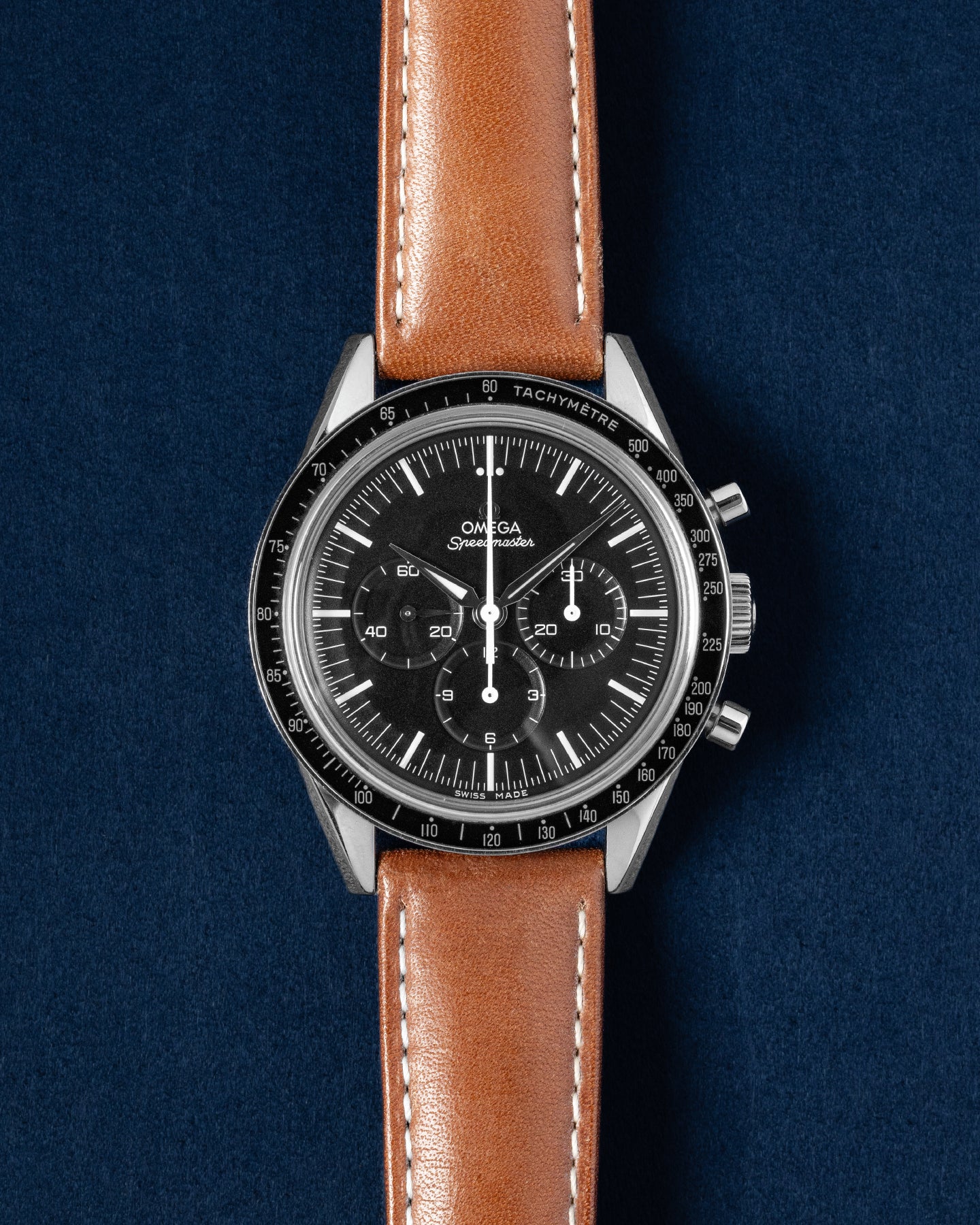
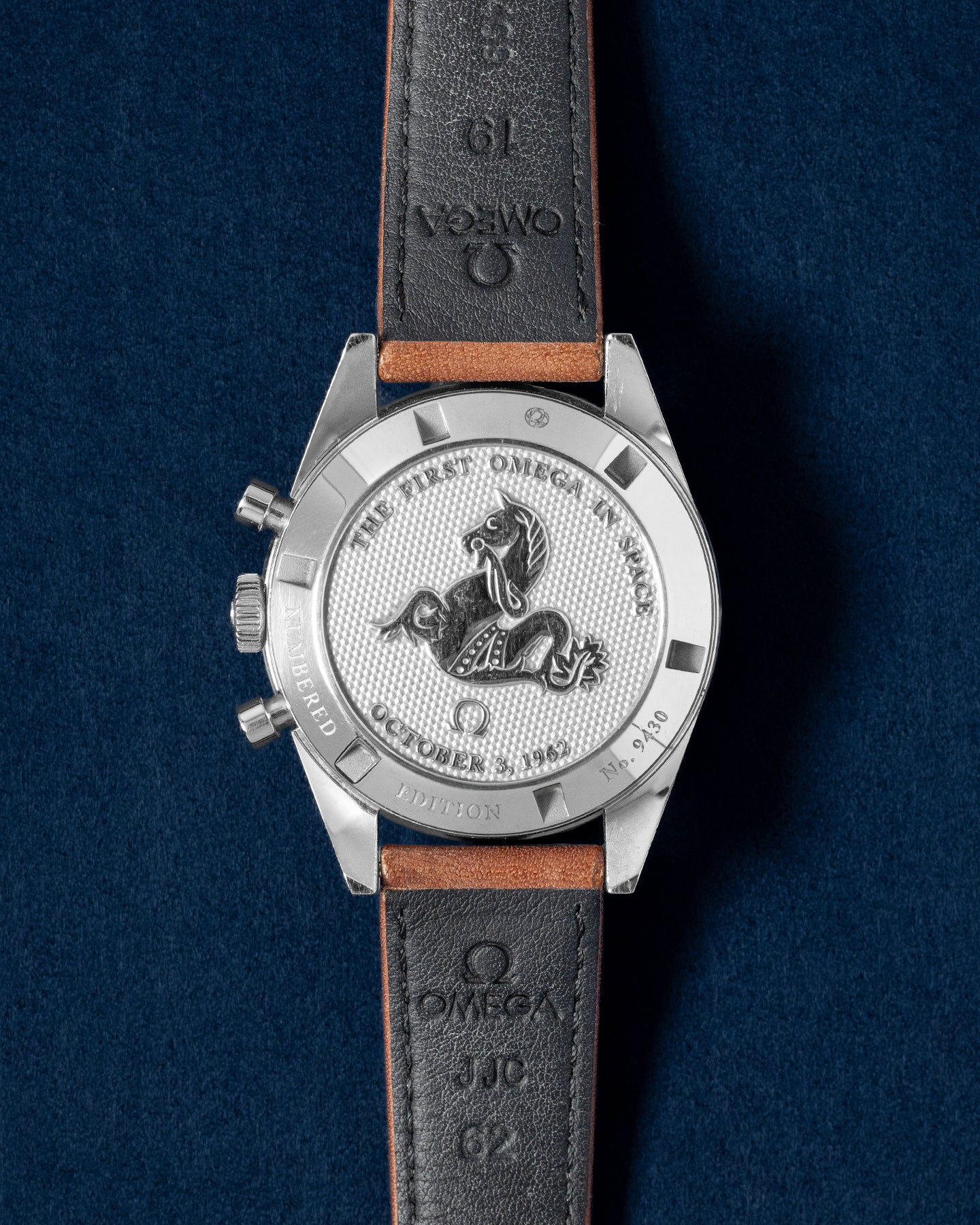

Omega Speedmaster Moonwatch 311.32.40.30.01.001
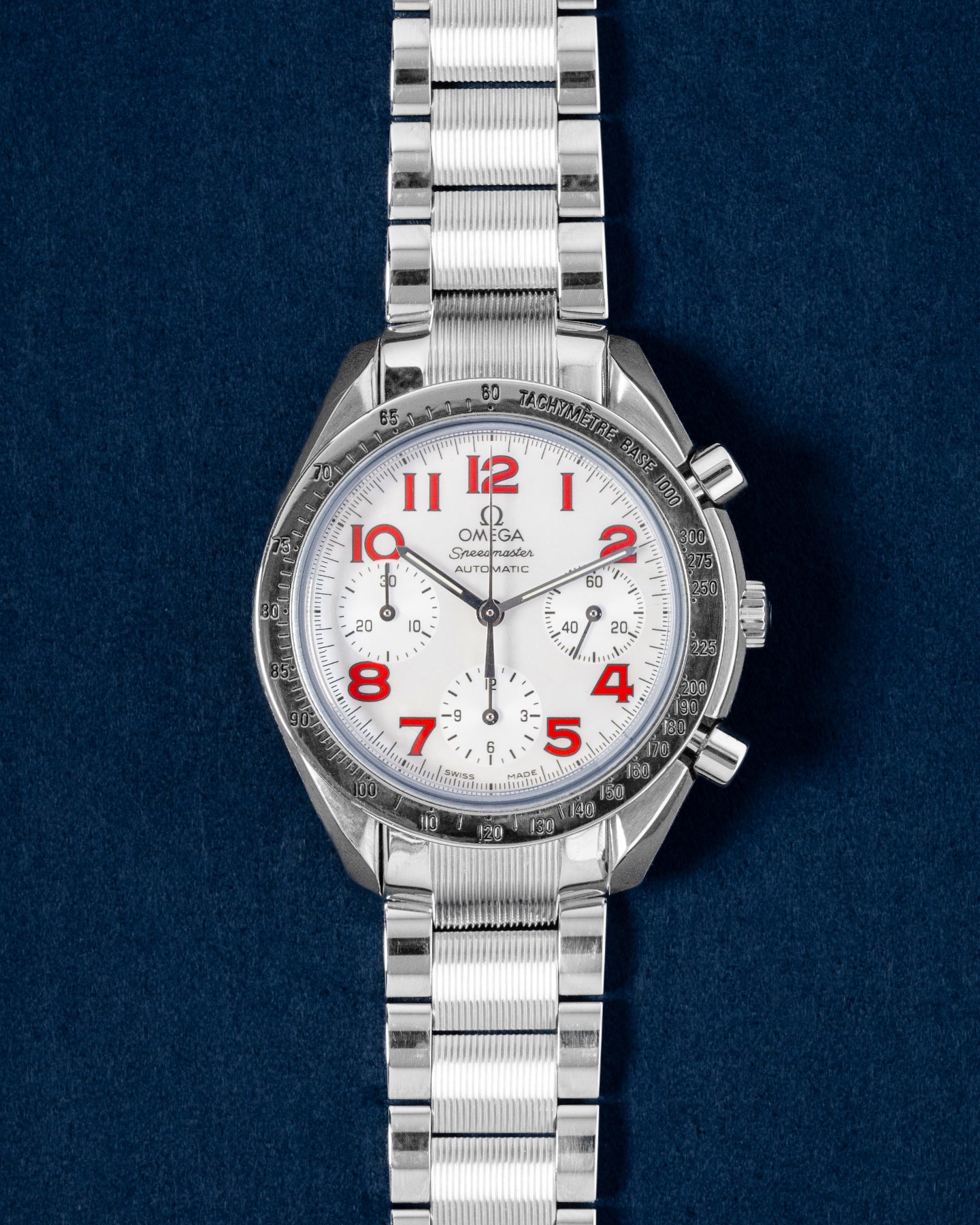
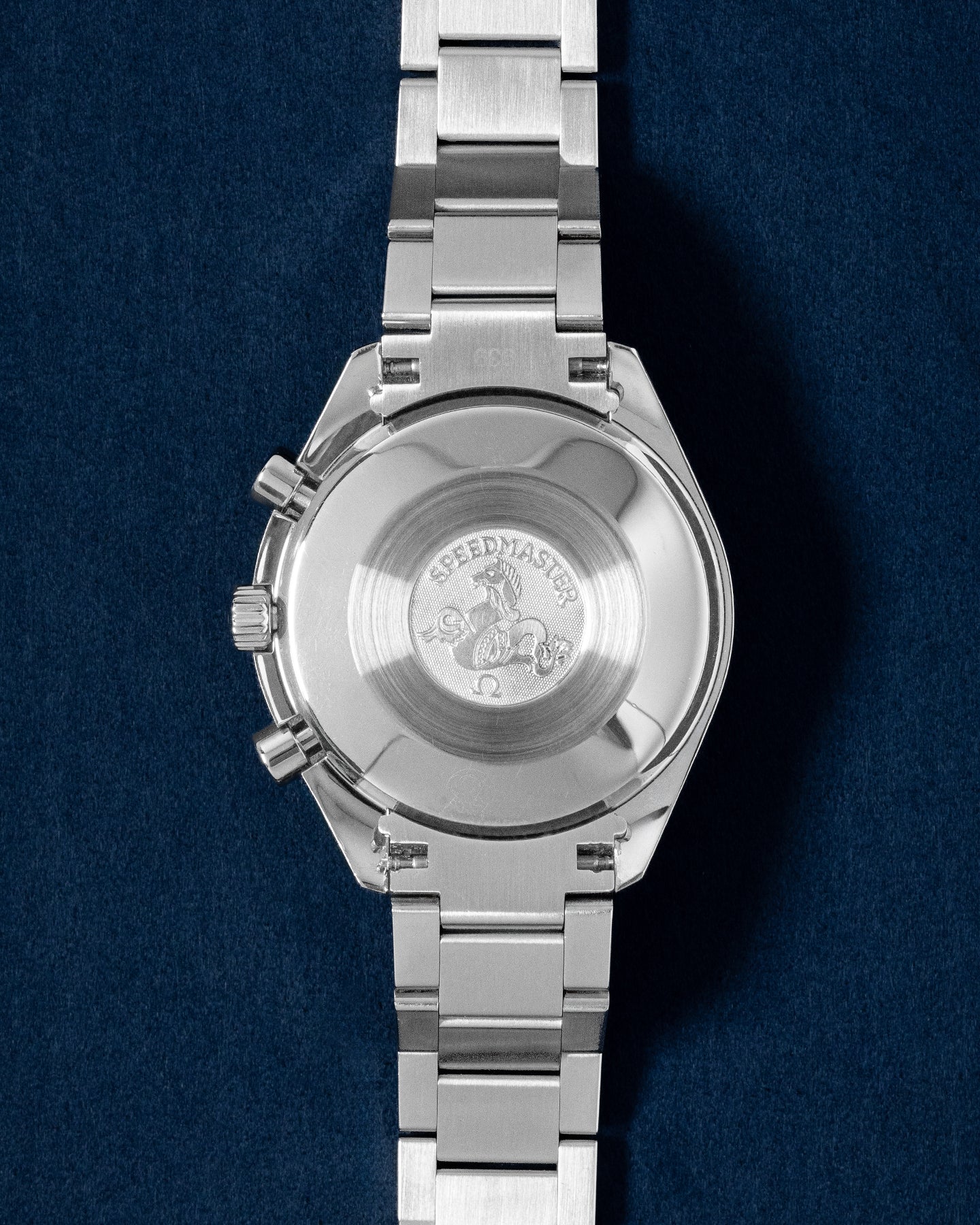
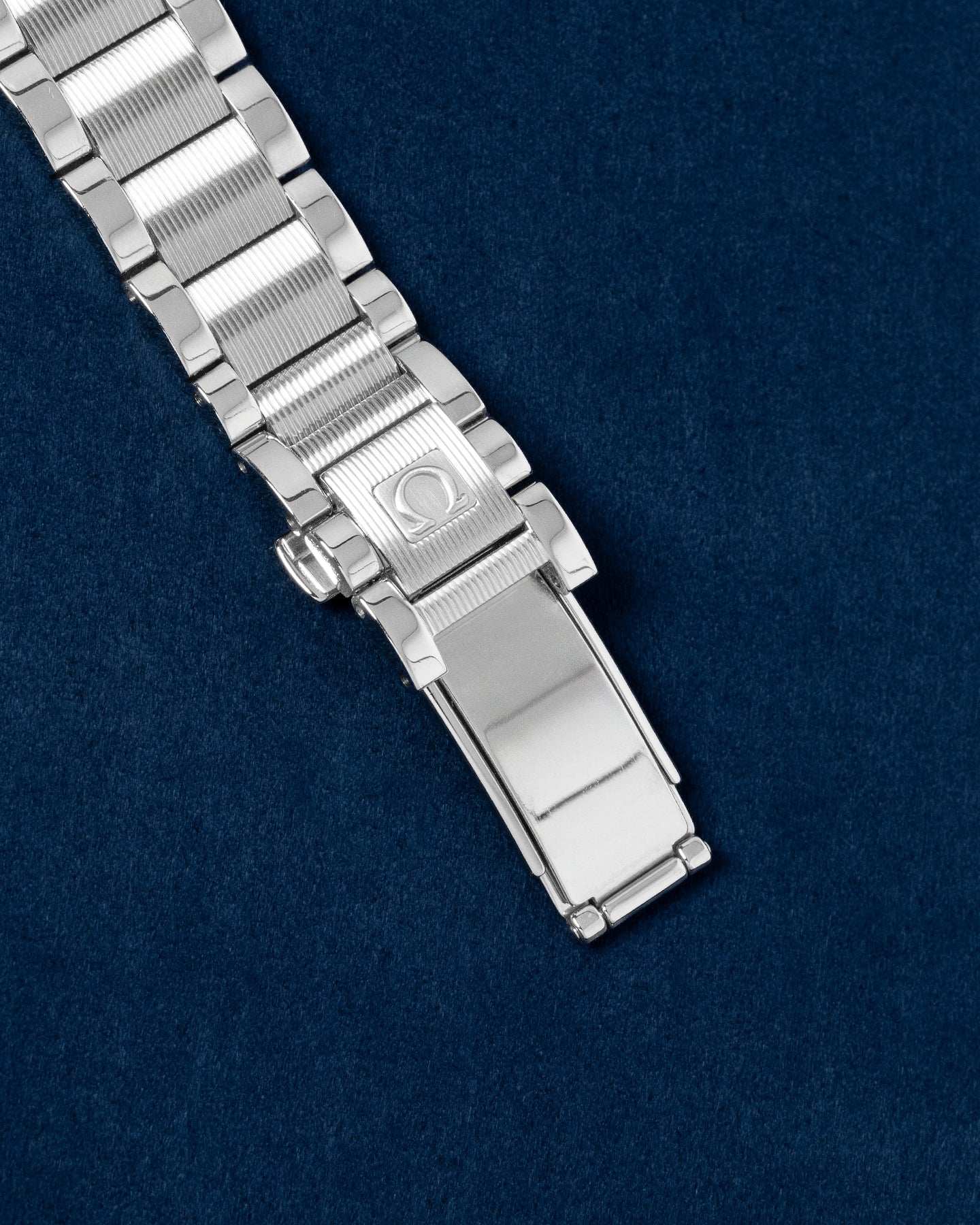
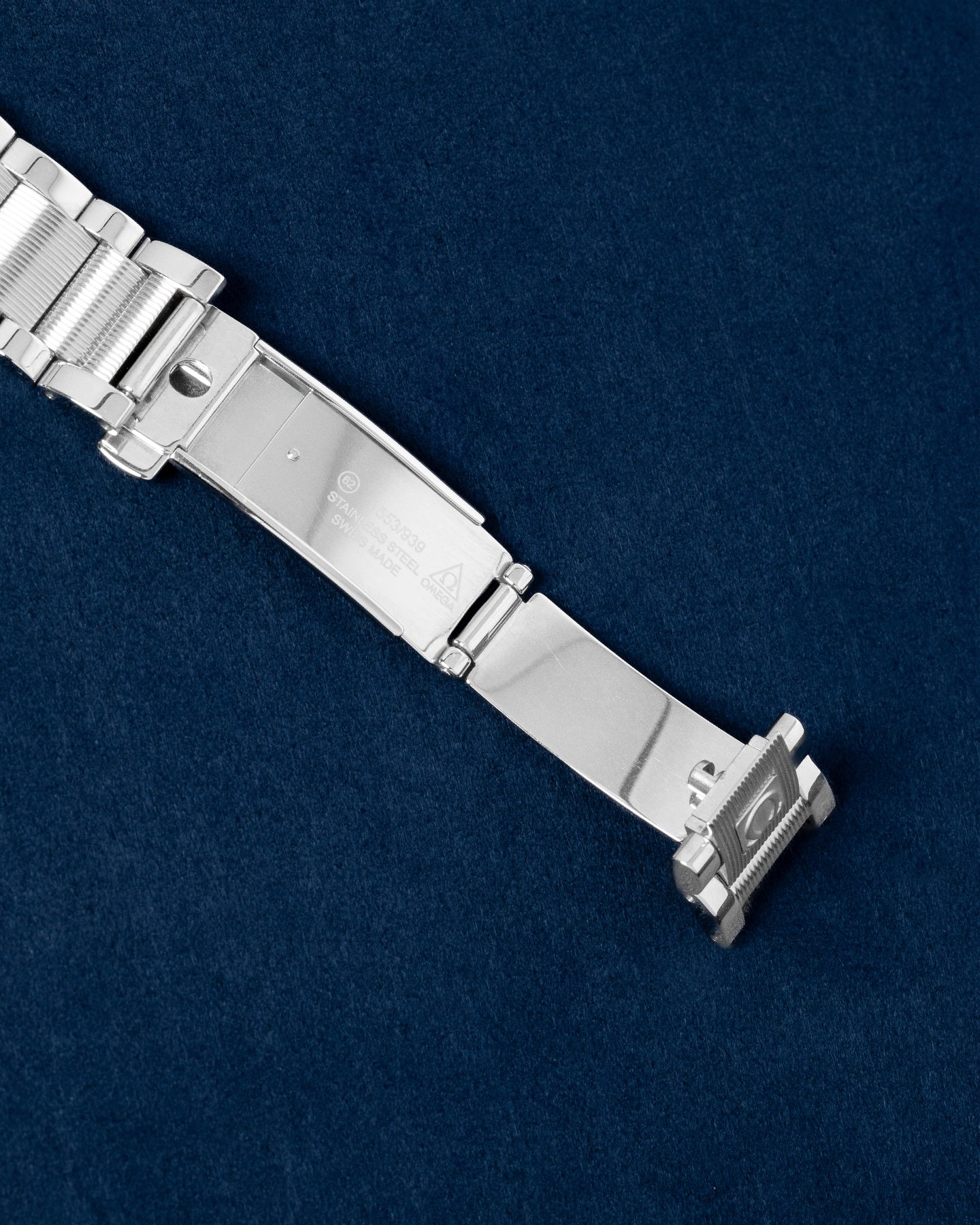
Omega Speedmaster Reduced 38347940
Omega Speedmaster Moonwatch Professional 310.30.42.50.04.001
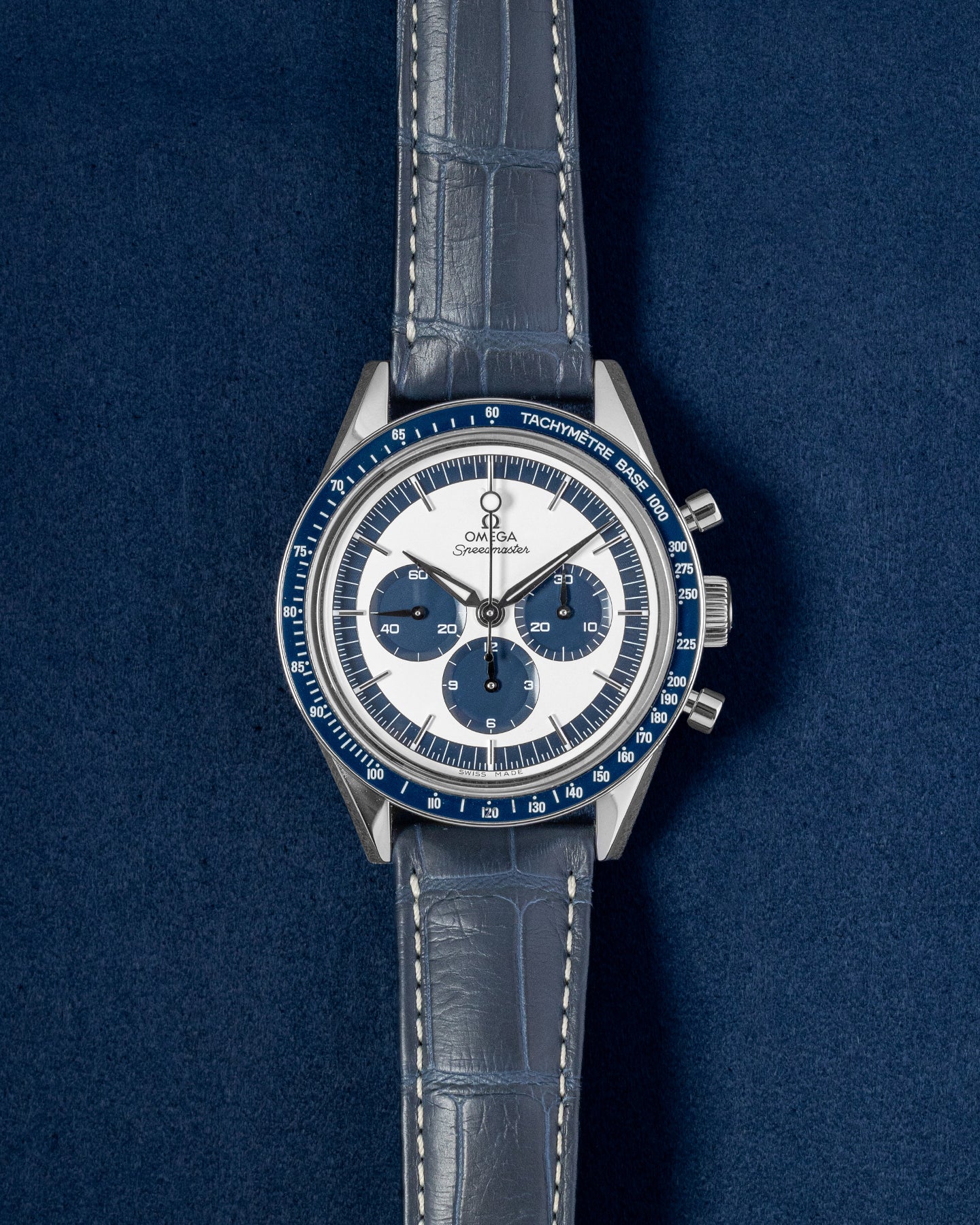
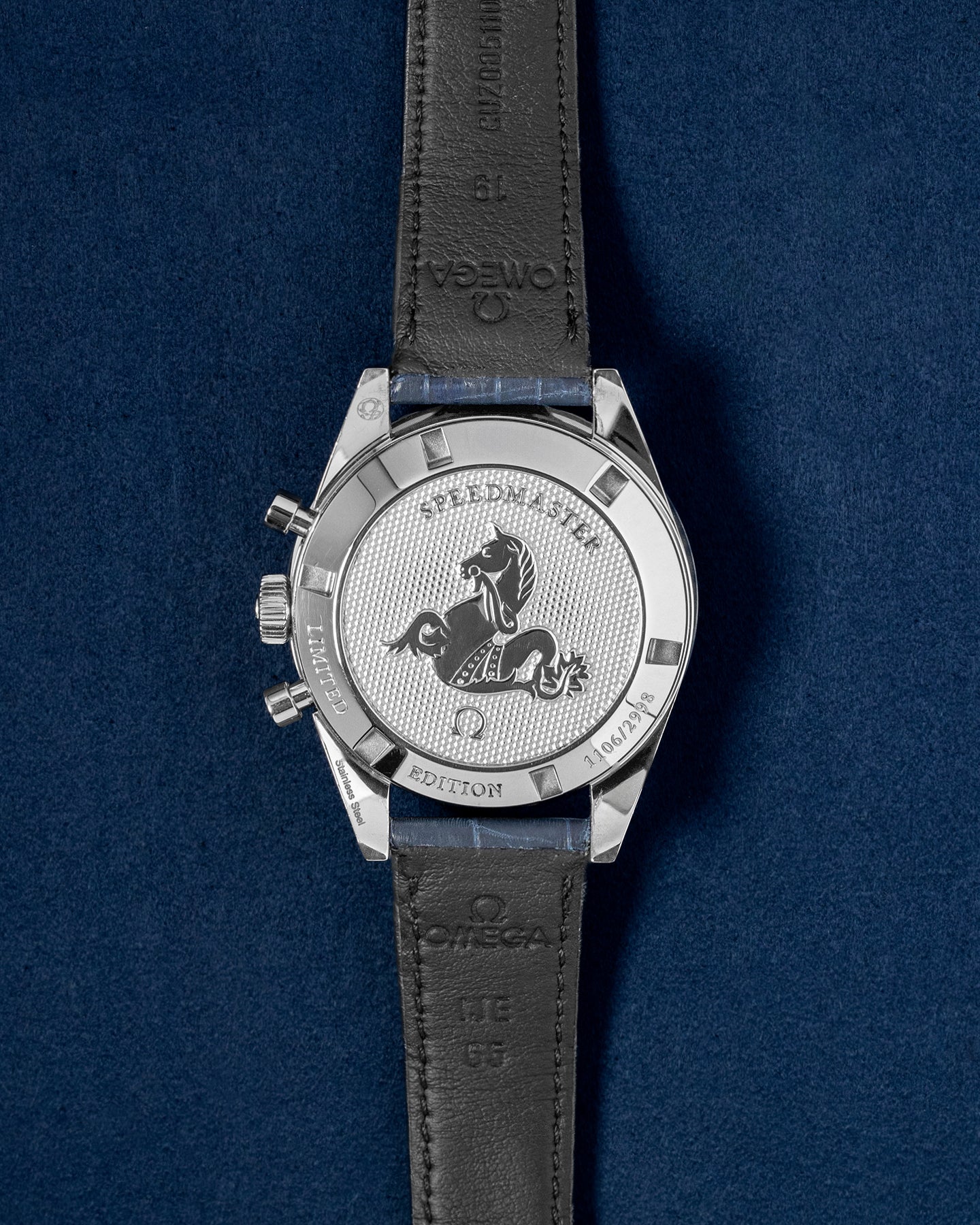
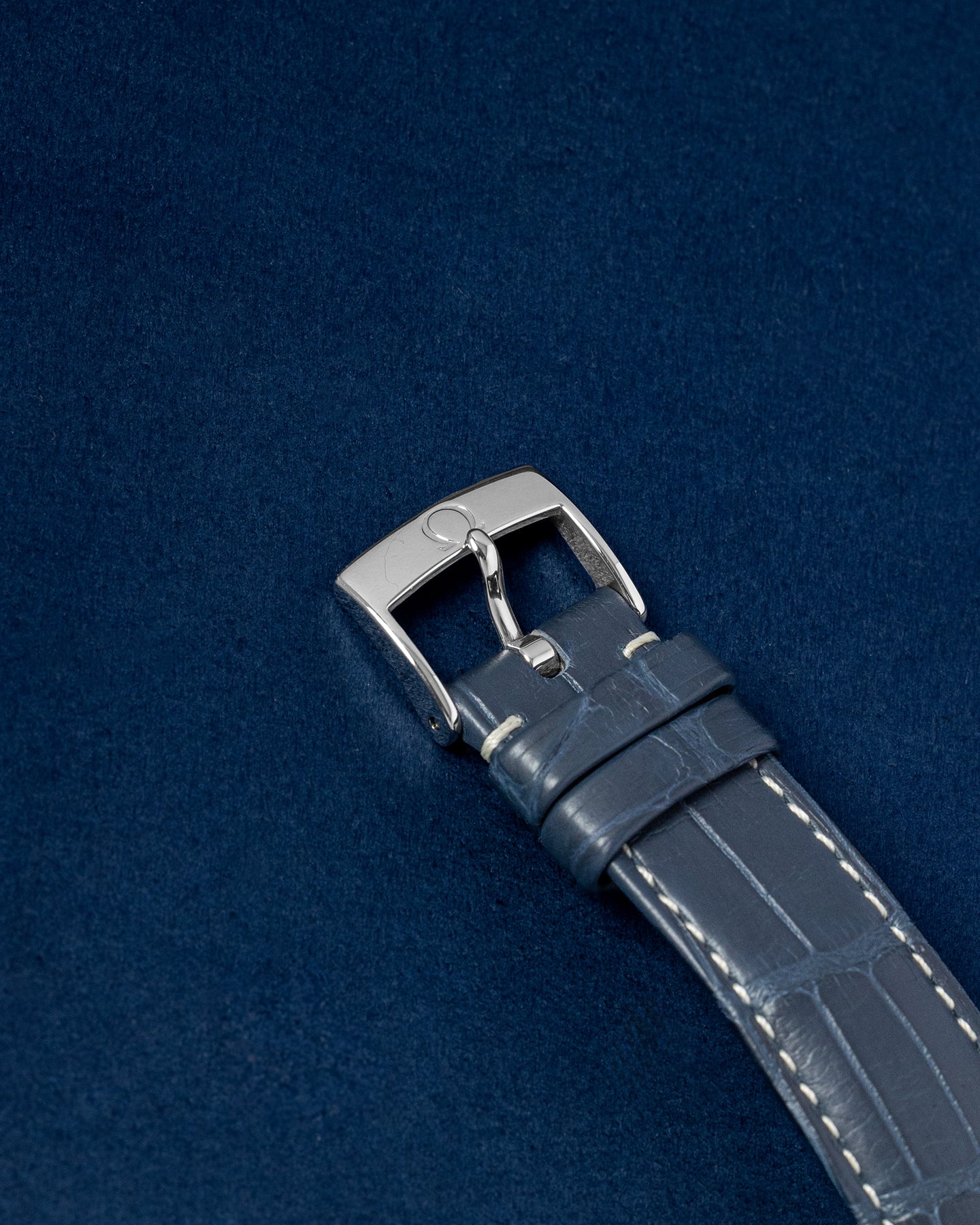

Omega Speedmaster Anniversary Series 311.33.40.30.02.001
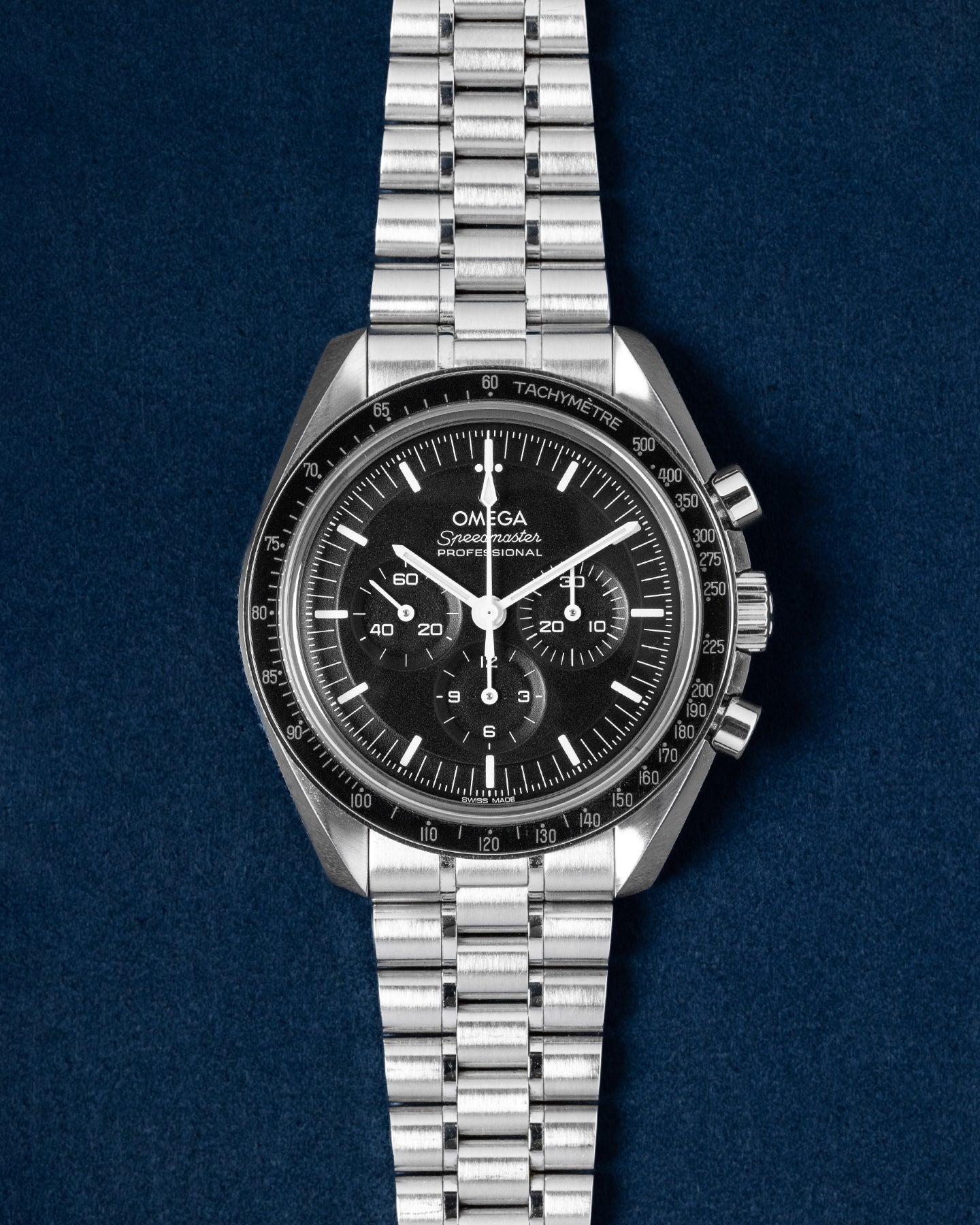
Omega Speedmaster Moonwatch Professional 310.30.42.50.01.002
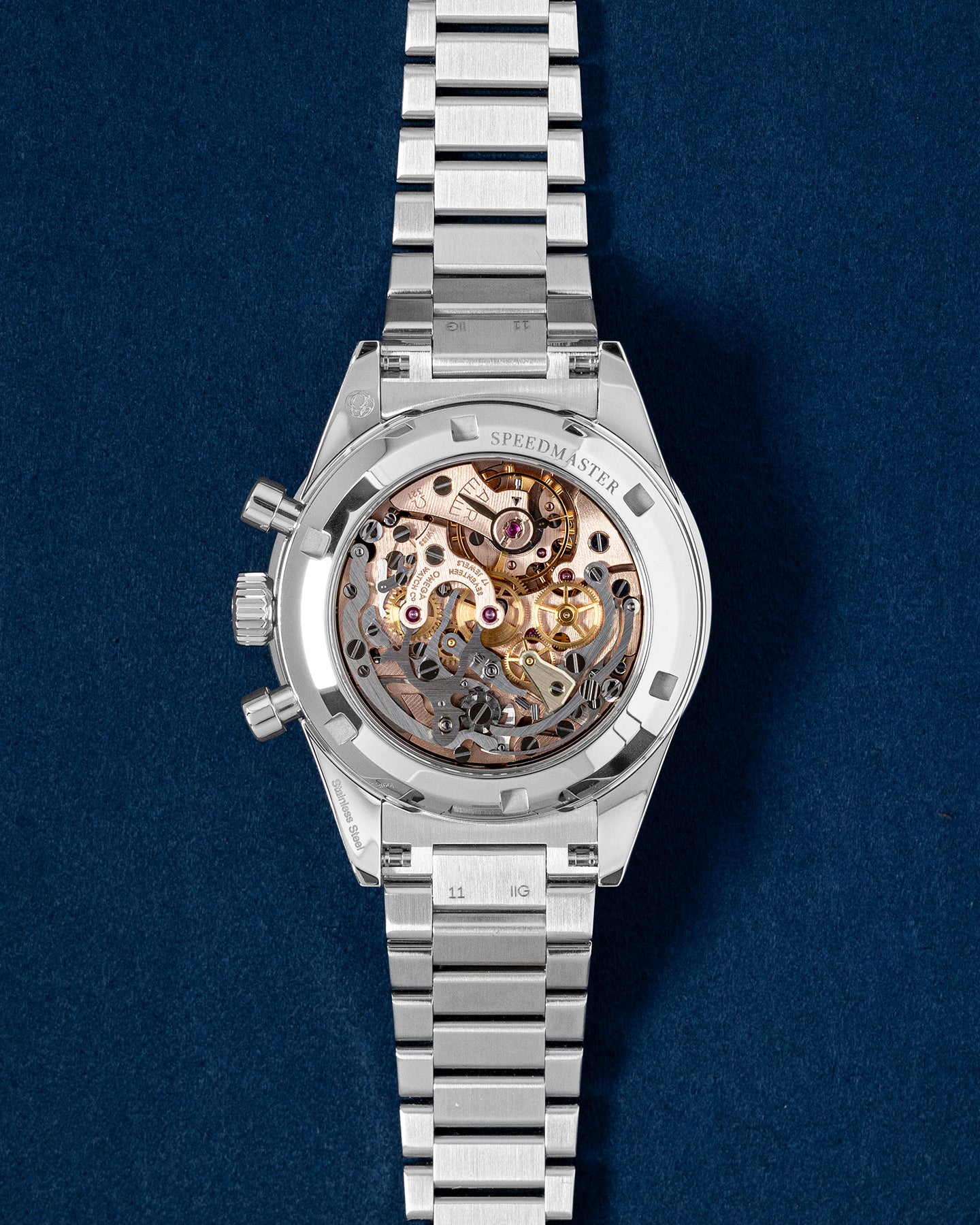
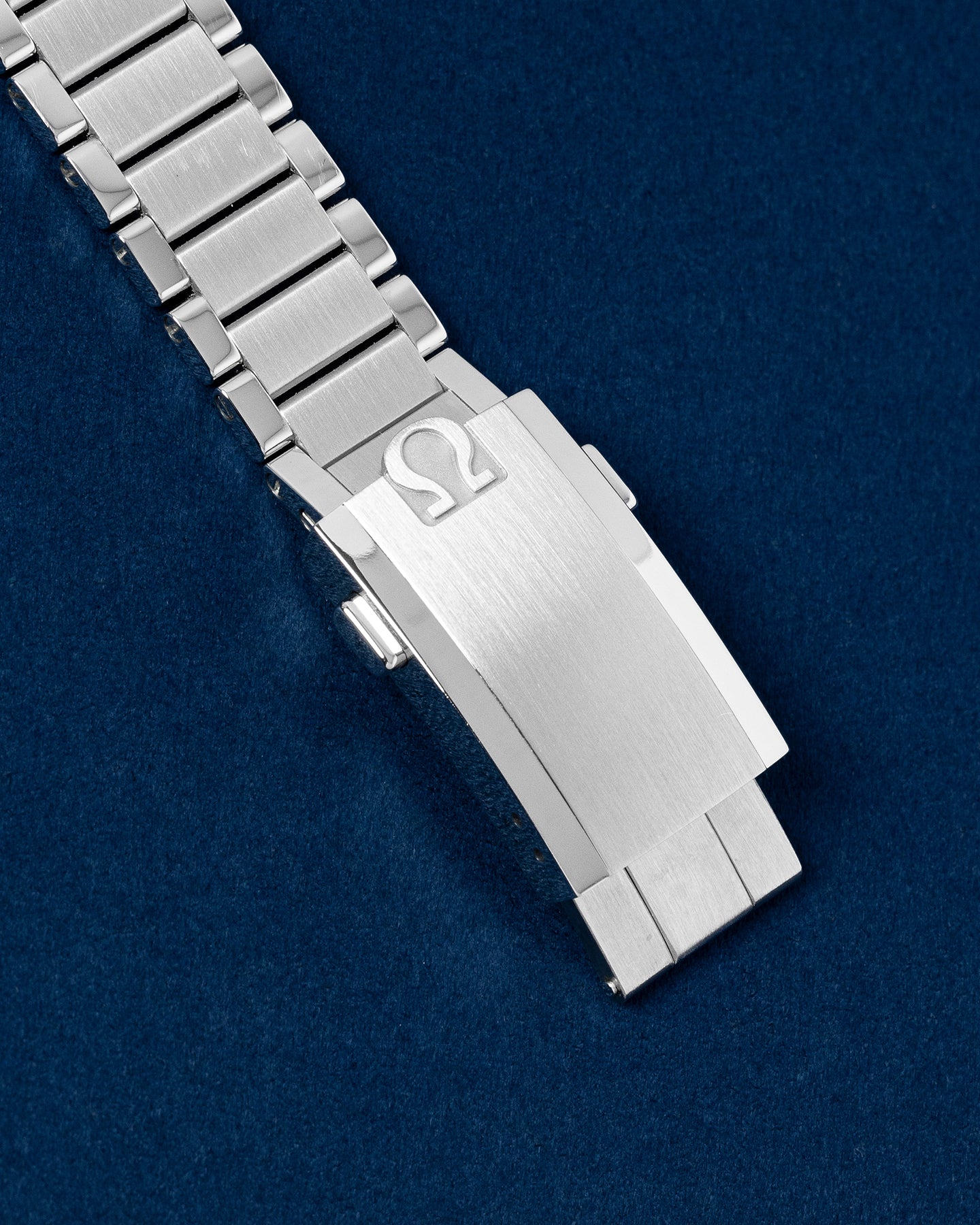
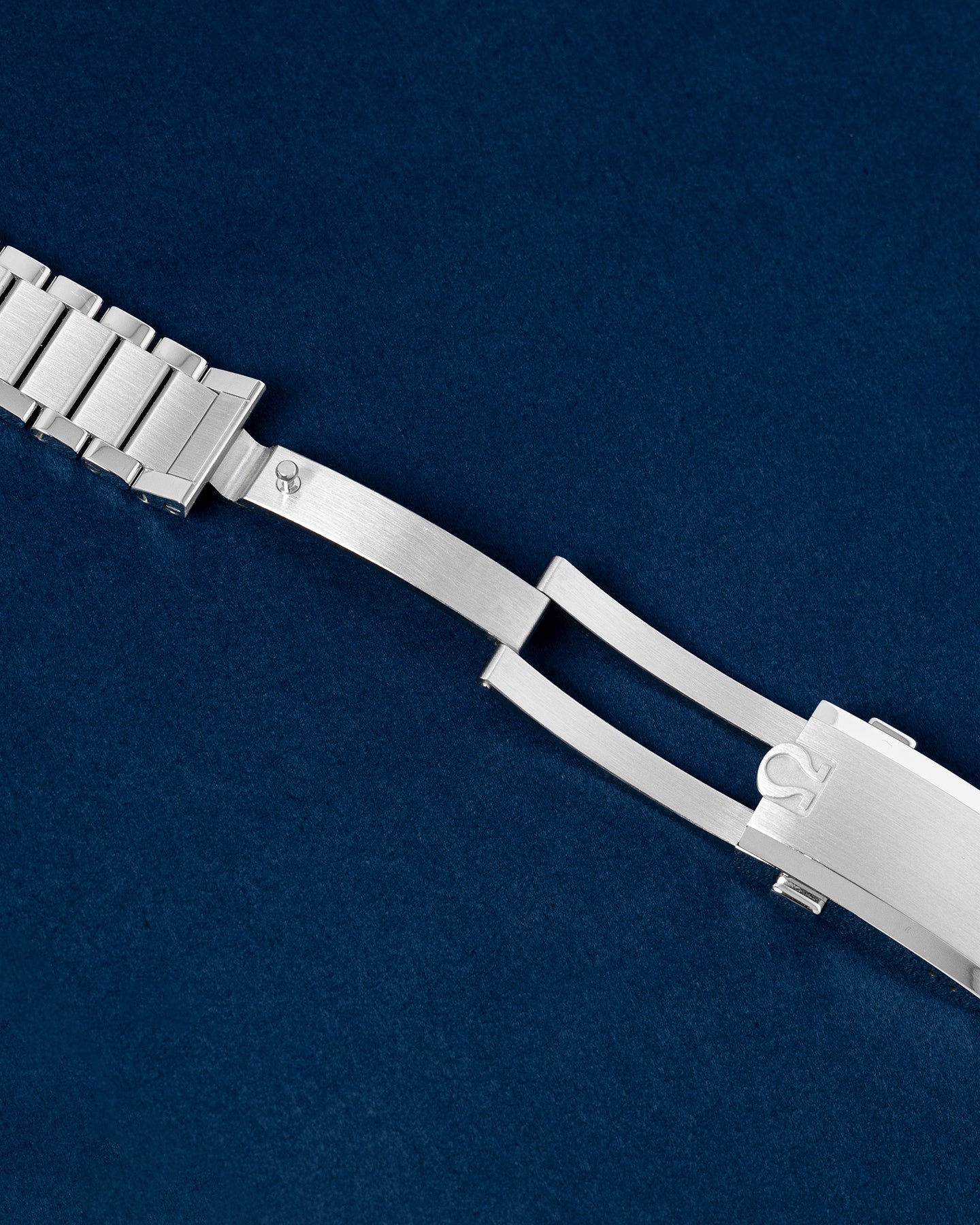
Omega Speedmaster "Ed White" 311.30.40.30.01.001
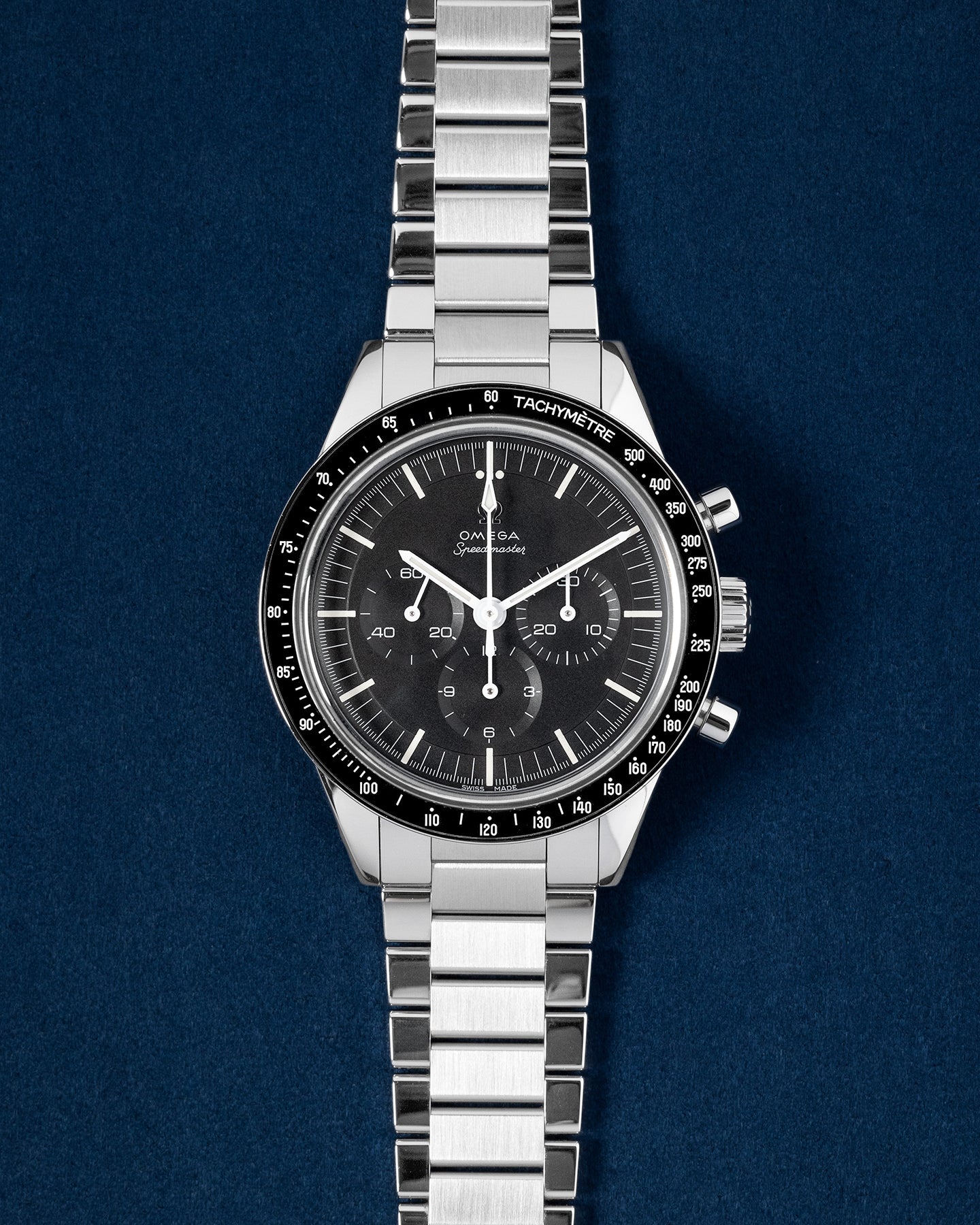
Omega Speedmaster 311.30.40.30.01.001
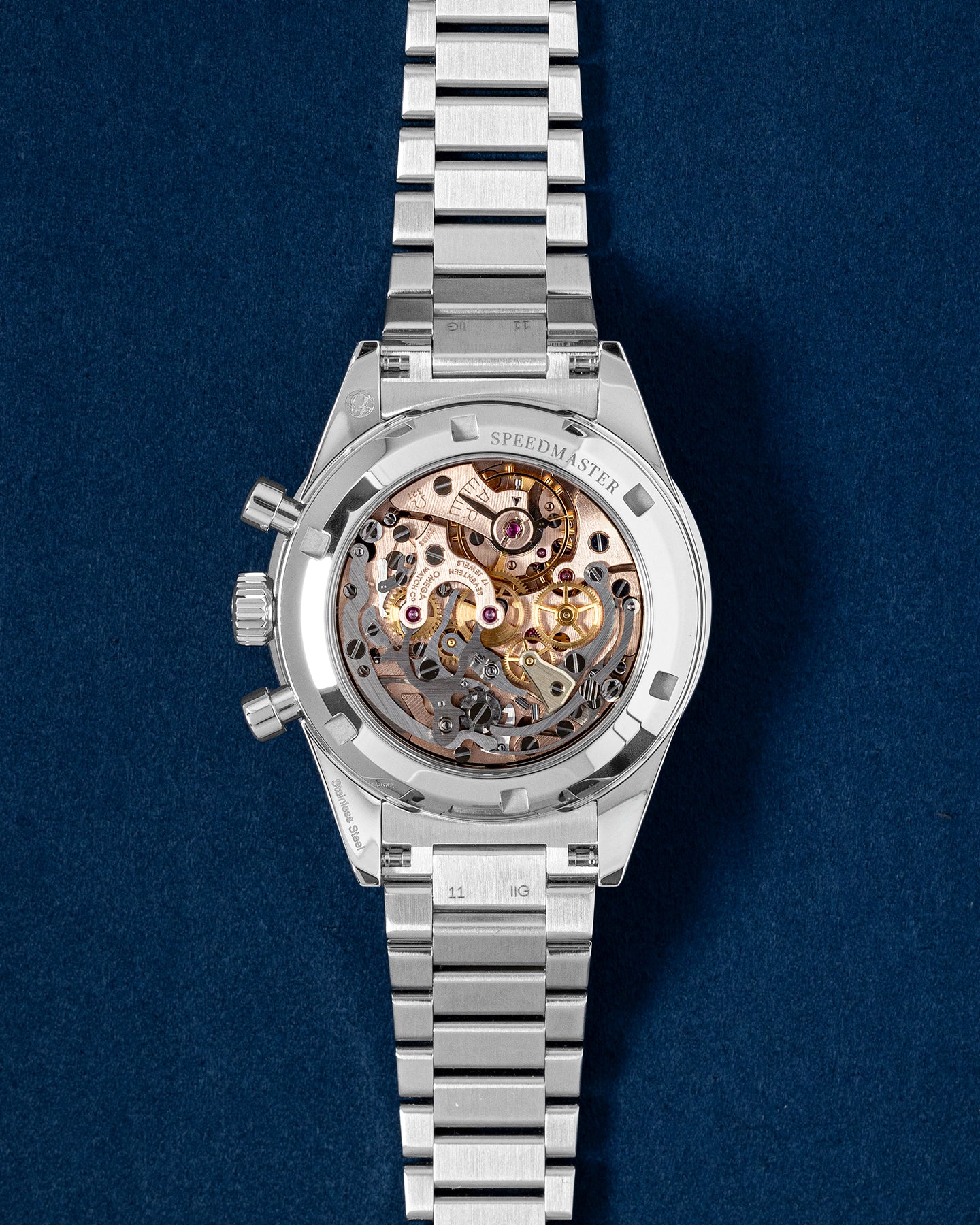
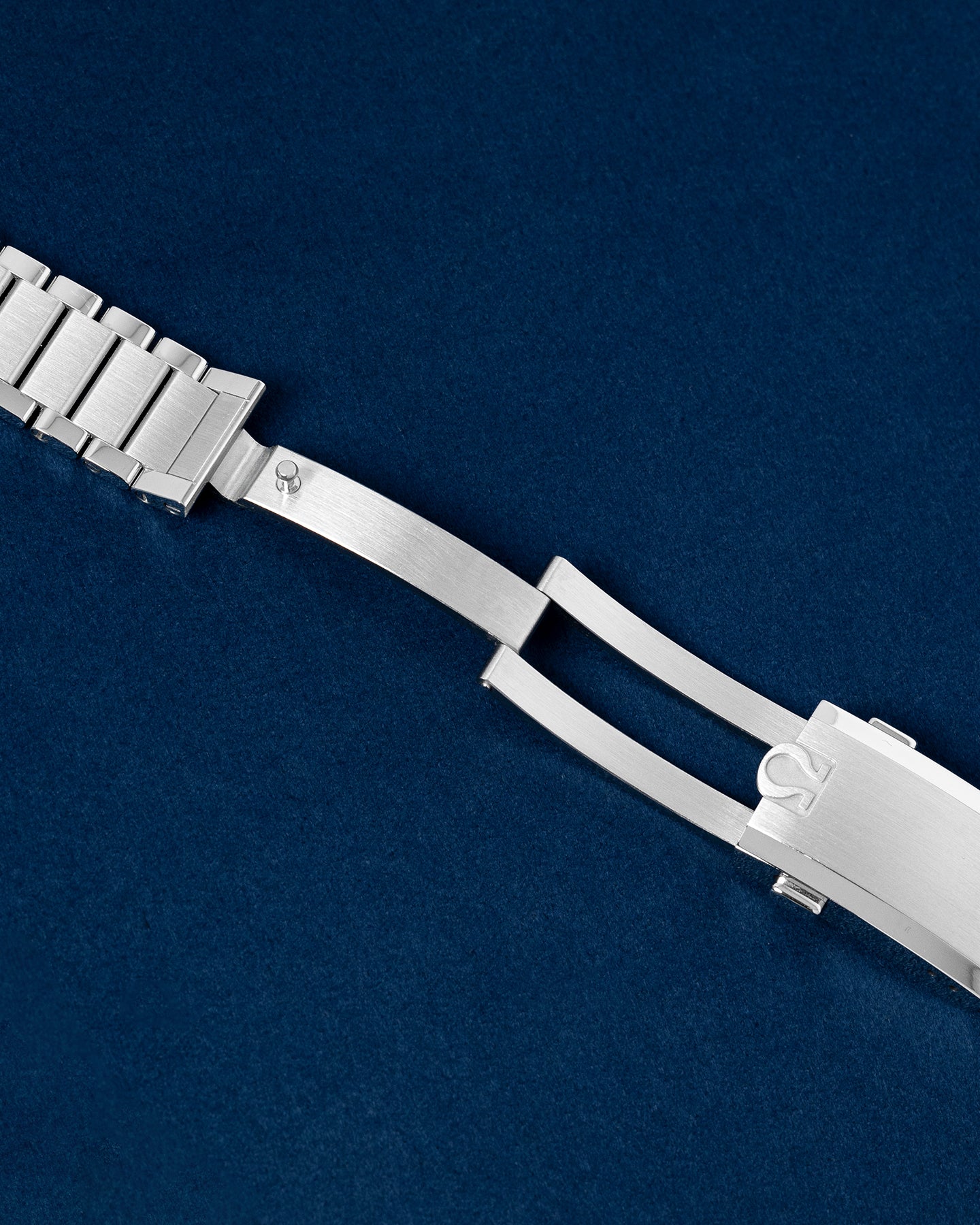
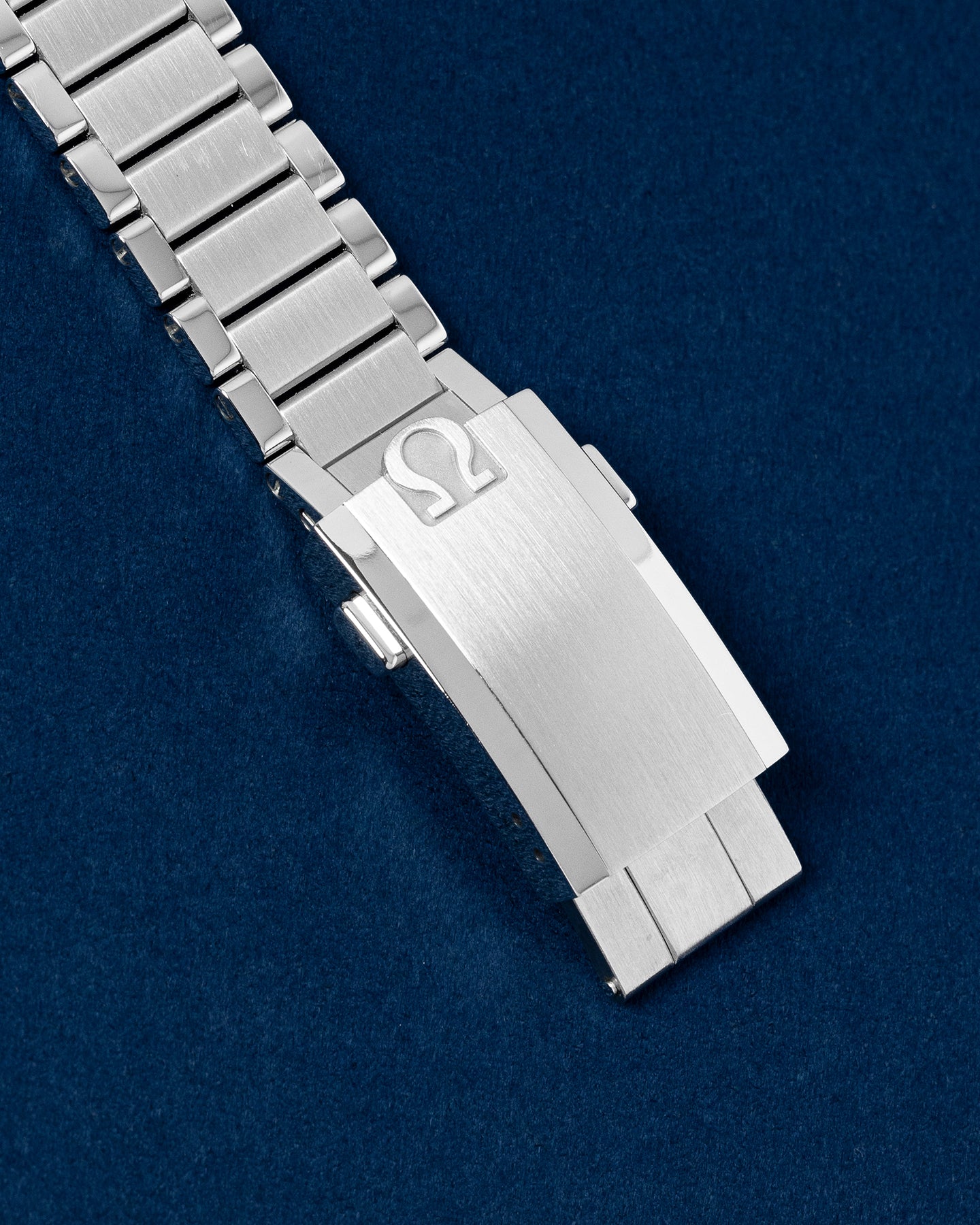
Omega Speedmaster 31130403001001
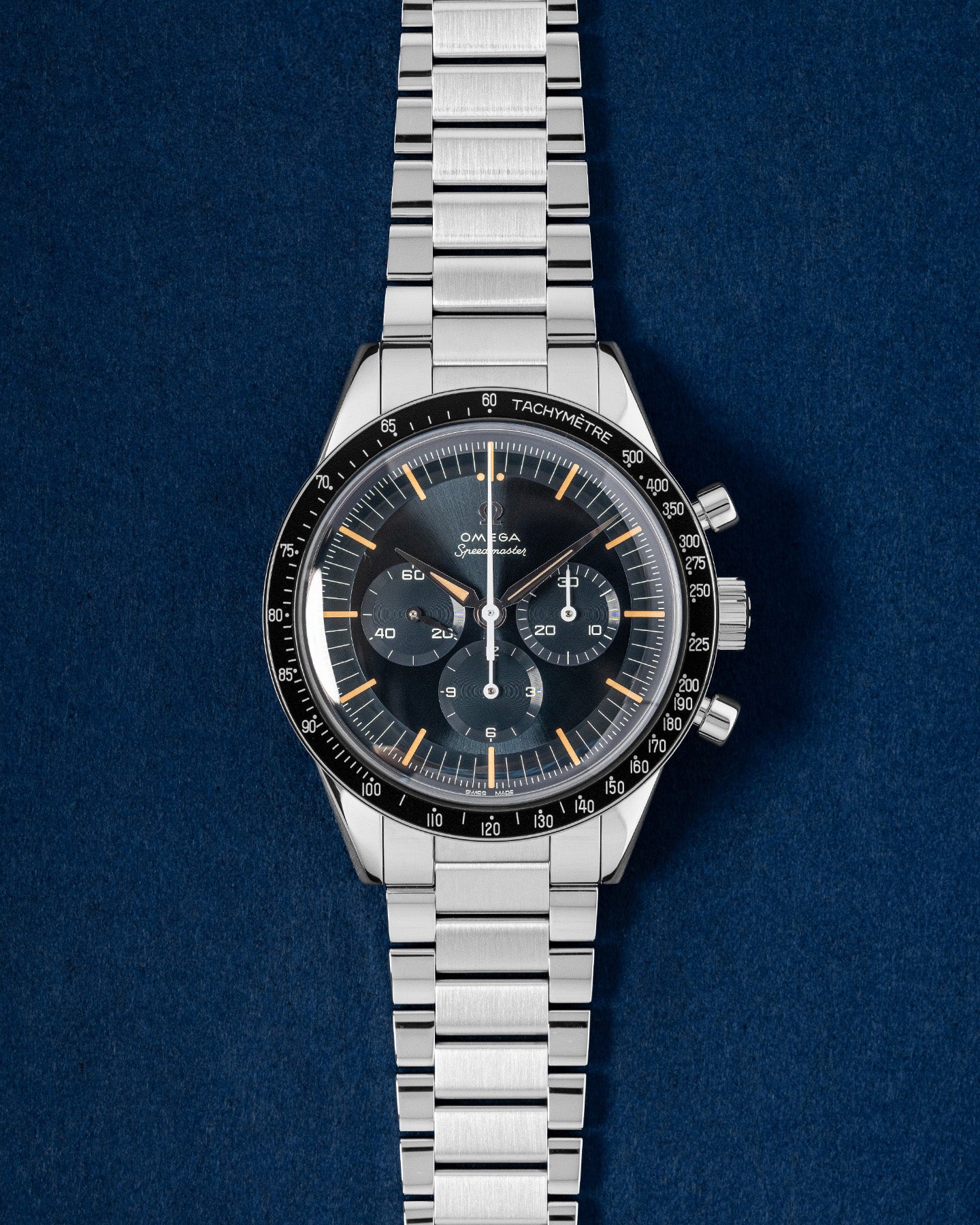
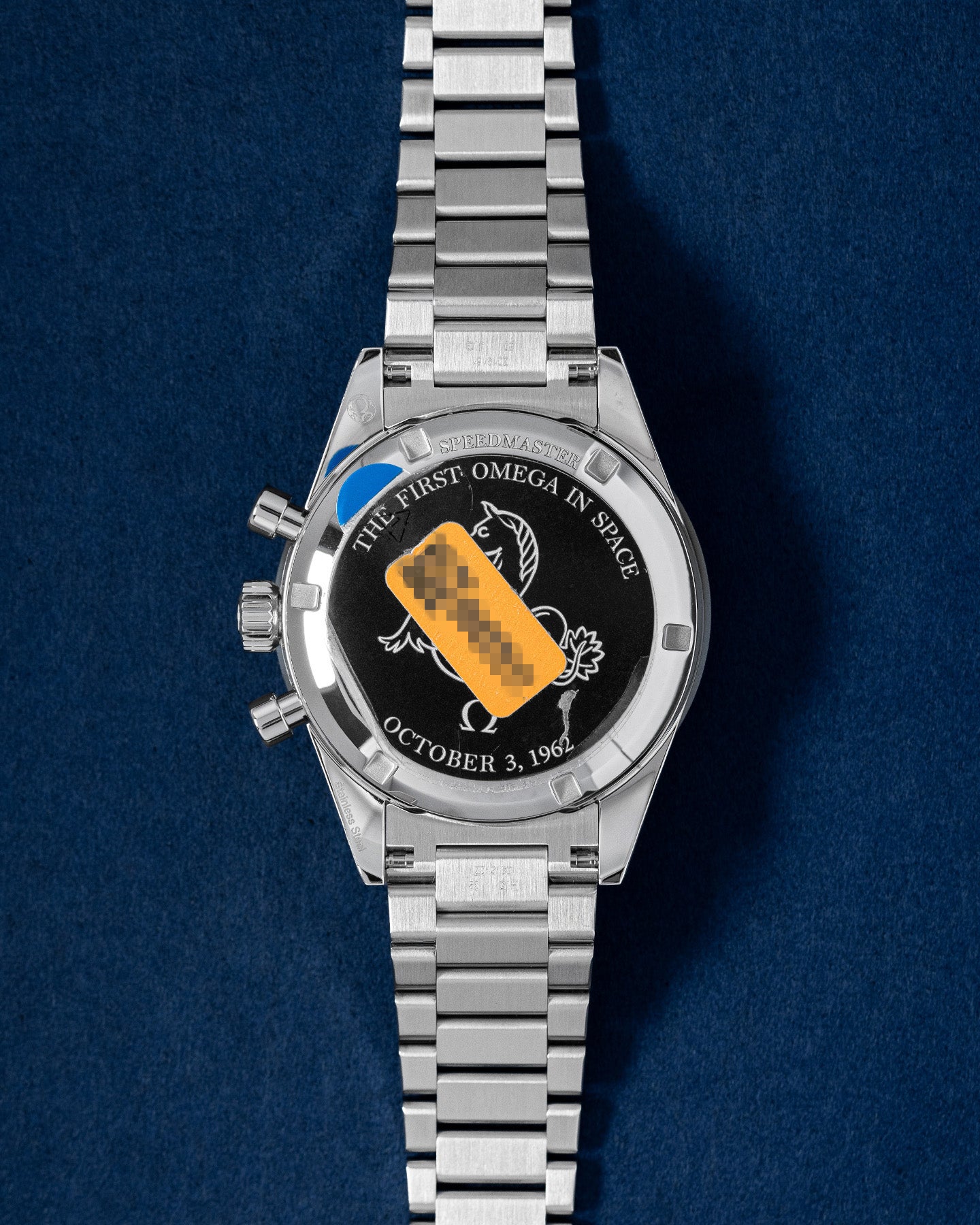
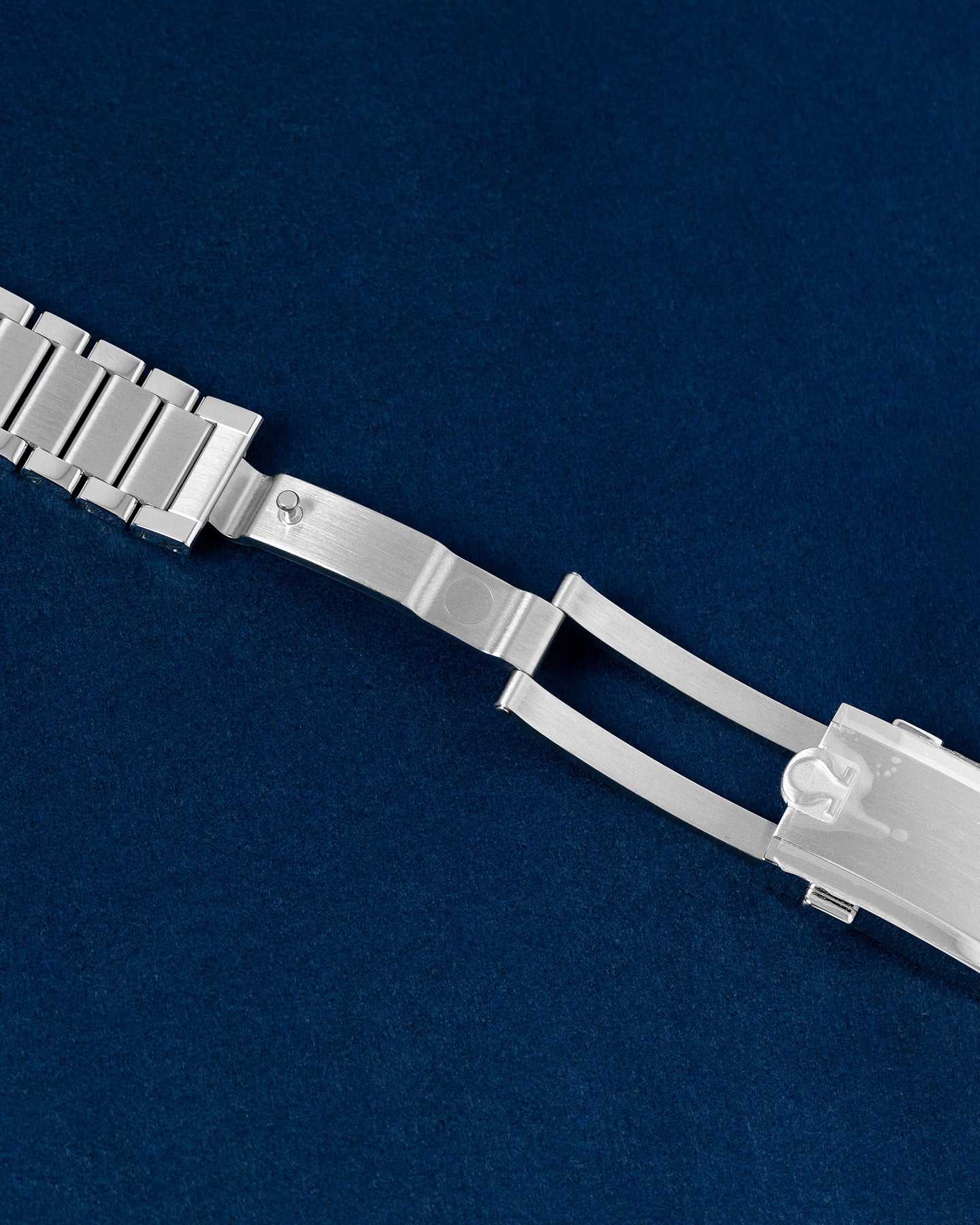
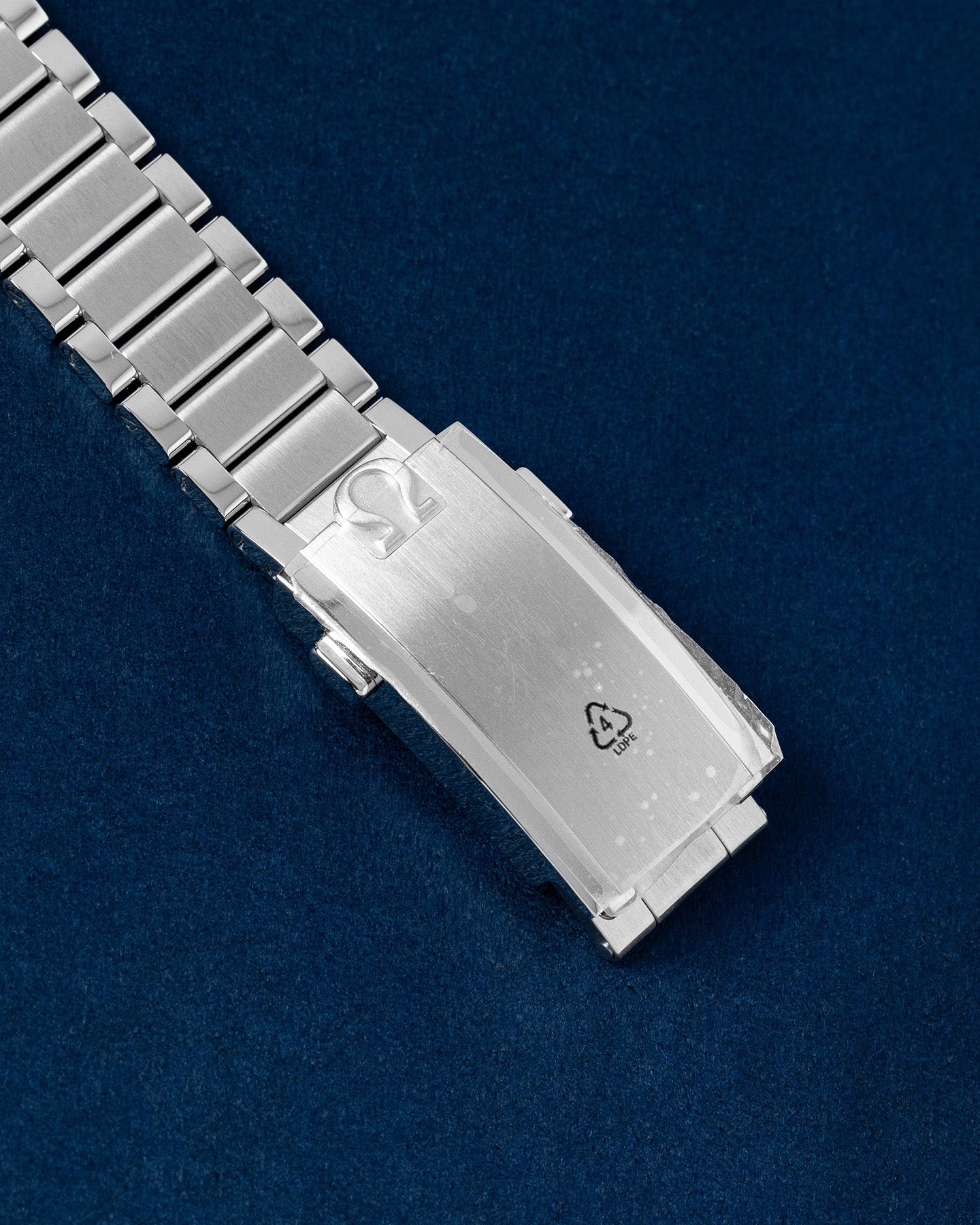
Omega Speedmaster First Omega In Space 31030405006001
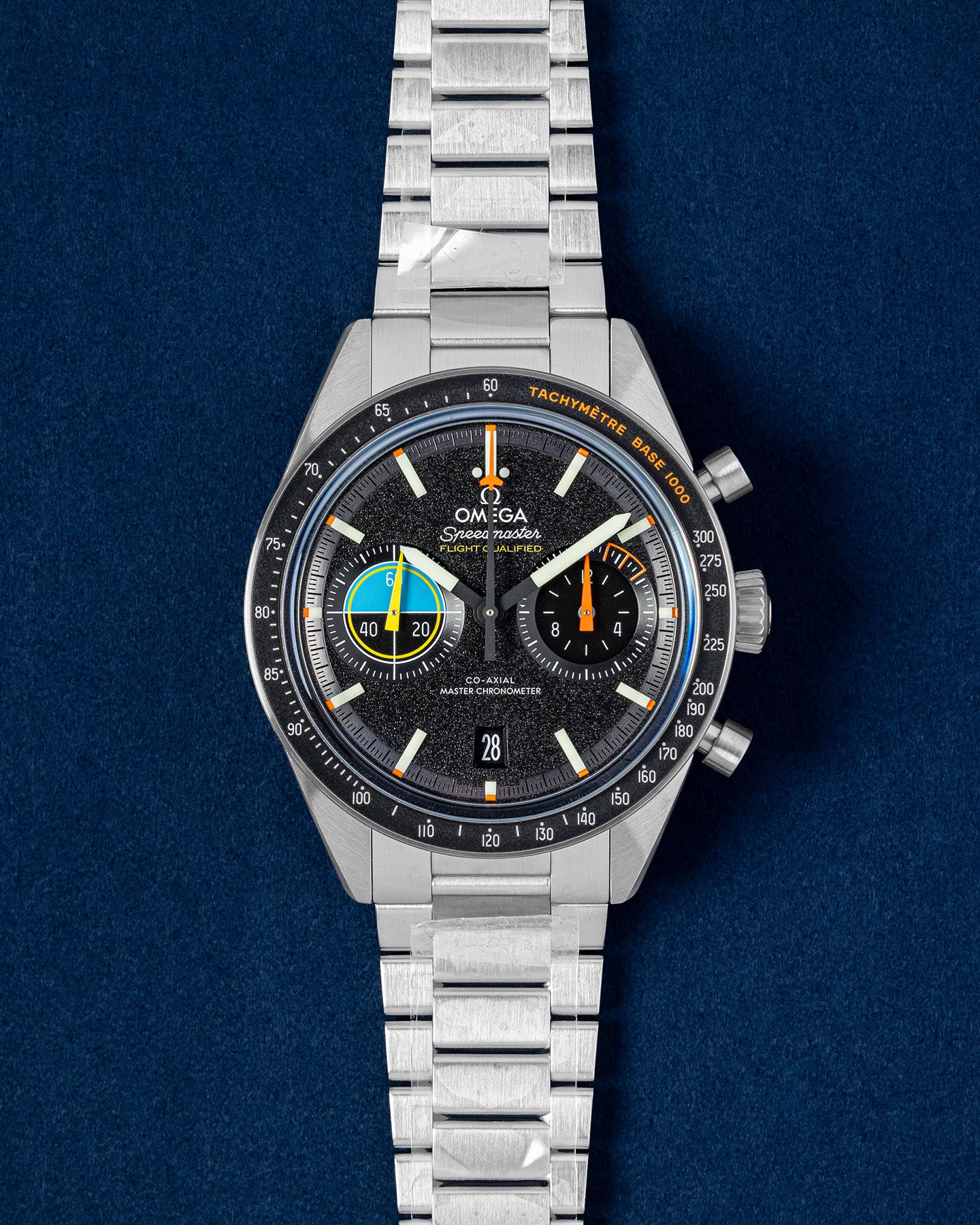
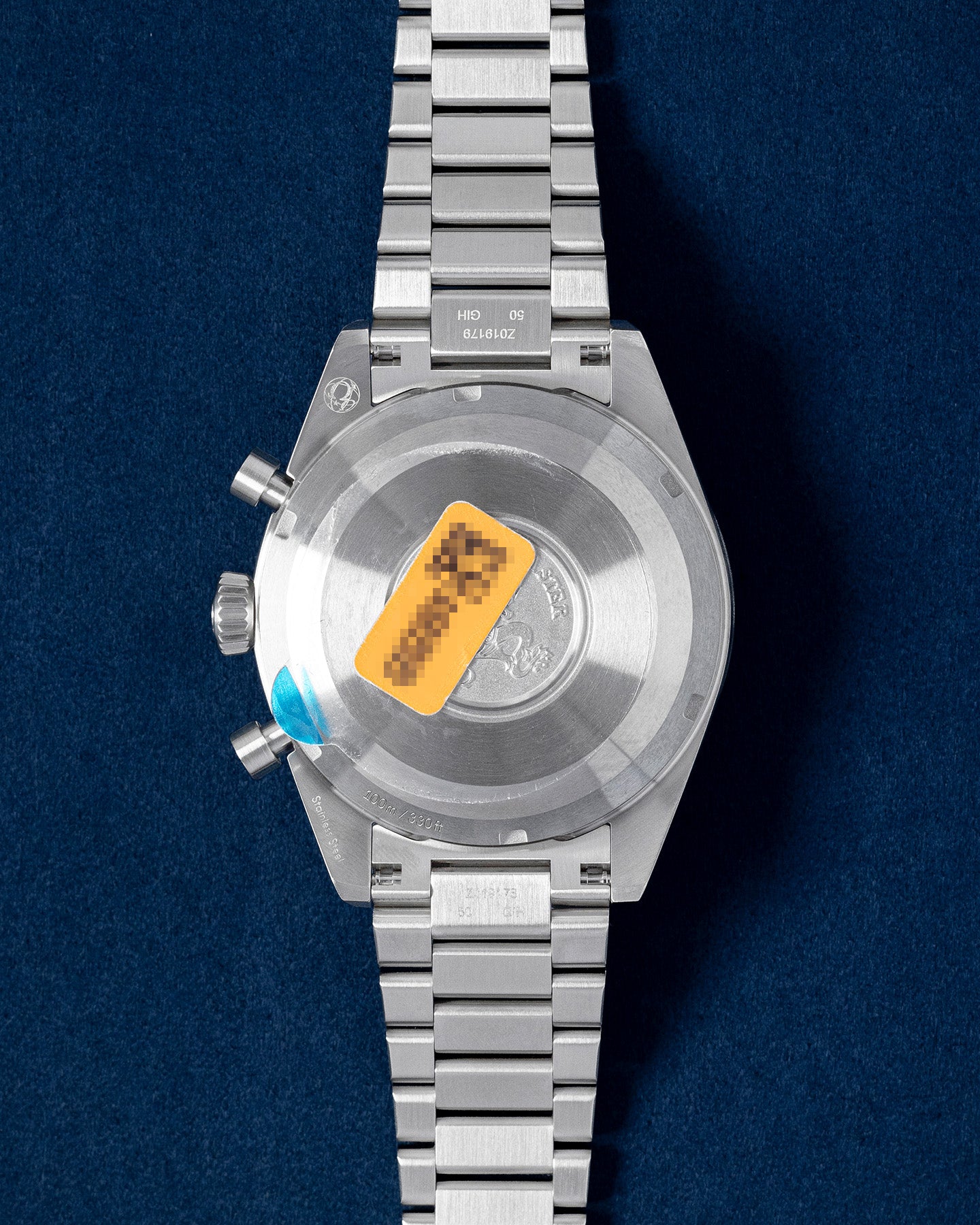
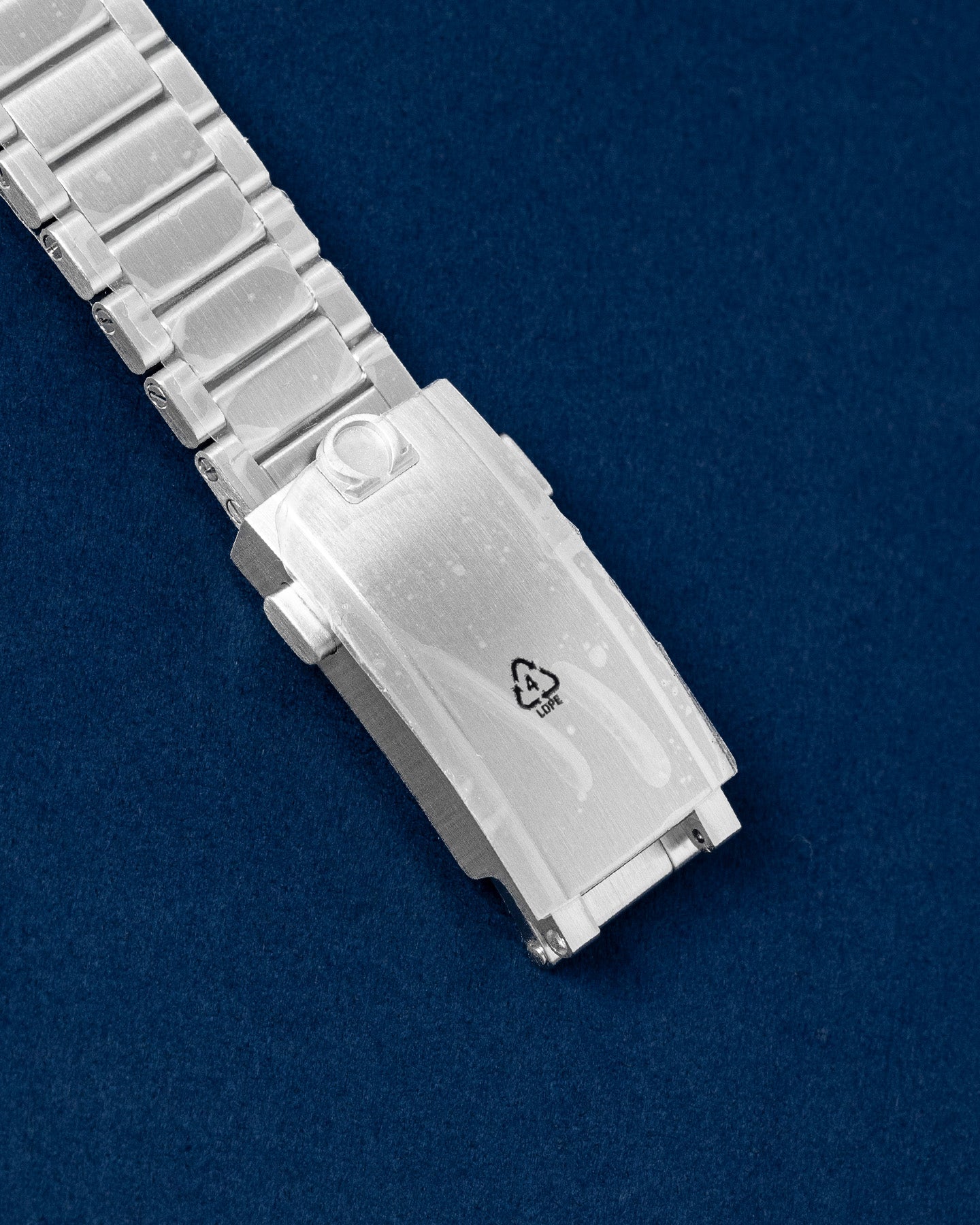
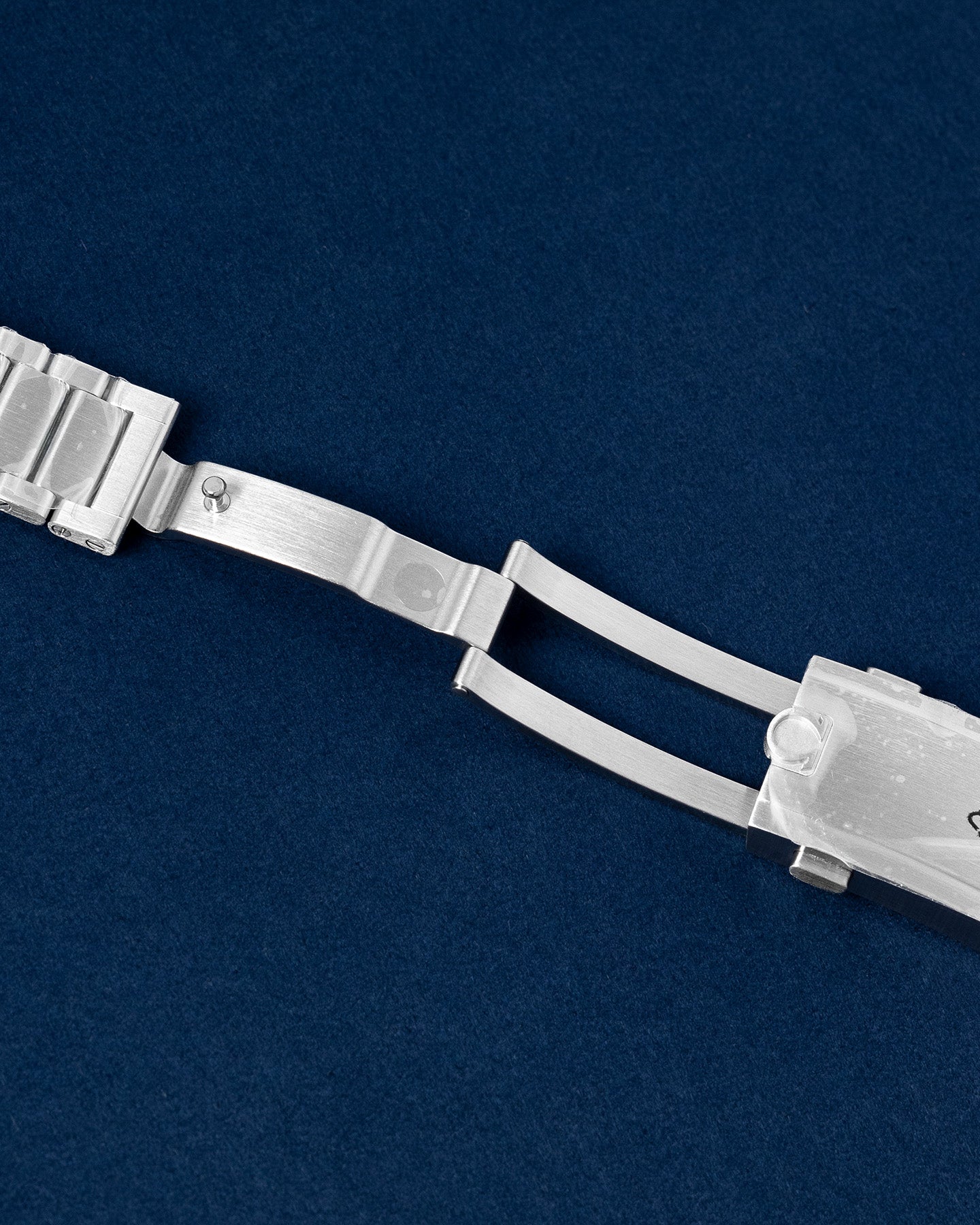
Omega Speedmaster 33210415101002
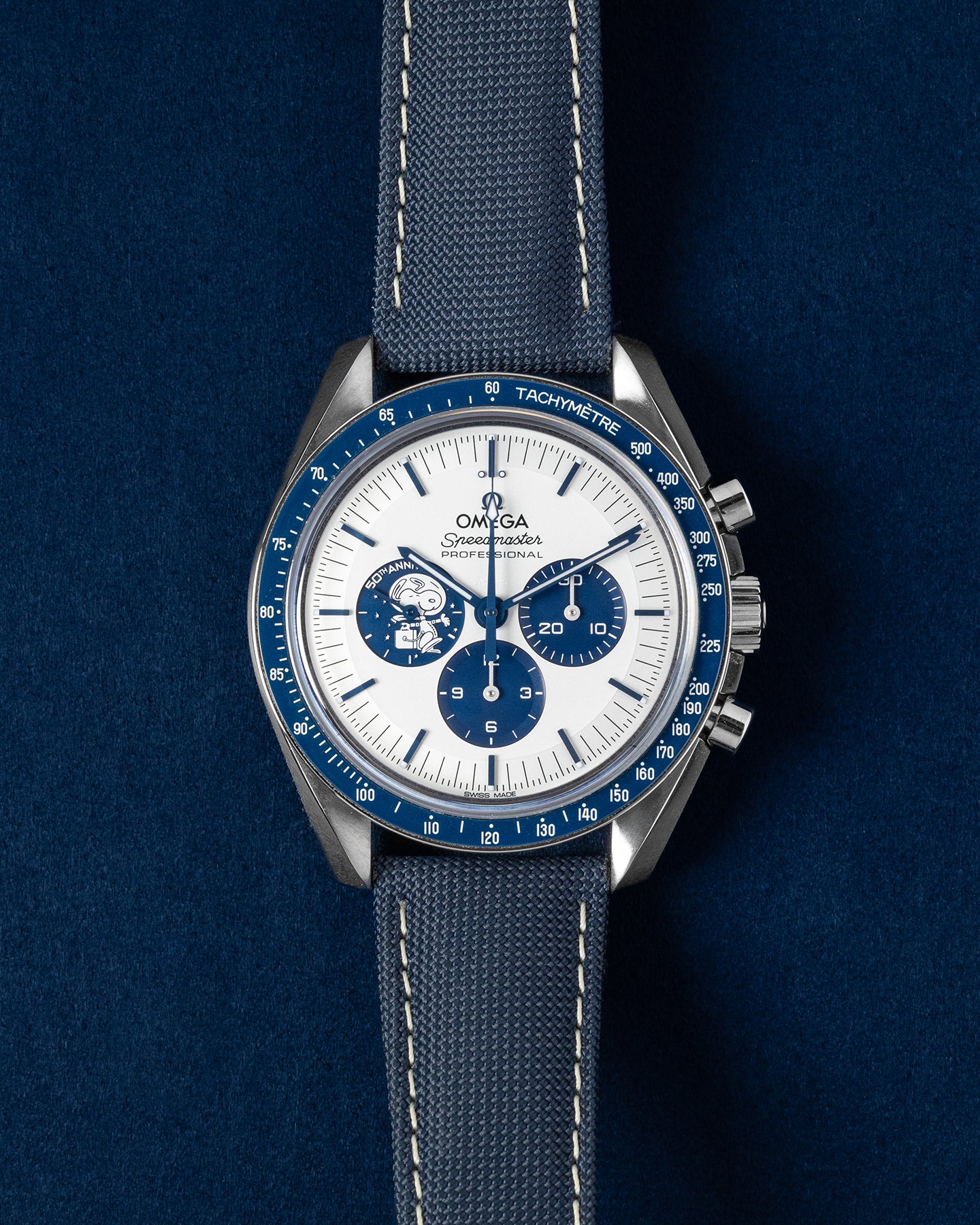
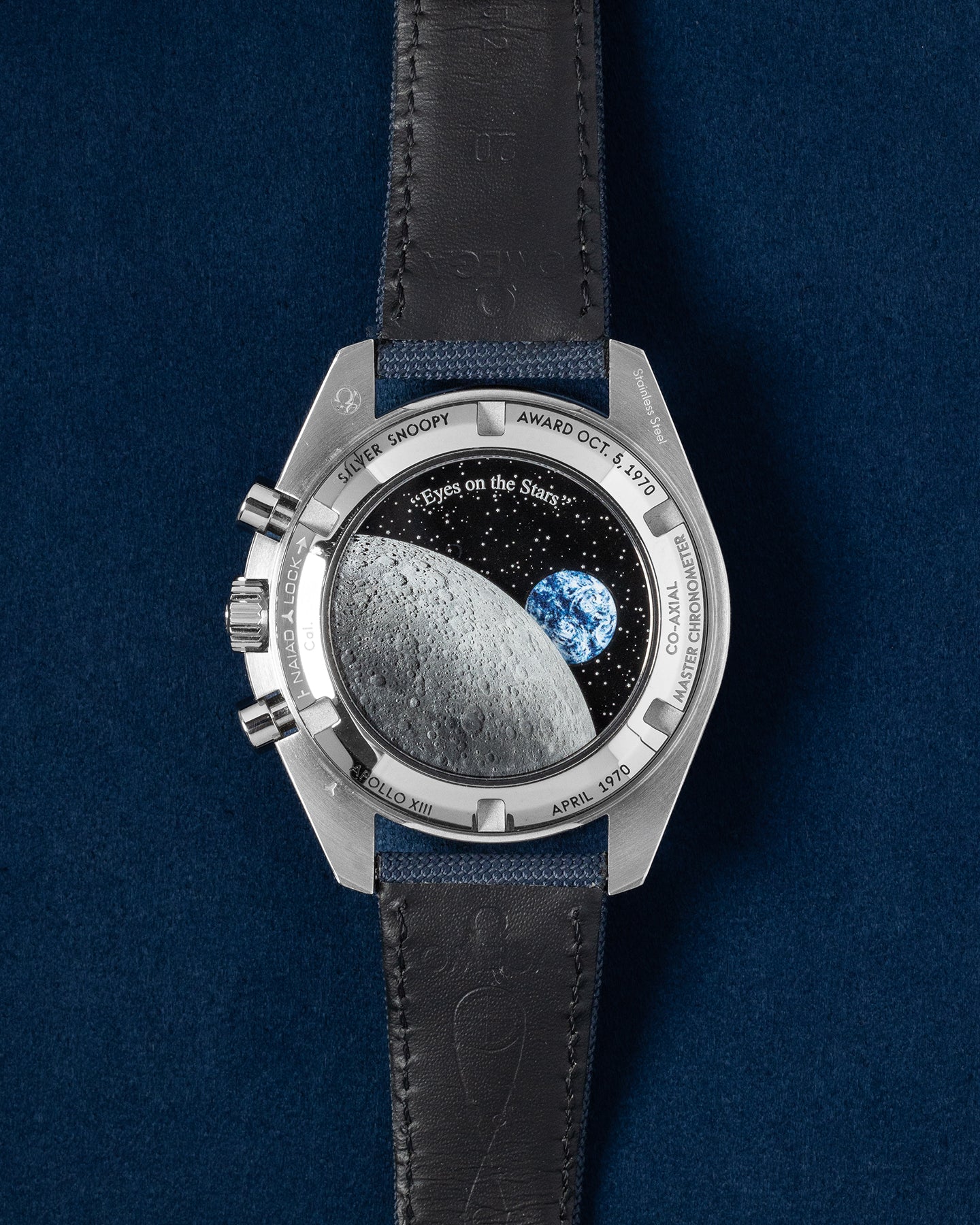


Omega Speedmaster 310.32.42.50.02.001
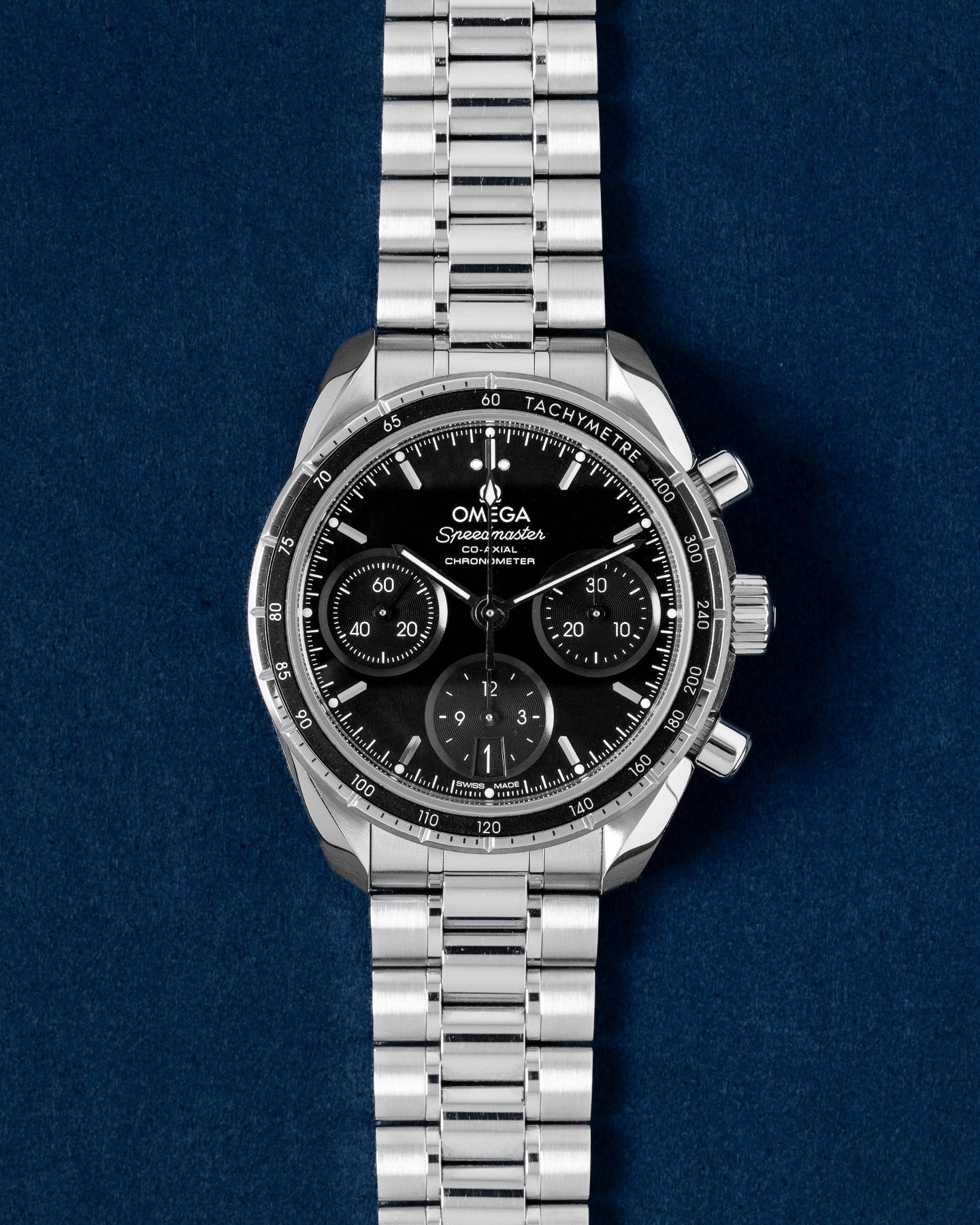
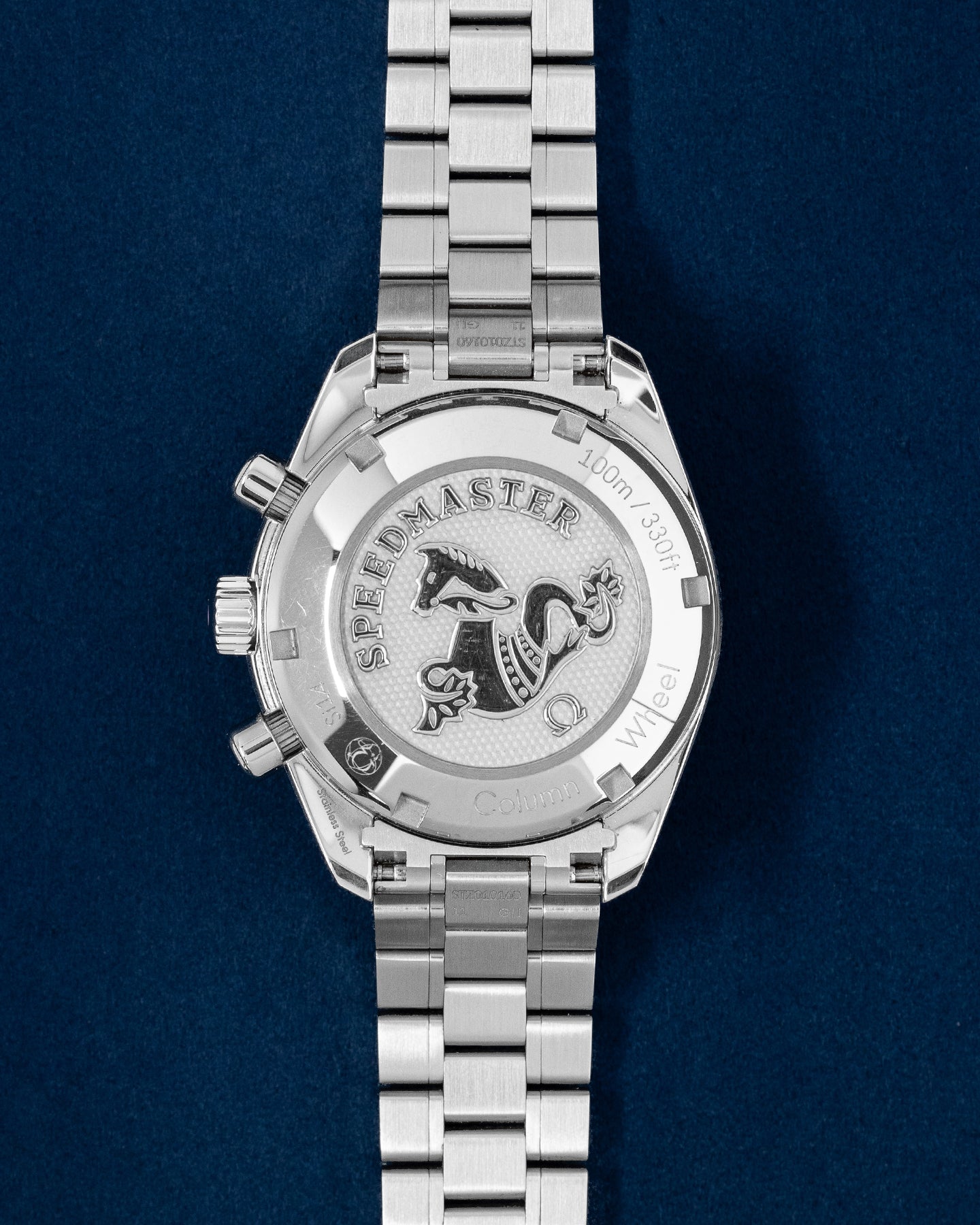
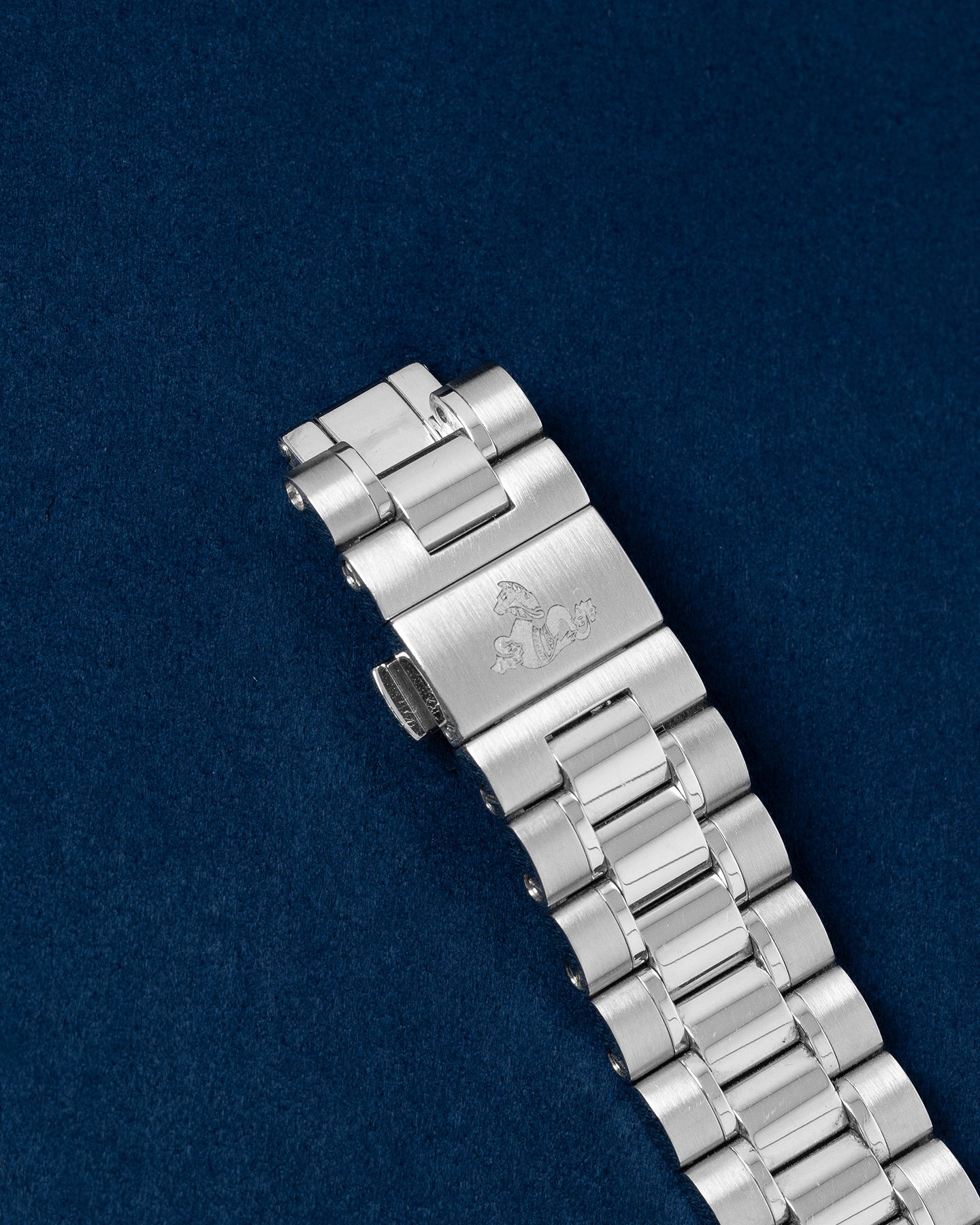
Omega Speedmaster 32430385001001
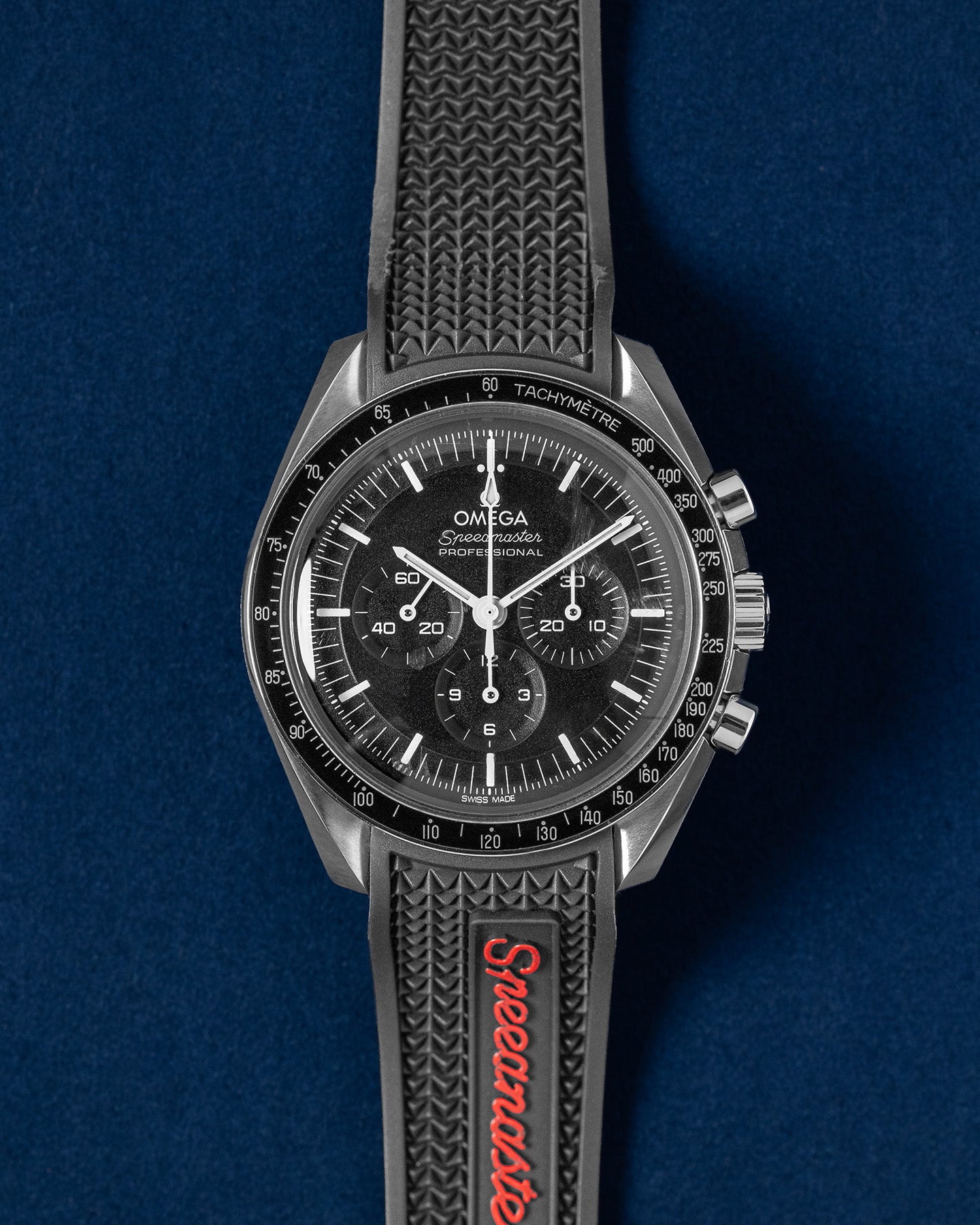
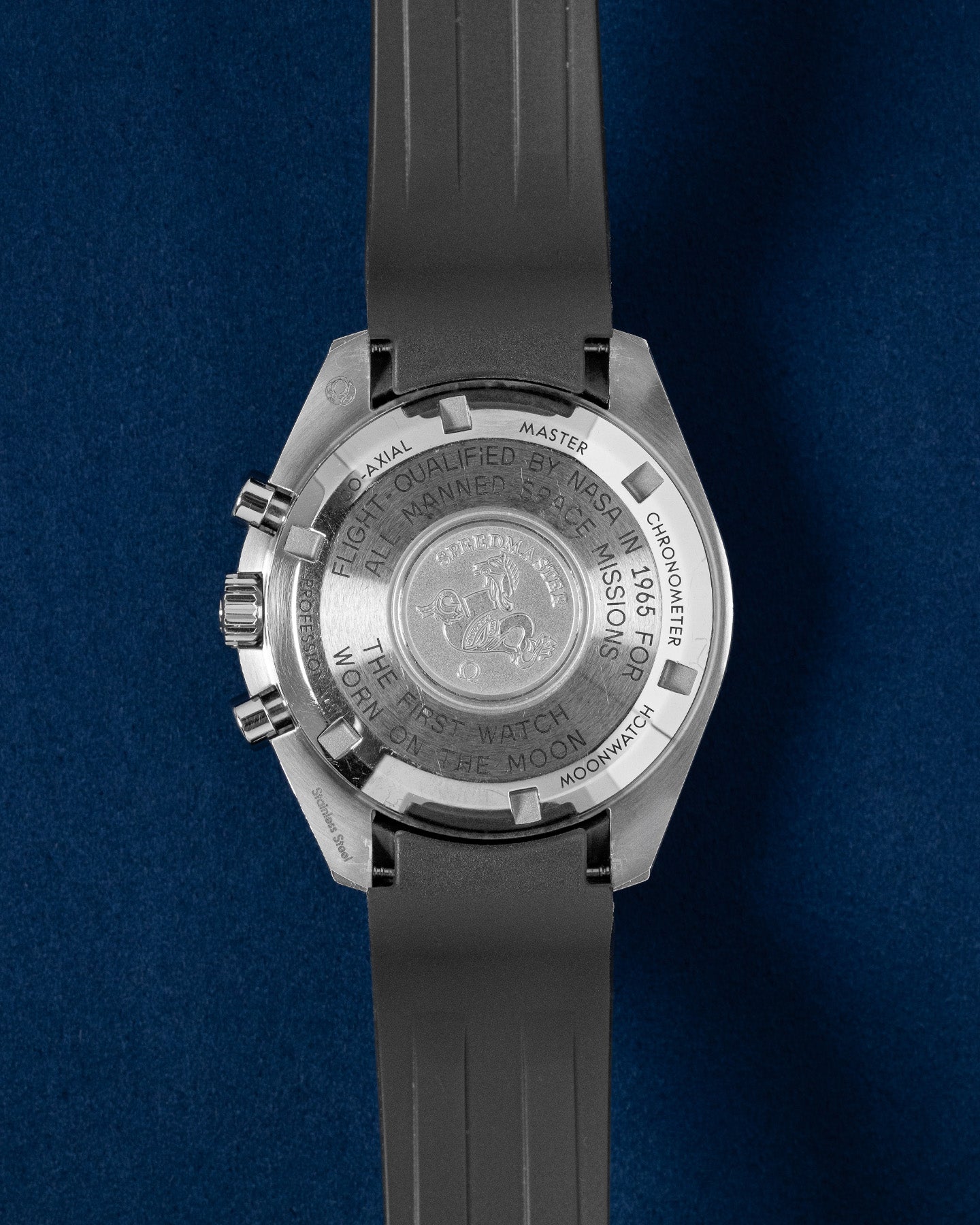
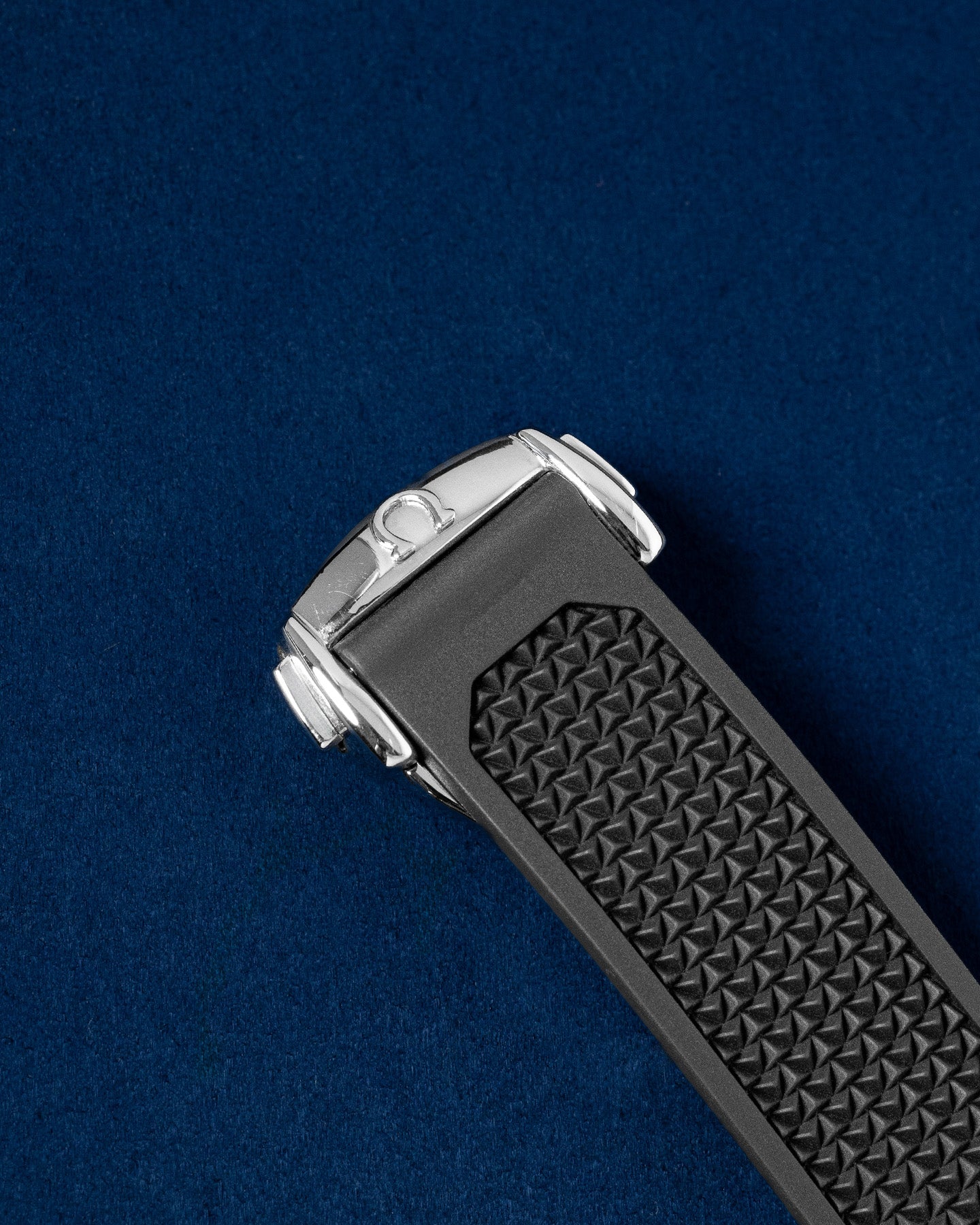
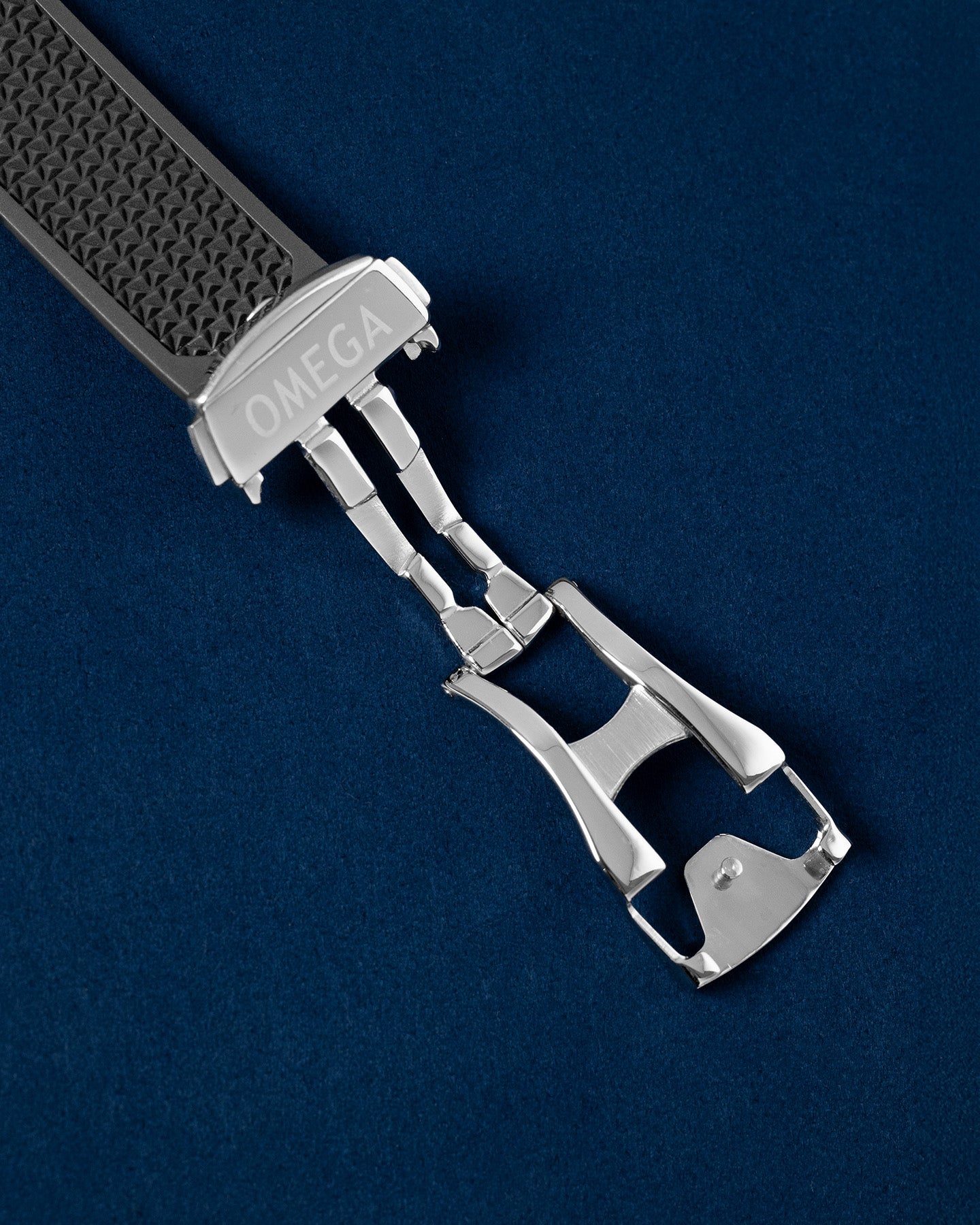
Omega Speedmaster Moonwatch 31030425001001
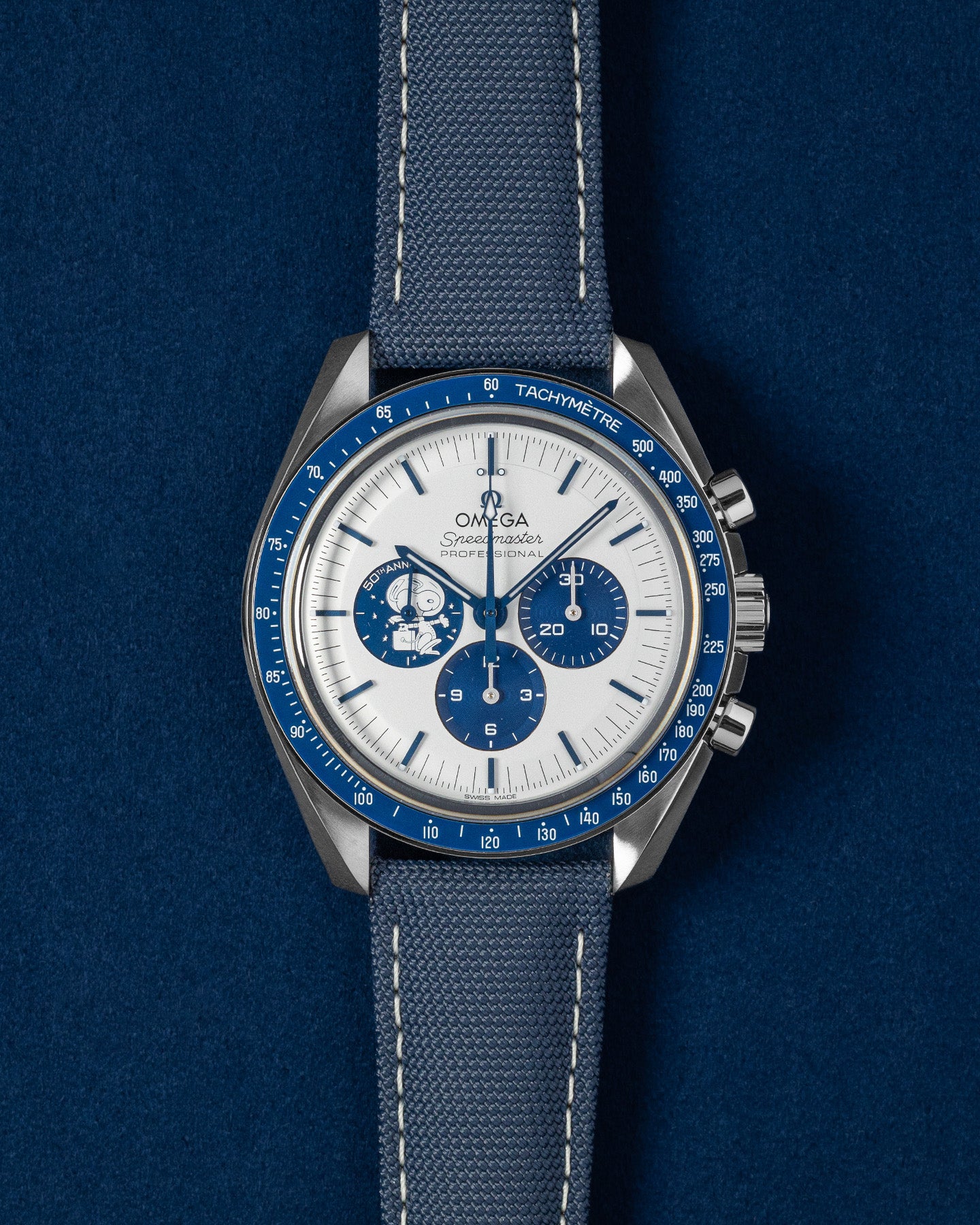
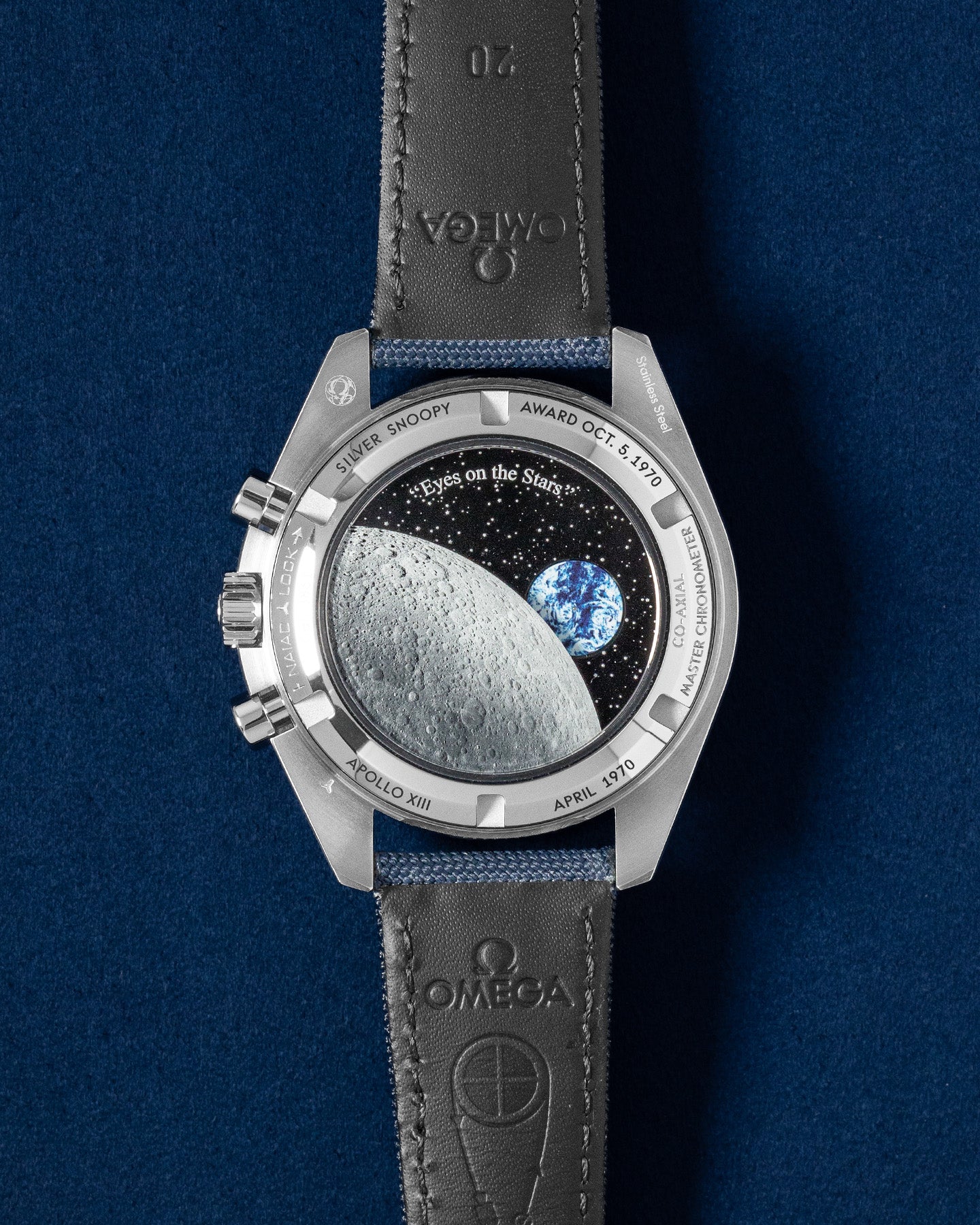


Omega Speedmaster 31032425002001
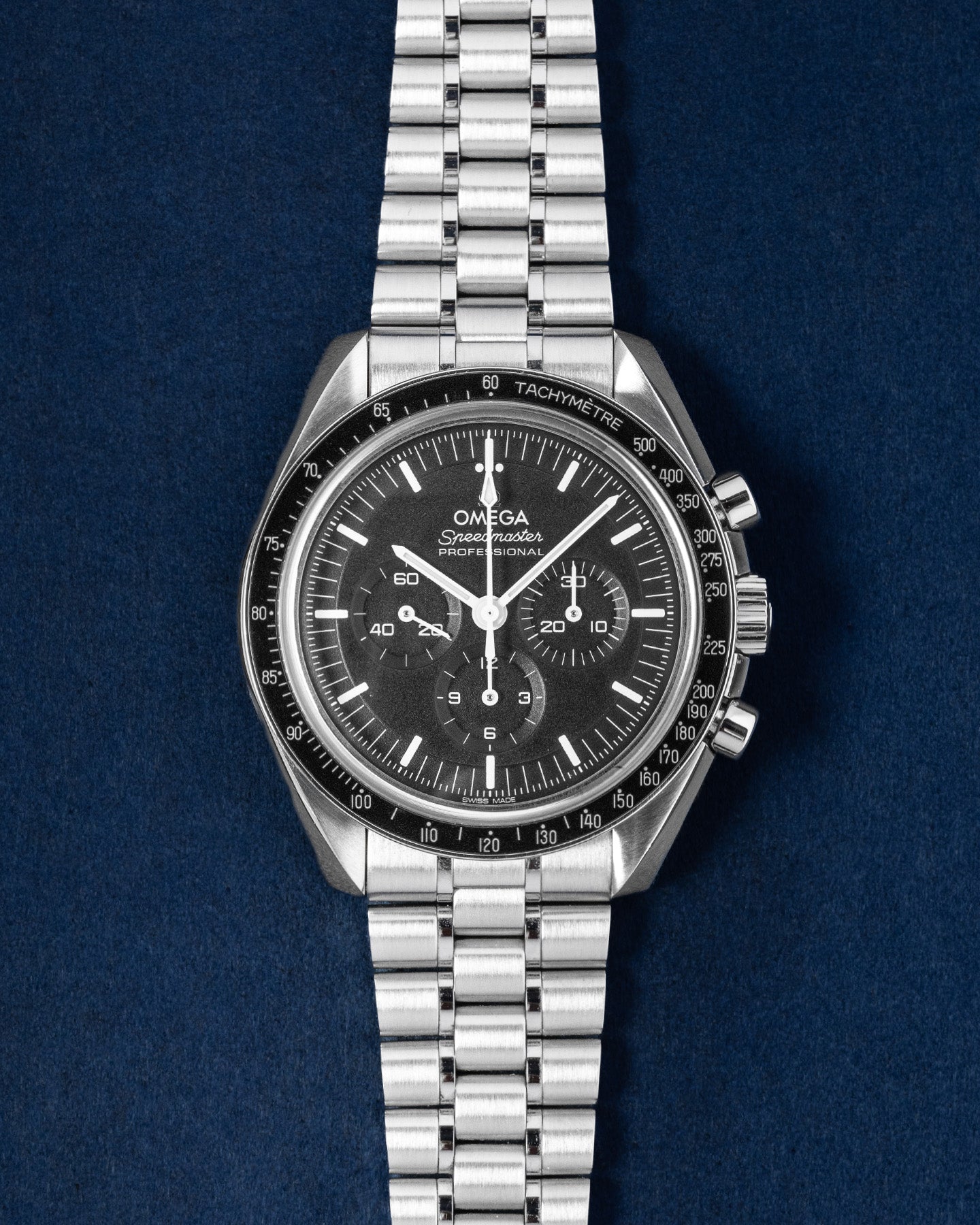
Omega Speedmaster 31030425001002
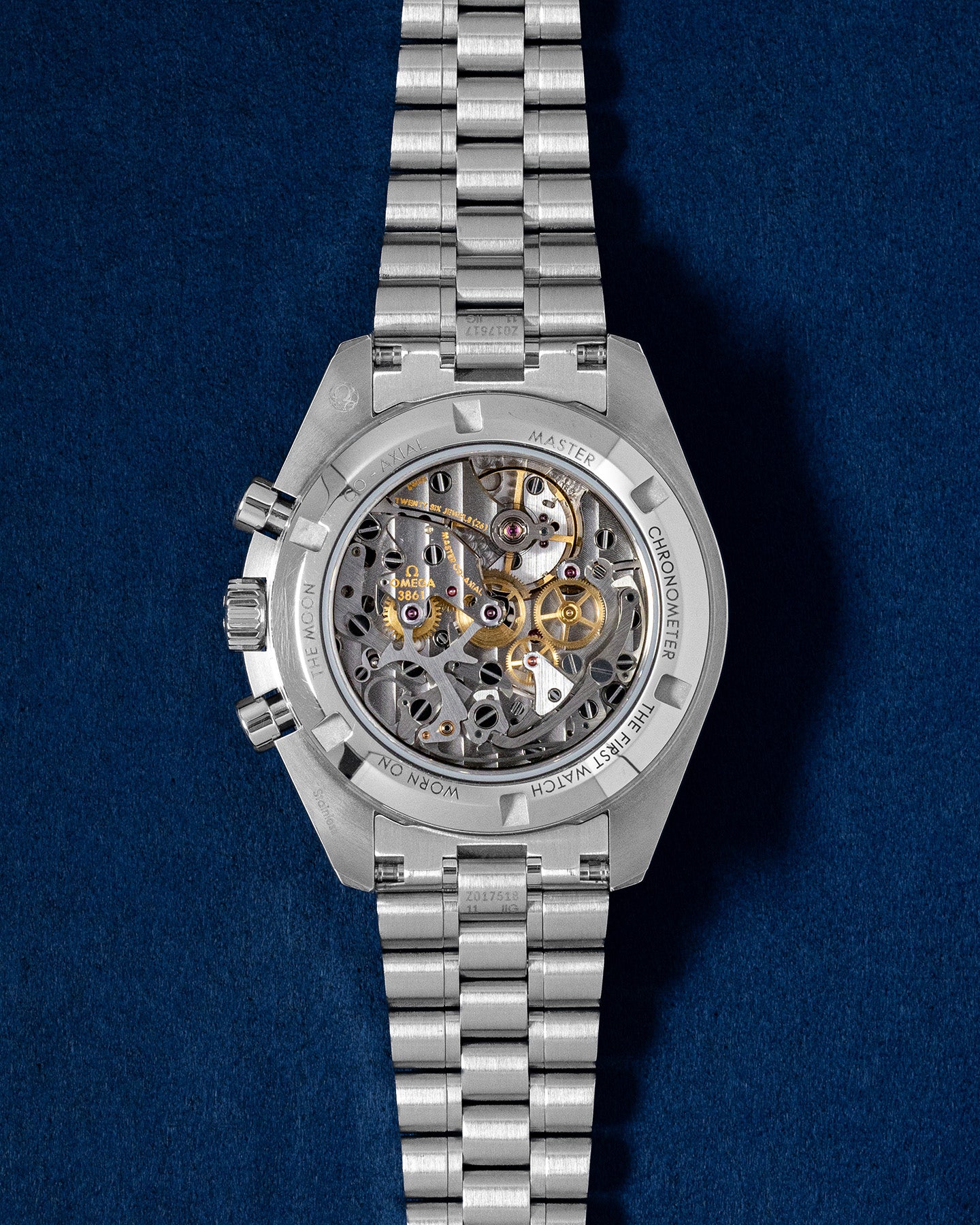
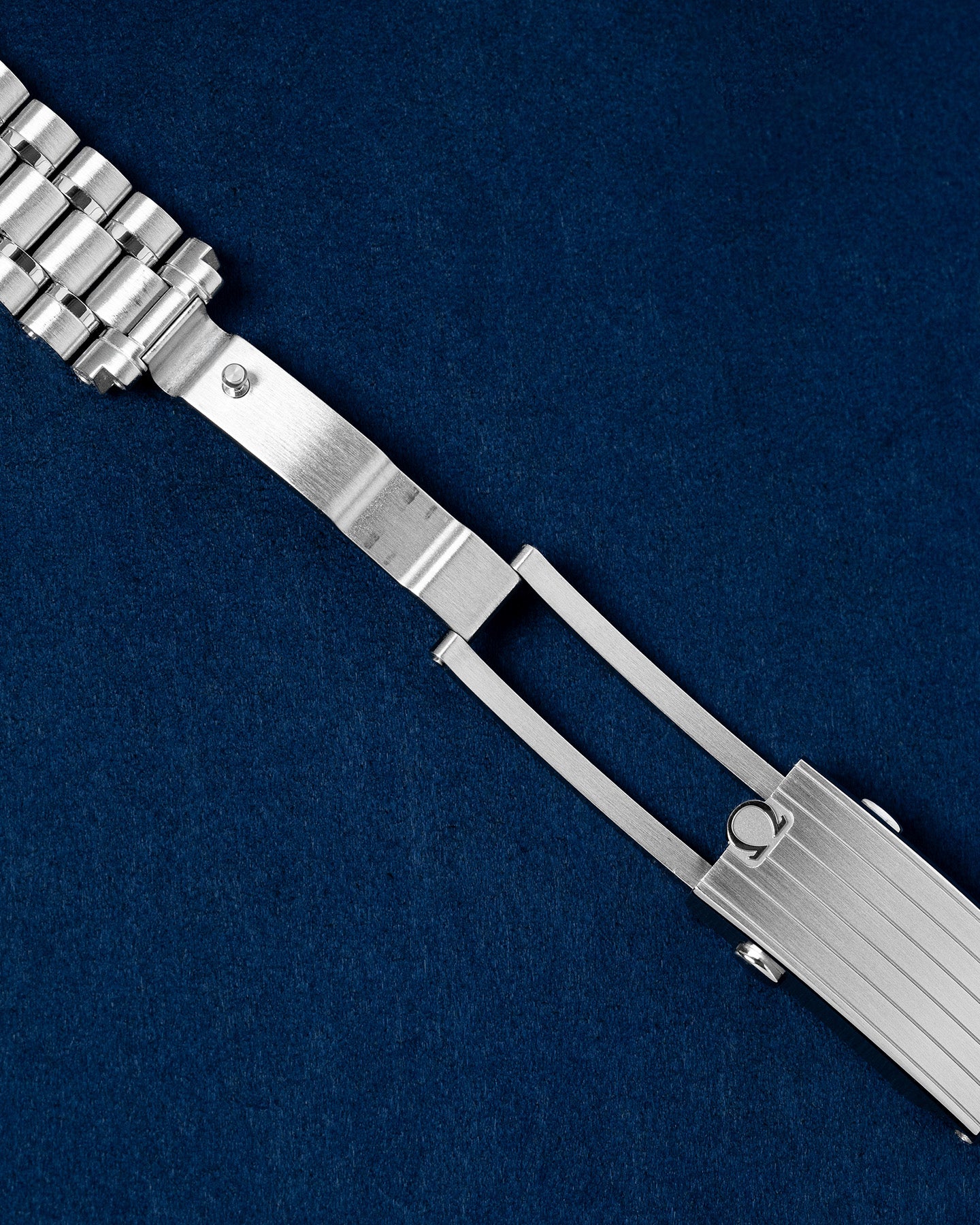
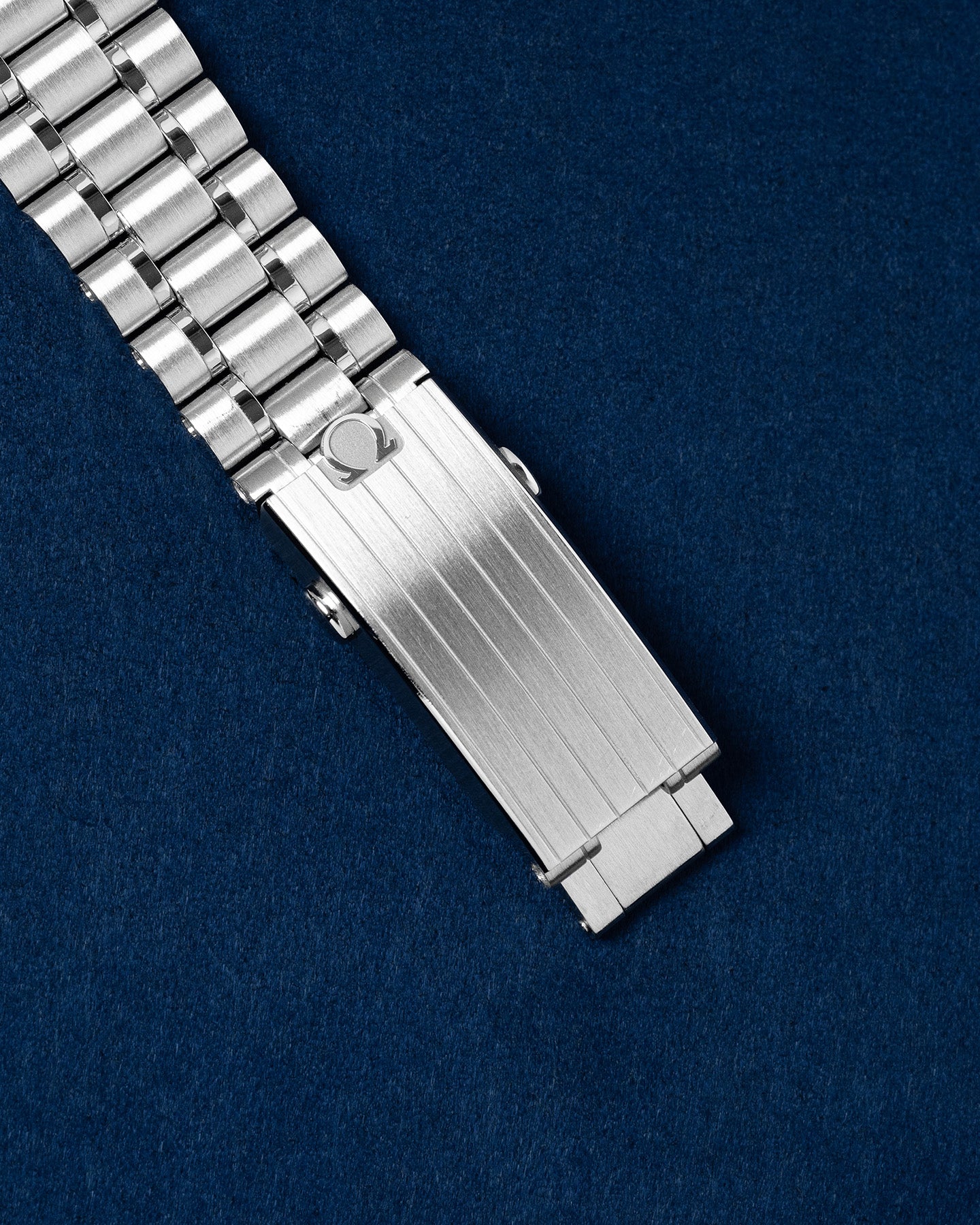
Omega Speedmaster 310.30.42.50.04.001
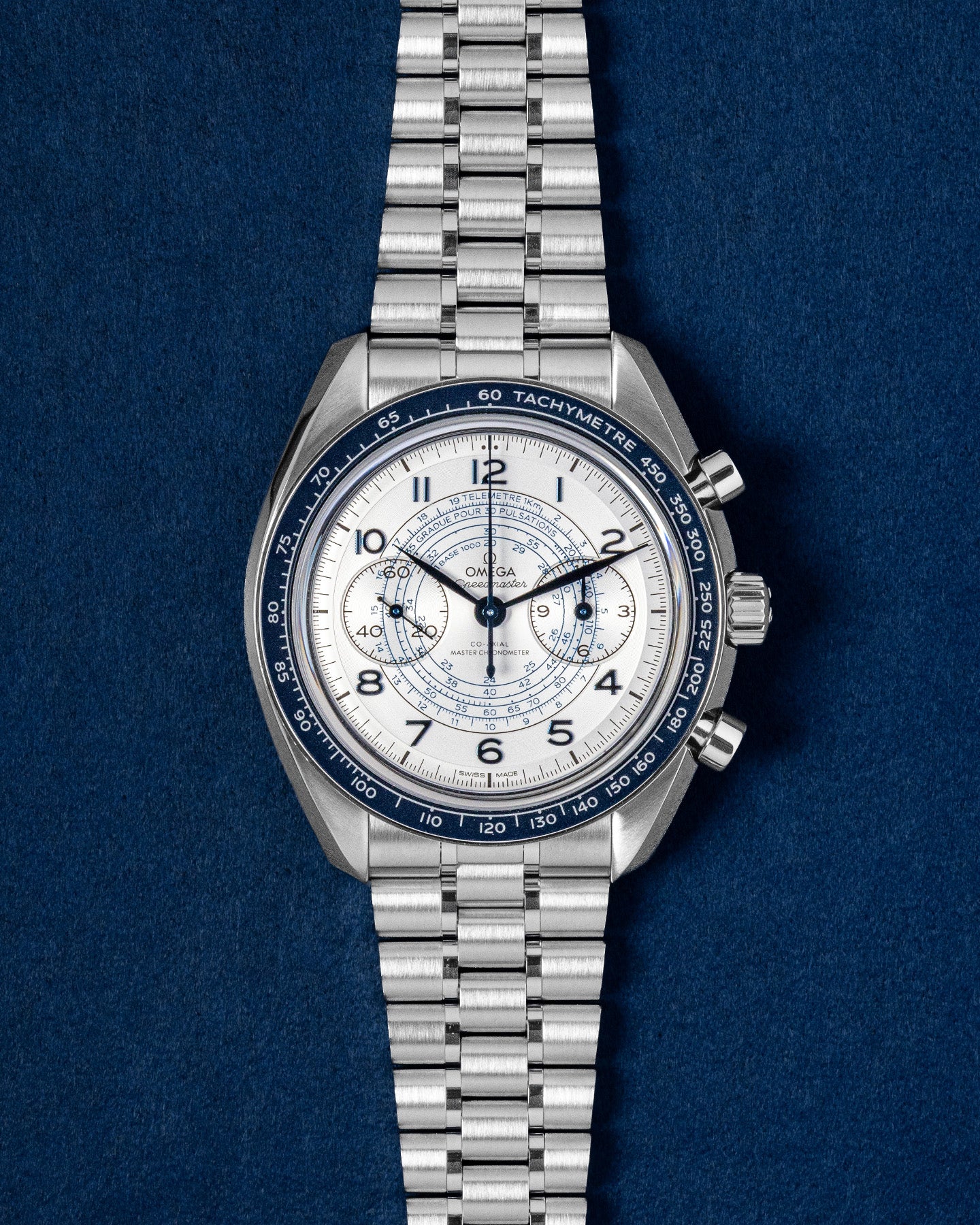
Omega Speedmaster Chronoscope 32930435102001
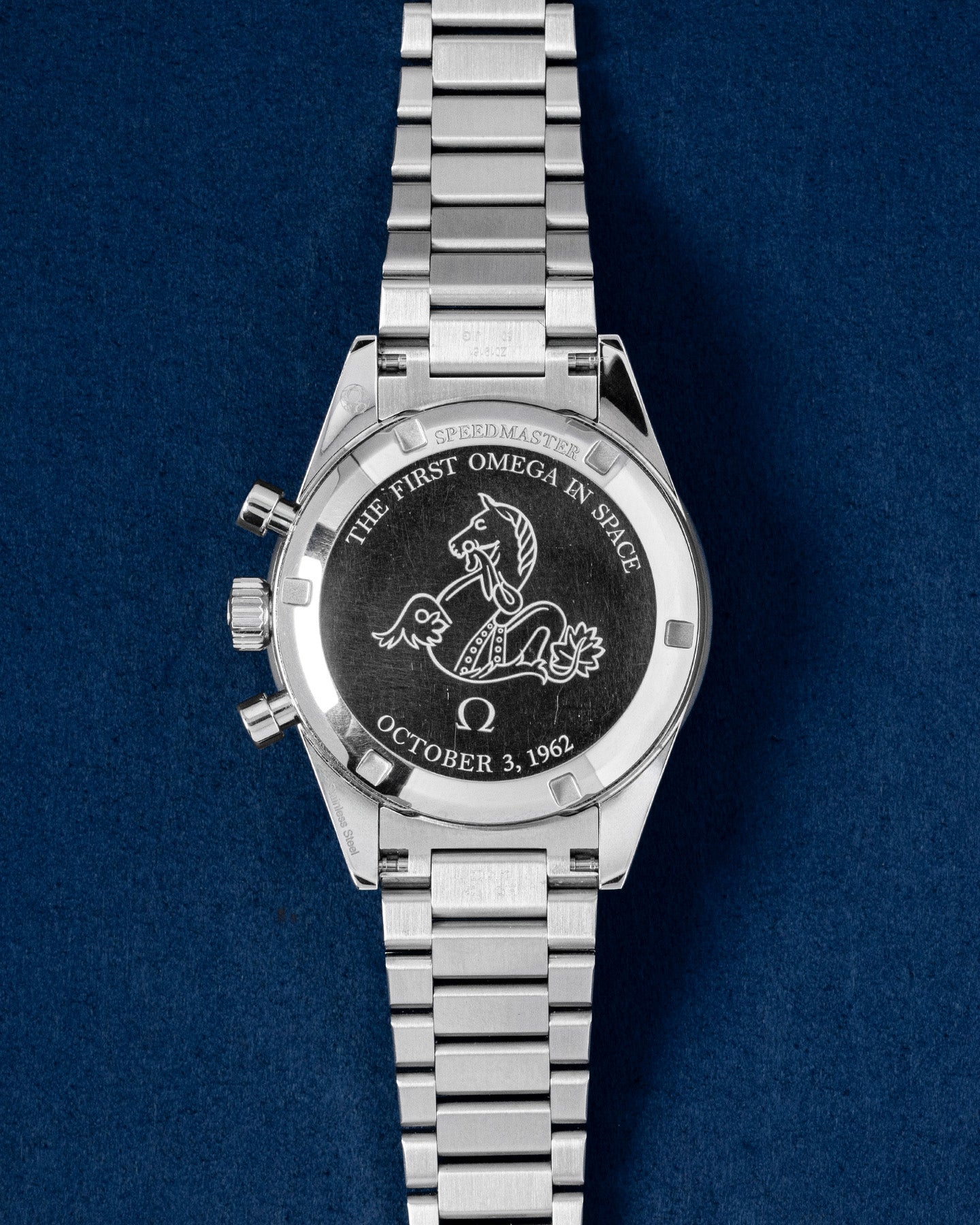
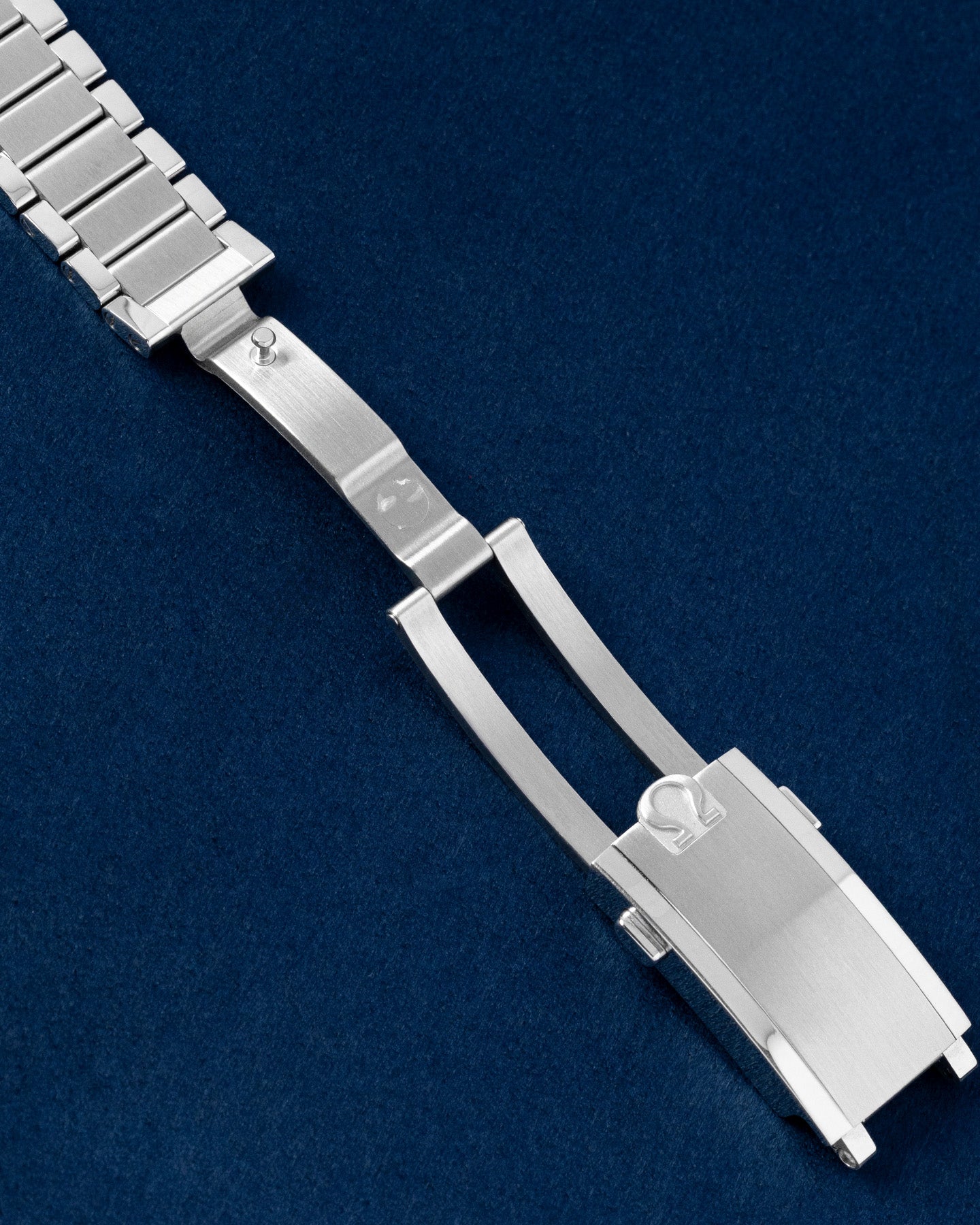
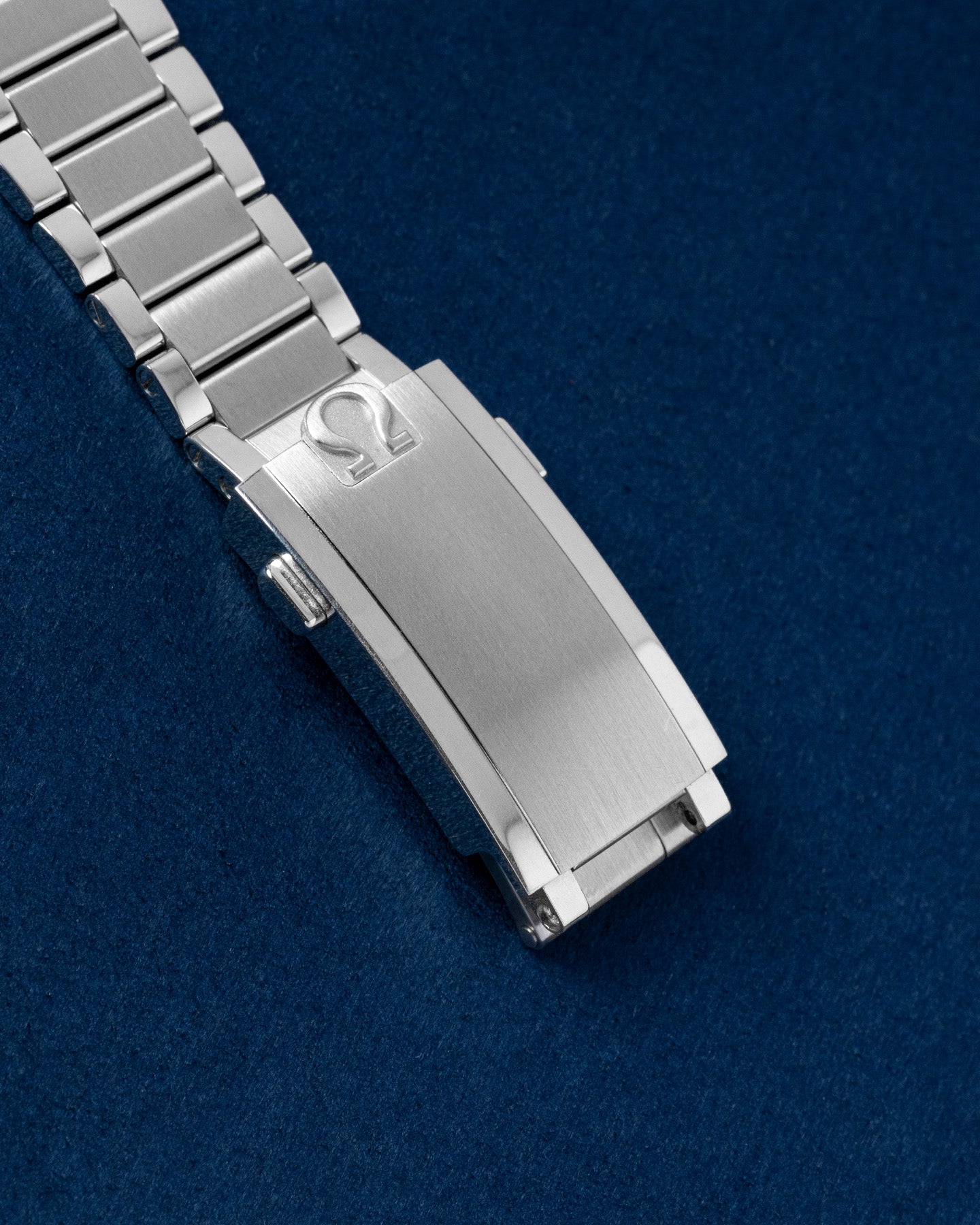
Omega Speedmaster 31030405006001
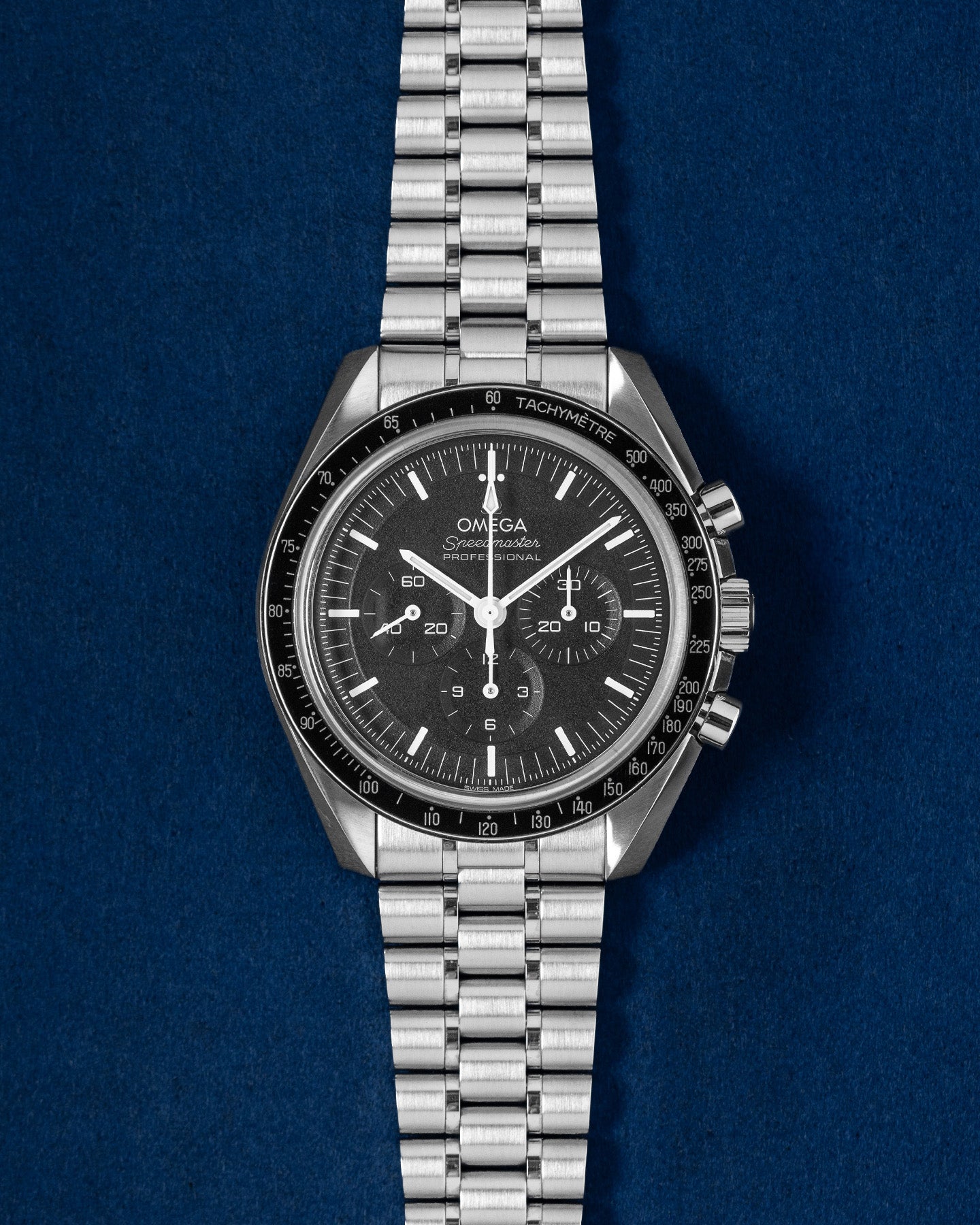
Omega Speedmaster Black 31030425001002
Omega Speedmaster 31032425002001
Omega Speedmaster 310.30.42.50.01.002
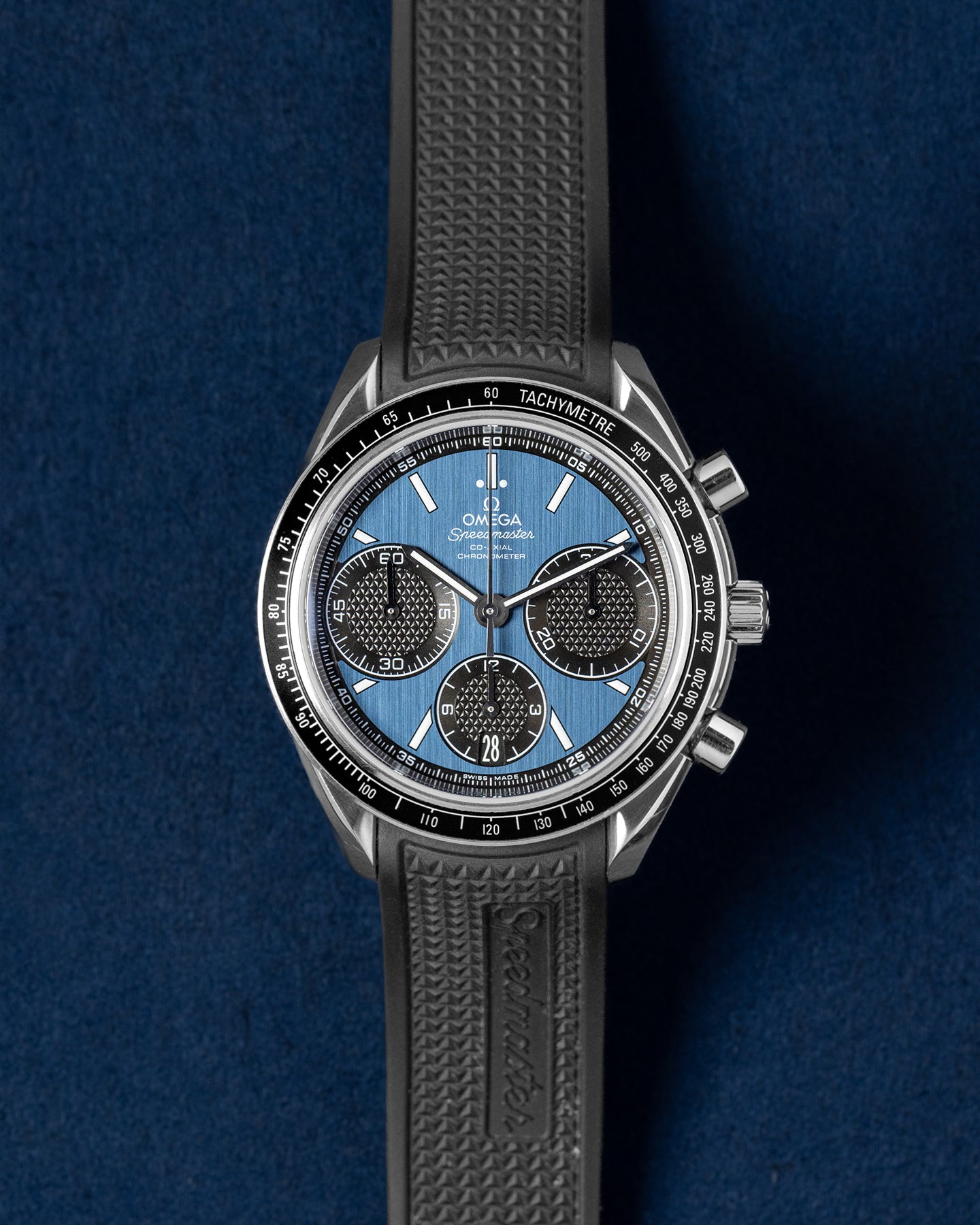
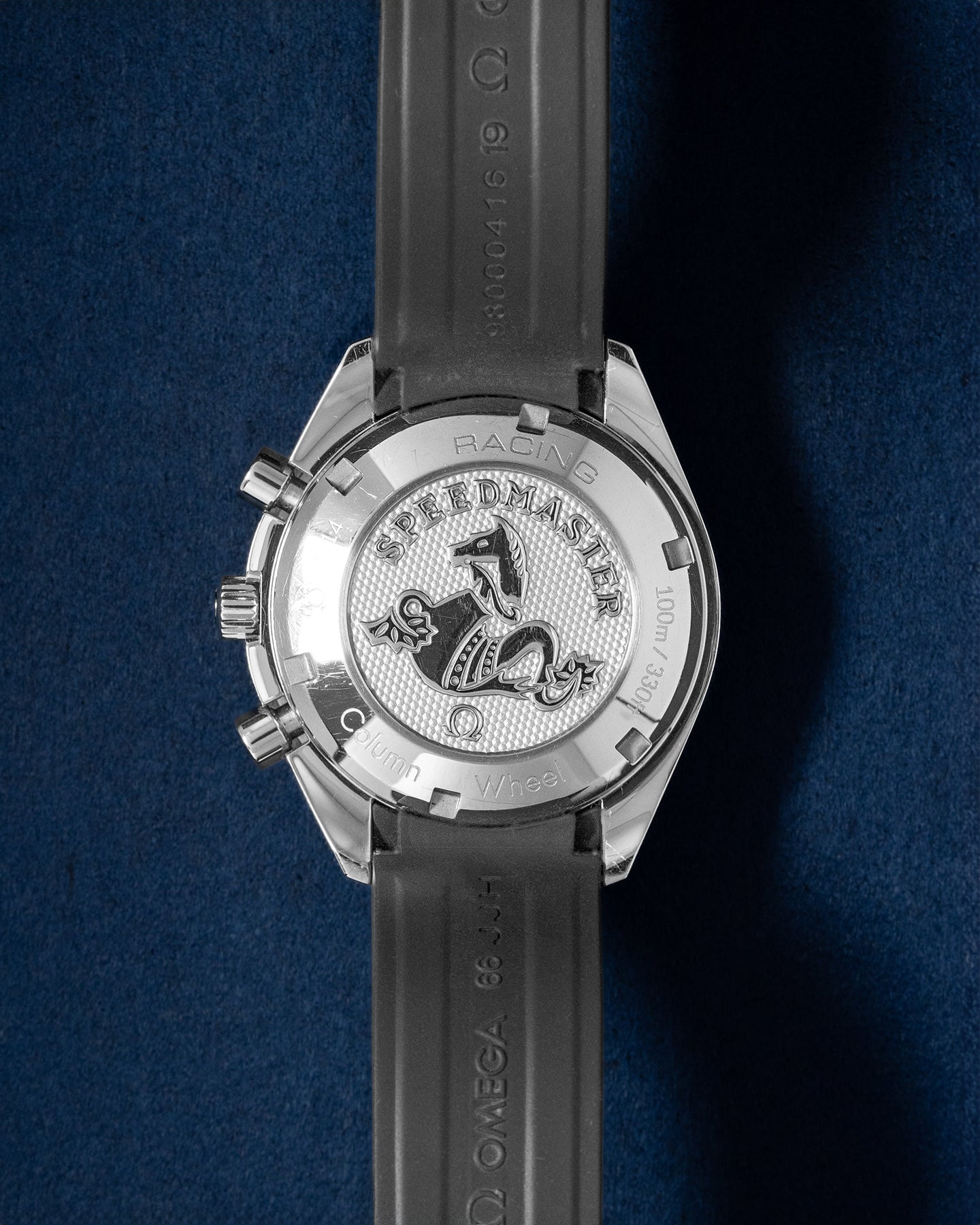
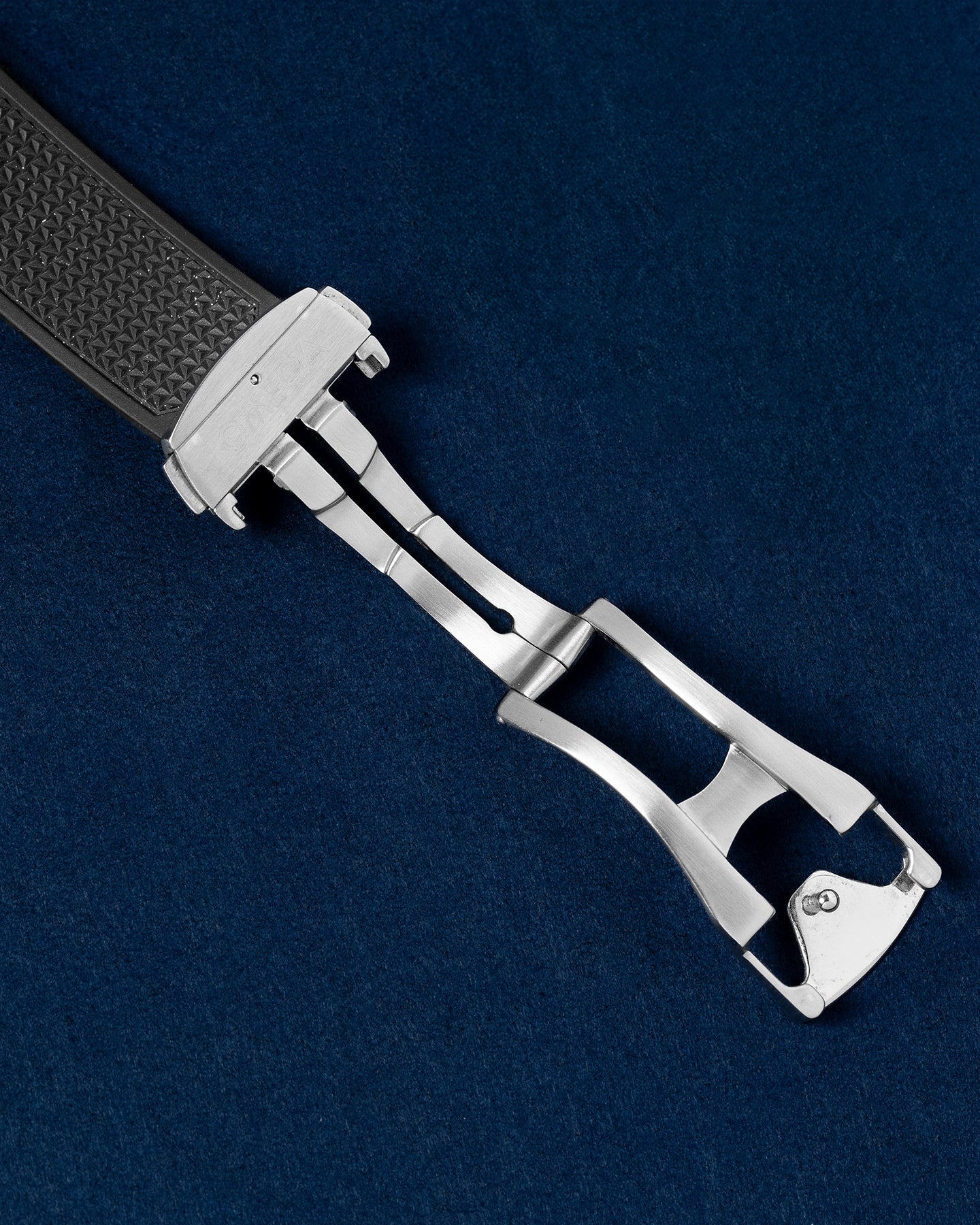
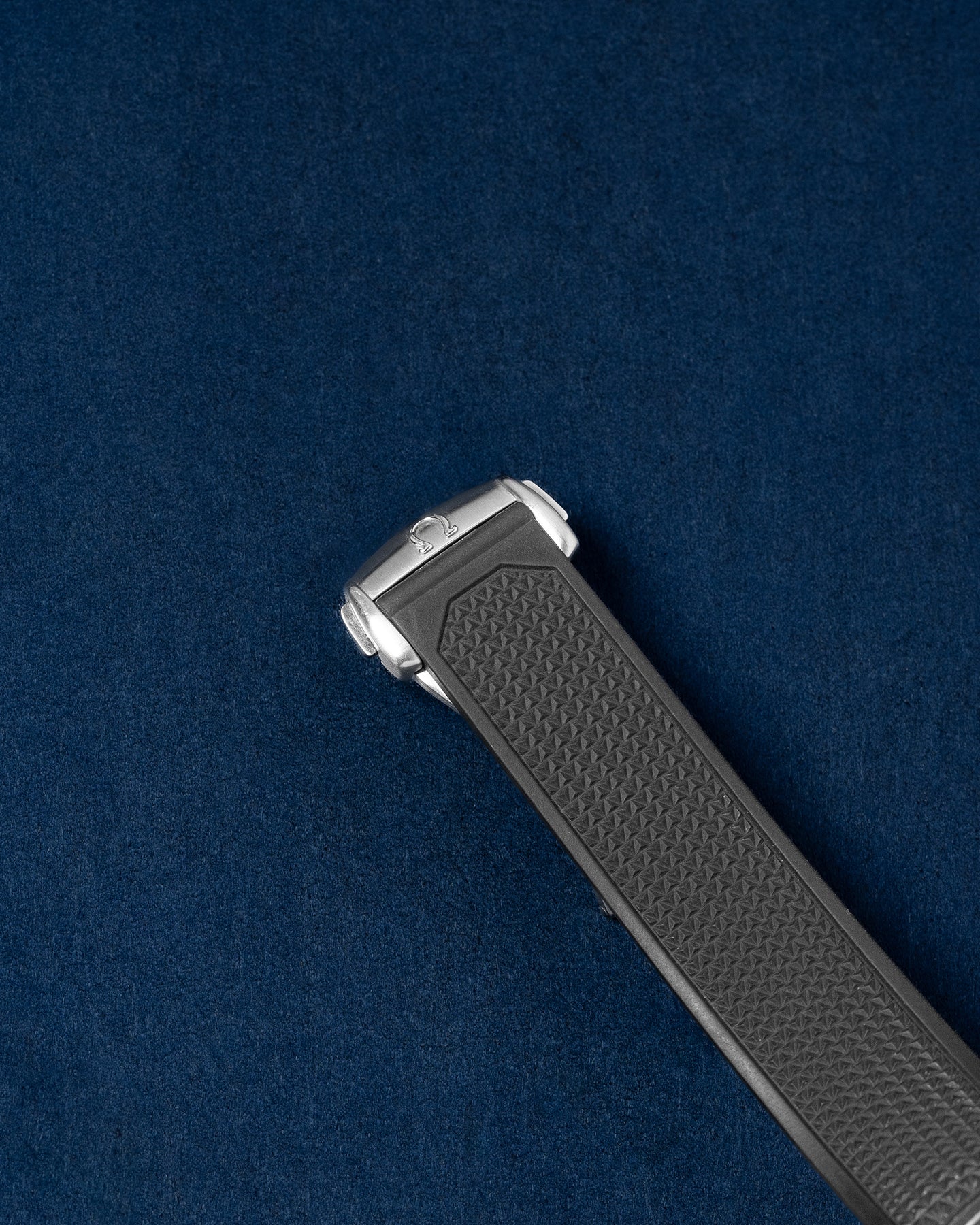
Omega Speedmaster 326.32.40.500.30.001
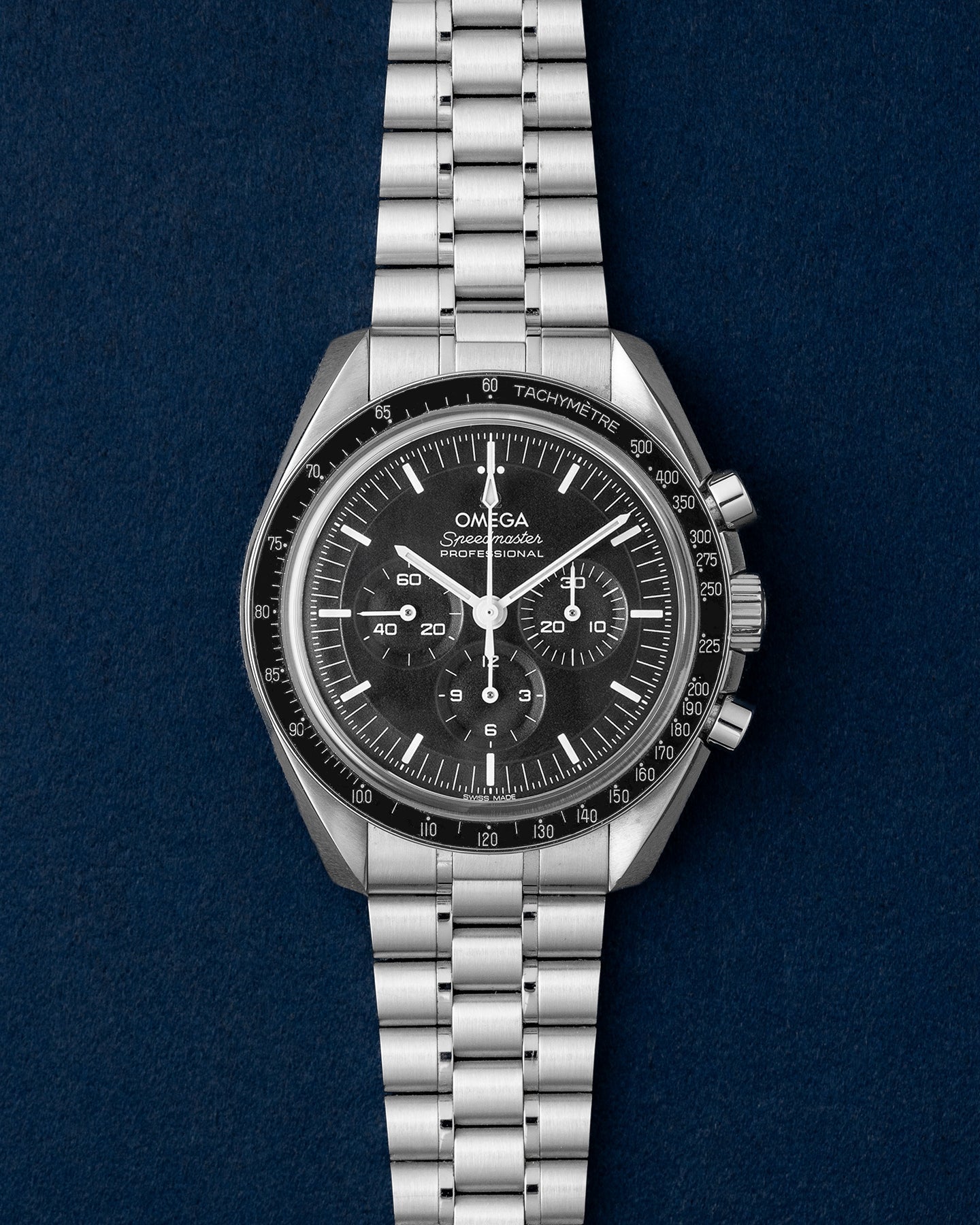
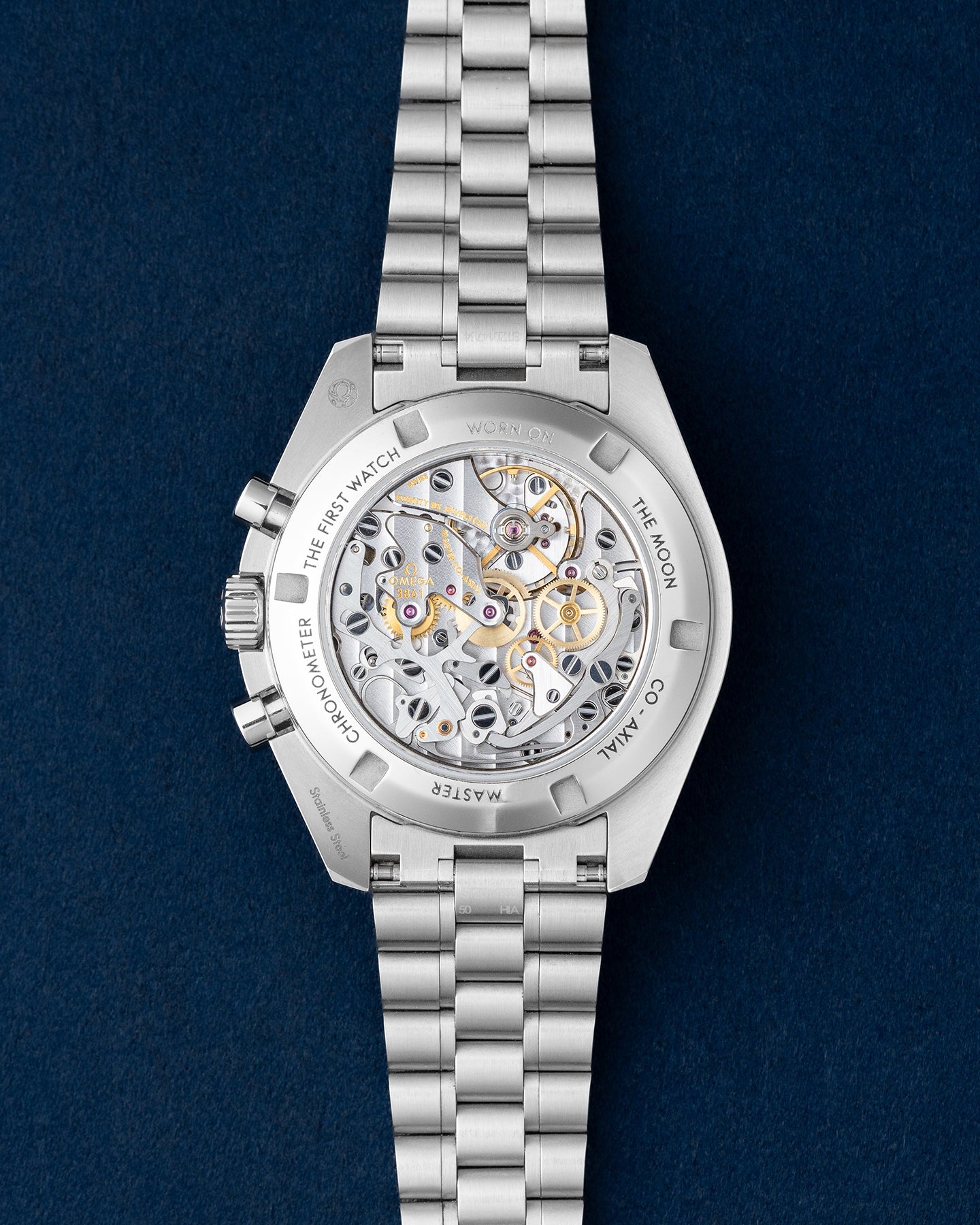
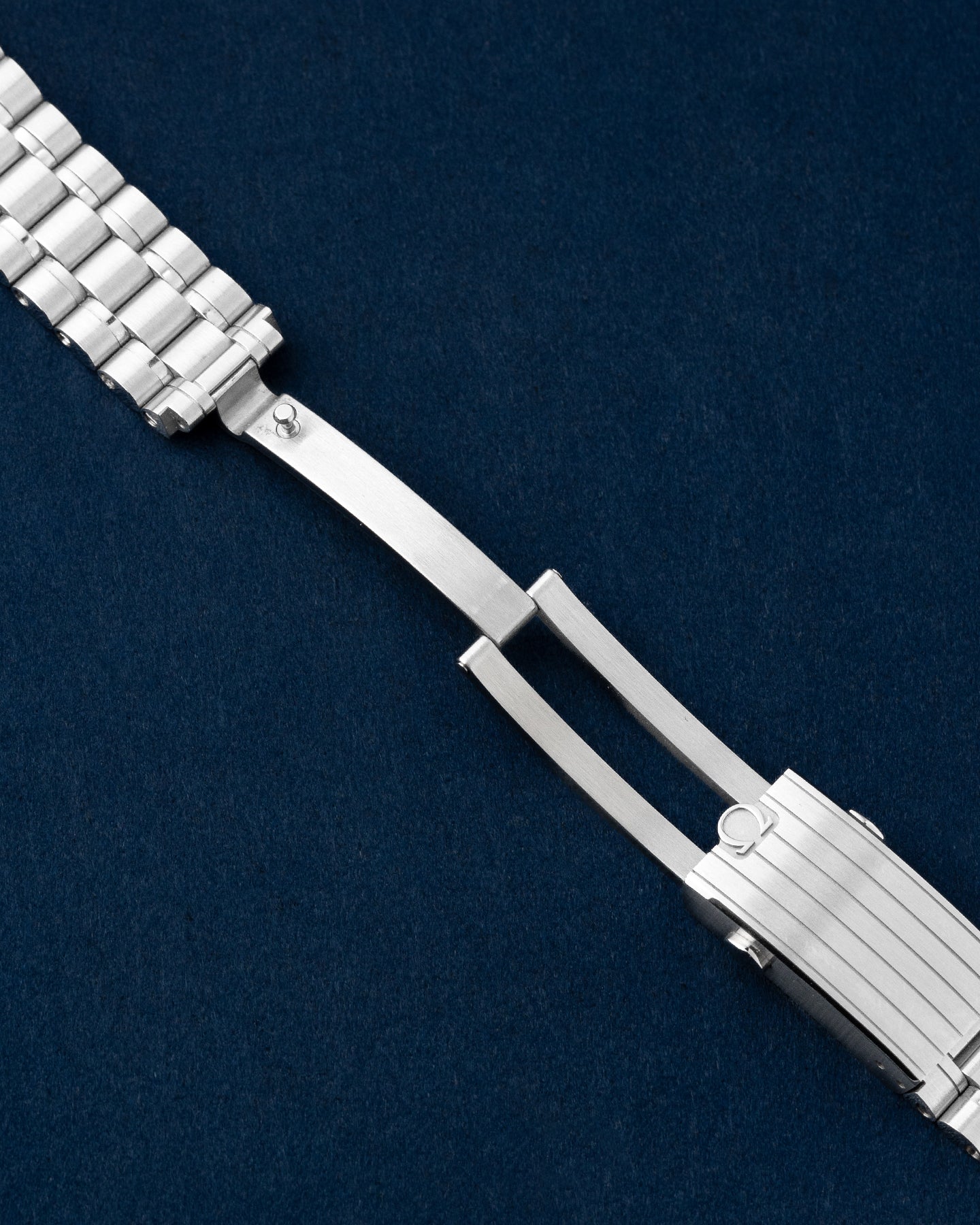
Omega Speedmaster 31030425001002
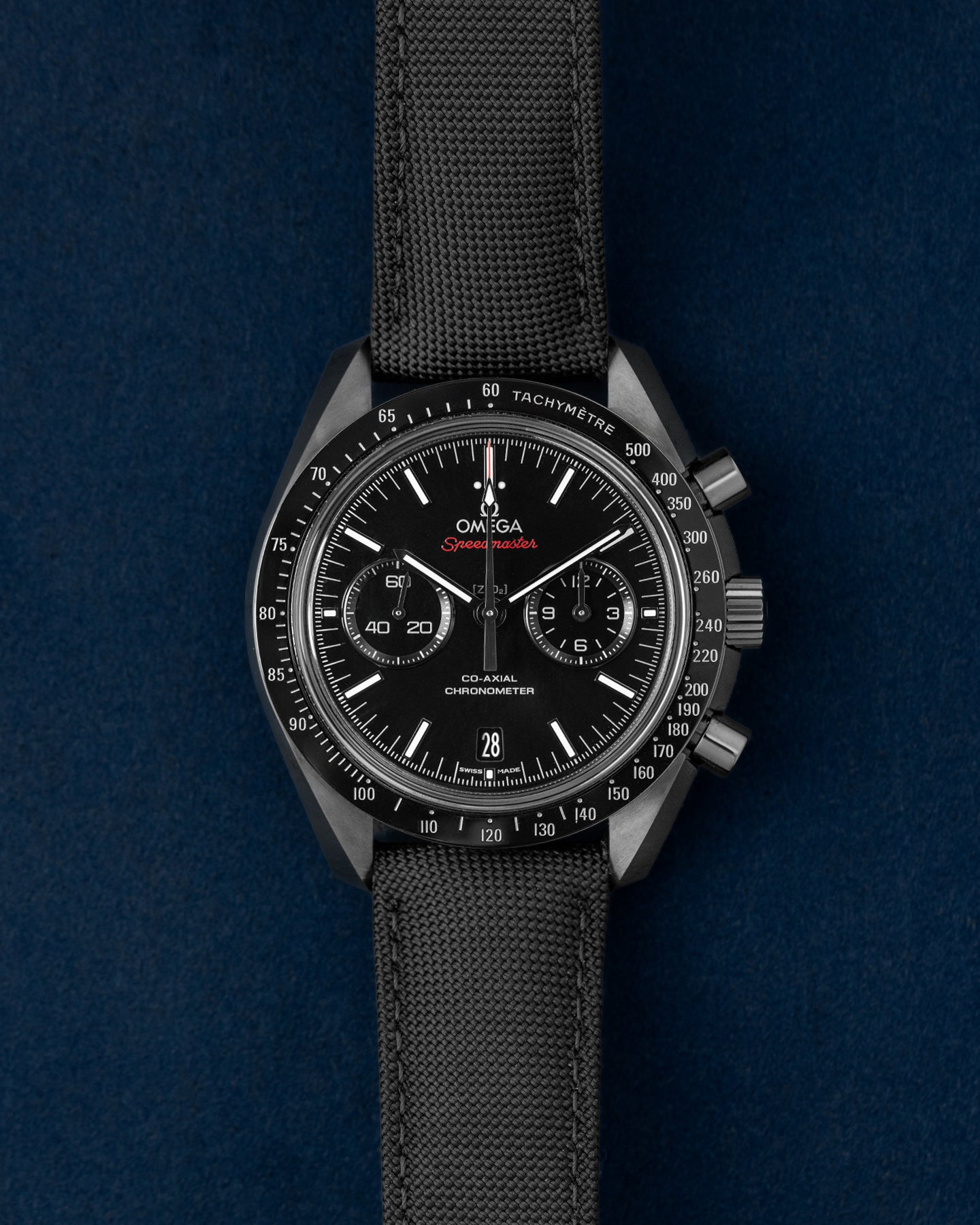
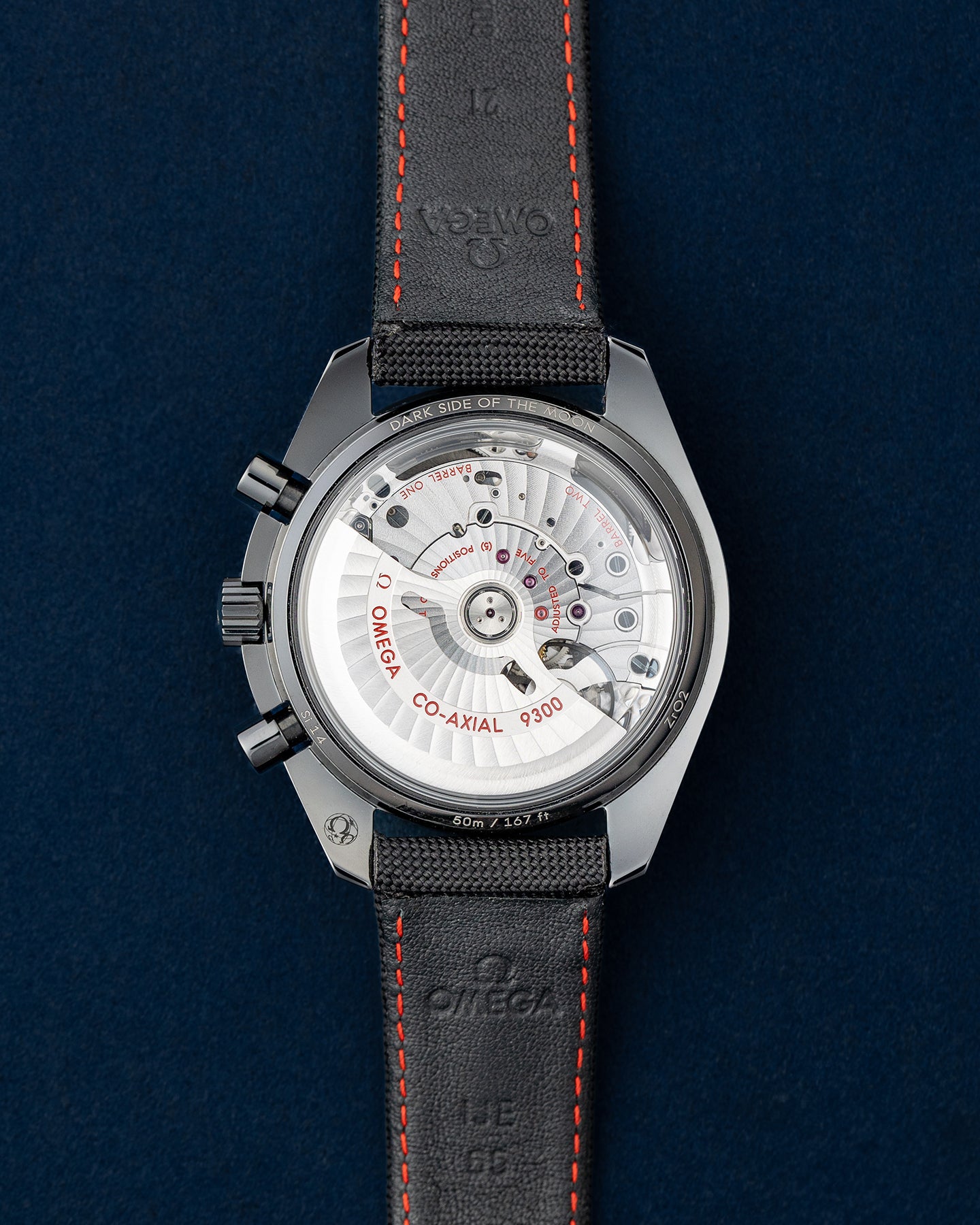

Omega Speedmaster Dark Side Of The Moon O31192445101003
Omega Speedmaster "Ed White" 31130403001001
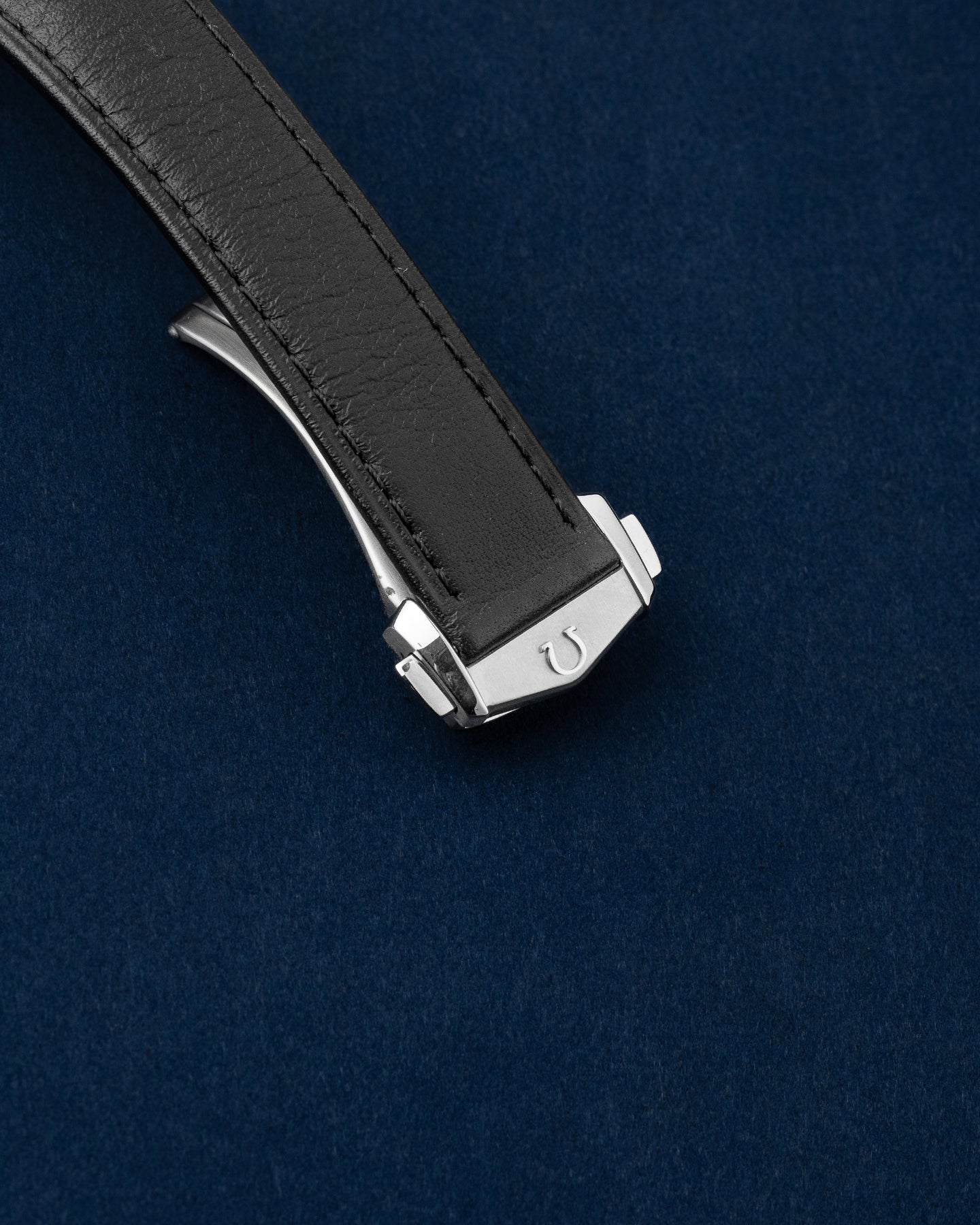
Omega Speedmaster 310.32.42.50.01.002
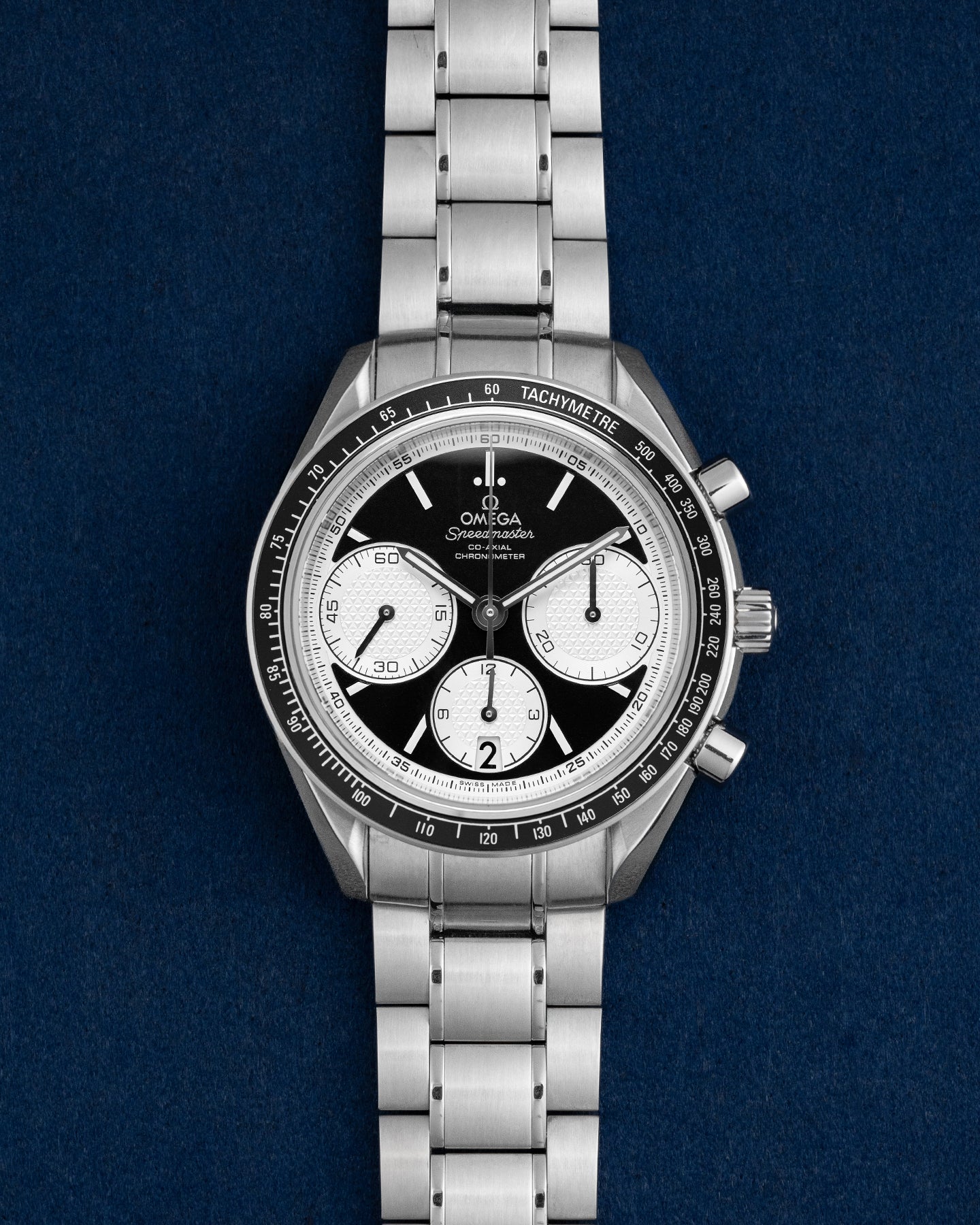
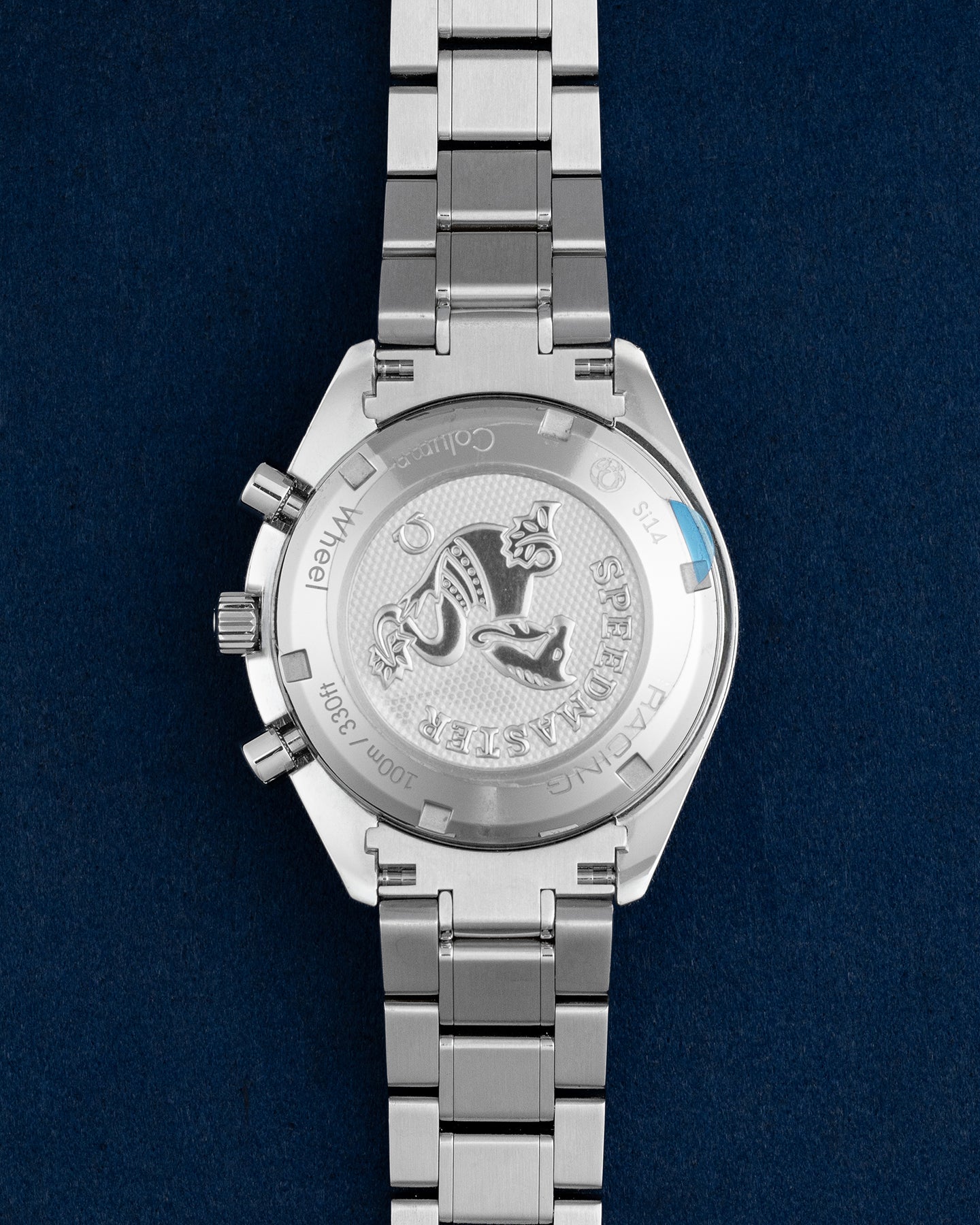
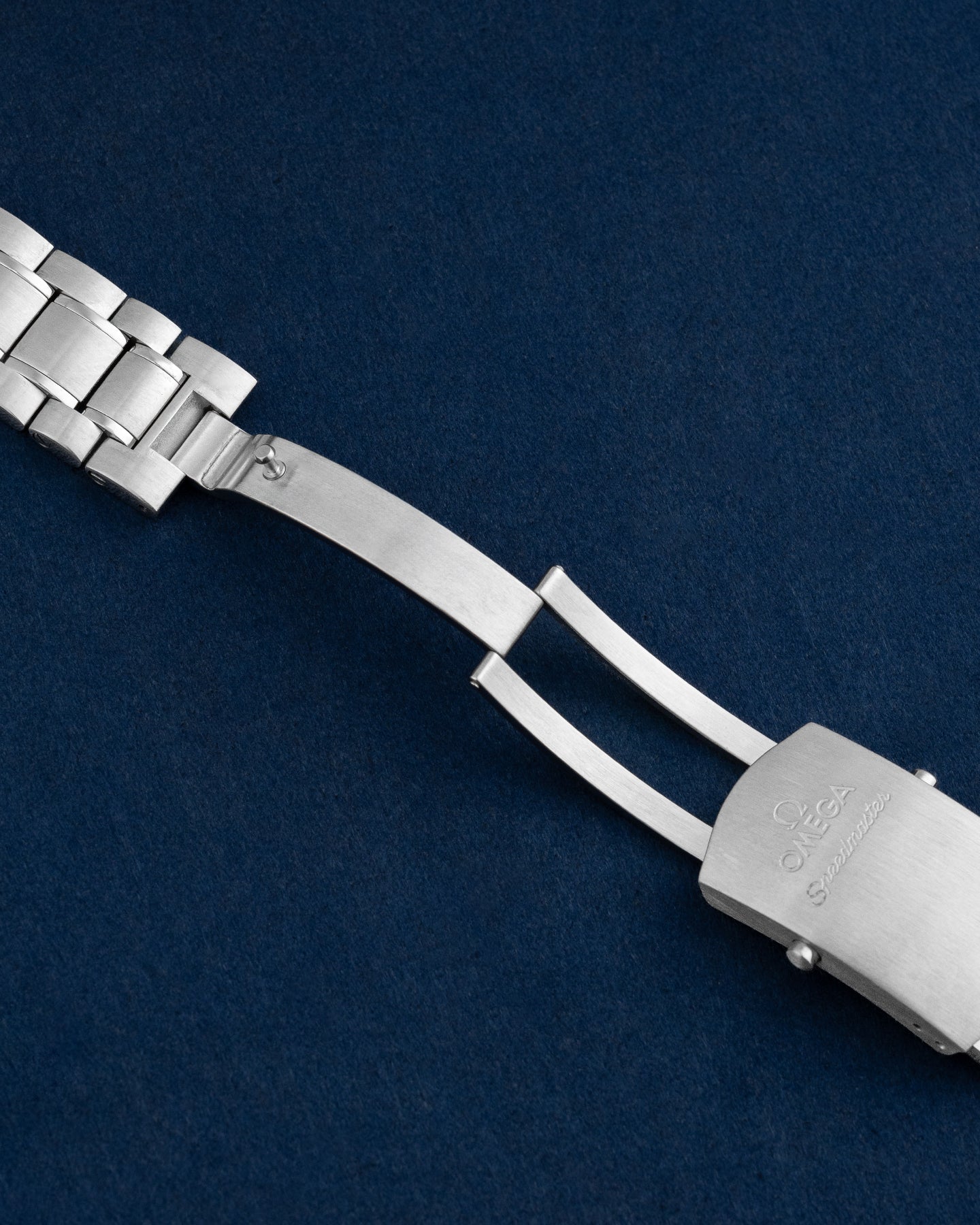
Omega Speedmaster 32630405001002