Rolex Explorer II
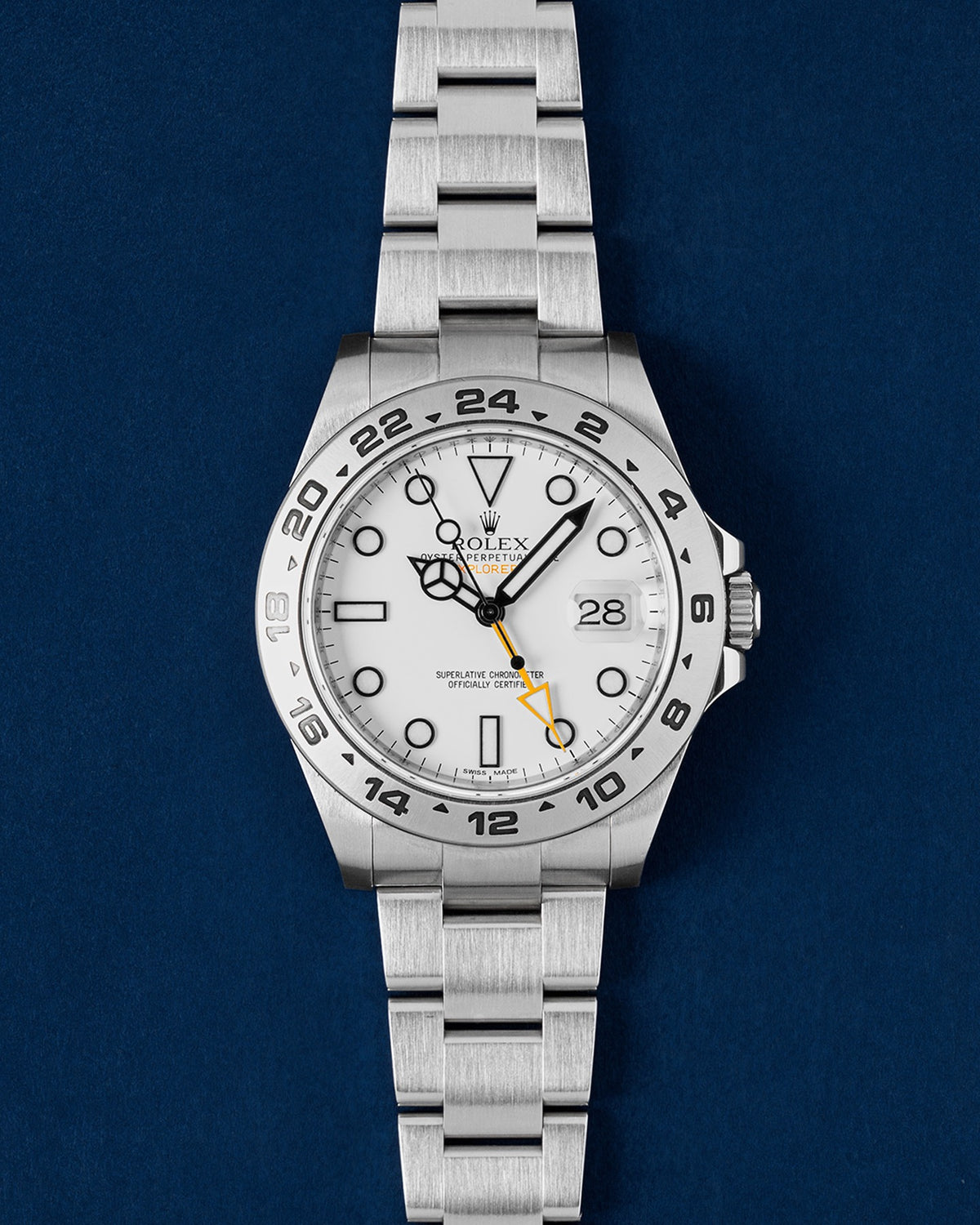
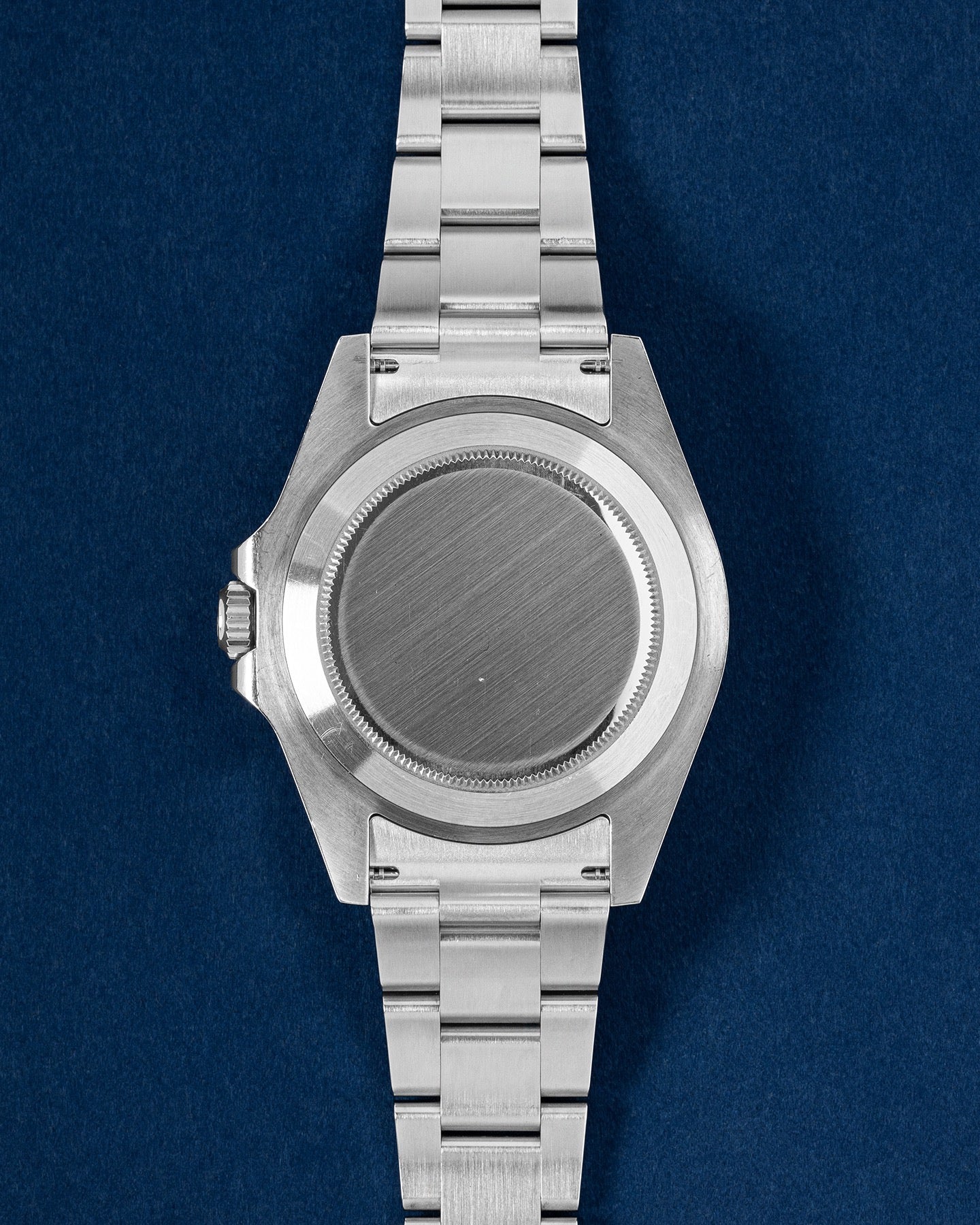
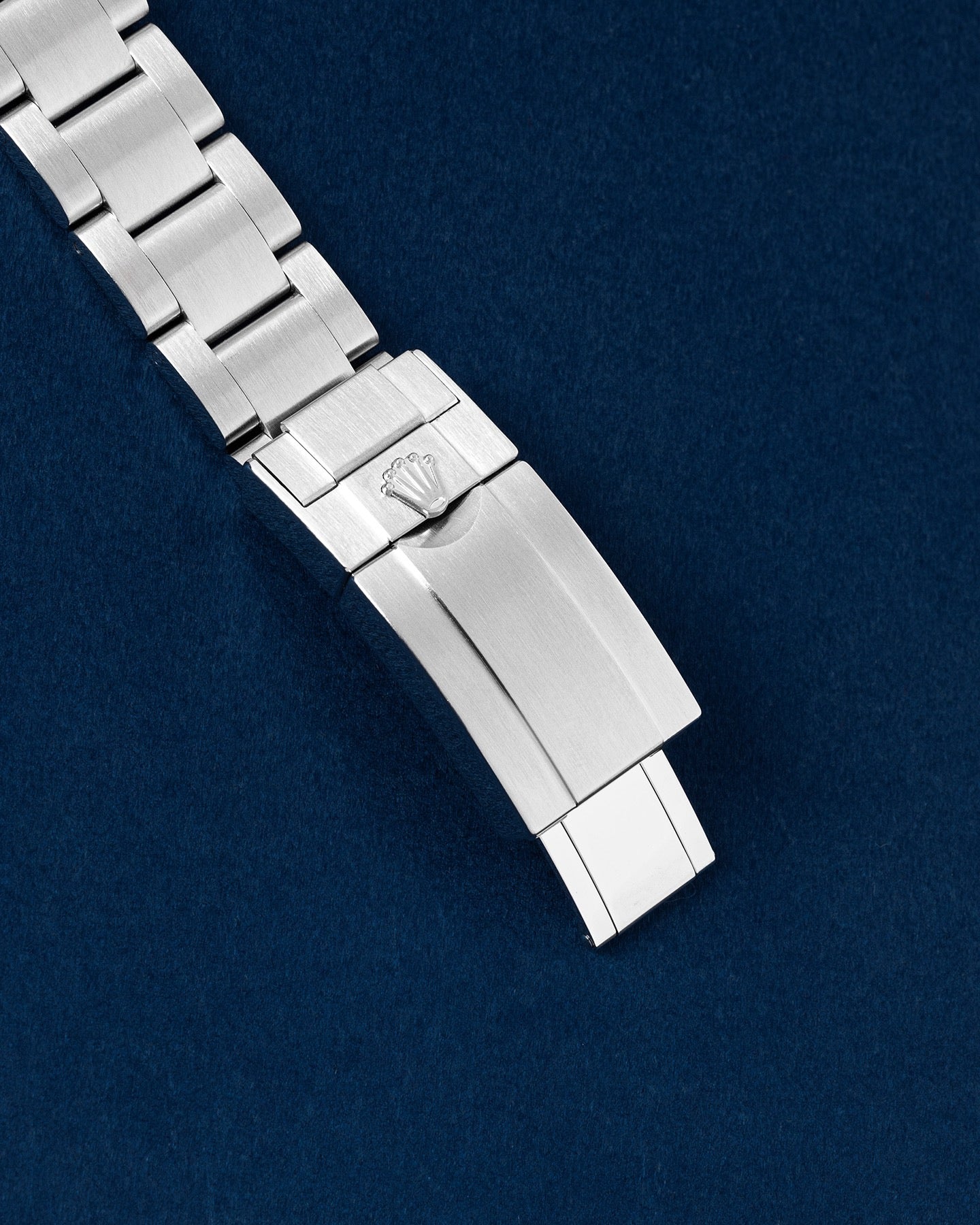
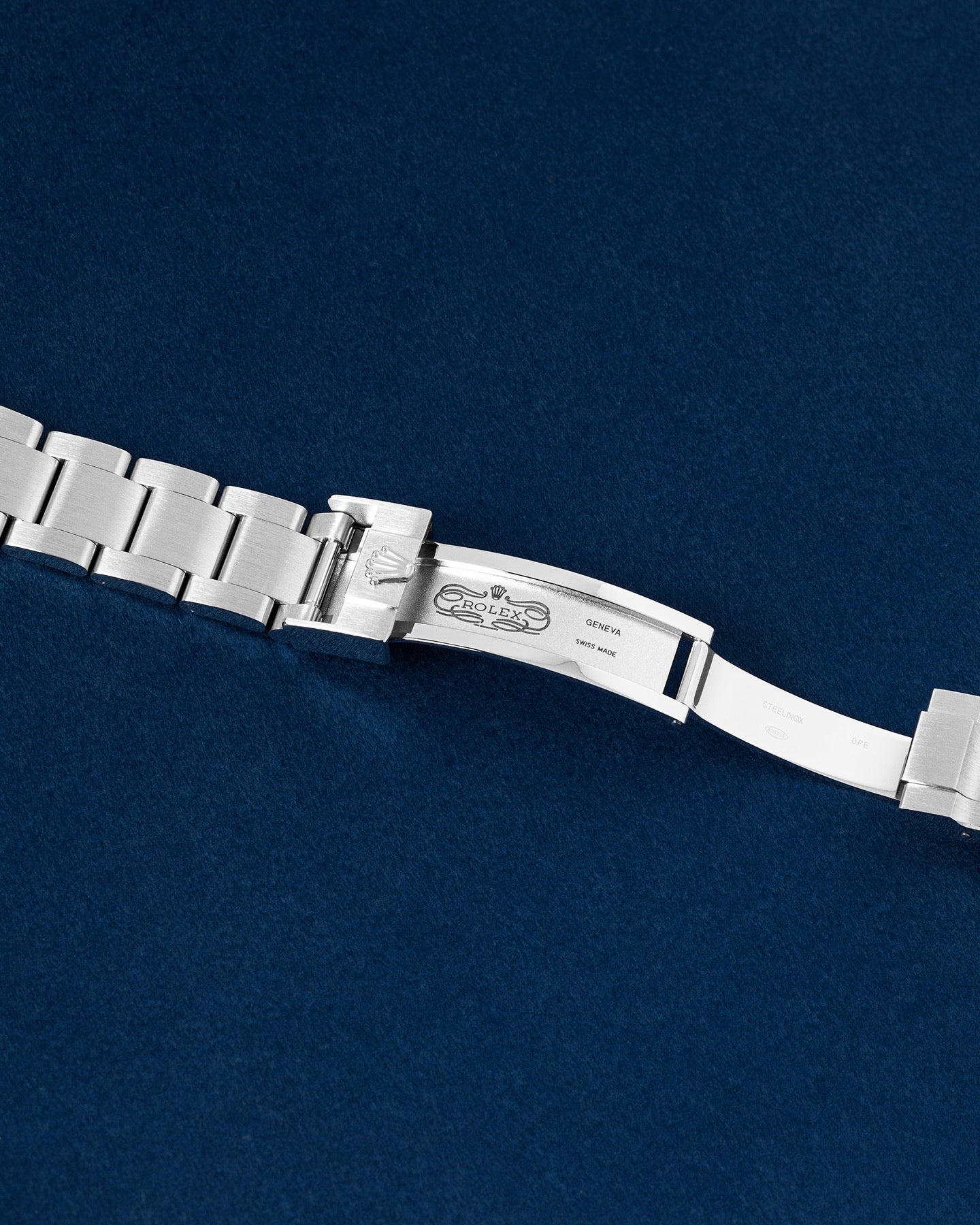
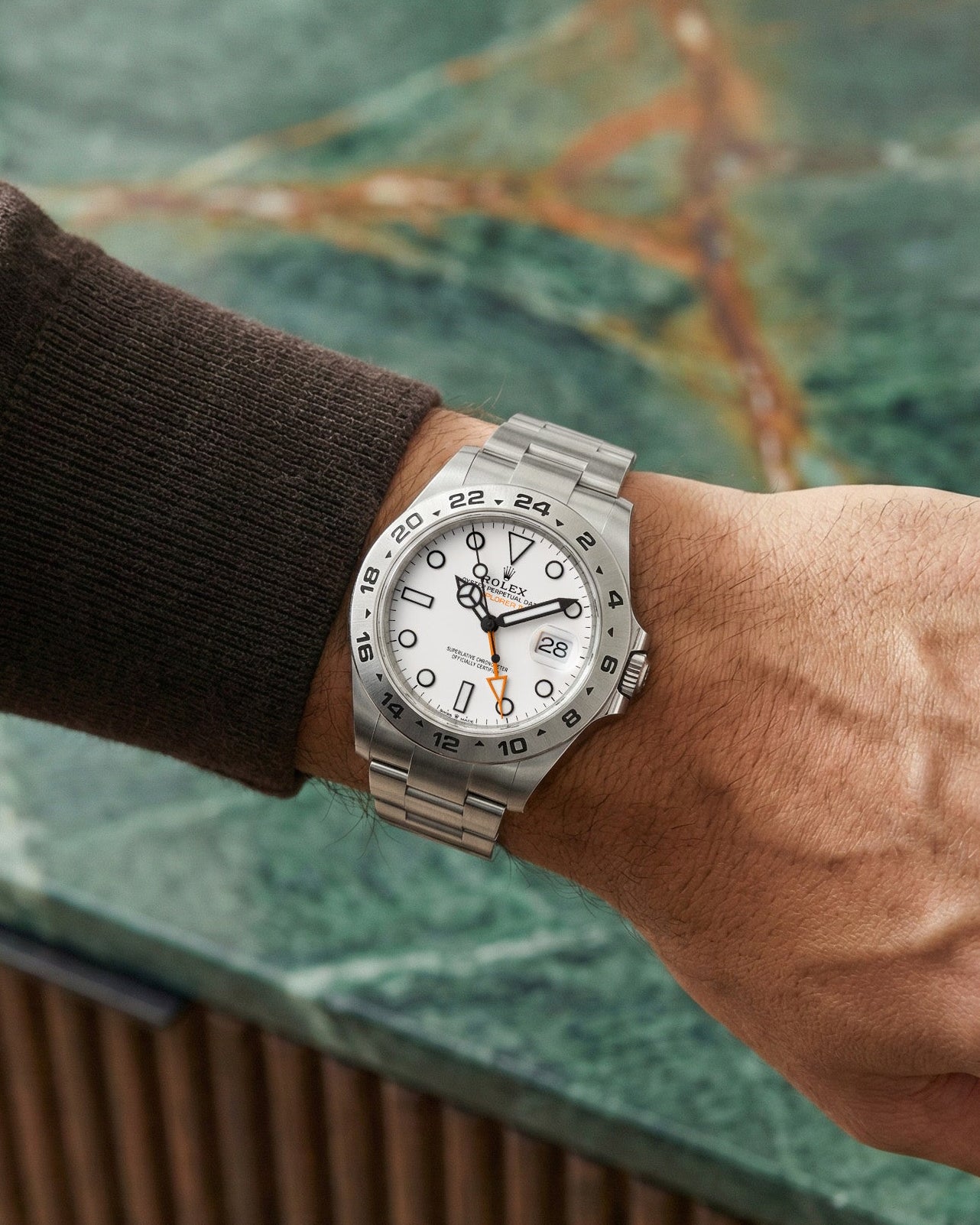
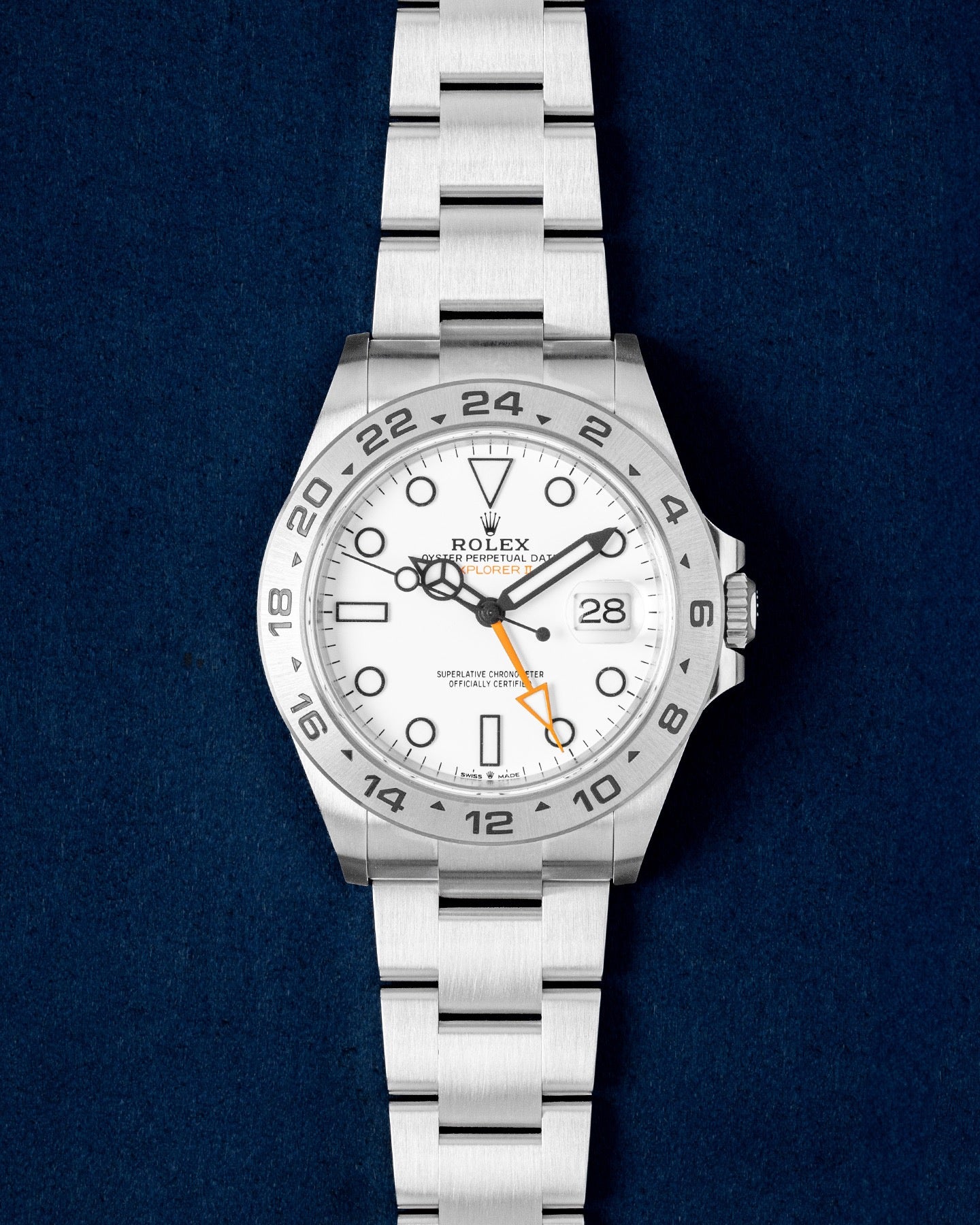
Shop new and pre-owned Rolex Explorer II watches at Grand Caliber. The adventurer's Rolex: a rugged GMT tool watch born in 1971 for cave and polar explorers, with a fixed 24 hour bezel, the unmistakable orange arrow hand, and the striking white Polar dial.
The Rolex Explorer II at Grand Caliber
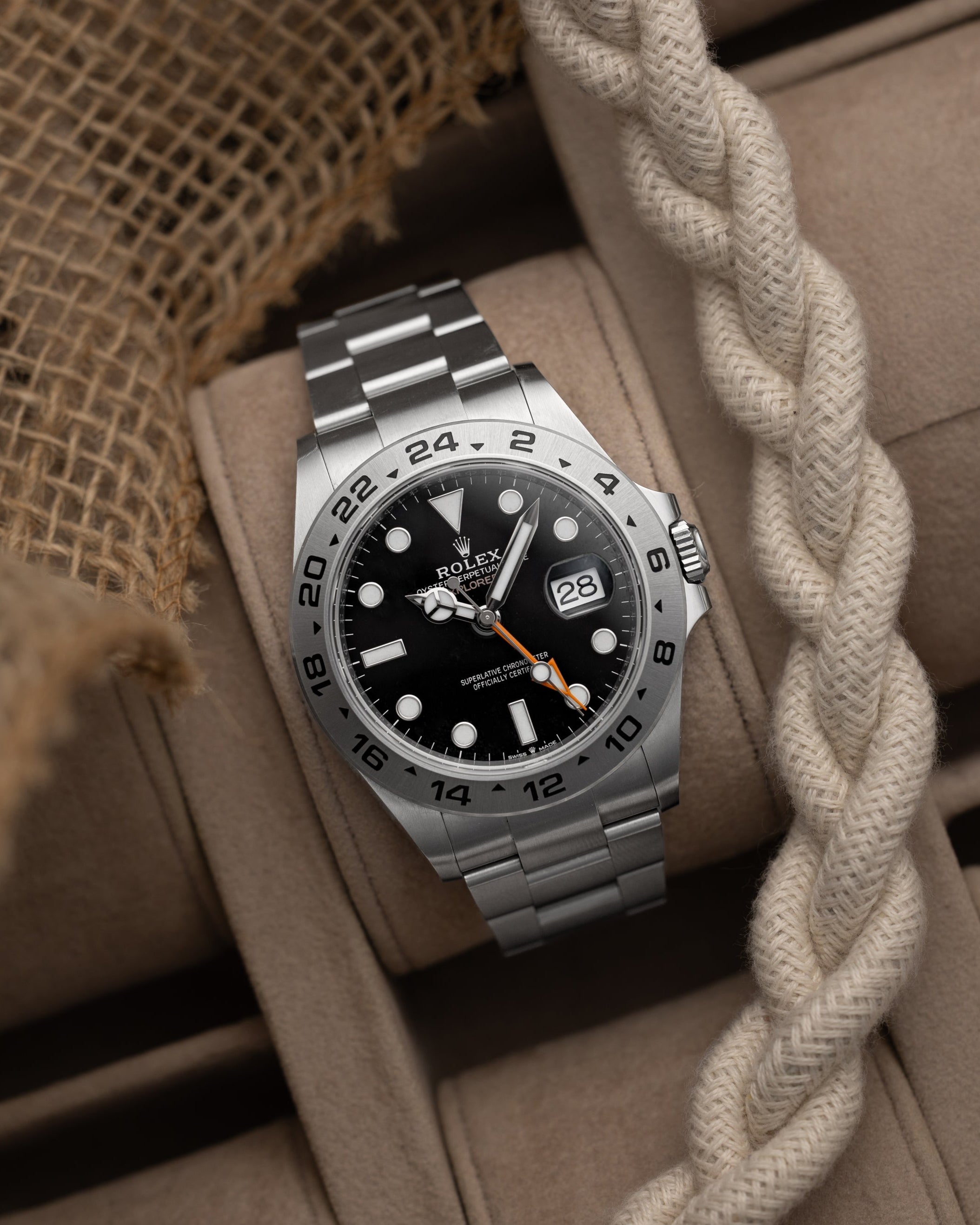
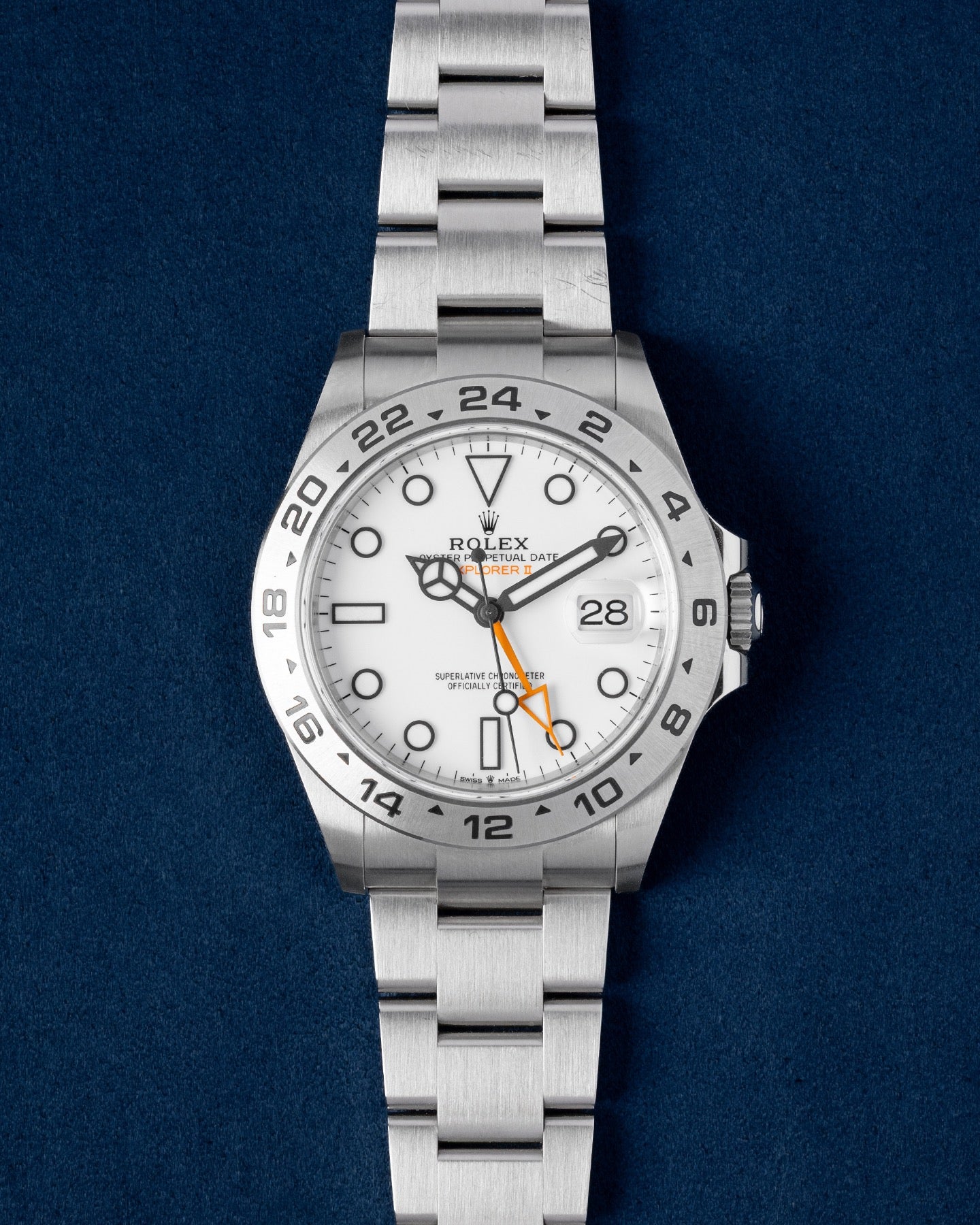
The Rolex Explorer II is the adventurer's Rolex, a rugged, purpose built tool watch with a personality all its own. Where the Explorer distilled the go anywhere watch to its simplest form, the Rolex Explorer II added function and character: a fixed 24 hour bezel, an unmistakable arrow tipped 24 hour hand, and the ability to tell day from night in places where the sun never reaches. Born in 1971 for cave explorers and polar expeditions, sometimes written Rolex Explorer 2, it has spent five decades as the quiet outsider of the Rolex sports lineup, less famous than the Submariner or the Daytona but genuinely beloved by those who know the model best and appreciate what sets it apart. The white dial Polar version in particular is one of the most distinctive faces in the entire Rolex catalogue, instantly recognizable and quite unlike anything else the brand produces outside the Daytona. Grand Caliber is a trusted source for new and pre-owned Rolex Explorer II watches, serving collectors across the United States and internationally from our showroom in Uptown Dallas.
Grand Caliber sees the Rolex Explorer II cross the desk in every form the model has produced. The current 42mm 226570 with the caliber 3285, the previous 216570 that reintroduced the orange hand, the long running 16570 that defined the model for a generation, the transitional 16550 that brought the first Polar dial, and the original 1655 Freccione that started it all. We handle both the black and the white Polar dials across all the references, from accessible modern examples to genuinely collectible vintage pieces with real history behind them. What follows is the complete history of the Rolex Explorer II as a dealer who has handled the full reference range tells it, written to cover the entire model rather than only what happens to sit in the case today.
Our approach is straightforward. Every Rolex Explorer II is authenticated in house before it is listed, pricing is posted openly on every product page, and there is never any allocation conversation. If you are in Dallas you are welcome to handle any Rolex Explorer II in the showroom, and if you are anywhere else in the country we ship fully insured. This guide covers the full arc of the Rolex Explorer II, the origins, every reference, the movements, the design, and the buying and ownership considerations, so you can approach the model from a position of genuine understanding.
The Origins of the Rolex Explorer II
A Watch for Cave and Polar Explorers
The Rolex Explorer II arrived in 1971, and from the start it was a different kind of watch from its older sibling. While the Explorer was a clean, time only mountaineering watch, the Explorer II was designed for a more specialized set of adventurers, cave explorers, or speleologists, and polar researchers who spent long stretches in environments with no natural light. For them, the simple question of whether it was day or night was not obvious, and the Rolex Explorer II was built to answer it.
The 24 Hour Bezel and Hand
To solve that problem, Rolex gave the watch two features that would define it forever: a fixed 24 hour bezel and a bold, arrow tipped 24 hour hand. Together they let the wearer read whether a given hour was in the day or the night, a genuinely useful function deep in a cave or during the endless daylight or darkness of a polar season. It was a tool watch in the truest sense, built to solve a specific real world problem, and that functional honesty has always been at the heart of the Rolex Explorer II.
The context of the era matters here. By 1971 Rolex had already conquered the sea with the Submariner and the Sea-Dweller, the sky with the GMT-Master, and the racetrack with the Daytona, and the original Explorer had covered the mountains. The Rolex Explorer II filled a genuine gap, serving the explorers who worked underground and at the poles, where the loss of a natural day night rhythm was a real and disorienting problem. That the watch was designed around such a specific and unusual need is a large part of what gives it its distinctive, purposeful character, and it explains why the Rolex Explorer II has always felt like the most single minded tool watch in the lineup.
The Reference 1655 and the Freccione
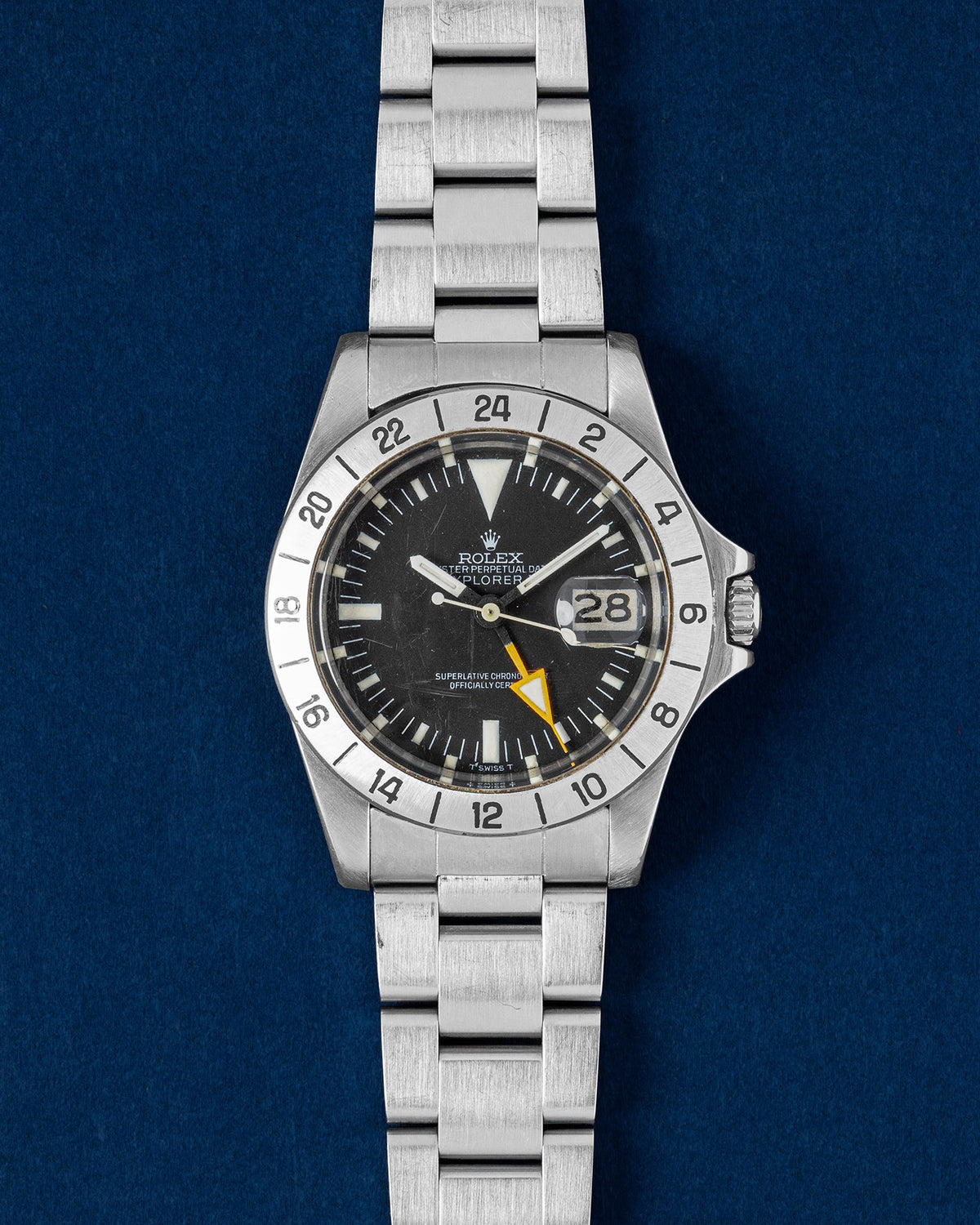
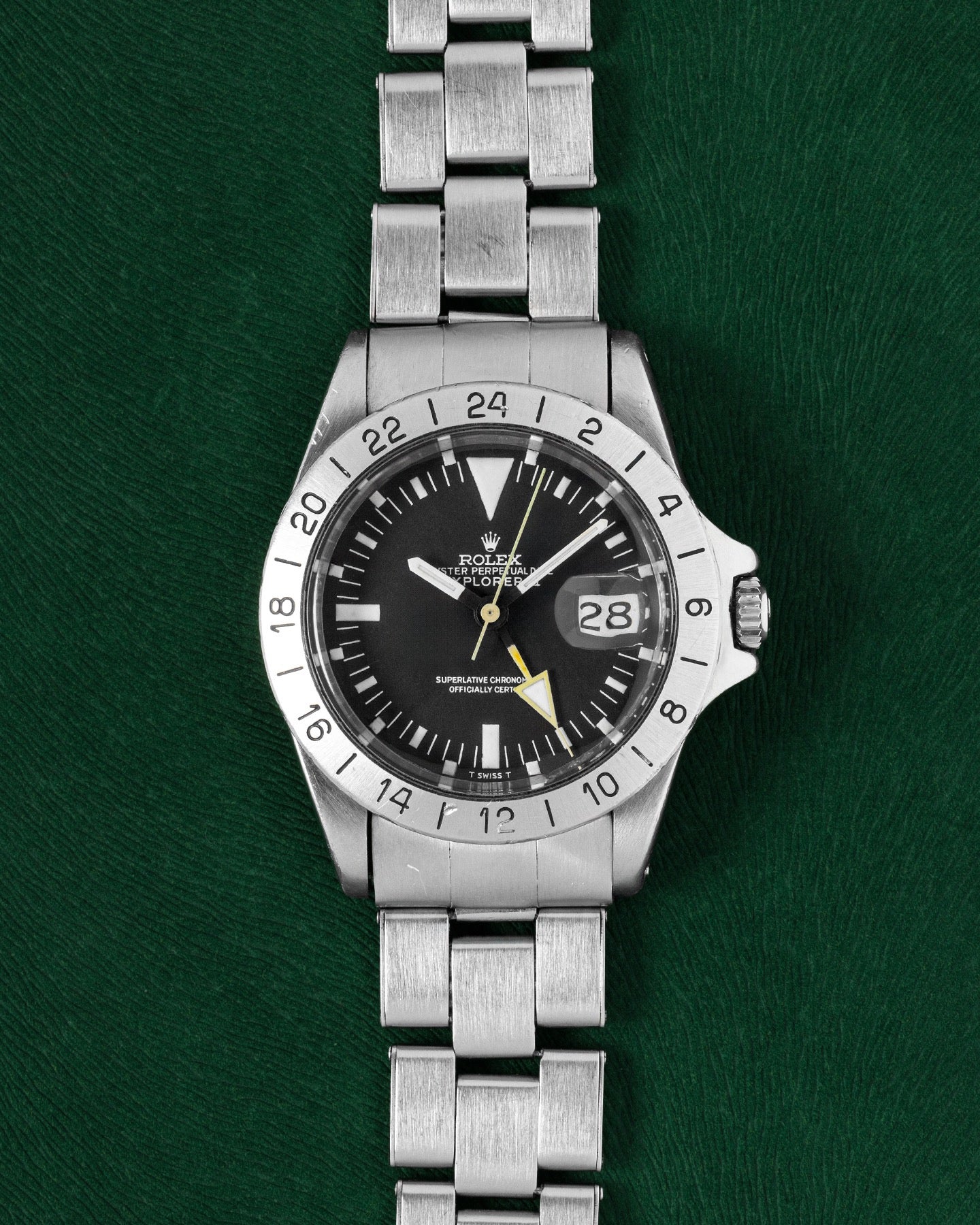
The original Rolex Explorer II, the reference 1655, is one of the most characterful watches Rolex has ever produced. Made from 1971 until around 1985, it is instantly recognizable for its enormous orange arrow tipped 24 hour hand, which earned it the nickname the Freccione, Italian for big arrow. With its bold orange hand, straight drilled lugs, and busy dial marked by a large inverted triangle at twelve o'clock, the 1655 looked like nothing else in the Rolex catalogue, and that distinctive, slightly quirky character is exactly why collectors prize it today.
The 1655 was, in its own time, something of a slow seller. Its unusual looks and specialized function meant it never achieved the immediate popularity of the Submariner or the Datejust, and for years it was one of the more overlooked Rolex sports watches. That very obscurity is now part of its appeal, because the watches that were unloved in their day are often the most characterful and collectible decades later. The 1655 has been thoroughly rediscovered by collectors who appreciate its bold, unrepeatable design, and clean original examples have appreciated dramatically as a result.
The Steve McQueen Myth
The 1655 is also widely known as the Steve McQueen, and it is worth setting the record straight on that name, because it is a genuine misattribution. There is no photographic evidence that Steve McQueen ever wore a Rolex Explorer II. The actor's Rolex of choice was in fact a Submariner. The Explorer II nickname stuck after the watch became associated with him through a 1970s advertising era, and it has never let go since, but the honest truth is that the Steve McQueen name is a myth, however charming and well established it has become in watch culture. Telling that story accurately is part of understanding the 1655, and it does nothing to diminish a reference that stands perfectly well on its own genuine merits.
The persistence of the nickname is itself a lesson in how watch folklore takes hold. A memorable association, once attached to a watch, can outlive the facts by decades, and the Steve McQueen label has become so entrenched that many buyers still ask for the watch by that name. A good dealer neither leans on the myth to inflate a watch nor dismisses the buyer who has come to love the reference through it. The honest position is simply to enjoy the 1655 for what it genuinely is, a bold, historically important, and increasingly valuable piece of Rolex tool watch design, and to let the accurate story stand alongside the legend.
Not Yet a True GMT
One important technical point sets the 1655 apart from every Rolex Explorer II that followed. It was not a true GMT watch. Its 24 hour hand was synced directly to the main hour hand rather than being independently adjustable, which meant it could only indicate whether a given time was day or night, not track a second time zone. This is the correct understanding of the reference, and it also makes the 1655 the only Explorer II never offered with a white dial. It is a pure day night indicator, faithful to the model's original cave exploring purpose.
This distinction genuinely matters when buying or understanding a 1655. Because the 24 hour hand cannot be set independently, the reference simply shows, at a glance, whether a given hour falls in the day or the night, exactly what a cave explorer emerging after days underground would need. The true dual time zone capability that most people associate with the Rolex Explorer II did not arrive until the next reference. Appreciating the 1655 on its own terms, as a day night indicator rather than a travel GMT, is the key to understanding both the watch and the evolution of the model that followed it.
The Reference 16550 and the First Polar Dial
In 1985 Rolex transformed the Explorer II with the reference 16550, a transitional model that introduced many of the features that define the modern watch. It is one of the most important and collectible references in the model's history, bridging the quirky original and the long running classic that followed, and it brought the Rolex Explorer II firmly into the modern era.
The First True GMT
The single most important change in the 16550 was the movement. Rolex fitted the caliber 3085, the same movement family used in the GMT-Master of the era, which for the first time gave the Explorer II an independently adjustable 24 hour hand and the modern conveniences of hacking seconds and a quickset date. This transformed the watch from a simple day night indicator into a genuine dual time zone tool, letting the wearer track a second time zone while the main hands showed local time. It was a fundamental upgrade that redefined what the Rolex Explorer II could do, and every reference since has retained this true GMT capability.
The Polar Dial and the Cream Dial Defect
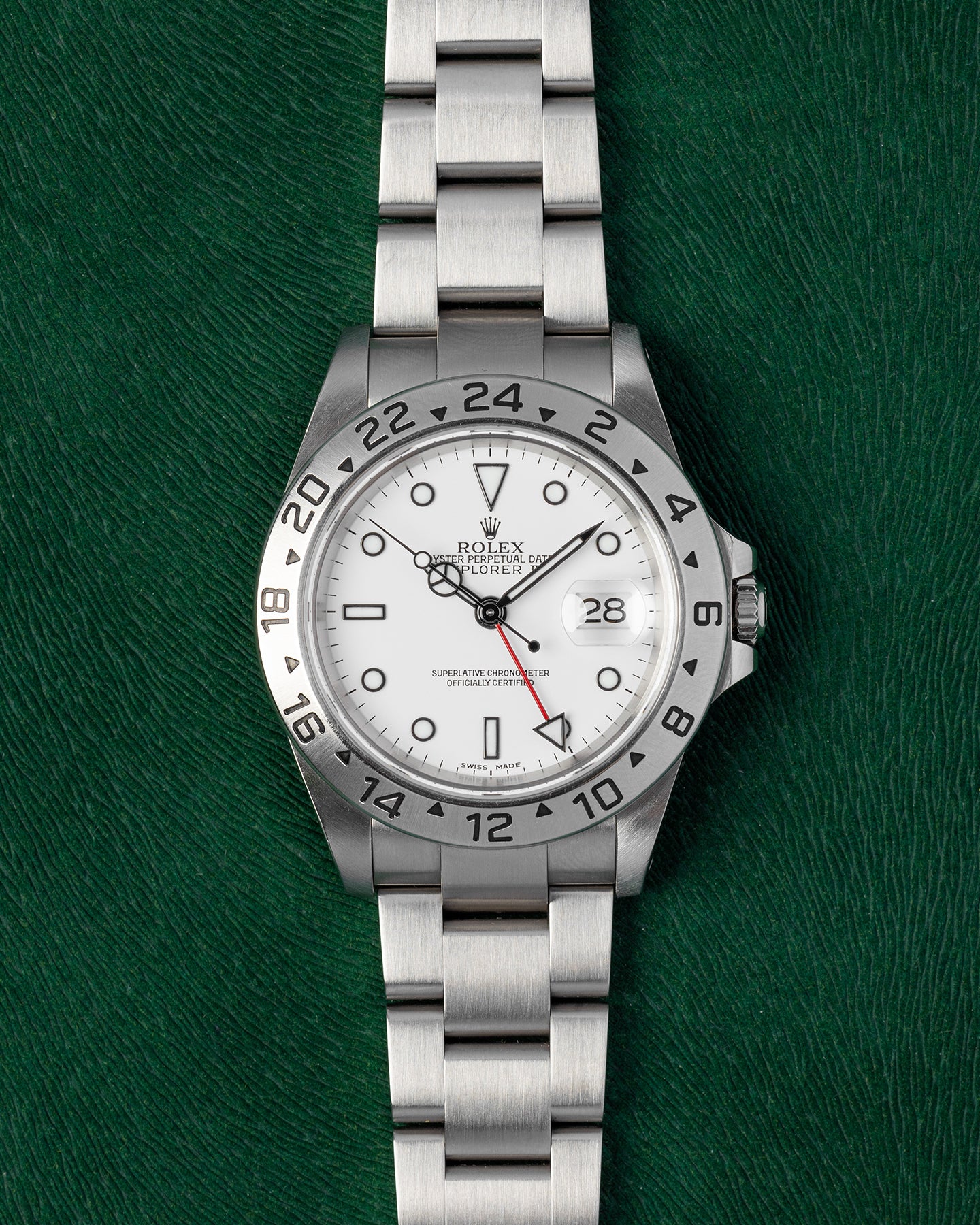
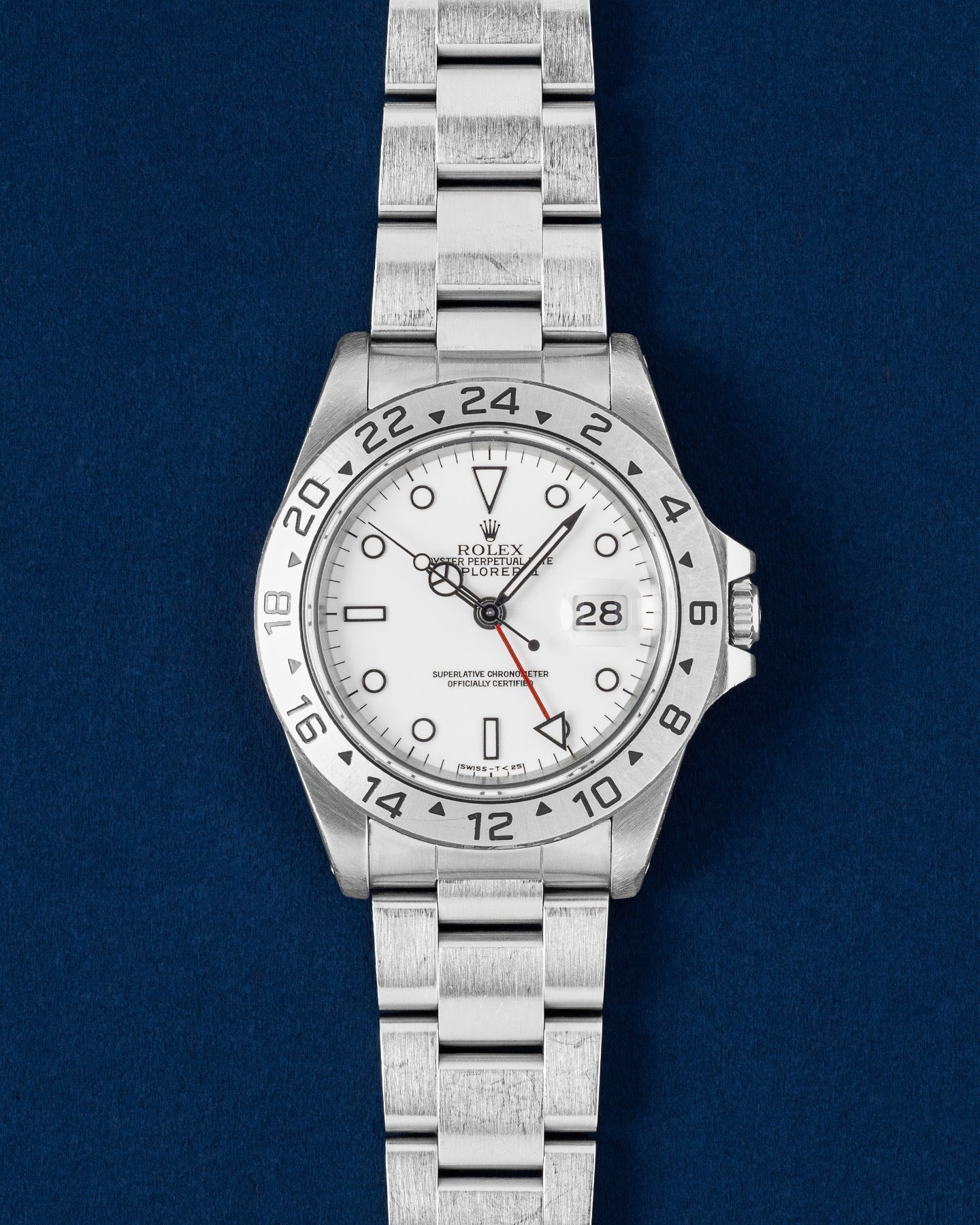
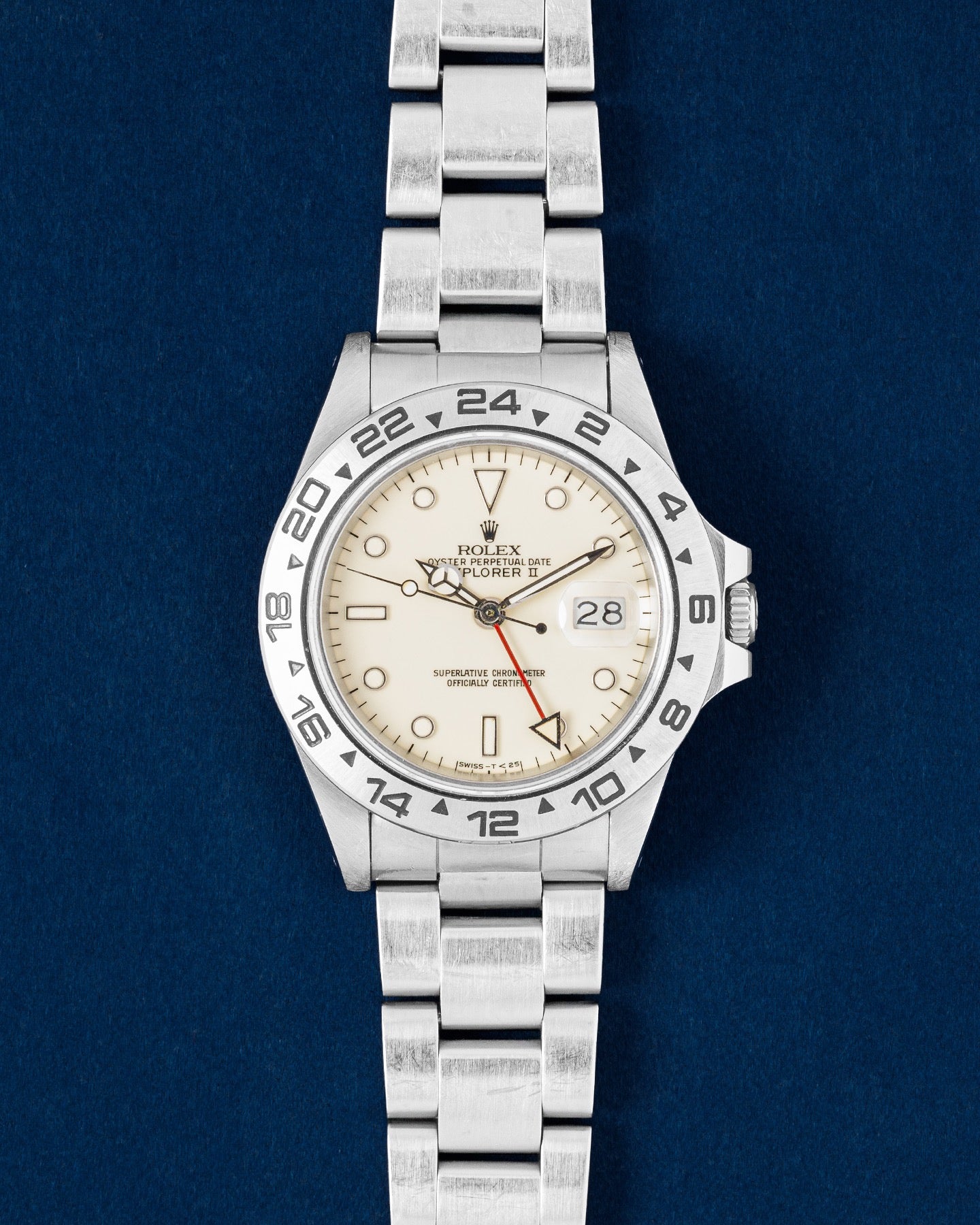
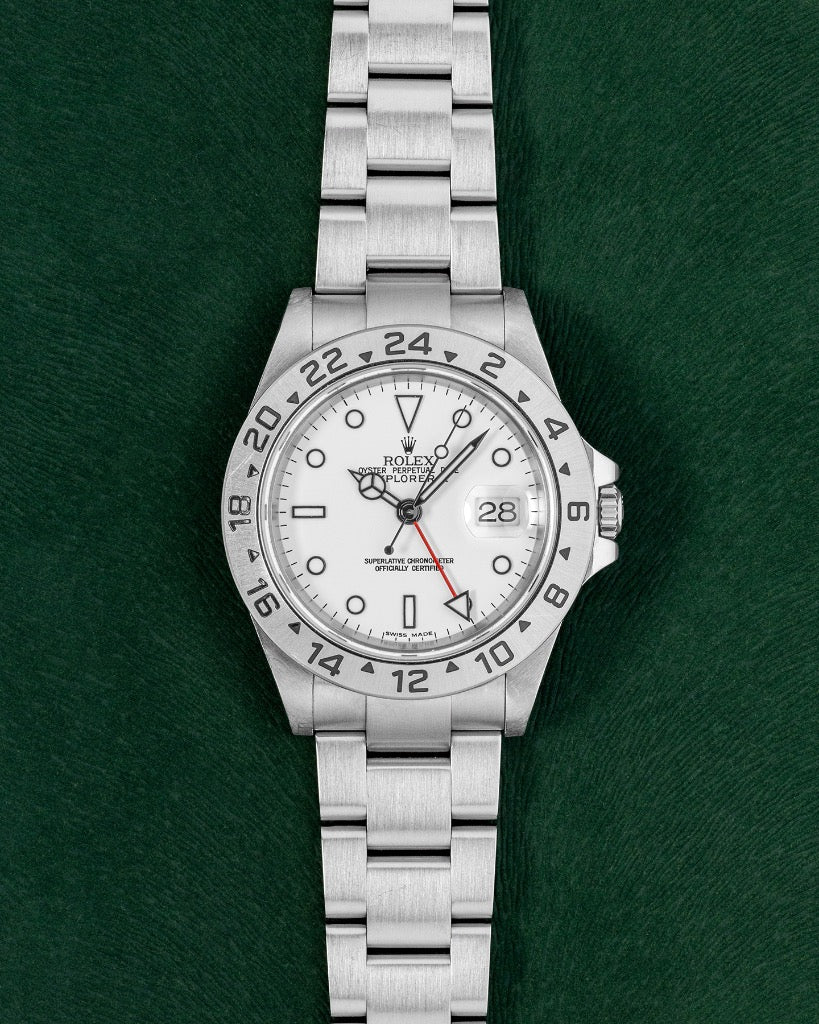
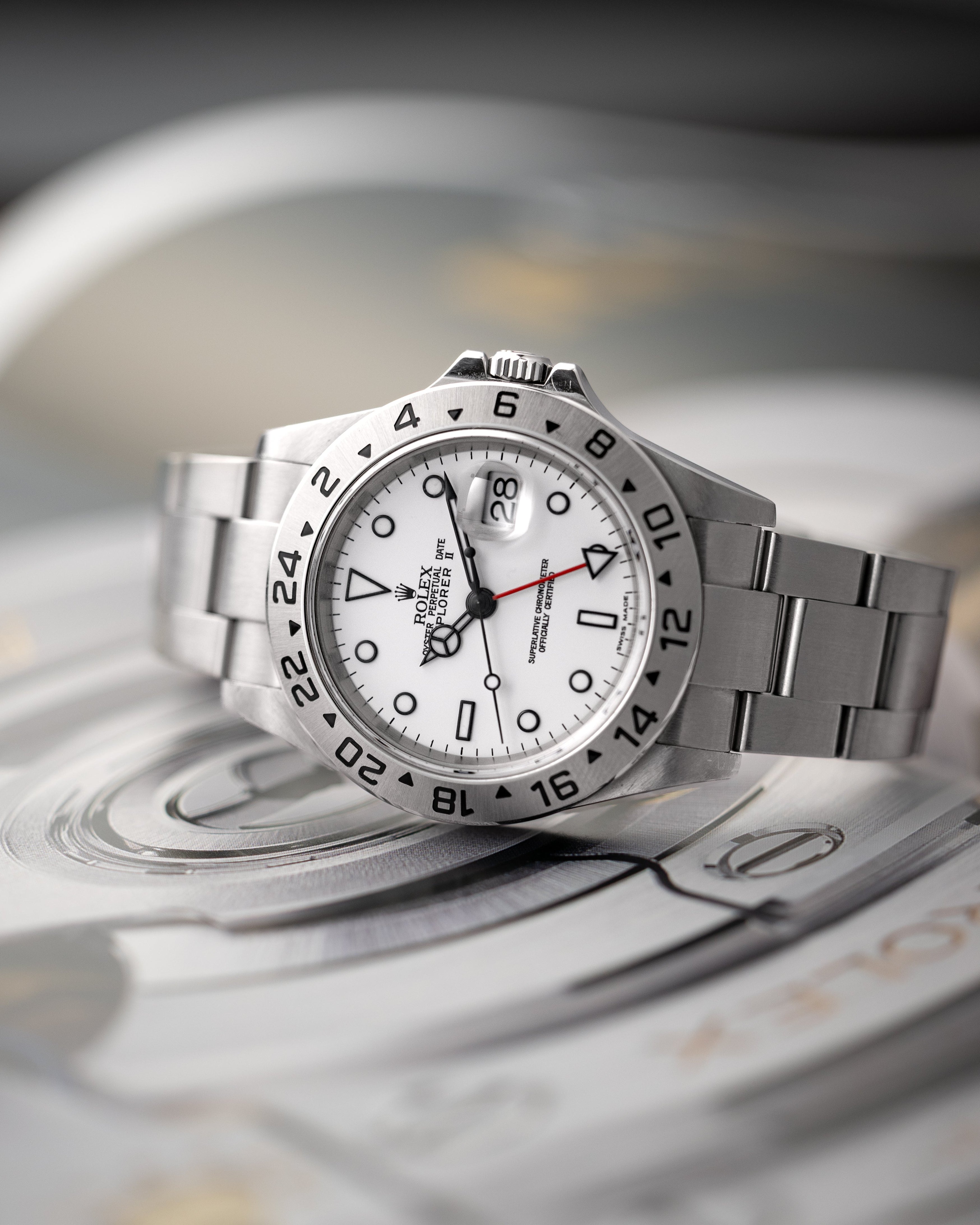
The 16550 also introduced the white dial for the first time, the configuration that collectors call the Polar, and it remains one of the most distinctive and desirable dials in the entire Rolex range. The reference brought a sapphire crystal in place of the old acrylic, dot hour markers with white gold surrounds, and the familiar Mercedes style hands that replaced the more angular handset of the original, aligning the watch visually with the rest of the professional Rolex range. A fascinating quirk of the early Polar dials is the cream dial phenomenon, where a defect in the white paint caused some dials to age to a warm creamy ivory tone over the years. Rolex corrected the flaw, but those aged cream, or panna, dials have become some of the most sought after and valuable Explorer II variants of all, and a genuine untouched example can command a remarkable premium over a standard white dial today. The 16550 had a short production run of only a few years, which adds to its collectibility.
Collectors also prize certain early 16550 dial layouts, particularly the so called rail dials, where the two lines of text near the six o'clock position line up along their edges like a railway track. These small typographic variations, invisible to the casual observer, can make an enormous difference to value among knowledgeable collectors, and they are exactly the kind of detail that separates a routine example from a special one. Combined with the transitional importance of the reference and its short run, these variations make the 16550 one of the most rewarding and closely studied references in the entire model, and a genuine highlight for the vintage Rolex Explorer II collector.
The Reference 16570 and the Modern Classic
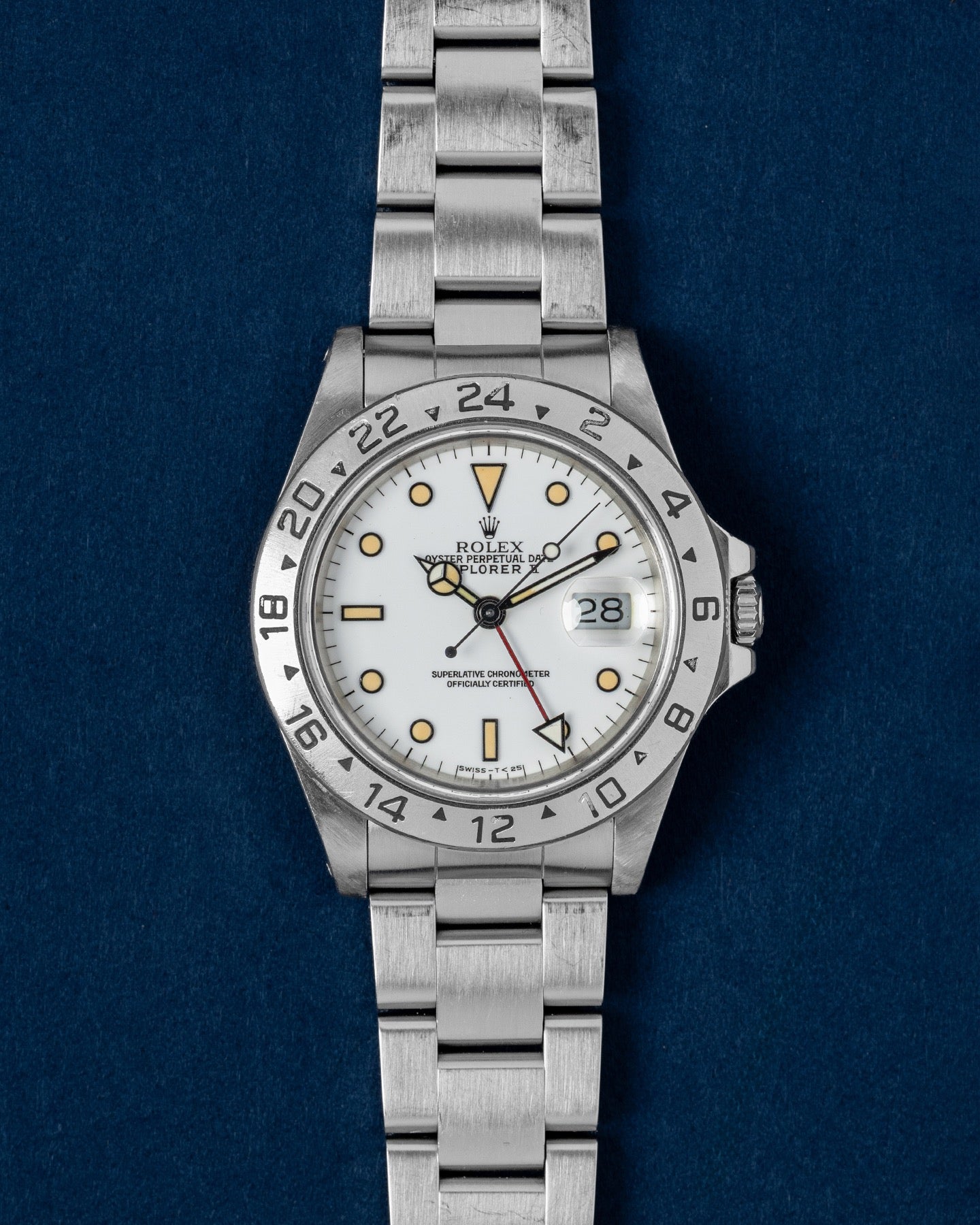
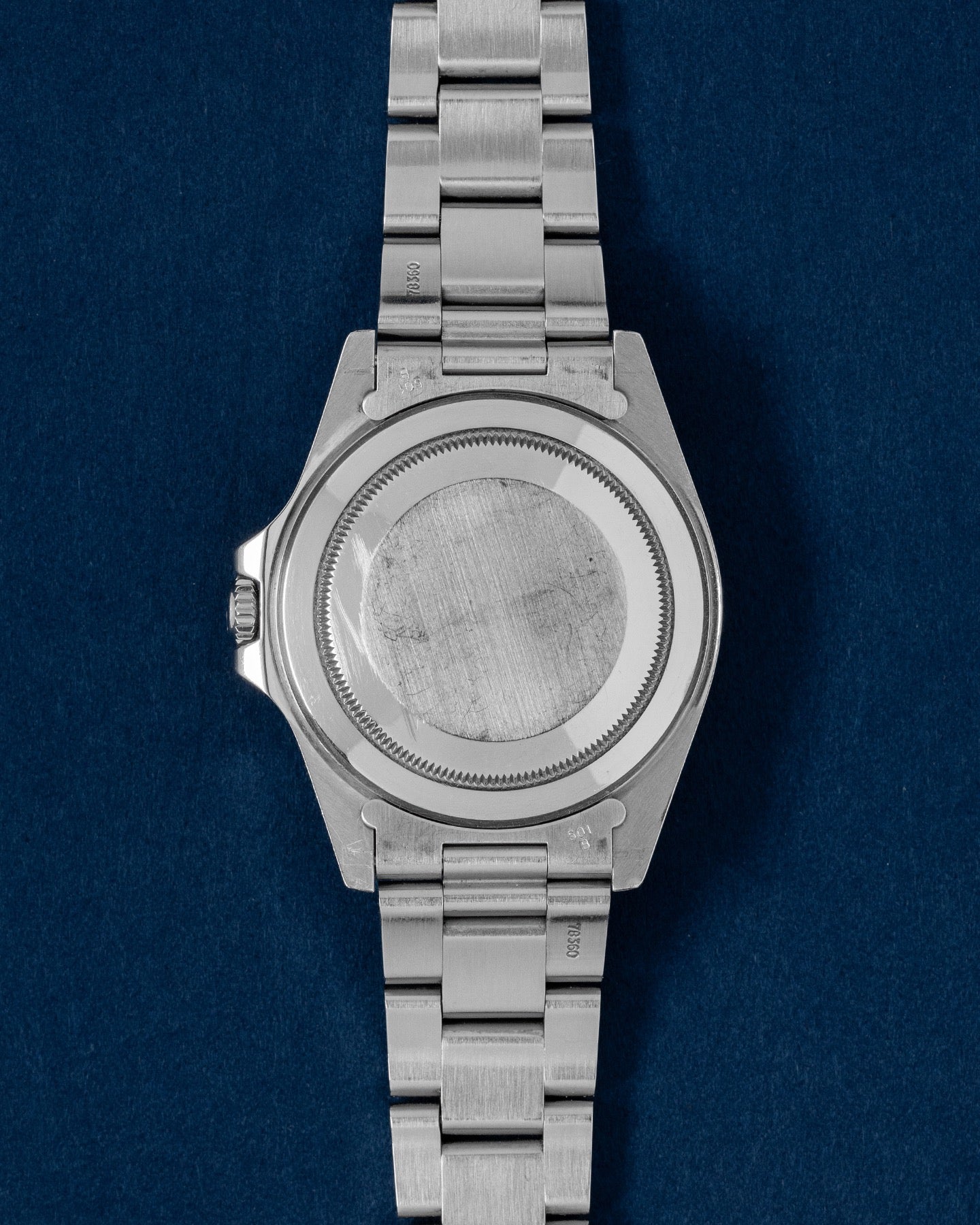
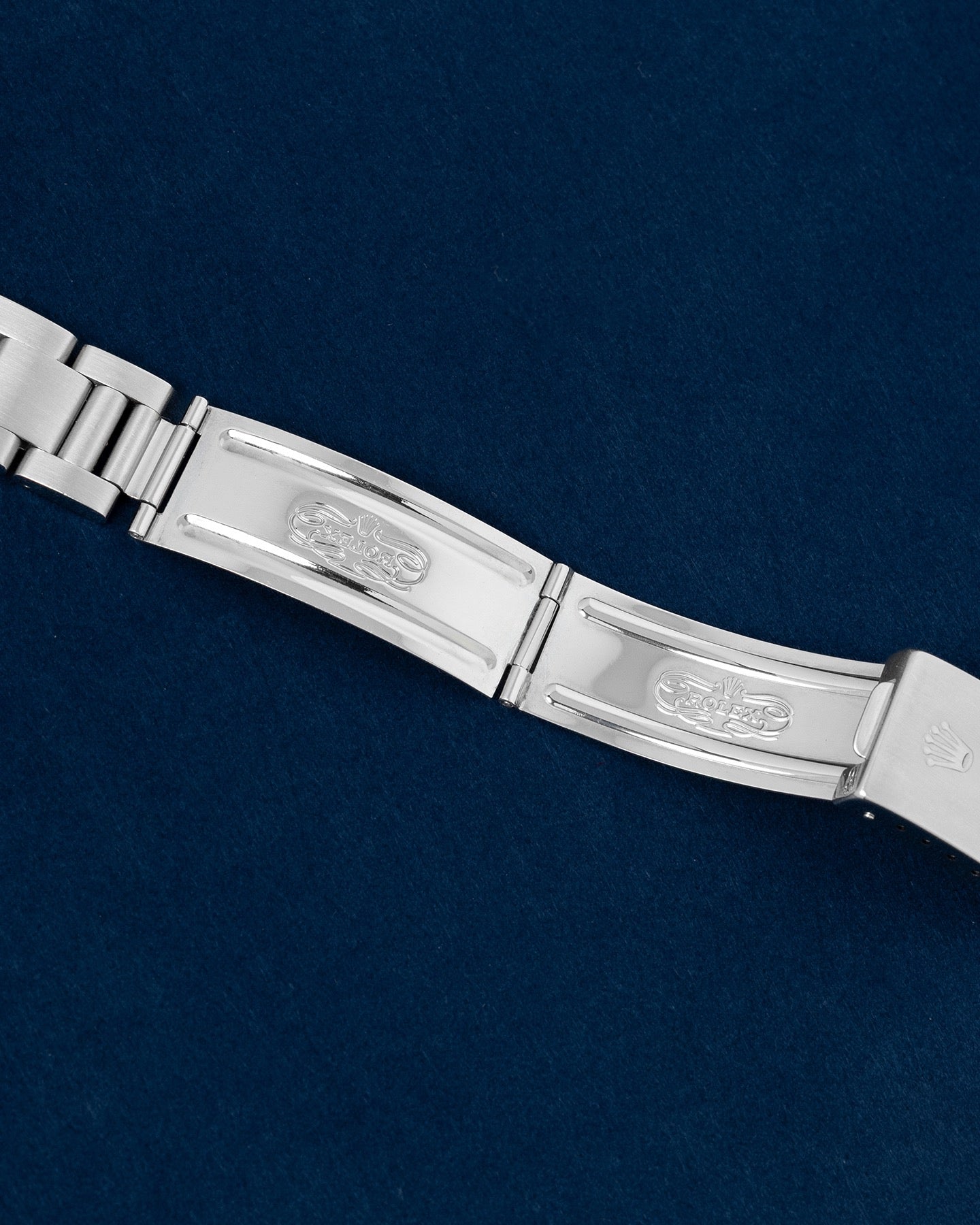
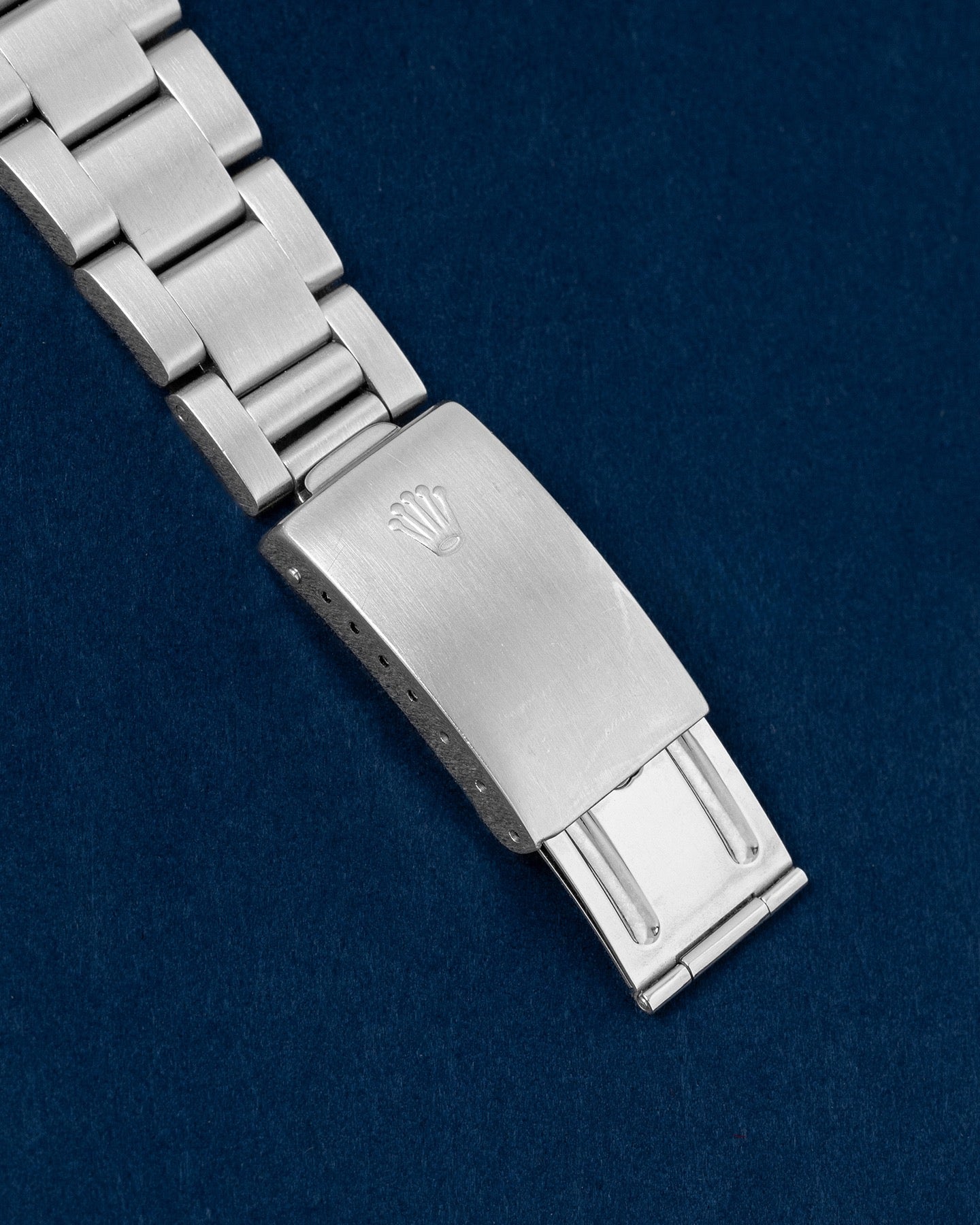
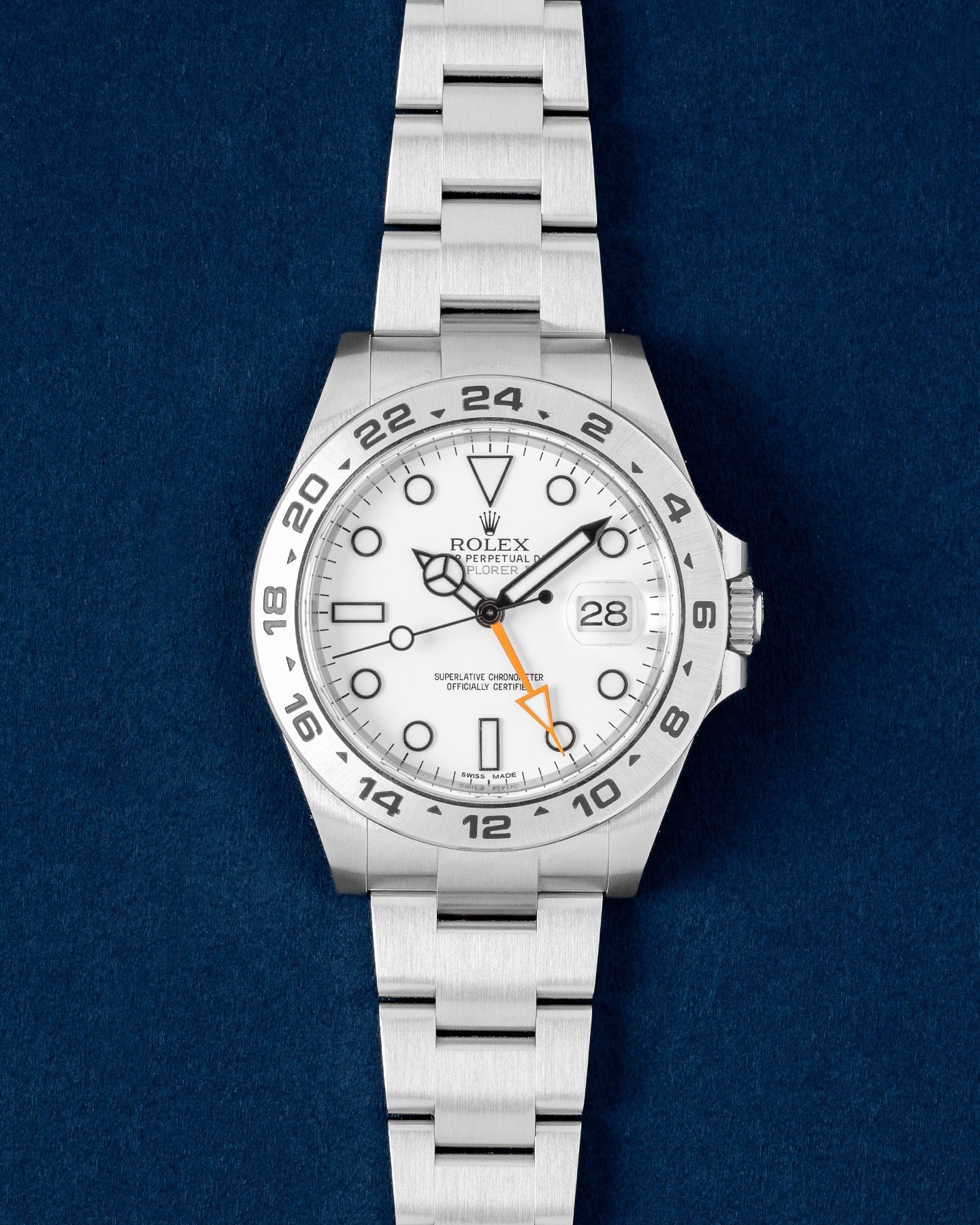
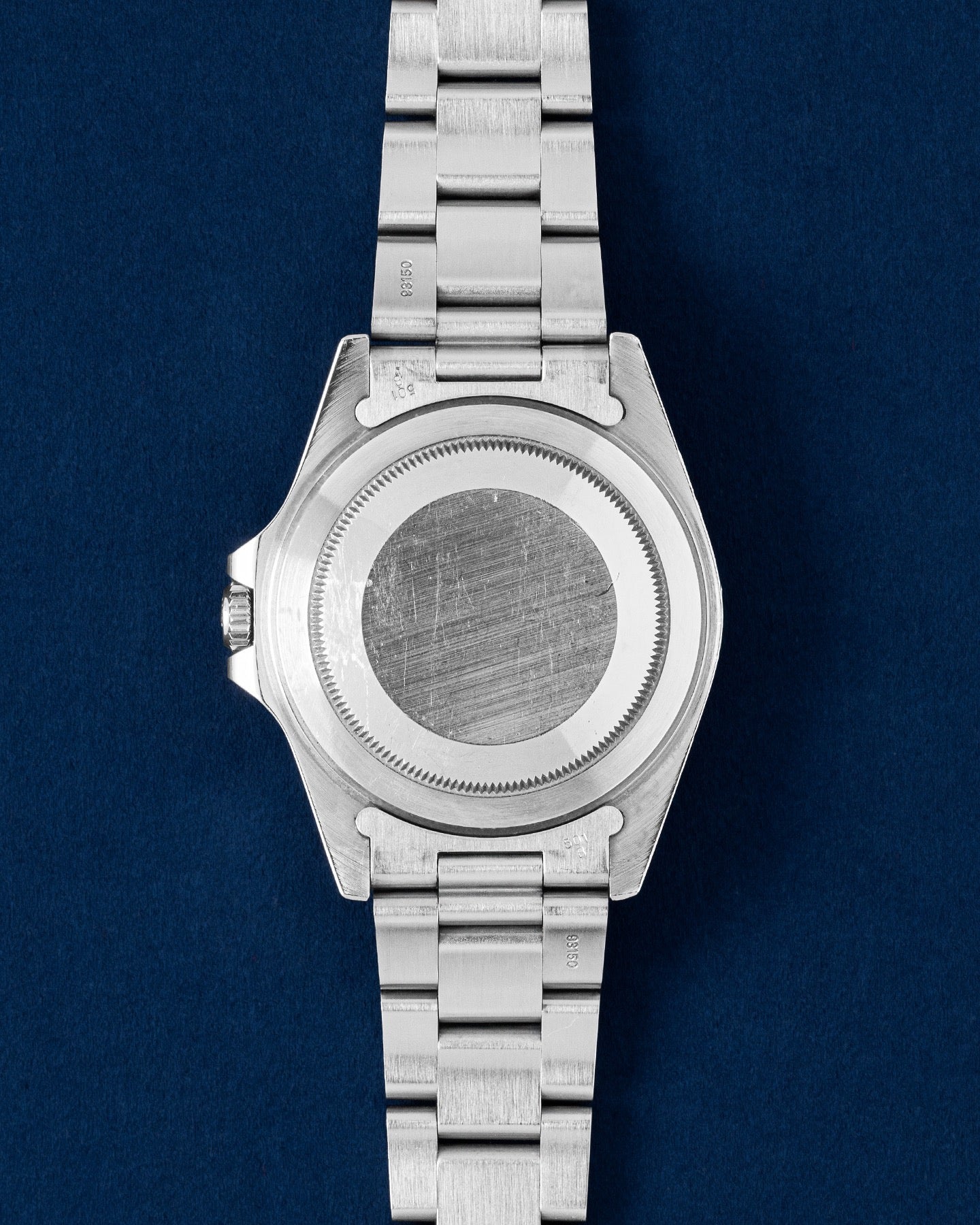
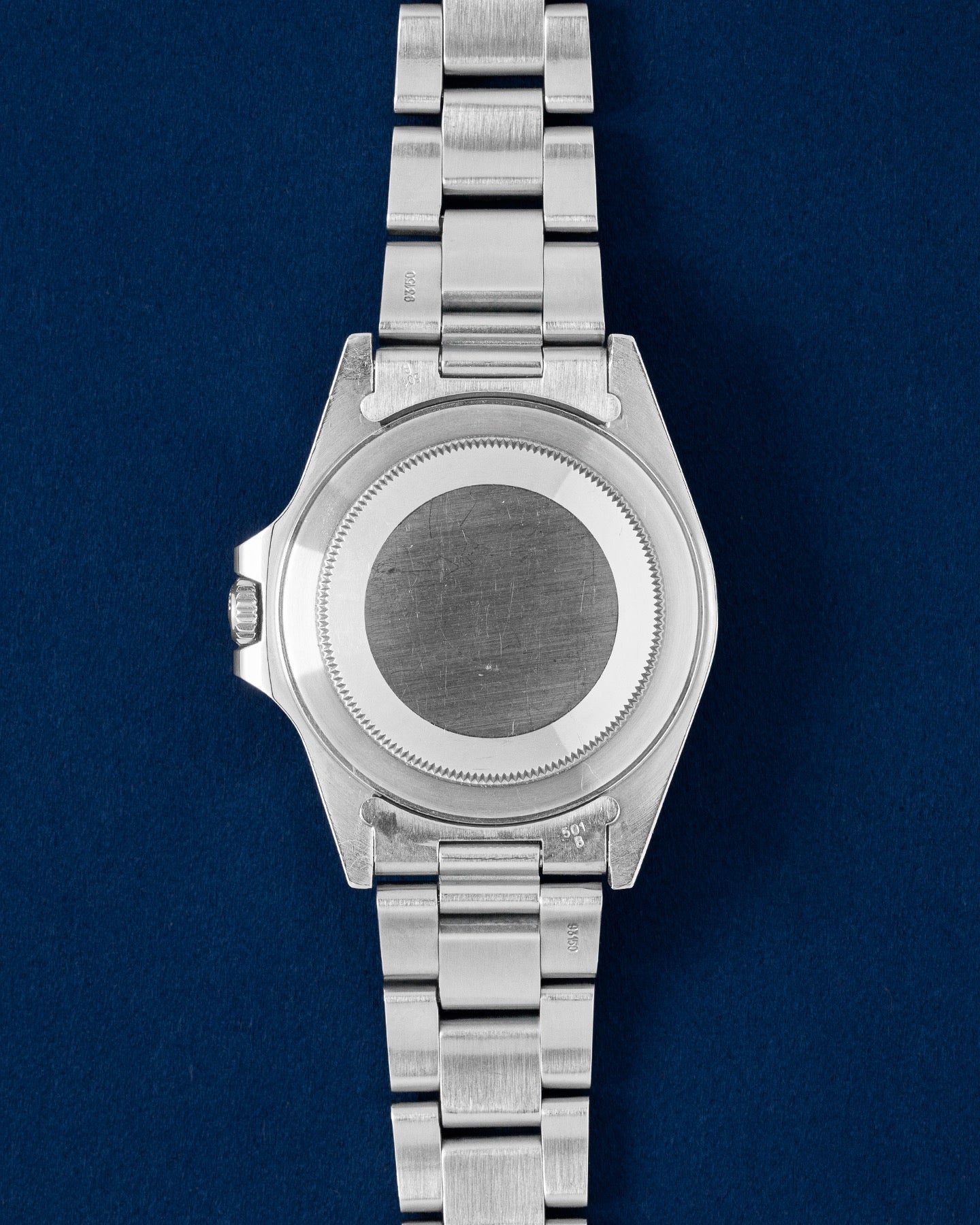
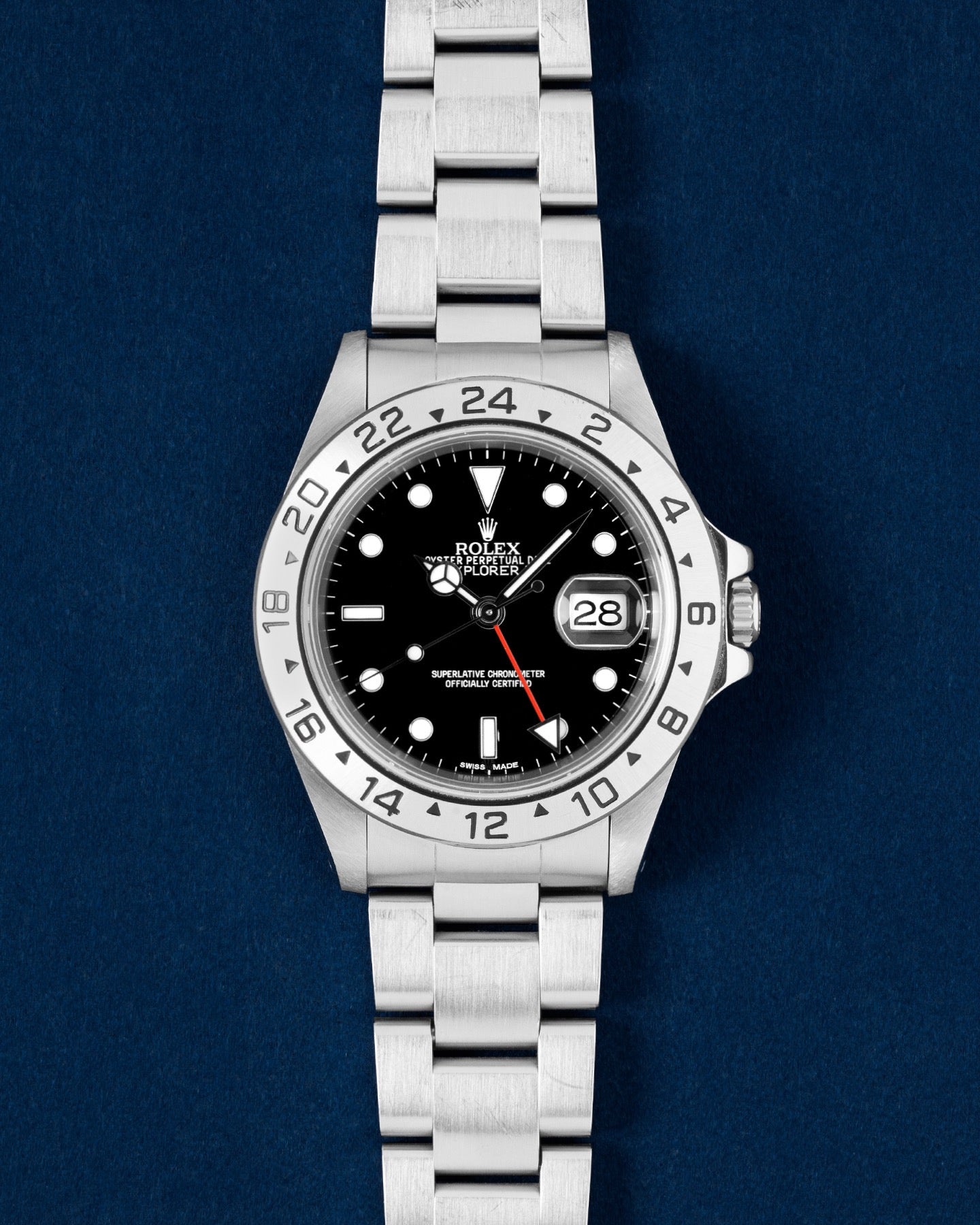
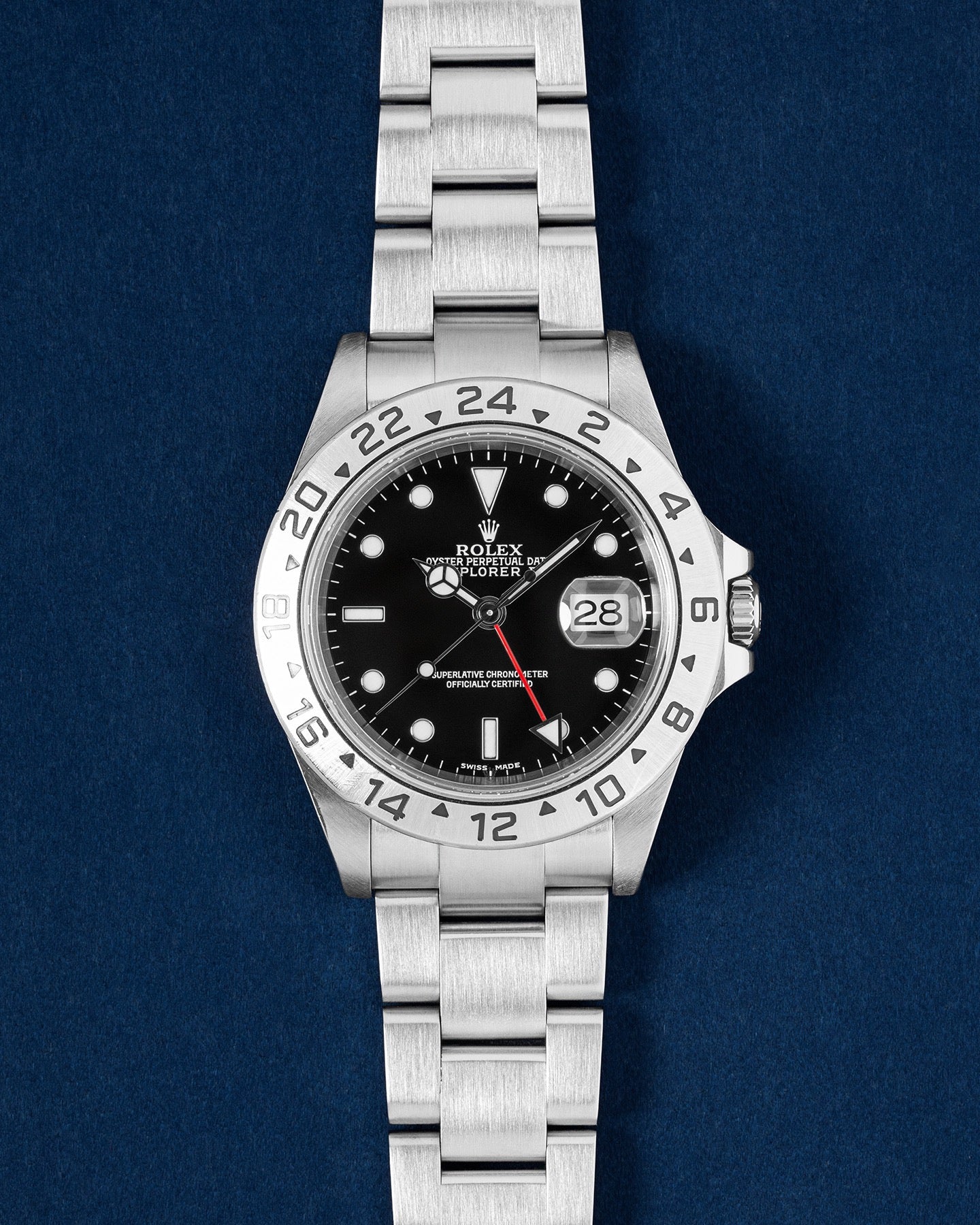
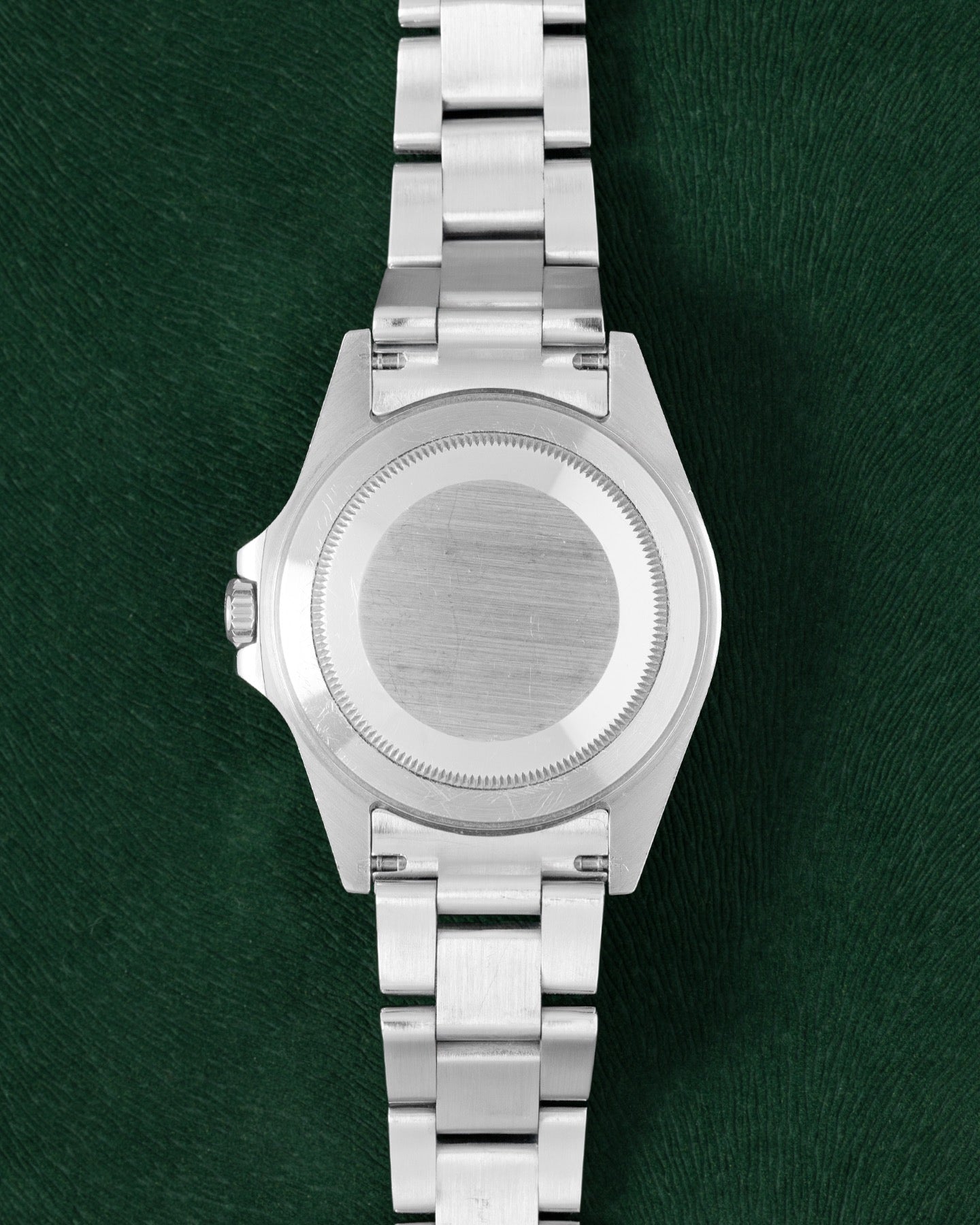
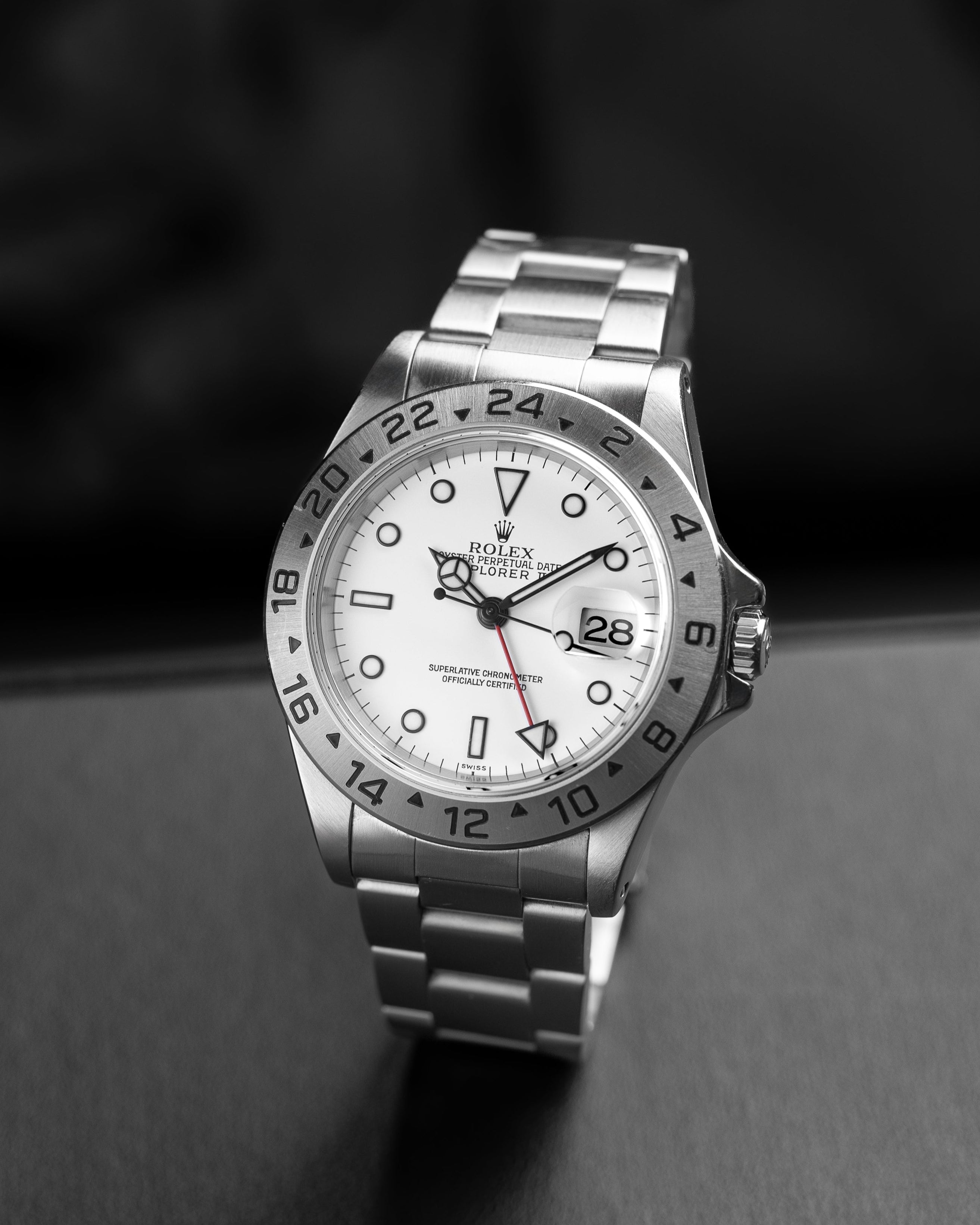
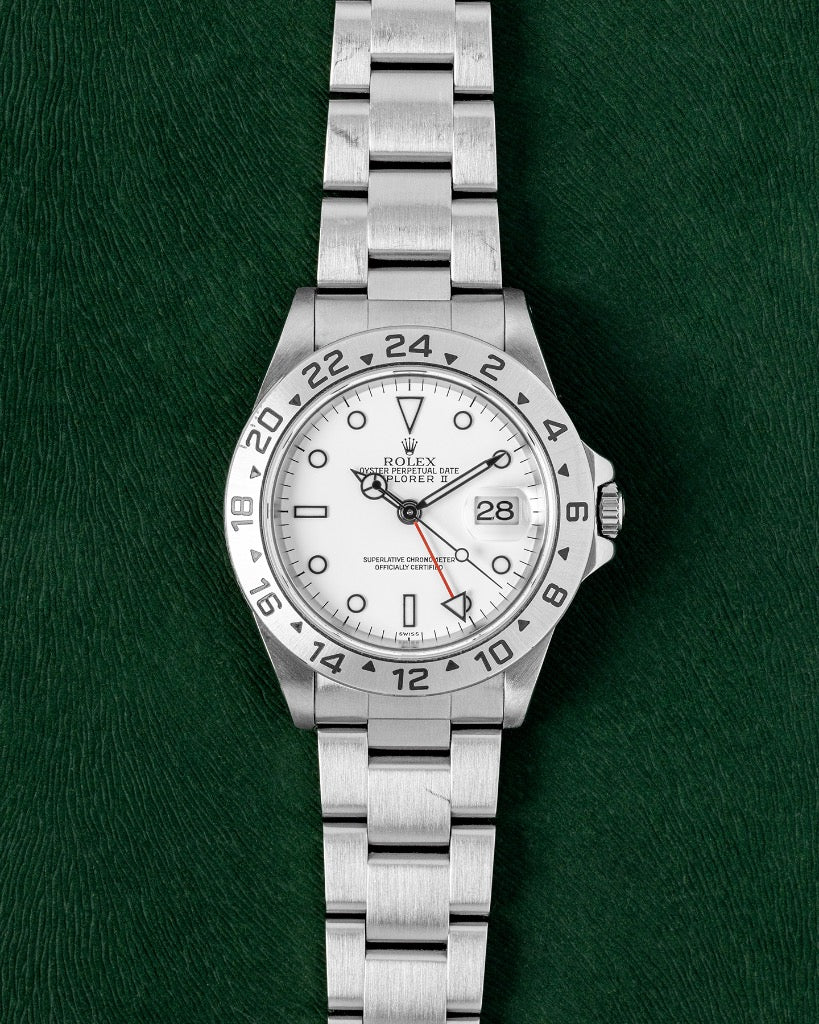
In 1989 Rolex introduced the reference 16570, and it would go on to become the definitive modern Rolex Explorer II, remaining in production for an extraordinary 22 years until 2011. For an entire generation it simply was the Explorer II, and its balanced 40mm proportions, its clean and legible design, and its bulletproof reliability made it one of the most quietly excellent watches in the entire Rolex sports catalogue, a watch that did everything asked of it without fuss. It is the reference most people picture when the model is mentioned, and it remains the most accessible way into the Rolex Explorer II today.
The 16570 Movements
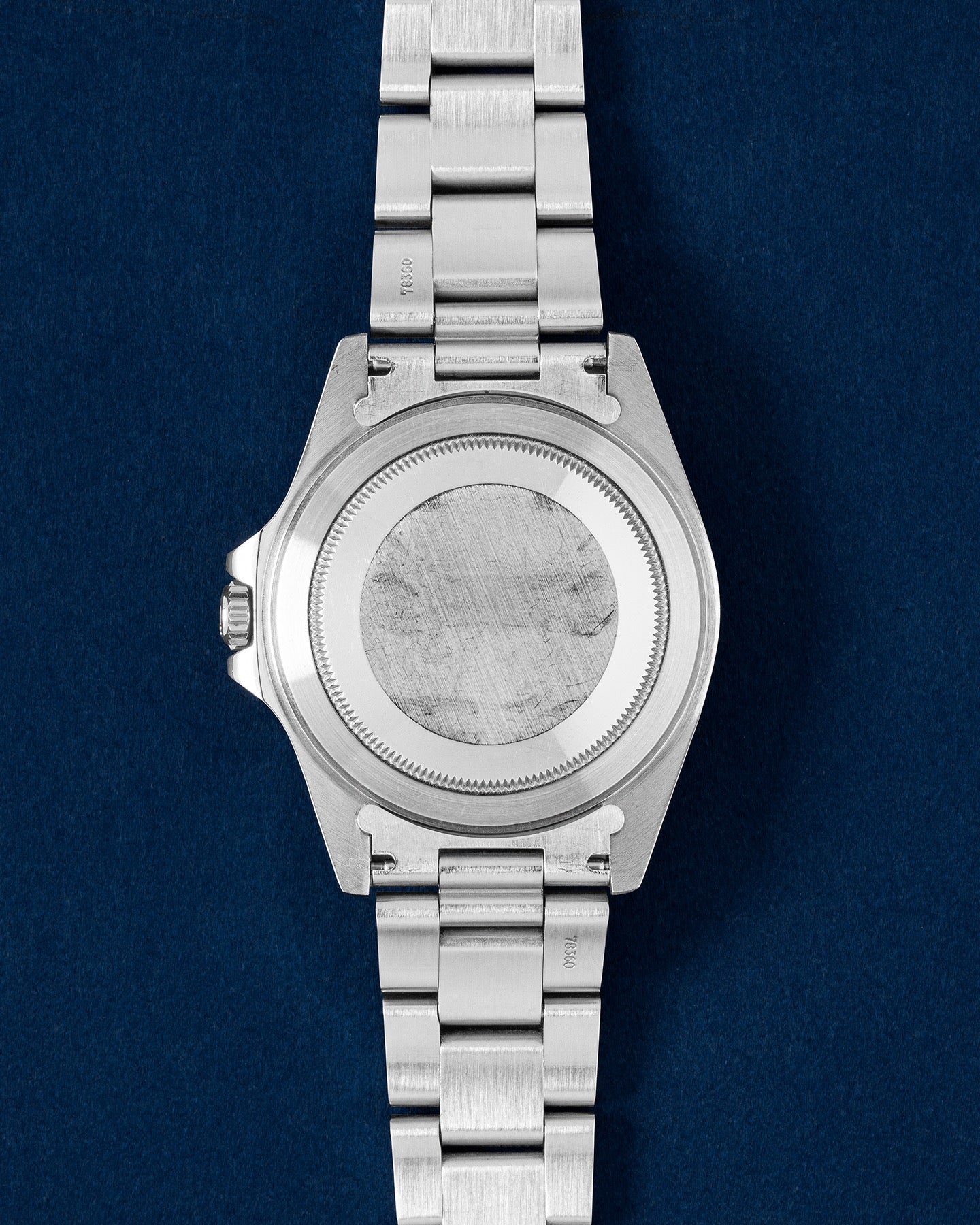
Over its long life the 16570 used two movements. From 1989 it ran the caliber 3185, and in 2007 Rolex upgraded it to the caliber 3186, which brought the patented blue Parachrom hairspring for improved resistance to magnetism and shocks, along with an engraved rehaut. Collectors distinguish the earlier and later examples carefully, since the 3186 examples with the engraved rehaut and solid end links command a premium. The transition from tritium to Luminova and then Super-LumiNova lume also helps date examples across the reference's long run, and early tritium dial pieces have their own following.
The long production run means there is genuine variety within the 16570 for a buyer to consider. The earliest examples from around 1989 to 1998 carry tritium dials, marked by the T SWISS T designation, and have a warmth to their aged lume that many collectors love. A brief transitional period at the end of the 1990s brought so called Swiss only dials, marked simply SWISS at the six o'clock position during the shift away from tritium, and these short lived examples are now among the rarer and more sought after variants of the reference. From roughly 1999 the dials switched to LumiNova and then Super-LumiNova, and in 2007 the move to the caliber 3186 and the engraved rehaut marked the final and most refined phase of the reference. A buyer can therefore choose the exact character they want, from warm vintage tritium to crisp modern lume, all within a single reference.
Black and Polar
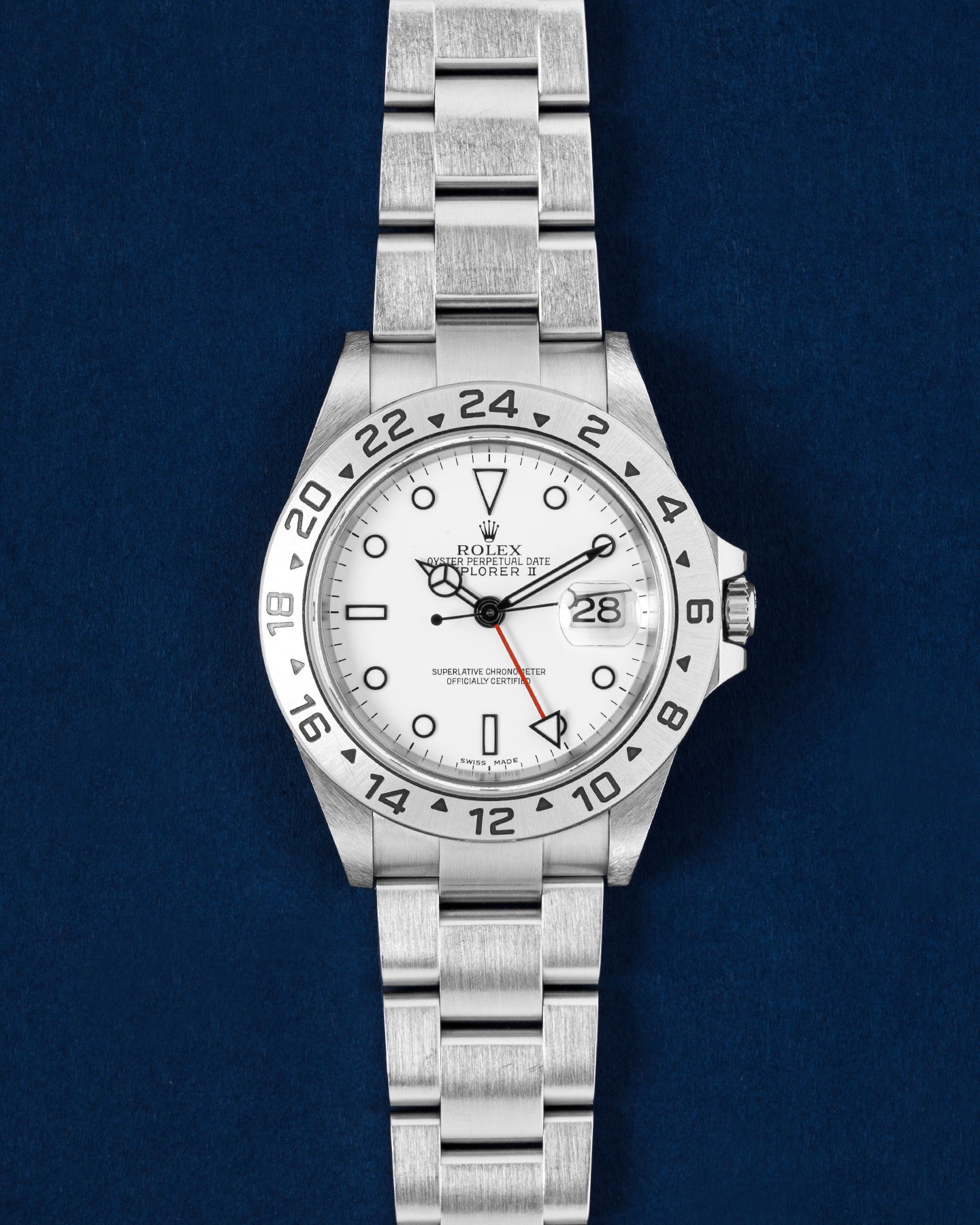
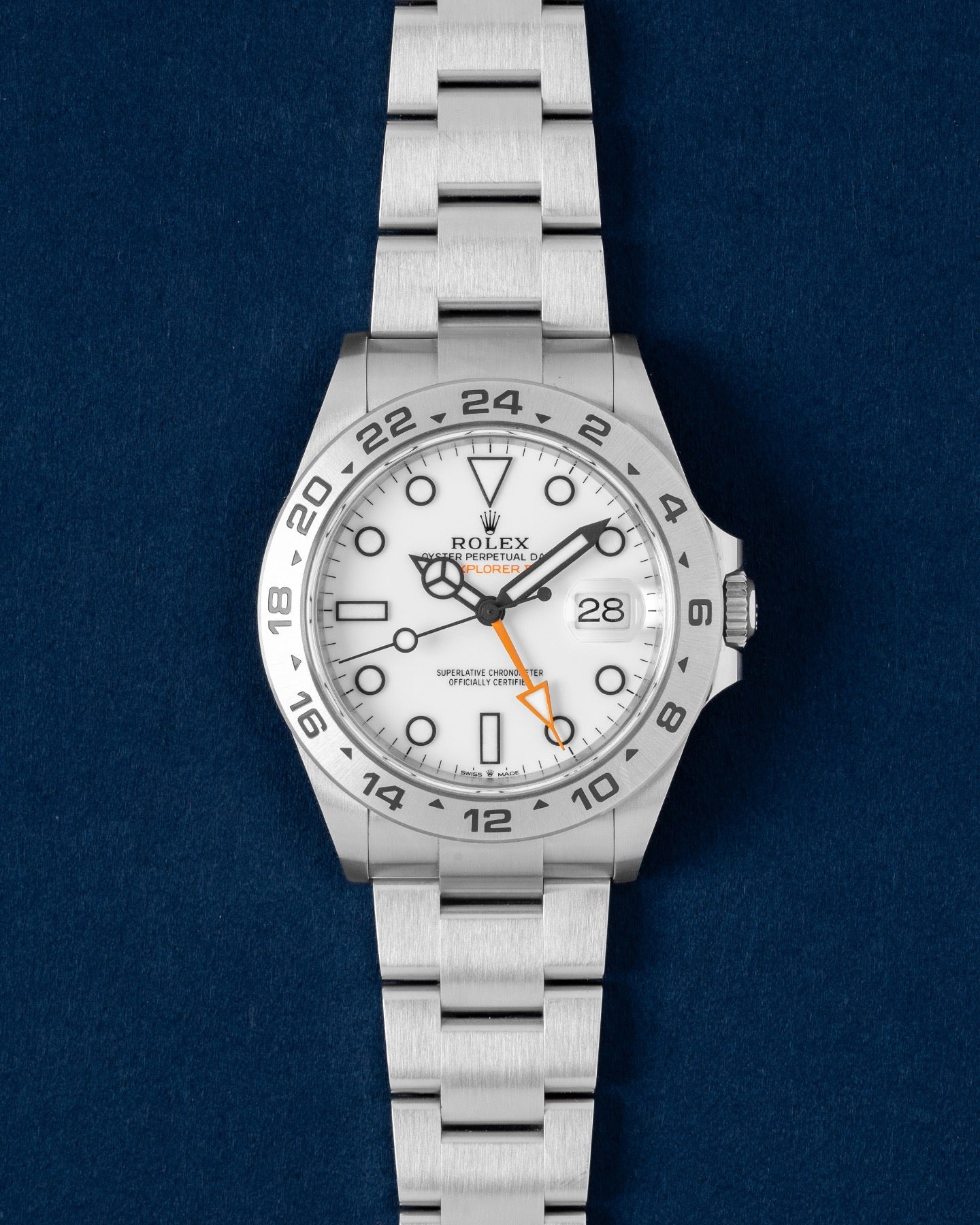
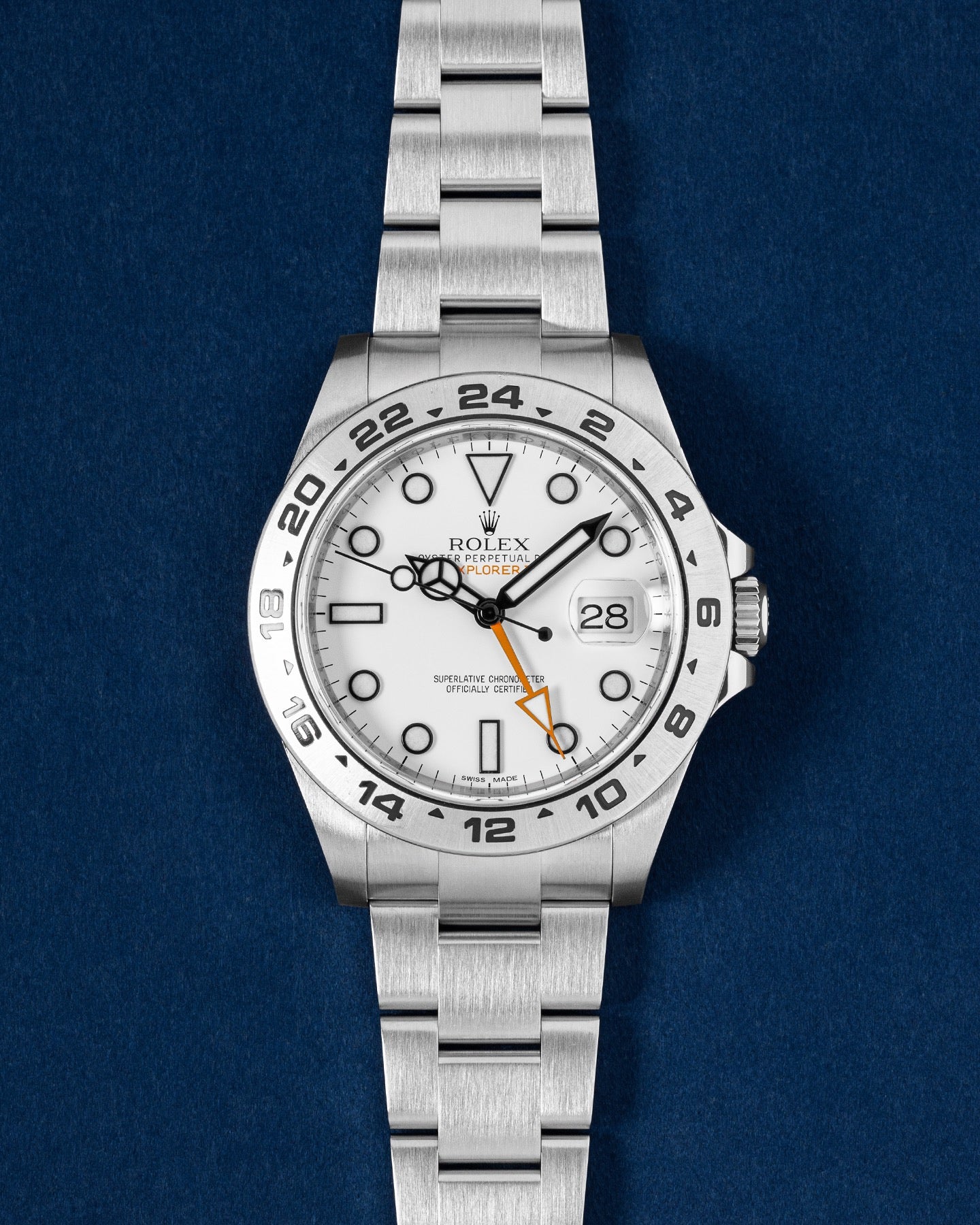
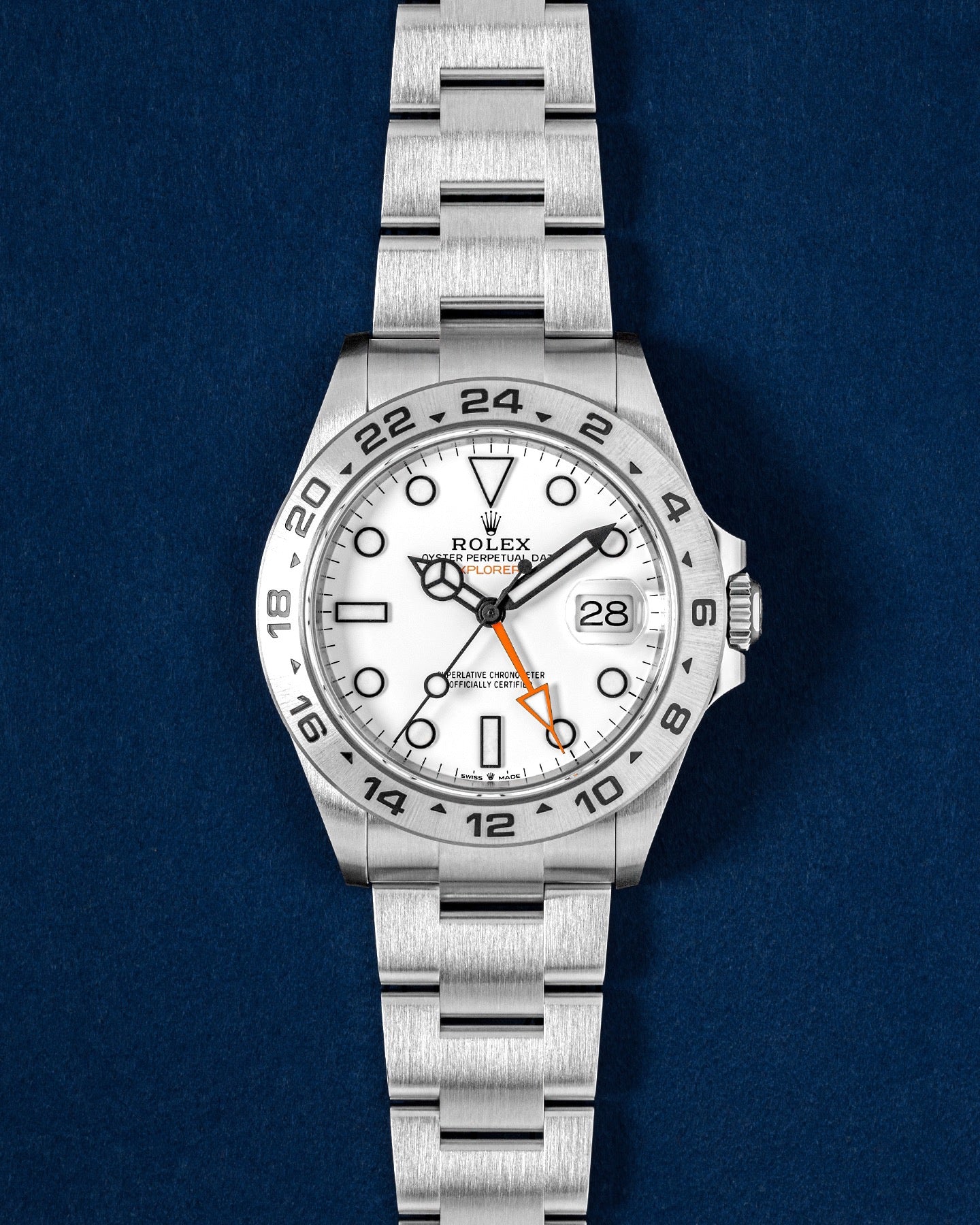
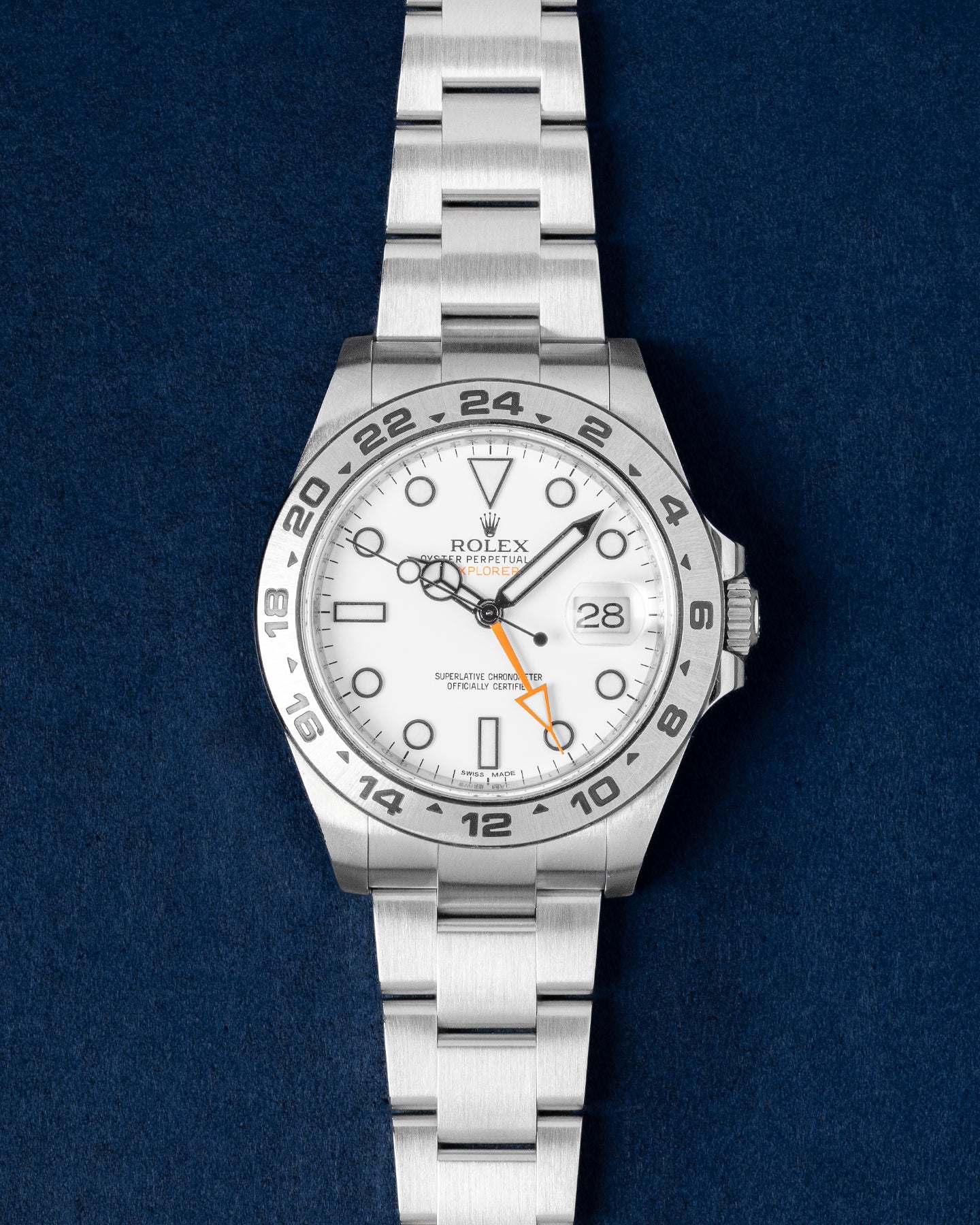
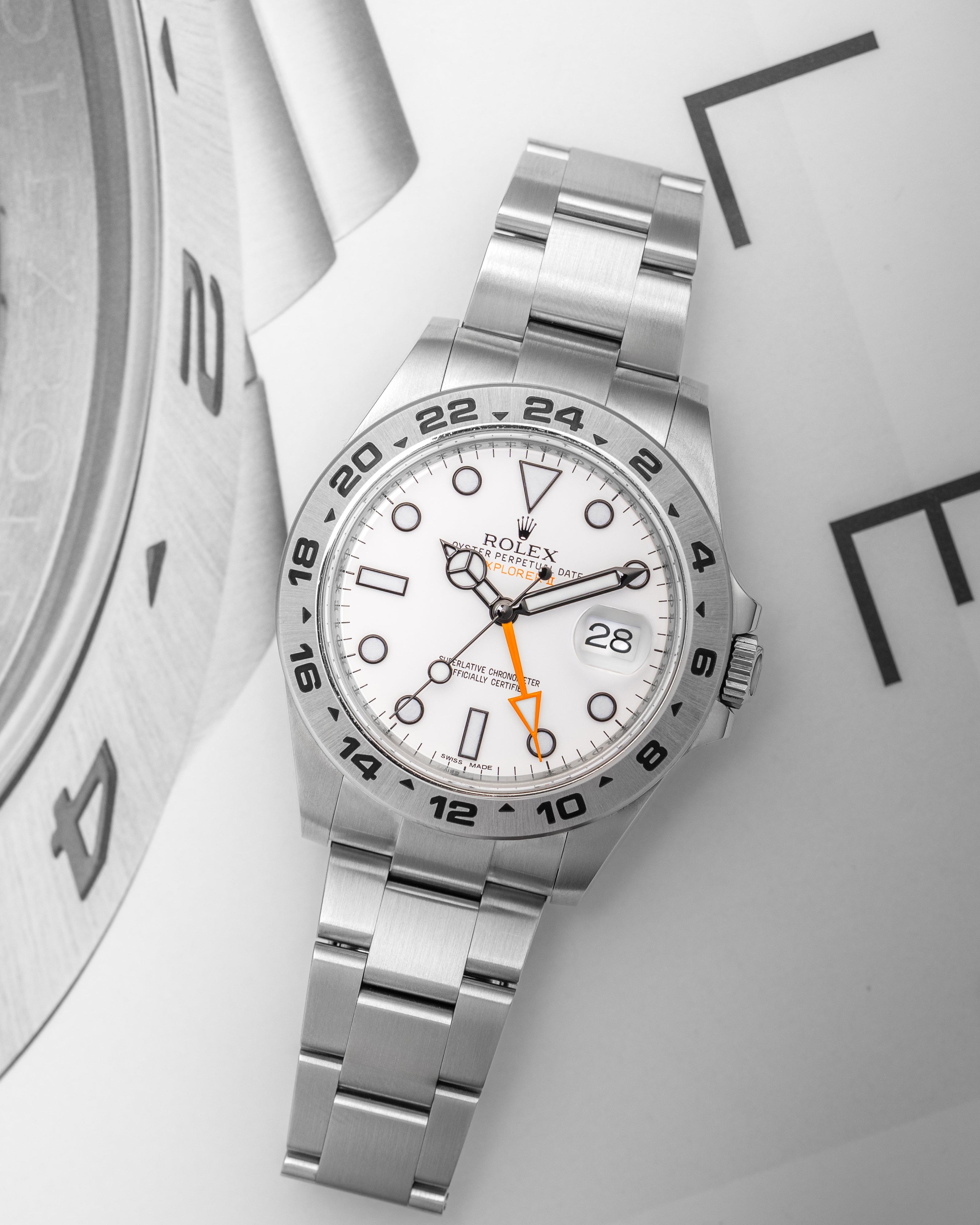
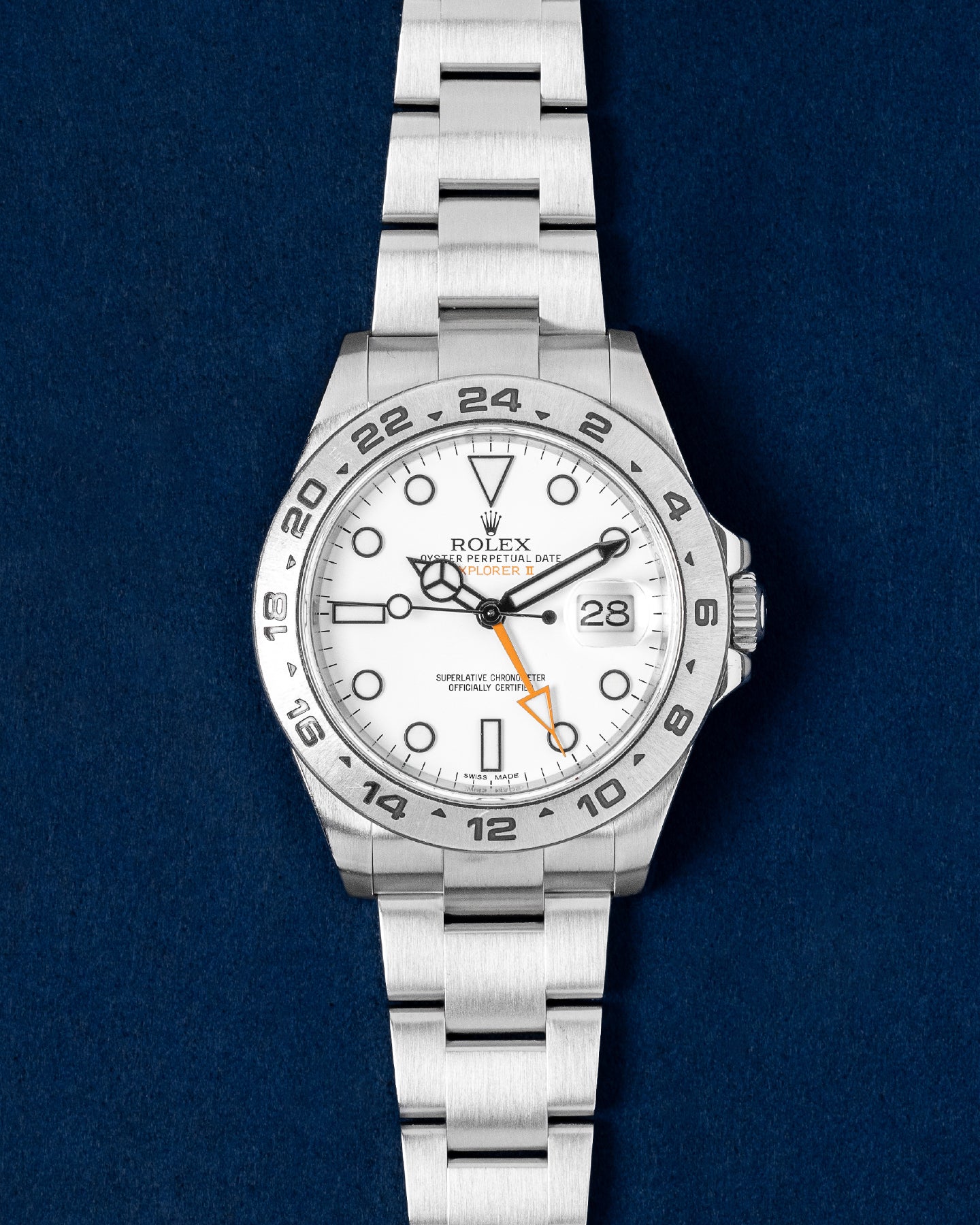
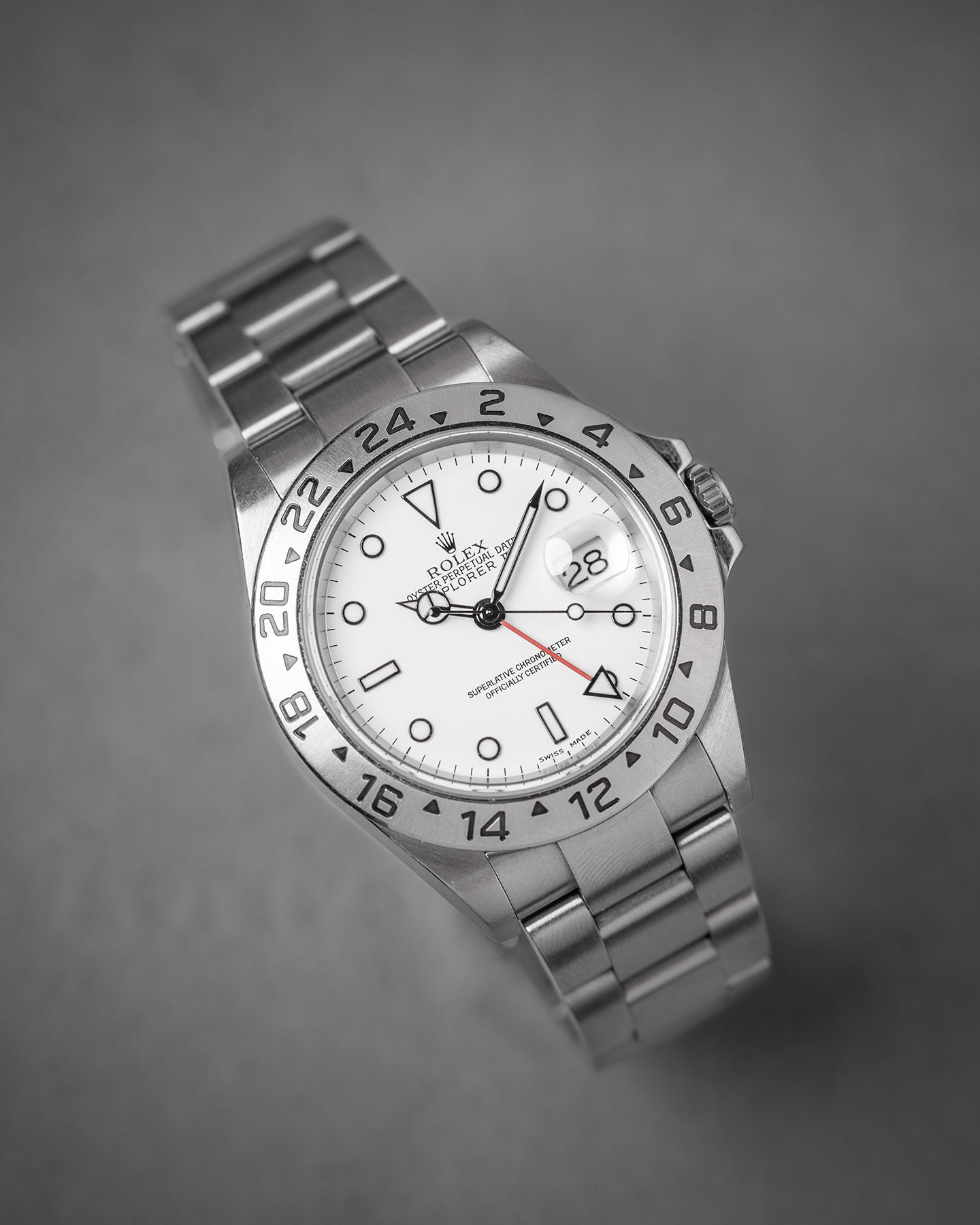
Throughout its production the 16570 was offered in both the classic black dial and the white Polar dial, with the white dial featuring black surrounds on the hour markers and black hands for contrast and legibility. Both dial colors are excellent and each has its devoted adherents, but the white Polar has always been the more distinctive and talked about choice, and it is the version most closely associated with the model's polar exploration heritage. The name itself captures the imagery perfectly, a stark white dial with black markers evoking the snow and ice of the polar regions the watch was built to serve, with the bright GMT hand standing in for a splash of color against an arctic landscape. The 16570 offers genuine neo vintage character, a modern sapphire crystal, and Rolex reliability at a price that remains one of the best values in the entire Rolex sports lineup.
For many enthusiasts, the 16570 represents the sweet spot of the whole model. It is old enough to have real neo vintage character and the classic 40mm proportions that many prefer, yet modern enough to be thoroughly usable every day, with a sapphire crystal and a dependable movement. It sits at a price point well below the modern references and the most collectible vintage pieces, and it delivers the complete Rolex Explorer II experience, the fixed bezel, the GMT hand, and the choice of black or Polar dial, without compromise. It is frequently recommended as the smartest entry into the model.
The Reference 216570 and the Move to 42mm
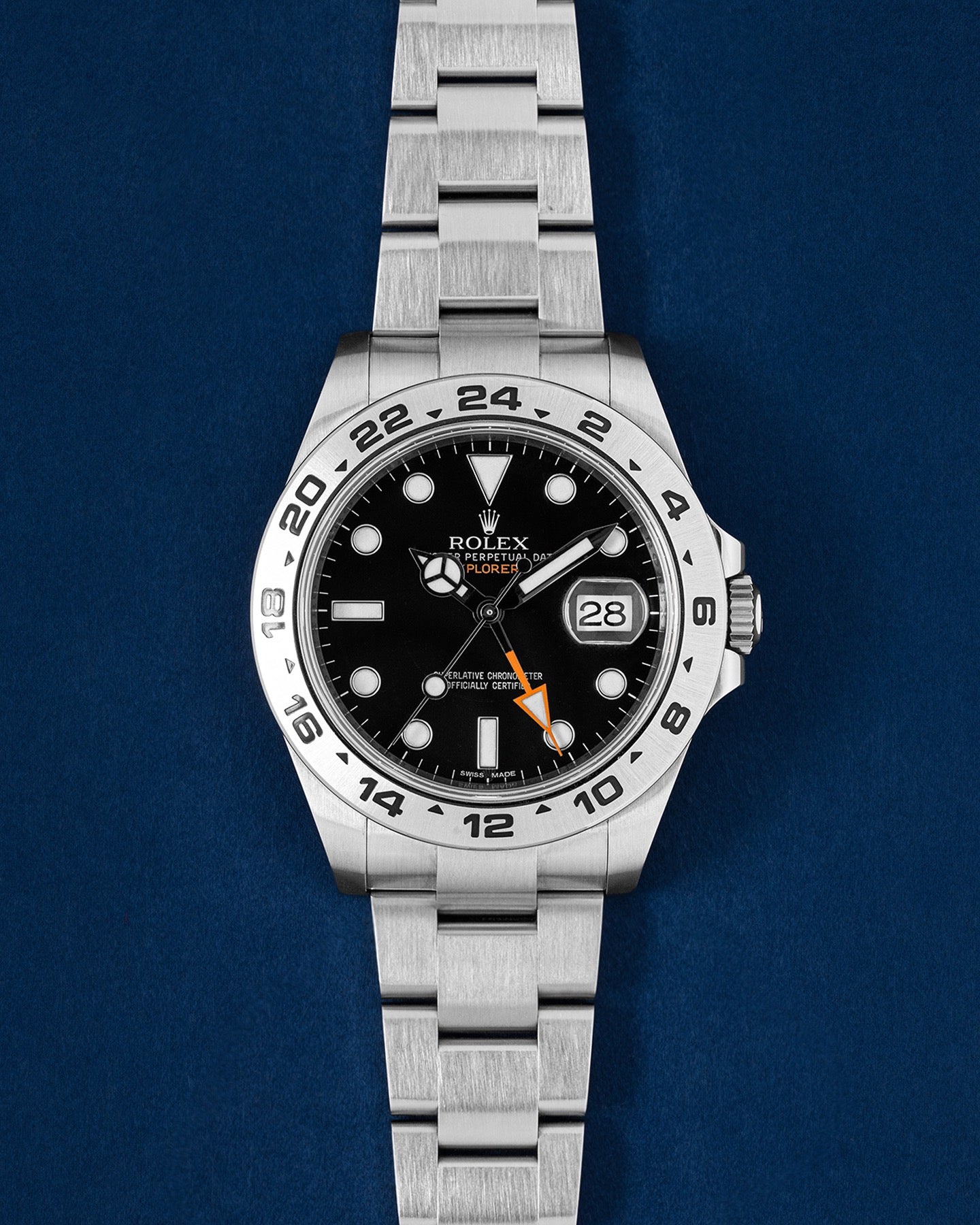
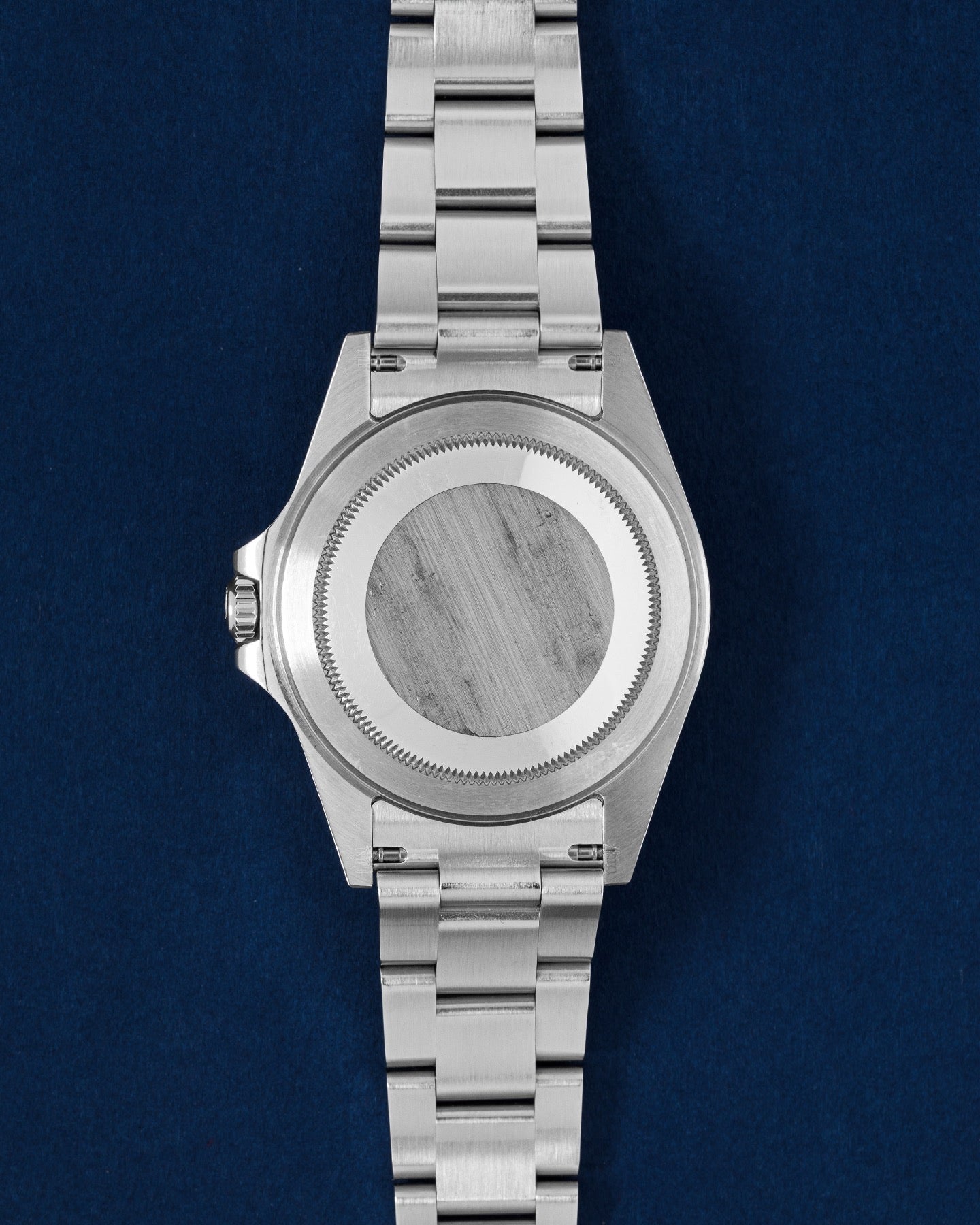
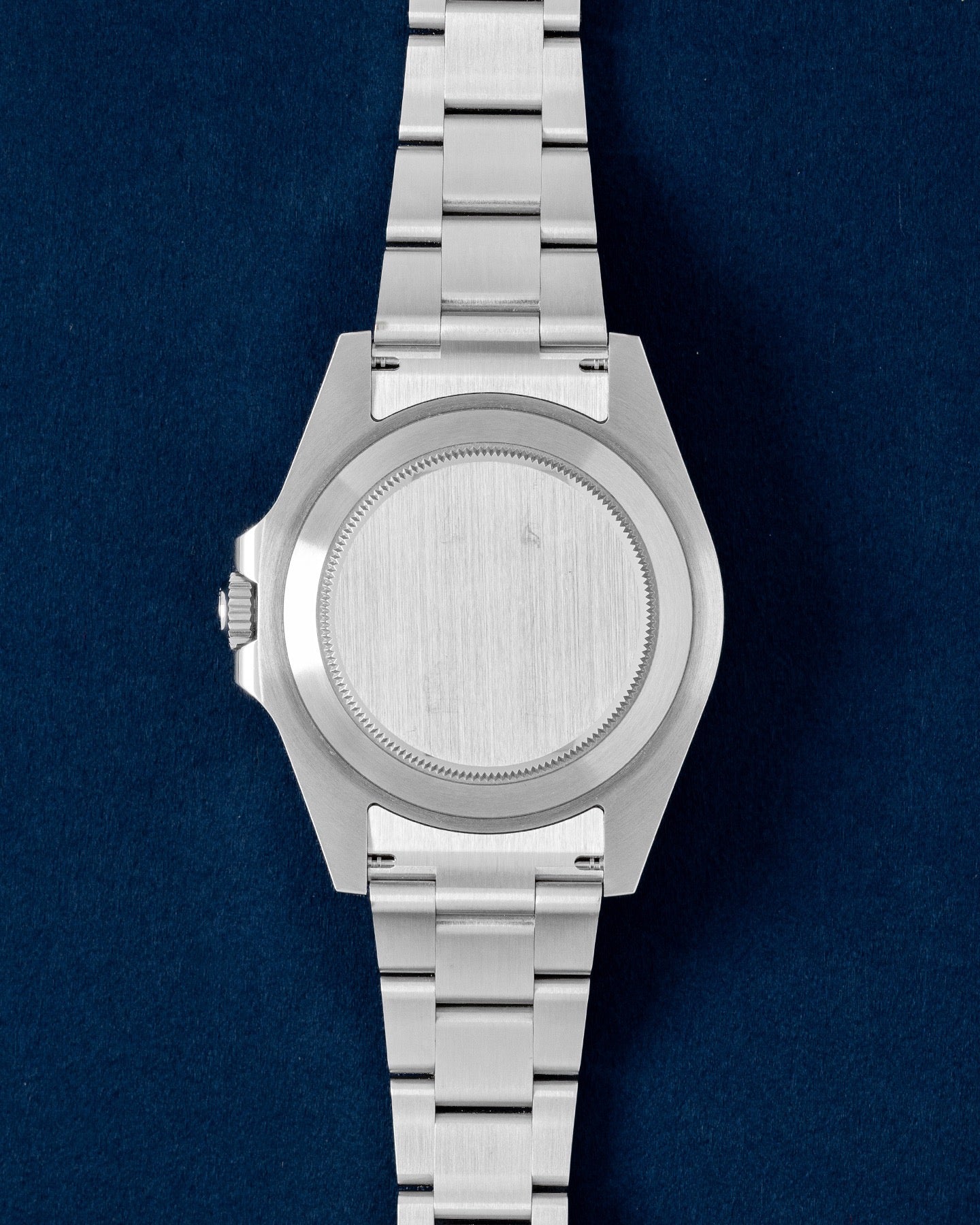
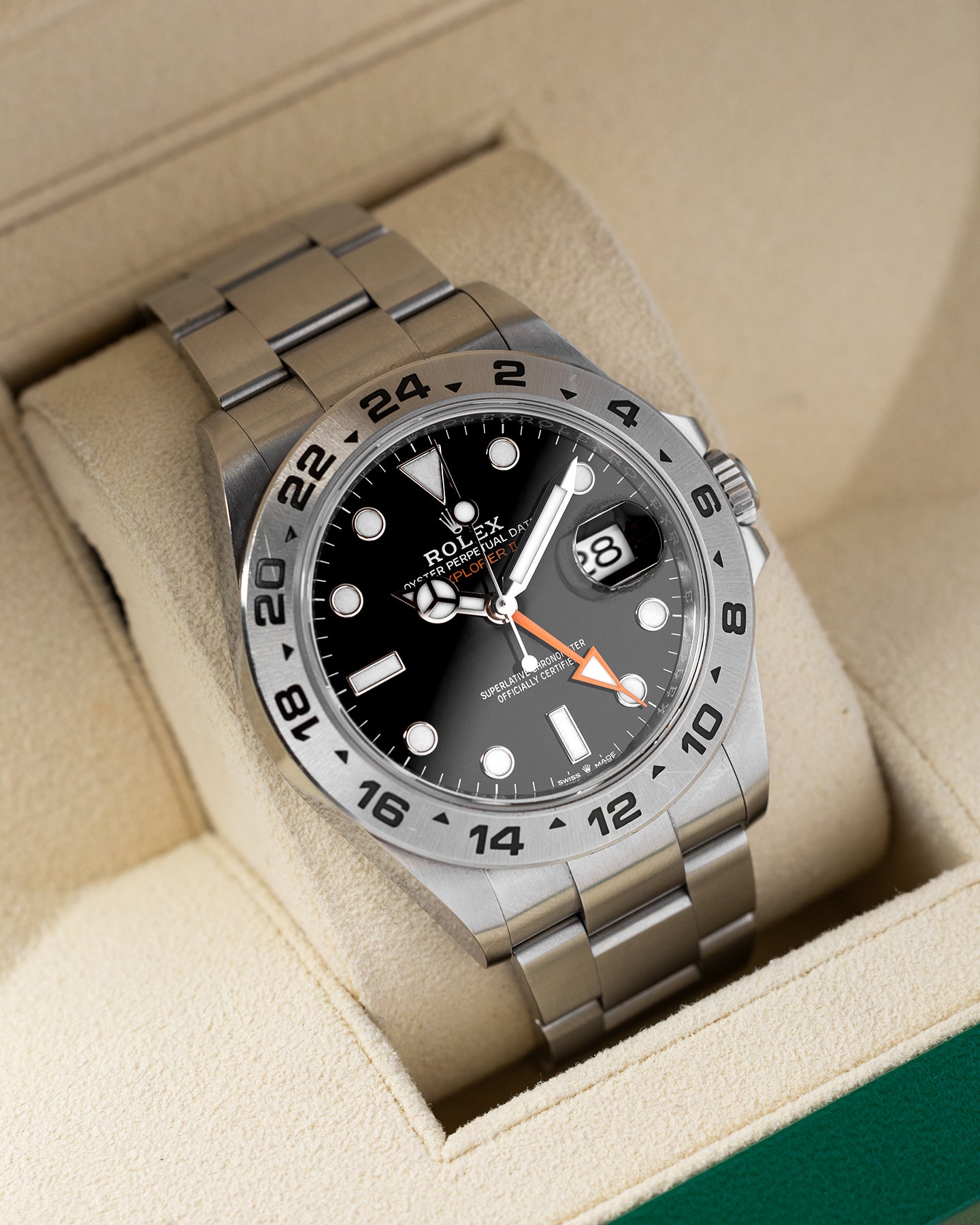
In 2011, to mark the 40th anniversary of the model, Rolex introduced the reference 216570 and made the biggest change to the Rolex Explorer II in decades, growing the case from 40mm to a substantial 42mm. The larger case, sometimes called the Super case for its broadened proportions and more substantial lugs and crown guards, gave the watch a bolder, more modern presence that suited contemporary tastes, and it brought the Explorer II in line with the larger sizing Rolex was adopting across its sports models.
The Return of the Orange Hand
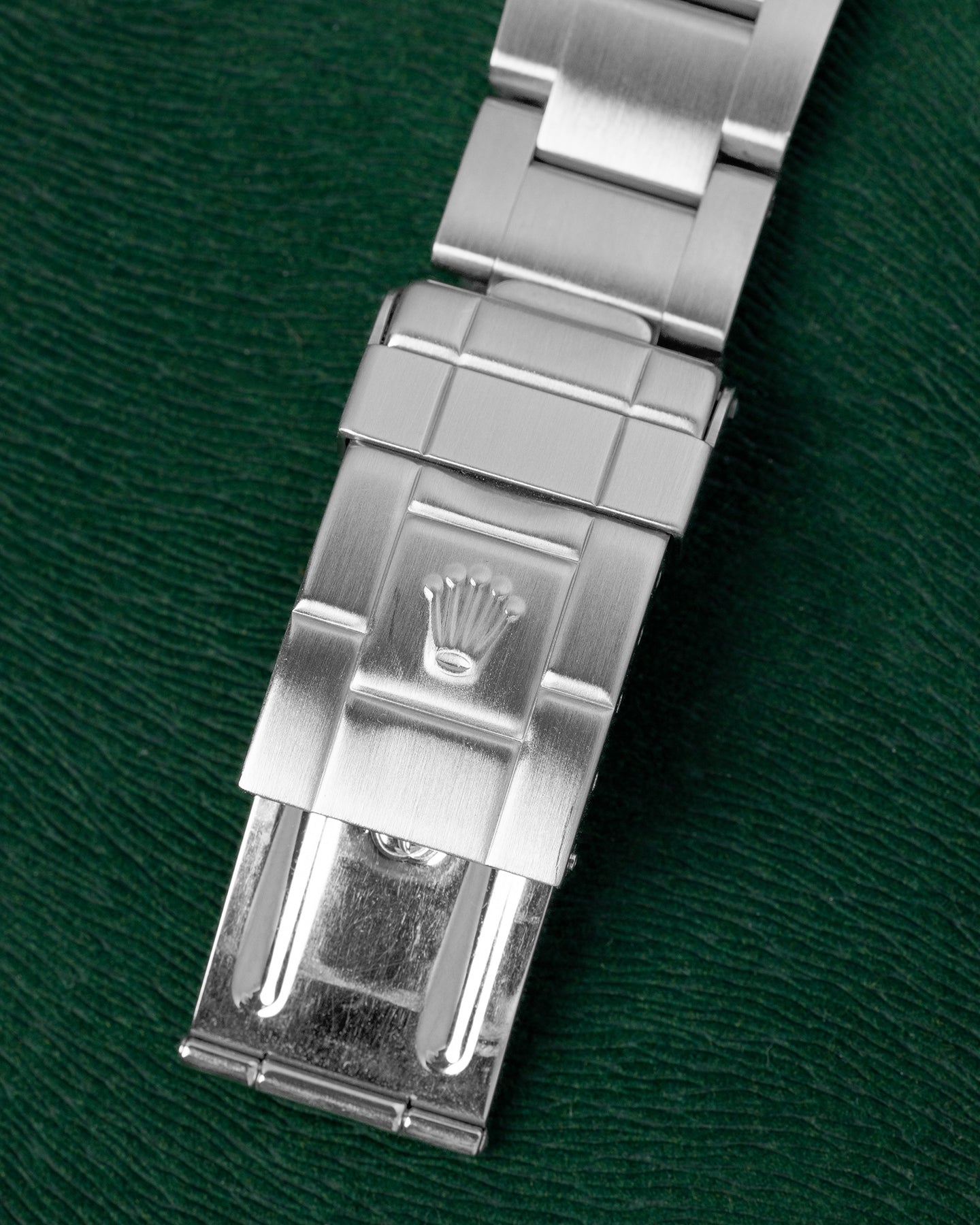
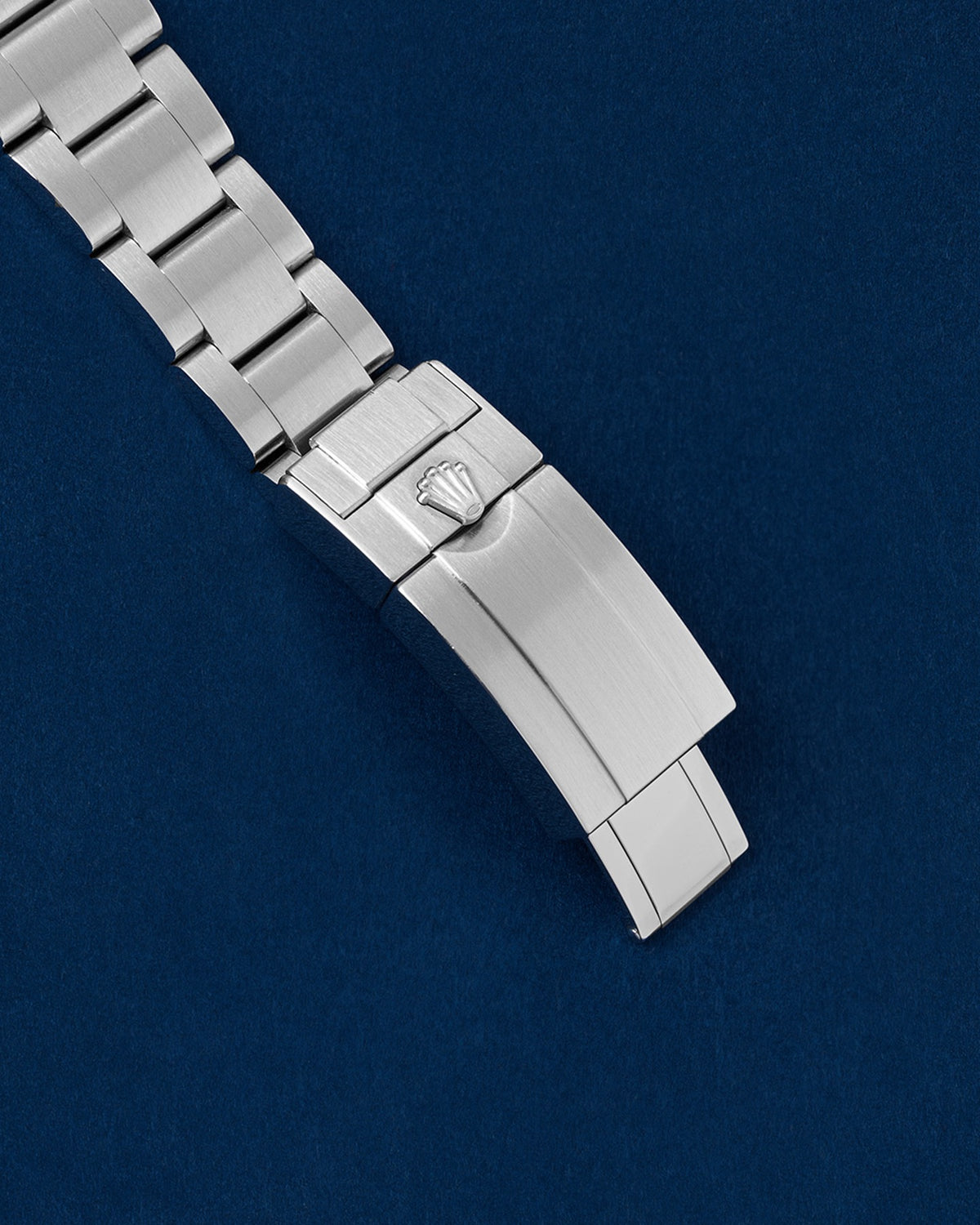
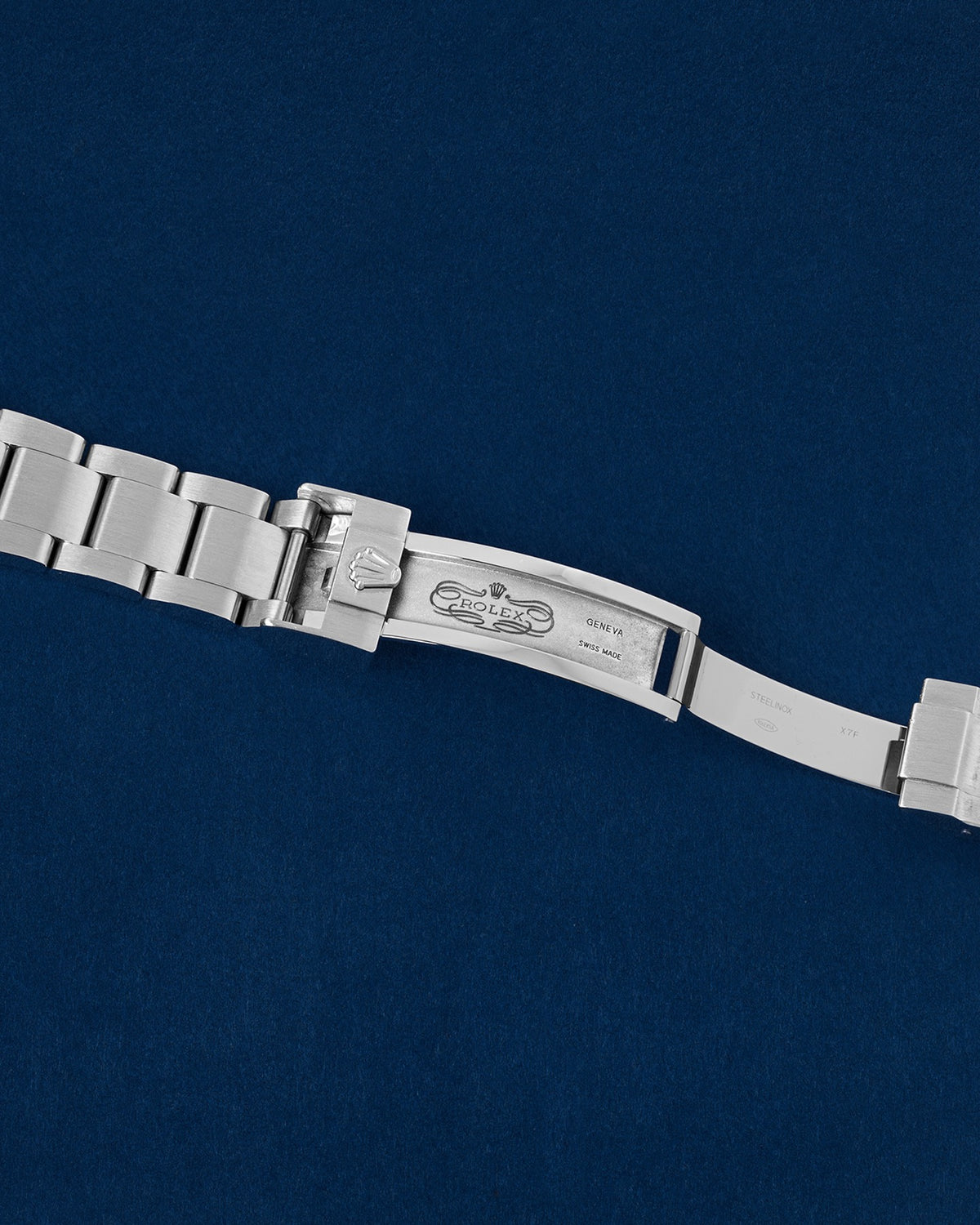
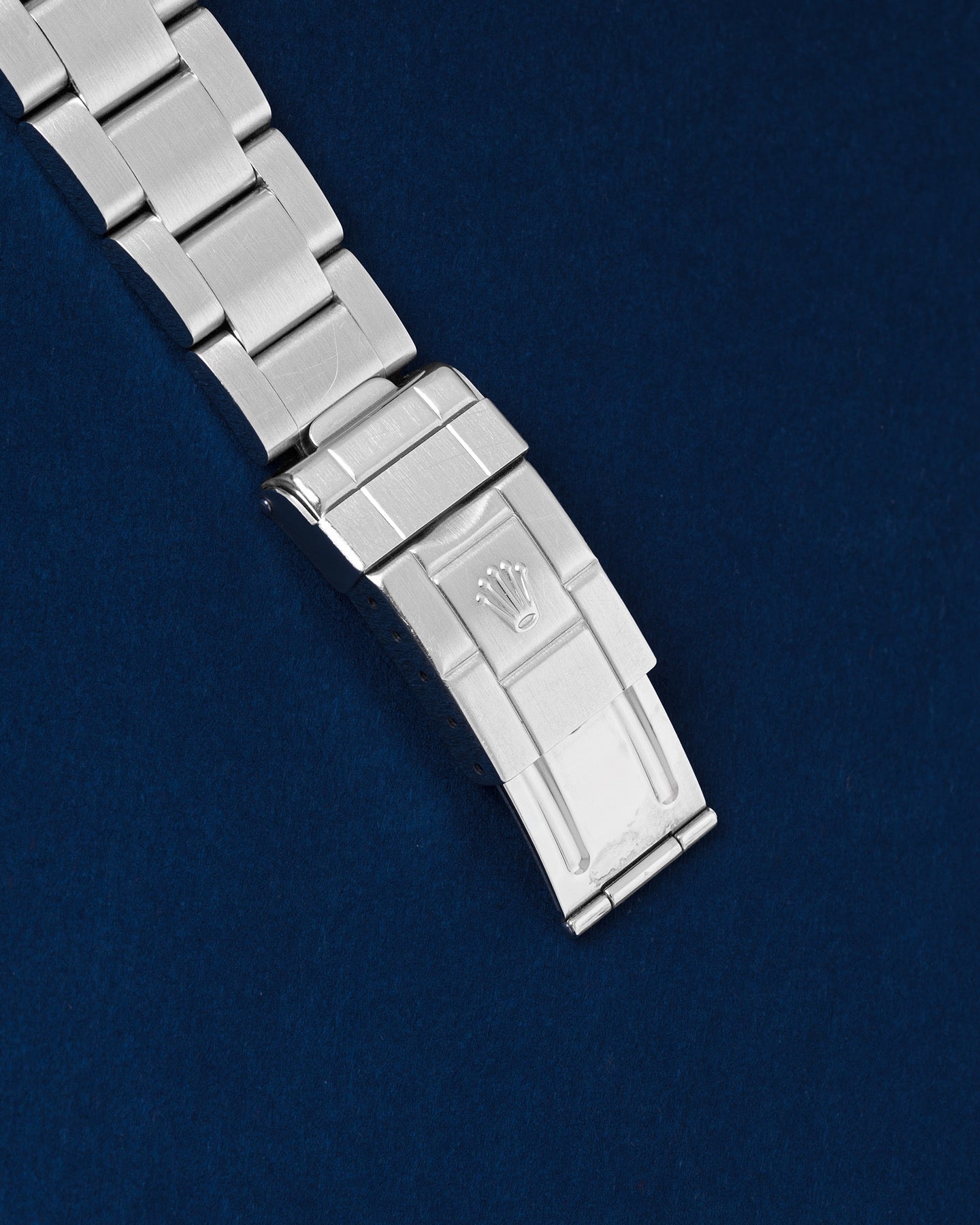
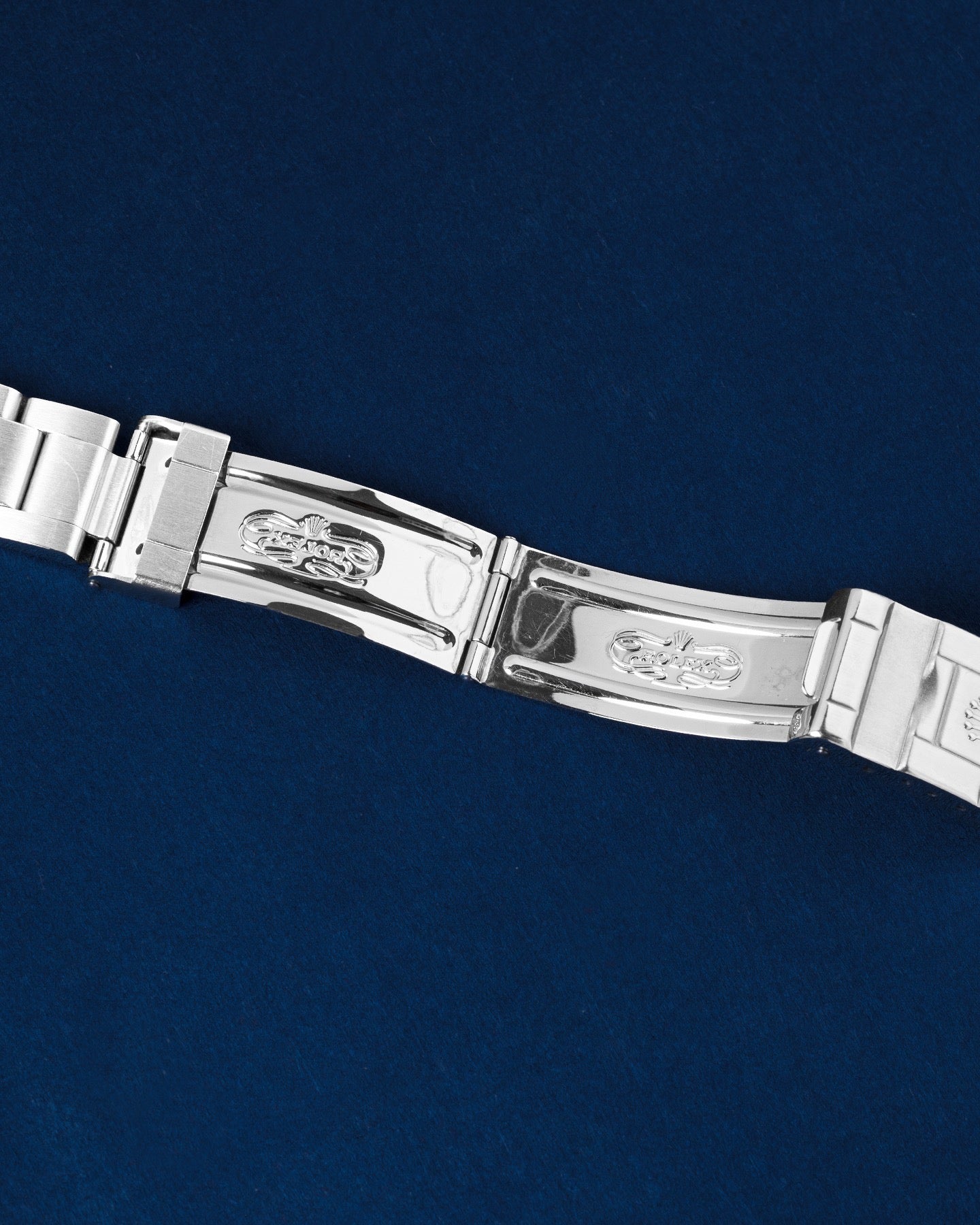
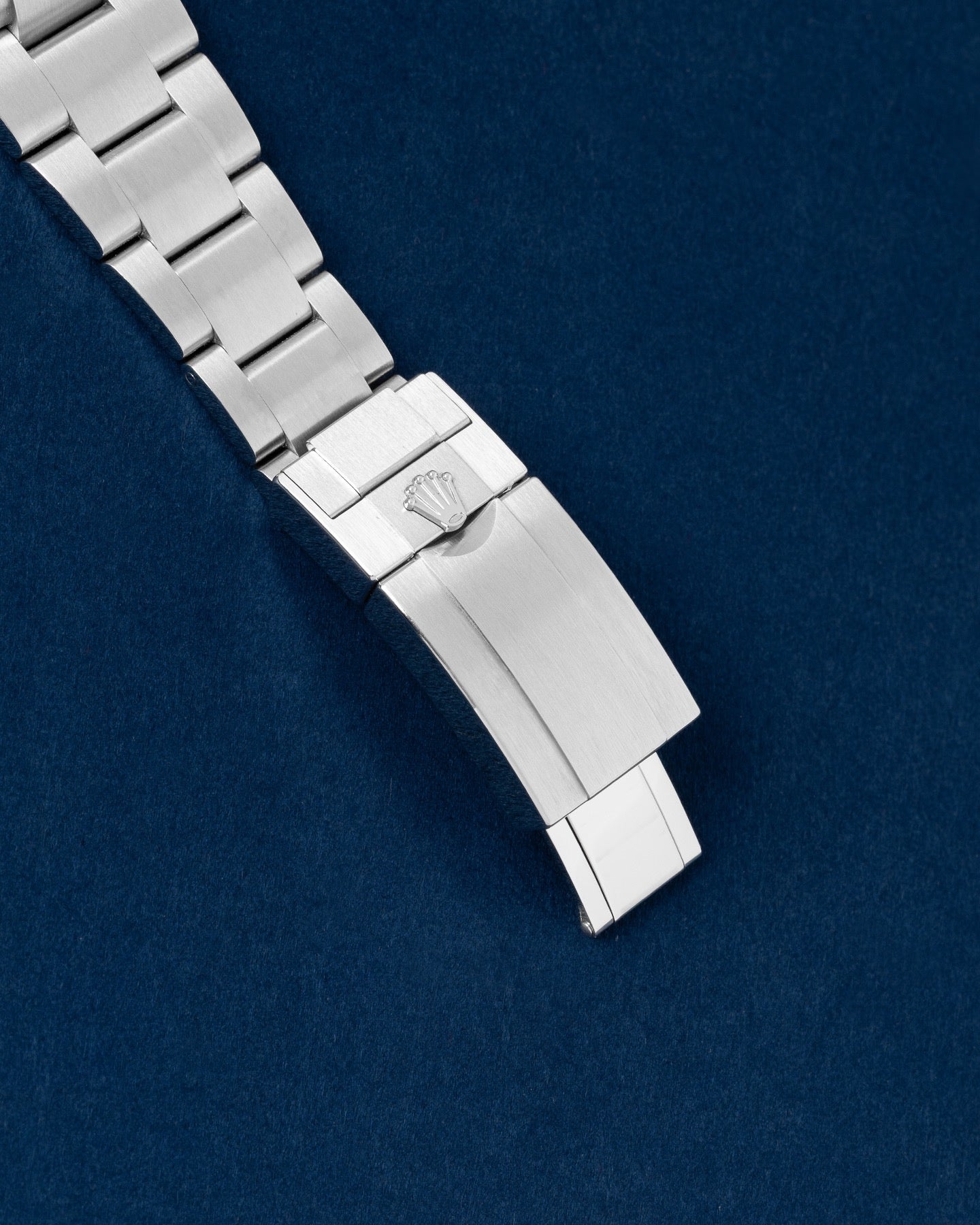
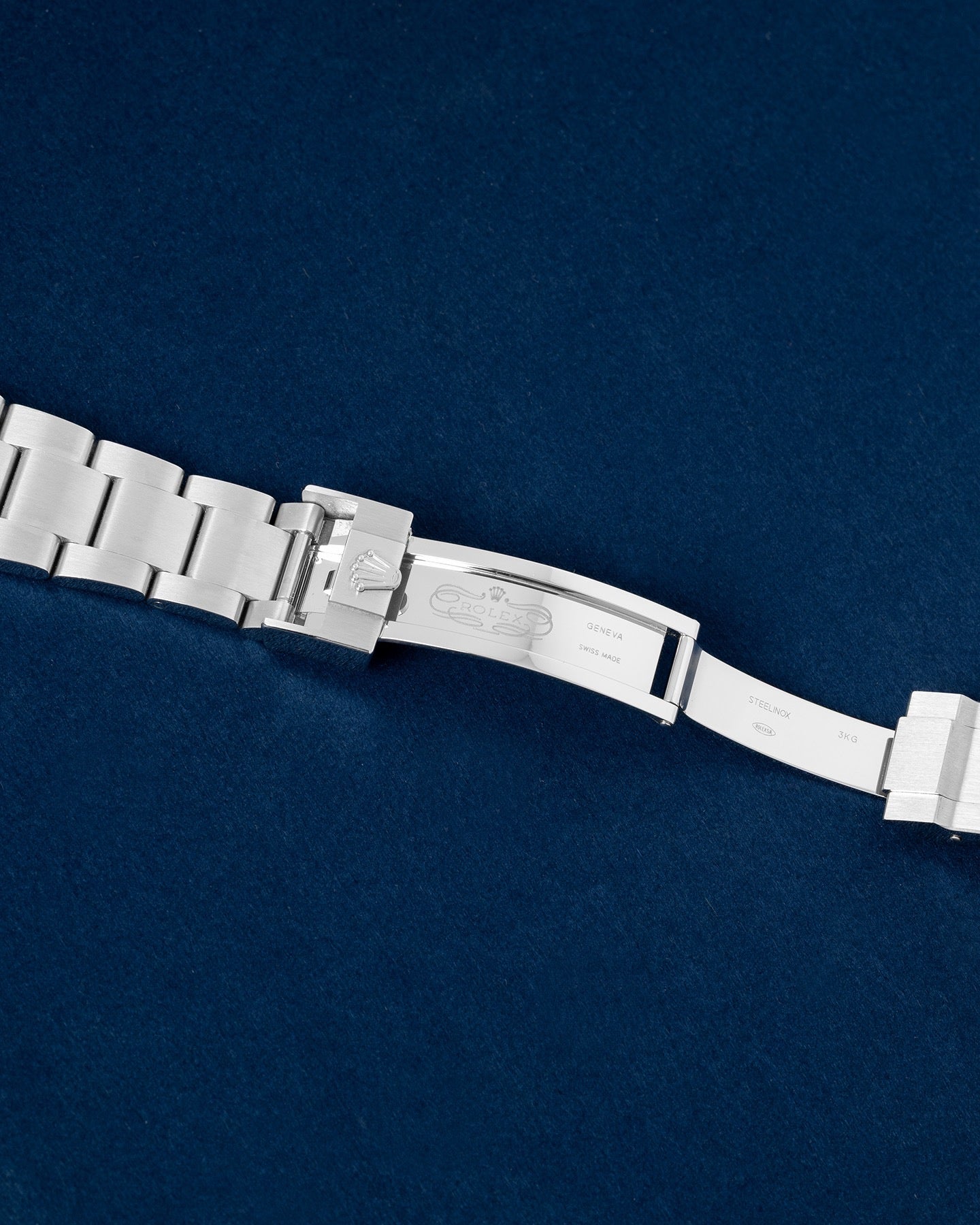
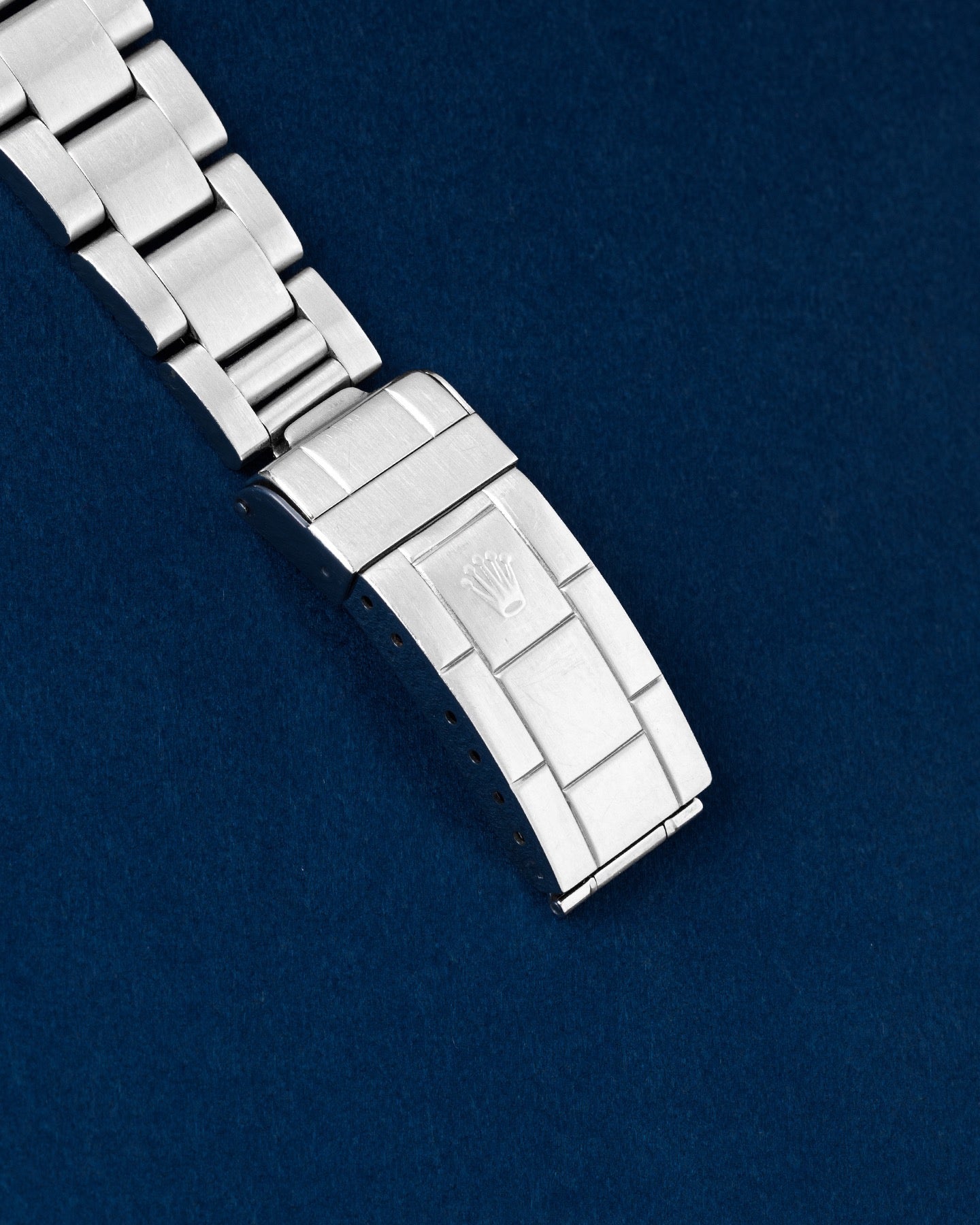
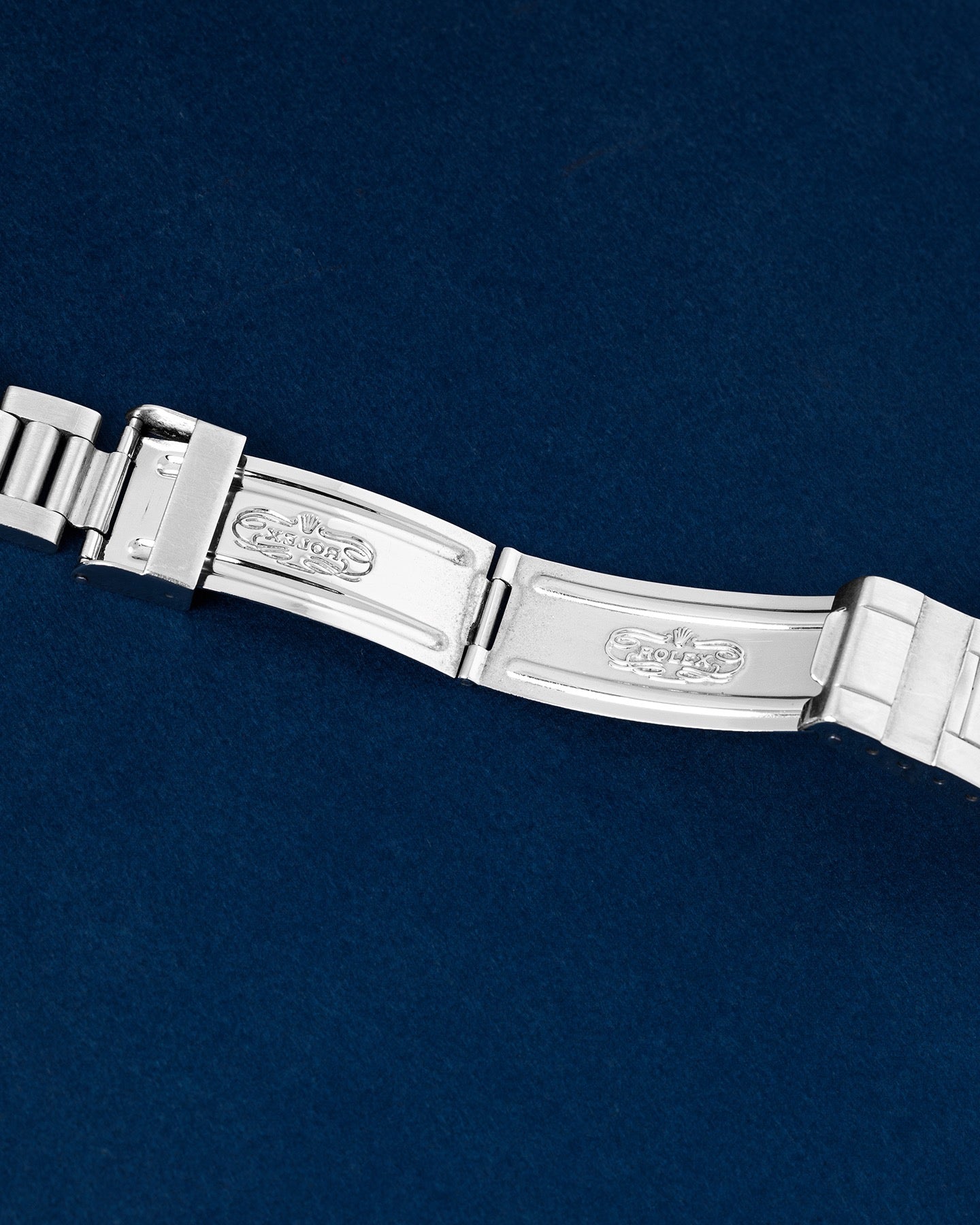
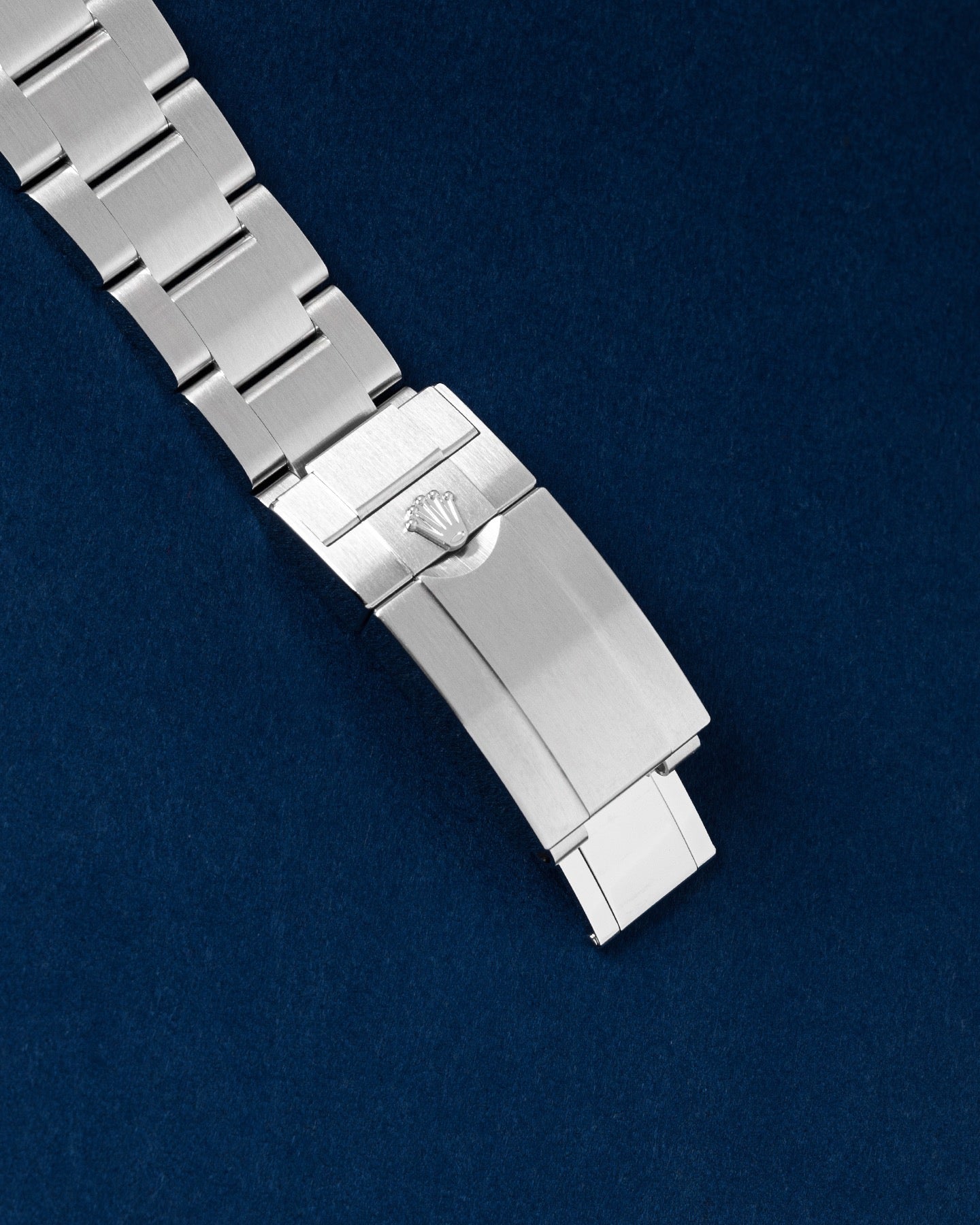
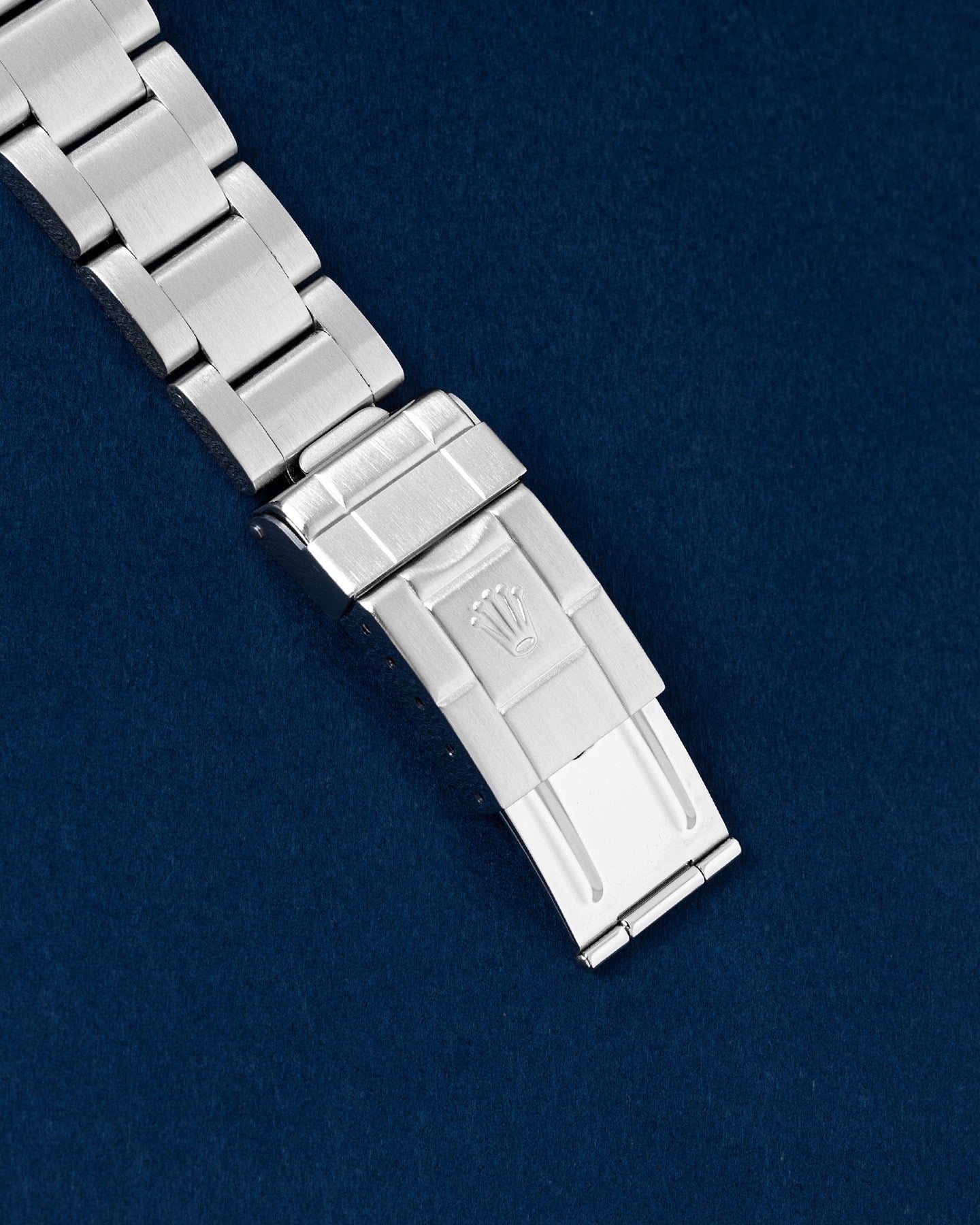
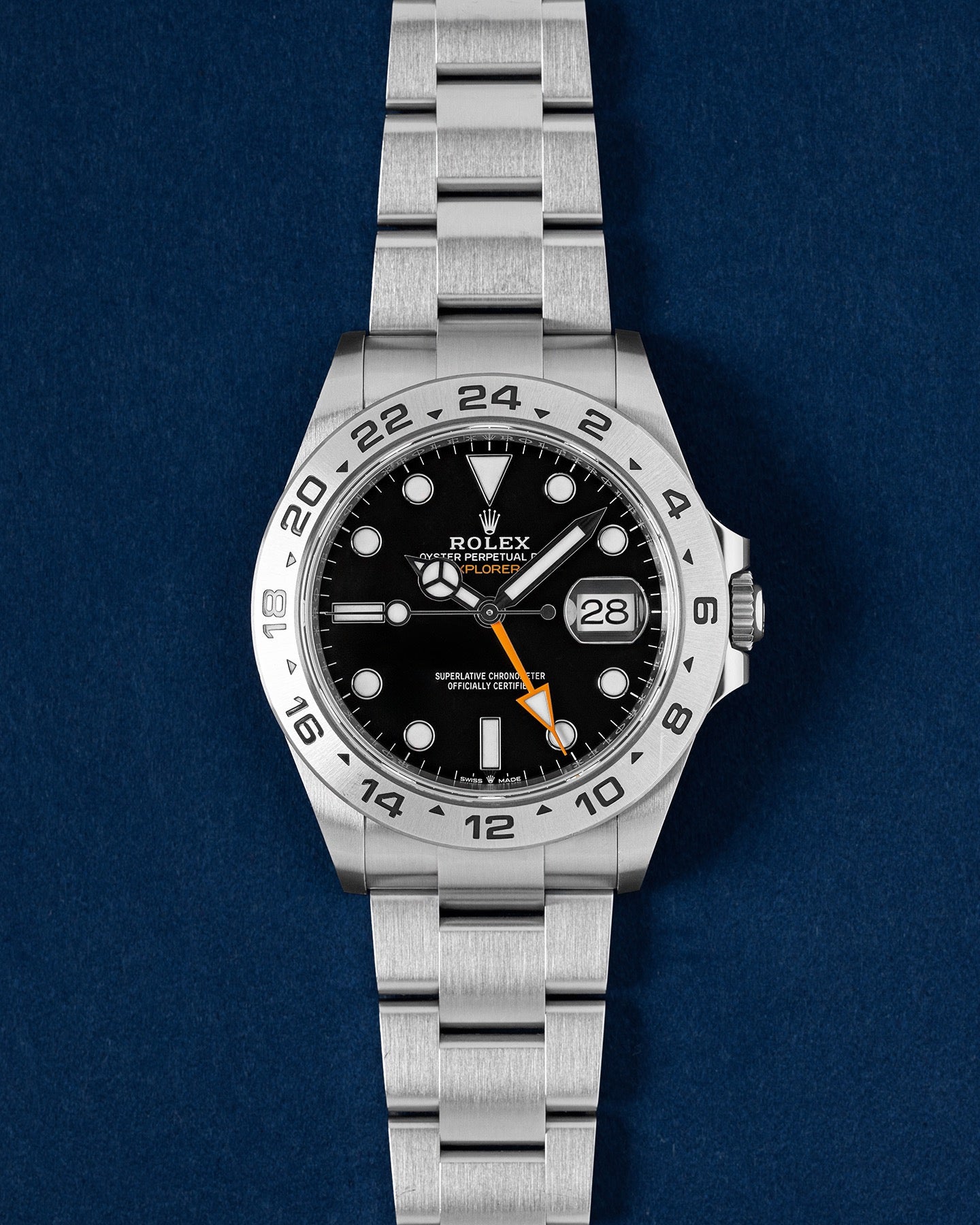
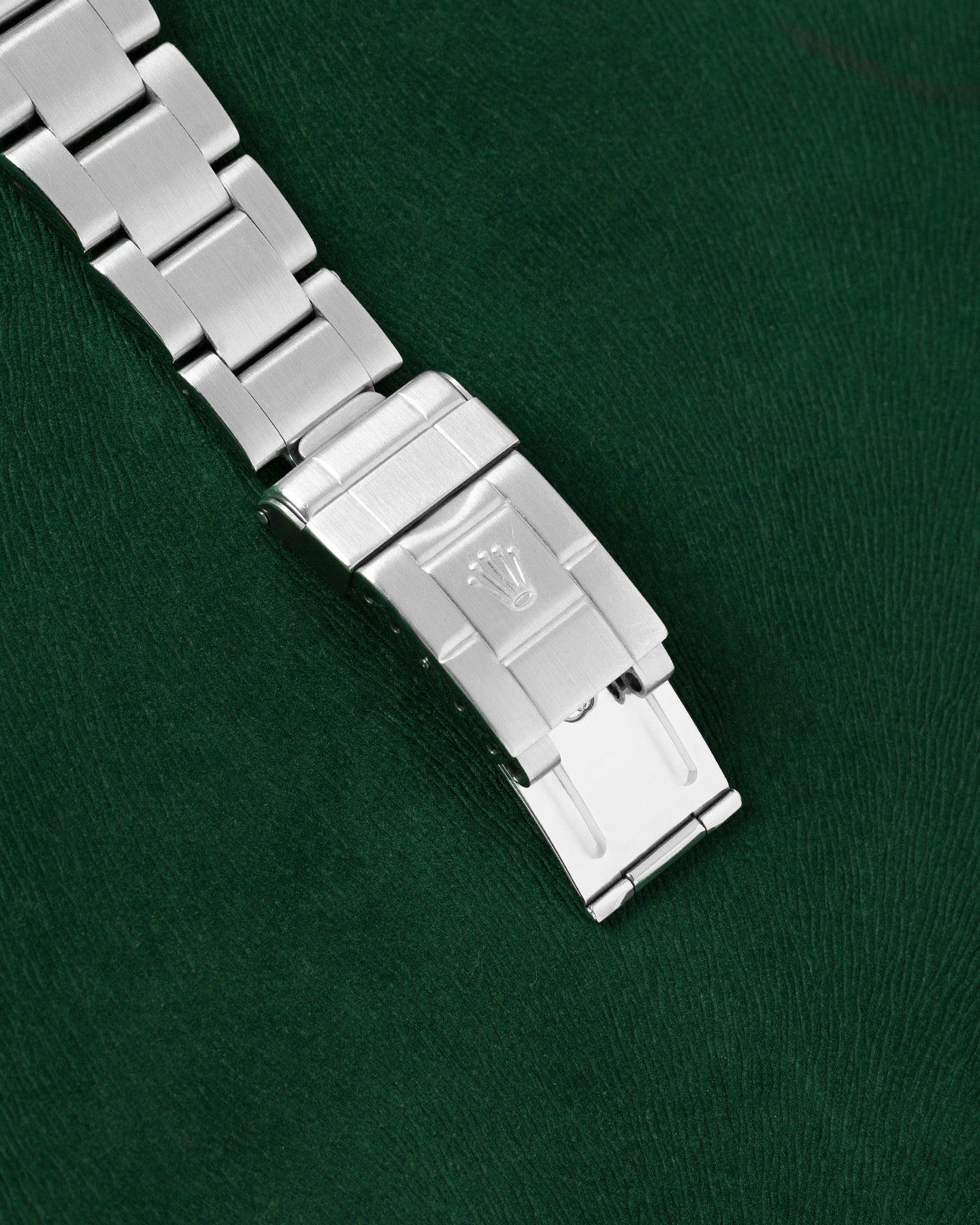
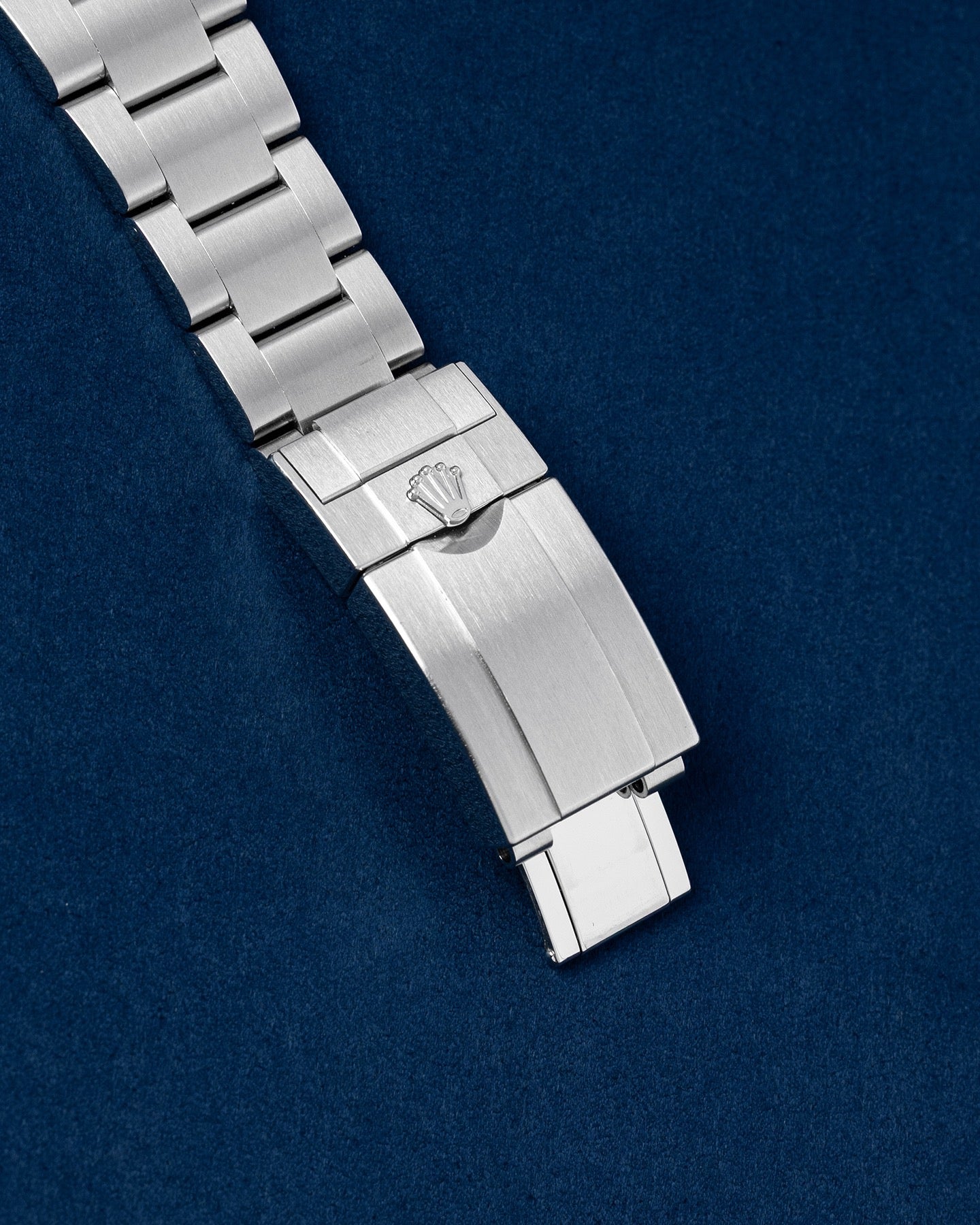
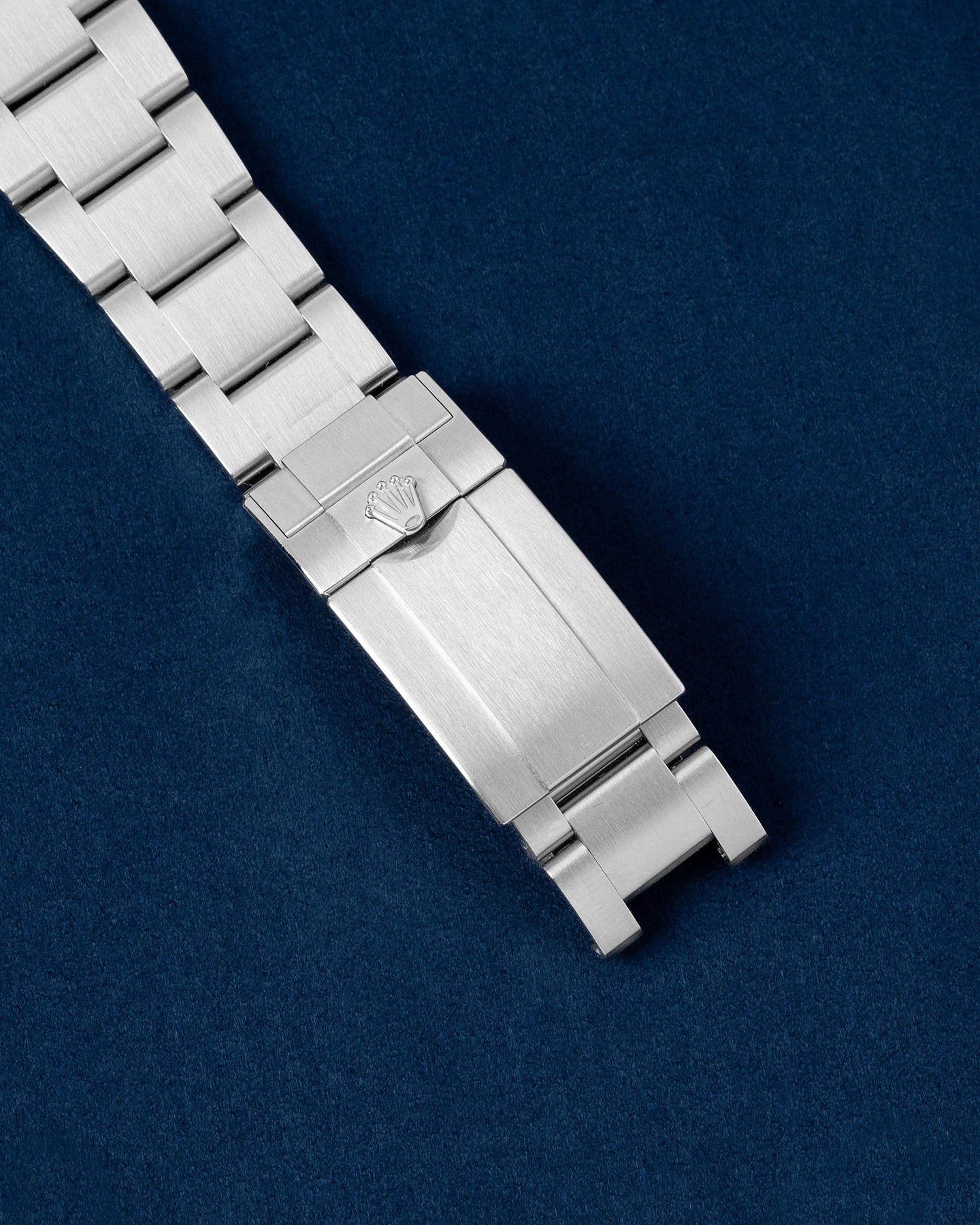
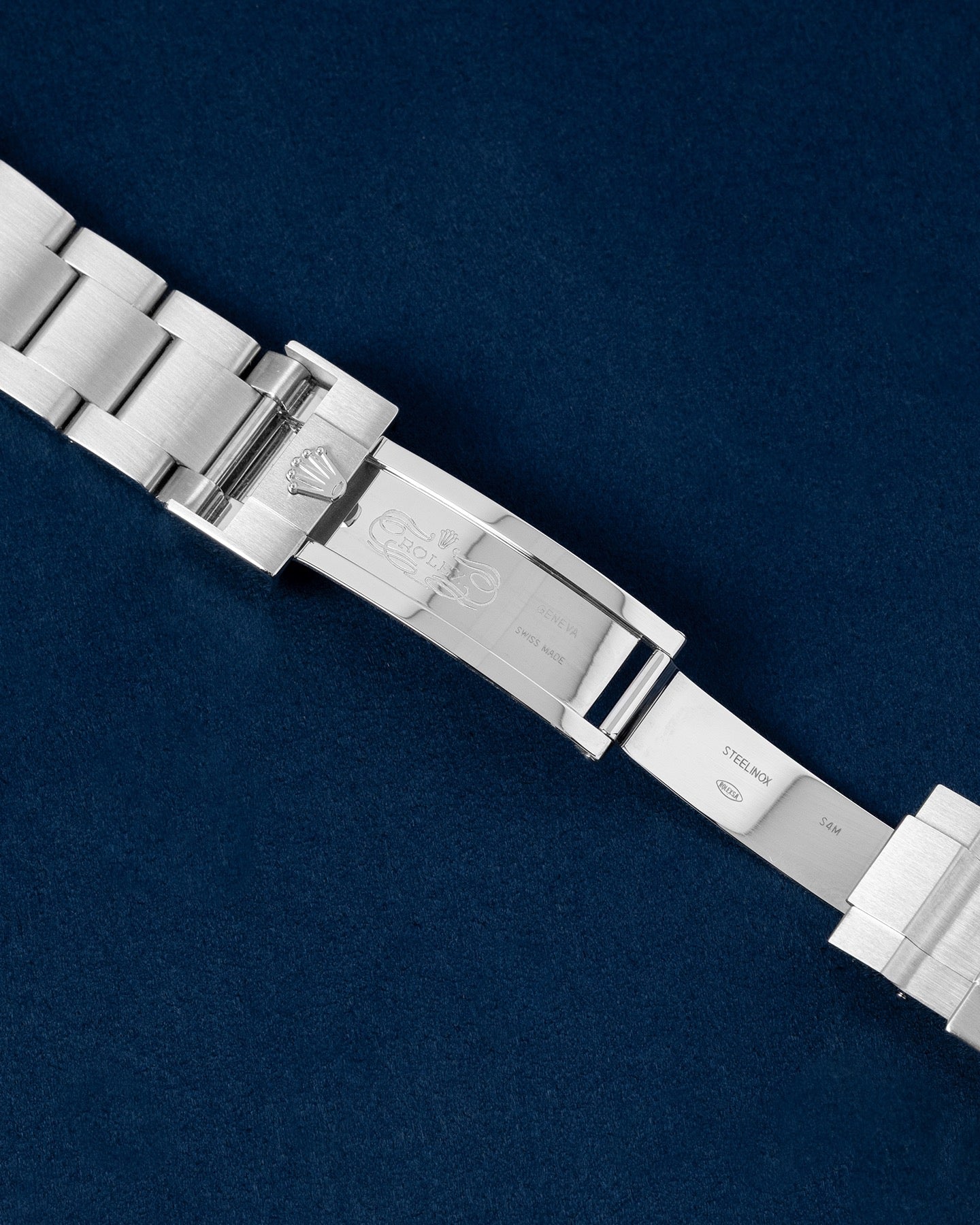
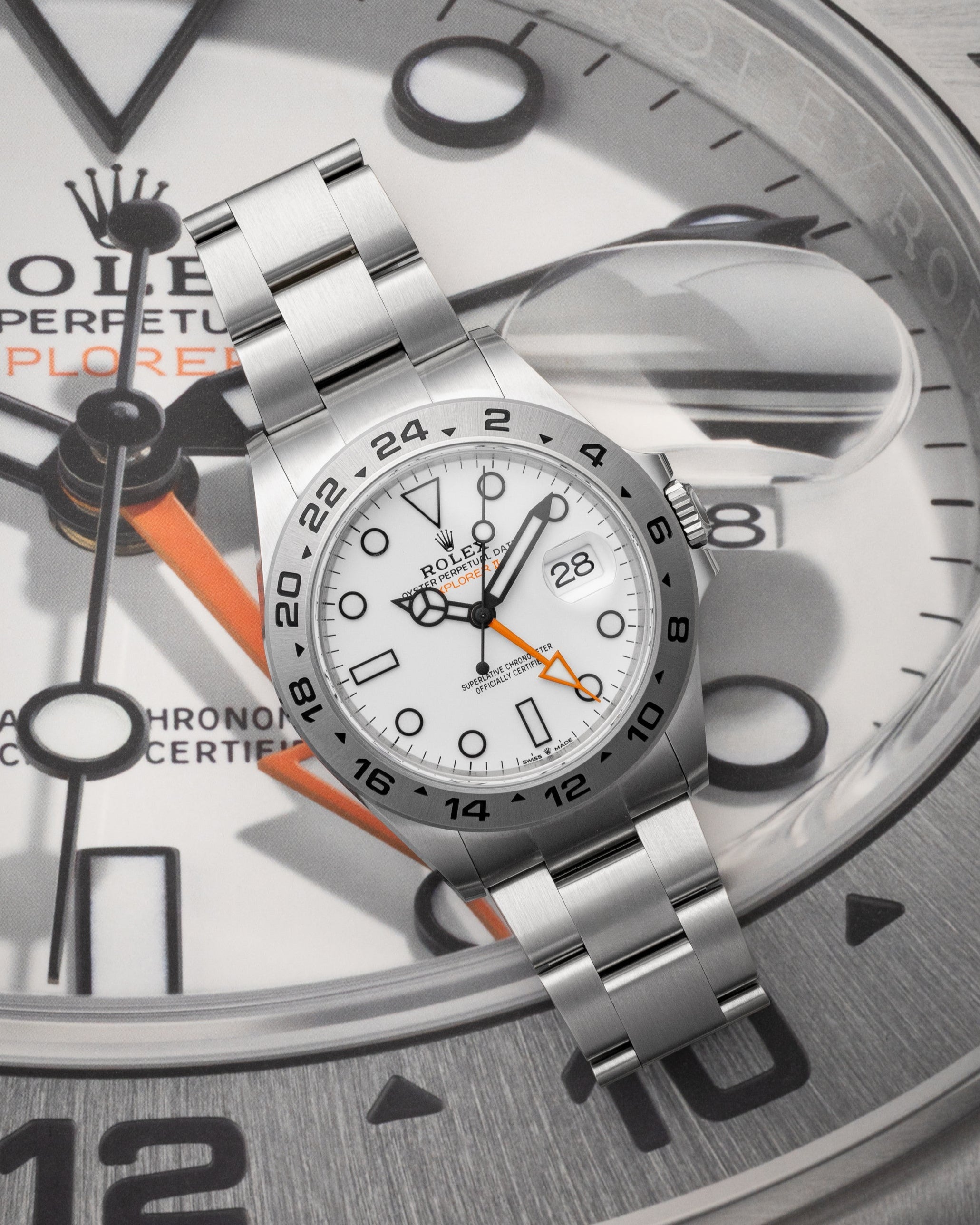
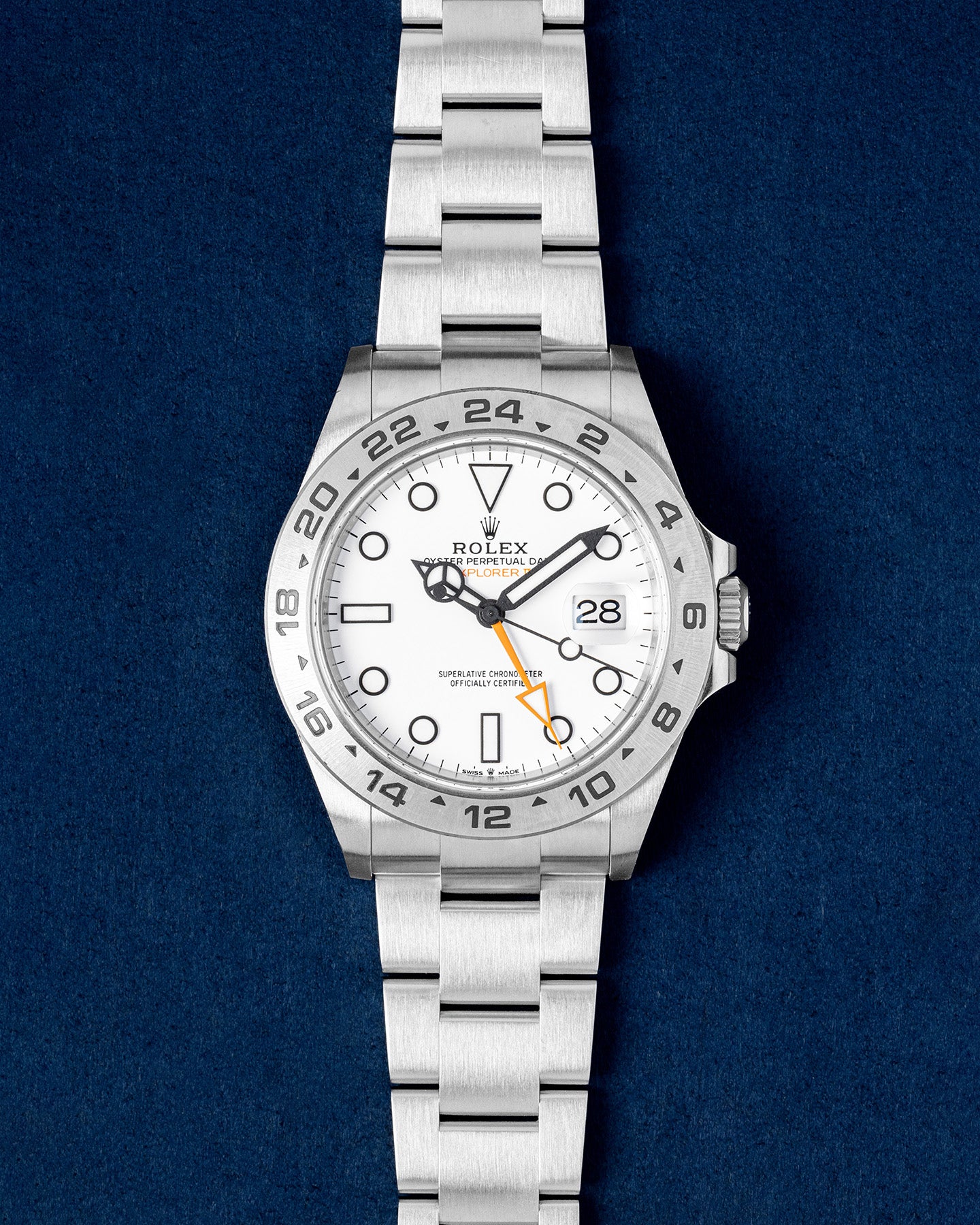
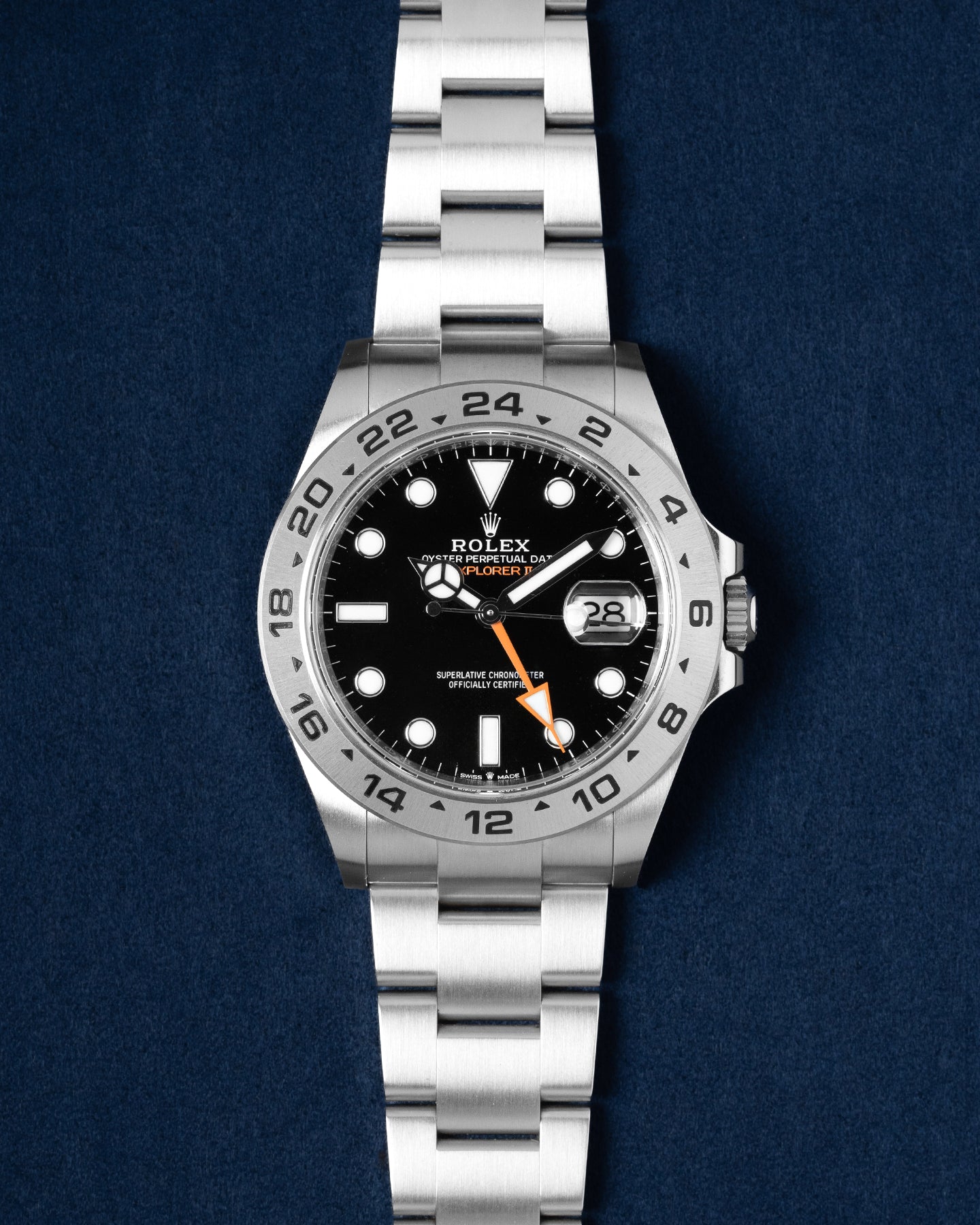
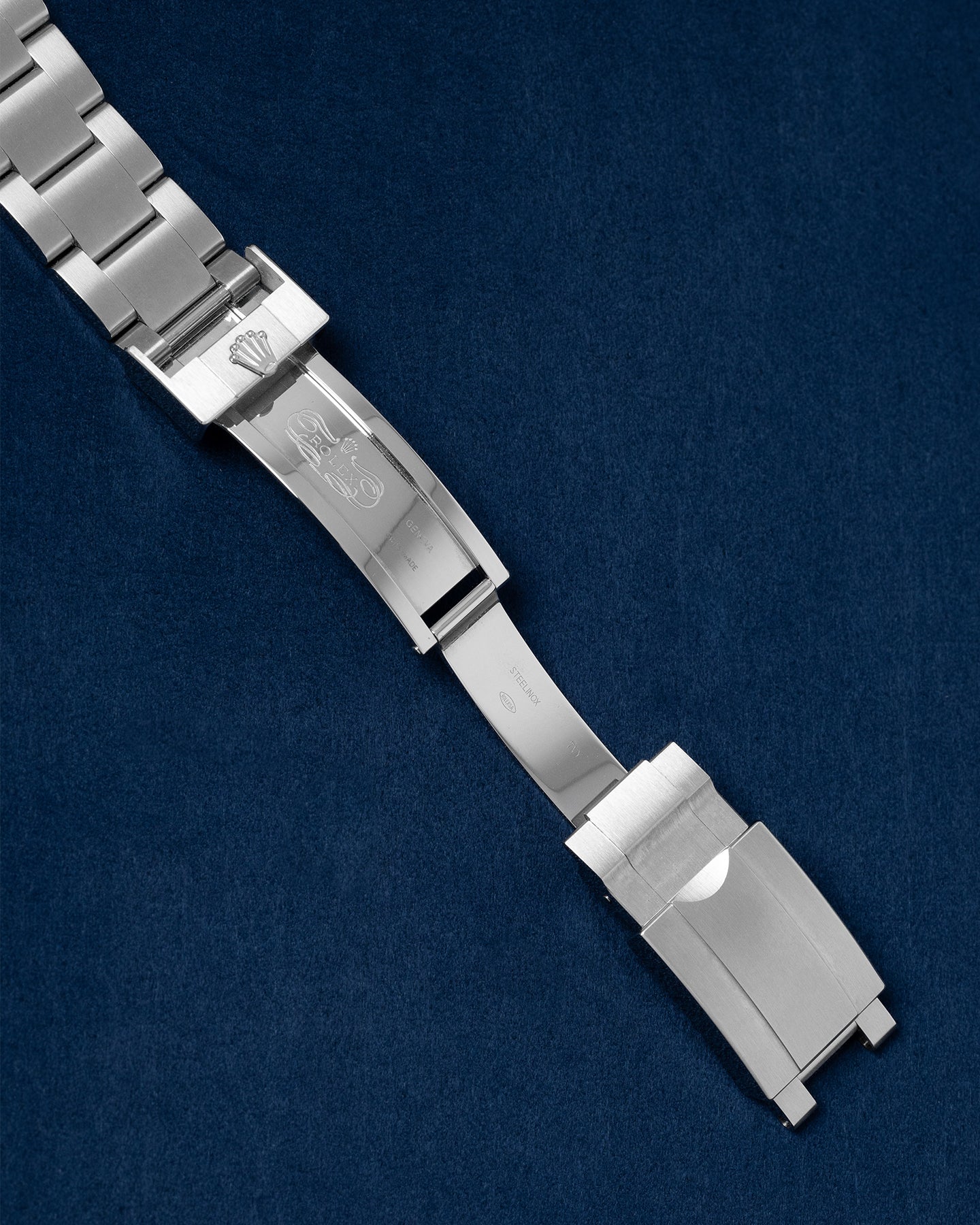
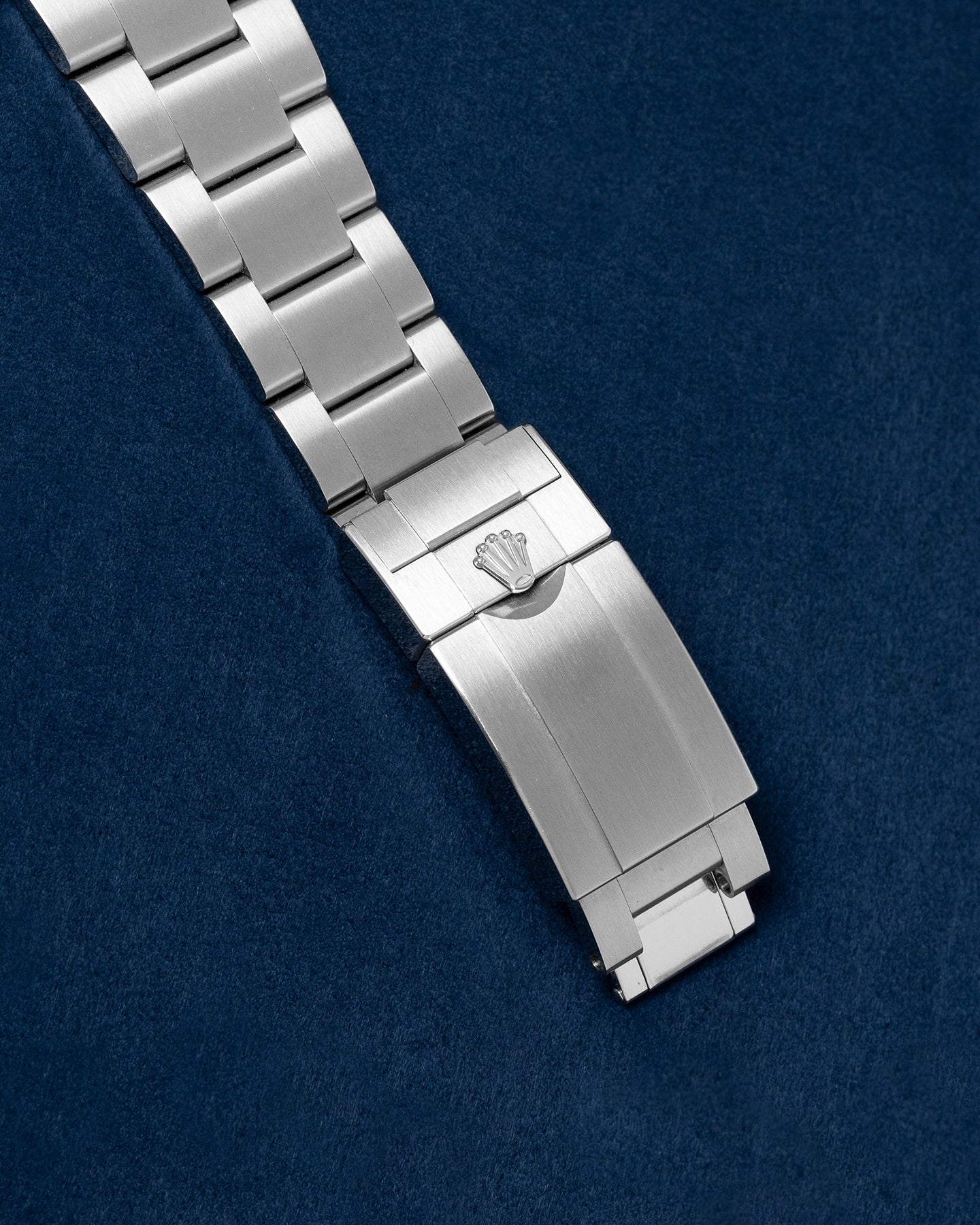
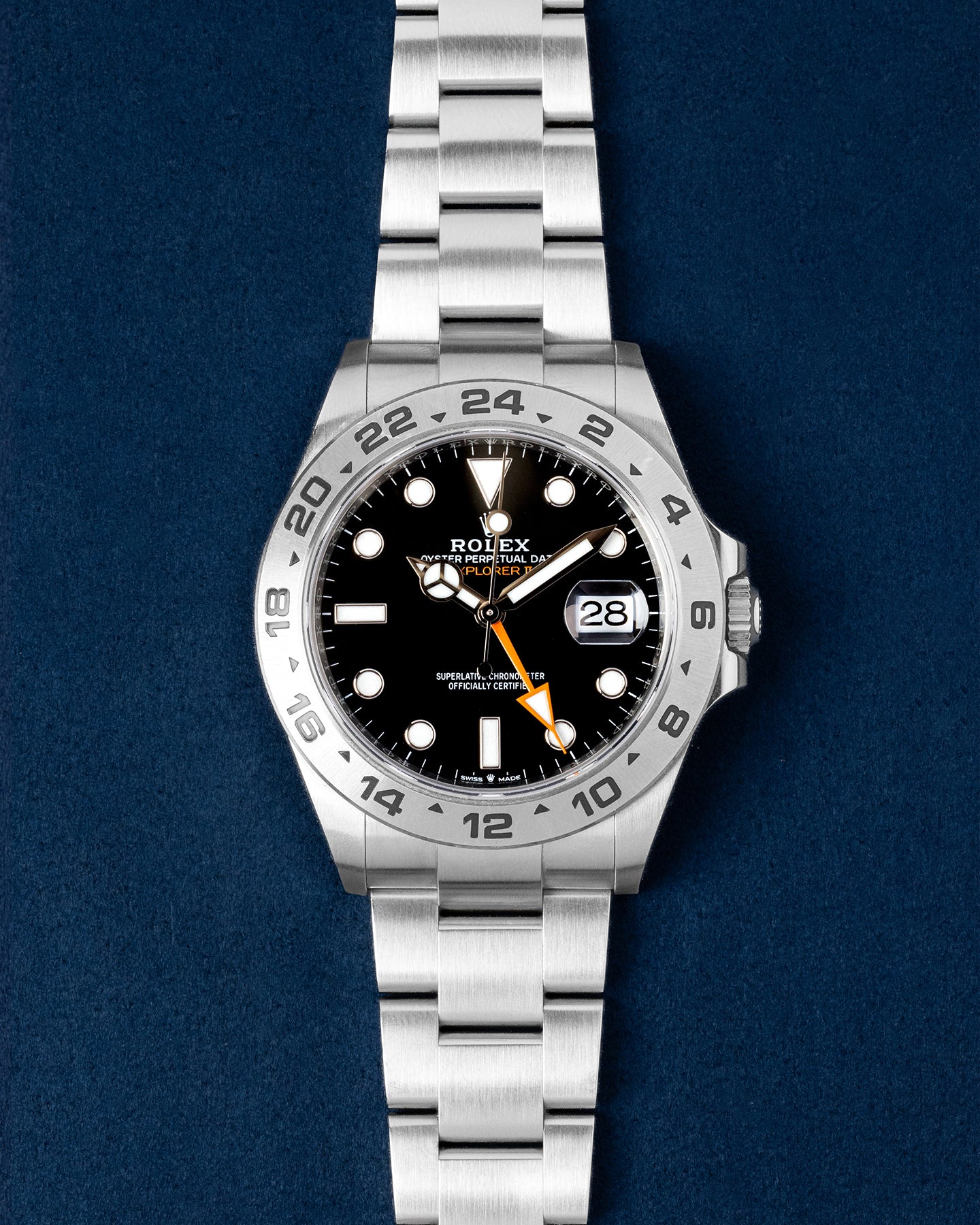
The most charming change in the 216570 was a nod to the model's roots. After decades of the thinner red 24 hour hand used since the 16550, Rolex brought back the bold orange arrow hand of the original 1655 Freccione, a genuine piece of heritage that delighted collectors and reconnected the modern watch with its origins. The 216570 also introduced larger hands and markers, the Chromalight display with its long lasting blue glow, and the caliber 3187 with the Parachrom hairspring and Paraflex shock absorbers, and it added the Easylink comfort extension that lets the wearer extend the bracelet by around five millimeters without tools to accommodate a wrist that swells in the heat. It brought the Rolex Explorer II fully up to date while honoring where it came from, and it remains a popular and more affordable route to the modern 42mm look.
The jump to 42mm was significant and not universally loved at first. Some longtime enthusiasts felt the classic 40mm proportions of the 16570 were part of the model's identity, and the larger case marked a clear break with tradition. But the 216570 won many of them over with its bolder presence and the genuine charm of the returning orange hand, and over its decade in production it established the 42mm size as the new normal for the model. Today it is appreciated as the reference that successfully modernized the Rolex Explorer II, and as a strong value for a buyer who wants the current look without paying current prices.
The Reference 226570 and the Current Explorer II
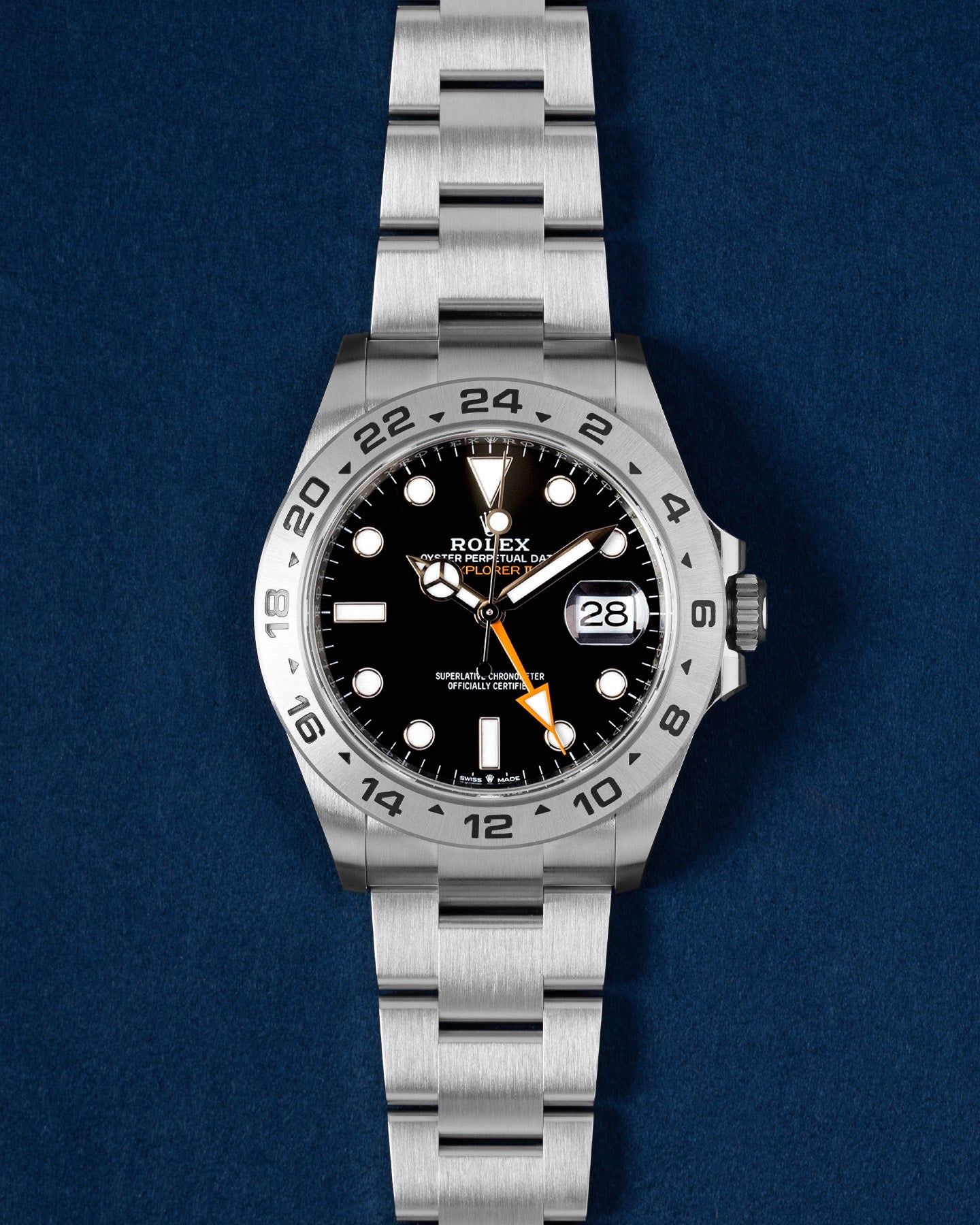
The current Rolex Explorer II is the reference 226570, introduced in 2021 to celebrate the model's 50th anniversary. It retains the 42mm case, the fixed 24 hour bezel, the orange arrow hand, and the choice of black or Polar white dials, but it brings a series of refinements that make it the most accomplished Explorer II yet, both technically and aesthetically.
The Caliber 3285
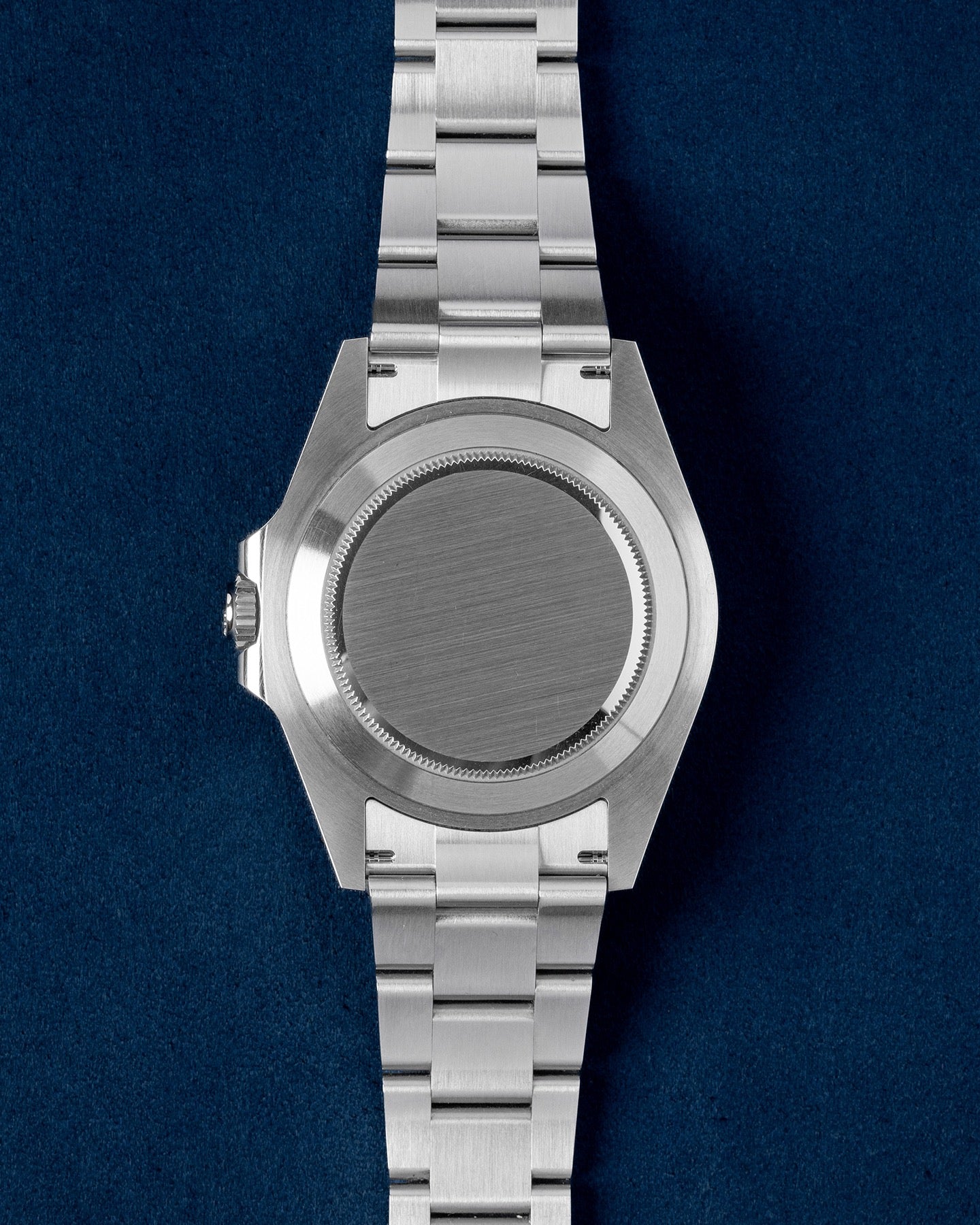
The headline change in the 226570 is the movement. It runs the caliber 3285, the same modern movement found in the current GMT-Master II, bringing the Chronergy escapement, a 70 hour power reserve, and Superlative Chronometer certification at negative two to positive two seconds per day. This is a substantial leap over the previous generation, offering roughly three days of power reserve and improved efficiency and precision. Alongside the movement, Rolex refined the case and slimmed the lugs for better wrist presence, and brightened the white Polar dial with a fresh lacquer finish. The 226570 is the definitive modern Rolex Explorer II, combining five decades of heritage with Rolex's very latest engineering.
The refinements of the 226570 address the main criticisms of the 216570 it replaced. The slimmer lugs and reworked case make the 42mm size wear more comfortably and elegantly, resolving the slightly slab sided feel some found in the previous generation. The brighter lacquer Polar dial gives the white version a cleaner, more luminous look, and the caliber 3285 brings the model's movement fully in line with the rest of the modern Rolex sports range. Sharing that movement with the current GMT-Master II is a meaningful upgrade, and it means the Rolex Explorer II now offers the same three day power reserve and precision as its more famous sibling. It is a thoroughly resolved watch.
Rolex Explorer II Design and Identity
A Personality of Its Own
The Rolex Explorer II has always had a distinct personality within the Rolex sports family. It is more complicated and characterful than the pure, minimalist Explorer, yet more of a genuine tool watch than the travel oriented GMT-Master II. The fixed 24 hour bezel, the arrow tipped hand, and the option of that striking white Polar dial give it an identity all its own, one that appeals strongly to enthusiasts who want something a little less obvious and a little more interesting than the most famous Rolex sports models.
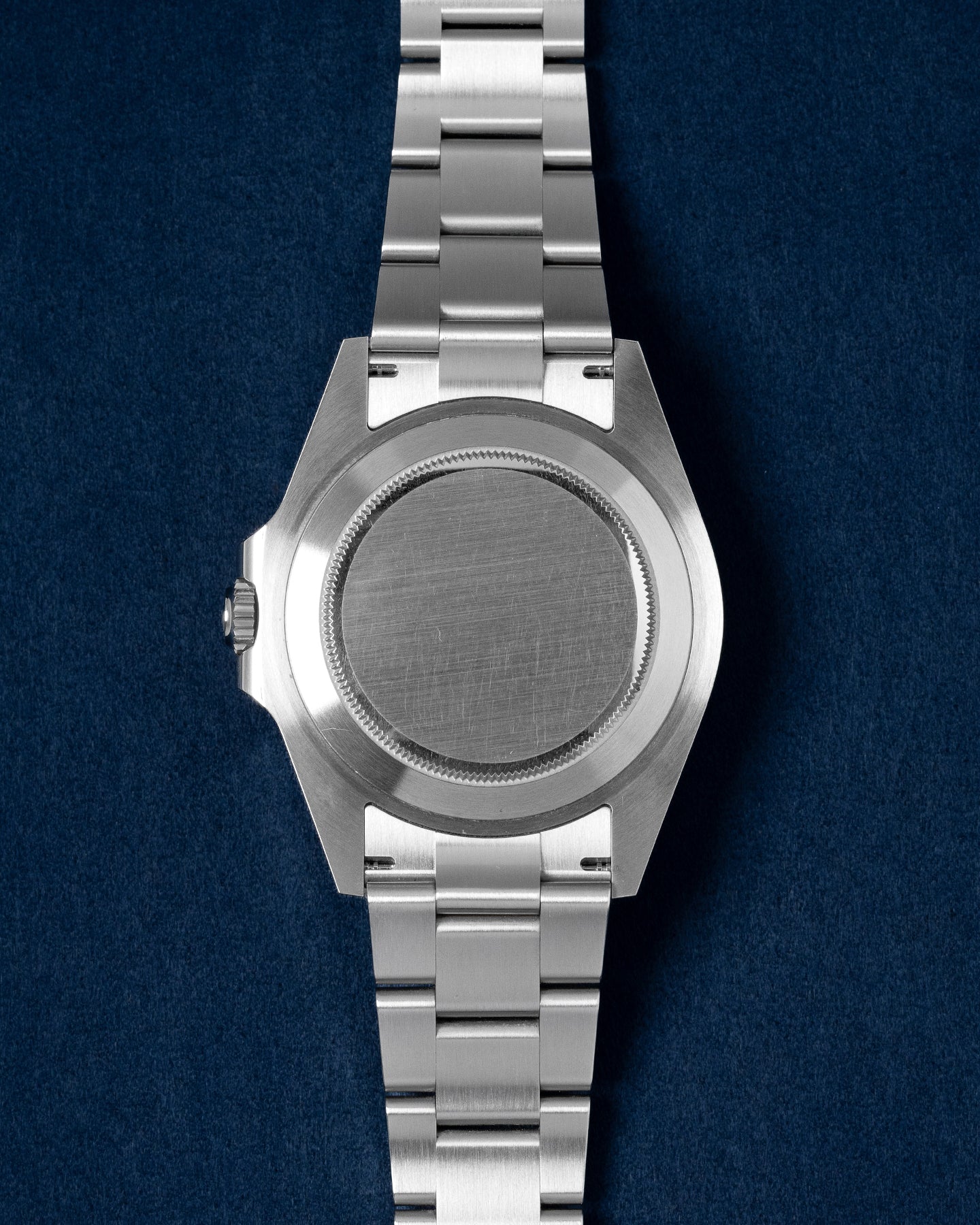
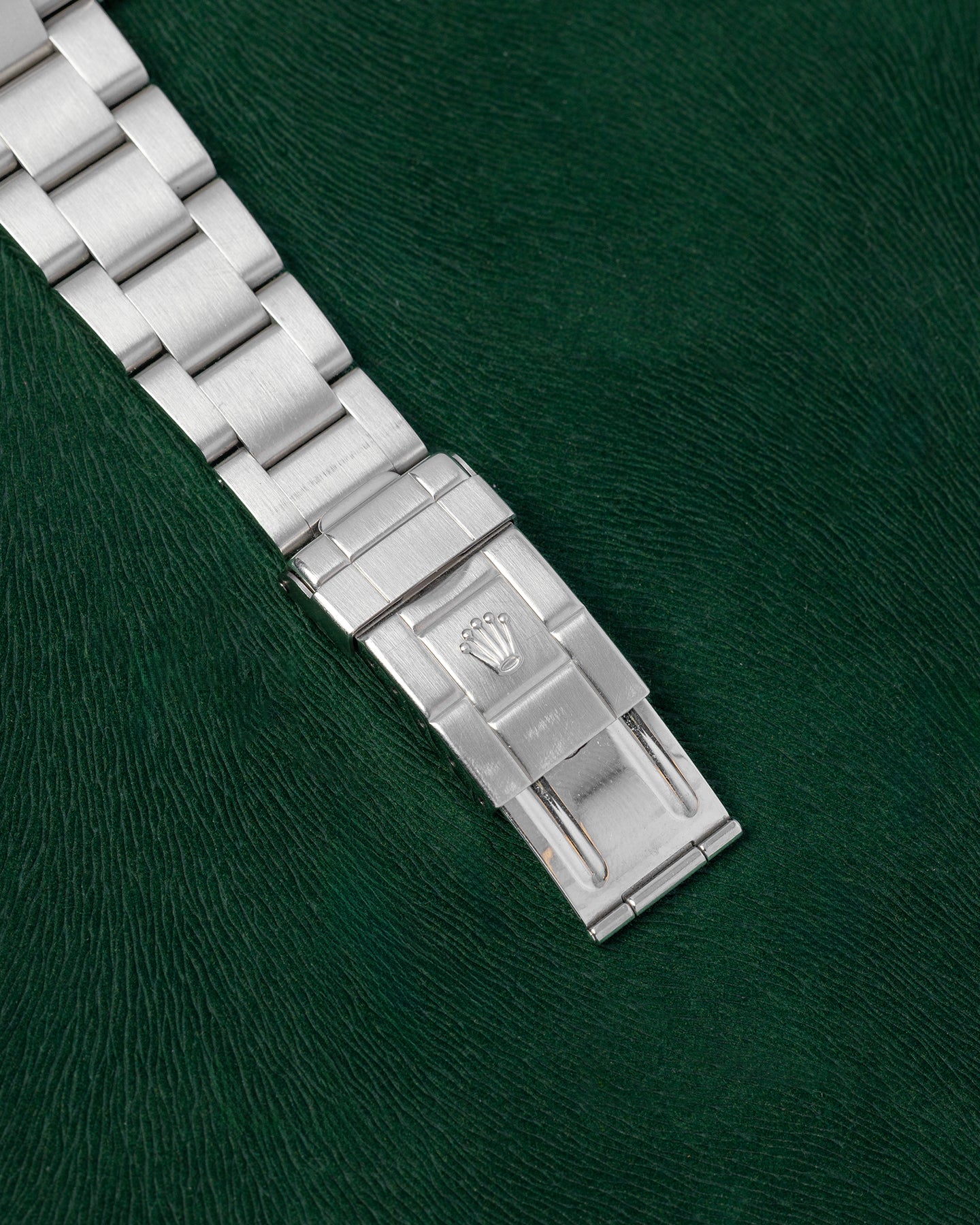
One Size, One Bracelet, One Material
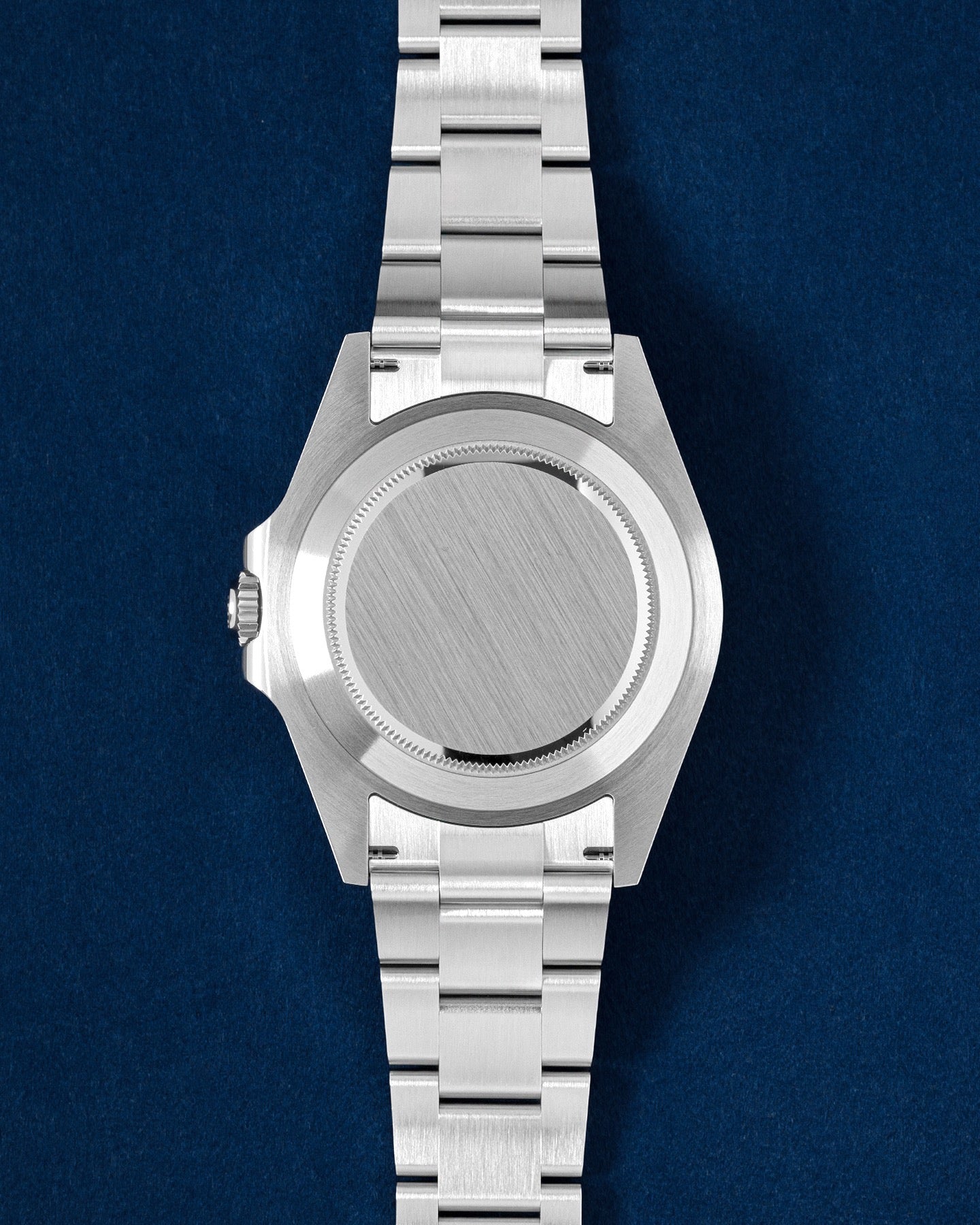
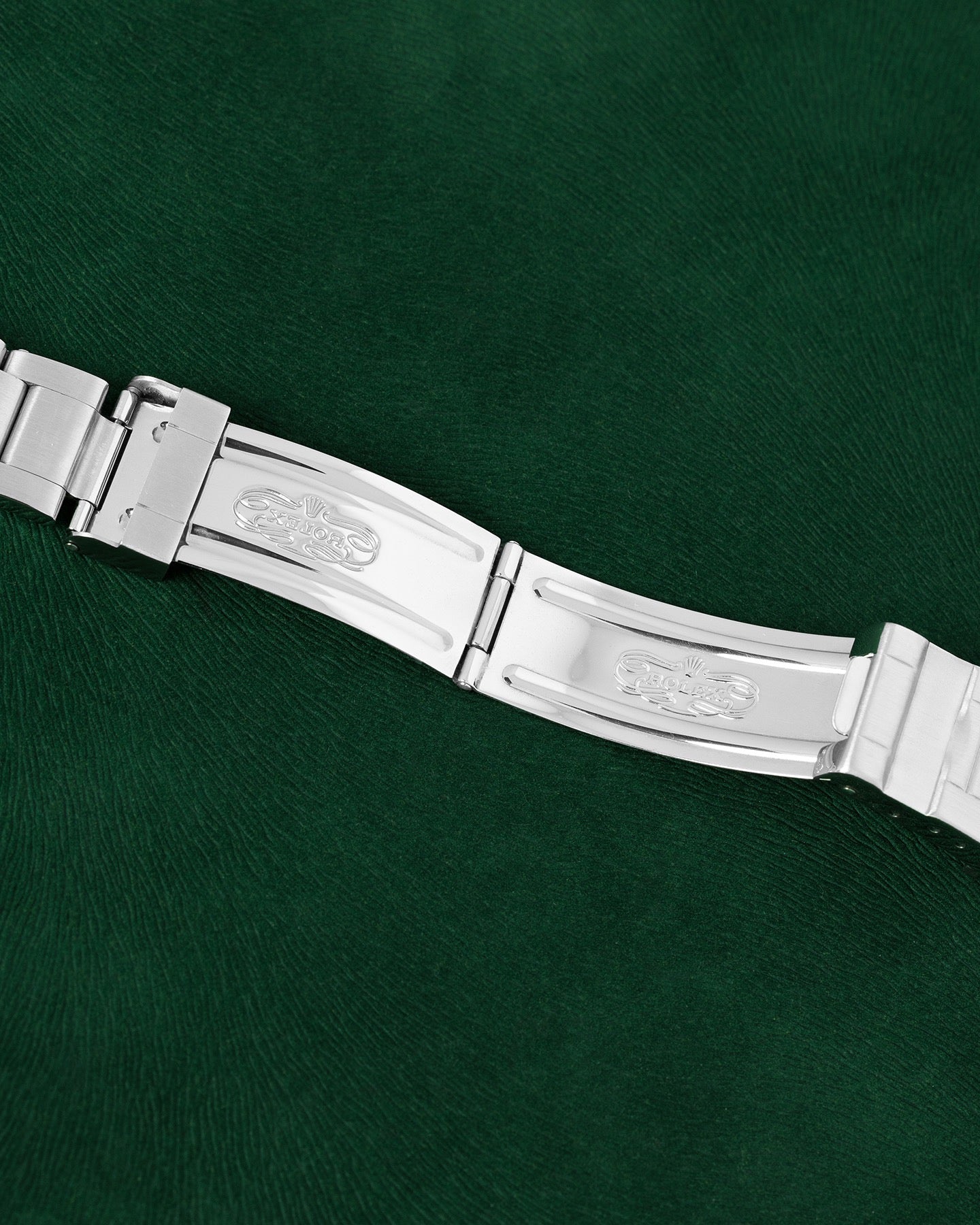
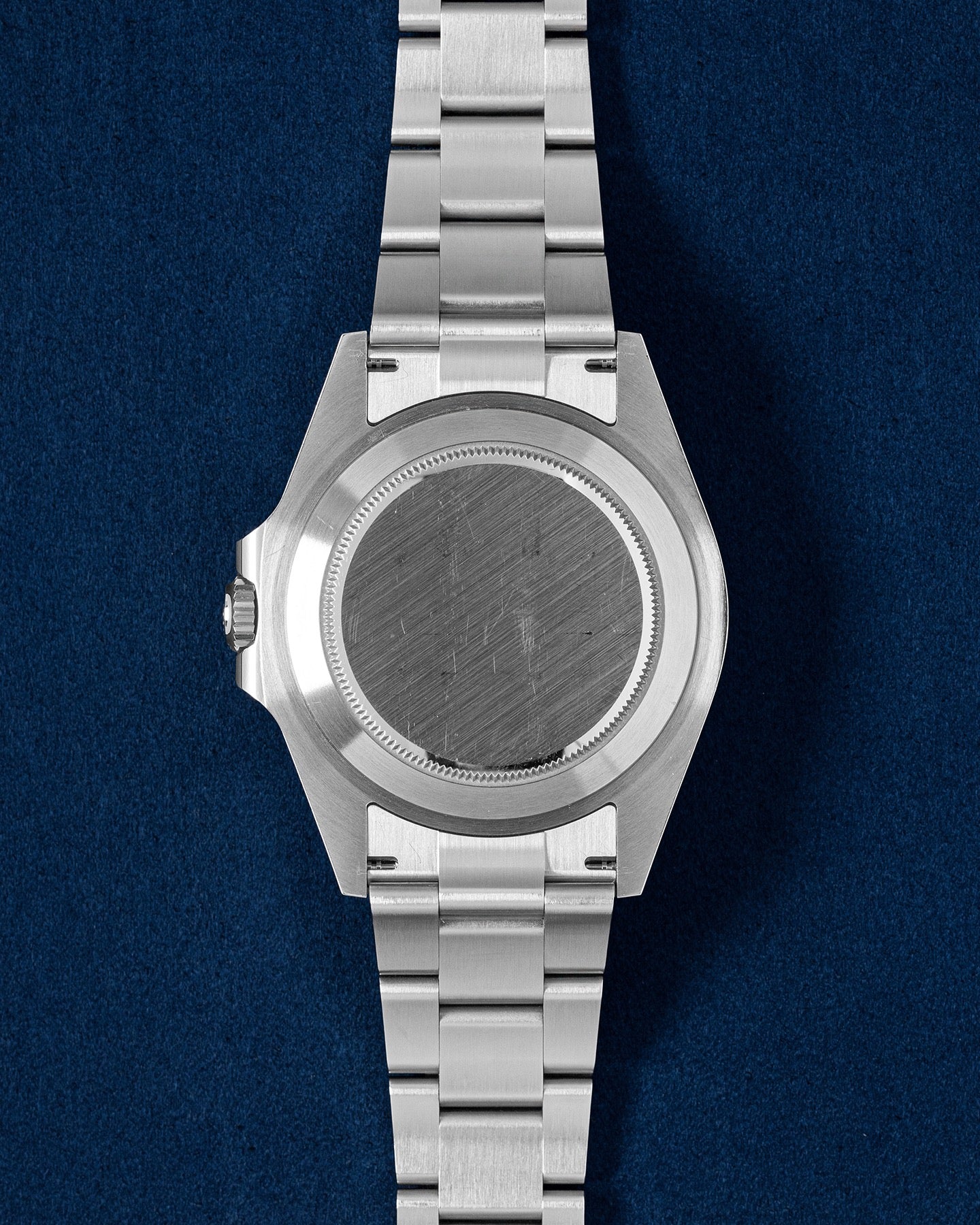
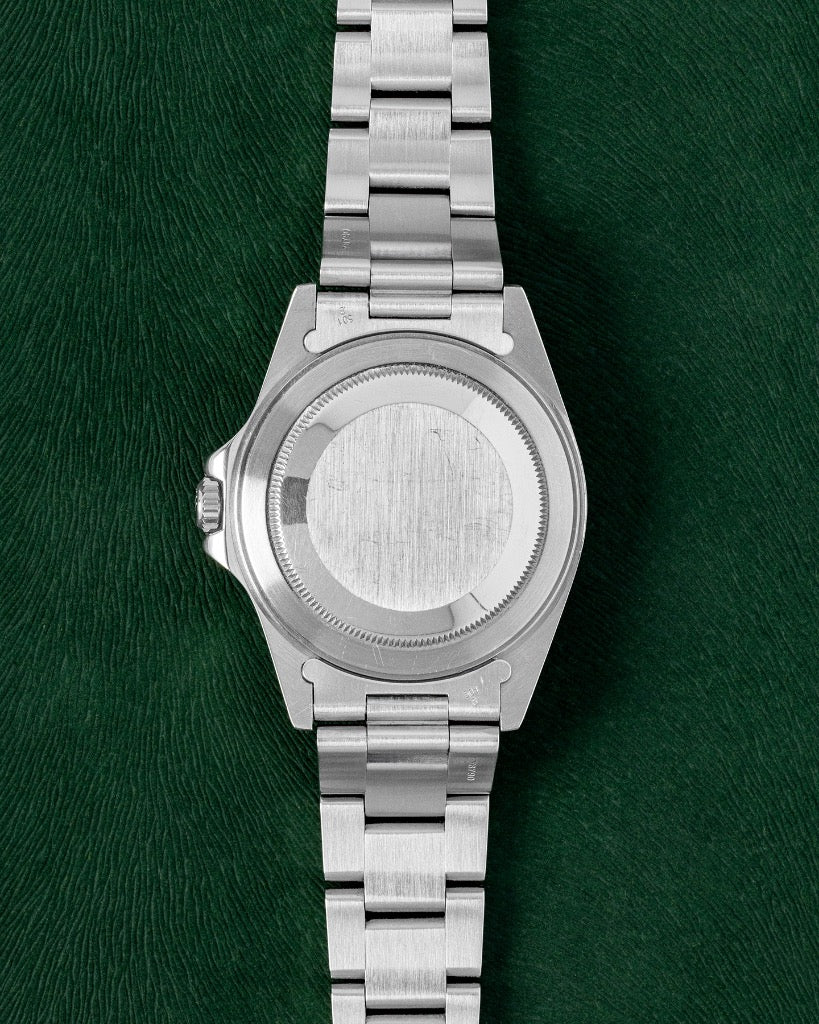
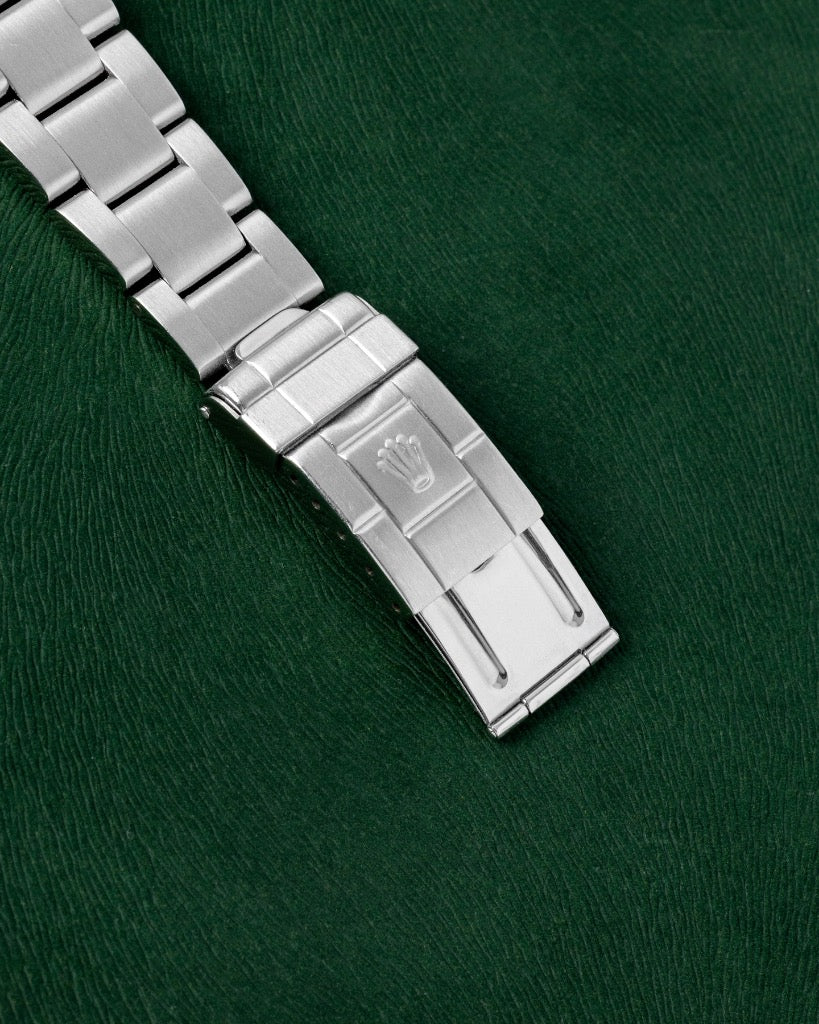
Part of the model's charm is its consistency of purpose across the decades. There has only ever been one size offered at a time, one bracelet, the fully brushed Oyster, and one material, stainless steel, which keeps the Rolex Explorer II honest and unpretentious. The white Polar dial remains the only white dial in the entire Rolex professional tool watch range outside the Daytona, and it is arguably the single most recognizable and defining feature of the whole model. This is a watch for the person who values function and character over flash, and that quiet, understated confidence is a large part of why the model has earned such a devoted and knowledgeable following over the years.
There is a certain kind of collector who gravitates specifically to the Rolex Explorer II for exactly these reasons. It is a watch that rewards knowledge rather than announcing status, recognized instantly by enthusiasts but often overlooked by those who only know the Submariner and the Daytona. Owning one signals a genuine interest in watches rather than a desire for the most obvious icon, and that quality has made the model a favorite among people who have owned many watches and come to appreciate its particular blend of function, history, and understatement. The Polar dial only deepens that appeal, offering a look unlike anything else Rolex makes.
Rolex Explorer II Movements and the GMT Function
From Day Night Indicator to True GMT
Understanding the movements is central to understanding the Rolex Explorer II, because the model's defining function, the independent 24 hour hand, arrived partway through its history. The original 1655 ran a movement from the 1500 series and was not a true GMT, its 24 hour hand fixed to the main hour hand as a day night indicator. From the 16550 in 1985 onward, every Explorer II has been a genuine dual time watch.
This evolution of function is one of the most interesting aspects of the model, because it means the reference number tells a buyer a great deal about what the watch can actually do. A 1655 is a day night indicator with a fixed 24 hour hand, a piece of tool watch history. Everything from the 16550 forward is a proper travel and exploration instrument capable of tracking a second time zone. Understanding that distinction is essential to buying the right watch, and it is a large part of why studying the references so closely rewards the serious collector of the model.
The 16550 introduced the caliber 3085 with its independently adjustable 24 hour hand, the 16570 used the caliber 3185 and later the 3186, the 216570 brought the caliber 3187, and the current 226570 runs the caliber 3285. On these true GMT references, the wearer sets the main hands to local time and uses the independent 24 hour hand, read against the fixed bezel, to track a second time zone at home. Because the bezel is fixed rather than rotating, the Rolex Explorer II tracks two time zones rather than the three a rotating GMT bezel allows, which is a deliberate design choice that keeps the watch closer to its tool watch roots. Every one of these movements is a genuine in house Rolex caliber built to run reliably for decades.
It is worth being clear about how the function works in practice, since it is sometimes misunderstood. On the true GMT references, the wearer sets the conventional hour, minute, and second hands to their local time in the usual way, and the independent 24 hour hand points to the corresponding hour on the fixed bezel, which is marked from one to twenty four. Set that 24 hour hand to home time, and the watch shows two zones at once. The fixed bezel means it cannot be rotated to read a third zone the way a GMT-Master can, but for the traveler or explorer who simply needs to keep one foot in the local hour and one at home, it does everything required, cleanly and legibly.
Rolex Explorer II vs Comparable Watches
Buyers considering the Rolex Explorer II are usually weighing it against its closest relatives in the Rolex sports catalogue. The comparisons below address the questions we hear most often in the showroom.
Rolex Explorer II vs Explorer
The Explorer is the Explorer II's simpler, older sibling. The Explorer is a clean, time only watch with no date and no complications, slimmer and more discreet, while the Rolex Explorer II adds the date, the fixed 24 hour bezel, the arrow hand, and the GMT function, making it larger and more overtly sporty. A buyer choosing between them is weighing the pure minimalism of the Explorer against the extra function and stronger character of the Rolex Explorer II. They share a name and a heritage but genuinely feel like different watches.
Rolex Explorer II vs GMT-Master II
This is the most important comparison, since both are dual time Rolex sports watches. The key difference is the bezel. The GMT-Master II has a rotating, two color bezel that allows it to track a third time zone and is aimed squarely at travelers, with colorful ceramic options like the Pepsi and Batman. The Rolex Explorer II has a fixed bezel, tracks two time zones, and comes only in steel with black or Polar dials, positioning it as the rugged tool watch rather than the jet setter's companion. A buyer who wants a travel watch with a rotating bezel and colorful options leans GMT-Master II, while the buyer who wants a purposeful, understated adventure watch chooses the Rolex Explorer II.
There is also a meaningful difference in availability and market temperature between the two. The GMT-Master II, especially in its colorful ceramic forms, is one of the most in demand watches Rolex makes, often subject to long waitlists and significant premiums. The Explorer II, by contrast, is far more attainable, frequently available to buy without the wait and at prices much closer to retail. For a buyer who loves the idea of a steel Rolex GMT but has no interest in the allocation game, that difference alone can make the Explorer II the far more sensible and satisfying choice, delivering genuine dual time function and Rolex quality without the frustration.
Rolex Explorer II vs Submariner
The Submariner is the archetypal Rolex sports watch, a dive watch with a rotating bezel and 300 meters of water resistance. The Rolex Explorer II is a land and exploration oriented GMT with a fixed bezel and 100 meters of water resistance. A buyer who wants the iconic dive watch chooses the Submariner, while the buyer who wants something less common, with GMT function and the distinctive Polar dial option, is drawn to the Rolex Explorer II. The Explorer II is very much the connoisseur's alternative to the more famous Submariner.
Rolex Explorer II Pricing and the Secondary Market
The Rolex Explorer II occupies a genuinely attractive position in the market for a buyer, because it has never attracted quite the frenzied demand of the Submariner, the GMT-Master II, or the Daytona. That relative under the radar status is good news, since it means the Rolex Explorer II trades at more sensible premiums and is often available without the multi year waitlists that plague the most hyped references. For a buyer who wants a genuine Rolex sports watch with real character, the Explorer II is one of the smartest choices in the catalogue.
Modern Pricing
The current 226570 carries a retail price in the region of 9,650 dollars as of 2026, and while it can trade at a modest premium on the secondary market, it is far more attainable than the most hyped steel Rolex sports models, which routinely change hands at multiples of retail. The previous 216570 offers the same modern 42mm look and the returning orange hand for meaningfully less than the current reference, making it one of the best value modern Rolex sports watches available anywhere in the catalogue today. Across the modern references, the Rolex Explorer II rewards the buyer who wants substance and function over pure hype, and prices remain more reasonable than the famous names in the lineup.
Vintage and Neo Vintage Pricing
The older references tell a different and appreciating story. The long running 16570 is the most accessible entry into the model, with good examples widely available and early tritium dial and later 3186 rehaut versions each having their own following. The transitional 16550 commands strong prices, particularly the white Polar dial and the rare cream, or panna, dial examples, which are among the most valuable Explorer II watches of all. The original 1655 Freccione, especially a clean full set, has appreciated significantly and is a serious collector's piece. Vintage Rolex Explorer II value is driven heavily by dial originality, condition, and completeness, exactly where a specialist dealer's expertise matters most.
Rolex Explorer II as an Investment and Ownership Proposition
The Rolex Explorer II is best understood as a watch to wear and enjoy that also holds its value sensibly, rather than as a pure speculation. Because the modern references trade at more reasonable premiums than the hyped steel sports models, a buyer faces less exposure to the volatility that affects those watches, and the model's genuine heritage, its distinctive design, and its true GMT function provide a solid foundation of enduring desirability. It is a watch collectors increasingly appreciate precisely because it flies a little under the radar.
On the vintage side, the story is more clearly one of appreciation. The 1655, the 16550, and the collectible dial variants have shown strong long term growth, and clean, original examples with their documentation are the sweet spot. The neo vintage 16570 has quietly climbed as buyers recognize its value, and many enthusiasts consider it one of the last genuine bargains left in the vintage and neo vintage Rolex market, though that window has been steadily narrowing as more buyers catch on. As with any watch, condition, originality, and completeness drive value, and a buyer approaching the Rolex Explorer II for its character and history, rather than as a quick flip, is unlikely to be disappointed. Grand Caliber prices every example openly to the current market.
The gap between the modern and vintage ends of the model is worth understanding for anyone thinking about value over time. A current or recent reference is bought primarily to wear and enjoy, holding its value sensibly without the wild swings of the hyped models. The genuinely collectible pieces, the 1655, the cream and rail dial 16550s, and the earliest and latest 16570 variants, occupy a different world where scarcity and originality drive real appreciation. A buyer can enter the model affordably and, over time, develop the knowledge to pursue those deeper collector waters, which is one of the things that makes the Rolex Explorer II so rewarding to own and study.
Authenticating and Servicing a Rolex Explorer II
Authenticating a Rolex Explorer II requires knowledge that spans the model's five decade history, because the references and their variants differ in specific, verifiable ways. The movement, the crystal type, the dial surrounds, the lume material, the endlink style, and the rehaut engraving all help identify and date an example, and on the collectible references these details have a major effect on value. The white Polar dials in particular attract fakes and refinished dials, so verifying an original dial is essential, and the cream dial 16550 examples require real expertise to authenticate given their value. Professional verification is not optional on these watches.
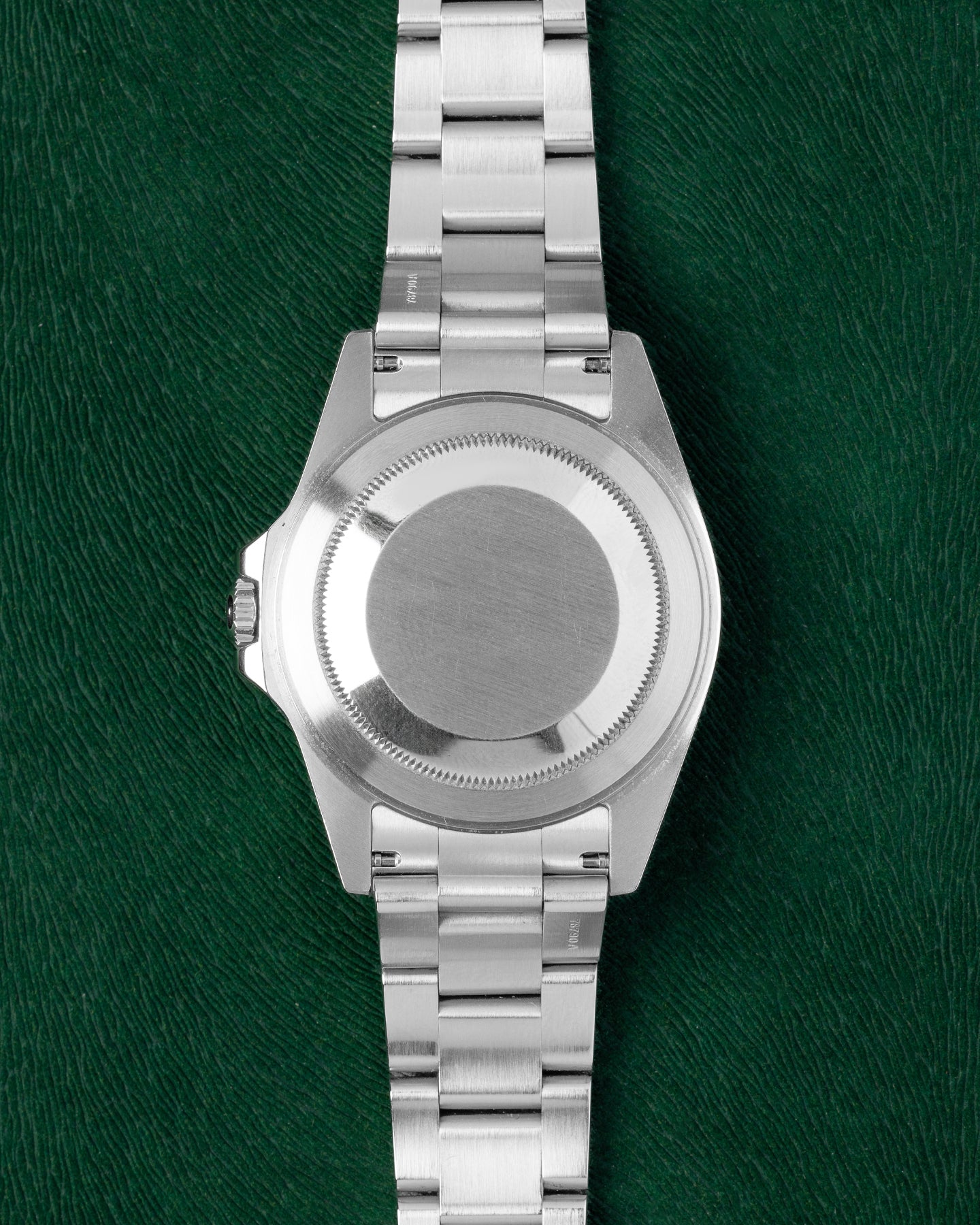
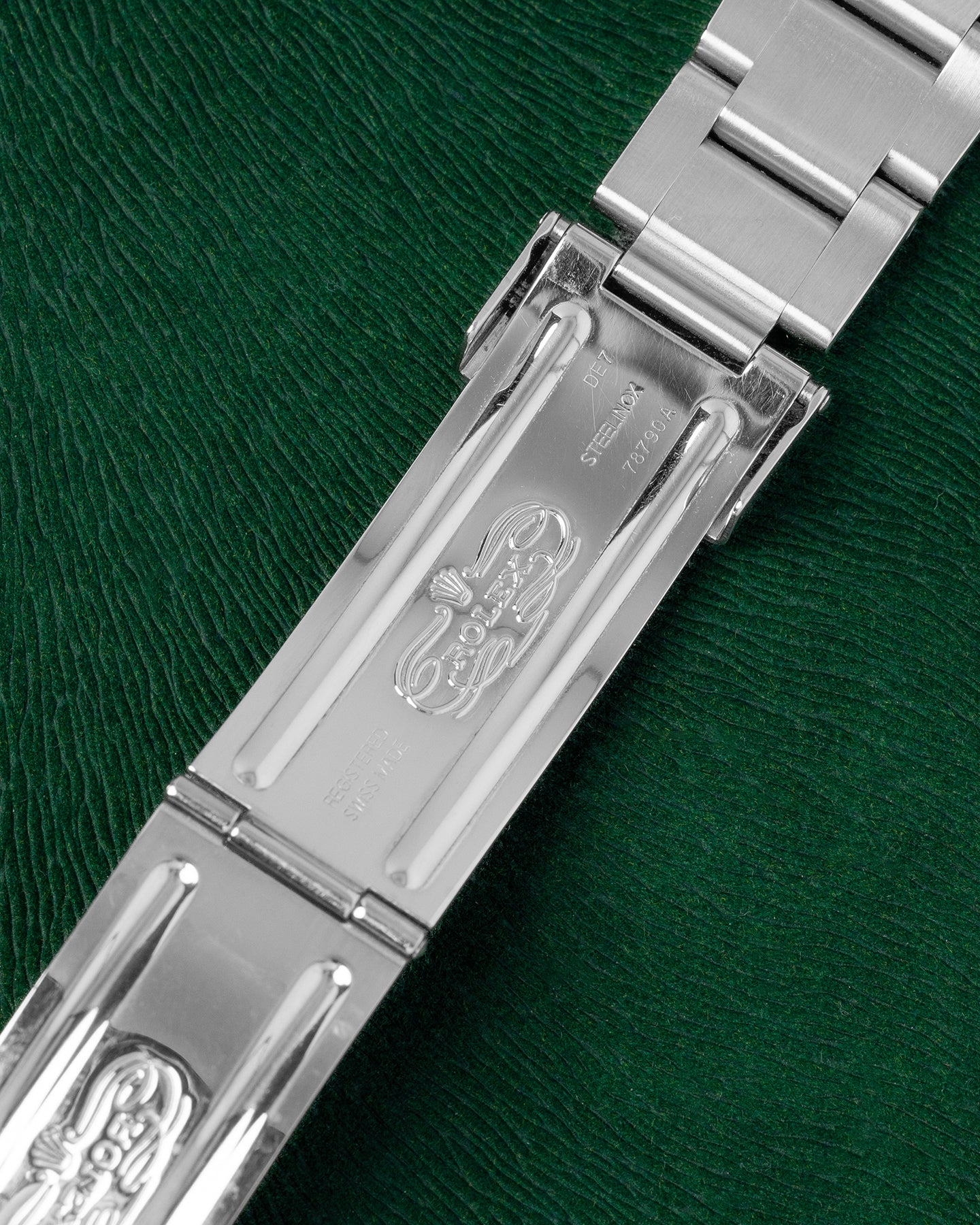
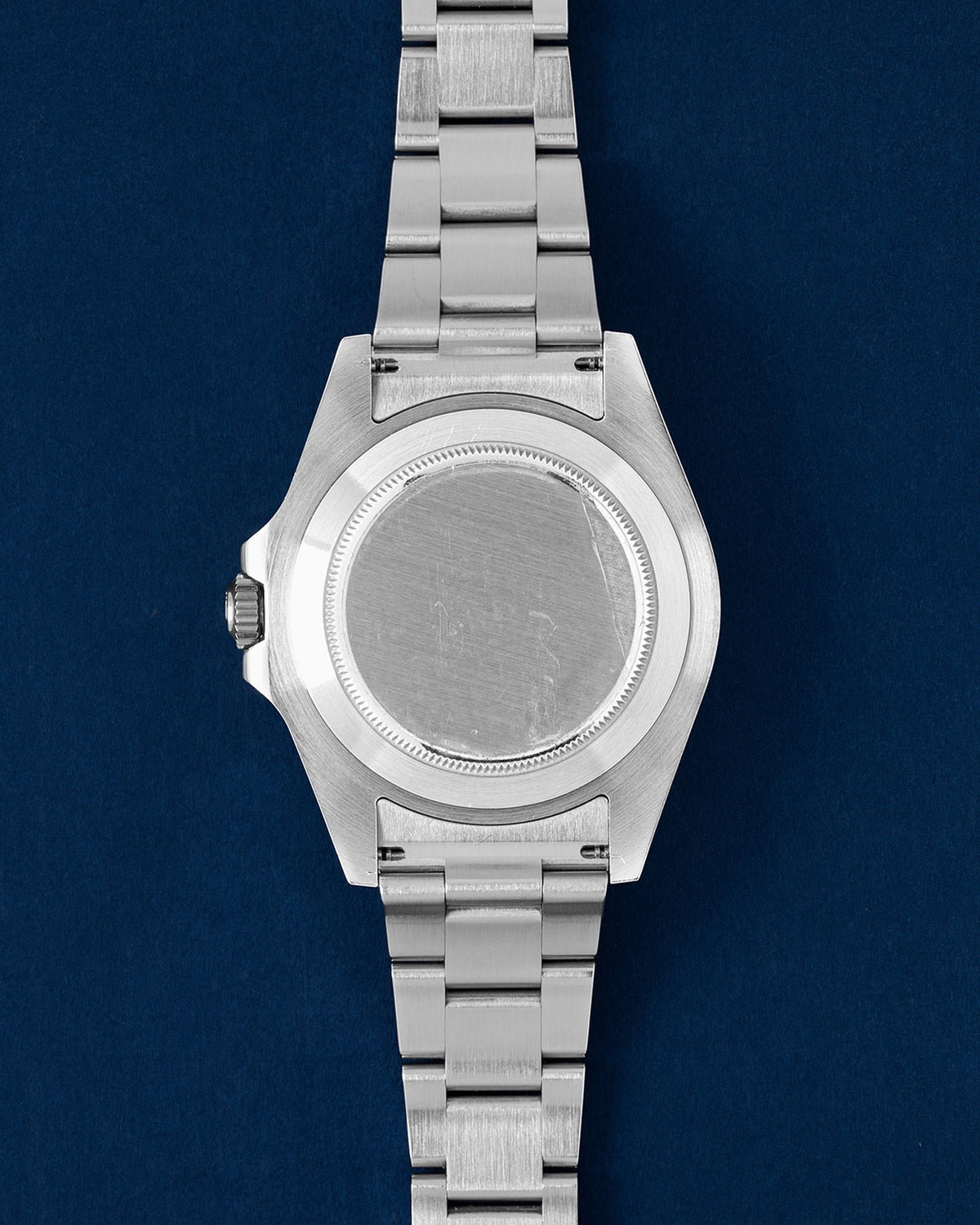
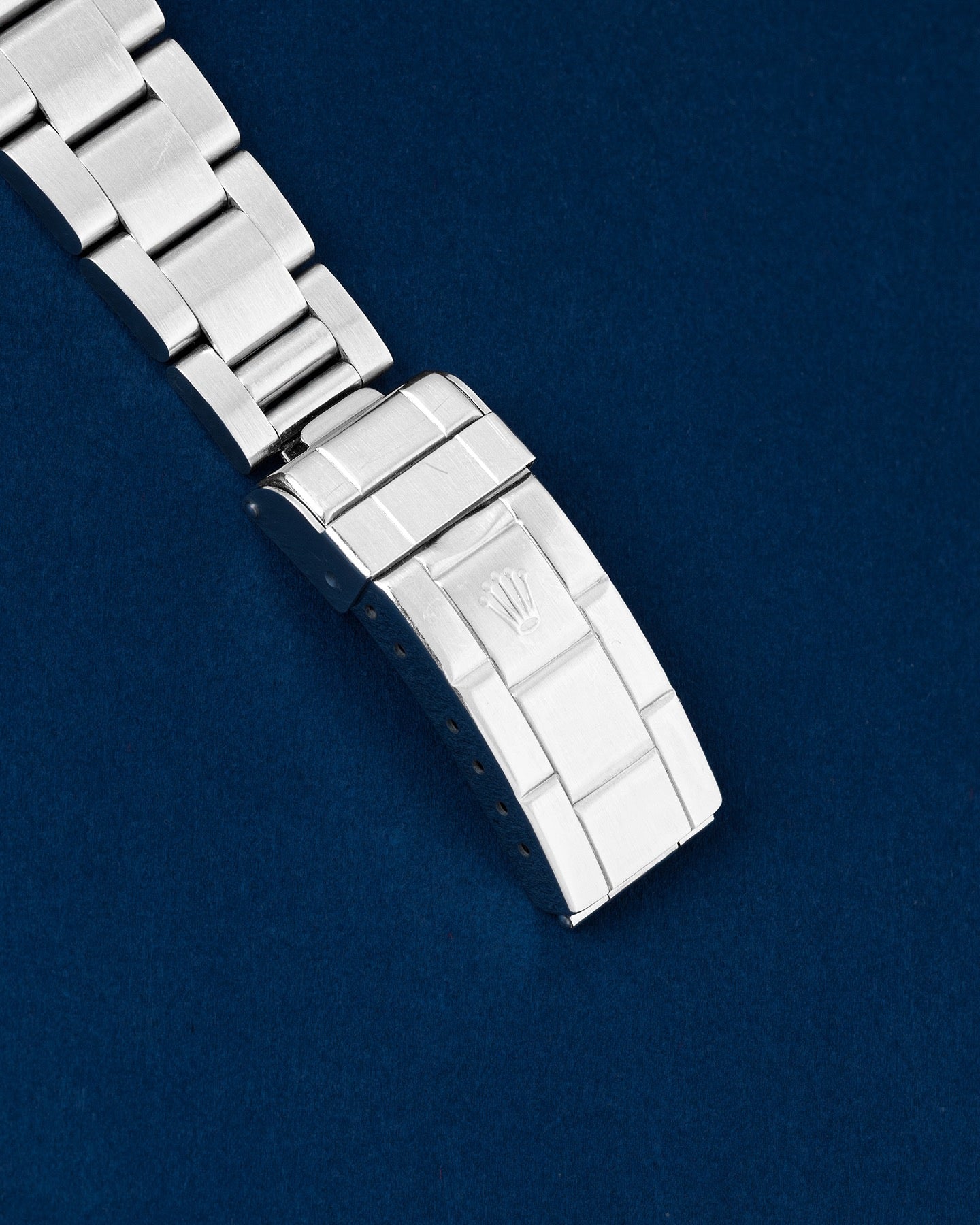
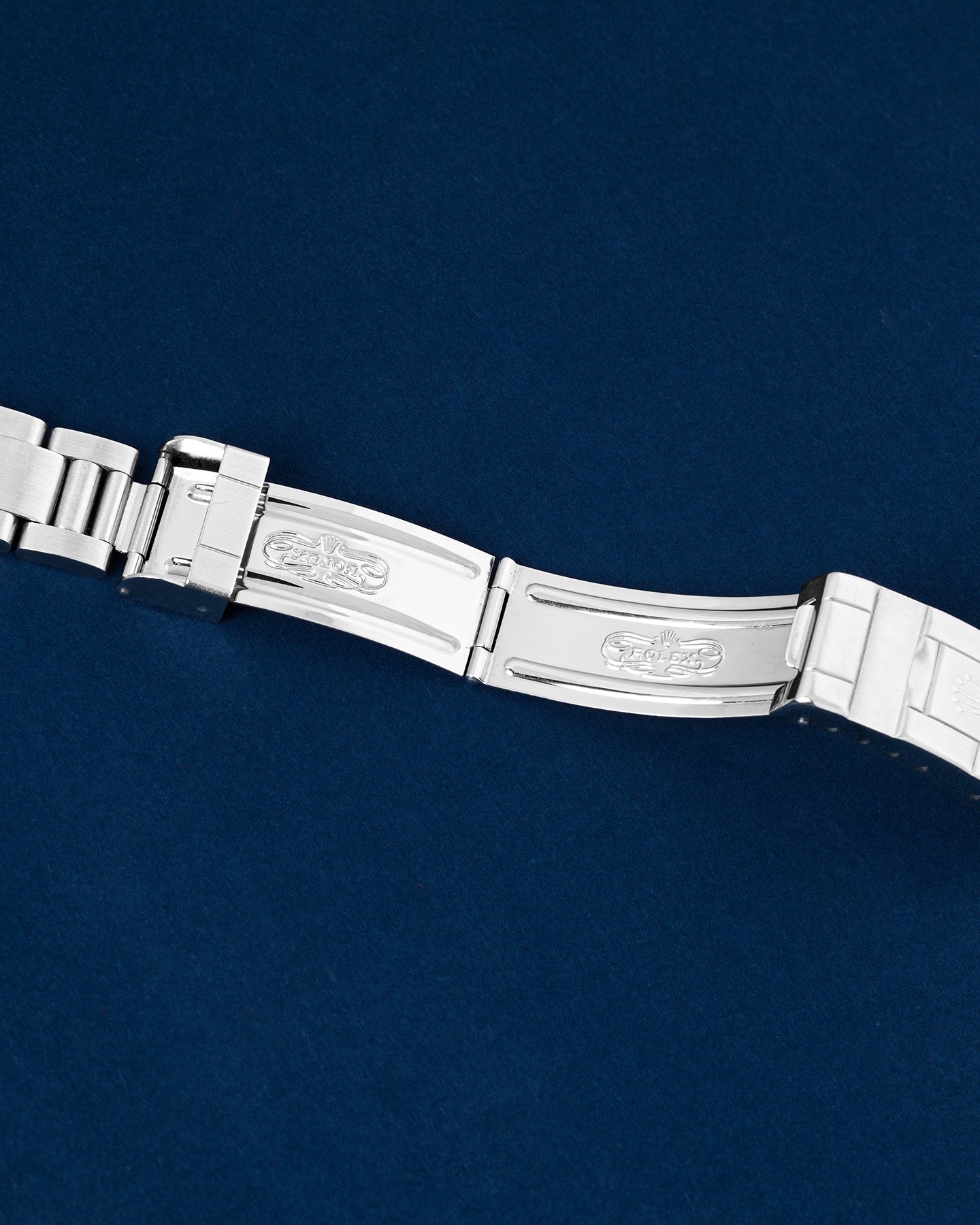
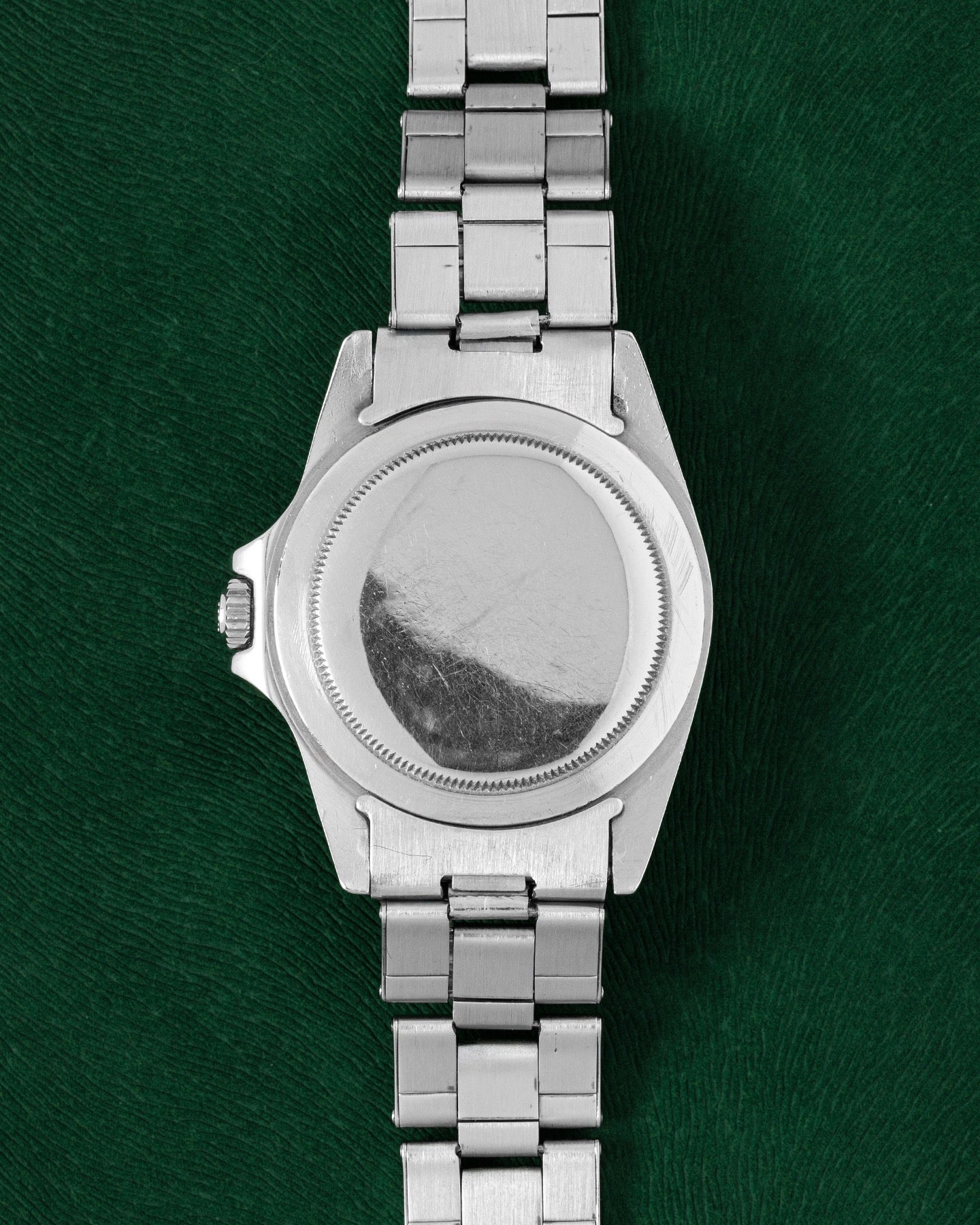
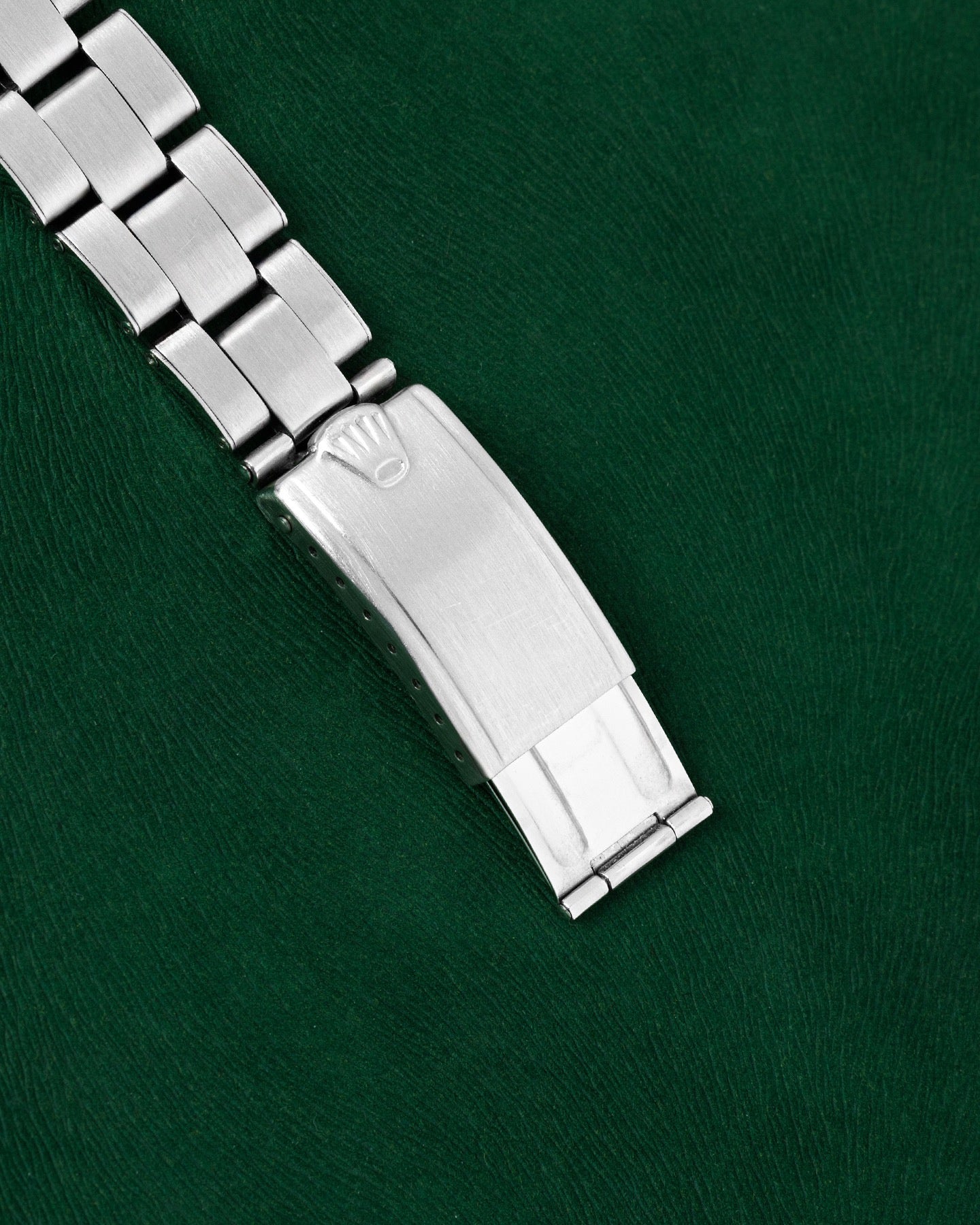
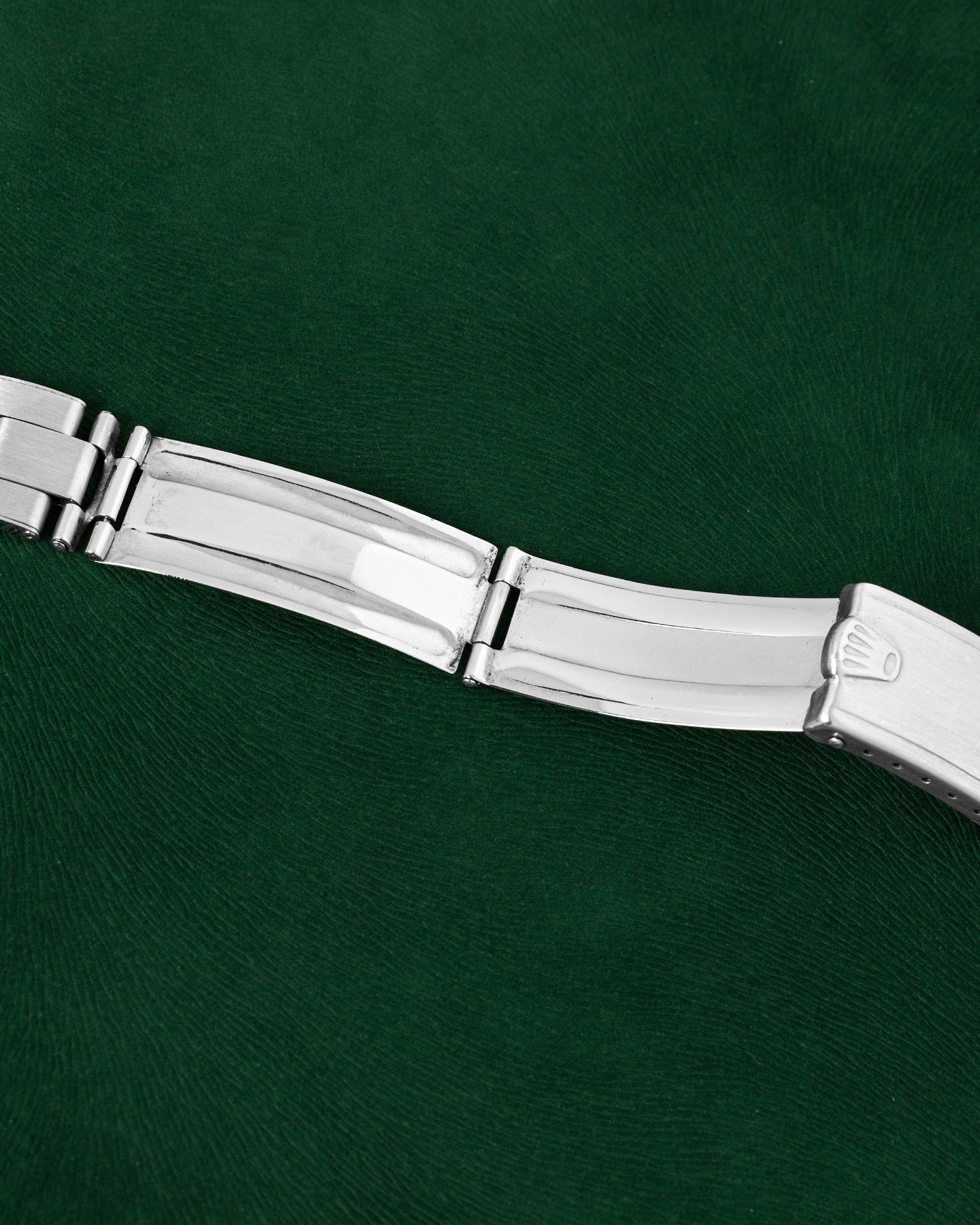
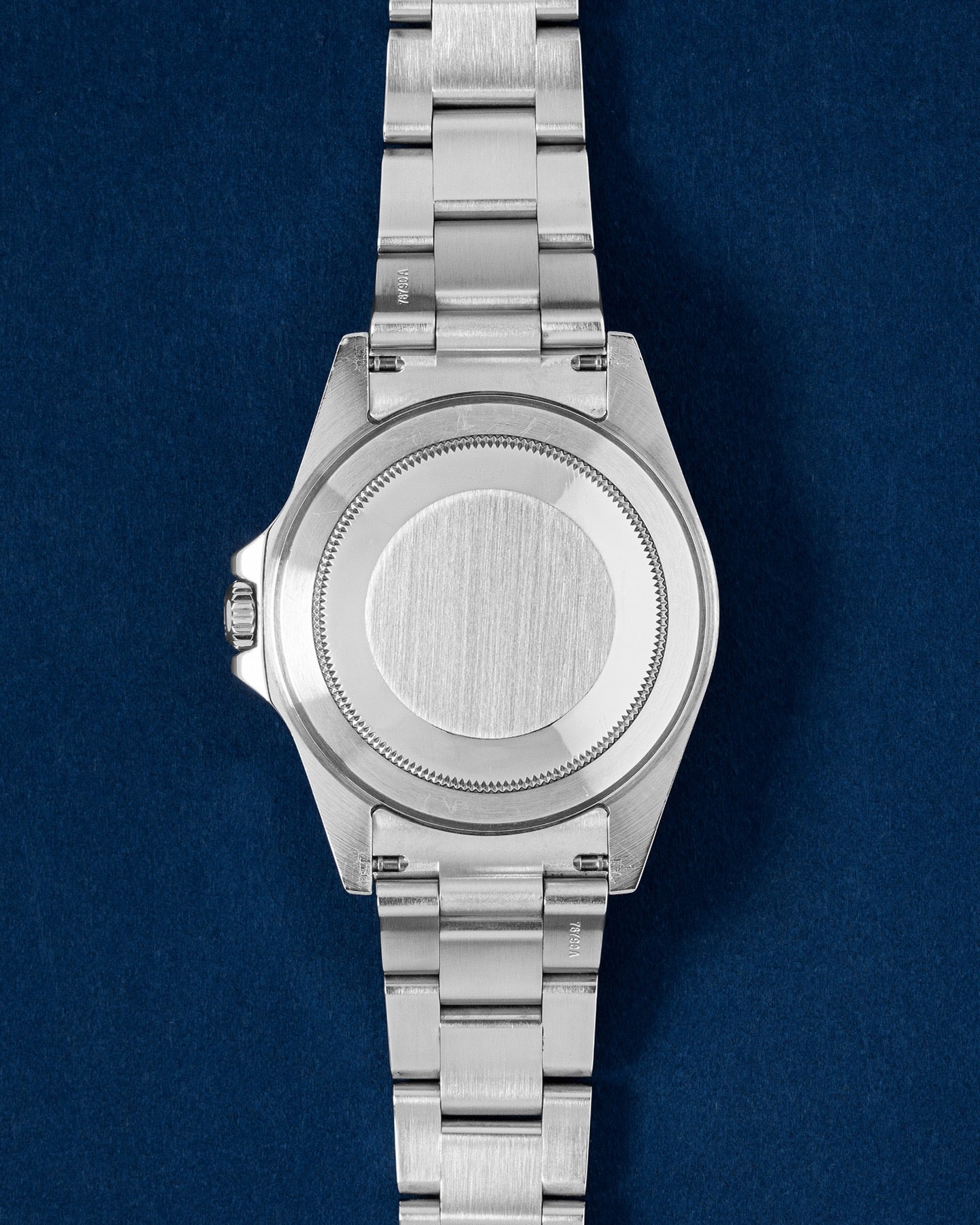
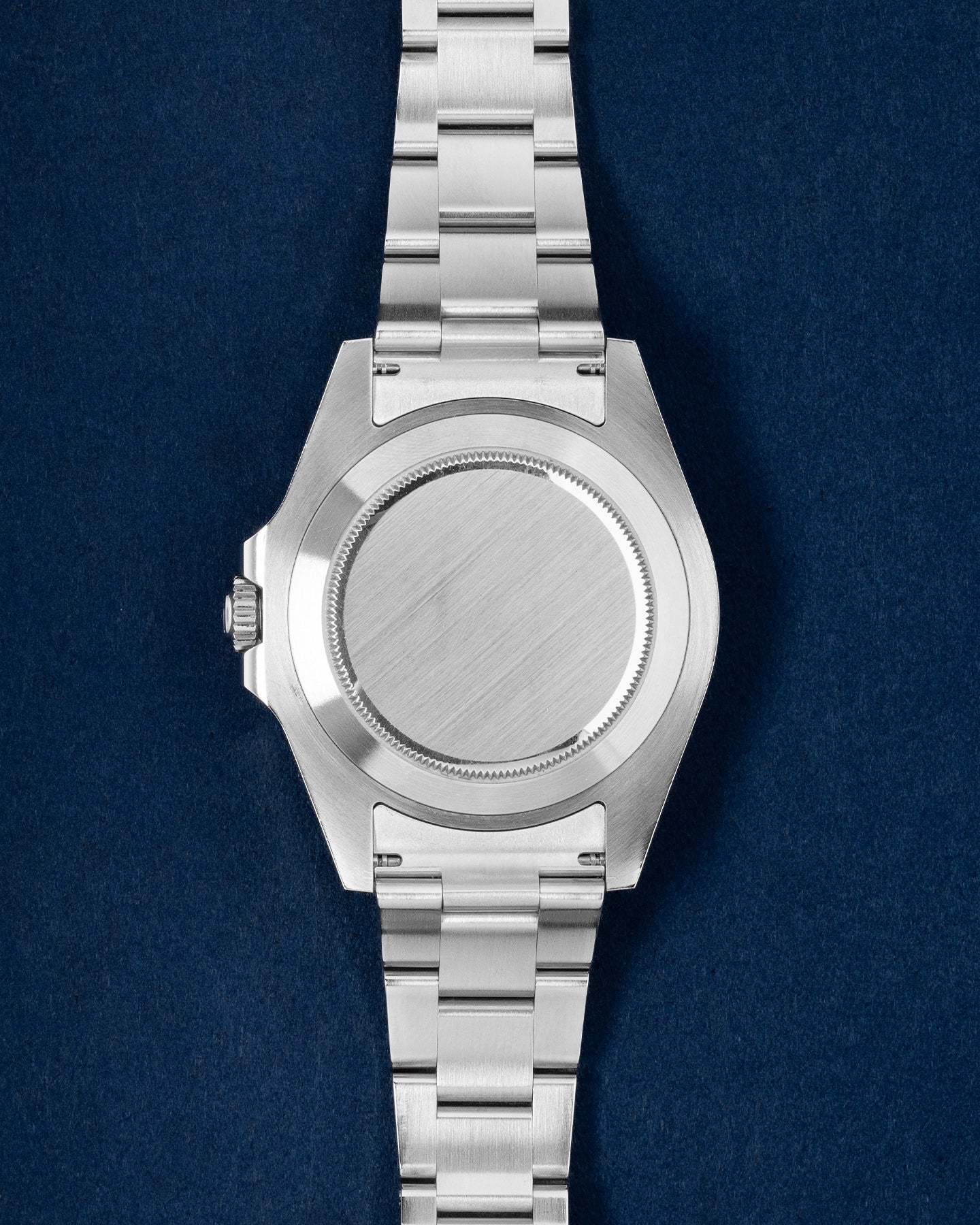
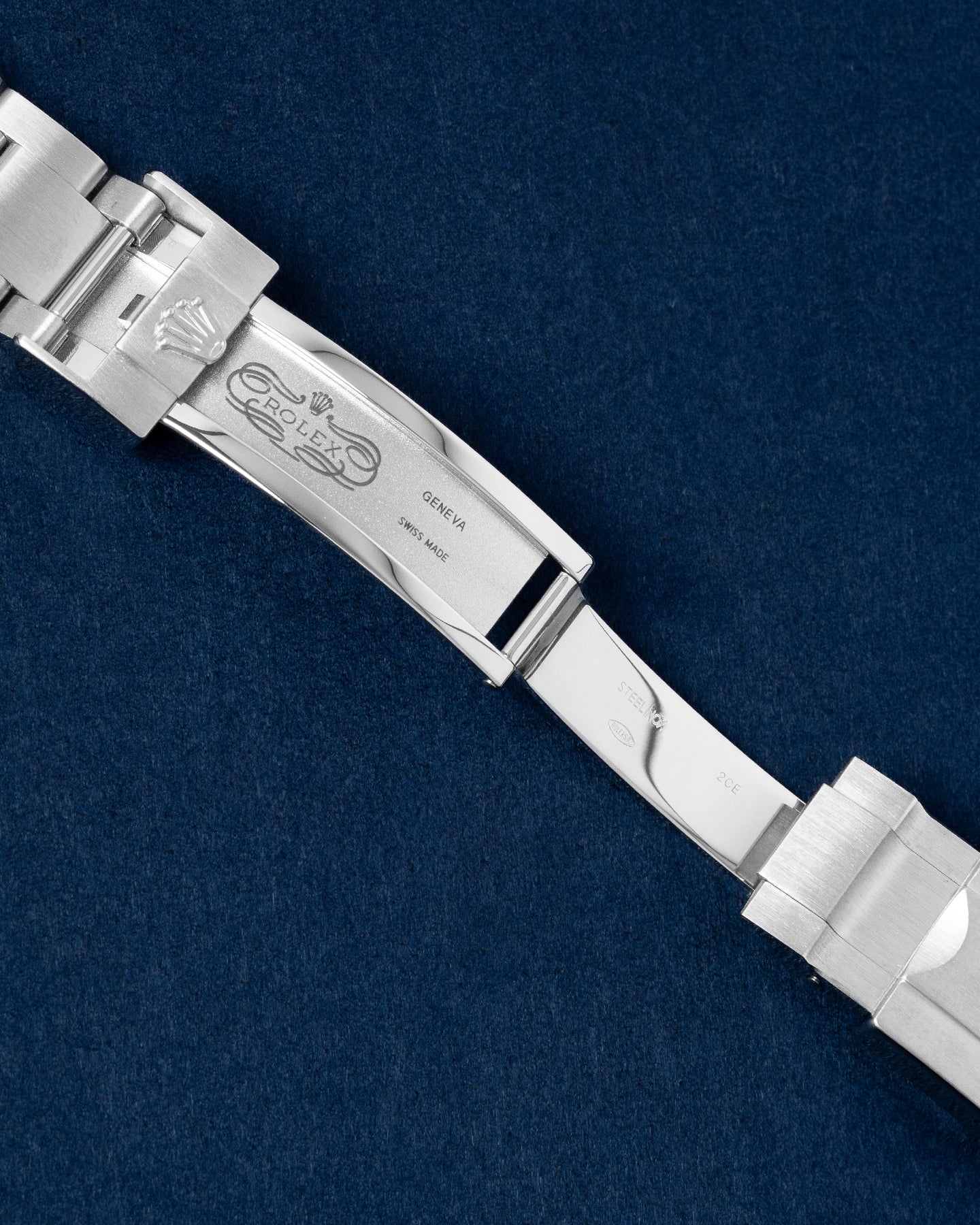
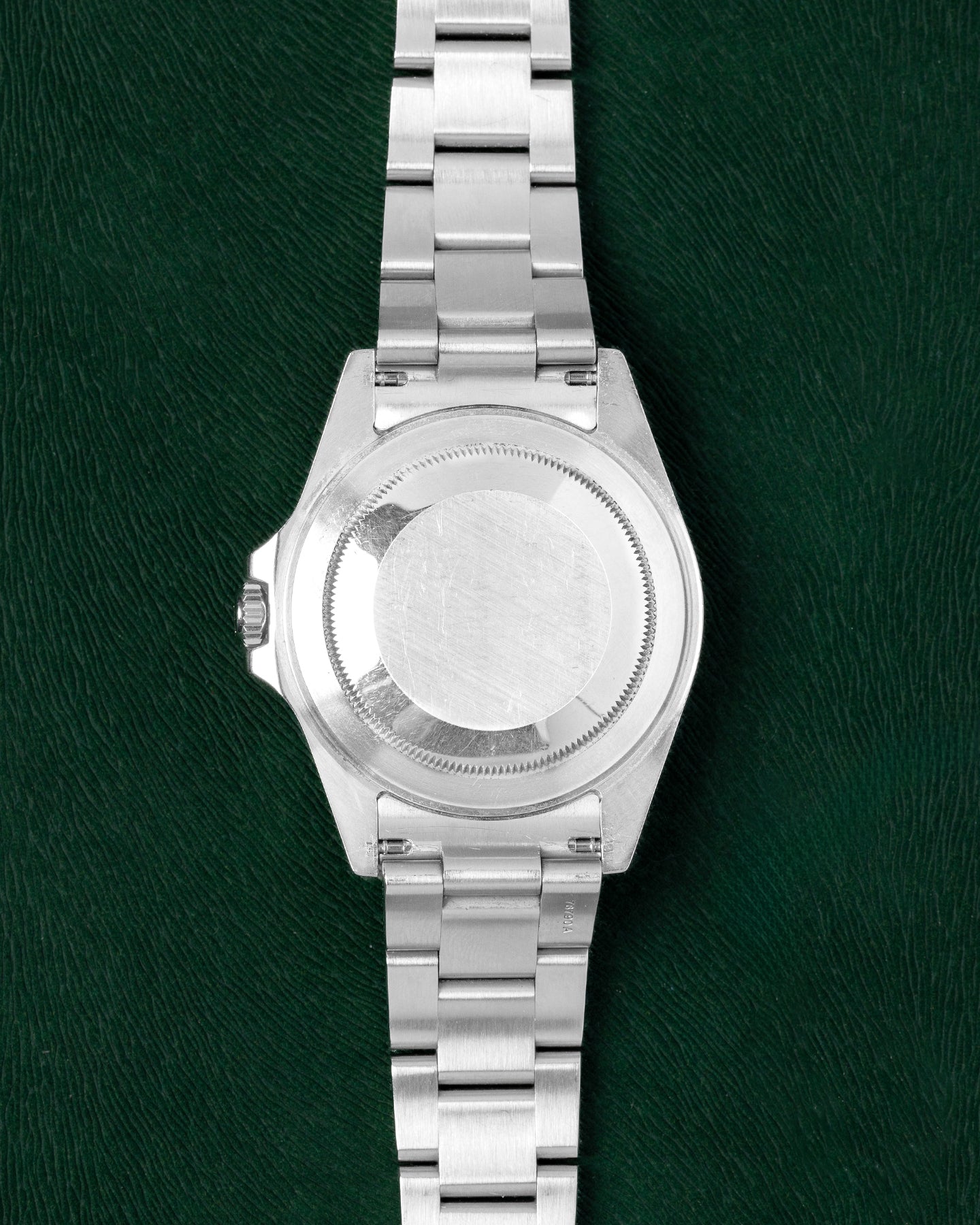
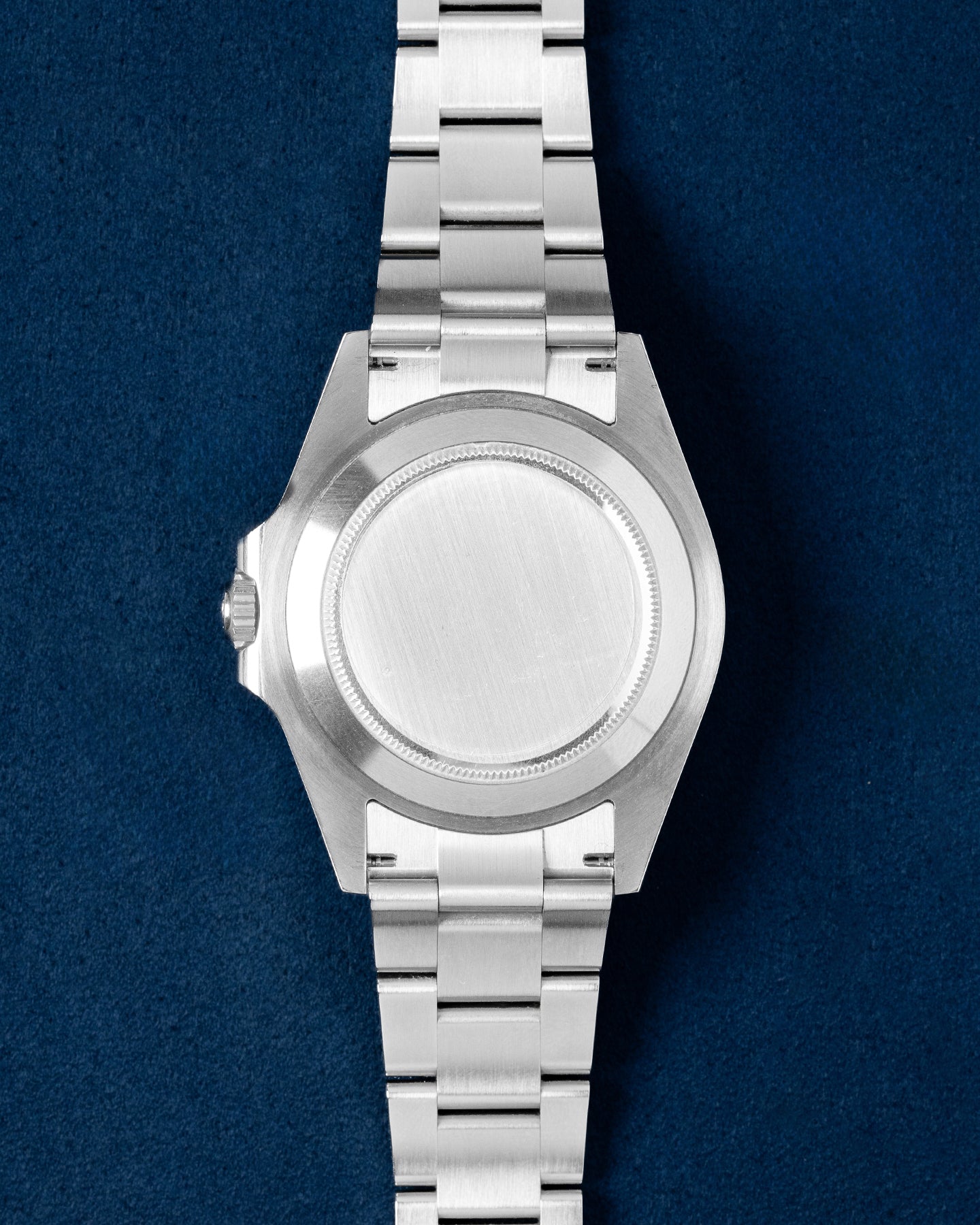
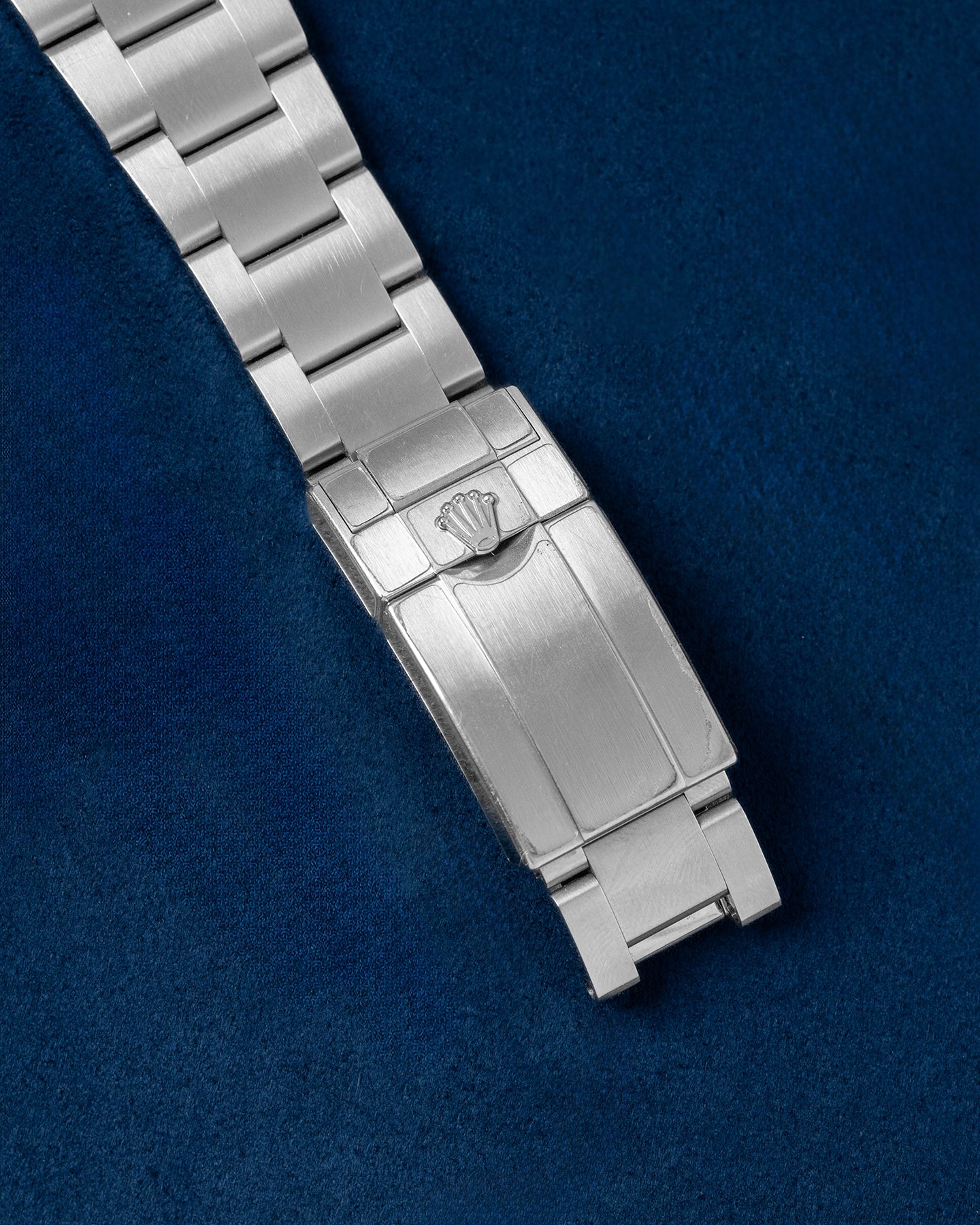
In service terms, the Rolex Explorer II is a robust and practical watch to own, following standard modern Rolex practice with a recommended service interval on the order of every ten years, though many owners service more frequently depending on use. A full service involves complete disassembly, thorough cleaning, careful inspection of every component, fresh lubrication, precise reassembly, and regulation to factory tolerances, with pressure testing to confirm the Oyster case retains its rated water resistance. One point specific to older examples is bracelet stretch, which is common on vintage pieces and can be costly to address, so it is worth checking closely, as a heavily stretched Oyster bracelet can be expensive to replace. On the earlier references, other age related points to inspect include the condition of the acrylic or early sapphire crystal, the originality of the hands and lume, and whether the case retains its original proportions and drilled lugs where applicable. A watch that has been well maintained and retains its original parts is always the better long term buy, and a specialist can assess all of this before purchase.
The movements across the model are well understood by Rolex trained watchmakers, which keeps the Rolex Explorer II practical to own long term. Every example sold by Grand Caliber is authenticated in house before listing.The Polar dials deserve particular caution, because their desirability and value make them a target for fakes and, more commonly, refinished or replacement dials. An original white dial in the correct configuration for its reference, with the right surrounds, hands, and lume, is worth considerably more than one that has been redialed, and telling the difference requires real expertise and a trained eye. The cream dial 16550s raise the stakes further, since a genuine aged panna dial commands a large premium and is exactly the kind of thing an unscrupulous seller might try to fake. This is precisely the situation where buying from a specialist who authenticates every watch in house protects a buyer from an expensive mistake.
Selling or Consigning Your Rolex Explorer II
Grand Caliber buys and consigns the Rolex Explorer II across every generation, from the current 226570 and the 216570 to the long running 16570, the transitional 16550, and the original 1655 Freccione. The value drivers are specific. The white Polar dial, the cream and rail dial variants, original dials, full sets with box and papers, and excellent condition all strengthen an example, and on the vintage references the dial type and originality can make an enormous difference to value. On the neo vintage 16570, the movement generation and rehaut style matter, and on modern references a complete set in excellent condition is the sweet spot.
We offer two routes. An outright purchase gives you immediate liquidity at a fair market number, and consignment lets us place the watch with the right buyer for a higher net return over a slightly longer horizon. Because the Rolex Explorer II appeals to a knowledgeable community that specifically values its character and its history, matching a given reference and dial to the right buyer is where a specialist dealer earns its place. We handle authentication, photography, market positioning, and secure insured shipping. If you have a Rolex Explorer II to sell, particularly a Polar dial or a vintage reference, call or email the Dallas showroom and we will give you an honest assessment of where it sits in the current market.
The Rolex Explorer II at Grand Caliber in Uptown Dallas
Grand Caliber sits in Uptown Dallas at 2811 McKinney Avenue, in the corridor that has become the address for serious watch buying outside the authorized dealer network. The watches on our floor are authenticated in house, the prices are posted openly, and the Rolex Explorer II inventory rotates across the full model. The current 42mm 226570 in black or Polar white, the previous 216570, the long running 16570 for the buyer who wants the classic 40mm size, and collectible vintage 16550 and 1655 references when the condition and originality support the price. We source across the model on request.
There is no allocation conversation at Grand Caliber. No purchase history requirement. No waitlist. The Rolex Explorer II is one of the more attainable Rolex sports watches, and if the specific reference and dial you are looking for is in our case, it is yours today. If it is not, our sourcing network covers the major secondary markets in the United States and internationally, and we can typically locate a verified example quickly. We also buy Rolex Explorer II watches outright and take consignments, with free shipping and full insurance on outbound and inbound transit and national coverage for clients buying remotely.
Visit the showroom Monday through Friday, 10am to 5pm Central, or by appointment on Saturday. Call (214) 225-7198, email info@grandcaliber.com, or browse current Rolex Explorer II inventory at grandcaliber.com. Whether you are buying your first Rolex Explorer II, hunting a Polar dial or a vintage 1655 Freccione, or selling a piece you already own, Grand Caliber is a trusted source for new and pre-owned Rolex Explorer II watches backed by in house authentication and transparent pricing.


Vintage


Vintage
Vintage
Vintage
Vintage


Vintage


Vintage
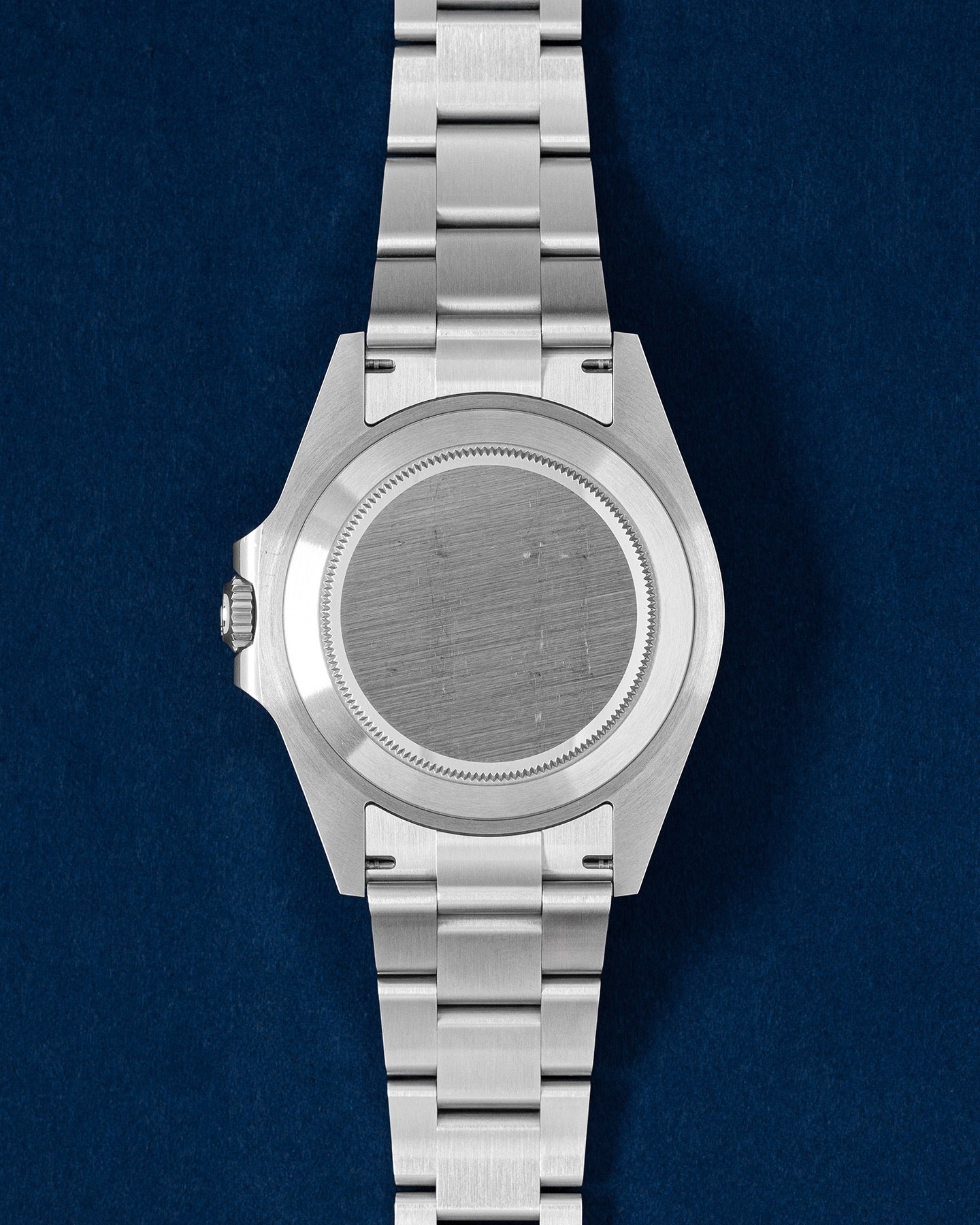
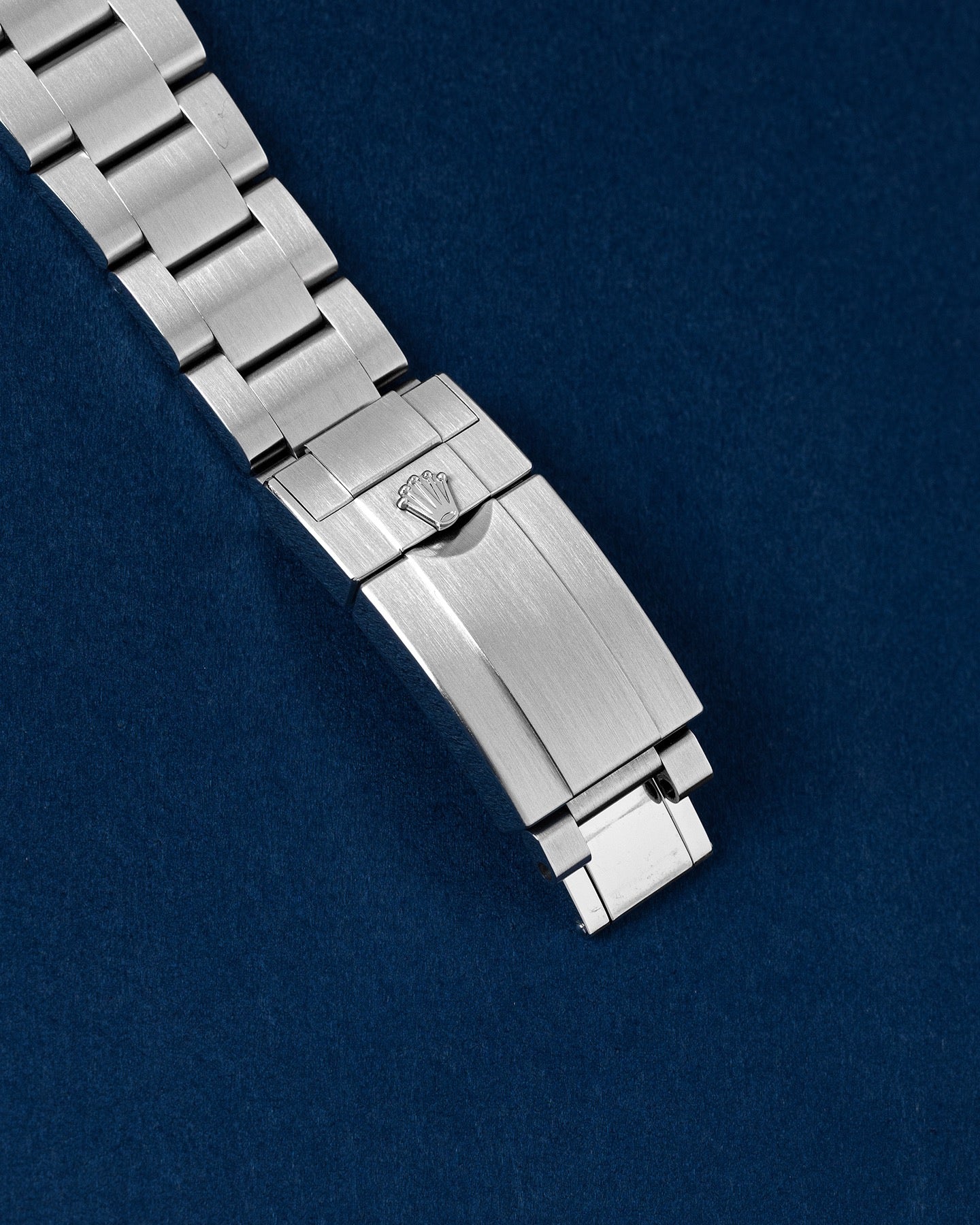
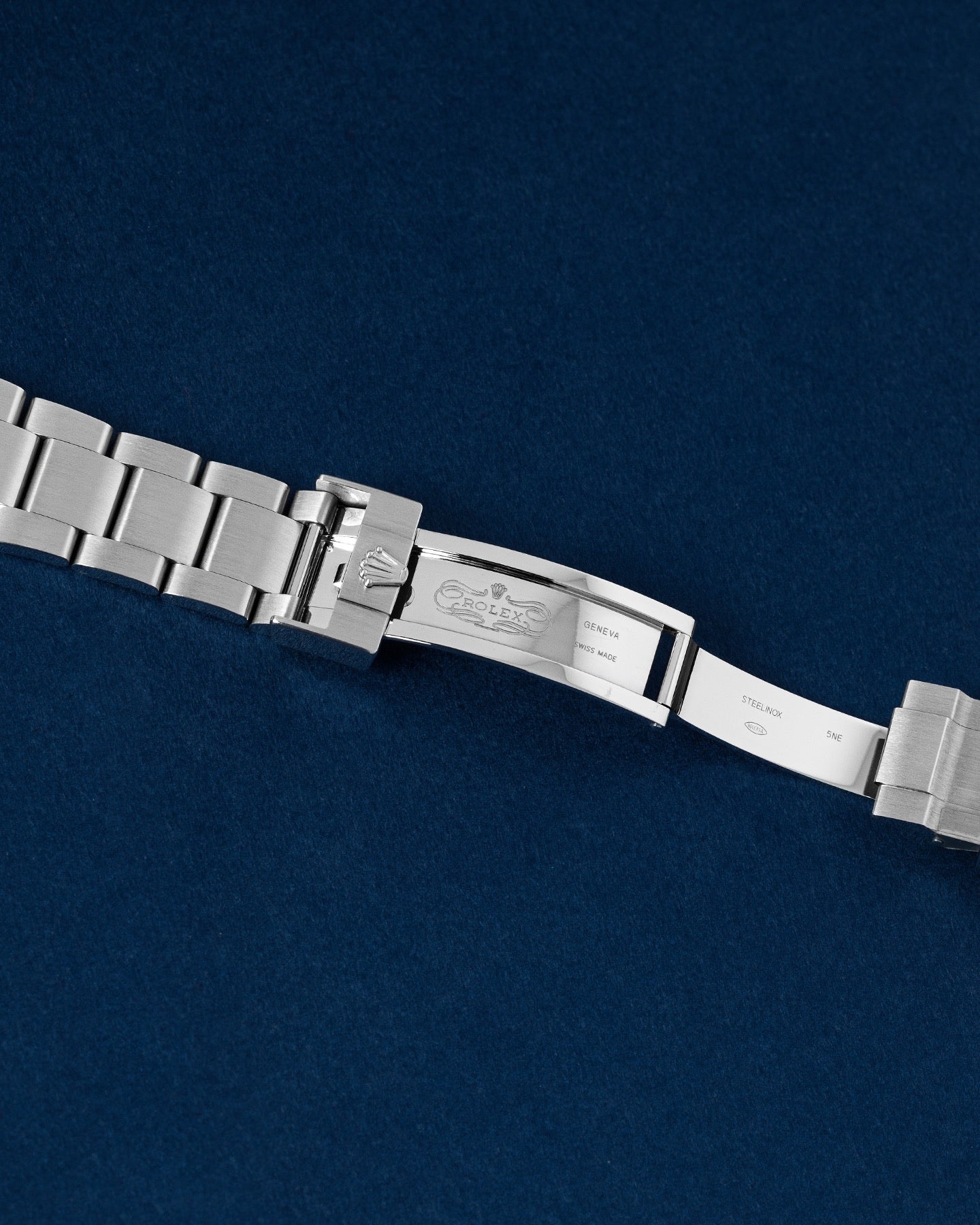
Vintage
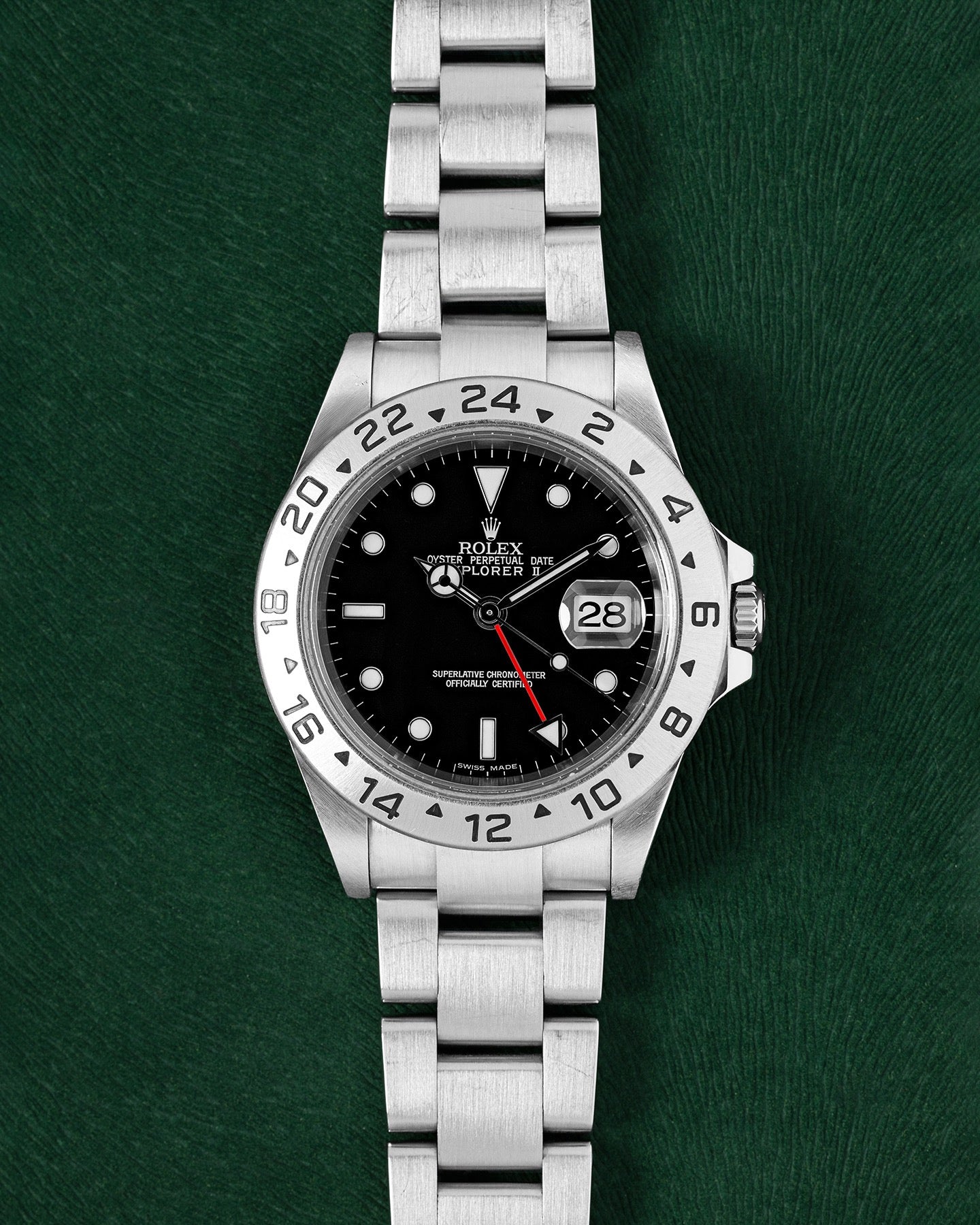
Vintage


Vintage
Vintage
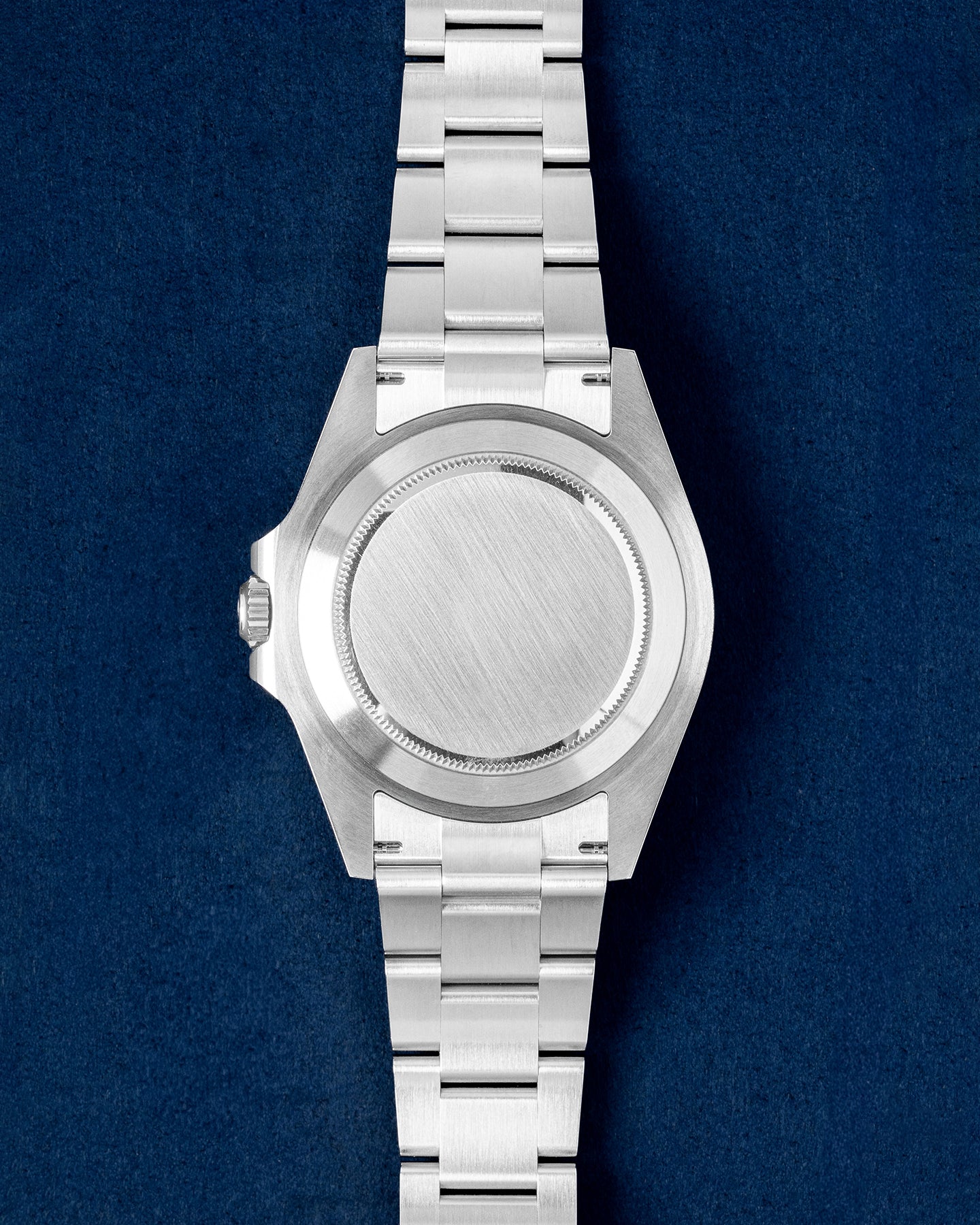
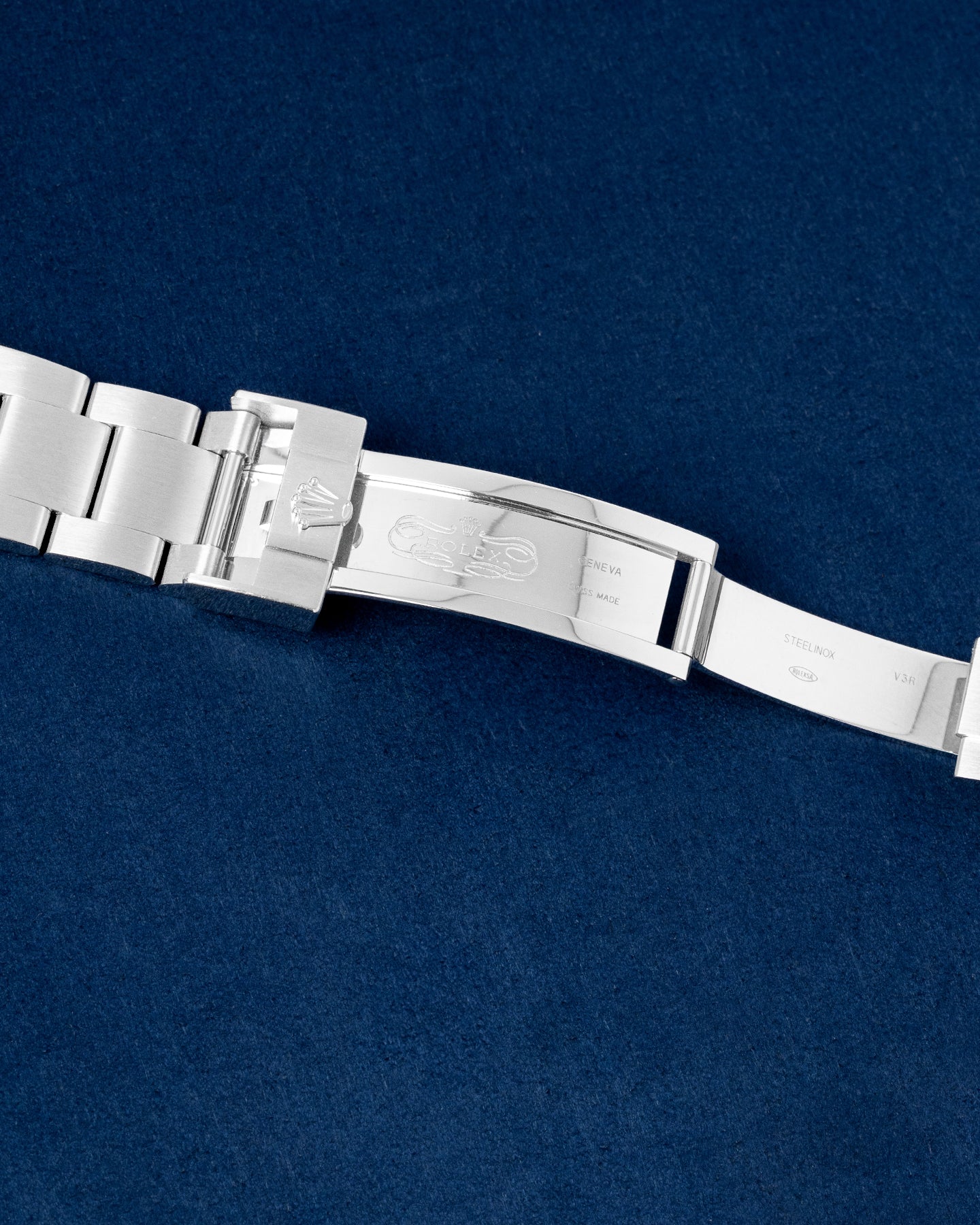
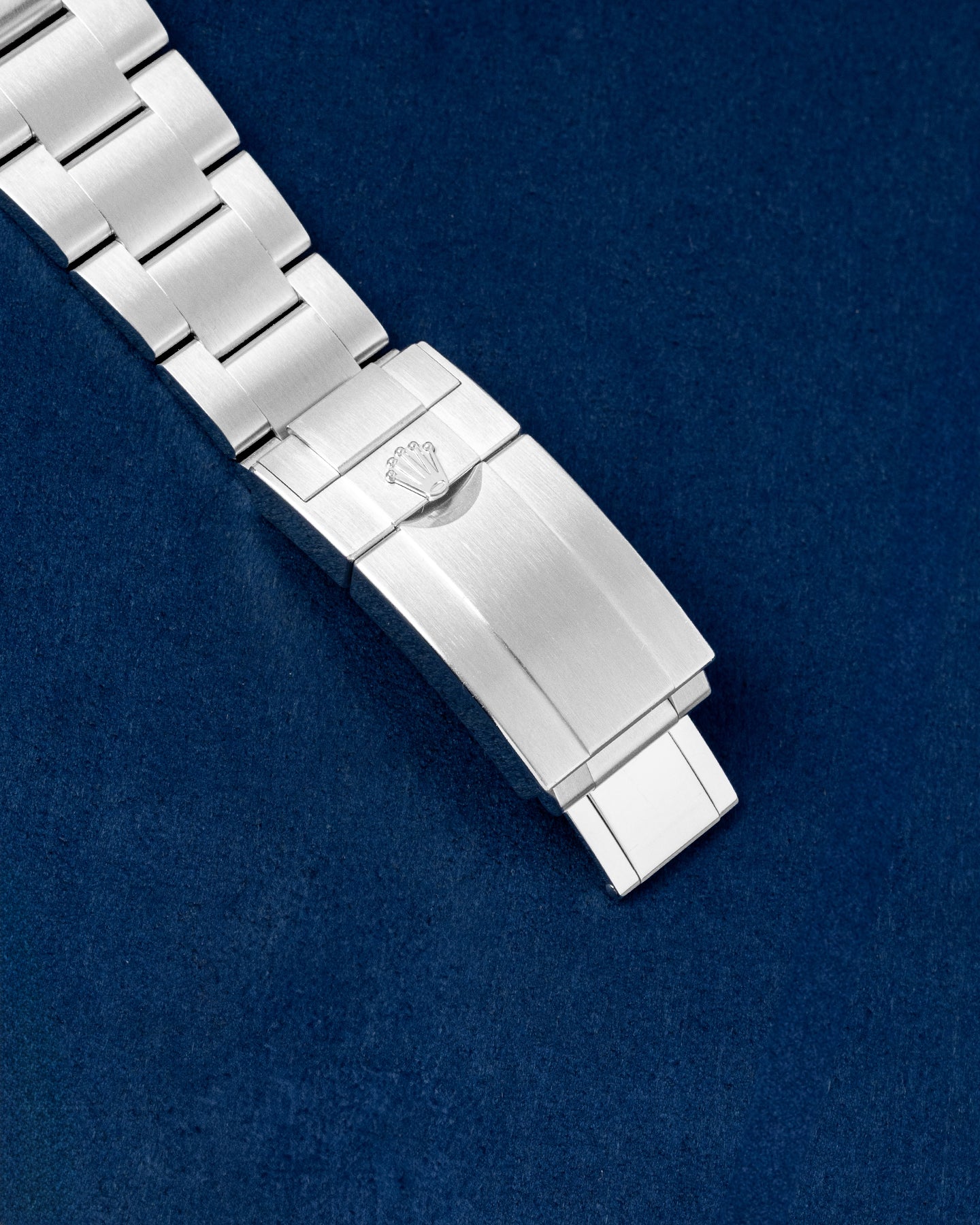
Vintage
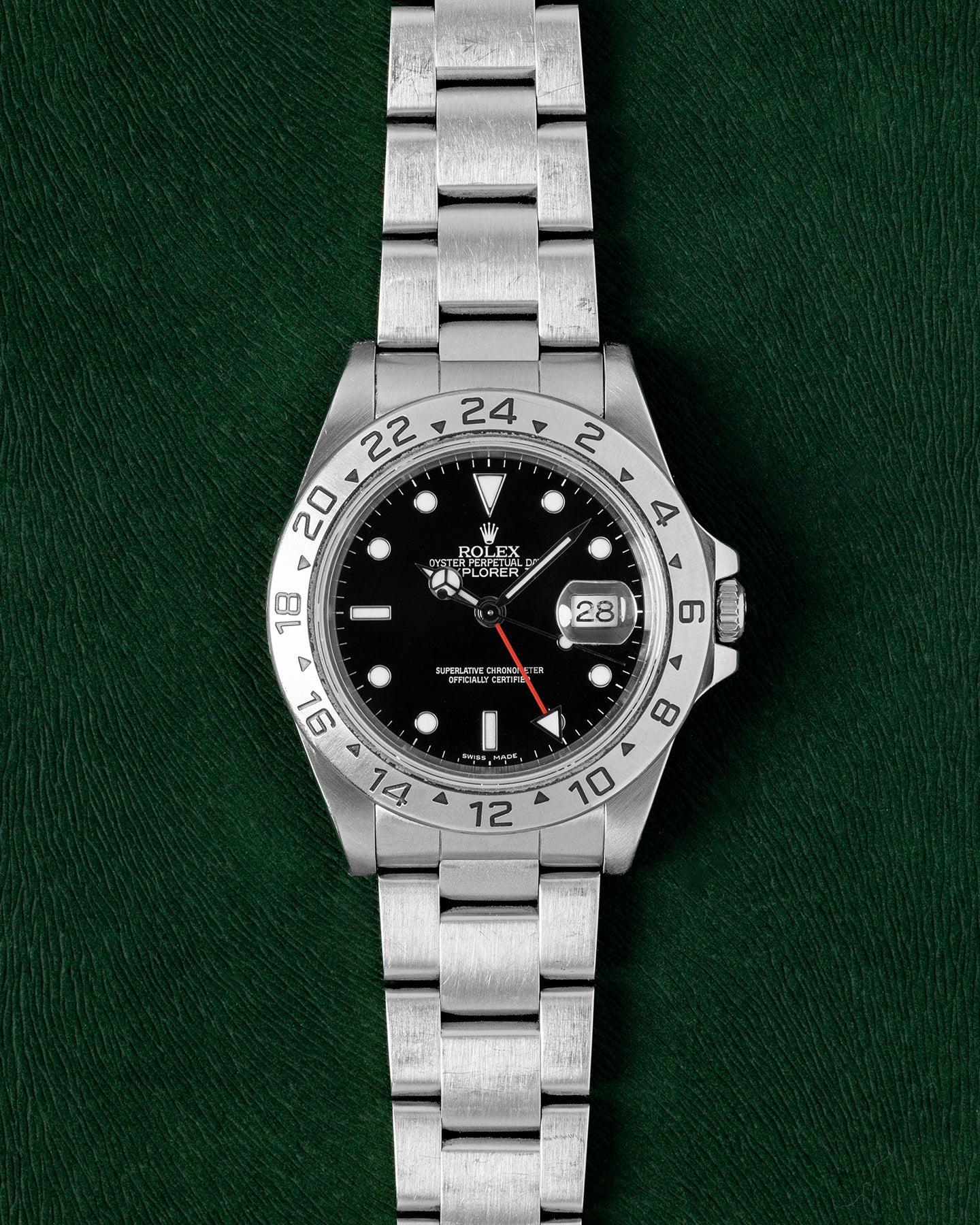
Vintage
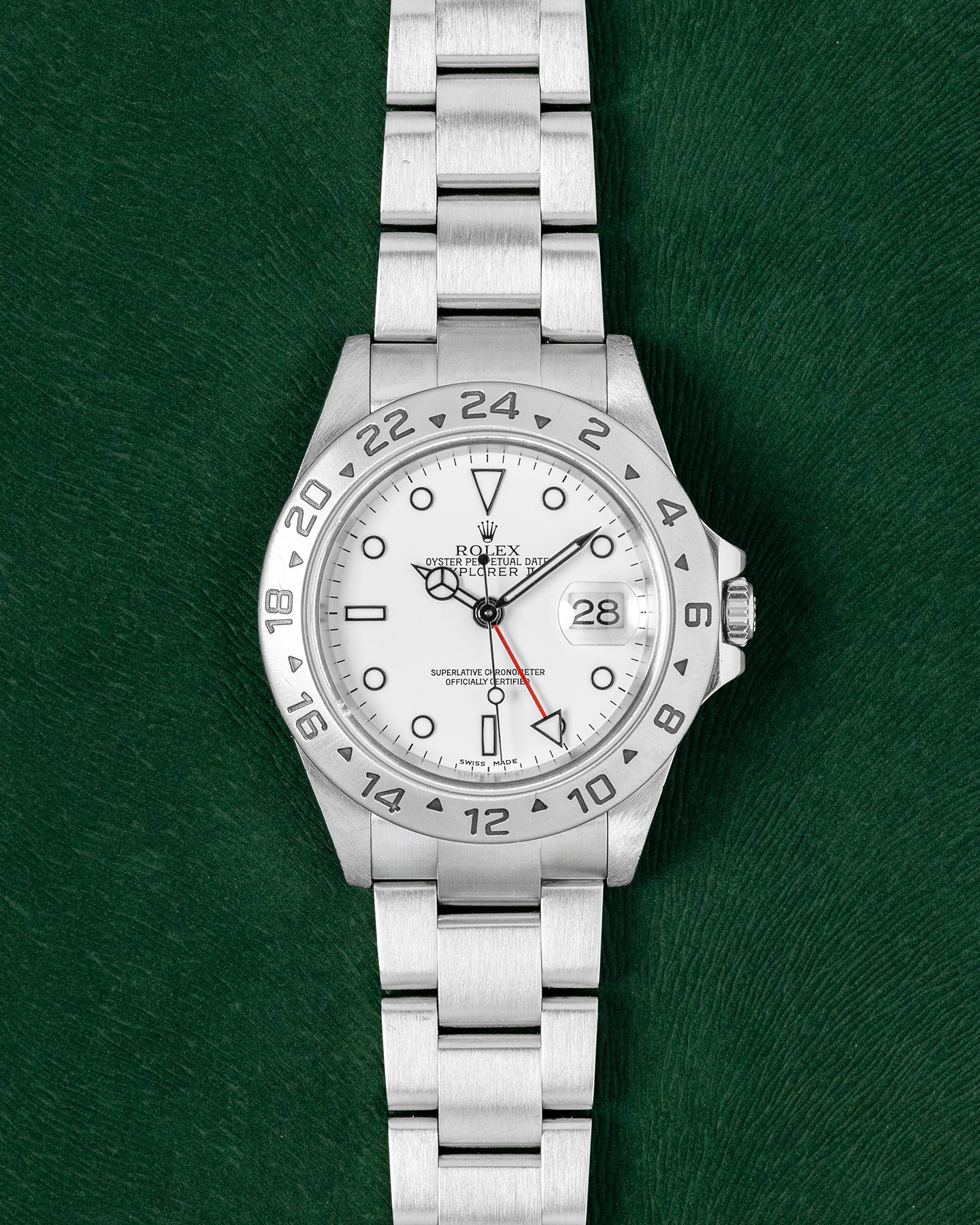
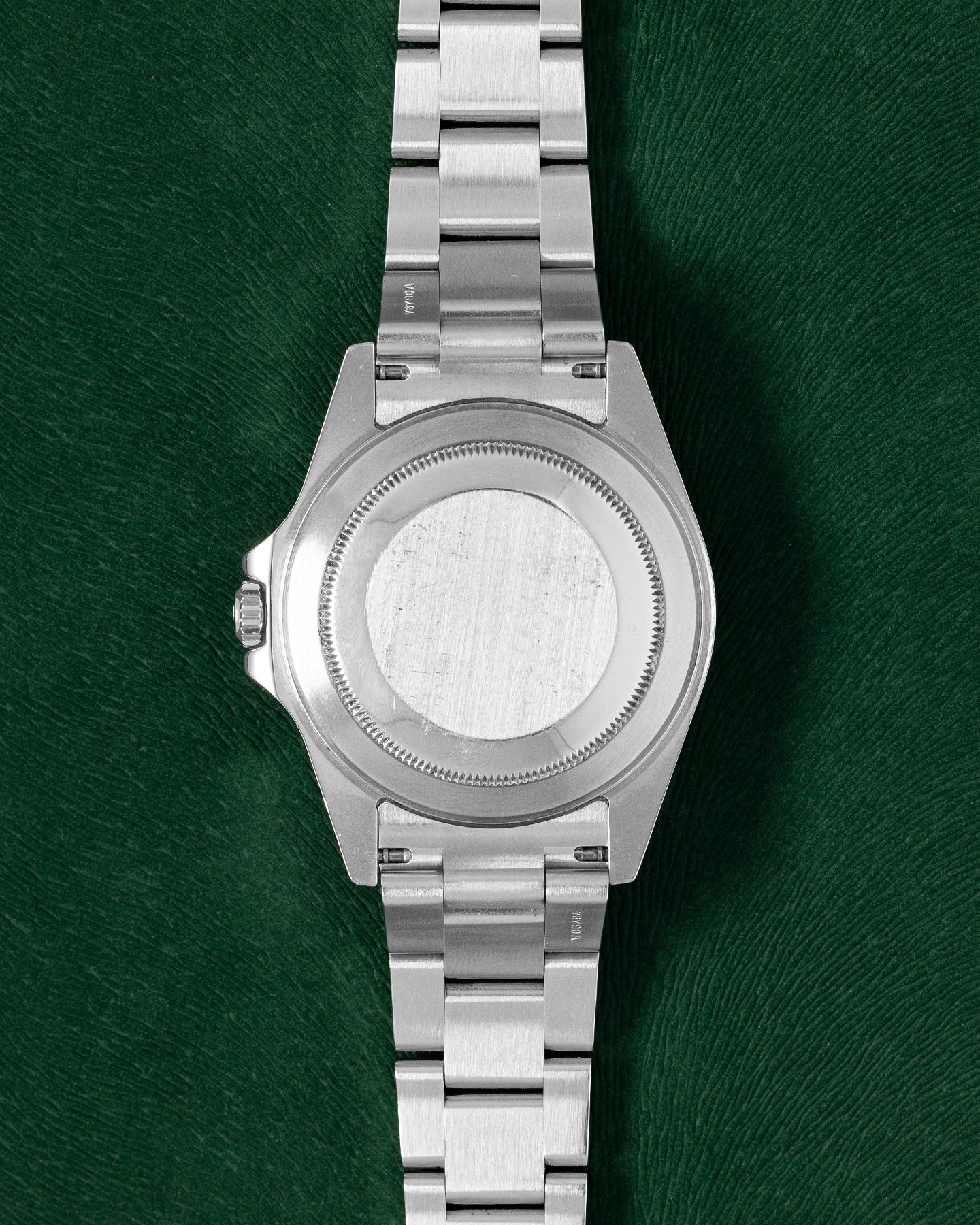
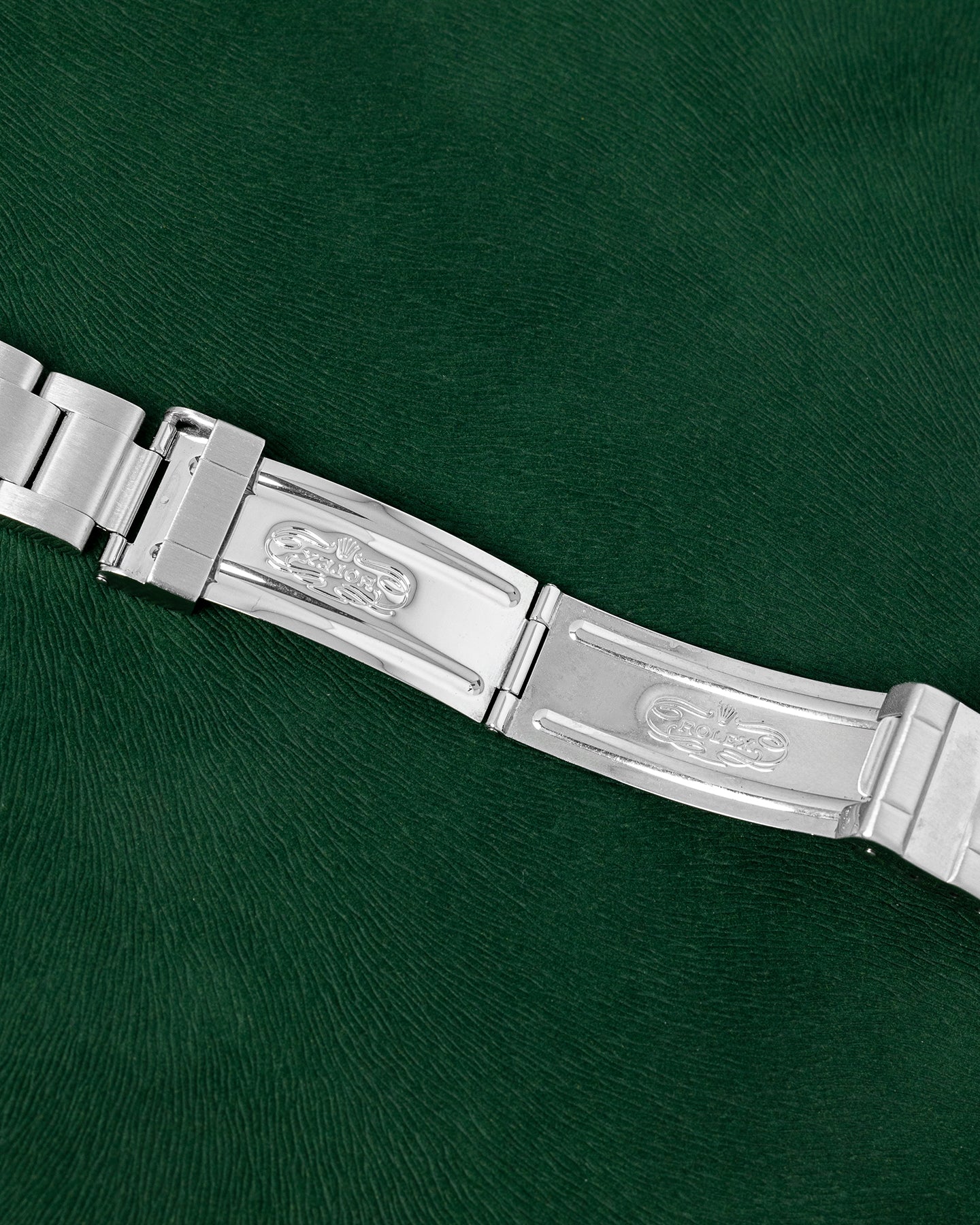
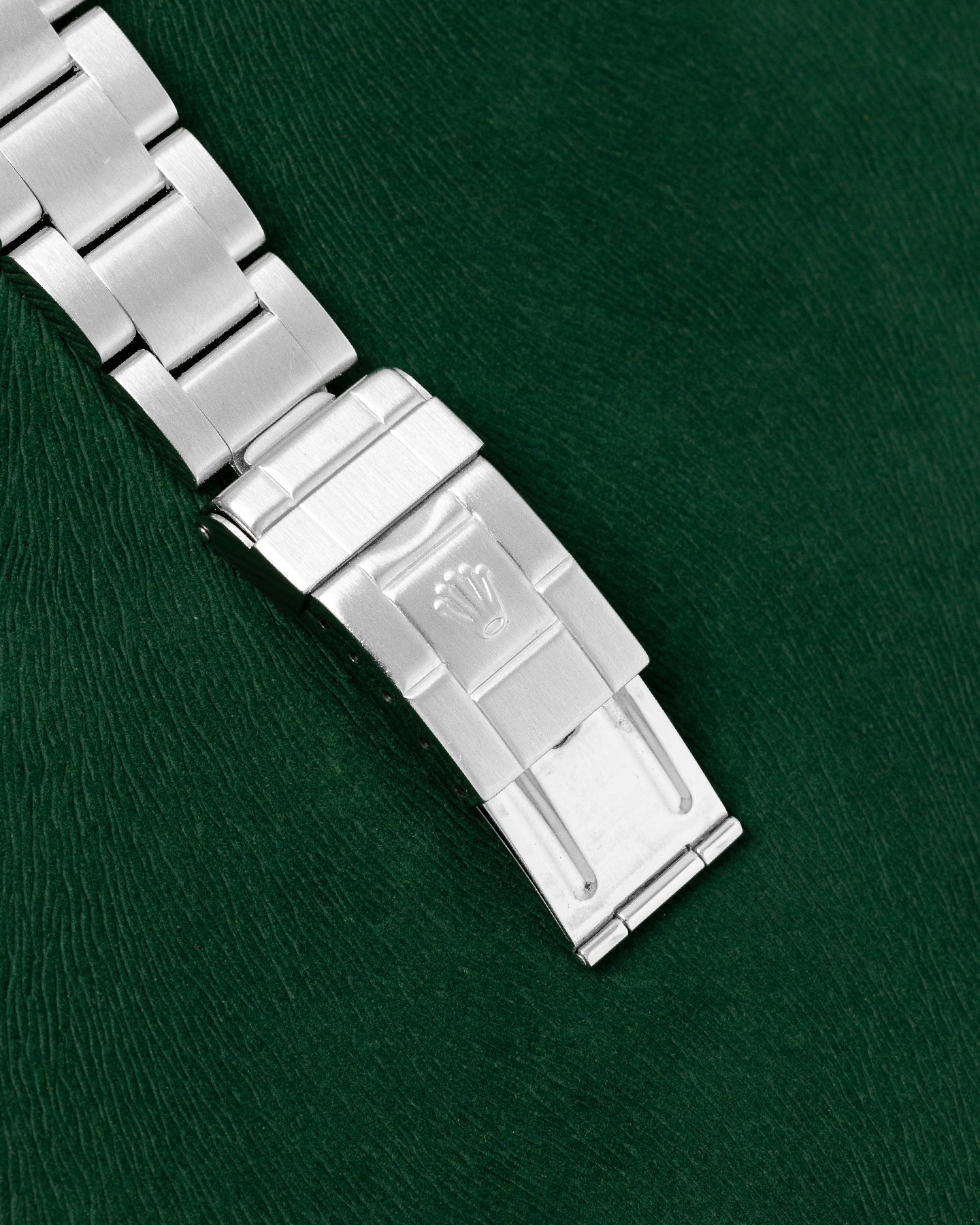
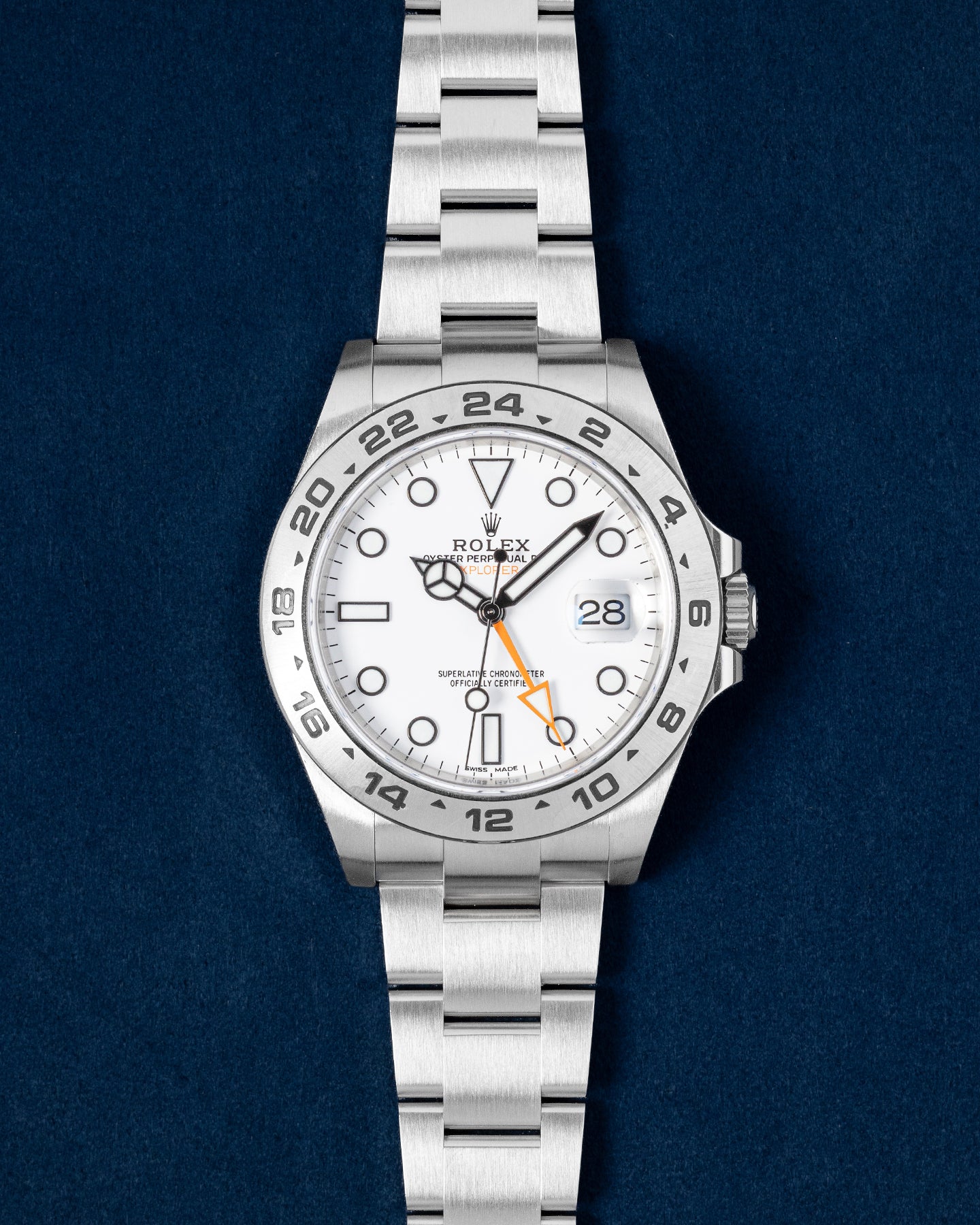
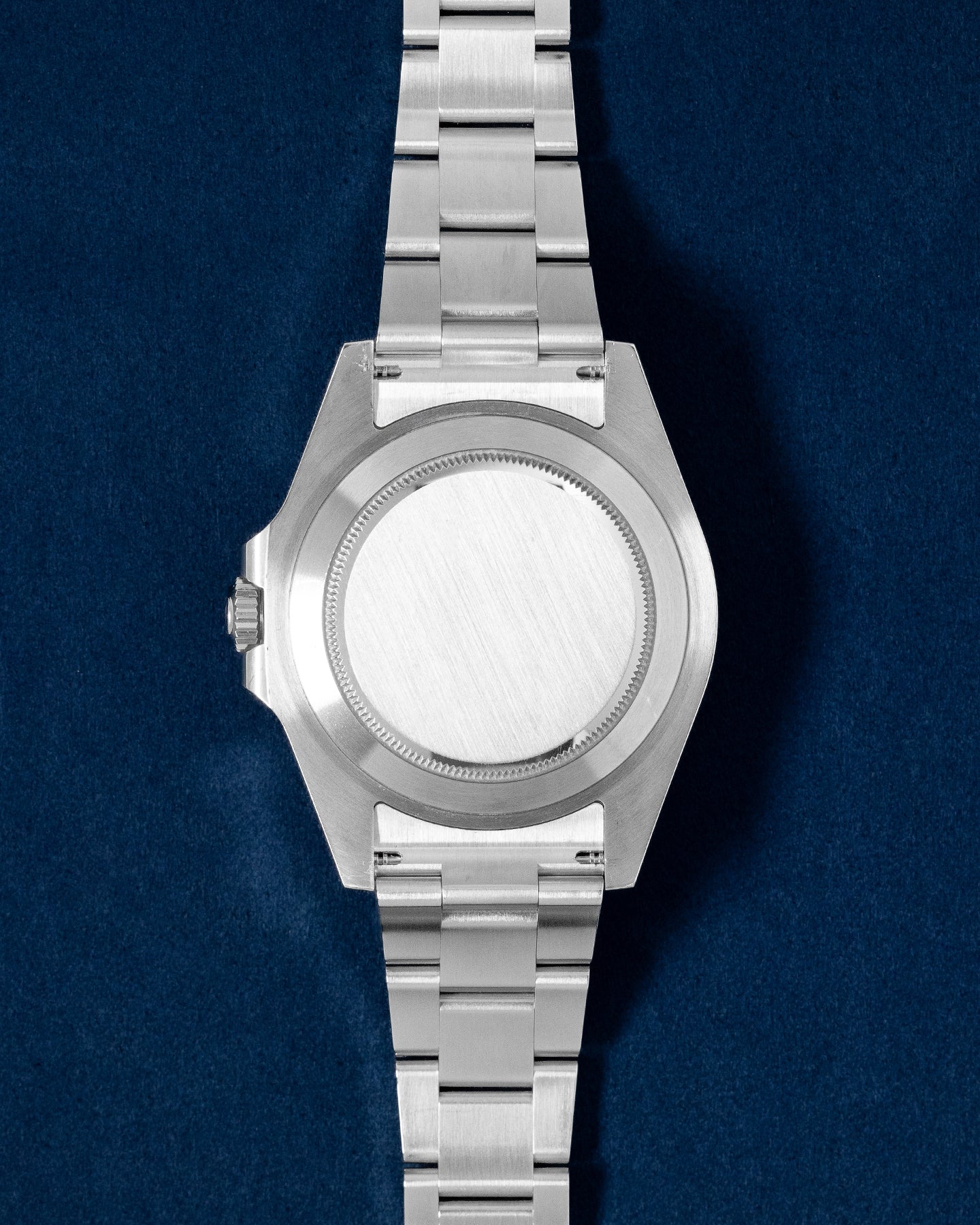
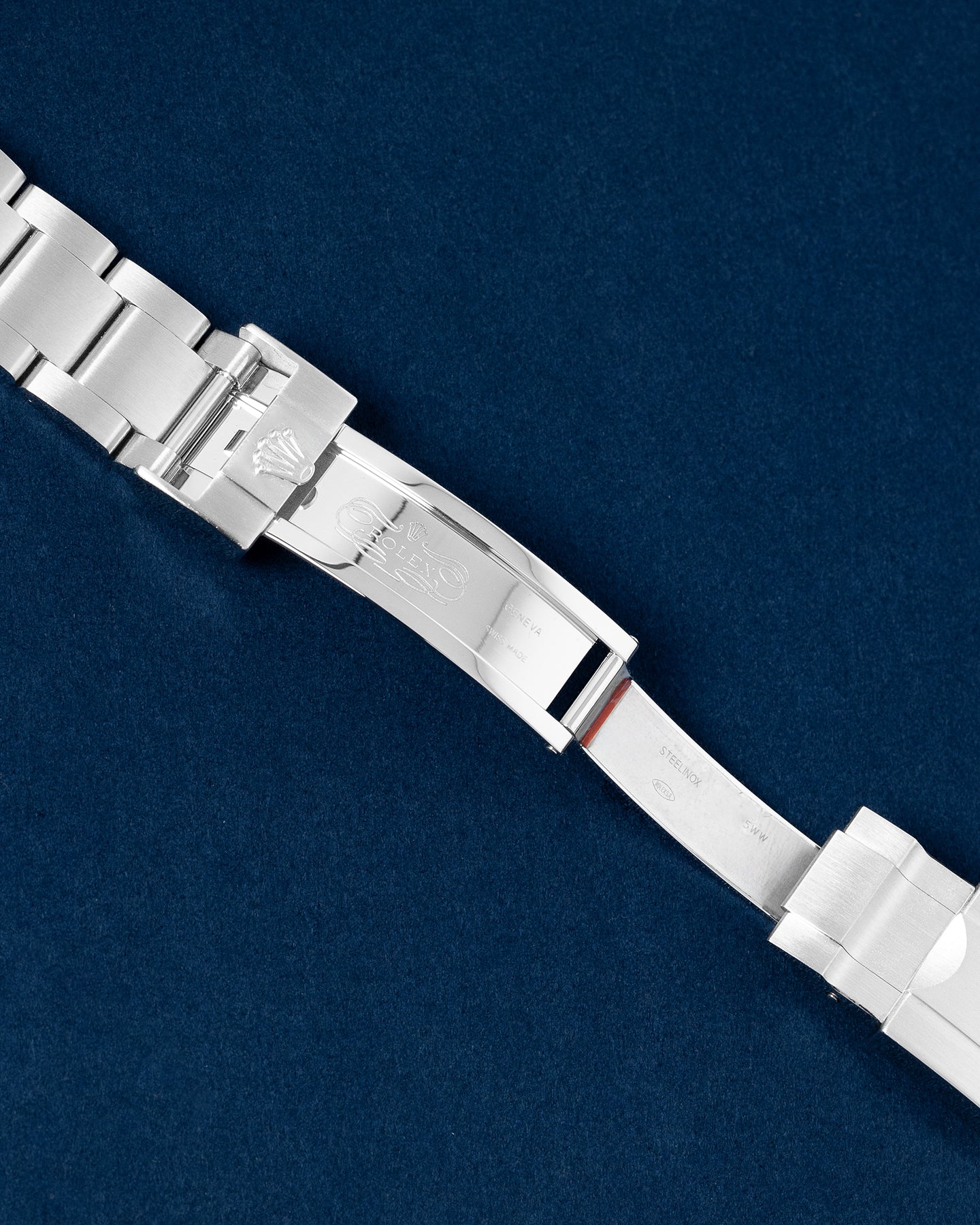
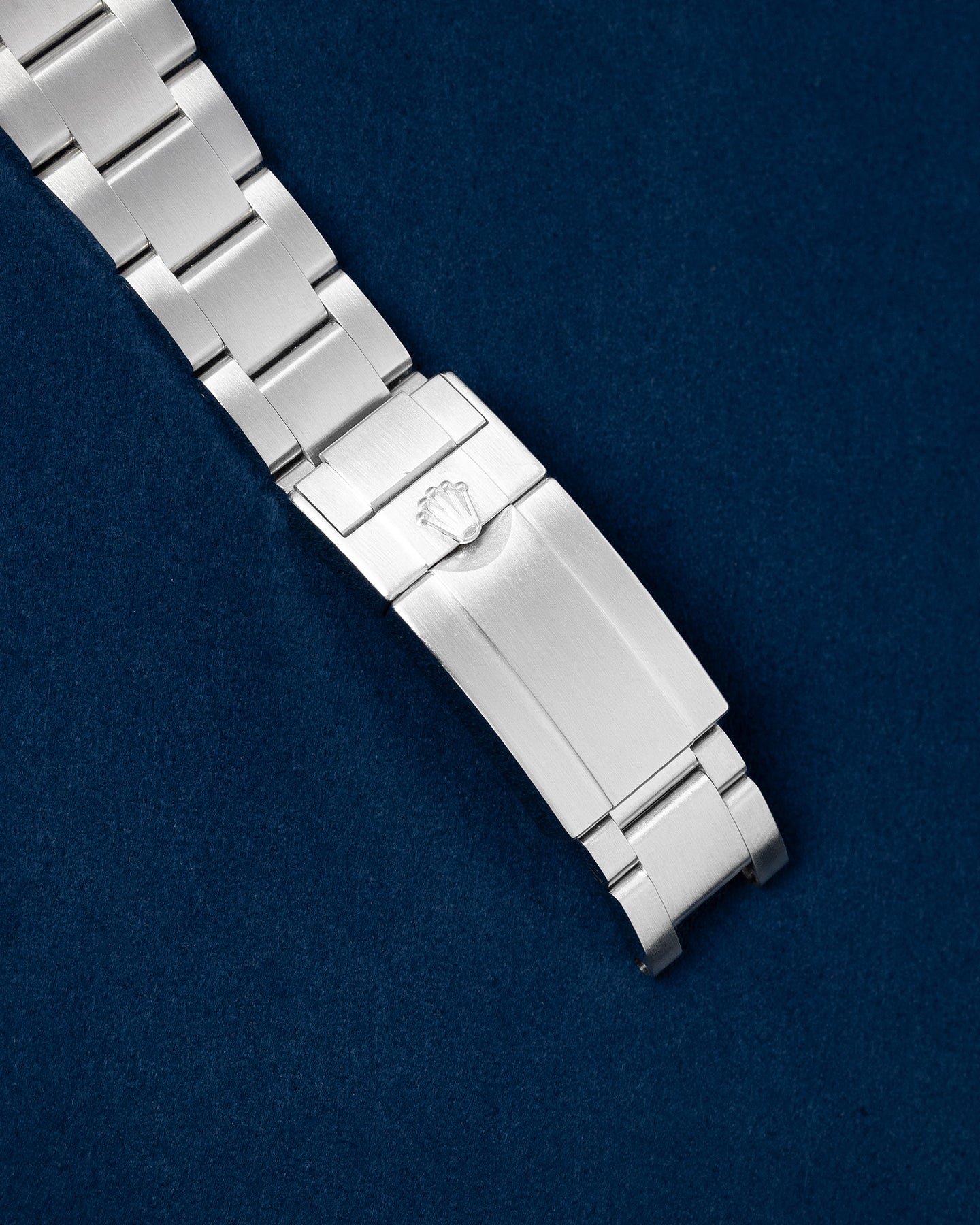
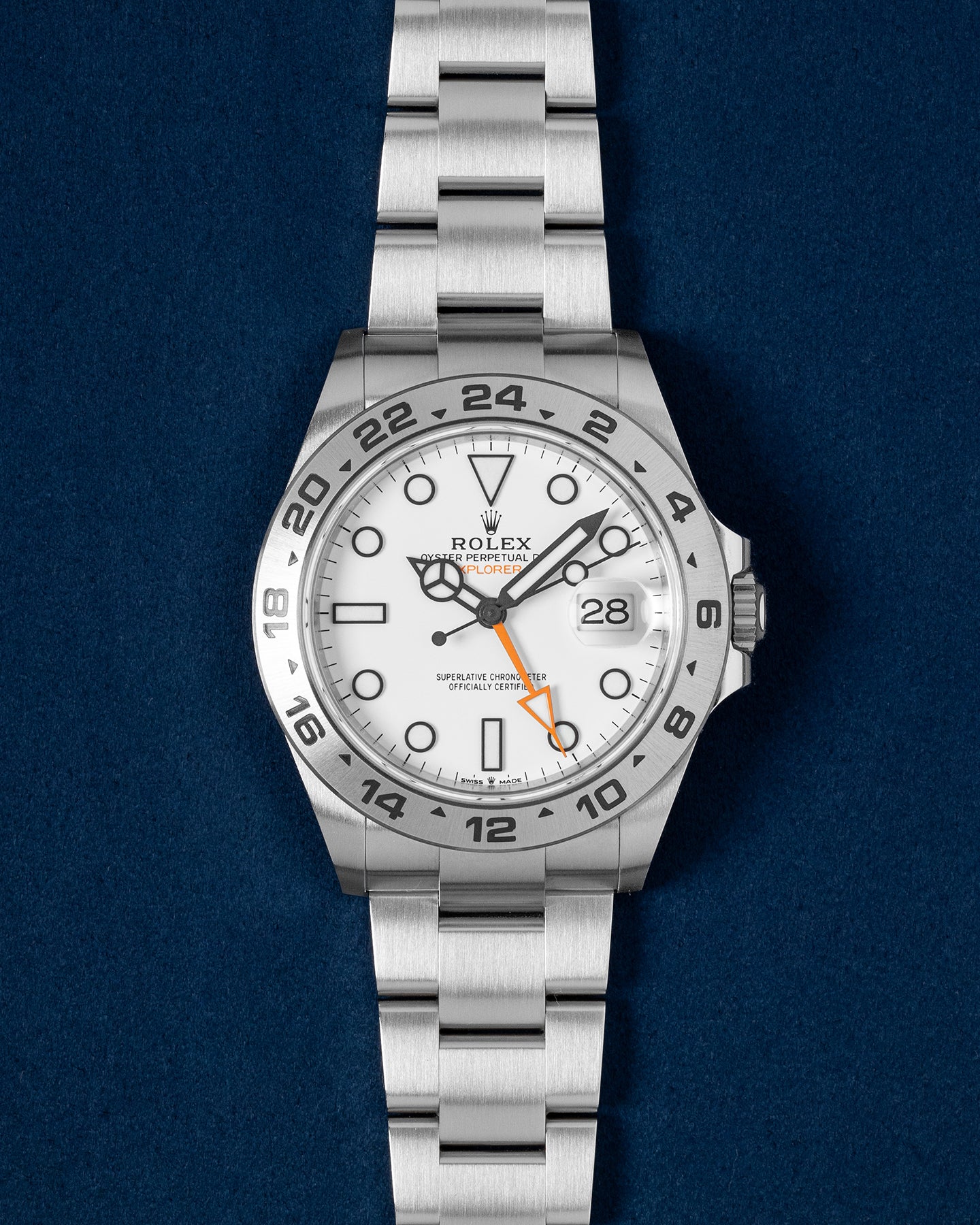
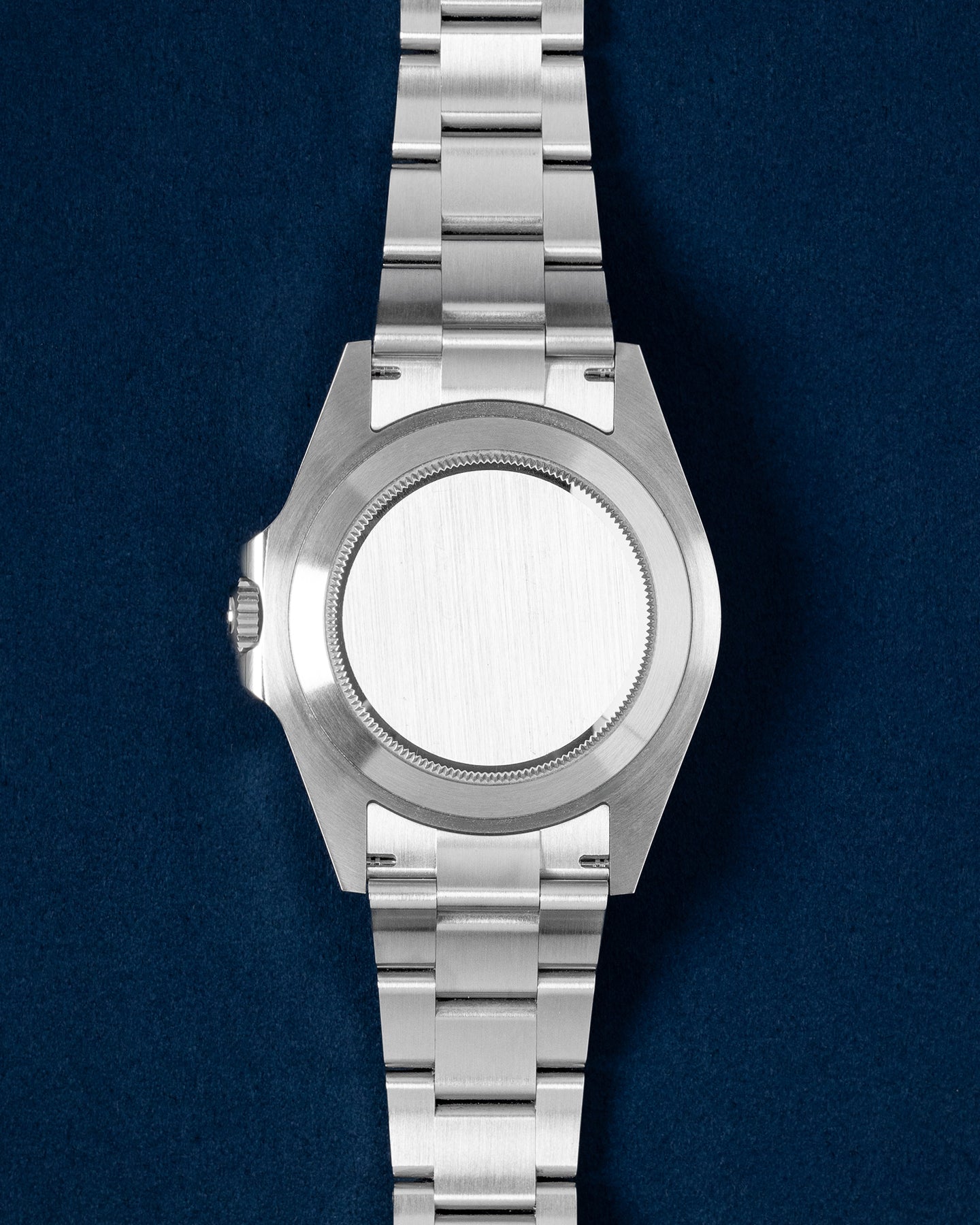
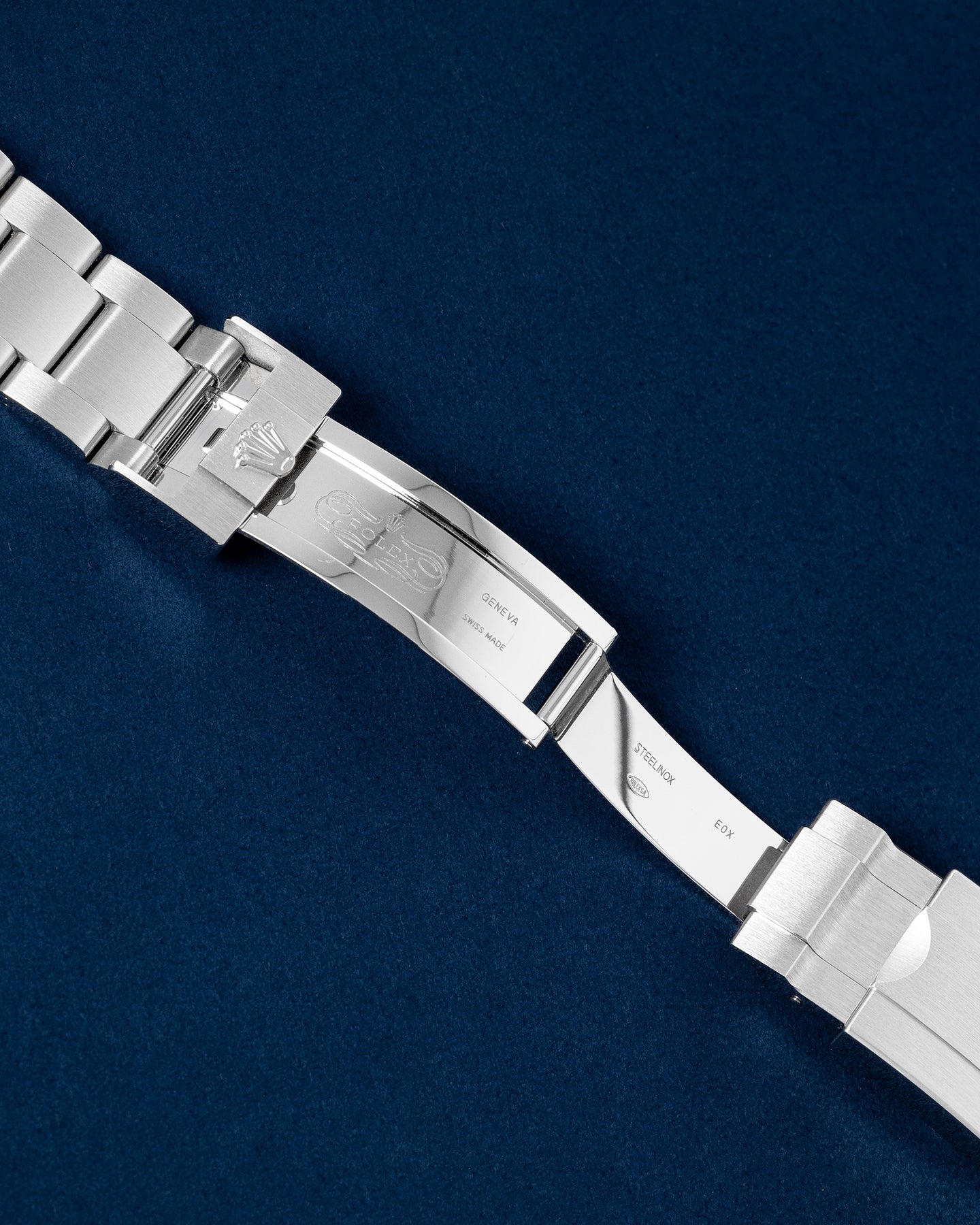
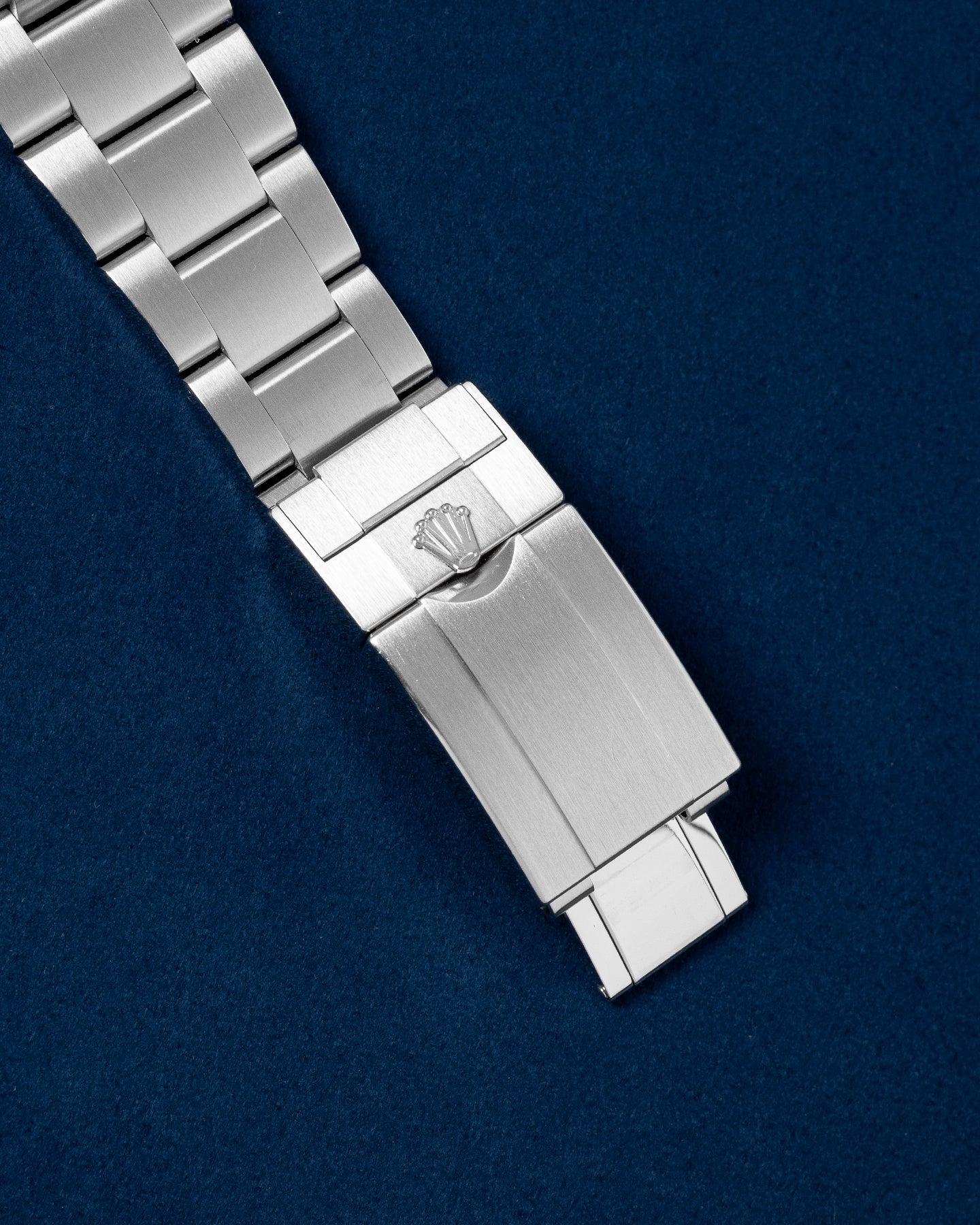
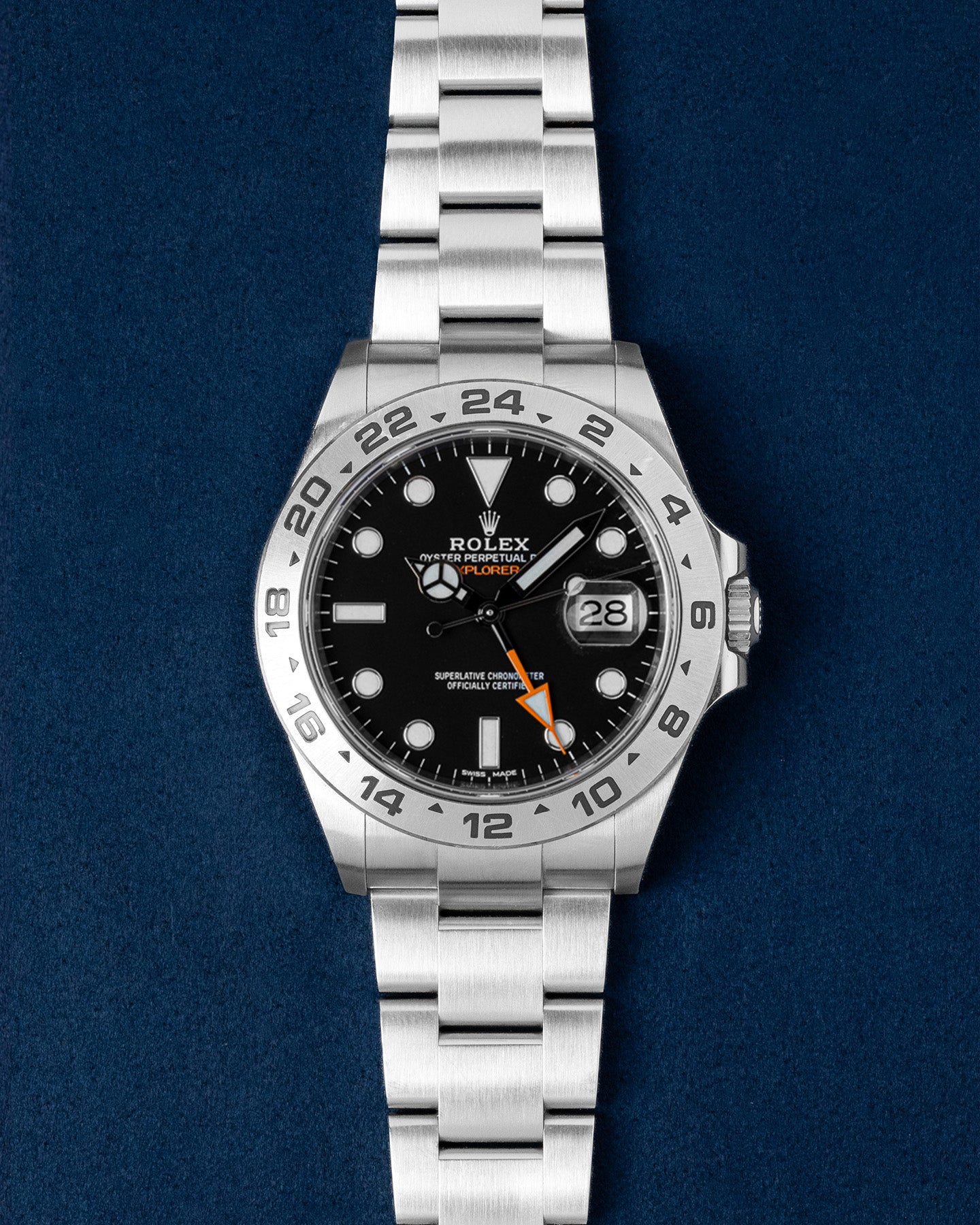
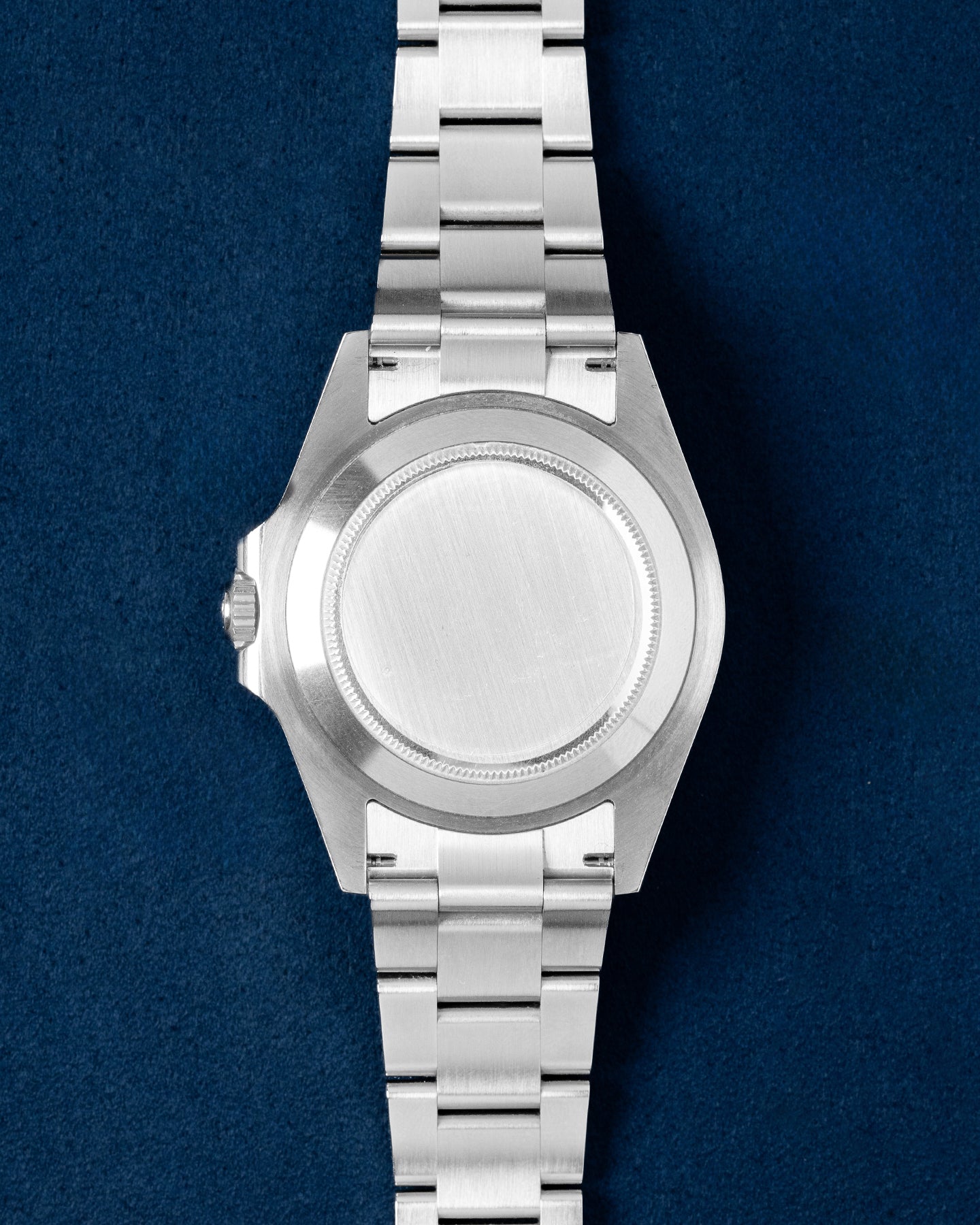
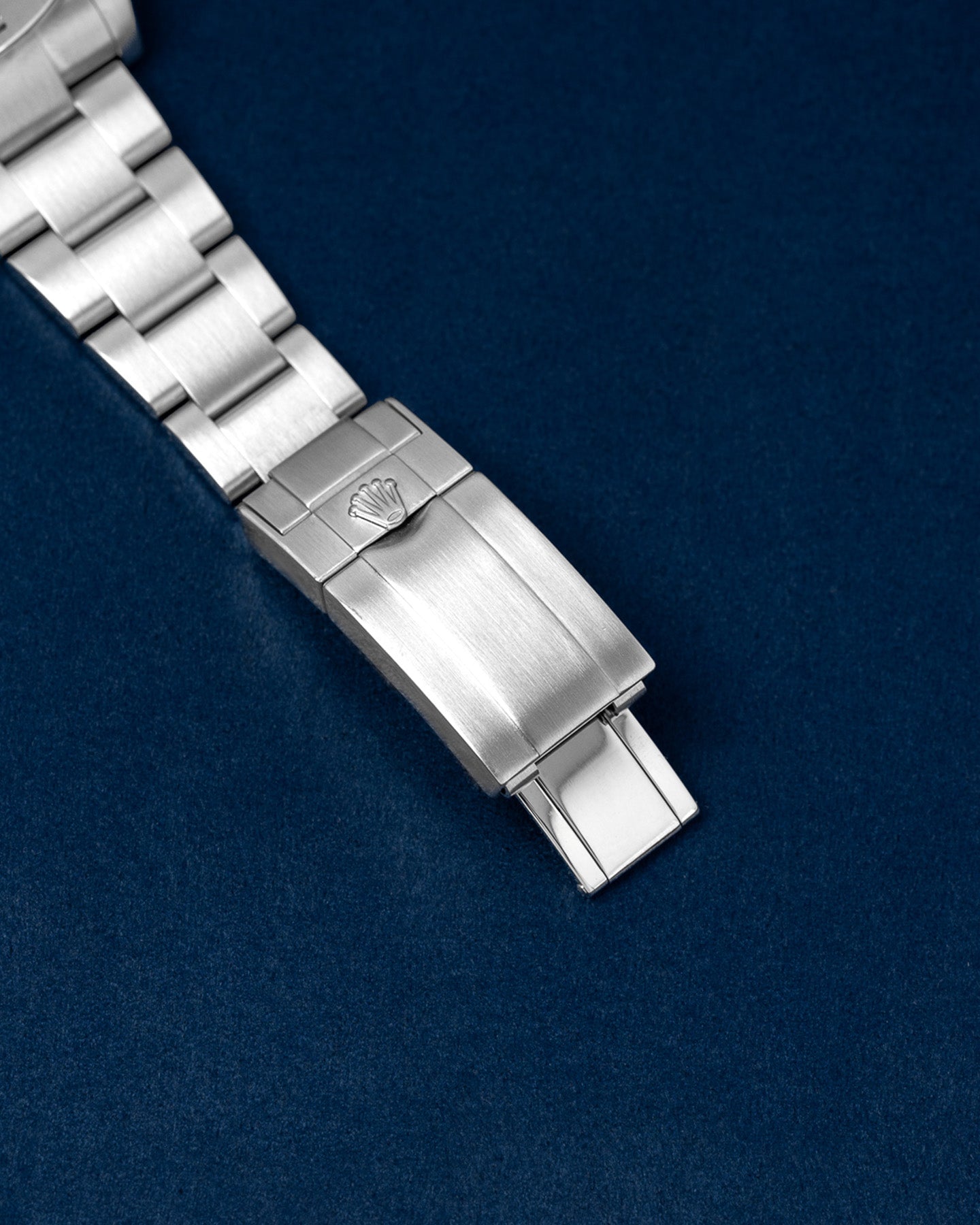
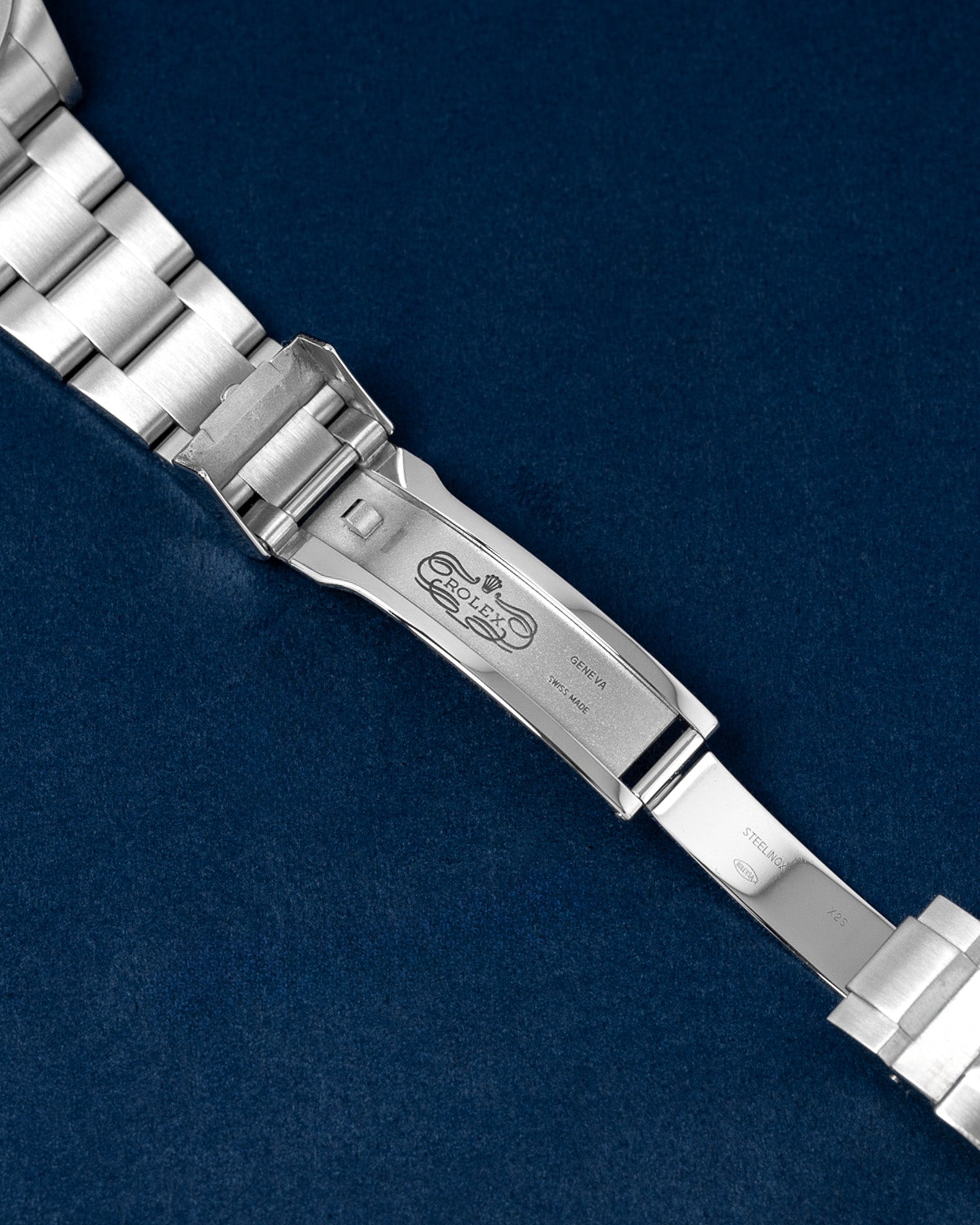
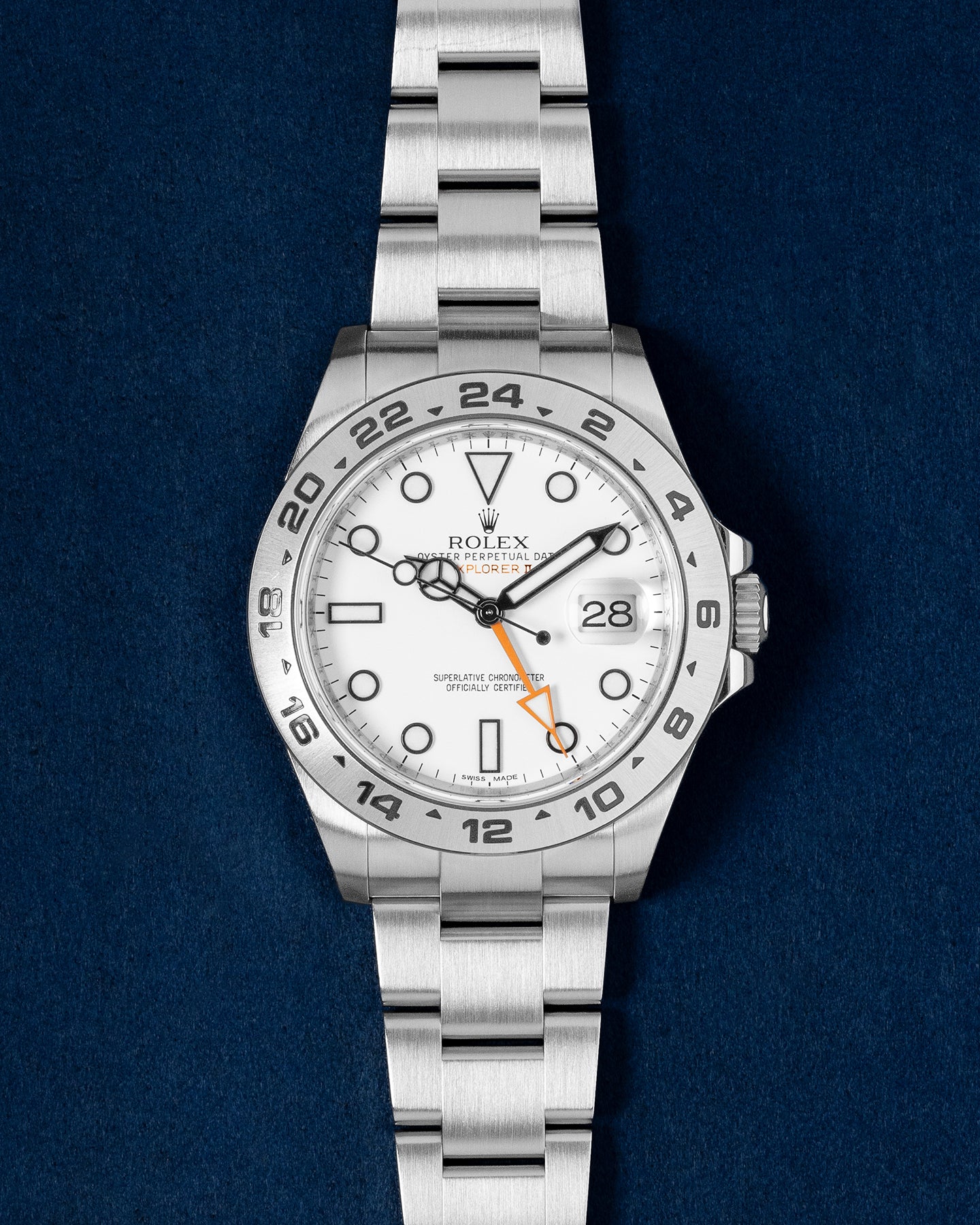
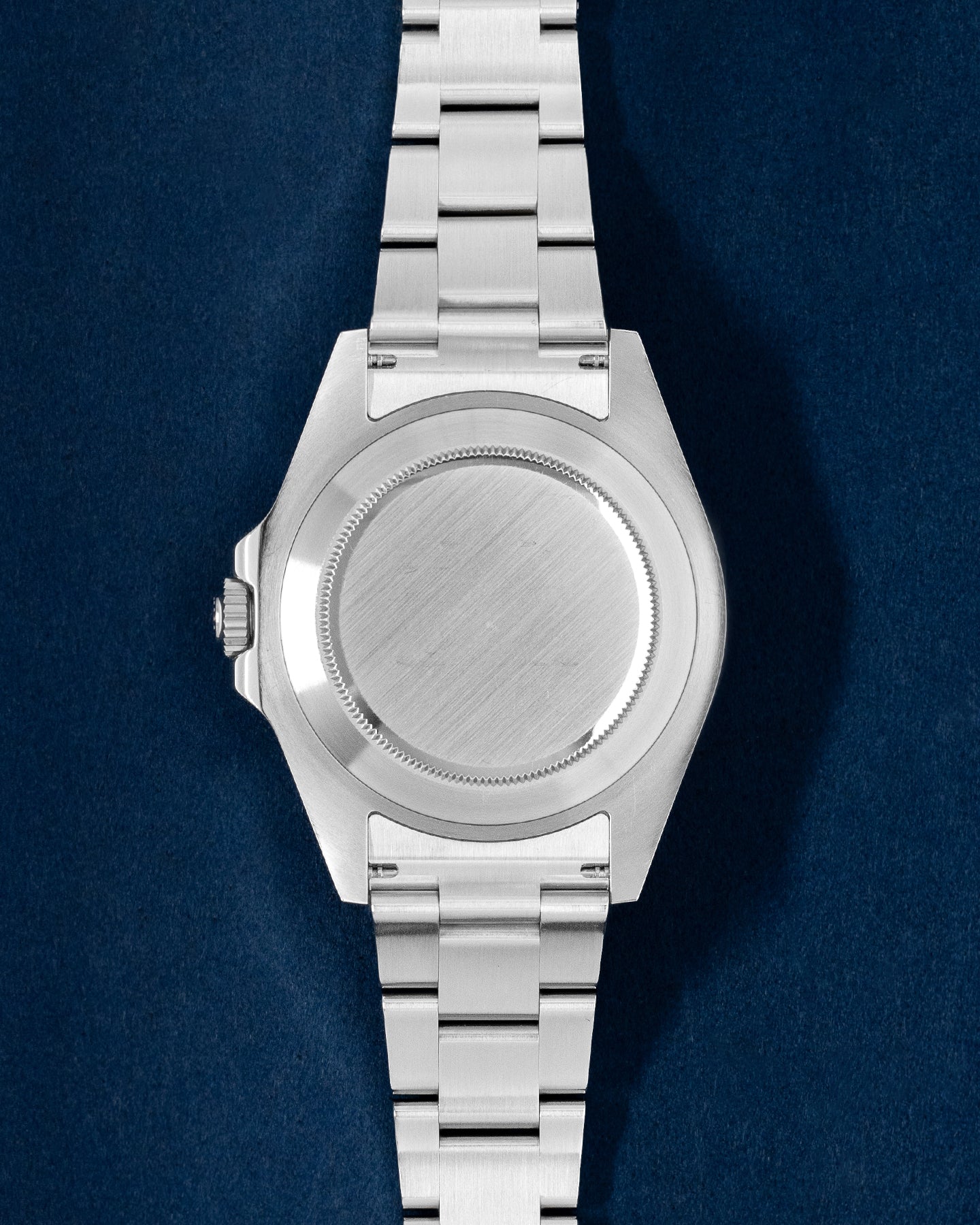
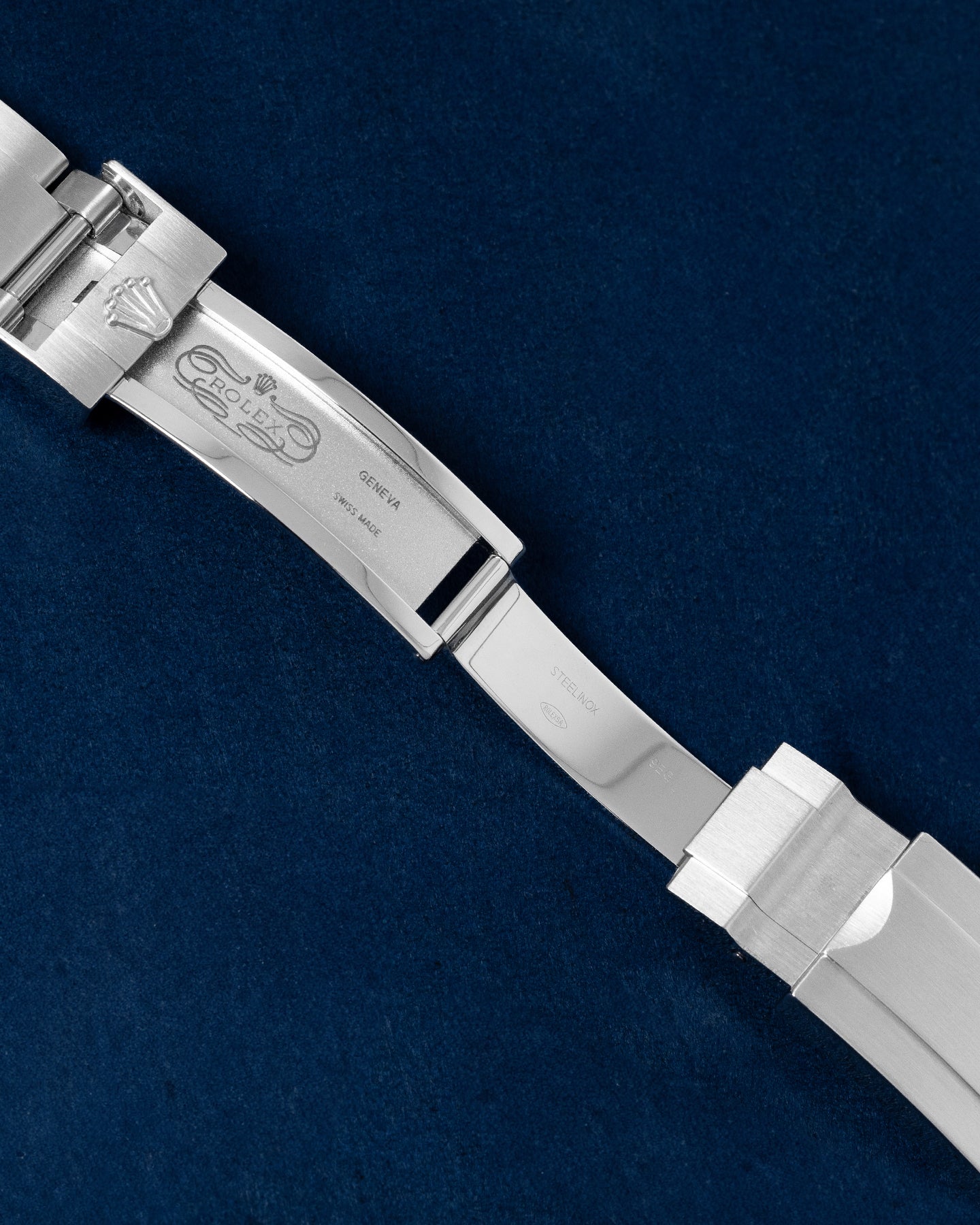
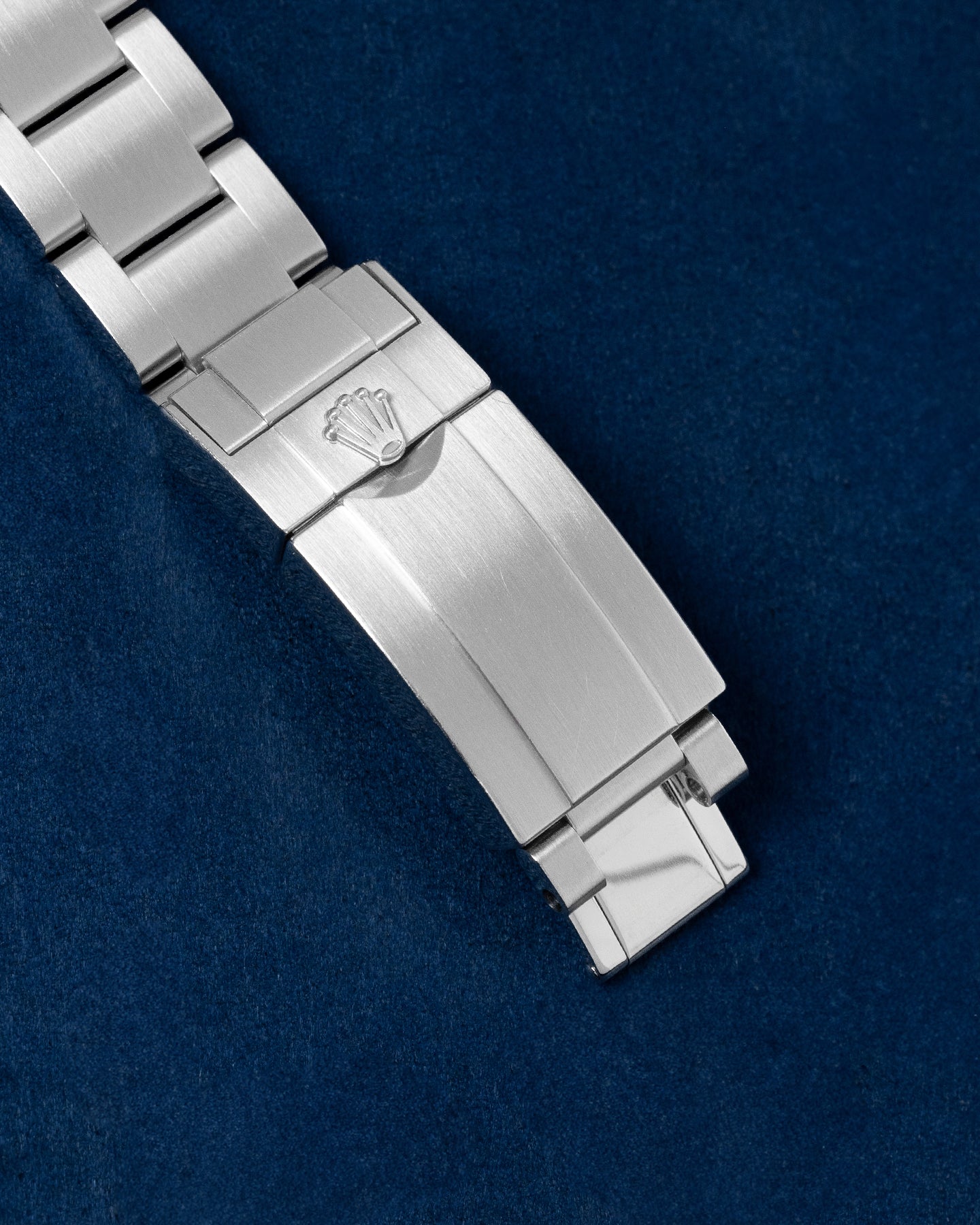
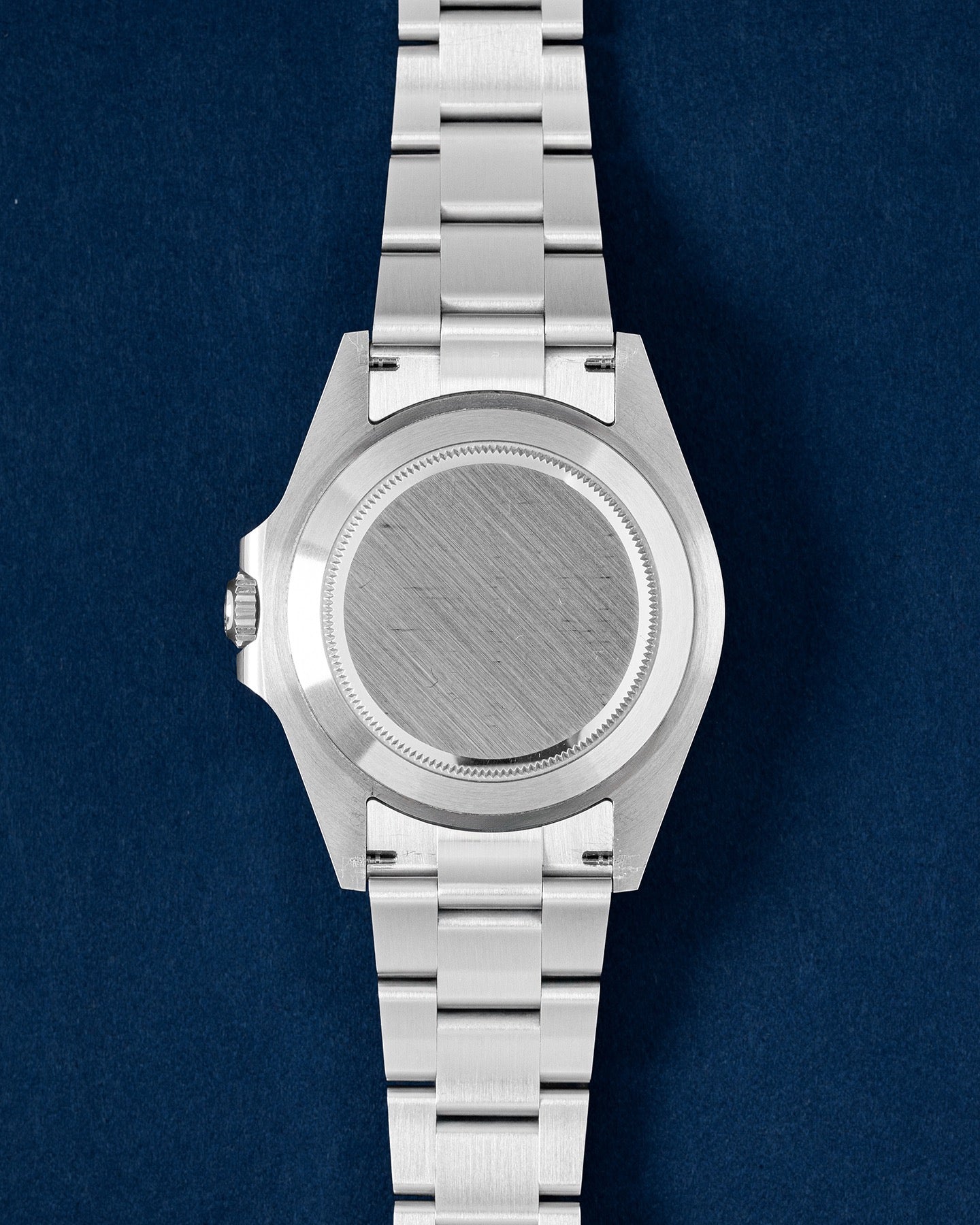
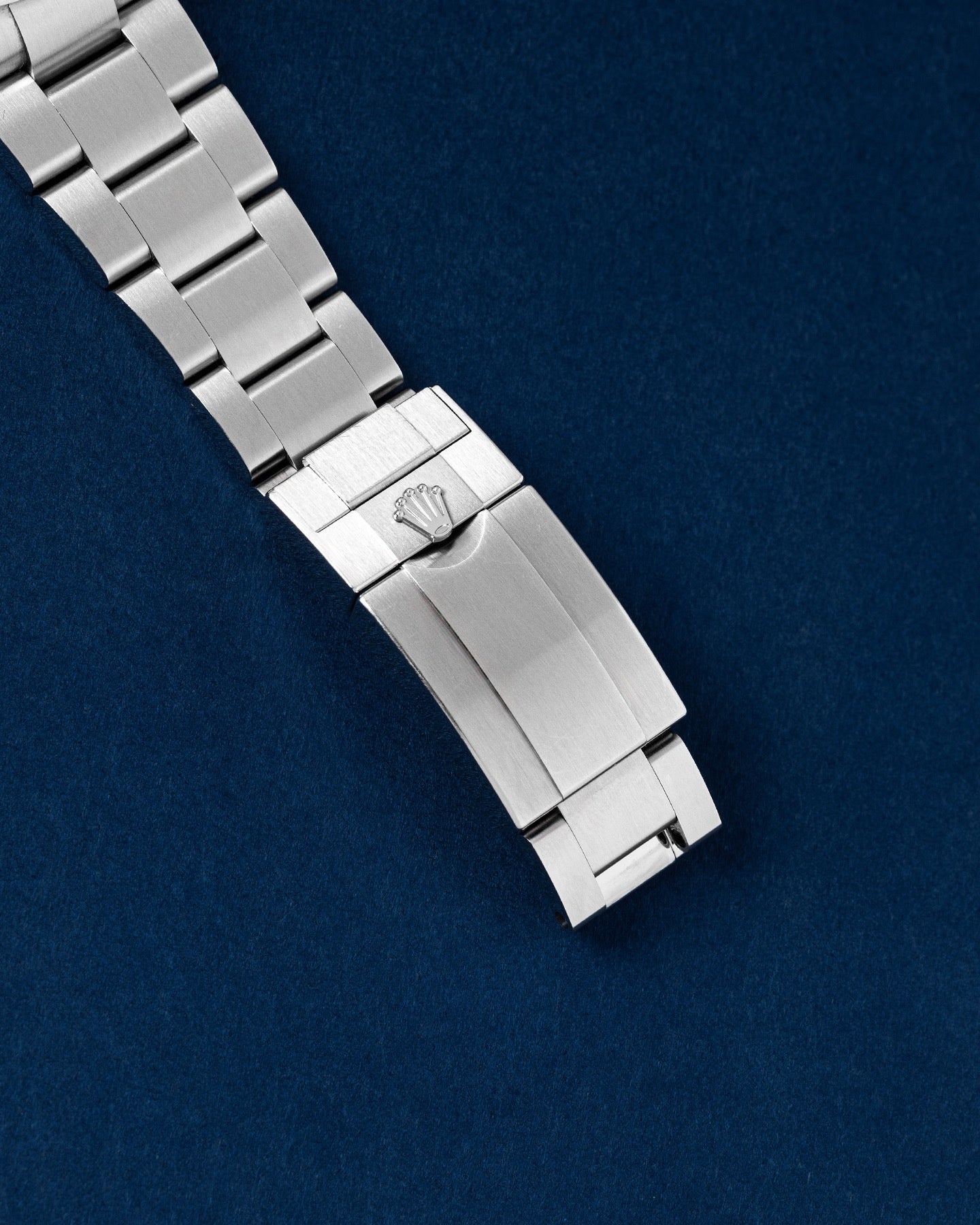
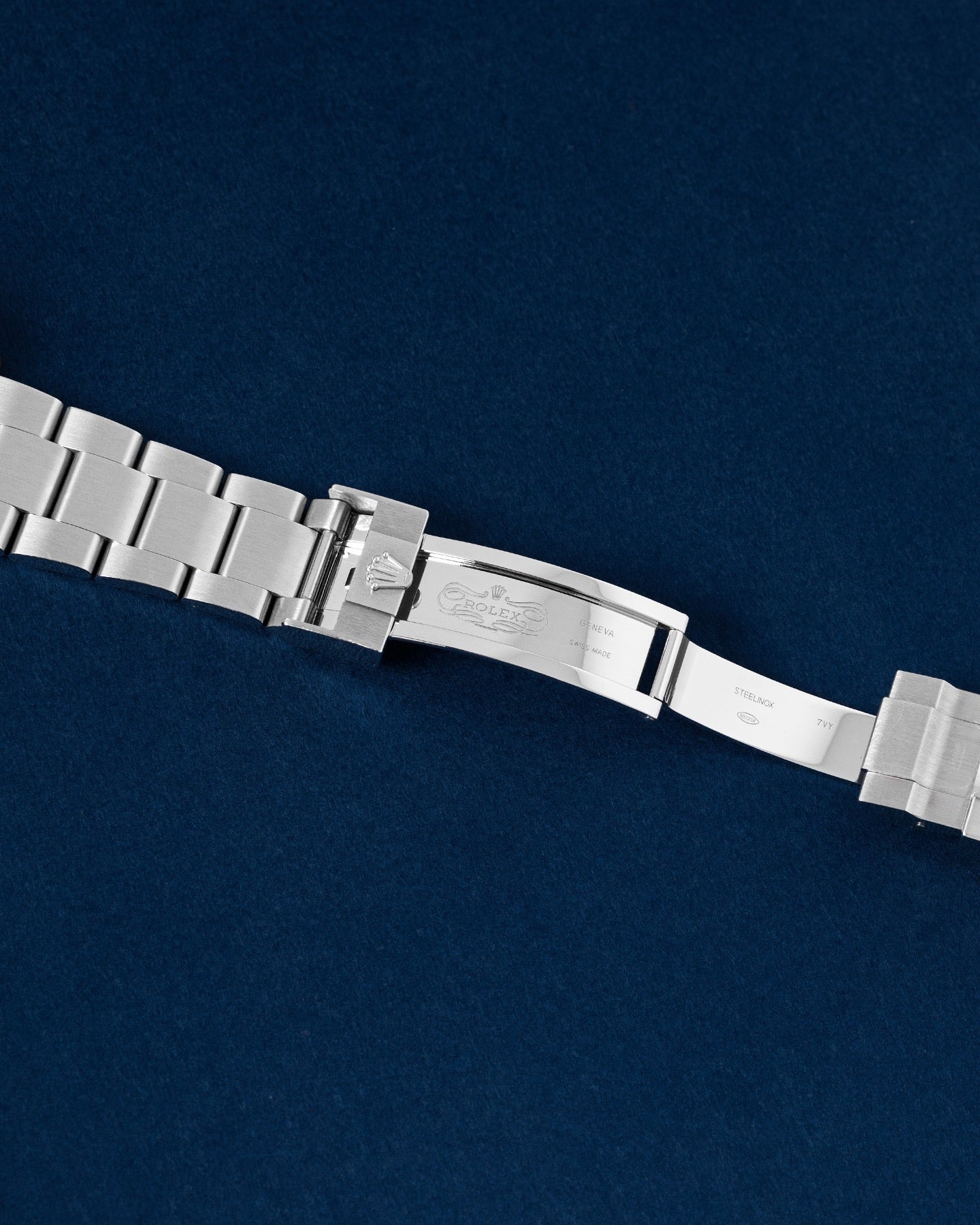
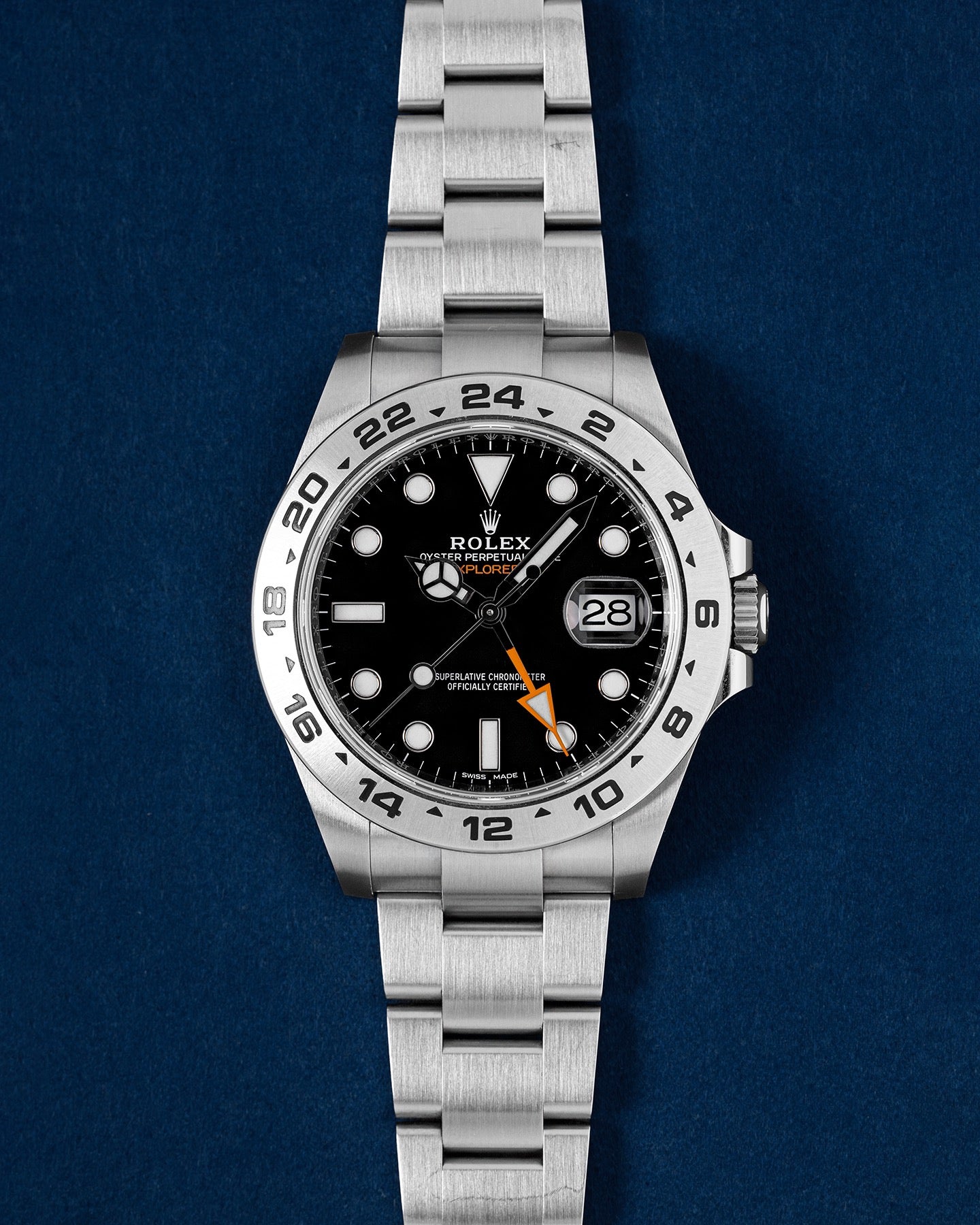
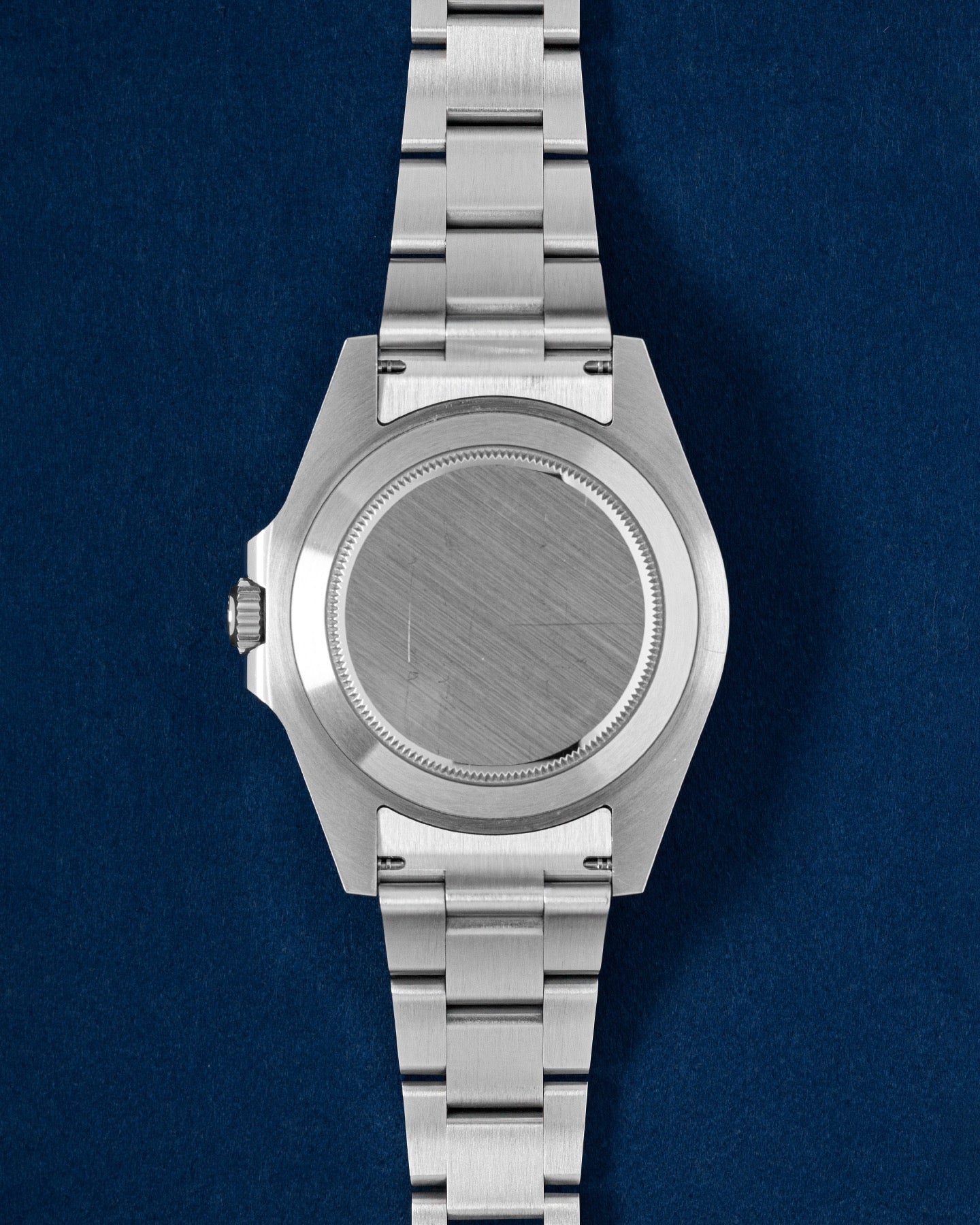
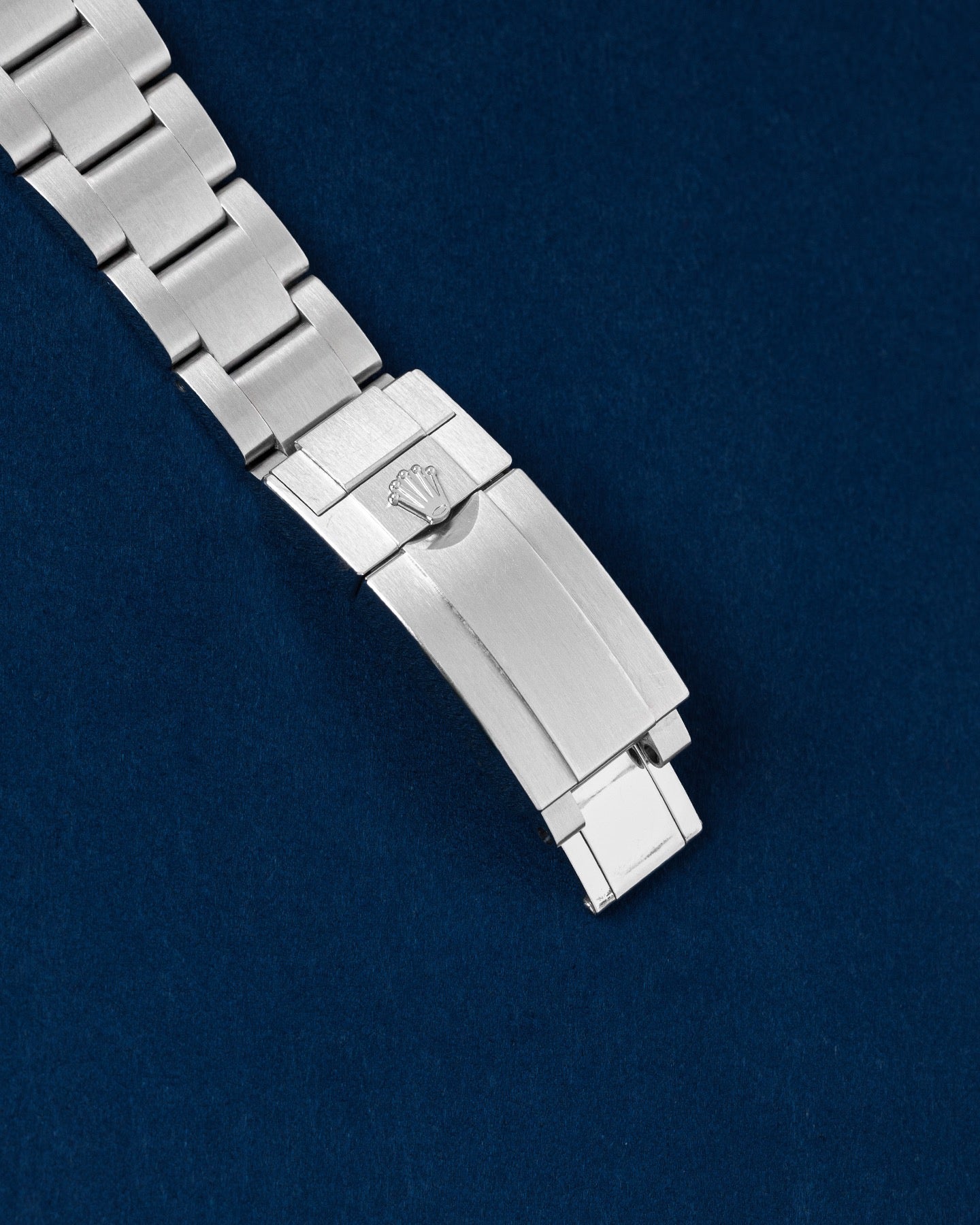
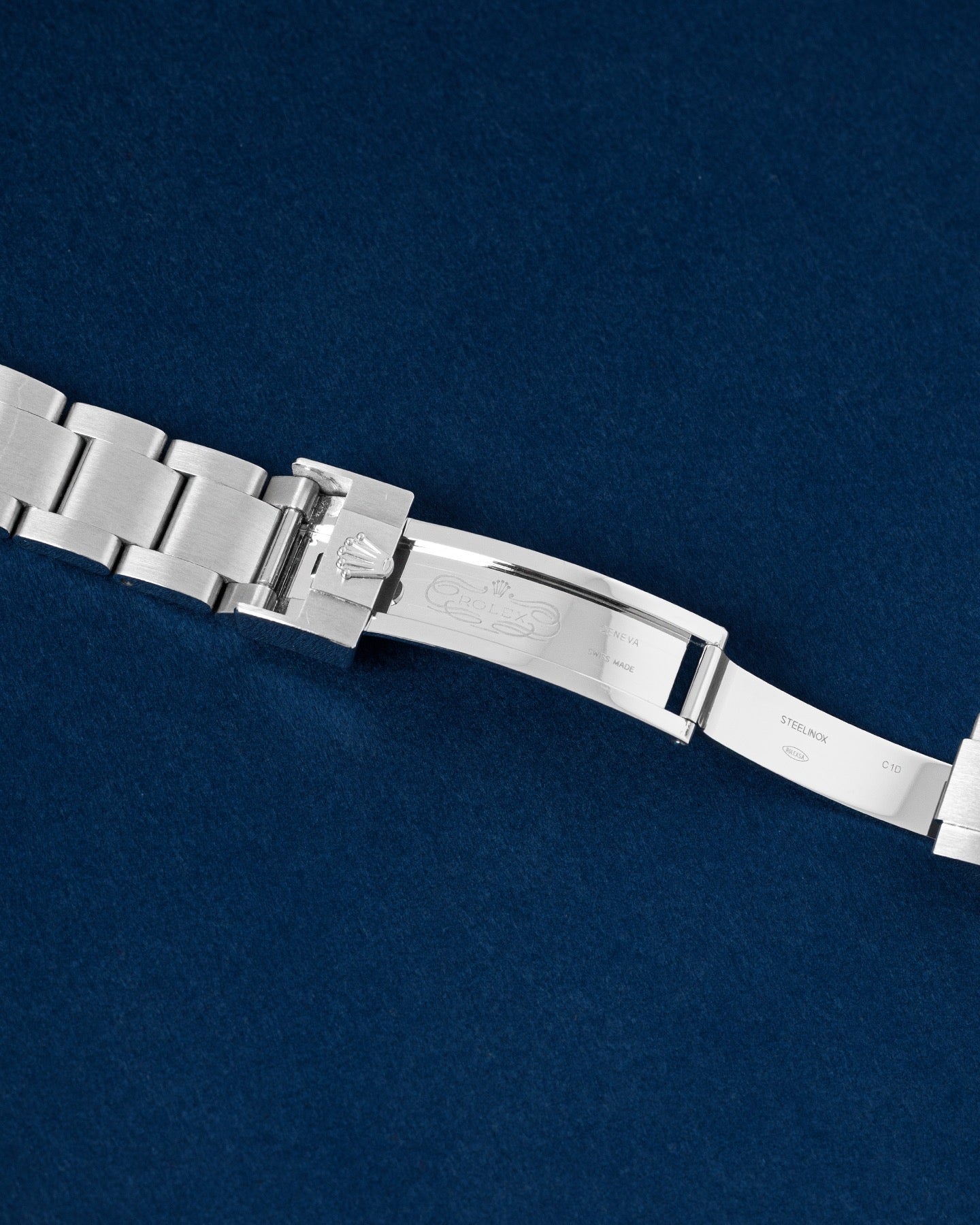
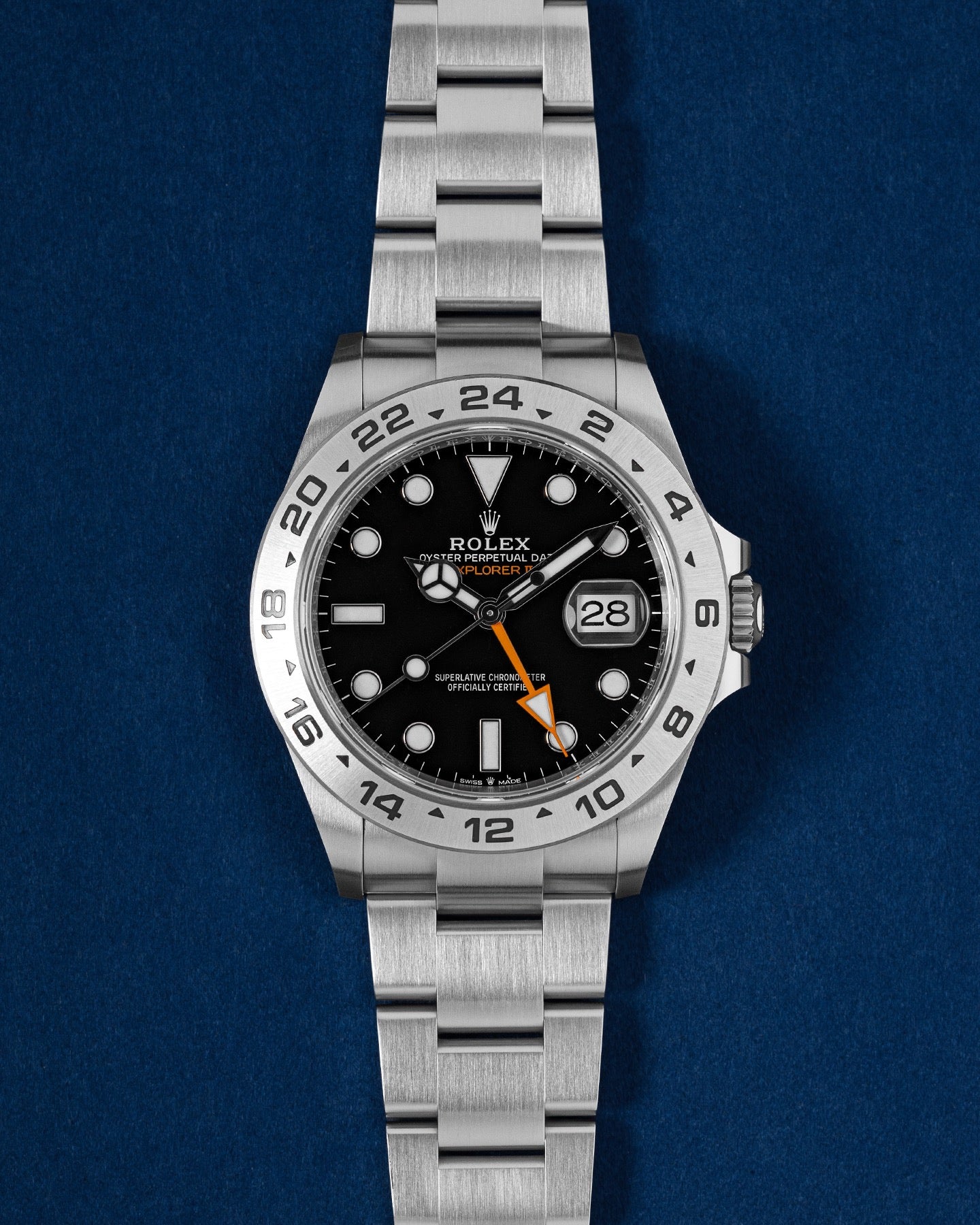
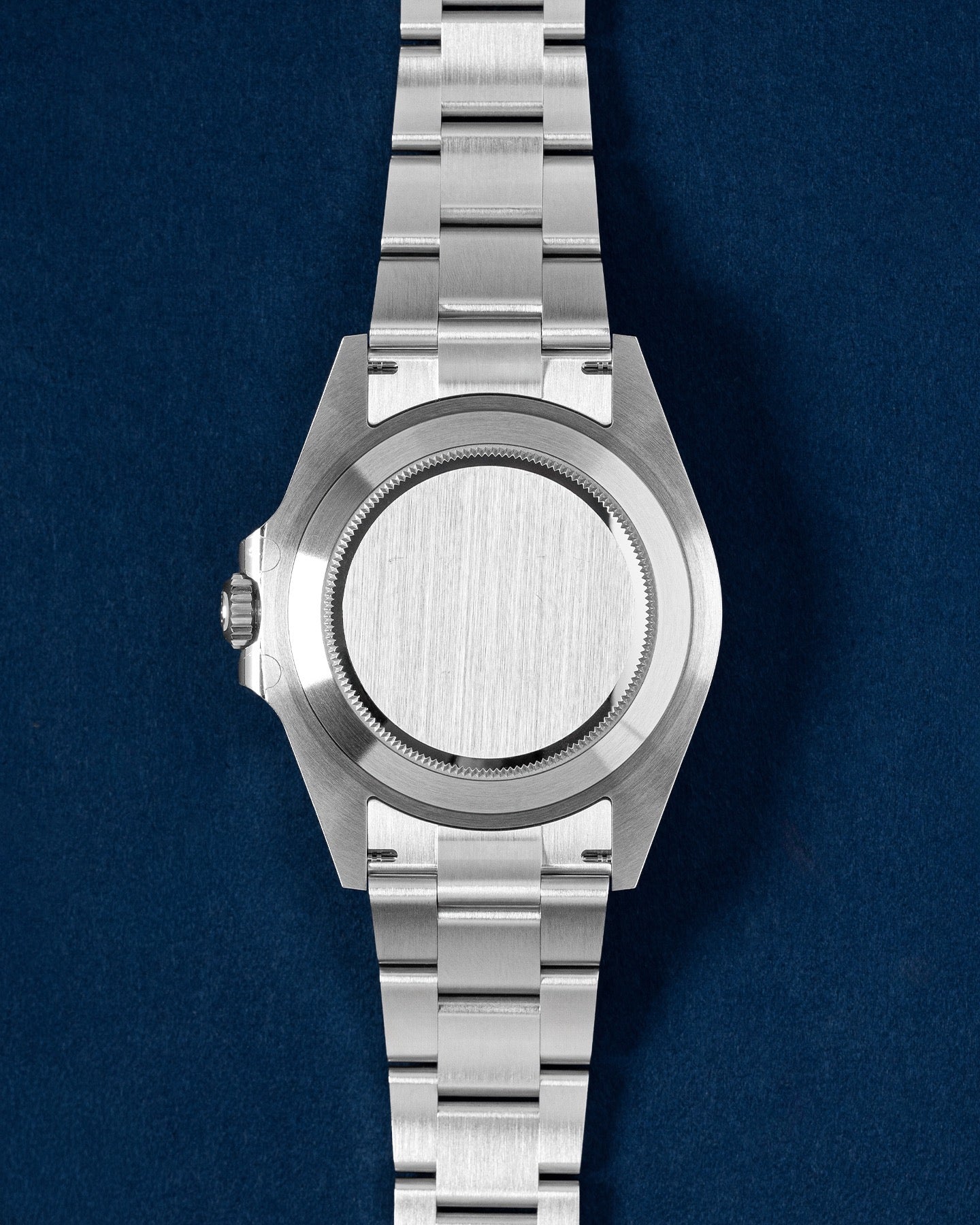
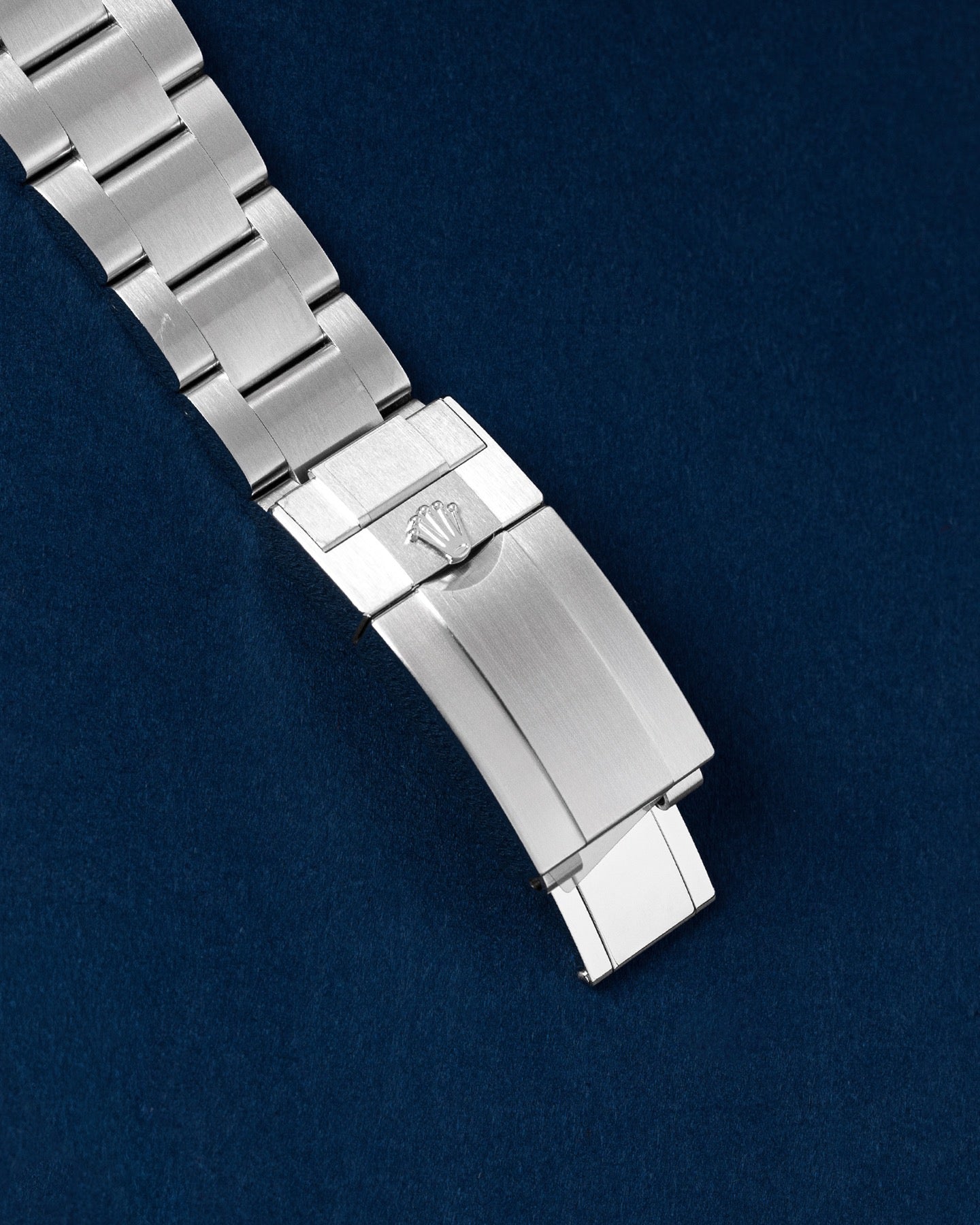
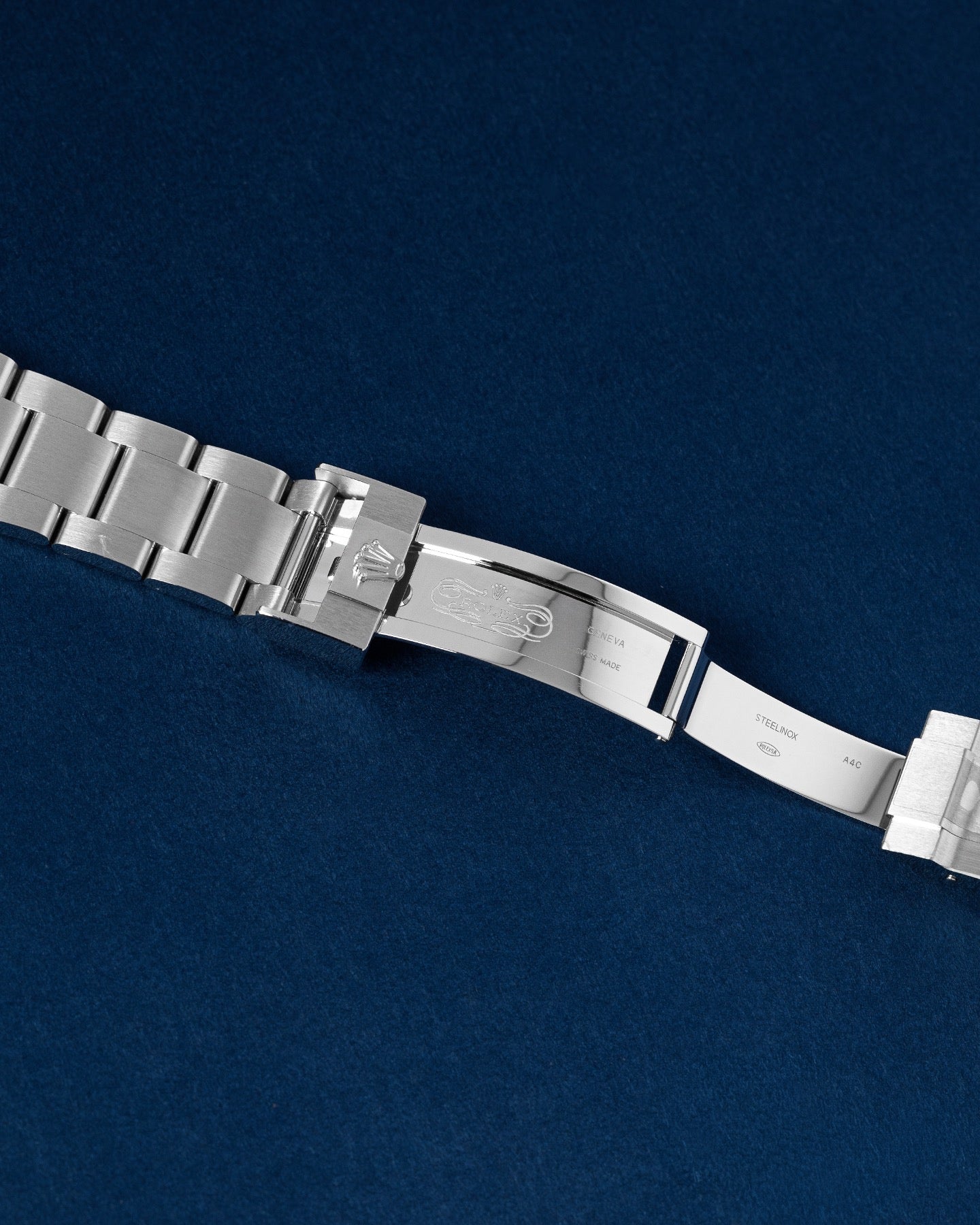
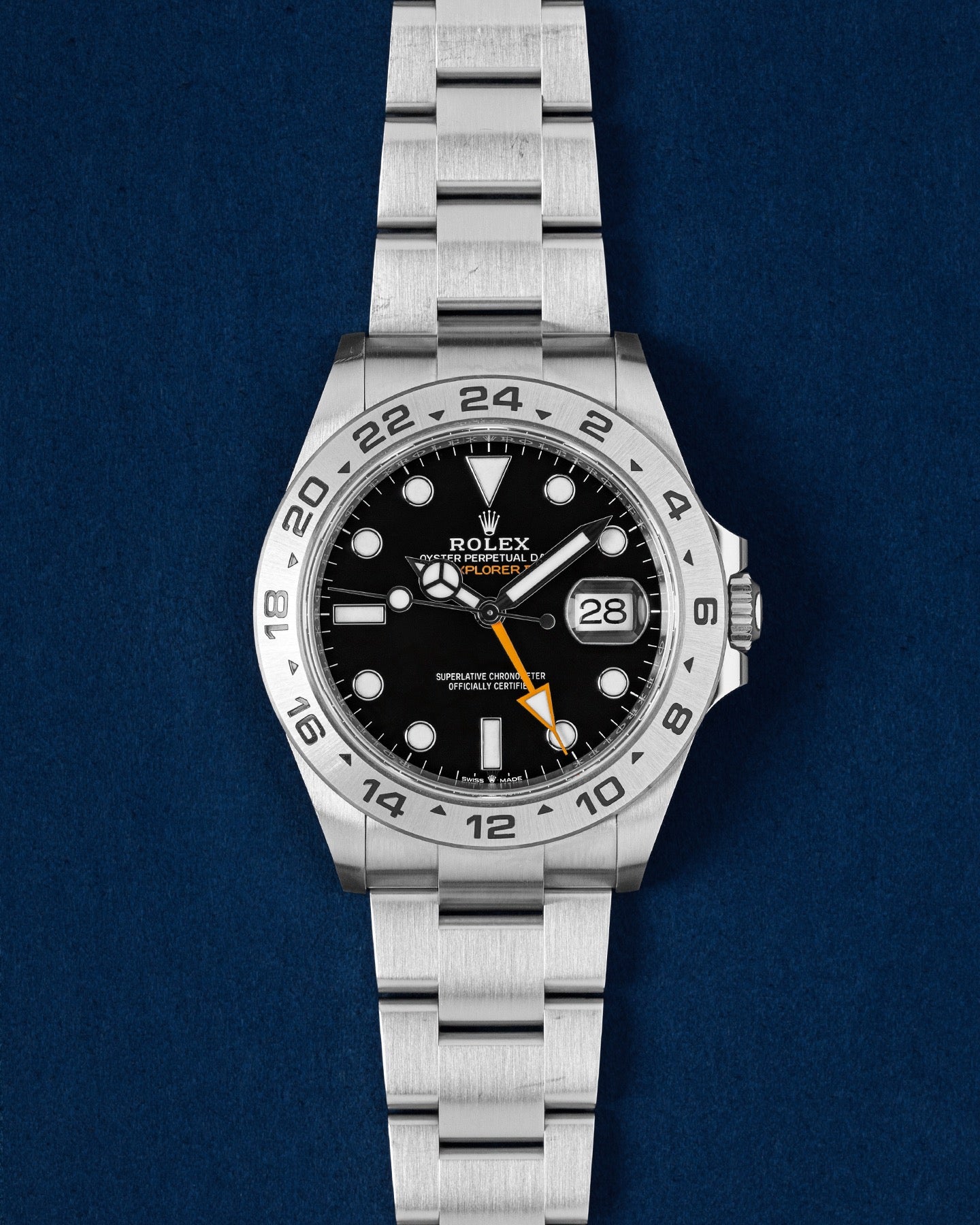
Rolex Explorer II 216570 "Certified Pre-Owned"
Vintage
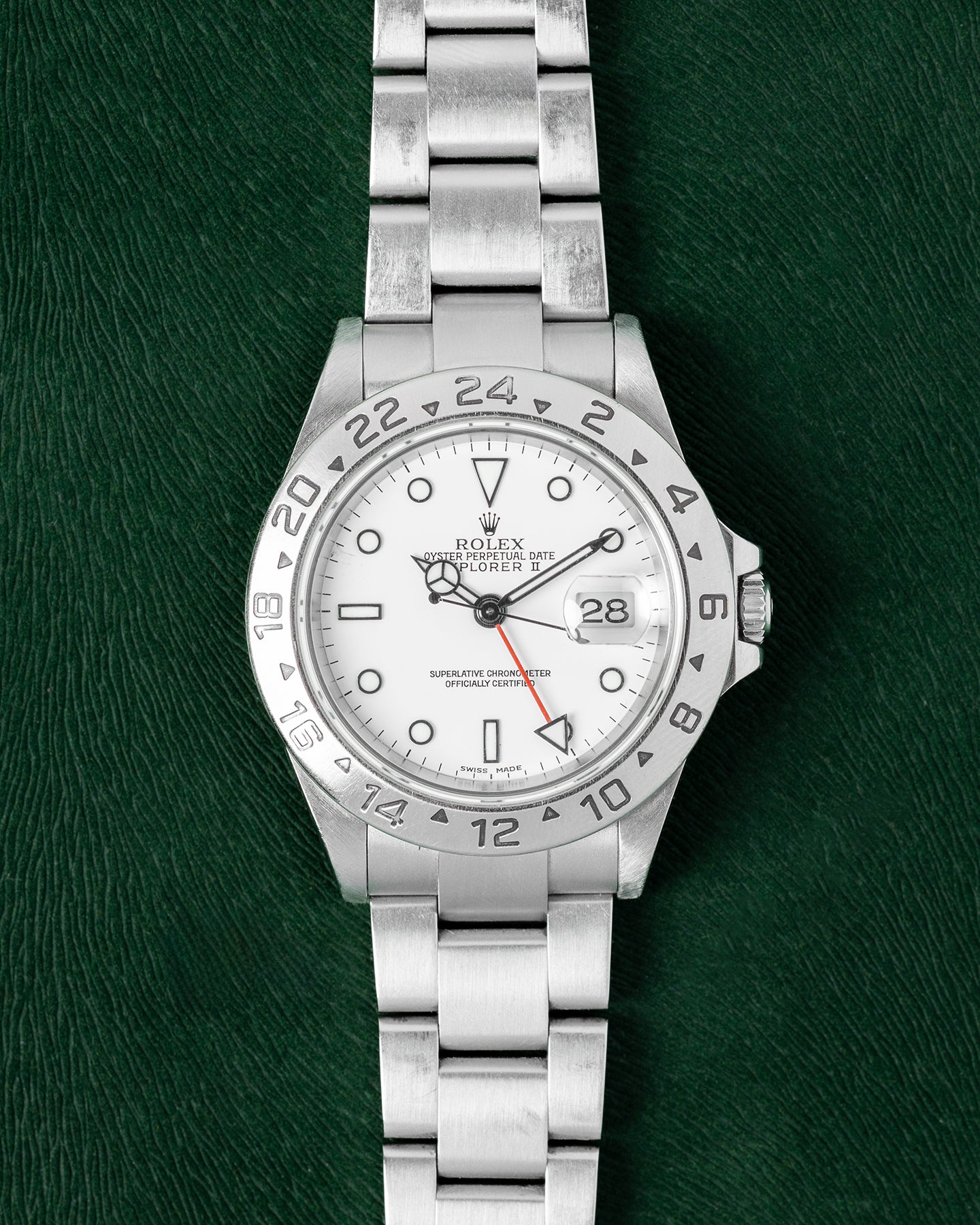
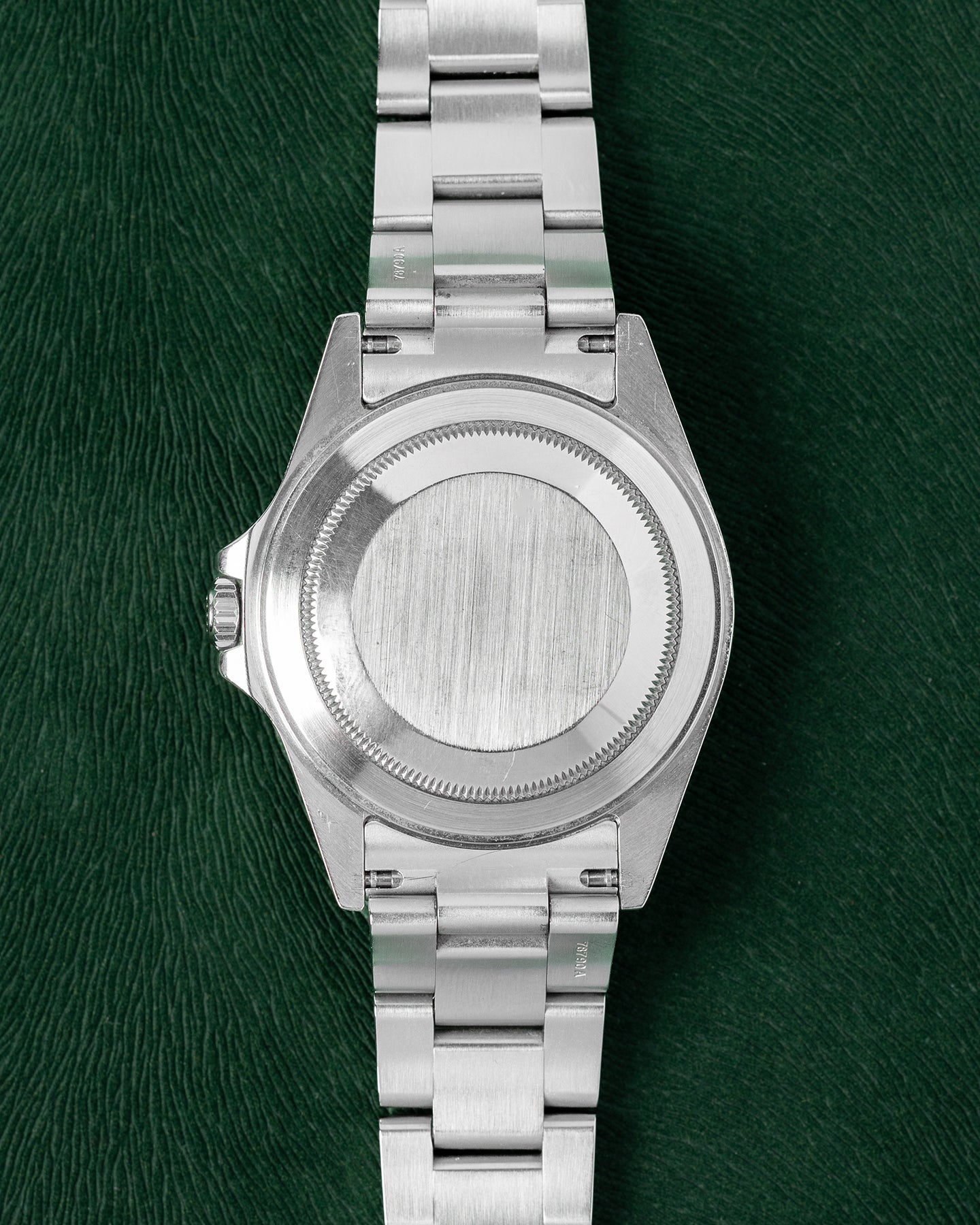
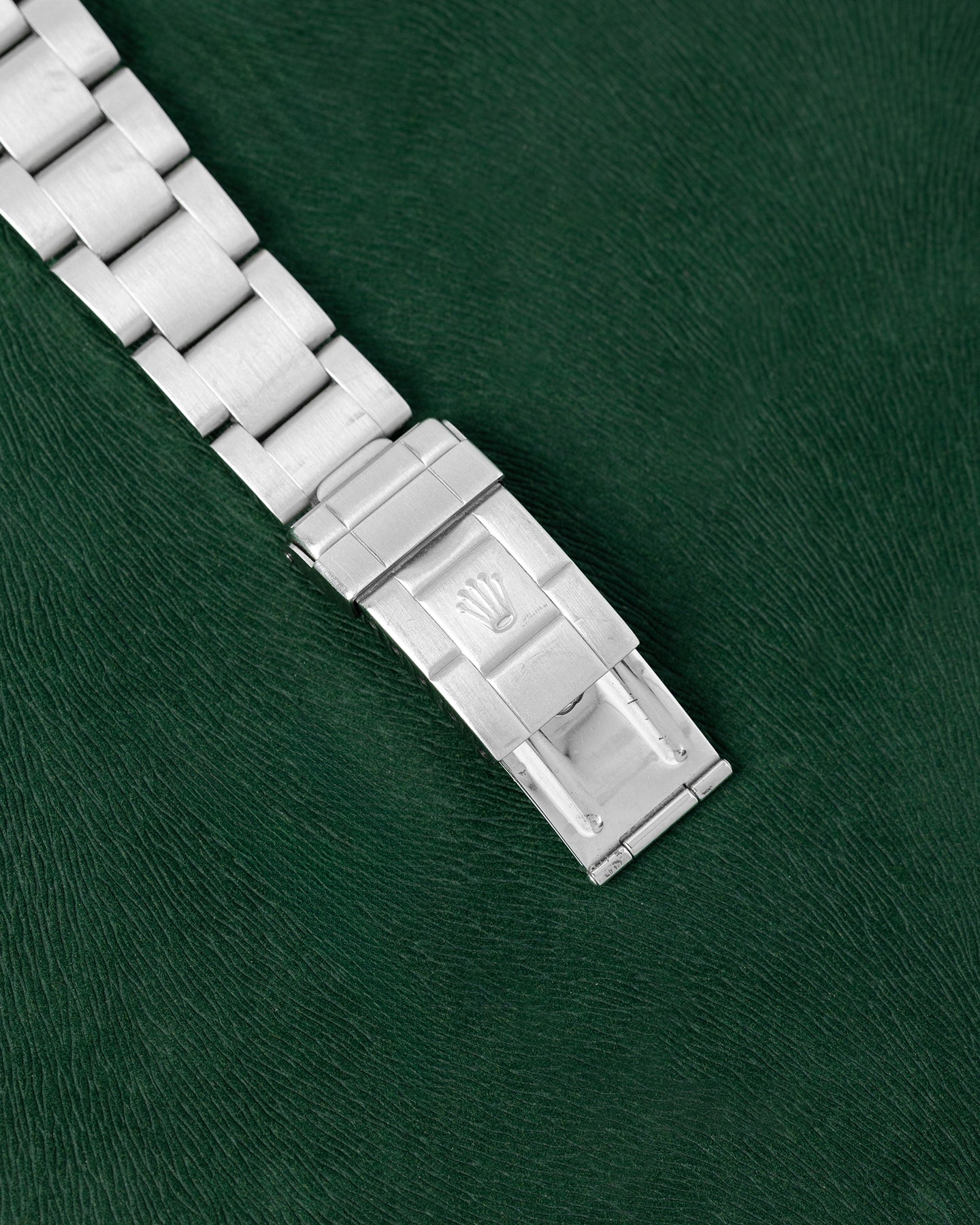
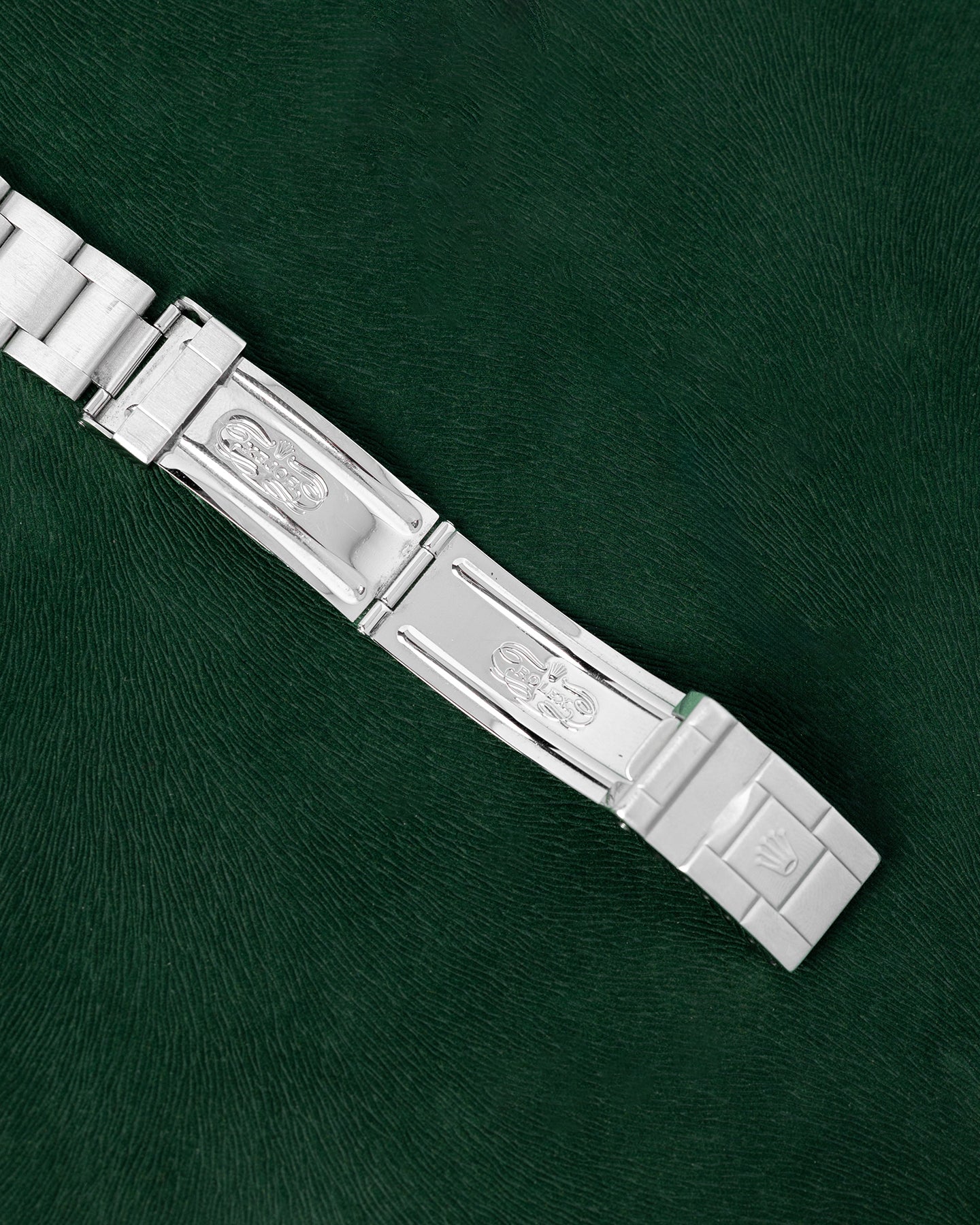
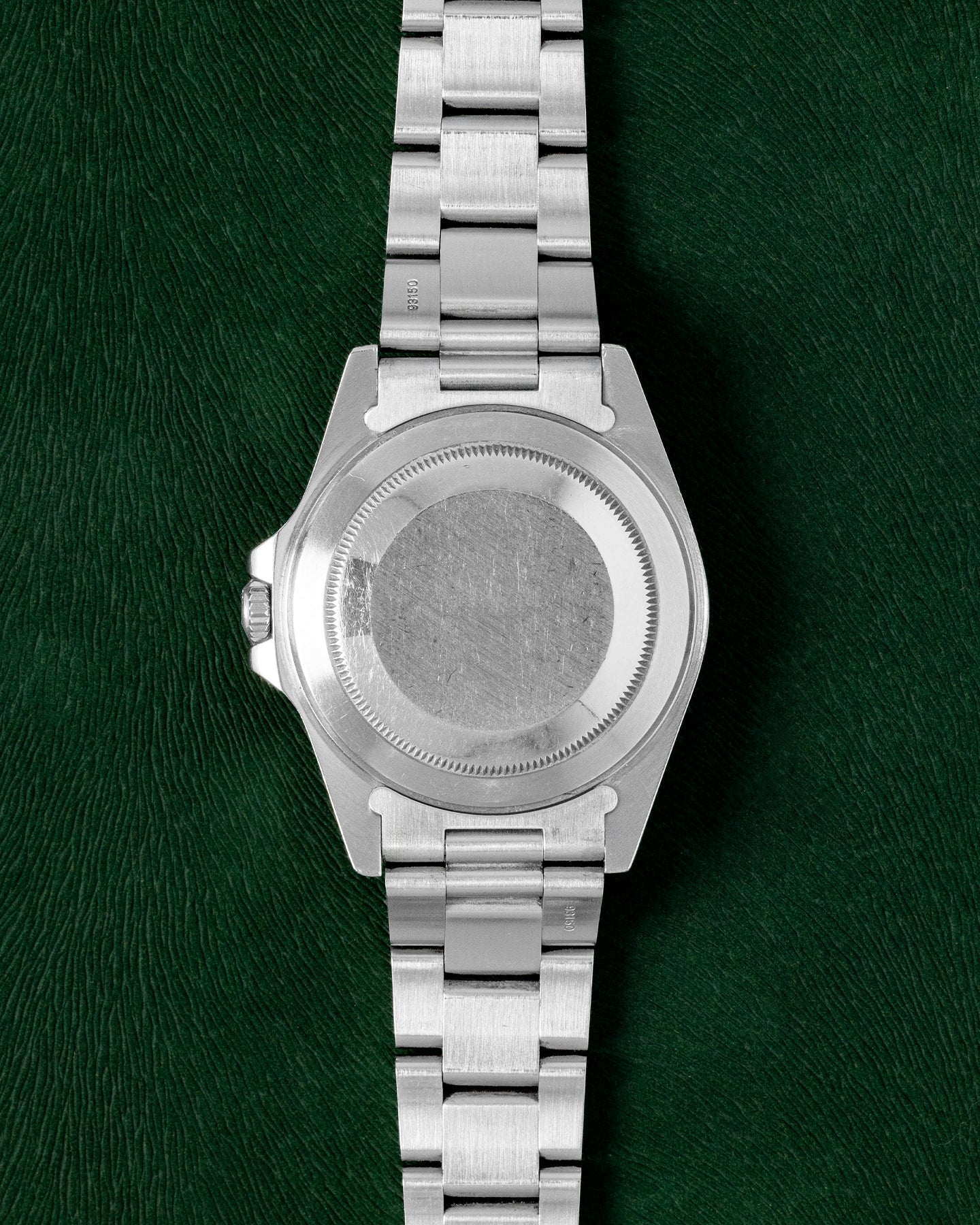
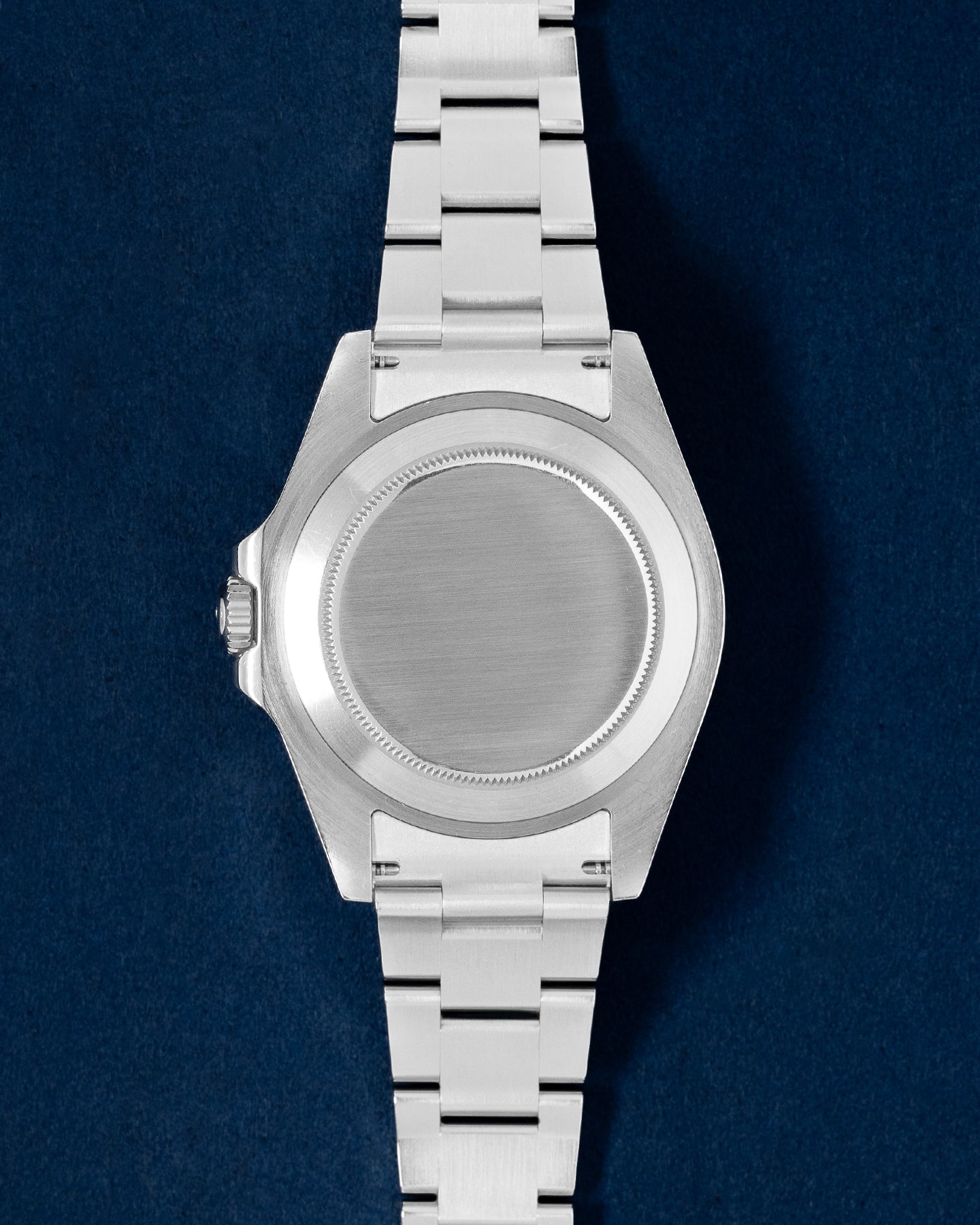
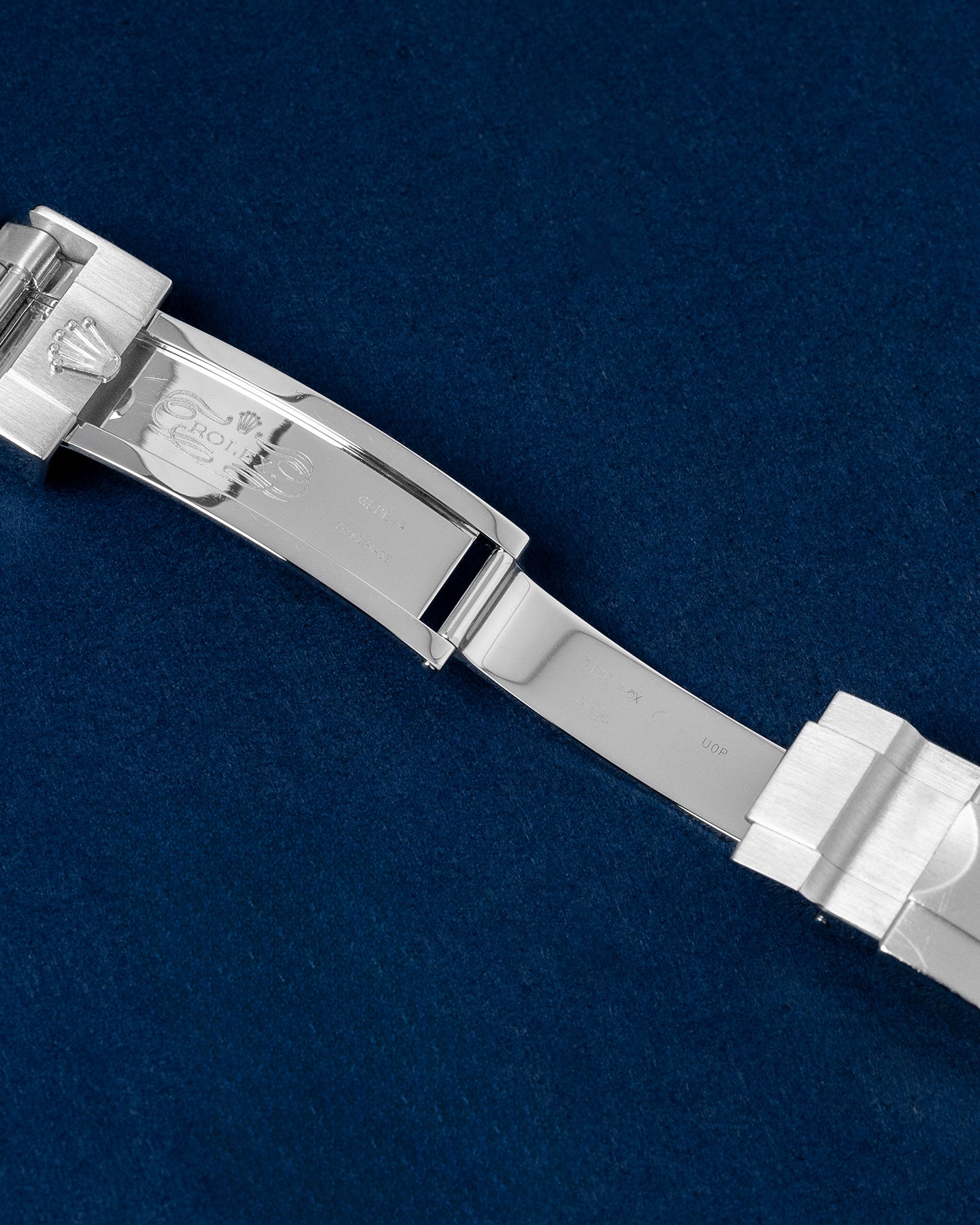
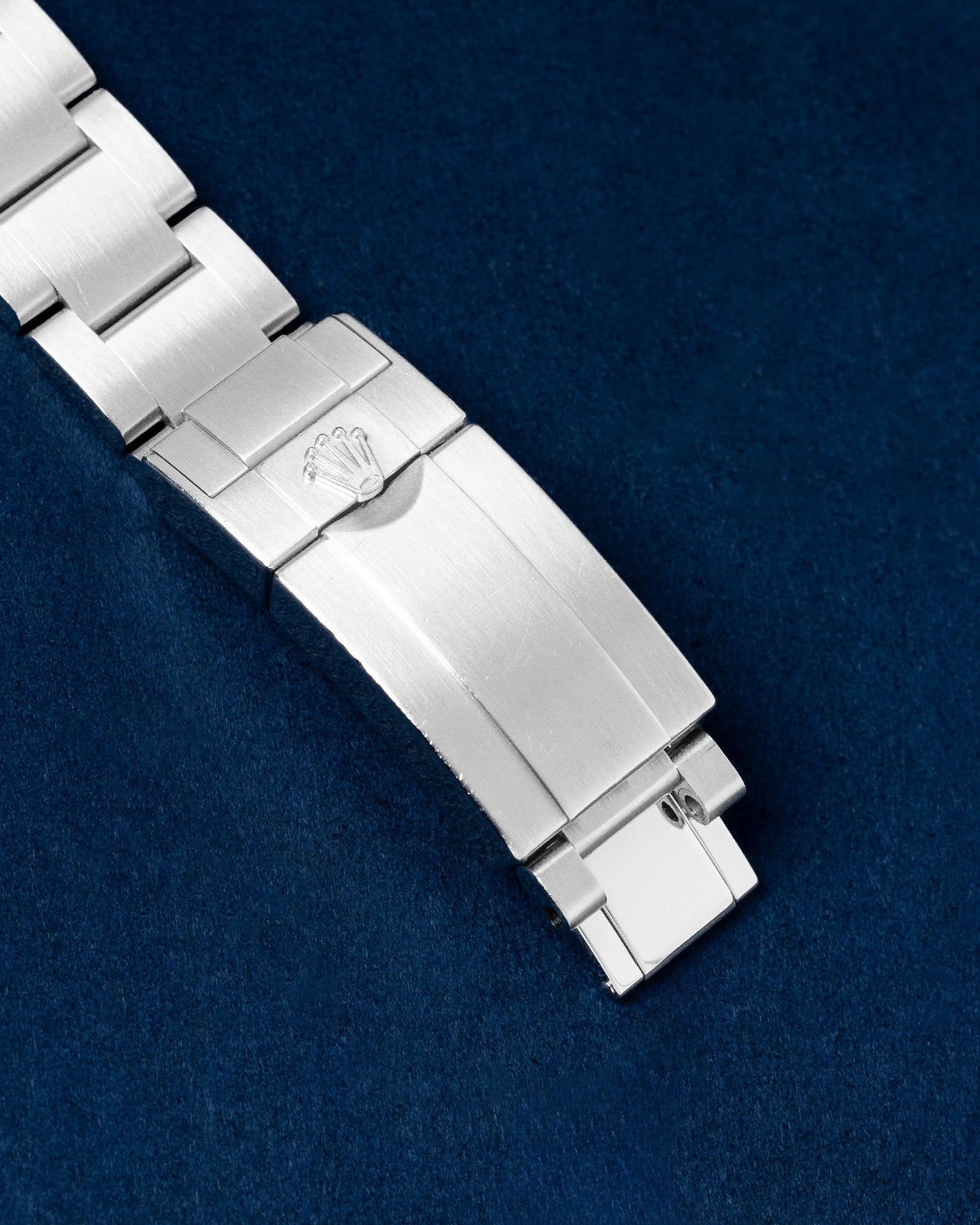
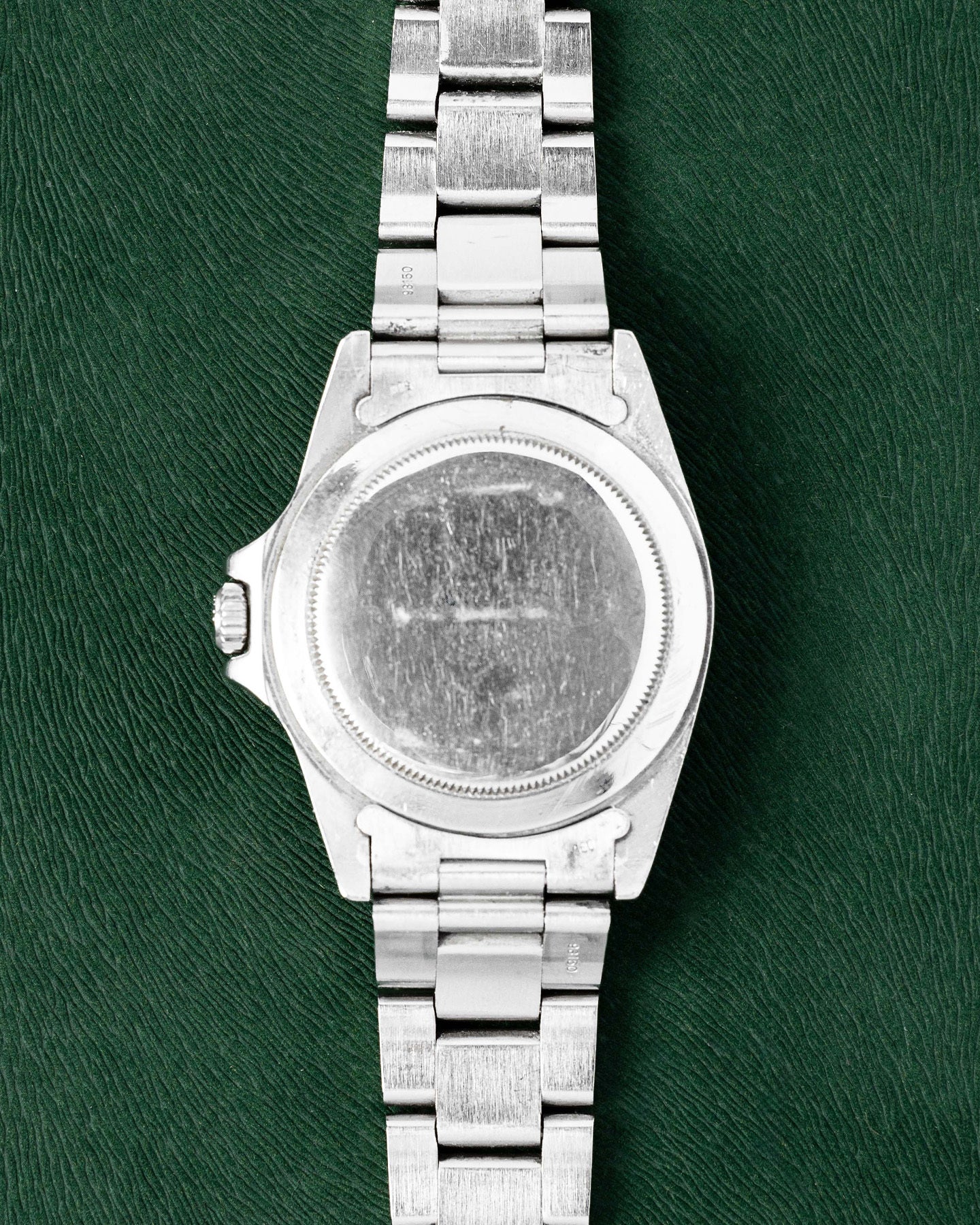
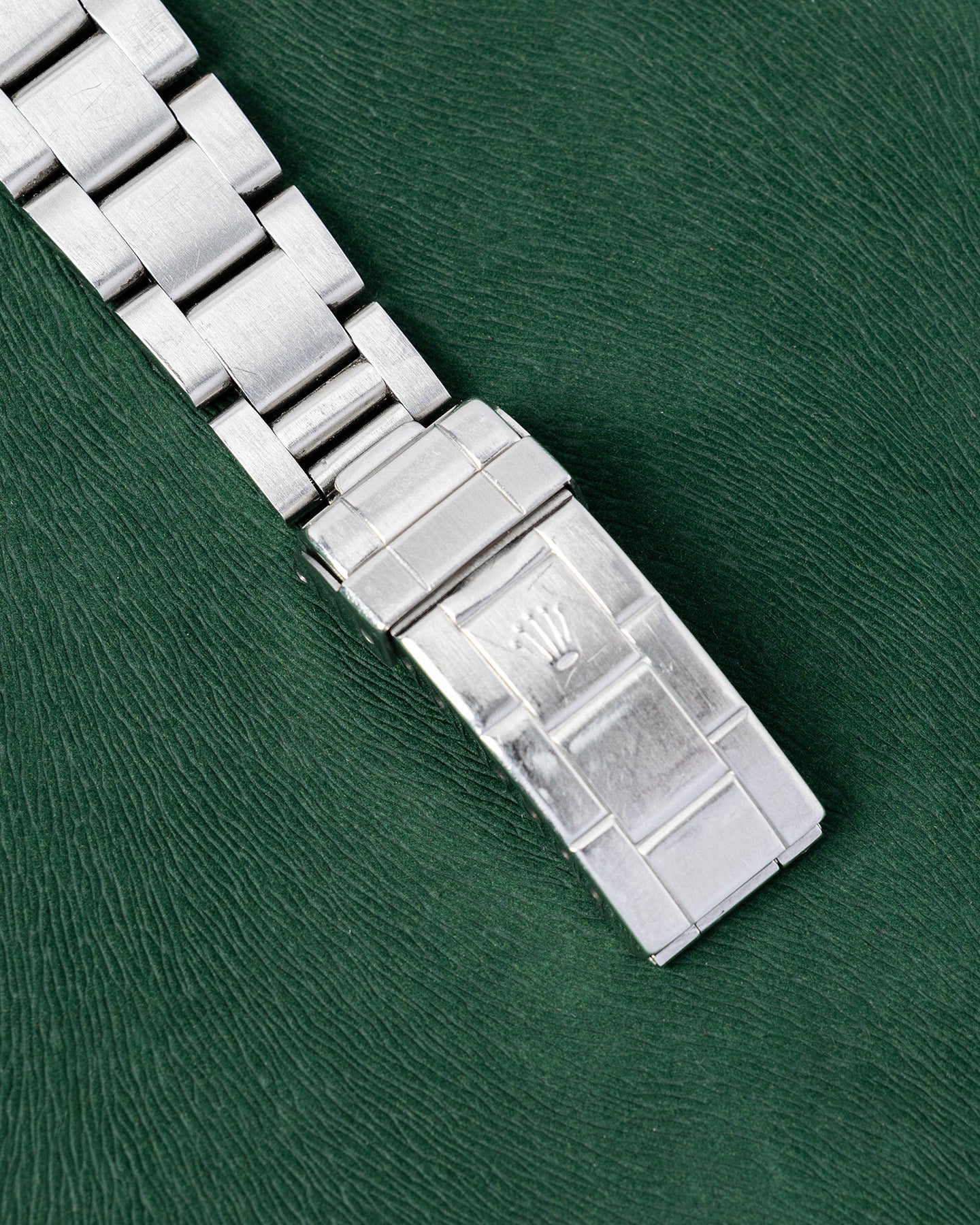
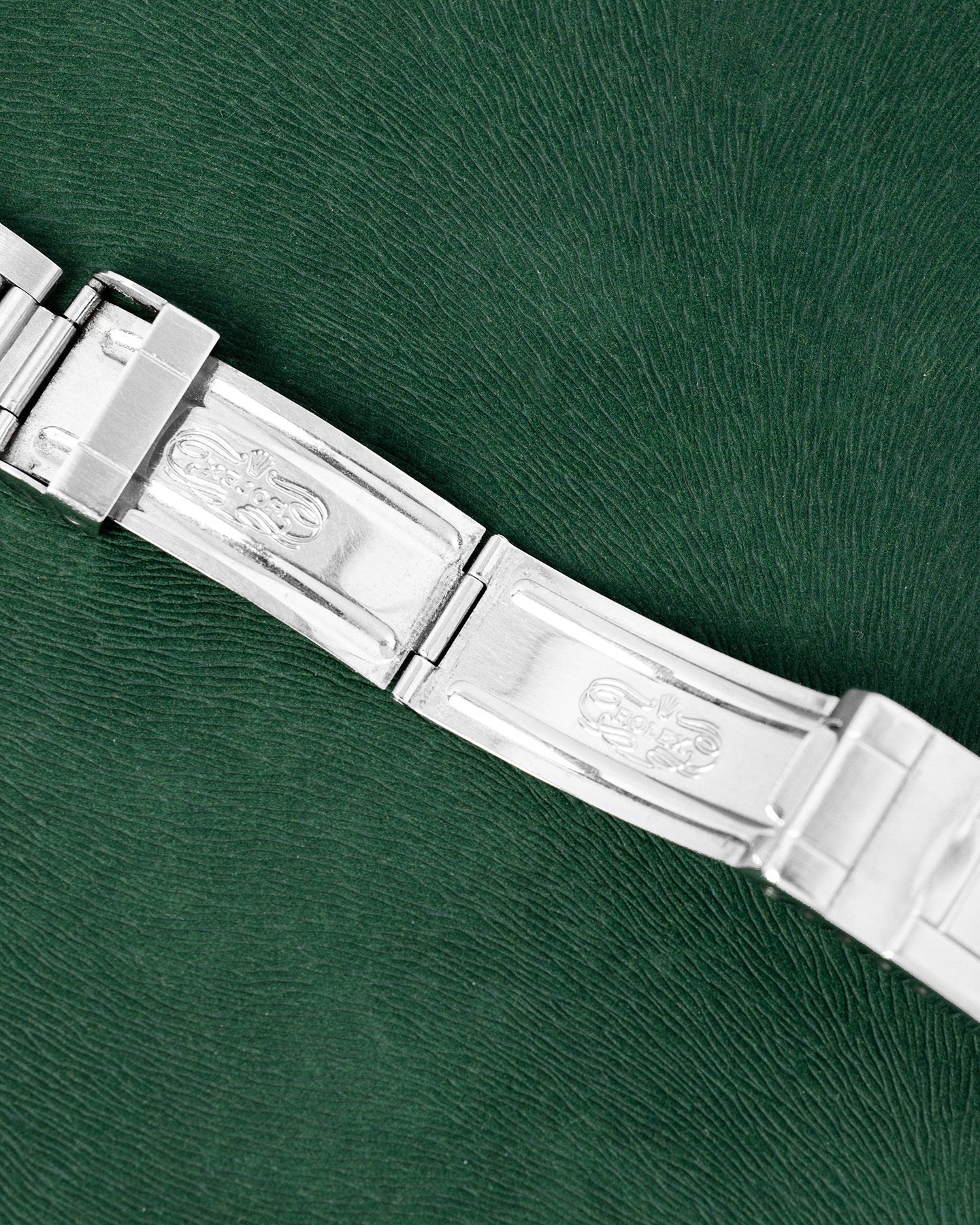
Rolex Explorer II White Dial 16570
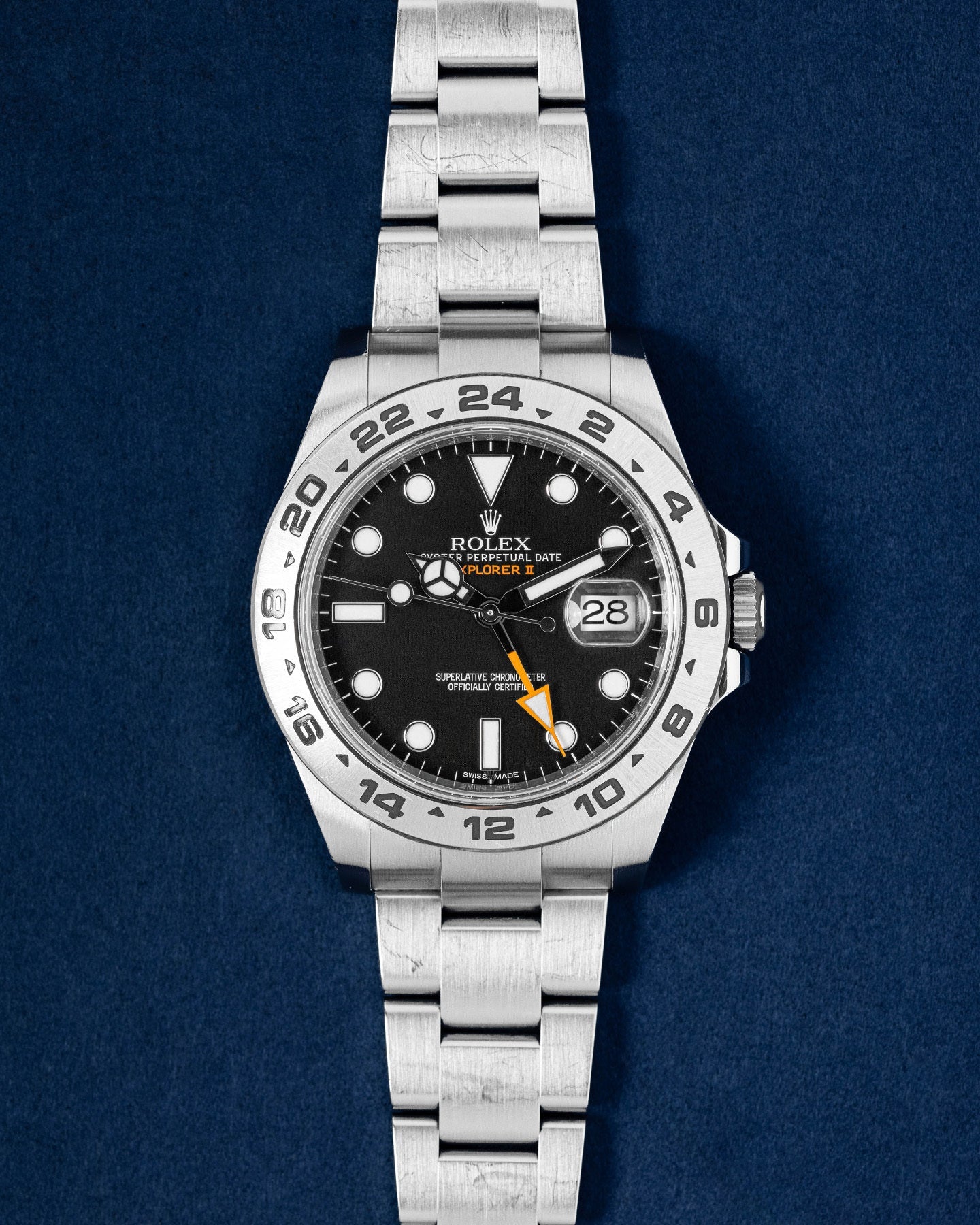
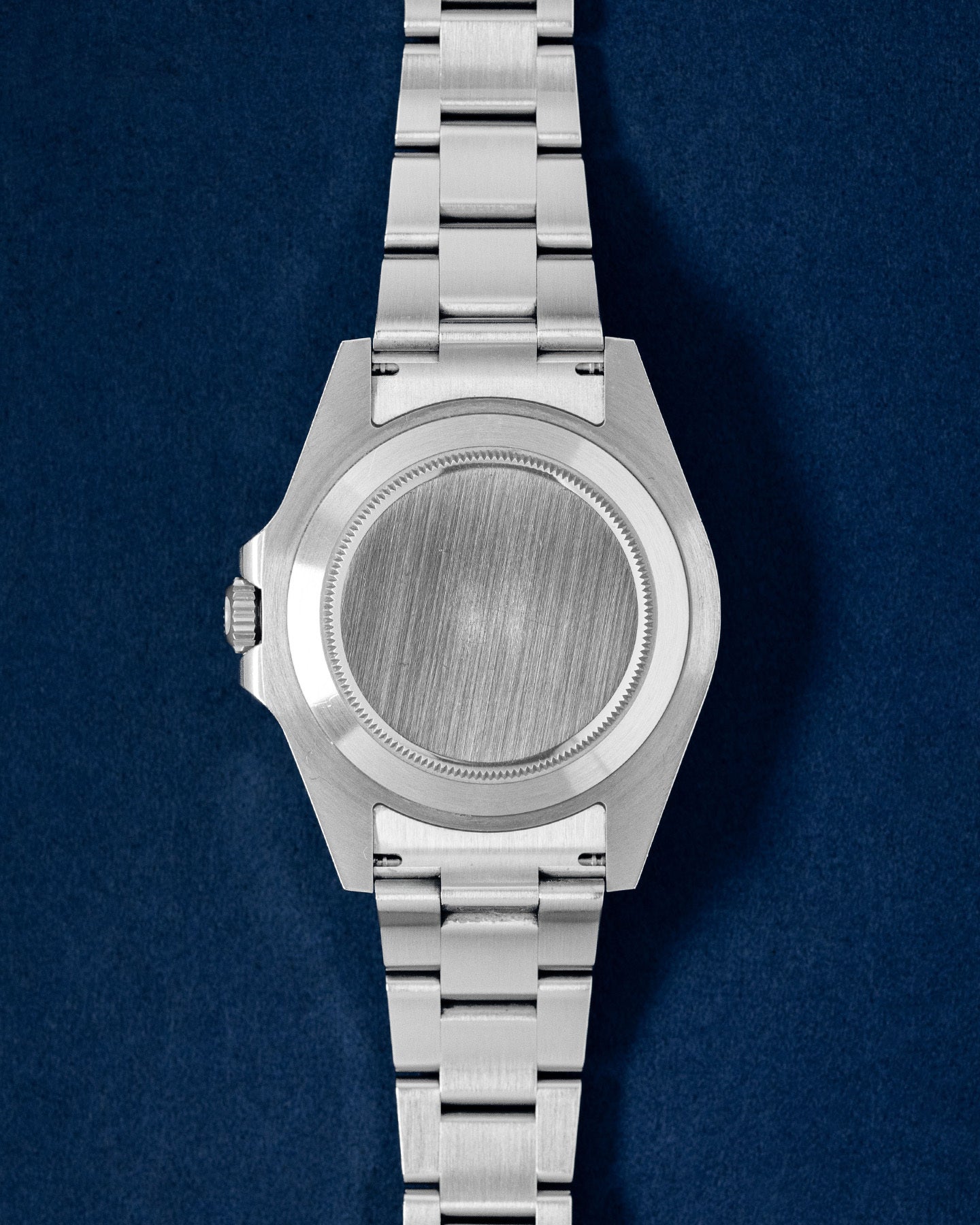
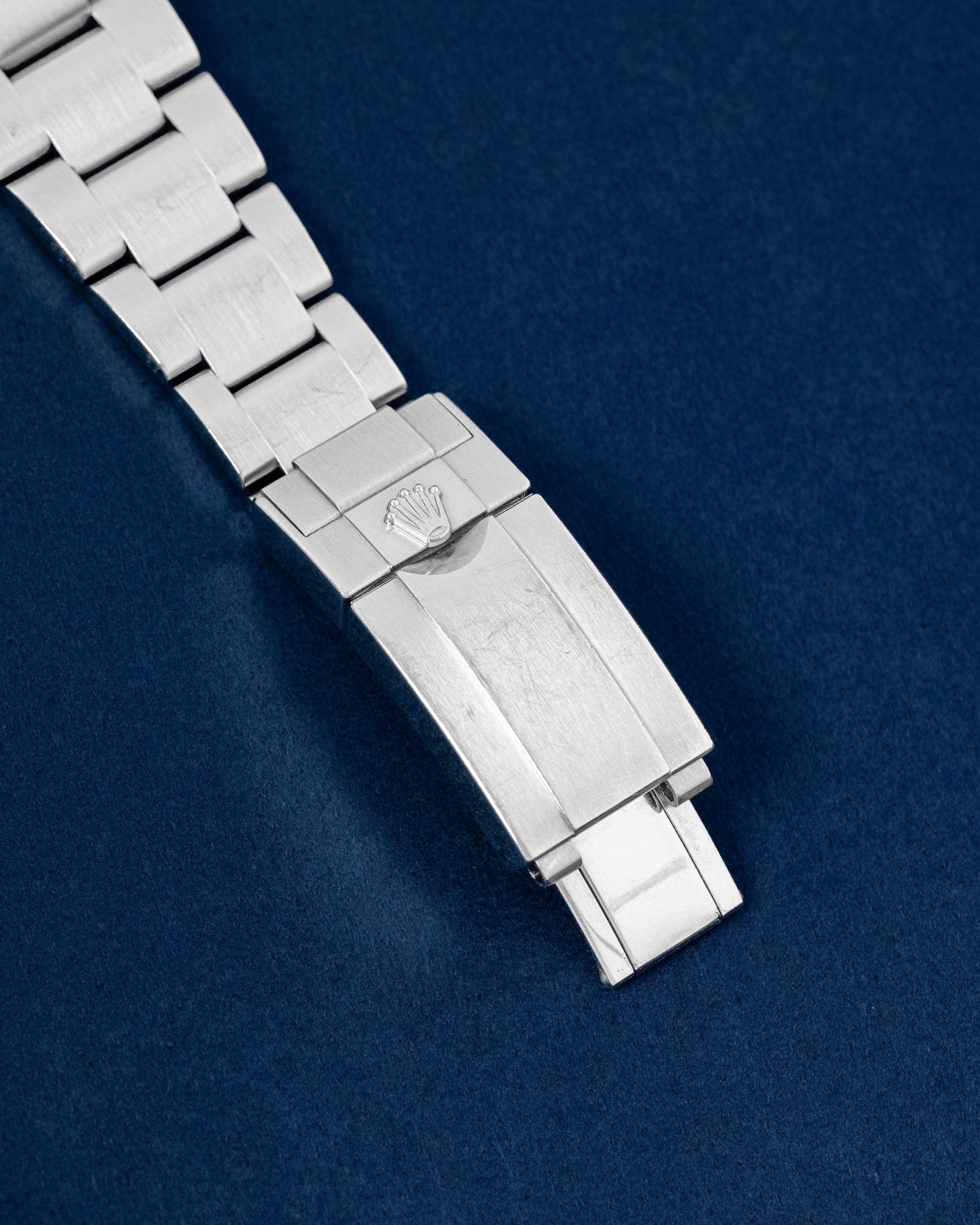
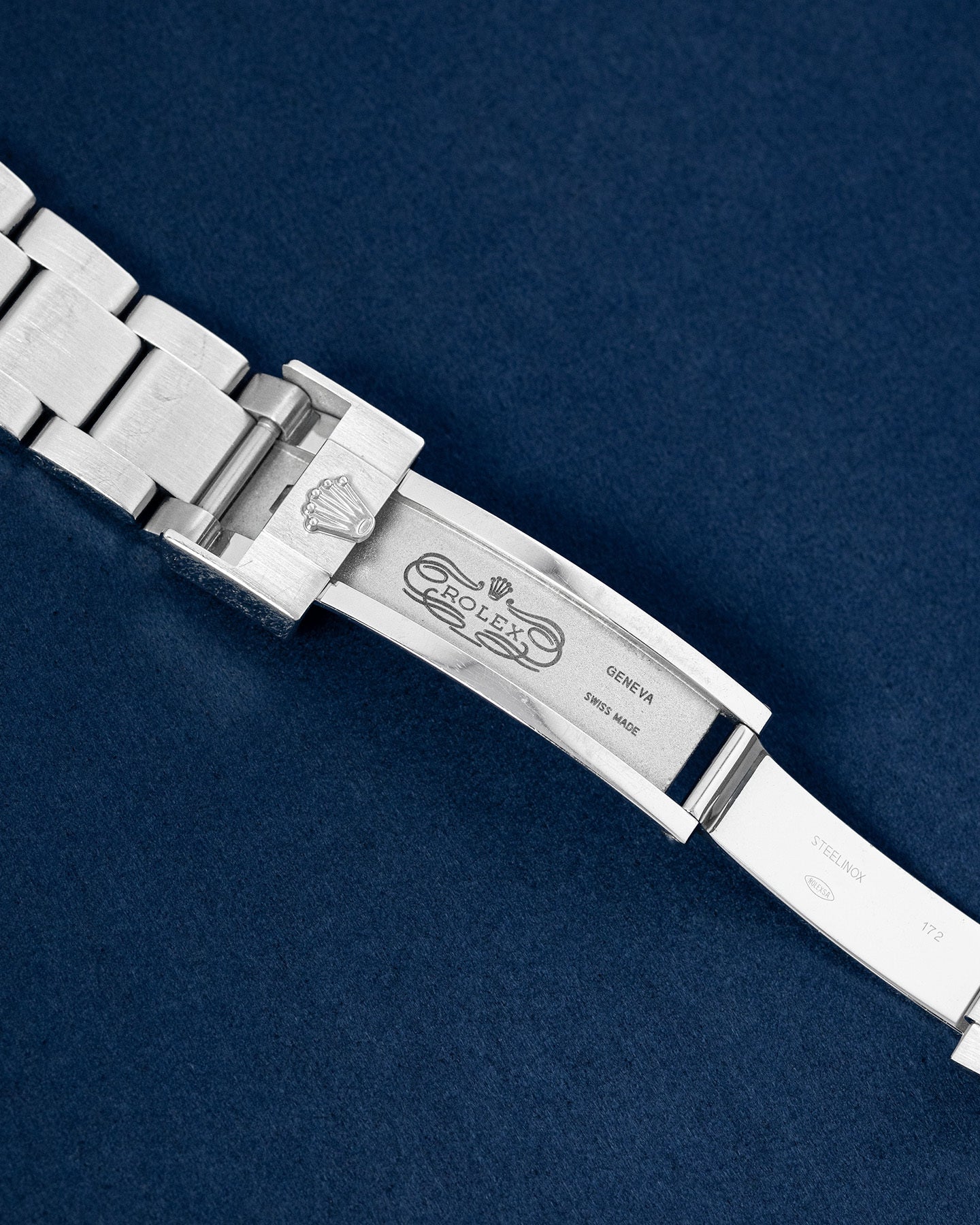
Rolex Explorer II Stainless Steel 216570
Vintage
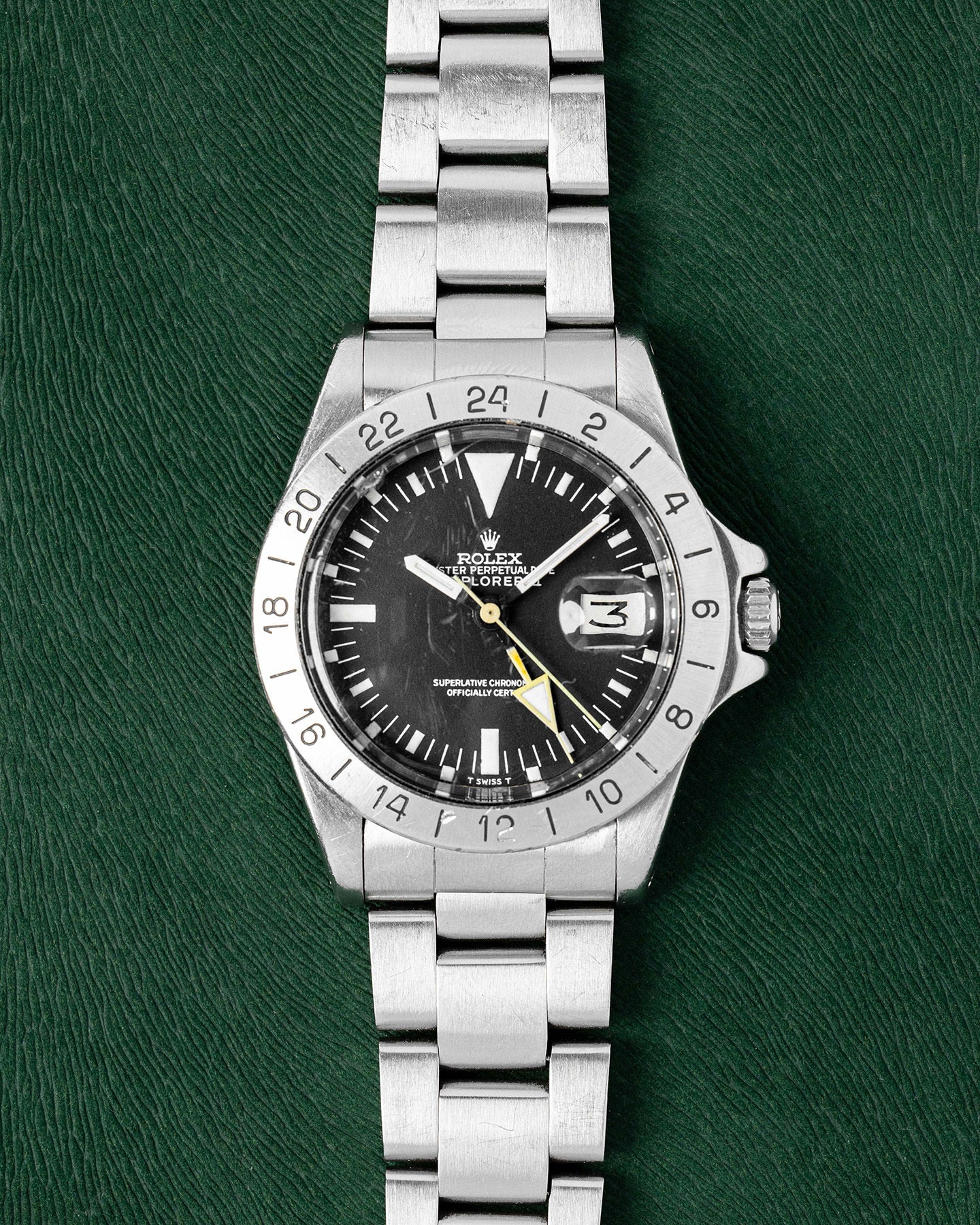
Vintage
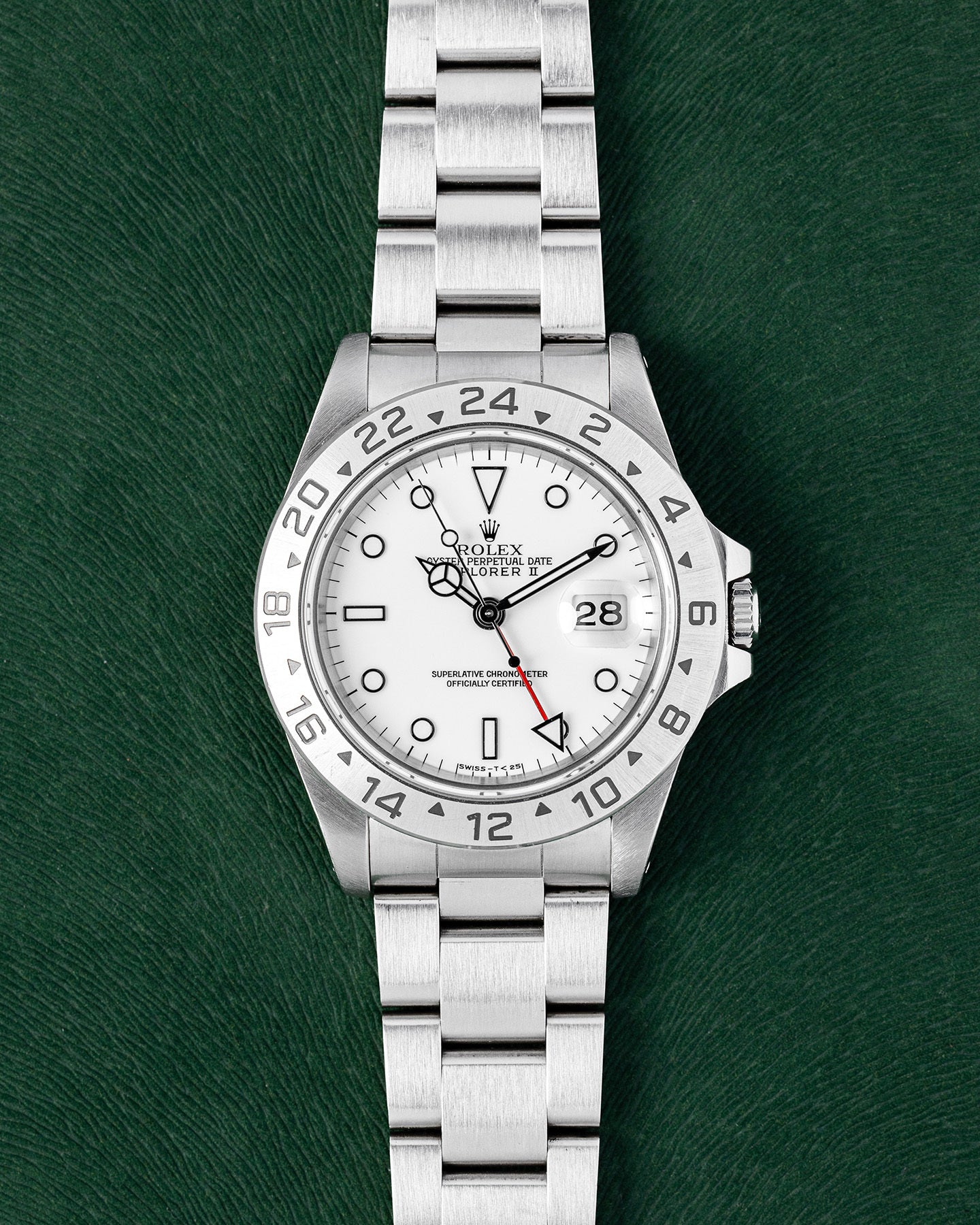
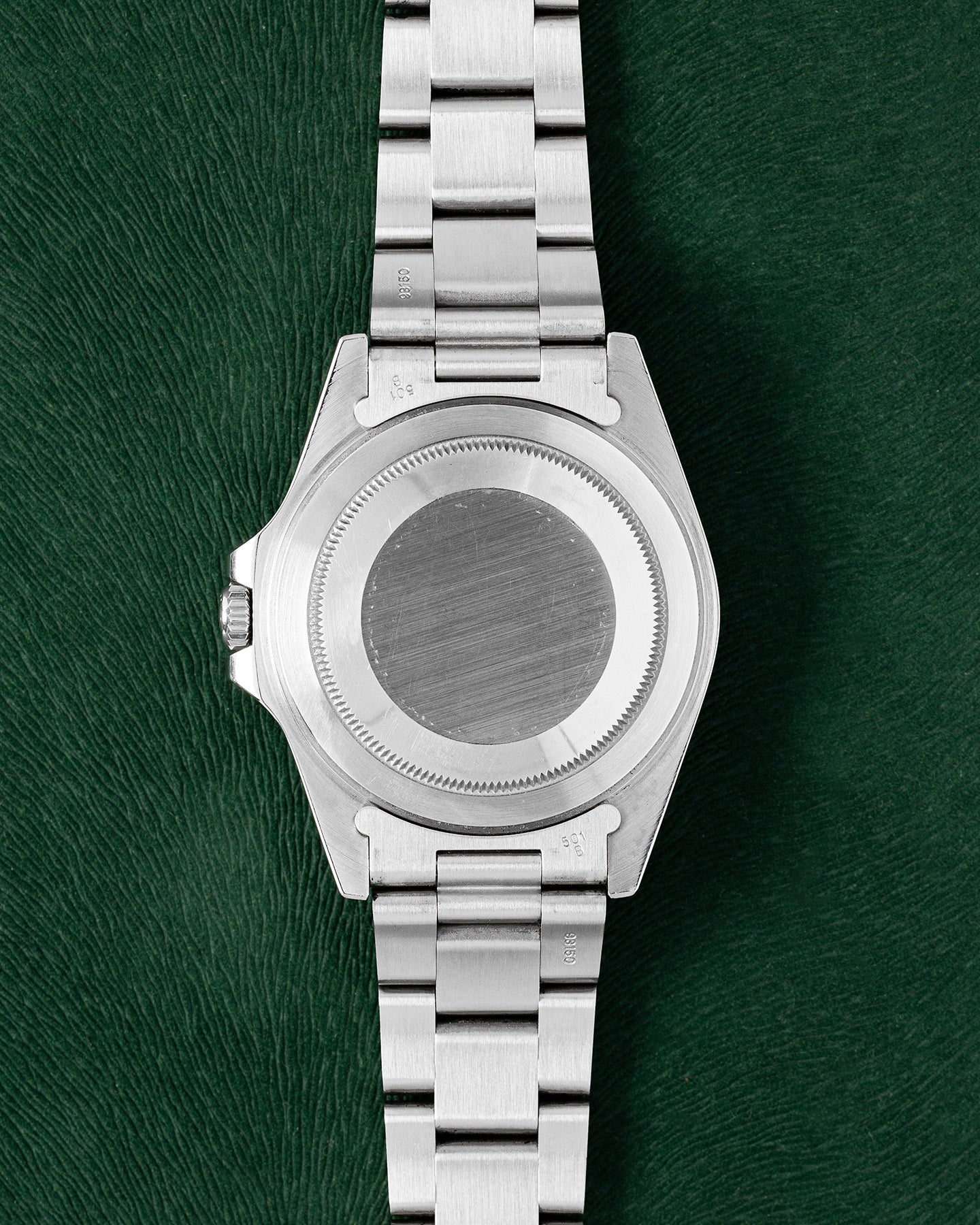
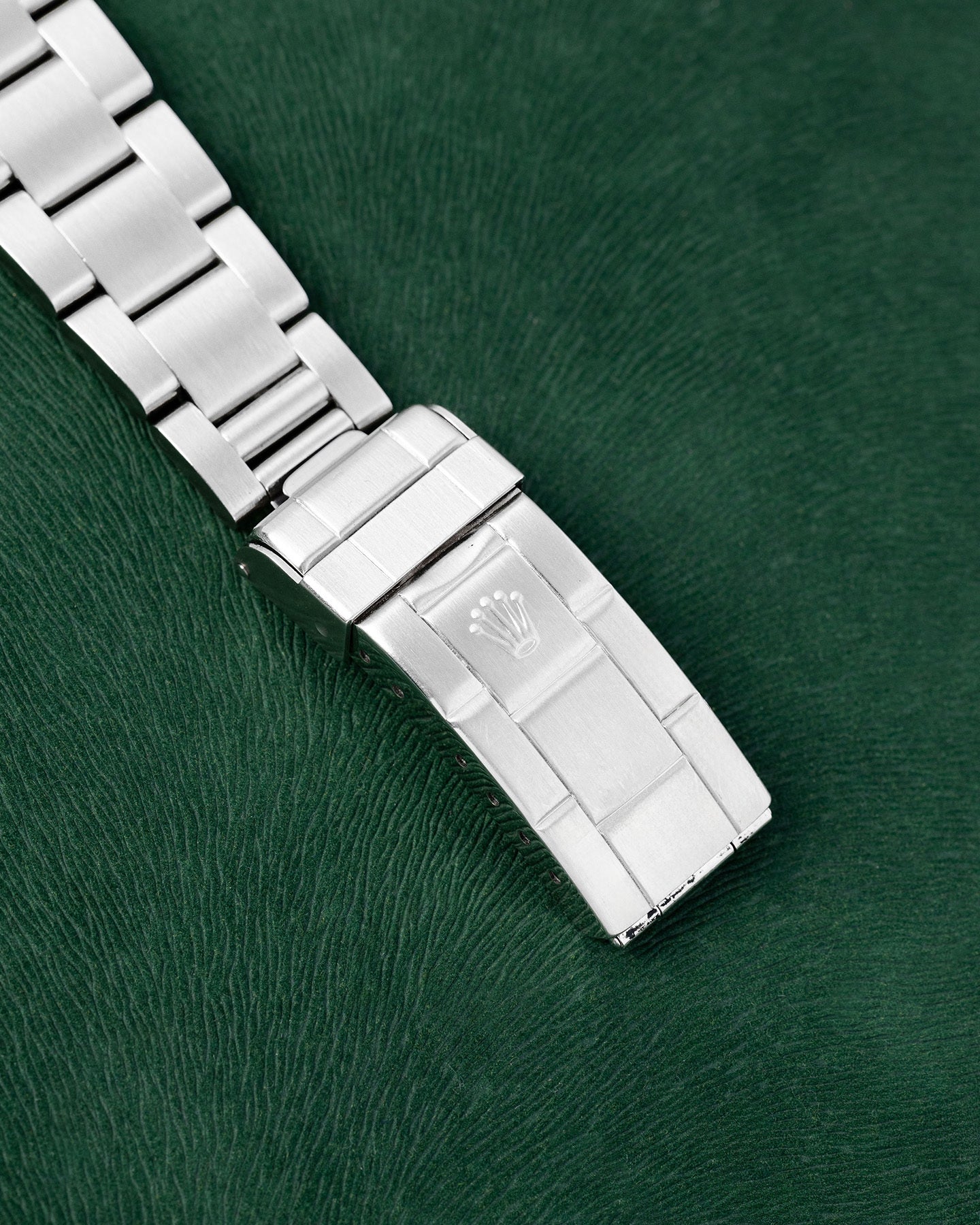
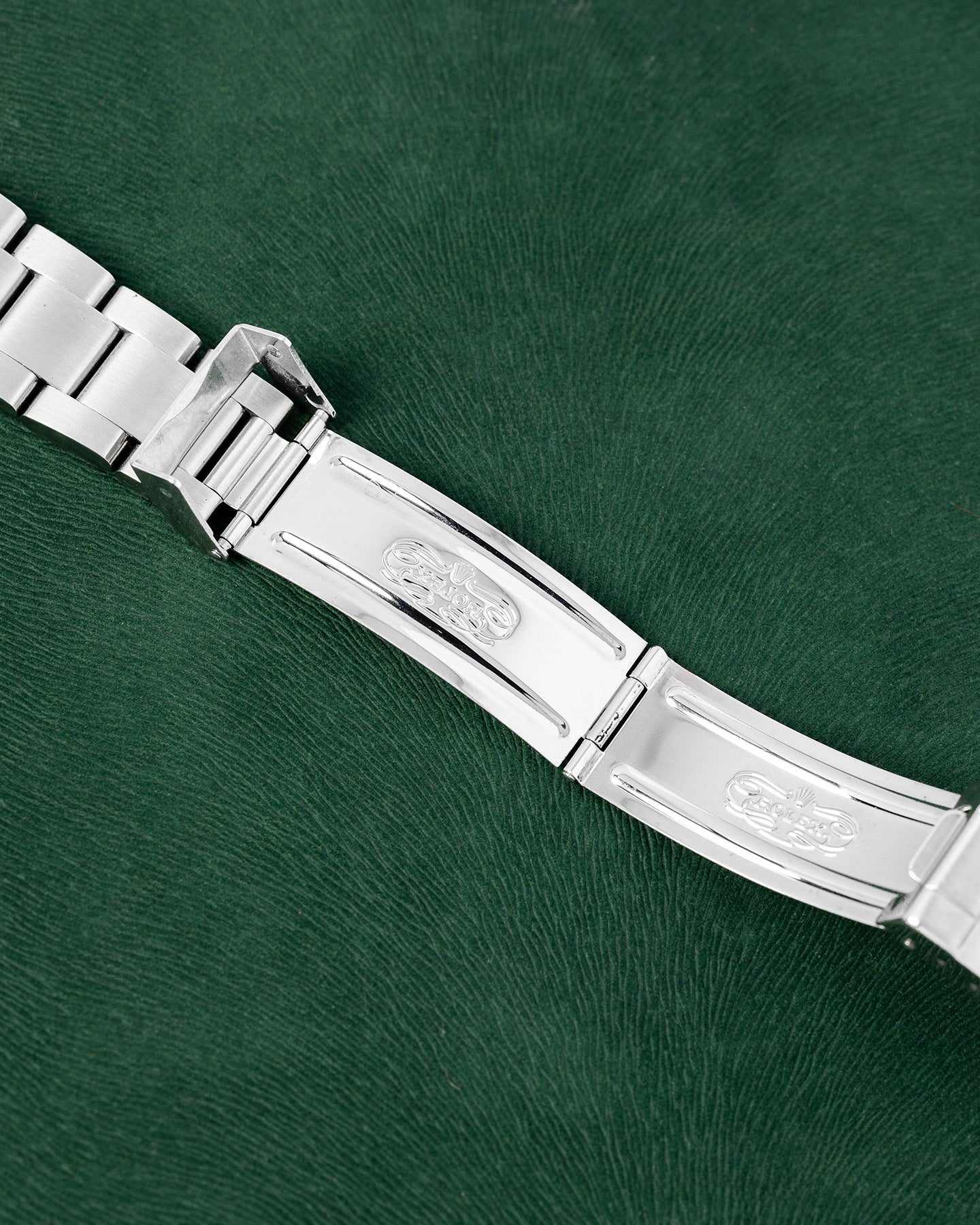
Rolex Explorer II White Dial 16570
Vintage
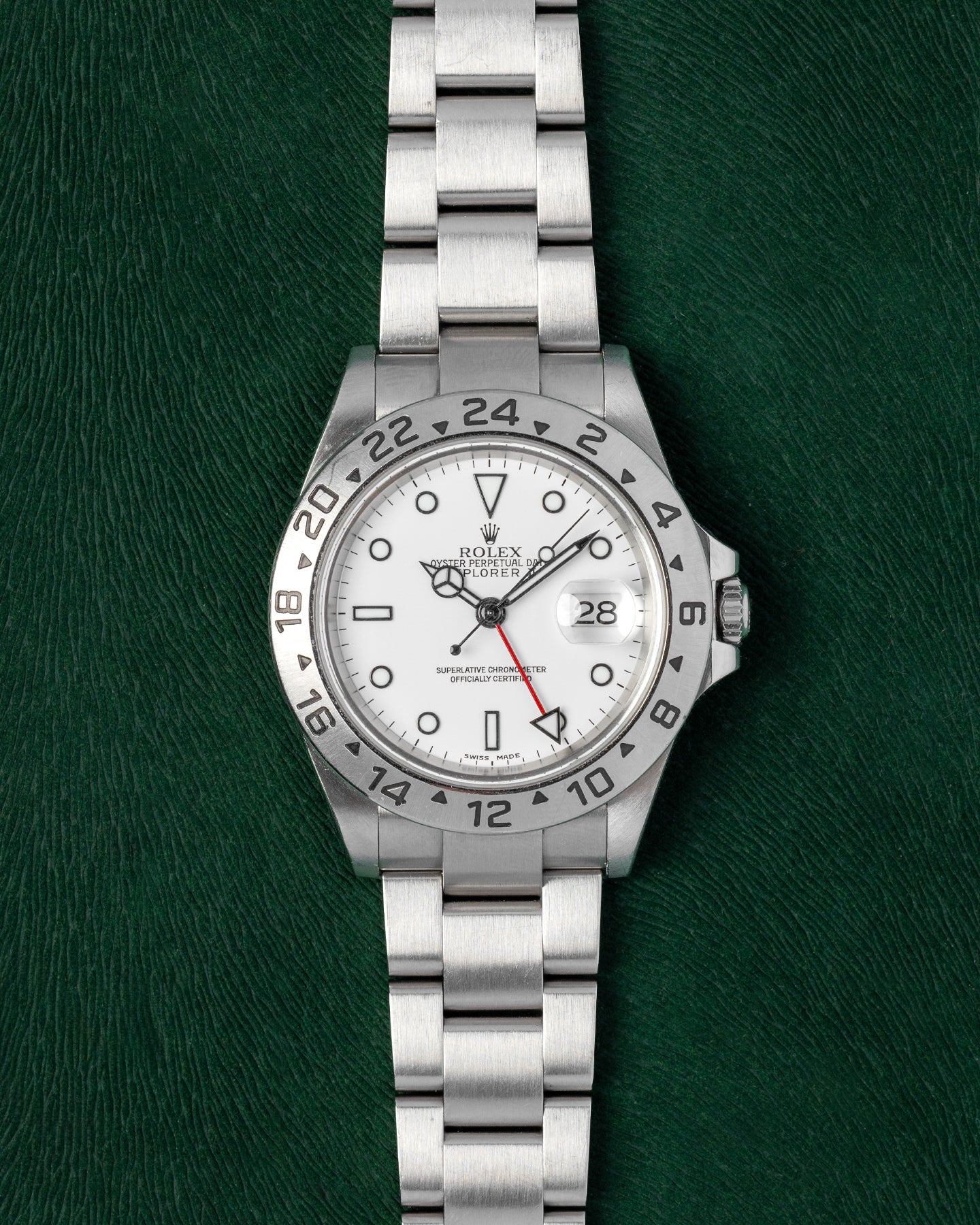
Vintage