Tudor Ranger
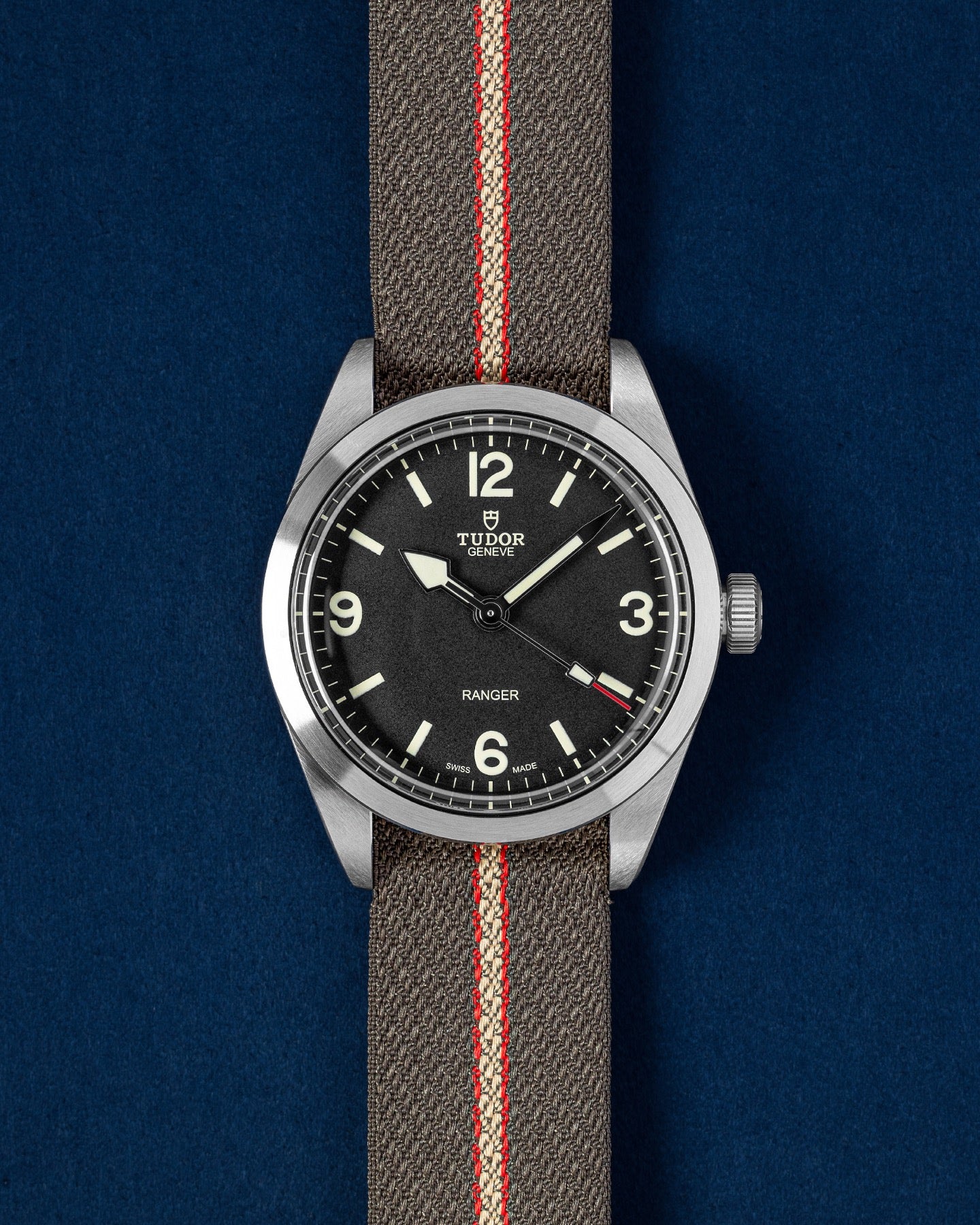
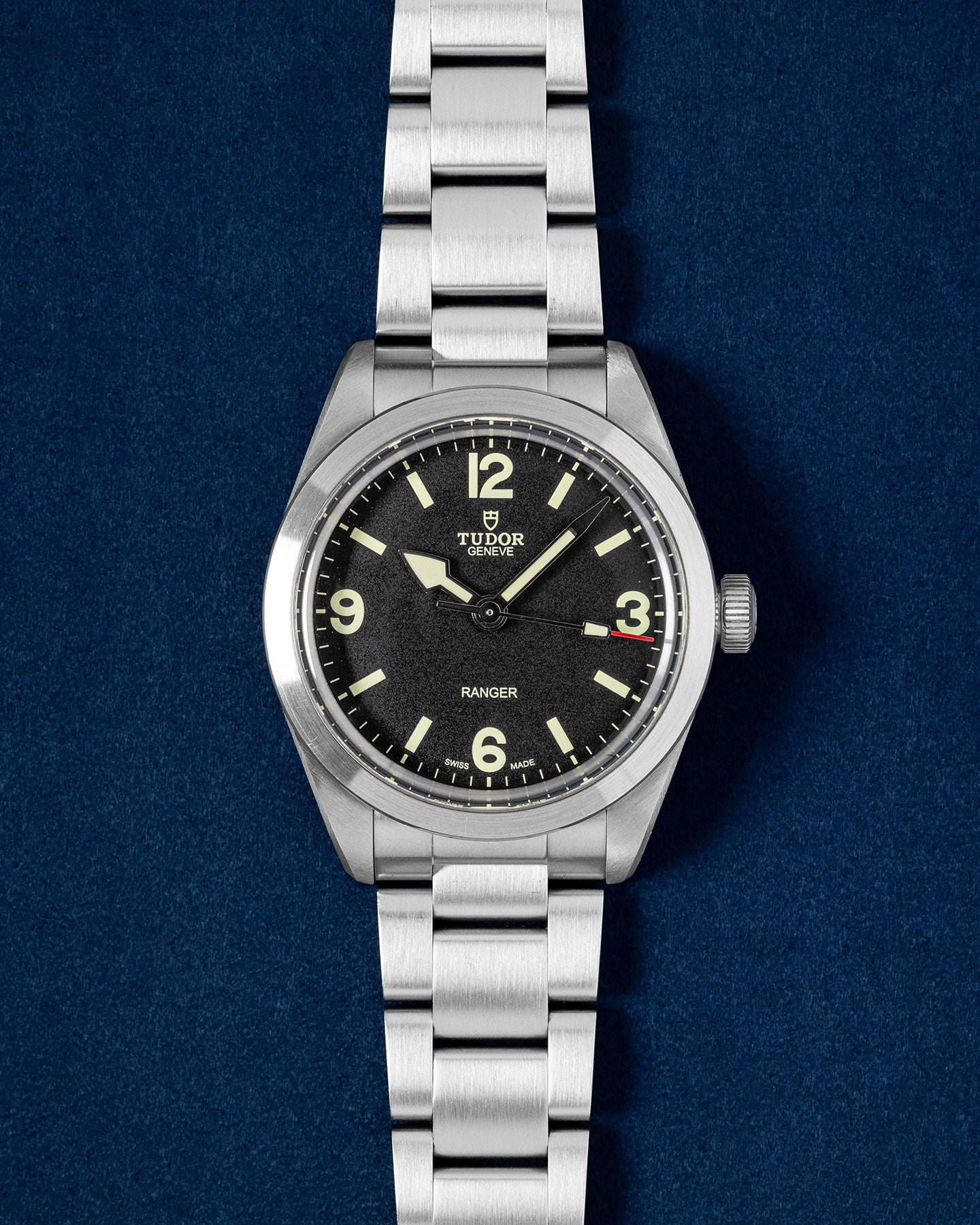
Shop new and pre-owned Tudor Ranger watches at Grand Caliber. The expedition watch rebuilt in classic mid-century proportions, three-six-nine numerals on a matte dial in a thirty-nine millimeter case. Manufacture movement, seventy hours of reserve, water-resistant to 100 meters.
The Tudor Ranger at Grand Caliber
The Tudor Ranger is the watch that closes the loop between a 1952 Arctic expedition and a modern field watch built to the same brief. When the Royal Navy outfitted thirty British military and civilian scientists for the British North Greenland Expedition from 1952 to 1954, the watches they wore through two years at minus 66 degrees Celsius base camp were Tudor Oyster Prince reference 7809s, monoblock cases with screw-down crowns and screw-down case backs, specially lubricated with arctic oil, fitted with extension bracelets to ride over parka sleeves. None of those watches carried the Ranger name on the dial. The Ranger name had been registered by Hans Wilsdorf in 1929. It would not appear on a dedicated Tudor model until the mid 1960s. But the brief established by the 7809s on the Greenland ice cap, a robust, practical, accurate, affordable expedition watch, is the brief the modern Tudor Ranger has carried forward across seven decades and three generations of production.
Grand Caliber sees the Tudor Ranger cross the desk regularly across the current and recent catalogue. The current reference 79950 in 39mm steel with the black matte dial in fabric strap, leather-rubber hybrid, and three-link Oyster-style bracelet configurations. The 2025 reference 79930 in 36mm steel with both the black dial and the new Dune white dial that honours the Tudor Dakar Rally partnership. Vintage Oyster Prince Ranger references from the 1960s and 1970s including the 7995/0, the Ranger II 9111, and the 1980s 90220 and 90330 references. Heritage Ranger reference 79910 from the 2014 to 2020 production window. What follows is the case for the Tudor Ranger as one of the more honest field watches in modern Swiss production, told the way a dealer who has handled the line tells it.
The 1929 Trademark and the British North Greenland Expedition
The Ranger name was registered as a Tudor trademark in 1929, three years after Hans Wilsdorf registered the TUDOR name itself. For the first two decades the Ranger name was not attached to a specific model. It appeared on assorted Tudor watches as an adventurous descriptor in the same way Oyster and Prince were applied to indicate Rolex-derived case construction and automatic winding. The Ranger as a dedicated Tudor model would not arrive until the 1960s. The brief the modern Tudor Ranger draws from, however, was established in 1952.
The British North Greenland Expedition 1952 to 1954
The British North Greenland Expedition was a Royal Navy operation commissioned by Queen Elizabeth II and Prime Minister Winston Churchill in 1952. Commander James Simpson led thirty men from the armed forces and various scientific fields including geology, meteorology, glaciology, and physiology across two years of glaciological and seismic surveys on the Greenland ice cap. Base camp, called North Ice, recorded what was then the lowest temperature ever measured at minus 66 degrees Celsius. The expedition reached 77 degrees north latitude. One of the thirty men did not return, a Danish Army surveyor who died on the mission in 1953.
The expedition members carried twenty-six Tudor Oyster Prince reference 7809 watches, monoblock case construction with the mid-case and bezel cut from a single piece of steel, fitted with screw-down crowns and pressure-fitted crystals. The watches were specially lubricated with arctic oil for the temperature range and shipped on brown leather straps with extension pieces designed to allow the watches to be worn over the sleeves of parkas. The expedition members were issued logbooks and asked to record the daily variation of their watches against the BBC hourly time signals. The data they returned to Tudor in Geneva was the first large-scale Tudor field accuracy study and provided the marketing foundation for what Tudor called the Trial of Destruction advertising campaign launched in 1952, the first major marketing programme in the Tudor history.
What the 1952 to 1954 Watches Were Not
The Oyster Prince reference 7809 watches the BNGE members carried did not have the word Ranger on the dial. They were standard Tudor Oyster Prince automatic chronometers fitted out for arctic conditions. The Ranger name appeared on subsequent Tudor models specifically because of the expedition, not as part of the expedition itself. Tudor used the BNGE story for the next twenty years as the foundational example of the brand tool watch credibility, in the same way Rolex used the 1953 Everest expedition for the Explorer.
The Vintage Tudor Ranger 1960s to 1988
Tudor launched the Tudor Ranger as a dedicated model line in the mid-to-late 1960s. Tudor historical materials cite 1969 as the year the Ranger first appeared in the brand catalogue, though dial variants resembling later Ranger configurations existed across the broader Tudor Oyster Prince range from earlier in the decade. The Ranger name itself had appeared on Tudor dials as early as 1943 with the reference 279 produced for the Indian market, decades before the dedicated Ranger model existed. The early Ranger watches in the 1960s were not a specific reference but rather a dial-and-handset configuration applied across multiple existing Tudor Oyster Prince references. References that carried the Ranger dial layout included the 7964, 7966, 7990, 7992, 7995, and 7996, with date-equipped variants under separate reference numbers. The 1967 Tudor Oyster Prince Ranger reference 7995/0 is the vintage anchor reference most modern editorial coverage points to, with a 34mm steel case, matte black dial, painted Arabic numerals at 12, 3, 6, and 9, baton markers at the remaining hours, the ETA calibre 2483 inside, and the arrow-shaped hour hand that has become the Tudor Ranger handset signature.
In 1973 Tudor introduced the Ranger II reference 9111, the first Ranger with a date function and a more contemporary mid-1970s aesthetic including coloured dials in blue and orange variants and case designs that broke from the round Oyster Prince architecture into more angular cushion-case forms. The Ranger II represented the high-water mark of vintage Ranger production volume and remains the most-traded vintage Ranger reference on the secondary market today.
By the 1980s the Ranger had moved to dedicated reference numbers 90220 (no date) and 90330 (date) and was sold under the Ranger name without the broader Oyster Prince framing. Tudor discontinued the vintage Ranger line in 1988, ending the original production run after approximately two decades of catalogue presence.
The Heritage Ranger Reference 79910 and the 2014 Revival
Tudor revived the Ranger name in 2014 with the Heritage Ranger reference 79910, part of the broader Tudor Heritage collection that also included the Heritage Chrono, Heritage Black Bay, and Heritage Advisor. The 79910 ran a 41mm steel case at 12mm thick with 22mm lugs, an ETA-sourced 2824-2 automatic movement with 38 hours of power reserve, and 150 metres of water resistance. The dial drew directly from the 1967 7995/0 archive piece in the Tudor Geneva collection with painted Arabic numerals at 12, 3, 6, and 9, beige Super-LumiNova fill, baton markers, and the arrow-shaped hour hand.
The Heritage Ranger was a competent watch but it was an interpretation rather than an upgrade. The 41mm case ran larger than the vintage references and slightly larger than the comparable Rolex Explorer of the same period. The ETA 2824-2 movement, while serviceable, was the same base calibre used across countless competing Swiss watches in the same price band and did not carry the technical distinction Tudor had begun building into the Black Bay line with the manufacture MT calibres from 2015 onward. Tudor discontinued the Heritage Tudor Ranger 79910 in approximately 2020 without a direct replacement, ending the second generation of Tudor Ranger production at six years.
The 2022 Modern Tudor Ranger Reference 79950
In July 2022 Tudor launched the third-generation Ranger as reference 79950, timed to mark the 70th anniversary of the British North Greenland Expedition. The 79950 represents the most significant Ranger redesign since the original 1960s introduction and brought the line into full alignment with the modern Tudor in-house manufacture calibre programme.
Case and Dimensions
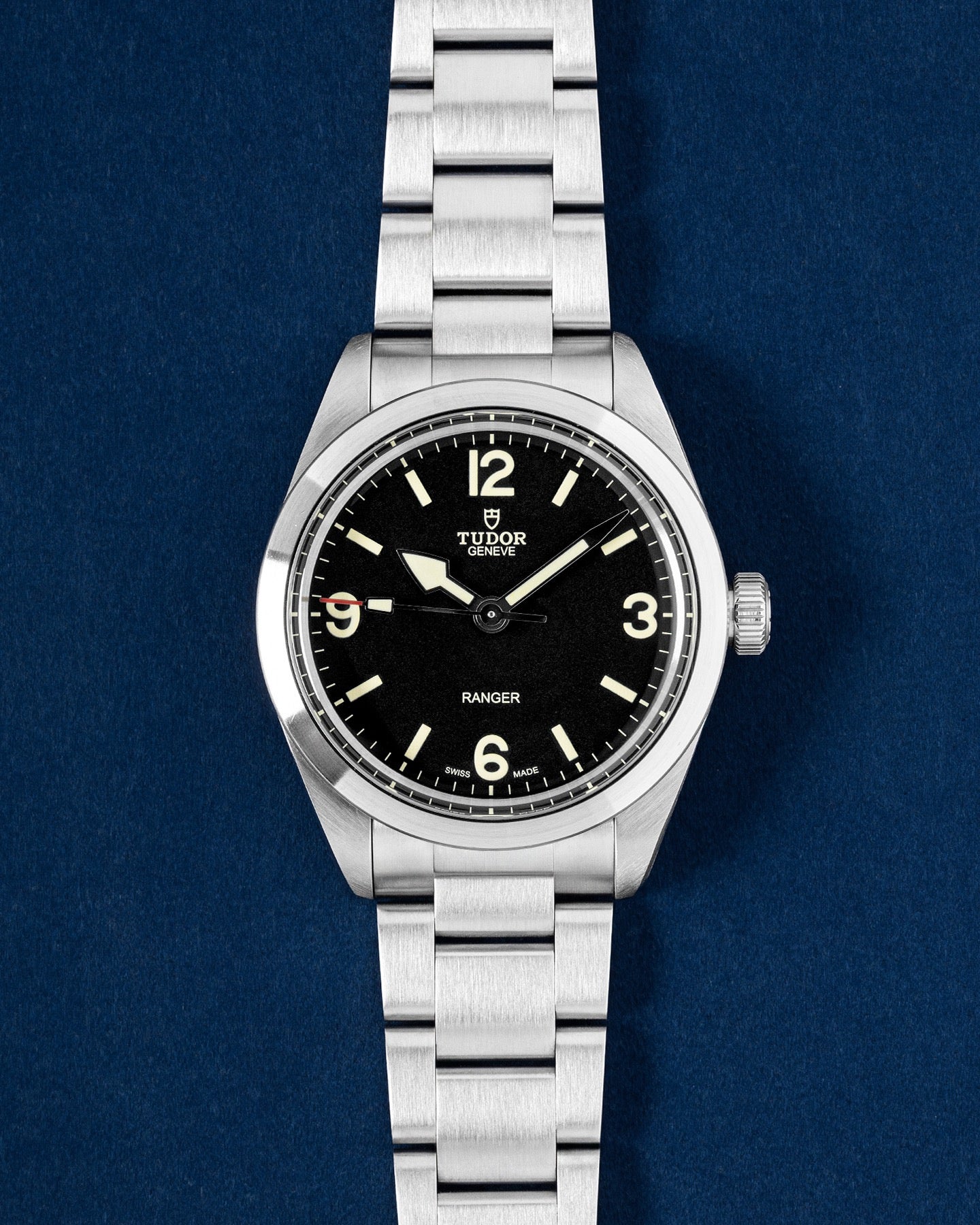
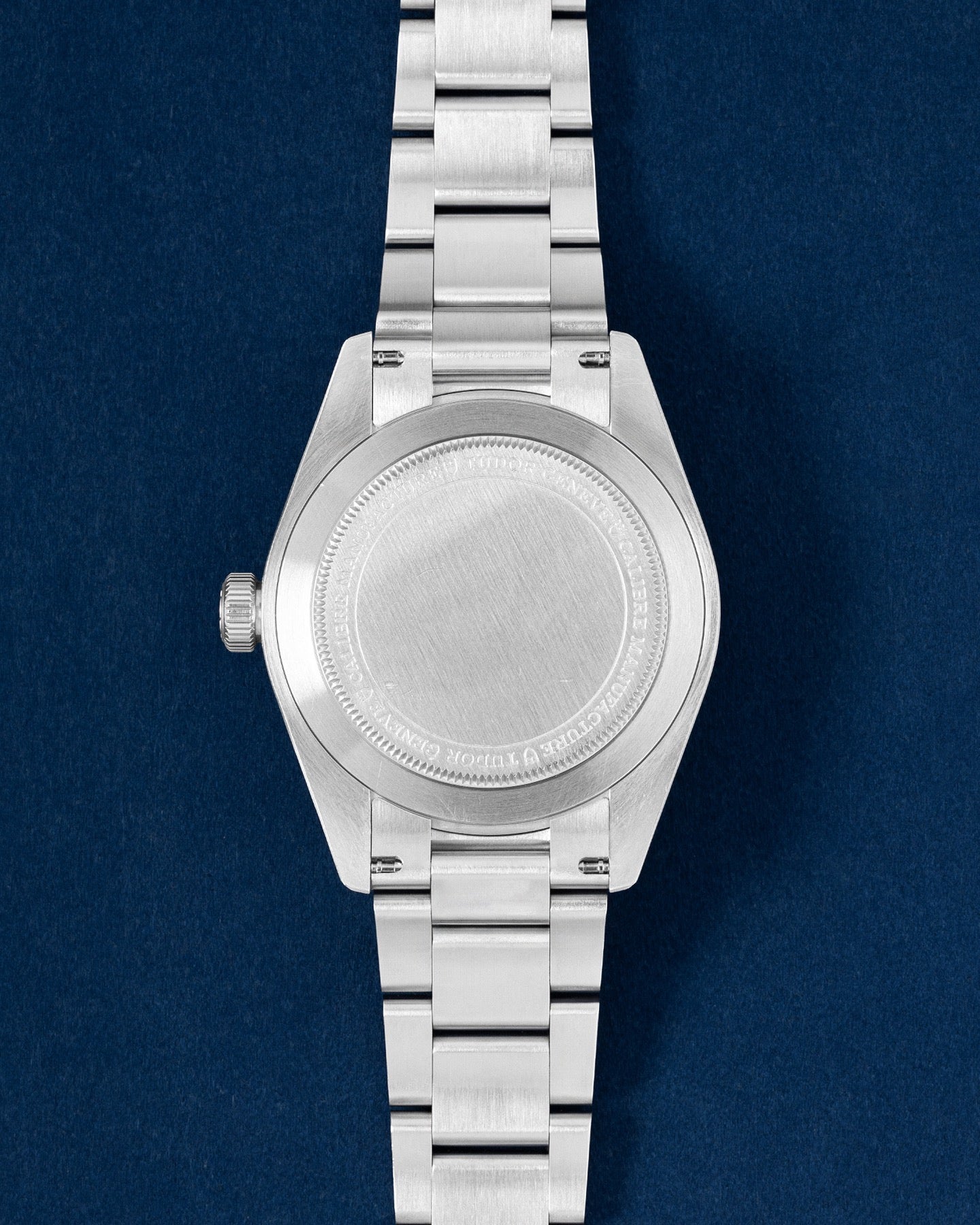
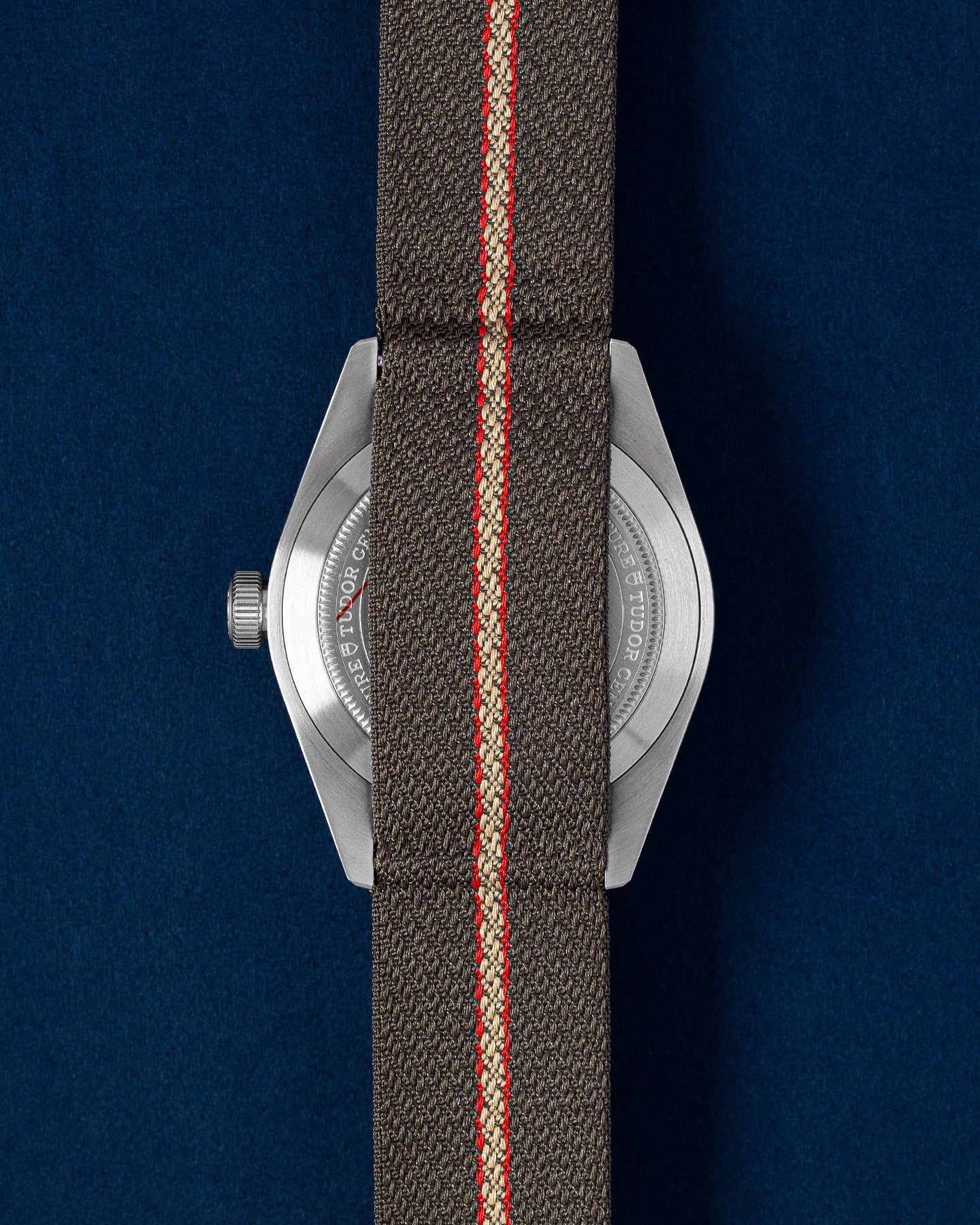
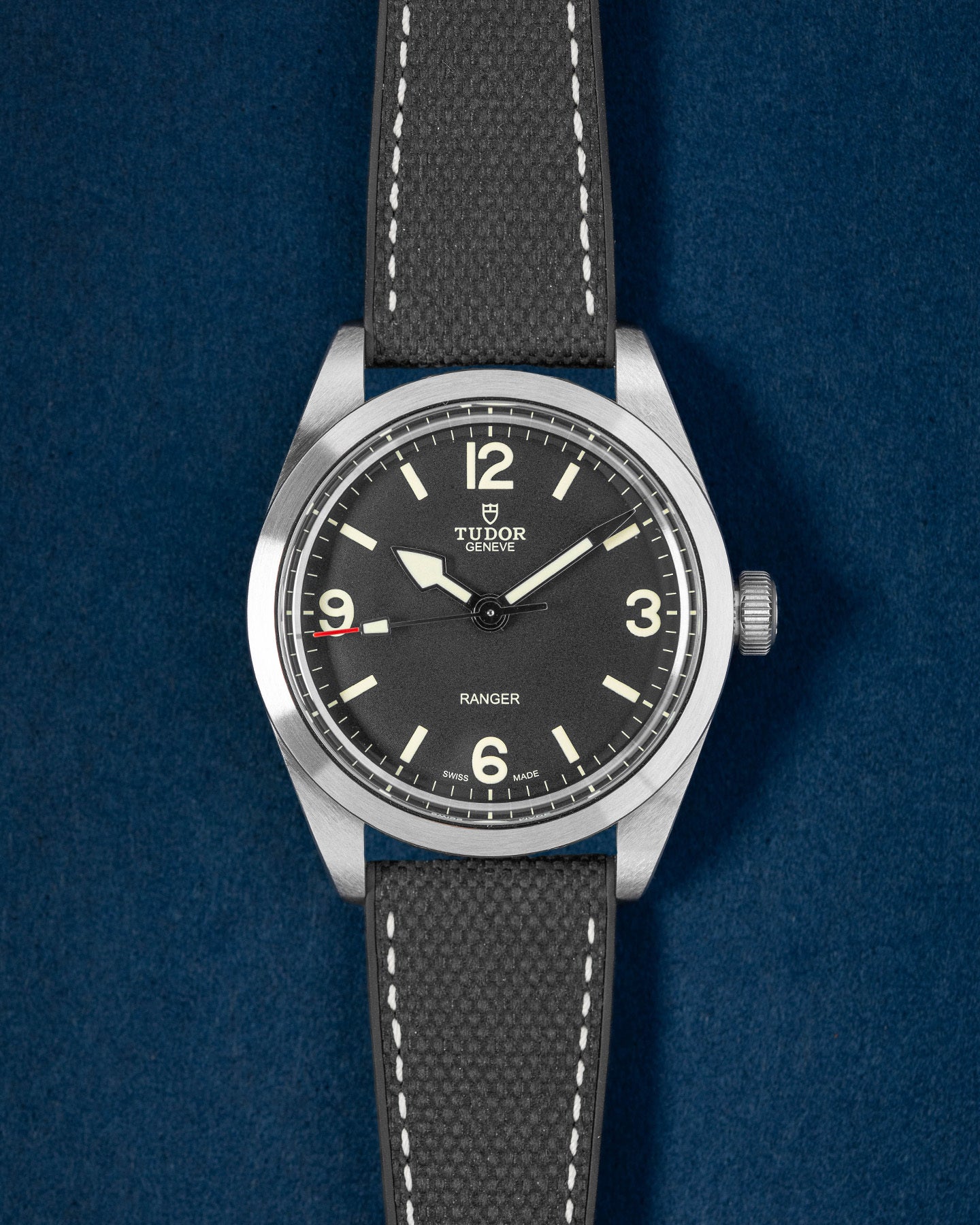
The 39mm Tudor Ranger 79950 case measures 39mm in diameter, 12mm in thickness, 47.3mm lug-to-lug, and 20mm at the lugs, with 100 metres of water resistance and a screw-down crown carrying the Tudor rose in relief. The case is satin-finished across all visible surfaces with polished accents on the inner edge of the bezel, the only departure from the otherwise uniform matte tool-watch aesthetic. The case is two millimetres shorter in diameter and two millimetres thinner than the 2014 Heritage Ranger 79910, a meaningful proportional adjustment that brings the watch closer to vintage 1960s Ranger sizing.
Dial and Handset
The dial is matte black with painted Arabic numerals at 12, 3, 6, and 9, baton markers at the remaining hours, and beige Super-LumiNova fill across all dial elements. The handset is the Ranger signature: an arrow-shaped hour hand, a syringe-tipped minute hand, and a thin sweep seconds hand with a red tip. The beige luminescent fill is a deliberate aesthetic choice that reads warmer than the white Super-LumiNova used across the broader Tudor catalogue and matches the visual aging the vintage 1960s and 1970s tritium-lume Ranger references have developed over time.
Movement Calibre MT5402
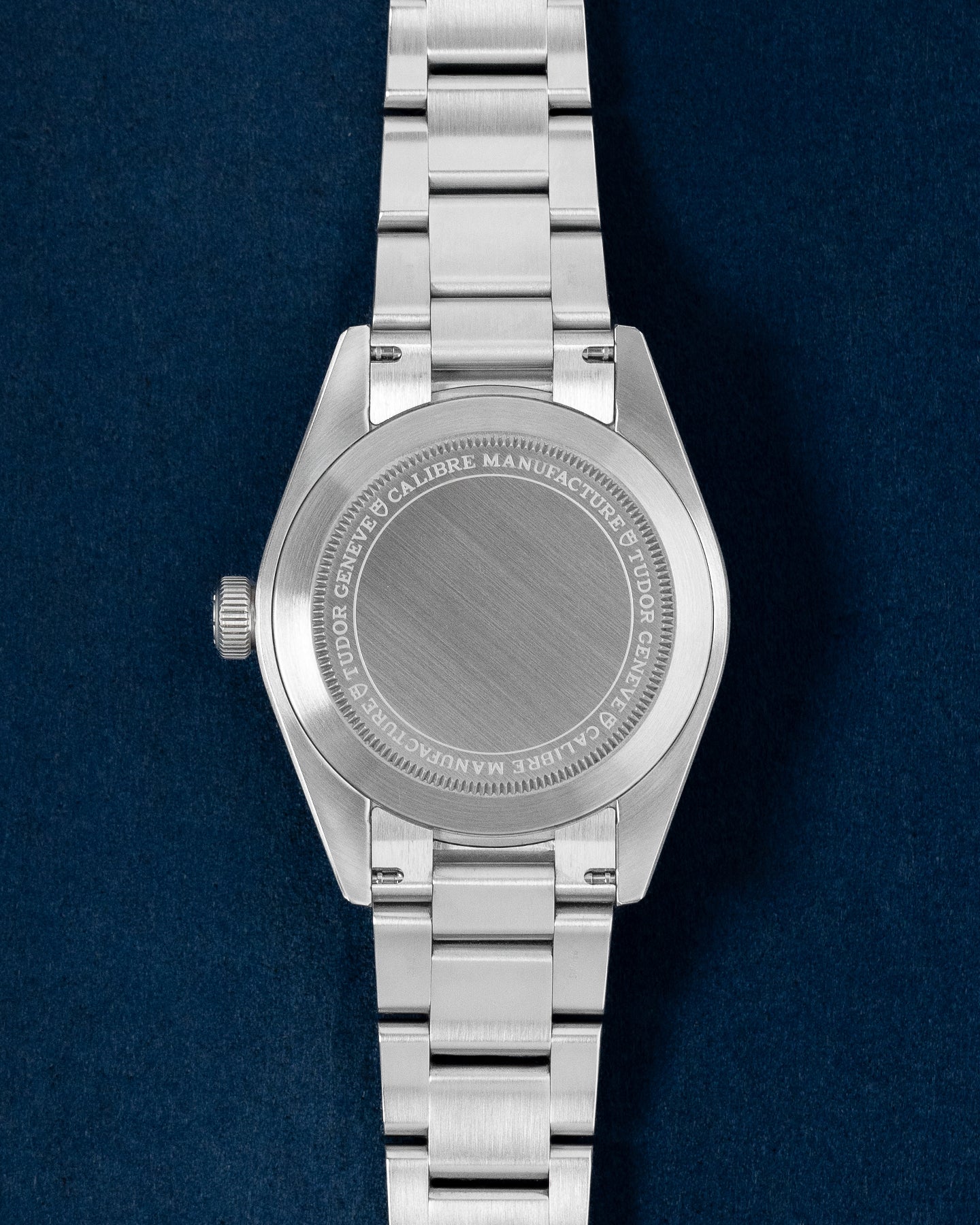
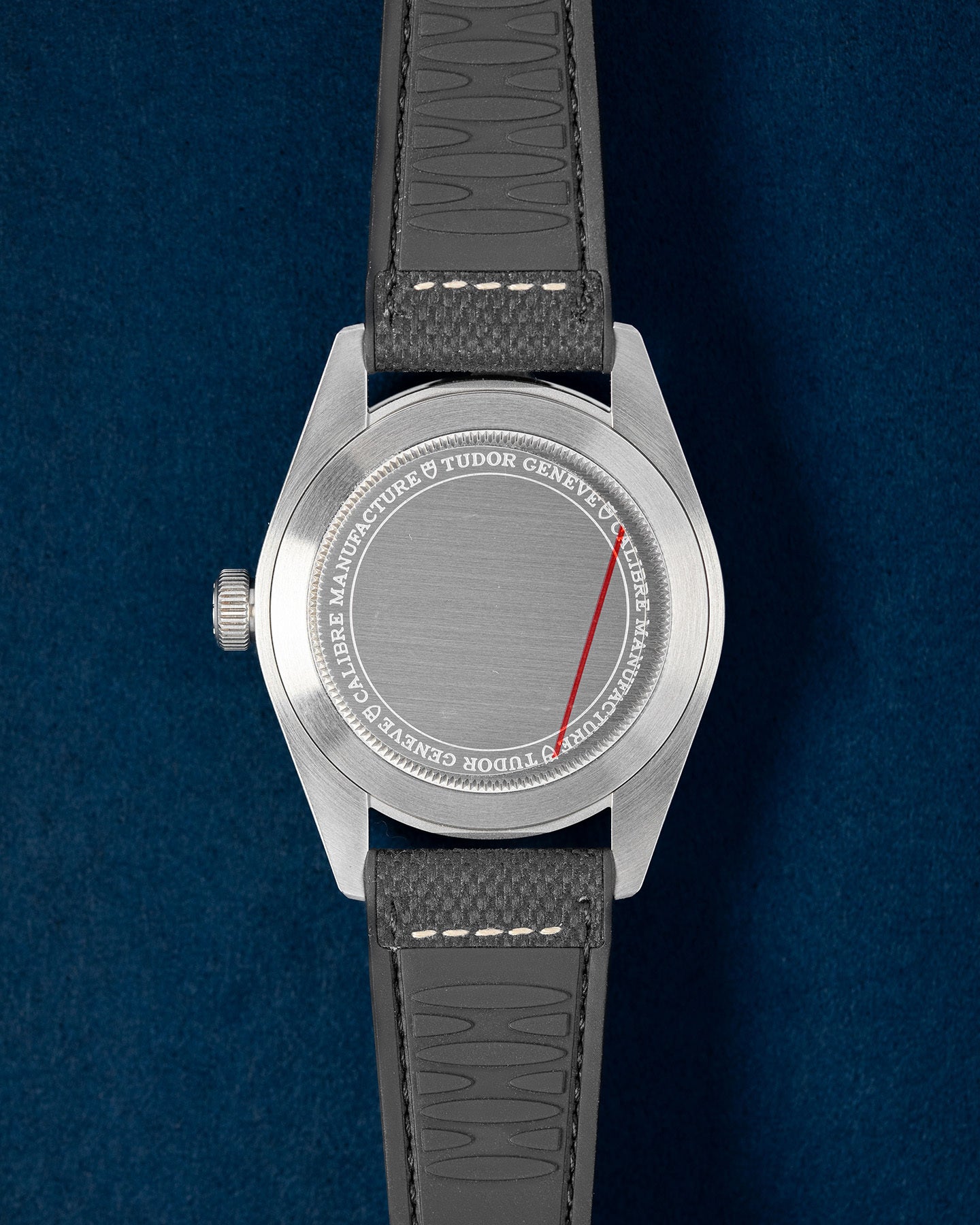
The 79950 runs the Tudor manufacture calibre MT5402, the same movement family Tudor uses across the Black Bay 58 and the modern Black Bay 54 platforms. The MT5402 is built at Kenissi in Le Locle to Tudor specifications and measures 26mm by 6.5mm, running at 28,800 vibrations per hour with a 70-hour power reserve. The movement carries 27 jewels, a non-magnetic silicon balance spring, a variable inertia balance held under a traversing bridge with two-point fixation, and bidirectional rotor winding. COSC chronometer certification is standard. Tudor regulates the calibre internally to negative two to positive four seconds per day, a tighter tolerance than the negative four to positive six the COSC certificate requires.
The movement upgrade from the ETA 2824-2 in the Heritage 79910 to the manufacture MT5402 in the modern 79950 is the substantive technical case for the modern Ranger. Power reserve nearly doubled from 38 hours to 70. Accuracy tightened from COSC nominal to Tudor-regulated. Magnetic resistance improved meaningfully with the silicon hairspring. The watch the buyer wears today is a different mechanical product from the one Tudor sold in 2019.
Strap Options
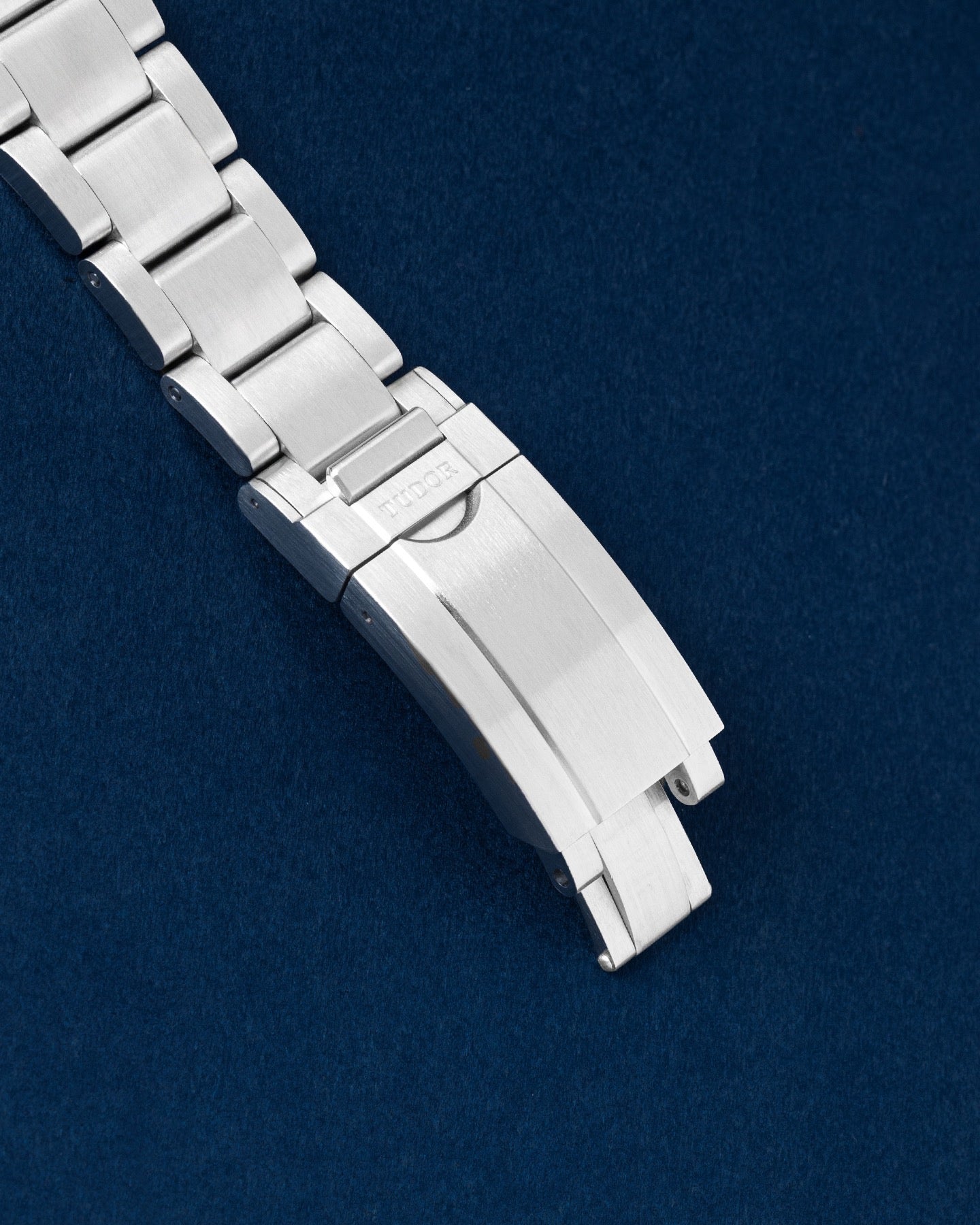
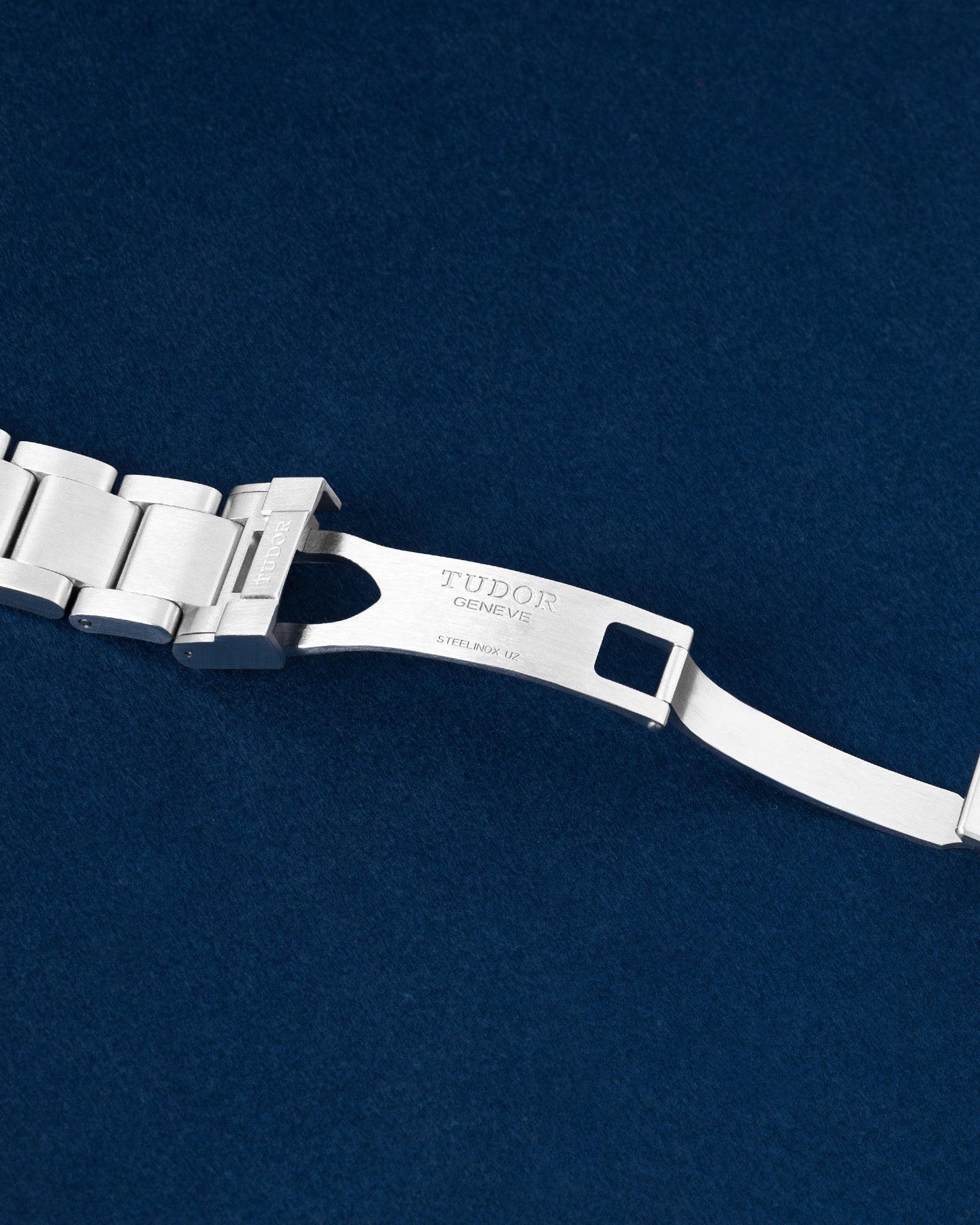
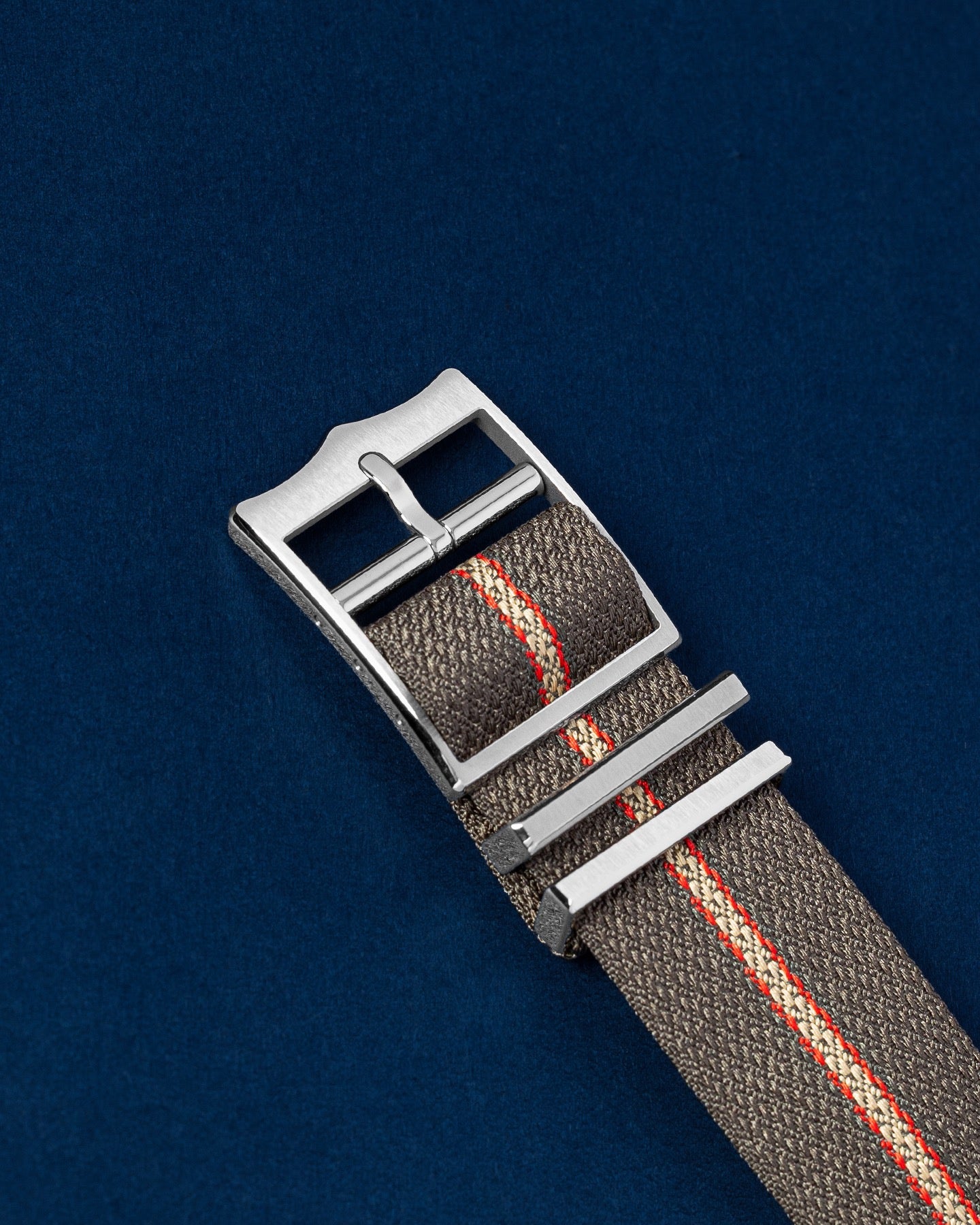
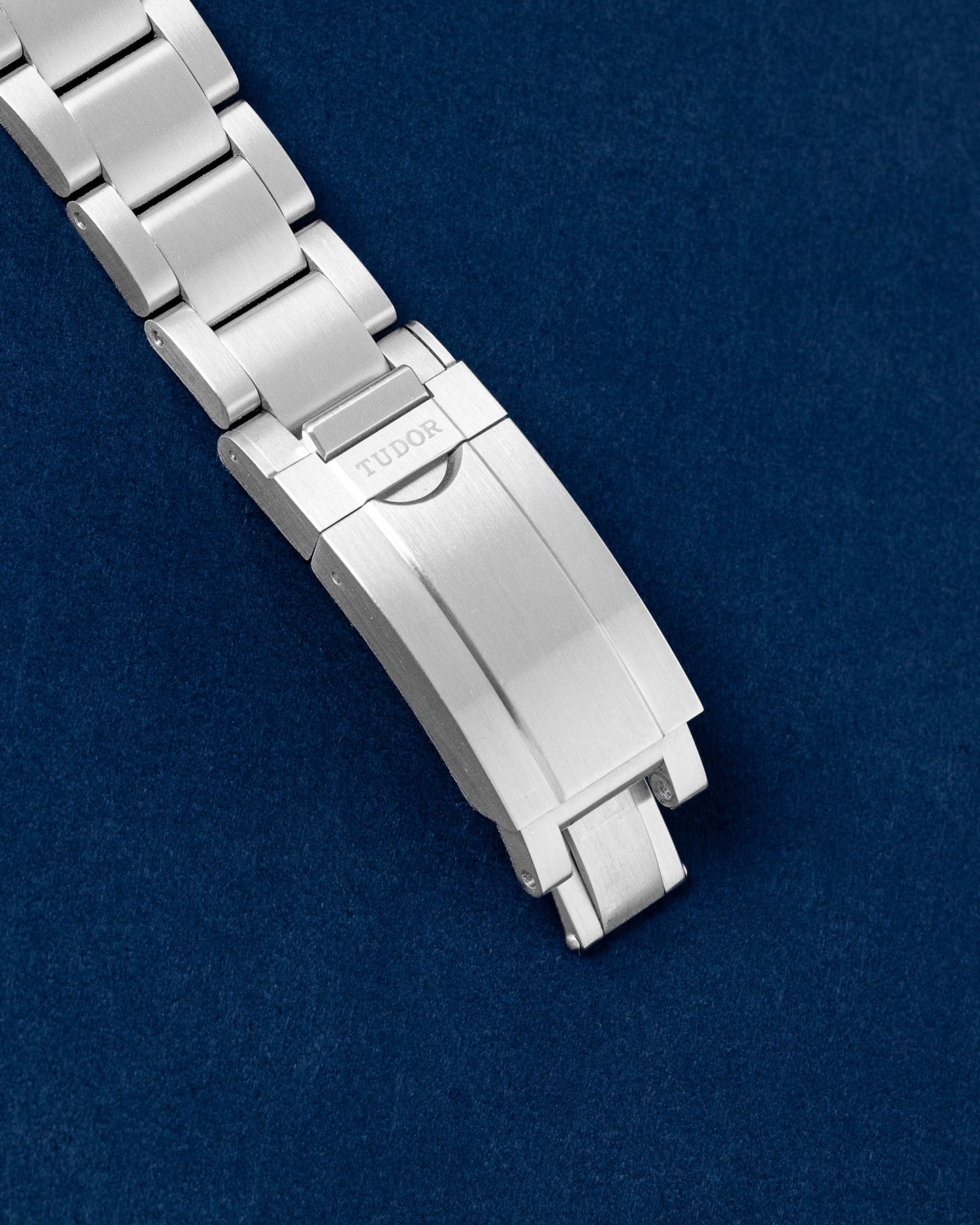
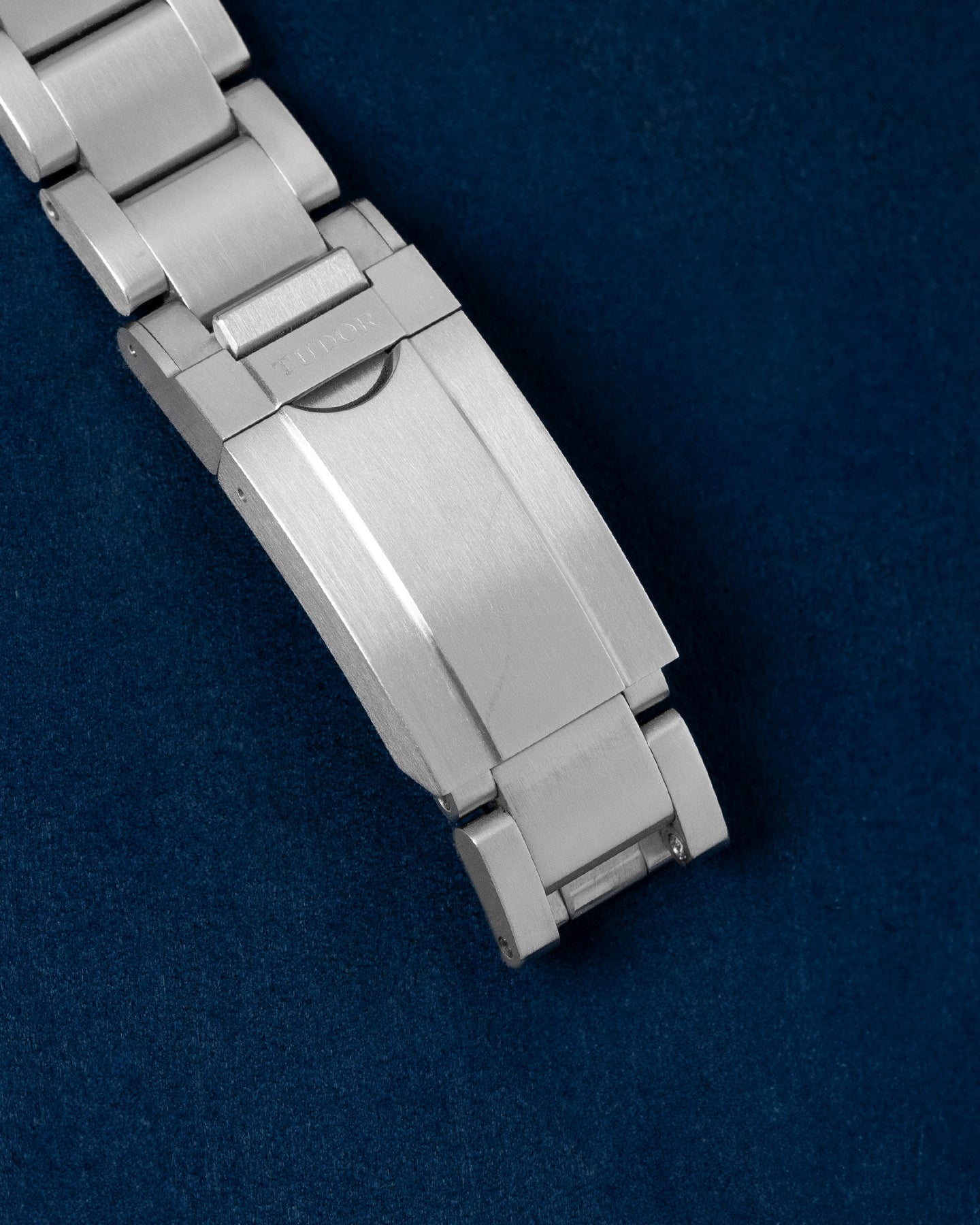
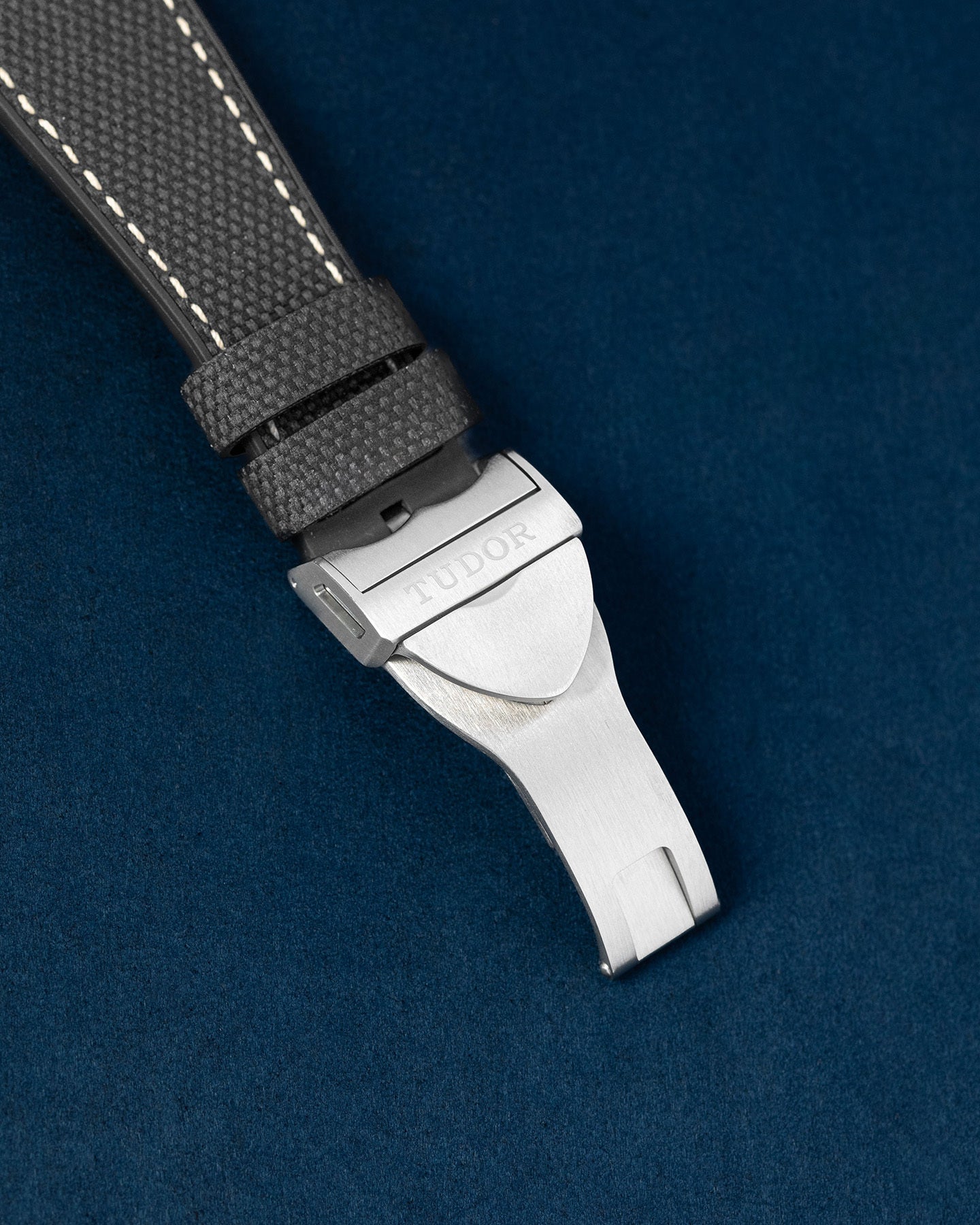
The 39mm 79950 ships in three strap configurations. The first is a three-link Oyster-style stainless steel bracelet, fully brushed across all surfaces, with a folding clasp carrying the Tudor T-fit micro-adjustment system that allows tool-free fine adjustment across approximately 8mm of bracelet length. The second is a green fabric strap with red and beige stripes, woven on traditional jacquard looms at Julien Faure in France, finished with a folding clasp and steel safety catch. The third is a hybrid rubber and leather strap with a buckle, combining the durability of rubber on the wrist contact surface with the visual character of leather on the exterior.
The 2025 36mm Ranger Reference 79930 and the Dune White Dial
In November 2025 at Dubai Watch Week, Tudor expanded the Tudor Ranger catalogue with a smaller 36mm case reference and a new dial colour. The expansion brought the Tudor Ranger into closer alignment with the Rolex Explorer 36mm reference 124270 sizing and added a vintage-warm dial option that has driven substantial collector interest.
Reference 79930 36mm Case
The 36mm Tudor Ranger 79930 measures 36mm in diameter, 11mm in thickness, 44.1mm lug-to-lug, and 19mm at the lugs. The case is one millimetre thinner than the 39mm 79950 and three millimetres smaller in diameter, with the lug width reduced from 20mm to 19mm to maintain proportional balance. The 100m water resistance carries over unchanged.
Calibre MT5400 in the 36mm
The 36mm case required a smaller manufacture calibre, and Tudor specified the MT5400 in place of the MT5402. The MT5400 is the same Kenissi-built calibre family as the MT5402, with the same 28,800 vibrations per hour, the same 70-hour power reserve, the same silicon balance spring, the same COSC chronometer certification, and the same Tudor internal regulation to negative two to positive four seconds per day. The MT5400 measures 26mm in diameter against the larger MT5402 configuration, and the smaller diameter is what allows Tudor to bring the 36mm case down to 11mm in thickness rather than the 12mm the 39mm carries. The MT5400 also powers the Black Bay 54 and the Black Bay 58 in current production.
The Dune White Dial
The Dune white dial launched alongside the 36mm case as a homage to the Tudor partnership with the Dakar Rally endurance race. The dial reads as a warm creamy beige rather than a clinical white, with the same painted Arabic numerals at 12, 3, 6, and 9, baton markers, and arrow-shaped hour hand as the black dial, plus a black date-style font on the numerals that contrasts cleanly against the dune background. The Dune dial is available on both the 36mm 79930 and the 39mm 79950, giving the modern Ranger catalogue four total dial-and-case combinations across the two case sizes.
The Tudor Ranger Versus the Rolex Explorer
The Tudor Ranger and the Rolex Explorer share a single brief, the tool watch built for exploration. They have shared that brief since the 1953 Everest expedition and the 1952 to 1954 BNGE established the category. The modern comparison rewards a clear-eyed reading because both watches have evolved in parallel within the same broader corporate family.
The Rolex Explorer 124270 in 36mm runs a 36mm by 11.5mm case in Oystersteel, the calibre 3230 with Rolex Superlative Chronometer certification at negative two to positive two seconds per day, a 70-hour power reserve, 100m water resistance, the Mercedes handset, the 3, 6, and 9 numerals with luminescent baton markers, and the three-link Oyster bracelet with Easylink extension. Retail at Rolex authorised dealers sits in luxury sport explorer territory.
The Tudor Ranger 79930 in 36mm runs a 36mm by 11mm case in stainless steel, the calibre MT5400 with COSC chronometer certification at negative two to positive four seconds per day, a 70-hour power reserve, 100m water resistance, the arrow handset with syringe minute hand, the 12, 3, 6, and 9 painted Arabic numerals with baton markers in beige Super-LumiNova, and the three-link Oyster-style bracelet with T-fit micro-adjustment. Retail at Tudor authorised dealers sits at a meaningful fraction of the Rolex Explorer authorised dealer retail on bracelet.
The Tudor Ranger delivers the field watch brief at approximately 47 percent of Rolex Explorer authorised dealer retail. The watches are different at the dial and handset level: the Mercedes handset against the arrow handset, the Rolex 3-6-9 numerals against the Tudor 12-3-6-9, the white luminescent fill against the beige luminescent fill. The mechanical specifications are close enough that the practical wearing difference between the two is more about brand and aesthetic preference than substantive horological capability. The Rolex carries the Explorer name and the secondary market position that name commands. The Tudor carries genuine vintage Ranger heritage that the Explorer does not, including the 1929 trademark registration and the BNGE provenance.
The Tudor Ranger Pricing and Secondary Market
Current production Tudor Ranger pricing in the United States spans a tight range depending on case size and strap configuration as of 2026. The 36mm 79930 retails at the lower end of the line on fabric strap and at a modest step up on the three-link steel bracelet. The 39mm 79950 retails modestly above the 36mm at each strap configuration. The hybrid rubber and leather strap configuration sits between the fabric and bracelet pricing on either case size. The Dune white dial does not currently carry a meaningful retail premium over the black dial at the authorised dealer level.
Pre-owned pricing sits meaningfully below current authorised dealer retail across most of the Ranger catalogue. The 79950 39mm trades at a meaningful discount to current retail for clean used examples with box and papers, depending on year, condition, and strap configuration, with WatchCharts data pegging the average secondary market value well under authorised dealer retail. The 79930 36mm has held closer to retail since its late 2025 launch, with secondary market pricing typically only modestly below authorised dealer figures reflecting the newer production timing and stronger initial demand on the smaller case. The Dune white dial commands a modest secondary market premium over the black dial in both case sizes.
Earlier generation Tudor Ranger references trade at meaningful discounts to the modern catalogue. The 2014 to 2020 Heritage Ranger 79910 in 41mm steel trades at a meaningful discount in 2026, reflecting the older ETA movement architecture and larger case sizing, with WatchCharts data pegging the average secondary market value below the modern catalogue. Vintage 1960s and 1970s Oyster Prince Ranger references including the 7995/0 and the Ranger II 9111 trade across a wide range depending on condition, originality, dial variant, and tritium lume character, with strong original examples of the 1973 Ranger II 9111 commanding the upper end of that range on 1stDibs and the established vintage Tudor specialist network.
The Tudor Ranger is among the more honest value propositions in the modern Tudor catalogue. The watch is genuinely liquid, holds value well across both current and prior generation references, and carries the deepest heritage story in the broader Tudor line outside the Submariner and Black Bay lineages.
The Tudor Ranger at the Grand Caliber Dallas Showroom
The Grand Caliber Dallas showroom sits in the corridor that has become the address for serious watch buying outside the authorised dealer network. The Tudor Ranger examples on our floor are authenticated in-house, the prices are posted openly on every product page, and inventory rotates across the catalogue. Current 79950 39mm examples in black dial and Dune white dial configurations across fabric strap, hybrid rubber-and-leather, and three-link steel bracelet options. Current 79930 36mm examples in both dial colours and matching strap configurations as availability rotates. Pre-owned Heritage Ranger 79910 41mm examples for buyers who want the previous-generation larger case at the lower secondary market price. Vintage Oyster Prince Ranger and Ranger II references when condition and originality meet our standards.
There is no waitlist conversation at Grand Caliber. No purchase history requirement. No allocation gating. If the Tudor Ranger you are looking for is in our case, it is yours to buy today. If it is not, our sourcing network covers the major North American and European secondary markets and we can typically locate a verified example within days for buyers who know the reference, the year, and the configuration they want.
We also buy Tudor Ranger examples outright and take consignments, with free shipping and full insurance on outbound and inbound transit and national coverage for clients buying remotely. The Tudor Ranger is among the more liquid modern Tudor watches and the right dealer relationship makes selling, trading, or upgrading nearly frictionless when you decide to move a piece.
Visit the Dallas showroom Monday through Friday, 10am to 5pm Central, or by appointment on Saturday. Call (214) 225-7198, email info@grandcaliber.com, or browse current Tudor Ranger inventory at grandcaliber.com.