Cartier Vintage Watches
Shop authenticated vintage Cartier watches at Grand Caliber. Pre-owned Tank, Santos, Panthère, and rarer shaped-case references from the houses Louis Cartier built in Paris, London, and New York. Tritium dials, original Cartier signatures, period-correct movements, every piece authenticated in-house.
Vintage Cartier Watches at Grand Caliber
Vintage Cartier is a category unto itself. The watches Cartier produced from the 1917 introduction of the Tank through the 2000s span more than eight decades of design, three city signatures (Cartier Paris, Cartier London, and Cartier New York), the entire arc from manual-wound mechanical movements through the quartz crisis and back to in-house mechanical revival, and a body of work that includes some of the most important wristwatch designs of the twentieth century. A vintage Cartier is not a lesser version of a modern Cartier. In many cases, it is the reference that defined the modern Cartier catalogue, the original from which every subsequent reissue and reinterpretation has drawn.
Demand for vintage Cartier at the Grand Caliber Dallas showroom is among the strongest of any category we handle. Vintage Cartier references do not stay in the showroom long. The watches arrive through our buying program, get authenticated in-house, and typically move to a collector wrist within days or weeks of hitting the floor. The category has compounded interest year over year as the modern Cartier catalogue has expanded and as a new generation of buyers has discovered the depth and design integrity of the twentieth-century production of the maison. What this means for any collector specifically seeking a vintage Cartier reference is straightforward: even when our current inventory does not include the exact reference, configuration, or condition tier you are looking for, our sourcing network across the United States and Europe gives us the ability to find and authenticate vintage Cartier on request. Tell us what you are after, and we will go look.
This page walks through the vintage Cartier landscape: the city signatures that define provenance, the most important reference families across the eight-decade vintage period, what to look for when authenticating and buying vintage Cartier, and how Grand Caliber approaches every vintage Cartier evaluation. The vintage Cartier category rewards collector literacy, and the watches reward patient ownership. We are proud to be the Dallas destination for authenticated vintage Cartier across the catalogue.
The Three Cartier Signatures: Paris, London, and New York
The first thing any serious vintage Cartier collector learns is to read the city signature on the dial. Cartier was founded in Paris in 1847 by Louis-Francois Cartier, but the Cartier business expanded across three cities through the early twentieth century. Louis Cartier, the grandson of the founder, established Cartier London in 1902 (initially under the management of his brother Jacques Cartier) and Cartier New York in 1909 (managed by his brother Pierre Cartier). For most of the twentieth century, the three Cartier branches operated semi-independently, each with its own design tradition, its own production workshops, and its own dial signature.
Vintage Cartier dials are signed in one of three ways. Cartier Paris dials carry the Cartier name alone, sometimes with Paris noted below. Cartier London dials read Cartier London. Cartier New York dials read Cartier New York. The city signature is one of the most important provenance markers in vintage Cartier collecting because each city production has its own collector character and its own market value premium.
Cartier Paris
Cartier Paris is the original Cartier branch and the source of most of the historically significant vintage Cartier references. Paris production includes the original Tank Normale of 1919, the Tank Louis Cartier, the Tank Cintree, the Tank Chinoise, the Tank Allongee, the Tank Asymetrique (now known as the Tank Crash predecessor), and the broader Prive-collection ancestors that define the upper end of vintage Cartier auction values. Cartier Paris references from the 1960s and 1970s in particular have become some of the most-collected mid-century luxury watches in the secondary market.
Cartier London
Cartier London operated as a distinct creative center from 1902 through the late 1970s, when the London branch was effectively folded back into the Paris design organization. Cartier London is the source of some of the most experimental and collector-significant vintage Cartier references, particularly through the late 1960s when the London workshop produced larger, more sculptural interpretations of classic Cartier designs. The Grand Tank Cintree in yellow gold with blue Roman numerals, the Cartier London Crash from 1967, and various Tank Asymetrique and Tank Allongee references in white gold and platinum from the same era now command substantial auction values when they appear at Phillips, Sothebys, and Christies. A white-gold Cartier London Tank from the late 1960s is one of the most-prized objects in the entire vintage Cartier landscape.
Cartier New York
Cartier New York operated from 1909 through the 1960s as a Cartier-family-owned branch before being sold outside the family in the 1960s. New York production from the 1920s through the early 1960s includes some of the most important early American Cartier references and carries strong collector premium when the watches survive in original condition. Post-sale New York production through the late 1960s and into the 1970s included a wave of vermeil (gold-plated sterling silver) Cartier references that initially diluted the New York signature in the secondary market. Cartier reorganized and restructured this lower-end production into the Must de Cartier line in 1973, which became one of the most commercially successful Cartier collections of the 1970s and 1980s and is now its own distinct vintage collecting category.
Vintage Tank: The Foundation of Vintage Cartier Collecting
The Cartier Tank is the most important single design in the vintage Cartier landscape. Louis Cartier designed the original Tank in 1917, with the first production examples (the Tank Normale) reaching customers in 1919. The design draws its proportions from the overhead silhouette of the Renault FT-17 tank that French forces deployed in the latter part of the First World War, with the vertical brancards on either side of the dial representing the treads of the tank and the central dial representing the cockpit. The Tank has been in continuous production at Cartier for more than a century, making it one of the longest-running wristwatch designs in the history of the category.
The Tank Louis Cartier
The Tank Louis Cartier, often abbreviated as Tank LC or Tank JC (the latter for Jean-Jacques Cartier, who led Cartier London through much of the postwar period), is the quintessential Tank reference and the most commonly traded vintage Tank in the secondary market. The Tank Louis Cartier is distinguished by its rounded case edges, its precious-metal construction (typically 18k yellow gold), and its blue spinel cabochon crown. Vintage Tank Louis Cartier references from the 1970s and 1980s in yellow gold with full original sets (box, papers, and purchase documentation) have shown the most consistent value appreciation of any vintage Cartier reference category. The Tank Louis Cartier in 18k yellow gold remains the gold-standard vintage Cartier acquisition for buyers entering the category.
The Tank Cintree
The Tank Cintree was introduced in 1921 as the elongated, curved Cartier interpretation of the Tank. The Cintree case curves gently along the contour of the wrist, with a noticeably longer and slimmer profile than the standard Tank Normale or Tank Louis Cartier. The Tank Cintree has been in more-or-less continuous production at Cartier Paris, Cartier London, and Cartier New York since the 1920s, with reissues and limited editions appearing periodically through the Prive collection program of the maison. Vintage Tank Cintree references in platinum, white gold, and yellow gold have become some of the most-collected vintage Cartier objects, and Cartier London Cintree references from the late 1960s with experimental dial variations (including blue Roman numerals and unusual minute-track configurations) command substantial premiums at auction.
The Tank Chinoise
The Tank Chinoise, introduced in 1921 alongside the Tank Louis Cartier, takes its name from its visual similarity to the silhouette of a traditional Chinese temple. The Chinoise case features broader horizontal brancards above and below the dial, with the dial itself sitting within an architectural frame that distinguishes it from every other Tank reference. The Tank Chinoise has been a periodic Cartier production reference rather than a continuous catalogue item, and vintage Chinoise references from the 1970s through the 1990s appear in the secondary market less frequently than the Tank Louis Cartier or Tank Cintree.
The Tank Americaine and Tank Francaise
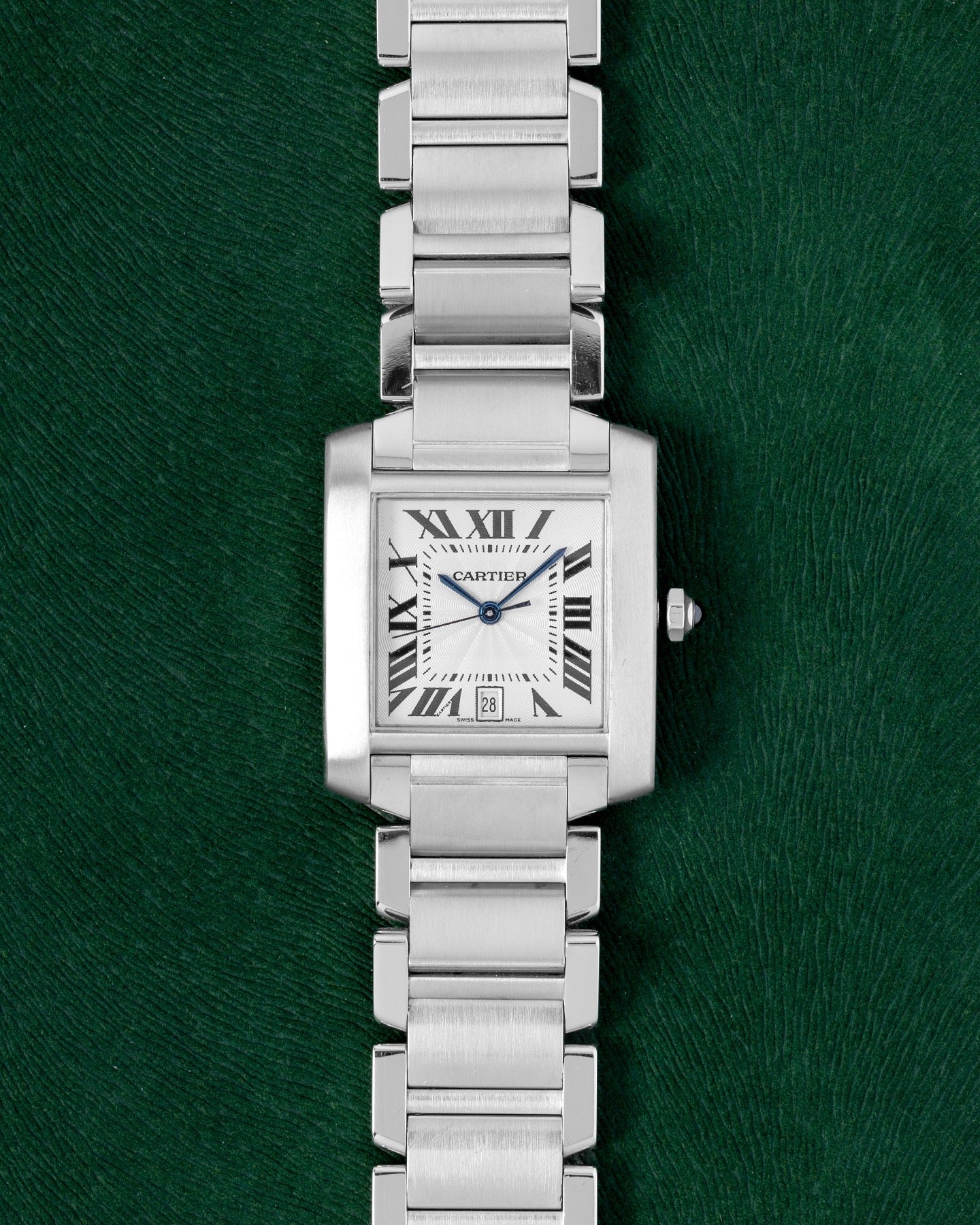
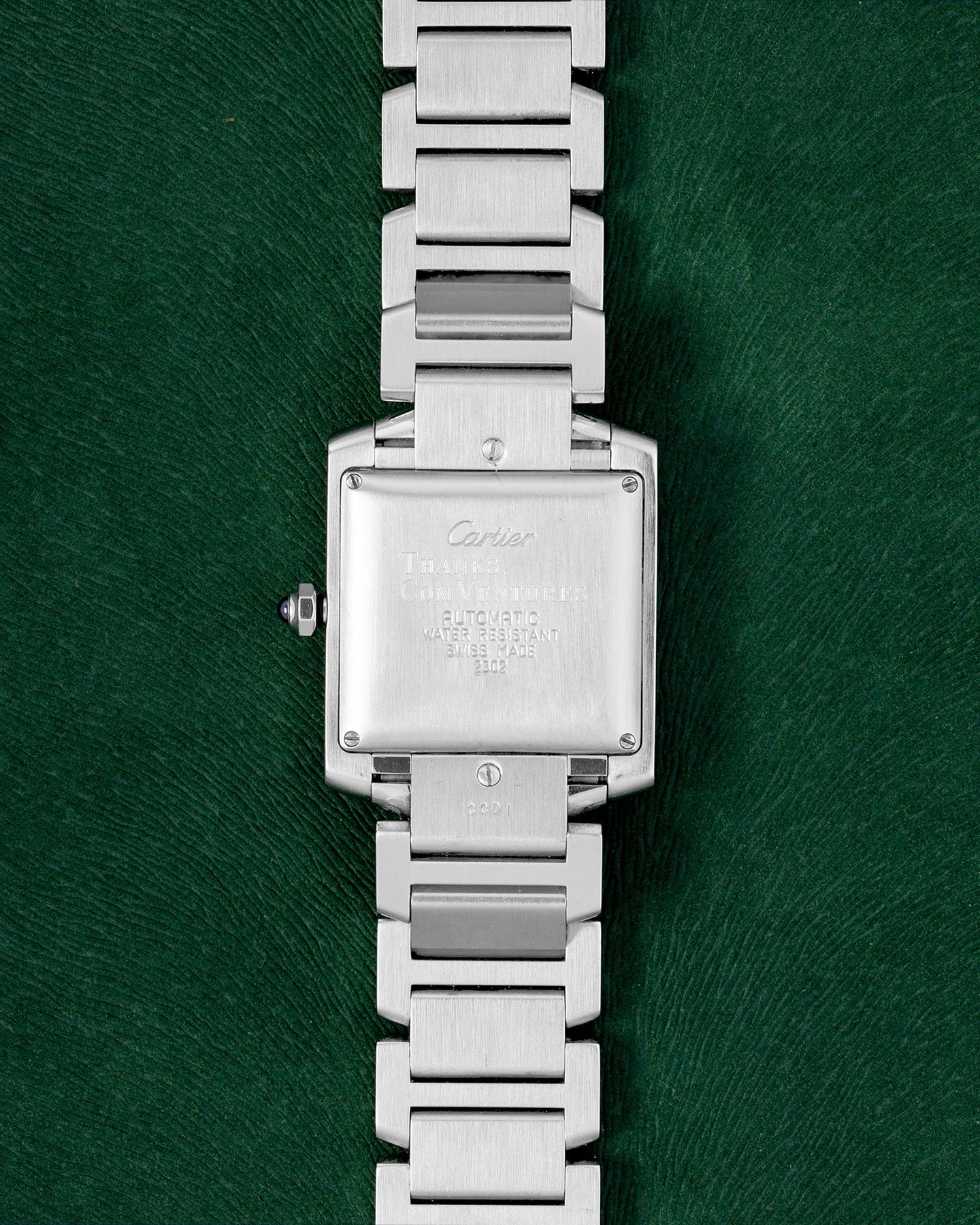
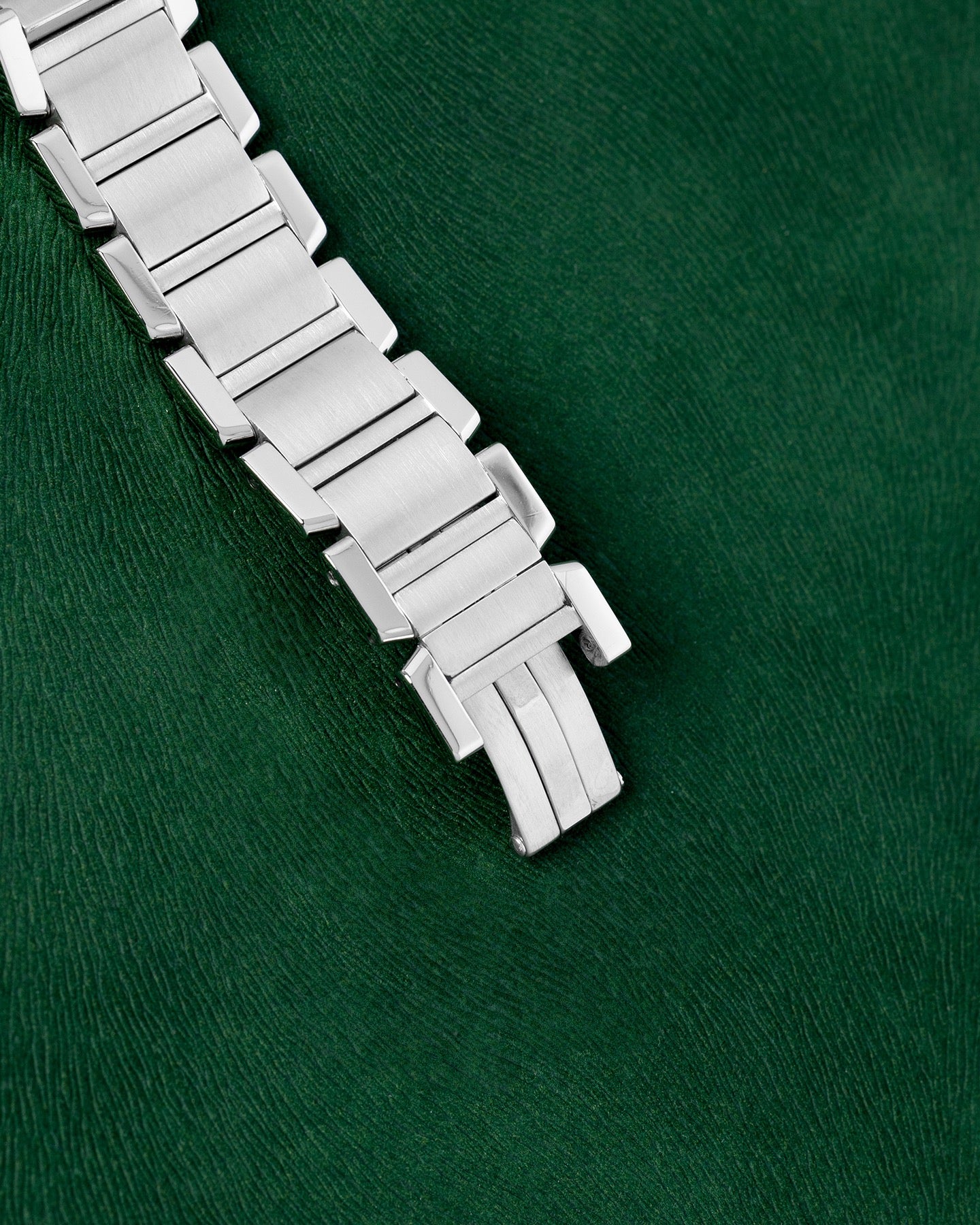
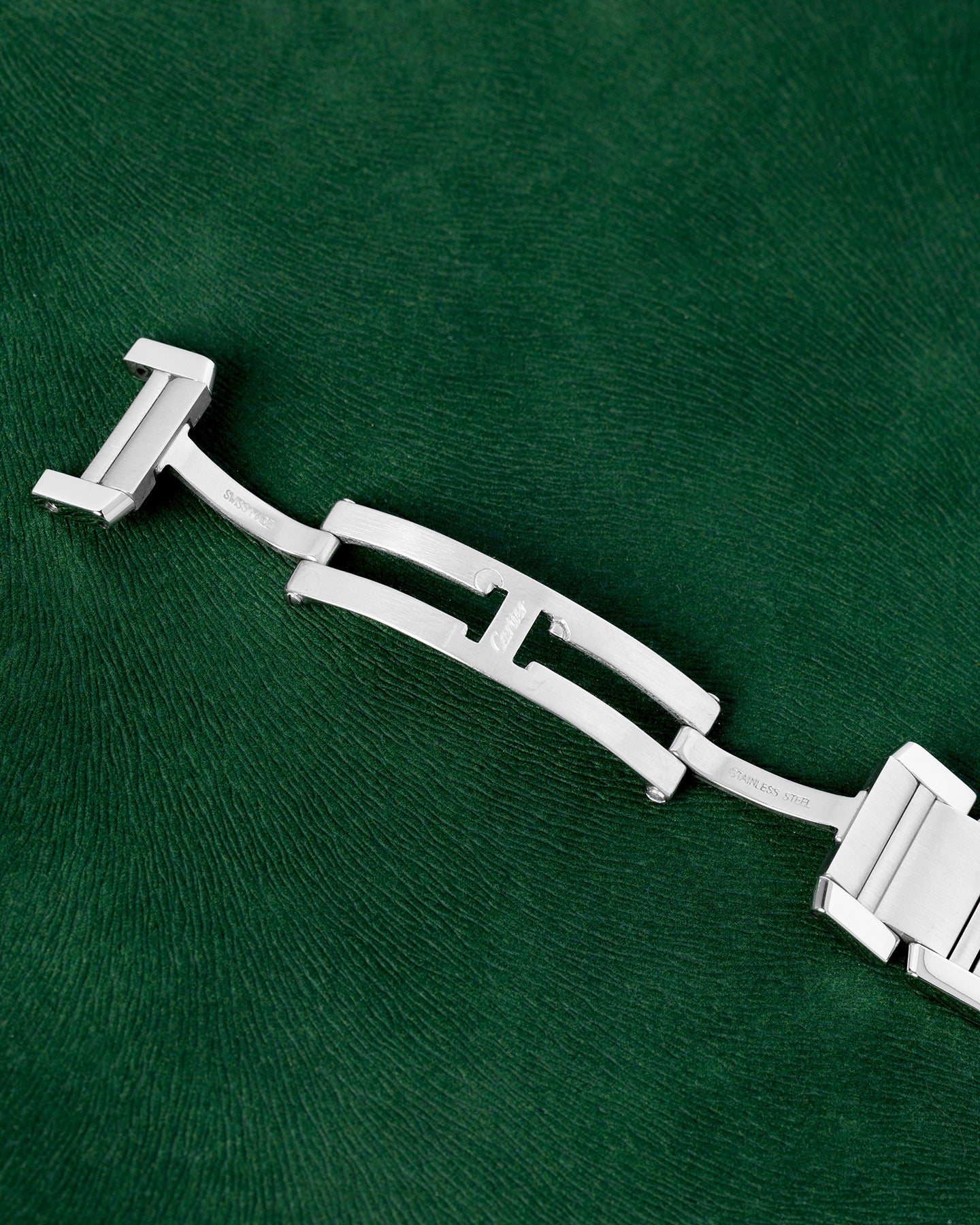
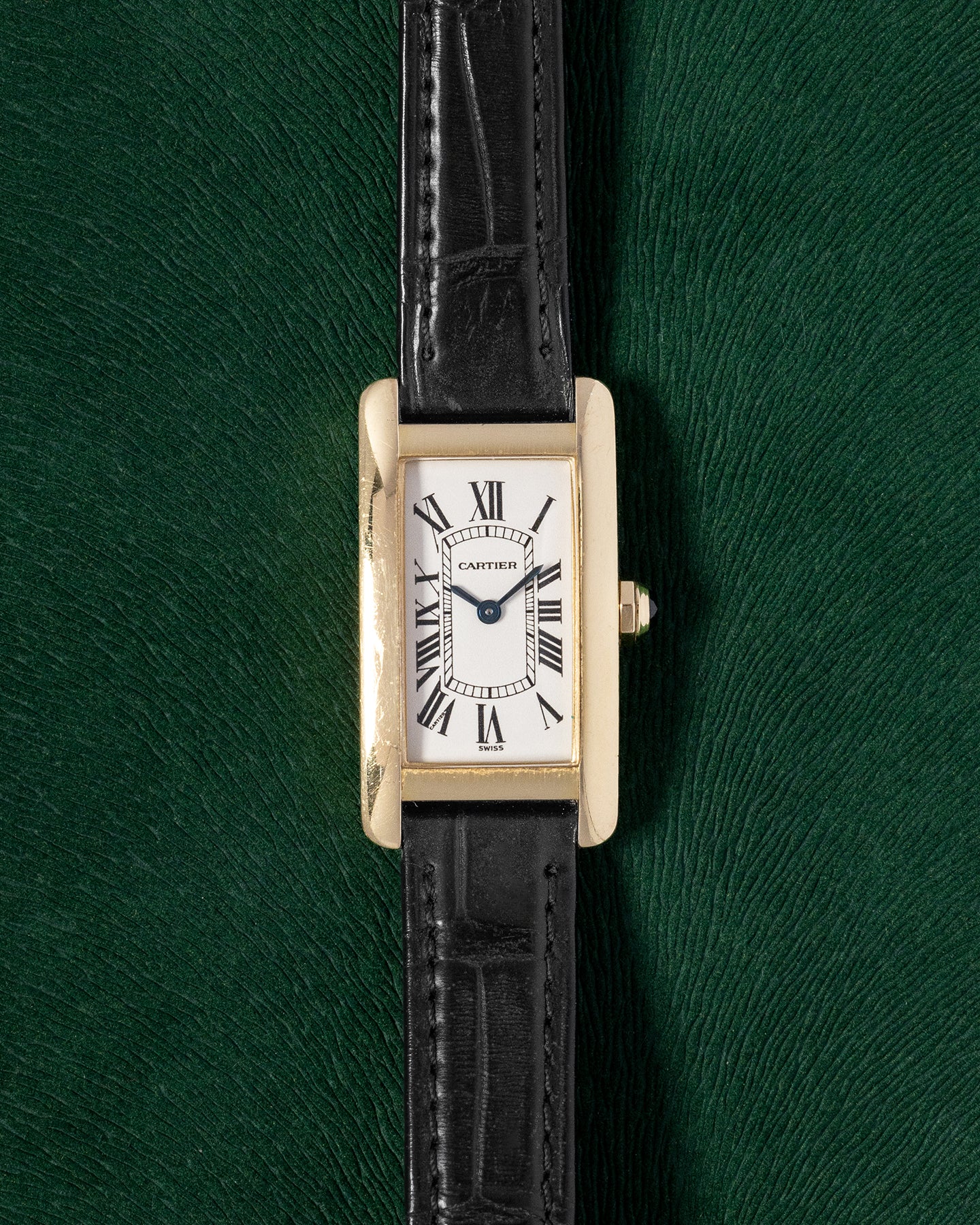
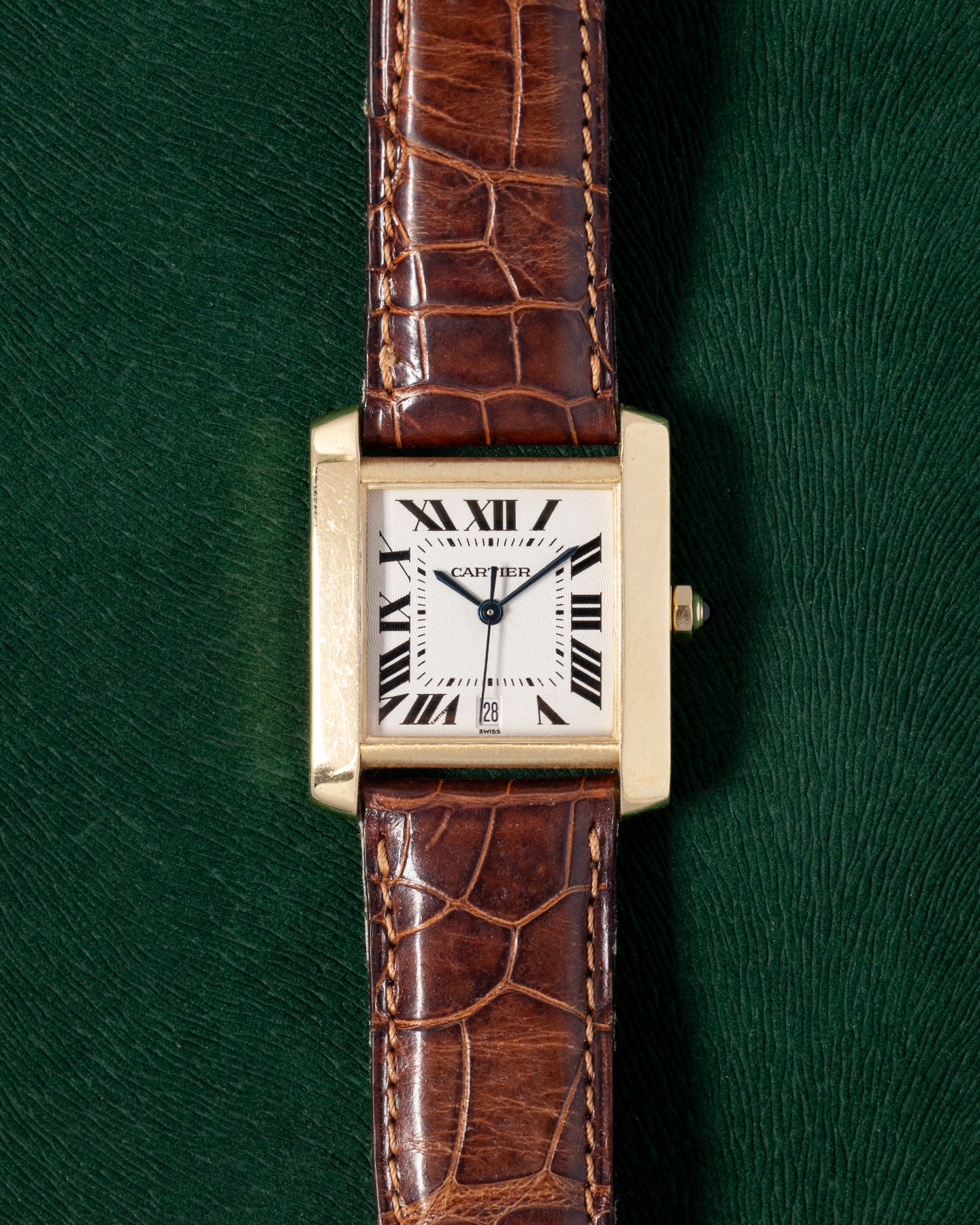
The Tank Americaine was introduced in the late 1980s as the first curved water-resistant Cartier Tank. The Americaine takes design cues from the elongated curved profile of the Tank Cintree while adding a water resistance specification that made it more practical for daily wear than the historical Tank references. The Tank Francaise followed in 1996 as a Tank reference designed for the modern collector, with an integrated bracelet construction and a slightly more contemporary case profile. Both the Tank Americaine and Tank Francaise have aged into recognized vintage Cartier categories of their own, with late-1990s and early-2000s examples now sitting at the edge of the vintage collecting window.
The Tank Asymetrique and Other Prive-Lineage References
The Cartier Prive collection program reissues historically significant vintage Cartier references in small numbered editions, drawing on the catalogue of mid-century Paris and London production. The Tank Asymetrique, the Tank Crash, the Tank Cintree, the Pebble, and the Tortue Monopusher are all references that exist in both genuine vintage form (typically from 1960s and 1970s Cartier London or Cartier Paris production) and modern Prive reissue form. Genuine vintage examples of these references command substantial premiums over their modern Prive counterparts and represent the highest tier of vintage Cartier collecting.
Vintage Santos and Santos Galbee
The Cartier Santos is the other foundational maison design, predating the Tank by more than a decade. Louis Cartier created the original Santos in 1904 for the Brazilian aviator Alberto Santos-Dumont, who needed a wristwatch he could read while piloting his aircraft without taking his hands off the controls. The Santos entered commercial production in 1911 and has remained in the Cartier catalogue in various forms ever since.
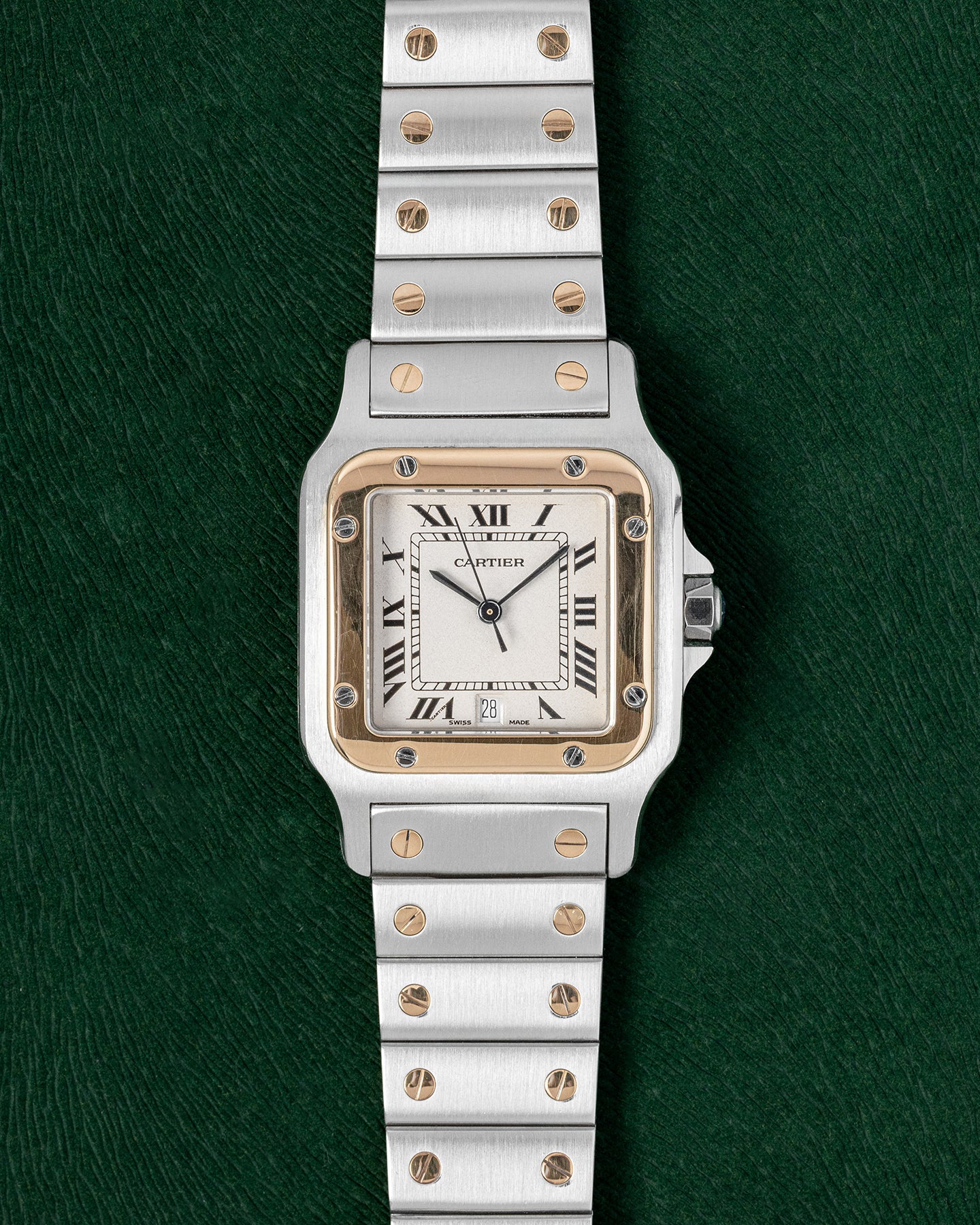
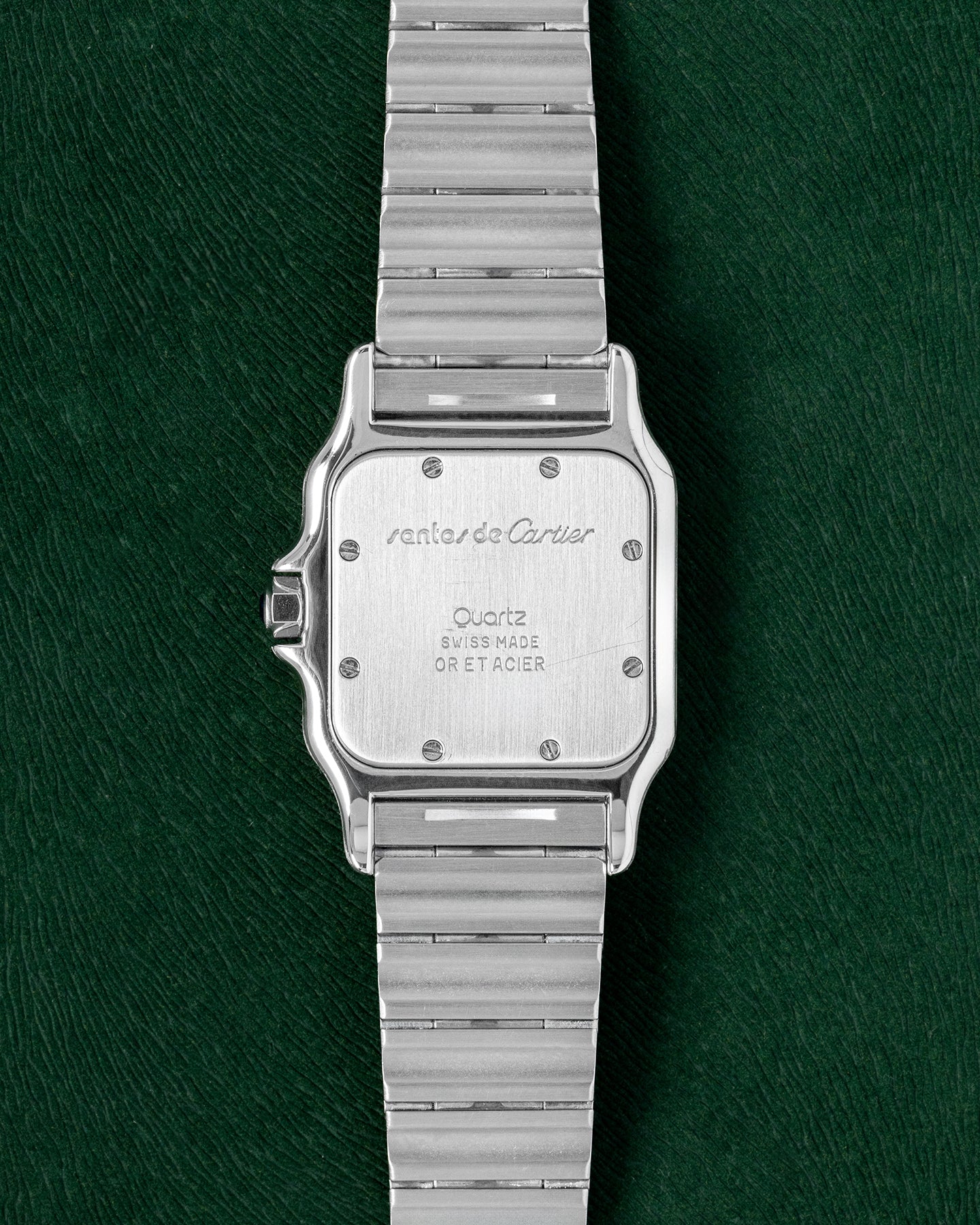
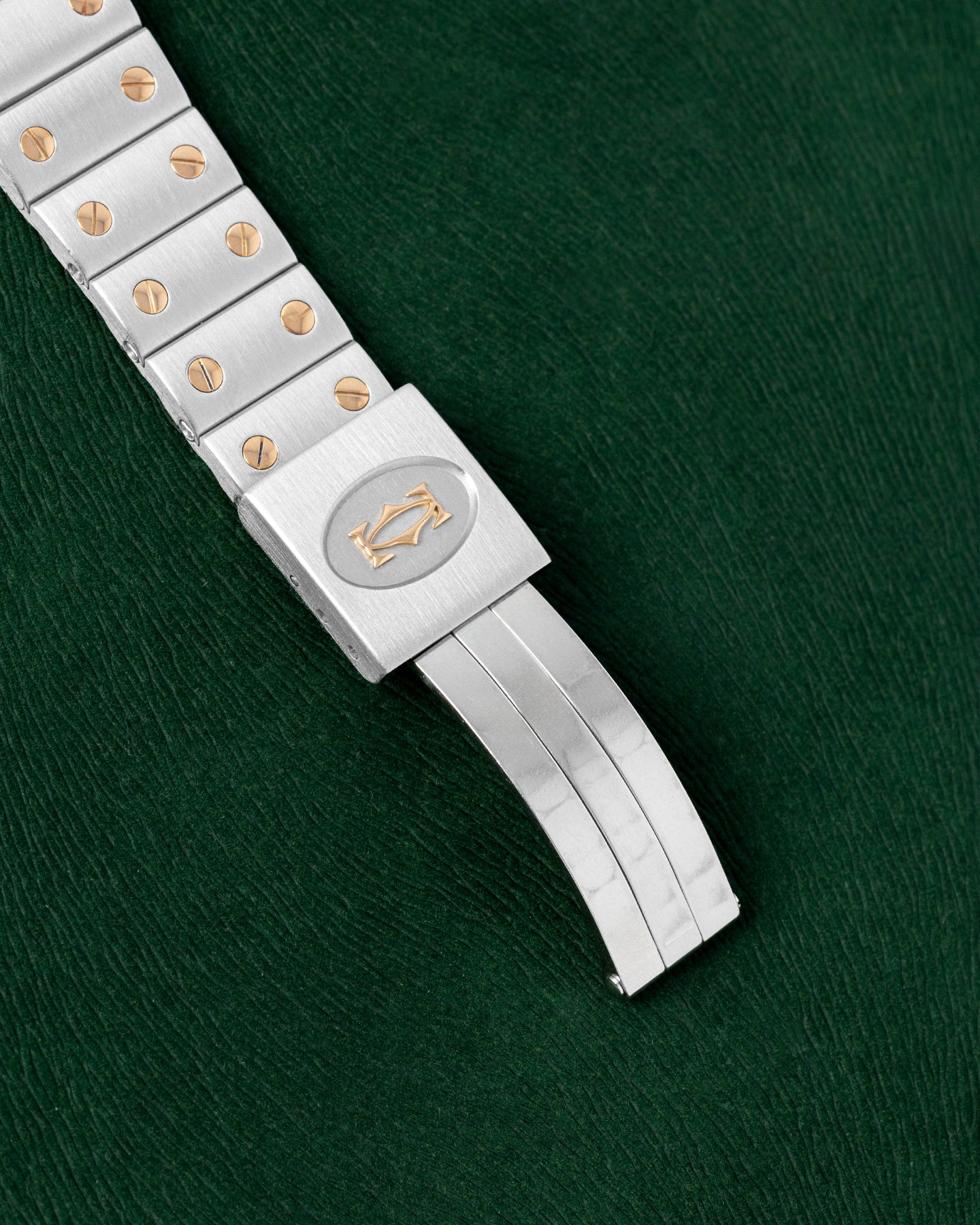
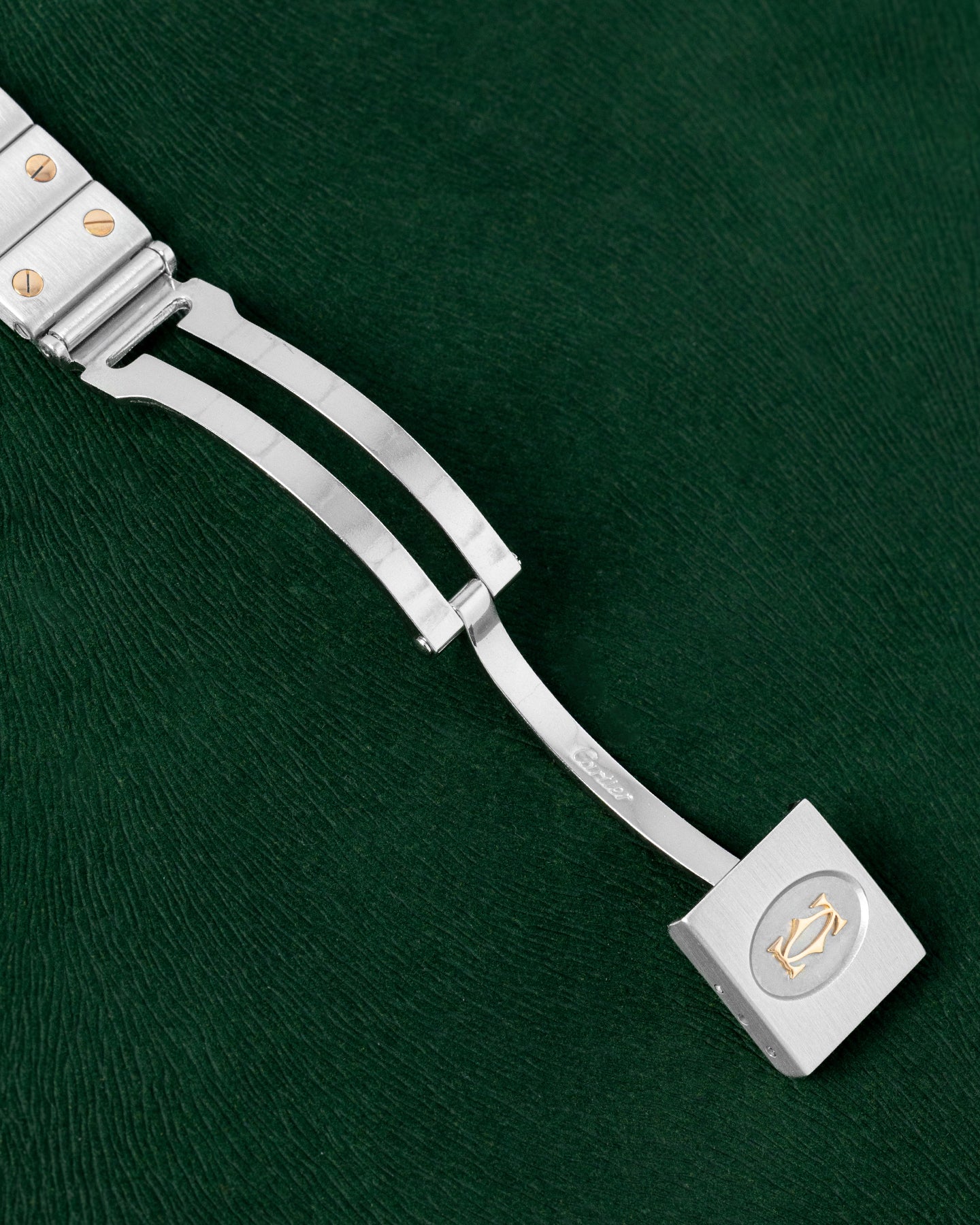
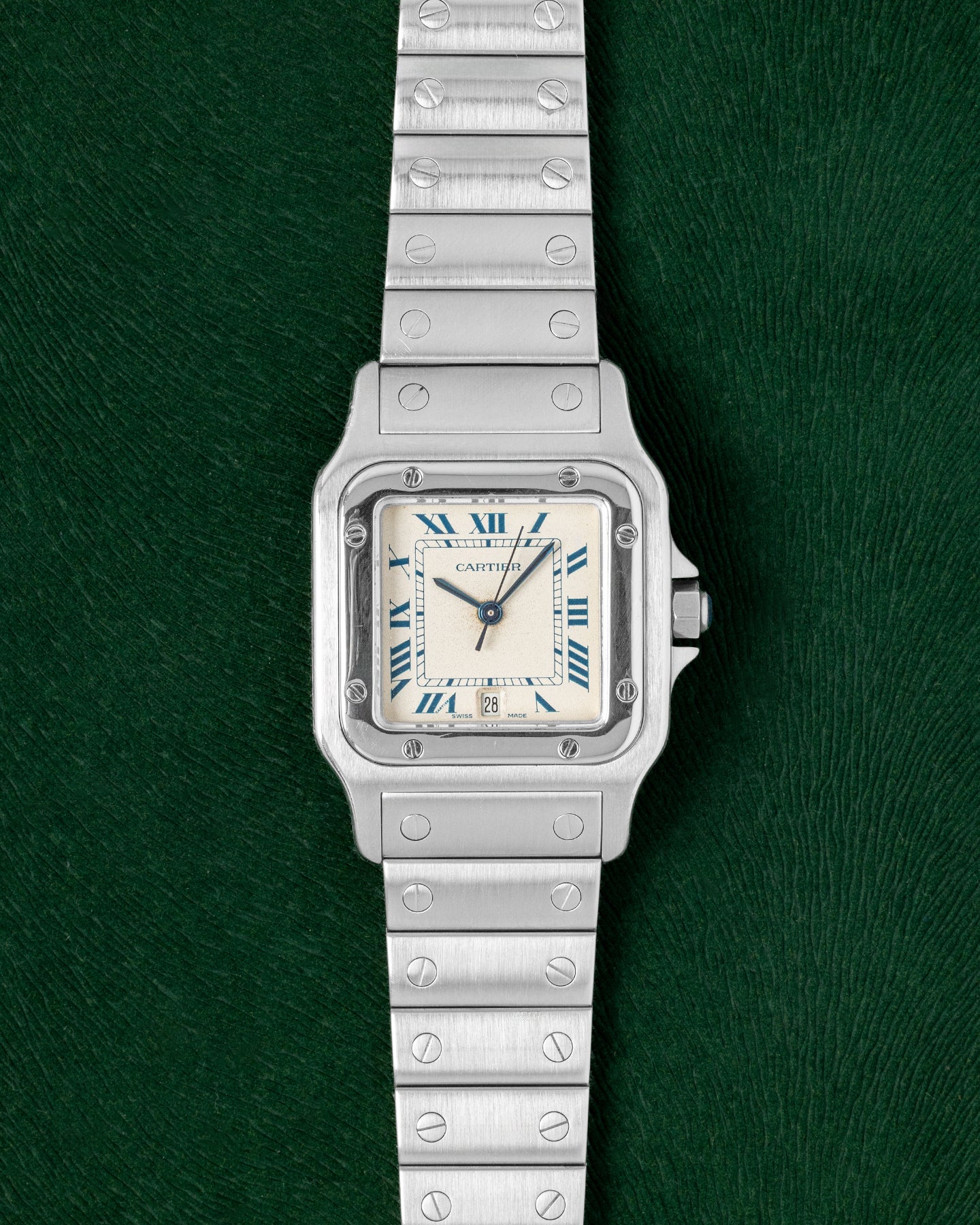
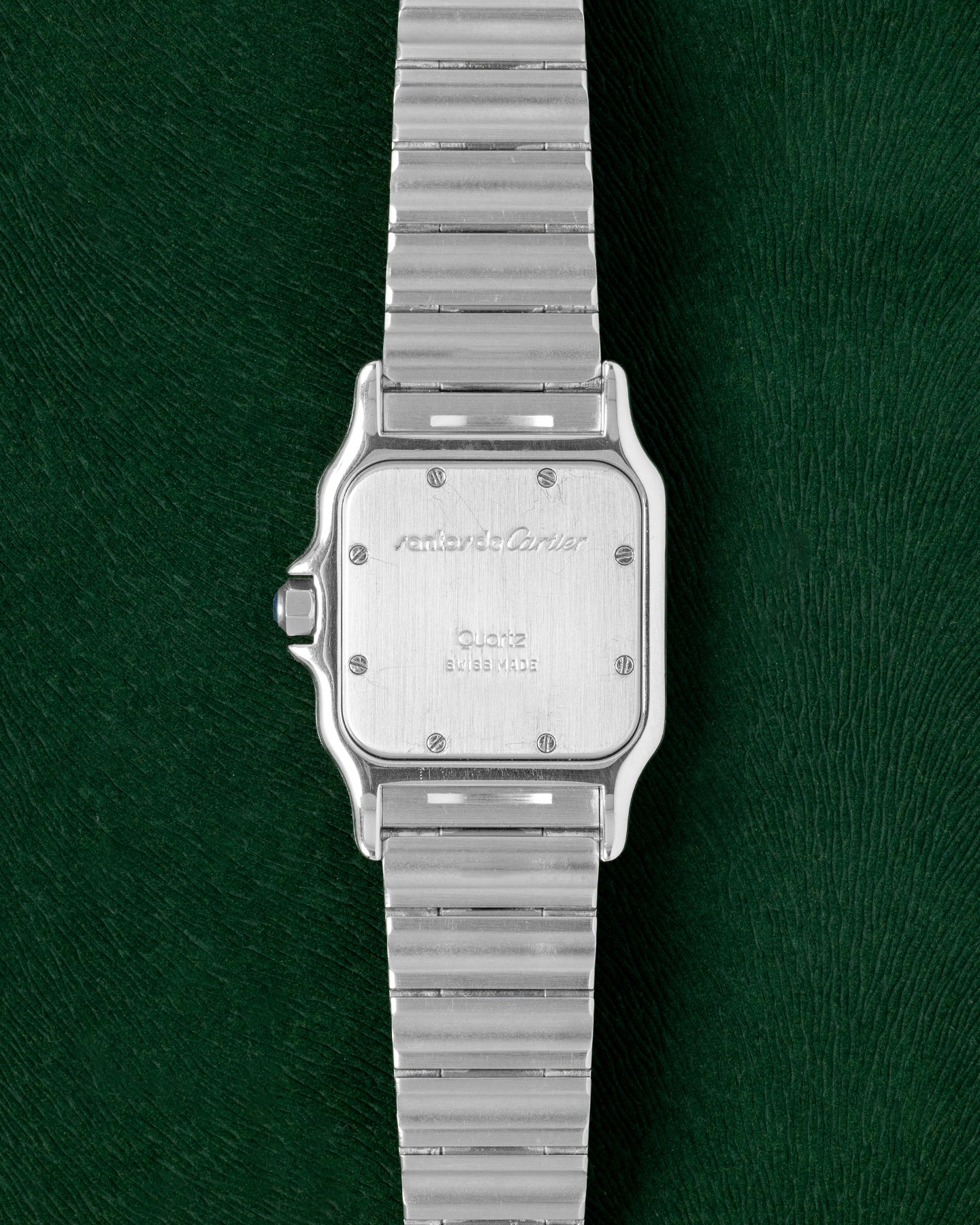
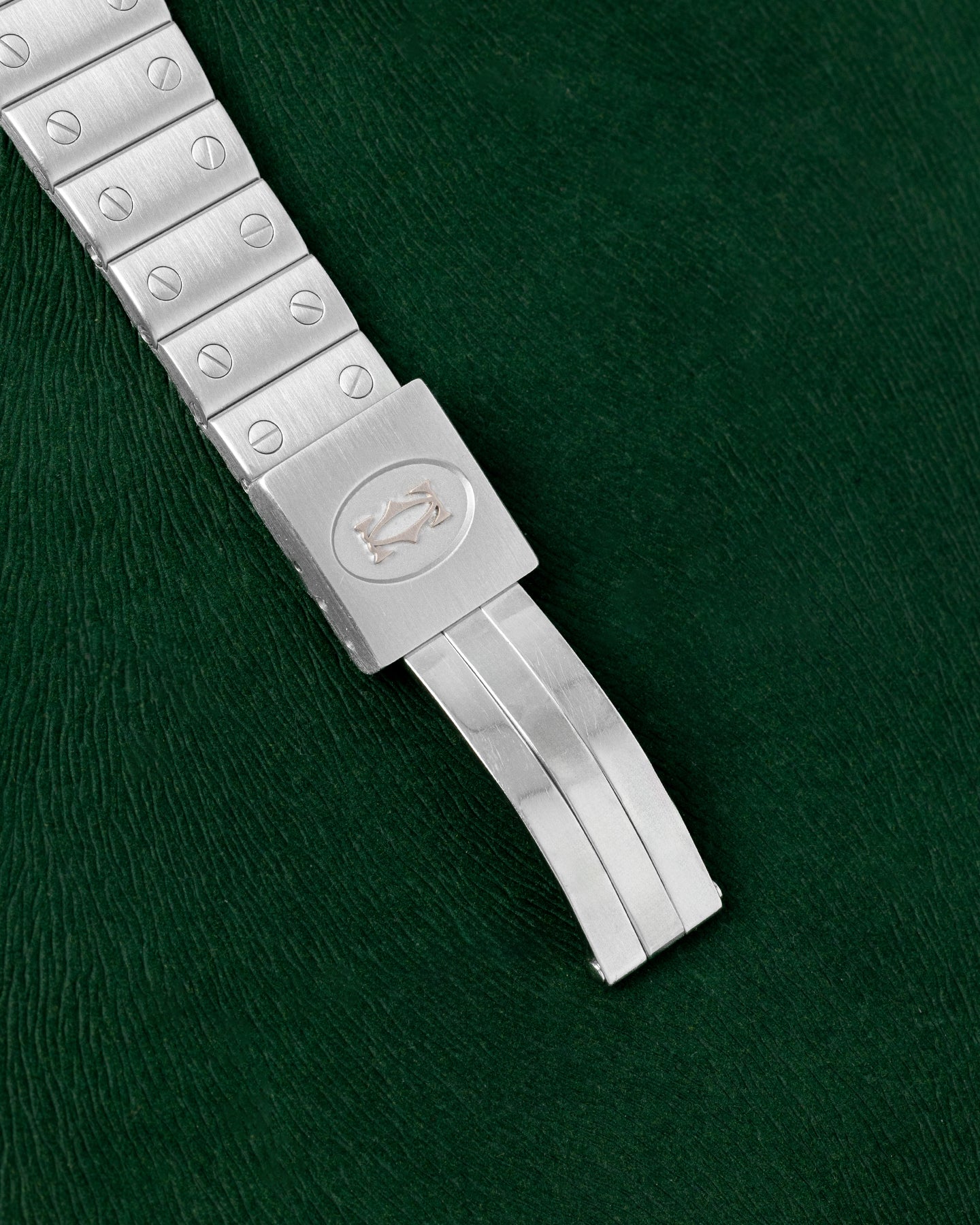
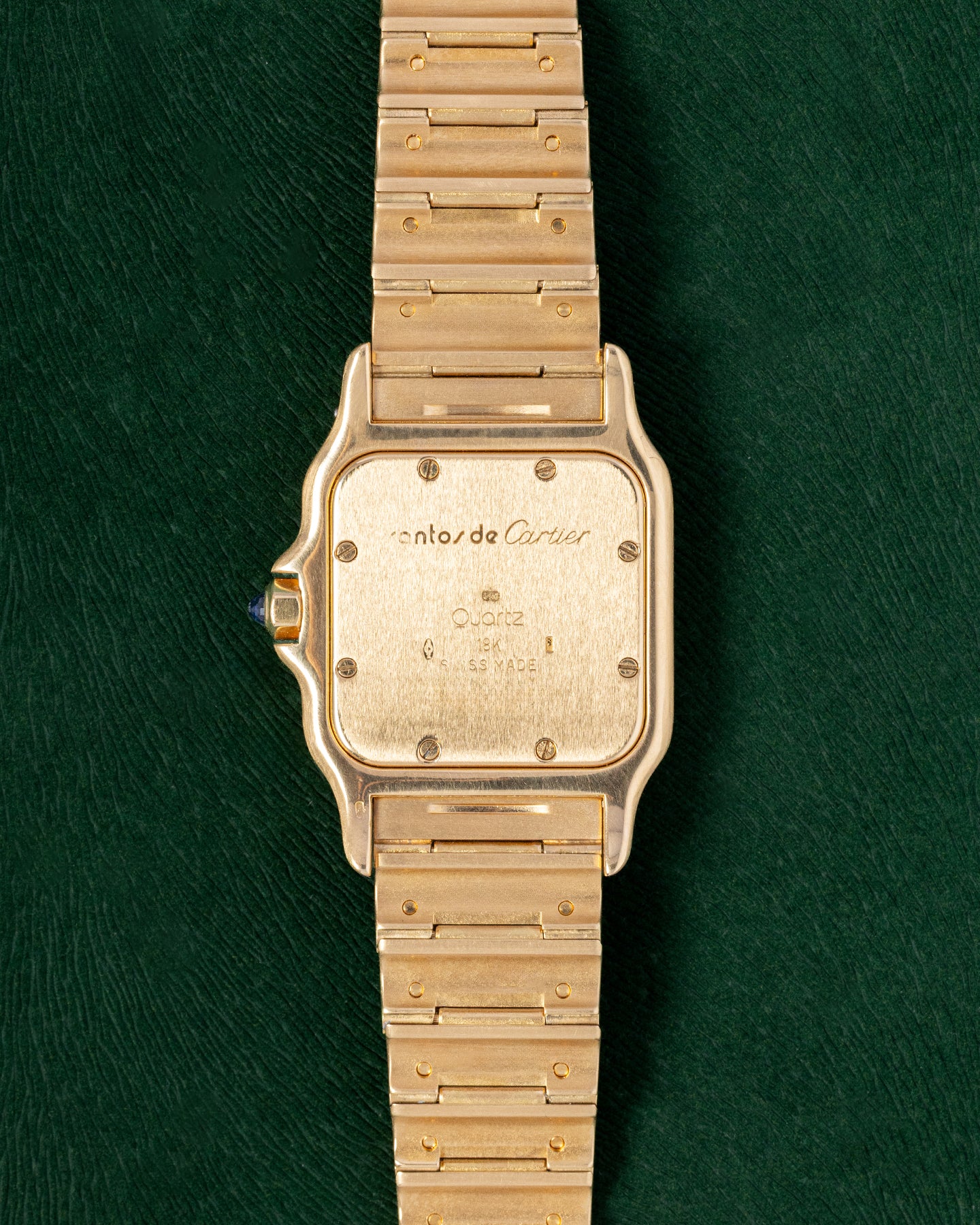
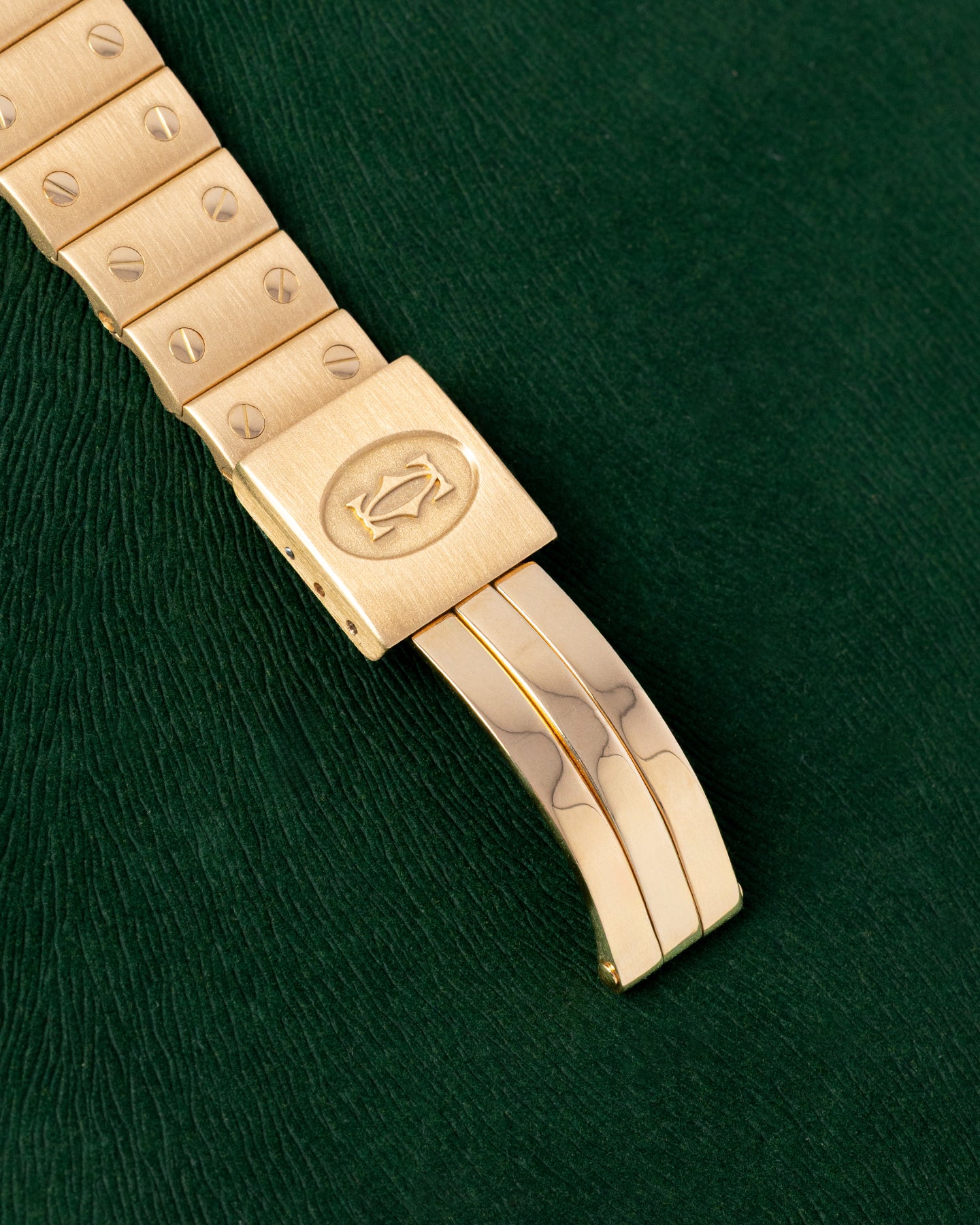
Vintage Santos collecting centers on two main reference families. The Santos de Cartier in its 1978 form (the first integrated-bracelet Santos with the exposed-screw bezel and steel-and-gold construction) is one of the most important integrated-bracelet luxury watches of the late twentieth century and a key reference for buyers interested in the broader history of the integrated-bracelet category alongside the Patek Philippe Nautilus and Audemars Piguet Royal Oak. The Santos Galbee, introduced in the late 1980s as a curved-case evolution of the 1978 Santos, became one of the best-selling Cartier references of the 1990s and remains widely available in the vintage market in both stainless steel and two-tone configurations.
Vintage Santos and Santos Galbee references from the 1980s and 1990s in two-tone steel and yellow gold are among the most accessible vintage Cartier entry points, with the original Cartier dial geometry, the exposed screws, and the signature Santos design language intact at substantially lower secondary-market values than equivalent vintage Tank references.
Vintage Panthere and the 1983-Through-2004 Production Run
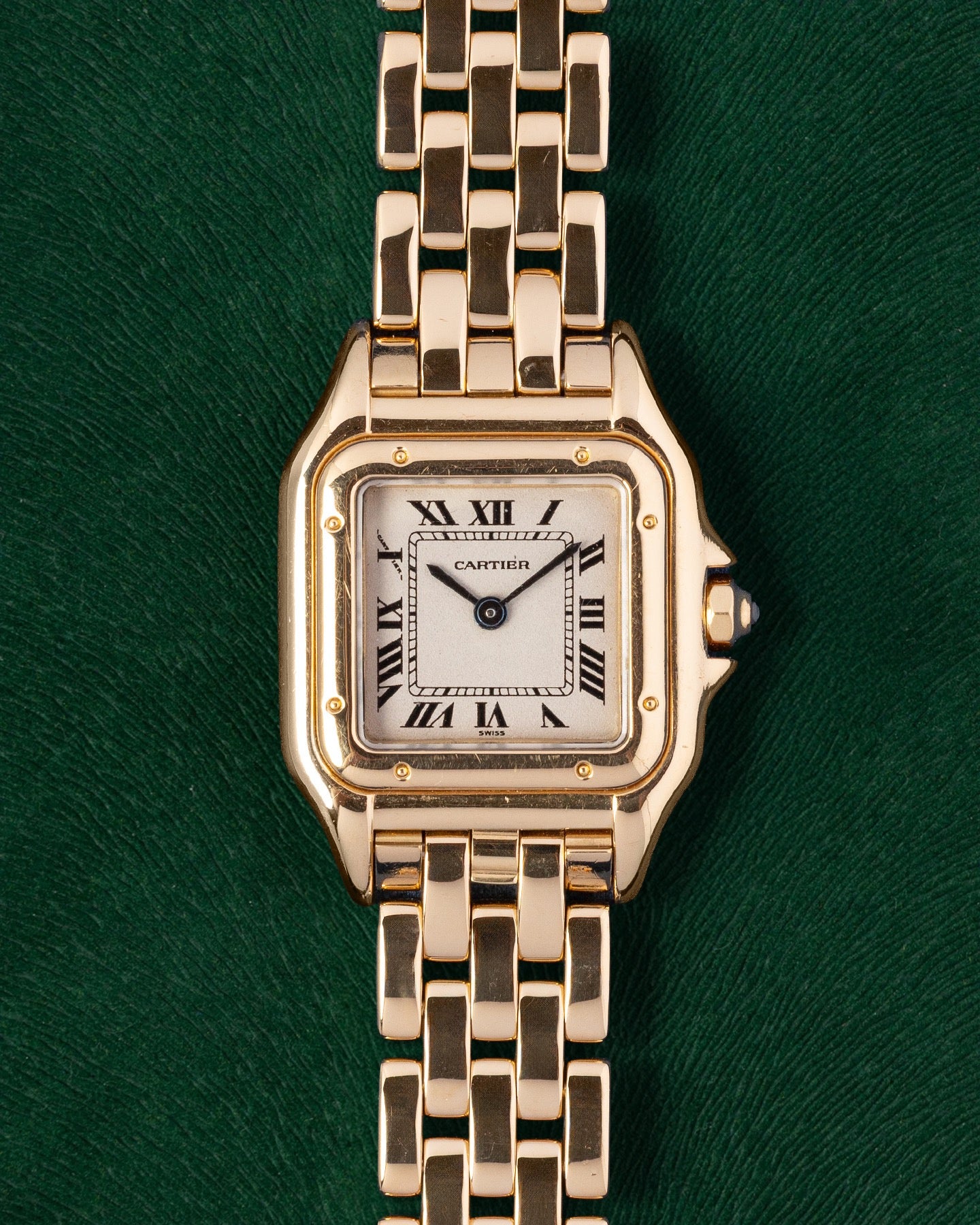
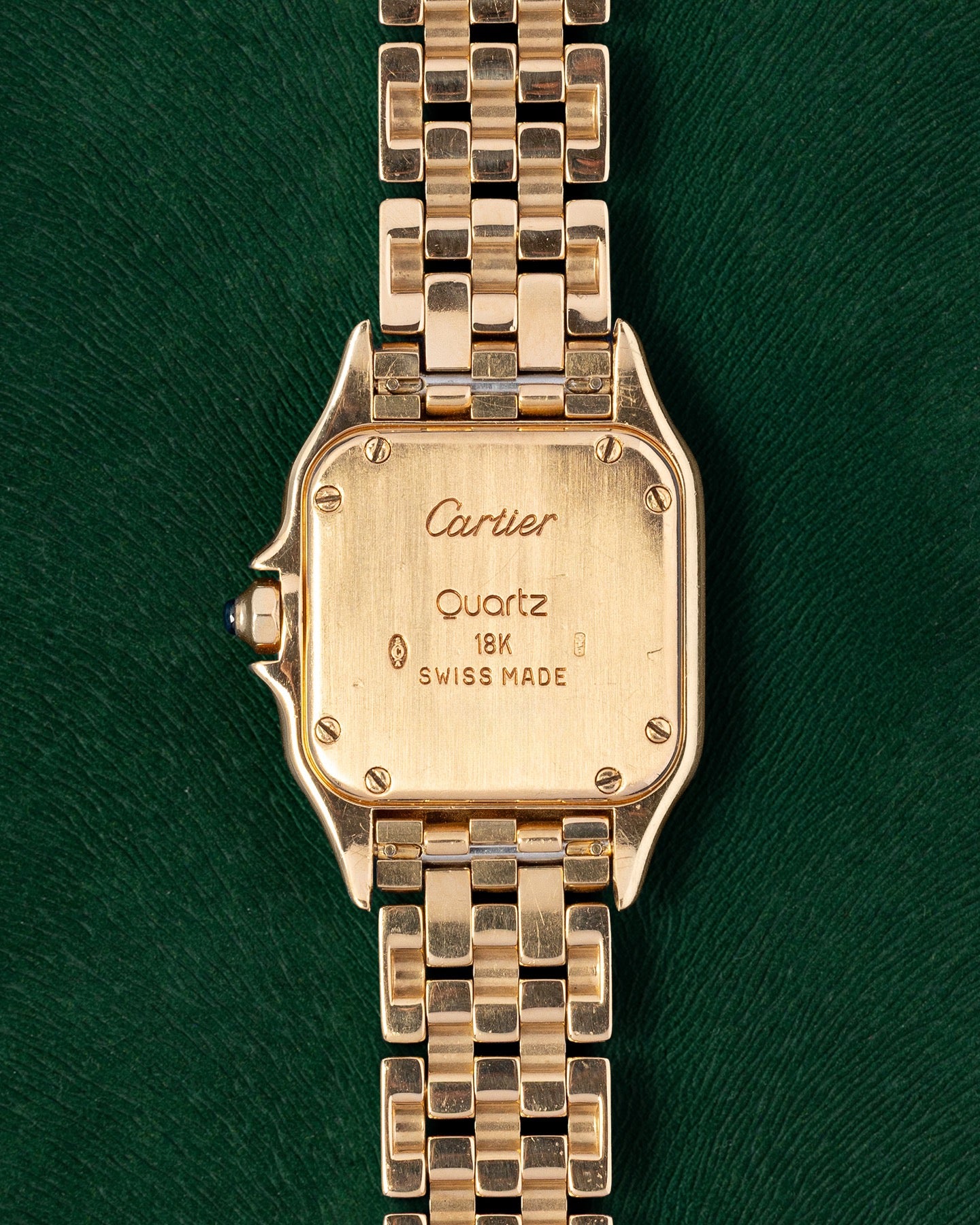
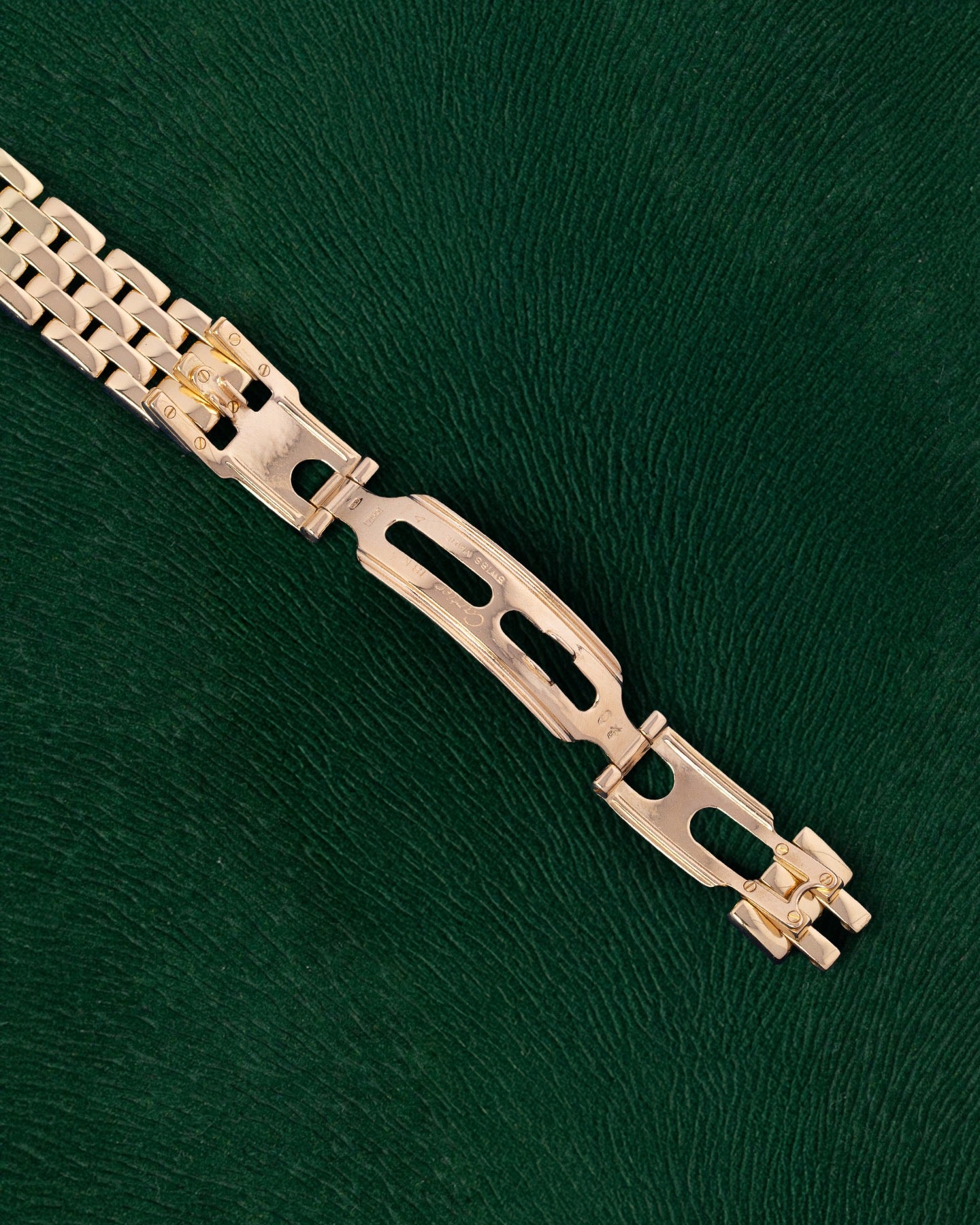
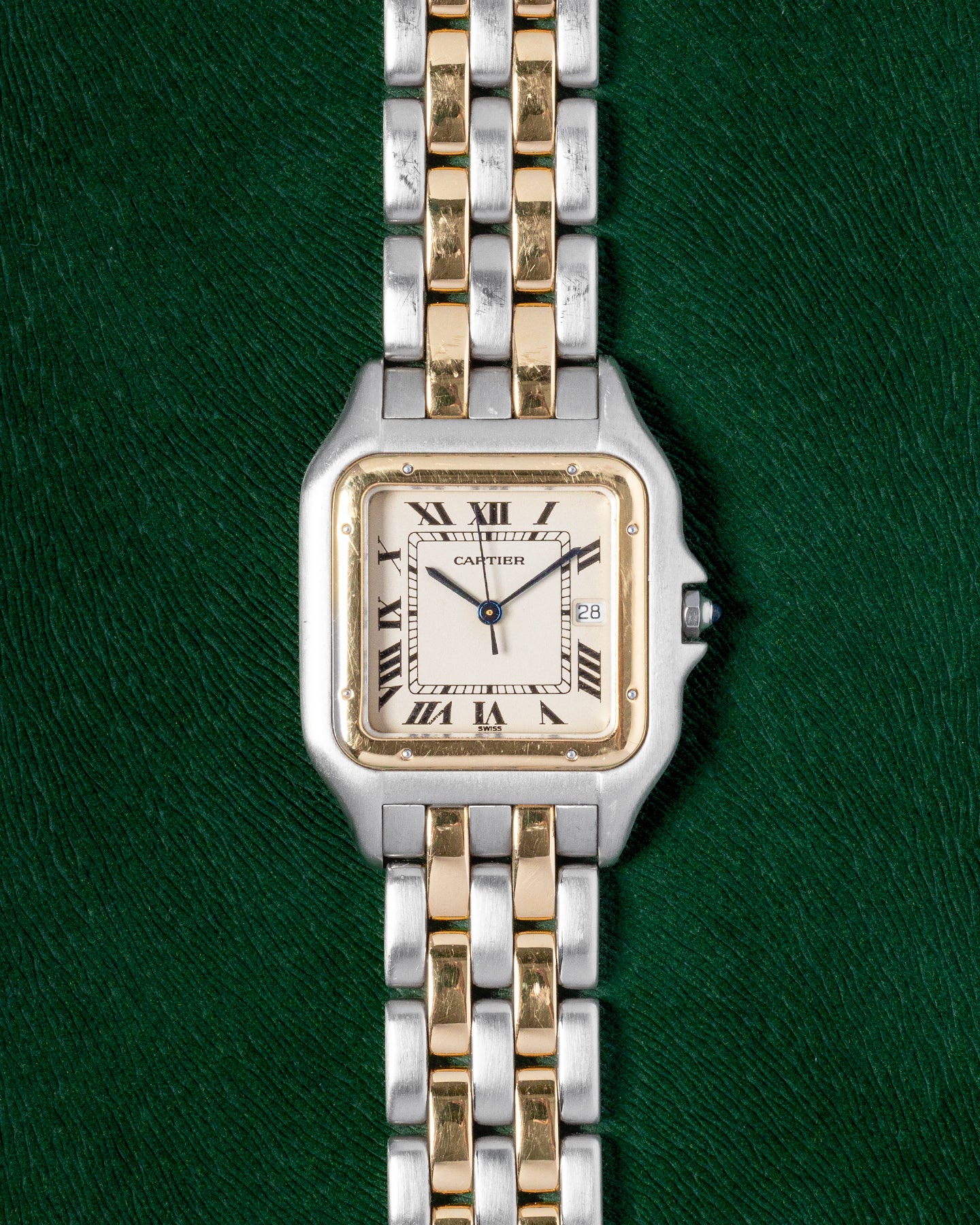
The original Cartier Panthere, produced from 1983 through 2004, is one of the most significant vintage Cartier categories in the contemporary secondary market. The original Panthere was the Cartier translation of the panther motif (introduced to the maison design vocabulary in 1914 and elevated to brand-defining status by Jeanne Toussaint through the mid-twentieth century) into wristwatch form. The first-generation Cartier Panthere was offered in Mini, Small, Medium, Large, and Jumbo sizes, with the Medium and Jumbo references positioned as unisex or men references and the smaller sizes marketed to women.
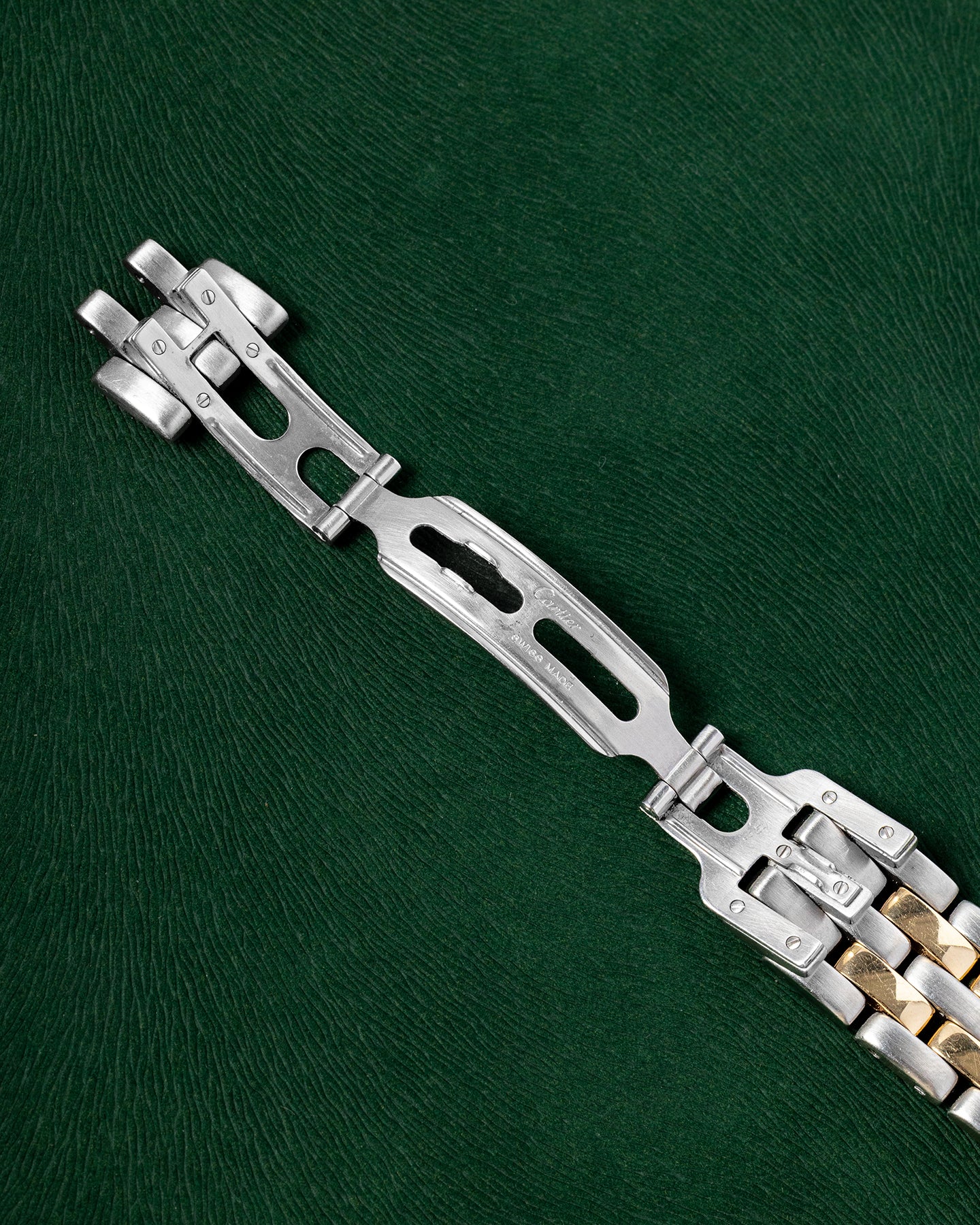
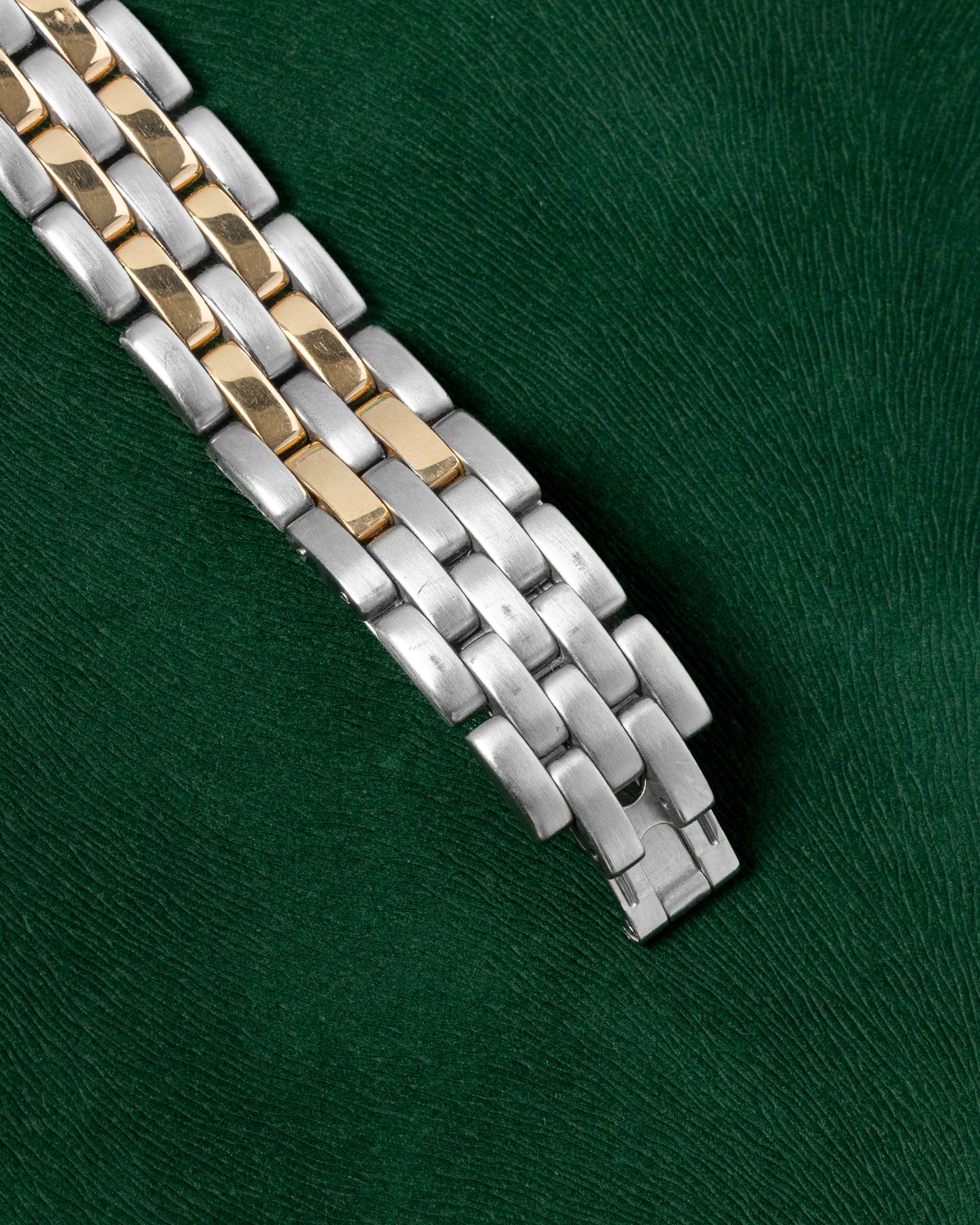
Vintage Cartier Panthere references in two-tone stainless steel and yellow gold from the 1980s are the most commercially significant vintage Panthere category. The two-tone configuration captured the 1980s appetite for bold mixed-metal jewelry and remains the visual reference point for what most buyers picture when they think of the Cartier Panthere. Solid yellow gold and solid white gold first-generation Panthere references represent the upper tier of the vintage Panthere catalogue, and diamond-set high-jewelry Panthere references with hardstone dials in malachite, lapis lazuli, and onyx appear occasionally in the secondary market at meaningful premiums.
Vintage Panthere references benefit from the cultural revival the watch received with its 2017 relaunch, which brought renewed collector attention to the original production run. The 1980s and 1990s Panthere is now widely recognized as one of the defining luxury watches of its era, and clean original-condition examples in two-tone and solid gold trade with strong liquidity through the secondary market.
Must de Cartier: The 1973 Strategic Reset
The Must de Cartier line is one of the most important vintage Cartier collecting categories and the source of some of the most-traded vintage Cartier references in the contemporary secondary market. Cartier launched Must de Cartier in 1973 as a deliberate strategic response to two pressures: the quartz crisis that was reshaping the Swiss watch industry, and the dilution of the Cartier New York signature through the early-1970s flood of inexpensive vermeil references that had followed the sale of the New York branch.
The Must de Cartier line consolidated the lower-tier Cartier production under a single brand identity, paired vermeil (gold-plated sterling silver) cases with Swiss quartz movements (later joined by ETA-based mechanical movements), and positioned Cartier design language at a meaningfully more accessible secondary-market level than solid-gold Cartier references. The Must line proved enormously successful through the late 1970s, 1980s, and into the 1990s, and the watches now occupy a recognized vintage Cartier category with their own collector dynamics.
The Must de Cartier Tank
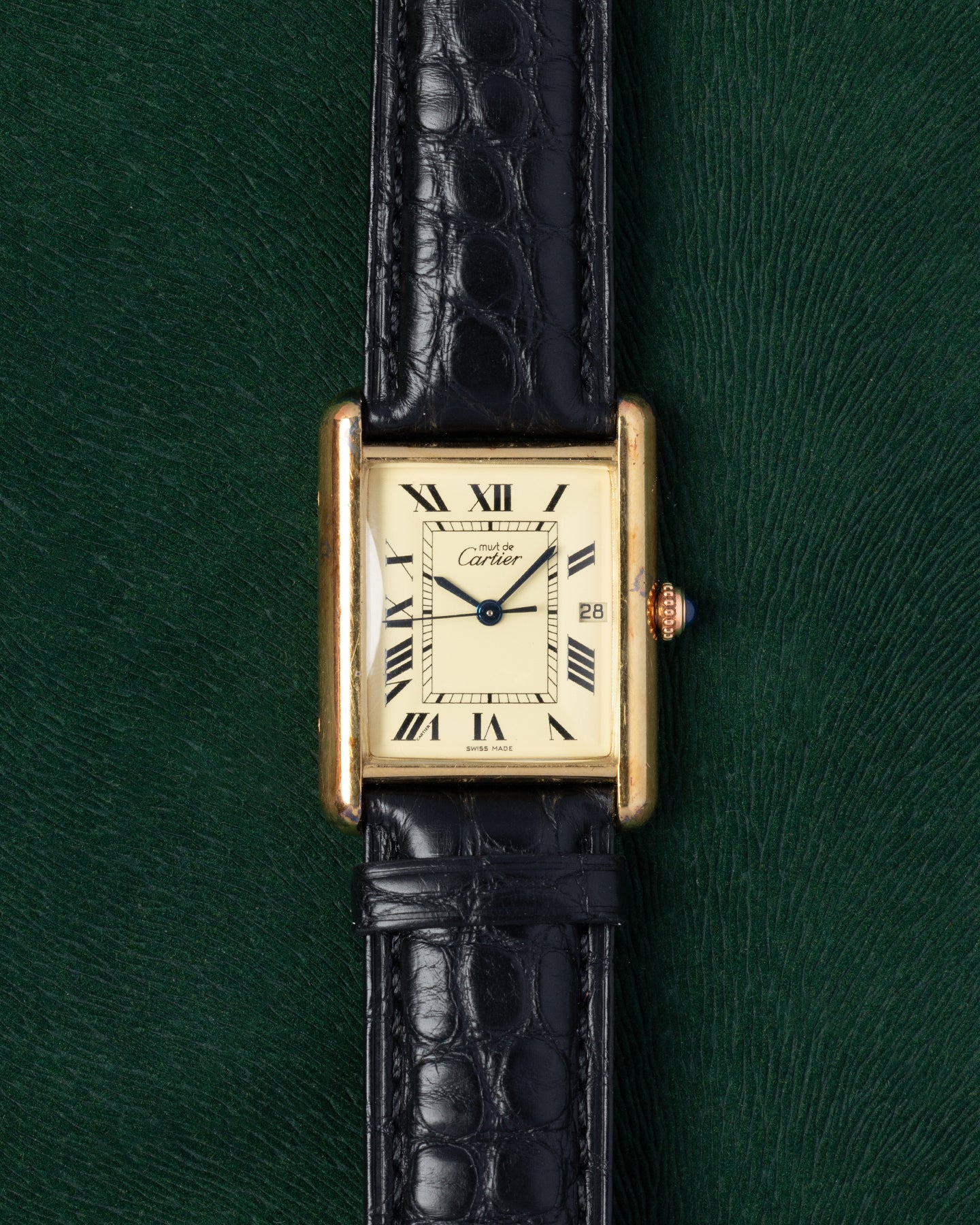
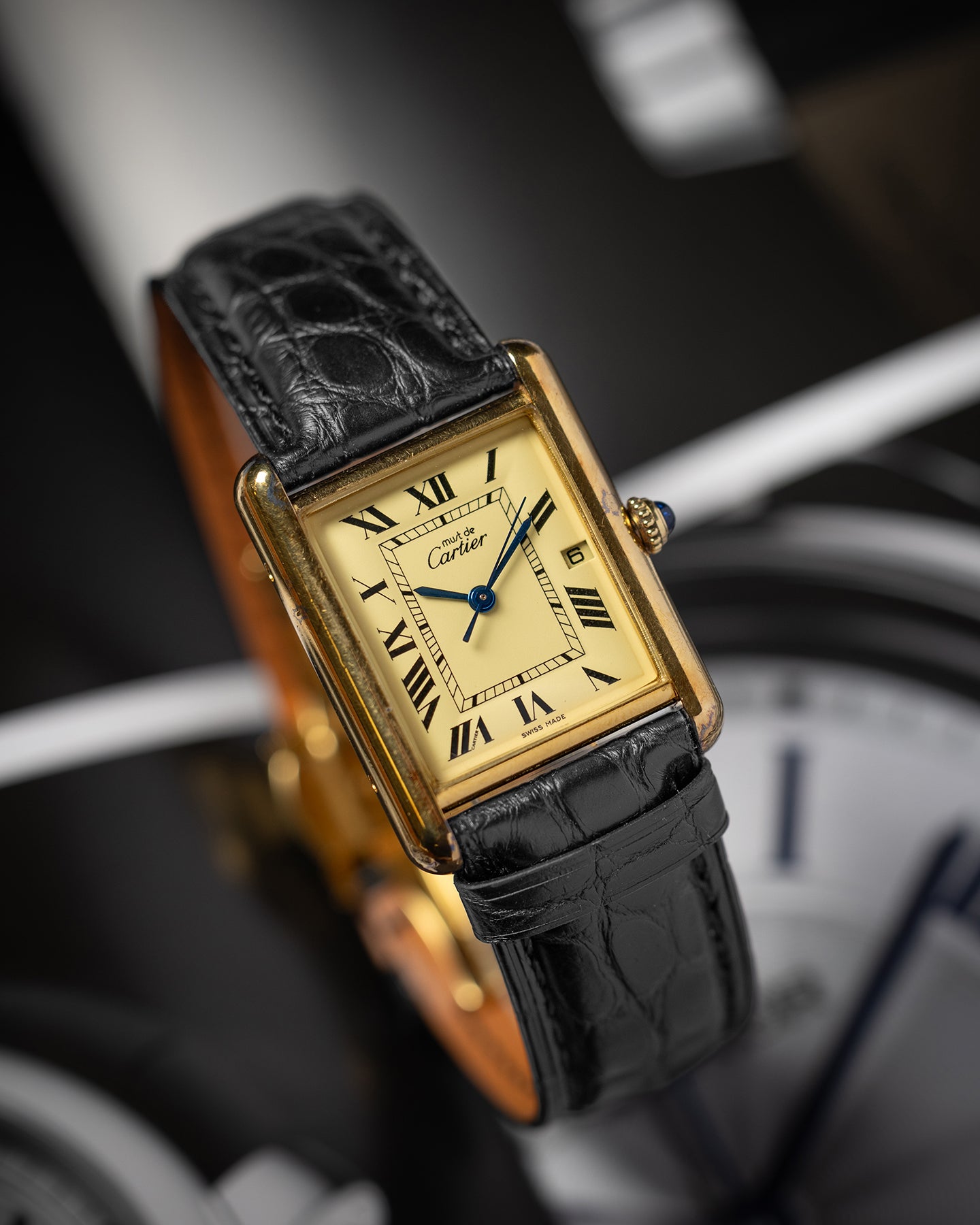
The Must de Cartier Tank is the most commercially significant Must reference. Produced in vermeil with Swiss quartz and occasional manual-wind movements, the Must Tank brought the Tank silhouette to a much wider audience than the solid-gold Tank Louis Cartier could reach. Must Tank references with the period-correct lacquer dials (particularly the deep burgundy, racing green, and royal blue dials of the late 1970s and 1980s) have appreciated meaningfully over the past decade as collectors have recognized the Must Tank as a serious design object in its own right. Vintage Must Tank references in vermeil with original-condition lacquer dials are some of the most actively-traded vintage Cartier objects in the current secondary market.
The Must de Cartier Vendome
The Must de Cartier Vendome, introduced around 1973 alongside the broader Must launch, is the round counterpart to the Must Tank within the Must collection. Named after the Place Vendome in Paris (the historic square that has anchored the Parisian luxury watch and jewelry trade for more than two centuries), the Vendome features a round case with two distinctive lugs that reference the two streets leading into Place Vendome: Rue de la Paix and Rue de Castiglione. The Must Vendome is positioned as a discrete daily-wear vintage Cartier reference that offers the maison design language at a more approachable level than the Tank, and clean vintage Vendome examples remain widely available across multiple metal and dial configurations.
The Must de Cartier Signature and Authentication Markers
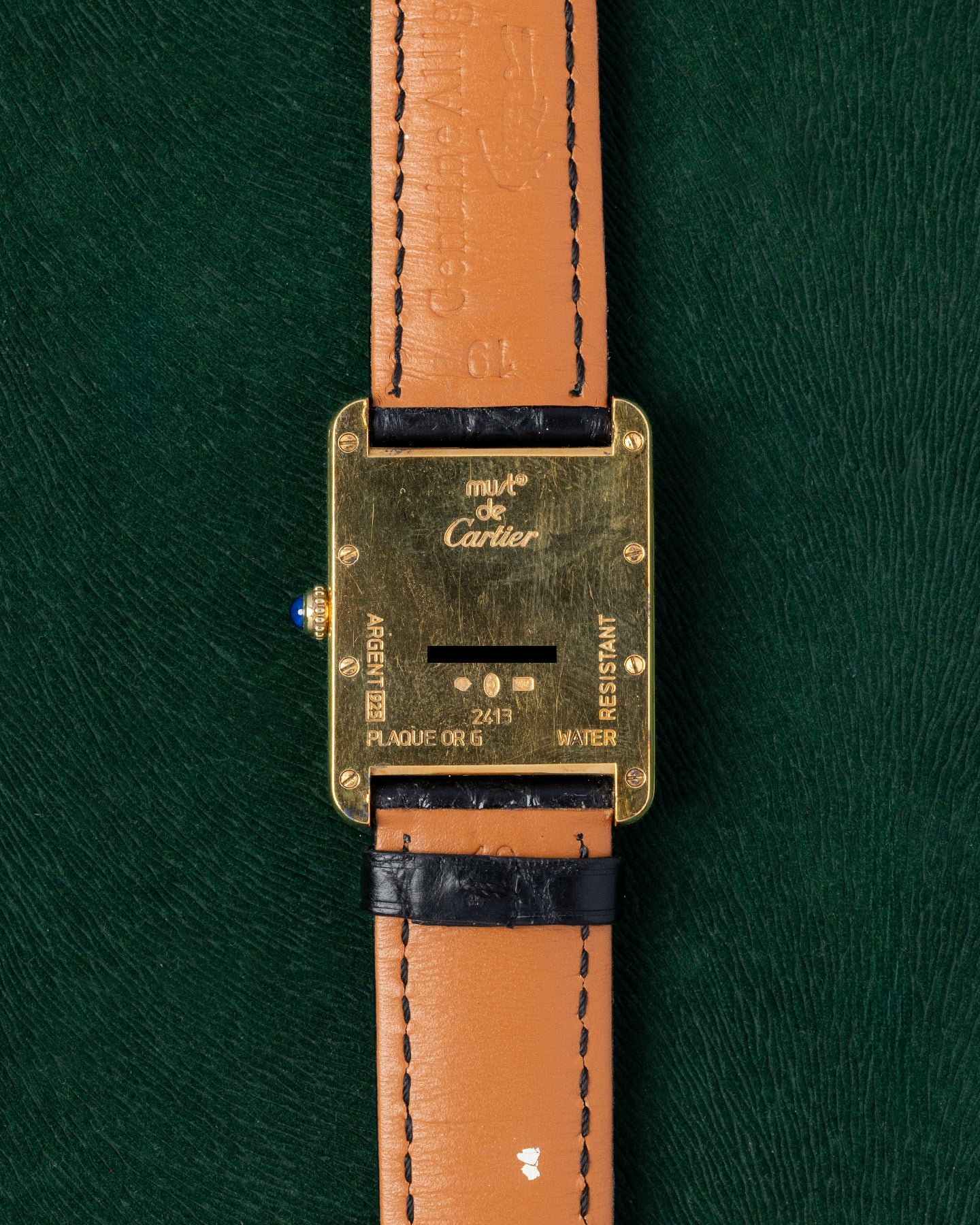
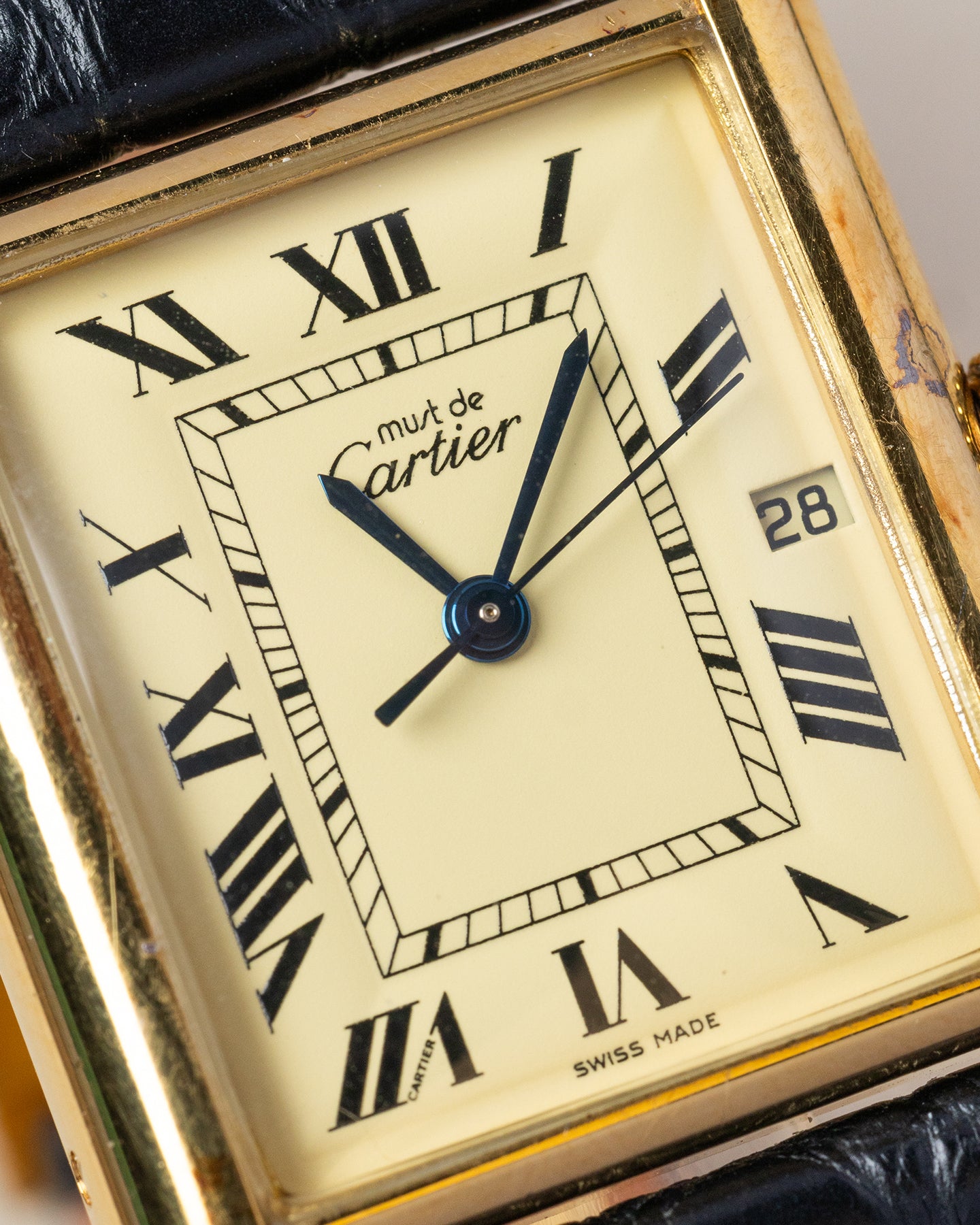
Must de Cartier dials carry the Must de Cartier signature, distinguishing them from solid-gold Cartier dials that read simply Cartier. The Must signature is one of the primary identification markers for the Must collection, and Must references typically include additional authentication details: case-back stamps confirming the vermeil construction (often marked 925 for the sterling silver substrate), the Cartier secret signature on the dial (typically at the VII or X numeral position, though earlier Must references may lack the secret signature), and movement signatures that confirm the period-correct quartz or mechanical caliber. The Grand Caliber specialists evaluate every Must de Cartier reference against the full authentication checklist before listing.
Other Vintage Cartier Categories Worth Knowing
Beyond the Tank, Santos, Panthere, and Must collections, several other vintage Cartier categories appear in the contemporary secondary market and merit consideration for collectors building a vintage Cartier portfolio.
Vintage Baignoire and Mini Baignoire
The Cartier Baignoire is an elongated oval-case design introduced in 1957, with the name referencing the French word for bathtub and the case shape borrowing the curved oval geometry of a classical bathtub silhouette. Vintage Baignoire references in yellow gold from the 1970s and 1980s, including the Mini Baignoire in smaller proportions, occupy a recognized vintage Cartier category and trade with steady liquidity in the secondary market.
Vintage Pasha
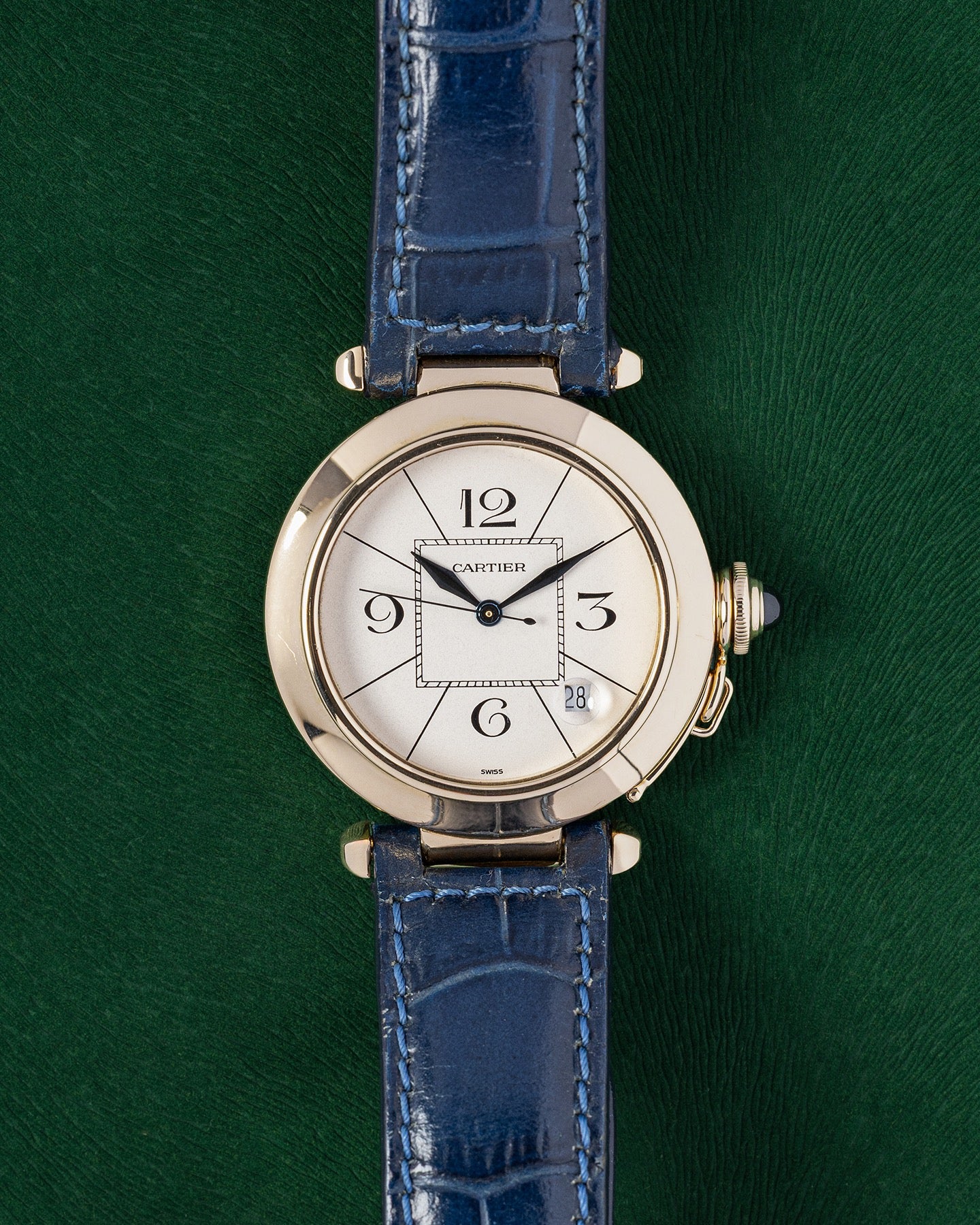
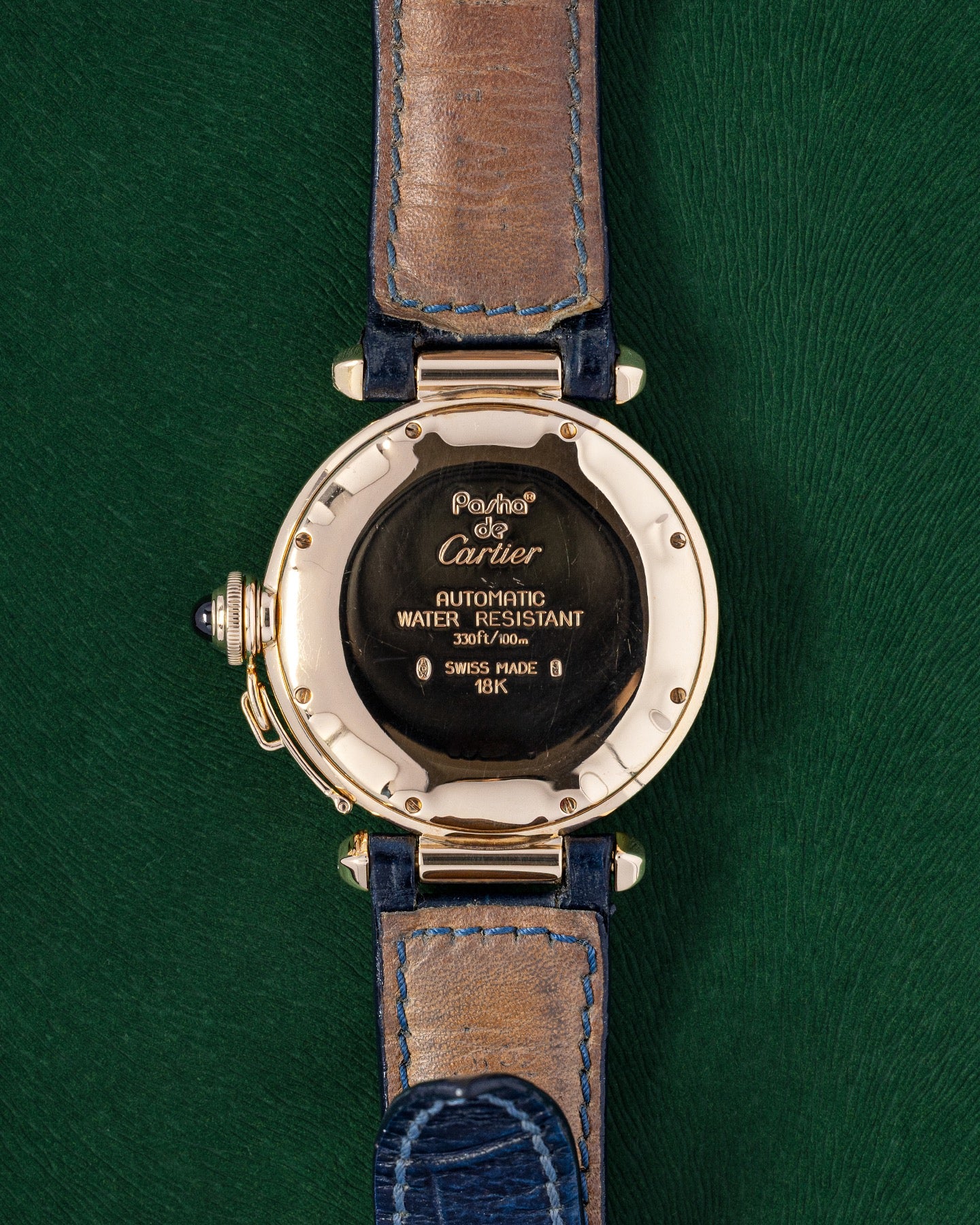
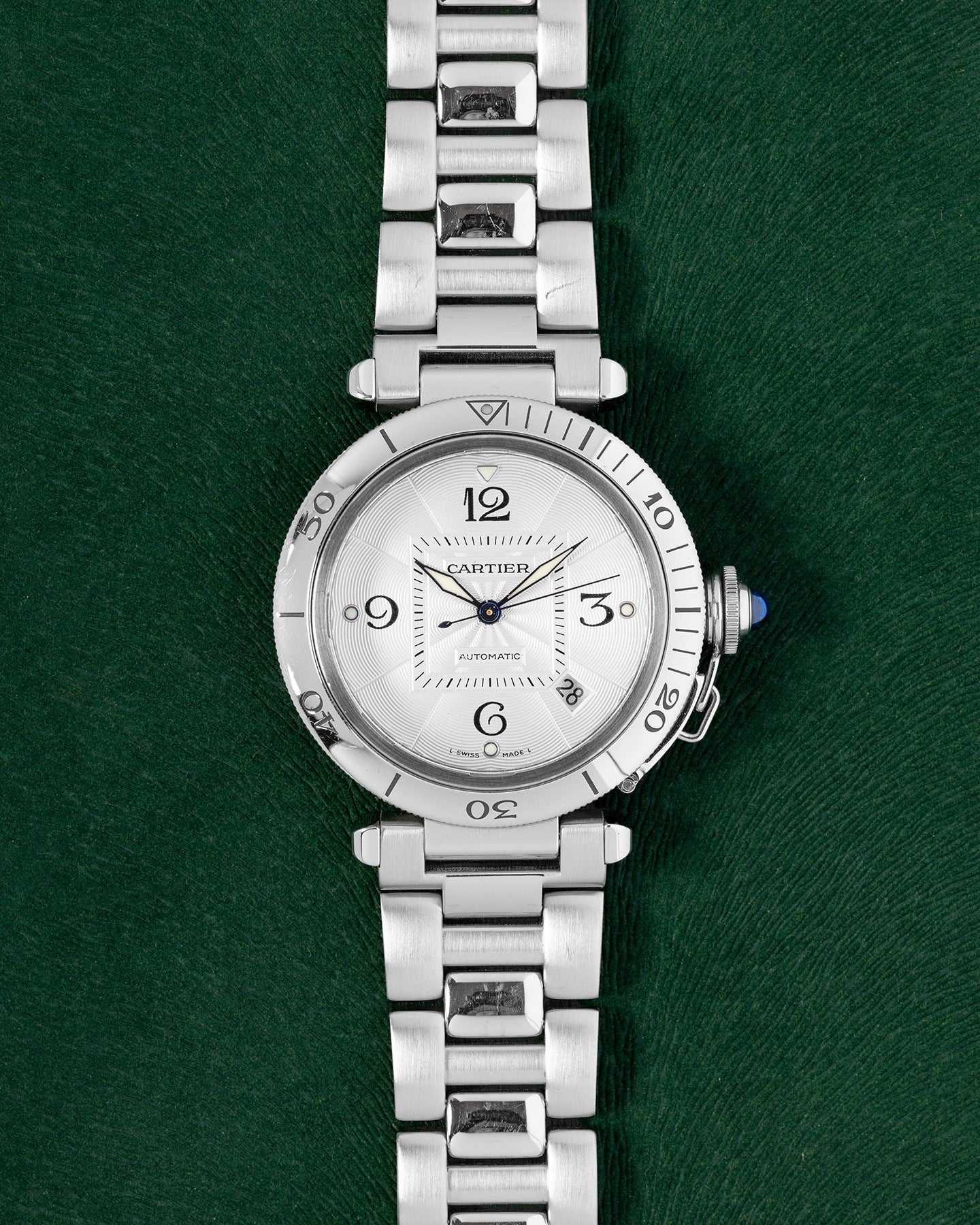
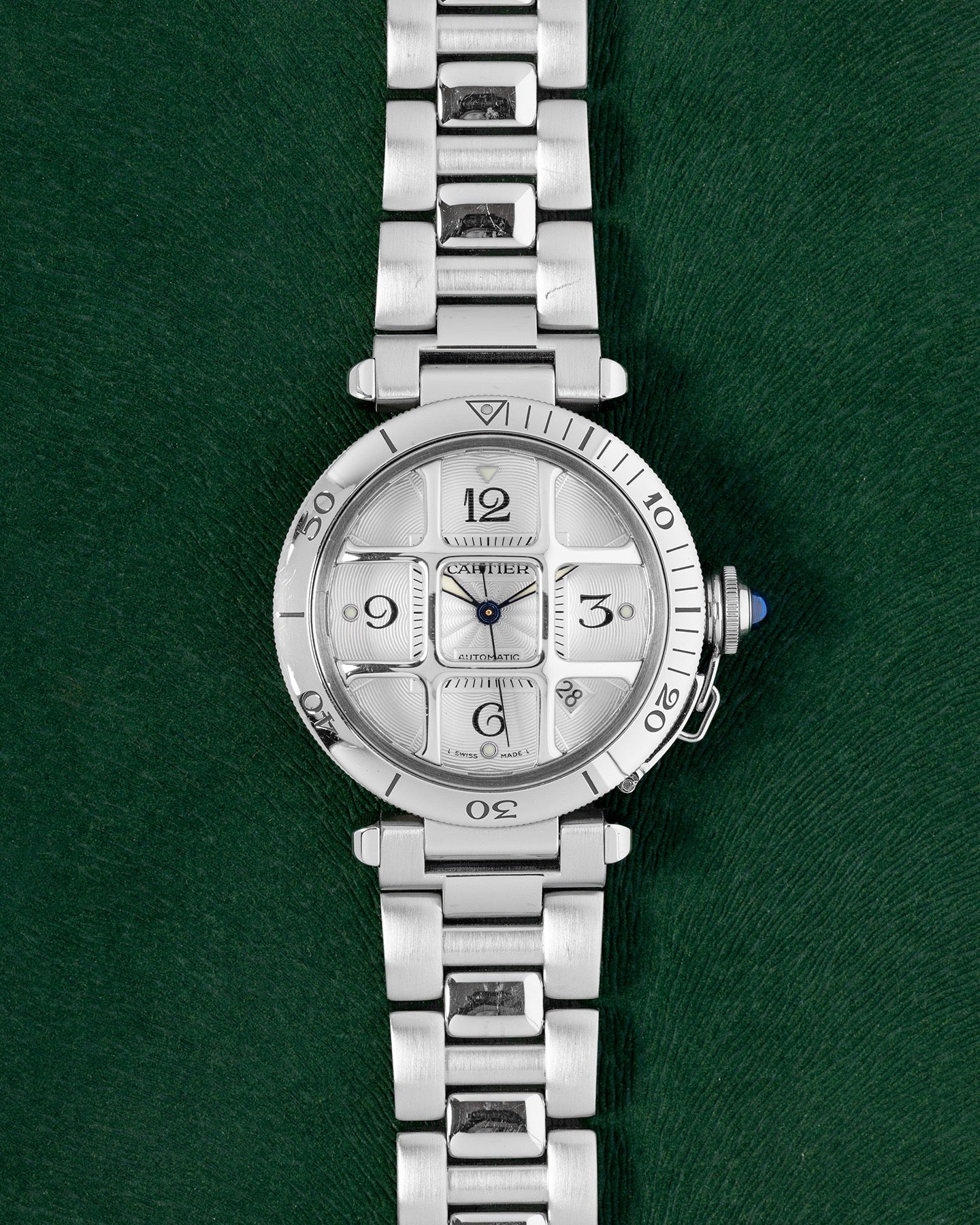
The Cartier Pasha was introduced in 1985 as a bold round-case reference with a prominent crown and a distinctive grid cover over the dial on certain configurations. Vintage Pasha references from the late 1980s and 1990s in stainless steel, two-tone, and solid gold appear in the secondary market with regularity and represent the Cartier foray into larger, more masculine round-case proportions during a period when the broader Cartier catalogue was still defined by smaller and more jewelry-oriented references.
Vintage Tortue
The Cartier Tortue is one of the older case-shape Cartier designs, with a cushion-shaped case that takes its name from the French word for turtle. Vintage Tortue references from the 1970s, 1980s, and 1990s in yellow gold, white gold, and the occasional platinum configuration appear in the secondary market with the same kind of collector dynamics as the Tank Cintree: rarer references command meaningful premiums and the design itself rewards horological literacy.
Vintage Roadster, La Dona, Crash, and Other Specialty References
The broader vintage Cartier catalogue includes a long tail of specialty references that periodically appear in the secondary market: the Cartier Roadster (introduced 2001, drawing inspiration from classic sports cars), the Cartier La Dona (designed in homage to the Mexican actress Maria Felix), the Cartier Crash (the asymmetric case design from Cartier London in the late 1960s that now commands seven-figure auction values for original-production examples), and various Cartier limited editions and Prive references across the decades. The Grand Caliber specialists evaluate each specialty vintage Cartier reference individually, and we encourage collectors to reach out when looking for specific specialty Cartier references that may not be in our current inventory.
Authentication and What to Look for in Vintage Cartier
Vintage Cartier authentication is a deeper discipline than authentication for many other luxury watch brands. The production history of the maison spans three city signatures, more than eight decades, dozens of reference families, and a wide range of case materials and movement types. Authentic vintage Cartier carries multiple overlapping markers, and the secondary market sees enough counterfeit and partially-redone Cartier inventory that careful evaluation is essential.
Dial Signature and Secret Signature
The dial signature is the first authentication check. The Cartier name, the city signature (where applicable), the Must de Cartier signature (where applicable), and the secret signature integrated into a Roman numeral (typically VII or X, depending on the reference and era) are all evaluated against period-correct reference standards. Original dials without redial work command meaningful premiums, and dial originality is one of the most important value factors across the entire vintage Cartier landscape.
Case Material and Hallmarks
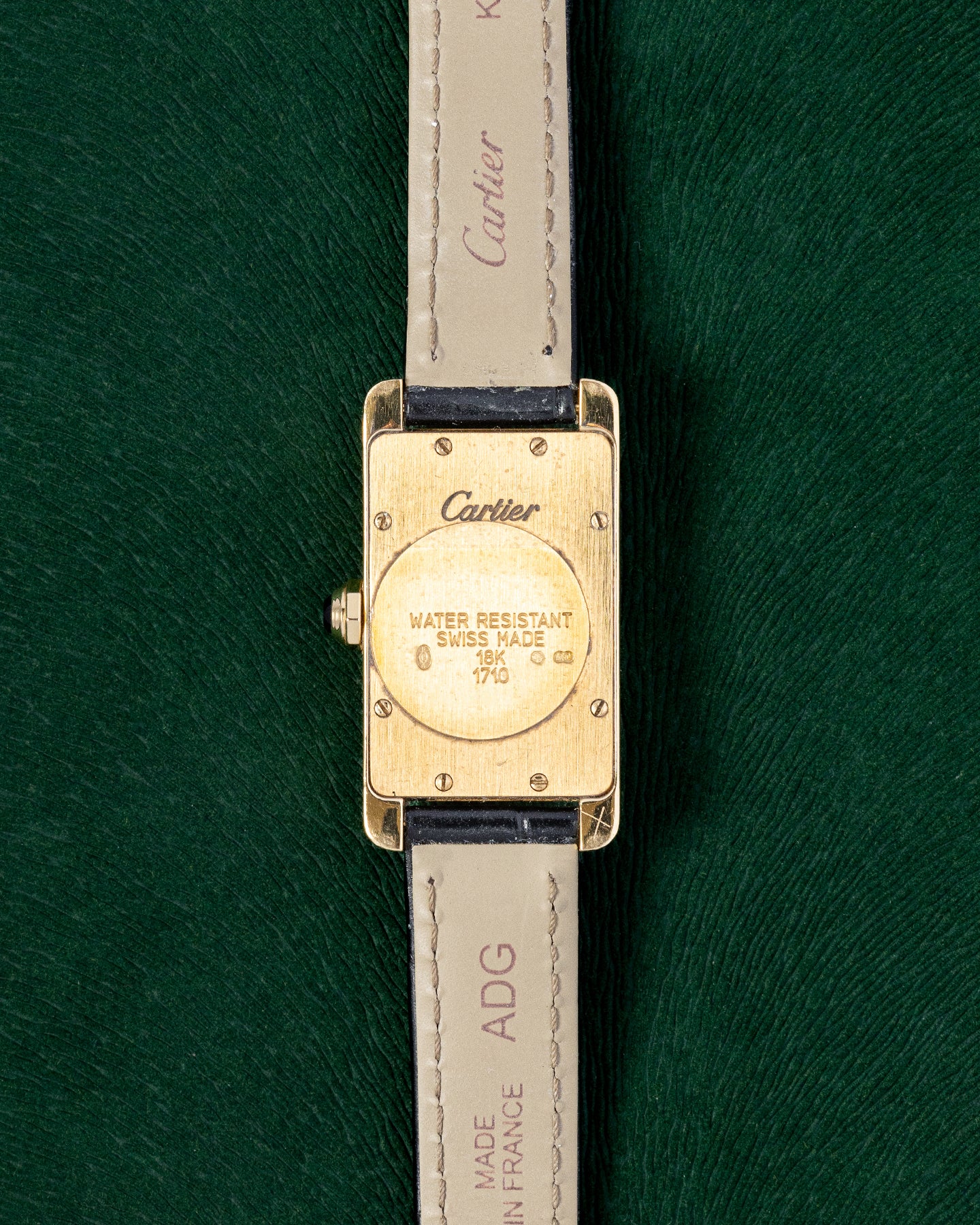
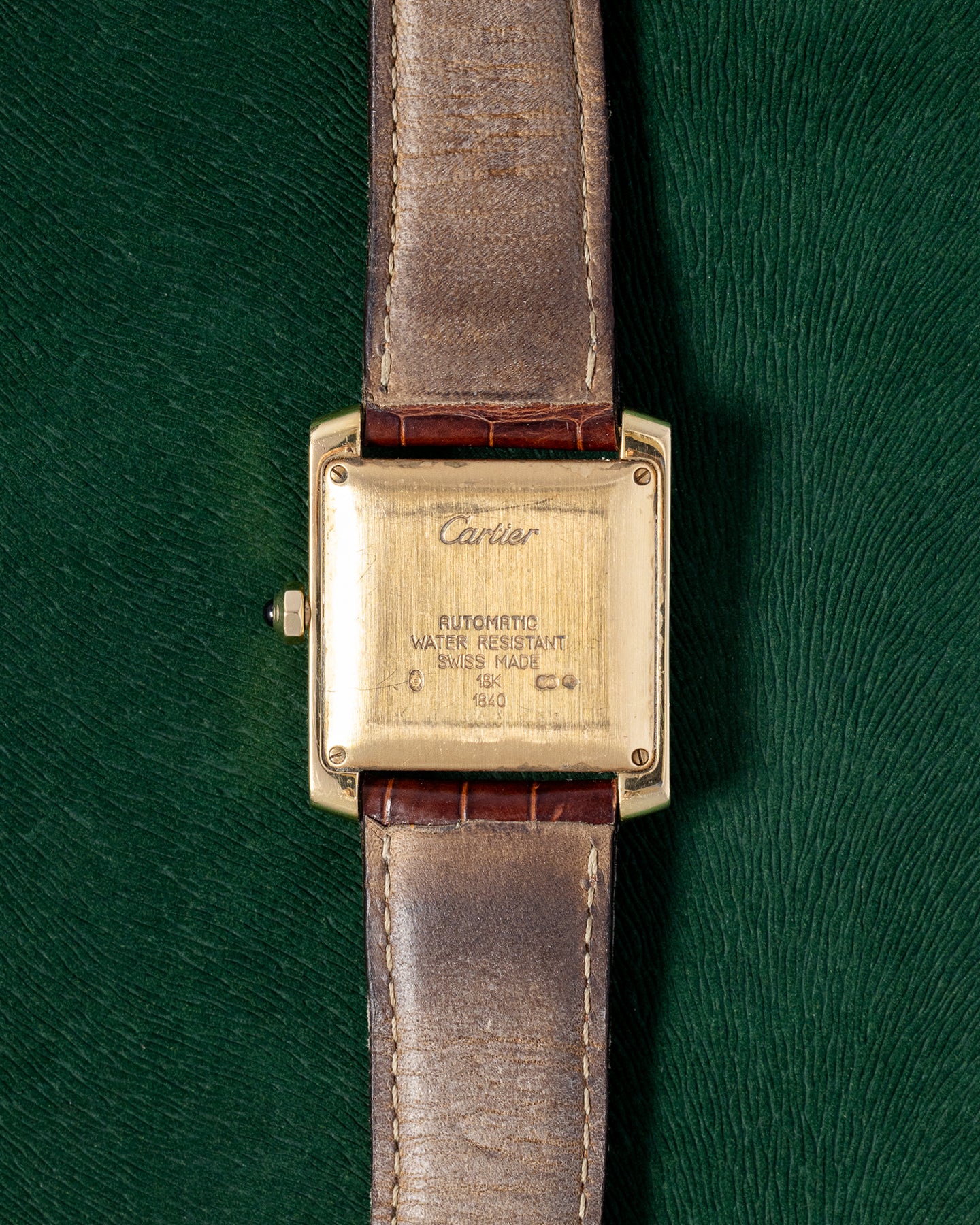
Case material and hallmarks are second. Solid-gold vintage Cartier cases carry French eagle-head hallmarks (for Cartier Paris production), British hallmarks (for Cartier London production with London assay office markings), and various other hallmarks corresponding to the production city, the metal purity, and the production year. Must de Cartier vermeil cases carry the 925 sterling silver stamp confirming the substrate metal. Stainless steel and bi-metal cases carry their own period-appropriate stamps and reference numbers.
Movement and Service Records
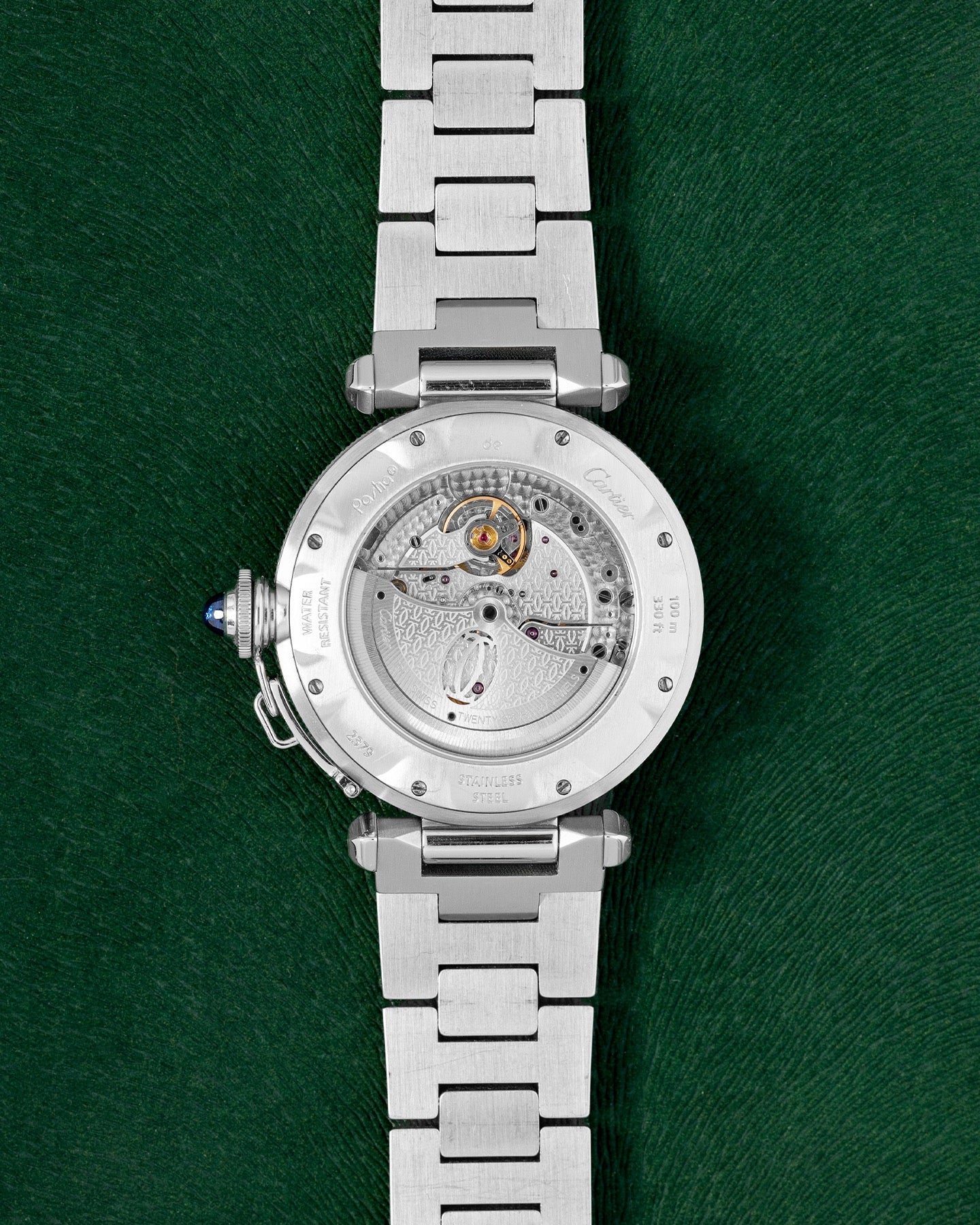
Movement and service records are third. Vintage Cartier movements run the gamut from period-correct Jaeger-LeCoultre ebauches in the older mechanical Tank references through ETA-based mechanical movements in the Must collection and various Swiss quartz movements in the broader quartz-era catalogue. We confirm that the movement is period-correct for the reference, that the movement signature matches the dial signature where applicable, and that any documented service history is consistent with authorized Cartier service standards.
Crown Cabochon
The crown cabochon is the most easily-missed authentication marker. Authentic vintage Cartier crowns carry a blue sapphire or blue spinel cabochon depending on the reference and era, with consistent color, consistent dome geometry, and integrity at the cabochon-to-crown interface. Damaged, replaced, or non-period-correct cabochons are common in the secondary market and represent a meaningful value deduction. Original cabochons in good condition are a strong positive signal across the entire vintage Cartier catalogue.
Box, Papers, and Provenance
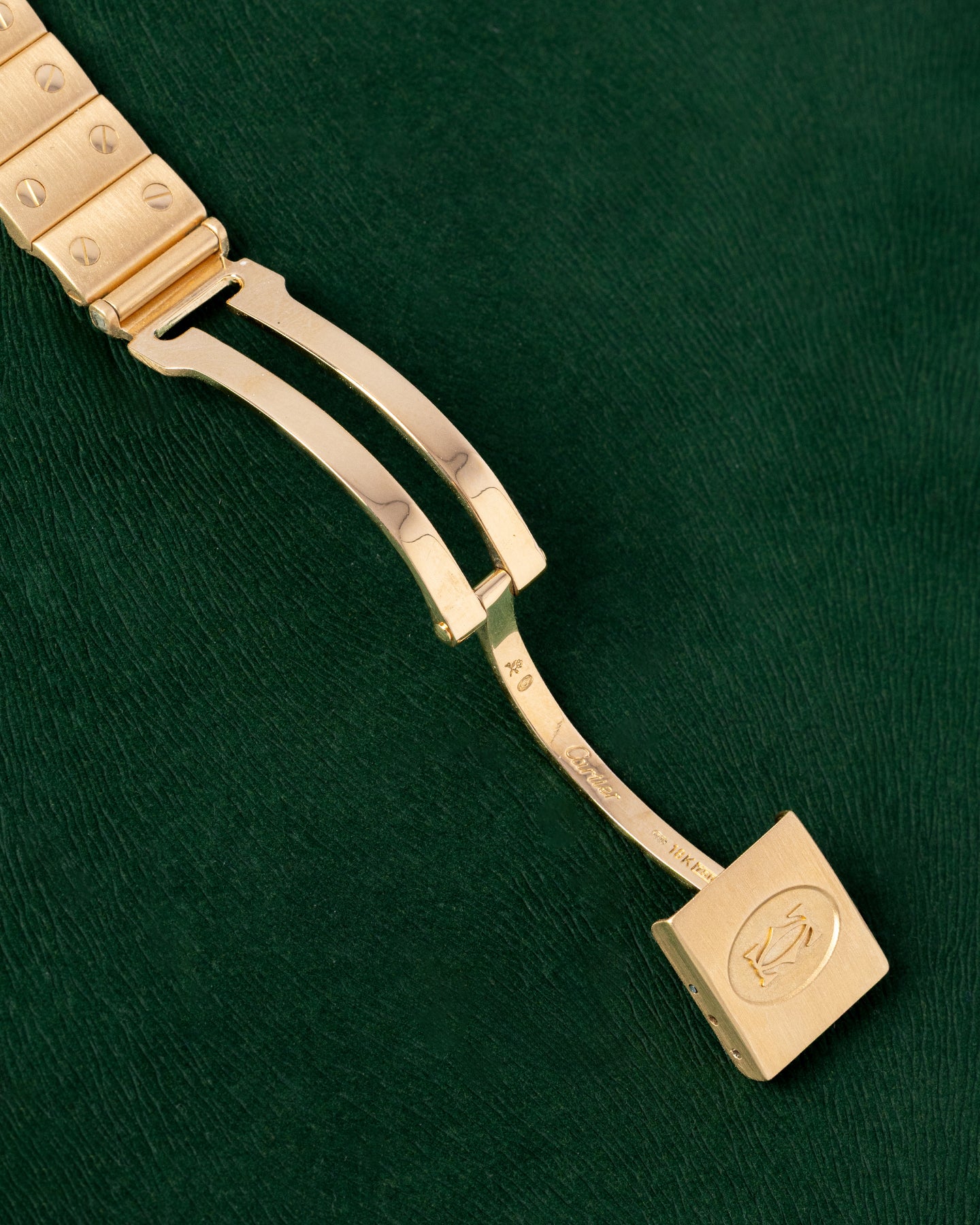
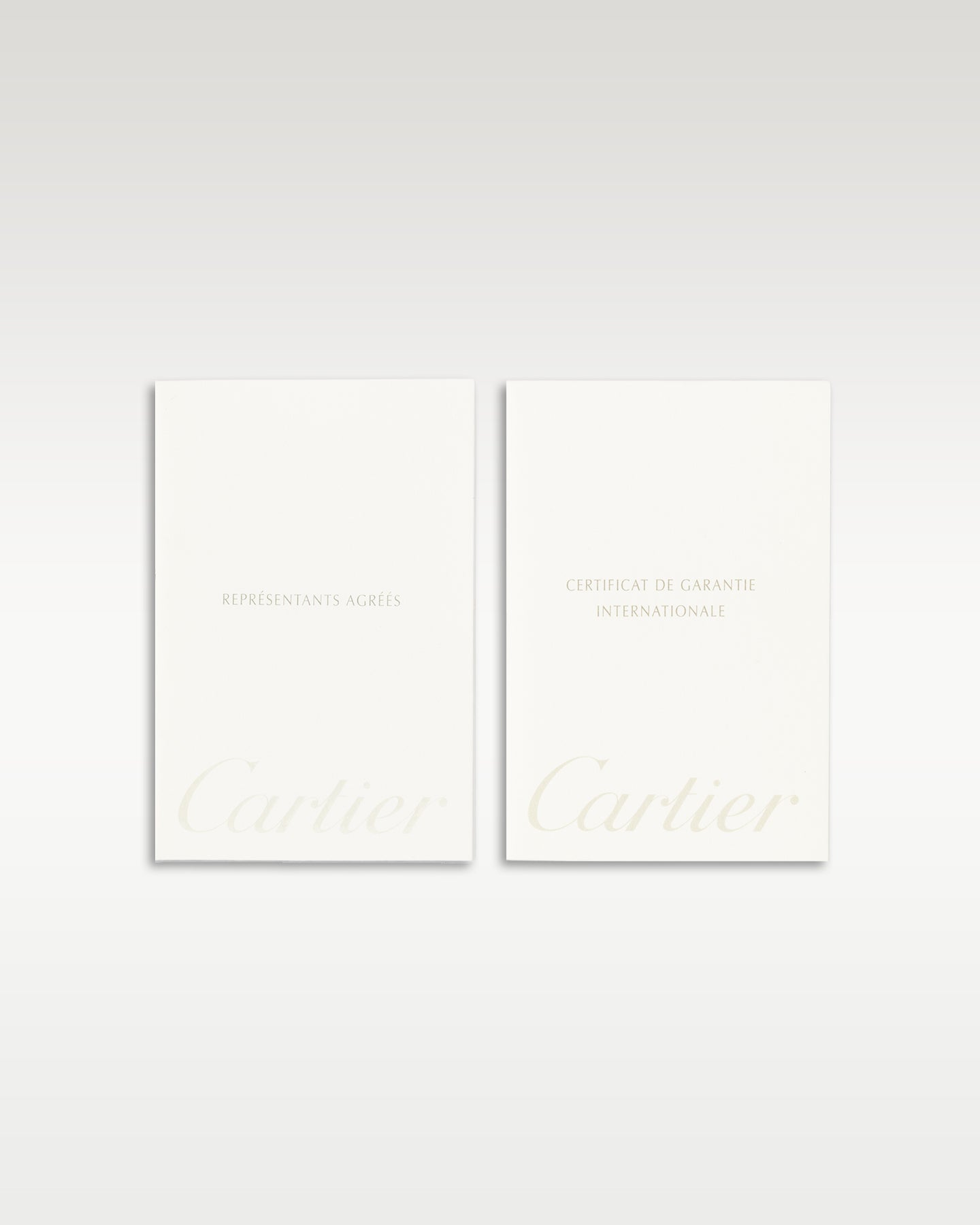
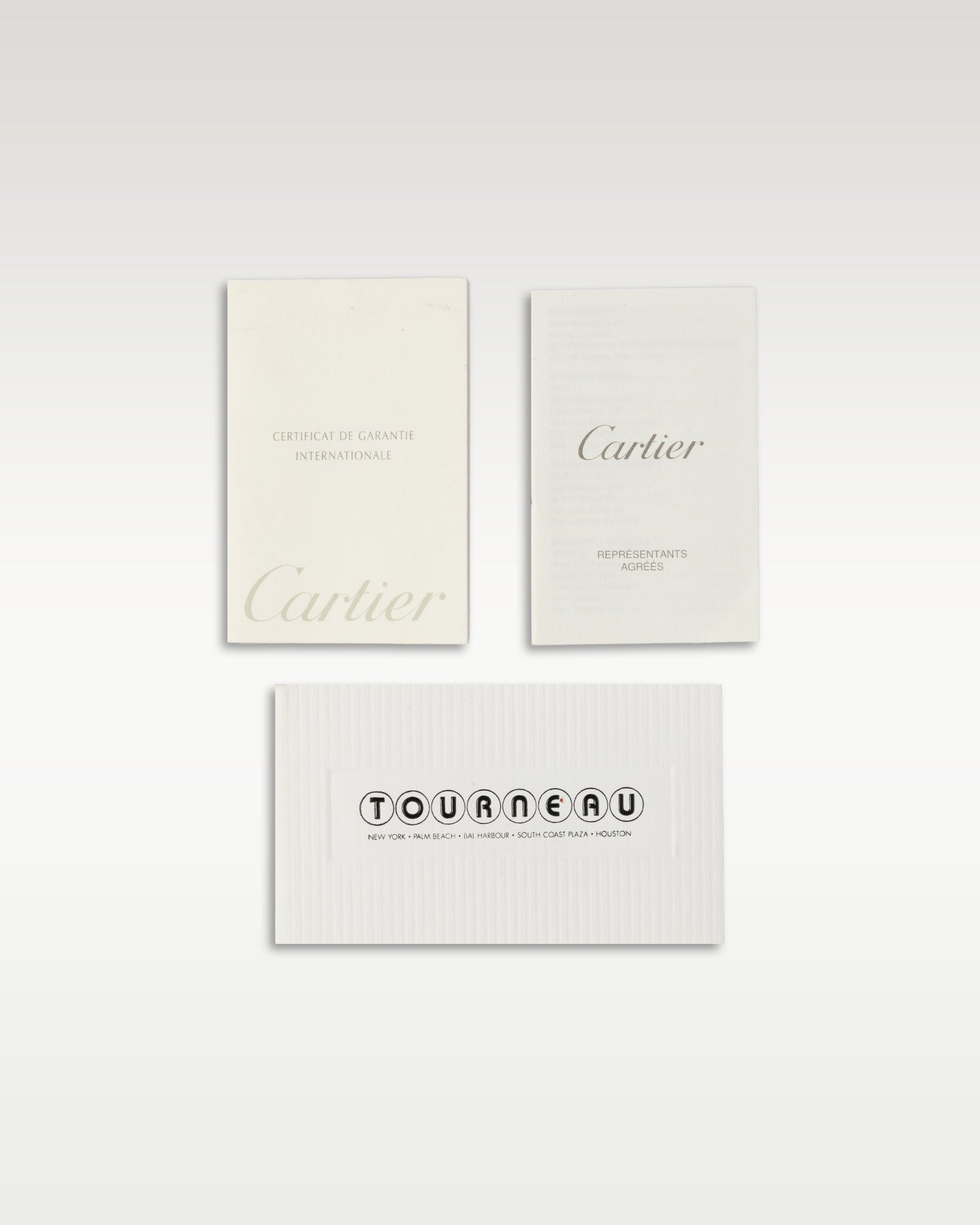
Box, papers, and provenance are fourth. A vintage Cartier with full original Cartier presentation box, original purchase documentation, period-correct service records, and any boutique-issued certificates commands a substantial premium over an equivalent watch sold loose. For older vintage Cartier references from the 1970s and 1980s, complete original-condition sets are increasingly rare, and clean provenance documentation can move a vintage Cartier value by 20 to 40 percent over an equivalent watch without papers.
How Grand Caliber Approaches Vintage Cartier
Vintage Cartier is one of the most rewarding categories in luxury watch collecting and one of the most demanding. Each vintage Cartier we offer at Grand Caliber goes through a multi-step evaluation: city-signature confirmation, reference identification against period-correct specifications, dial-originality assessment, movement evaluation, case-condition and hallmark verification, crown-cabochon inspection, and full-set provenance review where documentation exists. We will not sell a vintage Cartier with a redial we cannot disclose, a non-period-correct movement we cannot explain, or a case that has been over-polished beyond what original-condition collecting standards permit.
We also recognize the vintage Cartier category for what it is: a category in which the right reference at the right condition is meaningfully better than two acceptable references at compromised condition. The collector who buys a clean Cartier London Tank from the late 1960s, a vintage Tank Louis Cartier in yellow gold with full original set, an original Cartier Panthere Medium in two-tone steel and gold with intact bracelet drape, or a Must de Cartier Tank in vermeil with an original lacquer dial is acquiring a piece of twentieth-century watch design that no modern reissue can replicate. The vintage Cartier market rewards patience and rewards literacy, and we approach every transaction with that orientation.
Vintage Cartier at the Grand Caliber Dallas Showroom
Vintage Cartier is one of the most in-demand categories at the Grand Caliber Dallas showroom. The watches do not stay on our floor long. When a clean vintage Tank, an original-production Panthere, a Must de Cartier Tank with a desirable lacquer dial, or any of the rarer Cartier London and Cartier Paris references comes into our buying program, it typically moves to a collector within days or weeks of authentication. That velocity reflects the broader market reality. Vintage Cartier has become one of the most collected luxury watch categories of the past decade, and serious buyers are no longer willing to wait when the right reference appears.
What this means for the collector specifically hunting a vintage Cartier reference is that current inventory is only part of the picture. The more important capability is our ability to source. Grand Caliber maintains an active vintage Cartier sourcing network across the United States and Europe, with direct relationships across the broader vintage Cartier dealer community, collector estates, and the auction-adjacent secondary market. When a buyer comes to us looking for a specific vintage Tank Louis Cartier configuration, a particular Must de Cartier Vendome dial color, an original Cartier Panthere in a specific size and metal, or one of the rarer Cartier London or Cartier Paris references that does not appear in the open market often, we go look. Every vintage Cartier we source is authenticated in-house against the full evaluation framework before it reaches our buyer, and we do not deliver anything we cannot fully stand behind.
Visit the Dallas showroom in person to see whatever vintage Cartier is currently on our floor and to talk through what you are looking for if our current inventory does not include it. Our specialists can walk you through city signatures, reference identification, dial originality, movement authentication, hallmark verification, and long-term collectibility for any vintage Cartier in our inventory or any vintage Cartier we can source on your behalf. Call us at (214) 225-7198, email info@grandcaliber.com, or stop in at the Dallas showroom to start the conversation. We buy, sell, trade, source, and authenticate vintage Cartier watches across the entire historical catalogue, and the sourcing capability is just as important as the inventory we happen to have on the floor at any given moment. Vintage Cartier is one of the most rewarding categories in luxury watch collecting, and Grand Caliber is proud to be the Dallas destination for authenticated vintage Cartier across the twentieth-century maison catalogue.
Vintage
Vintage
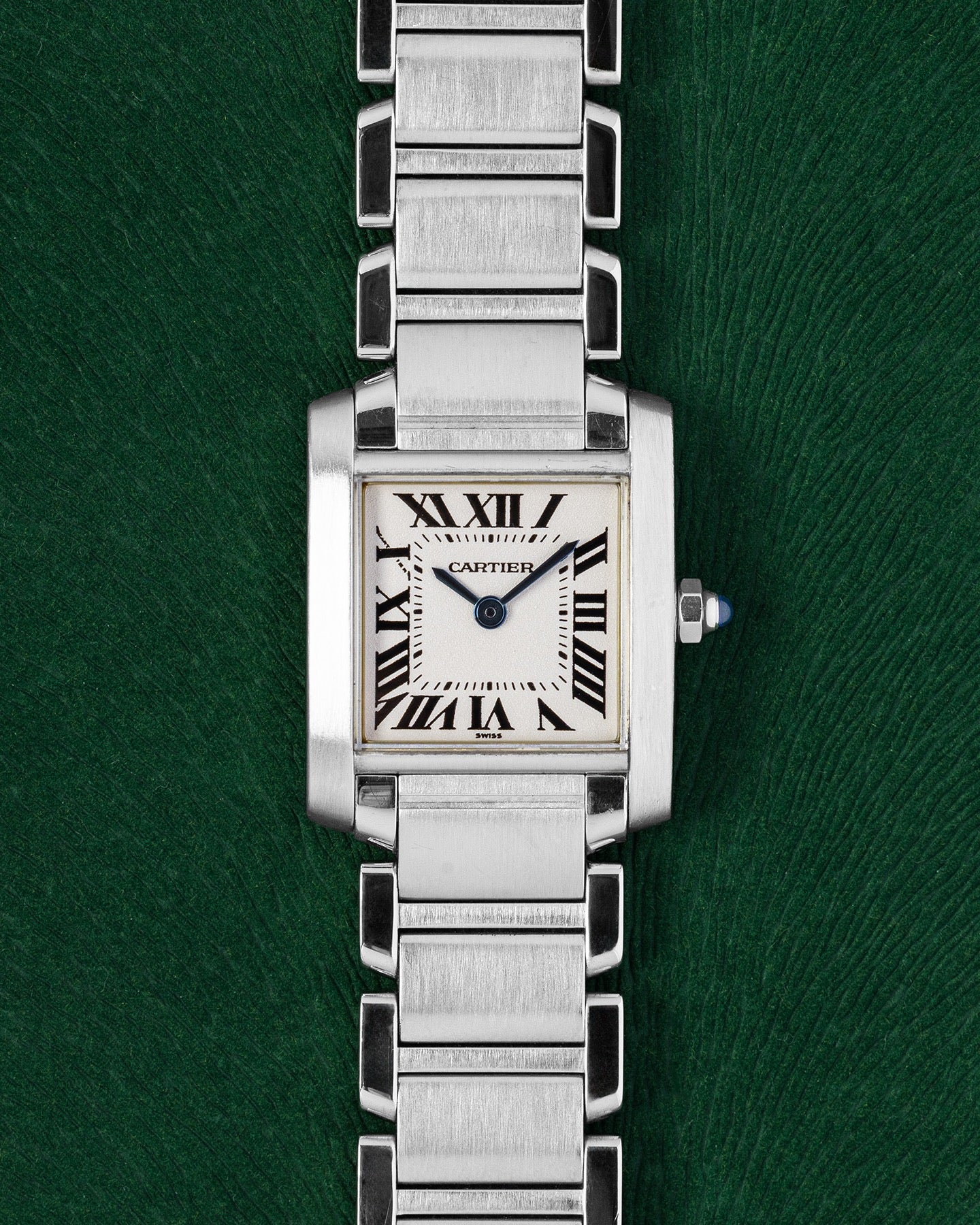
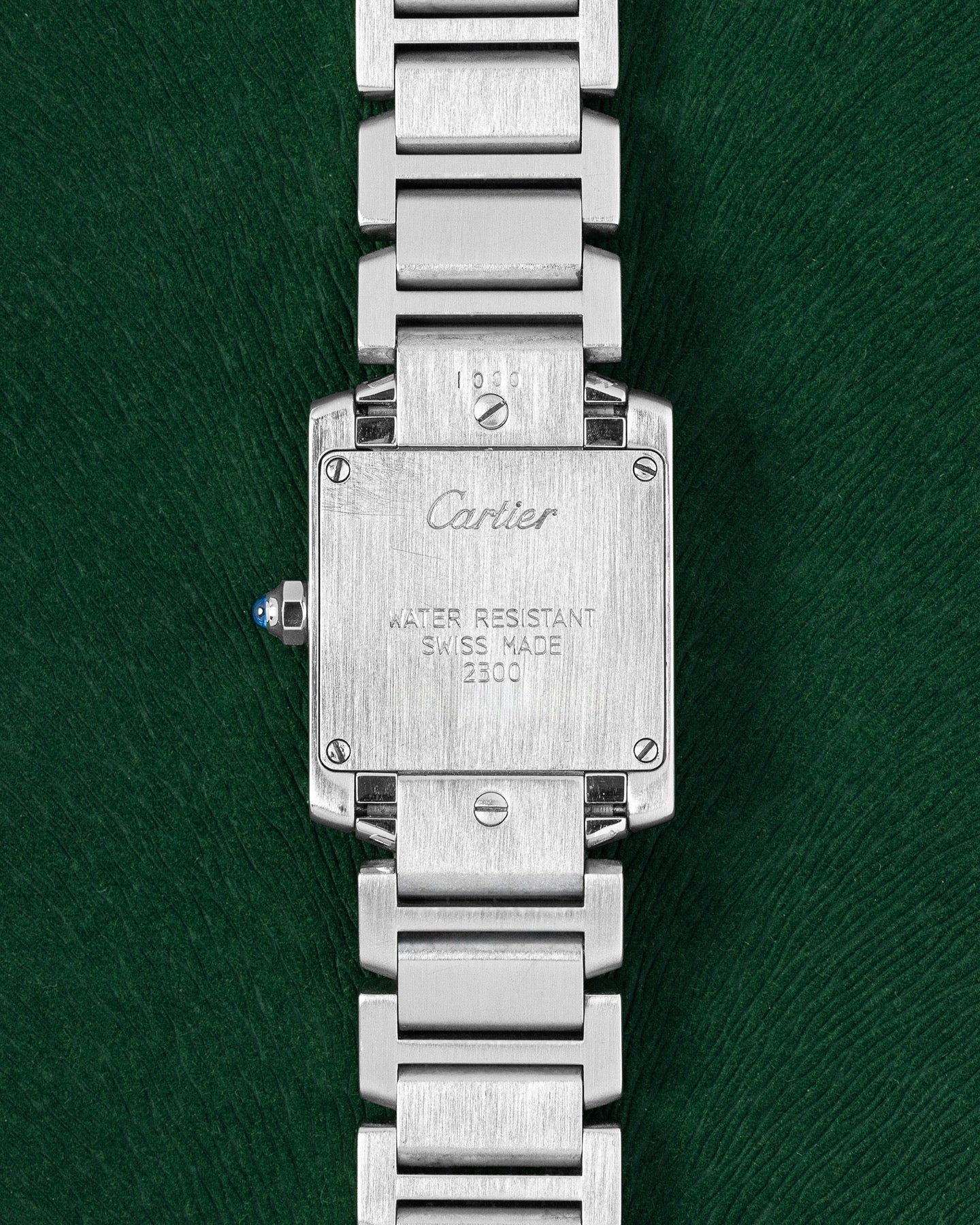
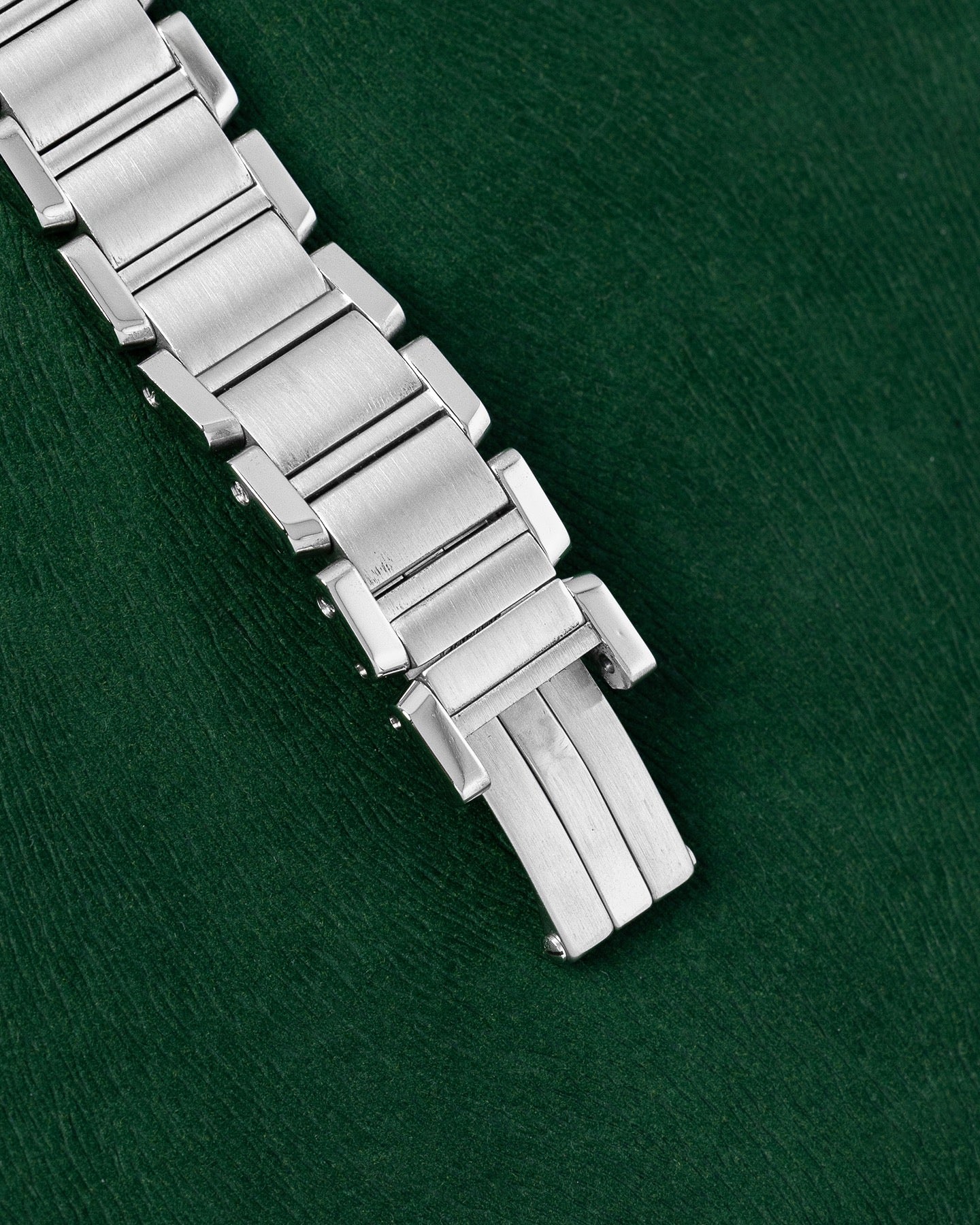
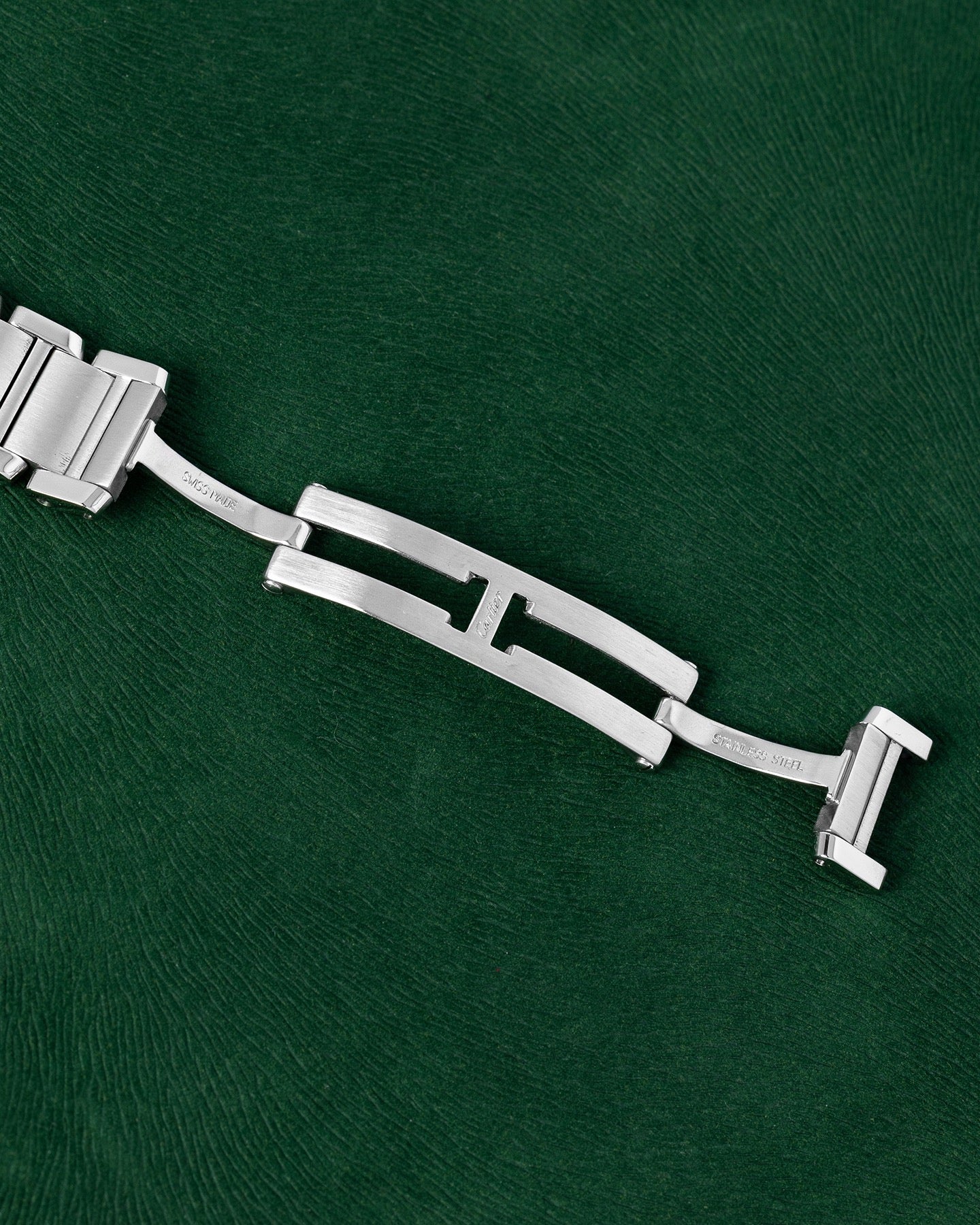
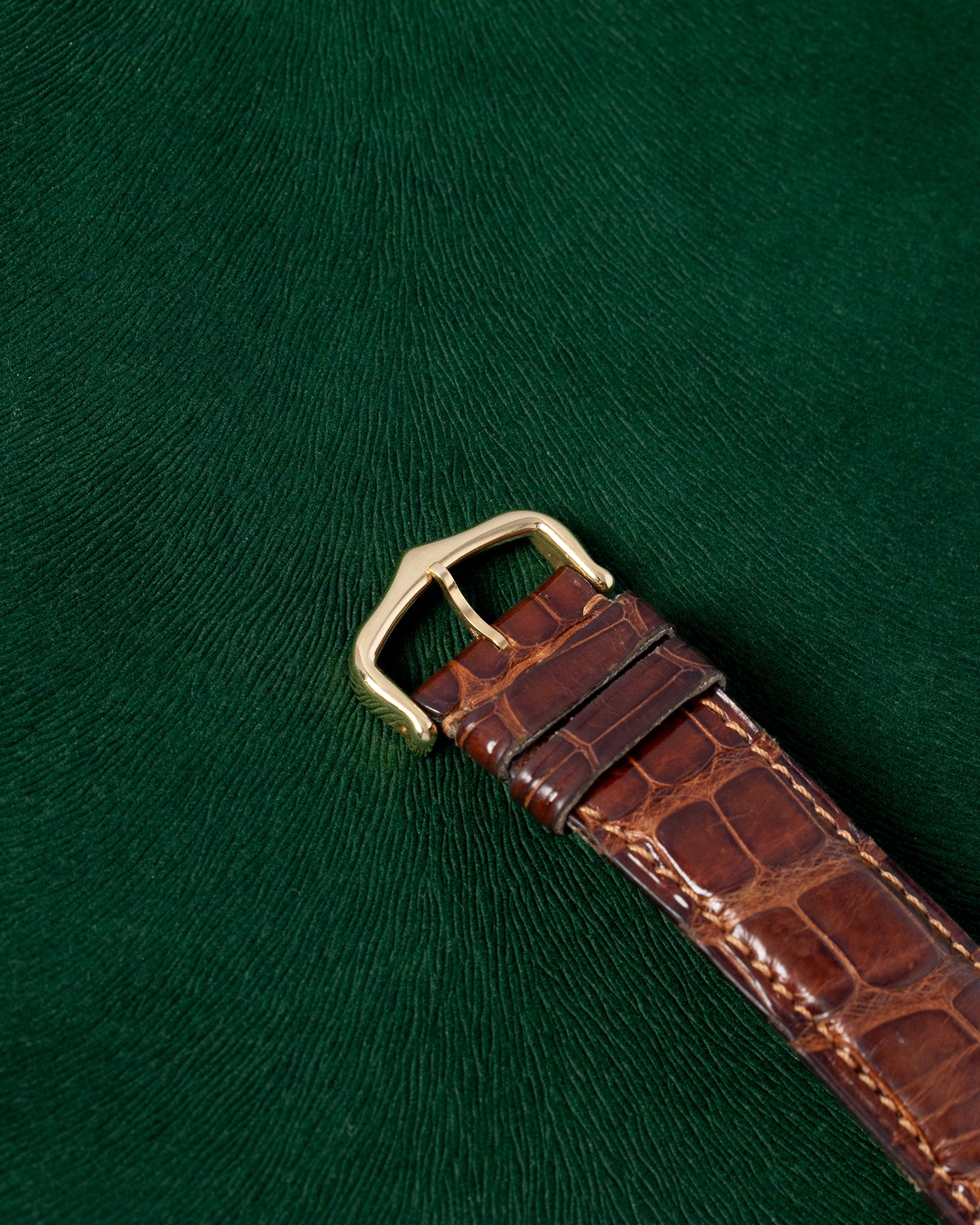
Cartier Tank Francaise W51008Q3
Vintage
Vintage
Vintage
Vintage
Vintage

Vintage

Vintage
Vintage
Vintage

Vintage